Breaking the Climate Spell

 

Rupert Darwall is one of the more knowledgeable people concerning how the world came under the spell of global warming/climate change. This post features his recent article regarding how the worldwide delusion may be losing its power. Breaking the Climate Spell. appeared today in the Weekly Standard.  Excerpts below in italics with my bolds.

Getting out of the Paris Agreement was just the first step on the road to a realist global energy policyThirteen years ago, a Republican president who had pulled the United States out of an onerous climate treaty faced isolation at the annual gathering of Western leaders. “Tony Blair is contemplating an unprecedented rift with the U.S. over climate change at the G8 summit next week, which will lead to a final communiqué agreed by seven countries with President George Bush left out on a limb,” the Guardian reported of the meeting at Glen­eagles, Scotland. France and Germany preferred an unprecedented split communiqué to a weak one, the article said.

George W. Bush, who had pulled the country out of the Kyoto Protocol in 2003, blinked and agreed to an official document that affirmed global warming was occurring and that “we know enough to act now.” The 2005 G8 put the United States back on the path that ultimately led through the Copenhagen climate summit—when China and India thwarted U.S.-led attempts at a global climate treaty—to the Paris Agreement 11 years later.

There was a very different American president this June at the Charlevoix G7 (as it has been since Russia’s suspension in 2014). Had it not been for the row with Justin Trudeau, when the Canadian prime minister responded to President Trump’s steel and aluminum tariffs with retaliatory tariffs of his own, the big story would have been the climate split. Where 15 years ago the mere possibility of isolation pushed Bush to compromise, Trump embraced the isolation and inserted an America-only paragraph into the summit communiqué outlining a position fundamentally contradicting the rest of the group’s.

Donald Trump with G7 leaders in Charlevoix, Canada, June 9. Credit: Jesco Denzel / Bundesregierung / Getty

“The United States believes sustainable economic growth and development depends on universal access to affordable and reliable energy resources,” it reads, going on to offer a manifesto for global energy realism. That single paragraph is more definitive than the president’s announcement last August that the United States would be withdrawing from the Paris treaty. After all, George W. Bush nixed the Kyoto Protocol that Bill Clinton signed. And Trump, when announcing the Paris withdrawal, left the door open to U.S. participation in a renegotiated climate deal. At Charlevoix, he closed it. Unlike in 2005, it’s very hard now to see any way back.

This is about far more than process. Trump is breaking the spell of inevitability of the transition to renewable energy. The impression of irresistible momentum has been one of the most potent tools in enforcing compliance with the climate catechism. Like socialism, the clean-energy transition will fail because it doesn’t work. But it requires strong leadership to avoid the ruin that will disprove the false promise of cost-free decarbonization.

That reality is already hurting those countries that are farther down the renewable-energy path of ruin than the United States—and, when offered the chance, voters are taking it out on politicians. In March, a fanatically pro-wind and solar energy Labor government in South Australia, one of the eight states and territories that make up the country, decided to make the state elections a referendum on renewable energy. With some of the world’s most expensive electricity and a serious blackout in 2016, South Australia voters kicked out Labor and voted in a government vowing to repeal the state’s renewable-energy target.

Days before Justin Trudeau took the center of the global stage as host of the G7 summit, his Liberal party was trounced in provincial elections in Ontario. The province’s party had won four consecutive terms in office and had pressed virtually every pro-renewable, anti-hydrocarbon policy imaginable. In the June 7 elections, they took just seven seats in the 124-seat legislature. “I made a promise to the people that we would take immediate action to scrap the cap-and-trade carbon tax and bring their gas prices down,” newly elected premier Doug Ford announced.


Nowhere has confrontation with the physical and economic realities of renewable energy been more painful than Germany, the birthplace of renewable-energy ideology. As party leaders negotiated a new coalition agreement after the September 2017 elections, they acknowledged for the first time that Germany was going to miss the sacrosanct 2020 target to cut greenhouse gas emissions by 40 percent from 1990 levels. This had been set in 2007, and the first 20 percent had been easy. Thanks to German reunification, the former East Germany had seen its industries collapse, and there were plenty of inefficient power stations to close. It had always been clear, Angela Merkel declared three weeks after the September federal elections, that it was not going to be easy to cut the other 20 percent “at a time of relatively strong economic growth.” Note: Stronger growth equals higher emissions.

Launching the German renewables transition in 2004, energy minister Jürgen Trittin promised that it would put no more than the cost of an ice cream on monthly electricity bills. Nine years later, his successor, Peter Alt­maier, admitted that the costs could amount to $1.34 trillion by the end of the 2030s. At a meeting in June of E.U. energy ministers, Germany ran up the white flag. Altmaier shocked fellow E.U. energy ministers by rejecting higher renewable-energy targets. “We’re not going to manage that,” he told them. “Nowhere in Europe is going to manage that. Even if we did manage to get enough electric cars, we wouldn’t have enough renewable energy to keep them on the road.”

No country has a greater abundance of hydrocarbon energy than the United States. The corollary is that no country was as big a loser from participating in the Paris Agreement and its intention to progressively decarbonize the world’s hydrocarbon superpower. On July 10, the Energy Information Administration forecast that next year, the United States will produce 12 million barrels of oil a day and overtake Saudi Arabia to be the world’s number-one producer. When it comes to the politics of energy, the interests of the United States and European green ideology are irreconcilable.

Donald Trump understands this. “Our country is blessed with extraordinary energy abundance, which we didn’t know of even 5 years ago and certainly 10 years ago,” the president said in 2017. Those remarks were not only a paean to America’s energy resources, they were a full-dress rejection of the policies of his predecessor and of the Democrats’ goal of Europeanizing American energy policy.

“We have nearly 100 years’ worth of natural gas and more than 250 years’ worth of clean, beautiful coal. We are a top producer of petroleum and the number-one producer of natural gas. We have so much more than we ever thought possible. We are really in the driving seat. And you know what? We don’t want to let other countries take away our sovereignty and tell us what to do and how to do it. That’s not going to happen. With these incredible resources, my administration will seek not only American energy independence that we’ve been looking for for so long, but American energy dominance. And we’re going to be an exporter—exporter. We will be dominant. We will export American energy all over the world, all around the globe. These energy exports will create countless jobs for our people, and provide true energy security to our friends, partners, and allies all across the globe.”

For the first time since 1992, when George H.W. Bush went to the Rio Earth Summit, an American president was outlining a global energy strategy diametrically opposed to the tenets underlying the U.N. climate process. Trump was establishing a rival pole based on energy realism and energy abundance.

The Rio Summit was the brainchild of Canadian ­Maurice Strong, and he understood that what most motivates political leaders, bureaucrats, and corporate CEOs is the fear of being left out. “The process is the policy,” Strong said, and the annual climate conferences that have been held since the U.N. Framework Convention on Climate Change was adopted in Rio created a sense of irresistible momentum. It’s that spell Trump is now breaking. Countries around the world are being damaged by the anti-hydrocarbon policies encouraged by the U.N., but leaving the Paris Agreement was a step only the United States was strong enough to take. Now it is up to the Trump administration to help other countries act in their economic interests.

Energy secretary Rick Perry has talked of U.S. willingness to lead a global alliance of countries wanting to make fossil fuels cleaner rather than abandoning them. Of the G7, Japan has traditionally been most leery of decarbonization, and after the 2011 Fukushima accident Japan decided to expand its coal-fired generating capacity by half, building 45 new coal power stations.

Poland is another coal-based economy that has no intention of phasing out coal. Of all energy-realist nations, Poland is the one that sees eye to eye with the Trump administration. During the Brezhnev years, Poland—alone of the Eastern Bloc nations—refused to sign up to sulphur-emission cuts designed to isolate the U.K. and the United States at the height of the acid rain scare. As host of the next round of U.N. climate talks, at Katowice in December, Poland is more than usually important as a U.S. energy ally. Australia, the world’s largest coal exporter, is another obvious U.S. partner.

Where the United States can make the biggest difference, though, is with the developing nations who depend on overseas finance to build out their electrical grids and need the cheap, reliable energy only coal can supply. Last September, Southeast Asian energy ministers, noting the rising use of coal in the region, called for greater promotion of clean coal. In June, India struck a strategic energy partnership with the United States, described by Perry as an “amazing opportunity for U.S. energy” to sell clean coal, nuclear technology, oil, and gas.

In October 2016, Nigeria’s finance minister, Kemi Adeosun, railed against the West’s energy imperialism and the hypocrisy of using coal to industrialize and then denying it to Africans. “By telling us not to use coal they are pushing us into the destructive cycle of underdevelopment; while you have the competitive advantages, you tie our hands behind us,” she said.

Denying the world’s poor cheap electricity is the official policy of the World Bank. In 2012, Barack Obama agreed to the appointment of Jim Yong Kim as president of the World Bank, and the next year, the bank stopped the financing of coal-fired generation. Although the Trump administration publicly opposes the coal ban and the United States has the largest number of votes at the World Bank, the institution is doubling down on its anti-fossil-fuel agenda. At Emmanuel Macron’s climate summit in December 2017, Kim announced the bank was extending the financing ban to upstream oil and gas. Here is the first order of business for a global energy alliance—to pressure the World Bank to lift its hydrocarbon financing bans and serve the world’s poor rather than sacrifice them to a regressive climate agenda.

As it is, China is the biggest winner from the World Bank’s energy policies. A June 2017 World Bank report notes China’s “global dominance” in the supply of materials needed by renewable energy technologies. In addition to China’s control over the supply of base and rare-earth metals, last year 7 of the top 10 global suppliers of solar panels were headquartered in China. An eighth is in Hong Kong and a ninth in Canada, but with Chinese links. For as long as the World Bank’s hydrocarbon-financing bans remain, American taxpayers will be funding a war on American coal and subsidizing China’s solar industry. If this seems an unappealing prospect, the Trump administration should move fast to assemble the necessary votes ahead of the World Bank meeting in October.

Domestically, the climate caravan keeps rolling. At the beginning of June, 13 Republican senators wrote to the president urging him to submit the Kigali Amendment to the Montreal Protocol, described by the U.N. as “another global commitment to stop climate change,” for the Senate’s advice and consent. Two weeks later, the New York Times carried a report and associated op-ed by former senators Trent Lott and John Breaux on a new group, Americans for Carbon Dividends, which has hired the bipartisan pair to lobby for a carbon tax. “We must put a meaningful price on carbon,” they wrote, arguing for a $40 per ton tax “high enough to encourage a turn to cleaner energy sources.”

Former Fed chair Janet Yellen, another member of the group, told the Times that taxing carbon emissions is “absolutely standard textbook economics.” The textbook actually teaches that a carbon tax would be efficient if it replaced all the tax credits, subsidies, portfolio standards, and regulations supporting the expansion of uneconomic wind and solar energy. Their inherent defect is that the amount of energy they produce depends on the weather, not on demand. Because of the way the electrical grid works, they dump their intermittency costs on other generators, particularly the reliable coal and nuclear plants. It is not surprising that the backers of Americans for Carbon Dividends and its seven-figure annual budget include First Solar, Inc. and the American Wind Energy Association.

Only a small portion of the putative climate benefits of a carbon tax would ever flow back to the United States in the form of avoided climate impacts. Insofar as cutting greenhouse gas emissions creates environmental benefits, it’s a vast foreign aid program in which costs are incurred domestically and most of the benefits go abroad. Worse still, federal government estimates of the social costs of carbon still rely on climate models using computer-simulated data. These produce higher values than estimates based on actual climate data. According to a 2017 paper by the economists Kevin Dayaratna, Ross McKitrick, and David Kreutzer, a $37 per ton carbon tax using model-based estimates for the climate sensitivity of carbon dioxide would be halved if based on empirical data. Dayaratna, a fellow at the Heritage Foundation, has also noted that one of the impact assessment models used by the Obama administration even produces a negative estimate for the social cost of carbon under “very reasonable assumptions.” A negative carbon tax—subsidizing carbon emissions—is hardly what First Solar and the American Wind Energy Association are funding some of Washington’s most expensive lobbyists for.

For all the energy revolution so far, the Trump administration’s energy agenda remains incomplete. The Clean Power Plan is being rolled back, but the EPA’s 2009 greenhouse-gas endangerment finding on which it stood remains in place. There has been talk from the administration of creating red and blue opposing teams of climate scientists to give politicians and the public a more balanced view of our understanding of climate. On energy policy, Rick Perry’s grid-security study can be extended to examine how wind and solar subsidies distort the costs of electricity. That way, Americans will begin to see the true price of renewables and the extra they’ll have to pay to keep the lights on thanks to the intermittency problem of generating energy from the winds and the sun.

Exiting Paris was the first step. The president has also ended his predecessor’s war on coal. Globally, the administration’s continued advocacy for energy realism can win friends among the world’s poor and make allies of some of the world’s most dynamic economies. The geostrategic potential of American energy is already being felt. American gas is being shipped to Poland and American coal to Ukraine—reducing the region’s dependence on Russian gas. As the president pointed out at the NATO summit in early July, Germany’s pipeline will see it paying “billions of dollars” a year to Russia, although he subsequently undercut the strategic logic of his argument at the disastrous press conference with Vladimir Putin in Helsinki on July 16. The Trump administration should now formalize its ties with other energy-realistic nations and show the world the benefits of America’s energy exceptionalism—jobs at home, booming exports, and an escape from dismal energy policies predicated on bogus resource shortages. Having broken the spell, America and its friends around the world can reap the benefits.

Rupert Darwall is the author of Green Tyranny: Exposing the Totalitarian Roots of the Climate Industrial Complex.

Climatist Revolutionaries


Obama and other Western political leaders have been saying that Climate Change is the biggest threat to modern society. I am coming around to agree, but not in the way they are thinking. I mean there is fresh evidence that we can defeat radical Islam, but radical climatism is already eroding the foundations of our modern societies.  I refer to climate alarm and activism, which has come to dominate the environmental movement and impose an agenda for social re-engineering.  At the end of this post is my understanding of their revolutionary game plan, but first a new report on the strategy and current events in the campaign.

A fresh confirmation of my insights from two years ago regarding the motives and tactics of the radical anti-fossil fuel movement is provided in The Conversation article All the battles being waged against fossil fuel infrastructure are following a single strategy Excerpts in italics with my bolds

Keep it in the ground

The overarching aim is to prevent as much new fossil fuel infrastructure as possible from being built and shutting down as many operations as possible. It’s all part of a “keep it in the ground” strategy with “it” referencing fossil fuels.

This wide-ranging attempt to block oil, gas and coal infrastructure emerged after the American political system tried and failed to deal with climate change.

Many of this movement’s rank-and-file members reached two main conclusions regarding this failure. Real climate action, they decided, would require a broad-based, grassroots social movement. And the oil, gas and coal industries’ influence over the nation’s political system, through financial donations to politicians and other activities, was to blame for the lack of climate action in the U.S.

As one movement strategist at a prominent climate advocacy organization told me, a large number of climate activists at that point became determined to bring about what they called the managed decline of the fossil fuel industries.

They are trying to expedite the demise of the oil, gas and coal businesses through a death-by-a-thousand-cuts approach that includes several strategies. One is getting investors, including university endowments and public sector pension funds, to stop investing in fossil fuel stocks and other assets. When I researched this divestment movement with journalism professor Jill Hopke, we found that activists were trying to chip away at the moral legitimacy of the oil, gas and coal industries. Another is fighting new fossil fuel infrastructure through civil disobedience and litigation.

celts-storm-exxon

Climate Activists storm the bastion of Exxon Mobil, here seen without their shareholder disguises.

The Trump effect
The keep it in the ground movement has gained a new sense of urgency during the Trump administration.

Because of this new political climate, activists have concentrated harder than ever on local actions, such as fighting pipelines and other infrastructure projects, wherever they believe they can make a difference during the Trump years. This stands in contrast to their strategy of only a few years ago that focused at least to some degree on influencing national policies.

The Climatist Game Plan

Mission: Deindustrialize Civilization

Goal: Drive industrial corporations into Bankruptcy

Strategy: Cut off the Supply of Cheap, Reliable Energy

Tactics:

  • Raise the price of fossil fuels
  • Force the power grid to use expensive, unreliable renewables
  • Demonize Nuclear energy
  • Spread fear of extraction technologies such as fracking
  • Increase regulatory costs on energy production
  • Scare investors away from carbon energy companies
  • Stop pipelines because they are too safe and efficient
  • Force all companies to account for carbon usage and risk

Progress:

  • UK steel plants closing their doors.
  • UK coal production scheduled to cease this year.
  • US coal giant Peabody close to shutting down.
  • Smaller US oil companies going bankrupt in record numbers.
  • Etc.

Collateral Damage:

  • 27,000 extra deaths in UK from energy poverty.
  • Resource companies in Canada cut 17,000 jobs in a single month.
  • Ontario green energy policy results in highest NA electricity rates and largest debt among the world’s sub-sovereign borrowers.
  • EU farmers now growing more biofuels instead of food crops.
  • Etc.

Summary:

Radical climatism is playing the endgame while others are sleeping, or discussing the holes in the science. Truly, the debate is over (not ever having happened) now that all nations have signed up to the Paris COP doctrine. Political leaders are willing, even enthusiastic dupes, while climatist tactics erode the foundations of industrial society.  Deaths and unemployment are unavoidable, but then the planet already has too many people anyway.

ISIS is an immediate threat, but there is a deeper and present danger already doing damage to the underpinnings of Life As We Know It. It is the belief in Climate Change and the activists executing their game plan.  Make no mistake: they are well-funded, well-organized and mean business.  And the recent behavior of valve-turners, acting illegally to shut off supplies of fossil fuel energy, shows they are willing to go very far to impose their will upon the rest of us.

See Also:  Upping the Stakes for Ecoterrorists

636364932821107959-170724-03-iubprotest-bp


Halting Failed Auto Fuel Standards

There are deeper reasons why US auto fuel efficiency standards are and should be rolled back.  They were instituted in denial of regulatory experience and science.  First, a parallel from physics.

In the sub-atomic domain of quantum mechanics, Werner Heisenberg, a German physicist, determined that our observations have an effect on the behavior of quanta (quantum particles).

The Heisenberg uncertainty principle states that it is impossible to know simultaneously the exact position and momentum of a particle. That is, the more exactly the position is determined, the less known the momentum, and vice versa. This principle is not a statement about the limits of technology, but a fundamental limit on what can be known about a particle at any given moment. This uncertainty arises because the act of measuring affects the object being measured. The only way to measure the position of something is using light, but, on the sub-atomic scale, the interaction of the light with the object inevitably changes the object’s position and its direction of travel.

Now skip to the world of governance and the effects of regulation. A similar finding shows that the act of regulating produces reactive behavior and unintended consequences contrary to the desired outcomes.

US Fuel Economy (CAFE) Standards Have Backfired

An article at Financial Times explains about Energy Regulations Unintended Consequences  Excerpts below with my bolds.

Goodhart’s Law holds that “any observed statistical regularity will tend to collapse once pressure is placed upon it for control purposes”. Originally coined by the economist Charles Goodhart as a critique of the use of money supply measures to guide monetary policy, it has been adopted as a useful concept in many other fields. The general principle is that when any measure is used as a target for policy, it becomes unreliable. It is an observable phenomenon in healthcare, in financial regulation and, it seems, in energy efficiency standards.

When governments set efficiency regulations such as the US Corporate Average Fuel Economy standards for vehicles, they are often what is called “attribute-based”, meaning that the rules take other characteristics into consideration when determining compliance. The Cafe standards, for example, vary according to the “footprint” of the vehicle: the area enclosed by its wheels. In Japan, fuel economy standards are weight-based. Like all regulations, fuel economy standards create incentives to game the system, and where attributes are important, that can mean finding ways to exploit the variations in requirements. There have long been suspicions that the footprint-based Cafe standards would encourage manufacturers to make larger cars for the US market, but a paper this week from Koichiro Ito of the University of Chicago and James Sallee of the University of California Berkeley provided the strongest evidence yet that those fears are likely to be justified.

Mr Ito and Mr Sallee looked at Japan’s experience with weight-based fuel economy standards, which changed in 2009, and concluded that “the Japanese car market has experienced a notable increase in weight in response to attribute-based regulation”. In the US, the Cafe standards create a similar pressure, but expressed in terms of size rather than weight. Mr Ito suggested that in Ford’s decision to end almost all car production in North America to focus on SUVs and trucks, “policy plays a substantial role”. It is not just that manufacturers are focusing on larger models; specific models are also getting bigger. Ford’s move, Mr Ito wrote, should be seen as an “alarm bell” warning of the flaws in the Cafe system. He suggests an alternative framework with a uniform standard and tradeable credits, as a more effective and lower-cost option. With the Trump administration now reviewing fuel economy and emissions standards, and facing challenges from California and many other states, the vehicle manufacturers appear to be in a state of confusion. An elegant idea for preserving plans for improving fuel economy while reducing the cost of compliance could be very welcome.

The paper is The Economics of Attribute-Based Regulation: Theory and Evidence from Fuel-Economy Standards Koichiro Ito, James M. Sallee NBER Working Paper No. 20500.  The authors explain:

An attribute-based regulation is a regulation that aims to change one characteristic of a product related to the externality (the “targeted characteristic”), but which takes some other characteristic (the “secondary attribute”) into consideration when determining compliance. For example, Corporate Average Fuel Economy (CAFE) standards in the United States recently adopted attribute-basing. Figure 1 shows that the new policy mandates a fuel-economy target that is a downward-sloping function of vehicle “footprint”—the square area trapped by a rectangle drawn to connect the vehicle’s tires.  Under this schedule, firms that make larger vehicles are allowed to have lower fuel economy. This has the potential benefit of harmonizing marginal costs of regulatory compliance across firms, but it also creates a distortionary incentive for automakers to manipulate vehicle footprint.

Attribute-basing is used in a variety of important economic policies. Fuel-economy regulations are attribute-based in China, Europe, Japan and the United States, which are the world’s four largest car markets. Energy efficiency standards for appliances, which allow larger products to consume more energy, are attribute-based all over the world. Regulations such as the Clean Air Act, the Family Medical Leave Act, and the Affordable Care Act are attribute-based because they exempt some firms based on size. In all of these examples, attribute-basing is designed to provide a weaker regulation for products or firms that will find compliance more difficult.

Summary from Heritage Foundation study Fuel Economy Standards Are a Costly Mistake Excerpt with my bolds.

The CAFE standards are not only an extremely inefficient way to reduce carbon dioxide emission but will also have a variety of unintended consequences.

For example, the post-2010 standards apply lower mileage requirements to vehicles with larger footprints. Thus, Whitefoot and Skerlos argued that there is an incentive to increase the size of vehicles.

Data from the first few years under the new standard confirm that the average footprint, weight, and horsepower of cars and trucks have indeed all increased since 2008, even as carbon emissions fell, reflecting the distorted incentives.

Manufacturers have found work-arounds to thwart the intent of the regulations. For example, the standards raised the price of large cars, such as station wagons, relative to light trucks. As a result, automakers created a new type of light truck—the sport utility vehicle (SUV)—which was covered by the lower standard and had low gas mileage but met consumers’ needs. Other automakers have simply chosen to miss the thresholds and pay fines on a sliding scale.

Another well-known flaw in CAFE standards is the “rebound effect.” When consumers are forced to buy more fuel-efficient vehicles, the cost per mile falls (since their cars use less gas) and they drive more. This offsets part of the fuel economy gain and adds congestion and road repair costs. Similarly, the rising price of new vehicles causes consumers to delay upgrades, leaving older vehicles on the road longer.

In addition, the higher purchase price of cars under a stricter CAFE standard is likely to force millions of households out of the new-car market altogether. Many households face credit constraints when borrowing money to purchase a car. David Wagner, Paulina Nusinovich, and Esteban Plaza-Jennings used Bureau of Labor Statistics data and typical finance industry debt-service-to-income ratios and estimated that 3.1 million to 14.9 million households would not have enough credit to purchase a new car under the 2025 CAFE standards.[34] This impact would fall disproportionately on poorer households and force the use of older cars with higher maintenance costs and with fuel economy that is generally lower than that of new cars.

CAFE standards may also have redistributed corporate profits to foreign automakers and away from Ford, General Motors (GM), and Chrysler (the Big Three), because foreign-headquartered firms tend to specialize in vehicles that are favored under the new standards.[35] 

Conclusion

CAFE standards are costly, inefficient, and ineffective regulations. They severely limit consumers’ ability to make their own choices concerning safety, comfort, affordability, and efficiency. Originally based on the belief that consumers undervalued fuel economy, the standards have morphed into climate control mandates. Under any justification, regulation gives the desires of government regulators precedence over those of the Americans who actually pay for the cars. Since the regulators undervalue the well-being of American consumers, the policy outcomes are predictably harmful.


Kavanaugh’s EPA Opinions Already Endorsed by Supremes

Adam J. White wrote in Real Clear Policy July 31, 2018 Brett Kavanaugh’s Past Opinions Endorsed by Supreme Court  Excerpts below in italics with my bolds.

If all goes according to plan, Brett Kavanaugh will soon join the Supreme Court. But his ideas arrived at the Court well before him.

For 12 years, Judge Kavanaugh has served on the U.S. Court of Appeals for the D.C. Circuit, often considered the “second-highest court in the land” because of its heavy portion of constitutional and regulatory cases. On those issues, Kavanaugh has become the intellectual leader of his generation of judges on the lower courts. And the best evidence of this are those cases in which Judge Kavanaugh’s analysis was adopted by the Supreme Court even after Kavanaugh’s colleagues on the D.C. Circuit rejected it.

Through eloquent judicial opinions and nuanced law review articles, Kavanaugh has challenged, in particular, today’s increasingly unaccountable administrative state. His uncanny ability to identify fundamental threats to our Constitution’s republican institutions, and to anticipate the Supreme Court’s own eventual response, is exemplified by three cases.

The first involved so-called “independent” agencies. Since the New Deal, the Supreme Court has recognized Congress’s discretion to create agencies with a measure of insulation against day-to-day presidential control. But when Congress attempted to layer one independent agency within another — i.e., the Sarbanes-Oxley Act’s creation of the Public Company Accounting Oversight Board, inside the SEC — Kavanaugh recognized that a line must be drawn.

“By restricting the President’s authority over the Board,” he wrote in a 2008 case, “the Act renders this Executive Branch agency unaccountable and divorced from Presidential control to a degree not previously countenanced in our constitutional structure.” Recognizing that “upholding the PCAOB here would green-light Congress to create a host of similar entities,” Kavanaugh dissented from his colleagues’ decision affirming the agency. The Supreme Court then reversed the D.C. Circuit, largely adopting Kavanaugh’s approach.

The second case involved an agency’s assertion of immense power in lieu of — or even contrary to — the laws enacted by Congress. When the Environmental Protection Agency imposed its initial suite of regulations for greenhouse gas emissions, the agency attempted to “tailor” the Clean Air Act to suit its climate policy. The EPA recognized that applying various parts of the Act to GHG emissions would lead to “absurd” results that Congress specifically sought to avoid when it created the Act in the first place. So the agency attempted simply to nullify those parts of the Act in order to maintain its climate policy.

As Kavanaugh explained in a dissenting opinion, the EPA was putting the regulatory cart before the legislative horse. If the EPA’s climate policy didn’t fit the Clean Air Act, then the EPA needed to change its policy, not the Act. Once again, Kavanaugh’s colleagues disagreed — and once again, the Supreme Court reversed the D.C. Circuit, largely adopting his approach in a 2014 case.

The third case involves judicial deference to an agency’s implausible and self-serving statutory interpretation. The Clean Air Act allows the EPA to impose certain air quality regulations when the agency concludes that such regulations are “appropriate.” When the EPA created new mercury restrictions for utilities, it refused to consider the enormous cost of those rules, claiming that such costs have no bearing on whether the rules are “appropriate.” Citing many scholars and judges, Kavanaugh concluded that it “is entirely unreasonable for EPA to exclude consideration of costs in determining whether” the regulation is “appropriate.” His colleagues rejected his approach and deferred instead to the agency. But in 2015 the Supreme Court reversed the D.C. Circuit and followed Kavanaugh.

In each of these cases, Kavanaugh sensed that the administrative state was pushing matters to a breaking point. Each time, his circuit colleagues rejected his approach, but the Supreme Court embraced it.

If Kavanaugh’s nomination succeeds and he winds up joining the Court, where his ideas already have had such influence, there are at least three places where he will likely have significant impact in reforming and modernizing the judicial doctrines surrounding the administrative state.

First, Kavanaugh has expressed reservations about the degree of “deference” that courts now give agencies’ legal interpretations. (The best example of this is his 2016 article in the Harvard Law Review.) This is an increasingly common theme among conservative judges — indeed, the justice whom Kavanaugh would replace (and for whom he once clerked), Justice Kennedy, raised the same concerns in one of his own last judicial opinions.

Second, and relatedly, Kavanaugh has been called on courts to be more skeptical of agencies’ assertions of power over the most significant economic and political issues of our times. In an opinion dissenting from the D.C. Circuit’s deference to the Obama FCC’s “net neutrality” rules, Kavanaugh argued that courts should presume that Congress did not commit such vast regulatory powers to bureaucratic agencies, absent a clear statement to the contrary. In this respect, Kavanaugh echoes Chief Justice Roberts’s own un-deferential opinion in one of the Affordable Care Act cases, where Roberts — joined by the Court’s four liberal justices — agreed with the Obama administration but expressly refused to approach the case with any interpretive “deference” to the agencies’ claims of authority.

Finally, Kavanaugh raises serious questions about novel forms of agency “independence.” In a case involving the Consumer Financial Protection Bureau, Kavanaugh wrote a majority opinion holding the CFPB’s structure unconstitutional. The reason? The Dodd-Frank Act gave the CFPB an unprecedented measure of independence without the usual multimember agency structure that disperses in independent agency’s power among more deliberative body (as in the Federal Trade Commission). Kavanaugh’s majority opinion — which echoed themes raised by Chief Justice Roberts in an earlier Supreme Court cases — was eventually vacated by the full D.C. Circuit, where Democratic appointees enjoy a strong majority. But even then, Kavanaugh’s intellectual influence among other judges was made evident when his approach to the CFPB case was adopted by the federal district court in Manhattan in a different challenge to the CFPB. Even more recently, the U.S. Court of Appeals for the Fifth Circuit applied a similar analysis to the Federal Housing Finance Agency, holding the FHFA’s structure unconstitutional with a judicial opinion replete with citations to Kavanaugh.

At the Scalia Law School, I direct the Center for the Study of the Administrative State. It is no exaggeration to say that for the past decade, to study the administrative state has been, in no small part, to study Judge Kavanaugh’s D.C. Circuit opinions. With an appointment to the Supreme Court, his official title will finally match his real-world influence.

Adam J. White is research fellow at the Hoover Institution, and director of the C. Boyden Gray Center for the Study of the Administrative State. Previously, as a lawyer, he participated in some of the mentioned cases.

Postscript: A Majority Kavanaugh EPA Opinion

Last year DC Court of Appeals struck down EPA rules regarding HFCs and Judge Kavanaught wrote the majority opinion:

“EPA’s novel reading of Section 612 is inconsistent with the statute as written. Section 612 does not require (or give EPA authority to require) manufacturers to replace non ozone-depleting substances such as HFCs,” said the opinion, written by Judge Brett Kavanaugh.

“In any event, the legislative history strongly supports our conclusion that Section 612(c) does not grant EPA continuing authority to require replacement of non-ozone-depleting substitutes.. . In short, although Congress contemplated giving EPA broad authority under Title VI to regulate the replacement of substances that contribute to climate change, Congress ultimately declined.”

“However, EPA’s authority to regulate ozone-depleting substances under Section 612 and other statutes does not give EPA authority to order the replacement of substances that are not ozone depleting but that contribute to climate change. Congress has not yet enacted general climate change legislation. Although we understand and respect EPA’s overarching effort to fill that legislative void and regulate HFCs, EPA may act only as authorized by Congress. Here, EPA has tried to jam a square peg (regulating non-ozone depleting substances that may contribute to climate change) into a round hole (the existing statutory landscape).”

More at Gamechanger: DC Appeals Court Denies EPA Climate Rules

Footnote:

More and more likely we are witnessing a return to Constitutional separation of powers.

Heat Wave AGW Hysteria Not So Much. Why?

An editorial at Investor’s Business Daily poses the question: Why Hasn’t The California Heat Wave Sparked The Usual Global Warming Hysteria?  Excerpts in italics with my bolds.

It wasn’t long ago when the mainstream press took every opportunity, no matter how weak the connection, to blame bad things on global warming. So far, at least, we haven’t found one major story using the heat wave gripping the southwest to sound the alarm about global warming.

This lack of alarmism has not gone unnoticed.

Writing at the New Republic this week, Emily Atkin complained that despite record-breaking heat and a wildfire season that, she says, is already worse than usual, “there’s no climate connection to be found in much news coverage, even in historically climate-conscious outlets like NPR and The New York Times.”

When Atkin contacted NPR for an explanation, the network’s science editor said “You don’t just want to be throwing around, ‘This is due to climate change, that is due to climate change.‘”

Wow.

Also this week, Chris Hayes of the uber-liberal MSNBC responded to a complaint on Twitter that his network wasn’t clanging the global warming alarm bells loudly enough or regularly enough with this tweet:

“every single time we’ve covered it’s been a palpable ratings killer. so the incentives are not great.”

So why this sudden outburst of common sense among the mainstream press?

Perhaps they’ve come to the realization that after decades of end-of-the-world predictions and oversaturation coverage, during which time global temperatures have barely budged, the public has stopped paying attention. You can only predict the end of the world so many times, after all, before people start to get skeptical.

The attempts by scientists and environmental activists to blame everything on global warming has probably increased public skepticism as well. Case in point is a video running on the Weather Channel app about a study that claims to have found a link between suicides and climate change. Even an uninformed public will start to question the validity of all these wild claims.

The public may also have noticed that the most vocal preachers of climate change doom — Al Gore, Leonardo DiCaprio, etc. — don’t act like there’s any crisis whatsoever. They still own huge energy sucking mansions and party on massive gas guzzling yachts.

They aren’t the only global warming hypocrites. A survey earlier this year by researchers at the University of Michigan and Cornell University found that those who said they were “highly concerned” about global warming were the least likely to take individual action. Skeptics were more likely to do the things the alarmist demand: recycle, use public transportation and so forth.

How big a crisis can climate change be if those who scream the loudest about it can’t be bothered to change their own behavior?

Whatever the cause of the climate ennui, it’s clear that years of proselytizing about the “existential threat” posed by a warmer planet has failed to win many converts.

In fact, a recent Gallup survey asked people to name the most important problems facing the country today. Neither “climate change” nor “global warming” even showed up on the list of more than 45 items. Just 2% named “environment/pollution.”

We’d say the public has it right. But don’t be surprised if the media returns to its climate change obsession, if only to take a break from its Trump obsession.

Update July 28:

As if on cue the mainstream media is now awash with headlines claiming AGW is causing heat waves and forest fires.

Summary

The editors are referring to major mainstream media not rising to the bait as usual.  Of course, the activist alarmist websites and blogs have been going crazy with this momentary weather situation.  I noticed, however, on one of the twitter threads comments from a few climate researchers confiding that they don’t speak out lest they be branded as Alarmists.

Now that is progress if scientists are taking to heart the need to be balanced and objective conveying information.  Fame and fortune may still await a breakthrough scary climate finding, but now responses will include skeptical voices. The public is not as naive and gullible as before, having been spoofed too often.

See Also:  On climate polling trickery The Art of Rigging Climate Polls

And why climate and suicides do not mix Stanford Jumps Suicide Climate Shark

Climatist Suicidal Obession


Fresh evidence this week linking climate alarm and suicidal fascination.  I am referring to all the mass media reports right now that climate change will cause large numbers of suicides.  The claim (yet again from my alma mater Stanford) is ludicrous for many reasons:

1. A suicide is a personal event with many contributing factors, weather and climate being the most peripheral.

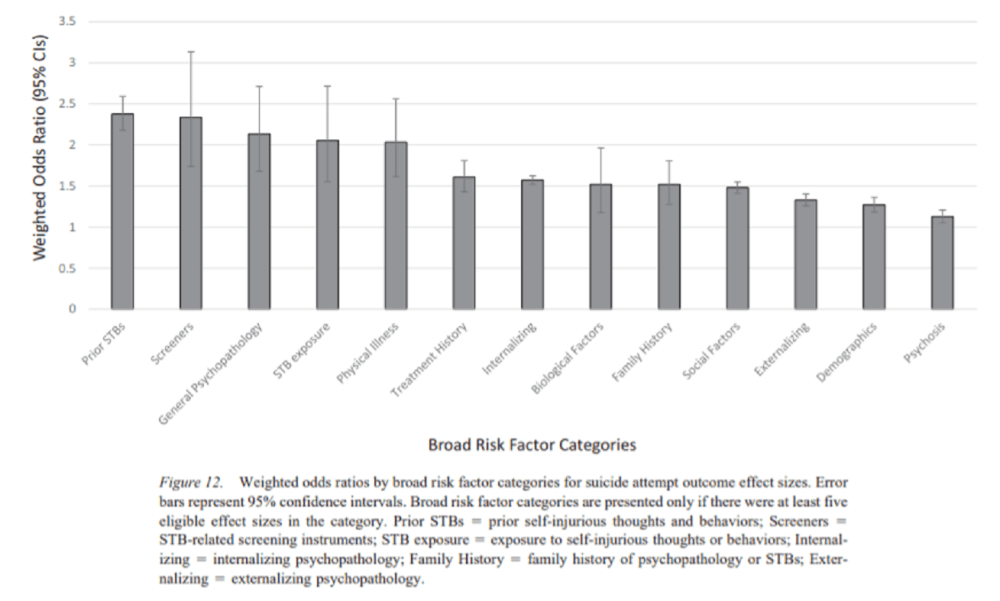
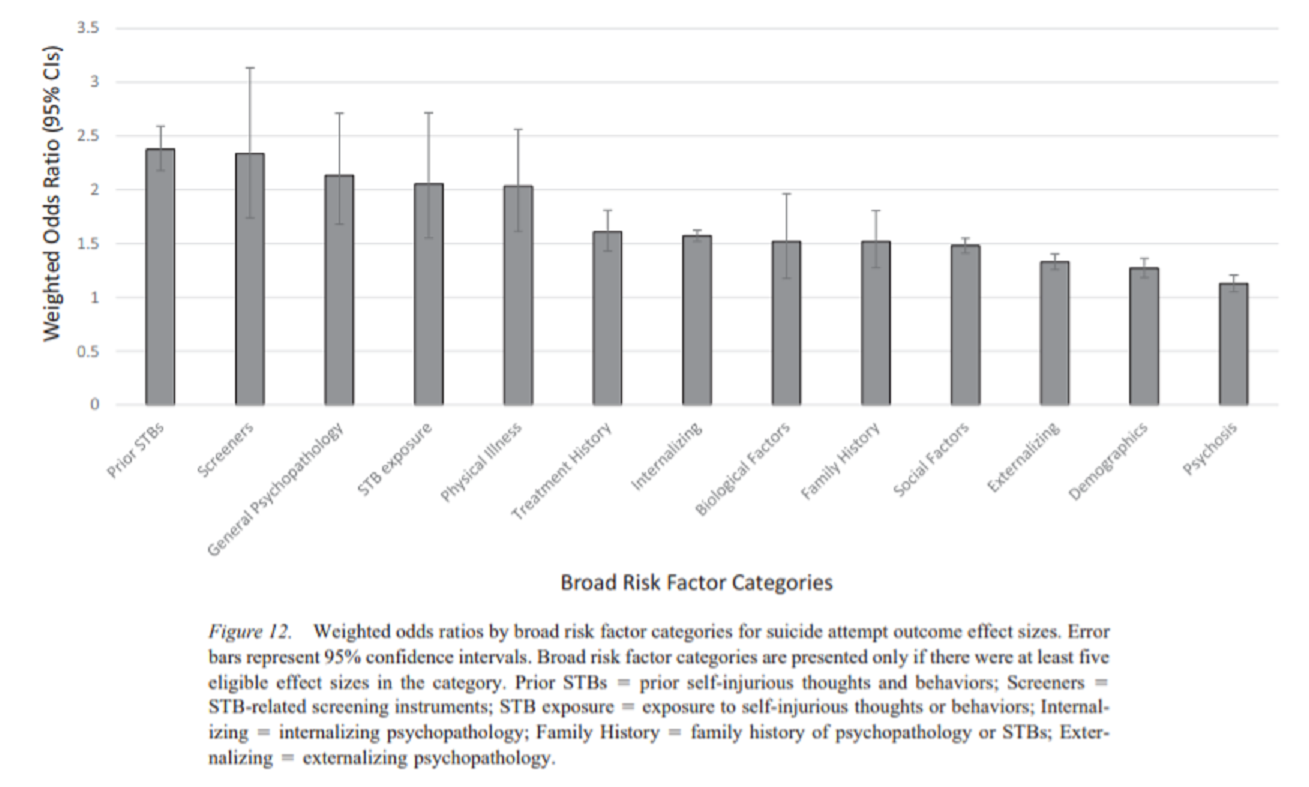
2. Serious suicide researchers have identified risk factors that inform caregivers, no mention of climate.  Franklin et al. provide this analysis of experience with suicidal incidents Risk Factors for Suicidal Thoughts and Behaviors: A Meta-Analysis of 50 Years of Research.

suicide-risk-factors1

With such complexity of influencing factors, putting emphasis on a bit of warming is both myopic and lopsided. For example, some places report springtime suicides are more frequent, others see more such deaths in Summer or Autumn. The seasonal relationship is quite mixed in studies with various theories being suggested along with great uncertainty.

3. Suicides occur more frequently in colder climates than in warmer ones. For example, European studies find the highest rates in eastern European nations and lowest rates in Mediterranean countries.

4. Preventing suicides is a serious issue, and has nothing to do with reducing CO2.

But the whole climate alarm movement is stained with a suicidal impulse and disdain for humanity

Micheal Walsh published The Suicidal Narrative of the Modern Environmental Left, November 16, 2017.

Walsh presents two recent experiences showing how environmental concerns are embedded everywhere including plane trips and merchandising, then gets into the implications. His text with my bolds and images.

It’s all just advertising, of course, and thus harmless enough. It also goes to reinforcing the narrative: that selfish man is the cause of species endangerment, that primitive societies are superior to developed ones (but then who would buy the locally sourced cocoa beans and moringa leaves?), and that traditional medicine—which is to say, no medicine at all—is somehow superior to what those pill-pushing quacks foist on you before they climb in their BMWs and head out to the links for a round or two of golf. Were that true, the ancient Greeks and Romans might all have lived into their 80s, instead of dying in their 20s and 30s, as unsustainable folks tended to do back then.

Which brings us, ineluctably, to “climate change” and this piece in the Times: “The More Education Republicans Have, the Less They Tend to Believe in Climate Change.” Yes, you read that right:

“Climate change divides Americans, but in an unlikely way: The more education that Democrats and Republicans have, the more their beliefs in climate change diverge.  About one in four Republicans with only a high school education said they worried about climate change a great deal. But among college-educated Republicans, that figure decreases, sharply, to 8 percent.”

The author’s underlying assumption is that the more you know about “man-made climate change,” the more eager you should be to chow down on Endangered Species Chocolate or shovel some women’s-collective moringa into your smoothie before you leave your ant-farm apartment to hop on the mass-transit system on your way to a day job that somehow involves you, personally, saving the planet—not so much by what you do, but by what you don’t do.

But that’s not a future we on the Right want to embrace. I take this poll as a heartening sign that the more you educate yourself about the transparent fraud of “man-made climate change,” the less you’re likely to believe in their genteel fictions of peaceful, happy villages in Liberia or their apocalyptic notions of the End of the World as We Know It, just about any day now. As we’ve learned time and again, mountebanks and charlatans are always promising that the end of days is just around the corner, if only we will repent; find Jesus; join their cult; give away all our possessions; or at least sign up for a lifetime supply of snake oil, delivered by Amazon drones right to our doorsteps.

We’ve seen this movie before, of course. In April, Mark J. Perry of the American Enterprise Institute detailed 18 different instances when “[t]he prophets of doom were not simply wrong, but spectacularly wrong.”

Never mind that the Earth’s climate is always changing; we wouldn’t be here at all if it hadn’t. Never mind that there’s little humans can do to interfere with planetary processes, most of which are beyond our ken. Never mind that we flatter ourselves if we think so. Never mind that to characterize carbon dioxide—which we exhale so that the Amazon rain forest and those West African moringa plants might inhale—as a dangerous “greenhouse gas” is profoundly anti-human.

It’s what you’d expect from a political philosophy that denies God and sees itself as its own worst enemy: a narrative that must end in suicide, and all in the name of the greater good. All we ask our friends on the Left is not to take us with you.

Climate lemmings on the move.

More on the bogus Stanford research linking suicides to climate:  Stanford Jumps Suicide Climate Shark


Preschool Alarmist Brainwashing


Review from Newsbusters New Magic School Bus to Kids: Use Clean Energy or Monsters Will Eat You Excerpts in italics with my bolds.

The Magic School Bus is back in the new Netflix series The Magic School Bus Rides Again! Overall, it’s still a nice, fun 13-episode series like we remember from when we were kids, but with some left turns. There is a pretty predictable take on climate change propaganda for little kids, but that wasn’t the worst. That dubious honor goes to the episode that teaches kids that a monster will eat them if they don’t use alternative clean energy sources.

Of course, conserving energy is a good thing and we should be kind to the earth, but this climate change hysteria is taking over. Usually, somebody will say that 97 percent of climate scientists agree that humans are causing global warming, and I was surprised that figure didn’t come up in this episode. Could it be that they know how easily debunked that number is? Given the way Dorothy Ann presented man-made climate change as fact, I doubt it.

This issue tends to play incredibly well in the mainstream media, as they use climate change as the universal bad-guy, so I’m sure there were plenty of parents who actually thought this episode was a good idea. I find it hard to believe any parents were happy about this next one, though.

Espisode 12: Monster Power. Click on link below to play short excerpt video.

https://www.mrctv.org/embed/518271

Episode 12, “Monster Power,” teaches kids that a monster will eat them if they don’t use alternative clean energy sources. Albert, one of the students, has seen a movie in which the evil monster loves pollution and is “coming for us next for what we’ve done to this planet!” With the class camping in the woods, Miss Frizzle and the other students help him come up with clean energy alternatives (wind, water, etc) so they won’t be eaten. Instead, Miss Frizzle could tell him that monsters aren’t real, but I guess that didn’t occur to her.

While it makes sense to teach kids the science of pollution and about all kinds of energy (I wouldn’t have minded some talk about oil in the dinosaur episode, to be honest), why would they tell kids that a monster will eat them for using the wrong energy source? I may not have the teaching credentials of Miss Frizzle, but I’m pretty sure that’s not scientifically accurate. They must really hate fossil fuels as much as their friends on the left. Keeping in mind that the TV-Y rating for this series means it’s for kids 2-6, I’m sure there are going to be some parents pretty irked at bedtime when kids are scared of the blot monster.

Overall, this is a cute series and fun bit of nostalgia for those of us who enjoyed the original books (or TV series) as kids, but I could have done without the climate change propaganda, and telling kids that traditional energy sources attract monsters is way over the top. Can’t kids just learn without an anti-scientific social agenda?


Stanford Jumps Suicide Climate Shark

Today’s media feeding frenzy is promoting another scary climate change report from Stanford.  Sample headlines are:

Climate change linked to increase in suicide rates USA Today

Rising heat linked to suicide spikes in U.S. and Mexico Thomson Reuters Foundation News

Climate Change May Cause 26,000 More U.S. Suicides by 2050 The Atlantic

Etc. Etc.

Some points to consider:

1. A suicide is a personal event with many contributing factors, weather and climate being the most peripheral.

2. Serious suicide researchers have identified risk factors that inform caregivers. Franklin et al. provide this analysis of experience with suicidal incidents Risk Factors for Suicidal Thoughts and Behaviors: A Meta-Analysis of 50 Years of Research

Open image in new tab to enlarge.

With such complexity of influencing factors, putting emphasis on a bit of warming is both myopic and lopsided.  For example, some places report springtime suicides are more frequent, others see more such deaths in Summer or Autumn.  The seasonal relationship is quite mixed in studies with various theories being suggested along with great uncertainty.

3. Suicides occur more frequently in colder climates than in warmer ones. For example, this European study found the highest rates in eastern European nations and lowest rates in Mediterranean countries.

Relationship of suicide rates with climate and economic variables in Europe during 2000–2012 in Annals of General Psychiatry. Excerpt below in italics with my bolds.

It is well known that suicidal rates vary considerably among European countries (Fig.  1) and the reasons for this are unknown although several theories have been proposed. The effect of climate has previously been discussed but has not been investigated in a systematic way across countries.

One of the biggest enigmas is the marked geographic variability in suicide rates found in Europe, with the highest rates being found in Eastern Europe and the lowest in the Mediterranean region

The current study reports that the climatic effect (cold climate) is stronger than the economic one, but both are present. It seems that in Europe suicidality follows the climate/temperature cline which interestingly is not from south to north but from south to north-east. 

4. Preventing suicides is a serious issue, and has nothing to do with reducing CO2.

These New Zealand researchers argue against mixing climate policies with suicide prevention programs.

Will climate change increase or decrease suicide rates? The differing effects of geographical, seasonal, and irregular variation in temperature on suicide incidence Excerpts in italics with my bolds

The effect of environmental temperature on suicide risk is an important issue given the increase in global temperatures expected over the following century. Previous research has produced conflicting findings: Studies concerned with temporal variation in temperature and suicide have tended to find a positive relationship, while those concerned with geographical variation in temperature and suicide have tended to find a negative relationship. In this study, we aimed firstly to estimate the relationship between suicide incidence and three components of variation in temperature: Irregular, seasonal, and geographical. Secondly, we aimed to critically examine what this information can (and cannot) tell us about the likely effects of anthropogenic climate change on suicide rates.

In this study, irregular variation in temperature had a positive relationship with suicide incidence, with approximately 1.8% more suicides for every 1°C increase in temperature. The size of this estimate was fairly consistent with those of previous studies (e.g., Deisenhammer 2003; Kim et al. 2011). We did not find evidence of the non-linear relationship between temperature and suicide incidence reported by Page et al. (2007). We also found no evidence for any substantial lagged effect of irregular variation in temperature, a finding similar to that of Likhvar et al. (2011) and Kim et al. (2011).

On the basis of the apparent positive effect of irregular variation in temperature, it would be tempting to conclude that global warming will increase the incidence of suicides. However, this conclusion is contradicted by our analyses of seasonal and geographical variation in temperature and suicide. Seasonal variation in suicide deaths did roughly follow the pattern generally found in the literature of a peak in spring and a trough in winter (Chew and McCleary 1995), but in accordance with a previous study in New Zealand (Yip et al. 1998), the magnitude of seasonal variation in suicide incidence was very small.

Furthermore, seasonal variation in temperature had a relationship with suicide incidence that was close to zero: That is, hotter times of the year were not consistently associated with higher suicide risk The relationship between geographical variation in temperature and suicide incidence differed even more greatly from that of irregular variation in temperature. While there was little evidence of any relationship at a bivariate level, controlling for age and ethnic differences across regions resulted in the relationship becoming negative: warmer areas had lower suicide rates. This finding was in accordance with prior studies finding a negative relationship between geographical variation in temperature and suicide rates (Rotton 1986; Souêtre et al. 1990; Lester 1999).

Counteracting the potential confounding problem relating to analyses of seasonal and (especially) geographical variation is that these analyses can potentially provide information about how humans adapt to long-term, sustained climatic differences. Indeed, the negative relationship between geographical variation in temperature and suicide incidence hints at the presence of adaptation mechanisms to warmer temperatures that inhibit suicide risk in the long term. At the very least, this finding means that we should be cautious about assuming that the positive effect of irregular variation in temperature on suicide incidence implies that climate change will increase suicide risk. Until the reasons for the apparently conflicting effect of geographical variation in temperature can be identified, such an inference does not seem well justified.

Once again alarmist researchers doing an high wire act. Claims with virtually nothing to support them.

Footnote:

“Jumping the shark” is attempting to draw attention to or create publicity for something that is perceived as not warranting the attention, especially something that is believed to be past its peak in quality or relevance. The phrase originated with the TV series “Happy Days” when an episode had Fonzie doing a water ski jump over a shark. The stunt was intended to perk up the ratings, but it marked the show’s low point ahead of its demise.


Rehab EPA with a Proper Clean Power Plan

Robert Henneke writes a fine article in Washington Examiner Trump has a chance to rein in Obama’s out-of-control EPA Henneke is is the general counsel and director of the Center for the American Future at the Texas Public Policy Foundation. Excerpts below in italics with my bolds.

The Environmental Protection Agency has sent its replacement for the Clean Power Plan to the White House. We don’t know what’s in it (it won’t be released until the White House has a chance to review it), but we know what should be and what shouldn’t.

The new plan should restore the rule of law to an out-of-control agency. The EPA must abide by the rules set by Congress, particularly in the Clean Air Act, rather than lawlessly assuming authority it doesn’t have, as it did through the Clean Power Plan. The new plan must not repeat the mistakes of the CPP.

Carbon dioxide is the supervillain in the story of global climate change. The EPA declared even naturally-occurring CO2 as a pollutant in 2009, then sought to regulate it in the Clean Power Plan. Fortunately, the plan was stayed by the Supreme Court before it went into effect, and it remains in legal limbo.

But in December of that year, the advance notice of the new rules, the EPA indicated it would repeat some of the same mistakes of the CPP in its new guidelines.

First, EPA is not allowed to regulate greenhouse gas emissions from stationary sources (power plants) under Section 111 of the Clean Air Act. Why not? Because all emissions from such sources are already regulated under Section 112. Regulators don’t get two bites at that apple.

Congress expressly prohibited such overregulation to avoid burdensome, duplicative rules, and it required the EPA to choose only one avenue. But EPA has regulated coal-and-oil-fired electric generation unit emissions under Section 112 since 2000, and in 2012, it began regulating all fossil fuel-fired electric generation unit emissions under that section.

Second, to proceed under Section 111, the EPA is required to make an endangerment finding under the criteria for stationary sources. But there is no endangerment finding – not under the Obama administration and not now. To justify its overreach, the EPA has pointed to the endangerment finding it made in 2009 in connection with mobile source emissions (cars and trucks, etc.) under a different provision of the Clean Air Act (Section 202).

But that endangerment finding simply doesn’t apply. It doesn’t meet the criteria of Section 111, that a pollutant from stationary sources endangers the public health and welfare. Instead, it found that an aggregate of six different greenhouse gases, emitted by mobile sources, is a danger.

Why is this difference important? Section 111 permits regulation only from “a category of sources . . . [which] significantly causes or contributes significantly to air pollution [that endangers health or welfare].” This “significance” requirement is not found in Section 202.

So, the EPA would have an insurmountable task in finding that American power plants “significantly” cause or contribute to the levels of carbon dioxide thought to aggravate climate change. Carbon dioxide is ubiquitous and worldwide in scope, making any such finding fraught with peril. Given emissions of carbon dioxide worldwide, it is highly unlikely that the EPA can specifically point to greenhouse gas emissions from American power plants as a significant cause of endangerment of health or welfare.

Finally, if the EPA is to regulate carbon dioxide emissions from power plants, it must proceed under Section 108 of the Clean Air Act, not Section 111. Section 108 is the regulatory path Congress prescribed for air pollutants in the “ambient air” emitted from “numerous or diverse” sources, while Section 111 is the instrument for emissions from specific source categories that pose local pollution concerns. Carbon dioxide is the very model of a ubiquitous substance emitted into the “ambient air” from “numerous or diverse” sources. EPA cannot short-circuit the regulatory framework hard written into the Clean Air Act under section 108 by jumping to another section of the act.

The Clean Power Plan represents the worst of the regulatory abuses of the Obama administration. Its mistakes must not be repeated.

When it comes to the new plan, less is more. Texas serves as the model for success, where a deregulated electricity market has resulted in abundant energy and cleaner power plants as electricity companies adopt the latest technologies as a way to increase efficiencies and maximize profit, all while resulting in a cleaner environment.

That’s the way forward for the Clean Power Plan’s replacement.


UK High Court Refuses to Set Carbon Targets


ITV reports Environmental campaigners lose High Court battle over carbon target. Excerpts in italics below with my bolds.

Environmental campaigners have lost their High Court challenge against the Government over its policy for tackling climate change.

Charity Plan B Earth brought legal action against the Government’s stance on the 2050 carbon target, set under the Climate Change Act 2008.

The charity and 11 UK citizens aged nine to 79 – including publisher Dame Carmen Callil – wanted to bring a judicial review against Business Secretary Greg Clark over the policy.

But Mr Justice Supperstone rejected Plan B Earth’s case on Friday, saying it was “unarguable”.

Lawyers for the charity previously argued the Government should have, in light of the current scientific consensus, gone further than its original target of reducing carbon levels by 2050 to 80% of those present in 1990.

They said the decision not to amend the 2050 target put the UK in breach of its international obligations under the Paris Agreement on Climate Change and was influenced by the Government’s belief that a “more ambitious target was not feasible”.

At a hearing on July 4, Jonathan Crow QC told the court: “The Secretary of State’s belief that he needs to have regard to what is feasible, rather than what is necessary, betrays a fundamental misunderstanding of the scheme of the 2008 Act and must be quashed.

“All of the individual claimants are deeply concerned about climate change.”

The barrister argued the Secretary of State’s “continuing refusal” to amend the 2050 target means the UK is playing “Russian roulette with two bullets, instead of one”.

But, refusing permission for a full hearing, Mr Justice Supperstone said Plan B Earth’s arguments were based on an “incorrect interpretation” of the Paris Agreement.

He said: “In my view the Secretary of State was plainly entitled … to refuse to change the 2050 target at the present time.

“I do not consider it arguable that the Secretary of State’s refusal to amend the 2050 target is an unlawful exercise of his discretion.”

Plan B Earth director Tim Crosland said the charity was “surprised and disappointed” by the ruling and plans to appeal.

He said: “We consider it clear and widely accepted that the current carbon target is not compatible with the Paris Agreement.

“Neither the Government nor the Committee on Climate Change suggested during our correspondence with them prior to the claim that the target was compatible.

“Indeed, it was only in January of this year that the Committee published a report accepting that the Paris Agreement was ‘likely to require’ a more ambitious 2050 target.

“Moreover the Government acknowledged in these proceedings that it was uncontroversial’ that the 2050 target was insufficient to meet the 1.5C target, one of the key aspects of the Paris commitment.

“As with other legal campaigns confronting powerful vested interests it takes time to break through, and time is not on our side.

“We’ll be doing everything possible to accelerate the process. Wildfires raging in the Arctic Circle must surely be a wake-up call.”

Regarding wildfires in the Arctic, I recommend he read my post Arctic Hockey Stick Extends Lead