Again Falsely Linking Smoking and Climate Science

Sarah Myhre is at it again, claiming climate science links storms to CO2 as certainly as smoking causes cancer.  Fossil fuel activists are obsessed with the smoking analogy, not least because oil companies have even deeper pockets than tobacco companies.

The analogy actually works against her on both sides.  Storms and CO2 are not correlated in the statistics, and she exaggerates the extent to which smoking results in cancer.  A previous post explains.

Original Post:  Climate Risky Business

A new theme emerging out of the IPCC Fifth Report was the emphasis on selling the risk of man-made climate change. The idea is that scientists should not advocate policy, but do have a responsibility to convince the public of the risks resulting from burning fossil fuels.

An article illustrates how this approach shapes recent public communications in support of actions on global warming/climate change.  Treading the Fine Line Between Climate Talk and Alarmism (Op-Ed)  By Sarah E. Myhre, Ph.D. | June 23, 2017.  Excerpts:

What is our role in public leadership as scientists? I would suggest a few action items: Work to reduce risk and cost for the public; steward the public’s interest in evidence; and be steady and committed to the scientific process of dissent, revision and discovery. This means communicating risk when necessary. We would never fault an oncologist for informing patients about the cancer risks that come with smoking. Why would we expect Earth scientists to be any different, when we’re just as certain?

As a public scholar with expertise in paleoclimate science, I communicate alarming, difficult information about the consequences to Earth and ocean systems that have come with past events of abrupt climate warming. As the saying goes, the past is the key to the future. 

We are living through a crisis of trust between the American public and climate scientists, and we must extend ourselves, as scientists and public servants, to rebuild transparency and trust with the public. I will start: I want the global community to mitigate the extreme risk of the warmest future climate scenarios. And, I want my kid to eat salmon and ski with his grandkids in the future. I am invested in that cooler, safer, more sustainable future — for your kids and for mine. Just don’t call me an alarmist.

This provides a teachable moment concerning the rhetorical maneuver to present climate as a risky business. The technique typically starts with a particular instance of actual risk and then makes a gross generalization so that the risk is exaggerated beyond reason.  From the article above:

Climate scientists are just as certain as oncologists are.

Herein lies the moral of this tale. The particular risk is the convincing epidemiological evidence linking lung cancer to smokers. The leap was claiming second-hand smoke puts non-smokers at risk of cancer. The statistical case was never conclusive, but the public was scared into enacting all kinds of smoke-free spaces.

Very few passive smoking/lung cancer studies are published these days compared to the glut of the 1980s and 1990s, but the handful that have appeared in recent years continue to support the null hypothesis. For all the campaigners’ talk of “overwhelming evidence”, the link between secondhand smoke and lung cancer has always been very shaky. It tends to be the smaller, case-control studies which find the associations while the larger, cohort studies do not (and, as the JNCI report notes, case-control studies “can suffer from recall bias: People who develop a disease that might be related to passive smoking are more likely to recall being exposed to passive smoking.”)

Gerard Silvestri, MD, of the Medical University of South Carolina, a member of NCI’s PDQ Screening and Prevention Editorial Board said (here):

“We’ve gotten smoking out of bars and restaurants on the basis of the fact that you and I and other nonsmokers don’t want to die,” said Silvestri. “The reality is, we probably won’t.”

To be clear, I don’t want smokers fouling my space in restaurants, and the policies are beneficial to me esthetically. But there was never any certainty about my risk of cancer, just the spoiling of clean air around me.  What was a matter of opinion and personal preference was settled politically by asserting scientific certainty of my health risk.

To draw the point finely, secondhand smoke shows how science is used by one group (anti-smoking activists) against another group (smokers) by mobilizing support for regulations on the basis of a generalized risk, raising concerns among the silent majority who otherwise were not particularly interested in the issue.

Climate as a Risky Business

Environmentalists have often employed risk exaggeration, beginning with Rachel Carson’s Silent Spring full of innuendo about DDT without any actual epidemiological proof. Currently Junk Science provides a list of EPA exaggerations about environmental pollution, for example The scientific fraud that claims air pollution is killing people

In the climate field, any flat Polynesian island is of course at risk of flooding, and thus by extension they produce images of Manhattan under water. Global risk is trumpeted, ignoring all the local particularities of land subsidence, tidal gauge records, terrain drainage features, infrastructure, precipitation patterns, etc.

Any storm, drought, flood, or unusual weather likewise presents a particular risk in the locale where it occurs. The gross exaggeration is to claim that we are increasing the risk of all these events, and by stopping burning fossil fuels we can prevent them from happening.

Sarah Myhre’s research focuses on ocean dead zones (oxygen-depleted waters), which is a real and long-studied risk. Then comes her leap into the fearful future:

The surface and deep ocean will continue to absorb heat and CO2 from the atmosphere. The heating of the ocean will increase the stratification of water (i.e. ocean mixing will be reduced, as will the strength of thermohaline circulation). Ocean heating will also drive the thermal expansion of the interior of the ocean – this is one of the primary contributors to sea level rise.

The absorption of CO2 from the atmosphere will drive changes in the chemistry of surface and deep waters – there are significant biological consequences to acidifying the global surface ocean. Basically, we are looking at the fundamental reorganization of biological communities and ecological provinces in the ocean. These physical drivers (warming, stratification, acidification) all area associated with significant biological consequences.

This is a continuation of a scare called Climate Change Is Suffocating The Oceans.  Once again climate alarmists/activists have seized upon an actual environmental issue, but misdirect the public toward their CO2 obsession, and away from practical efforts to address a real concern. Some excerpts from scientific studies serve to put things in perspective.  See Ocean Oxygen Misdirection

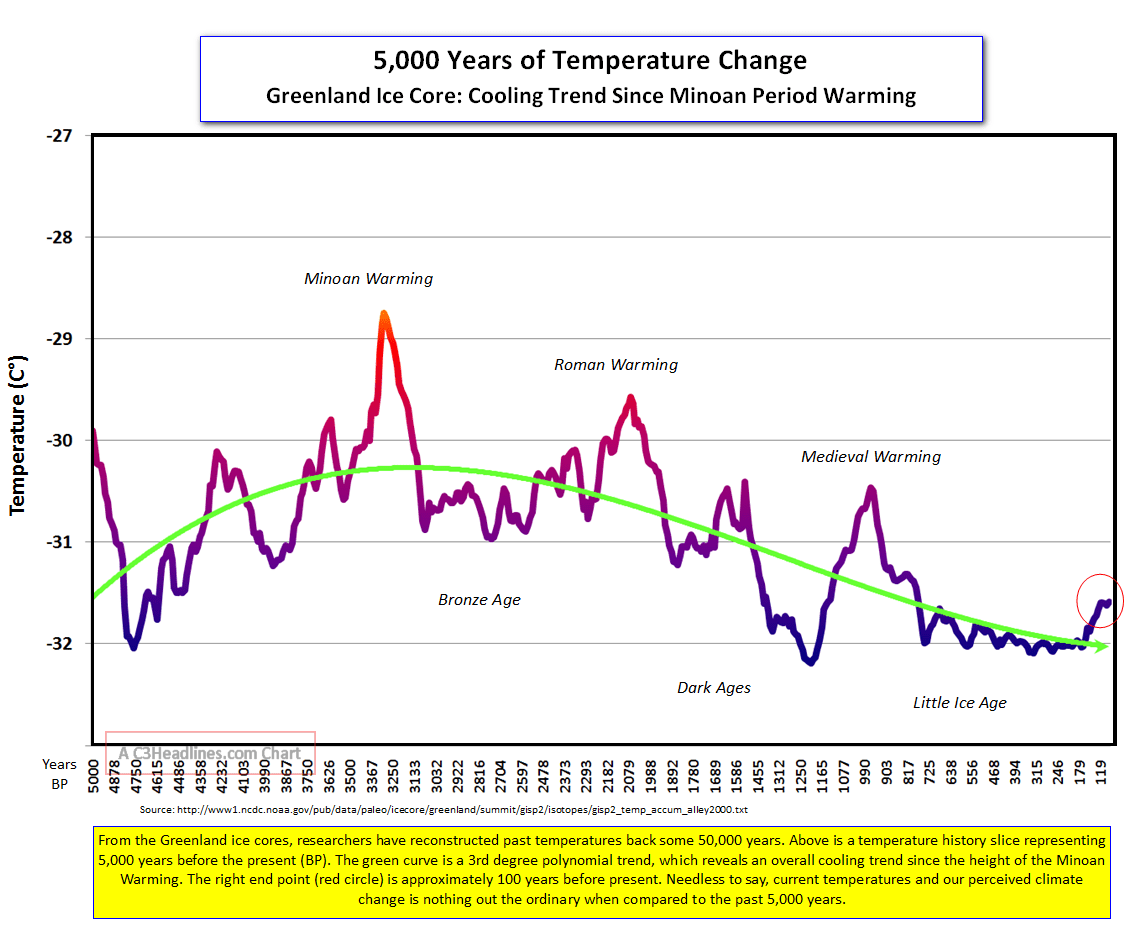
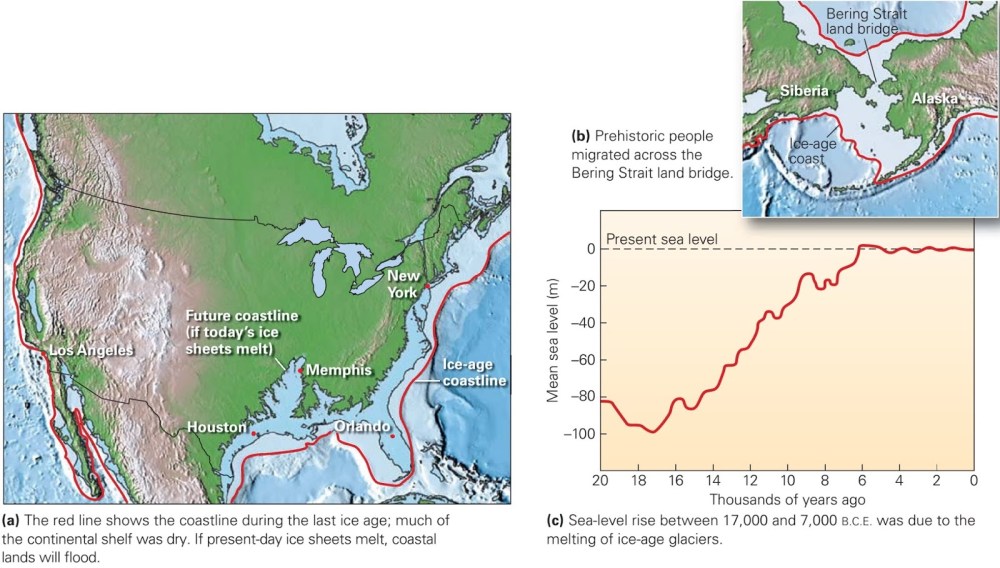
As a paleoclimate expert the author knows the climate and sea levels have changed many times in the past, and often shifted quickly in geological terms.

And yet the evidence shows clearly that CO2 follows as an effect of changing temperatures, not the cause.

Summary

Warmists are of the opinion that because of burning fossil fuels, our modern climate no longer compares to paleoclimates, a claim in fact that humans are overriding natural forces. But the message from the ice cores is clear: Through the ages, CO2 responds to temperatures and not the other way around.

The other message is also clear: Climates change between warm and cool, and warm has always been good for humans and the biosphere. We should concern ourselves with Adaptation, preparing for the cold times with robust infrastructure and reliable, affordable energy.

See also CO2 and Climate Change for the Ages

See also Claim: Fossil Fuels Cause Global Warming
Updated 2017  Fossil Fuels ≠ Global Warming

Footnote:

Actuaries are accountants specialized in risk statistics like morbidity and mortality, usually working in the insurance industry.

Question:  What is the difference between an Actuary and an Auditor?
Answer:  The Auditor is the one with a sense of humor.
(Old joke from days working at KPMG)

See also:  Cavemen Climate Comics

Canada  Ends Probe Against Climate Change Doubters

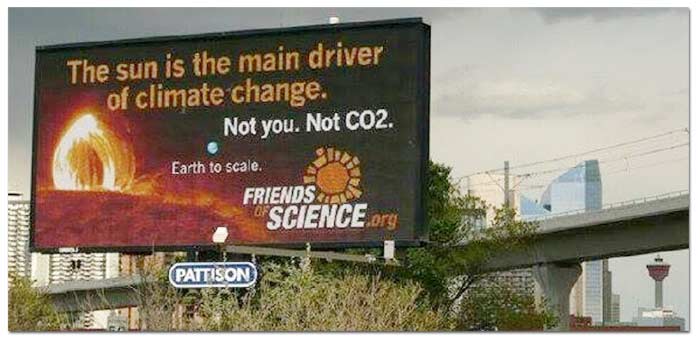
Billboard in Calgary Alberta gives rise to complaint to Canada’s Competition Bureau.

The vigilantes report on their setback in this National Observer article Feds halt probe of climate doubters.  Some excerpts give the flavor of their perspective.

After more than a year of investigating, the Competition Bureau abruptly dropped its inquiry earlier this summer into three groups that had displayed information in public raising doubts about the international scientific consensus on climate change.

The groups put up websites and billboards that promoted statements like, “the sun is the main driver of climate change,” and “carbon dioxide is not a pollutant,” according to an application filed with the bureau, a Canadian independent law enforcement agency.

Those views are contrary to mainstream climate science and the government of Canada itself, which states that “changes in solar irradiance have contributed to climate trends over the past century but since the industrial revolution, the effect of additions of greenhouse gases to the atmosphere has been over 50 times that of changes in the sun’s output.”

From the Bureau letter to the Complainant:

The inquiry concerned allegations that Friends of Science Society, International Climate
Science Coalition and Heartland Institute made misleading representations regarding climate change on their respective websites and, in the case of Friends of Science Society, on billboards.

At this time, considering the available evidence, the assessment of the facts in this case, and
to ensure the effective allocation of limited resources, the Commissioner has discontinued the
inquiry. 

A statement was provided to National Observer by Tom Harris, executive director of the International Climate Science Coalition, but was incompletely quoted in the article. The full statement posted at International Science Coalition is below:

“The complainants apparently think that they know the truth about the causes and consequences of climate change. But this makes no sense. This is not just because the science is enormously complicated with scientists holding at times radically different points of view. It is also because scientific hypotheses, and even scientific theories, are not truth; they can be, and often are, wrong. Truth applies to things like mathematics or chess in which we write the rules. But truth never applies to our findings about nature, which are merely educated opinions based on scientists’ interpretations of observations.”

“When authorities promote truth about science, progress stops. I am glad the Competition Bureau did not fall into this trap. Its time to open up, not shut down, the debate about climate change, one of the most complex and costly issues of our age.”

More complete account of this encounter from Friends of Science:  Responding to the National Observer Article on the Competition Bureau/Ecojustice Call for Inquiry

Key Points:

  • First, Ecojustice asked for an honest debate. We provided one.[1] They never responded.
  • Secondly, presently there is no such thing as a ‘low-carbon economy’ because everything in the modern world is made from or powered by fossil fuels – even hydro dams, nuclear facilities and geothermal require fossil fuels to create the power plant.
  • Thirdly, climate change is mostly driven by natural factors and might only be marginally mitigated by the Paris Agreement.
  • Fourthly, despite claiming humans caused most of the recent warming, the IPCC, perhaps inadvertently, revealed in its 2013 AR5 report that climate change was mostly due to natural factors. (This point is more fully explained in post Warming from CO2 Unlikely
  • Finally, the Paris Agreement targets are unattainable and if attempted, would lead to the complete destruction of the Canadian economy. This is contrary to the UN Charter’s explicit principles. 

These are our opinions, protected by the Charter of Rights.

For examples of proven false advertising by climate activists, see Truth in Climate Advertising

Summary

The complaint was filed by an “ecojustice” lawyer. Free speech about a matter of opinion is attacked as false advertising. Sad. We are still waiting for the evidence supporting global warming claims. Keep on firing away, Tom Harris and Friends of Science.


Partying in Paris instead of Preparing in Houston

Waves pound the shore from approaching Hurricane Harvey on August 25, 2017 in Corpus Christi, Texas.(Photo by Joe Raedle/Getty Images)

“We are not ready for a return to 1950’s weather, let alone something unprecedented.”

As evidence of the above, we have Hurricane Harvey as a case in point.  While elected officials blather about “zero-carbon” footprints, nothing is done to prepare for weather events that have happened before and can always happen again. International accords and conferences like the last one in Paris do nothing for a vulnerable place like Houston.

Consider this article A Texas newsroom predicted a disaster. Now it’s close to coming true. published at Columbia Journalism Review.  Excerpts below.

THE TEXAS TRIBUNE AND PROPUBLICA last year published a multi-part investigation looking at what would happen if Houston was hit by a major hurricane.

The reporters partnered with scientists at several universities in Texas to conduct simulations, gaming out various storm scenarios for the country’s fourth-largest city, with its rapidly growing population, huge stores of oil and natural gas, and a major NASA facility.

The conclusion: The city and region were woefully unprepared for a major hurricane, with inadequate infrastructure for evacuation and flood control. A major storm would inflict catastrophic damage, bringing “economic and ecological disaster.” The series won awards, including a Peabody and an Edward R. Murrow, but it didn’t lead to substantive policy changes or big new investments in infrastructure.

Houston is the fourth-largest city in the country. It’s home to the nation’s largest refining and petrochemical complex, where billions of gallons of oil and dangerous chemicals are stored. And it’s a sitting duck for the next big hurricane. Learn why Texas isn’t ready. March 3, 2016

A house is engulfed in flames as water and waves inundate homes on Galveston Island as Hurricane Ike approaches the coast Sept. 12, 2008.

Now the same journalists are watching nervously as Hurricane Harvey inches closer to the Texas shoreline. While landfall is expected between Corpus Christi and Houston, one of their worst-case scenarios could still come true.

“Unfortunately it might take a disaster,” Shaw adds, “before Texas wakes up and realizes we need to send some real money to protect one of the nation’s biggest ports, where we keep most of our oil and chemicals.” If Houston was directly hit by a storm of Harvey’s magnitude, Shaw says, the environmental damage would exceed the BP Deepwater Horizon oil spill.

After the series appeared, the reporters reached out to the state’s entire congressional delegation and both of its US senators, one of whom, Ted Cruz, ran for president. “So none of them can say nobody could anticipate the calamity a large storm could inflict upon their constituencies,” Klein wrote.

“Ike was supposed to be that wake-up call to do something about this,” Shaw says. “All I can hope for is that this will be another wake-up call, and Texas will ask for more action before the ‘big one.’”

A short video explaining in 2011 how to protect the area from the next big one.

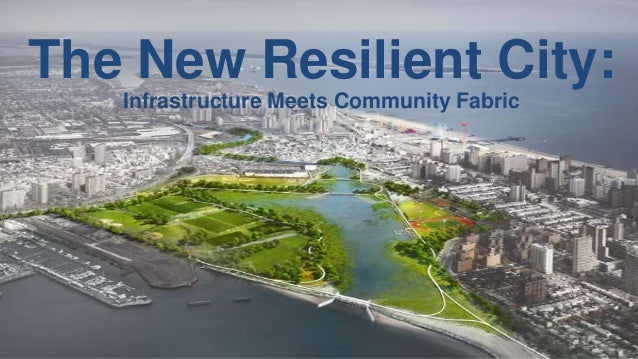
See also Climate Adaptive Cities: The Smart Way Forward

Climate Adaptive Cities: The Smart Way Forward

A recent post Renewables Hypocrisy described the vain and empty spectacle of Mayors of major cities lining up to get badges claiming “100% Renewable Energy”. This post provides the alternative to such posturing. Matthew Kahn is a microeconomist studying and writing on the more rational and productive response to future climate change possibilities. His thinking is explained in a recent paper is Will Climate Change Cause Enormous Social Costs for Poor Asian Cities? Asian Development Review September 2017. There is much wisdom packed in this document, not only regarding Asia but everywhere.  Some excerpts below give the flavor.

Overview

Climate change could significantly reduce the quality of life for poor people in Asia. Extreme heat and drought, and the increased incidence of natural disasters will pose new challenges for the urban poor and rural farmers. If farming profits decline, urbanization rates will accelerate and the social costs of rapid urbanization could increase due to rising infectious disease rates, pollution, and congestion. This paper studies strategies for reducing the increased social costs imposed on cities by climate change.

Cities face a practical challenge and many have not embraced it

While Asia’s poor face major new risks because of climate change, there are countervailing forces in play as well. With the rise of big data, governments and individuals have greater access to real-time information about emerging threats. Increased international flows of capital have given local governments the capacity to fund public infrastructure projects.

An open question concerns the incentives for mayors and city governments in developing countries to take costly steps to improve the quality of life of the urban poor. Such investments will ultimately increase the migration of rural poor to these cities. Anticipating this effect, some mayors and city governments are discouraged from making such investments. Feler and Henderson (2011) present evidence of this dynamic in Brazil.

Asia’s collective ability to adapt to anticipated but ambiguous new climate risks hinges on the well-being of the urban poor. If this group can successfully adapt to new challenges, then Asia’s overall urbanization experience is more likely to yield long-term economic growth and improvements in living standards.

The campaign to mitigate (prevent) global warming by reducing CO2 emissions is typified by the Paris accord, an ongoing political theater providing cover for elected officials.
Mitigation is not only useless, it distracts from real efforts to prepare for the future. Kahn:

Given that climate change directly impacts city quality of life, one surprising fact is that many leaders from around the world appear to devote more effort to seeing their city become a low-carbon city rather than a resilient city. To an economist, greater effort being devoted to mitigation rather than adaptation is surprising. With the former, there is a free-rider problem. Each city only contributes a small amount of the world’s total emissions; even if a city’s emissions are reduced to zero, its efforts will make no real difference in mitigating climate change.

Therefore, self-interest should drive adaptation efforts. Climate change can be perceived as a medium-term threat that will intensify after today’s leaders are no longer in power. It remains an open question whether elected officials are rewarded for tackling medium-term challenges. If real estate markets are forward looking, then current prices should reflect future threats. If a city develops a reputation for having a declining quality of life, then it will have more trouble attracting and retaining skilled workers. The threat of a brain drain (and lost tourism receipts) should incentivize local leaders to act.

It is also a case where one size does not fit all

In the spatial economics literature, cities differ with respect to their locational characteristics. Some cities feature cold winters, while others feature mountains. Real estate prices and rents adjust across cities so that those with better quality of life have higher rents and lower wages as compensation differential for living there (Rosen 2002). Climate change affects a city’s attributes. For example, a city that has enjoyed a temperate summer climate may now be much warmer during summer months.

In the typical urban economics model, a city’s attributes are all common knowledge. When considering the urban consequences of climate change, a city’s future attributes should be thought of as a random vector. For example, we do not know exactly what challenges Singapore will face in the year 2025 resulting from higher temperatures and/or rising sea levels. We can form expectations of these random variables, but we know that we do not know these future outcomes.

Facing uncertainty about how the quality of life will evolve in different cities, the theory of option value suggests it is important that Asia’s urban poor have as many possible destinations to move as possible. Such a menu of cities protects individuals and creates competition. Every city and country features locations of “higher ground” that are ostensibly more protected from the impacts of climate change. Advances in spatial mapping software can pinpoint such areas. If cities change their land use patterns to allow for higher densities in such areas, then adaptation is promoted.

If a population can self-protect from emerging threats using affordable technologies and real-time information, and if local governments can do a better job protecting urban residents from risk, then the historical relationship between risk and negative outcomes can be attenuated. This is a new version of the “Lucas critique,” which argues that as governments change the rules of the game, economic agents reoptimize and past relationships between consumption and income no longer hold (Lucas 1976).

In the case of climate adaptation, Mother Nature changes the rules of the game and economic actors change their decision making to reduce their risk exposure. Forward-looking households and firms should be making investments to become more nimble in the face of increased exposure to heat, drought, and climate volatility. The net effect should be that B1 in equation (1) shrinks toward zero over time.

Summary

Two schools of thought regarding future climates:

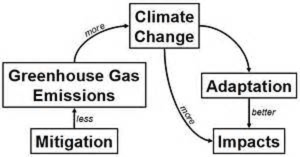
Mitigation: Cut down on use of fossil fuels to mitigate or prevent future global warming.
Adaptation: As changes occur, adapt our methods and practices to survive and prosper in new conditions.

The Paris Agreement and various cap-and-trade schemes intend to Mitigate future warming. Lots of gloom and doom is projected (forecast) by activists claiming mitigation is the only way. But the facts of our experience say otherwise. Building Adaptive Cities means investing in resilience, preparing for future periods both colder and warmer than the present. Key objectives include reliable, affordable energy and robust infrastructure.

See also: Adapt, Don’t Fight Climate Change

Mitigation is Bad for Us and the Planet


Climate Hype Running Amok

The climate hype machine has switched into overdrive with the release of a draft US climate assessment report.  Read about it with caution, as explained in recent post Impaired Climate Vision.

Meanwhile a good synopsis of wrong-headed thinking about climate is provided by John Stossel in a review of Al Gore’s science fictions (here).  (Excerpts below with my bolds)

John Stossel: Al Gore and me — Don’t believe the hype

I was surprised to discover that Al Gore’s new movie begins with words from me!

While icebergs melt dramatically, Gore plays a clip of me saying, “‘An Inconvenient Truth’ won him an Oscar, yet much of the movie is nonsense. ‘Sea levels may rise 20 feet’ — absurd.” He used this comment from one of my TV shows.

The “20 feet” claim is absurd — one of many hyped claims in his movie.

His second film, “An Inconvenient Sequel,” shows lower Manhattan underwater while Gore intones: “This is global warming!”

My goodness! Stossel doubts Al Gore’s claim, but pictures don’t lie: The 9/11 Memorial is underwater! Gore is right! Stossel is an ignorant fool!

But wait. The pictures were from Superstorm Sandy. Water is pushed ashore during storms, especially “super” storms. But average sea levels haven’t risen much.

Over the past decade, they have risen about 1 inch. But this is not because we burn fossil fuels. Sea levels were rising long before we burned anything. They’ve been rising about an inch per decade for a thousand years.

In his new movie, Gore visits Miami Beach. No storm, but streets are flooded! Proof of catastrophe!

But in a new e-book responding to Gore’s film, climate scientist Roy Spencer points out that flooding in “Miami Beach occurs during high tides called ‘king tides,’ due to the alignment of the Earth, sun and moon. For decades they have been getting worse in low-lying areas of Miami Beach where buildings were being built on reclaimed swampland.”

It’s typical Al Gore scaremongering: Pick a place that floods every year and portray it as evidence of calamity.

Spencer, a former NASA scientist who co-developed the first ways of monitoring global temperatures with satellites, is no climate change “denier.” Neither am I. Climate changes.

Man probably plays a part. But today’s warming is almost certainly not a “crisis.” It’s less of a threat than real crises like malaria, terrorism, America’s coming bankruptcy, etc. Even if increasing carbon dioxide warming the atmosphere were a serious threat, nothing Al Gore and his followers now advocate would make a difference.

“What I am opposed to is misleading people with false climate science claims and alarming them into diverting vast sums of the public’s wealth into expensive energy schemes,” writes Spencer.

Gore does exactly that. He portrays just about every dramatic weather event as proof that humans have changed weather. Watching his films, you’d think that big storms and odd weather never occurred before and that glaciers never melted.

In his first movie, Gore predicted that tornadoes and hurricanes would get worse. They haven’t. Tornado activity is down.

What about those dramatic pictures of collapsing ice shelves?

“As long as snow continues to fall on Antarctica,” writes Spencer, “glaciers and ice shelves will continue to slowly flow downhill to the sea and dramatically break off into the ocean. That is what happens naturally, just as rivers flow naturally to the ocean. It has nothing to do with human activities.”

Gore said summer sea ice in the Arctic would disappear as early as 2014. Nothing like that is close to happening.

Gore’s movie hypes solar power and electric cars but doesn’t mention that taxpayers are forced to subsidize them. Despite the subsidies, electric cars still make up less than 1 percent of the market.

If electric cars do become more popular, Spencer asks, “Where will all of the extra electricity come from? The Brits are already rebelling against existing wind farms.”

I bet most Gore fans have no idea that most American electricity comes from natural gas (33 percent), coal (30 percent) and nuclear reactors (20 percent).

Gore probably doesn’t know that.

I’d like to ask him, but he won’t talk to me. He won’t debate anyone.

Critics liked “An Inconvenient Sequel.” An NPR reviewer called it “a hugely effective lecture.” But viewers were less enthusiastic. On Rotten Tomatoes, my favorite movie guide, they give “Sequel” a “tipped over popcorn bucket” score of 48 percent. Sample reviews: “Dull as can be.” “Faulty info, conflated and exaggerated.”

Clearly, Nobel Prize judges and media critics are bigger fans of big government and scaremongering than the rest of us.

Summary:  Al Gore is Jumping the Shark

“Jumping the shark” is attempting to draw attention to or create publicity for something that is perceived as not warranting the attention, especially something that is believed to be past its peak in quality or relevance. The phrase originated with the TV series “Happy Days” when an episode had Fonzie doing a water ski jump over a shark. The stunt was intended to perk up the ratings, but it marked the show’s low point ahead of its demise.

Judiciary Climate Confusion

On August 8, 2017 a ruling by the DC Court of Appeals was hailed by me as a “gamechanger”, since the text was the most sensible thinking from judges I have seen regarding the climate issue.  More on that decision later on.  Then yesterday we get a ruling from the same court coming down on the opposite, “same old, same old” side.  Looking at the two rulings reveals how the judiciary is struggling with claims of global warming/climate change.  Let’s look at the most recent decision first.

Overview of the August 22 Ruling on Sabal Trail Florida Pipeline Project

Activists won a huge victory when a Washington, D.C. appellate court panel sided with the Sierra Club, saying the federal agency that reviewed the project had made a huge error. In the narrow 2-1 decision, U.S. Circuit Judge Thomas B. Griffith wrote that the Federal Energy Regulatory Commission (FERC) should have considered the impact of the pipeline’s added greenhouse gas emissions.

Though the D.C. judges said there was nothing wrong with FERC’s consideration of the poor, minority residents who live along the pipeline, they did agree the agency failed to estimate the amount of carbon emissions that would be generated by Sabal Trail. (Celebratory language from thinkprogress)

Synopsis of Ruling and Dissenting Opinion

The court document is On Petitions for Review of Orders of the Federal Energy Regulatory Commission  heard by Circuit Judges Rogers, Brown, and Griffith.  Opinion for the Court filed by Circuit Judge GRIFFITH.  Opinion concurring in part and dissenting in part filed by Circuit Judge BROWN. (Excerpts below provide a synopsis, my bolds)

The Case and the Ruling

The three segments of the project have different owners,1 but they share a common purpose: to serve Florida’s growing demand for natural gas and the electric power that natural gas can generate. At present, only two major natural-gas pipelines serve the state, and both are almost at capacity. Two major utilities, Florida Power & Light and Duke Energy Florida, have already committed to buying nearly all the gas the project will be able to transport. Florida Power & Light claims that without this new project, its gas needs will begin to exceed its supply this year. But the project’s developers also indicate that the increased transport of natural gas will make it possible for utilities to retire older, dirtier coal-fired power plants.

Despite these optimistic predictions, the project has drawn opposition from several quarters. Environmental groups fear that increased burning of natural gas will hasten climate change and its potentially catastrophic consequences. Landowners in the pipelines’ path object to the seizure of their property by eminent domain. And communities on the project’s route are concerned that pipeline facilities will be built in low-income and predominantly minority areas already overburdened by industrial polluters.

The Federal Energy Regulatory Commission FERC launched an environmental review of the proposed project in the fall of 2013. The agency understood that it would need to prepare an environmental impact statement (EIS) before approving the project, as the National Environmental Policy Act of 1969 (NEPA) requires for each “major Federal action[] significantly affecting the quality of the human environment.” See 42 U.S.C. § 4332(2)(C). FERC solicited public comment and held thirteen public meetings on the project’s environmental effects, and made limited modifications to the project plan in response to public concerns, before releasing a draft impact statement in September 2015 and a final impact statement in December 2015.

The role of the courts in reviewing agency compliance with NEPA is accordingly limited. Furthermore, because NEPA does not create a private right of action, we can entertain NEPA-based challenges only under the Administrative Procedure Act and its deferential standard of review. See Theodore Roosevelt Conservation P’ship v. Salazar, 616 F.3d 497, 507 (D.C. Cir. 2010). That is, our mandate “is ‘simply to ensure that the agency has adequately considered and disclosed the environmental impact of its actions and that its decision is not arbitrary or capricious.’”

To sum up, the EIS acknowledged and considered the substance of all the concerns Sierra Club now raises: the fact that the Southeast Market Pipelines Project will travel primarily through low-income and minority communities, and the impact of the pipeline on the city of Albany and Dougherty County in particular. The EIS also laid out a variety of alternative approaches with potential to address those concerns, including those proposed by petitioners, and explained why, in FERC’s view, they would do more harm than good. The EIS also gave the public and agency decisionmakers the qualitative and quantitative tools they needed to make an informed choice for themselves. NEPA requires nothing more.

It’s not just the journey, though, it’s also the destination. All the natural gas that will travel through these pipelines will be going somewhere: specifically, to power plants in Florida, some of which already exist, others of which are in the planning stages. Those power plants will burn the gas, generating both electricity and carbon dioxide. And once in the atmosphere, that carbon dioxide will add to the greenhouse effect, which the EIS describes as “the primary contributing factor” in global climate change. J.A. 915. The next question before us is whether, and to what extent, the EIS for this pipeline project needed to discuss these “downstream” effects of the pipelines and their cargo. We conclude that at a minimum, FERC should have estimated the amount of power-plant carbon emissions that the pipelines will make possible.

BROWN, Circuit Judge, concurring in part and dissenting in part:

I join today’s opinion on all issues save the Court’s decision to vacate and remand the pipeline certificates on the issue of downstream greenhouse emissions. Case law is clear: When an agency “‘has no ability to prevent a certain effect due to’ [its] ‘limited statutory authority over the relevant action[],’ then that action ‘cannot be considered a legally relevant cause’” of an indirect environmental effect under the National Environmental Policy Act (“NEPA”).

Here, FERC declined to engage in an in-depth examination of downstream greenhouse gas emissions because there is no causal relationship between approval of the proposed pipelines and the downstream greenhouse emissions; and, even if a causal relationship exists, any additional analysis would not meaningfully contribute to its decision making. Both determinations were reasonable and entitled to deference.

Regarding causation, the Court is correct that NEPA requires an environmental analysis to include indirect effects that are “reasonably foreseeable,” Freeport, 827 F.3d at 46, but it misunderstands what qualifies as reasonably foreseeable. The Court blithely asserts it is “not just the journey,” it is “also the destination.” Maj. Op. at 18. In fact, NEPA is a procedural statute that is all about the journey. It compels agencies to consider all environmental effects likely to result from the project under review, but it “does not dictate particular decisional outcomes.”

While the Court concludes FERC’s approval of the proposed pipelines will be the cause of greenhouse gas emissions because a significant portion of the natural gas transported through the pipeline will be burned at power plants, see Maj. Op. at 19, the truth is that FERC has no control over whether the power plants that will emit these greenhouse gases will come into existence or remain in operation.

Even if the Court is correct that the Commission has the power to deny pipeline certificates based on indirect environmental concerns, such a denial represents the limit of the Commission’s statutory power. Nothing would prevent the Florida Board from independently approving the construction or expansion of the power plants at issue. In fact, the record shows the Board has already approved some of these projects prior to the Commission reaching a decision on the proposed pipelines. JA 910–11. Moreover, there is also nothing preventing the Intervenors from pursuing an alternative method of delivery to account for the same amount of natural gas. Practical considerations point in the opposite direction. Both the Board and the Commission have concluded Florida has a need for additional natural gas, and nothing in today’s opinion takes issue with those holdings.

Thus, just as FERC in the DOE cases and the Federal Motor Carrier Safety Administration in Public Citizen did not have the legal power to prevent certain environmental effects, the Commission here has no authority to prevent the emission of greenhouse gases through newly-constructed or expanded power plants approved by the Board.

The DC Appeals Court Decision August 8, 2017

Overview

A major clarification came today from the DC Court of Appeals ordering EPA (and thus the Executive Branch Bureaucracy) to defer to Congress regarding regulation of substances claimed to cause climate change.  While the issue and arguments are somewhat obscure, the clarity of the ruling is welcome.  Basically, the EPA under Obama attempted to use ozone-depleting authority to regulate HFCs, claiming them as greenhouse gases.  The judges decided that was a stretch too far.

The EPA enacted the rule in question in 2015, responding to research showing hydroflourocarbons, or HFCs, contribute to climate change.

The D.C. Circuit Court of Appeals’ 2-1 decision said EPA does not have the authority to enact a 2015 rule-making ending the use of hydrofluorocarbons commonly found in spray cans, automobile air conditioners and refrigerators. The three-judge panel said that because HFCs are not ozone-depleting substances, the EPA could not use a section of the Clean Air Act targeting those chemicals to ban HFCs.

“Indeed, before 2015, EPA itself maintained that Section 612 did not grant authority to require replacement of non ozone-depleting substances such as HFCs,” the court wrote.

“EPA’s novel reading of Section 612 is inconsistent with the statute as written. Section 612 does not require (or give EPA authority to require) manufacturers to replace non ozone-depleting substances such as HFCs,” said the opinion, written by Judge Brett Kavanaugh, joined by Judge Janice Brown.

Contextual Background from the Court Document On Petitions for Review of Final Action by the United States Environmental Protection Agency  Excerpts below (my bolds)

In 1987, the United States signed the Montreal Protocol. The Montreal Protocol is an international agreement that has been ratified by every nation that is a member of the United Nations. The Protocol requires nations to regulate the production and use of certain ozone-depleting substances.

As a result, in the 1990s and 2000s, many businesses stopped using ozone-depleting substances in their products. Many businesses replaced those ozone-depleting substances with HFCs. HFCs became prevalent in many products. HFCs have served as propellants in aerosol spray cans, as refrigerants in air conditioners and refrigerators, and as blowing agents that create bubbles in foams.

In 2013, President Obama announced that EPA would seek to reduce emissions of HFCs because HFCs contribute to climate change.

Consistent with the Climate Action Plan, EPA promulgated a Final Rule in 2015 that moved certain HFCs from the list of safe substitutes to the list of prohibited substitutes. . .In doing so, EPA prohibited the use of certain HFCs in aerosols, motor vehicle air conditioners, commercial refrigerators, and foams – even if manufacturers of those products had long since replaced ozonedepleting substances with HFCs. Id. at 42,872-73.

Therefore, under the 2015 Rule, manufacturers that used those HFCs in their products are no longer allowed to do so. Those manufacturers must replace the HFCs with other substances that are on the revised list of safe substitutes.

In the 2015 Rule, EPA relied on Section 612 of the Clean Air Act as its source of statutory authority. EPA said that Section 612 allows EPA to “change the listing status of a particular substitute” based on “new information.” Id. at 42,876. EPA indicated that it had new information about HFCs: Emerging research demonstrated that HFCs were greenhouse gases that contribute to climate change. See id. at 42,879. EPA therefore concluded that it had statutory authority to move HFCs from the list of safe substitutes to the list of prohibited substitutes. Because HFCs are now prohibited substitutes, EPA claimed that it could also require the replacement of HFCs under Section 612(c) of the Clean Air Act even though HFCs are not ozone-depleting substances.

EPA’s current reading stretches the word “replace”  beyond its ordinary meaning. . .
Under EPA’s current interpretation of the word “replace,” manufacturers would continue to “replace” an ozone-depleting substance with a substitute even 100 years or more from now. EPA would thereby have indefinite authority to regulate a manufacturer’s use of that substitute. That boundless interpretation of EPA’s authority under Section 612(c) borders on the absurd.

In any event, the legislative history strongly supports our conclusion that Section 612(c) does not grant EPA continuing authority to require replacement of non-ozone-depleting substitutes.. . In short, although Congress contemplated giving EPA broad authority under Title VI to regulate the replacement of substances that contribute to climate change, Congress ultimately declined.

However, EPA’s authority to regulate ozone-depleting substances under Section 612 and other statutes does not give EPA authority to order the replacement of substances that are not ozone depleting but that contribute to climate change. Congress has not yet enacted general climate change legislation. Although we understand and respect EPA’s overarching effort to fill that legislative void and regulate HFCs, EPA may act only as authorized by Congress. Here, EPA has tried to jam a square peg (regulating non-ozone depleting substances that may contribute to climate change) into a round hole (the existing statutory landscape).

The Supreme Court cases that have dealt with EPA’s efforts to address climate change have taught us two lessons that are worth repeating here. See, e.g., Utility Air Regulatory Group v. EPA, 134 S. Ct. 2427 (2014). First, EPA’s well intentioned policy objectives with respect to climate change do not on their own authorize the agency to regulate. The agency must have statutory authority for the regulations it wants to issue. Second, Congress’s failure to enact general climate change legislation does not authorize EPA to act. Under the Constitution, congressional inaction does not license an agency to take matters into its own hands, even to solve a pressing policy issue such as climate change.

Summary

As the August 6 ruling makes clear, judges are making decisions in a legislative vacuum.  The law of the land regarding “greenhouse gases” has yet to be enacted.  Congress could put on their big boy pants and pass a declaration that CO2 can not be considered a “pollutant” as classified by the Clean Air Act.  Failing that, rulings will come down on all sides, unless and until the Supreme Court takes up the issue.  I suppose then Judge Kennedy will make the call.

Judges are not experts in the fields of knowledge involved in cases that come before them.  Instead, they make decisions as “reasonable people”, nominated in fact as the most reasonable people we can find in our society.  How disappointing it is to see many of them accepting social proof instead of weighing the evidence undermining the notion of CO2 as the climate control knob.  How frustrating to see some of them twisting and stretching to kowtow to an hypothetical “consensus” rather than apply the law as written.

Footnote:  It appears that in July Judge Janice Brown announced her future retirement before taking the position of reason in both these rulings.

Notes from the Judicial Climate Battleground

Flashes of lucidity from the bench in recent proceedings Climate Case: Judge Defends Rule of Law

On lawsuits fronted by children Climate War Human Shields

Legal entanglements for corporations How Climate Law Relies on Paris

On the legal case exonerating fossil fuels Claim: Fossil Fuels Cause Global Warming


Gamechanger: DC Appeals Court Denies EPA Climate Rules

A major clarification came today from the DC Court of Appeals ordering EPA (and thus the Executive Branch Bureaucracy) to defer to Congress regarding regulation of substances claimed to cause climate change.  While the issue and arguments are somewhat obscure, the clarity of the ruling is welcome.  Basically, the EPA under Obama attempted to use ozone-depleting authority to regulate HFCs, claiming them as greenhouse gases.  The judges decided that was a stretch too far.

The Court Decision August 8, 2017

The EPA enacted the rule in question in 2015, responding to research showing hydroflourocarbons, or HFCs, contribute to climate change.

The D.C. Circuit Court of Appeals’ 2-1 decision said EPA does not have the authority to enact a 2015 rule-making ending the use of hydrofluorocarbons commonly found in spray cans, automobile air conditioners and refrigerators. The three-judge panel said that because HFCs are not ozone-depleting substances, the EPA could not use a section of the Clean Air Act targeting those chemicals to ban HFCs.

“Indeed, before 2015, EPA itself maintained that Section 612 did not grant authority to require replacement of non ozone-depleting substances such as HFCs,” the court wrote.

“EPA’s novel reading of Section 612 is inconsistent with the statute as written. Section 612 does not require (or give EPA authority to require) manufacturers to replace non ozone-depleting substances such as HFCs,” said the opinion, written by Judge Brett Kavanaugh.

Contextual Background from the Court Document On Petitions for Review of Final Action by the United States Environmental Protection Agency  Excerpts below (my bolds)

In 1987, the United States signed the Montreal Protocol. The Montreal Protocol is an international agreement that has been ratified by every nation that is a member of the United Nations. The Protocol requires nations to regulate the production and use of certain ozone-depleting substances.

As a result, in the 1990s and 2000s, many businesses stopped using ozone-depleting substances in their products. Many businesses replaced those ozone-depleting substances with HFCs. HFCs became prevalent in many products. HFCs have served as propellants in aerosol spray cans, as refrigerants in air conditioners and refrigerators, and as blowing agents that create bubbles in foams.

In 2013, President Obama announced that EPA would seek to reduce emissions of HFCs because HFCs contribute to climate change.

Consistent with the Climate Action Plan, EPA promulgated a Final Rule in 2015 that moved certain HFCs from the list of safe substitutes to the list of prohibited substitutes. . .In doing so, EPA prohibited the use of certain HFCs in aerosols, motor vehicle air conditioners, commercial refrigerators, and foams – even if manufacturers of those products had long since replaced ozonedepleting substances with HFCs. Id. at 42,872-73.

Therefore, under the 2015 Rule, manufacturers that used those HFCs in their products are no longer allowed to do so. Those manufacturers must replace the HFCs with other substances that are on the revised list of safe substitutes.

In the 2015 Rule, EPA relied on Section 612 of the Clean Air Act as its source of statutory authority. EPA said that Section 612 allows EPA to “change the listing status of a particular substitute” based on “new information.” Id. at 42,876. EPA indicated that it had new information about HFCs: Emerging research demonstrated that HFCs were greenhouse gases that contribute to climate change. See id. at 42,879. EPA therefore concluded that it had statutory authority to move HFCs from the list of safe substitutes to the list of prohibited substitutes. Because HFCs are now prohibited substitutes, EPA claimed that it could also require the replacement of HFCs under Section 612(c) of the Clean Air Act even though HFCs are not ozone-depleting substances.

EPA’s current reading stretches the word “replace”  beyond its ordinary meaning. . .
Under EPA’s current interpretation of the word “replace,” manufacturers would continue to “replace” an ozone-depleting substance with a substitute even 100 years or more from now. EPA would thereby have indefinite authority to regulate a manufacturer’s use of that substitute. That boundless interpretation of EPA’s authority under Section 612(c) borders on the absurd.

In any event, the legislative history strongly supports our conclusion that Section 612(c) does not grant EPA continuing authority to require replacement of non-ozone-depleting substitutes.. . In short, although Congress contemplated giving EPA broad authority under Title VI to regulate the replacement of substances that contribute to climate change, Congress ultimately declined.

However, EPA’s authority to regulate ozone-depleting substances under Section 612 and other statutes does not give EPA authority to order the replacement of substances that are not ozone depleting but that contribute to climate change. Congress has not yet enacted general climate change legislation. Although we understand and respect EPA’s overarching effort to fill that legislative void and regulate HFCs, EPA may act only as authorized by Congress. Here, EPA has tried to jam a square peg (regulating non-ozone depleting substances that may contribute to climate change) into a round hole (the existing statutory landscape).

The Supreme Court cases that have dealt with EPA’s efforts to address climate change have taught us two lessons that are worth repeating here. See, e.g., Utility Air Regulatory Group v. EPA, 134 S. Ct. 2427 (2014). First, EPA’s well intentioned policy objectives with respect to climate change do not on their own authorize the agency to regulate. The agency must have statutory authority for the regulations it wants to issue. Second, Congress’s failure to enact general climate change legislation does not authorize EPA to act. Under the Constitution, congressional inaction does not license an agency to take matters into its own hands, even to solve a pressing policy issue such as climate change.

Footnote:  Looks like some judges found their big boy pants and applied US constitutional separation of powers against runaway executive climate actions.  Would such a decision have come without a skeptical President?

Could this be the first breach in the wall of unproven, unwarranted, federally funded climate activism?

Water rushes over damaged primary spillway at Oroville Dam in Northern California

Decoding Climate News


Definition of “Fake News”: When reporters state their own opinions instead of bearing witness to observed events.

Journalism professor David Blackall provides a professional context for investigative reporting I’ve been doing on this blog, along with other bloggers interested in science and climate change/global warming. His peer reviewed paper is Environmental Reporting in a Post Truth World. The excerpts below show his advice is good not only for journalists but for readers.  h/t GWPF, Pierre Gosselin

Overview: The Grand Transnational Narrative

The dominance of a ‘grand transnational narrative’ in environmental discourse (Mittal, 2012) over other human impacts, like deforestation, is problematic and is partly due to the complexities and overspecialization of climate modelling. A strategy for learning, therefore, is to instead focus on the news media: it is easily researched and it tends to act ‘as one driving force’, providing citizens with ‘piecemeal information’, making it impossible to arrive at an informed position about science, society and politics (Marisa Dispensa et al., 2003). After locating problematic news narratives, Google Scholar can then be employed to locate recent scientific papers that examine, verify or refute news media discourse.

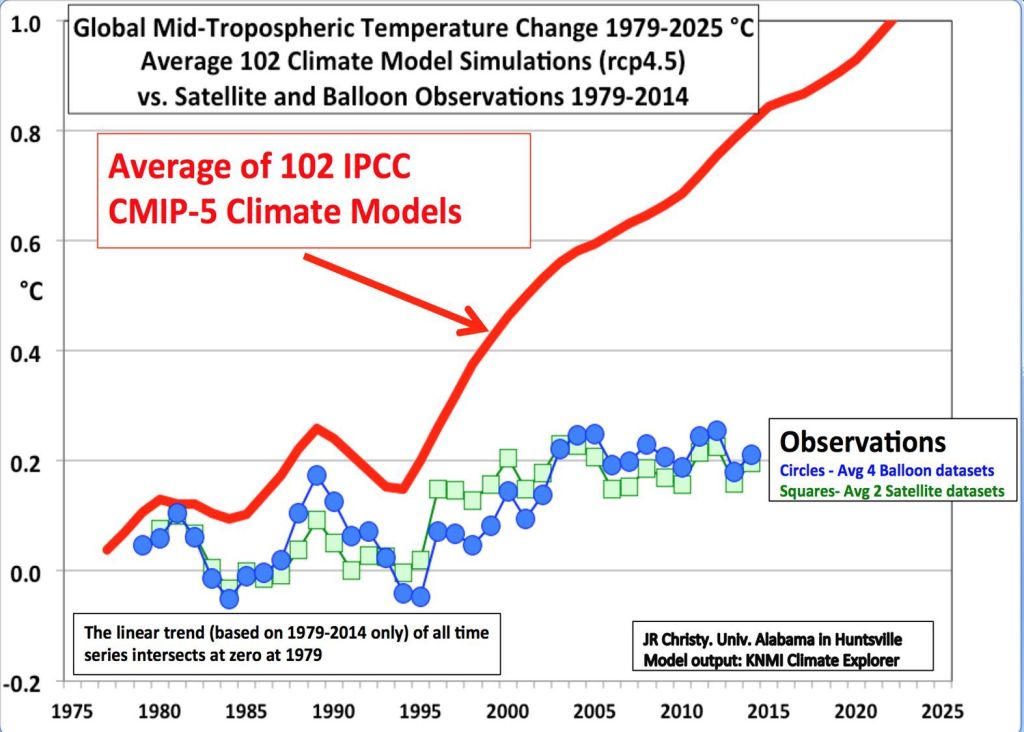
The science publication Nature Climate Change this year, published a study demonstrating Earth this century warmed substantially less than computer-generated climate models predict.

Unfortunately for public knowledge, such findings don’t appear in the news. Sea levels too have not been obeying the ‘grand transnational narrative’ of catastrophic global warming. Sea levels around Australia 2011–2012 were measured with the most significant drops in sea levels since measurements began. . .The 2015–2016 El-Niño, a natural phenomenon, drove sea levels around Indonesia to low levels such that coral reefs were bleaching. The echo chamber of news repeatedly fails to report such phenomena and yet many studies continue to contradict mainstream news discourse.

facebook2bnew2blike2bbuttons2bfinal-970-80I will be arguing that a number of narratives need correction, and while I accept that the views I am about to express are not universally held, I believe that the scientific evidence does support them.

The Global Warming/Climate Change Narrative

The primary narrative in need of correction is that global warming alone (Lewis, 2016), which induces climate change (climate disruption), is due to the increase in global surface temperatures caused by atmospheric greenhouse gases. Instead, there are many factors arising from human land use (Pielke et al., 2016), which it could be argued are responsible for climate change, and some of these practices can be mitigated through direct public action.

Global warming is calculated by measuring average surface temperatures over time. While it is easy to argue that temperatures are increasing, it cannot be argued, as some models contend, that the increases are uniform throughout the global surface and atmosphere. Climate science is further problematized by its own scientists, in that computer modelling, as one component of this multi-faceted science, is privileged over other disciplines, like geology.

Scientific uncertainty arises from ‘simulations’ of climate because computer models are failing to match the actual climate. This means that computer models are unreliable in making predictions.

Published in the eminent journal Nature (Ma, et. al., 2017), ‘Theory of chaotic orbital variations confirmed by Cretaceous geological evidence’, provides excellent stimulus material for student news writing. The paper discusses the severe wobbles in planetary orbits, and these affect climate. The wobbles are reflected in geological records and show that the theoretical climate models are not rigorously confirmed by these radioisotopically calibrated and anchored geological data sets. Yet popular discourse presents Earth as harmonious: temperatures, sea levels and orbital patterns all naturally balanced until global warming affects them, a mythical construct. Instead, the reality is natural variability, the interactions of which are yet to be measured or discovered (Berger, 2013).

In such a (media) climate, it is difficult for the assertion to be made that there might be other sources, than a nontoxic greenhouse gas called carbon dioxide (CO2), that could be responsible for ‘climate disruption’. A healthy scientific process would allow such a proposition. Contrary to warming theory, CO2 levels have increased, but global average temperatures remain steady. The global average temperature increased from 1983 to 1998; then, it flat-lined for nearly 20 years. James Hansen’s Hockey Stick graph, with soaring and catastrophic temperatures, simply did not materialize.

As Keenan et al. (2016) found through using global carbon budget estimates, ground, atmospheric and satellite observations, and multiple global vegetation models that there is also now a pause in the growth rate of atmospheric CO2. They attribute this to increases in terrestrial sinks over the last decade, where forests consume the rising atmospheric CO2 and rapidly grow—the net effect being a slowing in the rate of warming from global respiration.

Contrary to public understanding, higher temperatures in cities are due to a phenomenon known as the ‘urban heat effect’ (Taha, 1997; Yuan & Bauer, 2007). Engines, air conditioners, heaters and heat absorbing surfaces like bitumen radiate heat energy in urban areas, but this is not due to the greenhouse effect. Problematic too are data sets like ocean heat temperatures, sea-ice thickness and glaciers: all of which are varied, some have not been measured or there are insignificant measurement time spans for the data to be reliable.

Contrary to news media reports, some glaciers throughout the world (Norway [Chinn et al., 2005] and New Zealand [Purdie et al., 2008]) are growing, while others shrink (Paul et al., 2007).

Conclusion

This is clearly a contentious topic. There are many agendas at play, with careers at stake. My view represents one side of the debate: it is one I strongly believe in, and is, I contend, supported by the science around deforestation, on the ground, rather than focusing almost entirely on atmosphere. However, as a journalism educator, I also recognize that my view, along with others, must be open to challenge, both within the scientific community and in the court of public opinion.

As a journalism educator, it is my responsibility to provide my students with the research skills they need to question—and test—the arguments put forward by the key players in any debate. Given the complexity of the climate warming debate, and the contested nature of the science that underpins both sides, this will provide challenges well into the future. It is a challenge our students should relish, particularly in an era when they are constantly being bombarded with ‘fake news’ and so-called ‘alternative facts’.

To do so, they need to understand the science. If they don’t, they need to at least understand the key players in the debate and what is motivating them. They need to be prepared to question these people and to look beyond their arguments to the agendas that may be driving them. If they don’t, we must be reconciled to a future in which ‘fake news’ becomes the norm.

Examples of my investigative reports are in Data Vs. Models posts listed at Climate Whack-a-Mole

See also Yellow Climate Journalism

Renewables Hypocrisy

Update August 18, 2017 at the bottom

Charles McConnell explains the emptiness of this recent popular virtue signaling.  His article in WSJ is City Pledges for ‘100% Renewable Energy’ Are 99% Misleading
The power grid is built on fossil fuels, and there’s no way to designate certain electrons as guilt free. Entire article reprinted below (my bolds and images)

Dozens of cities have made a misleading pledge: that they will move to 100% renewable energy so as to power residents’ lives without emitting a single puff of carbon. At a meeting of the U.S. Conference of Mayors in late June, leaders unanimously adopted a resolution setting a “community-wide target” of 100% clean power by 2035. Mayors from Portland, Ore., to Los Angeles to Miami Beach have signed on to these goals.

States are getting in the game, too. Two years ago Hawaii pledged that its electricity would be entirely renewable by 2045. The California Senate recently passed a bill setting the same goal, while moving up the state’s timeline to get half its electricity from renewables from 2030 to 2025.

Let’s not get carried away. Although activists herald these pledges as major environmental accomplishments, they’re more of a marketing gimmick. Use my home state of Texas as an example. The Electric Reliability Council of Texas oversees 90% of the state’s electricity generation and distribution. Texas generates more wind and solar power than any other state. Yet more than 71% of the council’s total electricity still comes from coal and natural gas.

The trick is that there’s no method to designate electrons on the grid as originating from one source or another. Power generated by fossil fuels and wind turbines travels together over poles and underground wires before reaching cities, homes and businesses. No customer can use power from wind and solar farms exclusively.

So how do cities make this 100% renewable claim while still receiving regular electricity from the grid? They pay to generate extra renewable energy that they then sell on the market. If they underwrite enough, they can claim to have offset whatever carbon-generated electricity they use. The proceeds from the sale go back to the city and are put toward its electric bill.

In essence, these cities are buying a “renewable” label to put on the regular power they’re using. Developers of wind and solar farms win because they can use mayoral commitments to finance their projects, which probably are already subsidized by taxpayers.

But the game would never work without complete confidence in the reliability of the grid, which is dependent on a strategy of “all of the above,” generating power from sources that include coal, natural gas, nuclear, wind and solar.

The mayor of Georgetown, Texas, announced earlier this year that his city had reached its goal of 100% renewable electricity. But in a 2015 article announcing the pledge, he acknowledged what would happen if solar and wind were not able to cover the city’s needs: “The Texas grid operator, the Electric Reliability Council of Texas, will ensure generation is available to meet demand.”

Two years ago the mayor of Denton, Texas, announced a plan to go 70% renewable, while calling a target of 100% unrealistic. “One of the challenges of renewable energy is that it’s so hard to predict,” he said. “You don’t know exactly when the sun is going to shine or when the wind is going to blow. To maintain that reliable power, you must have backup power.”

There is no denying that wind and solar power are important to a balanced energy portfolio. But coal is the bedrock of affordable electricity, and it will remain so, no matter how much wishful thinking by environmental activists. Coal is abundant and reliable. Unlike wind and solar, coal generation can be dialed up and down in response to market conditions and to satisfy demand.

The headline-grabbing 100% renewable pledges intentionally overlook these facts. Fossil fuels are not only the largest and most critical component of the energy portfolio, they are the foundation upon which renewable power must stand. Wind and solar generators ride free into the electric grid on the backs of fossil generators that have installed and paid for the infrastructure on which all Americans depend. The rise of renewable generation is made possible by fossil fuels, not despite them.

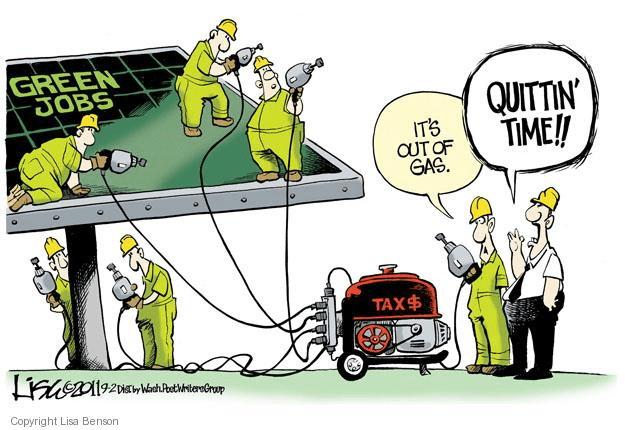
green-jobs

We should celebrate the growth of renewables, but not with false and misleading claims. What’s needed is transparency and a shared objective to provide consumers with the most reliable, resilient and affordable energy available.

Mr. McConnell, executive director of the Energy and Environment Initiative at Rice University, was an assistant secretary of energy, 2011-13.

Update August 18, 2017

People need to know that adding renewables to an electrical grid presents both technical and economic challenges.  Experience shows that adding intermittent power more than 10% of the baseload makes precarious the reliability of the supply.  South Australia is demonstrating this with a series of blackouts when the grid cannot be balanced.  Germany got to a higher % by dumping its excess renewable generation onto neighboring countries until the EU finally woke up and stopped them. Texas got up to 29% by dumping onto neighboring states, and some like Georgia are having problems.

But more dangerous is the way renewables destroy the economics of electrical power.  Seasoned energy analyst Gail Tverberg writes:

In fact, I have come to the rather astounding conclusion that even if wind turbines and solar PV could be built at zero cost, it would not make sense to continue to add them to the electric grid in the absence of very much better and cheaper electricity storage than we have today. There are too many costs outside building the devices themselves. It is these secondary costs that are problematic. Also, the presence of intermittent electricity disrupts competitive prices, leading to electricity prices that are far too low for other electricity providers, including those providing electricity using nuclear or natural gas. The tiny contribution of wind and solar to grid electricity cannot make up for the loss of more traditional electricity sources due to low prices.

These issues are discussed in more detail in the post Climateers Tilting at Windmills

Why the US letter re. Paris Accord

August 5, 2017 Update to Climate Law post

Media are reporting on the State Department letter informing the UN that the US will be withdrawing from the Paris Accord.  Some climatists are encouraged that the three-year waiting period is acknowledged and that the next president could return to the fold.  Others are disappointed that the Trump administration is not more assertive against both the accord and the United Nations Framework Convention on Climate Change (UNFCCC) itself.

Everyone should breathe through the nose and recognize the game and the stakes.  Paris agreement is not binding and is without penalties (except for blame and shame).  So following the protocol costs the US nothing, and does provide some opportunities.  As the world’s leader in actually reducing CO2 emissions, the US wants and needs to be at the table to convince others to follow the US example.  There is also 1 billion US$ from Obama put into the green fund that could be disbursed in accordance with US current priorities regarding energy and climate.

But the most important reason for this letter is to document that the Paris accord does not have legal authority for and within the United States.  Putting the US intent in writing is necessary to deter legal claims to hold the US accountable to Paris terms and conditions.  The post below explains why Paris accord is so important to legal climate actions around the world.

Climate Activists storm the bastion of Exxon Mobil, here seen without their shareholder disguises.

On the same day POTUS announced US withdrawal from Paris accord, a majority of Exxon Mobil shareholders approved a resolution asking management to assess the value of corporate assets considering a global move toward a low-carbon future. Here is the resolution, filed by the New York State Comptroller:

RESOLVED: Shareholders request that, beginning in 2018, ExxonMobil publish an annual assessment of the long-term portfolio impacts of technological advances and global climate change policies, at reasonable cost and omitting proprietary information. The assessment can be incorporated into existing reporting and should analyze the impacts on ExxonMobil’s oil and gas reserves and resources under a scenario in which reduction in demand results from carbon restrictions and related rules or commitments adopted by governments consistent with the globally agreed upon 2 degree target. This reporting should assess the resilience of the company’s full portfolio of reserves and resources through 2040 and beyond, and address the financial risks associated with such a scenario.

Background:

This century climatists woke up to their losing the battle for public opinion for onerous and costly reductions to fossil fuel usage. They turned toward the legal system to achieve their agenda, and the field of Climate Law has become another profession corrupted by climate cash, along side of Climate Medicine.

In addition to numerous court lawsuits, and also civil disobedience cases, there has been a concerted, well-funded and organized divestment move against companies supplying fossil fuels to consumers. The intention is to at least tie up in red tape Big Oil, indeed Small Oil as well. The real hope is to weaken energy producers by depriving them of investors to the point that reserves are left in the ground, as desired by such activists as 350.org.

In 2016 virtually the same resolution was dismissed by shareholders with only 38% approving. The difference this year was the switch by BlackRock Inc. and Vanguard Group, two of the world’s largest asset managers. As reported by Fox News (here):

Investment products such as exchange-traded funds that track the performance of indexes often come at a lower cost than traditional mutual funds and have gathered assets at a clip in recent years. That growth has given firms like BlackRock and Vanguard increasing sway on shareholder votes. But the firms in turn have come under activist pressure to take stances on issues such as climate disclosure.

When BlackRock sided with Exxon and against a similar proposal at the company’s annual meeting a year ago, it faced backlash from investors and environmental activists. This year BlackRock said the disclosure of climate risks would be among its key engagement priorities with senior executives.

Exxon Mobil board must now show they are taking this proposal seriously, and activists will be looking for company assets to be “stress tested” with the hope that the shares become more risky. At the very least, management will have to put more time and energy into opining on various scenarios of uncertain content and probabilities relating to the wish dreams of climatists.

Balancing on a cascade of suppositions.

We can look into the climate activist mental frame thanks to documents supporting the current strategy using the legal system to implement actions against fossil fuel consumption.

For example, there is this recent text explaining the shareholder proposal tabled at ExxonMobil annual meeting. From Attorney Sanford Lewis:

The Proposal states:

“RESOLVED: Shareholders request that by 2017 ExxonMobil publish an annual assessment of long term portfolio impacts of public climate change policies, at reasonable cost and omitting proprietary information. The assessment can be incorporated into existing reporting and should analyze the impacts on ExxonMobil’s oil and gas reserves and resources under a scenario in which reduction in demand results from carbon restrictions and related rules or commitments adopted by governments consistent with the globally agreed upon 2 degree target. The reporting should assess the resilience of the company’s full portfolio of reserves and resources through 2040 and beyond and address the financial risks associated with such a scenario.

Now let’s unbundle the chain of suppositions that comprise this proposal.

  • Supposition 1: A 2C global warming target is internationally agreed.
  • Supposition 2: Carbon Restrictions are enacted by governments to comply with the target.
  • Supposition 3: Demand for oil and gas products is reduced due to restrictions
  • Supposition 4: Oil and gas assets become uneconomic for lack of demand.
  • Supposition 5: Company net worth declines by depressed assets and investors lose value.

1.Suppose an International Agreement to limit global warming to 2C.

From the supporting statement to the above proposal, Sanford Lewis provides these assertions:

Recognizing the severe and pervasive economic and societal risks associated with a warming climate, global governments have agreed that increases in global temperature should be held below 2 degrees Celsius from pre-industrial levels (Cancun Agreement).

Failing to meet the 2 degree goal means, according to scientists, that the world will face massive coastal flooding, increasingly severe weather events, and deepening climate disruption. It will impose billions of dollars in damage on the global economy, and generate an increasing number of climate refugees worldwide.

Climate change and the risks it is generating for companies have become major concerns for investors. These concerns have been magnified by the 21st Session of the Conference of the Parties (COP 21) in Paris, where 195 global governments agreed to restrict greenhouse gas (GHG) emissions to no more than 2 degrees Celsius from pre-industrial levels and submitted plans to begin achieving the necessary GHG emission reductions. In the agreement, signatories also acknowledged the need to strive to keep global warming to 1.5 degrees, recognizing current and projected harms to low lying islands.

Yet a careful reading of UN agreements shows commitment is exaggerated:
David Campbell (here):

Neither 2°C nor any other specific target has ever been agreed at the UN climate change negotiations.

Article 2 of the Paris Agreement in fact provides only that it ‘aims to strengthen the global response to the threat of climate change … including by the holding the increase to well below 2°C’. This is an expression, not of setting a concrete limit, but merely of an aspiration to set such a limit. It is true that Article 2 is expressed in a deplorably equivocatory and convoluted language which fails to convey this vital point, indeed it obscures it. But nevertheless that is what Article 2 means.

Dieter Helm (here):

Nothing of substance has been achieved in the last quarter of a century despite all the efforts and political capital that has been applied. The Paris Agreement follows on from Kyoto. The pledges – in the unlikely event they are met – will not meet the 2C target, shipping and aviation are excluded, and the key developing countries (China and India) are not committed to capping their emission for at least another decade and a half (or longer in India’s case)

None of the pledges is, in any event, legally binding. For this reason, the Paris Agreement can be regarded as the point at which the UN negotiating approach turned effectively away from a top down approach, and instead started to rely on a more country driven and hence bottom up one.

Paul Spedding:

The international community is unlikely to agree any time soon on a global mechanism for putting a price on carbon emissions.

2: Suppose Governments enact restrictions that limit use of fossil fuels.

Despite the wishful thinking in the first supposition, the activists proceed on the basis of aspirations and reporting accountability. Sanford Lewis:

Although the reduction goals are not set forth in an enforceable agreement, the parties put mechanisms in place for transparent reporting by countries and a ratcheting mechanism every five years to create accountability for achieving these goals. U.N. Secretary General Ban Ki-moon summarized the Paris Agreement as follows: “The once Unthinkable [global action on climate change] has become the Unstoppable.”

Now we come to an interesting bait and switch. Since Cancun, IPCC is asserting that global warming is capped at 2C by keeping CO2 concentration below 450 ppm. From Summary for Policymakers (SPM) AR5

Emissions scenarios leading to CO2-equivalent concentrations in 2100 of about 450 ppm or lower are likely to maintain warming below 2°C over the 21st century relative to pre-industrial levels. These scenarios are characterized by 40 to 70% global anthropogenic GHG emissions reductions by 2050 compared to 2010, and emissions levels near zero or below in 2100.

Thus is born the “450 Scenario” by which governments can be focused upon reducing emissions without any reference to temperature measurements, which are troublesome and inconvenient.

Sanford Lewis:

Within the international expert community, “2 degree” is generally used as shorthand for a low carbon scenario under which CO2 concentrations in the earth’s atmosphere are stabilized at a level of 450 parts per million (ppm) or lower, representing approximately an 80% reduction in greenhouse gas emissions from current levels, which according to certain computer simulations would be likely to limit warming to 2 degrees Celsius above pre-industrial levels and is considered by some to reduce the likelihood of significant adverse impacts based on analyses of historical climate variability. Company Letter, page 4.

Clever as it is to substitute a 450 ppm target for 2C, the mathematics are daunting. Joe Romm:

We’re at 30 billion tons of carbon dioxide emissions a year — rising 3.3% per year — and we have to average below 18 billion tons a year for the entire century if we’re going to stabilize at 450 ppm. We need to peak around 2015 to 2020 at the latest, then drop at least 60% by 2050 to 15 billion tons (4 billion tons of carbon), and then go to near zero net carbon emissions by 2100.

And the presumed climate sensitivity to CO2 is hypothetical and unsupported by observations:

3.Suppose that demand for oil and gas products is reduced by the high costs imposed on such fuels.

Sanford Lewis:

ExxonMobil recognized in its 2014 10-K that “a number of countries have adopted, or are considering adoption of, regulatory frameworks to reduce greenhouse gas emissions,” and that such policies, regulations, and actions could make its “products more expensive, lengthen project implementation timelines and reduce demand for hydrocarbons,” but ExxonMobil has not presented any analysis of how its portfolio performs under a 2 degree scenario.

Moreover, the Company’s current use of a carbon proxy price, which it asserts as its means of calculating climate policy impacts, merely amplifies and reflects its optimistic assessments of national and global climate policies. The Company Letter notes that ExxonMobil is setting an internal price as high as $80 per ton; in contrast, the 2014 Report notes a carbon price of $1000 per ton to achieve the 450 ppm (2 degree scenario) and the Company reportedly stated during the recent Paris climate talks that a 1.5 degree scenario would require a carbon price as high as $2000 per ton within the next hundred years.

Peter Trelenberg, manager of environmental policy and planning at Exxon Mobil reportedly told the Houston Chronicle editorial board: Trimming carbon emissions to the point that average temperatures would rise roughly 1.6 degrees Celsius – enabling the planet to avoid dangerous symptoms of carbon pollution – would bring costs up to $2,000 a ton of CO2. That translates to a $20 a gallon boost to pump prices by the end of this century… .

Even those who think emissions should be capped somehow see through the wishful thinking in these numbers. Dieter Helm:

The combination of the shale revolution and the ending of the commodity super cycle probably point to a period of low prices for sometime to come. This is unfortunate timing for current decarbonisation policies, many of which are predicated on precisely the opposite happening – high and rising prices, rendering current renewables economic. Low oil prices, cheap coal, and falling gas prices, and their impacts on driving down wholesale electricity prices, are the new baseline against which to consider policy interventions.

With existing technologies, it is a matter of political will, and the ability to bring the main polluters on board, as to whether the envelope will be breached. There are good reasons to doubt that any top down agreement will work sufficiently well to achieve it.

The end of fossil fuels is not about to happen anytime soon, and will not be caused by running out of any of them. There is more than enough to fry the planet several times over, and technological progress in the extraction of fossil fuels has recently been at least as fast as for renewables. We live in an age of fossil fuel abundance.

We also live in a world where fossil fuel prices have fallen, and where the common assumption that prices will bounce back, and that the cycle of fossil fuel prices will not only reassert itself but also continue on a rising trend, may be seriously misguided. It is plausible to at least argue that the oil price may never regain its peaks in 1979 and 2008 again.

A world with stable or falling fossil fuel prices turns the policy assumptions of the last decade or so on their heads. Instead of assuming that rising prices would ease the transition to low carbon alternatives, many of the existing technologies will probably need permanent subsidies. Once the full system costs are incorporated, current generation wind (especially offshore) and current generation solar may be out of the market except in special locations for the foreseeable future. In any event, neither can do much to address the sheer scale of global emissions.

Primary Energy Demand Projection

4.Suppose oil and gas reserves are stranded for lack of demand.

Sanford Lewis:

Achievement of even a 2 degree goal requires net zero global emissions to be attained by 2100. Achieving net zero emissions this century means that the vast majority of fossil fuel reserves cannot be burned. As noted by Mark Carney, the President of the Bank of England, the carbon budget associated with meeting the 2 degree goal will “render the vast majority of reserves ‘stranded’ – oil, gas, and coal that will be literally unburnable without expensive carbon capture technology, which itself alters fossil fuel economics.”

A concern expressed by some of our stakeholders is whether such a “low carbon scenario” could impact ExxonMobil’s reserves and operations – i.e., whether this would result in unburnable proved reserves of oil and natural gas.

Decisions to abandon reserves are not as simple or have the effects as desired by activists.

Financial Post (here):

The 450 Scenario is not the IEA’s central scenario. At this point, government policies to limit GHG emissions are not stringent enough to stimulate this level of change. However, for discussion purposes let’s use the IEA’s 450 Scenario to examine the question of stranded assets in crude oil investing. Would some oil reserves be “stranded” under the IEA’s scenario of demand reversal?

A considerable amount of new oil projects must be developed to offset the almost 80 per cent loss in legacy production by 2040. This continued need for new oil projects for the next few decades and beyond means that the majority of the value of oil reserves on the books of public companies must be realized, and will not be “stranded”.

While most of these reserves will be developed, could any portion be stranded in this scenario? The answer is surely “yes.” In any industry a subset of the inventory that is comprised of inferior products will be susceptible to being marginalized when there is declining demand for goods. In a 450 ppm world, inferior products in the oil business will be defined by higher cost and higher carbon intensity.

5.Suppose shareholders fear declining company net worth.

Now we come to the underlying rationale for this initiative.

Paul Spedding:

Commodity markets have repeatedly proved vulnerable to expectations that prices will fall. Given the political pressure to mitigate the impact of climate change, smart investors will be watching closely for indications of policies that will lead to a drop in demand and the possibility that their assets will become financially stranded.

Equity markets are famously irrational, and if energy company shareholders can be spooked into selling off, a death spiral can be instigated. So far though, investors are smarter than they are given credit.

Bloomberg:

Fossil-fuel divestment has been a popular issue in recent years among college students, who have protested at campuses around the country. Yet even with the movement spreading to more than 1,000 campuses, only a few dozen schools have placed some restrictions on their commitments to the energy sector. Cornell University, Massachusetts Institute of Technology and Harvard University are among the largest endowments to reject demands to divest.

Stanford Board of Trustees even said:

As trustees, we are convinced that the global community must develop effective alternatives to fossil fuels at sufficient scale, so that fossil fuels will not continue to be extracted and used at the present rate. Stanford is deeply engaged in finding alternatives through its research. However, despite the progress being made, at the present moment oil and gas remain integral components of the global economy, essential to the daily lives of billions of people in both developed and emerging economies. Moreover, some oil and gas companies are themselves working to advance alternative energy sources and develop other solutions to climate change. The complexity of this picture does not allow us to conclude that the conditions for divestment outlined in the Statement on Investment Responsibility have been met.

Update:  Universities are not the exception in finding the alarmist case unconvincing, according to a survey:

Almost half of the world’s top 500 investors are failing to act on climate change — an increase of 6 percent from 236 in 2014, according to a report Monday by the Asset Owners Disclosure Project, which surveys global companies on their climate change risk and management.

The Abu Dhabi Investment Authority, Japan Post Insurance Co Ltd., Kuwait Investment Authority and China’s SAFE Investment Company, are the four biggest funds that scored zero in the survey. The 246 “laggards” identified as not acting hold $14 trillion in assets, the report said.

Summary

Alarmists have failed to achieve their goals through political persuasion and elections. So they are turning to legal and financial tactics. Their wishful thinking appears as an improbable chain of events built upon a Paris agreement without substance.

Last word to David Campbell:

International policy has so far been based on the premise that mitigation is the wisest course, but it is time for those committed to environmental intervention to abandon the idea of mitigation in favour of adaptation to climate change’s effects.

For more on adapting vs. mitigating, see Adapting Works, Mitigating Fails
EventChain