The demands for climate reparations from wealthy countries are so absurd, so unscientific, and so offensive to natural justice that it is difficult to know where the criticism should begin.
The argument is that, since countries that industrialized earlier produced a lot of carbon a hundred years ago, they now owe a debt to poorer states. Naturally, this argument appeals to assorted Marxists, anti-colonialists, and shakedown artists, and COP27 has been dominated by insolent demands for well-run states to pony up.
Some, including Austria, Belgium, and Denmark, have capitulated. No doubt others will follow. These days, once something is framed as poor-versus-rich or darker-skinned-versus-lighter-skinned or ex-colony-versus-ex-colonizer, the pressure becomes irresistible. Nevertheless, it is worth running through the absurdities in play.
First, the claims are rooted in indignation rather than science. For example, Pakistan, which leads the G-77 group of poorer states and is leading the campaign, claims that its floods are a product of climate change. But might Pakistan look a little closer to home? Although Europe and North America have seen significant reforestation over the past half-century, Pakistan has gone in the other direction. A third of its landmass was forest when it became independent in 1947. Now, it is one-twentieth, and the rains run straight off the mountains into silted-up reservoirs that then overflow, whence the floods.
But never mind all that — blame the colonialists, eh?
Second, there is the utter refusal to acknowledge what wealthier countries are already doing. I don’t just mean in terms of making direct monetary transfers — though, sticking with Pakistan for a moment, Britain has been borrowing around $400 million a year to give to that country, which pleads poverty while funding a nuclear weapons program. No, I mean in terms of impoverishing themselves through drastic action on carbon emissions. Britain has cut its carbon dioxide production by nearly half since 1990, largely by closing down its coal mines. Pakistan has more than 100 coal mines in operation.
But, again, blame the colonialists, eh?
Third, there is the ingratitude. One of the things I used to resent about the European Parliament was the entitled and hectoring way in which representatives of poorer countries (they were usually very rich people) would call for bigger transfers. “This is unacceptable,” they would say of whatever offer the Brits, the Dutch, or the Germans put on the table. Fine, I’d think, don’t accept it, then. Yet the numbers only ever got bigger. Look, I’m sorry to be blunt about this, but a 2-degree rise in temperature is far less menacing for Britain or Canada than it is for most countries.
The least-threatened countries are doing the heaviest lifting by far.
But don’t expect any gratitude.
Fourth, there is the implication that industrialization, the miracle that released our species from 10,000 years of backbreaking labor, is regrettable. In truth, as well as giving us longer, healthier, and freer lives, the wealth released over the past 200 years of specialization and exchange is cleaning up the environment. The air and water are purer in London than in Lahore because GDP is higher. For the same reason, natural disasters have become far less lethal. The 1950 floods in Pakistan killed many more people than this year’s, because they hit a poorer country.
Fifth, there is the related assumption that rich countries owe their wealth to exploitation, that one nation’s gain must mean another’s loss. This is palpable nonsense. The enrichment of a country, other things being equal, is good news for all of its trading partners. And countries get wealthy not by conquering others (a process that is always expensive) but by pursuing the right policies, such as secure property rights, low taxes, independent courts, light regulations, and free trade.
If you tax successful countries to pay unsuccessful ones, you will end up with
fewer of the former and more of the latter.
Sixth, and most preposterously, there is the ugly collectivism that lurks behind every shakedown attempt, from the return of artworks to slavery reparations. Our criminal justice system, like every Abrahamic religion, is based on the idea that we are individually responsible for our actions. But when it comes to these scams, we are all suddenly defined by ancestry or skin color.
It is precisely because Western nations broke out of that dispensation that they became rich in the first place. And it was by copying their individualist outlook that other countries were able to catch them up. Far from complaining about industrialization, the rest of the world should thank us for having developed capitalism, and they should seek to emulate it.
Postscript: Absurdity Seven
Climate reparations are a legal quagmire. From Hulme et al. (2011):
At the heart of the loss and damage (L&D) agenda is the idea of attribution—that specific losses and damages in developing countries can be “associated with the impacts of climate change,” where “climate change” means human-caused alterations to climate. It is therefore not just any L&D that qualify for financial assistance under the Convention; it is L&D attributable to or “associated with” a very specific causal pathway.
Developing countries face some serious difficulties—at best, ambiguities—
with this approach to directing climate adaptation finance.
Investment in climate adaptation, they claim, is most needed “… where vulnerability to meteorological hazard is high, not where meteorological hazards are most attributable to human influence”. Extreme weather attribution says nothing about how damages are attributable to meteorological hazard as opposed to exposure to risk; it says nothing about the complex political, social and economic structures which mediate physical hazards.
And separating weather into two categories — ‘human-caused’ weather and ‘tough-luck’ weather – raises practical and ethical concerns about any subsequent investment allocation guidelines which excluded the victims of ‘tough-luck weather’ from benefiting from adaptation funds.
Contrary to the claims of some weather attribution scientists, the loss and damage agenda of the UNFCCC, as it is currently emerging, makes no distinction between ‘human-caused’ and ‘tough-luck’ weather. “Loss and damage impacts fall along a continuum, ranging from ‘events’ associated with variability around current climatic norms (e.g., weather-related natural hazards) to [slow-onset] ‘processes’ associated with future anticipated changes in climatic norms” (Warner et al., 2012:21). Although definitions and protocols have not yet been formally ratified, it seems unlikely that there will be a role for the sort of forensic science being offered by extreme weather attribution science.
Excerpts below with my bolds: The short-term consequences of Arctic (and Antarctic) warming may already be felt in other latitudes. The long-term threat to coastlines is becoming even more dire.
“When you’re taking out 30, 40, almost 50 percent of the ice cover, that’s a big change in the environment,” Meier said. “Whether we’re seeing it yet, there’s still some debate, but whether there will be an effect as we continue to lose ice, I think that’s pretty obvious.”
“There’s no evidence that anything is recovering here,” said Mark Serreze, the director of the NSIDC. “What we’ve seen historically is a downward trend in ice extent in all months. Superimposed on that are the ups and downs of natural variability. We’re going to continue to head downward.“
“We are looking at an ice-free Arctic Ocean sometime in the 2040s,” said Serreze. “There’s no evidence that we’ve seen anything like this before.”
Ted Scambos, lead scientist with the National Snow and Ice Data Center, said that while the current pace of melting is not alarming, a series of papers “has led to a realization that the West Antarctic Ice Sheet may already be in an irreversible retreat.“
Greenland is melting, too—for now, it’s the biggest threat. “Greenland has become Loserville,” said Jason Box, who tracks ice for the Geological Survey of Denmark and Greenland.
“New observations from many different sources confirm that ice-sheet loss is accelerating,” the United States Global Change Research Program said in its comprehensive special report on climate science. “Up to 8.5 feet of global sea level rise is possible by 2100” in a worst-case emissions scenario. That’s almost 2 feet more than scientists expected just a few years ago.
“So we’re guaranteed significant sea level rise no matter what we do, even under the optimistic Paris scenario,” Box said. “We had better prepare.”
These warnings of wolves are starting to sound the same: “It never happened before, is not happening now, but it will surely destroy us in the future if we don’t do something.”
Meanwhile the facts on the ground are not alarming: For example September minimums:
These outrageous appeals by alarmists in the face of contrary facts remind me of the story defining the term “chutzpuh.” A young man is convicted of killing his parents, and later appears before the judge for sentencing. Asked to give any last words, he replies: “Go easy on me, your Honor, I’m an orphan.”
Fortunately, there is help for climate alarmists. They can join or start a chapter of Alarmists Anonymous. By following the Twelve Step Program, it is possible to recover and unite in service to the real world and humanity.
Step One: Fully concede (admit) to our innermost selves that we were addicted to climate fear mongering.
Step Two: Come to believe that a Power greater than ourselves causes weather and climate, restoring us to sanity.
Step Three: Make a decision to study and understand how the natural world works.
Step Four: Make a searching and fearless moral inventory of ourselves, our need to frighten others and how we have personally benefited by expressing alarms about the climate.
Step Five: Admit to God, to ourselves, and to another human being the exact nature of our exaggerations and false claims.
Step Six: Become ready to set aside these notions and actions we now recognize as objectionable and groundless.
Step Seven: Seek help to remove every single defect of character that produced fear in us and led us to make others afraid.
Step Eight: Make a list of all persons we have harmed and called “deniers”, and become willing to make amends to them all.
Step Nine: Apologize to people we have frightened or denigrated and explain the errors of our ways.
Step Ten: Continue to take personal inventory and when new illusions creep into our thinking, promptly renounce them.
Step Eleven: Dedicate ourselves to gain knowledge of natural climate factors and to deepen our understanding of nature’s powers and ways of working.
Step Twelve: Having awakened to our delusion of climate alarm, we try to carry this message to other addicts, and to practice these principles in all our affairs.
Summary:
With a New Year a month away, let us hope that many climate alarmists take the opportunity to turn the page by resolving a return to sanity. It is not too late to get right with reality before the cooling comes in earnest.
The post below updates the UAH record of air temperatures over land and ocean. But as an overview consider how recent rapid cooling completely overcame the warming from the last 3 El Ninos (1998, 2010 and 2016). The UAH record shows that the effects of the last one were gone as of April 2021, again in November 2021, and in February and June 2022 (UAH baseline is now 1991-2020).
For reference I added an overlay of CO2 annual concentrations as measured at Mauna Loa. While temperatures fluctuated up and down ending flat, CO2 went up steadily by ~55 ppm, a 15% increase.
Furthermore, going back to previous warmings prior to the satellite record shows that the entire rise of 0.8C since 1947 is due to oceanic, not human activity.
The animation is an update of a previous analysis from Dr. Murry Salby. These graphs use Hadcrut4 and include the 2016 El Nino warming event. The exhibit shows since 1947 GMT warmed by 0.8 C, from 13.9 to 14.7, as estimated by Hadcrut4. This resulted from three natural warming events involving ocean cycles. The most recent rise 2013-16 lifted temperatures by 0.2C. Previously the 1997-98 El Nino produced a plateau increase of 0.4C. Before that, a rise from 1977-81 added 0.2C to start the warming since 1947.
Importantly, the theory of human-caused global warming asserts that increasing CO2 in the atmosphere changes the baseline and causes systemic warming in our climate. On the contrary, all of the warming since 1947 was episodic, coming from three brief events associated with oceanic cycles.
Update August 3, 2021
Chris Schoeneveld has produced a similar graph to the animation above, with a temperature series combining HadCRUT4 and UAH6. H/T WUWT
With apologies to Paul Revere, this post is on the lookout for cooler weather with an eye on both the Land and the Sea. While you will hear a lot about 2020-21 temperatures matching 2016 as the highest ever, that spin ignores how fast the cooling set in. The UAH data analyzed below shows that warming from the last El Nino was fully dissipated with chilly temperatures in all regions. May NH land and SH ocean showed temps matching March, reversing an upward blip in April, and then June was virtually the mean since 1995.
UAH has updated their tlt (temperatures in lower troposphere) dataset for October 2022. Posts on their reading of ocean air temps this month came after updated records from HadSST4. So I have already posted on SSTs using HadSST4 NH Leads Ocean Cooler October 2022.This month also has a separate graph of land air temps because the comparisons and contrasts are interesting as we contemplate possible cooling in coming months and years. Sometimes air temps over land diverge from ocean air changes. However, July showed air temps over all ocean regions warmed sharply, lifting up Global ocean temps. Then in August air over both land and ocean cooled off again. Now in September both land and ocean in SH dropped sharply offsetting slight warming elsewhere.
Note: UAH has shifted their baseline from 1981-2010 to 1991-2020 beginning with January 2021. In the charts below, the trends and fluctuations remain the same but the anomaly values change with the baseline reference shift.
Presently sea surface temperatures (SST) are the best available indicator of heat content gained or lost from earth’s climate system. Enthalpy is the thermodynamic term for total heat content in a system, and humidity differences in air parcels affect enthalpy. Measuring water temperature directly avoids distorted impressions from air measurements. In addition, ocean covers 71% of the planet surface and thus dominates surface temperature estimates. Eventually we will likely have reliable means of recording water temperatures at depth.
Recently, Dr. Ole Humlum reported from his research that air temperatures lag 2-3 months behind changes in SST. Thus the cooling oceans now portend cooling land air temperatures to follow. He also observed that changes in CO2 atmospheric concentrations lag behind SST by 11-12 months. This latter point is addressed in a previous post Who to Blame for Rising CO2?
After a change in priorities, updates are now exclusive to HadSST4. For comparison we can also look at lower troposphere temperatures (TLT) from UAHv6 which are now posted for September. The temperature record is derived from microwave sounding units (MSU) on board satellites like the one pictured above. Recently there was a change in UAH processing of satellite drift corrections, including dropping one platform which can no longer be corrected. The graphs below are taken from the revised and current dataset.
The UAH dataset includes temperature results for air above the oceans, and thus should be most comparable to the SSTs. There is the additional feature that ocean air temps avoid Urban Heat Islands (UHI). The graph below shows monthly anomalies for ocean air temps since January 2015.
Note 2020 was warmed mainly by a spike in February in all regions, and secondarily by an October spike in NH alone. In 2021, SH and the Tropics both pulled the Global anomaly down to a new low in April. Then SH and Tropics upward spikes, along with NH warming brought Global temps to a peak in October. That warmth was gone as November 2021 ocean temps plummeted everywhere. After an upward bump 01/2022 temps reversed and plunged downward in June. After an upward spike in July, ocean air everywhere cooled in August and also in September. In October NH cooled, the Tropics changed little, and a spike in SH was enough to mildly warm the Global anomaly.
Land Air Temperatures Tracking Downward in Seesaw Pattern
We sometimes overlook that in climate temperature records, while the oceans are measured directly with SSTs, land temps are measured only indirectly. The land temperature records at surface stations sample air temps at 2 meters above ground. UAH gives tlt anomalies for air over land separately from ocean air temps. The graph updated for October is below.
Here we have fresh evidence of the greater volatility of the Land temperatures, along with extraordinary departures by SH land. Land temps are dominated by NH with a 2021 spike in January, then dropping before rising in the summer to peak in October 2021. As with the ocean air temps, all that was erased in November with a sharp cooling everywhere. Land temps dropped sharply for four months, even more than did the Oceans. March and April 2022 saw some warming, reversed In May when all land regions cooled pulling down the global anomaly. In July, Tropics and SH land rose sharply, NH slightly, pulling up the Global land anomaly. Note the sharp drop in SH land temps in August and September, while NH Land rose, leaving the Global anomaly unchanged. Now in October NH and SH land temps spiked warming the Global land anomaly.
The Bigger Picture UAH Global Since 1980
The chart shows monthly Global anomalies starting 01/1980 to present. The average monthly anomaly is -0.06, for this period of more than four decades. The graph shows the 1998 El Nino after which the mean resumed, and again after the smaller 2010 event. The 2016 El Nino matched 1998 peak and in addition NH after effects lasted longer, followed by the NH warming 2019-20. A small upward bump in 2021 has been reversed with temps having returned close to the mean as of 2/2022. March and April brought warmer Global temps, reversed in May and the June anomaly was almost zero. The upward spike in July was almost 0.3C, lower in August and September and a slight rise in October.
TLTs include mixing above the oceans and probably some influence from nearby more volatile land temps. Clearly NH and Global land temps have been dropping in a seesaw pattern, nearly 1C lower than the 2016 peak. Since the ocean has 1000 times the heat capacity as the atmosphere, that cooling is a significant driving force. TLT measures started the recent cooling later than SSTs from HadSST3, but are now showing the same pattern. It seems obvious that despite the three El Ninos, their warming has not persisted, and without them it would probably have cooled since 1995. Of course, the future has not yet been written.
The best context for understanding decadal temperature changes comes from the world’s sea surface temperatures (SST), for several reasons:
The ocean covers 71% of the globe and drives average temperatures;
SSTs have a constant water content, (unlike air temperatures), so give a better reading of heat content variations;
A major El Nino was the dominant climate feature in recent years.
HadSST is generally regarded as the best of the global SST data sets, and so the temperature story here comes from that source. Previously I used HadSST3 for these reports, but Hadley Centre has made HadSST4 the priority, and v.3 will no longer be updated. HadSST4 is the same as v.3, except that the older data from ship water intake was re-estimated to be generally lower temperatures than shown in v.3. The effect is that v.4 has lower average anomalies for the baseline period 1961-1990, thereby showing higher current anomalies than v.3. This analysis concerns more recent time periods and depends on very similar differentials as those from v.3 despite higher absolute anomaly values in v.4. More on what distinguishes HadSST3 and 4 from other SST products at the end. The user guide for HadSST4 is here.
The Current Context
The chart below shows SST monthly anomalies as reported in HadSST4 starting in 2015 through October 2022. A global cooling pattern is seen clearly in the Tropics since its peak in 2016, joined by NH and SH cycling downward since 2016.
Note that in 2015-2016 the Tropics and SH peaked in between two summer NH spikes. That pattern repeated in 2019-2020 with a lesser Tropics peak and SH bump, but with higher NH spikes. By end of 2020, cooler SSTs in all regions took the Global anomaly well below the mean for this period. In 2021 the summer NH summer spike was joined by warming in the Tropics but offset by a drop in SH SSTs, which raised the Global anomaly slightly over the mean. Now in 2022, another strong NH summer spike has peaked in August, but this time both the Tropic and SH are countervailing, resulting in only slight Global warming, now receding to the mean. October shows a small SH rise, not enough to offset a sharp drop in NH and slight Tropics cooling.
A longer view of SSTs
Open image in new tab to enlarge.
The graph above is noisy, but the density is needed to see the seasonal patterns in the oceanic fluctuations. Previous posts focused on the rise and fall of the last El Nino starting in 2015. This post adds a longer view, encompassing the significant 1998 El Nino and since. The color schemes are retained for Global, Tropics, NH and SH anomalies. Despite the longer time frame, I have kept the monthly data (rather than yearly averages) because of interesting shifts between January and July.1995 is a reasonable (ENSO neutral) starting point prior to the first El Nino.
The sharp Tropical rise peaking in 1998 is dominant in the record, starting Jan. ’97 to pull up SSTs uniformly before returning to the same level Jan. ’99. There were strong cool periods before and after the 1998 El Nino event. Then SSTs in all regions returned to the mean in 2001-2.
SSTS fluctuate around the mean until 2007, when another, smaller ENSO event occurs. There is cooling 2007-8, a lower peak warming in 2009-10, following by cooling in 2011-12. Again SSTs are average 2013-14.
Now a different pattern appears. The Tropics cooled sharply to Jan 11, then rise steadily for 4 years to Jan 15, at which point the most recent major El Nino takes off. But this time in contrast to ’97-’99, the Northern Hemisphere produces peaks every summer pulling up the Global average. In fact, these NH peaks appear every July starting in 2003, growing stronger to produce 3 massive highs in 2014, 15 and 16. NH July 2017 was only slightly lower, and a fifth NH peak still lower in Sept. 2018.
The highest summer NH peaks came in 2019 and 2020, only this time the Tropics and SH were offsetting rather adding to the warming. (Note: these are high anomalies on top of the highest absolute temps in the NH.) Since 2014 SH has played a moderating role, offsetting the NH warming pulses. After September 2020 temps dropped off down until February 2021. Now in 2021-22 there are again summer NH spikes, but in 2022 moderated first by cooling Tropics and SH SSTs, now in October by NH and Tropics cooling.
What to make of all this? The patterns suggest that in addition to El Ninos in the Pacific driving the Tropic SSTs, something else is going on in the NH. The obvious culprit is the North Atlantic, since I have seen this sort of pulsing before. After reading some papers by David Dilley, I confirmed his observation of Atlantic pulses into the Arctic every 8 to 10 years.
But the peaks coming nearly every summer in HadSST require a different picture. Let’s look at August, the hottest month in the North Atlantic from the Kaplan dataset.
The AMO Index is from from Kaplan SST v2, the unaltered and not detrended dataset. By definition, the data are monthly average SSTs interpolated to a 5×5 grid over the North Atlantic basically 0 to 70N. The graph shows August warming began after 1992 up to 1998, with a series of matching years since, including 2020, dropping down in 2021. Because the N. Atlantic has partnered with the Pacific ENSO recently, let’s take a closer look at some AMO years in the last 2 decades.
This graph shows monthly AMO temps for some important years. The Peak years were 1998, 2010 and 2016, with the latter emphasized as the most recent. The other years show lesser warming, with 2007 emphasized as the coolest in the last 20 years. Note the red 2018 line is at the bottom of all these tracks. The heavy blue line shows that 2022 started warm, dropped to the bottom and stayed near the lower tracks. Note the strength of this summer’s warming pulse, in September peaking to nearly 24 Celsius, a new record for this dataset. Now in October the SSTs are still high but closer to the middle.
Summary
The oceans are driving the warming this century. SSTs took a step up with the 1998 El Nino and have stayed there with help from the North Atlantic, and more recently the Pacific northern “Blob.” The ocean surfaces are releasing a lot of energy, warming the air, but eventually will have a cooling effect. The decline after 1937 was rapid by comparison, so one wonders: How long can the oceans keep this up? If the pattern of recent years continues, NH SST anomalies will likely decline in coming months, along with ENSO also weakening will probably determine a cooler outcome.
Footnote: Why Rely on HadSST4
HadSST is distinguished from other SST products because HadCRU (Hadley Climatic Research Unit) does not engage in SST interpolation, i.e. infilling estimated anomalies into grid cells lacking sufficient sampling in a given month. From reading the documentation and from queries to Met Office, this is their procedure.
HadSST4 imports data from gridcells containing ocean, excluding land cells. From past records, they have calculated daily and monthly average readings for each grid cell for the period 1961 to 1990. Those temperatures form the baseline from which anomalies are calculated.
In a given month, each gridcell with sufficient sampling is averaged for the month and then the baseline value for that cell and that month is subtracted, resulting in the monthly anomaly for that cell. All cells with monthly anomalies are averaged to produce global, hemispheric and tropical anomalies for the month, based on the cells in those locations. For example, Tropics averages include ocean grid cells lying between latitudes 20N and 20S.
Gridcells lacking sufficient sampling that month are left out of the averaging, and the uncertainty from such missing data is estimated. IMO that is more reasonable than inventing data to infill. And it seems that the Global Drifter Array displayed in the top image is providing more uniform coverage of the oceans than in the past.
USS Pearl Harbor deploys Global Drifter Buoys in Pacific Ocean
Footnote Rare Triple Dip La Nina Likely This Winter
The unusual weather phenomenon might result in the snowiest season in years for some parts of the country.
The long-range winter forecast could be good news for skiers living in the certain parts of the U.S. and Canada. The National Oceanic and Atmospheric Administration(NOAA) estimates that the chance of a La Niña occurring this fall and early winter is 86 percent, and the main beneficiary is expected to be mountains in the Northwest and Northern Rockies.
If NOAA’s predictions pan out, this will be the third La Niña in a row—a rare phenomenon called a “Triple Dip La Niña.” Between now and 1950, only two Triple Dips have occurred.
Smith also notes that winters on the East Coast are similarly tricky to predict during La Niña years. “In the West, you’re simply looking for above-average precipitation, which typically translates to above-average snowfall, but in the East, you have temperature to worry about as well … that adds another complication.” In other words, increased precip could lead to more rain if the temperatures aren’t cooperative.
The presence of a La Niña doesn’t always translate to higher snowfall in the North, either, as evidenced by last ski season, which saw few powder days.
However, in consecutive La Niña triplets, one winter usually involves above-average snowfall. While this historical pattern isn’t tied to any documented meteorological function, it could mean that the odds of a snowy 2022’-’23 season are higher, given the previous two La Niñas didn’t deliver the goods.
The post below updates the UAH record of air temperatures over land and ocean. But as an overview consider how recent rapid cooling completely overcame the warming from the last 3 El Ninos (1998, 2010 and 2016). The UAH record shows that the effects of the last one were gone as of April 2021, again in November 2021, and in February and June 2022 (UAH baseline is now 1991-2020).
For reference I added an overlay of CO2 annual concentrations as measured at Mauna Loa. While temperatures fluctuated up and down ending flat, CO2 went up steadily by ~55 ppm, a 15% increase.
Furthermore, going back to previous warmings prior to the satellite record shows that the entire rise of 0.8C since 1947 is due to oceanic, not human activity.
The animation is an update of a previous analysis from Dr. Murry Salby. These graphs use Hadcrut4 and include the 2016 El Nino warming event. The exhibit shows since 1947 GMT warmed by 0.8 C, from 13.9 to 14.7, as estimated by Hadcrut4. This resulted from three natural warming events involving ocean cycles. The most recent rise 2013-16 lifted temperatures by 0.2C. Previously the 1997-98 El Nino produced a plateau increase of 0.4C. Before that, a rise from 1977-81 added 0.2C to start the warming since 1947.
Importantly, the theory of human-caused global warming asserts that increasing CO2 in the atmosphere changes the baseline and causes systemic warming in our climate. On the contrary, all of the warming since 1947 was episodic, coming from three brief events associated with oceanic cycles.
Update August 3, 2021
Chris Schoeneveld has produced a similar graph to the animation above, with a temperature series combining HadCRUT4 and UAH6. H/T WUWT
With apologies to Paul Revere, this post is on the lookout for cooler weather with an eye on both the Land and the Sea. While you will hear a lot about 2020-21 temperatures matching 2016 as the highest ever, that spin ignores how fast the cooling set in. The UAH data analyzed below shows that warming from the last El Nino was fully dissipated with chilly temperatures in all regions. May NH land and SH ocean showed temps matching March, reversing an upward blip in April, and then June was virtually the mean since 1995.
UAH has updated their tlt (temperatures in lower troposphere) dataset for September 2022. Posts on their reading of ocean air temps this month came after updated records from HadSST4. So I have already posted on SSTs using HadSST4 Ocean Cooling September 2022 This month also has a separate graph of land air temps because the comparisons and contrasts are interesting as we contemplate possible cooling in coming months and years. Sometimes air temps over land diverge from ocean air changes. However, July showed air temps over all ocean regions warmed sharply, lifting up Global ocean temps. Then in August air over both land and ocean cooled off again. Now in September both land and ocean in SH dropped sharply offsetting slight warming elsewhere.
Note: UAH has shifted their baseline from 1981-2010 to 1991-2020 beginning with January 2021. In the charts below, the trends and fluctuations remain the same but the anomaly values change with the baseline reference shift.
Presently sea surface temperatures (SST) are the best available indicator of heat content gained or lost from earth’s climate system. Enthalpy is the thermodynamic term for total heat content in a system, and humidity differences in air parcels affect enthalpy. Measuring water temperature directly avoids distorted impressions from air measurements. In addition, ocean covers 71% of the planet surface and thus dominates surface temperature estimates. Eventually we will likely have reliable means of recording water temperatures at depth.
Recently, Dr. Ole Humlum reported from his research that air temperatures lag 2-3 months behind changes in SST. Thus the cooling oceans now portend cooling land air temperatures to follow. He also observed that changes in CO2 atmospheric concentrations lag behind SST by 11-12 months. This latter point is addressed in a previous post Who to Blame for Rising CO2?
After a change in priorities, updates are now exclusive to HadSST4. For comparison we can also look at lower troposphere temperatures (TLT) from UAHv6 which are now posted for September. The temperature record is derived from microwave sounding units (MSU) on board satellites like the one pictured above. Recently there was a change in UAH processing of satellite drift corrections, including dropping one platform which can no longer be corrected. The graphs below are taken from the revised and current dataset.
The UAH dataset includes temperature results for air above the oceans, and thus should be most comparable to the SSTs. There is the additional feature that ocean air temps avoid Urban Heat Islands (UHI). The graph below shows monthly anomalies for ocean air temps since January 2015.
Note 2020 was warmed mainly by a spike in February in all regions, and secondarily by an October spike in NH alone. In 2021, SH and the Tropics both pulled the Global anomaly down to a new low in April. Then SH and Tropics upward spikes, along with NH warming brought Global temps to a peak in October. That warmth was gone as November 2021 ocean temps plummeted everywhere. After an upward bump 01/2022 temps reversed and plunged downward in June. After an upward spike in July, ocean air everywhere cooled in August. Now in September strong SH cooling pulled the Global ocean anomaly down.
Land Air Temperatures Tracking Downward in Seesaw Pattern
We sometimes overlook that in climate temperature records, while the oceans are measured directly with SSTs, land temps are measured only indirectly. The land temperature records at surface stations sample air temps at 2 meters above ground. UAH gives tlt anomalies for air over land separately from ocean air temps. The graph updated for September is below.
Here we have fresh evidence of the greater volatility of the Land temperatures, along with extraordinary departures by SH land. Land temps are dominated by NH with a 2021 spike in January, then dropping before rising in the summer to peak in October 2021. As with the ocean air temps, all that was erased in November with a sharp cooling everywhere. Land temps dropped sharply for four months, even more than did the Oceans. March and April saw some warming, reversed In May when all land regions cooled pulling down the global anomaly. Then in June Tropics land dropped sharply while SH land rose, NH cooled slightly leaving the Global land anomaly little changed. In July, Tropics and SH land rose sharply, NH slightly, pulling up the Global land anomaly. Note the sharp drop in SH land temps in August and September, while NH Land rose, leaving the Global anomaly unchanged.
The Bigger Picture UAH Global Since 1980
The chart shows monthly Global anomalies starting 01/1980 to present. The average monthly anomaly is -0.06, for this period of more than four decades. The graph shows the 1998 El Nino after which the mean resumed, and again after the smaller 2010 event. The 2016 El Nino matched 1998 peak and in addition NH after effects lasted longer, followed by the NH warming 2019-20. A small upward bump in 2021 has been reversed with temps having returned close to the mean as of 2/2022. March and April brought warmer Global temps, reversed in May and the June anomaly was almost zero. The upward spike in July was almost 0.3C, now lower in August and September.
TLTs include mixing above the oceans and probably some influence from nearby more volatile land temps. Clearly NH and Global land temps have been dropping in a seesaw pattern, nearly 1C lower than the 2016 peak. Since the ocean has 1000 times the heat capacity as the atmosphere, that cooling is a significant driving force. TLT measures started the recent cooling later than SSTs from HadSST3, but are now showing the same pattern. It seems obvious that despite the three El Ninos, their warming has not persisted, and without them it would probably have cooled since 1995. Of course, the future has not yet been written.
The best context for understanding decadal temperature changes comes from the world’s sea surface temperatures (SST), for several reasons:
The ocean covers 71% of the globe and drives average temperatures;
SSTs have a constant water content, (unlike air temperatures), so give a better reading of heat content variations;
A major El Nino was the dominant climate feature in recent years.
HadSST is generally regarded as the best of the global SST data sets, and so the temperature story here comes from that source. Previously I used HadSST3 for these reports, but Hadley Centre has made HadSST4 the priority, and v.3 will no longer be updated. HadSST4 is the same as v.3, except that the older data from ship water intake was re-estimated to be generally lower temperatures than shown in v.3. The effect is that v.4 has lower average anomalies for the baseline period 1961-1990, thereby showing higher current anomalies than v.3. This analysis concerns more recent time periods and depends on very similar differentials as those from v.3 despite higher absolute anomaly values in v.4. More on what distinguishes HadSST3 and 4 from other SST products at the end. The user guide for HadSST4 is here.
The Current Context
The chart below shows SST monthly anomalies as reported in HadSST4 starting in 2015 through September 2022. A global cooling pattern is seen clearly in the Tropics since its peak in 2016, joined by NH and SH cycling downward since 2016.
Note that in 2015-2016 the Tropics and SH peaked in between two summer NH spikes. That pattern repeated in 2019-2020 with a lesser Tropics peak and SH bump, but with higher NH spikes. By end of 2020, cooler SSTs in all regions took the Global anomaly well below the mean for this period. In 2021 the summer NH summer spike was joined by warming in the Tropics but offset by a drop in SH SSTs, which raised the Global anomaly slightly over the mean. Now in 2022, another strong NH summer spike has peaked in August, but this time both the Tropic and SH are countervailing, resulting in only slight Global warming, now receding to the mean.
A longer view of SSTs
To enlarge image open in new tab.
The graph above is noisy, but the density is needed to see the seasonal patterns in the oceanic fluctuations. Previous posts focused on the rise and fall of the last El Nino starting in 2015. This post adds a longer view, encompassing the significant 1998 El Nino and since. The color schemes are retained for Global, Tropics, NH and SH anomalies. Despite the longer time frame, I have kept the monthly data (rather than yearly averages) because of interesting shifts between January and July.1995 is a reasonable (ENSO neutral) starting point prior to the first El Nino.
The sharp Tropical rise peaking in 1998 is dominant in the record, starting Jan. ’97 to pull up SSTs uniformly before returning to the same level Jan. ’99. There were strong cool periods before and after the 1998 El Nino event. Then SSTs in all regions returned to the mean in 2001-2.
SSTS fluctuate around the mean until 2007, when another, smaller ENSO event occurs. There is cooling 2007-8, a lower peak warming in 2009-10, following by cooling in 2011-12. Again SSTs are average 2013-14.
Now a different pattern appears. The Tropics cooled sharply to Jan 11, then rise steadily for 4 years to Jan 15, at which point the most recent major El Nino takes off. But this time in contrast to ’97-’99, the Northern Hemisphere produces peaks every summer pulling up the Global average. In fact, these NH peaks appear every July starting in 2003, growing stronger to produce 3 massive highs in 2014, 15 and 16. NH July 2017 was only slightly lower, and a fifth NH peak still lower in Sept. 2018.
The highest summer NH peaks came in 2019 and 2020, only this time the Tropics and SH were offsetting rather adding to the warming. (Note: these are high anomalies on top of the highest absolute temps in the NH.) Since 2014 SH has played a moderating role, offsetting the NH warming pulses. After September 2020 temps dropped off down until February 2021. Now in 2021-22 there are again summer NH spikes, but in 2022 moderated by cooling Tropics and SH SSTs.
What to make of all this? The patterns suggest that in addition to El Ninos in the Pacific driving the Tropic SSTs, something else is going on in the NH. The obvious culprit is the North Atlantic, since I have seen this sort of pulsing before. After reading some papers by David Dilley, I confirmed his observation of Atlantic pulses into the Arctic every 8 to 10 years.
But the peaks coming nearly every summer in HadSST require a different picture. Let’s look at August, the hottest month in the North Atlantic from the Kaplan dataset.
The AMO Index is from from Kaplan SST v2, the unaltered and not detrended dataset. By definition, the data are monthly average SSTs interpolated to a 5×5 grid over the North Atlantic basically 0 to 70N. The graph shows August warming began after 1992 up to 1998, with a series of matching years since, including 2020, dropping down in 2021. Because the N. Atlantic has partnered with the Pacific ENSO recently, let’s take a closer look at some AMO years in the last 2 decades.
This graph shows monthly AMO temps for some important years. The Peak years were 1998, 2010 and 2016, with the latter emphasized as the most recent. The other years show lesser warming, with 2007 emphasized as the coolest in the last 20 years. Note the red 2018 line is at the bottom of all these tracks. The heavy blue line shows that 2022 started warm, dropped to the bottom and stayed near the lower tracks. Note the strength of this summer’s warming pulse, in September peaking to nearly 24 Celsius, a new record for this dataset.
Summary
The oceans are driving the warming this century. SSTs took a step up with the 1998 El Nino and have stayed there with help from the North Atlantic, and more recently the Pacific northern “Blob.” The ocean surfaces are releasing a lot of energy, warming the air, but eventually will have a cooling effect. The decline after 1937 was rapid by comparison, so one wonders: How long can the oceans keep this up? If the pattern of recent years continues, NH SST anomalies will likely decline in coming months, along with ENSO also weakening will probably determine a cooler outcome.
Footnote: Why Rely on HadSST4
HadSST is distinguished from other SST products because HadCRU (Hadley Climatic Research Unit) does not engage in SST interpolation, i.e. infilling estimated anomalies into grid cells lacking sufficient sampling in a given month. From reading the documentation and from queries to Met Office, this is their procedure.
HadSST4 imports data from gridcells containing ocean, excluding land cells. From past records, they have calculated daily and monthly average readings for each grid cell for the period 1961 to 1990. Those temperatures form the baseline from which anomalies are calculated.
In a given month, each gridcell with sufficient sampling is averaged for the month and then the baseline value for that cell and that month is subtracted, resulting in the monthly anomaly for that cell. All cells with monthly anomalies are averaged to produce global, hemispheric and tropical anomalies for the month, based on the cells in those locations. For example, Tropics averages include ocean grid cells lying between latitudes 20N and 20S.
Gridcells lacking sufficient sampling that month are left out of the averaging, and the uncertainty from such missing data is estimated. IMO that is more reasonable than inventing data to infill. And it seems that the Global Drifter Array displayed in the top image is providing more uniform coverage of the oceans than in the past.
USS Pearl Harbor deploys Global Drifter Buoys in Pacific Ocean
Footnote Rare Triple Dip La Nina Likely This Winter
The unusual weather phenomenon might result in the snowiest season in years for some parts of the country.
The long-range winter forecast could be good news for skiers living in the certain parts of the U.S. and Canada. The National Oceanic and Atmospheric Administration(NOAA) estimates that the chance of a La Niña occurring this fall and early winter is 86 percent, and the main beneficiary is expected to be mountains in the Northwest and Northern Rockies.
If NOAA’s predictions pan out, this will be the third La Niña in a row—a rare phenomenon called a “Triple Dip La Niña.” Between now and 1950, only two Triple Dips have occurred.
Smith also notes that winters on the East Coast are similarly tricky to predict during La Niña years. “In the West, you’re simply looking for above-average precipitation, which typically translates to above-average snowfall, but in the East, you have temperature to worry about as well … that adds another complication.” In other words, increased precip could lead to more rain if the temperatures aren’t cooperative.
The presence of a La Niña doesn’t always translate to higher snowfall in the North, either, as evidenced by last ski season, which saw few powder days.
However, in consecutive La Niña triplets, one winter usually involves above-average snowfall. While this historical pattern isn’t tied to any documented meteorological function, it could mean that the odds of a snowy 2022’-’23 season are higher, given the previous two La Niñas didn’t deliver the goods.
Two fallacies ensure meaningless public discussion about climate “crisis” or “emergency.” H/T to Terry Oldberg for comments and writings prompting me to post on this topic.
One corruption is the numerous times climate claims include fallacies of Equivocation. For instance, “climate change” can mean all observed events in nature, but as defined by IPCC all are 100% caused by human activities. Similarly, forecasts from climate models are proclaimed to be “predictions” of future disasters, but renamed “projections” in disclaimers against legal liability. And so on.
A second error in the argument is the Fallacy of Misplaced Concreteness, AKA Reification. This involves mistaking an abstraction for something tangible and real in time and space. We often see this in both spoken and written communications. It can take several forms:
♦ Confusing a word with the thing to which it refers
♦ Confusing an image with the reality it represents
♦ Confusing an idea with something observed to be happening
Examples of Equivocation and Reification from the World of Climate Alarm
“Seeing the wildfires, floods and storms, Mother Nature is not happy with us failing to recognize the challenges facing us.” – Nancy Pelosi
Mother Nature’ is a philosophical construct and has no feelings about people.
“This was the moment when the rise of the oceans began to slow and our planet began to heal …” – Barack Obama
The ocean and the planet do not respond to someone winning a political party nomination. Nor does a planet experience human sickness and healing.
“If something has never happened before, we are generally safe in assuming it is not going to happen in the future, but the exceptions can kill you, and climate change is one of those exceptions.” – Al Gore
The future is not knowable, and can only be a matter of speculation and opinion.
“The planet is warming because of the growing level of greenhouse gas emissions from human activity. If this trend continues, truly catastrophic consequences are likely to ensue. “– Malcolm Turnbull
Temperature is an intrinsic property of an object, so temperature of “the planet” cannot be measured. The likelihood of catastrophic consequences is unknowable. Humans are blamed as guilty by association.
“Anybody who doesn’t see the impact of climate change is really, and I would say, myopic. They don’t see the reality. It’s so evident that we are destroying Mother Earth. “– Juan Manuel Santos
“Climate change” is an abstraction anyone can fill with subjective content. Efforts to safeguard the environment are real, successful and ignored in the rush to alarm.
“Climate change, if unchecked, is an urgent threat to health, food supplies, biodiversity, and livelihoods across the globe.” – John F. Kerry
To the abstraction “Climate Change” is added abstract “threats” and abstract means of “checking Climate Change.”
“Climate change is the most severe problem that we are facing today, more serious even than the threat of terrorism.” -David King
Instances of people killed and injured by terrorists are reported daily and are a matter of record, while problems from Climate Change are hypothetical
Corollary: Reality is also that which doesn’t happen, no matter how much we expect it to.
Climate Models Are Built on Fallacies
A previous post Chameleon Climate Modelsdescribed the general issue of whether a model belongs on the bookshelf (theoretically useful) or whether it passes real world filters of relevance, thus qualifying as useful for policy considerations.
Following an interesting discussion on her blog, Dr. Judith Curry has written an important essay on the usefulness and limitations of climate models.
The paper was developed to respond to a request from a group of lawyers wondering how to regard claims based upon climate model outputs. The document is entitled Climate Models and is a great informative read for anyone. Some excerpts that struck me in italics with my bolds and added images.
Climate model development has followed a pathway mostly driven by scientific curiosity and computational limitations. GCMs were originally designed as a tool to help understand how the climate system works. GCMs are used by researchers to represent aspects of climate that are extremely difficult to observe, experiment with theories in a new way by enabling hitherto infeasible calculations, understand a complex system of equations that would otherwise be impenetrable, and explore the climate system to identify unexpected outcomes. As such, GCMs are an important element of climate research.
Climate models are useful tools for conducting scientific research to understand the climate system. However, the above points support the conclusion that current GCM climate models are not fit for the purpose of attributing the causes of 20th century warming or for predicting global or regional climate change on timescales of decades to centuries, with any high level of confidence. By extension, GCMs are not fit for the purpose of justifying political policies to fundamentally alter world social, economic and energy systems.
It is this application of climate model results that fuels the vociferousness of the debate surrounding climate models.
Evolution of state-of-the-art Climate Models from the mid 70s to the mid 00s. From IPCC (2007)
The actual equations used in the GCM computer codes are only approximations of the physical processes that occur in the climate system.
While some of these approximations are highly accurate, others are unavoidably crude. This is because the real processes they represent are either poorly understood or too complex to include in the model given the constraints of the computer system. Of the processes that are most important for climate change, parameterizations related to clouds and precipitation remain the most challenging, and are the greatest source of disagreement among different GCMs.
There are literally thousands of different choices made in the construction of a climate model (e.g. resolution, complexity of the submodels, parameterizations). Each different set of choices produces a different model having different sensitivities. Further, different modeling groups have different focal interests, e.g. long paleoclimate simulations, details of ocean circulations, nuances of the interactions between aerosol particles and clouds, the carbon cycle. These different interests focus their limited computational resources on a particular aspect of simulating the climate system, at the expense of others.
Overview of the structure of a state-of-the-art climate model. See Climate Models Explainedby R.G. Brown
Human-caused warming depends not only on how much CO2 is added to the atmosphere, but also on how ‘sensitive’ the climate is to the increased CO2. Climate sensitivity is defined as the global surface warming that occurs when the concentration of carbon dioxide in the atmosphere doubles. If climate sensitivity is high, then we can expect substantial warming in the coming century as emissions continue to increase. If climate sensitivity is low, then future warming will be substantially lower.
In GCMs, the equilibrium climate sensitivity is an ‘emergent property’ that is not directly calibrated or tuned.
While there has been some narrowing of the range of modeled climate sensitivities over time, models still can be made to yield a wide range of sensitivities by altering model parameterizations. Model versions can be rejected or not, subject to the modelers’ own preconceptions, expectations and biases of the outcome of equilibrium climate sensitivity calculation.
Further, the discrepancy between observational and climate model-based estimates of climate sensitivity is substantial and of significant importance to policymakers. Equilibrium climate sensitivity, and the level of uncertainty in its value, is a key input into the economic models that drive cost-benefit analyses and estimates of the social cost of carbon.
Variations in climate can be caused by external forcing, such as solar variations, volcanic eruptions or changes in atmospheric composition such as an increase in CO2. Climate can also change owing to internal processes within the climate system (internal variability). The best known example of internal climate variability is El Nino/La Nina. Modes of decadal to centennial to millennial internal variability arise from the slow circulations in the oceans. As such, the ocean serves as a ‘fly wheel’ on the climate system, storing and releasing heat on long timescales and acting to stabilize the climate. As a result of the time lags and storage of heat in the ocean, the climate system is never in equilibrium.
The combination of uncertainty in the transient climate response (sensitivity) and the uncertainties in the magnitude and phasing of the major modes in natural internal variability preclude an unambiguous separation of externally forced climate variations from natural internal climate variability. If the climate sensitivity is on the low end of the range of estimates, and natural internal variability is on the strong side of the distribution of climate models, different conclusions are drawn about the relative importance of human causes to the 20th century warming.
Figure 5.1. Comparative dynamics of the World Fuel Consumption (WFC) and Global Surface Air Temperature Anomaly (ΔT), 1861-2000. The thin dashed line represents annual ΔT, the bold line—its 13-year smoothing, and the line constructed from rectangles—WFC (in millions of tons of nominal fuel) (Klyashtorin and Lyubushin, 2003). Source: Frolov et al. 2009
Anthropogenic (human-caused) climate change is a theory in which the basic mechanism is well understood, but whose potential magnitude is highly uncertain.
What does the preceding analysis imply for IPCC’s ‘extremely likely’ attribution of anthropogenically caused warming since 1950? Climate models infer that all of the warming since 1950 can be attributed to humans. However, there have been large magnitude variations in global/hemispheric climate on timescales of 30 years, which are the same duration as the late 20th century warming. The IPCC does not have convincing explanations for previous 30 year periods in the 20th century, notably the warming 1910-1945 and the grand hiatus 1945-1975. Further, there is a secular warming trend at least since 1800 (and possibly as long as 400 years) that cannot be explained by CO2, and is only partly explained by volcanic eruptions.
CO2 relation to Temperature is Inconsistent.
Summary
There is growing evidence that climate models are running too hot and that climate sensitivity to CO2 is on the lower end of the range provided by the IPCC. Nevertheless, these lower values of climate sensitivity are not accounted for in IPCC climate model projections of temperature at the end of the 21st century or in estimates of the impact on temperatures of reducing CO2 emissions.
The climate modeling community has been focused on the response of the climate to increased human caused emissions, and the policy community accepts (either explicitly or implicitly) the results of the 21st century GCM simulations as actual predictions. Hence we don’t have a good understanding of the relative climate impacts of the above (natural factors) or their potential impacts on the evolution of the 21st century climate.
Footnote:
There are a series of posts here which apply reality filters to attest climate models. The first was Temperatures According to Climate Modelswhere both hindcasting and forecasting were seen to be flawed.
Hot, Hot, Hot. You will have noticed that the term “climate change” is now synonymous with “summer”. Since the northern hemisphere is where most of the world’s land, people and media are located, two typical summer months and a hot European August have been depicted as the fires of hell awaiting any and all who benefit from fossil fuels. If you were wondering what the media would do, apart from obsessing over the many small storms this year, you are getting the answer.
Fortunately, Autumn is on the way and already bringing cooler evenings in Montreal where I live. Once again open windows provide fresh air for sleeping, while mornings are showing condensation, and frost sometimes. This year’s period of “climate change” is winding down. Unless of course, we get some hurricanes the next two months. Below is a repost of seasonal changes in temperature and climate for those who may have been misled by the media reports of a forever hotter future.
[Note: The text below refers to human migratory behavior now resuming after being prohibited because, well, Coronavirus.]
Autumnal Climate Change
Seeing a lot more of this lately, along with hearing the geese honking. And in the next month or so, we expect that trees around here will lose their leaves. It definitely is climate change of the seasonal variety.
Interestingly, the science on this is settled: It is all due to reduction of solar energy because of the shorter length of days (LOD). The trees drop their leaves and go dormant because of less sunlight, not because of lower temperatures. The latter is an effect, not the cause.
Of course, the farther north you go, the more remarkable the seasonal climate change. St. Petersburg, Russia has their balmy “White Nights” in June when twilight is as dark as it gets, followed by the cold, dark winter and a chance to see the Northern Lights.
And as we have been monitoring, the Arctic ice has been melting from sunlight in recent months, but is already building again in the twilight, to reach its maximum in March under the cover of darkness.
We can also expect in January and February for another migration of millions of Canadians (nicknamed “snowbirds”) to fly south in search of a summer-like climate to renew their memories and hopes. As was said to me by one man in Saskatchewan (part of the Canadian wheat breadbasket region): “Around here we have Triple-A farmers: April to August, and then Arizona.” Here’s what he was talking about: Quartzsite Arizona annually hosts 1.5M visitors, mostly between November and March.
Of course, this is just North America. Similar migrations occur in Europe, and in the Southern Hemisphere, the climates are changing in the opposite direction, Springtime currently. Since it is so obviously the sun causing this seasonal change, the question arises: Does the sunlight vary on longer than annual timescales?
The Solar-Climate Debate
And therein lies a great, enduring controversy between those (like the IPCC) who dismiss the sun as a driver of multi-Decadal climate change, and those who see a connection between solar cycles and Earth’s climate history. One side can be accused of ignoring the sun because of a prior commitment to CO2 as the climate “control knob”.
The other side is repeatedly denounced as “cyclomaniacs” in search of curve-fitting patterns to prove one or another thesis. It is also argued that a claim of 60-year cycles can not be validated with only 150 years or so of reliable data. That point has weight, but it is usually made by those on the CO2 bandwagon despite temperature and CO2 trends correlating for only 2 decades during the last century.
One scientist in this field is Nicola Scafetta, who presents the basic concept this way:
“The theory is very simple in words. The solar system is characterized by a set of specific gravitational oscillations due to the fact that the planets are moving around the sun. Everything in the solar system tends to synchronize to these frequencies beginning with the sun itself. The oscillating sun then causes equivalent cycles in the climate system. Also the moon acts on the climate system with its own harmonics. In conclusion we have a climate system that is mostly made of a set of complex cycles that mirror astronomical cycles. Consequently it is possible to use these harmonics to both approximately hindcast and forecast the harmonic component of the climate, at least on a global scale. This theory is supported by strong empirical evidences using the available solar and climatic data.”
He goes on to say:
“The global surface temperature record appears to be made of natural specific oscillations with a likely solar/astronomical origin plus a noncyclical anthropogenic contribution during the last decades. Indeed, because the boundary condition of the climate system is regulated also by astronomical harmonic forcings, the astronomical frequencies need to be part of the climate signal in the same way the tidal oscillations are regulated by soli-lunar harmonics.”
He has concluded that “at least 60% of the warming of the Earth observed since 1970 appears to be induced by natural cycles which are present in the solar system.” For the near future he predicts a stabilization of global temperature and cooling until 2030-2040.
A Deeper, but Accessible Presentation of Solar-Climate Theory
I have found this presentation by Ian Wilson to be persuasive while honestly considering all of the complexities involved.
The author raises the question: What if there is a third factor that not only drives the variations in solar activity that we see on the Sun but also drives the changes that we see in climate here on the Earth?
The linked article is quite readable by a general audience, and comes to a similar conclusion as Scafetta above: There is a connection, but it is not simple cause and effect. And yes, length of day (LOD) is a factor beyond the annual cycle.
It is fair to say that we are still at the theorizing stage of understanding a solar connection to earth’s climate. And at this stage, investigators look for correlations in the data and propose theories (explanations) for what mechanisms are at work. Interestingly, despite the lack of interest from the IPCC, solar and climate variability is a very active research field these days.
For example Svensmark has now a Cosmosclimatology theory supported by empirical studies described in more detail in the red link.
Once again, it appears that the world is more complicated than a simple cause and effect model suggests.
Fluctuations in observed global temperatures can be explained by a combination of oceanic and solar cycles. See engineering analysis from first principles Quantifying Natural Climate Change.
For everything there is a season, a time for every purpose under heaven.
What has been will be again, what has been done will be done again;
there is nothing new under the sun. (Ecclesiastes 3:1 and 1:9)
Presently the next climate Conference of Parties is scheduled for Sharm El-Sheikh in Egypt this November. Post Covid pandemic, this gathering could well exceed the estimated record attendance of 40,000 at Glasgow last year.
Some 90 heads of state have been confirmed for next month’s UN climate conference, with host country Egypt sending a warning shot to Britain – from whom it will inherit the Cop27 presidency – not to backtrack on its commitments to fight global warming.
An Egyptian government spokesperson said Cairo was “disappointed” by reports that King Charles III, who’d been due to give a speech at the event, had been told not to attend by British Prime Minister Liz Truss.
“The Egyptian presidency of the climate conference acknowledges the longstanding and strong commitment of His Majesty to the climate cause, and believes that his presence would have been of great added value to the visibility of climate action at this critical moment,” the spokesperson said.
“We hope that this doesn’t indicate that the UK is backtracking from the global climate agenda after presiding over Cop26.”
Concerns over net zero
The comments come amid concerns that Britain’s new leadership is less committed to the country’s target of reaching net zero greenhouse gas emissions by 2050.
Truss is already looking to increase domestic gas supplies through increased North Sea drilling
It is hoped that Cop27, taking place from 6-18 November in the resort city of Sharm el Sheikh, will see richer nations finally commit to financing climate adaptation and mitigation efforts in poorer countries already reeling from the impacts of rising temperatures.
Will climate justice be yet another victim of the energy crisis?
Despite climate stress, Africa is in ‘unique’ position to fight global warming
Egypt is pushing to include the so-called “loss and damage” compensation on the summit’s formal agenda. Securing that money is a thorny issue, with the United States and the European Union last year rejecting calls for a compensation fund at Cop26 in Glasgow.
“We strongly believe that we need all the political will and momentum and direction coming from heads of state to push the process forward,” said Wael Aboulmagd, special representative for the Cop27 presidency, adding the funding issue had become “very, very adversarial”.
Why a COP Briefing?
Actually, climate hysteria is like a seasonal sickness. Each year a contagion of anxiety and fear is created by disinformation going viral in both legacy and social media in the run up to the autumnal COP (postponed in 2020 due to pandemic travel restrictions). Now that climatists have put themselves at the controls of the formidable US federal government, we can expect the public will be hugely hosed with alarms over the next few months. Before the distress signals go full tilt, individuals need to inoculate themselves against the false claims, in order to build some herd immunity against the nonsense the media will promulgate. This post is offered as a means to that end.
Media Climate Hype is a Cover Up
Back in 2015 in the run up to Paris COP, French mathematicians published a thorough critique of the raison d’etre of the whole crusade. They said:
Fighting Global Warming is Absurd, Costly and Pointless.
Absurd because of no reliable evidence that anything unusual is happening in our climate.
Costly because trillions of dollars are wasted on immature, inefficient technologies that serve only to make cheap, reliable energy expensive and intermittent.
Pointless because we do not control the weather anyway.
The prestigious Société de Calcul Mathématique (Society for Mathematical Calculation) issued a detailed 195-page White Paper presenting a blistering point-by-point critique of the key dogmas of global warming. The synopsis with links to the entire document is at COP Briefing for Realists
Even without attending to their documentation, you can tell they are right because all the media climate hype is concentrated against those three points.
Finding: Nothing unusual is happening with our weather and climate. Hype: Every metric or weather event is “unprecedented,” or “worse than we thought.”
Finding: Proposed solutions will cost many trillions of dollars for little effect or benefit. Hype: Zero carbon will lead the world to do the right thing. Anyway, the planet must be saved at any cost.
Finding: Nature operates without caring what humans do or think. Hype: Any destructive natural event is blamed on humans burning fossil fuels.
How the Media Throws Up Flak to Defend False Suppositions
The Absurd Media: Climate is Dangerous Today, Yesterday It was Ideal.
Billions of dollars have been spent researching any and all negative effects from a warming world: Everything from Acne to Zika virus. A recent Climate Report repeats the usual litany of calamities to be feared and avoided by submitting to IPCC demands. The evidence does not support these claims. An example:
It is scientifically established that human activities produce GHG emissions, which accumulate in the atmosphere and the oceans, resulting in warming of Earth’s surface and the oceans, acidification of the oceans, increased variability of climate, with a higher incidence of extreme weather events, and other changes in the climate.
Moreover, leading experts believe that there is already more than enough excess heat in the climate system to do severe damage and that 2C of warming would have very significant adverse effects, including resulting in multi-meter sea level rise.
Experts have observed an increased incidence of climate-related extreme weather events, including increased frequency and intensity of extreme heat and heavy precipitation events and more severe droughts and associated heatwaves. Experts have also observed an increased incidence of large forest fires; and reduced snowpack affecting water resources in the western U.S. The most recent National Climate Assessment projects these climate impacts will continue to worsen in the future as global temperatures increase.
Alarming Weather and Wildfires
But: Weather is not more extreme.
And Wildfires were worse in the past. But: Sea Level Rise is not accelerating.
Litany of Changes
Seven of the ten hottest years on record have occurred within the last decade; wildfires are at an all-time high, while Arctic Sea ice is rapidly diminishing.
We are seeing one-in-a-thousand-year floods with astonishing frequency.
When it rains really hard, it’s harder than ever.
We’re seeing glaciers melting, sea level rising.
The length and the intensity of heatwaves has gone up dramatically.
Plants and trees are flowering earlier in the year. Birds are moving polewards.
We’re seeing more intense storms.
But: Arctic Ice has not declined since 2007.
But: All of these are within the range of past variability.In fact our climate is remarkably stable, compared to the range of daily temperatures during a year where I live.
And many aspects follow quasi-60 year cycles.
The Impractical Media: Money is No Object in Saving the Planet.
Here it is blithely assumed that the court can rule the seas to stop rising, heat waves to cease, and Arctic ice to grow (though why we would want that is debatable). All this will be achieved by leaving fossil fuels in the ground and powering civilization with windmills and solar panels. While admitting that our way of life depends on fossil fuels, they ignore the inadequacy of renewable energy sources at their present immaturity.
An Example: The choice between incurring manageable costs now and the incalculable, perhaps even irreparable, burden Youth Plaintiffs and Affected Children will face if Defendants fail to rapidly transition to a non-fossil fuel economy is clear. While the full costs of the climate damages that would result from maintaining a fossil fuel-based economy may be incalculable, there is already ample evidence concerning the lower bound of such costs, and with these minimum estimates, it is already clear that the cost of transitioning to a low/no carbon economy are far less than the benefits of such a transition. No rational calculus could come to an alternative conclusion. Defendants must act with all deliberate speed and immediately cease the subsidization of fossil fuels and any new fossil fuel projects, and implement policies to rapidly transition the U.S. economy away from fossil fuels.
But CO2 relation to Temperature is Inconsistent.
But: The planet is greener because of rising CO2.
But: Modern nations (G20) depend on fossil fuels for nearly 90% of their energy.
But: Renewables are not ready for prime time.
People need to know that adding renewables to an electrical grid presents both technical and economic challenges. Experience shows that adding intermittent power more than 10% of the baseload makes precarious the reliability of the supply. South Australia is demonstrating this with a series of blackouts when the grid cannot be balanced. Germany got to a higher % by dumping its excess renewable generation onto neighboring countries until the EU finally woke up and stopped them. Texas got up to 29% by dumping onto neighboring states, and some like Georgia are having problems.
But more dangerous is the way renewables destroy the economics of electrical power. Seasoned energy analyst Gail Tverberg writes:
In fact, I have come to the rather astounding conclusion that even if wind turbines and solar PV could be built at zero cost, it would not make sense to continue to add them to the electric grid in the absence of very much better and cheaper electricity storage than we have today. There are too many costs outside building the devices themselves. It is these secondary costs that are problematic. Also, the presence of intermittent electricity disrupts competitive prices, leading to electricity prices that are far too low for other electricity providers, including those providing electricity using nuclear or natural gas. The tiny contribution of wind and solar to grid electricity cannot make up for the loss of more traditional electricity sources due to low prices.
The Irrational Media: Whatever Happens in Nature is Our Fault.
An Example:
Other potential examples include agricultural losses. Whether or not insurance reimburses farmers for their crops, there can be food shortages that lead to higher food prices (that will be borne by consumers, that is, Youth Plaintiffs and Affected Children). There is a further risk that as our climate and land use pattern changes, disease vectors may also move (e.g., diseases formerly only in tropical climates move northward).36 This could lead to material increases in public health costs
But: Actual climate zones are local and regional in scope, and they show little boundary change.
But: Ice cores show that it was warmer in the past, not due to humans.
The hype is produced by computer programs designed to frighten and distract children and the uninformed. For example, there was mention above of “multi-meter” sea level rise. It is all done with computer models. For example, below is San Francisco. More at USCS Warnings of Coastal Floodings
In addition, there is no mention that GCMs projections are running about twice as hot as observations.
Omitted is the fact GCMs correctly replicate tropospheric temperature observations only when CO2 warming is turned off.
Figure 5. Simplification of IPCC AR5 shown above in Fig. 4. The colored lines represent the range of results for the models and observations. The trends here represent trends at different levels of the tropical atmosphere from the surface up to 50,000 ft. The gray lines are the bounds for the range of observations, the blue for the range of IPCC model results without extra GHGs and the red for IPCC model results with extra GHGs.The key point displayed is the lack of overlap between the GHG model results (red) and the observations (gray). The nonGHG model runs (blue) overlap the observations almost completely.
In the effort to proclaim scientific certainty, neither the media nor IPCC discuss the lack of warming since the 1998 El Nino, despite two additional El Ninos in 2010 and 2016.
Further they exclude comparisons between fossil fuel consumption and temperature changes. The legal methodology for discerning causation regarding work environments or medicine side effects insists that the correlation be strong and consistent over time, and there be no confounding additional factors. As long as there is another equally or more likely explanation for a set of facts, the claimed causation is unproven. Such is the null hypothesis in legal terms: Things happen for many reasons unless you can prove one reason is dominant.
Finally, advocates and IPCC are picking on the wrong molecule. The climate is controlled not by CO2 but by H20. Oceans make climate through the massive movement of energy involved in water’s phase changes from solid to liquid to gas and back again. From those heat transfers come all that we call weather and climate: Clouds, Snow, Rain, Winds, and Storms.
Esteemed climate scientist Richard Lindzen ended a very fine recent presentation with this description of the climate system:
I haven’t spent much time on the details of the science, but there is one thing that should spark skepticism in any intelligent reader. The system we are looking at consists in two turbulent fluids interacting with each other. They are on a rotating planet that is differentially heated by the sun. A vital constituent of the atmospheric component is water in the liquid, solid and vapor phases, and the changes in phase have vast energetic ramifications. The energy budget of this system involves the absorption and reemission of about 200 watts per square meter. Doubling CO2 involves a 2% perturbation to this budget. So do minor changes in clouds and other features, and such changes are common. In this complex multifactor system, what is the likelihood of the climate (which, itself, consists in many variables and not just globally averaged temperature anomaly) is controlled by this 2% perturbation in a single variable? Believing this is pretty close to believing in magic. Instead, you are told that it is believing in ‘science.’ Such a claim should be a tip-off that something is amiss. After all, science is a mode of inquiry rather than a belief structure.
Summary: From this we learn three things:
Climate warms and cools without any help from humans.
Warming is good and cooling is bad. The hypothetical warming from CO2 would be a good thing.
Christelle Lagace-Babim, left, and Elise Lagace walk along Rue Jacques-Cartier Friday, after checking out their home in Gatineau, Que., as significant rainfall continues to cause flooding. (Justin Tang/Canadian Press)
A lot of verbage about global warming/climate change is worse than useless because the parties are using terms whose meaning is vague or equivocal, and thus no meaningful interaction occurs. Alarmists/activists claim climate change is real, man-made, and dangerous (Obama tweet). Skeptics/doubters respond that climate is always changing, has been both warmer and cooler in the past, long before humans did anything.
Swollen rivers and streams have threatened hundreds of homes in the Outaouais thanks to recent heavy rainfall — three times the normal amount since April 1.
University of Ottawa climate scientist Paul Beckwith says that’s due to a changing climate, and says we’re seeing its effects “on a day-to-day basis” in weather patterns.
Beckwith points to an increase in extreme weather events across North America as proof. “We’ve changed the chemistry of the atmosphere and the oceans with our greenhouse gases, so we’re seeing the consequences of this now,” he added. “It’s only the tip of the iceberg, so to speak.”
Such reports mislead people to think of the climate acting like some kind of agent causing the weather to change in ways unfavorable to us. That confuses the relation between climate and weather, as we shall see below.
What is “Weather”?
Fortunately in science things get defined not theoretically but by observations and measurements. In science, weather is defined as the behavior we measure on a daily basis. In fact today’s automated weather equipment monitors the weather constantly. Let us consider an operational definition of weather to be the variables for which data is reported into global databases.
Each National Weather Service has its own additional particulars they track, but the common global definition of weather can be seen in the defined elements from the ECA&D weather data dictionary (European Climate Assessment & Dataset)
Weather Measurement Elements
What is weather: Eight variables are measured globally–Sunshine, Sea Level Pressure, Humidity, Cloud cover, Wind, Precipitation, Snow Depth, Temperature. With multiple measures of some variables, weather datasets consist of 13 common elements.
Sunshine (SS) in units of 0.1 hour. Total daily SS plus measures of hours for intervals during the day.
Sea Level Pressure (PP) in units of 0.1hPa Daily average PP plus measures for specific times and parts of the day.
Humidity (HU) in units of 1% of relative humidity. Daily average HU plus measures for specific times and parts of the day.
Cloud Cover (CC) in oktas (0 being clear sky, 8 being completely overcast). Daily average CC plus measures for specific times and parts of the day.
Wind Direction (DD) in degrees azimuth for the wind source (that is, a southerly wind comes from 180 degrees.) Daily average DD plus measures for different times of day, and the direction of maximum gust.
Wind Speed (FG) in units of 0.1 m/s. Daily average FG plus measures for speeds at different times and parts of the day.
Wind Gust (FX) in units of 0.1m/s. Daily average FX (24 hourly gusts) plus measures for maximums of different durations. (2 to 15 minutes).
Precipitation Amount (RR) in units of 0.1 mm. Daily total RR plus measures of amounts for intervals during the day.
Maximum Hourly Precipitation (MXR) in units of 0.1 mm. MXR for the day plus measures of amounts for intervals during the day.
Snow Depth (SD) in units of 1 cm. Mean daily SD plus measures of depths for intervals during the day.
Mean Temperature (TG) in units of 0.1C. Daily TG plus measures of various ways of calculating TG.
Minimum Temperature (TN) in units of 0.1C. Daily TN plus measures for different times and parts of the day.
Maximum Temperature (TX) in units of 0.1C. Daily TX plus measures for different times and parts of the day.
What is “Climate”?
Change in Frequency of Frost Days in Europe in the Period 1976-2006
To sort out the confusion between “weather” and “climate”, we can also look at how climate is measured and thereby defined. From the same ECA&D source is a climate indices database which is termed Indices of Extremes.
There is one datafile for each index. Each datafile gives information for all available stations in the ECA&D database. The indices are aggregated over the year, the winter-half (ONDJFM), the summer-half (AMJJAS), winter (DJF), spring (MAM), summer (JJA), autumn (SON) and each of the calendar months.
There are 74 indices grouped into twelve categories corresponding with different aspects of climate change. Some categories come directly from weather elements, while others are derivations.
The 74 indices are statistics built upon weather data, adding patterns of interest to humans. For example, temperature is greatly emphasized by adding various concerns with heat and cold on top of temperature records. Also, a compound category focuses on temperature and precipitation combinations and their favorability to humans.
What is Climate: Categories and Indices
Note that climate is operationally defined as statistical patterns of weather data. Some indices are simply averages of daily weather over long term periods. By convention, a 30-year average is used to define a climate baseline for a location.
Other climate indices are based on value judgments according to human interests. For example, heat and cold include many examples like growing days, good tourism days, heating degree days. In fact, a feature of climate is the imposition of human expectations upon nature, other examples being the sunshine indices Mostly Sunny and Mostly Cloudy days.
Andrew John Herbertson, a British geographer and Professor at Oxford, wrote in a textbook from 1901:
By climate we mean the average weather as ascertained by many years’ observations. Climate also takes into account the extreme weather experienced during that period. Climate is what on an average we may expect, weather is what we actually get.
Mark Twain, who is often credited with that last sentence, actually said:
Climate lasts all the time and weather only a few days.
The point is, weather consists of events occurring in real time, while climate is a statistical artifact. Weather is like a baseball player swinging in the batter’s box, climate is his batting average, RBIs, bases on balls, etc.
What is “Climate Change”?
The usefulness of climate indices is suggested by the last category called compound, where temperature and precipitation patterns are combined. In fact those two factors are sufficient to define distinctive local climate zones..
Based on empirical observations, Köppen (1900) established a climate classification system which uses monthly temperature and precipitation to define boundaries of different climate types around the world. Since its inception, this system has been further developed (e.g. Köppen and Geiger, 1930; Stern et al., 2000) and widely used by geographers and climatologists around the world.
Köppen climate zones as they appear in the 21st Century.
As an example, consider how the island of Hawaii looks with its climate zones indicated:
Note: This image comes from an interactive tool and uses a different color scheme than the global map above. The table below shows the thresholds by which zones are defined.
Zones
Zones Description
Thresholds
A
Tropical climates
Tmin ≥ +18 °C
Af
Tropical rain forest
Pmin ≥ 60 mm
Am
Tropical monsoon
Pann ≥ 25(100 – Pmin) mm
As
Tropical savannah with dry summer
Pmin < 60 mm in summer
Aw
Tropical savannah with dry winter
Pmin < 60 mm in winter
B
Dry climates
Pann < 10 Pth
BW
Desert (arid)
Pann ≤ 5 Pth
BS
Steppe (semi-arid)
Pann > 5 Pth
C
Mild temperate
-3 °C < Tmin < +18 °C
Cs
Mild temperate with dry summer
Psmin < Pwmin, Pwmax > 3 Psmin, Psmin < 40 mm
Cw
Mild temperate with dry winter
Psmax > 10 Pwmin, Pwmin < Psmin
Cf
Mild temperate, fully humid
Not Cs or Cw
D
Snow
Tmin ≤ -3 °C
Ds
Snow with dry summer
Psmin < Pwmin, Pwmax > 3 Psmin, Psmin < 40 mm
Dw
Snow with dry winter
Psmax > 10 Pwmin, Pwmin < Psmin
Df
Snow, fully humid
Not Ds or Dw
E
Polar
Tmax < +10 °C
ET
Tundra
Tmax ≥ 0 °C
EF
Frost
Tmax < 0 °C
Köppen and Climate Change
The focus is on differentiating vegetation regimes, which result primarily from variations in temperature and precipitation over the seasons of the year. Now we have an interesting study that considers shifts in Köppen climate zones over time in order to identify changes in climate as practical and local/regional realities. The paper is: Using the Köppen classification to quantify climate variation and change: An example for 1901–2010 By Deliang Chen and Hans Weiteng Chen Department of Earth Sciences, University of Gothenburg, Sweden
Hans Chen has built an excellent interactive website (here): The purpose of this website is to share information about the Köppen climate classification, and provide data and high-resolution figures from the paper Chen and Chen, 2013: For more details on Chen and Chen see the post: Data vs. Models 4: Climates Changing
Summary: Climate Change Defined
Chen and Chen provide a data-based definition of “climate change”. Climate zones are defined by past temperature and precipitation ranges observed by humans. The weather datasets and climate indices inform us whether or not the patterns in a place are moving outside the norm for that location. Climate change appears as a shift in zonal boundaries so that one place starts to resemble a neighboring zone with a different classification. The table above shows the defined zones and thresholds.
The Chen and Chen analysis shows that almost half of climates around the world will get a year of weather outside of their normal ranges. Getting a decade of abnormal weather is much rarer. True climate change would be a shift enduring over a 30 year period which has been observed in less than 10% of all climate zones.
Summary: The Myth of “Global” Climate Change
Climate is a term to describe a local or regional pattern of weather. There is a widely accepted system of classifying climates, based largely on distinctive seasonal variations in temperature and precipitation. Depending on how precisely you apply the criteria, there can be from 6 to 13 distinct zones just in South Africa, or 8 to 11 zones only in Hawaii.
Each climate over time experiences shifts toward warming or cooling, and wetter or drier periods. One example: Fully a third of US stations showed cooling since 1950 while the others warmed. It is nonsense to average all of that and call it “Global Warming” because the net is slightly positive. Only in the fevered imaginations of CO2 activists do all of these diverse places move together in a single march toward global warming.
This post was focused on the distinction between weather and climate, so extreme weather events were not discussed, since by definition such events are weather. Still the quote at the beginning shows that activists are working hard to attribute attention-grabbing events as proof of global warming/climate change.
Mike Hulme wrote a series of articles describing the unsuccessful effort to link extreme weather to climate change and said this: In recent decades the meaning of climate change in popular western discourse has changed from being a descriptive index of a change in climate (as in ‘evidence that a climatic change has occurred’) to becoming an independent causative agent (as in ‘climate change caused this event to happen’). Rather than being a descriptive outcome of a chain of causal events affecting how weather is generated, climate change has been granted power to change worlds: political and social worlds as much as physical and ecological ones.

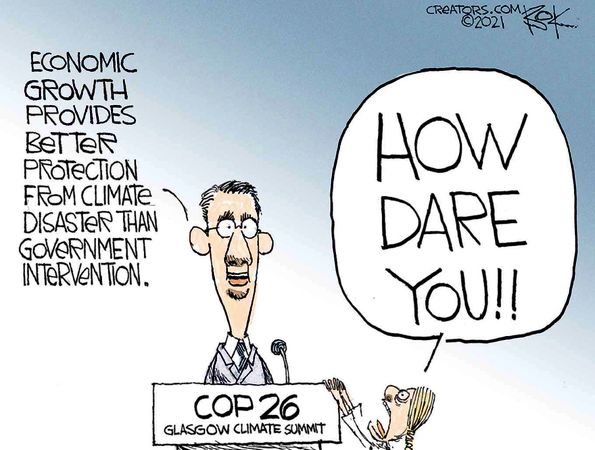
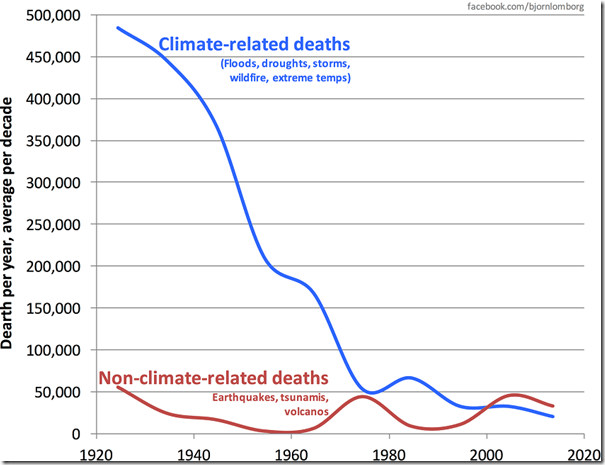


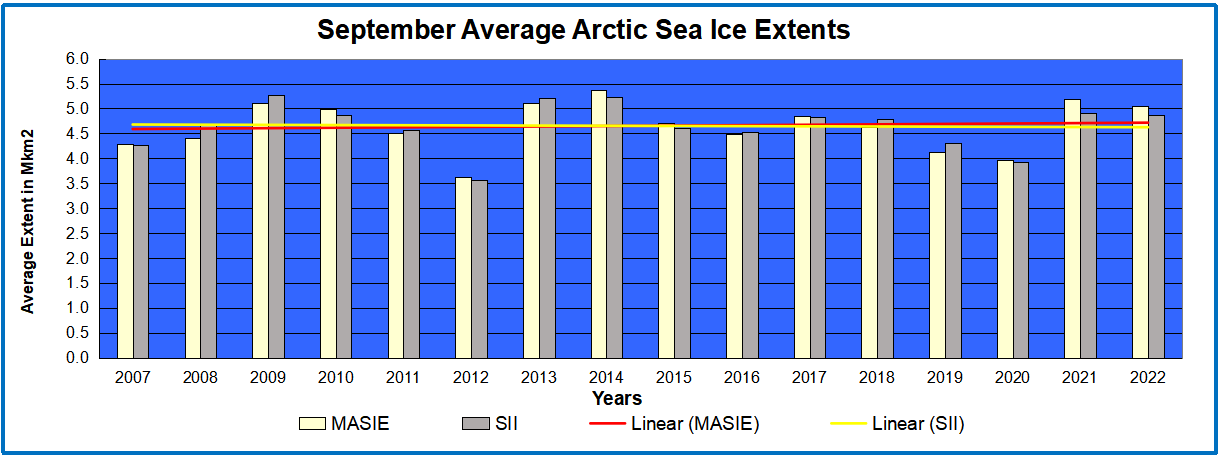
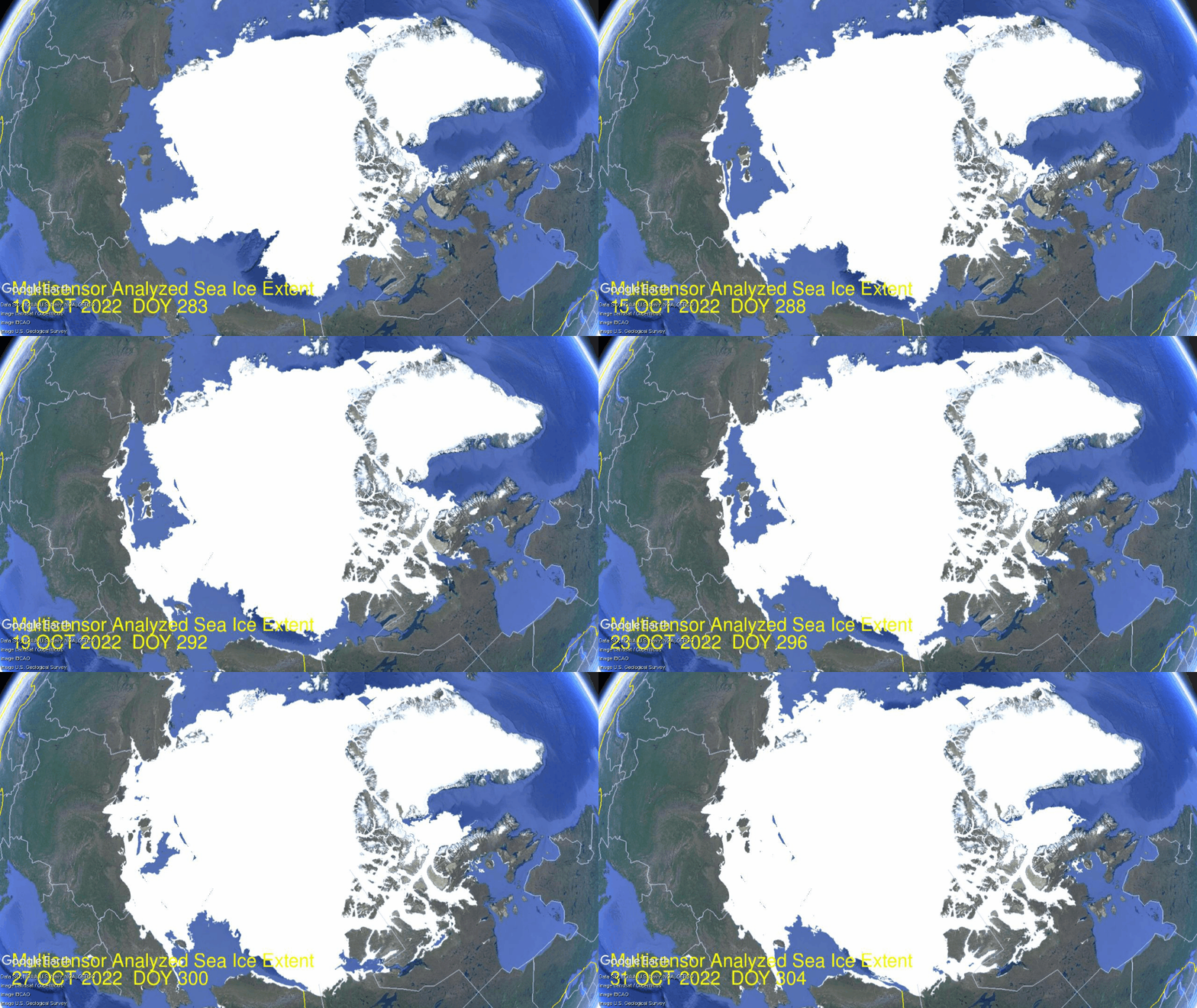



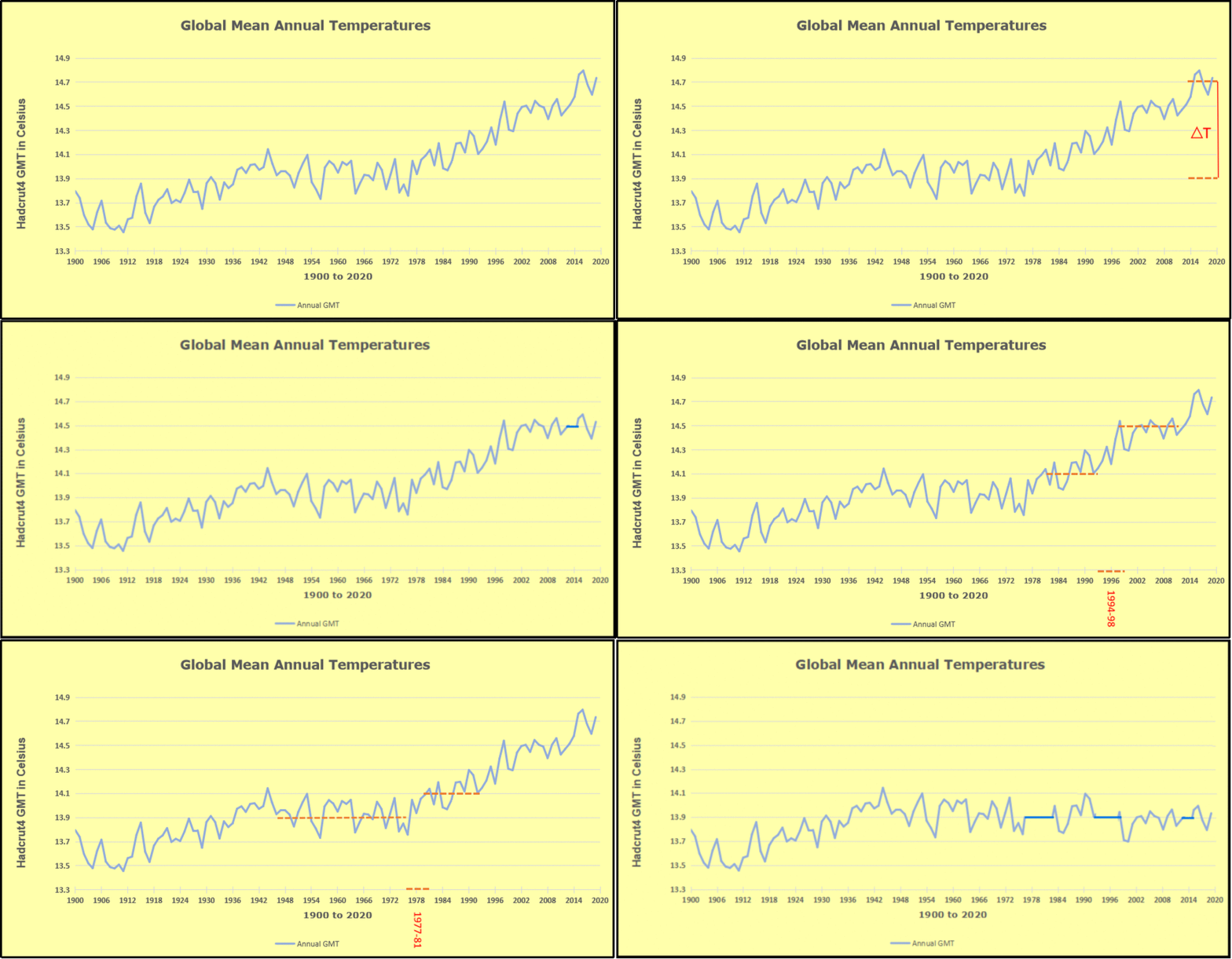
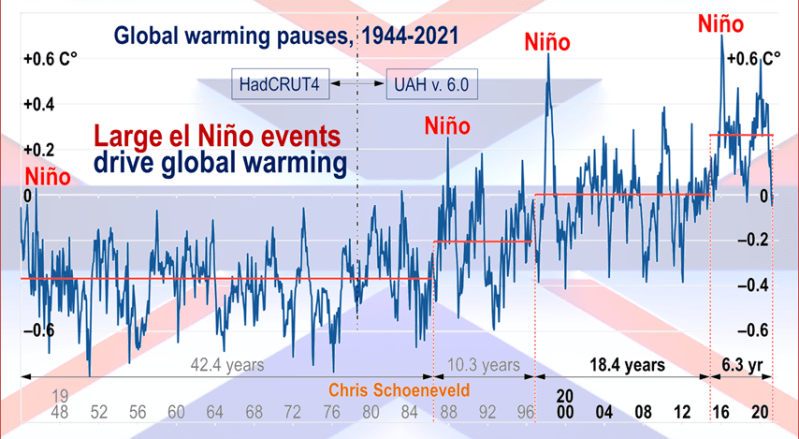
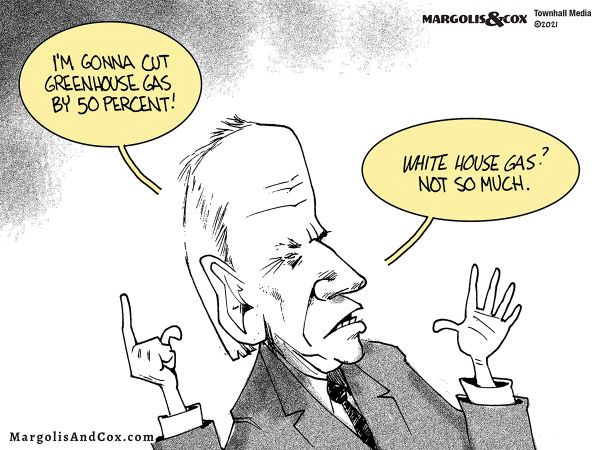


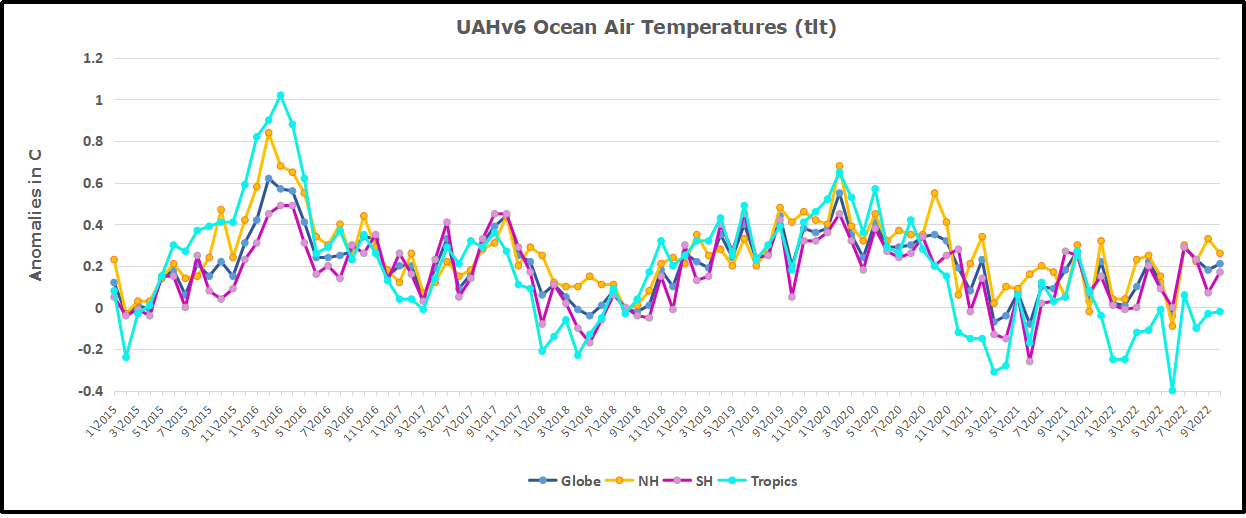
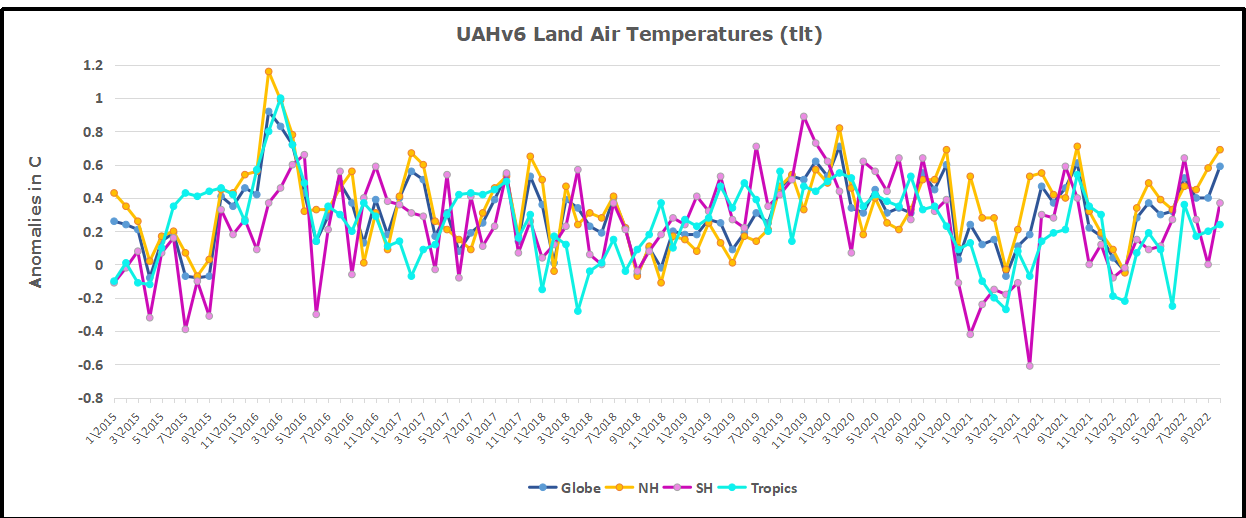
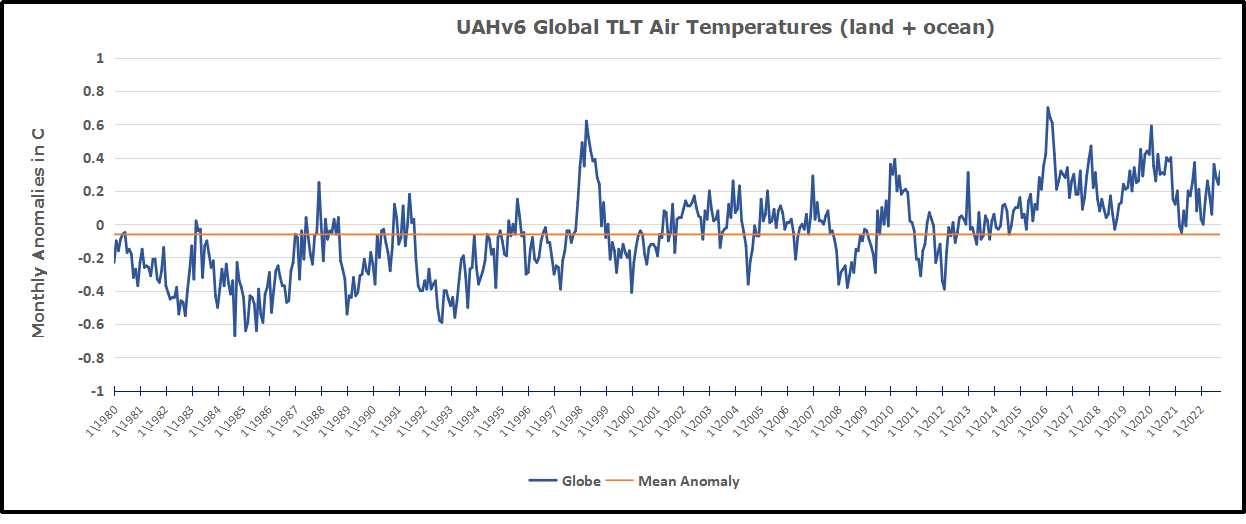
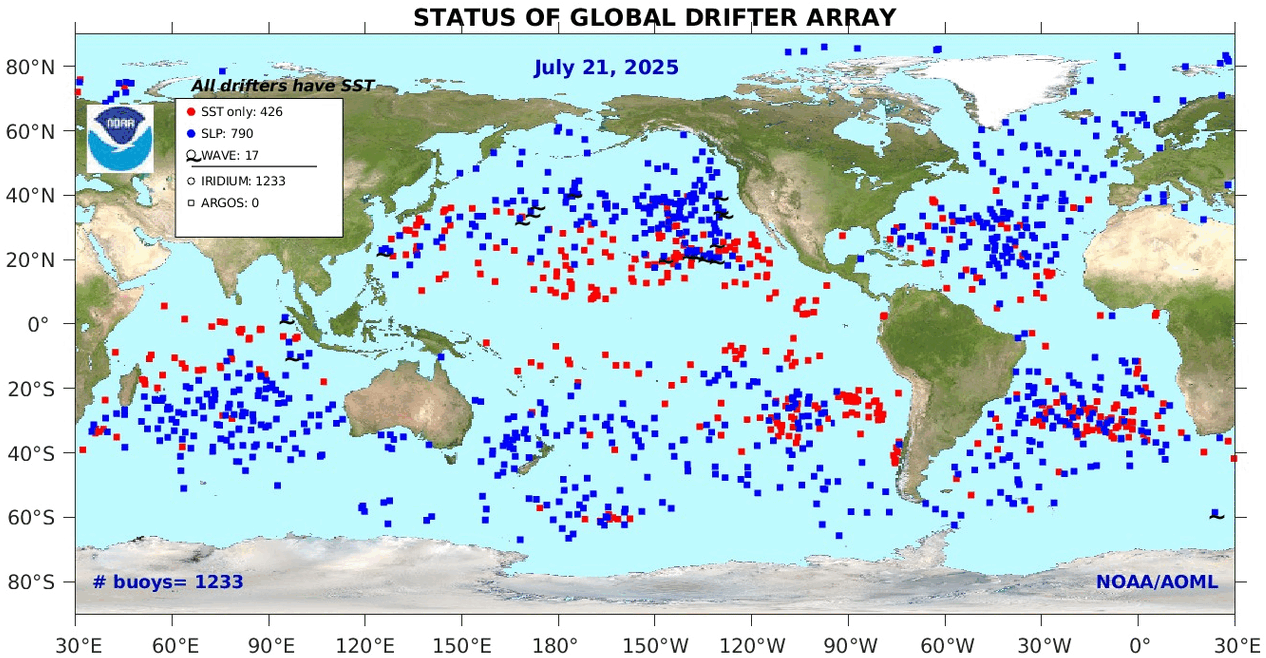 The best context for understanding decadal temperature changes comes from the world’s sea surface temperatures (SST), for several reasons: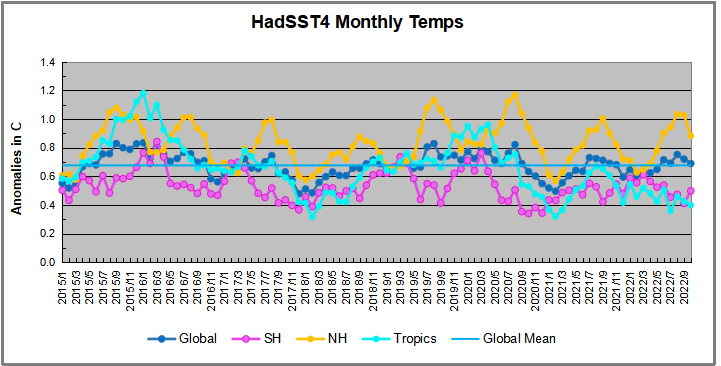
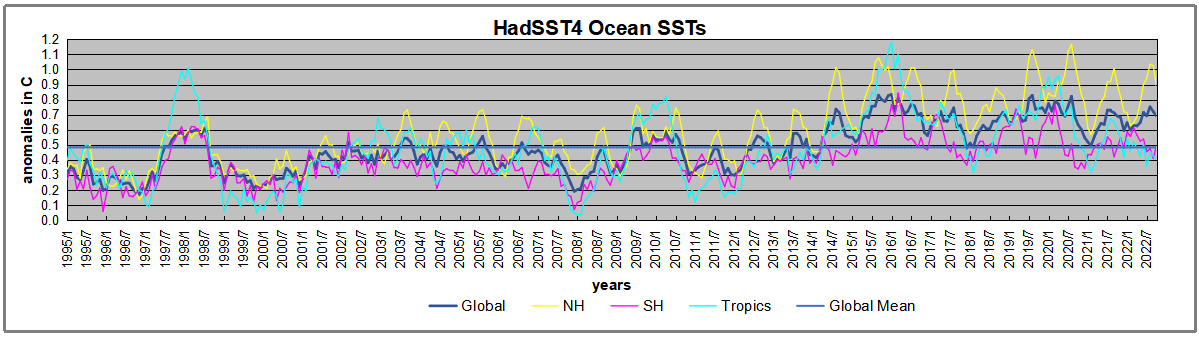
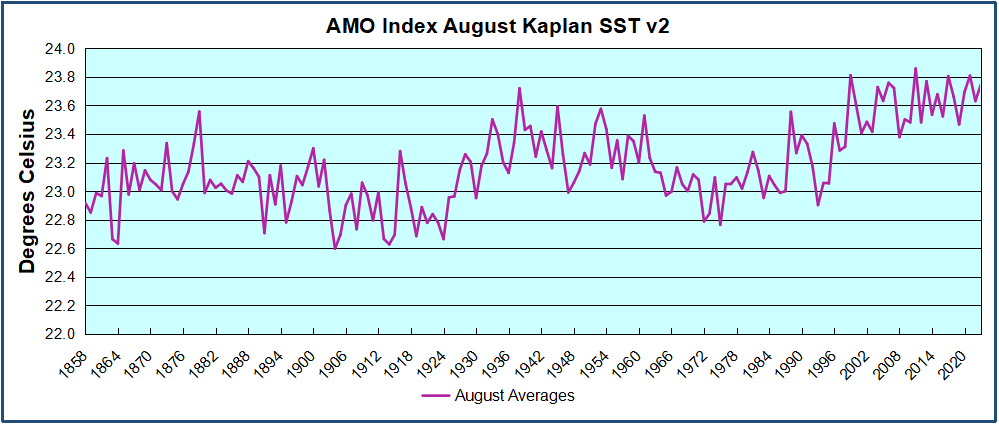
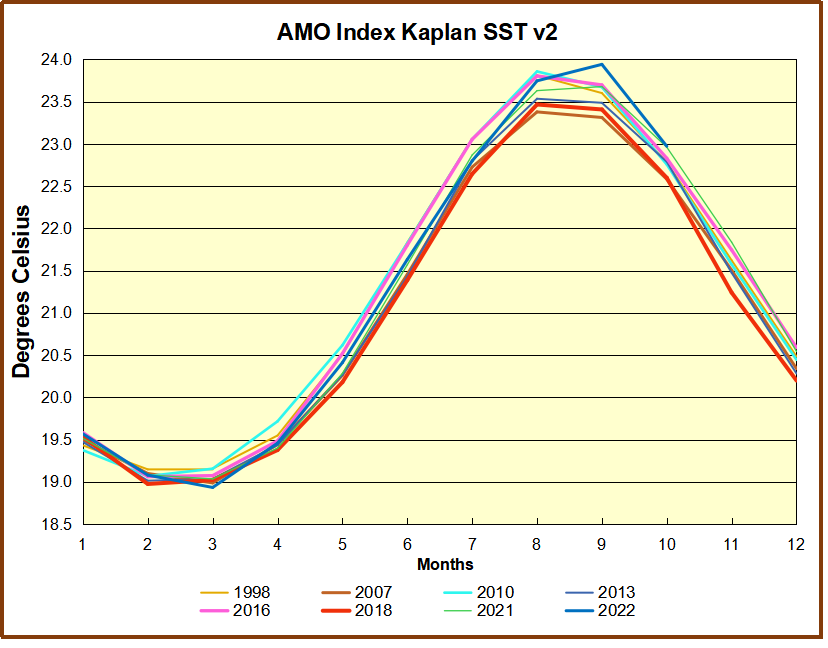


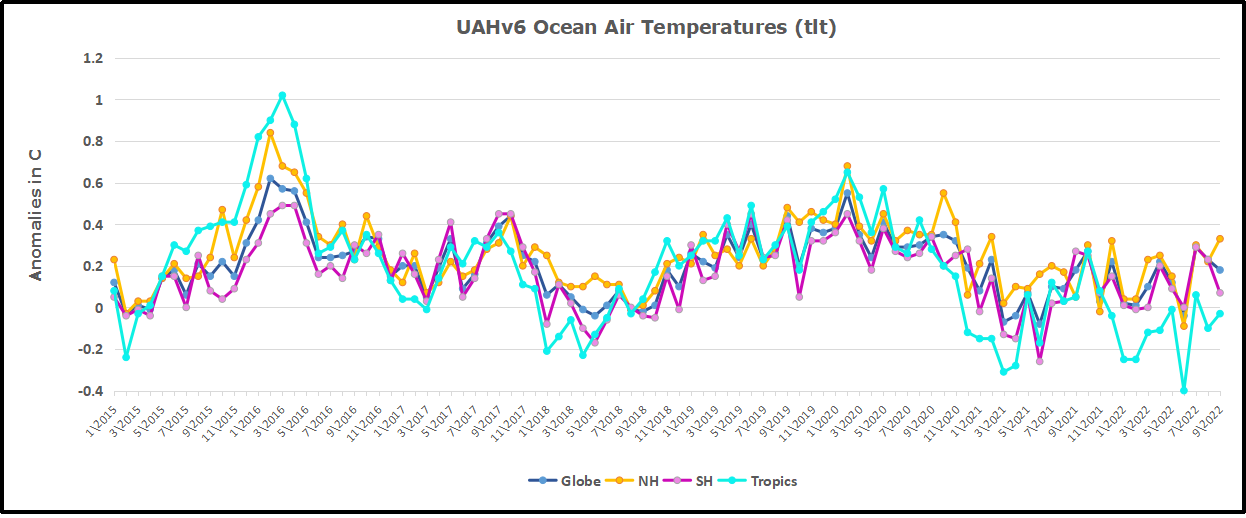
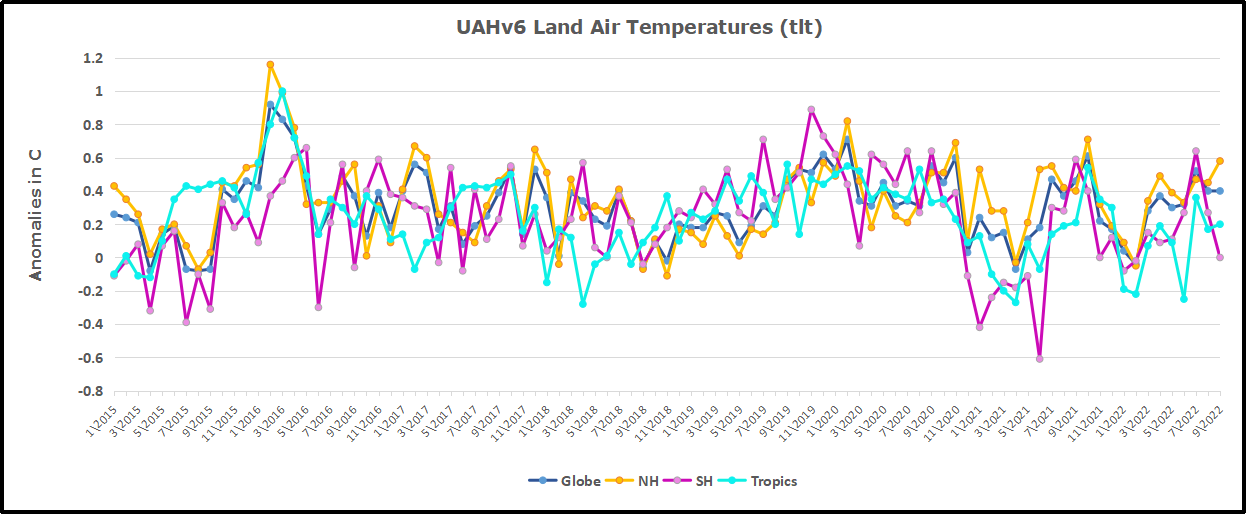
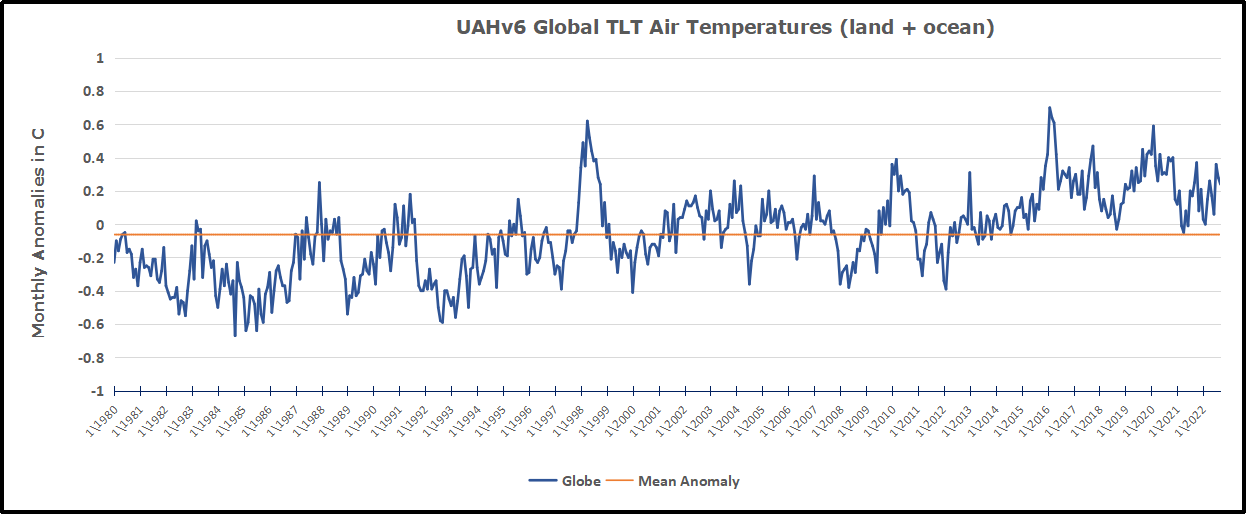
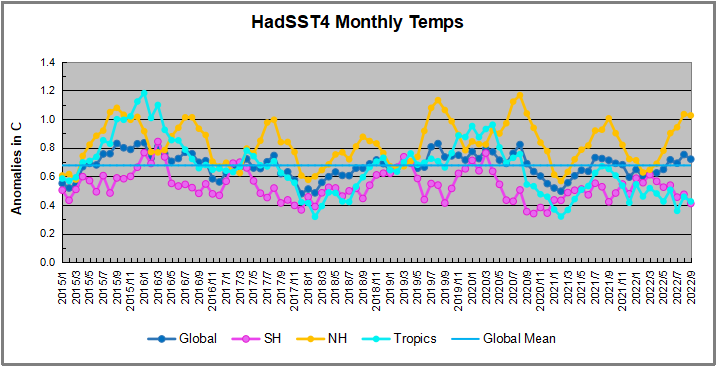
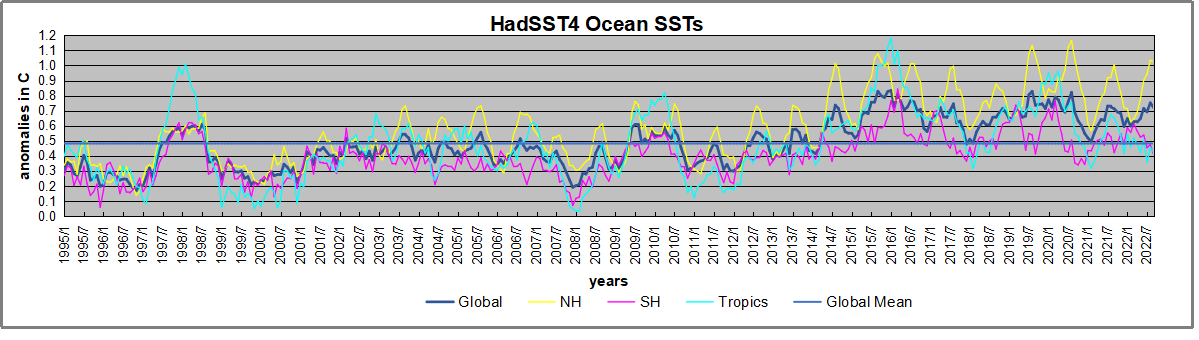
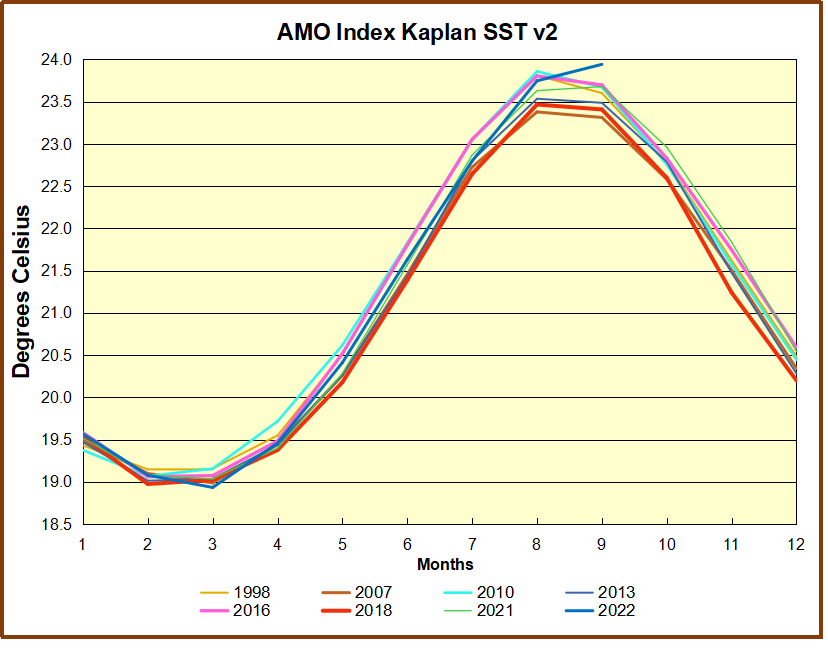

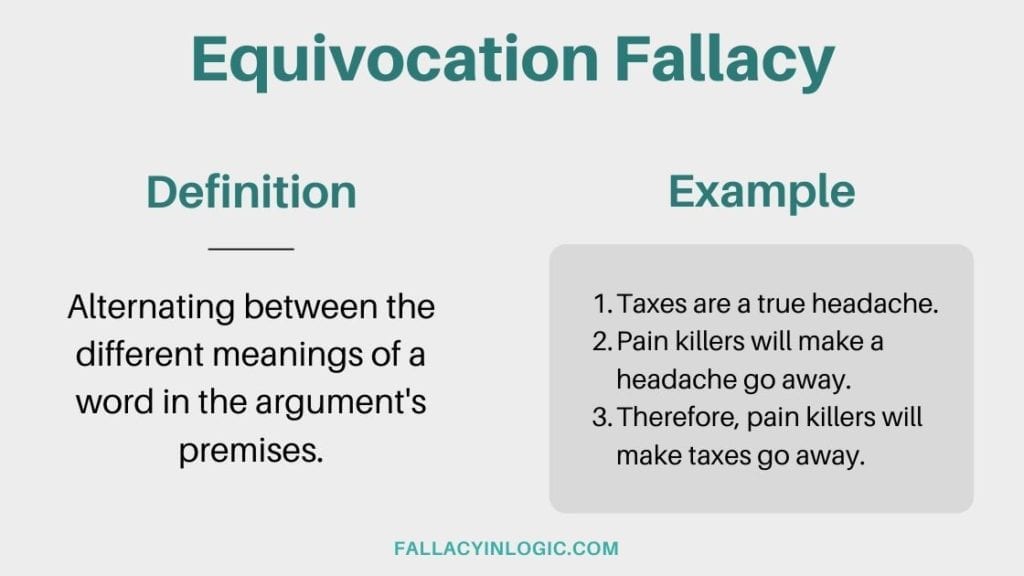
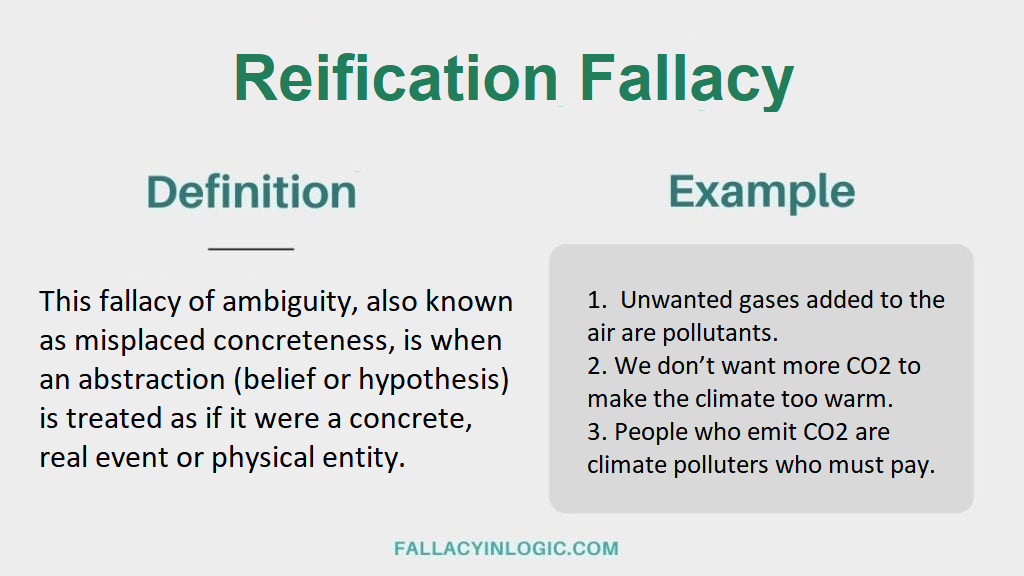


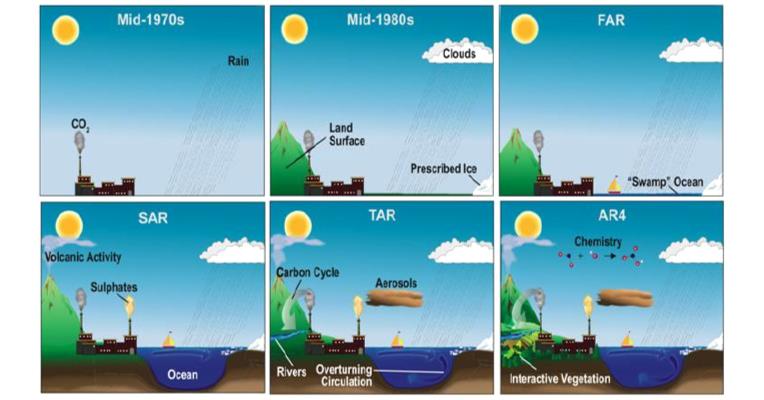
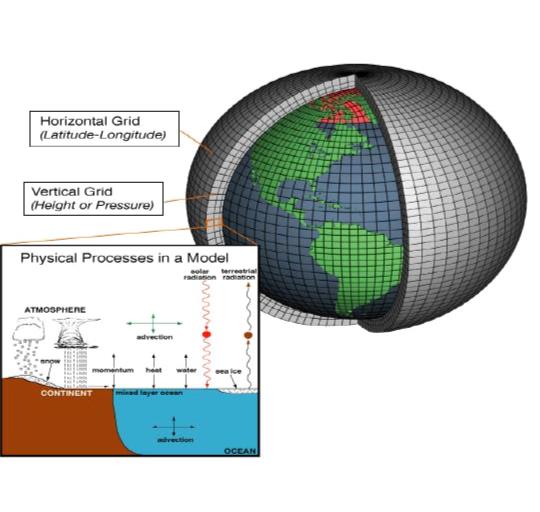
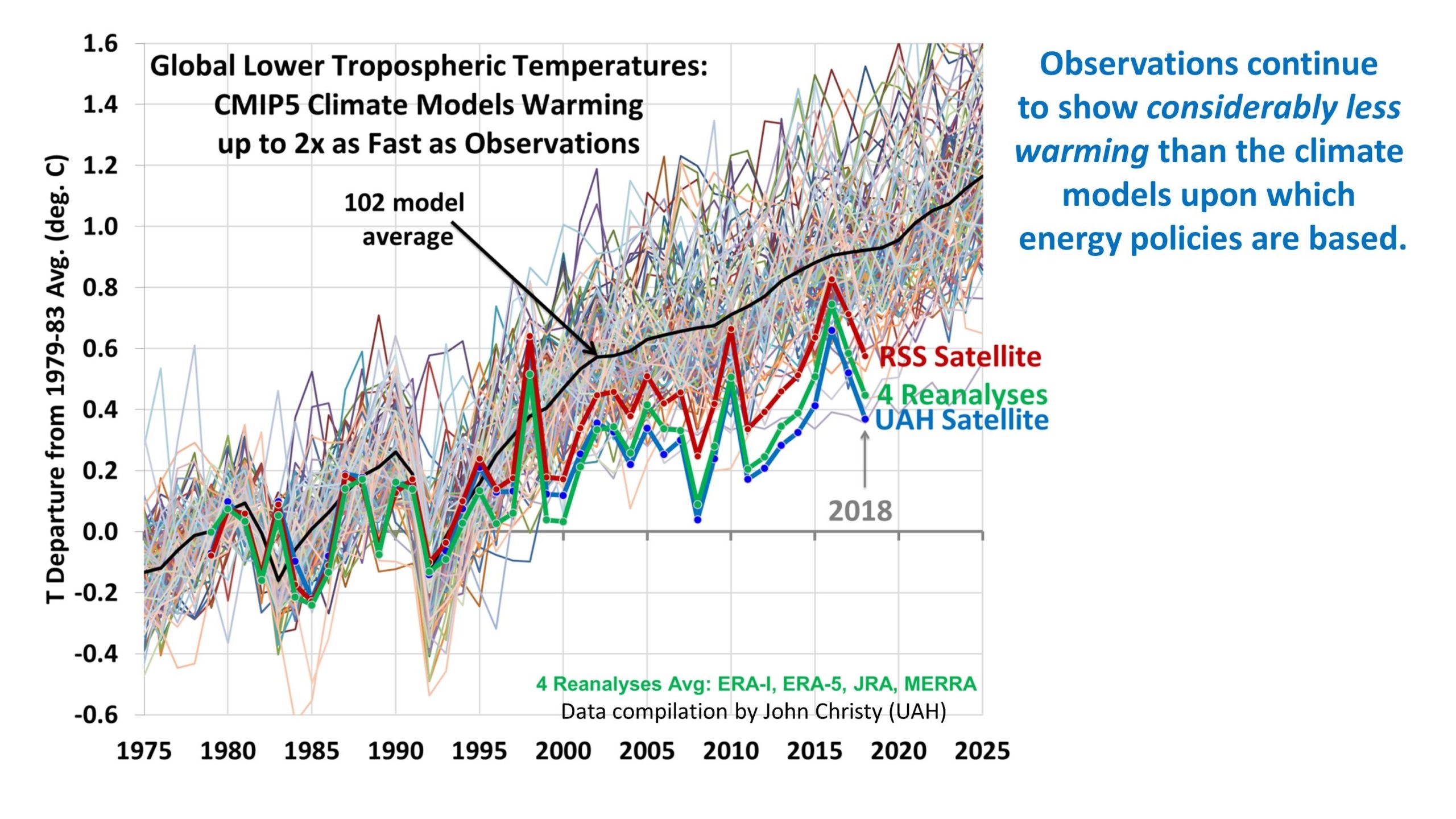
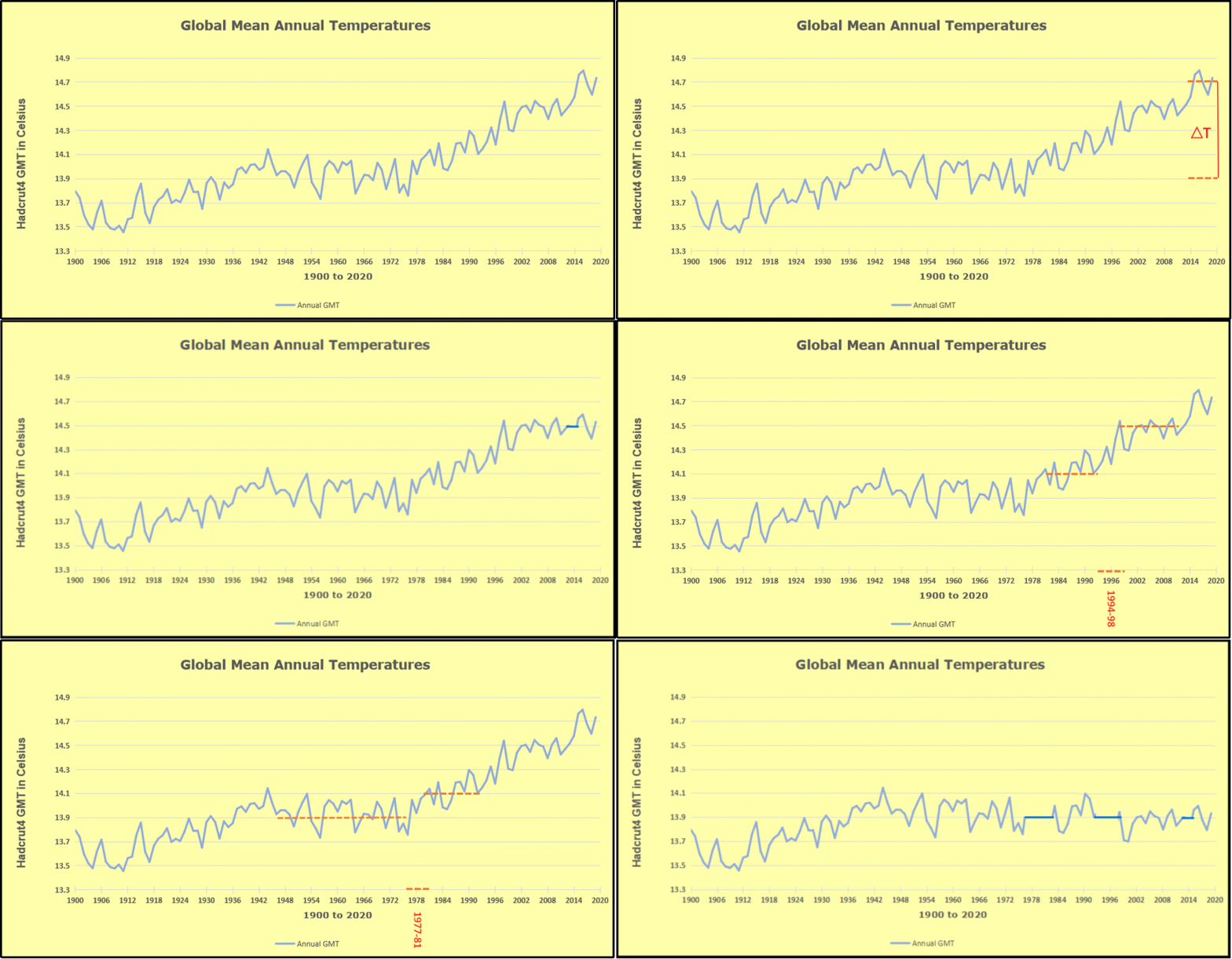








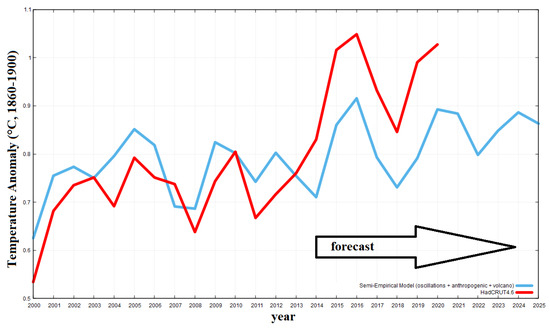
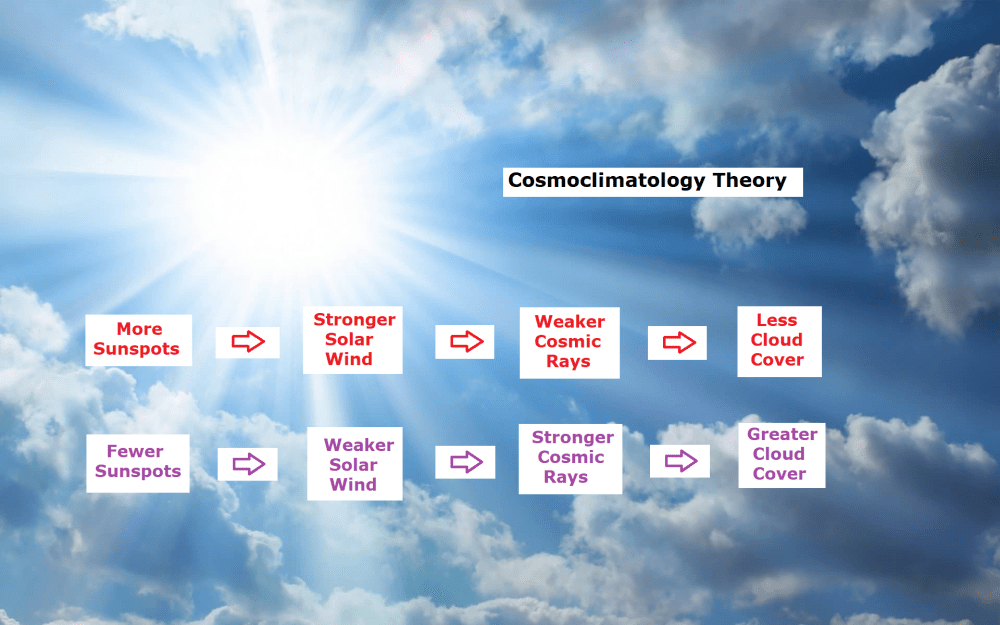




 But: Sea Level Rise is not accelerating.

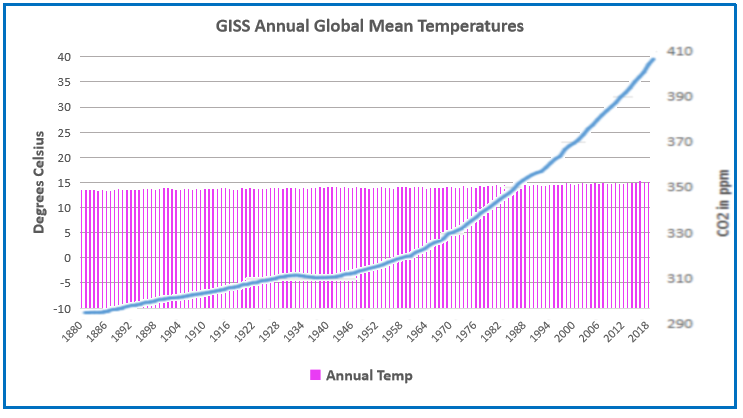


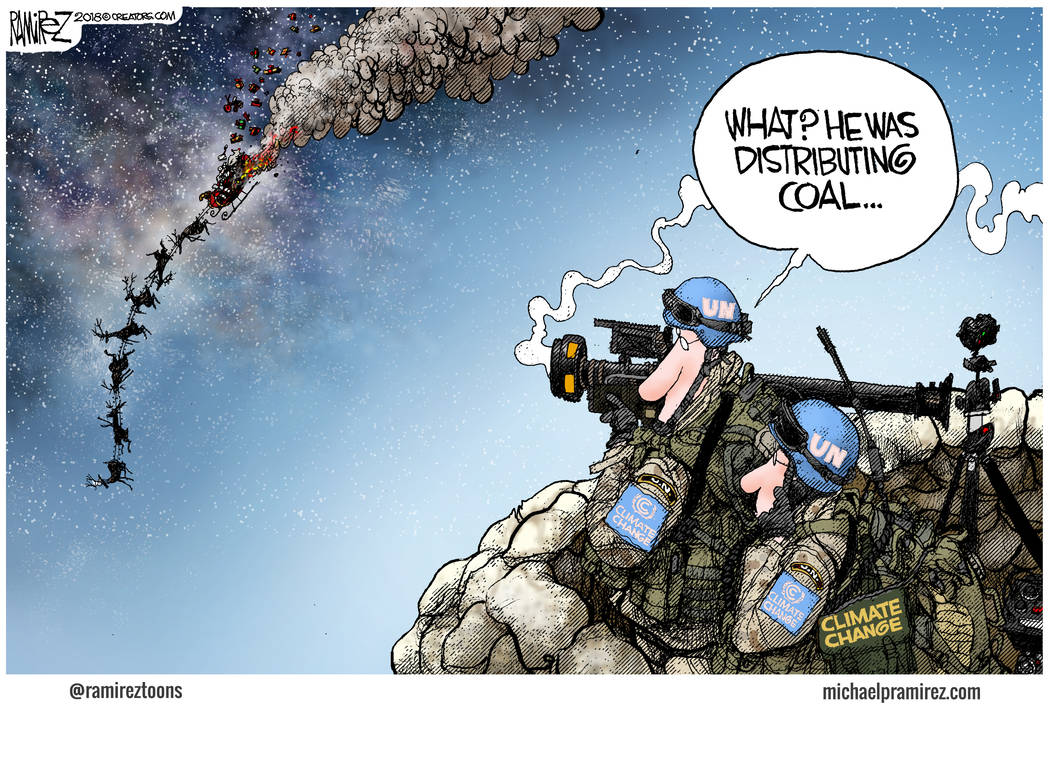
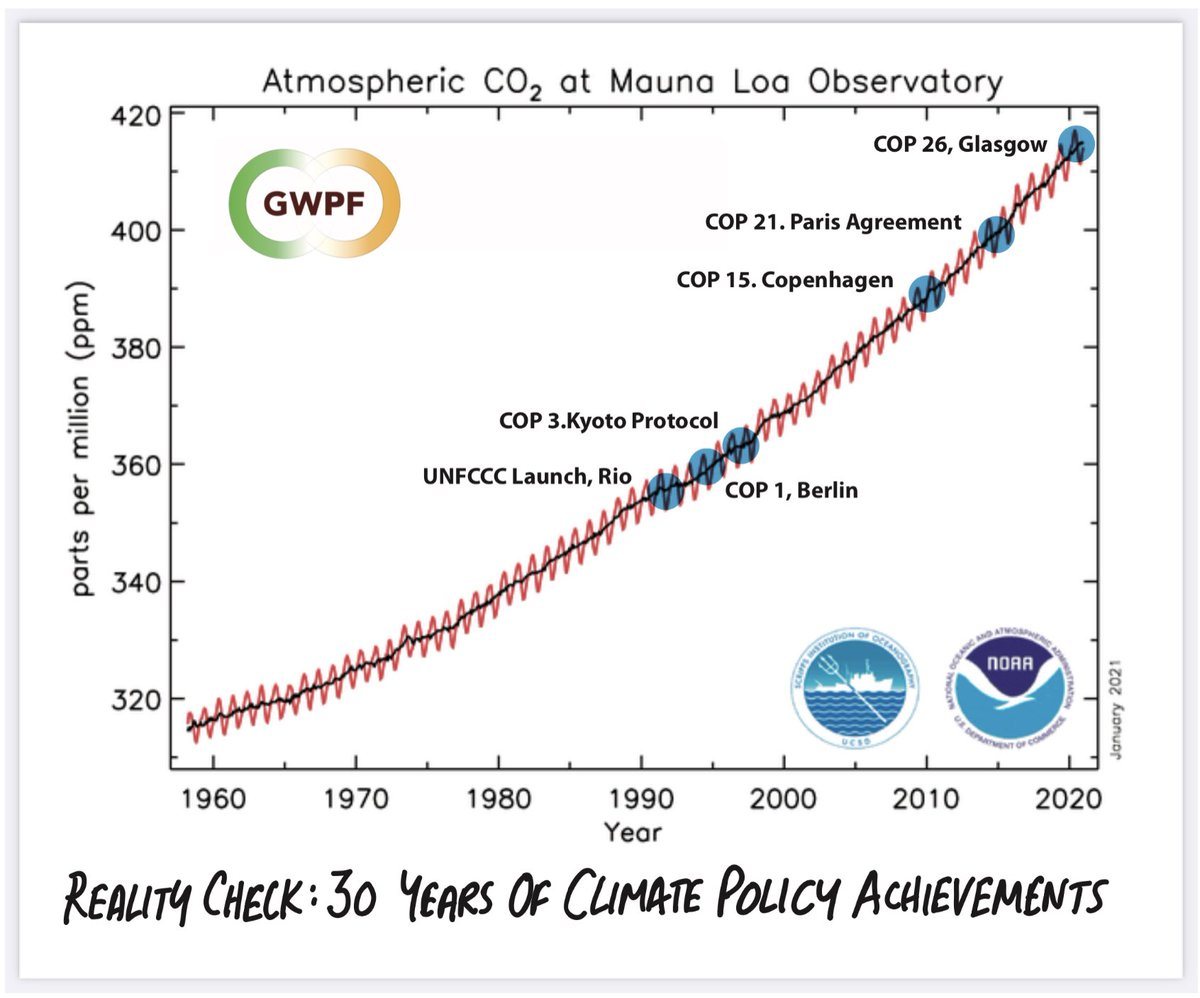


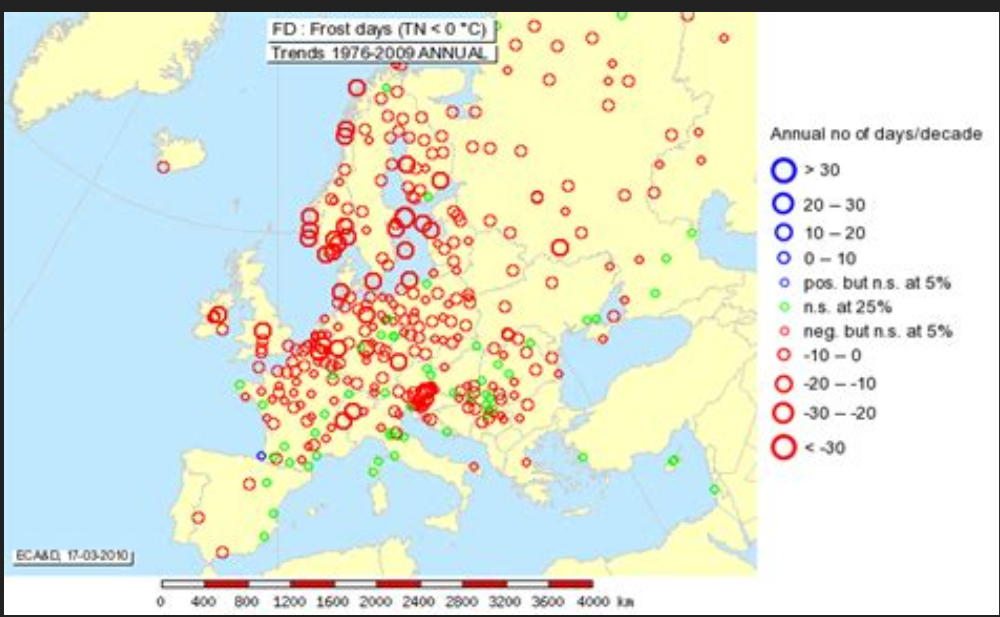
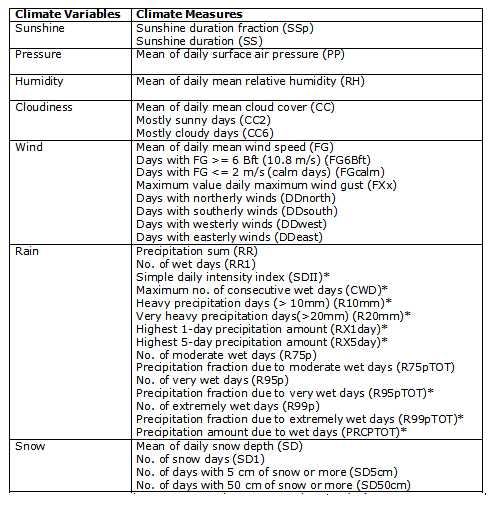
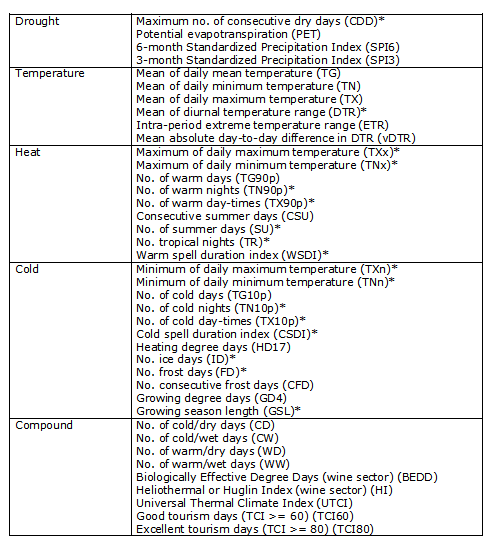
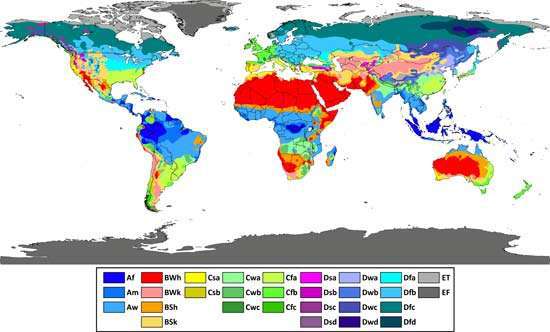
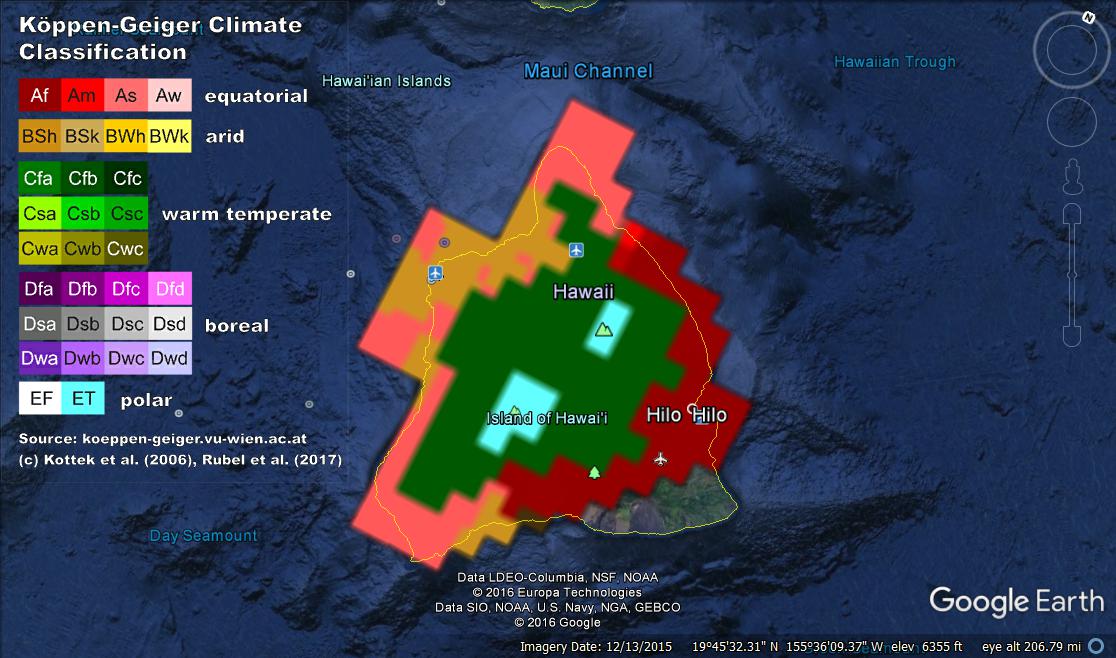
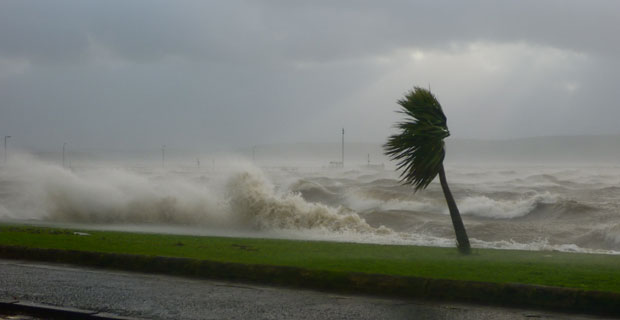
 Science Matters