Family Doctor’s Plain Advice about Covid Vaccines

Amazing Vax Race

Buzz Hollander MD writes at Real Clear Science Let’s Stop Pretending About the Covid-19 Vaccines.  Excerpts in italics with my bolds and images.

As a family physician, I spend my days dispensing advice. I mean, there’s the occasional cast, skin biopsy, or shot, but most of my patients are seeing me for medical counsel. Never have I been asked about one subject so much as the Covid-19 vaccines, and never have I seen so much doubt and confusion among a group of smart, well-educated people. Interpreting the reality of the effectiveness of these vaccines is complicated: it is waning with time, weakened against delta, unknown when coupled with prior infection, and may not be improved with a booster – but there is new, often murky, data emerging every day. Speaking the truth about the vaccines, however, should not be that hard.

We have to be willing to adapt to new data, even when it does not fit neatly into prior messaging.

That’s where our institutions went astray. I understand the desire of our public health officials, spearheaded by the CDC, to instill confidence in the Covid-19 vaccines; they remain the most expedient path to minimize the suffering inflicted by this pandemic. However, by taking on the role of no-nuance vaccine cheerleaders, they left everyone in a worse situation.

Patients and doctors looking to the CDC for guidance in decision-making receive low quality or dated information. The mainstream media is stuck between reporting public health dictates as valid, while being unable to resist doom-and-gloom reports of vaccine “failures” that sell ad space. The obvious gap between “what the CDC says” and “what we see, hear and read” has left a large space for grifters, self-styled experts, and conspiracy theorists to thrive, especially among the large group of vaccine-hesitant (often vaccine-terrified) Americans. The whole thing might have gone better had we stuck to telling the truth as we knew it.

What follows is the truth about the Covid-19 vaccines, as I see it, from the data in hand right now. It is often inconvenient, especially for someone like me, who preferred the easy days of being a vaccine cheerleader when the initial trial data emerged. Do I still recommend a Covid-19 vaccine for the vast majority of my patients? Yes. It just takes a couple extra minutes to discuss now. Most importantly, if I speak the truth now, my patients will be more inclined to trust me later. So let’s see where we really stand:

Let’s stop pretending the vaccines are 90% effective and breakthrough cases are “uncommon.”

The real world effectiveness of the Moderna and Pfizer (mRNA) vaccines appears to be sinking like a stone. We started at 94+% within 2 months of vaccination and against the original SARS-CoV-2 strain. The Israel Pfizer data roughly confirmed this degree of effectiveness in initial real world studies. But, then… waning happened, and delta happened. Pre-delta, we see that Pfizer final efficacy data from their trials dropped from 97% at two months to 84% by 5-6 months after full vaccination; Moderna, with its higher doses, dipped more modestly to 92%, although we might expect this number to fall soon enough, since Moderna tells us their neutralizing antibodies are sagging by the 6 month point. Unfortunately, the real world data is far more damning.

Right now, we have two widely-cited studies claiming 87-88% effectiveness for Pfizer against symptomatic infection: from Canada and the UK. Both studies, however, ended in May, in countries that spaced their two doses out by 2-3 months, leading to a short window after full vaccination.

What about studies of total infection rates (including asymptomatic infections, so we are a bit apples-to-oranges here) concluding in July in places with only a 3 week lag between Pfizer shots? Qatar: 56%. Mayo Clinic/US: 42%. Israel: 39%. Interestingly, the Qatar (85%) and Mayo (76%) data for Moderna were more positive, and time will tell us more about Moderna’s durability. It’s important to note that real world data is inherently messy – vaccinated people might just be different than their unvaccinated “case controls” in a study – but when the same pattern crops up with different investigators in multiple countries, it’s probably real.

Some of this is likely due to the delta variant’s modest ability to evade immunity. Neutralizing antibody responses among both those with prior infection and vaccination are several fold less to delta than the original SARS-2-CoV strain. However, I suspect the dramatic drop in effectiveness now being seen is a product of this immune evasion being amplified by waning immunity.

The truth here matters. For one, on a personal level, if you went from hiding in your house in March, to cheering on the local hockey team in June after your second Pfizer shot, it’s time to re-assess. Look at the recent UK REACT data: vaccinated people in mid-July were three times less likely than unvaccinated people to test positive for Covid-19. Great. But… they were almost twice as likely to test positive as unvaccinated people did just a month before, in mid-June! If you reduce your odds of infection by a factor of three with vaccination, but increase your risk of exposure by a factor of five, either due to rising prevalence or shifting your behaviors, you’re still more likely to catch a case of Covid-19 than if you had skipped the vaccine and stayed fixed in time. Put simply, regular high-risk exposures to SARS-CoV-2 can overwhelm a very good but imperfect vaccine.

Remarkably, the CDC is still proclaiming that vaccine breakthrough infections are rare – but when normal people hear that their barber, their cousin’s husband, and seemingly half the New York Yankees’ starters have experienced breakthrough infections, they might assume the CDC is lying.

Let’s stop pretending that vaccinated people are far less likely to spread SARS-CoV-2.

We have made pariahs of the unvaccinated as menaces to the public good. Even if this might not be the most effective form of public health messaging, perhaps this made statistical sense, at least, when we believed the mRNA vaccines to reduce all infections (including asymptomatic) by some 90%. Coupled with limited data from a UK study which showed household contacts of someone with a vaccine breakthrough infection were about half as likely to develop covid-19 as contacts of an unvaccinated person who became infected, it was reasonable to estimate that vaccinated people were almost 20 times less likely to transmit SARS-CoV-2 than unvaccinated people. This assumption led to the CDC’s recommendation that vaccinated people could drop their masks.

Unfortunately, the times, they are a-changing. The CDC famously reversed course on masks for the vaccinated. Data has been mixed, but several recent reports suggest the viral loads of those with vaccine breakthrough infections are akin to the unvaccinated. A thorough study from Singapore showed that vaccinated cases dropped their viral load faster — but viral loads were identical in days 1-5, when, logically, we might think most transmission takes place. Lacking a proper household transmission study post-delta, it’s simply not good science to assume the vaccinated spread less Covid-19 once they get infected.

From a societal perspective, is it reasonable to discriminate between the vaccinated and unvaccinated given this data? My second Pfizer shot was 7 months ago. An unvaccinated person without prior immunity is probably now only twice as likely to be infected as I am, but I can walk into a bar in New York City or Paris for a drink, and a VA hospital or Mayo Clinic for work — and they cannot.

Vaccine mandates and vaccine “passports” are often justified as necessary to reduce transmission of contagious diseases, but I don’t think the evidence is adequate at this point to make this claim for the Covid-19 vaccines. The substantial outbreaks in exceptionally well-vaccinated places like Israel, Malta and Vermont make it clear that pushing up vaccination rates does not guarantee control of Covid-19. Of course, the other justification for requiring Covid-19 vaccines is to limit the suffering and strain on society by reducing severe disease. Here, the legal and ethical questions are complex; and we must ask ourselves: is a potentially modest increase in vaccination rates worth the stress vaccine requirements entail?

Let’s stop pretending that it’s rare for vaccinated people to develop severe Covid-19 or die.

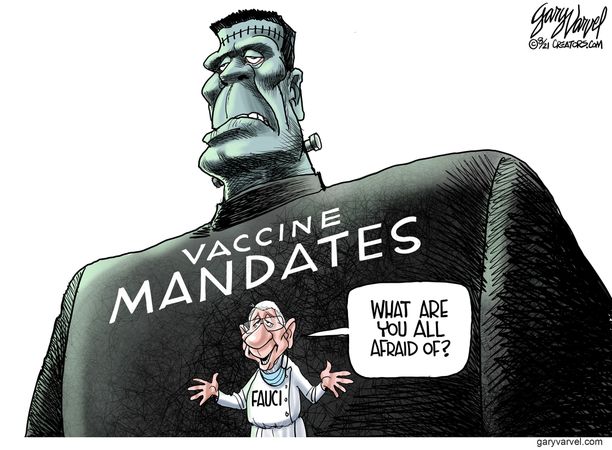
I cringe when I read Dr Anthony Fauci, CDC Director Rochelle Walensky, or Surgeon General Vivek Murthy remind us that 97% of new covid-19 hospitalizations or 99% of covid-19 deaths are among the unvaccinated. I know the message is well-intentioned: “Vaccines will protect you from severe disease, so go get vaccinated!” The problem is when the message is not quite true.

We saw this in the UK, where deaths among the vaccinated went from “rare” to two-thirds of all delta variant deaths by July. We saw this in Israel, where literally no fully vaccinated people died of covid-19 for entire weeks in June, but by August over 60% of the severely ill were fully vaccinated.

This is not evidence of vaccine failure; but those commentators who willfully misunderstand the base rate fallacy like to portray it as such. The reality is that Israel is so heavily vaccinated, especially among the elderly, that severe illnesses and death among the vaccinated will not be “rare” or even “uncommon” during a heavy, high-prevalence wave like they are having now. They will, however, be less common on a per capita basis than among the unvaccinated; about six times less common, as I write this.

Here in the US, there should be no shock value to reports of fully vaccinated people falling gravely ill with Covid-19. No vaccine is perfect, and half our population is fully vaccinated. However, many vaccine cheerleaders helped create an aura of perfection when it came to their touting of the vaccine trials: “Not a single death or hospitalization in the vaccine arms due to Covid-19 in over 75,000 participants!” Even without the arrival of delta and the recognition of waning immunity, no reasonable person would imply that there would be no deaths or hospitalizations once applied to 200 million participants.

From this expectation of bulletproof immunity, much of the public now feels betrayed.

Should they, though? When it comes to preventing severe infection or death, this is the great promise of the vaccines, and the clear basis for why I recommend them to almost all my patients. In all the studies I cited above with worrisome vaccine effectiveness against infection, virtually all still showed 90% or better effectiveness against hospitalization; the Mayo study was the outlier at 75%. So, to the best of our knowledge right now, if you get vaccinated you will be about 10 times less likely to be hospitalized with covid-19!

However, in the interest of truthfulness, there might be one substantial exception to that claim.

Let’s stop pretending that prior infection should not influence the decision to vaccinate.

Much has already been written about the CDC’s willful decision to ignore the relevance of prior infection, as if natural immunity simply did not exist. Most are aware that prior Covid-19 infection allows some degree of protection from future infection, with most studies suggesting this protection is north of 80% relative to someone with no immunity. It also leads to a greater immune response with first vaccination, which, in theory at least, could lead to better long-term protection, but also a higher rate of adverse effects. We are often told to “follow the science.” In this regard, there really is not much “science” to follow to endorse vaccination after infection.

Real world data is mixed; a recent study from Kentucky found two-fold additional protection to those with prior infection after full vaccination, while a larger study from the Cleveland Clinic showed no difference in re-infection rates between vaccinated and unvaccinated health care workers with prior infection.

Fortunately, we do have randomized controlled trial evidence to help shed light on the question. Unlike Johnson&Johnson, both Pfizer and Moderna tracked outcomes in their trials of those who had a history of Covid-19 infection before entering the placebo or vaccine arms. Moderna efficacy could not be evaluated due to having only one case in the placebo arm, while Pfizer showed a very modest 19% vaccine efficacy in the immunized group (vs 95% overall).

So – what does the science say? It says: barring new evidence, there is no clear benefit to immunizing those with confirmed prior infection. Common sense suggests there is a good chance these people would benefit from at least one (and possibly only one) shot as a “booster,” especially after 6 months or more have passed since the time of infection, especially with a more transmissible variant on the loose – but that’s common sense, not good quality data.

As a physician, I do think all but my lowest risk individuals with prior infection would have appreciable benefit from a single man-made “booster,” especially if they did not show evidence of antibodies, given the fairly robust correlation between a negative antibody test and risk of infection. However, I would not push if a previously infected patient opted to pass. As a citizen, I find it troubling that someone with prior infection could face an employer mandate to undergo vaccination against their will, given the slender evidence available.

Since we’re wading into divisive waters now, let’s dig into an even more charged subject: kids and vaccines.

Let’s stop pretending that the vaccines are a no-brainer for adolescents and children.

We parents are a sensitive bunch. Throw politics and heaps of fear-mongering into the equation, and talk of required vaccinations for school or sports quickly turns the volume up to 11. Lost in the noise, though, is that once again, evidence-based science is lacking that universal vaccination is appropriate for kids.

Virtually every American by now knows that Covid-19 severity drops with age. What no one knows is how well a Pfizer vaccine given to an adolescent today will reduce transmission by winter, and the adult data already discussed is concerning. So, are mostly left considering whether the risks of covid-19 to the lowest risk segment of our population outweigh the risks of the vaccine (and future boosters).

Just as no vaccine is perfectly effective, no vaccine is perfectly safe. The world has watched the adenovirus vector vaccines (AstraZeneca and Jansen/J&J) lead to serious thrombosis events mostly in younger women, and the mRNA vaccines trigger myocarditis mostly in younger men, roughly in the 1/10,000-20,000 range. To clarify: not 1%, not 0.1%, but <0.01%. These adverse reactions need to be acknowledged openly, however, as they are terrifying, and lead to chilling newspaper headlines and social media posts that make the possibility seem very real for your own child.

I explain the numbers to concerned parents like this: about 35 per 100,000 kids <18 in the US required hospitalization with Covid-19 in the first year of the pandemic. Even if half those hospitalizations truly were “with” and not “because of” Covid-19, that is still around 1 in 5-6000 of every American under 18. Could we be missing so much myocarditis, thrombosis, and whatever other vaccine-triggered illnesses are severe enough to lead to hospitalization, that the risk from vaccination could actually exceed the disease? It certainly seems unlikely, although that has not stopped some from twisting data to make this claim.

I also observe that these Covid-19 hospitalization rates are unlikely to stay this low, given the arrival of delta and it’s markedly higher transmission rates. What’s more, this calculation neglects the real concern for persistent disease from a covid-19 infection, aka “long covid,” which appears, very roughly, to affect somewhere in the 2-10% range of infected kids.

We must allow for some very small chance the mRNA vaccines will be the first vaccines in history to have a hidden adverse effect we missed in their first eight months of study. However, we must also allow for the chance that the virus itself might have some yet-unknown future harm, like the ability of Human Papilloma Virus and Epstein-Barr Virus to trigger certain cancers later in life.

All in all, I do think honest consideration of risk and benefit favors kids getting the Pfizer vaccine, and especially those with risk factors like obesity, asthma or diabetes, who make up the majority of hospitalized children. However, I think it’s important to remember that we are talking about 0.05%-type risks of serious disease versus 0.01%-type risks of severe vaccine reactions here – slim margins of benefit versus harm. I would rather the trial for the 12-15 year old age group had been larger than 1131 subjects in the vaccine arm to help us quantify those risks better.

A rational parent — especially the parent of a healthy boy, given the far higher rates of myocarditis in boys with the mRNA vaccines — could decide against giving their child the Pfizer vaccine, especially given the utter lack of certainty as to how soon and how often boosters will be required. Sensibly, I think, the UK took this approach: optional for those over 15, recommended for those 12-15 only with immunocompromised health status or high-risk family members, and gathering evidence for future decisions. My home state of Hawaii is taking rather the opposite approach, in mandating vaccination for all student-athletes. This is the unfortunate playbook for how to maximize vaccination in the lowest risk population group (athletes) half of whom are at the highest risk for requiring hospitalization for vaccine-mediated myocarditis (high school boys).

I don’t want to appear dismissive about the potential importance of vaccination for kids. While pediatric cases are rising and still roughly only half their prior peak levels from January, hospitalizations are already approaching that January peak, and we hear reports of pediatric ICUs filling, especially those under the strain of the current high rates of serious RSV cases. However, sometimes “do everything possible” is not the best long-game response to a short-term crisis. I question whether the reward of adolescent vaccination is so great and conclusively demonstrated that we should shame parents opting against this vaccine, or take schooling options away from their children.

Let’s stop pretending that a third booster is definitely going to help.

With recent approval for booster doses for the immunocompromised, they are today’s hot topic. While I am asked many questions about them, the truth is: I don’t have many answers. Pfizer has finally started a trial in in the past few weeks with 10,000 prior vaccine recipients. Once we get that data, perhaps in just a few months, we will move out of the theoretical realm.

Right now, theories are all we have. Perhaps one more dose of the original vaccine, by boosting overall antibodies, will help fight off the large infectious doses of delta. Or perhaps, by only stimulating the same imperfect antibodies, it won’t. Maybe the delta-specific boosters Pfizer and Moderna are developing will be ready for arms before the next variant arrives — and maybe not. Maybe we find new adverse effects with repeat doses of boosters. Maybe the extra protection lasts 4 months, or maybe years. Little is clear now.

Given their muted responses, on average, to their initial vaccine doses, the immunocompromised are most likely to benefit, and the most obvious candidates for a booster. Again though, this is based on laboratory studies of improved immune response, not actual trial data. As to the rest of us, I suspect the benefit will be modest, and/or quite possibly fleeting (remember, our annual flu shot’s efficacy fades about 10% per month, too). Until we see more definitive evidence that protection against severe disease truly is waning, I will be reluctant to recommend a booster except for my highest risk patients.

Let’s stop pretending that these vaccines are “kill-shots,” cause sterility, spread disease, etc.

Obviously, this is not directed at the public health community, but rather those who have built their social media brand by alarming the masses about the covid-19 vaccines. Everyone should have the right to raise their doubts and concerns about a new medical intervention. However, it is an abuse of that right to cherry-pick or deliberately misrepresent data while pretending to be impartial, or to sensationalize case reports without giving their context, with the sole purpose of breeding fear.

I try to read everything my patients and friends send me from these misinformers. They sprinkle into their missives bits and pieces of truth — generally the bits and pieces the CDC and WHO failed to mention — which lend them currency with their followers as “the only ones telling it like it is.” They don’t help their followers make rational decisions about vaccination, unfortunately.

Let’s stop pretending that the vaccines are the only way to reduce the burden of Covid-19.

No, I am not going to talk about Ivermectin here, having already said more than enough on the subject elsewhere. Our federal fascination with vaccination, however, has led to a frustrating lack of definitive research into potential treatments for covid-19, especially early in the disease course. We know HCQ failed; and that Regeneron’s monoclonal antibody treatments appear effective but are hard to access, costly and untested against delta; and that remdesivir only works a bit, and dexamethasone a bit more, but only for the very ill. Whatever happened to colchicine, famotidine, inhaled steroids, quercetin, fluvoxamine, and all the other potential agents which had an appealing study or two but never a large, definitive RCT? Perhaps a small diversion of some of the billions spent on vaccines could have led to an actual, evidence-based recommendation for physicians like me after our patients have a Covid-19 exposure or positive test. We literally have no CDC/NIH-endorsed treatments to offer that do not involve a trip to the hospital.

It’s also time to get real about obesity in this country. The US has an obesity rate of 36%, highest among “large” nations; for comparison sake, European nations generally fall in the 20-25% range, and Japan, South Korea, and China are all under 7%. At what point in the “pandemic era” does this become a national security risk? Studies of overweight/obesity on covid-19 hospital and ICU admissions suggest a 2- to 5-fold increased risk for the obese. That makes a normal BMI about a 65-85% effective “vaccine” against severe infection – one that keeps people out of the hospital from a variety of diseases, including the flu, and probably the next pandemic virus. Approaches to slimming down Americans come in many shapes and sizes, from Blue Zones concepts to soda taxes – which could be extended to all sweetened, calorie-dense processed and fast foods.

This pandemic has been an utter disaster. The next one might be worse. Bolstering our national capacity to fight off viruses would be a wise investment.

[My Comment:  Hollander’s statement about HCQ is incomplete and thus misleading.  “We know HCQ failed when given as a last resort to Covid patients on their death beds.” (There, Fixed.)  No anti-viral works at that stage.  Treatment with HCQ or Ivermectin is very effective early after infection to prevent a viral load able to cause severe illness.  See Yes, HCQ Works Against Covid19 and Ivermectin Invictus: The Unsung Covid Victor    Let’s stop pretending there are no effective early home treatments against Covid-19]

And, finally, let’s stop pretending that vaccines alone will bring an end to Covid-19.

Predictions have largely been useless in this pandemic. However, some basic principles are likely to hold true. We do not get to go back to alpha or the original strain of SARS-CoV-2; we are stuck with delta, likely until a variant even more transmissible mutates along and outcompetes it. That next variant will not have much evolutionary pressure to be either more or less severe; but imagining a variant able to spread even more rapidly than delta is dispiriting enough.

As more and more people gain immunity from infection and vaccination, there will be more pressure for SARS-CoV-2 to find its next host by evading immune defenses. It’s not hard to envision an eternal cat-and-mouse game in which reinfections are a commonplace event for all of us, and trying to avoid them will involve either a cycle of ever-shifting boosters, or acceptance that most 3rd, 4th or 5th SARS-CoV-2 infections will be mild enough to deal with.

The inconvenient truth is that neither natural immunity nor vaccines are likely to protect well enough, long enough, to shift this disease from pandemic to endemic and have it look the way most of us would prefer: partying like it’s 2019, and free of worry about hospital capacity. That, unfortunately, is probably a fantasy in the immediate future. So, too, is the idea that if we could only convince a few more stubborn vaccine hold-outs to get one set of shots that this will all be over and New Zealand can open its borders.

No, the way forward is going to be choppier than that. The “Covid long game” will involve uncertainty, surprises, and many hard choices, both for individuals and society as a whole. I hope we can be honest with ourselves as we make them.

Buzz Hollander MD is a family physician on the Big Island of Hawaii with no ideological axes to grind. He tweets @buzzhollandermd.
pillars-needed-missing-1

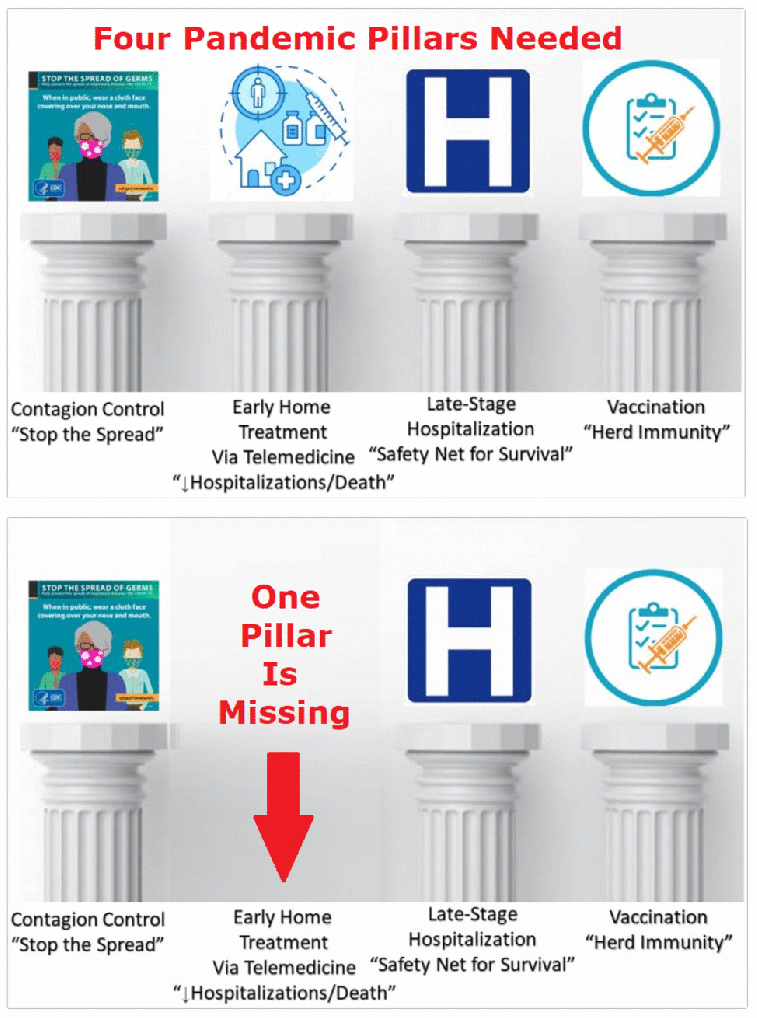
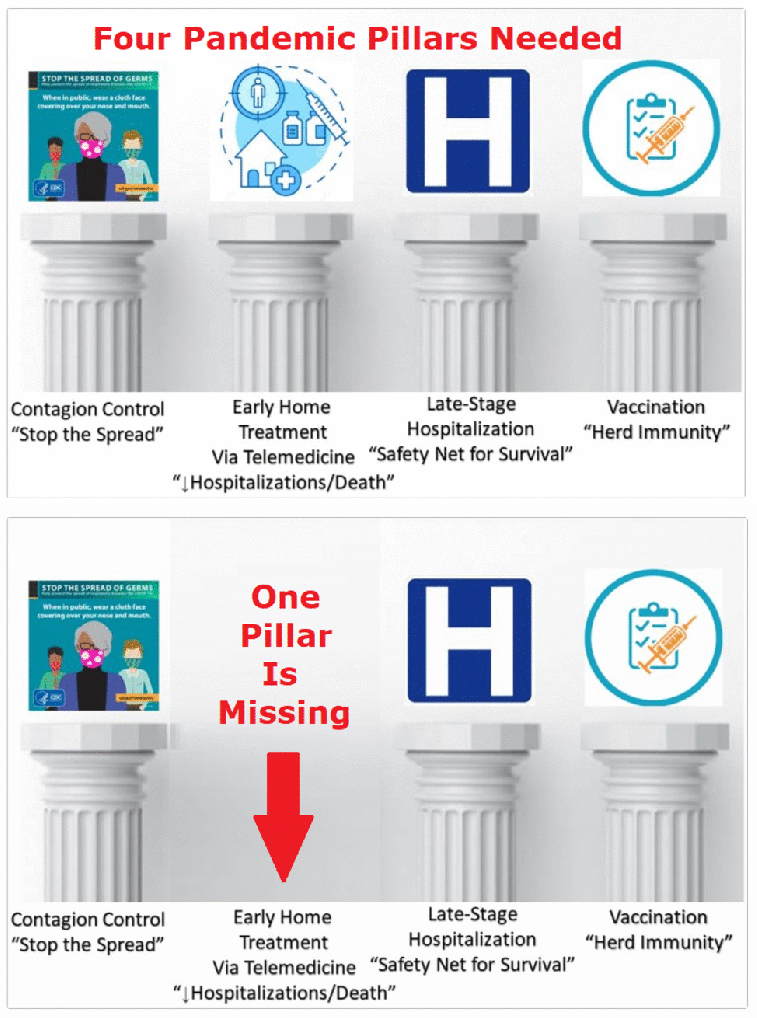
Protocols with HCQ or Ivermectin plus nutritional supplements fill the need for early home treatment
Biden Plan for Pharma Profit Booster Shots a Bad Idea, Scientists Say

50a56897-facd-4169-9150-81826146c845

The politics and profits of the covic booster shot promotion is summarized by Tyler Durden at zerohedge in an article.  Excerpts in italics with my bolds.

“The Scientific Process Is Short-Circuited By Politics” – Startling Admission From Scientists Jeopardizes Biden’s Boosters

Dr. Anthony Fauci and his colleagues on President Biden’s panel of White House COVID advisors spend a lot of time talking about “the science”, but as the delta variant has spread across the US, most of their recent policymaking has been more focused on creating the illusion of safety: Like demanding everybody in the country get vaccinated when studies show natural antibodies already offer protection, while new evidence continues to emerge about dangerous side effects associated with the jabs (especially the mRNA jabs).

But apparently, the Biden Administration’s decision to do a complete 180 on approving a third booster jab, pushing them not just on the most vulnerable, but on every American, like they did with the first round of jabs, has finally prompted mainstream scientists in the field of epidemiology to speak up. Yesterday, we shared details from a Reuters report where several scientists questioned the societal benefits of doling out booster shots to Americans before most people in the emerging world have even had time to get one.

The Reuters report is Scientists question evidence behind U.S. COVID-19 booster shot drive.  Quotes below in italics.

“Endorsing boosters before FDA changes the EUA or grants full approval is actually endorsing something that is not currently permissible under the law,” said Holly Fernandez Lynch, a University of Pennsylvania bioethicist. “Any use beyond the specific terms of the EUA would be unauthorized.”

It would be very strange for the Biden administration to be the one calling the shots on boosters, according to Dorit Reiss, a professor who studies vaccine policy at the University of California Hastings College of the Law.  “This is not something that’s generally done by the administration or by political actors,” Reiss said. “If they are going to circumvent the process, then I’m very concerned.”

Stephen Hahn, who served under President Trump as FDA last commissioner, said that data on the vaccine boosters should decide who should get one, and that it’s possible that may not be immediately available for all populations.

While the Biden administration could be right to offer boosters widely, there isn’t enough convincing data to suggest that everyone needs one, according Michael Osterholm, a University of Minnesota epidemiologist and former Biden adviser. The concern of waning immunity is associated with the elderly and immunocompromised, he said.  “This isn’t about yes or no,” Osterholm said. “It’s about whether we need this for everyone.”

gv081621dapr20210816054503

Durden continues:

Well, as it turns out, one day later, Bloomberg has followed up with a similar report quoting a different group of scientists and their reservations about Biden’s plan. And for the first time, it seems that the growing pushback from the scientific community might derail the Biden Administration’s push for booster jabs (which, remember, is contingent on the FDA giving its blessing).

It’s possible the backlash could even delay (or derail) approval of the vaccines, especially as new data about side effects continues to emerge.

Because Bloomberg has learned that a meeting of CDC advisors to discuss the benefits of booster jabs – a meeting that was supposed to have taken place last week – has been postponed until Aug. 30. Meanwhile, new reports have emerged suggesting the FDA could fully approve the Moderna and Pfizer jabs as soon as Monday.  But one scientist warned that it’s starting to feel like the Biden Administration’s political priorities have been “short circuited” by political concerns.

“This is what is really concerning to many of us,” said Celine Gounder, an infectious disease specialist at Bellevue Hospital in New York. “Because it feels like the scientific process is being short circuited by political concerns… It is almost science by popular demand.”

The problem is that the meeting of CDC advisors includes many voices who haven’t already been working closely with the Administration…and are thus less likely to simply go along with their plans. As another scientist pointed out, doling out booster jabs might ultimately be self-defeating. “The math doesn’t work,” they added.

While the U.S. has vaccinated just over half its population, the virus has been gaining in infectiousness. The two trends essentially cancel one another out, putting the country’s virus control efforts back to where they were in March 2020, according to Ellie Murray, a Boston University School of Public Health epidemiologist who said she has reviewed the data and is skeptical of the current need for boosters. 

“From a population level it, it doesn’t help us in controlling the pandemic,” she said. “The math doesn’t work.”

Another scientist added that doling out booster jabs likely won’t make much of a difference in states where vaccination levels are already low.

“If we give everybody third doses now,” he said, “Mississippi will still be hellish.”

Then there is the question of what is really behind the waning efficacy seen in some studies: Several other factors besides declining immunity over time may be driving the change. For example, the delta variant itself may reduce vaccine protection against mild disease, as it multiplies in the nose much faster, even as protection remains strong against severe disease.

Changes in public behavior and the opening of society may have exposed more people to higher doses of virus. And some people who got vaccinated early on, such as health-care workers, may be more likely to have heavier viral exposures through their jobs, further muddling comparisons.

“My worry is that all a booster might do is just prevent asymptomatic or mild symptomatic breakthrough cases in people whose immune systems would get the disease under control in a few days anyway,” said Jeffrey Morris, a biostatistician at the University of Pennsylvania’s Perelman School of Medicine, “thus not affecting health outcomes in a meaningful way.”

And as more studies show a decline in vaccine efficacy, some scientists are questioning whether the issue is actually related to the vaccines themselves, or changes in behavior, like going out more.

Ultimately, the takeaway is this: resistance to President Biden’s booster jab push is building. We wouldn’t be surprised to see the FDA scuttle it entirely, knocking the wind out of Pfizer and Moderna, which have already promised their shareholders blockbuster profits on the back of more federally mandated jabs.

graph_showing_rise_in_profit-8955

Greenlight for Ivermectin in Japan

787-1-shutterstock_1709837872_1

Article at gnews reports on announcement by Dr. Ozaki, chairman of the Tokyo Metropolitan Medical Association Greenlight for Ivermectin in Japan.  Excerpts in italics with my bolds.

Since Tokyo summer Olympic Game ended on August 8, 2021, the urgent status of the pandemic as Japan is now in its worst surge of the COVID-19 pandemic since the onset of the crisis in such a megacity of 14 million. Most recently, a record number of new cases were reported at 20,140 on August 14. Deaths aren’t as high as successive waves of the pandemic from February 2021 to the end of May, but nerves are frayed with record numbers of infections. Dr. Ozaki, The chairman of the Tokyo Metropolitan Medical Association, recently led an emergency press conference on August 13, Dr. Haruo Ozaki shared those 18,000 new infections are reported daily. However, the death count has eased as compared to previous surges.

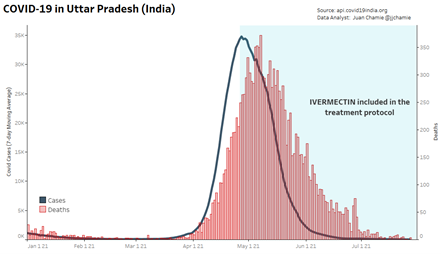
How to deal with the current dilemma is a huge challenge to Japanese government and medical agencies? Fortunately, India has an excellent testimonial. Since April 28, India medical officials started providing Hydroxychloroquine and ivermectin to its massive population. As India is the major pharmaceutical manufacture in the world, they were ready for this massive drug distribution. Miraculously, COVID cases have plummeted quickly since then thanks to the new rules.

786-2-1

Much like what was successfully accomplished in India, parts of Bangladesh, and places like Argentina and Mexico,
Chairman Ozaki calls for the immediate use of ivermectin as cases surge in Japan.

Dr. Ozaki declared that ivermectin has demonstrated significant benefits in reducing infections and deaths where the regimen is prophylactically administered for another indication. With the encouraging medical data from ivermectin clinical trials’ reports worldwide, especially the one from FLCCC of US and BIRD of UK, the head of the Metropolitan Medical Association declared that while clinical trials were important, it was time to greenlight doctors to prescribe ivermectin in association with giving the patient informed consent.

Finally, greenlight for Ivermectin is on in the first developing country since the start of the COVID-19 pandemic, giving hope to all countries and regions. Perhaps this time because Japan did not have the big Pharma entering the COVID vaccine market, the government did not get much pressure.  So the Japanese government’s anti-epidemic policy basically reflects a normal democratic regime should do, that is, to protect the health of the people. Expect the miracle of ivermectin in India to happen again.

pillars-needed-missing

Protocols with HCQ or Ivermectin plus nutritional supplements fill the need for early home treatment.

Footnote: Many people are confused about the fact that IVM has long been approved for human use, 

The FDA approval is here  The issue is that the list of infections does not include Covid19.

The same thing is true for HCQ:

Chloroquine and hydroxychloroquine are both FDA-approved to treat or prevent malaria. Hydroxychloroquine is also approved to treat autoimmune conditions such as chronic discoid lupus erythematosus, systemic lupus erythematosus in adults, and rheumatoid arthritis. Both drugs have been prescribed for years to help patients with these debilitating, or even deadly, diseases, and FDA has determined that these drugs are safe and effective when used for these diseases in accordance with their FDA-approved labeling. Of note, FDA approved products may be prescribed by physicians for off-label uses if they determine it is appropriate for treating their patients, including during COVID.  

Source:  FDA NEWS RELEASE

Moving On Now Covid Pandemic is Over

cg60a31a950a20d-1

Before 2019, there were four coronviruses causing “common colds” world wide.  Now we have a fifth one joining the others in making infections of our respiratory systems.  It is important to understand how vaccines protect us, but do not prevent infections.  As explained below, there is a big difference between systemic immunity and mucosal immunity.  The first is the aim and largely successful outcome from the vaccines now available.  But equally important is the ability to stop the virus from multiplying at its entry point in the nose and mouth.

From Snithsonian Magazine:

In a collective display of scientific advancement, the Covid-19 vaccines from Pfizer, Moderna and Johnson & Johnson seem to be astoundingly effective at preventing severe disease and death from Covid-19. All are intramuscular, meaning they are injected into the muscle tissue. Once the vaccine materials seep into the bloodstream, they induce the creation of antibodies, which then circulate in the blood throughout the body, protecting some of the most vital organs and creating what’s called systemic immunity. This immune response protects the body from serious illness and death, but the response only builds after the virus has fully entered the body.

Their ability to protect the human body from Covid-19 illness is truly incredible, but the SARS-CoV-2 virus still has an entryway into the body left unprotected by the vaccines: the nose and mouth. Those two gateways, and their ability to transmit the virus, are what mask mandates are all about. Face coverings have been shown to impede the spread of the aerosol virus, protecting their wearers and those around them from infecting each other.

I won’t go into the question of mask symbolism vs. medical effectiveness, but readers can delve into this by a previous post Covid Masquerade.  Suffice it to say,  the attempt to prevent infections by masks, social distancing and lockdowns is doomed to fail, and take our society and economy down with it.  The realistic approach is the same as in the past to deter the spread of flu-like illnesses:  Good hygiene certainly, and vitamins needed by our immune systems.  Self-isolation when feverish. And provision of anti-viral medications under supervision of family doctors and clinics.

But the drive to Zero Covid Infections is dangerous and wrong.  And the nanny state dictates are increasingly violating the social contract of every free enterprise democracy.

Tyler C. Chrestman writes at American Thinker  The pandemic is over: Time to return to normal.  Excerpts in italics with my bolds.

The pandemic is over. This statement might seem counter-intuitive, as COVID cases are on the rise and the Delta mutation is sweeping through the state, but it is the truth. The pandemic is over, and it is time for life to return to normal.

At this point, half of the Missouri population is vaccinated, but the number of vaccinations does not accurately represent the risk still facing the general public. The people who are most at risk from the virus, those individuals over the age of 65, are vaccinated at a rate somewhere between 75–85%. According to the CDC, almost 80% of all the deaths from COVID in the country came from people within this demographic. So if our at-risk population is vaccinated at such a high rate, why should everyone else continue to worry?

A lot of the public hand-wringing over COVID comes from a poor grasp of the actual risk factors associated with the virus. Less than 3% of all the deaths from COVID in the U.S. occurred in people under the age of 45. Fifty-seven percent of Missouri’s population falls within this age bracket. Almost all cases of severe illness experienced by people under 45 included numerous comorbidities such as obesity, diabetes, and hypertension.

In other words, if you are young and healthy, the risk of being hospitalized or dying from COVID has always been remote.

Mask mandates, lockdowns, and vaccine passports should be off the table indefinitely. If a person is vaccinated, the virus poses him almost no risk of severe illness or death. If someone has chosen to remain unvaccinated, despite the fact that the vaccine is now widely available, then the rest of society should not be expected to mask for his benefit. The population that makes up the unvaccinated and the people who oppose further government intervention overlap heavily. The government should not attempt to impose its will on people who explicitly do not wish to be protected.

People are capable of assessing their own risk factors and deciding what to do with their health, and governmental paternalism is not needed, nor is it appreciated.

Let us look at the risk the unvaccinated present to those who chose to get the jab. Breakthrough cases of COVID, despite the fact that they are becoming more prevalent, remain rare. Those who do come down with an illness after vaccination tend to experience mild symptoms. Of the 164 million people in the country who have been vaccinated against COVID, there have been only 1,500 deaths. This means that the odds of dying from COVID post-vaccination are less than 0.0001%.

The unvaccinated pose no threat to those who have chosen to get vaccinated.
Segregating our society by vaccine status, via vaccine passports, is both divisive and unnecessary.

The peak week for COVID deaths in the United States came back in January of 2021, when 25 thousand people died in a single week. Last week, that number was down to 1,600. This 15-fold improvement cannot be overstated. In Missouri, 116 people died of COVID last week, which is not nothing but is much less than the height of the pandemic, when that number was 600. This is even less than the numbers from mid-July, which were closer to 150. This drop in deaths mirrors data from other countries, such as the U.K., and suggests that we may already be on the downslope of the delta mutation.

When the inevitable Echo, Foxtrot, and Golf mutations of the virus surface, Missouri will get through those as well.

If the goal of those in power is to see the virus eradicated entirely, it is a goal that is bound to fail. The government cannot mandate its way to zero COVID, and it is misguided to think otherwise. With booster shots for the vaccinated on the horizon, COVID appears poised to remain a daily part of life for the foreseeable future. Mask mandates, lockdowns, and being forced to show your papers in public are not the answer for how to live moving forward.

Learning to assess personal risk factors accurately, trusting in the protection the vaccine provides, and working on improving individual immune systems are the best things we can do to mitigate future risks.


How They Dissed HCQ and Ivermectin

asylum-lunatics

An article at Science Defies Politics explains the fallacies in findings intended to disqualify actual C19 therapies in favor of vaccines Fraud and Mistakes in Reviews of IVM and HCQ for C19.  Excerpts in italics with my bolds.

Cochrane was reputable in the past, but is now controlled by pharmaceutical interests.

Cochrane, once respected organization producing systematic reviews of peer-reviewed medical literature, issued a cherry-picked and biased review of Ivermectin for COVID-19, claiming not enough evidence. It is debunked by C19___ as Outdated very biased cherry-picking retrospective meta analysis …

That reminds the Cochrane’s HCQ review, published on Feb. 12, 2021. It was a similar piece of junk science and scientific fraud. This said, it contains three non-obvious methodological mistakes behind such non-positive reviews of Hydroxychloroquine and Ivermectin treatments for COVID-19, which some people might make unintentionally.

Mistake #1:  Selection of randomized control trials (RCTs) and exclusion of observational studies.

RCTs are gold standard for detecting small (like 20%) improvements. However, RCTs are meaningless or even unethical when the treatment improves the odds by 3–6 times, as the case with Hydroxychloroquine and Ivermectin. In such situation, RCTs tend to be small or using the main ingredient incorrectly.
Mistake #2: The same main ingredient can be used in many ways, including different phases of the disease, doses, and additional medications.

A proper review would have identified the best protocol, using the main ingredient, and reviewed the studies using this protocol. This mistake arises from a habit to review pharma-sponsored trials of patented drugs, in which the manufacturer determines the best way to use the drug.

Mistake #3: Reliance on academic papers and exclusion of the real world evidence.

Well, Cochrane cannot be blamed because reviews of literature are what it does, but the users of these reviews should not call them “the scientific evidence” or similar.

From the Cochrane’s HCQ review:

“We performed all searches up to 15 September 2020.” Enough said. They published a review of 13 trials with 9030 participants (including one post-exposure prophylaxis trial) in what was seemed to be the end of the pandemic, with a review cutoff date 5 months earlier.

“Treatment of COVID‐19 disease. We included 12 trials involving 8569 participants, all of whom were adults.” Enough said. By September 2020, millions of people had been treated with Hydroxychloroquine.

“Preventing COVID‐19 disease in people at risk of exposure to SARS‐CoV‐2. Ongoing trials are yet to report results for this objective.”

Cochrane Funding

Cochrane Review receives most of its charitable funding from the governments of the UK, Denmark, Germany, and the US (https://archive.is/AbjHf). It also sells subscriptions, mainly to government-funded universities, to the pharmaceutical and healthcare industries, which are effectively controlled by governments. It is essentially a governmental organization masquerading as an independent non-profit research organization. Cochrane also serves as a partner and source for Wikipedia on medical topics. Many people consult Wikipedia.

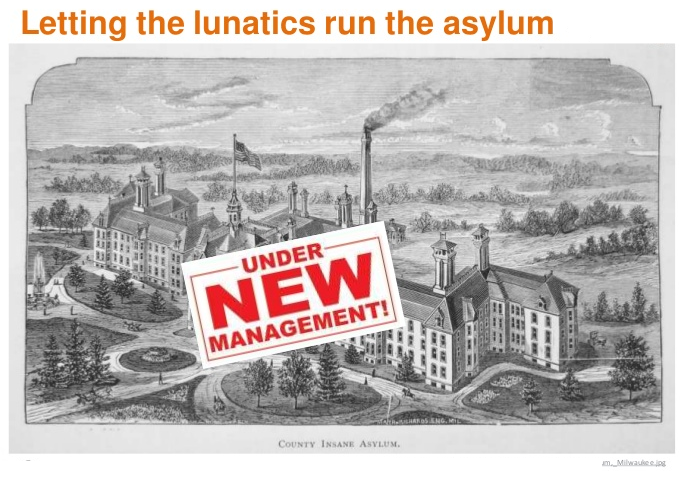
The result looks like an echo chamber in a mental asylum!

See also  Ivermectin Invictus: The Unsung Covid Victor

Yes, HCQ Works Against Covid19

pillars-needed-missing

They Worried Us Sick

cfarmafoto1275521

John Tierney writes at City Journal The Panic Pandemic.  

The first part of the article is a refresher on how it happened that all those who talked reasonably in the face of the panic narrative, were silenced and banished from public discourse.  Included are many recognizable names:  John Ioannidis, Jay Bhattacharya, Thomas Benfield, Stefan Baral, Martin Kulldorff, Sunetra Gupta,  and the most reviled heretic, Scott Atlas.  The excerpts below in italics (with my bolds and images) express Tierney’s conclusions to take away from this sorry mess.

Fearmongering from journalists, scientists, and politicians did more harm than the virus.

The United States suffered through two lethal waves of contagion in the past year and a half. The first was a viral pandemic that killed about one in 500 Americans—typically, a person over 75 suffering from other serious conditions. The second, and far more catastrophic, was a moral panic that swept the nation’s guiding institutions.

Instead of keeping calm and carrying on, the American elite flouted the norms of governance, journalism, academic freedom—and, worst of all, science. They misled the public about the origins of the virus and the true risk that it posed. Ignoring their own carefully prepared plans for a pandemic, they claimed unprecedented powers to impose untested strategies, with terrible collateral damage. As evidence of their mistakes mounted, they stifled debate by vilifying dissenters, censoring criticism, and suppressing scientific research.

cb111720dapr20201116084505

One in three people worldwide lost a job or a business during the lockdowns, and half saw their earnings drop, according to a Gallup poll. Children, never at risk from the virus, in many places essentially lost a year of school. The economic and health consequences were felt most acutely among the less affluent in America and in the rest of the world, where the World Bank estimates that more than 100 million have been pushed into extreme poverty.

The leaders responsible for these disasters continue to pretend that their policies worked and assume that they can keep fooling the public. They’ve promised to deploy these strategies again in the future, and they might even succeed in doing so—unless we begin to understand what went wrong.

But neither the plague nor Trump explains the panic. Yes, the virus was deadly, and Trump’s erratic pronouncements contributed to the confusion and partisanship, but the panic was due to two preexisting pathologies that afflicted other countries, too.

The first pathology is what I have called the Crisis Crisis, the incessant state of alarm fomented by journalists and politicians.

It’s a longstanding problem—humanity was supposedly doomed in the last century by the “population crisis” and the “energy crisis”—that has dramatically worsened with the cable and digital competition for ratings, clicks, and retweets. To keep audiences frightened around the clock, journalists seek out Cassandras with their own incentives for fearmongering: politicians, bureaucrats, activists, academics, and assorted experts who gain publicity, prestige, funding, and power during a crisis.

lb210717c20210716065818

Unlike many proclaimed crises, an epidemic is a genuine threat, but the crisis industry can’t resist exaggerating the danger, and doomsaying is rarely penalized. Early in the 1980s AIDS epidemic, the New York Times reported the terrifying possibility that the virus could spread to children through “routine close contact”—quoting from a study by Anthony Fauci. Life magazine wildly exaggerated the number of infections in a cover story, headlined “Now No One Is Safe from AIDS.” It cited a study by Robert Redfield, the future leader of the CDC during the Covid pandemic, predicting that AIDS would soon spread as rapidly among heterosexuals as among homosexuals. Both scientists were absolutely wrong, of course, but the false alarms didn’t harm their careers or their credibility.

Journalists and politicians extend professional courtesy to fellow crisis-mongers by ignoring their mistakes, such as the previous predictions by Neil Ferguson. His team at Imperial College projected up to 65,000 deaths in the United Kingdom from swine flu and 200 million deaths worldwide from bird flu. The death toll each time was in the hundreds, but never mind: when Ferguson’s team projected millions of American deaths from Covid, that was considered reason enough to follow its recommendation for extended lockdowns. And when the modelers’ assumption about the fatality rate proved too high, that mistake was ignored, too.

More Covid Cases

Journalists kept highlighting the most alarming warnings, presented without context. They needed to keep their audience scared, and they succeeded. For Americans under 70, the probability of surviving a Covid infection was about 99.9 percent, but fear of the virus was higher among the young than among the elderly, and polls showed that people of all ages vastly overestimated the risk of being hospitalized or dying.

The second pathology underlying the elite’s Covid panic is the politicization of research—what I have termed the Left’s war on science, another long-standing problem that has gotten much worse.

Just as the progressives a century ago yearned for a nation directed by “expert social engineers”—scientific high priests unconstrained by voters and public opinion—today’s progressives want sweeping new powers for politicians and bureaucrats who “believe in science,” meaning that they use the Left’s version of science to justify their edicts. Now that so many elite institutions are political monocultures, progressives have more power than ever to enforce groupthink and suppress debate. Well before the pandemic, they had mastered the tactics for demonizing and silencing scientists whose findings challenged progressive orthodoxy on issues such as IQ, sex differences, race, family structure, transgenderism, and climate change.

lb210708c20210707102628

And then along came Covid—“God’s gift to the Left,” in Jane Fonda’s words. Exaggerating the danger and deflecting blame from China to Trump offered not only short-term political benefits, damaging his reelection prospects, but also an extraordinary opportunity to empower social engineers in Washington and state capitals. Early in the pandemic, Fauci expressed doubt that it was politically possible to lock down American cities, but he underestimated the effectiveness of the crisis industry’s scaremongering. Americans were so frightened that they surrendered their freedoms to work, study, worship, dine, play, socialize, or even leave their homes. Progressives celebrated this “paradigm shift,” calling it a “blueprint” for dealing with climate change.

This experience should be a lesson in what not to do, and whom not to trust.

Do not assume that the media’s version of a crisis resembles reality. Do not count on mainstream journalists and their favorite doomsayers to put risks in perspective. Do not expect those who follow “the science” to know what they’re talking about. Science is a process of discovery and debate, not a faith to profess or a dogma to live by. It provides a description of the world, not a prescription for public policy, and specialists in one discipline do not have the knowledge or perspective to guide society. They’re biased by their own narrow focus and self-interest. Fauci and Deborah Birx, the physician who allied with him against Atlas on the White House task force, had to answer for the daily Covid death toll—that ever-present chyron at the bottom of the television screen—so they focused on one disease instead of the collateral damage of their panic-driven policies.

cg60a31a950a20d

“The Fauci-Birx lockdowns were a sinful, unconscionable, heinous mistake, and they will never admit they were wrong,” Atlas says. Neither will the journalists and politicians who panicked along with them. They’re still portraying lockdowns as not just a success but also a precedent—proof that Americans can sacrifice for the common good when directed by wise scientists and benevolent autocrats. But the sacrifice did far more harm than good, and the burden was not shared equally. The brunt was borne by the most vulnerable in America and the poorest countries of the world. Students from disadvantaged families suffered the most from school closures, and children everywhere spent a year wearing masks solely to assuage the neurotic fears of adults. The less educated lost jobs so that professionals at minimal risk could feel safer as they kept working at home on their laptops. Silicon Valley (and its censors) prospered from lockdowns that bankrupted local businesses.

cb020621dapc20210206014624

Luminaries united on Zoom and YouTube to assure the public that “we’re all in this together.” But we weren’t. When the panic infected the nation’s elite—the modern gentry who profess such concern for the downtrodden—it turned out that they weren’t so different from aristocrats of the past. They were in it for themselves.

gv070821dapr20210708054514


Covid Masks Make CO2 Toxic

masks-998x665-1

It turns out CO2 is not a climate threat, but masking up for COVID makes it dangerous.  At the Federalist Maggie Hroncich explains in an article AMA Journal: Masks Are Bad For Your Kids. Quit Forcing Them To Wear Them  Excerpts in italics with my bolds.

A new report published by an American Medical Association journal revealed forcing children to wear face masks leads to adverse health effects. JAMA Pediatrics, a top-rated monthly journal published by the AMA, found wearing face masks increases the amount of carbon dioxide in inhaled air to unhealthy levels.

The study measured carbon dioxide levels in 45 children ages 6-17 while wearing masks. The normal content of carbon dioxide in the air is 400 parts per million (ppm), with anything above 2000 ppm considered unacceptable by the German Federal Environmental Office.

The JAMA report measured averages of 13,120 to 13,910 ppm of carbon dioxide in the inhaled air of children wearing masks, which is over six times higher than the unsafe threshold. The study further pointed out this measurement was after only three minutes of wearing a mask. Children forced to wear masks at school find themselves wearing masks for hours, five days a week.

The JAMA report follows a larger German survey of over 25,000 children, which found 68 percent of them reportedly had problems while wearing facial coverings.

“Most of the complaints reported by children can be understood as consequences of elevated carbon dioxide levels in inhaled air,” the JAMA study concluded. “This is because of the dead-space volume of the masks, which collects exhaled carbon dioxide quickly after a short time.”

“This carbon dioxide mixes with fresh air and elevates the carbon dioxide content of inhaled air under the mask, and this was more pronounced in this study for younger children.” The authors of the study urged those who are forcing children to wear masks to consider the scientific evidence when making that decision.

“Many governments have made nose and mouth covering or face masks compulsory for schoolchildren. The evidence base for this is weak,” the study found. “We suggest that decision-makers weigh the hard evidence produced by these experimental measurements accordingly, which suggest that children should not be forced to wear face masks.”

Meanwhile Fauci Gets It Wrong Again

OAN Newsroom
UPDATED 7:00 PM PT – Monday, July 19, 2021
Dr. Anthony Fauci has pushed for young children to wear face masks as school look to reopen nationwide. Earlier on Monday, the nation’s chief medical advisor stood beside the American Academy of Pediatrics who recommended schools could require young children as young as three-years-old to mask up indoors, regardless of their vaccination states.

co2-levels2018


No, Guardian, Ivermectin Not Discredited by Elgazzar Retraction

97178-ivermectin

The hits against Ivermectin keep on coming.  Dr. Colleen Aldous and Dr. Warren Parker explain this latest smear campaign in their article Ivermectin — front-line doctors vs bureaucrats.  Excerpts in italics with my bolds.

Given the safety profile of Ivermectin, there is nothing to lose and there’s a good possibility of saving many lives and slowing the pandemic

The Ivermectin battle of ideologies on safety and efficacy pits a group of doctors who deal with dying patients every day against bureaucrat academic clinicians. These academic clinicians have dismissed all evidence, favouring a single, large randomised trial that is entirely appropriate for novel drug development but not for pandemics.

This is akin to a person suffering a heart attack and refusing to be taken to hospital in a Toyota, choosing to wait for a Rolls-Royce.

If science is pure, there should not really be a debate, but there is, and it’s purely on the interpretation of science. The Ivermectin meta-analyses have shown that subjectivity in science does happen, something the layperson is made to believe is not possible.

Unfortunately, scientific fraud has also muddied the picture on both sides of the Ivermectin divide. The Elgazzar Ivermectin study, which showed Ivermectin to be highly effective, has been removed from the preprint website for unethical scientific reporting. If this is found to be true it is unforgivable and the authors need to be dealt with.

I’ve no doubt that this will be used to discredit Ivermectin, but it is one of many trials showing efficacy and will be shown to have little weight in the meta-analyses. Just because one lawyer is guilty of corruption does not mean all lawyers are corrupt. In the same vein, a study published in leading medical journal Lancet, showed that hydroxychloroquine as a treatment for Covid-19 was associated with an increased risk of death in patients hospitalised with the disease. However, it was found to be fraudulent and the Lancet was forced to retract the paper.

Bias can come in selecting studies to include in the analysis and the interpretation of the results. Ivermectin can be shown to work by a careful selection of studies that support it. It can be discredited by selecting studies that show it is ineffective.

The SA National Essential Medicines List Committee (NEMLC), which has published its methods on its website, has produced an in-house rapid-review on Ivermectin, which continues to find that Ivermectin should not be used outside clinical trials. This review is not peer-reviewed. The scientific community emphasises the importance of peer-review publication, but our regulatory authorities seem not to. To illustrate the degree of subjectivity, I was in a meeting with one of the authors from the Bryant paper and a NEMLC member. In the discussion the latter stated that while they are aware of the work done in their preprint paper, they disagree with it. Simple!

The methods used in the Ivermectin meta-analyses by Bryant et al are exact. They have a very low risk of bias in themselves. Meta-analyses pool data from several studies to report for a larger sample size than the studies themselves. The heterogeneity of the studies is addressed with rigorous methods to reduce the effect of bias from the individual studies. Bryant et al have careers in data and research analysis. They have prepared decision-to-treat recommendations for international and country-level health bodies.

Their analysis included 24 randomised controlled trials that showed both positive and negative outcomes. The recommendation, among others, is that with moderate certainty Ivermectin could reduce mortality by an average of 62%. Moderate certainty means there is a good chance it is effective to this level.

From looking at their methods in their peer-reviewed publication I believe the selection and interpretation of results were unbiased and currently provide us with recommendations that are more than sufficient to validate the positive effects of Ivermectin for treating Covid-19.

Simply put, SA’s response is now guided by the recommendations of an in-house team over a peer-reviewed, rigorously prepared meta-analysis. The NEMLC document is the guidance observed by all health department facilities and also some private hospitals.

Concerning the Ivercor-Covid-19 trial, it’s a pity all those who have stated that this study is proof that Ivermectin doesn’t work did not read the paper in its entirety. The authors themselves declare in the limitations of their research that the doses given are were low.

As the pandemic has progressed, experience on the ground has shown that Ivermectin is effective at higher doses. Initial recommended doses were low, having been informed by the dosages for anti-parasite treatment. Unfortunately, many trials that are now being run or are completed are using low doses based on earlier assumptions. Even the upcoming Oxford Principle trial of Ivermectin follows low dose regimes that may be insufficient to show effect.

The Lopez-Medina study in Colombia is also often cited as demonstrating that Ivermectin is ineffective. Yet it was so fraught with protocol violations that I would not have submitted the article for publication if I were the principal investigator.

The NEMLC has put the health of our people at risk by recommending against the use of Ivermectin even though it is legally available in SA for off-label use or in the compassionate use programme. Proper evidence-based medicine involves looking at all current evidence conscientiously, not just at a few trials.

During the latter half of the last century our ways of doing science have developed in times of stability and relative prosperity. However, we are in chaos now. We need new thinking. Those in authority are still pushing for their conventional methods for science, which insists that “reality must obey our models… otherwise reality cannot be correct”.

We need more than just a few clinical experts making decisions for our country now that we are hitting this third wave. I believe it is time to put together a multidisciplinary team to examine the arguments of those saying that the totality of evidence points to the necessity of making a Type 1 decision now, roll out Ivermectin.

Given the safety profile of Ivermectin, with nearly 4bn doses given since the 1980s, there is nothing to lose. At worst, it would be like taking an aspirin to ease pain for a bee sting. It won’t harm, but it may help.

If Ivermectin is used, there is a good possibility of saving many lives and slowing down the pandemic. But suppose we have to wait for that elusive large double-blind, randomised control trial (the Rolls-Royce) that will provide the ultimate certainty of the gold standard. In that case, there may be many thousands of unnecessary deaths still to come.

• Dr Aldous is a professor and healthcare scientist at the University of KwaZulu-Natal Medical School, where she runs the doctoral academy at the College of Health Sciences. She has published over 130 peer-reviewed articles in rated journals. Dr Parker, an international public health specialist, has worked in more than 20 countries on health and development concerns, with a focus on translating research into strategic policy.

Footnote:  The Bryant et al. meta-analysis study is discussed here:  Ivermectin Invictus: The Unsung Covid Victor

Why Can’t They See that HCQ or Ivermectin + nutritional supplements
is the missing public health pillar?

Pillars Needed Missing

Be Afraid of Covid Variants. Be very Afraid.

image-13

This campfire ghost story has been around since last March, but is revived and promoted now to maintain public anxiety and perpetuate the medical-industrial complex. Some background and background resources are in Daniel Horowitz’s Blaze article The Delta deception: New COVID variant might be less deadly.  Excerpts in italics with my bolds.

“This COVID variant will be the one to really get us. No, it’s this one. Well, Alpha, Beta, and Gamma weren’t a problem, but I promise you ‘the Delta’ spells the end of civilization.”

That is essentially the panic porn dressed up as science that we have been treated to ever since the virus declined in January following the winter spread, which appears to have given us a great deal of herd immunity. Despite the advent of the British and South African variants, cases, not to mention fatalities, have continued to plummet in all of the places where those variants were supposedly common. Which is why they are now repeating the same mantra about the “Delta” variant from India.

The headlines are screaming with panic over the impending doom of the Delta variant hitting the U.S.:

“WHO says delta is the fastest and fittest Covid variant and will ‘pick off’ most vulnerable” (CNBC)
“Highly contagious Delta variant could cause next COVID-19 wave: ‘This virus will still find you'” (CBS)
“Delta Variant Gains Steam in Undervaccinated U.S. Counties” (Bloomberg)
“The Delta variant might pose the biggest threat yet to vaccinated people” (Business Insider)
And of course, no list would be complete without the headline from Dr. Fauci yesterday, stating that the “Delta variant is the greatest threat in the US.”

The implication from these headlines is that somehow this variant is truly more transmissible and deadly (as the previous variants were falsely portrayed to be), they escape natural immunity and possibly the vaccine — and therefore, paradoxically, you must get vaccinated and continue doing all the things that failed to work for the other variants!

After each city and country began getting ascribed its own “variant,” I think the panic merchants realized that the masses would catch on to the variant scam, so they decided to rename them Alpha (British), Beta (South African), Gamma (Brazilian), and Delta (Indian), which sounds more like a hierarchy of progression and severity rather than each region simply getting hit when it’s in season until the area reaches herd immunity.

However, if people would actually look at the data, they’d realize that the Delta variant is actually less deadly. These headlines are able to gain momentum only because of the absurd public perception that somehow India got hit worse than the rest of the world. In reality, India has one-seventh the death rate per capita of the U.S.; it’s just that India got the major winter wave later, when the Western countries were largely done with it, thereby giving the illusion that India somehow suffered worse. Now, the public health Nazis are transferring their first big lie about what happened in India back to the Western world.

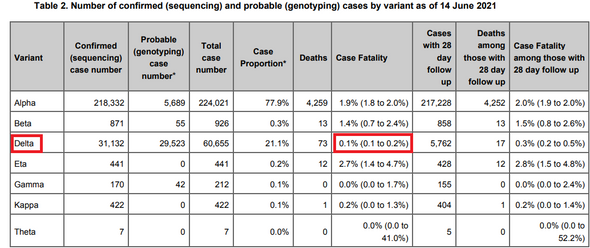
Fortunately, the U.K. government has already exposed these headlines as a lie, for those willing to take notice. On June 18, Public Health England published its 16th report on “SARS-CoV-2 variants of concern and variants under investigation in England,” this time grouping the variants by Greek letters.

img

As you can see, the Delta variant has a 0.1% case fatality rate (CFR) out of 31,132 Delta sequence infections confirmed by investigators. That is the same rate as the flu and is much lower than the CFR for the ancestral strain or any of the other variants. And as we know, the CFR is always higher than the infection fatality rate (IFR), because many of the mildest and asymptomatic infections go undocumented, while the confirmed cases tend to have a bias toward those who are more evidently symptomatic.

In other words, Delta is literally the flu with a CFR identical to it. This is exactly what every respiratory pandemic has done through history: morphed into more transmissible and less virulent form that forces the other mutations out since you get that one. Nothing about masks, lockdowns, or experimental shots did this. To the extent this really is more transmissible, it’s going to be less deadly, as is the case with the common cold. To the extent that there are areas below the herd immunity threshold (for example, in Scotland and the northwestern parts of the U.K.) they will likely get the Delta variant (until something else supplants it), but fatalities will continue to go down.

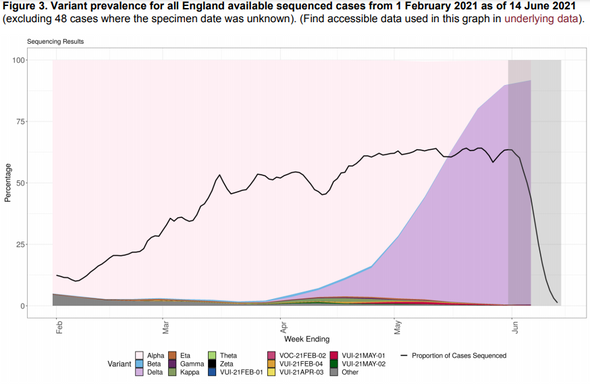
According to the above-mentioned report, the Delta variant represented more than 75% of all cases in the U.K. since mid-May. If it really was that deadly, it should have been wreaking havoc over the past few weeks.

img-1

You can see almost a perfect inverse relationship between hospitalization rates throughout April and May plummeting as the Delta variant became the dominant strain of the virus in England. Some areas might see a slight oscillation from time to time as herd immunity fills in, regardless of which variant is floating around. However, the death burden is well below that of a flu season and is no longer an epidemic.

Thus, the good news is that now that most countries have reached a large degree of herd immunity, there is zero threat of hospitals being overrun by any seasonal increase in various areas, no matter the variant. The bad news is that after Delta, there are Epsilon and 19 other letters of the Greek alphabet, which will enable the circuitous cycle of misinformation, fear, panic, and control to continue. And remember, as there is already a “Delta+,” the options are endless until our society finally achieves immunity to COVID panic porn.

Footnote:  The last paragraph was prescient:  Now the TV is blathering about the “lambda” variant from Peru.