Lancet Abandons Science for Propaganda


The Lancet joins other once-respected science journals falling into disrepute at the hands of alarmists. Alex Berezow writes at the American Council on Science and Health ‘The Lancet’ Has Gotten Really Weird. Excerpts in italics with my bolds.  A footnote at the end provides a timetable for the Lancet’s demise.

The Lancet is a highly respected biomedical journal that rightly carries a lot of clout in the scientific community. That’s what makes its recent turn toward sensationalism and clickbait so incredibly odd.

We first noticed that something was strangely amiss in 2017 when the editor-in-chief of The Lancet praised Karl Marx in a bizarre editorial. The piece made multiple dubious claims, such as, “Medicine and Marxism have entangled, intimate, and respectable histories.” The 100 million (or so) graves of the victims of communism beg to differ.

Then, in 2018, The Lancet went on an ideological bender against alcohol. First, it hyped a study that purportedly showed that every additional glass of alcohol above roughly 5 per week decreases a person’s life expectancy by 15 to 30 minutes. Think about that for a minute. Many people around the world have a nightly glass of wine with dinner. In The Lancet’s opinion, that’s precisely two too many, and anyone who does that is slowly killing themselves.

When a scientist reaches an absurd conclusion, that should serve as a warning to take a closer look at the methodology, the data, or both. Instead, The Lancet decided to double down. Later that year, it published a study that declared that any alcohol whatsoever is bad for your health. Somebody, please notify the French.

This year, the weirdness continued. A paper in The Lancet argued that certain food experts should be banned from food policy discussions. (Of course, the experts that should be banned are any that are associated with industry, because industry = bad.) And then, The Lancet slandered surgeons, using shady statistics to blame them for killing millions of people every year. The study was so bad that our typically calm, cool, and collected Dr. Charles Dinerstein worried that his head would explode.

The Lancet on Twitter: The World Is Worse Now than Ever Before

Apparently, whoever is operating The Lancet’s Twitter feed said, “Hold my beer, and watch this.” Here is what the organization posted today:

The study itself may be fine, but The Lancet’s tweet about it is misleading at best. Disease, violence, and inequality threaten more adolescents than ever before. Really?

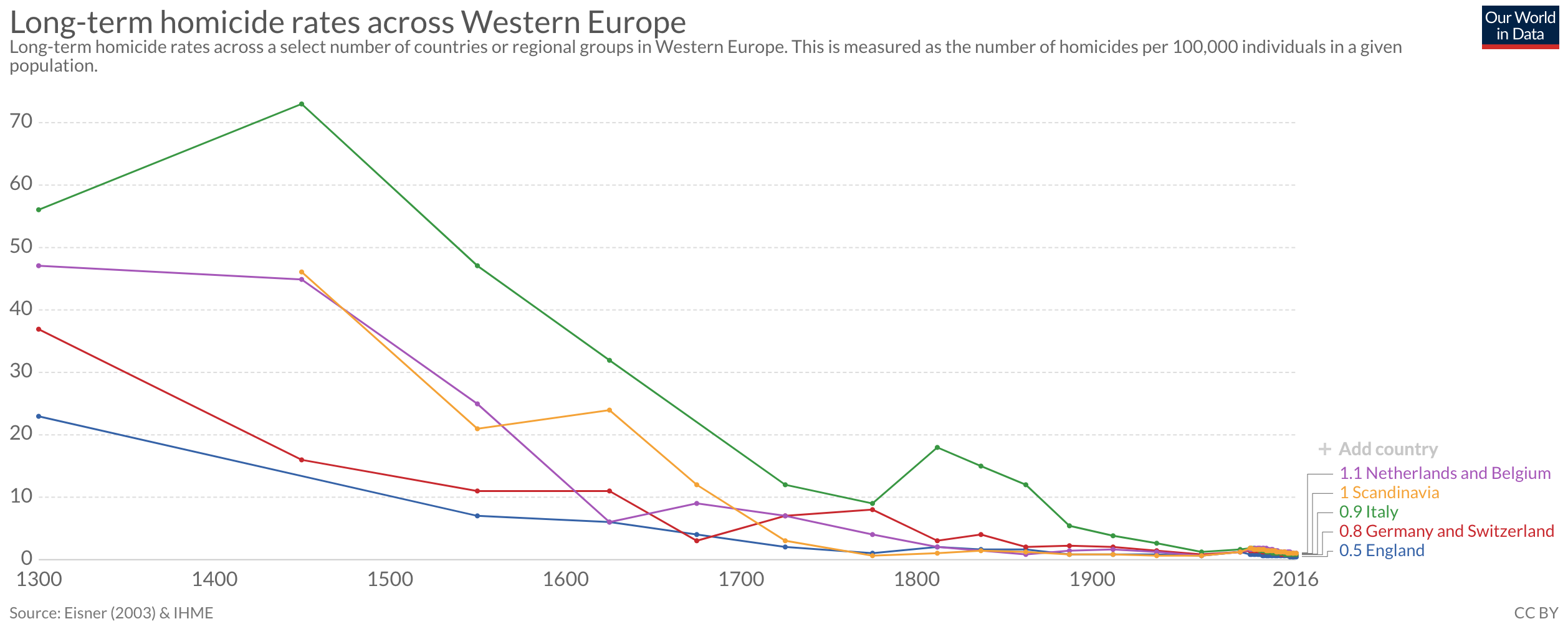
The statement is absurd on its face. Violence has decreased all over the world. The Medieval period was a particularly rough time to be alive. Not only were people dying of things like the Black Death (which killed 1/3 of Europe in the mid-1300’s), homicide rates were incredibly high. (See chart below from Our World in Data.)

As recently as the 20th Century, smallpox is thought to have killed 300-500 million people. Likewise, measles killed millions. But vaccines have prevented millions, if not billions, of deaths.

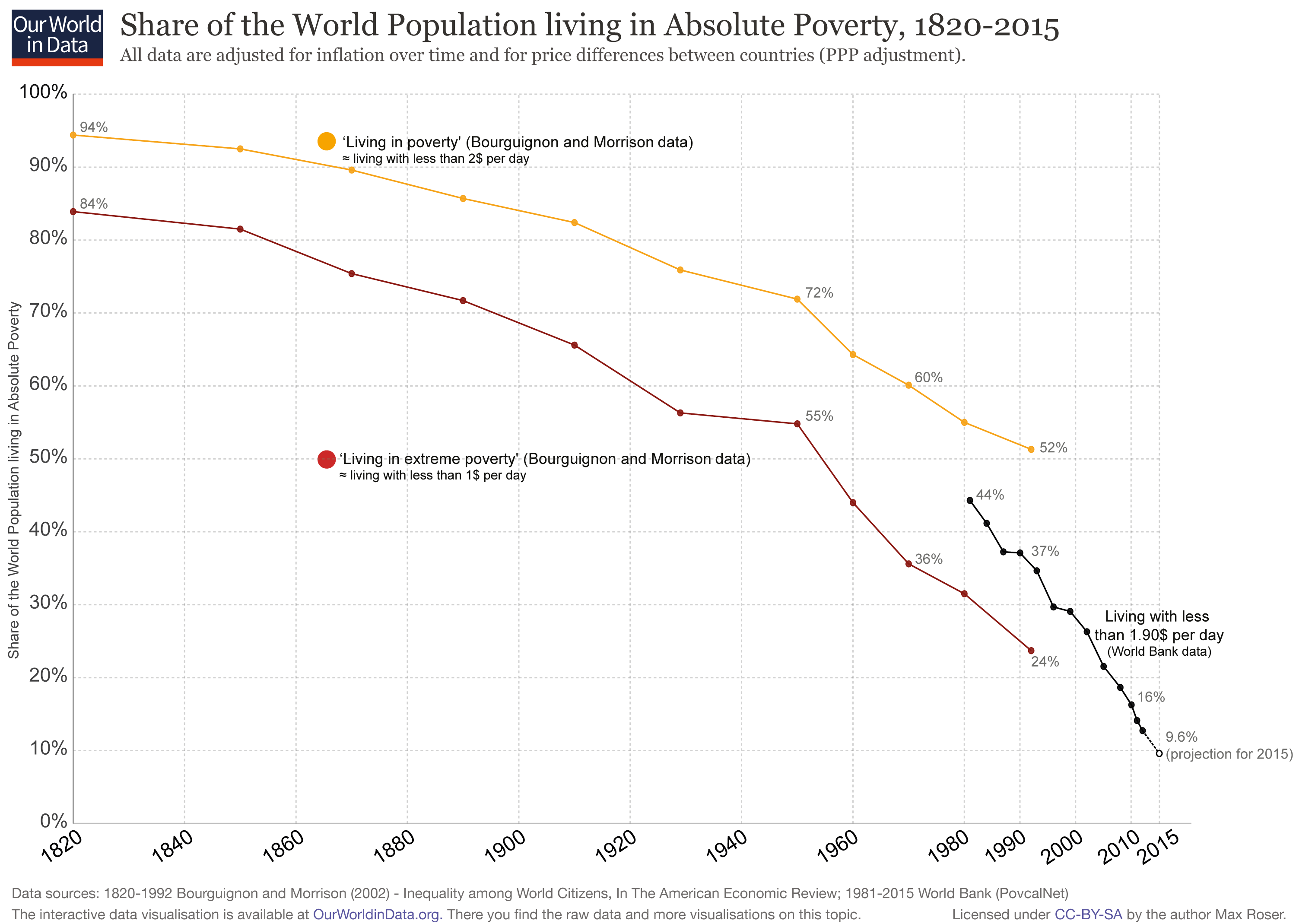
Inequality? Well, that’s getting better, too. Yes, in some places, the rich are getting richer, but in a lot of impoverished regions, the poor are getting richer. In fact, poverty has fallen from around 90% of the global population in 1820 to under 10% today. (See chart below from Our World in Data.)

Putting this all together, it’s easy to see that humanity has never had it better than in 2019. To quote The Beatles, “It’s getting better all the time.” So, what on Earth is The Lancet talking about?

The only possible explanation for the tweet is that the journal decided to ignore the indisputable trends and instead hyped absolute numbers. That’s extremely misleading in this case because there are more people on the planet now than ever before. (It would be like comparing the cost of a TV in 1960 versus 2019 without adjusting for inflation.) The data need to be standardized, which is why percentages are really the only honest way to do this analysis.

Of course, The Lancet knows this. They just chose to put out a sensationalist tweet, instead. That is troubling.

Footnote: Timetable of Lancet Demise

Lancet May 2015 Regarding health and climate, the Lancet published in May 2015 an evidence-based report Gasparrini et al: Mortality risk attributable to high and low ambient temperature: a multicountry observational study.
Cold weather kills 20 times as many people as hot weather, according to an international study analyzing over 74 million deaths in 384 locations across 13 countries. The findings, published in The Lancet, also reveal that deaths due to moderately hot or cold weather substantially exceed those resulting from extreme heat waves or cold spells.

Lancet June 2017 Lancet sets the facts aside in order to prostrate itself before the global warming altar. Lancet says in a press release The Lancet Countdown—delivering on the promise of Paris 
The collaboration is therefore delighted to announce that Christiana Figueres will join as Chair of its High-Level Advisory Board. Much as she did with the Paris Agreement, Christiana Figueres will help guide the Lancet Countdown to maximise its impact and deliver on the promise of the Paris Agreement.

Christiana Figueres, chair of the Lancet Countdown’s high-level advisory board and former executive secretary of the UN Framework Convention on Climate Change, said, “The AR5 report lays bare the impact that climate change is having on our health today. It also shows that tackling climate change directly, unequivocally and immediately improves global health. It’s as simple as that.’’

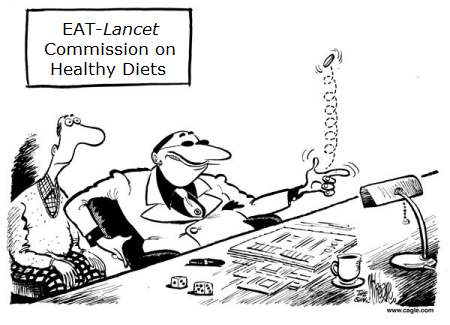
Lancet January 2019 Lancet publishes Food in the Anthropocene: the EAT–Lancet Commission on healthy diets from sustainable food systems.

Following environmental objectives by replacing animal-source foods with plant-based ones was particularly effective in high-income countries for improving nutrient levels, lowering premature mortality (reduction of up to 12% [95% CI 10–13] with complete replacement), and reducing some environmental impacts, in particular greenhouse gas emissions (reductions of up to 84%). However, it also increased freshwater use (increases of up to 16%) and had little effectiveness in countries with low or moderate consumption of animal-source foods.

Nutritional experts immediately took issue with Lancet’s claims:
We all want to be healthy, and we need a sustainable way to feed ourselves without destroying our environment. The well-being of our planet and its people are clearly in jeopardy, therefore clear, science-based, responsible guidance about how we should move forward together is most welcome.

Unfortunately, we are going to have to look elsewhere for solutions, because the EAT-Lancet Commission report fails to provide us with the clarity, transparency and responsible representation of the facts we need to place our trust in its authors. Instead, the Commission’s arguments are vague, inconsistent, unscientific, and downplay the serious risks to life and health posed by vegan diets.

Full critique of this latest Lancet propaganda is at Climate Ideology = Bad Nutritional Advice

eat-lancet-commission

The Debatable Cost of Climate Change

I am always interested in expanding the voices talking about issues, in this case, global warming/climate change.  Some people I know nothing about say some reasonable things.  For example, the Dent Research Team of Analysts write at FXStreet The Debatable Cost of Climate Change.  Excerpts in italics with my bolds.

The Green New Deal article I published last week (“The Green New Deal Has Already Worked,” March 5) struck a nerve, particularly the part about climate change. I received a ton of feedback, some of which I’ll put at the end of this article (so read it through!).

Many of you agreed with my view of the Green New Deal (GND) plan as both unworkable and not the main point, while others noted we’ve got to address climate change starting now.

Several of you took me to task for not offering a solution. Well, let’s do that today.

I’ve studied climate change for some time, and while the space constraints of Economy & Markets won’t allow me to fully air the research, I can give a sense of it.

How Warm Will it Get?
The best temperature modeling came together in the late 1990s, and we started tracking temperature with these models in 2000.

Since that time, only one has been accurate, model INM-CM4, so let’s follow what that one has to say about the future. This model calls for temperatures to increase modestly over the next 80 years if we do nothing. The average temperature has remained well below the average estimate of all the models combined.

There’s no question it’s warmer than before the Industrial Revolution, but the most accurate model over the 20 years we’ve been focused on this is not calling for dramatically higher temperatures.

We need to determine why the forecasts have been wrong, and what makes this one model accurate.

What’s in the Assumptions?
The International Panel on Climate Change (IPCC) and the National Climate Assessment (NCA) use an emission assessment from 2007 that doesn’t account for the move from coal to natural gas, a move that has already started in earnest.

As this trend continues, societies will mitigate some of the estimated climate change because it is cheap and efficient to do so, not because of government mandates.

Going At It Alone Won’t Work
Most countries that signed onto the Paris Agreement aren’t anywhere close to their targets, and it’s already been four years. The U.S. accounts for only 15% of new greenhouse gas emissions, so our efforts at curbing emissions are just one-sixth of any possible solution. Countries like China and India, with more than 2.5 billion people between them, would have to dramatically shift their energy structure over the next 12 years for the efforts in the U.S. to bring about the changes discussed in the GND and elsewhere.

The Cost of Mitigation is Astronomical
The total U.S. cost of mitigating climate change is somewhere between $1.3 trillion and $14 trillion, depending on whom you ask. Just as with any spending, we should ask if the outcome is worth the investment. Or if there is a less expensive option that provides a substantial amount of the desired result.

What if We Don’t?
Per the IPCC and the NCA, if the temperature rises as forecast, U.S. GDP would expand by 385% instead of 400%. Granted, that doesn’t speak to localized effects in low-lying coastal areas, but there is zero question that as the temperature increases, people will adapt.

Prices for land in low areas will decline over time, and populations will move. They won’t wait for 81 years to look out the window and then be surprised to see water.

The point is that populations have always adapted as the environment has changed, and this will be no different.

Is Climate Change the Best Use of Funds?
The Copenhagen Consensus asks economists to list the major challenges facing humanity, assign a cost, and then prioritize how to spend the world’s limited funds. Climate change makes the list… at number six.

In terms of improving the lot of humanity, other initiatives like eradicating malnutrition in pre-schoolers, eradicating malaria, wider immunizations, and de-worming children would have a much greater positive effect for the dollars spent.

What We Can Do
In the U.S., we can continue down the path we’re on, replacing coal-fired plants with natural gas plants. We could also dramatically reduce our carbon footprint by re-evaluating nuclear energy, which remains the most reliable, low-carbon, and safest source of reliable energy available, even with accidents around the world.

We can use Miami as an example of how coastal communities can work to abate some of the effects of rising sea levels by implementing new building codes and developing new drainage systems.

We can also explore geo-engineering approaches that might ease some of the expected warming.

One approach is to create clouds of water vapor over parts of the ocean simulating low-lying clouds, which would stop the ocean beneath from absorbing as much sunlight. If the project created unintended bad consequences, it could be stopped immediately and the vapor would disappear rapidly.

Geo-engineering gets a bad rap because if it works, then people will be less inclined to move away from fossil fuels. This goes back to determining the goals before we start measuring and attacking the problem.

Is this about improving the lot of humanity while being good stewards of the environment? Or is it about moving away from fossil fuels at any cost and redistributing assets from wealthy countries to poorer nations?

Before we can agree on solutions, we have to agree on the problem.

See also: 2018 Update: Best Climate Model INMCM5

Stop Fake Science. Approve the PCCS!

John Droz makes some good points writing at Town Hall.Stop Fake Science. Approve the PCCS! Excerpts in italics with my bolds, images and header questions.

Shouldn’t We Get Independent Advice Before We Spend Trillions of Dollars?

Not to date myself, but in my day the “$64,000 Question” represented a lot of money!

Today I’m proposing to you a $64 Trillion question: “Should the United States conduct a full, independent expert scientific investigation into the models and studies that say we face a serious risk of manmade global warming, climate change and extreme weather disasters?”

That independent expert investigation is what’s being proposed by Dr. Will Happer, President Trump’s Senior Director for Emerging Technologies, in the National Security Council. Specifically, a brand new Presidential Committee on Climate Science (PCCS) will do this analysis. The decision about launching the PCCS will be made in the next few days. America’s support for President Trump is urgently needed.

(For the sake of brevity – and to use the most commonly employed term – when I say “global warming,” I mean all the climate changes that are supposedly caused by fossil fuel use and other human activities.)

$64 Trillion is actually at the lower end of estimates of what it will cost the USA over the next decade to replace all our fossil fuel use with (supposedly) green, renewable, sustainable wind, solar and biofuel energy – in order to (supposedly) stabilize Earth’s climate (which has never been stable).

Many say the obvious answer to this $64 Trillion question is YES, of course. However, many other parties are saying NO. What are the arguments against the PCCS, and do they hold water?

If the case for alarm is so convincing, what’s the problem?

1) It’s a waste of money to have this PCCS investigation. If the US was about to spend an enormous amount of money – such as $64 trillion or more – would you say an investigation costing one-billionth(!) of that monumental expenditure would be a waste of money? That’s what we are talking about here.

2) It’s a waste of time. President Trump has already stated that (without new facts confirming that we actually face imminent manmade climate chaos) he’s not going to do anything consequential about global warming. So since the USA is in a holding period on this issue, how is any time being wasted?

In fact, since the President is asking for an independent investigation, the end result could be that the PCCS would recommend that Mr. Trump take a different global warming policy position, and actually support action against fossil fuels. One would think those clamoring for exactly that would be ecstatic!

3) Human responsibility for climate change and extreme weather has already been scientifically resolved. That is simply not so. A genuine scientific assessment has four necessary components. It must be: a) comprehensive, b) objective, c) transparent, and d) empirical. There has never been a true scientific assessment of global warming claims, anywhere on the planet.


How about the many scientists who have valid questions about the evidence?

What about the position of 97% of the world’s scientists? That’s a good question, because we constantly hear that virtually the entire scientific community agrees that humans are causing climate catastrophes.

Fact one: there never has been a survey of the world’s 2+ million scientists on anything – certainly not on this vital issue, which is being used to demand the immediate end to all use of fossil fuels that today provide over 80% of all the energy the United States and entire world use.

Fact two: There may indeed be a majority of certain subsets of scientists who hold an opinion about global warming. However, many who support climate cataclysm claims receive government or other grants that would be terminated if they began to “question the science of global warming.” And not one of them has ever conducted a genuine, evidence-based scientific analysis of the global warming matter.

Fact three: Science is never determined by a vote. Do you think that Einstein’s Theory of Relativity was accepted due to a poll? Or was it because his theory survived extensive scientific scrutiny?

What about the UN Intergovernmental Panel on Climate Change’s voluminous Assessment Reports?

Another good question. However, if we compare the reports to the four necessary requirements for Real Science, as practiced for centuries, they actually fail on at least three of the four criteria that I just presented a few paragraphs ago!

If the global warming cataclysm proponents’ scientific arguments were as unassailable as they say they are, then those scientists should relish this high-profile opportunity to publicly upstage the skeptics and prove to the world that “dangerous manmade climate change” is real.

On the other hand, those alarmist scientists might fail spectacularly. They might be shown to have no real-world evidence to back up their computer models and assertions. I submit that they are scared to death this would happen. That is why they oppose the PCCS so stridently.

How about our long history of coping with changes in climate and weather extremes?

4) Global Warming is a national security threat. This is another three-card-Monte trick being played on the technically-challenged public. Multiple studies have shown there is little correlation between extreme weather events (e.g. hurricanes, tornadoes, floods) and global warming. Moreover, our military – indeed our entire country and civilization – have been dealing with these problems for centuries, and today we have far better technologies to do so than ever before.

On the other hand, one of the key “solutions” to Global Warming (industrial wind energy), has a well-documented history of interfering with the missions and operational readiness of our military. Where is the outcry against that?

What’s wrong with asking questions about actions being promoted?

5) President Trump is acting irrationally regarding global warming. Surprisingly, President Trump, as a skeptic, is actually taking a more scientific position than many scientists who hold PhDs. Skepticism is the primary pillar of Real Science. So being labeled a “skeptic” is high praise to real scientists.

Unless we pay close attention, it may not be apparent that America’s Left is frequently in favor of exactly the opposite of what they are now saying. For example:

* The people who say they want more unity – are actually instigating divisiveness.

* The people who say they are protectors of the environment – are actually doing the most to ravage the environment, by demanding energy systems that require far more land, far more raw materials, and far more environmental damage than fossil fuels have ever caused.

* The people who say immediate, extraordinary, highly disruptive changes are needed to prevent global warming catastrophe – are promoting feeble, inadequate solutions: like wind and solar energy.

So when these same people clamor that they want President Trump to reverse his position on global warming (and the Paris Climate Accord – in reality they actually want President Trump to continue with his present climate policies and skepticism. Why is that?

Because they think that will give them political ammunition to use against him in the 2020 election.

 Shouldn’t we try to separate private interests from the public good?

The bottom line is very simple. President Trump should be applauded for proposing the PCCS, and for being open-minded enough to reconsider global warming claims – before our nation accepts them as gospel … and rushes headlong into disrupting our energy, economy, living standards and lives … probably for no climate benefit whatsoever.

We citizens need to support him against the very vocal (and often very self-interested) people and organizations that strongly oppose the Presidential Committee on Climate Science. We need to take immediate action to support President Trump on this vitally important initiative.

Send him a quick note. Real, evidence-based climate science demands that we have this PCCS review. So does the future of our country and our children.

Swirling Socialist Socialites


Some reflections in this article give context to displays of social craziness around us. Abe Greenwald writes at the Commentary Our Socialist Socialites Aren’t they cute. Excerpts in italics with my bolds.

If there’s confusion about what socialism means in today’s America it should be cleared up by Simon van Zuylen-Wood’s recent article on the hip socialists of New York City. Socialism is mostly a scene—a loosely organized assemblage of youngish people who are connected by a shared aesthetic. That’s pretty much it.

There were once beatniks, rockers, and punks, and now there are socialists. They speak about the same things, drink beer at the same bars, and celebrate one another for belonging to the same group. Yes, they talk about corporate greed, and they back socialist candidates. But they also do things like start a socialist dating app (called Red Yenta) and launch a glossy magazine (named “Lux,” after Rosa Luxemburg). Many of them, in fact, seem to have sexy media jobs. And judging from the pictures in the article, they look a lot like fashion models. They’re wealthy, whiny, and mostly white. In the U.S., socialism is for the privileged.

If all this sounds like a strange manifestation of socialism, keep in mind that socialism in America is bound to be bizarre (and silly) because we have none of the supposed preconditions necessary for a people’s revolution. No brutal class distinctions, no tyrannical government, no grossly exploited workers.

But we do have socialist university professors—plenty of them. So these kids get indoctrinated by radicals in college and are then turned loose in a placid world requiring no radical solutions. There’s no draft and no institutional discrimination, and there’s little unemployment. Yet they’re stuck with their socialist training, so they…throw Communist-themed parties with DJs. Here’s what things are like at one socialist bash in Brooklyn:

An hour into the party, Isser and Brostoff stage a version of The Dating Game—one bachelorette, four suitors—to promote Red Yenta. Friend-of-the-app Natasha Lennard, a columnist at the Intercept, yells for quiet. “There is a service—a communal service—that is better than a Tinder, or the last hurrahs of an OKCupid,” she announces. Who wants to slog through a few bad dates only “to find out that someone is a liberal?” Brostoff takes the mic. Pins and posters are available for purchase, she says, and donations are of course welcome. “That’s how we became capitalists,” she jokes. “And that’s what you call irony. Or dialectics.”

That’s actually what you call the triumph of the free market. Capitalism effortlessly commodifies its enemies and turns them into brands. It’s part of why these glitzy Marxists don’t stand a chance in America. But it’s not entirely clear what they think about capitalism altogether. At another socialist party, we meet a “23-year-old self-proclaimed venture capitalist named Michael.” He doesn’t reveal his last name because “his parents fled the Soviet Union and hate socialism.” Here’s how Michael, son of Soviet refugees, explains his move toward socialism: “I went from a neoliberal Hillary Clinton fan to, like, questioning everything I believed….That was my shit, dude. I was so pragmatist. I was all about it. And then I was like, This makes no sense.” The ellipsis above omits none of Michael’s words. That was his whole explanation.

The only people in the world who would dream of taking these socialist socialites seriously are in the Democratic Party. Older Democratic politicians come to their bar hangs, try to learn the kids’ language, and take it back to the world of actual politics, fueling the left’s Iran-Iraq War between socialism and identitarianism. It’s one of several ways in which the Democrats are becoming a truly eccentric political party. They’re shaping their politics to reflect the whims of a few young scenesters. A recent NBC and Wall Street Journal poll revealed that 72 percent of Americans do not want a socialist candidate for president. Socialism is fine as a theme for loft parties. For political parties, not so much.


sk022719dapr20190226054509

Climate Red Team Forming

Reuters has the story White House readies panel to question security risks of climate by Timothy Gardner.  Excerpts below with my bolds.

The White House is readying a presidential panel that would question U.S. military and intelligence reports showing human-driven climate change poses risks to national security, according to a document seen by Reuters on Wednesday.

The effort comes as President Donald Trump seeks to expand U.S. production of crude oil, natural gas, and coal, and unwind regulatory hurdles on doing so.

The panel, to be formed by an executive order by Trump, would be headed by William Happer, a retired Princeton University physics professor currently on the White House’s National Security Council.

Happer disagrees with mainstream climate science and believes that emissions of the main greenhouse gas that scientists blame for climate change – carbon dioxide – benefits the planet by helping plants grow.

The document calls into question U.S. government reports that say climate change poses risks to national security, including the 2019 Worldwide Threat Assessment from the office of the Director of National Intelligence (DNI), Dan Coats.

“These scientific and national security judgments have not undergone a rigorous independent and adversarial scientific peer review to examine the certainties and uncertainties of climate science, as well as implications for national security,” the document said.

The annual DNI report, issued in January, said droughts, floods, wildfires and rising seas made worse by climate change and environmental degradation pose global threats to infrastructure and security.

In January, the Department of Defense said climate change was a national security issue and listed 79 domestic bases at risk from floods, drought, encroaching deserts, wildfires and in Alaska, thawing permafrost.

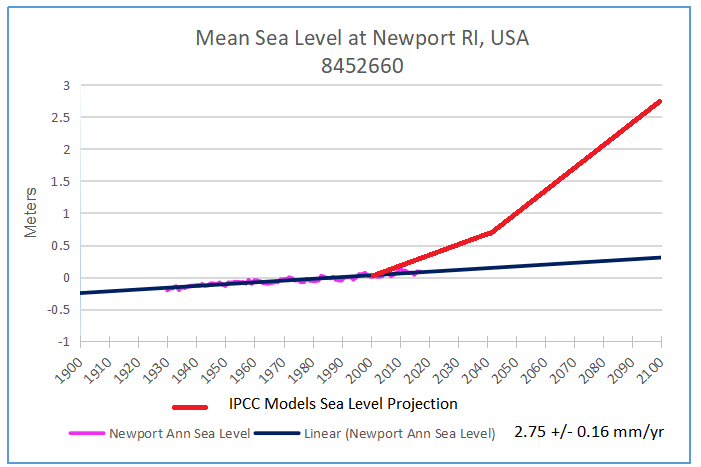
Rhode Island is home to three military bases, threatened by computer model sea level projections.

U.S. officials have also said that climate change can burden the military by increasing the number of global humanitarian missions in which it participates.

The White House is holding a meeting on Feb. 22 in the situation room to discuss an upcoming executive order by Trump to set up the committee, made up of 12 or fewer people, said the document, dated Feb. 14. The document was first reported by the Washington Post.

Trump has repeatedly cast doubt on the science of climate change, arguing that the causes and impacts are not yet settled. As a temporary blast of frigid cold hit the Midwest last month he said on Twitter “What the Hell is going on with Global Wa(r)ming. Please come back fast, we need you!”

Happer, who does not have a background in climate, has served on the NSC since 2018 as deputy assistant to the president for emerging technologies, and complained that carbon dioxide emissions have been maligned, a position strongly opposed by a vast majority of climate scientists. [Gardner misleads and betrays his own ignorance with this editorial comment.  In fact Happer is a radiative energy expert]

Happer said on CNBC in 2014 that the “demonization of carbon dioxide is just like the demonization of the poor Jews under Hitler.”

Francesco Femia, the co-founder of the Center for Climate & Security, a non-profit research and policy group, called the panel a “sham committee” that could put a chill on further analysis of climate risks from some members of military and intelligence agencies.

“I am worried there will be a reticence among some in the future to include those risks in their public reports for fear of having to deal with this political committee in the White House, because ultimately the heads of departments and agencies serve at the pleasure of the president,” Femia said.

Gardner quotes someone concerned that people might become accountable for their repeating climate nostrums unsupported by facts. Had Gardner done his homework he would have been informed by this William Happer Interview where his expertise is obvious, though contrary to Gardner’s beliefs.

Climatists have long operated their “rapid response” network to denigrate any and all who questioned the climate catechism.  No doubt they will not resist countering the panel’s pronouncements.  Let the games begin.

Sciencing Vs. Scientism


What is Scientific Truth? Previous posts here have discussed the difference between science as a process of discovery (“sciencing” if you will), and science as a catalog of answers to how the world works (“scientism” in this sense). On this issue, I am following Richard Feynman, and also Arthur Eddington, who is quoted at the end.

This post dives into the struggle over truth and science in contemporary society. It also discusses some underlying philosophical confusions leading to distortions of scientific processes and discoveries. Michela Massimi is Professor of Philosophy of Science at the University of Edinburgh in Scotland. She works in history and philosophy of science and was the recipient of the 2017 Wilkins-Bernal-Medawar Medal by the Royal Society, London, UK. Her article recently published at Aeron is entitled Getting it right. Excerpts in italics with my bolds and images. My takeaway: Science matters only because Truth matters. But do read her entire essay for your own edification. Title is link to essay.

Truth is neither absolute nor timeless. But the pursuit of truth remains at the heart of the scientific endeavour

Think of the number of scenarios in which truth matters in science. We care to know whether increased CO2 emission levels cause climate change, and how fast. We care to know whether smoking tobacco increases the risk of lung cancer. We care to know whether poor diet exposes children to the risk of developing obesity, or whether forecasts of economic growth are correct. Truth in science is not esoteric dilly-dallying. It shapes climate science, medicine, public health, the economy and many other worldly endeavours.

That truth matters to science is hardly news. For a long time, people have looked to science for truths about the world. The Scientific Revolution was nothing if not the triumph of Galileo’s scientific truth – hard-won through his telescopic observations – over centuries of dogma about the geocentric system. With its system of epicycles and deferents, Ptolemaic astronomy was at once sophisticated and false. It served to, at best, ‘save the appearances’ about how planets seemed to move in the sky. It did not tell the truth about planetary motion until the discovery of the Copernican explanation. Or consider the Chemical Revolution at the end of the 18th century. We no longer, after all, believe in phlogiston – the fictional imponderable fluid that Georg Ernst Stahl, Joseph Priestley and other natural philosophers at the time believed to be at work in combustion and calcination phenomena. Antoine Lavoisier’s scientific truth about oxygen prevailed over false beliefs about phlogiston.

The main actors of these scientific revolutions often fostered this way of thinking about science as an enquiry leading to the inevitable triumph of truth over past errors. Two centuries after Galileo’s successful defence of the heliocentric system, this idea of the course of scientific truth continued to inspire philosophers. In his Cours de philosophie positive (1830-42), Auguste Comte saw the evolution of human knowledge in three main stages: ‘the Theological, or fictitious; the Metaphysical, or abstract; and the Scientific, or positive’. In the ‘positive’, the third and last stage, ‘an explanation of facts is simply the establishment of a connection between single phenomena and some general facts, the number of which continually diminishes with the progress of science’.

In some scientific quarters, this Comtean notion of how science evolves and progresses remains common currency. But philosophers of science, over the past half-century, have turned against the representation of science as a ceaseless forward march toward truth. It is just not how science works, how it moves through history. It flies in the face of the wonderful and subtle historical nuances of how scientific revolutions have in fact occurred. It does not accommodate how some of the greatest scientific minds held dearly to some false beliefs. It wilfully ignores the many voices, disagreements and controversies through which scientific knowledge has often advanced and progressed over time.

However, many (and legitimate in their own right) criticisms against this naive view of science have committed a similar mistake. They have offered a portrait of science purged of any commitment to truth. They see truth as an inconvenient and disposable feature of science. Fraught as the ideal and pursuit of truth is with tendencies to petty doctrinairism, it is nonetheless a mistake to try to purge it. The fallacy of positivist philosophy was to think of science as coming in stages of some sort, or following a particular path, or historical cycles. The anti-truth trend in the philosophy of science has often ended up repeating this same misstep. It is important to move beyond the sterile dichotomy between the old (quasi-positivist) view of truth in science and the rival anti-truth trend of recent decades.

Let us start with some genuine philosophical questions about truth in science. Here are three: 1) Does science aim at truth? 2) Does science tell us the truth? 3) Should we expect science to tell us the truth?

In each of these questions, ‘science’ is a generic placeholder for whichever scientific discipline we are interested in questioning. Question one might strike us as otiose but, in fact, it triggered one of the liveliest debates of the past 40 years. Bas van Fraassen launched this debate as to whether science aims at truth with his pioneering book The Scientific Image (1980). Does science aim to tell us a true story about nature? Or does it aim only at saving the observable phenomena (namely, providing an account that makes sense of what we can observe, without expecting it to be the true account about nature)?

There are philosophers today who embrace the view that science does not need to be true in order to be good. They argue that asking for truth is risky because it commits one to believing in things (be it epicycles, phlogiston, ether or something else) that might prove false in the future. In their view, ‘empirically adequate’ theories, theories that ‘save the observable phenomena’, are good enough for science. For example, one might take the Standard Model in high-energy physics not as aiming at the truth about whether the world is really carved up into quarks, leptons and force carriers; whether these entities really have the properties that the Standard Model says they have; and so on.

When it comes to the second question – does science tell us the truth? – scientific realists and anti-realists of various stripes have debated it. Leaving aside the aim of science, let us concentrate on its track record instead. Has science told us the truth? Looking at the history of science, does it amount to a persuasive story of truth accumulated over the centuries? Philosophers, historians, sociologists and science-studies scholars have all challenged a simple affirmative answer to this question.

This decades-long, multi-pronged, disenchantment-with-truth trend in philosophy of science starts by rejecting the idea that there are facts about nature that make our scientific claims true or false. Fact-constructivism is only one aspect of this multi-pronged disenchantment-with-truth trend. Outlandish as this might sound, its defenders claim that there is not a single, objective way that the world is; there are rather many different and ‘equally true descriptions of the world, and their truth is the only standard of their faithfulness’, in the words of the philosopher Nelson Goodman. For example, he claimed that we do make facts, but not like, say, a baker makes bread, or a sculptor makes a statue. In Goodman’s view, we make facts any time we construct what he called a ‘version’ of the world (via works of art, of music, of poetry, or of science).

We do this all the time, for example, with stars and constellations. As the philosopher Hilary Putnam expresses it: ‘Nowadays, there is a Big Dipper up there in the sky, and we, so to speak, “put” a Big Dipper up there in the sky by constructing that version.’ Goodman’s world-making view has severe implications for truth in science. ‘Truth,’ he wrote, ‘far from being a solemn and severe master, is a docile and obedient servant. The scientist who supposes that he is single-mindedly dedicated to the search for truth deceives himself … He as much decrees as discovers the laws he sets forth, as much designs as discerns the patterns he delineates.’

Fact-constructivism sounds too radical to many philosophers, and alienating to most scientists. So here is another approach against factual truth, well-known among philosophers of science. Over the past 40 years, they have produced an extraordinary amount of work on models in science. The role of abstractions and idealisations in scientific models, they maintain, is to select and to distort aspects of the relevant target system. The billiard-ball model of Brownian motion, for example, represents the motion of molecules by idealising them as perfectly spherical billiard balls. Moreover, the model abstracts, or removes, molecules from their actual environment, which is of course where collisions among molecules take place.

Studying modelling practices in science has led some to argue that science does not tell the truth but it does provide important non-factive understanding. Consider, for instance, Boyle’s gas law, which captures the relation between pressure p and volume v in an ideal gas at constant temperature. At best, Boyle’s law is true ceteris paribus (ie, all else being equal) in highly idealised and contrived circumstances. There simply is no ideal gas with perfectly spherical molecules displaying ‘atomic facts’ (in a quasi-Wittgensteinian sense) that make Boyle’s law true. Despite being true of nothing real, the billiard-ball model of Brownian motion and Boyle’s ideal gas law do nonetheless provide important non-factual understanding of the behaviour of real gases. For they allow scientists to understand the relation between decreasing volume and increasing pressure in any gas, even if there are no atomic facts in nature about perfectly spherical molecules corresponding to such idealisations.

Anti-dogmatic and anti-monist approaches to science have also questioned the value, as well as the facticity, of truth. From the 1960s, science-studies scholars began to see the word ‘truth’ as evoking unpalatable petty doctrinairism and intracultural battles in the wake of the Vietnamese war, postmodernism and, later on, what became known as the ‘science wars’. Many saw the physicist Thomas Kuhn as the forefather of a new historicist trend that dismantled what they perceived as the naive view that science aims at or tracks truth. Kuhn saw himself as ‘a fact lover and a truth seeker’. Yet in the final remarks to his classic The Structure of Scientific Revolutions (1962), he made a prescient, almost ominous, warning:

Does it really help to imagine that there is some one full, objective, true account of nature and that the proper measure of scientific achievement is the extent to which it brings us closer to the ultimate goal? … Successive stages in that developmental process are marked by an increase in articulation and specialisation. And the entire process might have occurred, as we now suppose biological evolution did, without benefit of a set goal, a permanent fixed scientific truth, of which each stage in the development of scientific knowledge is a better exemplar.

For Kuhn, truth is not an overarching aim of science across scientific revolutions. Nor do scientific revolutions (eg, from Ptolemaic to Copernican astronomy) track truth either. What they do, at best, is to increase our ability to solve anomalies that beset the previous paradigm (as when we eventually discovered that retrograde motion was only an illusion, and not something that needed epicycles and deferents to be explained).
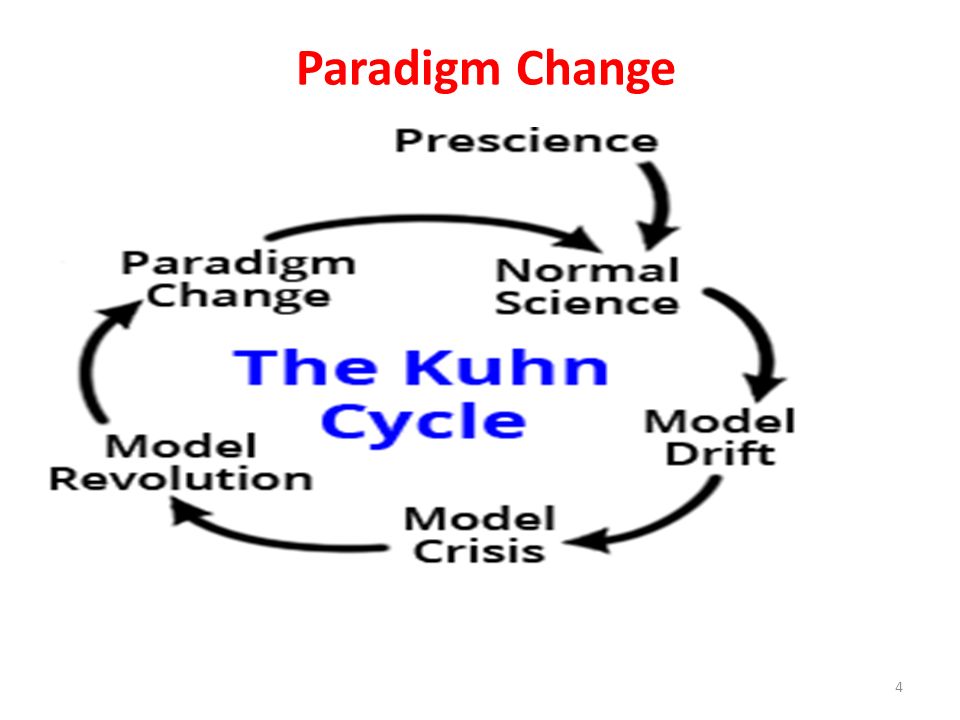
We see the spirit of Kuhn’s warning in discussions today. Truth itself is not enough to settle or even guide debates about expertise, trust, consensus and dissent in science. The philosophers of science Inmaculada de Melo-Martín and Kristen Intemann have described the matter well in their book The Fight Against Doubt (2018). When it comes to the role of science in policymaking, the key is ‘engaging in discussions with all relevant parties about the values at stake, rather than the truth of particular scientific claims’. Policymaking involves politics and values, and ‘disagreement about values cannot, and should not, be decided by scientists alone’ or by just scientific evidence.

The third question is whether we should expect science to tell us the truth, or is truth (or at least the notion of factual truth) not best left to logicians and metaphysicians?

While critical analyses of factual truth are indeed best left to logicians and metaphysicians, philosophers of science should not abdicate their responsibility to talk about truth in science. The quasi-Wittgensteinian myth of atomic facts as the truth-makers of scientific claims has proved inadequate to even scratch the surface of very complex practices in science. But that is not a good reason (or pretext) for forgoing truth altogether. Nor is it a reason for concluding that science should not be expected to tell us the truth.

But whose truth? By whose lights? Some might be tempted at this point by a Jamesian pragmatist theory of truth. American pragmatism has traditionally provided an alternative way of thinking about truth, which some philosophers of science see as more congenial to capturing the complex nuances and the power structure of scientific practice.
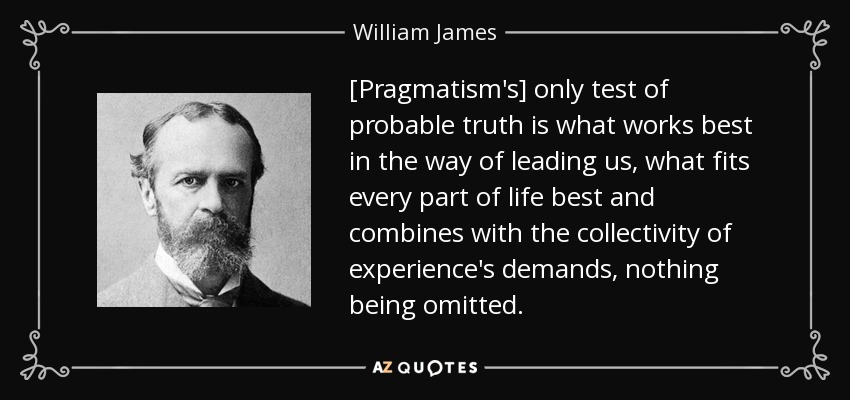
In James’s words: ‘“The true” … is only the expedient in the way of our thinking, just as “the right” is only the expedient in the way of our behaving.’ Stripped of its rhetorical flourishes, for James to be true is (to a good approximation) to work successfully. A scientific model is true – on a loosely Jamesian view – if it successfully facilitates and enables activities (be they epistemic or not). If the billiard-ball model of Brownian motion helps scientists to predict the behaviour of gas molecules, for example, the model is (pragmatically) true. The falseness of the presumption of perfectly spherical molecules does not matter.

The risk with a James-inspired conception of truth, as I see it, is that it is too malleable to resist the tides of time and the stresses of social forces endlessly at work in science. A James-inspired view of truth abdicates the expectation that science tells us the truth in the name of a non-better-qualified kind of success of a scientific practice. But how to tell apart cases where success does indeed track truth from cases where it does not? More to the point, when it comes to matters such as climate change, the benefit of vaccinating children, or economic forecasts, we seem to need more than a malleable Jamesian conception of truth for the sake of scientifically informed decisions that do not bow to pressure from powerful lobbies and political agendas (in the name of what ‘might work’). But, someone might reply, how can truth and pluralism go hand in hand if not by opting for a Jamesian conception of truth (if we really care about truth at all)?

There is another way of thinking about how truth and pluralism might go hand in hand, without reducing matters of truth to calculations of what is pragmatically good to individuals or communities sharing a scientific perspective at some point in time. First, it is necessary to understand the key term ‘scientific perspective’ and how it impinges on scientific pluralism. In its original use by the philosopher Ronald Giere in 2006, ‘scientific perspective’ is akin to Kuhn’s disciplinary matrix: a set of scientific models (including the relevant experimental instruments to gather data). In broader terms, scientific perspective is the disciplinary practice of a real scientific community at any given historical time. It includes the knowledge they produce, and the theoretical, technological and experimental resources they use, or that guide their work.

The time for a defence of truth in science has come. It begins with a commitment to get things right, which is at the heart of the realist programme, despite mounting Kuhnian challenges from the history of science, considerations about modelling, and values in contemporary scientific practice. In the simple-minded sense, getting things right means that things are as the relevant scientific theory says that they are. Climate science is true if what it says about CO2 emissions (and their effects on climate change) corresponds to the way that things are in nature. For the sake of powerful economic interests, sociopolitical consequences or simply different economic principles, one can try to discount, mitigate, compensate for, disregard or ignore altogether the way that things are. But doing so is to forgo the normative nature of the realist commitment in science. The scientific world, we have seen, is too complex and messy to be represented by any quasi-Wittgensteinian picture of atomic facts. Nor can the naive image of Comte’s positive science render justice to it. But acknowledging complexity and historical nuances gives no reason (or justification) for forgoing truth altogether; much less for concluding that science trades in falsehoods of some kind. It is part of our social responsibility as philosophers of science to set the record straight on such matters.

We should expect science to tell us the truth because, by realist lights, this is what science ought to do. Truth – understood as getting things right – is not the aim of science, because it is not what science (or, better, scientists) should aspire to (assuming one has realist leanings). Instead, it is what science ought to do by realist lights. Thus, to judge a scientific theory or model as true is to judge it as one that ‘commands our assent’. Truth, ultimately, is not an aspiration; a desirable (but maybe unachievable) goal; a figment in the mind of the working scientist; or, worse, an insupportable and dispensable burden in scientific research. Truth is a normative commitment inherent in scientific knowledge.

Constructive empiricists, instrumentalists, Jamesian pragmatists, relativists and constructivists do not share the same commitment. They do not share with the realist a suitable notion of ‘rightness’. As an example, compare the normative commitment to get things right with the view of the philosopher Richard Rorty, in whose hands Putnam’s truth as ‘idealised warranted assertibility’ reduces to what is acceptable to ‘us as we should like to be … us educated, sophisticated, tolerant, wet liberals, the people who are always willing to hear the other side, to think out all the implications’.
Getting things right is not a norm about us at our best, ‘educated, sophisticated, tolerant, wet liberals’. It is a norm inherent in scientific knowledge. To claim to know something in science (or about a scientific topic or domain) is to claim for the truth of the relevant beliefs about that topic or domain.

Thinking of truth as a normative commitment inherent in the very notion of scientific knowledge brings some benefits. It overcomes a false dichotomy between atomic facts and non-factive, non-truth-conducive inferences. And it makes realism compatible with perspectivism. Scientific communities that endorse historically and culturally situated scientific perspectives (either across the history of science or in contemporary science, across different fields or different scientific programmes) share (and indeed ought to) a normative commitment to get things right. That is a minimum requirement to pass the bar of what we count as ‘scientific knowledge’.

Getting the evidence right, in the first instance – via accurate measurements, sound non-ad-hoc procedures, and robust inferential strategies – defines any research programme that is worth being called ‘scientific’. The realist commitment to get things right must begin with getting the evidence right. No perspective worthy of being called ‘scientific’ survives fudging the evidence, massaging or altering the data or discarding evidence.
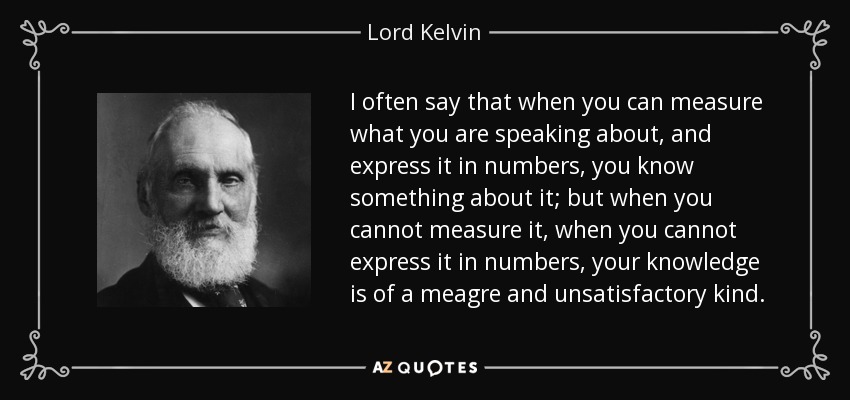
Scientists ought to share rules for cross-perspectival assessment. That our knowledge is situated and perspectival does not make scientific truths relativised to perspectives. Often enough, scientific perspectives themselves provide the rules for cross-perspectival assessment. Those rules can be as simple as translating the 10 degree Celsius temperature in Edinburgh today into the 50 degree equivalent on the Fahrenheit scale. Or they can be as complex as retrieving the viscosity of a fluid in statistical mechanics, where fluids are treated as statistical ensembles of a large number of discrete molecules.

Let there be no doubt: scientific knowledge is the product of our getting it right across our perspectival multicultural scientific history. Scientific knowledge is not a prerogative of our Western cultural perspective (and its discipline-specific scientific perspectives) but the outcome of a plurality of historically and culturally situated scientific perspectives that, over millennia, have reliably produced knowledge with the tools, resources and concepts respectively available to each and every one of them.

Scientific truths are the resilient and robust outcome of a plurality of scientific perspectives that, over time, have meshed with one another in their (tacit, implicit and often survival-adaptive) normative commitment to reliably produce scientific knowledge for us as humankind. That is why, far from being an insufferable hindrance to scientific pluralism, truth is in fact its best safeguard in tolerant, open and democratic societies that are genuinely committed to the advancement of scientific knowledge in the very many faces it comes with.

Footnote: 

Religious creeds are a great obstacle to any full sympathy between the outlook of the scientist and the outlook which religion is so often supposed to require … The spirit of seeking which animates us refuses to regard any kind of creed as its goal. It would be a shock to come across a university where it was the practice of the students to recite adherence to Newton’s laws of motion, to Maxwell’s equations and to the electromagnetic theory of light. We should not deplore it the less if our own pet theory happened to be included, or if the list were brought up to date every few years. We should say that the students cannot possibly realise the intention of scientific training if they are taught to look on these results as things to be recited and subscribed to. Science may fall short of its ideal, and although the peril scarcely takes this extreme form, it is not always easy, particularly in popular science, to maintain our stand against creed and dogma.
― Arthur Stanley Eddington
See Also: 

Data, Facts and Information

Three Wise Men Talking Climate

Head, Heart and Science

Post-Truth Climatism

How Science Is Losing Its Humanity


Pascal’s Climate Wager

David Freddoso explains in the Washington Examiner Good news: Illinois will be spared when the world ends.  Excerpts in italics with my bolds.

J.B. Pritzker, the new governor of Illinois, has begun his reign with the symbolic signing of his state back on to the Paris climate agreement:

It means Illinois will abide by the Paris agreement that aims at reducing greenhouse-gas emissions by up to 28 percent by 2025. Former President Barack Obama signed the U.S. onto the Paris accord in 2016 but President Donald Trump withdrew months later.

Pritzker’s order also directs the Illinois Environmental Protection Agency to monitor the Trump administration’s environmental proposals and look for ways to “protect Illinoisans from environmental harm.”

This means Illinois will be spared when the world ends in 12 years, right? Well, no, I’m afraid it doesn’t work that way. But if you do especially want Illinois to be spared for some reason, perhaps it will at least make you feel better about yourself.

Paris was a nonbinding agreement. More importantly, its terms would not be nearly ambitious enough to save the world, were its continued existence truly threatened as some contend.

The symbolic return of the Deadbeat State to the Obama administration’s climate agreement doesn’t mean anything specific. Yes, the state government might be saddling itself with further costs it cannot afford, given its fleeing population and dwindling tax base. But the climate in Illinois will not be affected by any reforms in the U.S., because our entire economy’s worth of carbon emissions is becoming a drop in the carbon ocean of China’s and India’s growing emissions. Even if we switched 100 percent to nuclear power — the secret to France’s electrical success and the only feasible way the U.S. could ever reduce emissions on such a scale — the global threat would not diminish substantially for decades given growth in India alone (not to say that a switch to nuclear isn’t a good idea anyway).

This leaves us with a sort of reverse Pascal’s Wager. If the world is truly on its way to an end, then you’re just screwed. There’s nothing you or I can do at this point, so you might as well just enjoy your last days with the air conditioner on, not off.

If, on the other hand, the conjecture-based predictions of rapid world destruction are just so much hype, then Illinoisans can safely ignore Paris and Pritzker and consider moving to neighboring Indiana where the governor limits himself to real-world problems.

Footnote: 

Blaise Pascal (1623-1662) was a French mathematician, physicist, inventor, writer and Catholic theologian.  He asserted that the best bet is to believe and act as though God exists even though the evidence is uncertain.  The argument was based upon three premises: the first concerns the decision matrix of rewards, the second concerns the probability that you should give to God’s existence, and the third is a maxim about rational decision-making.  On Pascal’s premises, the gains from wagering for God outweighed the losses the other way.

In the field of global warming/climate change, the wager is called the “Precautionary Principle” and is preoccupied with losses not gains.  IPCC adherents argue that all will be lost unless we stop burning fossil fuels, despite: no reliable evidence anything unusual is happening in our climate; renewable power tech is immature, serving only to make affordable, reliable energy expensive and intermittent; no proof humans can control planetary climate changes.

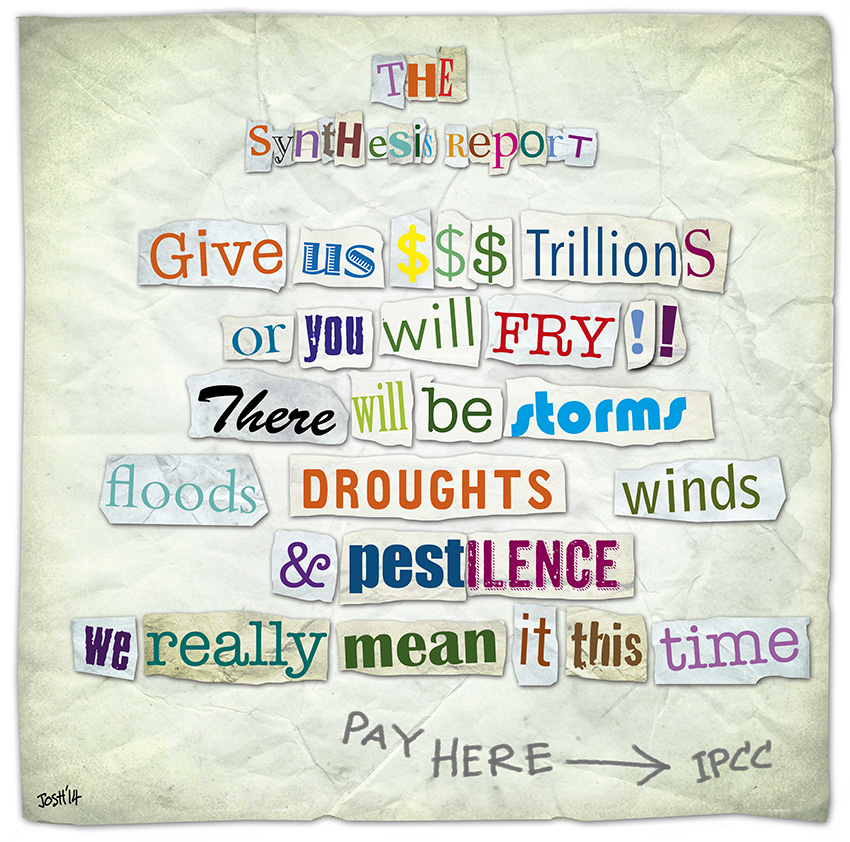
ipcc_ransom_note

MMT: Magical Money Theory

Pardon me for mixing up acronyms.  Somehow the increasing mention of MMT (Modern Monetary Theory) made me think of the classic Beatles trip album.  Perhaps that association was triggered by today’s suddenly fashionable socialists relying on MMT to pay for their “everything free for everybody” political visions.  (Maybe one of the Ms could stand for ‘mushrooms”.)

A primer on what MMT is and is not, is an article by Karl Smith (descendant of Adam?) in National Review The Uses and Abuses of Modern Monetary Theory.  Excerpts in italics with my bolds.

MMT advocates overlook its flaws.

Newly elected representative Alexandria Ocasio-Cortez (D., N.Y.) argued on Monday that Modern Monetary Theory (MMT) ought to be a part of the conversation when it comes to funding major social-policy initiatives, such as her proposed Green New Deal. Stephanie Kelton, former economic advisor to Bernie Sanders, has likewise insisted that MMT should replace our current thinking about government finance. Yet what is MMT? And is it really as revolutionary as its proponents claim?

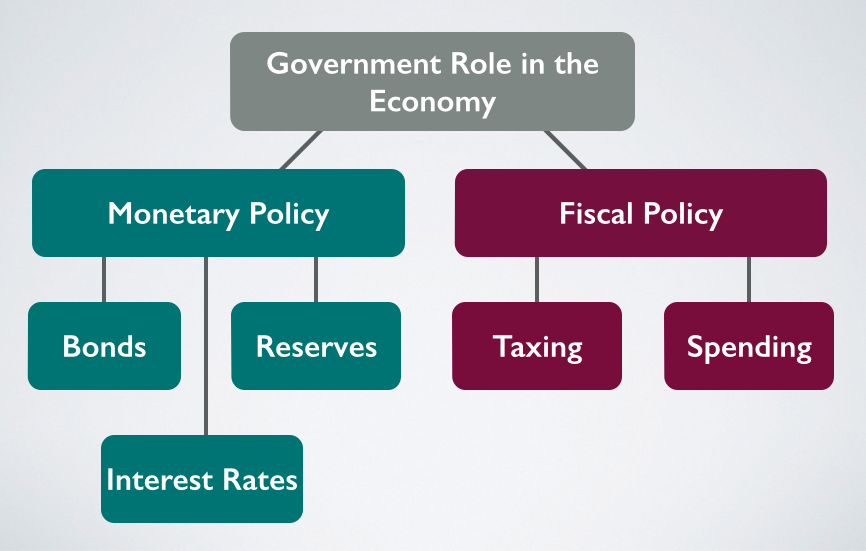
At its heart, MMT is a way of describing the federal budget and the Federal Reserve as if they were unified under a single executive authority. In describing the system so, the dangers of federal deficit spending are no longer that it crowds out private investment and slows economic growth, but that it leads potentially to excess inflation.

Yet Modern Monetary Theorists then invariably argue that inflation is not, and indeed could not be, a major problem for the United States. Many hard-core adherents go so far as to propose a job-guarantee program paid for by the federal government, which, they argue, will virtually eliminate both unemployment and the possibility of runaway inflation.

The tenets of MMT should be familiar to an older generation of fiscal conservatives. Before the 1980s, central banks such as the Federal Reserve were controlled far more directly by their governments. As a result, they could — and often did — bail out profligate governments by simply printing more money to cover the government’s debt.

This led to massive currency devaluation, runaway inflation, or both. In the early 1980s, however, central banks in the developed world were granted independence in the hopes that doing so would stop the spiraling inflation of the late 1960s and 1970s.

In the U.S., Fed chairman Paul Volcker was spectacularly successful at this. So were, to varying degrees, most central banks in the developed world. Some holdouts existed, notably in Southern Europe — a situation that would come back to haunt them decades later.

But MMT waves away the significance of these developments, instead focusing attention on several technical facts. First, when the federal government wants to spend money, it does so by having the Treasury issue checks. These checks are processed by the Federal Reserve Bank of New York (FRBNY). Second, the FRBNY does this literally by marking up the value of digital reserves in an account belonging to the check recipients’ bank and marking down the account of the Treasury by an equal amount.

These two operations are, in theory, separate. There is no technical reason why the FRBNY has to mark down the Treasury account. It only does so because laws require the federal government to meet all of its obligations. Such laws, argue Modern Monetary Theorists, cannot bind Congress, which after all has the power to alter them.

MMT advocates argue that Congress should ask the Treasury to sell Treasury bonds to cover any of its outstanding obligations. This is not, however, because they think it is necessary to fulfill the government’s obligations, but because doing so would help stabilize the macroeconomy.

All well and good. But at some point, won’t the debt become so large that merely paying interest on it will require issuing additional debt? Won’t this process feed on itself until all the borrowing capacity in the economy is soaked up?

No, MMT advocates reply, because the government can simply stop issuing debt — meeting its obligations instead by having the Federal Reserve simply create money on its behalf.

Indeed, this is what distressed governments have traditionally done when their liabilities add up — and the result has typically been hyperinflation. Modern Monetary Theorists argue that this need not be the case. Their exact reasoning differs.

At times, they argue that hyperinflation only occurs in countries that borrow from abroad in debt denominated in a foreign government’s currency. I don’t know enough about every single instance of hyperinflation to verify this claim, but it is true that the worst incidences of hyperinflation are typically associated with borrowing from abroad.

When a country prints money in an attempt to fund the government, the international exchange value of its currency collapses. If the country owes debt denominated in a foreign currency, that debt becomes more difficult to pay down as its own currency falls. Then the country has to print even more money to meet its debt payments, which of course causes the exchange value of its currency to fall further, creating a vicious circle that ends in hyperinflation.

Modern Monetary Theorists argue that this can’t happen to the United States because all of our debt is in the form of Treasury bonds that are denominated in dollars. If the international exchange value of the dollar falls, that does not change the value of our debt.

It does, however, mean that foreigners will be repaid in a currency that will be worth much less to them. Foreign bondholders are not stupid; they would regard this as a type of unofficial default. After experiencing this type of default through currency devaluation, they would be much less willing to buy Treasury bonds or indeed any type of American security again. This is precisely the situation that Italy, Spain, and Greece found themselves in during the 1980s.

Both countries had regularly devalued their currency as a way to get out from underneath foreign debts and were increasingly locked out of international markets. The euro was created, at least in part, in an effort to solve this. It could ultimately be printed only with the authority of the European Central Bank, meaning that neither Italy, Spain, Greece, nor any other member country could avert a debt crisis by devaluing its currency. Instead, they would have to raise taxes to meet their obligations.

That brings us to the second argument MMT advocates invoke when arguing that we should not worry about excessive debt leading to inflation: If inflation becomes a problem, the federal government can simply raise taxes, slowing down the economy which, in turn, will cool inflation.

But there are two problems with this approach. First, it is political suicide. At a time when consumers are facing ever-rising prices, it would seem cruel beyond measure to slap them with a tax increase. Very few governments would have the nerve to do this. If anything, history shows us that governments will instead resort to spending money on subsidies to ease the burden of rapidly rising prices.

Second, committing to this approach would risk an economic calamity. In 1973, OPEC placed an embargo on the United States that resulted in the price of oil quadrupling overnight. The sharply rising price of oil led both to a slowing economy and an increase in inflation — a dangerous mix.

A slowing economy lowers tax revenues, making it more difficult for the government to meet its debt payments. Suppose, at a time when the economy was slowing but inflation was rising, the U.S. government had firmly committed itself to MMT principles and refused to waver. In that case, it would not be able to resort to money printing because inflation was rising. Instead, it would be obligated to raise taxes both to meet its debt payments and to slow the rate of inflation.

Sharp increases in taxes during a recession, however, can be self-defeating. This is exactly the situation that Greece, and to a lesser extent Italy and Spain, found themselves in during the Great Recession. The crises lowered revenue, which worsened their budget deficits.

As a result, the government was forced to raise taxes and lower spending during the recession. This caused the economy to contract further, which caused tax revenue to fall so much that the budget deficit actually rose. In the case of Greece, this self-defeating cycle of higher taxes and lower revenues caused the government to ultimately default on its debts anyway. That, of course, worsened the economic crisis the country was already facing.

In the face of such a calamity, no sovereign government would or perhaps even should refrain from devaluing its currency and inflating away at least some of its debts. For that reason, governments have designed institutions to avoid falling into this trap.

In the United States, that means both making the Federal Reserve independent and not subject to the direct authority of the Treasury, and requiring the Treasury to meet all of its obligations with cash raised from tax revenues or Treasury-bond sales. In effect, we’ve outlawed the methods of Modern Monetary Theory — and with good reason.

KARL SMITH — Karl Smith is a senior fellow at the Niskanen Center. He was previously Assistant Professor of Economics and Government at the University of North Carolina (UNC) School of Government.

Footnote: (h/t Mark Krebs)

For more on Cortez see Why Cortez Can’t Be Wrong

For more on how MMT plays out when applied in a nation, see a short review of the Brazil experiment:

Going Where No Man-made Object Has Gone Before

This artist’s illustration obtained from NASA on December 21, 2018 shows the New Horizons spacecraft encountering 2014 MU69 nicknamed Ultima Thule a Kuiper Belt object that orbits over a billion kilometres beyond Pluto. (HO / AFP/GETTY IMAGES)

A potential New Year’s gift for all of us is in the works, and a Quebecer will be the key player.

The story comes from the Star Quebec’s Pelletier leads ‘farthest exploration of any planetary body in history’ Excerpts from article in italics with my bolds.

MONTREAL—Frederic Pelletier is boldly predicting he and his team will get the New Horizons spacecraft exactly where it should be on New Year’s Day — 1.6 billion kilometres beyond Pluto to rendezvous with a space rock known as Ultima Thule.

The goal of the NASA mission is to pass by the region known as the “Kuiper Belt” and send data back to Earth that can help explain the origins of the solar system. The flyby of Ultima Thule is being described by the space agency as the “farthest exploration of any planetary body in history.”

NASA says by exploring the region beyond Pluto, scientists can learn more about comets, small planets and other material dating back to the era when planets were formed — 4.5 billion years in the past.

By the time the New Horizons spacecraft makes its closest approach to Ultima Thule — scheduled for 12:33 a.m. eastern standard time on Jan. 1, 2019 — the vehicle will be 6.6 billion kilometres from Earth.

“It’s very difficult, we don’t have much information about (Ultima Thule),” Pelletier said in a recent interview with The Canadian Press. “I’m a bit nervous, but I feel confident … all the stars are aligned.”

NASA contracted Pelletier to be the chief navigator of the spacecraft for the New Horizons mission, whose original plan was to fly past Pluto. The team reached its goal when the vehicle successfully flew by the dwarf planet on July 14, 2015, and sent back data “that resulted in profound new insights about Pluto and its moons,” according to the space agency’s website.

The voyage beyond Pluto to the Kuiper Belt is part of the extended mission.

Pelletier and his eight-member team are responsible for delivering the spacecraft, which is the size of a baby grand piano, to the target.

It will fly by Ultima Thule at a distance of about 3,500 kilometres, going 14 kilometres a second — or 50,000 kilometres an hour. Pelletier compared it to a motorist inside a car who is trying to look at a lamppost.

“It’s going by real fast,” he said.

Pelletier said scientists estimate Ultima Thule to be about the same size as Washington D.C.

“It’s estimated to have a diameter of 30 kilometres right now,” Pelletier said. “We suspect that it’s not going to be spherical, that it’s going to have some weird shape to it. There’s also the possibility that it will be a binary asteroid — two objects touching each other or in close formation.”

What has made the task even more challenging for the Quebec City native is the fact that it takes six hours for the signal from Earth to reach the spacecraft and another six hours to return.

“So when we plan manoeuvres to do uplinks and updates, we need to take that into account,” Pelletier noted.

The New Horizons spacecraft blasted off Jan. 19, 2006, for its trip to Pluto, and since 2015, has been moving deeper into space. The mission is being hosted by Johns Hopkins University’s Applied Physical Laboratory in Laurel, Md., where Pelletier and his team are working.

Ultima Thule was first detected in 2014 using the Hubble Space Telescope, meaning the rock was only discovered after the New Horizons launch.

NASA says scientists estimate there are several hundred objects with a diameter longer than 30 kilometres waiting to be discovered in what’s known as “the third zone” of our solar system.

“I’m an explorer,” Pelletier said. “I love going to places (that are) unexplored — we’re on the edge of the solar system. The Kuiper Belt was only discovered in the 1990s.”

Until the Jan. 1 flyby, Pelletier will keep busy monitoring Ultima Thule, barely giving him time to celebrate his 44th birthday on Friday, Dec. 28.

But his wife and two boys, aged 9 and 12, will be flying up to Maryland to join him in the coming days.

Pelletier has worked on a number of other space missions, including the voyage the Cassini spacecraft took to Saturn, and he also participated in the Mars Curiosity landing.

Footnote:

I really like this story.  My only disappointment is the name of the rock could have been so much better.
uma world

Happy New Year Everyone,  May your 2019 Exceed Expectations!.


Climate Change Chumps

Definition “chump”: A foolish or easily deceived person.

Why are so many people taken in by climate alarms? The question is often on my mind, especially when tens of thousands attend UN conferences like Katowice, or when hearing the caterwauling in the media over the climate scare of the week. Last night while watching a football game, my escape from the issue was interrupted by a commercial break that included a flaming earth on the screen for a few seconds. It was an ad for Discovery Channel including the image above.

[Old joke:  I don’t know if they are using subliminal advertising, but yesterday I went and bought a tractor.]

And in a flash I realized how several factors are driving warming suckers into a fearful frenzy.

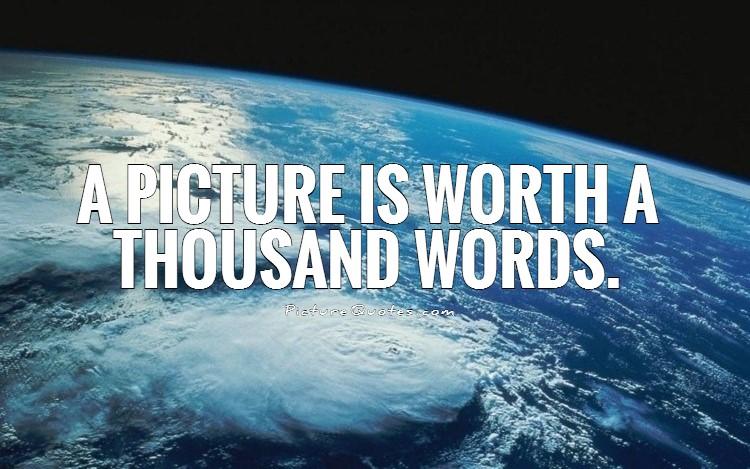
Firstly, The power of images over words and thinking.
A picture is worth a thousand words. (Sometimes attributed to Chinese)
The Asian attribution is doubtful, but Confucius did say something similar:
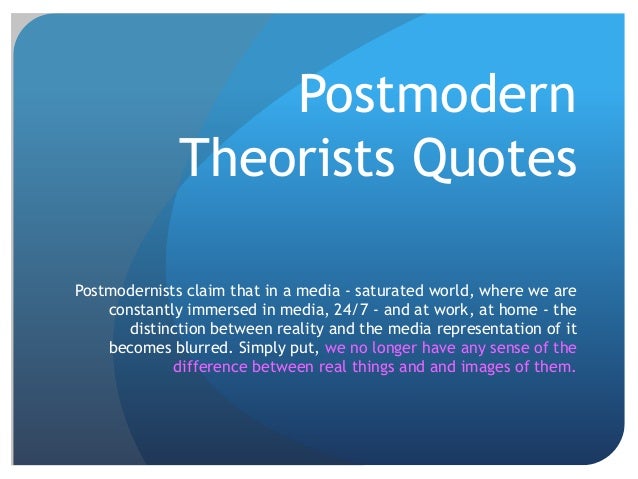
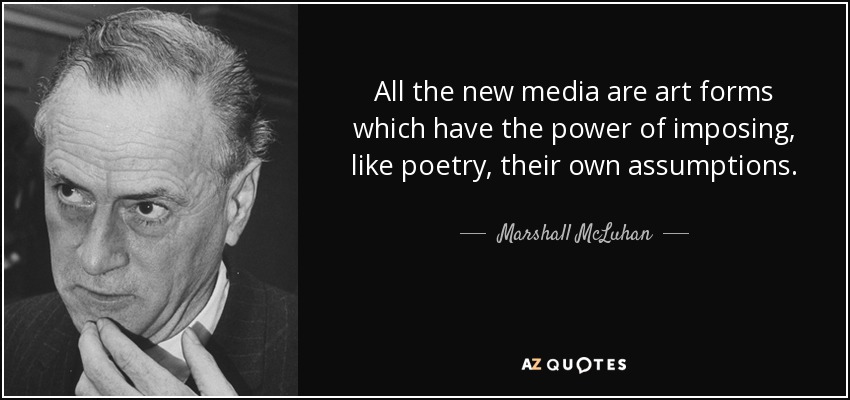
Second, We are immersed in imaging technology, entrancing the public. I have no interest in post modern philosophers, but in this sense they are onto something perverse: We are mistaking images for realities.

Third, Pied Pipers are using the media to put us under their spell.
A key point in the fable is the piper’s ability to put a spell on the children, and thereby rob the village of their future.  And he did this to get leverage over the council when they refused to pay for exterminating the rats. Our children have been brainwashed with environmental activism since preschool, and educators have taken Confucius to heart:  The process goes beyond preaching, to videos, posters and projects.

Fourth, Our embrace of mass and social media makes us suckers for fake news, including climate claims.

Note that the majority are not confident to discern fake from real news.  Even worse, today’s “fact checkers” operate out of spin rooms.

Fifth, Social proof is now all that matters.

Climate lemmings rushing over the cliff.

Finally, the drumbeat of climate alarms imprints ever more deeply a false assumption.

It doesn’t matter if any particular climate claim is false or exaggerated, the communications continuously reinforce the underlying myth of the Garden of Eden:  Nature is perfect and eternal so long as humans don’t mess it up.

The reality is more subtle and complex.  Humans are also a force of nature, and with our self-awareness we have the ability and responsibility to add order and purpose to the rest of nature.  Go to Kyoto and watch the landscapers labor for hours to fashion an exquisite Japanese garden, the fruition of collaboration between humans, plants, water and rocks.  Humans can and do improve on nature by taming destructive natural forces to preserve and enhance living structures.

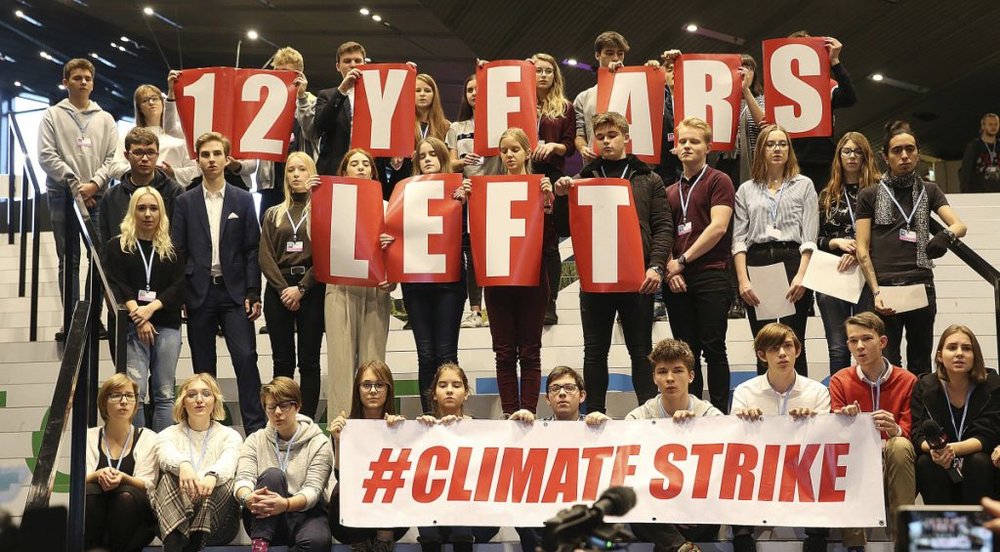
The UN IPCC process is a blind alley, a path to nowhere.  It plays upon fears and guilt feelings.  Worse, it distracts from rational programs of actual environmental stewardship.  I fear it will only get worse in the next 12 years: