Astronomy is Science. Climatology Not.

A nice tongue in cheek essay appeared in the Atlantic The Eclipse Conspiracy: Something doesn’t add up.

It is a whimsical spoof on anyone skeptical that the solar eclipse will happen tomorrow. (Excerpts)

Meanwhile the scientists tell us we can’t look at it without special glasses because “looking directly at the sun is unsafe.”

That is, of course, unless we wear glasses that are on a list issued by these very same scientists. Meanwhile, corporations like Amazon are profiting from the sale of these eclipse glasses. Is anyone asking how many of these astronomers also, conveniently, belong to Amazon Prime?

Let’s follow the money a little further. Hotels along the “path of totality”—a region drawn up by Obama-era NASA scientists—have been sold out for months. Some of those hotels are owned and operated by large multinational corporations. Where else do these hotels have locations? You guessed it: Washington, D.C.

In fact the entire politico-scientifico-corporate power structure is aligned behind the eclipse. This includes the mainstream media. How many news stories have you read about how the eclipse won’t happen?

That’s a great example of “conspiracy ideation” and a subtle dig at people who don’t trust NASA on climate matters. In fact, many of the real NASA scientists are extremely critical of NASA’s participation in climate activism.  Journalists or Senators who raise NASA as evidence of climate change should be directed to The Right Climate Stuff, where esteemed NASA scientists give plenty of good reasons to doubt NASA on this topic.

Bottom Line: A Real Science Makes Predictions that Come True.

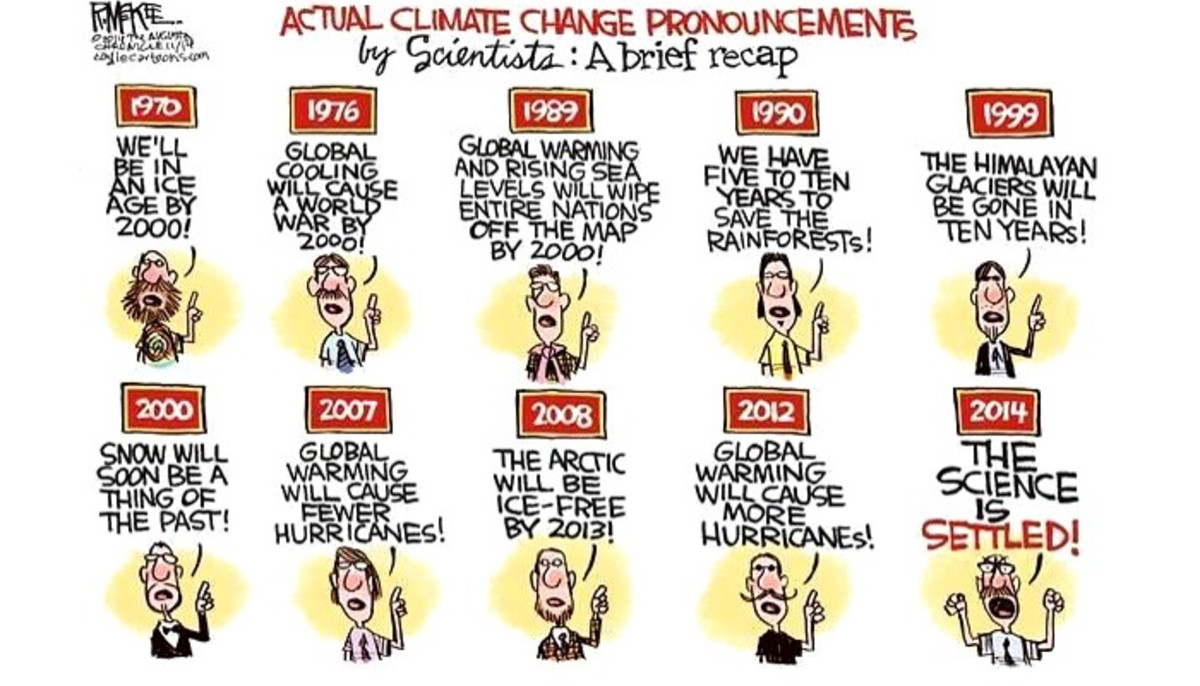
The article, perhaps unwittingly, shows why Astronomy is a real science we can trust while Climatology is faith-based, like Astrology. When the eclipse happens, it confirms Astronomers have knowledge about the behavior of planetary bodies. When numerous predictions of climate catastrophes are unfulfilled, it demonstrates scientists’ lack of knowledge about our climate system. Anyone claiming certainty about the climate is exercising their religious freedom, but not doing science.


Control Knobs, Rick Perry and AMS

A great post by Ross McKitrick at the Hill (H/T GWPF)  In the fight between Rick Perry and climate scientists — He’s winning  Excerpts below (my bolds)

Policy makers and the public need to understand the extent to which major scientific institutions like the American Meteorological Society have become biased and politicized on the climate issue. Convincing them of this becomes much easier when the organizations themselves supply the evidence.

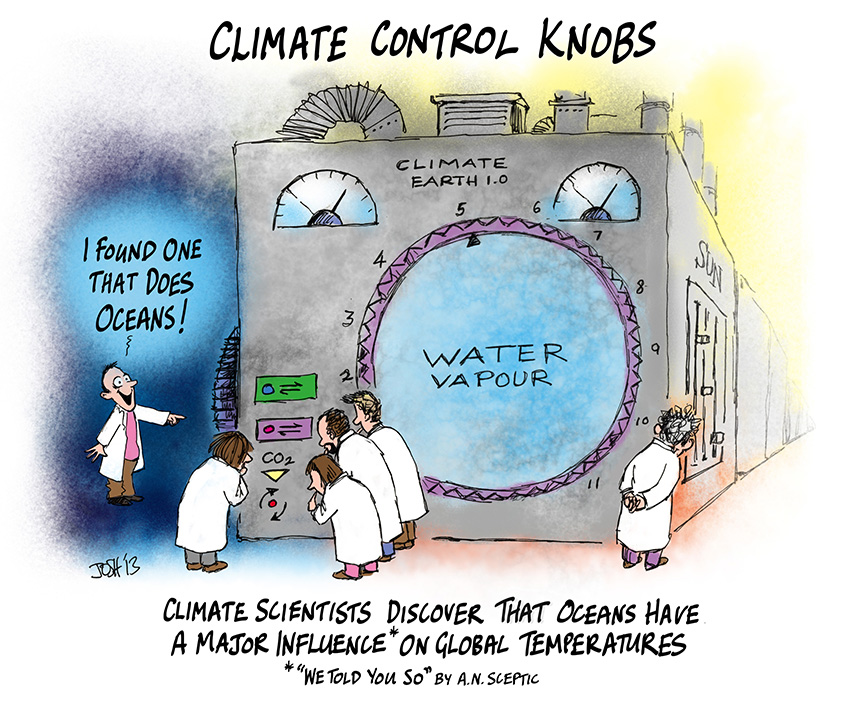
This happened recently in response to a CNBC interview with Energy Secretary Rick Perry. He was asked “Do you believe CO2 [carbon dioxide] is the primary control knob for the temperature of the Earth and for climate?”

It was an ambiguous question that defies a simple yes or no answer. Perry thought for moment then said, “No, most likely the primary control knob is the ocean waters and this environment we live in.” He then went on to acknowledge the climate is changing and CO2 is having a role, but the issue is how much, and being skeptical about some of these things is “quite all right.”

Perry’s response prompted a letter of protest from Keith Seitter, executive director of the American Meteorological Society. The letter admonished him for supposedly contradicting “indisputable findings” that emissions of CO2 and other greenhouse gases are the primary cause of recent global warming, a topic for which Seitter insists there is no room for debate.

It is noteworthy that the meteorological society remained completely silent over the years when senior Democratic administration officials made multiple exaggerated and untrue statements in service of global warming alarmism.  (McKitrick provides several examples in his article)

But the meteorological society leapt to condemn Perry for a cautious response to an awkward question. Perry could not reasonably have agreed with the interviewer since the concept of a “control knob” for the Earth’s temperature wasn’t defined. Doubling CO2 might, according to models, cause a few degrees of warming. Doubling the size of the sun would burn up the planet. Doubling cloud cover might trigger an ice age. So which is the “primary control knob”? The meteorological society letter ignored the odd wording of the question, misrepresented Perry’s response and then summarily declared their position on climate “indisputable.” Perry’s cautious answer, by contrast, was perfectly reasonable in the context of a confusing question in a fast-moving TV interview.

Furthermore, Seitter’s letter invites skepticism. It pronounces confidently on causes of global warming “in recent decades” even though this is where the literature is most disputed and uncertain. Climate models have overestimated warming in recent decades for reasons that are not yet known. Key mechanisms of natural variability are not well understood, and measured climate sensitivity to CO2 appears to be lower than modelers assumed. Climate models tweaked to get recent Arctic sea ice changes right get overall warming even more wrong, adding to the list of puzzles. But to the meteorological society, the fact that these and many other questions are unresolved does not prevent them from insisting on uniformity of opinion.

Summary

The meteorological society letter is all about enforcing orthodoxy, which speaks ill of the leadership’s overall views on open scientific debate.

Ross McKitrick is a professor of economics at the University of Guelph and an Adjunct Scholar at the Cato Institute.

See also:  Nature’s Sunscreen and Climate Biorhythms

Footnote:  Arnd’s comment below reminds of this image.  It works even better with Republican Rick Perry testifying to the ocean’s climate dominance.


Climate Biorhythms

Human Biorhythms

The question–whether monitoring biorhythm cycles can actually make a difference in people’s lives–has been studied since the 1960s, when the writings of George S. Thommen popularized the idea.

Several companies began experimenting and although the Japanese were the first nation to apply biorhythms on a large scale, the Swiss were the first to see and realize the benefits of biorhythms in reducing accidents.

Hans Frueh invented the Bio-Card and Bio-Calculator, and Swiss municipal and national authorities appear to have been applying biorhythms for many years before the Japanese experiments. Swissair, which reportedly had been studying the critical days of its pilots for almost a decade previously, did not allow either a pilot or a co-pilot experiencing a critical day to fly with another experiencing the same kind of instability. Reportedly, Swissair had no accidents on those flights where biorhythm had been applied.

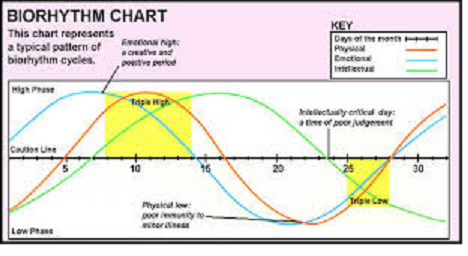
Most biorhythm models use three cycles: a 23-day physical cycle, a 28-day emotional cycle, and a 33-day intellectual cycle.[8] Each of these cycles varies between high and low extremes sinusoidally, with days where the cycle crosses the zero line described as “critical days” of greater risk or uncertainty.

The numbers from +100% (maximum) to -100% (minimum) indicate where on each cycle the rhythms are on a particular day. In general, a rhythm at 0% is crossing the midpoint and is thought to have no real impact on your life, whereas a rhythm at +100% (at the peak of that cycle) would give you an edge in that area, and a rhythm at -100% (at the bottom of that cycle) would make life more difficult in that area. There is no particular meaning to a day on which your rhythms are all high or all low, except the obvious benefits or hindrances that these rare extremes are thought to have on your life.

Human Biorhythms are not proven

Various attempts have been made to validate this biorhythm model with inconclusive results. It is fair to say that this particular definition of physical, emotional, and intellectual cycles has not been proven. I do not myself subscribe to it nor have ever attempted to follow it. My point is mainly to draw an analogy. What if fluctuations in global temperatures are the combined results from multiple cycles of varying lengths?

milankovitch_cycles

What About Climate Biorhythms

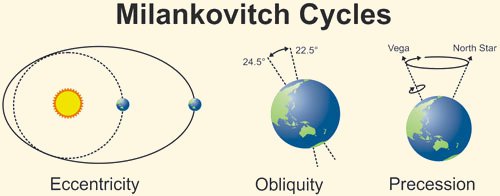
At the longer end, we have astronomical cycles on millennial scales, and at the shorter end, we have seasonal cycles. In between there are a dozen or so oceanic cycles, such as ENSO, AMO, and AMOC, that have multi-decadal phases. Then there are solar cycles, ranging from basic quasi-11 year sunspot cycles, to other centennial maxs and mins. AARI scientists have documented a quasi-60 year cycle in Arctic ice extents. ETH Zurich has a solar radiation database showing an atmospheric sunscreen that alternatively dims or brightens the incoming sunshine over decades (see Nature’s Sunscreen).

It could be that observed warming and cooling periods occur when several more powerful cycles coincide in their phases. For example, we are at the moment anticipating an unusually quiet solar cycle, a Pacific Decadal Oscillation (PDO) negative phase, a cooler North Atlantic (AMO), and possibly a dimming period. Will that coincidence result in temperatures dropping? Was the Little Ice Age caused and then ended after 1850 by such a coincidence of climate biorhythms?

Summary

Our knowledge of these cycles is confounded by not yet untangling them to see individual periodicities, as a basis for probing into their interactions and combined influences.  Until that day, we should refrain from picking on one thing, like CO2, as though it were a control knob for the whole climate.

The Alarmist Beehive

This post is about bees since they are also victims of science abuse by environmental activists, aided and abetted by the media. The full story is told by Jon Entine at Slate Do Neonics Hurt Bees?  Researchers and the Media Say Yes. The Data Do Not.
A new, landmark study provides plenty of useful information. If only we could interpret it accurately. Synopsis below.

Futuristic Nightmare Scenarios

“Neonicotinoid Pesticides Are Slowly Killing Bees.”

No, there is no consensus evidence that neonics are “slowly killing bees.” No, this study did not add to the evidence that neonics are driving bee health problems. And yet . . .

Unfortunately, and predictably, the overheated mainstream news headlines also generated a slew of even more exaggerated stories on activist and quack websites where undermining agricultural chemicals is a top priority (e.g., Greenpeace, End Times Headlines, and Friends of the Earth). The takeaway: The “beepocalypse” is accelerating. A few news outlets, such as Reuters (“Field Studies Fuel Dispute Over Whether Banned Pesticides Harm Bees”) and the Washington Post (“Controversial Pesticides May Threaten Queen Bees. Alternatives Could Be Worse.”), got the contradictory findings of the study and the headline right.

But based on the study’s data, the headline could just as easily have read: “Landmark Study Shows Neonic Pesticides Improve Bee Health”—and it would have been equally correct. So how did so many people get this so wrong?

Bouncing off a database can turn your perspective upside down.

Using Data as a Trampoline rather than Mining for Understanding

This much-anticipated two year, $3.6 million study is particularly interesting because it was primarily funded by two major producers of neonicotinoids, Bayer Crop Science and Syngenta. They had no involvement with the analysis of the data. The three-country study was led by the Centre for Ecology and Hydrology, or CEH, in the U.K.—a group known for its skepticism of pesticides in general and neonics in particular.

The raw data—more than 1,000 pages of it (only a tiny fraction is reproduced in the study)—are solid. It’s a reservoir of important information for entomologists and ecologists trying to figure out the challenges facing bees. It’s particularly important because to date, the problem with much of the research on neonicotinoids has been the wide gulf between the findings from laboratory-based studies and field studies.

Some, but not all, results from lab research have claimed neonics cause health problems in honeybees and wild bees, endangering the world food supply. This has been widely and often breathlessly echoed in the popular media—remember the execrably reported Time cover story on “A World Without Bees.” But the doses and time of exposure have varied dramatically from lab study to lab study, so many entomologists remain skeptical of these sweeping conclusions. Field studies have consistently shown a different result—in the field, neonics seem to pose little or no harm. The overwhelming threat to bee health, entomologists now agree, is a combination of factors led by the deadly Varroa destructor mite, the miticides used to control them, and bee practices. Relative to these factors, neonics are seen as relatively inconsequential.

The Bees are all right. Carry on.

Disparity between Field and Lab Research (sound familiar?)

Jon Entine addressed this disparity between field and lab research in a series of articles at the Genetic Literacy Project, and specifically summarized two dozen key field studies, many of which were independently funded and executed. This study was designed in part to bridge that gulf. And the devil is in the interpretation.

Overall, the data collected from 33 different fields covered 42 analyses and 258 endpoints—a staggering number. The paper only presented a sliver of that data—a selective glimpse of what the research, in its entirety showed.

What patterns emerged when examining the entire data set? . . . In sum, of 258 endpoints, 238—92 percent—showed no effects. (Four endpoints didn’t yield data.) Only 16 showed effects. Negative effects showed up 9 times—3.5 percent of all outcomes; 7 showed a benefit from using neonics—2.7 percent.

As one scientist pointed out, in statistics there is a widely accepted standard that random results are generated about 5 percent of the time—which means by chance alone we would expect 13 results meaninglessly showing up positive or negative.

Norman Carreck, science director of the International Bee Research Association, who was not part of either study, noted, the small number of significant effects “makes it difficult to draw any reliable conclusions.”

Moreover, Bees Are Not in Decline

The broader context of the bee health controversy is also important to understand; bees are not in sharp decline—not in North America nor in Europe, where neonics are under a temporary ban that shows signs of becoming permanent, nor worldwide. Earlier this week, Canada reported that its honeybee colonies grew 10 percent year over year and now stand at about 800,000. That’s a new record, and the growth tracks the increased use of neonics, which are critical to canola crops in Western Canada, where 80 percent of the nation’s honey originates.

Managed beehives in the U.S. had been in steady decline since the 1940s, as farm land disappeared to urbanization, but began stabilizing in the mid-1990s, coinciding with the introduction of neonicotinoids. They hit a 22-year high in the last count.

Global hive numbers have steadily increased since the 1960s except for two brief periods—the emergence of the Varroa mite in the late 1980s and the brief outbreak of colony collapse disorder, mostly in the U.S., in the mid-2000s.

Conclusion

So the bees, contrary to widespread popular belief, are actually doing all right in terms of numbers, although the Varroa mite remains a dangerous challenge. But still, a cadre of scientists well known for their vocal opposition to and lobbying against neonics have already begun trying to leverage the misinterpretation of the data. Within hours of the release of the study, advocacy groups opposed to intensive agricultural techniques had already begun weaponizing the misreported headlines.

But viewing the data from the European study in context makes it even more obvious that sweeping statements about the continuing beepocalypse and the deadly dangers to bees from pesticides, and neonicotinoids in particular, are irresponsible. That’s on both the scientists, and the media.

Summary

The comparison with climate alarmism is obvious. The data is equivocal and subject to interpretation. Lab studies can not be replicated in the real world. Activists make mountains out of molehills. Reasonable balanced analysts are ignored or silenced. Media outlets proclaim the end of life as we know it to capture ears and eyeballs for advertisers, and to build their audiences (CNN: All the fear all the time”). Business as usual for Crisis Inc.


Climate Geopolitics

A recent interview by Drieu Godefridi was translated and full text provided by Friends of Science under the title Outcome of the Paris Accord: a re-founding act of American democracy?

This post shares Dr. Godefridi’s views of the geopolitical frame built upon the climate change issue shifting due to US withdrawal from the Paris accord. Later on are excerpts from an article by Jon Huntsman sketching a future world shaped by global trade rather than global government.
Modern Condition of Globalization

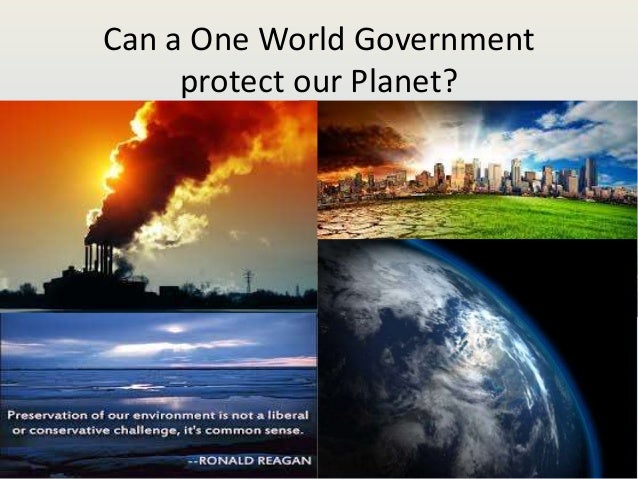
We live in a reality that we know that has become strongly globalized economically. There has been much less attention to the other globalization that has taken place before our eyes, that of an extremely dense network of international organizations and institutions that has increasingly been given the power to create standards by right.

The difficulty is that these global organizations are not subject to the same democratic requirements – election and accountability – as well as separation of powers, as are our democratic national institutions. We have denounced so much the “democratic deficit” of the European institutions! Indeed, it is wrong that the faceless and very ideological judges – here I point at the European Court of Human Rights and the Court of Justice of the EU – decide on the future of Europe in such major areas as immigration or terrorism. They do so, completely apart from the wishes of European citizenry.

But this deficit is nothing compared to that of the other international organizations, which generally have only a vague idea of democracy (and often appoint despots to human rights commissions, for instance)! One notes here, above all, the United Nations, whose umbrella organization in the field of climate, the UNFCCC, is just one manifestation.

What we have been seeing for the past two decades, in the areas of climate, gender theory, immigration and terrorism, and so on, is that activist minority ideologues have confiscated democratic debate. By acting at the international level, they have an enormous advantage. As soon as such an unaccountable international body has seized a cause, its standards prevail over national parliaments!

When gender theory was enshrined in its most radical version in 2011 by a Council of Europe Convention, it became virtually impossible to dislodge it. When, in cases such as HIRSI (2012), the European Courts devoted the “no border” ideology, it became almost impossible for the national ministers who wished to defend their own borders to do so. Examples that come to mind are Francken in Belgium, his British and Austrian counterpart, or the countries of the Visegrád group – a handful able to oppose it effectively.

But it is in the domain of climate that this confiscation of democratic debate is the most masterful, reaching a kind of virtuosity. Why? By the effect of science! The theory of gender is meant to be scientific, but it does not deceive anyone: it is an ideology, assumed as such by authors like Judith Butler. The ideology of the “no border” is moral, it does not claim to be scientific.

Climate is something else! Every time since its birth in the fold of the IPCC, the ideology of the climate has claimed science as its foundational authority – and science in its most precise version! Physics! The politicized IPCC has never stopped claiming it is presenting science since. So, it is this second globalization, a prelude to a world government that is openly called for by the elites of internationalist socialism, which is threatened today by the American exit of the Paris Agreement.

The Paris Accord

The Paris Accord marks the apotheosis, not of “globalism,” but of a particular version of globalism, which one should rather qualify as socialist. Indeed, let us recall the actual content of the Paris Agreement! What does it foresee? Essentially, two things: the drastic reduction of CO2 emissions in the West, right away, with the possibility for states such as China – the world’s largest CO2 emitter – to continue to increase emissions to 2030, with no requirement whatsoever to reduce emissions. The second essential component of “Paris” is the Green Fund, which provides for the transfer of $ 100 billion a year from the West to the rest of the world. “Paris” is therefore, first and foremost, the triumph of what was called “support for the Third World” in the 70s and 80s, that is to say, a massive and permanent transfer of wealth from the West to the rest of the world.

“Paris” is doubly globalist: first, because the transfer of wealth will be done through a clever network of international institutions, such as the United Nations Framework Convention on Climate Change (UNFCCC), the Green Fund — an institution, with a secretariat, directors, exotic meeting places, etc. —and all the intermediate institutions created by the Paris Agreement.

Secondly, “Paris” is driven by “morality” with the IPCC itself employing the services of moral philosophers to help them make their political case. The founding moral intuition which presides over the Paris Agreement is internationalist socialism. International socialism has always considered that the differential of wealth that benefits the West results from the pillage of the rest of the planet. This is described in terms of imperialism, colonization, exploitation of weaker partners. In that world view, the only “just” solution (aka “climate justice”) to this is the immediate and unconditional transfer of a substantial portion of these wealth to the rest of the world. Thus, the Paris Accord discloses itself clearly as a matter of globalism, but of a very particular vision of it – internationalist socialism.

The founding thesis of universalist socialism is that the wealth of the West is born of the plunder of the rest of the world. This is obviously false, and this has been demonstrated time and time again. The West owes its surplus of wealth to the preference given over five centuries to a particular economic system, capitalism! [1] The West has rejected the alternatives, socialism or subsistence. Moreover, the falsehood about the capitalist West as simple global robber barons is so well entrenched in leftist/socialist/globalists that even the concessions and foreign aid made to date by the West on are never enough to satisfy the transfer of wealth desired by the Third Worldists.

With the Paris Accord, which is not born from nothing, we enter a completely different dimension. This time, it is no longer morality, generosity or compassion (i.e. disaster relief) that requires the transfer of the wealth of the West. It’s science! It is the idea that because the Western industrial world has polluted the world for so many years should mean that the West must transfer its wealth to the rest of the world, which can continue to pollute. Further, this guilt money must be paid into the Green Fund which puts unaccountable, unelected green groups and green rent-seekers an opportunity to exploit this ultimate global subsidy for renewable-intermittent energies! Admire the finesse of the process: it employs the very strength of the West — capitalism — to show that the West has sinned. How naive and amateur are the Third Worldists of the past, with their moral arguments, faced with the omnipotence of the scientific argument!

However, you likely will have noticed, like me, that the climate debate does not deserve to be described as scientific in any way, anymore. What is the matrix of climate science? That is the IPCC, the UN Intergovernmental Panel on Climate Change. As early as 2010, I demonstrated in the book “Le GIEC est mort, vive la science”/ “The IPCC: A Scientific Body?” that by its composition, competences and functioning, the IPCC is a totally political organization, and not a scientific one as it claims. I do not have the competence to pronounce on the science of climate as such, nor do I need it: for it is easy to understand that a political organization can only produce political reports. The current “science” of climate is that of a scholar steeped in science… and politics – with a dominant political gene.

The Future of Paris Accord

In my humble opinion, two things will happen: first, “Paris” is dead. We are going to witness a form of hysterical “debate” in Europe. It is clear that France, Belgium and Germany will compete as to who is more virtuous, climate-wise, and that they are supported by the gigantic economic sector of the $1.5 trillion/year sector of “Big Climate” – that of industries and investors in Renewable-intermittent energies, and by high finance helped by ‘green’ groups, which would have had control over the massive transfers of the Green Fund. Of course, economically, the European position is not tenable. The Paris Accord would have been the bank heist of the millennium had Americans complied, is not possible with only the funds of European states such as France, Belgium or the countries of the Southern Europe. These are completely drained financially. These countries are over-indebted, have historically unprecedented levels of taxation, they owe a large amount of money to NATO, how could they finance the Green Fund? Through the EU climate policies, they are increasing the price of their energy every day while the rest of the world – beginning with the Americans – will now lower the price of theirs? Simply stating it this way exposes the lack of serious intent.

As for the science of climate, we are going to experience interesting developments. For example, the head of the American environmental agency, Scott Pruitt, announced the setting up of working groups to disentangle the Science from the Ideology in climate science.

What Future for the Global Economy

The Future of Global Trade: Jon Huntsman on the Radical Change Ahead was published at Wall Street Journal

Thirty years from now, world trade will be in the midst of another radical transformation—one no less critical to America’s 21st century leadership or to the expansion of global growth prospects.

For millennia, international commerce has focused on the exchange of physical goods (including people when there was slavery). More recently, services have become an ever-increasing component of advanced economies and world trade. This trend will continue and bring with it greater complexity for those setting the rules and negotiating the deals.

In general, manufacturing will be more localized; services, especially health and retail, more personalized; today’s ubiquitous shipping containers will be replaced by 3-D and 4-D printers, and the designs for making physical goods locally will move at the speed of light over airwaves just as financial flows do today. As urban farming gets going, food will be produced closer to the market, cutting transportation costs and reducing trade in agriculture.

Urbanization will produce a shift in populations and create more global centers of excellence for innovation. Whereas today we have a handful, 30 years from now there will be dozens of cities that serve as hubs of global trade in ideas. This proliferation of empowered megacities and centers of creative innovation will challenge geographic borders, making it hard for capitals to call the shots.

Trade flows will reflect the realities of global power as well as demographics. The Pacific will no longer be the dominant trade hub. Instead, the focus will shift to the Indian Ocean region, which upward of eight billion people—mainly in China, India and Africa—will call home. The U.S. may not be in a position to influence trade the way it did. For the past 200 years, Britain, after the Industrial Revolution, and the U.S. after the two world wars, fought for an open trading system to promote growth. None of the emerging countries have thus far shown that same commitment, even though they—particularly China—are increasingly setting the pace in world trade. China eclipsed the U.S. as the biggest trading country in 2013.

While mostly positive, the transformation of global trade will also create challenges. For one, how will a country attract and retain the world’s best and brightest talent? There will be no guarantee that people will stay if your country isn’t moving toward competitive best practices.

Combined with other future trends, our prospects are bright. There is good news for the environment. . . People will also live longer. There will be less disease. Consumers will benefit enormously from the changes in world trade that will deliver, among other things, personalized medicine and greater access to life-changing science and pharmaceuticals. Choices will be expanded, distances shortened, and manufacturing will be cheaper and tailored to specific needs.

Summary

What a contrast between the doomsayers lamenting the collapse of global climatism and the visionaries seeing the world developing through free and mutually beneficial trade.

Drieu Godefridi born in 1972 is a liberal Belgian writer, founder of the Hayek Institute in Brussels. He holds a doctorate in Philosophy from Paris Sorbonne.

Jon Huntsman, chairman of the Atlantic Council, has served as governor of Utah, U.S. ambassador to China and Singapore, and deputy U.S. trade representative.

 

How Science Is Losing Its Humanity


The Closing of the Scientific Mind is a plea for scientists to celebrate and enhance humanity rather than belittle human life.  Author David Gelernter is a professor of computer science at Yale. His book Subjectivism: The Mind from Inside will be published by Norton later this year.  Excerpts below.

The huge cultural authority science has acquired over the past century imposes large duties on every scientist. Scientists have acquired the power to impress and intimidate every time they open their mouths, and it is their responsibility to keep this power in mind no matter what they say or do. Too many have forgotten their obligation to approach with due respect the scholarly, artistic, religious, humanistic work that has always been mankind’s main spiritual support. Scientists are (on average) no more likely to understand this work than the man in the street is to understand quantum physics. But science used to know enough to approach cautiously and admire from outside, and to build its own work on a deep belief in human dignity. No longer.

Belittling Humanity.

Today science and the “philosophy of mind”—its thoughtful assistant, which is sometimes smarter than the boss—are threatening Western culture with the exact opposite of humanism. Call it roboticism. Man is the measure of all things, Protagoras said. Today we add, and computers are the measure of all men.

Many scientists are proud of having booted man off his throne at the center of the universe and reduced him to just one more creature—an especially annoying one—in the great intergalactic zoo. That is their right. But when scientists use this locker-room braggadocio to belittle the human viewpoint, to belittle human life and values and virtues and civilization and moral, spiritual, and religious discoveries, which is all we human beings possess or ever will, they have outrun their own empiricism. They are abusing their cultural standing. Science has become an international bully.

The Closing of the Scientific Mind.

That science should face crises in the early 21st century is inevitable. Power corrupts, and science today is the Catholic Church around the start of the 16th century: used to having its own way and dealing with heretics by excommunication, not argument.

Science is caught up, also, in the same educational breakdown that has brought so many other proud fields low. Science needs reasoned argument and constant skepticism and open-mindedness. But our leading universities have dedicated themselves to stamping them out—at least in all political areas. We routinely provide superb technical educations in science, mathematics, and technology to brilliant undergraduates and doctoral students. But if those same students have been taught since kindergarten that you are not permitted to question the doctrine of man-made global warming, or the line that men and women are interchangeable, or the multiculturalist idea that all cultures and nations are equally good (except for Western nations and cultures, which are worse), how will they ever become reasonable, skeptical scientists? They’ve been reared on the idea that questioning official doctrine is wrong, gauche, just unacceptable in polite society. (And if you are president of Harvard, it can get you fired.)

Beset by all this mold and fungus and corruption, science has continued to produce deep and brilliant work. Most scientists are skeptical about their own fields and hold their colleagues to rigorous standards. Recent years have seen remarkable advances in experimental and applied physics, planetary exploration and astronomy, genetics, physiology, synthetic materials, computing, and all sorts of other areas.

But we do have problems, and the struggle of subjective humanism against roboticism is one of the most important.

The moral claims urged on man by Judeo-Christian principles and his other religious and philosophical traditions have nothing to do with Earth’s being the center of the solar system or having been created in six days, or with the real or imagined absence of rational life elsewhere in the universe. The best and deepest moral laws we know tell us to revere human life and, above all, to be human: to treat all creatures, our fellow humans and the world at large, humanely. To behave like a human being (Yiddish: mensch) is to realize our best selves.

No other creature has a best self.

This is the real danger of anti-subjectivism, in an age where the collapse of religious education among Western elites has already made a whole generation morally wobbly. When scientists casually toss our human-centered worldview in the trash with the used coffee cups, they are re-smashing the sacred tablets, not in blind rage as Moses did, but in casual, ignorant indifference to the fate of mankind.

A world that is intimidated by science and bored sick with cynical, empty “postmodernism” desperately needs a new subjectivist, humanist, individualist worldview. We need science and scholarship and art and spiritual life to be fully human. The last three are withering, and almost no one understands the first.

At first, roboticism was just an intellectual school. Today it is a social disease. Some young people want to be robots (I’m serious); they eagerly await electronic chips to be implanted in their brains so they will be smarter and better informed than anyone else (except for all their friends who have had the same chips implanted). Or they want to see the world through computer glasses that superimpose messages on poor naked nature. They are terrorist hostages in love with the terrorists.

All our striving for what is good and just and beautiful and sacred, for what gives meaning to human life and makes us (as Scripture says) “just a little lower than the angels,” and a little better than rats and cats, is invisible to the roboticist worldview. In the roboticist future, we will become what we believe ourselves to be: dogs with iPhones. The world needs a new subjectivist humanism now—not just scattered protests but a growing movement, a cry from the heart.

Footnote:  A related post provides additional background:  Head, Heart and Science

Trump Did the Right Thing in the Right Way

So yesterday President Trump announced that the US will withdraw from the Paris crusade against fossil fuels.  Effective immediately his administration will cease implementation of any aspects of the Accord and suspend compliance with any of its regulations or obligations.

His speech did not take issue with the scientific claims of global warming.  Rather Trump’s position is based on the small projected benefits from the hugely expensive program, and the unfair burden placed on the US compared with other nations.  As noted here before, the climatist case is a three-legged stool:

  • Humans are warming the climate.
  • The warming is dangerous.
  • Government can stop it.

The third point is about climate policy and is even weaker than the science beneath the first two.  The programs currently advocated are woefully inadequate even if you believe the scientific house of cards.  After the US announcement yesterday, Mike Hulme weighed in (here) with a balanced reaction from his POV as one who thinks global warming could become a future problem.

Overstating the significance of Trump’s announcement also mis-reads the nature of the Paris Agreement and its efficacy in ‘governing’ the world’s climate. The Paris Agreement is already a voluntary arrangement of self-determined and self-policed intentions to reduce greenhouses gas emissions from different national jurisdictions. There are no penalties, no sanctions for states which fail to meet their Intended Nationally Determined Contribution (INDC).

Even if, following Trump’s announcement, the USA now fails to secure its own INDC – and this if far from certain for reasons below – the projections of how this might alter the average global temperature by 2100 reveal the sleight of hand. Projections suggest a warming of about 3.6°C (without the USA in Paris) rather than 3.3°C (with the USA in Paris), a reduction of just 0.3°C and well-within the random noise in the system. The fact is, all the INDCs declared by nations leave the world well short of the declared goal of 2 degrees of warming, let alone the aspirational target of 1.5°C.

We should not fall for the hype of defenders of the Paris Agreement and its own self-pronounced historic status. Neither therefore should we despairingly denounce Trump for declaring he will remove the USA from the Agreement. Such reactions give too much weight to the actions of one man to shape the world and they place too much faith in the Paris Agreement to effect change in societies around the world.

This is not a defeatist position to hold. And I am certainly no defender of Donald Trump. It is rather a position that recognises the limited powers that Trump holds over his own economy and the limited effectiveness of any single global treaty to “govern” the world’s climate. What matters far more are the thousand and one sites around the world where change is taking place, the thousands of different political actors, social movements and loci of innovation and change which are shaping the trajectory of future world development.

Footnote:
Building the climate science house of cards is described in the post  Climate Reductionism

Background from Yesterday’s Post:

The rational for rejecting the UNFCCC and the Paris Accord is expressed clearly and concisely by the French Mathematical Modelling Company following their exhaustive study.  Title is link to their document, the executive summary is presented below.

The battle against global warming is an absurd, costly and pointless crusade.

The crusade is absurd

There is not a single fact, figure or observation that leads us to conclude that the world‘s climate is in any way “disturbed”. It is variable, as it has always been, but rather less so now than during certain periods or geological eras. Modern methods are far from being able to accurately measure the planet‘s global temperature even today, so measurements made 50 or 100 years ago are even less reliable.

Concentrations of CO2 vary, as they always have done; the figures that are being released are biased and dishonest. Rising sea levels are a normal phenomenon linked to upthrust buoyancy; they are nothing to do with so-called global warming. As for extreme weather events – they are no more frequent now than they have been in the past. We ourselves have processed the raw data on hurricanes.

We are being told that “a temperature increase of more than 2ºC by comparison with the beginning of the industrial age would have dramatic consequences, and absolutely has to be prevented”. When they hear this, people worry: hasn‘t there already been an increase of 1.9ºC? Actually, no: the figures for the period 1995-2015 show an upward trend of about 1ºC every hundred years! Of course, these figures, which contradict public policies, are never brought to public attention.

The crusade is costly

Direct aid for industries that are completely unviable (such as photovoltaics and wind turbines) but presented as “virtuous” runs into billions of euros, according to recent reports published by the Cour des Comptes (French Audit Office) in 2013. But the highest cost lies in the principle of “energy saving”, which is presented as especially virtuous. Since no civilization can develop when it is saving energy, ours has stopped developing: France now has more than three million people unemployed – it is the price we have to pay for our virtue.

We want to cut our CO2 emissions at any cost: it is a way of displaying our virtue for all to see. To achieve these reductions, we have significantly cut industrial activity and lost jobs. But at least we have achieved our aim of cutting CO2 emissions, haven‘t we? The answer is laughable: apparently not. Global emissions of CO2 have continued to rise, including those generated by France in designing and manufacturing its own products, as the Cour des Comptes clearly states. Quite simply, manufacturing that is held to be environmentally damaging has been relocated. So the same products are now being manufactured in countries that are far less respectful of the environment, and we have lost all the associated jobs. As Baudelaire says, “Nature‘s irony combines with our insanity”.

The crusade is pointless

Human beings cannot, in any event, change the climate. If we in France were to stop all industrial activity (let‘s not talk about our intellectual activity, which ceased long ago), if we were to eradicate all trace of animal life, the composition of the atmosphere would not alter in any measurable, perceptible way. To explain this, let us make a comparison with the rotation of the planet: it is slowing down. To address that, we might be tempted to ask the entire population of China to run in an easterly direction. But, no matter how big China and its population are, this would have no measurable impact on the Earth‘s rotation.

French policy on CO2 emissions is particularly stupid, since we are one of the countries with the cleanest industrial sector.

This just goes to show the truth of the matter: we are fighting for a cause (reducing CO2 emissions) that serves absolutely no purpose, in which we alone believe, and which we can do nothing about. You would probably have to go quite a long way back in human history to find such a mad obsession.

Gouda tulip bulb prices in guilders. In the background- The Viceroy- one of the most expensive specimens depicted in a Dutch catalogue from 1637. A single bulb reached 3.000-4.200 guilders. A yearly salary of a skilled craftsman equalled approximately 300 guilders.


Beware the Ides of May

Triumphal Caesar Returns to Rome

OK, I know the saying was Ides of March, and it was a warning to Julius Caesar, forecasting his betrayal in the midst of Roman senators. The phrase came to mind as Trump the American Caesar returned to his capital pondering what to do about the Trojan Horse offered from Paris. Will his senators have his back or are they packing knives? A declaration from 40 of them makes it seem that they are prepared to confront the Paris Treaty and end its and everyone’s misery.

Paris COP Goes From Silver Bullet to Poison Pill for the Environment

Lost in all the politics, posturing and shaming is any awareness that this decades-long effort to mitigate warming by reducing fossil fuel emissions is itself a problem. The Société de Calcul Mathématique said in 2015: The battle against global warming: an absurd, costly and pointless crusade. The title is a link to the data, facts and information supporting their conclusion.

Beyond being costly and useless, the IPCC policies are directed at increasing energy poverty by eliminating the very sources that have raised the modern standard of living. And as numerous studies have shown, poverty and environmental degradation go hand in hand. When people can cook and heat themselves with fossil fuels, they don’t turn forests into firewood. Wealthier societies take much better care of their natural surroundings.

The UN Environmental program bet the farm on the global warming issue, thinking it to be a silver bullet to unplug industrial society and bring back pristine nature. The whole thing wastes time, talent and resources leaving real pressing environmental concerns unaddressed. It is the wrong path, the wrong program, and it will make matters worse if it isn’t stopped here and now.

Mind-Blowing Science

Cometh the man; Francis Bacon’s insight was that the process of discovery was inherently algorithmic. Photo courtesy NPG/Wikipedia

In a refreshing relief from Science Marches promoting slogans and tenets of climate dogma, we have an insightful look into a fruitful future for the scientific endeavor.

The article is Science has outgrown the human mind and its limited capacities by Ahmed Alkhateeb, a molecular cancer biologist at Harvard Medical School. (bolded text is my emphasis)

It starts with a great quote:

The duty of man who investigates the writings of scientists, if learning the truth is his goal, is to make himself an enemy of all that he reads and … attack it from every side. He should also suspect himself as he performs his critical examination of it, so that he may avoid falling into either prejudice or leniency.
– Ibn al-Haytham (965-1040 CE)

First the author reminds readers of the current sorry state of scientific research:  overwhelming quantity of papers with diminishing quality (bogus findings, unreplicable studies, sloppy methodology, etc.). He then raises an intriguing question:

One promising strategy to overcome the current crisis is to integrate machines and artificial intelligence in the scientific process. Machines have greater memory and higher computational capacity than the human brain. Automation of the scientific process could greatly increase the rate of discovery. It could even begin another scientific revolution. That huge possibility hinges on an equally huge question: Can scientific discovery really be automated?

Alkhateeb gets to the point of Bacon’s forming the scientific process:

The Baconian method attempted to remove logical bias from the process of observation and conceptualisation, by delineating the steps of scientific synthesis and optimizing each one separately. Bacon’s vision was to leverage a community of observers to collect vast amounts of information about nature and tabulate it into a central record accessible to inductive analysis. In Novum Organum, he wrote: ‘Empiricists are like ants; they accumulate and use. Rationalists spin webs like spiders. The best method is that of the bee; it is somewhere in between, taking existing material and using it.’

The Baconian method is rarely used today. It proved too laborious and extravagantly expensive; its technological applications were unclear. However, at the time the formalization of a scientific method marked a revolutionary advance. Before it, science was metaphysical, accessible only to a few learned men, mostly of noble birth. By rejecting the authority of the ancient Greeks and delineating the steps of discovery, Bacon created a blueprint that would allow anyone, regardless of background, to become a scientist.

Bacon’s insights also revealed an important hidden truth: the discovery process is inherently algorithmic. It is the outcome of a finite number of steps that are repeated until a meaningful result is uncovered. Bacon explicitly used the word ‘machine’ in describing his method. His scientific algorithm has three essential components:

  • First, observations have to be collected and integrated into the total corpus of knowledge.
  • Second, the new observations are used to generate new hypotheses.
  • Third, the hypotheses are tested through carefully designed experiments.

If science is algorithmic, then it must have the potential for automation. This futuristic dream has eluded information and computer scientists for decades, in large part because the three main steps of scientific discovery occupy different planes. Observation is sensual; hypothesis-generation is mental; and experimentation is mechanical. Automating the scientific process will require the effective incorporation of machines in each step, and in all three feeding into each other without friction. Nobody has yet figured out how to do that.

Experimentation has seen the most substantial recent progress. For example, the pharmaceutical industry commonly uses automated high-throughput platforms for drug design.

Automated hypothesis-generation is less advanced, but the work of Don Swanson in the 1980s provided an important step forward. He demonstrated the existence of hidden links between unrelated ideas in the scientific literature; using a simple deductive logical framework, he could connect papers from various fields with no citation overlap. In this way, Swanson was able to hypothesise a novel link between dietary fish oil and Reynaud’s Syndrome without conducting any experiments or being an expert in either field.

The most challenging step in the automation process is how to collect reliable scientific observations on a large scale. There is currently no central data bank that holds humanity’s total scientific knowledge on an observational level. Natural language-processing has advanced to the point at which it can automatically extract not only relationships but also context from scientific papers. However, major scientific publishers have placed severe restrictions on text-mining. More important, the text of papers is biased towards the scientist’s interpretations (or misconceptions), and it contains synthesised complex concepts and methodologies that are difficult to extract and quantify.

Summary

Nevertheless, recent advances in computing and networked databases make the Baconian method practical for the first time in history. And even before scientific discovery can be automated, embracing Bacon’s approach could prove valuable at a time when pure reductionism is reaching the edge of its usefulness.

Such an approach would enable us to generate novel hypotheses that have higher chances of turning out to be true, to test those hypotheses, and to fill gaps in our knowledge. It would also provide a much-needed reminder of what science is supposed to be: truth-seeking, anti-authoritarian, and limitlessly free.