Green Schemes Hidden by Greenhushing

Transcript excerpted from captions of  Interview with Bjorn Lomborg What is behind business ‘greenhushing’? [FN refers to comments from FOx News interviewers, BL to Bjorn Lomborg]

FN: From Climate Talk to climate realism. As energy secretary Chris Wright says climate change is a side effect of building the modern world. Banks and businesses seem to be finally getting on board with this. But moving from unrealistic promises, greenwashing lies and environmental fear-mongering, risks some engaging in greenhushing, purposely keeping quiet about sustainability actions.

Our next guest says climate solutions come with their own set of costs [you can read his op-ed excerpted later in this post]. And joining us now, and Brian and I are both huge fans of Bjorn Lomborg’s work. He’s Copenhagen Consensus President. Bjorn, so great to see you.

What are you concerned with in terms of going from greenwashing to then kind of burying what these corporations are doing now?

BL: Well the real problem is for a long time corporations have been saying “Oh we’re going to be so green,” and they got lots of applause and everybody said “Oh this is great in Davos and stuff.” And of course it’s not what businesses mostly should be doing. But now with Trump and everything else, people are realizing, “Oh wait, this is not a good idea.” So they’ve stopped talking about it but they’re still doing a lot of it. And actually a new survey of of about 4,000 sustainability people in these big corporations said, “Yeah we’re going to talk a lot less about it, but we’re still going to do it. We’re actually going to do a little more.”

And that’s troublesome because this is not what businesses should be doing.
They should be in the business of making great products and high profits
.

FN: So there’s a debate out there. You’ve got the CEOs of these companies and the question is: Do they really believe in the green thing or were they just doing it because the social pressure was so strong? And now they’re pulling back because really at the end of the day they agree with you, they just want to run their businesses.

What I hear you saying is in fact the guys running these businesses really are bought into the green agenda and they will do it again when the political environment lets them speak more freely. Is that what you’re saying?

BL: It’s hard to know. I think you’re right a lot of the CEOs are saying, I actually want my business to run and drive a profit. But now they’ve hired so many other people, sustainability experts and everybody else. Of course if that’s your job, you’re pushing for doing more of that. So I think it’s important for businesses to rein in and say:

“Look we’re not going to be doing this anymore, we’re actually going to go back and focus on what we’re good at, namely servicing customers.”

FN: This goes to something else that you’ve written about, that corporations need to focus on creating things profitably, because the environment improves as nations prosper. And the greatest polluter is poverty. We saw with John Kerry here in the United States and him talking to subsaharan Africa about cutting off any funding and financing for them to extract fossil fuels from the earth and thereby bring their nations out of poverty. Keeping nations poor makes the environment worse, rather than allowing them to develop into modern societies.

BL: Absolutely. I wrote two things for Earth Day. First we have to recognize there are environmental problems. And it’s great that we get a better environment, and fundamentally when you get rich you can actually afford to do a lot of this. And as you point out poverty is the biggest polluter, because if you’re poor, you quite frankly have other important issues. So you’ll cut down your rainforest or whatever else you need to do.

Secondly, it also emphasizes as you just pointed out that most nations and especially poor nations need to get out of poverty by doing what we’ve done. They want to have access for a lot more energy and mostly that is going to be fossil fuels. Remember when Russia invaded Ukraine, Europe decided to say “All right we’re not going to go and get any energy from Russia.” But they didn’t say “Oh so we’re going to go all green.” They actually went to Africa to buy up their fossil fuels because we want to keep our living standards. But they simultaneously told the Africans, “But you shouldn’t be using it, you should actually go all green.” That’s just hypocrisy absolutely.

Excerpts from Lomborg op-ed Time to pull the plug on corporate virtue-signaling

The era of being cheered on for every green promise and vow
– regardless of how silly or self-defeating – has come to an end

Climate change is undeniably a real problem which has tangible economic impacts. However, climate solutions also come with their own set of costs, often demanding that businesses and individuals rely on pricier, less dependable energy sources. The decision to balance the expenses of climate policies with the advantages of climate action falls rightly under the responsibility of governments, not profit-driven businesses.

Yet over the past decade, even major contributors to climate change – such as the fossil fuel industry itself – invested in extraordinary green policies. Five years ago, BP made an astonishing promise to slash its oil and gas production by 40% by 2030, while increasing green energy generation twentyfold and becoming net-zero.

Now, along with other big, Western oil companies,
it has abandoned those farcical green promises and
recommitted to its primary activity: fossil fuels.

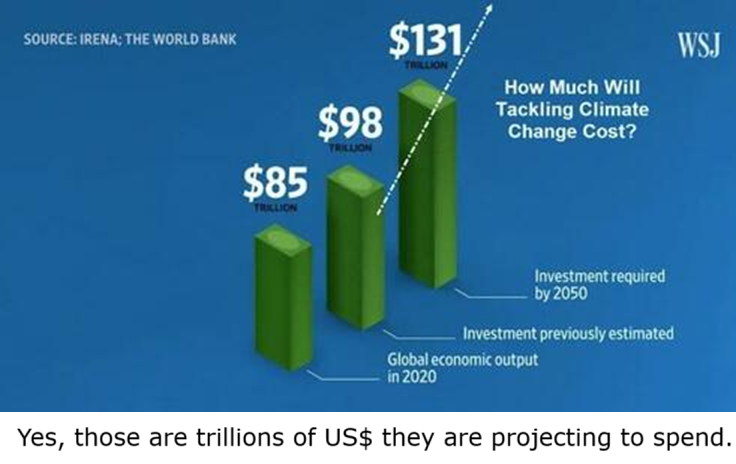
No doubt, this U-turn will be lamented by green activists. But the truth is that these promises were always an inefficient way of helping the planet, and very shortsighted for fossil fuel companies. Even after the world has spent $14 trillion on climate policy, more than four-fifths of global energy remains supplied by fossil fuels.

Over the past half-century, fossil fuel energy has more than doubled, with 2023 again setting a new record. Consumers and businesses are crying out for more energy, while competitor state-owned oil companies from the Middle East have continued to provide more fossil fuels. It is a foolish energy company that declares it will supply less energy.

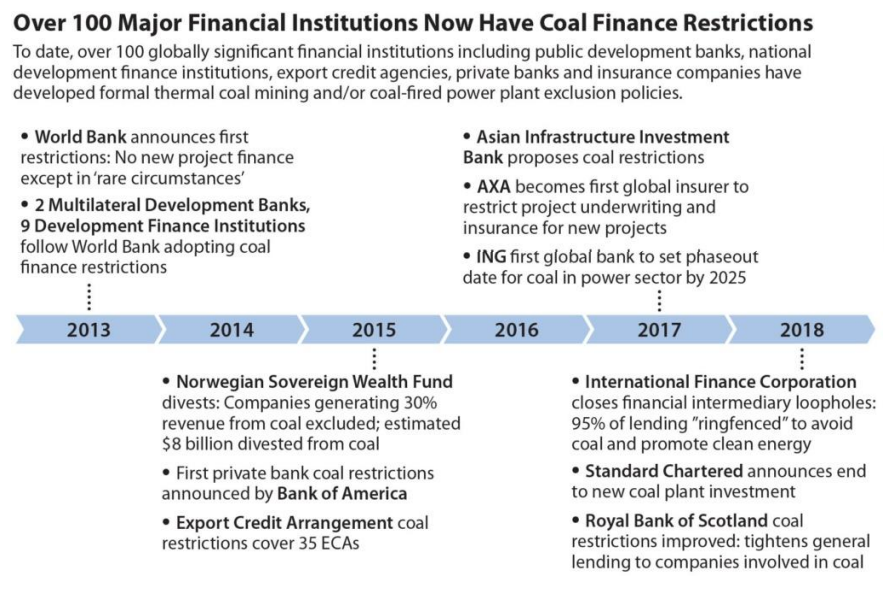
Banks also had a fling with green policies, and have now dumped them, with the six largest U.S. banks leaving the Net-Zero Banking Alliance, and Wells Fargo officially abandoning its goal of achieving net-zero emissions across its financial portfolio by 2050.

In the peer-reviewed journal of the American Association for the Advancement of Science, a study finds that of 1,500 “climate” policies announced around the world, a mere 63, or 4%, produce any reduction in emissions.

While some industries are moving faster than others, there are signs that many companies will just change their language, and not their inefficient climate policies.

As leaders of international organizations and corporations scramble to adapt to an entirely new world, it’s important they go further than just shifts in rhetoric. The era of being cheered on for every green promise and vow – regardless of how silly or self-defeating – has come to an end. Now it’s time for those leaders to get back to business.

Sea Level Rise Hype from Climatists Lying by Omission Again

From Inside Climate News comes this example, New Study Projects Climate-Driven Flooding for Thousands of New Jersey Homes.

Sea-level rise threatens coastal communities even if global emissions drop.

Of course the alarm is picked up everywhere:

As Summer Approaches, New Jersey’s Shore Towns Confront an Unrelenting Foe: Sea Level Rise Inside Climate News

US East Coast faces rising seas as crucial Atlantic current slows, New Scientist

Sea level rise creates a crisis at US coasts: What to know, USA Today

Map Shows US Cities Where Sea Level Rise Is Accelerating, Newsweek

Global sea levels are rising faster and faster. It spells catastrophe for coastal towns and cities, CNN

Etc., Etc., Etc.

Climatists Make Their Case by Omitting Facts

A previous post documented this pattern, of which we have this fresh example.  Let’s start with the tidal gauge at Atlantic City, New Jersey.

It presents a long record of steadily rising levels for more than a century.  The rate is 4.25 mm per year, or a rise of about 1 inch every six years.  The lie is in attributing all of that to sea level rising, and adding in burning of hydrocarbons as the cause.  What’s left out is the well known and documented subsidence of land along the US Eastern seaboard.

Vertical land motion (VLM) across the US Atlantic coast (a) Estimated VLM rate. The circles show the location of GNSS validation observations color-coded with their respective vertical velocities. (b) Histogram comparing GNSS vertical rates with estimated VLM rates. The standard deviation (SD) of the difference between the two datasets is 1.3 mm per year. (c) Land subsidence (representing negative VLM) across the US Atlantic Coast.

The black rectangles indicate the extent of study areas for Chesapeake Bay area and Georgia, South Carolina, and North Carolina (GA-SC-NC) area shown in Fig. 4. State Codes: ME Maine, NH New Hampshire, VT Vermont, MA Massachusetts, RI Rhode Island, NY New York, PA Pennsylvania, NJ New Jersey, WV West Virginia, OH Ohio, DE Delaware, VA Virginia, NC North Carolina, SC South Carolina, GA Georgia, and FL Florida. National, state, and great lakes boundaries in a, c are based on public domain vector data by World DataBank (https://data.worldbank.org/) generated in MATLAB.

Abstract from paper Hidden vulnerability of US Atlantic coast to sea-level rise due to vertical land motion

The vulnerability of coastal environments to sea-level rise varies spatially, particularly due to local land subsidence. However, high-resolution observations and models of coastal subsidence are scarce, hindering an accurate vulnerability assessment. We use satellite data from 2007 to 2020 to create high-resolution map of subsidence rate at mm-level accuracy for different land covers along the ~3,500 km long US Atlantic coast. Here, we show that subsidence rate exceeding 3 mm per year affects most coastal areas, including wetlands, forests, agricultural areas, and developed regions. Coastal marshes represent the dominant land cover type along the US Atlantic coast and are particularly vulnerable to subsidence. We estimate that 58 to 100% of coastal marshes are losing elevation relative to sea level and show that previous studies substantially underestimate marsh vulnerability by not fully accounting for subsidence.

A further reference to causes of land subsidence:

Land subsidence, in particular, deserves special attention because it can significantly magnify the relative sea-level rise (RSLR) to several times beyond the global average sea-level rise, which usually amounts to just a few mm/yr on its own (Shirzaei et al. 2021). Land subsidence results from various factors encompassing both natural processes and human activities that operate at local or regional scales (Ohenhen et al., 2023). Globally, groundwater extraction is the primary cause of land subsidence (Coplin and Galloway, 1999;Shastri et al., 2023).

Finally, we can observe that the Atlantic City sea level rise of 4.25 mm per year measured at the gauge is close to the subsidence rate shown in the right hand panel.  So yes, authorities in that area need to address the problem with hydro engineering and zoning laws.  But no, reducing CO2 emissions is not the solution.

See Also:

Observed vs. Imagined Sea Levels 2023 Update

Drive Your Car While You Can


Issues & Insights Editorial Board article is Take A Hike: Driving Will Be Verboten.  Excerpts in italics with my bolds and added images.

Anyone who thought electric-vehicle mandates and policies designed to force Americans out of their cars and into public transit or onto early 18th-century technology (bicycles) are intended to protect the environment is either naive or an accomplice in tyranny. The evidence has been helpfully provided by a Massachusetts senator who wants to limit how far people can travel.

We are well past the point of being fed up hearing that the world has to sharply cut greenhouse gas emissions or we’ll scorch our planet. Carbon dioxide produced by man, the fanatics assure us, is an existential threat.

The transportation sector is the largest source of direct greenhouse gas emissions, so of course it is a ripe target for cuts for eco-tyrants. The starting point has largely been a focus on vehicles that burn fossil fuels. They must be replaced with EVs and other “emissions-free” vehicles (there are effectively no true zero-emissions automobiles), public transit, bicycles, and our own feet.

But those are only interim steps to the ultimate goal.

Massachusetts Senate Majority Leader Cynthia Stone Creem believes she knows how to cut emissions. She’s introduced a bill that would “set a statewide vehicle miles traveled reduction goal for the year 2030 and for every fifth year thereafter.” It includes a “a whole-of-government plan to reduce vehicle miles traveled and increase access to transportation options other than personal vehicles.”

It’s an example of “textbook extreme, out-of-touch policymaking,” says the Massachusetts Fiscal Alliance, which suggests that mileage vouchers might be ahead for Bay Staters.

“Creem says EVs aren’t enough – Massachusetts must limit how far you can drive, too,” the organization warns. “Her bill creates a panel to track your mileage and fine you if you go too far. She says just walk or bike instead.

This “new” and “additional” strategy, as Creem calls it, is simply another effort to separate us from our cars in what we could loosely call the autozoic era. Similar actions include:

Do not think we are exaggerating, that there is no war on cars, because there is.

The authoritarian urges behind the assault on unfettered free travel are strong. The social engineering and malign central planning in the service of “sustainability” and “green” initiatives are hostile to freedom.

Naturally, elected officials, their high-ranking staff members, and senior government functionaries won’t have to abide by any limits. They’ll have some privileged equivalent of Zil lanes, the low-traffic VIP avenues that showed Muscovites that while everyone was equal in the Soviet Union, some were more equal than others.

No invention has liberated humanity or boosted economic prosperity more than the automobile. People choose to buy and drive cars out of convenience and need, and for their love of independence. But the political left wants to take away people’s right to make their own decisions because it suits both lower-case and upper-case “d” democrats’ tyrannical impulses. If anyone needs to take a hike, literally and metaphorically, it should be anti-car warriors.

Footnote:  Au Contraire Say the French People

French MPs vote to scrap low-emission zones

BBC

A handful of MPs from Macron’s party joined opposition parties from the right and far right in voting 98-51 to scrap the zones, which have gradually been extended across French cities since 2019.

But it was a personal victory for writer Alexandre Jardin who set up a movement called Les #Gueux (Beggars), arguing that “ecology has turned into a sport for the rich”.

The low-emission zones began with 15 of France’s most polluted cities in 2019 and by the start of 2025 had been extended to every urban area with a population of more than 150,000, with a ban on cars registered before 1997.

Marine Le Pen condemned the ZFEs as “no-rights zones” during her presidential campaign for National Rally in 2022, and her Communist counterpart warned of a “social bomb”.

The head of the right-wing Republicans in the Assembly, Laurent Wauquiez, talked of “freeing the French from stifling, punitive ecology”, and on the far left, Clémence Guetté said green policies should not be imposed “on the backs of the working classes”.

Green Senator Anne Souyris told BFMTV that “killing [the ZFEs] also means killing hundreds of thousands of people” …

The legislation still has to go through the upper house, though it is expected to. And it doesn’t stop tyrant-municipalities from imposing their own small tourist-deterrent zones. But spread the word in case any of our politicians think this idea is not radioactively awful. They need to know it’s been tried and failed so we don’t have to repeat the experiment.

US Supremes Rein In Politicized Environmental Reviews

On May 29, 2025 SCOTUS ruled unanimously that NEPA (National Environmental Protection Act) can no longer be a tool for political activists against development projects.  The report from MSN is US Supreme Court limits environmental reviews in Utah railway ruling.  Excerpts in italics with my bolds and added images.

The U.S. Supreme Court dealt a setback to environmentalists on Thursday by allowing federal agencies to limit the scope of their reviews of the environmental impact of projects they regulate, as the justices bolstered a Utah railway project intended to transport crude oil.

The 8-0 ruling overturned a lower court’s decision that had halted the project and had faulted an environmental impact statement issued by a federal agency called the Surface Transportation Board in approving the railway as too limited in scope. The project was challenged by environmentalists and a Colorado county.

A coalition of seven Utah counties and an infrastructure investment group are seeking to construct an 88-mile (142-km) railway line in northeastern Utah to connect the sparsely populated Uinta Basin region to an existing freight rail network that would be used primarily to transport waxy crude oil.

The case tested the scope of environmental impact studies that federal agencies must conduct under a U.S. law called the National Environmental Policy Act (NEPA), enacted in 1970 to prevent environmental harms that might result from major projects. The law mandates that agencies examine the “reasonably foreseeable” effects of a project.

The ruling, authored by conservative Justice Brett Kavanaugh, was joined by four other conservative justices. The court’s three liberal justices filed a separate opinion concurring in the outcome.

Kavanaugh wrote that agencies need only consider environmental effects of a project at hand and not the “effects from potential future projects or from geographically separate projects,” and that courts must offer agencies “substantial deference” regarding the scope of these assessments.

“NEPA is a procedural cross-check, not a substantive roadblock. The goal of the law is to inform agency decision-making, not to paralyze it,” Kavanaugh wrote.

Background Post: US Supremes Hear Climate Lawfare Case to Stop Oil Railway

IER reports the news from December in article The Supreme Court Takes on a Case Involving the National Environmental Policy Act.  Excerpts in italics with my bolds and added images.

Key Takeaways

The Supreme Court recently heard a major case, Seven County Infrastructure Coalition v. Eagle County, Colorado, that will affect the scope of the National Environmental Policy Act (NEPA). The case concerns the permitting of a proposed Utah railway that would ship oil from the Uinta Basin, potentially quadrupling its oil production. The 88-mile Uinta Basin Railway would connect the oil fields of northeastern Utah to the national rail network running alongside 100 or so miles of the Colorado River to reach oil refineries on the Gulf Coast.  According to The Hill,  at issue is whether and when upstream and downstream environmental impacts should be considered as part of federal environmental reviews. The company behind the railway and a group of Utah counties appealed a lower court decision to the Supreme Court, arguing that those indirect impacts are beyond the scope of the federal reviews.

Background

The case concerns a rail line to support oil development and mineral mining. In 2021, the federal Surface Transportation Board (STB) issued a 3,600-page environmental impact statement to comply with NEPA and approved the rail line. The NEPA mandates that federal agencies assess the environmental effects of projects within their authority. Any major initiative that is managed, regulated, or authorized by the federal government must undergo a NEPA evaluation, a process that can span years and frequently exposes projects to legal challenges.

The STB analyzed the railway’s potential effects on local water resources, air quality, protected species, recreation, local economies, the Ute Indian tribe, and other factors. Environmental groups, however, sued the agency, saying that it failed to examine sufficiently how the railway might affect the risk of accidents on connecting lines hundreds of miles away and to assess emissions in “environmental justice communities” on the Gulf Coast from increased oil shipments, among other supposed shortcomings.

According to the Wall Street Journal editorial board, “a D.C. Circuit Court of Appeals panel sided with the plaintiffs and told the STB it must consider the line’s upstream and downstream effects even if they were hard to predict and beyond the control of the agency and developers. This includes the effects of oil shipments on Gulf Coast refiners and their contributions to climate change.” The appeals court ruling found that the federal STB violated the Endangered Species Act and the Interstate Commerce Commission Termination Act when it permitted the project.

Furthermore, the editorial board also explained that lower court judges—those on the D.C. and Ninth Circuits—ignored the Supreme Court’s past rulings and imposed arbitrary permitting requirements with no limiting principle. The STB lacks authority over Gulf Coast refiners and cannot prevent climate change.

Court Rulings Regarding NEPA

The Supreme Court has heard other related cases and held that agencies need not consider indirect and unpredictable impact, most recently in a 2004 case, Department of Transportation v. Public Citizen. In that case, the Supreme Court held that agencies need only analyze environmental impact with “a reasonably close causal relationship” over which they have “statutory authority” and which they can prevent.

In 2020, the Supreme Court green-lit approval for permits for the Atlantic Coast Pipeline after nearly seven years of litigation, but the pipeline was scrapped due to legal delays that raised project costs significantly. It takes an average of 4.2 years to litigate a NEPA challenge, which adds to the four or more years to obtain a federal permit. These delays are what frustrate investment in new projects, slowing job creation and economic expansion in the United States.

judge struck down a Montana coal mine permit because a federal agency did not consider the climate effects of coal combustion in Asia. Additionally, a 225-mile electric transmission line in Nebraska has been stuck in permitting for 10 years because a lower court invalidated a U.S. Fish and Wildlife permit.

Conclusion

The Supreme Court is tackling a case involving the scope of a federal environmental law, NEPA, that involves a rail line to move oil. In this case, lower courts agreed with environmental groups, who are challenging the government’s permit approval of the rail line. The case is instrumental to the issue of what should be considered when determining potential environmental damages. Congress recognizes that NEPA needs reform as delays over lawsuits have killed projects and dramatically increased their costs and it continues to debate ways to make federal permitting easier and quicker. Until that reform happens, however, Supreme Court Justices need to reign in the environmental limits of NEPA so that needed projects can progress in America.

Again, There is No Right to a Stable Climate

Twenty-two young people from across the country sued the
Trump administration over the executive orders,
which prioritize the expansion of fossil fuels.

The complaint, filed Thursday in the U.S. District Court in Montana, challenges three executive orders: “Unleashing American Energy,” “Declaring a National Energy Emergency” and “Reinvigorating America’s Beautiful Clean Coal Industry.” The lawsuit argues that with the orders, the Trump administration knowingly is advancing an agenda that will increase greenhouse gas pollution that already is stressing the global climate to a dangerous extent.

The litigation argues the situation infringes on the young people’s constitutional rights to life and liberty, as well as falling afoul of other laws approved by Congress that protect public health and the environment. The plaintiffs want the court to declare the executive orders unconstitutional, block their implementation and reaffirm the legal limits on presidential power.

“From day one of the current administration, President Trump has issued directives to increase fossil fuel use and production and block an energy transition to wind, solar, battery storage, energy efficiency, and electric vehicles (“EVs”),” the lawsuit states. “President Trump’s EOs falsely claim an energy emergency, while the true emergency is that fossil fuel pollution is destroying the foundation of Plaintiffs’ lives.”

It’s the same argument from the same people (Our Children’s Trust) that was shot down in flames just a year ago.  There were multiple attempts to undo the damaged legal maneuver to no avail.  Below is why this latest litigation should be put out of its misery at once.

 Appeals Court Rules Against Kids’ Climate Lawsuit, May 1, 2024

Ninth Circuit Court of Appeals grants Federal government’s petition for writ of mandamus in the case of Juliana v. United States, originally filed in 2015.  Ruling excerpts are below in italics with my bolds. 20240501_docket-24-684_order

In the underlying case, twenty-one plaintiffs (the Juliana plaintiffs) claim that—by failing to adequately respond to the threat of climate change—the government has violated a putative “right to a stable climate system that can sustain human life.” Juliana v. United States, No. 6:15-CV-01517-AA, 2023 WL 9023339, at *1 (D. Or. Dec. 29, 2023). In a prior appeal, we held that the Juliana plaintiffs lack Article III standing to bring such a claim. Juliana v. United States, 947 F.3d 1159, 1175 (9th Cir. 2020). We remanded with instructions to dismiss on that basis. Id. The district court nevertheless allowed amendment, and the government again moved to dismiss. The district court denied that motion, and the government petitioned for mandamus seeking to enforce our earlier mandate. We have jurisdiction to consider the petition. See 28 U.S.C. § 1651. We grant it.

In the prior appeal, we held that declaratory relief was “not substantially likely to mitigate the plaintiffs’ asserted concrete injuries.” Juliana, 947 F.3d at 1170. To the contrary, it would do nothing “absent further court action,” which we held was unavailable. Id. We then clearly explained that Article III courts could not “step into the shoes” of the political branches to provide the relief the Juliana plaintiffs sought. Id. at 1175. Because neither the request for declaratory relief nor the request for injunctive relief was justiciable, we “remand[ed] th[e] case to the district court with instructions to dismiss for lack of Article III standing.” Id. Our mandate was to dismiss.

The district court gave two reasons for allowing amendment. First, it concluded that amendment was not expressly precluded. Second, it held that intervening authority compelled a different result. We reject each.
The first reason fails because we “remand[ed] . . . with instructions to dismiss for lack of Article III standing.” Id. Neither the mandate’s letter nor its spirit left room for amendment. See Pit River Tribe, 615 F.3d at 1079.

The second reason the district court identified was that, in its view, there was an intervening change in the law. District courts are not bound by a mandate when a subsequently decided case changes the law. In re Molasky, 843 F.3d 1179, 1184 n.5 (9th Cir. 2016). The case the court identified was Uzuegbunam v. Preczewski, which “ask[ed] whether an award of nominal damages by itself can redress a past injury.” 141 S. Ct. 792, 796 (2021). Thus, Uzuegbunam was a damages case which says nothing about the redressability of declaratory judgments. Damages are a form of retrospective relief. Buckhannon Bd. & Care Home v. W. Va. Dep’t of Health & Human Res., 532 U.S. 598, 608–09 (2001). Declaratory relief is prospective. The Juliana plaintiffs do not seek damages but seek only prospective relief. Nothing in Uzuegbunam changed the law with respect to prospective relief.

We held that the Juliana plaintiffs lack standing to bring their claims and told the district court to dismiss. Uzuegbunam did not change that. The district court is instructed to dismiss the case forthwith for lack of Article III standing, without leave to amend.

Background July 2023: Finally, a Legal Rebuttal on the Merits of Kids’ Climate Lawsuit

As reported last month, the Oregon activist judge invited the plaintiffs in Juliana vs US to reopen that case even after the Ninth Circuit shot it down.  Now we have a complete and thorough Motion from the defendant (US government) to dismiss this newest amended complaint.  Most interesting is the section under the heading starting on page 30.  Excerpts in italics with my bolds and added images.

Plaintiffs’ Claims Fail on the Merits

Because Plaintiffs’ action fails at the jurisdictional threshold, the Ninth Circuit never reached—and this Court need not reach—the merits of the claims. . . Plaintiffs’ second amended complaint, which supersedes the first amended complaint, asserts the same claims that were brought in the first amended complaint, which this Court addressed in orders that the Ninth Circuit reversed. Defendants thus renew their objection that Plaintiffs’ claims fail on the merits and should be dismissed pursuant to Fed. R. Civ. P. 12(b)(6).

A. There is no constitutional right to a stable climate system.

The Supreme Court has repeatedly instructed courts considering novel due process claims
to “‘exercise the utmost care whenever . . . asked to break new ground in this field,’… lest the liberty protected by the Due Process Clause be subtly transformed” into judicial policy preferences. More specifically, the Supreme Court has “regularly observed that the Due Process Clause specially protects those fundamental rights and liberties which are, objectively, ‘deeply rooted in this Nation’s history and tradition.’”  Plaintiffs’ request that this Court recognize an implied fundamental right to a stable climate system contradicts that directive, because such a purported right is without basis in the Nation’s history or tradition.

The proposed right to a “stable climate system” is nothing like any fundamental right ever recognized by the Supreme Court. The state of the climate is a public and generalized issue, and so interests in the climate are unlike the particularized personal liberty or personal privacy interests of individuals the Supreme Court has previously recognized as being protected by fundamental rights.  “[W]henever federal courts have faced assertions of fundamental rights to a ‘healthful environment’ or to freedom from harmful contaminants, they have invariably rejected those claims.”. Plaintiffs’ First Claim for Relief must be dismissed.

B.  Plaintiffs fail to allege a cognizable state-created danger claim.

The First Claim for Relief must also be dismissed because the Constitution does not impose an affirmative duty to protect individuals, and Plaintiffs have failed to allege a cognizable claim under the “state-created danger” exception to that rule.
As a general matter:

[The Due Process Clause] is phrased as a limitation on the State’s power to act, not as a guarantee of certain minimal levels of safety and security. It forbids the State itself to deprive individuals of life, liberty, or property without “due process of law,” but its language cannot fairly be extended to impose an affirmative obligation on the State to ensure that those interests do not come to harm through other means.

Thus, the Due Process Clause imposes no duty on the government to protect persons from harm inflicted by third parties that would violate due process if inflicted by the government.

Plaintiffs contend that the government’s “deliberate actions” and “deliberate indifference” with regard to the dangers of climate change amount to a due process violation under the state-created danger exception.

First, Plaintiffs have identified no harms to their “personal security or bodily integrity” of the kind and immediacy that qualify for the state-created danger exception. . . But here, Plaintiffs allege that general degradation of the global climate has harmed their “dignity, including their capacity to provide for their basic human needs, safely raise families, practice their religious and spiritual beliefs, [and] maintain their bodily integrity” and has prevented them from “lead[ing] lives with access to clean air, water, shelter, and food.”  Those types of harm are unlike the immediate, direct, physical, and personal harms at issue in the above-cited cases.

Second, Plaintiffs identify no specific government actions—much less government actors—that put them in such danger. Instead, Plaintiffs contend that a number of (mostly unspecified) agency actions and inactions spanning the last several decades have exposed them to harm. This allegation of slowly-recognized, long-incubating, and generalized harm by itself conclusively distinguishes their claim from all other state-created danger cases recognized by the Ninth Circuit.

Third, Plaintiffs do not allege that government actions endangered Plaintiffs in particular. . . As explained above, Plaintiffs’ asserted injuries arise from a diffuse, global phenomenon that affects every other person in their communities, in the United States, and throughout the world.

For all these reasons, there is no basis for finding a violation of Plaintiffs’ due process right under the state-created danger doctrine, and Plaintiffs’ corresponding claim must be dismissed.

C. No federal public trust doctrine creates a right to a stable climate system.

Plaintiffs’ Fourth Claim for Relief, asserting public trust claims, should be dismissed for two independent reasons. First, any public trust doctrine is a creature of state law that applies narrowly and exclusively to particular types of state-owned property not at issue here. That doctrine has no application to federal property, the use and management of which is entrusted exclusively to Congress. . .Consequently, there is no basis for Plaintiffs’ public trust claim against the federal government under federal law.

Second, the “climate system” or atmosphere is not within any conceivable federal public trust.

1. No public trust doctrine binds the federal government.

Plaintiffs rely on an asserted public trust doctrine for the proposition that the federal government must “take affirmative steps to protect” “our country’s life-sustaining climate system,” which they assert the government holds in trust for their benefit.  But because any public trust doctrine is a matter of state law only, public trust claims may not be asserted against the federal government under federal law. . . The Supreme Court has without exception treated public trust doctrine as a matter of state law with no basis in the United States Constitution.

2. Any public trust doctrine would not apply to the “climate system” or the atmosphere.

Independently, any asserted public trust doctrine does not help Plaintiffs here. Public trust cases have historically involved state ownership of specific types of natural resources, usually limited to submerged and submersible lands, tidelands, and waterways. . . The climate system or atmosphere is unlike any resource previously deemed subject to a public trust. It cannot be owned and, due to its ephemeral nature, cannot remain within the jurisdiction of any single government. No court has held that the climate system or atmosphere is protected by a public trust doctrine. Indeed, the concept has been widely rejected.

For all these reasons, the Court should dismiss Plaintiffs’ Fourth Claim for Relief.

Background Post Update on Zombie Kids Climate Lawsuits: (Juliana vs. US) (Held vs Montana)

Near Normal Arctic Ice End of May 2025

After a sub-par March maximum, in April and now in May 2025, Arctic ice has closed the gap with the 19-year average.

During May the average year loses 1.71 M km2 of ice extent.   MASIE showed 2025 losing slightly more, 1.78 M km2, while SII showed close to average at month end.   Throughout May both MASIE and SII tracked close to the 19 year average with a dipping lower mid month.

The regional distribution of ice extents is shown in the table below.

Region 2025151 Day 151 2025-Ave. 2007151 2025-2007
 (0) Northern_Hemisphere 11641897 11739951 -98055 11846659 -204762
 (1) Beaufort_Sea 1066232 1010120 56112 1059461 6771
 (2) Chukchi_Sea 941331 872869 68462 894617 46714
 (3) East_Siberian_Sea 1074738 1065906 8832 1069198 5540
 (4) Laptev_Sea 779394 828746 -49352 754651 24744
 (5) Kara_Sea 736946 831977 -95031 895678 -158732
 (6) Barents_Sea 291895 315440 -23544 323801 -31906
 (7) Greenland_Sea 670528 584085 86443 591919 78609
 (8) Baffin_Bay_Gulf_of_St._Lawrence 853619 904731 -51112 934257 -80637
 (9) Canadian_Archipelago 843914 812776 31138 818055 25859
 (10) Hudson_Bay 1046462 1081957 -35494 1077744 -31282
 (11) Central_Arctic 3216938 3220915 -3977 3230109.43 -13171
 (12) Bering_Sea 73534 115851 -42316 112352.8 -38819
 (13) Baltic_Sea 0 6015 -6015 0 0
 (14) Sea_of_Okhotsk 44702 175668 -130966 83076 -38375

The table shows  major deficits in the Pacific basins of Okhotsk and Bering combined are 173k km2. On the Atlantic side, Kara and Laptev combined to lose 144k km2.  The other regions are a mix of surpluses and deficits giving an overall result about 100k km2 below average or 0.8%.

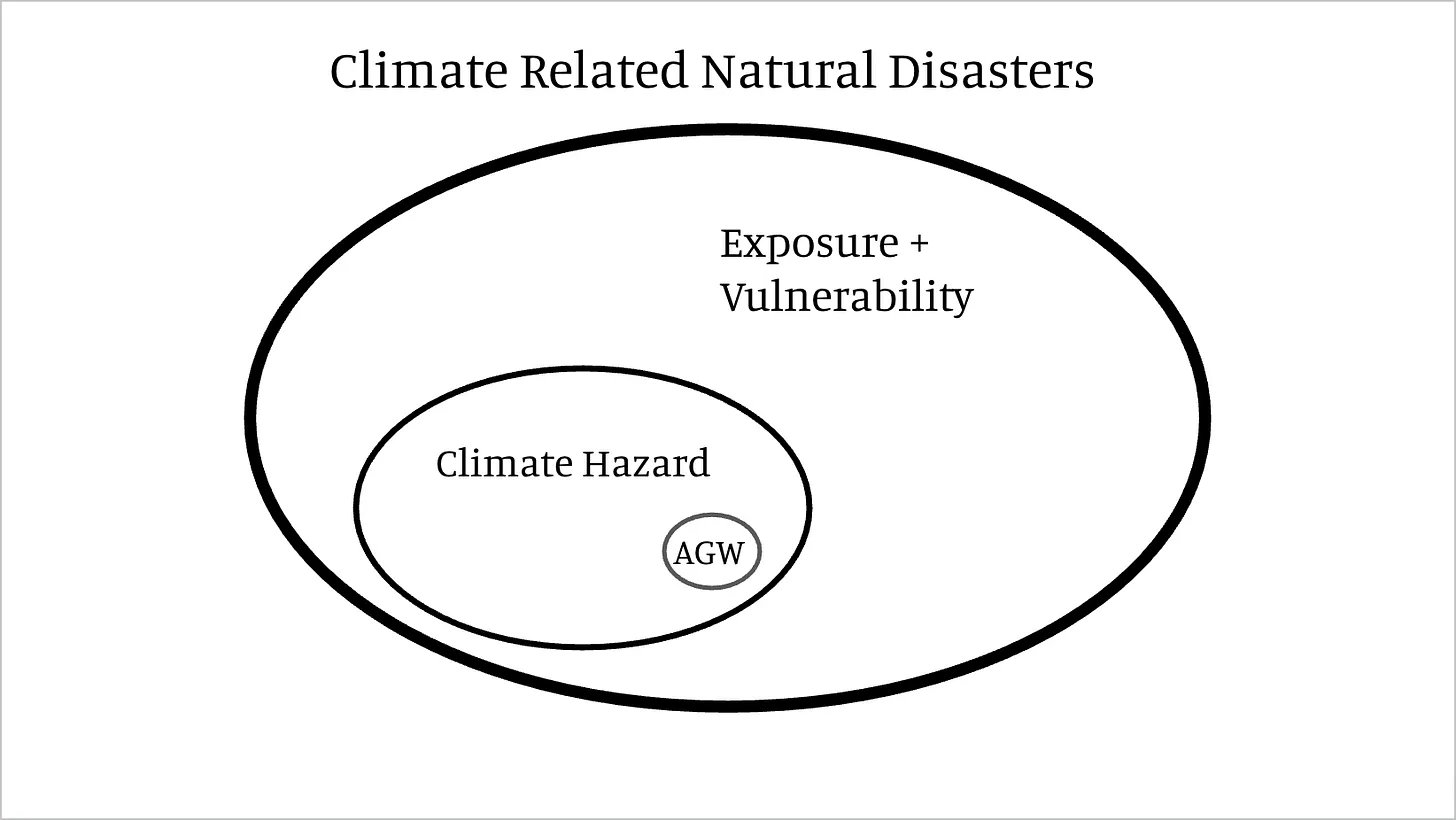
Why is this important?  All the claims of global climate emergency depend on dangerously higher  temperatures, lower sea ice, and rising sea levels.  The lack of additional warming prior to 2023 El Nino is documented in a post April 2025 UAH Temps Little Changed For Now.

The lack of acceleration in sea levels along coastlines has been discussed also.  See Observed vs. Imagined Sea Levels 2023 Update

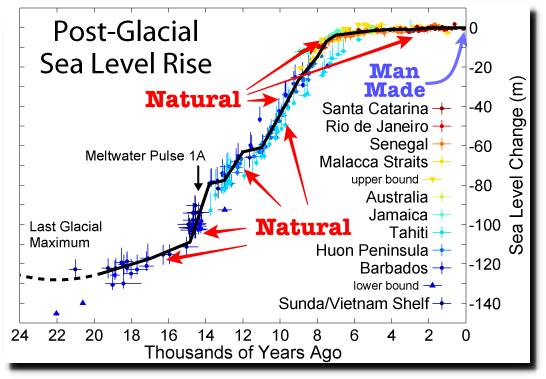
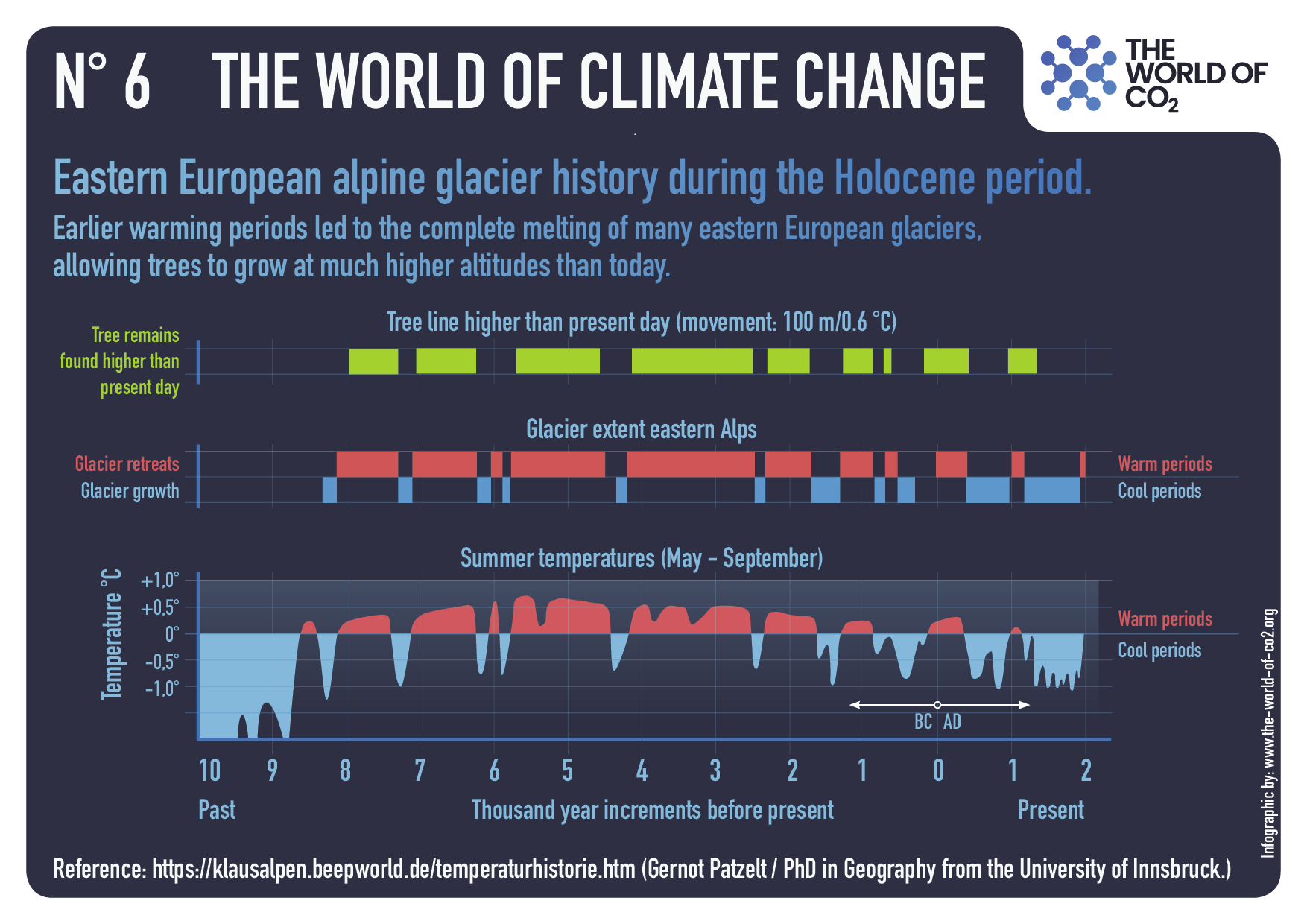
Also, a longer term perspective is informative:

post-glacial_sea_level

Who Knew? Trump Tariffs Good for Environment

Melanie Collette explains a surprising and irgnored result from the trade maneuvers in her Real Clear Energy article Trump’s Tariffs Might Be the Green Policy Nobody Saw Coming.  Excerpts italics with my bolds and added images.

For all the buzz about “going green,” much of the technology touted by the Green Left to move our nation to “Net Zero” — specifically solar panels and EV batteries — comes from places where the sky is choked with smog and rivers run with industrial waste.  And while these same critics often dismiss Donald Trump’s tariffs as economic saber-rattling, in reality, the President’s policies carry significant and underappreciated environmental benefits.

Tariffs are an unlikely ally in the fight against pollution:

♦  They incentivize domestic production;
♦  tighten environmental standards, and
♦  hold foreign manufacturers accountable for environmental negligence.

In a world where environmental goals often live on paper but die in execution, tariffs provide real leverage. They shift incentives in the right direction without depending on lengthy negotiations, uncertain compliance, or idealistic assumptions about global unity.

Tariffs as Environmental Filters

By imposing tariffs on imports from countries with looser environmental regulations, Trump’s trade policy incentivizes companies to manufacture domestically, where environmental protections are stronger and enforcement is more robust. Critics call it economic nationalism, but the reality is more nuanced: the policy functions as an ecological safeguard, reducing reliance on countries like China, which is ranked as the 13th most polluted nation in the world.

China’s dominant production of rare earth elements (REE)
has led to significant environmental degradation.

The Bayan Obo mine, one of the world’s most significant REE sources, has been associated with extensive soil and water pollution. Reports indicate that the mining process yields substantial amounts of waste gas, wastewater, and radioactive residue, contaminating local ecosystems and posing health risks to nearby communities.

And here’s something most people overlook — when manufacturing stays closer to home, it’s easier to track environmental violations and enforce rules. Transparency skyrockets when the EPA, OSHA, and other regulatory agencies are just a phone call away, not an ocean apart.

This diagram shows the origin of the metals required for meeting the 2030 goals. The left side of the diagram shows the origin, based on today’s global production of metals. The right side shows the cumulative metal demand for wind and solar technologies until 2030. From study showing tonnage of Dutch demand only.

Trump’s administration is also leveraging Section 232 of the Trade Expansion Act to impose tariffs on foreign processed minerals. The goal? Reduce foreign dependence and revive domestic production of critical materials like rare earth elements, essential for clean tech and defense.

The result is a renewed focus on U.S.-based mining and processing, offering a cleaner, more transparent alternative to China’s pollution-heavy rare earth industry. A stronger domestic rare earths sector is a win for national security and the environment. Environmental accountability increases when these materials are mined and processed under U.S. regulation.

The Dirty Truth Behind “Clean” Tech

Let’s be honest: outsourcing green tech to countries with weak environmental laws doesn’t eliminate emissions, but does outsource them. This phenomenon, known as “pollution leakage,” erodes the benefits we claim to pursue.

While the West celebrates progress in so-called green energy, producing those “eco-friendly” goods is often carried out in developing world factories. More than that, this behavior masks the real cost of green technologies. Products may seem “cheap” to consumers, but their environmental impact — from polluted rivers to toxic waste — remains largely unaccounted for.

Trump’s tariff strategy encourages manufacturers to source from countries with higher environmental standards or bring production back home. Case studies show that reshoring delivers economic and environmental benefits, especially in energy and heavy industry sectors. Cleaner supply chains begin with better accountability, which tariffs are uniquely positioned to provide.

When production happens domestically, enforcing environmental controls, adopting green manufacturing processes, and implementing technological innovations like low-emission machining are easier. However, these advancements are often out of reach for foreign suppliers focused solely on cost-cutting.

Global Environmental Agreements: Big Promises, Weak Results

The mainstream media heralded the Biden administration’s return to multilateral climate agreements like the Paris Accord as ” planet-saving,” but real-world results have been underwhelming. These international frameworks lack enforcement, largely exempt the biggest emitters, and allow countries to manipulate statistics to validate their progress in achieving their commitments.

Trump’s policies emphasize sovereignty, which doesn’t mean ignoring the environment. Using trade policy to reinforce domestic environmental protections proves the two priorities are compatible.  Environmental stewardship doesn’t require surrendering control to global institutions. Sometimes it just requires enforcing the rules at home — and setting an example others can’t ignore.

A Practical Path Forward

As the U.S. continues to navigate complex environmental and economic challenges, tariffs can be part of the solution. President Trump’s tariffs protect jobs and the environment, even if critics fail to notice.

Rather than relying solely on lofty international promises, we should consider practical tools, like tariffs, that create real accountability, cleaner production, and stronger domestic resilience.

In an era of performative climate politics, tariffs might just be the unexpected, effective piece of environmental policy we’ve been missing.

Adios Socialized Energy, Welcome Free Market Energy

tippinsights Editorial Board  explains this critical moment in the power struggle over whether the US will have an Energy Sector controlled by Federal diktats or by Market choices. Their article is Adios, Green New Deal. Welcome, Free-Market Energy Independence.  Excerpts in italics with my bolds and added images.

Trump Dismantles the Green Agenda, Embraces Capitalism,
and Launches America’s New Energy Future.

Buried within the 1,100-page bill recently passed by the House of Representatives—the “One Big, Beautiful Bill” that reflects President Trump’s priorities—are several provisions that, if enacted into law, could return the U.S. energy sector to a more capitalistic model.

President Joe Biden, with strong backing from environmental lobbyists and a last-minute defection from West Virginia Senator Joe Manchin, pushed through the Inflation Reduction Act and the Infrastructure Bill. These measures allocated billions of dollars in federal credits and loan guarantees to favored industries, all under the banner of environmental protection.

What followed was a Soviet-style industrial strategy in which
a handful of Washington bureaucrats determined
the winners and losers of America’s energy future.

The Inflation Reduction Act (IRA) 2022 contained “Climate and energy investments” of approximately $369 billion over 10 years. These included $270 billion for clean energy tax credits to support wind, solar, geothermal, and other renewables; clean hydrogen production; and carbon capture and storage technologies. Buyers of electric vehicles would get up to a $7,500 tax credit for new EVs and up to a $4,000 tax credit for used EVs (with income and manufacturing origin restrictions). Tax credits and funding for domestic manufacturing of solar panels, wind turbines, batteries, and critical minerals exceeded $60 billion. Rebates for energy-efficient appliance upgrades, heat pumps, insulation, and home weatherization exceeded $60 billion under the Green Jobs and Environmental Justice banner.

With so much federal money up for grabs, greedy entrepreneurs flocked to risky green energy ventures, largely funded by grants and low-interest loans—funding they likely wouldn’t have secured through private markets. We all remember the Obama-era Solyndra disaster, but Biden’s approach was Solyndra-style investment on steroids.

What was worse, Biden used the vast levers of federal power to kneecap perfectly functioning industries. His administration was especially punitive toward the oil and gas sector: it suspended leases on federal land, blocked vast swaths of the Pacific, Atlantic, and Gulf coasts from new drilling, canceled major pipelines, and imposed regulatory hurdles that made it increasingly difficult for the fossil fuel industry to attract investment capital. As oil prices steadily rose, Biden’s energy strategy relied on tapping the Strategic Petroleum Reserve and urging Saudi Arabia to increase production—an ironic move given his simultaneous efforts to restrict Russian oil exports during the Ukraine war.

President Trump, who campaigned once again on the
“drill, baby, drill” message, has consistently opposed
such government interference in the energy markets.

He has long supported removing regulatory red tape and streamlining the permitting process to allow for increased oil production—lowering domestic prices and boosting exports. In December 2019, under Trump’s administration, the U.S. Energy Information Administration announced that America had become a net exporter of oil for the first time in nearly 60 years.

Biden’s green agenda had another critical flaw: financing. Much of it depended on borrowing from Chinaironically benefiting Chinese companies dominating the very industries Biden sought to boost. Since the launch of China’s “Made in China 2025” initiative, Chinese firms—heavily subsidized by their government—have taken over more than 85% of the global rooftop solar panel market. Battery components for solar installations have even higher Chinese market dominance. In effect, Biden borrowed money from China to finance the growth of Chinese companies that sold solar products to U.S. installers.

The new House bill aims to dismantle this entire framework in one stroke.

♦  It eliminates the trading of green credits between corporations;
♦  revokes low-interest green loans, and
♦  entirely phases out subsidies for renewable energy initiatives.

To those who claim this approach is irresponsible, we pose a simple question: How many more decades should the green energy sector rely on government aid to stay afloat? Sustainable energy and transition projects are essential, but they must prove their viability in the open market—just like oil and gas companies do every day. This is classic Adam Smith-style capitalism: let competition and innovation—not government favoritism—determine success.

Trump also supports nuclear power, one of the cleanest
and most efficient methods of generating electricity.

Critics on the Left often call nuclear energy dangerous, but even the most liberal nations—France, Germany, and Japan—have long depended on it. The only significant U.S. nuclear accident, Three Mile Island in the 1980s, did not result in any deaths. Despite Japan’s vulnerability to natural disasters, it maintained a strong safety record until Fukushima. The U.S., by contrast, is less prone to earthquakes or tsunamis, yet Congress and successive administrations have consistently stymied progress on nuclear energy.

This week, Trump signed an executive order that could clear the way for small-scale nuclear plants to begin operations within the next 18 months. These modern reactors, based on cutting-edge American technology, are far safer than their predecessors and are designed to power small cities or neighborhoods rather than entire states. Every aspect of nuclear energy today—from fuel storage to waste disposal—is light-years ahead of where it was decades ago. It’s a national disgrace that despite having world-class nuclear capabilities—including naval reactors and the world’s second-largest nuclear arsenal—our federal policies have hampered the civilian nuclear industry.

By issuing appropriate permitting waivers, Trump aims to unlock this potential, even if a modest federal investment is necessary to overcome ideological resistance from the Left. Energy independence and security should have been the hallmarks of the Obama and Biden administrations. Instead, they catered to the demands of environmental activists and weakened America’s energy position.

We are glad to say that the Green New Deal is dead.


Shifting from Energy Scarcity to Energy Abundance

Prior to the Paris COP in 2015, French scientists debunked the green agenda in a White Paper drawn up by the Société de Calcul Mathématique SA  (Mathematical Modelling Company, Corp.)  The battle against global warming: an absurd, costly and pointless crusade.  The whole document is evidence-based, and on the second point concerning energy, they said this:

Chapter 2: The crusade is costly
Direct aid for industries that are completely unviable (such as photovoltaics and wind turbines) but presented as ‘virtuous’ runs into billions of euros, according to recent reports published by the Cour des Comptes (French Audit Office) in 2013. But the highest cost lies in the principle of ‘energy saving,’ which is presented as especially virtuous. Since no civilization can develop when it is saving energy, ours has stopped developing: France now has more than three million people unemployed — it is the price we have to pay for our virtue….

Finally, the world seems to be waking up to energy realities. The actual transition is away from the green imperative to make energy scarce, replaced by driving energy abundance. Kevin Killough writes, including commentary from Mark Mills of Energy Analystics, in his Just The News article:  World moves away from ‘green gospel of scarcity’ and now embraces ‘energy abundance,’ experts say

“I think we’ve gone from scarcity to abundance — from the green gospel of scarcity and its Trinitarian ESG god — to the promised land of abundance guided by the values of affordability and reliability,” David DesRosiers, conference co-chair of the RealClear Energy Future Forum, said.

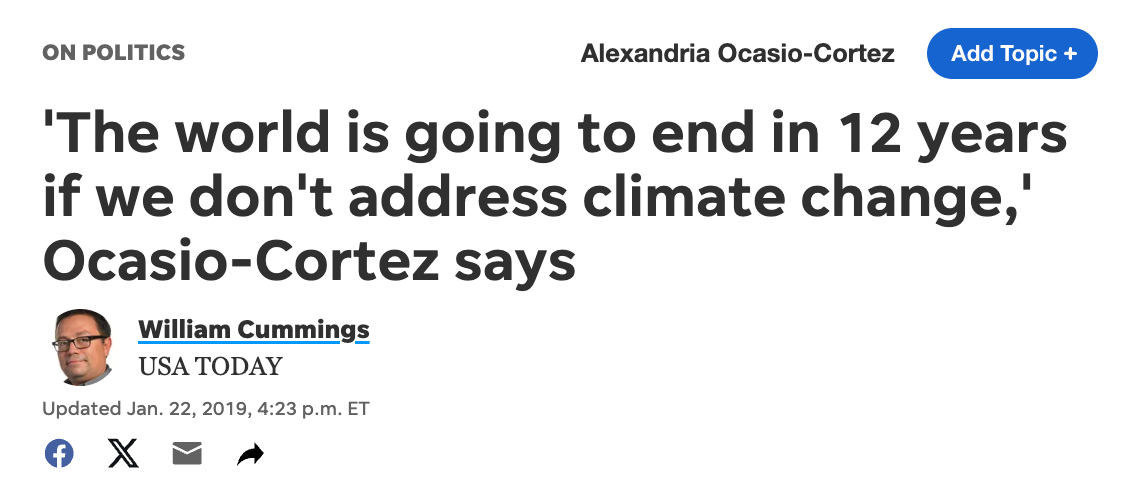
In 2019, Swedish climate activist Greta Thunberg — then a high-school dropout — was invited to the U.N. Climate Action Summit in New York City. There, she would deliver her famous — or infamous, depending on who you ask — how dare you” speech, to which legacy media responded with overwhelming enthusiasm. Thunberg claimed that we were at the start of a “mass extinction,” and she admonished the world for ignoring the alleged crisis while talking “about money and fairy tales of eternal economic growth.”

What a difference six years can make. Voters elected a president in November who signed an executive order aimed at “unleashing American energy,” and Energy Secretary Chris Wright followed the president’s order with a directive to promote “energy abundance.”

This U-turn in views on energy isn’t limited to a change in administration in the U.S.

In May 2021, the International Energy Agency (IEA), which has been criticized for cheerleading emissions reductions, launched a roadmap to reach net zero by 2050, and IEA Executive Director Fatih Birol told The Guardian that “there will not be a need for new investments in oil and gas fields, or new investments in coal mines.”

At the March CERAWeek energy conference in Houston this year, Birol was calling for more investments in oil and gas.

This shift away from the de-growth fervor that was popular for over a decade was the overriding topic at the RealClear Energy Future Forum Monday. Panels of experts in engineering, data centers, mining, oil and gas, and the electricity grid discussed how this change of views has impacted various aspects of the world’s energy picture.

“I think we’ve gone from scarcity to abundance — from the green gospel of scarcity and its Trinitarian ESG god — to the promised land of abundance guided by the values of affordability and reliability,” David DesRosiers, conference co-chair and founder of the RealClear Foundation, said.

When reality hits

Mark Mills, conference co-chair and director of the National Center for Energy Analytics, discussed the role of increasing energy demand as a result of the growth of data centers and artificial intelligence. While many tech companies, such as Microsoft, embraced net-zero goals, Mills explained that the energy demands of data centers forced companies to contend with the reality that although fashionable in some circles, intermittent wind and solar power are not adequate.

“Eventually, reality rears its ugly head, and we recalibrate around what reality permits,” Mills said.

The IEA last month released an in-depth report on how the demand for electricity will be shaped by AI in the coming years. According to the report, a single data center uses as much electricity as 2 million households. Powering one of these data centers, Mills said, requires as much natural gas every day as a single Space X rocket launch.

“With myriads of data centers planned and announced, this means that lighting up the digital infrastructure will soon have the energy demands equivalent to reliably powering hundreds of millions of households,” Mills said.

Mills said, besides the energy to power these data centers, they will also require an abundance of materials. A skyscraper requires the same amount of materials to build a single giga-scale data center, which is a data center requiring 1 billion watt-hours of electricity every hour — the same amount of power consumed by approximately 1,100 homes in a month.

While some have argued that increased efficiencies will address the demand, Mills pointed out that a single smartphone operating at the energy efficiency of a 1984 computer would use more electricity than an entire city block. More efficiency won’t reduce demand for energy, he explained, it will only increase how much can be done with more energy.

The way the grid works

Energy abundance is not only producing more energy. The supply has to be reliable, the experts at the conference said. A few speakers pointed to the blackouts that gripped Spain and Portugal last month as an example of how dangerous an unreliable energy supply can be. Estimates place the death toll from the one-day event at seven people.

James Robb, CEO of the North American Electric Reliability Corporation, said that the exact cause of the event is still under investigation, but there are facts that point to the overreliance on intermittent wind and solar.

At the time of the blackout, Robb said, there was little traditional generation — coal, natural gas, hydroelectric and nuclear — operating. To make wind, solar and battery power work on the grid, it has to go through an inverter, which doesn’t have the spinning inertia of generators powered by traditional sources. Grid operators need to maintain a certain frequency of power, and when there’s a disruption, spinning inertia can absorb some of the frequency changes until things stabilize.

Federal Energy Regulatory Commission Chairman Mark Christie explained inertia as a 100-acre lake 6-inches deep. At one end is a river flowing into the lake, like power generated on the grid. At the other end is a river flowing out of the lake, which is the demand for power. To make the grid work, the water has to be kept 6-inches deep at all times.

“If that lake, at any point, becomes an inch deeper or loses an inch of depth, the lake ceases to operate. That’s the way the grid works. It has to be balanced at all times, and that’s the term frequency,” Christie said.

Robb said there are technologies that create synthetic inertia for wind and solar generators, but these are unproven at scale.

“They’re not without their issues there, and one of the big challenges we always have in the electric grid with any new technology is you can study something in the lab. You can deploy…a pilot [project] on a grid somewhere. But when you try to scale it to the level of the North American grid, which is a terawatt of generation, typically in that translation from pilot to terawatt, we discover things that we don’t understand,” Robb said.

Spain and Portugal Achieve Net Zero Accidently

Holding back

Despite many signs pointing to the overreliance on solar energy on the Iberian Peninsula grid as being the cause of the blackouts, other speakers noted that politics is often holding back more discussion on the problem of intermittency.

“It is very clear that the intermittency of wind and solar had a great deal to do with shutting down the grid, but you cannot admit that if you’re in power in Spain or Portugal. Because there are liabilities,” Terrence Keely, CEO of 1PointSix, LLC, a financial advisory firm, said.

Daniel Yergin, vice chairman of S&P Global, said that between 2022 and 2023, the world’s dependence on fossil fuels was down less than one half of one percent. Yet, he said there were still contradictions coming from leaders. As an example, he pointed to British Prime Minister Sir Keir Starmer who recently said that Britain would increase emission-reduction efforts to 2050.

“But he also said, ‘Oh, let me be clear with you, oil and gas are going to be in the mix for a long time.’ That really captures the struggle of people, of leaders, to kind of adjust to a reality that’s different from what has been the conventional wisdom,” Yergin said of Starmer.

As with any global shift in thinking on issues, some nations are slow to change — or reject it altogether. But the experts at the forum concluded generally that the so-called energy transition, and the de-growth attitudes that drove it for so long, are losing steam.

Carney Brings Eco-Tyranny to Canada

Issues and Insights Editorial Board warns of Carney’s history of climate diktats in their I & I article Eco-Stalinism in Canada.  Excerpts in italics with my bolds and added images.

Leftist Prime Minister Mark Carney might not be as prissy and preposterous as his predecessor, Justin Trudeau, but he is just as tyrannical. He’s told Canadian companies that there will be penalties for those that don’t conduct business in the way he wants them to. We don’t think he’s building gulags in Nunavut for refusenik executives, but we see the hammer and sickle he’s trying to hide behind his back.

Before he was prime minister, Carney claimed that “climate change is an existential threat” and “we all recognize that,” both of which are untrue, but that’s the way authoritarians operate – the only “truth” or “pravda” is whatever they say it is.

He went on to say that “if you’re taking steps, making investments, coming up with new technologies, changing the way you do business, all in service of reducing and eliminating that threat, you’re creating value” and “are part of the solution.” These companies, Carney promises, will be rewarded for their obedience to the central planners.

But woe be unto those “who are lagging behind and are still part of the problem,” because they will be punished.”

Carney has a history of threatening punishment for companies that don’t conduct business in accordance with his wishes. An October 2019 Manchester Guardian article listed a number of occasions in which he warned that businesses falling behind in the pursuit of net zero emissions “will be punished” and those “that don’t adapt” to the framework laid down by the climate bosses “will go bankrupt without question.”

“Carney has led efforts to address the dangers global heating poses to the financial sector, from increasing extreme weather disasters to a potential fall in asset values such as fossil fuel company valuations as government regulations bite,” said the Guardian.

Mark Carney, former Co-Chair of GFANZ (Glasgow Financial Alliance for Net Zero), accompanied by (from left) Ravi Menon, Loh Boon Chye, and Yuki Yasui, at the Singapore Exchange, for the GFANZ announcement on the formation of its Asia-Pacific (APAC) Network

Carney’s threat of punishment is not the possibility of imprisonment but rather the punishment of investors who will move their capital elsewhere. This happens every day, of course. Investors penalize companies that underperform and mismanage by withholding their capital.

But Carbon Tax Carney‘s menace is backed by the power of the government, and it’s not materially different from the tactics used by Barack Obama, who promised before being elected president that he would use policy to bankrupt coal companies.

Obama’s plan was to charge “a huge sum for all that greenhouse gas that’s being emitted.” Apparently the punishment worked. The coal sector lost more than 49,000 jobs between 2008 and 2012, in part due to “increased regulatory initiatives by the Obama administration,” the Washington Post reported.

Obama’s policies not only “contributed to massive job losses in coal country,” says the Heartland Institute’s Sterling Burnett, but also to “the premature shuttering of vital coal-fired power plants.” They “were a factor in profitable coal companies being forced to file for bankruptcy.” 

After almost a decade of Trudeau, Canadians put another climate crusader at the head of their government rather than Pipeline Pierre Poilievere. Carney won’t save the world, because there is no global warming threat, but he now has the power to put companies out of business if they don’t follow the party line.

Canada becomes less glorious and free almost daily.