They Swallowed It: Hook, Line and Sinker, 2 years later

Trapped

Update Sept. 2023

I take no joy in being perceptive when writing the post below in March 2021.  Because the process becoming evident back then has only gone from bad to worse.  So much more has happened in the dismantling of my birthplace USA, more extreme and unrelenting destruction of the republic.  If anything, I underestimated the virulence of people carrying out the agenda of this regime.  They have revealed themselves as:

♦  Incompetent, hired for group identity and sexual preference, not knowledge or skill;
♦  Corrupt, driven by greed from the top of the house on down; and
♦  Malicious, eagerly destroying civility and causing pain and suffering for the joy of it.

Will Americans Rally to their heritage or succumb to this craven cabal?

They Swallowed It: Hook, Line and Sinker

Many will recognize the expression for taking on an idea or proposition so deeply in your gut that, like a fish on the line, there is no escape no matter how hard you try. Jacques Parizeau, one time separatist Premier of Quebec coined a similar idiom regarding voters resisting the referendum on Quebec independence from Canada. Meeting privately with foreign diplomats, he said that in the event of a Yes vote, the result would be like a “lobster pot.” That refers to the traditional wooden traps that have a one-way gate allowing a lobster to get in, but not out.

These expressions come to mind concerning the plight of US citizens following the installing of Biden-Harris in the White House. The intention of this administration is clearly to fundamentally transform America: From “The Land of the Free, Home of the Brave,” to “The Land of the Victims, Home of the Afraid.” The movement in this direction has been a long time in the works, and was only recently triggered by the election of Trump and the leftist need to cancel the alternate ideology of “Make America Great Again.” Time will tell if those now in power are reaching too far, too fast, going for broke before the majority were caught in the pot.

No doubt the program to undermine American global dominance has been operating for several generations. Those not familiar with the Marxist revolutionary four-stage process can read my synopsis article Four Steps to Take Down a Free Society

Pioneered by the Soviets and exported into many countries before their empire collapsed, the method is now employed by the Chinese Communist Party updated with cyber tools, along with traditional espionage tactics of honey traps and buyouts. The first stage of demoralizing involves teachers indoctrinating students to disparage their national heritage and destroy commitment to traditional social values and customs. Tom Wolfe wrote with his satirical wit and historical knowledge about the demise of liberal US academia into leftist dogma in his essay In the Land of the Rococo Marxists. My synopsis is Warmists and Rococo Marxists.

Of course the present manifestation flies under a different banner: Social Justice. And the reverent refer to George Floyd rather than Karl Marx. But Critical Race Theory is so obviously intended to divide and conquer a free and democratic society, you would have to be in a trance (claiming to be “woke”) to be taken in by it. Yet, indoctrinated children, now adults abound in the ranks of corporate management, others churning out copy for mass media or organizing activists in the streets and in cyberspace.

The protests in city streets of developed countries are coordinated and led by Social Justice Warriors indoctrinated in Western academies of higher education, after elementary school slanted teaching. If neo-Marxist progressive post-moderns take pride in this as accomplishing their agenda, consider what happened in China’s cultural revolution in the 1960s and is repeating itself in 2020. The useful dupes, like teachers, become outcasts and themselves targets for cancellation once power and control is seized. See article Teachers Beware Your Cultural Revolution Turning on You.

Have the scales yet tipped in favor of the slide into a socialist autocracy? Will Americans mount a resistance to this revolution? Depends on who and how many are on the line or trapped in lobster pots.


Railway Workers Built Canada Not Elites

Canadian troubadour Gordon Lightfoot celebrated in song the building of the transcontinental railfoad which bound together far flung provinces into a nation.  He described the working men whose manual labor and physical energy produced the foundation for Canadian economy and society.

I am reminded of a tour some years ago in the Roman Colosseum where the guide pointed out the features explaining the grandeur of the monumental structure.  At the end, he concluded: “This was all done in just eight years.  Remember, these were Romans, not Italians.”  In the same vein, I would say to Justin Trudeau, “Remember Canada was built by working men, not by woke weenies.”

Postscript: 

In 1880, the Canadian government contracted the Canadian Pacific Railroad to construct the first all-Canadian line to the West Coast. During the next five years, the company laid 4,600 kilometers of single track, uniting various smaller lines across Canada. Despite the logistical difficulties posed by areas such as the muskeg (bogs) region of northwestern Ontario and the high rugged mountains of British Columbia, the railway was completed six years ahead of schedule.

The transcontinental railway was instrumental in populating the vast western lands of Canada with settlers and providing supplies and commerce. Many of western Canada’s great cities and towns grew up around Canadian Pacific Railway stations.

So five years to build the railway, eight years to build the colosseum.
Trudeau’s been in office eight years and we’re still waiting
for permits to build needed energy infrastructure.

Africa Hurting from Climate Policies Not Climate Itself

CO2 and COPs

Following the Africa Climate Summit in Nairobi this month, I am reposting a pertinent article regarding the world of hurt caused by misguided governmental policies driven by CO2 hysteria.

This is a fourth post toward infographics exposing the damaging effects of Climate Policies upon the lives of ordinary people.  (See World of Hurt Part 1Part 2, and Part 3 )  And all of the pain is for naught in fighting against global warming/climate change, as shown clearly in the image above.  This post presents graphics to illustrate the fourth of four themes:

  • Zero Carbon Means Killing Real Jobs with Promises of Green Jobs
  • Reducing Carbon Emissions Means High Cost Energy Imports and Social Degradation
  • 100% Renewable Energy Means Sourcing Rare Metals Off-Planet
  • Leave it in the Ground Means Perpetual Poverty
The War Against Carbon Emissions Diminishes Efforts to Lift People Out of Poverty

world-population-in-extreme-poverty-absolute
The OurWorldinData graph shows how half a billion people have risen out of extreme poverty in recent decades.  While much needs to be done, it is clear that the world knows the poverty factors to be overcome.

wellbeing improves

That comprehensive diagram from CGAP shows numerous elements that contribute to rising health and prosperity, but there is one resource underlying and enabling everything:  Access to affordable, reliable energy.  From Global Energy Assessment: 

“Access to cleaner and affordable energy options is essential for improving the livelihoods of the poor in developing countries. The link between energy and poverty is demonstrated by the fact that the poor in developing countries constitute the bulk of an estimated 2.7 billion people relying on traditional biomass for cooking and the overwhelming majority of the 1.4 billion without access to grid electricity. Most of the people still reliant on traditional biomass live in Africa and South Asia.

The relationship is, in many respects, a vicious cycle in which people who lack access to cleaner and affordable energy are often trapped in a re-enforcing cycle of deprivation, lower incomes and the means to improve their living conditions while at the same time using significant amounts of their very limited income on expensive and unhealthy forms of energy that provide poor and/or unsafe services.”

The moral of this is very clear. Where energy is scarce and expensive, people’s labor is cheap and they live in poverty. Where energy is reliable and cheap, people are paid well to work and they have a better life.

adb fig.1
adb fig.2
adb fig.3
adb fig.4
adb fig.5
adb fig.7

How Climate Policies Keep People Poor

Note that the vision for 100% access to electric power was put forward by the African Development Bank in 2016.  (Above slides come from The Bank Group’s Strategy for The New Deal on Energy for Africa 2016 – 2025).  Instead of making finances available for such a plan, an International Cabal organized to deny any support for coal, the most available and inexpensive way to electrify Africa.
ieefa coal restrictionsThis is an organized campaign to deny coal-fired power anywhere in the world, despite coal being the starting point in the development pathway for every modern society, and currently the success model for Asia, and China in particular.  [Note in Figure 3 above that South Africa, the most advanced of African nations gets the majority of its power from coal.] The chart above comes from IEEFA 2019 report Over 100 Global Financial Institutions Are Exiting Coal, With More to Come.  Their pride in virtue-signaling is expressed in the subtitle:
Every Two Weeks a Bank, Insurer or Lender Announces New Restrictions on Coal.

How Climate Policies Waste Resources that could Improve Peoples’ Lives

The Climate Crisis Industry costs over 2 Trillion US dollars every year, and is estimated to redirect 30% of all foreign aid meant for developing countries into climate projects like carbon offsets and off-grid wind and solar. 

A much better plan is put forward by the Copenhagen Consensus Center.  A panel of social and economic development experts did cost/benefit analyses of all the Millenium Goals listed by the UN working groups, including climate mitigation and adaption goals along with all the other objectives deemed desirable. They addressed the question: 

What are the best ways of advancing global welfare, and particularly the welfare of developing  countries, illustrated by supposing that an additional $75 billion of resources were at their disposal  over a 4‐year initial period?

These challenges were examined:

  1. Armed Conflict
  2. Biodiversity
  3. Chronic Disease
  4. Climate Change
  5. Education
  6. Hunger and Malnutrition
  7. Infectious Disease
  8. Natural Disasters
  9. Population Growth
  10. Water and Sanitation

CCC budget

Imagine how much good could be done by diverting some of the trillions wasted trying to bend the curve at the top of the page?


Climate Doomsters in Driver’s Seat

Joe Oliver wrote at Financial Post We are in the grip of climate-change catastrophism.  Excerpts in italics with my bolds.

The climate-change movement is a powerful cultural entity. It does not affirm or negate the reality of its core narrative, which is for science to decide. Culture does, however, explain the power and prevalence of the narrative, the political and societal responses to it and the apparent willingness of many people to incur immense cost to avert a supposed existential threat, without proof of either its existence or our ability to alter its impact. In a new book available from the Global Warming Policy Foundation, The Grip of Culture: the Social Psychology of Climate Change Catastrophism, Andy A. West, who works for the Philosophy Foundation in London, provides an academic analysis of the phenomenon. Its lessons have particular relevance to Canada’s climate obsession.

As we know, the overarching climate narrative is that human GHG emissions have created a climate emergency that calls for urgent and extraordinary action, without which the consequences for humanity will be catastrophic. In many ways, its cultural characteristics parallel religions and ideological movements, starting with an unshakable foundational belief impervious to contradictory evidence, and extending to incessant incantations from politicians, mainstream media, thought leaders and environmentalists.

The faithful are reassured by groupthink, while apostates or sinful skeptics,
i.e. “deniers,” are vilified, penalized and ostracized.

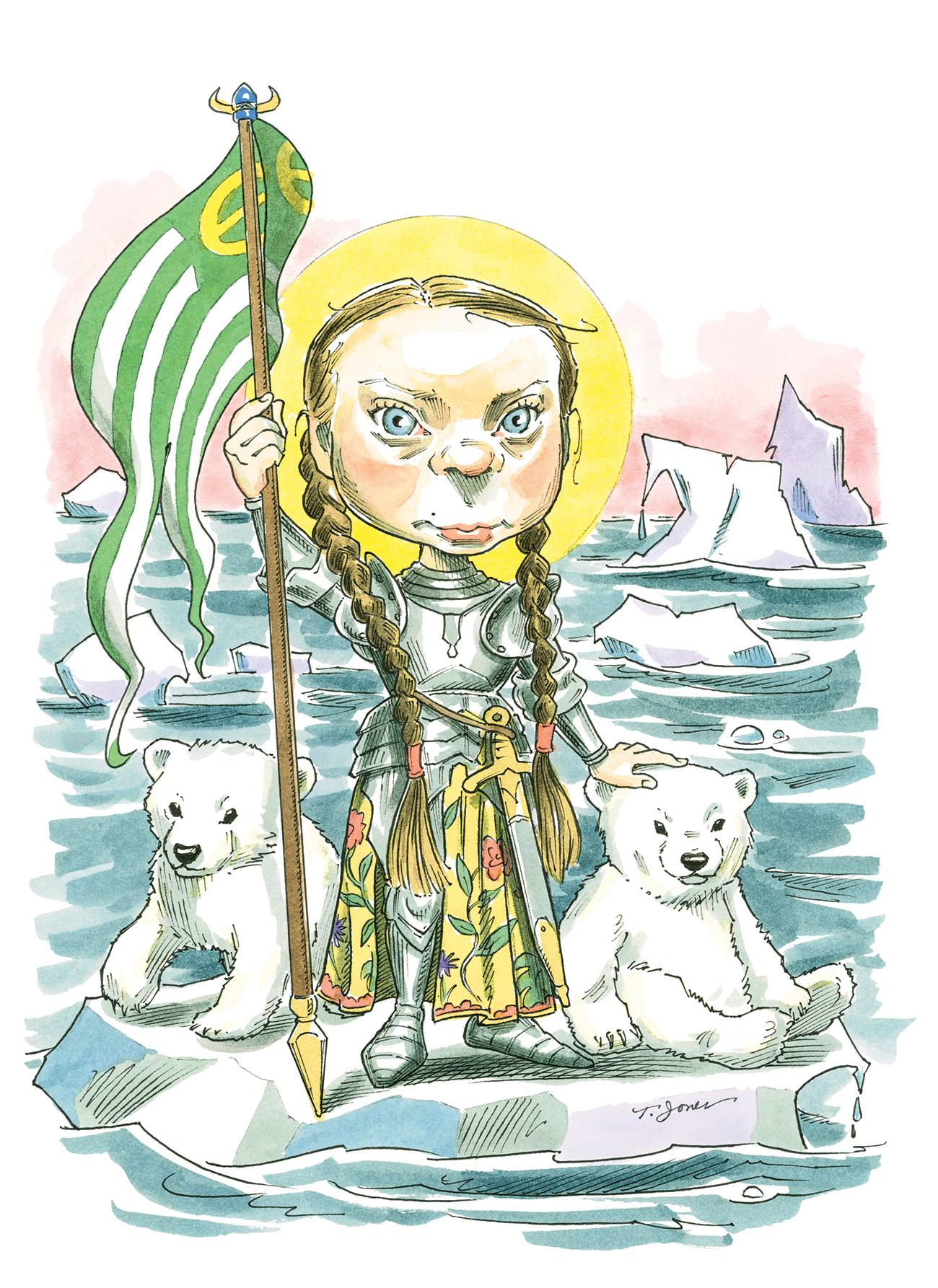
Environment and Climate Change Minister Steven Guilbeault’s veiled threat to charge Premier Scott Moe of Saskatchewan criminally if he violates federal coal regulations evokes Thomas of Torquemada, Grand Inquisitor of the Spanish Inquisition — though so far absent the burnings at the stake. The movement has its high priests and priestesses — Al Gore, Justin Trudeau, Greta Thunberg, King Charles and Mark Carney, none a scientist — who convey certainty to the multitudes.

Core principles and a multitude of subsidiary tenets are validated by exaggerated interpretations of scientific studies, as well as anecdotal evidence and conveniently chosen statistics that reinforce the sacred text. For example, the end of the Little Ice Age is invariably the starting point for calculating a global temperature increase — which is like a government calculating its effects on economic growth by starting at the trough of the last recession. Confirmation bias is provided by influencers, including uniquely unqualified Hollywood stars, who propagate the doctrine of the faith. Fear is employed as a powerful motivator and is inculcated from childhood. Apocalyptic doom is preordained for collective disobedience and salvation promised for devotees and repentants who comply with onerous strictures, many of which have no practical utility.

The instinctive response from climate alarmists to public hesitancy is that “the science is settled,” the facts are overwhelming and the need so urgent they can’t waste time quibbling with ignorant or malevolent naysayers who in any case are probably racist, misogynist, far-right conspiracists.

Climate alarmists have a fundamental problem, however, which may help explain their stridency. The complexity of climate science is not settled, as Steve E. Koonin, a physicist and former undersecretary for science in Barack Obama’s Department of Energy, explained in his 2021 book, Unsettled. Other prominent scientists agree, although they are a distinct minority.

Nor is climate apocalypse supported by the UN’s Intergovernmental Panel on Climate Change (IPCC), even though its conclusions go farther than the scientific studies on which it allegedly relies. Proffered evidence is based on models that have consistently run hot. Yet the conventional consensus is to accept at face value the predictions of people who have been consistently and spectacularly wrong and who, if they were around in the 1970’s, were more than likely to have issued dire warnings about an impending ice age, like Paul Ehrlich and Kenneth Watt, as well as newspapers and journals like Time, Science Digest, The New York Times and Newsweek.

Barring a miraculous technological innovation, there is
virtually no chance of reaching global net zero by 2050.

Two-thirds of GHG emissions come from poorer countries that are deliberately increasing their use of fossil fuels, while the developed economies, including Canada, have consistently failed to reach the targets they have set themselves. And it takes centuries for excess carbon dioxide to disappear from the atmosphere, so any partial reduction in anthropogenic emissions would only slow their increase, not prevent it or eliminate them. Nevertheless, McKinsey says $275 trillion may be spent on the doomed gesture, disproportionately hurting the least advantaged and weakening the West in what may actually be an existential struggle with an expansionist communist China.


Andy West writes that culture can be a great unifier of societies and even civilizations. But because it is not based on reason, it can also be extraordinarily destructive: witness the calamities perpetrated by communism and fascism. So it is uncertain where climate catastrophism may lead or what negative feedback could potentially provoke a counter-reaction. Last year’s European energy crisis did undermine support for it, even if green activists claimed it proved we need more of the renewable energy that had in fact made the continent more vulnerable to higher prices and inadequate supply.

Zeitgeists do change. When people have to choose between food and heat and when the poorest countries are deprived of the affordable energy they desperately need to raise themselves up, then practicality and guilt may eventually change people’s beliefs. That they haven’t yet done so demonstrates the power of culture in the face of logic, morality, self-interest and the facts.

Addendum:  

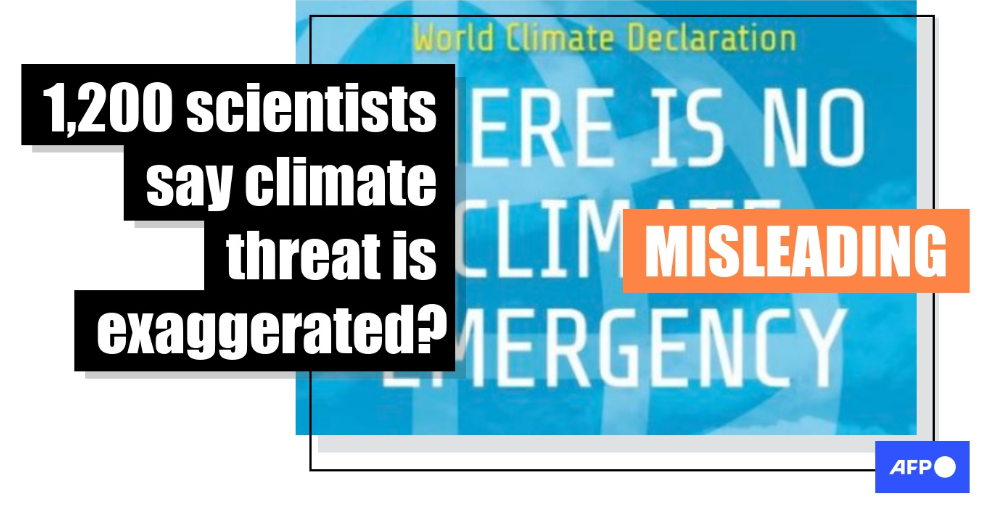
Retraction of Paper Saying There is No Climate Emergency Illustrates How Dependent Climate Activists Are on Scaremongering by Chris Morris at Daily Sceptic.

The recent cancellation of Alimonti et al shows clearly that catastrophising bad weather events and attributing them to a collapse of the climate is now the main weapon deployed to scare populations into embracing the Net Zero agenda. Of course, reference is still made to global warming, but most recent rises seem to owe more to frequent upward retrospective adjustments of temperature, rather than any significant natural boost. Perhaps we should not be surprised by this turn of events. In a short essay titled ‘The New Apocalypticism’, the science writer Roger Pielke Jr. noted: “For the secular millenarian, extreme events – floods, hurricanes, fires – are more than mere portents, they are evidence of our sins of the past and provide opportunities for redemption in the future, if only we listen, accept and change.”

The climate is collapsing all around us, shout the headlines – they require we ignore the data, the historical record, even common sense. When all is said and done, the Earth is not actually boiling! Well Professor Gianluca Alimonti and three other Italian scientists didn’t ignore the past data, much of it in fact from the UN Intergovernmental Panel on Climate Change, and they found little change in extreme weather events. They published a paper concluding that there was certainly not enough to justify the declaration of a ‘climate emergency’.

A year later, the publisher Springer Nature bowed to the demands of a group of activist scientists and journalists led by the Guardian and Agence France-Presse and retracted the non-conforming paper. An addendum was proposed and sent to four reviewers for comment. Three reviewers argued for publication. The fourth stated that typical readers were not climate experts and “editors should seriously consider the implications of the possible publication of this addendum”.

We own climate scienceboasted UN communications flak Melissa Fleming at a recent World Economic Forum disinformation seminar, and we partner with Google to keep our version at the top of the search list. What a great service these climate experts provide in telling us what to think and see as we unsophisticated rubes struggle towards the path of true enlightenment!

For the distinguished climatologist Dr. Judith Curry, the Alimonti affair is “why I no longer publish in peer-reviewed papers”. She described the behaviour of the journal editors as “reprehensible” in retracting a widely read climate paper just because it contained “politically inconvenient conclusions”. She is right of course – the Alimonti affair is another shocking scientific scandal that casts further doubt on the climate science peer-review process.

But then, Dr. Curry is merely a scientist in all this
–she doesn’t own the science.


Notes for Sunak: Energy Transition Risk Vs. Climate Change Risk

Two perceptive op eds by Dr. Judith Curry provides thinking pertinent to UK Sunak’s reconsideration of climate policies.  Her articles in December and January for Sky News Australia was The faux urgency of the climate crisis is giving us no time or space to build a secure energy future. and Rapid technological innovation – not harmful renewables policy – key to lighting our energy future.

Note: “faux” means “artificial” or “contrived”–IOW “fake” without any Trumpian overtones.  I referred to Sunak in the title because he is now the man in the barrel for raising energy issues.  But those elected officials who climb down even a little from ruinous Zero Carbon promises will find themselves in the same predicament.  So this messaging would serve many in these dire straits.  Excerpts in italics with my bolds and added images.

There is a growing realisation that emissions and temperature targets
are now detached from the issues of human well-being
and the development of our 21st century world.

For the past two centuries, fossil fuels have fueled humanity’s progress, improving standards of living and increasing the life span for billions of people. In the 21st century, a rapid transition away from fossil fuels has become an international imperative for climate change mitigation, under the auspices of the UN Paris Agreement. As a result, the 21st century energy transition is dominated by stringent targets to rapidly eliminate carbon dioxide emissions. However, the recent COP27 meeting in Egypt highlighted that very few of the world’s countries are on track to meet their emissions reductions commitment.

The desire for cleaner, more abundant, more reliable and
less expensive sources of energy is universal.

However, the goal of rapidly eliminating fossil fuels is at odds with the urgency of providing grid electricity to developing countries. Rapid deployment of wind and solar power has invariably increased electricity costs and reduced reliability, particularly with increasing penetration into the grid. Allegations of human rights abuses in China’s Xinjiang region, where global solar voltaic supplies are concentrated, are generating political conflicts that threaten the solar power industry. Global supply chains of materials needed to produce solar and wind energy plus battery storage are spawning new regional conflicts, logistical problems, supply shortages and rising costs. The large amount of land use required for wind and solar farms plus transmission lines is causing local land use conflicts in many regions.

Given the apocalyptic rhetoric surrounding climate change, does the alleged urgency of reducing carbon dioxide emissions somehow trump these other considerations? Well, the climate ‘crisis’ isn’t what it used to be. The COP27 has dropped the most extreme emissions scenario from consideration, which was the source of the most alarming predictions. Only a few years ago, an emissions trajectory that produced 2 to 3 oC warming was regarded as climate policy success. As limiting warming to 2 oC seems to be in reach, the goal posts were moved to limit the warming target to 1.5 oC. These warming targets are referenced to a baseline at the end of the 19th century; the Earth’s climate has already warmed by 1.1 oC. In context of this relatively modest warming, climate ‘crisis’ rhetoric is now linked to extreme weather events.

Attributing extreme weather and climate events to global warming can motivate a country to attempt to rapidly transition away from fossil fuels. However, we should not delude ourselves into thinking that eliminating emissions would have a noticeable impact on weather and climate extremes in the 21st century. It is very difficult to untangle the roles of natural weather and climate variability and land use from the slow creep of global warming. Looking back into the past, including paleoclimatic data, there has been more extreme weather everywhere on the planet. Thinking that we can minimize severe weather through using atmospheric carbon dioxide as a control knob is a fairy tale. In particular, Australia is responsible for slightly more than 1% of global carbon emissions. Hence, Australia’s emissions have a minimal impact on global warming as well as on Australia’s own climate.

There is growing realization that these emissions and temperature targets have become detached from the issues of human well-being and development. Yes, we need to reduce CO2 emissions over the course of the 21st century. However once we relax the faux urgency for eliminating CO2 emissions and the stringent time tables, we have time and space to envision new energy systems that can meet the diverse, growing needs of the 21st century. This includes sufficient energy to help reduce our vulnerability to surprises from extreme weather and climate events.

Framework for a robust transition of our energy systems.

In transitioning to cleaner sources of power, we need to acknowledge that the world will need much more energy than it is currently consuming – not just in developing countries, but also in countries with advanced economies. Constructing, operating, and maintaining low-carbon energy systems will itself require substantial amounts of energy, with much of it currently derived from fossil fuels. Increasing adoption of electric vehicles and electric heat pumps will increase electricity demand. More electricity can help reduce our vulnerability to the weather and climate: air conditioners, water desalination plants, irrigation, vertical farming operations, water pumps, coastal defenses, and environmental monitoring systems. Further, abundant electricity is key to innovations in advanced materials, advanced manufacturing, artificial intelligence, robotics, photonics, quantum computing and others that are currently unforeseen or unimagined.

In the near term, laying the foundation for new energy systems is
substantially more important than trying to stamp out fossil fuel use.

This should focus on developing and testing new energy technologies. There will continue to be demand for fossil fuels over the coming decades. Countries that restrict fossil fuel production will not only hurt themselves economically. Paradoxically, restricting fossil fuel production in the near term will actually slow down the energy transition, which itself requires substantial amounts of energy to implement.

The best use of the next three decades is to continue to develop and test a range of options for energy production, storage, transmission and other technologies that support goals of reliable, low-cost energy while lessening environmental impacts and carbon emissions. A more prudent strategy is to use the next two to three decades as a learning period with new technologies, experimentation and intelligent trial and error.

Near-term targets for CO2 emissions, such as 75% renewable energy by 2035, drives the energy transition towards using existing technologies in ways that are counterproductive in the longer term. The perceived urgency of making such a colossal transformation can lead to poor decisions that not only harms the economy and overall human wellbeing, but also slows down progress on reducing carbon emissions.

Rapid technological innovation across all domains of the global energy sector continues to accelerate: long-distance transmission and smart microgrids, energy storage, residential heating, electric vehicles and remarkable progress in advanced nuclear designs. Different countries and locales will use different combinations of these innovations based upon their location, local resources, power needs, and sociopolitical preferences.

In Addition:  Energy Balance Includes Every Energy Source 

Richard O. Faulk explands on the above perspective writing at Forbes: Stop Demonizing Fossil Fuels

If we are going to discuss the climate change movement’s agenda, let’s admit that the underlying problem they seek to resolve is an energy imbalance—one which they attribute to humanity’s excessive reliance on fossil fuels that contribute to global warming. To many members of the movement, the imbalance can only be corrected by reducing our dependence on sources such as coal and oil, and replacing them with others (ie. natural gas, ethanol, solar, wind).

Although this sounds tempting to some, the proportion of each source’s contribution to the new “balance” is elusive—both scientifically and politically. Indeed, many environmentalists largely neglect other important energy sources—such as nuclear energy—even though nuclear power plants produce negligible greenhouse gases. In its haste to “save the Earth,” the climate change movement has failed to appreciate that, for the foreseeable future, every source of energy is essential. We cannot afford to demonize and exclude any resources. Instead, each competing source must be sustained by a balanced energy policy that fosters economic growth, environmental protection and human health.

Moreover, if we are seriously concerned about global environmental issues, this new balance cannot be struck without considering its impact on economic, environmental and health concerns in each nation. This requires open minds regarding how certain resources, such as fossil fuels, can be used in developing nations which cannot reasonably be expected to shift immediately to alternative sources.

The use of coal, for example, as an imported product in such countries should not be disfavored while society diversifies to accommodate cleaner-burning technologies and affordable alternative sources. Encouraging such exports creates markets in developed nations that offset pressures to reduce usage domestically. Without relatively inexpensive imported resources, developing nations cannot develop their economies—and insisting on unaffordable alternatives denies them the opportunities that developed nations have exploited for centuries. The inevitable result will be continued poverty, depressed nutrition, increased disease and premature deaths in developing nations—a scenario that any reasonable climate advocate should find unacceptable.

Nevertheless, many climate activists doggedly argue for policies that will suppress the availability and use of fossil fuels in developing nations—as though renewable and other cleaner-burning sources were already available to meet the needs of their disadvantaged citizens. The insensitivity of such policies is alarming—especially since renewable and alternative fuel sources are not yet widely available and effectively deployed even in wealthier nations, such as the United States. It is irrational and, indeed, cruel to insist that fossil fuel use should be minimized globally when such an approach deprives the world’s most impoverished nations of relatively inexpensive and widely available energy sources.

Fossil fuels offer developing nations a “bridge to the future”
that empowers economic development and, ultimately,
diversification of energy resources.

A “balanced” energy policy therefore must consider much more than the appropriate global blend of energy sources. It must also consider the types of energy that can best be utilized in particular nations according to their financial abilities, technical skills and particular needs. It is naive to insist that renewable or alternative sources replace fossil fuels if those advanced sources are unaffordable, unavailable or otherwise impractical in the locations where energy is needed. Such idealism does nothing to feed the hungry, heat and light their homes, workplaces and schools, or encourage economic and technical development.


Darwall: Sunak’s UK Speech Changes Nothing and Everything

Rupert Darwall writes at Real Clear Energy Rishi Sunak Speaks Sense on Net Zero.  Excerpts in italics with my bolds and added images.

Britain’s prime minister Rishi Sunak was denounced before he’d uttered a word on net zero ahead of his short remarks on Wednesday. Lord Deben, the recently departed chair of the statutory Climate Change Committee, took to the airwaves to accuse the government of stupidity. Lord Zac Goldsmith, son of the billionaire Sir James Goldsmith who resigned from the government earlier this summer, said the prime minister had no mandate to change any net zero commitments and should call an immediate election.

As it turned out, Sunak’s remarks did not substantively change very much. “I’m absolutely committed to reaching Net Zero by 2050,” the prime minister insisted. True, the prime minister pledged that the government wouldn’t force families to rip out their gas-fired boilers and replace them with expensive heat pumps. And he announced that the ban on sales of petrol and diesel cars would be pushed back to 2035, which former prime minister Boris Johnson had brought forward to 2030 in one of his periodic fits of climate jingoism. What Sunak didn’t say was whether the rising quota of electric vehicle (EV) mandates squeezing out sales of conventional vehicles would remain in place.

This, though, would be to miss what the prime minister had done:
politically, everything has changed.

“No one in politics has had the courage to look people in the eye and explain what that involves,” Sunak said of net zero. “That’s wrong – and it changes now.” He promised that his approach to net zero would be pragmatic, proportionate, and realistic.

Of course, net zero by 2050 is none of those things.
It is ideological, disproportionate, and unachievable.

So why the vehemence of the climate lobby’s attacks on Sunak? In their eyes, Sunak has committed the worst crime of all: he has broken the net zero omertà, which enforces a pact of silence on discussing the policy’s true costs. In public, net zero should only be spoken of as the growth opportunity of the century, something that’s good for the economy as well as the planet. That it might inflict cost and hardship must never be said.

Sunak has destroyed this silent agreement. He has made it possible for mainstream political discourse to mention possible downsides to net zero. In this respect, he’s been assisted by his opponent’s reaction. Labor could have closed the issue down by saying it would be counter-productive to bring forward the ban. Instead, Labor leader Sir Keir Starmer immediately pledged to reverse Sunak’s reversal of the 2030 ban on the sale of new petrol and diesel cars. With EV sale mandates still in place, there is very little before and after difference – except Sir Keir now owns the downsides of the net zero anti-car policy.

Commentary on EVs focuses on the user experience – the vehicles’ cost premium, for example, or problems such as range anxiety and the inconvenience of re-charging them compared to filling up with a tank of fuel. These issues make EVs either a luxury purchase for individuals or a tax-efficient purchase made by businesses on behalf of their employees. There’s been much less focus on the implications for the electrical grid of mass EV adoption. As Manhattan Institute senior fellow Mark Mills discusses in a recent paper, “Electric Vehicles for Everyone? The Impossible Dream,” transitioning automotive energy derived from molecules to electrons has enormous implications for the grid and local distribution networks.

It’s not solely about the relative costs of electricity versus liquid hydrocarbons. (Electricity is much more expensive before taxes, a net zero fiscal hole Labor also needs to address.) According to Mills, transporting a unit of electrical energy using wires and transformers is about 20-fold more expensive than transporting the same quantity of energy as oil in pipelines and tankers. When you fill up your tank with gasoline, the same amount of energy per second is going into your car as being generated by four 5-megawatt wind turbines. The electrical grid and local distribution networks are simply not designed to accommodate the enormous increase in electrical power required for mass EV adoption – and the faster the EV charger, the more power it needs.

Upgrading Britain’s electrical network for EVs will cost
many tens of billions of pounds. Who pays?

That’s now a question for Sir Keir and Labor to answer. Will electrical utilities discriminate between electricity used to charge an EV and boil a kettle? Some 55% of British households don’t own a car. Does Labor expect the 55% of non-car owners to subsidize the cost of grid and local network upgrades for the benefit of the small proportion of the 45% of car owners who have EVs? Labor’s green socialism inverts traditional socialism. It envisions less well-off members of the community subsidizing better-off EV owners through their electricity bills.

The prime minister can have had few illusions about the consequences of breaking with the climate consensus to speak of costs and downsides. The climate lobby is well-funded and deeply networked throughout politics and the media. It required courage and conviction for Sunak to have taken this step.

Thanks to him, Britain’s climate policy debate will never be the same.


Little Tin Gods


The audio track is a song for our times: Little Tin Gods by Don Henley from his album End of the Innocence.

“A new age is dawning
On fewer than expected
Business is usual”
That’s how the headline read
Some shaky modern saviors
Have now been resurrected
In all this excitement
You may have been misled

People want a miracle
They say “Oh Lord, can’t you see us?
We’re tryin’ to make a livin’ down here
And keep the children fed”
But, from little dark motel rooms
to “Six Flags Over Jesus”
“How are the mighty fallen”
So the Bible said

You don’t have to pray to a little tin god
Step out of the way for a little tin god
You might fear the reaper, you might fear the rod
But you never have to get down on your knees
You don’t have to holler, “please, please”
No, you never have to get down on your knees
For a little tin god

The cowboy’s name was “Jingo”
And he knew that there was trouble
So in a blaze of glory
He rode out of the west
No one was ever certain
What it was that he was sayin’
But they loved it when he told them
They were better than the rest

But you don’t have to pray for a little tin god
Step out of the way for a little tin god
You might hate the system, hate the job
But you never have to get down on your knees
You don’t have to holler, “please, please”
No, you never have to get down on your knees
For a little tin god

Throw down a rope from heaven
And lead the flock to water
The man in the middle would have you think
That you have no other choice
But to wander in the wilderness
Of all the upturned faces
If you stop and listen long enough
You will hear your own small voice

But you don’t have to pray to a little tin god
Step out of the way for a little tin god
You might fear the reaper, fear the rod
But you never have to get down on your knees
You don’t have to holler, “please, please”
No, you never have to get down on your knees
You don’t have to holler, “please, please”
You never have to get down on your knees
For a little tin god


Arctic Ice Recovery Starts Sept. 2023

The animation above shows the minimum daily extent for 2023 occurred on September 15.  In the next six days ~450k km2 of ice extent was added (nearly half a Wadham). The Arctic ice extent yesterday was 4.53M km2 approaching the 17 year average for the day.

The graph for September shows the first two weeks 2023 was well below the average and tracking with 2007. After hitting bottom day 258, a sharp recovery lifted extents close to average and much higher than 2007.  (SII  has not yet posted a value for day 264).

Note that typically September ends the month slightly higher than it begins, though 2023 is already matching its Sept. 1 value.  If this year’s ice growth continued at the same rate of losses during the first two weeks of September (50k per day), the extent would reach  ~5M km2 at month end.  That would result in a 2023 September monthly average of 4.5M km2.  Such extent would be close to the median prediction, somewhat lower than 2022, but much higher than 2007 or 2020, and 800k km2 higher than 2012 (the year of the great August Cyclone.)

The table for day 264 shows how the ice extent is distributed across the Arctic regions, in comparison to 17 year average and 2007.

Region 2023264 264 Average 2023-Ave. 2007264 2023-2007
 (0) Northern_Hemisphere 4530862 4603044  -72183  4129308 401554 
 (1) Beaufort_Sea 353539 514036  -160497  507235 -153697 
 (2) Chukchi_Sea 135936 167774  -31839  30316 105620 
 (3) East_Siberian_Sea 48471 262691  -214220  311 48160 
 (4) Laptev_Sea 381662 127644  254018  223595 158067 
 (5) Kara_Sea 43989 34853  9136  27950 16038 
 (6) Barents_Sea 2394 14654  -12260  4851 -2457 
 (7) Greenland_Sea 273632 202253  71379  336388 -62756 
 (8) Baffin_Bay_Gulf_of_St._Lawrence 66853 34768  32085  31731 35122 
 (9) Canadian_Archipelago 177101 302976  -125875  237555 -60454 
 (10) Hudson_Bay 0 4119  -4119  2270 -2270 
 (11) Central_Arctic 3046145 2936249  109896  2725832 320313 

The table shows the main deficits are in Beaufort, East Siberian seas and CAA.  Offsetting surpluses are in Laptev, Greenland and Central Arctic seas. The total deficit on this day is 72k km2 or 1.6%.  Note that 2007 did not add more ice as September ended.

Illustration by Eleanor Lutz shows Earth’s seasonal climate changes. If played in full screen, the four corners present views from top, bottom and sides. It is a visual representation of scientific datasets measuring Arctic ice extents and snow cover.

Culture War Facturing Canada (Updated)

Update Below Adds Context from Angus Reid and Links to Series of Reports, Some Upcoming

Bruce Pardy writes at National Post Woke wolves dominate the culture war ecosystem — for now.  Excerpts in italics with my bolds and added images.

Canada is unravelling. Culture wars are making the country stupid, poor and fractured — and according to Angus Reid, these fractures have produced five distinct groups.

Last week, the Angus Reid Institute released a study on the bubbling, sometimes boiling, political conflicts in Canada. The study characterized five culture war factions that comprise the country: the “zealous activists,” the “quiet accommodators,” the “conflicted middle,” the “frustrated skeptics” and the “defiant objectors.” They make up the political ecosystem, which is why they are perhaps best recast as members of the animal kingdom.

Zealous Activists Behave as Wolves

“Zealous activists,” according to the Angus Reid study, make up 17 per cent of the population. They are ardent social progressives who believe that cancel culture is about “accountability.” I think of them as wolves. They travel in packs. These are woke mobs pushing the social justice revolution. They hunger to rip to shreds the reputation of anyone who defies progressive agendas.

Although they sometimes attack big targets, wolves prefer to hunt the vulnerable. They dress in sheep’s clothing, pretending to protect the weak and the downtrodden. But when the weak or downtrodden step out of line, wolves turn on them without a moment’s hesitation. Wolves appear to be more numerous than they really are, perhaps because they howl incessantly. They are proud virtue-signallers. Some truly believe in the cause, but activism is also a means to professional and social standing: they compete with one another for status within the pack.

Quiet Accommodators Resemble Sheep

Just over one quarter of Canadians are “quiet accommodators.” Like wolves, they are progressives, tending to agree with safe spaces and trigger warnings — but they lack the intensity of a predator. Let’s call them sheep. They are the foot soldiers of the culture wars; they believe in social justice dogma because that is what they have been fed. They crave approval and belonging.

Some sheep don’t understand social justice ideology beyond catchphrases and knee-jerk reactions, but they know those very well. Sheep can be found in positions of authority, where they enthusiastically enforce woke policies. They can be primary school principals, CEOs and even premiers. They seek to preserve their status by supporting the “correct” attitudes; in doing so, they willingly follow wolves, failing to understand that wolves are their greatest threat.

Conflicted Middle Act Like Ostriches

Ostriches don’t actually put their heads in the sand. They mostly lay their heads in the grass, preoccupied with staying well fed.

The “conflicted middle” makes up 18 per cent of the population. They are ostriches who keep their heads close to the ground, divided on culture wars and politics. Ostriches are ambivalent about social justice agendas and cultural revolutions; they comply to avoid any unwanted attention. Like sheep, ostriches seek to preserve their professional or social status. Unlike sheep, who want to belong, ostriches obey to avoid trouble. They tend to abhor politics and prefer not to think about ideology, even when ideology won’t leave them alone. Ostriches just wish the whole thing would go away.

Can you spot the leopard hidden in the grass?

Frustrated Skeptics Lurk Like Leopards

Nineteen per cent of Canadians are “frustrated skeptics.” They view culture wars as tiring and unproductive. Imagine them as leopards, aware and poised, but camouflaged against the scrubby savannah. Leopards object to woke agendas but keep their opinions to themselves. Some feel vulnerable in their jobs or social relationships. Others hide their opposition strategically, believing they can resist more effectively from the inside. Like ostriches, leopards are careful not to provide wolves with a reason to attack. Unlike ostriches, leopards are not ambivalent, but are waiting for the right moment to pounce.

Defiant Objectors Roar Like Lions

A fifth of Canadians are “defiant objectors.” They oppose cancel culture, safe spaces and censorship. These are the lions, who openly roar in disapproval at the progressive transformation of their society. Lions are the only animals in the kingdom who say “hell no” out loud. Some have prominent public profiles, but most lions are simply fearless ordinary people. They sometimes gather in prides, like the truckers and their supporters, but they are naturally inclined to be independent. When lions roar, wolves howl that they are bigots, populists, or members of a fringe minority with unacceptable views.

Missteps are dangerous in a culture war. The pack will devour those who commit wrongthink. The most susceptible are sheep and ostriches, who, despite submitting to the regime, are apt to utter inconvenient truths. Social justice ideology is tricky. It contains incoherent positions, changes the meanings of words and constantly moves the target. “My body, my choice” is a rallying cry when it relates to abortion, but racist and misogynist when it applies to vaccine mandates. Sheep and ostriches must navigate an ever-shifting landscape of rules and political correctness.

Leopards can misstep and blow their cover, but sometimes that works out for the best. Once revealed, they may find that they were meant to be lions after all. Lions can’t misstep, at least in the sense of accidentally outing themselves. Out is where they mean to be.

An activist minority is setting the agenda in Canada, but only
for as long as Canadians allow it. Be a lion.

Footnote:  A Pride of Lions Roaring in the Streets of Ottawa

Exclusive footage from LifeSiteNews in Ottawa shows thousands of pro-family Canadians formed near Parliament Hill, rivaled by an estimated 350 counter-protesters.

Pro-family Canadians flood Ottawa, other cities for Million Person March against LGBT indoctrination

According to LifeSite’s John-Henry Westen, who was on the ground at the Ottawa march, there was a noticeable number of children present on the pro-family side of the protest, with very few if any children present on the pro-LGBT side. Westen also estimates that the pro-family side outnumbered the pro-LGBT side by roughly ten to one.

Video footage from Toronto and Calgary posted to social media by True North shows thousands of pro-family citizens gathered in protest against LGBT indoctrination in both cities.

Counter-protesters were expected at the events after leaked video footage of a Zoom call appeared online last week showing unions leaders encouraging their members to oppose the pro-family efforts.

Update: Detailed Findings from Angus Reid

The website for this project is Canada and the Culture Wars: In the first of a multi-part series, Canadians weigh in on the nation’s divided discourse

Part One: Defining Canadians’ cultural mindsets


Topical Reports

Canadians say we’re changing how we talk to each other,
split over whether it’s a good or bad thing

The first release focused on Canadians views of the culture wars, how we talk to each other, as well as conflict mitigation, censorship, and “cancel culture”. Depending on where they sit on the spectrum of cultural mindsets, Canadians can view these issues as important, informative, exhausting or even unnecessary.

Example:

Gender Identity:  More than half say male or female;
one-third say that’s too limiting, others unsure

The second release covered  Gender Identity – including topics such as gender fluidity and gender neutral language.  Also Transgender Issues – how do Canadians say they would react if their child showed an affinity for a gender other than the one they were assigned at birth?

Example:

These forthcoming studies will put a spotlight on:

Climate and the Economy – how should Canada move forward in energy development? Do Canadians support or oppose a wealth tax?

Colonialism and Indigenous Issues – addressing topics such as the legacy of Canada’s colonial history and residential schools

Race and Ethnicity – including topics such as privilege, cultural appropriation, equity, discrimination and racism

Canada’s Animal Farm Culture War Factions

Bruce Pardy writes at National Post Woke wolves dominate the culture war ecosystem — for now.  Excerpts in italics with my bolds and added images.

Canada is unravelling. Culture wars are making the country stupid, poor and fractured — and according to Angus Reid, these fractures have produced five distinct groups.

Last week, the Angus Reid Institute released a study on the bubbling, sometimes boiling, political conflicts in Canada. The study characterized five culture war factions that comprise the country: the “zealous activists,” the “quiet accommodators,” the “conflicted middle,” the “frustrated skeptics” and the “defiant objectors.” They make up the political ecosystem, which is why they are perhaps best recast as members of the animal kingdom.

Zealous Activists Behave as Wolves

“Zealous activists,” according to the Angus Reid study, make up 17 per cent of the population. They are ardent social progressives who believe that cancel culture is about “accountability.” I think of them as wolves. They travel in packs. These are woke mobs pushing the social justice revolution. They hunger to rip to shreds the reputation of anyone who defies progressive agendas.

Although they sometimes attack big targets, wolves prefer to hunt the vulnerable. They dress in sheep’s clothing, pretending to protect the weak and the downtrodden. But when the weak or downtrodden step out of line, wolves turn on them without a moment’s hesitation. Wolves appear to be more numerous than they really are, perhaps because they howl incessantly. They are proud virtue-signallers. Some truly believe in the cause, but activism is also a means to professional and social standing: they compete with one another for status within the pack.

Quiet Accommodators Resemble Sheep

Just over one quarter of Canadians are “quiet accommodators.” Like wolves, they are progressives, tending to agree with safe spaces and trigger warnings — but they lack the intensity of a predator. Let’s call them sheep. They are the foot soldiers of the culture wars; they believe in social justice dogma because that is what they have been fed. They crave approval and belonging.

Some sheep don’t understand social justice ideology beyond catchphrases and knee-jerk reactions, but they know those very well. Sheep can be found in positions of authority, where they enthusiastically enforce woke policies. They can be primary school principals, CEOs and even premiers. They seek to preserve their status by supporting the “correct” attitudes; in doing so, they willingly follow wolves, failing to understand that wolves are their greatest threat.

Conflicted Middle Act Like Ostriches

Ostriches don’t actually put their heads in the sand. They mostly lay their heads in the grass, preoccupied with staying well fed.

The “conflicted middle” makes up 18 per cent of the population. They are ostriches who keep their heads close to the ground, divided on culture wars and politics. Ostriches are ambivalent about social justice agendas and cultural revolutions; they comply to avoid any unwanted attention. Like sheep, ostriches seek to preserve their professional or social status. Unlike sheep, who want to belong, ostriches obey to avoid trouble. They tend to abhor politics and prefer not to think about ideology, even when ideology won’t leave them alone. Ostriches just wish the whole thing would go away.

Can you spot the leopard hidden in the grass?

Frustrated Skeptics Lurk Like Leopards

Nineteen per cent of Canadians are “frustrated skeptics.” They view culture wars as tiring and unproductive. Imagine them as leopards, aware and poised, but camouflaged against the scrubby savannah. Leopards object to woke agendas but keep their opinions to themselves. Some feel vulnerable in their jobs or social relationships. Others hide their opposition strategically, believing they can resist more effectively from the inside. Like ostriches, leopards are careful not to provide wolves with a reason to attack. Unlike ostriches, leopards are not ambivalent, but are waiting for the right moment to pounce.

Defiant Objectors Roar Like Lions

A fifth of Canadians are “defiant objectors.” They oppose cancel culture, safe spaces and censorship. These are the lions, who openly roar in disapproval at the progressive transformation of their society. Lions are the only animals in the kingdom who say “hell no” out loud. Some have prominent public profiles, but most lions are simply fearless ordinary people. They sometimes gather in prides, like the truckers and their supporters, but they are naturally inclined to be independent. When lions roar, wolves howl that they are bigots, populists, or members of a fringe minority with unacceptable views.

Missteps are dangerous in a culture war. The pack will devour those who commit wrongthink. The most susceptible are sheep and ostriches, who, despite submitting to the regime, are apt to utter inconvenient truths. Social justice ideology is tricky. It contains incoherent positions, changes the meanings of words and constantly moves the target. “My body, my choice” is a rallying cry when it relates to abortion, but racist and misogynist when it applies to vaccine mandates. Sheep and ostriches must navigate an ever-shifting landscape of rules and political correctness.

Leopards can misstep and blow their cover, but sometimes that works out for the best. Once revealed, they may find that they were meant to be lions after all. Lions can’t misstep, at least in the sense of accidentally outing themselves. Out is where they mean to be.

An activist minority is setting the agenda in Canada, but only
for as long as Canadians allow it. Be a lion.