A steady and remarkable rise in average global ocean temperatures this year is now outpacing anything seen in four decades of satellite observations, causing many scientists to suddenly blare alarm over the risks and realities of climate change. But even those typically aligned on climate science can’t agree on what, exactly, triggered such rapid warming and how alarmed they should be.
Some climate researchers suspect that a drastic reduction in air pollution from ships has allowed more sunlight to radiate into oceans, a conclusion others vigorously criticize. Meteorologists also say a weakening of Atlantic winds may be encouraging warming; normally these winds help cool waters and carry sun-blocking plumes of Saharan dust.
Scientists nonetheless agree on this: Conditions are ever ripening for extreme heat waves, droughts, floods and storms, all of which have proven links to ocean warming.
In the Pacific Ocean, warming temperatures are to be expected during El Niño — its impacts on weather around the world stem from warmer-than-normal surface waters along the equatorial Pacific. But the extreme warmth extends beyond the Pacific. Record warmth is also occurring in the equatorial and northern Atlantic — and in the tropics, where hurricanes form.
“This is totally bonkers and people who look at this stuff routinely can’t believe their eyes,” Brian McNoldy, a hurricane researcher at the University of Miami, wrote on Twitter. “Something very weird is happening.”
Antarctic sea ice concentration on June 27, 2023, with white representing solid ice and dark blue representing open ocean. The median ice edge for 1981–2010 is drawn in orange. (Credit: Map by NOAA Climate.gov, based on data from the National Snow and Ice Data Center)
And of course there is the added warning about Antarctic sea ice not freezing as rapidly as usual in SH winter. The media always refers to “climate change” as the causal factor, which is code for rising CO2 and humans to blame. For a more reasonable discussion, see Antarctic Sea Ice Varies, It’s Complicated.
What About Natural Factors?
Because the power, glory and money comes from CO2 hysteria and taking over the energy industry, the theories are all about the atmosphere. Realists know that Oceans Make Climate, and look for more direct means by which sea temperatures can warm.
The HadSST4 AMO dataset was finally updated and showed dramatic 2023 warming in the North Atlantic. Let’s consider two possibilities.
An international team of scientists led by CICOES researcher David Butterfield
work together to rapidly find and explore large hydrothermal vents
on the world’s longest mountain range.
Sometimes Mid-Atlantic ridge is called the “40,000-mile Volcano”
Scientists have discovered three new hydrothermal vent fields over a 434-mile-long stretch of the Mid-Atlantic Ridge during the first scientific expedition aboard Schmidt Ocean Institute’s recently launched research vessel Falkor (too).
The multidisciplinary science team representing 11 institutions from the United States, Canada, and France used advanced ocean technologies to make the discovery. Scientists used autonomous and remotely operated underwater vehicles resulting in 65 square miles (170 square kilometers) of seafloor mapped at one-meter scale resolution, an area approximately the size of Manhattan Island.
The discovery of the active hydrothermal vents is the first on this section of the world’s longest underwater mountain range, the Mid-Atlantic Ridge, in more than 40 years. One of the discovered vent fields was located at the Puy des Folles volcano and has five active sites over 6.95 square miles (18 square kilometers). High-temperature ‘black smoker’ vents were also found at the Grappe Deux vent system and Kane Fracture Zone.
This discovery of new hydrothermal vents under the Atlantic ocean reminds of hundreds of thousands of sea mounts active on the ocean floor, with a high concentration in the North Atlantic For a more complete discussion of bottom up ocean warming, See Post:
The eruption of the submarine Hunga volcano in January 2022 was associated with a powerful blast that injected volcanic material to altitudes up to 58 km. From a combination of various types of satellite and ground-based observations supported by transport modeling, we show evidence for an unprecedented increase in the global stratospheric water mass by 13% relative to climatological levels, and a 5-fold increase of stratospheric aerosol load, the highest in the last three decades. Owing to the extreme injection altitude, the volcanic plume circumnavigated the Earth in only 1 week and dispersed nearly pole-to-pole in three months.The unique nature and magnitude of the global stratospheric perturbation by the Hunga eruption ranks it among the most remarkable climatic events in the modern observation era, with a range of potential long-lasting repercussions for stratospheric composition and climate.
The perturbation of stratospheric water vapour burden by 13% is tremendous and has no frame of comparison in the entire observation record dating back to 1985. As there are no efficient sinks of water vapour in the stratosphere, this perturbation is expected to last over several years. Indeed, in 9 months since the eruption, the water vapour mass anomaly has gradually decreased only by 2.5% (4.3 ± 0.1% annual rate), which should lead to the perturbation timescale of over 3 years, assuming the further linear decay trend. The persistent stratospheric moist anomaly may lead to changes in atmospheric radiative balance; stratospheric dynamics as well as amplification of the polar ozone depletion through wider occurrence of polar stratospheric clouds. The ability to assess the longer-term impacts of the HT eruption on stratospheric chemistry will depend strongly on the quality and availability of global satellite observations such as MLS in the coming years.
In addition to blasting seawater to the stratosphere, the event shook the ocean floor worldwide.
The massive volcanic blast in the Pacific last year was felt 18,000km away on the other side of the world, on the floor of the Atlantic Ocean. The cataclysmic eruption of Hunga-Tonga Hunga-Ha’apai on 15 January 2022 sent pressure waves through Earth’s atmosphere that connected with the sea surface and triggered 50 highly sensitive seismometers placed 5,000m under water on the seabed. It was one of a number of intriguing phenomena picked up by the instrument network in the Azores-Madeira-Canary Islands region. Source: BBC
Summary
Let’s stop pretending we can alter nature by spending trillions of dollars “fighting climate change.” Better to solve actual problems we are causing and can fix, rather than obsessing over imaginary ones.
With all the media noise about “Global Boiling”, they must think we are all frogs in a pot on the stove (electric, no gas permitted). And yet, what a difference a year makes in the US Northwest, as Cliff Mass reminds at his blog A Summer Without Extreme Heat in the Northwest. Excerpts in italics with added images.
With all the talk of heat waves in the media these days, it is fascinating to note that the Pacific Northwest has NOT had extreme heat this summer.
No major heatwaves. A lack of warm temperature records.
A really moderate, benign summer regarding high temperatures. And the temperate weather is not over.
And more surprises…there is really little evidence over the past decades of increases in extreme July heat in our region.
Let me show you some data, to prove the above to you.
Just a reminder….the end of July is climatologically the warmest time of the year (see the climatology of SeaTac Airport, below). By the end of August, solar radiation has declined so much that the temperatures inevitably decline.
A July Without Extreme Heat
Below you will find plots of the highest temperature in July over many decades for five local stations: Olympia and Bellingham in western Washington, Wenatchee and Kennewick in eastern Washington, and Portland, Oregon. I have plotted the July highs for the entire period of record and plotted a linear trend line for your reference.
Really interesting.The high temperatures in July at these stations have been very average and FAR below record levels.
Most of you have not needed AC this month.
Perhaps Shocking to Some
Now look at the trend of the extreme July temperatures above (brown lines) and you will notice something that is perhaps surprising: there are no large increases in record July temperatures over many decades.
About a 1°F increase at Bellingham and Olympia, roughly .5 °F at Portland and Wenatchee, and a DECLINE of roughly 2 F at Kennewick over many decades.
The background global warming of mean temperatures is about 2F. Our regional extremes are going up LESS than that.
There is no local amplification of extreme temperatures as the planet slowly warms.
To bring home the message of the lack of extreme temperatures this July, below are the temperatures at Olympia and Wenatchee (blue bars showing observed highs and lows), with record daily highs shown by the red colors.
No daily high-temperature records were broken. None. Nada. Zippo.
Finally, the moderate temperatures are not over.
To illustrate, the latest 7-day forecast from the European Center ensemble (shown below) indicates cooler than normal conditions (blue colors) over and west of the Cascade crest (this is for the daily average temperature, NOT the high temperatures).
As noted in my previous blogs, the lack of extreme high temperatures is associated with a persistent atmospheric circulation pattern. It also helps explain the lack of wildfires over the region.
Andy Puzder explains how bogus and damaging is ESG investing. Perhaps others are getting the memo. WSJ reports with a sad tone what is actually good news that investors are pushing back against ESG political correctness. Their article is: ESG Blowback: Exxon, Chevron Investors Reject Climate Measures Excerpts in italics with my bolds.
An investor-driven climate change push at some of the world’s largest oil companies has stalled out.
On Wednesday, Exxon Mobil and Chevron’s shareholders struck down a raft of proposals urging the companies to cut greenhouse-gas emissions derived from fuel consumption, put out new reports on climate benchmarks and disclose certain oil-spill risks, among other initiatives.
The votes were abysmal for climate activists. All but two of the 20 shareholder proposals for the two companies garnered less than 25% of investors’ vote, according to preliminary results, with some performing much worse than similar proposals put forward last year.
Zero Carbon zealots attacking ExxonMobil, here seen without their shareholder disguises.
Among the most controversial proposals were those that would have had the companies adopt targets for reducing emissions including those from third-party consumption of their products, such as when drivers burn gasoline in their cars, also known as Scope 3 emissions. Those received only 11% and 10% of the vote among Exxon and Chevron investors, respectively, compared with 27% and 33% for similar proposals last year.
In recent weeks, similar climate proposals failed to win over most shareholders
at annual meetings of British oil and gas giants BP and Shell in London.
Investment strategies linked to ESG, short for environmental, social and corporate-governance issues, had gained momentum in recent years, particularly following the onset of the pandemic in 2020. Investors pressed oil companies to show how they were working to reduce their climate footprint, set long-term environmental goals and curtail the flaring of unwanted natural gas.
In 2021, investment firm Engine No. 1 prevailed in a historic proxy battle against Exxon, winning three board seats at the company’s annual meeting with the backing of investment firms, Vanguard, State Street and BlackRock. The firm argued that Exxon needed to form a better strategy to prepare for the world’s anticipated energy transition.
After the defeat, Exxon adopted a so-called net zero commitment — a goal to reduce or offset greenhouse-gas emissions from its operations to zero by 2050.
But Wednesday’s votes demonstrated how some shareholders have backed off pushing major oil companies to embrace certain climate goals. Investors said many voices pushing ESG measures have been drowned out following Russia’s war in Ukraine, which caused oil and gas prices to skyrocket as global supplies were crimped.
Mark van Baal, founder of environmental activist group Follow This, said shareholders missed an opportunity at the annual votes. Investors know that avoiding climate disaster will require global emissions to fall by almost half by 2030, he said, but many are focused on short-term profits. [Note: van Baal is wrong about disaster–see Even 3°C Warming Can’t Stop World Prosperity. ]
The industry and its allies have said some countries, particularly in Europe, were too quick to move away from fossil fuels toward clean energy sources such as solar and wind. A movement against climate activism has gained political traction in the U.S., particularly among Republican voters. Entrepreneur Vivek Ramaswamy, a candidate for the Republican presidential nomination, has made anti-ESG policies a central plank of his campaign.
The pushback against ESG measures has also hit investment firms such as BlackRock,
which have faced potential boycotts in Texas and other red states.
Republican officials in Florida, Texas, Louisiana and South Carolina pulled more than $4 billion in pension and investment funds from BlackRock starting last year. BlackRock brought in $230 billion from U.S. clients in 2022.
It wasn’t immediately clear how BlackRock, State Street and Vanguard voted at the meetings this week. State Street and BlackRock declined to comment. Vanguard didn’t immediately respond to a request for comment.
Investments in fossil fuels pushed many oil companies to record profits last year, which lured back some investors who had fled after years of meager returns from the industry. Exxon Chief Executive Darren Woods said Wednesday the company had benefited from investing in fossil fuels when others pulled back.
Even in Europe, energy executives have shown a willingness to alienate clean-energy investors to tailor strategies to the thirst for fossil fuels. BP and Shell’s record full-year 2022 profits and hefty returns to investors have attracted new investors, and won back some who were dubious of their energy-transition strategies, executives said.
Shell and BP executives have said their strategies are consistent with targets to lower global emissions, while also helping supply the oil and gas still demanded in coming years globally. Exxon and Chevron have said they support the emissions targets set by the Paris climate accords and reducing emissions from their operations.
But Woods and other industry executives have argued some climate-related proposals would backfire or leave the economy worse off. Woods said several proposals rejected Wednesday would have required the company to assume the world will cut carbon emissions at a much faster pace than observers have projected.
“Some [would] go so far as to force us to decrease oil and gas development,” he said. “This would do nothing to reduce global demand.”
What is actually beyond debate is not that we are in a climate crisis but that if we don’t stop destroying our conventional energy economy, we are going to be in a civilizational crisis.
Atlantic Meridional Overturning Circulation (AMOC). Red colours indicate warm, shallow currents and blue colours indicate cold, deep return flows. Modified from Church, 2007, A change in circulation? Science, 317(5840), 908–909. doi:10.1126/science.1147796
Leave it to CNN to jump the shark with scary claims Excerpts in italics with my bolds.
A new study published Tuesday in the journal Nature, found that the Atlantic Meridional Overturning Current – of which the Gulf Stream is a part – could collapse around the middle of the century, or even as early as 2025.
Scientists uninvolved with this study told CNN the exact tipping point for the critical system is uncertain, and that measurements of the currents have so far showed little trend or change. But they agreed these results are alarming and provide new evidence that the tipping point could occur sooner than previously thought.
Of course some commented as cheerleaders, but many cautioned against exaggeration and speculation. The RAPID programme (see diagram at top) measures daily flows of water at several depths between the North Atlantic and Arctic oceans, and its scientific coordinator, Prof Meric Srokosz, National Oceanography Centre, University of Southampton, said:
While the possible collapse of the AMOC with significant climatic impacts is a concern, providing a warning of its collapse is problematic as a long set of observations is required. In this paper the warning depends on using proxy AMOC data (here based on sea surface temperature, SST) as direct continuous AMOC measurements are only available since 2004. The warning comes from applying statistical techniques to a long time series (over a century) of proxy AMOC data, but the warning is only as good as the proxy data are in representing the true AMOC. So, this warning needs to be treated with caution as there is no consensus as to which proxies can accurately capture the behaviour of the AMOC over the long term.”
Prof Penny Holliday, Head of Marine Physics and Ocean Circulation at the National Oceanography Centre, and Principal Investigator for OSNAP, an international programme researching AMOC processes, variability and impacts, said:
“Confidence in the validity of the conclusions are undermined by our knowledge that sea surface temperature of the North Atlantic subpolar gyre is not a clear indicator of the state of the AMOC, and that there is no evidence that the AMOC has dramatically weakened in the past 50-75 years. A collapse of the AMOC would profoundly impact every person on Earth but this study overstates the certainly in the likelihood of it taking place within the next few years.”
Does the press release accurately reflect the science?
“On the whole it does – the title of the paper is more sensational than the actual statements within it, and the press release does make that clear. However there are two statements that are not accurate as follows:
‘The strength of the AMOC has only been monitored continuously since 2004 and these observations have shown AMOC to be weakening’
“This is stated in the paper but it is not correct information. The observations since 2004 show that the AMOC goes through fluctuations of being in a stronger or weaker state that last for about 10 years. The observations since 2004 show the subtropical AMOC getting slower from 2004 to 2012, but gradually becoming stronger since then. The only data from AMOC observations shown in the paper are from 5 sparse ship surveys and are used out of context – the authors use them to argue for a severe decline in the AMOC, but that interpretation has long been discredited in the scientific literature (including in the reference they cite for it).
‘The authors found early warning signals of a critical transition of the AMOC system and suggest that it could shut down or collapse as early as 2025 and no later than 2095.’
“This is not quite as the paper states. In the paper the time period of potential collapse depends on choices they have made in how they construct the time series of sea surface temperature which they use as evidence for change. They present three versions of the temperature records, and the three resulting model predictions suggests a collapse is ‘likely’ at any time from 2024 to 2180. The 2025-2095 is the period of time their statistical model predicts that a full or partial collapse is most likely.
How does this work fit with the existing evidence?
“The conclusions are different to the consensus derived from climate projections as described by the IPCC AR6 assessment. The averaged AMOC projections from climate models under all the IPCC emissions scenarios all show an AMOC decline, but not a collapse (a “high confidence” conclusion). Some individual climate model runs do show a future collapse in the AMOC, so the possibility cannot be entirely ruled out.
Are there any important limitations to be aware of?
“There are some questionable assertions and decisions in the methods as follows. The authors state confidently that the sea surface temperature (SST) of the North Atlantic subpolar gyre can be used as a proxy for the strength of the AMOC. The validity of an SST proxy for AMOC strength is a matter of ongoing scientific debate however, because it is based on model behaviour and is not proven using real-world data.
There is solid evidence that there is no such clear relationship,
especially on timescales of less than 30 years.
“I believe the authors have overstated the pattern of subpolar North Atlantic SST change by subtracting two (and three) times the global mean surface temperature trend. This is not the usual approach for highlighting North Atlantic regional temperature trend (instead it is more usual to subtract just 1 x the global trend). The choice means that some of the SST data they use in the statistical model has exaggerated decline since the 1970s when the global SST began to sharply rise. In the version of the statistical model for which the global mean SST trend is removed, the predicted likely time of a partial or complete collapse becomes later and over a wider window of time.
“As mentioned above, the actual observations of AMOC since 2004 have long-since discredited the evidence that the authors are using to validate their modified SST temperature record. The 5 data points they show in the paper were collected several years apart by ship surveys, and it is well known and well established that they give a highly misleading impression of AMOC decline. All the observational evidence we have shows no evidence of dramatic decline in the AMOC over the past 50-75 years.
How uncertain are the uncertainties?
“The authors say that the model’s 95% confidence interval is 2025-2095. This is a measure of statistical uncertainty and they state in the discussion that they cannot rule out slowing rather than a collapse, as well as listing other reservations and caveats. Because of the limitations of their use of modified SST as a proxy for AMOC, the uncertainty in the stated message in the title and abstract is high.
What are the implications in the real world?
“The potential for the AMOC system of currents to collapse under global warming is a high impact, low likelihood scenario, and policymakers and planners do need to be aware of it. NOC and international partners are investing in ongoing observations of the AMOC in order to determine how closely changes in AMOC contribute to changes in SST and consequential climate and social and economic impacts on people. The strength of the out-of-sight ocean currents of the AMOC has surprisingly direct impacts on food, water and energy security, infrastructure risk, biodiversity, and human health. The paper demonstrates that decades of observations are needed to be able to detect a major tipping point in the AMOC, and the authors call for continued measurements of these great Atlantic ocean currents for long enough to do so.
Prof. Dr. Jochem Marotzke, Director of the Department Ocean in the Earth System, Max-Planck-Institute for Meteorology, Hamburg, Germany, said:
“The work provides no reason to change the assessment of the 6th IPCC Assessment Report: ‘There is medium confidence that there will be no abrupt collapse before 2100′. The statement so confidently made in this paper that collapse will occur in the 21st century has feet of clay. The maths are solid, but the starting point is highly dubious: the essential equation – marked with (1) in the paper – relies on the simplified models representing bifurcation – i.e. AMOC collapse – also being correct. But the more comprehensive models do not show this very bifurcation. In this respect, the paper does not live up to its self-imposed claim: ‘The strategy is to infer the evolution of the AMOC solely on observed changes in mean, variance and autocorrelation.’
The interpretation relies to an enormous extent on the authors’ theoretical
understanding being correct, and there are huge doubts about that.
“It must be added that there is considerable doubt as to whether surface temperature measurements are a valid proxy for the AMOC. Again, the paper addresses these uncertainties inadequately.
“When reporting about this study, it is important to include the key aspects in which this paper fails to include the scientific uncertainties.
Prof Niklas Boers, Professor of Earth System Modelling at the Technical University of Munich, said:
“I do not agree with the outcome of this study. While the qualitative statement that the AMOC has been losing stability in the course of the last century is true and supported by the data, uncertainties are too high to reliably estimate a time of tipping. In particular, the uncertainties in the heavily oversimplified model assumptions by the authors are too high. Moreover, the uncertainties in the underlying datasets are huge and would make the extrapolation carried out by the authors far too uncertain to actually report a year or even a decade for the AMOC tipping.”
Fig. 1. Schematic of the major warm (red to yellow) and cold (blue to purple) water pathways in the NASPG (North Atlantic subpolar gyre ) credit: H. Furey, Woods Hole Oceanographic Institution): Denmark Strait (DS), Faroe Bank Channel (FBC), East and West Greenland Currents (EGC and WGC, respectively), NAC, DSO, and ISO.
Antarctic sea ice concentration on June 27, 2023, with white representing solid ice and dark blue representing open ocean. The median ice edge for 1981–2010 is drawn in orange. (Credit: Map by NOAA Climate.gov, based on data from the National Snow and Ice Data Center)
The sea ice extent is nearly a million square miles
below the long-term average for late June.
Some scientists believe that what we’ve seen since 2022 may be signaling a significant and potentially long-lasting change. As Ted Maksym, a climate scientist and polar oceanographer at the Woods Hole Oceanographic Institution, put it in a recent story in Wired:
“Now there’s this question about: Have we got into a regime shift? A few of us are sort of speculating that that may be true, where the variability in Antarctic sea ice has changed and we might see these low sea ice extents for some time.”
But Maksym also says he and his colleagues are “watching with bated breath” to see if things will return to normal — and they could. Scientists just don’t know.
That’s because the Antarctic is a very different environment than the Arctic — in a way that complicates drawing firm conclusions. The latter consists of an ocean surrounded by land, whereas the former is a giant landmass surrounded by oceans.
Sea ice around Antarctica is affected by a host of complex factors,
including shifts in ocean currents and sea and air temperatures.
Given how remote, forbidding and large Antarctica is, observations of these factors have been relatively sparse. Moreover, the record of satellite observations of sea ice dates only to 1979, making it difficult to separate out a human-caused signal from natural variability. And the sparseness of data, and the complexity of myriad factors, have made modeling of Antarctic sea ice very challenging.
Bottom line: Scientists haven’t seen anything like what’s been happening to Antarctic sea ice in the past two years. But it will take time to know whether a dramatic shift truly has occurred, and more research to tease out the role of anthropogenic climate change in what’s happening.
Background Annual Cycle of Antarctic Sea Ice
Firstly, the annual minimum average is ~2.5 M km2 vs. an average maximum of ~17.5 M km2. So the sea ice extent each year nearly disappears. Secondly, since 2010, some years were well above the 1981-2010 average, and obviously there were likely many prior years below average. Which suggests this may be a return to the mean, or not, as the experts say.
Antarctica’s ice paradox has yet another puzzling layer. Not only is the amount of sea ice increasing each year, but an underwater robot now shows the ice is also much thicker than was previously thought, a new study reports.
The discovery adds to the ongoing mystery of Antarctica’s expanding sea ice. According to climate models, the region’s sea ice should be shrinking each year because of global warming. Instead, satellite observations show the ice is expanding, and the continent’s sea ice has set new records for the past three winters. At the same time, Antarctica’s ice sheet (the glacial ice on land) is melting and retreating.
Measuring sea ice thickness is a crucial step in understanding what’s driving the growth of sea ice, said study co-author Ted Maksym, an oceanographer at the Woods Hole Oceanographic Institution in Massachusetts. Climate scientists need to know if the sea ice expansion also includes underwater thickening.
“If we don’t know how much ice is there is, we can’t validate the models we use to understand the global climate,” Maksym told Live Science. “It looks like there are significant areas of thick ice that are probably not accounted for.”
The Antarctic sunlight illuminates the surface of the sea ice, intensifying the effect of the fracture lines, Oct. 2003. (NSIDC, University of Colorado)
While the Arctic is open ocean encircled by land, the Antarctic — about 1.5 times the size of the U.S. — is land circled by ocean, leaving more room for sea ice to spread. That geography makes a dramatic difference in the two polar climates.
The Arctic ice responds more directly to warmth. In the Antarctic, the main driver is wind, Maksym and other scientists say. Changes in the strength and motion of winds are now pushing the ice farther north, extending its reach.
Those changes in wind are tied in a complicated way to climate change from greenhouse gases, Maksym and Scambos say. Climate change has created essentially a wall of wind that keeps cool weather bottled up in Antarctica, NASA’s Abdalati says.
And the wind works in combination with the ozone hole, the huge gap in Earth’s protective ozone layer that usually appears over the South Pole. It’s bigger than North America.
It’s caused by man-made pollutants chlorine and bromine, which are different from the fossil fuel emissions that cause global warming. The hole makes Antarctica even cooler this time of year because the ozone layer usually absorbs solar radiation, working like a blanket to keep the Earth warm.
And that cooling effect makes the winds near the ground stronger and steadier,
pushing the ice outward, Scambos says.
University of Colorado researcher Katherine Leonard, who is on board the ship with Maksym, says in an email that the Antarctic sea ice is also getting snowier because climate change has allowed the air to carry more moisture.
Does Sea Ice Growth or Decline Negate or Confirm Climate Change? No.
This year, Antarctic sea ice has expanded its frigid reach with unprecedented speed, setting records in June and July. By the time spring punctures the long Antarctic night, 2014 stands a decent chance of topping 2012 and 2013, which each broke records of maximum total ice extent.
In fact, since scientists started making satellite observations in the late 1970s, they have watched winter sea ice around Antarctica swell slowly but indisputably, despite predictions that it should shrink.
This poses a puzzle that climate scientists struggle to explain:
How can sea ice grow in a warming world?
Climate skeptics have pounced on this apparent discrepancy, citing it as proof that climate change isn’t real, or at least that scientists don’t completely understand it. But those who study Antarctic sea ice say their curious observations shouldn’t shake anyone’s confidence. Dramatic changes in temperature, sea level and extreme weather around the world are proof enough the planet is warming, they say; the only question is how these changes affect the Antarctic as they ripple through the climate system.
“Climate is a complicated thing,” said Ted Maksym, an oceanographer at the Woods Hole Oceanographic Institute in Massachusetts. “Understanding how these kinds of changes play out in different regions is tricky business.”
The westerly winds blow fierce and constant around Antarctica, isolating the continent in a kind of permanent polar vortex. Scientists think they exert the most direct control over the state of Antarctic sea ice.
Ice requires cold temperatures to form, and winds help it grow by blowing it around the polar ocean. When the ice moves, new water is exposed to the chilly air, creating an opportunity to make more ice.
But it’s not quite as simple as more wind, more ice.
“It makes no sense to talk about a circumpolar average,” Stammerjohn said. “There’s so much regional variability.”
The Ross Sea, which faces New Zealand, has seen a dramatic increase in peak ice extent and 80 more days of ice cover since 1979, when satellites began tracking changes. But along the Antarctic Peninsula, which stretches toward the tip of South America, the ice-covered season in the Bellingshausen Sea is three months shorter than it was 35 years ago.
Scientists say sea ice and continental ice are probably responding to the same forces — namely, changes in ocean circulation and winds. However, they also influence each other. Sea ice helps buffer ice shelves, the floating tongues of glacial ice that dam the ice sheets and keep them from spilling irreversibly into the sea. It also keeps warm ocean waters trapped beneath a frozen lid, insulating the ice sheet from their destructive heat.
In the long run, however, scientists expect Antarctic sea ice to decline everywhere.
That it hasn’t done so yet suggests there’s still much to learn about the region.
Antarctic Sea Ice Grows to All-Time Record High: NSIDC October 09, 2014
Much has been written in the tabloids, and repeated by the fashionable, about it being very hot through June – even in Antarctica. Really, I wondered. Is Antarctica melting?
The Australian Bureau of Meteorology has measured air temperatures at the Mawson weather station in Antarctica since early 1954 – this is one of the longest continuous surface temperature records for that part of the world. The Russians did not establish the more famous and isolated Vostok weather station until 1957. The satellite temperature record doesn’t begin until 1979.
Automatic weather station (AWS) near Mawson. Photo: John Burgess
The Bureau makes very few adjustments to the temperatures as measured at Mawson that oscillate within a band of some few degrees – mostly below freezing. These same temperatures show no statistically significant long-term warming trend, at least not since 1954. There are longer proxy temperature series, based on ice core records, and they show an overall cooling trend, considering the last 1,900 years. Here, again, I am referring to data from published studies, for example, the temperatures of East and West Antarctica were reconstructed by a team led by Barbara Stenni including scientists from the Australian Antarctic Division, British Antarctic Survey, and Russian Antarctic Research Institute. It is only remodelled proxy series that show warming over this same period.
Last month (June 2023), Antarctica was reported as ‘hot’ in various publications including Vox.com. It’s even hot in Antarctica, where it’s winter. Yet the average maximum temperature for Mawson was minus 12.6 degrees Celsius, which is not quite as cold as the long-term June average for all years since 1954 which is minus 13.5 C. When the June maximum temperatures for Mawson are ranked highest to lowest, June 2023 comes in as the 29th hottest, and 42nd coldest – suggesting temperatures in Antarctica were not particularly newsworthy and rather cold.
Yet the tabloids, and fashionable, are claiming June 2023 as hot – even in Antarctica. It is all nonsense.
Some of these claims have their origin in the University of Maine’s Climate Reanalyzer, a tool that uses satellite data and computer simulations. So, they represent a remodelled average. Indeed, there is not a single place where anyone, can measure the average temperature of the Earth – or Antarctica. Rather, when it is announced that it is the hottest it has ever been, reference is made to a statistic.
This average temperature is necessarily a number
that has been derived from other numbers.
There will perhaps have been some measuring done here and there, and then some adjusting, and then some adding up and some adjusting again. This is how it is with the calculation of regional and global average temperatures – whether from satellites, tree rings, ice cores, or thermometers. To be sure, every year we are told it is getting hotter, and back in the late 1980s, this was achieved for the globally averaged thermometer record by dropping out some of the colder weather stations. This had the effect of increasing the overall average global temperature, at a time when temperatures at many individual sites were dipping somewhat.
Those who have followed the politics of measuring temperatures may also remember the infamous line in the Climategate emails, whereby the globally averaged temperatures based on tree rings, which also show a decline after 1980, are ‘corrected’ by substituting the globally averaged temperature from thermometer records – never mind that the dip in that record had already been ‘corrected’ by removing data from a great many high latitude Canadian and Russian weather stations.
Drawing from this sordid history of calculating global and regional temperatures, I can think of a large number of ways that the University of Maine’s Climate Reanalyzer could possibly generate a higher-than-average temperature for Antarctica and especially the Earth. Indeed, the larger the geographic area covered, the more opportunity for creative accounting, for which corporates using similar techniques would go to jail, while climate scientists are more usually promoted.
The solution is to perhaps give up on believing the nonsense news headlines, especially when there is no reference to a specific weather station, like Mawson. Or do away with a random selection of weather stations and focus instead on a simple index based on a good sample of well-sited weather stations with long histories, like Mawson.
Such a concept could be based on the Dow Jones Averages or the S&P 500. No one ever tries establishing an impossible-to-define ‘average stock price’ — including many stocks of doubtful provenance — and nobody cares. Rather the solution is to have a pre-selected index of certain representative stocks, that are then followed over a long-time span. So why not have an index of agreed weather stations?
The only problem is, the tabloids and the fashionable, might then have nothing to talk about – should they limit reporting to the same weather stations and with temperatures reliably measured, which will require some modification to current methods and of course, no subsequent adjusting.
There may be no catastrophe to report at least not when it comes to weather as a measure of climate, for which the lack of reliable measures, and the great number of potentially creative solutions, are currently being exploited over and over to justify rather large expenditures on all manner of things.
Jay Valentine explains how to block the fraudulent ballots intended for the 2024 election in his American Thinker article The Achilles Heel of Mail-In Ballot Fraud. Excerpts in italics with my bolds and added images.
The difference between the Republican ballot operation and that of the leftists is that the leftists manufacture ballots, whereas Republicans only collect them.
Elections are for big stakes. Pretty much everything is political, and thus, who controls the Legislature gets the goodies.
If you are a government pro, you live or die according to whether your team is in power. You do what the pros do — you make sure you control your food source.
The laughable RNC “out-ballot-harvest the left” plan is one any sentient adult knows cannot work. That of course leaves out Republican state operatives, for whom hope exceeds common sense.
Leftists learned early that running out of ballots to cast on election day is like running out of beer on July 4. They took that lesson and improvised in ingenious ways.
Ballot-manufacturing appears pretty easy at first but has lots of little complexities. Mastering those complexities gives our leftist pals unlimited numbers of ballots to handle any surging MAGA candidate.
Manufacturing ballots requires two ingredients: an address and a person.
On the person side, leftists do all the obvious stuff: register college kids in droves, do voter drives in homeless shelters where vagrants come in and out, build apps and pay anyone who will sign up a few dozen new voters (Wisconsin) with no regard to whether these are eligible voters.
With these and scores of other techniques, the inventory of names aggregates.
That burgeoning list is permanent — voter integrity teams in most states report they cannot get many of these people off voter rolls even when they prove that those people are long gone. Leftists control most of the voter commission apparatus, so that inventory remains safe.
Try to get those names off the voter list, and you will be attacked by leftist press, threatened by the Justice Department, or doxed on social media.
The other ingredient for ballot-manufacturing is the address.
Addresses and voters have fundamentally different characteristics.
Addresses can be misspelled in innumerable ways yet still be considered correct. Addresses do not move — they are a plot of dirt with a number. Addresses do not have lawyers, and they do not have 40 years of leftist court opinions to protect someone challenging their authenticity.
Addresses cannot be manufactured. Voters can.
Leftists can create all the voters they want from homeless shelter lists, but they face a constraint: every voter must tie to an address. It is this constraint — fixed addresses — that is the Achilles heel for mail-in voter fraud.
Addresses conveniently have the world’s singularly most accurate, current database maintained in every county in America — the real estate property tax record. These records are consulted daily by real estate agents doing comps. Tax authorities review them monthly, ensuring they squeeze every dollar from the citizen for any improvement.
Addresses, dear reader, are the key to stopping ballot-manufacturing.
Addresses have not been analyzed at scale in granular detail — down to the square footage, the number of bedrooms, baths, year built — because the tools to do so were not there. They are now.
The Fractal team was asked by some state legislatures to compare voter rolls with real estate tax rolls. They couldn’t do it themselves — they did not have the compute power — in a major state. That is why it has never been done before.
Two adjacent counties may report similar real estate data in different fields. Each county may use different nomenclature for the same record. Records are stored in relational databases with the address field broken into multiple segments — almost impossible to easily resurrect in real time with traditional tech.
These systems were built to be accessed one file at a time, not comparing the entire database with another. Comparing detailed property tax records — think 120 columns of info — against voter files lights up where a ballot will be mailed but not meet an eligible voter.
This week, the Fractal team ran a test. We used current relational SQL technology, of which we are masters, and Fractal to ingest the property tax roll for a major county. The Fractal system was able to finish in hours — with a real-time system giving answers in seconds. After several days, the SQL team reported the originating data from the county — in a SQL relational file — was so complicated that it would take them several weeks to prepare for real-time retrieval.
We were also able to project response times. The property tax records with Fractal were instantaneous. With SQL, complete database comparisons would take days, perhaps a full week.
Leftists continue to pad voter rolls with vagrants and other transients, but
they must tie them to an address. That is a pretty hard card to hide.
When voters are added to large apartment buildings, leftists cannot add the apartment number, or the legit resident will probably get that ballot. The trick is to mail the ballot to the main address, where it collects, and the Postal Service retrieves it for the bad guys.
Another strategy is to create an address. 126 Chestnut Street and 130 Chestnut street are contiguous properties. Our leftists create 128 Chestnut, which does not exist, and will generate a floating ballot.
Often, college dorms are used to send thousands of ballots to students who left years ago. We recounted many stories about 106-year-old voters in frat houses still casting a ballot.
Then there are the construction sites, where leftists have 224 registered voters in an apartment building — under construction. No roof, no walls, no electricity, but 224 solid votes.
In Florida, our leftist pals created an entire fake street — then moved real voters there — and when ballots were sent out, they accumulated. Innovation! Never ceases to impress!
These and hundreds of other schemes fail in a single click when the real-time real estate property rolls come into play. With that one click, one can see every address that does not exist in the property roll — yet has voters.
Another click shows every apartment building, compared with every voter record, kicking out the list, by street, of every person without that unit number — thus ineligible.
One more click, and every voter registered at a location with more than four people per 500 square feet of living space — thus challenging the county health regs — pops out.
What we have here is something of true beauty: one government database showing the nonsense in another government database. When leftists say “show me the fraud,” one needs only to do one click — “voters who voted in 2022, who the government tax records note are ineligible.”
In 2024, the leftists are pulling out all the stops. Hundreds of thousands of American voters will wake up in the 90 days before the election with strangers living in their homes, apartment buildings, the local 7-11, or the vacant field. Those are the Trump anti-votes.
The difference between 2020 and 2024 is that they will become visible months before the election. They will be challenged the week they register. Press conferences will be held on that construction site lawn, next to the cement mixer, noting that this address houses “224 real voters.”
Dare the Justice Department to intervene — the real estate tax rolls are challenging
an address, not a person. Meet the Undeliverable Ballot Database™.
Now that Fractal makes every address in any county visible, across every of those 120 or more columns, and compares them with voter rolls in seconds, from a phone, our 2024 pal Achilles may find us grabbing him by the heel — or maybe somewhere where it hurts even more!
CO2 Coalition explains. Nobel Laureate (Physics 2022) Dr. John Clauser was to present a seminar on climate models to the IMF on Thursday and now his talk has been summarily cancelled. According to an email he received last evening, the Director of the Independent Evaluation Office of the International Monetary Fund, Pablo Moreno, had read the flyer for John’s July 25 zoom talk and summarily and immediately canceled the talk. Technically, it was “postponed.”
Dr. Clauser had previously criticized the awarding of the 2021 Nobel Prize for work in the development of computer models predicting global warming and told President Biden that he disagreed with his climate policies. Dr. Clauser has developed a climate model that adds a new significant dominant process to existing models. The process involves the visible light reflected by cumulus clouds that cover, on average, half of the Earth. Existing models greatly underestimate this cloud feedback, which provides a very powerful, dominant thermostatic control of the Earth’s temperature.
More recently, he addressed the Korea Quantum Conference where he stated, “I don’t believe there is a climate crisis” and expressed his belief that “key processes are exaggerated and misunderstood by approximately 200 times.” Dr. Clauser, who is recognized as a climate change skeptic, also became a member of the board of directors of the CO2 Coalition last month, an organization that argues that carbon dioxide emissions are beneficial to life on Earth.
Current climate models demonstrate large discrepancy in equilibrium climate sensitivity (ECS). The effects of cloudiness parameterization changes on the ECS of the INM-CM4-8 climate model were investigated. This model shows the lowest ECS among CMIP6 models. Reasonable changes in the parameterization of the degree of cloudiness yielded ECS variability of 1.8–4.1 K in INM-CM4-8, which was more than half of the interval for the CMIP6 models.
The three principal mechanisms responsible for the increased ECS were increased cloudiness dissipation in warmer climates due to the increased water vapor deficit in the non-cloud fraction of a cell, decreased cloudiness generation in the atmospheric boundary layer in warm climates, and the instantaneous cloud response to CO2 increases due to stratification changes.
Introduction
In CMIP6 the lowest and highest ECS (Equilibrium Climate Sensitivity) values are 1.8 and 5.6 K, respectively (Zelinka et al., 2020). Climate response to some external forcing produces feedbacks. Positive feedback enhances the response to forcing, negative feedback weakens it. Analysis of climate feedback shows that cloud feedback is the principal reason for the broad range of ECS (Zelinka et al., 2020). Clouds (especially low clouds) are significantly reduced with global warmingin models with high ECS, resulting in positive feedback. Models with low sensitivity show small cloudiness changes with global warming; some models feature an increase in low clouds in warmer climates, creating a negative feedback.
Clouds produce shortwave and longwave radiative effects. The shortwave cloud radiative effect (SW CRE) is generally negative, because cloudiness reflects solar radiation that would otherwise be absorbed by the climate system. The shortwave effect is usually strongest for low clouds that have high amounts of liquid water and high albedos. The longwave cloud radiative effect (LW CRE) is generally positive, because cloud tops are usually much colder than the surface of the Earth; thus, thermal radiation from the cloud top is much lower than that from the surface. Negative/positive CRE produces cooling/warming from clouds.
The goal of this study is that we turn off some mechanisms responsible for large-scale cloud evolution that lead to increase or decrease ECS, and ECS is changed by the factor of more than 2. The role of a chosen mechanism in decrease or increase of ECS can be clearly seen. At the same time, all model versions show preindustrial climate with systematic biases compared to that for the version used in CMIP6. A realistic way of estimating the impact of change in parameterization on cloud feedback by keeping the cloud mean state realistic in all model versions and running 4xCO2 experiments rather than uniform +4K experiments are used in this study.
Table 1. Summary of Model Versions
Note. Equilibrium climate sensitivity ECS (K), effective radiation forcing ERF (W m−2), climate feedback parameter λ (W m−2 K−1), shortwave cloud radiative feedback СRFSW, longwave cloud radiative feedback СRFLW, net cloud radiative feedback СRFNET (W m−2 K−1) and instantaneous cloud radiative forcing change ΔCREINST (Wm−2).
The ECS estimation method is commonly used in CMIP5 and CMIP6 and was proposed by Gregory et al. (2004). The two model runs performed were the control run, in which all forcings were fixed at preindustrial levels, and the run where the concentration of CO2 in the atmosphere was four times higher than in the control run (4CO2 run). The initial state for both runs was the same and taken from a sufficiently long control run. Each run had a length of 150 years. Subsequently, the global mean difference of GMST and the heat balance at the top of atmosphere (THB) for 4CO2 and the control run were calculated for each model year.
Results of the sensitivity experiments performed with the five climate model versions.
Version 1 shows a very low ECS of 1.8 K due to a low negative climate feedback parameter value of −1.46 W m−2 K−1 (interval from −0.6 to −1.8 W m−2 K−1 for CMIP5 and CMIP6) and a low ERF value of 2.7 W m−2 (intervals of 2.6–4.4 and 2.7–4.3 W m−2 for CMIP5 and CMIP6, respectively, Zelinka et al., 2020). The low ECS was accompanied by mostly negative CRF in both the SW and LW spectral intervals (Figure 2 below).
Figure 2 Shortwave (top), longwave (middle) and net (bottom) cloud radiation feedback (Wm−2 K−1) for model version 1 (purple), 2 (yellow), 3 (red), 4(green), and 5 (blue). Data are multiplied by cosine of latitude.
The parameterization replacement scheme for cloudiness in version 2 dramatically changed all the parameters, and the ECS more than doubled to 3.8 K. ERF increased to 3.8 W m−2, without changes to the radiation code because ΔCREINST changed from −0.88 W m−2 to −0.13 W m−2. Additionally, the climate feedback parameter increased from −1.46 W m−2 K−1 to −1.0 W m−2 K−1. In version 2, global warming was associated with decreased cloudiness at all levels. The net cloud radiative feedback became positive. Version 2 yielded significantly increased net and SW cloud radiative feedbacks at all latitudes compared with version 1. Analysis of the sensitivity experiment results of versions 3–5 helps understand the mechanisms of these significant changes.
Version 3 features a suppressed mechanism of high tropical cloudiness due to decreased convective mass flux and higher ECS than version 2 (4.1 K); however, the change is not very pronounced. The LW CRF in the tropics increases in version 3 compared to version 2. The decrease in SW CRE is not very pronounced; therefore, increased net CRF increases ECS. This confirms our hypothesis that suppressing the decrease in tropical cloudiness should increase ECS and that the impact of this mechanism on ECS is noticeable but not very strong.
ECS is noticeably lower in version 4 (2.9 K) than in version 2. Thus, the mechanism of the decrease in boundary layer cloudiness due to decreased cloudiness generation by boundary layer turbulence is crucial for ECS. SW and LW CRF decreased in version 4 compared to version 2, primarily in the tropics and subtropics.
The mechanism of increased cloud dissipation under global warming conditions was suppressed in version 5, ECS was reduced to 2.5 K, and the climate feedback parameter decreased to −1.56 W m−2 K−1. Additionally, the SW CRF decreased in version 5 compared with version 4, primarily in the tropics and subtropics. In this version, all the mechanisms that decrease clouds with increased temperature, as raised in the previous section, are suppressed. The principal reason for the ECS difference between versions 1 and 5 is the instantaneous adjustment rather than the feedback (see Table 1). ΔCREINST values in versions 1 and 5 were −0.88 and 0.16 W m−2, respectively.
Conclusion
All model versions demonstrate similar model bias values for annual mean CRE, near-surface temperature, and precipitation; thus, determining a relation between present-day climate simulation model quality and ECS is difficult. Version 1 has slightly better quality (because it is a CMIP6 version) due to extensive tuning. The cloudiness scheme used in version 1 contained the dependence of low clouds on stratification. An increase in CO2 leads to more stable stratification and more low clouds and may be the primary cause of the low ECS. Bretherton (2015) and Geoffroy et al. (2017) obtained similar results. The decrease in clouds in warmer climates due to the mixing of cloud air with the unsaturated environment was also stated in a review by Gettelman and Sherwood (2016). Our results confirm those by Bony et al. (2006), Brient and Bony (2012), and others that a significant change in the response of low clouds to global warming leads to significant changes in cloud radiative feedback and ECS.
Comment
The main finding is: If warming increases low clouds, then SW (incoming solar radiation) is reduced, counteracting the warming, in effect a negative feedback. That is consistent with Clauser’s position.
Figure: Last 50-years+ of Global and Northern Hemisphere Accumulated Cyclone Energy: 24 month running sums. Note that the year indicated represents the value of ACE through the previous 24-months for the Northern Hemisphere (bottom line/gray boxes) and the entire global (top line/blue boxes). The area in between represents the Southern Hemisphere total ACE.
The term “culture shock” was introduced by Kalvero Oberg in 1954 to refer to an “abrupt loss of the familiar” or the “shock of the new.” Culture shock is caused by the anxiety that is associated with the loss of familiar signs and symbols that permeated one’s life before reaching the new environment. For years the term has appeared in titles of books written for disoriented newcomers moving to different parts of the world. In the video interview Konstantin Kisin doesn’t use that term, but it certainly applies to the experience of one’s own society losing its social norms and values. Culture shock is also witnessing alien behavior by those (many?) you thought members of your tribe.
For those who prefer reading I provide an excerpted synopsis from the closed captions. I also took the liberty of lacing the text with Jimbob and other cartoons and images that come at contemporary culture shock from different angles.
Introducing Konstantin Kisin
I’m looking forward to my conversation today with Konstantin Kisin. This will be the third time we’ve talked and I’ve come to regard him as a good friend and a very spirited and insightful man who grew up in Russia. He’s known Britain and recently wrote a book An Immigrant’s Love Letter to the West, which I thoroughly recommend. It’s a powerful reminder of why we should not take for granted the good things we have. He’s also a co-host of the very popular social commentary podcast Trigonometry which I know has many viewers in my own home country as well as here in Britain.
So Konstantin thanks for making it back over here and since we last talked you’ve become a dad with Nikolai just after we were together last time.
How has that experience affected your view of the world?
KK: First of all it’s awesome it’s just awesome, Fatherhood is the best thing ever. True, I haven’t slept that well for 11 months now as I did on the trip over. So not getting a lot of sleep but I love it.
Has it changed me yeah, I think it’s it’s softened me a little bit actually, it’s taken some of the edges off. It’s made me aware that it’s really really important to try and communicate in a way that makes it easier for other people to hear. Because before I likely felt the most important thing is to get my opinion out in a way that draws attention. Whereas now I really feel it’s about persuading people.
Part of it is when you see a baby you kind of realize that all human beings were that way once, and they’ve been shaped and morphed into different things by the experiences that they have. But they once were all that pure innocence. So it’s made it easier for me to connect with people as human beings I think.
Parenting in the age of social media.
Tell me about Parenting in the age of social media. It won’t be long he’ll get a bit older and he’ll notice his friends using social media and he’s going to want to use it too. How are you going to handle that what will your attitude be?
The idealistic version of me says he’s not getting the smartphone until at least 16. Oh good luck with that which is what everyone says. The truth is we’ll find out.
We just had you on trigonometry and we talked about the impact social media is having on us. I genuinely think this isn’t a mission for me but anyone who invents a smartphone that allows children to use certain apps and not others is going to make a killing. Because there’s going to be a huge demand from parents for a way that their children are able to still be connected to the world because that’s important you know. We’ve got a a guy that works for us who’s 17 years old and he’s incredible at understanding social media and YouTube and so on. So you don’t want to cut your children off from this new technology and being able to use it for for work and for their lives.
It’s going to be essential on the other hand I think there’s so much darkness and misery and addiction frankly that comes with with being on a phone particularly when your brain is not fully formed. That is definitely something that we have to protect our children against as well. So I guess the truth is we’ll find out.
How women have been brainwashed
You recently said that and I’m quoting: One of the biggest unspoken truths of modern Western Society is that women have been brainwashed into acting in ways that are fundamentally against their own long-term happiness and well-being, in order to maintain the myth that men and women are the same.
You’ll be surprised I’ve got quite a lot of hostile attention online but it got a lot of very positive attention as well. I’m only joking of course, but we all know that I’m not saying anything that people don’t know. And it was sparked by a conversation I had with somebody.
There are different ways to slice that particular statement; I probably regret using the word brainwashed just because that made it harder for people to hear what I was saying. Even people who agree with me generally. But look at what dating on social media or dating on apps has done to the way that men and women connect and have sex and all of these things. Women are increasingly now encouraged to have sex in the way that we think of men being more naturally leaning towards–which is transactional, you know,one-night stands no attachment. The fact is, it doesn’t actually make men happy either, but it really makes women unhappy if you talk to women about it. We’ve had a number of guests on the show particularly Louise Perry and Mary Harrington.
Also what really sparked that was a couple of conversations I had with women and one of which was after my Oxford Union speech. I was invited to do a number of things and one of them was unherd hosting an evening that I was a part of. Freddie who hosts that show told me: There’s something different about you since you since you had a son, something is going on. And I said, The future is no longer an abstraction. He has a face and it has a name and we talked about that and how my view of the world has changed and you know that that’s generally what I think.
And then I was standing outside and a woman came over to me she said thank you so much for that. It’s really changed the way I think about things particularly about children. I never thought about children, never thought that’s what I wanted, but this is what I want now. And I said how old are you and she said 43. Wow. And I hope to God that they’re able to to have a child and and get what they want, but the truth is that’s unlikely. There are many many people who are in that position in our world who’ve been, maybe brainwashed is the wrong word, but who’ve been encouraged to forget about the things that actually matter.
I’m not saying every woman should have a child. There are no shoulds in what I’m saying. And actually I think that’s one of the places people often have gone wrong and one of the reasons people resist “Traditional Values” is that they’ve been imposed with a sort of Iron Will. That’s instead of being told that if you want meaning and fulfillment in life, that’s what everybody wants, the path to that for you, not for everybody but for most people, is going to involve family and children.
Just you know I have so many conversations with women who don’t want to say this in public because it’s uncomfortable and you get attacked and whatever. Who say, you know I was obsessed with my career the whole time and then I had a child and it literally changes your brain, it literally changes you. And it does and I I think we’ve got to start talking about it. You know as well as I do, we are demographically speaking in a really dark place and if we continue down this path it’s not going to end well.
But more importantly, it’s not about asking people to have children for the sake of the nation. What we can do is say to people what do you actually want, that meaning that you crave that every human being craves, that purpose that fulfillment, human beings have known for Millennia where that comes from.
You know this existence that we live in now has necessarily put a lot of people into a mental health crisis. Well the answer to mental health is quite often meaning and purpose. And for some people that is going to be work, for others it will be the contribution they make to others. For many people it’s going to be their own family.
The depopulation bomb
Some people are now referring to the depopulation bomb because we’ve had decades since the club of Rome saying, echoing Malthus earlier saying the world can’t support this population. We’ve got to cut it back and not many people have really realized that outside of Africa or some parts of the Middle East what’s happening is actually a depopulation bomb. China is leading the way and it won’t be long; The maths are fascinating on this. Before long it will be unusual for somebody to have siblings and aunts and uncles, so that most basic of family communities is contracting.
And I suspect we’re starting to see the beginnings of a different pandemic, a pandemic of loneliness. We’re already live in this atomized society, and you know it’s not just about culture. There’s an economic Dimension to it as well, which is how hard it is for young people to pair up and get together. It’s not by any means the only reason but that’s also part of it.
Look at the bunch of atomized individuals on their cell phones, on the internet, on social media. That’s not a recipe for a happy society and so the downstream impacts of that way of being are going to be tremendous and not in a good way.
Modern dating and the problems with dating apps
So let’s trace that through. Firstly the impact of social media on the way we date now. There’s a bit of research around showing actually that it’s disastrous. You’ve got a narrow group of men who are very attractive via social media dating apps, much more attractive than they might be if you’ve met them at the pub or you know in the park the way you might have once. And they get all the attention and that’s not good for them, and then when they’re bored will cruelly just dump somebody in the ways you can with social media. So it’s not working for women either
What impact is that sort of social media role now in people meeting and forming relationships?
Well they’re not forming relationships, a lot of them. And you say dump cruelly when actually a lot of them don’t need to because that very top strand of men quite openly are saying to women now: Oh I want an open relationship, you know, I don’t want to commit. And women are in a position where because they want a guy who is you know attractive, successful and high status, financially secure and all of that. They will hope that they are the one girl that can convince this guy to settle down with her.
But he’s got no incentive to do that, and the impact on that is bad for both men and women by the way. This isn’t good for men in many different ways. For a start most men actually also feel the same disgust after a one night stand that women do. But on top of that it’s not good for men because a stable relationship is something that makes you ten times the man that you are. that’s certainly been my experience you and I wouldn’t be sitting here if it wasn’t for my wife.
I wouldn’t be half the man I am if it wasn’t for my wife and that’s because we built a life together in which she had a massive stake in my success and I had a massive stake in her success. A series of transactional relationships isn’t going to do that for you. It also strikes me that for the boys and girls, if I can put it this way, who are not terribly appealing via social media if that makes sense. So if you meet someone in the pub you get the full sort of feel for their relationships so maybe they’re somebody who doesn’t look particularly interesting on social media but when you meet them there’s a great sense of humor, there’s chemistry, there’s warmth it’s a very different thing. And they potentially can miss out good decent honest people who are looking for a respectful and meaningful relationship missing out all together.
Maybe that’s partly why we’ve now got this extraordinary thing right across the West with men on their own not forming relationships living at home late into their lives with their own parents. And on top of that we have a whole series of things that give men an opportunity to experience the illusion of success without actually having to work for it.
I’m someone who’s who spent a lot of my childhood playing video games and I’m not someone who thinks video games as the root of all evil or whatever. What they do is they give you a fake sense of accomplishment and if you’re not properly socialized, if you don’t spend time around other people, if you’re stuck in that world, you can get the sense that you’re doing well that doesn’t match up to how other other people actually perceive you.
The link between housing and conservatism
Back on the loneliness and the family formation side of it, it’s one of the economic problems that in my view are rising out of the economic mismanagement of most western economies over the last 15 years. Namely that young people can’t get a start on the economic ladder, they can’t get into a house which are two obvious amongst many other implications. It delays relationship and family formation and it also means that those young people don’t have an investment in our culture.
You know the old saying that if you’re not a socialist at 18 you’ve got no heart if you’re still a socialist at 30 you’ve got no brains, But there’s evidence showing that now through their 20s and 30s they’re drifting further to the left because they don’t feel invested in the system. This isn’t a terribly Happy story and you know this is a particular problem here in the UK where people are locked out of the opportunity to live in a home that they can call their own. We see that the average age of a house purchase I think is mid-30s onwards, the first time you buy your own place. Of course a lot of people who don’t buy their own place are stuck renting probably now forever because they’re just never going to catch up.
The average age of having the first child for a woman is going up at the same time. A good example is my wife and I having our first child, our son at 39 and it’s partly for many of the same reasons. You know it was only when we had our own place and it took my wife a few years to settle down and to feel comfortable before that conversation opened up. I think if we’d if we’d done that earlier we would have had children earlier and we would have had more children by now.
So yeah it’s a big big problem and people don’t seem to understand the reason this issue isn’t getting solved is like the fact that we’re endlessly printing money to indebt our children and grandchildren. The housing problem isn’t getting solved in this country because too many middle class people who are already on the housing ladder are invested in the price of housing always going up. And they will refuse and punish any politician who offers to solve the housing problem. Part of solving it is reducing the price of housing, there’s no way around that, It is a real social, political and economic problem that is not going away.
We also know that vast numbers of people in the west will say: My only chance of ever having a home, a roof over my head, is through inheritance. I think that sets up unhelpful family Dynamics as well. Since the parents are dying later now, you might be in your 50s or 60s by the time that happens. Do we want to have a generation of people who are still sort of children because they’re not fully an adult until they have something that they’re really responsible for. And your house, your family are things that really force you to mature quickly. A generation of people in their 50s who’ve never had that? I don’t think that’s a recipe for a good Society.
The west? A mixed bag
I know you’ve written a book called a love letter to the West. So you enjoy your life here, while at the same time I must say you make a great contribution to the community. And you’ve seen the alternative because you grew up in Russia. We’ll come back to this later in terms of what’s happening in Russia and the Ukraine. But in the short term you’ve got a particularly clear vision of all of this because you had difficulties imposed from on top. What we’re doing in the west, we’re doing to ourselves; it doesn’t have to be like this. It must strike you as a great irony.
it is I I think I always try to caution people I think those of us who are frustrated with many of the things that are happening in the West can sometimes overdo the comparison with the Soviet Union in which I grew up in. It’s important to have a sense of perspective. I talk about some of the issues that we’ve got going on because they they need to be addressed. But we are still the freest. most prosperous, most comfortable, stable most safe and secure Societies in the world.
I worry and you also worry that if we don’t appreciate that, and don’t celebrate that, we can throw it away. And that’s really why we’re talking about these young people who are locked out of Housing and so on. If you don’t have a stake on your Society why would you appreciate it, why would you celebrate it, why defend it you know.
So of course it’s important to remind people not to throw away the baby with the bath water when it comes to criticizing our societies. But of course we have a lot to do as well to understand now.
Adults are afraid of children
You put together some very very convincing words in an Oxford Union debating performance. It was quite recent yet I understand it’s been viewed over a hundred million times online, and maybe a lot more we don’t really know. Why do you think what you said had such an incredible impact because you did it quite sympathetically actually; you were careful in the way that you assertively attack the comment.
I think that’s one of the reasons why is that we live in a society in which adults are afraid of children. So when you see someone speaking to young people on their turf at a college or a university and who’s prepared to speak truth to them, but do it in a way that’s got a bit of humor, a bit of levity that tries to meet them where they’re at. It’s saying: Look I know this is what you think, here are some things you probably haven’t thought about. I think that’s quite appealing to people because as I say we live in a society where we’re fearful of telling young people what we think and what perhaps they need to hear.
That’s another of the reasons I tackle very directly the Doomsday narrative about climate change and Net Zero. And I explained to people the reality of that issue and how that isn’t isn’t going to be addressed, The fact no one has ever told these people in the UK who glue themselves to roads and throw soup on paintings and whatever, that this country produces one percent of global emissions and is responsible for another one percent so two percent. The idea of killing pensioners every winter with fuel poverty doesn’t seem as appealing if you recognize that it has absolutely no impact on global warming whatsoever.
Hopefully if I say so myself, someone trying to use logic along with some sensitivity to other people , we don’t have a lot of that going on lately. But to say look here are some things, here’s some rational arguments where you may want to modify your thinking.
That’s actually one of the most gratifying things that has happened since. I’ve had a lot of contact with a lot of people who reach out to me and say: I can see that you’re trying to win people over. Let’s talk. I’m really really keen to get past the culture war we’ve got ourselves locked into. Once you start calling something a war, it’s very difficult to see the humanity of people on the other side. I always try to make this point: I don’t know about you, maybe this isn’t true for you, but I know that when I was 20 years old I was stupid and arrogant and thought I knew everything and I had the solutions to everything. So we’ve got to remember that you know young people are like that and some of them are persuadable, some of them not all of them of course. But let’s try and persuade them.
It does tell you something about the way we now raise and educate our young people. In a sense you put up an alternative moral proposition. You’re really saying: if you pursue policies single-mindedly thinking the only challenge before us is climate change and we’ve got to turn ourselves inside out. Well what happens if that results in people in the rest of the world starving, becaus that’s a moral Dimension as well, but it’s also a practical one isn’t it. Because starving people won’t care about the environment.
That’s one aspect of it. There are alternative moral perspectives for young people who are idealistic and care about moral issues but then there’s a very hard-nosed practical one. If you really want to ensure that climate change policy is demolished break down the liberal Global Order and allow the autocrats what they want which is domination of global politics.
I mean if the Russians and, now meaning the Russian people and the Chinese people, but the people who run those countries; if they have say well you’re not going to advance arguments about climate change very effectively and that is at stake now because they are plainly seeing us as degenerate as lost as ineffective divided ill-disciplined and they’re right we should be aware that.
Thomas Sowell – “There are no solutions, there are only trade-offs”
Why it’s important but in terms of the the moral Frameworks and all of that I think it’s really much simpler than that in some ways. The the single line that has made the greatest impact to my understanding of the world is from Thomas Sowell who to me is one of the greatest modern thinkers. “There are no Solutions, only trade-offs. You’re not gonna solve climate change, you’re not going to solve anything. You can make adjustments, and you know this much better than I do from being in government, every policy has a trade-off and very often the reason that issues become difficult and controversial is precisely because the trade-offs are as bad as the solution. So you have to pick very carefully how exactly you calibrate your solution to avoid causing a lot more damage than you’re trying to prevent. We’ve completely lost the ability to see that Nuance yeah
You know we have this conversation in this country all the time: if labor is in the reason the NHS is broken is because Labor’s broken it; if the conservatives are in it’s because the conservatory Tory Cuts or whatever. No one seems to understand that like all of these problems are Eternal they’re gonna go on forever they’re not solvable no one’s going to solve the NHS, no one’s going to solve climate change. What we can do is Tinker at the edges and improve certain aspects of it at the cost of others.
You and I talked exactly about this last time what happened over covid. People forgot that safety has trade-offs, freedom has trade-offs. No one wants to say, yes freedom of speech has the consequence that some guy is gonna be insulting to someone else online and someone might get upset. But that is the price we’re willing to pay because we want to live in a free Society. Yes not locking down the country may, we don’t know, may have caused more people to die, but locking down the country also caused more people to die. So which one of those do we want? How do we calibrate that policy?
We’ve completely lost the ability to have those conversations, which is why I think it’s really important that we we try to bring that idea back: There are no Solutions there just aren’t.
The other great problem though is that a good government reflecting a good Society recognizes not just that there’s no absolute answer to anything, but that you actually have to be able to manage many difficult issues at any given time. You and I have to do that in our own personal lives and so do governments. Instead we’re reducing politics to a series of one-trick Pony shows, where there’s a crisis here and that’s the only thing we’ll talk about. It’s not just that there are trade-offs, we’re ignoring a whole lot of other problems which will swamp that one.
Why you should express your opinions
You talk about how we communicate and as I understand it, you got a lot of opportunity to communicate, I’m guessing, it was overwhelmingly on conservative shows because others don’t want to engage.
That proved to be a bit of a problem and now I’d like to break out of it because what I’m saying isn’t only conservative. I certainly have some conservative views but it’s frustrating to me because I’m just trying to express my opinion, The only left-wing publication that did interview me about it was a guy who came in here and then lied about me repeatedly to the point that they had to take whole chunks out of his article afterwards. That was the only left Winger, well he I don’t even know he’s left wing. He writes for electron publication and everybody else was somewhere in the center or right leaning and that’s because they’re afraid of what will happen if they “platform” someone who who said the things that I said. It’s a sad State of Affairs, but that’s what it is.
You came from a country where there must have been a lot of fear because Russia was autocratic for so long and people’s lives were closely surveilled and you could get into a lot of trouble saying the wrong thing. it seems to me that we’re becoming surprisingly bound up by fear in our culture now as well.
You know people say to me, oh you’re so brave. And I’m thinking, what are you talking about? What is brave about expressing your opinion in public. I don’t get it, I don’t understand why people are so afraid. And look it’s easy for me to say because when Francis and I started trigonometry for example we didn’t have a huge amount to lose; we were two comedians operating on the British comedy circuit you know there was not a huge amount for us to lose even though if it may have felt like it. There are other people, JK Rowling is a good example of somebody who had a lot potentially to lose. She’s not going to lose her wealth or status or whatever, but you’re gonna end up you know getting a bunch of death threats and hate stuff and whatever else that’s unpleasant.
But I just I just think we give way too much importance to other people’s words and opinions. We’ve got to a point where people are fearful of a Twitter backlash. Well turn your phone off, you know, it’s not real that stuff. Sometimes people will introduce me as controversial. Yet in my entire life not one person has ever come up to me on the street other than to say, Well done congratulations keep going.
Now that’s a really interesting point because there’s that disconnect. They try to box you in with the idea that they’ll be fearful consequences but we’ve been talking about this and now find friendly people everywhere wanting to engage you. People very much they need to strap on a pair; it’s not as scary as you think, not as dangerous as you think now
Look I understand some people work in in institutions and organizations where if they do say something they’re going to lose their job, but that in itself is horrendous. And that’s why woke corporations are not good. They were once leaders in defending our values, yet so often now they’re pursuing values that turn out to be very narrow and inappropriate.
Employers are scared of their employees
I made earlier a point about being a society as in which adults are afraid of children because that’s really what’s happening in corporations. It’s the 50 60 something white straight male CEOs who are afraid of either their grandchildren or their kids at home or the people at the lower rungs of their own organizations. And frankly I understand it because we you know we’re trigonometry we now employ people who are great, but nonetheless you know young people now expect to have the input on many things from a fairly low level position within the organization. If I had the cheek to try getting involved in high level stuff at their age like that, I wouldn’t have had a very easy career, let’s put it that way. We tolerate a lot from young people and I think that’s part of it as well. People are scared of their own employees which I I you know I don’t think that’s the way it should be I think people need to show a bit of metal.
Elon Musk, Bill Maher and journalists running out of questions
I understand there was a very interesting conversation between a BBC journalist and Elon Musk recently.
Yes, the journalist said that Twitter had a hate speech problem but when he was challenged by Musk couldn’t name a single example. It seems to me this strikes at this very problem now. Where people will put up a feelings based, prejudice-based perspective and not worry about whether it’s backed by the evidence. Moreover this is particularly true in journalism where I think there’s more than just that going on. If I’m honest I think what you have now is journalists increasingly playing to the crowd of other journalists. They have stopped trying to seek the truth or to cover the issues fairly. Instead they’re trying to make sure that other journalists see them having asked the right questions. So if you are the tech editor of the BBC and you’re interviewing Elon Musk, you have to be seen to challenge him. Because in the BBC’s conception Elon Musk is this evil right-wing billionaire who’s ruined Twitter. And so you have to ask that question.
The other thing it shows is how terrible they have become at their jobs. The worst thing about that interview isn’t even what you’ve just raised. What then happened was the guy ran out of questions. How do you run out of questions when you’re interviewing the guy who says that he wants to preserve Humanity by extending it over several planets. How do you run out of questions when you’re interviewing a guy who’s built one of the most successful breakthrough Innovative companies in the world in Tesla. No questions for a guy who spent a huge fortune and overpaid in order to buy Twitter because he believes that changing the way we’re having our conversations is essential to changing the way our society is going. Running out of questions in that situation is a dereliction of Duty.
Is curiosity declining?
Richard Dawkins said he was distressed and expressed dismay at the lack of curiosity amongst young people, and made the comment that it’s only these pesky Christians amongst young people that seem to have any great interest in exploring ideas. Have we lost our curiosity.
I think some people have. You and I still have it I think and the fact that people listen to your show and to mine shows that a lot of people still have it. No one can measure any of these things really. I could sit here and make a very strong argument for how our society’s lost its curiosity or could make a very good argument for why it hasn’t. It’s the glass half full half empty thing.
America and the Culture War
How do you feel about America? What are your key observations about the future of the so-called culture wars there? Because it seems like a nation divided from top to bottom although maybe the upside of that is that at least they are engaged in a full throttled exchange of ideas whereas I sometimes think in other Western countries the battle’s over
It’s interesting I think there’s truth to that. I also think there’s truth to the argument that they’re not actually engaged in the Battle of ideas. Now it feels like it’s not ideas that are being lobbed over the barricades anymore, there’s a kinetic element starting to come through. We were in DC and our team actually were out and about and they were filming stuff and they went to a protest about trans rights. There were a lot of people shouting and our guys couldn’t tell which side of the argument people were on. One of the people who was most profoundly present, let’s say shouting and whatever, and they asked can you tell us what this is about what you’re doing, and he said no. How if you’re protesting for something why wouldn’t you want to persuade a single person what you actually believe in.
It’s become very tribal and so you know, here’s my placard and here’s your placard. I feels like there’s not much of a Battle of ideas going on, only a Battle of power. I wrote a piece on my sub stack actually on the plane back I couldn’t sleep so I just typed it out on my phone. It’s called the American anti-woke Coalition, and I talk about the split between the conservatives and the old school liberals about some of these issues. The dynamic is very interesting because I think the the the path to addressing many of these radical Progressive ideas lies through uniting conservatives and the old-school liberals around the things that they all agree on.
The conservatives in America know America is a very radical country. When we spoke to Ben Shapiro actually he made this point and I think he’s absolutely right. People there are pretty intense about what they believe, and so it makes it difficult for them to work with others where there’s disagreement. The trans debate for example is a very good example of this where many conservatives have taken the position which alienates a lot of people. Namely, that the libs are transing the kids and everything else follows from that. And a lot of the old school liberals who also are concerned about gender ideology in schools, the transitioning of children, the medicalization of children. They’re quite uncomfortable with all this stuff. So what you see is a rather precarious temporary Alliance that’s not really as strong as it could be.
But America is a beautiful place, I think I am really inspired by the mindset there. There isn’t a tall poppy syndrome in America you know. If you say to somebody in Britain, I want to build a great business or I want to create a massive YouTube channel or I want to be you know hugely successful in this or that, there’s look like who do you think you are? In America it isn’t like that at all, it’s more like great go for it what can I do for you, how can we work together? And that’s inspiring for someone like me who always wanted to do great things and build things and employ people and create opportunities for others and make an impact in the world.
It’s fascinating, it also has a shadow, as anything does, there are no Solutions only trade-offs. But it’s it’s a wonderful place in many ways. When I’m in America it gives me like fuel for the rocket in in a way that no other country I’ve ever been to does.
Regarding full throated American exchange of cultural ideas,
here is the current #1 Itunes song in USA:
Free speech only gets us so far
Those who are not “Progressive” (the perverted term progressives apply to themselves) need to positively stand for something. You get the impression that people are just interested in fighting a battle to win some points rather than build towards a more coherent Society where there are greater opportunities for freedom and human flourishing.
In that context appeals to preserve free speech and to talk about freedom and liberty and so forth are not enough. I’ve always said that freedom of speech is a defensive value. It’s like saying: please can I have a fair playing field for my ideas. It’s not unimportant but it’s not something you can really unite around. Once you’ve got free speech, a Level Playing Field for ideas, What ideas do you believe in?
And that’s where everyone falls out. What is the positive vision of the future that we’re offering people? That’s why hope is so important, All of us who believe free speech is important to achieve our objective: Where’s the hope since in and of itself it just means we can now have a conversation or at least we’re now allowed to speak now.
Increasingly ‘m asking people: What is it that you want to say? Because we have to start thinking about what we’re offering people. Why should you be one of us other than the fact that you’re not allowed to say what you want at work or at school or whatever.
Trying to work this for myself, I can chart one or two things that I think are going to be part of that. Jordan Peterson and I talked about the most important one. First and foremost it has to be Invitational. We have to say to them what is it that you want. what are the things that are going to give you meaning and fulfillment.
We talked about it already, for many people there’s going to be family. For a lot of people even before you get there is it’s going to be about things like mental resilience. is it good for you to think that you’re a victim?
Why we need a positive narrative
Even if you are a victim, let’s say you’ve experienced difficult things and you and I both have and so has everybody else by the way. Is it good for you to say I’m a victim, but you’ve you’ve had it easy? Because it’s often simply not true. The vast majority of people you meet, if you actually talk and listen to them, you’ll find out that everybody’s experienced some things that were really difficult for them. And by the way for some people growing up in a really wealthy privileged environment with parents who didn’t care about them, which often happens, is just as traumatic as growing up in poverty. People don’t want to admit that but that is true.
Most people have experienced some kind of trauma or difficulty or challenge. Then what is the right approach if you want meaning and fulfillment, purpose and happiness. I don’t believe being a victim works especially if you’ve had a hard life. This is why I’m so frustrated with this ideology because the worst thing you can teach people who are victims of life is to wallow in their victimhood.
Part of giving people a path to resilience is telling them that that’s the destination you want. Everybody should be trying to get there, to subfamily resilience. and then you have to you know
Look around look around for the Societies in the world that actually offer you an opportunity to do those things: to be successful, to be free and be prosperous. It’s Western societies it’s the anglo-sphere and a portion of Europe. That’s got something to do with their values. So which of those values do we need to preserve and celebrate? We should be focusing on that, which is way bigger than different political perspectives. If we can agree on that framework we can offer people that meaning and purpose and then we can say to them this is what we believe in come and join the team.
Russia-Ukraine war
What are your views on why Russians supported their president in the special military operation? Don’t call it War otherwise you’ll get arrested in Russia and put into prison for 10 years.
Well I’ve said from literally day one what the likely outcome will be. There are a lot of people understandably in Ukraine who are not necessarily that happy about me saying it this way, even though I’ve obviously been a big supporter of their cause. Likewise there are lots of people in Russia who wouldn’t be happy hearing this eithe.
Look, what Ukraine needs is to make sure this never happens again. Of course coming from a Ukrainian perspective particularly, you’ve got to remember 2022 wasn’t the beginning of this process. This started in 2014 when Russia bit off chunks of Ukraine with no repercussions. Ukraine wasn’t given long-term Security in the way that it needed and so it happened again. And if the war ends somehow without Ukraine having long-term security, this will happen again in the future.
So there’ll be people who disagree but the number one goal for Ukraine in my opinion, is not actually to preserve every tiny bit of land. A much better outcome for Ukraine would be long-term security and there are only two ways to do that:NATO membership or UN peacekeeping force on the border. Personally I don’t see U.N peacekeepers there, it could happen but unlikely. So that means one thing only: Ukraine needs NATO membership now.
On the other hand, what do you have to do to get there with minimum casualties, because Ukraine is losing a lot of its people and a lot of its economic base is being destroyed even though they are fighting extremely well and courageously and I have huge admiration for them. The solution would be in my view likely that Russia gets to keep Crimea and pieces of the Donbass, NATO accepts Ukraine and this essentially ends that standoff. Because Russia is not going to invade NATO and Ukraine becomes NATO so that’s the end goal. Obviously Putin isn’t going to be happy with Ukraine joining NATO, given that the very reason he claims to have started this war. His goal is to prevent Ukraine becoming a hostile NATO force on its border.
But if ukrainians can can continue to give Russia a bloody noise which is what I’ve said from the beginning that will be in my opinion the most likely outcome. We’re sitting here on the 9th of May Victory Day as as we call it in Russia and the ukrainians are about to mount a counter-offensive which no one knows how that will go. So far Russia has lost a huge number of men wounded and killed in this war. So has Ukraine, though probably not as many. And this has been a serious blow to Russia’s military and clearly to the reputation of its military as well.
And so in terms of the end goal we we have to wait and see how the counter-offensive plays out and where that takes us. Frankly it depends on what happens and then the response from from both sides
How fatherhood has changed Kisin
To round this out, you’re now dad and obviously enjoying it immensely. It gives you great drive to try and make sure he’s got a secure future. What’s taking priority in your mind in terms of trying to ensure he can enjoy a secure and good life?
We talk a lot about societal issues and they are very important. But the the more I go through this journey of my life, the more I realize how the personal is essential. So the number one goal for me is to be the best man that I can be. The best guarantee of my son having a good life is me being the best husband, the best father. And to the extent that I am a public figure being the best version of that that I can be, to try and bring people over, to let go of my natural tendency to enjoy irritating people. These are parts of life but I’m trying and I hope to be more responsible with the way that I communicate.
So first and foremost you have to start the change within yourself and then in terms of society. Look , I stand for the things that I believe and support. I believe the the West is great, I believe it it’s worth preserving. I believe that we are in a good place still but presently we are moving in the wrong direction. Maybe my son has come along at a time when he’ll still have a good life, but you know is Western civilization in a terminal decline. I mean it remains to be seen and it also depends on what people do. I mean there there is always the hope that we can change the downward trajectory, but it remains to be seen.
More than anything I’ve let go of the attachment to societal outcomes because I know that I can’t change them. I can do my best I can to shape somewhat the conversation that happens in this area. And I’m I’m doing my best but that’s really all that anyone can do. Maybe if you were Deputy Prime Minister of a country, you’ve had more impact directly in that way. But even so I don’t imagine you feel like you you were able to revolutionize Australia in in the image that John Anderson would want it to be or to change Western Society for the better.
We’re just small people, all of us trying to do our best and I think for my son the best thing I can be is just a good example, Trying to be that is a noble aspiration.
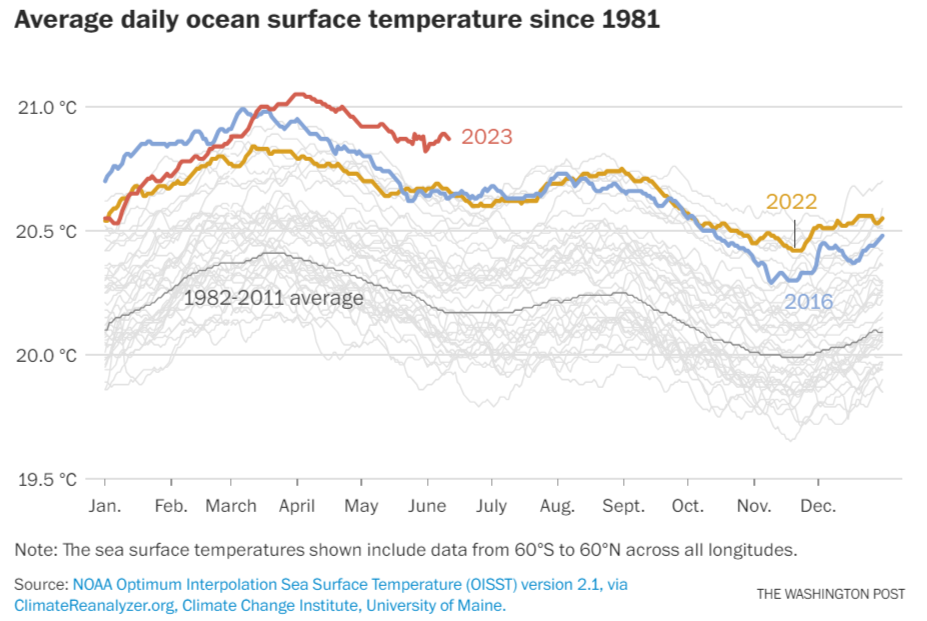
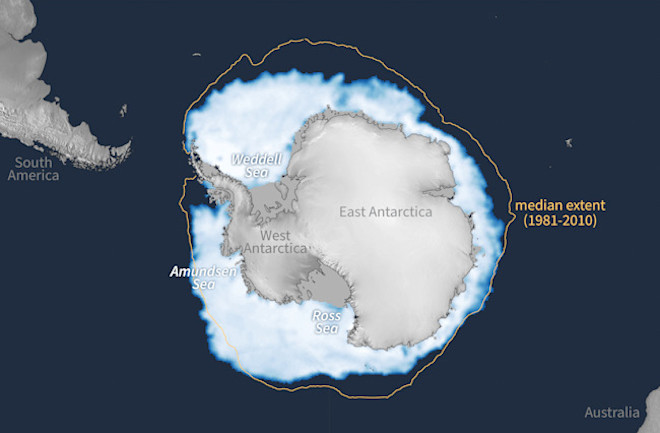
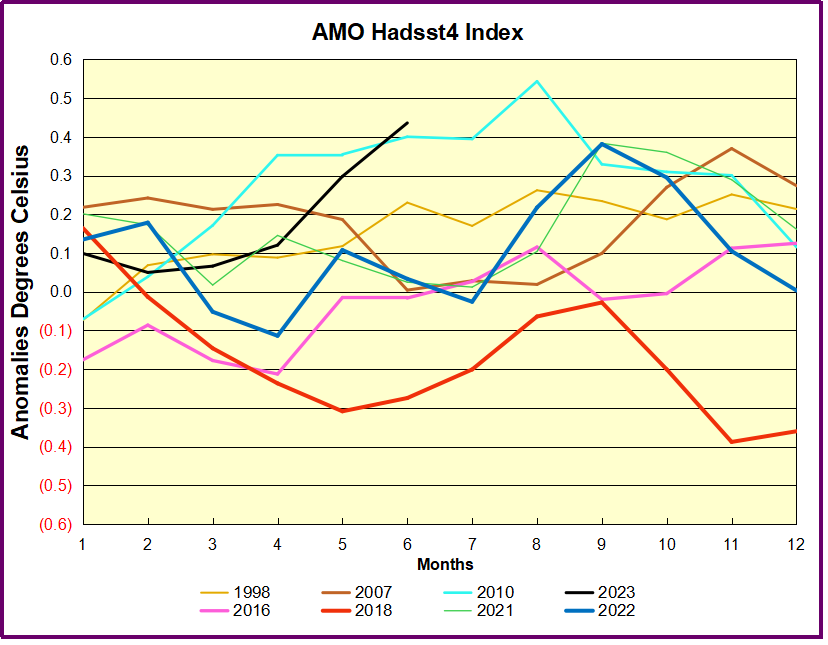


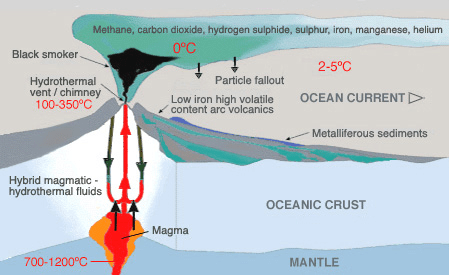
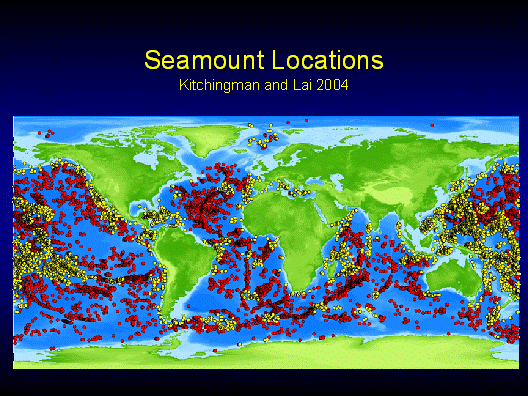


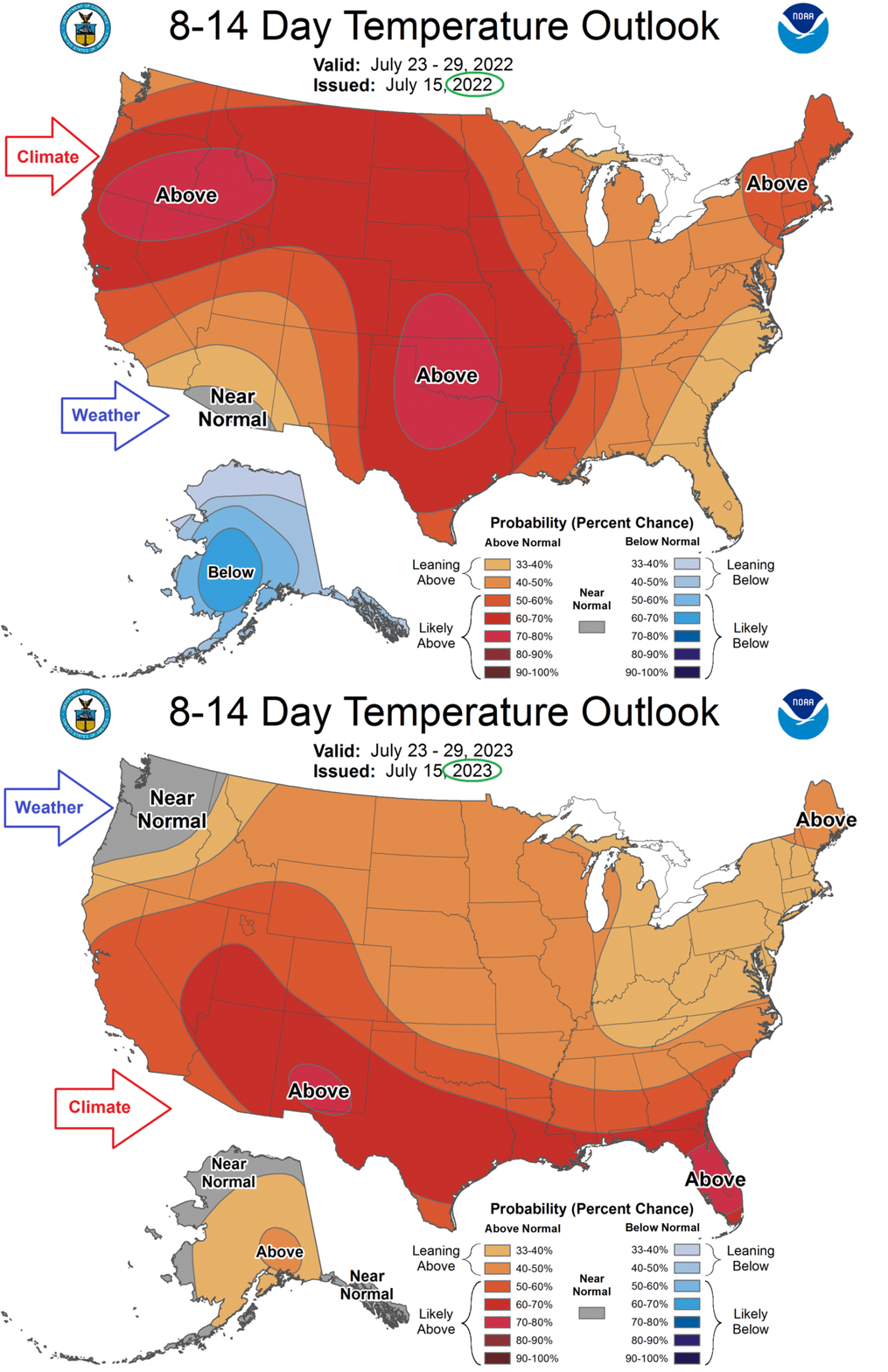
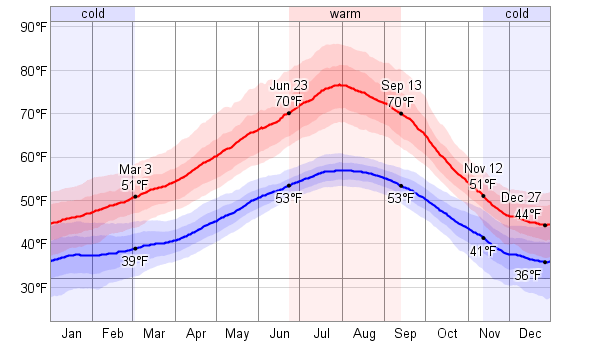
.png)
.png)

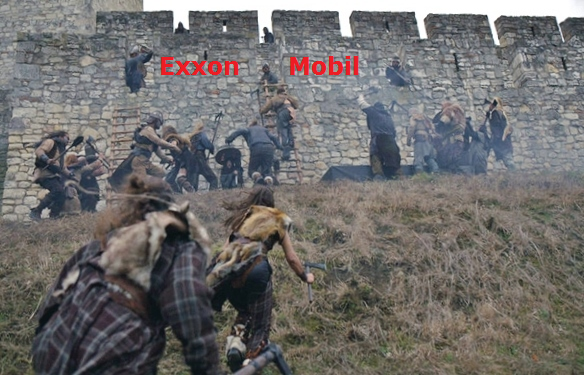
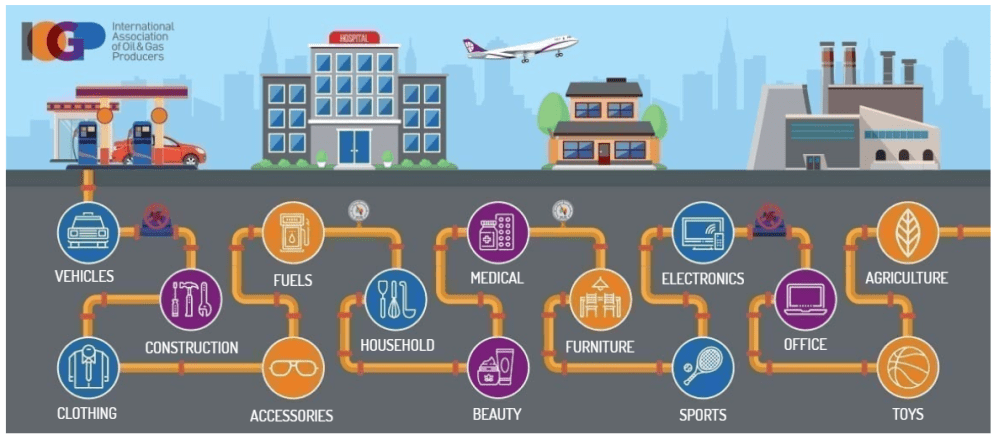
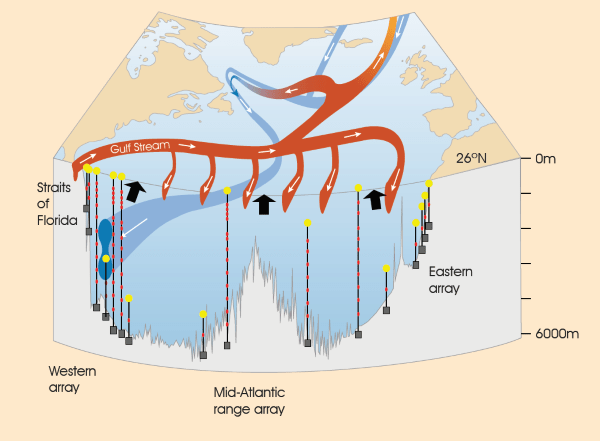


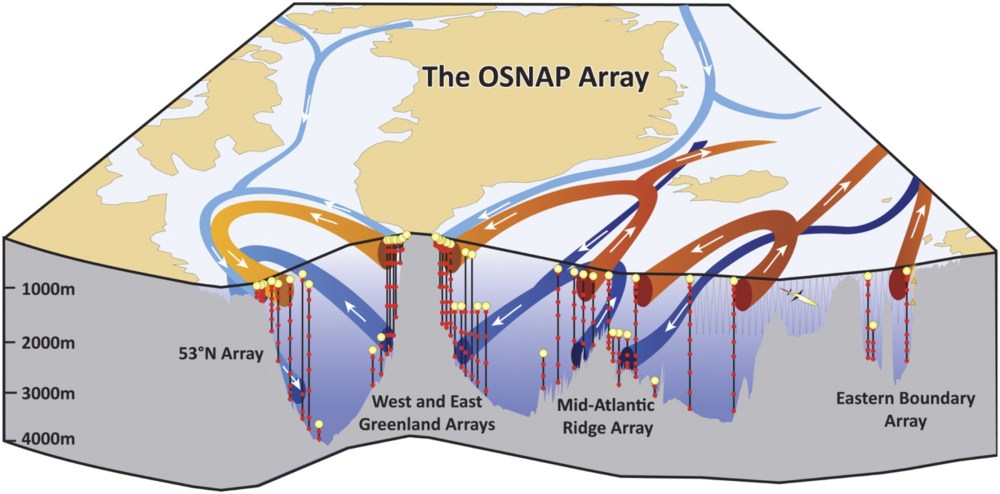
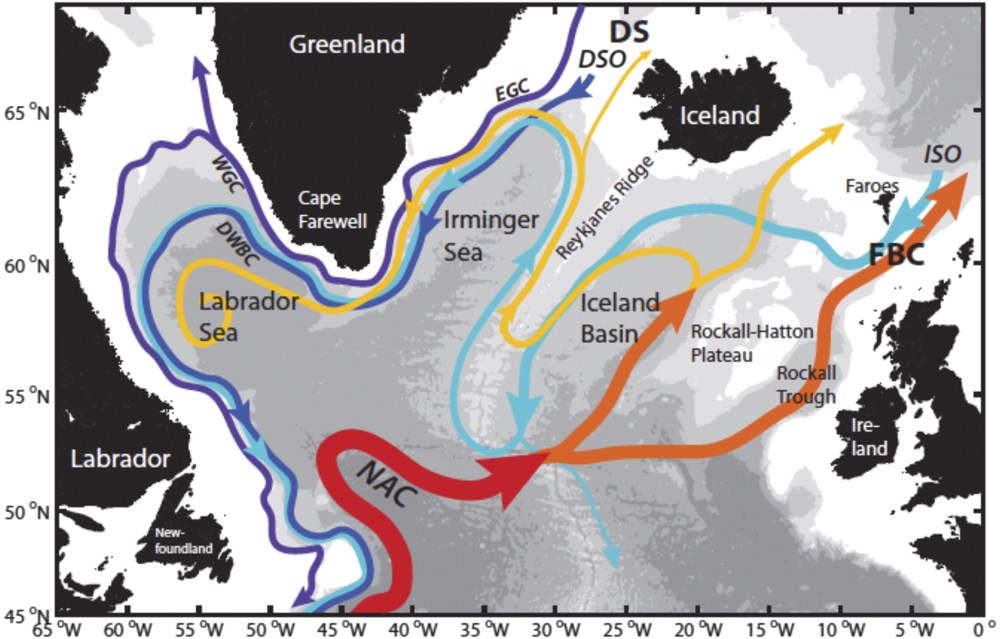



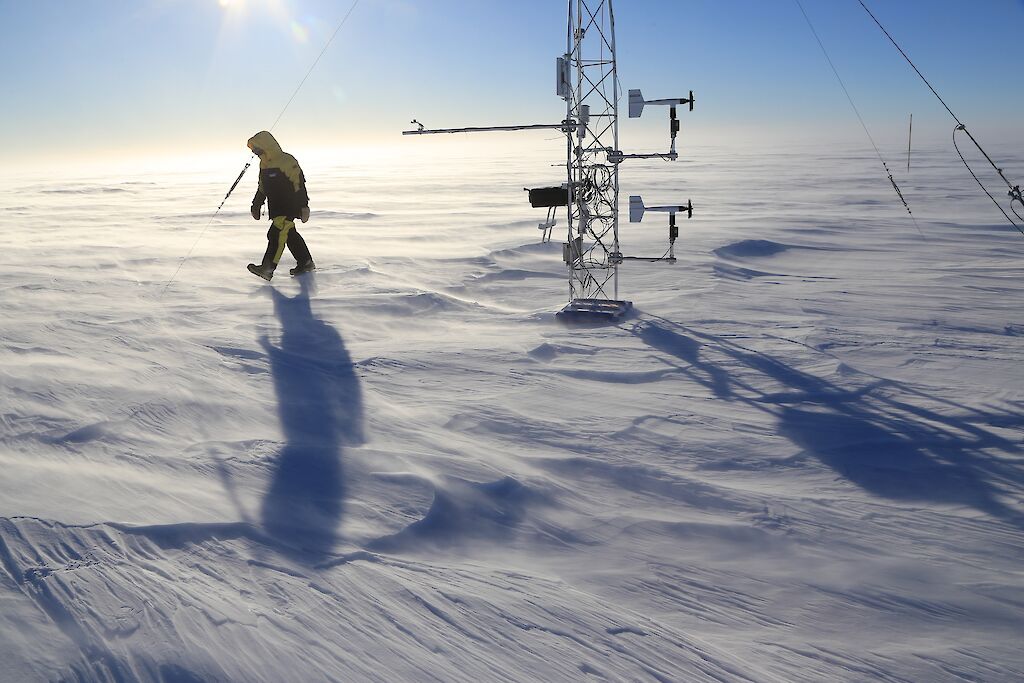
:format(webp):no_upscale()/cdn.vox-cdn.com/uploads/chorus_asset/file/24784984/gfs_spole_sat_t2anom_d1_July12.png)
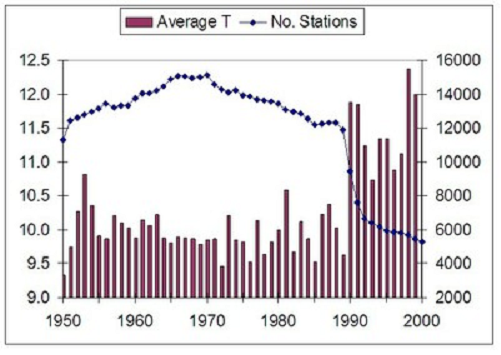
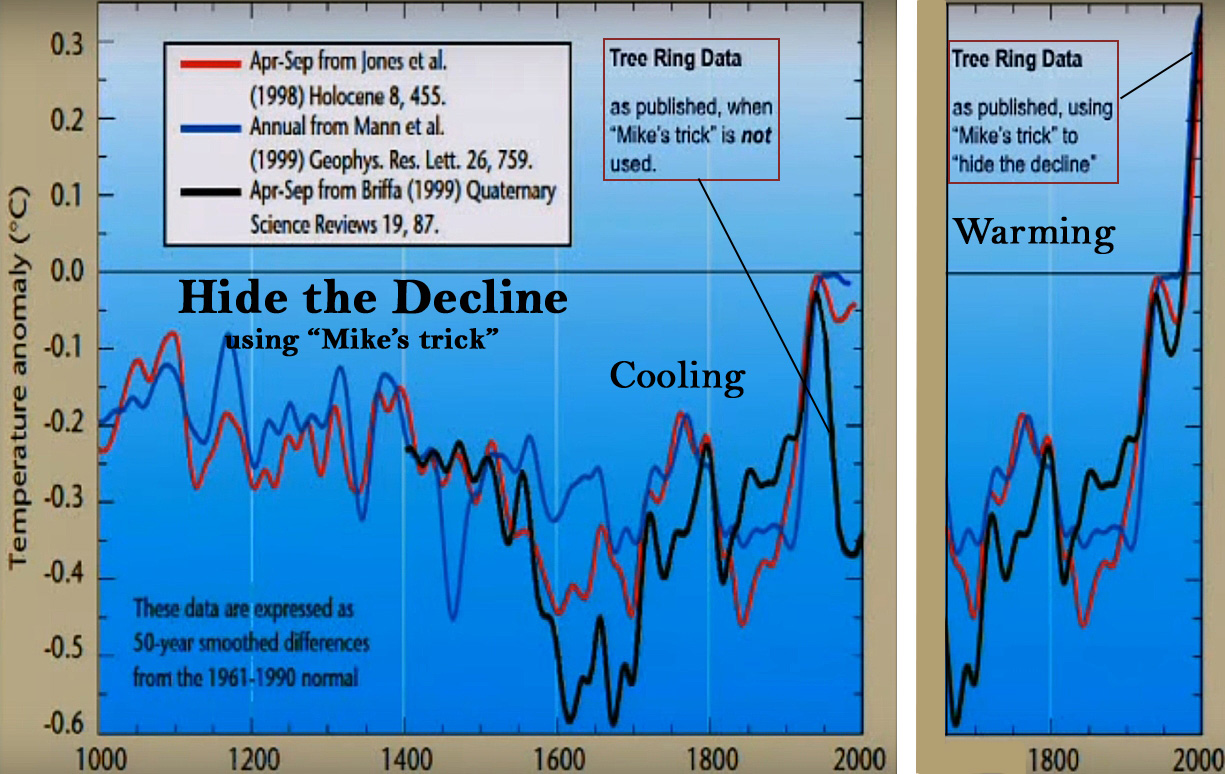


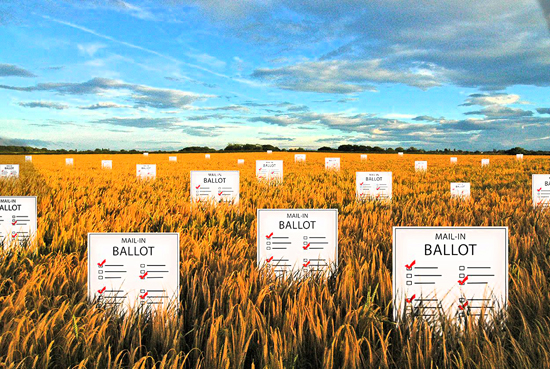 When voters are added to large apartment buildings, leftists cannot add the apartment number, or the legit resident will probably get that ballot. The trick is to mail the ballot to the main address, where it collects, and the Postal Service retrieves it for the bad guys.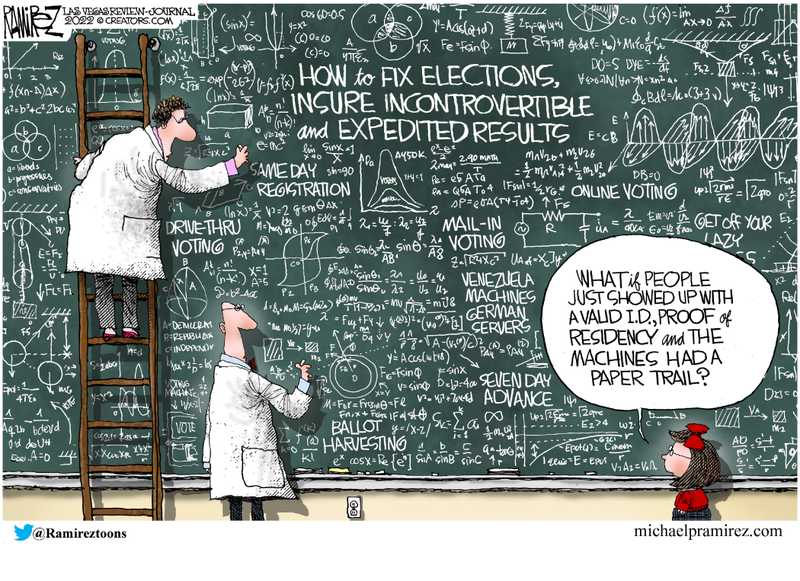

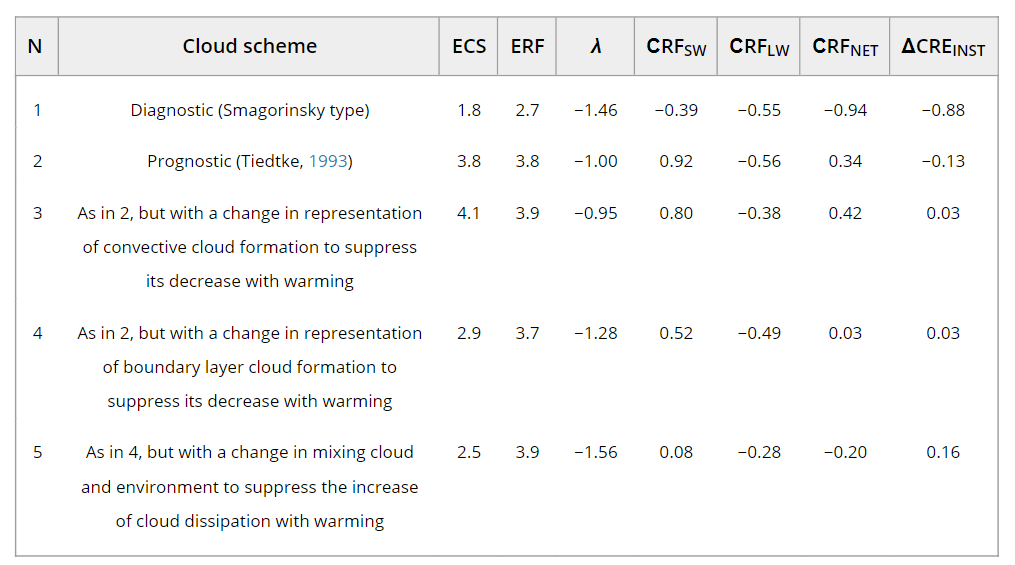

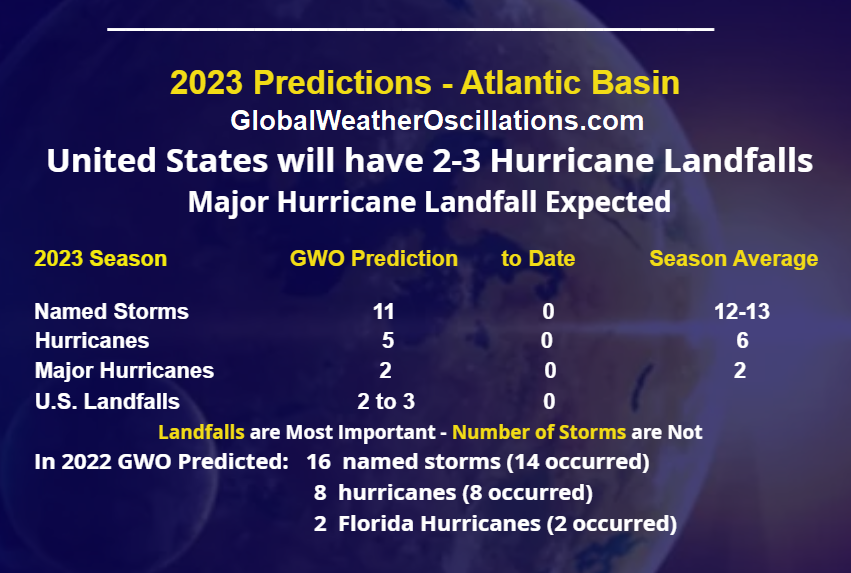

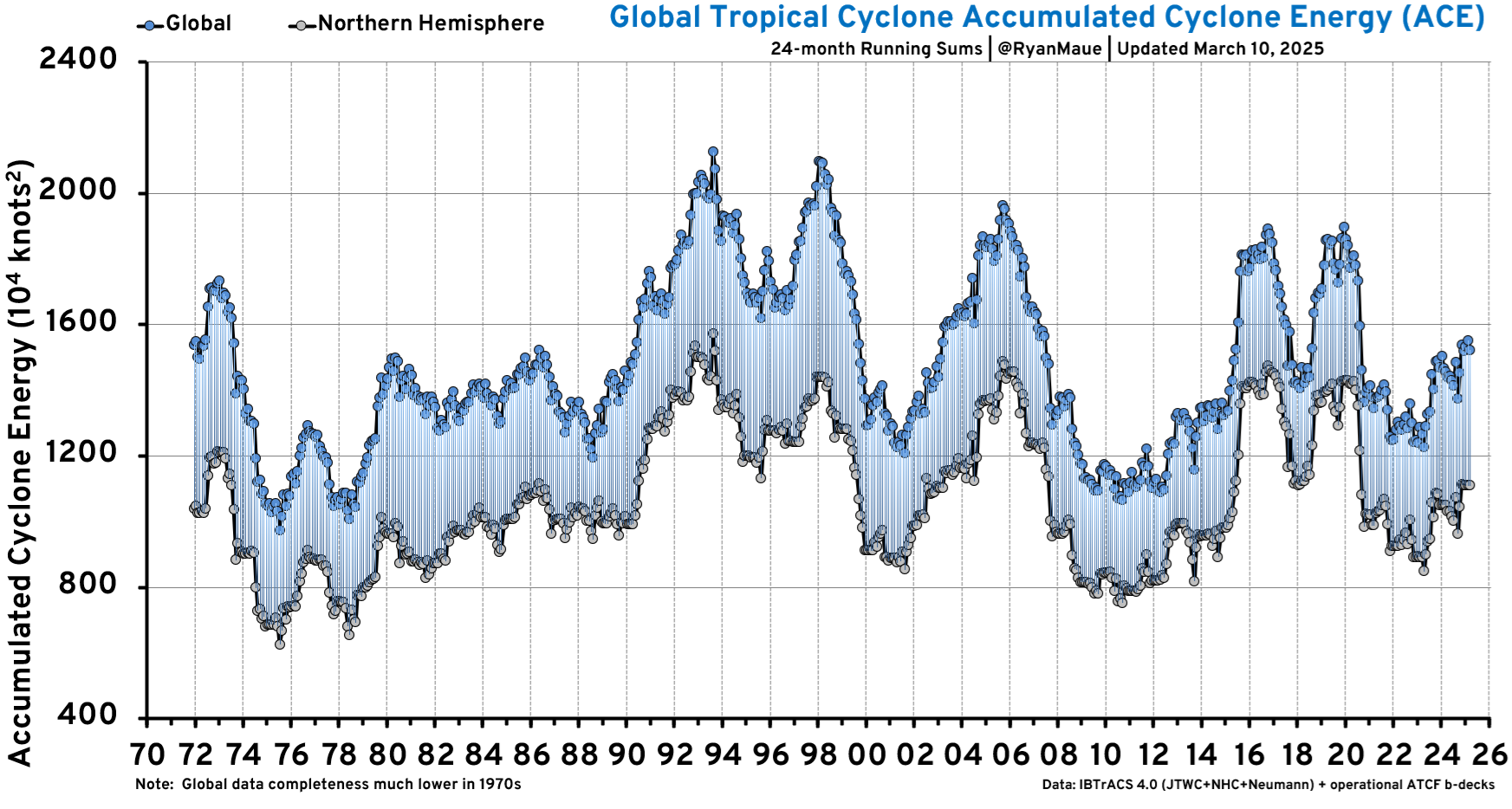

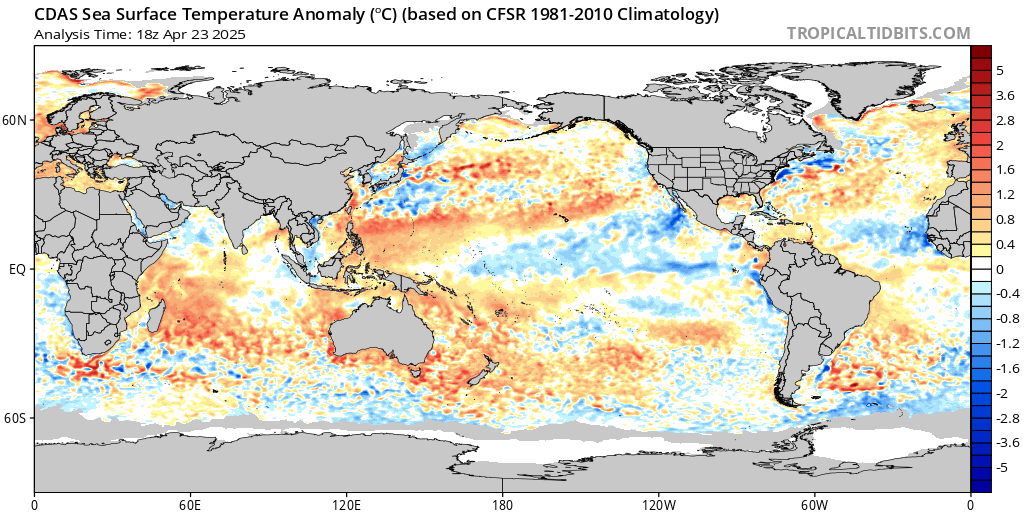

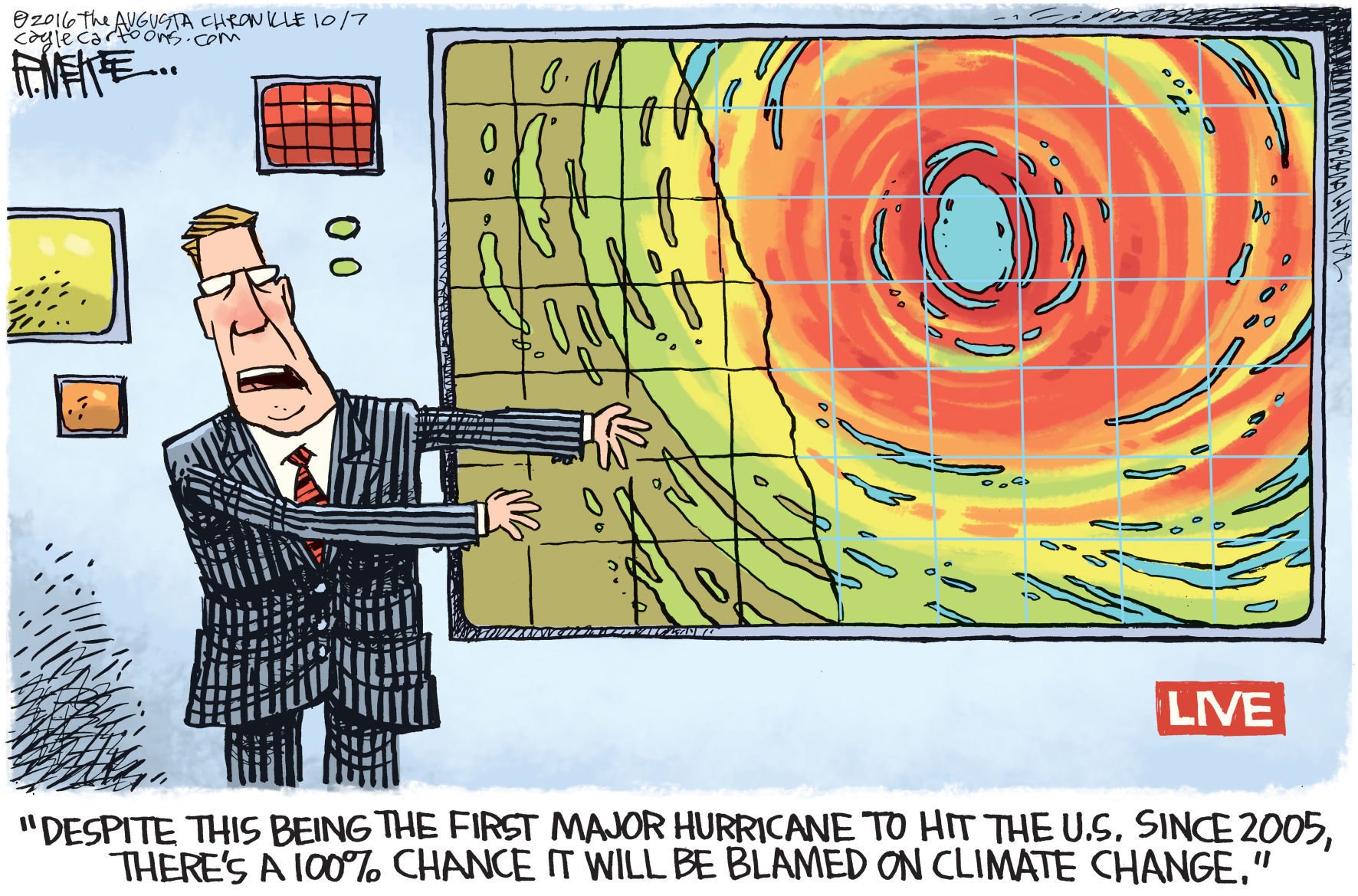












 Science Matters