Climatists Exploit Pensioners and Taxpayers

New York city signed up for “Me Too” commitment to Paris Accord, and the city’s pensioners are paying the price as their retirement funds suffer from virtue signaling divestment from oil companies.  Jeff Patch writes in Real Clear Policy End the Political Games With Public Pensions  Excerpts below with my bolds.

There’s a link on New York City Comptroller Scott Stringer’s website to an outline of his office’s Powers and Duties Under New York State Law. The 159-page overview covers an extensive spectrum of legal responsibilities, ranging from arts and cultural affairs to worker compensation. Nowhere does the list reference shareholder activism, directing city environmental policies, or — for that matter — leveraging the $190 billion in pension fund assets his office stewards to pursue a political agenda.

And yet that’s exactly what Mr. Stringer is doing. The professional investment managers of the city’s five public-sector pension funds, their board members, and Stringer himself are all exploiting their positions as custodians of the retirement savings of the city’s workers to promote their own political objectives. Politics seems to pervade every action of the city comptroller’s office, which just last month announced a plan to divest pension holdings from fossil-fuel interests, regardless of the impact on financial performance.

A new report from the American Council for Capital Formation sheds light on how such political machinations have impacted New York’s public pension funds, highlighting the price residents pay for their leaders’ political predilections. Specifically, the report finds that nearly $1 of every $5 of personal income taxes the city collects go to paying down the pension system’s liabilities. Meanwhile, the liabilities continue to grow, with nearly $10 billion from the City’s proposed 2018 budget needed to cover a pension funding shortfall that ranges between $65 billion and $142 billion.

As the person responsible for the management of those funds, one might expect Mr. Stringer to focus on making prudent investments. Fiscal diligence should be the top priority of any comptroller’s office. Instead, Stringer and his staff have continued using public monies as a political tool to pressure social change in corporate boardrooms.

For instance, last year, his office launched the second phase of a project aimed at pressuring public companies on various social issues, including his Boardroom Accountability Project 2.0, which pushes companies to disclose demographics on members, including their sexual orientation. Over the course of 2017, New York City Comptroller’s Office has become one of the nation’s most aggressive sponsors of activist shareholder proposals, submitting close to 100 measures, including a new initiative to divest public funds entirely from fossil fuels by 2020.

The ACCF report uncovers numerous instances of fiduciary irresponsibility. It reveals how fund managers have chosen to systematically increase investments in the Developed Environmental Activist stocks, despite the classes continued underperformance against the rest of the fund. (Those assets now make up 12 percent of the total fund.) And it details how Stringer prioritizes headline-grabbing political appearances ahead of resolving the under-performance of his funds.

Perhaps most concerning point is that a majority of Stringer’s constituents — the teachers, nurses, policemen, and firefighters who dutifully pay into public pension funds every month — remain oblivious to this emerging crisis. Last week, a separate study released by the Spectrum Group revealed that 80 percent of the city’s current and former employees were unaware that their pensions were not fully funded. Two-thirds of all respondents said they wanted their funds’ managers to concentrate on maximizing their returns.

Taken together, these reports make two points abundantly clear. First, there is a very real disconnect between the objectives of the people who own the funds and their professional managers. Second, this disconnect has consequences not just pension fund members, but also for taxpayers across the city. In short, everybody loses — except Stringer and his political supporters.

The city comptroller has a duty to put the financial interests of taxpayers and public employees above his narrow political ambitions. If Mr. Stringer wants to set social policy, he should run for city or state office instead. Until then, he should focus on safeguarding the future of his constituents’ pension funds.

Climate Shell Game

This post updates the guerrilla warfare conducted by anti-fossil fuel activists against corporations by means of shareholder resolutions.

Update Dec. 6 below:  Investor Activism is also Bad for Pensioners

Background

Last year activists took a scalp from Exxon Mobil when a resolution passed requiring the Board to include business risk assessment from global warming/climate change. The cascade of suppositions underlying that proposal reveals the flimsy logic beneath these financial maneuvers. Details are in the post: How Climate Law Relies on Paris

A New Front is Opened

The Exxon success depended on proxy shares voted in large blocks by firms with huge assets, especially BlackRock and Vanguard. This year pressure was applied to wealth funds to pass “2°C Shareholder Resolutions.” This is basically a proposal that corporations subscribe to the Paris accord, and submit themselves to emission reduction targets, not only regarding their own operations, but also emissions arising from the use of their products (Hello petroleum companies!).

Storming Shell Castle

In May this Paris Subscription ploy was soundly defeated at the Shell annual meeting, and activists are disappointed both by the result and the voting by wealth managers.  Reuters reported Shell shareholders reject emissions target proposal.

The flavor of this campaign is in the text of the resolution and management’s recommendation from the Royal Dutch Shell Annual Meeting Shareholder Information:

 2°C Resolution Highlights:

Shareholders support Shell to take leadership in the energy transition to a net-zero-emission energy system. Therefore, shareholders request Shell to set and publish targets for reducing greenhouse gas (GHG) emissions that are aligned with the goal of the Paris Climate Agreement to limit global warming to well below 2°C.

This shareholder resolution is intended to express shareholder support for a course towards a net-zero-emission energy system. The why of a course towards a net-zero-emission energy system is clear: increasing costs of the extraction of fossil fuels, decreasing costs of generating renewable energy, and the global political pledge to stop global warming. The how and the what are up to the management of Shell. It is up to them to set GHG emission reduction targets and to develop activities to attain these targets.

We the shareholders request that the company publish company-wide greenhouse gas (GHG) emission reduction targets according to the following 3 scopes:

Scope 1: direct emissions from the facilities under Shell’s operational control or the equity boundary,
Scope 2: indirect emissions from the facilities of others that provide electricity or heat and steam to Shell’s operations,
Scope 3: emissions that Shell estimates come from the use of Shell’s refinery products and natural gas products.

Shell Management Comments (Excerpts)

Your Directors consider that Resolution 21 is not in the best interests of the Company and its shareholders as a whole and unanimously recommend that you vote against it.

Shell welcomes and strongly supports the Paris Agreement, and supports the aspiration of transitioning towards a net-zero emissions world by 2050. We will work together with governments and stakeholders towards meeting this aspiration and we commit to report on steps taken.

However, this resolution demonstrates fundamental misunderstanding of the necessary solutions to achieving the Paris goals. The resolution is unreasonable with regard to what the Company can be held accountable for and would be ineffective or even counterproductive for the following reasons:

We are convinced we have all the required flexibility to adapt and remain relevant and successful, no matter how the energy transition will play out. We believe that by tying our hands in the early stages of this evolution, this resolution would weaken the Company and limit our flexibility to adapt.

We are already willing and able players in the energy transition in ways that are uniquely suited to our skills, reach and ambition – all with the ultimate objective of maintaining a sustainable business model. We aim to reduce the greenhouse gas intensity of our own operations over time. From this year we are making part of our remuneration conditional on managing greenhouse gasses.

To achieve a net-zero emissions world requires the widespread transformation of the energy system. . .It demands collective action across the energy system. To impose targets on a single supplier in this complex system does not only fail to address the actual challenge (as it will not reduce system emissions overall because customers will simply turn to alternative suppliers); it would also undermine our ability to play an active role in the transition and would hinder long-term value creation for the Company and its shareholders.
The Battle Mounts Against Electricity Companies

The “Blame and Shame” campaign is exemplified in a report today from advocacy enterprise Preventable Surprises, Missing in Action: Missing 55% fail to step up on climate by Casey Aspin, 5 December 2017.  The taste of sour grapes comes through in the summary:

When the world’s two largest money managers, BlackRock and Vanguard, threw their weight behind a successful 2°C scenario resolution at Exxon last spring, the media hailed a shift in attitudes toward climate risk and, more specifically, the risk of assets being stranded by the need for rapid emissions reduction. Preventable Surprises has released a report scoring the ten largest investors in utilities on their proxy voting record in the sector.

It highlights the contradiction between the Exxon vote and those cast in the utility sector, the largest source of greenhouse gas emissions in the US. BlackRock and Vanguard voted against 2°C resolutions at all nine US utilities targeted by shareholders for increased climate risk disclosure. In response to our questions, both asset managers provided statements expressing a preference for private engagement over public proxy votes.

Private engagement lacks accountability, transparency, or metrics. That is why the Task Force on Climate-Related Financial Disclosure (TCFD) recommended this year that all publicly traded companies provide the level of transparency sought in the 2°C scenario resolutions, which ask companies to disclose how they are managing the risks and opportunities that arise from aligning with the Paris Agreement. The TCFD is seeking to reduce systemic risk in financial markets–a goal shared by Preventable Surprises.

It is alarming that the two largest utilities investors could not find a single US utility where climate risk management was weak enough to merit public support for a 2°C resolution. Many coal-dependent US utilities have not only resisted the transition to renewable generation (which is both cleaner and now cheaper in many markets), they also have fought government policy aimed at reducing emissions.

Private engagement does not work in a sector where coal plants are subsidised by ratepayers in highly regulated states, increasing the risk of stranded assets. Fiduciary responsibility dictates that both portfolio risk and planetary risk require more forceful stewardship than the largest investors have shown to date. We hope the owners of the assets managed by Vanguard and BlackRock use this report to discuss with their managers how they are assessing risk in the most fossil fuel-intensive sector in America.

Summary

It is no surprise that energy companies are unwilling to vote themselves out of business, even while espousing belief in global warming/climate change. And it appears that wealth fund managers are down with risk assessments, but not for setting emissions reduction targets. They must know that any such commitments will bring the heavy legal artillery lobbing massive lawsuits in the name of accountability.

Update Dec. 6 :  Investor Activism is also Bad for Pensioners

From article at RealClearMarkets: Pension Funds’ Rush to Go Green Costs Retirees Their Green

For index fund managers and pension fund leaders to push an environmental agenda on the companies they invest in potentially entails more risk and lower returns on the wealth of those whose money they hold. According to a report released this week by the American Council for Capital Formation (ACCF), the California Public Employees Retirement System (CalPERS) — the nation’s largest public pension fund – has ramped up its focus on such ventures. The result: environmentally-driven funds made up four of the nine worst performing funds in the CalPERS portfolio and represented none of the system’s 25 top-performing funds this past year. As this focus on ESG-efforts has increased, CalPERS has moved from a $3 billion pension surplus in 2007 to a reported $138 billion deficit today. Yet those who manage the fund remain unwilling to put their own money on the line; the personal investment portfolios of the fund’s Chief Investment Officer and at least two other senior executives report no ESG-related investments at all. What’s up with that?

The ACCF report also highlights the role that CalPERS plays in convincing (some might say pressuring) other large institutional investors to join alongside it in attacking companies it invests in via the submission of shareholder proposals. BlackRock, which generates many millions in management fees from CalPERS each year, and which is currently vying to run the pension fund’s $26 billion private equity arm, voted alongside CalPERS on putatively ESG-related proposals for the first time in its history this past proxy season. According to Bloomberg, the combined assets of BlackRock and Vanguard alone are set to top $20 trillion by 2025. These two own basically everything in the universe. If activist funds like CalPERS are able to force passive funds like those controlled by BlackRock and Vanguard to join its ESG-masked-as-corporate-governance crusade, we’re in for a heck of a ride. And not in a good way.

It may be tempting to urge public pension managers to take a more proactive role and bet against companies whose products some of us, for whatever reason, disapprove of — or for those managers to use their positions to influence the business decisions of firms in which they have a stake. However, it would be much better for government workers, retirees, and taxpayers today and in the future if the investors managing the money of public pensions prioritized sound financial policy above all else.

Climate Activists storm the bastion of Exxon Mobil, here seen without their shareholder disguises.


Crunching Climate $$$

The Paris agreement involves estimates of future damages because of global warming assumed to be caused by burning of fossil fuels. Looking into the numbers raises a surprising predicament, as explained by Ronald Bailey of Reason Magazine. The title of his article points to the problem:

Climate Change Will Reduce Incomes in 2100 from $97,000 to $95,000

Global per capita income now is $10,000. How much should we spend to prevent climate change losses in 2100?

Set aside the flawed science claiming CO2 is the climate control knob, even the damage estimates pale in comparison with the march of prosperity. Bailey works with the numbers from alarmist economists Nordhaus and Moffatt. Excerpt below with my bolds.

The Yale economist William Nordhaus has spent decades using a combination of econometric and climate models to estimate global warming’s future effects. He isn’t the only researcher who’s been attempting to make such projections, and Nordhaus’ latest study considers a range of different estimates. (Get your salt shaker ready.)

In a new National Bureau of Economic Research working paper, Nordhaus and his colleague Andrew Moffatt survey 36 different estimates (derived from 27 studies) of climate change’s impact on gross world product by the year 2100. Nordhaus and Moffatt note that “there are many studies of theoretical temperature increases in the 2 to 4°C range, and that they cluster in the range of a loss of 0 to 4% of global output.” After crunching the numbers, they report:

The estimated impact from the preferred regression is 1.63% of income at 3°C warming and 6.53% of income at a 6°C warming. We make a judgmental adjustment of 25% to cover unquantified sectors….With this adjustment, the estimated impact is -2.04 (+ 2.21)% of income at 3°C warming and -8.16 (+ 2.43)% of income at a 6°C warming.

The authors note that the Intergovernmental Panel on Climate Change’s Fifth Assessment Report declined to make an estimate of future losses, but in the Fourth Report, the panel stated that “Global mean losses could be 1 to 5% of GDP for 4°C of warming.” This means that Nordhaus and Moffatt’s findings are broadly in line with the climate change consensus.

So what do these findings portend for people lucky enough to be alive in 2100? Let’s consider the best-case scenario first. Annual gross world product is currently somewhere around $75 trillion, which without adjustments means that global income stands at around $10,000 per capita. Assume 3 percent economic growth from now until 2100, and a global population that year of 9 billion. Without climate change, world GDP would rise to $872 trillion and income would be $97,000 per capita. Assuming a 3°C increase in average temperature, that would reduce global GDP from $872 trillion to $854 trillion, and income to $95,000 per capita. At 6°C, the figures would be $800 trillion and $89,000 per capita.

In the unlikely event that global economic growth dawdles along at only 2 percent per year for the rest of this century, gross world product would rise to only $388 trillion and income to $43,000 per capita without warming. A 3°C rise in average temperature would reduce global GDP to $380 trillion and income to $42,000 per person; a 6°C increase would cut global GDP to $360 trillion and income to $40,000 per person.

The Nordhaus and Moffatt survey of studies also found “no indication from the damage estimates of a sharp discontinuity or high convexity.” In other words, the studies do not identify threshold effects in which damages from climate change accelerate in the future.

These calculations bring up this question: How much should people living today making an average of $10,000 apiece spend in order to prevent the future incomes from falling from $97,000 to $95,000 per capita?

Now is the time to get out your salt shaker and liberally apply the sodium chloride to these calculations.

See also post Climate Policies Gouge the Masses

Excerpt: David R. Henderson, public policy economist at the Stanford Hoover Institution, puts the issue this way:

Claims that human-caused global warming will raise average temperatures by 2C to 5C over the next 100 years and cause serious harm to society are controversial. However, assuming that global warming will be a big problem, there are two important questions: (1) What should be done about it? and (2) When should it be done?

There is much debate about what discount rate to use when comparing environmental costs and benefits. Generally, the more one values today’s dollars over tomorrow’s, the higher is one’s discount rate. At one extreme, an infinitely high discount rate would imply that we place almost no value on future consumption. Conversely, using a discount rate of zero means that benefits today are no more valuable than benefits 100 years from now..

However, the choice of which discount rate to use is not about the weight given to the well-being of future generations but about opportunity costs. Investments people make today are likely to increase the wealth of their descendants, giving future generations greater resources to exercise their preferences regarding environmental protection.

The higher the rate of return that can be earned by investing a dollar today, the more wealth future generations are deprived of if the money is spent now. Thus, Kevin Murphy of the University of Chicago argues that we should use the market interest rate as the discount rate because that is the opportunity cost of climate mitigation. Interestingly, even Stern’s own model assumes that people 200 years from now will have real incomes that are more than 10 times incomes today. This means that if the government taxes people today explicitly or through regulations to reduce climate change 200 years from now, the government will be taxing the poor to help the rich.


Business Climate Advice

Climate Activists storm the bastion of Exxon Mobil, here seen without their shareholder disguises.

It’s not only big oil companies under siege from anti-fossil fuel activists. All businesses, small and large, private and publically traded are in the crosshairs.

Robert Bradley has a recent post directed at leaders of businesses, both large and small with respect to global warming/climate change. The article is Climate Alarmism and Corporate Responsibility at Master Resource. It is important advice since the large majority of business people are ethical and want to do the right thing, but their good intentions can be used against them in the current feverish media and political environment.

Everyone including business leaders needs to distinguish between two related but different threats from global warming/climate change. The first is the direct impacts upon one’s business and livelihood from natural conditions. The second is the indirect threat to prosperity from misguided public policies to “fight climate change.”

Climate Science: Where’s the Alarm?

On the outlook for the climate, of course there are both risks and opportunities to anticipate. Corporate plans typically involve assumptions and projections considered to be believable to a “reasonable person.” And as Bradley points out, no reasonable person can be expected to go beyond IPCC science, which is premised on concerns about global warming/climate change. Bradley:

Climate alarmism is not supported by the scientific reports of the Intergovernmental Panel on Climate Change (IPCC) on close inspection. There is no direct linkage between the IPCC finding that “the balance of evidence suggests a discernible human influence on climate” and climate alarmism. In fact, there is ample evidence in the scientific literature that the enhanced greenhouse effect is benign. Top climate economists have gone further to conclude that a warmer and wetter world predicted by climate models would produce net benefits in future decades for the United States and other areas of the world with the free market means to adapt. (my bold)

Corporate policymakers can discount climate alarmism by understanding several key arguments and facts:

  • Increasing atmospheric concentrations of carbon dioxide (CO2), the preeminent anthropogenic greenhouse gas, benefit plant life and agricultural productivity and are not a direct human health issue. It will be centuries before the plant optimum concentration is reached and exceeded, creating a long potential glide path for hydrocarbon energies to “green” planet earth. 
  • The surface warming (“greenhouse signal”) of recent decades shows a relatively benign distribution. Minimum (night, winter) temperatures have been increasing twice as much as maximum (daytime, summer) temperatures.[9] Higher nighttime temperatures and longer growing seasons reinforce the aforementioned carbon fertilization effect to aid plant growth and agricultural productivity.

  • Model-estimated warming from anthropogenic effects has fallen over time. . .The chart above shows IPCC (2007) projecting warming at 0.38C per decade and the last report (2013) dropped to 0.17 C per decade. With a more than 50 percent drop in the IPCC estimate in six years, there is clear evidence that model revision and more realistic forcing scenarios have weakened the alarmist scenario.

  • Today’s lower model-predicted warming estimates may still be too high. At the half way point of the feared doubling of the warming potential greenhouse gases in the atmosphere, the model scenarios are over predicting warming by a factor of two or more.

  • The two global temperature measurements from satellites and balloons in their two decades of existence have not picked up the “greenhouse signal” where it should be most pronounced or at least discernible—the lower troposphere. This suggests that surface thermometers may be overestimating warming and/or the surface warming is primarily the result of other factors than just the enhanced greenhouse effect (such as increased solar radiation). A natural warming trend neuters the case for climate alarmism.

  • The reduced growth rate of greenhouse gas buildup in the atmosphere in the last decade, as much as half the rate of some alarmist scenarios, extends the warming timetable to facilitate adaptation under any scenario. The reduced buildup is primarily related to greater carbon dioxide intake—the “greening of planet earth” phenomenon of robust carbon sinks.

  • Scientists who are confident about pinpointing the greenhouse signal from the surface temperature record have not substantiated a greenhouse signal with weather extremes. “Overall,” concluded the IPCC, “there is no evidence that extreme weather events, or climate variability, has increased, in a global sense, through the 20th century, although data and analyses are poor and not comprehensive.”


Business leaders have to balance the needs and interests of various stakeholders in the enterprise: principally the customers, the employees and the investors, as well as the larger society. Today’s social context presents the hazards of misguided public policies and regulations against fossil fuels, despite the unconvincing science case for them. The main risks are more expensive and unreliable power, more costly energy of all kinds, and a sluggish economy burdened with unnecessary expenses. To cope, Bradley makes some “no regrets” suggestions:

“No regret” policies—policies that are economical whether or not GHG emissions are worth addressing—should be pursued in their own right to help defuse the climate change issue. A prominent example is for businesses to profitably lower their energy usage wherever possible. Energy service companies in recent years have executed long-term contracts with guaranteed savings to completely manage the energy function of commercial and industrial users. Total energy outsourcing improves the allocation of core competencies and creates new incentives for optimal energy usage to benefit each party to the agreement.  (my bold)

Other pro-market “no regret” public policies that would have the effect of profitably reducing greenhouse gas emissions over time include:

  • Reducing criteria air pollutants in urban areas not in compliance with the Clean Air Act. 
  • Modernizing and simplifying the tax code to provide more incentives for capital-intensive businesses to modernize their physical capital, thus lowering energy usage and related GHG emissions. 
  • Maintaining incentives (or removing disincentives) for hydroelectric and nuclear power generation facilities that produce carbon-free electricity.Increasing energy conversion efficiencies of new electric generation capacity and a growing market share of natural gas-fired power relative to coal are natural market processes that will complement the above public policy reforms. Together, they will ensure that GHG emissions are not greater than their free market levels and will continue to fall per unit of output (the decarbonization phenomenon).

Summary

Agenda-driven climate alarmism should be rejected by corporate America on pragmatic and social responsibility grounds. Not only does the balance of evidence point toward net social benefits from a carbon dioxide enriched and moderately warmer and wetter world. Energy reality concludes that any short-term regulatory approach is futile and wasteful compared to perfecting business-as-usual strategies and using the wealth of energy abundance and free global markets to adapt to any weather and climate conditions in the future.


Reuters Misleads on Investor Support for AGW

Reuters published today 2017 tables listing sovereign investors in two categories: Leaders and Laggards. I noticed that the laggard table included the assets size of funds, while the leader table did not. So I went to the report itself by the Asset Owners Disclosure Project (AODP) which is leading the effort to blame and shame investors away from fossil fuel companies.

There you find in fact they apply five categories according to how enthusiastically a fund complies with climate change doctrine.  From the AODP Report:

The AODP Global Climate 500 Index rates the world’s 500 biggest asset owners – pension funds, insurers, sovereign wealth funds, foundations and endowments – on their success at managing climate risk within their portfolios, based on direct disclosures and publicly available information.

This year also sees the launch of the first AODP Global Climate Index for Asset Managers, rating the world’s 50 largest asset managers on their success at managing the financial risks of climate change for their clients.

It follows the same methodology. Asset owners and managers are scored on three key capabilities which align with the four key areas highlighted by the FSB Task Force on Climate-related Financial Disclosures: Governance & Strategy, Portfolio Carbon Risk Management and Metrics & Targets. They are graded from AAA to D while those with no evidence of action are rated X.

GOVERNANCE & STRATEGY – Organisation structure and approach it uses to oversee climate risk objectives. – Degree of integration of climate risk principles in the organisation’s policies and processes

PORTFOLIO RISK MANAGEMENT – Variety and effectiveness of tools and approaches used to evaluate and manage climate change related financial risks and opportunities. This includes engagement, voting practices, and portfolio management tools.

METRICS & TARGETS – Key metrics used to measure, monitor and compare portfolio climate risk management performance, including the value asset owners have invested in low carbon assets.

The AODP Report applies a lot of lipstick to the numbers in the interest of boosterism for their project and their cause. But a different story is evident from the numbers, according to their own analysis. For example, here are the 2017 results for the world’s top 500 Asset Owners (AUM=Assets Under Management)

2017 Asset Owners by Rating # Asset
Owners
    AUM
US$ Billion
% AUM
Leaders Top 7% 34 $4,163 10%
Challengers 7% – 14% 34 $3,103 8%
Learners 14% – 22% 44 $3,395 9%
Bystanders 22% – 60% 187 $16,556 42%
Laggards, Zero X Bottom 40% 201 $12,508 31%
Total 500 $39,725 100%

Unreported anywhere is the fact 73% of the wealth in these funds is in the bottom two compliance categories.  In fact the laggard funds are six times as numerous and have 3 times the assets of the leaders.  Below is the table of 2017 results for the top 50 Asset Managers (Firms investing on behalf of clients).

2017 Asset Managers by Rating # Asset
Managers
AUM US$ Billion % AUM
Leaders Top 4% 2 $1,582 4%
Challengers 4-20% 8 $4,649 11%
Learners 20-46% 13 $13,451 31%
Bystanders 46-94% 24 $20,557 47%
Laggards, Zero X Bottom 6% 3 $3,199 7%
Total 50 $43,437 100%

The report on the top 50 Asset Managers shows them more responsive to social pressure. This was also evident in the recent Exxon shareholder climate resolution where two large asset managers made the difference. Even so, more than half of the firms and half of the assets got the bottom two ratings.

Conclusion

Despite some progress in converting capital managers to seek climate virtue rather than capital gains, most of the wealth is still focused on investment return.

Background on the climate financial strategy and Exxon is at How Climate Law Depends on Paris

ROI = Creating Value

How Climate Law Relies on Paris


Climate Activists storm the bastion of Exxon Mobil, here seen without their shareholder disguises.

On the same day POTUS announced US withdrawal from Paris accord, a majority of Exxon Mobil shareholders approved a resolution asking management to assess the value of corporate assets considering a global move toward a low-carbon future. Here is the resolution, filed by the New York State Comptroller:

RESOLVED: Shareholders request that, beginning in 2018, ExxonMobil publish an annual assessment of the long-term portfolio impacts of technological advances and global climate change policies, at reasonable cost and omitting proprietary information. The assessment can be incorporated into existing reporting and should analyze the impacts on ExxonMobil’s oil and gas reserves and resources under a scenario in which reduction in demand results from carbon restrictions and related rules or commitments adopted by governments consistent with the globally agreed upon 2 degree target. This reporting should assess the resilience of the company’s full portfolio of reserves and resources through 2040 and beyond, and address the financial risks associated with such a scenario.

Background:

This century climatists woke up to their losing the battle for public opinion for onerous and costly reductions to fossil fuel usage. They turned toward the legal system to achieve their agenda, and the field of Climate Law has become another profession corrupted by climate cash, along side of Climate Medicine.

In addition to numerous court lawsuits, and also civil disobedience cases, there has been a concerted, well-funded and organized divestment move against companies supplying fossil fuels to consumers. The intention is to at least tie up in red tape Big Oil, indeed Small Oil as well. The real hope is to weaken energy producers by depriving them of investors to the point that reserves are left in the ground, as desired by such activists as 350.org.

In 2016 virtually the same resolution was dismissed by shareholders with only 38% approving. The difference this year was the switch by BlackRock Inc. and Vanguard Group, two of the world’s largest asset managers. As reported by Fox News (here):

Investment products such as exchange-traded funds that track the performance of indexes often come at a lower cost than traditional mutual funds and have gathered assets at a clip in recent years. That growth has given firms like BlackRock and Vanguard increasing sway on shareholder votes. But the firms in turn have come under activist pressure to take stances on issues such as climate disclosure.

When BlackRock sided with Exxon and against a similar proposal at the company’s annual meeting a year ago, it faced backlash from investors and environmental activists. This year BlackRock said the disclosure of climate risks would be among its key engagement priorities with senior executives.

Exxon Mobil board must now show they are taking this proposal seriously, and activists will be looking for company assets to be “stress tested” with the hope that the shares become more risky. At the very least, management will have to put more time and energy into opining on various scenarios of uncertain content and probabilities relating to the wish dreams of climatists.

Balancing on a cascade of suppositions.

We can look into the climate activist mental frame thanks to documents supporting the current strategy using the legal system to implement actions against fossil fuel consumption.

For example, there is this recent text explaining the shareholder proposal tabled at ExxonMobil annual meeting. From Attorney Sanford Lewis:

The Proposal states:

“RESOLVED: Shareholders request that by 2017 ExxonMobil publish an annual assessment of long term portfolio impacts of public climate change policies, at reasonable cost and omitting proprietary information. The assessment can be incorporated into existing reporting and should analyze the impacts on ExxonMobil’s oil and gas reserves and resources under a scenario in which reduction in demand results from carbon restrictions and related rules or commitments adopted by governments consistent with the globally agreed upon 2 degree target. The reporting should assess the resilience of the company’s full portfolio of reserves and resources through 2040 and beyond and address the financial risks associated with such a scenario.

Now let’s unbundle the chain of suppositions that comprise this proposal.

  • Supposition 1: A 2C global warming target is internationally agreed.
  • Supposition 2: Carbon Restrictions are enacted by governments to comply with the target.
  • Supposition 3: Demand for oil and gas products is reduced due to restrictions
  • Supposition 4: Oil and gas assets become uneconomic for lack of demand.
  • Supposition 5: Company net worth declines by depressed assets and investors lose value.

1.Suppose an International Agreement to limit global warming to 2C.

From the supporting statement to the above proposal, Sanford Lewis provides these assertions:

Recognizing the severe and pervasive economic and societal risks associated with a warming climate, global governments have agreed that increases in global temperature should be held below 2 degrees Celsius from pre-industrial levels (Cancun Agreement).

Failing to meet the 2 degree goal means, according to scientists, that the world will face massive coastal flooding, increasingly severe weather events, and deepening climate disruption. It will impose billions of dollars in damage on the global economy, and generate an increasing number of climate refugees worldwide.

Climate change and the risks it is generating for companies have become major concerns for investors. These concerns have been magnified by the 21st Session of the Conference of the Parties (COP 21) in Paris, where 195 global governments agreed to restrict greenhouse gas (GHG) emissions to no more than 2 degrees Celsius from pre-industrial levels and submitted plans to begin achieving the necessary GHG emission reductions. In the agreement, signatories also acknowledged the need to strive to keep global warming to 1.5 degrees, recognizing current and projected harms to low lying islands.

Yet a careful reading of UN agreements shows commitment is exaggerated:
David Campbell (here):

Neither 2°C nor any other specific target has ever been agreed at the UN climate change negotiations.

Article 2 of the Paris Agreement in fact provides only that it ‘aims to strengthen the global response to the threat of climate change … including by the holding the increase to well below 2°C’. This is an expression, not of setting a concrete limit, but merely of an aspiration to set such a limit. It is true that Article 2 is expressed in a deplorably equivocatory and convoluted language which fails to convey this vital point, indeed it obscures it. But nevertheless that is what Article 2 means.

Dieter Helm (here):

Nothing of substance has been achieved in the last quarter of a century despite all the efforts and political capital that has been applied. The Paris Agreement follows on from Kyoto. The pledges – in the unlikely event they are met – will not meet the 2C target, shipping and aviation are excluded, and the key developing countries (China and India) are not committed to capping their emission for at least another decade and a half (or longer in India’s case)

None of the pledges is, in any event, legally binding. For this reason, the Paris Agreement can be regarded as the point at which the UN negotiating approach turned effectively away from a top down approach, and instead started to rely on a more country driven and hence bottom up one.

Paul Spedding:

The international community is unlikely to agree any time soon on a global mechanism for putting a price on carbon emissions.

2: Suppose Governments enact restrictions that limit use of fossil fuels.

Despite the wishful thinking in the first supposition, the activists proceed on the basis of aspirations and reporting accountability. Sanford Lewis:

Although the reduction goals are not set forth in an enforceable agreement, the parties put mechanisms in place for transparent reporting by countries and a ratcheting mechanism every five years to create accountability for achieving these goals. U.N. Secretary General Ban Ki-moon summarized the Paris Agreement as follows: “The once Unthinkable [global action on climate change] has become the Unstoppable.”

Now we come to an interesting bait and switch. Since Cancun, IPCC is asserting that global warming is capped at 2C by keeping CO2 concentration below 450 ppm. From Summary for Policymakers (SPM) AR5

Emissions scenarios leading to CO2-equivalent concentrations in 2100 of about 450 ppm or lower are likely to maintain warming below 2°C over the 21st century relative to pre-industrial levels. These scenarios are characterized by 40 to 70% global anthropogenic GHG emissions reductions by 2050 compared to 2010, and emissions levels near zero or below in 2100.

Thus is born the “450 Scenario” by which governments can be focused upon reducing emissions without any reference to temperature measurements, which are troublesome and inconvenient.

Sanford Lewis:

Within the international expert community, “2 degree” is generally used as shorthand for a low carbon scenario under which CO2 concentrations in the earth’s atmosphere are stabilized at a level of 450 parts per million (ppm) or lower, representing approximately an 80% reduction in greenhouse gas emissions from current levels, which according to certain computer simulations would be likely to limit warming to 2 degrees Celsius above pre-industrial levels and is considered by some to reduce the likelihood of significant adverse impacts based on analyses of historical climate variability. Company Letter, page 4.

Clever as it is to substitute a 450 ppm target for 2C, the mathematics are daunting. Joe Romm:

We’re at 30 billion tons of carbon dioxide emissions a year — rising 3.3% per year — and we have to average below 18 billion tons a year for the entire century if we’re going to stabilize at 450 ppm. We need to peak around 2015 to 2020 at the latest, then drop at least 60% by 2050 to 15 billion tons (4 billion tons of carbon), and then go to near zero net carbon emissions by 2100.

And the presumed climate sensitivity to CO2 is hypothetical and unsupported by observations:

3.Suppose that demand for oil and gas products is reduced by the high costs imposed on such fuels.

Sanford Lewis:

ExxonMobil recognized in its 2014 10-K that “a number of countries have adopted, or are considering adoption of, regulatory frameworks to reduce greenhouse gas emissions,” and that such policies, regulations, and actions could make its “products more expensive, lengthen project implementation timelines and reduce demand for hydrocarbons,” but ExxonMobil has not presented any analysis of how its portfolio performs under a 2 degree scenario.

Moreover, the Company’s current use of a carbon proxy price, which it asserts as its means of calculating climate policy impacts, merely amplifies and reflects its optimistic assessments of national and global climate policies. The Company Letter notes that ExxonMobil is setting an internal price as high as $80 per ton; in contrast, the 2014 Report notes a carbon price of $1000 per ton to achieve the 450 ppm (2 degree scenario) and the Company reportedly stated during the recent Paris climate talks that a 1.5 degree scenario would require a carbon price as high as $2000 per ton within the next hundred years.

Peter Trelenberg, manager of environmental policy and planning at Exxon Mobil reportedly told the Houston Chronicle editorial board: Trimming carbon emissions to the point that average temperatures would rise roughly 1.6 degrees Celsius – enabling the planet to avoid dangerous symptoms of carbon pollution – would bring costs up to $2,000 a ton of CO2. That translates to a $20 a gallon boost to pump prices by the end of this century… .

Even those who think emissions should be capped somehow see through the wishful thinking in these numbers. Dieter Helm:

The combination of the shale revolution and the ending of the commodity super cycle probably point to a period of low prices for sometime to come. This is unfortunate timing for current decarbonisation policies, many of which are predicated on precisely the opposite happening – high and rising prices, rendering current renewables economic. Low oil prices, cheap coal, and falling gas prices, and their impacts on driving down wholesale electricity prices, are the new baseline against which to consider policy interventions.

With existing technologies, it is a matter of political will, and the ability to bring the main polluters on board, as to whether the envelope will be breached. There are good reasons to doubt that any top down agreement will work sufficiently well to achieve it.

The end of fossil fuels is not about to happen anytime soon, and will not be caused by running out of any of them. There is more than enough to fry the planet several times over, and technological progress in the extraction of fossil fuels has recently been at least as fast as for renewables. We live in an age of fossil fuel abundance.

We also live in a world where fossil fuel prices have fallen, and where the common assumption that prices will bounce back, and that the cycle of fossil fuel prices will not only reassert itself but also continue on a rising trend, may be seriously misguided. It is plausible to at least argue that the oil price may never regain its peaks in 1979 and 2008 again.

A world with stable or falling fossil fuel prices turns the policy assumptions of the last decade or so on their heads. Instead of assuming that rising prices would ease the transition to low carbon alternatives, many of the existing technologies will probably need permanent subsidies. Once the full system costs are incorporated, current generation wind (especially offshore) and current generation solar may be out of the market except in special locations for the foreseeable future. In any event, neither can do much to address the sheer scale of global emissions.

Primary Energy Demand Projection

4.Suppose oil and gas reserves are stranded for lack of demand.

Sanford Lewis:

Achievement of even a 2 degree goal requires net zero global emissions to be attained by 2100. Achieving net zero emissions this century means that the vast majority of fossil fuel reserves cannot be burned. As noted by Mark Carney, the President of the Bank of England, the carbon budget associated with meeting the 2 degree goal will “render the vast majority of reserves ‘stranded’ – oil, gas, and coal that will be literally unburnable without expensive carbon capture technology, which itself alters fossil fuel economics.”

A concern expressed by some of our stakeholders is whether such a “low carbon scenario” could impact ExxonMobil’s reserves and operations – i.e., whether this would result in unburnable proved reserves of oil and natural gas.

Decisions to abandon reserves are not as simple or have the effects as desired by activists.

Financial Post (here):

The 450 Scenario is not the IEA’s central scenario. At this point, government policies to limit GHG emissions are not stringent enough to stimulate this level of change. However, for discussion purposes let’s use the IEA’s 450 Scenario to examine the question of stranded assets in crude oil investing. Would some oil reserves be “stranded” under the IEA’s scenario of demand reversal?

A considerable amount of new oil projects must be developed to offset the almost 80 per cent loss in legacy production by 2040. This continued need for new oil projects for the next few decades and beyond means that the majority of the value of oil reserves on the books of public companies must be realized, and will not be “stranded”.

While most of these reserves will be developed, could any portion be stranded in this scenario? The answer is surely “yes.” In any industry a subset of the inventory that is comprised of inferior products will be susceptible to being marginalized when there is declining demand for goods. In a 450 ppm world, inferior products in the oil business will be defined by higher cost and higher carbon intensity.

5.Suppose shareholders fear declining company net worth.

Now we come to the underlying rationale for this initiative.

Paul Spedding:

Commodity markets have repeatedly proved vulnerable to expectations that prices will fall. Given the political pressure to mitigate the impact of climate change, smart investors will be watching closely for indications of policies that will lead to a drop in demand and the possibility that their assets will become financially stranded.

Equity markets are famously irrational, and if energy company shareholders can be spooked into selling off, a death spiral can be instigated. So far though, investors are smarter than they are given credit.

Bloomberg:

Fossil-fuel divestment has been a popular issue in recent years among college students, who have protested at campuses around the country. Yet even with the movement spreading to more than 1,000 campuses, only a few dozen schools have placed some restrictions on their commitments to the energy sector. Cornell University, Massachusetts Institute of Technology and Harvard University are among the largest endowments to reject demands to divest.

Stanford Board of Trustees even said:

As trustees, we are convinced that the global community must develop effective alternatives to fossil fuels at sufficient scale, so that fossil fuels will not continue to be extracted and used at the present rate. Stanford is deeply engaged in finding alternatives through its research. However, despite the progress being made, at the present moment oil and gas remain integral components of the global economy, essential to the daily lives of billions of people in both developed and emerging economies. Moreover, some oil and gas companies are themselves working to advance alternative energy sources and develop other solutions to climate change. The complexity of this picture does not allow us to conclude that the conditions for divestment outlined in the Statement on Investment Responsibility have been met.

Update:  Universities are not the exception in finding the alarmist case unconvincing, according to a survey:

Almost half of the world’s top 500 investors are failing to act on climate change — an increase of 6 percent from 236 in 2014, according to a report Monday by the Asset Owners Disclosure Project, which surveys global companies on their climate change risk and management.

The Abu Dhabi Investment Authority, Japan Post Insurance Co Ltd., Kuwait Investment Authority and China’s SAFE Investment Company, are the four biggest funds that scored zero in the survey. The 246 “laggards” identified as not acting hold $14 trillion in assets, the report said.

Summary

Alarmists have failed to achieve their goals through political persuasion and elections. So they are turning to legal and financial tactics. Their wishful thinking appears as an improbable chain of events built upon a Paris agreement without substance.

Last word to David Campbell:

International policy has so far been based on the premise that mitigation is the wisest course, but it is time for those committed to environmental intervention to abandon the idea of mitigation in favour of adaptation to climate change’s effects.

For more on adapting vs. mitigating, see Adapting Works, Mitigating Fails
EventChain

Counting Climate Dollars: Who Controls the Debate?


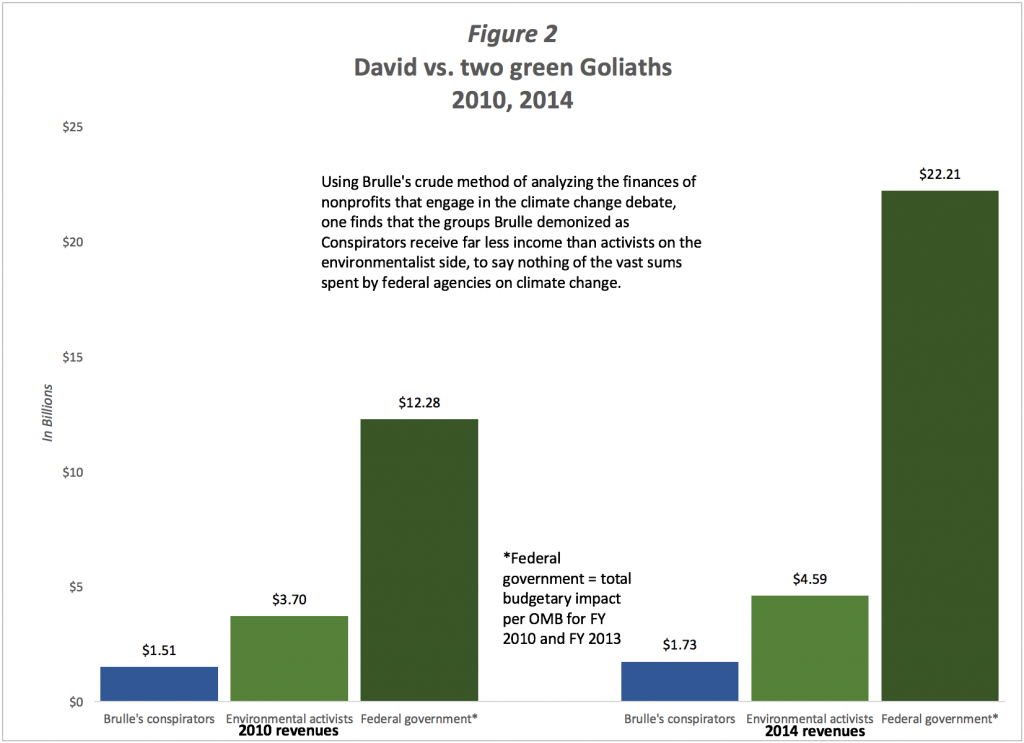
Thanks to an opinion piece in Washington Post, I discovered the work of a serious skeptical thinktank called Capital Research Center. This short video explains how global warming/climate change activists have repeatedly distorted how public communications on the issue are funded, and how dominant are the alarmist dollars.

The full study and numerous other resources are at Climate Dollars

The WP article is A Climate Hysteric’s Fake Enemies List which can also be accessed at Climate Dollars org. link above.


Banking on Climate Alarm

The media are again amping up claims of bad weather to be feared from “climate change.” It is Whack-A-Mole time again, so here is a complete debunking of such media reports, compiled to refute a particularly bad speech by Mark Carney Governor of the Bank of England. H/T Friends of Science

Fact Checking Mark Carney’s Climate Claims is a useful reference document written by Steven Kopits of Princeton Energy Advisors. A few examples below show his systematic dismantling of the alarmist narrative by referencing publically available sources, many of them on government or corporate sites.

Temperatures Rising


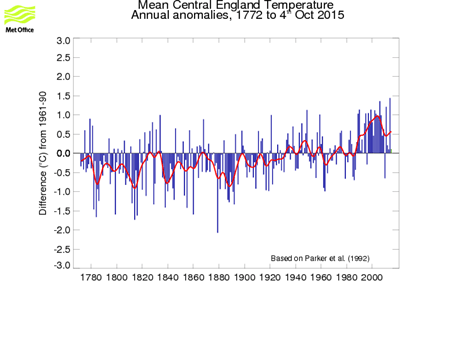
We do have long-time series data for Central England, extending back to 1772. To the extent this measurement is reliable and can be extrapolated to hemispheric averages, it shows a step-up of about 1 deg Celsius from 1980 to 2005, which supports Governor Carney’s assertions. On other hand, it also shows a drop of 0.5 deg Celsius from 2005 to the present—which does not.

Sea Levels

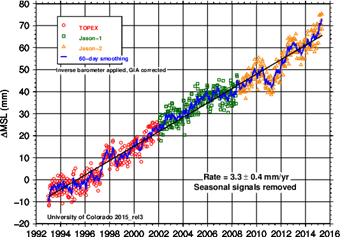
As with just about every other metric the Governor mentions, we have data. Sea level is measured by tide gauges, and also by satellites. Satellite measurements suggest that sea level has been rising steadily by roughly 3 mm / year, which equates to about 1 foot per century.

Weather-related Insurance Losses

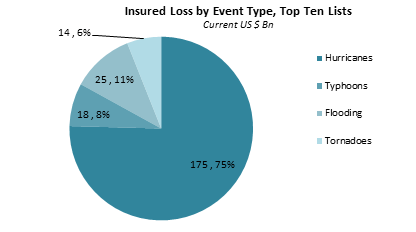
SOURCE: MUNICH RE NATCAT SERVICE

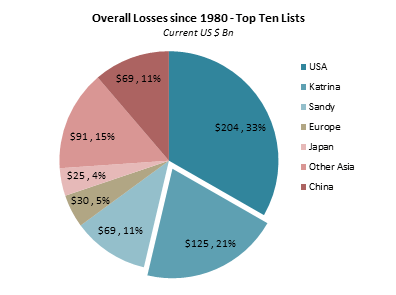
Hurricanes account for 75% of catastrophic losses, with typhoons representing an additional 8%. Thus, hurricanes and typhoons represent $6 of every $7 paid out in ‘top ten’ catastrophic weather-related insurance claims.

And this in turn tells us a great deal about the nature of insurance. Where do insured hurricane losses occur? Principally in the United States. Where do insured typhoon losses occur? Principally in Japan and Taiwan. Why these places? Because all of these are wealthy countries. Hurricane and typhoon losses will be greater where there is, first, a concentration of physical assets, and second, where those assets are valuable. In other words, in the advanced countries exposed to hurricanes and typhoons.

In this, no country is more exposed than the United States. Of overall losses due to top ten catastrophic weather events, nearly 2/3 occurred in the United States alone.

Insured Weather-related Losses

SOURCE: MUNICH RE NATCAT SERVICE

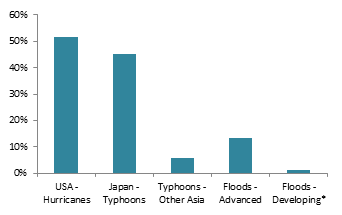
Indeed, if we restrict this to insured losses (including floods and tornadoes), the US accounts for 84% by itself.  Thus, if we are speaking of insured weather-related losses, as a practical matter we are speaking of hurricane damage in the US.  The rest is largely incidental.  For example, Superstorm Sandy caused more insured losses in one event than the cumulative and collective top ten catastrophic, weather-related losses from Europe, China, and Japan since 1980.  And Sandy was only the second worst insurance event in recent times. 

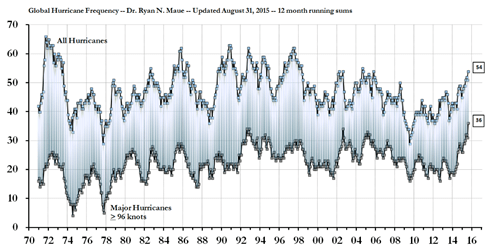
Now, why are US losses so great? Is it due to the number or strength of storms making landfall in the United States?

GLOBAL HURRICANE FREQUENCY SOURCE: RYAN MAUE

In fact, there is no such pattern discernible in the data. Indeed, the last few years have seen fewer than average hurricanes globally, with a recovery to up-cycle numbers in the last year or so.

Rather, reinsurance data hints at the source of losses: higher payouts for assets in harm’s way. 

INSURED LOSSES AS A PERCENT OF OVERALL LOSSES, TOP TEN LISTS, 1980-2014 SOURCE: MUNICH RE NATCAT SERVICE

Further, more and more expensive assets are exposed to hurricanes in particular.  In the US, for example, ever more people are living on the coasts, and beach front property has become prized and expensive.  One need only look out the window on a flight approaching Miami International Airport to be appalled at the sheer concertation of high-end housing built just above sea level on islands dotting Florida’s Atlantic Coast.   How long until a hurricane wipes a good number of these off their foundations?  And what kind of insurance losses will that involve?

Indeed, an examination of catastrophic losses suggests a decisive role for government policy.  Hurricane Katrina, which destroyed New Orleans in 2005, represents alone more than one-quarter of all insured top ten losses globally since 1980.  In just one event. 

The article goes on to deal with other claims regarding Floods, Droughts, Tornadoes, and Wildfires before reaching this conclusion.

Summing Up

In his speech to London’s insurance community, Mark Carney, Governor of the Bank of England, asserted a series of claims about climate change. Some of these are widely accepted. The climate does change. The world has warmed. Atmospheric CO2 has increased, half of the increment due to human activities.

Beyond this, there is no consensus, and indeed, the available data in many cases directly refutes the Governor’s more extreme assertions. There is no consensus that humans are the primary drivers of climate change. As we can see, sea levels, for example, were rising well before the 1950s date Carney gives as the start of modern anthropogenic warming.

Importantly, the increase in losses since the 1980s is more likely to reflect expanded insurance coverage, increasing payouts as a percent of losses incurred, and an increased number of assets with higher values placed in harm’s way. Losses increases have not occurred due to increases in hurricane, tornado, flooding, drought or fire frequency or strength, at least not in the United States, which represents the lion’s share of insurance claims. In many cases, either frequency or intensity of weather-related events has actually declined. Sea level rise has not accelerated, not as measured by either satellites or tide gauges. Sea level has been rising for well over 100 years, and continues on that pace.

Like so many other economists, Governor Carney seems to operate under the assumption that current CO2 levels are just on the edge of some catastrophic acceleration. For some reason, 320 ppm of atmospheric CO2 is safe, but 540 ppm is not, because there is some precipice—an inflection point or boundary—between here and there. The limit is not 1,000 ppm, or 5,000 ppm, or 42,448 ppm, but right here, right now. A little more CO2, a trace more of a harmless trace gas, and we are doomed.

The climate is complex and the future uncertain. It is possible the worst fears may prove correct. Nevertheless, such an assertion is not supported by the historical data, not for US droughts, floods, tornados, hurricanes or fires. But it does show up. In politics. If sea levels were 20 cm higher in New York and this contributed to the damage from Superstorm Sandy, well, any middling analyst could have predicted the rise back in 1940, just as we can predict today that sea levels will be one foot higher a century hence. The failure was not of CO2 emissions, but squarely a failure of governance. And that goes doubly so for the fate of New Orleans. If Governor Carney wanted to make a constructive proposal, he should have called for Lloyds to create macro audits of risk zones and censure or refuse to insure jurisdictions where governance is not up to par. If insurers had refused to insure New Orleans unless the levees were sound, they could have saved themselves $30 bn in payouts and probably twice that in losses.

As an analyst, I find Mr. Carney’s speech is truly dismaying. For the Governor of the Bank to claim that climate change is leading to rapidly rising insurance claims is, at best, a critical failure of analysis. As discussed above, insurance claims are a function of a number of factors, including the type and country of the weather event, as well as the extent of insurance coverage and payout ratios. A hurricane in the US may see one hundred times the payouts of a major flood in India. Payouts will rise as a function of nominal GDP, as both inflation and the value and concentration of assets will play a crucial role in overall losses. The specific path of a storm can also be decisive for global averages. It goes without saying that a storm which strikes in Philadelphia, marches up the New Jersey coast, slams into the Manhattan and turns towards New Haven is going to cost a bundle. That same storm hitting, say, rural Mississippi would cause a fraction of the monetary damages. And this matters, because Superstorm Sandy caused more insured damages than all the leading weather events in Europe, Japan, and China combined. Single events can move long-term global averages.

If the Bank missed this, it is not because the necessary data is hard to find. Information on weather-related events is readily and publicly accessible on the internet. Almost every graph I use above relating to hurricanes, tornadoes, floods and droughts comes from the US government itself. Apparently, the Bank of England could not be bothered to consult the underlying climate data before making hyperbolic claims. Thus, at best, the Bank was careless with data analysis.

A worse interpretation of events suggests that Mr. Carney was willing to blindly accept the conventional wisdom, the ‘consensus of scientists’ regarding global warming, without any will or curiosity to dig deeper and form a personal view. One can only hope that monetary policy in the UK is not informed by such superficiality or passivity.

The very worst interpretation is that Mr. Carney is in fact aware of the source data, but chose to make hysterical claims to promote a personal political agenda. I cannot imagine a more ill-considered idea. For those of us who consider central bank independence sacred, the appearance of a national bank taking sides in a highly charged political debate—and doing so with scant regard for the underlying data—will establish the Bank of England as partisan and the political opponent of conservative politicians. Given that Janet Yellen, the Chairman of the US Federal Reserve Bank, hails from Berkeley, a hot bed of climate activism, should the Republican Party consider the Fed also its opponent? If so, I can assure you, the Republicans will find some support to ‘audit’ the institution.

At the end of the day, political neutrality is a pre-condition for central bank independence. If a political party deems the central bank to be an opponent, then it will take measures to gain political control over the bank, with the result that monetary policy itself may become politicized. If the Bank nevertheless feels compelled to champion a particular side in a political debate, its analysis must be water-tight and its communication, impartial. That Governor Carny violated both dictums is simply stunning and a huge blow to the prestige of the Bank of England. It was a very bad call indeed.

More anti-alarmist information at Climate Whack-A-Mole
https://rclutz.wordpress.com/2016/07/28/climate-whack-a-mole/

Update: EU Leads in Climate Blame and Shame

Update February 15, 2017

The EU is already loading climate reporting requirements onto pension funds.

On December 8th, 2016 the EU adopted a new regulation regarding Pension Funds, the IORP II Directive — the successor of the Institutions for Occupational Retirement Provision Directive adopted in 2003.

A key feature of the directive is the consideration of environmental, social and governance (ESG) factors as part of pension providers’ investment. In particular, pension providers are now required to carry out their own risk assessment, including climate change-related risks, as well as risks caused by the use of resources and regulatory changes.

IORP II applies to all the 14,358 registered EU pension funds, among which 160 have cross-border activities.

Member States (EU countries) have until January 13, 2019 to transpose IORP II into their national law, which was published early January in the Official Journal of the European Union. According to current projections, the implementation deadline should therefore fall before Brexit, an important fact considering that the UK accounts for 50 percent of the EU occupational pension fund sector, followed by the Netherlands (33 percent).

New EU Directive Requires Pension Funds to Assess Climate-related Risks

The Climate Disclosure Standards Board provides an insight into the expanding bureaucracy working to impose climatism on financial and business institutions around the world. Since Paris COP agreement is not legally binding, the effort is on forcing reporting on national commitments and pointing fingers at laggards.

At the microeconomic level, the mission is to load regulatory requirements onto corporations and investors to force them into statements of belief and responsibility for mythical changes in future weather and climate.

The Mission is presented in Making Climate Disclosure the New Norm in Business

In short, the Task Force Recommendations report encourages all financial organizations, ranging from banks, insurance companies, to asset managers and asset owners, and companies with public debt or equity, to disclose in a transparent and consistent way their financial risks and opportunities associated with climate change.

Image: Recommendations of the Task Force on Climate-related Financial Disclosures

The report is the result of one year of work by the Task Force on climate-related financial disclosures, a business and investors-led initiative, launched at the COP21 climate negotiations in Paris, and convened by the Financial Stability Board.

The aim of the initiative is to drive the adoption of the recommendations across the G20 countries, as the final version of the report will be released in July and presented to the G20 leaders gathering in Hamburg. Having the support of the governments of the largest economies in the world would be the ultimate step to make climate disclosure the new norm.

The CDSB Board of Directors (all carrying climate activist resumes)

Pankaj Bhatia Director of GHG Protocol Initiative, World Resources Institute

Henry Derwent Honorary Vice President, International Emissions Trading Association

Dr Rodney Irwin Managing Director, Redefining Value & Education, World Business Council for Sustainable Development

Mindy S. Lubber JD, MBA President, Ceres Director, Investor Network on Climate Risk

David Rosenheim Executive Director, The Climate Registry

Damian Ryan Acting CEO, The Climate Group

Richard Samans (Chairman) Managing Director and Member of the Managing Board, World Economic Forum

Paul Simpson Chief Executive Officer, CDP (formerly Carbon Disclosure Project)

Gordon Wilson Senior Manager PwC, Chairman, Technical Working Group, Climate Disclosure Standards Board

Rough seas ahead for Captains of Industry


Climate Blame and Shame

Update February 15, 2017

The EU is already loading these reporting requirements onto pension funds.

IORP II applies to all the 14,358 registered EU pension funds, among which 160 have cross-border activities.

Member States (EU countries) have until January 13, 2019 to transpose IORP II into their national law, which was published early January in the Official Journal of the European Union. According to current projections, the implementation deadline should therefore fall before Brexit, an important fact considering that the UK accounts for 50 percent of the EU occupational pension fund sector, followed by the Netherlands (33 percent).

New EU Directive Requires Pension Funds to Assess Climate-related Risks

The Climate Disclosure Standards Board provides an insight into the expanding bureaucracy working to impose climatism on businesses around the world. Since Paris COP agreement is not legally binding, the effort is on forcing reporting on national commitments and pointing fingers at laggards.

At the microeconomic level, the mission is to load regulatory requirements onto corporations to force them into statements of belief and responsibility for mythical changes in future weather and climate.

The Mission is presented in Making Climate Disclosure the New Norm in Business

In short, the Task Force Recommendations report encourages all financial organizations, ranging from banks, insurance companies, to asset managers and asset owners, and companies with public debt or equity, to disclose in a transparent and consistent way their financial risks and opportunities associated with climate change.

Image: Recommendations of the Task Force on Climate-related Financial Disclosures

The report is the result of one year of work by the Task Force on climate-related financial disclosures, a business and investors-led initiative, launched at the COP21 climate negotiations in Paris, and convened by the Financial Stability Board.

The aim of the initiative is to drive the adoption of the recommendations across the G20 countries, as the final version of the report will be released in July and presented to the G20 leaders gathering in Hamburg. Having the support of the governments of the largest economies in the world would be the ultimate step to make climate disclosure the new norm.

The CDSB Board of Directors (all carrying climate activist resumes)

Pankaj Bhatia Director of GHG Protocol Initiative, World Resources Institute

Henry Derwent Honorary Vice President, International Emissions Trading Association

Dr Rodney Irwin Managing Director, Redefining Value & Education, World Business Council for Sustainable Development

Mindy S. Lubber JD, MBA President, Ceres Director, Investor Network on Climate Risk

David Rosenheim Executive Director, The Climate Registry

Damian Ryan Acting CEO, The Climate Group

Richard Samans (Chairman) Managing Director and Member of the Managing Board, World Economic Forum

Paul Simpson Chief Executive Officer, CDP (formerly Carbon Disclosure Project)

Gordon Wilson Senior Manager PwC, Chairman, Technical Working Group, Climate Disclosure Standards Board

Rough seas ahead for Captains of Industry