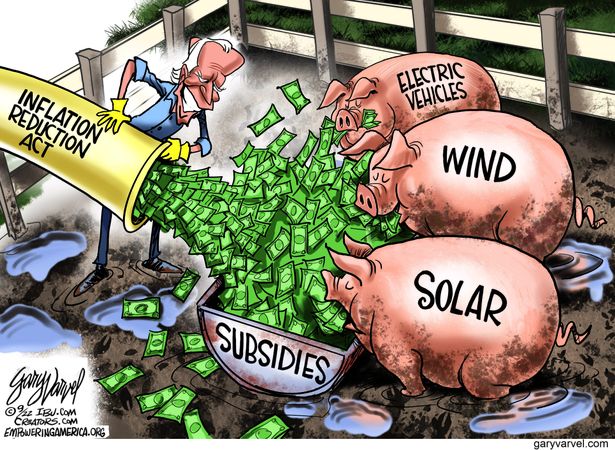
Good News: SEC’s ESG Plans Thwarted with Biden Term Ending

The news comes from Bloomberg Law article SEC’s Gensler Sees ESG Plans Thwarted as Biden’s Term Nears End. Excerpts in italics with my bolds and added images.

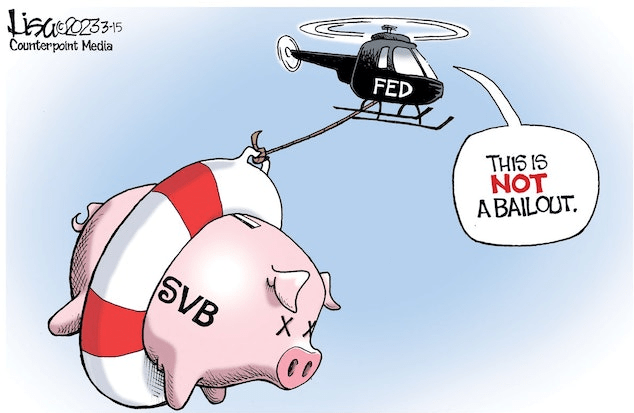
SEC Chair Gary Gensler started out with big plans on ESG.

  • Gensler seeks board diversity, workforce, ESG fund disclosures
  • Agency unlikely to finalize ESG regulations before January

The Democrat arrived at the Securities and Exchange Commission in 2021, after George Floyd’s murder in 2020 and President Joe Biden’s election that year fueled interest in environmental, social and governance investing. Gensler wanted public companies to report details about their climate change risks, workforce management and board members’ diversity.

He also sought new rules to fight greenwashing and other misleading ESG claims by investment funds.

Almost four years later, most of those major ESG regulations are unfinished, and they’ll likely remain so in the less than five months Gensler may have left as chair. A conservative-led backlash against ESG and federal agency authority has fueled challenges in and out of court to corporate greenhouse gas emissions reporting rules and other SEC actions, helping blunt the commission’s power.

The climate rules—Gensler’s marquee ESG initiative—were watered down following intense industry pushback, then paused altogether after business groups, Republican attorneys general and others sued.

“It’s clear the commission leadership is exhausted and feeling buffeted by the courts, Congress and industry complaints,” said Tyler Gellasch, who was a counsel to former Democratic SEC Commissioner Kara Stein and is president and CEO of investor advocacy group Healthy Markets Association.

The SEC has finalized more than 40 rules since 2021, “making our capital markets more efficient, transparent, and resilient,” an agency spokesperson said in a statement to Bloomberg Law.

The spokesperson declined to comment on the status of the agency’s pending ESG rules, beyond pointing to the commission’s most recent regulatory agenda.

Long-standing plans to require human capital and board diversity disclosures from companies have yet to yield formal proposals. Final rules concerning ESG-focused funds still are pending, and even if the SEC adopts them before January as the agenda suggests, a Republican-controlled Congress and White House may have the power to quickly scrap them under the Congressional Review Act.
Unlike the workforce and board diversity rules that have yet to be proposed, investment fund regulations concerning ESG have already been drafted and are targeted for completion in October, according to the SEC’s latest agenda. ESG funds would have to disclose their portfolio companies’ emissions and report on their ESG strategies.

The SEC proposed the regulations in May 2022, along with rules intended to ensure ESG funds’ names align with their investments. The commission issued final fund name rules in September 2023.

The SEC’s investment fund proposal has raised objections from both funds and environmental and investor advocates.

The proposal would require environmentally-focused funds to disclose their carbon footprints, if emissions are part of their investment strategies. But it wouldn’t require funds that look at emissions to disclose other metrics that play a significant role in how they invest and the methodology they use to calculate those measures. The Natural Resources Defense Council, Interfaith Center on Corporate Responsibility, and other environmental and investor groups pushed for those requirements in an April letter to the SEC.

The Investment Company Institute, which represents funds, has raised concerns its members would have to report on their carbon footprints before public companies must disclose their emissions under SEC rules. The group in April called on the SEC to keep fund emissions reporting requirements on ice until the litigation challenging the agency’s public company climate rules is resolved. That litigation is at the US Court of Appeals for the Eighth Circuit, which is unlikely to rule this year.

The fund rules have received no Republican support at the SEC, with only Gensler and his fellow Democratic commissioners voting in favor of proposing them.

“If it’s a Republican Congress and Trump administration, you could imagine they would be willing to disapprove those,” said Susan Dudley, a George Washington University professor who oversaw the White House regulatory policy office under President George W. Bush.
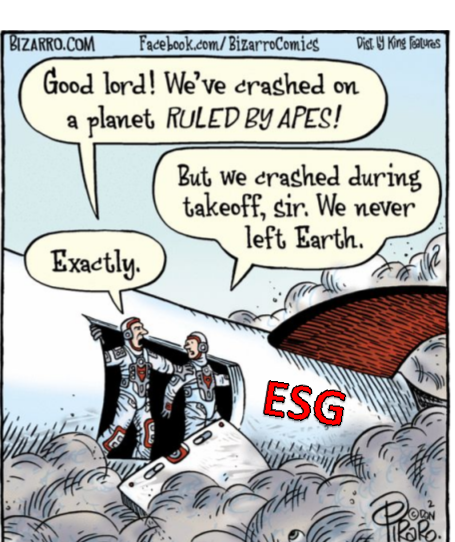
 

Climate Policies Fail in Fact and in Theory

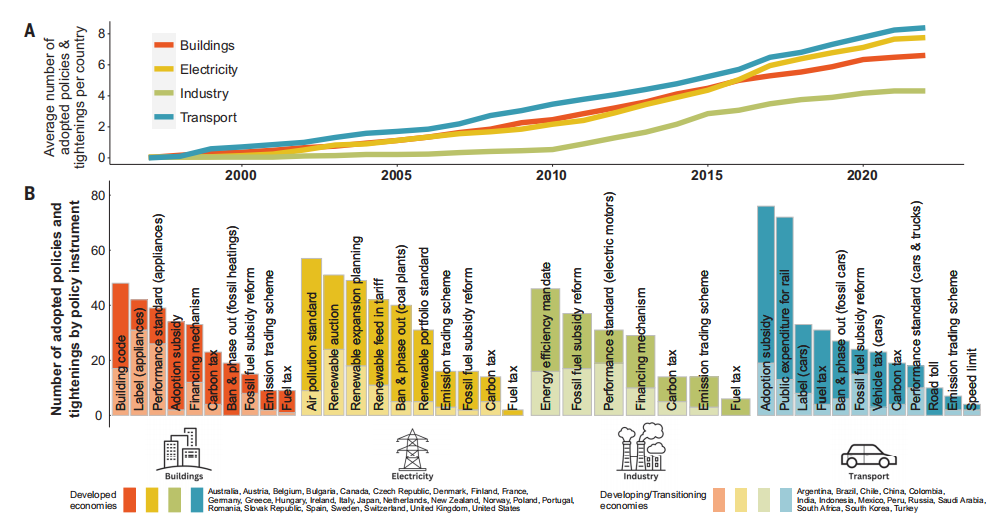
A recent international analysis of 1500 climate policies around the world concluded that 63 or 4% of them were successful in reducing emissions.  The paper is Climate policies that achieved major emission reductions: Global evidence from two decades published at Science.org.  Excerpts in italics with my bolds.

Abstract

Meeting the Paris Agreement’s climate targets necessitates better knowledge about which climate policies work in reducing emissions at the necessary scale. We provide a global, systematic ex post evaluation to identify policy combinations that have led to large emission reductions out of 1500 climate policies implemented between 1998 and 2022 across 41 countries from six continents. Our approachintegrates a comprehensive climate policy database with a machine learning–based extension ofthe common difference-in-differences approach. We identified 63 successful policy interventions with total emission reductions between 0.6 billion and 1.8 billion metric tonnes CO2 . Our insights on effective but rarely studied policy combinations highlight the important role of price-based instruments in well-designed policy mixes and the policy efforts necessary for closing the emissions gap.

Context

(1). Although the [Paris] agreement seeks to limit global average temperature increase to “well below 2°C above pre-industrial levels and pursuing efforts to limit the temperature increase to 1.5°C,” its success critically hinges on the implementation of effective climate policies at the national level.  However, scenarios from global integrated assessment models suggest that the aggregated mitigation efforts communicated through nationally determined contributions (NDCs) fall short of the required emission reductions.

(2)The United Nations (UN) estimates quantify a median emission gap of 23 billion metric tonnes(Gt) carbon dioxide equivalent (CO2-eq) by 2030

(3). The persistence of this emissions gap is not only caused by an ambition gap but also a gap in the outcomes that adopted policies achieve in terms of emission reductions.

(4). This raises the fundamental question as to which types of policy measures are successfully causing meaningful emission reductions. Despite more than two decades of experience with thousands of diverse climate policy measures gained around the world, there is consensus in neither science nor policy on this question.

The exhibit above shows the scope and complexity of the analysis.  But the bottom line is that 96% of the effort and trillions of $$$ were spent to no avail. It is estimated that on the order of 1.2 Billion tonnes of CO2 were prevented over the last 20 years, with an additional 23 Billion tonnes to be erased by 2030. 

Any enterprise with that performance would be liquidated. 
That is an epic failure in fact. 

And recommending mixing of policies including subsidies and regulations along with pricing goes against economic theory and fails in practice. Ross McKitrick explains the dangers of making climate policies willy-nilly in his Financial Post article Economists’ letter misses the point about the carbon tax revolt.  Excerpts in italics with my bolds and added images.

Yes, the carbon tax works great in a ‘first-best’ world where it’s the
only carbon policy. In the real world, carbon policies are piled high.

An open letter is circulating online among my economist colleagues aiming to promote sound thinking on carbon taxes. It makes some valid points and will probably get waved around in the House of Commons before long. But it’s conspicuously selective in its focus, to the point of ignoring the main problems with Canadian climate policy as a whole.

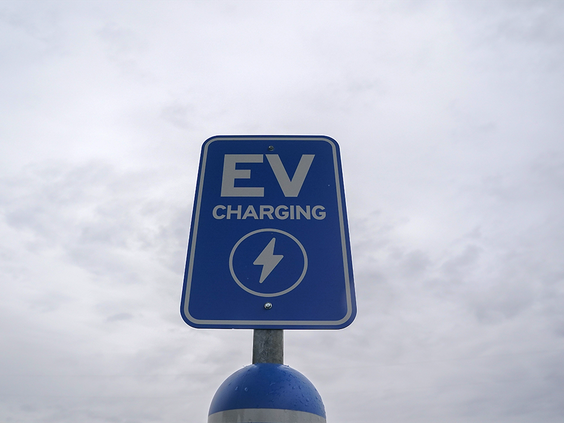
EV charging sign Electric-vehicle mandates and subsidies are among the mountain of climate policies that have been piled on top of Canada’s carbon tax. PHOTO BY JOSHUA A. BICKEL/THE ASSOCIATED PRESS

There’s a massive pile of boulders blocking the road to efficient policy, including:

    • clean fuel regulations,
    • the oil-and-gas-sector emissions cap,
    • the electricity sector coal phase-out,
    • strict energy efficiency rules for new and existing buildings,
    • new performance mandates for natural gas-fired generation plants,
    • the regulatory blockade against liquified natural gas export facilities,
    • new motor vehicle fuel economy standards,
    • caps on fertilizer use on farms,
    • provincial ethanol production subsidies,
    • electric vehicle mandates and subsidies,
    • provincial renewable electricity mandates,
    • grid-scale battery storage experiments,
    • the Green Infrastructure Fund,
    • carbon capture and underground storage mandates, 
    • subsidies for electric buses and emergency vehicles in Canadian cities,
    • new aviation and rail sector emission limits,
      and many more.

Not one of these occasioned a letter of protest from Canadian economists.

Beside that mountain of boulders there’s a twig labelled “overstated objections to carbon pricing.” At the sight of it, hundreds of economists have rushed forward to sweep it off the road. What a help!

To my well-meaning colleagues I say: the pile of regulatory boulders
long ago made the economic case for carbon pricing irrelevant.

Layering a carbon tax on top of current and planned command-and-control regulations does not yield an efficient outcome, it just raises the overall cost to consumers. Which is why I can’t get excited about and certainly won’t sign the carbon-pricing letter. That’s not where the heavy lifting is needed.

My colleagues object to exaggerated claims about the cost of carbon taxes. Fair enough. But far worse are exaggerated claims about both the benefits of reducing carbon dioxide emissions and the economic opportunities associated with the so-called “energy transition.” Exaggeration about the benefits of emission reduction is traceable to poor-quality academic research, such as continued use of climate models known to have large, persistent warming biases and of the RCP8.5 emissions scenario, long since shown in the academic literature to be grossly exaggerated.

But a lot of it is simply groundless rhetoric. Climate activists, politicians and journalists have spent years blaming Canadians’ fossil fuel use for every bad weather event that comes along and shutting down rational debate with polemical cudgels such as “climate emergency” declarations. Again, none of this occasioned a cautionary letter from economists.

There’s another big issue on which the letter was silent. Suppose we did clear all the regulatory boulders along with the carbon-pricing-costs-too-much twig. How high should the carbon tax be? A few of the letter’s signatories are former students of mine so I expect they remember the formula for an optimal emissions tax in the presence of an existing tax system. If not, they can take their copy of Economic Analysis of Environmental Policy by Prof. McKitrick off the shelf, blow off the thick layer of dust and look it up. Or they can consult any of the half-dozen or so journal articles published since the 1970s that derive it. But I suspect most of the other signatories have never seen the formula and don’t even know it exists.

To be technical for a moment, the optimal carbon tax rate varies inversely with the marginal cost of the overall tax system. The higher the tax burden — and with our heavy reliance on income taxes our burden is high — the costlier it is at the margin to provide any public good, including emissions reductions. Economists call this a “second-best problem”: inefficiencies in one place, like the tax system, cause inefficiencies in other policy areas, yielding in this case a higher optimal level of emissions and a lower optimal carbon tax rate.

Based on reasonable estimates of the social cost of carbon and the marginal costs of our tax system, our carbon price is already high enough. In fact, it may well be too high. I say this as one of the only Canadian economists who has published on all aspects of the question. Believing in mainstream climate science and economics, as I do, does not oblige you to dismiss public complaints that the carbon tax is too costly.

Which raises my final point: the age of mass academic letter-writing has long since passed. Academia has become too politically one-sided. Universities don’t get to spend years filling their ranks with staff drawn from one side of the political spectrum and then expect to be viewed as neutral arbiters of public policy issues. The more signatories there are on a letter like this, the less impact it will have. People nowadays will make up their own minds, thank you very much, and a well-argued essay by an individual willing to stand alone may even carry more weight.

Online conversations today are about rising living costs, stagnant real wages and deindustrialization. Even if carbon pricing isn’t the main cause of all this, climate policy is playing a growing role and people can be excused for lumping it all together. The public would welcome insight from economists about how to deal with these challenges. A mass letter enthusing about carbon taxes doesn’t provide it.

Postscript:  All the Pain for No Gain is Unnecessary


There is no charge for content on this site, nor for subscribers to receive email notifications of postings.

Biden Climate Policies the Greatest Financial Risk

Will Hild writes at Real Clear Policy The Biden Administration Proves Itself Wrong on ‘Climate Risk’.  The report shows how the feds’ own numbers prove their net zero policies pose a far greater financial risk than the climate itself. Excerpts in italics with my bolds and added images.

Environmental activists and left-leaning political bodies have long argued that climate risk is a form of financial risk, constantly pressuring blue states and the Biden Administration to make the issue a central part of their agendas. Recently, a group of those states has started suing oil and gas companies directly in their state courts. California, for example, claims that oil companies have colluded for decades to keep clean energy unavailable. Such lawsuits are ludicrous, and my organization, Consumers’ Research, filed an amicus brief at the Supreme Court supporting an effort to stop this litigation abuse that drives up consumer costs.

These harmful suits are driven in part by the idea that climate risks are inherently financial risks. However, evidence from the Biden Administration’s own study on climate risk shows that these risks are grossly exaggerated and immaterial. In an attempt to justify its radical and onerous climate policies, the Administration inadvertently exposed the fraud behind the environmental movement.

Soon after taking office, President Biden issued an executive order asking executive agencies to assess “the climate-related financial risk, including both physical and transition risks, to … the stability of the U.S. financial system.” Agency officials quickly responded to the order. Treasury Secretary Yellen announced that “climate change is an emerging and increasing threat to U.S. financial stability.” The FDIC declared that climate risk endangered the banking system. The SEC issued controversial climate risk disclosure rules, which impose massive regulatory burdens on Americans.

The problem with these new rules is that the Administration lacked
sufficient evidence to show that “climate-related financial risk” existed.

The SEC and Secretary Yellen relied on a Biden Administration report issued in 2021 by the Financial Stability Oversight Council. However, the report itself admitted that there were “gaps” in the evidence needed to support its speculative assertion that climate change would “likely” present shocks to the financial system. 

John H. Cochrane, a respected Stanford professor, slammed the Biden Administration’s “climate-related financial risk” assertions and highlighted that the Administration has not shown any serious threat to the financial system. “Financial regulators may only act if they think financial stability is at risk,” but “there is absolutely nothing in even the most extreme scientific speculations” to support the type of risk that would allow financial regulators to intervene. [See my synopsis Financial Systems Have Little Risk from Climate]

In response to criticism, the Biden Administration came up with an idea to manufacture its own evidence.  If the Federal Reserve created scenarios in which banks must simulate extreme “physical” and “transition” climate risks, these custom-designed scenarios could show a large impact to the financial system just like federal “stress tests” for banks.

To ensure that the “stresses” were sufficiently severe,
the Biden Administration manipulated the scenarios
to ensure as much stress as possible. 

For example, for “physical risk,” major banks had to simulate the effect of a storm-of-two-centuries-sized hurricane smashing into the heavily populated Northeast United States with no insurance coverage available to pay for the damage.  For “transition risk,” the government demanded a simulation in which “stringent climate policies are introduced immediately,” without any chance for banks to prepare for such policies, along with rapidly rising carbon prices. 

Despite these attempts to make the climate risk as extreme as possible, the tests utterly failed to demonstrate any significant effect.  The Administration’s study demonstrated that even under some of the most extreme climate scenarios imaginable, the probability of default on loans only increased by half a percentage point or less.   In contrast, federal bank stress tests involving true financial stresses, such as a severe recession, have resulted in probabilities of default jumping by 20 to 40 times that amount or more, leading to hundreds of billions in losses. 

The climate analyses also revealed the expected costs
of the Biden Administration’s quixotic net zero quest. 

The Biden Administration employed scenarios from the Network of Central Banks and Supervisors for Greening the Financial System (NGFS). Those climate scenarios envision the cost of carbon emissions steadily rising and reaching over $400 per ton by 2050.  Given that the average American emits about 16 tons of carbon a year, the Biden Administration’s hand-picked climate scenarios would cost the average American around $125k between now and 2050 in government mandated carbon fees.

Thus, the Biden Administration’s own bank stress test proved that climate risk is not a material financial risk, and that the biggest financial risk at issue is that the Administration’s net-zero policies would result in massive financial losses for everyday Americans. The Biden Administration should stop using lies to support their burdensome policies, and blue states should drop their punitive lawsuits against oil and gas companies.  Otherwise, the result of both efforts will be to inflict high costs on everyday Americans without any benefit.


Over the Top Guterres Claims Oil and Gas Ads Cause Global Warming

A recent post below highlights the many colorful falsehoods perpetrated by UN Chief Guterres.  Now he takes his nonsensical word salads to a new level, referring to traditional energy companies as “Godfathers of Climate Chaos,”  a label better suited to himself.  After all, those companies are only filling the demand by billions of people who depend on affordable reliable energy.  What economic demand is Guterres filling?

His lecture was reported many places, including an article at Al Jazeera ‘Godfathers of climate chaos’: UN chief calls for ban on fossil fuel ads.  Excerpts in italics with my bolds and added images.

Antonio Guterres urges a 30 percent cut in global fossil fuel
production and use by 2030 amid record high temperatures.

“The godfathers of climate chaos – the fossil fuel industry – rake in record profits and feast off trillions in taxpayer-funded subsidies,” he said.

Drawing a comparison with many governments’ restrictions on advertising for harmful substances like tobacco, he said, “I urge every country to ban advertising from fossil fuel companies, and I urge news media and tech companies to stop taking fossil fuel advertising.”

Carbon dioxide emissions from burning fossil fuels – the main cause wrongly claimed to cause climate change – hit a record high last year despite global agreements designed to curb their release and a rapid expansion in renewable energy. [My edit: see 2024 Update: Fossil Fuels ≠ Global Warming. ]

Coal, oil and gas still provide more than three-quarters of the world’s energy, with global oil demand remaining strong.

Of course Guterres can urge all he wants, without any accountability for his words, since the UN has no authority to decide who agencies take on as advertising clients. It is all bluff and bluster, threatening as though a mafia boss lacking enforcers. Even so, the evidence does not support hydrocarbon fuel emissions as causing temperature changes.  Moreover, there’s no reason to believe banning advertising of such products will reduce the demand, which comes from real people purchasing with their own money in free markets.

Background Post UN Chief Wins Junk Science Award

At Financial Post’s Junk Science Week, Terence Corcoran highlights the hysterical alarmist statements by the UN chief promoting IPCC agenda, the article being The UN emperor has no science.  Excerpts in italics with my bolds and added images.H/T John Ray.

Guterres Mangles Metaphors To Pitch Extreme Climate Alarmism

UN secretary General Antonio Guterres addresses the media during a visit to the UN office in Nairobi, Kenya, May 3, 2023. © Provided by Financial Post

History will record that the United Nations has established itself as the greatest organizational perpetrator of junk science in modern times, if not of all time, with current UN Secretary-General Antonio Guterres destined to be singled out for his personal contribution to the distorted UN climate alarmism.

Since his appointment in 2019, Guterres and the UN have lived up to our standard formal definition of junk science. It occurs when:

    • scientific facts are distorted,
    • risk is exaggerated (or underplayed), and
    • “the science” adapted and warped by politics and ideology to serve another agenda.

That definition encompasses a wide range of activities among scientists, NGOs, politicians, journalists, media outlets, cranks and quacks who manipulate science for political, environmental, economic and social purposes. It also nicely captures the entire United Nations’ climate crusade and the work of its institutional creation, the Intergovernmental Panel on Climate Change (IPCC).

But no single official can top Guterres as a purveyor of IPCC hype and doom, a living embodiment of Hans Christian Andersen’s  fabled emperor who believes he is fully, stylishly dressed but in fact has no clothes.

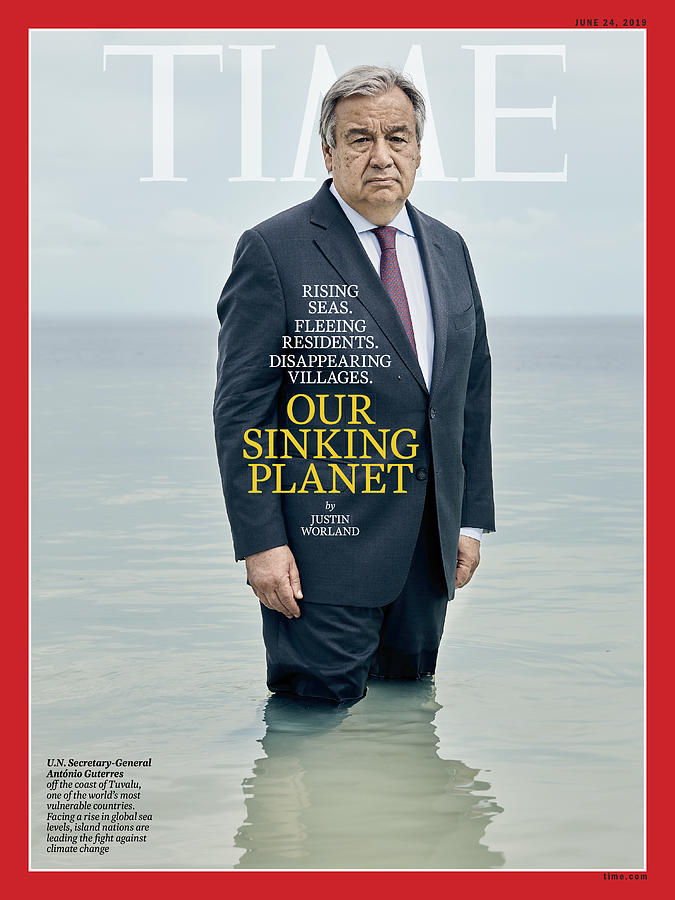
Our Sinking Planet – Antonio Guterres is a photograph by Photograph by Christopher Gregory for TIME which was uploaded on July 21st, 2020.

Guterres, a former Socialist Party prime minister of Portugal (1995-2002) and president of the Socialist International (1999-2005), was in typically ridiculous form on June 5th when he  delivered a speech  at the Museum of Natural History in Manhattan, at an event billed as “A Moment of Truth” and a “special address on climate action.” Guterres talked about a planet on a “highway to climate hell,”  rehashing a line he used in 2022 in Egypt at the COP27 climate conference: “We are on a highway to climate hell with our foot still on the accelerator.”

Guterres also has no qualms about mixing and mangling metaphors. He simultaneously told the Manhattan audience that humans are “like the meteor that wiped out the dinosaurs, we’re having an outsized impact. In the case of climate, we are not the dinosaurs. We are the meteor. We are not only in danger. We are the danger.”

The longer Guterres rambles on, the more confusing, contradictory and senseless the metaphors become:

“We are playing Russian roulette with our planet.  We need an exit ramp off the highway to climate hell. And the truth is … we have control of the wheel.”

Other Guterres’ climate spins include: “Humanity has opened the gates of hell” and “become a weapon of mass extinction.” And: “We must go into emergency mode and put out this five-alarm fire.”

Is Guterres describing reality — or the content of a new AI computer game in which some crazed teenaged human monster drives a flaming meteor through the ozone layer, knocking off dinosaurs before crashing onto a highway and plowing into a Russian Museum of Political Roulette just outside the Gates of Hell?

As UN Secretary-General, Guterres sits atop a hierarchy of agencies such as the IPCC climate science megaplex, which was created  in 1988 by two other UN agencies, the World Meteorological Organization (WMO) and the United Nations Environment Program (UNEP). UNEP was cobbled together in 1972 as the  brainchild of Maurice Strong , the late Canadian global environmental schemer, who famously mused about a fictional environmental crisis that leads a group of global insiders to decide the only hope for the planet is “that the industrialized civilizations collapse.” The current “de-growth” movement is a version of deindustrialization that reflects Guterres’ off-ramp from the highway to hell. In fact, the word “de-growth”  appears  28 times in the IPCC’s sixth and latest Assessment Report .

With these UN agencies as his guide, Guterres’ verbal jumble of science statements is no better than his mixed metaphors. His abuse of climate and environmental facts has often been commented upon, including in a YouTube video titled “Who is Antonio Guterres?,” posted earlier this year by Ottawa journalist John Robson on his Climate Discussion Nexus site. Robson reviews and highlights  some of the garbled inaccuracies and misrepresentations Guterres routinely cranks out.

For instance: “Climate-related natural disasters are becoming more frequent, more deadly, more destructive with growing human and financial cost.”  Not true . And: “The number of weather, climate and water-related disasters has increased by a factor of five over the past 50 years.”  Also not true .

When it comes to policies to deal with his fantastic vision of planetary destruction, Guterres aligns with Maurice Strong’s de-growth agenda. In his Manhattan speech, he repeated the UN call for a “fossil-fuel phase-out” since “economic logic makes the end of the fossil fuel age inevitable.” He urged financial institutions to “stop bankrolling” fossil fuel industries. “Fossil fuels are not only poisoning our planet,” he told bankers, “they’re toxic for your brand.”

The planet would be much better off if national governments stopped bankrolling Guterres and the United Nations and their constant poisoning of our science, economics and politics.

Climatists’ Ulterior Motives

Two articles caught my attention by looking behind the curtain seeing intentions obscured by appeals to Zero Carbon.  First  Chris Talgo writes at American Thinker Climate Alarmism is the existential threat to humanity.  Excerpts in italiics with my bolds and added images.

While in France observing the 80th anniversary of D-Day and honoring the thousands of brave soldiers who gave their lives fighting the existential threat that was Nazi Germany, President Joe Biden could not help himself from descending into crass political talking points by comparing the most destructive and deadly war in human history to climate change.

“The only existential threat to humanity, including nuclear weapons, is if we do nothing on climate change,” Biden declared. Due to the “existential threat of climate change, which is just growing greater, we’re working together to accelerate the global transition to net-zero. It is the existential threat to humanity,” Biden reiterated.

In reality, climate change is nowhere near an existential threat.

In fact, in many ways, the slight warming that has occurred over the past half century or so has made life better for humanity. For instance, NASA satellite data show a significant rise in global plant growth in recent decades — what some call global greening. A slightly warmer planet is also beneficial because it produces greater crop yields.

However, one can make a compelling argument that climate alarmism,
and the policies that climate alarmists support,
actually comprise an existential threat to humanity.

1. End Fossil Fuels On Which Modern Life Depends

First and foremost, climate alarmists are hellbent on ending the use of affordable and reliable energy in the form of fossil fuels. This alone is a horrendous stance that puts millions of lives at risk.

Like it or not, the advent of fossil fuels, namely oil, coal, and natural gas, has been the biggest boon for humanity in all of history. The harnessing of these resources to supply virtually unlimited energy in cost-effective terms has raised billions of people from abject poverty.

Without ample access to fossil fuels, our modern way of life would literally cease to exist. Not only do fossil fuels provide abundant and affordable energy. As the U.S. Department of Energy notes, “Petrochemicals derived from oil and natural gas make the manufacturing of over 6,000 everyday products and high-tech devices possible.”

2.  Rely on Renewable Energy, A Poor Substitute

Second, climate alarmists demand that the world immediately transitions to so-called renewable energy and achieve net-zero carbon dioxide emissions. The problem is that renewable energy from solar panels and wind farms is too expensive, unreliable, and not nearly scalable. If the world were to shun fossil fuels in favor of wind and solar, the amount of energy available to use would plummet. This would result in devastation across many fronts.

3. Diminish Human Populations and Livelihoods

Third, climate alarmists constantly call for degrowth, both in terms of the economy and in terms of population. Somehow, the climate alarmists have convinced themselves that the solution to the nonexistent problem of a slightly warming planet is for humanity to cull its population growth. This is extremely short-sighted and fails to consider that many developed countries are currently experiencing a stark population decline. If this is not reversed, and soon, many of these once-thriving nations will experience severe demographic problems.

Likewise, calls for economic degrowth, which has been a cause célèbre among climate alarmists for many years now, would wreak havoc and would instantly result in decreased living standards for billions of people. This is especially true for several developing countries, which are banking on economic growth and increased prosperity to lift billions from poverty.

4. No More “Better Things for Better Living”

Fourth and finally, climate alarmists, whether they realize it or not, are akin to modern-day Luddites because they excoriate innovations and technological breakthroughs. In many ways, climate alarmists are the opposite of progressives because they seek to regress humanity back to a time when creature comforts and access to the latest and greatest technologies were limited to a select few rather than accessible to the masses. Even worse, by hindering the development of new technologies that could solve some of the world’s most vexing problems simply because it does not align with their worldview, climate alarmists are essentially preventing the betterment of the human experience.

Fortunately, it seems like the climate alarmists are losing ground. Polls show that more and more people are skeptical of the constant fearmongering and are becoming aware of the failed doomsday predictions. This is great news, but it is just the start. Unless and until there is a general consensus that climate alarmism is the problem and that the misguided policies supported by climate alarmists are outright rejected by an overwhelming majority, climate alarmism will remain a grave threat to the future of humanity.

The second article is by David Wojick writing at CFACT A Socialist tract on fast decarbonization from the National Academies.  Excerpts in italics with my bolds and added images.

The title of this 800 page tome is “Accelerating Decarbonization in the United States: Technology, Policy, and Societal Dimensions” from the US National Academies of Science, Engineering and Medicine (NASEM).

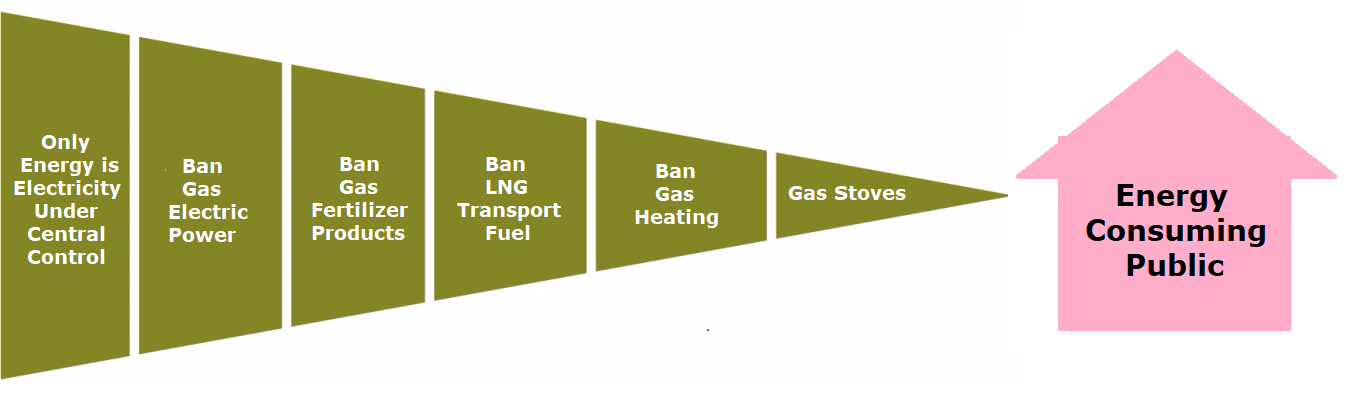
I seldom use the term “socialist” but it is the perfect word here once the concept is updated. It originally referred to government ownership of the means of production. But in today’s Regulatory State, ownership is not required for control so it means government control of production, or more broadly government control of both production and use.

In this case it is government control of the production and use of what they call “the energy system.” Since everybody uses energy this includes control of everybody. Under the proposed system the government does not serve people it “manages” them, or at least their use of energy which is a lot of what we do.

They are however rather confused about this. The very first sentences state their basic assumption which is wildly false. They say this:

“The world is coalescing around the need to reduce greenhouse gas (GHG) emissions to limit the effects of anthropogenic climate change, with many nations setting goals of net-zero emissions by midcentury. As the largest cumulative emitter, the United States has the opportunity to lead the global fight against climate change. It has set an interim emissions target of 50–52 percent below 2005 levels by 2030 toward a net-zero goal.” (All quotes are from the Executive Summary.)

The United States has set no such targets. The US is a big country with hundreds of millions of people so it does not set targets. Perhaps they mean the US Government but Congress has set no such targets. In fact these so-called targets are merely the wishful thinking of the Biden Administration and their radical net zero colleagues which apparently include the National Academies. And if a Republican wins the next election it will not even be a Presidential wish.

So there is much less here than meets the eye. This tome is basically a radical socialist manifesto and that is how it should be read.

The funding is surprising. NASEM studies used to be done at the request of Congress or Federal Agencies and funded by them since objectively advising them is supposed to be the job of the Academies. Instead this work was funded by a collection of Foundations, presumably left wingers. So the National Academies are for hire by those with radical causes.

The socialist management thrust is exemplified by this topic
which is listed as a central theme:
“Managing the Future of the Fossil Fuel Sector.”
Only under socialism is this a government function.

That the called for management process is also non-democratic is made clear by this segment of their lead off discussion of risks: “In developing its findings and recommendations, the committee recognized the inherent risks and uncertainties associated with such an unprecedented, long-term, whole-of-society transition. These include … political, judicial, and societal polarization risk—that political and judicial actions or societal pressures will change the policy landscape….”

So elected officials, the Courts, or the people in general might get in the way. Their solution is not to get the support of the people, rather it is more management. They say “Mitigating these risks will require adaptive management and governance to coordinate and evaluate policy implementation and to communicate progress on outcomes.”

Sounds like the Plan is to manage the elections, the Courts and the people.
Sit down, shut up, and we will tell you what we have done as we go along.

For those interested in the details of the net zero wishlist this is a grand source. Otherwise it is just another radical manifesto to line the shelves with.

My concern is that the three National Academies have abandoned their mission and therefore lost their integrity. Tools of left wing foundations are not worthy of the name National Academy.

Sea Also:

Time for Billionaires to Fund Climate and Social Realism


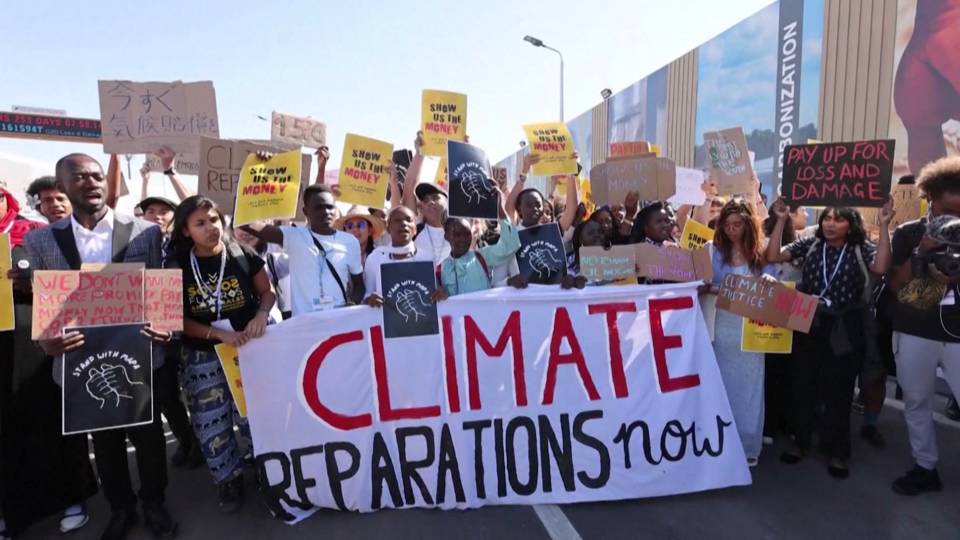
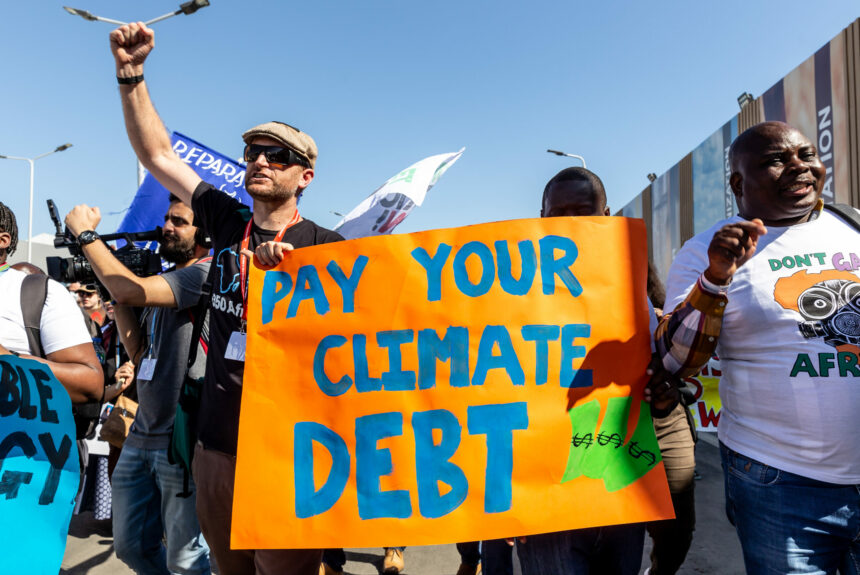
Bogus Math for Climate “Reparations”

Paul Mueller does the analysis in his AIER article Climate “Reparations” Numbers Are Rigged.  Excerpts in italics with my bolds and added images.

Nobel Prize–winning economist Esther Duflo thinks rich countries should pay poor countries $500 billion in compensation each year for climate-change damages. It is our “moral debt.” She proposes an international 2-percent wealth tax on the ultra-rich and an increase in the global minimum corporate tax rate to fund this $500 billion transfer.

You and I may be shocked by such a suggestion but don’t worry: “It’s really necessary. And it’s reasonable. It’s not that hard.” Only someone in an elite, progressive bubble could say something like that. Let’s check her reasoning.

Duflo claims that climate change creates costs, specifically through “excess” deaths due to excessive heat. Poorer countries from the global south near the equator will see more days of extreme heat, and so will see a disproportionate increase in excess deaths.

Other economists translated those deaths into an externality cost of $37 per ton of CO2. Multiply that by the roughly fourteen billion tons of CO2 emitted by the US and Europe and voila, wealthy countries generate $500 billion in externality costs per year.

She proposes paying for this by increasing the global minimum corporate tax rate from 15 percent to 18 percent and introducing an international 2-percent wealth tax on the ultra-rich, which she defines as the 3000 richest billionaires. We can’t go into the many problems and obstacles to such funding mechanisms here — suffice it to say such ideas will be nearly impossible to implement.

But Duflo’s back-of-the-envelope calculations, besides missing the bigger picture, are so speculative as to require playing make-believe. Let’s play along for a moment to see why. We’ll start by reverse-engineering her $500 billion number into a measure of harm.

Regulatory agencies and insurance companies use the concepts of “statistical value of life” or the “statistical value of a life-year” to do cost-benefit analysis on risk and the monetary value of life. These concepts are slippery, however, and calculated in a variety of ways with a wide range of estimates.

To keep things simple, let’s assume that the value of one life-year is $200,000. The $500 billion number proposed by Duflo suggests that the cost imposed by wealthy countries burning fossil fuels is the loss of roughly 2.5 million life-year” in poor countries per year.  That sounds like a staggering number!

But what about the benefits that have accrued to developing
countries from activities that generate CO2 emissions?

Important advances in medicine, such as antibiotics and vaccines, were developed in modern industrialized countries. So, too, were refrigeration, cars, the internet, smart phones, radar; modern agricultural methods with herbicides, pesticides, and fertilizers; improvements in plumbing, building materials, manufacturing, and much more. “Polluting” activities in industrialized countries improved nutrition and safety around the world. These advances, and many others, significantly increased people’s life expectancies — especially in poor countries.

Surely the value of these improvements should weight the opposite side of the scale from the expected harm of climate change — especially since the crusade against fossil fuels and carbon emissions will assuredly slow economic growth and innovation. Let’s consider the case of India for a moment.

Life expectancy in India has basically doubled from about 35 years in 1950 to about 70 years in 2024. If you consider that India has just over a billion people living in it, modern technology developed by rich CO2-emitting countries has added 35 billion life-years in India alone. 

Translating life-years back into dollars, 35 billion life-years times $200,000 per life-year means that the benefits from greater life expectancy in India over the past 75 years is the equivalent of $7 quadrillion dollars — or in annualized terms, an annual benefit of about $93 trillion dollars. In other words, the benefits to India alone are over a hundred times larger than Duflo’s estimate of costs!

Nor is India cherry-picked. China has a similar story with life expectancy rising from 43.45 years to 77.64 years. Similar improvements in life expectancy occur across the global south.

Of course, one could argue that developed industrial countries are not solely responsible for increases in life expectancy around the world. But one could just as easily say the same about whether developed industrial countries are solely responsible for global CO2 emissions, climate change, or harm to people in the global south due to hotter weather. Connecting these two issues makes perfect philosophical sense, because the production of CO2 has historically been directly associated with increases in economic growth; which in turn is necessary for all the developments increasing longevity around the world.

Even if we massage the assumptions in Duflo’s favor, the results remain favorable to industrialization. Suppose western technology and industrial activities contribute 50 percent to improvements in life expectancy. That’s still a $46 trillion annualized benefit to India. Reduce the value of a statistical life-year to $100,000 — that’s still a $23 trillion/year benefit from industrialization in the west. Exclude India from the analysis and cut the population we focus on down to 500 million people — that’s still over $12 trillion/year in benefits. Reduce the improvement in life-expectancy by six years — that still leaves about $10 trillion/year in benefits.

So, even after making tons of assumptions to reduce their size,
the estimated benefits of industrialization are still about twenty
times larger than Duflo’s estimate of its costs. 

Worrying about hypothetical, indirect costs of CO2 emissions when it comes to human well-being is like scrounging for pennies while ignoring $100 bills lying on the sidewalk. Actually, it is worse than that. It is like lighting $100 bills on fire to help you search a dark alley for some pocket change of human welfare.

Economic development, driven largely by Adam Smith’s dictum “peace, easy taxes, and a tolerable administration of justice which includes strong private property rights and limited government intervention, has improved human living standards in unprecedented ways over the past 300 years. These remarkable improvements in human welfare are not limited to wealthy, developed economies but are enjoyed around the world. 

Duflo talks about the (external) costs of industrialization on certain countries without considering the truly massive (external) benefits of industrialization to those same countries.

If anything, with a proper accounting, developing countries owe rich countries gratitude for the benefits they have received from industrialization and the corresponding CO2 emissions.


Machinery for Global Sustainability Tyranny

Terence Corcoran shines light on the emerging global control structure in his Financial Post article Is the global march towards sustainable development unsustainable? Excerpts in italics with my bolds and added images.

Regulations related to climate risks could prove a costly burden
for Canadian corporations, institutions

The planned reset of global corporate capitalism to save the planet continues to stumble toward the great unknown, in the sense that even after decades of effort the machinery to expand regulatory control over investment and business decisions remains bogged down in murky conceptual clay. Developments in regulatory and legal circles suggest 2024 will be a pivotal year for the revolutionary ideas that are supposed to lead to a fundamental transition from bad economic policy to green.

The underlying concepts are well known by name. We have corporate social responsibility (CSR), environmental and social governance (ESG), the precautionary principle, and sustainable development. What all these buzz-phrases mean is another question. Looking through the latest developments around the initiatives, however, a certain sense of apprehension, doubt and even a bit of squeamish uncertainty seem to have taken hold.
In recent days major global investment firms such as U.S.-based JP Morgan and State Street have pulled away from Climate Action 100+, a global industry-led coalition with grandiose objectives to fight the “systemic risks” of climate change. The claim is that investors must ensure the businesses they own have strategies that “accelerate the transition to net-zero emissions by 2050, or sooner, and align with the goal of the Paris Agreement” set by the United Nations in 2015.  Despite decades of talk following the radical Limits to Growth movement of the 1970s, the 1987 Brundtland report and the 1992 Rio Earth Summit’s endorsement of “sustainable development,” the remake of corporations into vehicles for economic and climate control remains far from complete.
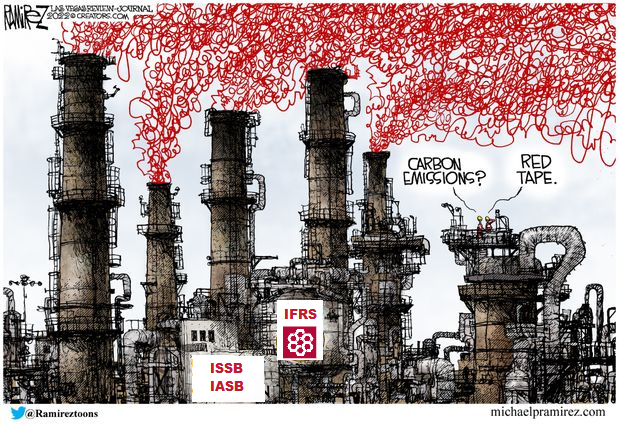
In New York this week, the International Financial Reporting Standards (IFRS) Foundation held a symposium to inform corporations, institutions, regulators and advisors on the emerging accounting and reporting standards surrounding sustainable development. “Achieving a truly global baseline of sustainability-related disclosures necessitates a strong focus on supporting implementation across all economic settings, so that all market participants can access its benefits.”One of the symposium sessions was titled: “Get ready for jurisdictional adoption: How regulators are responding to the ISSB” — the International Sustainability Standards Board. Released last June, the ISSB standards will require corporations and investment organizations around the world to adopt common reporting approaches to climate and other environmental issues. It’s an authoritarian, top-down and anti-competitive regime that leaves no country or sector free to set its own rules.

All nations and regulators are to be locked in a global climate-control structure.

Canada is part of that structure through the Canadian Sustainability Standards Board, which this month announced a public consultation to advance adoption of sustainability disclosure standards in Canada. The consultation begins in March and runs through to June. One objective is to determine, with provincial securities regulators, how to impose mandatory reporting to replace voluntary standards on climate and environmental issues.

The Canadian Securities Administrators (CSA), which includes provincial securities commissions, is being pressured to take action on the grounds that Canada could get left behind. A paper released earlier this month by the Canada Climate Law Initiative at the University of British Columbia urged regulators to move forward quickly with new sustainability standards. Failure to act in concordance with the ISSB could cause Canada to lose international investment flows, the report claims.

The document continues through 20 pages of detailed recommendations covering climate-related strategies, investments, metrics, targets, performance, cash flows, scenarios, climate transition plans and science-based taxonomies. How any of this massive effort relates to corporate performance for shareholders is not addressed.

Looking to the future, the Law Initiative suggests the CSA should also begin thinking about requiring future reports  related to a corporation’s “relationship to terrestrial, freshwater and marine habitats, ecosystems and populations of related fauna and flora species, including diversity within species, between species and of ecosystems, and their interrelation with Indigenous and affected communities.”

Internationally, Canada must also deal with the uncertainty surrounding the differing emerging global standards, including the still-to-be-determined U.S. Securities and Exchange Commission (SEC) approach to sustainable development. As the consulting firm EY put it in an updated report last month, “Entities with significant operations in multiple jurisdictions need to understand the key differences among the SEC proposal, the ESRS [European Sustainability Reporting Standards] and the ISSB standards because they might be subject to more than one set of requirements.” Another EY report this week warns that sustainable development “continues to face a range of challenges” in terms of costs, technologies and standardization.

The legal proposals would burden Canadian corporations and institutions with massive reporting responsibilities and costs related to climate risks. On corporate governance, for example, the Climate Law Initiative calls for securities issuers to “disclose the governance processes, controls, and procedures it uses to monitor, manage, and oversee climate related risks and opportunities.”

All of this is taking place on a shaky theoretical foundation
in economics and environmental change.

The 1987 Brundtland Commission simplistically defined sustainable development as “development which meets the needs of the present without compromising the ability of future generations to meet their own needs.” Exactly what “needs” are is unclear. Maybe it was intended to capture Marx’s slogan: “From each according to his ability, to each according to his needs.” Meaning: Take from wants of the developed world and give to the needs of the developing world?

The missing fundamentals of the 50-year-old movement to reshape the corporate model should receive a little more attention in the months ahead. Could it be that sustainable development is unsustainable?

Postscript

Meanwhile, the sustainability movement is transitioning to students. In Kelowna, B.C., and Toronto this week the goal is to inspire the next woke generation of environmentally active citizens. At the Toronto event, the organizers summarized their plan. “We welcome high school students and their teachers to this dynamic one-day conference that brings together youth and community organizations from across Ontario to discuss, collaborate and learn how to make sustainable and equitable change in our world.”


‘Charities’ Spend Millions on Climate Change Lawfare

In his article at The Hill Robert Stilson answers the question Why are ‘charities’ funneling millions into climate change lawfare? Excerpts in italiics with my bolds and added images.
Over the last several years, dozens of dubious climate change lawsuits have
been brought by state and local governments against the oil and gas industry.
They are bringing these cases with help from white-shoe law firms,
funded by non-profit money from Big Philanthropy.

Such attempts at “legislation through litigation” represent yet another example of the deeply regrettable tendency toward the ends-justify-the-means rationalizations common in contemporary political activism. The millions in tax-exempt philanthropic dollars apparently underwriting this lawsuit campaign also raise serious questions about the proper relationship between charity, politics and the judicial system.

Citing recently released tax filings, Fox News reported that the New Venture Fund, a registered 501(c)(3) charity and the largest constituent member of the giant left-of-center political nonprofit network managed by Arabella Advisors, had granted $2.5 million to the for-profit law firm Sher Edling in 2022. This was after it had funneled $3 million to the firm last year.

Sher Edling is best known for representing state and local governments in a slew of lawsuits against oil and gas companies, accusing them of downplaying or otherwise misrepresenting the impact that their products have on the global climate. The governmental plaintiffs (which include the states of Rhode Island and Delaware, the cities of Charleston, South Carolina and Baltimore, the county of Anne Arundel, Maryland, and others) are suing to force “Big Oil” to pay them compensation for the vast costs that these governments claim they are incurring due to climate change.

None of the plaintiffs have yet prevailed on the merits,
but the catch is they don’t necessarily need to. 

Activists hope that if just one case lands before “one judge in one state in one courtroom that sees a path to allowing these cases to go to trial,” discovery and the prospect of a jury trial could give them major leverage over the industry. The activists don’t necessarily need to win a verdict to achieve their ultimate objectives pertaining to future climate policy or legislation.

The money Sher Edling received from the New Venture Fund was apparently routed through one of the nonprofit’s countless fiscally-sponsored projects: the Collective Action Fund for Accountability, Resilience, and Adaptation. It has no website or other public profile, but grant descriptions explain that the fund’s purpose is to funnel charitable dollars to “enable cities, counties, and states hard hit by climate change to file high-impact climate damage and deception lawsuits represented by expert counsel.” This was formerly a project of a different 501(c)(3) called the Resources Legacy Fund, before switching its sponsorship to the New Venture Fund.

Notably, the Collective Action Fund has received
significant support from Big Philanthropy.

Major known funders include the MacArthur Foundation ($9 million since 2017) and the JPB Foundation ($3.3 million from 2020 to 2022, plus another $1.15 million approved for future payment), in addition to six-figure totals from the Hewlett Foundation, the Rockefeller Brothers Fund, and the Gordon and Betty Moore Foundation.

In an October 2023 letter responding to congressional inquiries, Sher Edling claimed that this philanthropic money does not underwrite specific lawsuits, but is instead used to support “the firm’s general operations in this area” — that is, climate litigation.

Because it would bypass the legislative process on a major issue of public policy, commentators have aptly labeled this whole phenomenon “legislation through litigation,” or even “lawfare.” They have raised important questions that more people should be asking. At least two overarching issues deserve particular mention.

The first concerns the nature of the lawsuits themselves. Climate change (and what should be done about it) is among the most contentious and consequential public policy issues of our time. The debate surrounding it involves major uncertainties and tradeoffs that carry with them direct personal ramifications for virtually every American. It is exactly the sort of issue that should be resolved though the political process, by voters and their elected representatives in Congress, not through a judicial process, by private lawyers and their ideologically motivated funders.

Moreover, it defies any notion of justice to hold the oil and gas industry civilly liable for producing and selling a product that is utterly essential to humanity’s survival — including these governmental plaintiffs’ own constituents. That is essentially what these lawsuits boil down to.

The second concern relates to the manner in which this litigation is evidently being at least partially financed. Big Philanthropy is routing millions of charitable dollars through a tax-exempt 501(c)(3) nonprofit to a for-profit law firm, for the purpose of supporting a nationwide litigation campaign. Is there a point at which such an arrangement ceases to be “charitable,” in the sense that we collectively understand that term? If so, what should we do about that?

Government lawsuits against the oil and gas industry over the alleged impacts of climate change rest upon an entirely unjust theory of liability. They are an affront to both the civil justice system and the democratic legislative process.

That they are apparently being underwritten by giant private foundations is further evidence of just how far Big Philanthropy has moved away from what most Americans would consider “charity.”

Keep Your Head, Others are Losing Theirs Over Climate

John Stossel’s interview with Bjorn Lomborg is featured in his article at Reason The Media’s Misleading Fearmongering Over Climate Change. Excerpts in italics with my bolds and added images.
“Over the last 20 years, because of temperature rises, we have seen about 116,000 more people die from heat. But 283,000 fewer people die from cold.”

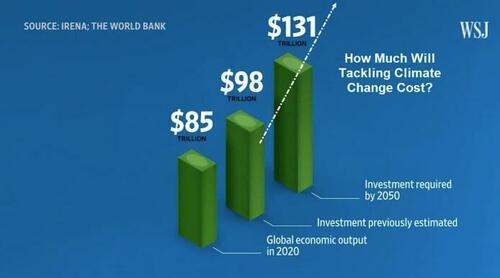
United States Special Presidential Envoy for Climate John Kerry says it will take trillions of dollars to “solve” climate change. Then he says, “There is not enough money in any country in the world to actually solve this problem.”

Yes, they are projecting more than 100 Trillion US$.

Kerry has little understanding of money or how it’s created. He’s a multimillionaire because he married a rich woman. Now he wants to take more of your money to pretend to affect climate change.

Bjorn Lomborg points out that there are better things society should spend money on.

Lomberg acknowledges that a warmer climate brings problems. “As temperatures get higher, sea water, like everything else, expands. So we’re going to maybe see three feet of sea level rise. Then they say, ‘So everybody who lives within three feet of sea level, they’ll have to move!’ Well, no. If you actually look at what people do, they built dikes and so they don’t have to move.”

Rotterdam Adaptation Policy–Ninety years thriving behind dikes and dams.

People in Holland did that years ago. A third of the Netherlands is below sea level. In some areas, it’s 22 feet below. Yet the country thrives. That’s the way to deal with climate change: adjust to it.

“Fewer people are going to get flooded every year, despite the fact that you have much higher sea level rise. The total cost for Holland over the last half-century is about $10 billion,” says Lomberg. “Not nothing, but very little for an advanced economy over 50 years.”

For saying things like that, Lomberg is labeled “the devil.”

“The problem here is unmitigated scaremongering,” he replies. “A new survey shows that 60 percent of all people in rich countries now believe it’s likely or very likely that unmitigated climate change will lead to the end of mankind. This is what you get when you have constant fearmongering in the media.”

Some people now say they will not have children because they’re convinced that climate change will destroy the world. Lomborg points out how counterproductive that would be: “We need your kids to make sure the future is better.”

He acknowledges that climate warming will kill people.

“As temperatures go up, we’re likely to see more people die from heat. That’s absolutely true. You hear this all the time. But what is underreported is the fact that nine times as many people die from cold…. As temperatures go up, you’re going to see fewer people die from cold. Over the last 20 years, because of temperature rises, we have seen about 116,000 more people die from heat. But 283,000 fewer people die from cold.”

A 2015 study by 22 scientists from around the world found that cold kills over 17 times more people than heat. Source: The Lancet

That’s rarely reported in the news.

When the media doesn’t fret over deaths from heat,
they grab at other possible threats.

CNN claims, “Climate Change is Fueling Extremism.”

The BBC says, “A Shifting Climate is Catalysing Infectious Disease.

U.S. News and World Report says, “Climate Change will Harm Children’s Mental Health.”

Lomborg replies, “It’s very, very easy to make this argument that everything is caused by climate change if you don’t have the full picture.”

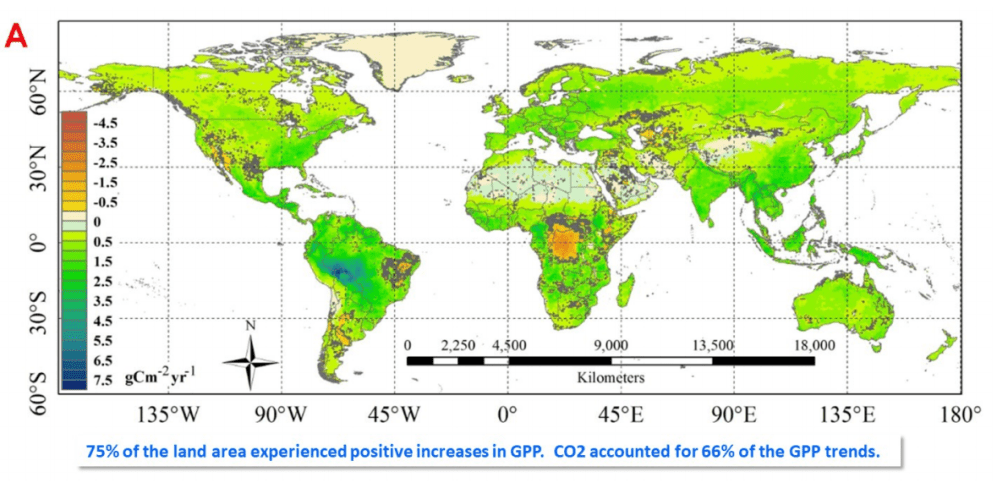
He points out that we rarely hear about positive effects of climate change, like global greening.

Spatial pattern of trends in Gross Primary Production (1982- 2015). Source: Sun et al. 2018.


“That’s good! We get more green stuff on the planet. My argument is not that climate change is great or overall positive. It’s simply that, just like every other thing, it has pluses and minuses…. Only reporting on the minuses, and only emphasizing worst-case outcomes, is not a good way to inform people.”

Synopsis of Lomborg’s Policy Recommendation (excerpted transcription)

If you’re a politician and you look at ten different problems, you’re natural inclination is to say, “Let’s give 1/10 to each one of them.” And economists would tend to say, “No, let’s give all of the money to the most efficient problem first and then to the second most efficient problem, and so on. I’m simply suggesting there’s a way that we could do much better with much less.

Of course if you feel very strongly about your particular area, when I come and say, “Actually, this is not a very efficient use of resources.” I get why people get upset. But for our collective good, for all the stuff that we do on the planet, we actually need to consider carefully where do we spend money well, compared to where do we just spend money and feel virtuous about ourselves.

If we spend way too much money ineffectively on climate, not only
are we not fixing climate, but we’re also wasting an enormous amount
of money that could have been spent on all these other things.

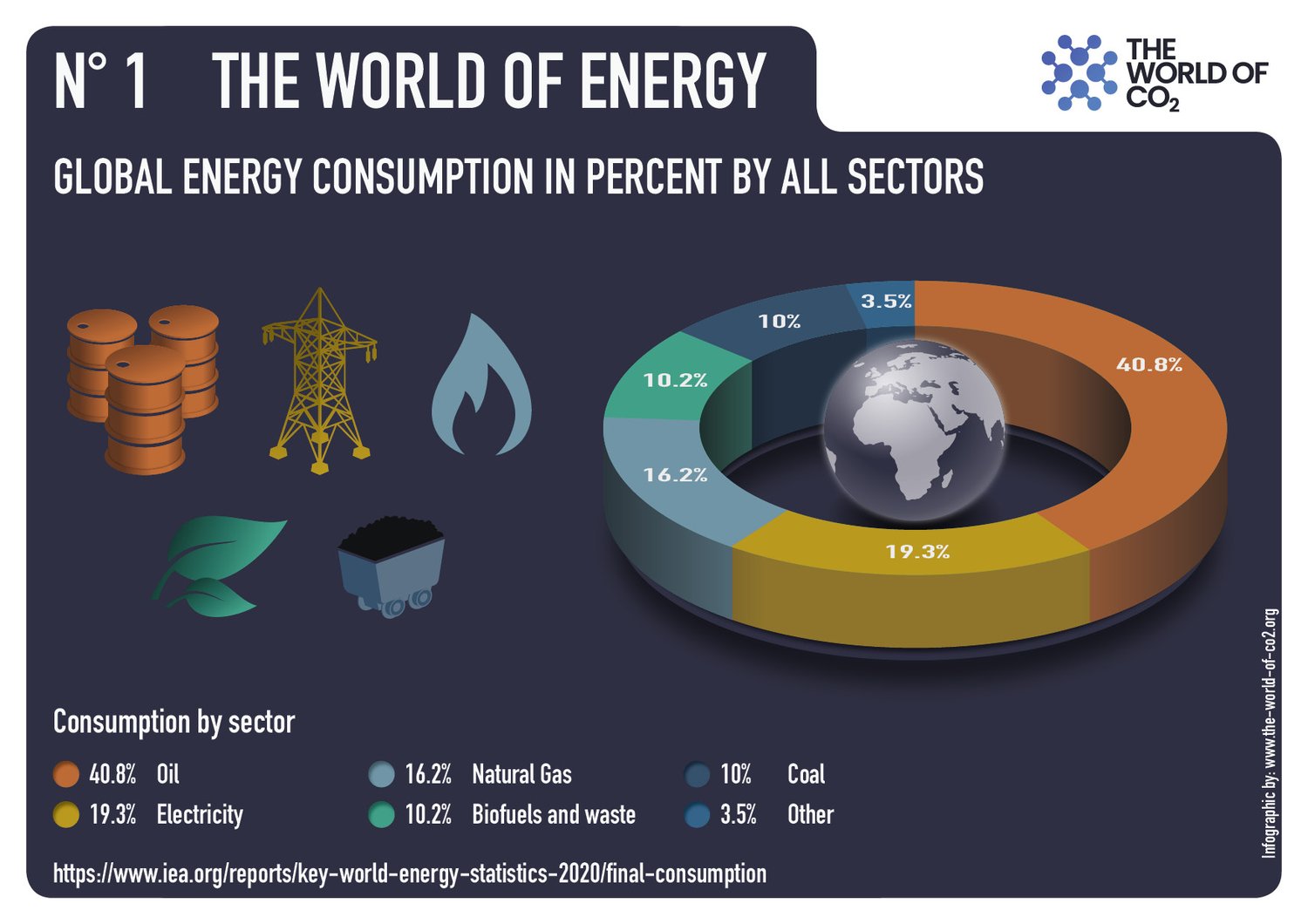
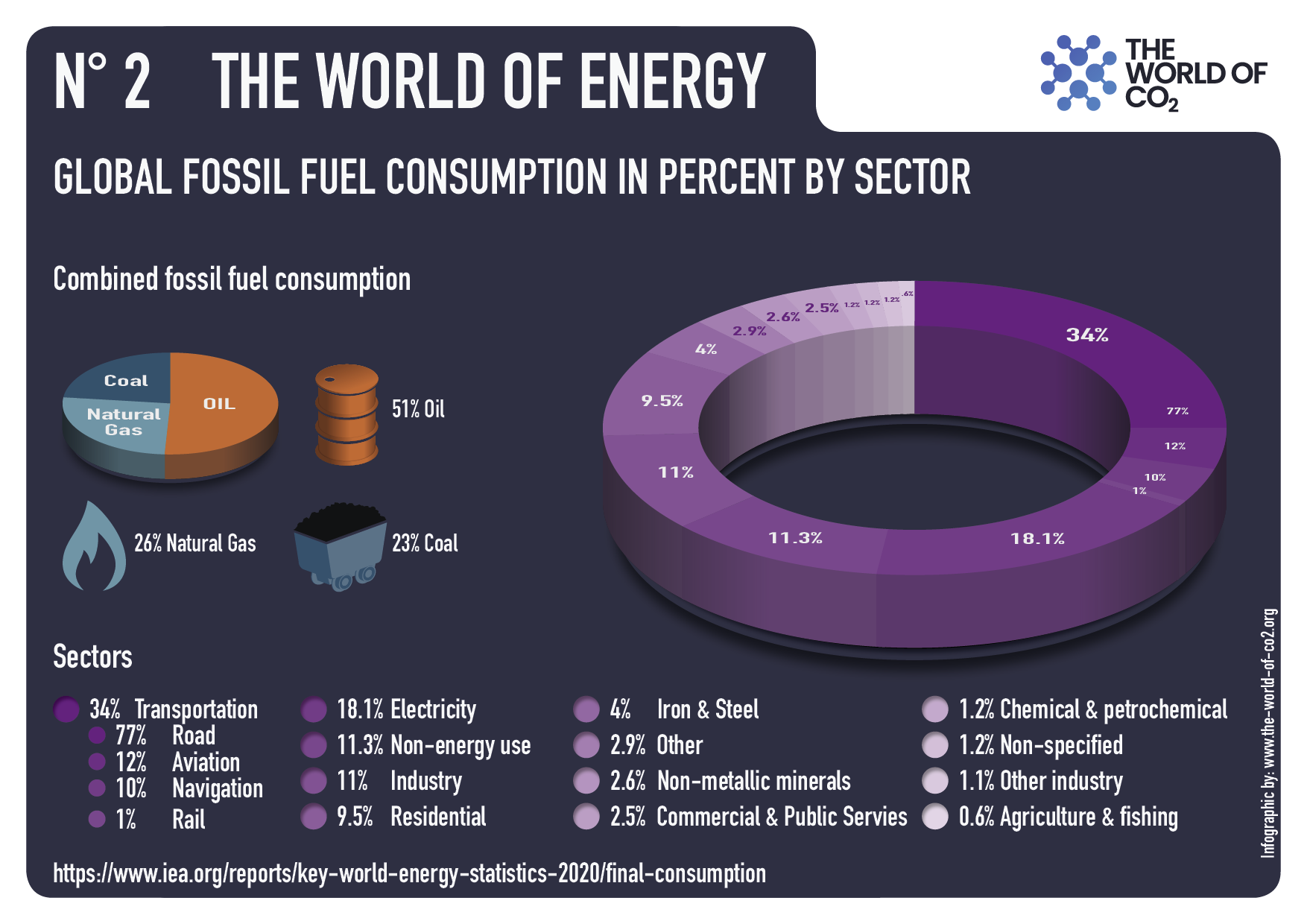
I’m simply trying to make that simple point, and I think most people kind of get that.  Remember, electricity is about a fifth of our total energy consumption. So, all everybody’s talking about is all the electricity, which is the easiest thing to switch over. But we don’t know anything about how we’re going to, know very, very little about how we’re going to deal with the other 4/5. This is energy that we use on things that are very, very hard to replace. So it’s a fertilizer that keeps 4 billion people alive. Making the fertilizer. It’s steel, cement, it’s industrial processes. Most of heating we use comes from fossil fuels, most transportation, that’s fossil fuels.

Know that if the U.S. went entirely net zero today and stayed that way for the rest of the century, consider how incredibly extreme this would be. First of all, you would not be able to feed everyone in the U.S. The whole economy would break down. You wouldn’t know how to get transportation. A lot of people would freeze. Some people would fry. There would be lots and lots of problems. But even if you did this and managed to do it, the net impact, if you run it through the U.N. climate model, is that you would reduce temperatures by the end of the century by 0.3 degrees Fahrenheit. We would almost not be able to measure it by the end of the century. It would have virtually no impact.

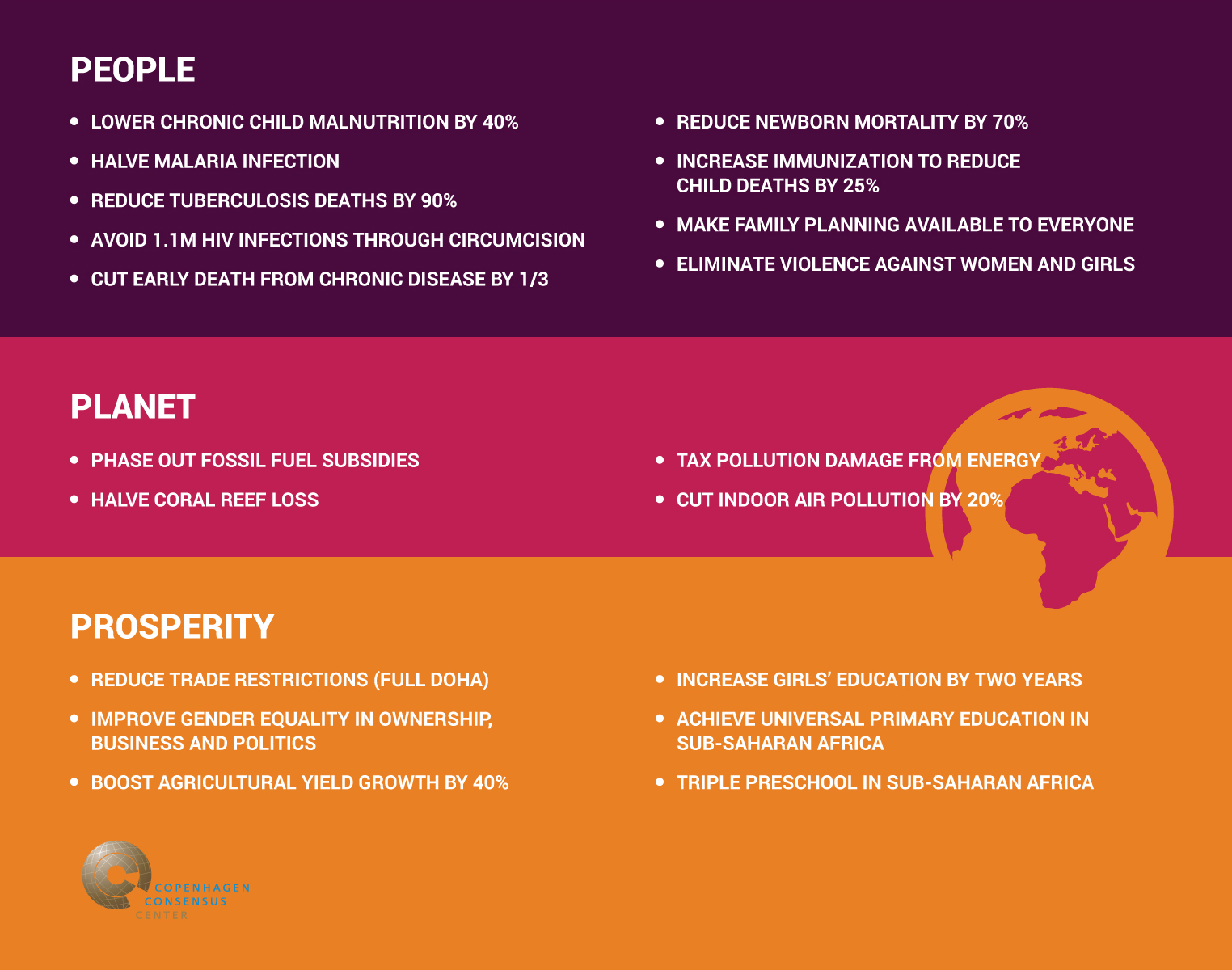
Look, again, we’re rich and so a lot of people feel like you can spend money on many different things. And that’s true. I’m making the argument that for fairly little money, we could do amazing good. If we spent $35 billion, not a trillion dollars, just $35 billion, which is not nothing. I don’t think, neither you or I have that amount of money. But, you know, in the big scheme of things, this is a rounding error. $35 billion could save 4.2 million lives in the poor part of the world, each and every year and make the poor world $1.1 trillion richer.

I think we have a moral responsibility to remember, that there are lots and lots of people, so mostly about 6 billion people out there, who don’t have this luxury of being able to think 100 years ahead and think about a little bit of a fraction of a degree, who wants to make sure that their kids are safe.
And so, the next money we spend should probably be on these very simple and cheap policies.


Fighting Global Warming: All Cash, No Cooling

Through Dec. 12, the “Climate!” crowd is swarming COP28, Dubai’s carbophobia cavalcade. The fact that these global-warming alarmists are surrounded by Earth’s deepest pools of fossil fuels makes their Hajj infinitely ironic.

Also astonishing is the nearly immeasurable impact of these people’s gyrations. They blow trillions of dollars, bludgeon human freedom, and yet do shockingly little to fix their vaunted “climate crisis.”

One practically needs an electron microscope to find their promised
reductions in allegedly venomous CO2 or supposedly lethal temperatures.

According to #ActInTime’s Climate Clock, high above Manhattan’s Union Square, humans have — at this writing — five years and 227 days until we boil to death in a cauldron of steaming carbon. Since The End is scheduled for Saturday, July 21, 2029 (mark your calendars!)

Big Government Democrats offer jaw-droppingly paltry climate benefits,
despite their spine-chilling predictions and unbridled interventionism.

Clean Power Plan Cost/Benefit

Obama-Biden’s proposed Clean Power Plan was a diamond-encrusted specimen of do-nothingism. According to a May 2015 analysis by their own Energy Information Agency, between 2015 and 2025, the CPP would have slashed real GDP by $993 billion, or an average of $39.7 billion per year.

It would have sliced real disposable income by $382 billion, or $15.3 billion annually. It also would have chopped manufacturing shipments by $1.13 trillion, or $45.4 billion per year.

EIA forecast a decrease of 0.035° Fahrenheit. This would have cranked a thermometer from 72° F way down to 71.965°.  As Billy Joel once sang, “Is that all you get for your money?”

IRA Funded Green Energy Projects Cost/Benefit

Biden’s blessed Inflation Reduction Act budgeted $369 billion for green-energy projects. Goldman Sachs subsequently slapped a $1.2 trillion price tag on the IRA.

Danish environmental expert Bjorn Lomborg ran the IRA through the United Nations’ climate models. “Impact of new climate legislation,” Lomborg specified. Unnoticeable: 0.0009°F to 0.028°F in 2100.”  This would chill thermostats from 72° to 71.9991°. If we get lucky: 71.972°.

Biden said on Jan. 31 that “if we don’t stay under 1.5° Celsius” or 2.7° Fahrenheit, “we’re going to have a real problem.” If a 0.0009° F reduction costs $369 billion, then Biden’s 2.7° F goal would devour — brace yourself — $1.107 quadrillion — with a Q.

Biden EV Mandate Cost/Benefit

Emperor Biden’s electric-vehicle decree would require that at least 67% of new cars sold in 2032 be electric. This edict already is stalling the auto industry. On Nov. 29, 3,902 U.S. car dealers in all 50 states wrote Biden. Message: Stop tailgating!  “Already, electric vehicles are stacking up on our lots,” the dealers complained.  “The majority of customers are simply not ready to make the change.”

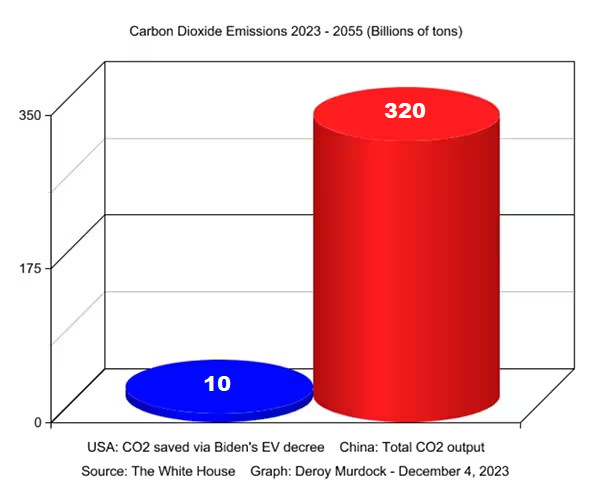
This chaos aside, Biden’s mandate would limit CO2 by 10 billion tons through 2055. Alas, China is expected to generate 320 billion tons of carbon in the next 32 years. So, Biden’s “savings” will asphyxiate in a giant Chinese carbon cloud.

Holman Jenkins of The Wall Street Journal calculates that Biden’s EV order will decrease planetary emissions by a whopping 0.18%. “The climate effect of the extravagantly expensive Biden plan will steadily approach zero,” Jenkins anticipates.

Bans on Gas Stoves and Heaters Cost/Benefit

Rather than jail criminals or deport illegal aliens, Governor Kathy Hochul, D-N.Y., bans gas stoves and demands that gas heaters yield to electric heat pumps — never mind that her constituents freeze to death during post-blizzard blackouts.

“The global effect of the costly program of compulsory electrification will be a reduction in greenhouse gas emissions of less than 0.05%,” the Empire Center for Public Policy calculates.

Summation

Obama, Biden, Hochul and their comrades might respond that no single bauble will fix everything, and every shiny object helps.  Maybe.  But these four schemes alone carry an enormously high price in shredded freedom and incinerated taxpayer dollars, yet still leave at least 99.82% of emissions untouched.

To quote another Briton, William Shakespeare, perhaps this “sound and fury, signifying nothing” is not about cutting emissions or curbing Earth’s temperatures.

Maybe it’s designed to help Democrats spend trillions of dollars to signal virtue, bark orders at the American people, and lavish taxpayers’ hard-earned cash on their politically connected pals — from the Potomac to the Persian Gulf.

Footnote:  

The estimates of lowering temperatures come from IPCC-approved models, which presume that Global Mean Temperature (GMT) rises in response to rising atmospheric CO2.  In fact that premise is itself dubious since basic physics requires that a cause precede an effect in time. The evidence points to changes in CO2 lagging rather than leading GMT changes.  This is true on all time scales, from last month’s observations to ice cores spanning millenia.

Confirmed: Temperature Drives CO2, not the Reverse