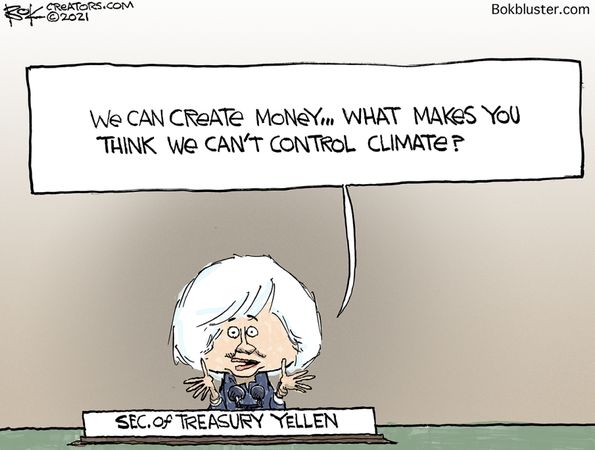
Experts Were the Covid Crisis in 2020

John Tamny makes the case that authoritarian government is a poor substitute for free people managing themselves facing a public health threat.  He writes at Real Clear Markets Dear Washington Post Editorial Board, the Experts Were the Crisis In 2020.  Excerpts in italics with my bolds and added images.

The quote from Tolstoy’s War and Peace is a useful way to begin addressing the Washington Post editorial board’s confident assertion that “’A collective national incompetence in government’” was at the root of the U.S.’s alleged failure vis-à-vis the coronavirus in 2020. According to the Post quoting from a recently released report (“Lessons from the Covid War”), “The United States started out ‘with more capabilities than any other country in the world,’ but “it ended up with 1 million dead.” Were he still around, one guesses Tolstoy would mock the conceit of the Post’s editorialists.
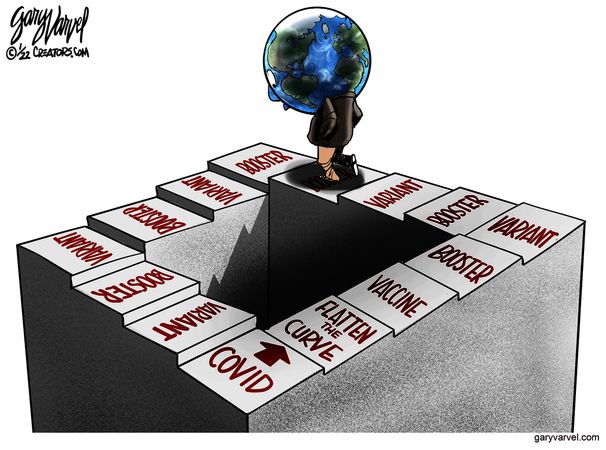
That’s the case because “the thing that matters most to any man” is “the saving of his own skin.” That this needs to even be said speaks to how wrongheaded the Post’s editorial board’s approach to the virus was, and still is. It implies we have dead because government didn’t act properly, as though free people eager to live were unequal to a virus that the right kind of collective governmental action was more than equal to. Ok, but what was government going to do? Better yet, what if the virus had struck in 2015 when Barack Obama was still in the White House. What would he have done? Would he have instructed a virus that was spreading faster than the flu to take a “time out”?

The simple truth missed by the Post is that as humans
we’re wired to preserve ourselves.

On the matter of life and the presumption of death, government is excess. Whatever solution Obama might have come up with, or whatever Donald Trump did come up with, or (try not to laugh) whatever Joe Biden, Nancy Pelosi and Chuck Schumer would have done if the virus had revealed itself in 2021 would have been vastly unequal to the solutions crafted by free people.

Deep down the Post’s editorialists must know the above is true. Indeed, it’s not that the Soviet Union lacked experts, or that Cuba lacks experts now. The problem was and is that the remarkable knowledge of very few very smart people will never measure up to the collective knowledge of the citizenry. That’s why communism failed so impressively in the Soviet Union, and it’s why it fails in Cuba. Translated for those who need it, the people are the market and markets work. As I make plain in my 2021 book When Politicians Panicked, the problem was experts and politicians substituting their limited knowledge for that of the people. That was the crisis. Not so, according to the Post and the report they cite.

Supposedly the “leaders of the United States could not apply their country’s vast assets effectively enough” such that “1 million died.” Wrong. Over and over again. To see why, imagine if 10 million Americans had died in March of 2020. Can the Post editorial board think of what government might have done that would have somehow improved on a feverish individual desire to survive against long odds? The simple truth glossed over by the Post is that the more threatening a virus is (and the Post seems to view what most didn’t know they were infected with as wildly threatening), the more superfluous government action is.

Really, who reading this ever needs to be forced to avoid behavior that might result in sickness, or even death? And if the reply to this question is that some people DO need to be forced, you’re making the best case of all for unfettered freedom. Think about it. Those who reject expert opinion are the most crucial “control group” as a virus spreads. By going against the grain, we learn from their freely arrived at actions if the virus is as lethal as presumed, or not, how it spreads, how to perhaps avoid its spread, and all manner of other important bits of information suppressed by one-size-fits-all national solutions.

It cannot be stressed enough that free people crucially produce information. Instead of allowing them to produce it in abundance in 2020, the response arrived at by Democrats and Republicans was to lock people in their homes, thus blinding a nation “with more capabilities than any other country” to the best approaches to a spreading virus. Please keep all of this in mind with the report’s assertion that the “most important and fundamental misjudgment” about the virus was how it spread. You think? Of course, the muscular assertion ignores yet again that if knowing how a virus spreads is of utmost importance, the only credible answer is freedom.

Consider the latter in light of the statement of the obvious that all advances in medicine have always been born of matching doctors and scientists with the abundant fruits of wealth creation. In 2020, rather than encourage the very wealth creation that has long been the biggest foe of death and disease (by far), panicky politicians quite literally chose economic contraction as a virus mitigation strategy. Historians will marvel at the abject stupidity of the U.S. political class, but not the Post’s editorialists or the authors of a report that the editorialists remarkably find insightful.

Rather than acknowledge the obvious about government and experts as the crisis, the Post editorialists and the experts they kneel before bemoaned a national abdication of “wartime responsibilities.” One gets the feeling Tolstoy would chuckle yet again. In his words, “The course of a battle is affected by an infinite number of freely operating forces (there being no greater freedom of operation than on a battlefield, where life and death are at stake), and this course can never be known in advance; nor does it ever correspond with the direction of any one particular force.”

In short, on matters of life and death government control
is wretched, crisis-inducing excess.
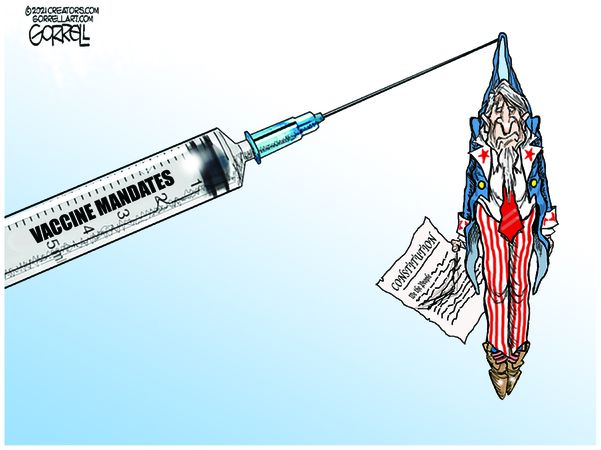
 

Obviously Climate Policies Are Inflationary


Rupert Darwall explains how central bankers avert their eyes from the obvious in his Real Clear Energy article Inflation, Net Zero, and the Bank of England. Excerpts in italics with my bolds and added images.

A central banker tiptoes toward the inflationary consequences of Net Zero.

“What a banker,” read the unsubtle headline in the Sun. “BoE official on £190k salary says Brits must accept they’re worse off.” The Mail agreed. “BoE chief risks fury as he says Brits must accept they are poorer.” What sparked the tabloids’ outrage was a Columbia Law School podcast with Huw Pill, the Bank of England’s chief economist and a member of the Bank’s interest-rate-setting Monetary Policy Committee. Pill made the uncontroversial point that higher energy prices were making Britons worse off, but that attempts by workers and firms to recoup the real spending power they’d lost risked embedding inflation.

Pill’s analysis should have been directed at his fellow central bankers,
who let inflation slip the leash.

In his Geneva speech, Pill says that central bankers need to assess structural factors likely to prevent inflation falling back to target. “If a rise in energy prices is seen as permanent, it is more likely to trigger greater intrinsic inflation,” he argues. If it does, it would “justify a stronger tightening of monetary policy.” Not mentioned by Pill, however, are the effects of climate policy and net zero on energy costs and prices – and therefore the persistence of inflation on an economy being subjected to a multi-decadal program of decarbonization.

Climate policies drive up energy costs through two channels.

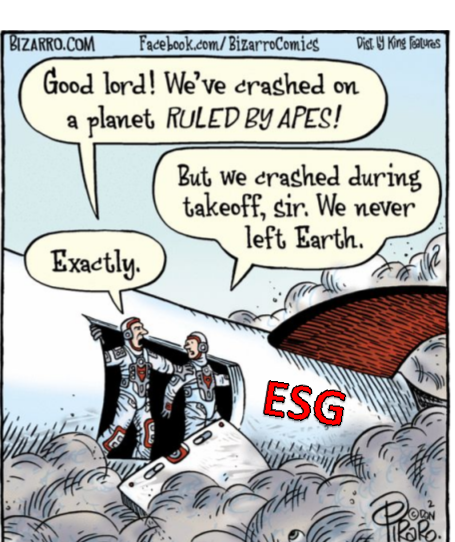
The first are policies forcing energy companies to replace hydrocarbons with inefficient, inferior lower-carbon alternatives, notably wind and solar. Were such technologies superior and capable of delivering greater efficiencies, there would be no need for government intervention promoting their adoption. The second channel is by progressively constricting the sources of energy supply, for example by Environmental, Social and Governance (ESG) investors preventing investment in new oil and gas fields, thereby increasing the market share of OPEC plus Russia.

In Britain’s case, powering past coal meant increased dependence on natural gas to keep the lights on. As Pill notes, all market transactions involve distribution of some “economic surplus” between the parties; “the more effective the seller is in extracting that economic surplus, the higher the resulting economic price will be.” Unfortunately for Britain and the rest of Europe, Vladmir Putin and Gazprom have a much better understanding of how energy markets work than Western politicians who made their continent vulnerable to surplus extraction through the myopic pursuit of net zero.

With the Bank of England, it’s not so much myopia as wilful blindness to any possibility of a link between climate policies and inflation. In a speech this month unironically asking “Climate action: a tipping point?,” Sarah Breeden, the bank’s executive director for financial stability and risk, describes its role as creating a regulatory framework that encourages markets “to allocate capital to support real economy decarbonization,” i.e., to worsen the supply constraints on hydrocarbon energy. At the November 2022 G20 meeting in Bali, Deputy Governor Sir Dave Ramsden spoke of the need to avert climate catastrophe. “Among all the shocks – many unprecedented – facing the global economy today, the challenge of climate change is the most profound and far reaching,” Sir Dave declared, in the very month it was announced that consumer price inflation in Britain had reached 11.1 percent.

From the governor on down, the Bank of England became obsessed with conjuring up specters of climate risk as threats to financial stability, all the while blanking out any possibility that climate change policy might threaten attainment of the bank’s inflation mandate. Less than two years ago, Andrew Bailey, the bank’s governor, was talking of net zero as a way of regenerating capital and raising productivity. “These positive effects should be larger in countries like the UK that are net importers of energy,” Bailey asserted – the opposite of what the bank’s chief economist is now saying.

Alarm bells should be ringing in Threadneedle Street. Giving evidence to a House of Lords inquiry on the Bank of England independence, former chancellor George Osborne cast doubt on making climate goals one of the bank’s objectives. His former Labour opponent, Ed Balls, who helped design the arrangements making the bank independent in 1997, went further, arguing that it didn’t make sense to give the bank a role for which it had no tools, and suggesting that climate had become a distraction from its core mission on price and financial stability.

Climate is worse than a distraction:
misjudgement and misanalysis of climate-change policy is a key factor
in the Bank of England losing control of inflation.

Fed Models Weather, Fails at Bank Stress Testing

Mish reports on the US Federal Reserve’s latest incompetence at his blog The Fed Models the Weather Although It Can’t Even Stress Test Treasuries.  Excerpt in italics with my bolds. H/T Tyler Durden
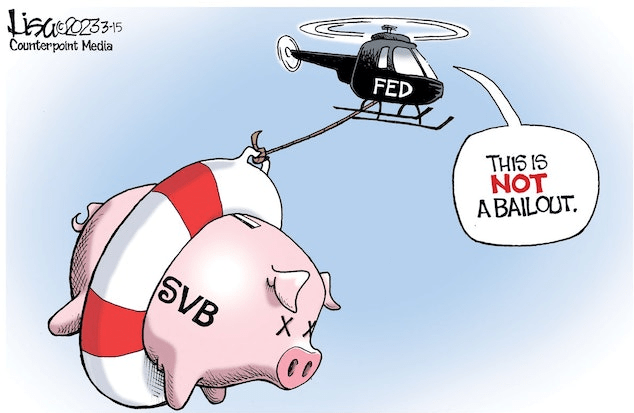
The Fed has conducted a “pilot climate scenario analysis exercise”.
Let’s take a peek inside this laughable event.

On January 10, Fed Chairman said the Fed ‘will not be a climate policymaker’. 

Under guise that it’s just a stress test model and not a policy setting model, the Fed announced details on its Pilot Climate Scenario Risk Analysis Program on January 17.

As described in the instruction document released today, the six largest U.S. banks will analyze the impact of scenarios for both physical and transition risks related to climate change on specific assets in their portfolios. To support the exercise’s goals of deepening understanding of climate risk-management practices and building capacity to identify, measure, monitor, and manage climate-related financial risks, the Board will gather qualitative and quantitative information over the course of the pilot, including details on governance and risk management practices, measurement methodologies, risk metrics, data challenges, and lessons learned.

“The Fed has narrow, but important, responsibilities regarding climate-related financial risks – to ensure that banks understand and manage their material risks, including the financial risks from climate change,” Vice Chair for Supervision Michael S. Barr said. “The exercise we are launching today will advance the ability of supervisors and banks to analyze and manage emerging climate-related financial risks.”

Climate Results Are In

Please consider the WSJ report The Fed’s Climate Studies Are Full of Hot Air by David Barker.

This year the Fed is forcing big banks to produce complex reports on their climate vulnerability in a “pilot project” that is sure to expand and might lead to lending restrictions. A query of the Fed’s listing of recent publications returns hundreds of research papers, press releases and policy statements related to climate change.

With all this effort, one might hope the Fed would produce high-quality research on climate change. But I took a close look at two Fed studies on the subject and found shockingly poor analysis. These studies on the effect of temperature on U.S. and world economic growth are cited without a hint of skepticism and widely lavished with media attention.

Recently I published a critique of a study from the Federal Reserve Board claiming that a year of above-normal temperatures in countries around the world makes economic contraction more likely. The original study used sophisticated statistical techniques but failed to report that its primary finding was statistically insignificant. My request to the study’s author for computer code to reproduce the paper’s results went unanswered.

I managed to write the code from scratch and exactly replicate the results, allowing me to run additional tests that the author didn’t report. The author’s primary result—that temperature has a bigger effect in bad than in good economic times—turned out to be statistically insignificant. Additional analysis showed that there is no reliable effect of temperature on growth at all.

There are two main reasons why the Fed study appeared at first to show a statistically significant effect of temperatures on economic growth. First, each country in the sample had equal weight in the analysis. China had the same weight as St. Vincent though China’s population is 13,000 times as large. Equal weighting means that some small countries with unusual histories of economic growth greatly influenced the results.

The paper’s results disappeared when countries like Rwanda and Equatorial Guinea—which had economic catastrophes and bonanzas unrelated to climate change—were omitted. Omitting similar countries representing less than 1% of world gross domestic product was enough to eliminate the paper’s result.

The only thing to learn from the Fed’s research is that climate propaganda is spreading fast, and when it comes to climate, academic economists are no more deserving of trust than are other supposed scientists and experts. The Fed’s time would be better spent on more urgent matters, like improving its botched regulation of the banking system.

The author, David Barker, has taught economics and finance at the University of Chicago and the University of Iowa and worked as an economist at the Federal Reserve Bank of New York. He has a doctorate in economics from the University of Chicago.

Hoot of the Day

♦  The Fed cannot even model US Treasuries. Its stress-free test would have failed to identify the imploded Silicon Valley Bank as a problem

♦  Yet, for political reasons, the Fed is now attempting to stress test the weather.

♦  To get the desired results, the Fed study gave St. Vincent, Rwanda, and Equatorial Guinea the same weight as China and the United States. 

♦  The Fed should throw this nonsense in the garbage and stress test commercial real estate, interest rates, accelerated QT, and things that it has clearly neglected. 

See Also Financial Systems Have Little Risk from Climate

Mish:  One of my readers accurately commented, that “Modeling the impact of bad climate policy would be more useful.”  Of course that presumes the Fed has any idea just how bad, and inflationary, our climate policy is.


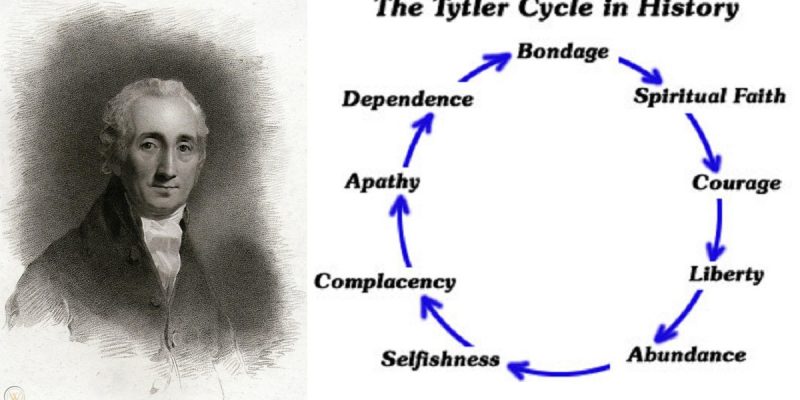
Postscript on Cycle of Democracies:


Dark Money Grabbing Your Nat Gas

Robert Bryce reports on the wealthy and shadowy push against domestic use of natural gas in his substack article The Dark Money Behind The Gas Bans.  Excerpts in italics wtih my bolds and added images

The big-money donors behind the gas bans are hiding their identities, and their funding,
behind an extensive dark money network.


Last Tuesday, Rewiring America announced that it has hired Georgia politician Stacey Abrams to help the group “launch and scale a national awareness campaign and a network of large and small communities working to help Americans go electric.”

In a press release, Abrams, who will hold the title of “senior counsel” said she is “excited to join Rewiring America to share the benefits of electrification and ensure families get their fair share. I look forward to working together as we build the tools that will transform everyday Americans from energy consumers to energy moguls.”

Stacey Abrams and Saul Griffith. Photo credits: Gage Skidmore (L) and Jeff Kubica.

Abrams, a Democrat who served in the Georgia House of Representatives for 11 years, ran for governor of Georgia two times but failed in both attempts against Republican Brian Kemp. Abrams famously refused to concede in the 2018 race and claimed the election was “stolen.”

Rewiring America is part of the NGO-industrial-corporate-climate complex that, as I reported here last month, is now spending some $4.5 billion per year to promote anti-industry policies. While their agendas vary, the anti-industry NGOs are generally trying to:

♦  mandate increased use of weather-dependent renewables,
♦  hinder (or stop) hydrocarbon production,
♦  prevent the construction of new hydrocarbon infrastructure,
♦  mandate building electrification, and of course,
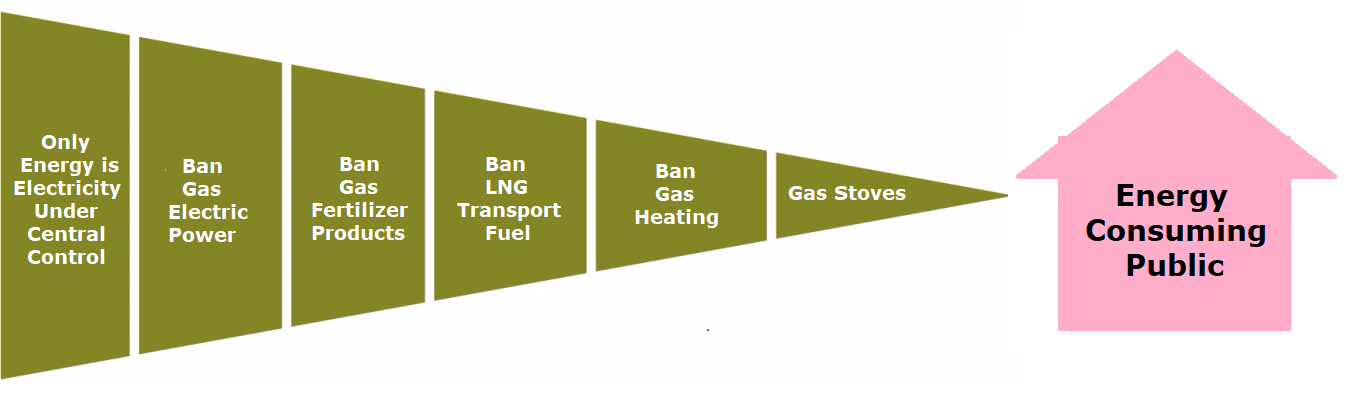
♦  ban the use of natural gas in homes and businesses.

As I explained in January, Rewiring America’s mission to electrify everything, ban the use of natural gas in homes and businesses, (and gas stoves), is part of a years-long, lavishly funded campaign that is being bankrolled by some of the world’s richest people. But here’s the pernicious part: the big-money donors backing Rewiring America, and other groups pushing the gas bans, are hiding their identities behind a dark money network of NGOs that are purposely obscuring their funding and the groups they are bankrolling.

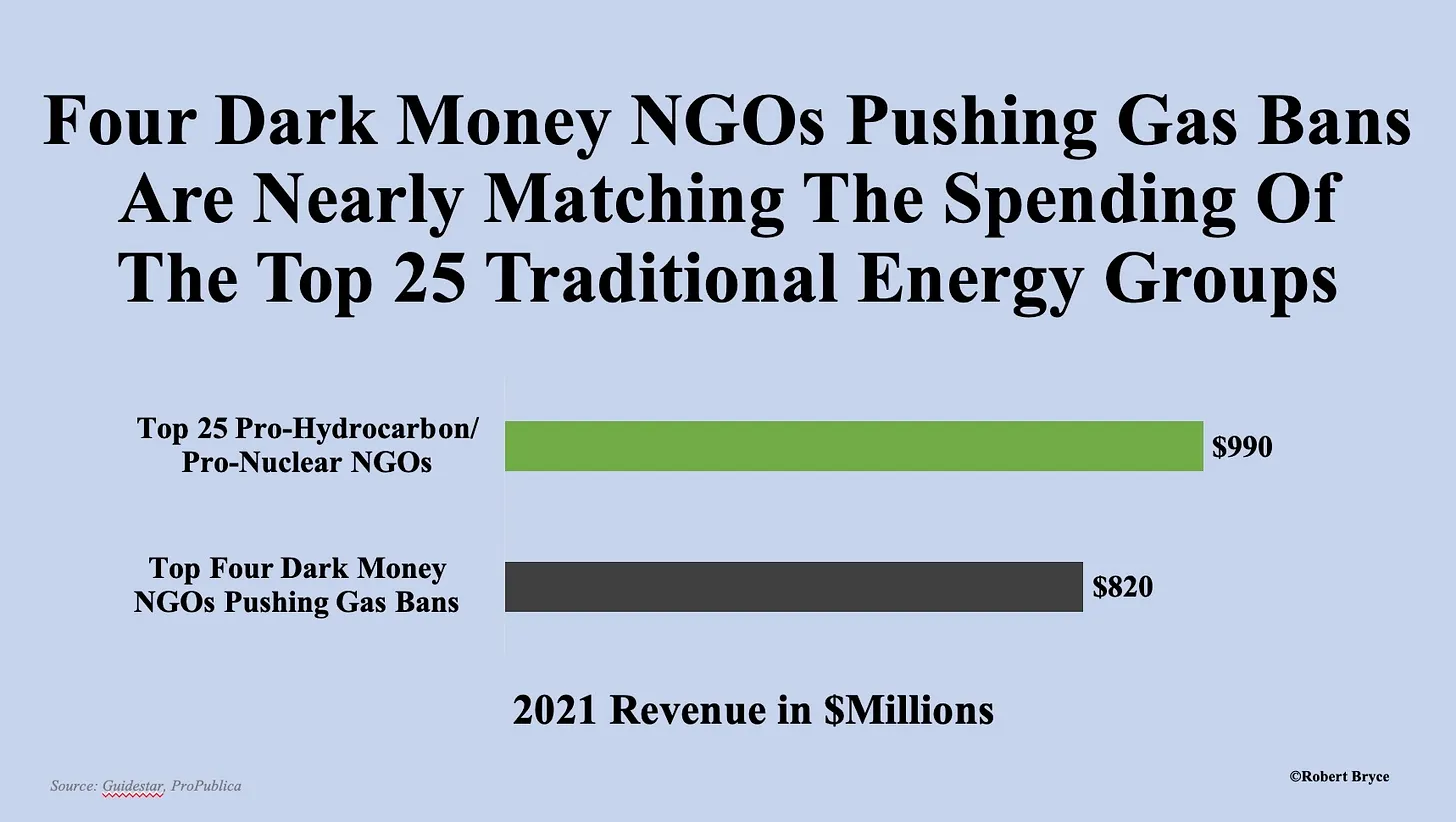
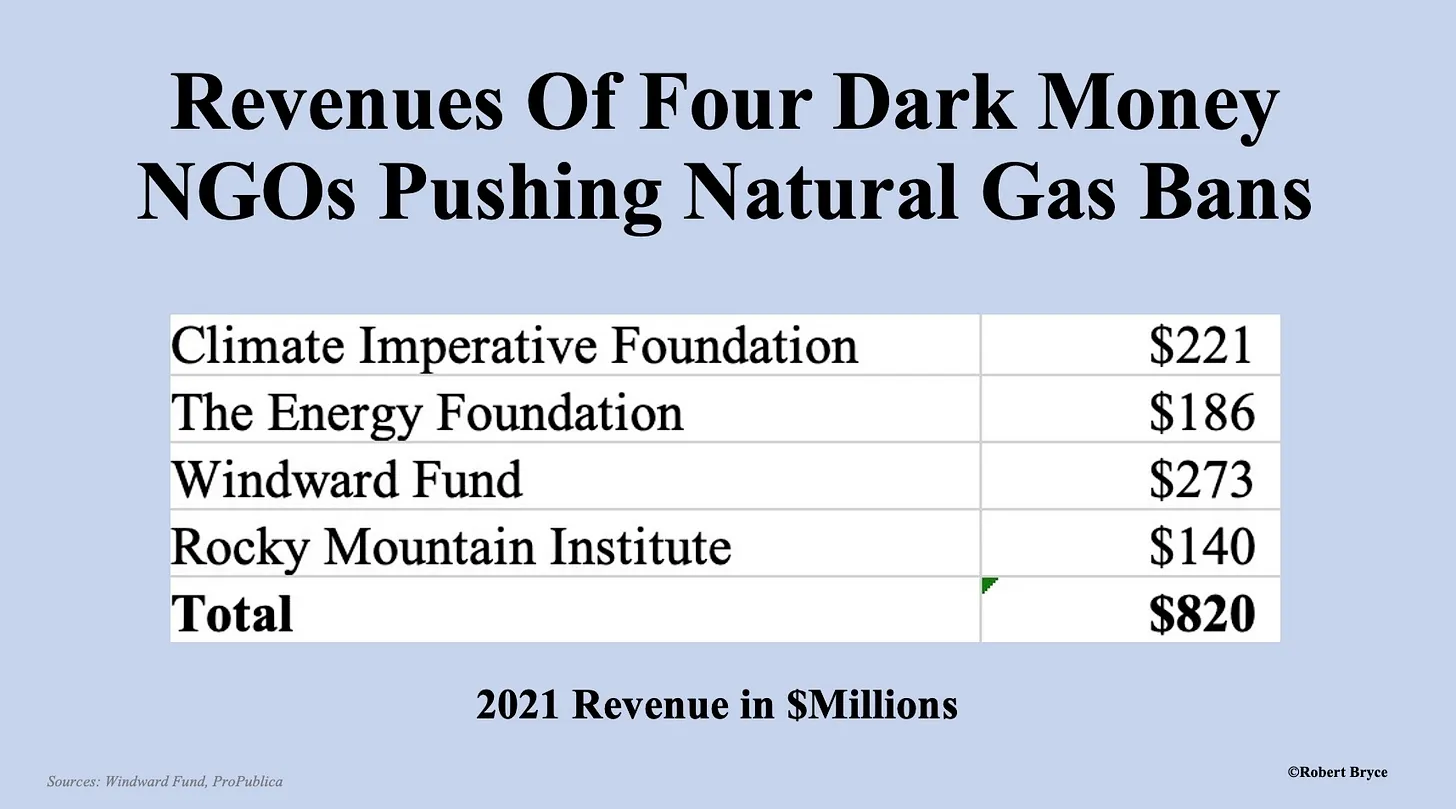
Although it is impossible to know exactly how much dark money is being shuffled among groups like the Windward Fund, Rewiring America, and others, my tally shows that just four of the dark money NGOs behind the gas bans have combined budgets of about $820 million. Thus, as you can see in the graphic below, by themselves, those four anti-industry groups are spending about 83% of the amount that is being spent by the top 25 NGOs that support traditional energy sources.

Indeed, despite claims from legacy media outlets about the influence of the hydrocarbon sector, the truth is undeniable: the overwhelming majority of the money, media coverage, and momentum in the debate over energy policy and climate change is on the side of the anti-hydrocarbon and anti-nuclear energy NGOs.

And one of their top priorities is banning the use of
natural gas in homes and businesses.

On its website, Rewiring America cites Griffith’s 2020 book, which is also called Rewiring America, in which he claims “we can still address the threat of climate change, but only if we respond with a massive war-time mobilization effort to transform the fossil fuel economy into a fully electrified one, run on wind, solar, and other renewable energy sources.”

Note the lack of any mention of nuclear energy. Also unmentioned: attempting to run the economy on weather-dependent renewables would require paving vast tracts of rural America with obscene numbers of noisy, 600-foot-high, bird- and bat-killing wind turbines and endless oceans of landscape-ravaging solar panels. Also unmentioned: attempting to electrify everything would require doubling or tripling the amount of electricity produced in the country, an effort that would require mining, smelting, and fabrication of staggering amounts of copper, steel, aluminum, and other metals. Also unmentioned: nearly all of the alt-energy supply chains depend on China.

Has Griffith or Rewiring America been lobbying federal officials? If it has, the group has not registered to do so. A search of federal lobby records for the U.S. House of Representatives shows no record for Griffith or Rewiring America. A similar search of lobby registration for the U.S. Senate turned up no records.

Windward’s flood of cash is not coming from foundations. Instead, most of it is coming from super-rich individuals. The first listing on Schedule B of its 990 shows a donation of $59 million from an unnamed person. Other individuals kicked in sums of $24 million, $20 million, $16 million, $14 million, $13 million, $10.5 million, $10 million, $10 million, $9 million, $6 million, and $6 million respectively.  Thus, more than two-thirds of the Windward’s 2021 revenue came from about a dozen unnamed plutocrats. Windward’s 990 also shows that it is giving grants to dozens of small climate-focused NGOs around the country.

Energy Foundation lists more than 100 staff on its website. Its board members include Gina McCarthy, who was a climate advisor to President Biden. Before that job, McCarthy headed the Natural Resources Defense Council, the giant anti-nuclear NGO that shamelessly cheered about its role in the premature closure of the Indian Point nuclear plant in New York.

In an ironic statement, given the amount of dark money that is being deployed by the anti-industry industry, McCarthy claimed, “Now it has moved from denial, but the dark money is still there. The fossil fuel companies are still basically trying their best to make sure that people don’t understand the challenge of climate.”

There is much more to be written about the dark money that is driving the anti-industry industry, the unaccountable parasitic force that employs thousands of lawyers, strategists, pollsters, and fundraisers, who are pushing policies like natural gas bans. I will close this piece by recounting a claim Abrams made in the press release put out by Rewiring America last Tuesday. She said that families across the country are living “too close to the economic edge,” and that “few understand how much money they can save with a little help to upgrade their homes and vehicles.”

Hogwash.

Banning natural gas and forcing consumers to buy EVs will impose regressive energy taxes on consumers. In addition to the high cost of replacing existing appliances with electric ones, the cost of operating an all-electric home is higher than that for a home that uses natural gas. As for EVs, good luck finding a Tesla in the barrio. An average EV now sells for about $66,000. That’s Benz and Beemer territory.

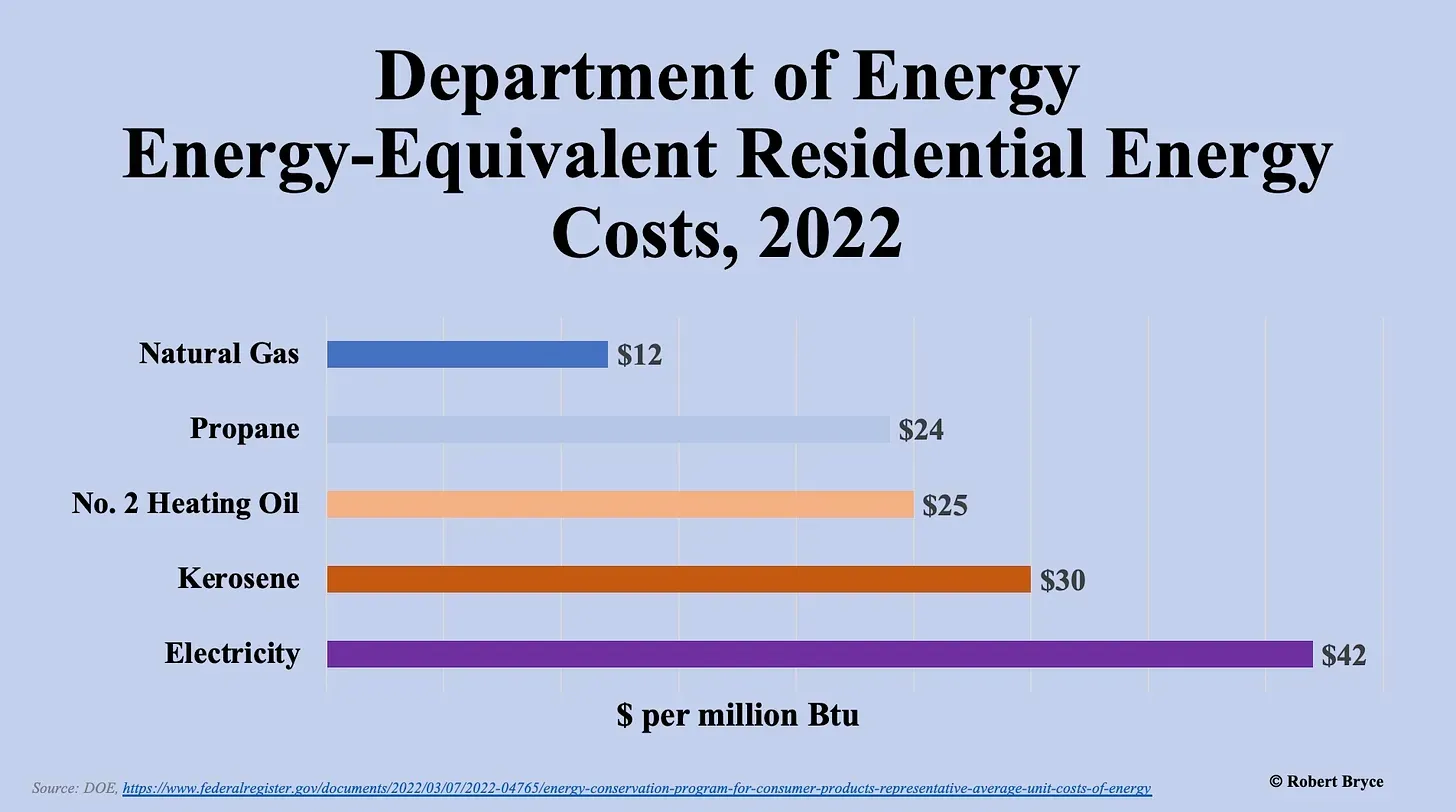
Last March, in the Federal Register, the Department of Energy published its annual estimate for residential energy costs. As you can see in the graphic above, on a per-Btu basis, electricity costs about 3.5 times more than natural gas. The fuel is, by far, the cheapest form of in-home energy, costing less than half as much as fuels like kerosene, propane, and heating oil. That point was bolstered again last October when the Department of Energy published its Winter Fuels Outlook, which predicted that heating with electricity this winter would cost about 46% more than heating with natural gas.

The DOE’s numbers make it clear that Rewiring America’s agenda of forced electrification will result in higher energy bills for consumers. And low- and middle-income Americans will pay the biggest price because they will be forced to spend a larger percentage of their disposable income on energy than wealthy consumers.

Abrams may have found a new job at Rewiring America. Good for her. But does she really understand the economics of what she will be promoting? The facts are clear: attempting to electrify everything will impose new regressive taxes on the poor. And no amount of spin, or dark money, can change that fact.

Fed Reserve Hijacks US Democracy

For those who missed it, Simon Black explains in his blog article The Federal Reserve just hijacked American democracy.  Excerpts in italics with my bolds.

It was only Tuesday of last week that the Fed Chairman testified before a committee of concerned senators who thought the Fed may be tightening monetary policy (i.e. raising interest rates) too quickly.  This was a valid concern; rapid interest rate hikes DO create a LOT of risks. And one of those risks is that asset prices– especially bond prices– plummet in value.

And yet last week the Fed Chairman completely rejected this risk, telling worried senators flat out that “nothing about the data suggests to me that we’ve tightened too much. . .”  In other words, he believed the Fed’s rapid interest rate hikes posed ZERO risk.

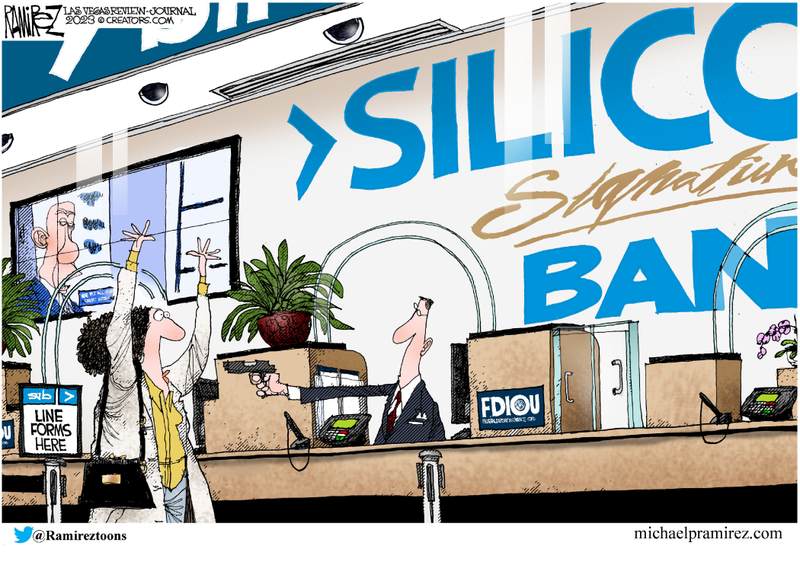
Talk about a terrible prediction; just THREE DAYS LATER, one of the largest banks in the US imploded, multiple bank runs unfolded across the country, the bond market fell into turmoil, and the Fed had to essentially guarantee the entire US banking system in order to restore confidence. (More on that in a moment.)

The mental image of bank runs in America, just days after the Chairman dismissed
any risk, is the Fed’s equivalent of the Afghanistan debacle. It’s shameful.

But what’s REALLY concerning is the Fed’s response to this panic– their de facto guarantee of the entire US banking system. Because ultimately they just put YOU on the hook for the potential bond losses of every bank in America. I’ll explain–

So when the FDIC decided to guarantee every depositor at Silicon Valley Bank, including those with balances exceeding $250,000, it means they’re bailing out SVB’s wealthy customers at the expense of big Wall Street banks.

But most people seem to have missed the real story…
because the ACTUAL bailout is coming from the Fed, not the FDIC.

Despite the Chairman’s terrible prediction in front of the Senate Banking Committee last week, the Fed now seems keenly aware of the risks in the US banking system. They realize that there are LOTS of other banks that are sitting on massive unrealized losses, just like SVB.  So in order to prevent these banks from going under, the Fed invented a new facility they’re calling the “Bank Term Funding Program”, or BTFP.

But the BTFP is really just an extraordinary lie designed to make you think that the banking system is safe. They might as well have called it, “Believe This Fiction, People”, and I’ll show you why.

How Bank Credit System Works

Whenever people borrow money from banks, we normally have to provide some sort of collateral. Banks make home equity loans using real estate as collateral. They make car loans where the car is collateral. Manufacturing businesses borrow money using factory equipment as collateral.

Well, banks do the same thing when they borrow money. And sometimes banks will even borrow money from the Federal Reserve. This is actually one of the reasons why the central bank exists– to act as a “lender of last resort” if banks need an emergency loan.  And when banks borrow money from the Fed, they have to post collateral too.

Instead of automobiles and houses, though, banks use their financial assets as collateral– specifically their bonds.  This is actually codified by law (12 CFR 201.108) whereby Congress lists specific assets that the Fed can accept as collateral when making loans to banks. The list is basically different types of bonds.  But this is the root of the problem. Banks are in financial trouble because their bond portfolios have lost so much value. Some banks (like SVB) are even insolvent because of this.

So now, through the BTFP, the Fed will now accept banks’ sagging bond portfolios
as collateral, but loan the bank MORE money than the bond portfolios are worth.

Let’s say you’re an insolvent bank that invested, say, $100 billion in bonds. Those bonds are now worth $85 billion, and your bank is about to go under. “NO PROBLEMO!” says the Fed.  The bank simply posts their bond portfolio (which is only worth $85 billion) as collateral, and the Fed will loan the bank the full $100 billion… as if those losses never occurred.  It’s a complete lie. Everyone is pretending that the banks haven’t lost any money to give you a false sense of confidence in the financial system. “Believe the Fiction, People.”

Remember that banks in the US have more than $600 billion
in unrealized bond losses right now.

And that number will keep increasing if interest rates continue to rise.  So this means that the Fed has essentially guaranteed that entire $600+ billion. Commercial banks won’t lose a penny— they can now pass their financial risks down to the Federal Reserve.

This isn’t a bailout… it’s a time bomb.

We can keep our fingers crossed and hope that this time bomb never explodes. But if it does, the Federal Reserve is going to be looking at hundreds of billions in losses… which would trigger devastating consequences for the US dollar.

This means that everyone who uses US dollars… including every man, woman, and child in America, is ultimately on the hook for the potential consequences of the BTFP.  And that’s what is so remarkable about this: the Fed just made this decision all on its own.  Congress didn’t pass a law. There were no hearings, no judicial oversight, no votes.

Instead, several unelected bureaucrats who have been consistently wrong
got together in a room and decided to guarantee $600+ billion in bank losses…
and stick the American people with the consequences.

      • This is the same organization that said in February 2021 that there was no inflation.
      • The same organization that said in July 2021 that inflation was transitory and would pass in a few months.
      • The same organization that said in June 2022 that they finally understand “how little we understand about inflation.”
      • The same organization that said THREE DAYS before SVB’s collapse that “nothing about the data” suggested any risks with their policy actions.

The Fed has been wrong at every critical point over the past few years. And they’ve now unilaterally signed up every single person in America to a $600+ billion bank bailout without so much as a courtesy phone call to Congress.

This is apparently what Democracy means in America today.  We’ve all been subjected to endless vitriol over the past few years with people on all sides howling that “Democracy is under attack.”

Well, we just watched an unelected committee of central bankers hijack democracy
and stick the American people with a potential $600+ billion bank bailout.


EU Makes ESG Regs Inescapable

Mish writes at his blog based on a report from South China Morning Post 

The EU Warns “There is No Escape” from its ESG Environment Madness Excerpts in italics with my bolds and added images. H/T Tyler Durden

The demand for highly paid ESG nannycrats to enforce nonsensical rules is on the rise. This will cause a rippling impact of higher inflation everywhere.

From South China Morning Report: Please note Impending EU Laws on ESG Disclosures Will Be a Matter of Survival for Asian Suppliers.

Impending regulations in the European Union, which is at the forefront on ESG legislation, will soon require tens of thousands of suppliers across the supply chain in Asia to report their ESG performance, said Amfori president Linda Kromjong.

“If you don’t start preparing now, you will be late if and when
the legislation kicks in,” she told the Post.

The Corporate Sustainability Reporting Directive, due to be rolled out next year, will require companies to disclose how sustainability issues, such as climate change, impact their business and how their operations in turn affect people and the planet.

Some 50,000 companies – all large companies and listed small and medium-sized firms – will have to make such disclosures, up from 11,700 large companies and public entities with more than 500 employees mandated under existing legislation. Auditing of the disclosures will be mandatory.

These companies will in turn require their global suppliers to disclose their sustainability data, such as greenhouse-gas emissions, so that they can calculate their own environmental footprints and social risk exposure.

The European Parliament’s environment committee last Thursday backed tougher legislation that will force firms with over 250 staff and annual worldwide turnover of more than €40 million (US$42.8 million), to check and report whether their suppliers within and outside Europe use slave or child labour, or pollute the environment.

Escape From the Madness

‘There is no escape’ from impending European Union rules requiring sustainability reporting, Amfori president Linda Kromjong warns Asian suppliers

Also note that Brussels-based Amfori provides digital tools and training for suppliers to do self-assessments on ESG performance and compare themselves with industry benchmarks, based on international standards.

And you probably can guess what that means

If not, then please make another note: Hong Kong to pay 30 per cent more for ESG jobs as companies fight for talent to meet sustainability targets.

If you don’t think this madness is hugely inflationary, then you just are not thinking at all. 

My Comment

Indeed, we can see where this is going.  RegulationFare is like LawFare:  The process is the punishment.  Ronald  Reagan’s observation comes to mind:

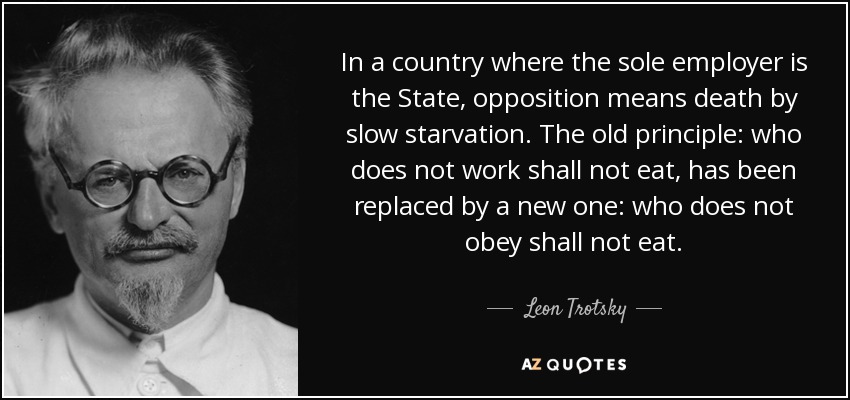
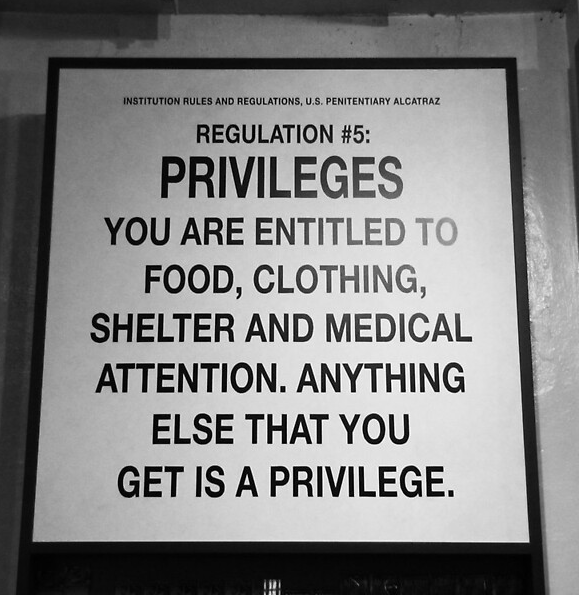
In the end, the state directs business to meet state objectives, either through ownership or through agency rules. That brings in the reality described by Trotsky:


Florida to Ban Woke ESG Banking

Amber Jo Cooper reports at Florida’s Voice DeSantis proposes banning social credit scores in banking, targets ESG. Excerpts in italics with my bolds. H/T Tyler Durden
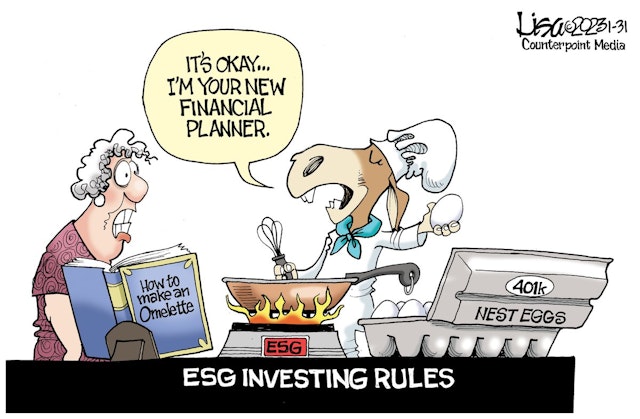
On Monday Gov. Ron DeSantis announced a proposal to target
ESG banking and investment policies 

DeSantis said he aims to enact protections for Floridians against discrimination by big banks and large financial institutions for their religious, political, or social beliefs.

ESG – environmental, social, and governance – is a business framework that determines investment based on political factors such as renewable energy and social justice initiatives.

DeSantis said ESG has developed into a “mechanism to inject political ideology into investment decisions, corporate governance, and really just the the everyday economy.”

“That is not ultimately something that is going to work out well for us here in Florida,” he said.

DeSantis said it violates the fiduciary duty that executives have to the shareholders of publicly traded companies.

Your pension money, your retirement money, is likely invested in some of these funds, and those funds should be done to try to produce the best result for you using the available investment options,” DeSantis said.

“What ESG says is no, we’re not going to do, even if it would do a better return – we’re not going to allow you to invest in certain areas, you’re not allowed to invest in oil and gas, you’re not allowed to invest in disfavored areas,” he explained.

The proposal includes prohibiting the financial sector from considering “social credit
scores” in banking and lending practices that aim to prevent Floridians
from obtaining loans, lines of credit, and bank accounts.

“That is a way to try to change people’s behavior. It’s a way to try to impose politics on what should just be economic decisions,” he said.

“We are also not going to house in either the state or local government level deposits. And we have a lot of deposit, we got a massive budget surplus in Florida, you have deposits all over the place that go in where state and local government use financial institutions, none of those deposits will be permitted to be done in institutions that are pursuing this woke ESG agenda,” he said.

The proposal would also aim to make sure ESG will not “infect decisions” at both the state and local governments, such as investment decisions, procurement and contracting, or bonds.

The Governor’s press release said the legislation would also:

  • Prohibit banks that engage in corporate activism from holding government funds as a Qualified Public Depository (QPD).
  • Prohibit the use of ESG in all investment decisions at the state and local level, ensuring that fund managers only consider financial factors that maximize the highest rate of return.
  • Prohibit all state and local entities, including direct support organizations, from considering, giving preference to, or requesting information about ESG as part of the procurement and contracting process.
  • Prohibit the use of ESG factors by state and local governments when issuing bonds, including a contract prohibition on rating agencies whose ESG ratings negatively impact the issuer’s bond ratings.
  • Direct the Attorney General and Commissioner of Financial Regulation to enforce these provisions to the fullest extent of the law.

Florida Chief Financial Officer Jimmy Patronis praised DeSantis’ proposal to crack down on ESG.

“When it comes to ESG, many of us have been boiled like a frog,” Patronis said. “The Governor is right that over time ESG has wound its way into too many aspects of American society, and pulling it back is going to take work.”

“This proposed legislation puts returns first, it puts the Constitution first, and it puts corporate America on notice that if they play politics with Florida residents, we’ll have the tools to hold them accountable. I look forward to working with the DeSantis Administration, as well as Senate President Passidomo and House Speaker Renner in getting this legislation over the finish line,” Patronis said.

Patronis previously barred ESG funds’ participation in the deferred compensation program and divested around $2 billion from BlackRock due to their utilization of ESG.

House Speaker Paul Renner said Bob Rommel, R-Naples, will introduce the bill in the House.  “The biggest thing that I think ESG represents is a total hijacking of democracy,” said Renner.

“We’re lucky here in the state of Florida, that we’ve got a governor who will stand up to things like ESG, when others will not,” he said.

“This is amazing what he’s doing for our state, our state is just rocketing,” said Senate President Kathleen Passidomo “I look forward to having the governor come back here again and again and again to sign all these bills,” she said.


“Sustainability, Inclusiveness” Is Nanny State Dictating to Business

Matthew Lau explains at Financial Post Forget ‘sustainable and inclusive’: Get back to profit.  Excerpts in italics with my bolds and added images

Business community must re-focus its efforts on fulfilling
its real social responsibility: increasing profits

“Sustainable and inclusive growth,” like “corporate social responsibility,” is a loaded phrase. Both are based on subversive policies and ideas, but because nobody wants to be accused of supporting un-sustainability or corporate social ir-responsibility they often go unopposed.

That’s a mistake: both badly need opposing.

Just as preachers of corporate social responsibility advocate a form of socialism, those calling for “sustainable and inclusive” economic growth are proposing government economic planning. When activists say “sustainable and inclusive growth” what they really mean is that they, through the government intervention they invariably recommend, should dictate where economic growth takes place, in which sectors and for whose benefit.

It should surprise no one that the federal government splashes buzzwords like “sustainability” and “inclusiveness” all over its communications in trying to sell its inordinately expensive, not to mention dumb, economic programs to the voting public. It is more difficult to understand why the business community follows the government’s lead in advocating central economic planning and masking it behind “sustainability,” “inclusiveness” and other slick marketing words.

One reason for this unfortunate tendency of the business community may be that government expansion into business has completely blurred the lines between the two. Nor does it help that many business leaders come from government and bring with them far too rosy views of government economic planning instead of — as would be far more appropriate — a clear understanding of the tendency of government officials to act in their own rather than the public interest, the undisciplined wastefulness and inefficiency of government programs and the fatal conceit of top-down economic organization.

Two such business leaders are former federal cabinet ministers Anne McLellan (Liberal) and Lisa Raitt (Conservative), who now co-chair the Coalition for a Better Future. The coalition, which today includes 142 of Canada’s most influential business groups, industry associations, think tanks, and non-profits, was formed in 2021 with the goal of “a more inclusive, sustainable, and prosperous Canada.” Their ordering of the adjectives is telling: “prosperous” comes last. Also telling is Raitt’s declaration that business, government, and community and Indigenous voices must build “a shared economic vision” to achieve this Canada.

Widespread and sustainable economic growth does not come from consolidating
business and government visions, plans, interests and objectives.

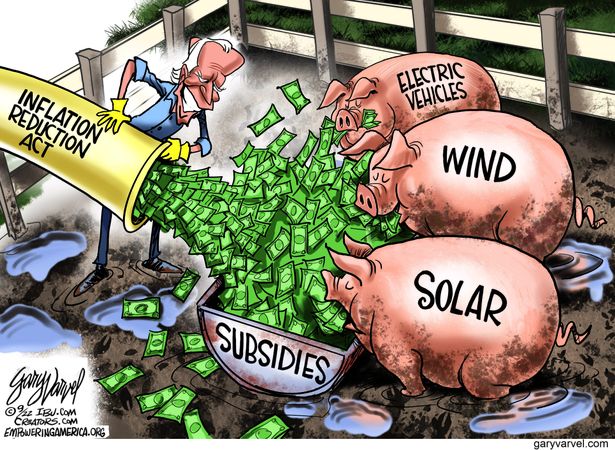
The Coalition for a Better Future, McLellan and Raitt recently wrote in the FP, “believes any growth agenda needs to be inclusive and environmentally sustainable in order to be viable.” After correctly identifying the dearth of private-sector investment as one reason for lagging productivity and growth, they go on to propose alarmingly bad solutions. They call Joe Biden’s misleadingly-named Inflation Reduction Act (US $499 billion in government spending, of which $391 billion is on climate change) a “welcome impetus to global climate transition efforts” that is “already siphoning Canadian capital south of the border,” suggesting their preferred way to increase growth and capital investment is for government to sink many tens or even hundreds of billions of dollars more into the global warming project.

Government economic plans should also, according to McLellan and Raitt, include “enabling and incentivizing business to deliver on big projects in key sectors such as critical minerals, clean energy and green manufacturing.” But government dictating which sectors should receive “incentives” invariably directs capital from economically productive uses to relatively unproductive but politically favoured uses — these days, anything involved in “sustainability.” The push for government-guided “inclusiveness” is similarly bad. When people with political power get to decide whom to include as beneficiaries of government-granted economic privilege and benefits, the greatest privilege and benefits invariably flow to … people with political power. This is not a sensible way to help those at the bottom of society.

If there is to be any real productivity growth or economic improvement in Canada, the business community must re-focus its efforts on fulfilling its real social responsibility — increasing profits — and reject government preaching about supposedly “sustainable and inclusive” matters that are in fact mostly unsustainable and economically destructive.

How Well is Government Doing Directing the Canadian Economy?

What’s driving this? A previous blog explained how growth in real per capita GDP is the sum of: (a) growth in output per hour worked (“labour productivity”) and (b) growth in hours worked per head of population (“labour utilisation”). Of the two components, productivity growth is the more important determinant of future living standards because it is limited only by the pace of technological change and the ability of businesses and workers to adapt to it. In contrast, labour utilisation growth has a natural ceiling based on demographics, labour force participation, and there being only so many hours people can or will work per year.

The OECD finds that Canada’s prospects for real per capita GDP growth over 2020-2030 are poor because of feeble expected growth in output per hour worked (labour productivity, see Figure 1b) and a slight drag from hours worked per head of population (labour utilization, see Figure 1c).

Source:  Business Council of British Columbia  OECD predicts Canada will be the worst performing advanced economy over the next decade…and the three decades after that


Climate Reparations a Lose-Lose-Lose Deal

https://video-api.wsj.com/api-video/player/v3/iframe.html?guid=E6B05E12-0E60-4B80-A8A2-565460ABABF5

At the recently concluded UN climate summit, wealthy nations agreed to pay climate reparations to poor countries. Unfortunately, this could ultimately be a bad deal even for the recipients, if the West expects developing nations to forego fossil fuels that would help them to develop and get more resilient towards natural disasters. Bjorn Lomborg also discussed the topic on The Journal Editorial Report with Wall Street Journal editor Paul Gigot.

The link to the video clip of the interview is in red above, and below a lightly edited transcript of the conversation.  PG refers to Paul Gigot and BL to Bjorn Lomborg.  Transcript is in italics with my bolds and added images.

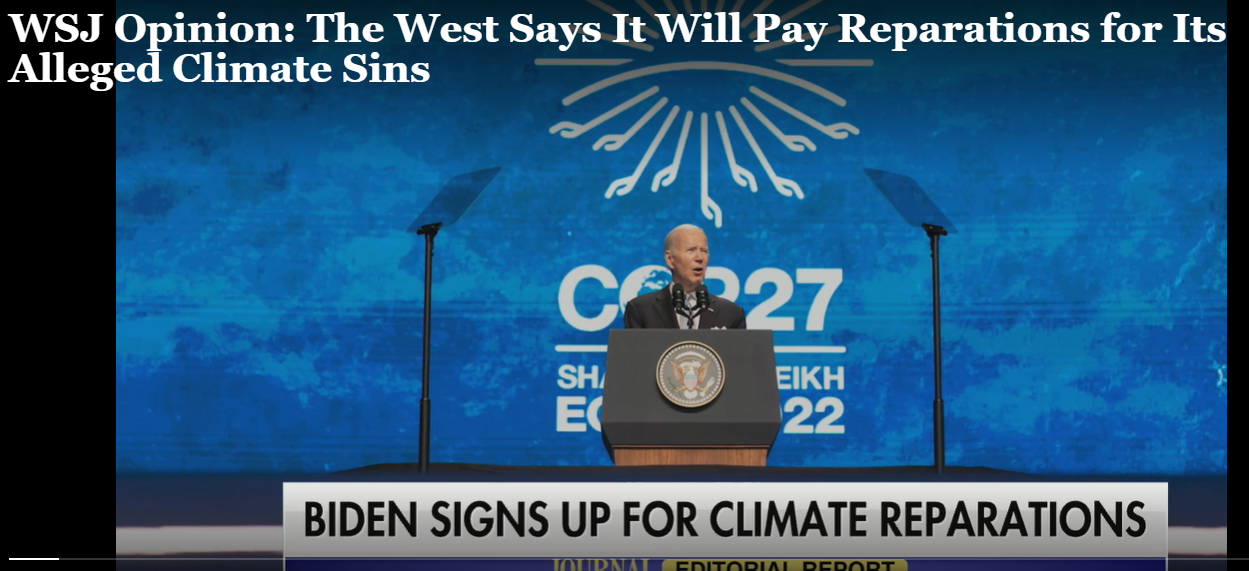
PG: The COP27 conference in Egypt wrapped up last week with President Biden signing on to a climate reparations plan. Under the agreement wealthy countries would pay into a new fund to compensate poor countries for supposed damage caused by rich country use of fossil fuels. The move represents a major reversal in U.S. policy with the Biden administration’s climate envoy John Kerry dismissing the idea just weeks ago, saying that a compensation fund was “just not happening.”

Let’s bring in Bjorn Lomborg, President of the Copenhagen Consensus Center and a visiting fellow at the Hoover Institution. He’s also author of the book False Alarm: How Climate Change Panic Costs Us Trillions, Hurts the Poor and Fails to Fix the Planet.

Welcome back, Bjorn. So first of all, what do you make of climate reparations fund idea? Is it a good idea, or not?

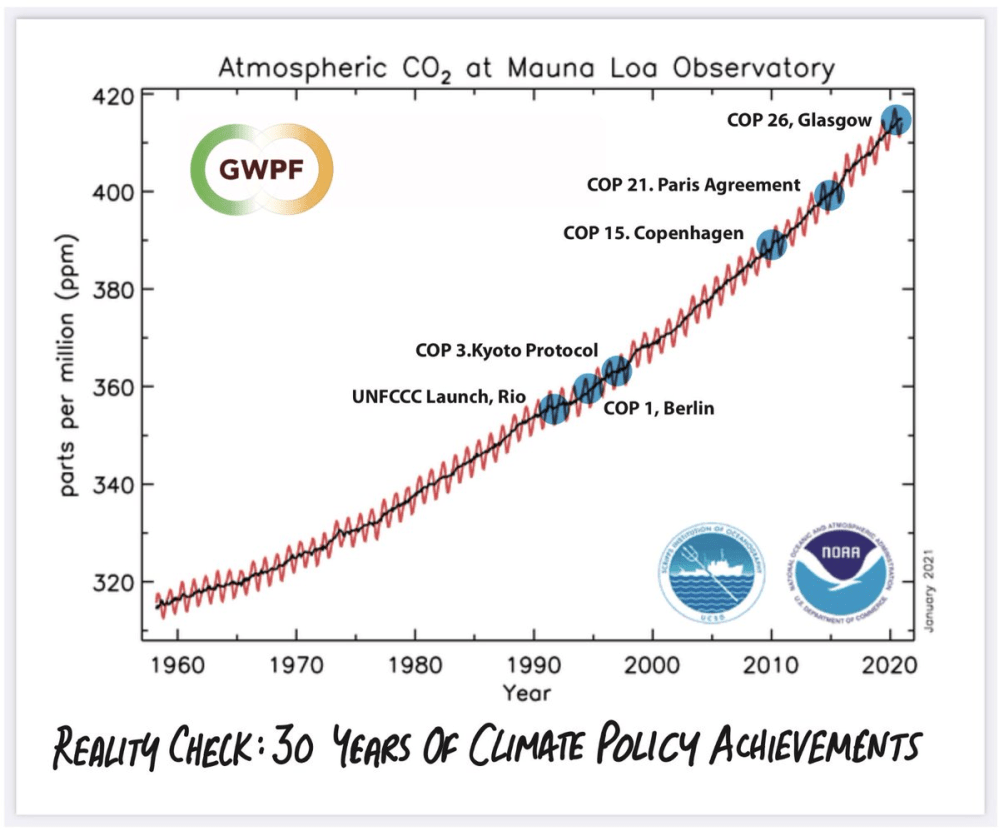
BL: No it’s mostly a bad idea. Look, there’s a lot of different things you can think about it. But first and foremost, if you step back, we’ve been trying to solve climate, which is a real issue, for what, 30 years now. It’s the 27th Conference. And now we’re basically moving from fixing climate–Which would obviously entail, How do we get technologies out so people actually cut their carbon emissions–to now saying, no, let’s just make it about money.

The second part is, of course, this is payback for the incredible amount of exaggeration that’s been going on for the last 30 years. If you tell everyone that this is terribly dangerous and it’ll endanger basically the survival of the human race. Don’t be surprised when most people are gonna say, “Well then, you know, give me some money, for putting me in this dangerous situation.” That’s not the right way to look at this. The economic estimates show that global warming will be a problem; we’re talking about perhaps 4% of GDP by the end of the century, not a wipe out.

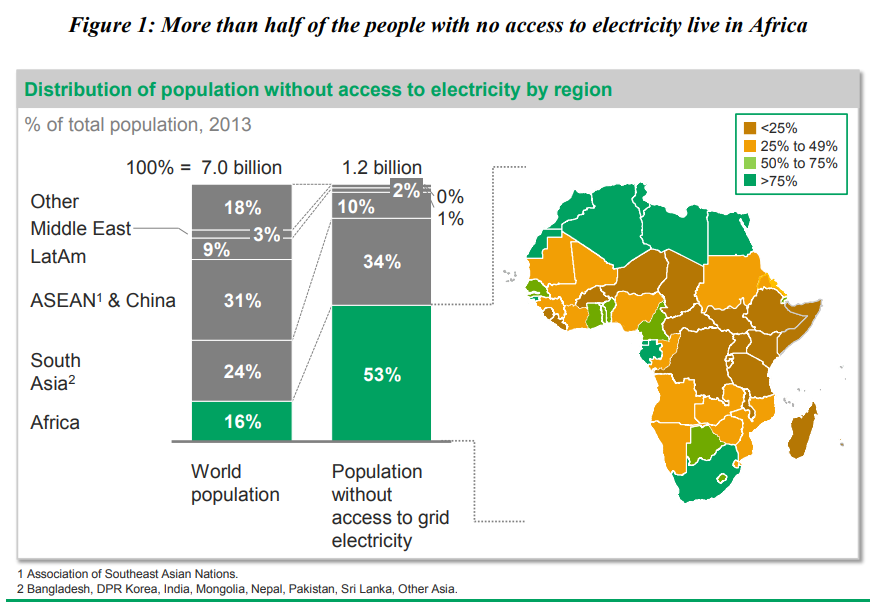
And then the really damaging thing is that much of this money, if it at all materializes, it will be spent on rich countries paying poor countries not to use fossil fuels. Which essentially means not developing. And of course that will leave them undeveloped. That will leave them in poverty. And why is it that these countries like Pakistan are vulnerable to flooding? Remember most of Pakistani floods came from bad governance, lots of bad infrastructure and lots of people. It’s because they’re vulnerable, because they’re poor. So leaving them poor is the worst way to help fix the problem of climate change.

So this will leave the world worse off, and of course leave rich countries with a huge bill.

PG: I find your arguments compelling, Bjorn, but then why did the Europeans decide, in the first instance, to change their minds on this, to go ahead and endorse this reparations fund. And that isolated the U.S., which I gather felt then they couldn’t be isolated and had to go along. Why did the Europeans insist on this?

BL: It’s hard to tell. My gut feeling, and I wasn’t there, my gut feeling is they realized that nothing was coming out of the Sharm El-Sheikh meeting of the COP 27. So we need to have some sort of success. So let’s say yes to this, which the developing world was very strongly pushing. Look if you go to all of these meeting, and virtually nothing comes out of it; if there’s the possibility of getting trillions out of it, I can understand why a lot of leaders would sign up for basically free money.

But the reality is, much of this could end up not happening, because remember the U.S. Congress has to appropriate: That does not seem plausible. The New York Times said, “We now have a fund but there is no money in it. So it seems likely this will not come true. Most countries are not feeling very flush right now. I can’t imagine most countries saying, “ Sure, let ‘s pay another couple of trillion dollars to the developing world.

First and foremost let’s remember that if this actually happened, it would likely prevent poor countries from using fossil fuels, which is one of the key ways to get out of poverty. Remember China dramatically industrialized by using lots and lots of fossil fuels, and almost lifted a billion people out of poverty. That’s an amazing achievement. And most people in the developing world want to do the exact same thing. So in a sense, we are setting all of ourselves up for really bad outcomes in the future.

PG: There’s kind of a guilt tax quality to this, where the West is supposed to pay for the sin of having actually developed first, and for being prosperous in part by using fossil fuels. But China isn’t tapped to pay into this fund at all. And it’s building coal plants at a rapid pace, to the point where its projected new plants are going to dwarf all of the U.S. current coal production by 2025. How can China remain out of all of this?

BL: Well, first of all, because that would be really convenient for China. They are categorized as a developing country in the UNFCCC agreement that encompasses the COP negotiations. And of course, it you’re China, you wanna stay that way. I think it’s also fair to say that China has still only historically emitted only about half of what the U.S. or Europe has done. So there is some justification to this. But we have to very clearly separate the fact that you could make the argument that a little bit of reparations make philosophical sense.

But if you start in letting that genie out of the bottle, you’ll make the whole conversation about that, and forgetting to actually fix climate change.

Which is about making green energy much cheaper in the future through innovation. That’s what we should be focusing on if we actually want to fix this. And secondly, you’ll also have this situation where India, China and almost everyone else is not going to pay into this potentially enormous cost.

Summation

Climate reparations is a move in which rich nations lose, poor nations lose and energy innovation loses,  And as noted previously, the winners will be lawyers and accountants, as well as sovereign hydrocarbon producers.

Climate Loss and Damage, Legal House of Cards


Fed’s Powell Speaks on Climate with Forked Tongue

Rupert Darwall explains the hypocrisy in his Real Clear Energy article The Fed’s Jay Powell Is Trying to Have It Both Ways on Climate Change.  Excerpts in italics with my bolds.

Fed-speak, Alan Greenspan once explained, was about practicing the art of constructive ambiguity. Testifying to Congress as Fed chairman, Greenspan would resolve a sentence in a deliberately obscure way that made it incomprehensible, “but nobody was quite sure I wasn’t saying something profound when I wasn’t.”

Speaking on Tuesday at a symposium on central bank independence in Sweden, Greenspan’s latest successor avoided ambiguity as he spoke about the Fed’s need to stick to its assigned policy goals of maximizing employment and price stability and not getting diverted to pursuing other objectives. “In a well-functioning democracy, important public policy decisions should be made, in almost all cases, by the elected branches of government,” Chair Jerome Powell declared. “It is essential that we stick to our statutory goals and authorities, and that we resist the temptation to broaden our scope to address other important social issues of the day.”

If that wasn’t clear enough, the current Fed chair noted that climate policies could have significant effects on companies, industries, regions, and nations: “Decisions about policies to directly address climate change should be made by the elected branches of government and thus reflect the public’s will as expressed through elections.” Without explicit congressional authorization, it would not be appropriate for the Fed to use monetary policy or its supervisory tools to promote a greener economy, Powell suggested. “We are not, and will not be a ‘climate policymaker.’”

But before supporters of limited government, separation of powers, and rolling back the administrative state stand up to applaud, they should remember that Powell has an indirect climate-policy tool: as part of its supervisory responsibilities, the Fed will require banks to understand and manage the financial risks of climate change. Yet at the same time, Powell would have us believe that the Fed’s supervisory decisions are “not influenced by political considerations.”

Climate “stress tests” are one of the principal tools used by the European Central Bank in furtherance of what its president Christine Lagarde openly proclaims as part of its mandate. “Our planet is burning and we central bankers could look on our mandate and pretend that it is for others to act and that we should simply be followers. I don’t think so,” Lagarde said at a June 2021 Green Swan conference of central bankers and regulators.

For its climate stress tests, the Bank of England uses the most extreme climate scenario developed by the Intergovernmental Panel on Climate Change. It then takes this projection about climate at the end of this century and telescopes eighty years of extreme climate change into three decades. The result is a physical impossibility. That a central bank believes it necessary to engage in such behavior demonstrates two things: that climate change does not represent a genuine threat to financial stability—if it did, the Bank would have used a plausible climate scenario—and that climate stress tests are indeed a tool of climate policy. Unlike the Fed, the Bank of England does have an explicit climate policy mandate. When he was Chancellor of the Exchequer, Rishi Sunak expanded the Bank’s remit to support the government’s goal of achieving “balanced growth that is also environmentally sustainable and consistent with the transition to a net zero economy.”

The Fed’s lack of a similar climate mandate proved no obstacle to Powell, however, when he spoke at the same Green Swan conference as Lagarde. The conference had been convened by the Network for the Greening of the Financial System (NGFS) to develop proposals for a more sustainable economy, financial sector, and society. “There’s a lot to like about climate stress tests,” Powell told the meeting. Not much constructive ambiguity there.

The NGFS is a club of central banks and financial regulators formed by the Banque de France in December 2017 on the second anniversary of the Paris climate agreement. Its aim is to strengthen “the global response required to meet the goals of the Paris agreement and to enhance the role of the financial system.” It also seeks “to manage risks and to mobilize capital for green and low-carbon investments in the broader context of environmentally sustainable development.” These objectives have no place in the Fed’s formal mandate.

Powell’s notion of an apolitical Fed tightly hewing to its congressional mandate
is belied by the central bank’s decision to join the NGFS.

Even more devastating to Powell’s claim of the Fed eschewing political considerations is the timing of that move: December 15, 2020, six weeks after Joe Biden defeated Donald Trump. The Fed cannot have it both ways. It cannot truthfully claim that its supervisory decisions are untainted by political considerations and remain a member of the NGFS. It was a mistake for the Fed to have joined the NGFS in the first place. If Powell wants to be believed, the Fed should quit the club.

See Also Financial Systems Have Little Risk from Climate