Gamechanger: DC Appeals Court Denies EPA Climate Rules

A major clarification came today from the DC Court of Appeals ordering EPA (and thus the Executive Branch Bureaucracy) to defer to Congress regarding regulation of substances claimed to cause climate change.  While the issue and arguments are somewhat obscure, the clarity of the ruling is welcome.  Basically, the EPA under Obama attempted to use ozone-depleting authority to regulate HFCs, claiming them as greenhouse gases.  The judges decided that was a stretch too far.

The Court Decision August 8, 2017

The EPA enacted the rule in question in 2015, responding to research showing hydroflourocarbons, or HFCs, contribute to climate change.

The D.C. Circuit Court of Appeals’ 2-1 decision said EPA does not have the authority to enact a 2015 rule-making ending the use of hydrofluorocarbons commonly found in spray cans, automobile air conditioners and refrigerators. The three-judge panel said that because HFCs are not ozone-depleting substances, the EPA could not use a section of the Clean Air Act targeting those chemicals to ban HFCs.

“Indeed, before 2015, EPA itself maintained that Section 612 did not grant authority to require replacement of non ozone-depleting substances such as HFCs,” the court wrote.

“EPA’s novel reading of Section 612 is inconsistent with the statute as written. Section 612 does not require (or give EPA authority to require) manufacturers to replace non ozone-depleting substances such as HFCs,” said the opinion, written by Judge Brett Kavanaugh.

Contextual Background from the Court Document On Petitions for Review of Final Action by the United States Environmental Protection Agency  Excerpts below (my bolds)

In 1987, the United States signed the Montreal Protocol. The Montreal Protocol is an international agreement that has been ratified by every nation that is a member of the United Nations. The Protocol requires nations to regulate the production and use of certain ozone-depleting substances.

As a result, in the 1990s and 2000s, many businesses stopped using ozone-depleting substances in their products. Many businesses replaced those ozone-depleting substances with HFCs. HFCs became prevalent in many products. HFCs have served as propellants in aerosol spray cans, as refrigerants in air conditioners and refrigerators, and as blowing agents that create bubbles in foams.

In 2013, President Obama announced that EPA would seek to reduce emissions of HFCs because HFCs contribute to climate change.

Consistent with the Climate Action Plan, EPA promulgated a Final Rule in 2015 that moved certain HFCs from the list of safe substitutes to the list of prohibited substitutes. . .In doing so, EPA prohibited the use of certain HFCs in aerosols, motor vehicle air conditioners, commercial refrigerators, and foams – even if manufacturers of those products had long since replaced ozonedepleting substances with HFCs. Id. at 42,872-73.

Therefore, under the 2015 Rule, manufacturers that used those HFCs in their products are no longer allowed to do so. Those manufacturers must replace the HFCs with other substances that are on the revised list of safe substitutes.

In the 2015 Rule, EPA relied on Section 612 of the Clean Air Act as its source of statutory authority. EPA said that Section 612 allows EPA to “change the listing status of a particular substitute” based on “new information.” Id. at 42,876. EPA indicated that it had new information about HFCs: Emerging research demonstrated that HFCs were greenhouse gases that contribute to climate change. See id. at 42,879. EPA therefore concluded that it had statutory authority to move HFCs from the list of safe substitutes to the list of prohibited substitutes. Because HFCs are now prohibited substitutes, EPA claimed that it could also require the replacement of HFCs under Section 612(c) of the Clean Air Act even though HFCs are not ozone-depleting substances.

EPA’s current reading stretches the word “replace”  beyond its ordinary meaning. . .
Under EPA’s current interpretation of the word “replace,” manufacturers would continue to “replace” an ozone-depleting substance with a substitute even 100 years or more from now. EPA would thereby have indefinite authority to regulate a manufacturer’s use of that substitute. That boundless interpretation of EPA’s authority under Section 612(c) borders on the absurd.

In any event, the legislative history strongly supports our conclusion that Section 612(c) does not grant EPA continuing authority to require replacement of non-ozone-depleting substitutes.. . In short, although Congress contemplated giving EPA broad authority under Title VI to regulate the replacement of substances that contribute to climate change, Congress ultimately declined.

However, EPA’s authority to regulate ozone-depleting substances under Section 612 and other statutes does not give EPA authority to order the replacement of substances that are not ozone depleting but that contribute to climate change. Congress has not yet enacted general climate change legislation. Although we understand and respect EPA’s overarching effort to fill that legislative void and regulate HFCs, EPA may act only as authorized by Congress. Here, EPA has tried to jam a square peg (regulating non-ozone depleting substances that may contribute to climate change) into a round hole (the existing statutory landscape).

The Supreme Court cases that have dealt with EPA’s efforts to address climate change have taught us two lessons that are worth repeating here. See, e.g., Utility Air Regulatory Group v. EPA, 134 S. Ct. 2427 (2014). First, EPA’s well intentioned policy objectives with respect to climate change do not on their own authorize the agency to regulate. The agency must have statutory authority for the regulations it wants to issue. Second, Congress’s failure to enact general climate change legislation does not authorize EPA to act. Under the Constitution, congressional inaction does not license an agency to take matters into its own hands, even to solve a pressing policy issue such as climate change.

Footnote:  Looks like some judges found their big boy pants and applied US constitutional separation of powers against runaway executive climate actions.  Would such a decision have come without a skeptical President?

Could this be the first breach in the wall of unproven, unwarranted, federally funded climate activism?

Water rushes over damaged primary spillway at Oroville Dam in Northern California

How Climate Law Relies on Paris


Climate Activists storm the bastion of Exxon Mobil, here seen without their shareholder disguises.

On the same day POTUS announced US withdrawal from Paris accord, a majority of Exxon Mobil shareholders approved a resolution asking management to assess the value of corporate assets considering a global move toward a low-carbon future. Here is the resolution, filed by the New York State Comptroller:

RESOLVED: Shareholders request that, beginning in 2018, ExxonMobil publish an annual assessment of the long-term portfolio impacts of technological advances and global climate change policies, at reasonable cost and omitting proprietary information. The assessment can be incorporated into existing reporting and should analyze the impacts on ExxonMobil’s oil and gas reserves and resources under a scenario in which reduction in demand results from carbon restrictions and related rules or commitments adopted by governments consistent with the globally agreed upon 2 degree target. This reporting should assess the resilience of the company’s full portfolio of reserves and resources through 2040 and beyond, and address the financial risks associated with such a scenario.

Background:

This century climatists woke up to their losing the battle for public opinion for onerous and costly reductions to fossil fuel usage. They turned toward the legal system to achieve their agenda, and the field of Climate Law has become another profession corrupted by climate cash, along side of Climate Medicine.

In addition to numerous court lawsuits, and also civil disobedience cases, there has been a concerted, well-funded and organized divestment move against companies supplying fossil fuels to consumers. The intention is to at least tie up in red tape Big Oil, indeed Small Oil as well. The real hope is to weaken energy producers by depriving them of investors to the point that reserves are left in the ground, as desired by such activists as 350.org.

In 2016 virtually the same resolution was dismissed by shareholders with only 38% approving. The difference this year was the switch by BlackRock Inc. and Vanguard Group, two of the world’s largest asset managers. As reported by Fox News (here):

Investment products such as exchange-traded funds that track the performance of indexes often come at a lower cost than traditional mutual funds and have gathered assets at a clip in recent years. That growth has given firms like BlackRock and Vanguard increasing sway on shareholder votes. But the firms in turn have come under activist pressure to take stances on issues such as climate disclosure.

When BlackRock sided with Exxon and against a similar proposal at the company’s annual meeting a year ago, it faced backlash from investors and environmental activists. This year BlackRock said the disclosure of climate risks would be among its key engagement priorities with senior executives.

Exxon Mobil board must now show they are taking this proposal seriously, and activists will be looking for company assets to be “stress tested” with the hope that the shares become more risky. At the very least, management will have to put more time and energy into opining on various scenarios of uncertain content and probabilities relating to the wish dreams of climatists.

Balancing on a cascade of suppositions.

We can look into the climate activist mental frame thanks to documents supporting the current strategy using the legal system to implement actions against fossil fuel consumption.

For example, there is this recent text explaining the shareholder proposal tabled at ExxonMobil annual meeting. From Attorney Sanford Lewis:

The Proposal states:

“RESOLVED: Shareholders request that by 2017 ExxonMobil publish an annual assessment of long term portfolio impacts of public climate change policies, at reasonable cost and omitting proprietary information. The assessment can be incorporated into existing reporting and should analyze the impacts on ExxonMobil’s oil and gas reserves and resources under a scenario in which reduction in demand results from carbon restrictions and related rules or commitments adopted by governments consistent with the globally agreed upon 2 degree target. The reporting should assess the resilience of the company’s full portfolio of reserves and resources through 2040 and beyond and address the financial risks associated with such a scenario.

Now let’s unbundle the chain of suppositions that comprise this proposal.

  • Supposition 1: A 2C global warming target is internationally agreed.
  • Supposition 2: Carbon Restrictions are enacted by governments to comply with the target.
  • Supposition 3: Demand for oil and gas products is reduced due to restrictions
  • Supposition 4: Oil and gas assets become uneconomic for lack of demand.
  • Supposition 5: Company net worth declines by depressed assets and investors lose value.

1.Suppose an International Agreement to limit global warming to 2C.

From the supporting statement to the above proposal, Sanford Lewis provides these assertions:

Recognizing the severe and pervasive economic and societal risks associated with a warming climate, global governments have agreed that increases in global temperature should be held below 2 degrees Celsius from pre-industrial levels (Cancun Agreement).

Failing to meet the 2 degree goal means, according to scientists, that the world will face massive coastal flooding, increasingly severe weather events, and deepening climate disruption. It will impose billions of dollars in damage on the global economy, and generate an increasing number of climate refugees worldwide.

Climate change and the risks it is generating for companies have become major concerns for investors. These concerns have been magnified by the 21st Session of the Conference of the Parties (COP 21) in Paris, where 195 global governments agreed to restrict greenhouse gas (GHG) emissions to no more than 2 degrees Celsius from pre-industrial levels and submitted plans to begin achieving the necessary GHG emission reductions. In the agreement, signatories also acknowledged the need to strive to keep global warming to 1.5 degrees, recognizing current and projected harms to low lying islands.

Yet a careful reading of UN agreements shows commitment is exaggerated:
David Campbell (here):

Neither 2°C nor any other specific target has ever been agreed at the UN climate change negotiations.

Article 2 of the Paris Agreement in fact provides only that it ‘aims to strengthen the global response to the threat of climate change … including by the holding the increase to well below 2°C’. This is an expression, not of setting a concrete limit, but merely of an aspiration to set such a limit. It is true that Article 2 is expressed in a deplorably equivocatory and convoluted language which fails to convey this vital point, indeed it obscures it. But nevertheless that is what Article 2 means.

Dieter Helm (here):

Nothing of substance has been achieved in the last quarter of a century despite all the efforts and political capital that has been applied. The Paris Agreement follows on from Kyoto. The pledges – in the unlikely event they are met – will not meet the 2C target, shipping and aviation are excluded, and the key developing countries (China and India) are not committed to capping their emission for at least another decade and a half (or longer in India’s case)

None of the pledges is, in any event, legally binding. For this reason, the Paris Agreement can be regarded as the point at which the UN negotiating approach turned effectively away from a top down approach, and instead started to rely on a more country driven and hence bottom up one.

Paul Spedding:

The international community is unlikely to agree any time soon on a global mechanism for putting a price on carbon emissions.

2: Suppose Governments enact restrictions that limit use of fossil fuels.

Despite the wishful thinking in the first supposition, the activists proceed on the basis of aspirations and reporting accountability. Sanford Lewis:

Although the reduction goals are not set forth in an enforceable agreement, the parties put mechanisms in place for transparent reporting by countries and a ratcheting mechanism every five years to create accountability for achieving these goals. U.N. Secretary General Ban Ki-moon summarized the Paris Agreement as follows: “The once Unthinkable [global action on climate change] has become the Unstoppable.”

Now we come to an interesting bait and switch. Since Cancun, IPCC is asserting that global warming is capped at 2C by keeping CO2 concentration below 450 ppm. From Summary for Policymakers (SPM) AR5

Emissions scenarios leading to CO2-equivalent concentrations in 2100 of about 450 ppm or lower are likely to maintain warming below 2°C over the 21st century relative to pre-industrial levels. These scenarios are characterized by 40 to 70% global anthropogenic GHG emissions reductions by 2050 compared to 2010, and emissions levels near zero or below in 2100.

Thus is born the “450 Scenario” by which governments can be focused upon reducing emissions without any reference to temperature measurements, which are troublesome and inconvenient.

Sanford Lewis:

Within the international expert community, “2 degree” is generally used as shorthand for a low carbon scenario under which CO2 concentrations in the earth’s atmosphere are stabilized at a level of 450 parts per million (ppm) or lower, representing approximately an 80% reduction in greenhouse gas emissions from current levels, which according to certain computer simulations would be likely to limit warming to 2 degrees Celsius above pre-industrial levels and is considered by some to reduce the likelihood of significant adverse impacts based on analyses of historical climate variability. Company Letter, page 4.

Clever as it is to substitute a 450 ppm target for 2C, the mathematics are daunting. Joe Romm:

We’re at 30 billion tons of carbon dioxide emissions a year — rising 3.3% per year — and we have to average below 18 billion tons a year for the entire century if we’re going to stabilize at 450 ppm. We need to peak around 2015 to 2020 at the latest, then drop at least 60% by 2050 to 15 billion tons (4 billion tons of carbon), and then go to near zero net carbon emissions by 2100.

And the presumed climate sensitivity to CO2 is hypothetical and unsupported by observations:

3.Suppose that demand for oil and gas products is reduced by the high costs imposed on such fuels.

Sanford Lewis:

ExxonMobil recognized in its 2014 10-K that “a number of countries have adopted, or are considering adoption of, regulatory frameworks to reduce greenhouse gas emissions,” and that such policies, regulations, and actions could make its “products more expensive, lengthen project implementation timelines and reduce demand for hydrocarbons,” but ExxonMobil has not presented any analysis of how its portfolio performs under a 2 degree scenario.

Moreover, the Company’s current use of a carbon proxy price, which it asserts as its means of calculating climate policy impacts, merely amplifies and reflects its optimistic assessments of national and global climate policies. The Company Letter notes that ExxonMobil is setting an internal price as high as $80 per ton; in contrast, the 2014 Report notes a carbon price of $1000 per ton to achieve the 450 ppm (2 degree scenario) and the Company reportedly stated during the recent Paris climate talks that a 1.5 degree scenario would require a carbon price as high as $2000 per ton within the next hundred years.

Peter Trelenberg, manager of environmental policy and planning at Exxon Mobil reportedly told the Houston Chronicle editorial board: Trimming carbon emissions to the point that average temperatures would rise roughly 1.6 degrees Celsius – enabling the planet to avoid dangerous symptoms of carbon pollution – would bring costs up to $2,000 a ton of CO2. That translates to a $20 a gallon boost to pump prices by the end of this century… .

Even those who think emissions should be capped somehow see through the wishful thinking in these numbers. Dieter Helm:

The combination of the shale revolution and the ending of the commodity super cycle probably point to a period of low prices for sometime to come. This is unfortunate timing for current decarbonisation policies, many of which are predicated on precisely the opposite happening – high and rising prices, rendering current renewables economic. Low oil prices, cheap coal, and falling gas prices, and their impacts on driving down wholesale electricity prices, are the new baseline against which to consider policy interventions.

With existing technologies, it is a matter of political will, and the ability to bring the main polluters on board, as to whether the envelope will be breached. There are good reasons to doubt that any top down agreement will work sufficiently well to achieve it.

The end of fossil fuels is not about to happen anytime soon, and will not be caused by running out of any of them. There is more than enough to fry the planet several times over, and technological progress in the extraction of fossil fuels has recently been at least as fast as for renewables. We live in an age of fossil fuel abundance.

We also live in a world where fossil fuel prices have fallen, and where the common assumption that prices will bounce back, and that the cycle of fossil fuel prices will not only reassert itself but also continue on a rising trend, may be seriously misguided. It is plausible to at least argue that the oil price may never regain its peaks in 1979 and 2008 again.

A world with stable or falling fossil fuel prices turns the policy assumptions of the last decade or so on their heads. Instead of assuming that rising prices would ease the transition to low carbon alternatives, many of the existing technologies will probably need permanent subsidies. Once the full system costs are incorporated, current generation wind (especially offshore) and current generation solar may be out of the market except in special locations for the foreseeable future. In any event, neither can do much to address the sheer scale of global emissions.

Primary Energy Demand Projection

4.Suppose oil and gas reserves are stranded for lack of demand.

Sanford Lewis:

Achievement of even a 2 degree goal requires net zero global emissions to be attained by 2100. Achieving net zero emissions this century means that the vast majority of fossil fuel reserves cannot be burned. As noted by Mark Carney, the President of the Bank of England, the carbon budget associated with meeting the 2 degree goal will “render the vast majority of reserves ‘stranded’ – oil, gas, and coal that will be literally unburnable without expensive carbon capture technology, which itself alters fossil fuel economics.”

A concern expressed by some of our stakeholders is whether such a “low carbon scenario” could impact ExxonMobil’s reserves and operations – i.e., whether this would result in unburnable proved reserves of oil and natural gas.

Decisions to abandon reserves are not as simple or have the effects as desired by activists.

Financial Post (here):

The 450 Scenario is not the IEA’s central scenario. At this point, government policies to limit GHG emissions are not stringent enough to stimulate this level of change. However, for discussion purposes let’s use the IEA’s 450 Scenario to examine the question of stranded assets in crude oil investing. Would some oil reserves be “stranded” under the IEA’s scenario of demand reversal?

A considerable amount of new oil projects must be developed to offset the almost 80 per cent loss in legacy production by 2040. This continued need for new oil projects for the next few decades and beyond means that the majority of the value of oil reserves on the books of public companies must be realized, and will not be “stranded”.

While most of these reserves will be developed, could any portion be stranded in this scenario? The answer is surely “yes.” In any industry a subset of the inventory that is comprised of inferior products will be susceptible to being marginalized when there is declining demand for goods. In a 450 ppm world, inferior products in the oil business will be defined by higher cost and higher carbon intensity.

5.Suppose shareholders fear declining company net worth.

Now we come to the underlying rationale for this initiative.

Paul Spedding:

Commodity markets have repeatedly proved vulnerable to expectations that prices will fall. Given the political pressure to mitigate the impact of climate change, smart investors will be watching closely for indications of policies that will lead to a drop in demand and the possibility that their assets will become financially stranded.

Equity markets are famously irrational, and if energy company shareholders can be spooked into selling off, a death spiral can be instigated. So far though, investors are smarter than they are given credit.

Bloomberg:

Fossil-fuel divestment has been a popular issue in recent years among college students, who have protested at campuses around the country. Yet even with the movement spreading to more than 1,000 campuses, only a few dozen schools have placed some restrictions on their commitments to the energy sector. Cornell University, Massachusetts Institute of Technology and Harvard University are among the largest endowments to reject demands to divest.

Stanford Board of Trustees even said:

As trustees, we are convinced that the global community must develop effective alternatives to fossil fuels at sufficient scale, so that fossil fuels will not continue to be extracted and used at the present rate. Stanford is deeply engaged in finding alternatives through its research. However, despite the progress being made, at the present moment oil and gas remain integral components of the global economy, essential to the daily lives of billions of people in both developed and emerging economies. Moreover, some oil and gas companies are themselves working to advance alternative energy sources and develop other solutions to climate change. The complexity of this picture does not allow us to conclude that the conditions for divestment outlined in the Statement on Investment Responsibility have been met.

Update:  Universities are not the exception in finding the alarmist case unconvincing, according to a survey:

Almost half of the world’s top 500 investors are failing to act on climate change — an increase of 6 percent from 236 in 2014, according to a report Monday by the Asset Owners Disclosure Project, which surveys global companies on their climate change risk and management.

The Abu Dhabi Investment Authority, Japan Post Insurance Co Ltd., Kuwait Investment Authority and China’s SAFE Investment Company, are the four biggest funds that scored zero in the survey. The 246 “laggards” identified as not acting hold $14 trillion in assets, the report said.

Summary

Alarmists have failed to achieve their goals through political persuasion and elections. So they are turning to legal and financial tactics. Their wishful thinking appears as an improbable chain of events built upon a Paris agreement without substance.

Last word to David Campbell:

International policy has so far been based on the premise that mitigation is the wisest course, but it is time for those committed to environmental intervention to abandon the idea of mitigation in favour of adaptation to climate change’s effects.

For more on adapting vs. mitigating, see Adapting Works, Mitigating Fails

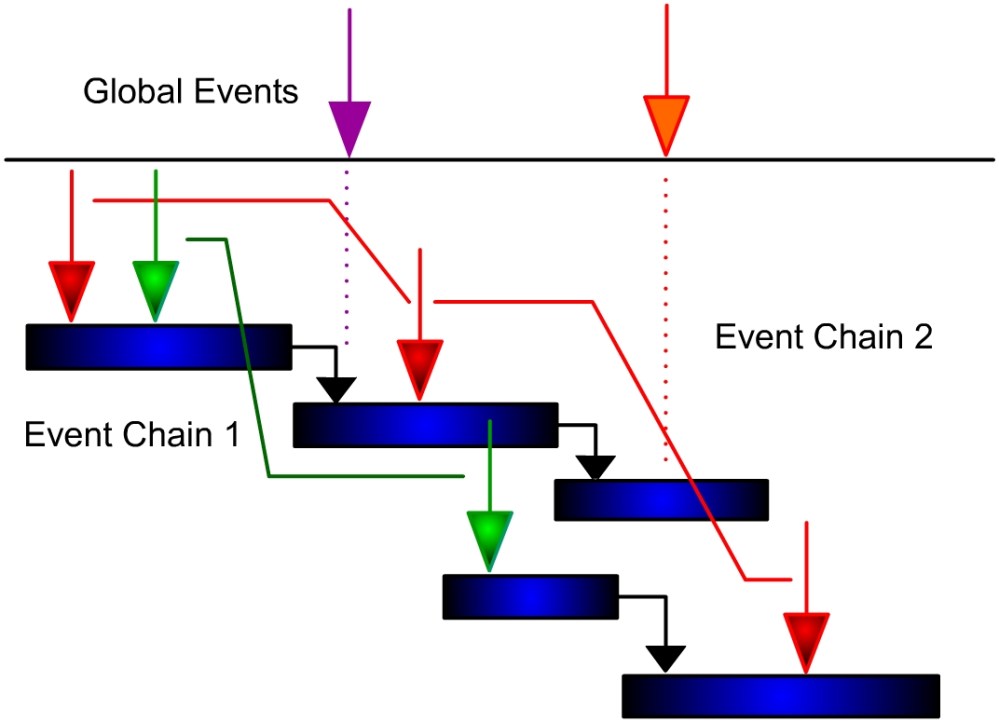
EventChain

Jury Hangs Instead of Climate Activist


Sitting in the Skagit County Courthouse in the middle of the so-called “valve turners,” Ken Ward had this to say just hours before a jury decided his fate.

“I’m feeling pretty relaxed,” Ward said.

He testified Tuesday about the day he and four others shut off tar sands oil pipelines across the country.

“It was a fabulous opportunity to explain to the jurors pretty succinctly why I did it. I put up a map of Skagit County, about a third of which will be under water in 2050. That’s why I did it,” Ward said.

“I thought they would just convict me, but they didn’t,” said Ward, who was facing up to 20 years on charges of burglary and sabotage.

“It’s not immediately obvious what a hung jury means,” he said. “But as we were sitting there we realized: Wait a minute. No, this is not just a moment of confusion. This means a jury presented with a video of exactly what I did wasn’t willing to convict. That’s huge.”

“Apparently they cared more about climate cataclysm than enforcing the law. It’s quite astounding.”

Four others involved in the Oct. 11 shutdown of tar-sands oil pipelines still face trial in Montana, North Dakota and Minnesota, Ward said.

Ward said he expects more citizen dissent, and widespread acts of civil disobedience to push back against Trump’s embrace for more mining, drilling and transport of fossil fuels.

On February 9, prosecutors will announce whether or not they will retry the case.

More details from Seattle Times (here)

Conclusion

It is a triumph of fear over facts. We know what a hung jury means. Out of twelve people, one had drunk the same koolaid as Ward and refused to convict him. Do we now have post-normal law (an oxymoron for sure), just as perverted as post-normal science?

Background in Previous Post: Climate Case: Judge Defends Rule of Law

Some time ago, climate activists noticed they were not winning over the American public, whose opinion was deeply divided on global warming/climate change. They turned to legal venues to promote their agenda, including shareholder proposals and legal complaints.

Any jurisdiction, like Massachusetts or the UK, who enacted reductions of fossil fuel emissions will be subject to legal suits for not achieving emission targets. In such court proceedings, global warming/climate change, temperature changes, extreme weather etc. are all of them beside the point. Once such a law is in place, the belief has served only as a cover to compel energy policies no longer needing any reference to climate science or its uncertainties.

Washington state is one of the most liberal in the US, and thus a hotbed of climate alarm and activism. In the November general election, the state was the first to vote on imposing a carbon tax. The measure was defeated, but only because social justice groups and many environmental activists argued it did not go far enough in promoting clean energy.
Washington State Voters Reject Nation’s First Carbon Tax

Last November, children were recruited to bring a case against the federal government for not stopping climate change, and the judge in that case agreed to hear their complaint. Washington Youth Sue Over Climate Change

In this context, we have a brave judge standing up for the rule of law in a case of civil disobedience.  The defendant Ken Ward is an Oregon-based environmental activist who turned off an oil pipeline in Washington state last October 11. He does not dispute his criminal behavior, but claims his actions were necessary to defend the planet.

The 60-year-old Corbett, Ore. man faces three felony charges and one misdemeanor for shutting off a valve on the Trans Mountain Pipeline in Burlington, Wash, which transports Canadian Tar Sands crude oil into the state for refinement.

At a pre-trial hearing on January 24 in Skagit County, Washington, a judge denied Ward’s defense strategy, known as the necessity defense.

Judge Michael E Rickert said: “I don’t know what everybody’s beliefs are on [climate change], but I know that there’s tremendous controversy over the fact whether it even exists. And even if people believe that it does or it doesn’t, the extent of what we’re doing to ourselves and our climate and our planet, there’s great controversy over that.”

There have been some victories for the necessity defense in the UK and in Massachusetts where a prosecutor in 2014 dropped charges against Ward and another activist who blocked a coal shipment, stating that “climate change is one of the gravest crises our planet has ever faced”.

But Rickert, an elected judge in Skagit county, north of Seattle, sided with state prosecutors who argued against the necessity defense and have alleged that Ward, co-founder of Climate Disobedience Center, committed burglary, criminal trespass and sabotage.

While explaining the standards for permitting a necessity defense, Rickert said: “It does need to have some immediacy, some imminence, more so than this particular threat and harm, which is climatic change, global warming, whatever.”

He later added that with climate change, there’s “great controversy” with “over half of our political leaders”. (Critics have slammed the GOP as the “only major party in the advanced world” to deny climate change).

Interestingly, only the report in The Guardian (here) quoted Judge Rickert so that readers might hear what he said (the news). But the journalist’s bias came out in several adjectives and parenthetical asides intended to assert his own opinion (fake news) to undermine the judge’s authority.

Ward’s action was a planned act of protest done in conjunction with other “valve turners” in other states. At the same time in Minnesota, North Dakota and Montana, fellow environmentalists turned off oil pipelines. They broke the law because they believed that the federal government gave them no other choice: by its inaction on climate change issues, they chose to cut off the flow of oil into the country. Williamette Week (here)

Summary

Finally a judge stands up for the rule of law. No religious belief, be it Seventh Day Adventism, or Catastrophic Climatism can be imposed on others, nor be a justification for illegal actions against lawful enterprises. At least the Adventists respect social justice by seeking only to persuade others through discussion rather than by force or violence.

Postscript:

A year ago was another loss in the courts for climate activists on January 15, 2016 in Seattle.

Activists lose criminal case on climate change defense – but judge praises effort

The ‘Delta 5’ had attempted to illegally block trains carrying crude oil near Seattle, and had hoped that their trial would mark the first time that a US jury was allowed to consider the “necessity defense” in a case of climate activism.

But after allowing two days of expert testimony on topics ranging from the Paris climate talks to railway safety standards and the health impacts of particulate matter, Judge Anthony E Howard ruled that the defense had failed to present sufficient evidence to show that the defendants had “no reasonable legal alternative” to trespassing on a private rail yard and blocking trains.

The case is a blow to environmental campaigners but marks the furthest defendants have managed to go in an American courtroom using the so-called “necessity” defense that argues such actions are justified to combat catastrophic climate change.

The activists progressed unusually far because Howard allowed them to call expert witnesses to testify to the harms of climate change, even though he later felt compelled to instruct the jury to disregard their evidence. The judge appeared to do so reluctantly, expressing some sympathy for the activists in a court on Thursday.

“Frankly the court is convinced that the defendants are far from the problem and are part of the solution to the problem of climate change,” Howard said from the bench. But, he added: “I am bound by legal precedent, no matter what my personal beliefs might be.”

That’s two brave judges.  It appears many more courageous judges will be needed.

Climate Case: Judge Defends Rule of Law

Some time ago, climate activists noticed they were not winning over the American public, whose opinion was deeply divided on global warming/climate change. They turned to legal venues to promote their agenda, including shareholder proposals and legal complaints.

Any jurisdiction, like Massachusetts or the UK, who enacted reductions of fossil fuel emissions will be subject to legal suits for not achieving emission targets. In such court proceedings, global warming/climate change, temperature changes, extreme weather etc. are all of them beside the point. Once such a law is in place, the belief has served only as a cover to compel energy policies no longer needing any reference to climate science or its uncertainties.

Washington state is one of the most liberal in the US, and thus a hotbed of climate alarm and activism. In the November general election, the state was the first to vote on imposing a carbon tax. The measure was defeated, but only because social justice groups and many environmental activists argued it did not go far enough in promoting clean energy.
Washington State Voters Reject Nation’s First Carbon Tax

Last November, children were recruited to bring a case against the federal government for not stopping climate change, and the judge in that case agreed to hear their complaint. Washington Youth Sue Over Climate Change

In this context, we have a brave judge standing up for the rule of law in a case of civil disobedience.  The defendant Ken Ward is an Oregon-based environmental activist who turned off an oil pipeline in Washington state last October 11. He does not dispute his criminal behavior, but claims his actions were necessary to defend the planet.

The 60-year-old Corbett, Ore. man faces three felony charges and one misdemeanor for shutting off a valve on the Trans Mountain Pipeline in Burlington, Wash, which transports Canadian Tar Sands crude oil into the state for refinement.

At a pre-trial hearing on January 24 in Skagit County, Washington, a judge denied Ward’s defense strategy, known as the necessity defense.

Judge Michael E Rickert said: “I don’t know what everybody’s beliefs are on [climate change], but I know that there’s tremendous controversy over the fact whether it even exists. And even if people believe that it does or it doesn’t, the extent of what we’re doing to ourselves and our climate and our planet, there’s great controversy over that.”

There have been some victories for the necessity defense in the UK and in Massachusetts where a prosecutor in 2014 dropped charges against Ward and another activist who blocked a coal shipment, stating that “climate change is one of the gravest crises our planet has ever faced”.

But Rickert, an elected judge in Skagit county, north of Seattle, sided with state prosecutors who argued against the necessity defense and have alleged that Ward, co-founder of Climate Disobedience Center, committed burglary, criminal trespass and sabotage.

While explaining the standards for permitting a necessity defense, Rickert said: “It does need to have some immediacy, some imminence, more so than this particular threat and harm, which is climatic change, global warming, whatever.”

He later added that with climate change, there’s “great controversy” with “over half of our political leaders”. (Critics have slammed the GOP as the “only major party in the advanced world” to deny climate change).

Interestingly, only the report in The Guardian (here) quoted Judge Rickert so that readers might hear what he said (the news). But the journalist’s bias came out in several adjectives and parenthetical asides intended to assert his own opinion (fake news) to undermine the judge’s authority.

Ward’s action was a planned act of protest done in conjunction with other “valve turners” in other states. At the same time in Minnesota, North Dakota and Montana, fellow environmentalists turned off oil pipelines. They broke the law because they believed that the federal government gave them no other choice: by its inaction on climate change issues, they chose to cut off the flow of oil into the country. Williamette Week (here)

Summary

Finally a judge stands up for the rule of law. No religious belief, be it Seventh Day Adventism, or Catastrophic Climatism can be imposed on others, nor be a justification for illegal actions against lawful enterprises. At least the Adventists respect social justice by seeking only to persuade others through discussion rather than by force or violence.

Postscript:

A year ago was another loss in the courts for climate activists on January 15, 2016 in Seattle.

Activists lose criminal case on climate change defense – but judge praises effort

The ‘Delta 5’ had attempted to illegally block trains carrying crude oil near Seattle, and had hoped that their trial would mark the first time that a US jury was allowed to consider the “necessity defense” in a case of climate activism.

But after allowing two days of expert testimony on topics ranging from the Paris climate talks to railway safety standards and the health impacts of particulate matter, Judge Anthony E Howard ruled that the defense had failed to present sufficient evidence to show that the defendants had “no reasonable legal alternative” to trespassing on a private rail yard and blocking trains.

The case is a blow to environmental campaigners but marks the furthest defendants have managed to go in an American courtroom using the so-called “necessity” defense that argues such actions are justified to combat catastrophic climate change.

The activists progressed unusually far because Howard allowed them to call expert witnesses to testify to the harms of climate change, even though he later felt compelled to instruct the jury to disregard their evidence. The judge appeared to do so reluctantly, expressing some sympathy for the activists in a court on Thursday.

“Frankly the court is convinced that the defendants are far from the problem and are part of the solution to the problem of climate change,” Howard said from the bench. But, he added: “I am bound by legal precedent, no matter what my personal beliefs might be.”

That’s two brave judges.  It appears many more courageous judges will be needed.

Climate War Human Shields

In Massachusetts, four teenagers, the Conservation Law Foundation and the Mass Energy Consumer Alliance brought the climate action case to court. “The global climate change crisis is a threat to the well being of humanity, and to my generation, that has been ignored for too long,” said one of the young prosecutors, Shamus Miller.

On Tuesday, the Massachusetts (MA) Supreme Court mandated the MA Department of Environmental Protection (DEP) to promote impactful climate legislation. The court deemed that the DEP failed to uphold climate change agreements outlined in the Global Warming Solutions Act of 2008 and “requires the department to promulgate regulations that establish volumetric limits on multiple greenhouse gas emissions sources, expressed in carbon dioxide equivalents, and that such limits must decline on an annual basis.”

This case is in accordance with “youth around the country and internationally…bringing their governments to court to secure their rights to a healthy atmosphere and stable climate,” commented Julia Olson, executive director of Our Children’s Trust (an organization that helps youth fight “game-changing” legal battles around the world).Source: Planetexperts 

And who are the adults involved in  Our Children’s Trust?


Supporting Experts (the usual suspects)

Dr. James Hansen
Dr. Ove Hoegh-Guldberg
Dr. Sivan Kartha
Dr. Pushker Kharecha
Dr. David Lobell
Dr. Arjun Makhijani
Dr. Jonathan Overpeck
Dr. Camille Parmeson
Dr. Stefan Rahmstorf
Dr. Steven Running
Dr. James Gustave Speth
Dr. Kevin Trenberth
Dr. Lise Van Susteren
Dr. Paul Epstein (1943-2011)
Etc

Campaign Partners (Allies whose funding depends on CO2 Hysteria)

Climate Reality Project,
Western Environmental Law Center,
Crag Law Center,
Texas Environmental Law Center,
Cottonwood Environmental Law Center,
WildEarth Guardians,
Clean Air Council,
Global Campaign for Climate Action,
Chasing Ice,
Environmental Law Alliance Worldwide,
TERRA,
Sierra Club,
350.org,
Climate Solutions,
Greenwatch,
Center for International Environmental Law..
Greenpeace
etc.

Conclusion

This is as obscene as brainwashing young Muslims to be suicide bombers. Or terrorists hiding among families to deter the drone strikes. The fact that the kids are willing is no excuse.

Think of the children! How will they feel a decade from now when they realize they have been duped and exploited by activists who figured judges would be more sympathetic to young believers?

Gifted kids


Update June 24

Some addition background in response to questions from Frederick Colbourne.

Frederick, they are employing a creative approach to the “Public Trust Doctrine”. From their website:
“Specifically, these court decisions have rejected many legal defenses raised by our opponents, including non-justiciability, standing, separation of powers and sovereign immunity. In support of our youths’ positions, and in face of argument to the contrary, the courts have validated critical climate science and reserved for the courts the exclusive right to determine whether a particular commons resource is protected by the Public Trust Doctrine for benefit of present and future generations, and whether there has been a breach of that trust. Our cases are now progressing to the next phases where the courts will make those determinations relative to our atmosphere.”

Massachusetts is ripe for this legal suit because the state passed legislation endorsing the threat of climate change and subscribing to targets for reducing emissions.

From the Court decision: “the Climate Protection and Green Economy Act, G. L. c. 21N (statute)”
“The act established a comprehensive framework to address the effects of climate change in the Commonwealth by reducing emissions to levels that scientific evidence had suggested were needed to avoid the most damaging impacts of climate change. . .In accordance with these findings, the statute requires that, by 2050, greenhouse gas emissions be reduced by at least eighty per cent below 1990 levels. G. L. c. 21N, § 3 (b).”

Note that it was Massachusetts that acted to get EPA jurisdiction over GHGs. Again from the Court decision: “See also Massachusetts v. Environmental Protection Agency, 549 U.S. 497, 505 (2007) (petition by Massachusetts, with other States, local governments, and private organizations, arguing Environmental Protection Agency abdicated responsibility under Clean Air Act to regulate emissions of four greenhouse gases, including carbon dioxide).”

This legal strategy is along the lines of “Sue and Settle” tactic employed in the past to expand the regulatory scope of the EPA. Part of this latest charade is for the state to offer a token defense so that the court requires them to do what they want to do anyways, but now armed with additional ammunition against resisters.

Note also the bait and switch: Climate change is not at issue, it is all about meeting emissions targets.  It should serve also as a cautionary tale to any jurisdiction that thinks they can pass lip-service legislation and get away with politically-correct posturing.

Footnote for those not aware of Aliases for the Usual Suspects:

James “Death Trains” Hansen
Ove “Reefer Mad” Hoegh-Guldberg
Jonathan “Water Torture” Overpeck
Camille “The Extincter” Parmeson
Stefan “No Tommorow” Rahmstorf
Kevin “Hidden Heat” Trenberth