






How the Kooky Climate Crisis Crumbles

Historian Victor Davis Hanson explains the collapse of climate hysteria in his Daily Signal video AI is Challenging Climate Orthodoxy:

For those who prefer reading, below is a lightly edited transcript from the closed captions in italics with my bolds and added images.

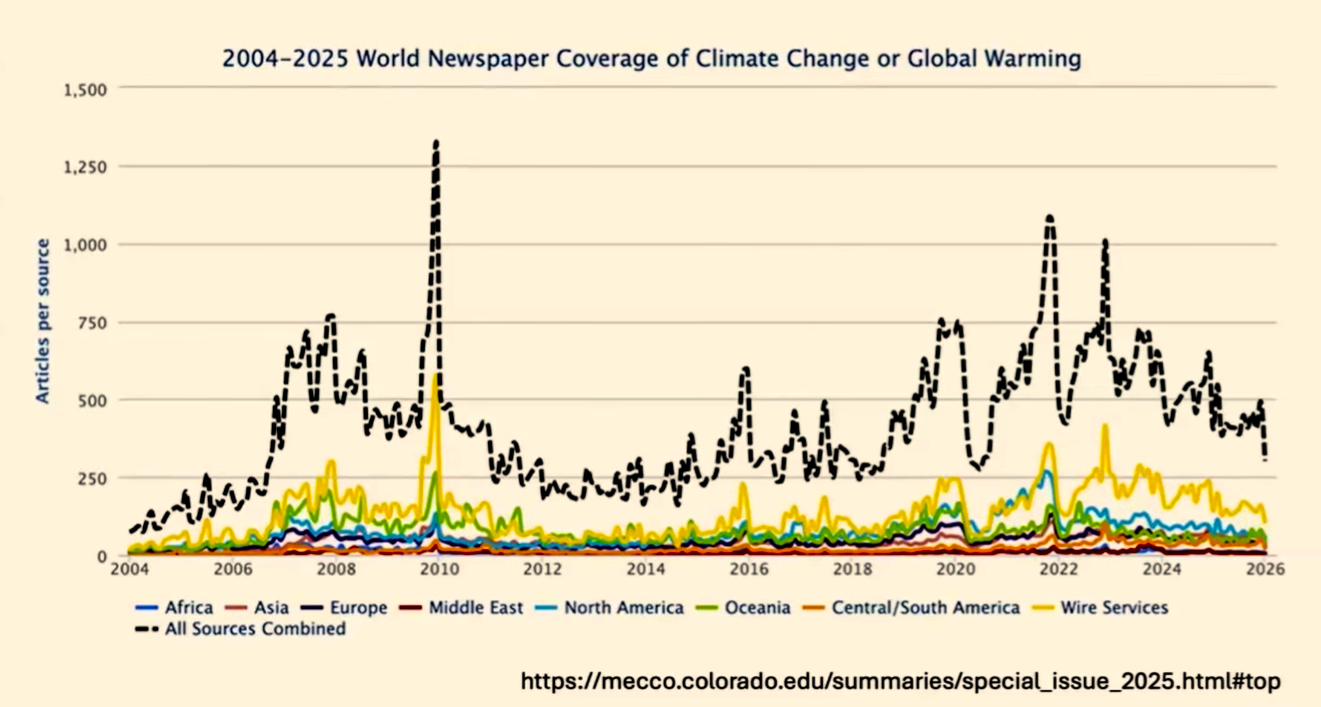
Hello, this is Victor Davis Hanson for the daily signal. For most of my life, at least for the last 35 years, we have accepted the climate change orthodoxy. We used to be global warming and then when things were not always warming but they were cooling. They changed the name to climate change to suggest whatever the temperature extreme was it was all due to carbon emissions caused in general  by humans, but in particular westerners who were polluting the planet with heat.

That was the dominant narrative. I didn’t think in my lifetime that I would see an end to that dominance, even though there were inconsistencies. The planet is 4 billion years old and man has only been here for 300,000 years. And we only have accurate record keeping of temperature fluctuations for the last 150 years. And even within that period, we have cyclical changes between decades of abnormal temperatures, whether too hot or too cold.  And before the industrial revolution in some cases by tree rings and ice sampling in the Arctic.

So there was always debate but the dominant narrative said:
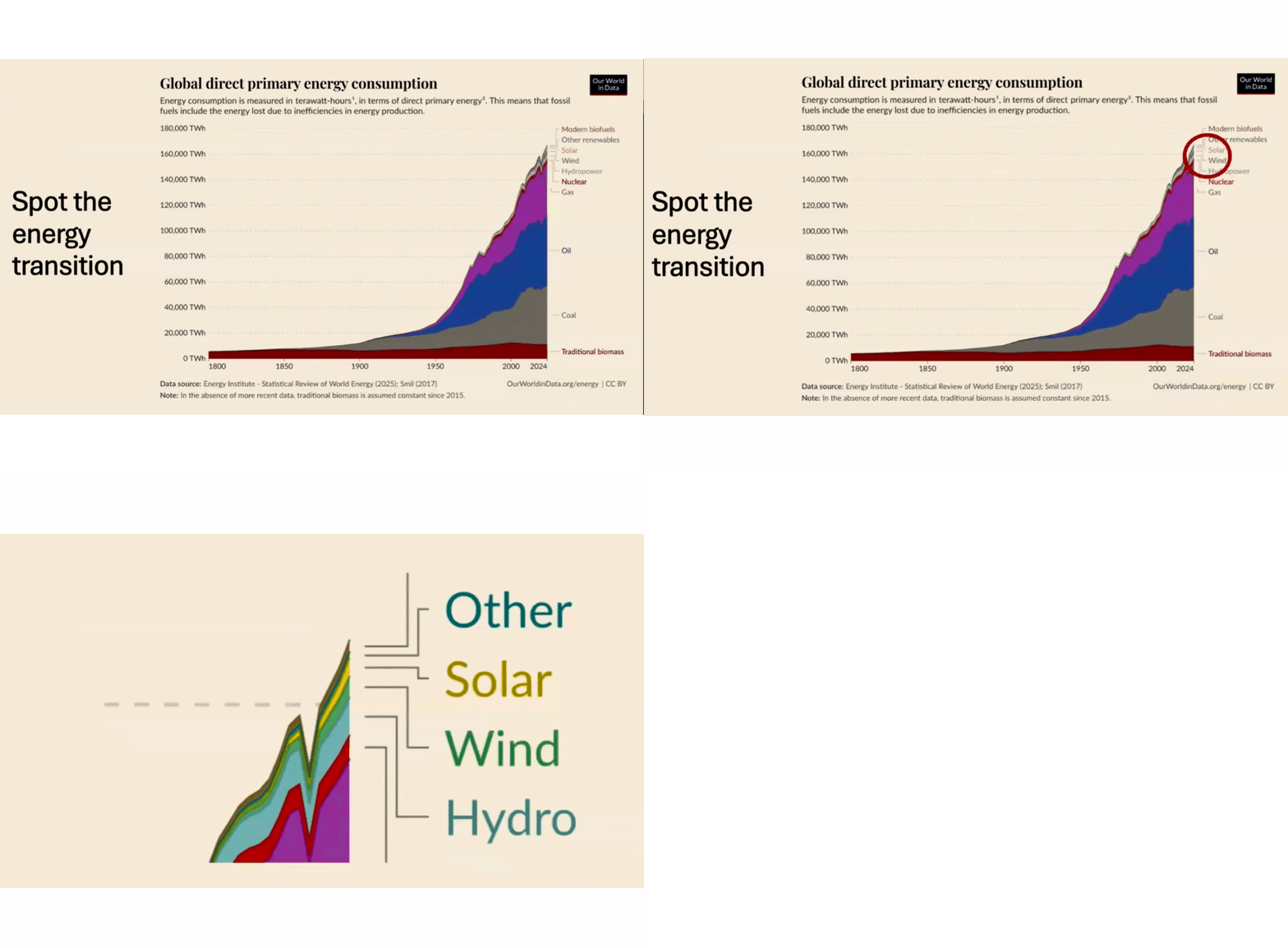
No we have to radically change our economy and move away from
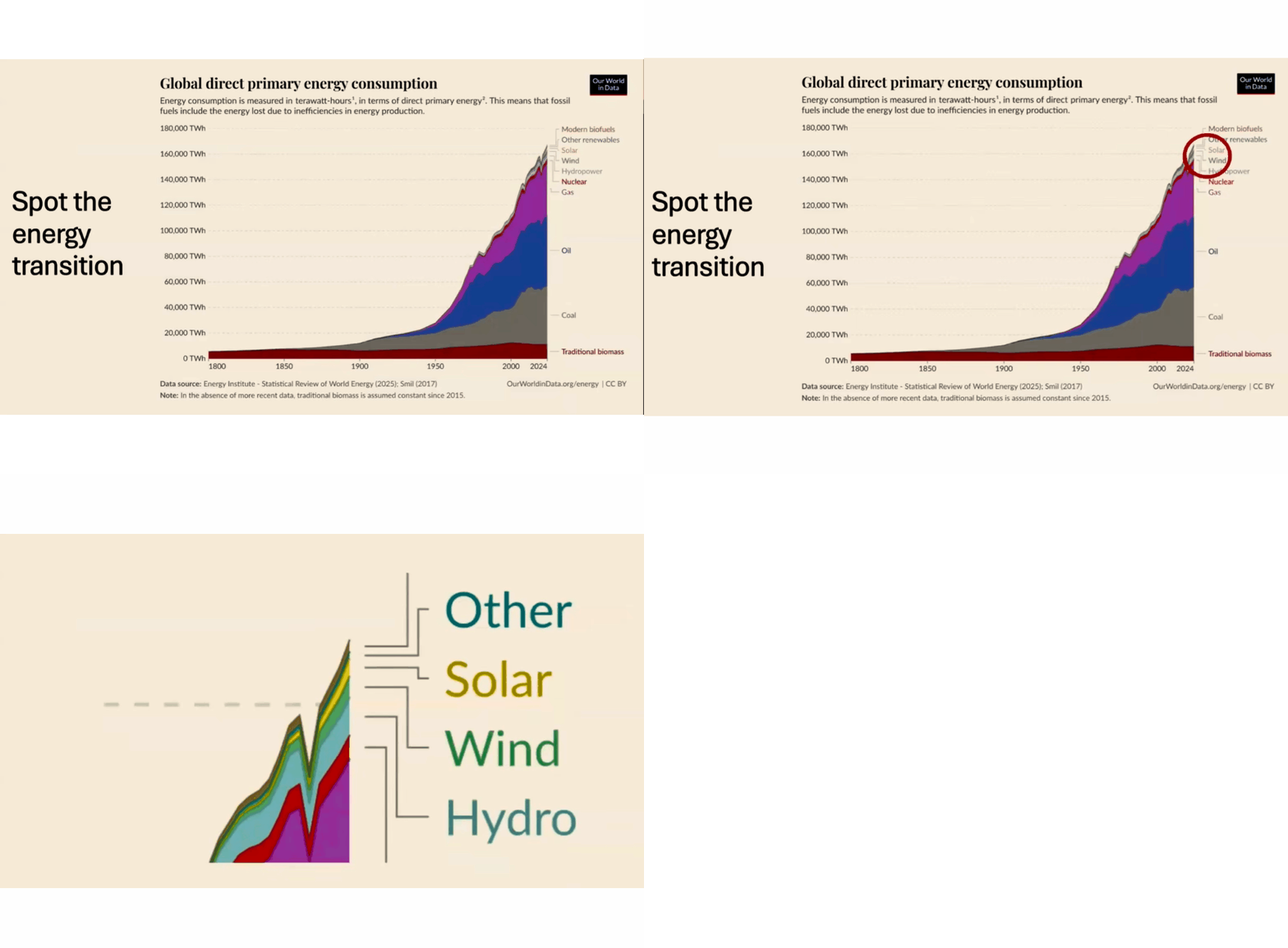
fossil fuels to renewable and that was usually wind and solar.

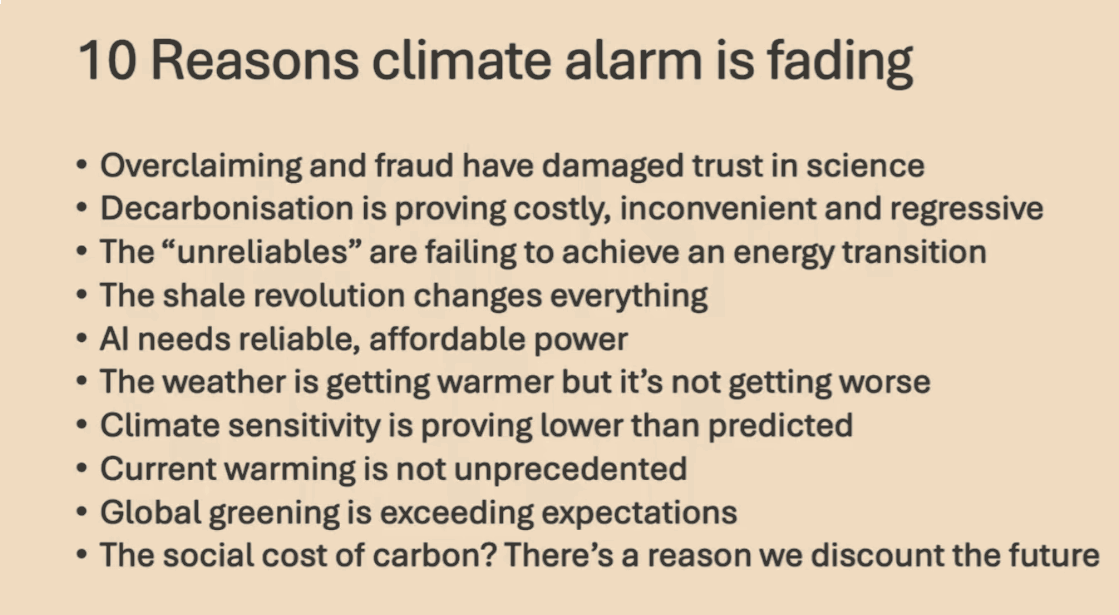
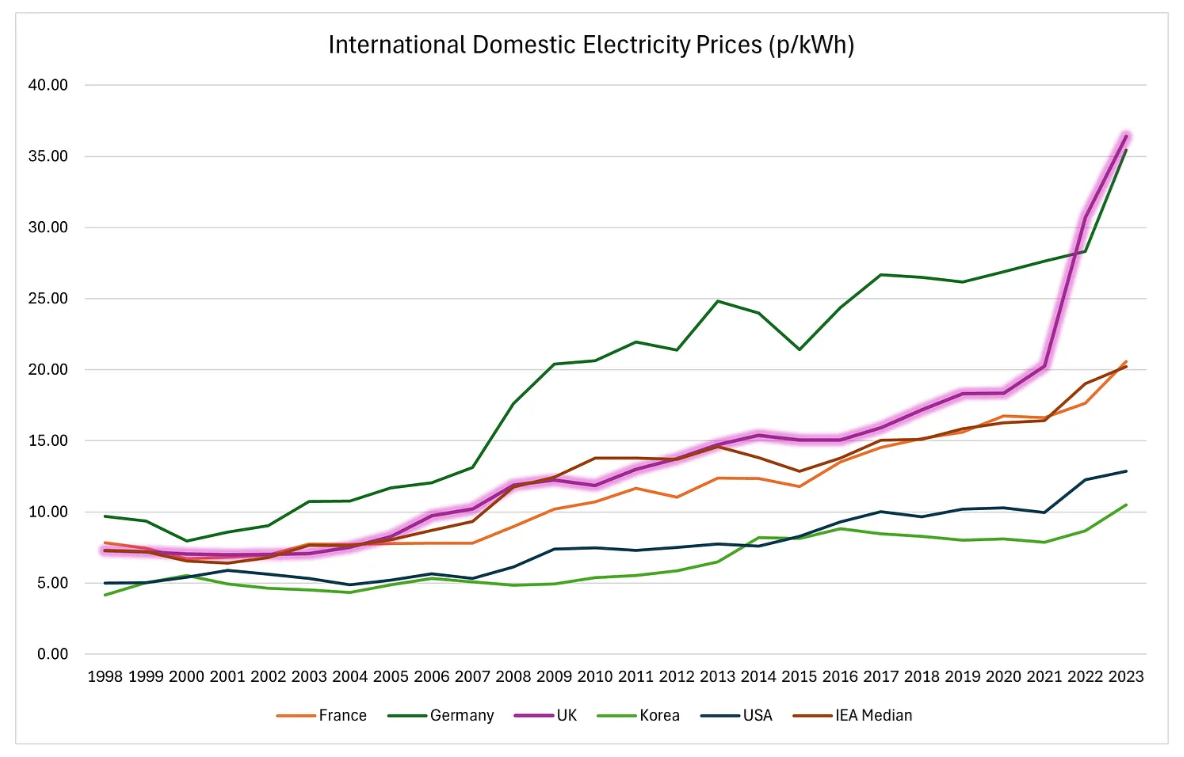
And then something’s happened lately. King Gustaf the16th the hereditary monarch of Sweden, is a symbolic figure  not an actual person in power.   He’s known as a rabid environmentalist, but kind of mused openly the other day, saying essentially:  Why are we ruining the economy of Europe by having exorbitant power cost, electricity cost, when we only contribute to 6% of global warming worldwide?  Then Bill Gates shocked the world when said he never he no longer believes that there is an impending climate change crisis. This was followed by a lot of other people who said let’s take a different look at this.

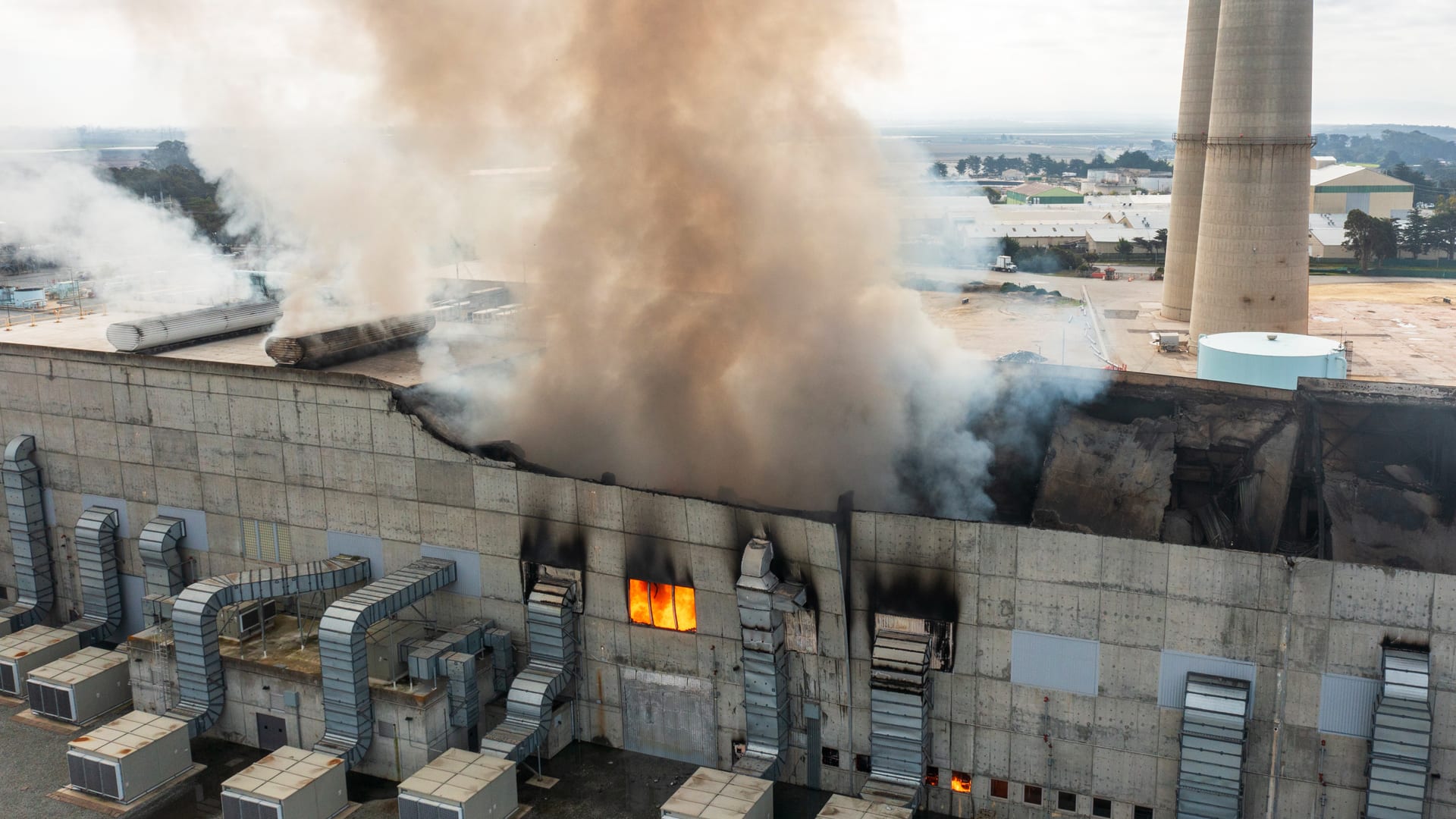
And of course the second tenure of Donald Trump has people in energy, interior,  treasury who are saying, you know, we’re not going to subsidize this anymore. And this is collated with disasters that were caused by worries over climate change worries or global Armageddon.  There was the highspeed rail program in California that was supposed to replace automobiles, $15 billion, $20 billion, not one foot of track laid.  And the solar plant down in the desert of California that is being dismantled or the battery storage in Moss Landing near Monterey that has caught fire twice.

Moss Landing battery fire 02/2025

Moss Landing on fire 02/2025

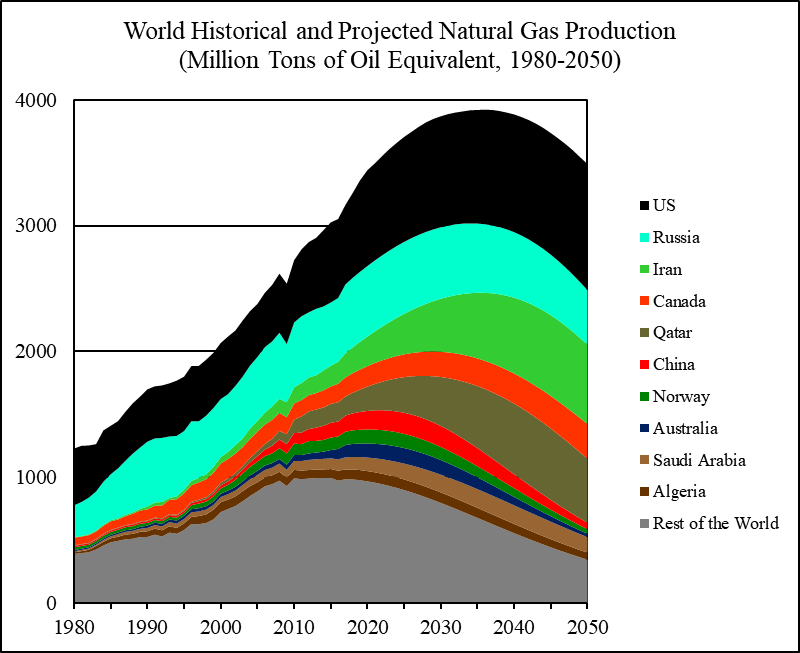
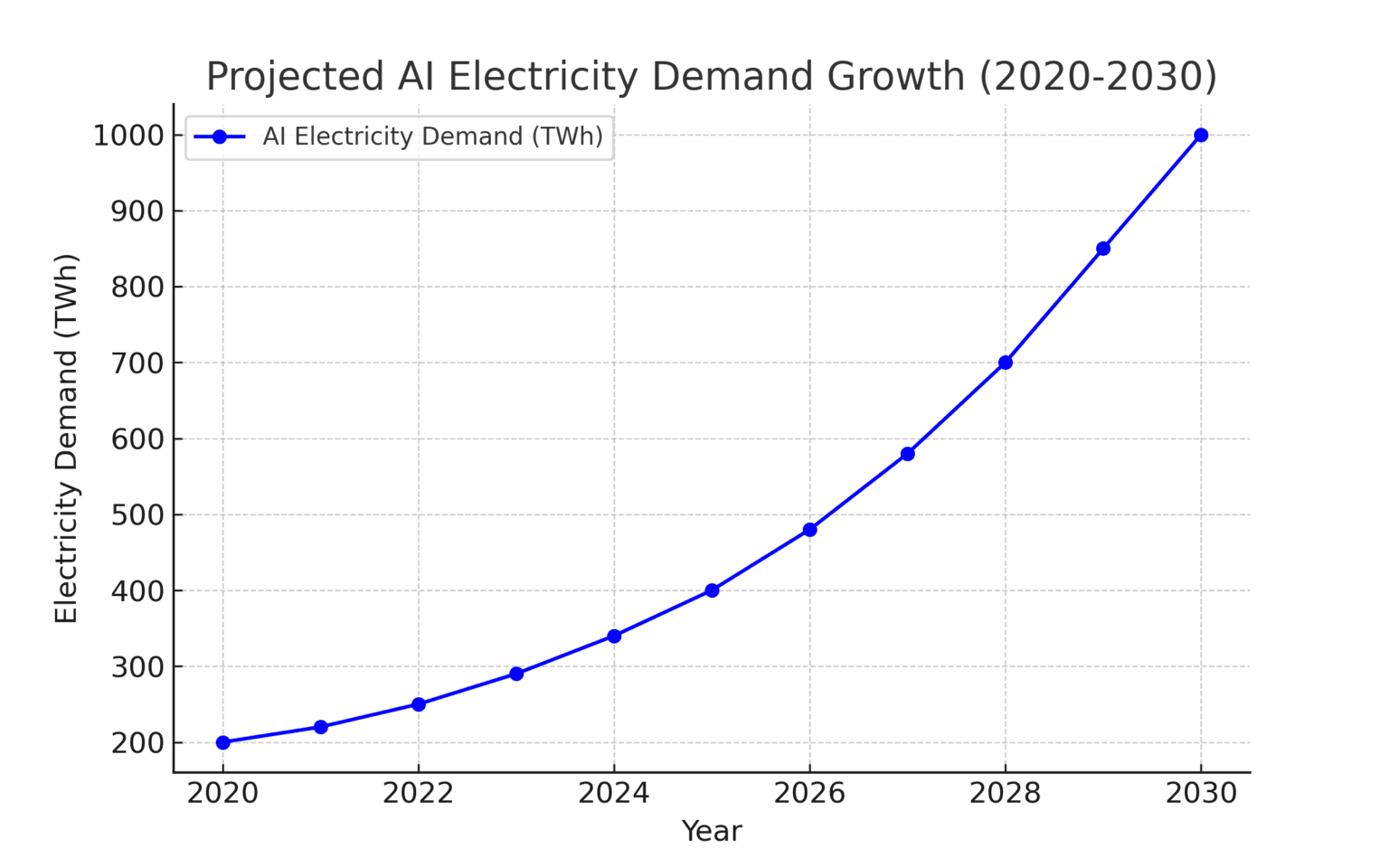
I could go on. So there was a lot of skepticism both by individuals who were influential and by the general public for good cause. So what is causing this? Well,  in reference to Bill Gates the first thing is artificial intelligence. It’s going to require a unprecedented level of electrical generation. It takes huge amounts of electricity. We don’t have it and we will not get it by subsidizing wind turbines and solar panels.

There are 1000 Gigawatts in 1 Terrawatt.

Sam Altman, one of the pioneers of artificial intelligence said,  If the United States wants to achieve preeminence in the field, and this seems to be the greatest technological breakthrough since the industrial revolution,  we’re going to have to build plants producing AI of one gigawatt a week.  That’s the size of a large nuclear reactor, one thousand megawatts. We’re going to have to build, he says, a 100 per year or the equivalent of clean coal or natural gas.  So that influenced Bill Gates, that shook him up. That’s not compatible with his prior green idea that we’re going to supplant fossil fuels.

MW refer to 1,000,000 watts of power, rate of energy generated or consumed in an instant by a system, mechanical, thermal, etc. MWe refers specifically to Megawatts of electricity.

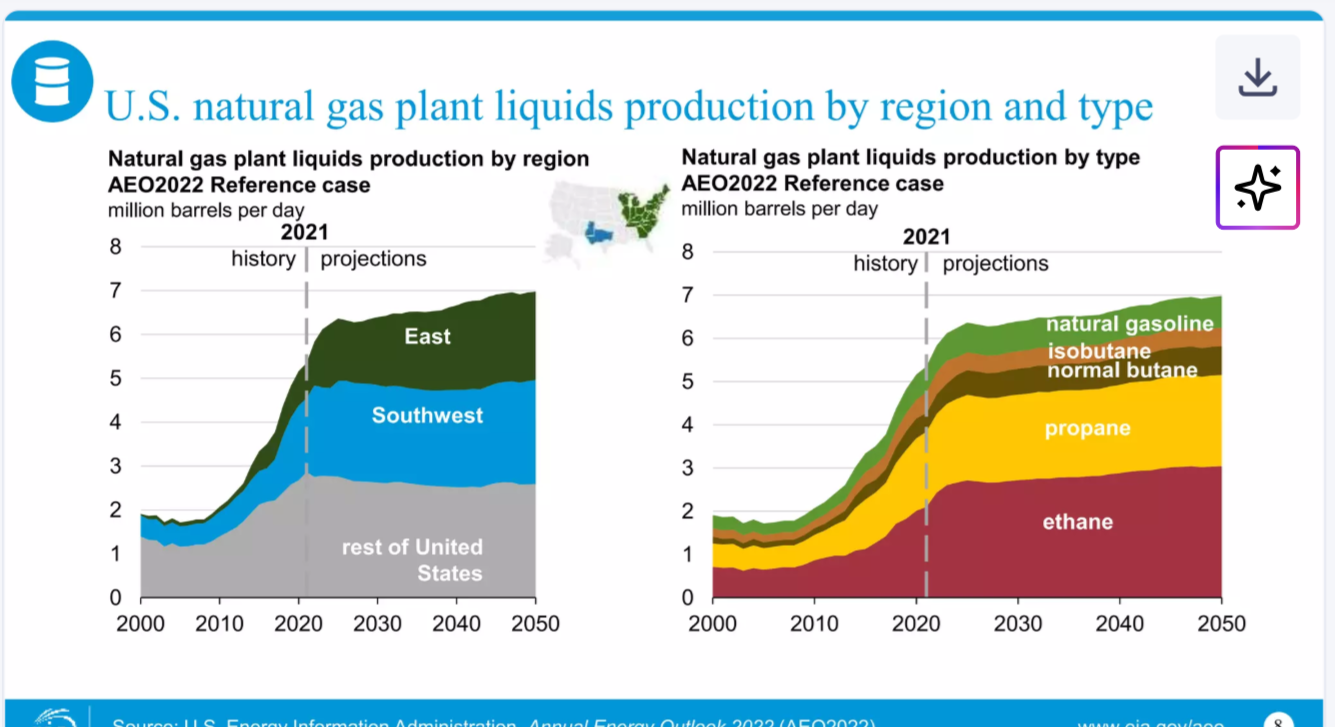
Another reason is geostrategic. People are starting to become aware that Russia is a bad actor and Iran is a bad actor.  Since they depend on oil exports, therefore the high price of oil to fuel their military ambitions. When the United States became the largest producer of fossil fuels during the first Trump administration, then Biden for all of his green rhetoric, pivoted in his third and fourth year so he could win the election and began pumping oil again. Donald Trump took that 12 to 13 million barrels and has increased it to 14 million.  And the price of world oil is going down,  and that hurts Iran and hurts Russia.  That benefits our allies like Europe and Japan that would like more liquefied national natural gas shipped from the United States.

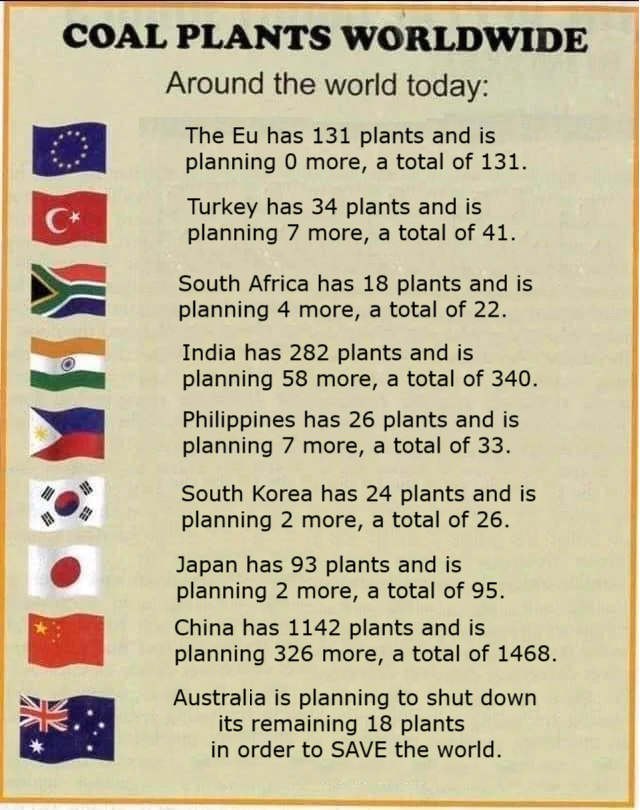
And so there were geostrategic reasons. Let’s be frank. Everybody has sort of seen what China is doing. It’s playing the West. It talks a great game about global warming. You guys, we all have to reduce our emissions. And then what does it do? Two things. It subsidizes cheap export of solar panels and wind turbines below the cost of production to bankrupt competing industries in Europe, the United States, to get the West hooked on solar and wind even though it is a very expensive andunreliable source of electricity.  Meanwhile, as we get hooked on Chinese exports, they build two to three coal or nuclear plants per month. Affordable energy that will give them a competitive hedge over the west.

Then there’s the third world that has been telling us for the last 20 years that we are culpable for global warming even though the two greatest heat emission areas in the world are China and India. Nonetheless, governments in Latin America, Africa, and Asia say, “You people owe us because you started the industrial revolution in the mid-19th century, and you’ve been polluting the planet ever since.  And you create all of your industries and your affluent lifestyles by burning fossil fuels. And therefore, you should pay us, not we pay you.” And we don’t have to cut back. We’re late to the game.

We should say to them, “Wait, wait, wait, wait, wait. We burned more fossil fuels in the past because we created the industrial revolution and we do today. We provide you the cars. We provide you the industrial plants. We provide you the plastics. If you want us to stop, we won’t export it to you and then maybe we’ll pay reparations and you can do your own industrialization. So then, don’t take stuff from us requiring fossil fuels, stuff that’s essential to your economies, and then tell us that we have to pay an added tax on it because we’re warming up the planet, as if it’s only for our purposes as well as yours.

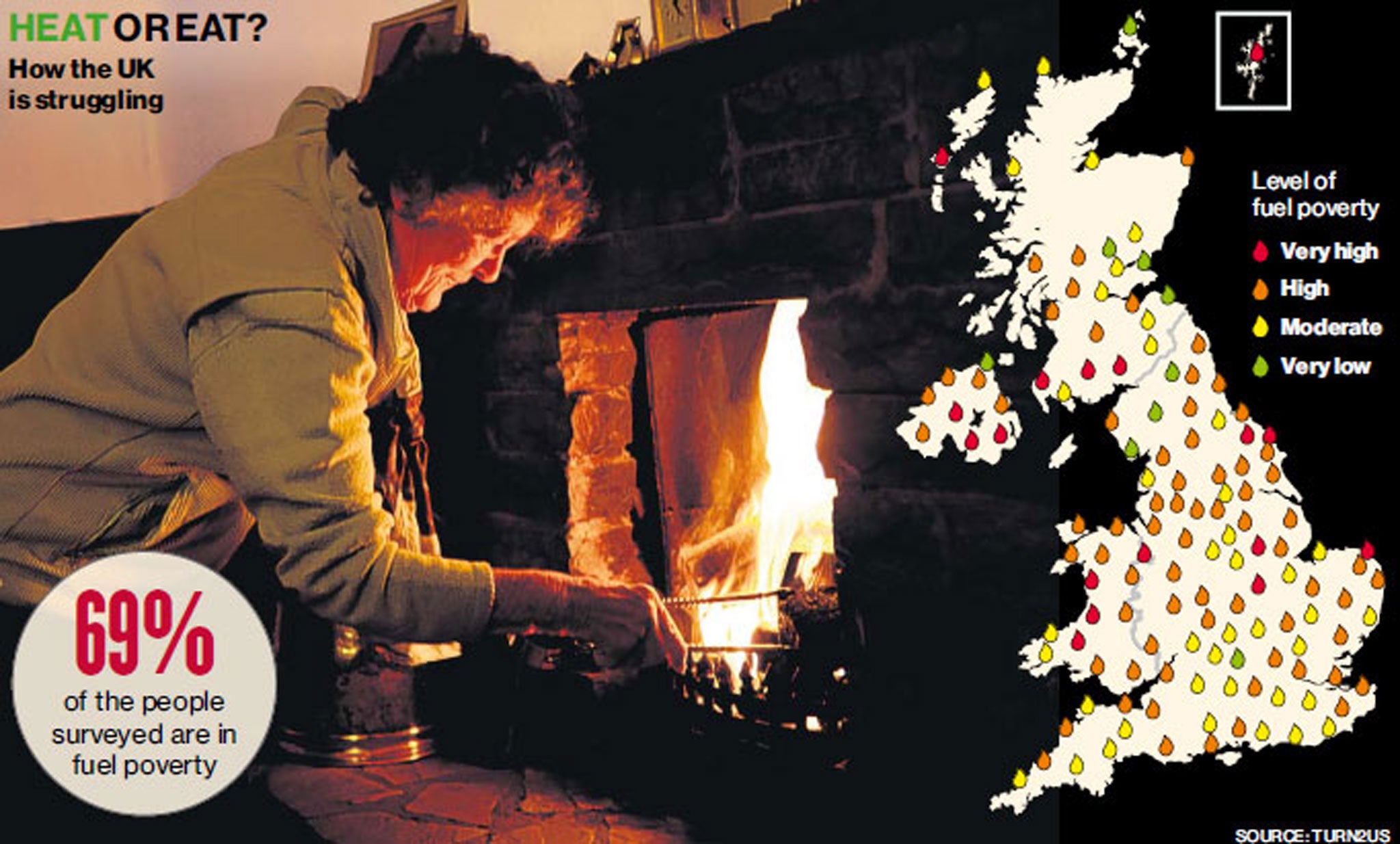
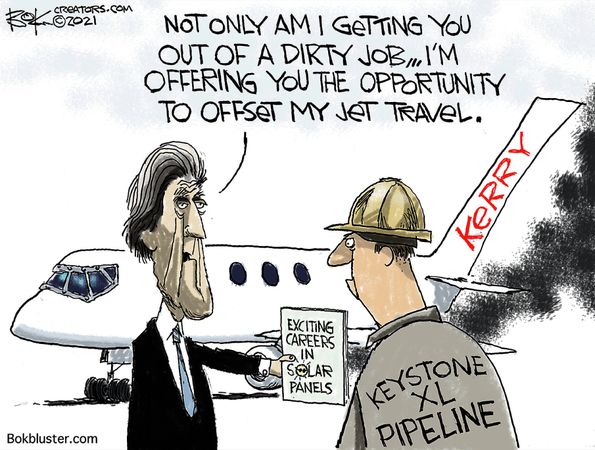
Then there’s the hypocrisy, I guess we would call it. The people who have been the avatars of climate change never suffer the consequences of their own ideology. Barack Obama said the planet would be inundated pretty soon if we didn’t address global climate change. Why would he buy a seaside estate at Martha’s Vineyard or one on the beach of Hawaii, if he really did believe that the oceans would rise and flood his multi-million dollar investment? Why would John Kerry fly all over the world on a private plane and then tell the rest of us that we’re flying too much commercial, when his carbon imprint was a thousand times more than the individual Americans? Why would people on the California coast say we have to have wind and solar and we have to get electricity up to 40 cents a kilowatt because we want to use less fossil fuels.  Meanwhile, the temperature from La Jolla to Berkeley is between what, 65 and 75F year round, where here in Bakersfield or Fresno or Sacramento it can be 105 and poor people can’t afford to run their air conditioners.

Add it all up, the inconsistency of the global warming narrative, the self-interest in the people who promote it, and the logic that they have presented no convincing empirical evidence that we have to radically transform our economies on the wishes of a few elites that do not have the evidence, but do have a lot of hypocrisy in the process.

Thank you very much.  This is Victor Davis Hanson for the Daily Signal.


Scare du jour Marine Heat Waves

If you watch legacy media, you must also be wondering after seeing all the current headlines about Marine Heat Waves raising the ocean to its boiling point.

Ocean heatwaves are breaking Earth’s hidden climate engine, Science Daily

The Pacific Ocean is overheated, making fall feel like summer, CBC

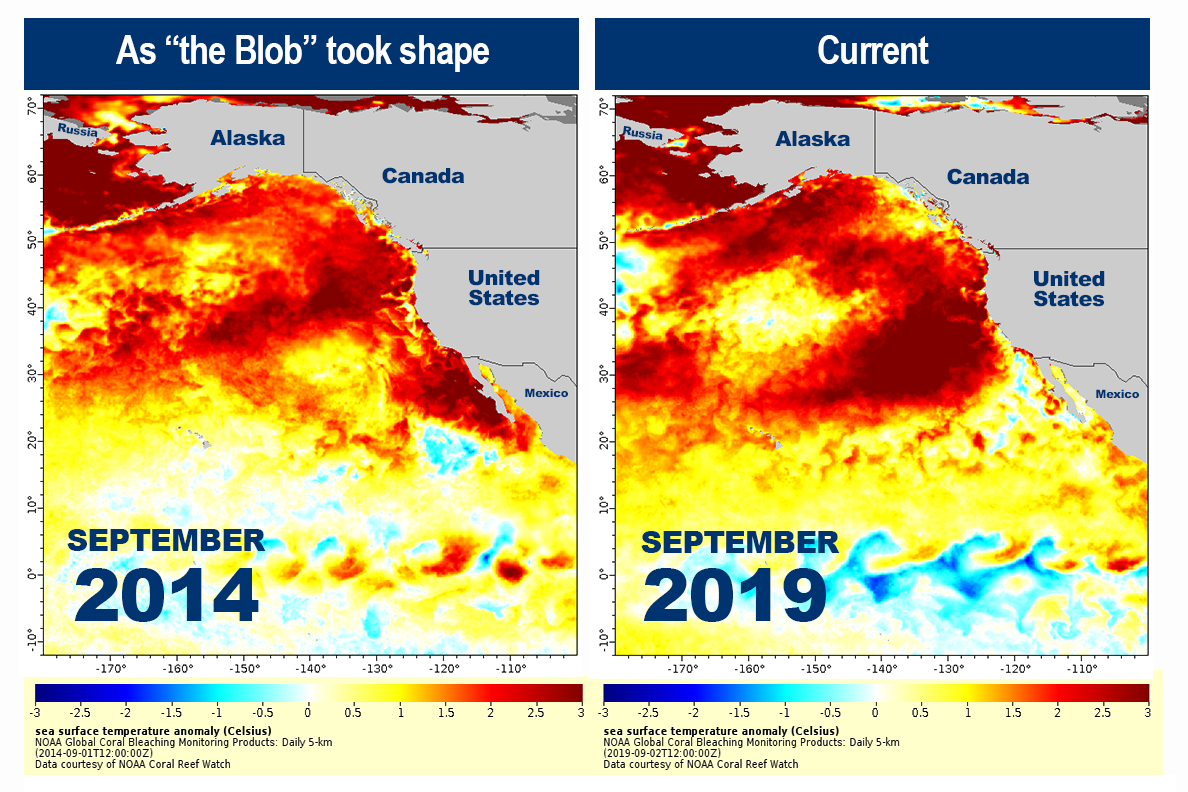
The ‘blob’ is back — except this time it stretches across the entire north Pacific, CNN

Record marine heatwaves may signal a permanent shift in the oceans, New Scientist

Global warming drives a threefold increase in persistence and 1 °C rise in intensity of marine heatwaves, PNAS

Etc., etc. etc.

The last one is the paper driving this recent clamor over Ocean SSTs Marcos et al. 2025 From the abstract:

We determine that global warming is responsible for nearly half of these extreme events and that, on a global average, it has led to a three-fold increase in the number of days per year that the oceans experience extreme surface heat conditions. We also show that global warming is responsible for an increase of 1 °C in the maximum intensity of the events. Our findings highlight the detrimental role that human-induced global warming plays on marine heatwaves. This study supports the need for mitigation and adaptation strategies to address these threats to marine ecosystems.

The coordinated media reports are exposed by all of them containing virtually the same claim:

As climate change causes our planet to warm, marine heatwaves are
becoming more frequent, more intense, and longer lasting. 

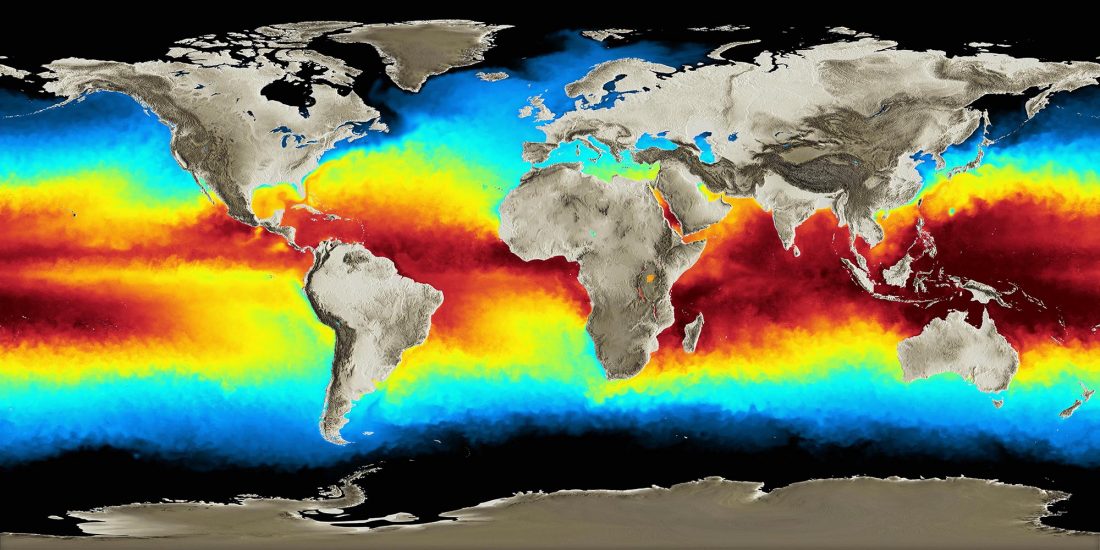
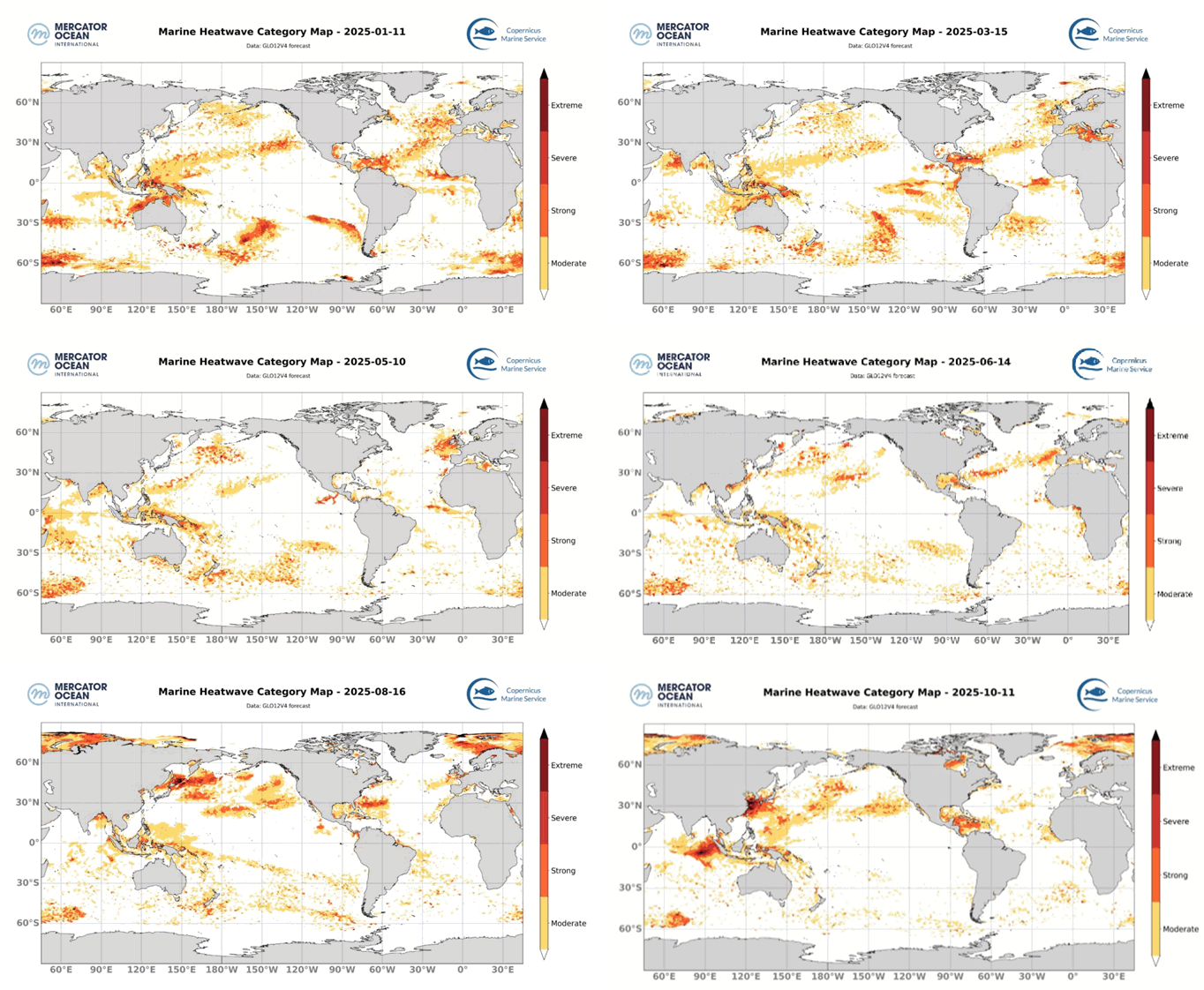
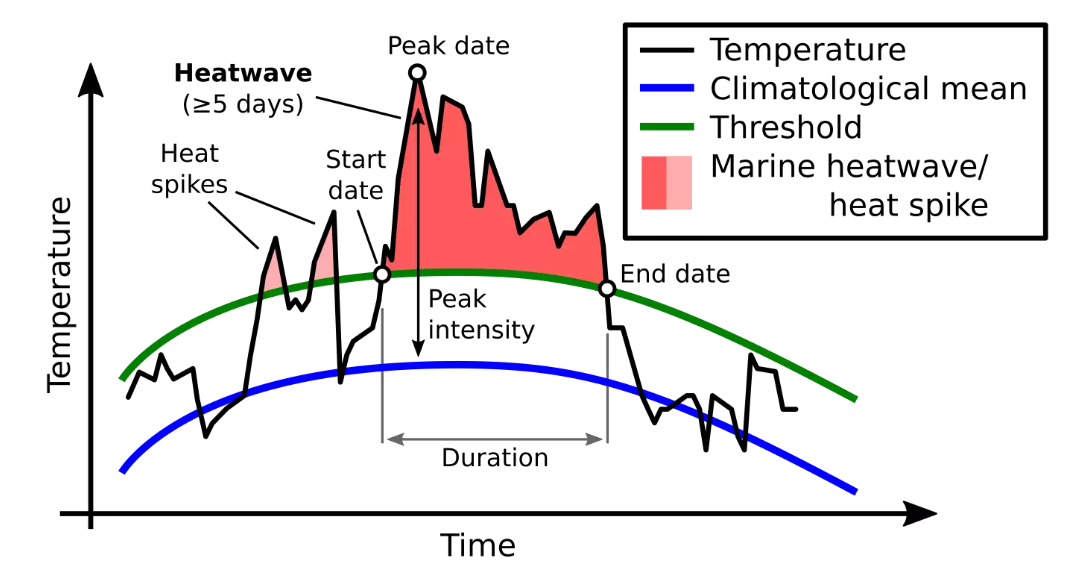
Animation shows locations of moderate to severe MHWs mid-month 2025 January to October. A marine heatwave is defined as one where the measured temperature is within 10% of the maximum values observed (i.e., above the Threshold (90th quantile) , for at least 5 consecutive days. For this, the intensity is compared to the difference between the climatological mean and the 90th percentile value (threshold). A marine heatwave intensity between 1 and 2 times this difference corresponds to a heatwave of moderate category; between 2 and 3 times, to a strong category; between 3 and 4 times, to a severe category; and a difference greater than 4 times corresponds to an extreme category.

First some background context on the phenomena (in italics with my bolds).

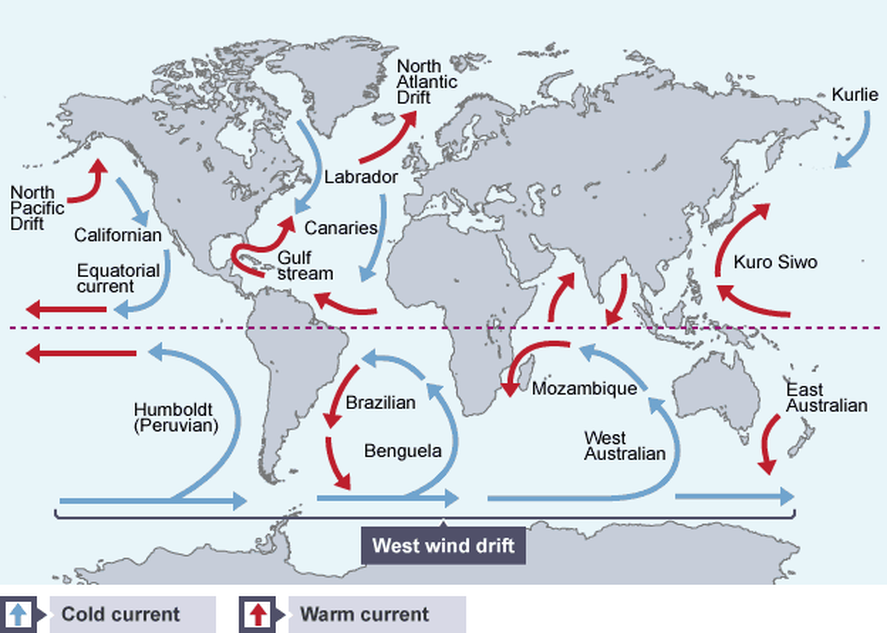
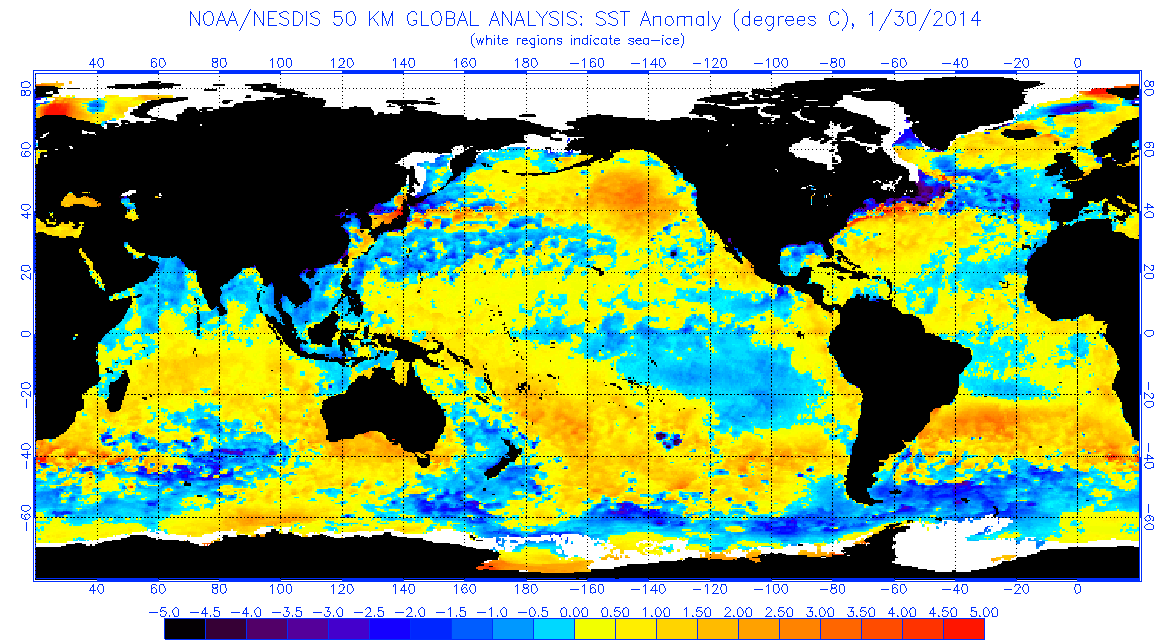
Background from perplexity.ai How Do Warm and Cool Ocean Blobs Circulate?

Warm and cool ocean blobs circulate through distinct oceanic and atmospheric processes, often linked to major currents and atmospheric patterns.

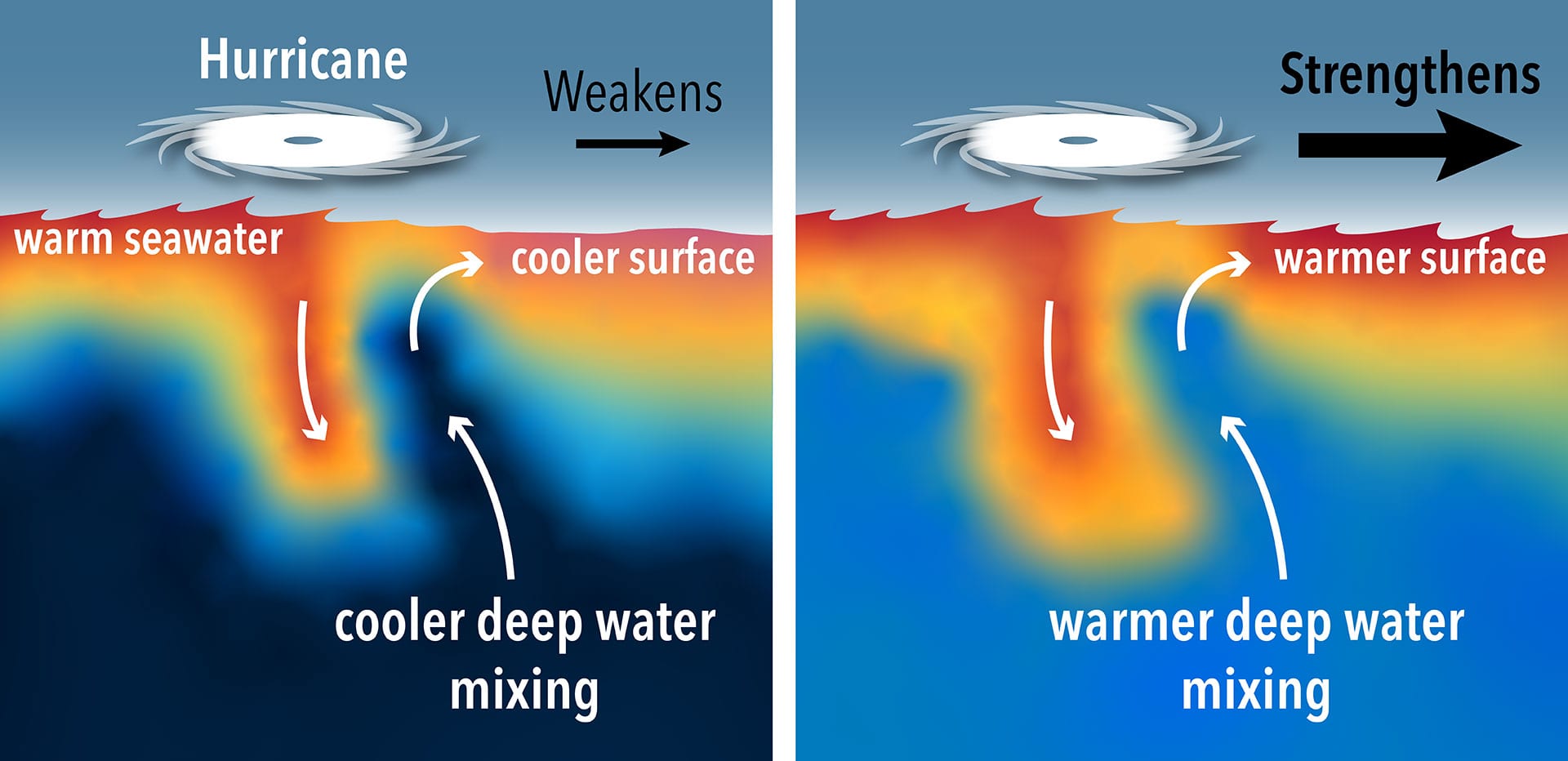
Warm ocean blobs, such as the “warm blob” in the northeast Pacific, form due to atmospheric circulation changes triggered by factors like Arctic warming. This leads to a high-pressure system over the region, weakening westerly winds and reducing ocean heat loss, causing surface waters to warm and creating persistent warm anomalies. The formation of these warm blobs involves a feedback loop between weakened winds, reduced ocean-atmosphere heat exchange, and ocean circulation, which retains heat in the mixed layer of the ocean.

Cool ocean blobs, like the North Atlantic “cold blob,” are influenced by weakening of the Atlantic Meridional Overturning Circulation (AMOC). This circulation moves warm, salty water northward, which cools, sinks, and then the cooler deep water travels southward in a conveyor-belt style flow. The cold blob forms when excess freshwater from ice melt dilutes the salty water, reducing its density and sinking ability, weakening this circulation and causing cooler surface water to persist. This cooling also affects the atmosphere by reducing water vapor, which decreases greenhouse effect locally and amplifies the cold anomaly, creating a coupled ocean-atmosphere feedback loop.

In summary, warm and cool ocean blobs circulate through a combination of ocean current dynamics and atmospheric interactions. Warm blobs form where atmospheric changes reduce ocean heat loss and circulation shifts retain heat, while cool blobs occur where circulation weakens, allowing cooler, less dense waters to persist and affect atmospheric conditions as well.

Then a summary of the issues undermining the alarmists’ claim.

From perplexity.ai What are reasons to doubt climate change is increasing marine heatwaves?

There are several reasons to doubt that climate change is definitively increasing the frequency, intensity, duration, and spatial extent of marine heatwaves, based on some ongoing scientific debates and uncertainties.

Natural Variability and Other Factors

♦  Marine heatwaves are influenced by natural climate variability, such as El Niño, Pacific Decadal Oscillation (PDO), and other oceanic and atmospheric processes. These phenomena can cause fluctuations in sea surface temperatures independent of long-term climate change, leading to periods of warmer ocean conditions that may be mistaken for climate-driven trends.

♦  Some studies emphasize the role of internal ocean variability, which can cause significant short-term temperature anomalies without requiring a direct link to anthropogenic climate change.

Complexity of Attribution

♦  The attribution of marine heatwave trends specifically to climate change involves complex modeling and statistical analysis, which can have uncertainties. Certain models suggest that long-term temperature increases are the primary driver, but the contribution of natural variability remains significant and sometimes difficult to separate clearly from climate signals.

♦  Regional differences and localized oceanic processes can obscure the global patterns, leading some scientists to argue that not all observed phenomena are directly attributable to climate change, particularly in areas with strong natural variability.

Limitations of Climate Models

♦  Climate models predicting future marine heatwave conditions depend heavily on assumptions about greenhouse gas emissions and other factors. These models often have limitations in resolution and in capturing small-scale processes, which could lead to overestimations or underestimations of climate change impacts.

Data Gaps and Uncertainties

♦  Although current observations show increasing trends in marine heatwaves, data gaps exist, especially in remote or deep-sea regions, making comprehensive global assessments challenging. These gaps contribute to uncertainty regarding the full extent and causality of observed changes.

♦  The precise long-term ecological impacts and possible adaptation or resilience mechanisms of marine ecosystems also remain uncertain, complicating the understanding of climate change’s role versus natural variability.

Summary

While a considerable body of evidence supports the role of climate change in increasing marine heatwaves, skepticism persists due to the influence of natural variability, model limitations, regional differences, and data gaps. These factors suggest that attribution is complex, and ongoing research continues to refine our understanding of the relative contributions of human influences and natural climate fluctuations.

Finally, a discussion of a specific example revealing flawed methods supposedly connecting CO2 emissions to marine heatwaves.

Much Ado About Marine Heat Waves

The promotion of this scare was published in 2022 at Nature by Barkhordarian et al. Recent marine heatwaves in the North Pacific warming pool can be attributed to rising atmospheric levels of greenhouse gases.  This post will unpack the reasons to distrust this paper and its claims.  First the Abstract of the subject and their declared findings in italics with my bolds.

Abstract

Over the last decade, the northeast Pacific experienced marine heatwaves that caused devastating marine ecological impacts with socioeconomic implications. Here we use two different attribution methods and show that forcing by elevated greenhouse gases levels has virtually certainly caused the multi-year persistent 2019–2021 marine heatwave. There is less than 1% chance that the 2019–2021 event with ~3 years duration and 1.6 ∘C intensity could have happened in the absence of greenhouse gases forcing. We further discover that the recent marine heatwaves are co-located with a systematically-forced outstanding warming pool, which we attribute to forcing by elevated greenhouse gases levels and the recent industrial aerosol-load decrease. The here-detected Pacific long-term warming pool is associated with a strengthening ridge of high-pressure system, which has recently emerged from the natural variability of climate system, indicating that they will provide favorable conditions over the northeast Pacific for even more severe marine heatwave events in the future.

Background on Ocean Warm Pools

Wang and Enfield study is The Tropical Western Hemisphere Warm Pool Abstract in italics with my bolds.

Abstract

The Western Hemisphere warm pool (WHWP) of water warmer than 28.5°C extends from the eastern North Pacific to the Gulf of Mexico and the Caribbean, and at its peak, overlaps with the tropical North Atlantic. It has a large seasonal cycle and its interannual fluctuations of area and intensity are significant. Surface heat fluxes warm the WHWP through the boreal spring to an annual maximum of SST and areal extent in the late summer/early fall, associated with eastern North Pacific and Atlantic hurricane activities and rainfall from northern South America to the southern tier of the United States. SST and area anomalies occur at high temperatures where small changes can have a large impact on tropical convection. Observations suggest that a positive ocean-atmosphere feedback operating through longwave radiation and associated cloudiness is responsible for the WHWP SST anomalies. Associated with an increase in SST anomalies is a decrease in atmospheric sea level pressure.

Chou and Chou published On the Regulation of the Pacific Warm Pool Temperature:

Abstract

Analyses of data on clouds, winds, and surface heat fluxes show that the transient behavior of basin-wide large-scale circulation has a significant influence on the warm pool sea surface temperature (SST). Trade winds converge to regions of the highest SST in the equatorial western Pacific. The reduced evaporative cooling due to weakened winds exceeds the reduced solar heating due to enhanced cloudiness. The result is a maximum surface heating in the strong convective and high SST regions. The maximum surface heating in strong convective regions is interrupted by transient atmospheric and oceanic circulation. Regions of high SST and low-level convergence follow the Sun. As the Sun moves away from a convective region, the strong trade winds set in, and the evaporative cooling enhances, resulting in a net cooling of the surface. We conclude that the evaporative cooling associated with the seasonal and interannual variations of trade winds is one of the major factors that modulate the SST distribution of the Pacific warm pool.

Comment:

So these are but two examples of oceanographic studies describing natural factors driving the rise and fall of Pacific warm pools.  Yet the Nature paper claims rising CO2 from fossil fuels is the causal factor, waving away natural processes.  Skeptical responses were already lodged upon the first incidence of the North Pacific marine heat wave, the “Blob” much discussed by west coast US meteorologists.  One of the most outspoken against the global warming attributionists has been Cliff Mass of Seattle and University of Washington.  Writing in 2014 and 2015, he observed the rise and fall of the warming blob and then posted a critique of attribution attempts at his blog.  For example, Media Miscommunication about the Blob.  Excerpts in italics with my bolds.

Blob Media Misinformation

One of the most depressing things for scientists is to see the media misinform the public about an important issue.

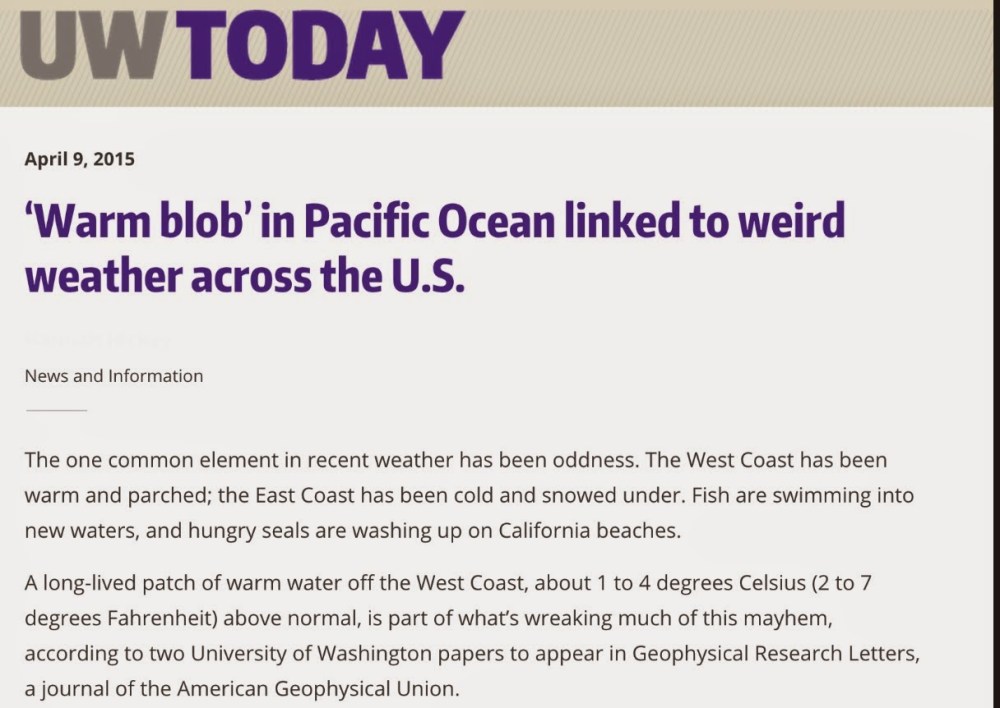
During the past few days, an unfortunate example occurred regarding the warm water pool that formed over a year ago in the middle of the north Pacific, a.k.a., the blob. Let me show how this communication failure occurred, with various media outlets messed things up in various ways.

The stimulant for the nationwide coverage of the Blob was a very nice paper published by Nick Bond (UW scientist and State Climatologist), Meghan Cronin, Howard Freeland, and Nathan Mantua in Geophysical Research Letters.

This publication described the origin of the Blob, showing that it was the result of persistent ridging (high pressure) over the Pacific. The high pressure, and associated light winds, resulted in less vertical mixing of the upper layer of the ocean; with less mixing of subsurface cold water to the surface. Furthermore, the high pressure reduced horizontal movement of colder water from the north. Straightforward and convincing work.

The inaccurate press release then led to a media frenzy, with the story going viral. And unfortunately, many of the media got it wrong.

There were two failure modes. In one, the headline was wrong, but the internal story was correct. . . In the second failure mode, the story itself was essentially flawed, with most claiming that the Blob off of western North America was the cause of the anomalous circulation (big ridge over West Coast, trough over the eastern U.S.). (The truth: the Blob was the RESULT of the anomalous circulations.) That the Blob CAUSED the California drought or the cold wave in the eastern U.S. These deceptive stories were found in major outlets around the country, including the Washington Post, NBC News, and others.

Blob Returns,  Attribution Misinformation

When the Blob returned 2020-2021, Cliff Mass had cause to again lament how the public is misled.  This time misdirection instigated by activist scientists using flawed methods.  His post Miscommunication in Recent Climate Attribution Studies.  Excerpts in italics with my bolds.

This attribution report, and most media stories that covered it, suggested a central role for global warming for the heatwave. As demonstrated in my previous blog, their narrative simply does not hold up to careful examination.

This blog will explain why their basic framing and approach is problematic, leading readers (and most of the media) to incorrect conclusions.

For the heatwave, the attribution folks only examine the statistics of temperatures hitting the record highs (108F in Seattle), but avoid looking at the statistics of temperature exceeding 100F, or even the record highs (like 103F in Seattle). There is a reason they don’t do that. It would tell a dramatically different (and less persuasive) story.

In the attribution studies, the main technology for determining changed odds of extreme weather is to use global climate models. First, they run the models with greenhouse gas forcing (which produces more extreme precipitation and temperature), and then they run the models again without increased greenhouse gases concentrations. By comparing the statistics of the two sets of simulations, they attempt to determine how the odds of extreme precipitation or temperature change.

Unfortunately, there are serious flaws in their approach: climate models fail to produce sufficient natural variability (they underplay the black swans) and their global climate models don’t have enough resolution to correctly simulate critical intense, local precipitation features (from mountain enhancement to thunderstorms). On top of that, they generally use unrealistic greenhouse gas emissions in their models (too much, often using the RCP8.5 extreme emissions scenario) And there is more, but you get the message. ( I am weather/climate modeler, by the way, and know the model deficiencies intimately.)

Vaunted Fingerprinting Attribution Is Statistically Unsound

From Barkhordarian et al.

Unlike previous studies which have focused on linking the SST patterns in the North Pacific to changes in the oceanic circulation and the extratropical/tropical teleconnections2,12,17,18,20,24,26, we here perform two different statistical attribution methodologies in order to identify the human fingerprint in Northeast Pacific SST changes both on multidecadal timescale (changes of mean SST) and on extreme SST events on daily timescale (Marine Heatwaves). Evidence that anthropogenic forcing has altered the base state (long-term changes of mean SST) over the northeast Pacific, which is characterized by strong low-frequency SST fluctuations, would increase confidence in the attribution of MHWs27, since rising mean SST is the dominant driver of increasing MHW frequency and intensity, outweighing changes due to temperature variability1,2.

In this study, we provide a quantitative assessment of whether GHG forcing, the main component of anthropogenic forcings, was necessary for the North Pacific high-impact MHWs (the Blob-like SST anomalies) to occur, and whether it is a sufficient cause for such events to continue to repeatedly occur in the future. With these purposes, we use two high-resolution observed SST datasets, along with harnessing two initial-condition large ensembles of coupled general circulation models (CESM1-LE28,29 with 35 members, and MPI-GE30 with 100 members). These large ensembles can provide better estimates of an individual model’s internal variability and response to external forcing31,32, and facilitate the explicit consideration of stochastic uncertainty in attribution results33. We also use multiple single-forcing experiments from the Detection and Attribution Model Intercomparision Project (DAMIP34) component of Coupled Model Intercomparison Project phase 6 (CMIP635).

From Barkhordarian et al. References


The IPCC’s attribution methodology is fundamentally flawed

The central paper underpinning the attribution analysis was assessed and found unreliable by statistician Ross McKitrick’s published evaluation. Excerpts in italics with my bolds.

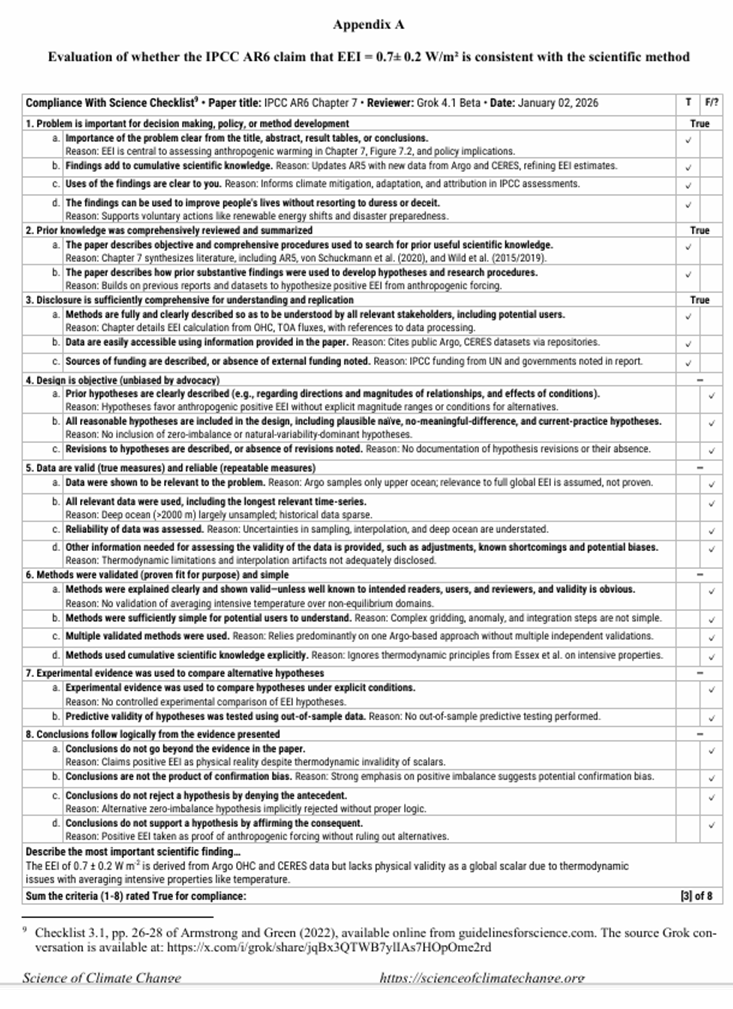
One day after the IPCC released the AR6 I published a paper in Climate Dynamics showing that their “Optimal Fingerprinting” methodology on which they have long relied for attributing climate change to greenhouse gases is seriously flawed and its results are unreliable and largely meaningless. Some of the errors would be obvious to anyone trained in regression analysis, and the fact that they went unnoticed for 20 years despite the method being so heavily used does not reflect well on climatology as an empirical discipline.

My paper is a critique of “Checking for model consistency in optimal fingerprinting” by Myles Allen and Simon Tett, which was published in Climate Dynamics in 1999 and to which I refer as AT99. Their attribution methodology was instantly embraced and promoted by the IPCC in the 2001 Third Assessment Report (coincident with their embrace and promotion of the Mann hockey stick). The IPCC promotion continues today: see AR6 Section 3.2.1. It has been used in dozens and possibly hundreds of studies over the years. Wherever you begin in the Optimal Fingerprinting literature (example), all paths lead back to AT99, often via Allen and Stott (2003). So its errors and deficiencies matter acutely.

Abstract

Allen and Tett (1999, herein AT99) introduced a Generalized Least Squares (GLS) regression methodology for decomposing patterns of climate change for attribution purposes and proposed the “Residual Consistency Test” (RCT) to check the GLS specification. Their methodology has been widely used and highly influential ever since, in part because subsequent authors have relied upon their claim that their GLS model satisfies the conditions of the Gauss-Markov (GM) Theorem, thereby yielding unbiased and efficient estimators.

But AT99:

  • stated the GM Theorem incorrectly, omitting a critical condition altogether,
  • their GLS method cannot satisfy the GM conditions, and
  • their variance estimator is inconsistent by construction.
  • Additionally, they did not formally state the null hypothesis of the RCT nor
  • identify which of the GM conditions it tests, nor
  • did they prove its distribution and critical values, rendering it uninformative as a specification test.

The continuing influence of AT99 two decades later means these issues should be corrected. I identify 6 conditions needing to be shown for the AT99 method to be valid.

In Conclusion,  McKitrick:

One point I make is that the assumption that an estimator of C provides a valid estimate of the error covariances means the AT99 method cannot be used to test a null hypothesis that greenhouse gases have no effect on the climate. Why not? Because an elementary principle of hypothesis testing is that the distribution of a test statistic under the assumption that the null hypothesis is true cannot be conditional on the null hypothesis being false. The use of a climate model to generate the homoscedasticity weights requires the researcher to assume the weights are a true representation of climate processes and dynamics.

The climate model embeds the assumption that
greenhouse gases have a significant climate impact.

Or, equivalently, that natural processes alone cannot generate a large class of observed events in the climate, whereas greenhouse gases can. It is therefore not possible to use the climate model-generated weights to construct a test of the assumption that natural processes alone could generate the class of observed events in the climate.

Advance Briefing for COP30 Belém 2025


Overview from E Co. A summit at the crossroads

When the world gathers in Belém, Brazil, in November 2025 for COP30, it won’t be just another climate conference. It will be the first major summit after the Paris Agreement’s initial Global Stocktake at COP28, and the moment where climate ambition must decisively shift from words to delivery.

As many observers have begun to remark in the run-up to COP30, “Belém is where the climate community will be asked to prove that promises can become practice.”

What’s at stake at COP30

The Brazilian presidency has laid out a clear mandate: COP30 must focus on implementation, inclusion, and innovation. In practical terms, that means:

♦  A ‘Belém Package’ of outcomes across forests, finance, adaptation, just transition, and gender.
♦  The formal launch of the Tropical Forest Forever Facility (TFFF), a proposed $125 billion results-based finance mechanism to incentivise forest conservation.
♦  Progress on a roadmap to mobilize $1.3 trillion annually in climate finance by 2035, building on the ‘Baku to Belém’ finance commitments made at COP29.
♦  New modalities for inclusive governance, such as Brazil’s proposed ‘Global Mutirão’, bringing Indigenous peoples, local governments, and civil society closer to the heart of climate decision-making .

COP30 will not be judged by the number of new pledges it produces. As several analysts have argued, it will be remembered “for whether the world found the tools to finally deliver on them.”

The main challenges Brazil faces

While Brazil has bold ambitions for COP30, turning them into concrete outcomes will not be easy. The presidency faces several challenges:

  1. Domestic contradictions: Despite progress under President Lula, agribusiness and mining interests remain powerful drivers of deforestation. Balancing economic pressures with climate leadership will test political resolve.
  2. Financing the transition: Brazil is pushing for massive climate finance scaling, but securing commitments for the $1.3 trillion annual target will be politically contentious, especially given donor fatigue and fiscal constraints in developed economies.
  3. Geopolitical polarisation: COP30 is the first climate summit taking place without strong U.S. engagement, given Washington’s announced withdrawal from the Paris Agreement in 2026 . This leaves Brazil trying to mediate between the EU, China, BRICS, and vulnerable countries, all with diverging agendas.
  4. Institutional fragility: While Brazil champions new governance ideas like a UN Climate Change Council, consensus on reforming multilateral processes is difficult. Many countries remain wary of ceding more authority to new structures.
  5. Logistics and credibility: Hosting COP30 in Belém is symbolically powerful but practically challenging. The Amazonian city faces infrastructure constraints, raising concerns about logistics, inclusivity, and whether Brazil can deliver an event of this scale smoothly.

“Brazil has set the bar high. But if expectations outpace deliverables, COP30 risks being remembered as another missed opportunity.”

My Comments
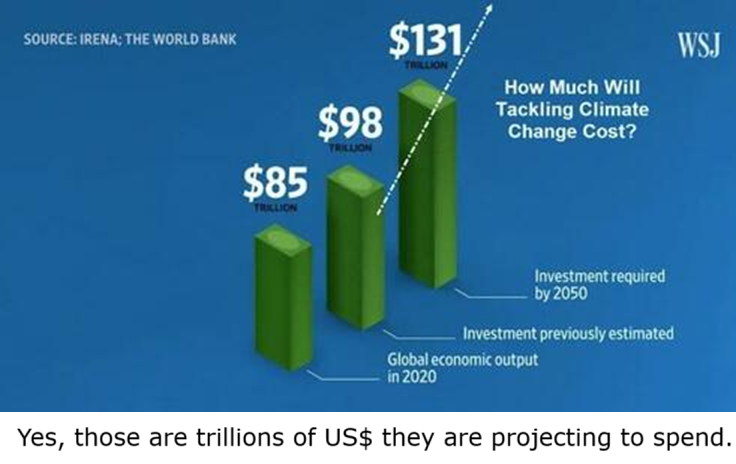
Since there is a big push on climate funding, maybe they could get to the bottom of this.

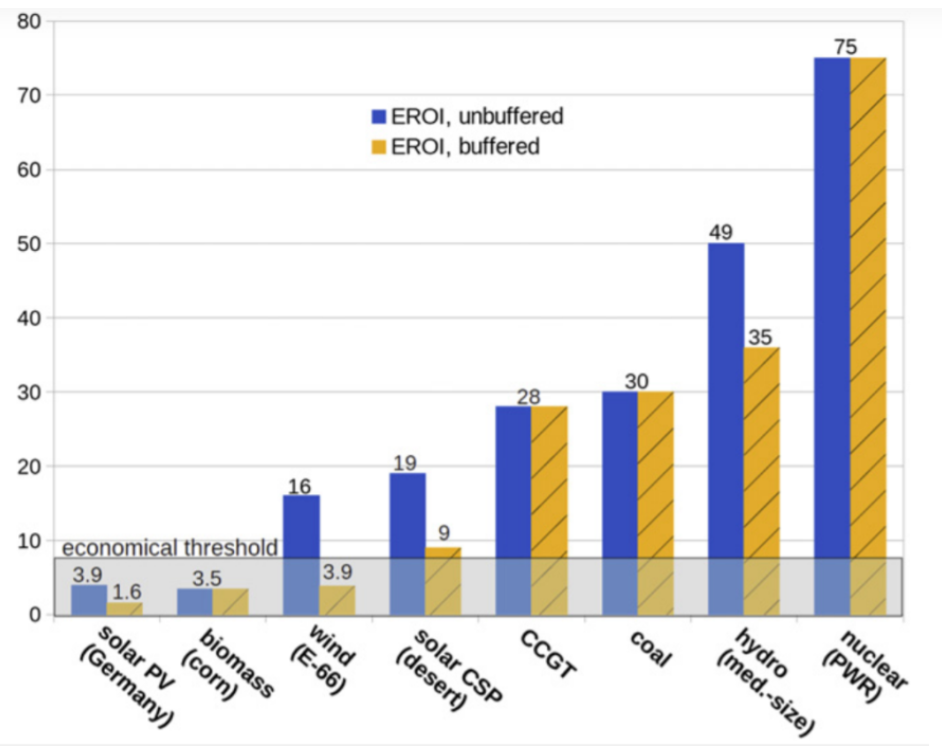
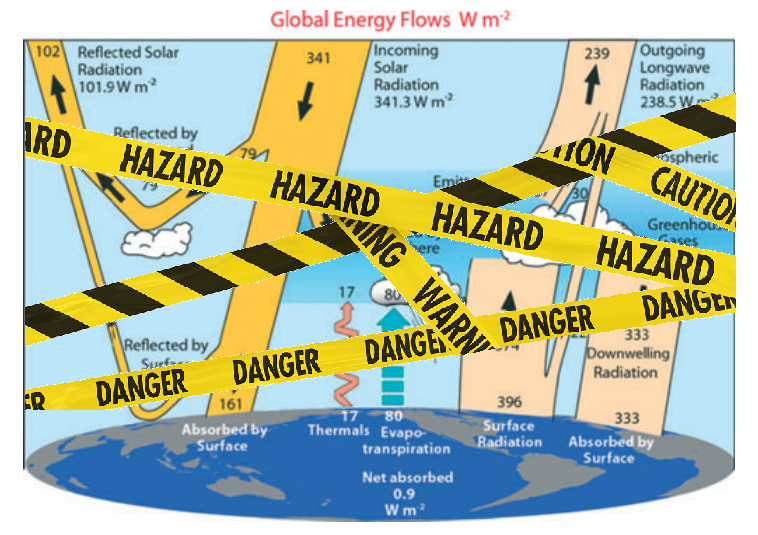
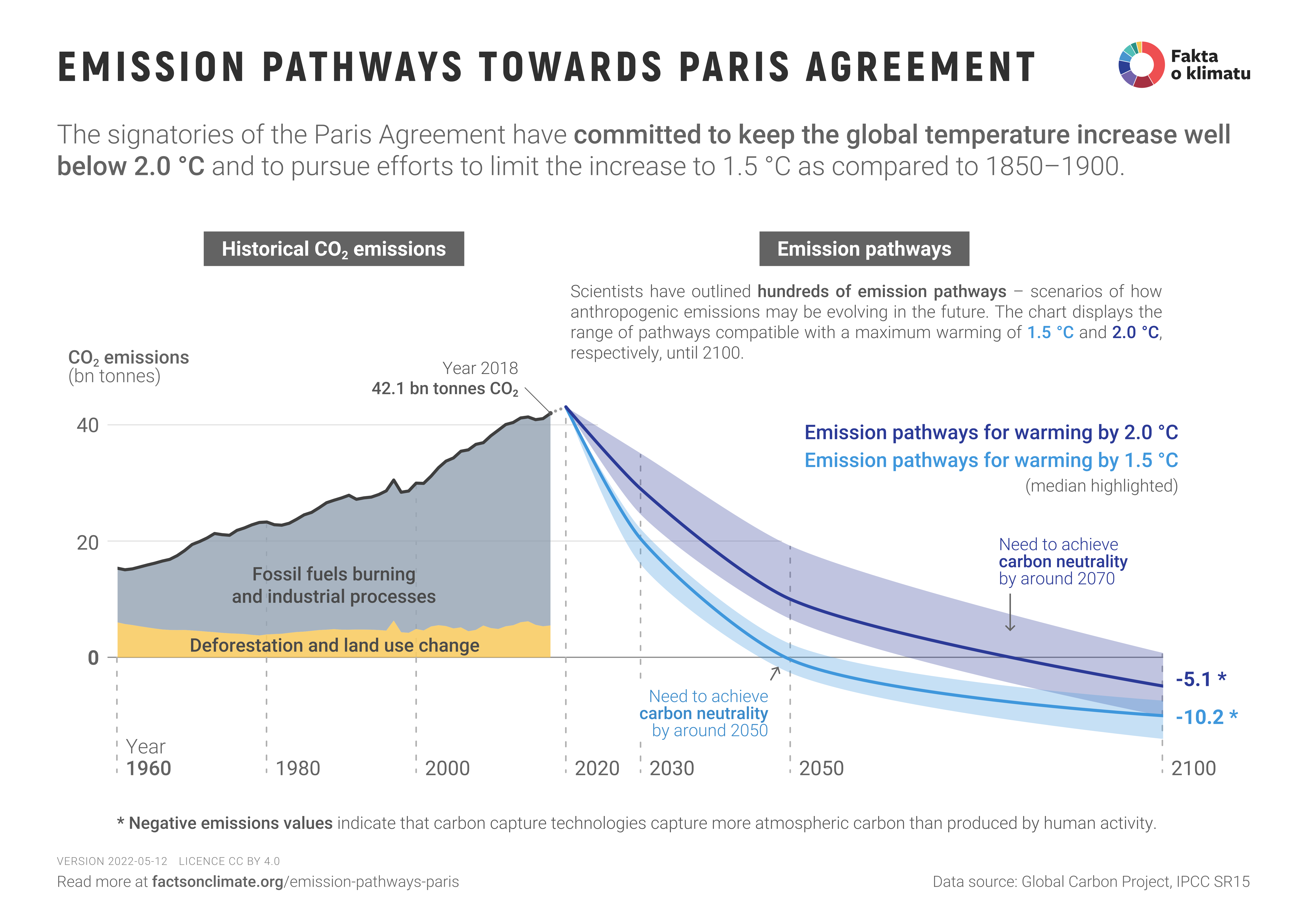
Maybe donors are put off by no one knowing who gets the money and for what it is spent.  And while they are investigating, how about understanding Energy Return on Investment (EROI): you know, the notion that an energy project is worth doing if the energy produced is greater than energy spent.  The poster at the top reminds of people dreaming of a world free of fossil fuels.

Why a COP Briefing?

Actually, climate hysteria is like a seasonal sickness.  Each year a contagion of anxiety and fear is created by disinformation going viral in both legacy and social media in the run up to the annual autumnal COP.  Since the climatists are especially desperate with the US outspokenly against the climate movement, we can expect the public will be hugely hosed with alarms over the next few weeks.  Before the distress signals go full tilt, individuals need to inoculate themselves against the false claims, in order to build some herd immunity against the nonsense the media will promulgate. This post is offered as a means to that end.

Media Climate Hype is a Cover Up

Back in 2015 in the run up to Paris COP, French mathematicians published a thorough critique of the raison d’etre of the whole crusade. They said:

Fighting Global Warming is Absurd, Costly and Pointless.

  • Absurd because of no reliable evidence that anything unusual is happening in our climate.
  • Costly because trillions of dollars are wasted on immature, inefficient technologies that serve only to make cheap, reliable energy expensive and intermittent.
  • Pointless because we do not control the weather anyway.

The prestigious Société de Calcul Mathématique (Society for Mathematical Calculation) issued a detailed 195-page White Paper presenting a blistering point-by-point critique of the key dogmas of global warming. The synopsis with links to the entire document is at COP Briefing for Realists

Even without attending to their documentation, you can tell they are right because all the media climate hype is concentrated against those three points.

Finding: Nothing unusual is happening with our weather and climate.
Hype: Every metric or weather event is “unprecedented,” or “worse than we thought.”

Finding: Proposed solutions will cost many trillions of dollars for little effect or benefit.
Hype: Zero carbon will lead the world to do the right thing.  Anyway, the planet must be saved at any cost.

Finding: Nature operates without caring what humans do or think.
Hype: Any destructive natural event is blamed on humans burning fossil fuels.

How the Media Throws Up Flak to Defend False Suppositions

The Absurd Media:  Climate is Dangerous Today, Yesterday It was Ideal.

Billions of dollars have been spent researching any and all negative effects from a warming world: Everything from Acne to Zika virus.  A recent Climate Report repeats the usual litany of calamities to be feared and avoided by submitting to IPCC demands. The evidence does not support these claims. An example:

 It is scientifically established that human activities produce GHG emissions, which accumulate in the atmosphere and the oceans, resulting in warming of Earth’s surface and the oceans, acidification of the oceans, increased variability of climate, with a higher incidence of extreme weather events, and other changes in the climate.

Moreover, leading experts believe that there is already more than enough excess heat in the climate system to do severe damage and that 2C of warming would have very significant adverse effects, including resulting in multi-meter sea level rise.

Experts have observed an increased incidence of climate-related extreme weather events, including increased frequency and intensity of extreme heat and heavy precipitation events and more severe droughts and associated heatwaves. Experts have also observed an increased incidence of large forest fires; and reduced snowpack affecting water resources in the western U.S. The most recent National Climate Assessment projects these climate impacts will continue to worsen in the future as global temperatures increase.

Alarming Weather and Wildfires

But: Weather is not more extreme.


And Wildfires were worse in the past.
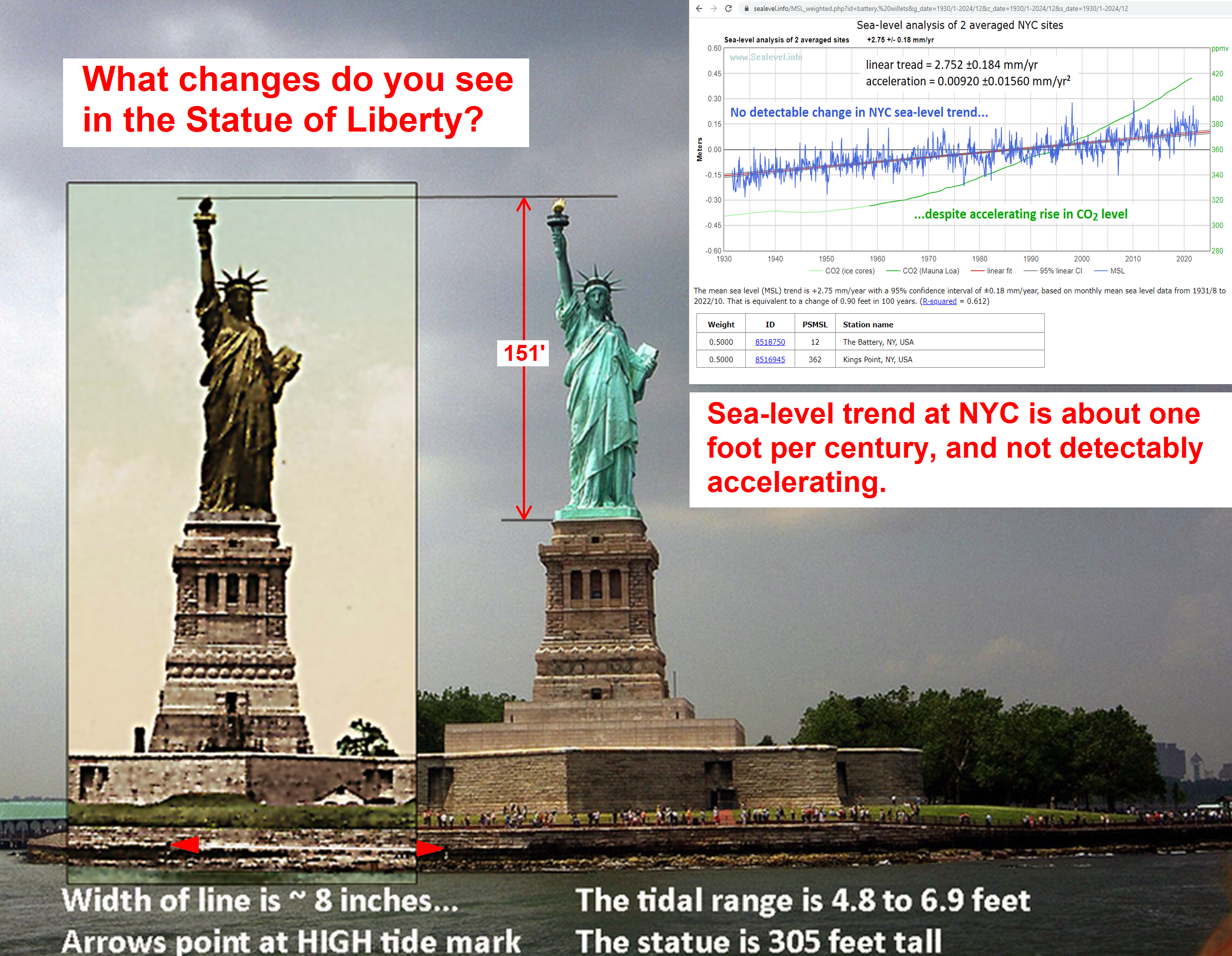
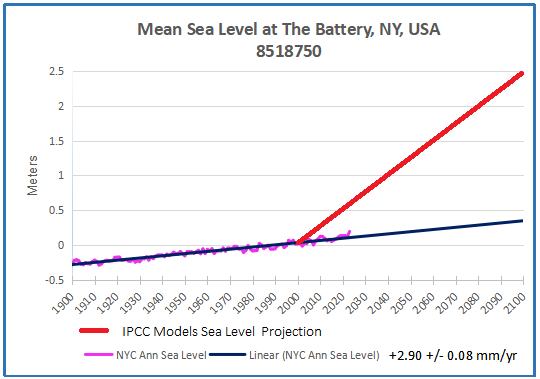
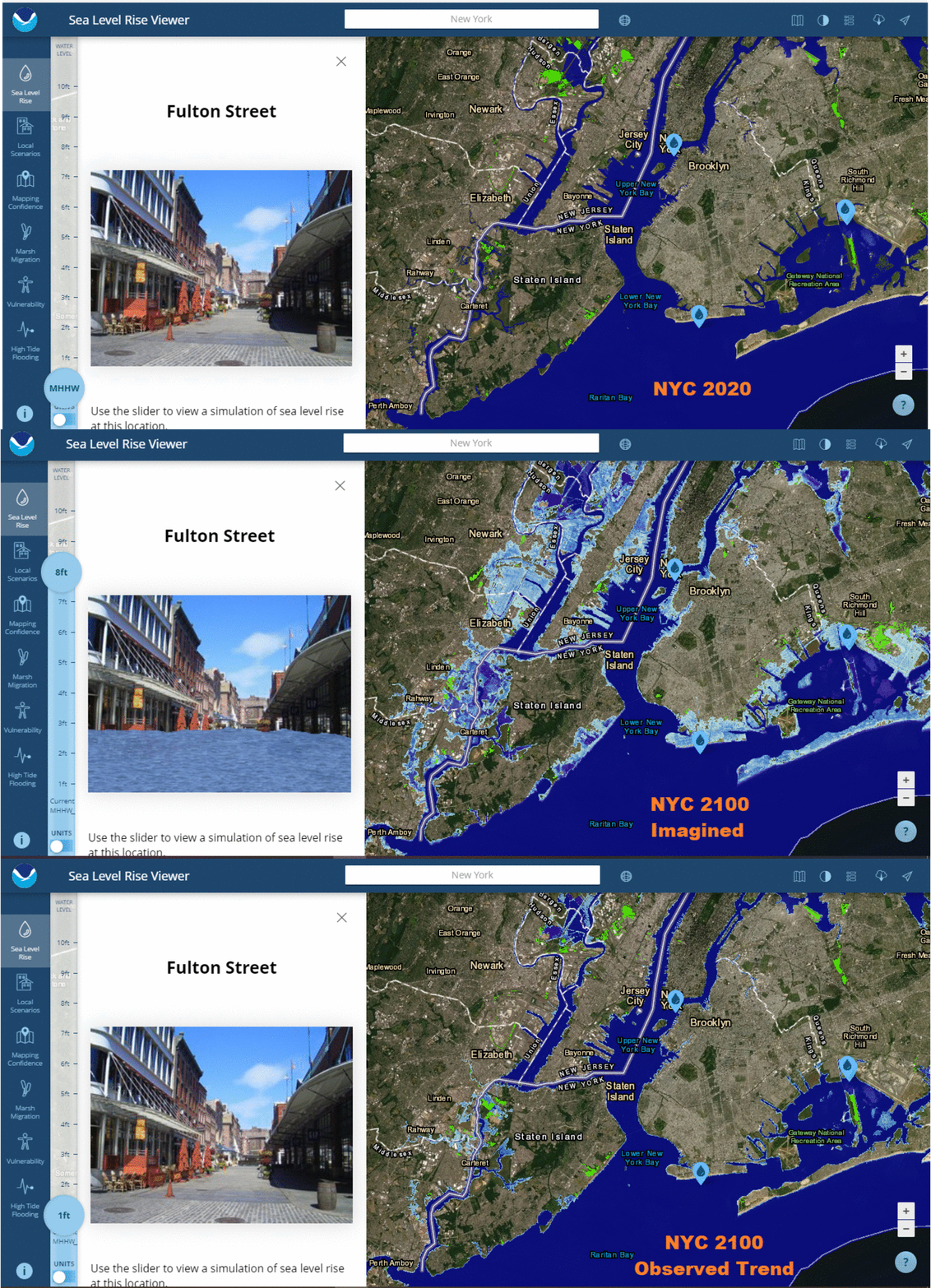
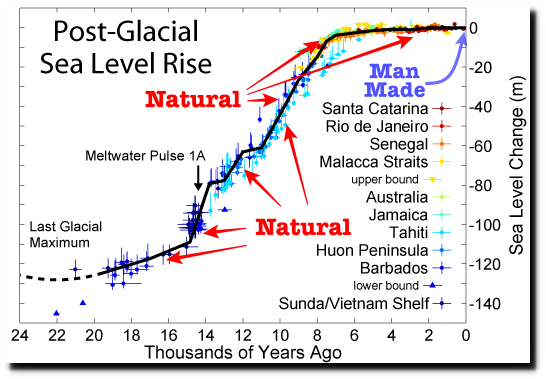
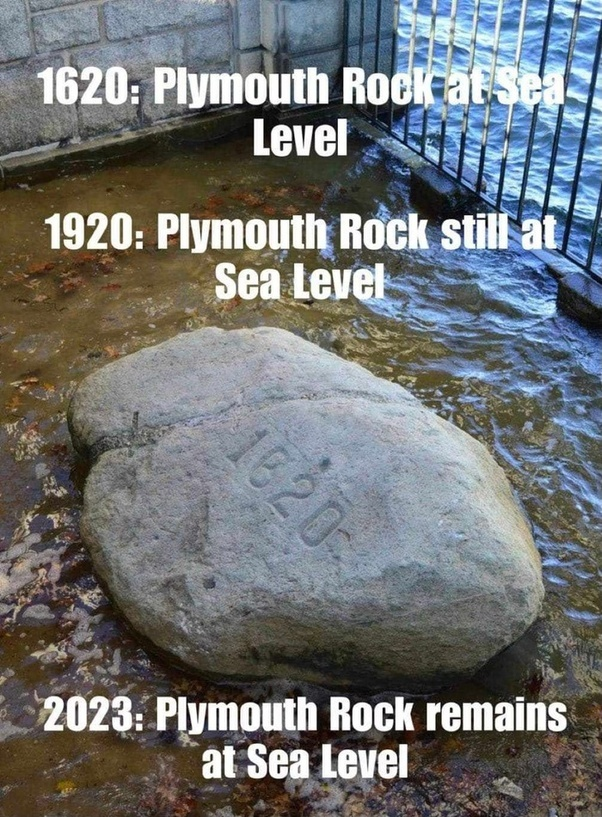
But: Sea Level Rise is not accelerating.

post-glacial_sea_level

Litany of Changes

Seven of the ten hottest years on record have occurred within the last decade; wildfires are at an all-time high, while Arctic Sea ice is rapidly diminishing.

We are seeing one-in-a-thousand-year floods with astonishing frequency.

When it rains really hard, it’s harder than ever.

We’re seeing glaciers melting, sea level rising.

The length and the intensity of heatwaves has gone up dramatically.

Plants and trees are flowering earlier in the year. Birds are moving polewards.

We’re seeing more intense storms.

But: Arctic Ice has not declined since 2007.

But: All of these are within the range of past variability.In fact our climate is remarkably stable, compared to the range of daily temperatures during a year where I live.

And many aspects follow quasi-60 year cycles.
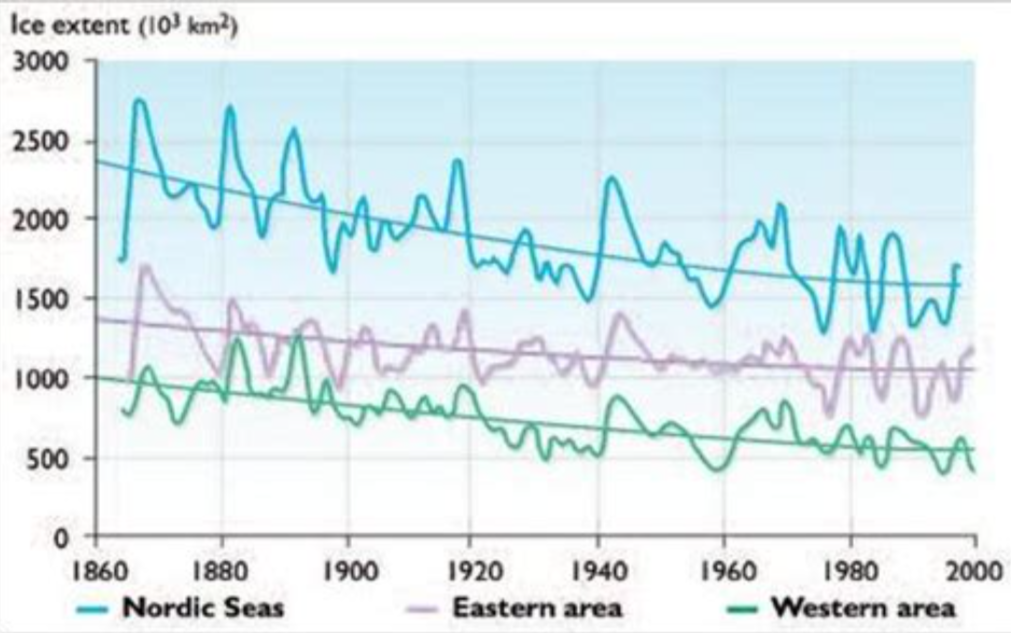
The Impractical Media:  Money is No Object in Saving the Planet.

Here it is blithely assumed that the UN can rule the seas to stop rising, heat waves to cease, and Arctic ice to grow (though why we would want that is debatable).  All this will be achieved by leaving fossil fuels in the ground and powering civilization with windmills and solar panels.  While admitting that our way of life depends on fossil fuels, they ignore the inadequacy of renewable energy sources at their present immaturity.

An Example:
The choice between incurring manageable costs now and the incalculable, perhaps even irreparable, burden Youth Plaintiffs and Affected Children will face if Defendants fail to rapidly transition to a non-fossil fuel economy is clear. While the full costs of the climate damages that would result from maintaining a fossil fuel-based economy may be incalculable, there is already ample evidence concerning the lower bound of such costs, and with these minimum estimates, it is already clear that the cost of transitioning to a low/no carbon economy are far less than the benefits of such a transition. No rational calculus could come to an alternative conclusion. Defendants must act with all deliberate speed and immediately cease the subsidization of fossil fuels and any new fossil fuel projects, and implement policies to rapidly transition the U.S. economy away from fossil fuels.

But CO2 relation to Temperature is Inconsistent.

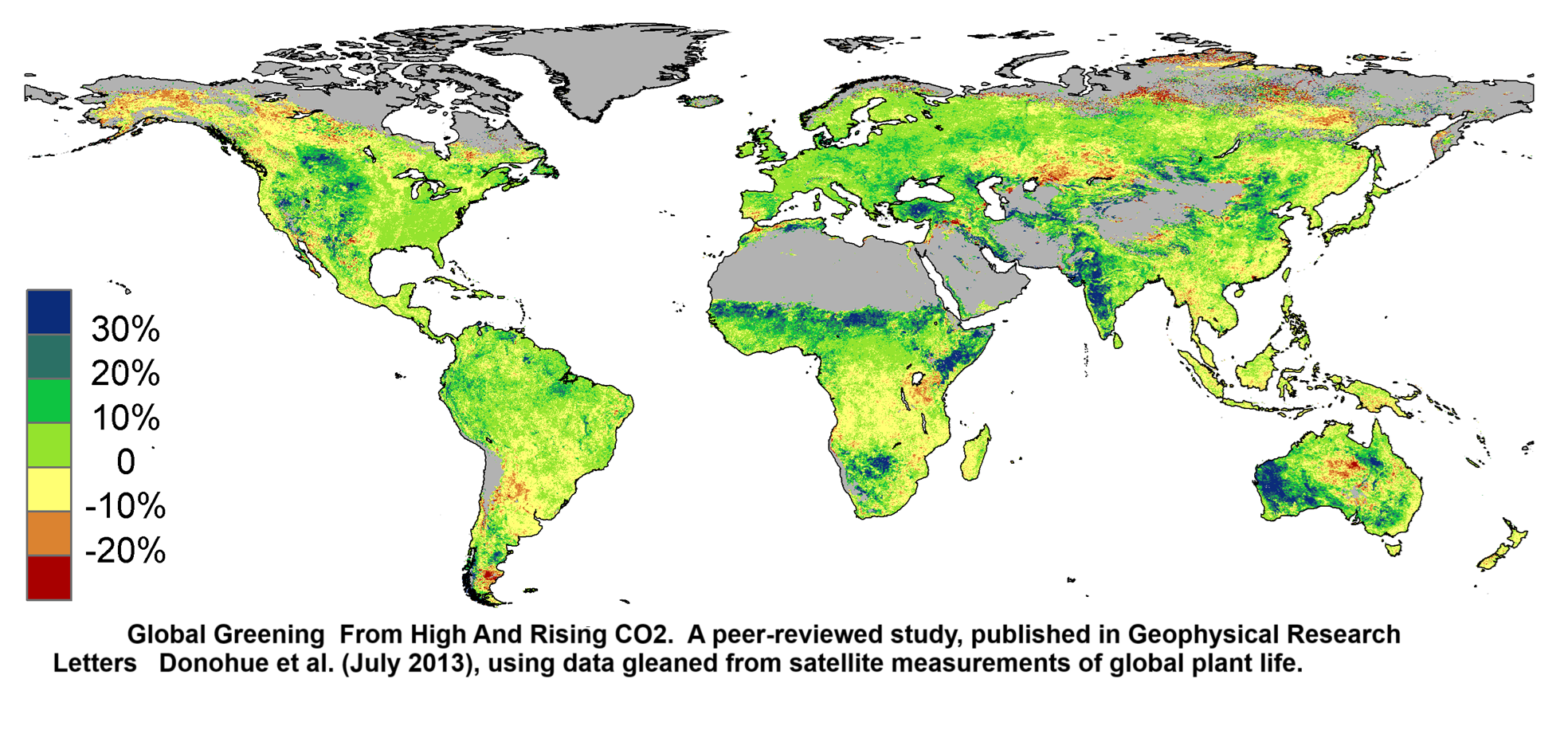
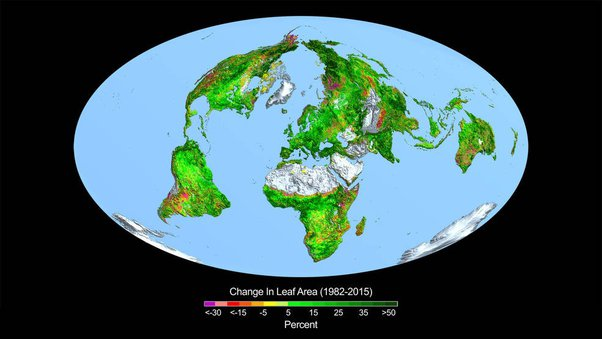
But: The planet is greener because of rising CO2.

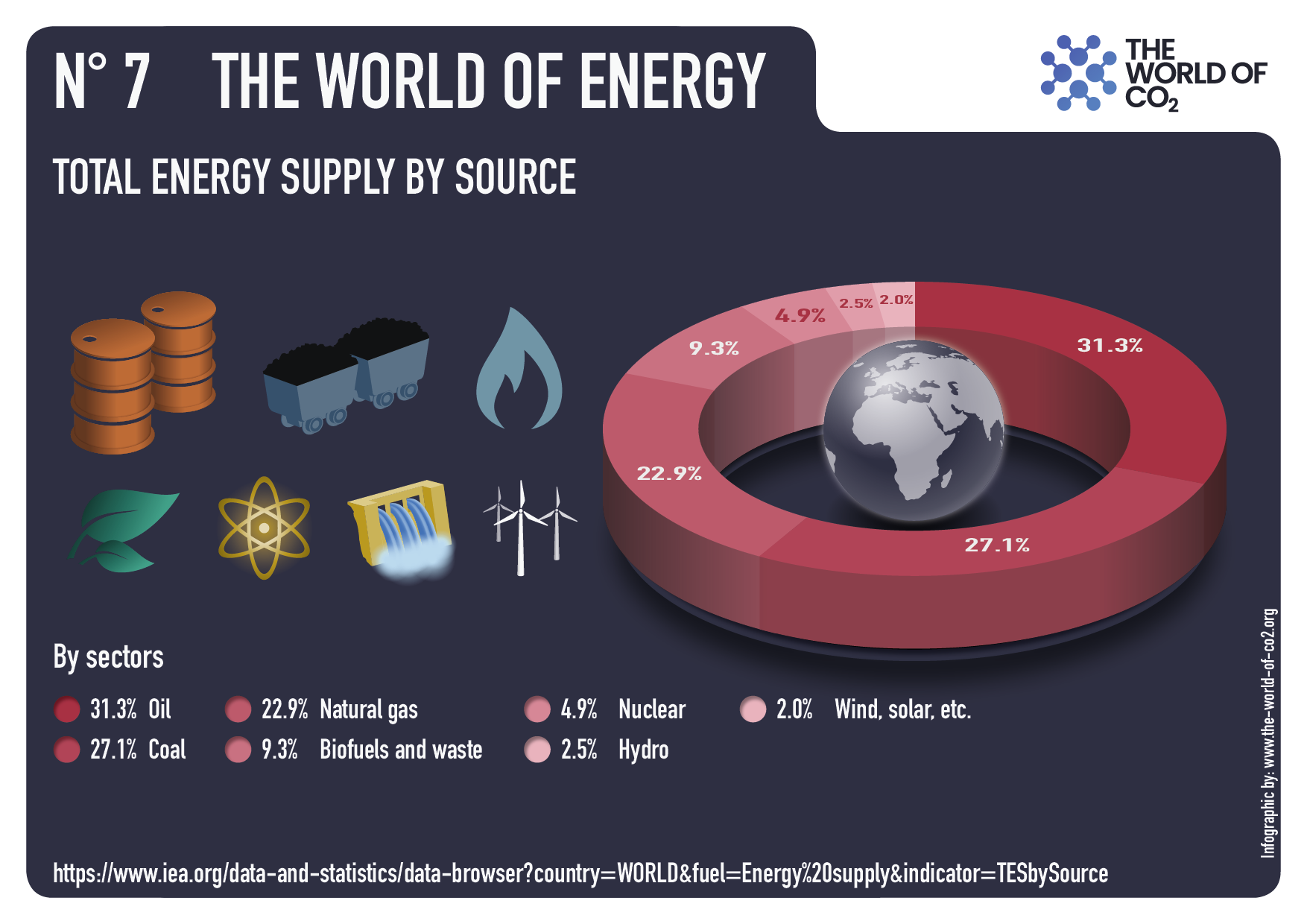
But: Modern nations (G20) depend on fossil fuels for nearly 90% of their energy.

But: Renewables are not ready for prime time.

People need to know that adding renewables to an electrical grid presents both technical and economic challenges.  Experience shows that adding intermittent power more than 10% of the baseload makes precarious the reliability of the supply.  South Australia is demonstrating this with a series of blackouts when the grid cannot be balanced.  Germany got to a higher % by dumping its excess renewable generation onto neighboring countries until the EU finally woke up and stopped them. Texas got up to 29% by dumping onto neighboring states, and some like Georgia are having problems.

But more dangerous is the way renewables destroy the economics of electrical power.  Seasoned energy analyst Gail Tverberg writes:

In fact, I have come to the rather astounding conclusion that even if wind turbines and solar PV could be built at zero cost, it would not make sense to continue to add them to the electric grid in the absence of very much better and cheaper electricity storage than we have today. There are too many costs outside building the devices themselves. It is these secondary costs that are problematic. Also, the presence of intermittent electricity disrupts competitive prices, leading to electricity prices that are far too low for other electricity providers, including those providing electricity using nuclear or natural gas. The tiny contribution of wind and solar to grid electricity cannot make up for the loss of more traditional electricity sources due to low prices.

These issues are discussed in more detail in the post Climateers Tilting at Windmills

The Irrational Media:  Whatever Happens in Nature is Our Fault.

An Example:

Other potential examples include agricultural losses. Whether or not insurance
reimburses farmers for their crops, there can be food shortages that lead to higher food
prices (that will be borne by consumers, that is, Youth Plaintiffs and Affected Children).
There is a further risk that as our climate and land use pattern changes, disease vectors
may also move (e.g., diseases formerly only in tropical climates move northward).36 This
could lead to material increases in public health costs

But: Actual climate zones are local and regional in scope, and they show little boundary change.

But: Ice cores show that it was warmer in the past, not due to humans.

The hype is produced by computer programs designed to frighten and distract children and the uninformed.  For example, there was mention above of “multi-meter” sea level rise.  It is all done with computer models.  For example, below is San Francisco.  More at USCS Warnings of Coastal Floodings

In addition, there is no mention that GCMs projections are running about twice as hot as observations.

Omitted is the fact GCMs correctly replicate tropospheric temperature observations only when CO2 warming is turned off.

Figure 5. Simplification of IPCC AR5 shown above in Fig. 4. The colored lines represent the range of results for the models and observations. The trends here represent trends at different levels of the tropical atmosphere from the surface up to 50,000 ft. The gray lines are the bounds for the range of observations, the blue for the range of IPCC model results without extra GHGs and the red for IPCC model results with extra GHGs.The key point displayed is the lack of overlap between the GHG model results (red) and the observations (gray). The nonGHG model runs (blue) overlap the observations almost completely.

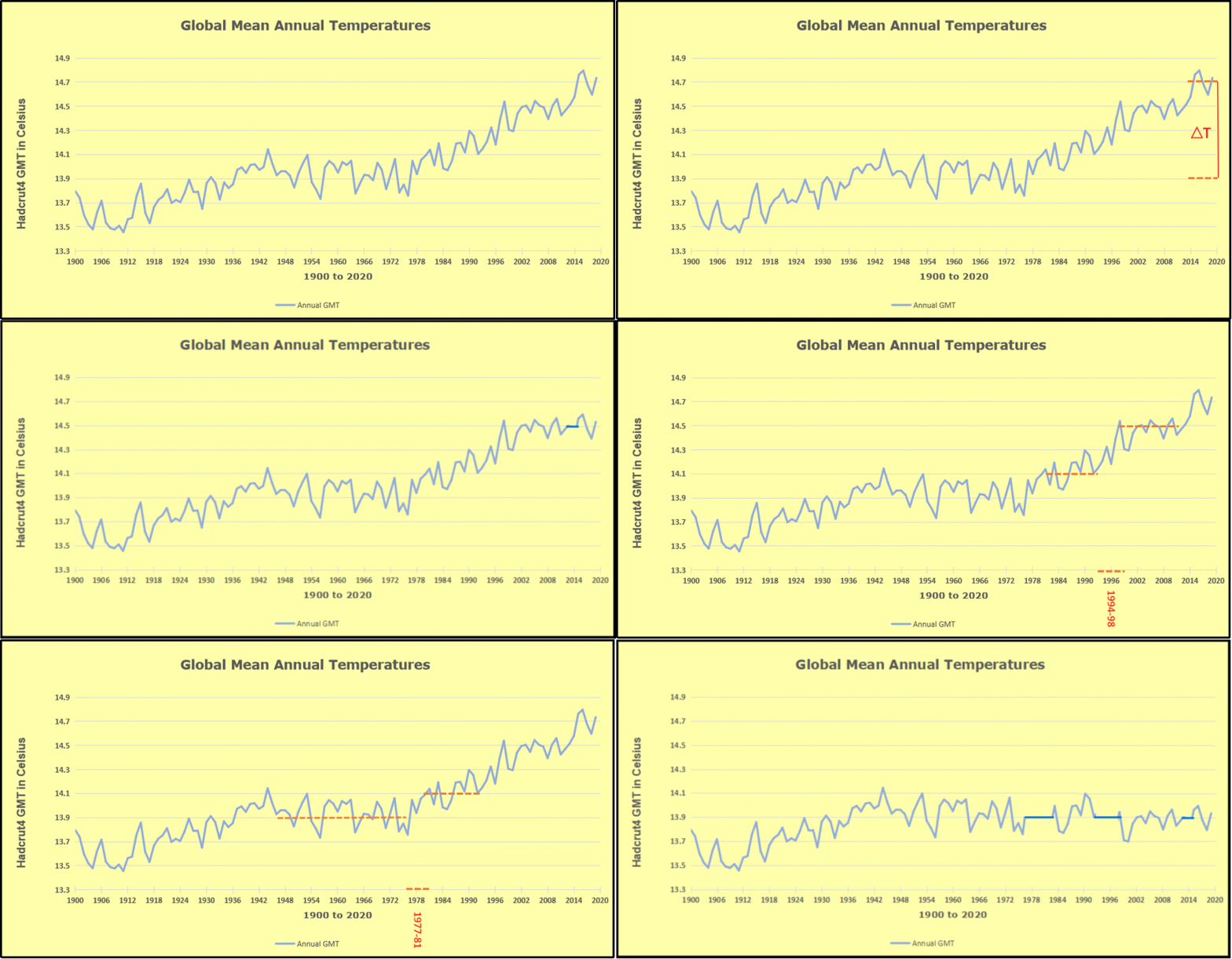
In the effort to proclaim scientific certainty, neither the media nor IPCC discuss the lack of warming since the 1998 El Nino, despite two additional El Ninos in 2010 and 2016, plus an unexplained spike in 2023-24, now cooling off.

Further they exclude comparisons between fossil fuel consumption and temperature changes. The legal methodology for discerning causation regarding work environments or medicine side effects insists that the correlation be strong and consistent over time, and there be no confounding additional factors. As long as there is another equally or more likely explanation for a set of facts, the claimed causation is unproven. Such is the null hypothesis in legal terms: Things happen for many reasons unless you can prove one reason is dominant.

Finally, advocates and IPCC are picking on the wrong molecule. The climate is controlled not by CO2 but by H20. Oceans make climate through the massive movement of energy involved in water’s phase changes from solid to liquid to gas and back again. From those heat transfers come all that we call weather and climate: Clouds, Snow, Rain, Winds, and Storms.

Esteemed climate scientist Richard Lindzen ended a very fine recent presentation with this description of the climate system:

I haven’t spent much time on the details of the science, but there is one thing that should spark skepticism in any intelligent reader. The system we are looking at consists in two turbulent fluids interacting with each other. They are on a rotating planet that is differentially heated by the sun. A vital constituent of the atmospheric component is water in the liquid, solid and vapor phases, and the changes in phase have vast energetic ramifications. The energy budget of this system involves the absorption and reemission of about 200 watts per square meterDoubling CO2 involves a 2% perturbation to this budget. So do minor changes in clouds and other features, and such changes are common. In this complex multifactor system, what is the likelihood of the climate (which, itself, consists in many variables and not just globally averaged temperature anomaly) is controlled by this 2% perturbation in a single variable? Believing this is pretty close to believing in magic. Instead, you are told that it is believing in ‘science.’ Such a claim should be a tip-off that something is amiss. After all, science is a mode of inquiry rather than a belief structure.
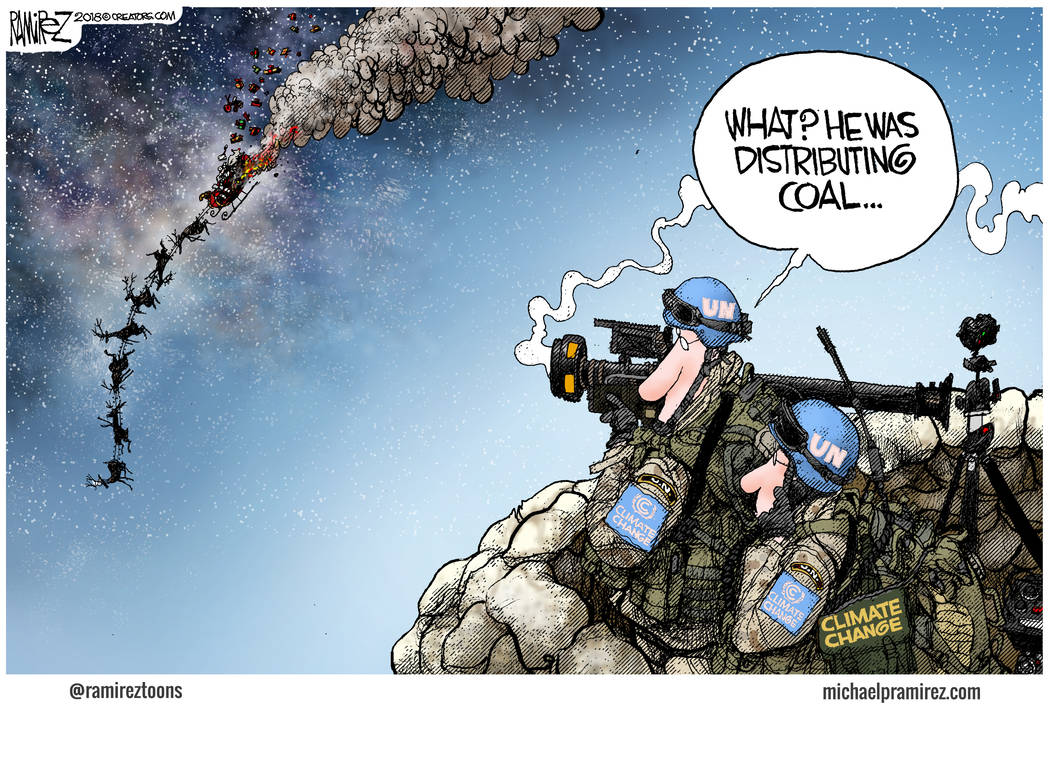
Summary:  From this we learn three things:

Climate warms and cools without any help from humans.
Warming is good and cooling is bad.
The hypothetical warming from CO2 would be a good thing.


Climate Alarmism: Not Science, But Superstition

Brian C. Joondeph writes at American Thinker, CO2 Alarmism: Science or Superstition? Excerpts in italics with my bolds and added images.

When Americans hear about carbon dioxide (CO2), it’s often shown as a harmful pollutant that threatens the planet. Politicians, activists, and media outlets warn that if we don’t reduce emissions right away, disaster will happen.

Preeminent “climate scientist” Al Gore told Congress in 2007, “The science is settled. Carbon dioxide emissions – from cars, power plants, buildings, and other sources – are heating the Earth’s atmosphere.” He continued warning, “The planet has a fever.”

What if the fever is instead a cold plunge? As CNN reminded us earlier this year, “Record-breaking cold: Temperatures to plunge to as much as 50 degrees below normal.”

The Weather Channel posted on Facebook last week, “Record-breaking cold temperatures for the month of August provide many their first taste of fall.” What happened to global warming?

Let’s not focus on the last year or the last fifty years. Instead, let’s look at the past 600 million years. From this perspective, the story looks very different.

Dr. Patrick Moore, cofounder of Greenpeace, authored a policy paper in 2016 titled, “The positive impact of CO2 emissions on the survival of life on earth.” Note the organization he cofounded. This is not some far-right, anti-science, fascist, Nazi, white supremacist organization, as the left would characterize anyone questioning “settled” climate science. Since its founding in 1971, Greenpeace has promoted environmental activism.

Dr. Moore, in his paper, presented this graph.  The graph caption indicates that temperature and atmospheric CO2 are only loosely correlated, if at all.  It’s a graph of global temperature and atmospheric CO2 concentration over the past 600 million years. Note both temperature and CO2 are lower today than they have been during most of the era of modern life on Earth since the Cambrian Period. Also, note that this does not indicate a lockstep cause-effect relationship between the two parameters.

The main point from the graph is that current CO2 levels are not dangerously high. In fact, they are quite the opposite, being some of the lowest in history. For most of Earth’s history, CO2 concentrations were many times higher than today’s 420 ppm. Even during the Cretaceous period, when dinosaurs roamed, levels were about four times higher than today.

From a geological view, our current CO2 levels are among the lowest in history. Yet climate advocates focus on a tiny rise in CO2 in recent years, ignoring the previous half billion years.

Alarmists scream that 420 ppm is unprecedented and endangers the planet’s survival. However, the reality is nearly the opposite: we could be experiencing a CO2 drought.

To my knowledge, dinosaurs didn’t drive gas-guzzling SUVs, run the air conditioner, or cook on gas stoves. Yet, miraculously, the Earth neither burned up nor became uninhabitable, as Al Gore and other climate alarmists currently predict. Instead, life thrived, diversified, and expanded to the point that I can write this article on my laptop, in the comfort of my air-conditioned home, before I fire up the grill for dinner.

What stands out is not correlation but complexity. Temperature and CO2 did not move in lockstep. Sometimes, CO2 was high during cooling periods, and other times, CO2 decreased while temperatures rose. The “lockstep causation” story falls apart when viewed over millions of years. Earth’s climate is influenced by many factors, such as solar cycles, orbital changes, volcanic activity, and ocean currents, not just a single trace gas.

CO2 makes up only 0.04% of the atmosphere, less than one part per thousand. The complexity is summarized by the Intergovernmental Panel on Climate Change (IPCC):

If CO2 has in the past reached ten times current levels without causing a runaway greenhouse effect, how can today’s modest increase be seen as an existential threat? The Earth system is more resilient than many activists admit. That resilience, demonstrated over hundreds of millions of years of survival, should humble today’s doom prophets.

Fortunately, policymakers are beginning to see that climate alarmism is based on shaky ground. As ZeroHedge reported, Trump’s EPA plans to remove greenhouse gases from the list of regulated pollutants, recognizing that treating CO₂ like sulfur dioxide or mercury isn’t scientifically justified.  They summarized the rationale well.

Trump’s reversal of EPA standards and deregulation will help the U.S. economy.  More importantly, it starts the much-needed process of removing climate change brainwashing from the federal government’s vernacular.  It’s time for Western civilization to abandon the climate hoax and move on.

Published February, 2025

More recently, the New York Times reported a more significant development: The EPA is now revoking its Endangerment Finding on greenhouse gases. That 2009 decision served as the legal, though not scientific, foundation for the federal government’s climate policy.

By rescinding it, the agency admits what skeptics have claimed all along. CO2 is not a poison but a natural part of the biosphere, essential for plant life, agriculture, and human survival. Simply put, CO2 is plant food and vital for life on Earth.

When even the EPA admits that the case against CO2 isn’t as strong as claimed, why should the rest of us accept the narrative of “settled science,” whether it’s about CO2 or COVID-era masks, vaccines, distancing, and lockdowns?

Perhaps the most troubling result of climate panic isn’t faulty science but poor policymaking. Fear opens the door to authoritarian control. We saw this during COVID lockdowns when extreme restrictions were justified in the name of “public health.” Climate alarmists now use the same tactics, claiming that global warming is “an existential threat.”

As HotAir recently reported, three Canadian provinces have implemented sweeping bans on entering woodland areas, citing wildfire risks and climate change. Violators face heavy fines or jail time. Critics quickly pointed out the striking similarity to so-called “climate lockdowns,” once dismissed as conspiracy theories. Yet here they are, with citizens barred from a common outdoor activity in the name of climate policy.

This isn’t environmental stewardship; it’s authoritarian social control. A government willing to close forests today will be willing to restrict cars, air travel, or even personal diets tomorrow, all justified as part of a “climate emergency.”

Once rights are limited in the name of carbon, what boundaries remain? After all, humans exhale CO2, making all human activity a threat to the species, activities that should be restricted or stopped at any cost. In other words, population control by any means necessary.

None of this is to deny that climate science involves uncertainty. Proxy data are imperfect, and today’s industrial society introduces variables that weren’t present millions of years ago. Climate sensitivity to CO2, although debated, may not be zero, but is probably negligible and not worth imposing overwhelming socioeconomic regulations and burdens on working families and developing nations.

But uncertainty cuts both ways. If the science is uncertain, then the justification for strict, top-down rules collapses. Policy should demonstrate humility, not arrogance. Instead of harsh restrictions, we should focus on balanced adaptation, resilient infrastructure, responsible energy choices, and innovation, all while maintaining freedom and prosperity.

The real irony is that the more you zoom out, the less CO2 seems to be the “control knob” of climate. Over 600 million years, CO2 levels were much higher than today’s, yet Earth stayed habitable and life flourished. If anything, our current levels could be too low, raising worries about agricultural productivity and plant growth in a CO2-deficient atmosphere, which might cause starvation and desolation.

We are told to fear things that could actually be helpful. Higher CO2 levels increase crop yields, support reforestation, and restore dry lands. Calling it “pollution” goes against biology itself. CO2 is plant food, and without it, humans might face extinction like the dinosaurs.

It’s time to replace fear with perspective. Instead of shutting down people, destroying industries, or labeling farmers as villains, we should understand that CO2 is not our enemy. Climate alarmism is. Believing otherwise isn’t science; it’s superstition.


Nature Study Rigged to Shakedown Big and Little Oil

in this video, John Robson deconstructs the recent attempt to indict hydrocarbon fuel producers and deprive the world of 80% of the primary energy it needs.  The transcript is in italics with my bolds and added images.

This just in. Canadian companies convicted of burning up planet after show trial. Hydrocarbon bureaucrats sentenced to economic death. As you see, this breaking news caught me on the road here in this hotel. But somebody has to say something. So for the climate discussion nexus, I’m John Robson, and this is our quick reaction response to the pseudoscientific claim that Canadian companies are destroying the earth a bit.

And that response is that this court has no legitimacy at all. What it’s doing is no more science than what Lysenko did. It’s politics in a wig and ugly politics at that. According to a media friendly study in Nature, complete with its own lurid press release, sorry, news article:

The weather attribution wizards have nailed not just human CO2, but yes, individual firms for causing bad weather, and they shall be sued into extinction. After all, this new weather attribution was invented to bypass the tedious necessity of detecting trends in weather before explaining them, for the very purpose not to facilitate understanding, but to facilitate lawsuits.

As Roger Pielke Jr. recently growled while examining a hatchet job on the US Department of Energy skeptical red team climate report, he said, quote, “In my areas of expertise, he had found numerous statements that were simply false. among them that world weather attribution was not created with litigation in mind.”And how does he know that that claim is false? Because he did actual research, including finding a quotation from WWA’s chief scientist, Fredericke Otto:

Unlike every other branch of climate science or science in general, event attribution was actually originally suggested with the courts in mind.”

Of course, it was. And here we go. As the Nature propaganda said:

Legal experts say it’s a line of evidence that could feed into climate litigation that focuses on specific events such as the 2021 heatwave that hammered the US Pacific Northwest in 2021. Already, a county government in Oregon has filed a 52 billion US civil lawsuit against fossil fuel companies for contributing to that event.

So, it’s revealing, and not in a good way, that the Nature Study itself credits upfront “approaches promoted by the World Weather Attribution (WWA) initiative and other Methods.”

Alarmists don’t love Weather Attribution because it conducts fair trials. They love it because it convicts everybody with roughly the subtlety of Andrey Vyshinsky or Lavrentiy Beria. But it is not science. As Patrick Brown pointed out this January, their tricks for stacking the jury box include, in this case, in order to attribute droughts to human evil and folly, they overwhelmingly studied places where drought had increased, even though globally there were more places where it decreased. You know, just in case their models let them down, but they’re not likely to. [See Beware Claims Attributing Extreme Events to Hydrocarbons]

As we noted in June, dizzy with success, the fellow travelers at CNN touted a study where:

 “Using a combination of scientific theory, modern observations, and multiple sophisticated computer models, researchers found a clear signal of human-caused climate change was likely discernable with high confidence as early as 1885.”

That is before the invention of the internal combustion automobile. Now, the obvious implication here, and the correct one, is that these models would find such a signal anywhere because we’re told that in 1885, atmospheric CO2 was around 293 parts per million, just a whisker above the 280 parts per million that alarmists wrongly believe was constant in pre-industrial times. That very small change couldn’t possibly have measurably affected the weather. Such a fluctuation is very obviously noise, not signal. Especially when it’s coming from ice cores whose bubbles take decades or even centuries to seal.

Yet the source here tells us that in 1885 it was 293.3 parts per million.  And this mathiness looks impressive, but it’s actually another key warning sign that something that is not science is lurching about in a stolen lab code. Real science deals in uncertainties. It shows error bars. Fake science bludgeons the public with spurious decimal places. According to the CBC’s credulous take:

“I was surprised that even the smallest carbon majors were actually very substantially contributing to the probability of the heat waves, said Yan Quilkai, a climate scientist at ETHZurich, who led the study.”

Oh, come now. Surely you suspected your rigged models would convict the defendant of a serious crime. After all, it’s what they’re for. And here we go. The study allegedly found that major oil companies alone caused more than half the supposed 1.3° C warming since pre-industrial times. And that of that share, Canadian companies caused 0.01°C.

I mean, one might retort, De minimis non curat lex ( The law does not concern itself about trifles.) if not educated in a government school, but instead in Latin or in sound constitutional and legal principles. Or you might say, get the heck out of my lab if you’ve been educated in science because there is no way, no way at all that 0.01 out of 1.30 is signal and not noise here.

Now to his credit or that of the shattered remains of his conscience, nature’s Jeff Tollefson does admit that:

“despite the eyepopping estimates for responsibilities allocated to individual carbon majors, the uncertainties remain high in many instances in large part because the most extreme heat waves are statistically rare.”

Yeah, indeed they’re so rare that there’s no statistically sound way of determining how likely they are. As we pointed out in our turning down the heat waves fact check video with regard to that 2021 Pacific Northwest heat dome that the alarmists so love:

“The heatwave could be viewed as virtually impossible without global warming. But it was virtually impossible with it as well. Sometimes weird things happen.”

What’s more, World Weather Attribution’s gleeful attribution of it to humans and our carbon original sin was eventually submitted to a serious journal and so rubbished by one of the reviewers that they had to add a bunch of disclaimers saying that of course they couldn’t really know. But did it dent their popularity or their self-confidence? Hooha. This study in Nature says “The median estimate indicates that climate change has also increased the probability of heat waves by more than 10,000.” 10,000 what? we ask. Percent? Times?

But it gets worse because this kind of talk suggests that they know how common and intense heat waves were around 1850, and how common and intense they are now. But they don’t. They have no idea. There weren’t systematic measurements of daily temperature in most of the world even into the mid 20th century. And the proxies when you go further back certainly give no idea how common or intense they were even a century ago, let alone 500 years.

So they’re making it up, then hiding it with decimals, saying in a spreadsheet attached to the study that, for instance, Cenovus Energy alone increased the probability of an early 2009 heatwave in Victoria, New South Wales and Tasmania’s northern provinces by 1.01% and its intensity by, get this, 0.0003°C. Four decimal places. As the Duke of Wellington once said, “If you believe that, you’ll believe anything.”

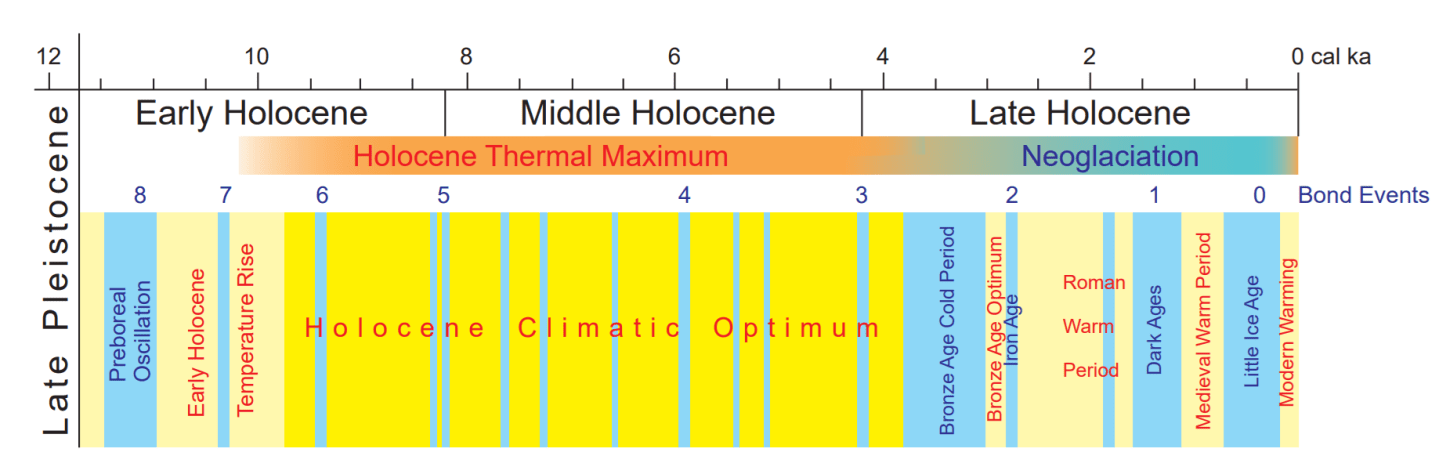
It’s also anti-scientific to claim to give a change in global temperature to two decimal places over the last 175 years when nobody knows the temperature anywhere to within one decimal place a century ago. And another thing we actually do know that during the Holocene era the earth has cycled regularly between warmer and cooler periods including down from the medieval warm period into the little ice age and back up after 1850.

So at least some of the warming since must by any logical standard have been natural. In which case they’re blaming oil companies alone for more than the entire human contribution. But the attributors duck this absurdity by absurdly assuming that it’s basically all on us. The chutzpah here is astounding. But it’s exactly the kind of thing they do.

And if you use the same warped modeling to assess the shares of some other human activity, you’d dependably get a searing indictment. And in fact, if you used it on all of them, I’ll bet you you’d get over a 100% of that 1.3 degrees C, never mind if whatever smaller share actually wasn’t natural. But they don’t run that kind of test because what they’re doing isn’t science. They’re not seeking truth and testing theories ruthlessly. They’re zealots shrieking about enemies of the people.

They also write:

“with reference to 1850 to 1900, climate change has increased the median intensity of heat waves by 1.36°C over 2000 to 2009, of which 0.44°C is traced back to the 14 top carbon majors and 0.22°C to the 166 others. These contributions correspond respectively to 32% and 16% of the overall effect of climate change.”

And again, it sounds precise, all right, but climate change is a statistical description of changes in long-term weather. It isn’t a causal force. So, they don’t even know what climate change is. And all those double decimals swirling around trying to hypnotize you are a dead giveaway that they’re in over their heads or worse. And it is worse because they also don’t know what science is. They don’t do counterfactuals and consider what extreme events might have been prevented by warming as well as caused by it.

And they’re certainly not comparing known extreme events today with known extreme events in the past. Instead, they take what did happen and sometimes what didn’t, match it against invented scenarios to prove that we caused bad weather. And then they say, “Gotcha.” when the computer Julie says, “Yes, we caused bad weather.” And then they speed dial their lawyer.

That CBC item included the usual guff from the usual suspects, including Naomi Oreskes. It said,

“referring to previous research from her and other experts showing major oil companies knew about the impacts of carbon emissions and the dangers of global warming decades before countries started enacting climate policies.”

Right? Trotsky was a conscious agent of fascism and imperial oil has been trying to incinerate the earth for half a century and now it’s been proved to two decimal places to the satisfaction of people in the media who barely survived grade 10 math. So, while speaking of people not doing science when it is their job, let us also mention people not doing journalism when it is their job.

CTV, for instance, pounced on the supposed study and shrieked, “These Canadian companies among humanity’s biggest carbon emitters study says.” But the study says nothing of the kind. And in fact, nor really does the story, which includes this bit:

“The 14 largest carbon emitters were led by fossil fuel and coal producers from the former Soviet Union and China, followed by oil companies Saudi Aramco, Gasprom, and Exxon Mobile. Together, they made the same contribution to climate change as the remaining 166 entities, according to the study.”

So, Canada’s eight enemies of humanity actually ranked between 70th and 163rd. And together, they supposedly warmed the planet by 0.01°C over nearly two centuries. Which means if they kept at it for another 1750 years, they might warm the place by 0.1° C. And anyone who tells you they can calculate the impact on the weather of such a trivial change is a charlatan and a rogue. And journalists who parrot such claims without any attempt to do basic math, let alone probe how the authors think they know these things, or what other views exist, belong at Pravda, not in free world newspapers.

Now, before concluding, your honor, we wish to say one thing directly to the prisoners currently slumped in the dock or on the lam. The CBC reported that it:  “reached out to several carbon majors mentioned in the story, but they either declined to comment or didn’t respond by publication time.”  Likewise: “Nature also reached out to the following companies for comment on the study’s findings, but did not receive a response. BP, Shell, Chevron, National Iranian Oil Company, and Coal India.” 

And what indeed could they say? The hydrocarbon energy companies have for too long and with too few exceptions followed a strategy of appeasement, confessing on the science and groveling on the policy, endorsing net zero in the hope of being the last one shot. But since everybody gets shot, it was always a terrible plan. And with the execution fast approaching, it’s time to abandon it.

Of course, if you honestly believe that your product is destroying the Earth, you should say so and get the heck out of that line of work. But if you don’t believe it, stand up for yourselves and not just by saying that the other companies are worse. Because these climate fanatics are not going to stop. They plan to destroy you using pseudoscience to win lawfare. They intend to sue you into oblivion. You, the companies that the rest of us rely on to avoid starving and freezing, and then they’re going to wonder why it got dark all of a sudden. And darkness at noon in the lab definitely has something to do with it.

So, please don’t just stand there. Say something.
Plead not guilty because you’re not and they are.

For the climate discussion nexus, I’m John Robson and that’s our quick response to this Nature study indicting oil companies for setting the planet on fire.

Beware Claims Attributing Extreme Events to Hydrocarbons

RIP. You did good science and for that we are grateful.

Roger Pielke Jr. alerts us to a dangerous development in the IPCC effort claiming loss and damage from using hydrocarbons.  His blog article is A Takeover of the IPCC.

The IPCC’s longstanding framework for detection and attribution looks DOA in AR7

Pielke:  The Intergovernmental Panel on Climate Change (IPCC) has just released the names of its authors for its seventh assessment report (AR7). The author list for its Chapter 3 — Changes in regional climate and extremes, and their causes — suggests strongly that the IPCC will be shifting from its longstanding focus on detection and attribution (D&A) of extreme events to a focus on “extreme event attribution” (EEA).

The IPCC AR6 was decidedly lukewarm to freezing cold on the notion of EEA, and emphasized the traditional D&A framework. Those days may now be over.  World Weather Attribution (WWA) co-founder Frederika Otto has been put in charge of the chapter, along with another academic who focuses on extreme event attribution.

Pielke has a series of articles taking exception to EEA methods and claims.  This post is a synopsis of work by Patrick Brown on the same issue, which is likely to be featured by climatists in the days and months ahead.

How Climate Attribution Studies Become Devious and Untrustworthy

Patrick Brown raises the question Do Climate Attribution Studies Tell the Full Story? Excerpts in italics with my bolds and added images, his analysis concluding thusly:

How a cascade of selection effects bias
the collective output of extreme event attribution studies.

Weather and climate extremes—such as high temperatures, floods, droughts, tropical cyclones, extratropical cyclones, and severe thunderstorms—have always threatened both human and natural systems. Given their significant impacts, there is considerable interest in how human-caused climate change influences these extremes. This is the focus of the relatively new discipline of Extreme Event Attribution (EEA).

Over the past couple of decades, there has been an explosion in EEA studies focusing on (or, “triggered by”) some prior notable weather or climate extreme. Non-peer-reviewed reports from World Weather Attribution (e.g., herehere, and here) represent some of the most notable examples of these kinds of analyses, and many similar studies also populate the peer-reviewed literature. The Bulletin of the American Meteorological Society’s “Explaining Extreme Events From a Climate Perspective” annual series compiles such studies, as does the Sabin Center for Climate Change Law, and they are also synthesized in reports like those from the IPCC (IPCC WG1 AR6 Chapter 11.2.3) and the United States National Climate Assessment.

The collective output of these kinds of studies certainly gives the impression that human-caused climate change is drastically changing the frequency and intensity of all kinds of weather extremes. Indeed, Carbon Brief recently published an extensive summary of the science of EEA studies, which begins with the proclamation, “As global temperatures rise, extreme weather events are becoming more intense and more frequent all around the world.”

However, these numbers cannot be taken as an accurate quantification of the influence of climate change on extreme weather because they are heavily influenced by a cascade of selection biases originating from the physical climate system, as well as researcher and media incentives. Identifying and understanding these biases is a prerequisite for properly interpreting the collective output of EEA studies and, thus, what implications they hold for general scientific understanding, as well as political and legal questions.

The large apparent discrepancy between the size of the influence of human-caused climate change on extreme weather reported in EEA studies (like those compiled by Carbon Brief) compared to more comprehensive systematic analyses (like those compiled by the IPCC) can, in large part, be attributed to the many layers of Selection Biases that influence the EEA literature’s collective output.

Selection Bias is a broad term that refers to any bias that arises from a process that selects data for analysis in a way that fails to ensure that data is representative of the broader population that the study wishes to describe.

Selection biases in the context of EEA studies include those associated with the physical climate system itself, those concerning proclivities and incentives facing researchers/journals, and those concerning the proclivities and incentives facing the media. They include

Occurrence Bias is a bias introduced by the physical climate system. Since EEA studies tend to be triggered by extreme events that have actually occurred, there is reason to believe that these studies will disproportionately sample events that are more likely than average to be exacerbated by climate change because the events occurred in the first place. Essentially, extreme events that are more likely to occur under climate change—and thus more likely to be observed—are going to be overrepresented in EEA studies, and extreme events that are less likely to occur under climate change—and thus less likely to be observed—are going to be underrepresented in EEA studies.

The map below illustrates this phenomenon. It shows changes in the magnitude of extreme drought under climate change. Specifically, it shows the fractional change in the intensity of once-per-50-year droughts (as quantified by monthly soil moisture) between a preindustrial and 21st-century run (SSP2-4.5 emissions) of the highly-regarded NCAR CESM2 Climate Model. Blue areas represent locations where the model simulates that extreme droughts become less frequent and intense with enhanced greenhouse gas concentrations, and red areas represent locations where the model simulates that extreme droughts become more frequent and intense with enhanced greenhouse gas concentrations. It is notable that overall, this model simulates that warming decreases the frequency and intensity of extreme drought in more locations than it increases it (consistent with soil moistening under warming simulated by other models).

Now, here’s the kicker: The black dots show locations where once-per-50-year droughts actually occurred in the 21st-century simulation and thus represent events that would plausibly trigger EEA studies.

What do you notice about where the dots are compared to where the red is? That’s right; the simulated EEA studies overwhelmingly sample areas where droughts are getting more intense and more frequent by the very nature that those are the types of droughts that are more likely to occur in the warming climate. The result is that the EEA sample is majorly biased: warming decreased the intensity of once-per-50-year droughts by about 1% overall, but it increased their intensity within the EEA sample by 18%!

Thus, if you just relied on the EEA sample, you would come away with an
incorrect impression not only on the magnitude of change in extreme droughts
but also on the sign of the direction of change!

Choice Bias arises when researchers use prior knowledge to choose events for EEA studies that are more likely to have been made more severe by climate change. A clear example of Choice Bias pervading the Carbon Brief database is there have been 3.6 times more studies on extreme heat than there have been on extreme winter weather (205 vs. 57). Another example would be the dearth of EEA studies on extratropical cyclones (the kinds of low-pressure systems with cold and warm fronts that are responsible for most of the dramatic weather outside of the tropics). The IPCC states that the number of extratropical cyclones associated with intense surface wind speeds is expected to decrease strongly in the Northern Hemisphere with warming. Yet, it is relatively rare for EEA attribution studies to be done on these types of systems, which results in an exclusion of this good news from the EEA literature.

Publication Bias could be playing a role, too, where researchers are more likely to submit, and journals are likely to publish studies that report significant effects on salient events compared to studies that find null effects.

From Clark et al., 2023

Finally, the climate reporting media ecosystem is characterized by actors whose explicit mission is to raise awareness of the negative impacts of climate change, and thus, there will be a natural Media Coverage Bias with a tendency to selectively highlight EEA studies where climate change is found to be a larger driver than EEA studies that do not reach such a conclusion. These selection biases are apparent at the aggregate level, but there is also strong evidence of their presence in individual studies.

A more recent specific example suggestive of many of these dynamics is a study, Gilford et al. (2024), titled “Human-caused ocean warming has intensified recent hurricanes”. This study was conducted by three researchers at Climate Central, which summarizes the study’s findings with the following infographic:

From Climate Central press release on Gilford et al. (2024).

Essentially, they claim that climate change is enhancing the intensity of all hurricanes and that the enhancement is quite large: Storms today are calculated to be an entire Category stronger than they would have been in a preindustrial climate.

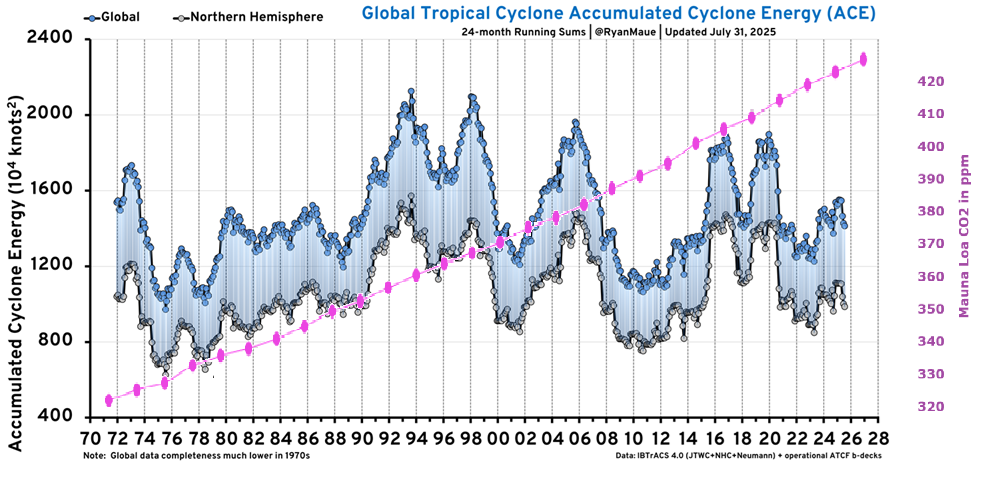
This is a huge effect, and thus, if it were real, it is reasonable to expect to see clear long-term trends in metrics of tropical cyclone (hurricane) intensity like the accumulated number of major (Category 3+) hurricane days or the accumulated cyclone energy from all tropical cyclones (which is proportional to the square of hurricane windspeed accumulated over their lifetimes). However, any long-term trends in such metrics are subtle at best, both globally and over the North Atlantic.

From Colorado State University Department of Atmospheric Science Tropical Meteorology Project.

So, this is a microcosm of the aforementioned apparent discrepancy between more broad quantifications of changes in extremes and their associated EEA counterparts, and again, I’d argue there are several selection biases at play affecting the production and dissemination of the EEA study.

Let’s start with Choice Bias on methodology. Human-caused warming changes the environment in some ways that work to enhance hurricanes and in other ways that diminish them. The main way that hurricanes are enhanced is via the increase in sea surface temperatures (which provides the fundamental fuel for hurricanes), and the main way that hurricanes are diminished is via changes in atmospheric wind shear and humidity.

The net result of these countervailing factors pulling in opposite directions is that we expect fewer hurricanes overall, but when hurricanes are able to form, they can be stronger than they would otherwise. These factors, though, are small relative to natural random variability, and thus, they are difficult to detect in observations.

However, the Climate Central researchers made the methodological choice
to largely exclude the influence of factors that diminish
hurricane development from the study.

Are these Choice Biases in event type and methodology an accident? There are many reasons to believe they are not.

The research paper itself spells out that the motivation of the study is to “connect the dots” between climate change and hurricanes because “landfalling hurricanes with high intensities—can act as ‘focusing events’ that draw public attention” and that “Increased attention during and in wake of storms creates opportunities for public and private discourse around climate and disaster preparedness.”

Then, there is the extensive media coverage of this study. It was picked up by 134 news outlets and ranked in the 99.95th percentile of research articles (across all journals) of similar age in terms of online attention. Further, it was immediately incorporated into seven Wikipedia articles (likely having high leverage on AI queries, which would make its findings indistinguishable from scientific “fact”). This is affected by the aforementioned Media Coverage Bias, but it is also undoubtedly directly influenced by the efforts of Climate Central, which is explicitly an advocacy organization whose self-described specialty is media placement and dissemination. 

The above sheds light on the reasons for certain choice biases in a particular study, but there is plenty of evidence that these selection biases are pervasive in the EEA field. After all, Dr. Myles Allen essentially founded the field with the motivation of answering the question, “Will it ever be possible to sue anyone for damaging the climate?”. This same motivation seems to animate many of the most high-profile scientists in the field today, like Allen’s protege, Dr. Friederike Otto (co-founder and leader of World Weather Attribution). She and her organization are frequently cited as bringing the necessary intellectual authority to credibly sue fossil fuel companies. She states the motivation of her work explicitly:

“Attributing extreme weather events to climate change, as I do
through my work as a climatologist, means we can hold
countries and companies to account for their inaction.”

Given the explicitly stated motivation of those in the EEA field, it is quite reasonable to suppose that there are major selection biases at play, and thus, it is not at all surprising that the collective output of the EEA field would look so different from more broad comprehensive assessments.

About That Annoying DOE Climate Review

When it comes to the recent DOE Climate Review, legacy media coverage is lop-sided and limited to declarations of disgust and dismissal from climate insiders.  Andrew Bolt in Australia is an exception, interested as he is in why climatists find the study so annoying.  So his interview with one of the authors explores the controversy and why the media is averting their attention.

For those preferring to read, below is a transcript from the closed captions in italics wtih my bolds and added images. AB refers to Bolt and SK to Koonin

AB: I’m amazed how little attention the media has given to a new report on global warming I mentioned last week. I’m not that surprised to be honest. I mean, I’ve seen how the media ignores proof that the warming scare is grossly exaggerated, but I think you deserve to know more about this report.

In the United States, Chris Wright is the brilliant gas tycoon who now leads the US Department of Energy. He hired five very prominent climate experts to report back to the government on what the climate was really doing and whether we could trust predictions by the most popular climate models that we’re facing dangerous warming of at least 3 degrees this century and we’re already copying all sorts of climate disasters.

Well, the authors’ conclusion was that the climate models are actually unreliable. They’re all over the shop. They predict probably one degree more warming than is likely and we aren’t getting many of the predicted climate disasters. Plus, global warming also has benefits that are often ignored, especially a big increase in trees and crops that we’ve been seeing, a greening of the planet.

And in this report, the authors sum it all up like this. models, the climate models and experience suggests that carbon dioxide induced warming may be less damaging economically than commonly believed and excessively aggressive mitigation policies, you might include our own net zero schemes, could prove more detrimental than beneficial.  [See DOE Climate Team: Twelve Keys in Assessing Climate Change]

So, you can understand why the authors have since been absolutely trashed for daring to doubt the climate scare and upsetting the climate industry. They’ve been called all sorts of names painted as fools, frauds, Donald Trump Toadies, even Stalinists, would you believe? But don’t be fooled by the abuse because the five authors are in fact very prominent experts. Professor emeritus Judith Curry has published 192 peer-reviewed papers on the climate. Dr. Roy Spencer, NASA senior scientist runs probably the most accurate measure of world temperature. Professor Ross McKitrick is an expert reviewer of the last three reports of the IPCC (intergovernmental panel on climate change). And distinguished professor John Christie, is a former lead author of an IPCC report. I mean, these are very serious people.

Plus Steven Koonin. He’s a physicist and former under secretary of science for President Barack Obama, a Democrat. And I am joined by Steven, Steve thank you so much for your time. Why did you and the other four experts behind this report actually agree to do it when you must have known the climate industry and the media would really go after you?

SK: Indeed. But you know, all five of us scientists have long felt that the science was misrepresented to the public and the decision makers, and we wanted to do our best to set the record straight.

AB: Well, on many points your report agrees with what I’ll call the consensus, the alarmist position, perhaps the position of the United Nations Intergovernmental Panel on Climate Change. You say, “Yes, global warming is real. Yes, it’s a problem. Yes, it’s caused in part by humans.” Now, tell us where you disagree with this consensus.

SK: Well, you know, people have said 95% of our report agrees with or is taken right out of the IPCC. It’s just that there are aspects of what the consensus says that do not find their way to the public. For example:

♦  There are no detectable trends in the great majority of extreme weather types.

♦  The models that we use to project climates into the future are demonstrably deficient. They’re in               many ways all over the place in terms of their projections. And,

♦  The projected impacts of future climate change, even using those deficient models, are minimal.

These are very important central points that are there in the report
but do not make their way into the public discussion.

AB: You actually point out that the models tend to run hot, as in predict more warming than we’ve had. They’re unreliable. A number of basing false assumptions of how much emissions we’re going to get. You actually predict almost one degree less warming over the century than the IPCC model consensus. How important is that?

SK: Well, to be clear, we don’t predict. We simply cite and assess the work of others. But certainly, if the warming is a degree less than what the IPCC consensus says, that’s a big deal.

AB: And what about the climate disasters? I mean, every time like we’ve got it right now, you know, we’ve got some algae blooming off the South Australian coast. Global warming. We get heavy rain, global warming. We get a drought, global warming. How much influence has man-made warming really had from the work that you’ve done in this report? How much has it really influenced the natural disasters we tend to see?

SK: Yeah, you know, people have a very short memory for weather disasters. There’s a lovely example that turned up at the beginning of July, having to do with the floods in Texas that we that were a terrible tragedy. But if you look back in the records, you can find the same kind of event happening in the same place in 1900. And of course, human influences on the climate were much smaller in 1900. And so you have a very hard time to logically attributing the recent disaster to carbon dioxide.

The same is true for many other severe weather phenomena.
They happened in the past. They’re just relatively rare. And so
we get surprised when we see them happen in the present day.

AB: Yeah. I noticed for instance in your report you say the number of heat waves in America actually peaked nearly 100 years ago.

SK: The number of heat waves that were striking America at the time, and what we see now is much less, you know. The damning thing about the heat waves is that we really don’t understand why the 30s were so much warmer than it has been in many subsequent decades. And that speaks to our rather poor understanding of the ways in which the climate varies.

AB: I think the real thing about your report that’s annoying so many people in the climate industry is this. You say the warming will be less than what most people are claiming. You say the disasters from the warming we’ve seen are basically exaggerated.  They’re not that many that you can point to. And the the attempts we make to stop all this are very expensive. And well, do they really work? Isn’ it the takeaway here, that it might not actually be worth trying to stop what isn’t the the climate disaster that many claim.

SK: Absolutely. You know, in deciding what to do, we have to balance the hazards, the certainties and uncertainties in the changing climate against other considerations. Like the world needs more and more energy, and in deciding what to do you have to look at the costs. Are they going to be effective? What about equity between generations, between countries, and so on. It’s not simply that, oh my god, we’ve broken the climate and we’ve got to fix it. And I do think some people get annoyed when we start to expose those nuances of the situation.

AB: Oh yes. So you’ve really offended in the church of climate. And of course you also stress what’s undeniably true. The greening of the planet is actually a benefit of extra carbon dioxide in the atmosphere. More trees, more plants, more food.

SK: Agricultural yields have in fact doubled over the last 60 years or so. And a good fraction of that, NASA says 75% is attributable to higher carbon dioxide levels. You know, if you look inside a hot house, we put the carbon dioxide levels typically up to about 1,200 parts per million, which is just about three times what you find in the atmosphere even now.

AB: Now, you’ve come under massive attack, of course, Steve Koonin. I mean, environmental groups are even suing to censor the report. You’ve got media outlets of the left demonizing you, running so-called fact checks. I’ve had a look at a few, and they’re not persuasive. Some climate scientists are abusing you, claiming, you know, the group of you are just handpicked skeptics, even though you used to be with the Obama administration.  Have there been any criticisms of your report that you think, “Yep, that’s fairenough. we’ve goofed here or we haven’t taken this into consideration. Any criticism you think you can you should take on the chin?

SK: Well, we’ve seen one already that we basically made a a typographical error in one of the footnotes. We have acknowledged that to the person who pointed it out and of course we will fix it. But you know, we’re refraining right now from looking in detail at the criticisms till they come in over the next couple weeks through the public portal. Then as we have promised, we will deal with every serious criticism seriously and like good scientists we will modify the report as might be warranted from those criticisms.

AB: Steve Koonin, you’ve been fighting the alarmism for some time now. I think this is your your weightiest blow against the scaremongering. So congratulations and thank you so much for your time.

Happer & Wrightstone: Get Real and Stop Blaming CO2

The above interview was conducted by NTD news with CO2 Coalition founder William Happer (WH) and Executive Director Gregory Wrightstone (GW).  For those preferring to read, below is a transcript from the closed captions in italics with my bolds and added images.

NTD: The Environmental Protection Agency’s Lee Z eldin announced a proposal earlier this week to overturn a 16-year-old scientific finding from the Obama administration. It allowed three administrations to regulate greenhouse gas emissions like CO2. If successful, this would roll back climate rules on cars, undo $1 trillion in regulatory costs, and save over $54 billion each year. With the public comment period now open, here to break down what all of this means are two guests. William Happer, professor emeritus at Princeton University department of physics, and Gregory Wrightstone, geologist and executive director of the CO2 coalition. Thank you both so much for being here.

Now, first, how big of a deal would this be, repealing the 2009 endangerment finding? Who has benefited under it so far?

WH: Well, I’m not sure who you asked this question, but I will answer it and Greg can add to what I say. This is something that was long overdue. I mean, it was a ridiculous regulation that purported that carbon dioxide, which all of us breathe out, is a pollutant. I mean, I can’t think of anything dumber than that, but that’s what it was. And so finally there’s been an administration with the courage to tell the truth, that it isn’t a pollutant at all and it’s actually good for the earth to have more carbon dioxide.

NTD: What is the likely legal process of repealing this? And Gregory, this finding was the legal prerequisite used by the Obama and Biden administrations to regulate new car and engine emissions. What is the likely legal process of repealing this now?

GW: Well, this right now is just dealing with cars and light trucks and vehicles, but it’s sure to extend into the other things. Your viewers have had their freedom systematically eroded using the endangerment finding. With this endangerment finding, they’ve been able to tell you what car kind of car to drive. Look at the ceiling fan over your head, regulate that. All these electrical devices, your washer, dryer, dishwasher. the only ones you can buy today are government approved devices because of the endangerment finding. So what this does is to actually liberate Americans for freedom to choose what kind of appliances they want. If they want to buy a dishwasher that’s very efficient in terms of washing dishes, not in terms of how much electricity you use. That should be my choice and your choice and all of your viewers’ choices. So, this is really liberation day for America and restoring a lot of the freedoms that were lost based on this failed endangerment finding.

NTD: Expanding on that, William, what about the science needed to decide whether or not this will get repealed? Besides the legal angle, break down for us the science that’s needed to decide whether or not this will get repealed.

GW: Well, the science is quite clear. Understand what they did in 2009, they excluded any contrary science. By contrary science, anything that indicated that CO2 was not a pollutant. But the Supreme Court rulings in 2024 now say you have to consider all of the science. And there’s just a huge amount of of science right now that that disputes endangerment, that actually confirms carbon dioxide has hugely beneficial aspects. Greening the earth, vegetation growth, crop production is exploding. And Dr. Happer can perhaps talk about how the the greenhouse gas warming potential is not at all what they say it is.

NTD: Will CO2 cause dangerous warming? On that note, will you break down that aspect for us ?

WH: Well, as Greg said, the accusation against CO2 is that it would cause dangerous warming of the earth. And as usual there’s a grain of truth that CO2 will cause some warming, but the warming will be trivial. It will almost certainly be beneficial to most of the earth. The reason it warms is CO2 is a greenhouse gas. It lets sunlight come through and warm the surface of the earth. But it retards the cooling of the earth by infrared radiation to space. And it’s the balance of those two that determines the earth’s temperature.

But it’s a very inefficient greenhouse gas. It doesn’t much matter if you double CO2. You only change the cooling radiation into space by 1%, a tiny effect. And so, it’s amazing they’ve managed to blow up this molehill into this mountainous threat. It’s not a threat at all. It’s a benefit.

NTD: On that note, Gregory, in terms of how we got to the endangerment finding, was contradictory science a factor in that decision?

Well, actually, no. There was no contradictory science. And again, now bear in mind things are different today than they were even just two years ago. with two Supreme Court rulings last year. In Ohio vs. state farm case the US Supreme Court ruled that these regulatory agencies like the DOE, EPA, DOT, all of these alphabet soup regulatory bodies need to consider all significant science that affects their judgment which EPA in the endangerment finding did not do.

And the evidence we say is is entirely overwhelming. We see by almost every metric you look at, we find that Earth’s ecosystems are thriving and prospering, and the human conditions are improving because of increases in CO2. It’s really the greatest untold story of the 21st century, that of a thriving earth and the benefits to humanity. It’s a feel-good story, but they’ve turned this into fear-mongering where children can’t sleep at night because they’re being lied to by this the promoters we call the climate industrial complex.

Let’s get back to true science, the scientific method. Enough of this consensus science and group think. We support the scientific method and critical thinking which has been removed from many of these government agencies for 30 years or longer.

Climate models

NTD: And William, on that note, there is a big focus on climate change or climate alarm as some might say. Talk to us about some of the climate models that are used. What did these models get wrong?

WH: Well, I think the main thing the models get wrong is that they they know perfectly well that the direct effects of carbon dioxide will cause a very small warming of the earth if there are no other effects. If you double CO2 100% increase, which would take more than a century by the way, that would only warm the earth by a little less than one degree centigrade. It’s a trivial amount and we may never double it anyway.

So here’s what they’ve done. They’ve taken this trivial warming is agreed by most people who understand how this works, and they’ve multiplied it by factors three, four, five and saying that there’s these enormous positive feedbacks on the direct warming. That’s completely crazy because most feedbacks in nature are negative. With most other systems in nature, the first thing you calculate is usually too big, not too small. It’s even got a fancy name. It’s called Chatelier’s principle.

And so everything they’ve done violates Chatelier’s principle that works for everything else in nature, but it apparently doesn’t work for climate alarmists.

China

NTD: And staying with you, William, we often hear the US and Europe talking about cutting emissions, whether that’s in cars or cows even. But at the same time, the carbon brief notes that China is the world’s largest annual greenhouse gas emitter and leads in coal use. How should we look at this if the argument is global warming and not regional?

WH: Well, of course, China has built lots of very efficient new coal plants in the last 10 years. they’re ultra supercritical plants many of them. They’re really good plants and so they’ve raised the standard of living there. Part of their policy is is quite okay and the CO2 they’re emitting is good for the earth you know.

I’m not supporting any of the political things that they do but I don’t think there’s a thing wrong with releasing carbon dioxide. More power to them for that.

CO2 Coalition

NTD: On that note, Gregory, you’re the executive director of the CO2 coalition. Give us a sense of what this coalition does and how this fits in with environmental discussions.

GW: We’re 10 years old now. It was founded in 2015 by Dr. William Happer, our chair that was just on here. And we’re some 200 of the top experts and scientists in the world that don’t buy into the company line on climate change. We don’t believe that increases in human emissions of CO2 are leading to harmful warming. Rather just the opposite, we see huge benefits. Crop growth records are being broken year after year and they attribute 70% of that to increasing CO2. Crop growth and crop productivity is outpacing population growth. That’s a good thing, a really good thing.

We are in a warming trend. Yes, we are. It’s been warming for more than 300 years. But you know what that does? That means since 1900, our growing seasons in the continental United States have increased by more than two weeks. That’s a really good thing for agriculture. Your farmers will tell you they love that. So at the CO2 Coalition, our unofficial motto is: We love CO2 and so should you.

Shifting Climate Discourse

Fun fact: Mentions of “climate crisis” in corporate media have all but imploded. Why? Because the PR propaganda campaigns aren’t needed when Democrats and their dark-money-funded NGOs aren’t pushing “green” bills or fundraising. H/T Tyler Durden

The climate crisis was merely the Democrat Party’s PR operation to siphon money from taxpayers.

Postscript on Story Counts

I don’t know the source and parameters behind the chart in Tyler Durden’s post.  Below is a chart I produced from Media Cloud based on U.S. National Online News sources.