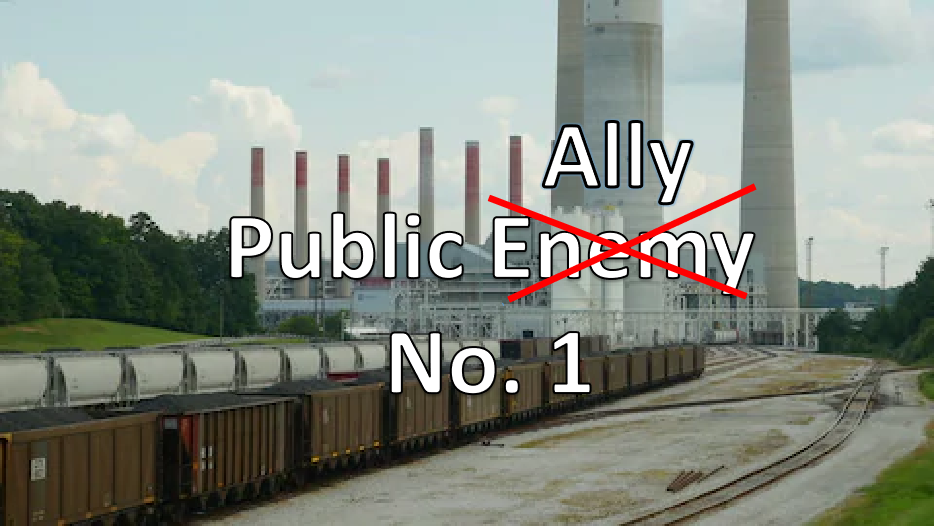
Time to Axe the Climate-Industrial Complex

Kevin Mooney makes the urgency case in his Real Clear Energy article Celebrating American Independence With an All-Out Assault on Anti-Constitutional Climate Measures.  Excerpts in italics with my bolds and added images.

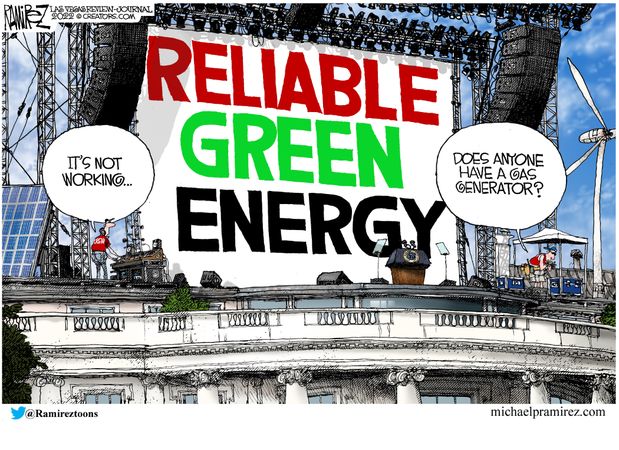
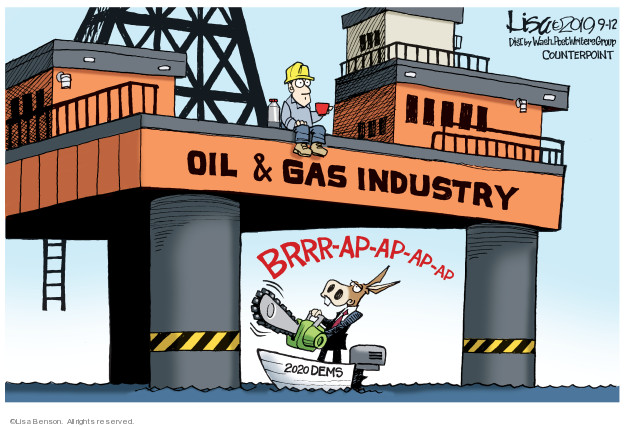
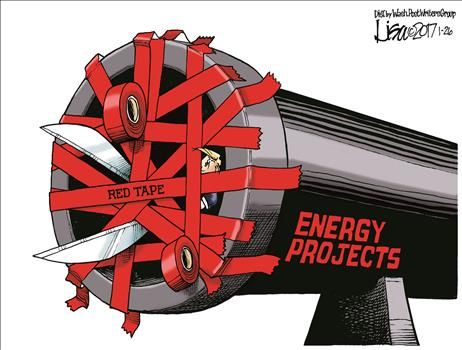
Now is the time to double down against the “Climate-Industrial Complex” with accelerated regulatory reforms that will hopefully endure beyond Donald Trump’s second term. Since day one of his new administration, the president has moved quickly to keep his promise to unleash American energy.

This means unraveling climate policies based on specious, unscientific findings that reached an apex with whatever leftist committee was in charge of the Biden White House. The American Energy Alliance, a Washington-based free market advocacy group, has put together a list of 50 Actions the Trump administration and congressional Republicans have taken to maximize America’s energy potential.

Some of the more significant items include EPA Administrator Lee Zeldin’s decision to revisit the phony 2009 Endangerment Finding that identified CO2 as a pollutant. The finding came about in the aftermath of the U.S. Supreme Court 2007 ruling in Massachusetts v EPA where the high court determined that the agency had the authority to regulate greenhouse gases under the Clean Air Act (CAA). The ruling opened the way for the Obama and Biden administrations to lock in a long list of regulations restricting American energy.

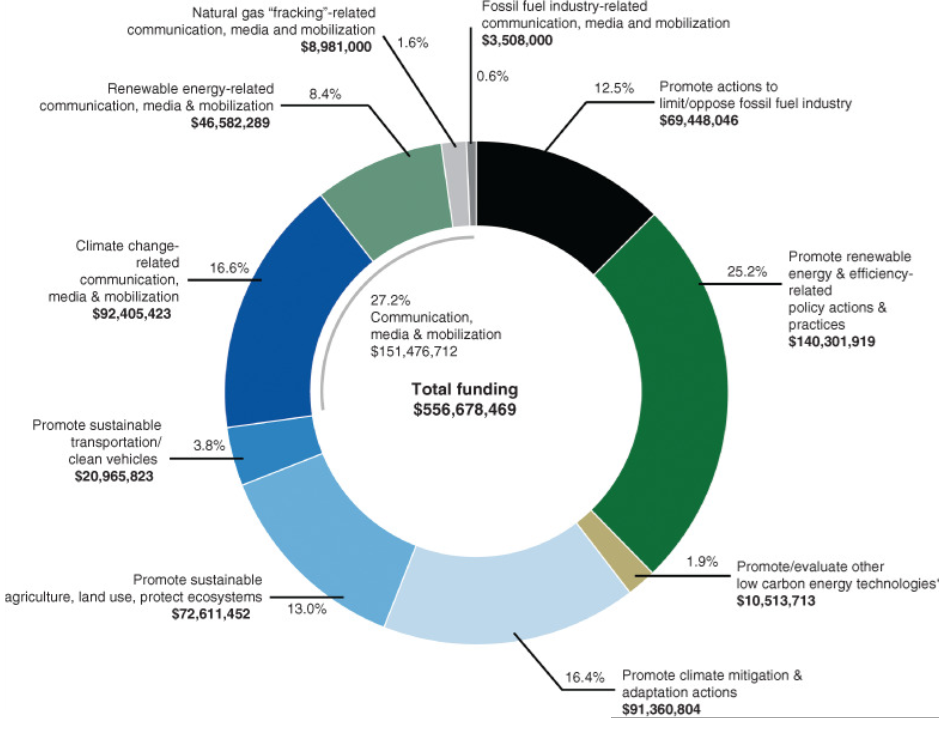
The term “Climate-Industrial Complex” is an apt description some commentators have affixed to the vast network of activist groups and unelected administrative agents who have erected an extra-constitutional fourth branch of government all in the name of climate. Only by attacking the very premise of the climate lobby’s regulatory schemes can Team Trump achieve lasting change. Overturning the Endangerment Finding is a big part of that process since it would mean yanking out the edifice of regulations that raise energy prices for consumers and limit their choices. The CO2 Coalition, which includes scientists and researchers from across the globe, has a long list of “Climate Facts” highlighting the benefits of CO2, and it’s role in sustaining life on Earth, while debunking exaggerated claims about global warming. The attack on CO2 is an attack on humanity itself.

Another component of the Trump agenda included in the AEA list is the president’s abrupt move to once again withdraw from the U.N. Paris Climate Agreement and to revoke any financial commitments to the U.S. under the United Nations Framework Convention on Climate Change (UNFCC).

Under the agreement, participating countries pledge to reduce their CO2 emissions through “nationally determined contributions” or NDCs for the ostensible purpose of reducing “global warming.” Trump has long maintained that the international climate agreement “handicaps the U.S. economy” without producing any benefits for the climate or the environment. Right from the beginning, the agreement was crafted with an eye toward constraining America’s economic and military power while giving adversaries like China a free pass. Trump instinctively knew this was case. In his first term, Trump made the critical point that he was “elected to represent the citizens of Pittsburgh, not Paris.” There’s an undeniable link between Trump’s restoration of an “America First” energy policy and the concept of “No Taxation Without Representation.” Why should U.N. bureaucrats be permitted to raise energy costs on the American people without a straight up and down vote in Congress?

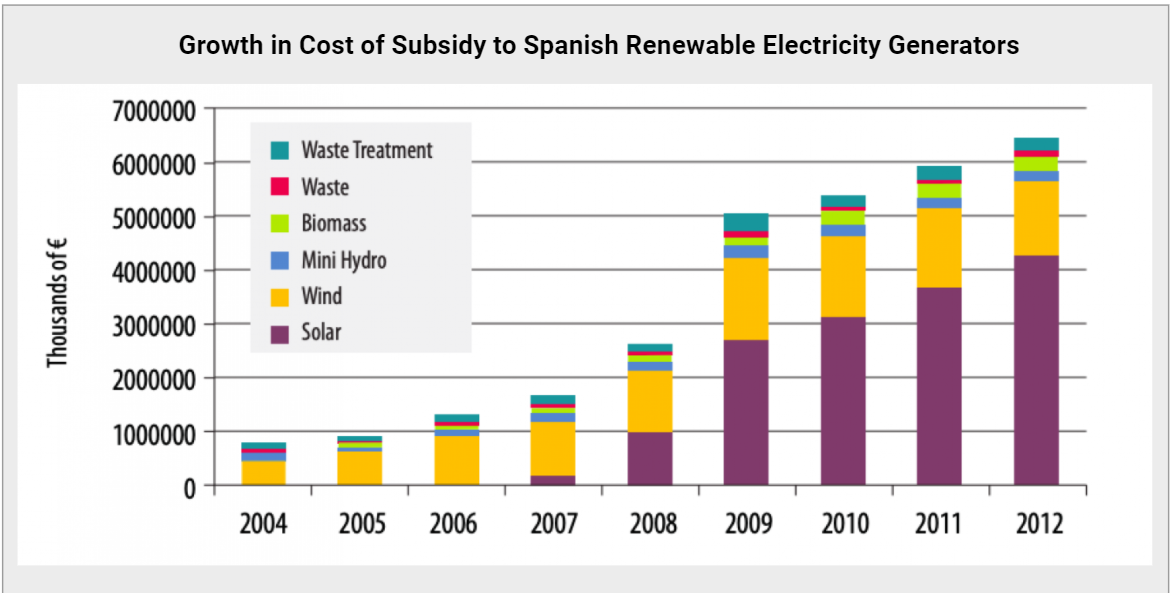
Other notable actions on the AEA list include efforts to eliminate taxpayer funded subsidies for unworkable green energy, and the resumption of export permit applications for new liquefied natural gas (LNG) projects.

Tom Pyle, the AEA president, sums the early days of the Trump’s second term of very nicely in a press statement:

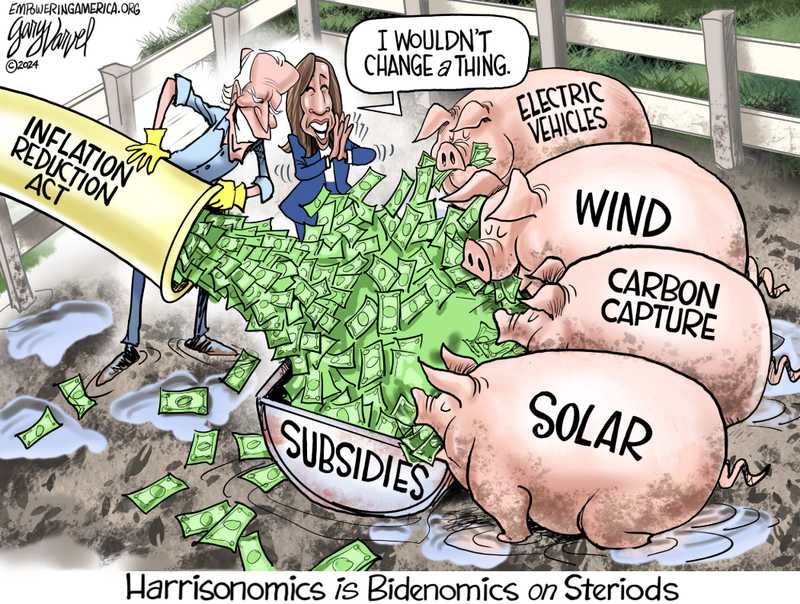
“President Trump has wasted no time fulfilling his promise to unleash our country’s vast resources and undo the reckless policies of his predecessor, beginning with a flurry of executive orders and spending reductions. More recently, his agencies – especially the EPA – have formalized the process of rewriting or eliminating a host of harmful regulations. Congress has also acted with haste by nullifying a host of rules using the Congressional Review Act and has begun the process of eliminating the wasteful Inflation Reduction Act subsidies through the budget and reconciliation process.”

That part about the Congressional Review Act (CRA) deserves some extra attention since the climate lobby is just as potent here domestically in California as it is within the United Nations. In fact, the CRA may be the most viable tool available to prevent Gavin Newsom, the state’s Democratic governor, and likely presidential candidate, from superimposing his climate policy goals on the rest of the country. The CRA is a law passed in the 1990s that enables Congress to overturn final rules issued by federal agencies. Members have 60 days to introduce a joint resolution disapproving of the rule after an agency’s rule is reported to Congress. On the House side, Rep. Kevin Kiley, R-CA, has taken the critical step of introducing a CRA resolution of disapproval to repeal the Biden EPA’s 11th hour move to grant California a waiver for its Advanced Clean Cars II program, which would prohibit the sale of new gas-powered cars by 2035.

Under a provision of the Clean Air Act, the EPA is authorized to establish emission standards for new motor vehicles. The agency also has latitude to grant Californiaspecial waiver to impose even more onerous regulations. That’s where the assault on consumer choice comes into play.

Other states are permitted to adopt the California standards and put gas powered cars on the path to extinction. This process is already well underway with 11 states and Washington D.C. adopting the California standards. The CRA could and should be used as a tool to reverse what is essentially a nationwide electrical vehicle mandate compliments of California. But there’s a problem.

Elizabeth MacDonough, the Senate parliamentarian, has joined with the Government Accountability Office (GAO), to make the case that the CRA should not be used to overturn the waiver because it is their view that it is an adjudicatory order, not a rule.

Pyle cuts through the legal gibberish.

“Despite misleading reports, the Congressional Review Act is crystal clear: once an agency action is submitted to Congress, it is Congress—and Congress alone—that holds the unassailable power to approve or disapprove that action,” Pyle said in a release:

“The GAO’s role is purely advisory, with no legal authority to block Congress from exercising its constitutional duty. The California waiver, which seeks to impose a nationwide electric vehicle mandate, is a prime example of why the CRA exists: to ensure that Congress retains control over regulatory actions that significantly affect the American public. It is time for Congress to step in and put a stop to California’s electric vehicle mandate. Doing so will protect consumer choice and prevent unelected agencies from dictating the future of American transportation.”

With the 250th anniversary of American independence fast approaching, there is no better way to mark that occasion than by caging the climate lobby’s administrative beast, uprooting California mandates, and restoring Congress to its proper station as a lawmaking body.

Politicized Science Case Study: National Climate Assessment

This post incorporates two dimensions of climate science reporting: firstly what and who are involved in the production, and secondly what the Trump administration might do to achieve a more balanced result. A recent article exposes the process by which the US National Climate Assessment (NCA) has been produced while ensuring that true believers control the content. Brent Scher writes at Daily Wire  Meet The Government Consultants Raking In Millions To Spread Climate Doom.  Excerpts in italics with my bolds and added images.

The government is outsourcing the ‘crown jewel’ of
climate change research to liberal climate consultants.

More than three decades ago, Congress launched an initiative called the U.S. Global Change Research Program. Today, it spends billions of dollars a year empowering liberal climate scientists to spread climate change doom. 

The government group says its role is to provide the “scientific foundation to support informed decision-making across the United States” on climate change. It’s done so by producing five National Climate Assessment reports, which are considered the “crown jewel” of climate research.

Despite taking funding from at least ten separate government agencies, producing the report seems to be the group’s sole function. The most recent iteration — published in 2023 and still prominently showcased on its government website — warns that “severe climate risks to the United States will continue to grow.” The next report is due out in the next couple of years, according to E&E News.

The National Climate Assessment is not simply an intellectual exercise, but rather one that carries real policy might. Congress and agencies use it to justify regulations and funding decisions, and states and cities across the country lean on it as the non-partisan scientific foundation for their own climate action plans. In summary, it is the scientific bedrock for directing policy at all levels of government towards liberal climate change goals.

While the U.S. Global Change Research Program states on its website that it has a budget of $4.95 billion in 2025, it only lists two full-time employees. So, who’s getting paid to put the massive and consequential report together?

Sources familiar with past iterations of the National Climate Assessment say the work is largely outsourced to a group called ICF, a massive government contractor that has an active contract to work on the report. The Daily Wire identified at least one active contract from NASA for ICF to “support” the U.S. Global Change Research Program. ICF is set to be paid millions of dollars during the Trump administration to “assist the nation and the world to understand, assess, predict, and respond to human-induced and natural processes of global change.”

The contract was first announced in June 2021, and described as a $34 million, five-year contract to help with the National Climate Assessments. Only $18 million has been paid out, according to the government spending database. But with another assessment on deck and ICF under contract for another year, the additional $16 million could be disbursed in the next year.

A climate scientist who has worked on the National Climate Assessment
in the past says ICF runs the show, virtually controlling
the entire U.S. Global Change Research Program.

“By providing all staff for the USGCRP, a federal agency, the ICF exerts undue influence over the global change narrative and priorities presented by the federal government,” said the official, who requested anonymity to discuss the work. “The ICF, through the USGCRP, exerts an undue influence on the production of the National Climate Assessment every four years. With the exception of its Executive Director and the Director of the National Climate Assessment, the ICF supplies all staff associated with the USGCRP.”

ICF takes in far more in government contracts than its active $34 million from NASA. An analysis of federal spending data found that the consulting firm rakes in hundreds of millions of dollars each year through federal contracts, and took in over $2 billion during the Biden administration.

The consulting firm is likely aware that the scope of its government work could be slashed during Trump’s term, and so are investors. Its stock price was at $171 a share days ahead of last November’s election, but has since cratered to just $77 a share, the lowest it had been since the last time Trump was president.  (Yes, the stock price fell before the current market volatility caused by tariffs).

Houston Keene, a former journalist who now leads a government transparency organization, argues that unnamed government consultants shouldn’t be paid millions to chart the nation’s climate policy.

“The public deserves an honest assessment from the government on the state of climate science,” Keene said. “That requires an objective, nonpartisan author who does not have financial interests in the outcome. ICF appears to be none of these things.”

“There can be no proper assessment with scientific integrity when a clearly partisan and financially conflicted activist organization is holding the pen,” he said.

A top Trump administration official, Russell Vought, has signaled that he wanted to exert more oversight over the next climate assessment. Vought runs the powerful Office of Management and Budget, and has openly stated that he wants to make deep cuts to “woke and weaponized” spending.

Vought has specifically called out the U.S. Global Change Research Program’s report, arguing that the bureaucrats who write it end up with outsized power over government action. He’s called for an investigation of the political leanings of the contractors that assemble the report.

A March 2025 report at SciAm provides background on recent developments regarding the NCA: Trump Official Who Tried to Downplay Major Climate Report Now Will Oversee It.  Excerpts in italics with my bolds and added images.

Stuart Levenbach alarmed scientists years ago when he attempted
to meddle with a congressionally mandated climate report

Stuart Levenbach was tapped last month by administration officials to serve as associate director for natural resources, energy, science, and water in the Office of Management and Budget.

The previous time President Donald Trump was in the White House, Levenbach attempted to tone down the summary conclusions of the National Climate Assessment, a wide-ranging report that relies on the contributions of hundreds of researchers to assess how global warming is transforming the United States.

Scientists say Levenbach tried to downplay climate risks in the fourth installment of the report, which comes out every four years or so. In that edition, Levenbach was concerned especially with the higher greenhouse gas emissions assumptions the report partially relied on and sought to soften the language of the report’s summary, the scientists say.

He was the one that tried to slow it down to the point of it not coming out,” said Don Wuebbles, a climate scientist at the University of Illinois who has worked on all five previous National Climate Assessments.

Levenbach’s delay tactics were ultimately unsuccessful, and the fourth installment of the report was released in 2018 on the day after Thanksgiving.

In response to questions from Politico’s E&E News, a Trump administration official with the Office of Management and Budget described the scientists’ concerns as “fake news.”

The National Climate Assessment is based on a range of emissions scenarios, including those that are not worst-case scenarios. The fourth version of the report concluded the country was not on track to cut carbon dioxide emissions at a pace to avoid some of the worst consequences of climate change.

At the time, Levenbach’s role at NOAA carried more weight than usual because the agency was operating without a permanent administrator, and did so for the entire first Trump presidency.  Reached for comment, OMB spokeswoman Rachel Cauley did not deny that Levenbach tried to alter the report, but she criticized how it was put together.

“The assessment was riddled with the worst case scenario and
the authors weren’t transparent about it,” she said in a statement.”

Levenbach is joining OMB at a time when its director, Russ Vought, wants to suppress climate science throughout the federal government and increase Trump White House oversight over the next installment of the National Climate Assessment, which is due out in 2026 or 2027.

Levenbach’s appointment to a powerful White House role with oversight of the nation’s scientific endeavors comes at a time when the administration is preparing a possible challenge to the endangerment finding, a bedrock ruling which considers greenhouse gases a danger to public health and is a foundation of climate regulations.


Six Good Reasons to Overturn EPA CO2 Ruling

Paul Driessen makes six strong points in his Town Hall article Reexamining the Obama Era Endangerment Finding.  Excerpts in italics with my bolds and added images.

The supposed climate cataclysm consensus is disintegrating under growing pressure from reality. Green energy subsidies, regulations and mandates are crumbling. Greenpeace has been hit with a $667-million judgment for conspiracy, defamation, trespass, and fostering arson and property destruction.

Last year’s “Buy a Tesla – save the planet” placards have been exchanged for “mostly peaceful” protests based on “Torch a Tesla – save our democracy” and infernos of toxic pollution and “carbon” emissions.

Even higher anxiety is battering climate activists from the Lee Zeldin Environmental Protection Agency’s review of EPA’s 2009 “Endangerment Finding” (EF) – the foundation and justification for restrictive Obama and Biden Era standards and regulations on permissible electricity generation, automobiles, furnaces, home appliances and much more.  Six Good Reasons to Overturn:

CO2 is the Essence of Life on Earth. Damning it as a Pollutant is absurd and ignorant.

Humans and animals exhale carbon dioxide when they breathe, combustion processes also emit CO2, and during photosynthesis plants absorb CO2 and emit oxygen. More atmospheric CO2 helps plants grow better, faster and with less water. Nearly all life on Earth depends on this process. It’s basic science.

That’s why the Clean Air Act doesn’t include carbon dioxide in its list of dangerous pollutants, along with carbon monoxide, lead, nitrogen dioxide, ground-level ozone, particulates and sulfur dioxide.

But fossil-fuel-hating activists blame CO2 for the alleged “climate crisis” – and in Massachusetts v. EPA the US Supreme Court said EPA could regulate CO2 emissions if the agency found that they “cause or contribute” to “air pollution” that may be “reasonably anticipated” to “endanger public health or welfare.”

The Obama EPA quickly determined that they did and issued an Endangerment Finding that gave the agency effective control over America’s energy, transportation, industries, furnaces and stoves– indeed, over almost every facet of our lives and living standards – to help “fundamentally transform” the nation.

In formulating its decision, EPA did no research of its own, relied heavily on GIGO computer models and outdated technical studies, dismissed the clear benefits of rising atmospheric CO2 levels, and ignored studies that didn’t support its decision. EPA even told one of its own experts (who had offered evidence and analyses contradicting official claims) that “the administration has decided to move forward [on implementing the EF] and your comments do not help the legal or policy case for this decision.”

That alone is a compelling reason for reversing the Endangerment Finding. But other realities also argue convincingly that EPA’s 2009 action should be nullified.

EPA had no authority to convert plant-fertilizing, life-giving carbon dioxide into a dangerous, health-threatening pollutant.

First, Massachusetts v. EPA has been sidelined, rendered irrelevant or effectively reversed.

West Virginia v. EPA (2022) ruled that federal agencies may not violate the “major questions doctrine,” which holds that, in the absence of clear congressional direction or authorization, agencies may not make decisions or issue regulations “of vast economic and political significance.”

The Obama EPA had no clear congressional language or authorization to declare that carbon dioxide is a pollutant that would likely “endanger public health or welfare.” The Supreme Court’s minimal guidance in Massachusetts underscores the absence of congressional intent or direction. The process EPA used in rendering its predetermined finding demonstrates how little actual science played a role. And the enormous significance and impact of the EF decision and subsequent regulations can hardly be disputed.

Similarly, the SCOTUS 2024 ruling in Loper Bright v. Raimondo overturned the court’s 1984 decision in Chevron v. NRDC and ended judicial deference to government agencies (the “Chevron doctrine”). Bureaucrats may no longer devise “reasonable interpretations” of unclear statutory language if those interpretations would significantly expand regulatory powers or inflate private sector costs.

These two decisions mean EPA had no authority to convert plant-fertilizing, life-giving carbon dioxide into a dangerous, health-threatening pollutant.

Natural Climate Forces and CO2 Benefits Were Ignored by EPA 2009 Ruling

Second, reams of post-2009 studies and analyses show that CO2 is hugely beneficial to forests, grasslands and croplands – and that CO2 and other greenhouse gases (GHGs) have not replaced the powerful, complex, interconnected natural forces that have always driven global warming, climate change, ice ages, Little Ice Ages, and extreme weather events. EPA ignored this in 2009.

Others demonstrate that there is no climate crisis, nothing unprecedented in today’s climate and weather, and nothing modern industrialized societies cannot cope with far more easily than our ancestors did.

(See Climate Change Reconsidered IICO2 Coalition studies, NOAA hurricane history, US tornado records, and studies the Trump EPA will undoubtedly consult during its EF reconsideration.)

Human Lives are Sustained by Hydrocarbon Fuels and By-Products

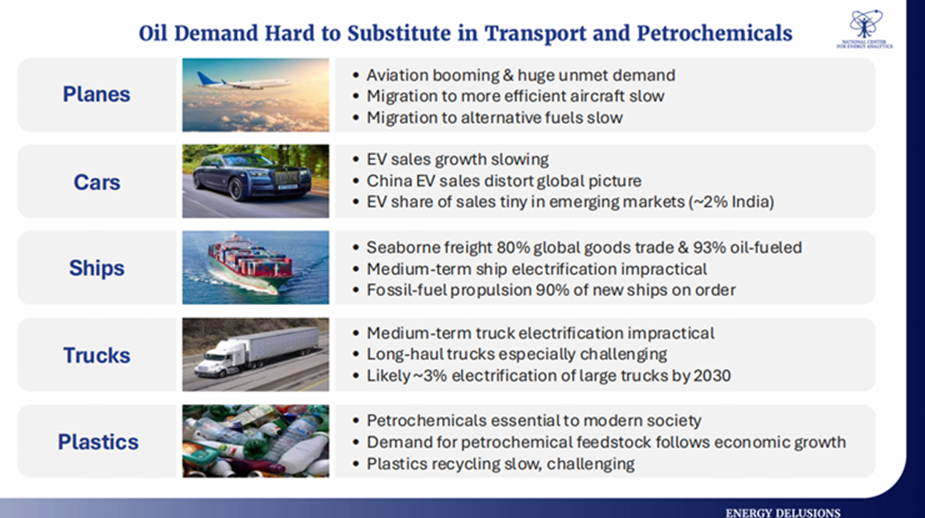
Third, our energy, jobs, living standards, health, welfare, national security and much more depend on fossil fuels – for energy and for pharmaceuticals, plastics and thousands of other essential products that are manufactured using petrochemical feedstocks.

Developing Nations Need and Will Use More Hydrocarbons in Any Case

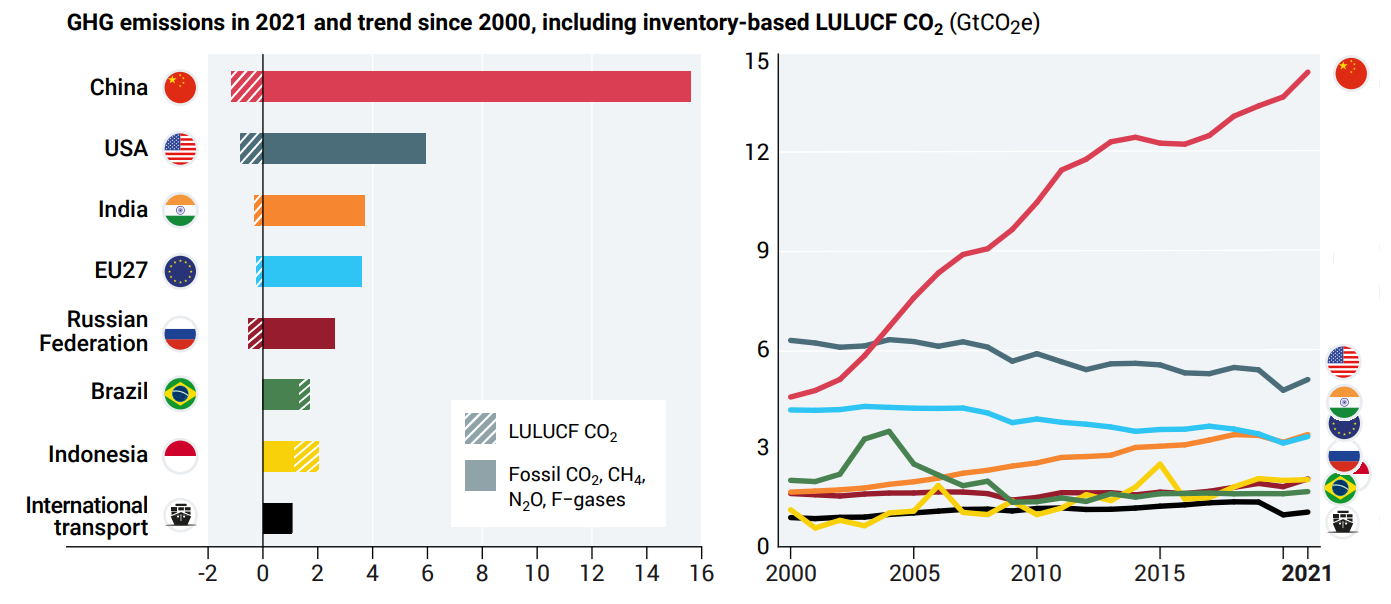
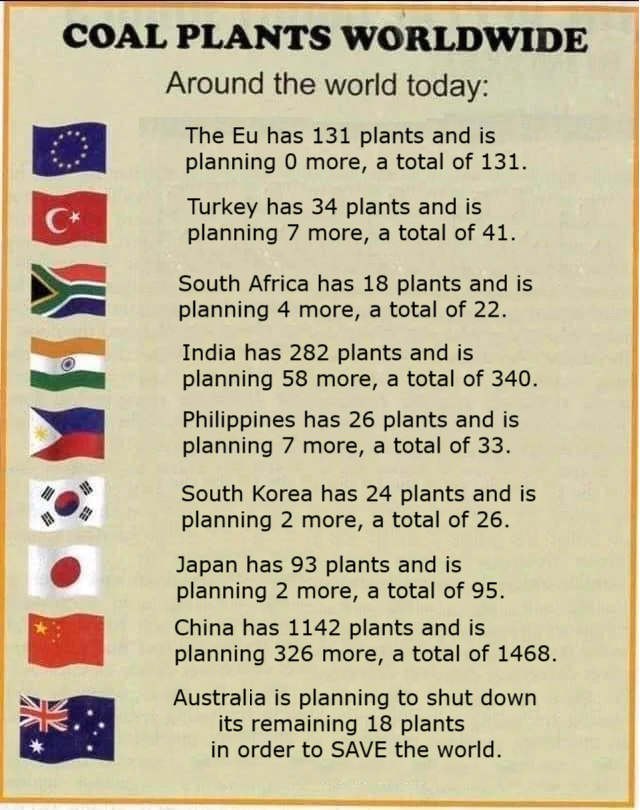
Fourth, China, India and other rapidly developing nations also depend on fossil fuels – and in fact are increasing their coal and petroleum use every year – to build their industries and economies and improve their people’s health and living standards. They are not about stop doing so to appease those who insist the world faces a climate crisis. That means even eliminating coal, oil, gas and petrochemical use in the United States would have no effect on global GHG emissions.

Primary Threat to Earth Future is Losing Reliable, Affordable Energy

Finally, the primary threats to human and planetary health and welfare come not from using fossil fuels – but from eliminating them, trying to switch to “clean, green, renewable” energy, and no longer having vital petrochemical products.

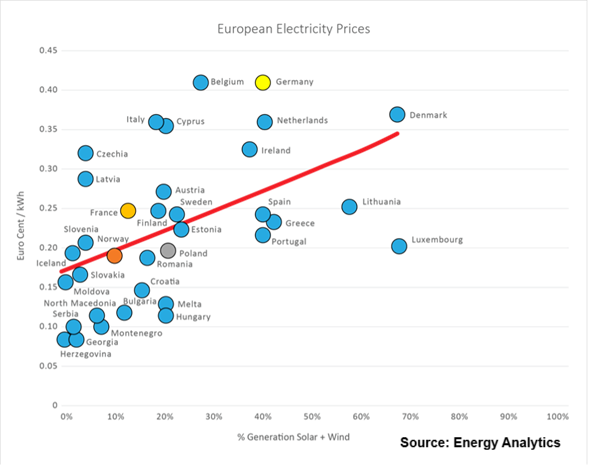
As Britain and Germany have shown, switching to intermittent, weather-dependent wind and solar energy with backup power raises electricity prices to 3-4 times what average Americans currently pay. Industries cannot compete internationally, millions lose their jobs, living expenses soar, and families cannot afford to heat their homes in winter or cool them in summertime.

Thousands die unnecessarily every year from heatstroke, hypothermia, and diseases they would survive if they weren’t so hot, cold or malnourished.

In poor countries, millions die annually from indoor pollution from wood and dung fires, from spoiled food due to lack of refrigeration, from contaminated drinking water due to the absence of sanitation and treated water, and from diseases that would be cured in modern healthcare systems.

The common factor in all these deaths is the absence of reliable,
affordable energy, largely imposed by climate-focused bureaucrats
who finance only wind and solar projects in poor nations.

Wind and solar power, electric vehicle and grid-backup batteries, and associated transmission lines require metals and minerals mining and processing on unprecedented scales, power-generation facilities blanketing millions of acres of croplands and wildlife habitats, and the disposal of gigantic equipment that breaks or wears out quickly and cannot be recycled.

Reliance on wind, solar and battery power also means blackouts amid heatwaves and cold spells, cars stalled in snowstorms and hurricane evacuations – and thus still more deaths.

A slightly warmer planet with more atmospheric CO2 would be greatly beneficial for plants, wildlife and humanity. A colder planet with less carbon dioxide would significantly reduce arable croplands, growing seasons, wildlife habitats and our ability to feed humanity.

EPA’s 2009 Endangerment Finding ignored virtually all these realities.
EPA Administrator Lee Zeldin’s reexamination of that decision
must not repeat that mistake.

Climate-Obsessed Pols Blew Canada’s Opportunity

Jamie Sarkonak summarizes the bogus start to Canada Federal elections in his National Post article Liberals pledge to make Canada a superpower after years of preventing it.  Excerpts in italics with my bolds and added images.

A tattered Canadian flag is shown on top of a building in downtown Calgary on Friday, Jan. 17, 2025 where the U.S. Consulate is located. Photo by Jim Wells/Postmedia


Sunday’s edition of the Financial Times included the oft-made observation that Canada is brimming with potential, and the oft-made conclusion that this country would be much better off if it simply developed its God-given gifts.

The article, Unlocking Canada’s Superpower Potential by Tej Parikh, made the bullish case for this country’s future prospects: Canada is geographically huge and loaded with natural resources — on paper, at least, it has the makings of an actual global superpower.

“‘Canada absolutely has potential to be a global superpower,’  but the nation has lacked the visionary leadership and policy framework to capitalise on its advantages.”

It was, with gentle vagueness, a condemnation of the federal Liberal government and what is now being called Canada’s “lost decade”: a period of 10 years in which the current government ratcheted up onerous environmental and Indigenous-consultation requirements and, where ministerial approvals are concerned, delayed decisions, all geared at keeping undeveloped parts of Canada in their natural state.

Terms like “circular economy” and “just transition” are the Liberal synonyms for this no-growth agenda, which has delivered us a fraction of a percentage of GDP growth per capita from 2014 to the end of 2024 — a time period in which peer countries have managed double-digits.

For anyone who missed out on all the bad governance robbing Canadians of superpower prosperity, this brief video exposes the crimes against the citizenry.  For those who prefer reading, I provide below a transcript from the closed captions.

Transcript

This is Alberta the fourth largest Province and home to about 4.6 million people. It ranks third in GDP just behind Quebec and first in GDP per capita primarily off the back of oil and gas extraction. While its discovery in the first half of the 20th century has brought Canada riches, for reasons from political to economic it never reached its full potential as an energy superpower, and Canadians as a whole lose out. We’ll be diving into how its energy policies have evolved and the path it is on whether for natural gas, nuclear, hydrogen and more.

Canada has the third largest proven oil reserves and by most estimates in the top 20 in terms of natural gas reserves. It is a top 10 producer of oil and gas, meaning it is engaged in extracting processing and supplying of these resources for domestic production.

Natural Gas

For natural gas exports it is in the top six, all of which goes to the US via pipelines. To export across water requires Investments to build liquid natural gas or LNG facilities to cool the gas into a liquid state in a process called liquefaction. In 2024 the the first export terminal will finally be completed in Kitimat BC called LNG Canada with gas coming through the coastal gas tank pipeline set to complete after 5 years of construction and a price tag that jumped from 6.6 billion to 14.5 billion.

But don’t expect other facilities to be constructed anytime soon. On February 9th 2022, 2 weeks before the Russian invasion of Ukraine, the federal and Quebec governments rejected approval of an LNG plant in Saguenay that would have allowed for the export of Western Natural Gas to European markets.

They cited increased greenhouse gas emissions
and lack of social responsibility.

While most of the natural gas is located in Northern Alberta and BC in the Montney formation, there is also gas in the Atlantic provinces. However New Brunswick, Newfoundland and Labrador, and Nova Scotia have all banned the process of fracking used for shale gas development over safety fears, thereby losing out on tens of billions of economic potential. Ironically the same provinces import a lot of natural gas extracted from the US through the process of fracking, Quebec also has natural gas resources but in April 2022 banned all oil and gas extraction in the province.

This means not only are pipelines from western Canada rejected from going through Quebec, natural gas extraction and export facilities in these provinces have been rejected as well. The demand if not met by Canada will be filled by other countries that might not share the same values nor care about the environment, with the jobs, millions in royalties and taxes going elsewhere. Since 2011, of the 18 proposed LG export projects including five on the East Coast. only the Kitimat project has proceeded with the others being cancelled, blocked or abandoned.

While the US in the same time frame has built seven LG facilities, five more under construction and approved 15, enabling them to go from a net importer to a top three exporter in the world. Australia has 10 LG facilities with the majority built in the 2010s helping to satisfy energy demand from Asian countries and to help them move away from coal. Qatar too has benefited greatly from extracting its resources as European countries look for alternatives to Russian gas.

These three countries have all signed decades-long deals to supply natural gas. Yet when Japan, South Korea, and Germany showed interest in Canadian LG, the Prime Minister said, “There has never been a strong business case.” While critics point out that natural gas is a fossil fuel contributing to greenhouse gas emissions, it emits 40% less than coal and 30% less than oil.

Nuclear Energy

We can’t talk about energy policy without mentioning nuclear, because it does not emit greenhouse gases while being a reliable source of energy, not dependent on the wind blowing or the sun shining. Currently nuclear supplies 58% of Ontario’s electricity needs and 15% Nationwide with all but one of the 19 nuclear reactors. The one located outside of Ontario is in New Brunswick. No new reactors have been completed since 1993. Meanwhile coal is still used to generate 6% of Canada’s electricity needs despite the country having the third largest uranium reserves, the fuel needed for reactors.

But on September 19th 2023, Canada did reach a $3 billion deal to finance nuclear power . . .in Romania. In fairness this deal does support the export of made in Canada Candu style reactors. An industry in which historically Canada has been a leader. Any discussion should include nuclear, as one of the trends in the nuclear industry is small modular reactors or SMRs which should be easier to manufacture and transport enabling its use in remote regions.

Hydrogen

Another Trend that the federal government has prioritized in the 2023 budget relates to hydrogen. 16.4 billion has been allocated over 5 years for “clean” Technologies and “clean” hydrogen tax credits, which are subsidies for costs in setting up equipment to produce green hydrogen. When the German Chancellor Olaf Schultz arrived in Canada in August 2022 asking for LNG, Canada instead offered green hydrogen created by wind turbines generating electricity to perform electrolysis by splitting water to produce hydrogen. It is both inefficient and expensive to produce green hydrogen meaning there is little business case for it without subsidies, since more than 99% of hydrogen is currently produced using fossil fuel. While green hydrogen will likely play a role in industrial processes, such as replacing coal used in steel production or creating ammonia in fertilizer production, its role in transportation is likely negligible. Furthermore using hydroelectricity, nuclear or natural gas to create hydrogen plays into Canada’s strengths in a way that solar or wind does not, as we’ll see shortly.

Solar and Wind

A big part of Canada’s net zero emissions by 2050 plan involves solar and wind energy, yet one of the biggest beneficiaries of that shift would be China given its dominance in the Clean Energy Solution space, whether solar panels, wind turbines or EVS. From the mineral extraction to the processing, refining and Manufacturing, there is much demand for critical minerals like copper cobalt nickel lithium and Rare Earth elements chromium zinc and aluminum. China owns stakes in many mines around the world including Canadian ones extracting these minerals to control the supply chain. According to 2022 data from the International Energy Agency, their share of refining is 35% for nickel, 60% for lithium, 70% for Cobalt and a whopping 90% for Rare Earth.

This dependence on one country means the power to squeeze Supply or raise prices at any moment, which is a big reason why on August 16th 2022 the Biden Administration signed the ironically named Inflation Reduction Act which provides 369 billion of funding for clean energy projects. The intention is to not only reshore to the US but also Near shore or Friend shore to allies like Canada, Whether in mining of critical minerals to manufacturing.

Canada acted decisively a few months later in the same year to force
three Chinese companies to sell their stakes in Canadian mining companies
. . . Oh wait just kidding.

In all seriousness the country and especially Quebec can play a role in the supply chain so long as projects can be approved in a timely manner which really is the underlying theme of this video. Having these minerals also incentivizes battery and auto manufacturing companies to invest in factories, helped massively by subsidies of course. 13 billion over 10 years is what took Volkswagen to commit to a battery plant in Southern Ontario. Likewise 15 billion in subsidies was committed for a Stellantis LG battery plant in Windsor and other projects like this. That’s a lot of money with these two subsidy awards not expected to break even for 20 years according to the Parliamentary budget office. And that’s if these Legacy auto companies like Stellantis and Volkswagen will be relevant by that time.

That’s the kind of energy policy decisions made in Canada in recent times,
and why we haven’t leveraged our natural resources into Superpower.

Mark Carney’s Climate Obsession Worse than Trudeau’s

The future of Canada’s badly governed energy sector is further threatened by replacing Trudeau with Carney. Terry Newman explains in his National Post article Mark Carney’s climate obsessions will put Trudeau to shame.  Excerpts in italics with my bolds and added images.

Don’t trust his pledge to turn Canada into an energy superpower

For all of Carney’s supposed superior knowledge of the world and markets, the art of provincial negotiations and incentives for private investment in natural resources appears to have already escaped his grasp. There’s evidence to suggest this is because, at heart, Carney is likely to be a fully fledged ESG prime minister (ESG being short for environmental, social, and governance principles being imposed on business).Unfortunately, everything Carney’s said and done up until this point suggests not only that he’d fail to unite Canadian provinces to create this energy super-economy, but that’s he’s not actually interested in doing so in the first place.The Liberal party may have a new face, but Carney’s insistence on keeping an emissions cap and industrial carbon tax in place — both products of Justin Trudeau’s Liberal government — doesn’t invoke much confidence in his energy superpower plan.

Since the Liberals came to power in 2015, they implemented the Impact Assessment Act, which slowed approvals, the federal industrial carbon pricing system (2018) and the oil and gas emissions cap (slated for 2026) — all with the goal of reducing greenhouse gas emissions from the oil and gas sector to net zero by 2050.

Since 2015, many projects have been stalled or cancelled, including the Northern Gateway Pipeline (cancelled by government in 2016, citing a federal ban on tanker traffic and Indigenous opposition); the Energy East Pipeline (cancelled by the company in 2017, citing regulatory hurdles and low oil prices); Pacific NorthWest LNG (cancelled in 2017 due to market conditions and regulatory delays); the MacKenzie Valley Pipeline (cancelled in 2017 due to low gas prices and regulatory uncertainty); Énergie Saguenay LNG (cancelled in 2021, rejected by Quebec government over emissions concerns, not challenged by the federal government); Bay du Nord Offshore Oil (shelved in 2022, citing high costs and regulatory uncertainty); Teck Frontier Mine (cancelled in 2020, amid climate policy debates); and the Keystone XL Pipeline (cancelled 2021, due to failure to secure a U.S. permit and Canadian regulatory costs).

The only thing that’s changed about the Liberal party is the addition of Carney, and his record suggests that he will be driven by climate policy, at least as much as the Liberals have been, and potentially much more so. He was, not so long ago, the United Nations’ special envoy on climate action and finance and he founded and co-chaired the Glasgow Financial Alliance for Net Zero (GFANZ), resigning on Jan. 15, the day before he threw his hat into the Liberal leadership race.

These roadblocks long predate Carney’s ascension, and he has yet to explain how the Liberal government suddenly has either the ability or desire to address them.

Where’s the evidence Carney will be less stringent on energy projects and, therefore, better for the Canadian economy than his predecessor? If anything, especially given his longstanding ESG obsessions, all evidence appears to point to the contrary — that Mark Carney could be even more dedicated to strangling Canada’s resource economy than Trudeau.

2025 The Poisonous Tree of Climate Change

Now that Trump’s EPA is determined to reconsider its past GHG Endangerment Finding, it’s important to understand how we got here.  First of all there was the EPA’s theory basis for the finding:

The 3 Lines of Evidence can all be challenged by scientific studies since the 2009 ruling.  The temperature records have been adjusted over time and the validity of the measurements are uncertain.  The issues with climate models give many reasons to regard them as unfit for policy making.  And the claim that rising CO2 caused rising Global Average Surface Temperature (GAST) is dubious, both on grounds that CO2 Infrared activity declines with higher levels, and that temperature changes precede CO2 changes on all time scales from last month’s observations to ice core proxies spanning millennia.

Thus all the arrows claiming causal relations are flawed.  The rise of atmospheric CO2 is mostly nature’s response to warming, rather than the other way around. And the earth warming since the Little Ice Age (LIA) is a welcome recovery from the coldest period in the last 10,000 years.  Claims of extreme weather  and rising sea levels ignore that such events are ordinary in earth history.  And the health warnings are contrived in attributing them to barely noticeable warming temperatures.

Background on the Legal Precedents

This post was triggered by noticing an event some years ago.  Serial valve turner Ken Ward was granted a new trial by the Washington State Court of Appeals, and he was allowed to present a “necessity defense.”  This astonishingly bad ruling is reported approvingly by Kelsey Skaggs at Pacific Standard Why the Necessity Defense is Critical to the Climate Struggle. Excerpt below with my bolds.

A climate activist who was convicted after turning off an oil pipeline won the right in April to argue in a new trial that his actions were justified. The Washington State Court of Appeals ruled that Ken Ward will be permitted to explain to a jury that, while he did illegally stop the flow of tar sands oil from Canada into the United States, his action was necessary to slow catastrophic climate change.

The Skaggs article goes on to cloak energy vandalism with the history of civil disobedience against actual mistreatment and harm.  Nowhere is it recognized that the brouhaha over climate change concerns future imaginary harm.  How could lawyers and judges get this so wrong?  It can only happen when an erroneous legal precedent can be cited to spread a poison in the public square.  So I went searching for the tree producing all of this poisonous fruit. The full text of the April 8, 2019, ruling is here.

A paper at Stanford Law School (where else?) provides a good history of the necessity defense as related to climate change activism The Climate Necessity Defense: Proof and Judicial Error in Climate Protest Cases Excerpts in italics with my bolds.

My perusal of the text led me to the section where the merits are presented.

The typical climate necessity argument is straightforward. The ongoing effects of climate change are not only imminent, they are currently occurring; civil disobedience has been proven to contribute to the mitigation of these harms, and our political and legal systems have proven uniquely ill-equipped to deal with the climate crisis, thus creating the necessity of breaking the law to address it. As opposed to many classic political necessity defendants, such as anti-nuclear power protesters, climate activists can point to the existing (rather than speculative) nature of the targeted harm and can make a more compelling case that their protest activity (for example, blocking fossil fuel extraction) actually prevents some quantum of harm produced by global warming. pg.78

What?  On what evidence is such confidence based?  Later on (page 80), comes this:

Second, courts’ focus on the politics of climate change distracts from the scientific issues involved in climate necessity cases. There may well be political disagreement over the realities and effects of climate change, but there is little scientific disagreement, as the Supreme Court has noted.131

131 Massachusetts v. E.P.A., 549 U.S. 497, 499 (2007) (“The harms associated with climate change are serious and well recognized . . . [T]he relevant science and a strong consensus among qualified experts indicate that global warming threatens, inter alia, a precipitate rise in sea levels by the end of the century, severe and irreversible changes to natural ecosystems, a significant reduction in water storage in winter snowpack in mountainous regions with direct and important economic consequences, and an increase in the spread of disease and the ferocity of weather events.”).

The roots of this poisonous tree are found in citing the famous Massachusetts v. E.P.A. (2007) case decided by a 5-4 opinion of Supreme Court justices (consensus rate: 56%).  But let’s see in what context lies that reference and whether it is a quotation from a source or an issue addressed by the court.  The majority opinion was written by Justice Stevens, with dissenting opinions from Chief Justice Roberts and Justice Scalia.  All these documents are available at sureme.justia.com Massachusetts v. EPA, 549 U.S. 497 (2007)

From the Majority Opinion:

A well-documented rise in global temperatures has coincided with a significant increase in the concentration of carbon dioxide in the atmosphere. Respected scientists believe the two trends are related. For when carbon dioxide is released into the atmosphere, it acts like the ceiling of a greenhouse, trapping solar energy and retarding the escape of reflected heat. It is therefore a species—the most important species—of a “greenhouse gas.” Source: National Research Council:

National Research Council 2001 report titled Climate Change: An Analysis of Some Key Questions (NRC Report), which, drawing heavily on the 1995 IPCC report, concluded that “[g]reenhouse gases are accumulating in Earth’s atmosphere as a result of human activities, causing surface air temperatures and subsurface ocean temperatures to rise. Temperatures are, in fact, rising.” NRC Report 1.

Calling global warming “the most pressing environmental challenge of our time,”[Footnote 1] a group of States,[Footnote 2] local governments,[Footnote 3] and private organizations,[Footnote 4] alleged in a petition for certiorari that the Environmental Protection Agency (EPA) has abdicated its responsibility under the Clean Air Act to regulate the emissions of four greenhouse gases, including carbon dioxide.  Specifically, petitioners asked us to answer two questions concerning the meaning of §202(a)(1) of the Act: whether EPA has the statutory authority to regulate greenhouse gas emissions from new motor vehicles; and if so, whether its stated reasons for refusing to do so are consistent with the statute.

EPA reasoned that climate change had its own “political history”: Congress designed the original Clean Air Act to address local air pollutants rather than a substance that “is fairly consistent in its concentration throughout the world’s atmosphere,” 68 Fed. Reg. 52927 (emphasis added); declined in 1990 to enact proposed amendments to force EPA to set carbon dioxide emission standards for motor vehicles, ibid. (citing H. R. 5966, 101st Cong., 2d Sess. (1990)); and addressed global climate change in other legislation, 68 Fed. Reg. 52927. Because of this political history, and because imposing emission limitations on greenhouse gases would have even greater economic and political repercussions than regulating tobacco, EPA was persuaded that it lacked the power to do so. Id., at 52928. In essence, EPA concluded that climate change was so important that unless Congress spoke with exacting specificity, it could not have meant the agency to address it.

Having reached that conclusion, EPA believed it followed that greenhouse gases cannot be “air pollutants” within the meaning of the Act. See ibid. (“It follows from this conclusion, that [greenhouse gases], as such, are not air pollutants under the [Clean Air Act’s] regulatory provisions …”).

Even assuming that it had authority over greenhouse gases, EPA explained in detail why it would refuse to exercise that authority. The agency began by recognizing that the concentration of greenhouse gases has dramatically increased as a result of human activities, and acknowledged the attendant increase in global surface air temperatures. Id., at 52930. EPA nevertheless gave controlling importance to the NRC Report’s statement that a causal link between the two “ ‘cannot be unequivocally established.’ ” Ibid. (quoting NRC Report 17). Given that residual uncertainty, EPA concluded that regulating greenhouse gas emissions would be unwise. 68 Fed. Reg. 52930.

The harms associated with climate change are serious and well recognized. Indeed, the NRC Report itself—which EPA regards as an “objective and independent assessment of the relevant science,” 68 Fed. Reg. 52930—identifies a number of environmental changes that have already inflicted significant harms, including “the global retreat of mountain glaciers, reduction in snow-cover extent, the earlier spring melting of rivers and lakes, [and] the accelerated rate of rise of sea levels during the 20th century relative to the past few thousand years … .” NRC Report 16.

In sum—at least according to petitioners’ uncontested affidavits—the rise in sea levels associated with global warming has already harmed and will continue to harm Massachusetts. The risk of catastrophic harm, though remote, is nevertheless real. That risk would be reduced to some extent if petitioners received the relief they seek. We therefore hold that petitioners have standing to challenge the EPA’s denial of their rulemaking petition.[Footnote 24]

In short, EPA has offered no reasoned explanation for its refusal to decide whether greenhouse gases cause or contribute to climate change. Its action was therefore “arbitrary, capricious, … or otherwise not in accordance with law.” 42 U. S. C. §7607(d)(9)(A). We need not and do not reach the question whether on remand EPA must make an endangerment finding, or whether policy concerns can inform EPA’s actions in the event that it makes such a finding. Cf. Chevron U. S. A. Inc. v. Natural Resources Defense Council, Inc., 467 U. S. 837, 843–844 (1984). We hold only that EPA must ground its reasons for action or inaction in the statute.

My Comment: Note that the citations of scientific proof were uncontested assertions by petitioners.  Note also that the majority did not rule that EPA must make an endangerment finding:  “We hold only that EPA must ground its reasons for action or inaction in the statute.”

From the Minority Dissenting Opinion

It is not at all clear how the Court’s “special solicitude” for Massachusetts plays out in the standing analysis, except as an implicit concession that petitioners cannot establish standing on traditional terms. But the status of Massachusetts as a State cannot compensate for petitioners’ failure to demonstrate injury in fact, causation, and redressability.

When the Court actually applies the three-part test, it focuses, as did the dissent below, see 415 F. 3d 50, 64 (CADC 2005) (opinion of Tatel, J.), on the State’s asserted loss of coastal land as the injury in fact. If petitioners rely on loss of land as the Article III injury, however, they must ground the rest of the standing analysis in that specific injury. That alleged injury must be “concrete and particularized,” Defenders of Wildlife, 504 U. S., at 560, and “distinct and palpable,” Allen, 468 U. S., at 751 (internal quotation marks omitted). Central to this concept of “particularized” injury is the requirement that a plaintiff be affected in a “personal and individual way,” Defenders of Wildlife, 504 U. S., at 560, n. 1, and seek relief that “directly and tangibly benefits him” in a manner distinct from its impact on “the public at large,” id., at 573–574. Without “particularized injury, there can be no confidence of ‘a real need to exercise the power of judicial review’ or that relief can be framed ‘no broader than required by the precise facts to which the court’s ruling would be applied.’ ” Warth v. Seldin, 422 U. S. 490, 508 (1975) (quoting Schlesinger v. Reservists Comm. to Stop the War, 418 U. S. 208, 221–222 (1974)).

The very concept of global warming seems inconsistent with this particularization requirement. Global warming is a phenomenon “harmful to humanity at large,” 415 F. 3d, at 60 (Sentelle, J., dissenting in part and concurring in judgment), and the redress petitioners seek is focused no more on them than on the public generally—it is literally to change the atmosphere around the world.

If petitioners’ particularized injury is loss of coastal land, it is also that injury that must be “actual or imminent, not conjectural or hypothetical,” Defenders of Wildlife, supra, at 560 (internal quotation marks omitted), “real and immediate,” Los Angeles v. Lyons, 461 U. S. 95, 102 (1983) (internal quotation marks omitted), and “certainly impending,” Whitmore v. Arkansas, 495 U. S. 149, 158 (1990) (internal quotation marks omitted).

As to “actual” injury, the Court observes that “global sea levels rose somewhere between 10 and 20 centimeters over the 20th century as a result of global warming” and that “[t]hese rising seas have already begun to swallow Massachusetts’ coastal land.” Ante, at 19. But none of petitioners’ declarations supports that connection. One declaration states that “a rise in sea level due to climate change is occurring on the coast of Massachusetts, in the metropolitan Boston area,” but there is no elaboration. Petitioners’ Standing Appendix in No. 03–1361, etc. (CADC), p. 196 (Stdg. App.). And the declarant goes on to identify a “significan[t]” non-global-warming cause of Boston’s rising sea level: land subsidence. Id., at 197; see also id., at 216. Thus, aside from a single conclusory statement, there is nothing in petitioners’ 43 standing declarations and accompanying exhibits to support an inference of actual loss of Massachusetts coastal land from 20th century global sea level increases. It is pure conjecture.

The Court ignores the complexities of global warming, and does so by now disregarding the “particularized” injury it relied on in step one, and using the dire nature of global warming itself as a bootstrap for finding causation and redressability.

Petitioners are never able to trace their alleged injuries back through this complex web to the fractional amount of global emissions that might have been limited with EPA standards. In light of the bit-part domestic new motor vehicle greenhouse gas emissions have played in what petitioners describe as a 150-year global phenomenon, and the myriad additional factors bearing on petitioners’ alleged injury—the loss of Massachusetts coastal land—the connection is far too speculative to establish causation.

From Justice Scalia’s Dissenting Opinion

Even on the Court’s own terms, however, the same conclusion follows. As mentioned above, the Court gives EPA the option of determining that the science is too uncertain to allow it to form a “judgment” as to whether greenhouse gases endanger public welfare. Attached to this option (on what basis is unclear) is an essay requirement: “If,” the Court says, “the scientific uncertainty is so profound that it precludes EPA from making a reasoned judgment as to whether greenhouse gases contribute to global warming, EPA must say so.” Ante, at 31. But EPA has said precisely that—and at great length, based on information contained in a 2001 report by the National Research Council (NRC) entitled Climate Change Science:

“As the NRC noted in its report, concentrations of [greenhouse gases (GHGs)] are increasing in the atmosphere as a result of human activities (pp. 9–12). It also noted that ‘[a] diverse array of evidence points to a warming of global surface air temperatures’ (p. 16). The report goes on to state, however, that ‘[b]ecause of the large and still uncertain level of natural variability inherent in the climate record and the uncertainties in the time histories of the various forcing agents (and particularly aerosols), a [causal] linkage between the buildup of greenhouse gases in the atmosphere and the observed climate changes during the 20th century cannot be unequivocally established. The fact that the magnitude of the observed warming is large in comparison to natural variability as simulated in climate models is suggestive of such a linkage, but it does not constitute proof of one because the model simulations could be deficient in natural variability on the decadal to century time scale’ (p. 17).

“The NRC also observed that ‘there is considerable uncertainty in current understanding of how the climate system varies naturally and reacts to emissions of [GHGs] and aerosols’ (p. 1). As a result of that uncertainty, the NRC cautioned that ‘current estimate of the magnitude of future warming should be regarded as tentative and subject to future adjustments (either upward or downward).’ Id. It further advised that ‘[r]educing the wide range of uncertainty inherent in current model predictions of global climate change will require major advances in understanding and modeling of both (1) the factors that determine atmospheric concentrations of [GHGs] and aerosols and (2) the so-called “feedbacks” that determine the sensitivity of the climate system to a prescribed increase in [GHGs].’ Id.

“The science of climate change is extraordinarily complex and still evolving. Although there have been substantial advances in climate change science, there continue to be important uncertainties in our understanding of the factors that may affect future climate change and how it should be addressed. As the NRC explained, predicting future climate change necessarily involves a complex web of economic and physical factors including: Our ability to predict future global anthropogenic emissions of GHGs and aerosols; the fate of these emissions once they enter the atmosphere (e.g., what percentage are absorbed by vegetation or are taken up by the oceans); the impact of those emissions that remain in the atmosphere on the radiative properties of the atmosphere; changes in critically important climate feedbacks (e.g., changes in cloud cover and ocean circulation); changes in temperature characteristics (e.g., average temperatures, shifts in daytime and evening temperatures); changes in other climatic parameters (e.g., shifts in precipitation, storms); and ultimately the impact of such changes on human health and welfare (e.g., increases or decreases in agricultural productivity, human health impacts). The NRC noted, in particular, that ‘[t]he understanding of the relationships between weather/climate and human health is in its infancy and therefore the health consequences of climate change are poorly understood’ (p. 20). Substantial scientific uncertainties limit our ability to assess each of these factors and to separate out those changes resulting from natural variability from those that are directly the result of increases in anthropogenic GHGs.

“Reducing the wide range of uncertainty inherent in current model predictions will require major advances in understanding and modeling of the factors that determine atmospheric concentrations of greenhouse gases and aerosols, and the processes that determine the sensitivity of the climate system.” 68 Fed. Reg. 52930.

I simply cannot conceive of what else the Court would like EPA to say.

Conclusion

Justice Scalia laid the axe to the roots of this poisonous tree.  Even the scientific source document relied on by the majority admits that claims of man made warming are conjecture without certain evidence.  This case does not prove CAGW despite it being repeatedly cited as though it did.

2025 The Legal Landscape Has Shifted For EPA

But much has changed in the legal landscape in recent years that will give opponents to Zeldin’s effort an uphill battle to fight. First is the changed make-up of the Supreme Court. When the Massachusetts v. EPA case was decided in 2007, the Court was evenly divided, consisting of four conservatives, four liberals, and Anthony Kennedy, a moderate who served as the Court’s “swing vote” in many major decisions. Kennedy was the deciding vote in that case, siding with the four liberal justices.

But conservatives hold an overwhelming 6-3 majority on today’s Supreme Court. While Chief Justice John Roberts and Associate Justice Amy Coney Barrett have occasionally sided with the Court’s three liberal justices in a handful of decisions, there is little reason to think that would happen in a reconsideration of the Massachusetts v. EPA case. That seems especially true for Justice Roberts, who wrote the dissenting opinion in the 2007 decision.

The Supreme Court’s 2024 decision in the Loper Bright Industries v. EPA case could present another major challenge for Zeldin’s opponents to overcome. In a 6-3 decision in that case, the Court reversed the longstanding Chevron Deference legal doctrine.

As I wrote at the time, [w]hen established in 1984 in a unanimous, 6-0 decision written by Justice John Paul Stevens, Chevron instructed federal courts to defer to the judgment of legal counsel for the regulatory agencies when such regulations were challenged via litigation. Since that time, agencies focused on extending their authority well outside the original intents of the governing statutes have relied on the doctrine to ensure they will not be overturned.

The existence of the Chevron deference has worked to ensure the judiciary branch of government has also been largely paralyzed to act decisively to review and overrule elements of the Biden agenda whenever the EPA, Bureau of Land Management or other agencies impose regulations that may lie outside the scope and intent of the governing statutes. In effect, this doctrine has served as a key enabler of the massive growth of what has come to be known as the US administrative state.

The question now becomes whether the current Supreme Court with its strong conservative majority will uphold its reasoning in Massachusetts v. EPA in the absence of the Chevron Deference.

The Bottom Line For Zeldin And EPA

Opponents of the expansion of EPA air regulations by the Obama and Biden presidencies have long contended that the underpinnings for those actions – Massachusetts v. EPA and the 2009 endangerment finding – were a classic legal house of cards that would ultimately come falling down when the politics and makeup of the Supreme Court shifted.

Trump and Zeldin are betting that both factors are now in favor of these major actions at EPA. Only time, and an array of major court battles to come, will tell.  [Source: David Blackmon at Forbes]

Footnote:  

Taking the sea level rise projected by Sea Change Boston, and through the magic of CAI (Computer-Aided Imagining), we can compare to tidal gauge observations at Boston:


Minefield to Defuse EPA GHG Endangerment Finding

When first using this image, I was noting how naive were politicians (the Brits, for example) to legislate future CO2 emissions reductions, opening themselves up to lawsuits and legal constraints on policy decisions.  Now the same advice applies to the Trump administration targeting the root of the poisonous tree of climate alarmism.  First the lay of the land from EPA Director Zeldin, in italics with my bolds:

Trump EPA Kicks Off Formal Reconsideration of Endangerment Finding with Agency Partners

EPA Press Office (press@epa.gov)

WASHINGTON – U.S. Environmental Protection Agency (EPA) Administrator Lee Zeldin announced the agency will be kicking off a formal reconsideration of the 2009 Endangerment Finding in collaboration with the Office of Management and Budget (OMB) and other relevant agencies. EPA also intends to reconsider all of its prior regulations and actions that rely on the Endangerment Finding.

Administrator Zeldin: “After 16 years, EPA will formally reconsider the Endangerment Finding.”  “The Trump Administration will not sacrifice national prosperity, energy security, and the freedom of our people for an agenda that throttles our industries, our mobility, and our consumer choice while benefiting adversaries overseas. We will follow the science, the law, and common sense wherever it leads, and we will do so while advancing our commitment towards helping to deliver cleaner, healthier, and safer air, land, and water.”

White House OMB Director Russ Vought: “EPA’s regulation of the climate affects the entire national economy—jobs, wages, and family budgets. It’s long overdue to look at the impacts on our people of the underlying Obama endangerment finding.” 

Secretary of the Interior Doug Burgum: “The United States produces energy smarter, cleaner, and safer than anywhere else in the world. To achieve President Trump’s vision for energy dominance, we are prioritizing innovation over regulation to attain an affordable, reliable, clean, and secure energy future for all Americans.”

Energy Secretary Chris Wright:  “The 2009 Endangerment finding has had an enormously negative impact on the lives of the American people. For more than 15 years, the U.S. government used the finding to pursue an onslaught of costly regulations – raising prices and reducing reliability and choice on everything from vehicles to electricity and more. It’s past time the United States ensures the basis for issuing environmental regulations follows the science and betters human lives.”

Transportation Secretary Duffy:  “Thanks to President Trump’s leadership and the hard work of Administrator Zeldin, we are taking another important step toward ushering in a golden age of transportation. The American people voted for a government that prioritizes affordable, safe travel and lets them choose the vehicles they drive. Today we are delivering on that promise, and this will allow the DOT to accelerate its work on new vehicle fuel economy standards that will lower car prices and no longer force Americans to purchase electric vehicles they don’t want.” 

Office of Information and Regulatory Affairs Administrator Jeff Clark:  “Since 2009, I’ve consistently argued that the endangerment finding required a consideration of downstream costs imposed on both mobile sources like cars and stationary sources like factories. Under the enlightened leadership of President Trump and Administrator Zeldin, the time for fresh thought has finally arrived.”

In President Trump’s Day One Executive Order, “Unleashing American Energy,” he gave the EPA Administrator a 30-day deadline to submit recommendations on the legality and continuing applicability of the 2009 Endangerment Finding. After submitting these recommendations, EPA can now announce its intent to reconsider the 2009 Endangerment Finding.

When EPA made the Endangerment Finding in 2009, the agency did not consider any aspect of the regulations that would flow from it. EPA’s view then was that the Finding itself did not impose any costs, and that EPA could not consider future costs when making the Finding. EPA has subsequently relied on the Endangerment Finding as part of its justification for seven vehicle regulations with an aggregate cost of more than one trillion dollars, according to figures in EPA’s own regulatory impact analyses. The Endangerment Finding has also played a significant role in EPA’s justification of regulations of other sources beyond cars and trucks.  

Congress tasked EPA under Section 202 of the Clean Air Act with regulating new motor vehicles when the Administrator determines that emissions of an air pollutant endanger public health and welfare. But the Endangerment Finding went about this task in what appears to be a flawed and unorthodox way. Contrary to popular belief, the Endangerment Finding did not directly find that carbon dioxide emissions from U.S. cars endanger public welfare. Instead, the Finding looks at a combination of emissions of six different gases—and cars don’t even emit all six. It then creatively added multiple leaps, arguing that the combined six gases contribute some mysterious amount above zero to climate change and that climate change creates some mysterious amount of endangerment above zero to public health. These mental leaps were the only way the Obama-Biden Administration could come to its preferred conclusion, even if it did not stick to the letter of the Clean Air Act.  

The Endangerment Finding acknowledges and identifies significant uncertainties in the science and assumptions used to justify the decision. In the 16 years since EPA issued the Endangerment Finding, the world has seen major developments in innovative technologies, science, economics, and mitigation. EPA has never before asked for public comment on the implications these developments have had on the Endangerment Finding, but now it will as part of the reconsideration process it intends to undertake. Additionally, major Supreme Court decisions in the intervening years, including Loper Bright Enterprises v. Raimondo, West Virginia v. EPA, Michigan v. EPA, and Utility Air Regulatory Group v. EPA, have provided new guidance on how the agency should interpret statutes to discern Congressional intent and ensure that its regulations follow the law.  

As part of this reconsideration process, EPA will leverage the expertise of the White House Budget Office, including the Office of Information and Regulatory Affairs, White House Office of Science and Technology Policy, National Oceanic and Atmospheric Administration, and other relevant agencies.  

It is in the best interest of the American people for EPA to ensure that any finding and regulations are based on the strongest scientific and legal foundation. The reconsideration of the Endangerment Finding and EPA’s regulations that have relied on it furthers this interest. The agency cannot prejudge the outcome of this reconsideration or of any future rulemaking. EPA will follow the Administrative Procedure Act and Clean Air Act, as applicable, in a transparent way for the betterment of the American people and the fulfillment of the rule of law.

This was announced in conjunction with a number of historic actions to advance President Trump’s Day One executive orders and Power the Great American Comeback. Combined, these announcements represent the greatest and most consequential day of deregulation in the history of the United States. The overhaul of the Endangerment Finding along with other massive rules represents the death of the Green New Scam and drives a dagger straight into the heart of the climate change religion. While accomplishing EPA’s core mission of protecting the environment, the agency is committed to fulfilling President Trump’s promise to unleash American energy, lower costs for Americans, revitalize the American auto industry, restore the rule of law, and give power back to states to make their own decisions.

Objections from the usual suspects

“This decision ignores science and the law,” David Doniger, senior strategist and attorney for climate and energy at the Natural Resources Defense Council, said in a statement. “Abdicating EPA’s clear legal duty to curb climate-changing pollution only makes sense if you consider who would benefit: the oil, coal, and gas magnates who handed the president millions of dollars in campaign contributions.”

Vickie Patton, the Environmental Defense Fund’s general counsel, said any move to undo the finding “would be reckless, unlawful, and ignore EPA’s fundamental responsibility to protect Americans from destructive climate pollution. We will vigorously oppose it.”

“They don’t have a winning hand. Having the power to do this doesn’t tell you anything about whether or not what they’re doing makes sense on the merits,” said Joseph Goffman, who ran EPA’s air office during the Biden administration. “They’ve got nothing on the merits.”

Michael Mann, a climate scientist at the University of Pennsylvania dismissed the EPA’s action as “just the latest form of Republican climate denial. They can no longer deny climate change is happening, so instead they’re pretending it’s not a threat, despite the overwhelming scientific evidence that it is, perhaps, the greatest threat that we face today.”

The Pathways and the Risks

Shuting Pomerleau gives insight into activists worries and the possibilities:  Is EPA’s Endangerment Finding at Risk?

If EPA’s endangerment finding is rescinded, it may not have any material impact on the agency’s legal basis for issuing future climate regulations on GHG emissions, since the IRA amended the CAA to grant explicit authority to the agency. Nevertheless, repealing the endangerment finding would likely create chaos and uncertainty for U.S. climate policy.

First, rescinding the endangerment finding would make it much easier for the Trump Administration to repeal the existing EPA GHG emissions regulations because the original legal basis for this authority would no longer exist. Under the Obama and Biden Administrations, EPA has issued several sector-based GHG emissions regulations using the endangerment finding as a legal basis.

Second, repealing the endangerment finding would immediately subject EPA to legal challenges that could last years. Before the dispute could be adjudicated by the courts, there would be considerable confusion and uncertainty over compliance with the existing regulations. This would negatively impact the regulatory environment for businesses, as they need durable and consistent policies to make long-term investment decisions.

From the perspective of policymaking, rescinding EPA’s endangerment finding puts a big question mark on the outlook of U.S. climate policies. Currently, at the federal level, the United States uses a patchwork of policies to mitigate GHG emissions, such as handing out massive clean energy tax subsidies under the IRA and relying on command-and-control EPA regulations. The IRA energy tax provisions will likely be subject to at least partial repeal in an upcoming 2025 reconciliation bill. Even if a future administration seeks to regulate GHG emissions via EPA rulemaking, it would take a long time, and generally such regulations are costly, inflexible, and vulnerable to legal challenges.

What to Expect Next

EPA to Accept Nominations for Science Boards

EPA Press Office (press@epa.gov)

WASHINGTON – Today, U.S. Environmental Protection Agency (EPA) Administrator Lee Zeldin announced that a notice will be published in the Federal Register seeking nominations for the Science Advisory Board (SAB) and Clean Air Scientific Advisory Committee (CASAC). Nominations will be accepted for 30 days following publication of the Federal Register notice.

“Reconstituting the Science Advisory Board and Clean Air Scientific Advisory Committee are critical to ensuring that the agency receives scientific advice consistent with its legal obligations to advance our core mission of protecting human health and the environment,” said EPA Administrator Zeldin. “I look forward to receiving nominations to build an independent group of advisors to aid the agency’s rulemaking.” 

In January, EPA announced its decision to reset these federal advisory committees
to reverse the politicization of SAB and CASAC under the Biden-Harris Administration.


On Energy, Carney the Wrong Man at the Worst Time

Geoff Russ explains at his National Post article When it comes to energy, Carney is the wrong man at the worst time.  Excerpts in italics with my bolds and added images.

The world is moving on from global climate goals to more pressing matters

Even if only for a matter of weeks, Mark Carney is likely to become prime minister of Canada when this Liberal leadership race concludes. His vision for the country is rife with climate strategies and schemes belonging to a world most can remember, but that no longer exists.

The world has moved on. International accords such as the 2015 Paris Agreement, cooperation between financial institutions on climate goals, and more carbon pricing are no longer priorities for Canada in 2025. Canada is not a superpower, no serious person would say differently, and we have to swim in the global current of change.

Trudeau was not prepared for Trump’s bargaining style.

This doesn’t mean bowing to the whims of an unpredictable strongman, but it does require recognizing that the Obama world of liberal internationalism and high-minded ideals is gone. Whatever chance it had of enduring died with Joe Biden’s presidency.

Russia’s invasion of Ukraine in 2022 had already scrambled world energy supply lines, and Trump’s return to the White House, along with the rise of AI technology, have changed everything.

AI in particular has been one of the biggest shifts since Carney’s days as a central banker. The astonishing and rapid growth of AI has resulted in eye-popping demands for energy, with data centres set to consume more electricity than entire cities.

Grids will be pushed to their limits. This spells danger for Canadian provinces like British Columbia, whose hydroelectricity regime can no longer reliably supply its economy and population. For consecutive years now, BC Hydro has been forced to import energy from Alberta and the U.S., the latter of which may soon be subject to counter-tariffs and other heightened costs.

Carney’s ideas about the climate and the so-called energy transition” are at odds with his promises to grow the use of AI in the public service and future economy. Canada will have to build many data centres to keep up with other G7 countries, but where will their energy come from?

Nuclear energy is the most commonly cited solution, and several American big-tech giants have made plans to use small modular reactors (SMRs) to power the data centres. Once built, nuclear power provides an abundance of cheap, low-emitting, and reliable energy.

B.C. has standing laws that prohibit the building of nuclear generators, and the provincial NDP government unambiguously rejected the possibility of changing that. In the meantime, wind and solar will not cut it, both being subject to weather patterns that make them unreliable and insufficient.

The best alternative is natural gas, 1,368 trillion cubic feet of which sits beneath the feet of Canadians and can serve as an abundant source of power for the modern economy. Unfortunately, Carney’s ideas about carbon pricing would fall directly on the producers, making it far more expensive while deterring investment.

Trump is an unabashed economic nationalist, and Canada needs
to make itself competitive and attractive to
both energy and technological investment.

Canadian natural gas is more important than ever, both for the country and the world. After Russia invaded Ukraine, EU countries had to rapidly seek new, stable suppliers of energy to replace the massive Russian gas imports that supplied much of the EU.

The war revealed how energy security amongst friends and allies was just as important as emissions reductions, if not more so. Canada’s first opportunity was squandered when the Liberal government rebuffed European calls for Canadian LNG as having “no business case”.

Germany has been forced to turn back to coal as a power source as energy bills surge, driving German automobile manufacturers to close down some of their plants. Canadian LNG exports need to be prioritized for domestic use and exports abroad, and insisting on slapping punitive carbon taxes on the industry is against Canada’s interests.

Another challenge to Canada’s economic future is the recently proposed, $44 billion USD LNG project in Alaska. Envisioned as a joint US-Japanese, the project would establish Alaska as the leading LNG exporter to Japan, one of the world’s largest importers of natural gas.

If completed, the Alaska LNG project would be a direct threat to BC’s natural gas industry. One of the major projects, Cedar LNG in Kitimat, is set to come online in 2028, followed by two more in Squamish and near Prince Rupert. B.C. has a good head start, but the US and Japan plowing ahead with $44 billion LNG deals should be a wakeup call to Ottawa.

An LNG export deal with Japan of similar value should be completed while American LNG still has to pass through the Panama Canal to get to Japan, not after it starts being shipped from Alaska. Taxing natural gas producers will slow potential projects down and make Canada less competitive.

Canada cannot diversify its trading partners if the U.S. is allowed to overtake our industries and slowing it down with carbon taxes and Canada’s onerous regulatory regime in the name of outdated climate movements is a gift to President Trump.

Like it or not, major international initiatives live or die
depending on American involvement. This was true of the
Trans-Pacific Partnership (TPP), and it is true of NATO.

Mark Carney’s own attempts to forge agreements such as the Glasgow Financial Alliance for Net Zero (GFANZ), which has been abandoned by major American and Canadian banks and financial institutions, have collapsed. Canada needs to prioritize building up our own internal energy infrastructure and making it as competitive and attractive to investors as possible.

This is the age of nationalism, and we should recognize the opportunities it will bring to Canada. If Carney’s pledge to make Canadians “masters of our own housemeans trying to captain toothless climate accords and drive away investment, then he should not be the head of our house.

Getting Climate Crisis Monkey Off Public Health Services

Advances in medical science and public health have  benefited billions of people with longer and higher quality lives.  Yet this crucial social asset has joined the list of those fields corrupted by the dash for climate cash. Increasingly, medical talent and resources are diverted into inventing bogeymen and studying imaginary public health crises.

Thus it is welcome news that confirmed Secretary of Health and Human Services (HHS) RFK Jr. has stopped funding of climate medicine at National Institutes of Health (NIH). Mother Jones reported its disapproval RFK Jr., Onetime Environmentalist, Kills NIH Climate Change Programs.
Subtitled: He pulled HHS support from projects that aim to protect Americans’ health.  fight climate change. (my correction of MJ subtitle).

On February 14 of this year, his second day as secretary of the Department of Health and Human Services, he ended HHS funding for climate change and health programs at the National Institutes of Health, a move that will likely terminate this work.

That day, Ken Callahan, a senior adviser for policy and implementation in the Immediate Office of the Secretary for HHS, sent an email to Dr. Matthew Memoli, the acting director of NIH, noting that HHS would no longer support three programs run by the agency:  the Climate Change and Health Initiative, the Climate Change and Health Research Coordinating Center, and the Climate and Health Scholars Program.

In the email, a copy of which was obtained by Mother Jones, Callahan cited Executive Order 14154, titled “Unleashing American Energy,” which President Donald Trump signed on his first day in office last month to revoke executive orders President Joe Biden had previously issued to implement actions to address climate change.

As Richard Lindzen predicted, everyone wants on the climate bandwagon, because that is where the money is. Medical scientists have pushed for their share of the pie, as evidenced by the Met office gathering on Assessing the Global Impacts of Climate and Extreme Weather on Health and Well-Being (following Paris COP). Not coincidentally, the 2nd Global Conference on Health and Climate was held July 7-8, 2016 in Paris. Following that the American Public Health Association declared: 2017 is the Year of Climate Change and Health.

NIH: Why Climate Change Is a Health Threat

The NIH Climate Change and Health Initiative Strategic Framework claims:

For some time, international scientific consensus has been that climate change poses an existential threat to human beings. A report of the Intergovernmental Panel on Climate Change (IPCC), the United Nation’s body for assessing the science related to climate change, concluded in a recent report: “Any increase in global warming is projected to affect human health, with primarily negative consequences (high confidence).” The report further concludes that, “Compared to current conditions, 1.5°C of global warming would nonetheless pose heightened risks to eradicating poverty, reducing inequalities, and ensuring human and ecosystem well-being (medium evidence, high agreement)

and they conclude:

A mounting number of assessments and reports provide undeniable evidence that climate change is resulting in increasingly profound changes to the global environment with direct and indirect consequences for human health and well-being. Closely intertwined with this threat are the more tangible and proximal risks of natural disasters, a global pandemic, societal unrest, and the ever-familiar menaces of poverty and inequity. The need for NIH to lead this science-based initiative, in partnership with communities throughout the world, is now warranted and vitally necessary to address the imminent threat that climate change poses to our health, humanity, and our planet.

Comment: 

There are numerous posts here why the IPCC alarmist narrative is speculative and exaggerated, for example:

Climatists Make Their Case by Omitting Facts

Thus it is high time to uncouple the globalist push to fuse health care with CO2 hysteria.

Two Sides of the Same Coin

Background:

Climate Health Crisis Meme Goes Viral


Trump: Homeland Security Not in Climate Change Business

Steve Milloy reported on X:  President Trump deports “climate change” from the Department of Homeland Security: “Top officials at the US Department of Homeland Security received a memo on Friday ordering an immediate stop to work connected to climate change and the elimination of climate-related terms across the agency. The memo instructs senior office heads to “eliminate all climate change activities and the use of climate change terminology in DHS policies and programs, to the maximum extent permitted by the law,” according to the document seen by Bloomberg News. The changes are meant to bring “alignment” with Trump’s executive orders that reverse multiple climate-related orders by former President Joe Biden, it said.”

Comment:

A good place to start is the DHS webpage Climate Literacy at DHS which was updated January 27, 2025, probably only adding a disclaimer “In an effort to keep DHS.gov current, the archive contains outdated information that may not reflect current policy or programs.”

Table of Contents

Climate Science Overview

The DHS Mission and Climate Change

Climate Change Adaptation, Mitigation, and Resilience

Climate Security

Climate Change and Fragility

Further Resources

Further Resources Include:

DHS Resources

Component Resources

External Resources

Climate Tools

Conclusion

DHS still thinks it’s very much in the “Climate Change Business” and rooting it out will be an extensive process met with unwelcome resistance.

SEC Chair Revokes Illegal Climate Disclosure Rule

Jon McGowan reports at Forbes Acting SEC Chair Says Climate-Related Disclosure Rule Is Illegal.  Excerpts in italics with my bolds and added images.

Background

Following the Paris Agreement in 2015, a series of global initiatives were pursued to reduce the impacts of climate change and reduce overall greenhouse gas emissions to “net zero” by 2050. The goal included a significant reduction in GHG emissions, but also utilized “offsets” that, through technology and protection of natural resources, would result in overall emissions being at a net of zero. This resulted in a carbon credit market that allowed high GHG emitting countries and businesses to purchase credits from underdeveloped countries that produce little emissions.

On the financial side, a multi-prong approach was used to influence and regulate businesses. Large investment firms, like BlackRock, used their influence to drive ESG and sustainability. By 2021, it was standard practice for businesses to release annual ESG and sustainability reports. However, there was no standardization of the practice. Claims were unregulated and content was unclear. As a result, reports were focused on what the business thought mattered to investors and were little more than marketing pieces.

This became problematic in the highly regulated financial industry. Funds that claim to be ESG, green, climate friendly, or sustainable must back up those claims with data. As a result of demand and Paris Agreement based initiatives, international regulators began drafting standards for reporting, marketing, and investments relating to climate change and other green initiatives.

In 2021, the International Sustainability Standards Board drafted the International Financial Reporting Standards Foundation’s Sustainability Disclosure Standards. IFRS is an independent, nonprofit organization that develops financial reporting standards, including international accounting standards. IFRS is not used in the U.S., who uses generally accepted accounting principles, also known as GAAP, but is used in 132 jurisdictions. The IFRS Standards were adopted in June 2023 as the global standard for sustainability and climate change reporting, including greenhouse gas emissions.
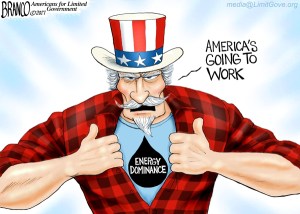
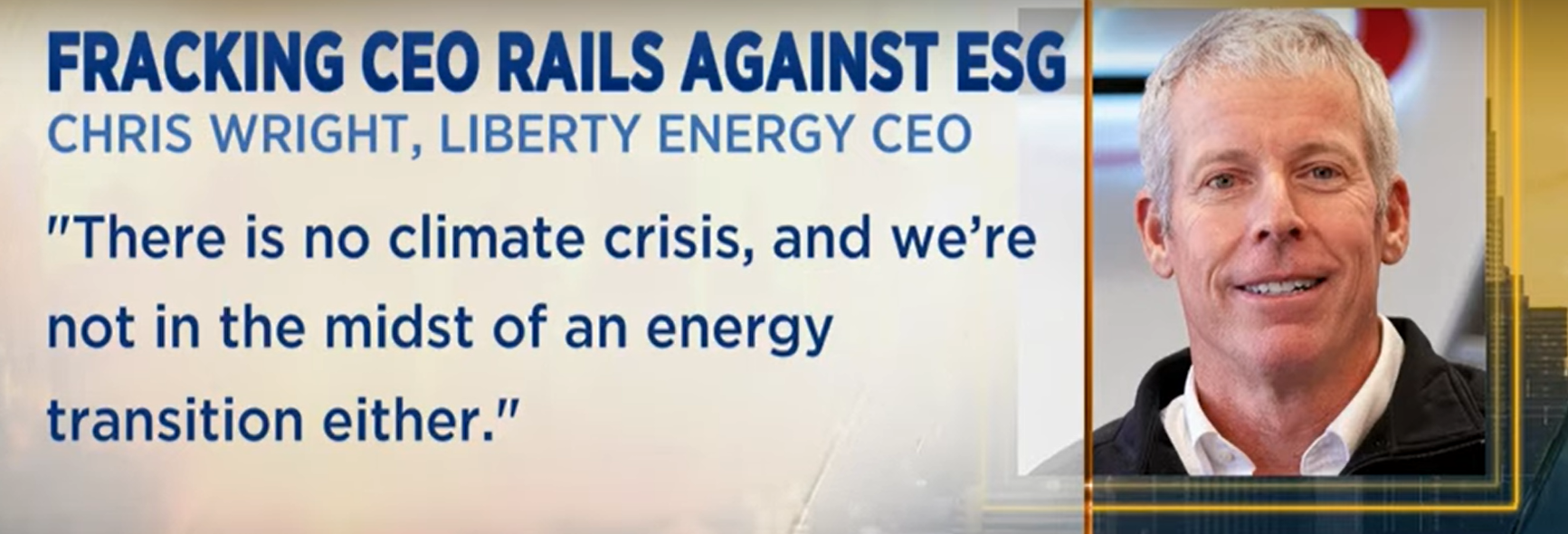
The US Securities Exchange Commission Story Regarding ESG

In the U.S., the SEC proposed the development of climate-related reporting standards in March 2022. The final rule, adopted on March 6, 2024, required large publicly traded companies to disclose climate action, GHG emissions, and the financial impacts of severe weather eventsThe Climate-Related Disclosure Rule was initially set to go into effect in 2026. However, it was immediately met with legal challenges and the SEC delayed implementation indefinitely while the cases worked through the judicial process. Now it appears the delay will become permanent.

Rough Seas for Captains of Industry

Under the leadership of Gary Gensler, the U.S. Securities and Exchange Commission saw a wave of regulatory and enforcement actions relating to environmental, social, and governance; sustainability; and climate change. It was clear that his exit, effective the day President Trump took officewould significantly alter the SEC’s approach to those topics.

On February 11, acting SEC Chair Uyeda, a Biden appointee, effectively ended the Climate-Related Disclosure Rule. In the statement, Uyeda said,

The Rule is deeply flawed and could inflict significant harm on the capital markets and our economy.”

“Both Commissioner Peirce and I voted against the Rule’s adoption. Commissioner Peirce said that then-existing disclosure rules were sufficient and that the ‘[R]ule’s anticipated benefits do not outweigh the costs.’ She argued that ‘only a mandate from Congress should put us in the business of facilitating the disclosure of information not clearly related to financial returns.’ I stated that the Commission was ‘without statutory authority or expertise’ to address climate change issues and that ’this [R]ule is climate regulation promulgated under the Commission’s seal.’”

“The Commission’s briefs previously submitted in the cases consolidated in the Eighth Circuit do not reflect my views… I also question whether the agency followed the proper procedures under the Administrative Procedure Act to adopt the Rule.”

As a result, Acting Chair Uyeda has asked the court for a delay in the proceedings while the SEC takes action to rollback the Climate-Related Disclosure Rule. As a result, climate reporting at the national level is effectively dead. The focus now turns to the states and international actions.