An Insider’s Story How Climatism Subverted Reason

Mark Keenan explains in his American Thinker article The Climate Creed: How Fear Replaced Science.  Excerpts in italics with my bolds and added images.

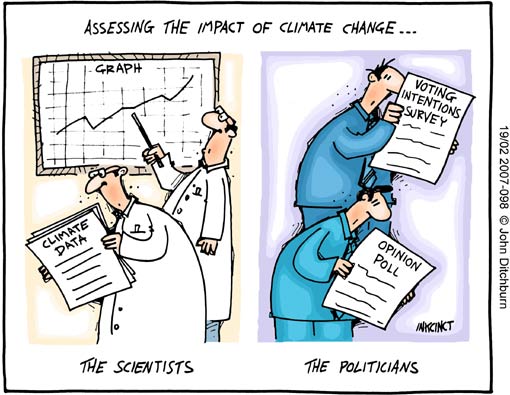
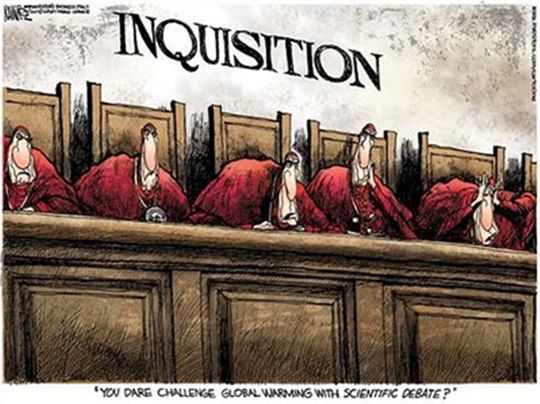
For decades, politicians and pundits have told us that “the science is settled.” Those four words have become a shield for power and a sword against dissent. But real science thrives on inquiry and investigation; not the suppression of it. What has emerged instead is not science at all, but a kind of secular faith — one that demands belief in man-made CO2-induced climate catastrophe and punishes heresy. Yet, many scientists, including scientists that have worked within the climate bureaucracy, know how fragile the claim that “climate change is caused by CO2” really is.

As a former scientist with the UK Department of Energy and Climate Change and later a technical expert for United Nations Environment, I saw firsthand how the modern climate narrative was shaped — not by evidence, but by politics. Uncertainty wasn’t treated as a question to investigate; it was treated as a threat to suppress. Entire careers and institutions came to depend on preserving a preordained conclusion: that carbon dioxide, the same gas that feeds plant life, is destroying the planet.

What began as environmental concern has hardened into climate orthodoxy — a moral creed enforced by bureaucrats, bankers, and media alike. It is a belief system that demands faith rather than understanding, obedience rather than inquiry. None of this means the climate isn’t changing. It means that the conversation about why and how has been systematically narrowed — not by discovery, but by decree.

The Rise of Climate Bureaucracy

By the 1990s, climate science had morphed from an academic discipline into a vast global bureaucracy. The Intergovernmental Panel on Climate Change (IPCC), founded in 1988, became the central authority — linking governments, corporations, and NGOs under a single mission: to define and manage “the problem.”

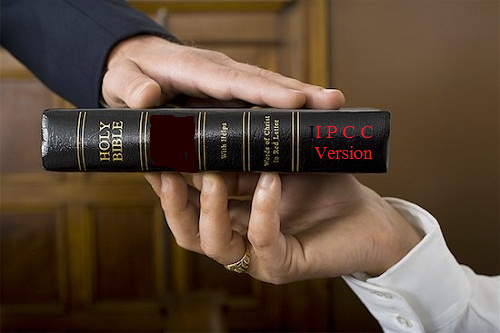
But the IPCC’s reports were never neutral. The “Summary for Policymakers” — the only section most journalists ever read — was often written before the science was finalized. Conclusions drove the evidence, not the other way around. Scientists who emphasized natural climate drivers such as solar cycles or ocean oscillations were quietly pushed aside. The institution that once claimed to study the climate became invested in proving a single narrative.

The Other Consensus

While the UN promotes its “consensus,” thousands of scientists disagree. In 2019, more than 2,000 experts signed the Climate Intelligence (CLINTEL) Declaration, stating bluntly:

“There is no [CO₂-induced] climate emergency. The geological record shows Earth’s climate has always varied naturally.”

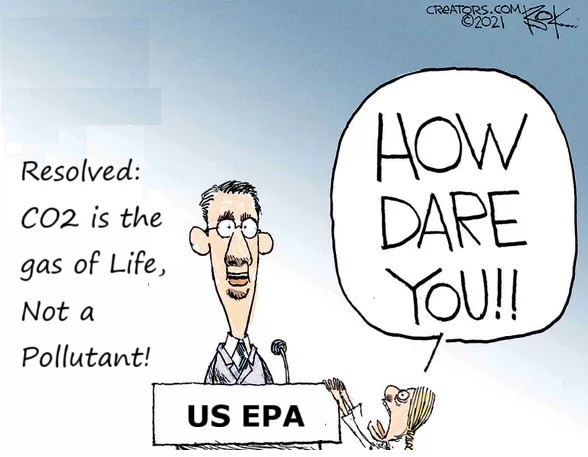
CO2 is not pollution — it is plant food, essential for life and photosynthesis. Yet the UN’s focus on carbon rather than true pollutants such as heavy metals or industrial toxins has diverted environmentalism from its original mission into politics.

I witnessed this distortion firsthand while working within the UN system. My role involved servicing the Pollution Release and Transfer Register Protocol — a multinational agreement that monitors pollutants to air, land, and water. Real pollution exists, and it’s severe. But CO2 is not the problem. Confusing the two has served political and financial ends, not ecological ones.

When Science Becomes Statecraft

The line between scientific advice and political advocacy blurred long ago. Governments needed crisis to justify regulation and taxation. NGOs needed fear to justify funding. And so “consensus science” — a contradiction in terms — entered the lexicon and became the new norm.

Real science advances through dissent and enquiry; consensus is a political construct. But once the term took hold, it became a weapon. Questioning it marked one as a heretic. The language of faith — belief, denial, salvation — replaced the language of analysis. What began as environmental concern hardened into a kind of secular theology: the carbon creed.

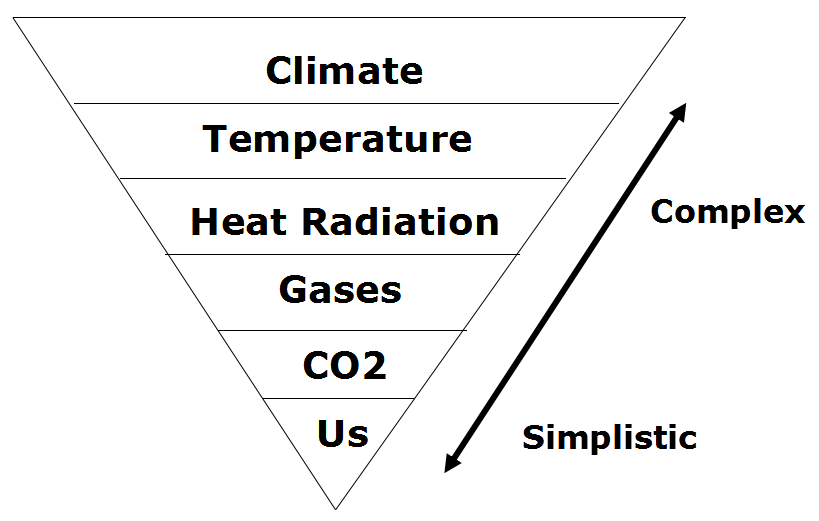
Complexity was the enemy. Climate models that showed alarming forecasts were amplified, while those showing uncertainty were ignored. What followed was the moralization of data. The language of faith replaced the language of evidence: belief, denial, salvation, catastrophe. Dissenters weren’t debated — they were denounced. What began as environmental concern hardened into an ideology — one that rewards fear over reason.

Scientists Who Broke Ranks

Many respected scientists have spoken out. Professor John R. Christy, Director of Atmospheric and Earth Sciences, University of Alabama, stated: “The established global warming theory significantly misrepresents the impact of extra greenhouse gases.” MIT’s Richard Lindzen observed, “In Earth’s long history, there’s been almost no correlation between climate and CO₂.” Dr. Nils-Axel Mörner, once with the IPCC, called the carbon narrative “a wonderful way to control taxation and people.” Greenpeace co-founder Patrick Moore declared the crisis “fake science” hijacked by ideology.

Such voices are rarely heard in mainstream media, not because their credentials lack merit, but because they challenge the most politically valuable story of the century.

The Money Behind the Mandate

Follow the money, and the picture becomes clearer. The financialization of carbon—
through emissions trading, carbon credits, and “green investment” funds
— transformed moral urgency into a trillion-dollar industry.

Governments pour billions into renewable subsidies, enriching banks and corporations far more than benefiting the planet. If the climate crisis were truly existential, would its management really be entrusted to those who profit from it?

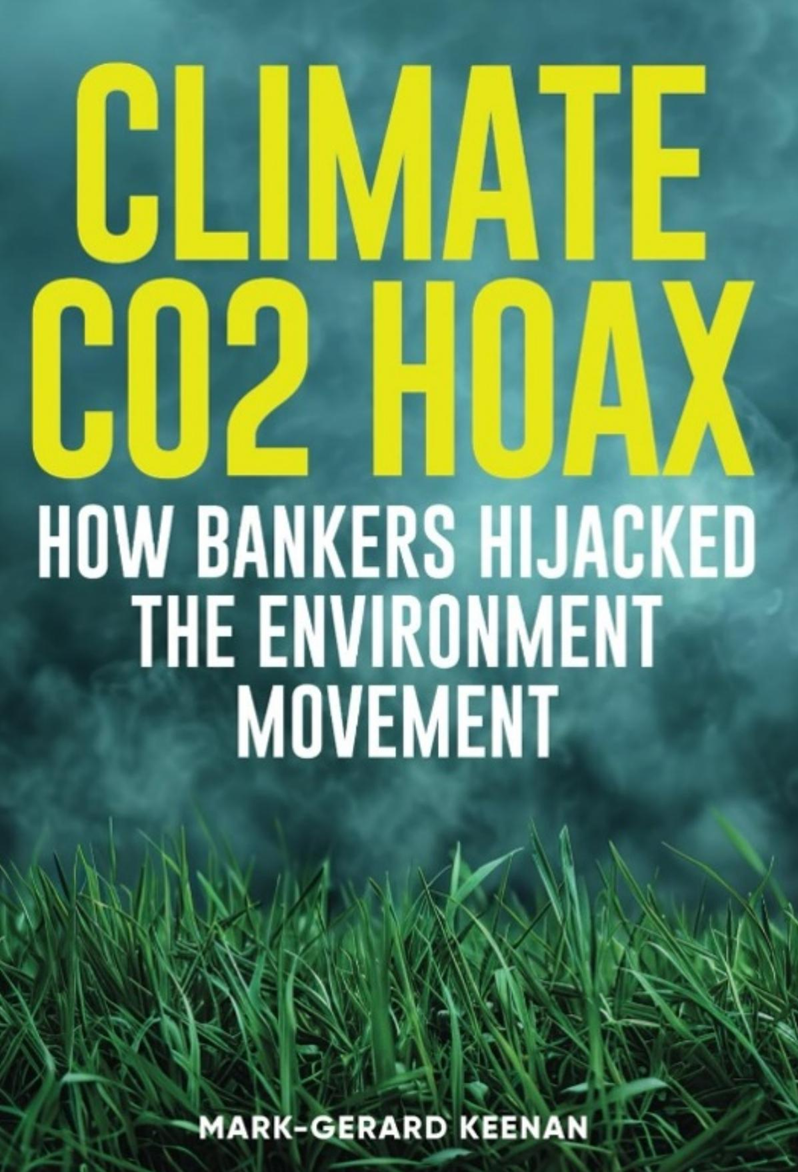
In my book Climate CO₂ Hoax – How Bankers Hijacked the Environmental Movement, I detail how the 1992 UN Earth Summit in Rio marked the turning point — when financial elites effectively captured global environmental policy. Reports and whistleblower accounts later suggested that key policies adopted at the summit were drafted without open debate — policies that subordinated national sovereignty to global ‘sustainability’ goals.”

Net Zero: The Mirage of Green Energy

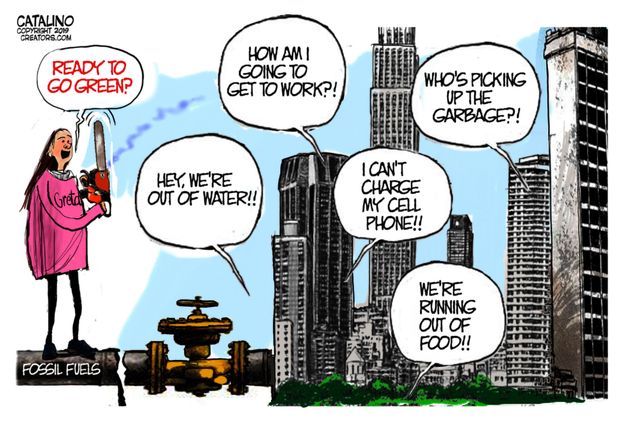
The world’s economies are being restructured around “net zero,” but the irony is glaring. Building the infrastructure for so-called “green energy” — from solar panels to EV batteries — requires massive fossil-fuel use and destructive rare-earth mining.

Electric cars rely on lithium and cobalt extracted through environmentally devastating processes. The energy required to mine and refine these materials often exceeds what the vehicles save over their lifetimes.

In Germany, the green energy transition has turned a once-stable, low-cost energy grid into one of the most expensive in the industrial world. In Ireland, plans to close the coal-fired Moneypoint power station were reversed in 2022 as the government quietly converted it to burn oil instead — an unspoken admission that “renewables” can’t power modern economies.

Silencing Dissent

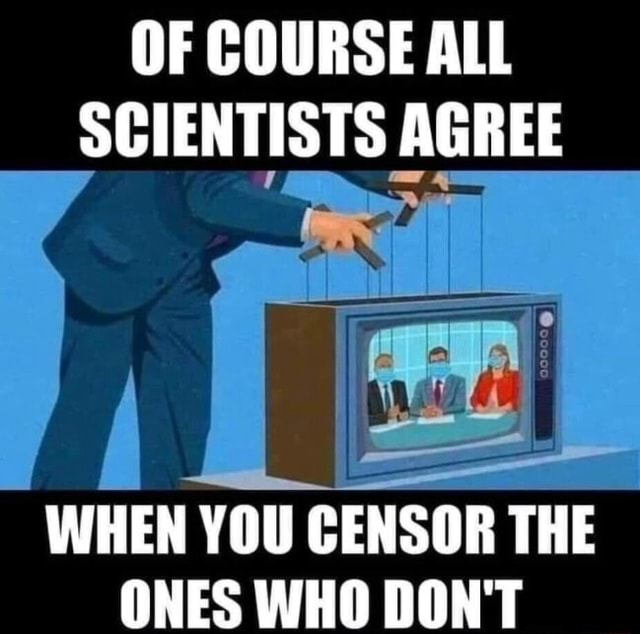
In this new orthodoxy, questioning the narrative is treated as blasphemy. Scientists who deviate from the CO2 script face censorship, ostracism, and blacklisting. The term “denier” — borrowed from the lexicon of moral condemnation — equates disagreement with depravity, and scepticism with sin

Dr. Roger Pielke Jr. of the University of Colorado revealed how the IPCC relies on the RCP 8.5 model — one he described as “fantasy land,” completely detached from real-world data. Yet it remains the foundation of global policy and countless policy papers and media headlines.

When truth becomes heresy, science itself collapses.

The Moralization of Carbon

CO2 has been transformed from a molecule into a moral symbol — the embodiment of human guilt. Citizens are told to measure their “carbon footprint” as if it were a sin ledger, redeemable only through “green” consumption. Yet many of these same products — from electric cars to solar infrastructure — depend on the same industrial extraction that environmentalism once opposed.

This framing serves a purpose. Instead of questioning the powerful institutions that profit from pollution and its supposed cure, individuals are encouraged to internalize blame. The message: You are the problem — not the system. It’s an old strategy of control — rule through guilt rather than force.

The Politics of Fear

No ideology survives without fear. Apocalyptic imagery — burning forests, flooded cities, “ticking clocks” — has replaced empirical evidence as the main instrument of persuasion. Yet forest fires and floods are as old as the Earth itself.

Children now grow up believing the planet will collapse before they reach adulthood. Politicians invoke “existential threat” rhetoric to justify sweeping economic and social controls. What was once a challenge to power has become a tool of it.

The New Creed

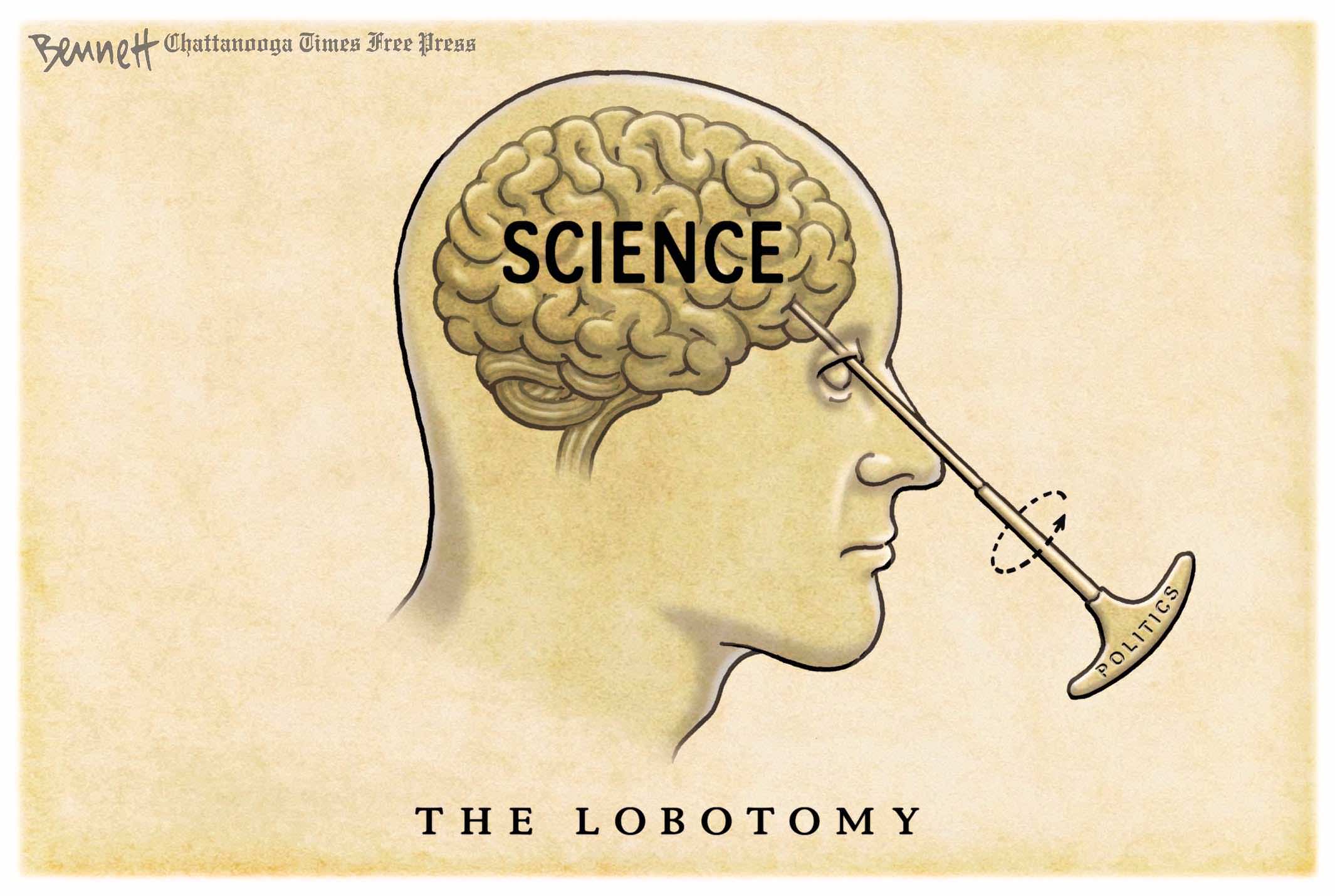
Modern climate orthodoxy is not science but ideology — a sociopolitical construct — a fusion of fear, money, and power that rewards conformity and punishes doubt. Science must never serve politics. When data becomes dogma, truth dies — and with it, freedom. If we truly wish to “save the planet,” we must first save science itself.

Mark Keenan is a former scientist at the UK Department of Energy and Climate Change and a former Environmental Affairs Officer with United Nations Environment. 

October Arctic Ice Grows After Pope’s Blessing

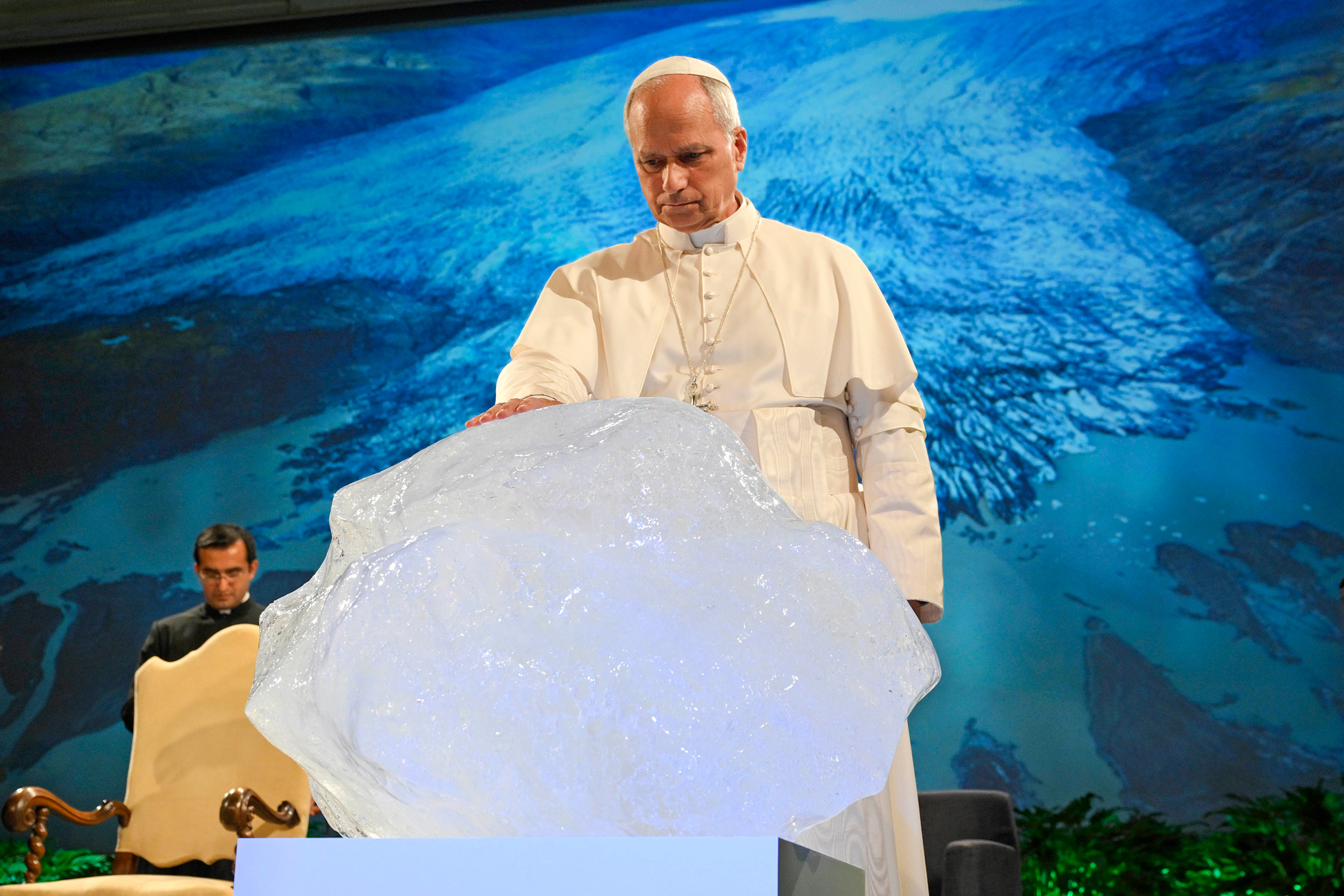
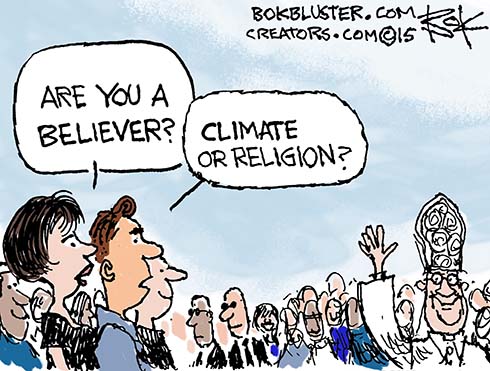
Last Wednesday Pope Leo spoke before a slowly melting chunk of glacial ice in Vatican City in his first address on climate change.  The pontiff addressed a crowd of roughly 1,000 attendees and called on people all over the world to demand action on climate from their governments. This post presents evidence the Arctic is already heeding his call, growing by leaps and bounds. /sarc

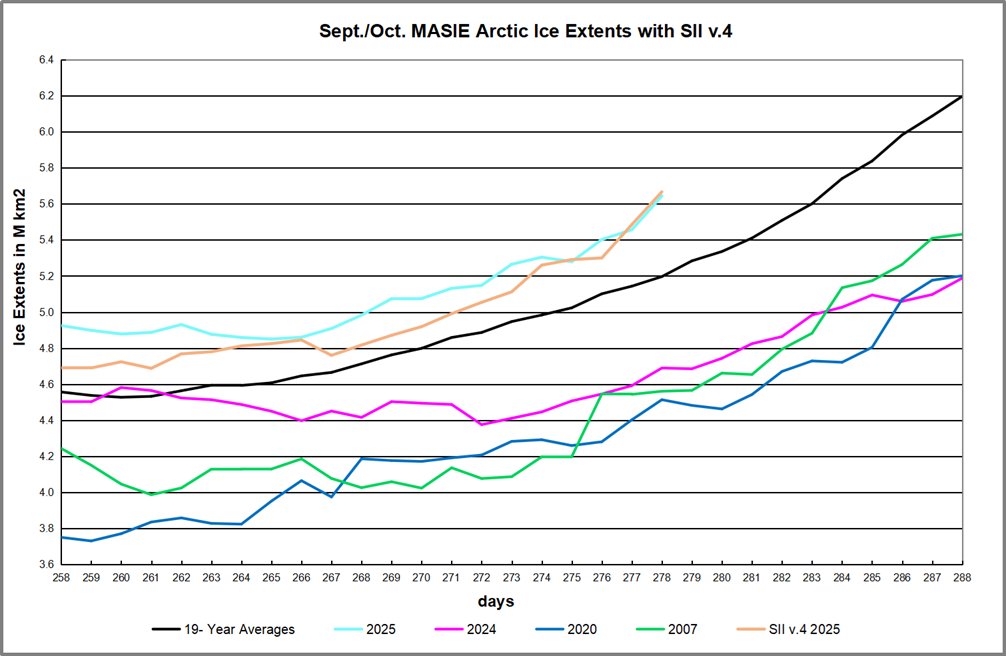
The graph above shows Sept./Oct. daily ice extents for 2025 compared to 19 year averages, and some years of note. Day 260 has been the lowest daily ice extent on average for the last 19 years. Note how in just the last five days, Arctic ice extent has grown by half a wadham or ~0.5M km2!

Why is this important?  All the claims of global climate emergency depend on dangerously higher temperatures, lower sea ice, and rising sea levels.  The lack of additional warming prior to 2023 El Nino, which is now receding, is documented in a post Tropics UAH Temps Cooler August 2025.

The lack of acceleration in sea levels along coastlines has been discussed also.  See Observed vs. Imagined Sea Levels 2023 Update.

Also, a longer term perspective is informative:

post-glacial_sea_levelThe table below shows the distribution of Sea Ice on day 260 across the Arctic Regions, on average, this year and 2007. At this point in the year, Bering and Okhotsk seas are open water and thus dropped from the table. The has grown to 5.64M km2 from 5.14 and the overall surplus to average is 447k km2, ( 9 %). The 2025 ice extent exceeds 2007 by a full wadham.

Region 2025278 Day 278 ave. 2025-Ave. 2007278 2025-2007
 (0) Northern_Hemisphere 5643927 5196640 447286 4560836 1083091
 (1) Beaufort_Sea 781758 582635 199123 590267 191490
 (2) Chukchi_Sea 474277 232765 241512 25934 448343
 (3) East_Siberian_Sea 558888 329424 229465 311 558577
 (4) Laptev_Sea 299904 208865 91039 305220 -5316
 (5) Kara_Sea 1026 45918 -44892 22717 -21691
 (6) Barents_Sea 0 17669 -17669 3580 -3580
 (7) Greenland_Sea 175128 271377 -96248 404376 -229248
 (8) Baffin_Bay_Gulf_of_St._Lawrence 81997 63374 18623 72162 9835
 (9) Canadian_Archipelago 355462 410626 -55164 349687 5775
 (10) Hudson_Bay 1172 2333 -1161 1936 -764
 (11) Central_Arctic 2912747 3030507 -117760 2783370 129376

bathymetric_map_arctic_ocean

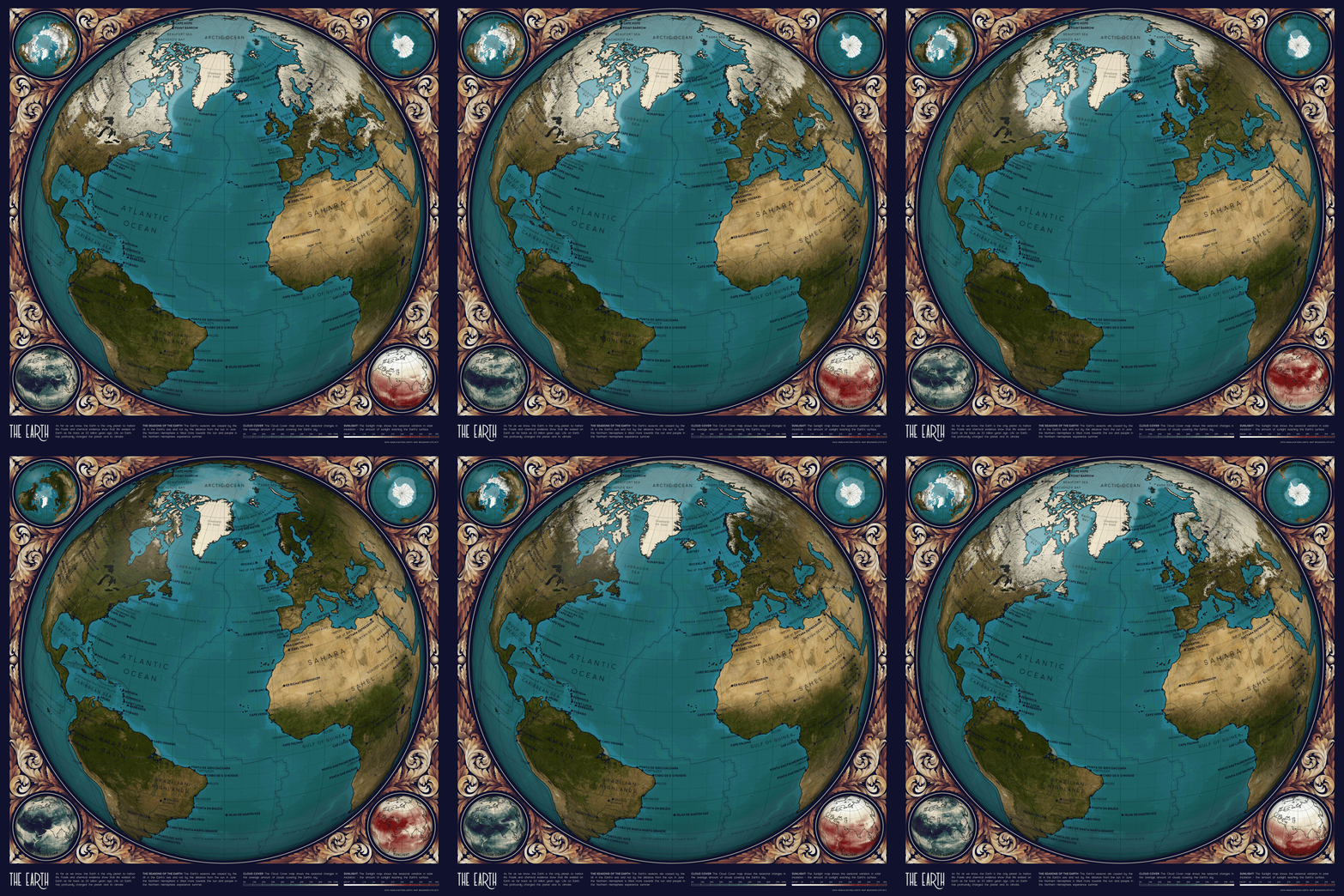
Illustration by Eleanor Lutz shows Earth’s seasonal climate changes. If played in full screen, the four corners present views from top, bottom and sides. It is a visual representation of scientific datasets measuring ice and snow extents.

Simpleton’s Guide to Climate Alarmist Protests

Rex Murphy wrote a National Post article in 2023 The simpleton’s guide to climate alarmist protest.  Excerpts in italics with my bolds and added images.

Glue yourself to a masterpiece or throw paint on a building.
If that doesn’t hold off climate Armageddon, what will?

The quality of truth in an existential cause may be measured by the quality of the intellects of its most committed followers. Allow me to illustrate.

Imagine the fumings of a climate alarmist. Here, a representation of what goes on in the alarmist mind.

The world is in deep imminent threat.

It may end.

Our beautiful, blue, penguin-marching-David Attenborough-marble may be no more.

All life will disappear. Farewell soy milk. Farewell shocking pink hair dye. Farewell all.

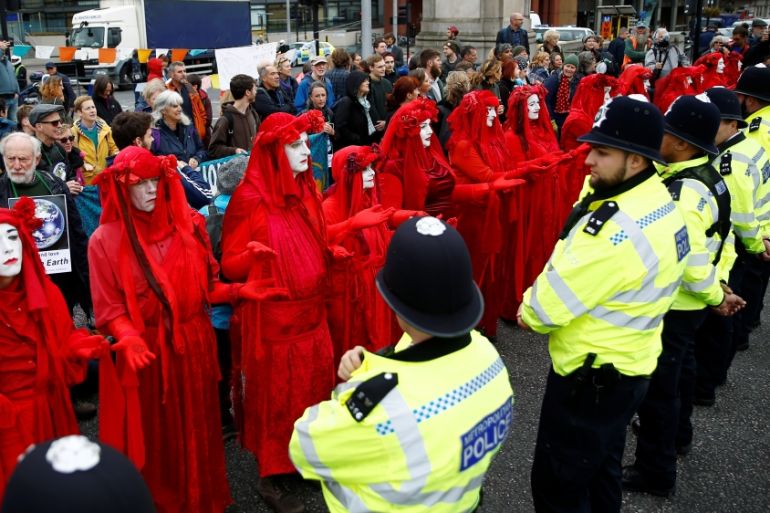
Climate activists in front of police officers during the Extinction Rebellion protest in London [Henry Nicholls/Reuters]

What can I do?

Why, I can call out from every hollow my comrade eco-warriors. Come in a black mask, or strip to your unsightly nudity when you get there, will be the summons.

And what is the plan that I and my fellow eco-doomsters have to avert planetary extinction?

We are, above all, strategists and tacticians. We know what earns quality
and never-challenged coverage on NPR and festivals of authentication from CBC
.

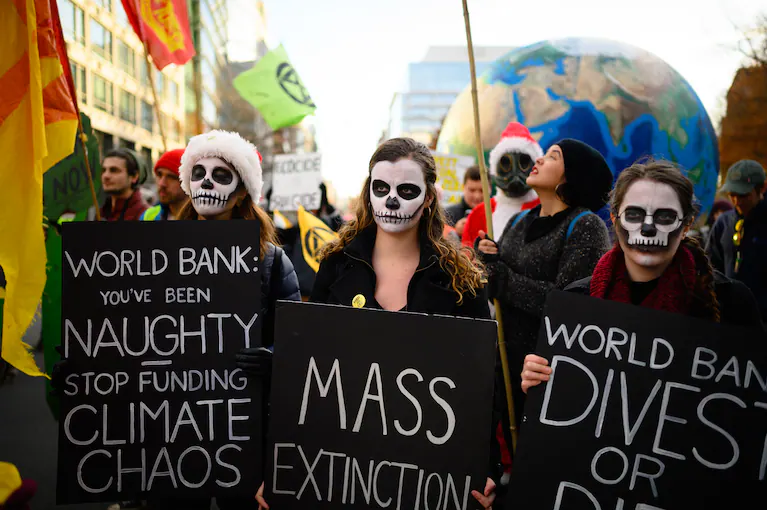
Protesters march on Russell Street in Melbourne, Australia [Darrian Traynor/Getty Images]

That is why we organize the type of protests that we do. Direct actions and exhibitionist displays — stripping down at awards shows — that speak to the farmer, the logger, the fisherman, the movie star falling from favour, or the sad professor who does not have Jordan Peterson’s reach and fame.

Our protests are aimed at persuasion, credibility, their appeal to Steven Guilbeault. Before Steven became our environment minister, he once climbed atop then-premier Ralph Klein’s home in Calgary to “install” solar panels. Even though it terrified Klein’s wife, who thought it was a home invasion, it was a great moment in the history of climate protest and an example for us even today. Steven, you are a hero, and you looked so good in those orange overalls. Greenpeace forever!

So when we want to avert the gravest challenge humanity has ever had to face, that is why we select actions that will — in the words of a very great writer — “strike home to every bosom.”

Is there a Monet or a Goya or a Munch or a Botticelli or a van Gogh in your city’s art gallery? Well, off to the hardware store and the supermarket. There is glue to be bought and cans of tomato soup to drop into the backpack.

Glue yourselves to the painting or throw the tomato soup over it. Doesn’t matter which.

When the world, on TV and the internet, sees these brave assaults on western art at its highest, you know everyone, just everyone, will park their cars, turn off the heat, refuse to buy anything with a petroleum base and insist that all the heads of oil companies and plastic manufacturers be put on trial for genocide, and Hollywood liberals will forsake their mansions and move to caves.

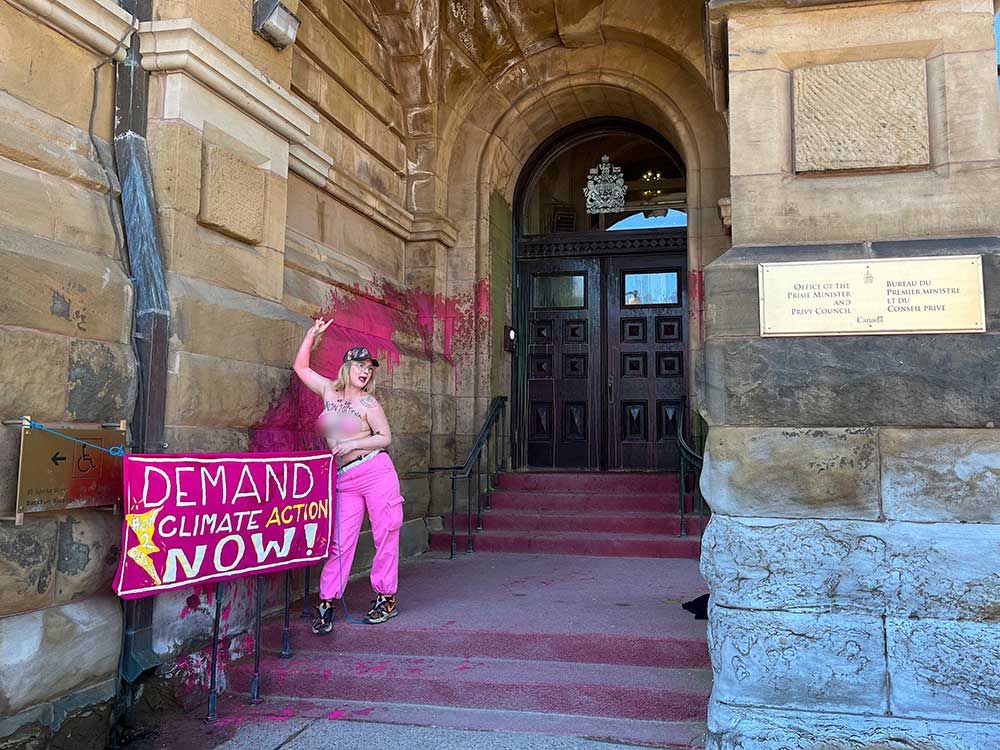
One of our very keenest moves happened over the weekend in Ottawa. An eco-warrior threw a bucket of pink paint on the Prime Minister’s Office and padlocked herself to a rail after the ritual half-undressing. A whole bucket of pink paint — if that doesn’t hold off climate Armageddon, what will?

A climate activist from On2Ottawa threw a bucket of pink paint on the entrance to the Prime Minister’s Office in Ottawa before chaining herself topless to the office door on April 18, 2023. Photo by On2Ottawa / Twitter

All on camera. So bold.

She did not — it is most necessary to add — honk! End of musing.

California-funded eco-activists sprayed orange paint on Christmas trees in seven German cities in a protest against government inaction on climate change. (2023)

We should measure the value of high-order environmental activism — IPCC stuff, Davos effluvia, anything Al Gore or David Suzuki so stridently say — by the quality of the minds and actions of their most intense supporters.

Climate protesters block traffic on the FDR during the morning commute Oct. 25, 2021 (Credit: Extinction Rebellion NYC)

By which I mean the “gluers” on paintings, the neuron-challenged street-blockaders, simpletons who smear soup on masterpieces, and — a great example — the dimwit(s) who think throwing paint on the PM’s office amounts to a persuasive, consciousness-raising tactic.

Instead of what everyone else knows it to be: a display of desperate intellectual incapacity, delusionary arrogance, and the “Hey-I’m-saving-the-world-so-I-can-be-as-stupid-and-supremely-annoying-to-anyone-as-I-f—-ing-well-choose” attitude of such world saviours.

Climate change protesters block downtown D.C. streets in hours-long protest (2019)

That’s the level of non-thought that supports most energetically and egregiously the high priests and savants of the net-zero fantasy. Measured by the standard of its pathetic protests, environmental alarmism is the religion of children, a sandbox for narcissists — regardless of how old they are.

12 Reasons to Not Believe in a Climate Emergency

Russell David writes his brief list in a Daily Sceptic article Twelve Reasons Why I Don’t Believe There’s a Climate Emergency.  Excerpt in italics with my bolds and added images.

I’m not a scientist. But I have reasons why I don’t fully trust the ‘climate emergency’ narrative. Here they are:

  1. Looking back through history, there have always been doomsday prophets, folk who say the world is coming to an end. Are modern-day activists not just the current version of this?
  2. I look at some of the facts – CO2 is 0.04% of the atmosphere; humans are responsible for just 3% of CO2; Britain is responsible for just 1% of the world’s CO2 output – and I think “really“? Will us de-carbonising really make a difference to the Earth’s climate?
  3. I have listened to some top scientists who say CO2 does not drive global warming; that CO2 in the atmosphere is a good or vital thing; that many other things, like the Sun and the clouds and the oceans, are more responsible for the Earth’s temperature.
  4. I note that most of the loudest climate activists are socialists and on the Left. Are they not just using this movement to push their dreams of a deindustrialised socialist utopia? And I also note the crossover between green activists and BLM ones, gender ones, pro-Hamas ones, none of whom I like or agree with.
  5. As an amateur psychologist, I know that humans are susceptible to manias. I also know that humans tend to focus on tiny slivers of time and on tiny slivers of geographical place when forming ideas and opinions. We are also extremely malleable and easily fooled, as was demonstrated in 2020 and 2021.
  6. I have looked into the implications of Net Zero. It is incredibly expensive. It will vastly reduce living standards and hinder economic growth. I don’t think that’s a good thing. I know that economic growth has led to higher living standards, which has made people both safer and more environmentally aware.
  7. Net Zero will also lead to significant diminishment of personal freedom, and it even threatens democracy, as people are told they must do certain things and they must not do other things, and they may even be restricted in speaking out on climate matters.
  8. What will be the worst things that will happen if the doomsayers are correct? A rise in temperature? Where? Siberia? Singapore? Stockholm? What is the ideal temperature? For how long? Will this utopia be forever maintained? I’m suspicious of utopias; the communists sought utopias.
  9. If one consequence of climate change is rising sea levels, would it not be better to spend money building more sea defences to protect our land? Like the Dutch did.
  10. It’s a narrative heavily pushed by the Guardian. I dislike the Guardian. I believe it’s been wrong on most issues through my life – socialism, immigration, race, the EU, gender, lockdowns and so on. Probably it’s wrong about climate issues too?
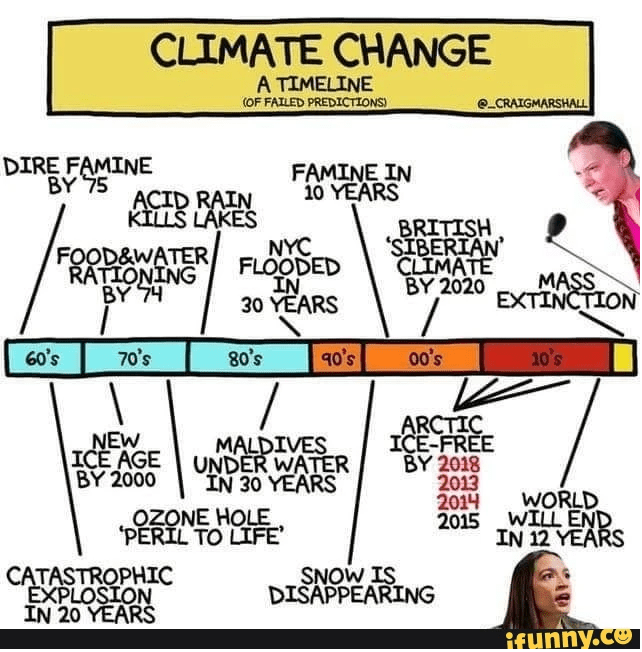
  11. I am suspicious of the amount of money that green activists and subsidised green industries make. And 40 years ago the greenies were saying the Earth was going to get too cold. Much of what they said would happen by now has not happened. Also, I trust ‘experts’ much less now, after they lied about the efficacy of lockdowns, masks and the ‘vaccines’.
  12. I like sunshine. I prefer being warm to being cold. It makes me feel better. It’s more fun. It saves on heating bills. It saves on clothes. It makes people happier. Far few people die of the heat than they do the cold.


Pope Francis Speaks as Climate Bigot

Thomas D. Williams, Ph.D. reports at Climate Change Dispatch Unchristian: Pope Francis Says Climate Deniers Are ‘Stupid’, Skepticism ‘Perverse’.  Excerpts in italics with my bolds and added images.

Pope Francis told CBS News this week that climate change deniers are “stupid” to refute compelling evidence of a climate emergency. [emphasis, links added]

“Some people are stupid (necios), and stupid even if you show them research, they don’t believe it,” the pontiff told CBS Evening News anchor Norah O’Donnell when asked what he would say to the deniers of climate change.  “Why? Because they don’t understand the situation, or because of their interests, but climate change exists,” the 87-year-old pope asserted.

Pope Francis had never before sat down for an extensive interview, one-on-one, with a U.S. television network during his 11-year pontificate.

Pope Francis has been a vocal enthusiast for the war on climate changecalling global warming “one of the most serious and worrying phenomena of our time” and urging “drastic measures” to combat climate change.

He has expressed his opinion that any skepticism regarding an alleged “climate emergency” is “perverse.”

The pope has also singled out the United States as particularly to blame for the “climate emergency,” even though it is one of the countries with the cleanest air in the world.

“If we consider that emissions per individual in the United States are about two times greater than those of individuals living in China and about seven times greater than the average of the poorest countries, we can state that a broad change in the irresponsible lifestyle connected with the Western model would have a significant long-term impact,” he stated last October.

Among the “fools” denounced by the pope for their “perverse” skepticism of the climate crisis are a group of over 1,600 prominent scientists, including two Nobel Prize winners, who issued the “World Climate Declaration” last August, refuting the existence of a so-called “climate emergency.”

Among other things, the Declaration asserted that climate models have proven inadequate for predicting global warming, that carbon dioxide (CO2) is not a pollutant, and that climate change has not increased natural disasters.

The world has warmed “significantly less than predicted by IPCC on the basis of modeled anthropogenic forcing,” the text states, and the gap between the real world and the modeled world “tells us that we are far from understanding climate change.”

There is no statistical evidence that global warming is intensifying hurricanesfloodsdroughts, and such like natural disasters, or making them more frequent,” the document declared. “However, there is ample evidence that CO2-mitigation measures are as damaging as they are costly.”

“There is no climate emergency,” it concluded. “Therefore, there is no cause for panic and alarm.

“We strongly oppose the harmful and unrealistic net-zero CO2 policy proposed for 2050. Go for adaptation instead of mitigation; adaptation works whatever the causes are,” it added.

Climate Doomsters in Driver’s Seat

Joe Oliver wrote at Financial Post We are in the grip of climate-change catastrophism.  Excerpts in italics with my bolds.

The climate-change movement is a powerful cultural entity. It does not affirm or negate the reality of its core narrative, which is for science to decide. Culture does, however, explain the power and prevalence of the narrative, the political and societal responses to it and the apparent willingness of many people to incur immense cost to avert a supposed existential threat, without proof of either its existence or our ability to alter its impact. In a new book available from the Global Warming Policy Foundation, The Grip of Culture: the Social Psychology of Climate Change Catastrophism, Andy A. West, who works for the Philosophy Foundation in London, provides an academic analysis of the phenomenon. Its lessons have particular relevance to Canada’s climate obsession.

As we know, the overarching climate narrative is that human GHG emissions have created a climate emergency that calls for urgent and extraordinary action, without which the consequences for humanity will be catastrophic. In many ways, its cultural characteristics parallel religions and ideological movements, starting with an unshakable foundational belief impervious to contradictory evidence, and extending to incessant incantations from politicians, mainstream media, thought leaders and environmentalists.

The faithful are reassured by groupthink, while apostates or sinful skeptics,
i.e. “deniers,” are vilified, penalized and ostracized.

Environment and Climate Change Minister Steven Guilbeault’s veiled threat to charge Premier Scott Moe of Saskatchewan criminally if he violates federal coal regulations evokes Thomas of Torquemada, Grand Inquisitor of the Spanish Inquisition — though so far absent the burnings at the stake. The movement has its high priests and priestesses — Al Gore, Justin Trudeau, Greta Thunberg, King Charles and Mark Carney, none a scientist — who convey certainty to the multitudes.

Core principles and a multitude of subsidiary tenets are validated by exaggerated interpretations of scientific studies, as well as anecdotal evidence and conveniently chosen statistics that reinforce the sacred text. For example, the end of the Little Ice Age is invariably the starting point for calculating a global temperature increase — which is like a government calculating its effects on economic growth by starting at the trough of the last recession. Confirmation bias is provided by influencers, including uniquely unqualified Hollywood stars, who propagate the doctrine of the faith. Fear is employed as a powerful motivator and is inculcated from childhood. Apocalyptic doom is preordained for collective disobedience and salvation promised for devotees and repentants who comply with onerous strictures, many of which have no practical utility.

The instinctive response from climate alarmists to public hesitancy is that “the science is settled,” the facts are overwhelming and the need so urgent they can’t waste time quibbling with ignorant or malevolent naysayers who in any case are probably racist, misogynist, far-right conspiracists.

Climate alarmists have a fundamental problem, however, which may help explain their stridency. The complexity of climate science is not settled, as Steve E. Koonin, a physicist and former undersecretary for science in Barack Obama’s Department of Energy, explained in his 2021 book, Unsettled. Other prominent scientists agree, although they are a distinct minority.

Nor is climate apocalypse supported by the UN’s Intergovernmental Panel on Climate Change (IPCC), even though its conclusions go farther than the scientific studies on which it allegedly relies. Proffered evidence is based on models that have consistently run hot. Yet the conventional consensus is to accept at face value the predictions of people who have been consistently and spectacularly wrong and who, if they were around in the 1970’s, were more than likely to have issued dire warnings about an impending ice age, like Paul Ehrlich and Kenneth Watt, as well as newspapers and journals like Time, Science Digest, The New York Times and Newsweek.

Barring a miraculous technological innovation, there is
virtually no chance of reaching global net zero by 2050.

Two-thirds of GHG emissions come from poorer countries that are deliberately increasing their use of fossil fuels, while the developed economies, including Canada, have consistently failed to reach the targets they have set themselves. And it takes centuries for excess carbon dioxide to disappear from the atmosphere, so any partial reduction in anthropogenic emissions would only slow their increase, not prevent it or eliminate them. Nevertheless, McKinsey says $275 trillion may be spent on the doomed gesture, disproportionately hurting the least advantaged and weakening the West in what may actually be an existential struggle with an expansionist communist China.


Andy West writes that culture can be a great unifier of societies and even civilizations. But because it is not based on reason, it can also be extraordinarily destructive: witness the calamities perpetrated by communism and fascism. So it is uncertain where climate catastrophism may lead or what negative feedback could potentially provoke a counter-reaction. Last year’s European energy crisis did undermine support for it, even if green activists claimed it proved we need more of the renewable energy that had in fact made the continent more vulnerable to higher prices and inadequate supply.

Zeitgeists do change. When people have to choose between food and heat and when the poorest countries are deprived of the affordable energy they desperately need to raise themselves up, then practicality and guilt may eventually change people’s beliefs. That they haven’t yet done so demonstrates the power of culture in the face of logic, morality, self-interest and the facts.

Addendum:  

Retraction of Paper Saying There is No Climate Emergency Illustrates How Dependent Climate Activists Are on Scaremongering by Chris Morris at Daily Sceptic.

The recent cancellation of Alimonti et al shows clearly that catastrophising bad weather events and attributing them to a collapse of the climate is now the main weapon deployed to scare populations into embracing the Net Zero agenda. Of course, reference is still made to global warming, but most recent rises seem to owe more to frequent upward retrospective adjustments of temperature, rather than any significant natural boost. Perhaps we should not be surprised by this turn of events. In a short essay titled ‘The New Apocalypticism’, the science writer Roger Pielke Jr. noted: “For the secular millenarian, extreme events – floods, hurricanes, fires – are more than mere portents, they are evidence of our sins of the past and provide opportunities for redemption in the future, if only we listen, accept and change.”

The climate is collapsing all around us, shout the headlines – they require we ignore the data, the historical record, even common sense. When all is said and done, the Earth is not actually boiling! Well Professor Gianluca Alimonti and three other Italian scientists didn’t ignore the past data, much of it in fact from the UN Intergovernmental Panel on Climate Change, and they found little change in extreme weather events. They published a paper concluding that there was certainly not enough to justify the declaration of a ‘climate emergency’.

A year later, the publisher Springer Nature bowed to the demands of a group of activist scientists and journalists led by the Guardian and Agence France-Presse and retracted the non-conforming paper. An addendum was proposed and sent to four reviewers for comment. Three reviewers argued for publication. The fourth stated that typical readers were not climate experts and “editors should seriously consider the implications of the possible publication of this addendum”.

We own climate scienceboasted UN communications flak Melissa Fleming at a recent World Economic Forum disinformation seminar, and we partner with Google to keep our version at the top of the search list. What a great service these climate experts provide in telling us what to think and see as we unsophisticated rubes struggle towards the path of true enlightenment!

For the distinguished climatologist Dr. Judith Curry, the Alimonti affair is “why I no longer publish in peer-reviewed papers”. She described the behaviour of the journal editors as “reprehensible” in retracting a widely read climate paper just because it contained “politically inconvenient conclusions”. She is right of course – the Alimonti affair is another shocking scientific scandal that casts further doubt on the climate science peer-review process.

But then, Dr. Curry is merely a scientist in all this
–she doesn’t own the science.


Inside the Carbon Cult

In Glasgow, members of an activist troupe protest climate change.(Ben Stansall/AFP via Getty Images)

Kevin D. Williamson has written a study on this topic, subtitled:

Reports on the religious character of the environmental movement

Below in italics with my bolds is the excerpted Introduction and at the end a link to the entire pdf. H/T Competitive Enterprise Institute.

This is not a religious book in the sense of its being meant to convey a religious message or for people of a particular religion—it is a book containing three journalistic reports about a religion, or a sort of religion, that emerged from and then subsumed the environmental movement. Today, that movement is a kind of cult and not a political movement at all, if it ever was one. Those who profess one of the Abrahamic faiths have a religious interest in idolatry because it perverts religion and leads religion to inhuman ends—Norman Podhoretz, in his very interesting book The Prophets, describes the ancient Israelite “war on idolatry” as a matter that is not exclusively otherworldly but very much rooted in a campaign against the ghastly social practices associated with idolatry: cannibalism, child sacrifice, etc.

And if idolatry makes a hash of religion, it is, if anything, even more of a menace
to the practice of politics, which is my subject.

I suspect that some of you may object to the term idolatry here, or to the description of the environmental movement as a kind of cult—that some readers may regard these as rhetorical excesses. All that I have to say in my defense is that this is a factual and literal account of what I have seen and heard in reporting about the environmental movement, in the actual explicit religious ceremonies that were conducted in and around the United Nations climate conference in Glasgow in 2021, in my conversations with such figures as the “voluntary human extinction” activist who calls himself Les U. Knight, in my conversations with those who object to clean and economical nuclear power on grounds that are, even when not accompanied by pseudo- religious Gaia rhetoric, fundamentally metaphysical. What is at work is a kind of sophomoric, cartoon puritanism that regards modernity—and, in particular, the extent and pattern of consumption in the modern developed world— as sinful. One need not squint too much to recognize very old Christian (or even Stoic) aversion to “luxury” in these denunciations.

Indeed, we need only take the true believers at their word. As scientists have been searching for economic, abundant, and environmentally responsible sources of energy to support human flourishing, the environmentalists have resisted and abominated these efforts: Amory Lovins of Friends of the Earth declared that “it would be little short of disastrous for us to discover a source of clean, cheap, abundant energy”—and please note there the inclusion of clean—while Population Bomb author Paul Ehrlich famously opined that “giving society cheap, abundant energy at this point would be the equivalent of giving an idiot child a machine gun.” Professor Ehrlich gives up the game with “at this point”—meaning, of course, in our fallen, postlapsarian state.

It was, of course, inevitable that Professor Ehrlich— who has been spectacularly wrong about practically every prediction he has made in his lucrative career as a secular, Malthusian prophet—should be back in the news at the same time scientists were announcing a breakthrough in nuclear fusion research. Professor Ehrlich, recently seen on 60 Minutes (which still exists!) and elsewhere, downplays the recent advance in fusion on the grounds that current patterns of human living are “unsustainable.” Professor Ehrlich has been giving the same interview for decade and decades—advances in energy production will not matter because “the world will have long since succumbed to overpopulation, famine,” and other ills, as he insisted in an interview published by the Los Angeles Times—in 1989— not long after insisting that the United Kingdom would be ravished by famine no later than the year 2000. 

End-of- days stories have long been a staple of religions and cults of many different kinds and characters, of course, and the environmental movement is fundamentally eschatological in its orientation, by turns utopian and apocalyptic. It is at the moment more apocalyptic than utopian, but that is a reflection of a broader trend in our politics and our society. The Western world, in particular, the English-speaking Western world, has been fervently praying for its own demise for a generation. Future historians will note the prevalence of zombie-apocalypse stories in our time—The Walking Dead has recently concluded its main series but will be supplemented by numerous spinoffs, while one of the most intensely anticipated television series of 2023 is The Last of Us, an adaptation of a video game that is based on yet another variation of the zombie-apocalypse theme—but beyond zombie-apocalypse stories we have alien-invasion- apocalypse stories, and, precisely to our point here, eco-apocalypse stories by the dozen (The Day After Tomorrow, Snowpiercer, Waterworld, Interstellar, Wall-E).

What these stories have in common is not the particular source of anxiety, though environmental concerns are interlaced into many stories: The Last of Us is a zombie story, but the zombies are produced by global warming, which allows a particular fungus to colonize and control human brains. (One shared article of faith that is present not only in zombie movies but also from campy, anencephalic or macrocephalic aliens of Mars Attacks! and Independence Day—the enemy is the brain.) What they have in common, rather, is a two-sided fascination with social collapse, both the negative aspects—the inevitable suffering—and the positive—the possibility of a return to innocence and a shared born-against experience that retroactively sanctifies that suffering. 

Which is to say, what we have here is the old mythological cycle
of suffering, death,and rebirth told at the social level
rather than at the level of individual hero or martyr.

None of this is to say that there are not real environmental challenges in front of us. These are real, and they deserve serious attention. But here in the third decade of the benighted 21st century, the environmental movement is not about that. It is an apocalyptic-fantasy cult. Of course there are people who think of themselves as adherents of that movement who are doing real work in science and policy, in much the same way that the alchemists and magicians of the medieval period laid the foundations for much of modern science, including a great deal of chemistry and astronomy. The two phenomena are by no means mutually exclusive.

But if you want to understand why there has been so frustratingly little meaningful progress in environmental policy in the United States, the United Kingdom, and the European Union in the past 30 years or so, then understanding the cultic character of the environmental movement is essential. The real environmental-policy debate should be, not to put too fine a point on it, boring, though by no means simple—a largely technical matter of understanding tradeoffs and drawing up policies that attempt to balance competing goods (environmental, recreational, economic, social, etc.) and putting those policies to the test of democratic accountability. None of this is easy in a connected and global world—prohibit the use of coal in the United States and you might end up increasing worldwide coal-related greenhouse-gas emissions as relatively dirty power plants in China and India take up the slack in consumption—but none of it ought to present a Manichean conflict, either.

Demagoguery is an old and obvious factor in all political discourse, but there is at work here something deeper than mere political opportunism, and that is the invariable human need, sometimes subtly realized, to rewrite complex stories as simple stories, replacing real-world complexity with the anaesthetizing simplicity of heroes and villains. We have been here before, of course. Consider Robert Wiebe’s anthropology of bureaucracy in the Progressive Era in The Search for Order:

The sanguine followers of the bureaucratic way constructed their world on a comfortable set of assumptions. While they shaded many of the old moral absolutes, they still thought in terms of normal and abnormal. Rationality and peace, decent living conditions and equal opportunity, they considered “natural”; passion and violence, slums and deprivation, were “unnatural.” Knowledge, they were convinced, was power, specifically the power to guide men into the future. Consequently, these hopeful people also exposed themselves to the shock of bloody catastrophe. In contrast to the predetermined stages of the idealists, however, bureaucratic thought had made indeterminate process central to its approach. Presupposing the unexpected, its adherents were most resilient just where the idealists were most brittle.

Of course, the assumptions described by Wiebe are precisely backward:
It is deprivation and violence that are natural, peace and plenty that are unnatural.

As Thomas Sowell famously observed, poverty has no causes— prosperity has causes, while poverty is the natural state of human affairs, present and effective ex nihilo. But the conflation of the natural and the desirable is always with us: Like most Americans, I treasure our national parks and have spent many enjoyable days in them, but it is difficult to think of any environment anywhere on Earth that is less natural than Yellowstone, the highly artificial environment that is the product of planning and policy, for instance in the programmatic introduction of grey wolves and other species.

To subscribe to a genuinely natural view of the world and man’s place in it, as opposed to a quasi-religious environmental dualism, is to understand man as integral part of nature, in which case you might think of Midtown Manhattan as a less artificial and more organic environment than Yellowstone, its features and patterns considerably more spontaneous than what one finds in a diligently managed nature preserve. If, on the other hand, you understand the natural world and the wild places in it principally as a paradisiac spiritual counterpoint to the fallen state of man as represented in our urban and technological civilization, then you cannot make any kind of reasonable tradeoff calculation when it comes to, say, drilling for gas in the Arctic, which must be regarded not as a poor policy choice but as a profanation, a “violation” of that which is “pristine” and “sacred”—words that one commonly hears applied to the Arctic National Wildlife Refuge and to many less exalted swamps and swathes of tundra.

For myself, what I want is a boring environmental policy, one that is, in Wiebe’s terms, less brittle and more resilient, one that in “presupposing the unexpected” is able to account for developments that complicate our environmental policies by enmeshing them in other policies that they also complicate. For example, try putting yourself in the position of a responsible policy analyst in 1968, when Ehrlich’s Population Bomb hit the shelves. In 1968, it would have been very difficult to imagine the subsequent transformation of China into a modern economic power—and even more difficult to imagine that this development would be not entirely and unqualifiedly good for the world, given the resources it has put at the disposal of what today must be regarded as history’s most encompassing and sophisticated police state. (So far.)

But instead of a political discourse that can take such developments on their own terms
and put them into a context of competing goods and tradeoffs,
we end up instead with a parade of Great Satans.

For the environmental cultists, the Great Satan is Exxon; for certain self-described nationalists in the United States, the Great Satan is the Chinese Communist Party; the strangely durable Marxists and the neo-nationalists on the Right have, with utter predictability, converged on their choice of Great Satans, these being transnational “elites.” And so the religious appetite is satisfied through politics, including, in a particularly intense way, through environmental politics. To take one example that seems very obvious to me, the United States and much of the rest of the world, including the developing world, would be much better off on practically every applicable metric if there were wider and more sophisticated deployment of nuclear power, which is not a panacea by any means, but is a reliable, economical, and effectively zero-emissions way to produce electricity at utility scale. The case against nuclear power might be described, in generous terms, as “moral” or “pseudo-religious” but might be described more accurately as “superstitious.” But maybe that kind of metaphysical primitivism is to be expected from a political movement whose economic agenda includes a great deal of physical primitivism as well: In the neo-Neolithic future of their dreams, there won’t be much to do in the evenings except bark at the moon, so one may as well try to imbue it with some transcendent meaning.

The environment matters. So do property rights, trade, development, agriculture, medicine, energy, the rule of law, democracy, and the uncountable other constituent elements of human flourishing. A reasonable environmental policy can work with that, but a spiritualized and cultic environmental policy cannot. I hope these reports will help to make it clear just how real the choice between these two kinds of environmentalism is.

Kevin D. Williamson
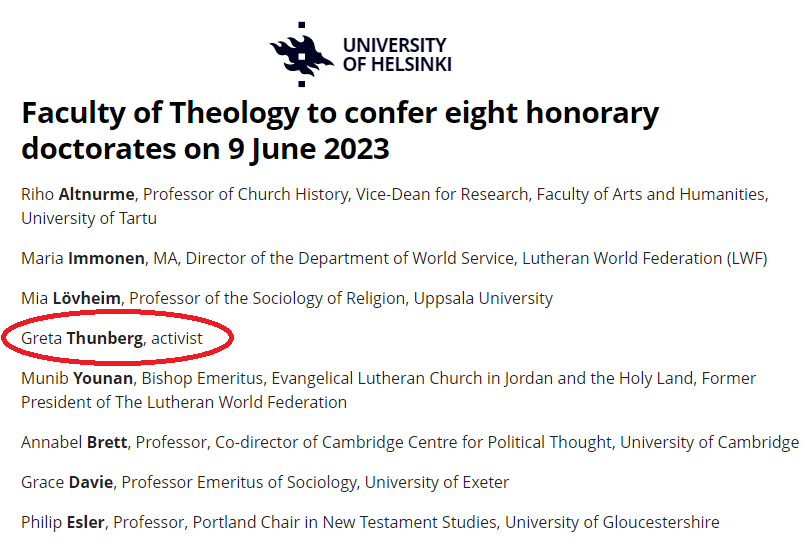
Greta Thunberg, PhD Theology

It’s not a report from Babylon Bee, or an April first joke.  It’s an upcoming ceremony at University of Helsinki. At least they get the field of knowledge right, no one outdoes her as a true believer, despite being a school dropout. From Daily Caller Greta Thunberg To Receive Honorary Doctorate Degree In Theology From University Of Helsinki.  Excerpts in italics with my bolds and added images.

Swedish climate activist Greta Thunberg will receive an honorary doctorate degree in theology from the University of Helsinki in Finland on June 9, the school announced in a press release.

Thirty “distinguished individuals” from around the world will be awarded the university’s “highest recognition,” according to a March 20 press release. The Faculty of Philosophy, the Faculty of Veterinary Medicine, the Faculty of Theology and the Faculty of Law will all give out honorary doctorates. Thunberg is the only individual listed as an “activist” who is receiving a degree, the announcement shows.

Thunberg, 20, gained popularity in 2018 when she refused to attend class until the Swedish general elections took place due to her concerns about climate change. She made international headlines again when she spoke at the United Nations in 2019, accusing politicians of stealing her childhood. Most recently, Thunberg came under scrutiny for deleting a years-old Tweet citing a claim that humans would go extinct if fossil fuels were still being used by 2023. [ So much for her prophetic credentials.]

Thunberg previously received an honorary doctorate law degree in 2021 from the University of British Columbia. [Yikes! A Preacher and a Lawyer.]

The University of Helsinki did not immediately respond to the Daily Caller’s request for comment.

Footnote:  Climate Religion

It should be clear that when climate alarmists appeal to saving the planet for future generations, they are applying contextual ethics. Less obvious is the ancient religious notion that by making sacrifices, we humans can assure more favorable weather. These days, fossil fuels have become the sacrificial lamb required by Mother Nature to play nice with human beings. In the past, people made images and worshiped them, thinking that they could control nature in that way. These days, we make computer models whose projections are sure to scare the bejesus out of us.

Shallow Warmists Strike Again

John Tamny exposes the vapid scientism of global warmists in his Real Clear Markets article With Their Attacks On David Malpass, Global Warming Hysterics Reveal Their Shallow Ways.  Excerpts in italics with my bolds and added images.

In 2008 Nigel Lawson published An Appeal To Reason: A Cool Look at Global Warming. The Tory radical who served as Margaret Thatcher’s Chancellor of the Exchequer was promptly attacked for having the temerity to write about the theory of global warming absent scientific credentials.

Lawson thankfully didn’t cower amid the arrows directed his way. Instead, Lawson responded that he would cease talking about global warming as soon as other non-scientists like Al Gore, Tony Blair, and other self-serious hysterics did the same. Brilliant!

As readers surely know, the Al Gores of the world never took Lawson up on his offer. The non-scientist  Gore continues to express alarm about “global warming,” and he continues to attack those who disagree with him.

Indeed, Gore recently went after David Malpass, president of the World Bank. Gore described Malpass as a “climate denier,” only for the World Bank head to be asked his views on whether or not human progress is the cause of a warming planet. Malpass’s response was, “I’m not a scientist.”

Please think about Malpass’s response, along with the vitriol directed at Lawson fourteen years ago. For writing a book about so-called “global warming” without scientific credentials, Lawson was demonized.

In which case, Malpass’s response to the question was seemingly the correct one
for the warming nail-biters in our midst.

Not a scientist, Malpass would leave the question of warming to the scientists. Gore et al should have been thrilled, except that Malpass’s response actually brought on more frothing at the mouth from warming’s religionists.

Applied to Lawson, it’s all a reminder that warmists really don’t care about one’s scientific credentials so long as the individual being asked about a warming planet is answering the questions the right way. Translated, you can be a dog-catcher and comment about global warming so long as you conclude that human progress born of fossil fuel consumption is the cause.

It’s all a reminder of how very surface is the embrace of “science” by warmists.

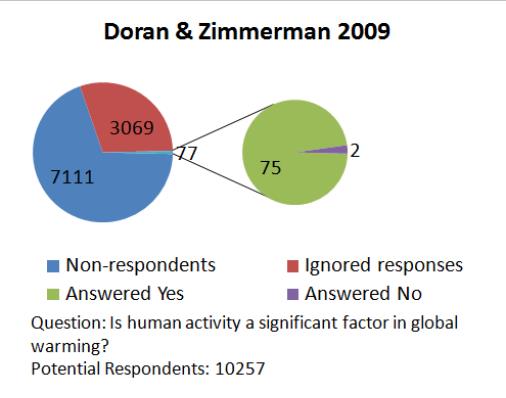
Survey in 2009 first to claim “97% of scientists agree”. Participation excluded private sector and skeptical disciplines (engineering, astrophysicists, etc.), then counted only 77 published climate specialists.

Call “science” their shield. In contending that “97% of scientists believe” life defined by much greater health and exponentially greater living standards has a “warming” downside, the warmists in their delusional minds feel as though they have immunity from reasonable discussion. They’re twice incorrect.

For one, arguably the surest sign you’re in the presence of “scientists” is if they’re arguing. In which case this laughable notion that scientists near monolithically believe as warming mouth breathers do near totally ignores just how much scientists debate everything. The previous truth further reminds us that it’s not science without the doubt.

From there, we just have to be reasonable. We have to stop and think about what life was like before the discovery that planet earth had immense and seemingly endless amounts of oil, coal and surely other commodities that provide us with power. Life before uses were discovered for the earth’s plenty was nothing short of brutal.

As Alex Epstein reminds us in Fossil Future, death from extreme cold was the annual norm, and actually much greater than deaths that resulted from extreme heat. There was also the problem of highly limited drinking water that was actually potable. After which, much of life was defined by an endless pursuit of food in quantities never sufficient to feed us. An “extra mouth to feed” used to be a very real worry, versus today when eating is taken for granted.

How did we get here? Fossil fuels, plain and simple. That’s the case because the fuels powered the various machines that freed us humans to increasingly specialize our work. Thanks to the mechanization of so much that was formerly done by human hands, the human beings that populate the world were more and more able to fulfill their specialized potential. In other words, a local and eventually global division of labor revealed itself on the way to staggering abundance that those who lived in a pre-fossil fuel past could never imagine.

In the words of Epstein, “climate mastery” born of incredibly sophisticated global symmetry meant that people had the means to heat their surroundings when it was bitterly cold, and cool their surroundings when it was brutally hot. Clean water was plentiful such that the world’s population could – yes – greatly reduce consumption of liquids with alcohol in it. And then houses and buildings could be built in rapid fashion that would similarly protect us from an “environment” that wasn’t always kind.

Crucial about these advances that were and are a direct consequence of machines, the ever-widening global division of labor that I write about in my new book The Money Confusion has given the world both the means to care about planet earth along with more and more specialized, Will tomorrow’s energy replace oil and coal? It’s impossible to say. But what can be said with certainty is that without an advanced society that’s a direct consequence of fossil-fuel consumption, we would never have the means to pursue oil’s replacement; assuming there is one.

Back to Malpass, it’s not just that his knuckle-dragging critics want it both ways in criticizing his true admission that he’s not a scientist. That’s just politics. What’s really sad is that global warming fanatics can’t see that the very human progress they disdain (and that they couldn’t live happily without) is what sets the stage for even better care of the planet they claim to want to save.

And it doesn’t take a scientist to understand what the warmists do not.

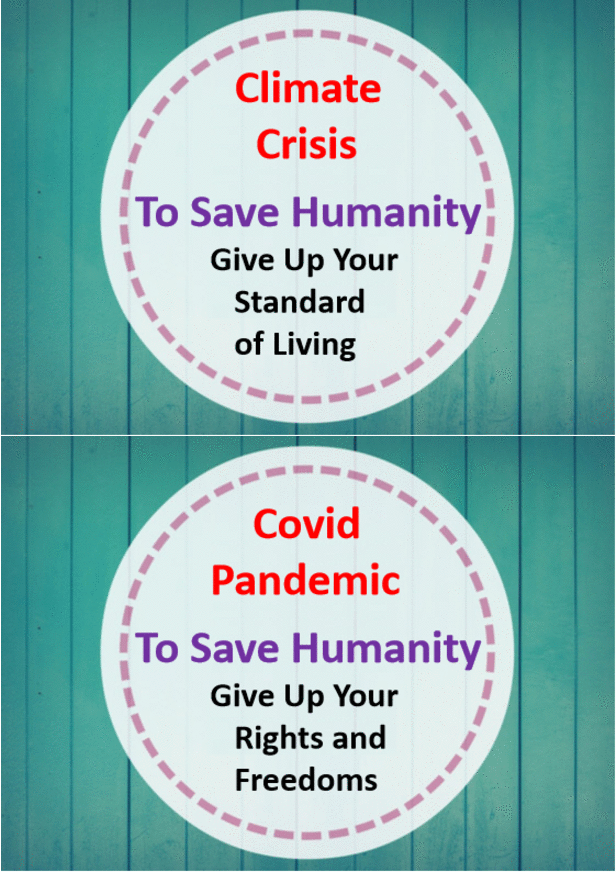
Covid/Climate Prigs Are Out to Spoil Your Days

Christopher Gage writes at Oxford Sour Bay of Prigs.  Excerpts in italics with my bolds.

Enamoured by lockdown, the puritans wish for a perma-pandemic in which no-one, nowhere, will be happy.

Not content with dying their hair green and punching steel through their nostrils, progressives here in Great Britain have proposed something rather more exquisitely demented than their usual fare.

The Independent, a kind of Guardian for actors manqué and Cluster B personalities, those who suffer from fictitious ailments of which ‘the doctor doesn’t know what’s wrong,’ asks, ‘Should Everyone Have a Personal Carbon Quota?’

Helpfully, the newspaper lays out exactly what a Carbon Quota would entail.

It begins: “Your home, sometime in the next decade. You click the heating on and receive an app notification telling you how much of your carbon allowance you’ve used today.

“Outside in the drive, your car’s fuel is linked to the same account. In the fridge, the New Zealand lamb you’ve bought has cost not just pounds and pence but a chunk of this monthly emissions budget too.

“Welcome to the world of personal carbon allowances – a concept that is increasingly gaining traction among experts as a possible response to the climate crisis.”

Curiously, this all sounds like one’s entire life would be recorded and regulated and monitored and meddled with by politicians who’ll punish or praise, all in pursuit of a vague utopia. Sounds familiar.

According to my Carbon Quota, I could live happily and healthily, provided I die next Tuesday at noon.

If I were to stay on this planet and offend Mother Nature with my presence, I’d have to limit myself to half a cigarette per day, a slither of ribeye per week, and one soupçon of red wine per month. Such a paltry regimen would dissolve around 90% of my personality.

Besides, Tuesday is no day to die. Especially before the 4 p.m. happy hour.

Perhaps, I could time it just right. I’ll prop up a stool in my favourite dive bar, and impart everything I’d like to say but avoid saying in fear of social ostracization.

I could say that there is a biological reason why women aren’t funny. I could say that, on balance, the British Empire was a good thing, and that anyone whinging about ‘cultural appropriation’ seldom has any culture worth appropriating. I could say, with conviction, that the Jews obviously don’t secretly run the world because if they did, the world would be far closer to utopia than it is now. I could suggest that those who play music on public transport, indeed—in public—should be hung, drawn, and quartered for the benefit of the gene pool. I could say all this before shuffling off into the light.

(If my girlfriend—whose people have won a fifth of all Nobel Prizes despite being 0.2% of the world population—objects, then I’m sorry… I’m saving the planet, darling.)

You can define the confidence of a culture by the pettiness of its laws.

I’d rather shuffle off than live in a world in which one’s social status is tied to one’s ability to pretend falafel is edible, to one’s withering body. I’d rather that than live in a world in which the prigs and puritans, those weird kids from school with ‘Free Da Weed’ Sharpied on their hemp rucksacks, have won the final victory over everyone else. A world in which every consideration is now suffixed with ‘to save the planet.’

We shouldn’t feign surprise. A stubborn one-third of any population harbours latent authoritarian tendencies. All they need is a little nudge and a wink from someone in a lab coat or a pinstripe suit.

Over the last twenty months, we’ve given them plenty to chew on. We’ve sacralised Crab Mentality—that depressingly human tendency to pull down others into the soup of conformity. For many, this pandemic has been the time of their lives. They’ve enjoyed grassing on neighbours, posting their vaccine statuses, their three-mask chic. Don’t mention that sensible Sweden got it right. Don’t mention that lockdown only delays the inevitable, to great human cost. Don’t mention the fatal link between obesity and Covid deaths.

They’d love life in Austria, where the government has mandated a Western first—forcible vaccination for every citizen.

What a time to be alive. This pandemic has valorised negative personality traits. Back in the Old Normal, high neuroticism combined with high agreeableness meant you’d spend your days siphoning your biography for ‘trauma’ to weaponize against the world. Now, it’s a plus. Like Woke intellectuals, the neurotics mistake their personal problems for societal problems.

I assumed a majority of Britons would, like me, rather chew on a glass vial labelled ‘Wuhan Institute of Virology,’ than consider medical apartheid. Nope.

According to YouGov, six in ten Britons support the introduction of a ‘papers, please’ society—vaccine passports.

That’s despite vaccines blunting Covid’s ability to hospitalise and kill, but not its ability to spread—rendering vaccine passports both pointless and poisonous.

Of course, the usual disclaimer applies just in case anyone of a progressive bent is reading: I’m not saying it’s Nazi Germany, but it’s quite clear how totalitarian regimes slip into power with little resistance.

A recent survey in The Economist made for terrifying reading: forty percent wanted masks forever; a quarter wanted to shut down nightclubs and casinos; another third wanted socially-distanced pubs and clubs and theatres; a hefty rump wanted a 10 p.m. curfew, and one-third said anyone coming into this country should be quarantined, like a dog, for ten days. And they wanted all this lunacy indefinitely, Covid or not.

Perhaps that explains why the eco-loons can air with confidence the drudgery they wish to impose upon everyone else. Not a day goes by without some middle-class Insulate Britain bobo blocking the motorway or making ‘demands’ upon the government to act on the ‘climate crisis’.

What nobody asks is how any of this nonsense would make any difference given that Great Britain contributes less than one percent of global carbon emissions. Those who follow The Science don’t cotton on when last week’s gospel morphs into this week’s heresy.

What happens when we reach Net Zero and the weather doesn’t change? I can only guess… ‘That wasn’t real Net-Zero. Real Net-Zero has never been tried.’

They don’t ask such obvious questions because the answer is obvious: they don’t care about all that. As Mencken wrote, they’re governed by the haunting fear that someone, somewhere, may be happy.

That’s the problem with do-gooding. There’s always more good to do.