Consumers Report: Tesla Road Trip

From Western Journal Siblings Take EV on Trip, End Up Stopping Every 1.5 Hours to Charge – Claim ‘Cheaper Than Gas’ Is Lie.  Excerpts in italics with my bolds and added images. H/T John Ray

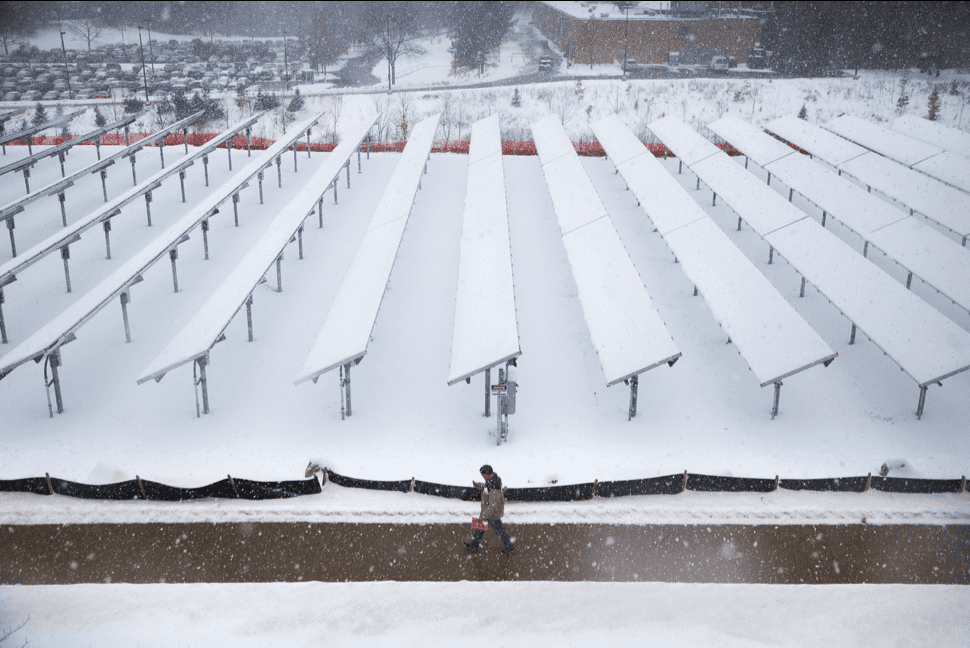
Despite the liberal elites trying to push electric vehicles on us as the eco-friendly way of the future and as an alternative to gas-powered vehicles, we are once again seeing just how unreliable these cars can be. This is especially true in cold weather.

On Sunday, Business Insider reported on the story of Xaviar Steavenson and his sister Alice Steavenson, who wanted to find out what it was like to drive a Tesla. They rented one and set out on a road trip from Orlando, Florida, to Wichita, Kansas, last month — just as the temperature started rapidly dropping.

That decision would cost them time and money, and that trip would decidedly
not be “cheaper” than most internal-combustion alternatives.

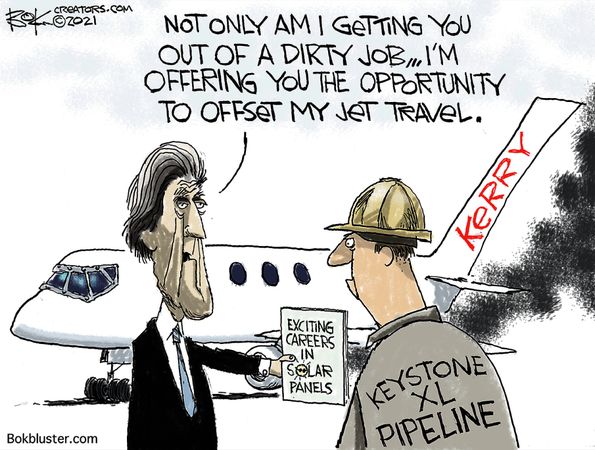
Much to their horror, as they headed north and the temperature grew more and more frigid, the battery drained faster and faster — to the point where they reportedly had to stop every 1.5 hours to charge the car.

To add insult to injury, the cost to charge the car ended up being $25 to $30, not much less than the price of gas.

“Just in one day, we stopped six times to charge at that cost,”
Xaviar Steavenson told Business Insider.

On top of that, it took between one to two hours for the car to charge, meaning that the sibling couple spent more time stopping and charging their car than they did on the road.

Steavenson told Business Insider that Hertz, the rental website, claimed that charging a Tesla was “always cheaper than gas,” but he found no evidence to support that claim.

This is not the only example of EVs having problems in cold weather. The recent winter storm that raged across much of the United States just before Christmas made the limitations of EV technology visible for all to see.

In Virginia, a radio show host named Domenick Nati found himself stranded on Christmas Eve as his Tesla Model S refused to charge in the frigid weather.

“Tesla S will not charge in the cold. Stranded on Christmas Eve!” Domenick Nati wrote in a Twitter post.

At the same time, recent reports have suggested that the cold weather cut the driving range of an EV by up to 40 percent and doubled the time that it takes for an EV to charge.

One man in Kansas found that the driving range on his EV plunged up to 50 percent in the frigid weather.

And it is not just the cold weather that is causing problems for EV owners. There are numerous stories of EVs stalling in the middle of the road for no apparent reason and of EV owners complaining about the insane amount of time and money it takes to charge EVs, even in normal weather conditions.

It really begs the question: Why are liberal elites so adamant about us
ditching our gas-powered cars for EVs?

Canada announced this week (July 2021) it will ban the sale of new internal combustion engine (ICE) cars and light-duty trucks by 2035 as part of its efforts to fight climate change, a report from Reuters explains.

Canada joins a growing list of countries banning the fuel-guzzling vehicles, with Britain saying it will ban ICE vehicles by 2030, and Norway — another country with extremely cold winters — having announced it will do the same as early as 2025.

Trudeau’s Crippled Canada


Joe Oliver writes at Financial Post: Resolution for 2023: It does not have to be this way.  Excerpts in italics with my bolds and added images.

Canada is hurting because of big missed opportunities,
misguided priorities and counter-productive policies

Canada is hurting because of big missed opportunities, misguided priorities and counter-productive policies. The evidence, a sad litany of failures, is there for all to see. But it hasn’t yet generated a collective determination to correct course and do better as a nation. The public has been flooded with government and media talking points designed to convince them their problems are due either to external forces or to the pursuit of laudable goals, especially regarding climate. As a result, many Canadians, though not happy with their current plight, are actually forgiving, even if common sense screams out for transformative change.

The National Post’s First Reading newsletter recently detailed some of the country’s most vexing problems. Over half of Canadians are worried about putting food on the table, 60 per cent about being able to buy gasoline and 40 per cent about paying their mortgage or rent. Wait times to see a specialist after a referral have hit an alarming 27 weeks, compared to “just” nine weeks in 1993. More than half of young Canadians have experienced difficulty accessing mental health services. That only 20 per cent of trans and non-binary youths have is a positive, but stands in contrast with the low consideration accorded young non-trans, non- binary males by the medical system.

Social harmony has been undermined by a prime minister prone to maligning groups whose views he deplores and who is focused on identity politics and systemic racism, even though our country is an exemplar of tolerance. In western Canada, destructive federal policies have deepened resentment, leading to Alberta’s Sovereignty Act, much maligned by a Laurentian Elite seemingly untroubled by the stark double standard with Quebec. Canada’s international influence has waned, which is hardly surprising, since we have long been a free-rider militarily. Now, when we could be making a real difference to European allies desperate for natural gas, we are unable to deliver.

Ottawa’s unprecedented fiscal profligacy exacerbated global inflationary pressures, generated record debt levels, betrayed recent promises to contain out-of-control spending and imposed an onerous financial burden on pensioners, struggling middle-class families, first-time home buyers, younger workers and the next generation. Auditor-general Karen Hogan just uncovered an astonishing $37 billion dollars in COVID relief payments that may have been undeserved. Interest rates are projected to drive up annual debt charges to $53 billion by 2024, $8 billion more than total forecast military expenditures. That should remind the Liberal government it cannot borrow its way to prosperity, even when interest rates are low — which they aren’t anymore. A global recession is looming due to rates hikes by central banks, including the Bank of Canada, who are trying to wrestle inflation back to the targeted two per cent, though so far unsuccessfully.

To justify enormous expenditures and punishing taxes Canadians are endlessly bombarded with apocalyptic climate scaremongering whose main effect is to terrify children and convince the credulous. Even though Canada cannot make a measurable difference to the global climate, the Liberals doggedly push a net-zero agenda that will cost $2 trillion by 2050. Meanwhile, global GHG emissions continue to rise because very few countries are walking the walk, in spite of their virtue signaling, and developing countries, who generate two-thirds of global emissions, are moving in the opposite direction, with non-OECD countries hitting a record for coal consumption last year.

Europe, which is coping with its worst energy crisis since WWII,
should be a cautionary tale for Canadians.

Natural gas there is six times the cost in the U.S. U.K. electricity bills are the highest in the world, creating pressure for a referendum on net zero. Germany is dismantling wind turbines to access coal mines. According to the Daily Telegraph, Switzerland is mulling proposals to restrict electric car trips in order to deal with the energy shortage.

Europe’s crisis is policy-driven, based on the chimera that
intermittent wind and solar can power the continent without fossil fuels.

The result has been energy poverty, compromised national security, de-industrialization and movement of carbon production to other countries — with no reduction in net global emissions. There are parallels in Canada, which suffers from a lost opportunity to reduce emissions by supplying natural gas to Asia and Europe as a substitute for coal and to fund critical social programs like healthcare and education. Yet most Canadians do not see the link between hallway medicine and blocking the construction of pipelines to tidewater, thereby precluding the sale of oil and gas to overseas markets.

Liberal policies derive from a dysfunctional admixture of socialism, progressivism, woke-ism, the Great Reset and climate alarmism. Their default position is to prioritize big government over economics, science and common sense. Even if voters don’t see through government messaging, destructive policies will eventually come home to roost. Unfortunately, a lot of needless pain will have been inflicted by then.

Joe Oliver was minister of natural resources and minister of finance in the Harper government.


Green Energy is Like Breaking Windows

Michael Munger explains at AIER (American Institute for Economic Research) in his article Green Energy is the Modern “Broken Window”.  Excerpts in italics with my bolds and added images.

John Goodell studied literature at Berkeley, then got an M.F.A. at Columbia. He has edited Zyzzyva, a literary magazine in San Francisco, and been a contributing editor at Rolling Stone. Pretty impressive.

None of that qualifies him as a climate scientist or economist. So it’s surprising that web searches yield hundreds of solemn, even pious, invocations of Goodell’s economic wisdom:

“In reality, studies show that investments to spur renewable energy and boost energy efficiency generate far more jobs than oil and coal.”

I have not been able to find a source; the quote itself has become self-recommending, using authority by reference: “studies show…” My good friend Russ Roberts often inveighs against the “studies show” formulation, but I think we have to give Goodell credit here. Studies really do show that dismantling, preferably destroying, the existing energy grid really would create jobs.

The question is, why is maximizing jobs something we want to do?

Frederic Bastiat famously showed that destroying wealth creates jobs, in his discussion of the broken window fallacy. But there was a broader context for Bastiat’s observations on the seen and the unseen: a serious proposal that all of Paris should be burned down. Yes, because it would create jobs. Really.

Bastiat referred to research (“studies show!”) done by a fellow Frenchman on this score:

“What will you say, disciples of good M. Chamans, who has calculated with so much precision how much trade would gain by the burning of Paris, from the number of houses it would be necessary to rebuild?” (From The Broken Window)

Now, it appears that Bastiat was having a little fun; Auguste Louis Philippe de Saint-Chamans (1777-1860) was a viscount and a high-level French government official. Viscount de Saint-Chamans had argued that London’s “Great Fire” (1666) had led to substantial net economic gains; he had not said anything about Paris.

Still, the point was portable: the increased use of resources, and substantial bump in construction employment, had increased economic activity in England by the equivalent of 25 million French francs. France should not be allowed to fall behind on the “destroy wealth to create jobs” race. Bastiat was just taking the Viscount at his word, improving the French economy by burning and rebuilding Paris.

It is worth reproducing Bastiat’s argument, from Economic Sophisms, at some length:

“I originally thought that we might base a great deal of hope on fire, without neglecting war or pestilence. To start fires at the four corners of Paris with a good west wind would certainly ensure the population the two major benefits that the protectionist regime has in view: work and high prices, or rather, work by means of high prices.

Do you not see what an immense impetus the burning of Paris would give to national industry? Is there a single person who would not have enough work to last him twenty years? How many houses would there be to rebuild, items of furniture to restore, tools, instruments, fabrics, books, and pictures to replace! I can see from here the work that will move step by step and increase by itself like an avalanche, for a worker who is busy will give work to others, and these employ yet others…

What constitutes our wealth? Our needs, since without needs there is no wealth; without disease, no doctors; without wars, no soldiers; without court cases, no lawyers and judges. If windows did not break, glaziers would be gloomy; if houses did not crumble, if furniture was indestructible, how many trades would be held up! To destroy is to make it necessary for you to replace. To increase the number of needs is to increase wealth….

Either you believe that wealth consists in having more while working less, and therefore you allow [goods and products] to enter, or you think that it consists in having less with more work, and in this case, you burn Paris.”

One wonders what Bastiat would say about the current movement now in vogue among those who propose to increase jobs by destroying all the production, transportation, and power-generation capital devoted to fossil fuels. Burn all the gas-powered cars? Jobs! Tear down all the oil and gas-powered power plants, so we have shortages of electricity? So many jobs!

Once you are duped into believing destruction is productive, almost everything that a rational public policy would label as a cost becomes, by some judo move of seraphic intuition, a benefit.  If need is wealth, then it makes sense to outlaw fossil fuels immediately, because of all the jobs created trying desperately to provide basic transport and energy.

The problem is that jobs are not wealth. Wealth is access to the goods,
products, and services that make our lives better.

It is true that “studies show” that wiping out all our productive wealth based on fossil fuels efficiently would create jobs. Those “studies” are among the best arguments against doing anything of the sort.

If my choices are to have wealth but no job, or to have a job but no wealth, I’d rather have the wealth. But we don’t have to choose: we can have both wealth and jobs, if we don’t go around breaking all the darned windows.

Michael Munger is a Professor of Political Science, Economics, and Public Policy at Duke University and Senior Fellow of the American Institute for Economic Research.  His degrees are from Davidson College, Washingon University in St. Louis, and Washington University.  Munger’s research interests include regulation, political institutions, and political economy.

Footnote Q & A:

Q:  What is the difference between Golf and Government?

A:  In Government you can always improve your lie.

–Anonymous Source

See Also World of Hurt from Climate Policies-Part 1  

Zero Carbon Means Killing Real Jobs with Promises of Green Jobs

Now is the Winter of Our Renewables Discontent

Ralph Schoellhammer writes from Vienna at Spiked Renewables won’t keep us warm this winter.  Excerpts in italics with my bolds and added images.

The cold snap is exposing the limits of wind and solar – and the insanity of the green agenda.

There are already many German loan words in the English language, but the latest addition should surely be the term ‘Dunkelflaute’. It describes a period of time in which virtually no energy can be generated using wind and solar power. It is a word that captures the grave problem that both Britain and Germany are facing today – namely, that you cannot run a modern economy on renewable energy. Especially during a windless and dark winter.

As real-time data from Electricity Maps shows, electricity production from renewables in Germany and the UK over the past few days has been abysmal. In Germany it is coal that is keeping the lights on, while in Britain it is gas. Falling temperatures are rapidly increasing both countries’ need for fossil fuels. It is not yet clear whether reserves for this winter are going to be sufficient.

Using electricity is a bit like breathing. Even a short break could prove lethal.

An economy needs constant access to energy (electricity in particular), or it will collapse. We cannot simply expect households to live without electricity for a few days, unless we are prepared for civil society to break down.

Some may argue that if humanity has lived without modern technology before, we should be able to do so again. Perhaps. But such a transition would be neither desirable nor entirely peaceful. Once the Promethean flame of modernity has been acquired, few will want to give it up.

The fact is that renewables simply do not offer a viable alternative energy source at the moment. The technology does not yet exist to effectively store electricity, meaning we cannot stockpile any surplus produced by wind and solar during summer. So it doesn’t matter how impressively renewables perform between June and August if they provide barely any energy between November and March. To keep an industrialised economy going requires energy all year round.

Most governments are aware of this. Which is why, despite the elites’ lip-service to renewables, both Germany and Britain have maintained a fleet of fossil-fuel power plants to make up for the unreliability of wind and solar. Unfortunately, those fuels are becoming more expensive as a result of the global energy crunch. With no proper alternatives in sight for energy production, it is consumers who increasingly have to pay the price.

And it is not as if this month’s Dunkelflaute is a bolt from the blue. Everyone knew that the current energy crisis was going to hurt us most during winter, when it is cold and dark, and when renewables, especially solar, are barely producing any power.

Yet still, green activists and politicians insist the answer to our energy crisis lies in expanding our use of wind and solar. This is a form of cognitive dissonance. It is like an ancient tribe, disappointed that throwing virgins into a volcano has not led to better harvests, deciding to double down on the child sacrifices. No amount of solar panels will brighten a northern European winter.

On 11 December, for instance, renewables contributed a measly three per cent of electricity generation in Britain – with solar clocking in at an impressive 0.00 gigawatts. The forms of energy keeping Britain going this winter are mostly gas, some nuclear (including imports from France) and even some coal.

In Germany, the situation is even worse. Last week, low renewable generation led Germany to burn more coal than it has in any week since 2019, and to burn more gas for electricity generation than ever before.

The German government has not only committed heavily to renewable energy, it is also determined to switch off its nuclear power plants. Green Party politicians, like economy minister Robert Habeck, have tried to claim that abandoning nuclear power will have no effect on electricity generation. This is despite the fact that during windless nights, Germany’s three remaining nuclear power plants contribute more to the grid than all of its wind farms and solar panels combined. This winter, nuclear will play a key role in keeping the lights on.

Yet these plants are slated to be decommissioned in April next year.

Greens will no doubt claim that the days when renewables are completely useless only materialise a few times a year – that these Dunkelflaute days are outliers. While that is true to an extent, it is tantamount to a doctor saying that your heart is in good condition, apart from a few days per year when it stops pumping blood through your system. A ‘blackout’ of this vital organ for even a few minutes is usually known as a heart attack. Statisticians might describe such an event as an ‘outlier’, but its consequences would surely be long-lived.

By favouring renewables ahead of more reliable sources of energy, many countries are currently creating all the conditions necessary for such blackouts. Although there are a few laudable exceptions, such as Poland, Finland, Hungary and the Netherlands, which are planning to give nuclear power another try.

It is not only the electricity grid that is suffering from the myopia of our green elites, but our finances, too. UK wholesale day-ahead electricity prices surged to a record high on Monday due to the disappointing performance of Britain’s wind farms.

Activists may claim that a switch to renewable energy is a scientific and moral imperative. But making our energy needs ever more dependent on the whims of the weather is neither scientific nor moral. Higher electricity prices will ultimately lead to higher prices of everything. This will impoverish those who are already suffering financially.

There are signs, however, that outside the minds of pundits and politicians, the hype over renewables is already fading. For instance, the most recent number of new orders for new offshore turbines at the world’s largest producer, Vestas Wind Systems, was the same as Britain’s solar electricity generation while I was writing this article: zero. So perhaps the winds are already changing.

If so, it would signal a welcome return to sanity on energy production.

Ralph Schoellhammer is an assistant professor in economics and political science at Webster University Vienna.


Western Energy Hari-Kari Update


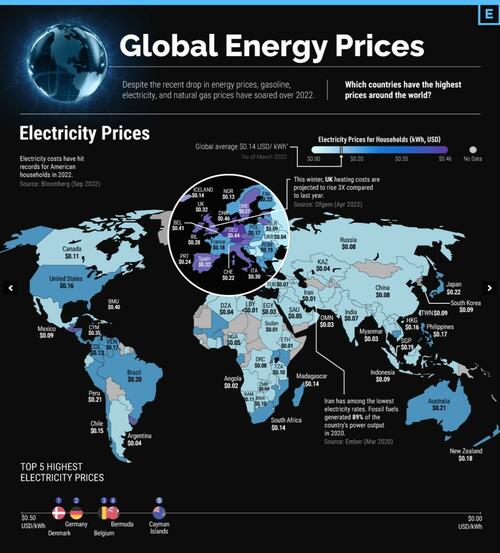
Current global maps of energy prices show western nations, especially in Europe have begun bleeding their economies and societies by self-imposed misguided climate policies.  Tyler Durden reports at zerohedge Mapped: Global Energy Prices By Country.  Excerpts in italics with my bolds.

For some countries, energy prices hit historic levels in 2022.

Gasoline, electricity, and natural gas prices skyrocketed as Russia’s invasion of Ukraine ruptured global energy supply chains. Households and businesses are facing higher energy bills amid extreme price volatility. Uncertainty surrounding the war looms large, and winter heating costs are projected to soar.

Given the global consequences of the energy crisis, Visual Capitalist’s infographics below shows the price of energy for households by country, with data from GlobalPetrolPrices.com.

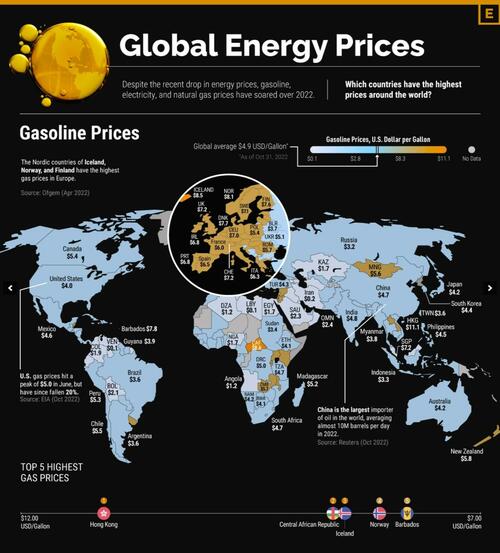
1. Global Energy Prices: Gasoline

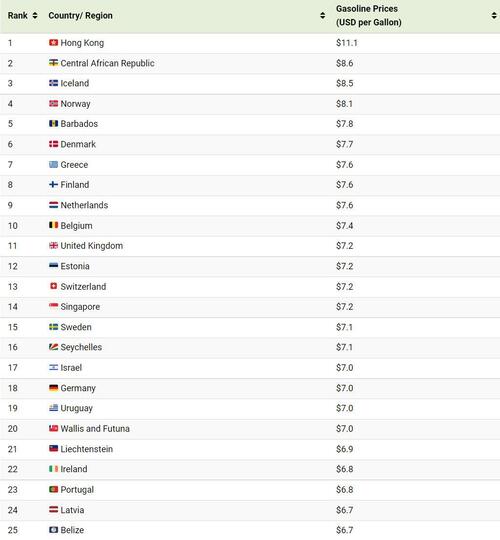
Which countries and regions pay the most for a gallon of gas?

Source: GlobalPetrolPrices.com. As of October 31, 2022. Represents average household prices.

At an average $11.10 per gallon, households in Hong Kong pay the highest for gasoline in the world—more than double the global average. Both high gas taxes and steep land costs are primary factors behind high gas prices.

Like Hong Kong, the Central African Republic has high gas costs, at $8.60 per gallon. As a net importer of gasoline, the country has faced increased price pressures since the war in Ukraine.

Households in Iceland, Norway, and Denmark face the highest gasoline costs in Europe. Overall, Europe has seen inflation hit 10% in September, driven by the energy crisis.

2. Global Energy Prices: Electricity

Extreme volatility is also being seen in electricity prices.

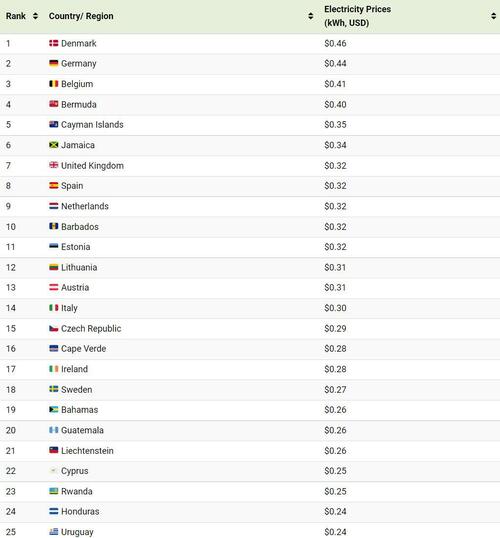
The majority of the highest household electricity prices are in Europe, where Denmark, Germany, and Belgium’s prices are about double that of France and Greece. For perspective, electricity prices in many countries in Europe are more than twice or three times the global average of $0.14 per kilowatt-hour.

Over the first quarter of 2022, household electricity prices in the European Union jumped 32% compared to the year before.

Source: GlobalPetrolPrices.com. As of March 31, 2022. Represents average household prices.

In the U.S., consumer electricity prices have increased nearly 16% annually compared to September last year, the highest increase in over four decades, fueling higher inflation.

However, households are more sheltered from the impact of Russian supply disruptions due to the U.S. being a net exporter of energy.

3. Global Energy Prices: Natural Gas

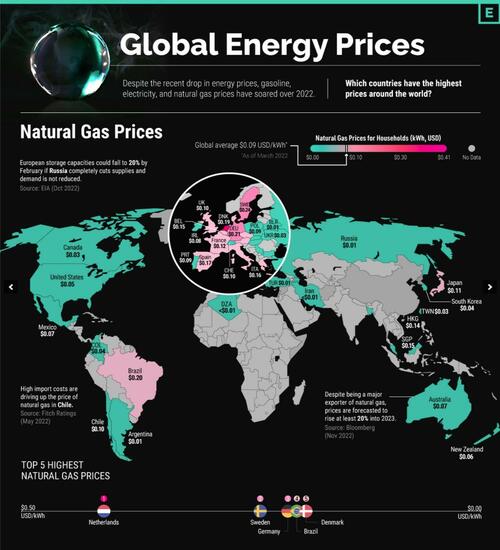
Eight of the 10 highest natural gas prices globally fall in Europe, with the Netherlands at the top. Overall, European natural gas prices have spiked sixfold in a year since the invasion of Ukraine.

Source: GlobalPetrolPrices.com. As of March 31, 2022. Represents average household prices.

The good news is that the fall season has been relatively warm, which has helped European natural gas demand drop 22% in October compared to last year. This helps reduce the risk of gas shortages transpiring later in the winter.

Outside of Europe, Brazil has the fourth highest natural gas prices globally, despite producing about half of supply domestically. High costs of cooking gas have been especially challenging for low-income families, which became a key political issue in the run-up to the presidential election in October.

Meanwhile, Singapore has the highest natural gas prices in Asia as the majority is imported via tankers or pipelines, leaving the country vulnerable to price shocks.

Increasing Competition

By December, all seaborne crude oil shipments from Russia to Europe will come to a halt, likely pushing up gasoline prices into the winter and 2023.

Concerningly, analysis from the EIA shows that European natural gas storage capacities could sink to 20% by February if Russia completely shuts off its supply and demand is not reduced.

As Europe seeks out alternatives to Russian energy, higher demand could increase global competition for fuel sources, driving up prices for energy in the coming months ahead.

Still, there is some room for optimism: the World Bank projects energy prices will decline 11% in 2023 after the 60% rise seen after the war in Ukraine in 2022.

Background Post G7 Ministers Pledge Energy Hari-Kari

G7 Climate, Energy and Environment Ministers’ Communiqué, Berlin, May 27th, 2022

Excerpts in italics with my bolds

Recognising that accelerating the international clean energy transition and phasing out continued global investment in the unabated fossil fuel sector is essential to keep a limit of 1.5 °C temperature rise within reach, we commit to end new direct public support for the international unabated fossil fuel energy sector by the end of 2022, except in limited circumstances clearly defined by each country that are consistent with a 1.5 °C warming limit and the goals of the Paris Agreement. (pg. 33)

We note with concern the scale of private finance currently still supporting non-Paris aligned activities especially in the fossil fuel sector. (pg. 22)

We are thus further strengthened in our resolve to accelerate the clean energy transition towards a net zero emissions future by 2050, while also keeping energy security and affordability at the core of our action, including through the rapid expansion of low-carbon and renewable energies and an increase in energy efficiency.  (pg. 29)

In this regard, we acknowledge the IEA net zero scenario which suggests that G7 economies
invest at least US$1.3 trillion in renewable energy including tripling investments in clean
power and electricity networks between 2021 and 2030. (pg. 31)

We confirm our strong financial commitments for the market ramp-up of low-carbon and renewable hydrogen and its derivatives, thereby signalling an irreversible shift towards a world economy based on low carbon and renewable energy sources. (pg. 31)

In view of the Russian attack on Ukraine, financial support for companies and citizens affected by severely rising prices for fossil fuels is now on the political agenda for several countries. Nevertheless, we aim for our relief measures to be temporary and targeted and we reaffirm our commitment to the elimination of inefficient fossil fuel subsidies by 2025. (pg. 32)

We also highlight that we have ended new direct government support for unabated international thermal coal-fired power generation by the end of 2021, including through Official Development Assistance, export finance, investment, and financial and trade promotion support. (pg. 33)

We commit to increase national efforts to decarbonise building heating and cooling systems by using appropriate policy tools, including regulations and incentives, with the ultimate objective of transitioning away from fossil fuels. (pg. 37)

This will also guide our approach in public finance institutions and on the boards of MDBs and bilateral DFIs. We therefore call on other major economies, the MDBs and bilateral DFIs, multilateral funds, public banks and relevant agencies to also adopt these commitments. We commit to review our progress against our commitments. (pg. 33)

(Note: Multilateral Development Banks (MDBs), Development finance institution (DFIs)

See also Michael Kelly on Energy Utopias and Engineering Realities synopsis Kelly’s Climate Clarity

And Dieter Helm Seeking Climate and Energy Security

Lomborg & Peterson: COP27 Proposing Insane Emissions Policies

Bjorn Lomborg and Jordan Peterson wrote in The Telegraph Pushing the same old climate policies at COP27 is simply insane.  Excerpts in italics with my bolds and added images.

After decades of failure to curb emissions, let’s accept that capitalist investment is not the problem: it’s the solution

“Insanity is doing the same thing over and over again and expecting different results.” This famous quote – often misattributed to Albert Einstein – might very well become the unofficial motto of the UN Climate Change Conference in Egypt, the 27th session of the Conference of the Parties (Cop27).

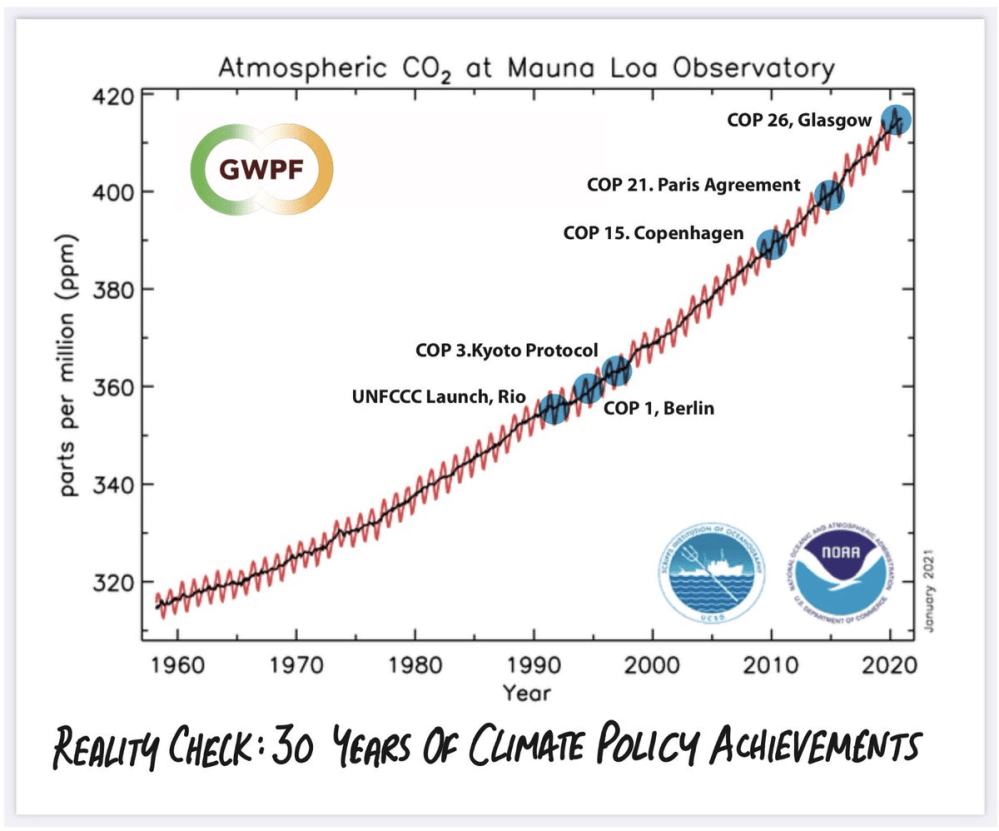
Global CO₂ emissions have kept increasing since the world’s nations first committed to rein in climate change at the Earth Summit in Rio de Janeiro in 1992 – despite dozens of climate summits and the global climate agreements struck in Kyoto and Paris. This is the case, once again, in 2022, when we will collectively set a new emissions record. While rich countries increasingly promise draconian cuts (and then generally backtrack, as they import huge amounts of oil, gas and coal to save their citizens from energy poverty, as they have done most recently to address the current energy crisis), most of the future emissions will come from the currently poorer countries in Asia and Africa, as they power their climb out of abject poverty.

In the previous ten years, the world has focused more on remediating climate change than ever before. Despite this, we are not achieving anything, although no shortage of money has been wasted. In a surprisingly honest review of climate policies, the UN revealed a “lost decade”: The report found that it couldn’t tell the difference between what has happened and a world that adopted no new climate policies since 2005.

Consider that: all those climate summits and grandiose promises – all that expense and trouble – and no measurable difference whatsoever.
This state of affairs is unsurprising, unfortunately, because today’s renewable energy sources have two big problems. First, they occupy a vast amount of space, often displacing nature: replacing a square yard of a gas-fired power plant requires 73 square yards of solar panels, 239 square yards of on-shore wind turbines, or an astonishing 6,000 square yards of biomass. One study found that the United States would have to devote a land area four times the size of the United Kingdom to “clean power” to fulfill President Biden’s promise of a carbon-free economy by 2050.

Land in grey required for wind farms to power London UK, solar panels covering the yellow space.

Second – and of even greater importance – the two renewable energy technologies favoured by the vast majority of environmental activists are intermittent or unreliable. Solar energy simply isn’t produced when it is overcast or at nighttime. Wind energy requires a breeze. We are often told by green energy boosters that wind and solar energy are cheaper than fossil fuels. At best, that is only true when the wind is blowing, or the sun is shining. On a windless, dark night, the cost of wind and solar power rises to the infinite.

It is for such reasons that it is deeply misleading (although highly convenient) to compare the energy costs of wind or solar to fossil fuels only when it is windy and sunny. It is also important to note that since all solar energy is sold at essentially the same time (when the sun is up and shining), its value drops dramatically. When solar reaches 30% market share in California, as one study revealed, it loses two-thirds of its value.

Furthermore: because modern societies require 24 hours of non-stop power, backup is not optional – and that means reliance on fossil fuels, when there’s no sun or wind. As more solar and wind is introduced, moreover, fossil fuel backups become ever more expensive as they offer their services for fewer hours, to produce the necessary return on capital. And what of batteries? Globally, we have battery storage with the current capacity to store one minute and 15 seconds of the world’s electricity consumption. And that problem will not be ameliorated soon – even by 2030, global batteries will only cover less than 11 minutes of the global electricity consumption.

The scale of the challenge

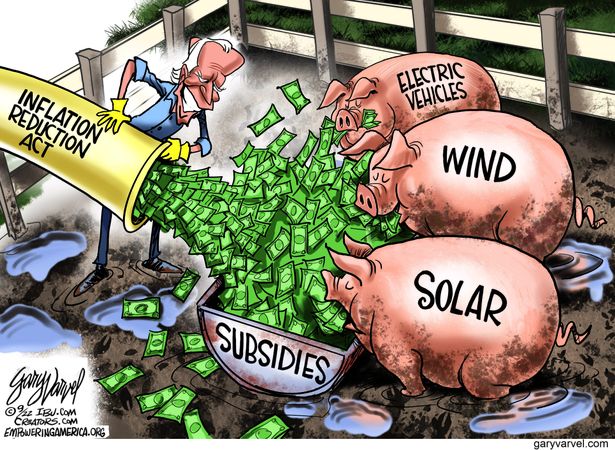
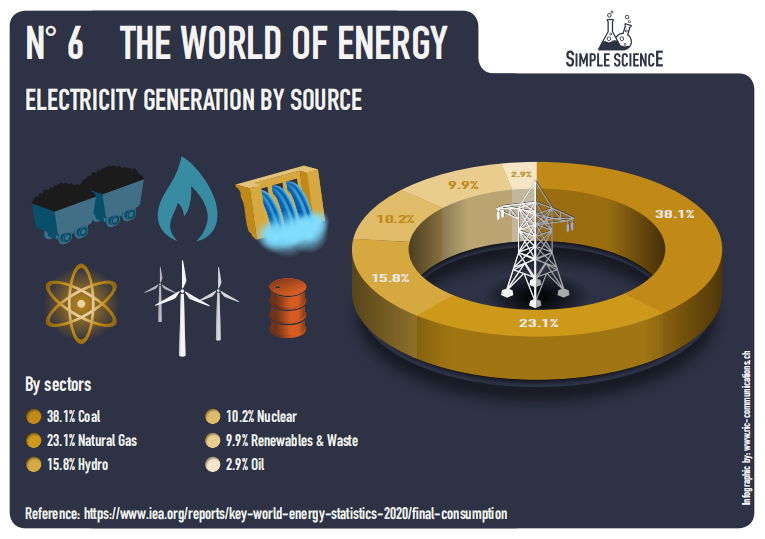
All of this shows just the problems with moving electricity away from fossil fuel. When Biden promises ambitiously that all of America’s electricity will come from renewable sources by 2035, he is addressing the comparatively simple part of the climate challenge. Electricity constitutes just 19% of total energy use. We’re far further behind in developing solutions for agriculture, manufacturing, construction, and transportation. Of these, the latter is most often discussed by environmentalists and virtue-signaling politicians, who insist that a solution is already at hand: electric vehicles. Despite massive subsidies, however, just 1.4% of cars globally are electric, and that number is not going up quickly. The Biden Administration itself estimates that battery-electric cars will make up less than 10 percent of total US automobile stock – by 2050.
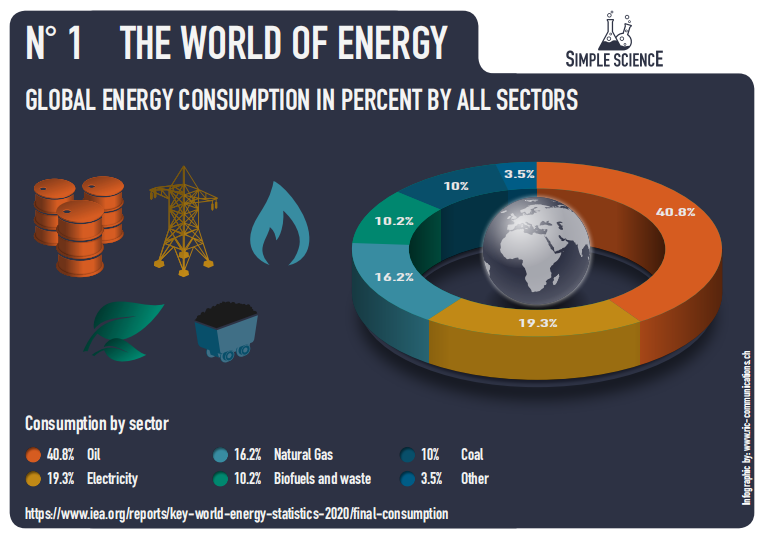
The scenario for the entire world is that less than one-fifth of all global cars will be battery-electric by 2050. We should remember, as well, that we do not yet have electric tractors, or heavy trucks, or airplanes, or ships – and that means that all the fossil fuel infrastructure that allows such machinery to operate will have to stay intact for our supply chains to continue their necessary operations.

And our current turbo-charge on electric cars will have very little impact on climate. The International Energy Agency estimates that the world would produce 231 million fewer tons of C02 if we achieve all our ambitious stated transport electrification targets in this decade. This reduction will lower global temperatures by one-ten thousandth of a degree Celsius (0.0001°C) by the end of the century, according to the UN’s own Climate Panel’s model.
Tackling climate change with current technology is essentially impossible.

This means that climate policy-makers tinker at the margins, offering deceptive solutions, and morally grandstanding. This pattern has repeated for three decades. Most of the promises made in Rio de Janeiro in 1992 and in Kyoto in 1997 were disregarded. A 2018 study found that only 17 of the 157 countries that pledged emissions cuts in Paris passed laws mandating the required action. Which nations? Algeria, Canada, Costa Rica, Ethiopia, Guatemala, Indonesia, Japan, North Macedonia, Malaysia, Mexico, Montenegro, Norway, Papua New Guinea, Peru, Samoa, Singapore, and Tonga. These are not the nations that will change global emissions. Even if every country did everything promised in the original Paris agreement, the emission cuts by 2030 would constitute just 1% of what is necessary to keep temperature rising under the 2°C target.
Failure, however, has not made politicians or the people they serve more careful and or more adamant about searching for better solutions. Instead, they (we) have doubled down, making ever-more ludicrous but emotionally attractive pledges, despite zero chance of either their implementation or their success if implemented. Attempting to implement the much-heralded and oft-trumpeted vision of a zero C02-emission world – whether by 2035 or 2050 – would be so ruinously expensive that extensive gilets-jaunes-style riots are certain long before the “goal” is reached.

A different approach

If we do care about fixing this challenge, we need to change course. Pretending that the proper technological answer currently exists, and is not being implemented because we lack conviction and willpower is reckless and misleading. Worse, it stops us from pursuing real solutions to the many problems that confront us – only one of which is climate change.

Dozens of the world’s top climate economists and three Nobel Laureates in Economics evaluated a whole gamut of climate solutions for the think tank Copenhagen Consensus. If we continued to do what the EU has been doing – cutting carbon with a mix of market and planning diktats – means spending one pound to avoid a mere three pence of long-term climate damage. That’s partly because cutting CO₂ output in the rich and already efficiently-producing EU is impractically expensive, and partly because EU climate policies are much more inefficient than necessary (the EU prefers using wind and solar, for example, to cut a ton of CO₂, over the more efficient option of switching from coal to natural gas).

The Nobel laureates and climate economists instead determined that investment in green innovation comprised the best long-term investment. Why? Consider how the world worried over starvation in the 1960-70s. If we had approached that problem like we are approaching climate remediation, we would have required the rich to eat less, while serving their leftovers to the poor. That would have failed – as our current approaches will fail – disastrously. What worked instead? The Green Revolution: the innovative development of higher-yielding crops. We thereby increased world grain production by 250% between 1950 and 1984, raising the calorie intake of the world’s poorest people and reducing the incidence of serious famines.
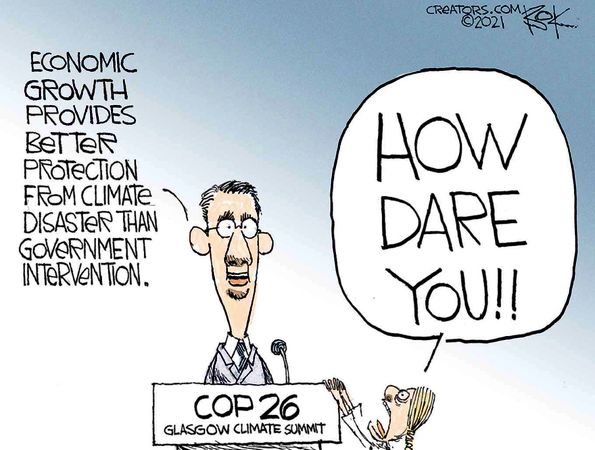
Innovative thinkers tackled the problem head-on, instead of tinkering around the edges. Innovation meant producing more with less, instead of requiring people to make do, with less. Would-be and even genuinely looming catastrophes have been continually pushed aside throughout human history because of innovation and technological development. Innovation gave us security and prosperity, and continues to drive the growth and the increased efficiency of the world’s largest economies.

In general, unfortunately, investment in long-term innovation is underfunded because it is hard for private investors to capture benefits. In areas where long-term innovation on the private front can be underfunded (because of difficulties of monetising benefits in a sufficiently short time frame), public investment and support is often warranted. A recent example – and a stellar success on the climate innovation front? The ten-year $10 billion US public investment in shale gas, which originated under President George W. Bush. Remarkably, this was not planned as part of the policy of climate change remediation. Nonetheless, it led the way for a production surge (with all the attendant economic benefits, particularly for the poor) that allowed natural gas to become cheaper than the dirtier coal it partially replaced. Energy derived from natural gas produces approximately half the CO₂ of coal. The consequence? The US has the best record of C02 emission reduction of any country in the past decade – and simultaneously reduced its reliance on foreign suppliers of uncertain reliability and cost.
Investing in innovation

Everyone, in principle, agrees that we should be spending much more on R&D. However, the fraction of rich countries’ GDP actually invested into R&D has halved since the 1980s. Why? Putting up inefficient solar panels and wind turbines offers the opportunity for good photo ops, and allows those who lead to convince us of their dedication to action, while funding researchers requires a more subtle and mature understanding and approach. We might remember, however, when considering such things, that our economic stability and opportunity is now at serious risk, and we are simultaneously not currently doing the planet any favors.

According to the Copenhagen Consensus Nobel Laureates, we should increase our current spending five-fold, to $100 billion per year. This doesn’t mean that in total we should spend more. We already devote $600 billion per year to financing ineffective climate remediation strategies. We could instead take a mere sixth of that poorly spent money and direct it toward the most effective means of addressing our problems.

A genuine innovation-led response would require the consideration of multiple solutions. We should improve today’s technologies rather than erecting currently inefficient turbines and solar panels. We should devote more attention to nuclear fission (perhaps in the form of modular reactors), and continue to explore fusion, hydrogen generation from water, and more. The geneticist who spearheaded development of the first draft sequence of the human genome – a technological tour-de-force, completed far earlier and at less cost than originally estimated – makes the case for research into algae that produces oil, grown on the ocean surface. Because such algae simply converts sunlight and CO₂ to oil, when producing it, burning it would be CO₂-free. Oil algae are far from cost-effective now, but researching this and many other solutions is not only inexpensive but offers our best opportunity to find real breakthrough technologies.

If we innovate the price of green energy down below fossil fuels, everyone will switch. This would be a far better solution, particularly for the poor, than increasing the cost of fossil fuel to the point of general penury to disincentivise use. The Copenhagen Consensus experts calculated returns from green energy R&D at eleven pounds for every pound invested – hundreds of times more effective than current climate policies.

Finding the breakthroughs that will power the rest of the 21st century could require a decade, or it could take four. But no other genuine solutions beckon, and we have already had three decades of spectacular failure pursuing the policies that are currently in place. We know that the world leaders gathered at COP27 won’t solve the problems that beset us with the same empty promises offered twenty-six times previously. Are we doing the same thing yet again? Remember the definition of insanity…

But innovation beckons, as it has so reliably in the past. We have better options, and ignore them at the cost of our economy, our opportunity, and the environment.

Dr. Bjorn Lomborg is President of the Copenhagen Consensus and Visiting Fellow at Stanford University’s Hoover Institution. His latest book is “False Alarm: How Climate Change Panic Costs Us Trillions, Hurts the Poor, and Fails to Fix the Planet.” A collection of his writings for the Telegraph can be found here.
Dr. Jordan B. Peterson is Professor Emeritus at the University of Toronto, and the author of three books: “Maps of Meaning: the Architecture of Belief”, “12 Rules for Life: an Antidote to Chaos” and “Beyond Order: 12 More Rules for Life”. A collection of his writings for the Telegraph can be found here.
Advancing National Takeover of Energy Industry

Tom Luongo writes at his blog The Oil Nationalization Two-Step.  Excerpts in italics with my bolds and added images.

You’ve all heard me rant about the “Straussian Two-Step,” which is nothing more than a retread of the Hegelian Dialectic.   Here’s the formal definition:

An interpretive method, originally used to relate specific entities or events to the absolute idea, in which some assertible proposition (thesis ) is necessarily opposed by an equally assertible and apparently contradictory proposition (antithesis ), the mutual contradiction being reconciled on a higher level of truth by a third proposition (synthesis ).
In modern politics it’s used to create a false reality by asserting something that is
partially true (at best) or a truth that you yourself created as a person in power.

In today’s case it’s a manufactured energy crisis across the West.

In order to see the Straussian Two-Step however you have to work backwards. This process is not an a priori deduction or an exhaustive fit of investigative journalism.

Rather it is an inductive conclusion based on awareness of the motivations of those in power and seeing how they lead a mass of people to a pre-ordained conclusion. In other words, schizo-posting.

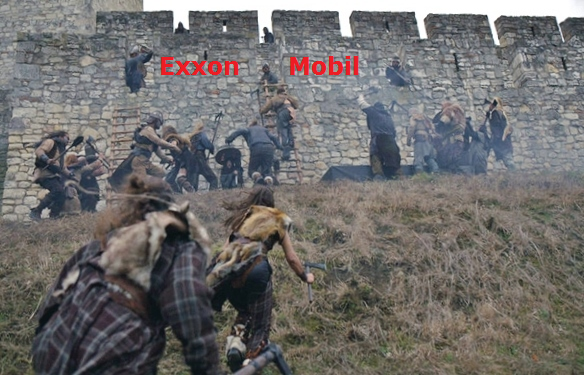
Carbon fighters attacking the Exxon Mobil bastion, here seen without their shareholders disguises.

Thesis

So, say your goal is to legitimize the state takeover, or advance another step forward the state takeover, of an industry. Let’s use oil and gas for today’s lesson.

The first thing you do is manufacture a crisis that will disrupt the supply of the product you want to takeover. In this case, it started with COVID-19, which disrupted far more than just the energy sector.

More than 2 million barrels per day of refining capacity was lost world wide thanks to COVID-19. Given the current hostility to new refineries (more on this later), those barrels are not coming back.

Don’t forget, that for a “Straussian Two-Step” this big you will have to brainwash and/or gaslight two entire generations into hating themselves for being rich, wasteful, spoiled, alive or worse, just plain white.

So, they are already primed to hate all the things at play here — capitalism, Big Oil, Banks, Old White Guys (rich or poor) — and enrage your useful idiots by pushing their already tenuous hold on reality to the literal breaking point.   “I can’t even….” isn’t the most common phrase uttered on Tik-Tok for nothing.

That’s the Thesis part.

So, when the crisis hits thanks to natural gas disruption you forbid buying of from a particular country… you demonize not only Vlad but the industry itself for price gouging and preying on the widdle guy during a war.   There’s a word for this… chutzpah.

Antithesis

Predictably, you then allow your fake political opponents …[enter Cocaine Mitch from Stage Right]… to produce the opposite argument. In this case, the counter is obviously we need free markets to produce oil and gas. The refiners are just responding to the market.

That fake opposition, of course, also blames Vlad for this crisis to ensure the market’s champion looks not only patriotic but also suitably bought and paid for by Big Oil, Old White Guys, etc.

Both sides of this argument have now been framed 90 degrees away from the real source of the problem–government intrusion into the flow of oil and gas to your homes.

This is a crisis that if left solved to human ingenuity and, yes, the studious application of greed, would be over in a matter of weeks as refineries shut down during COVID would come back online, supply chains reorganized etc.

While the crisis phase would be over quickly, the long term investment cycle set off in refining would take longer to structurally immunize the industry against future supply shocks to accomplish.

Prices may not return to normal for years but the market, without intervention by rapacious morons both in government and running them from behind the curtain, would eventually grind the arbitrage out of the fuel industry nearly entirely.

Synthesis

Remember the goal. Destroy free markets, nationalize oil and gas.

This means also preparing the next move to get rid of another aspect of the free market while zeroing in on the current crisis. In this theoretical case, we’re looking at the massive diesel crack spreads of refineries, fueling the perpetual motion machine of Marxism’s inherent envy.

Moreover, this situation exploded on the eve of a crucial election to put into the mouths of the crisis actors we call colloquially, “Members of Congress.”

Their solution? Put windfall profit taxes on refiners who are taking advantage of the vulnerable and needy common man. They are evil ‘price gougers’ by accepting the bids from the market for the fruits of their labors which occurred precisely because of artificially inducing a shock to the system.

In the case of diesel fuel in the US this is clearly a manufactured crisis.

COVID took a lot of refineries in the Northeast (PADD-1) offline. And given the hostility of the Biden administration and environmentalists to the oil industry as a whole, as I alluded to earlier, those refineries are not coming back online anytime soon.

Don’t take my word for it, take it from the ones who own the refineries.

“Building a refinery is a multi-billion dollar investment. It may take a decade. We haven’t had a refinery built in the United States since the 1970s. My personal view is that there will never be another refinery built in the United States.”

According to Wirth, oil and gas companies would have to weigh the benefits of committing capital ten years out that will need decades to offer a return to shareholders “in a policy environment where governments around the world are saying ‘we don’t want these products to be used in the future’”.

Why would they? If it were your money would you begin the insane process to build an oil refinery in the US today even with crack spreads at $70+ per barrel? Of course not. By the time you filed the first Environmental Impact Assessment application form the spreads could be back to $20 because it’s politically advantageous for the “Straussian Two-Steppers” to take the pressure off for a few months.

Government is keeping the market in a supply/demand mismatch on purpose. That’s the only conclusion you can draw. Because if “Biden” wanted to solve this problem he wouldn’t be draining the SPR, he’d be rolling back regulations on refining oil or offering some of that ‘infrastructure money’ to help the industry rebuild post-COVID.

High Bid Wins the Prize

Diesel fuel demand is mostly inelastic, since it’s simply necessary for our daily life. Any supply disruption will cause massive price spikes because people will fall all over themselves bidding up the price of available supply to get what they can.

This is the one thing morons leftists can’t wrap their head around. Producers aren’t withholding supply and ‘raising prices’ in an open market economy. That’s propaganda. The reality is that consumers bid up the price for everything in demand or withhold those bids when the cost/benefit isn’t in their favor.

This is the dynamic at play when I use the term cost-push inflation. A supply shortage pushes the bids for basic goods up out of necessity and pouring money into the system through government handouts only accelerates this effect.

Low cost or free dollars flow to the things people need the most and that is the main source of our inflation today.

So, when you see the headlines full of scaremongering like the US only has 20 days of diesel fuel left, this undergirds the bids for limited supply. The futures markets are stripped of their power to coordinate supply over time and producers are stuck being demonized by low quality agitprop from the likes of AOC and Lizzie Slapaho.

Nationalization: The Next Two-Step

Windfall profit taxes are already on the way in Germany, 90% of all profits taxed away to the state. Energy production, when that bill passes, will be nationalized in Germany. The end of rational energy pricing will be gone.

Germany will become another energy subsidizing hellscape like we see all over the world.

The choice in front of German energy companies now is Uniper’s fate, nationalization through bailout, or remain ‘private’ but on a government-mandated cost-plus business model the profits from which will never outcompete the depreciation curve.

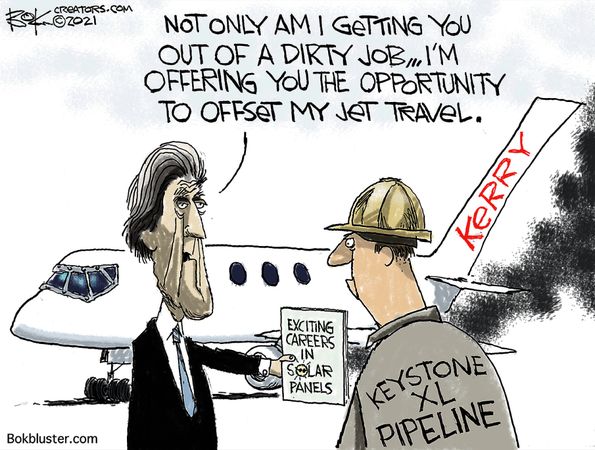
Today here in the US the Democrats are pushing for outright nationalization of all oil and gas production. That was the goal all along, the thesis. The fake antithesis is the “Drill baby, Drill,” crowd on Capitol Hill, crying crocodile tears over the loss of the Keystone XL pipeline for more than a decade.

The synthesis this time around will be finally getting through their long-sought after billionaire’s tax in the form of a windfall tax starting with evil Big Oil. Even if they don’t get it, it’s not like they don’t have other things on their to-do lists to get it done.

They are starting here again because they know no one will seriously consider outright nationalization (the next synthesis) unless there’s a war with Russia…

NY and PA: Midterm Election Energy Lesson

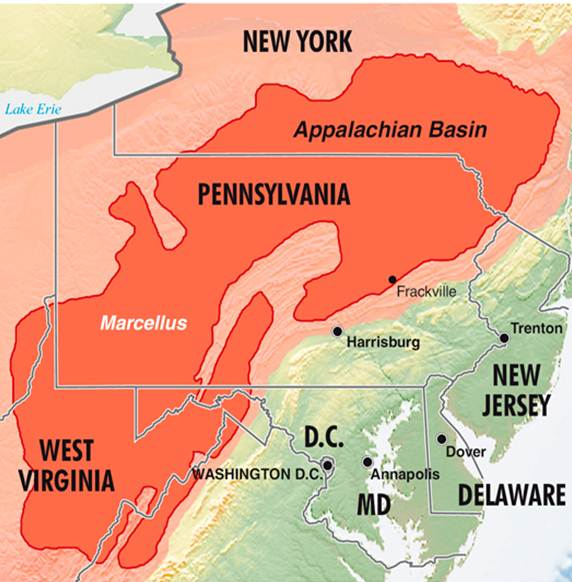
The Marcellus formation lies under more than 60 percent of the state of Pennsylvania alone. Some geologists and petroleum engineers believe that the massive shale formation may hold as much as 500 to 700 trillion cubic feet of natural gas. This amount of natural gas in the Marcellus Shale could supply the entire east coast for the next 50 years according to some geologists.

Larry Behrens writes at Real Clear Energy Fetterman and Cuomo: A Midterm Election Energy Lesson.  Excerpts in italics with my bolds and added images.

With energy dominating the national discussion, look no further than Pennsylvania and New York as examples of failure and fortune. The Empire State might be looking to make a U-turn after a years-long trip into failed energy policy, while the Keystone State must decide if they will adopt the “America Last” energy policy currently favored in Washington, D.C.

The two states share a border of 225 miles, but when it comes to energy,
they might as well be on different planets.

It’s clear energy is on the ballot this midterm season. That’s bad news for fracking foes like Pennsylvania Senate Candidate John Fetterman. While he may be struggling to articulate his position du jour on fracking, it’s clear he’s borrowing from the Joe Biden play book: play a moderate in the campaign, return to radical roots once elected.

In 2014, then-Governor Andrew Cuomo imposed an outright ban on fracking in his state. The decision cost a loss of 400 jobs per year in some of the state’s counties and resulted in a “statically significant increase in unemployment.” By declaring a war on pipelines, some utilities in New York stopped “new residential, and commercial and industrial customer gas service connections.” New Yorkers are paying the 10th highest electric rates in the nation, and nearly 30 percent higher than their neighbors in Pennsylvania.

With no fracking ban in their state, Pennsylvanians are much better off. Today, the Commonwealth is second only to Texas when it comes to production of shale gas and in 2021 the state received over $235 million in impact fees from drillers. One university study found communities in Pennsylvania suffering from long-term economic stagnation are the beneficiaries of American energy development in their area.

Two different states, two very different outcomes. Enter the 2022 midterm election.

Rank FF Consumption  Trillion BTU
1 Texas 11767
2 California 4845
3 Louisiana 3698
4 Florida 3110
5 Pennsylvania 3110
6 Ohio 2774
7 Illinois 2590
8 New York 2370

Source of Primary Energy Consumption Data:  EIA   Notice that California and New York are top consumers of FF energy, principally oil and natural gas, but neither is a top producer, despite accessible resources.  Florida, Ohio and Illinois also share that predicament.

New York’s race for Governor is turning into a nail-biter, as residents of the state consider hiring the first Republican for the job in 16 years. Appointed Governor Kathy Hochul would continue Cuomo’s failed anti-fracking policy while Republican Lee Zeldin supports energy development in New York. The result? A Republican is surging in a massively blue state where people say their top issue is the economy. New Yorkers are suffering under the consequences of failed-fracking policy. Meanwhile in Pennsylvania, they have a radical in moderate’s clothing that thinks the New York failure is just fine.

The stakes are as high as they are clear: John Fetterman wants to end fracking and if elected, he’ll do all he can to do it. Sure, we all witnessed his bumbling response where he pinky-swears he now likes fracking, but he can’t bumble over the truth. He once referred to the industry as a “stain” on the state he is seeking to represent. Don’t forget that Joe Biden also did the fracking flip-flop as a candidate, only to take office and impose an “America Last” energy policy that’s delivered record gas prices, massive inflation and a weaker country on the world stage. Apparently, John Fetterman and Joe Biden view the disaster in New York as a winning game plan.

It failed for Andrew Cuomo, it’s failing for Joe Biden and if he’s elected, it will fail for John Fetterman, too. You might say that just like Communism, banning fracking has failed everywhere it’s been tried.

Vote accordingly.

See also New England Energy Inflation Self-Imposed

Project abandoned in 2017 after New York blocked planning and permit processes.

Climate Dreams, Meet Brick Wall

Fred Laza writes at Financial Post Climate fantasies hit brick wall of U.S. politics.  Excerpts in italics with my bolds and added images.

The reality of the energy transition could be ugly for politicians

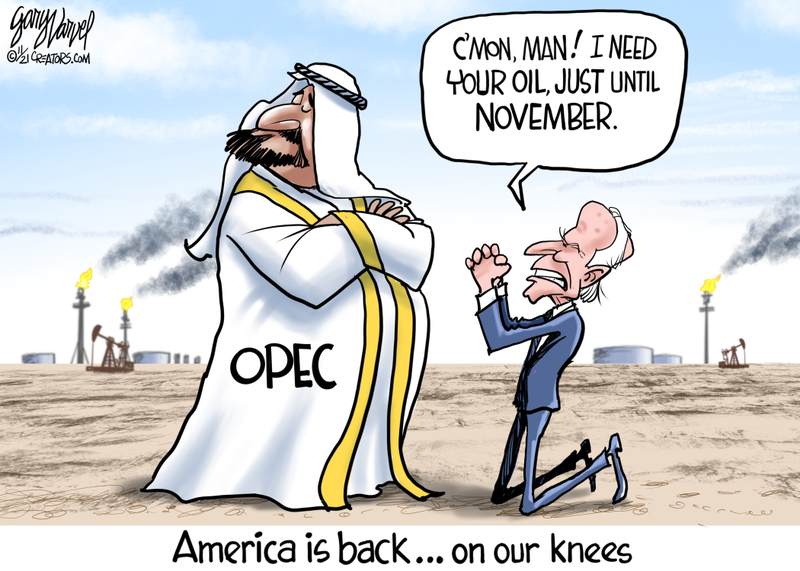
The Biden administration’s attempt to lower gasoline prices before the November mid-terms has been both amusing and disappointing. First the president attributed the run-up in oil and gas prices to Putin’s invasion of Ukraine. Then his government drained about a million barrels a day from the strategic oil reserve. After six months of that and with gasoline prices creeping up again, Mr. Biden went to Saudi Arabia to ask Crown Prince Mohammed bin Salman for his help in keeping oil prices from rising at least through to the mid-term elections.

The prince said no, which was totally predictable. It appears none of the foreign policy experts advising the president understands basic human relations, let alone Arab culture. You can’t call someone a murderer and then expect him to turn the other cheek and meekly accede to your request for a big personal favour.

The substantial long-term damage to the important relationship between Arab countries and the U.S. has been driven entirely by short-term political expediency. This greenest administration in history at first seemed very committed to dealing with climate change and accelerating the timeline to achieve net-zero carbon emissions for the U.S. as a whole. A key driver for this goal is higher oil and gas prices. Economics 101 teaches that sharply higher prices for carbon fuels will reduce demand for them and promote the shift to alternative sources of energy, primarily renewables.

Well, Putin’s war on Ukraine and Biden’s war on fossil fuels have been very effective in delivering skyrocketing oil and gas prices. But now it seems another key driver of climate policy has been discovered: that a Democratic administration remain in office, a necessity that has run into the reality that people do not seem willing to pay the price, at least not right now, for the transition from carbon to non-carbon sources of energy.

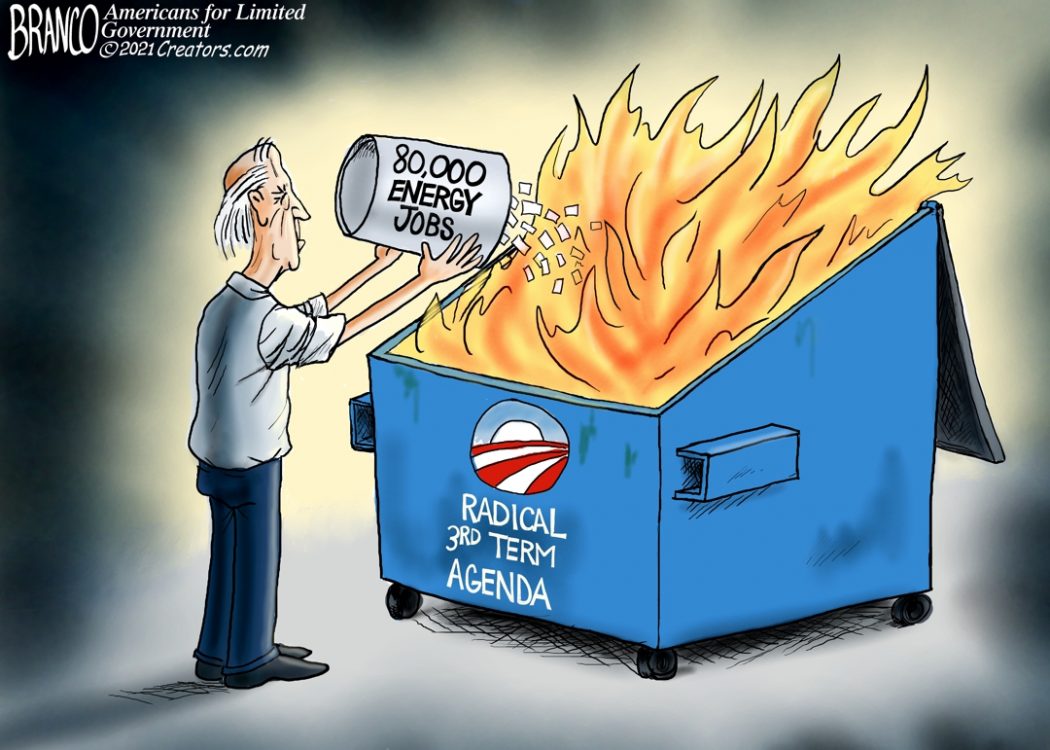
Ardent supporters of the energy transition keep suggesting it will lead to the creation of millions of new jobs. (“There is no trade-off between the economy and the environment.”) There are at least two problems with this argument. First, it ignores the euphemistically named “adjustment process.” As the economy moves away from fossil fuels, many millions of people will lose their jobs and not “transition” easily and smoothly to the new jobs that might eventually be created. As with all dramatic policy changes, there will be winners and losers, and the losers likely won’t be fully compensated by the winners — or happy about that. That reality could be ugly for politicians.

As for the claim that the transition will eventually produce millions of net new jobs,
there is good reason for doubt.

Consumer-oriented industries, with the possible exceptions of food and shelter, will have to make drastic changes in their business models. The carbon footprints resulting from the continual introduction of marginally better products are substantial, which means the regular introduction of new products or of varieties of existing products will have to end. Think of the effects in automobiles, iPhones, clothing, furniture, cosmetics, detergents and so on. Further, until most electricity worldwide is derived from renewables or nuclear, the growth of the Internet will have to be curtailed. The millions of servers that are its backbone require large amounts of electricity for cooling and power. Will users willingly limit their reliance on social media and streaming services? Imagine the implications for business and commerce if they are required to.

If our production of carbon is to be reduced as much as the most insistent environmentalists want, market economies will have to move to much lower levels of production and employment. The yellow brick road to Green Oz does not run smooth. It might never actually reach Green Oz, and even if it does, there is no assurance that either the trip or the destination will be pleasant for everyone.

Until very recently, this political reality seems to have been forgotten. Politicians need to be careful in what they ask for and much more honest with the people whose votes they seek.

Fred Lazar is an associate professor of economics in the Schulich School of Business at York University.

Footnote Q & A:

Q:  What is the difference between Golf and Government?

A:  In Government you can always improve your lie.

–Anonymous Source


Nations the Gods Destroy They First Make Green

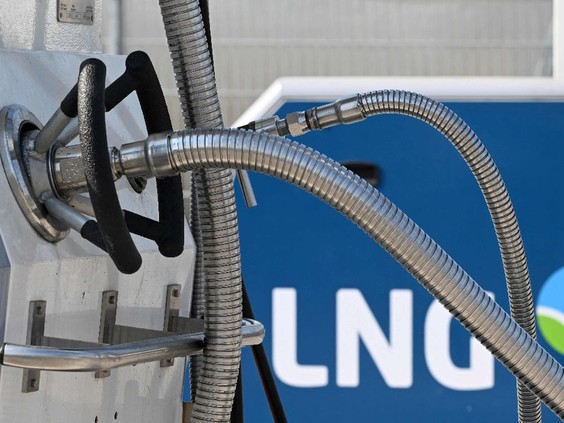
LNG (Liquefied Natural Gas) filling station for trucks in Dortmund, western Germany. PHOTO BY INA FASSBENDER /AFP via Getty Images

Rex Murphy explains how the demise of nations works in his piercing National Post editorial Even green zealots fear the cold more than the evils of natural gas.  Excerpts in italics with my bolds and added images.

The Germans, among others, aren’t smirking now

Forgive the phrase, but it is appropriate — Vladimir Putin has the European Union — Germany in particular — over a barrel. . . Over several barrels come to think of it.

The virtue states went green, but contented themselves with getting the slack, the dirty oil and gas stuff they so deplored, from reliable Russia.

And when a certain American President — the sagacious readers of the Post will divine whom I mean, and it is merely to forestall trauma in readers of other journals that I withhold his name (hint: there was a hotel in Toronto that featured his name as a brand and rhymed with “plump”). When that President warned German authorities that it was a risk and a very bad move to set up a dependency on Vladimir Putin for an essential resource, in public — the scene is available on YouTube — half of them smirked and the other half laughed.

There is a small moral here. Advice worth following does not need to come from lips you approve of. The quality and worth of advice may, on occasion, be independent of the character (or what you presume to be the character) of the person offering it.

They are not smirking now. Germany, in the warm haze and fuzzy thinking of “progressive” thought, broke the bank on their master green plan, the great Energiewende, to “get off” planet-destroying fuels (and nuclear)which proved to be a massive multi-billion dollar mess and a failure.

This even before Mr. Putin unleashed his legions on Ukraine. Putin’s current leverage was founded on their previous policies.

Contrary to the sooth-sayers of the IPCC and the Eco-Nostradami, great economies can’t be flipped on a Davos dream, and the German winter of 2023 will be unmoved by replays of An Inconvenient Truth. Or shoreline rants from a most intemperate David Suzuki. Anger does not become an elder about to board a sea plane.

As a footnote to the Energiewende opera, be it noted at the end of September the German government announced is spending US$195 billion, to cap natural gas prices for households and businesses.  That’s a bigger price tag than the US$172 billion the UK government was expected to spend to finance its own price cap. Germany went green with a vengeance and now has to mail out checks to its citizens to compensate for the folly.

And before turning to the distressed UK, one line from Forbes, quoting Foreign Policy, has quite a punch: “Electricity prices, in fact, have tended to be highest in places with the greatest share of renewable energy.” Dear Lord, who could have guessed? It’s a good thing they didn’t impose … an escalating carbon tax.

Great Britain has dropped its second prime minister in mere weeks. As in Germany, it’s all about energy, all about the mindless embrace over the last years of green ideologies, until fear of a cold winter causes an impressively swift rearrangement of concerns about energy.

It has just reversed its stand on fracking. During its green-virtue phase, fracking — the most efficient technological advance in the search for the most basic energy resource — was termed a pure evil.

It was banned by law. It was a blasphemy against Mother Earth and Bill Nye. Now that winter closes in, and energy prices that were once mere Honda Civic (used) are now going all Rolls Royce (customized), fracking is a good thing, a necessary thing. It has received an official vote of approval from the House of Commons, UK.

On our side of the world under the increasingly — let’s choose a kind word — drifting leadership of Joe Biden, the Strategic Petroleum Reserve — intended as a backup for the most drastic emergencies, has been raided once again. OPEC turned him down on his request to increase oil flow. Let us recall that the Biden presidency began with shutting down a great Canadian source of oil, the Keystone XL.

It is a wonderful consideration that when Reality (capital R) speaks, all poses and postures, all voice-hushed bleating of virtue-speak platitudes take a stay. I wonder if our deputy-prime minister is still pulsating the message that all this reminds us of “how important climate action is.” And how carbon taxes are so very necessary in the present moment.

How did we get here?

It is the speeches and the campaigns against oil and gas, the sermons from the jet-set di Caprio’s, the dim-witted tirades of such as Neil Young against Fort McMurray, much and more than Putin, have brought this crisis on. People who have never seen a COP meeting, never could have dreamt of going to Davos, never mind been able to afford such a folly, that will bear, and perhaps not be able to bear, the cost of the winter to come.

Thank heaven, reality and its sister common sense is having a minute
at the microphone of the world’s attention.

As an ending point, would it not have been a great thing, if a moderate country, of magnificent and vast geography, had taken advantage of its so-plentiful natural resources, encouraged and supported its energy industry, built pipelines, guaranteed supply, could now — at this crisis moment — offer so many of its allies, real support and immediate remedy?

We would be in a place to issue this pronouncement: “Canada says, to hell with Putin, we have what you need, and we can send it now.”

But no. Under the current net-zero fascinated government, energy was deemed an enemy, due for shut down as soon as possible, and what we now offer a tormented world is a windmill-driven, not yet started, dubious in the extreme, futuristic hydrogen plant in Stephenville, Newfoundland. If you have tears, weep them now.

The countries whom the gods would destroy they first make green.

See also Net Zero = Pro China + Pro Russia