Nat Gas to be Totally Green

This is an update about Non-Emissions Technology (NET) regarding natural gas as an energy source.  Gas is already the cleanest burning fossil fuel, and now power plants are being built which will in addition entirely eliminate CO2 emissions into the atmosphere.  Mark Whittington has the story at Washington Examiner Natural gas is about to become the world’s biggest green energy source.  Excerpts in italics with my bolds

When politicians who are alarmed about climate change think about green energy, they tend to be fixated on solar and wind power. However, thanks to a recent merger announced between NET Power and Rice Acquisition Corp II, natural gas is about to become the leading source of green energy, supplanting solar and wind.

NET Power has developed a new natural gas power plant technology called the Allam cycle.

The NET Power Allam-Fetvedt Cycle is essentially a specialized Brayton cycle in which the combustor is supplied with three flows: fuel gas, which is compressed in the fuel compressor; oxygen, which is produced in an air separation unit and then compressed; and a carbon dioxide working fluid that is heated in the multi-flow regenerator. Combustion of this oxy-fuel mixture in the carbon dioxide environment creates high-temperature products that then enter the carbon dioxide turbine. These products drive the power generator and then enter the multi-flow regenerator, where some of their heat is transferred to the heated flows. The flow is then directed to the cooler-separator, where its water and carbon dioxide contents are split. Part of that carbon dioxide is compressed to supercritical pressure, and the rest is sent to storage. Courtesy: 8 Rivers

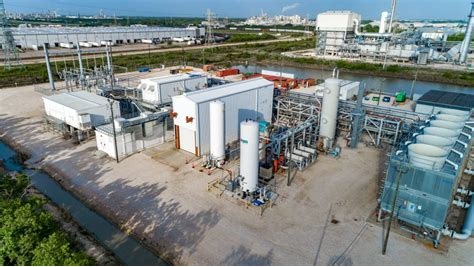
Conventional natural gas plants burn natural gas to heat water, which then turns the turbines that generate electricity, emitting carbon dioxide into the atmosphere. An Allam cycle plant uses the carbon dioxide to turn the turbines and then sequesters it for sale to customers that use the CO2 for everything from fuel to building materials to food. NET has successfully run a test plant in La Porte, Texas, since 2018.

The NET Power process was demonstrated at our 50MWth test facility in La Porte, Texas which broke ground in 2016 and began testing in 2018. Since 2018, NET Power has conducted three extended testing campaigns and successfully synchronized to the Texas grid in the fall of 2021. NET Power has achieved technology validation, hit critical operational milestones, and accumulated over 1,500 hours of total facility runtime as of October 2022. La Porte will remain a crucial resource for ongoing technology enhancements.

Rice Acquisition is a decarbonization solutions special-purpose acquisition company. Its merger with NET will create a new, publicly traded company called NET Power Inc.

NET already has six Allam cycle power plants, each capable of generating 300 MWs of electricity in various stages of development — four in the United States, one in the United Kingdom, and another in Germany. The company believes that the sky is the limit as far as how many power plants it can build — perhaps thousands. It anticipates being able to replace older, more polluting power plants with its newer, nonemitting models.

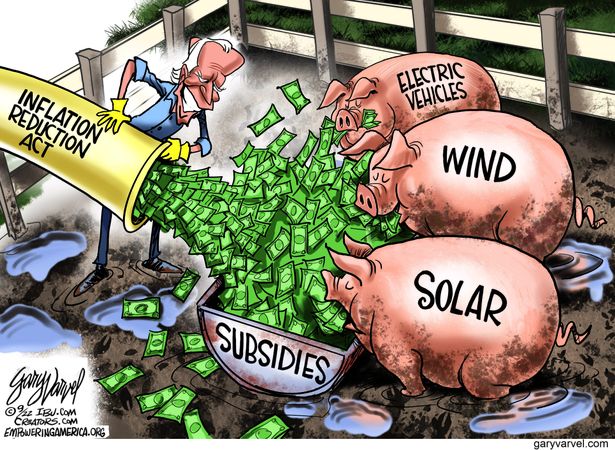
Ironically, the company notes that a provision of the much-maligned Inflation Reduction Act contains tax incentives for the kind of carbon capture technology it is preparing to unleash on the world. The provision may be one of the few good things about the Inflation Reduction Act.

The advent of natural gas as a true green energy source will upend
the politics of climate change and energy production.

Hitherto, the Biden administration and some countries in the European Union have sought to limit the production of fossil fuels because they emit greenhouse gasses. However, governments around the world that are chasing a renewable green energy dream will no longer have an excuse to do so once the NET emission-free plants come online.

Green New Dealers such as Bernie Sanders may label carbon capture, along with nuclear power, as a “false solution,” but NET Power is about to prove them all wrong. Natural gas power plants have advantages that wind and solar lack. They run 24/7, night or day, rain or shine, windy or calm, without any need for battery storage. Natural gas power uses less land than wind and solar farms do. Solar and wind have hidden environmental costs, from the difficulty of recycling fiberglass turbine blades to the effects on wildlife of utility-scale wind and solar arrays.

Emerging energy technologies such as carbon capture are more likely to address the problem of climate change than resorting to “renewable energy” by government fiat. The free market, with perhaps some indirect government incentives, will more likely lead to a world in which the energy we need to operate a technological civilization can be generated without emitting greenhouse gasses.

Carbon capture will not be the only energy technology of the future. New, safer nuclear power plants will be in the mix. The development of a new magnet at MIT and the recent breakthrough at Lawrence Livermore point the way to clean, limitless fusion energy in the coming decades.

The Green New Dealers want to impose a future of limits on all but the very wealthiest.

Their excuse is that such a future is necessary to save Earth from a climate catastrophe. But one suspects the real reason is that rationing energy is a way for them to control people and maintain power.

Fortunately, private companies and the engineers and scientists who work for them are working to thwart the plans of people such as Sanders and Rep. Alexandria Ocasio-Cortez (D-NY). The Green New Dealers despise free markets, but the same economic system that has brought such prosperity to the world is going to solve climate change and the energy crisis forever.

My Comment

Natural gas burns clean, meaning it produces no mercury vapors, sulfur dioxide, or particulate matter, and a reduced amount of nitrogen oxide. It also emits half the CO2 from burning coal, and 1/4 the CO2 from oil combustion.  Of course, far from being a pollutant, CO2 is plant food and any added to the atmosphere from any source is a boon to the biosphere essential to human and animal life.  The warming case against emitting CO2 is unfounded, as I have explained previously: Global Warming Theory and the Tests It Fails.

The impact of this innovation is primarily political and economic, dismantling the rationale for banning natural gas power plants.  The planet will warm or cool regardless of the negligible effect from CO2 emissions.


The Gas Stove Gambit

Remembering that natural gas is a fossil fuel, there must be more than meets the eye in the media firestorm over banning gas stoves for safety reasons.  Could it be that the regime along with the media are gaslighting us regarding this maneuver?  Kit Knightly thinks so and explains the gambit in his off-guardian article What is the US “Gas Stove Ban” REALLY about?  Excerpts in italics with my bolds and added images.  H/Y Tyler Durden

What sounds like overreach in itself, is actually a cover
for something potentially far, far worse.

The Biden administration is apparently looking to ban gas stoves, calling them a “hidden danger”. But while that sounds bad enough, a deeper dive shows – as usual – it’s not really about what they say it’s about.

Talk of banning gas stoves and “unregulated indoor air quality” could be a Trojan horse designed to get even more “smart” monitoring technology into your home.

Let’s jump in.

Are Gas Stoves Dangerous?

Well, according to Alexandria Ocasio Cortez, the New Scientist and million other outlets and pundits who started talking about it in the last two days, yes.

Earlier this week near-identical articles from the National Review, Bloomberg and CNN detail how the US Consumer Product Safety Commission will be opening “public comment on the dangers of gas stoves sometime this winter”.

The articles claim:

The emissions have been linked to illness, cardiovascular problems, cancer, and other health conditions. More than 12 percent of current childhood asthma cases are linked to gas stove use, according to peer-reviewed research published in the International Journal of Environmental Research and Public Health last month.

Now would be a good time to talk about the phrase “linked to”. It’s always a good one to look out for in any mainstream publication. Journalists love it because it implies causation without stating it.

Consider, one hundred per cent of serial killers have been linked to the ingestion of water and the wearing of shoes.

If this manipulative use of language were not evidence enough of an agenda, the rather premature deployment of the race card proves it:

Senator Cory Booker (D., N.J.) and Representative Don Beyer (D., Va.) wrote a letter to the agency last month urging the commission to address the issue and calling the harmful emissions a “cumulative burden” on black, Latino and low-income households.

So, Will They Ban Them?

Actually, probably not.

Considering that, according to Bloomberg, some 40% of US homes use gas stoves to cook, an outright ban would be impractical to the point of madness. You can’t criminalise 40% of the country. It would be almost unenforceable.

Perhaps they might try a “phasing out”, as they plan for petrol cars in California.

But most likely of all is that this was never really about banning stoves in the first place.

OK, So What’s IT Really About?

What we’re seeing here looks to be your classic bait-and-switch. Having established a “problem”, the powers that be suggest a solution they have no intention of ever carrying out (the more unreasonable the better).

When this measure is inevitably rejected by the public, the government will then proceed to suggest – or pay an NGO to suggest to them – a “compromise” measure.

The compromise is no compromise at all, of course, but actually what they wanted to do from the beginning. Nevertheless, the whole process is sold in the media as a victory for whichever party happens to be in opposition, and cited as evidence that “the system works”.

Tellingly, as I am writing this, Biden has already “ruled out a ban due to backlash”, and Vox were already using the “compromise” a lot in an article they published yesterday.

However, what that “compromise” would be in this case isn’t clear at first, you have to do a little digging.

One clue is present in the National Review article [emphasis added]:

The Association of Home Appliance Manufacturers argues that cooking produces harmful emissions regardless of the kind of stove used. “Ventilation is really where this discussion should be, rather than banning one particular type of technology,” Jill Notini, a vice president at the association, told Bloomberg. “Banning one type of a cooking appliance is not going to address the concerns about overall indoor air quality. We may need some behavior change, we may need [people] to turn on their hoods when cooking.”

And you’ll find another in the abstract of the original report on “Cooking With Gas, Household Air Pollution, and Asthma: Little Recognized Risk for Children”, published in the Journal of Environmental Science in April 2021:

The impact [of gas stove cooking] on children can be substantial because […] indoor air is unregulated.

“Ventilation is where this discussion should be”, after all “cooking produces harmful emissions regardless of the kind of stove” and a ban wouldn’t address “concerns about overall indoor air quality” which is currently “unregulated”.

Do you see where this is going?

It’s not about gas stoves, and it’s not about asthma – it’s about “indoor air pollution”, and more importantly how they plan on “regulating” it.

In one of those startling coincidences we’ve all got so used to witnessing in modern geopolitics, just as the US is talking about indoor air quality because of gas stoves, other countries around the world are doing the same thing for totally different reasons.

Singapore is considering new regulations on indoor air quality too, but because of formaldahyde.

Last month The Conversation was running articles claiming “indoor air pollution kills”, while Sir Chris Whitty, the UK’s chief medical officer, was “demanding action on indoor air pollution”.

On Monday, in a Guardian lifestyle piece purportedly about scented candles, Svetlana Stevanovic calls indoor air quality a “going concern”.

Two days ago The Tyee, an “independent” Canadian magazine which receives some funding from the Canadian government, ran an op-ed headlined:

We Need a Revolution in Clean Indoor Air

Which attempts to link improving indoor air quality to “ending Covid” (whilst making sure to sufficiently fluff the vaccines, of course).

Just yesterday the Irish Times published an article about the dangers of poor indoor air quality.

In a rather interesting piece of timing, the air hygiene technology company AeroClean and Molekule, a market leader for air purifiers, finalised a public stock merger…also just yesterday.

Two days ago it was announced IKEA would be selling their own smart air monitors, the same day Samsung announced their new “smart air purifier”.

Earlier today Chinese tech giant Xiaomi issued a media release about their new smart air monitoring technology.

recent report expects the global air monitor technology market to swell to nearly 6 billion dollars in the next three years.

But I’m sure this is all just a coincidence.

Where Does This Lead?

Well, if I had to guess I would suggest some new “smart” technology is coming that will monitor air quality and indoor C02 emissions. Like smart electricity and water meters, but for your air.

Interestingly, the World Economic Forum agrees with me, publishing an article on their website last July headlined “Indoor air pollution: What causes it and how to tackle it”, which claims:

indoor air pollutants can now be detected with more precise, efficient, and compact sensors thanks to advances in environmental sensing technology. As a result, intelligent home systems may soon use sensors like these to keep track of indoor air quality and notify the ventilation system before dangerous levels are reached.

As part of “backing down” from the stove ban, they will introduce a new bill which sees “smart air monitors” become mandatory in all new-build houses, hotels and rented accommodation.

Just like smart electricity meters, smart air monitors would almost certainly be used to harvest huge amounts of data and give states or corporations the ability to control your home.

If your “indoor air” isn’t “clean” enough; if you use your stove too much, burn too many scented candles or emit too much co2, expect to get penalized  in some fashion until you learn how to be more responsible.

More smart technology, more monitoring, and ultimately more control.

So, while it’s possible the gas stove ban talk will resolve itself into the cliche new tax or fines or some other petty scheme for bilking the many out of their wages, the signs are certainly there it might be something more sinister.

Meanwhile, expect to keep seeing reports on gas stoves damaging the climate, or stories about poor indoor air quality making covid worse.

The usual bought-and-paid-for columns that support every new normal narrative.

Manheimer Steamrolls Net Zero Claims

Accomplished and distinguished physicist Wallace Manheimer published a crushing argument against the rationale for Net Zero claims and policies.  His paper is While the Climate Always Has and Always Will Change, There Is no Climate Crisis. published in the Journal of Sustainable Development.  In italics with my bolds.

Abstract

The emphasis on a false climate crisis is becoming a tragedy for modern civilization, which depends on relible, economic, and environmentally viable energy. The windmills, solar panels and backup batteries have none if these qualities.

This falsehood is pushed by a powerful lobby which Bjorn Lomborg has called a climate industrial complex, comprising some scientists, most media, industrialists, and legislators. It has somehow managed to convince many that CO2 in the atmosphere, a gas necessary for life on earth, one which we exhale with every breath, is an environmental poison.

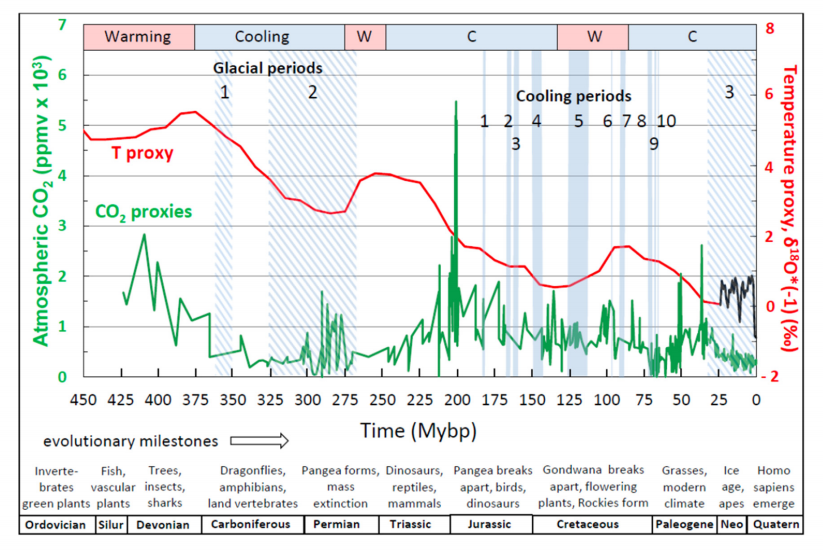
Multiple scientific theories and measurements show that there is no climate crisis. Radiation forcing calculations by both skeptics and believers show that the carbon dioxide radiation forcicng is about 0.3% of the incident radiation, far less than other effects on climate. Over the period of human civilization, the temperature has oscillated between quite a few warm and cold periods, with many of the warm periods being warmer than today. During geological times, it and the carbon dioxide level have been all over the place with no correlation between them.

A useful synopsis is written by Chris Morrison at the Daily Sceptic  Net Zero Will Lead to the End of Modern Civilisation, Says Top Scientist.  Excerpts in italics with my bolds and added images.

A damning indictment of the Net Zero political project has been made by one of the world’s leading nuclear physicists. In a recently published science paper, Dr. Wallace Manheimer said it would be the end of modern civilisation. Writing about wind and solar power he argued it would be especially tragic “when not only will this new infrastructure fail, but will cost trillions, trash large portions of the environment, and be entirely unnecessary”. The stakes, he added, “are enormous”.

Dr. Manheimer holds a physics PhD from MIT and has had a 50-year career in nuclear research, including work at the Plasma Physics Division at the U.S. Naval Research Laboratory. He has published over 150 science papers. In his view, there is “certainly no scientific basis” for expecting a climate crisis from too much carbon dioxide in the atmosphere in the next century or so. He argues that there is no reason why civilisation cannot advance using both fossil fuel power and nuclear power, gradually shifting to more nuclear power.

There is of course a growing body of opinion that points out that the Emperor has no clothes when it comes to all the fashionable green technologies. Electric cars, wind and solar power, hydrogen, battery storage, heat pumps – all have massive disadvantages, and are incapable of replacing existing systems without devastating consequences.

Manheimer points out that before fossil fuel became widely used, energy was provided by people and animals. Because so little energy was produced, “civilisation was a thin veneer atop a vast mountain of human squalor and misery, a veneer maintained by such institutions as slavery, colonialism and tyranny”.

This argument hints at why so many rich, virtue-signalling celebrities argue not just for Net Zero but ‘Real’ Zero, with the banning of all fossil fuel use.

King Charles said in 2009 that the age of consumerism and convenience was over, although the multi-mansion owning monarch presumably doesn’t think such desperate restrictions apply to himself. Manheimer notes that fossil fuel has extended the benefits of civilisation to billions, but its job is not yet complete. “To spread the benefits of modern civilisation to the entire human family would require much more energy, as well as newer sources,” he adds.

In Manheimer’s view, the partnership among self-interested businesses, grandstanding politicians and alarmist campaigners, “truly is an unholy alliance”. The climate industrial complex does not promote discussion on how to overcome this challenge in a way that will be best for everyone. “We should not be surprised or impressed that those who stand to make a profit are among the loudest calling for politicians to act,” he added.

Perhaps one of the best voices to cast doubt on an approaching climate crisis, suggests the author, is Professor Emeritus Richard Lindzen of MIT, one of the world’s leading authorities on geological fluid motions:

“What historians will definitely wonder about in future centuries is how deeply flawed logic, obscured by shrewd and unrelenting propaganda, actually enabled a coalition of powerful special interests to convince nearly everyone in the world that CO2 from human industry was a dangerous planet-destroying toxin. It will be remembered as the greatest mass delusion in the history of the world – that CO2, the life of plants, was considered for a time to be a deadly poison.”

Figure 16. The geological history of CO2 level and temperature proxy for the past 400 million years. CO2 levels now are ~ 400ppm

Much of Dr. Manheimer’s interesting paper debunks many of the fashionable nostrums surrounding politicised ‘settled’ climate science. It is an excellent read. Discussing some of the contrary opinions that debunk obviously false claims, he says it is “particularly disheartening” to see learned societies make definitive claims when so much contrary information is readily available. He points out that over the last 10,000 years, the Earth has almost certainly been warmer. There have been warmer and colder periods, just like today.

To find the off-narrative information, even Google can be used, Manheimer says – though he does note that the company warns it will not provide information on “claims denying that long-term trends show that the global climate is warming”.

Figure 18. Per capita food production in kcal/(per-capita per day) from 1961 to 2009. Notice that there is a steadily increasing production, with no sign of any ‘slowly escalating but long-enduring global threat to food supplies.’


Southwestern Solar: Bright Shining Disappointment

Solar farms in Southwest USA from Solar Energy Maps

D. Dowd. Muska reports in his National Review article A Bright Shining Disappointment.  Excerpts in italics with my bolds and added images.

Solar has failed in the Southwest.  In the ’70s, it all seemed so simple.

President Carter issued a proclamation declaring the sun “an inexhaustible source of clean energy.” A joint resolution of Congress predicted that “the development of solar technologies will provide an abundant, economical, safe, and environmentally compatible energy supply.” Robert Redford assured Americans that “the sun will always work” and “never increase its price on a heating bill.”

But nearly 50 years later, solar’s failure is blindingly clear. The Southwest Public Policy Institute, where I serve as a senior fellow, recently explored the contribution sunshine makes to utility-scale electricity generation in eight states: Oklahoma, Texas, New Mexico, Colorado, Utah, Arizona, Nevada, and California. What we discovered was jarring.

In the Southwest, solar generates a mere 6.4 percent of utility-scale power (power from facilities where total generation capacity is one megawatt or greater), despite the region enjoying the sunniest skies in America. While California (16.7 percent) and Nevada (14.4 percent) had the heaviest solar shares, the drop-off in the other states we studied was profound: Utah (8.1 percent), Arizona (5.5 percent), New Mexico (5.0 percent), Texas (3.1 percent), and Colorado (3.0 percent). Coming in last — and by a country mile — was the Sooner State, at a miniscule 0.1 percent.

These disappointing figures are all the more perplexing when one considers the massive level of government succor that has flowed the solar industry’s way since the late 1970s, the era of Annie Hall, the Bee Gees, and the Star Wars Holiday Special. In 2012, an audit by the Government Accountability Office found that federal agencies have overseen hundreds of “initiatives that support solar energy across the four key federal roles”: R&D; “fleets and facilities,” “commercialization and deployment,” and “regulation, permitting, and compliance.” For decades, wildly generous tax credits have been offered at the federal and state levels. And in the late 1990s, lawmakers began to adopt renewable portfolio standards, which required power suppliers to generate or purchase “green” electricity. In Arizona, 15 percent of power must satisfy these standards by 2025. In Nevada, the rule is 50 percent by 2030. And in New Mexico, all electricity is mandated to be “zero carbon” by 2045.

Enjoying both free fuel and government-conferred advantages, solar power should play a leading role in the Southwest. Yet it doesn’t.

This indicates that solar’s problems are fundamental. As the Institute for Energy Research recently noted, sunlight is “relatively weak because it must first pass through the atmosphere, which protects the Earth from the sun’s intensity.” In 2015, a study by the Massachusetts Institute of Technology described the solar radiation that reaches us as suffering from “low energy density.” In addition, even the most-efficient photovoltaic panels in common use today convert far more solar irradiance to heat than electricity.

Intermittency, in energy journalist Robert Bryce’s opinion, is another “killer drawback” for solar: “Lower power output on cloudy days and during the winter — and zero output at night — means that solar power facilities must be paired with expensive batteries or conventional power plants in order to prevent blackouts or brownouts.”

“Free” fuel, it turns out, isn’t so free. As the Manhattan Institute’s Mark P. Mills explained:

Claims that wind, solar, and EVs have reached cost parity with traditional energy sources or modes of transportation are not based on evidence. Even before the latest period of rising energy prices, Germany and Britain — both further down the grid transition path than the U.S. — have seen average electricity rates rise 60%-110% over the past two decades. The same pattern is visible in Australia and Canada. It’s also apparent in U.S. states and regions where mandates have resulted in grids with a higher share of wind/solar energy. In general, overall U.S. residential electricity costs rose over the past 20 years.

But those rates should have declined because of the collapse in the cost of natural gas and coal — the two energy sources that, together, supplied nearly 70% of electricity in that period. Instead, rates have been pushed higher thanks to elevated spending on the otherwise unneeded infrastructure required to transmit wind/solar-generated electricity, as well as the increased costs to keep lights on during “droughts” of wind and sun that come from also keeping conventional power plants available (like having an extra, fully fueled car parked and ready to go) in effect by spending on two grids.

Then there’s the NIMBYs. Utility-scale solar, in community after community,
faces resistance from locals.

In November, the Roswell Daily Record reported that a New Mexico regulatory agency “voted against three proposed [solar] projects after hearing objections from county residents.” Issues raised included fencing that “will deter from scenic views and hurt property values” and “concerns that the panels contain hazardous substances.” According to The Durango Herald, residents near Hesperus, Colo., have banded together to fight a photovoltaic project, citing concerns about “water runoff” and “direct loss of 1,900 acres of elk habitat.”

In short, solar has not been shining very bright since it came on the scene in the ’70s. Indeed, even in the sun-drenched Southwest, solar has proven inefficient, unreliable, and — when all costs are considered — expensive. That should be a warning:

If it struggles here, in ideal conditions, how well
can it be expected to perform in the rest of the country?

D. Dowd. Muska is a senior fellow at the Southwest Public Policy Institute, a research institute dedicated to improving the quality of life in the American Southwest by formulating, promoting and defending sound public policy solutions.

When it opened in 2014, the Ivanpah Solar Power Facility was the world’s largest solar thermal power station, covering 4000 acres in the Mohave desert. While Ivanpah was supposed to be the future of clean energy, it seems that the rate at which it burns fossil fuel might actually outweigh any environmental benefits of solar power production.