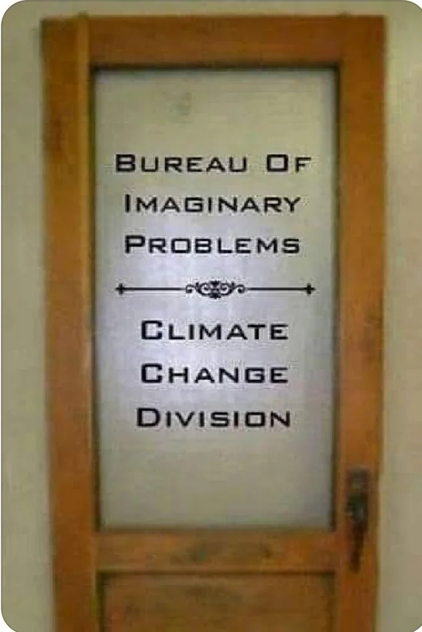
Canada’s Climate Wake up Call

Vijay Jayaraj writes at American Thinker Canada wakes up to climate reality Excerpts in italics with my bolds and added images.

Canadian fearmongering about a “climate emergency” served
only to empower a bureaucratic class intent on
controlling consumption and taxing lifestyles. 

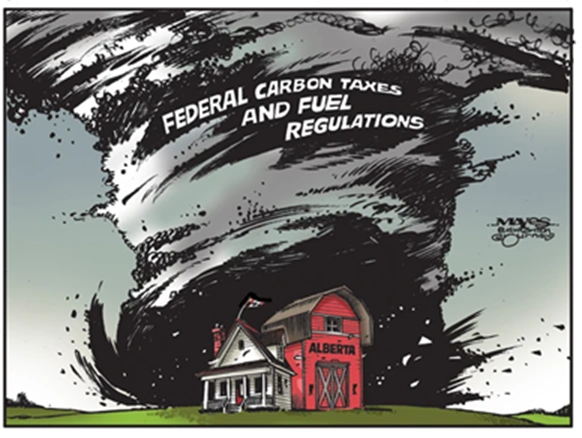
A recent memorandum of understanding between Canadian prime minister Mark Carney and Alberta premier Danielle Smith represents the inevitable reassertion of economic necessity over the fantasy of “decarbonization” that has gripped Ottawa for the past decade.

Allowing for the construction of a pipeline to transport Albertan oil to a Pacific export terminal, the agreement prompted the resignation of one liberal member of parliament and celebration from the province’s leader. “This is a great day for Alberta,” declared Smith.

Alberta is a major vessel in Canada’s economic bloodstream. The province’s energy sector generates $88 billion in annual gross domestic product (GDP), which is 25% of the Alberta’s total economic output. This revenue flows east to the national capital to fund federal transfers that support public finances of other provinces, some of which oppose the oil production that provides them cash.

Global Warming survey of Canadians, twisted and ignored by Trudeau Liberals.

Atlantic Canada, parts of Quebec, and even Ontario benefit from royalties and tax revenues generated by hydrocarbons extracted thousands of miles away. So-called moral objections to oil sands development are often voiced by inhabitants of Halifax or Montreal, but rarely heard is a willingness to forgo the western revenue that keeps hospitals open and public payrolls funded.

So, it was financial reality that drove Carney to upend expectations established by countless government documents, climate pledges, and regulatory frameworks the previous government put in place to “save the planet” by discouraging the use of fossil fuels. 

Canada’s climate industrial complex had predicted that pipelines would become stranded assets and that Alberta would fade into irrelevance as net zero became federal policy. However, the deal signed by Carney moves in the opposite direction, making provisions for new infrastructure and signaling that even Canada’s most climate-obsessed federal leadership cannot govern without fossil fuels.

In technical terms, the federal cap on oil and gas emissions has been suspended. The Clean Electricity Regulation — a proposed constraint on Alberta’s ability to generate affordable power — has been loosened. Timelines for reducing methane emissions have been extended beyond 2030. Yes, there are caveats that appear to impose a soft form of anti-carbon sentiment, but the overall picture has changed. 

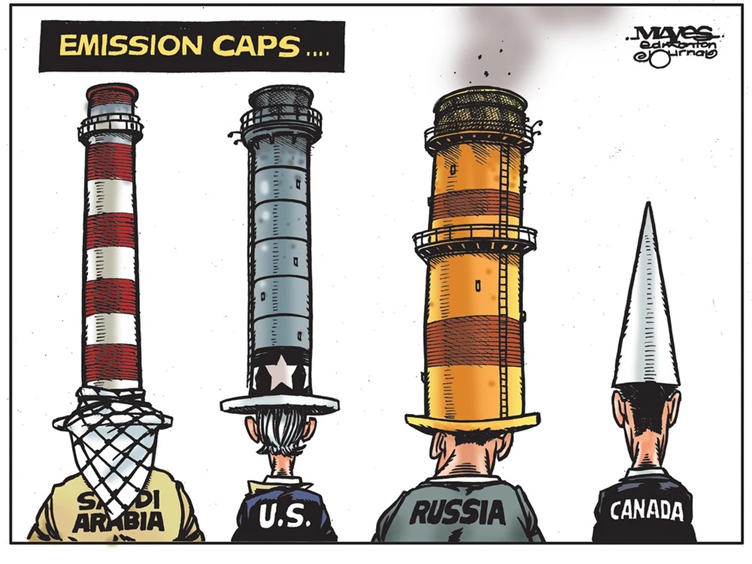
The Canadian Broadcasting Corporation (CBC), a publicly funded institution, has consistently parroted environmental advocates who treat fossil fuels as abominations rather than economic necessities. This messaging has convinced many Canadians that their government is committing a terrible sin by producing energy the world demands. Lost on them is the fact that Canadian oil and natural gas are produced under far more stringent standards than exist in the Middle East, Russia, or other regions.

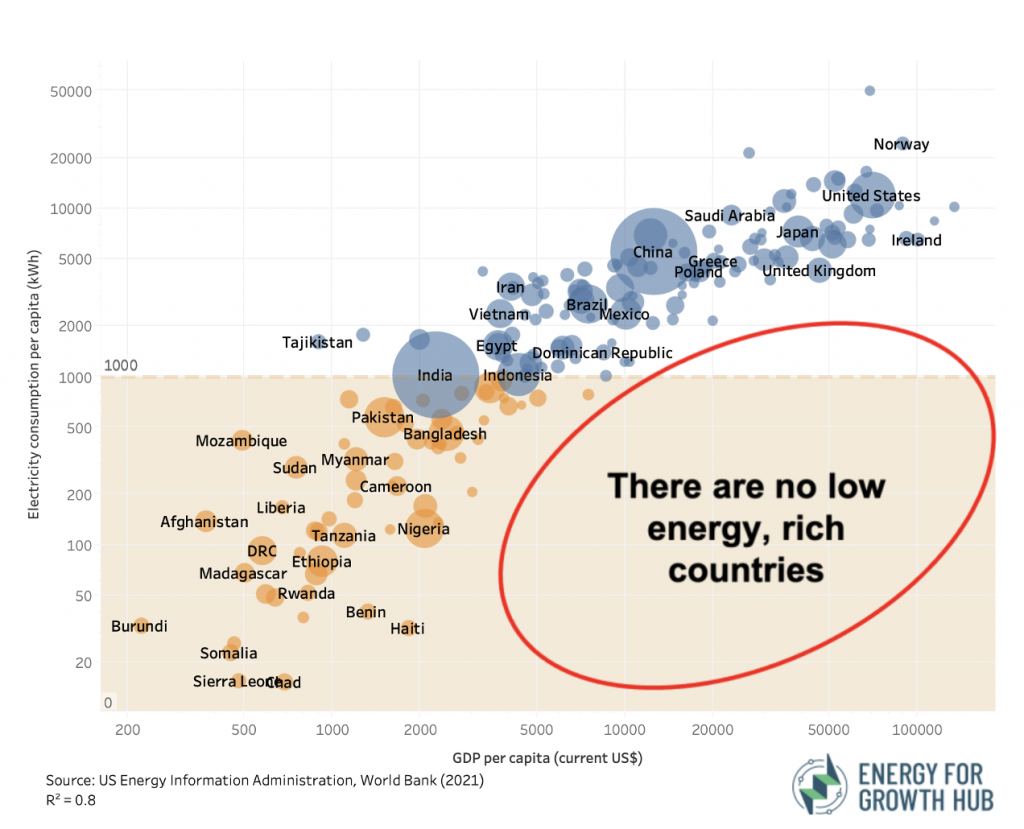
Energy abundance underpins prosperity. Nations that constrain their energy supply impoverish themselves. Nations that produce reliable, affordable energy benefit their populations and the broader world. Canada should produce the energy for itself and export the surplus to global markets.

Advertisement

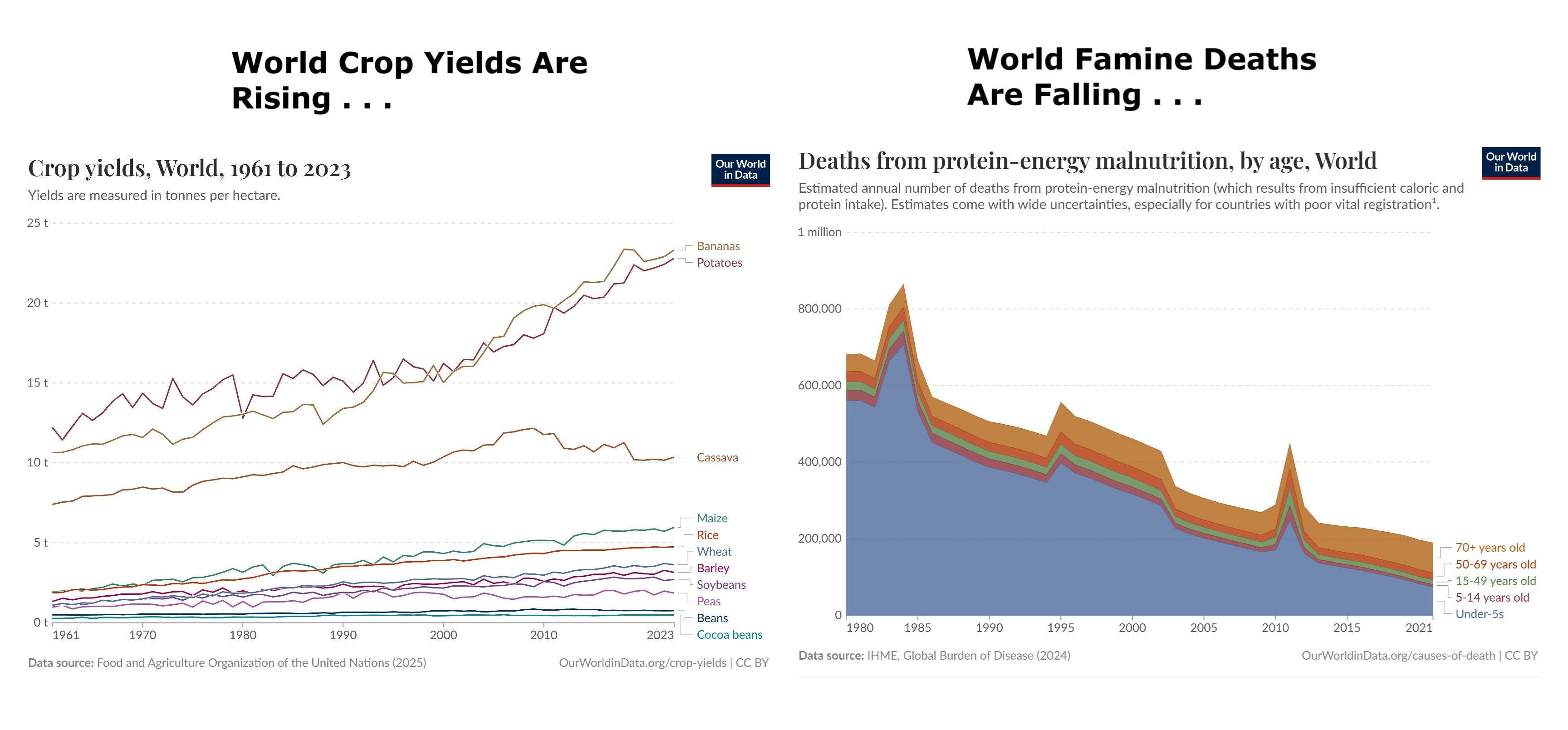
Beyond energy economics, there is another dimension to Canada’s economic future that the legacy climate orthodoxy dismisses: agriculture. Canada’s warming climate has extended growing seasons across the prairies and opened new agricultural possibilities. 

According to official data, “total wheat production rose 11.2% year over year to a record 40 million (metric tons) in 2025, surpassing the previous record set in 2013.” Canola production rose 13%, surpassing a record set in 2017. Barley and oat production rose 19% and 17%, respectively.

In all, the output for all principal field crops increased by 4% year-over-year. For the next crop year (2025-2026), total production is projected to reach near record levels, up 3% year-over-year and 8% above the previous five-year average.

Historical analysis demonstrates that climate conditions across Canadian agricultural regions have shifted toward longer growing seasons, with more frost-free days and expanded viable crop zones.

Critics will claim that allowing a new pipeline is a betrayal of future generations. But what truly endangers posterity? A fraction of a degree of warming that extends growing seasons? Or a future of energy scarcity, deindustrialization, and economic stagnation?

Fearmongering about a “climate emergency” served only to empower a bureaucratic class intent on controlling consumption and taxing lifestyles. It did nothing to change atmospheric physics or the needs of people who rely on affordable energy to survive.

 a


Tide Turns Against Climatists’ Agenda

Richard Miller points to growing distrust of climate ideology and to receding support for impractical energy and social policies aimed at fighting global warming/climate change, but serving only to inflict energy poverty  His article is The Tide Turns Against the Climate Change Agenda: A Long-Overdue Reckoning.  Excerpts in italics with my bolds and added images.

The climate establishment’s dominance rested on a seductive pitch: green policies would deliver prosperity without pain. Wind turbines and solar panels would slash energy costs, insulate us from petrostates, and create a jobs bonanza. As Maurice Cousins noted in his August 2025 Artillery Row piece, this vision transformed environmentalism from a middle-class indulgence into a technocratic consensus, backed by state funding, Big Philanthropy, and celebrity endorsements.

Yet, the reality is starkly different. Britain now faces some of the highest industrial energy costs in the developed world, with electricity prices for businesses nearly double those in the U.S. Heavy industry is in retreat, steelworks and manufacturing plants are shuttering, while the UK’s reliance on energy imports has surged, exposing vulnerabilities during crises like Russia’s invasion of Ukraine.

The public isn’t blind to this failure. Polls reflect a growing backlash. While abstract support for Net Zero lingers, a 2025 YouGov survey found 47% of Britons want climate policies scaled back when faced with their costs, high bills, job losses, and lifestyle constraints. Reform UK voters, with 32% endorsing reduced green measures, are leading the charge, but even mainstream figures like Tony Blair and trade unions like Unite are breaking ranks, questioning the feasibility of the green agenda. This isn’t just scepticism; it’s a revolt against a narrative that promised abundance but delivered austerity.

The climate lobby’s response? Double down and deflect. Take the recent video by Simon Clark and Carbon Brief’s Dr. Simon Evans, which Cousins critiques as a desperate attempt to “manage” dissent rather than engage with it. Acknowledging rising bills and Britain’s mere 1% of global emissions, it dismisses public concerns as misinformation fuelled by fossil-fuel propaganda. This patronising tone, epitomised by praising the “independent” Climate Change Committee, a body of unelected technocrats, only deepens distrust. It’s a tired playbook, seen in Brexit and migration debates: label critics as ignorant, pathologise their concerns, and cling to elite authority.

But the public’s lived experience, bills they can’t pay, industries they’ve lost,
trumps rhetorical window-dressing.

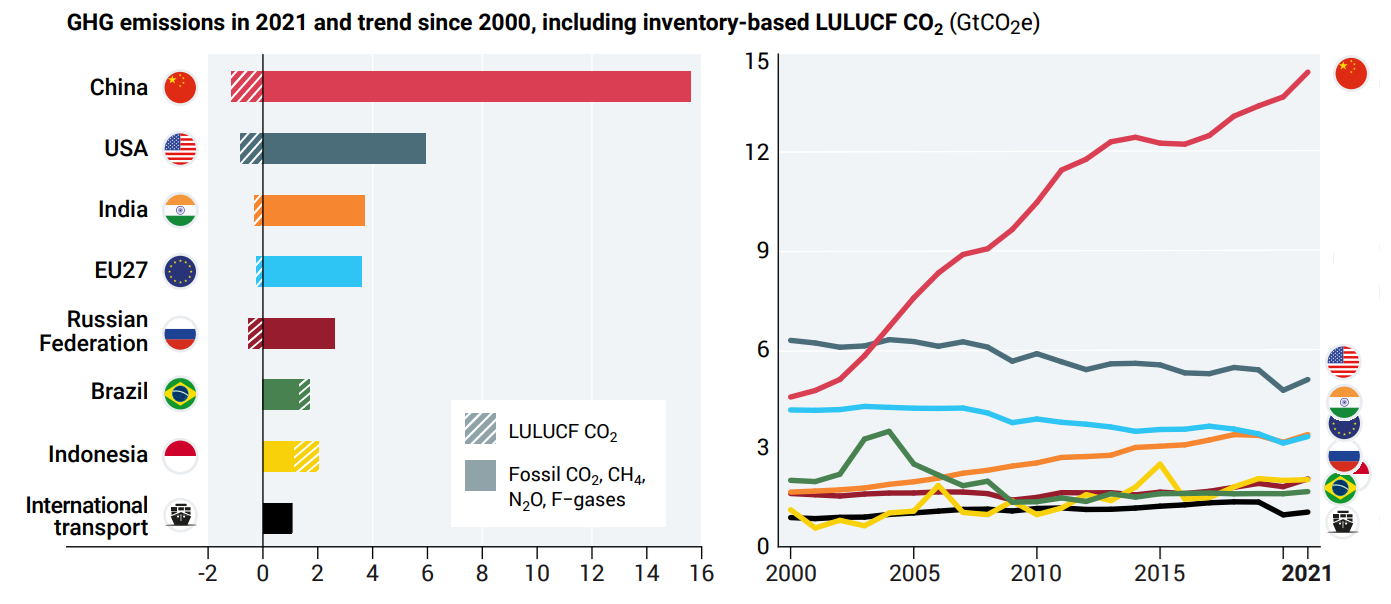
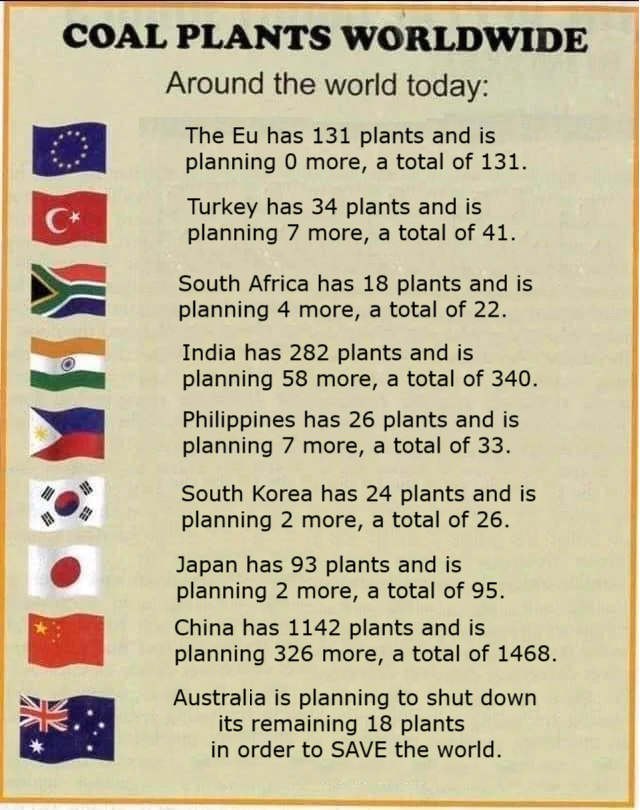
The folly of the climate agenda lies in its defiance of economic and physical realities. Low-density, intermittent renewables like wind and solar cannot power a modern industrial economy without massive subsidies and grid instability. The Office for Budget Responsibility has warned that Net Zero’s costs, projected at £1.4 trillion by 2050, far outstrip promised savings. Meanwhile, global competitors like China and India, responsible for over 40% of emissions, continue burning coal with little regard for Western virtue-signalling. Britain’s “lead by example” approach is not just naïve, it’s self-destructive, hamstringing its economy while others race ahead.

This reckoning is long overdue. The climate lobby’s promises were always more faith than fact, rooted in a utopian vision that ignored trade-offs. Green jobs? The UK’s renewable sector employs fewer than 75,000 people, a fraction of the 500,000 jobs lost in manufacturing since 2000. Cheaper energy? Households face bills 60% higher than a decade ago. Energy independence? The UK imports 40% of its electricity on peak days, often from fossil-heavy grids abroad.

The climate agenda’s failures are not a messaging problem,
they’re a policy disaster, colliding with
the hard limits of physics and economics.

The tide is turning because the public sees through the façade. From factory workers to suburban families, people feel the squeeze of policies that prioritise ideology over reality. The green backlash isn’t just about cost, it’s about trust. When elites lecture about “saving the planet” while ordinary citizens struggle to heat their homes, resentment festers. Reform UK’s rise and the growing chorus of mainstream dissent signal a broader awakening: the climate agenda, as it stands, is unsustainable.

It’s time to pivot. Instead of doubling down on unworkable targets, Britain needs pragmatic policies, investment in nuclear energy, which provides reliable, low-carbon power; deregulation to revive industry; and a frank acknowledgment that global emissions won’t bend to Western sacrifices alone. The climate lobby’s grip is slipping, and no amount of technocratic spin can stop the public’s demand for change. The reckoning is here, and it’s about time we embraced it.


Biomass Energy Exorbitant, Destructive and Pointless

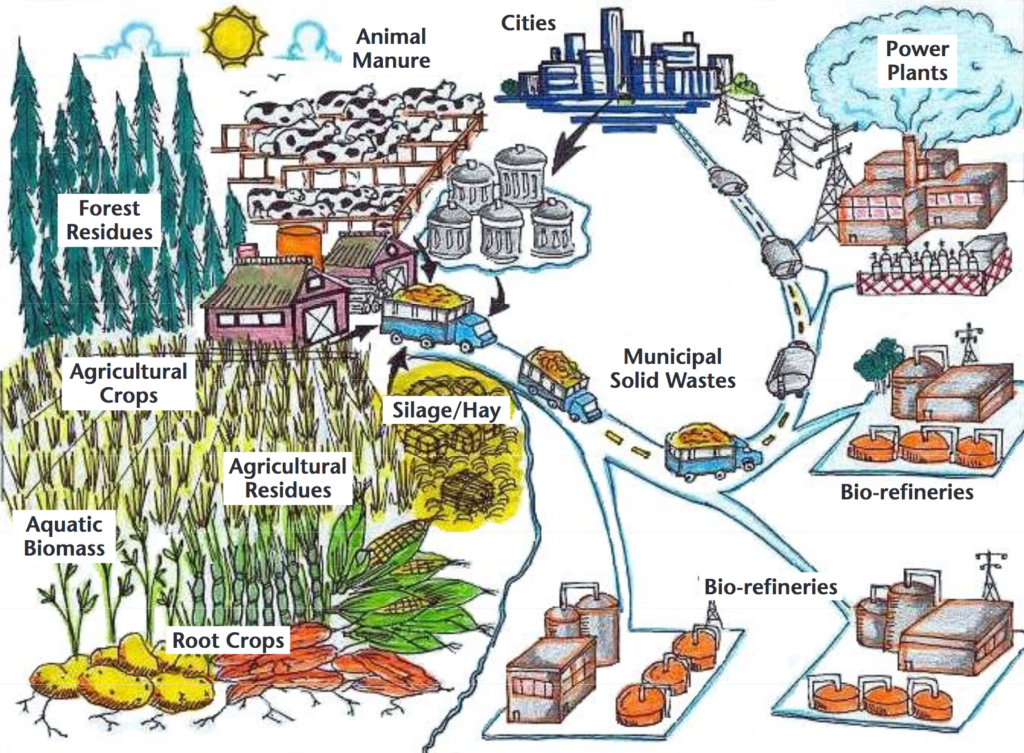
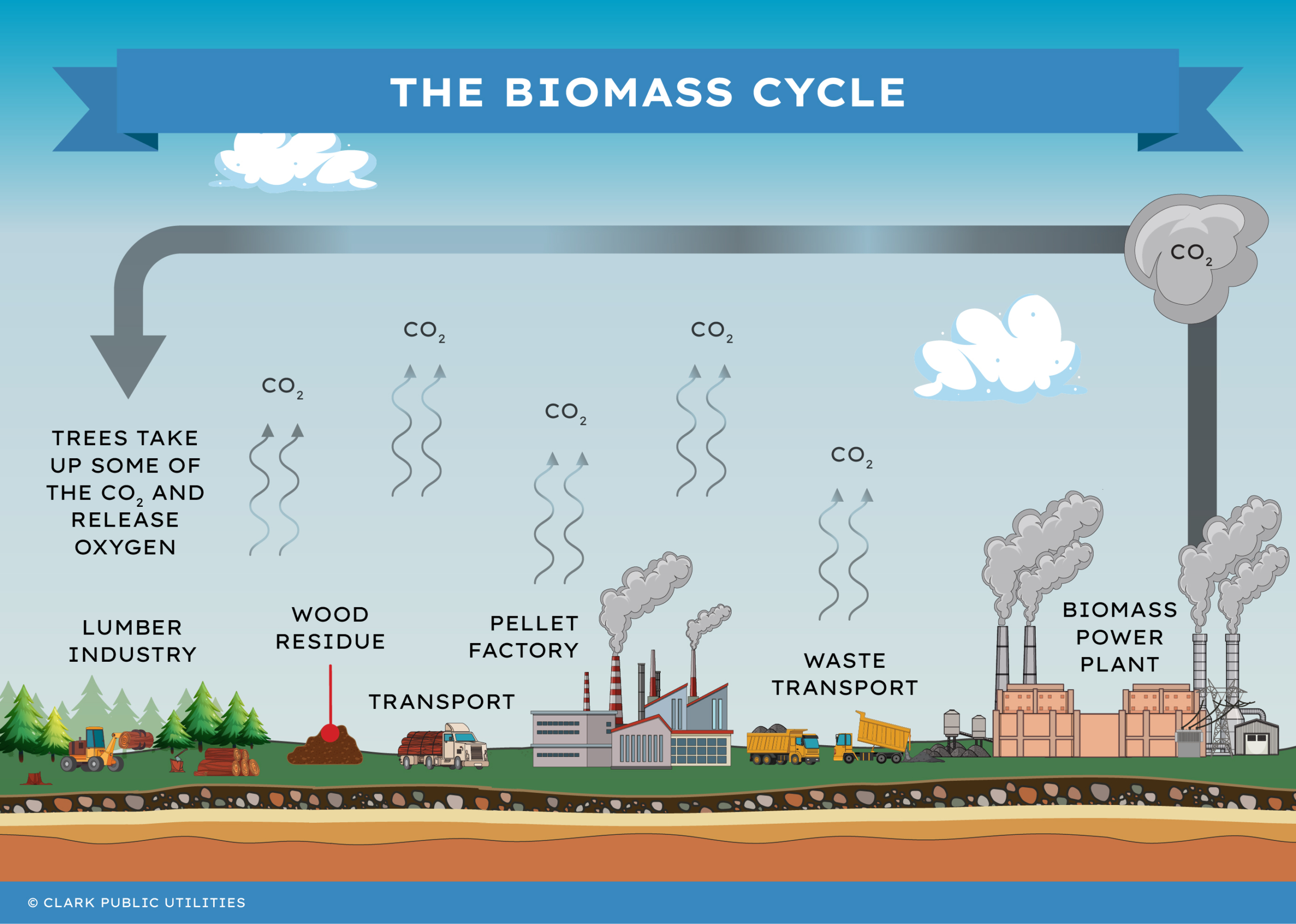
Biomass Energy Process

Shaye Wolf writes at CalMatters Biomass is a money pit that won’t solve California’s energy or wildfire problems  Shaye Wolf is the climate science director at the Center for Biological Diversity.  Excerpts in italics with my bolds and added images.

California’s most expensive electricity source is finally poised to lose a government handout that props up its high costs and harmful pollution. In an era of clean, cheap solar and wind energy, policymakers are rightly beginning to treat biomass energy like the boondoggle it is.

Biomass energy — electricity made by burning or gasifying trees —
is an expensive, dirty relic that relies on industry misinformation and taxpayer money. 

In a vote later this month, the California Public Utilities Commission is expected to end the BioMAT subsidy program, which requires electric utilities to buy biomass power at exorbitant costs — four times the average. Californians get hit with those extra costs in our power bills, along with pollution that harms our health and climate. 

Utilities and environmental groups support ending this costly subsidy.   But the biomass industry is fighting back with misleading claims that its projects are made clean by “new” technology or that they’re needed for wildfire safety. Don’t be fooled.

Burning trees to make electricity harms the climate. In fact, biomass power is more climate-polluting at the smokestack than coal.

Biomass energy releases toxic air pollutants that endanger health, increasing the risk of premature death and illnesses like asthma. The facilities often are located in low-income communities and communities of color that have long fought to shut them down.

It is telling that the biomass industry is rebranding.  It claims it will use “clean” methods to gasify trees instead of burning them. But gasification — which also involves heating organic material — releases large amounts of climate-harming air pollution.

State regulators in May denied a costly biomass gasification project
that couldn’t show it would reduce emissions as promised
.

The industry also promotes carbon capture and storage, claiming this technology will suck up carbon dioxide from biomass smokestacks and store it underground forever. But carbon capture and storage is a costly, decades-old technology with a long history of failure and serious health and safety risks.

Finally, the industry claims biomass energy projects will help pay for forest thinning, which it says will protect communities during wildfires. That means cutting trees, often large trees, which threatens wildlife and depletes forests, which naturally store carbon and fight climate change.

Thinning isn’t a good way to keep communities safe. Most of the community destruction is caused by wind-driven fires during extreme fire weather, made worse by climate change. The fastest-moving 3% of wind-driven fires is responsible for 88% of the damage to homes. [Note: no proof wildfires are worse now than in the past]

No amount of forest thinning can stop that. In fact, thinning makes cool, moist forests hotter, drier and more wind-prone, which can make fires burn faster and more intensely.

Most of California’s destructive wildfires — like the Los Angeles area fires in January — have burned in shrublands and grasslands, not forests, making thinning irrelevant in those cases.

Instead, the best investment for protecting communities during wildfires is hardening homes, so they’re less likely to catch fire, and stopping new development in fire-prone areas. Yet the state has earmarked only 1% of its wildfire funding for home hardening. Most goes to thinning.

Where thinning occurs, it’s most cost-effective to scatter the wood in the forest to create wildlife habitat, retain vital nutrients, and enhance natural carbon storage. If wood must be removed, it can be turned into mulch and shavings. The worst choice is subsidizing biomass companies to make dirty energy.

Any way you look at it, biomass energy is a polluting money pit
that won’t solve our climate or wildfire safety problems.

See also: 

Green Electrical Shocks in 2024


Trees converted into pellets by means of petroleum powered machinery.

Carney Directs Canada Pipeline Charade

Q: Do Leopards Change Their Spots? A: No,
because it’s chamouflage concealing their real motives.

This National Post editorial gives the game away: The Carney-Smith pipeline of uncertainty.  Excerpts in italics with my bolds and added images.

MOU adds as many roadblocks as it clears away

Prime Minister Mark Carney, right, signs an MOU with Alberta Premier Danielle Smith in Calgary, Alta., Thursday, Nov. 27, 2025. THE CANADIAN PRESS/Jeff McIntosh

Had the Great Smith-Carney Pipelines and Climate Pact of 2025 emerged say, five years ago, it would have been considered squarely within the realm of Liberal environmentalism. Instead, because former prime minister Justin Trudeau brought in several anti-business policies, the current prime minister is being feted/scorned as being pro-energy industry by disappointed Liberals and relieved conservatives alike. While Mark Carney deserves credit for negotiating this deal with Alberta Premier Danielle Smith, and bringing a rival onside, we’re skeptical at the chances a pipeline ever gets built.

There are definitely some positives in the deal that Smith can present at the UCP annual general meeting this weekend in an attempt to quell the separatist uprising within her governing party. Ottawa has officially committed to “Increasing production of Alberta oil and gas” and to the approval and construction of “one or more private sector constructed and financed pipelines.” The Liberals promise they “will not implement the Oil and Gas Emissions Cap” and will exempt Alberta from the government’s clean energy regulations. They would also consider a temporary exemption to the west coast tanker ban.

All of these regulations have been points of contention for Alberta, so it is to Smith’s credit that she was able to persuade Carney to budge.  But it’s possible this will not accomplish much more than to remove extra layers of regulation, which were unnecessary even by environmental standards. Under the Trudeau Liberals, there was to be a consumer carbon tax, industrial carbon tax, as well as the clean energy regulations and emissions cap. And it did not end there, as the Impact Assessment Act, also brought in under Trudeau, mandates onerous environmental and social review, including the consideration of “Indigenous knowledge” alongside scientific assessment, as well as considering the “intersection of sex and gender with other identity factors.”

If Carney is at all serious about kickstarting investment in Canada,
he should at minimum be willing to clear away some of these extra rules.

Ultimately, it seems that environmental policies and expectations are merely being shifted around. Because what is being asked of Alberta would appear to provide only the narrowest of paths for the construction of a new pipeline to the West coast. Under the memorandum of understanding between Smith and Carney, the province would have to raise its industrial carbon tax from $95/tonne to a minimum of $130/tonne, and reduce methane emissions, produced by the energy industry and farmers, to 75 per cent below 2014 levels. And in addition to the duty to consult Indigenous communities, any pipeline must have Indigenous co-ownership.

Further to that, the construction of a pipeline is entirely contingent on the simultaneous construction of a massive carbon capture project, presumably so Carney can claim the new pipeline is moving only “low emission” barrels of bitumen. Finally, while the MOU does not explicitly give B.C. a veto, that province is to be included “immediately” in a “trilateral discussion” on the project. B.C. Premier David Eby is opposed to a pipeline and was highly critical of the deal, claiming it would take priority away from other projects, specifically B.C. projects Eby supports. [

April 30, 2024 (IEEFA) – More than CAD1 billion were spent retrofitting the Boundary Dam 3 (BD3) coal plant in Saskatchewan to add carbon capture technology. After nine years, the project has a consistent history of capturing far less than the 90 per cent promised when the project was built—and all the carbon dioxide (CO2) captured at the plant is used for enhanced oil recovery (EOR) that injects captured CO2 into the ground to extract more oil..Carbon capture at Boundary Dam 3 still an underperforming failure

And the roadblocks to a new pipeline don’t end there. While it would be approved through the Major Projects Office, it isn’t at all clear what purpose that will serve. Carney’s Liberals gave themselves the authority to suspend regulatory review to expedite projects in the national interest. However, the office is electing not to use this power so far, stating on its website that “Projects will continue to be subject to all regulatory review processes.”

So being approved through the MPO may give the pipeline certainty that
it will be approved — eventually. That means every investment killing
process under the Impact Assessment Act will have to be passed.

What the Smith-Carney deal does accomplish is to buy both of them time to each satisfy their base. For Smith that is conservatives flirting with separatism, and for Carney, it is environmentalist Liberals, some of whom see this deal as a betrayal, such as former environment minister Steven Guilbeault who quit cabinet in protest. We applaud genuine attempts from Ottawa to work with, as opposed to against, Alberta, but we’re not confident this plan will deliver what is promised.

See Also:

Canada PM Carney Floats Imaginary “Decarbonized Oil” Pipeline

On Energy, Carney the Wrong Man at the Worst Time

How Wasteful is Green Energy? Count the Ways

Waste #1:  Money Spent, Projects Unknown

“Oxfam finds that for World Bank projects, many things can change during implementation. On average, actual expenditures on the Bank’s projects differ from budgeted amounts by 26–43% above or below the claimed climate finance. Across the entire climate finance portfolio, between 2017 and 2023, this difference amounts to US$24.28–US$41.32 billion,” the report states.

No information is available about what new climate actions were supported and which planned actions were cut. Now that the Bank has touted its focus on understanding and reporting on the impacts of its climate finance, it is critical to stress that without a full understanding of how much of what the Bank claims as climate finance at the project approval stage becomes actual expenditure, it is impossible to track and measure the impacts of the Bank’s climate co-benefits in practice.”

“Oxfam’s report doesn’t suggest funds are missing but points to a transparency issue that makes it difficult to know precisely what the Bank is delivering in terms of climate finance: where it’s going and what it’s supporting.”

Thus, “contrary to claims online,” it’s not missing. It’s just not accounted for! At this point, I’m not sure which is the bigger racket: dubious national or supranational funding of projects that fall loosely under the aegis of purported climate change mitigation, or fact-checking. At least this can be said about fact-checking: It costs a hell of a lot less.

Waste #2:  Money Spent, Projects Dicey

For an idea of how much money is being gambled on Green Energy or “CleanTech” projects here is a chart for North America from The Big Green Machine:

How Risky are these projects? An article at Mish Talk explores the question: How Many More Ridiculous Green Energy Projects Will Fail? Excerpts in italics with my bolds and added images.

The answer is all of them, in due time. Here are the latest spectacular failures.

Birds Fry Every Two Minutes

It took 10 years, and hundreds-of-thousands of dead birds, before
the Ivanpah Solar Electric Generating System in California would meet its fate.

Now finally here in 2025 it seems the reckoning has begun. The Las Vegas Review-Journal notes in an editorial that “a major California utility —  Pacific Gas & Electric — announced that it will no longer buy power from the Ivanpah solar plant off Interstate 15 near the Nevada-California border. As a result, two of the plant’s three towers will shut down next year — and the third will probably follow.”

Performance has proven so poor that PG&E has exercised its right to terminate the contract, about which negotiations have been completed; there is no doubt that towers 1 and 3 will cease operations within roughly a year. And it appears to be the case that Edison too wants out: “the utility is in ‘ongoing discussions’ with the project’s owners and the federal government over ending the utility’s contract.”

New Jersey Reaps the Wind, Again

It’s not just solar. Also note that Shell just backed out of a wind-energy project despite huge subsidies.

Another offshore wind development stalled this week off the Jersey shore, making it the latest of three such projects to fail despite generous terms from the state. Energy giant Shell wrote off its 50% stake in Atlantic Shores, choosing to take a $1 billion impairment instead of complete the 2,800 megawatt wind farm. New Jersey’s Board of Public Utilities canceled its request for a wind-energy provider, leaving the unfinished project with no prospective customer.

Ratepayers can rejoice. Atlantic Shores would have charged about three times the market price for the power it generated, according to a review by Whitestrand Consulting. That would have raised electricity rates by 11% for residents and 13% to 15% for businesses, forcing them to overpay by $48 billion over the wind farm’s lifetime.

Waste # 3 A Mountain of Unrecyclable Waste

The Institute for Energy Research notes Broken Windmill Blade Closes Nantucket Beaches

A massive wind turbine blade shattered offshore Massachusetts causing extensive debris, which shut down beaches on Nantucket Island and caused serious concern to fishermen, who worried that the debris could damage their boats. The failure of the massive blade and the resulting debris caused the federal Bureau of Safety and Environmental Enforcement to suspend operations at Vineyard Wind until it could be determined whether the “blade failure” impacts other turbine blades on the development of the offshore wind farm. Power production has been suspended and installation of new wind turbine construction is on hold. And as more green energy trash washes ashore the local town is considering litigation. The facility’s massive wind turbines began sending electricity to the grid this past winter.

Thousands of Old Wind Turbine Blades Pile Up in West Texas Officials in Sweetwater say an out-of-state company has made their town a dump for the seldom-seen trash created by renewable energy.

Wind turbine blades are made from fiberglass, or fiber reinforced plastic, and cannot be recycled. The Biden-Harris administration has not indicated what or who it expects to deal with the mountain of waste that will result when thousands of turbine blades reach the end of their useful lives in 20 to 25 years, or in many cases less. In fact, wind blades are piling up in Texas and Iowa without proper disposal. Massive wind graveyards, for example, have popped up on the outskirts of Sweetwater, Texas. The pile of wind blades covers more than thirty acres, in stacks rising as high as basketball backboards.

Waste #4 Money Spent, Operational Failures

Economic Reality

Let’s return to economic reality.  None of these projects are profitable, even with subsidies. That’s why they fail.  Meanwhile, consumers face monstrous hikes in energy bills to pay for these boondoggles as mounds of unrecyclable garbage piles up in massive wind graveyards.

The Green Machine provides the project categories in colors denoting Batteries, EVs, Solar and Wind.

The BESS Failure Incident Database provides a record of costly problems with Battery Energy Storage Systems (BESS)

Figure 1. A breakdown of the stationary energy storage failure events from the above table.

EV Boosters reports EV Business Failures Abound

The Chinese electric vehicle (EV) boom has turned into a dramatic shakeout. Around 2018, China had more than 500 EV startups registered. These included everything from serious automotive disruptors to local government-backed ventures that never made it past the prototype phase. What do we mean by “EV startup”? In this context, it includes any newly registered Chinese company involved in the design, development, or production of new energy vehicles (NEVs) — including electric, plug-in hybrid and hydrogen cars. Many were speculative projects, created quickly to benefit from generous state subsidies, often with minimal automotive expertise. While a few had serious ambitions and advanced prototypes, the vast majority never got a vehicle on the road. By 2025, only around 100 of these brands remain active. Analysts from McKinsey predict that by 2030, fewer than 50 Chinese EV companies will survive. This is not just a story of collapse, but also of market maturation, consolidation, and strategic realignment.

SolarInsure Lists the Many Solar Business Failures

Major Solar Bankruptcies as of September 2025 Include:

Waste #5 Green Hydrogen Projects–Absurd, Exorbitant and Pointless

The map above from IEA shows more than 2200 hydrogen fuel projects around the world, intending to replace hydrocarbon fuels to save the planet.  They dream of being operational by 2030 claiming that real world obstacles will be overcome if enough taxpayer dollars are thrown at the problems.  The whole notion is fantastic (in the literal sense) for reasons detailed in a previous post.

Inside the Hydrogen Fuel Project Bubbles

An update on project cancellations comes from Hydrogen Newsletter The Green Hydrogen Reckoning: An Analysis of Project Cancellations

Project Name / Identifier Lead Company / Developer(s) Location  Announced Capacity / Scale Project Status Date of Announcement / Status Change
Arizona Hydrogen Project Fortescue Arizona, USA 80 MW electrolyzer, 11,000 t/yr H2 Cancelled (Post-FID) Jul-25
PEM50 Project Fortescue Gladstone, Australia 50 MW PEM electrolyzer Cancelled (Post-FID) Jul-25
H2OK Project Woodside Energy Oklahoma, USA 60 t/d liquid H2 Cancelled Jul-25
Massena Green Hydrogen Plant Air Products Massena, New York, USA $500M, 35 t/d liquid H2 Cancelled Feb-25
Mississippi Clean Hydrogen Hub Hy Stor Energy Mississippi, USA >1 GW electrolyzer capacity reservation Cancelled Sep/Oct 2024
HyGreen Teesside Project BP Teesside, UK 500 MW green hydrogen Cancelled Mar-25
Australian Renewable Energy Hub BP Australia $36 billion green hydrogen facility Exited Jul-25
Low-Carbon Hydrogen Plant Shell West Coast, Norway Not specified Cancelled Sep-24
Clean Hydrogen to Europe Equinor / Shell Norway to Germany 10 GW blue hydrogen export Scrapped Sep-24
German Steel Plant Conversion ArcelorMittal Germany Two plants, €2.5 billion plan Shelved Jun-25
Global Green Hydrogen Target Iberdrola Global 350,000 tons/yr target Scaled Back Mar-24
Green Hydrogen Production Target Repsol Spain 2.5 GW target Scaled Back Feb-25
Green Energy Hub LEAG Eastern Germany “One of Europe’s largest” Postponed Indefinitely Jun-25
Porvoo Renewable Hydrogen Neste Porvoo, Finland Not specified Withdrew from investment Oct-24
Port Pirie Green Hydrogen Plant Trafigura South Australia, Australia A$750 million Abandoned Mar-25
Queensland Liquefied H2 Plant QLD Gov’t, Kansai Electric, Iwatani Queensland, Australia A$12.5 billion, 200 t/d Funding Pulled 2025
Project Coyote Fortescue British Columbia, Canada $2 billion H2/ammonia facility Cancelled Sep-24

The above table provides a non-exhaustive but representative catalogue of the major green hydrogen projects that have been cancelled, postponed, or significantly scaled back between 2023 and mid-2025, illustrating the global scale of this market recalibration.

EU Climatists Backpedaling

Thomas Kolbe explains the turnabout against European climatists, weakening their power over the EU agenda. His American Thinker article is Climate Policy Turning Point.  Excerpts in italics with my bolds and added images.

While former German Foreign Minister Annalena Baerbock calls for a fight against climate-driven global apocalypse at COP30, Brussels is being forced into political restraint by pressure from the U.S. and Qatar. On the horizon, the end of the EU’s grand climate machinations is becoming visible.

““This is a new form of multilateralism — let us join forces,” said Annalena Baerbock, President of the 80th session of the United Nations General Assembly. Photo: Rafa Pereira/COP30

November 13, 2025, could mark a turning point in European Union history. We may have witnessed the beginning of the end of European climate socialism. Media coverage of the day in Parliament downplayed its significance, focusing instead on the reform of the supply chain law, while fundamental changes unfolded at a different level.

Lawmakers in the European Parliament agreed today, Nov. 13, 2025, to dramatic cuts to the EU’s sustainability reporting and due diligence laws, including significant reductions in the number of companies to be covered by the Corporate Sustainability Reporting Directive (CSRD) and Corporate Sustainability Due Diligence Directive (CSDDD), and the elimination of the obligation for companies to prepare climate transition plans. The vote, was 382 MEPs in favor and 249 opposed,

Politically, the event cannot be overstated; perhaps it should even be called a singularity in recent EU policy: The European Parliament paved the way for a dramatic dilution of corporate reporting obligations under the Corporate Sustainability Reporting Directive (CSRD) and the so-called due diligence rules (CSDDD). The unstoppable march toward a climate dictatorship has been abruptly halted.

The End of the ESG Machine

Advocates of the ESG doctrine — under which private industry is forced by lawmakers to integrate party-circulated environmental and social standards into corporate governance — suffered their first major setback. Reporting and due diligence obligations for companies have been so weakened that previously required climate-aligned transition plans at the corporate level are now eliminated. Responsibility for violations of the remaining rules now rests with national authorities, not Brussels, freeing multinational supply chains from massive oversight.

The economy can, to some extent, escape the regulators’ grip — good news.

Rough Seas for Captains of Industry

For companies in the fossil energy sector, new market incentives emerge: exports to Europe can be conducted more easily, as regulatory hurdles are lowered and bureaucratic reporting requirements drastically reduced. Overall, the adjustment allows companies greater flexibility in supply chains, reduces the compulsion to invest in renewable or CO2-neutral projects, and makes European markets more attractive to fossil energy exporters.

Reality Check

The EU Commission has recently faced mounting pressure from both Washington and the key LNG supplier, Qatar. U.S. trade secretary Howard Lutnick had months earlier called on U.S. companies to simply ignore Europe’s ESG framework if it significantly impeded operations — a direct affront to Ursula von der Leyen, who likes to portray herself as the morally superior, untouchable guardian of EU trade.

Together, these forces launched an offensive to bring Brussels’ climate defense to its knees, where cognitive dissonance had taken hold and the undeniable drift of geopolitical power was being ignored.

We have clearly entered the era of resource dominance. Europe imports roughly 60% of its required energy. Its irrational war on baseload energy sources such as nuclear and coal has only deepened dependence.

In Brussels and EU branch capitals, the lesson is now unavoidable: being a resource-poor trading partner in negotiations reveals how Europe’s capital base has been massively weakened by EU policy. Europe has lost its historic dominant position. President Trump, during negotiations with the EU, merely displayed what behind closed doors was already clear to everyone.

Fear Wins in the End

Ultimately, Brussels’ capitulation to Washington was a logical consequence of this dependence. The post-colonial extraction era — when France accessed uranium cheaply or Europe leveraged its Middle East dominance — is definitively over. Resource-rich regions now set the rules. Europe must comply, seek alliances, and become economically more robust if it wants a role in the future. Its path into eco-socialism was an illusion that has now burst. Germany’s crisis, its accelerated deindustrialization, is only the beginning — a snapshot of the global economic realignment.

In the end, political fear of street unrest prevailed. A Europe facing regular blackouts would simply be ungovernable, with chaos in the streets, lawlessness, and near-civil war conditions, reminiscent of recurring riots in French banlieues.

Baerbock Plays Climate Theater

While reality has long arrived in Brussels and officials are forced to make initial concessions, former German Foreign Minister Annalena Baerbock — now UN General Assembly President — continues to play the unshakable lead role in the disillusioned climate theater.

On Saturday in Belém, Brazil, at COP30, Baerbock performed with maximum emphasis, trying to give legs to a footsore, limp climate club. She proclaimed that “the climate crisis is the greatest threat of our time,” and that “3.6 billion people — almost half of the global population — are currently highly vulnerable to the effects of climate change.” Droughts, floods, extreme heat, and resulting supply insecurity deepen the “vicious cycle of hunger, poverty, displacement, instability, and conflict.”

A bit of Thunberg-style climate apocalypse, performed for a select audience — climate profiteers among themselves. The theater now smells of a support group, struggling to maintain mutual rhetoric reinforcement. Of the purported 3.6 billion sufferers, few are likely interested in the climate club unless they are tied to its subsidy mechanism.

No one doubts that drastic climate changes throughout history caused massive upheavals — migrations, famine, misery. Yet it is high time to end the current CO2 circus, a carousel revolving around an artificially constructed world with vanishing relevance to everyday life.

The climate business was designed as a classic insider-outsider model. Profiteers of the climate subsidy machine tolerate the occasionally bizarre, childlike savior attitude of Baerbock and other symbolic figures — or even actively side with them. In this sense, Baerbock could indeed be considered a UN ambassador — of those shaping the global climate extraction economy. They pursue policies knowingly destabilizing societies.

The Double Standard of Green Extraction Politics

Perhaps Baerbock can explain to indigenous participants at COP30, protesting deforestation, why Europe’s green lobby cuts entire forests to install uneconomic wind turbines.

She could also offer an economic seminar on how systematic taxation of productive society members — leading only to poverty and relocation of production — supposedly lowers global temperatures. Historical indulgences offer a handy argumentative analogy.

Baerbock’s moral punch has likely suffered due to Brussels’ gradual retreat
from climate orthodoxy. No coercion for Qatar, none for Washington
— but the small corner bakery is milked with climate levies until closure.

Internally, pressure; externally, bowing. That is the new EU strategy. For those still not seeing it: this fight is not about saving the world’s climate. It is about legislatively sanctioned, corporately executed extraction of wealth — and the U.S. has repeatedly shown the red card.

In Baerbock’s words: the U.S. forces the EU into a 360-degree climate volte-face.


World Dodged UN Climate Bullet, thanks to US

Matthew Boyle breaks the news at Breitbart Mike Waltz Reveals How Trump Killed ‘Global Green Tax’ That Would Have Created ‘U.N. Climate Slush Fund’ at 11th Hour.  Excerpts in italics with my bolds and added images.

NEW YORK — U.S. Ambassador to the United Nations Mike Waltz told Breitbart News exclusively of how President Donald Trump and his cabinet rallied at the 11th hour to thwart globalists from creating a “global green tax” that he argued would have created a “U.N. climate slush fund.”

“They were this close to mandating that we basically have a Green New Deal in our global shipping fleet,” Waltz told Breitbart News on the floor of the U.N. General Assembly in the interview taped on Thursday, Oct. 23. “Eighty percent of our economy is based on trade. It would have been devastating. In fact, it would have added a billion dollars a month to the cost of sending our goods around the world or receiving goods. We got fired up as a cabinet — the EU, Brazil, and others thought this thing was a done deal. We got everybody involved, including the president. He came in off the top ropes, and we defeated that vote. I think we just saved the American consumer a massive, massive — what would have been the first U.N. tax in global history just this past week. So that’s the kind of fighting that we’re doing in the types of these organizations, and the kind of wins that we have to deliver for the American people.”

Waltz further explained that the tax that would have been created would have targeted U.S. ships and forced them either to pay billions in global taxes or go through retrofitting in China to use European-backed power sources — but ultimately this has been stopped. He does expect the globalists who pushed this effort to try again, but he said next time the Trump administration will be even more prepared and will stop it again.

“If we had coal fired, gas fired, oil fired ships, this global organization was going to impose a fine on those shipping companies, of course, and that would have been to the tune of a billion dollars a month globally that would have been passed on to the consumers, obviously,” Waltz said. “That money then would have would have formed a U.N.-run green climate slush fund to the tune of $12 to $15 billion a year that would have turned around and done more and more of this. It really would have been the first global green tax and I think we would have felt it through inflation. We would have felt it on our consumer shelves and it would have been yet another assault on the American oil and gas industry.

Published by European Maritime Safety Agency

“We said there will be consequences if you do this and we laid out what those consequences were. Now, we were accused of being diplomatic gangsters and bullies and what have you. But look, it was they who are being the climate bullies and we’re not going to allow them to do that to our shipping fleet. If it had happened, here was the real secret. The EU was subsidizing all the biofuels that they wanted to push to our ships and the only place we could retrofit our ships were in Chinese ports and shipyards. So this would have been a win for the EU, a win for China, a loss for the United States. We said, ‘We’re not going to have it,’ and we got in there and won.”

So, are they trying again? Of course they’re going to try again. As we came at this, frankly, a little bit last-minute, we won, but we delayed the vote until next year. We’re going to make our position crystal clear, and I don’t think this thing is going to get through now. This is just the tip of the iceberg. It’s what’s happening in these over 80 organizations around the world. What it really amounts to is a climate ideology that is nonsensical. It’s an ideology that just doesn’t make sense. For example, in AI [artificial intelligence], a big piece of that is power. You can’t power AI through wind and solar — you just can’t — and we already know the President’s problems with wind. We already know that the vast majority of solar panels are made where? In China.

But we need an all-of-the-above solution. We need nuclear, we need gas, we need oil, we need coal, and those other renewable forms of energy in order to win. But what we find is even when we reach, say, some kind of trade deal with a country or with the EU, then they try to back door these regulations in favor of them and against us through these international organizations that are often under the U.N. umbrella. That’s why we need fighters in here. I have Tammy Bruce who will be going to the Senate to be the Deputy Ambassador here. We have myself, and we have other members of the team that 100 percent believe in the President’s America first agenda. We’re going to start fighting and blocking and tackling in these organizations.”

Addendum on Biofuels, the worst energy choice, disqualified for “All of the Above”

Put simply, power density is just how much stuff it takes to get your energy; how much land or other physical resources. And we measure it by how many watts you can get per square meter, or liter, or kilogram – which, if you’re like us…probably means nothing to you.

So let’s put this in tangible terms. Just about the worst energy source America has by the standards of power density are biofuels, things like corn-based ethanol. Biofuels only provide less than 3% of America’s energy needs–and yet, because of the amount of corn that has to be grown to produce it … they require more land than every other energy source in the country combined. Lots of resources going in, not much energy coming out–which means they’re never going to be able to be a serious fuel source.  Moreover, it cannibalizes arable land needed for food.

Value of Decarbonizing Pledges? Net Zero.

There are two reasons why Bill Gates and hundreds of Corporations and many countries are backtracking on commitments to decarbonize.  One is disbelieving the false advertising that the planet is in danger and can be saved by Net Zero efforts. Second is sobering up to the fact that decarbonizing the world is an impossible fantasy.  This post includes content from Gary Abernathy on the first point and some quotes from Vaclav Smil’s recent paper on the second.

  1.  Abernathy writes at Real Clear Energy In practice, ‘Net Zero’ Was Exactly How Much Such Pledges Were Worth.  Excerpts in italics with my bolds and added images.

The public “net zero” pledges by countless corporate and political entities in recent years were always baffling. How could the United States or much of the industrialized world reach “net zero” emissions without destroying modern living?

As a reminder, “net zero” is a term coined to illustrate a goal of “eliminating greenhouse gas emissions produced by human activities, which is accomplished by decreasing global emissions and abating them from the atmosphere,” as defined by Net0.com, a company that describes itself as “the market leader in AI-First Sustainability, enabling governments and enterprises worldwide to enhance their environmental performance and decarbonize profitably.”

Net0 posits that “the global scientific community agrees that to mitigate the most severe impacts of climate change, we must reduce worldwide net human-generated carbon dioxide emissions by approximately 45 percent from their 2010 levels by the year 2030 and achieve net zero emissions by around 2050.”

In a political atmosphere shaming anyone who didn’t join the climate cult – led in the U.S. by the Biden administration and globally by the U.N. – attempting to outdo each other for the most aggressive “net zero” policy was all the rage.

“As of June 2024, 107 countries… had adopted net-zero pledges either in law, in a policy document such as a national climate action plan or a long-term strategy, or in an announcement by a high-level government official,” boasted the United Nations.

More than 9,000 companies, over 1,000 cities, more than 1,000 educational institutions, and over 600 financial institutions have joined the Race to Zero, pledging to take rigorous, immediate action to halve global emissions by 2030.”

But as politicians know, promises and actions are often unrelated. Most people endowed with even a modicum of common sense and a grade-school understanding of basic science knew that meeting “net zero” goals would require a reduction in the use of our most affordable, effective and reliable energy sources to a degree that would devastate modern economies.

The fact that “net zero” pledges were nothing but a cruel joke was made clear last month in a story by NPR headlined,Leaders promised to cut climate pollution, then doubled down on fossil fuels.” Most thinking people were as surprised by that headline as by discovering wet water, hot fire or flying birds. It was not necessary to read further. “Of course,” they said to themselves, moving on to the next story.

But there are, sadly, climate cult converts who, in their shock, likely needed more details.

They discovered: “The world is producing too much coal, oil and natural gas to meet the targets set 10 years ago under the Paris Agreement, in which countries agreed to limit climate pollution and avoid the worst effects of global warming,” NPR reported.  The story said:

“A new report, led by the nonprofit research group Stockholm Environment Institute, shows countries plan to produce more than twice the amount of fossil fuels in 2030 than would be consistent with limiting global heating to 1.5 degrees Celsius (2.7 degrees Fahrenheit).”

For the true believers, here’s the real punch to the gut: “The SEI report shows the 20 most polluting countries, including China, the U.S. and India, actually plan to produce even more fossil fuels than they did two years ago, when the report was last updated.”

Of course, as he did in his first term, President Trump is pulling the U.S. out of the Paris Agreement as he unleashes American industry and works to ensure energy affordability, independence and security for the nation. Legislation to roll back taxpayer subsidies for “renewables” and return to “reliables” has already been passed or introduced in various states and is soon likely to be fortified at the federal level.

After wasting billions of tax dollars on wind and solar subsidies that could have been directed toward schools, healthcare or other real needs, the fever is finally breaking. The world is slowly but surely awakening from the delusions of climate zealots who insisted that we were on the verge of catastrophe with constantly worsening weather disasters.

Just last May, for example, NOAA the National Oceanic and Atmospheric Administration predicted an “above-normal 2025 Atlantic hurricane season.” And just a few months earlier, PBS NewsHour reported on a study showing that “human-caused climate change made Atlantic hurricanes about 18 miles per hour (29 kilometers per hour) stronger in the last six years.”

The message was clear. More hurricanes.
Stronger hurricanes. This year’s reality so far?

“The 2025 Atlantic hurricane season is the first time in 10 years that a hurricane has not made landfall in the United States through the end of September,” according to American Press. While “hurricane season” extends through November, September is usually the busiest month.

The weather is – and has always been – unpredictable. Severe weather events like hurricanes, tornadoes, monsoons, floods, blizzards and drought have always been with us, and always will. The attempt to demonize humankind for the frequency and severity of the weather has been politically motived and economically disastrous.

“Net zero” pledges are being revealed for the false promises they most often were, designed mainly to win plaudits from the Lecturing Left. For leaders grounded in facts, real-world needs have always meant that no one is easing off the gas.

2. Vaclav Smil’s paper is at Fraser Institute Halfway between Kyoto and 2050.  Overview and keynote section are reprinted below with my bolds and added images.

      Contents
Executive Summary
Introduction
1. Carbon in the Biosphere
2. Energy Transitions
3. Our Record So Far
4. What It Would Take to Reverse the Past Emission Trend
5. The Task Ahead: Zero Carbon Electricity and Hydrogen
6. Costs, Politics, and Demand
7. Realities versus Wishful Thinking
8. Closing Thoughts
Executive Summary

♦  This essay evaluates past carbon emission reduction and the feasibility of eliminating fossil fuels to achieve net-zero carbon by 2050.

♦  Despite international agreements, government spending and regulations, and technological advancements, global fossil fuel consumption surged by 55 percent between 1997 and 2023.  And the share of fossil fuels in global energy consumption has only decreased from nearly 86 percent in 1997 to approximately 82 percent in 2022.

♦  The first global energy transition, from traditional biomass fuels such as wood and charcoal to fossil fuels, started more than two centuries ago and unfolded gradually.

♦  That transition remains incomplete, as billions of people still rely on traditional biomass energies for cooking and heating.

♦  The scale of today’s energy transition requires approximately 700 exajoules of new non-carbon energies by 2050, which needs about 38,000 projects the size of BC’s Site C or 39,000 equivalents of Muskrat Falls.

♦  Converting energy-intensive processes (e.g., iron smelting, cement, and plastics) to non-fossil alternatives requires solutions not yet available for largescale use.

♦  The energy transition imposes unprecedented demands for minerals including copper and lithium, which require substantial time to locate and develop mines.

♦  To achieve net-zero carbon, affluent countries will incur costs of at least 20 percent of their annual GDP.

♦  While global cooperation is essential to achieve decarbonization by 2050, major emitters such as the United States, China, and Russia have conflicting interests.

♦  To eliminate carbon emissions by 2050, governments face unprecedented technical, economic and political challenges, making rapid and inexpensive transition impossible.

7. Realities versus Wishful Thinking

Since the world began to focus on the need to end the combustion of fossil fuels, we have not made the slightest progress in the goal of absolute global decarbonization: emission declines in many affluent countries were far smaller than the increased consumption of coal and hydrocarbons in the rest of the world, a trend that has also reflected the continuing deindustrialization in Europe and North America and the rising shares of carbon-intensive industrial production originating in Asia. As a result, by 2023 the absolute reliance on fossil carbon rose by 54 percent worldwide since the Kyoto commitment. Moreover, a significant part of emission declines in many affluent countries has been due to their deindustrialization, to transferring some of their carbon-intensive industries abroad, above all to China.

A recent international analysis of 1500 climate policies around the world concluded that 63 or 4% of them were successful in reducing emissions.

Denmark, with half of its electricity now coming from wind, is often pointed out as a particular decarbonization success: since 1995 it cut its energy-related emissions by 56 percent (compared to the EU average of about 22 percent)—but, unlike its neighbours, the country does not produce any major metals (aluminum, copper, iron, or steel), it does not make any float glass or paper, does not synthesize any ammonia, and it does not even assemble any cars. All these products are energy-intensive, and transferring the emissions associated with their production to other countries creates an undeservedly green reputation for the country doing the transferring.

Given the fact that we have yet to reach the global carbon emission peak (or a plateau) and considering the necessarily gradual progress of several key technical solutions for decarbonization (from large-scale electricity storage to mass-scale hydrogen use), we cannot expect the world economy to become carbon free by 2050. The goal may be desirable, but it remains unrealistic. The latest International Energy Agency World Energy Outlook report confirms that conclusion. While it projects that energy-related CO2 emissions will peak in 2025, and that the demand for all fossil fuels will peak by 2030, it also anticipates that only coal consumption will decline significantly by 2050 (though it will still be about half of the 2023 level), and that the demand for crude oil and natural gas will see only marginal changes by 2050 with oil consumption still around 4 billion tons and natural gas use still above 4 trillion cubic meters a year (IEA, 2023d).

Wishful thinking or claiming otherwise should not be used or defended by saying that doing so represents “aspirational” goals. Responsible analyses must acknowledge existing energy, material, engineering, managerial, economic, and political realities. An impartial assessment of those resources indicates that it is extremely unlikely that the global energy system will be rid of all fossil carbon by 2050. Sensible policies and their vigorous pursuit will determine the actual degree of that dissociation, which might be as high as 60 or 65 percent. More and more people are recognizing these realities, and fewer are swayed by the incessant stream of miraculously downward-bending decarbonization scenarios so dear to demand modelers.

Long-term global energy forecasts offering numbers for overall demand or supply and for shares contributed by specific sources or conversions are beyond our capability: the system is too complex and too open to unforeseen but profound perturbations for such specificity. However, skepticism in constructing long-term estimates will lessen the extent of inevitable errors. Here is an example of a realistic 2023 forecast done by Norwegian risk management company DNV that has been echoed recently by other realistic assessments. After noting that global energy-related emissions are still climbing (but might peak in 2024 when the transition would effectively begin) it concludes that by 2050 we will move from the present roughly 80 percent fossil/20 percent non-fossil split to a 48 percent/52 percent ratio by 2050, with primary energy from fossil fuels declining by nearly two-thirds but still remaining at about 314 EJ by 2050—in other words, about as high as it was in 1995 (DNV, 2023).

Again, that is what any serious student of global energy transitions would expect. Individual components change at different speeds and notably rapid transformations are possible, but the overall historical pattern quantified in terms of primary energies is one of gradual changes. Unfortunately, modern forecasting in general and the anticipation of energy advances in particular have an unmistakable tendency toward excessive optimism, exaggeration, and outright hype (Smil, 2023b). During the 1970s many people believed that by the year 2000 all electricity would come not just from fission, but from fast breeder reactors, and soon afterwards came the promises of “soft energy” taking over (Smil, 2000).

Belief in near-miraculous tomorrows never goes away. Even now we can read declarations claiming that the world can rely solely on wind and PV by 2030 (Global100REStrategyGroup, 2023). And then there are repeated claims that all energy needs (from airplanes to steel smelting) can be supplied by cheap green hydrogen or by affordable nuclear fusion. What does this all accomplish besides filling print and screens with unrealizable claims? Instead, we should devote our efforts to charting realistic futures that consider our technical capabilities, our material supplies, our economic possibilities, and our social necessities—and then devise practical ways to achieve them. We can always strive to surpass them—a far better goal than setting ourselves up for repeated failures by clinging to unrealistic targets and impractical visions.


US Nuclear Power Revival

Duggan Flanakin writes at Real Clear Energy Data Centers, Trump Spark U.S. Nuclear Revival.  Excerpts in italics with my bolds and added images.

With a strong push from the Trump White House, for the first time since Three Mile Island, the nuclear energy industry in the U.S. is bullish about its future. It’s about time, given that the average existing U.S. nuclear power plant was built based on 1980s technology.

A major reason for the virtual standstill in nuclear energy development in the U.S. was the Nuclear Regulatory Commission’s near-maniacal effort to reassure a skittish public that they would not issue permits to any nuclear power plant that had the potential for public harm.

The shot heard round the world signaling a change in U.S. nuclear energy policy was the summary firing of NRC Commissioner Christopher Hanson, whose divinity school background may have contributed to a perception he viewed his job as more a gatekeeper for regulatory control than a partner in building a U.S. nuclear future.  As Senate Environment and Public Works Committee chair Shelley Moore Capito (R, WV) said,

“For decades, the NRC took too long, cost too much, and did not have a predictable and efficient process to approve new licenses or modernize outdated regulations.” 

Newly installed NRC Chair David Wright has called the Trump directives not “just regulatory reform” but a “cultural transformation that positions the NRC to be a forward-leaning, risk-informed regulator for the future.” The agency’s internal culture is being reshaped into a more efficient and modern agency without sacrificing public safety, Wright said.

Several MEPs (mainly Greens) hold up anti-nuclear posters at the debate.

But it’s not just the NRC that is being transformed. Under presidents from Carter to Biden, nuclear was largely relegated to the closet as the primary focus was the media-driven “green energy” crusade. Wind and solar permits were issued without the cleanup requirements and prepayments mandatory for nuclear and fossil fuel facilities. Nuclear was deemed “dirty.”

The first Trump term was so mangled by political infighting (both intra-party and cross-party) that any real nuclear energy agenda lay buried among the lawsuits. In the interim, however, artificial intelligence made giant leaps and the demand for electric power for fast-growing data centers was exploding. Wind and solar cannot be relied upon by entities dependent upon 24/7/365 power – and nuclear is still viewed as the “cleaner” option vis-à-vis natural gas.

Even before Trump’s reelection, tech giants were busily signing nuclear energy deals to power their data centers. Last September the owner of the long-shuttered Three Mile Island Unit 1 nuclear power plant announced plans to restart operations in 2027, thanks to a 20-year power purchase agreement with Microsoft for a nearby AI data center.

Last October Amazon and Google both announced they would be investing in small modular reactors for AI data centers. Two months later Meta said it planned to follow suit. The amazing thing is the uncertainty that the SMR manufacturers will be able to deliver as quickly and as affordably as the tech giants demand. The simple reason? They have no track record yet. But energy demand is so high that waiting is not an option.

In the last few weeks, what was already a fast train picked up even more speed. On October 16 the U.S. Army unveiled its next-generation nuclear power Janus Program for the deployment of small modular reactors to support national defense installations and critical missions. Commercial microreactor manufacturers will partner with the Army’s Defense Innovation Unit with a goal of an operating reactor by September 30, 2028.

On October 26, Hyundai Engineering & Construction announced a basic design contract with Fermi America to construct four large nuclear reactors on a 8.1-square-mile property outside Amarillo, Texas. The Hyundai-designed AP1000 nuclear reactors will generate 4 GW for the HyperGrid complex, the world’s largest integrated energy and AI campus. The 11-GW project also includes 2 GW from small modular reactors, 4 GW from gas combined cycle plants, and 1 GW from solar and battery storage systems.

The integrated license application for the $500 billion project, the brainchild of former Energy Secretary Rick Perry and Fermi co-founder Toby Neugebauer, is currently under expedited review by the NRC. Meanwhile, Hyundai E&C is working on design tasks and preparations for the main construction phase, with finalization anticipated for an engineering, procurement, and construction (EPC) contract by spring 2026.

On October 28, Westinghouse Electric Co. joined Cameco Corporation and Brookfield Asset Management in a new strategic partnership with the U.S. government to accelerate the deployment of nuclear power. The government has committed to construction of at least $80 billion of new reactors using Westinghouse’s nuclear reactor technology to reinvigorate the U.S. nuclear power industrial base.

The government says this partnership will facilitate the growth and future of the U.S. nuclear power industry and the supporting supply chain. The entire project, which will deploy two-unit Westinghouse AP1000 reactors, is expected to create more than 100,000 construction jobs and support or sustain 45,000 manufacturing and engineering jobs across 43 states.

The AP300 SMR is a single-loop, 300-MWe pressurized water reactor that utilizes identical systems to the larger AP1000 reactor.

These are only a sampling of the active and planned contracts for nuclear power plant construction that have sprung out of the unplowed ground with the change in philosophy at the NRC and the White House. All systems are brightly lit green – but obstacles remain in the road.

Even with greatly shortened licensing timeframes, it will take time to complete site designs, obtain permits and licenses, and begin delivering much needed electricity to tech giants and other customers. Yet the biggest problem may be finding enough nuclear fuel at affordable prices to meet the mushrooming demand.

One option, says Curio CEO Ed McGinnis, is recognizing that spent nuclear fuel (including that from nuclear weapons) can safely be turned into fresh usable nuclear fuel and valuable rare metals and materials (like rhodium, palladium, krypton-85, and americium-241).

The Department of Energy’s Advanced Research Projects Agency-Energy (ARPA-E) recent research and development in the advanced reactor technology space. Source: DOE

U.S. production of uranium oxide in 2024 jumped exponentially to 677,000 pounds from just 50,000 pounds in 2023, and exploration and development activities in 2023 were the highest in a decade. On a down note, anti-nuclear activists have been waging a campaign to shut down the White Mesa Mill in Utah that processes uranium ore – and in the U.S. today only about 5% of nuclear fuel has been processed domestically.

The nuclear fuel conundrum is but one of the obstacles in the path of the massive U.S. nuclear power industry growth that is also a vital component of the growth of AI data centers and other emerging electricity-hungry technologies that are shaping our future. But all systems are go – and that is the giant step that had to be taken first.

With Wind and Solar More Is Less

At their Energy Bad Boys website Mitch Rolling and Isaac Orr published More is Less with Wind and Solar.  Excerpts in italics with my bolds and added images.

Capacity Values of Wind and Solar Plummet as Penetration Increases

With all the talk about needing to dramatically increase power supplies to meet the growing demand from data centers, as well as for anticipated electric vehicle adoption and other electrification efforts, it’s time to highlight one glaring reality of filling that demand with wind and solarthe reality of diminishing returns.

As in: the more intermittent capacity you add, the less capacity value you get from it. When it comes to wind and solar, more is less.

How it Works

Electric grids and utilities across the country assign reliability ratings to wind and solar resources—called capacity values—and these values diminish to almost zero as the system adds more wind and solar.

This reality is lost on—or intentionally obfuscated by—many wind and solar advocates who like to brag about current high capacity values for wind and solar without mentioning the fact that these values plummet as you add more wind and solar to the grid.

What Are Capacity Values?

The term “capacity value” is defined by the National Renewable Energy Laboratory (NREL) as “the contribution of a power plant to reliably meeting demand. Capacity value is the contribution that a plant makes toward the planning reserve margin…”

Basically, capacity values are percentages of total installed capacity for each energy source that electric grids believe they can reliably count on to meet demand. It reflects the idea that while every energy source has a maximum capacity that it can reach under ideal conditions, not every energy source can reliably perform at these ratings at any given time and when needed.

Limitations of current capacity value methods

Current methodologies for calculating wind and solar capacity values have several limitations that need to be considered when referencing them as reliability metrics.

The first limitation is that they are dependent on existing resources already on the grid. This means that if the generation makeup of the grid changes dramatically, as is happening on power systems across the country, this will have a significant negative impact on the capacity values of wind and solar.

Furthermore, they are also dependent on current load profiles, which are also anticipated to change in major ways with the emergence of data center load growth.

Finally, many capacity values are based on average performance, and not during the highest stress hours for maintaining system reliability, such as peak demand or net peak demand (demand minus wind and solar generation). As a result, capacity values may not assess the reliability of wind and solar when they are needed most, which can lead to an overreliance on them for meeting peak and net peak demand.

Wind and solar capacity values plummet as the system adds more

Now that the basics are out of the way, let’s discuss the reality that many wind and solar advocates avoid: that every megawatt of wind and solar added to the system is less reliable than the one before it.

Wind and solar capacity values fall as more of these resources are added to the grid because their output patterns are often correlated—the sun sets over an entire continent or concentrated wind turbines experience a wind droughtand they are non-dispatchable. As a result, adding more of the same variable resource reaches a point where the resource does not meaningfully contribute to reliability.

Referring back to the methods above, this means that the more wind and solar you add, the less the load can increase on the system or the less perfect capacity can be removed, thus increasing the denominator of the equation at a higher rate than the numerator.

This is reflected by diminishing capacity values for wind and solar in several major regional transmission operators (RTOs) in the country, which we detail below.

Map of Diminishing Capacity Values for Major RTOs

For a summary comparison, the map above shows the current capacity values of wind and solar in major RTOs across the country and how they are all expected to decline in the future as more are added to the system.

Midcontinent Independent System Operator (MISO)

In almost every season for wind and solar capacity values plummet and reach as low as .4 percent for solar in winter and 8.6 percent for wind in fall by 2043. The one exception to this is wind in the summer months, which actually increases from 8 percent in 2025/26 to 11.5 percent in 2030 before falling again to 8.9 percent by 2043. Still not a great reliability rating compared to coal, gas, hydro, and nuclear, which range from 64 percent to 95 percent in every single season.

In its 2024 Regional Resource Assessment, MISO explains that even though wind and solar will make up the vast majority of installed capacity in the future, reliable/accredited capacity will still be made up of primarily thermal resources.

Pennsylvania-New Jersey-Maryland (PJM)

PJM shows a similar story. While onshore wind and offshore wind begin at 41 percent and 68 percent, respectively, in the 2027/28 planning year, these resources drop to 19 percent and 26 percent by 2035/36.  Solar already starts at a low capacity value, dropping from 7—9 percent in 2027/28 to 6—7 percent by 2035/36. PJM explains:

-The ratings for the two solar classes remain stable at low values during the entire period due to the high level of winter risk

-The ratings for the two wind classes decrease significantly due to a gradual shift in winter historical performance patterns driving the winter risk in the model (as shown in the above tables)

Electric Reliability Council of Texas (ERCOT)

ERCOT shows a similar effect as more wind and solar are added to the system, as the same trend can be seen in the following charts.  As you can see, as more solar is added to the grid, the ELCCs drop to the 0—2 percent range, even with significant amounts of wind capacity on the grid.  Similarly, as more wind is added to the ERCOT system, wind ELCCs drop into the 5—10 percent range.

We hear a lot about the complementary nature of wind and solar generation in ERCOT. While this is true to some extent, these results show that even this has its limits when relying on large amounts of wind and solar capacity for meeting demand because complementary generation won’t always be the case, and there will be times when both resources perform poorly at the same time.

Southwest Power Pool (SPP)

For Southwest Power Pool, solar values are fairly high at the moment, ranging from 55 percent to 74 percent, because it has very few solar resources on the grid, while wind is much lower, ranging from 19 percent to 26 percent, because it is already saturated with wind resources.

Conclusion

The trend is simple enough to catch—the more wind and solar are added, the less valuable every additional MW becomes to the grid. The New York ISO (NYISO) makes the case clear in its 2023-2042 System & Resource Outlook report:

One complex challenge that needs to be considered beyond 2040 is the relative ineffectiveness of new solar and wind resources to contribute during periods of reliability risk after a significant amount of capacity has been built.

This is an important reality to remember when wind and solar advocates try to present intermittent resources as reliable energy sources that are able to meet the power demand needs of the future.

The fact is that not only are wind and solar already intermittent and unreliable,
but they have diminishing returns as you add more of them.

As usual, we end with the recommendation of not only keeping our existing thermal fleet in operation for as long as possible, because they are often the most affordable and reliable power plants on the system, but also bringing back recently retired facilities and building new ones on top of it.