Due This Week: EPA Plan for GHG Endangerment Finding

As promised, Trump on day 1 (January 20, 2025) issued an Executive Order challenging the presumption  “greenhouse gases” (GHGs) endanger public health and safety.  The pertinent text is in Section 6 reprinted below with my bolds and added images.

Executive Order 14154 of January 20, 2025 Unleashing American Energy

Sec. 6 . Prioritizing Accuracy in Environmental Analyses. (a) In all Federal permitting adjudications or regulatory processes, all agencies shall adhere to only the relevant legislated requirements for environmental considerations and any considerations beyond these requirements are eliminated. In fulfilling all such requirements, agencies shall strictly use the most robust methodologies of assessment at their disposal and shall not use methodologies that are arbitrary or ideologically motivated.

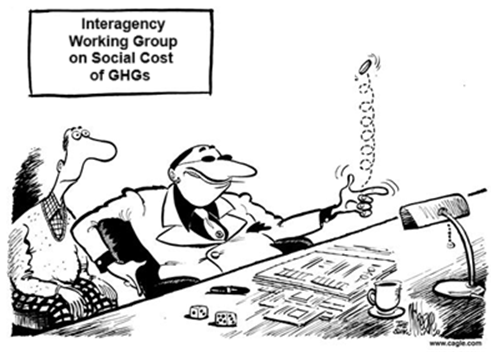
(b) The Interagency Working Group on the Social Cost of Greenhouse Gases (IWG), which was established pursuant to Executive Order 13990, is hereby disbanded, and any guidance, instruction, recommendation, or document issued by the IWG is withdrawn as no longer representative of governmental policy including:

(i) the Presidential Memorandum of January 27, 2021 (Restoring Trust in Government Through Scientific Integrity and Evidence-Based Policymaking);

(ii) the Report of the Greenhouse Gas Monitoring and Measurement Interagency Working Group of November 2023 (National Strategy to Advance an Integrated U.S. Greenhouse Gas Measurement, Monitoring, and Information System);

(iii) the Technical Support Document of February 2021 (Social Cost of Carbon, Methane, and Nitrous Oxide Interim Estimates under Executive Order 13990); and

(iv) estimates of the social cost of greenhouse gases, including the estimates for the social cost of carbon, the social cost of methane, or the social cost of nitrous oxide based, in whole or in part, on the IWG’s work or guidance.

(c) The calculation of the “social cost of carbon” is marked by logical deficiencies, a poor basis in empirical science, politicization, and the absence of a foundation in legislation. Its abuse arbitrarily slows regulatory decisions and, by rendering the United States economy internationally uncompetitive, encourages a greater human impact on the environment by affording less efficient foreign energy producers a greater share of the global energy and natural resource market. Consequently, within 60 days of the date of this order, the Administrator of the EPA shall issue guidance to address these harmful and detrimental inadequacies, including consideration of eliminating the “social cost of carbon” calculation from any Federal permitting or regulatory decision.

(d) Prior to the guidance issued pursuant to subsection (c) of this section, agencies shall ensure estimates to assess the value of changes in greenhouse gas emissions resulting from agency actions, including with respect to the consideration of domestic versus international effects and evaluating appropriate discount rates, are, to the extent permitted by law, consistent with the guidance contained in OMB Circular A-4 of September 17, 2003 (Regulatory Analysis).

(e) Furthermore, the head of each agency shall, as appropriate and consistent with applicable law, initiate a process to make such changes to any rule, regulation, policy or action as may be necessary to ensure consistency with the Regulatory Analysis.

(f) Within 30 days of the date of this order, the Administrator of the EPA, in collaboration with the heads of any other relevant agencies, shall submit joint recommendations to the Director of OMB on the legality and continuing applicability of the Administrator’s findings, “Endangerment and Cause or Contribute Findings for Greenhouse Gases Under Section 202(a) of the Clean Air Act,” Final Rule, 74 FR 66496 (December 15, 2009).

What Might Happen Next

Source E&E News : Trump set a deadline on the endangerment finding. Here’s what might happen.

The finding, issued during President Barack Obama’s first term, holds that greenhouse gas emissions “may reasonably be anticipated to endanger public health or welfare.” It’s the prerequisite for Clean Air Act rules targeting heat-trapping pollutants such as carbon dioxide and methane. The finding originally pertained to climate pollution from vehicles, but it opened the door for regulations on power plants and oil and gas infrastructure. And it could support future regulation on additional sources of climate pollution, such as landfills, refineries and industrial plants.

Getting rid of the finding would make scrapping EPA climate rules a matter of routine paperwork, an expert said. Regulations could be undone through simple, swift rulemakings. No replacement rules would be needed.

“Taking away the 2009 endangerment finding would really make it almost a virtual formality to take down all the greenhouse rules for CO2 and methane,” said Joe Goffman, EPA’s air chief under Biden.

EPA would still need to strip out sector-specific findings from rules written under a key section of the Clean Air Act — known as Section 111 — he said. But when the dust settled, EPA could regulate oil and gas facilities for ozone-forming pollutants alone, and not for methane — greatly reducing requirements for industry. And power plants that burn fossil fuels wouldn’t be regulated for carbon.

Daren Bakst, director of the energy and environment program at the conservative Competitive Enterprise Institute, a think tank that has long advocated getting rid of the endangerment finding, agreed that it would “present legal challenges.”  But he said the risk was worth taking.

“If the EPA finds there is no endangerment, and this survives in court, it would have the important effect of stopping the EPA from regulating greenhouse gases,” he said.

Regarding next week’s deadline, he said Zeldin might submit only preliminary recommendations to the Office of Management and Budget, rather than a full-blown decision to challenge the finding, or pass on it.

US Energy Status Quo and Outlook–Sec. Chris Wright

Three days after he was confirmed as US Secretary of Energy, Chris Wright was interviewed on CNBC Squawk Box by Brian Sullivan.  The video clip above and one at the end provide his view of the way forward for US energy.  For those who prefer to read, I provide a transcript in italics from the closed captions, lightly edited with my bolds and some added images.  Brian refers to interviewer Brian Sullivan and Chris to Secretary Wright.

Brian: Let’s get to the topical issues, price of oil. The president says drill, baby, drill. You’re a guy that ran a fracking company. How do we balance out ringing down the price of gasoline, adding to US production, but yet not destroying the oil and gas investments as well? The CNBC audience talks about and looks at that every day.

Chris: Yeah, of course it’s a business and prices are dictated by supply and demand. But we’ve had four years of an administration that’s done everything it could to raise the cost to produce a barrel of oil. “We’re not sure if you can get a permit to drill here” or “It’s going to take 18 months. You’ve got uncertainty. You’ve got to build pipelines or gathering lines to move that product to market. “Well, we’re not sure if you can do that. You’ve got to do another study, or another this or that.” So when you add to costs of course you hurt the economics.

Now we’re going to have a more efficient operating environment. I think we’re going to see some efficiencies from scale, some efficiencies from certainty and from more credible Capital Markets. We’ve tried to starve the oil and gas industry globally, somehow thinking that’s going to help climate change. There’s been a lot of nonsense. And I think the agenda of this administration, this president, is to bring back common sense.

Brian: Can we have lower oil and gas prices and still have stocks that are not much lower than they are right now?

Chris: Oh, absolutely. Look, if you lower the cost of operations, there’s a lot of fat in the cost of operations. If you lower the cost of operations that’s going to flow through to lower prices but not necessarily lower profits.

Rough Seas for Captains of Industry

Brian: And that margin you think can remain steady and thus hold up because you were the CEO of a publicly traded company and on the board of another publicly traded company, which you have now left.

Chris:  Absolutely. And look, it’s capitalism and business is driven by profit motives that have driven innovation, that have driven efficiency and driven improvements in our system. And that’s exactly what we want going forward in nuclear and natural gas and oil and geothermal, whatever it is.

Brian: Just before this interview we were talking about tariffs and the impact. They were showing health and beauty stocks down 25%. We know there’s a pause on the potential Canada tariffs, there’s 4.4 million barrels a day we bring in from Canada on average. Much of that goes to where you’re from, the Rocky Mountains, the Denver area, the upper Midwest. What is your view on potential 10% tariffs? If it does happen, what is going to happen to US oil and gasoline prices?

Chris: Well, look. Obviously the Canadian energy system is built and integrated with the United States energy system. Those pipelines come to US refineries that are tuned to refine that heavier, more viscous crude that Canada produces. I don’t think we’re going to see that change. As the president has said, this is a drug war. This is about concerns and security at our border. This is to get everyone’s attention and focus on how can we reduce criminals and fentanyl and drugs that are a threat to American security coming in our borders. I think things are moving in a productive direction.

Brian: It doesn’t sound like you think the tariffs would ultimately occur.

Chris: I don’t know what the future will bring there, but I know we’ve got very productive dialogues right now.

Brian: I’m sure you have many friends in Canada, as do I. And you know, they’re angry about this. They said, “Well, you know what? If they want to tariff our oil, let’s just ship it to Vancouver and we’re going to sell it overseas. I would call that the nuclear option. Do you see anything like that occurring if the tariffs were to occur, Mr. Secretary?

Chris: It’s hard to build new pipeline capacity. Canada does have a West Coast pipeline, which is running today and exporting oil to Asia. But that’s 10% or less of Canadian oil production. But look, this president is aggressive. He doesn’t like the status quo. He wants to change things and improve things. We had a lot of noise and sound and fury last time he was president about tariffs and inflation. Inflation averaged less than 2% in the four years he was president.

His agenda is to lower prices and better American lives, and
I don’t see any reason to believe think that’s not going to happen.

Brian: You mentioned climate a couple of minutes ago. Coming into this Administration, one of the big question marks is: What will happen to the loans and the grants and the IRA Inflation Reduction Act monies that may be already committed to wind, to solar. This matters to CNBC’s audience. In the stock market, a lot of these companies have seen their share price decline by a lot. What is your view on the Inflation Reduction Act and wind and solar projects, and the monies that are required to produce them?

Chris: So look, I’m in this chair three days now. One of the things we are doing is looking at all the projects that are out there. Where are the commitments? Where are the uncommitted funds? What’s the best use to grow the supply of affordable, reliable, secure American energy? Tremendous opportunities there. So there’s upside here as well.

But one thing I will say, Brian, we will not follow the German model. And I think the last administration wanted to go down that road. Germany spent a half a trillion dollars, made their electricity 2 to 3 times more expensive, and they produce 20% less electricity today than they did 15 years ago. We’re not going to go down that road.

We want affordable, reliable, secure energy and
reindustrialization of America, not De-industrialization of America.

Brian: Well, that’s something I’ve obviously personally reported on many times for CNBC. Been over there, seen what’s happened. So just to be clear, because let’s be honest, a lot of Wall Street makes a lot of money investing in wind and solar and even nuclear. You were on the board of a nuclear company. So final question. Should we say that that it’s possible big wind and solar projects are still going to be okay, that they’re not going to be starved of Funds under this administration? What’s the what’s the money situation regarding some of these renewable wind and solar and nuclear type energy programs?

Chris: Look, I think you’re going to see continued development in the United States of all of these energy sources. But obviously, a flow of funds from this administration is all going to be about not what the energy technology is, but will it increase the supply of affordable, reliable, secure energy?

Will it better the lives of American consumers and
encourage businesses to build things in America?

Brian: Well, finally, on building things. The first new nuclear plant in the United States just opened up last year in Georgia, took about 20 plus years to build way over budget. You’re a nuclear guy. You were on the board of Anglo until you resigned that seat. What is the future of nuclear in the United States? Some say it’s the future. Others say way too doggone expensive up front, doesn’t pay off.

Chris: I think the future is very bright, very bright. It’s an energy dense technology that gives reliable energy at all times, with a small amount of land and a small amount of materials. Do we need innovation? Do we need some government out of the way to make it work economically? Absolutely. But that’s what America is about.

Brian: Exclusive interview with the new Secretary of Energy on Day three, Christopher Wright. Thank you very much for your time here.


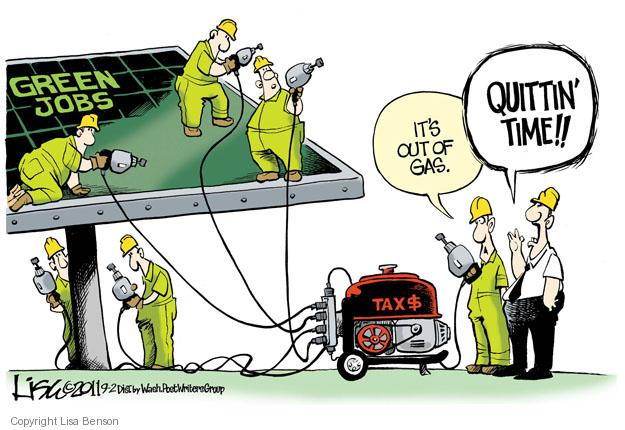
“Green” Agenda is Anything But

Steve Milloy explains the deceptive “Green Agenda” label in his Real Clear Wire article There Is Nothing Green About the ‘Green’ Agenda.  Excerpts in italics with my bolds and added images.
Now that the Democrats have lost their lock grip on power, what’s a green activist to do? It’s almost comical how the climate left is trying to cloak their agenda in terms they think will melt in Republicans’ ears. For example, Jennifer Granholm, energy secretary in the Biden administration recently penned an opinion piece arguing that President Trump is playing right into Communist China’s evil hands by killing off America’s green economy. 

Translation: The left is furious that Trump has halted the flow of billions of taxpayers’ dollars to subsidize electric vehicles that nobody wants and only the well-off can afford. The new president is killing the “green economy,” as Granholm puts it.

There is nothing green about the climate left’s solutions. 

If the climate movement was truly sincere and intellectually honest in its desire to stop actions contributing to global environmental degradation, it would stand fast against solar panels and electric vehicles. There is nothing green about the climate left’s solutions.

There is nothing environmentally friendly about using enslaved children in the Congo to mine cobalt for lithium-ion rechargeable batteries used in EVs. They labor with crude tools and bare hands, breathing in cobalt’s toxic dust in cramped pits. Runoff infused with cobalt and other chemicals contaminate the water supply. Meanwhile, on the other side of the world, green activists sit blithely unaware or unconcerned in the comfort of their own homes. They are saving the world, they smugly assure themselves, while children suffer in an environmental hellhole.

Far removed from U.S. environmental standards, Indonesia is the center of mining and refining nickel, an essential component in EV batteries. Pea soup-thick brown emissions shroud nickel smelting operations in the Indonesian island of Sulawesi as well as the coal-fired plants that fuel them. Processing waste and chemicals potentially leach into the ground. Dust residue from both ubiquitously blanket nearby communities, while waterways tainted by mining operations have red cast.

Whatever else climate activists may try to tell us,
there is nothing green going on here.

In Brazil, near the mouth of the Amazon River, a factory refines bauxite into what eventually becomes aluminum. It had been the source of aluminum in the Ford F-150 Lightening, the company’s now cancelled all-electric pickup truck. A lawsuit alleges that toxic elements, including aluminum and other heavy metals emanating from the refinery, have been responsible for cancer, birth defects, neurological dysfunction, digestive disorders, skin conditions, and increased mortality. How can an EV be called green or good for the environment when it’s making thousands of Brazilians sick?

Elsewhere in Brazil this past Christmas season, Brazilian authorities shuttered construction of an EV factory when it was discovered that its builders were working under “slavery”-like conditions. How is that a green virtue? Perhaps green dogma holds that human worth and dignity are small sacrifices that must be made for the common good.

Solar energy, long the prize pig of the climate crowd, isn’t green either.

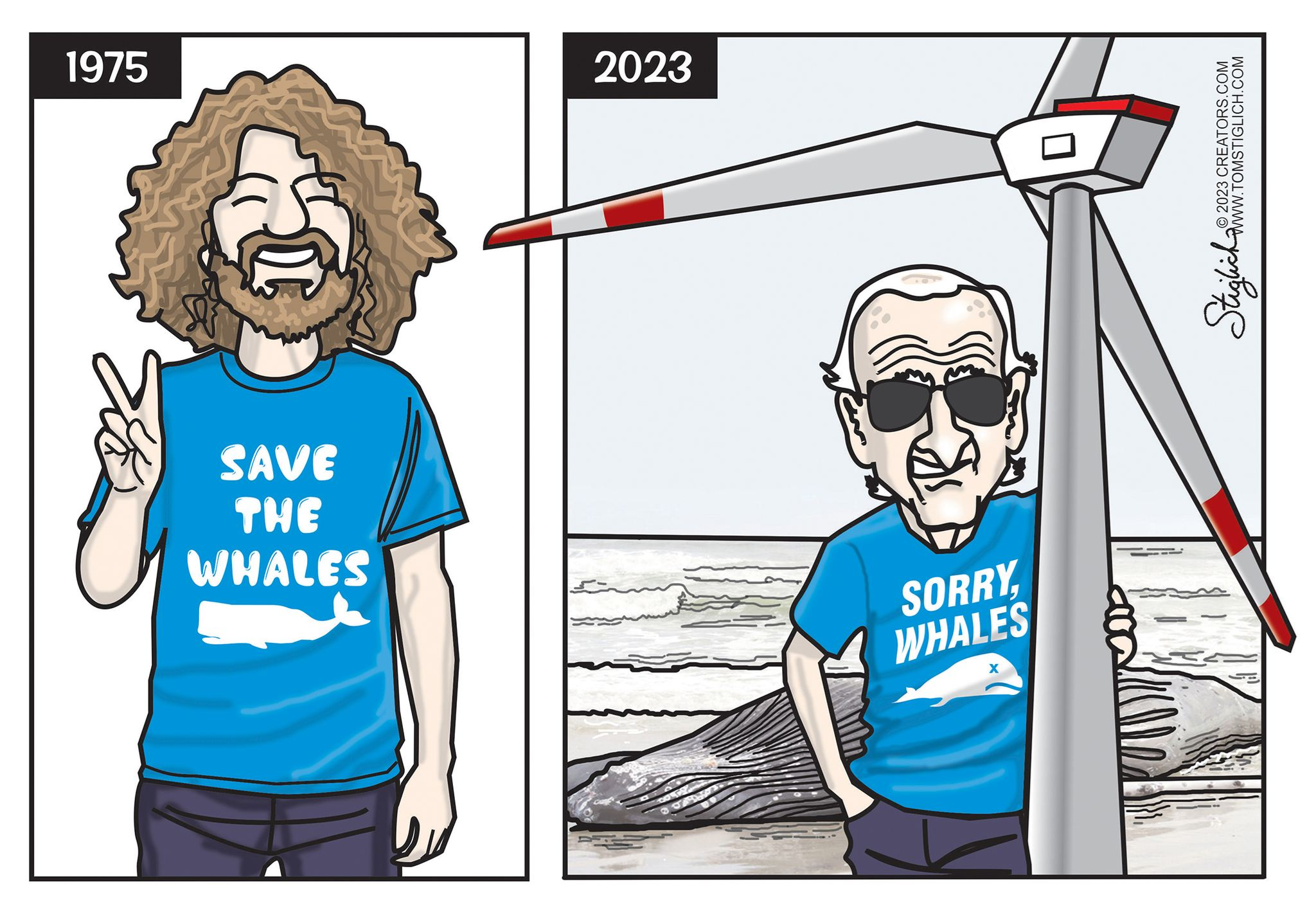
The fact that destroying forest land for solar arrays is bad for the environment should be obvious. Studies have found “the loss of carbon-dioxide gobbling forests for solar installations results in a net increase in greenhouse gas emissions.” Nor should wind farms be considered remotely green when wildlife is being killed and habitats are being disrupted. The same is true offshore, with a number of whale deaths associated with mammoth wind operations.

The same folks pushing “green” have been disingenuous from the start. In 1970, they assured us that human activity would cause an ice age by the 21st century and that we’d be under food rationing by 1980. Acid rain was a crisis until it wasn’t. Then global warming became the crisis, with much of New York City to be underwater by 2019. In 2008, Al Gore prophesized that the North polar cap would be gone in five years. It wasn’t. In 2009, UK Prime Minister Gordon Brown proclaimed,” We have fewer than 50 days to save our planet from catastrophe. Spoiler alert: We’re still here and thriving.

Their seemingly endless lies have been accompanied by Orwellian word games, moving from “global warming” to “change.” Now the Newspeak has shifted to “extreme weather and “overheating.

The truth is there is no green energy. No energy is clean. No energy is dirty. There are only challenges, solutions and tradeoffs. At the time of already high energy costs, choosing reliable, fossil fuel-backed energy is of paramount importance. Word sophistry from our friends on the left won’t change that.


EPA Priorities Announced

During Trump 1.0 the appointed EPA Director summarized the false dichotomy long plaguing the agency: “If you are for the Environment, you must be against Development; and if you are for Development, you must be against the Environment.” In reality, a balance must be struck, and a new administration intends to find it.  There has been much gnashing of teeth in the legacy media over this month’s dismissal of scientists from EPA advisory boards, without mentioning the same housecleaning happened in 2021 when Biden regime took over.  Now we have an official announcement about the new EPA direction and priorities.  Text in italics with my bolds and added images.
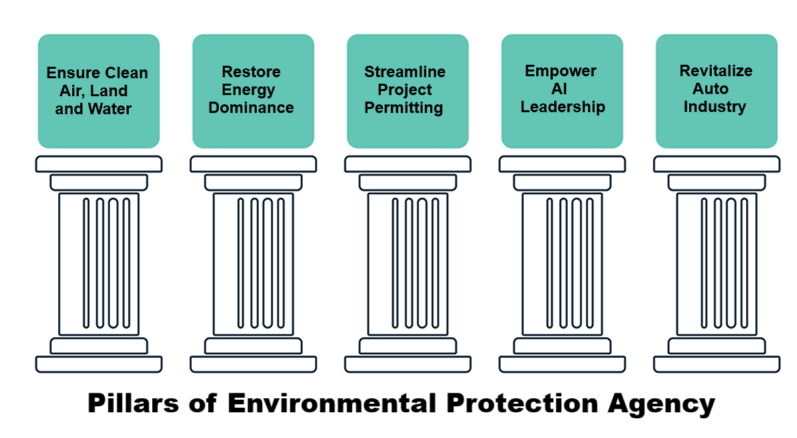
WASHINGTON – On February 4, 2025, U.S. Environmental Protection Agency (EPA) Administrator Lee Zeldin announced the agency’s Powering the Great American Comeback Initiative, to achieve the agency’s mission while energizing the greatness of the American economy. This plan outlines the agency’s priorities under the leadership of President Trump and Administrator Zeldin. The newly announced Powering the Great American Comeback initiative consists of five pillars that will guide the EPA’s work over the first 100 days and beyond:

Pillar 1: Clean Air, Land, and Water for Every American

“Every American should have access to clean air, land, and water. I will ensure the EPA is fulfilling its mission to protect human health and the environment. In his first term, President Trump advanced conservation, reduced toxic emissions in the air, and cleaned up hazardous sites, while fostering economic growth for families across the country. We remain committed to these priorities in this administration, as well as ensuring emergency response efforts are helping Americans get back on their feet in the quickest and safest way possible. We will do so while remaining good stewards of tax dollars and ensuring that every penny spent is going towards advancing this mission,” said Administrator Zeldin.

Pillar 2: Restore American Energy Dominance

“Pursuing energy independence and energy dominance will cut energy costs for everyday Americans who are simply trying to heat their homes and put gas in their cars. This will also allow our nation to stop relying on energy sources from adversaries, while lowering costs for hardworking middle-income families, farmers, and small business owners. I look forward to working with the greatest minds driving American innovation, to ensure we are producing and developing the cleanest energy on the planet,” said Administrator Zeldin.

Pillar 3: Permitting Reform, Cooperative Federalism, and Cross-Agency Partnership

“Any business that wants to invest in America should be able to do so without having to face years-long, uncertain, and costly permitting processes that deter them from doing business in our country in the first place. It will be important for the EPA to work with our partners at the state and federal levels to ensure projects are being approved and companies can invest billions of dollars into our nation. Streamlining these processes, while partnering with businesses to follow the necessary steps to safeguard our environment, will incentivize investment into our economy and create American jobs,” said Administrator Zeldin.

Pillar 4: Make the United States the Artificial Intelligence Capital of the World

“As we rapidly advance into this new age of AI, it is important that the United States lead the world in this field. Those looking to invest in and develop AI should be able to do so in the U.S., while we work to ensure data centers and related facilities can be powered and operated in a clean manner with American-made energy. Under President Trump’s leadership, I have no doubt that we will become the AI capital of the world,” said Administrator Zeldin.

Pillar 5: Protecting and Bringing Back American Auto Jobs

“Our American auto industry is hurting because of the burdensome policies of the past.

Under President Trump, we will bring back American auto jobs and invest in domestic manufacturing to revitalize a quintessential American industry. We will partner with leaders to streamline and develop smart regulations that will allow for American workers to lead the great comeback of the auto industry,” said Administrator Zeldin.

Footnote:

The Trump Administration not only cut “environmental justice” programs at the Environmental Protection Agency, they put nearly 200 staffers on leave.

According to reports, the staffers were called into a meeting on Thursday afternoon where they were informed that they were being placed on leave.

“Effective immediately, you are being placed on administrative leave with full pay and benefits. This administrative leave is not being done for any disciplinary purpose,” the email stated, according to Politico.

“Career staff made determinations on which Office of Environmental Justice employees had statutory duties or core mission functions,” EPA spokesperson Molly Vaseliou said in a statement. “As such, 168 staffers were placed on administrative leave as their function did not relate to the agency’s statutory duties or grant work. EPA is in the process of evaluating new structure and organization to ensure we are meeting our mission of protecting human health and the environment for all Americans.” Source.

Carnage: Trump Cuts ‘Environmental Justice’ Programs, Puts Nearly 200 EPA Staffers on Leave

It’s Better to be Outside Paris Accord

Chris Johnson writes at Real Clear Energy to explain Trump’s Withdrawal From the Paris Agreement Won’t Hurt the Climate.  Excerpts in italics with my bolds and added images.

President Donald Trump withdrew from the Paris Agreement. Cue the leftwing meltdown. Though everyone knew the withdrawal was coming, the left and the “international community” are still decrying America’s alleged abdication of leadership on climate.
But toothless agreements window dressed with international
summits and photo ops are not the same as leadership.
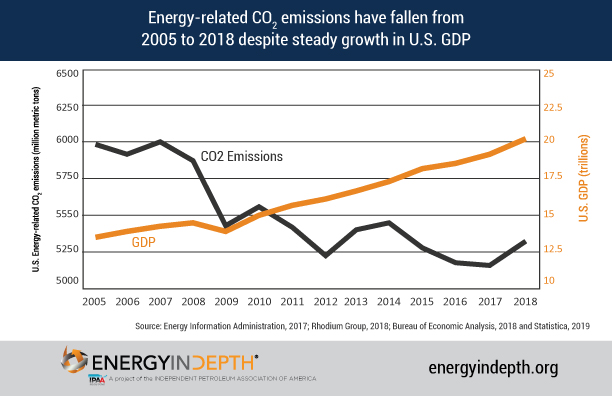
The truth is America has led the world in reducing emissions for years not because of the Paris Agreement, but because innovation and the free market facilitate the deployment of cheaper and cleaner energy.  Let’s review the record.
In recent decades, America has achieved unprecedented — and unexpected — energy production thanks to fracking and horizontal drilling. Since the early 2000s when these twin technologies began to be deployed much more expansively, U.S. natural gas production has more than doubled. By 2016, hydraulically fractured gas wells accessed through horizontal drilling accounted for nearly 70% of all oil and natural gas wells.
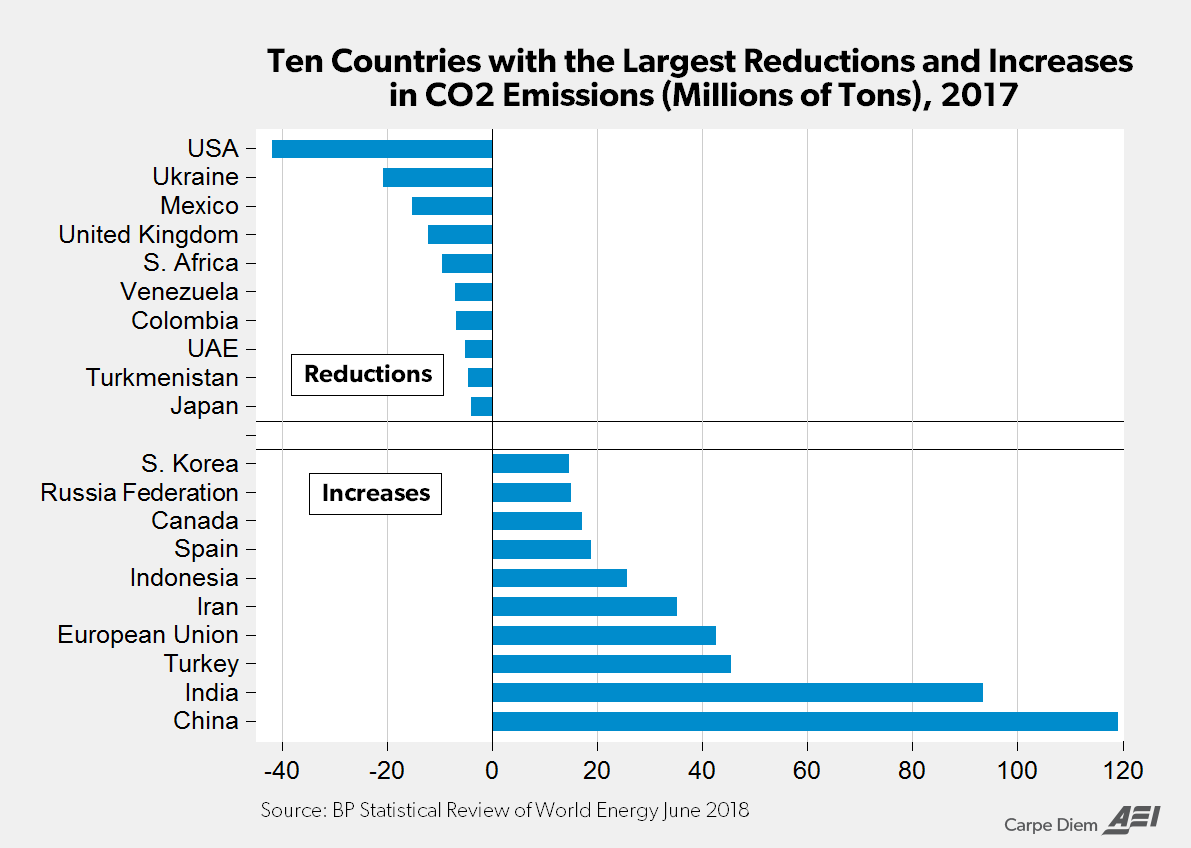
While the left may clutch its pearls at the increased production of a fossil fuel like natural gas, this clean energy source has been a main driver of U.S. emissions reductions. Over the past 15 years when America has massively increased natural gas output, the U.S. reduced carbon emissions more than any other country. We can see this year by year.
For example, from 2022 to 2023, America offset dirtier coal energy generation with natural gas. As coal declined by 121.9 terawatt hours of electric generation over that time, natural gas increased by 118.9 terawatt hours. At the same time, U.S. greenhouse gas emissions declined 1.9%. Notably, 80% of the U.S. carbon emissions reductions were driven by the electric power sector — precisely where natural gas has an outsized impact.
Notice what didn’t cause those emissions reductions? The Paris Agreement.
The American energy sector — powered by innovation and good-old-fashioned free market economics — has been driving down carbon emissions cheaply and effectively before the Paris Agreement was a twinkle in climate activists’ eyes. And it will continue to reduce carbon emissions long after President Trump’s decision to withdraw.
The Paris Agreement is far from the panacea some activists claim it is.
It isn’t even a particularly effective tool to
rally nations toward greater climate success.
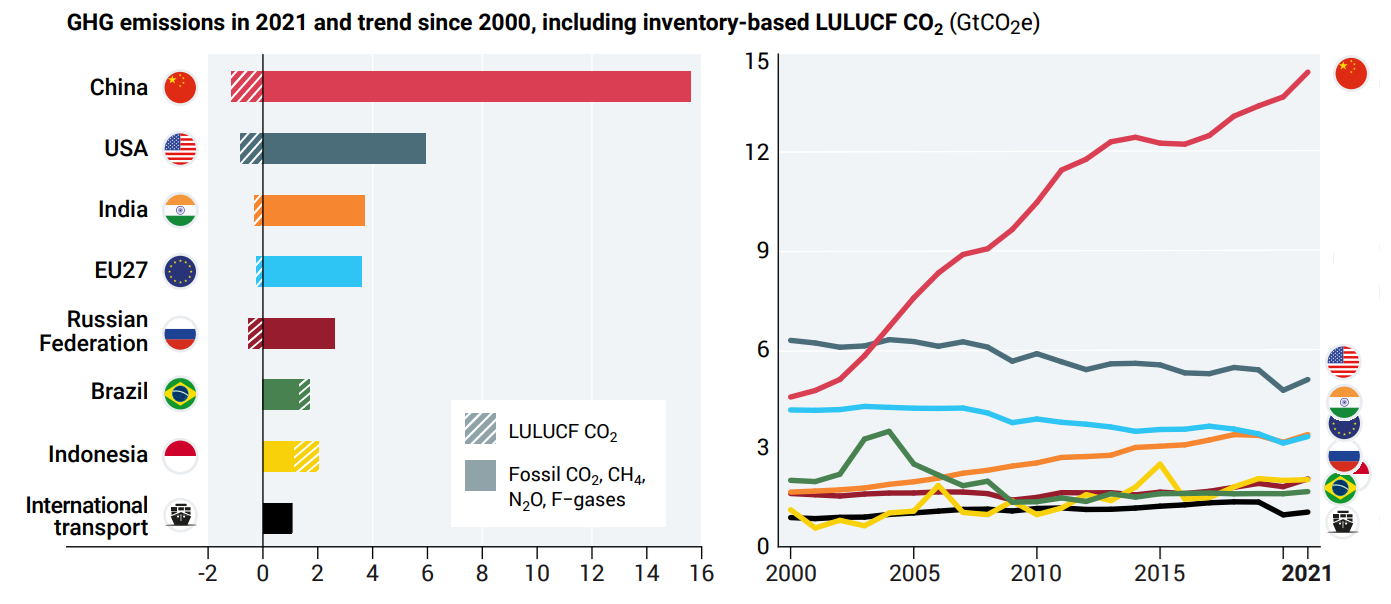
In the middle of the allegedly climate-conscious Biden administration, none of the world’s biggest emitters — America included — had reduced their emissions in accordance with the Paris goals. Apparently, the $1 trillion regulatory and subsidy regime erected by President Biden’s Inflation Reduction Act had little bang for the buck.
What Agreement supporters forget is that no number of high-profile international accords can make command-control tactics work — or instill other nations with the ambition to fulfill their empty promises.

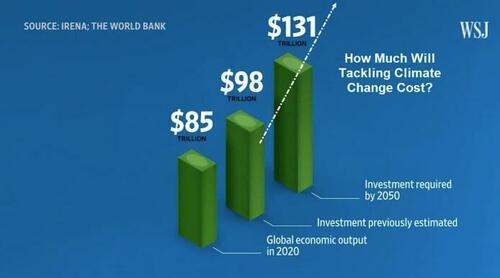
Yes, those are trillions of dollars they are projecting to spend.

The Paris Agreement is the definition of bureaucratic failure, conflating meetings, busyness, and lofty goals as success. Its only achievement is to make climate ideologues and green jetsetters feel good about themselves as they fly to international conferences.
It’s no wonder President Trump withdrew. Talk is cheap. What matters is success. On that metric, the Trump administration is set to actually achieve what Paris Agreement signatories only write on paper.
Trump entered office promising to deregulate the fossil fuel industry, increase permitting for natural gas extraction, approve the construction of energy facilities like natural gas export terminals, and re-establish American energy dominance.
By leaning into America’s carbon advantage and exporting clean American energy abroad, he will boost the U.S. economy, supplant dirty energy from nations like Russia and Venezuela with a clean American alternative, and lower emissions both at home and abroad, all without the jaw-dropping price tag of the failed Biden-era green agenda. We should combine these steps with efforts to actually hold the biggest polluters accountable (which are being discussed by President Trump’s cabinet). This approach would be the antithesis of the Paris Accords’ America-last strategy.
Of course, some are urging President Trump to go further and not just withdraw from the Paris Agreement, but also back out of the UN Framework Convention on Climate Change (UNFCCC). This may seem like an easy choice, seeing as the UNFCCC, like so many UN bodies, acts contrary to American interests. But that’s exactly why America must remain in the UNFCCC.
Climate treaties will be formed whether or not the U.S. is involved, and the UNFCCC will continue to operate as a forum for those negotiations. Staying in the UNFCCC costs America nothing while allowing Trump and his appointees to keep a seat at the table, hold the UN accountable, and counter any deal that would put America at a disadvantage. While the UNFCCC can be harmful, it’s only the Paris Agreement that’s impotent.
The breathless alarm over the withdrawal from the Paris Agreement is overwrought. When President Trump withdrew from the Paris Climate Accord during his first administration, America went on to cut carbon emissions to the lowest level in 25 years. Re-embracing the power of natural gas in his second term, he’ll do it again.
So instead of the UN and international climate activists judging the U.S., we should remind everyone that if you want to put climate first, you should actually put America first.
Chris Johnson is a GOP strategist who organizes the next generation of conservative leaders. He also serves as a senior advisor to the National Federation of College Republicans, focusing on energy issues.


Poilievre: On Canada and US Partnership

Last week Jordan Peterson conducted the above interview What Pierre Poilievre Thinks About Donald Trump. Poilievre is the Conservative leader expected to form the next federal government in Canada.  My lightly edited transcript is below in italics with my bolds and added images. JP refers to Peterson and PP to Poilievre.
JP: Trump famously met with Trudeau and seemed to troll him quite hard. First thing, I don’t know to what degree the Canadian press picked up on this, but Trudeau wasn’t invited to stay at Mar-a-Lago and there’s 126 rooms there. So when Trump invites someone he also invites them to stay there. So you know that was a message, and then he trolled him hard. He called him the governor of America’s 51st State and let it be known that he had very little respect for him. And then he announced a 25% tariff on Canadian goods.

So I had two reactions to that. You know, because I’m no fan of Trudeau, one was amused pleasure at Trump’s vicious humor let’s say. And the other one, you know he is the leader of our primary ally and a G7 nation, and so maybe that verged on contempt. I’m not exactly sure what to make of that and I’m curious about your response, and also how you feel about negotiating a new relationship with the Americans and with the Trump Administration in particular.

PP: Well I won’t spend a lot of time on how I feel about it other than to say Trudeau is a weak leader who leads a weakened economy with a weakened dollar and a weakened border. And president Trump has a strong mandate and he he spent his life as a highly successful businessman in the most cutthroat economic environment in the world, New York City. So in construction yeah and in Chicago. This is a former businessman who can spot weakness a mile away and act on it. So it’s just humiliating for all Canadians to witness something like that, because this is our country.

But what am I going to do about it? Look, first and foremost we need to show up with strength. We have an American president who has always put America First, he’s very blunt about it. I’ll put Canada First. The good news is that there’s immense overlap in the two countries respective interests and values. We’re both liberal democracies, we both value Freedom, we both share a geography. We have our enemies and our risks and our threats are the same, so there’s no reason why we can’t both win. If you look at the history of President Trump, he negotiates very aggressively and he likes to win, but in the end he doesn’t appear to have a problem if his counterparty also wins. So I think that we can get a great deal that will make both countries safer, richer and stronger. That’s the goal that I’ll be coming with into these negotiations.

JP: Okay, so what would a great deal look like as far as you’re concerned with the Americans on the energy side. One of the things that Trump pointed to was Canada’s Trade Surplus with the US at 1 billion was his estimate.

PP: It depends how you measure it, other estimates have it at around 40 billion, but he’s right, there is a Canadian Trade Surplus with the states. And from a mercantilist point of view you can say that America has been ripped off by China and Mexico. You can see examples of a factory closing in Ohio or Pennsylvania to open in Mexico or in China. But that’s not the nature of the Canadian Trade Surplus. It’s not a matter of the Canadian economy taking American jobs, far from it.

The nature of our Trade Surplus with America is that while it is a ripoff,
it’s Canada ripping itself off and let me explain.

Our entire Trade Surplus and more is due to oil and gas because we export about $120 billion of oil and gas to the United States at enormous discounts to market price because we have been so stupid and our bureaucrats have been so obstructive and woke activists have been so fanatical that we have not been able to develop the infrastructure to refine and transport our own energy to World Markets. So we are stuck with the US; depending on the time we sell a barrel oil to the Americans for 10% up to 30 or 40% cheaper than the world price. There’s a price called western Canada select and it’s significantly lower than WTI.

Until recently at least 99% of our oil exports to America where they then get to upgrade it and resell it at enormous profits with their welders, pipe fitters and engineers making the six figure salaries that go along with that. We give all of our natural gas exports to the United States because we don’t have an an operating liquefaction terminal to send it away ourselves so they get our natural gas at massive discounts. And then they can decide if they want to liquefy and ship it off to world markets at literally five times higher.

Trudeau’s “Just Transition” to Net Zero

So that is that is the trade surplus he’s talking about. Now if he were to stop that today it would mean that American workers at refineries and in other value added places would lose their jobs and Americans would pay higher energy prices. So that would not be good for America in the long run.

Being very blunt, I intend to approve refineries and LNG plants and
hopefully pipelines so that I could bring that production
back to Canada and make us more energy independent.

But in the short run if president Trump wants to make America richer the last thing he should want to do is block the underpriced Canadian energy from going into his Marketplace. In fact I would encourage him to approve the Keystone Pipeline so that we can create jobs for American workers who will build and install it, but also create much more wealth for Alberta and Saskatchewan and have their product reach tide water in the US Gulf Coast and get World prices.

So that’s an economic win. Also it’s not just oil and gas though. We have in Canada the Strategic minerals that are necessary for Warfare and for the modern digital economy that we could be exporting to the United States breaking both of our dependencies on China. We have the energy, a major Surplus of electricity, a surplus that we could even grow further that could be used for data centers that America cannot build fast enough.

So there’s enormous opportunities for both of us to get vastly richer if
we actually deepen our trade relationship rather than blocking it.

JP: Right, well it seems highly probable to me that that would be the direction that the Trump Administration would turn in if they were negotiating with people who were playing a straight game and were actually aiming for something like economic Prosperity instead of whatever the hell it is that Trudeau’s aiming for. Now you made brief reference to something quite shocking in its full import which didn’t really strike me until your comments. For example, Trudeau turned away the chancellor of Germany and the leader of Japan when they came cap in hand to Canada asking for increased Natural Gas exports over the long run. Given that we refused them, we ended up maintaining our low cost contracts with the United States and selling them all our resources at a discount.

PP: Yes, it’s enormously stupid. That’s the business case Trudeau couldn’t make. And I hate to say this, but because we have blocked LG plants and pipelines and other energy infrastructure, and because we’re giving therefore our gas to America at like a 70 or 80% discount to European and Asian prices and our oil at a discount of 20 or 30%, we’re effectively throwing money out a window. What do you do when someone throws money out a window? Stand next to the window yeah right.

So that is the true story, the pathetic story of our Trade Surplus is
that we’re actually handing over our resources stupidly.

It’s not The Americans’ fault, it’s our fault. We’re stupid and we’re going to stop being stupid when I’m prime minister. We’re going to build this infrastructure ourselves but in the meantime it would be it would be bad for American workers and consumers for the president to tariff our oil and gas.

And look, we have an integrated economy; I think an automobile crosses the Border something like eight or nine times between Ontario and the manufacturing states of the US before it becomes a finished product. Why interrupt those Supply chains? Also why not allow Americans just to have access to buying our minerals? Or better yet why don’t we process improve them here in Canada before we sell them to the United States to break dependence on hostile foreign powers?

By the way I would say to president Trump that the gains that Canada gets from increased access to the United States, I would spend largely on our Continental defense, on a more powerful Canadian military that truly secures the Arctic that protects us against terrorists and against intercontinental ballistic missiles, against threats, God forbid, from other parts of the world. We could have a bigger and more powerful military with a bigger and more powerful economy and so our interests overlap overwhelmingly.

That’s the case I would make to the incoming president
who has proven that he likes to make deals and
is good at it.


Wyoming: Make Carbon Dioxide Great Again–No Net Zero

A bill is progressing through the Wyoming State Legislature, as described by the author in her op-ed Rethinking Carbon Dioxide – Wyoming’s Bold Move.  Excerpts in italics with my bolds and added images.

Torrington, WY (State Senator Cheri Steinmetz) January 7th, 2025 — The people of Wyoming have always believed in the value of questioning conventional wisdom, looking at the bigger picture and finding solutions that are possible and actually work. That’s the purpose of the bill titled “Make Carbon Dioxide Great Again”. This legislation is not about denying science, it is about applying science, thoroughly reevaluating the ‘climate change’ scientific assumptions and advocating for policies grounded in practicality, reality, and achievability – common sense.

Carbon dioxide (CO2) is vital to life on Earth.

Without it, plants could not grow, and without plants, no life would survive. Scientists and farmers alike recognize that higher CO2 levels improve agricultural productivity. Plants thrive with more CO2 – they grow faster, use water more efficiently, and are more resilient to drought. NASA’s own research shows that rising CO2 has contributed to a global “greening” effect, expanding vegetation and helping ecosystems flourish. CO2 is plant food!

Yet, despite its essential role in sustaining life,
CO2 has been demonized as a pollutant.

But what impact are human driven CO2 emissions actually capable of? We are contributing a very small part of the natural carbon cycle. Current CO2 levels are among the lowest Earth has seen over its long history. There were times in the past when ecosystems flourished under much higher CO2 concentrations. Instead of vilifying this essential gas, we should be acknowledging its role in our ecosystems and industries and protect the benefits it has in our lives.

Wyoming is uniquely positioned to lead this conversation.

Our state is vital to energy production, agriculture and food industries, transportation and energy reliability and stability. We understand the real-world importance of CO2. And we understand the benefits of CO2 used directly. Our industries already use it to enhance oil recovery, making energy production more efficient. This technology exemplifies what we are capable of when we treat CO2 as a resource rather than a liability.

The bill Make Carbon Dioxide Great Again shifts how we think about CO2.

It proposes that we stop treating the essential gas as a pollutant or contaminant. It requires a clear-eyed look at how policies aimed at eliminating CO2 emissions, such as decarbonizing the West, making Wyoming carbon negative or popular “net-zero” mandates. They may sound good on paper but often come with high economic costs and questionable environmental benefits, and clearly negative effects on our people and our industries.

Wyoming must refuse to jeopardize our economy and energy security
for initiatives that will yield – at best – questionable results.

Critics of “net-zero” strategies have highlighted the risks of pursuing policy goals without fully considering their consequences. These frequently require massive investments, disruption of reliable energy systems, and the forced undue burdens on families and businesses. Instead, Wyoming advocates for a balanced approach – one that evaluates the risks and possible rewards of any CO2 management plans that will safeguard our economic stability and way of life.

This approach challenges the status quo, and that is precisely the point. Now is the time to rethink how we talk about CO2 and climate change. This bill is not about ignoring environmental concerns; it is about addressing them with clear-eyed pragmatism and truth.

Wyoming is taking a bold step forward to lead a balanced, science-based dialogue. We all stand to benefit from this. Our energy sector, agriculture, transportation and all other industries, and even the broader environment, will gain when we use CO2 wisely.

This conversation is just beginning and must spark
a national debate about the fundamental role of CO2.

It is a debate we need to have – not just in Wyoming, with our own Governor and citizens – but across the nation and with all the organizations leading the charge to “net zero.” Let us challenge the assumptions, ask the hard questions, and make sure our policies truly serve the people, industry and the environment. After all, that is the Wyoming way.

Text of Wyoming Bill     SF0092  Make carbon dioxide great again-no net zero.

AN   ACT   relating to   environmental quality;   providing legislative findings;
specifying that carbon dioxide is not a pollutant and is a beneficial substance;
providing policy statements of the state associated with carbon dioxide;
repealing low-carbon energy standard requirements; repealing conflicting provisions;
making conforming amendments;  specifying applicability;
requiring reimbursement to utility customers as specified;
requiring rulemaking; and providing for an effective date.

Be It Enacted by the Legislature of the State of Wyoming:

Section 1.    W.S. 35-11-215 is created to read:

1             SF0092

35-11-215.     Carbon dioxide;   beneficial treatment; state policy.

(a)   The legislature finds that:

  (i)    Carbon dioxide is  a foundational nutrient necessary for all life on earth. Plants need carbon dioxide along with sunlight, water and nutrients to prosper. The more carbon dioxide available for this, the better life can  flourish;

  (ii)    The carbon cycle, where carbon dioxide is reused and transferred between the atmosphere and organisms on earth, is a biological necessity for life on earth;

  (iii)    Agricultural production worldwide is outpacing population growth and breaking production records primarily due to increasing atmospheric carbon dioxide;

  (iv)    More carbon dioxide allows plants to better resist drought by using water more efficiently;

  (v)     The national aeronautics and space administration has confirmed that global vegetation is increasing from the near-polar regions to the equator. The largest contributor to this greening of  the earth is increasing carbon dioxide;

  (vi)     Carbon dioxide levels are currently at approximately four hundred twenty (420) parts per million, which is  at near-historically low concentrations.   The current carbon dioxide levels are one-sixth (1/6) of the average of  two thousand six hundred  (2,600)  parts per million over geologic time;

  (vii)     It is estimated that carbon dioxide levels  need to exceed one hundred fifty (150) parts per million to ensure the survival of plant life on earth;

  (viii)     The earth needs carbon dioxide to support  life and to  increase plant yields,  both of     which will contribute to  the health and prosperity of  all Wyoming citizens.

   (b)     It is the policy of the state of Wyoming that:

(i)       Carbon dioxide is a foundational nutrient necessary for life on earth;

(ii)       Carbon dioxide shall not be designated or treated as a pollutant or contaminant;

(iii)       The state of Wyoming shall not pursue any targets or measures that support the reduction or elimination of  carbon dioxide,  including any  “net-zero”  targets.

          Section 2.        W.S. 37-1-101(a)(intro) and 37-2-134(a)(i)  and (iv) are amended to read:

37-1-101.       Definitions.

(a)   As used in chapters 1, 2, 3, 12, and 17 and 18 of  this title:

37-2-134.       Electric generation facility closures; presumption; commission review

(a)    As used in this section:

(i)     “Dispatchable” means as defined in W.S. 37-18-101(a)(ii) a source of electricity that is available for use on demand and that can be dispatched upon request of a power grid operator or that can have its power output adjusted, according to  market needs and includes dispatchability;

(iv)    “Reliable” means as  defined in W.S. 37-18-101(a)(iv) generated electricity that is not subject to intermittent availability.

        Section    3.    W.S.    37-1-101(a)(vi)(N), 37-18-101 and  37-18-102 are repealed.

Section    4.   Not later than sixty (60) days after the effective date of this act each public utility that recovered rates from customers under W.S. 37-18-102(c)(i) or (iii),  as repealed by section 3 of this act, shall refund those rates to customers who paid them, provided that the utility shall not be  required to refund rates recovered under W.S. 37-18-102(c)(i) and (iii) that the utility had expended for carbon capture, utilization and storage technology before the effective date of this act. Refunds required under this section shall be in a form and manner specified by the public service commission

Section    5.  The public service commission shall promulgate all rules necessary to implement this act.

Section    6.  This act is effective immediately upon completion of all acts necessary for a bill to become law as provided by Article 4, Section 8 of the Wyoming Constitution.

 (END)

What Keeps “Energy Transition” Going? $ $ $

Robert Gauthier answered posting on a Quora topic How could we reverse the damage done by the “green energy” global scam that brought less efficient and highly polluting energy producing projects and high energy prices? Excerpts in italics with my bolds and added images.

Wind and solar power has provided politicians with an excuse to dispense favours—including taxpayer-funded subsidies and tax preferences to a supposedly “green” industry—while appearing to do something for the environment. And yet, despite more than two decades of massive subsidies, tax preferences and purchasing mandates from governments, wind and solar power still represent barely more than a rounding error of global energy production. In jurisdictions where renewables enjoyed strong but ill-considered political support, consumers and taxpayers now face much higher electricity bills and less-reliable power. And despite promises to the contrary, countries such as Germany, which have significantly increased wind and solar electricity production, have seen no meaningful reduction of greenhouse gas emissions.

Far from being a miracle cure-all for the shortcomings of conventional power generation, wind and solar power exaggerate the symptoms they pretend to address. Added up over the past two decades, the cumulative subsidies across the world for biofuels, wind, and solar approach about $5 trillion, all of that to supply roughly 5% of global energy.

The whole justification for the falling costs of wind generation rested on the assumption that much bigger turbines would produce more output at lower capex cost per megawatt, without the large costs of generational change. Now we have confirmation that such optimism is entirely unjustified – the whole development process has been a case of too far, too fast. Again, this was both predictable and predicted. The idea that wind turbines are immune to the factors that affect other types of power engineering was always absurd. The consequence is that both capital and operating costs for wind farms will not fall as rapidly as claimed and may not fall significantly at all. It follows that current energy policies in the West are based on foundations of sand – naïve optimism reinforced by enthusiastic lobbying divorced from engineering reality.

In the end, however, politicians cannot defy the laws of physics and economics. The promise of wind and solar power will always clash with the need for electricity that is low cost and reliable. That’s why voters routinely punish politicians who pursue flawed renewable energy policies. Rising electricity costs due to increased wind and solar power damage the economy by making businesses that consume significant volumes of electricity less competitive and by leaving less money in the pockets of consumers.

In Ontario, Canada during the run of the Green Energy Act there which attempted to replace coal and nuclear with wind and solar the upshot was a 138% increase in the price of electricity at the meter for the consumers. This led to the government that brought in this legislation to lose the next election so badly that they were no longer recognized as a party in the legislature. Naturally the government that replaced them killed the program and started refurbishing the nuclear reactor fleet there.

Unfortunately, solar and wind technologies require huge amounts of land to deliver relatively small amounts of energy, disrupting natural habitats. The real estate that wind and solar energy demand led the Nature Conservancy to issue a report last year critical of “energy sprawl,” including tens of thousands of miles of high-voltage transmission lines needed to carry electricity from wind and solar installations to distant cities.

Land required for wind farms to power London UK

Building a single 100-MW wind farm—never mind thousands of them—requires some 30,000 tons of iron ore and 50,000 tons of concrete, as well as 900 tons of nonrecyclable plastics for the huge blades. With solar hardware, the tonnage in cement, steel, and glass is 150% greater than for wind, for the same energy output

Take batteries. It is estimated that current battery manufacturing capabilities will need to be in the order of 500-700 times bigger than now to support an all-electric global transport system. The materials needed just to allow the UK to transition to all electric transport involve amounts of materials equal to 200% the annual global production of cobalt, 75% of lithium carbonate, 100% of neodymium and 50% of copper. Scaling by a factor of 50 for world transport, and you see what is now a showstopper. The materials demands just for batteries are beyond known reserves.

And that’s just one of the issues. Others include vast costs constituting a multiple of current energy costs; the environmental impact of mining and transporting huge amounts of materials; need for vast amounts of rare elements, far beyond known world reserves; incredibly huge amounts of material to recycle when facilities wear out; and on and on.

Spend enough time researching this stuff and you gradually realize that almost everything you read about green energy shows that at best it’s really a dark shade of brown.

German Death Wish On Display

Tilak Doshi describes the self-inflicted German downfall in his Daily Sceptic article Germany’s Economic and Political Suicide. Excerpts in italics with my bolds and added images.

It’s that festive time of the year when interesting tales get told around a fireplace. So here goes (minus the fireplace).

Once upon a time there lived a country that was the envy of the world. It was among the world’s pre-eminent producers of manufactured goods. From chemicals and pharmaceuticals to precision engineering and the brewing of beer, it was second to none. Its people’s work skills, industriousness and discipline became the national hallmark of civilisational success. The country gained fame and fortune in bringing the luxuries of fine automobiles to the world’s rich and aspiring middle classes.

Alas, a blight visited that once great country not more than a score of years ago, though its destructive seed had been planted earlier. It was not some external force or act of God. Rather it was a sickness of the mind, a debilitating disease of the soul, that vexed that country’s ruling class. In restless search for virtue, the country’s rulers paid obeisance to the Goddess Gaia and promised the nation’s blood and treasure to satiate her inviolable sovereignty over her earthly domains.

This, then, is a tale of woe and misery. This Christmas shall not have been one of unalloyed merry times and good cheer. And while beer will have been drunk and dinners eaten in many a hearth and eating place, the lifeblood of that nation shall be constricted and its breathing blocked by a cursed phlegm as normal life resumes in the New Year.

Within the fateful score of years of becoming afflicted by the primordial cult of Gaia, the world’s envy has now become a sad basket case. Its economy has been tarnished as “the sick man of Europe”.

The beginning of the end of the German miracle

While the travails of Germany along with the economic stagnation of Europe as a whole have been apparent for some years now, the spate of dire headlines have gathered pace in recent weeks as the coalition government collapsed.

“Behind Germany’s Political Turmoil, a Stagnating Economy” — New York Times (December 17th)

“Germany Is Unraveling Just When Europe Needs It Most” – Bloomberg (December 15th)

“Europe’s Economic Apocalypse Is Now” – Politico (December 19th):

If Europe – and its economic powerhouse Germany – remains on its current trajectory, its future, Politico says, “will also be Italian: that of a decaying, if beautiful, debt-ridden, open-air museum for American and Chinese tourists”.

The economic rot induced by the adoption of Energiewende policies for the “energy transition” in 2010 resulted ultimately in the recession of the German economy in the last two years. Among the manifestations of this rot are the growth of corporate bankruptcies in double digits, soaring layoffs as the Federal Employment Agency said that the unemployment figure could exceed the three million mark for the first time in 10 years at the beginning of 2025, and the crown jewel of German industry, its automative sector, announcing massive job cuts.

According to a recent poll, 40% of industrial companies are currently considering reducing their production in Germany or relocating it abroad due to the energy situation; among industrial companies with more than 500 employees, more than half are now considering this. High labour costs, caused by the myriad regulations of a hyperactive administrative state, and among the world’s highest energy prices brought about by its Energiewende folly, have led to the nation’s de-industrialisation.

Germany’s governing coalition collapsed after Chancellor Olaf Scholz fired Finance Minister Christian Lindner, plunging Europe’s largest economy into political chaos. This occurred barely hours after Donald Trump’s U.S. election victory triggered existential questions about the future of the Continent’s economy and its energy security. Mr. Trump – a climate sceptic who has promised to bring the U.S. out of the UN’s Paris Agreement and its financial commitments for large scale transfers of funds to developing countries – will pull the rug out from under the EU’s famed if quixotic climate leadership.

Europe’s economic implosion is self-induced. Its ruling elites over-tax and over-regulate the private sector and obsess with promoting unreliable renewable energy to replace fossil and nuclear fuels in its crusade to ‘save the planet’ from an alleged impending climate apocalypse. Its attempt to blame Russia’s President Putin for high energy prices is hollow and self-serving.

Perhaps most revealing of Europe’s regulatory hubris is the Qatari Energy Minister’s recent statement that “I am not bluffing”. He warned that Qatar, one of the world’s largest natural gas suppliers, would cease gas exports to the EU if the bloc’s countries imposed penalties under recently adopted legislation on “sustainability due diligence”. For Europe to tell the world that it would punish foreign countries that did not buy into their “sustainability” beliefs might seem to most non-European observers as the height of arrogance. But such is the delusionary might of the Gaia cult.

The EU’s “Corporate Sustainability Due Diligence Directive”, which entered into force in July, allows for fines of up to 5% of a company’s annual global revenue “if the management fails to address adverse human rights or environmental impacts”. Bumptious Brussels bureaucrats seem to believe that their ideas of “sustainability” command universal acceptance. This, in a world where China, India, Indonesia, Vietnam and other populous developing countries, accounting for most of the world’s population, are busy expanding their capacity to mine coal and other fossil fuels so as to afford their citizens access to affordable and reliable energy.


Back to barbarism

“Little else is requisite to carry a state to the highest degree of opulence from the lowest barbarism but peace, easy taxes, and a tolerable administration of justice: all the rest being brought about by the natural course of things.”

So said Adam Smith, the great sage of political economy, over 250 years ago. Germany has shown that the converse may also be true. To go from opulence to poverty and potential barbarism is but a short road, assured by the burden of high taxes in service of an alleged climate crisis, and an intolerable administration of “climate justice” that demands suffocating regulations on the private sector.

UK Labour Caught in Own Net-Zero Trap

Rupert Darwall explains how UK Labour ensnared itself in his Spectator article  Labour has walked into a net-zero trap of its own making. Excerpts in italics with my bolds and added images.
The government’s net-zero noose draws tighter. At energy questions in the House of Commons on Tuesday, the Conservative MP Charlie Dewhirst asked the Energy Security and Net Zero Secretary Ed Miliband if the recent report by the National Energy System Operator (Neso) projected higher or lower bills under his policies. Miliband replied that Neso forecast lower overall costs. ‘It is completely logical to say that that will lead to a reduction in bills,’ he said.

Logic and historic data point in the opposite direction. Between 2009 and 2020, the average price of electricity sold by the Big Six energy companies rose by 67 per cent from 10.71p per kilowatt hour (kWh) to 17.92p per kWh. This wasn’t caused by any increase in the cost of natural gas. In fact, the average price paid by major power generators fell by 15 per cent over the period. There was, however, a spectacular explosion in the amount of wind and solar on the grid which rose from 4.5 gigawatts (GW) in 2009 to 37.95 GW in 2020.

Source: efficientbuildingsolutions.co.uk

The upward pressure on prices will only increase as Miliband pushes for more offshore wind. Earlier this week, the Financial Times reported a senior energy investment banker commenting on the hubris of the offshore wind industry, which has been hit by higher interest rates and supply chain inflation. Renewable energy projects require enormous upfront investment costs. The pay-off, its advocates argue, is that renewables have no fuel input costs. But it would be a mistake to assume they have minimal ongoing costs.

The North Sea is a harsh environment for wind turbines; fixing a defective wind turbine in the middle of the ocean is no easy matter. A 2020 forensic analysis of wind company accounts by Edinburgh University’s Professor Gordon Hughes found that Year 1 operating costs for deepwater wind projects averaged £44 per megawatt hour (MWh), rising to £82 per MWh in Year 12. Moreover, the output efficiency of wind turbines degrades at a rate of around 4.5 per cent a year. When plotted against the market price obtained for wind output, Hughes concluded:

 ‘a significant portion of wind output is expensive to produce and of no value in terms of its contribution to national wellbeing’.

Renewable subsidies are awarded in allocation rounds. The fifth allocation round (AR5), conducted under the previous government, was a dud because of rising project costs caused by higher interest rates and supply chain inflation. Coming into office, Miliband was determined to make a big splash with AR6. He threw bill payers’ money at it with a record-breaking £1.555 billion subsidy pot. The government accepted bids totalling 9.6 GW, which includes 5.34 GW of offshore wind and 3.29 GW of solar, capacity which is useless when it’s likely to be most needed to meet peak electricity demand on winter evenings.

The government gives successful bidders guaranteed prices, irrespective of how much – or, more often, how little – the market values their output. Consumers are then forced to make up the difference between the market price and the set strike price they bid for. The average strike price for AR6 was very nearly £80 per MWh. Based on Professor Hughes’s analysis of load factor decay and rising maintenance costs, there is a high risk that offshore wind becomes lossmaking well before Year 12. Floating offshore wind, which Miliband says ‘is at the heart of the government’s mission to make Britain a clean energy superpower’, was awarded an eye-watering strike price of £176 per MWh.

Larger subsidies and floating offshore wind are hardly conducive to cutting bills.

Until mid-October, the wholesale price of electricity in 2024 averaged £78.70 per MWh. The more wind and solar added at strike prices above wholesale prices mathematically drives up the amount of subsidy consumers must pay. But the cost of renewables doesn’t stop there. Because wind farms are mostly located hundreds of miles from where electricity is used, when grid connections get congested, wind farms are paid constraint payments not to generate electricity.

Decongesting all the wind power on the grid doesn’t come cheap either. Miliband’s Clean Power 2030 Action Plan, published earlier this month, envisages building twice as much new transmission infrastructure in the next five years as was built in the past decade. The faster the planned build-out, the higher the cost. It means that renewable strike prices are a floor on which constraint payments and higher network costs are added.

That’s not all. There’s a second net-zero factor driving up energy costs. Net-zero policies have been forcing conventional power stations off the grid. Britain’s dispatchable generating capacity (principally coal, gas and nuclear) peaked in 2010, by 2020 declining by 25.1 GW and shrinking dispatchable capacity by 28.5 per cent. This was mostly because 18.3 GW of coal-fired capacity was retired as Britain demonstrated its green virtue to the world by powering past coal. The problem comes when there’s insufficient wind to power the grid. That’s what happened this autumn. Unseasonably windless conditions saw wholesale electricity prices rise through October and November with a huge spike at the beginning of December.

The latest renewable lobbyist talking point is that gas sets the wholesale electricity price. The implication is that gas prices are driving up the cost of electricity. However, gas prices this year have been lower than they were in 2023. The culprit behind the surging electricity prices is not the price of gas, but politicians kicking coal off the grid and Britain not having sufficient gas-powered generating capacity to meet demand when there’s not enough wind. Vladimir Putin and Qatari gas sheikhs are not to blame for home-grown net zero policies that have left Britain with dangerously inadequate non-weather dependent generating capacity.

In this, Britain is not alone. As other countries are finding out, having more renewables on the grid destabilises the electricity market. Sweden has also had soaring electricity prices, says Ebba Busch, Sweden’s deputy prime minister and energy minister. Like Britain, Sweden has an extremely weather-dependant energy system which makes prices highly volatile, worsened by its German neighbour on the other side of Baltic. The need, Busch argues, is for ‘more dispatchable power production’.

This is politically impossible for the Starmer government. Labour is trapped by net zero and decarbonising the grid constitutes its overriding mission. So far, neither the Conservatives or Reform have stepped up. Tory leader Kemi Badenoch calls herself a net-zero sceptic and Reform’s Nigel Farage wants more nuclear. Whatever the merits of nuclear, there is no way in which new nuclear power stations can be built and commissioned fast enough to offset the retirement of Britain’s old ones, let alone substantially increasing the amount of nuclear power. They should be thinking and talking like Ebba Busch: Britain needs an emergency programme to build 20 GW of new gas-fired power stations. If that means suspending net zero, they should make the case that keeping the lights on and electricity bills down is a price worth paying.