Why They Lie About Nuclear Power

Cliff Reece reports on the reasons for anti-nuclear distortions in his Spectator Australia article  Australia is already a successful nuclear nation.  Excerpts in italics with my bolds and added images. H/T John Ray
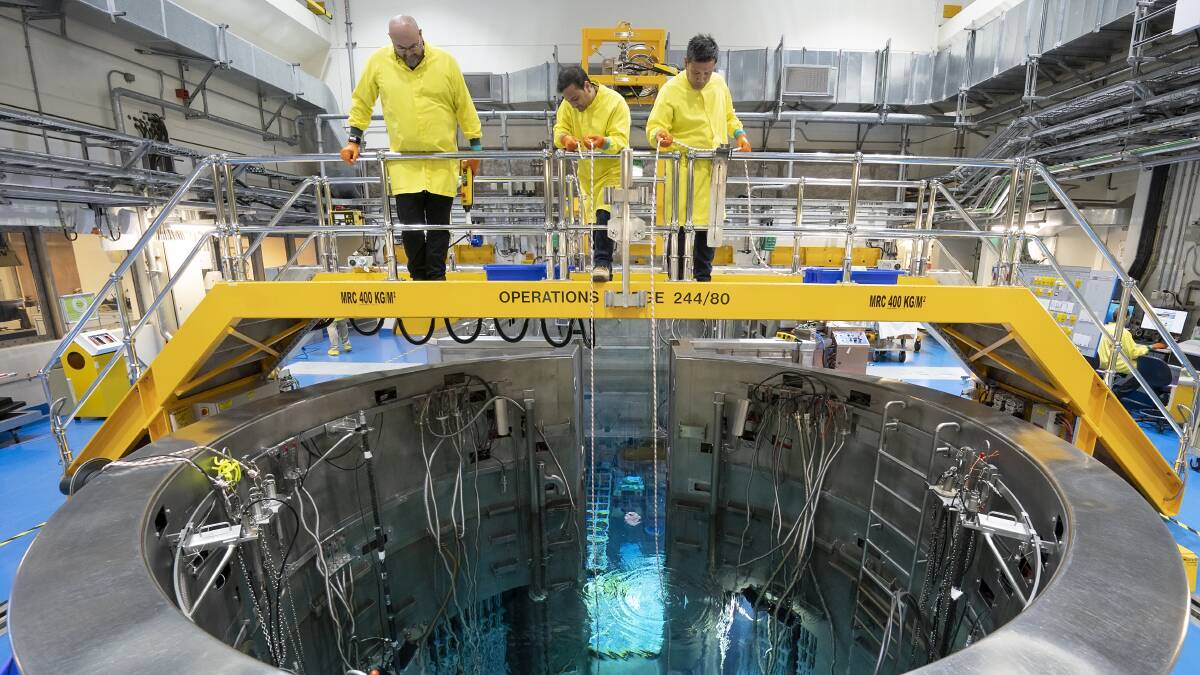
ANSTO – the Australian Nuclear Science and Technology Organisation – recently celebrated 70 years since Australia’s nuclear age began in Sydney.  ANSTO is the home of Australia’s most significant landmark and national infrastructure for research. Thousands of scientists from industry and academia benefit from gaining access to state-of-the-art instruments every year.

Thousands of visitors, including many schoolchildren, have safely toured the site at Lucas Heights, which is located 40km southwest of the Sydney CBD. They had the opportunity to learn a great deal about nuclear science as a result of that experience.

I recently became one of those visitors when I was invited to a 3-hour escorted tour of their facilities. As former Executive Director of the National Safety Council of Australia (NSW/ACT) I was particularly interested in their WHS procedures as well as the management of waste, as the latter could impact on the wider community if poorly managed.

What impressed me most was seeing just how advanced we are as a nuclear nation. Despite being relatively small in scale compared to a full civil nuclear energy plant, it has much the same range of issues and complexities to deal with. And it certainly appears to successfully do so at both their Sydney and Melbourne campuses.

The obvious question is, why is the Albanese Labor-Greens government, together with the Teals, opposed to extending our obvious expertise into producing nuclear energy on a commercial scale, as proposed by Opposition Leader Peter Dutton’s LNP?

As you’d expect, there are a number of reasons for both their reluctance to accept nuclear despite it being cheap, reliable and emissions-free and their manic obsession with unreliable, hugely expensive, and environmentally/socially disastrous wind, solar, and battery renewables.

Political factors play a major part. The Greens and Teals are
directly opposed to nuclear, but for different reasons.

The Greens have shown beyond doubt that they want to disrupt society across as many issues as possible. They are doing this on a regular basis – even appearing to stand with crowds that hold sympathies toward recognised terrorist groups.

People who think the Greens are still a well-meaning environmental group like they were under Bob Brown are fooling themselves – they are not!

In the case of the Teals, they started life as political entities via funding from Climate 200, whose primary financial supporters are deeply entrenched in the lucrative and heavily taxpayer-subsidised renewables industry.  The Teals are ignorant pawns in the high-stakes game of climate change and the hysterical pursuit of ‘saving the planet’.

There is a lot of money involved in this issue and ordinary Australians are being played by the so-called elites, including left-wing mainstream media such as the ABC.

A good example is the almost total lack of media reporting on the very recent and hugely important US Department of Energy’s Nuclear Lift-off Report that includes significant findings:

The system cost of electricity with nuclear and renewables combination is 30 per cent lower than just renewables.

The jobs from nuclear are 50 per cent higher paying than solar or wind.

⁠⁠Nuclear provides the lowest emissions, is the most reliable form of energy production, has the lowest land use requirement, and lowest material usage.

The report also outlines a pathway for the USA to reach their ambition to triple their nuclear energy capacity by 2050, in direct contradiction of our government’s refusal to even legalise nuclear energy.

It also directly contradicts the policy position of the Albanese government.  The report debunks repeated claims that nuclear is ‘too expensive’ and will ‘increase power bills’ and outlines various other benefits of nuclear energy.

The DoE report could not disagree more with Australian anti-nuclear campaigners and the Albanese Labor-Greens government, Teals, and other sources of ignorance.

Their report also completely debunks the much-criticised report produced by CSIRO GenCost that our Minister for Climate Change and Energy, Chris Bowen, refers to constantly as his renewables crusade ‘Bible’.   This is despite the fact that the CSIRO GenCost report totally failed to accurately estimate the likely total cost of renewables compared to nuclear.

It also used in its modelling a 30-year life for a nuclear plant instead of the far more accurate 80 years. This created a false financial outcome by not comparing the total cost of nuclear with renewables over an 80-year period.

It also totally neglected the fact that waste management costs for renewables will be many times greater than for nuclear. There will be the need to replace wind turbines and solar panels three or four times during an 80-year period.  And who is going to be responsible for dismantling and disposing of the millions of components – some of which have toxic ingredients?

Many people, including some of our top scientists and engineers, believe that the CSIRO GenCost report was simply designed to support the Albanese government’s narrative as depicted in their childish three-eyed fish media splash some months ago.

‘Reckless’: Labor’s nuclear memes ‘undermine AUKUS subs deal’ Labor MPs have been accused of undermining the AUKUS submarine deal with ‘reckless’ anti-nuclear propaganda, as the Coalition calls on Anthony Albanese to rule out a scare campaign. Source: The Courier Mail

We need a government that protects our borders, controls immigration, decreases our cost-of-living, and helps young people to buy their own homes.  It’s becoming clearer on a daily basis that none of that will happen under the current Labor-Greens government.

One major impediment to reducing living expenses is the rising cost of energy.  Renewables alone will continue to increase the cost of electricity and that will in turn increase the prices paid at our shops and for commercial or residential electricity usage.

Nuclear energy will add to the range of resources available to us – as it has done in many other countries. Nuclear power plants operate in 32 countries and generate about a tenth of the world’s electricity. Most are in Europe, North America, and East Asia. The United States is the largest producer of nuclear power, while France has the largest share of electricity generated by nuclear power, at about 70 per cent.

The only way we are going to catch up with the rest of the world in relation to nuclear energy production is to replace our current government with Peter Dutton’s Liberal-National Coalition.  That might be hard to accept for some people – but it’s an undeniable fact.


Dearth of Green Jobs in UK

Chris Morrison provides the analysis in his Daily Sceptic article ONS Reveals the Pitiful Number of New Green Jobs Being Created in the U.K. Economy.  Excerpts in italics with my bolds and added images.

The problem with the green U.K. economy, and its associated destruction of the hydrocarbon environment, is that there are very few jobs being created. The few remaining ‘workers’ in the ruling Labour party are starting to rumble all the luxury boondoggles that are set to further decimate well-paid jobs in their communities. The figures compiled by the Office for National Statistics (ONS), trying to estimate the actual number of green jobs, are always a highly creative hoot, and the latest batch are no exception. Many jobs identified are simply displacement activity, with one repair or maintenance occupation taking over from another. Around 6% of the total are to be found in ‘environmental charities’, an interesting way to describe elite billionaire political funding to push the Net Zero fantasy. Such is the seeming desperation to rustle up a green job, the ONS even includes repairing home appliances, controlling forest fires and separating hydrogen by carbon dioxide-producing electrolysis.

The latest ‘estimates’ from the ONS cover 2021 and 2022, and they are said to show an increase in both years. But as the graph below reveals, the rises are pitiful over a decade, and the 2022 estimate of 639,000 is less than 2% of jobs in the economy as a whole.

As can be seen, environmental charities employ 40,000 people, almost as many as the 47,000 that work in renewable energy. But the charities figure does not include all those make-work jobs in environmental consultancy and education or what is described as in-house environmental activities. If all the displacement, invented or re-badged jobs in repair, electric vehicles, waste disposal, water treatment, energy efficiency, Net Zero promotion, teaching and the ubiquitous bureaucracy are rightly ignored, it is unlikely that more than 150,000 new jobs have been created.

Fairly small pickings, it might be thought, from all the cash sprayed at subsidy-hunting chancers over at least two decades. Even worse, any new jobs are easily offset by the occupations being destroyed in steel making, refining hydrocarbons, coal mining and oil and gas exploration. Fracking for gas would transform a number of deprived areas in the U.K. at little environmental cost, as it has done in the U.S. Energy security would likely be achieved, and the tax take would be considerable. But fracking is anathema to the major political parties in the U.K., except the emerging Reform party.Last week saw some real push back on the madness of Net Zero and the so-called green economy. The boss of GMB, the third largest trade union in the country, told the annual Labour party conference that its plans to decarbonise the energy network by 2030 will cost up to one million jobs, decimate working communities and push up bills for the poorest. According to Smith, Government’s plans for Net Zero were “bonkers” and “fundamentally dishonest”. In a week when it was revealed that British consumers, both industrial and private, had some of the highest electricity prices in the developed world, he charged that current energy policy amounted to virtue signalling by politicians. He accused them of exporting jobs and importing virtue because the jobs were being created abroad rather than in the U.K.

Meanwhile, a recent paper published in Science came to a damning conclusion that will not surprise sceptics, namely that 96% of climate policies over the last 25 years, ultimately designed to reduce carbon dioxide emissions, have been a waste of money. “That’s where green spin has got us,” writes George Monbiot, although these days the Guardian’s extremist-in-chief seems to have given up on all life enhancing processes that run the risk of disturbing anything on the planet. “Finally, 15 years and a trillion dollars too late, George Monbiot says what sceptics have been saying all along,” observes the sceptical journalist Jo Nova. “Nearly every single carbon reduction scheme is a useless make-work machination that creates the illusion that the government is doing something,” she says.

As we can see, the ONS survey is full of these make-work schemes providing jobs that can only exist by rigging free markets and providing eye-watering subsidies from consumers and taxpayers. As the more concerned trade unionists can see, much of the cost of these fantasy ventures falls on the poorest members of society forced to pay higher prices for many of the basic essentials of life. In addition, as we have observed, most green schemes make mugs of the wider investing public, with the RENIXX, a stock capitalisation global index of the 30 largest renewable industrial companies, showing near zero growth since it was started in 2006. None of this matters, of course, to the Mad Miliband and his weird wonks at the U.K. Department of Energy, who are ramping up ideological plans to hose cash at daft ideas like carbon capture, battery energy storage and hydrogen production.

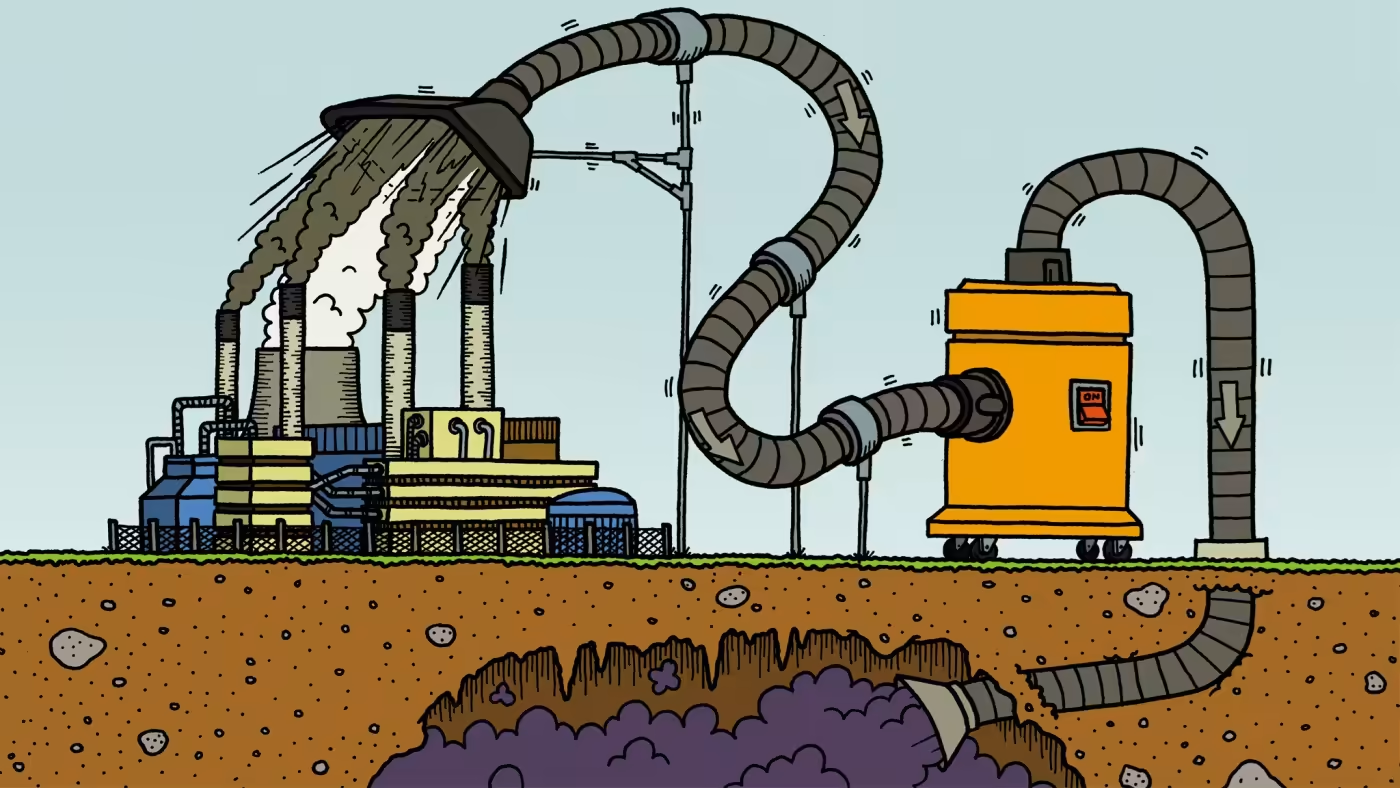
Not only is CO2 Capture and Storage wildly impractical, its aim is to deprive the biosphere of plant food.

But all is not lost on the jobs front – opportunities must be taken when they occur. Earlier this year, Gary Smith was able to point to some new employment clearing away the animal casualties of wind farm blades. “It’s usually a man in a rowing boat, sweeping up the dead birds,” he observed.

Footnote Q & A:

Q:  What is the difference between Golf and Government?

A:  In Government you can always improve your lie.

–Anonymous Source

Resources

Climate Policies Fail in Fact and in Theory

Investors Beware Green Equipment Companies

Green Deal Cuts EU Emissions, Doubles Them Elsewhere

Investors Beware Green Equipment Companies

Steve Goreham explains in his Heartland article Why Are Renewable Equipment Companies Such Poor Investments? Excerpts in italics with my bolds and added images.

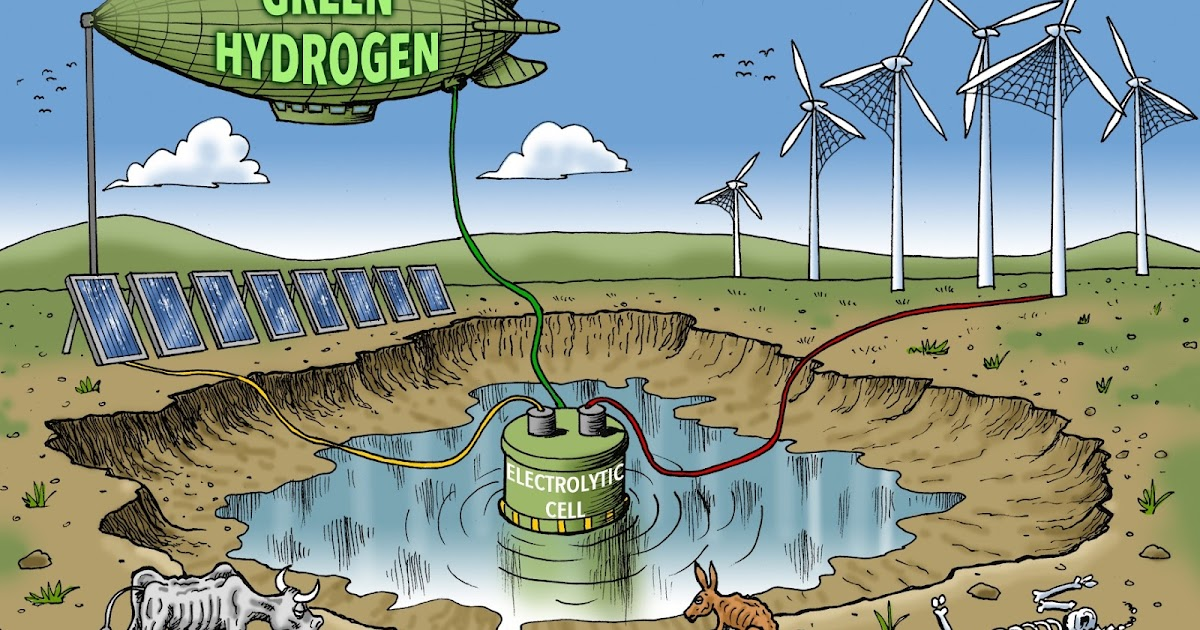
Headlines promote renewable energy equipment companies as part of efforts to transition to Net Zero carbon dioxide emissions by 2050. Wind and solar system providers, electric vehicle manufacturers, green hydrogen producers, and other green equipment firms form a growing share of world industry. But renewable equipment firms suffer poor market returns, so investors should beware.

The Renewable Energy Industrial Index (RENIXX) is a global stock index of the 30 largest renewable energy industrial companies in the world by stock market capitalization. Current RENIXX companies include Enphase Energy, First Solar, Orsted, Plug Power, Tesla, and Vestas.

IWR of Germany established the RENIXX on May 1, 2006, with an initial value of 1,000 points. This month, the RENIXX stood at 1,013 points, essentially zero value growth over the last 18 years. In comparison, the S&P 500 Index more than quadrupled over the same period. The RENIXX is down three years in a row from 2021, losing about half its value.

Wind turbine manufacturers faced serious financial challenges over the last three years, even with rising sales. Rising costs, high interest rates, and project delays continue to impact the profitability of wind projects and equipment suppliers. The stock of Denmark-based Vestas Wind Systems, the world’s largest supplier, rose only 7% over the last 16 years, and its stock price has fallen 58% from a high in 2021. Vestas struggled to make a profit in 2022 and 2023 and suspended dividends to shareholders.

Other major wind suppliers have also been poor investments for shareholders. The stock of Siemens Gamesa, the number two turbine maker, is down 65% since a peak in 2021. Gamesa reported a loss of €4.4 billion in 2023 and received a €7.5 billion bailout from the German government that same year. Other top wind suppliers suffered major stock price declines since 2021, including Goldwind of China (down 77%) and Nordex of Germany (-36%).

Some 80% of the world’s solar panels are manufactured in China and the top six suppliers reside in China. The solar panel industry is beset by overcapacity and severe competition. Stock prices of the top seven suppliers have all declined by more than 50% since 2021. The stock of U.S. firm First Solar has risen since 2021 but remains below its all-time high price reached in 2008.

Tesla, which was founded in 2003, remained the only pure-play, publicly traded EV stock until 2018. By the end of 2021, Tesla’s value had soared to over $1 Trillion, boasting a market value more than Toyota, Volkswagen, Mercedes-Benz, General Motors, Ford, BMW, and Honda combined. But Tesla is the exception.

But in most cases, electric vehicle (EV) companies have been very poor investments. Between 2020 and 2024, 31 EV companies went public on U.S. stock exchanges. Only one of these 31 companies, the Chinese firm Li Auto, saw its price rise since the initial public offering (IPO). Thirty EV firms saw their stock prices fall, most precipitously.

EV company price declines from the IPO price include Fisker (-99%), Nikola (-94%), NIO (-50%), Lucid Group (-75%), and Rivian (-88%). Six others of the 31 companies went bankrupt. Tesla and Chinese firms BYD and Li Auto are the only EV firms profitable today.

ChargePoint is the world’s largest dedicated EV charger company (behind EV manufacturer Tesla), with over 25,000 charging stations in the U.S. and Canada. ChargePoint went public in 2021 by merging with Switchback Energy Acquisition Corporation, valued at $2.4 billion. The firm’s value today is about $585 million, down 76% since 2021.  For fiscal year 2024, ChargePoint lost $458 million on revenue of $507 million.

It’s not clear that any charging company can make money. High-speed, 50-kilowatt EV chargers cost about five times as much as traditional gasoline pumps. Around 80% of EV charging is done at home, reducing the demand for public charging. ChargePoint, EVgo, Wallbox, Allego, and Blink Charging are all valued today at small fractions of their original IPO price. No EV charger firm is profitable, even after continuing to receive large government subsidies.

Plug Power is a leading supplier of hydrogen energy systems, including battery-cells for hydrogen vehicles and electrolyzers to produce green hydrogen fuel. Founded in 1997, the company went public in October 1999 at a split-adjusted price of about $160 per share.

But during its 27-year history, Plug Power has never turned a profit. According to financial reports, the firm lost $1.45 billion in 2024, up from a loss of $43.8 million in 2018. Its current stock price is under two dollars per share.

Traditional established firms are finding that renewable equipment can be poor business. In 2023, Ford lost $4.7 billion on sales of 116,000 electric vehicles, or over $40,000 per vehicle. General Electric’s wind turbine business lost $1.1 billion in 2023.

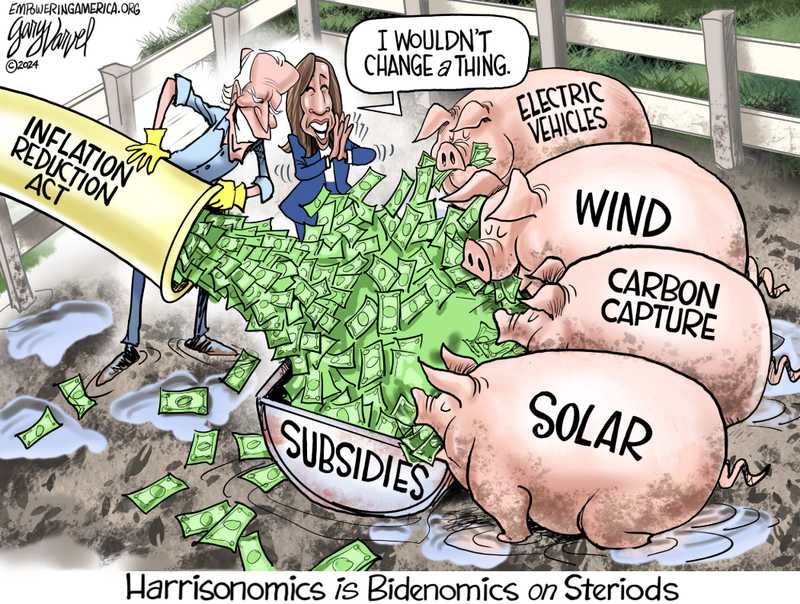
The U.S. federal government provided subsidies to renewable equipment companies of between $7 billion and $16 billion per year between 2010 and 2022. But the Cato Institute estimates that because of the passage of the Inflation Reduction Act in 2022, subsidies will skyrocket to about $80 billion in fiscal year 2025.

EIA

Without the fear of human-caused climate change and
a rising level of government subsidies and mandates,
many of these green companies would not exist.

It’s doubtful that carbon dioxide pipelines, heavy electric trucks, offshore wind systems, green hydrogen fuel equipment, and EV charging stations would be viable businesses in unsubsidized capital markets.

During this last year, leading financial firms pulled back on their climate change pledges. Bank of America, JP Morgan, State Street, and Pimco withdrew from Climate Action 100+, which seeks to force companies and investment funds to address climate issues and adopt environmental, social, and governance (ESG) policies.

But it’s difficult to invest in renewable equipment companies
when they are losing money.


Wind Power Pollution and Hypocrisy in New England

Emmett Hare reports in City Journal Wind Power Debacle in New England.  Excerpts in italics with my bolds and added images.

A fractured turbine’s blade in Nantucket is causing
ongoing problems and frustrating local residents.

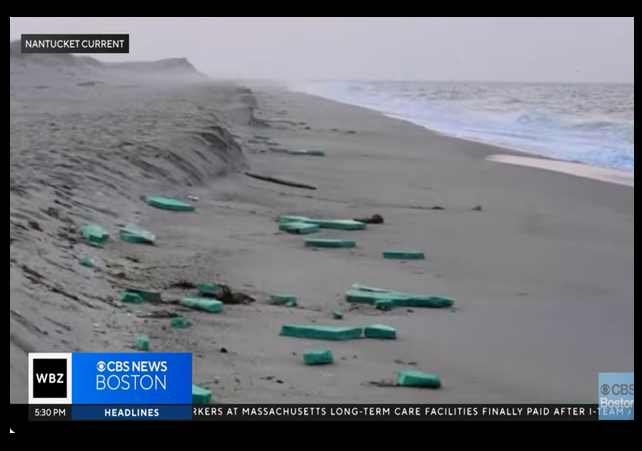
In mid-July, a blade from an offshore wind turbine operating 15 miles southwest of Nantucket fractured. A large amount of fiberglass, foam, and plastic debris fell into the ocean and began washing up on the island’s shores. The incident led to the closure of several beaches and a suspension of operations and construction for the massive Vineyard Wind project, a joint venture of Avangrid and foreign-owned Copenhagen Infrastructure Partners that has installed and operated ten of 62 planned turbines in the country’s largest wind farm.

At local meetings, Nantucket residents expressed concerns about officials’ handling of the turbine breakage and the environmental hazards of enormous fiberglass blades tumbling into the sea. In the past, they have also cited the project’s impact on marine wildlife and its visual impact on the town’s scenic beaches. A CNN report describing this “unusual and rare” event noted that the Coast Guard had retrieved a 300-foot piece of the shattered blade from local waters. The outlet reported that a spokesperson for GE Vernova, the wind-blade manufacturer, “couldn’t provide officials with the precise number of times something similar has happened at other wind farms around the world.”

Environmental groups, realizing the potential political implications of the fractured blade, downplayed the episode. The National Wildlife Federation (NWF), which avidly supports offshore wind farms, insisted that the damage was minor. “Compared to other energy disasters in the ocean like oil spills, this incident is fairly contained and easily cleaned up to prioritize the safety of marine life,” said Amber Hewett, senior director of offshore wind energy for the NWF. The Sierra Club emphasized that “the failure of a single turbine blade does not adversely impact the emergence of offshore wind as a critical solution for reducing dependence on fossil fuels and addressing the climate crisis.”

Whether the incident is “contained” remains in question. Debris from the broken turbine has been reported beyond Nantucket—in Martha’s Vineyard, Cape Cod, Rhode Island, and off the coast of Montauk, Long Island. The debris is breaking up into smaller pieces resembling shattered glass, with yet-unknown effects on Nantucket’s marine habitat. Vineyard Wind cautioned that “[m]embers of the public should avoid handling debris” and promised to “bag, track, and transport all debris to proper storage as soon as possible.” It remains to be seen whether simple avoidance will suffice, especially given the possibility of debris entering the human food chain through area fish.

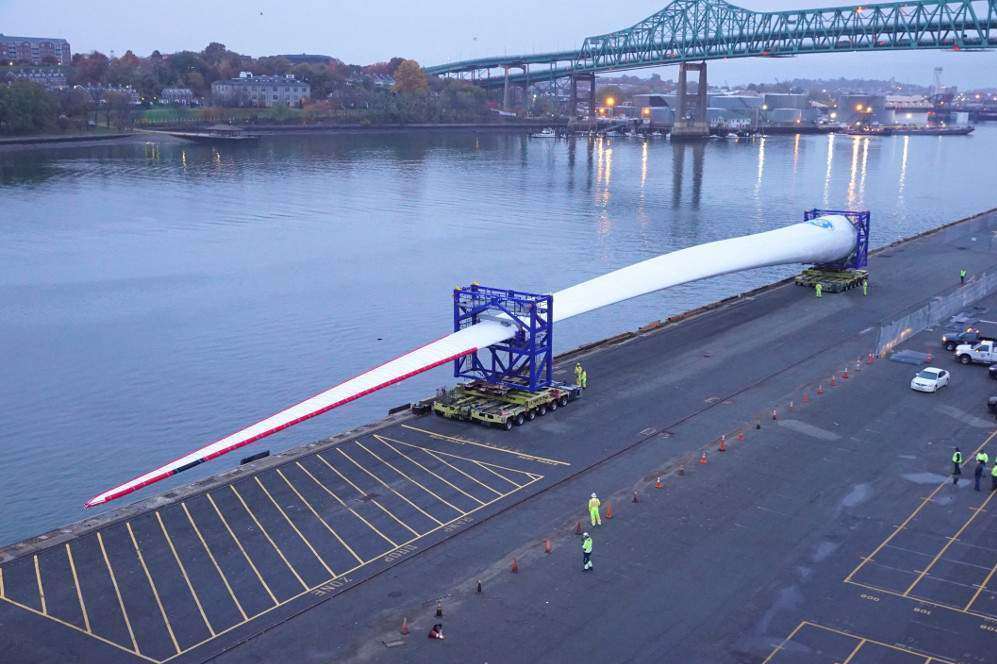
The Massachusetts Clean Energy Center (MassCEC) Wind Technology Testing Center in Boston has taken delivery of a 107-meter wind turbine blade designed for GE Renewable Energy’s Haliade-X offshore wind turbine.

While this event may be “unusual and rare” in an absolute sense, many wind farms have seen broken turbines, fires, and sea-floor damage. And Nantucket’s situation is particularly dire, given that Vineyard Wind’s turbines are by far the largest ever constructed in the United States: the blade that fragmented on July 13 was over 350 feet long and weighed 57 tons.

Even when functioning as intended, wind farms can negatively affect the surrounding environment. Wildlife advocates have claimed that sonic and subsonic vibrations from the construction and operation of turbines disrupt the navigational senses of marine mammals like whales and dolphins and can cause beachings. Turbines are also responsible for the deaths of countless birds. Clammers and fishermen are wary of working in areas close to wind farms, out of concern for equipment snags on buried power lines and risks to their vessels of navigating between the turbines in bad weather.

French Fishermen Join U.S. Fishermen in Fighting Offshore Wind – IER

The Nantucket residents questioning the safety of wind turbines generally support alternative energy. Indeed, in an FAQ post on the town government’s webpage, officials made the point that allowing wind projects to avoid scrutiny might allow traditional fossil fuel producers to evade similar oversight: “If [the Bureau of Ocean Energy Management] guts the provisions of these longstanding federal laws protecting culturally and environmentally significant places to facilitate expedient green energy projects, fossil fuel developers will exploit the bad precedent to undercut regulation of harmful projects for decades to come.”

Nonetheless, the Nantucket residents have seen themselves branded as tools of the fossil-fuel industry by well-financed lobbyists and promoters of richly subsidized wind power. They have also been subject to physical attacks. At a city council meeting in Newport, Rhode Island, a field director for Climate Jobs Rhode Island, David Booth, was charged with simple assault and disorderly conduct after accosting a speaker and seizing a bag of turbine fragments that she had brought for her testimony. Booth allegedly appeared prominently in a photo on the campaign website of Rhode Island senator Sheldon Whitehouse, which was subsequently removed without comment.

Debris in the water from Vineyard turbine blade

The wind-power industry has seen some of its planned projects cancelled in recent years due to swelling production costs and local opposition to the environmental and aesthetic impact of the colossal windmills. A report published by Brown University’s Climate and Development Lab in early 2024 suggested that much of the opposition to offshore wind was rooted in “misinformation,” “[c]onspiracy theories,” and cherry-picked information supplied by “right-wing think tanks.” It might prove beyond the powers of an academic paper to convince the residents of New England and coastal states that the fiberglass and foam washing up on their beaches is nothing more than a conservative talking point.

See Also:

The Short Lives of Wind Turbines

Energy Revolution Not In The Cards

Kite & Key explains in above video Why the Odds Are Stacked Against Net Zero.  For those preferring to read I provide a text from the captions, though the video is entertaining along with great images, some of which are included with the text in italics with my bolds.

Overview

Are we at the beginning of the end of fossil fuels? That’s the theory advanced by an international coalition of politicians who aim to get us to net zero carbon emissions by the year 2050. Just one problem: Research from the experts in their own governments suggests it’s a nearly impossible task. Enthusiasts for net zero often say we’re on the cusp of an “energy revolution.”

And that theory has a big problem: Energy revolutions don’t happen — at least not in the way that politicians often describe. While it’s true that technological and economic factors sometimes change the energy mix — countries that get wealthier become less dependent on wood, for example — the broader trend in the history of the world’s energy consumption can be defined by three words: more, more, more.

In a power-hungry world, we keep adding new energy sources. But there’s rarely any subtraction. And, with global energy demand expected to increase by about 35% by 2050, it’s nearly impossible that we can get all the power we need from carbon-free sources. For instance, meeting the net zero goals would require the construction of over 9,000 nuclear plants by 2050. The number currently being built around the world? 59.

So, what will the future of energy really look like? Our video explores.

Transcription

It doesn’t happen that often. But every once in a while, a single generation witnesses a technological breakthrough that will change the world forever.
The printing press.
The beginning of human flight.
And, for our generation, an inevitable full scale revolution in clean energy…
…that’s running a little behind schedule…
…Ok, way behind schedule.

“The beginning of the end of the fossil fuel era.” That’s how the United Nations referred to the outcome of a 2023 climate change summit held in…the United Arab Emirates. Which is sort of like having the Prohibition Conference in Vegas. Nevertheless, delegates from throughout the world left the gathering having pledged that the world would transition away from fossil fuels and get the world to net zero carbon emissions by the year 2050.

Now, the rationale for this is clear enough. Leaders from around the globe are worried that without a shift over to carbon-free energy sources like wind, solar, hydro, and nuclear the world will face significant problems as a result of climate change.

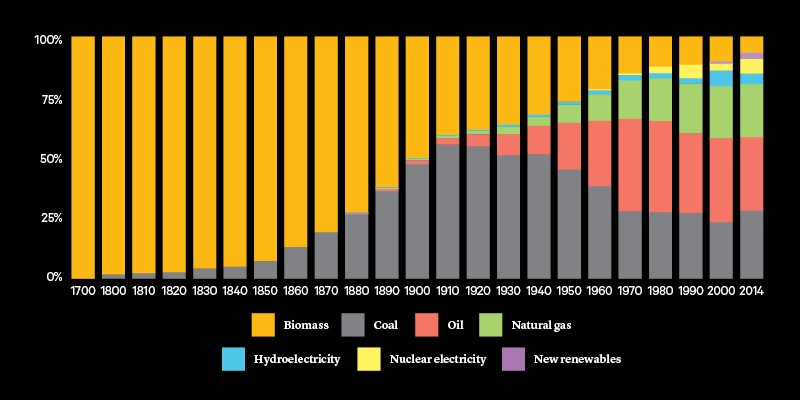
But, regardless of why they’re doing this, the more important question is whether they can do it. Because here’s the thing about energy revolutions: they don’t happen. At least not in the way that the UN is imagining. To understand why, it’s worth looking at the history of the world’s energy consumption – which looks like this.

Go back a couple of centuries and the world basically ran on “traditional biomass”– -which is a fancy way of saying … wood. We burned a lot of wood and also … dung. Then in the mid 19th century, coal came into the picture in a big way. By the 20th century, we’re using tons of oil. And natural gas is a big factor too, especially as we cross into the 21st century, and fracking makes it both abundant and more affordable. As the years went by, we added low-carbon sources of energy as well, like nuclear, hydro, wind, and solar–though overall, they’re still a pretty small part of the picture.

Now, there are two important things to note about this chart. First, the history of the world’s energy consumption can be defined in three words: more, more, more. Which kind of makes sense. After all, pretty much everything that defines modern life involves a lot of energy. Between 1950 and 2022, for example, the population of the U.S. a little more than doubled. But in that same time period, our electricity use got 14 times larger.

And second, because of that “more and more, more” trend, the only things we’ve ever had that look like energy “revolutions” have been about adding new sources into the mix, not getting rid of existing ones as net zero goals propose.

Now, to be clear, that doesn’t mean that nothing ever changes. In wealthier nations, the rise of cheaper natural gas has led to less coal usage, especially in the U.S. And poorer countries usually abandoned traditional biomass as they get wealthier, because no advanced nation powers itself by burning wood. We use it for much more sophisticated purposes…like doing psychedelics in the Nevada desert.

But using a little less coal or wood or relatively modest changes–and importantly are driven by cold, hard economic facts. By contrast, what the net zero goals entail is replacing all of this … with this … in just about 25 years. Based on little more than the fact that politicians just want it to happen.

To understand just how tall a task this is, it’s worth looking at what it would require to make it a reality. It’s estimated that meeting net zero goals would require deploying 2000 new wind turbines…
…every day … for the next 25 years. To give you some context for that, the U.S. builds about 3000 new wind turbines…
…a year.

Alternately, you could open one new nuclear plant every day for the next 25 years. For the record, that’s over 9,000 of them. And, also for the record, as of 2023, the number that were actually being built across the entire world was … 59.  And here in the U.S. anyway, it generally takes over a decade to build them.

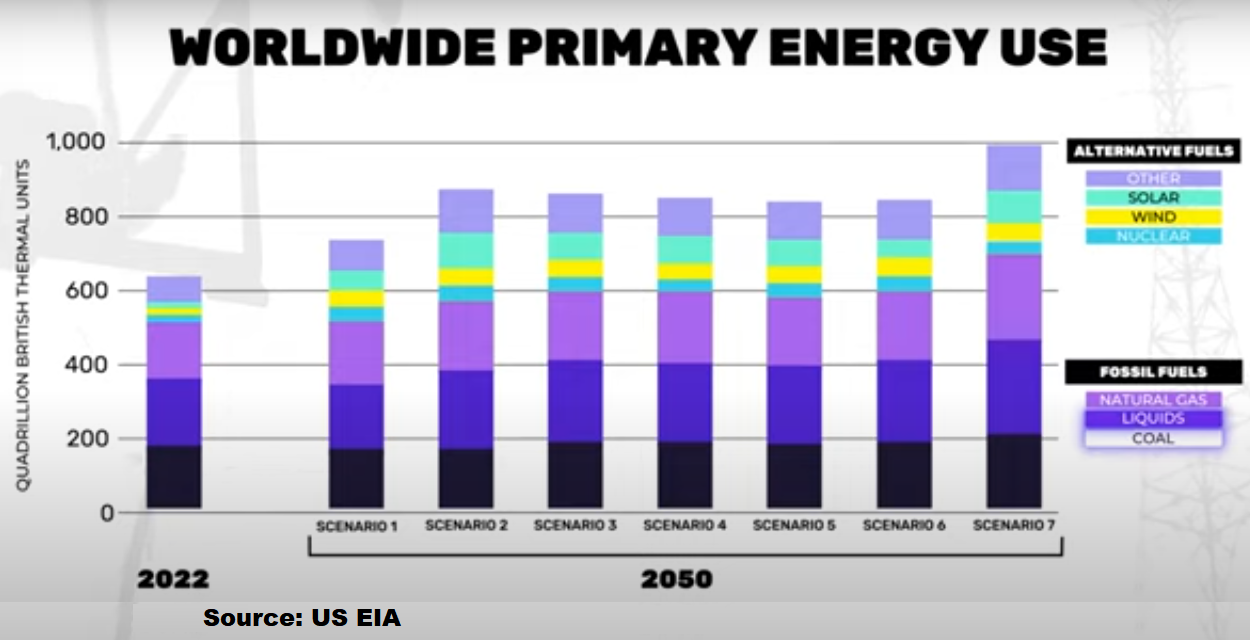
And those are some of the reasons why what politicians promise about net zero and what the experts in their own governments say…don’t exactly match up. The government’s U.S. Energy Information Administration, or EIA, projects that by the year 2050, far from seeing a revolution in energy, America will be a little less reliant on coal, a little more so on renewables…and the rest of the picture looks pretty much the same as today.

And in fact, this is true for the entire world. The EIA ran seven different scenarios for what the world’s energy consumption could look like in 2050, and while all of them showed a significant increase in renewables … they also all showed a world that continued to get most of its energy from things like coal, oil, and natural gas. Not exactly “the beginning of the end of the fossil fuel era.”

The reason for all of this: We simply can’t take enormous quantities of energy offline in a world where it’s predicted that we’re going to need almost 35% more of it by the year 2050. For one thing, there are a lot of poor countries around the world who are going to need dramatically more energy to bring themselves up to even a fraction of our standards of living.

And for another, the technologies of the future require vast amounts of power. By the year 2030, it’s estimated the computer usage around the world will take up as much as five times more of the world’s electricity production as it did even in 2020. The digital cloud we all use to store data already uses twice as much electricity as the entire nation of Japan. And with new energy-hungry technologies like AI on the way, things are only gonna move further in that direction.

Which means the real future of energy is probably: everything. Nuclear, natural gas, wind, and solar, oil, hydropower, coal. We’re going to need all of it. Probably not much wood though.
Except for these guys.

California Browning from Electricity Policies

Ronald Stein explains the devastation in his Heartland article The Golden State of California Is Turning Brown Without Continuous Electricity.  Excerpts in italics with my bolds and added images.

As a resident of California for more than six decades, I am aware that the availability of continuously generated electricity in California is deteriorating and will get worse!

The “Green New Deal” and “Net Zero” policies in California that are supported by Governor Newsom and the Democratic Presidential candidate Kamala Harris have led to the state’s most expensive electricity and fuel prices in America and increasingly high cost of living, housing, and transportation, coupled with an increase in crime, smash-and-grab robberies, homelessness, pollution, and congestion that has caused many tax-paying residents and companies to exodus California to more affordable cities and states.

California’s net move-out number of residents in 2022 alone was more than 343,000 people that left California — the highest exodus of any state in the U.S.

The California Policy Institute counted more than 237 businesses that have left the state since 2005. Among these businesses were eleven Fortune 1000 companies, including AT&T, Hewlett Packard Enterprise, Exxon Mobil, and Chevron.

The U.S. Department of Energy recently made a startling admission: U.S. electricity demand will double by 2050, and meeting that soaring demand will require the equivalent of building 300 Hoover Dams.

The last California Nuclear Power Plant at Diablo Canyon, a 2.2 GW plant generating continuous uninterruptable electricity, is projected to close soon. In nameplate only, it would take 1,000 2.2MW wind turbines to generate 2.2 GW, but then, it’s only intermittent electricity vs. the continuous uninterruptable electricity from Diablo demanded by the California economy!

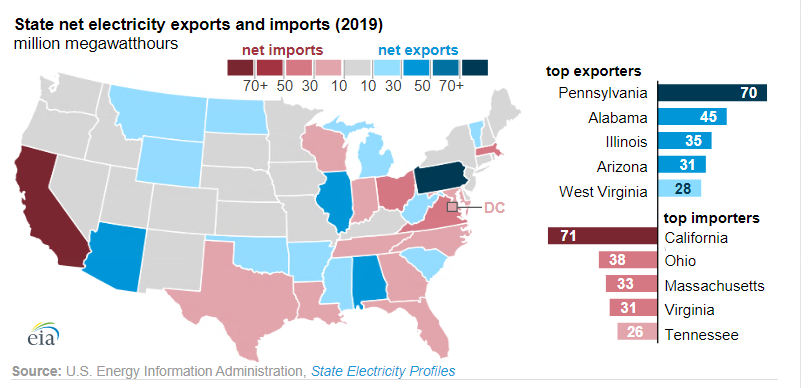
As a result of the “Green New Deal” and “Net Zero” policies and renewables of wind and solar stations built at the expense of taxpayer dollars, California now imports more electric power than any other US state, more than twice the amount in Virginia, the USA’s second-largest importer of electric power. California typically receives between one-fifth and one-third of its electricity supply from outside of the state.

Power prices are rocketing into the stratosphere and, even before winter drives up demand, are being deprived of continuous electricity in a way that was unthinkable barely a decade ago. But such is life when you attempt to run the economy on sunshine and breezes.

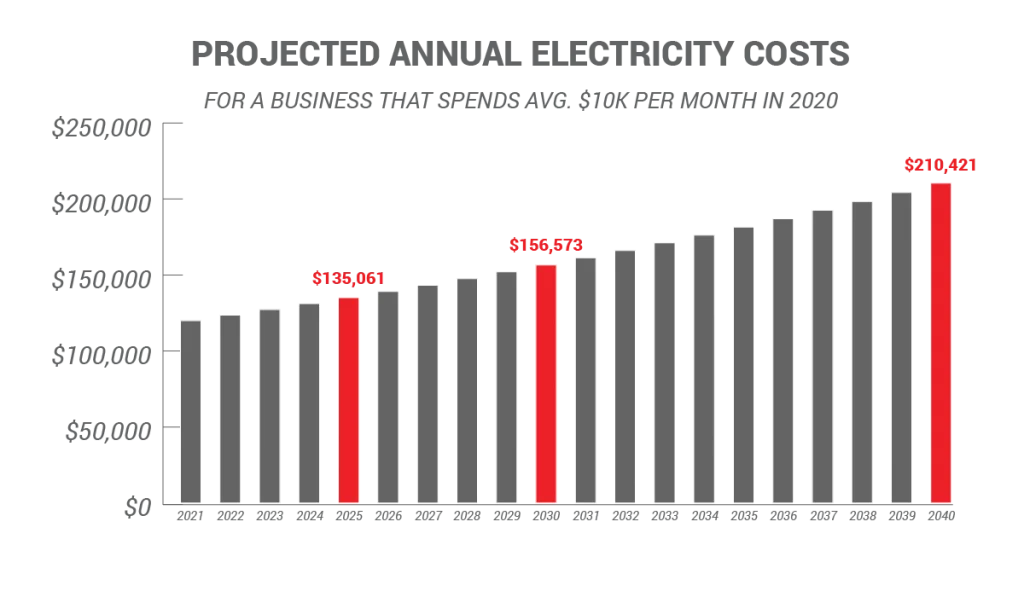
Projected electricity costs for California Businesses

Further, these so-called “green” electricity sources of wind and solar are not clean, green, renewable or sustainable. They also endanger wildlife.

California’s economy depends on affordable, reliable, and ever-cleaner electricity and fuels. Unfortunately, policymakers are driving up California’s electric and gas prices, and California now has the highest electricity and fuel prices in the nation. Those high energy prices are contributing to the pessimistic business sentiment. California’s emission mandates have done an excellent job of increasing the cost of electricity, products, and fuels to its citizens.

It’s becoming increasingly obvious that these supposed “green” alternative methods of generating electricity won’t work — especially as electricity demand is projected to double by 2050 due to AI, charging of EVs and data centers, government-mandated electric heating and cooking, and charging grid-backup batteries. Intermittent electricity from wind and solar cannot power modern nations.

These “green” wind and solar projects primarily exist because they are financed with taxpayer money, i.e., disguised by taxpayers as “Government Subsidies.”

“GREEN” policymakers are oblivious to humanity’s addiction to the products and fuels from fossil fuels, as they are to these two basic facts:

(1)  No one uses crude oil in its raw form. “Big Oil” only exists because of humanity’s addiction to the products and fuels made from oil!

(2)  “Renewables” like wind and solar only exist to generate intermittent electricity; they CANNOT make products or fuels!

To rid the world of crude oil usage, there is no need to over-regulate or over-tax the oil industry; just STOP using the products and fuels made from crude oil!

Simplistically:

STOP making cars, trucks, aircraft, boats, ships, farming equipment, medical equipment and supplies, communications equipment, military equipment, etc., that demand crude oil for their supply chain of products.

STOPPING the demands of society for the products and fuels made from oil will eliminate the need for crude oil.

The primary growth in electric power usage is coming from new data centers housing AI technologies. It is expected that over the next few decades, 50% of additional electric power will be needed just for AI, but data centers CANNOT run on occasional electricity from wind and solar.

Cal matters raises concerns about state policy to phase out ICE vehicles in favor of EVs.

How will the occasionally generated electricity from wind and solar support the following:

  • America’s military fleet of vehicles, ships, and aircraft?
  • America’s commercial and private aircraft?
  • America’s hospitals?
  • America’s space exploration?

Despite Governor Newsom’s and Democratic presidential candidate Kamala Harris’s support for the “Green New Deal” and “Net Zero” policies in California, it’s time to stimulate conversations about the generation of continuously generated electricity to meet the demands of America’s end users.


Fishy Activists Destroying Hydro Dams

AP Photo/Nicholas K. Geranios

John Stossel bring us up to date on the fishy case for removing hydroelectric dams on the Snake River in Washington state.  His Townhall article is A Dam Good Argument.  Excerpts in italics with my bolds.and added images.

Instead of using fossil fuels, we’re told to use “clean” energy: wind, solar or hydropower.  Hydro is the most reliable. Unlike wind and sunlight, it flows steadily.

But now, environmental groups want to destroy dams that create hydro power.

The Klamath River flows by the remaining pieces of the Copco 2 Dam after deconstruction in June 2023. |Located on Oregon/California border.Juliet Grable / JPR

“Breach those dams,” an activist shouts in my new video. “Now is the time, our fish are on the line!

The activists have targeted four dams on the Snake River in Washington State. They claim the dams are driving salmon to extinction.

Walla Walla District Dams on the Snake & Columbia Rivers

It’s true that dams once killed lots of salmon. Pregnant fish need to swim upriver to have babies, and their babies swim downriver to the ocean.  Suddenly, dams were in the way. Salmon population dropped sharply.

But that was in the 1970s.Today, most salmon
make it past the dam without trouble.

How?  Fish-protecting innovations like fish ladders and spillways guide most of the salmon away from the turbines that generate electricity.

Lower Granite fish count station & ladder (left, bottom right); Lower Monumental fish ladder (top right)  Source: Fish Passage Thru the Lower Snake & Columbia Rivers

“Between 96% and 98% of the salmon successfully pass each dam,” says Todd Myers, Environmental Director at the Washington Policy Center.  Even federal scientific agencies now say we can leave dams alone and fish will be fine.

But environmental groups don’t raise money by acknowledging good news. “Snake River Salmon Are in Crisis,” reads a headline from Earthjustice.  Gullible media fall for it. The Snake River is the “most endangered in the country!” claimed the evening news anchor.

“That’s simply not true,” Myers explains. “All you have to do is look at the actual population numbers to know that that’s absurd.”  Utterly absurd. In recent years, salmon populations are higher than they were in the 1980s and 90s.

The fish passage report for 2023 (here) has many results like this for various species. Conversion refers to completing the Snake River run from Ice Harbor through Lower Granite.

“They make these claims,” Myers says, “because they know people will believe them … they don’t want to believe that their favorite environmental group is dishonest.”

But many are. In 1999, environmental groups bought an ad in the New York Times saying “salmon … will be extinct by 2017.” “Did the environmentalists apologize?” I ask Meyers. “No,” he says. “They repeat almost the exact same arguments today, they just changed the dates.

I invited 10 activist groups that want to destroy dams to come to my studio and defend their claims about salmon extinction. Not one agreed. I understand why. They’ve already convinced the public and gullible politicians.  Idaho’s Republican Congressman Mike Simpson says, “There is no viable path that can allow us to keep the dams in place.”

“We keep doing dumb things,” says Myers. “We put money into places where it doesn’t have an environmental impact, and then we wonder 10, 20, 30 years (later) why we haven’t made any environmental progress.”

Politicians and activists want to tear down Snake River dams
even though they generate tons of electricity.

“Almost the same amount as all of the wind and solar turbines in Washington state,” says Myers, “Imagine if I told the environmental community we need to tear down every wind turbine and every solar panel. They would lose their minds. But that’s essentially what they’re advocating by tearing down Snake River dams.”

I push back: “They say, ‘Just build more wind turbines.’”  “The problem is, several times a year, there’s no wind,” he replies. “You could build 10 times as many wind turbines, but if there’s no wind, there’s no electricity.”

Hydro, on the other hand, “can turn on and off whenever it’s needed. Destroying hydro and replacing it with wind makes absolutely no sense. It will do serious damage to our electrical grid.”

“It’s not their money,” I point out.”Exactly,” he says. “If you want to spend $35 billion on salmon, there’s lots of things we can do that would have a real impact.”  Like what?

Reduce the population of) seals and sea lions,” he says, “The Washington Academy of Sciences says that unless we reduce the populations, we will not recover salmon.” “People used to hunt sea lions,” I note. “Yeah, that’s why the populations are higher today.”

But environmentalists don’t want people to hunt sea lions or seals. Instead, they push for destruction of dams. “Because it’s sexy and dramatic, it sells,” says Myers. “It’s more about feeling good than environmental results.”

PostScript

Of course there is a political dimension to this movement.  Left coast woke progressives are targeting Lower Snake River dams located in Eastern Washington state.  Folks there and in Eastern Oregon would rather be governed by common sense leaders like those in Idaho.

The case against the dams is actually about climatism.  The fish are not at risk, as shown by many scientific reports. But climatists do not include hydro in their definition of “renewable.”  And they promote fear of methane, claiming dam reservoirs increase methane emissions.

So here’s the political solution.  Keep the dams open and the fish running to their spawning grounds.  And to appease climatists ban any transmission of electricity from those dams to Seattle and Western Washington state.  Deal?

Background Post

Left Coast Closes the Dam Lights

Scottish Wind Power from Diesel Generators

John Gideon Hartnett writes at Spectator Australia Another climate myth busted  explaining how the Scottish public was scammed about their virtuous green wind power by the public authority.  Excerpts in italics with my bolds and added images from post by John Ray at his blog.

What I like to call ‘climate cult’ wind farms expose the myth that wind can replace hydrocarbon fuels for power generation. The following story is typical of the problems associated with using wind turbines to generate electricity in a cold environment.

Apparently, diesel-fuelled generators are being used to power some wind turbines as a way of de-icing them in cold weather, that is, to keep them rotating. Also, it appears that the wind turbines have been drawing electric power directly from the grid instead of supplying it to the grid.

Scotland’s wind turbines have been secretly using fossil fuels.

The revelation is now fueling environmental, health and safety concerns, especially since the diesel-generated turbines were running for up to six hours a day.

Scottish Power said the company was forced to hook up 71 windmills to the fossil fuel supply after a fault on its grid. The move was an attempt to keep the turbines warm and working during the cold month of December.

South Scotland Labor MSP Colin Smyth said regardless of the reasons, using diesel to deice faulty turbines is “environmental madness”.  Source: Straight Arrow News

Charging system for Teslas at Davos WEF meeting.

Nevertheless, those pushing these technologies are so blind to the physical realities of the world that they are prepared to ignore failures while pretending to efficiently generate electricity. I say ‘failures’ because wind energy was put out of service the day the Industrial Revolution was fired up (pun intended) with carbon-based fuels, from petroleum and coal. And in the case of modern wind turbines, they do not always generate electricity; they sometimes consume it from the grid.

Green energy needs the hydrocarbon-based fuel it claims to replace.

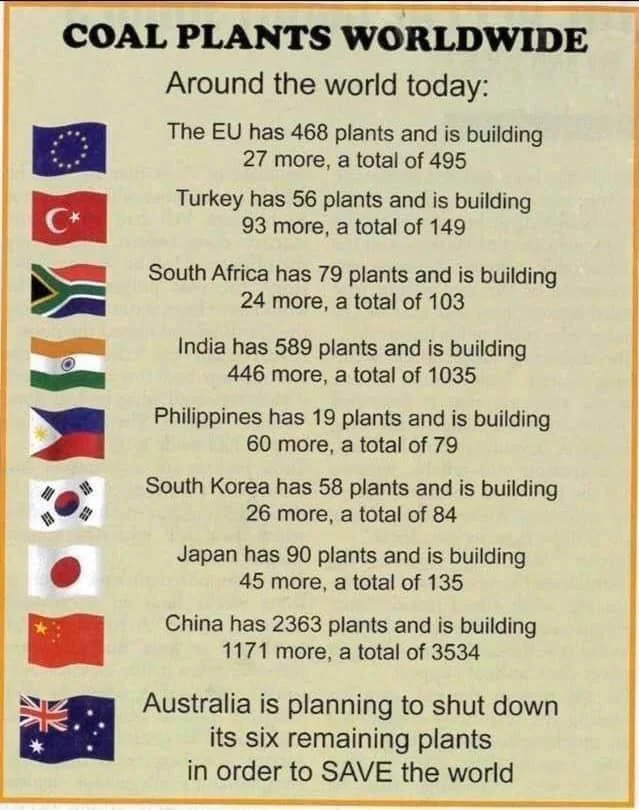
Hydrocarbon-based fuels were provided providentially by the Creator of this planet for our use. That includes coal, which has been demonised in the Western press as some sort of evil. But those who run that line must have forgotten to tell China, because they build two coal-fired power stations every other week. No other source of non-nuclear power is as reliable for baseload generation.

How will wind turbines work in a globally cooling climate as Earth heads into a grand solar minimum and temperatures plummet? This case from Scotland may give us a hint. As cloud cover increases with cooler weather, and more precipitation occurs, how will solar perform? It won’t.
The two worst choices for electricity generation in cold, wet, and stormy environments are solar and wind. Solar is obvious. No sun means no power generation. But you might think wind is a much better choice under those conditions.

However, wind turbine rotors have to be shut down if the wind becomes too strong and/or rapidly changes in strength. They are shut down when too much ice forms or when there is insufficient wind. And now we have learned in Scotland they just turn on the diesel generators when that happens or they draw power directly from the grid.

Where are all the real engineers? Were they fired?

In regards to wind turbines going forward, once their presence in the market has destroyed all the coal or natural gas electricity generators, how are they going to keep the rotors turning and the lights on?

These devices are based on a rotating shaft with a massive bearing, that suffers massive frictional forces. In this case, only a high-quality heavy-duty oil can lubricate this system and I am sure it would need to be regularly replaced.

Wind turbine gearbox accelerates blade rotor (left) up to 1800 rpm output to electical generator (right)

Massive amounts of carbon-based oil are needed for the lubrication of all gears and bearings in a wind turbine system, which is mechanical in its nature. In 2019, wind turbine applications were estimated to consume around 80 per cent of the total supply of synthetic lubricants. Synthetic lubricants are manufactured using chemically modified petroleum components rather than whole crude oil. These are used in the wind turbine gearboxes, generator bearings, and open gear systems such as pitch and yaw gears.

Now we also know that icing causes the rotors to stop turning so diesel power has to be used to keep the bearings warm during cold weather. The diesel generator is needed to get the blades turning on start-up to overcome the limiting friction of the bearing or when the speed of the rotor drops too low.

In this case in Scotland, 71 windmills on the farm were supplied with diesel power. Each windmill has its own diesel generator. Just think of that.

What about the manufacturing of these windmills?

The blades are made from tons of fibreglass. Manufacturing fibreglass requires the mining of silica sand, limestone, kaolin clay, dolomite, and other minerals, which requires diesel-driven machines. These minerals are melted in a furnace at high temperatures (around 1,400°C) to produce the glass. Where does that heat come from? Not solar or wind power, that is for sure. The resin in the fibreglass comes from alcohol or petroleum-based manufacturing processes.

The metal structure is made from steel that requires tons of coking coal (carbon) essential to make pig iron, which is made from iron ore in a blast furnace at temperatures up to 2,200°C. The coal and iron ore is mined from the ground with giant diesel-powered machines and trucks. The steel is made with pig iron and added carbon in another furnace powered by massive electric currents. Carbon is a critical element in steel making, as it reacts with iron to form the desired steel alloy. None of this comes from wind and solar power.

Wind turbine power generation is inherently intermittent and unreliable.
It can hardly called green as the wind turbines require enormous
amounts of hydrocarbons in their manufacture and continued operation.


Power Density Physics Trump Energy Politics

A plethora of insane energy policy proposals are touted by clueless politicians, including the apparent Democrat candidate for US President.  So all talking heads need reminding of some basics of immutable energy physics.  This post is in service of restoring understanding of fundamentals that cannot be waved away.

The Key to Energy IQ

This brief video provides a key concept in order to think rationally about calls to change society’s energy platform.  Below is a transcript from the closed captions along with some of the video images and others added.

We know what the future of American energy will look like. Solar panels, drawing limitless energy from the sun. Wind turbines harnessing the bounty of nature to power our homes and businesses.  A nation effortlessly meeting all of its energy needs with minimal impact on the environment. We have the motivation, we have the technology. There’s only one problem: the physics.

The history of America is, in many ways, the history of energy. The steam power that revolutionized travel and the shipping of goods. The coal that fueled the railroads and the industrial revolution. The petroleum that helped birth the age of the automobile. And now, if we only have the will, a new era of renewable energy.

Except … it’s a little more complicated than that. It’s not really a matter of will, at least not primarily. There are powerful scientific and economic constraints on where we get our power from. An energy source has to be reliable; you have to know that the lights will go on when you flip the switch. An energy source needs to be affordable–because when energy is expensive…everything else gets more expensive too. And, if you want something to be society’s dominant energy source, it needs to be scalable, able to provide enough power for a whole nation.

Those are all incredibly important considerations, which is one of the reasons it’s so weird that one of the most important concepts we have for judging them … is a thing that most people have never heard of. Ladies and gentlemen, welcome to the exciting world of…power density.

Look, no one said scientists were gonna be great at branding. Put simply, power density is just how much stuff it takes to get your energy; how much land or other physical resources. And we measure it by how many watts you can get per square meter, or liter, or kilogram – which, if you’re like us…probably means nothing to you.

So let’s put this in tangible terms. Just about the worst energy source America has by the standards of power density are biofuels, things like corn-based ethanol. Biofuels only provide less than 3% of America’s energy needs–and yet, because of the amount of corn that has to be grown to produce it … they require more land than every other energy source in the country combined. Lots of resources going in, not much energy coming out–which means they’re never going to be able to be a serious fuel source.

Now, that’s an extreme example, but once you start to see the world in these terms, you start to realize why our choice of energy sources isn’t arbitrary. Coal, for example, is still America’s second largest source of electricity, despite the fact that it’s the dirtiest and most carbon-intensive way to produce it. Why do we still use so much of it? Well, because it’s significantly more affordable…in part because it’s way less resource-intensive.

An energy source like offshore wind, for example, is so dependent on materials like copper and zinc that it would require six times as many mineral resources to produce the same amount of power as coal. And by the way, getting all those minerals out of the ground…itself requires lots and lots of energy.

Now, the good news is that America has actually been cutting way down on its use of coal in recent years, thanks largely to technological breakthroughs that brought us cheap natural gas as a replacement. And because natural gas emits way less carbon than coal, that reduced our carbon emissions from electricity generation by more than 30%.

In fact, the government reports that switching over to natural gas did more than twice as much to cut carbon emissions as renewables did in recent years. Why did natural gas progress so much faster than renewables? It wasn’t an accident.

Energy is a little like money: You’ve gotta spend it to make it. To get usable natural gas, for example, you’ve first gotta drill a well, process and transport the gas, build a power plant, and generate the electricity. But the question is how much energy are you getting back for your investment? With natural gas, you get about 30 times as much power out of the system as you put into creating it.  By contrast, with something like solar power, you only get about 3 1/2 times as much power back.

Replacing the now closed Indian Point nuclear power plant would require covering all of Albany County NY with wind mills.

Hard to fuel an entire country that way. And everywhere you look, you see similarly eye-popping numbers. To replace the energy produced by just one oil well in the Permian Basin of Texas–and there are thousands of those–you’d need to build 10 windmills, each about 330 feet high. To meet just 10% of the country’s electricity needs, you’d have to build a wind farm the size of the state of New Hampshire. To get the same amount of power produced by one typical nuclear reactor, you’d need over three million solar panels, none of which means, by the way, that we shouldn’t be using renewables as a part of our energy future.

But it does mean that the dream of using only renewables is going to remain a dream,
at least given the constraints of current technology. We simply don’t know how
to do it while still providing the amount of energy that everyday life requires.

No energy source is ever going to painlessly solve all our problems. It’s always a compromise – which is why it’s so important for us to focus on the best outcomes that are achievable, because otherwise, New Hampshire’s gonna look like this.

Addendum from Michael J. Kelly

Energy return on investment (EROI)

The debate over decarbonization has focussed on technical feasibility and economics. There is one emerging measure that comes closely back to the engineering and the thermodynamics of energy production. The energy return on (energy) investment is a measure of the useful energy produced by a particular power plant divided by the energy needed to build, operate, maintain, and decommission the plant. This is a concept that owes its origin to animal ecology: a cheetah must get more energy from consuming his prey than expended on catching it, otherwise it will die. If the animal is to breed and nurture the next generation then the ratio of energy obtained from energy expended has to be higher, depending on the details of energy expenditure on these other activities. Weißbach et al. have analysed the EROI for a number of forms of energy production and their principal conclusion is that nuclear, hydro-, and gas- and coal-fired power stations have an EROI that is much greater than wind, solar photovoltaic (PV), concentrated solar power in a desert or cultivated biomass: see Fig. 2.

In human terms, with an EROI of 1, we can mine fuel and look at it—we have no energy left over. To get a society that can feed itself and provide a basic educational system we need an EROI of our base-load fuel to be in excess of 5, and for a society with international travel and high culture we need EROI greater than 10. The new renewable energies do not reach this last level when the extra energy costs of overcoming intermittency are added in. In energy terms the current generation of renewable energy technologies alone will not enable a civilized modern society to continue!

On Energy Transitions

Postscript

Nine July Days Break Wind Power Bubble

Parker Gallant reports at his blog  Nine July Days Clearly Demonstrate Industrial Wind Turbines Intermittent Uselessness.  Excerpts in italics with my bolds and added image. H/T John Ray

The chart below uses IESO data for nine (9) July days and clearly demonstrates the vagaries of those IWT (Industrial Wind Turbines) which on their highest generation day operated at 39.7% of their capacity and on their lowest at 2.3%!  As the chart also notes, our natural gas plants were available to ramp up or down to ensure we had a stable supply of energy but rest assured IESO would have been busy either selling or buying power from our neighbours to ensure the system didn’t crash. [Independent Electricity System Operator for Ontario, Canada]

The only good news coming out of the review was that IESO did not curtail any wind generation as demand was atypical of Ontario’s summer days with much higher demand then those winter ones.

Days Gone By:         

Back and shortly after the McGuinty led Ontario Liberal Party had directed IESO to contract IWT as a generation source; theirAnnual Planning Outlook would suggest/guess those IWT would generate an average of 15% of their capacity during our warmer months (summer) and 45% of their capacity during our colder months (winter). For the full year they would be projecting an average generation of 30% of their capacity and presumably that assumption was based on average annual Ontario winds!

The contracts for those IWT offered the owners $135/MWh so over the nine days contained in the chart below those 125,275 MWh generated revenue for the owners of $16,912,125 even though they only generated an average of 11.8% of their capacity.  They are paid despite missing the suggested target IESO used because they rank ahead of most of Ontario’s other generation capacity with the exception of nuclear power due to the “first-to-the-grid” rights contained in their contracts at the expense of us ratepayers/taxpayers!

Should one bother to do the math as to the annual costs based on the 15% summer and 45% winter IESO previously used it would mean annual generation from those IWT in the summer would be about 3.9 TWh and 11.7 TWh in the winter with an annual cost of just over $2.1 billion for serving up frequently unneeded generation which is either sold off at a loss or curtailed!

Replacing Natural Gas Plants with BESS:

Anyone who has followed the perceived solution of ridding the electricity grid of fossil fuels such as natural gas will recognize ENGO [Environmental Non-Governmental Organizations] have convinced politicians that battery energy storage systems are the solution!  Well is it, and how much would Ontario have needed over those nine charted July days? One good example is July 9th and 10th and combining the energy generated by natural gas from the chart over those two days is the place to start. To replace that generation of 221,989 MW with BESS units the math is simple as those BESS units are reputed to store four (4) times their rated capacity. Dividing the MWh generated by Ontario’s natural gas generators by four over those two days therefore would mean we would need approximately 55,500 MW of BESS to replace what those natural gas plants generated.  That 55,500 MW of BESS storage is over 27 times what IESO have already contracted for and add huge costs to electricity generation in the province driving up the costs for all ratepaying classes. The BESS 2034 MW IESO already contracted are estimated to cost ratepayers $341 million annually meaning 55,500 MW of BESS to the grid would add over $9 billion annually to our costs to hopefully avoid blackouts!

The other interesting question is how would those 55,500 MW be able to recharge to be ready for future high demand days perhaps driven by EV recharging or those heating and cooling pumps operating?  The wind would have to be blowing strong and the sun would need to be shining but, as we know, both are frequently missing so bring us blackouts seems to be the theme proposed by those ENGO and our out of touch politicians and bureaucrats!

Just one simple example as to where we seem to be headed
based on the insane push to reach that “net-zero” emissions target!

IESO Ontario Electrical Energy Output by Source in 2023

Extreme Examples of Missing IWT generation:

What the chart doesn’t contain, or highlight is how those 4,900 MW of IWT capacity are undoubtedly consuming more power than they are generating on many occasions and the IESO data for those nine days contained some clear examples but less than a dozen are highlighted here!

To wit:

  • July 5th at Hour 11 they managed to deliver only 47 MWh!
  • July 7th at Hours 8, 9, and 10 they respectively generated 17 MWh, 3 MWh and 18 MWh! 
  • July 9th at Hour 9 they delivered 52 MWh!
  • July 12th at Hours 8, 9, 10 and 11 they respectively generated 33 MWh, 13 MWh, 13 MWh and 35 MWh. 
  • July 13th at Hours 9 and 10 they managed to generate 19 MWh and 39 MWh respectively! 

Conclusion:

Why politicians and bureaucrats around the world have been gobsmacked by those peddling the reputed concept of IWT generating cheap, reliable electricity is mind-blowing as the Chart coupled with the facts, clearly shows for just nine days and only looking at Ontario!

Much like the first electric car invented in 1839, by a Scottish inventor named Robert Davidson, the first electricity generated by a wind turbine came from another Scottish inventor, Sir James Blyth who in 1887 did exactly that. Neither of those old “inventions” garnered much global acceptance until those ENGO like Michael Mann and Greta arrived on the scene pontificating about “global warming” being caused by mankind’s use of fossil fuels!

As recent events have demonstrated both EV and IWT are not the panacea to save the world from either “global warming” or “climate change” even though both have “risen from the dead” due to the “net-zero” push by ENGO.

The time has come for our politicians to wake up and recognize they are supporting more then century old technology focused to try and rid the world of CO 2 emissions.  They fail to see without CO 2 mankind will be setback to a time when we had trouble surviving!

Stop the push and stop using ratepayer and taxpayer dollars for the fiction created by those pushing the “net-zero” initiative. That initiative is actually generating more CO 2 such as the 250 tons of concrete used for just one 2 MW IWT installation!   Reality Bites!