Who Knew? Trump Tariffs Good for Environment

Melanie Collette explains a surprising and irgnored result from the trade maneuvers in her Real Clear Energy article Trump’s Tariffs Might Be the Green Policy Nobody Saw Coming.  Excerpts italics with my bolds and added images.

For all the buzz about “going green,” much of the technology touted by the Green Left to move our nation to “Net Zero” — specifically solar panels and EV batteries — comes from places where the sky is choked with smog and rivers run with industrial waste.  And while these same critics often dismiss Donald Trump’s tariffs as economic saber-rattling, in reality, the President’s policies carry significant and underappreciated environmental benefits.

Tariffs are an unlikely ally in the fight against pollution:

♦  They incentivize domestic production;
♦  tighten environmental standards, and
♦  hold foreign manufacturers accountable for environmental negligence.

In a world where environmental goals often live on paper but die in execution, tariffs provide real leverage. They shift incentives in the right direction without depending on lengthy negotiations, uncertain compliance, or idealistic assumptions about global unity.

Tariffs as Environmental Filters

By imposing tariffs on imports from countries with looser environmental regulations, Trump’s trade policy incentivizes companies to manufacture domestically, where environmental protections are stronger and enforcement is more robust. Critics call it economic nationalism, but the reality is more nuanced: the policy functions as an ecological safeguard, reducing reliance on countries like China, which is ranked as the 13th most polluted nation in the world.

China’s dominant production of rare earth elements (REE)
has led to significant environmental degradation.

The Bayan Obo mine, one of the world’s most significant REE sources, has been associated with extensive soil and water pollution. Reports indicate that the mining process yields substantial amounts of waste gas, wastewater, and radioactive residue, contaminating local ecosystems and posing health risks to nearby communities.

And here’s something most people overlook — when manufacturing stays closer to home, it’s easier to track environmental violations and enforce rules. Transparency skyrockets when the EPA, OSHA, and other regulatory agencies are just a phone call away, not an ocean apart.

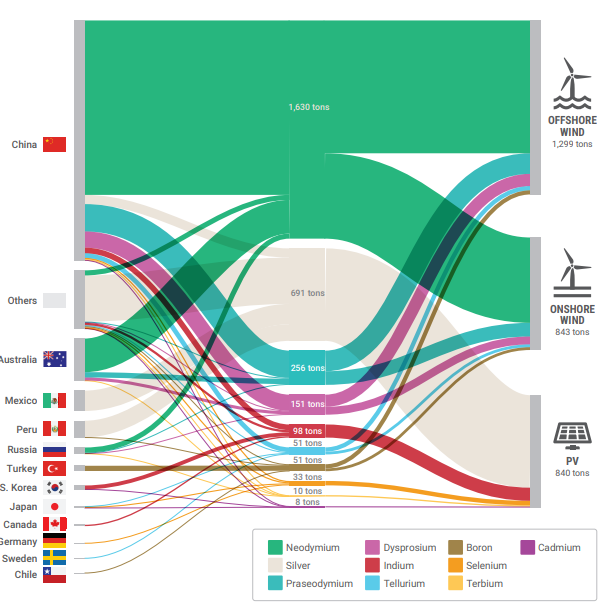
This diagram shows the origin of the metals required for meeting the 2030 goals. The left side of the diagram shows the origin, based on today’s global production of metals. The right side shows the cumulative metal demand for wind and solar technologies until 2030. From study showing tonnage of Dutch demand only.

Trump’s administration is also leveraging Section 232 of the Trade Expansion Act to impose tariffs on foreign processed minerals. The goal? Reduce foreign dependence and revive domestic production of critical materials like rare earth elements, essential for clean tech and defense.

The result is a renewed focus on U.S.-based mining and processing, offering a cleaner, more transparent alternative to China’s pollution-heavy rare earth industry. A stronger domestic rare earths sector is a win for national security and the environment. Environmental accountability increases when these materials are mined and processed under U.S. regulation.

The Dirty Truth Behind “Clean” Tech

Let’s be honest: outsourcing green tech to countries with weak environmental laws doesn’t eliminate emissions, but does outsource them. This phenomenon, known as “pollution leakage,” erodes the benefits we claim to pursue.

While the West celebrates progress in so-called green energy, producing those “eco-friendly” goods is often carried out in developing world factories. More than that, this behavior masks the real cost of green technologies. Products may seem “cheap” to consumers, but their environmental impact — from polluted rivers to toxic waste — remains largely unaccounted for.

Trump’s tariff strategy encourages manufacturers to source from countries with higher environmental standards or bring production back home. Case studies show that reshoring delivers economic and environmental benefits, especially in energy and heavy industry sectors. Cleaner supply chains begin with better accountability, which tariffs are uniquely positioned to provide.

When production happens domestically, enforcing environmental controls, adopting green manufacturing processes, and implementing technological innovations like low-emission machining are easier. However, these advancements are often out of reach for foreign suppliers focused solely on cost-cutting.

Global Environmental Agreements: Big Promises, Weak Results

The mainstream media heralded the Biden administration’s return to multilateral climate agreements like the Paris Accord as ” planet-saving,” but real-world results have been underwhelming. These international frameworks lack enforcement, largely exempt the biggest emitters, and allow countries to manipulate statistics to validate their progress in achieving their commitments.

Trump’s policies emphasize sovereignty, which doesn’t mean ignoring the environment. Using trade policy to reinforce domestic environmental protections proves the two priorities are compatible.  Environmental stewardship doesn’t require surrendering control to global institutions. Sometimes it just requires enforcing the rules at home — and setting an example others can’t ignore.

A Practical Path Forward

As the U.S. continues to navigate complex environmental and economic challenges, tariffs can be part of the solution. President Trump’s tariffs protect jobs and the environment, even if critics fail to notice.

Rather than relying solely on lofty international promises, we should consider practical tools, like tariffs, that create real accountability, cleaner production, and stronger domestic resilience.

In an era of performative climate politics, tariffs might just be the unexpected, effective piece of environmental policy we’ve been missing.

Straight Talk on Climate Science and Net Zero

Michael Simpson of Sheffield University did the literature review and tells it like it is in his recent paper The Scientific Case Against Net Zero: Falsifying the Greenhouse Gas Hypothesis published at Journal of Sustainable Development (2024).  Excerpts in italics with my bolds and added images.

Abstract

The UK Net Zero by 2050 Policy was undemocratically adopted by the UK government in 2019. Yet the science of so-called ‘greenhouse gases’ is well known and there is no reason to reduce emissions of carbon dioxide (CO2), methane (CH4), or nitrous oxide (N2O) because absorption of radiation is logarithmic. Adding to or removing these naturally occurring gases from the atmosphere will make little difference to the temperature or the climate. Water vapor (H2O) is claimed to be a much stronger ‘greenhouse gas’ than CO2, CH4 or N2O but cannot be regulated because it occurs naturally in vast quantities.

This work explores the established science and recent developments in scientific knowledge around Net Zero with a view to making a rational recommendation for policy makers. There is little scientific evidence to support the case for Net Zero and that greenhouse gases are unlikely to contribute to a ‘climate emergency’ at current or any likely future higher concentrations. There is a case against the adoption of Net Zero given the enormous costs associated with implementing the policy, and the fact it is unlikely to achieve reductions in average near surface global air temperature, regardless of whether Net Zero is fully implemented and adopted worldwide. Therefore, Net Zero does not pass the cost-benefit test. The recommended policy is to abandon Net Zero and do nothing about so-called ‘greenhouse gases’. [Topics are shown below with excerpted contents.]

1. Introduction

The argument for Net Zero is that the concentration of CO2 in air is increasing, some small portion of which may be due to human activities and that Net Zero will address this supposed ‘problem’. The underpinning consensus hypothesis is that the human emission of so-called ‘greenhouse gases’ will increase concentrations of these gases in the atmosphere and thereby increase the global near surface atmospheric temperature by absorbance of infrared radiation leading to catastrophic changes in the weather. This leads to the idea that global temperatures should be limited to 2°C and preferably 1.5°C to avoid catastrophic climate change (Paris Climate Agreement, 2015).

A further hypothesis is that there are tipping points in the climate system which will result in positive feedback and a runaway heating of the planet’s atmosphere may occur (Schellnhuber & Turner, 2009; Washington et al., 2009; Levermann et al., 2009; Notz & Schellnhuber, 2009; Lenton et al., 2008; Dakos et al., 2009; Archer et al., 2009). Some of these tipping point assumptions are built into faulty climate models, the outputs of which are interpreted as facts or evidence by activists and politicians. However, output from computer models is not data, evidence or fact and is controversial (Jaworowski, 2007; Bastardi, 2018; Innis, 2008: p.30; Smith, 2021; Nieboer, 2021; Craig, 2021). Only empirical scientifically established facts should be considered so that cause and effect are clear.

From the point of view of physics, the atmosphere is an almost perfect example of a stable system (Coe, et al., 2021). The climate operates with negative feedback (Le Chatelier’s Principle) as do most natural systems with many degrees of freedom (Kärner, 2007; Lindzen et al., 2001 & 2022). The ocean acts as a heat sink, effectively controlling the air temperature. Recent global average surface temperatures remain relatively stable (Easterbrook, 2016; Moran, 2015; Morano, 2021; Marohasy, 2017; Ridley, 2010) or warming very slightly from other causes (Sangster, 2018) and the increase in temperature from 1880 through 2000 is statistically indistinguishable from 0°K (Frank, 2010; Statistics Norway, 2023) and is less than predicted by climate models (Fyfe, 2013). This shows the difference between the consensus view and established facts.

The results imply that the effect of man-made CO2 emissions does not appear to be sufficiently strong to cause systematic changes in the pattern of the temperature fluctuations. In other words, our analysis indicates that with the current level of knowledge, it seems impossible to determine how much of the temperature increase is due to emissions of CO2. Dagsvik et al. 2024

The IPCC has produced six major assessment reports (AR1 to 6) and several special reports which report on a great deal of good science (Noting that the IPCC does not do any science itself but merely compiles literature reviews). The Summaries for Policy Makers (SPM) are followed by most politicians. Yet the SPM do not agree in large part with the scientific assessment by the IPCC reports and appear to exaggerate the role of CO2 and other ‘greenhouse gases’ in climate change. It appears that the SPM is written by governments and activists before  the scientific assessment is reached which is a questionable practice (Ball 2011, 2014 and 2016; Smith 2021).

Other organizations have produced reports of a similar nature and using a similar literature (e.g. Science and Public Policy Institute; The Heartland Institute; The Centre for the Study of CO2; CO2 Science; Global Warming Policy Foundation; Net Zero Watch; The Fraser Institute; CO2 Coalition) and arrived at completely different conclusions to the IPCC and the SPM (Idso et al., 2013a; Idso et al., 2013b; Idso et al., 2014; Idso et al., 2015a, 2015b; Happer, et al., 2022). There are also some web pages (e.g. Popular Technology) which list over a thousand mainstream journal papers casting doubt on the role of CO2 and other greenhouse gases as a source of climate change. For example, a recent report by the CO2 Coalition (2023) states clearly Net Zero regulations and actions are scientifically invalid because they:

  • “Fabricate data or omit data that contradict their conclusions.
  • Rely on computer models that do not work.
  • Rely on findings of the Intergovernmental Panel on Climate Change (IPCC) that are government opinions, not science.
  • Omit the extraordinary social benefits of CO2 and fossil fuels.
  • Omit the disastrous consequences of reducing fossil fuels and CO2 emissions to Net Zero.
  • Reject the science that demonstrates there is no risk of catastrophic global warming caused by fossil fuels and CO2.

Net Zero, then, violates the tenets of the scientific method that for more than 300 years has underpinned the advancement of western civilization.” (CO2 Coalition, 2023; p. 1)

With such a strong scientific conviction the entire Net Zero agenda needs investigating. This paper reviews some of the important science which supports and undermines the Net Zero agenda.

2. Material Studied

A literature review was carried out on various topics related to greenhouse gases, climate change and the relevant scientific literature from the last 20 years in the areas of physics, chemistry, biology, paleoclimatology, geology etc. The method used was an evidence-based approach where several issues were critically evaluated based on fundamental knowledge of the science, emerging areas of scientific investigation and developments in scientific methods. The evidence-based approach is widely used (Green & Britten, 1998; Odom et al., 2005; Easterbrook, 2016; Pielke, 2014; IPCC, 2007a; IPCC 2007b; Field, 2012; IPCC 2014; McMillan & Shumacher, 2013).

Evidence-based research uses data to establish cause and effect relationships which are known to work and allows interventions which are therefore expected to be effective.

3. Greenhouse Gas Theory

The historical development of the greenhouse effect, early discussions and controversies are presented by Mudge (2012) and Strangeways (2011). The explanation of the greenhouse effect or greenhouse gas theory of climate change is given in the IPCC Fourth Assessment Report Working Group 1, The Physical Science Basis (IPCC, 2007, p. 946):

“Greenhouse gases effectively absorb thermal infrared radiation emitted by the Earth’s surface, by the atmosphere itself due to some gases, and by clouds. Atmospheric radiation is emitted to all sides, including downward to the Earth’s surface. Thus, greenhouse gases trap heat within the surface-troposphere system. This is called the greenhouse effect.”

This is plausible but does not necessarily lead to global warming as radiation will be emitted at longer wavelengths in other areas of the electromagnetic spectrum where greenhouse gases do not absorb radiation potentially leading to an energy balance without increase in temperature. To further complicate matters the definition continues with the explanation:

“Thermal infrared radiation in the troposphere is strongly coupled to the temperature of the atmosphere at the altitude at which it is emitted. In the troposphere, the temperature generally decreases with height. Effectively, infrared radiation emitted to space originates from an altitude with a temperature of, on average, -19°C in balance with the net incoming solar radiation, whereas the Earth’s surface is kept at a much higher temperature of, on average, +14°C. An increase in the concentration of greenhouse gases leads to an increased infrared opacity of the atmosphere, and therefore to an effective radiation into space from a higher altitude at a lower temperature. This causes a radiative forcing that leads to an enhancement of the greenhouse effect, the so-called enhanced greenhouse effect.”

This sort of statement is not comprehensible to the average person, makes no sense scientifically and is immediately falsified by recent research (Seim and Olsen, 2020; Coe etal., 2021; Lange et al., 2022, Wijngaarden & Happer, 2019, 2020, 2021(a), 2021(b), 2022, Sheahen, 2021; Gerlich & Tscheuschner, 2009; Zhong & Haigh, 2013). It also contradicts the work of Gray (2015 and 2019) and others and has been heavily criticized (Plimer, 2009; Plimer, 2017; Carter, 2010).

3.1 The Falsifications of the Greenhouse Effect

There are numerous falsifications of the greenhouse gas theory (sometimes called ‘trace gas heating theory’, see Siddons in Ball, 2011, p.19), of global warming and/or climate change (Ball, 2011; Ball, 2014; Ball, 2016; Gerlich & Tscheuschner, 2009; Hertzberg et al, 2017; Allmendinger, 2017; Blaauw, 2017; Nikolov and Zeller, 2017).

Fundamental empirically derived physical laws place limits on any changes in the atmospheric temperature unless there is some strong external force (e.g. increased or decreased solar radiation). For example, the Ideal Gas Law, the Beer-Lambert Law, heat capacities, heat conduction etc., (Atkins & de Paula, 2014; Barrow, 1973; Daniels & Alberty, 1966) all place physical limits on the amount of warming or cooling one might see in the climate system given any changes to heat from the sun or other sources.

3.1.1 The Ideal Gas Law

PV = nRT (1)

The average near-surface temperature for planetary bodies with an atmosphere calculated from the Ideal Gas Law is in excellent agreement with measured values suggesting that the greenhouse effect is very small or non-existent (Table 1). It is thought that the residual temperature difference of 33K between the Stephan-Boltzmann black body effective temperature (255K) on Earth and the measured near-surface temperature (288K) is caused by adiabatic auto-compression (Allmendinger, 2017; Robert, 2018; Holmes 2017, 2018 and 2019). An alternative view of this is given by Lindzen (2022). There is no need for the ‘greenhouse effect’ to explain the near surface atmospheric temperature of planetary bodies with atmospheric pressures above 10kPa (Holmes, 2017). The ideal gas law is robust and works for all gases.

3.1.2 Measurement of Infrared Absorption of the Earth’s Atmosphere

It is now possible to calculate the effect of ‘greenhouse gases’ on the surface atmospheric temperature by (a) using laboratory experimental methods; (b) using the Hitran database (https://hitran.org/); (c) using satellite observations of outgoing radiation compared to Stephan-Boltzmann effective black body radiation and calculated values of temperature.

The near surface temperature and change in surface temperature can be calculated. The result is that climate sensitivity to doubling concentration of CO2 is (0.5°C) including 0.06°C from CH4 and 0.08°C from N2O which is so small as to be undetectable. Most of the temperature change has already occurred and increasing CO2, CH4, N2O concentrations will not lead to significant changes in air temperatures because absorption is logarithmic (Beer-Lambert Law of attenuation) – a law of diminishing returns.

Figure 1. Delta T vs CO2 concentration

The important point here is that the Ideal Gas Law, the logarithmic absorption of radiation and the theoretical calculations by Wijngaarden & Happer (2020 and 2021), Coe et al., (2021) based on the Beer-Lambert Law and the Stephan-Boltzmann Law show that there is an upper limit to the temperature change which can occur by adding ‘greenhouse gases’ to the atmosphere if the main source of incoming radiation (the Sun) does not change over time. The upper limit is ~0.81°C.

3.1.3 Other Falsifications

Many climatologists ignore the well-established ideas of the Ideal Gas Law, Kinetic Theory of Gases and Collision Theory which explain the interaction of gases in the atmosphere (Atkins & de Paula, 2014; Salby, 2012; Tec science). For example, it is difficult for CO2 to retain heat energy (by vibration, rotation, and translation) as there are 1034 collisions between air molecules per second per cubic meter of gas at a pressure of 1 atmosphere (~101.3kPa) and on each collision, energy is exchanged leading to a Maxwell-Boltzmann distribution (similar to a normal distribution) of molecular energies across all molecules in air (Tec science). The Maxwell-Boltzmann distribution has been experimentally determined (Atkins & de Paula, 2014). Thus, the major components of air (nitrogen and oxygen) retain most of the energy, cause evaporation of water vapor by heat transfer (mainly by conduction and convection) and emit radiation at longer wavelengths. The small concentration of CO2 in air (circa 420ppmv) cannot account for large changes in the climate system which have occurred in the past (Wrightstone, 2017 and 2023; Ball, 2014). Plimer (2009 and 2017) presents a great deal of geological scientific evidence which covers paleoclimatology concluding that:

“There is no such thing as the greenhouse effect. The atmosphere behaves neither as a greenhouse nor as an insulating blanket preventing heat escaping from the Earth. Competing forces of evaporation, convection, precipitation, and radiation create an energy balance in the atmosphere.” (Plimer 2009: p.364).

Ball (2014) summarizes a great deal of the geological science:

“The most fundamental assumption in the theory that human CO2 is causing global warming and climate change is that an increase in CO2 will cause an increase in temperature. The problem is that every record of any duration for any period in the history of the Earth exactly the opposite relationship occurs temperature increase precedes CO2 increase. Despite that a massive deception has developed and continues.” Ball (2014: p. 1).

This statement agrees with many other scientists working in geology, earth sciences, physics and physical chemistry as can be seen in cited references in books (Easterbrook, 2016; Wrightstone 2017 and 2023; Plimer, 2009; Plimer 2017; Ball, 2014; Ball,2011; Ball, 2016; Carter, 2010; Koutsoyiannis et al, 2023 & 2024; Hodzic, and Kennedy, 2019). Easterbrook (2016) uses the evidence-based approach to climate science and concludes that:

“Because of the absence of any physical evidence that CO2 causes global warming, the main argument for CO2 as the cause of warming rests largely on computer modelling.”  Easterbrook (2016: p.5).

The results of the models are projected far into the future (circa 80 to 100years) where uncertainties are large, but projections can be used to demonstrate unrealistic but scary scenarios (Idso et al., 2015b). The literature that is used for the IPCC reports appears to be ‘cherry picked’ to agree with their paradigms that increasing CO2 concentrations leads to warming. They ignore the vast literature in climatology, atmospheric physics, solar physics, physics, physical chemistry, geology, biology and palaeoclimatology much of which contradicts the IPCC’s assessment in the summary for policymakers (SPM).

The objective of the IPCC was to find the human causes of climate change – not to look at all the causes of climate change which would be the sensible thing to do if the science were to be used to inform policy decisions. However, there is no experimental evidence for a significant anthropogenic component to climate change (Kaupinnen and Malmi, 2019) which leaves genuine scientists and citizens concerned about the role of the IPCC.

3.1.4 Anthropogenic CO2 and the Residence time of Carbon Dioxide in Air

There is a suggestion (IPCC) that the residence time of CO2 in the atmosphere is different for anthropogenic CO2 and naturally occurring CO2. This breaks a fundamental scientific principle, the Principle of Equivalence. That is: if there is equivalence between two things, they have the same use, function, size, or value (Collins English Dictionary, online). Thus, CO2 is CO2 no matter where it comes from, and each molecule will behave physically and react chemically in the same way.

The figures above illustrate how exaggerated claims are made for CO2 based on the false assumption that CO2 resides in the atmosphere for long periods and can affect the climate. These results are enough to falsify the ideas of anthropogenic global warming caused by CO2 and shows how little human activity contributes to CO2 emissions and concentrations in air. The argument is clear, that if the fictitious greenhouse effect were real for CO2 the human contribution would have no measurable effect upon the climate in terms of global average surface temperature.

The residence time of CO2 in the atmosphere is between 3.0 and 4.1 years using the IPCC’s own data and not the supposed 100 years or 1000 years for anthropogenic CO2 suggested by the IPCC summaries for policy makers (Harde, 2017) which contravenes the Equivalence Principle (Berry, 2019).

“These results indicate that almost all of the observed change of CO2 during the industrial era followed, not from anthropogenic emission, but from changes of natural emission. The results are consistent with the observed lag of CO2 changes behind temperature changes (Humlum et al., 2013; Salby, 2013), a signature of cause and effect.” (Harde, 2017a: 25).

It is well-known that the residence time of CO2 in the atmosphere is approximately 5 years (Boehmer-Christiansen, 2007: 1124; 1137; Kikuchi, 2010). Skrable et al., (2022), show that accumulated human CO2 is 11% of CO2 in air or ~46.84ppmv based on modelling studies. Berry (2020, 2021) uses the Principle of  Equivalence (which the IPCC violates by assuming different timescales for the uptake of natural and human CO2) and agrees with Harde (2017a) that human CO2 adds about 18ppmv to the concentration in air. These are physically extremely small concentrations of CO2 which suggest most CO2 arises from natural sources. It can be concluded that the IPCC models are wrong and human CO2 will have little effect on the temperature.

4. Conclusions

Like many other researchers it was assumed there was robust science behind the greenhouse gas theory and that Net Zero was essential to achieve, but after investigation it now appears that the greenhouse gas theory is questionable and has been successfully challenged for at least 100 years (Gerlich and Tscheuschner, 2009). Much better explanations for planetary near surface atmospheric temperatures are available based on robust, empirically derived scientific laws such as the Ideal Gas law.

Better assessments of the potential increase in temperature with doubling CO2 concentrations are available and the calculated increase is small ~0.5°C (Coe et al., 2021; van Wijngaarden & Happer, 2019, 2020 and 2021; Sheahen, 2021; Schildknecht, 2020) and will remain very small with increased CO2 concentration because the infrared CO2 absorption bands are almost saturated and absorption follows the logarithmic Beer-Lambert law (Figure 1). Much of the work using the Hitran database has been tested against satellite measurements of the outgoing radiation from the Earth’s atmosphere and the calculations are in almost perfect agreement (Sheahen, 2021).

This suggests that the physicists are correct in their assessment of the likely very small increase in atmospheric temperature and therefore there is a strong case against Net Zero as it will have no discernible effect on temperature and the cost of Net Zero is huge. Therefore, the Net Zero project does not pass the cost-benefit test (Montford, 2024b; NESO, 2024). That is the costs are disproportionately high for little or no benefit. Thus, the correct response to a non-problem is to do nothing. The monies being wasted on Net Zero should be spent for the benefit of citizens (e.g. education, health care, public health, water infrastructure, waste processing, economic prosperity etc.). There are many other pressing public health problems from burning fossil fuels which should be addressed (e.g. air pollution especially particulates and carbon monoxide).

Better calculations of the human contribution to atmospheric CO2 concentrations are available and it is small ~18ppmv (Skrable et al., 2022; Berry, 2020; Harde 2017a & 2017b; Harde, 2019; Harde 2014). The phase relation between temperature and CO2 concentration changes are now clearly understood; temperature increases are followed by increases in CO2 likely from outgassing from the ocean and increased biological activity (Davis , 2017; Hodzic and Kennedy, 2019; Humlum, 2013; Salby, 2012; Koutsoyiannis et al, 2023 & 2024).

“In conclusion on the basis of observational data, the climate crisis that, according to many sources, we are experiencing today, is not evident yet.” Alimonti etal. 2022: 111.

Many researchers are addressing the ‘CO2 and climate change problem’ by suggesting decarbonization and other approaches such as Net Zero. CO2 is more than likely not the temperature control and has a very minor to negligible role in global warming (The Bruges Group, 2021; De Lange and Berkhout, 2024; Manheimer, 2022; Statistics Norway 2023; Lindzen and Happer, 2024; Lindzen, et al., 2024).

The scientific literature was examined and found to provide several alternative views concerning CO2 and the need for Net Zero. The objectives of this paper have been achieved and the conclusions can be briefly summarized:

  1. CO2 is a harmless highly beneficial rare trace gas essential for all life on Earth due to photosynthesis which produces simple sugars and carbohydrates in plants and a bi-product Oxygen (O2). CO2is therefore the basis of the entire food supply chain (see Biology or Botany textbooks or House, 2013). CO2 is close to an all-time low geologically (Wrightstone, 2017 and 2023) and controls on CO2 emissions and concentrations in air should be considered as very dangerous and expensive policy indeed. Net Zero is not necessary and should be abandoned.
  2. The greenhouse gas theory has been falsified (i.e. proven wrong) from several disciplines including paleoclimatology, geology, physics, and physical chemistry. CO2 cannot affect the climate in such small concentrations (~420ppmv or ~0.04%) and basing government policy on output from faulty climate models will prove to be very expensive and achieve nothing for the environment, public health, or the climate.

“There is no atmospheric greenhouse effect, in particular CO2 greenhouse effect, in theoretical physics and engineering thermodynamics. Thus, it is illegitimate to deduce predictions which provide a consulting solution for economics and intergovernmental policy.” (Gerlich & Tscheuschner, 2009: 354).

  1. The oceans contain approximately 50 times as much CO2 as is currently present in the air (Easterbrook, 2016; Wrightstone, 2017 and 2023) and as such Henry’s Law will work to maintain the dynamic equilibrium concentration in air over the longer term as the ocean will absorb and outgas CO2(Atkins & de Paula, 2014). Net Zero will, therefore, achieve nothing for the concentration of CO2 in the atmosphere. If the volcanic sources of CO2 are as Kamis (2021), the IPCC and others suggest many times the human contribution, then Net Zero will have no measurable effect on atmospheric CO2 concentrations. Net Zero should, therefore, be abandoned.
  2. The contribution to greenhouse gases, especially CO2, attributable to humans is extremely small, almost negligible (~4.3% or ~18ppmv total accumulation) and half is absorbed by the ocean and biomass. Other naturally occurring so-called greenhouse gases are present in very small/negligible quantities (e.g. CH4, N2O). The systematic attempts to eliminate these trace gases from the atmosphere by reducing industrial output, reducing farming, eliminating fossil fuel use, and changing the way human civilization lives is totally unnecessary – again the ‘do-nothing strategy’ is strongly recommended.
  3. The sciences have been largely ignored by politicians and activists. There have been numerous failings of governments to take notice of scientific findings and they have succumbed to unnecessary pressure from activist groups (including the United Nations and the IPCC). Net Zero is just one example where costly efforts by governments will achieve nothing and not address the real problems of air pollution, public health, or economic well-being of citizens.

“There is not a single fact, figure or observation that leads us to conclude that the world’s climate is in any way disturbed.” (Société de Calcul Mathématique SA, 2015:3).

  1. Circular reasoning is used by the climate modelers. That is, the fictitious greenhouse effect is built into the models such that when the parameter of CO2concentration is increased then the temperature output of the models increases, producing models which run relatively hot compared to natural variability. This reduces the so-called greenhouse effect to little more than a ‘fudge factor’ or ‘parameter’ within models which essentially gives you the answer that you set out to prove. This circular reasoning is hardly scientific enquiry and with data ‘homogenization’ and infilling of missing data begins to look rather peculiar. Climatologists need to recognize these issues, address the real reasons for climate change and offer genuine solutions to any real problems.
  2. The claim of consensus is completely unscientific in its approach (Idso et al, 2015a). Noting that 31,000 US scientists and engineers signed the petition protest (Robinson et al., 2007), recently 90 Italian scientists wrote an open letter to the Italian government (Crescenti et al., 2019), and 500 climatologists and scientists signed an open letter to the UN Secretary General (Berkhout, 2019). All explaining that CO2 is not the cause of climate change. There are thousands of academic papers and books questioning anthropogenic climate change with good data.

Many other concerned individuals have looked at the evidence for anthropogenic climate change based on CO2 and found it wanting (e.g. Davison, 2018; Rofe, 2018).

“If in fact ‘the science is settled’, it seems to be much more settled in the fact that there is no particular correlation between CO2 level and the earth’s temperature.” (Manheimer, 2022).

and

“If you assume the Intergovernmental Panel on Climate Change are right about everything and use only their numbers in the calculation, you will arrive at the conclusion that we should do nothing about climate change!” (Field, 2013).

The academic literature in science offers numerous and far better explanations for climate change than the fictitious greenhouse effect. Researchers should recognize this fact and start to look at dealing with the real causes of climate change. Net Zero is an enormously expensive solution to a non-problem and has no obvious redeeming features. The Net Zero policy is not financially sustainable and should be abandoned.



Mann’s AMOC Collapse Hoax

Dr. Kevin E. Trenberth, a distinguished scholar at the National Center for Atmospheric Research, commented on this movie: “I don’t recall a lot except that the whole science was incredibly wrong,”, “one does not get an ice age out of global warming.”

Likely you’ve heard the recent and previous warnings from Mann and friends about the ocean conveyor belt (including the Gulf Stream) slowing down and freezing us all.  With the COP gathering next month, something scary must be proclaimed, and Global Freezing is it, replacing Global Boiling earlier this year. The declaration signed by Mann and 43 other scientists was Open Letter by Climate Scientists to the Nordic Council of Ministers, Reykjavik, October 2024. Preface:

“We, the undersigned, are scientists working in the field of climate research and feel it is urgent to draw the attention of the Nordic Council of Ministers to the serious risk of a major ocean circulation change in the Atlantic. A string of scientific studies in the past few years suggests that this risk has so far been greatly underestimated. Such an ocean circulation change would have devastating and irreversible impacts especially for Nordic countries, but also for other parts of the world.”


“Given the increasing evidence for a higher risk of an AMOC collapse, we believe it is of critical importance that Arctic tipping point risks, in particular the AMOC risk, are taken seriously in governance and policy. Even with a medium likelihood of occurrence, given that the outcome would be catastrophic and impacting the entire world for centuries to come, we believe more needs to be done to minimize this risk.”

The Warning is based on Fear, not Facts

1.  The AMOC has been stable for the last four decades.

Florida Current transport observations reveal four decades of steady state Volkov et al 2024

Abstract

The potential weakening of the Atlantic Meridional Overturning Circulation (AMOC) in response to anthropogenic forcing, suggested by climate models, is at the forefront of scientific debate. A key AMOC component, the Florida Current (FC), has been measured using submarine cables between Florida and the Bahamas at 27°N nearly continuously since 1982. A decrease in the FC strength could be indicative of the AMOC weakening. Here, we reassess motion-induced voltages measured on a submarine cable and reevaluate the overall trend in the inferred FC transport. We find that the cable record beginning in 2000 requires a correction for the secular change in the geomagnetic field. This correction removes a spurious trend in the record, revealing that the FC has remained remarkably stable. The recomputed AMOC estimates at ~26.5°N result in a significantly weaker negative trend than that which is apparent in the AMOC time series obtained with the uncorrected FC transports.

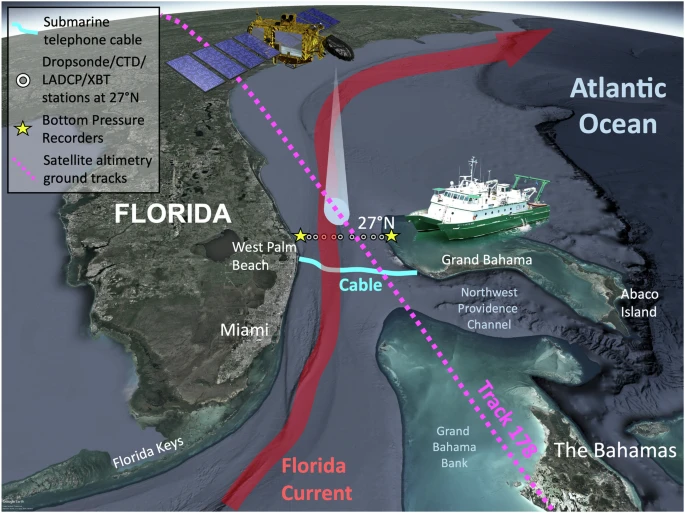
Fig. 1: The Western Boundary Time Series
observing network in the Straits of Florida.

The network consists of the submarine telecommunications cable between West Palm Beach and Grand Bahama Island (cyan curve), ship sections across the Florida Current (FC) at 27°N with in situ measurements at nine stations (white circles), two bottom pressure gauges on both sides of the FC at 27°N (yellow stars), and along-track satellite altimetry measurements (magenta dotted line). CTD Conductivity-Temperature-Depth, LADCP Lowered Acoustic Doppler Current Profiler, XBT expendable bathythermograph.

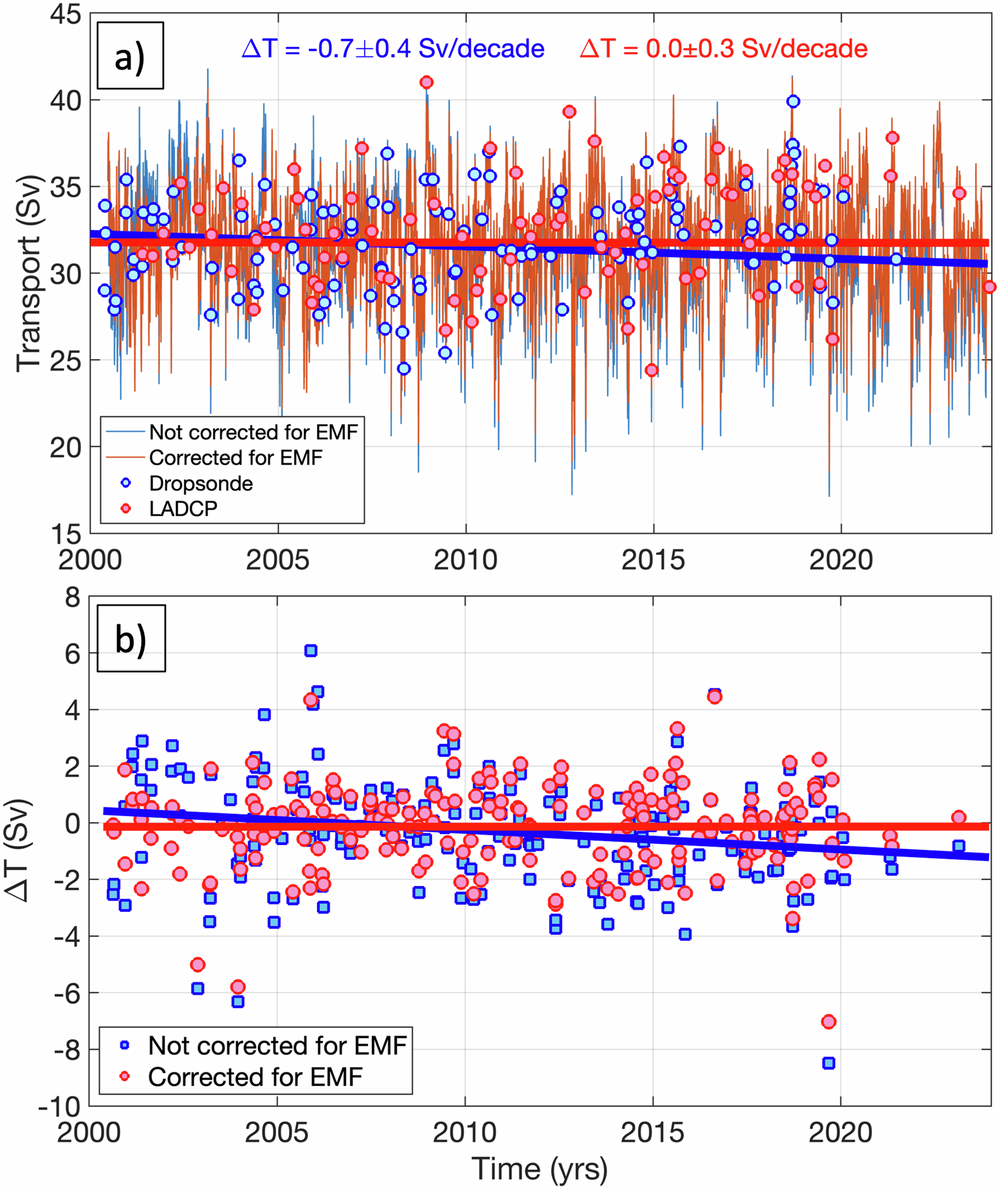
Fig. 6: Florida Current (FC) volume transports corrected for
the secular change in the Earth’s Magnetic Field (EMF).

a The time series of the daily FC volume transport: (blue) not corrected for the secular change in the EMF, (red) corrected for the secular change in the EMF. The linear trends of the FC transport not corrected and corrected for the EMF are shown by the blue and red lines, respectively. b The differences between the cable and ship section transport for the cable data (blue squares) not corrected for the EMF and (red circles) corrected for the EMF. The linear trends of the differences (ΔT) not corrected and corrected for the EMF are shown by the blue and red lines, respectively.

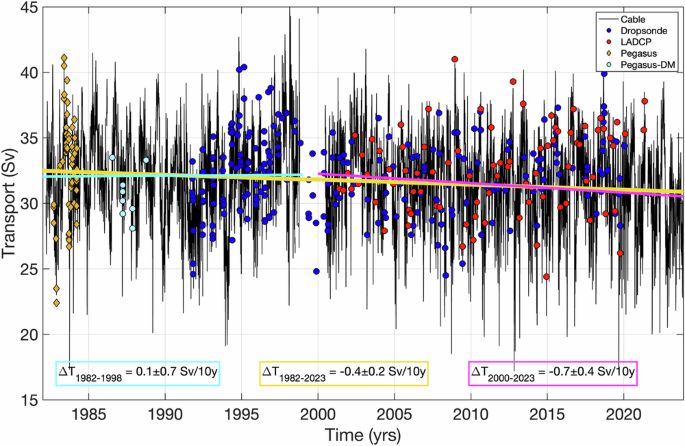
Fig. 2: The Florida Current volume transport.

Daily transport estimates from the cable record (black; prior to corrections applied in this study); estimates from the Pegasus (orange diamonds) and Pegasus in dropsonde mode (Pegasus-DM; light blue circles) sections; estimates from the dropsonde sections (blue circles); and estimates from the Lowered Acoustic Doppler Current Profiler (LADCP) sections (red circles). The linear trends for 1982–2023, 1982–1998, and 2000–2023 periods are shown by the orange, cyan, and magenta lines, respectively.

2.  Paleo records show past AMOC changes due to seafloor shifts not climate change.

Controlling factors for the global meridional overturning circulation: A lesson from the Paleozoic, Yuan et al. 2024.

Abstract

The global meridional overturning circulation (GMOC) is important for redistributing heat and, thus, determining global climate, but what determines its strength over Earth’s history remains unclear. On the basis of two sets of climate simulations for the Paleozoic characterized by a stable GMOC direction, our research reveals that GMOC strength primarily depends on continental configuration while climate variations have a minor impact. In the mid- to high latitudes, the volume of continents largely dictates the speed of westerly winds, which in turn controls upwelling and the strength of the GMOC. At low latitudes, open seaways also play an important role in the strength of the GMOC. An open seaway in one hemisphere allows stronger westward ocean currents, which support higher sea surface heights (SSH) in this hemisphere than that in the other. The meridional SSH gradient drives a stronger cross-equatorial flow in the upper ocean, resulting in a stronger GMOC. This latter finding enriches the current theory for GMOC.

On the basis of a series of simulations for the Paleozoic, we find that the GMOC is primarily controlled by:

  • freshwater input into ocean;
  • wind-driven Ekman pumping in the midlatitudes, and
  • SH anomaly in low latitudes.

The latter two factors are especially important for the strength of the GMOC and are highly related to continental configuration. Our major conclusions find validation through Paleozoic climate simulations using the HadCM3 model by Valdes et al. (53, 67) and a non-IPCC class model, FOAM, by Pohl et al. (52) (figs. S17 and S18). This last study by Pohl et al. (52) also pointed out the unfortunate absence of proxy data for validating the direction and magnitude of the Paleozoic GMOC.

Controlling factors for the global
meridional overturning
circulation

Fig. 5. Schematic of controlling factors for the GMOC during the Paleozoic. The schematic is based on the situation for 400 Ma. Three main factors are shown, the less net precipitation in the south SH; the strong westerlies, ocean surface current, and Ekman upwelling in the midlatitude region in NH; the SSH anomaly and associated pressure anomaly in the low-latitude region.

Although there has been tremendous interest in understanding the mechanisms that govern the MOC, surface topography in the westerlies region and the presence of an open seaway in the low-latitude region were previously largely overlooked. Our study thus draws attention to how the evolution of continents in these two regions affects the strength of MOC. Our study indicates that the traditional theory for MOC misses an important element, that is, the influence of a low-latitude seaway. Previous studies either did not have such a seaway (1, 34, 43) or had a partial seaway that connected the present-day Atlantic Ocean and Pacific Ocean only (32–34). Their focus was mostly on the strength of the AMOC and mechanism invoked generally involved freshwater and salinity only (32, 33, 68), while as demonstrated above, a fully open low-latitude seaway affects the MOC in a fundamentally different way.

3.  AMOC alarm presupposes Arctic “Amplification” of Global Warming

Activist scientists claim the Arctic is warming up to five times faster than lower latitudes.  This is based on models projecting scarce temperature records great distances over the Arctic ocean drift sea ice.  There are three flaws in the arctic warming claim (from Arctic “Amplification” Not What You Think)

a. Arctic Amplification is an artifact of Temperature Anomalies

Clive Best provides this animation of recent monthly temperature anomalies which demonstrates how most variability in anomalies occur over northern continents.

b. Arctic Surface Stations Records Show Ordinary Warming

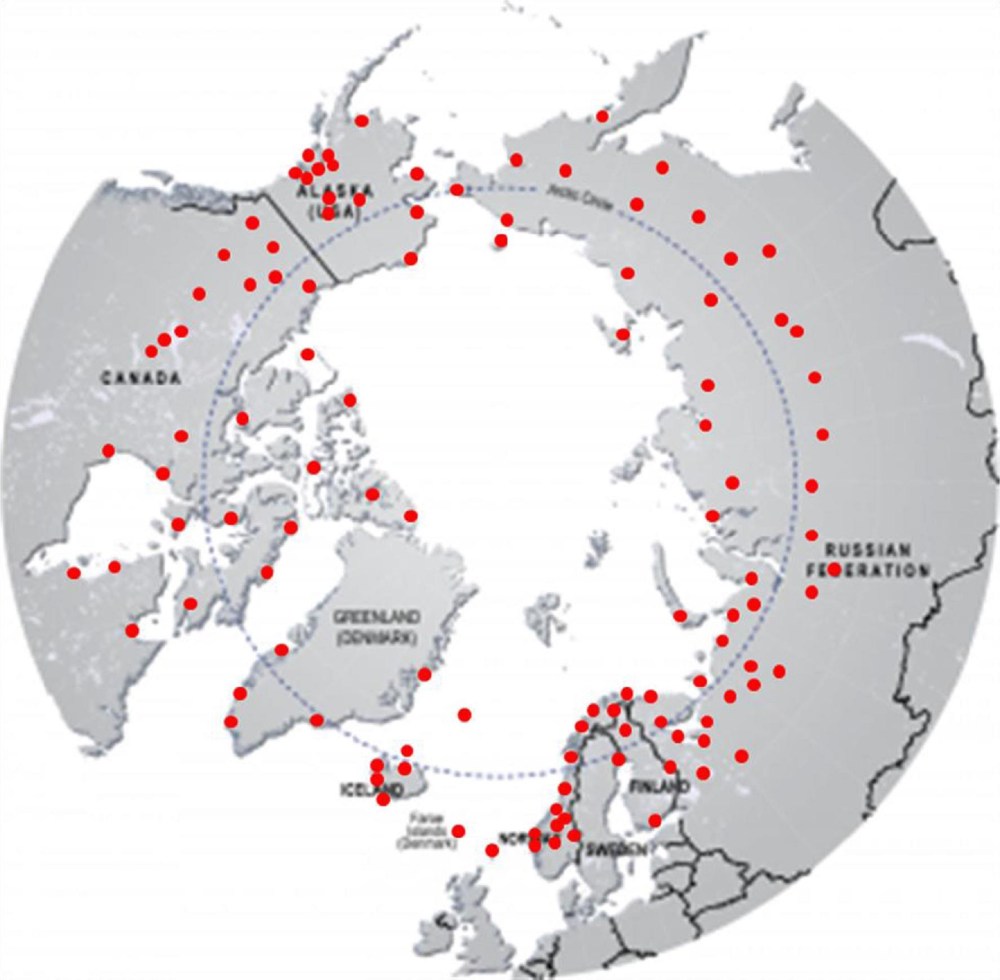
Locations of 118 arctic stations examined in this study and compared to observations at 50 European stations whose records averaged 200 years and in a few cases extend to the early 1700s.

The paper is: Arctic temperature trends from the early nineteenth century to the present W. A. van Wijngaarden, Theoretical & Applied Climatology (2015).  My synopsis: Arctic Warming Unalarming

c. Arctic Warmth Comes from Meridional Heat Transport, not CO2

4.  Hypothesis that rising CO2 will collapse the AMOC is flawed.

The “AMOC is collapsing” narrative goes like this:

Ocean circulation is driven by density differences, which depend on the salinity and the temperature of the water. Cold, salty water is heavier than warm, fresh water. When flowing water reaches Greenland, it becomes very cold and salty, causing it to sink and flow south, where the water warms and rises closer to the surface again. Some compare the process to a conveyor belt going around and around.

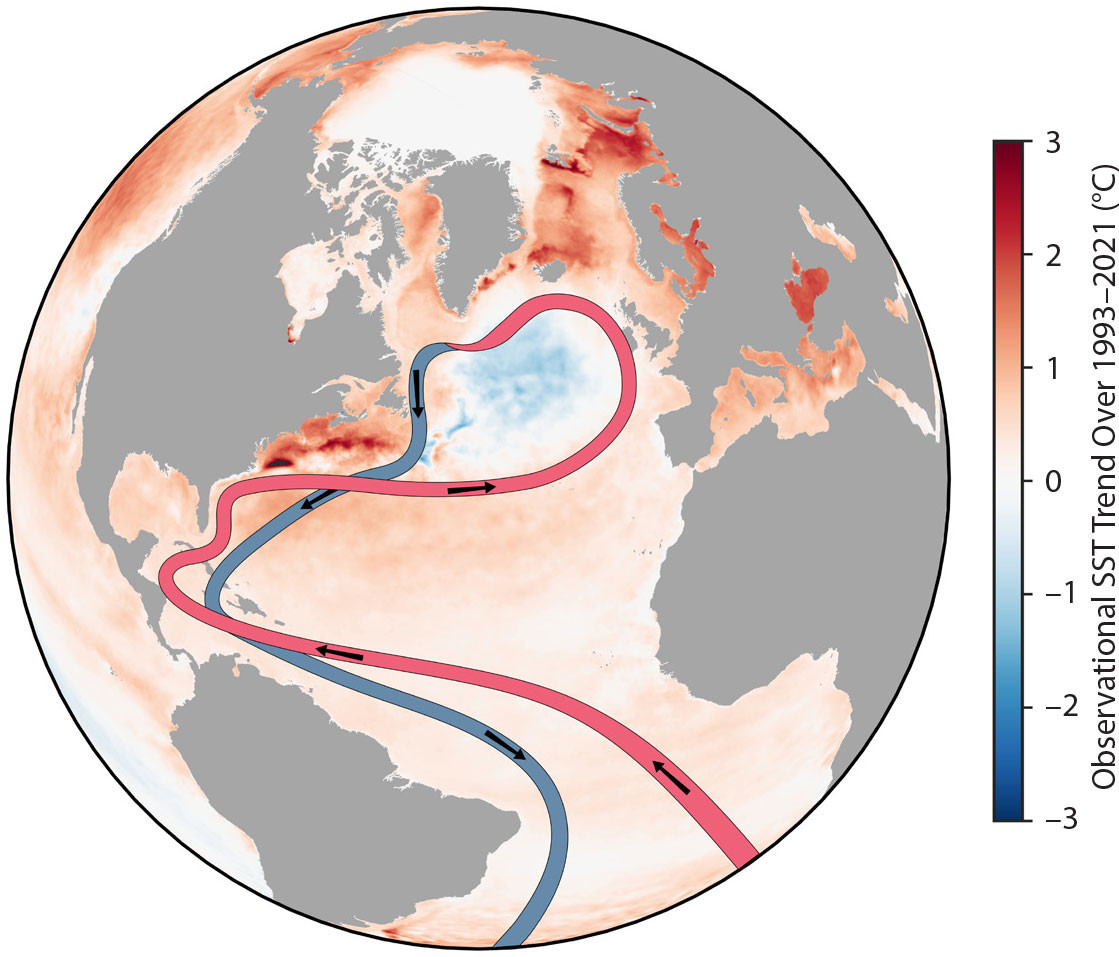
This graphic shows a highly simplified schematic of the Atlantic Meridional Overturning Circulation (AMOC) against a backdrop of the sea surface temperature trend since 1993 from the Copernicus Climate Change Service (https://climate.copernicus.eu/). Image credit: Ruijian Gou. > High res figure.

Changing the salinity of the water messes up the way the water flows. That’s why the melting of the Greenland ice sheets is a big problem: It’s injecting a ton of freshwater into the ocean far north, where the water is usually very salty. The more freshwater, the weaker the circulation—not to mention that atmospheric temperatures are also increasing, which also makes water lighter. The new study shows that if the density dynamics change enough, the conveyor belt will eventually stop moving, aka “collapse.” That means it won’t transport any water, saline, or heat across the globe.

So the scenario is that supposed amplified Arctic warming will cause iceberg calving and glacial melting, and the freshwater will slow and eventually stop the AMOC.  Firstly, the above study shows seafloor configuration has greater impact than salinity changing.  Secondly, the spread of freshwater is not so simple.

Role of the Labrador Current in the Atlantic Meridional Overturning Circulation response to greenhouse warming, Shan et al. 2024

Abstract

Anthropogenic warming is projected to enhance Arctic freshwater exportation into the Labrador Sea. This extra freshwater may weaken deep convection and contribute to the Atlantic Meridional Overturning Circulation (AMOC) decline. Here, by analyzing an unprecedented high-resolution climate model simulation for the 21st century, we show that the Labrador Current strongly restricts the lateral spread of freshwater from the Arctic Ocean into the open ocean such that the freshwater input has a limited role in weakening the overturning circulation. In contrast, in the absence of a strong Labrador Current in a climate model with lower resolution, the extra freshwater is allowed to spread into the interior region and eventually shut down deep convection in the Labrador Sea. Given that the Labrador Sea overturning makes a significant contribution to the AMOC in many climate models, our results suggest that the AMOC decline during the 21st century could be overestimated in these models due to the poorly resolved Labrador Current.

5.  The “Tipping Point” scare is unscientific.

Uncertainties too large to predict tipping times of major Earth system components from historical data, Ben-Yami et al. 2024

Abstract

One way to warn of forthcoming critical transitions in Earth system components is using observations to detect declining system stability. It has also been suggested to extrapolate such stability changes into the future and predict tipping times. Here, we argue that the involved uncertainties are too high to robustly predict tipping times. We raise concerns regarding

(i) the modeling assumptions underlying any extrapolation of historical results into the future,

(ii) the representativeness of individual Earth system component time series, and

(iii) the impact of uncertainties and preprocessing of used observational datasets, with focus on nonstationary observational coverage and gap filling.

We explore these uncertainties in general and specifically for the example of the Atlantic Meridional Overturning Circulation. We argue that even under the assumption that a given Earth system component has an approaching tipping point, the uncertainties are too large to reliably estimate tipping times by extrapolating historical information.

“The conclusions of this study are certainly in line with my understanding of the current state of the art,” says Gavin Schmidt, a climate scientist and professor at Columbia University and the director of NASA’s Goddard Institute for Space Studies (GISS). Schmidt was not involved in the new work, but has extensively researched climate variability and systems like AMOC.

I have not been impressed by previous or recent efforts to predict upcoming tipping points in either AMOC or ice sheets — there is more going on than just patterns in time series and we still don’t have sufficiently complex and calibrated models to have a robust idea of what will happen,” says Gavin Schmidt, director of NASA’s GISS.

Footnote

In researching for this post I discovered an informative website Ocean to Climate  Science news & articles on topics related to ocean and climate by oceanographer Sang-Ki Lee.  Some additional examples of studies for further reading on this issue are below.

Gulf Stream’s fate to be decided by climate ‘tug-of-war’

A stable Atlantic Meridional Overturning Circulation in a changing North Atlantic Ocean since the 1990s

Detectability of an AMOC Decline in Current and Projected Climate Changes

Global surface warming enhanced by weak Atlantic overturning circulation

Nonstationarity of the Atlantic Meridional Overturning Circulation’s Fingerprint on Sea Surface Temperature


Fear + Ignorance = Climate Alarm

Mark C. Ross explains the syndrome in his American Thinker article Fear plus ignorance equals climate change.  Excerpts in italics with my bolds and added images.

Weather is inherently mysterious. Multiple forces, such as wind, clouds, seasonal and day-night cycles, and air pressure are constantly interacting and causing continuous chaos. In the aftermath of two particularly destructive hurricanes, the fear-mongers are bloviating to the max over the catastrophic effects on the climate caused by human existence.

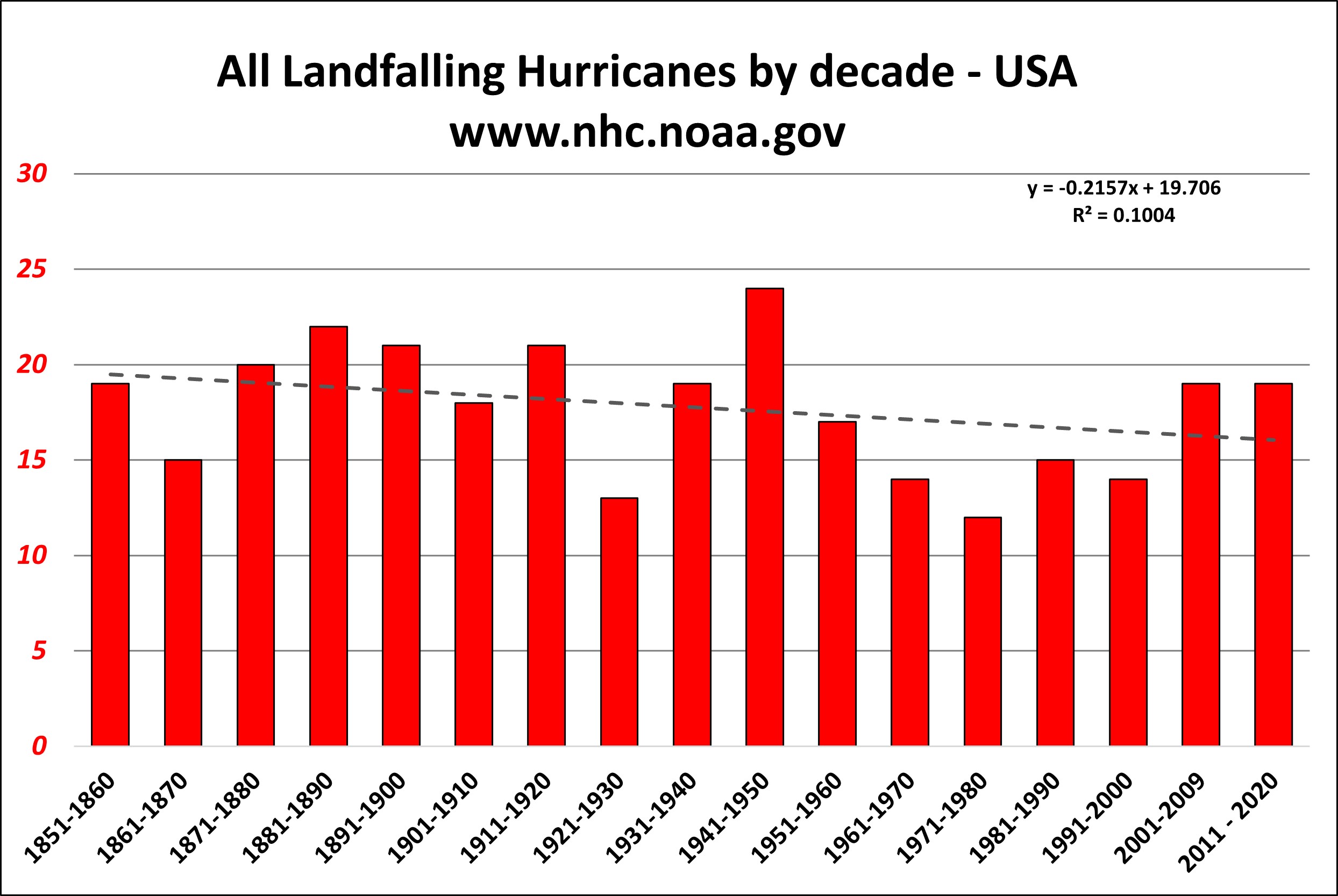
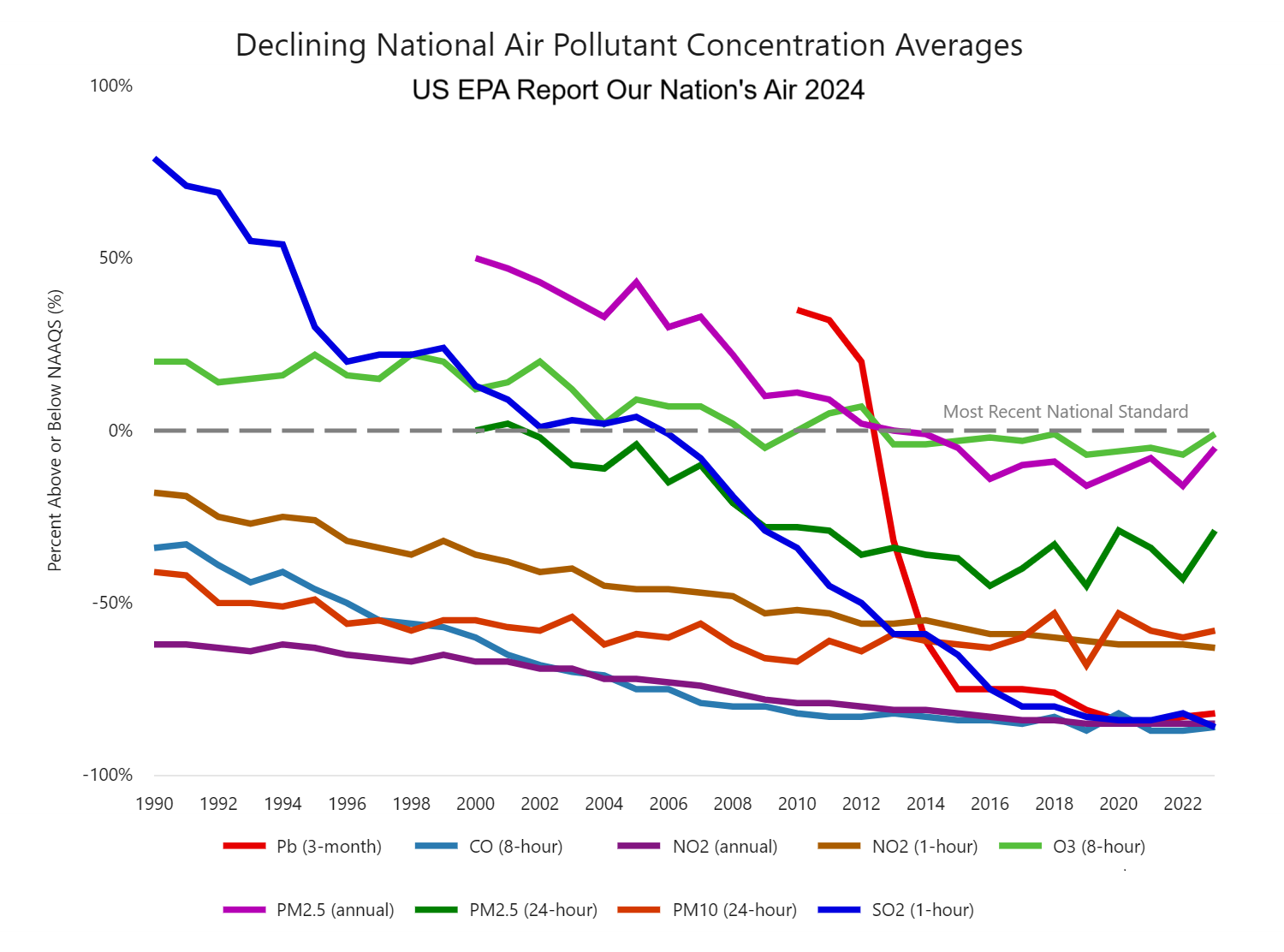
And yet there is no discernible trend toward either more storms or more intense hurricanes compiled over more than beyond the last century. (This chart by NOAA was especially easy to find.) Thus far, the decade of the 1940s saw the most seriously intense storms. Being historical data, this brings to mind a modification of Santayana’s famous adage: when people are ignorant of their history, they make it really easy for demagogues to lie to them about it.

Rather than human consumption of fossil fuels, two other factors are mostly relevant when it comes to the damage wrought by hurricanes: the path they take and the development of infrastructure within that path. Out on the open sea, a hurricane may damage a few ships, but when one goes over a population center…well, you know, it just happened.
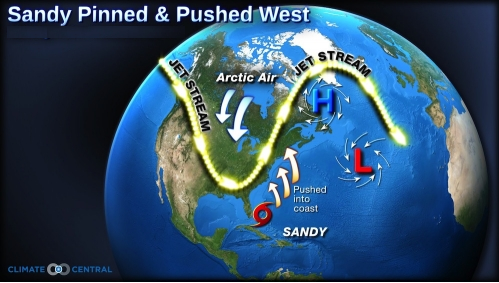
What determines the path is largely chaotic. Go figure. There’s this weird thing called the jet stream, which is sort of the result of the Earth’s continuous rotation within a tenuous atmospheric envelope. Becoming known to American aviators during World War 2, the particular details of the jet stream were kept as a military secret well into the mid-twentieth century. Ocean currents and surface temperatures are also involved. Early forecasts of hurricane paths are typically all over the map. As the time frame compresses, they tend to become more accurate, but not always.

Then there’s the “atypically” warm weather that sometimes happens in early autumn. We just had some of that, along with offshore winds and seriously elevated fire danger. In the olden days, this was called “Indian summer.” Back in 1919, Victor Herbert even wrote a song by that name. Maybe I’m just a cynic, but I’m expecting the fear-mongers to start pandering to the general public’s pervasive ignorance of earth science to cause panic over yet another routine weather event.

There are three scientific disciplines that are especially useful when looking at weather and climate of the distant past: geology; paleontology; and tree ring analysis, known as dendrochronology. Geology shows us the impact glaciers have had on the Earth’s surface. Paleontology shows us the now extinct life forms that thrived under previous environmental conditions. Dendrochronology shows us a preserved record of ancient weather conditions such as year-to-year rainfall and temperature.

How warm would the weather have to be for giant reptiles to flourish all over the Earth? Pretty warm, it seems. There is some work afoot to show that dinosaurs may have been warm-blooded. Good luck with that. Birds are the first known warm-blooded animals, and they evolved from reptiles and still tend to have scales on their legs. Mammals are also warm-blooded. Enormously large mammals such as wooly mammoths were common during the last ice age, the Pleistocene. Having a large size is especially beneficial for warm-blooded animals in cold climates, since surface area of the outer skin increases much more slowly than the actual body mass, making the large animal significantly more thermally efficient than a smaller one.

But why is the blatant climate change hoax still being promoted? There are two different reasons. The first is held among the true believers: humans are evil. They recklessly continue to damage the Earth’s biosphere, just for trivial benefits and without the slightest concern for the consequences of their actions. The other is political: fear can be a terrific motivator but is not all that conducive to good decision-making. That’s fine, too. The wannabe mega-state tyrants l-o-v-e to deal with fear and poor decision-making. How else can they effectively enslave the masses so as to fulfill their objectives?

And what are these objectives? Taking control of everything comes to mind. The evil players in politics are mostly after control. The rest of us just want to have the streets swept and the criminals pulled away from the rest of us. The term Statist should replace Marxist in this dialogue. Absolute government authority should overcome the self-direction of the individual — since so many among us are not really attuned to proper functionality in the modern world.

Socialism was already in the works when Karl Marx got involved. I like to say that a communist is an angry socialist. Marx injected class struggle into the quest for ownership of the means of production. Thus, the USA was a tough sell for Marxism since we are a particularly socially mobile society. The late, great Walter E. Williams would often say that the ranks of the one-percenters were constantly changing — since new ones would rise up, while others would blow it and fall away. The “Old World,” by contrast, is littered with caste systems and other forms of enforced social order.

Back to Caddell’s “elite gentry” — their desires are in mortal conflict with the aspirations of just plain folks. Or as Lincoln said, “God must love the common man, for he made so many of them.” To some, populism is a dirty word. To others, it is a path into the future. It can mean different things to different people. I like to use the term personal freedom. We can do what we want — as long as we don’t interfere with the freedom of others. But to others, “freedom” is a dirty word.

See Also:  Help For Those Alarmed About the Climate

This is your brain on climate alarm.  Just say No!

Fishy Activists Destroying Hydro Dams

AP Photo/Nicholas K. Geranios

John Stossel bring us up to date on the fishy case for removing hydroelectric dams on the Snake River in Washington state.  His Townhall article is A Dam Good Argument.  Excerpts in italics with my bolds.and added images.

Instead of using fossil fuels, we’re told to use “clean” energy: wind, solar or hydropower.  Hydro is the most reliable. Unlike wind and sunlight, it flows steadily.

But now, environmental groups want to destroy dams that create hydro power.

The Klamath River flows by the remaining pieces of the Copco 2 Dam after deconstruction in June 2023. |Located on Oregon/California border.Juliet Grable / JPR

“Breach those dams,” an activist shouts in my new video. “Now is the time, our fish are on the line!

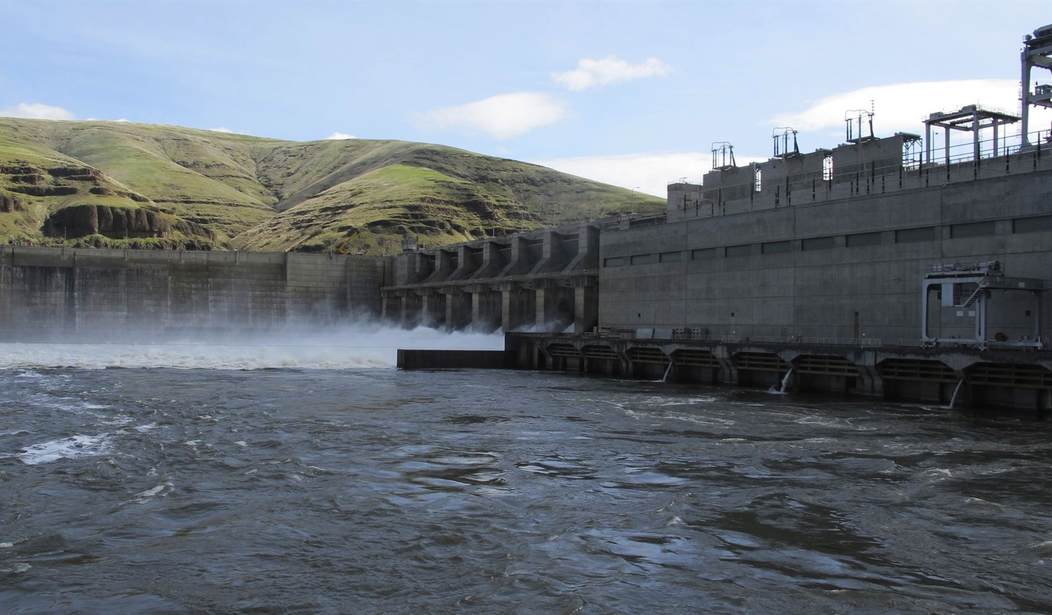
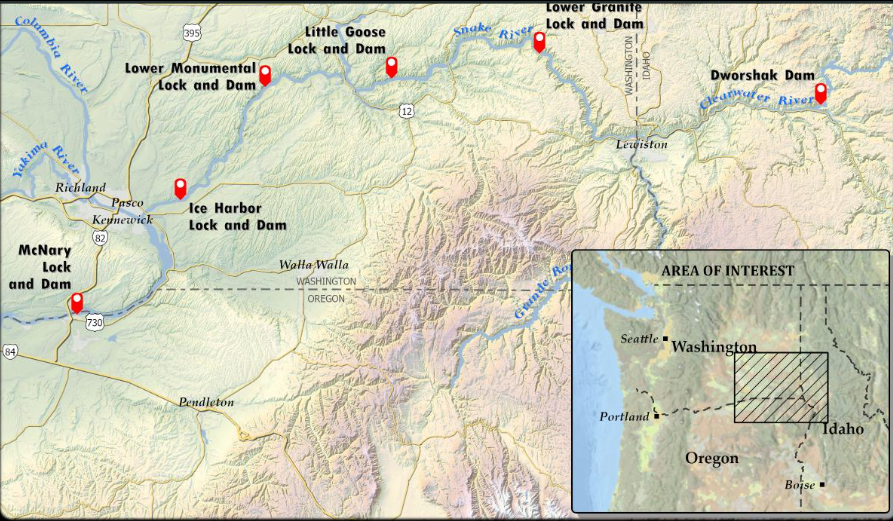
The activists have targeted four dams on the Snake River in Washington State. They claim the dams are driving salmon to extinction.

Walla Walla District Dams on the Snake & Columbia Rivers

It’s true that dams once killed lots of salmon. Pregnant fish need to swim upriver to have babies, and their babies swim downriver to the ocean.  Suddenly, dams were in the way. Salmon population dropped sharply.

But that was in the 1970s.Today, most salmon
make it past the dam without trouble.

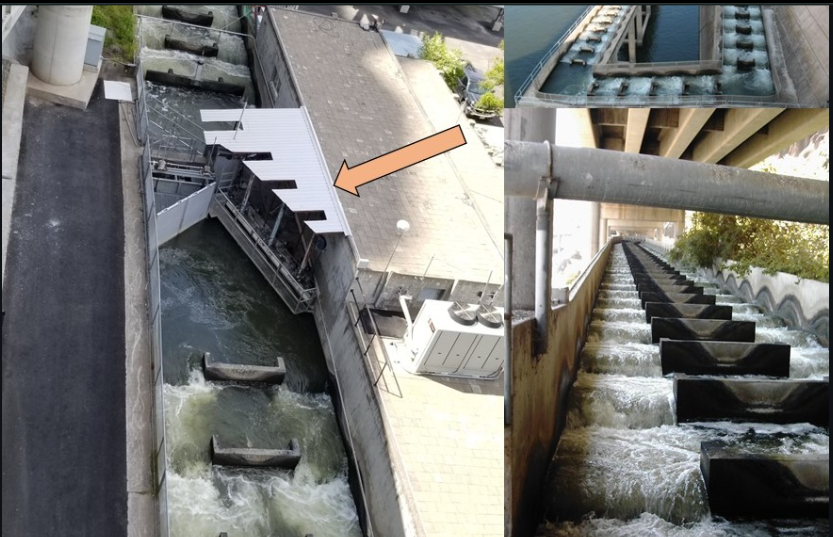
How?  Fish-protecting innovations like fish ladders and spillways guide most of the salmon away from the turbines that generate electricity.

Lower Granite fish count station & ladder (left, bottom right); Lower Monumental fish ladder (top right)  Source: Fish Passage Thru the Lower Snake & Columbia Rivers

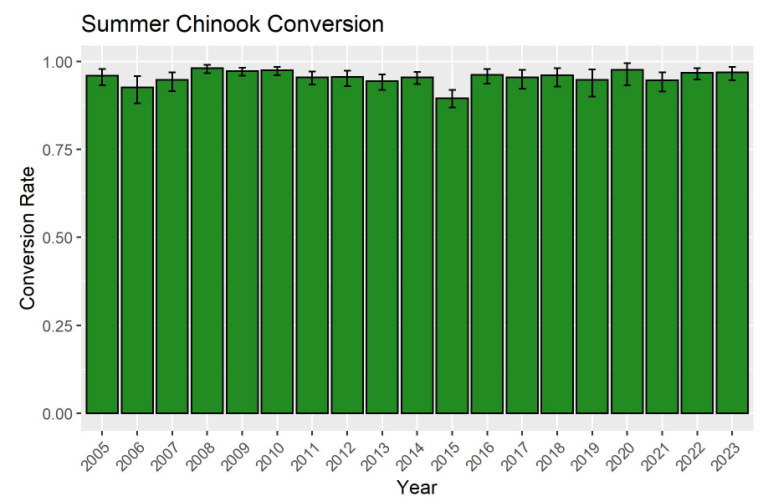
“Between 96% and 98% of the salmon successfully pass each dam,” says Todd Myers, Environmental Director at the Washington Policy Center.  Even federal scientific agencies now say we can leave dams alone and fish will be fine.

But environmental groups don’t raise money by acknowledging good news. “Snake River Salmon Are in Crisis,” reads a headline from Earthjustice.  Gullible media fall for it. The Snake River is the “most endangered in the country!” claimed the evening news anchor.

“That’s simply not true,” Myers explains. “All you have to do is look at the actual population numbers to know that that’s absurd.”  Utterly absurd. In recent years, salmon populations are higher than they were in the 1980s and 90s.

The fish passage report for 2023 (here) has many results like this for various species. Conversion refers to completing the Snake River run from Ice Harbor through Lower Granite.

“They make these claims,” Myers says, “because they know people will believe them … they don’t want to believe that their favorite environmental group is dishonest.”

But many are. In 1999, environmental groups bought an ad in the New York Times saying “salmon … will be extinct by 2017.” “Did the environmentalists apologize?” I ask Meyers. “No,” he says. “They repeat almost the exact same arguments today, they just changed the dates.

I invited 10 activist groups that want to destroy dams to come to my studio and defend their claims about salmon extinction. Not one agreed. I understand why. They’ve already convinced the public and gullible politicians.  Idaho’s Republican Congressman Mike Simpson says, “There is no viable path that can allow us to keep the dams in place.”

“We keep doing dumb things,” says Myers. “We put money into places where it doesn’t have an environmental impact, and then we wonder 10, 20, 30 years (later) why we haven’t made any environmental progress.”

Politicians and activists want to tear down Snake River dams
even though they generate tons of electricity.

“Almost the same amount as all of the wind and solar turbines in Washington state,” says Myers, “Imagine if I told the environmental community we need to tear down every wind turbine and every solar panel. They would lose their minds. But that’s essentially what they’re advocating by tearing down Snake River dams.”

I push back: “They say, ‘Just build more wind turbines.’”  “The problem is, several times a year, there’s no wind,” he replies. “You could build 10 times as many wind turbines, but if there’s no wind, there’s no electricity.”

Hydro, on the other hand, “can turn on and off whenever it’s needed. Destroying hydro and replacing it with wind makes absolutely no sense. It will do serious damage to our electrical grid.”

“It’s not their money,” I point out.”Exactly,” he says. “If you want to spend $35 billion on salmon, there’s lots of things we can do that would have a real impact.”  Like what?

Reduce the population of) seals and sea lions,” he says, “The Washington Academy of Sciences says that unless we reduce the populations, we will not recover salmon.” “People used to hunt sea lions,” I note. “Yeah, that’s why the populations are higher today.”

But environmentalists don’t want people to hunt sea lions or seals. Instead, they push for destruction of dams. “Because it’s sexy and dramatic, it sells,” says Myers. “It’s more about feeling good than environmental results.”

PostScript

Of course there is a political dimension to this movement.  Left coast woke progressives are targeting Lower Snake River dams located in Eastern Washington state.  Folks there and in Eastern Oregon would rather be governed by common sense leaders like those in Idaho.

The case against the dams is actually about climatism.  The fish are not at risk, as shown by many scientific reports. But climatists do not include hydro in their definition of “renewable.”  And they promote fear of methane, claiming dam reservoirs increase methane emissions.

So here’s the political solution.  Keep the dams open and the fish running to their spawning grounds.  And to appease climatists ban any transmission of electricity from those dams to Seattle and Western Washington state.  Deal?

Background Post

Left Coast Closes the Dam Lights

Apocalypse Not

Joakim Book shines considerable light into modern doomsday darkness, writing his AIER article Unlimited Growth, Forever.  Book exposes how fundamental human positive aspiration, proven by historical progress and innovation, has been perverted by those nowadays claiming to be progressive, when all they preach is hell and damnation.  Excerpts in italics with my bolds and added images.

It is often said that only a madman — or economist — could believe that we can have infinite growth on a finite planet. Resources are scarce and dwindling, we’re told. Day in and day out, we seem poised to use up some civilization-critical ingredient, or we might overuse materials to the point of our own downfall. 

The mindset that makes people believe that we’re perennially on the cusp of some disaster is on display everywhere from the big screen to the big assembly halls. It has been humanity’s plague since we first broke free of the Malthusian constraints that govern every non-human ecology. And never once do we seem to consider that maybe, just maybe, the madmen/economists know something the rest of us don’t. 

We’re routinely given hyperbolic predictions about our doom, and no matter whether those predictions come true, they’re renewed in the same or slightly altered form a few years later. In the meantime, individuals, businesses, workers, investors, tinkerers, and all the others that make up the world economy solve much of the “problem.”

Every popular scare of the past has been side-stepped, improved,
or solved, by one or another human effort, usually serendipitously
and rarely at all with well-meaning bureaucrats directing the process. 
 

New York University economist Paul Romer, whose work on economic growth rewarded him the Nobel Prize in 2018, explains that “non-economists have said that [his article] helped them understand why unlimited growth is possible in a world with finite resources.” He credits that conclusion to his work on the proliferation of ideas, which he condenses into the following two statements: 

    1. “we can share discoveries with others,” and 
    2. “there are incomprehensibly many discoveries yet to be found.”

The basic rationale is thus simple: “Although we live in a world of a limited number of atoms,” as Marian Tupy and Gale Pooley say in their masterful creation Superabundance, “there are virtually infinite ways to arrange those atoms. The possibilities for creating new value are thus immense.”

Economic growth itself, said University of Mississippi economist Josh Hendrickson in an interchange with The Guardian’s George Monbiot a few years ago, is about “finding more efficient uses of resources.” It’s about observing how market prices and the profit motive urge entrepreneurs and businesses to economize on production while producing more value for consumers. We can visibly see this in the products that technology has merged into one (smartphones displacing a dozen or more physical appliances), or the thinner cans or more efficient engines that innovation routinely delivers. 

Economists aren’t just playing word games when they say that growth can keep going forever. We can always make more stuff since the physical atoms under our command right now are far from all the physical atoms on our planet (or solar system). By growth, economists mean value-creation exchanged in the marketplace, a market that can change in the types of value we exchange, and the growing portion of our economies can involve fewer atoms than what came before.

“Resource” which the general public think of as physical collections of elements in the ground, economists define much more broadly. Nothing becomes a resource until the human mind makes it so, i.e., “there are no resources until we find them, identify their possible uses, and develop ways to obtain and process them” to quote Julian Simon, whose pioneering work in resource economics prompted Tupy and Pooley to launch their Superabundance project. 

The boundaries between dirt, mineral resource, and mineral reserve can therefore shift with technology, economic circumstances, or legal rules regarding their extraction — subject to the “degree of geological certainty” and “feasibility of economic recovery.”

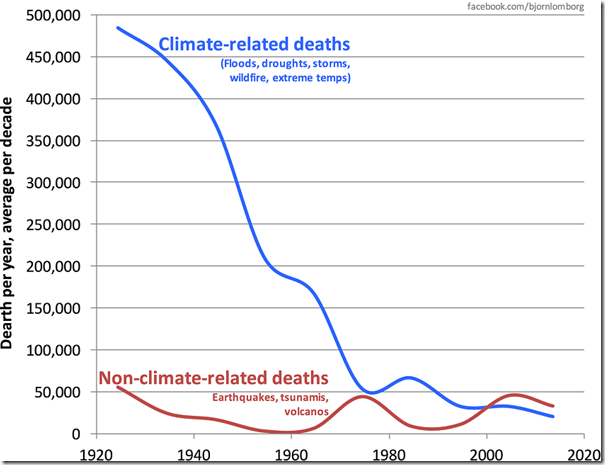
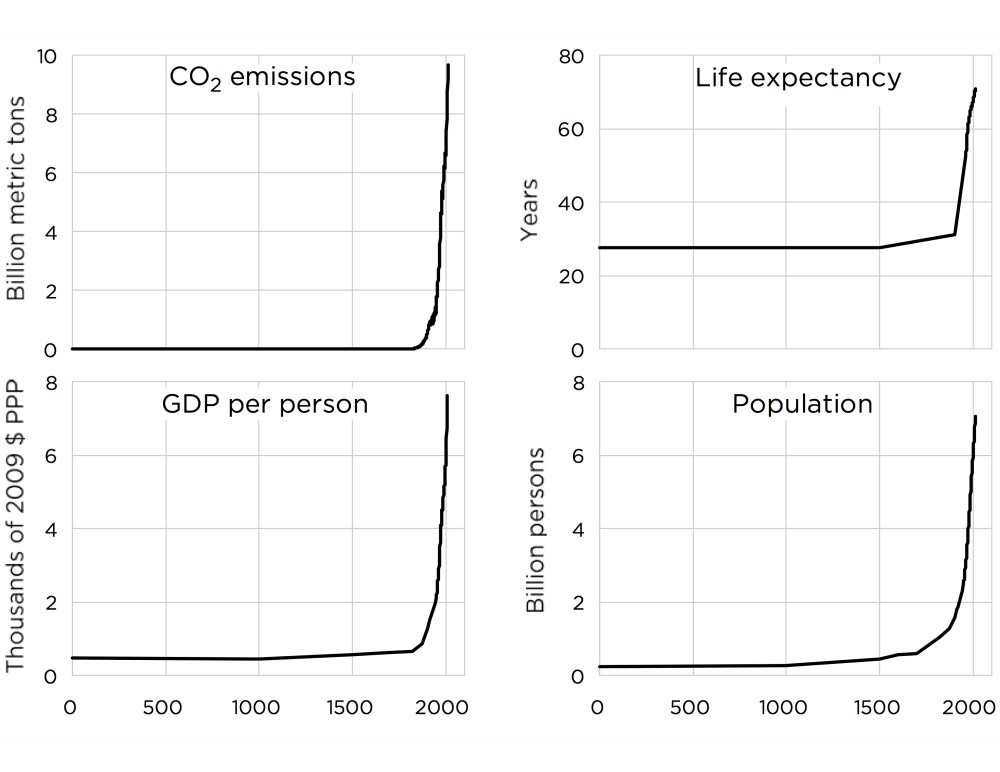
My Mind is Made Up, Don’t Confuse Me with the Facts. H/T Bjorn Lomborg, WUWT

What’s even more incredible is that material abundance (how economically accessible certain minerals or agricultural products are) has historically speaking increased with population. Instead of individually starving when there are more humans on our supposedly finite planet, we seem to be collectively producing more, having better access to raw materials and the goods and services we produce with them. 

Take almost any foodstuff, meat or cerealfruit or vegetable, for almost any country over any period and the numbers go up and to the right: For eight centuries (probably more), an English laborer has been able to afford more and more foodstuffs for their labor; yet there’s more food production today than at any point in the past.

The counterintuitive conclusion follows naturally from Romer’s work: More humans give us more chances for ideas that exponentially “make material progress possible.” Human society is dynamic, not zero-sum.

Illustration: oil. Thirteen years ago, Camilla Ruz for The Guardian enumerated six natural resource scares to pay attention to, of which oil was one. Dire predictions like these are a dime a dozen in the environmentalist world, and no matter how publicly or unequivocally they are disconfirmed by reality, they pop up with renewed vigor a few years later. At the time we had some 46 years’ worth of oil reserves left; that is, at the prices, consumption rate, and technology of 2011, humanity would run out of oil by the late 2050s. 

With a billion more people on the planet since then, having suitably burned some 386 billion barrels of oil in the intervening years, we now have… drumroll…48 years’ usage in global proven reserves; Humanity will now last until the 2070s before its (supposedly limited) reserves of oil run dry. Disaster avoided. 

The price system, profit-hungry entrepreneurs, and optimizing consumers are pretty good at remedying scarcities when they emerge. If there isn’t enough oil, gas, wheat, gold, nickel, or copper for current human processes, the (real) price of those commodities rise; extracting businesses dig deeper or explore further, and consumers substitute away from the expensive commodity, or we recycle the metals that forever remain with us into something new. Higher prices mean that lower-quality ores are now worth mining, more inaccessible sources and geologists’ best guesses for where we could find more worth exploring. The outcome over decades and centuries is that “prices of resources are declining because more people means more ideas, new inventions and innovations,” according to Tupy and Pooley.

That we do not run out is the powerful lesson of both the history of resources and the theory behind their economic uses: Our minds and the black box of nifty ways to improve the world aren’t limited. We don’t run out; We simply find more.

The recurring “we’re running out of X!” outrage therefore seems so peculiar, so out of touch with even a semblance of reality. 194 years ago, before having seen but a tiny fraction of the improvements humanity would make over the following decades and centuries, British historian and poet Thomas Babington (raised to the peerage as Lord Macaulay) wrote

though in every age everybody knows that up to his own time progressive improvement has been taking place, nobody seems to reckon on any improvement during the next generation. We cannot absolutely prove that those are in error who tell us that society has reached a turning point […] but so said all who came before us, and with just as much apparent reason.

He then ended his colloquy with the sentence that human progress-types know by heart:

“On what principle is it that, when we see nothing but improvement behind us, we are to expect nothing but deterioration before us?”

That was a reasonable enough question in 1830,
and a terribly relevant one in 2024.


Insane War on Plastics Resumes

fo1cdfdc8b76_hcs3-2d291-2-e1598902719247-1447x1536-1
FINALLY – the Truth about Plastics & the Environment


You’ve no doubt seen the scary headlines about “Worse Than We Thought™” plastics that have made modern food and hygiene possible and indispensable.

Massive new study uncovers 4,000 toxic chemicals in plastic, The Independent UK

More than 4,000 plastic chemicals are hazardous, report finds, Nature

How Plastic Can Harm Your Health, Consumer Reports

Dangerous chemicals found in recycled plastics, making them unsafe, The Conversation

Chemicals in plastics far more numerous than previous estimates, Reuters

Researchers surprised at levels of toxicity in standard plastic products, phys.org

Etc, Etc Etc.

So it’s time to refresh public understanding and appreciation for the role of plastics for our modern lifestyles and well being, and dispell the alarms generated as part of the anti-hydrocarbon cult.

I became aware of this research and video presentation The Great Plastics Distraction  (H/T Patrick Moore).  For those who prefer reading a text to watching a video, I prepared a transcript of the talk below in italics with my bolds added.

My name is Dr Chris DeArmitt and I’m going to tell you about plastics and the environment.

But first i’m going to start with a story. I once read a wonderful book called Factfulness, and it told a story about how important it is that we act based on facts. Before the early 1990s parents were advised to place their infants to sleep on their front, contrary to advice from clinical research. If they had listened to that scientific evidence then they might have prevented over 10,000 infant deaths in the UK and at least 50,000 infant deaths in Europe, the USA and Australasia. But they didn’t listen. In fact it took decades for doctors to change their advice even when the data was so clear that thousands more died unnecessarily.

This talk aims to reset the way we think about plastics in the environment by showing that our current beliefs don’t match reality. The science tells us the exact opposite of what we’re being told online. And the reason it’s important to know the truth is that when we ignore the facts and the science we end up destroying the very thing we set out to protect.

Here’s an outline of the topics we will cover. First a summary of what we believe now. Then a look at what the evidence tells us, and finally we examine reasons why these two things don’t match up.

We all recognize that we can’t believe everything we see in the media. Traditional media is less reliable than it used to be and social media is even worse. Here’s a study that shows us some numbers. Only 20 percent of people believe in the local news and only four percent of people strongly believe in social media. So we all know that we can’t trust the usual sources of information that we use. And yet that’s where our information is coming from.

So how bad is the accuracy of this information? Well they did a study on millions and millions of tweets and they found out that the lies are 70% more likely to be spread than the truth. That means that we absolutely cannot trust anything we hear on social media. Why? Because the lies are more sensational and sound newer than the truth. The truth’s too boring and even when the truth is spread it never really catches up with the lies.

That’s part of what I’m trying to address here. So what are the consequences of being told all of these lies online? Well it turns out that if you repeat a lie enough times people believe it, and it doesn’t matter how smart you are or how good you are at critical thinking, everybody’s susceptible to this. They’ve done large studies on it.

PlasticsParadox1

So these lies that we’re being told all the time sound like the truth because they sound familiar after a while, and we end up becoming brainwashed. And you’ll notice on all the slides that I’m presenting here there’s a little text at the bottom which (I don’t know if you can see it) here at the bottom of the page. “Every time I say something because I’m a scientist I support it with scientific evidence.” That means that there are giant scientific studies to prove what I’m saying and that’s the opposite to what you hear online. When you see something online they just claim something sensational with zero proof. Everything I say here and everything I say in my book is proven.

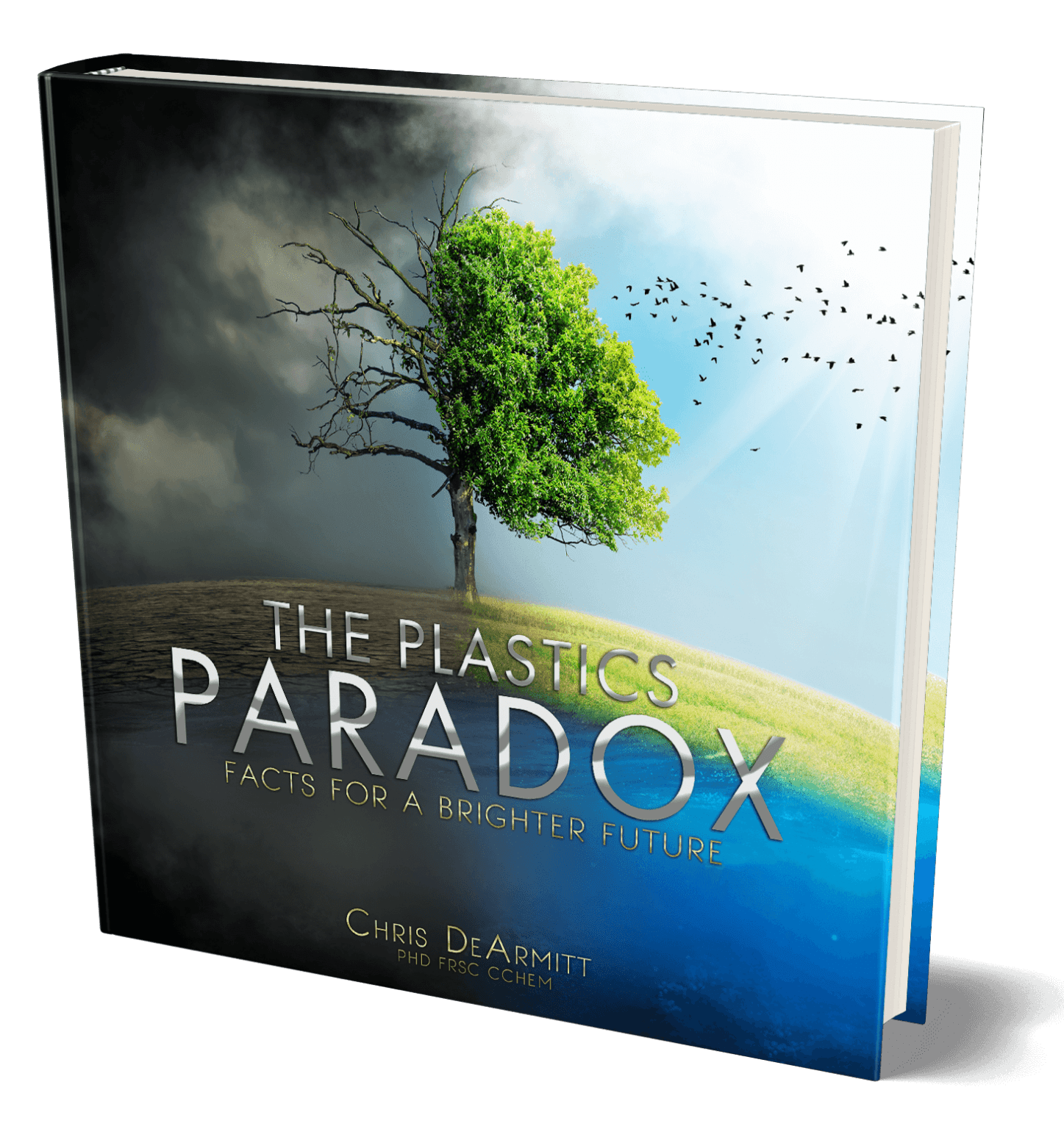
I just mentioned my book The Plastics Paradox. Let me tell you a little bit about that. I’ve made it my personal mission to collect and read hundreds of scientific articles to uncover the truth. I didn’t go around looking for articles that supported a pre-existing opinion. I went out and found every single piece of information I could. And why me? Well for one thing my kids were being taught lies at school and I found that totally unacceptable. So I decided to go and find the information to present to the teachers and it mushroomed into the book.

Also I’m a leading PhD. polymer scientist, so I’m uniquely qualified for this task. As a scientist I do not make, market or sell plastics. Some people say that they can’t trust a plastics expert to talk about plastics. And I find that interesting. I ask them whether they refuse to speak to a medical expert when they’re sick. Or if they’re sick do they ask a car mechanic for an opinion or a journalist. Of course you go and ask a medical expert when you want a medical opinion. So when you want an opinion about the technical details of plastics, go and ask a doctor in plastics. And that’s me.

Some of my friends ask me why I’ve devoted thousands of hours and thousands of dollars of my own money to this topic when it’s not my job. I sometimes ask myself the same question. This is why. I’m a professional scientist so I believe we should base our opinions and our actions on fact not fiction. Everything we do has an impact on the environment so we have two choices: Either we have to go and move back into caves or we can continue to enjoy the modern lifestyle we love so much while making choices that minimize our impact.

PlasticsParadox2

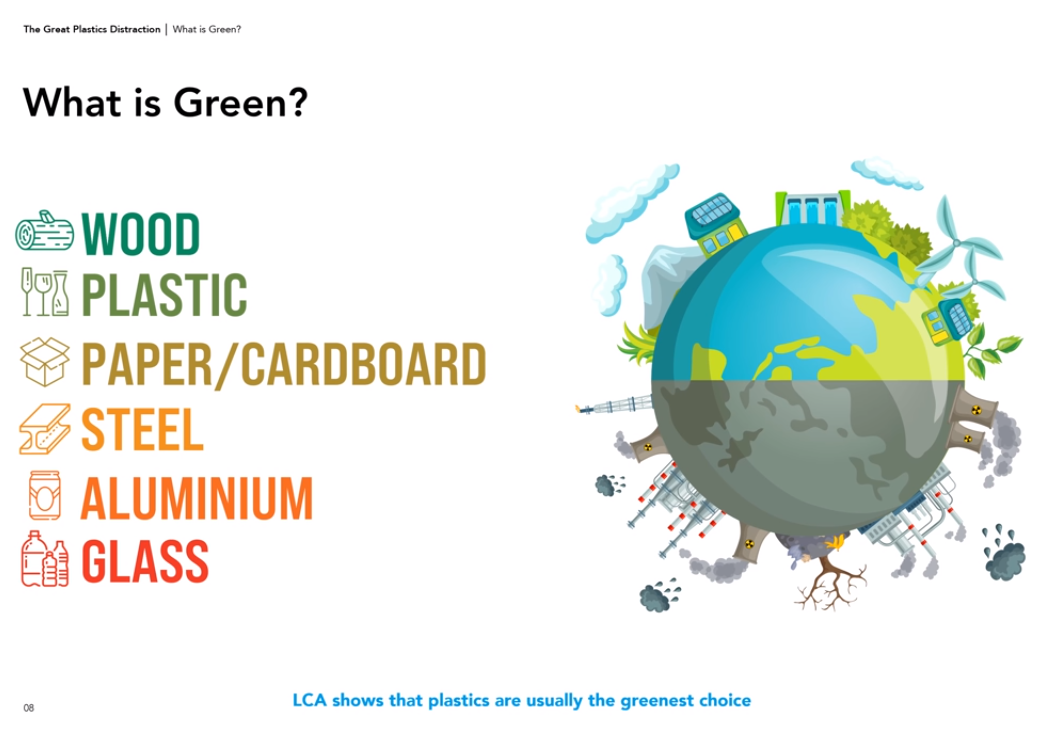
How do we do that? Well life cycle analysis is the only proven and accepted way to know what is green and what is less green. It considers all environmental impacts. That means raw materials, the manufacturing of a product, the transporting the product, the function of the product in use (for example driving your car around), repairing the product, and also waste and recycling. Companies, governments and environmental groups all rely on life cycle analysis: It’s standardized and also peer-reviewed for consistency and to make sure that nobody cheats. Any system can be improved upon but if we were to abandon life cycle analysis then we’d have to toss a coin to decide what’s green? It’s better to use a tool that’s good but imperfect than to have no tool at all.

The outcome of a life cycle analysis depends on many things including the geographical location that you’re considering so there’s no universal answer. However if you read a hundred of these life cycle analyses, the geographical aspects start to cancel out and average out. And you get some trends. So here are the trends that I’ve noted after reading a bunch of these life cycle analyses. If you can make something out of a hunk of wood, that’s usually the greenest option. So for example, wood decking and wine corks are examples where wood is greener than plastic.

PlasticsParadox3

But most things can’t be made out of wood, so plastic is then usually the greenest choice.  Paper is sometimes greener than plastic, but usually it isn’t. Examples where plastic are greener include shopping bags or grocery bags. I found 24 life cycle analyses on grocery bags and plastics coming out greener in every single case, in every country no matter where they analyzed it. In 24 studies plastic bags were greener than paper bags and not a single case saying the opposite so here we are banning something which is categorically proven to be the greenest option. Banknotes is another example. A lot of bank notes are made of plastic and they’re proven to be greener than the paper ones because they last so much longer.  And mailer envelopes is another example.

Steel, aluminium and glass are far worse due to the extreme heat and the energy needed to make them, and their density which increases the impact of transportation. So these are the general trends that we see.

PlasticsParadox4

Here’s a quick summary of what I discovered when writing The Plastics Paradox and reading all the science. As I said, all of this is soundly proven and you’ll find all the citations in the book and on the website. Statements I quote are verbatim so I copy and paste the statements from the scientific articles to make sure that there’s no spin on it. And as i said it’s all cited so you can check it yourself. If this information is different to what you’ve heard online or in the press, that’s because this is the first time you’ve actually heard the truth backed by hard data and presented by a professional scientist instead of some hack.

Now I want to show you some very very powerful new information I discovered after the book was published. So part of the reason for this talk is to zoom out and not just focus on plastics but look at the overall picture. I was reading a book about materials and the environment and I was absolutely shocked to my core when I turned the page and saw this pie chart on the left.

PlasticsParadox5

The pie chart shows that plastics are only about one percent of the material we use. All we hear about all day long is plastic, as if it were the only material, and we’re drowning in plastic. And now i suddenly discover from this book that plastics are less than one percent. I found this information so incredible that i decided to double and triple check it. And when i did I found out that a number was actually wrong. It’s actually too high: The amount of plastics we use is only 0.4 percent of materials. You can check this yourself using siri and alexa and google to ask: What’s the annual global consumption of plastics; what’s the annual global consumption of materials? And then work out the percentage.

PlasticsParadox6

This is absolutely shocking to hear that we’re obsessing about plastics and it’s 0.4 percent of our problem. So based on that finding I decided to do a little bit more digging. We’re told every day that we’re drowning in plastic waste. Of course no data is ever given. So I decided to go and check the data on how much of this waste is actually plastic. In the book I already found out that 13% of household waste is plastic and about 10 percent of what goes into a landfill is plastic. What i didn’t know then was that household waste is just 3% of all waste; the other 97% is industrial waste. So it turns out that plastic waste is 13% of 3%, which is 0.3% of all waste. So once again we’re told online without evidence that plastic is the cause of all of our worries and it turns out to be 0.3 percent of the waste problem.

And as we saw in The Plastic Paradox book and on the website plastics have actually dramatically reduced waste on top of that. So we’re obsessing about a tiny fraction of the problem. There’s no way we can solve the world’s problems by putting a hundred percent of our effort into 0.3 of a problem.

We hear about plastic in the oceans all the time. In the book I explained there are no huge floating islands, they just don’t exist. Scientists say they don’t exist; the man who discovered the gyres also say that they don’t exist. And there’s no soup either; it’s just been all dramatized for the sake of getting your money out of your pockets by certain environmental groups and journalists who don’t care about the facts. It turns out even in these gyres the maximum amount of plastic that you is about one game die if you were to take a game die from monopoly and put it in an olympic-sized swimming pool. that would be too much.

PlasticsParadox7

I decided to check how much plastic is actually entering the ocean. We see and hear big numbers but we don’t know what it means. It’s very hard to conceptualize these numbers. So it turns out that the amount of plastic entering the oceans is this tiny tiny number I can’t even say it, but the percentage is many many zeros with a six at the end. Clearly I’m not saying there should be plastic in the oceans, but the number is rather small compared to what we’ve been led to believe. No, there will not be more plastic than fish in the sea; that was debunked as well.

I showed that last slide to a friend and he said it would be more meaningful to compare the amount of solid sediment being washed into the oceans from rivers to the amount of plastic. So once again i went looking for the scientific data and I was able to find it. Plastics make up about 0.05 percent of the solid sediment being dumped into our oceans and rivers. It’s mainly polyethylene polypropylene polyethylene terephthalate and polystyrene; which means the plastics that we eat our food out of every day, so they’re not very much of a concern from a health point of view.

Interestingly there are also massive amounts of deadly chemicals, munitions and even nerve gas in the ocean, but no one talks about that. I wonder why they would rather focus on plastics and ignore the things which are actually proven to be toxic. So-called environmental groups are very keen to bring out the turtle pictures. There’s even a famous video of a turtle with a brown cylinder of some kind in its nose; but there was never any evidence that it was made of plastic.  They never analyzed it when they were doing the video; in fact they thought it was a worm, as you can hear in the video soundtrack. They say, “Oh, is it a worm, is it a worm?” and then afterwards they suddenly declare it’s plastic without any analysis whatsoever.

PlasticsParadox8

If you’re concerned about turtles you should be looking at these statistics on the left hand side because I looked up turtle mortality rates and here they are. You can see that shrimp trolling accounts for up to 50,000 turtle deaths; fishery is up to 5000; collisions with boats up to 500; dredging up to 50; and other 200. And nothing at all about plastics. So that’s interesting isn’t it? If you do care about turtles, and you’re not just trying to get sympathy votes out of people and pry their money out of their pockets in terms of donations, then you would be looking at these causes of death which are the actual things that turtles suffer. But they’d rather focus on plastics because it suits their purposes.

As well as turtles we hear a huge amount about whales. I saw another article today about whale deaths, so I decided to look up the many studies on whale deaths. And once again I’ve quoted them all. From the scientific studies quoted the causes of whale deaths: entanglement in fishing gear; natural causes, and vessel strikes where boats hit them. So why are they incessantly telling us that plastics are harming whales when not one single one of these articles even had a mention of the word plastic or bag. These are multi-decade studies with thousands and thousands of whale deaths listed and not one mention of plastic or bag.

I find it absolutely reprehensible a while ago several newspapers covered a story saying that there were these massive amounts of micro plastic raining down on our national parks. They said it was several tons of microplastic deposited every year and I thought wow, that’s hard for me to imagine; let me work it out as a percentage, for example, of dust that’s deposited. So I went and found some studies on that; and i can tell you it’s a lot of work to look up all of these studies. The environmental groups like to argue with you and they like to come out with these claims, and they produce no studies whatsoever. And I’ve been working on my own with no funding, and I’ve turned up all of these studies and double checked and triple checked everything. How much hard work it is to actually check the facts, when it’s easier to spout nonsense.

PlasticsParadox9

So anyway let’s look at the grand canyon. You can calculate there’ll be 12 tons per year of microplastic dust on the grand canyon and that sounds like a lot. And it is a lot, but it depends on how big the grand canyon is. So i went and checked that and correlated that with the total amount of dust that would be deposited on an area that size which is 50 000 tons a year; meaning that microplastics make up 0.03% of all the dust deposited per year. So instead of hearing this tonnage number which means nothing to us, while the actual percentage is rather small. I’m not saying it should be there but again it’s safe plastics like polyethylene polypropylene and things we eat our food out of. But what’s the rest of this dust made of? The 99.97% in large proportion is quartz which is known to cause cancer; it’s also made up of a large amount of heavy metals such as lead and cadmium which are known to be toxic.

So isn’t it interesting that people would rather focus on 0.03% of safe material because it’s plastic and easy to demonize, and totally ignore things which are known to be toxic and known to cause cancer and are being breathed in in giant quantities.

There’s an example where ignoring the science leads you in the wrong direction.  Here I’ve put together an NGO scorecard to see how well these so-called environmental groups are doing at telling us what’s green and what isn’t and what to do. In The Plastics Paradox book as you saw I showed that pretty much everything they’ve told us is untrue; meaning that the science says the exact opposite. And in this talk we’ve zoomed out a little bit to look at the bigger picture. And we found that if we were worried about materials use, concrete, metal and woods would be the things we would focus on.

PlasticsParadox10

But instead these non-governmental organizations want us to talk about plastics. If we’re worried about material waste we will be focused on manufacturing, mining, oil and gas, but instead they want us to focus on plastics. If we were worried about turtles we would be worried about trawling, fishing and boat strikes, but they want us to concentrate on plastic instead. If we’re worried about whales we’ll be looking at trawling, fishing and boat strikes, but instead they want us to talk about plastic. If we were worried about dust we’d be worried about this inorganic dust which contains quartz and heavy metals, but instead they want us to look at plastic. If we were worried about materials that use giant amounts of energy and create co2, we would be worried about gold, platinum and palladium, but they want us to talk about plastic instead. And when it comes to grocery bags, if we’re worried about things that cause harm we’d be looking at paper, cotton and bio plastic bags, but instead they want us to focus on plastic bags which are proven in every single study to be the greenest.

So if we look at how well these so-called environmental groups are doing, they’re not doing very well at all. In fact I can’t find a single area where they’re given evidence which helps the environment or matches the evidence and the science. This means one of two things: Either they’re wildly incompetent, in which case they don’t deserve our funding and our donations. Or they’re actually corrupt, in which case they also don’t deserve our funding and our donations.

How do we know which one of these two things it is? Well, it’s impossible to know somebody’s intent without being inside their mind, but recently there have been some very interesting books by former environmental group members. And they’ve come out and said, I’m ashamed to have been a part of this group. They’re just corrupt and they’re just telling you lies and scaring you to get your donations. So there are insider reports like Confessions of a Greenpeace Dropout by Patrick Moore; and there’s Apocalypse Never by Michael Schellenberger. You can find several other books along those lines regarding environmental groups where former members have left ashamed and embarrassed, and published books explaining that these guys are just trying to rip you off.

PlasticsParadox11

So here are the conclusions.
We’ve been lied to again and again by groups keen to enrage us and trick us out of our money.
We need to start basing our opinions and our policies on facts and evidence.
Let’s focus on cleaning up the environment by making wise choices

And if you want to do that please tell your friends about the truths you’ve learned today.
If you know a reporter please tell them;
If you know a CEO or a politician, then please tell them.
And if you know Bill Gates or Oprah Winfrey, so we can get some publicity for the truth, then please tell them.

As you’ve seen facts don’t catch up with lies. We need every bit of help we can get because the lies are already in people’s brains. They spread farther and faster than the truth and we’re playing catch up. We really need to make an impact if we’re ever going to change people’s minds. Stop making stupid policies and stop enriching these groups that are lying to us.

The Plastics Paradox book was written so that people could get the story. But all the information is at plasticsparadox.com. And it’s important for you to know I’m not trying to make money out of this presentation. All this information, all the peer-reviewed science is available for free at plasticsparadox.com. No registration; I’m not selling you one thing. All I’m doing as a professional scientist is telling you it’s time to look at the facts and start making progress instead of pedaling backwards.

Sadly some people are so passionately against plastics that they don’t care about the facts. They prefer to attack me online for example and that’s a shame because well-intentioned people are making harmful choices due to bad information. Just like the story about those infant deaths that we told in the beginning. So if you care about making progress please remember what we’ve said here. Go and visit the website and tell anyone you know who’s an influencer that we’ve got to redress this and start to create a brighter future together.

Thank you very much for your time.

Footnote: 

Dr. DeArmitt wondered about why activists target plastics when they are trivial compared to other problems.  To many of us, the answer is obvious:  Plastics are derived from oil and gas, and therefore anathema to climatists.  Fear of climate change is the driving bias behind efforts to demonize plastics, as well as many other products that make modern life possible.


Doomsday Climate Talk, Deja Vu

At Quora, Dan Gracia responds to this question: (in italics with my bolds)

Q: Why did people start using the term “climate change”
instead of the previous term “global warming”?

I’m 73 now and I remember on April 22, 1970 carrying the totally green American Flag (stars and stripes but in green) at college in a parade celebrating that first Earth Day. Problem then was that we were causing the earth to slip into an ice age due to the use of fluorocarbons as a propellant in spray cans of all types but the most significant factor was their use in hair spray cans. So it was an “Pending Ice Age Alarm”. Well, of course, that didn’t happen as actual temperatures didn’t sink and actually raised very, very slightly (less than a fraction of a degree over the next 10, or was it 20 years?) .

Then it turned into a “Global Warming Alarm” because there was some evidence of an increase in temperatures, regardless of how minuscule it was. So “Global Warming” is the earliest term most people remember now. Then the warming not only did not fit any of the climate models they were/are basing their alarmist claims on, it stopped warming entirely for about 20-years despite Al Gore’s claims the ice-cap would melt and our coasts would be underwater within 10-years.. And then temperatures sank slightly again.

Figure 1: The measured (symbols on left) and modeled (lines) temperature trends vs. altitude. The Russian model comes closest to the data, and the worst fit is GFDL-CM3, Manabe’s model for which he was awarded a Nobel prize. (Fig. 3 from John R. Christy and Richard T. McNider, DOI:10.1007/s13143-017-0070-z, annotated.)

None of these changes fit any of the computer models that were generating the Alarmist predictions. At that point, instead of trying to find out what variable(s) they were missing, the alarmists finally decided to just call it “climate change”. And now they could blame anything even slightly out of the ordinary as due to climate change. It’s a great catch-all term that you can claim regardless of what the temperatures actually show and also because the global climate is in a almost constant state of change. You’d be a fool to deny climate change because the climate is constantly changing and has been for over 4-billion years now. The trick is proving that human interaction is contributing to it in a meaningful and detrimental way. There are so many more powerful forces at play.

Add to that the fact that the earth was in its most prolific state millions of years ago when the Co2 ratio was much higher. Remember those elementary school science lessons that taught you that plants consume (ingest) Co2 (carbon dioxide) and exhaust O2 (oxygen)? Or perhaps that’s not common knowledge anymore? Plants and trees proliferated because growing conditions were better suited for them.

But regardless of weather getting warmer or colder,
climate alarmists are able to blame it all on climate change.

So it’s a catch-all phrase and anyone can chant it for any reason and claim there is a consensus among scientists that this it is a real threat. Unfortunately included in that “consensus” are medical doctors, dentists, Mechanical Engineers, Electrical Engineers, Biologists, Chemists, etc. – basically anyone who has a Bachelor of Science degree or higher. The thing that is missing is a consensus from climatologists. Many of these Bachelor of Science degrees may deal with some fringe parts of the problem but Climatology is an incredibly detailed with ever-changing data field and none of the others have the depth of knowledge to make an accurate claim of cause and effect with enough data and knowledge to make valid predictions.

Would you want a microbiologist to perform open heart surgery on you? Undeniably a scientific background but certainly not enough knowledge and practice to perform a long and complex surgery. Would you look to a Electrical Engineer for that? Definitely a scientist because he/she has at least a bachelor of science degree, ore perhaps a masters or even a doctorate degree. But would you trust that “Doctor” of engineering to perform open-heart surgery on you. Of course not. They don’t have the specialized education, ability to analyze relevant data, or even determine what data was relevant, let alone the fine motor skills needed to successfully complete open heart surgery.

To further muddy the waters, there’s huge amounts of money being spent on climate change research, and if they reach the conclusion that it is not a main ingredient in climate change, that research money dries up and goes away. So actually reaching a provable conclusion whose computer models can be born out with actual evidence instead of speculation, is working towards the elimination of their jobs. Plus, there’s real money to be made outside of climate research projects and grants. There’s the “Carbon TAX”.

Al Gore was one of if not the earliest proponent for “Carbon Credits”. If an industry or installation was generating too much Carbon Dioxide, they would have to purchase the carbon credits to offset their pollution. Ideally this money would then be spent to further other methods of Co2 control. And of course, you would purchase them from Al Gore’s carbon credits company. So then, if the installation had the credits, they could go ahead and continue polluting. As if Al Gore didn’t get enough money from his climate alarmism over the many years he’s been involved this is a Bonanza for him. And how much of that money is actually spent to improve methods and machinery to reduce the carbon levels? How much goes to the top executives of those companies and the people working for them…?

And of course, government has to get in on this cash cow too. A recent carbon tax was imposed on businesses in Washington state. The carbon tax basically requires companies to buy “greenhouse gas allowances,” sold at auction by Washington state, if they emit more than 25,000 metric tons of carbon dioxide per year. The law took effect on Jan. 1, 2023. The first of 4 “auctions” of “greenhouse gas allowances” raised over $300 million dollars. The remaining 3 auctions for the year are expected to raise at least as much resulting in over $1.2 billion dollars for 2023.

Washington State Senator Ericksen said it best, “This legislation will raise billions of dollars from the people of Washington state. Now, who’s going to pay those billions of dollars? It’s not going to be the oil refineries, it’s not going to be the manufacturers, it’s going to be the people of Washington state who will pay through increased costs for their energy.” Anyone who’s had any experience in business from employee to CEO knows that if a company is to stay in business when their costs increase, they either have to raise their prices or decrease their costs. The first place they go to decrease cost is to chop hours and to let people go. Since it’s an industry-wide expense, they all raise their prices because they all have to do so to stay in business – competition doesn’t have a lot to do with this. If they delay raising their prices, then people lose their jobs instead.

As a result of this carbon tax, energy prices have skyrocketed. Promises were made that it certainly wouldn’t raise the price of gas by more than perhaps 5¢ per gallon because it was a tax on businesses, not a raise in the gas tax. In the first 3-weeks of 2023 it went up 25¢ per gallon and now has exceeded a 50¢ per gallon increase. Pricing of Diesel is even worse. Politicians who have never worked a “real job” for a “real business” don’t have much common sense when it comes to raising taxes.

Energy prices have also risen and continue to rise and since virtually everything moves by truck, that drives up the cost of all goods driving inflation even higher. And of course, now that the government has it, they will never let go of that tax regardless of how it hurts their residents.

So this is a self-perpetuating process originated by well meaning folks
who just didn’t have the knowledge or data to back it up.

Absolutely on that first Earth-day in 1970 everyone was concerned for the earth and wanted to find ways to help make it better. Since then it’s become a self-perpetuating scheme with prediction models that have consistently failed over the last 50-years raising alarms which still can’t be proven.

And people seem to forget that Science is not an absolute. What we believe is true today may be disproven tomorrow. THAT is the scientific method regardless of how many people believe in something. At one time virtually all the people in the world believed the earth is flat and the son revolves around the earth. Folks who disagreed were called heretics and persecuted.

The scientific method requires an proposal of what they believes is a reasonable hypothesis that can be proven or disproven. Then through a series of “repeatable” experiments the hypothesis is proven out and published for peer review. If the technique of proving the hypothesis does not generate the same result, then the hypothesis is not proven. Peer review invites dissent, opposing views, and proof of the ability or inability to reach the same result.

NOTE that peer review means scientists who are the peers of those offering the hypothesis with the ability to repeat the experiments used to prove it. You do not solicit or consider the opinion of a medical doctor to a hypothesis put forward by a climatologist, just as you don’t consider the opinion of a climatologist regarding a surgical procedure for a surgeon. Neither are actual peers in the other field of study. They can have opinions, but they are not “peer review”.

As a result I am far more interested in the opinions and research of Dr. Judith Curry and her true peers, than I am of a screaming media darling.

I’m not particularly fond of people
who fly in private jets to a meeting
where they discuss how to take away
my car and feed me bugs . . . but that’s just me.

Don’t Buy “Planetary Boundaries” Hype

Latest diagram from Stockholm Resilience Centre

The usual suspects are beating on their “planetary boundaries” drum to scare up submission to Zero Carbon restrictions.  Remember these are the same climate justice warriors pushing the notion of a new geological era named “Anthropocene”.  For example, cue the following:

Six of nine planetary boundaries now exceeded–Phys.org

Humans Have Crossed 6 of 9 ‘Planetary Boundaries’–Scientific American

Earth is now outside most of the “planetary boundaries” under which human civilization emerged–TechSpot

Six out of 9 planetary boundaries breached, Earth increasingly becoming uninhabitable for humans–MSN.com

Humanity deep in the danger zone of planetary boundaries: study–YAHOO!News

Etc., Etc. Etc.

Background

In 2009, a group of 29 scholars published an article in Nature, advancing an approach to define a “safe operating space for humanity” (1). The group argued that we can identify a set of nine “planetary boundaries” that humanity must not cross at the cost of its own peril. Since this 2009 publication, the concept of planetary boundaries has been highly influential in generating academic debate and in shaping research projects and policy recommendations worldwide. At the same time, the concept has come under heavy scrutiny as well, and many critics have taken the floor contesting the broader framework as well as its implementation and interpretation. Partially because of this critique, the original proposition of nine planetary boundaries has undergone various reformulations and updates by their proponents and an emerging network of scholars specializing in planetary boundary research.

The original 2009 paper in Nature suggested nine boundary conditions in the earth system that could, if crossed, result in a major disruption in (parts of) the system and a transition to a different state, which is likely to be hostile to human prosperity. The proposed planetary boundaries included:

♦  climate change,
♦  biodiversity loss,
♦  the nitrogen cycle,
♦  the phosphorus cycle,
♦  stratospheric ozone depletion,
♦  ocean acidification,
♦  global freshwater use,
♦  land use change,
♦  atmospheric aerosol loading, and
♦  chemical pollution.

For each of these planetary boundaries, one or more control variables were identified (e.g., atmospheric carbon dioxide concentration), which in turn were assigned with numerical boundary values at a “safe” distance from dangerous levels, or where applicable, “tipping points” in earth system processes (1).

Eventually, the framework should allow for quantification of threshold parameters, as a guide also for political responses. For some planetary boundaries, the group in 2009 suggested that the current state of knowledge was too uncertain to allow for quantification. Yet, for other earth system processes, the group felt confident enough to suggest a specific boundary value. In this endeavor, they erred on the side of caution and a strict interpretation of the precautionary principle: Where they saw remaining uncertainties, the group suggested the lower values for the boundary that they identified.

They concluded that three planetary boundaries had been crossed already.

On climate change, for instance, the boundary value proposed was 350 ppm, which had been passed long ago in the second half of the twentieth century. Regarding biodiversity, the current extinction rate is more than 100 extinct species per million species per year, whereas the suggested boundary was 10 extinctions. As for the nitrogen cycle, humans remove today approximately 121 million tons of nitrogen per year from the atmosphere, whereas a safe rate would be a maximum of 35 million tons. In these three areas, therefore, this analysis suggested that humankind had pushed the earth system past planetary boundaries and possibly dangerous levels, into a new—and unknown—world.  Source: The Boundaries of the Planetary Boundary Framework: A Critical Appraisal of Approaches to Define a “Safe Operating Space” for Humanity.  Annual Review of Environment and Resources October 2020

We don’t know how long we can keep transgressing these key boundaries before combined pressures lead to irreversible change and harm.–Johan Rockström, co-author and Centre researcher

Critics of the Planetary Boundaries Framework

Leaving aside those who want the boundaries to be tighter and harder than presented, let’s hear from critics challenging the whole enterprise. Shortly after the invention of “planetary boundaries,” Breakthrough Institute published a thorough critique of the notion and the framework.  Planetary Boundaries: A Review of the Evidence.  Linus Blomqvist (2012)

The planetary boundaries hypothesis – embraced by United Nations bodies and leading nongovernmental organizations like Oxfam and WWF – has serious scientific flaws and is a misleading guide to global environmental management, according to a new report by the Breakthrough Institute. The hypothesis, which will be debated this month at the UN Earth Summit in Brazil, posits that there are nine global biophysical limits to human development. But after an extensive literature review and informal peer review by leading experts, the Breakthrough Institute has found the concept of “planetary boundaries” to be a poor basis for policy and for understanding local and global environmental challenges.

KEY FINDINGS

♦   Six of the “planetary boundaries” — land-use change, biodiversity loss, nitrogen levels, freshwater use, aerosol loading, and chemical pollution — do not have planetary biophysical boundaries in themselves.

♦   Aside from their impacts on the global climate, these non-threshold “boundaries” operate on local and regional, not global, levels.

♦   There is little evidence to support the claim that transgressing any of the six non-threshold boundaries would have a net negative effect on human material welfare.  The full report is linked below:

A new report from the Breakthrough Institute highlights scientific flaws
of the “planetary boundaries” hypothesis

Planetary Boundaries as Power Grab–Giving Political Decisions a Scientific Sheen–Roger Pielke Jr. (2013)

When the cover of the Economist famously announced Welcome to the anthropocene’ a couple of years ago, was it welcoming us to a new geological epoch, or a dangerous new world of undisputed scientific authority and anti-democratic politics?

The basis for the power grab by the experts – really old wine in new bottles – is the fashionable idea of planetary boundaries which holds that there are hard and fast ecological limits within which human activity must be constrained. The concept is much contested scientifically — such as in this excellent review by my colleagues at The Breakthrough Institute.

A real-world example of the implications of the planetary boundaries political philosophy is vividly seen through the issue of global energy access. Future global development, at least in the short term, necessarily will involve trade offs between expanded use of carbon-emitting fossil fuels and the expansion of energy access to the world’s poorest. The planetary boundaries advocates, consist with their hierarchical values framework, call for “universal clean energy” and recommend development targets focused not on measuring expanded energy access, but rather carbon dioxide emissions (here in PDF).

In other words, expanded energy access to the world’s poorest is deemed acceptable
only if it first satisfies the demands of planetary boundaries – in other words,
the political demands of the scientists couched in the inviolable authority of science.

An major recent critique was: Planetary Boundaries for Biodiversity:  Implausible Science, Pernicious Policies  by Montoya, Donohue and Pimm. Trends in Ecology and Evolution (2018)

The notion of a ‘safe operating space for biodiversity’ is vague and encourages harmful policies. Attempts to fix it strip it of all meaningful content. Ecology is rapidly gaining insights into the connections between biodiversity and ecosystem stability. We have no option but to understand ecological complexity and act accordingly.

How best should environmental science articulate its concerns, set research agendas, and advise policies?One solution embraces the notion of planetary boundaries [1] arguing that global environmental processes very generally have ‘tipping points’. These are catastrophes involving thresholds beyond which there will be rapid transitions to new states that are very much less favorable to human existence than current states. The associated notion is that humanity’s ‘business as usual’ can only continue so long as it remains within some ‘safe operating space’.

We show that notions of planetary boundaries add no insight into our understanding
of the threats to biodiversity and ecosystem functioning, have no evidence to support them,
are too vague for use by those who manage biodiversity, and promote pernicious policies.

Fatally, the boundaries framework lacks clear definitions, or it has too many conflicting definitions, does not specify units, and fails to define terms operationally, thus prohibiting application by those who set policy or manage natural resources. Moreover, recent reviews indicate that tipping points occur only rarely in
natural systems [6], while policies related to boundaries are unlikely to be evidence based. A need for operational definitions to aid managers is self-evident [7].

At the heart of the problem are terms such as ‘planetary boundaries’, but also ‘sustainability’, ‘health’, ‘harmony’, and others, that are emotionally appealing but rarely, if ever, defined. They all speak to the urgent need to understand how human impacts change ecosystems, when at best we aspire to protect only
half of it. We must set policies and establish management for the vast tracts of land and sea that we do not protect. Fatally, those who do so often use language that does not borrow from the existing knowledge about ecosystem processes, nor readily translates its aspirations to those who study them [7].

See Also:

Planetary Boundaries as Millenarian Prophesies  Malthusian Echoes

The identification of the planetary boundaries is dependent on the normative assumptions made, for example, concerning the value of biodiversity and the desirability of the Holocene. Rather than non-negotiables, humanity faces a system of trade-offs – not only economic, but moral and aesthetic as well. Deciding how to balance these trade-offs is a matter of political contestation (Blomqvist et al, 2012:37). What counts as “unacceptable environmental change” is not a matter of scientific fact, but involves judgments concerning the value of the things to be affected by the potential changes. The framing of planetary boundaries as being scientifically derived non-negotiable limits, obscures the inherent normativity of deciding how to react to environmental change. Presenting human values as facts of nature is an effective political strategy to shut down debate.

Beyond Planetary Boundaries by Michael Shellenberger, Ted Nordhaus, and Linus Blomqvist (2012)

There are useful implications for environmental change science that can be drawn from where planetary boundaries went wrong. First, any pragmatic framework on environmental change must look at benefits and costs. Some of the hypothesis’s authors have said that their motivation was to provide a useful framework for helping global leaders manage environmental change. We applaud and support this motivation. But for any environmental change framework to be useful, it must seek to understand not only the costs of change but also its benefits.

One of the implications of this is that simply measuring variance from Holocene baselines is a highly misleading metric of human sustainability. Since so much variance from the Holocene has been good for humans, future environmental change cannot be assumed, as planetary boundaries does, to be negative for our welfare.


Flawed Science Behind Nitrogen “Crisis” (Briggs and Hanekamp)

The Dutch Nitrogen Faux Crisis — Jaap Hanekamp Interview

William M Briggs and Jaap Hanekamp discuss the Dutch nitrogen “crisis.”

Farmers in the Netherlands are unhappy with government wanting to shut them down or reduce their operations, because of a supposed plague of nitrogen.  The “crisis” is, however, completely model driven. First by the Curse of the Wee P, and second by Lack of Skill.

Jaap and William have been involved in this “crisis” for many years, publishing often on how much over-certainty there is and about bad models.  Give a listen and find out why the government is wrong and they are right.  For those who prefer reading, below is an excerpted transcript from closed captions in italics with my bolds.

How in Netherlands Nitrogen Policy Became Nature Policy

The Netherlands is famous for its Dutch cheese, not for much longer as the government sells off all of the Farms or or buys up all the farms. We’ve been working on this this topic. Our audience knows me a little bit but they don’t know you. Jaap has formal training in chemistry and he is a chemistry professor. He’s also got a PhD in Theology and teaches on that. And he and I have been working together on this so-called crisis, this fake crisis for a number of years.

So the so-called uh mediator who was once a part of the official panel to investigate the crisis, and due to some sort of bureaucratic trick, became an independent expert, today recommended that the government buy off the biggest farmers. What’s the deal with that?

Of course we have a small country with loads of agriculture so the government and house of Parliament and NGOs from the environmental side think that we should reduce our impact on ecosystems, nature in the Netherlands. That is strange, given our history. You know, it’s long been said that God created the world, and the Dutch created the Netherlands. It’s so obvious here that we engineer nature, like any other organism or creature on Earth that reorganizes nature around itself to suit itself. But we in the Netherlands were rather exuberant in that arena so we created our whole ecosystem around us in terms of of cities, in terms of agriculture. Any kind of Natural Area we might have is created in the Netherlands almost literally either intentionally or unintentionally anyway. And those places are quite nice and beautiful.

There is sort of a very strong protective streak in policy saying we should protect the natural areas we still have, and protect simply means more or less a status quo, keep it as it is which doesn’t make much sense. But the weapon of choice is nitrogen now. There is a strange thing about this because influences are from all sides, especially here groundwater, precipitation, temperature, climate and so on, and of course also nitrogen. And we chose nitrogen, so nature policy is nitrogen policy, and nitrogen policies are nature policy in the Netherlands. Which is a very odd thing to do but anyway this is what we have.

The Dutch government wants to spend 30 billion euros which is a large chunk of our budget on protecting nature via the reduction of nitrogen emissions and depositions. So that’s it.

Believing in Ecological Crisis

But why why do they believe that this crisis exists? I mean they must have had something in the expertocracy as I call it. They have Solutions in search of problems in my my estimation. They have a solution they want to meddle with certain things because of their understanding of what nature is. So they go look for a problem, and they created a lot of nitrogen other other countries are using carbon dioxide, of course the Netherlands as well, l so we’ve part of that of course.

But why this thing and after you answer why, then let’s start talking about the the research that they’re using on this and and the stuff that you and I have discovered.

Why can be answered on multiple levels. You could look from a scientific perspective, which is not really that interesting; we’re going to discuss this later. Because the problem we have nowadays everywhere is that science or scientism or exportocracy should solve everything and anything. Whether or not there’s a problem, there must be some solution to some issue because of science. That’s a huge problem in itself. Why do we think that science could actually do that, or understand it or research it, or fathom it to such an extent I would actually find solutions to to the problems that might exist or might not exist.

The other part is harder to Fathom; it has to do likely with the problem coming from the 1970s: Acid rain and the disappearance of forest. The forest dieback was originally a German issue. Der Spiegel actually brought out a huge paper with the title The Ecological Hiroshima, the idea that acid rain would obliterate within a decade every single forest in the world.

I remember that, it was sort of the the climate change catastrophe 101 basically. That acid rain story sort of disappeared from view, people didn’t talk about it anymore. But during that time of the 1970s and 80s dangers of agriculture came into view because producing ammonia and of course deposited on nature areas.

And the idea was, okay ammonia is of course a base, but it will acidify the soil
and that will destroy the forest and will aid in the forest in dying off.

So that’s where it originated, say 50 years ago. But of course the whole Forest dieback disappeared and now it’s about soil acidification and loss of biodiversities. Those are the the terms that actually have survived the debacle of the acid rain Forest dieback apocalypse.

On the one hand we can very well monitor the dying of forest; you can actually observe that. Yeah it didn’t happen, not even close. So they had to move away from that theme. I still remember pictures of monuments dissolving into nothing as if this has happened overnight; algae blooms on lakes as if these were brand new; all kinds of things like that. So they had the same problems. not just in Germany yeah. And course the the famous dangers came from Eastern Europe, loads of sulfur dioxide from foundries for instance were blasted into to Forest. And sulfur dioxide is not really a healthy chemical if you if the concentration is really high. Of course most plants or humans or any other organism would really love to have sulfur dioxide blown in their face so sulfur dioxide was an issue. And that was tackled since then which is basically a good thing. You obviously shouldn’t pump stuff in the air just randomly.

But of course the story got bigger and bigger and in the end disappeared because yeah the forest just grew happily uh through all our own brouhaha about all these problems. But what remained is the idea that ammonia changes soil chemistry, changes ecosystems, changes our biodiversity and that’s a bad thing. And it just became a matter of theology almost; it became a truism. And then it seems after that truism, they went in search of evidence in the form of models.

Examining the Notion of Chemical Critical Loads

The science of nitrogen and the impact on ecosystems has been around now for the past 50 years, at the same time as the forest issue. And it never has grown out to be an adult critical discourse scientifically speaking. Now it’s just confirming what the other guy says and based on the work from some other type; so there’s no real conflict no real discussion within this discourse at all. It’s just basically doing the same old same old thing and sort of publishing stuff without really critically reflecting on the results that came out of that research.

And we’ve shown that especially when we have to discuss the critical loads issue. The idea was that beyond a certain level of deposition per area, ecosystems suffer from a certain kind of deposition, meaning the the amount of nitrogen that’s falling on the land, in precipitation or dry deposition or whatever you can imagine.

Critical loads have been devised on the idea that above a certain kind of of raining down or depositing a certain chemical, ecosystems suffer a certain amount of risk, that’s the critical loads topic that now you and I have investigated that quite thoroughly. We’ve found it to be at best wanting, that’s being very very euphemistic.

We discovered so many caveats, which are embarrassing on the one hand,
on the other hand sloppy, imprecise, statistically nonsensical,
experimentally badly done.

So to apply this idea of nitrogen critical loads you have to define the critical point when we’re gonna stop things. They went and did these experiments, basically they took small plots just a couple of meters square. And they would grow certain grasses or other other types of plant matter on this and they would measure all kinds of things: the rate of growth, the width of the stems, and the root penetration and so on. And if they tested a difference between something that had a higher nitrogen content than a lower nitrogen content and it gave a wee P value, well that was said to be a nitrogen critical load. But there was no consistency to what they meant by a critical load or what was actually affected or the or the range of stuff that could be affected. And they had these ridiculous numbers extrapolating from a couple of square meters to the area of the entire country

Using these kinds of things, we showed if you just take a proper accordance of the uncertainty in these measurements, the critical loads just evaporate, they have no meaning unless you were to design really good experiments . We proposed large scale experiments taking a couple of hundred square meters and doing this experiment for years and years and years.

But there’s another problem you described quite well in in our paper. Of course nitrogen instigates change in ecosystems but the question is: In what terms do you regard this as damage or bad? Sure things change, but to what extent does is change a good thing or or not?

They assumed that change of any kind was a Bad Thing. Any difference between the sort of control group and a nitrogen group was considered bad. Which is which is ridiculous because you have to have nitrogen, you can’t eliminate nitrogen. It’s absolutely like eliminating carbon dioxide. In epidemiology you can do elimination studies, for instance antioxidants intake. You can do that because you can survive antioxidants intake for a certain while. But you can’t really do an elimination study in nitrogen and plant growth no that’s not going to work.

The other great thing we found is that there’s always a background concentration in the atmosphere and how much deposited on the area you’re looking at and background is important because you want to know at the control level how much nitrogen will rain down anyway. We found that studies were taking yearly averages, sort of polls of plots of the countryside. Which of course doesn’t give us much information about anything.

So you cannot really take the control and look at the experiment. They would calculate these single numbers from a small area and apply them either to an entire region or even Countrywide. And then averaging by year. I mean as the basis of policy it’s quite absurd. Of course there are other observational studies which are much harder to do experimentally. That is observing what happens to to certain ecosystems in in areas where there’s much more nitrogen deposition than somewhere else. But it’s hard to to extrapolate precise information from these studies anyway.

So this whole critical load debate is basically devoid of any critical reflection. We were the first ones that published a paper which was critical on on anything. And of course we got no response from the community, nothing at all. There was a weak response in Dutch in an internet Forum, which was poorly written and and sort of a hand-waving response. There was no real critical reflection on that at all. And we weren’t surprised because the researchers in that Arena are not at all versed in critical discourse as we are in chemistry. In mathematics and in physics you have to be critical, you’re critical of other people as well, because that’s how the the whole discourse develops. But in this matter not so much, in this discourse none whatsoever.

Central Role of Aerius OPS Chemical Transport Model

In fact the whole nitrogen policy is reduced to two things: the critical loads we just discussed and Aerius OPS (Operational Priority Substances), which is a model. Aerius OPS is a transport model that calculates the emission or actually how much of a certain chemical is transported through the atmosphere, and where and and to what extent it deposits at some point from the source where this emission comes from.

Now you can imagine to measure and analyze deposition in the Netherlands you would have maybe a hundred thousand measuring points. Or you can measure different chemicals like ammonia which is not possible. So I always say modeling itself is not a problem, but you have to model in this case because you can’t sample a hundred thousand areas in the Netherlands and decide exactly how much were the deposits. And that still doesn’t cover the problem: Where do all these emissions come from, which is another issue altogether.

So modeling itself is not a problem but OPS areas is a problem and keep in mind both critical load and Aerius OPS are part of the nitrogen laws in the Netherlands so in order to define how much you contribute to nitrogen deposition in Netherlands you have to use areas OPS the model run by the National Institute of Health and Environment. You have to use that model to calculate your own addition to the background levels of of nitrogen deposition. So it has huge policy implications.

Now I was part of a scientific committee that had to analyze the scientific quality of areas OPS and and all the other stuff. Not critical loads by the way, we didn’t discuss very much. But here’s the thing: We never really looked under the hood in OPS, we never looked at the Machinery of OPS. We did say as a committee the calculations done per hectare were too imprecise. That’s as far as we got with our criticism of Aerius.

Then of course validation studies via FOIA requests came on the table and you were courteous enough to look at these validation studies, which by the way we didn’t get as a scientific committee, which still annoys me actually. As a good scientist, you know science needs to be transparent. That’s the a priori of any kind of scientific work. People should have put on these validation studies immediately on the table. That’s what you do; you don’t make others to have to ask for them. That’s part of questioning the science. But here that makes you a denier and so forth; you’re just supposed to accept because this is how the expertocracy works.  But we did get these things and we were able to investigate how well this model performed you can explain much more than I can what were the what were the results. 

We have a two-tier approach here. The first part was for our esteemed colleagues to provide the underlying data of these validations. We didn’t get that, at least not immediately; there’s a nice story to that. But the first stage of this two-tier approach was your analysis of the quality of the validation studies, and how well the model actually worked according to those studies.

Aerius OPS Model Lacks Necessary Predictive Skill

Let me explain something about this model: it stinks, it doesn’t have good predictive ability at all. I want to explain this concept called skill. I’ve explained it a million times but it never sticks in people’s minds for some reason. So we have this expert model this OPS model, with all kinds of science going it. And it makes predictions of something like SO2 or NOx concentrations of something like this in the atmosphere. Now that’s a very sophisticated model, there’s lots of code and all this kind of stuff in here.

Before you continue you do an experiment. You open a bottle of sulfur dioxide or ammonia or whatever gas can be transported through the atmosphere. You measure distances over time, or over a certain time frame you measure concentrations when you open the bottles and you afterward find certain atmospheric concentrations. And of course they diminish over time because of a convection of wind, blah blah. You have these data from these measurements which has a certain precision. But now the model subsequently needs to predict based on all this physics and chemistry and these concentrations you just measured in the experiments. So the sophisticated model is making a prediction of these numbers.

I’m just going to take the seasonal average, the location experimental average we have. I’m going to make a guess of the mean, just the average, and I’m going to pretend that average is itself a forecast. In other words for every measurement I’m going to predict the mean. Now that’s a really crude model; it’s a very simple but a useful model. In fact we use it all the time to say winter is colder than summer in the northern hemisphere because of these types of averages.

It’s a very rough and crude model, but if this OPS model itself has any weight to it,
it should easily beat this mean model.

It should be more precise than just taking seasonal averages. That’s what skill is. The skill is relative performance over a supposedly weaker model. The OPS model often does not have skill against this simple mean model. It just doesn’t work. The error of the model itself increases as the concentration of the chemical (whatever we’re measuring) increases.

In other words, when these chemicals are in small amounts down and hovering around zero, the model has skill. But if you get large amounts and they become interesting, the model becomes worse and worse and worse .

So that’s one of the problems with it. The second problem is when our researcher ran the model for a farm at a particular downwind site. It’s what you’re supposed to do if you have a farm yourself so our researcher populated this farm with 400 fictional cows and then halved it to 200 cows and halved it again to 100 cows and then again to zero cows. And looked at comparing the amount of nitrogen that was deposited at this particular location according to OPS. OPS predicted the grand difference between all 400 cows and no cows at all was just under six moles per hectare per year. From 400 to 200 cows, it went down to like four or something so we’re talking about a difference of two moles per hectare per year. So now tell us as a chemist what is the difference in terms of numbering six or four or two

But of course that’s just completely fictional because there is no way
I can tell the difference between four and six moles per hectare per year.
I couldn’t measure it.

Though the model says as we increase the number of cows the amount deposited does increase. So based on that if I had to make a policy decision I’d say: Oh this is terrible the only way I could fix this is if I eliminated the cows or I’d cut them in half and then the number does go down. So based on that kind of reasoning therefore I should do something.

But you’re talking about a difference so small, so down into the noise you’d never be able to tell if you really reached it in reality. That’s our main criticism against this this whole policy making. It’s completely virtual, it sort of suggests a world which doesn’t exist, except in the zeros and ones in the computers. The biggest problem I have with the model is that it’s completely an imaginary reality not the world that we live in.

I couldn’t stress this enough Aerius is Central to the whole policy making. You need to use it in order to have a computation whether or not you add or subtract, increase or decrease your ammonia additions to a nature area near by. That is of course very worrying because that’s still in place. This model should be scrapped immediately because it produces bogus results as this very nice pictures shows. At least it should be tested, be investigated and then judged by independent parties.

Food Supply and Livelihoods At Risk from Nitrogen Policies

The irony of this whole situation is that the Dutch institution literally produces misinformation . We show that it’s completely misinforming about the reality of of any kind of nitrogen deposition from a certain Farm which wants to increase or decrease its number of animals.

That’s actually the case, so now where are the Netherlands going to get their food once the Farms are shut down,  Of course it’s not suddenly we have less food to eat no that’s not how it works. Fortunately that’s not how agriculture markets work, happy to say.

But there is another problem which I do not understand: We have a war in Ukraine in our backyard. If War would actually be extended to other parts of Europe we have a big problem, also a big agricultural problem. So where do we get our food from? So yes of course you can you can diminish your your livestock that’s not gonna over change overnight the the the food situation. But in this particular case, this could be more worrisome in the long term.

There’s also another problem, the biggest issue now is that we invest huge amounts of money to buy out all these farmers, and we have no idea what we get back for it. More nature? Of course we know this is not going to happen because it’s a virtual world all these policy makers look at. But of course that means less income for the Netherlands and more unemployment. So it’s a lose-lose situation on all sides.

We don’t get what we want in nature, and we get less income and and food
not just for us, but actually for the European Union and beyond.

People should be looking meticulously at the Netherlands, because what’s happening here is a huge top-down policy influence on a huge economic sector based on mere fantasy of apocalyptic risks related to nitrogen deposition. Because other countries like Canada, US and and other European countries are feverishly hoping the Netherlands government can pull this off. Because it’s a trick to disenfranchise huge parts of of the population in the Netherlands for no Return of Investment.

Footnote: List Of Evidence Showing There Is No Nitrogen “Crisis” In The Netherlands

To read studies exposing the flawed science basis to the so called Dutch nitrogen crisis, see the link above at wmbriggs.com.

There is no nitrogen emergency,
except for government nitrogen policies
threatening global food supply.