Cal Laws Compell PC Climate Speech, Exxon Sues for Free Speech

Tim O’Brien explains the climate lawfare in his PJ article Is California Attempting to ‘Suicide’ Big Oil and Write the Suicide Note? Excerpts in italics with my bolds and added images.
Sometimes big corporations are their own worst enemies. They say things and do things that at the moment sound good and perhaps win an immediate PR battle, but those same words or positions can come back to bite them later. Such is the case for ExxonMobil. 

Back in 2006, almost 20 years ago, the company’s then-CEO Rex Tillerson told the New York Times that a company report had acknowledged the link between the consumption of fossil fuels and rising global temperatures, saying, “We recognize that climate change is a serious issue.” He then added, “We recognize that greenhouse gas emissions are one of the factors affecting climate change.” 

This massive gesture of appeasement was a major concession, and it awarded a huge victory to climate alarmists. In that same article, the Times suggested that if Tillerson was successful, ExxonMobil would “no longer be the oil company that environmentalists love to hate.” 

Climate Activists storm the bastion of Exxon Mobil, here seen without their shareholder disguises.

How’d that work out? Did they back off of ExxonMobil and other big oil companies as a result? No, they ramped up the pressure so steadily and so heavily that over the years, “climate change” activists led ExxonMobil by the nose. It went full bore into “sustainability,” and it even supports the Paris Agreement, also known as the Paris Climate Accord. 

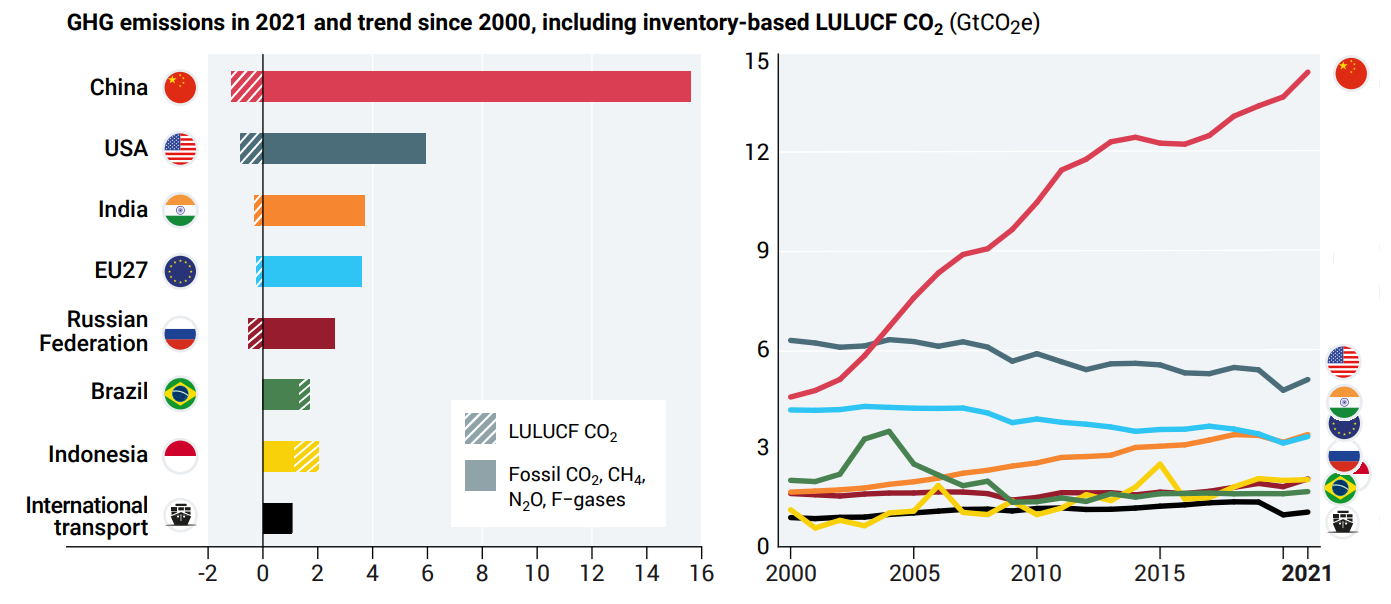
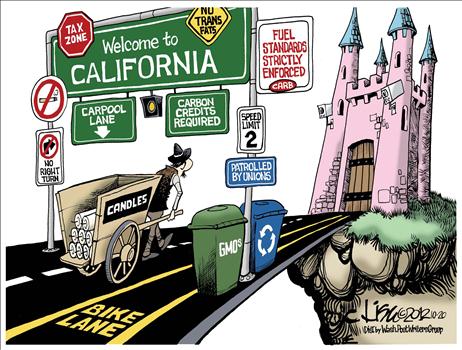
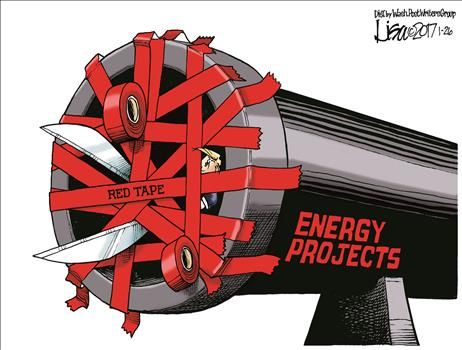
After years of incremental surrender to the left, the company now finds itself in the position of having to sue the state of California over a pair of 2023 “disclosure laws” that amount to the state mandating what companies can and cannot say about certain climate change matters. 

Last week, the company sued California in the U.S. District Court for the Eastern District of California on claims that Senate Bills 253 and 261 “trumpet California’s message.” The message in question, apparently, is that big oil and other major companies are “uniquely responsible for climate change.” In its lawsuit, Exxon Mobil said it considers this sort of message as “misleading.” The suit challenges both laws on grounds that they are First Amendment violations. The intent of the litigation is to stop these laws from going into effect in 2026. 

The climate alarmists and their entire sector are portraying the laws as requiring basic “climate-related transparency.” 

But if you dig into these laws, it reminds me of that old saying about free speech. It goes like this: “Communist China believes in free speech. So long as you say what the government likes, you can say whatever you want.” That pretty much sums up this situation.

More specifically, ExxonMobil contends that to comply, it would need to
rely on “frameworks that place disproportionate blame
on large companies like ExxonMobil.”

Senate Bill 253

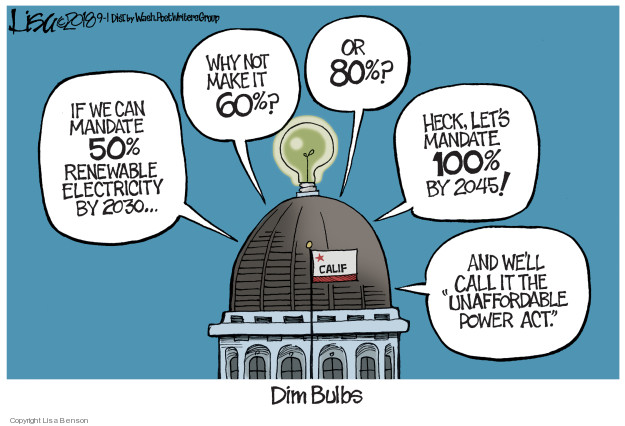
Gov. “Slick” Newsom signed Senate Bill 253 (the Climate Corporate Data Accountability Act) into law in 2023. It requires big companies to disclose a wide range of emissions, and not just the stuff coming out of their industrial pipes and smoke stacks. They’d even have to report “direct and indirect emissions” that would include quantitative measurement of and a cost for employee business travel and product transport. 

I’ve seen some of this type of internal tracking and reporting up close, and it’s ridiculous. It’s all in line with ESG measurements and processes that are inconsistent at best. Just as often, it’s a scoring system built on “Wild A** Guesses.” 

Senate Bill 261

Senate Bill 261 (or the Climate-related Financial Risk Act ) gets even more pointedly at the First Amendment issues at play. This law requires businesses that generate more than $500 million per year to “disclose” the financial impacts and risks they face from climate change, and how they will respond. 

More to the point, ExxonMobil said that if it even tried to comply with this law, it would have to guess on things it can’t even know about in advance. Essentially, it would have to try to predict the future and put those predictions on its own website. 

At the same time, the suit points out that Exxon doesn’t even have
any crude oil or natural gas exploration, production, manufacturing,
transport or refining operations in California. 

On the First Amendment issue, in ExxonMobil’s case, the company is expected to argue that both laws require companies to speak publicly in specific ways. The laws don’t simply mandate that the company disclose factual data on past activities and results, but rather that it must speculate in ways it cannot reasonably and responsibly do. 

This is “compelled speech.” While the First Amendment protects the right to speak, it also protects the right not to have the government force you to speak, or to incorporate the government’s desired message. This is known as the “compelled speech doctrine.” While it is usually described as it pertains to individual rights, there is some history of commercial businesses running into this same issue.

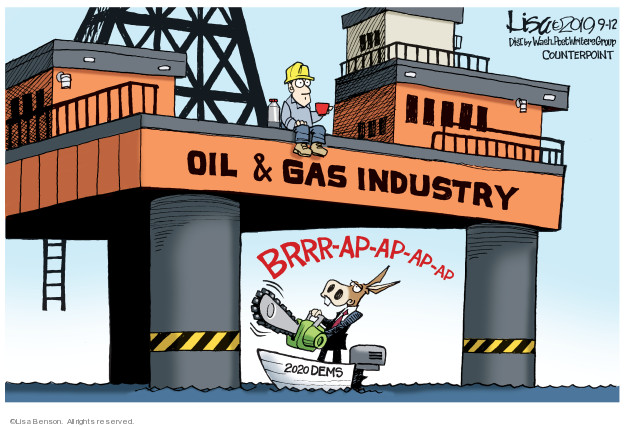
What all of this amounts to is it seems that as industries go, California is attempting to “suicide” Big Oil, and it even wants to write the suicide note for the industry.

The Fracking Truth

Linnea Lueken sers the record straight on fracking in the above video from Prager U.  Transcript in italics below with my added images.

It is one of the greatest innovations of the last fifty years.

It has saved consumers billions of dollars…

Prevented untold tons of carbon emissions from entering the atmosphere…

And almost single-handedly rescued an economy that was in the middle of a severe downturn.

You’ve probably heard of this innovation — not as a source of pride, but as an object of scorn.

I’m talking about fracking: the process of extracting oil and natural gas from fine cracks in shale rock.

So, what gives?

Originated from treehugger.com

Why has something that has done so much good been so unappreciated — even vilified?

The answer, of course, is that the opponents of fracking — environmentalists and their political and media allies — say that the negatives of fracking outweigh its positives.

What are those negatives?

Detractors have a long list: contributing to global warming, putting local drinking water at risk, and even causing earthquakes are high among their complaints.

Those are pretty serious charges. But are they valid?

Before I answer that question, let’s cover a little history.

Fracking — whatever your current impression of it — is a great American success story.

Before the twenty-first century, fracking as we know it now barely existed. The concept — reaching pockets of oil and gas trapped in shale — had been around for decades, but wasn’t practically or financially feasible.

Technological breakthroughs and a few eureka moments — like horizontal drilling and using improved ground-penetrating radar — in the early 2000s changed everything.

In traditional oil production, a company drills a well with the goal of finding a reservoir of oil. In fracking, the goal is to liberate a vast number of small pockets of oil and gas that have been trapped in the shale rock.

A narrow shaft is drilled — first vertically, and then horizontally. Water, mixed with sand and other additives, is pumped down the shaft at extremely high pressure to create tiny fissures in the surrounding rock. The sand holds the tiny cracks open, allowing the oil and gas to escape and flow back up the well to the surface.

What makes the innovation of fracking even more remarkable is that it emerged at a time when the theory of “Peak Oil” was widely accepted. Advocates of this theory—including many prominent scientists—warned that humans would soon run out of fossil fuels.

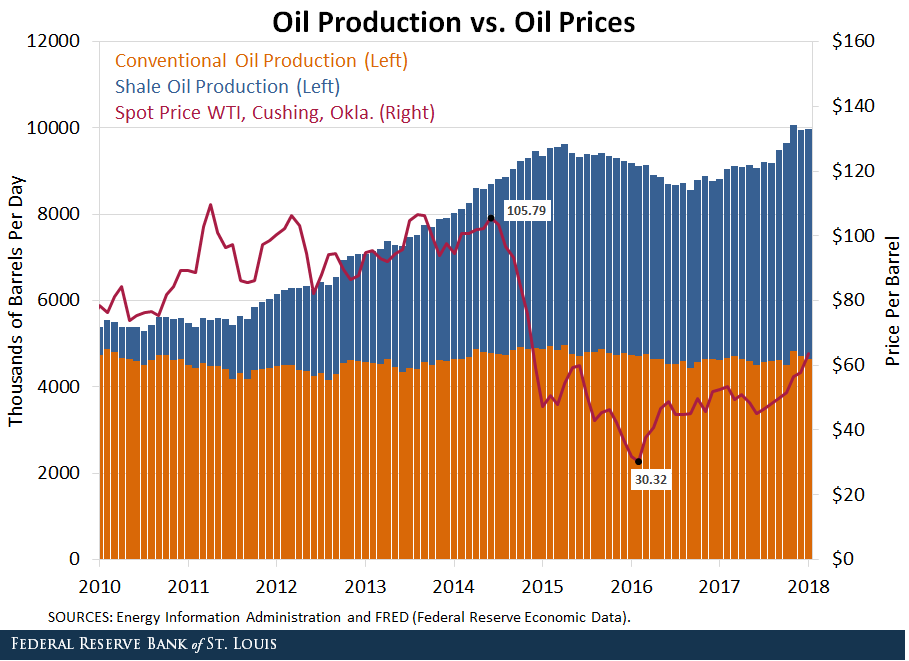
Fracking turned the theory upside down. In a matter of a few years, the world had more oil and gas than it knew what to do with — most of it coming from the United States.

The benefits from the fracking revolution were almost immediate.

The price of natural gas fell from $9 per cubic foot to $3. Consumers saved big on their gas and electric bills.

As gas replaced coal as a cheap, reliable energy source, greenhouse gas emissions fell more than 20%.

The US economy, reeling from the 2008 financial crisis, reversed course. The fracking boom was the number one reason.

Ironically, the politician who benefited the most from this boom was a fierce foe of fossil fuels, President Barack Obama. And, while he continued to push his green agenda, he did almost nothing to stop the fracking phenomenon.

Perhaps he read the science. It emphatically endorses natural gas as a clean energy source. Even Carl Pope, then the executive director of the Sierra Club, one of the world’s largest environmental groups, came out for fracking. As Pope saw it, natural gas was the perfect transition between fossil fuels and alternative energy.

With that history in mind, let’s return to the charges made by opponents of fracking.

The EPA — hardly a friend of the oil and gas industry — has looked closely into the question of whether fracking puts aquifers, the source of much of our drinking water, at risk. One EPA study examined 110,000 fracking sites. It concluded that fracking does not pose a threat. One obvious reason is that fracking is done at depths of six to ten thousand feet. Water tables tend to be at 500 feet or higher.

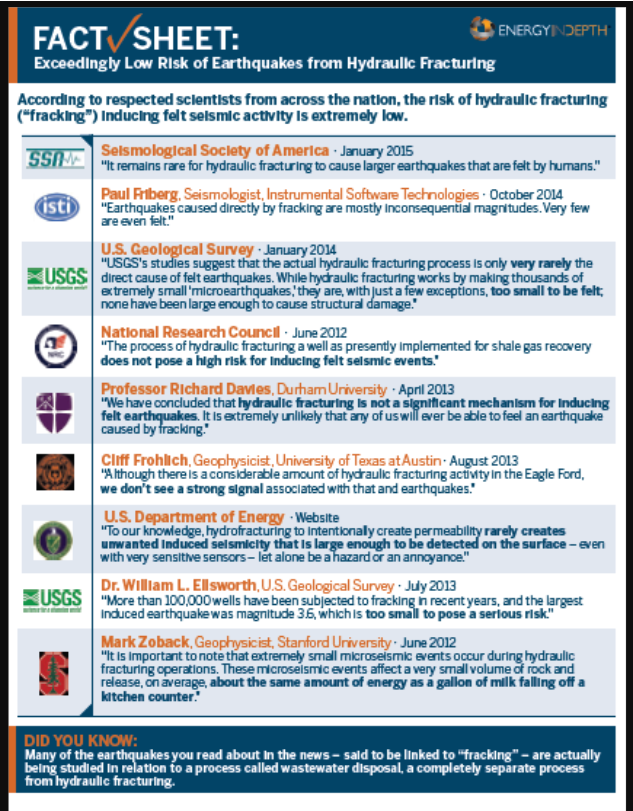
What about the concern that fracking causes earthquakes? Numerous studies have concluded that related tremors are so minor they’re barely detectable and cause no damage. At its worst, it produces vibrations comparable to a passing truck.

VibratAir pollution?

According to the EPA emissions of sulfur, nitrogen, mercury, particulates, and carbon dioxide have all declined since large-scale fracking began and natural gas replaced coal for much of the nation’s electricity production.

Something else that natural gas has going for it which isn’t talked about much is land use. Per megawatt, natural gas uses about 12.4 total acres – including mining and transmission lines. By comparison, solar uses about 43.5 acres per megawatt, and wind uses more than 70.

More energy, less pollution, lower prices for consumers, small footprint.

Instead of vilifying fracking, maybe we should throw it a parade.

I’m Linnea Lueken, research fellow at the Heartland Institute, for Prager University.

New England Facing Energy Crisis, Worries About Bugs

Linnea Lueken explains the false alarm in her Climate Realism article Climate Change Is Not Causing New England’s ‘Creepy’ Bacteria and Bugs, Boston Globe.  Excerpts in italics with my bolds and added images.

The Boston Globe posted an article titled “Climate change is bringing creepy — and dangerous — bacteria, bugs, and viruses to New England,” claiming that global warming is “fueling an increase in bacteria and disease” in New England. The headline and the attached story are highly misleading. For things like mosquito-borne illness, mosquitos carrying diseases previously thrived even in New England in previous centuries, with 20th century human intervention wiping them out, not temperature changes. Also, bacteria in waterways are a seasonal phenomenon which has always existed.

The Real New England Crisis is Green Agenda Attack on Electricity Supply

Source: granitegeek, Concord Monitor

Daniel Turner explains in his Real Clear Energy article The Green Agenda Turned New England Into an Energy Price Punchline.  Excerpts in italics with my bolds and added images.

Fall is here, the leaves are changing, the temperature is dropping and sadly New England families know the routine.

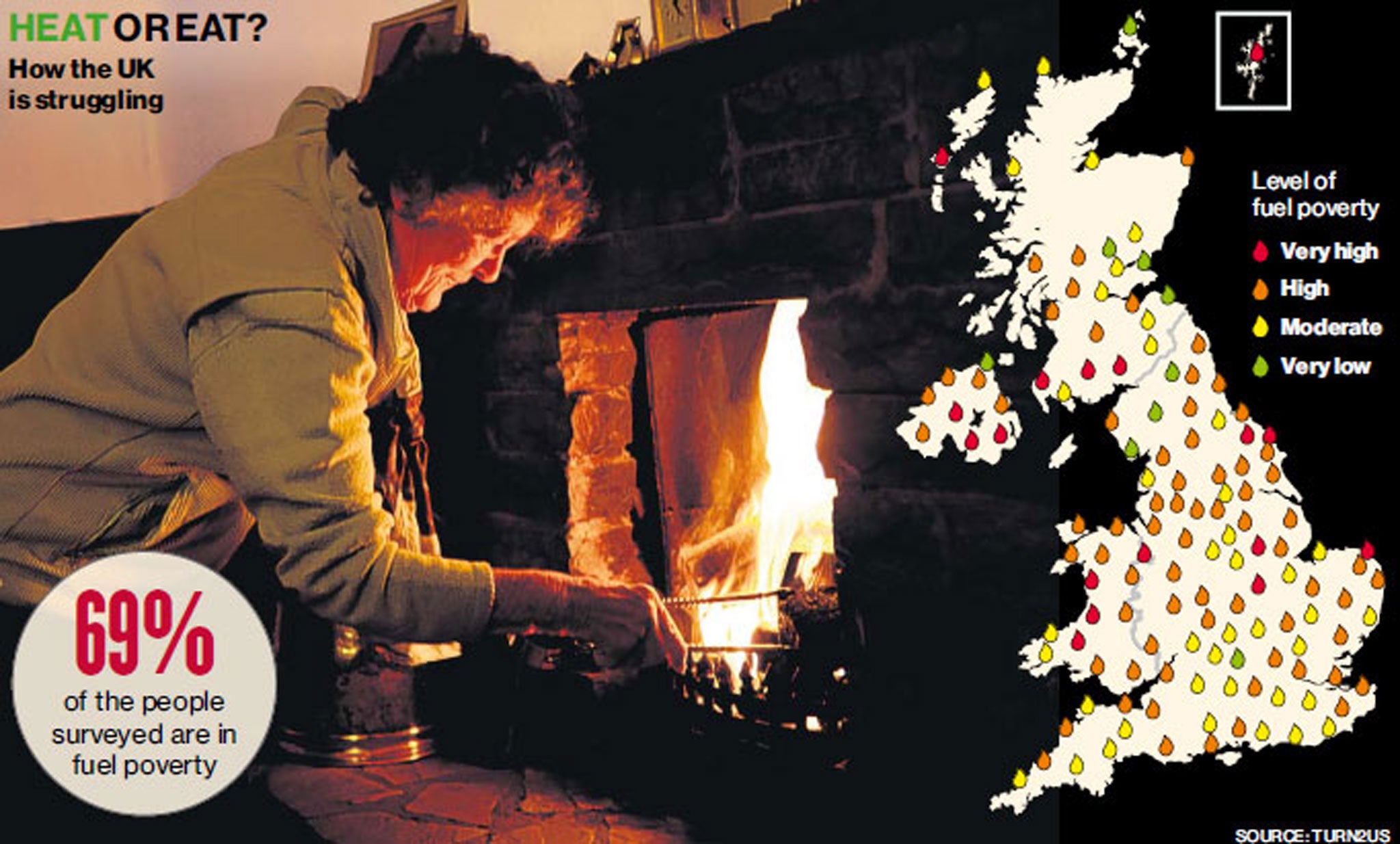
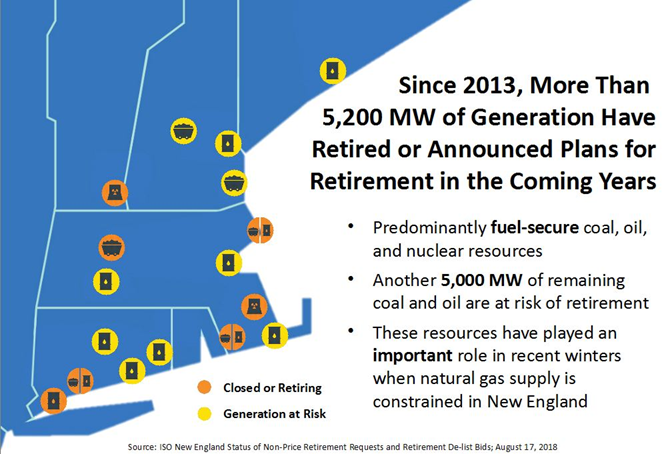
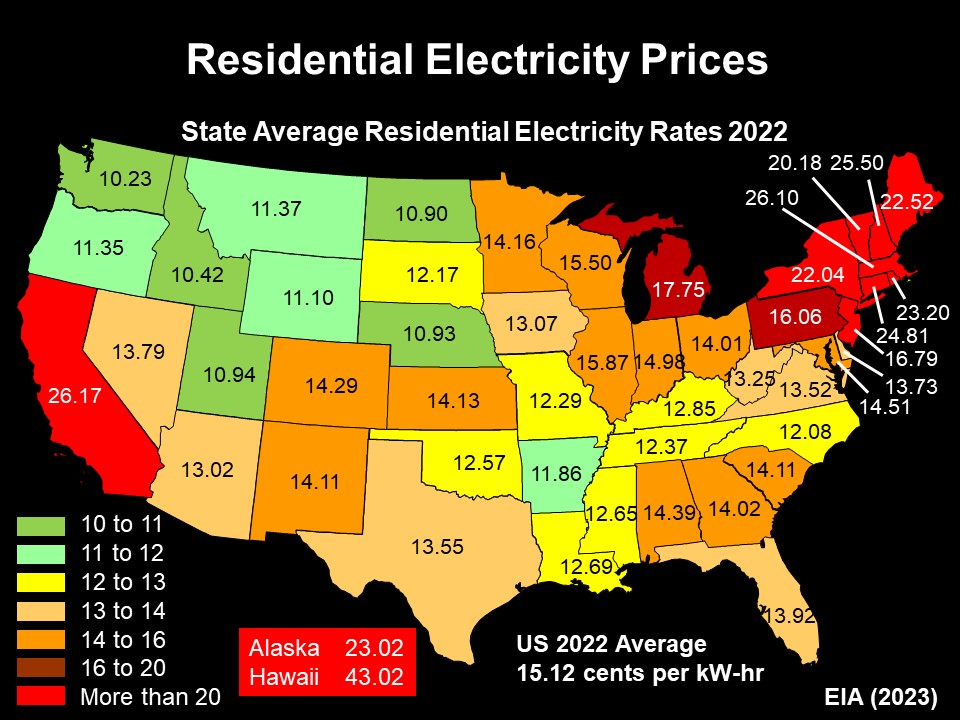
Every month, the electric bill arrives, and it’s larger than the month before. The region pays more for electricity than almost anyone else in America—higher than the national average and, outside of Alaska and Hawaii, higher than anywhere else in the country. This is not a coincidence. It is the inevitable result of politicians who pushed the risky and unreliable green agenda while forcing reliable power plants off the grid.

Here’s an inconvenient history lesson. When Joe Biden took office, electricity in New England cost 20.7 cents per kilowatt-hour. By the time he left, it was more than 28.2 cents. That’s a staggering spike of more than 36% in just four years. Hundreds of dollars gone from family budgets and small businesses every single year. For working households already feeling the squeeze of Biden’s inflation, it can mean the difference between savings and debt, between heating a home and keeping it uncomfortably cold.

October 2022 generation in New England, by fuel source

And the blame is clear. The forced closure of coal, oil, and natural gas plants in the name of “climate progress” is why rates are climbing. In 2022, Massachusetts Senators Elizabeth Warren and Ed Markey traveled to Somerset to celebrate the shutdown of traditional energy plants. They smiled for the cameras, congratulated themselves on a “victory,” and then went back to Washington while families were left to pay the tab.

First came the celebration, but now we see the deflection. Four Democratic senators, including Warren and Markey, recently wrote a letter to the Trump administration suddenly pretending to care about rising electricity bills. It is political theater and nothing more. They didn’t care when they cheered the closures in 2022, and they don’t care now. New England’s families are stuck with the consequences of the green agenda they applauded; they just want to escape the blame.

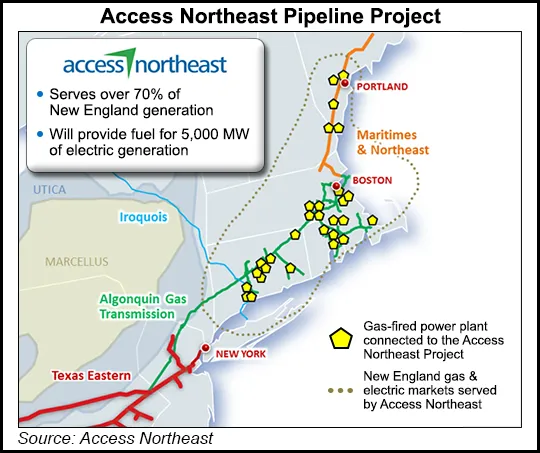
Project abandoned in 2017 after New York blocked planning and permit processes.

Let’s be clear: This cascade of closures started when Joe Biden was vice president and accelerated under his presidency. Nearly 400 fossil fuel plants have been shuttered across the country since 2010, including almost 300 coal plants. In the Northeast alone, names like Indian Point in New York, Eagle Point in New Jersey, Schiller Station in New Hampshire, and Canal Station in Massachusetts have been crossed off the map. Each closure meant fewer megawatts of reliable power and higher bills for families.

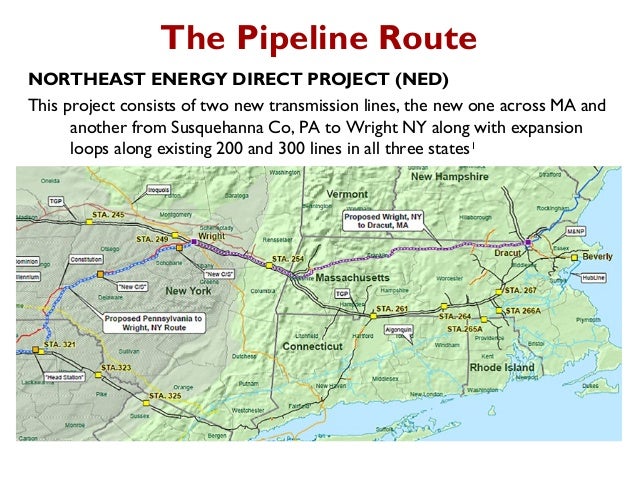
 Project abandoned in April 2016

The problem is not complicated. Shutting down affordable, always-on power and replacing it with expensive, intermittent sources like wind and solar leads to higher prices. Add the surge in demand from artificial intelligence data centers, which analysts say could double electricity consumption by 2030, and the consequences are obvious: higher costs, weaker reliability, and a grid at the breaking point.

There is a way out of this crisis, but it requires real action, not pointless blaming. My organization, Power The Future, lays out the steps in our recent report.

♦  First, use the Defense Production Act to treat grid reliability as the national security issue it is, and direct resources to keep critical plants online.
♦  Second, build new fossil fuel plants—modern natural gas and coal facilities that can deliver decades of dependable, affordable power.
♦  Third, halt premature closures until replacement capacity is running, not just promised on paper. And fourth, expand the capacity of existing coal plants, many of which are running below potential thanks to political limits, to quickly add thousands of megawatts back to the grid.

These are not radical ideas. They are common sense. They put working families, not political slogans, at the center of energy policy. They recognize that you cannot run a 21st-century economy on wishful thinking, photo-ops, and subsidies for technology that fails when the wind doesn’t blow, or the sun doesn’t shine.

Too many of New England’s “leaders” in Washington have turned their states into punchlines of America’s power prices. Working families deserve leaders who care more about their constituents’ bills than their standing with environmental activists. They deserve an energy policy grounded in reality, not ideology.

If you want to know who killed affordable power in New England, it wasn’t President Trump and it wasn’t the utility companies. All you need to do is just look at who popped the champagne when the plants closed.


Why Fossil Fuels Still Rule

Kite & Key explain in their video, transcript in italics with my bolds and added images.

Tech executives.  Heads of state.  Brilliant scientists and engineers.

They’re some of the most talented and respected individuals in the world — and, in recent years, they’ve all come together behind a common purpose.

They’ve marshaled their talents — and trillions of dollars in cashto move the world beyond the era of fossil fuels.

What can you accomplish when you have that much talent working towards a single goal?

Would you believe … almost nothing?

In recent years, the world has gone to extraordinary lengths to break its dependence on fossil fuels.

We’ve signed international treaties.

We’ve started enormous government programs.

We’ve launched corporate sustainability initiatives.

We’ve vandalized Stonehenge.

Not sure why that last one was necessary. Druids are about as low-carbon as they come.

Now, what do we have to show for all of these efforts to move beyond fossil fuels?

Well, it’s not nothing. But if you squint even just a little … it looks like nothing.

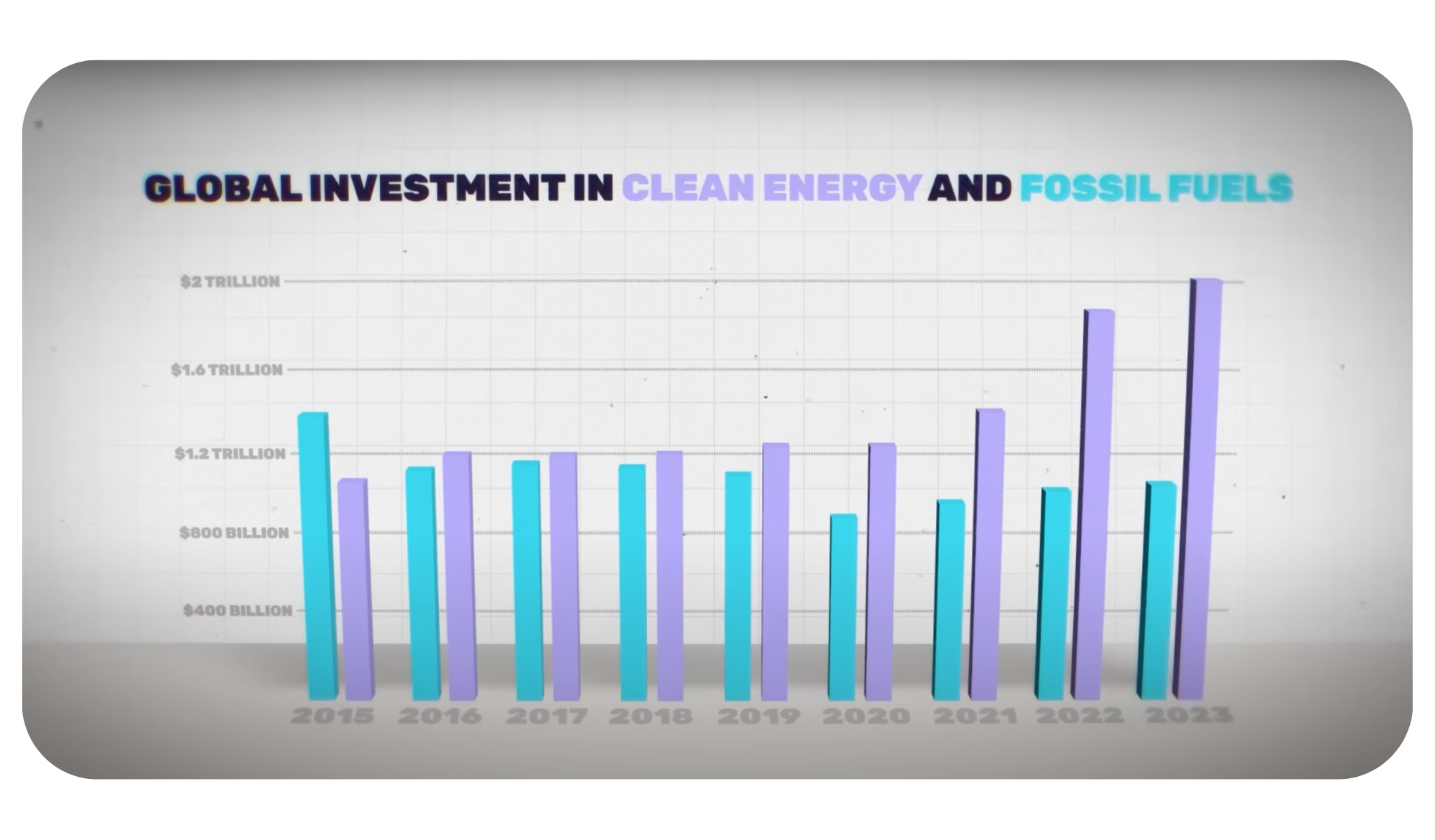
Here’s what we mean. Between 2015 and 2023, the world invested over $12 trillion in alternative energy. By the end of that period, we were investing nearly double as much in alternatives as we were in fossil fuels.i

And the consequences of all that effort?

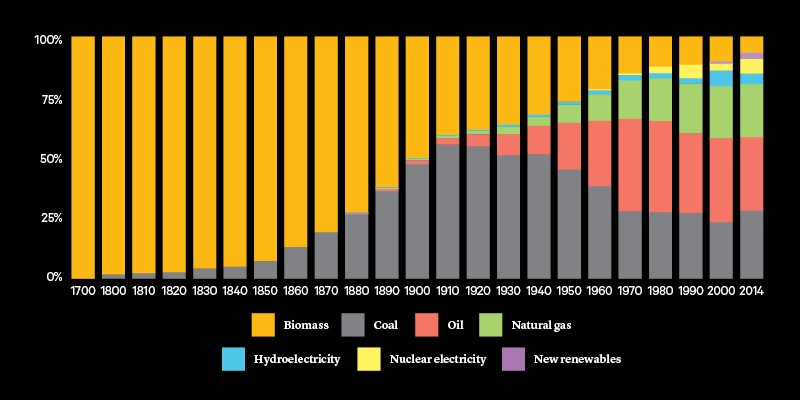
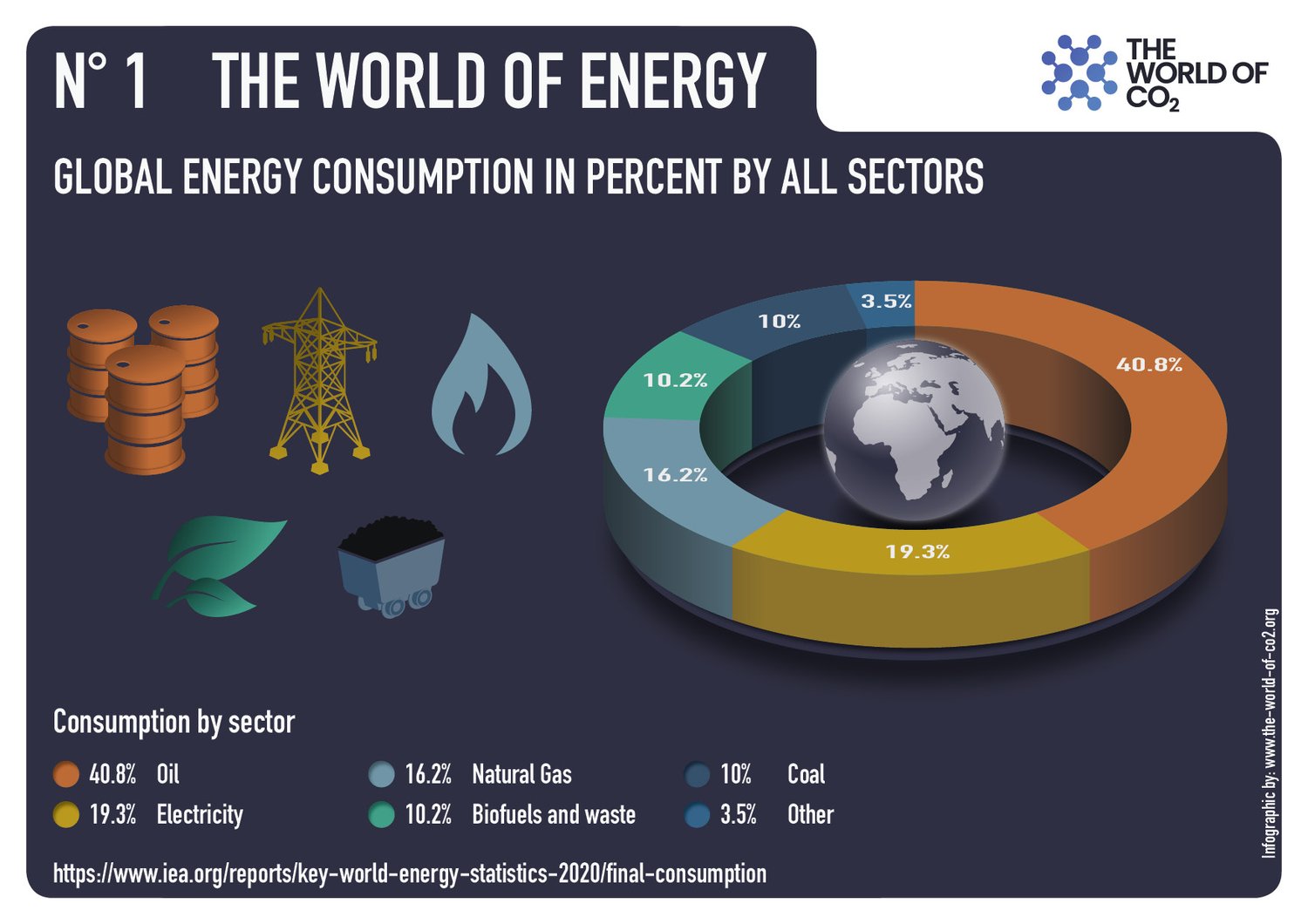
Well, according to the International Energy Agency, in the decade from 2013 to 2023 the percentage of global energy derived from fossil fuels declined from 82 percent … to 80 percent.ii

Since 1965 oil, gas and coal (FF, sometimes termed “Thermal”) averaged 88% of PE consumed, ranging from 93% in 1965 to 81% in 2024. Source: Energy Institute

Now, none of this is to make fun of these efforts. The people behind these initiatives are often very, very smart. Which ought to make us even more curious about why they’re still not able to move the needle much.

Why, despite all their efforts, do fossil fuels continue to be the world’s primary energy sources?

Well, here’s the thing: It’s not because of a lack of money or initiative.
It’s because of the way energy actually works.

Because basically our entire existence — lighting and heating our homes, traveling to work, getting food onto the shelves of your grocery store — is dependent on energy, we need our power sources to be reliable, affordable, and abundant.  And on that front … fossil fuels have proven hard to beat.

There are a lot of reasons for that, but here are three of the biggest ones.

First: efficiency. Fossil fuels allow you to get a lot of energy out of very little material.

For example, to generate as much energy as you get from just one oil well in the Permian Basin of West Texas you’d need to build 10 windmills, each about 330 feet high.iii And because demand is only going up — the world uses 40 percent more energy now than it did just 20 years agoiv — we’re deeply dependent on whichever sources can give us the most bang for our buck.

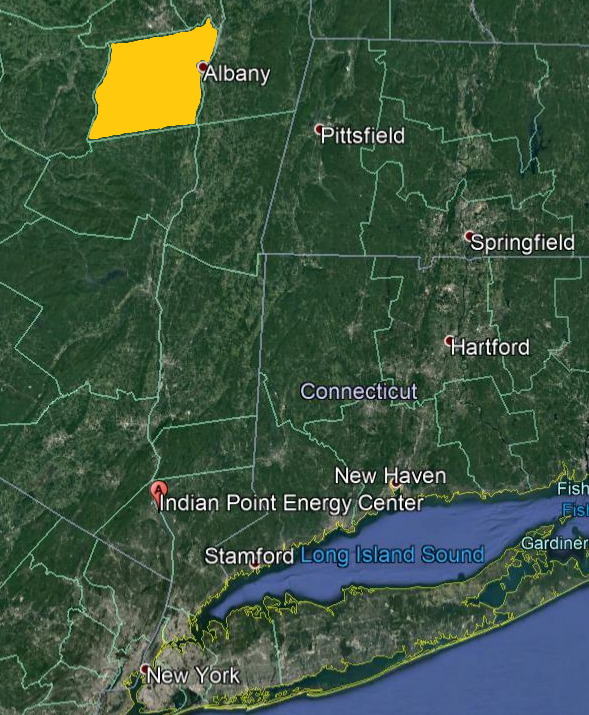
To replace the electricity from now closed Indian Point nuclear plant would require covering Albany County with wind turbines.

Second: reliability. Energy buffs like to talk about something called the capacity factor, which in plain English means the amount of time a power source can generate its maximum amount of power. For solar, it’s less than 25 percent of the time. For wind, it’s about 34 percent. By contrast, coal is at over 42 percent and natural gas is at essentially 60 percent.v

Third: storage. Fossil fuels are easy and cheap to store, which is necessary to make sure you’ve got enough supply to know the lights will stay on.

How cheap? The costs of storing a barrel of oil or the equivalent amount of natural gas is about $1 a month. For coal, it’s even cheaper.vi To store the same amount of energy from wind or solar — which would require a lithium battery — costs 30 times as much.vii

All of which is to say that when you look at the physics and the economics
— you can start to see why America still gets more than
80 percent of its energy from fossil fuels.
viii

Which, by the way, is pretty standard for wealthy countries: They talk a lot about renewables, but when it comes right down to it?

The U.K. gets about 75 percent of its energy from fossil fuels. As does Germany. In Japan it’s over 83 percent. In Australia it’s 85 percent.ix Not because they aren’t trying to move away from fossil fuels, but because they’re coming up against the reality that fossil fuels are the only sources that can give them as much power as their countries need.

There is, however, at least one noteworthy counterexample: France, which, as of 2023, relies on fossil fuels for less than 50 percent of its energy needs.x How do they do that? Well, here’s the catch: It’s not because of things like wind and solar. France gets over 1/3 of its power from nuclear, a carbon-free energy source that can run at full power over 92 percent of the time.xi

Which is an interesting idea … that the world’s wealthy democracies are largely ignoring. In fact, of the 61 new nuclear reactors currently being built around the world, 29 of them are in China.xii And many of the rest are in places like Bangladesh, Turkey, and Egypt.

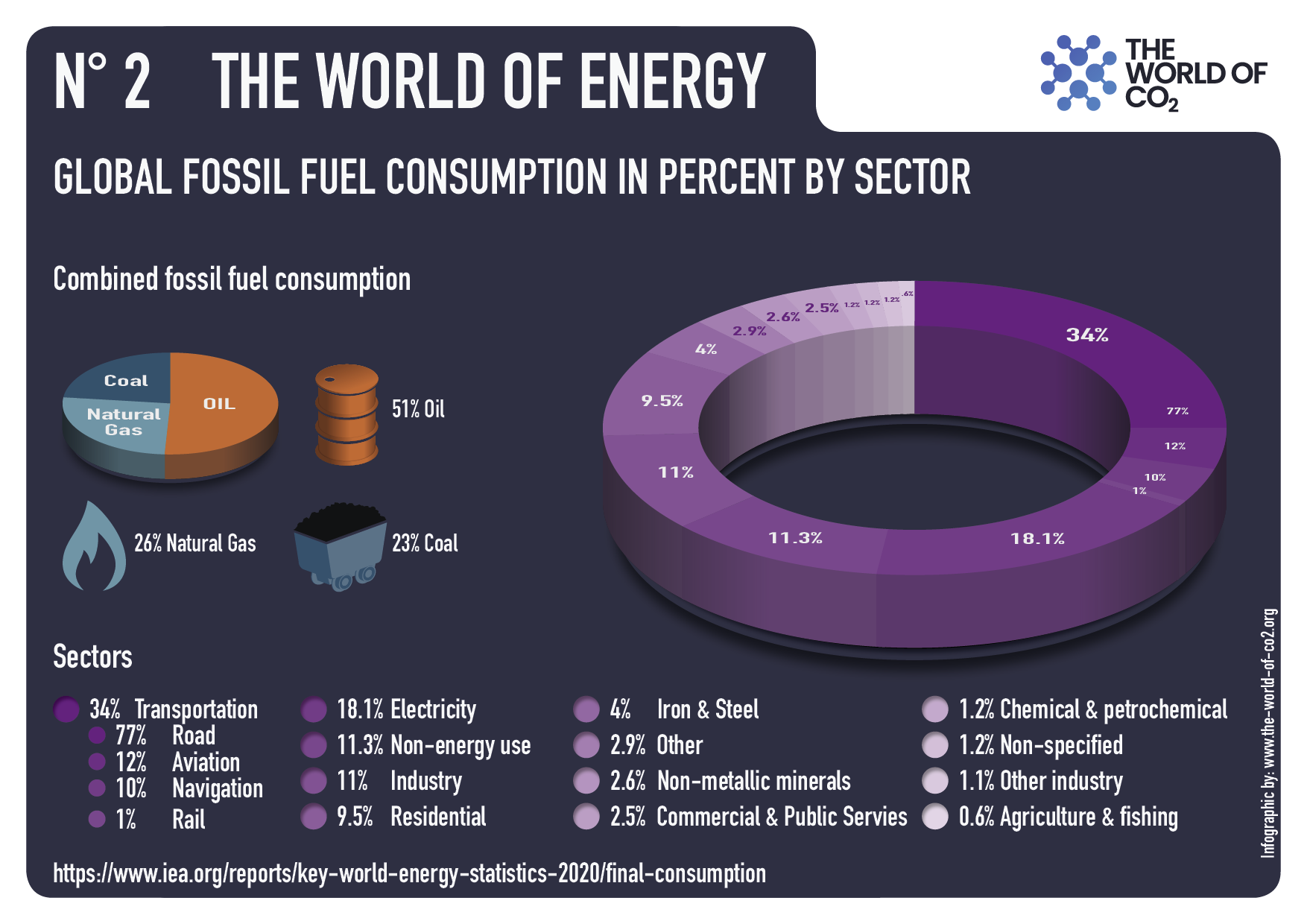
But there’s one other factor we have to take into consideration when we think about why fossil fuels have endured — and it’s a big one. When we talk about energy, many of us think in terms of electricity. But in reality, America’s single largest use of energy is for transportation. And nearly 90 percent of that energy comes from oil.xiii

Why? Well, for a clarifying example, think about the journey of a package that you buy online. Maybe it comes from overseas on a cargo ship or, if you’re really fancy, a plane. It gets sent to a warehouse, loaded onto a truck, sent off to a series of processing centers, and then arrives seamlessly … on your neighbor’s porch, for some reason.

Now, this process is invisible to most of us, but if we tried to dramatically change the fuel sources involved … well, let’s just say we’d notice.

Want that package to come on an electric plane? Given the current limits of the technology, it could travel a distance of about 30 miles.xiv

Want it to cross the ocean on a battery-powered cargo ship? The journeys those vessels take can run anywhere from 15 to 50 days.xv The biggest battery available could get you … one day of power.xvi Which would ensure your package was speedily delivered to the bottom of the Western Pacific.

Want an electric big rig to move your package across the country? Because they can travel less than half as far as a normal truck before they have to recharge, are three times as expensive to buy, and would require trucking companies to roughly double their number of both drivers and vehicles, your package would arrive much later and be way more expensive.xvii

In fact, it’s estimated that moving to all-electric trucking would be so costly that on its own it’d create a one percent increase in inflation for the entire country.xviii

Bottom line: The decisions as to which energy sources we rely on aren’t arbitrary.
The world as we know it is powered by reliable fuel sources like
natural gas, oil, and — when we’ll allow it — nuclear.

Plenty of people would like to move beyond those sources in theory. But when they experienced what the world actually looks like without them — higher prices, slower travel, less reliable electricity — chances are there’d be a lot fewer takers.

Except the Druids. These dudes would be fine.

See Also

Killer Climate Lawsuit on Shaky Ground

Washington Free Beacon reports on shaky case to make climate change a killer First-Of-Its-Kind Lawsuit Blaming Oil Companies for Woman’s Heat-Wave Death Failed to Mention Her Heart Disease. Excerpts in italics with my bolds and added images.

‘The diagnosis and likely treatment for it is highly relevant,’
doctor tells Free Beacon

A first-of-its-kind lawsuit accusing some of the nation’s largest oil companies of causing global warming and therefore causing a Washington woman’s 2021 heat-wave death left out one critical detail: she had been diagnosed with heart disease.

Juliana Leon’s death certificate, obtained by the Washington Free Beacon, shows she had been diagnosed with hypertensive cardiovascular disease, a condition that stems from unmanaged high blood pressure and increases the risks of heart failure and sudden cardiac death. The medical examiner for King County, Wash., determined that the condition contributed to her death, meaning it wasn’t the direct cause of death, but made her more vulnerable to it.

The wrongful death lawsuit Leon’s daughter filed earlier this year against oil companies, however, failed to make a single mention of her underlying condition. It instead focused entirely on the direct cause of death: hyperthermia.

The revelation, which has not been reported until now, is relevant because it could explain why Leon succumbed to the high temperatures that hit the Pacific Northwest in June 2021, according to doctors interviewed by the Free Beacon. And it is important too because of the lawsuit’s potentially wide-reaching impact. If successful, the lawsuit could lead to dozens of similar wrongful death suits and even future criminal homicide prosecutions against the oil industry.

The lawsuit—the first instance of a case attempting to put oil companies on the hook for heat-related wrongful death—is part of a coordinated effort nationwide to use the courts to cripple the oil industry and usher in a green energy transition. Activists say such litigation will hold the industry accountable, while critics say it is designed to bankrupt the industry, something that would have devastating economic impacts.

“The main reasons for hyperthermia under these conditions include medications or skin conditions impairing the ability to sweat. People with hypertensive cardiovascular disease are likely to be taking such medicines,” said Jane Orient, the executive director of the Association of American Physicians and Surgeons and a clinical lecturer at the University of Arizona College of Medicine.

“I think the diagnosis and likely treatment for it are highly relevant,” she continued. “A body temperature as high as 110 is extremely unlikely without impairment in the body’s temperature-regulating mechanism, at least under the circumstances here. Most people will have dehydration, but not heat stroke, during a heat wave. This lady likely had both.”

Jeffrey Singer, a senior fellow at the Cato Institute and the founder of a private surgical practice in Arizona, agreed that the diagnosis could be relevant.  Singer told the Free Beacon:

“Having hypertension and its cardiovascular stigmata, depending on severity, might affect a person’s risk of succumbing to hyperthermia. But it’s the hyperthermia that kills,”

Lawyers representing Leon’s estate and daughter did not respond to requests for comment.

Leon died on June 28, 2021, during an extreme heat wave, which ultimately claimed the lives of 100 people in Washingtonstate data show. According to the wrongful death lawsuit, Leon died in her car after the vehicle’s air conditioning system broke and as outside temperature exceeded 105 degrees Fahrenheit. Her internal temperature rose to 110 degrees Fahrenheit right before she died.

Two weeks earlier, Leon had undergone bariatric surgery, a weight-loss surgery that helps reduce the risk of heart disease and high blood pressure. As a result, she had been on a liquid diet in the two weeks leading up to her death. In fact, Leon died in her car on her drive home from the doctor’s office where she was informed that morning that she may begin to eat soft foods again.

Still, the lawsuit blames seven oil companies for her death, arguing that they knew their products caused global warming decades ago, but continued selling them anyway. The lawsuit states that the 2021 heat wave in the Pacific Northwest wouldn’t have occurred without human-caused global warming.

study published in the American Meteorological Society’s journal Weather and Forecasting last year found that there is “little evidence” greenhouse gases amplified the heat wave and emphasized that weather forecasts for the event were “highly accurate.” “Global warming may have made a small contribution, but an extreme heat wave, driven by natural variability, would have occurred in any case,” it concluded.  Singer told the Free Beacon:

“You don’t need climate change to have a heat wave. Humans have been experiencing heat spells since the beginning of recorded history,”

The Free Beacon reported last week that an environmental group funded by the powerful Rockefeller Family Fund is quietly steering the wrongful death suit. According to legal filings, Leon’s daughter quietly appointed a climate activist to serve as the agent for her deceased mother’s estate. Those documents were authored by lawyers at the Rockefeller-backed Center for Climate Integrity, a nonprofit leading the coordinated, nationwide plan to “drive divestment” from and “delegitimize” the oil industry through litigation.

2025 Update: Fossil Fuels ≠ Global Warming

gas in hands

Previous posts addressed the claim that fossil fuels are driving global warming. This post updates that analysis with the latest (2024) numbers from Energy Institute and compares World Fossil Fuel Consumption (WFFC) with three estimates of Global Mean Temperature (GMT). More on both these variables below. Note: Previously these same statistics were hosted by BP.

WFFC

2024 statistics are now available from Energy Institute for international consumption of Primary Energy sources. Statistical Review of World Energy. 

The reporting categories are:
Oil
Natural Gas
Coal
Nuclear
Hydro
Renewables (other than hydro)

Note:  Energy Institute began in 2023 to use Exajoules to replace MToe (Million Tonnes of oil equivalents.) It is logical to use an energy metric which is independent of the fuel source. OTOH renewable advocates have no doubt pressured EI to stop using oil as the baseline since their dream is a world without fossil fuel energy.

From BP conversion table 1 exajoule (EJ) = 1 quintillion joules (1 x 10^18). Oil products vary from 41.6 to 49.4 tonnes per gigajoule (10^9 joules).  Comparing this annual report with previous years shows that global Primary Energy (PE) in MToe is roughly 24 times the same amount in Exajoules.  The conversion factor at the macro level varies from year to year depending on the fuel mix. The graphs below use the new metric.

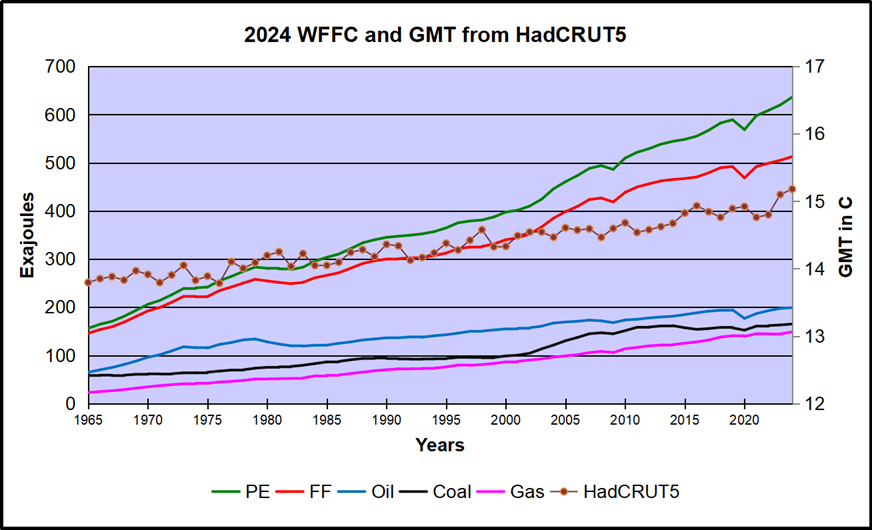
This analysis combines the first three, Oil, Gas, and Coal for total fossil fuel consumption world wide (WFFC).  The chart below shows the patterns for WFFC compared to world consumption of Primary Energy from 1965 through 2024.

The graph shows that global Primary Energy (PE) consumption from all sources has grown continuously over nearly 6 decades. Since 1965  oil, gas and coal (FF, sometimes termed “Thermal”) averaged 88% of PE consumed, ranging from 93% in 1965 to 81% in 2024.  Note that in 2020, PE dropped 21 EJ (4%) below 2019 consumption, then increased 31 EJ in 2021.  WFFC for 2020 dropped 24 EJ (5%), then in 2021 gained back 26 EJ to slightly exceed 2019 WFFC consumption. For the 60 year period, all net changes were increases from previous years and were:

Oil 207%
Gas 555%
Coal 183%
WFFC 252%
PE 308%
Global Mean Temperatures

Everyone acknowledges that GMT is a fiction since temperature is an intrinsic property of objects, and varies dramatically over time and over the surface of the earth. No place on earth determines “average” temperature for the globe. Yet for the purpose of detecting change in temperature, major climate data sets estimate GMT and report anomalies from it.

UAH record consists of satellite era global temperature estimates for the lower troposphere, a layer of air from 0 to 4km above the surface. HadSST estimates sea surface temperatures from oceans covering 71% of the planet. HadCRUT combines HadSST estimates with records from land stations whose elevations range up to 6km above sea level.

Both GISS LOTI (land and ocean) and HadCRUT4 (land and ocean) use 14.0 Celsius as the climate normal, so I will add that number back into the anomalies. This is done not claiming any validity other than to achieve a reasonable measure of magnitude regarding the observed fluctuations.[Note: HadCRUT4 was discontinued after 2021 in favor of HadCRUT5.]

No doubt global sea surface temperatures are typically higher than 14C, more like 17 or 18C, and of course warmer in the tropics and colder at higher latitudes. Likewise, the lapse rate in the atmosphere means that air temperatures both from satellites and elevated land stations will range colder than 14C. Still, that climate normal is a generally accepted indicator of GMT.

Correlations of GMT and WFFC

The next graph compares WFFC to GMT estimates over the decades from 1965 to 2024 from HadCRUT5, which includes HadSST4.

Since 1965 the increase in fossil fuel consumption is dramatic and monotonic, steadily increasing by 252% from 146 to 513 exajoules.  Meanwhile the GMT record from Hadcrut shows multiple ups and downs with an accumulated rise of 1.4C over 60 years, 10% of the starting value.

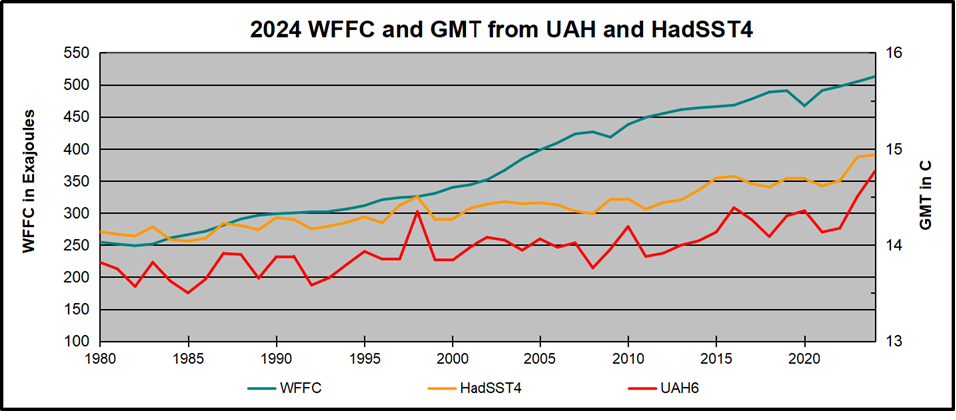
The graph below compares WFFC to GMT estimates from UAH6, and HadSST4 for the satellite era from 1980 to 2024 a period of 45 years.

In the satellite era WFFC has increased at a compounded rate of 1.5% per year, for a total increase of 99% since 1980. At the same time, SST warming amounted to 0.8C, or 5.6% of the starting value.  UAH warming was 1.1C, or 8% up from 1979.  The temperature compounded rate of change is 0.1% per year for HadSST4, and 0.2% per year for UAH, an order of magnitude less than WFFC.  Even more obvious is the 1998 El Nino peak and flat GMT until 2023-24.

Summary

The climate alarmist/activist claim is straight forward: Burning fossil fuels makes measured temperatures warmer. The Paris Accord further asserts that by reducing human use of fossil fuels, further warming can be prevented.  Those claims do not bear up under scrutiny.

It is enough for simple minds to see that two time series are both rising and to think that one must be causing the other. But both scientific and legal methods assert causation only when the two variables are both strongly and consistently aligned. The above shows a weak and inconsistent linkage between WFFC and GMT.

Going further back in history shows even weaker correlation between fossil fuels consumption and global temperature estimates:

wfc-vs-sat

Figure 5.1. Comparative dynamics of the World Fuel Consumption (WFC) and Global Surface Air Temperature Anomaly (ΔT), 1861-2000. The thin dashed line represents annual ΔT, the bold line—its 13-year smoothing, and the line constructed from rectangles—WFC (in millions of tons of nominal fuel) (Klyashtorin and Lyubushin, 2003). Source: Frolov et al. 2009

In legal terms, as long as there is another equally or more likely explanation for the set of facts, the claimed causation is unproven. The more likely explanation is that global temperatures vary due to oceanic and solar cycles. The proof is clearly and thoroughly set forward in the post Quantifying Natural Climate Change.

Footnote: CO2 Concentrations Compared to WFFC

Contrary to claims that rising atmospheric CO2 consists of fossil fuel emissions, consider the Mauna Loa CO2 observations in recent years.

Despite the drop in 2020 WFFC, atmospheric CO2 continued to rise steadily, demonstrating that natural sources and sinks drive the amount of CO2 in the air.

See also: Nature Erases Pulses of Human CO2 Emissions

02/2025 Update–Temperature Changes, CO2 Follows

Energy Realism from Next US Dept. Head

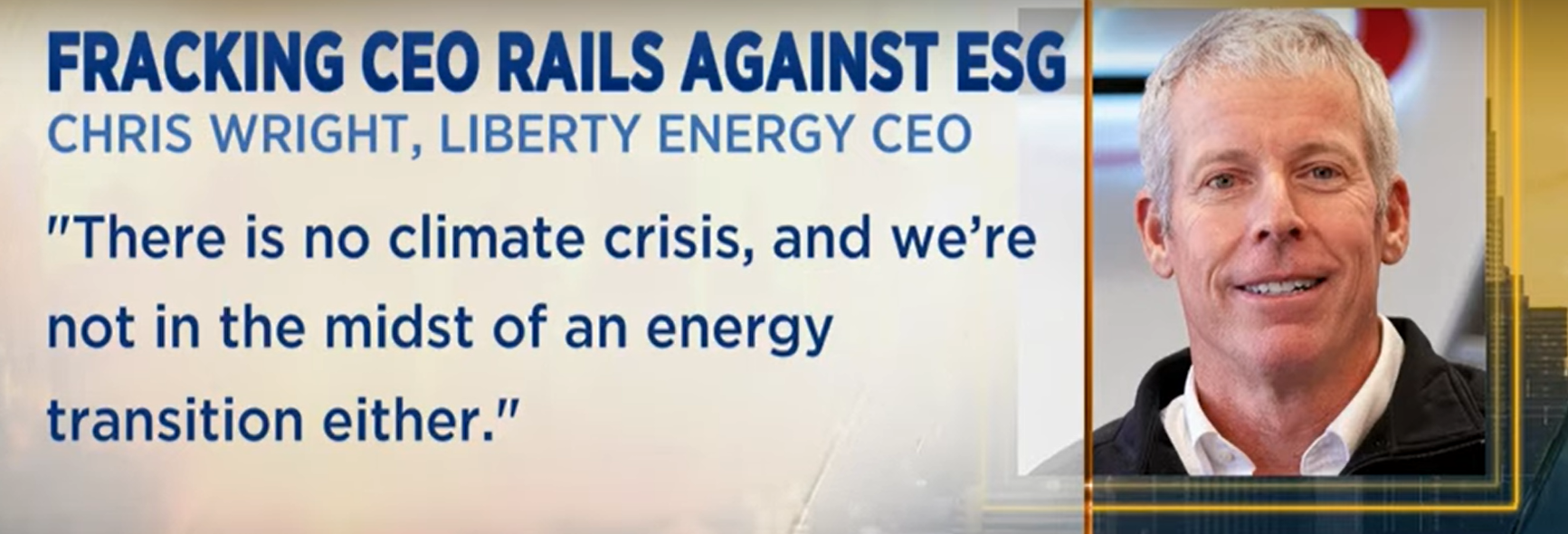
Last year Chris Wright dished out climate and energy realism in an interview on CNBC Squawk Box hosted by Andrew Ross Sorkin.  Now he is to be appointed Secretary of Energy in the coming Trump administration.  Here are his candid and unvarnished views from inside the energy industry.

For those who prefer reading below is a transcript lightly edited from the closed captions in italics with my bolds and added images. AS refers to Sorkin’s questions and CW to responses from Wright.

AS: President Biden conceded last week that the U.S is going to be needing oil and gas for as he says at least the next decade as the country transitions to Renewables. But our next guest says that we are not in the midst of an energy transition and claims the so-called climate crisis is overblown. Last month he railed against what he called an alarmist move away from fossil fuels in a video on LinkedIn. The Microsoft owned company removed the post citing misinformation, only put it back up days later.

So let’s talk right now to Chris Wright–Chairman and CEO of Liberty Energy, North America’s second largest fracking company Chris good morning to you.

Reaction to the State of the Union

AS: Let’s start with your reaction after watching the State of the Union. President Biden makes the statement twice actually. The first time he says we’re going to need fossil fuels for a while. Later he follows up with: We’re going to need it for something like a decade or so. There was laughter in the chamber, certainly from the GOP, but it very well might have been both sides of the aisle at that point.

CW: Yeah, likely it was. Of course it’s great to see an acknowledgment the world run on oil and gas and we need that. But to throw out a decade, it’s just an absurd time frame. We’re not going to meaningfully change the demand for oil and gas one way or the other in the next decade. And I think politicizing energy and opposing infrastructure is standing in the way of Today’s Energy System before we’ve built a new Energy System. There’s just no upside in that.

Realistic timeline for energy

AS: When you think about the timeline, what do you think is a realistic timeline to the degree you think there is one.

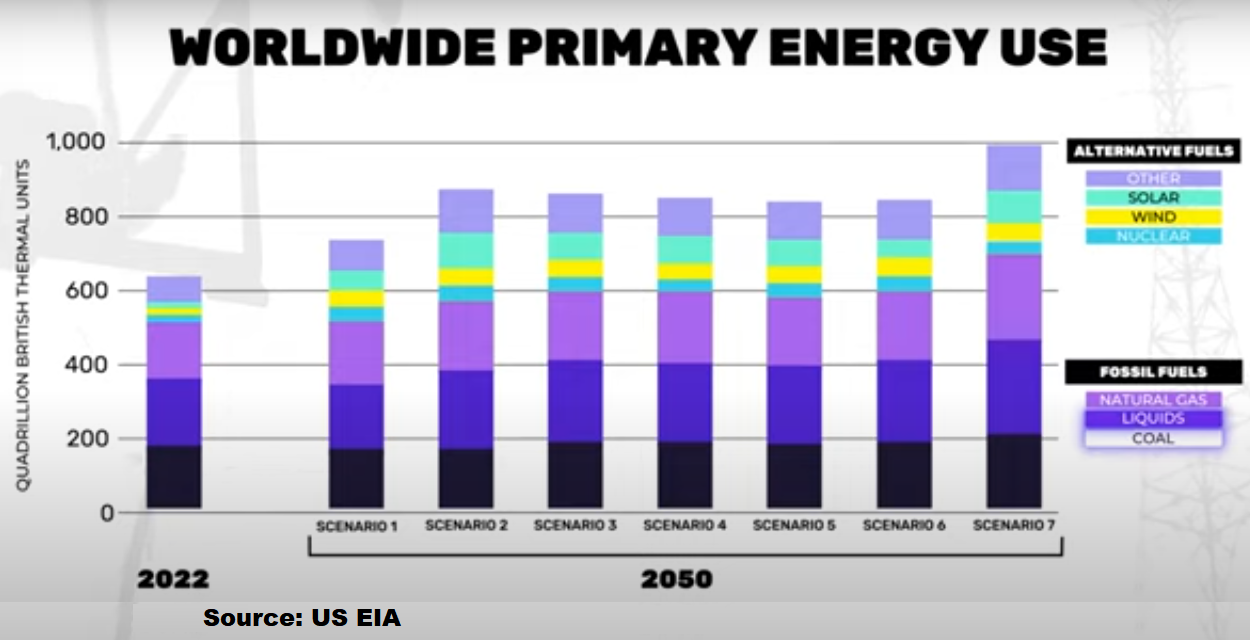
CW: It’s multiple, as we’ll talk about that. The Energy Information Administration is our government agency that projects forward demands for varied energy sources, They have in 2050 roughly flat demand for oil and gas as what we have today; maybe it rises a little bit the next decade or two, maybe it comes down a little bit in the next decade or two after that. Maybe that’s true, but I think you’ll see no meaningful change of our hydrocarbon system in the next three decades. I’m all for investing in new energy sources: nuclear has a great future if we could regulatorily issue a permit. We haven’t issued a new permit for a nuclear plant in 50 years.

There’s great new things we can bring; but standing in the way
of what runs the world today just isn’t productive.

Nuclear energy

AS: I’m a big fan but it’s quite unpopular talking about nuclear energy. Usually when I say something on the air it causes some kind of strange firestorm. Do you think there’s any realistic chance we have nuclear energy in the United States in the next decade?

CW: I think probably not in the next decade. Nuclear will have a Renaissance right now, but it more likely starts overseas where there’s a less onerous and less fear-driven regulatory system. I think we’ll see small modular reactors come. What’s great about nuclear is they bring not just electricity which is the only place wind and solar can play. Electricity is less than a quarter of global energy. Process heat that you need for manufacturing is just critical, and nuclear could bring process heat as well as electricity. Today it’s just fossil fuels that bring processed Heat.

SEC disclosure

Rough Seas for Captains of Industry

AS: Chris, I wanted to ask you two big big other questions. One regards the SEC pushing for more disclosure for companies around ESG and and in particular their plans around climate and energy. It
may get softened a bit, in part because of the comments that have come back to them. What is your sense of what the SEC was proposing and where you think they’re going to land?

CW:  Well what they proposed is totally nuts. And I wrote a long comment letter on it. A lot of public company CEOs won’t do that, But it’s just making an enormously complicated expensive reporting thing so people can sue us because they think we didn’t quite properly estimate our scope three emissions. Those are emissions from the products we produce when someone else burns them on the other side of the world or on the other side of the country. No one can really account for that.

Why are they doing that? They’re doing it so this Administration can signal they’re against fuels. Again that’s just unproductive.

LinkedIn censorship

AS: Your LinkedIn post went down tell me what happened. People talk about censorship all the time, who should be the Arbiter of Truth and all of that.

CW: Yeah it was crazy. I made a sort of an amateur video just talking about energy climate transition with just some basic data so you can get background on it. And it was taken down as misinformation. I hit the appeal the decision button, and they came back and said it violated their spams and scams policy.   I posted it again it’s taken down again from misinformation. Then upon appeal they said sorry, on further review it didn’t violate their policy. That’s probably not LinkedIn but people complaining because I’m not talking the climate alarmist narrative. For LinkedIn to go along and take that down is just a symbol of where we are today, unfortunately.

Oil and Gas Industry Productivity

AS: When we finally hit Peak production again, we haven’t yet since 2019. So there’s a lot of finger pointing on why that is. I mean fracking had its own problems when there was a slow period. When we try to reopen from a pandemic we can’t get the workers that we need for the you know for the whole oil and gas industry. But add in ESG and add in President Biden’s pitch: Read my lips, I will end the fossil fuel industry.” How much do you think ESG and that type of of rhetoric scared away producers? Is ESG a positive or negative for society?

AS: I think from an investor movement it’s a negative. Of course we should care about the environment and the societies we operate in. And of course company and government should be aligned with the owners of businesses, that’s a very real point. The other point is of course that’s what businesses do in a free Society. If you’re not a great member of society, if people don’t believe they’re part of something bigger than just getting a paycheck, you’re going to have trouble getting workers.

So the idea is right but it’s really become sort of a top-down thing: if you’re admitting greenhouse gas emissions you’re bad, if you’re reducing them or shrinking your business there you’re good. And then of course a top-down check box list to decide if we’re socially virtuous or not. These are bad ideas. Investors should care about ESG but it shouldn’t be like a third party imposing a scorecard to tell me who’s virtuous and who’s not.

On the on the margin it has indeed reduced Capital to our industry which absolutely raises the cost of capital on the margin. We produce less oil and gas because of it and the main impact of that is higher oil and gas prices.


Scientists Say: Net Zero Wins Nearly Zero Results

Chris Morrison explains at his Daily Sceptic article Net Zero Will Prevent Almost Zero Warming, Say Three Top Atmospheric Scientists.  Excerpts in italics with my bolds and added images.

Recent calculations by the distinguished atmospheric scientists Richard Lindzen, William Happer and William van Wijngaarden suggest that if the entire world eliminated net carbon dioxide emissions by 2050 it would avert warming of an almost unmeasurable 0.07°C. Even assuming the climate modelled feedbacks and temperature opinions of the politicised Intergovernmental Panel on Climate Change (IPCC), the rise would be only 0.28°C. Year Zero would have been achieved along with the destruction of economic and social life for eight billion people on Planet Earth. “It would be hard to find a better example of a policy of all pain and no gain,” note the scientists. [Paper is Net Zero Averted Temperature Increase  by Lindzen, Happer and van Wijngaarden.]

In the U.K., the current General Election is almost certain to be won by a party that is committed to outright warfare on hydrocarbons. The Labour party will attempt to ‘decarbonise’ the electricity grid by the end of the decade without any realistic instant backup for unreliable wind and solar except oil and gas. Britain is sitting on huge reserves of hydrocarbons but new exploration is to be banned. It is hard to think of a more ruinous energy policy, but the Conservative governing party is little better. Led by the hapless May, a woman over-promoted since her time running the education committee on Merton Council, through to Buffo Boris and Washed-Out Rishi, its leaders have drunk the eco Kool-Aid fed to them by the likes of Roger Hallam, Extinction Rebellion and the Swedish Doom Goblin. Adding to the mix in the new Parliament will be a likely 200 new ‘Labour’ recruits with university degrees in buggerallology and CVs full of parasitical non-jobs in the public sector.

Hardly any science knowledge between them, they even believe that they can spend billions of other people’s money to capture CO2 – perfectly good plant fertiliser – and bury it in the ground. As a privileged, largely middle class group, they have net zero understanding of how a modern industrial society works, feeds itself and creates the wealth that pays their unnecessary wages. All will be vying to save the planet and stop a temperature rise that is barely a rounding error on any long-term view.

They plan to cull the farting cows, sow wild flowers where food
once grew, take away efficient gas boilers and internal combustion
cars and stop granny visiting her grandchildren in the United States.

On a wider front, banning hydrocarbons will remove almost everything from a modern society including many medicines, building materials, fertilisers, plastics and cleaning products. It might be shorter and easier to list essential items where hydrocarbons are absent than produce one where they are present. Anyone who dissents from their absurd views is said to be in league with fossil fuel interests, a risible suggestion given that they themselves are dependent on hydrocarbon producers to sustain their enviable lifestyles.

Unlike politicians the world over who rant about fire and brimstone, Messrs Lindzen, Happer and van Wijngaarden pay close attention to actual climate observations and analyses of the data. Since it is impossible to determine how much of the gentle warming of the last two centuries is natural or caused by higher levels of CO2, they assume a ‘climate sensitivity’ – rise in temperature when CO2 doubles in the atmosphere – of 0.8°C. This is about four times less than IPCC estimates, which lacks any proof. Understandably the IPCC does not make a big issue of this lack of crucial proof at the heart of the so-called 97% anthropogenic ‘consensus’.

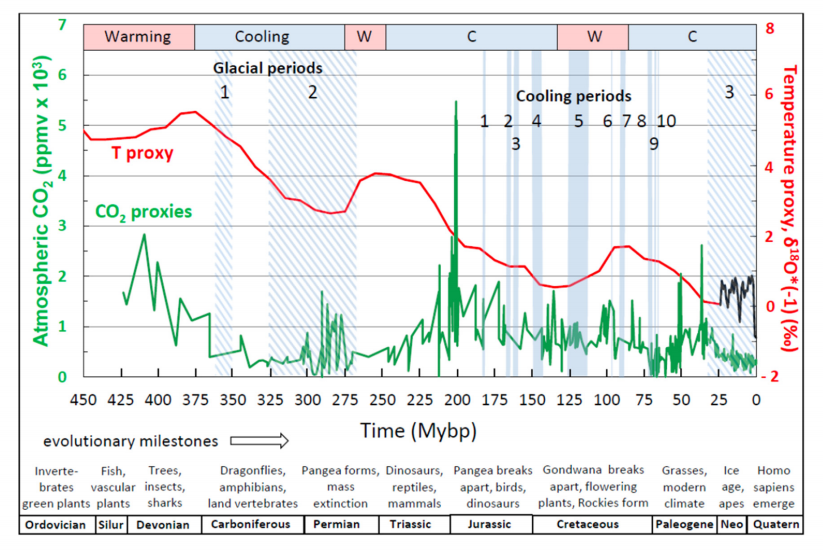
The 0.8°C estimate is based on the idea that greenhouse gases like CO2 ‘saturate’ at certain levels and their warming effect falls off a logarithmic cliff. This idea has the advantage of explaining climate records that stretch back 600 million years since CO2 levels have been up to 10-15 times higher in the past compared with the extremely low levels observed today. There is little if any long term causal link between temperature and CO2 over time. In the immediate past record there is evidence that CO2 rises after natural increases in temperature as the gas is released from warmer oceans.

Any argument that the Earth has a ‘boiling’ problem caused by the small CO2 contribution that humans make by using hydrocarbons is ‘settled’ by an invented political crisis, but is backed by no reliable observational data. Most of the fear-mongering is little more than a circular exercise using computer models with improbable opinions fed in, and improbable opinions fed out.

The three scientists use a simple formula using base-two logarithms to assess the CO2 influence on the atmosphere based on decades of laboratory experiments and atmospheric data collection. They demonstrate how trivial the effect on global temperature will be if humanity stops using hydrocarbons. After years wasted listening to Greta Thunberg, the message is starting to penetrate the political arena. In the United States, the Net Zero project is dead in the water if Trump wins the Presidential election. In Europe, the ruling political elites, both national and supranational, are retreating on their Net Zero commitments. Reality is starting to dawn and alternative political groupings emerge to challenge the comfortable insanity of Net Zero virtue signalling. In New Zealand, the nightmare of the Ardern years is being expunged with a roll back of Net Zero policies ahead of possible electricity black outs.

Only in Britain it seems are citizens prepared to elect a Government obsessed with self-inflicted poverty and deindustrialisation. The only major political grouping committed to scrapping Net Zero is the Nigel Farage-led Reform party and although it could beat the ruling Conservatives into second place in the popular vote, it is unlikely to secure many Parliamentary seats under the U.K.’s first-past-the-post electoral system. Only a few years ago the Labour leader Sir Keir Starmer, who thinks some women have penises, and his imbecilic Deputy Leader Angela Rayner, were bending the knee to an organisation that wanted to cut funding for the police and fling open the borders. The new British Parliament will have plenty of people who still support Net Zero and assorted woke woo woo, and the great tragedy is that they will still be found across most of the represented political parties.

See Also 

Delusions of Davos and Dubai


2024 Update: Fossil Fuels ≠ Global Warming

gas in hands

Previous posts addressed the claim that fossil fuels are driving global warming. This post updates that analysis with the latest (2023) numbers from Energy Institute and compares World Fossil Fuel Consumption (WFFC) with three estimates of Global Mean Temperature (GMT). More on both these variables below. Note: Previously these same statistics were hosted by BP.

WFFC

2023 statistics are now available from Energy Institute for international consumption of Primary Energy sources. Statistical Review of World Energy. 

The reporting categories are:
Oil
Natural Gas
Coal
Nuclear
Hydro
Renewables (other than hydro)

Note:  Energy Institute began last year to use Exajoules to replace MToe (Million Tonnes of oil equivalents.) It is logical to use an energy metric which is independent of the fuel source. OTOH renewable advocates have no doubt pressured EI to stop using oil as the baseline since their dream is a world without fossil fuel energy.

From BP conversion table 1 exajoule (EJ) = 1 quintillion joules (1 x 10^18). Oil products vary from 41.6 to 49.4 tonnes per gigajoule (10^9 joules).  Comparing this annual report with previous years shows that global Primary Energy (PE) in MToe is roughly 24 times the same amount in Exajoules.  The conversion factor at the macro level varies from year to year depending on the fuel mix. The graphs below use the new metric.

This analysis combines the first three, Oil, Gas, and Coal for total fossil fuel consumption world wide (WFFC).  The chart below shows the patterns for WFFC compared to world consumption of Primary Energy from 1965 through 2023.

The graph shows that global Primary Energy (PE) consumption from all sources has grown continuously over nearly 6 decades. Since 1965  oil, gas and coal (FF, sometimes termed “Thermal”) averaged 88% of PE consumed, ranging from 93% in 1965 to 82% in 2023.  Note that in 2020, PE dropped 21 EJ (4%) below 2019 consumption, then increased 31 EJ in 2021.  WFFC for 2020 dropped 24 EJ (5%), then in 2021 gained back 26 EJ to slightly exceed 2019 WFFC consumption. For the 59 year period, all net changes were increases from previous years and were:

Oil 203%
Gas 536%
Coal 182%
WFFC 246%
PE 297%
Global Mean Temperatures

Everyone acknowledges that GMT is a fiction since temperature is an intrinsic property of objects, and varies dramatically over time and over the surface of the earth. No place on earth determines “average” temperature for the globe. Yet for the purpose of detecting change in temperature, major climate data sets estimate GMT and report anomalies from it.

UAH record consists of satellite era global temperature estimates for the lower troposphere, a layer of air from 0 to 4km above the surface. HadSST estimates sea surface temperatures from oceans covering 71% of the planet. HadCRUT combines HadSST estimates with records from land stations whose elevations range up to 6km above sea level.

Both GISS LOTI (land and ocean) and HadCRUT4 (land and ocean) use 14.0 Celsius as the climate normal, so I will add that number back into the anomalies. This is done not claiming any validity other than to achieve a reasonable measure of magnitude regarding the observed fluctuations.[Note: HadCRUT4 was discontinued after 2021 in favor of HadCRUT5.]

No doubt global sea surface temperatures are typically higher than 14C, more like 17 or 18C, and of course warmer in the tropics and colder at higher latitudes. Likewise, the lapse rate in the atmosphere means that air temperatures both from satellites and elevated land stations will range colder than 14C. Still, that climate normal is a generally accepted indicator of GMT.

Correlations of GMT and WFFC

The next graph compares WFFC to GMT estimates over the decades from 1965 to 2023 from HadCRUT4, which includes HadSST4.

Since 1965 the increase in fossil fuel consumption is dramatic and monotonic, steadily increasing by 246% from 146 to 505 exajoules.  Meanwhile the GMT record from Hadcrut shows multiple ups and downs with an accumulated rise of 0.8C over 56 years, 6% of the starting value.

The graph below compares WFFC to GMT estimates from UAH6, and HadSST4 for the satellite era from 1980 to 2023 a period of 44 years.

In the satellite era WFFC has increased at a compounded rate of 1.5% per year, for a total increase of 97% since 1979. At the same time, SST warming amounted to 0.76C, or 5% of the starting value.  UAH warming was 0.85C, or 6% up from 1979.  The temperature compounded rate of change is 0.1% per year, an order of magnitude less than WFFC.  Even more obvious is the 1998 El Nino peak and flat GMT since.

Summary

The climate alarmist/activist claim is straight forward: Burning fossil fuels makes measured temperatures warmer. The Paris Accord further asserts that by reducing human use of fossil fuels, further warming can be prevented.  Those claims do not bear up under scrutiny.

It is enough for simple minds to see that two time series are both rising and to think that one must be causing the other. But both scientific and legal methods assert causation only when the two variables are both strongly and consistently aligned. The above shows a weak and inconsistent linkage between WFFC and GMT.

Going further back in history shows even weaker correlation between fossil fuels consumption and global temperature estimates:

wfc-vs-sat

Figure 5.1. Comparative dynamics of the World Fuel Consumption (WFC) and Global Surface Air Temperature Anomaly (ΔT), 1861-2000. The thin dashed line represents annual ΔT, the bold line—its 13-year smoothing, and the line constructed from rectangles—WFC (in millions of tons of nominal fuel) (Klyashtorin and Lyubushin, 2003). Source: Frolov et al. 2009

In legal terms, as long as there is another equally or more likely explanation for the set of facts, the claimed causation is unproven. The more likely explanation is that global temperatures vary due to oceanic and solar cycles. The proof is clearly and thoroughly set forward in the post Quantifying Natural Climate Change.

Footnote: CO2 Concentrations Compared to WFFC

Contrary to claims that rising atmospheric CO2 consists of fossil fuel emissions, consider the Mauna Loa CO2 observations in recent years.


Despite the drop in 2020 WFFC, atmospheric CO2 continued to rise steadily, demonstrating that natural sources and sinks drive the amount of CO2 in the air.

See also: Nature Erases Pulses of Human CO2 Emissions

Temps Cause CO2 Changes, Not the Reverse