David Stockman: Resist the GreenMageddon, Part 3

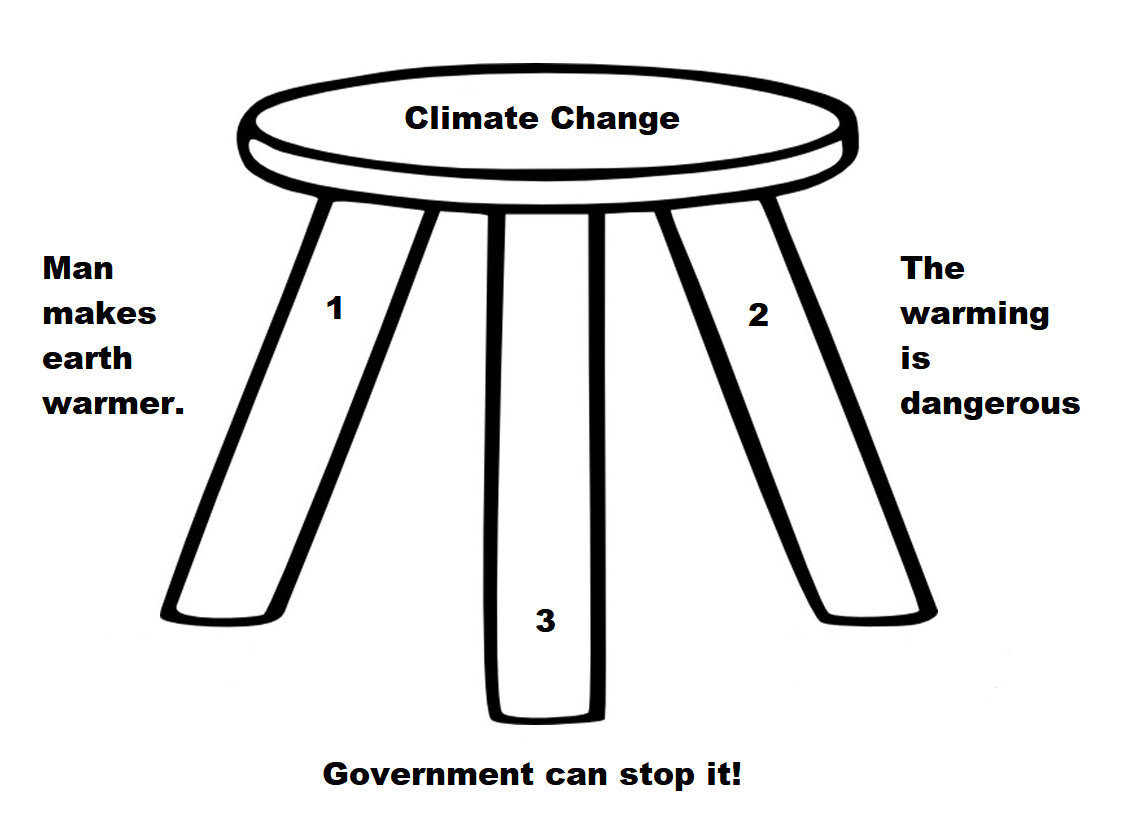
This post is the third of five to alert readers to a compilation of the scientific case against the claims of IPCC supporters and anti-fossil fuel activists. David Stockman provides the evidence and the arguments against the IPCC policy framework in a series of five essays published at International Man under the title The GreenMageddon and What It Means for You. I will state the five themes he develops in his essays, along with some excerpts and images to illustrate the main points. Here is an overview followed by the third theme.

Overview

The geological and paleontological evidence overwhelmingly says that today’s average global temperature of about 15 degrees C and CO2 concentrations of 420 ppm are nothing to fret about. Even if they rise to about 17–18 degrees C and 500–600 ppm by the end of the century, it may well balance or improve the lot of mankind.

After all, bursts of civilization during the last 10,000 years uniformly occurred during the red portions of the graph below. The aforementioned river civilizations—the Minoan, the Greco-Roman era, the Medieval flowering, and the industrial and technological revolutions of the present era. At the same time, the several lapses into the dark ages happened when the climate turned colder (blue).
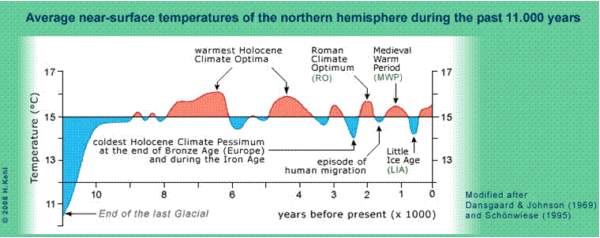
And that’s only logical. When it’s warmer and wetter, growing seasons are longer, and crop yields are better—regardless of the agricultural technology and practices of the moment. And it’s better for human and community health, too—most of the deadly plagues of history have occurred in colder climates, such as the Black Death of 1344–1350..

Yet, the Climate Crisis Narrative employs two deceptive devices which are contradicted by earth’s climate history:

a. Planetary temperatures have been far higher than today, both long ago (over 600 million years) and recently (last 10,000 years) with no doomsday loop occurring.

b.It is claimed global warming is a one-way street from rising GHGs, when in fact higher CO2 concentrations are a consequence and by-product, not a driver and cause, of the current naturally rising temperatures.

Again, the now “canceled” history of the planet knocks the CO2-driver proposition into a cocked hat. During the Cretaceous Period between 145 and 66 million years ago, a natural experiment provided complete absolution for the vilified CO2 molecule. During that period, global temperatures rose dramatically from 17 degrees C to 25 degrees C—a level far above anything today’s Climate Howlers have ever projected.

Alas, CO2 wasn’t the culprit. According to science, ambient CO2 concentrations actually tumbled during that 80-million-year expanse, dropping from 2,000 ppm to 900 ppm on the eve of the Extinction Event 66 million years ago.

3. Climatists weaponize natural events to gain social control for a global agenda. It’s About Power, Not Truth or Humanity.

You would think that this powerful countervailing fact would give the CO2 witch-hunters pause, but that would be to ignore what the whole climate change brouhaha is actually about. That is, it’s not about science, human health and well-being or the survival of planet Earth; it’s about politics and the ceaseless search of the political class and the apparatchiks and racketeers who inhabit the beltway for still another excuse to aggrandize state power.

Indeed, the climate change narrative is the kind of ritualized policy mantra that is concocted over and over again by the political class and the permanent nomenklatura of the modern state—professors, think-tankers, lobbyists, career apparatchiks, officialdom—in order to gather and exercise state power.

The Obvious Exploitation of Natural Events

Indeed, fabrication of false problems and threats that purportedly can only be solved by heavy-handed state intervention has become the modus operandi of a political class that has usurped near-complete control of modern democracy.

In doing so, however, the ruling elites have gotten so used to such unimpeded success that they have become sloppy, superficial, careless and dishonest. For instance, the minute we get a summer heatwave, these natural weather events are jammed into the global warming mantra with nary a second thought by the lip-syncing journalists of the MSM.

Heatwaves

Yet there is absolutely no scientific basis for all this tom-tom beating. In fact, NOAA publishes a heatwave index based on extended temperature spikes, which last more than 4 days and which would be expected to occur once every 10 years based on the historical data.

As is evident from the chart below, the only true heatwave spikes we have had in the last 125 years were during the dust bowl heat waves of the 1930s. The frequency of mini-heatwave spikes since 1960 is actually no greater than it was from 1895 to 1935.

Hurricanes

Likewise, all it takes is a good Cat 2 hurricane and they are off to the races, gumming loudly about AGW. Of course, this ignores entirely NOAA’s own data as summarized in what is known as the ACE (accumulated cyclone energy) index.

This index was first developed by renowned hurricane expert and Colorado State University professor William Gray. It uses a calculation of a tropical cyclone’s maximum sustained winds every six hours. The latter is then multiplied by itself to get the index value and accumulated for all storms for all regions to get an index value for the year as shown below for the past 170 years (the blue line is the seven-year rolling average).

That is to say, hundreds of billions of dollars of insurance coverage were then and still is being written with ACE as a crucial input. Yet, if you examine the 7-year rolling average (blue line) in the chart, it is evident that ACE was as high or higher in the 1950s and 1960s as it is today and that the same was true of the late 1930s and the 1880–1900 periods. [See also Bill Gray: H20 is Climate Control Knob, not CO2]

If global warming were generating more hurricanes as the MSM constantly maintains, the increase would be uniform across all of these subregions, but it’s clearly not. Since the year 2000, for example,

  • the Eastern Caribbean has had a modest increase in both tropical storms and higher-rated Cats relative to most of the past 170 years;
  • the Western Caribbean has not been unusual at all, and, in fact, has been well below the counts during the 1880–1920 period; and
  • the Bahamas/Turks & Caicos region, since 2000, has actually been well weaker than during 1930–1960 and 1880–1900

The actual truth of the matter is that Atlantic hurricane activity is generated by atmospheric and ocean temperature conditions in the eastern Atlantic and North Africa. Those forces, in turn, are heavily influenced by the presence of an El Niño or La Niña in the Pacific Ocean. El Niño events increase the wind shear over the Atlantic, producing a less-favorable environment for hurricane formation and decreasing tropical storm activity in the Atlantic basin. Conversely, La Niña causes an increase in hurricane activity due to a decrease in wind shear.

These Pacific Ocean events, of course, have never been correlated with the low level of natural global warming now underway.

The number and strength of Atlantic hurricanes may also undergo a 50- to 70-year cycle known as the Atlantic multidecadal oscillation. Again, these cycles are unrelated to global warming trends since 1850.

Wildfires

As it happens, the same story is true with respect to wildfires—the third category of natural disasters that the Climate Howlers have glommed onto. But in this case, it’s bad forestry management, not man-made global warming, which has turned much of California into a dry wood fuel dump.

But don’t take our word for it. This comes from the George Soros-funded Pro Publica, which is not exactly a right-wing tin foil hat outfit. It points out that environmentalists had shackled federal and state forest management agencies so much so that today’s tiny “controlled burns” are but an infinitesimal fraction of what Mother Nature herself accomplished before the helping hand of today’s purportedly enlightened political authorities arrived on the scene.

“Academics believe that between 4.4 million and 11.8 million acres burned each year in prehistoric California. Between 1982 and 1998, California’s agency land managers burned, on average, about 30,000 acres a year. Between 1999 and 2017, that number dropped to an annual 13,000 acres. The state passed a few new laws in 2018 designed to facilitate more intentional burning. But few are optimistic this, alone, will lead to significant change.

We live with a deathly backlog. In February 2020, Nature Sustainability published this terrifying conclusion: California would need to burn 20 million acres—an area about the size of Maine—to restabilize in terms of fire.”

Among other proofs that industrialization and fossil fuels aren’t the culprit is the fact that researchers had shown that when California was occupied by indigenous communities, wildfires would burn up some 4.5 million acres a year. That’s nearly six times the 2010–2019 period, when wildfires burned an average of just 775,000 acres annually in California.

Beyond the untoward clash of all of these natural forces of climate and ecology with misguided government forest and shrubland husbandry policies, there is actually an even more dispositive smoking gun, as it were.

To wit, the Climate Howlers have not yet embraced the apparent absurdity that the planet’s purportedly rising temperatures have targeted the Blue State of California for special punishment. Yet when we look at the year-to-date data for forest fires, we find that unlike California and Oregon, the US as a whole is now experiencing the weakest fire years since 2010.

You just can’t go from 2.7 million burned acres in 2010 to 7.2 million acres in 2012, then back to 2.7 million acres in 2014, then to 6.7 million acres in 2017, followed by just 3.7 million acres in 2020—and still argue along with the Climate Howlers that the planet is angry.

National fire data year to date:

On the contrary, the only real trend evident is that on a decadal basis during recent times, average forest fire acreage in California has been slowly rising, owing to the above-described dismal failure of government forest management policies. But even the mildly rising average fire acreage trend since 1950 is a rounding error compared to the annual averages from prehistoric times, which were nearly 6 times greater than during the most recent decade.

Nor is this lack of correlation with global warming just a California and US phenomenon. As shown in the chart below, the global extent of drought, measured by five levels of severity, with brown being the most extreme, has shown no worsening trend at all during the past 40 years.

Global Extent of Five Levels Of Drought, 1982–2012

Public Discourse Contaminated by Imaginary Climate Crisis Notion

This brings us to the gravamen of the case. To wit, there is no climate crisis whatsoever, but the AGW hoax has so thoroughly contaminated the mainstream narrative and the policy apparatus in Washington and capitals all around the world that contemporary society is fixing to commit economic hari-kari.

That’s because, contrary to the phony case that the rise of fossil fuel use after 1850 has caused the planetary climate system to become unglued, there has been a massive acceleration of global economic growth and human well-being. One essential element behind that salutary development has been the massive increase in the use of cheap fossil fuels to power economic life.

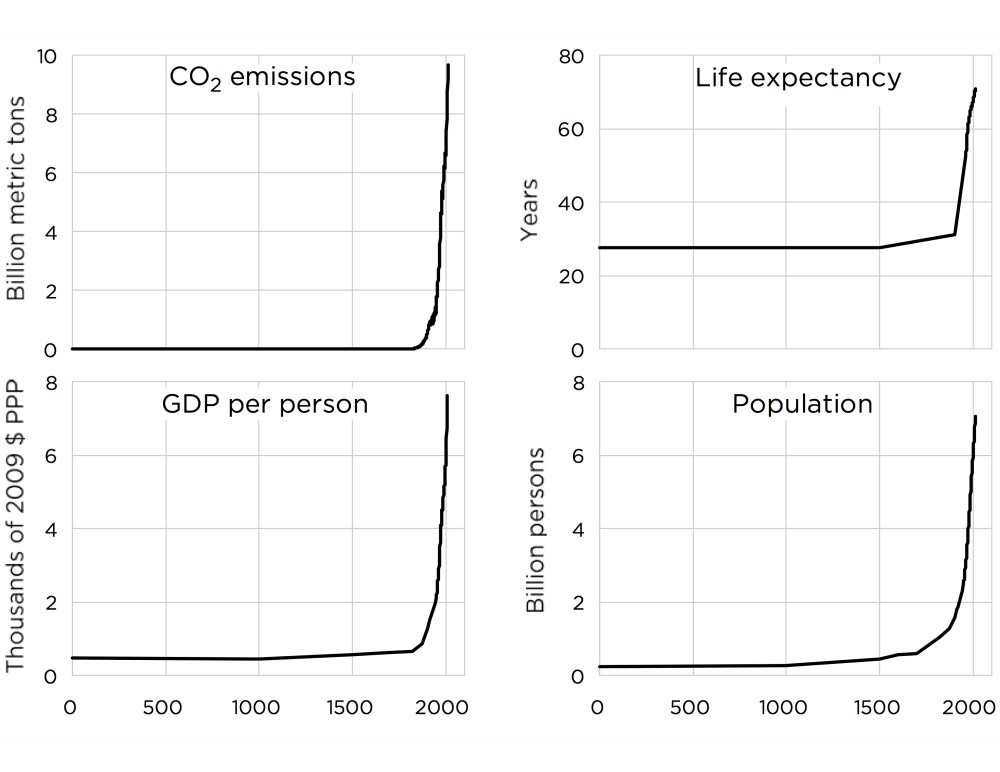
The chart below could not be more dispositive. During the pre-industrial era between 1500 and 1870, real global GDP crawled along at just 0.41% per annum. By contrast, during the past 150 years of the fossil fuel age, global GDP growth accelerated to 2.82% per annum–or nearly 7 times faster.

This higher growth, of course, in part resulted from a larger and far healthier global population made possible by rising living standards. Yet, it wasn’t human muscle alone that caused the GDP level to go parabolic, as per the chart below.

It was also due to the fantastic mobilization of intellectual capital and technology. One of the most important vectors of the latter was the ingenuity of the fossil fuel industry in unlocking the massive trove of stored work that Mother Nature extracted, condensed, and salted away from the incoming solar energy over the long warmer and wetter eons of the past 600 million years.

Yes, that dramatic rise in prosperity in generating fossil fuel consumption has given rise to a commensurate increase in CO2 emissions. But contrary to the Climate Change Narrative, CO2 is not a pollutant!

As we have seen, the correlated increase in CO2 concentrations—from about 290 ppm to 415 ppm since 1850—amounts to a rounding error in both the long-trend of history and in terms of atmospheric loadings from natural sources.

As to the former, concentrations of less than 500 ppm are only recent developments of the last ice age, while during prior geologic ages concentrations reached as high as 2400 ppm.

Likewise, the oceans contain an estimated 37,400 billion tons of suspended carbon, land biomass has 2,000-3,000 billion tons and the atmosphere contains 720 billion tons of CO2. The latter alone is more than 20X current fossil emissions (35 billion tons) shown below.

Of course, the opposite side of the equation is that oceans, land and atmosphere absorb CO2 continuously so the incremental loadings from human sources is very small. That also means that even a small shift in the balance between oceans and air would cause a much more severe rise/fall in CO2 concentrations than anything attributable to human activity.

But since the Climate Howlers falsely imply that the “pre-industrial” level of 290 parts per million was extant since, well, the Big Bang and that the modest rise since 1850 is a one-way ticket to boiling the planet alive, they obsess over the “sources versus sinks” balance in the carbon cycle for no valid reason whatsoever.
 

David Stockman: Resist the GreenMageddon, part 2

This post is the second of five to alert readers to a compilation of the scientific case against the claims of IPCC supporters and anti-fossil fuel activists. David Stockman provides the evidence and the arguments against the IPCC policy framework in a series of five essays published at International Man under the title The GreenMageddon and What It Means for You. I will state the five themes he develops in his essays, along with some excerpts and images to illustrate the main points. Here is an overview followed by the second theme.

Overview

The assembled governments of the world meeting in Glasgow for COP26 are fixing to declare war on the backbone of modern economic life and the abundance and relief from human poverty and suffering with which it has gifted the world. We are referring, of course, to its agenda to essentially drive fossil fuels—which currently make up 80% of BTU consumption—from the global energy supply system over the next several decades.

All of this is being done in the name of preventing global temperatures from rising by 1.5 degrees Celsius above “pre-industrial” levels.

But when it comes to the crucial matter of exactly which pre-industrial baseline level, you can see the skunk sitting on the woodpile a mile away. That’s because, as we showed in Part 1, global temperatures have been higher than the present—often by upward of 10–15 degrees Celsius—for most of the past 600 million years!

2.  During our Holocene epoch, for the past 11.6 thousand years, earth’s climate has changed often with multiple periods, both warmer and and cooler than the present. The modern warming period since 1850 was preceded by the Medieval, the Roman, and the Minoan warming periods–each was cooler than the previous, and all of them warmer than the present. The last 1.5C of warming has been a boon to human agriculture and civilization, and the next 1.5C is likely to also be beneficial.

Moreover, during the more recent era since the great extinction event 66 million years ago, the decline in temperatures has been almost continuous, touching lower than current levels only during the 100,000-year glaciation cycles of the last 2.6 million years of the Pleistocene ice ages. Not unsurprisingly, therefore, the Climate Howlers have chosen to ignore 599,830,000 of those years in favor of the last 170 years (since 1850) alone.

Still, the juxtaposition of the temperature record of the last 66 million years and the sawed-off charts of the climate alarmists tells you all you need to know: to wit, they have simply banished all the “inconvenient” science from the narrative.

Global Average Temperature Trend, 1850–2018 per the Global Warming Narrative

Needless to say, there is a reason why they start the graphs in 1850, and it is not just because it was the tail-end of the Little Ice Age (LIA), from which low point the temperature trend might well climb upwards for a time as climatic conditions normalized.

Actually, the intellectual deception is far more egregious. To wit, the Climate Howlers want you to believe the absolutely anti-scientific notion that the global climate was in general equipoise until the coal barons and the John D. Rockefeller’s of the mid-19th century set off a dangerous chain of climate dysfunction as they brought the stored solar energy embedded in coal and petroleum to the surface and released its combustion by-products–especially CO2—into the ambient air.

The Risible Myth Of Climate Equipoise

The global warming narrative is the most risible manifestation yet of this leap into self-righteous disregard for evidence, logic, and plausibility. For when you step back from the shrill, sanctimonious narrative that passes for the global warming catechism, the ridiculousness of its central claim that industrial society is destroying the climatic equipoise of the planet is self-evident.

For crying out loud, there has never been equipoise!

What there’s been is 4.5 billion years of wildly oscillating and often violent geologic evolution and climate disequilibrium owing to manifold natural causes, including:

  • plate tectonics that has sometimes violently impacted climate systems, especially the assembly and breakup of Pangaea between 335 million and 175 million years ago, and the continuous drift of the present-day continents thereafter;
  • asteroid bombardments;
  • the 100,000-year cycles of the Earth’s orbital eccentricity (it gets colder when it’s at maximum elongation);
  • the 41,000-year cycles of the Earth’s tilt on its axis, which oscillates between 22.1 and 24.5 degrees and thereby impacts the level of solar intake;
  • the wobble or precession of the earth’s rotation which impacts climate over the course of its 26,000 year cycles;
  • the recent 150,000 year glaciation and inter-glacial warming cycles;
  • the 1500 year sunspot cycles, where earth temperatures fall during solar minimums like the Maunder Minimum of 1645-1715 at the extreme of the LIA when sunspot activity virtually ceased.

The natural climate change now underway is, therefore, the product of powerful planetary forces that long predated the industrial age and which massively exceed the impact of industrial era emissions. As we indicated in Part 1, that the present conflation of these forces has resulted in a warming cycle is nothing new—warming has happened repeatedly even in modern times.  Contrary to the false claims of the Climate Howlers,

Current mildly rising temperatures are in keeping with the historical truth that warmer is better for humanity and most other species, too.

Continued planetary equipoise requires no interventions whatsoever by the state to retard the use of prosperity-fostering fossil fuels or to subsidize and accelerate the adoption of high-cost renewable energy.

So the question recurs. What “pre-industrial” temperature baseline can be picked out of all these eras and all these climate change forces that would be anything but an arbitrary political, not science-based, choice?

After all, the science is agnostic. Mother Earth has weathered every kind of climate disequilibrium at both the colder and warmer ends of the spectrum and, crucially, experienced the eventual release of countervailing forces that took both temperature and CO2 levels back in the other direction.

We think the planet’s climatic resilience is especially evident in the fact that, after five major ice ages, warming forces returned with robust energy until they reversed again, thereby proving there is no doomsday loop that leads in linear fashion to inexorable catastrophe as is embedded in the climate models.

As we noted, during the Holocene Optimum, many of the Earth’s great ancient civilizations began and flourished because conditions were especially hospitable for agriculture and the generation of economic surpluses. The Nile River, for instance, had an estimated three times its present volume, indicating a much larger tropical region. In fact, 6,000 years ago, the Sahara was far more fertile than today and supported large herds of animals, as evidenced by the Tassili N’Ajjer frescoes of Algeria.

That is to say, warmer and wetter was far better for mankind than prior bouts of cold.

Indeed, prior to the post-1850 warming, there had been five distinct warming periods (red areas) since the last glaciers with temperatures above current levels. Never, of course, does this chart see the light of day in the mainstream climate change narrative.

Also, during this period, the Vikings established settlements in Iceland and Greenland. Long before the industrial era, Greenland was so warm, wet, and fertile that major colonization occurred after AD 980. At its peak, it included upward of 10,000 settlers, extensive farming, numerous Catholic churches, and a parliament that eventually voted for union with Norway.

Nor was the reversal from the hospitable climate of the Viking era settlements in Greenland merely a regional anomaly has some Climate Howlers have claimed. During the Medieval Warm period, great civilizations flourished in many other areas, which then became uninhabitable.

For instance, a great drought in the American southwest occurred between 1276 and 1299. Grand settlements like those in Chaco Canyon and Mesa Verde were abandoned. Tree-ring analysis has identified a period of no rain between 1276 and 1299 in these areas.

Needless to say, these extreme weather perturbations were not caused by industrial activity because there was none, and they occurred during a period when it was getting colder, not warmer!

From 1550 to AD 1850, global temperatures were at their coldest since the beginning of the Holocene 12,000 years ago. Hence the designation of this period as the Little Ice Age (LIA).

Self-evidently, when the LIA finally ended around 1850, global temperatures were at a modern nadir (no wonder the Climate Howlers start their charts in the middle of the 19th century).

Mann’s Attempt to Erase Pre-Industrial Warming

But the significance of this fact goes well beyond cropping the temperature charts at 1850. Actually, in order to erase the above-described oscillations of the modern climate, climate change advocates have actually gone so far as to literally attempt to airbrush them out of existence.

We are referring to what we call the climate “Piltdown Mann,” named for one Michael Mann, a newly minted Ph.D. (1998) who became the International Panel on Climate Change’s (IPCC) lead investigator and advocate for what famously became the “hockey stick” proof of global warming.

The latter, of course, was the blatant fraud embedded in the image that Al Gore made famous in his propagandistic movie “An Inconvenient Truth” in 2006. Suffice to say, the purpose of the hockey stick was to wipe out all the evidence summarized above.

That is, in lieu of the planet’s long-term and recent severe climate oscillations, the IPCC posited an entirely opposite thesis. Namely, for the pre-industrial millennium before 1900, global temperatures were nearly as flat as a board.

The only problem is that Mann’s graph was as phony as the Piltdown Man itself—the latter famously being confected in England in 1912 and conveniently “discovered” by an amateur anthropologist who claimed it was the missing link in human evolution. At length, it was shown that the fossil was a forgery; it consisted of a modern human cranium and an orangutan jaw with filed-down teeth.

In the case of the graph, Professor Mann and his accomplices at the IPCC doctored the evidence, used misleading data from southwestern US tree rings in lieu of abundant alternative data showing the contrary, and jiggered their computer models to generate pre-specified results.

That is, the models were produced by goal-seeking on the part of Mann and his associates to prove the man-made warming thesis. In essence, this was accomplished by simply pasting modern temperature records showing steady increases on top of a pre-industrial baseline that never happened.

The phony pre-industrial baseline is depicted by the yellow area in the graph for the period 1400–1900. The hockey stick-like eruption of the yellow space after 1900, of course, allegedly depicts the man-made temperature rise since the onset of the hydrocarbon age.

By contrast, the corrected version is in blue. In this version—which comports with the history of climate oscillations cited above—there is no hockey stick because the shaft never happened; it was invented by computer model manipulations, not extracted from the abundant scientific data on which the Mann study was allegedly based.

So the question is answered. The mid-19th century is exactly the wrong baseline from which to measure global temperature change during modern times.

The blue area of the chart, in fact, is the smoking gun that obliterates the whole predicate on which COP26 is being foisted upon the everyday people of the world.

Background:  See Rise and Fall of the Modern Warming Spike

The first graph appeared in the IPCC 1990 First Assessment Report (FAR) credited to H.H.Lamb, first director of CRU-UEA. The second graph was featured in 2001 IPCC Third Assessment Report (TAR) the famous hockey stick credited to M. Mann.

David Stockman: Resist the GreenMageddon, Part 1

This post is the first of five to alert readers to a compilation of the scientific case against the claims of IPCC supporters and anti-fossil fuel activists. David Stockman provides the evidence and the arguments against the IPCC policy framework in a series of five essays published at International Man under the title The GreenMageddon and What It Means for You. I will state the five themes he develops in his essays, along with some excerpts and images to illustrate the main points. Here is an overview followed by the first theme.

Overview

With COP26 now underway, it’s not too soon to start clanging the alarm bells—not about climate catastrophe, of course, but about the stupidest act of the assembled nations since Versailles, when the vindictive WWI victors laid the groundwork for the catastrophes of depression, WWII, the Holocaust, Soviet tyranny, the Cold War and Washington’s destructive global hegemony, all of which followed hard upon the next.

Politicians and their allies in the mainstream media, think tanks, lobbies and Big Business (with its cowardly sleep-walking leaders) are fixing to do nothing less than destroy the prosperity of the world and send global life careening into a modern economic Dark Ages.

And worse still, it’s being done in the service of a bogus climate crisis narrative that is thoroughly anti-science and wholly inconsistent with the actual climate and CO2 history of the planet.

1. During the past 600 million years, the earth has rarely been as cool as at present, and almost never has it had as low CO2 concentrations as the 420 ppm level that today’s climate howlers decry.

In fact, according to the careful reconstructions of actual earth scientists who have studied ocean sediments, ice cores and the like, there have been only two periods encompassing about 75 million years (13% of that immensely long 600 million year stretch of time) where temperatures and CO2 concentrations were as low as it present. These were the Late Carboniferous/Early Permian time from 315 to 270 million years ago and the Quaternary Period, which hosted modern man 2.6 million years ago.  You might say, therefore, that the possibility of a warmer, CO2-richer environment is a case of planetary “been there, done that”.

And it is most certainly not a reason to wantonly dismantle and destroy the intricate, low-cost energy system that is the root source of today’s unprecedented prosperity and human escape from poverty and want.

But that’s hardly the half of it. What actually lies smack in the center of our warmer past is a 220-million-year interval from 250 million years ago through the re-icing of Antarctica about 33 million years ago that was mainly ice-free.

As shown by the blue line in the chart below, during most of that period (highlighted in the brown panels), temperatures were up to 12C higher than at present, and Mother Earth paid no mind to the fact that she lacked polar ice caps or suitable habitats for yet un-evolved polar bears.

Global Temperature And Atmospheric CO2 Over Geologic Time

Moreover, the science behind this isn’t a matter of academic armchair speculation for the simple reason that it has been powerfully validated in the commercial marketplace. That is, trillions of dollars have been deployed in the last century in the search for hydrocarbons, based on immensely complicated petroleum engineering research, theory and geologic models. Oil drillers weren’t throwing darts at a wildcatter’s wall but were coincidentally proving these “facts” of climate history are correct, given that they led to the discovery and extraction of several trillions of BOEs (barrels of oil equivalent).
Consequently, it is solidly estimated by industry experts that today’s petroleum deposits were roughly formed as follows:

    • About 70% during the Mesozoic age (brown panels, 252 to 66 million years ago) which was marked by a tropical climate, with large amounts of plankton in the oceans;
    • 20% was formed in the dryer, colder Cenozoic age (last 65 million years);
    • 10% were formed in the earlier warmer Paleozoic age (541 to 252 million years ago).

Indeed, at the end of the day, petroleum engineering is rooted in climate science because it was climate itself that produced those economically valuable deposits.

And a pretty awesome science it is. After all, billions of dollars have been pushed down the wellbores in up to two miles of ocean waters and 40,000 feet below the surface in what amounts to an amazingly calibrated and targeted search for oil-bearing needles in a geologic haystack.

Yet during the Cretaceous, CO2 levels actually went down while temperatures were rising sharply. That’s the very opposite of the Climate Alarmists’ core claim that it is rising CO2 concentrations which are currently forcing global temperatures higher.

Moreover, we are not talking about a marginal reduction in CO2 concentrations in the atmosphere. Levels actually dropped sharply from about 2,000 ppm to 900 ppm during that 80 million year stretch. This was all good for hydrocarbon formation and today’s endowment of nature’s stored work, but it was also something more.

To wit, it was yet another proof that planetary climate dynamics are far more complicated and ridden with crosscurrents than the simple-minded doom loops now being used to model future climate states from the current far lower temperature and CO2 levels.

It is surely one of the great ironies of our times that today’s fanatical crusades against fossil fuels are being carried out with not even a nod to the geologic history that contradicts the entire “warming” and CO2 concentration hysteria and made present energy consumption levels and efficiencies possible.

That is to say, the big, warm and wet one (the Mesozoic) got us here.

True global warming is not the current and future folly of mankind; it is the historical enabler of present-day economic blessings. Yet, here we are on the eve of COP26, manically focused on reducing emissions to the levels required to keep global temperatures from rising more than 1.5 degrees Celsius from preindustrial levels.

If your brain is not addled by the climate change narrative, the very term rings a resoundingly loud bell. That’s because there have been on the order of 20 distinct “ice ages” and interglacial warming periods during the Pleistocene, the latest of which ended about 18,000 years ago and from which we have been digging out ever since.

In contrast to today’s climate models, Mother Nature clearly did not go off the rails in some kind of linear doomsday loop of ever-increasing temperatures and without any hectoring from Greta, either. Actually, Greenland got all frozen up and thawed several more times thereafter.

Needless to say, the Holocene Optimum 8,000 years ago is not the “preindustrial” baseline from which the Climate Howlers are pointing their phony hockey sticks. In fact, other studies show that, even in the Arctic, it was no picnic time for the polar bears. Among 140 sites across the western Arctic, there is clear evidence for conditions that were warmer than now at 120 sites. At 16 sites for which quantitative estimates have been obtained, local temperatures were on average 1.6 °C higher during the optimum than they are today.

Say what? Isn’t that the same +1.6 degrees C above current levels that the COP26 folks are threatening to turn off the lights of prosperity to prevent?

In any event, what did happen was far more beneficent. To wit, the warmer and wetter Holocene Optimum and its aftermath gave rise to the great river civilizations 5,000 years ago, including the Yellow River in China, the Indus River in the Indian subcontinent, the Tigris-Euphrates and the Nile River civilizations among the most notable.

Stated differently, that +1.6 degrees C was reflective of the climate-based catalyzing forces that actually made today’s world possible. From the abundances of the river civilizations, there followed the long march of agriculture and the economic surpluses and abundance that enabled cities, literacy, trade and specialization, advancement of tools and technology and modern industry—the latter being the ultimate human escape from a life based on the back muscles of man and his domesticated animals alone.

As it happens, when one of the previous “preindustrial” warming eras (the Roman Warming) was coming to an end in the late 4th century AD, St. Jerome admonished the faithful “never look a gift horse in the mouth.”

Yet that’s exactly what the assembled nations will be doing at COP26.


Climate Lobby Crushed Debate

Tim Black writes at Spiked How the climate lobby crushed debate.  Excerpts in italics with my bolds and added images.

Anyone who dissents from stringent climate policies will be branded an enemy of The Science.

COP26 is an extravaganza of ideological conformity. From the 30,000 delegates and heads of state sequestered in the ‘blue zone’ to the NGOs, academics and green businesses exhibiting in the public ‘green zone’, the message is the same. There is nothing to debate anymore. The climate catastrophe is coming. Now is the time for action.

Similar sentiments abound outside COP26, where the protesters are gathered. There the likes of young eco-millenarian Greta Thunberg also claim that the end is nigh, that the time for debate is over. Or as the Swedish teenager herself put it during a protest on Sunday, there’s no need for any more of this ‘blah, blah, blah’.

This is essentially what all those in and around COP26 are saying. That, in effect, there is nothing to debate anymore. And so, over the next few days, Western-led policymakers, angrily cheered on by protesters, will try to decide our futures for the next few decades. They will regulate, restrict and limit. And they will be able to do so without dissent or debate.

How have we got here? How have we ended up at a point where debating climate change has become nigh-on impossible? The answer lies principally in the use and abuse of the authority of science. The standard justification for shutting down those challenging the alarmist climate-change narrative amounts, effectively, to saying ‘the science has spoken’.

This was clear in the run-up to COP26, when Mark Lynas, a long-time environmentalist campaigner and now a visiting fellow at Cornell University, published a widely reported-on study asserting that the scientific consensus that humans are altering the climate is now agreed upon by 99.9 per cent of scientists. That’s how certain The Science now is. Not just 97 to 98 per cent certain, as it used to be, but 99.9 per cent certain. ‘It is really case closed’, said Lynas. ‘There is nobody of significance in the scientific community who doubts human-caused climate change.’

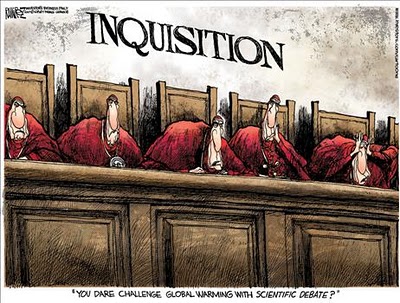
‘Case closed.’ No ‘doubts’ and no appeal. These are revealing words. Climate change has long since ceased to be an issue to be addressed, or a set of challenges to be overcome. It is now the revealed truth, the God-like judgement around which we must organise the entirety of societal life. To question this truth is tantamount to apostasy. Hence Lynas calls for any remaining heretics to be censored, urging Facebook and Twitter ‘to look at their algorithms and policies’ to root out ‘climate misinformation’.

Indeed, those daring to question any aspect of the alarmist narrative are now routinely dismissed not as heretics, but as ‘deniers’ – a term which morally equates those who question, say, certain decarbonisation policies with anti-Semites who deny that the Holocaust happened.

Take the experience of statistician and sceptical environmentalist, Bjorn Lomborg. Earlier this year he was invited to give a public lecture at Duke University, only to be met by high-profile calls for it to be cancelled from Duke professors and assorted climate activists. Duke held its nerve, and the lecture went ahead, but not without Lomborg being denounced as a ‘professional climate denier’ – and all because he questions the economic wisdom of certain aspects of climate-change policymaking.

Or take the decision of the BBC in 2018 to ban, effectively, any debate over climate change. This decision followed activists’ outcry over its 2014 decision to allow Lord Lawson, a former chancellor of the exchequer and a critic of climate alarmism, to appear on Radio 4’s Today programme. The BBC said it had got its coverage of climate change ‘wrong too often’ and told staff: ‘You do not need a “denier” to balance the debate.’

Now even those who are concerned about climate change, but who ‘downplay’, as the Independent put it, ‘the need for immediate and radical cuts to greenhouse gas emissions’, are being accused of denialism. Apparently, ‘delay is the new denial’.

Indeed, influential climate scientist Michael Mann argues that anyone who inhibits the need for drastic action right this very moment, perhaps by talking hopefully of ‘adaptation’, ‘geoengineering’ or ‘carbon capture’, is just a climate denier in optimist’s clothing. ‘The greatest threat’, concludes one politician, ‘is now posed by those who purport to accept the scientific consensus, but refuse to respond at the pace science demands’.

This demented insistence that The Science has spoken, that it has even issued demands, and that all those not bowing down before it are ‘denying’ its truth, rests on a wilful misunderstanding of science and the role it ought to play in political debate.

All scientific claims should be subject to contestation, even those that many people happen to agree on. After all, there is sometimes a fine line between consensus and groupthink. The views of scientists and policymakers would surely be strengthened, not undermined, by rigorous public debate. But even if everyone takes as read that climate change is real and a problem, that is still not the end of the debate.The numerous branches of scientific inquiry that constitute climate science can tell us many things about our changing environment. They can tell us about the complex interaction of sea and air temperatures. They can tell us about the state of biodiversity in our oceans and on our land. They can tell us about mankind’s impact on the climate.

But they can’t tell us what energy policies to pursue. They can’t tell us what transport policies to implement. They can’t, in short, tell us what we ought to do. That is something only we can decide. And to do so we need to be able to challenge and question the alarmist narrative. We need to be allowed to scrutinise those peddling certain approaches to climate change. And we need to be able to do so without being likened to Holocaust deniers, banned from social media or No Platformed by the BBC.

We need, in short, to be free to debate climate change. We need more ‘blah, blah, blah’.

Two Sides of the Same Coin


COP Cake is Already Baked


Pat Buchanan writes at his blog  Is Failure Baked in the Cake at Glasgow?  Excerpts in italics with my bolds. and added images.

Consider. The world’s largest emitter of carbon dioxide is China, which burns half of the world’s coal and is building new coal-fired plants even as the 30,000 summiteers gather in Glasgow… Neither Chinese President Xi Jinping nor Russian President Vladimir Putin will even be present in Glasgow.

“Colossal Stakes as Leaders Meet to Talk Climate,” ran the headline.  They topped the lead news story in Sunday’s New York Times, the opening line of which set the tone for Glasgow: “The future is on the line.”

“As presidents and prime ministers arrive in Glasgow this week for a pivotal climate summit, the outcome will determine, to a large extent, how the world’s seven billion people will survive on a hotter planet and whether far worse levels of warming can be averted …

“Already, the failure to slow rising temperatures — brought on by the burning of oil, gas and coal — has led to deadly floods, fires, heat, and drought around the world.”

The hype is on. And the establishment media are playing their assigned role — portraying a failure at Glasgow as a guarantee of the looming apocalypse.

The theology of the climate crisis runs like this.

The planet has warmed by 1.1 degree Celsius since the Industrial Revolution. If warming rises to more than 1.5 degrees Celsius above 1900 levels, more and more terrible weather disasters will occur: wildfires, hurricanes of growing severity, droughts, coastal and river flooding, and islands sinking into the sea.

The only way to stave off “climate catastrophe” is for all nations to cut carbon emissions radically now and for the world to reach net zero emissions by midcentury.

A fast phaseout of the major emitters of carbon dioxide — the burning of coal, oil and gas to heat homes, run cars and generate power — and replacement of these fossil fuels with clean energy — solar, wind, nuclear — is a moral and political imperative.

But if such a radical transformation of national economies is the only way to avert the impending crisis, we should brace ourselves and prepare for that crisis. For there is no way the demanded changes in energy consumption are going to be made by 2030.

Consider the Facts on the Ground

The world’s largest emitter of carbon dioxide is China, which burns half of the world’s coal and is building new coal-fired plants even as the 30,000 summiteers gather in Glasgow.

China was given a license in the Paris climate accord of 2015 to burn all the coal it wishes until 2030, after which it has agreed to begin reducing carbon emissions. But the idea that China can or will convert in a few decades to wind, solar and nuclear power to run the world’s largest manufacturing plant seems preposterous.

The U.S., the world’s second largest emitter of carbon dioxide, gets 81% of its energy from oil, coal and natural gas. We depend on those fuels to heat our homes, run our vehicles and power our industry.

In his Build Back Better bill, Biden inserted a provision that would have imposed annually rising taxes on carbon producers and used the revenue to reward companies that reduced their reliance on fossil fuels.  The proposal had to be pulled out, lest it drag Biden’s entire bill down to defeat. Lest we forget, Sen. Joe Manchin is from West Virginia.

India, the world’s third largest emitter of greenhouse gases, is also, like China, dependent on coal. But, though its population is as large as China’s, India is behind China industrially, and the standard of living of its 1.4 billion people is below that of China.

To demand that India begin to end its burning of coal and rely more on solar and wind is to demand that New Delhi accept a future where India’s standard of living remains lower than that of China.

As for Russia, the fourth largest emitter of carbon dioxide, it is rich in fossil fuels and the leading supplier of natural gas to Europe. But Moscow manipulates the supplies of its natural gas to its customers for reasons of both revenue and politics.

Neither Chinese President Xi Jinping nor Russian President Vladimir Putin will even be present in Glasgow.

Saudi Arabia, the Gulf states and other OPEC nations depend for their national income on oil exports. If fossil fuels become forbidden fuels, what is to become of these nations?

Will they accept a future where their primary natural resource is gradually outlawed by the rest of the world? Will they be content to rely on the industrialized world to provide them with windmills and solar panels to power their economies?

The world’s losers from this Glasgow summit are likely to be the billions of people who will never know the benefits of fossil fuels that produced the Industrial Revolution and created the affluent societies of the 20th century.


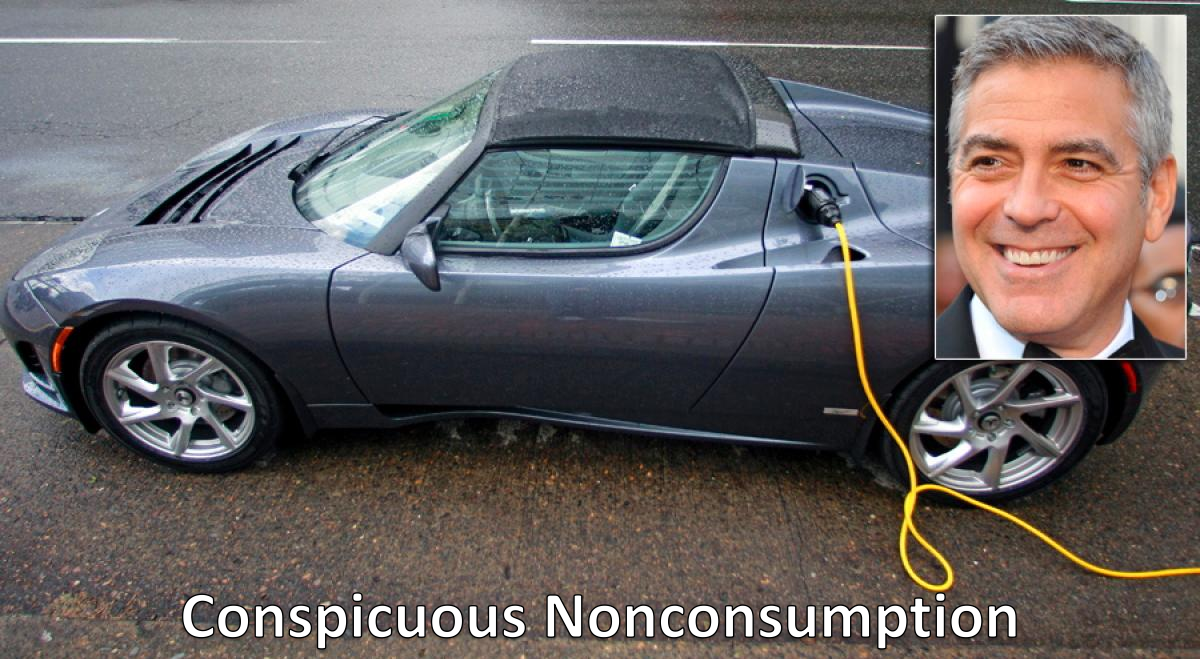
Glasgow COP Has Fleet of Teslas To Be Diesel-Charged

Tyler Durden reports at zerohedge  UN Climate Change Conference Reportedly Using Diesel Generators To Charge Teslas Being Used As Shuttles. Excerpts in italics with my bolds.

We’re not sure we can think of a better analogue for the lunacy behind the climate change hysteria that what is reportedly going on in Glasgow.

As many people know, the Conference of the Parties (COP) Climate Change Conference, hosted by the UK in partnership with Italy, is taking place in Glasgow from October 31 to November 12.

One blogger from Brighton wrote this week that attendees from the conference will be staying at Gleneagles Hotel.

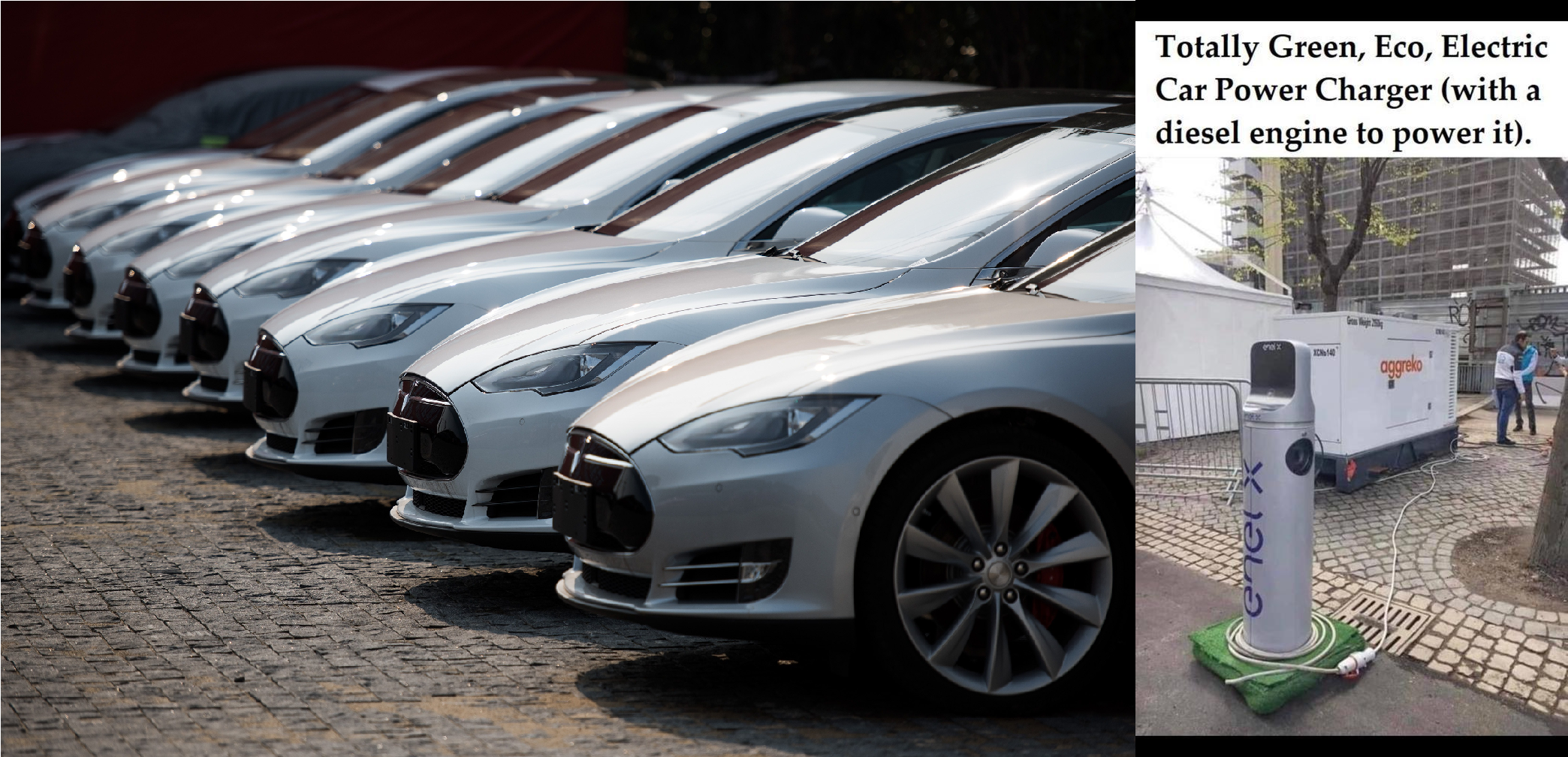
He wrote that there’s 20 Teslas at the hotel to shuttle people back and forth to and from the convention, which is about 75km.

Then, the kicker. Since the hotel only has one Tesla charging station, diesel generators were contracted to help recharge the Teslas overnight.

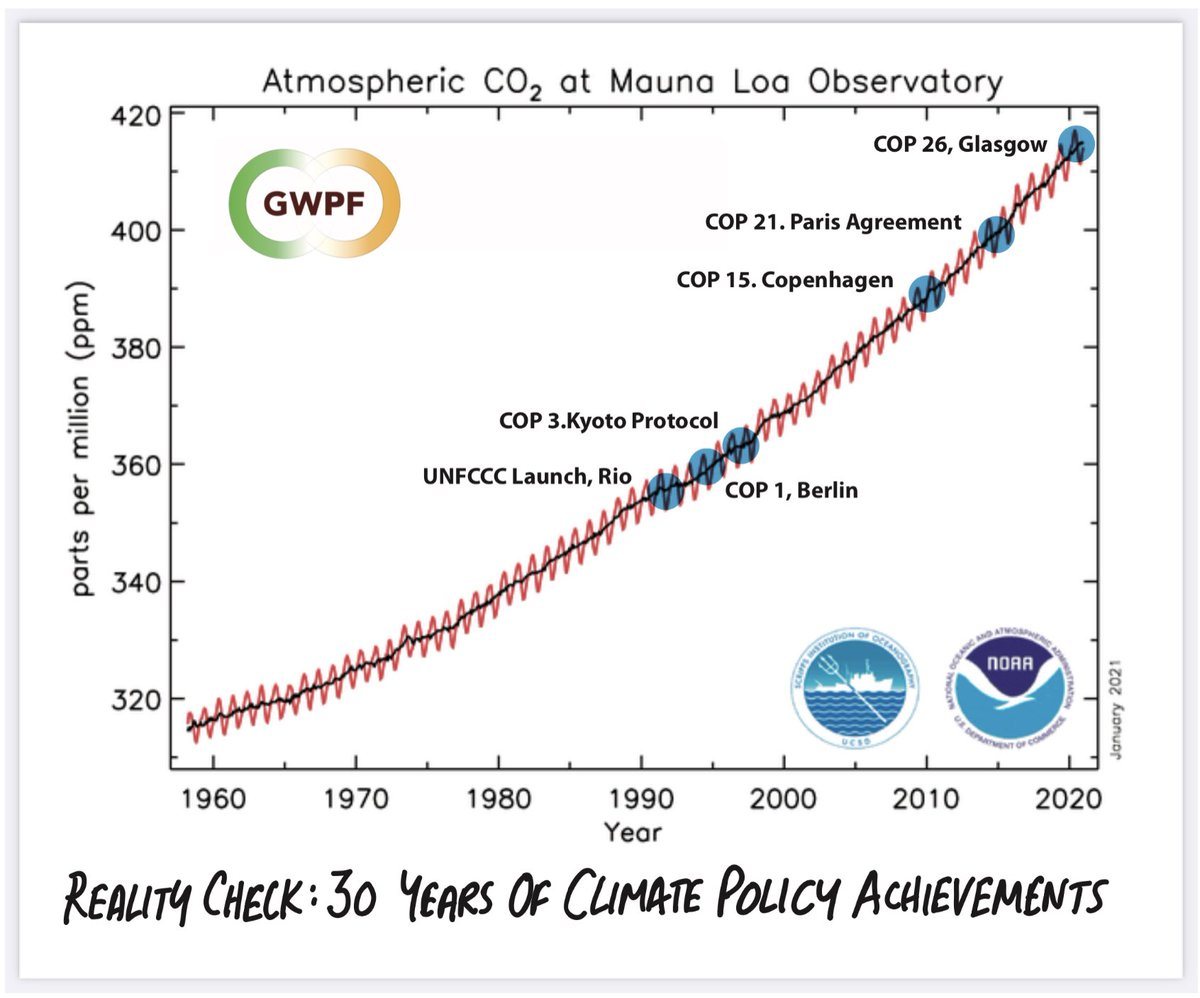
The stated purpose of the conference is, among other things, “to review the implementation of the Convention, the Kyoto Protocol and the Paris Agreement.”

The climate change conferences now count themselves, according to the UNFCCC’s website, as “among the largest international meetings in the world.”

“The intergovernmental negotiations have likewise become increasingly complex and involve an ever-increasing number of officials from governments all over the world, at all levels, as well as huge numbers of representatives from civil society and the global news media,” the conference’s website says.

Maybe since we’re gathered to talk about the negative effect on the climate, we could at least start by finding a carbon neutral way to shuttle yourself back and forth to the event.

It’s almost like these meetings aren’t really about climate change after all…


America’s Future: Market or Jungle?

This post is about the US at a junction, dramatized by the crisis of a flawed federal election.  The change point is also demonstrated by dictatorial behavior of elected officials claiming to protect the citizenry from coronavirus. As explained below, there are in principle two ways of organizing a society:  a market based on free choices by individuals, or a jungle where the powerful decide and the weak conform.  The US was conceived and operated for 2 centuries upon the market paradigm, but is now facing an activist minority seeking to overthrow that model in favor of autocracy in the form of one-party rule.

Many people have heard of Jordan Peterson due to his battles against post modernism and progressive social justice warfare. Bruce Pardy is another outspoken Canadian professor, belonging to the Faculty of Law, Queen’s College, Kingston, Ontario. This post will provide excerpts from several of Pardy’s writings to give readers access to his worldview and its usefulness making sense of current cultural struggles, and the US on the brink of a socio-political revolution.

In 2009 Pardy wrote Climate Change Charades: False Environmental Pretences of Statist Energy Governance
The Abstract:
Climate change is a poor justification for energy statism, which consists of centralized government administration of energy supplies, sources, prices, generating facilities, production and conservation. Statist energy governance produces climate change charades: government actions taken in the name of climate change that bear little relationship to the nature of the problem. Such actions include incremental, unilateral steps to reduce domestic carbon emissions to arbitrary levels, and attempts to choose winners and losers in future technology, using public money to subsidize ineffective investments. These proffered solutions are counter-productive. Governments abdicate their responsibility to govern energy in a manner that is consistent with domestic legal norms and competitive markets, and make the development of environmental solutions less likely rather than more so.

Pardy also spoke out in support of Peterson and against the Canadian government legislation proscribing private speech between individuals. His article in National Post was Meet the new ‘human rights’ — where you are forced by law to use ‘reasonable’ pronouns

Human rights were conceived to liberate. They protected people from an oppressive state. Their purpose was to prevent arbitrary arrest and detention, torture, and censorship, by placing restraints on government. The state’s capacity to accommodate these “negative rights” was unlimited, since they required only that people be left alone.

If only arm twisting were prohbited beyond the ring.

But freedom from interference is so 20th century. Modern human rights entitle. We are in the middle of a culture war, and human rights have become a weapon to normalize social justice values and to delegitimize competing beliefs. These rights are applied against other people to limit their liberties.

Freedom of expression is a traditional, negative human right. When the state manages expression, it threatens to control what we think. Forced speech is the most extreme infringement of free speech. It puts words in the mouths of citizens and threatens to punish them if they do not comply. When speech is merely restricted, you can at least keep your thoughts to yourself. Compelled speech makes people say things with which they disagree.

Some senators expressed the view that forcing the use of non-gendered pronouns was reasonable because calling someone by their preferred pronoun is a reasonable thing to do. That position reflects a profound misunderstanding of the role of expression in a free society. The question is not whether required speech is “reasonable” speech. If a statute required people to say “hello,” “please” and “thank you,” that statute would be tyrannical, not because “hello,” “please” and “thank you” aren’t reasonable things to say, but because the state has dictated the content of private conversation.

Traditional negative human rights give people the freedom to portray themselves as they wish without fearing violence or retribution from others. Everyone can exercise such rights without limiting the rights of others. Not so the new human rights. Did you expect to decide your own words and attitudes? If so, human rights are not your friend.

These positions derive from bedrock reasoning by Pardy on the foundations of law and legitimacy. An insight into his thinking is his rebuttal of a critic The Only Legitimate Rule: A Reply to MacLean’s Critique of Ecolawgic Dalhousie Law Journal, Spring 2017

Ecosystem as One model of Society

An ecosystem is not a thing. It does not exist as a concrete entity. “Ecosystem” is a label for the dynamics that result when organisms interact with each other and their environment. Those dynamics occur in infinite variation, but always reflect the same logic: Competition for scarce resources leads to natural selection, where those organisms better adapted to ecosystem conditions survive and reproduce, leading to evolutionary change. All participants are equally subject to their forces; systems do not play favourites.

In ecosystems, the use of the word “autonomy” does not mean legally enforced liberty but the reverse: no externally imposed rules govern behaviour. In ecosystems unmanaged by people, organisms can succeed or fail, live or die, as their genetically determined physiology and behaviour allow. Every life feeds on the death of others, whether animal or plant, and those better adapted to their circumstances survive to reproduce. Organisms can do anything that their genes dictate, and their success or failure is the consequence that fuels evolution.

When an antelope is chased by a lion and plunges into a river to escape, that action allows the antelope to survive and thus to reproduce. The offspring may carry a genetic disposition to run into water when chased by predators. There are no committees of either antelopes or humans deciding how antelopes will behave. Autonomy in ecosystems is not a human creation. It is not based upon human history or culture and is not a human preference.

Market as a Different Model of Society

A market is not a thing either. Nor is it a place. Markets, like ecosystems, do not exist as concrete entities. “Market” is a label for the dynamics that result when people exchange with each other. Bargains may be commercial in nature, where things are bought and sold, but they also occur in other facets of life. For example, in Ecolawgic I suggested that marriage is a kind of exchange that is made when people perceive themselves better off to enter into the bargain than not to.

As I said in Ecolawgic, “Laws and governments can make markets more stable and efficient, such as by enforcing contracts and creating a supply of money, but they create neither the activity of trading nor the market dynamics that the transactions create.”  A market is not a place or a legal structure but the dynamics of a collection of transactions. It does not exist before or independently of the transactions within it. The transactions make the market. Transactions are not created by governments but by the parties who enter into them.

People transact whether they are facilitated by governments or not. The evidence is everywhere. If it were not so, human beings would not have bartered long before there were governments to create money and enforce contracts. During Prohibition, no alcohol would have been produced and sold. Citizens of the Soviet Union would not have exchanged goods. Today there would be no drug trade, no black market and no smuggling. Cigarettes would not be used as currency inside jails. People would not date, hold garage sales or trade hockey cards. There would be no Bitcoin or barter. Try prohibiting people from transacting and see that they will transact anyway. They will do so because they perceive themselves as better off. Sometimes the benefit is concrete and sometimes it is ethereal. The perception of benefit is personal and subjective.

Ecosystems are Coercive, Markets are Voluntary

Ecosystems and markets share many features but they differ in one important respect. Violence plays an important role in ecosystems but is not a part of voluntary market exchange. Ecosystems are arenas for mortal combat. Lions eat antelopes if they can catch them. Nothing prevents taking a dead antelope from a lion except the lion’s response. There are no restrictions on survival strategies, and organisms do not respect the interests, habitats or lives of other organisms.

Markets, in contrast, proceed upon the judgment of the transacting parties that they are better off to trade than to fight. The hunter did not shoot the woodworker to get chairs, and the woodworker traded for meat instead of stealing it. They chose to trade because it made them better off than fighting. The reasons are their own. Perhaps they were friends, colleagues or allies. Perhaps they believed that harming other people is wrong. Perhaps they hoped to have an ongoing trading relationship. Perhaps fighting carried risks that were too high and they feared injury or retribution. Perhaps trading was less work than fighting.

For whatever reason, they chose to trade. This choice is not universal. People have traded throughout human history, but they have also fought. I do not maintain that trading is any more “natural” or inbred than fighting, but neither is it is less so. When people choose to fight, they are no longer part of a market. Markets are like ecosystems with the violence removed.  They are the kinder, gentler version of ecosystems.

There are only two models for legal governance and only one legitimate rule.

The logic is as follows:
1. In the wild, organisms compete for scarce resources. Those organisms better adapted to conditions survive and reproduce. Their interactions constitute ecosystems. No legal rules govern behaviour and might is right.

2. Human beings trade spontaneously. Parties enter into transactions when they perceive themselves as better off to trade than to fight. Their transactions constitute markets.

3. Moral values and policy goals are preferences whose inherent validity cannot be established. They are turtles all the way down. Therefore laws based upon those preferences lack legitimacy.

4. When governments use might to impose laws and policies that are illegitimate, they unintentionally imitate ecosystems, where might is right. Political constituencies use whatever means necessary to impose their preferences, and their opponents use whatever means necessary to resist. They are “autonomous” in the ecosystem sense: there are no inherently valid restrictions on behaviour. The result is a social order of division and conflict.

5. The alternative is to model human governance on the other system that exists independently of state preference: markets. If the model for human governance is markets, interactions between people are voluntary. People are “autonomous” in the market sense: they may pursue their own interests without coercion. Instead of imposing illegitimate rules and policies, the state uses force only to prohibit people from imposing force on each other. A plethora of sub-rules follow as corollaries of the rule against coercion: property, consent, criminal offences that punish violence and so on.

6. There is no third choice. Coercion is not right or wrong depending upon the goals being pursued since those goals are merely preferences. Their advocates cannot establish that their goals have inherent validity to those who do not agree. Therefore, giving priority to those objectives is to assert that might is right. If might is right, we are back to ecosystems, where any and all actions are legitimate.

7. If might is right, anything goes, and the model is ecosystems. If might is not right, force is prohibited, and the model is markets. Choose one and all else follows.

When I claim that a prohibition on force is the only legitimate rule, I mean the only substantive rule to govern relations between competent adults. No doubt the administration of a legal system, even a minimalist one, would require other kinds of laws to function. Constitutional rules, court administration, the conduct of elections and procedures to bring legal proceedings are a few of the other categories that would be necessary in order to give effect to the general rule.

No Property, No Market

But the existence of property rights must follow from a general rule prohibiting coercion. If it does not, the general rule is not what it purports to be. When people trade, they recognize the property interest held by the other party. It is that interest that they wish to obtain. When the woodworker trades chairs for the hunter’s meat, she trades “her” chairs for “his” meat. The trade would not occur without a mutual understanding of the possession that both hold over their respective stuff.

Sometimes those interests are recognized and protected by the law, which according to Bentham created the property. However, since markets arise even where no property is legally recognized, the notion of property must be prior to the law. Above I gave examples of markets that have arisen where no legal regime has protected property rights: prehistorical trade, alcohol sales during Prohibition, black markets in the Soviet Union, the modern day drug trade, smuggling of illicit goods, and the internal markets of prisons. Since trading occurs even in the absence of an approving legal regime, the notion of property must exist independently as well.

No Consent, No Market

Autonomy in the market sense means to be able to pursue your own interests and control your own choices without coercion. Consent is part and parcel of autonomy. Without the ability to consent, no trades can be made. Without trades, no markets exist. If one cannot consent to be touched, to give up property, to make bargains, to mate, to arm wrestle, to trade chairs for meat, to sell labour for money, and so on, then one is not autonomous.

If force is prohibited, then corollaries are laws that protect people from having force imposed upon them. Laws apply the force of the state to prevent or punish the application of force. A criminal law that prohibits assault is an extension of the general rule. A tax to finance the police department is legitimate if its purpose is to investigate and prosecute violent crimes. Traffic laws prevent people from running each other over.  Civil liability compensates for physical injuries caused by the force of others.

Illegitimate Laws, No Market

Illegitimate laws use state coercion to seek other ends such as enforcing moral standards, pursuing social goals or saving people from themselves. A criminal law that prohibits the use of drugs uses state force to prevent an activity in which there is no coercion. A tax to fund the armed forces to protect the peace may be legitimate, but one to take wealth from Peter to give to Paul is not. The legal regimes of modern administrative states consist largely of instrumentalist laws and policies that are inconsistent with the general rule, including tax laws, economic development programs, bankruptcy, patent regimes, mandatory government-run pension plans and MacLean’s version of environmental regulation, in which each decision turns on a political determination of the values to be applied.

It is either ecosystems or markets. Either might is right or it is not. If it is, then human society is subject to the law of the jungle where people are at liberty to fight like animals if they choose to do so. If it is not, then human society is a marketplace where people may enter into transactions voluntarily and the state may justifiably use force only to prevent or punish the application of force.

There is no third choice. Some might insist that coercion is not categorically wrong but that it can be right or wrong depending upon the other goals to be pursued. Those goals are merely preferences. They are turtles all the way down. I do not maintain that other rules will not be passed and enforced using the established machinery of government but only that they have no claim to legitimacy, any more than other rules that might have been chosen instead. If force is used to pursue those preferences, why would others not use force to resist? Such a choice results in a free-for-all. If state force is right only because it cannot be resisted, that means that might is right. The administrative welfare state prevails not because it is justified morally or socially but because it has managed to secure a monopoly on violence. The imposition of government preferences is an invitation to those opposed to an arbitrary policy agenda to take up force against it.

Summary

In  a way, Pardy is warning us not to take for granted the free market social democracies to which we were accustomed.  Post modern progressive social justice warriors have decided that society is essentially an endless power struggle, that one group’s rights are gained only at the expense of another group.  In other words, it’s a dog-eat-dog, might makes right ecosystem.  Pardy says there is another way, which has been the basis for the rise of civilization, but can be reversed by governance that destroys the free market of ideas and efforts by imposing values favored by the rich and powerful.

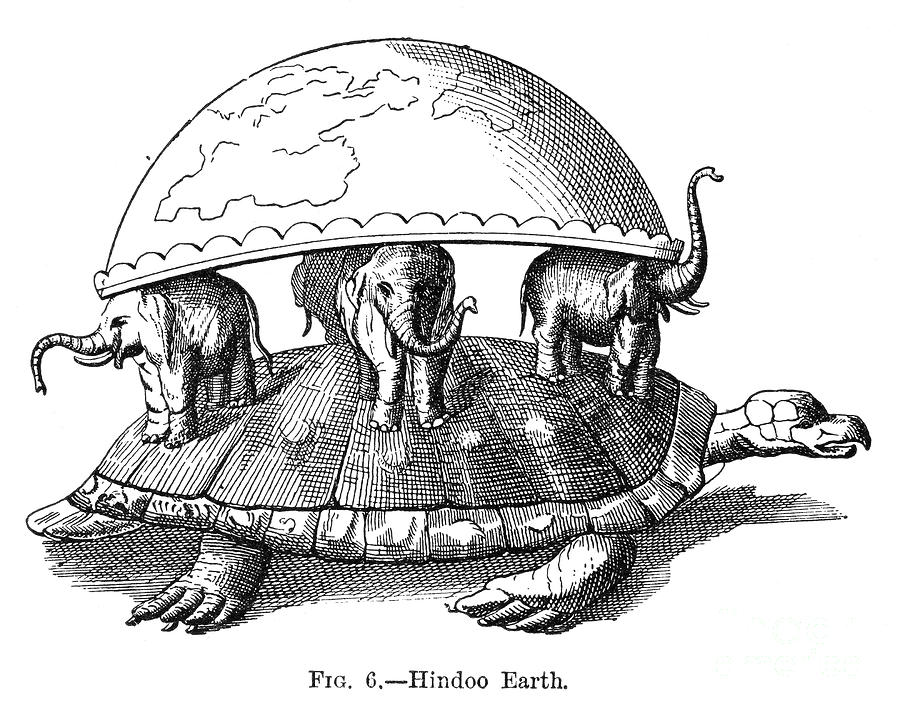
Footnote about Turtles.  Pardy explains the metaphor:

In Rapanos v. United States, Justice Antonin Scalia offered a version of the traditional tale of how the Earth is carried on the backs of animals. In this version of the story, an Eastern guru affirms that the earth is supported on the back of a tiger.  When asked what supports the tiger, he says it stands upon an elephant; and when asked what supports the elephant he says it is a giant turtle.  When asked, finally, what supports the giant turtle, he is briefly taken aback, but quickly replies “Ah, after that it is turtles all the way down.”

Postscript on Climate Change and the Paris Accord:

Let the Paris climate deal die. It was never good for anything, anyway
Opinion: Paris is a climate fairy tale. It has always been more about money and politics than the environment.  Excerpts below with my bolds.

Paris is more a movement than a legal framework. It imagines the world as a global community working in solidarity on a common problem, making sacrifices in the common good, reducing inequality and transcending the negative effects of market forces. In this fable, climate change is a catalyst for revolution. It is the monster created by capitalism that will turn on its creator and bring the market system to the end of its natural life. A new social order will emerge in which market value no longer determines economic decisions. Governments will exercise influence over economic behaviour by imposing “market-based mechanisms” such as carbon taxes and cap-and-trade systems. Enlightened leaders will direct energy use based upon social justice values and community needs. An international culture will unite peoples in a cause that transcends their national interests, giving way to the next stage of human society. Between the lines of the formal text, the Paris agreement reads like a socialist nightmare.

The regime attempts to establish an escalating global norm that requires continual updating, planning and negotiation. To adhere, governments are to supervise, regulate and tax the energy use and behaviour of their citizens (for example, the Trudeau government’s insistence that all provinces impose a carbon tax or the equivalent, to escalate over time.) Yet for all of the domestic action it legitimizes, Paris does not actually require it. Like the US$100-billion pledge, reduction targets are outside the formal Paris agreement. They are voluntary; neither binding nor enforceable. Other countries have condemned Trump’s withdrawal and reaffirmed their commitment to Paris but many of them, including Canada, are not on track to meet even their initial promises. Global emissions are rising again.

If human action is not causing the climate to change, Paris is irrelevant. If it is, then Paris is an obstacle to actual solutions. If there is a crisis, it will be solved when someone develops a low-carbon energy source as useful and cheap as fossil fuels. A transition will then occur without government interventions and international declarations. Until then, Paris will fix nothing. It serves interests that have little to do with atmospheric concentrations of greenhouse gases. Will America’s repudiation result in its eventual demise? One can hope.

Recycling Climate Trash Papers

There they go again with the ocean heating claims. Media alarms are rampant triggered by a new publication Record-Setting Ocean Warmth Continued in 2019 in Advances in Atmospheric Sciences
Authors: Lijing Cheng, John Abraham, Jiang Zhu, Kevin E. Trenberth, John Fasullo, Tim Boyer, Ricardo Locarnini, Bin Zhang, Fujiang Yu, Liying Wan, Xingrong Chen, Xiangzhou Song, Yulong Liu, Michael E. Mann.

Reasons for doubting the paper and its claims go well beyond the listing of so many names, including several of the usual suspects. No, this publication is tarnished by its implausible provenance. It rests upon and repeats analytical mistakes that have been pointed out but true believers carry on without batting an eye.

It started with Resplandy et al in 2018 who became an overnight sensation with their paper Quantification of ocean heat uptake from changes in atmospheric O2 and CO2 composition in Nature October 2018, leading to media reports of extreme ocean heating. Nic Lewis published a series of articles at his own site and at Climate Etc. in November 2018, leading to the paper being withdrawn and eventually retracted. Those authors acknowledged the errors and did the honorable thing

Then in 2019 Cheng et al. published the same claim in their Science paper January 2019 drawing on Resplandy et al. as a reference. That publication was featured in the IPCC Special Report on the Ocean and Cryosphere in a Changing Climate (SROCC).

Benny Peiser of GWPF objected in writing to IPCC, saying inter alia:

Your report (SROCC, p. 5-14) concludes that
” The rate of heat uptake in the upper ocean (0-700m) is very likely higher in the 1993-2017 (or .2005-2017) period compared with the 1969-1993 period (see Table 5.1).”

We would like to point out that this conclusion is based to a significant degree on a paper
by Cheng et al. (2019) which itself relies on a flawed estimate by Resplandy et al. (2018).
An authors’ correction to this paper and its ocean heat uptake (OHU) estimate was under
review for nearly a year, but in the end Nature requested that the paper be retracted
(Retraction Note, 2019).

That was not the only objection. Nic Lewis examined Cheng et al. 2019 and found it wanting. That discussion is also at Climate Etc. Is ocean warming accelerating faster than thought? The authors replied to Lewis’ critique but did not refute or correct the identified errors.

A year later in January 2020 the same people have processed another year of data in the same manner and then proclaim the same result. The only differences are the addition of several high profile alarmists and the subtraction of Resplandy et al. from the References.  It looks like the group is emulating MIchael Mann’s blueprint:  The Show Must Go On.  The Noble cause justifies any and all means.  Show no weaknesses, admit no mistakes, correct nothing, sue if you have to.


Coercive Environmentalism

Gus Van Horn writes at Real Clear Markets The Recycling Crowd Embraces Grade-School Juvenility.  Excerpts in italics with my bolds.

The third-grade boy shamefully completed his apology, in front of first grade. I was luckier than I felt. Just that morning, I had been convinced that the way to win friends was to do what the popular kids did: Stomp on the first-grader’s coffee-can art project. I knew this was wrong but I immediately impressed the popular crowd — the wrong way. My swift punishment only reinforced what I already knew: A crowd was a poor substitute for my own judgment. This lesson has served me well throughout my life, yet I was surprised to find myself transported back to that classroom by a New York Times video — about recycling, of all things. A connection jolted me when I viewed “The Great Recycling Con:”

The captains of industry were making the same mistake I had but with a twist: They are stomping on their own cans.

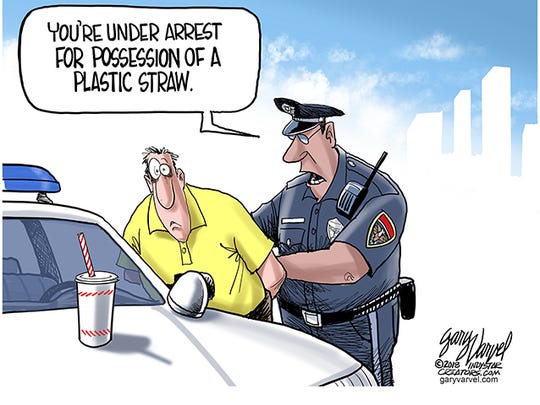
I remember the early days of residential recycling as clearly as that hug. At first, only the neighborhood crank went through the trouble. But, after about a decade of shaming by celebrities and over-hyping of stories — like the long search of a garbage scow for a customer — governments got involved. Seemingly overnight, nearly everyone was being forced to recycle or taxed to support it. Companies had marching orders to label products so we could comply. The details of these orders were minute to the point of confusion. This point can be gleaned from the video, but get a load of this subtitle: “The greatest trick corporations ever played was making us think we could recycle their products.”

I’m disappointed that corporations had voiced so much support for recycling, but they hardly deserve the blame for labeling laws.

Reaction to proposed Vermont law requiring clear plastic trash bags.

But this has been the MO of the left since the industrial revolution. Regarding 1800’s railroads, Ayn Rand noted:

[W]hat could the railroads do, except try to “own whole legislatures,” if these legislatures held the power of life or death over them? What could the railroads do, except resort to bribery, if they wished to exist at all?

Who was to blame and who was “corrupt”–the businessmen who had to pay “protection money” for the right to remain in business–or the politicians who held the power to sell that right?

The railroads played a game they should have opposed — only to end up blamed for a situation they didn’t create. (To the degree they saw this as an acceptable way to win market share, they share the blame.) We see this today with companies bullied into removing harmless ingredients, such as nitrites from food, or parabens from cosmetics, under the perverse twin incentives of fashionable panic and fear of competition.

The worst case involves the fossil fuel industry, which is vital to our lives and prosperity – while under constant and intense pressure from environmentalists. Energy advocate Alex Epstein notes:

The industry never explained the value of energy and why fossil fuels are superior sources of energy. In fact, the industry is constantly out there saying, “We’re not against wind and solar, we’re for all of the above, we’re in the middle of an energy transition,” etc. That’s why I always stress when I talk to people (a) that low cost, reliable energy is indispensable to human flourishing and (b) that the fossil fuel industry is uniquely good at creating it. People need both of those points.

Epstein is right: Companies should stop fearing the cool media kids scaremongering and start reminding the people who count – their customers — of the full value they offer.

When I think about that day in school, I wish I could go back and tell that third-grader that real friends don’t tempt people to ignore their own judgment; and that he already had good friends, because he had a lot to offer. The same goes for countless productive individuals in whole industries that our media routinely paint as evil ahead of our politicians taking yet more control. Our industry captains have gone along with this for far too long. Rather than accepting these scurrilous attacks, they should view them as personal insults. A great way to begin to fight back is to remind people of the enormous good they and their employees create.

Who’s the bully? Who’s the victim?

Previous Post:  On Coercive Climatism: Writings of Bruce Pardy

Many people have heard of Jordan Peterson due to his battles against post modernism and progressive social justice warfare. Bruce Pardy is another outspoken Canadian professor, whose latest statement was posted at the National Post, H/T GWPF.
Let the Paris climate deal die. It was never good for anything, anyway
Opinion: Paris is a climate fairy tale. It has always been more about money and politics than the environment.  Excerpts below with my bolds.

Paris is more a movement than a legal framework. It imagines the world as a global community working in solidarity on a common problem, making sacrifices in the common good, reducing inequality and transcending the negative effects of market forces. In this fable, climate change is a catalyst for revolution. It is the monster created by capitalism that will turn on its creator and bring the market system to the end of its natural life. A new social order will emerge in which market value no longer determines economic decisions. Governments will exercise influence over economic behaviour by imposing “market-based mechanisms” such as carbon taxes and cap-and-trade systems. Enlightened leaders will direct energy use based upon social justice values and community needs. An international culture will unite peoples in a cause that transcends their national interests, giving way to the next stage of human society. Between the lines of the formal text, the Paris agreement reads like a socialist nightmare.

The regime attempts to establish an escalating global norm that requires continual updating, planning and negotiation. To adhere, governments are to supervise, regulate and tax the energy use and behaviour of their citizens (for example, the Trudeau government’s insistence that all provinces impose a carbon tax or the equivalent, to escalate over time.) Yet for all of the domestic action it legitimizes, Paris does not actually require it. Like the US$100-billion pledge, reduction targets are outside the formal Paris agreement. They are voluntary; neither binding nor enforceable. Other countries have condemned Trump’s withdrawal and reaffirmed their commitment to Paris but many of them, including Canada, are not on track to meet even their initial promises. Global emissions are rising again.

If human action is not causing the climate to change, Paris is irrelevant. If it is, then Paris is an obstacle to actual solutions. If there is a crisis, it will be solved when someone develops a low-carbon energy source as useful and cheap as fossil fuels. A transition will then occur without government interventions and international declarations. Until then, Paris will fix nothing. It serves interests that have little to do with atmospheric concentrations of greenhouse gases. Will America’s repudiation result in its eventual demise? One can hope.

Bruce Pardy belongs to the Faculty of Law, Queen’s College, Kingston, Ontario. This post will provide excerpts from several of Pardy’s writings to give readers access to his worldview and its usefulness making sense of current socio-political actions.

In 2009 Pardy wrote Climate Change Charades: False Environmental Pretences of Statist Energy Governance
The Abstract:
Climate change is a poor justification for energy statism, which consists of centralized government administration of energy supplies, sources, prices, generating facilities, production and conservation. Statist energy governance produces climate change charades: government actions taken in the name of climate change that bear little relationship to the nature of the problem. Such actions include incremental, unilateral steps to reduce domestic carbon emissions to arbitrary levels, and attempts to choose winners and losers in future technology, using public money to subsidize ineffective investments. These proffered solutions are counter-productive. Governments abdicate their responsibility to govern energy in a manner that is consistent with domestic legal norms and competitive markets, and make the development of environmental solutions less likely rather than more so.

Pardy also spoke out in support of Peterson and against the Canadian government legislation proscribing private speech between individuals. His article in National Post was Meet the new ‘human rights’ — where you are forced by law to use ‘reasonable’ pronouns

Human rights were conceived to liberate. They protected people from an oppressive state. Their purpose was to prevent arbitrary arrest and detention, torture, and censorship, by placing restraints on government. The state’s capacity to accommodate these “negative rights” was unlimited, since they required only that people be left alone.

If only arm twisting were prohbited beyond the ring.

But freedom from interference is so 20th century. Modern human rights entitle. We are in the middle of a culture war, and human rights have become a weapon to normalize social justice values and to delegitimize competing beliefs. These rights are applied against other people to limit their liberties.

Freedom of expression is a traditional, negative human right. When the state manages expression, it threatens to control what we think. Forced speech is the most extreme infringement of free speech. It puts words in the mouths of citizens and threatens to punish them if they do not comply. When speech is merely restricted, you can at least keep your thoughts to yourself. Compelled speech makes people say things with which they disagree.

Some senators expressed the view that forcing the use of non-gendered pronouns was reasonable because calling someone by their preferred pronoun is a reasonable thing to do. That position reflects a profound misunderstanding of the role of expression in a free society. The question is not whether required speech is “reasonable” speech. If a statute required people to say “hello,” “please” and “thank you,” that statute would be tyrannical, not because “hello,” “please” and “thank you” aren’t reasonable things to say, but because the state has dictated the content of private conversation.

Traditional negative human rights give people the freedom to portray themselves as they wish without fearing violence or retribution from others. Everyone can exercise such rights without limiting the rights of others. Not so the new human rights. Did you expect to decide your own words and attitudes? If so, human rights are not your friend.

These positions derive from bedrock reasoning by Pardy on the foundations of law and legitimacy. An insight into his thinking is his rebuttal of a critic The Only Legitimate Rule: A Reply to MacLean’s Critique of Ecolawgic Dalhousie Law Journal, Spring 2017

Ecosystem as One model of Society

An ecosystem is not a thing. It does not exist as a concrete entity. “Ecosystem” is a label for the dynamics that result when organisms interact with each other and their environment. Those dynamics occur in infinite variation, but always reflect the same logic:
Competition for scarce resources leads to natural selection, where those organisms better adapted to ecosystem conditions survive and reproduce, leading to evolutionary change. All participants are equally subject to their forces; systems do not play favourites.

In ecosystems, the use of the word “autonomy” does not mean legally enforced liberty but the reverse: no externally imposed rules govern behaviour. In ecosystems unmanaged by people, organisms can succeed or fail, live or die, as their genetically determined physiology and behaviour allow. Every life feeds on the death of others, whether animal or plant, and those better adapted to their circumstances survive to reproduce. Organisms can do anything that their genes dictate, and their success or failure is the consequence that fuels evolution.

When an antelope is chased by a lion and plunges into a river to escape, that action allows the antelope to survive and thus to reproduce. The offspring may carry a genetic disposition to run into water when chased by predators. There are no committees of either antelopes or humans deciding how antelopes will behave. Autonomy in ecosystems is not a human creation. It is not based upon human history or culture and is not a human preference.

Market as a Different Model of Society

A market is not a thing either. Nor is it a place. Markets, like ecosystems, do not exist as concrete entities. “Market” is a label for the dynamics that result when people exchange with each other. Bargains may be commercial in nature, where things are bought and sold, but they also occur in other facets of life. For example, in Ecolawgic I suggested that marriage is a kind of exchange that is made when people perceive themselves better off to enter into the bargain than not to.

As I said in Ecolawgic, “Laws and governments can make markets more stable and efficient, such as by enforcing contracts and creating a supply of money, but they create neither the activity of trading nor the market dynamics that the transactions create.”  A market is not a place or a legal structure but the dynamics of a collection of transactions. It does not exist before or independently of the transactions within it. The transactions make the market. Transactions are not created by governments but by the parties who enter into them.

People transact whether they are facilitated by governments or not. The evidence is everywhere. If it were not so, human beings would not have bartered long before there were governments to create money and enforce contracts. During Prohibition, no alcohol would have been produced and sold. Citizens of the Soviet Union would not have exchanged goods. Today there would be no drug trade, no black market and no smuggling. Cigarettes would not be used as currency inside jails. People would not date, hold garage sales or trade hockey cards. There would be no Bitcoin or barter. Try prohibiting people from transacting and see that they will transact anyway. They will do so because they perceive themselves as better off. Sometimes the benefit is concrete and sometimes it is ethereal. The perception of benefit is personal and subjective.

Ecosystems are Coercive, Markets are Voluntary

Ecosystems and markets share many features but they differ in one important respect. Violence plays an important role in ecosystems but is not a part of voluntary market exchange. Ecosystems are arenas for mortal combat. Lions eat antelopes if they can catch them. Nothing prevents taking a dead antelope from a lion except the lion’s response. There are no restrictions on survival strategies, and organisms do not respect the interests, habitats or lives of other organisms.

Markets, in contrast, proceed upon the judgment of the transacting parties that they are better off to trade than to fight. The hunter did not shoot the woodworker to get chairs, and the woodworker traded for meat instead of stealing it. They chose to trade because it made them better off than fighting. The reasons are their own. Perhaps they were friends, colleagues or allies. Perhaps they believed that harming other people is wrong. Perhaps they hoped to have an ongoing trading relationship. Perhaps fighting carried risks that were too high and they feared injury or retribution. Perhaps trading was less work than fighting.

For whatever reason, they chose to trade. This choice is not universal. People have traded throughout human history, but they have also fought. I do not maintain that trading is any more “natural” or inbred than fighting, but neither is it is less so. When people choose to fight, they are no longer part of a market. Markets are like ecosystems with the violence removed.  They are the kinder, gentler version of ecosystems.

There are only two models for legal governance and only one legitimate rule.

The logic is as follows:
1. In the wild, organisms compete for scarce resources. Those organisms better adapted to conditions survive and reproduce. Their interactions constitute ecosystems. No legal rules govern behaviour and might is right.
2. Human beings trade spontaneously. Parties enter into transactions when they perceive themselves as better off to trade than to fight. Their transactions constitute markets.
3. Moral values and policy goals are preferences whose inherent validity cannot be established. They are turtles all the way down. Therefore laws based upon those preferences lack legitimacy.
4. When governments use might to impose laws and policies that are illegitimate, they unintentionally imitate ecosystems, where might is right. Political constituencies use whatever means necessary to impose their preferences, and their opponents use whatever means necessary to resist. They are “autonomous” in the ecosystem sense: there are no inherently valid restrictions on behaviour. The result is a social order of division and conflict.
5. The alternative is to model human governance on the other system that exists independently of state preference: markets. If the model for human governance is markets, interactions between people are voluntary. People are “autonomous” in the market sense: they may pursue their own interests without coercion. Instead of imposing illegitimate rules and policies, the state uses force only to prohibit people from imposing force on each other. A plethora of sub-rules follow as corollaries of the rule against coercion: property, consent, criminal offences that punish violence and so on.
6. There is no third choice. Coercion is not right or wrong depending upon the goals being pursued since those goals are merely preferences. Their advocates cannot establish that their goals have inherent validity to those who do not agree. Therefore, giving priority to those objectives is to assert that might is right. If might is right, we are back to ecosystems, where any and all actions are legitimate.
7. If might is right, anything goes, and the model is ecosystems. If might is not right, force is prohibited, and the model is markets. Choose one and all else follows.

When I claim that a prohibition on force is the only legitimate rule, I mean the only substantive rule to govern relations between competent adults. No doubt the administration of a legal system, even a minimalist one, would require other kinds of laws to function. Constitutional rules, court administration, the conduct of elections and procedures to bring legal proceedings are a few of the other categories that would be necessary in order to give effect to the general rule.

No Property, No Market

But the existence of property rights must follow from a general rule prohibiting coercion. If it does not, the general rule is not what it purports to be. When people trade, they recognize the property interest held by the other party. It is that interest that they wish to obtain. When the woodworker trades chairs for the hunter’s meat, she trades “her” chairs for “his” meat. The trade would not occur without a mutual understanding of the possession that both hold over their respective stuff.

Sometimes those interests are recognized and protected by the law, which according to Bentham created the property. However, since markets arise even where no property is legally recognized, the notion of property must be prior to the law. Above I gave examples of markets that have arisen where no legal regime has protected property rights: prehistorical trade, alcohol sales during Prohibition, black markets in the Soviet Union, the modern day drug trade, smuggling of illicit goods, and the internal markets of prisons. Since trading occurs even in the absence of an approving legal regime, the notion of property must exist independently as well.

No Consent, No Market

Autonomy in the market sense means to be able to pursue your own interests and control your own choices without coercion. Consent is part and parcel of autonomy. Without the ability to consent, no trades can be made. Without trades, no markets exist. If one cannot consent to be touched, to give up property, to make bargains, to mate, to arm wrestle, to trade chairs for meat, to sell labour for money, and so on, then one is not autonomous.

If force is prohibited, then corollaries are laws that protect people from having force imposed upon them. Laws apply the force of the state to prevent or punish the application of force. A criminal law that prohibits assault is an extension of the general rule. A tax to finance the police department is legitimate if its purpose is to investigate and prosecute violent crimes. Traffic laws prevent people from running each other over.  Civil liability compensates for physical injuries caused by the force of others.

Illegitimate Laws, No Market

Illegitimate laws use state coercion to seek other ends such as enforcing moral standards, pursuing social goals or saving people from themselves. A criminal law that prohibits the use of drugs uses state force to prevent an activity in which there is no coercion. A tax to fund the armed forces to protect the peace may be legitimate, but one to take wealth from Peter to give to Paul is not. The legal regimes of modern administrative states consist largely of instrumentalist laws and policies that are inconsistent with the general rule, including tax laws, economic development programs, bankruptcy, patent regimes, mandatory government-run pension plans and MacLean’s version of environmental regulation, in which each decision turns on a political determination of the values to be applied.

It is either ecosystems or markets. Either might is right or it is not. If it is, then human society is subject to the law of the jungle where people are at liberty to fight like animals if they choose to do so. If it is not, then human society is a marketplace where people may enter into transactions voluntarily and the state may justifiably use force only to prevent or punish the application of force.

There is no third choice. Some might insist that coercion is not categorically wrong but that it can be right or wrong depending upon the other goals to be pursued. Those goals are merely preferences. They are turtles all the way down. I do not maintain that other rules will not be passed and enforced using the established machinery of government but only that they have no claim to legitimacy, any more than other rules that might have been chosen instead. If force is used to pursue those preferences, why would others not use force to resist? Such a choice results in a free-for-all. If state force is right only because it cannot be resisted, that means that might is right. The administrative welfare state prevails not because it is justified morally or socially but because it has managed to secure a monopoly on violence. The imposition of government preferences is an invitation to those opposed to an arbitrary policy agenda to take up force against it.

Summary

In  a way, Pardy is warning us not to take for granted the free market social democracies to which we were accustomed.  Post modern progressive social justice warriors have decided that society is essentially an endless power struggle, that one group’s rights are gained only at the expense of another group.  In other words, it’s a dog-eat-dog, might makes right ecosystem.  Pardy says there is another way, which has been the basis for the rise of civilization, but can be reversed by governance that destroys the free market of ideas and efforts by imposing values favored by the rich and powerful.

Footnote about Turtles.  Pardy explains the metaphor:

In Rapanos v. United States, Justice Antonin Scalia offered a version of the traditional tale of how the Earth is carried on the backs of animals. In this version of the story, an Eastern guru affirms that the earth is supported on the back of a tiger.  When asked what supports the tiger, he says it stands upon an elephant; and when asked what supports the elephant he says it is a giant turtle.  When asked, finally, what supports the giant turtle, he is briefly taken aback, but quickly replies “Ah, after that it is turtles all the way down.”

Madrid COP25 Briefing for Realists

The upcoming COP25 will be hosted by Chile, but held in Madrid because of the backlash in Santiago against damaging effects of costly climate policies.  The gathering had been previously cancelled by a newly elected skeptical Brazilian president. The change of venue has led to “a scale down of expectations” and participation from the Chilean side, said Mónica Araya, a former lead negotiator for Costa Rica, but the presidency’s priorities are unchanged. In the wings of the Cop25 talks, hosts Spain and Chile will push governments to join a coalition of progressive nations pledging to raise their targets in response to the 2018 over-the-top IPCC SR15 climate horror movie.  See UN Horror Show

Of course Spain is the setting for the adventures of Don Quixote ( “don key-ho-tee” ) in Cervantes’ famous novel.  The somewhat factually challenged hero charged at some windmills claiming they were enemies, and is celebrated in the English language by two idioms:

Tilting at Windmills–meaning attacking imaginary enemies, and

Quixotic (“quick-sottic”)–meaning striving for visionary ideals.

It is clear that COP climateers are similary engaged in some kind of heroic quest, like modern-day Don Quixotes. The only differences: They imagine a trace gas in the air is the enemy, and that windmills are our saviors.  See Climateers Tilting at Windmills

Four years ago French Mathematicians spoke out prior to COP21 in Paris, and their words provide a rational briefing for COP25 beginning in Madrid this weekend. In a nutshell:

Fighting Global Warming is Absurd, Costly and Pointless.

  • Absurd because of no reliable evidence that anything unusual is happening in our climate.
  • Costly because trillions of dollars are wasted on immature, inefficient technologies that serve only to make cheap, reliable energy expensive and intermittent.
  • Pointless because we do not control the weather anyway.

The prestigious Société de Calcul Mathématique (Society for Mathematical Calculation) issued a detailed 195-page White Paper that presents a blistering point-by-point critique of the key dogmas of global warming. The synopsis is blunt and extremely well documented.  Here are extracts from the opening statements of the first three chapters of the SCM White Paper with my bolds and images.

Sisyphus at work.

Chapter 1: The crusade is absurd
There is not a single fact, figure or observation that leads us to conclude that the world‘s climate is in any way ‘disturbed.’ It is variable, as it has always been, but rather less so now than during certain periods or geological eras. Modern methods are far from being able to accurately measure the planet‘s global temperature even today, so measurements made 50 or 100 years ago are even less reliable. Concentrations of CO2 vary, as they always have done; the figures that are being released are biased and dishonest. Rising sea levels are a normal phenomenon linked to upthrust buoyancy; they are nothing to do with so-called global warming. As for extreme weather events — they are no more frequent now than they have been in the past. We ourselves have processed the raw data on hurricanes….

Chapter 2: The crusade is costly
Direct aid for industries that are completely unviable (such as photovoltaics and wind turbines) but presented as ‘virtuous’ runs into billions of euros, according to recent reports published by the Cour des Comptes (French Audit Office) in 2013. But the highest cost lies in the principle of ‘energy saving,’ which is presented as especially virtuous. Since no civilization can develop when it is saving energy, ours has stopped developing: France now has more than three million people unemployed — it is the price we have to pay for our virtue….

Chapter 3: The crusade is pointless
Human beings cannot, in any event, change the climate. If we in France were to stop all industrial activity (let’s not talk about our intellectual activity, which ceased long ago), if we were to eradicate all trace of animal life, the composition of the atmosphere would not alter in any measurable, perceptible way. To explain this, let us make a comparison with the rotation of the planet: it is slowing down. To address that, we might be tempted to ask the entire population of China to run in an easterly direction. But, no matter how big China and its population are, this would have no measurable impact on the Earth‘s rotation.

cg565e788a82606

Full text in pdf format is available in English at link below:

The battle against global warming: an absurd, costly and pointless crusade
White Paper drawn up by the Société de Calcul Mathématique SA
(Mathematical Modelling Company, Corp.)

societe-de-calcul-mathematique-logo-485x174-1

A Second report was published in 2016 entitled: Global Warming and Employment, which analyzes in depth the economic destruction from ill-advised climate change policies.

The two principal themes are that jobs are disappearing and that the destructive forces are embedded in our societies.

Jobs are Disappearing discusses issues such as:

The State is incapable of devising and implementing an industrial policy.

The fundamental absurdity of the concept of sustainable development

Biofuels an especially absurd policy leading to ridiculous taxes and job losses.

EU policy to reduce greenhouse gas emissions by 40% drives jobs elsewhere while being pointless: the planet has never asked for it, is completely unaware of it, and will never notice it!

The War against the Car and Road Maintenance undercuts economic mobility while destroying transportation sector jobs.

Solar and wind energy are weak, diffuse, and inconsistent, inadequate to power modern civilization.

Food production activities are attacked as being “bad for the planet.”

So-called Green jobs are entirely financed by subsidies.

The Brutalizing Whip discusses the damages to public finances and to social wealth and well-being, including these topics:

Taxes have never been so high

The Government is borrowing more and more

Dilapidated infrastructure

Instead of job creation, Relocations and Losses

The wastefulness associated with the new forms of energy

Return to the economy of an underdeveloped country

What is our predicament?
Four Horsemen are bringing down our societies:

  • The Ministry of Ecology (climate and environment);
  • Journalists;
  • Scientists;
  • Corporation Environmentalist Departments.

Steps required to recover from this demise:

  • Go back to the basic rules of research.
  • Go back to the basic rules of law
  • Do not trust international organizations
  • Leave the planet alone
  • Beware of any premature optimism

Conclusion

Climate lemmings

The real question is this: how have policymakers managed to make such absurd decisions, to blinker themselves to such a degree, when so many means of scientific investigation are available? The answer is simple: as soon as something is seen as being green, as being good for the planet, all discussion comes to an end and any scientific analysis becomes pointless or counterproductive. The policymakers will not listen to anyone or anything; they take all sorts of hasty, contradictory, damaging and absurd decisions. When will they finally be held to account?

Footnote:

The above cartoon image of climate talks includes water rising over politicians’ feet.  But actual observations made in Fiji (presiding over 2017 talks in Bonn) show sea levels are stable (link below).

Fear Not For Fiji

In 2016 SCM issued a report Global Temperatures Available data and critical analysis

It is a valuable description of the temperature metrics and issues regarding climate analysis.   They conclude:

None of the information on global temperatures is of any scientific value, and it should not
be used as a basis for any policy decisions. It is perfectly clear that:

  • there are far too few temperature sensors to give us a picture of the planet’s temperature;
  • we do not know what such a temperature might mean because nobody has given it
    any specific physical significance;
  • the data have been subject to much dissimulation and manipulation. There is a
    clear will not to mention anything that might be reassuring, and to highlight things
    that are presented as worrying;
  • despite all this, direct use of the available figures does not indicate any genuine
    trend towards global warming!