Canada Supreme Court: Trudeau’s Use of Emergency Act “Unreasonable”, “Unconstitutional”

Global News reports Federal Court finds Emergencies Act for ‘Freedom Convoy’ violated Charter.  Excerpts in italics with my bolds and added images.
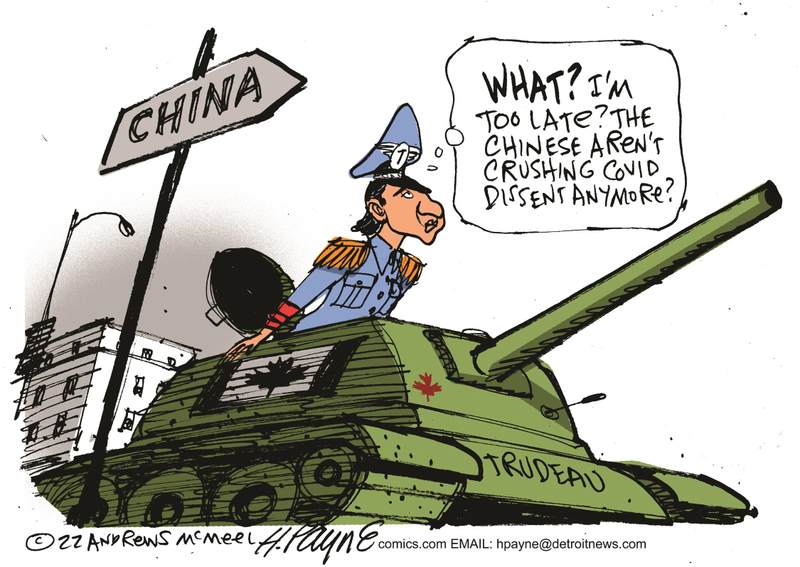
The Federal Court has ruled the Trudeau government’s decision to invoke the Emergencies Act during the so-called “Freedom Convoy” that descended on Ottawa in 2022 violated the Charter of Rights and Freedoms.

In his ruling, Justice Richard G. Mosley said the move was “unreasonable” and outside the scope of the law. Mosley is a 21-year veteran of the Federal Court and is a respected voice on national security legal matters. He has weighed in on some of the most high-profile recent cases in Canadian intelligence, including a 2016 decision that found CSIS had been illegally storing Canadians’ communication data for more than a decade.

The case was brought forward by the Canadian Civil Liberties
Association (CCLA), the Canadian Constitution Foundation,
Canadian Frontline Nurses and a handful of individuals.

Mosley wrote, “I have concluded that the decision to issue the Proclamation does not bear the hallmarks of reasonableness — justification, transparency and intelligibility — and was not justified in relation to the relevant factual and legal constraints that were required to be taken into consideration.”

“I think it’s in the interest of this government and future governments and all Canadians that the threshold to invoke the Emergencies Act remains high and that it is truly, as Justice Mosley says, a legislation of last resort,CCLA lawyer Ewa Krajewska told Global News.

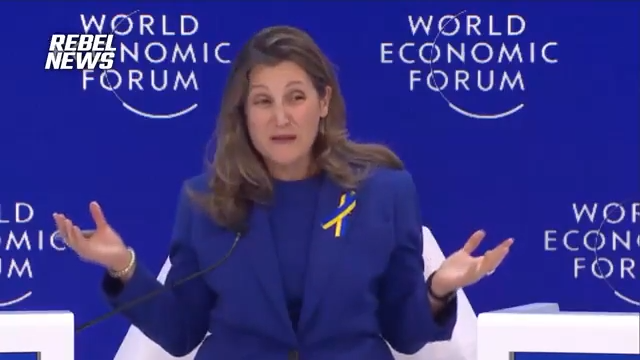
Deputy Prime Minister Chrystia Freeland says that Ottawa will appeal the ruling. “We respect very much Canada’s independent judiciary, however we do not agree with this decision, and respectfully we will be appealing it,” Freeland said at the cabinet retreat in Montreal.

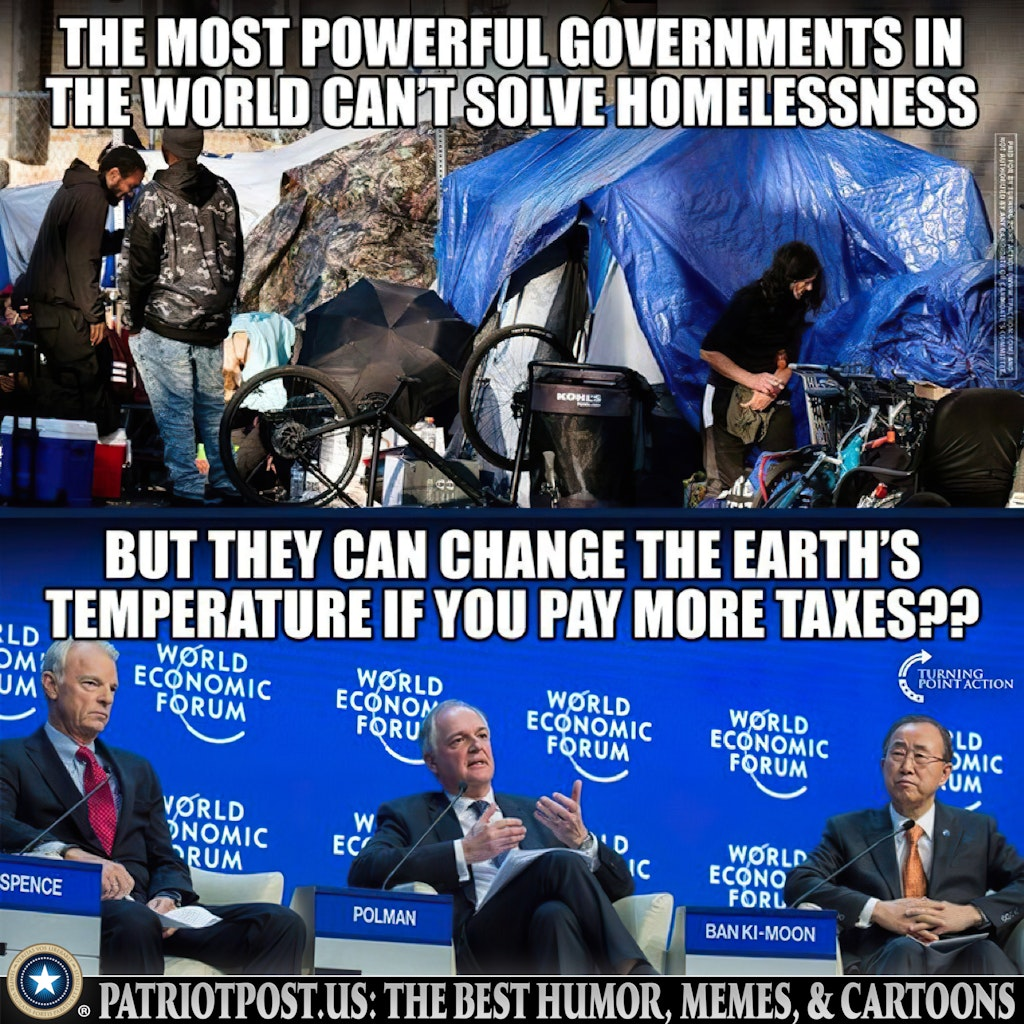
Yes, that’s Canada’s Deputy Prime Minister, Chrystia Freeland calling for imposing unfathomable costs on Canadians to solve an imaginary problem (Climate Change). She also serves on WEF Board of Trustees.

‘The decision follows an application for judicial review launched by the Canadian Constitution Foundation, the Canadian Civil Liberties Association, and several other applicants in 2022 after the emergency measures were used to end the Freedom Convoy protests in Ottawa.  The measures controversially allowed the government to freeze the bank accounts of protesters, conscript tow truck drivers, and arrest people for participating in assemblies the government deemed illegal.”

“Yes, what was happening in Coutts may have been concerning, but [Mosley] finds that the existing laws of Canada were sufficient to deal with what was happening in Coutts and elsewhere in the country, and that is what the government was not able to demonstrate,” Krajewska said.
The ruling includes a secret February 2022 memo from the Privy Council Office (PCO), the central government department that supports the prime minister, recommending Trudeau invoke emergency powers. The document, which was partially censored and marked “cabinet confidence” – some of the most sensitive information in the federal government – noted that PCO believed the “examples of evidence to date” support the conclusion that the Emergencies Act was required.  Although from the outset, PCO noted their conclusion could be challenged.
Krajewska tells Global News that the document was first produced during POEC, and the CCLA had it submitted to the court during this case.  “I think it’s very important from a democracy and transparency perspective that the government produced this document during POEC and that it’s now been appended to this decision,” Krajewska said.  “It’s important for Canadians to understand how the decision was made and what information the government had before it when it was making this decision.”

The document is a remarkable window into the advice Trudeau was getting from the public service during the crisis. Cabinet documents are very rarely released, and even the censored version contained some revelations.

For instance, it shows PCO was in active talks with the Canadian Armed Forces (CAF)
about how the military might assist in ending the protests should they be required.

The PCO memo revealed on Tuesday also notes that while Premier Doug Ford was an enthusiastic supporter of Trudeau invoking emergency powers, other premiers were more skeptical.

“A large number of other premiers expressed concern about the need to act carefully to avoid enflaming the underlying sentiment they considered to lie behind the protest, which they linked to public health measures including vaccine mandates,” the document read.  “These premiers were not seeing the local manifestations of this movement yet in their jurisdiction.”

Quebec Premier François Legault “had a strong negative reaction to the proposal, saying that he would oppose the application of federal emergency legislation in Quebec,” where the memory of Trudeau’s father invoking the War Measures Act during the FLQ crisis is still alive.

Will Trudeau Finally Pay a Political Price for His Bad Governance?  We certainly hope so.


Davos Men Outflanked by Davos Disrupters

Stuart Thomson reports at National Post Carney in the battle for the soul of Davos.  Excerpts in italics with my bolds and added images.
When the World Economic Forum’s conference in Davos wrapped up
it was clear the Davos men were outflanked by the Davos disrupters

By the time the World Economic Forum’s annual conference wrapped up on Friday, it was clear this was the year the Davos men were sidelined by the Davos disrupters.

At the vanguard of these disrupters was Javier Milei, the president of Argentina, whose special address to the conference mixed dark warnings about the future of the West with optimistic celebrations of free market capitalism.

While Davos attendees gathered to hear panels about creating jobs, harnessing AI and revamping the economy to battle climate change, Milei made headlines with his warnings against “greater regulation which creates a downward spiral until we are all poor.”  In his speech, Milei warned the world against creeping towards socialism, arguing that collectivism in any form was the root cause of the West’s problems. The Argentinian president finished his speech with an enthusiastic flourish.  “Long live freedom, dammit!”

Core Theme for Davos 2024

The next day Mark Carney, the slick Canadian central banker, joined a panel on monetary policy and argued that his former colleagues deserved “very high marks” for their recent performance battling post-pandemic inflation.  To the populist right, which has been resurgent in the West and has trained its ire on Davos in recent years, Carney’s must have seemed like the more eccentric argument.

Federal Conservative Leader Pierre Poilievre has boasted that he sniffed out the inflation problem in early 2022 well before the bankers and economists that Carney praised. Poilievre has also been withering in his criticism of current Bank of Canada governor Tiff Macklem, whom Poilievre has promised to fire if he gets the chance. And Poilievre is no fan of the World Economic Forum (WEF), or what his party refers to as “highfalutin trips” to its annual meeting, or its policies, which “do not align with those of hard-working Canadian families.”

For years, Carney has been trailed by rumours that he wants to succeed Prime Minister Justin Trudeau as Liberal leader, which would set up a showdown with Poilievre. That would see Poilievre, among the new breed of Davos disrupters, facing off against the consummate Davos man.

And if a previous clash between the two men, at a virtual meeting of the finance committee in 2021, is any indication, it would be an ill-tempered contest. That committee meeting was a raucous affair that provoked no less than 10 points of order from other MPs. Poilievre accused Carney’s opposition to Canadian pipelines (while supporting investments in foreign pipelines in his role as as chairman of Brookfield Asset Management) as smacking of “the Davos elite at its worst.”

Although Poilievre has been accused of chasing conspiracy theories about the WEF, his criticism of Carney sounds more like the critique offered in 2004 by Samuel Huntington, the Harvard political scientist who popularized the term “Davos man.”

Poilievre describes Carney as a global elitist who sees the world as an economic playground and national loyalties as an encumbrance or, at best, an irrelevance.  While most people have strong patriotic feelings, Huntington described a Davos man that saw himself as “global citizen” and identified with the world as a whole, in contrast to most people, who describe warm patriotic feelings for their home country.

“Comprising fewer than four percent of the American people, these transnationalists have little need for national loyalty, view national boundaries as obstacles that thankfully are vanishing, and see national governments as residues from the past whose only useful function is to facilitate the elite’s global operations,” wrote Huntington.

Things have changed in the two decades since Huntington wrote his paper about the Davos men. When the London School of Economics Business Review in 2022 analyzed piles of press releases by the World Economic Forum, it found that growth and economic development were falling out of style. Words like “global,” “international” and “world” were also becoming passé. Instead, the World Economic Forum was concerned with the “Earth’s finitude and fragility” and words like “pollution” and “nature” had quadrupled.

It’s this new version of Davos that leaders like Milei want to disrupt.

The Argentinian’s libertarianism may have some overlap with Davos ideas from 20 years ago, but he’s a hostile figure at a conference where the terms “diversity,” “ethnicity,” and “equality” have increased five-fold in six years, according to the LSE Business Review analysis.

In fact, the neoliberal ideas about global trade that Huntington heard at Davos in the early 2000s would probably find some sympathy with both Milei and Poilievre, who are fans of the free market American economist Milton Friedman.  Both men have been, somewhat erroneously, compared to former U.S. president Donald Trump but, as long-time libertarians, they more closely resemble each other. Milei’s philosophy even drifts into anarcho-capitalism, a kind of concentrated libertarianism that even Friedman shied away from.

One thing Trump, Poilievre and Milei share, though, is a deep mistrust of the kind of ideas bandied about at Davos and the kind of people who traffic in them. Poilievre has vowed that if he becomes prime minister, his cabinet won’t be allowed to travel to the annual Davos conference, as ministers in the previous Conservative government did.

But given the media reaction to Milei’s performance, which evoked praise from conservative media and curiosity from the mainstream media, Poilievre might be kicking himself that he didn’t think to travel to Davos, to join in person with the new wave of Davos disrupters.

Rebuilding Trust?


Bitcoin Neither Money Nor Inflation Hedge

John Tamny explains at Real Clear Markets Bitcoin Is Neither Money Nor Is It An Inflation Hedge.  Excerpts in italics with my bolds and added images.

Up front, I’m strongly of the view that “crypto” or “private money” will soon enough replace the dollar, euro, yuan, pound, Swiss franc, and any other widely circulated exchange mediums. It’s all in my 2022 book, The Money Confusion: How Illiteracy About Currencies and Inflation Sets the Stage for the Crypto Revolution. I believe this will happen simply because no one buys, sells, borrows or lends money. In reality, all monetary transactions are exchanges of goods, services and labor for goods, services, and labor.

This being the case, it’s only logical that private money would replace government money given the historical tendency for governments to devalue their currencies. Devaluation robs individuals of all stripes of the fruits of their work by shrinking the amount of goods, services and labor that money can be exchanged for.

At present, the dollar is the world’s currency with it at least on one side of something like 90% of global transactions. The dollar liquefies global exchange because those who bring market goods for sale expect the dollar they exchange those goods for to command roughly equal resources in the marketplace.


Yet as Jason Les and Brian Morgenstern argue in a column published today at RealClearMarkets, “the U.S. dollar is an inflationary asset.” Their explicit point is that the dollar has historically declined in value. Measured in gold, they’re quite correct. While a dollar purchased 1/35th of a gold ounce in 1971, in 2024 a dollar purchases roughly 1/2050th of a gold ounce. Though trusted globally as the referee in the vast majority of transactions, the dollar has very real demerits.

The problem is that Bitcoin in no way improves on the dollar’s demerits.
If anything, it’s quite a bit more turbulent.

My source? Les and Morgenstern’s essay. They contend that “a dollar today is worth about 30 percent less than it was ten years ago. By contrast, a single Bitcoin is worth 5,000 percent more today than it was ten years ago.” Which is one reason why Bitcoin is the opposite of money.

In reality, money is quiet. Or should be. Good money is never talked about, nor are returns written about with glee. To see why, imagine asking me to come remodel the master bathroom at your house, only for me to ask for payment in Bitcoin. From there, I’ll ask for one coin up front, one in six months, and one at completion in a year. If the coin’s volatility and direction in 2024 mirrors its direction in 2023, you the buyer of my services will be hit excessively hard. Think about it. While the market price of Bitcoin at the moment is $42,000, six months ago it was $30,000, and one year ago it was $21,000.

To say that there are risks associated with Bitcoin-refereed transactions is quite the understatement. Les and Morgenstern explain why. In their words, “Bitcoin’s deflationary properties make it an effective long-term savings instrument.” Ok, but what recommends a “currency” as an asset doesn’t recommend that same currency as money. See above. At the same time, and as evidenced by Bitcoin’s price at the time of this write-up, the value of it is in no way an up, up, up concept.

Les and Morgenstern contend that Bitcoin is digital gold, except that it isn’t.

The simple truth about gold is that the yellow metal itself doesn’t move. Thanks to highly unique stock and flow qualities, gold is constant as a measure. That’s why markets happened on it as the definer of money par excellence over thousands of years. When gold moves in price, that’s the value of the dollar, euro, pound, yuan, or Swiss franc in which it’s being measured moving, not the metal itself.

All of which brings us to what is arguably Bitcoin’s biggest demerit: its circulation is finite. In the words of Les and Morgenstern, “21 million. That’s how many Bitcoin will ever exist. Ever. Period. End of story.” Well yes, but that’s the problem. There’s never too much good money simply because there can never be too much production, and the sole use of money is as a facilitator of the exchange of the fruits of production.

Circulation of good, trusted money is limitless yet there are strict limits
to Bitcoin. That’s why it can never be money. End of story

Milei Speaks Truth to WEF Elite Power

Argentina’s President Javier Milei had a warning for those attending the annual WEF meeting in Davos, Switzerland; ‘the Western world is in danger’ from ‘collectivist experiments’ such as Diversity, Equity and Inclusion (DEI), and has called on the world to reject socialism and instead embrace “free enterprise capitalism” to end global poverty. H/T zerohedge

“Today, I’m here to tell you that the Western world is in danger,” Milei toild the audience. “And it is in danger because those who are supposed to defend the values of the West are co-opted by a vision of the world that inexorably leads to socialism, and thereby to poverty,” he added.

The self-described “anarcho-capitalist” criticized Davos itself for its “socialist agenda, which will only bring misery to the world,” according to Reuters.

“The main leaders of the Western world have abandoned the model of freedom for different versions of what we call collectivism. We’re here to tell you that collectivist experiments are never the solution to the problems that afflict the citizens of the world — rather they are the root cause,” Milei said, adding “Do believe me, no-one [is] better placed than us Argentines to testify to these two points.”

Below is a lightly edited transcript of Milei’s speech from the closed captions. In the video the talking only begins at 4.25 minutes with Schwab’s introduction. I added some images.

Schwab: Good afternoon ladies and gentlemen it’s for me a great great honor to welcome Javier Milei, as you know is a freely elected president of Argentina. And it’s actually your first trip to a foreign country after being elected. First congratulations for your election and congratulations also to your sister who managed your campaign. Sometimes people would say it was with more radical methods but you introduce a new spirit to Argentina, making Argentina much more related to free enterprise, to entrepreneurial activities, and also to bring Argentina back to the rule of law.

So we have a very extraordinary person among us today and of course we are all all eager to listen to you. Again a very cordial welcome to the World Economic Forum.

Javier Milei: Good afternoon. thank you very much today I’m here to tell you that the Western world is in danger. And it is endangered because those who are supposed to defend the values of the West are co-opted by a vision of the world that inexorably leads to socialism and thereby to poverty. Unfortunately in recent decades, motivated by some well-meaning individuals willing to help others, and others motivated by the wish to belong to a privileged cast, the main leaders of the western world have abandoned the model of freedom for different versions of what we call collectivism.

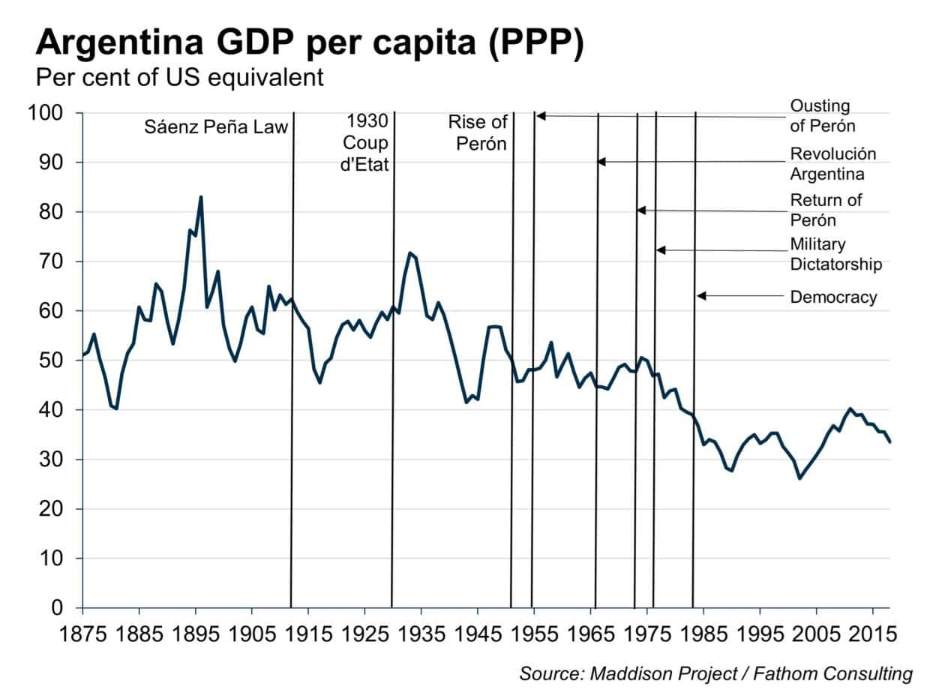
We’re here to tell you that collectivist experiments are never the solution to the problems that afflict the citizens of the world. Rather they are the root cause. Do believe me; no one is better placed than we Argentines to testify to these two points. When we adopted the model of Freedom back in 1860 in 35 years we became a leading world power. And when we embraced collectivism over the course of the last 100 years, we saw how our citizens started to become systematically impoverished. And we dropped to spot number 140 globally.

But before having that discussion it would first be important for us to take a look at the data that demonstrate why free enterprise capitalism is not just the only possible system to end world poverty, but also that it’s the only morally desirable system to achieve this. If we look at the history of economic progress we can see how between the year Zero and the year 1800 approximately world per capita GDP practically remained constant throughout the whole reference period. If you look at a graph of the evolution of economic growth throughout the history of humanity you would see a hockey stick graph. An exponential function that remained constant for 90% of the time and which was exponentially triggered starting in the 19th century.

The only exception to this history was in the late 15th century with the discovery of the American continent but for this exception throughout the whole period between the year zero and the year 1800 Global per capita GDP stagnated. It’s not just that capitalism brought about an explosion in wealth from the moment it was adopted as an economic system. But also if you look at the data you will see that growth continues to accelerate throughout the whole period. Between the year zero and the year 1800 the per capita GDP growth rate remained stable at around 0.02% annually so almost no growth. Starting in the 19th century with the Industrial Revolution the compound annual growth rate was 66% and at that rate in order to double per capita GDP you would need some 107 years.

Now if you look at the period between the year 1900 and the year 1950 the growth rate accelerated to 1.66% a year so you no longer need 107 years to double per capita GDP but 66. And if you take the period between 1950 and the year 2000 you will see that the growth rate was 2.1%, which would mean then in only 33 years we could double the world’s per capita GDP. Far from stopping, this trend remains well and alive today, For the period between the year 2000 and 2023 the growth rate again accelerated to 3% a year which means that we could double world per capita GDP in just 23 years.

That said when you look at per capita GDP since the year 1800 and until today you will see that after the Industrial Revolution Global per capita GDP multiplied by over 15 times, which meant a boom in growth that lifted 90% of the global population out of poverty. We should remember that by the year 1800 about 95% of the world’s population lived in extreme poverty and that figure dropped to 5% by the year 2020 prior to the pandemic.

The conclusion is obvious. Far from being the cause of our problems free trade capitalism as an economic system is the only instrument we have to end hunger, poverty and extreme poverty. Across our planet the empirical evidence is unquestionable. Therefore since there is no doubt that free enterprise capitalism is Superior in productive terms the leftwing doxer has attacked capitalism alleging matters of morality. The detractors claim that it’s unjust; they say capitalism is evil because it’s individualistic and that collectivism is good because it’s altruistic. Of course with the money of others they advocate for social justice.

But this concept which became fashionable in the developed world in recent times, has been in my country a constant in political discourse for over 80 years. The problem is that social justice is not just and nor does it contribute either to the general well being. Quite on the contrary, it’s an intrinsically unfair idea because it’s violent. It’s unjust because the state is financed through tax and taxes are collected coercively. Can anyone of us say that they voluntarily pay taxes? Which means that the state is financed through coercion and that the higher the tax burden the higher the coercion and the lower the freedom.

Those who promote social justice, the Advocates start with the idea that the whole economy is a pie that can be shared differently. But that pie is not a given. It’s wealth that is generated in what Israel Kirzner for instance calls a market Discovery process. If the goods or services offered by a business are not wanted, the business will fail unless it adapts to what the market is demanding. If they make a good quality product at an attractive price they will do well and produce more. So the market is a discovery process in which the capitalist will find the right path as they move forward.

But if the state punishes capitalists when they’re successful and gets in the way of the discovery process, their incentives are destroyed. And the consequence is that they will produce less, the pie will be smaller and this will harm society as a whole. By inhibiting these Discovery processes and hindering the appropriation of discoveries, Collectivism ends up binding the hands of entrepreneurs and prevents them from offering better goods and services at a better price.

So how come that Academia, International organizations, economic theory and politics demonize an economic system that has not only lifted 90% of the world’s population out of extreme poverty but has continued to do this faster and faster? And this is morally Superior. Just thanks to free trade capitalism, the world is now living its best moment. Never in all of Humanity’s history has there been a time of more Prosperity than today. All the world of today has more freedom, is richer, is more peaceful and prosperous.

And this is particularly true for countries that have more freedom and have economic freedom and respect the property rights of individuals. Countries that have more freedom are 12 times richer than those that are repressed and the lowest decile in terms of distribution in free countries are better off than 90% of the population of repressed countries. And poverty is 25 times lower and extreme poverty is 50 times lower. And citizens in free countries live 25% longer than citizens in repressed countries.

Now what do we mean when we talk about libertarianism? Let me quote the words of the greatest Authority on freedom in Argentina Professor Alberto Benegas Lynch who says that libertarianism is the unrestricted respect for the life project of others based on the principle of non-aggression in defense of the right to life, liberty and property. Its fundamental institutions being private property, markets free from State intervention, free competition.

The division of labor and social cooperation as part of which success is achieved only by serving others with Goods of better quality or at a better price. In other words capitalists, successful business people are social benefactors who, far from appropriating the wealth of others, contribute to the general well-being. Ultimately a successful entrepreneur is a hero and this is the model that we are advocating for the Argentine of the future, a model based on the fundamental principles of libertarianism: the defense of Life, of freedom and of property.

Now if free enterprise capitalism and economic freedom have proven to be extraordinary instruments to end poverty in the world, and we are now at the best time in the history of humanity, why do I say that the West is in danger? I say this precisely because in those countries that should defend the values of the free market private property and the other institutions of libertarianism, sectors of the political and economic establishment, some due to mistakes in their theoretical framework and others due to a Greed for power, are undermining the foundations of libertarianism, opening up the doors to socialism and potentially condemning us to Poverty misery and stagnation.

It should never be forgotten that socialism is always and everywhere an impoverishing phenomenon that has failed in all countries where it’s been tried out. It’s been a failure economically, socially culturally and it also murdered over a 100 million human beings. The essential problem for the West today is not just that we need to come to grips with those who even after the fall of the Berlin wall and the overwhelming empirical evidence continue to advocate for impoverishing socialism. But there’s also our own leaders, thinkers and academics relying on a misguided theoretical framework, who undermine the fundamentals of the system that has given us the greatest expansion of life and prosperity in our history. I refer to the misguided neoclassical economic theory which designs a set of instruments that unwillingly or without intention ends up serving intervention by the state socialism and social degradation.

The problem is neoclassicals fell in love with a model that does not map reality. So they put down their mistakes to supposed market failures, rather than reviewing the premises of the model. On the pretext of a supposed market failure regulations are introduced which only create distortions in the price system, They prevent economic calculus and therefore also prevent saving, investment and growth. This problem lies mainly in the fact that not even supposedly libertarian economists understand what is the market. Because if they did understand, it would quickly be seen that it’s impossible for that to be something along the line of market failures.

The market is not a mere graph describing a curve of supply and demand. The market is a mechanism of social cooperation where you voluntarily exchange ownership rights. Therefore based on this definition, talking about a market failure is an oxymoron. There are no market failures if transactions are voluntary. There can only be a market failure if there is coercion. And generally the only one that is able to coerce is the state which holds a monopoly on violence.

Consequently if someone considers that there is a market failure I suggest they check to see if the state intervention was involved. And if they find that’s not the case, I would suggest that they check again. Because market failures do not exist. An example of so-called market failures described by the neoclassicals are the concentrated structures of the economy. However without increasing returns to scale functions whose counterpart are the concentrated structures of the economy, we couldn’t possibly explain economic growth since the year 1800 until today.

Isn’t this interesting that since the the year 1800 onwards with population multiplying by eight or nine times, per capita GDP grow by over 15 times. So there are growing returns which took extreme poverty from 95% to 5%. However the presence of growing returns um involves concentrated structures, what we would call a monopoly. How come then that something that has generated so much wellbeing the neoclassical theory calls a market failure?

Neoclassical economists, think outside of the box! When the model fails you shouldn’t get angry with reality, but rather with a model and change it. Those with the the neoclassical model face a dilemma. They say that they wish to perfect the functioning of the market by attacking what they consider to be failures, but in doing so they don’t just open up the doors to socialism but also go against economic growth. For example, regulating monopolies, destroying their profits and destroying growing returns automatically would destroy economic growth. In other words whenever you want to correct a supposed market failure as a result of not knowing what is the market, or as a result of having fallen in love with a failed model, you are opening up the doors to socialism and condemning people to Poverty.

However faced with the theoretical demonstration that state intervention is harmful and the empirical evidence that it has failed, the solution to be proposed by collectivists is not greater freedom but rather greater regulation which creates a downward spiral of regulations until we’re all poorer. And all of our lives depend on a bureaucrat sitting in a luxury office.

Given the dismal failure of collectivist models and the undeniable advances in the Free World, socialists were forced to change their agenda. They left behind the class struggle based on the economic system, and replaced this with other supposed social conflicts which are just as harmful to community life and to economic growth. The first of these new battles was the ridiculous and unnatural fight between man and woman. Libertarianism already provides for equality of these sexes. The Cornerstone of our creed says that all humans are created equal, that we all have the same unalienable rights granted by the Creator, including life, freedom and ownership. All that this radical feminism agenda has led to is greater State intervention to Hind the economic process giving a job to bureaucrats who have not contributed anything to society. Examples include ministries of women or International organizations devoted to promoting this agenda.

Another conflict presented by socialists is that of humans against nature, claiming that we human beings damage the planet which should be protected at all costs, even going as far as advocating for population control mechanisms or the bloody abortion agenda. Unfortunately these harmful ideas have taken a strong hold in our society. Neo-Marxists have managed to co-opt the common sense of the western world, and this they have achieved by appropriating the media, culture, universities and also International organizations. The latter case is the most serious one probably, because these are institutions that have enormous influence on political and economic decisions of the countries that make up the multilateral organizations.

Fortunately there’s more and more of us who are daring to make our voices heard because we see that if we don’t truly and decisively fight against these ideas, the only possible fate is for us to have increasing levels of State regulation, socialism, poverty and less freedom. And therefore we will be having worse standards of living. The West has unfortunately already started to go along this path.

To many it may sound ridiculous to suggest that the West has turned to socialism but it’s only ridiculous if you only limit yourself to the traditional economic definition of socialism which says that it’s an economic system where the state owns the means of production. This definition in my view should be updated in the light of current circumstances. Today states don’t need to directly control the means of production to control every aspect of the lives of individuals. With tools such as printing money debt, subsidies controlling the interest rate, price controls and regulations to correct the so-called market failures they can control the lives and fates of millions of individuals.

This is how we come to the point where by using different names or guises a good deal of the generally accepted political officers in most Western countries are collectivist variants, whether they proclaim to be openly communist, fascist, Nazis, socialists, social Democrats, National socialists, Democrat Christians or Christian democrats. Whether Progressive populist nationalists or globalists, at bottom there are no major differences. They all say that the state should steer all aspects of the lives of individuals. they all defend a model contrary to that one which led Humanity to the most spectacular progress in our history.

We have come here today to invite the rest of the countries in the Western World to get back on the path of prosperity, economic freedom, limited government and unlimited respect for private property. These are essential elements for economic growth. Tthe impoverishment produced by collectivism is no fantasy nor is it an inescapable fate, but it’s a reality that we Argentines know very well. We have lived through this; we have been through this ever since we decided to abandon the model of Freedom that had made us rich. We have been caught up in the downward spiral as part of which we are poorer and poorer day by day.

So this is something we have lived through and we are here to warn you about what can happen if the countries in the western world that became Rich through the model of Freedom stay on this path of servitude. The case of Argentina is an empirical demonstration that no matter how rich you may be or how much you may have in terms of Natural Resources or how skilled your population may be or educated or how many bars of gold you may have in the central bank, if measures are adopted that hinder the free functioning of markets, free competition, free Price system, If You Hinder trade if you attack private property, the only possible fate is poverty.

Therefore in concluding I would like to leave a message for all business people here and for those who are not here in person but are following from around the world. Do not be intimidated either by the political cast or by parasites who live off the state. Do not surrender to political class that only wants to stay power and retain its privileges. You are social benefactors, you’re Heroes, you’re the creators of the most extraordinary period of prosperity we’ve ever seen. Let no one tell you that your ambition is immoral. If you make money it’s because you offer a better product at a better price thereby contributing to General well being.

Do not surrender to the advance of the state. The state is not the solution, the state is itself the problem. You are the true protagonists of this story and rest assured that from today on Argentina is your unconditional Ally. Thank you very much and Long Live Freedom.


A Pivotal Year for Canada?

Joe Oliver provides an outlook in his Financial Post article 2024 could be a pivotal year, politically, economically and culturally.  Excerpts in italics with my bolds and added images.

There are signs that cancel culture is in decline and it’s possible
to say things again that everyone knows to be true.

The year just beginning could be a watershed, with turning points in politics, economics and culture, provided common sense and moral clarity prevail both here and abroad.

Two regional wars in Ukraine and Gaza could spread and provoke a direct confrontation between western democracies and Russia, Iran and China. Equivocation or faltering support for embattled allies would weaken the democracies in their struggle with aggressive autocratic foes who harbour malign territorial and ideological/theocratic ambitions. If Vladimir Putin manages to keep Ukrainian land seized by force of arms, he will be less concerned about NATO’s reaction should he invade other countries the Soviet Union once subjugated. Unless Israel destroys Hamas, that group’s genocidal savagery will never end and peace in the Middle East will remain just a dream.

As the world became more dangerous and unstable in 2023,
Canada chose to undermine its own international standing.

To sit at the adult table requires a moral compass, which means opposing anti-Israel votes in the UN and designating Iran’s Revolutionary Guards a terrorist organization, which we failed to do. It also means not being a military free-rider. Our decision to act instead as a “convener” and self- important virtue-signaller irritates allies who must shoulder our share of the burden and third-world countries who see our posturing as post-colonial arrogance.

The American elections in November could be transformative. Canada’s Liberals will face a rude awakening if a triple Republican victory brings to power politicians with whom they have little contact and even less influence. It’s to be hoped they are reaching out discreetly.

On the policy front, the World Economic Forum (WEF) continues to try to influence global governmental, industrial and social agendas. Its “Great Reset” envisages an intrusive public sector in thrall to climate catastrophism that would reduce personal agency through pervasive oversight mechanisms, including central bank digital currencies. Forum chairman Klaus Schwab assured elite Davos attendees that “The future belongs to us” — comforting words for those jealous of their influence and accustomed to ignoring rules that apply to the hoi polloi. Chrystia Freeland and Mark Carney are on the WEF board of trustees and the Justin Trudeau’s Liberal party certainly reflects its centre-left technocratic view.

But European governments are moving away from costly climate initiatives
and support for EVs in response to public opposition. The U.S. will follow suit
if Donald Trump wins back the presidency.

Canadians resent seemingly endless woke policies that defy common sense but only occasionally demonstrate against them, usually saving their outrage for the ballot box. A recent example of ludicrous groupthink was the unanimous decision of Toronto City Council to change the name of Yonge-Dundas Square to Sankofa Square. It cancelled Henry Dundas, a committed British abolitionist, in favour of a Ghanaian name originating with the Akan people, who were themselves slave traders — all this in the name of “racial justice and equality.” In another instance of feel-good inanity, though one that may have harmful consequences, 34 Ontario municipal councils passed resolutions to phase out natural gas power, which is unachievable without electricity blackouts and crushing cost. Subsequently, Windsor city council acknowledged reality and approved plans for two new gas turbines to assure reliable electricity.

On the economic front, Canadians’ personal prosperity, as measured by GDP per capita, is projected to decline this year by more than two per cent. To address affordability and dismal long-term productivity, the federal government needs to shift focus from identity politics and climate obsession to economic growth, fiscal responsibility and raising Canadians’ standard of living. In addition to recommendations I outlined in my last column, we need to pursue academic excellence, colour-blind hiring based on competence and achievement — remember those quaint concepts? — and a return to shareholder capitalism away from stakeholder capitalism, which eats away at free enterprise, the source of our collective prosperity.

Although billions of people around the world would love to settle in the Great White North, progressive elites’ guilt about their own privileged lifestyle does not justify the massive influx of immigrants that is currently disadvantaging hardworking Canadians and exacerbating an already severe housing crisis.

Most Canadians understand that, and in 2023 it became possible
to make such arguments without being cancelled.

Whether antisemitic hate crimes and violence will spread even more in 2024 remains an open question. The late chief rabbi of the U.K., Jonathan Sacks drew on history to tell people that “The hate that begins with the Jews, never ends with the Jews.” This ancient social pathology has broad implications for Canadian society and needs to be dealt with, urgently and decisively, by every level of government. After an initially slow response, there seems to be growing recognition of that.

There were also glimmers of good news on the higher education front. The U.S. Supreme Court declared affirmative action in college admissions unconstitutional. And the resignation of Harvard president Claudine Gay exposed the intellectual rot in American universities. Now, a crucial battle against institutionally entrenched interests has started, aiming to abolish “diversity, equity and inclusion,” a divisive, essentially racist ideology that undermines excellence, integrity and productivity in academia and the workplace. That battle has not really begun yet in Canada.

If these and other issues become constructive turning points,
2024 could be a better year than its dark predecessor.

Looking Into the Middle East Abyss

With the chaos erupting in violent conflict in Gaza, and strong reactions around the world, this opinion from three years ago seems prescient.  Bret Stephens wrote at New York Times January 2020  Every time Palestinians say ‘no,’ they lose.  Text in italics with my bolds.

Regarding President Donald Trump’s peace plan for the Israeli-Palestinian conflict, the instant conventional wisdom is that it’s a geopolitical nonstarter, a gift to Benjamin Netanyahu and an electoral ploy by the president to win Jewish votes in Florida rather than Palestinian hearts in Ramallah.

It may be all of those things. But nobody will benefit less from a curt dismissal of the plan than the Palestinians themselves, whose leaders are again letting history pass them by.  The record of Arab-Israeli peace efforts can be summed up succinctly: Nearly every time the Arab side said no, it wound up with less.

That was true after it rejected the 1947 U.N. Partition Plan, which would have created a Palestinian state on a much larger footprint than the one that was left after Israel’s war of independence. It was true in 1967, after Jordan refused Israel’s entreaties not to attack, which resulted in the end of Jordanian rule in the West Bank.

It was true in 2000, when Syria rejected an Israeli offer to return the Golan Heights, which ultimately led to U.S. recognition of Israeli sovereignty of that territory. It was true later the same year, after Yasser Arafat refused Israel’s offer of a Palestinian state with a capital in East Jerusalem, which led to two decades of terrorism, Palestinian civil war, the collapse of the Israeli peace camp and the situation we have now.

It’s in that pattern that the blunt rejection by Palestinian leaders of the Trump plan — the Palestinian president, Mahmoud Abbas, denounced it as a “conspiracy deal” — should be seen. Refusal today will almost inevitably lead to getting less tomorrow.

That isn’t to say that the plan, as it now stands, can come as anything but a disappointment to most Palestinians. It allows Israel to annex its West Bank settlements and the long Jordan Valley. It concedes full Israeli sovereignty over an undivided Jerusalem. It conditions eventual Palestinian statehood on full demilitarization of a Palestinian state and the disarming of Hamas. It compensates Palestinians for lost territories in the West Bank with remote territories near the Egyptian border. The map of a future Palestine looks less like an ordinary state than it does the MRI of a lung or kidney.

Then again, much of what the plan gives to Israel, Israel already has and will never relinquish — which explains why the plan was hailed not only by Netanyahu but also by his centrist rival Benny Gantz. Critics of Israeli policy often insist that a Palestinian state is necessary to preserve Israel as a Jewish democracy. True enough. But in that case, those critics should respect the painful conclusions Israelis have drawn about just what kind of Palestinian state they can safely accept.

More important, however, is what the plan offers ordinary Palestinians — and what it demands of their leaders. What it offers is a sovereign state, mostly contiguous territory, the return of prisoners, a link to connect Gaza and the West Bank, and $50 billion in economic assistance. What it demands is an end to anti-Jewish bigotry in school curricula, the restoration of legitimate political authority in Gaza and the dismantling of terrorist militias.

Taken together, this would be a historic achievement, not the “scam” that liberal critics of the deal claim. The purpose of a Palestinian state ought to be to deliver dramatically better prospects for the Palestinian people, not tokens of self-importance for their kleptocratic and repressive leaders.

That begins with improving the quality of Palestinian governance,
first of all by replacing leaders whose principal interests
lie in perpetuating their misrule.

If Abbas — now in the 16th year of his elected four-year term of office — really had Palestinian interests at heart, he would step down. So would Hamas’ cruel and cynical leaders in Gaza. That the peace plan insists on the latter isn’t an obstacle to Palestinian statehood. It’s a prerequisite for it.

At the same time, it’s also essential to temper Palestinian expectations. The Jewish state has thrived in part because it has always been prepared to make do with less. The Palestinian tragedy has been the direct result of taking the opposite approach: of insisting on the maximum rather than working toward the plausible. History rarely goes well for those who try to live it backward.

For all the talk about Trump’s plan being dead on arrival, it says something that it has been met with an open mind by some Arab states, including Saudi Arabia and the United Arab Emirates. They know only too well that the Arab world has more important challenges to deal with than Palestinian statehood. They know, too, that decades of relentless hostility toward the Jewish state have been a stupendous mistake. The best thing the Arab world could do for itself is learn from Israel, not demonize it.

That ought to go for the Palestinians as well. The old cliché about Palestinians never missing an opportunity to miss an opportunity has, sadly, more than a bit of truth in it. Nobody ought to condemn them to make the same mistake again.

Bret Stephens is a regular columnist for The New York Times.

Heroic Doctors Still Fighting Covid Tyranny

Larry Kaifesh explains in his American Thinker article One Doctor’s Fight for Covid Justice.  Excerpts it italics with my bolds and added images.

Background

A physician with more than 25 years of experience, Dr. Mary Talley Bowden is board-certified in otolaryngology and sleep medicine.  In 2019, she founded BreatheMD in Houston.  Educated at the University of North Carolina in Chapel Hill, the Medical College of Georgia at Augusta University, and the University of Texas Medical Branch, Dr. Bowden completed her residency at Stanford University.  She is one of the few direct care specialists in the U.S. who does not contract with any health insurance companies and strives to offer affordable care with clear pricing.

Dr. Bowden was targeted after speaking out against prescribed protocols for treating COVID-19 and the experimental COVID vaccine.  She has been a target of the Texas Medical Board, the U.S. Food and Drug Administration, and Houston Methodist Hospital for her early treatment of over 6,000 patients with COVID-19, despite her record including no deaths.

Public Health Descent into Covid Madness

In the beginning of the COVID-19 pandemic, Dr. Bowden started using monoclonal antibodies to treat her patients and had great success.  She explained that whenever she needed more, she could order them, and they would be delivered the next day.  However, the government took over the distribution of the monoclonal antibodies.  When this happened, it became harder and harder for her to get them until the government just stopped shipping them.  Dr. Bowden says this was in order to push the COVID-19 vaccine.

The monoclonal antibodies were effective, and she said patients would turn the corner the next day if they were treated early.  She emphasized that early treatments lead to better outcomes.

When she could not get any more monoclonal antibodies delivered by the government, she worried there would not be anything else as effective.  However, she discovered that ivermectin and hydroxychloroquine worked just as well.

Her results highlight the effectiveness of her protocol in direct contrast to the protocols hospitals were using.  The hospital protocols are using are connected with countless deaths, hospitalizations, and adverse effects, according to the government data found on the Vaccine Adverse Event Reporting System (VAERS).

From early on in the pandemic, Dr. Bowden, and other doctors, were using ivermectin, the Nobel Prize–winning medication, in their extremely effective treatment protocols.  In response, the FDA initiated an aggressive campaign against using ivermectin in treating COVID-19.  The FDA used the famous “horse” message stating, “Why You Should Not Use Ivermectin to Treat or Prevent COVID-19,” emphasizing that it is a horse dewormer and should not be used on people.  This message can still be found on the FDA website.

In 2021, the attacks on ivermectin and hydroxychloroquine increased exponentially.  Dr. Bowden and others believe that the more ivermectin, a generic prescription drug, threatened the lucrative pharmaceutical industry, the more enemies it accumulated.

At present, there are more than 17,000 physicians who support
early treatment and the protocol Dr. Bowden uses.

Covid Tyrants Continue to Oppress Doctors and Patients

Dr. Bowden and two other doctors sued the FDA for overstepping their authority and making suggestions for patient treatments.  Judge Don Willett agreed, declaring in his ruling that the “FDA is not a physician.  It has authority to inform, announce, and apprise — but not to endorse, denounce, or advise.”  Currently, this case is going back to the U.S. District Court in Galveston for further debate.

Dr. Bowden has also sued Houston Methodist for defamation.  Although her case was dismissed, she appealed, and the judge reviewed the case on Dec. 12, 2023.  She does not expect to hear anything back on this case for over a year.

Following Dr. Bowden’s success with her protocols, the Texas Medical Board filed a formal complaint against her for violations of the Texas Medical Practice Act.  Now, after a couple of appeals, her next hearing is scheduled to take place April 29, 2024.

Additionally, Dr. Bowden explained that there is now overwhelming data
showing that the spike proteins in the COVID-19 vaccines are causing
four major domains of disease:
cardiovascular, neurological, blood clots, and immunological abnormalities.

Because of this, her priority is to do everything she can to get the COVID-19 vaccine off the market.  She is working with elected officials and political candidates to pull these dangerous vaccines.  She said she is happy to report that every day, more and more are joining the initiative.

Dr. Bowden is also concerned about and focused on the pediatric vaccine schedule, which currently includes the COVID-19 vaccine.  This is scary, she explained, because most parents trust the government and do what they are told.  However, she is hopeful that more parents will wake up to the dangers of the COVID-19 vaccine.  In Dr. Bowden’s opinion, “there is no reason for children to get these shots. … We have no long-term safety data.”

‘Cures’ Worse than the Disease

Dr. Bowden went on to say when she looked at her new patient appointments, over seven percent are for ongoing chronic debilitating health issues that developed following individuals taking the vaccine.  She went on to say it is very hard to diagnose myocarditis in a nonverbal child.  How can a child communicate that he has chest pain, the primary symptom of myocarditis?  Dr. Bowden fears that these babies will get myocarditis — permanent scarring of the heart — and then one day they will collapse on the soccer field.  This is what we are looking at, she emphasized.

Any other vaccine with this record would have been pulled off
the market a long time ago, according to Dr. Bowden.  

She explained that in the 1976 swine flu outbreak, they stopped giving the vaccine after 25 deaths.  Currently on VAERS, there are more than 36,000 deaths reported, which is believed to be only one percent of the real number due to underreporting.  Yet they are still advertising this vaccine.

There is also significant concern with the protocol the hospitals are using to treat COVID-19 patients.  The CARES Act provides incentives for hospitals to use treatments directed solely by the federal government with the backing of the National Institute of Health.  These incentives are financial and provide payments to the hospitals for the following: a diagnosis of COVID, admission to the hospital, use of Remdesivir (a drug shown to cause kidney failure in 25 percent of the people who take it), a patient being put on a ventilator, and if the patient dies and the cause of death is listed as COVID-19.

These incentives were not designed to treat patients and facilitate their health,
but to aid in their demise, warned Dr. Bowden.

Last week, the FDA warned of a catastrophic drop in life expectancy, and in just the last nine months of this year, more than 158,000 more Americans died unexpectedly than in all of 2019, before the COVID-19 vaccine was introduced.  To put that number in context, that is more casualties than in all wars since Vietnam, combined.

Medical Profession Betrayed by Overlords

Dr. Bowden expressed deep concern about what is happening to the medical industry.  Doctors have lost their autonomy and are now employees taking orders from the government and administrators on how to treat their patients, she explained.  Many are sheep, she said, who sit quietly and do what they are told, rather than what is right by the medical doctrine “first do no harm.”  She sympathized that they have families and mortgages but said they cannot allow themselves to be controlled by nefarious forces.

Footnote: Xmas 2020: Twelve Forgotten Principles of Public Health

Dr. Martin Kulldorff, PhD, is a Professor of Medicine at Harvard Medical School. His research centers on developing new epidemiological and statistical methods for the early detection and monitoring of infectious disease outbreaks and for post-market drug and vaccine safety surveillance. This holiday gift remembrance is collected from Dr. Kulldorff’s twitter thread courtesy of AIER, which also includes links to articles adding depth to the 12 points. Tweets in italics with my bolds.

  1. Public health is about all health outcomes, not just a single disease like Covid-19. It is important to also consider harms from public health measures. More. 
  2. Public health is about the long term rather than the short term. Spring Covid lockdowns simply delayed and postponed the pandemic to the fall. More. 
  3. Public health is about everyone. It should not be used to shift the burden of disease from the affluent to the less affluent, as the lockdowns have done. More. 
  4. Public health is global. Public health scientists need to consider the global impact of their recommendations. More. 
  5. Risks and harms cannot be completely eliminated, but they can be reduced. Elimination and zero-Covid strategies backfire, making things worse. More. 
  6. Public health should focus on high-risk populations. For Covid-19, many standard public health measures were never used to protect high-risk older people, leading to unnecessary deaths. More. 
  7. While contact tracing and isolation are critically important for some infectious diseases, it is futile and counterproductive for common infections such as influenza and Covid-19. More. 
  8. A case is only a case if a person is sick. Mass testing asymptomatic individuals is harmful to public health. More. 
  9. Public health is about trust. To gain the trust of the public, public health officials and the media must be honest and trust the public. Shaming and fear should never be used in a pandemic. More. 
  10. Public health scientists and officials must be honest with what is not known. For example, epidemic models should be run with the whole range of plausible input parameters. More. 
  11. In public health, open civilized debate is profoundly critical. Censoring, silencing and smearing leads to fear of speaking, herd thinking and distrust. More. 
  12. It is important for public health scientists and officials to listen to the public, who are living the public health consequences. This pandemic has proved that many non-epidemiologists understand public health better than some epidemiologists. More.

Dr. Martin Kulldorff


Biden’s Desperate Wartime Climate Policy


Mark Krebs writes at Master Resource “Wartime” Climate Policy vs. Natural Gas: Biden Gets Desperate.  Excerpts in italics with my bolds and added images.

“While gas appliances may presently be losing some market share to electricity due to Green New Deal discrimination, there are also increasing indications that the public is both weary and wary of such ‘watermelon’ policies. It’s not about saving the planet from the ravages of fossil fuels; it’s about enslaving the planet by banning fossil fuels.”

Yes, the President of the United States has pulled out a Korean War authority (Defense Production Act) to fight against American energy that Americans prefer. It is an overreach that is being noted widely, as outlined below as well as here and here.

The American Gas Association (AGA) started this latest flurry with a press release November 17, 2023. The same day, Reuters and Fox News published their articles. Epoch Times published its article (and video) on November 20, 2023. The Reuters article most noteworthy contribution is that it names recipients of the Biden Administration’s [mis]appropriations of DPA funding. Both the Reuters article and Fox News article cite the AGA’s press release.

The AHRI data clearly shows that gas appliances are losing at least some ground to electric equivalents as evidenced by the above graphs. Moreover, this trend appears to have accelerated under the Biden Administration. AHRI’s discussion of the IRA and DPA is non-committal advocacy (an oxymoron?).

Conclusions

“While gas appliances may presently be losing some market share to electricity due to Green New Deal discrimination, there are also increasing indications that the public is both weary and wary of such ‘watermelon’ policies. It’s not about saving the planet from the ravages of fossil fuels; it’s about enslaving the planet by banning fossil fuels.”

The eighteenth-century naval hero John Paul Jones was doing battle with a British ship when his own ship was badly damaged, and the British commander called over to ask whether Jones had surrendered. He answered, “I have not yet begun to fight.” He and his crew then captured the British ship. While regulatory capture of the “administrative state” appears to be the rule and not the exception at present, this bit of history should be remembered so we do repeat it and recapture a government “for the people” as our Founding Fathers intended.

Washington Examiner reports Biden’s war on energy: President invokes wartime powers to speed up end to gas-powered home appliance.  Excerpts in italics with my bolds and added images.

President Joe Biden allotted $169 million for electric heat pump projects with his emergency authority on the basis of climate change.

This is the first time a president classified climate change as an emergency by utilizing the Defense Production Act, which was established during the Cold War. Now, the money stemming from the Inflation Reduction Act will be divided among 15 sites dedicated to manufacturing the necessary parts and entire units of a variety of heat pumps.

“The President is using his wartime emergency powers under the Defense Production Act to turbocharge U.S. manufacturing of clean technologies and strengthen our energy security,” Biden’s National Climate Advisor Ali Zaidi said in a statement.

John Podesta, senior adviser to the president for clean energy innovation and implementation, similarly celebrated the move, applauding the president for “treating climate change as the crisis it is.”

However, American Gas Association President and CEO Karen Harbert disagreed with the recent move from the White House, writing in a statement, “We are deeply disappointed to see the Defense Production Act, which is intended as a vital tool for advancing national security against serious outside threats, being used as an instrument to advance a policy agenda contradictory to our nation’s strong energy position.”

“Increased use of natural gas has been responsible for 60% of the electrical grid’s CO2 emissions reductions. This vital tool for emissions reductions and energy system resilience should not be unfairly undermined through misuse of the Defense Production Act.”

Among the facilities, two new factories will be constructed: a Treau, Inc. DBA Gradient plant in Michigan and a Mitsubishi Electric plant in Kentucky. Neither company has announced exact locations yet. Treau will receive over $17 million, and Mitsubishi will receive $50 million toward construction.

The Energy Department predicts roughly 1,700 jobs will be created in the various projects to promote more heat pump products. All the sites are centered in “disadvantaged communities” for their benefit.

Last year, the Energy Information Administration reported that natural gas was the water and space heating source of about 42% of U.S. residential spaces. The residential sector makes up 15% of overall natural gas consumption. However, heating and cooling across residential and commercial buildings drive more than 35% of the country’s energy consumption.

Footnote on Declaring Climate Emergency for Spending Purposes

This report on the German High Court ruling on this matter Europe Plunges Into Chaos After Germany Freezes Public Spending Following Shock Top Court Decision.  Excerpts in italiics with my bolds.

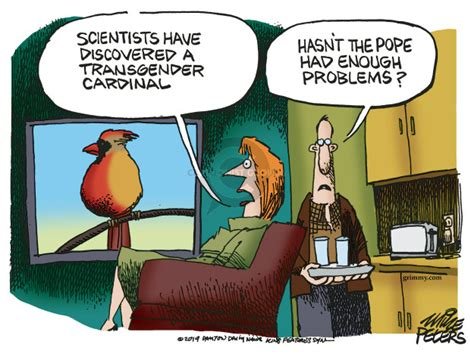
Germany’s economy, Europe’s largest, is contracting as surging energy prices and trade tensions cast doubt on its export-oriented business model. Chancellor Olaf Scholz’s government had been counting on that old virtue signaling switcheroo – a flood of spending on “green-energy projects and technology”, from chips to batteries, to revive the old model. That way, if anyone asks why Germany is deficit-spending its way to mercantilist utopia, Berlin could always lie and say it was doing the right thing for the world and wasn’t interested in a debt-funded stimulus. Alas, now the “Cardinals of Karlsruhe” have made this impossible.

Berlin’s decision to freeze all federal spending for the rest of the year came after the court defunded the government’s €60 billion —the equivalent of more than $65 billion—green-transition project. The court said Berlin couldn’t repurpose unspent credits originally earmarked to tackle the Covid-19 pandemic to fund environmental and energy projects. It said Berlin was bound by the country’s constitutionally enshrined fiscal rules that limit budget deficits to 0.35% of gross domestic product in normal times.

Senior government officials said one option under consideration would be to retroactively declare a state of budgetary emergency for 2023, invoking a clause in the fiscal rules that allows for a suspension of the spending limits in exceptional circumstances. Previous governments invoked the exception during the pandemic.

Unfortunately, for Germany’s stimmy-starved politicians, the plan is fraught with legal difficulties, in part because the constitutional court prepared for just this eventuality when it raised the bar for declaring such emergencies, according to Lars Feld, an economist who advises the government.

Strengthening resilience and transforming the economy amid geopolitical crises and climate change was seen as a necessity that required taking on debt, but the court ruling has challenged those assumptions, Feld wrote in the Frankfurter Allgemeine newspaper.

Hilariously, the court said that unlike war and natural disasters, climate change was a foreseeable crisis that had been long in the making and could no longer justify emergency spending. Which, however, means that all Germany will have to do is politely request that the CIA start a new war… or that Fauci mail orders a new virus from Wuhan.

Biden Declares National Emergency for War on Energy

Washington Examiner reports Biden’s war on energy: President invokes wartime powers to speed up end to gas-powered home appliance.  Excerpts in italics with my bolds and added images.

President Joe Biden allotted $169 million for electric heat pump projects with his emergency authority on the basis of climate change.

This is the first time a president classified climate change as an emergency by utilizing the Defense Production Act, which was established during the Cold War. Now, the money stemming from the Inflation Reduction Act will be divided among 15 sites dedicated to manufacturing the necessary parts and entire units of a variety of heat pumps.

“The President is using his wartime emergency powers under the Defense Production Act to turbocharge U.S. manufacturing of clean technologies and strengthen our energy security,” Biden’s National Climate Advisor Ali Zaidi said in a statement.

John Podesta, senior adviser to the president for clean energy innovation and implementation, similarly celebrated the move, applauding the president for “treating climate change as the crisis it is.”

However, American Gas Association President and CEO Karen Harbert disagreed with the recent move from the White House, writing in a statement, “We are deeply disappointed to see the Defense Production Act, which is intended as a vital tool for advancing national security against serious outside threats, being used as an instrument to advance a policy agenda contradictory to our nation’s strong energy position.”

“Increased use of natural gas has been responsible for 60% of the electrical grid’s CO2 emissions reductions. This vital tool for emissions reductions and energy system resilience should not be unfairly undermined through misuse of the Defense Production Act.”

Among the facilities, two new factories will be constructed: a Treau, Inc. DBA Gradient plant in Michigan and a Mitsubishi Electric plant in Kentucky. Neither company has announced exact locations yet. Treau will receive over $17 million, and Mitsubishi will receive $50 million toward construction.

The Energy Department predicts roughly 1,700 jobs will be created in the various projects to promote more heat pump products. All the sites are centered in “disadvantaged communities” for their benefit.

Last year, the Energy Information Administration reported that natural gas was the water and space heating source of about 42% of U.S. residential spaces. The residential sector makes up 15% of overall natural gas consumption. However, heating and cooling across residential and commercial buildings drive more than 35% of the country’s energy consumption.

Footnote on Declaring Climate Emergency for Spending Purposes

This report on the German High Court ruling on this matter Europe Plunges Into Chaos After Germany Freezes Public Spending Following Shock Top Court Decision.  Excerpts in italiics with my bolds.

Germany’s economy, Europe’s largest, is contracting as surging energy prices and trade tensions cast doubt on its export-oriented business model. Chancellor Olaf Scholz’s government had been counting on that old virtue signaling switcheroo – a flood of spending on “green-energy projects and technology”, from chips to batteries, to revive the old model. That way, if anyone asks why Germany is deficit-spending its way to mercantilist utopia, Berlin could always lie and say it was doing the right thing for the world and wasn’t interested in a debt-funded stimulus. Alas, now the “Cardinals of Karlsruhe” have made this impossible.

Berlin’s decision to freeze all federal spending for the rest of the year came after the court defunded the government’s €60 billion —the equivalent of more than $65 billion—green-transition project. The court said Berlin couldn’t repurpose unspent credits originally earmarked to tackle the Covid-19 pandemic to fund environmental and energy projects. It said Berlin was bound by the country’s constitutionally enshrined fiscal rules that limit budget deficits to 0.35% of gross domestic product in normal times.

Senior government officials said one option under consideration would be to retroactively declare a state of budgetary emergency for 2023, invoking a clause in the fiscal rules that allows for a suspension of the spending limits in exceptional circumstances. Previous governments invoked the exception during the pandemic.

Unfortunately, for Germany’s stimmy-starved politicians, the plan is fraught with legal difficulties, in part because the constitutional court prepared for just this eventuality when it raised the bar for declaring such emergencies, according to Lars Feld, an economist who advises the government.

Strengthening resilience and transforming the economy amid geopolitical crises and climate change was seen as a necessity that required taking on debt, but the court ruling has challenged those assumptions, Feld wrote in the Frankfurter Allgemeine newspaper.

Hilariously, the court said that unlike war and natural disasters, climate change was a foreseeable crisis that had been long in the making and could no longer justify emergency spending. Which, however, means that all Germany will have to do is politely request that the CIA start a new war… or that Fauci mail orders a new virus from Wuhan.


SEC Rule on ESG Reporting: Going Too Far?

Based on a non-fiction book of the same name by historian Cornelius Ryan, A Bridge Too Far is a 1977 epic war film depicting Operation Market Garden, a failed Allied operation using paratroopers to secure three bridges over three key rivers in Nazi-occupied Netherlands during World War II.  The phrase has come to mean “a long shot”, or an overly ambitious plan.

The metaphor can now be applied to 2023 regarding the onslaught of ESG bureaucratic regulation burdening enterprises around the world. Jon McGowan explains in his Forbes article The SEC’s New Rule May Inadvertently Kill ESG Funds.  Excerpts in italics with my bolds and added images.

 Securities and Exchange Commission recently announced a rule requiring environmental, social, and governance funds to be 80% aligned with the fund’s stated goals. This could reveal a long-held secret of ESG funds: to be competitive, they are packed with more profitable investments that are not green.

ESG is a type of investing where non-financial factors
are considered in the decision-making process.

ESG has grown quickly over the past few years, pushed by global action to meet the net zero goals of the Paris Accords. Globally, those non-financial factors are primarily focused on sustainability. However, in the US there has been an added focus relating to LGBTQ+ issues that some have deemed political, causing controversy.

The growth of ESG has sparked regulation for sustainable reporting standards for businesses. The European Union was the first, with the European Sustainability Reporting Standards that were approved in July and set to go into effect January 1. The ESRS will require publicly traded and large privately held companies to report greenhouse gas emissions, actions taken by the entity to reduce GHG emissions, and other green policies. Eventually it will expand to small and medium-sized enterprises. While reporting will be mandatory, no environmentally friendly action is required. The SEC is set to release similar standards for the US in October.

[Note: Bloomberg reports this week Banks May Escape EU’s Toughest ESG Regulation So Far  Lawmakers, member states are negotiating due diligence rule
Firms face new civil liability, large fines under the proposal

and EU Exchanges Face Delistings as ESG Rules Hit Multinationals
Non-EU firms are waking up to January compliance deadline
EU’s corporate reporting rules have met widespread opposition]

The increased interest in ESG caused fund managers and businesses to adjust their practices. This sudden shift raised concerns of greenwashing, or the exaggeration of environmentally friendly initiatives to appear greener than they actually are. A new term, climate washing, has recently developed that is specific to the exaggeration of climate change initiatives.

Greenwashing for marketing purposes, while misleading, rarely met the standard of a regulatory violation. However, when greenwashing is directed at investors it could violate financial regulations and fall under the authority of the SEC. The SEC recently fined Deutsche Bank’s investment arm, DWS, $19 million for “materially misleading statements” relating to greenwashing in ESG funds. However, enforcement is problematic as the threshold for what constitutes greenwashing was not previously defined.

That changed when the SEC announced a new rule that requires ESG funds to match at least 80% of their portfolio with the stated goals of the fund. This new rule came just weeks after the SEC issued a round of subpoenas to an unknown number of fund managers relating to their ESG fund practices.

While the 80% requirement will settle greenwashing concerns,
it could be problematic for the viability of ESG funds.

Environmentalist and aligned organizations have frequently expressed concerns that some ESG funds were stacked with investments that were contrary to sustainable goals. A 2022 study by ESG Book found that ESG funds on average produced 14% higher GHG emissions than traditional funds. The same study found ESG funds investing in mining and fossil fuels, including Shell, Exxon Mobile, and BHP Group. The ESG Book study is not alone or new. Multiple studies have been released by environmental think tanks chastising ESG funds for not being sustainable.


Fund managers are placed in a precarious position of trying to offer
environmentally friendly funds, while also
meeting their fiduciary duty to maximize returns.

In doing so, they are forced to offset the underperformance of sustainable investments with investments in companies that are high profit, but contrary to the green goals. The result is funds that are not truly green, but greenish.

The new SEC rule will force fund managers to limit that practice to 20% of the fund. The unsettled question is how that will impact returns. ESG funds already underperform compared to traditional funds, the 80% rule may make them no longer a viable investment.

Background:

SEC Warned Off Climate Disclosures