Milei Speaks Truth to WEF Elite Power

Argentina’s President Javier Milei had a warning for those attending the annual WEF meeting in Davos, Switzerland; ‘the Western world is in danger’ from ‘collectivist experiments’ such as Diversity, Equity and Inclusion (DEI), and has called on the world to reject socialism and instead embrace “free enterprise capitalism” to end global poverty. H/T zerohedge

“Today, I’m here to tell you that the Western world is in danger,” Milei toild the audience. “And it is in danger because those who are supposed to defend the values of the West are co-opted by a vision of the world that inexorably leads to socialism, and thereby to poverty,” he added.

The self-described “anarcho-capitalist” criticized Davos itself for its “socialist agenda, which will only bring misery to the world,” according to Reuters.

“The main leaders of the Western world have abandoned the model of freedom for different versions of what we call collectivism. We’re here to tell you that collectivist experiments are never the solution to the problems that afflict the citizens of the world — rather they are the root cause,” Milei said, adding “Do believe me, no-one [is] better placed than us Argentines to testify to these two points.”

Below is a lightly edited transcript of Milei’s speech from the closed captions. In the video the talking only begins at 4.25 minutes with Schwab’s introduction. I added some images.

Schwab: Good afternoon ladies and gentlemen it’s for me a great great honor to welcome Javier Milei, as you know is a freely elected president of Argentina. And it’s actually your first trip to a foreign country after being elected. First congratulations for your election and congratulations also to your sister who managed your campaign. Sometimes people would say it was with more radical methods but you introduce a new spirit to Argentina, making Argentina much more related to free enterprise, to entrepreneurial activities, and also to bring Argentina back to the rule of law.

So we have a very extraordinary person among us today and of course we are all all eager to listen to you. Again a very cordial welcome to the World Economic Forum.

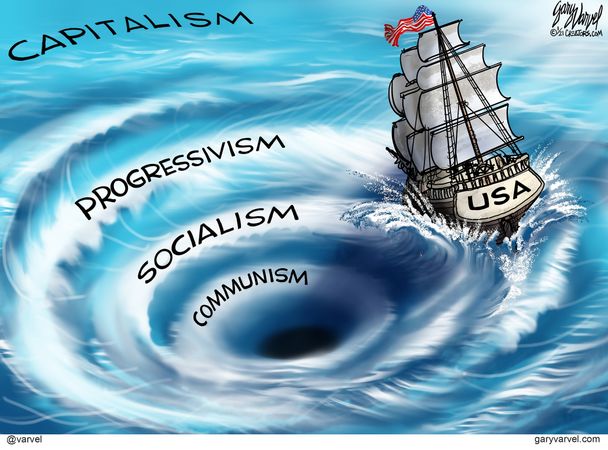
Javier Milei: Good afternoon. thank you very much today I’m here to tell you that the Western world is in danger. And it is endangered because those who are supposed to defend the values of the West are co-opted by a vision of the world that inexorably leads to socialism and thereby to poverty. Unfortunately in recent decades, motivated by some well-meaning individuals willing to help others, and others motivated by the wish to belong to a privileged cast, the main leaders of the western world have abandoned the model of freedom for different versions of what we call collectivism.

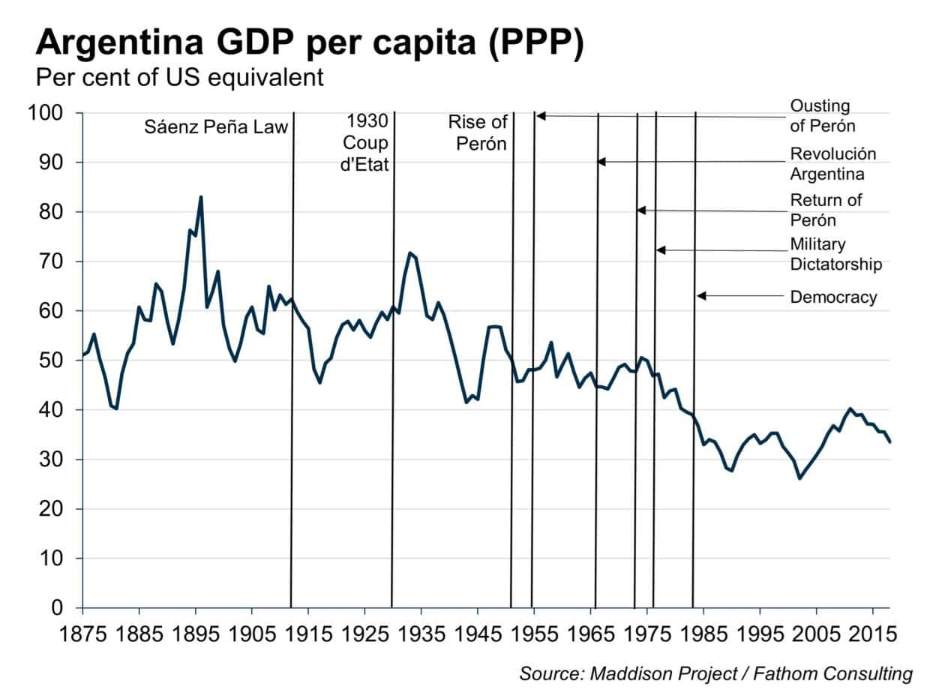
We’re here to tell you that collectivist experiments are never the solution to the problems that afflict the citizens of the world. Rather they are the root cause. Do believe me; no one is better placed than we Argentines to testify to these two points. When we adopted the model of Freedom back in 1860 in 35 years we became a leading world power. And when we embraced collectivism over the course of the last 100 years, we saw how our citizens started to become systematically impoverished. And we dropped to spot number 140 globally.
But before having that discussion it would first be important for us to take a look at the data that demonstrate why free enterprise capitalism is not just the only possible system to end world poverty, but also that it’s the only morally desirable system to achieve this. If we look at the history of economic progress we can see how between the year Zero and the year 1800 approximately world per capita GDP practically remained constant throughout the whole reference period. If you look at a graph of the evolution of economic growth throughout the history of humanity you would see a hockey stick graph. An exponential function that remained constant for 90% of the time and which was exponentially triggered starting in the 19th century.

The only exception to this history was in the late 15th century with the discovery of the American continent but for this exception throughout the whole period between the year zero and the year 1800 Global per capita GDP stagnated. It’s not just that capitalism brought about an explosion in wealth from the moment it was adopted as an economic system. But also if you look at the data you will see that growth continues to accelerate throughout the whole period. Between the year zero and the year 1800 the per capita GDP growth rate remained stable at around 0.02% annually so almost no growth. Starting in the 19th century with the Industrial Revolution the compound annual growth rate was 66% and at that rate in order to double per capita GDP you would need some 107 years.

Now if you look at the period between the year 1900 and the year 1950 the growth rate accelerated to 1.66% a year so you no longer need 107 years to double per capita GDP but 66. And if you take the period between 1950 and the year 2000 you will see that the growth rate was 2.1%, which would mean then in only 33 years we could double the world’s per capita GDP. Far from stopping, this trend remains well and alive today, For the period between the year 2000 and 2023 the growth rate again accelerated to 3% a year which means that we could double world per capita GDP in just 23 years.

That said when you look at per capita GDP since the year 1800 and until today you will see that after the Industrial Revolution Global per capita GDP multiplied by over 15 times, which meant a boom in growth that lifted 90% of the global population out of poverty. We should remember that by the year 1800 about 95% of the world’s population lived in extreme poverty and that figure dropped to 5% by the year 2020 prior to the pandemic.

The conclusion is obvious. Far from being the cause of our problems free trade capitalism as an economic system is the only instrument we have to end hunger, poverty and extreme poverty. Across our planet the empirical evidence is unquestionable. Therefore since there is no doubt that free enterprise capitalism is Superior in productive terms the leftwing doxer has attacked capitalism alleging matters of morality. The detractors claim that it’s unjust; they say capitalism is evil because it’s individualistic and that collectivism is good because it’s altruistic. Of course with the money of others they advocate for social justice.
But this concept which became fashionable in the developed world in recent times, has been in my country a constant in political discourse for over 80 years. The problem is that social justice is not just and nor does it contribute either to the general well being. Quite on the contrary, it’s an intrinsically unfair idea because it’s violent. It’s unjust because the state is financed through tax and taxes are collected coercively. Can anyone of us say that they voluntarily pay taxes? Which means that the state is financed through coercion and that the higher the tax burden the higher the coercion and the lower the freedom.

Those who promote social justice, the Advocates start with the idea that the whole economy is a pie that can be shared differently. But that pie is not a given. It’s wealth that is generated in what Israel Kirzner for instance calls a market Discovery process. If the goods or services offered by a business are not wanted, the business will fail unless it adapts to what the market is demanding. If they make a good quality product at an attractive price they will do well and produce more. So the market is a discovery process in which the capitalist will find the right path as they move forward.

But if the state punishes capitalists when they’re successful and gets in the way of the discovery process, their incentives are destroyed. And the consequence is that they will produce less, the pie will be smaller and this will harm society as a whole. By inhibiting these Discovery processes and hindering the appropriation of discoveries, Collectivism ends up binding the hands of entrepreneurs and prevents them from offering better goods and services at a better price.

So how come that Academia, International organizations, economic theory and politics demonize an economic system that has not only lifted 90% of the world’s population out of extreme poverty but has continued to do this faster and faster? And this is morally Superior. Just thanks to free trade capitalism, the world is now living its best moment. Never in all of Humanity’s history has there been a time of more Prosperity than today. All the world of today has more freedom, is richer, is more peaceful and prosperous.

And this is particularly true for countries that have more freedom and have economic freedom and respect the property rights of individuals. Countries that have more freedom are 12 times richer than those that are repressed and the lowest decile in terms of distribution in free countries are better off than 90% of the population of repressed countries. And poverty is 25 times lower and extreme poverty is 50 times lower. And citizens in free countries live 25% longer than citizens in repressed countries.

Now what do we mean when we talk about libertarianism? Let me quote the words of the greatest Authority on freedom in Argentina Professor Alberto Benegas Lynch who says that libertarianism is the unrestricted respect for the life project of others based on the principle of non-aggression in defense of the right to life, liberty and property. Its fundamental institutions being private property, markets free from State intervention, free competition.

The division of labor and social cooperation as part of which success is achieved only by serving others with Goods of better quality or at a better price. In other words capitalists, successful business people are social benefactors who, far from appropriating the wealth of others, contribute to the general well-being. Ultimately a successful entrepreneur is a hero and this is the model that we are advocating for the Argentine of the future, a model based on the fundamental principles of libertarianism: the defense of Life, of freedom and of property.

Now if free enterprise capitalism and economic freedom have proven to be extraordinary instruments to end poverty in the world, and we are now at the best time in the history of humanity, why do I say that the West is in danger? I say this precisely because in those countries that should defend the values of the free market private property and the other institutions of libertarianism, sectors of the political and economic establishment, some due to mistakes in their theoretical framework and others due to a Greed for power, are undermining the foundations of libertarianism, opening up the doors to socialism and potentially condemning us to Poverty misery and stagnation.
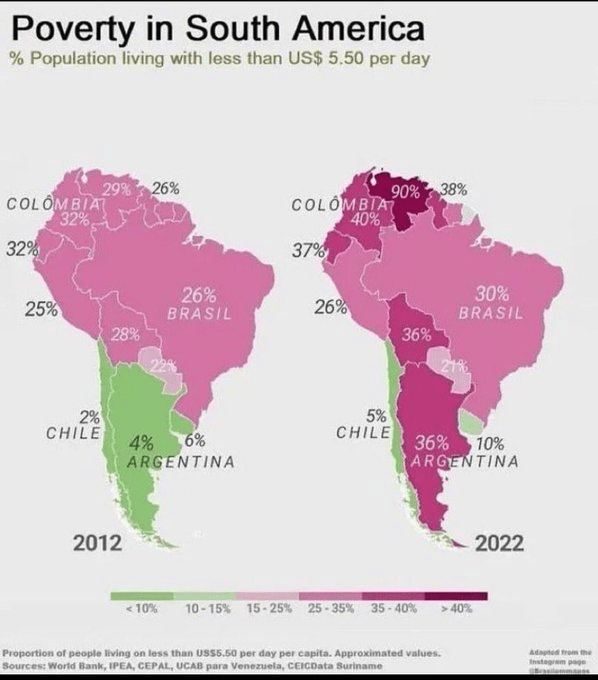
It should never be forgotten that socialism is always and everywhere an impoverishing phenomenon that has failed in all countries where it’s been tried out. It’s been a failure economically, socially culturally and it also murdered over a 100 million human beings. The essential problem for the West today is not just that we need to come to grips with those who even after the fall of the Berlin wall and the overwhelming empirical evidence continue to advocate for impoverishing socialism. But there’s also our own leaders, thinkers and academics relying on a misguided theoretical framework, who undermine the fundamentals of the system that has given us the greatest expansion of life and prosperity in our history. I refer to the misguided neoclassical economic theory which designs a set of instruments that unwillingly or without intention ends up serving intervention by the state socialism and social degradation.

The problem is neoclassicals fell in love with a model that does not map reality. So they put down their mistakes to supposed market failures, rather than reviewing the premises of the model. On the pretext of a supposed market failure regulations are introduced which only create distortions in the price system, They prevent economic calculus and therefore also prevent saving, investment and growth. This problem lies mainly in the fact that not even supposedly libertarian economists understand what is the market. Because if they did understand, it would quickly be seen that it’s impossible for that to be something along the line of market failures.

The market is not a mere graph describing a curve of supply and demand. The market is a mechanism of social cooperation where you voluntarily exchange ownership rights. Therefore based on this definition, talking about a market failure is an oxymoron. There are no market failures if transactions are voluntary. There can only be a market failure if there is coercion. And generally the only one that is able to coerce is the state which holds a monopoly on violence.

Consequently if someone considers that there is a market failure I suggest they check to see if the state intervention was involved. And if they find that’s not the case, I would suggest that they check again. Because market failures do not exist. An example of so-called market failures described by the neoclassicals are the concentrated structures of the economy. However without increasing returns to scale functions whose counterpart are the concentrated structures of the economy, we couldn’t possibly explain economic growth since the year 1800 until today.

Isn’t this interesting that since the the year 1800 onwards with population multiplying by eight or nine times, per capita GDP grow by over 15 times. So there are growing returns which took extreme poverty from 95% to 5%. However the presence of growing returns um involves concentrated structures, what we would call a monopoly. How come then that something that has generated so much wellbeing the neoclassical theory calls a market failure?

Neoclassical economists, think outside of the box! When the model fails you shouldn’t get angry with reality, but rather with a model and change it. Those with the the neoclassical model face a dilemma. They say that they wish to perfect the functioning of the market by attacking what they consider to be failures, but in doing so they don’t just open up the doors to socialism but also go against economic growth. For example, regulating monopolies, destroying their profits and destroying growing returns automatically would destroy economic growth. In other words whenever you want to correct a supposed market failure as a result of not knowing what is the market, or as a result of having fallen in love with a failed model, you are opening up the doors to socialism and condemning people to Poverty.
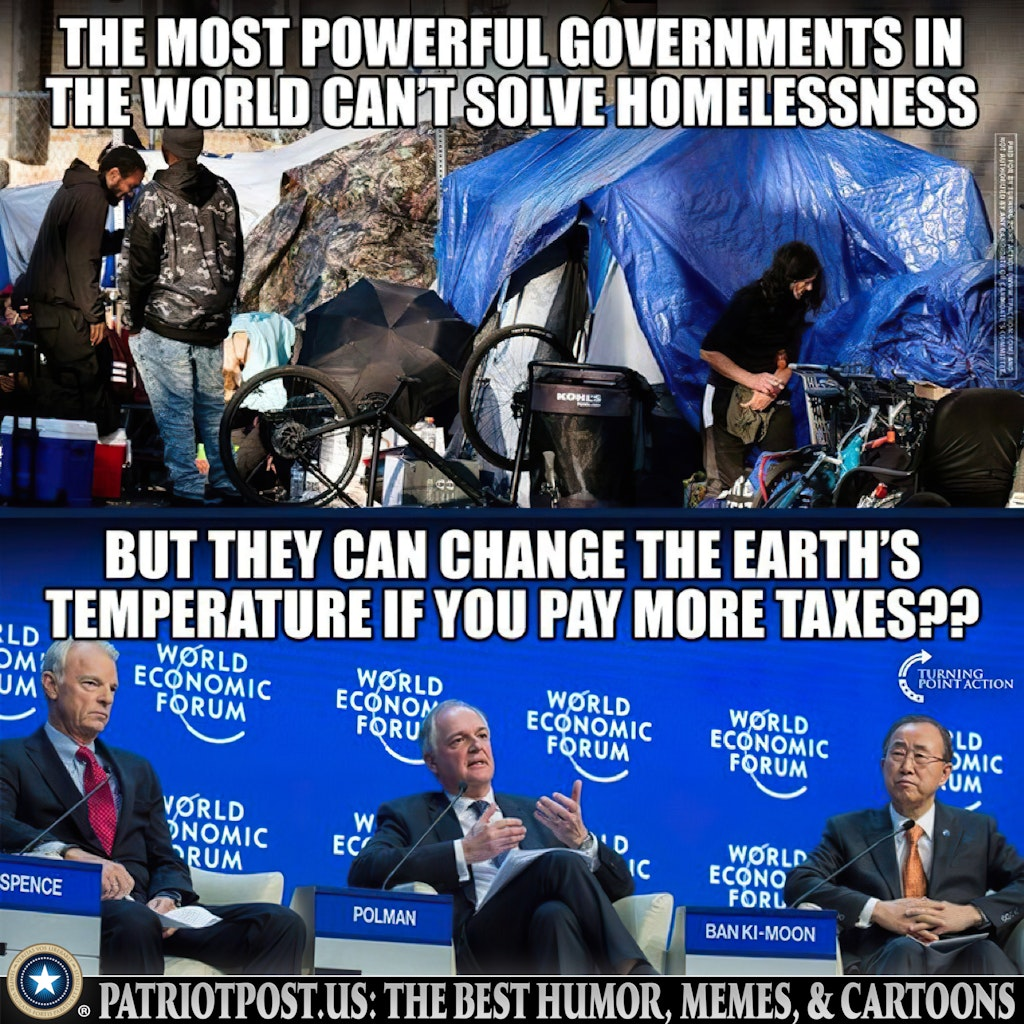
However faced with the theoretical demonstration that state intervention is harmful and the empirical evidence that it has failed, the solution to be proposed by collectivists is not greater freedom but rather greater regulation which creates a downward spiral of regulations until we’re all poorer. And all of our lives depend on a bureaucrat sitting in a luxury office.

Given the dismal failure of collectivist models and the undeniable advances in the Free World, socialists were forced to change their agenda. They left behind the class struggle based on the economic system, and replaced this with other supposed social conflicts which are just as harmful to community life and to economic growth. The first of these new battles was the ridiculous and unnatural fight between man and woman. Libertarianism already provides for equality of these sexes. The Cornerstone of our creed says that all humans are created equal, that we all have the same unalienable rights granted by the Creator, including life, freedom and ownership. All that this radical feminism agenda has led to is greater State intervention to Hind the economic process giving a job to bureaucrats who have not contributed anything to society. Examples include ministries of women or International organizations devoted to promoting this agenda.

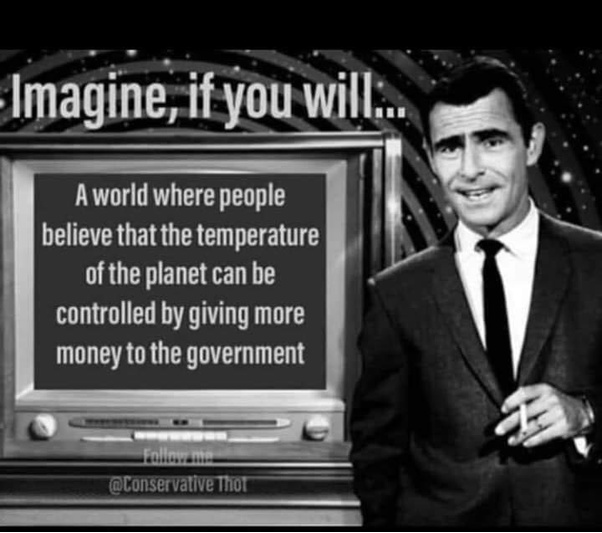
Another conflict presented by socialists is that of humans against nature, claiming that we human beings damage the planet which should be protected at all costs, even going as far as advocating for population control mechanisms or the bloody abortion agenda. Unfortunately these harmful ideas have taken a strong hold in our society. Neo-Marxists have managed to co-opt the common sense of the western world, and this they have achieved by appropriating the media, culture, universities and also International organizations. The latter case is the most serious one probably, because these are institutions that have enormous influence on political and economic decisions of the countries that make up the multilateral organizations.

Fortunately there’s more and more of us who are daring to make our voices heard because we see that if we don’t truly and decisively fight against these ideas, the only possible fate is for us to have increasing levels of State regulation, socialism, poverty and less freedom. And therefore we will be having worse standards of living. The West has unfortunately already started to go along this path.

To many it may sound ridiculous to suggest that the West has turned to socialism but it’s only ridiculous if you only limit yourself to the traditional economic definition of socialism which says that it’s an economic system where the state owns the means of production. This definition in my view should be updated in the light of current circumstances. Today states don’t need to directly control the means of production to control every aspect of the lives of individuals. With tools such as printing money debt, subsidies controlling the interest rate, price controls and regulations to correct the so-called market failures they can control the lives and fates of millions of individuals.

This is how we come to the point where by using different names or guises a good deal of the generally accepted political officers in most Western countries are collectivist variants, whether they proclaim to be openly communist, fascist, Nazis, socialists, social Democrats, National socialists, Democrat Christians or Christian democrats. Whether Progressive populist nationalists or globalists, at bottom there are no major differences. They all say that the state should steer all aspects of the lives of individuals. they all defend a model contrary to that one which led Humanity to the most spectacular progress in our history.

We have come here today to invite the rest of the countries in the Western World to get back on the path of prosperity, economic freedom, limited government and unlimited respect for private property. These are essential elements for economic growth. Tthe impoverishment produced by collectivism is no fantasy nor is it an inescapable fate, but it’s a reality that we Argentines know very well. We have lived through this; we have been through this ever since we decided to abandon the model of Freedom that had made us rich. We have been caught up in the downward spiral as part of which we are poorer and poorer day by day.

So this is something we have lived through and we are here to warn you about what can happen if the countries in the western world that became Rich through the model of Freedom stay on this path of servitude. The case of Argentina is an empirical demonstration that no matter how rich you may be or how much you may have in terms of Natural Resources or how skilled your population may be or educated or how many bars of gold you may have in the central bank, if measures are adopted that hinder the free functioning of markets, free competition, free Price system, If You Hinder trade if you attack private property, the only possible fate is poverty.

Therefore in concluding I would like to leave a message for all business people here and for those who are not here in person but are following from around the world. Do not be intimidated either by the political cast or by parasites who live off the state. Do not surrender to political class that only wants to stay power and retain its privileges. You are social benefactors, you’re Heroes, you’re the creators of the most extraordinary period of prosperity we’ve ever seen. Let no one tell you that your ambition is immoral. If you make money it’s because you offer a better product at a better price thereby contributing to General well being.

Do not surrender to the advance of the state. The state is not the solution, the state is itself the problem. You are the true protagonists of this story and rest assured that from today on Argentina is your unconditional Ally. Thank you very much and Long Live Freedom.




2024 Culture Bytes from Jimbob

As we venture another year into this strange Brave New World, here’s some observations from a fellow traveler who’s atuned to irony. His cartoons stand on their own, but I added some quips.

Good Tech, Bad Tech?

Performative Art?

Better the devil you know

So, the other side are the demons?

It’s all Artificial Reality now

It’s all relative now

Hey, Influencers gotta make a living too

So much for “Lived Experience.”

Authority or Storyteller?

So there, Madam Chief Justice

Some things are Irreversible

Truth Hurts

Choices, Choices

Whose children are they, anyway

What’s going on in the library?

Identities Have Consequences

Things can go too far

Anything?

How about a pandemic first?

Take nothing for granted

Hmmmm . . .

Big Picture Guy?

Oh, I get it now

Is believing optional?

See what no standards gets you

Stay Skeptical, Stay Safe

SEC Rule on ESG Reporting: Going Too Far?

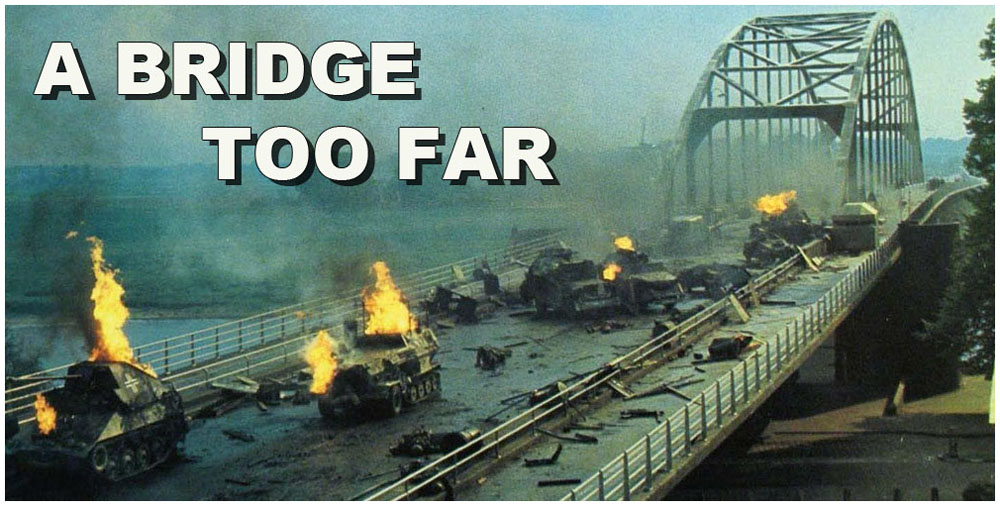
Based on a non-fiction book of the same name by historian Cornelius Ryan, A Bridge Too Far is a 1977 epic war film depicting Operation Market Garden, a failed Allied operation using paratroopers to secure three bridges over three key rivers in Nazi-occupied Netherlands during World War II.  The phrase has come to mean “a long shot”, or an overly ambitious plan.

The metaphor can now be applied to 2023 regarding the onslaught of ESG bureaucratic regulation burdening enterprises around the world. Jon McGowan explains in his Forbes article The SEC’s New Rule May Inadvertently Kill ESG Funds.  Excerpts in italics with my bolds and added images.

 Securities and Exchange Commission recently announced a rule requiring environmental, social, and governance funds to be 80% aligned with the fund’s stated goals. This could reveal a long-held secret of ESG funds: to be competitive, they are packed with more profitable investments that are not green.

ESG is a type of investing where non-financial factors
are considered in the decision-making process.

ESG has grown quickly over the past few years, pushed by global action to meet the net zero goals of the Paris Accords. Globally, those non-financial factors are primarily focused on sustainability. However, in the US there has been an added focus relating to LGBTQ+ issues that some have deemed political, causing controversy.

The growth of ESG has sparked regulation for sustainable reporting standards for businesses. The European Union was the first, with the European Sustainability Reporting Standards that were approved in July and set to go into effect January 1. The ESRS will require publicly traded and large privately held companies to report greenhouse gas emissions, actions taken by the entity to reduce GHG emissions, and other green policies. Eventually it will expand to small and medium-sized enterprises. While reporting will be mandatory, no environmentally friendly action is required. The SEC is set to release similar standards for the US in October.

[Note: Bloomberg reports this week Banks May Escape EU’s Toughest ESG Regulation So Far  Lawmakers, member states are negotiating due diligence rule
Firms face new civil liability, large fines under the proposal

and EU Exchanges Face Delistings as ESG Rules Hit Multinationals
Non-EU firms are waking up to January compliance deadline
EU’s corporate reporting rules have met widespread opposition]

The increased interest in ESG caused fund managers and businesses to adjust their practices. This sudden shift raised concerns of greenwashing, or the exaggeration of environmentally friendly initiatives to appear greener than they actually are. A new term, climate washing, has recently developed that is specific to the exaggeration of climate change initiatives.

Greenwashing for marketing purposes, while misleading, rarely met the standard of a regulatory violation. However, when greenwashing is directed at investors it could violate financial regulations and fall under the authority of the SEC. The SEC recently fined Deutsche Bank’s investment arm, DWS, $19 million for “materially misleading statements” relating to greenwashing in ESG funds. However, enforcement is problematic as the threshold for what constitutes greenwashing was not previously defined.

That changed when the SEC announced a new rule that requires ESG funds to match at least 80% of their portfolio with the stated goals of the fund. This new rule came just weeks after the SEC issued a round of subpoenas to an unknown number of fund managers relating to their ESG fund practices.

While the 80% requirement will settle greenwashing concerns,
it could be problematic for the viability of ESG funds.

Environmentalist and aligned organizations have frequently expressed concerns that some ESG funds were stacked with investments that were contrary to sustainable goals. A 2022 study by ESG Book found that ESG funds on average produced 14% higher GHG emissions than traditional funds. The same study found ESG funds investing in mining and fossil fuels, including Shell, Exxon Mobile, and BHP Group. The ESG Book study is not alone or new. Multiple studies have been released by environmental think tanks chastising ESG funds for not being sustainable.

Fund managers are placed in a precarious position of trying to offer
environmentally friendly funds, while also
meeting their fiduciary duty to maximize returns.

In doing so, they are forced to offset the underperformance of sustainable investments with investments in companies that are high profit, but contrary to the green goals. The result is funds that are not truly green, but greenish.

The new SEC rule will force fund managers to limit that practice to 20% of the fund. The unsettled question is how that will impact returns. ESG funds already underperform compared to traditional funds, the 80% rule may make them no longer a viable investment.

Background:

SEC Warned Off Climate Disclosures


Why Gen Z Are Blind to Bloodthirsty Hamas

Do they know the penalty for being gay in Gaza?

Brad Polumbo explains at Newsweek An Insane Number of Gen Zers Support Hamas’s Slaughter of Innocent Israelis.  Excerpts in italics with my bolds and added images.

Nearly half of young respondents said they side with
the terrorist group that just earlier this month purposefully
targeted and slaughtered innocent civilians.

Gen Z is really not okay.

As the world continues to process the horrors of the October 7 Hamas terrorist attack on Israeli that left 1,300 dead and thousands more injured and the horrors of the ensuing war in Gaza, young Americans are coming to vastly different conclusions about the situation than… well, anyone else. A new Harvard-Harris poll asked Americans what they think about the Hamas-Israel conflict, and the results sharply diverged along generational lines.

Overall, Americans overwhelmingly support Israel over Hamas. A whopping 84 percent of respondents told pollsters they favored Israel, while just 16 percent favored Hamas. Among older Americans over 65, an astounding 95 percent supported Israel, and just 5 percent said their sympathies lie with Hamas. But among young people age 18 to 24, things looked quite differently.

Greta Thunberg, right, calls for ‘justice and freedom for Palestinians and all civilians’

Just 52 percent of this group said they supported Israel, while 48 percent said they supported Hamas. Yes, that’s right: Nearly half of young respondents said they side with the terrorist group that just earlier this month purposefully targeted and slaughtered innocent civilians, including women, children, and infants, in a chilling and sadistic manner.

You’d hope for the sake of the future of our country that these young people are somehow supporting Hamas despite the group’s violent actions. But you’d be wrong. In an even more shocking finding, the Harvard-Harris poll revealed that 51 percent of 18 to 24 year olds said Hamas’s violence against Israeli civilians was justified, while just 49 percent don’t think so.

Here’s where things get… strange. In the same poll, 62 percent of young respondents agree that what Hamas did to Israel was “genocidal.” So, a hefty chunk of young people in this country believe that genocide against Israeli civilians is justified. What the hell?

It should go without saying—but apparently it doesn’t—that no matter how much one sympathizes with the plight of Palestinian people, it is still wrong to slaughter concert goers and burn their bodies. It is still wrong to kill entire families huddled in their bomb shelters. And it is still wrong to murder babies.

All human life is precious. While civilians inevitably are inadvertedly killed as a consequence of war, purposefully targeting them is universally considered a war crime. It’s never morally acceptable to intentionally kill innocent people, no matter who does it. The fact that so many young Americans’ moral compass are so distorted that they no longer understand this basic moral truth is deeply disturbing.

It also raises an important question. How the hell did we get here?

People take part in a demonstration in support of Palestinian students for free Palestine and with resistance in Gaza.

This is not normal. Such a moral perversion is not an organic belief that naturally emerges among decent people. On the contrary, it’s in large part the consequence of a corrosive and malevolent “social justice” ideology that’s being spoon-fed to young Americans on college campuses.

In this depraved worldview, which Elon Musk has dubbed the “woke mind virus,” the world is divided into two groups of people: oppressors and oppressed. Black people, for example, are oppressed in America. So, under this lens, Black Americans cannot be racist: They can only be victims of racism.

Meanwhile, “misgendering” someone is violence, even though it doesn’t actually involve any violence. Actual violence in response to this speech is justified as “self-defense.”

Truth, and therefore morality, is subjective, in this worldview.
Hence the normalization of the innocuous-sounding but actually
Orwellian phrase “my truth,” “your truth,” or “his truth.”

This heierarchy-obssessed perspective does not actually describe reality. In the real world, there are shades of grey. People can be both oppressed in some ways and oppressing others. (Just ask gay people how they’re faring in Gaza.) The truth is that almost no one in human history has been 100 percent good or 100 percent bad, 100 percent victim or 100 percent villain.

The “social justice” narrative, in its black-and-white worldview, is actually the inverse of the old, regressive worldview it supposedly rose up to eradicate, that similarly erroneously drew absolutist distinctions between groups of people based on their membership in immutable categories.

Yet rather than reject both extremes, some subscribers to modern social justice ideology have become the mirror image of what they hate. And that’s how you end up in the perverse situation where so many of your adherents can view the genocide of Jews as “justified.”

In their telling, Jews are privileged and the Palestinians are oppressed.
For some entrapped by this hollow thinking, the analysis genuinely stops there.

Just look at the Black Lives Matter chapter that responded to October 7 attacks by showing “solidarity” with the Palestinians, not Israel, and even positively depicting the hang gliders that were used by Hamas terrorists to kill civilians. All politics aside, such a bizarre and tone-deaf statement only emerges from an organization that has substituted the woke “mind virus” for rational thinking.

Young people have absorbed this kind of perverse messaging from the cultural and institutional forces they look to. They’re told the slaughter of civilians is actually “freedom fighting” by a “resistance” seeking to cast of the shackles of its oppressors. And who are young, white, affluent Americans—who’ve been told for years how privileged they are and how incapable that renders them to perceive the world—to question the “truth” of an oppressed people?

That’s how we end up with half of young people nodding along to genocide.
It’s the radical result of years of miseducation in an ideology that’s
as morally bankrupt as the old bigotry it rose up to replace.

Footnote: From Some Not Drunk on SJ


Climate Health Crisis Meme Goes Viral

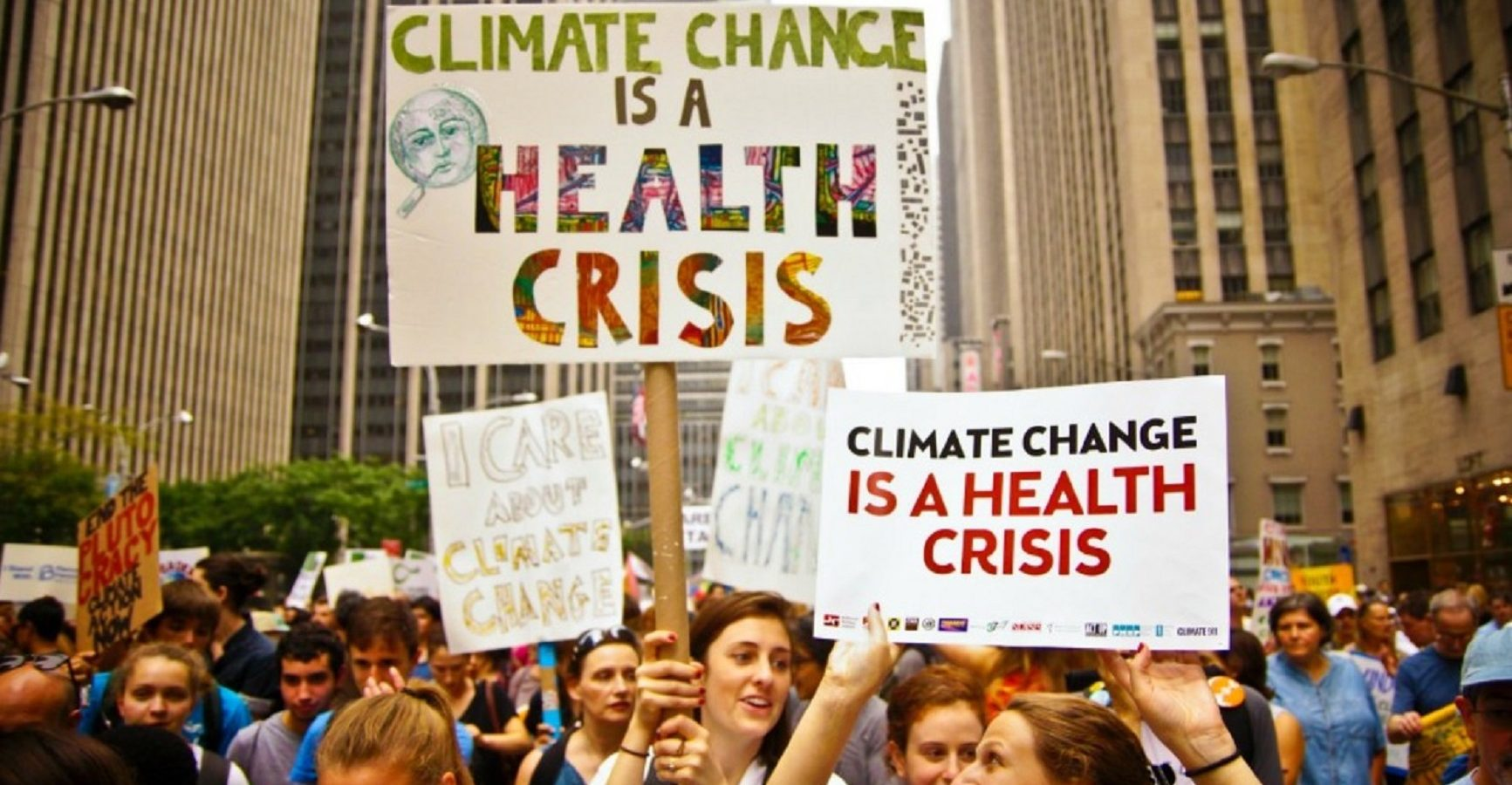
The comingling of climate and covid fears and policies is currently ramping up to warp speed across all propaganda platforms.  Kit Knightly explains the shock and awe agenda by media and governments to corral the public into submission.  His Off-Guardian article is Why are the globalists calling “Climate Change” a “Public Health Crisis”? Excerpts in italics with my bolds and added images.  H/T Tyler Durden

The answer is all to do with the pandemic treaty and climate lockdowns.

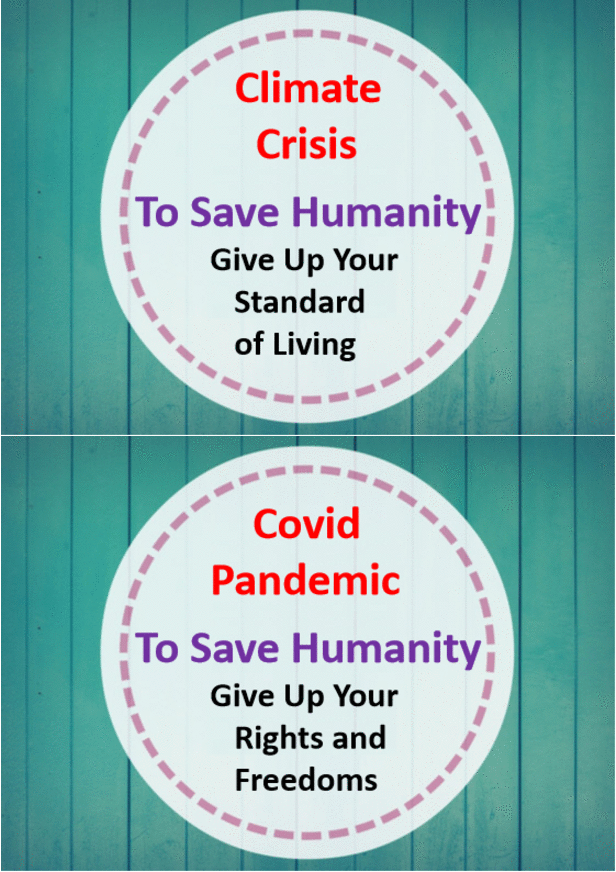
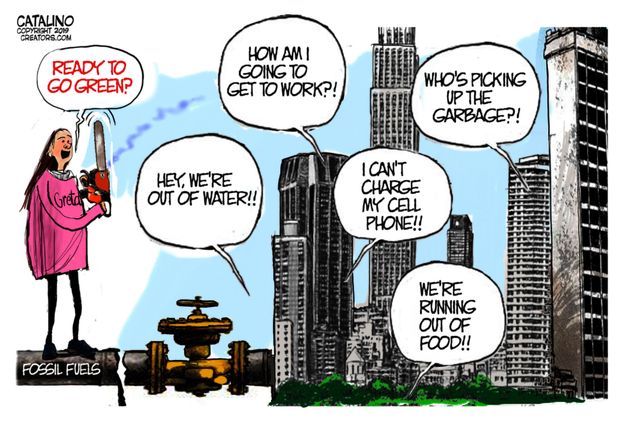
The global elite plan to introduce a near-permanent “global state of emergency” by re-branding climate change as a “public health crisis” that is “worse than covid”.  This is not news. But the ongoing campaign has been accelerating in recent weeks.

Two Sides of the Same Coin

I have written about this a lot over the last few years – see here and here and here. It started almost as soon as Covid started, and has been steadily progressing ever since, with some reports calling climate change “worse than covid”.

But if they keep talking about it, I’ll keep writing. And hopefully the awareness will spread.

Anyway, there’s a renewed push on the “climate = public health crisis” front. It started, as so many things do, with Bill Gates, stating in an interview with MSNBC in late September:

We have to put it all together; it’s not just climate’s over here and health is over here, the two are interacting

Since then there’s been a LOT of “climate change is a public health crisis” in the papers, likely part of the build-up to the UN’s COP28 summit later this year.

Following Gate’s lead, what was once a slow-burn propaganda drive has become a dash for the finish line, with that phrase repeated in articles all over the world as a feverish catechism.

It was an editorial in the October edition of the British Medical Journal that got the ball rolling, claiming to speak for over 200 medical journals, it declares it’s…

Time to treat the climate and nature crisis as one indivisible global health emergency”

Everyone from the Guardian to the CBC to the Weather Channel picked up this ball and ran with it.  Other publications get more specific, but the message is the same. Climate change is bad for the health of women, and children, and poor people, and Kenyans, and workers and…you get the idea.

And that’s all from just the last few days. It’s not only the press, but governments and NGOs too. The “One Earth” non-profit reported, two days ago:

Why climate change is a public health issue

Again, based entirely on that letter to the BMJ. The UN’s “climate champions” are naturally all over it,alongside the UK’s “Health Alliance on Climate Change”, whoever they are. [Note:  An overview of the climate medicine bureaucracy is here: https://rclutz.com/2021/09/07/here-comes-the-climate-medical-complex/%5D

Both the Red Cross and Doctors Without Borders have published (or updated) articles on their website in the last few days using variations on the phrase “The climate crisis is a health crisis.”  Local public health officials from as far apart as Western Australia and Arkansas are busy “discussing the health effects of climate change”

Tellingly, the Wikipedia article on “effects of climate change on human health” has received more edits in the last 3 weeks than the previous 3 months combined.

All of this is, of course, presided over by the World Health Organization.

On October 12th the WHO updated its climate change fact sheet, making it much longer than the previous version and including some telling new claims:

“WHO data indicates 2 billion people lack safe drinking water and 600 million suffer from foodborne illnesses annually, with children under 5 bearing 30% of foodborne fatalities. Climate stressors heighten waterborne and foodborne disease risks. In 2020, 770 million faced hunger, predominantly in Africa and Asia. Climate change affects food availability, quality and diversity, exacerbating food and nutrition crises.

Temperature and precipitation changes enhance the spread of vector-borne diseases. Without preventive actions, deaths from such diseases, currently over 700,000 annually, may rise. Climate change induces both immediate mental health issues, like anxiety and post-traumatic stress, and long-term disorders due to factors like displacement and disrupted social cohesion.”

They are tying “climate change” to anyone who is malnourished, has intestinal parasites or contaminated drinking water. As well as anyone who dies from heat, cold, fire or flood. Even mental health disorders.

We’ve already seen the world’s first “diagnosis of climate change”.
With parameters set this wide, we will see more in no time.

Just as a “Covid death” was anybody who died “of any cause after testing positive for Covid”, they are putting language in place that can redefine almost any illness or accident as a “climate change-related health issue”.

Two days ago, the Director General of the World Health Organization, the UN’s Special Envoy for Climate Change and Health and COP28 President co-authored an opinion piece for the Telegraph, headlined:

Climate change is one of our biggest health threats – humanity faces a staggering toll unless we act

The WHO Director went on to repeat the claim almost word for word on Twitter yesterday:

At the same time, the Pandemic Treaty is busily working its way through the bureaucratic maze, destined to become law sometime in the next year or so.

We’ve written about that a lot too.

    • Consider, the WHO is the only body on Earth empowered to declare a “pandemic”.
    • Consider, the official term is not “pandemic”, but rather “Public Health Emergency of International Concern”.
    • Consider, a “public health emergency of international concern”, does not necessarily mean a disease.
    • It could mean, and I’m just spit-balling here, oh, I don’t know – maybe… climate change?

Consider, finally, that one clause in the proposed “Pandemic Treaty” would empower the WHO to declare a PHEIC on “precautionary principle” [my emphasis]:

Future declarations of a PHEIC by the WHO Director-General should be based on the precautionary principle where warranted

Essentially, once the new legislation is in place, the plan writes itself:

    • Put new laws in place enabling global “emergency measures” in the event of a future “public health emergency”
    • Declare climate change a public health emergency, or maybe a “potential public health emergency”
    • Activate emergency measures – like climate lockdowns – until climate change is “fixed”

See the end game here? It’s just that simple.

Oh, and we won’t be able to complain, because “climate denial” is going to be illegal. At least, if prominent climate activists like this one get their way.  That’s only a whisper in the background right now, but it will get louder after COP28, just wait.

Until then, like I said, I’m stuck here writing forever.

Background:  Nine Elements Shared by Climate and Covid

Ramesh Thakur writes at Brownstone Institute Beware Catastrophizing Climate Models and Activists.  Excerpts in italics with my bolds and added images.

All true believers of The Science™ of climate change have taken careful note of the lessons offered by the coronavirus pandemic during 2020–22 for managing the ‘climate emergency.’ The two agendas share nine items in common that should leave us worried, very worried.

1. Elites’ Hypocrisy

The first is the revolting spectacle of the hypocrisy of the exalted elites who preach to the deplorables the proper etiquette of abstinence to deal with the emergency, and their own insouciant exemption from a restrictive lifestyle. Most recently we witnessed the surreal spectacle of Britain’s Parliament interrogating disgraced former Prime Minister Boris Johnson on allegations that he serially broke the lockdown rules he had imposed on everyone else—but not questioning the anti-scientific stupidity of the rules themselves. Possibly the most notorious American example was California Governor Gavin Newsom and his cronies dining maskless in the appropriately named French Laundry restaurant at a time when this was verboten, being served by fully masked staff.

Similarly, Prince Harry, Meghan Markle, Al Gore, and John Kerry have all been widely mocked for jetting around the world to warn people about global warming. I wonder if anyone has done a calculation of the total carbon footprint of each annual Davos gathering where CEOs, prime ministers and presidents, and celebrities fly in on private jets, are driven around in gas-guzzling limousines and preach to us on the critical urgency of reducing emissions? I understand the hookers do quite well during that week, so perhaps there is a silver lining.

2. Data Challenged Models

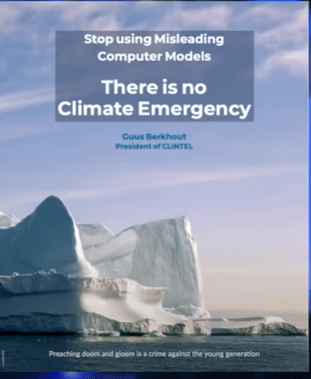
A second common element between Covid and climate change is the mismatch between models that inform policy and data that contradict the models. The long track record of abysmally wrong catastrophist predictions on infectious diseases from the Pied Piper of Pandemic Porn, Professor Neil Ferguson, is if anything exceeded by the failures of climate change alarmist predictions. The most recent example of the drum roll of “The end is nigh and this is absolutely your last chance to avert the end of the world from climate collapse” is yet another Chicken Little Sixth Assessment Report from the indefatigable Intergovernmental Panel on Climate Change (IPCC).

At some point the IPCC morphed from a team of scientists into activists.

“There is a rapidly closing window of opportunity to secure a liveable and sustainable future for all,” the report warns us. UN Secretary-General Antonio Guterres called it a “survival guide for humanity.” But a one-time climate action journalist-turned-sceptic, Michael Shellenberger, described the UN as a “Climate Disinformation Threat Actor.”

Calls for urgent climate action based on the language of “edging towards ‘tipping points” have been made over many years. Atmospheric scientists and former IPCC members Richard McNider and John Christy note that climate modeling forecasts have “always overstated the degree to which the Earth is warming compared with what we see in the real climate.” A few examples:

♦  In 1982, UNEP Executive Director Mostafa Tolba warned of an irreversible environmental catastrophe by 2000 without immediate urgent action.
♦  In 2004, a Pentagon report warned that by 2020, major European cities would be submerged by rising seas, Britain would be facing a Siberian climate and the world would be caught up in mega-droughts, famine and widespread rioting.
♦  In 2007, IPCC chair Rajendra Pachauri declared: “If there’s no action before 2012, that’s too late.”
♦  Most hilariously, in Montana the Glacier National Park installed “Goodbye to the glaciers” plaques, warning: “Computer models indicate the glaciers will all be gone by the year 2020.” Come 2020, all 29 glaciers were still there but the signs were gone, taken down by embarrassed park authorities.

3. No Dissent Allowed

Third, the rapidly consolidating Censorship Industrial Complex covered both agendas until Elon Musk began releasing the Twitter Files to expose what was happening. This refers to the extraordinary censorship and suppression of dissenting voices, with extensive and possibly illegal collusion between governments and Big Tech—and, in the case of the pandemic, also Big Pharma and academia.

Even truth was no defence, for example with accounts of vaccine injuries, if their effect was to promote narrative scepticism. The social media Big Tech censored, suppressed, shadow banned and slapped labels of “false,” “misleading,” “lacking context” etc. to content at variance with the single source ministries of truth. “Fact-checking” was weaponized using fresh young graduates—with no training, skills or capacity to sift between authentic and junk science—to put such judgmental stamps on pronouncements from world-leading experts in their field.

4. We Want You to Panic

Fourth, an important explanation for the spread of Covid and climate catastrophism is the promotion of fear and panic in the population as a means to spur drastic political action. Both agendas have been astonishingly successful.

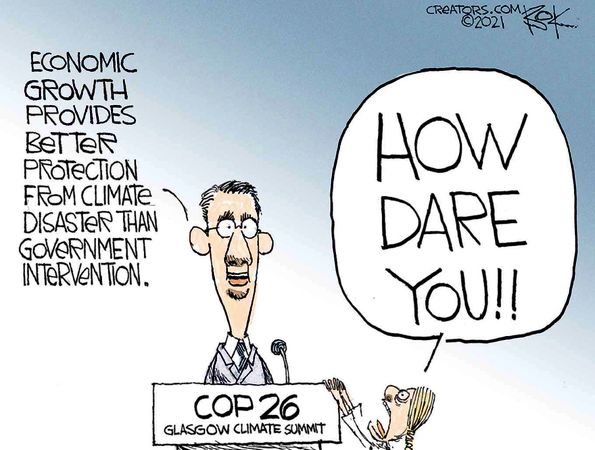
Polls have consistently shown the hugely exaggerated beliefs about the scale of the Covid threat. On climate change, the gap between the stringent actions required, the commitments made and the actual record thus far is used to create panic. The notion that we are already doomed promotes a culture of hopelessness and despair best epitomized by Greta Thunberg’s anguished cry: “How dare you” steal my dreams and childhood with empty words.”

5. Only Trust Science Authorities

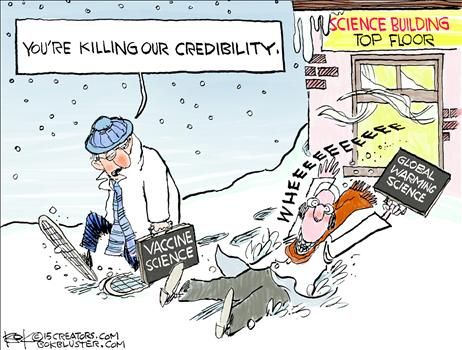
A fifth common theme is the appeal to scientific authority. For this to work, scientific consensus is crucial. Yet, driven by intellectual curiosity, questioning existing knowledge is the very essence of the scientific enterprise. For the claim to scientific consensus to be broadly accepted, therefore, supporting evidence must be exaggerated, contrary evidence discredited, sceptical voices stilled and dissenters ridiculed and marginalized. This has happened in both agendas: just ask Jay Bhattacharya on one and Bjorn Lomborg on the other.

6. Government Empowers Itself

A sixth shared element is the enormous expansion of powers for the nanny state that bosses citizens and businesses because governments know best and can pick winners and losers. Growing state control over private activities is justified by being framed as minor and temporary inconveniences in the moral crusade to save Granny and the world.

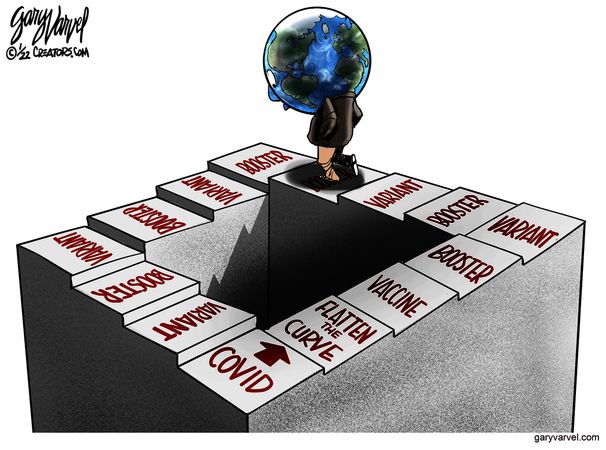
Yet in both agendas, policy interventions have over-promised and under-delivered. The beneficial effects of interventions are exaggerated, optimistic forecasts are made and potential costs and downsides are discounted. Lockdowns were supposedly required for only 2-3 weeks to flatten the curve and vaccines, we were promised, would help us return to pre-Covid normalcy without being mandatory. Similarly, for decades we have been promised that renewables are getting less expensive and energy will get cheaper and more plentiful.

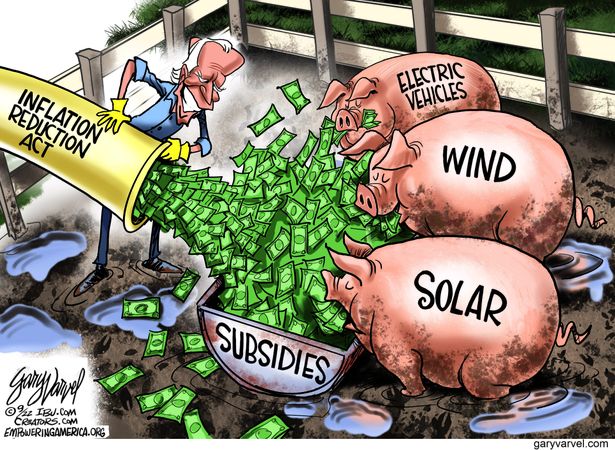
Yet increased subsidies are still needed, energy prices keep rising,
and energy supply gets less reliable and more intermittent.

7. Self-Inflicted Damage

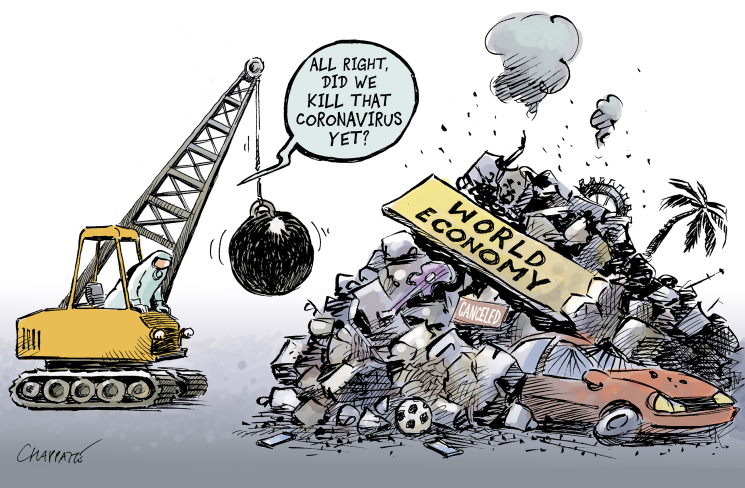
Seventh, the moral framing has also been used to discount massive economic self-harm. Alongside the substantial and lasting economic damage caused by savage lockdowns to businesses and the long-term consequences of a massive printing of money, the obstinate persistence of excess deaths is painful proof of collective public health self-harm.

Similarly, the world has never been healthier, wealthier, better educated, and more connected than today. Energy intensity played a critical role in driving agricultural and industrial production that underpin the health infrastructure and comfortable living standards for large numbers of people worldwide. High income countries enjoy incomparably better health standards and outcomes because of their national wealth.

8. Elites Thrive at Others’ Expense

Eighth, government policies in both agendas have served to greatly widen economic inequalities within and among nations with fat profits for Big Pharma and rent-seeking Green Energy. A lot of money was said to be required to keep Mahatma Gandhi in the style of poverty he demanded. Similarly, a lot of money is required to support Covid and climate policy magical thinking where governments can solve all problems by throwing more money that must neither be earned nor repaid.

In the triumph of luxury politics, the costs of the rich suffused in the golden glow of virtue are borne by the poor. Should a billion more Chinese and Indians have stayed poor and destitute over the last four decades, so Westerners could feel virtuous-green? Alternatively, for post-industrial societies, climate action will require cutbacks to living standards as subsidies rise, power prices go up, reliability comes down and jobs are lost.

Attempts to assess the balance of costs and benefits of Covid and climate policies are shouted down as immoral and evil, putting profits before lives. But neither health nor climate policy can dictate economic, development, energy and other policies. All governments work to balance multiple competing policy priorities. What is the sweet spot that ensures reliable, affordable and clean energy security without big job losses? Or the sweet spot of affordable, accessible and efficient public health delivery that does not compromise the nation’s ability to educate its young, look after the elderly and vulnerable and ensure decent jobs and life opportunities for families?

9. Global Bureaucrats Gut National Sovereignty

The final common element is the subordination of state-based decision-making to international technocrats. This is best exemplified in the proliferation of the global climate change bureaucracies and the promise—threat?—of a new global pandemic treaty whose custodian will be a mighty World Health Organisation.

In both cases, the dedicated international bureaucracy will have a powerful
vested interest in ongoing climate crises and serially repeating pandemics.

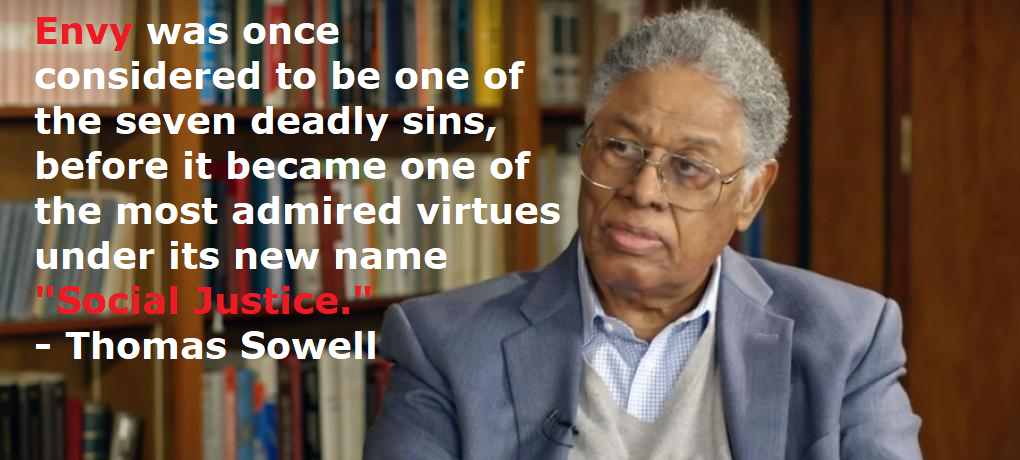
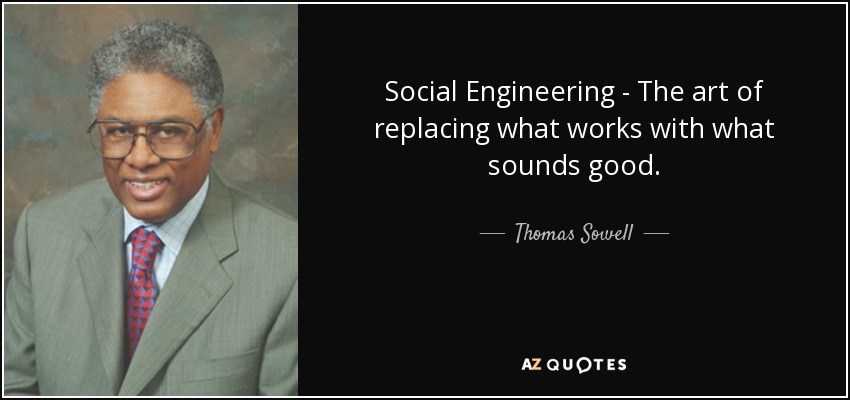
Sowell Exposes Social Justice Fallacies

Matthew Lau reviews Thomas Sowell’s latest book Social Justice Fallacies in a Financial Post article: No sacred cows in Thomas Sowell’s takedown of social justice fallacies.  Excerpts in italics with my bolds and added images.

In his latest book, renowned economist and author demolishes
the myths that underpin the social justice movement.

Thomas Sowell, age 93, famed economist and author of more than 40 books, last month published his latest: Social Justice Fallacies. In it he asserts plain facts such as that life is unfair and central planners are fallible, realities too often ignored or downplayed by those looking to impose top-down visions of “social justice.”

Among his targets are:

  • price controls,
  • minimum wage laws,
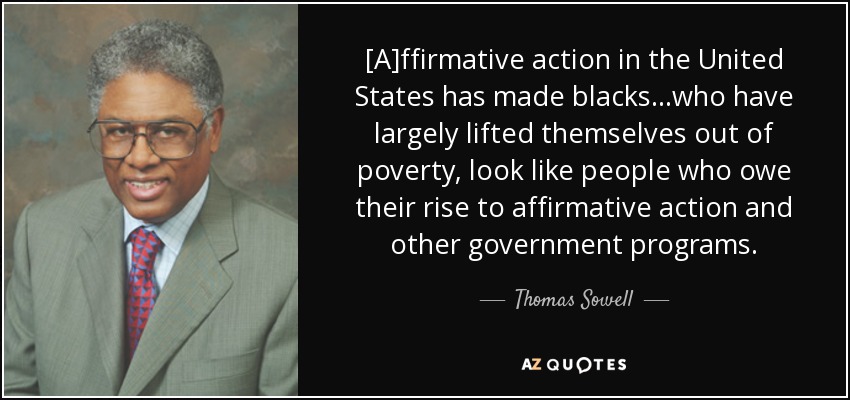
  • the myth that American Black poverty is due to systemic racism,
  • high marginal tax rates,
  • teachers unions’ monopoly on schooling,
  • exaggerations of income inequality by people who ignore income mobility,
  • affirmative action,
  • “sex education” in public schools (Sowell uses the scare quotes repeatedly)

To each of these and many other things, Sowell brings facts, examples, and statistics.

On the notion that the United States is a systemically racist or white supremacist society, Sowell notes that the median incomes of Americans of Chinese, Japanese, Indian and Korean ancestry are higher than those of white Americans. Citing a 2019 U.S. Census Bureau survey, he points out that “among full-time, year-round male workers, Asian Indian males earned over $39,000 a year more than white male full-time, year-round workers” — an unlikely outcome if white supremacy were pervasive.

Black family poverty has long been higher than white family poverty but, as Sowell explains, the poverty rate of Black married-couple families is consistently below the national poverty rate. “If black family poverty is caused by ‘systemic racism,’” he asks, “do racists make an exception for blacks who are married?”

Another case-closing rhetorical question from Sowell: “Are Asians ‘kept out’ of professional basketball or Californians ‘kept out’ of the National Hockey League?” In American sports, he notes, “Blacks are very over-represented in professional basketball, whites in professional tennis, and Hispanics in Major League Baseball.” There are more NHL players from Sweden than California even though Sweden is on another continent and has about one-quarter California’s population. But these facts do not mean professional sports leagues all engage in racism or other bigotry.

No affirmative action or other initiative is needed to
“correct” these unequal outcomes between groups.

If Sowell’s arguments about government economic control, race, economic disparities and other questions sound familiar, it is because he has written on these issues for decades. The same fallacies he and others have repeatedly debunked keep reappearing and need to be whacked down again and again — which Sowell continues to do.

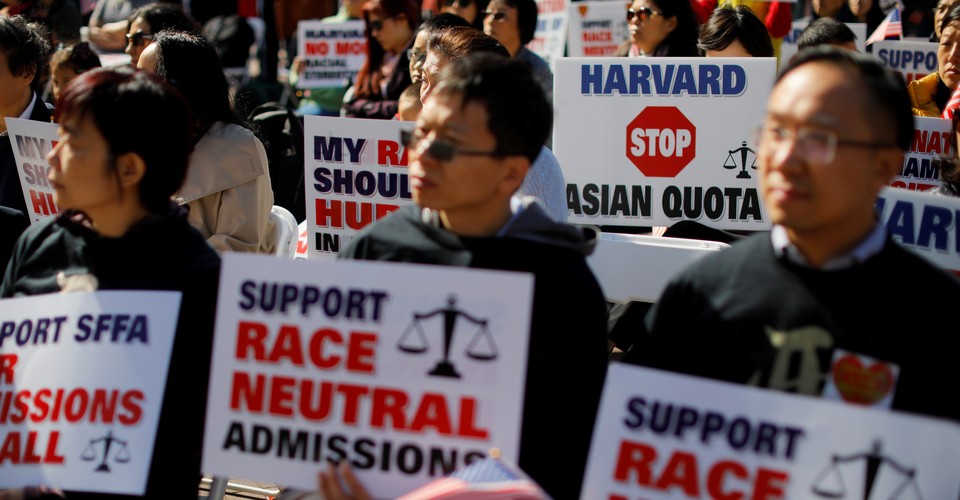
In Social Justice Fallacies, Sowell again attacks racial preferences in university admissions, arguing that admitting minority students into university programs for which they are not academically qualified does them no favours. Black students at the 80th percentile are very good students but putting them into elite programs where their classmates are in the 99th percentile sets them up for failure. Under affirmative action, Sowell writes, most Black students admitted to the University of California (Berkeley) during the 1980s failed to graduate.

Another policy that activists promote in the name of social justice, but that hurts Blacks: minimum wage laws, which the data show significantly increase Black teenage unemployment by pricing many of them out of jobs.

There are no sacred cows in Social Justice Fallacies. Sowell argues that “surrogates who introduced ‘sex education’ into public schools in the 1960s” were pre-empting parents’ decisions about when and how to teach their children about sex. He points to data showing that before such education was introduced venereal diseases and teenage pregnancies had been declining for years, but after its introduction teenage pregnancies rapidly rose and the incidence of venereal diseases either rose or declined less rapidly than before. These facts alone do not prove causation between public school “sex education” and venereal diseases and teenage pregnancies, but they are not encouraging, either.

Explaining facts and demolishing fallacies, as Sowell does, is important. When activists distort reality by fashioning narratives to justify their top-down initiatives, they often cause more harm than the original injustices (whether real or perceived) they say they want to correct.

Citing Barack Obama’s memoir, Dreams from My Father, Sowell gives the example of a young Black man who wanted to become a pilot but decided not to pursue it because he thought the Air Force would never let a Black man fly. Sowell points out this was decades after a whole squadron of Black American fighter pilots flew in World War II.

“Whoever indoctrinated this young man,” Sowell concluded,
“did him more harm than a racist could have,
by keeping him from even trying to become a pilot.”

In Addition, Thomas Sowell’s Wisdom and Scholarship on Affirmative Action

Excerpts on Affirmative Action from The Thomas Sowell Reader 

Assumptions Behind Affirmative Action

With affirmative action suddenly coming under political attack from many directions, and with even liberals backing away from it, we need to question not only its underlying assumptions but also what some of the alternatives are.

At the heart of the affirmative action approach is the notion that statistical disparities
show discrimination. No dogma has taken a deeper hold with less evidence
—or in the face of more massive evidence to the contrary.

A recent story in the Wall Street Journal revealed that more than four-fifths of all the doughnut shops in California are owned by Cambodians. That is about the same proportion as blacks among basketball stars. Clearly, neither of these disparities is due to discrimination against whites.

Nor are such disparities new or peculiar to the United States. In medieval Europe, most of the inhabitants of the towns in Poland and Hungary were neither Poles nor Hungarians. In nineteenth-century Bombay, most of the shipbuilders were Parsees, a minority in Bombay and less than one percent of the population of India.

In twentieth-century Australia most of the fishermen in the port of Freemantle came from two villages in Italy. In southern Brazil, whole industries were owned by people of German ancestry and such crops as tomatoes and tea have been grown predominantly by people of Japanese ancestry.

Page after page—if not book after book—could be filled with similar statistical disparities from around the world and down through history. Such disparities have been the rule, not the exception.

Yet our courts have turned reality upside down and treated what happens
all over this planet as an anomaly and what is seldom found
anywhere—proportional representation—as a norm.

Why are such disparities so common? Because all kinds of work require particular skills, particular experience, particular locations and particular orientations. And none of these things is randomly distributed.

Local demagogues who thunder against the fact that Koreans run so many stores in black ghettoes merely betray their ignorance when they act as if this were something strange or unusual. For most of the merchants in an area to be of a different race or ethnicity from their customers has been common for centuries in Southeast Asia, Eastern Europe, West Africa, the Caribbean, Fiji, the Ottoman Empire and numerous other places.

When German and Jewish merchants moved into Eastern Europe in the Middle Ages, they brought with them much more experience in that occupation than that possessed by local Eastern European merchants, who were often wiped out by the new competition. Even when the competition takes place between people who are racially and ethnically identical, all kinds of historical, geographical and other circumstances can make one set of these people far more effective in some activities than the others.

Mountain people have often lagged behind those on the plains below, whether highland Scots versus lowland Scots or the Sinhalese in the highlands of Sri Lanka versus the Sinhalese on the plains. The Slavs living along the Adriatic coast in ports like Dubrovnik were for centuries far more advanced than Slavs living in the interior, just as coastal peoples have tended to be more advanced than peoples of the interior hinterlands in Africa or Asia.

Some disparities of course have their roots in discrimination. But the fatal mistake is to infer discrimination whenever the statistical disparities exceed what can be accounted for by random chance. Human beings are not random. They have very pronounced and complex cultural patterns.  These patterns are not unchanging. But changing them for the better requires first acknowledging that “human capital” is crucial to economic advancement.
Those who make careers out of attributing disparities to the wickedness of other people
are an obstacle to the development of more human capital among the poor.

There was a time, as late as the mid-nineteenth century, when Japan lagged far behind the Western industrial nations because it was lacking in the kind of human capital needed in a modern economy. Importing Western technology was not enough, for the Japanese lacked the knowledge and experience required to operate it effectively.

Japanese workmen damaged or ruined machinery when they tried to use it. Fabrics were also ruined when the Japanese tried to dye them without understanding chemistry. Whole factories were badly designed and had to be reconstructed at great cost.  What saved the Japanese was that they recognized their own backwardness—and worked for generations to overcome it.

They did not have cultural relativists to tell them that all cultures are equally valid
or political activists to tell them that their troubles were all somebody else’s fault.
Nor were there guilt-ridden outsiders offering them largess.

Affirmative action has been one of the great distractions from the real task of self-development. When it and the mindset that it represents passes from the scene, poorer minorities can become the biggest beneficiaries, if their attention and efforts turn toward improving themselves.

Unfortunately, a whole industry of civil rights activists, politicians and miscellaneous hustlers has every vested interest in promoting victimhood, resentment and paranoia instead.

Affirmative Action Around the World

While controversies rage over “affirmative action” policies in the United States, few Americans seem to notice the existence or relevance of similar policies in other countries around the world. Instead, the arguments pro and con both tend to invoke history and traditions that are distinctively American. Yet group preferences and quotas have existed in other countries with wholly different histories and traditions—and, in some countries, such policies have existed much longer than in the United States.  What can the experiences of these other countries tell us? Are there common patterns, common rationales, common results? Or is the American situation unique?

Ironically, a claim or assumption of national uniqueness is one of the most common patterns found in numerous countries where group preferences and quotas have existed under a variety of names. The special situation of the Maoris in New Zealand, based on the 1840 Treaty of Waitangi, is invoked as passionately in defense of preferential treatment there as the unique position of untouchables in India or of blacks in the United States.

Despite how widespread affirmative action programs have become, even the promoters of such programs have seldom been bold enough to proclaim preferences and quotas to be desirable on principle or as permanent features of society. On the contrary, considerable effort has been made to depict such policies as “temporary,” even when in fact these preferences turn out not only to persist but to grow.

Official affirmative action or group preference policies must be distinguished from whatever purely subjective preferences or prejudices may exist among individuals and groups. These subjective feelings may of course influence policies, but the primary focus here is on concrete government policies and their empirical consequences—not on their rationales, hopes, or promises, though these latter considerations will not be wholly ignored. Fundamentally, however, this is a study of what actually happens, rather than a philosophical exploration of issues that have been amply—if not more than amply—explored elsewhere.

The resurgence of group preferences in societies committed to the equality of individuals before the law has been accompanied by claims not only that these preferences would be temporary, but also that they would be limited, rather than pervasive. That is, these programs would supposedly be limited not only in time but also in scope, with equal treatment policies prevailing outside the limited domain where members of particular groups would be given special help.

Similar reasoning was applied in the United States to both employment and admissions to colleges and universities. Initially, it was proposed that there would be special “outreach” efforts to contact minority individuals with information and encouragement to apply for jobs or college admissions in places where they might not have felt welcome before, but with the proviso that they would not be given special preferences throughout the whole subsequent processes of acceptance and advancement.

Similar policies and results have also been achieved in less blatant ways. During the era of the Soviet Union, professors were pressured to give preferential grading to Central Asian students and what has been called “affirmative grading” has also occurred in the United States, in order to prevent excessive failure rates among minority students admitted under lower academic standards. In India, such practices have been referred to as “grace marks.” Similar results can be achieved indirectly by providing ethnic studies courses that give easy grades and attract disproportionately the members of one ethnic group. This too is not peculiar to the United States. There are Maori studies programs in New Zealand and special studies for Malays in Singapore.

In the job market as well, the belief that special concerns for particular groups
could be confined to an initial stage proved untenable in practice.

Initially, the term “affirmative action” arose in the United States from an executive order by President John F. Kennedy, who called for “affirmative action to ensure that the applicants are employed, and that employees are treated during employment without regard to race, color, creed, or national origin.” In short, there were to be no preferences or quotas at all, just a special concern to make sure that those who had been discriminated against in the past would no longer be discriminated against in the future—and that concrete steps should be taken so that all and sundry would be made aware of this.

However, just as academic preferences initially limited in scope continued to expand,
so did the concept of affirmative action in the job market.

A later executive order by President Lyndon Johnson in 1968 contained the fateful expressions “goals and timetables” and “representation.” In December 1971, yet another Nixon executive order specified that “goals and timetables” were meant to “increase materially the utilization of minorities and women,” with “under-utilization” being spelled out as “having fewer minorities or women in a particular job classification than would reasonably be expected by their availability.” Affirmative action was now a numerical concept, whether called “goals” or “quotas.”

This confident pronouncement, however, presupposed a degree of control which has proved illusory in country after country. Moreover, “when and where there is social and economic inequality” encompasses virtually the entire world and virtually the entire history of the human race. A “temporary” program to eliminate a centuries-old condition is almost a contradiction in terms.

Equality of opportunity might be achieved within some feasible span of time,
but that is wholly different from eliminating inequalities of results.

Even an approximate equality of “representation” of different groups in different occupations, institutions or income levels has been a very rare—or non-existent—phenomenon, except where such numerical results have been imposed artificially by quotas. As a massive scholarly study of ethnic groups around the world put it, when discussing “proportional representation” of ethnic groups, “few, if any societies have ever approximated this description.”

In short, the even representation of groups that is taken as a norm is difficult or impossible to find anywhere, while the uneven representation that is regarded as a special deviation to be corrected is pervasive across the most disparate societies. People differ—and have for centuries. It is hard to imagine how they could not differ, given the enormous range of differing historical, cultural, geographic, demographic and other factors shaping the particular skills, habits, and attitudes of different groups.

Any “temporary” policy whose duration is defined by the goal of achieving something that has never been achieved before, anywhere in the world, could more fittingly be characterized as eternal.


Biden’s Mad Dog EPA Gone Rogue

Mario Loyola explains at Real Clear Wire EPA’s Illegal Power Play.  Excerpts in italics with my bolds and added images.

EPA’s Ambitious Gambit to Reorganize America’s Electricity

The U.S. Supreme Court’s ruling in West Virginia v. EPA last year was a historic defeat for the Environmental Protection Agency. Not only did the Court rule that the 2015 Clean Power Plan, President Obama’s signature climate regulation, was unconstitutional; it also dramatically limited EPA’s power to regulate carbon emissions under the Clean Air Act (CAA) moving forward.

That left the agency with two courses of action. It could take its lumps and focus on proposing regulations with a high chance of surviving federal court review. Or it could stake everything on a final desperate attempt to decarbonize America’s power sector, and go for the win in keeping with President Biden’s commitment to net zero carbon emissions.

On May 23, 2023, EPA chose the latter, proposing carbon emissions standards
for power plants far more ambitious than those
struck down by the Supreme Court last year.

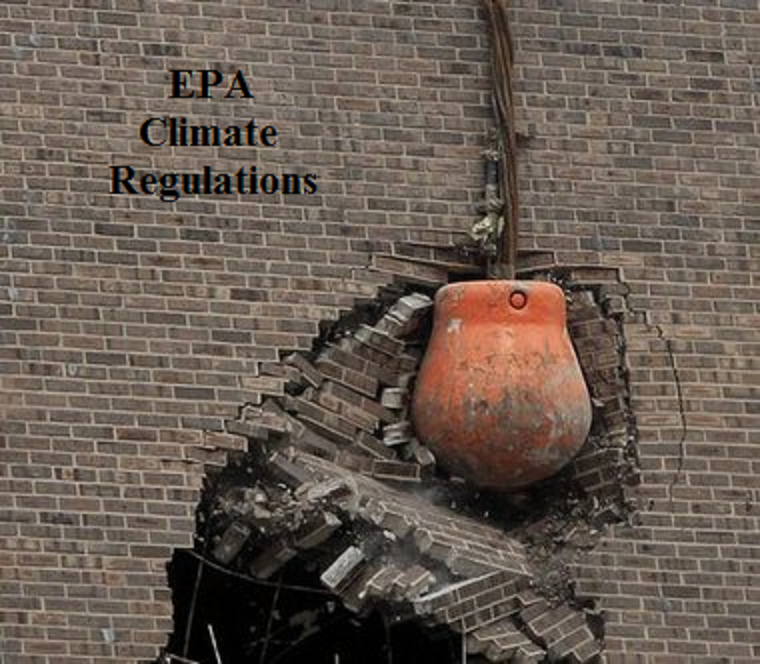
Like other EPA climate regulations, the proposed emissions standards under Section 111 of CAA are not designed to reduce emissions from standard power plants, but rather to force a rapid transition away from reliable and affordable sources of dispatchable power—natural gas and coal—to intermittent renewables and new kinds of power plants that don’t even exist yet. Together with EPA’s electric vehicle mandates, the proposed rule would be a train wreck for the American electricity grid and society as a whole, endangering economic competitiveness and energy security while yielding no measurable climate benefit.

Those hoping for a dramatic finish to Biden’s climate action will not be disappointed: the proposal has so many legal vulnerabilities that it would be a miracle nightmare if the rule survives federal court review.

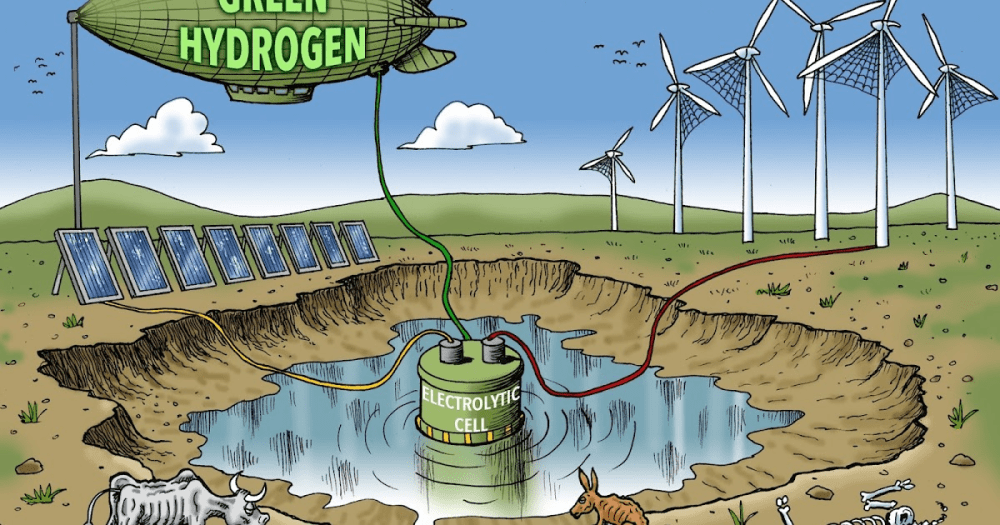
Under the proposed rule, which President Biden hopes to finalize by next summer, large new or modified natural gas plants and existing coal plants would be required to virtually eliminate carbon emissions by 2038, at the latest. Under Section 111(a) “New Source Performance Standards” (NSPS), large new or modified combined-cycle natural gas plants, which currently supply roughly 30% of the nation’s electricity, would be required to achieve close to zero carbon emissions, either by implementing carbon capture and storage (CCS) to capture 90% of carbon emissions by 2035, or by switching from natural gas to 98% “green” hydrogen co-firing by 2038. In addition, under Section 111(d) emissions guidelines, existing coal plants, which currently supply more than 20% of America’s electricity, would be required to virtually eliminate carbon emissions by implementing CCS by 2035.

Interestingly, EPA declined to promulgate NSPS for coal plants because, as it explains, there are no plans to build any new coal plants in the U.S. It declined to promulgate emissions guidelines for existing natural gas plants out of concern for feasibility. Even more interesting, when EPA sent the proposed rule to the White House for regulatory review under E.O. 12866, it contained no emissions guidelines for existing plants at all, and therefore would not have applied to coal plants at all. The White House reportedly sent it back to EPA with orders to put a Section 111(d) rule for existing coal plants in the proposal. This suggests that EPA itself is not very confident in the ability of the Section 111(d) rule to survive court review.

Section 111 of CAA, the same provision at issue in West Virginia v. EPA, authorizes EPA to mandate “the degree of emission limitation achievable through the application of the best system of emission reduction which (taking into account the cost of achieving such reduction and any nonair quality health and environmental impact and energy requirements) the Administrator determines has been adequately demonstrated.”

Section 111 sets a high bar, especially after West Virginia v. EPA. The proposed rule falls woefully short. It has at least three major legal vulnerabilities, any one of which would be sufficient for a court to strike the rule down.

First, neither CCS nor green hydrogen is anywhere near “adequately demonstrated” within the meaning of Section 111.

Second, EPA has systematically ignored crucial costs and impacts that it is required to take into account in setting emissions standards under Section 111.

Third, like the “best system of emission reduction” struck down in West Virginia v. EPA, the new rule would require sweeping regulatory action and infrastructure investments entirely outside the fence line of the regulated facilities, thereby raising the “major question” doctrine’s presumption against the agency’s interpretation of the law.

The Mandated Technologies Have Not Been “Adequately Demonstrated”

Contrary to the unambiguous pronouncements of the D.C. Circuit, EPA treats Section 111 as if it were a technology-forcing provision throughout the proposed rule. For example, EPA claims that CCS has been “adequately demonstrated” for natural gas plants based on small-scale demonstrations at coal plants. But the coal demonstrations cited involve only small slipstreams (carbon captured from a small percentage of the plant’s total emissions) for use in the food industry. Moreover, the coal plant demonstrations do not involve the sophisticated combined-cycle configurations of large natural gas plants—in which the exhaust from the primary combustion cycle is used to heat the steam generator of the second cycle—that the new standards focus on.

In the several hundred pages laying out the proposed rule, EPA provides just two examples of demonstrations at natural gas plants. One, at Bellingham, Massachusetts, captured only a 10% slipstream and closed in 2005 because it was not economical. That was a decade before the Obama-era Clean Power Plan, in which EPA correctly rejected CCS as inadequately demonstrated and too costly. The other, a project at Peterhead, Scotland, is still in planning and may not even be built. Neither can be used as the basis for an adequately demonstrated BSER.

Furthermore, EPA’s CCS mandate would require a massive buildout of carbon transport and storage infrastructure, which has not been adequately demonstrated and would require sweeping investments and regulatory changes by developers and government authorities unrelated to the entities subject to regulation under Section 111 of CAA. Like the measures “beyond the fence line” of regulated entities that were struck down in West Virginia v. EPA, this massive infrastructure buildout would be beyond the ability of EPA-regulated entities to implement.

Co-firing with low-carbon hydrogen is even further from being adequately demonstrated. Nearly all hydrogen today is produced using carbon-intensive methods. Indeed, electrolysis from renewable and nuclear power produces only trivial quantities, and EPA doesn’t even bother to estimate the cost, feasibility, or time it would take to build out the vast amount of new renewable and nuclear power capacity that would be needed to make the low-GHG hydrogen a practicable option for power plants.

In short, neither CCS nor “green” hydrogen co-firing meets the Section 111 legal standards of “adequately demonstrated” BSER.

EPA Has Ignored the Proposed Rule’s Costs, as well as Its Health, Environment, and Energy Impacts

In determining that a technology is “adequately demonstrated” under Section 111, EPA must take into account the costs of the rule, as well as the health, environment, and energy impacts of the rule. Courts have interpreted this as requiring that costs be reasonable. That poses a threshold problem for EPA’s proposed rule because EPA can point to no measurable environmental benefit that would result from compliance. EPA has based all its greenhouse gas regulations on the same original 2010 Endangerment Finding, which has serious problems of its own, as William Happer and Richard Lindzen note in their July 2023 comment letter to the proposed rule. It has not been demonstrated that the sources subject to the rule make a significant contribution to a condition of air pollution that endangers human health, and the finding mentions the 2021 Technical Support Document on Social Cost of Carbon only in connection with a regulatory impact analysis that is unrelated to the requirements of CAA. Under such circumstances, there is a threshold question of whether any significant costs could be reasonable.

There are other problems with EPA’s estimate of costs and impacts.

First, its estimate of costs is highly speculative. The rule would affect a host of entities and government authorities across the whole society, the vast majority of them not subject to regulation under CAA, and EPA has little clue as to how they will adjust to the rule. If its cost estimates are off by any significant amount, regulated entities could well react by shuttering, rather than attempting to comply, which would create a situation of dangerous energy scarcity with skyrocketing prices. In parts of the country where fossil energy is restricted as a matter of policy, such as California, the electricity grid is on the verge of dangerous blackouts almost every evening in the summer.

And those restrictions are modest, compared with those now contemplated by EPA.

EPA’s most egregious failure to properly account for costs is that it subtracts the amount of federal subsidies from the cost estimate, a nominal reduction of $369 billion based on CBO’s score. That figure will likely turn out to be much greater, given the subsidies’ lack of date-certain sunset.

As for the impact on electricity prices, EPA estimates that the rule would lead to a price increase of 13%. That is almost certainly a woeful underestimate. In California, where a much milder form of renewable energy mandate has been in place for years, end-user electricity costs are twice the national average. The costs of compliance with the new rules could be far more exorbitant. As further explained below, CCS would reduce the power output of the relevant plants by at least 30%, while green hydrogen would likely be three to four times more expensive to produce and deliver as current demonstrations using natural gas.

 Given the number of factors outside EPA’s expertise and jurisdiction that would
determine how much time and money all that infrastructure would cost,
EPA’s estimates are little more than conjecture.

The Power Plant Rule Raises the Same “Major Question” as in West Virginia v. EPA

The Court held that EPA’s interpretation raised a “major question” and that, in the absence of clear congressional authorization, the claimed power exceeded EPA’s statutory authority. The Court noted that EPA’s approach to BSER allowed it to set emissions standards at whatever level the agency wanted, regardless of whether any regulated entity could feasibly comply with the new standards. The Court noted that the Clean Power Plan would result “in numerical emissions ceilings so strict that no existing coal plant would have been able to achieve them without engaging in [generation-shifting].”

EPA’s new power plant rule relies on a similarly expansive definition
of BSER to establish standards that can be met only
by shifting generation away from fossil sources.

The only way that regulated sources could comply with the rule would be if states or utilities (or other developers) would build a major interstate infrastructure for CCS and “green” hydrogen, including tens of thousands of miles of specialized pipelines, massive underground storage facilities for CO2, and large-scale facilities for the production and transport of hydrogen gas from renewable sources. Whether to develop such infrastructure is a decision totally beyond the control of regulated entities.

 The claimed power would regulate a significant portion of the American economy,
entails political impact of great significance, and intrudes on matters
that are the traditional domain of the states.

EPA’s Persistent Usurpation of Congressional Authority

EPA’s efforts to restrict greenhouse gas emissions from power plants and other sources represent a dangerous overreach of executive power. Congress never authorized EPA to regulate greenhouse gases in this expansive manner. By trying to reorganize the country’s electricity-sector limits through executive fiat, rather than the legislative process, EPA is abusing its authority and circumventing democracy.

Net zero climate policy raises novel issues that affect every American citizen
in almost every aspect of modern life. Policy requiring such
transformative change should be left to Congress.


They Swallowed It: Hook, Line and Sinker, 2 years later

Trapped

Update Sept. 2023

I take no joy in being perceptive when writing the post below in March 2021.  Because the process becoming evident back then has only gone from bad to worse.  So much more has happened in the dismantling of my birthplace USA, more extreme and unrelenting destruction of the republic.  If anything, I underestimated the virulence of people carrying out the agenda of this regime.  They have revealed themselves as:

♦  Incompetent, hired for group identity and sexual preference, not knowledge or skill;
♦  Corrupt, driven by greed from the top of the house on down; and
♦  Malicious, eagerly destroying civility and causing pain and suffering for the joy of it.

Will Americans Rally to their heritage or succumb to this craven cabal?

They Swallowed It: Hook, Line and Sinker

Many will recognize the expression for taking on an idea or proposition so deeply in your gut that, like a fish on the line, there is no escape no matter how hard you try. Jacques Parizeau, one time separatist Premier of Quebec coined a similar idiom regarding voters resisting the referendum on Quebec independence from Canada. Meeting privately with foreign diplomats, he said that in the event of a Yes vote, the result would be like a “lobster pot.” That refers to the traditional wooden traps that have a one-way gate allowing a lobster to get in, but not out.

These expressions come to mind concerning the plight of US citizens following the installing of Biden-Harris in the White House. The intention of this administration is clearly to fundamentally transform America: From “The Land of the Free, Home of the Brave,” to “The Land of the Victims, Home of the Afraid.” The movement in this direction has been a long time in the works, and was only recently triggered by the election of Trump and the leftist need to cancel the alternate ideology of “Make America Great Again.” Time will tell if those now in power are reaching too far, too fast, going for broke before the majority were caught in the pot.

No doubt the program to undermine American global dominance has been operating for several generations. Those not familiar with the Marxist revolutionary four-stage process can read my synopsis article Four Steps to Take Down a Free Society

Pioneered by the Soviets and exported into many countries before their empire collapsed, the method is now employed by the Chinese Communist Party updated with cyber tools, along with traditional espionage tactics of honey traps and buyouts. The first stage of demoralizing involves teachers indoctrinating students to disparage their national heritage and destroy commitment to traditional social values and customs. Tom Wolfe wrote with his satirical wit and historical knowledge about the demise of liberal US academia into leftist dogma in his essay In the Land of the Rococo Marxists. My synopsis is Warmists and Rococo Marxists.

Of course the present manifestation flies under a different banner: Social Justice. And the reverent refer to George Floyd rather than Karl Marx. But Critical Race Theory is so obviously intended to divide and conquer a free and democratic society, you would have to be in a trance (claiming to be “woke”) to be taken in by it. Yet, indoctrinated children, now adults abound in the ranks of corporate management, others churning out copy for mass media or organizing activists in the streets and in cyberspace.

The protests in city streets of developed countries are coordinated and led by Social Justice Warriors indoctrinated in Western academies of higher education, after elementary school slanted teaching. If neo-Marxist progressive post-moderns take pride in this as accomplishing their agenda, consider what happened in China’s cultural revolution in the 1960s and is repeating itself in 2020. The useful dupes, like teachers, become outcasts and themselves targets for cancellation once power and control is seized. See article Teachers Beware Your Cultural Revolution Turning on You.

Have the scales yet tipped in favor of the slide into a socialist autocracy? Will Americans mount a resistance to this revolution? Depends on who and how many are on the line or trapped in lobster pots.


Railway Workers Built Canada Not Elites

Canadian troubadour Gordon Lightfoot celebrated in song the building of the transcontinental railfoad which bound together far flung provinces into a nation.  He described the working men whose manual labor and physical energy produced the foundation for Canadian economy and society.

I am reminded of a tour some years ago in the Roman Colosseum where the guide pointed out the features explaining the grandeur of the monumental structure.  At the end, he concluded: “This was all done in just eight years.  Remember, these were Romans, not Italians.”  In the same vein, I would say to Justin Trudeau, “Remember Canada was built by working men, not by woke weenies.”

Postscript: 

In 1880, the Canadian government contracted the Canadian Pacific Railroad to construct the first all-Canadian line to the West Coast. During the next five years, the company laid 4,600 kilometers of single track, uniting various smaller lines across Canada. Despite the logistical difficulties posed by areas such as the muskeg (bogs) region of northwestern Ontario and the high rugged mountains of British Columbia, the railway was completed six years ahead of schedule.

The transcontinental railway was instrumental in populating the vast western lands of Canada with settlers and providing supplies and commerce. Many of western Canada’s great cities and towns grew up around Canadian Pacific Railway stations.

So five years to build the railway, eight years to build the colosseum.

Trudeau’s been in office eight years and we’re still waiting
for permits to build needed energy infrastructure.