More unimaginable news reported by Tabia Lee at Compact: A Black DEI Director Canceled by DEI. Excerpts in italics with my bolds and added images. Thanks to Tabia Lee for revealing how toxic this ideology and its adherents have become.
This month, I was fired from my position as faculty director for the Office of Equity, Social Justice, and Multicultural Education at De Anza Community College in Cupertino, Calif.—a position I had held for two years. This wasn’t an unexpected development. From the beginning, my colleagues and supervisors had made clear their opposition to the approach I brought to the job. Although I was able to advance some positive initiatives, I did so in the face of constant obstruction.
What made me persona non grata? On paper, I was a good fit for the job. I am a black woman with decades of experience teaching in public schools and leading workshops on diversity, equity, inclusion, and antiracism. At the Los Angeles Unified School District, I established a network to help minority teachers attain National Board Certification. I designed and facilitated numerous teacher trainings and developed a civic-education program that garnered accolades from the LAUSD Board of Education.
My crime at De Anza was running afoul of the tenets of critical social justice,
a worldview that understands knowledge as relative and tied to
unequal identity-based power dynamics that must be exposed and dismantled.
This, I came to recognize, was the unofficial but strictly enforced ideological orthodoxy of De Anza—as it is at many other educational institutions. When I interviewed for the job in August 2021, there was no indication that I would be required to adhere to this particular vision of social justice. On the contrary, I was informed during the interview process that the office I would be working in had been alienating some faculty with a “too-woke” approach that involved “calling people out.” (After I was hired, this sentiment was echoed by many faculty, staff, and administrators I spoke to.) I told the hiring committee that I valued open dialogue and viewpoint diversity. Given their decision to hire me, I imagined I would find broad support for the vision I had promised to bring to my new role. I was wrong.
From the beginning, efforts to obstruct my work were framed in terms that might seem bizarre to those outside certain academic spaces. For instance, simply attempting to set an agenda for meetings caused my colleagues to accuse me of “whitespeaking,” “whitesplaining,” and reinforcing “white supremacy”—accusations I had never faced before. I was initially baffled, but as I attended workshops led by my officemates and promoted by my supervising dean, I repeatedly encountered a presentation slide titled “Characteristics of White-Supremacy Culture” that denounced qualities like “sense of urgency” and “worship of the written word.” Written meeting agendas apparently checked both boxes.
As I attended more events and spoke with more people, I realized that the institutional redefinition of familiar terms wasn’t limited to “white supremacy.” Race, racism, equality, and equity, I discovered, meant different things to my coworkers and supervising dean than they did to me. One of my officemates displayed a graphic of apples dropping to the ground from a tree, with the explanation that “equity means everybody gets some of the apples”; my officemates and supervising dean praised him for this “accurate definition.” When I pointed out that this definition seemed to focus solely on equality of outcomes, without any attention to equality of opportunity or power, it was made clear this perspective wasn’t welcome. “Equity” and “equality,” for my colleagues, were separate and even opposed concepts, and as one of them told me, the aspiration to equality was “a thing of the past.”
Having recognized these differences, I attempted to use them as starting points for dialogue. In the workshops I led, I sought to make space for people to share their own definitions of various concepts and then to identify common points of reference that we could rally around, even as we acknowledged and accepted differences of perspective. Without editorializing, I gave participants time to notice the differences between the perspectives. We then came together and shared things that these two seemingly divergent philosophies had in common. The aim was to enable a conversation between two perspectives that I already saw at play in divisions on campus about how to approach issues of race.
When I was evaluated as part of the tenure process, some of my evaluators objected to such efforts to identify points of commonality between divergent viewpoints. They also objected to such views being presented at all. One evaluator, who described herself as a “third-wave antiracist,” aligning her with Kendi’s philosophy, made clear that the way I had presented her worldview was deeply offensive. Another evaluator objected to my presentation of “dangerous ideas” drawn from the scholarship of Sheena Mason, whose theory of “racelessness” presents race as something that can be overcome.
A dogmatic understanding of social justice shaped organizational and hiring practices.
Anything short of lockstep adherence to critical social justice was impermissible.
“Criticism” was only supposed to go in one direction. Contextualizing my colleagues’ views and comparing them to other approaches to the same issues, much less criticizing them, was “dangerous”; my supposed failure to “accept criticism” was, simply put, a refusal to accept without question the dogmas these colleagues saw as beyond criticism.
The conflicts were not limited to my tenure-review process. At every turn, I experienced strident opposition when I deviated from the accepted line. When I brought Jewish speakers to campus to address anti-Semitism and the Holocaust, some of my critics branded me a “dirty Zionist” and a “right-wing extremist.” When I formed the Heritage Month Workgroup, bringing together community members to create a multifaith holiday and heritage month calendar, the De Anza student government voted to support this effort. However, my officemates and dean explained to me that such a project was unacceptable, because it didn’t focus on “decentering whiteness.”
No White Crackers Wanted Here.
This sort of dynamic, where single individuals present themselves as speaking for entire groups, is part and parcel of the critical-social-justice approach. It allows individuals to present their ideological viewpoints as unassailable, since they supposedly represent the experience of the entire identity group to which they belong. Hence, any criticism can be framed as an attack on the group.
For those within the critical-social-justice-ideological complex, asking questions, encouraging other people to ask questions, and considering multiple perspectives—all of these things, which should be central to academic work, are an existential danger. The advocates of critical social justice emphasize oppression and tribalistic identity, and believe that a just society must ensure equality of outcomes; this is in contrast to a classical social-justice approach, which focuses on freedom and individuality, understands knowledge as objective and tied to agency and free will, and believes that a just society emphasizes equality of opportunity. The monoculture of critical social justice needs to suppress this alternative worldview and insulate itself from criticism so its advocates can maintain their dominant position. Protection of orthodoxy supersedes all else: collegiality, professionalism, the truth.
If certain ideologues have their way, compelled speech will become an even more common aspect of university life. Faculty and staff will be obligated to declare their gender pronouns and to use gender-neutral terms like “Latinx” and “Filipinx,” even as many members of the groups in question view these terms as expressions of cultural and linguistic imperialism. Soon enough, we may also be formally required to start all classes and meetings with land acknowledgments, regardless of how empty a gesture this may seem to living members of tribal nations. [Note: What is a Land Acknowledgement? These are increasingly common ritual comments at post-secondary institutions. Often spoken at the beginning of a public event, they are a formal way of recognizing the Indigenous stewards of a specific territory, their ancestors, and communities.]
As my experience shows, questioning the reigning orthodoxies does carry many risks.But the alternative is worse. Authoritarian ideologies advance through a reliance on intimidation and the compliance of the majority, which cowers in silence—instead of speaking up. Engaging in civil discourse and ensuring that multiple perspectives are presented are crucial, if we want to preserve the components of education that ideologues are seeking to destroy.
Above is the podcast video discussion between Jordan Peterson and Vivek Ramaswamy. Below I provide excerpts transcribed from the closed captions, with a fewed added images.
JP: I’m very happy today to talk with Vivek Ramaswamy who has just announced his candidacy for the American presidency and is going to well hopefully change the political landscape in doing so. Vivek is an American Business leader and New York Times best-selling author of Woke Inc–Inside Corporate America’s Social Justice Scam, along with his second book Nation of Victims–Identity Politics, the Death of Merit and the Path Back to Excellence. Born and raised in Cincinnati, Ohio, he often recounts the sage advice from his father:” If you’re going to stand out, then you might as well be outstanding.” This set the course for his life: a nationally ranked tennis player, valedictorian of his high school, Saint Xavier. He went on to graduate Summa Laude in biology from Harvard and then received his JD from Yale law school. While working at a hedge fund, he then started a biotech company Roivant Sciences, where he oversaw the development of five drugs that went on to become FDA-approved.
In 2022, he founded Strive, an Ohio-based asset management firm that directly competes with asset managers like BlackRock, State Street, Vanguard, and others, who use the money of everyday citizens to advance environmental and social agendas that many citizens and capital owners disagree with.
That’s a far more important issue than you might think and we’re going to discuss that a lot as we proceed through our conversation today.
Vivek Ramaswamy who I’m talking to today, is running for president, which seems to be quite the preposterous thing to do for anyone I would say. This next 2024 election is going to be some interesting contest. As far as I can tell, we’re not going to have seen anything like it. The fact that you threw your hat in the ring I think is part and parcel of the whole show, so let’s start by just exploring why it is that you decided to do this and what is it that you hope to accomplish by making this run.
VR: So you know some of the journey I’ve been on over the last few years. I think what led me to the doorstep: I’ve been addressing for the last few years this merger of state power and corporate power that together do what neither can do on its own. And and part of me long believed that the Republican Party in the United States is behind by 40 years, reciting slogans they memorized in 1980. When the real threat to Liberty today is different. So I’ve taken on the woke industrial complex in America through the books I’ve written, through traveling the country. Most recently taking on the ESG Movement by starting Strive last year.
Where my headspace was, I did not think I was going into politics. I wanted to actually avoid the limiting shackles of partisan politics because it just felt so constraining. I thought of running for the U.S Senate I decided not to do that. I said no, I want to do this independently as an independent voice, thought leader, author. I successfully built a biotech company before then putting those skills to work starting strive. That was where my exclusive Focus was going to be, and I’m proud to say I think we are already having major impact on the market through my work at strive, and even just through putting a spotlight on the problem.
But to be really honest about this, and this was the realization that dawned on me after you know years into that Journey, is that it does take Two to Tango. And what I mean by that is the top-down version of this problem: the cynical exploitation of corporate power and state power to shackle the human spirit is only half the issue. Because that only works if there’s a culture that’s really willing to buy it up; it only works if there’s a population that’s buying up what they’re selling. I think that requires every one of us to look deeply in the mirror and ask ourselves: What is it about us as a people that makes us want to bend the knee to the powers that be, that wants us to embrace these new secular religions. And that wasn’t a problem that I could address even through Market action in taking on BlackRock or the ESG forces in capital markets. That’s really what dawned on me: There was no better way to drive a cultural Revival in America than to successfully (and successfully is an important part of this) to successfully run for president.
The whole premise of my campaign pain is to define a national identity, answer the question of what it means to be an American in the year 2023. I do not believe we have a good answer to that question in this country. I’m on a mission to deliver an answer to that question. My basic premise is that our absence of that answer is the black hole at the center of our nation’s soul. That is what allows wokism and gender ideology and climatism and covidism to fill the void. These are secular religions that prey on that vacuum. If we can fill that vacuum with say a vision of national identity that runs so deep that it dilutes these other agendas to irrelevance, that is how we win. And I believe that there isn’t a candidate in this field who’s quite up to that challenge. I’m not sure I am either but I do believe that I’m going to give it the best shot that we have, which is why I’m running.
JP: Well you brought up a lot of very complex issues in that description of your motives. I’m going to walk through them one by one to unpack them for everybody. You said the Republicans are 40 years behind, I think that’s probably also true of organizations like the UN as well. And 40 years is a long time given how much has changed just in the last 10 years. It mean that the average person who’s watching and listening to this is also behind and isn’t even aware of of what acronyms like ESG mean or why they should really give a damn.
I just interviewed the CEO of the national organization for State Treasurers organization. It’s a financial officers organization, now there’s 28 States pushing hard back against the the ESG movement. Your description of your motives opened with a statement about a kind of fascist collusion and what we’re seeing is an amalgam of power that’s corporate (which of course the left Wingers complain about), that’s government (which the right Wingers complain about) and then of media (which everybody complains about and rightly so).
And there’s this idea that seems to be reigning in the upper echelons of the power structures that that we’re facing an apocalyptic emergency of such magnitude (whatever the emergency happens to be) that they should be conveniently ceded all the power. One of the fronts upon which that battle is being fought is the ESG movement, So would you walk through that for everyone just to bring them up to date?
VR: Absolutely. This has been something of my obsession over the last several years, not just as a commentator but as a doer and as an entrepreneur too. The ESG movement stands for environmental, social and governance factors. It’s designed to sound boring for a reason My general rule of thumb is: If it sounds like a three-letter acronym that bores you, that’s a good sign you should be paying more attention. This whole game is about using private power, using Capital markets to accomplish through the back door what government could not get done through the front door under the Constitution.
So I’ll tell you what it is and then I’ll walk through the history of how we got here because that’s also pretty important too. Essentially what the ESG movement does to use the money of everyday citizens, Americans but Canadians too, Australians and Western Europeans. It uses the money of everyday citizens to invest in companies and to vote their shares in ways that advance one-sided progressive agendas. Environmental and social agendas that most of those people do not agree with, that most people did not know were actually being advanced with their own money. And which don’t advance the financial best interests of most people whose money is actually used.
So what does that mean? Think about yourself saving in a retirement account or a 401k account or a brokerage account. You think that the person who’s managing that money is exclusively looking after your best financial interests. It turns out they’re not; they’re also looking after advancing these other environmental and social goals. Who are these institutions? They’re Asset Management firms like BlackRock or State Street or Vanguard or Invesco or countless others that have signed a pledge to say they’re going to align all of their underlying companies with the goals of the Paris climate Accords; with Net Zero standards by 2050; with modern diversity equity and inclusion standards. And those three or four firms alone manage about 20 trillion dollars or a bit more. That’s more than the US GDP right now in the hands of three to four financial institutions.
But they’re not using their own money to do it, they’re using the money of probably most listeners to this exchange right now. There’s a good chance that people watching this have their money in their retirement accounts or their brokerage accounts being used to tell companies like Apple to adopt racial equity audits that Apple’s board initially did not want to adopt. To tell companies like Chevron to adopt scope 3 emissions caps that Chevron did not want to adopt. And that most people watching this probably didn’t want to force on Chevron either, but their money was used to do it anyway. That’s what this ESG movement is all about.
How did we get here is actually a really important question. A lot of this began with two big Milestones seeing the supercharging of this ESG movement in our economy and in capital markets. The first one I think of as the big bang that really set the whole thing into motion was the 2008 financial crisis. What happened in the 08 financial crisis? By the way I had a front row seat to this because I got my first job in New York at an elite hedge fund in the fall of 2007. The fund I worked at got an honorable mention in Michael Lewis’s book The Big Short. It was my first job out of college this is this is fun stuff for me, right. A lot of people lost a lot of money on Wall Street. I didn’t have any money so it didn’t matter to me; it was more of a learning experience, which was a pretty rich one.
So from a front row seat, what happened in the aftermath of the 08 crisis was Republicans (it’s worth remembering this) Republicans in this country bailed out the big Banks. I don’t know what your view is, Dr Peterson. I view that as a major mistake. it’s a cardinal sin the Bush Administration and Hank Paulson a CEO and alumnus of Goldman Sachs used public taxpayer funds to bail out Goldman Sachs while letting his competitors fail. This was crony capitalism all the way down and the left actually had a point. In this country Occupy Wall Street was born and what they said is: Look if you’re going to play that crony capitalist game, then we’re going to play our game. We’re just going to take money from your wealthy corporate fat cat pockets and redistribute it to poor people. To help poor people because that’s what we on the far left want to do on the Occupy Wall Street movement.
But right around that time there was there was a fissure in the left-wing movement in this country. There was the birth of this new, let’s call it the woke left. Barack Obama had just been elected the first black president of the United States. There were a lot of cultural currents in the U.S that said: wait a minute, the real problem isn’t economic Injustice or poverty, it’s really racial Injustice and misogyny and bigotry, and by the way climate change. This is supposed to be Al Gore’s Inconvenient Truth.
This actually presented the opportunity of a generation for Wall Street to say: okay guys we’ll make a deal with you. We will use our corporate power, use our money (really your money) to applaud diversity and inclusion, to put token minorities on corporate boards, to Muse about this racially disparate impact of climate change. From the mountaintops of Davos, after flying there in a private jet, we’ll do all of these things. But we don’t do it for free: we expect the new Left to look the other way when it comes to leaving our corporate power intact.
And so they defanged Occupy Wall Street. Most people don’t even remember what was Occupy Wall Street. It went by the wayside, and that’s how the birth of this new woke industrial or ESG industrial complex was born. Where Wall Street said, if you can’t beat us join us and that’s exactly what happened. So that was the first thing.
JP: Do you think it was that conscious or do you think that it was the consequence of a thousand micro decisions?
VR: Okay it was the latter. I mean this was not a smoke-filled room where there was some sort of meeting in the back of Goldman Sachs boardroom on 85 Broad Street in lower Manhattan. This isn’t an ethical conspiracy theory this is an emergent reality right. Certainly that was the first Catalyst and so what began as a challenge to the system of stakeholder capitalism and ESG slowly became ossified as the system. And there’s a lot of forces behind it, the rise of passive index funds played a big role and that’s a discussion I can get into another another time or maybe later in this discussion.
Then there were two big catalysts that came out, one was in 2016 and one in 2018. In 2016 of course it was that Donald Trump was elected president of the United States. This created a seismic shock wave across The Establishment class both in capital markets as well as the linkage between business and politics. When they said, okay wait a minute: this game may not be played the way it’s supposed to be going forward. If political leaders like Donald Trump are going to break the system, then we The Business Leaders need to exercise our authority to step into the void instead. And then they were vindicated or so they thought when Trump pulled out of the Paris climate Accords in 2018. Not many people realize this was a big event that threw kerosene on this ESG storm. Even the people who are complaining about the ESG movement need to better understand where it came from. This was a big deal that then caused Calpers, the California teachers and pension retirement system, and other big allocators, the people who give BlackRock and State Street your money. They started to say that if political leaders are not going to step up to the occasion to address the existential challenges we face like global climate change, then Business Leaders need to do it instead. Larry Fink the CEO of BlackRock started saying similar things, that we have to earn our social license to operate.
Really what caused this ESG thing to spread like wildfire was that event of pulling out of the Paris climate Accords.
JP: With that you’ve tied the corporate response to say Occupy Wall Street at the end of the 2008 financial crisis with the climate catastrophe. So let’s talk about the climate catastrophe for a moment and also to find stakeholder capitalism. Because The Narrative insisted upon by the woke left but also by these capitalists is that the emergency that confronts us on the environmental Frontier is so cataclysmic that any and all emergency measures are not only thoroughly Justified but morally required. Now I have a problem with that theory, psychologically as well as technically. Psychologically I’ve been trying to figure out how you separate the wheat from the chaff on the leadership front, especially in the face of an emergency, because real emergencies do occur from time to time. Here’s a rule of thumb everyone can try out for themselves: if the emergency you’re confronting terrifies you so badly that you’re paralyzed into immobility or tempted to aggregate all the power to yourself and become a tyrant, then you have defined yourself as insufficient for the job.
You should be able to maintain a calm head regardless of the impending emergency because there’s going to be emergencies and if you become a tyrant during an emergency, then you’re a tyrant and and not the solution. That’s the psychological issue: even if there is an emergency we shouldn’t be aggregating power into an elite.
Then there’s a second element too which is: What bloody emergency? I’ve talked a lot to Bjorn Lomberg for example and many other people as informed as Lomberg. And there’s no evidence even in the IPCC reports themselves that climate change is first of all entirely man-made because it’s not. And second even if it is there is no evidence whatsoever the in IPCC reports that there’s going to be some apocalyptic turning point in the next 50 years that justifies Untold trillions of panic dollars being spent, while we simultaneously destabilize our power grids and increase the cost of electricity by up to five times and make ourselves, at least in Europe much more reliant on Russia. And also throw poor people into poverty and risk the fossil fuel infrastructure that feeds half the planet. Because people actually also don’t understand that ammonia is made out of fossil fuel, and ammonia fertilizer feeds four billion people.
So anyways you said 2008 Wall Street is guilty because of the bailouts the lefties pushed them hard on the ethical front, and rightly so they decide to turn to ESG. But then that’s also Amplified by this sense of apocalyptic climate doom. So what’s your formulation of the environmental challenge that confronts us now. How do you construe that?
VR: I have more to say about the ESG story but I need to pause on what you just said. Some really good stuff in there. I’m gonna go one step further than you and draw a linkage between the psychological critique and the technical critique because they’re related. The first thing you said was a humble and Powerful point: even if there is some sort of existential apocalyptic issue you should not want to entrust the people who are going to then wield tyrannical Force to address it, not to mention the fact that the technical issue is itself a completely artificial one. It is grounded on false premises that deserve to be called out. I can call those out, Bjorn Lundberg, Alex Epstein others can call them out. We can go into all the details of that but the point is that those two critiques that you just offered are spot on as they are are deeply linked.
You were almost too charitable in that actually the psychological account explains the fact the entire climate agenda actually has nothing to do with the climate. It’s not that this was a tyrannical response to a threat–it was the creation of an artificial threat to exercise tyrannical power itself. Okay it’s a religious cult and so I’ve said numerous times, I think the climate religion has about as much to do with the climate as the Spanish Inquisition had to do with Christ, which is to say nothing at all. It was really just about power and dominion and Punishment all the way down and I can I can basically prove to you in a short amount of time.
To avoid going on for hours I’ll just pick a couple of tidbits. So one is if you really care about carbon emissions as the end-all, be-all, first of all you’d be delineating which kind of carbon emissions matter. I don’t subscribe to the tenets of this religion but I think it’s worth understanding a religion even if you’re not a practitioner. Even if you subscribe to this religion, there’s a difference between methane leakage and carbon dioxide. Well methane leakage is far worse in places like Russia and China so then it should be a mystery that you want to shift carbon production from the United States, where you tell companies like Exxon and Chevron to stop producing, to places like China.
Like Petro China on the other side of the world, and by the way this is exactly what the ESG movement is doing. So BlackRock is like an apostle of this Spanish inquisition-style Church. BlackRock forces companies like Exxon and Chevron to drop oil production to meet Net Zero standards by 2050. Yet literally some of the same companies buying up those same projects on the other side of the planet are Petro China of which BlackRock is a large shareholder, without telling Petro China to adopt any of those same emissions caps. This is nuts if you think that you care about reducing carbon emissions, if you subscribe to this crazy religion methane is 80 times worse for global warming then carbon dioxide so it’s not even net neutral it’s worse. So that’s the first breadcrumb that there’s something else going on here
The second breadcrumb is that the same movement certainly it’s Apostles in the ESG movement that are so hostile to carbon emissions is also hostile to the best known form of carbon free energy production known to mankind which is nuclear energy. That’s the second little breadcrumb that there’s something else going on here. The problem with nuclear energy in a nutshell is that nuclear energy might be too good at solving the alleged clean energy problem, such that it doesn’t solve for the actual agenda, which is delivering Equity between the West, America in particular, and the rest of the world to catch up. That’s really what this club is delivering. And delivering that power that we’ve been talking about of course.
JP: Those are the times, so really what’s going on those are two stunning points. And I want to lay them out uh philosophically for a moment just so people get the full import of what this means.
So let’s say that we do buy the propositions of the of what Vivek has been calling the climate religion (we’ll get back to that term later). If we do buy in then we make the assumption that the fundamental existential crisis facing us is one of pollution. And that that can be reduced in complexity to carbon dioxide emission and maybe methane and a couple of other greenhouse gases.
Now I don’t accept any of that and I know you don’t either, but we’ll give the devil his due. If that’s actually the driving Factor then the fundamental of actions and perceptions should be directed towards minimizing carbon dioxide output. But the first point you make is we’re making it very difficult for Western countries to use coal and to explore for fossil fuels, while we’re making it very easy for China to do so. And since we all share the same atmosphere and China and other terribly governed countries have way worse environmental regulations. All we’re doing is substituting a relatively clean fossil fuel for relatively filthy fossil fuel. And you added that additional decoration which: Isn’t it also convenient that companies like Black Rock happen to own huge shares in exactly the Chinese companies whose interests they’re promoting.
That means by the measurement standards of The Advocates of the climate religion themselves, their policies are not only a failure they’re actually counterproductive, just like they have been in Germany in the UK. That’s a subtle mystery on the fossil fuel front, but then you have the blatant mystery of the second thing you pointed to. In fact we can pretty much solve the bloody carbon dioxide problem overnight with nuclear. Yes we have small nuclear plants now and we have nuclear plants that are way safer than they were 50 years ago, and that could be built at a modular level. So why do you oppose them?
Which brings us into the religious issue. Because this is not so much a pro Planet agenda designed to bring about harmony with the natural world, as it is an attempt to simultaneously destabilize the entire industrial infrastructure. This is in accordance with the claim that all human activity is nothing but cancerous growth on the planet, combined with this underground desire to accrue all tyrannical power into centralized Elite hands.
So with that let’s talk about your insisting a number of times that the climate narrative is a religious or quasi-religious structure. I’ve got some thoughts about that which I’ll share eventually, but I would like you to lay out why you use that terminology specifically.
VR: Yes, I mean that in two senses: worst is the sense in which it is a religious institution gone awry. And the second is, it fills the psychological need for religion and God in the everyday person. On the first of those, as you were laying out the philosophical framing of it, I was actually reminded of one of my favorite stories about Christ. It actually came from not the Bible but from fyodor dostoyevsky’s book the Brothers karamazov in his chapter entitled The Grand Inquisitor. And it tells the story of Christ coming back to Earth during the 15th or 16th century or whatever in Seville, Spain. He’s walking the streets performing Miracles when the grand Inquisitor leading the Spanish Inquisition spots him on the street and has him arrested. The whole climax of the chapter is the dialogue between Christ and the grand Inquisitor. And the grand Inquisitor tells Christ: “Look we the church don’t need you here
Anymore, you are supposed to be a symbol that helps us do our work, but your presence here actually stops us from getting our work done. And he sentences Christ to execution the next morning.
Swap in Climate for Christ, which is really what’s happening in the psychological minds of people who are buying this religion. The climate’s just an excuse, and in fact once you get into a discussion about actually addressing carbon emissions, say with nuclear energy they get very worried. So they’re sentencing nuclear energy to death because that’s their Messiah and their savior right. You said you wanted to actually get rid of carbon emissions, well would you welcome the second coming of Christ the second coming of the climate solution of nuclear energy. No no they sentence it to death because as the grand Inquisitor told Christ in that story your presence here actually impedes our work. So in a certain sense it has a religious quality in terms of the church that protects its own turf even from the very God that it tells parishioners to worship.
Now the second question though is: Why are the parishioners worshiping at all? And I think this gets to the heart in a weird way of my candidacy for president of the United States. I just think we’re in the middle of this identity crisis where we are so hungry for for purpose and meaning and identity as Americans. At this moment it’s probably true also for much of the western world beyond America. But we’re so hungry for a cause at a moment in our history when the things that used to fill that void– faith is one of them, faith in God is a big one, but patriotism is also a big one, national identity is big, family is also pretty big in this category, even hard work actually.
These are sources of identity, sources of pride, sources of grounding. They’re grounded in truth and as human beings we’re like blind bats lost in some cave in an abyss and we send out these sonar signals for our echolocation of identity. We can’t see where we are but we deduce where we are by bouncing off the signals we send and get them back as sources of Truth. Okay I send a signal out and family is one source of identity I get back, God is another source of identity I get back, my nation is anothersource of identity, my hard work the things I create in the world. From these things we deduce our identity and it tells us even though we’re blind where we are lost in that Abyss. But when those things disappear, we send out that signal and then nothing comes back and then we’re lost and so then we start grasping at artificial sources of that identity: racial identity, gender identity.
From where do you think this bizarre gender ideology arose–from climate disaster, catastrophism- that’s a source of identity too. Climate instead of Christ, and so it’s no accident that we see all of these secular religions arise at the same time. Why do we see wokism at the same time as we see radical gender ideology, racial racism, as climatism as covidism. It’s a symptom of that deeper Abyss that we’re lost in.
JP: Okay so now you broke this out in two ways. I’m going to walk through your argument. You said there’s an offer on hand from above so to speak from the ESG and climate ideologues but there’s also corresponding need in the population that’s associated with the kind of emptiness. then you also talked about the brothers karamazov and the notion of of the grand inquisitors. So I want to address all three of those points
The first point is that the developmental psychologist John Piaget pointed out that the last stage of cognitive development as far as he was concerned was adolescent messianism. He meant that people between the ages of 16 to 21, when they’re they’re undergoing their last great neural pruning by the way, they sort of settle into their adult identities. And the way that human beings catalyze their adult identity is by identifying with something beyond themselves. And so in a in the archaic situation that would be with tribe for example, but also with the traditions of the tribe rather than just the people that are there presently. Now they’ll be initiated into the ancient traditions of the tribe and there’s a Messianic urge that comes along with that. Which would be expressed in modern terms as something like the desire of young people to to save the planet. So that’s a true psychological hunger.
What’s being offered by the radical left to address that Messianic need is something like it’s very very simple, and this is part of the problem, well to be Christ to be the Messiah you have to face down the apocalypse right, that’s the last judgment, the apocalypse that currently confronts us is environmental you know. And environmental apocalypses have confronted us throughout the entire history of mankind. So we have a an ecological, a psychological predisposition to be alerted to Environmental apocalypse. So the environmental apocalypse is a consequence of carbon carbon is a consequence of excess industrial output, if you adopt the radical left ideology which is anti-industrial. Then you fulfill your Messianic mission now, that’s on the positive side.
The negative side is you can also do it with absolutely no effort on your part, because all you have to do is oppose the right things. And it also lifts the moral burden from your shoulders because instead of having to undergo a psychological transformation that would that would involve confrontation of all of your own inadequacies, let’s say, to put yourself on the right path spiritually. You can just demonize whoever happens to be convenient for demonization. And for the radical left it would be anything to do with the industrial or corporate world. You can put all the sins on the scapegoat’s shoulders and you’re done with them. So that’s an expanded vision of that messionism; it’s this overwhelmingly simple solution to a very complex moral problem all right.
Now on the identity front you laid out a bunch of issues that I think are extremely relevant. People are struggling with their identities and they’re also being offered a one idea solution that fits all problems. The solution is your identity is nothing other than your group identity; it’s your sexual proclivity, which is a pretty pathetic identity; it’s your ethnicity, it’s your race, it’s some group identity which also takes the responsibility off of you by the way.
Now you might say, well what constitutes a valid identity in contrast to that? And you’ve already pointed to a number of those things. So this is where I think the psychological Community has failed to a large degree on this front. We’re the heirs of a liberal Protestant tradition socially and psychologically, and we believe that our identities are fundamentally individual and subjective. But that’s actually not true because your identity is nested. Let’s think of nestings okay because we could build a hierarchy that’s a proper hierarchy conceptually. And this is this is a good way of formulating what actually constitutes a robust identity. This is where you’d get signal for those forays that you’re putting out, those signals exactly.
So look a person has to be bound into an intimate relationship and everybody needs and wants that. That’s the first level of social integration, and then the the couple has to be integrated within a family. And then the family within a neighborhood, and the neighborhood within a community, and the community within a town, within the state, within a nation. And then the nation into something approximating a web of international agreements to minimally keep the peace. That’s a subsidiary hierarchy of responsibility. And the Old Testament book Exodus, part of what that book addresses is what forms of governance are necessary as an alternative to tyranny. So single top-down tyranny is the Pharaoh, or the desert which is you know completely scattered individuality. And the technical answer is the subsidiary hierarchy of responsibility. That means you know as an individual you have a responsibility as a couple, as a family member, as a community member and all of those. Then you can think of identity as the belonging in all of those hierarchical positions. And you can think of psychological Health not as something that occurs in in an interior space, but as the harmony between all of those subsidiary levels. So it’s an emergent property of Harmony and not something that’s carried internally.
VR: This is this is beautiful stuff actually. When you just describe the desert versus Pharaoh Dynamic out there, something clicked for me. It’s a killer set of ideas even in a much more practical sense. For even something as mundane as a political race here, it clicks for me why I’m doing this. You and I and others like us have complained about how the left has actually preyed on that vacuum by at least offering a substantive even if false, fundamentally artificial set of identities to fill that void. But I’m sick of complaining about that without critiquing the conservative movement. Where’s the conservative movement in filling its that identity with an alternative. We can do all the hand wringing we want, but over the last 10 years where’s our leadership? Where’s the leadership of for example conservative pro-american movement, pro-family movement or whatever you want to call it. These guys have been asleep at the switch while they’ve been watching the other side take advantage of this and that. And it’s worse than that if you’re participating in it in some ways. It’s the conservatives in the UK who’ve been putting forward the Net Zero agenda. So it’s especially in Western Europe, but even some wings of the Republican Party in the U.S their meek response is effectively participating in this. This is where the analogy hit me when you’re talking about the desert and Pharaoh. We as a people are lost in the desert and yet we’re criticizing that phenomenon by still critiquing Pharaoh.
A lot of the Grassroots movement that I’m leading already and hoping to lead is we’re already in the desert, we’re still lost, though we’re not going to find the Promised Land by still criticizing pharaoh. On the contrary the longer you’re lost, the more likely the people are going to say that I need to go back and bend the knee to Pharaoh. Actually I want to be ruled by Pharaoh, that’s exactly what’s happening.
You know this analogy is related to a weird place; I’m not going to claim to be a Moses figure or anything that’s beyond any of our pay grade. But when I laid out in this room the video where we launched this presidential campaign my goal is to create a new American Dream for the 21st century. Okay FDR had his new deal; I don’t agree with a lot of it, but FDR had his new deal, JFK had his new frontier. Where’s the conservative vision of where we’re going; that’s what I call the new dream. the new American Dream. It’s not just about money, it’s about Reviving our conviction in our purpose as Citizens. Does that mean unapologetic pursuit of Excellence? I can talk about what that means but but that’s my vision. Maybe another candidate can offer theirs, and if this Republican primary ended up being a competition of those ideas and Visions, then our country’s heading into a good place. But that’s what’s missing.
JP: Okay so let’s let’s talk about the conservative issue here. If you look at what temperamental factors predict political allegiance, the literature on that’s quite clear. If you’re higher in openness, if you’re higher creativity and you’re low in conscientiousness, you tend to move to the radical left. If you’re high in conscientiousness and low in openness, you tend to move towards the conservative front. And there’s a there’s a constant dialogue between those extremes because the creative people are necessary to make changes, when changes are necessary, but dangerous otherwise. And the conservative types are very good at maintaining functional tradition, but are intransigent in the face of necessary change. And so free speech is actually the mechanism by which that conundrum is mediated because people who can engage in free speech can keep arguing about which traditions need to be carefully modified.
Here’s the problem that it presents on the conservative front. By definition conservatives are not Visionaries. Visionaries tend to tilt in the more radical Direction because they have radical Visions you know. And so the conservatives are always pushed back into a reactionary standpoint. Almost always they object vociferously to the excesses of the left. But because they’re not Visionary they can’t extract from their tradition an image of the promised land for the future now.
I’ve been working with an organization in the UK that’s trying to do something that’s analogous to what you’re doing, to to lay out something approximating a compelling Vision on the conservative side. I’ll talk about one part of it because I think it strikes right to the core of what we’re discussing. So we spent a lot of time talking about families because so you have the individual then you have the individual in a couple but the next order of subsidiary organization is family. Then you might ask yourself: well what is a family now? The answer on the inclusive left is: a family is any old organization of any sort. But that’s that’s so blurry that it leaves people with no guidelines. They don’t know what to do because if you can do anything, you have no direction.
Well we could say a family fundamentally is a unit that produces children and if you’re not willing to buy that definition, then you could go develop your own definition of family. But it seems to me that there’s something core about laying the groundwork for the emergence and proper rearing of children that’s key to what constitutes a family. One of the corollaries of that is well if you’re going to have children you’re probably going to need to have a man and a woman involved otherwise it’s very difficult. That actually turns out to be relevant when you’re thinking about an ideal.
I talked to Dave Rubin about this for example. Reuben who’s conservative and gay is married to his his partner his husband Dave. And they went through the entire surrogacy route to have a couple of infants and it was very very very complicated both ethically, practically and financially. And they managed it so far, they have these two kids and I suspect they’ll do a perfectly good job of giving these kids a wonderful home. But they’re also incredibly financially well off, what would you say, privileged. Dave’s earned it, but they have the capital to make this non-standard solution a possibility, but it’s by no means replicable for the typical person. I mean the simplest way to have a child for the average person is to have man and a woman involved. And you can use technological intermediaries, but it can’t propagate easily that solution.
And so one of the extremely interesting things that’s emerged on the cognitive Neuroscience front recently was the same thing happening in the field of AI. It is the realization that at the center of all of our Concepts is an ideal that’s actually how we categorize. We categorize just like Plato initially hypothesized. We literally categorize in relationship to an implicit ideal. So to even use to even use the term family and for that to be meaningful, there has to be an ideal and the organization that I’ve started working with and helping put together has made it part of our formal propositional landscape that the ideal has to be something like stable long-term monogamous heterosexual child-centered couples.
Now the problem with the ideal this is what the postmodernists have shaken their fists about forever, especially the French like Deridda and Foucault. The problem with the ideal is that it marginalizes, because the more distant you are from the ideal the less you can fit in. So the question then arises: What do you do with the margin? That question is so old that that was even there in biblical times by the way; the problem of The Fringe or the margin. And the answer has to be something like: Look everybody falls short of the ideal like even a married stable married heterosexual couple. Lots of times during their say 30-year marriage they’re going to fight, they’re going to wish they were divorced, they’re going to wish they were with other partners. There might be Affairs lots of people end up divorced. There’s the vast majority of us will never realize the ideal, in fact none of us will in totality. But that doesn’t mean we should sacrifice the ideal; it means is we should put forth the ideal forthrightly, but allow the necessary space for deviation from the ideal so that everybody can move forward despite the fact that the ideal has to rule.
VR: It’s a great great framing I just want to jump in there for one second to draw even one further distinction if I may. First is there’s the sense in which each of us falls short of our ideals okay, both as individuals and even as a nation. I mean you could extrapolate this to the American level and you know take the critique of America as a nation is that America is hypocritical. It had a nation that set in motion, but there were slaves on day one, Ergo the ideals themselves are false. No, in fact hypocrisy is probably pretty good evidence that you have ideals. There’s no sense in which for example the Chinese Communist Party could be called hypocritical. You can’t be called hypocritical if you actually are measured against fundamentally nihilism at your core. So idealism and the existence of ideals makes hypocrisy possible. We should be grateful when we see hypocrisy because then we know we have two things: we have both ideals and we have something that is real. And something real never matches or rarely ever matches the ideals. So in a certain sense we should be Vindicated, we should feel reassured that we’re doing something right, because we have both ideals in reality.
And that’s just true at the individual level; anybody who’s in a married relationship knows this if they don’t admit it they’re lying to you or they’re lying to themselves, it’s just it’s just truth. I think that that is still distinct from a second question that you raised, also a good question which is I think what what and I’m a big fan of taking the best arguments we possibly can to understand the situation.
The marginal point is who’s at the outer end of the margin. I think some of this relates to not just a failure of an individual temporally over the course of a lifetime to depart from the ideal but some ways in which a certain person cannot themselves be part of the ideal ever. Because their genetics are real right the what brings us into this world is the gender, be it sexual orientation be it other attributes that that make one successful or not in a system that’s set up in a certain way. There is literally a reality of permanent marginalization for some even according to an ideally structured system.
And so I think it’s important to take that seriously but the problem with the modern radical left is it turns that exercise of interrogating the question of what we do at the margin and makes a whole new system out of it. What began as a challenge to the system on behalf of the marginalized becomes the new system that is the essence of the woke cancer. I actually didn’t mind it when it was an idea in in the halls of a liberal arts academy to think about, at least debate how it is we accommodate the people who are marginalized in a system that is still an ideal system. That’s an open conversation that at least under parameters of free speech which as you said is an intermediating mechanism between kind of the creative liberals and the conscientious conservatives. That’s great as long as we have Free Speech. The problem is when that challenge to the system becomes the new system, we’re then heading to a very different place than even the ideal that a pro-marginal would have argued for.
JP: What happened to Nicola sturgeon is a perfect example of that, the prime minister of Scotland who just resigned. Because here’s the problem with the Fringe. The ideal in the center is a Unity it’s a single thing, The Fringe is a multiplicity. And because it’s a multiplicity it can’t occupy the center without destroying the ideal which just brings the whole category to a to collapse. The Fringe Of The Fringe will destroy The Fringe. So we can’t do without the ideal even the Fringe defines itself in relation to the ideal in a dark sense.
Sometimes I think conservatives use this phrase right: they’ll come to eat their own. There’s a point to that but it’s low resolution. The essence of what’s going on is that once you’ve destroyed or invaded the ideal Itself, by definition being on the fringes is sort of nihilistic at its core. So at that point it’s a free-for-all.
You can see the feminist version of this too. Title IX women’s sports was because women are On The Fringe. Well, when that itself becomes the center of the story, just wait till the men become the women through the back door. That decimates the existence of women’s sports because funding the essence of it is gone if biological men are competing as women.
What’s happened right now is the obsession with The Fringe has eviscerated the ideal itself which leaves both those who espouse the ideals and even those who identified themselves as one time being a member of a fringe all worse off in the end. And that’s a failure of the conservative movement. We can blame the people on The Fringe for you know getting us there but they were just the agents and the pawns who moved it. It’s the role of the conservative movement to keep that structure intact. By not making a case for it, what happens in the evolution of time that ship has sailed, the structure itself is gone.
With this group that I’ve been working with in London we’ve also set forward a couple of other propositions. One is that if your policy requires compulsion or Force it’s at least sub-optimal. We’re trying to play an Invitational game. Imagine that on the Visionary Horizon your goal is to produce an image that’s so compelling that people of their own free Accord say: you know I’d be willing to sacrifice to that end.
VR: Because you can make a sacrifice if you know what you are sacrificing for. Actually this was a big part of my upbringing by immigrant parents from India. Hindu tradition came to this country part and parcel of parenting part and parcel of growing up as a kid in that household. The idea of sacrifice was woven into my upbringing; grandparents lived in the house because it was their duty to take care of their parents. That was just familial sacrifice needed to be made, sacrifices needed to be made to raise my brother and I to have the academic achievements that we did. The education didn’t happen in a vacuum it happened on the back of parents who actually said there’s more to life than just following your latest self-indulgence Yes these things can be done if you know what you’re sacrificing for.
It’s true too in the United States today. I’ve made the case to declare independence from China that’s a whole separate geopolitical discussion we can have why I think that’s important, why I think there’s an opportunity. It’s also very clear this will involve some measure of sacrifice. In fact if there’s some resistance I’m getting to declaring Independence from China, it’s actually coming from some Republicans who are unwilling to make that sacrifice. We’ve have become so addicted to buying cheap stuff, but again I say that we can make those sacrifices if we know what we are sacrificing for. So this idea of sacrifice is fundamental to this question of identity. Once you’re grounded in identity, you’re grounded in who you are, what sacrifice you might be willing to make is almost a litmus test for identity. if you have nothing for which you’re willing to make a sacrifice, it means your identity is vacant.
JP: You might ask well is there actually something in reality that’s worth sacrificing for and the answer is first of all you don’t have a choice generally. Because no matter what you do if you do something you’re sacrificing others things you might do. People might say I want to be able to do whatever I want whenever I want, sort of the ultimate in subjectivity. There’s an impulsiveness and pandering to whim associated with that. But that’s not really Freedom, but actually subjection to the rule by impulsive whims.
The reason you sacrifice the whims of childhood, that polytheistic state of motivational possession that characterizes childhood, the reason you sacrifice that to an integrated maturity is because the integrated maturity a constitutes an identity that will protect you from anxiety and provide you with hope but also unifies you across time and lays the preconditions for your social integration. Nothing about is arbitrary. So the question isn’t who is going to rule you, the question is what is it that I’m going to work towards allowing to rule me. And it’s either going to be my whims which means I’m subject to them, or it’s going to be some higher order state of integration that requires sacrifice and then that ties into this whole hierarchical identity.
VR: What’s missing in the conservative movement is this idea of the Revival of Duty and embracing Duty as a precondition for freedom. But it’s Duty that we actually autonomously opt into by way of our free choice and our Free Will. These things are not incompatible they’re not contradictory. The path to getting to this ideal, the structure of Ideal that we discussed before, ought to be a path that does not involve coercion or impinging on Free Will. You phrased it very politely sub-optimal is the word you used. I think it should be avoided is the way I would say it as a as a prospective policy maker and leader of the country.
So then you might ask yourself well what constitutes ordered Freedom. Well a game is ordered Freedom, a voluntary game is ordered freedom because you have a large landscape of choice but it’s dependent on principles. Those are the rules of the game and a game is a good analogy because people play games voluntarily. They want to play and they enjoy them. So if you set up social structure with a game like substructure, then people voluntarily hop aboard. Now the free market response to the problem of the margins is to produce a plethora of games and so that you might be marginal in one game or almost all games, but there may be some game that you’ll be Central because of your temperamental advantages.
So a free market solution to the problem of marginalization is something like the offering of a true diversity. If you’re only five foot two so you can’t play basketball you know, but you might be a damn good jockey. We have enough games so that people can trade on their idiosyncrasies. And you see this is an argument that free market types haven’t made to the diversity types. The reason you want a free market is to provide a diverse number of games so the marginalized can find a center diversity in our approach to diversity Itself by
You were talking about the level of individuals in the marginalized side and so I agree, that’s one form of approach to diversity. Here’s a different approach: diversity is diversity of institutional purpose. Let’s just take it in the realm of companies that’s the world I’ve lived in, Corporate America and capital markets. Each company ought to have a unique purpose and the problem with using a common three-letter acronym, from ESG to DEI to CSR to you know CCP; the problem with these three-letter acronyms is effectively they’re saying that, no you can’t have your own distinctive purpose. Everyone’s purpose must be common to advance environmental social and governance goals, diversity equity and inclusion goals. That’s a denial of diversity, it’s a lurking tyranny. If you’re really pro-diversity you should have that fall out of the structure that you and I discussed
What is your institutional purpose? If you run an institution you have one question: why do we exist period. Have a good answer to that question and then say what type of diversity you espouse that’s really just in service of advancing that institutional purpose. Different types of Institutions should want different kinds of diversity and and they should be transparent about what types of diversity they don’t want. I’ll give you one example that’s sort of funny. I’m a vegetarian okay I don’t eat meat because I believe it is in my tradition morally wrong to kill animals solely for culinary pleasure. There are conditions in which it would be fine to do it, but if it’s just for my culinary pleasure I’d rather not do it. I respect other people’s right to and and freedom to go in a different direction. But take the example of me working at a steakhouse. I would not make for a good employee at a steakhouse even if I would deliver the ever-prized form of diversity, seeing my diversity of appearance.
Your focus is on delivering excellent steak to a customer because the kind of diversity you want there should be in service of your purpose and so I think this this revival of the idea of purpose itself gives meaning to diversity itself and that’s whether that’s true in a company context or a national context.
There’s a version of what you described which also makes me think in a very different direction here about the response to catastrophe. Much of the social structure that we have created in absence of that purpose and vacuum; this might be a cycles of history thing less about psychology and more just about the nature of History. We create the conditions for that catastrophe whatever it might be and it might be that catastrophe itself may have to be the Catalyst for rediscovering what that sustained meaning was. In the future it may be that economic catastrophe, I think that we’re due for economic tough times in part for a lot of the difficult decisions we’ve made over the last 10 years amidst this vacuum of purpose.
JP: I’ve gone to 400 cities in the last four years lecturing about the sorts of things that we’re talking about today. There’s one point I make that always brings the audience no matter where it is to a dead silence, like absolutely pin drop dead silence. Here’s the argument: you need a sustaining meaning in your life. Sustaining means it will sustain you through catastrophe, enable you through pain and Terror. Now that can’t be happiness because happiness is absent in conditions of pain and Terror. So what is it?
I draw on my clinical it experience to answer that question. What do people have when they’re truly in the desert, when they’re abandoned and lost and in pain? Well they have the structure around them that they’d made sacrifices to produce. They have their partner, you know their their wife or their husband, they have their children and their parents and their siblings. They have their friends, they have their Community, they have this hierarchy of social structure around them that can sustain them if they made the proper sacrifices.
Then the question is: what is the nature of the sacrifice that’s necessary to make those bonds and the answer is well that’s the adoption of voluntary responsibility. This is something conservatives haven’t ever made explicit. The meaning that sustains you in tragedy is to be found through the voluntary adoption of responsibility.
And so you can respond to young people when they say: why should I grow up, I can just do whatever I want whenever I want. And that’s especially true if they happen to be wealthy and privileged. And the answer is: if you expend all that capital on Hedonism as soon as the storms come you’re Shipwrecked absolutely. There’ll be nothing left of you because there’s no Hedonism in hell. And what you will have there is whatever you’ve built responsibly, and there’s meaning in that People understand that immediately and it’s part of this alternative Vision to this fractured Hedonism that everyone is celebrating.
Matt Taibbi’s two latest “Twitter Files” drops revealed that Stanford played a direct role in this gross violation of online free speech. Emails revealed that the Stanford Internet Observatory(SIO) actively collaborated with Twitter to suppress information they knew was factually true. Taibbi’s investigation revealed that Stanford’s Virality Project “recommends that multiple platforms take action even against ‘stories of true vaccine side effects’ and ‘true posts which could fuel hesitancy.’”
The project succeeded in getting big tech companies to take down about 35% of the content they flagged. They reviewed content en masse from almost every major social media company: Twitter, Google, YouTube, Facebook, Instagram, Medium, TikTok, and Pinterest were all monitored by SIO. The questionable censorship decisions by the group all seemed to go in one direction—shutting down the now-vindicated Dr. Scott Atlas and Dr. Jay Bhattacharya, while taking direct guidance from Anthony Fauci about the supposed falsehood of the lab leak theory.
In short, the Stanford Internet Observatory’s Virality Project had countless people—mostly Stanford students—reporting millions of Twitter posts that didn’t comply with their standards. Even posts that were factually true faced censorship if they didn’t conform to the subjective whims of SIO officials.
The evidence points to a para-governmental fusion of universities,
social media companies,and the federal government,
all working to censor free speech.
We at the Review take Stanford’s actions to suppress speech very seriously. Stanford cannot be allowed to sweep this gross violation of fundamental freedoms under the rug. The University must answer for their actions.
It appears Stanford’s Virality Project took issues with anyone who was an enemy of the state’s, and more explicitly Fauci’s, narrative about the coronavirus and subsequent vaccines. Any posts that brought up the “lab leak” theory (now the primary COVID origin thesis), were dubbed by SIO as “keen to foment distrust in Fauci’s expert guidance and in American public health officials and institutions.” People who dared question the Fauci-manufactured ‘status quo’ narrative were censored. SIO even branded “reports of vaccinated individuals contracting Covid-19 anyway” and “natural immunity,” as troublesome violations of ‘disinformation’ policies.
If this is truly what the term ‘disinformation’ means, perhaps we should no longer define it in terms of what is and isn’t true. Instead when we hear the word we should think of it as anything that isn’t in the federal government’s formal narrative: thought crime. The Virality Project stated that because the post-vaccine death of a Virginia woman named Drene Keyes inspired “anti-vaccine” comments, it became a “disinformation” event. They warned against people “asking questions,” alleging it was a tactic “commonly used by spreaders of misinformation.” Doubting, or even just examining, the prevailing narratives on COVID got citizens repressed by a para-governmental entity.
The Stanford Internet Observatory and Project Virality wanted to cover that up—not because it wasn’t true… it was and they knew it. They covered up the truth because they wanted to preserve their narrative. The truth would “exacerbate distrust in Dr. Fauci,” too much for SIO. When given the choice between truth and Fauci, Stanford chose Fauci.
Projects like SIO’s project Virality are deeply insidious and set
a dangerous precedent for the future of online discourse.
Stanford’s hand in them and the extent to which they censored important, relevant and true information is deeply disappointing and troubling. When an extra-governmental institution acts with impunity against the First Amendment rights of Americans and suppresses information that resulted in the deaths of American citizens, one might expect a dark and shady underground alliance of evil to be behind it. In 2023, it seems all roads lead to Palo Alto.
With free speech on campus recently under attack at the law school, the university censoring faculty that wouldn’t go along with the lockdown narrative, and now their role in censorship on social media, it is fair to question if the winds of freedom still blow at Stanford. It is up to the University to take concrete steps to reassert that freedom of speech is a bedrock principle.
We are seeing lately that distructive social behavior bears no consequences to the perpetrators when it suits the agenda of institutional powers, and can even be celebrated and encouraged when it serves a partisan cause. Prime example is the debacle at my alma mater Stanford when the free speech rights of a senior judge were cancelled by law shool students, aided and abetted by a DIE dean. Charles Lipson is concerned about future lawyers substituting their personal preferences for constitutional rights and freedoms. He proposes a means of restoring demeanor and accountability in his Spectator article How to stop law students from blocking free speech. Excerpts in italics with my bolds and added images.
Let employers and state licensing boards know what they did
When a federal appellate judge speaks at a major law school, he should expect tough questions from a learned audience. He should not expect to be shouted down. When he tries to speak but is heckled, jeered and disrupted, he should expect a university administrator to step in, read the students the riot act and restore order. He shouldn’t expect that administrator to sympathize with the disruptive students and let the trouble continue, as the feckless bureaucrat at Stanford Law School did.
Her shameful behavior is hardly unique. It’s characteristic of mid-level bureaucrats hired to push “Diversity, Equity and Inclusion” at universities across the country. They show very little concern for free speech, alternative views or robust debate. That’s a very big problem since those are the very essence of higher education in a democracy.
These metastasizing DEI bureaucracies endow political ideologues with unchecked power over students’ lives and campus activities. The episode at Stanford shows how they use it. That needs to be fixed. One path to doing that (and lowering the cost of higher education, now encumbered by top-heavy administrative structures) is to abolish the entire DEI apparatus.
The victim at Stanford was federal appellate judge Kyle Duncan
and all the students who came to hear him.
True, the university later apologized, but that’s just cheap talk unless it is followed by serious actions against the disruptive students and the administrator who failed in her basic responsibility. Of that, we have heard nothing. Only the naive expect much better from Stanford (or Yale, Harvard, Columbia and dozens more). Stanford students are so committed to their illiberal views, so cloaked in moral righteousness, that they actually protested the dean even issuing an apology.
“Hecklers’ Vetoes” like this would be bad enough if they were rare. They aren’t, even at law schools, where an appreciation of the First Amendment should be foundational. Such disruptions would be even more prevalent if these institutions invited speakers whose views challenged their students. They seldom do.
Yet intellectual challenges — from professors, invited speakers, fellow students and assigned readings — are essential to a good education. That point was put perfectly by Hanna Holborn Gray, a distinguished historian who once headed the University of Chicago. “Education should not be intended to make people comfortable, it is meant to make them think,” she said. “Universities should be expected to provide the conditions within which hard thought, and therefore strong disagreement, independent judgment, and the questioning of stubborn assumptions, can flourish in an environment of the greatest freedom.” The hecklers’ veto rejects her profound insight. So do the administrators who tolerate it.
It shouldn’t take a PhD to understand why Professor Gray’s point is vital to higher education. It shouldn’t take a legal education to understand why free speech is vital to our democracy. It is essential for students, faculty and administrators to understand that value and to go beyond an abstract understanding and implement it in practice. That means students don’t have to attend speeches if they don’t want to, but they have no right to prevent others from attending or listening to them. That means students can demonstrate their opposition to a speaker outside the auditorium, but not inside. That means they are welcome to hold their own events, but not to block others from holding theirs. That means they should never prevent an invited speaker from making her caseand never prevent her audience from listening and reaching their own, independent conclusions.
That means students, faculty, and administrators who cross those red lines
are undermining basic values in higher education
and should face serious consequences.
Fortunately, there is a straightforward way to stop this mischief, at least in law schools, and to underscore the importance of free speech on campus. If students are found to have disrupted a speaker (after a fair hearing, in which they can defend themselves), they should face a simple penalty: disclosure.
Disclosure means that information should be included in a student’s record
and available to anyone who legitimately seeks it.
If a law firm requests the student’s record, for example, the firm should be informed that the student was found guilty of obstructing free speech on campus, in violation of the speaker’s First Amendment rights and the university’s own rules. The same disclosure should be provided to state bar associations, which seek those records as part of their licensing requirements. Prospective employers and bar associations can use that information as they see fit.
The university should let students know these rules and expectations in advance. They should be stated clearly in the students’ letters of acceptance. They should be told that, if they come to this university, they cannot disrupt events on campus and will face serious consequences if they do. That point should be repeated during orientation sessions and enforced by disciplinary committees.
The goal is deterrence, not punishment.In a better world, that threat wouldn’t be necessary to prevent the heckler’s veto. Students wouldn’t need it to behave like decent citizens in a democracy. They would have internalized these fundamental principles long ago. Since some students clearly have not, they need to understand that bad behavior comes with bad consequences.
The simplest, most effective consequence is transparency. Let anyone who seeks their academic records know what a disciplinary board has found. To paraphrase Dr. Johnson, “Depend upon it, sir. It would concentrate their minds wonderfully.”
Charles Lipson is the Peter B. Ritzma professor of political science emeritus at the University of Chicago, where he founded the Program on International Politics, Economics and Security, and a Spectator contributing writer.
When I emigrated decades ago from Boston and settled in Montreal, I learned many things. One surprise was discovering the underground railway that transported black slaves from southern US had some ending up in Montreal. It seems that some freemen got jobs as porters on the actual railroad linking New York with Montreal. They discovered that the prejudice was much less than in the US, and began to make their homes north of the border. Thus, a black community formed which became a base to welcome immigrants from Caribbean countries, as well as Africa itself and other places. So for more than a century, Montreal has had a vibrant black community with a wide mix of national origins, and of course additional generations born and bred here. Currently, our hero tennis player is Felix Auger-Aliassime, who does us proud every time he steps on the court.
Now, in 2023, we have a strange upside down transportation of illegal aliens (including not only latin americans, but chinese and drug mules, and God only knows who else. Because our fearless PM, Justin Trudeau, long ago decided that Canada is “post-national.” In other words, in true global socialist fashion, Canada is (in his mind) a place without borders, where anyone has the right to come in and take advantage of the social safety net and government largess.
An officer speaks to migrants as they arrive at the Roxham Road border crossing in Roxham, Quebec, Canada, on March 3, 2023.
The symbolic portal for this intrusion of aliens is Roxham Road, south of Montreal, where entry controls have been relaxed, similarly to the US border with Mexico. From CNN:
On a snowy March afternoon, a small convoy of taxis and hired cars rolled north along a New York country road that dead-ends at the Canadian border. Among those onboard: a Nigerian family of five, a Russian man traveling alone and a tearful South American woman named Giovanna.
“I also believe I’ll have a better quality of life in Canada, and I have some family there,” said Giovanna before walking up to the invisible line in the ice that’s guarded by Canadian authorities at a makeshift post. CNN is not using her last name because of threats she says were made against her in Colombia.
“Hello madam. How are you?” asked a Spanish-speaking Canadian officer on the other side. “You cannot enter Canada here,” he informed Giovanna. “If you do, we will arrest you. Understand? You decide.”
Giovanna responded by taking five steps into Canada where officers then informed her of her rights and processed her for unlawful entry, a process which usually ends with the defendant being released into Canada to petition for asylum.
The twist is, unwanted intruders in Texas are taken north to New York (among other places), and now New York buses them to Roxham Road. And so these arrivals begin their stay in Canada with the criminal act of crossing a border, even though the Feds refuse to enforce it. How likely is it that other criminal behavior will occur? How likely that Canadian traditions of lawful, tolerant and industrious behavior will be manifest in these newcomers? How long will proud Canadians accept to be a dumping ground for illegals by way of the US?
When newly elected Prime Minister Justin Trudeau told a bewildered Canada in 2015 that Canada was a “post-national state” not many of us knew what he was talking about.
Doesn’t “post-national” mean that Canada was once a nation, but no longer is one? Was he really saying that Canada was no longer a nation—that it had somehow graduated from nation status to some higher stage?
He didn’t explain, but perhaps what is happening now at Roxham Road can be at least partly explained by Trudeau’s unusual conception of what the country he is governing is all about.
At Roxham Road illegal immigrants simply walk into Canada with no permission to do so. Unlike the thousands of people waiting patiently in foreign refugee camps and poor villages who have filled out immigration forms, and complied with the many other requirements for formal admission to Canada, the Roxham Road crossers simply arrive on Canada’s doorstep with suitcases in hand—and walk in.
They are not refugees fleeing persecution. They are economic migrants residing in the United States. In many cases, their transportation to the border has been provided by American officials.
Don’t get me wrong. Most of the Roxham Road migrants are probably good folks, just trying to make a better life for themselves and their families. But the fact is that they are taking the place of those who have done everything right, and have been carefully vetted by immigration officials.
The Roxham Road people haven’t been vetted at all. We have no idea
what their qualifications—or criminal records—look like.
Past governments, Liberal and Conservative, insisted that potential immigrants must follow the rules. They also believed in borders.
So, why does the Trudeau government completely depart from past practices and allow these people to simply walk into the country? The only possible answer I can see is Trudeau’s truly strange belief that Canada is a “post-national state,” and no longer a nation.
Because a state that is no longer a nation no longer needs borders. To Trudeau, borders seem to be simply an anachronism; a vestige of more primitive times. If the world is evolving from nation-states to one big—what, I’m not quite sure—we no longer need outdated concepts like borders and border controls.
We now know that “borders are bad” is just one of the World Economic Forum (WEF) talking points that Trudeau subscribes to. “Fossil fuels are bad” is another. Trudeau is one of the junior “philosopher kings” of that organization and appears to fervently believe in everything they preach.
But something I’m pretty sure of is that most Canadians do not believe that Canada
is a “post-national state” that no longer needs border controls.
Most Canadians believe that our previous immigration policy was basically sound. We need immigrants, but applicants should be carefully vetted, and only those with the necessary qualifications should be admitted. People who don’t even bother to apply—who simply show up on our doorstep—should be refused entry.
Trudeau is perfectly aware that a policy of allowing anyone entry to Canada, no questions asked, is unacceptable to voters. Yet, he does it anyway. Is this the new method of governance by which “post-national states” will be governed from now on? An organization of philosopher kings who are not accountable to voters will make the rules—rules voters would never stand for. And “Manchurian Candidates,” like Trudeau, will slip their policies into place?
Is this how obviously problematic policies, like “Just Transition”
and “Carbon Zero” will get past voters?
Recent revelations about election interference and infiltration of our systems at all levels by the Chinese Communist Party (CCP) make Trudeau’s view that Canada is a “post-national state, with no core identity” even more ominous.
Canadians know who we are and what we are. We are a proud nation. A nation with borders.
I have a long-time friend and tennis partner who posted a comment on his Facebook wall yesterday, to which I posted a reply. An hour later my comment was gone. So I made another comment:
“Hey *******, my comment disappeared. Shall I post it again, or are you objecting to it?” So far no reponse.
(Update: Now my question is gone as well, so yes, he objects to my comment and erased it.)
Below is most of what he wrote, followed by my response. Judge for yourself if I was disrespectful or merely being contrary, or in fact proposing an important alternative point of view.
Facebook Post by My Friend
After years of studying Human Nature, I’m now pretty sure that we are going the wrong way toward saving the planet because we simply can’t be proactive. It’s not who we are. Unfortunately, real change is seen by most of us as a menace. So instead of making the hard decisions, we try to make changes as painless as possible. As a consequence, we fail to make real changes. Meanwhile, we are destroying our children’s legacy. Your legacy. To be blunt, we have failed you. Not intentionally, but nevertheless, the damage is progressing. Regardless of your age, you know that as well as I do.
I can see priorities
I can see them all around me, here at home, in my province, my country and on this and every other continent. It looks like most nations are struggling with important priorities other than the planet such as poverty, discrimination, disease, desertification, famine, overpopulation, war, rule of law… to name a few. Those are, for better or worse, adult priorities.
Short term issues for adults and legacy issues for young people
While adults are struggling to keep things going, not breaking down and turning our lives upside down, young people are noticing that their future is being compromised. Two segments are in play: adults and young people. They are heading in different directions. That’s not a problem, in fact it’s a good thing. I call it the evolutionary gap. It’s a natural biproduct of generations living and dying. Call it evolution. Call it the survival of our species. Regardless of how you may wish to describe it, with each new generation of boys and girls, the reshaping of our future is triggered. We adapt and we survive.
However, this time, will we adapt fast enough?
Whether you’re in high school, a technical school or a university, what should you do?
Because adults are not going to do the right thing quickly enough, the world will need you to nudge, to push, to jolt and to shove adults in the right direction. You must help them reorient and focus their priorities.
Here are a few suggestions: every Canadian high school, technical school and university should reserve one day every week to do the “pushing” around. Perhaps we should focus our teaching and research programs toward finding ways and means to accelerate the changes required to stop climate change before it becomes irreversible. Perhaps, we should close all high schools, technical schools and universities for a semester or two, or three, to provide our youth with the time to deal with adult priorities and claim their legacy now, while it’s still possible.
It’s clear to me
I have a notion that the future of our planet depends on what young people will do today. Now. As I said earlier, if we think about it, adults are too busy taking care of now and not of tomorrow. Tomorrow’s their job.
Question to the young
So, what are you going to do?
My Facebook Comment in Response
On the other hand, it does not take someone with a degree in psychology to understand why children are depressed about the climate or starting a family. Every day, children are told by Trudeau, Harris, Biden, most journalists, entertainers, and other nihilists that humanity’s use of natural resources is destroying the planet and overpopulation is a dire threat to us all — impending doom and apocalypse is always just around the corner. Our “leaders” use words like “emergency”, “catastrophe”, and “crisis”. Girl Scouts dole out patches to girls as young as five that depict sad polar bears floating away on tiny, melting chunks of ice, and the media runs images of smoggy dystopian cityscapes, or just plain invention, deeply freakish in nature.
Our children are told the lie that species are dying rapidly because of humans. They are told that too many humans are breathing out too much CO2, and in turn, that clear, innocuous, non-pollutant gas is heating up the planet and causing the existential threat of “climate change.”
Why wouldn’t they be depressed if those talking points are all they hear? They are indoctrinated that the science is settled and anyone who dares tell the truth that the climate is and has always changed cyclically and naturally is a climate change denier who shouldn’t be taken seriously. They are taught to repeat what they are told instead of to ask questions or do research.
Liberals and Democrats seek to scare the public every day about a coming cataclysmic event — whether it’s an ice age or a burning hellscape they aren’t sure — by saying we only have a few years left. Then, they pretend they don’t understand why people, including children, are depressed.
It’s true that the future will be invented by the next generations, but the kids are not alright. Let’s hope, for their sake, that enough of them are able to rise above the rubbish stuffed into their heads, that they can address real problems instead of imaginary ones.
Footnote:
(Question to then IPCC chairman Rajendra Pachauri) “What do you see as the next tools you could utilize to create change? (Pachuri Response) “Children. I think we have to sensitize the young and tell them how their future is going to be affected if we don’t take action today. I think if we can get them to understand the seriousness of the problem they would probably shame adults into taking the right steps.”
Update March 14:
My friend phoned me yesterday saying he had not seen my comment, only my question about it. Apparently there was some glitch in Facebook. He asked me to repost, so I did. Of course he disagrees with much of it, but he’s pleased to have a contrary opinion there.
I should note that my friend does at times say and write things to be provocative, and he knows me well enough not to be surprised at my counter POV. So it shows that being needed as a tennis partner gets me latitude to have a maverick opinion. In organizations, this is called “eccentricity credits” extended to persons with indispensible abilities.
Many years ago, a CEO famously said, “Corporate cultures don’t exist. They were invented by consultants to make money.” However, more recently, Corporate HR departments have become hives of DIE activists, and there’s no margin for not conforming to the ideology. Maybe it confirms what the CEO said, when you see that DIE staff at universities are paid more than professors.
Far-Left activist and intolerant bully Tirien Steinbach, who is also Stanford’s associate dean of “diversity and equity,” attempts to shut up guest speaker Fifth Circuit Judge Duncan.
There is much consternation and anticipation regarding cases before SCOTUS (Supreme Court of the US) regarding racially biased admissions policies at universities, specifically Harvard and North Carolina. Hearings were held last fall, and a ruling is expected in July, unless there is a leak beforehand as happened regarding the decision returning abortion policies to state voters.
A ruling that makes race-conscious admissions practices unconstitutional — or even that further narrows the weight that race can be given — doesn’t only have worrisome implications for universities; employer hiring practices and diversity in the workplace could dramatically shift if affirmative action in higher education is struck down. Given that landscape, lower courts could look at other precedents where the Court has found race to be a permissible factor under federal antidiscrimination statutes and decide they no longer apply. Doing so could potentially undermine employer recruitment and diversity initiatives and hinder the pipeline of diverse talent.
Bonus SAT points (plus and minus) awarded by university admissions staff based on racial identities.
The Court will issue its decision on these cases by July of this year. In a world where the Supreme Court grants SFFA the relief it seeks, applicants won’t be able to share the backgrounds and experiences they have that are directly connected to their racial identity. In a society where there are efforts to ban books that examine race relations, where instructors are threatened for using their classroom as a venue to discuss literature and ideas on race, a court-imposed ban on the consideration of race in admissions would be yet another blow to fostering diversity in schools.
It remains unclear what, if anything, will be salvageable from the Court’s ultimate ruling on affirmative action. But in this waiting period, some universities are thinking more intentionally about their role in and beyond this fight, and what holistic admissions programs should look like moving forward.
OTOH, others look forward to the demise of “temporary” affirmative action programs: After Affirmative Actionfrom Real Clear Politics. Excerpt:
Why is affirmative action in jeopardy? The main reason, ironically, might be the increasing ethnic diversity of the United States. In 1960, the U.S. was roughly 88% white and 12% black. The census category “Hispanic” did not yet exist. Similarly, the U.S. did not have a separate “Asian” category for the less than one million Americans from various nations in Asia, though the 1960 census had separate boxes for some, but not all, Asian countries. Today the U.S. is 61% white and dropping. Among American children, the white/nonwhite population is rapidly approaching 50-50.
But the interpretation of the law rapidly transformed from prohibiting categories of action to creating “protected classes” of people, to the point where it essentially pits white men – and now, with the introduction of sexual orientation as a protected class, specifically straight white men – against everyone else. Other than that shrinking group, all others are supposed to be “protected” from discrimination in our DEI (Diversity, Equity, and Inclusion) regime.
If the Supreme Court cuts the Gordian Knot and rules affirmative action illegal under the Civil Rights Act, and/or declares that it is unconstitutional, what should be the next step? Even without affirmative action, our administrative bureaucracies, dedicated to the principle of equality of outcome, will work mightily to sustain the division between protected classes of people and others. They will, after the fashion of previous supporters of racialized schools, practice massive resistance. They, like their predecessors, need to be fought.
Enter Thomas Sowell’s Wisdom and Scholarship on this Issue
With affirmative action suddenly coming under political attack from many directions, and with even liberals backing away from it, we need to question not only its underlying assumptions but also what some of the alternatives are.
At the heart of the affirmative action approach is the notion that statistical disparities
show discrimination. No dogma has taken a deeper hold with less evidence
—or in the face of more massive evidence to the contrary.
A recent story in the Wall Street Journal revealed that more than four-fifths of all the doughnut shops in California are owned by Cambodians. That is about the same proportion as blacks among basketball stars. Clearly, neither of these disparities is due to discrimination against whites.
Nor are such disparities new or peculiar to the United States. In medieval Europe, most of the inhabitants of the towns in Poland and Hungary were neither Poles nor Hungarians. In nineteenth-century Bombay, most of the shipbuilders were Parsees, a minority in Bombay and less than one percent of the population of India.
In twentieth-century Australia most of the fishermen in the port of Freemantle came from two villages in Italy. In southern Brazil, whole industries were owned by people of German ancestry and such crops as tomatoes and tea have been grown predominantly by people of Japanese ancestry.
Page after page—if not book after book—could be filled with similar statistical disparities from around the world and down through history. Such disparities have been the rule, not the exception.
Yet our courts have turned reality upside down and treated what happens
all over this planet as an anomaly and what is seldom found
anywhere—proportional representation—as a norm.
Why are such disparities so common? Because all kinds of work require particular skills, particular experience, particular locations and particular orientations. And none of these things is randomly distributed.
Local demagogues who thunder against the fact that Koreans run so many stores in black ghettoes merely betray their ignorance when they act as if this were something strange or unusual. For most of the merchants in an area to be of a different race or ethnicity from their customers has been commonfor centuries in Southeast Asia, Eastern Europe, West Africa, the Caribbean, Fiji, the Ottoman Empire and numerous other places.
When German and Jewish merchants moved into Eastern Europe in the Middle Ages, they brought with them much more experience in that occupation than that possessed by local Eastern European merchants, who were often wiped out by the new competition. Even when the competition takes place between people who are racially and ethnically identical, all kinds of historical, geographical and other circumstances can make one set of these people far more effective in some activities than the others.
Mountain people have often lagged behind those on the plains below, whether highland Scots versus lowland Scots or the Sinhalese in the highlands of Sri Lanka versus the Sinhalese on the plains. The Slavs living along the Adriatic coast in ports like Dubrovnik were for centuries far more advanced than Slavs living in the interior, just as coastal peoples have tended to be more advanced than peoples of the interior hinterlands in Africa or Asia.
Some disparities of course have their roots in discrimination. But the fatal mistake is to infer discrimination whenever the statistical disparities exceed what can be accounted for by random chance. Human beings are not random. They have very pronounced and complex cultural patterns. These patterns are not unchanging. But changing them for the better requires first acknowledging that “human capital” is crucial to economic advancement.
Those who make careers out of attributing disparities to the wickedness of other people
are an obstacle to the development of more human capital among the poor.
There was a time, as late as the mid-nineteenth century, when Japan lagged far behind the Western industrial nations because it was lacking in the kind of human capital needed in a modern economy. Importing Western technology was not enough, for the Japanese lacked the knowledge and experience required to operate it effectively.
Japanese workmen damaged or ruined machinery when they tried to use it. Fabrics were also ruined when the Japanese tried to dye them without understanding chemistry. Whole factories were badly designed and had to be reconstructed at great cost. What saved the Japanese was that they recognized their own backwardness—and worked for generations to overcome it.
They did not have cultural relativists to tell them that all cultures are equally valid
or political activists to tell them that their troubles were all somebody else’s fault.
Nor were there guilt-ridden outsiders offering them largess.
Affirmative action has been one of the great distractions from the real task of self-development.When it and the mindset that it represents passes from the scene, poorer minorities can become the biggest beneficiaries, if their attention and efforts turn toward improving themselves.
Unfortunately, a whole industry of civil rights activists, politicians and miscellaneous hustlers has every vested interest in promoting victimhood, resentment and paranoia instead.
Affirmative Action Around the World
While controversies rage over “affirmative action” policies in the United States, few Americans seem to notice the existence or relevance of similar policies in other countries around the world. Instead, the arguments pro and con both tend to invoke history and traditions that are distinctively American. Yet group preferences and quotas have existed in other countries with wholly different histories and traditions—and, in some countries, such policies have existed much longer than in the United States. What can the experiences of these other countries tell us? Are there common patterns, common rationales, common results? Or is the American situation unique?
Ironically, a claim or assumption of national uniqueness is one of the most common patterns found in numerous countries where group preferences and quotas have existed under a variety of names. The special situation of the Maoris in New Zealand, based on the 1840 Treaty of Waitangi, is invoked as passionately in defense of preferential treatment there as the unique position of untouchables in India or of blacks in the United States.
Despite how widespread affirmative action programs have become, even the promoters of such programs have seldom been bold enough to proclaim preferences and quotas to be desirable on principle or as permanent features of society. On the contrary, considerable effort has been made to depict such policies as “temporary,” even when in fact these preferences turn out not only to persist but to grow.
Official affirmative action or group preference policies must be distinguished from whatever purely subjective preferences or prejudices may exist among individuals and groups. These subjective feelings may of course influence policies, but the primary focus here is on concrete government policies and their empirical consequences—not on their rationales, hopes, or promises, though these latter considerations will not be wholly ignored. Fundamentally, however, this is a study of what actually happens, rather than a philosophical exploration of issues that have been amply—if not more than amply—explored elsewhere.
The resurgence of group preferences in societies committed to the equality of individuals before the law has been accompanied by claims not only that these preferences would be temporary, but also that they would be limited, rather than pervasive. That is, these programs would supposedly be limited not only in time but also in scope, with equal treatment policies prevailing outside the limited domain where members of particular groups would be given special help.
Similar reasoning was applied in the United States to both employment and admissions to colleges and universities. Initially, it was proposed that there would be special “outreach” efforts to contact minority individuals with information and encouragement to apply for jobs or college admissions in places where they might not have felt welcome before, but with the proviso that they would not be given special preferences throughout the whole subsequent processes of acceptance and advancement.
Similar policies and results have also been achieved in less blatant ways. During the era of the Soviet Union, professors were pressured to give preferential grading to Central Asian students and what has been called “affirmative grading” has also occurred in the United States, in order to prevent excessive failure rates among minority students admitted under lower academic standards. In India, such practices have been referred to as “grace marks.” Similar results can be achieved indirectly by providing ethnic studies courses that give easy grades and attract disproportionately the members of one ethnic group. This too is not peculiar to the United States. There are Maori studies programs in New Zealand and special studies for Malays in Singapore.
In the job market as well, the belief that special concerns for particular groups
could be confined to an initial stage proved untenable in practice.
Initially, the term “affirmative action” arose in the United States from an executive order by President John F. Kennedy, who called for “affirmative action to ensure that the applicants are employed, and that employees are treated during employment without regard to race, color, creed, or national origin.” In short, there were to be no preferences or quotas at all, just a special concern to make sure that those who had been discriminated against in the past would no longer be discriminated against in the future—and that concrete steps should be taken so that all and sundry would be made aware of this.
However, just as academic preferences initially limited in scope continued to expand,
so did the concept of affirmative action in the job market.
A later executive order by President Lyndon Johnson in 1968 contained the fateful expressions “goals and timetables” and “representation.” In December 1971, yet another Nixon executive order specified that “goals and timetables” were meant to “increase materially the utilization of minorities and women,” with “under-utilization” being spelled out as “having fewer minorities or women in a particular job classification than would reasonably be expected by their availability.” Affirmative action was now a numerical concept, whether called “goals” or “quotas.”
This confident pronouncement, however, presupposed a degree of control which has proved illusory in country after country. Moreover, “when and where there is social and economic inequality” encompasses virtually the entire world and virtually the entire history of the human race. A “temporary” program to eliminate a centuries-old condition is almost a contradiction in terms.
Equality of opportunity might be achieved within some feasible span of time,
but that is wholly different from eliminating inequalities of results.
Even an approximate equality of “representation” of different groups in different occupations, institutions or income levels has been a very rare—or non-existent—phenomenon, except where such numerical results have been imposed artificially by quotas. As a massive scholarly study of ethnic groups around the world put it, when discussing “proportional representation” of ethnic groups, “few, if any societies have ever approximated this description.”
In short, the even representation of groups that is taken as a norm is difficult or impossible to find anywhere, while the uneven representation that is regarded as a special deviation to be corrected is pervasive across the most disparate societies. People differ—and have for centuries. It is hard to imagine how they could not differ, given the enormous range of differing historical, cultural, geographic, demographic and other factors shaping the particular skills, habits, and attitudes of different groups.
Any “temporary” policy whose duration is defined by the goal of achieving something that has never been achieved before, anywhere in the world, could more fittingly be characterized as eternal.
While claiming the high moral ground, Woke Ideology actually serves to empower and enrich its proponents at the expense of others, including the so-called victims. Allen Mendenhall exposes the deadly game in his Mises article The Power of Woke: How Leftist Ideology Is Undermining Our Society and Economy. Excerpts in italics with my bolds and added images. H/T Tyler Durden
Wokeism, in both the affirming and derogatory sense, is predicated on a belief in systemic or structural forces that condition culture and behavior. The phrases “structural racism” or “systemic racism” suggest that rational agents are nevertheless embedded in a network of interacting and interconnected rules, norms, and values that perpetuate white supremacy or marginalize people of color and groups without privilege.
Corporate executives and boards of directors are unsuspectingly and inadvertently—though sometimes deliberately—caught up in these ideas. They’re immersed in an ideological paradigm arising principally from Western universities. It’s difficult to identify the causative origin of this complex, disparate movement to undo the self-extending power structures that supposedly enable hegemony. Yet businesses, which, of course, are made up of people, including disaffected Gen Zs and millennials, develop alongside this sustained effort to dismantle structures and introduce novel organizing principles for society.
The problem is, rather than neutralizing power,
the “woke” pursue and claim power for their own ends.
Criticizing systems and structures, they erect systems and structures in which they occupy the center, seeking to dominate and subjugate the people or groups they allege to have subjugated or dominated throughout history. They replace one hegemony with another.
The old systems had problems, of course. They were imperfect. But they retained elements of classical liberalism that protected hard-won principles like private property, due process of law, rule of law, free speech, and equality under the law. Wokeism dispenses with these. It’s about strength and control. And it has produced a corporate-government nexus that rigidifies power in the hands of an elite few.
Consider the extravagant spectacle in Davos, the beautiful resort town that combined luxury and activism at the recent meeting of the World Economic Forum, perhaps the largest gathering of self-selected, influential lobbyists and “c suiters” across countries and cultures. This annual event occasions cartoonish portrayals of evil, conspiratorial overlords—the soi-disant saviors paternalistically preaching about planetary improvement, glorifying their chosen burden to shape global affairs. The World Economic Forum has become a symbol of sanctimony and lavish inauthenticity, silly in its ostentation.
The near-ubiquitous celebration of lofty Environmental, Social, and Governance (ESG) strategies at the World Economic Forum reveals a seemingly uniform commitment among prominent leaders to harness government to pull companies—and, alas, everyone else—to the left.
ESG is, of course, an acronym for the nonfinancial standards and metrics that asset managers, bankers, and investors factor while allocating capital or assessing risk. A growing consortium of governments, central banks, nongovernmental organizations (NGOs), asset management firms, finance ministries, financial institutions, and institutional investors advocates ESG as the top-down, long-term solution to purported social and climate risks. Even if these risks are real, is ESG the proper remedy?
Attendees of the World Economic Forum would not champion ESG if they did not benefit from doing so. That plain fact doesn’t alone discredit ESG, but it raises questions about ulterior motives: What’s really going on? How will these titans of finance and government benefit from ESG?
One obvious answer involves the institutional investors that prioritize activism over purely financial objectives or returns on investment (for legal reasons, activist investors would not characterize their priorities as such). It has only been a century since buying and selling shares in publicly traded companies became commonplace among workers and households. The U.S. Securities and Exchange Commission (SEC), created in response to the Great Depression, isn’t even 100 years old.
If a publicly traded company “goes woke,” consider which entities hold how much of its shares and whether unwanted shareholder pressure is to blame. Consider, too, the role of third-party proxy advisors in the company’s policies and practices.
Big companies go woke to eliminate competition.
After all, they can afford the costs to comply with woke regulations whereas small companies cannot. Institutional investors warn of prospective risks of government regulation while lobbying for such regulation. In the United States, under the Biden Administration, woke federal regulations are, unsurprisingly, emerging. Perhaps publicly traded companies will privatize to avoid proposed SEC mandates regarding ESG disclosures, but regulation in other forms and through other agencies will come for private companies too.
Activists storming the Exxon Mobil bastion, here seen without their shareholder disguises.
The woke should question why they’re collaborating with their erstwhile corporate enemies. Have they abandoned concerns about poverty for the more lucrative industry of identity politics and environmentalism? Have they sold out, happily exploiting the uncouth masses, oppressing the already oppressed, and trading socioeconomic class struggle for the proliferating dogma of race, sexuality, and climate change? As wokeness becomes inextricably tied to ESG, we can no longer say, “Go woke, go broke.”
Presently, wokeness is a vehicle to affluence, a status marker,
the ticket to the center of the superstructure.
ESG helps the wealthiest to feel better about themselves while widening the gap between the rich and poor and disproportionately burdening economies in developing countries. It’s supplanting the classical liberal rules and institutions that leveled playing fields, engendered equality of opportunity, expanded the franchise, reduced undue discrimination, eliminated barriers to entry, facilitated entrepreneurship and innovation, and empowered individuals to realize their dreams and rise above their station at birth.
When politics is ubiquitous, wokeness breeds antiwokeness. The right caught on to institutional investing; counteroffensives are underway. The totalizing politicization of corporations is a zero-sum arms race in which the right captures some companies while the left captures others.
Soon there’ll be no escaping politics, no tranquil zones, and little space for emotional detachment, contemplative privacy, or principled neutrality; parallel economies will emerge for different political affiliations; noise, fighting, anger, distraction, and division will multiply; every quotidian act will signal a grand ideology. For the woke, “silence is violence”; there’s no middle ground; you must speak up; and increasingly for their opponents as well, you must choose sides.
Which will you choose in this corporatized dystopia? If the factions continue to concentrate and centralize power, classical liberals will have no good options. Coercion and compulsion will prevail over freedom and cooperation. And commerce and command will go hand in hand.
There’s a new voice offering leadership in 2024 to reverse the US tailspin with Biden in the WH. Vivek Ramaswamy is on to some things and his words and passion could resonate and inspire. For those preferring to read his ideas, a transcript is below from the captions, in italics with my bolds and added images. TC is Tucker Carlson and VR is Vivek Ramaswamy.
TC: American Liberalism and Identity politics is a question that entrepreneur Vivek Ramaswamy has spent a great deal of time thinking about through two books as well as in his latest venture which he joins us to tell us about tonight. Vivek, thanks so much for coming on.
So it does seem like Don Lemon, you know just a cable host, but this is a perfect illustration of where identity politics wind up when you stray from Universal principles that bind us all under the same rules
VR: Exactly. I mean we are in the middle of this national identity crisis, Tucker where we have celebrated our diversity and our differences for so long that we forgot all of the ways we’re really just the same as Americans: Bound by a common set of ideals that set this nation into motion 250 years ago. And that’s what I’m proud to say tonight that I’m running for United States president to revive those ideals in this country. Those basic rules of the road include meritocracy–the idea that you get ahead in this country not on the color of your skin, but in the content of your character. The idea that you are allowed to speak freely, yes to be wrong sometimes, as long as your neighbor gets the same courtesy in return.
The idea that the people who we elect to run the government, by the way,
are the people who actually run the government.
Basic rules of the road are the things that bind us together. You and I have different shades of melatonin and I say so what. That’s not beautiful, that is not our strength. Our diversity is meaningless if there’s nothing greater that binds us together across that diversity. And the reason that I’m running for president is to revive those ideals, and I believe deep in my bones they still exist. Most Americans still believe in them but we need to rediscover that, and the only way we can do it is to start talking openly again.
TC: So I’m not going to ask you any political questions, because given my calls in the midterms, I don’t understand American politics. I’m not going to ask you what you’re doing in Iowa or whatever, other people can do that. Give us the bullet points of what you’re going to tell audiences as you embark from here on this campaign.
VR: I think we need to put Merit back into America in every sphere of Our Lives. I mean Merit in who gets into this country, let’s start with that okay. I think more people like my parents can be a good thing for this country, but people whose first act of entering this country as a law breaking one: We should say a hard no to that.
Merit not just who gets in but also who gets ahead. Decimating affirmative action that has been a national cancer. One of my top priorities will be to end affirmative action in every sphere of American Life. And it’s not just meritocracy and who gets ahead, ending affirmative action yes. I mean our whole government is based on that idea. Well the funny thing Tucker, this would be an easy thing for a president to do. Lyndon Johnson issued an executive order that required anyone who does business with the US government–that covers over 20 percent of the U.S Workforce–to adopt race-based quota systems. Any Republican president since Lyndon Johnson could have taken a pen and crossed that out. We haven’t done it, yet I think that’s the kind of Courage we’re going to need to muster to go after these sacred cows from woke religion. In the form of affirmative action and to this new climate religion which is completely shackling the American economy and culture. We need to take the most sacred cows of these alternative secular religions, and I’m sorry to say this: Take them to the slaughterhouse.
Because that’s what what it’s going to take for this national revival where we stop apologizing for what it means to be American, for putting America first. But in order to put America first we have to begin by first rediscovering what America is. To me those are these basic rules of the road that set this nation into motion: from meritocracy to free speech to self-governance over aristocracy. Make the people who we elect actually run the government, rather than this cancerous Federal bureaucracy.
That’s going to be the heart of my message and I’ll tell you this we don’t have an option anymore. We face these external threats like the rise of China, which I think has got to be our top foreign policy threat to which we respond, not pointless wars somewhere else. That’s going to require some sacrifice, it’s going to require a declaration of independence from China, complete decoupling. And that’s not going to be easy; it’s going to require some inconvenience, since buying cheap stuff for so many years we got addicted to it.
But I think we can make those sacrifices if we know what we are sacrificing for. I want to see the GOP answer the question: What does it mean to be an American today? If we give an answer to that question, we dilute this woke agenda in these secular religions to irrelevance. Yes I’ve been complaining about them for the last three years because there’s a role for identifying the problem. But if we want to deliver a solution we’re need to rediscover that national identity that we all share. If we do that I still think in my bones that our best days, not in some cheesy politician kind of way, but truly I think our best days can be ahead of us. But it’s going to take that Revival to make it happen.
TC: I hope you’ll come back often because you are one of the one of the great talkers we’ve ever had. But very quickly: You identified China as the primary concern of American foreign policy; you don’t think it’s the war in Eastern Europe?
VR: Absolutely correct. Foreign policy is all about prioritization. We must wake up to the fact that China is violating our sovereignty. If that had been a Russian spy balloon, we’d have shot it down instantly, and ratcheted up sanctions. Why didn’t we do that to China?
The answer is simple: We depend on them for our modern way of life.
This economic co-dependent relationship has to end.
And the only other priority I’d add is: If you’re actually going to use the military for something, use it to decimate the cartels South of the Border in a failed Narco State that’s now actually killing people on American soil with fentanyl. That’s what a good use of a military looks like: Actually protecting American soil and American interests, not a pointless War somewhere else.
The heart of this goes to Reviving that national identity: What does it mean to be American. Then you know what you need to defend. That’s where our domestic policy vision and this cultural vision is inextricably linked to our foreign policy Vision too. And that’s why I’m running for president because I think that needs to be at the top of the GOP’s agenda. It needs to be at the top of this country’s agenda so I’m running for president to make it happen.
TC: That is so far from the current agenda it will be fascinating to see you weigh into this race, and we appreciate your announcing here tonight, thank you.
Footnote:
A second-generation Indian-American, Vivek Ramaswamy founded Roivant Sciences in 2014 and led the largest biotech IPOs of 2015 and 2016, eventually culminating in successful clinical trials in multiple disease areas that led to FDA-approved products.
He has founded other successful healthcare and technology companies, and in 2022, he launched Strive Asset Management, a new firm focused on restoring the voices of everyday citizens in the American economy by leading companies to focus on excellence over politics.
Alan Korwin reports on how words are twisted in their meanings serving as weapons in the current culture war. His Town Hall article is The Great Reset Is Really Great Resentment. Excerpts in italics with my bolds and added images.
This fairly new thing, the so-called “great reset,” is more than the political left acting out their bottled-up fury at successes of the land in which they find themselves. Infuriated at how well freedom is working—the opulence, scientific and technological achievements, personal advancements at every level—even for the “downtrodden” compared to the rest of the world—they grouse. They can see (and deny) how poorly socialist utopian schemes they hold dear are doing. Like spoiled brats they nihilistically seek to overturn everything about this nation that is good and decent and pure.
America is in mortal danger from this actual mass psychosis afflicting so many of our countrymen. The psychiatric community calls it mass formation, a term and effect worth studying if you haven’t. The most striking modern example of course was in Germany before WWII, but communist China soon afterwards under the brutal dictator Mao Tse-dung wasn’t far behind. Pol Pot in Vietnam set new standards of depravity and evil, with popular support. Our own witch hunts in New England soon after we achieved independence were a similar thing—hysteria that knows no controls.
Words Are the Key
Using principles learned from Russian, Chinese and North Vietnamese communists, along with George Orwell, whose 1949 dystopian novel 1984 spelled it out with chilling clarity, leftists understand that whoever controls our language controls us. That battle is on. An entire generation of Newthink terms have entered the public mind, infiltrated newsrooms and classrooms everywhere, and threaten our health and liberty.
It boggles the mind how easily that disease has spread. People at the vaunted Associated Press have picked up the gauntlet, and what used to be a descriptive guide for journalists, like a dictionary, the AP Stylebook has become a proscriptive mandate. It now dictates which terms are acceptable and which must be cast aside as intolerant, offensive, biased and other inaccurate derogatory slurs.
America’s consciousness of this grew in a quantum leap, especially in the enormously influential Second Amendment community with the development and release in the year 2000 of The Politically Corrected Glossary, published by Bloomfield Press. It changed some dialog and terminology, jump-starting reassessments, but the powerful mainstream media steamed right ahead regardless. The terribly sexist slur, gunman, appears constantly instead of killer, murderer or even criminal. Inanimate wholesome products like pistols or sidearms became fearsome semi-automatic handguns, which anti-gun forces publicly acknowledged misleads many into thinking machinegun.
To this day, despite constant complaints, reports call mass murderers “shooters,” denigrating 100 million American shooters who shoot for fun, sport and safety. Simultaneously, this linguistic trick avoids casting any shade on the criminal psychopaths who murder innocent people by the thousands annually. Those culprits are further protected by prosecutors and a judiciary that often avoids going after the perps, a shortening of perpetrators, now also frowned upon by the great resetters.
Assault is a type of behavior, not a type of hardware, outlawed everywhere under multiple laws, as it should be. That does little to stop resetters from attaching assault to weapon, so effective in turning the public against household firearms, the commonly used kind you’ll find in millions of American homes. The U.S. Supreme Court affirmed that the Second Amendment holds extra special protection for such household arms in common use, a point leftists treat with disdain.
Those usual suspects—Marxist socialist democrats and other malfeasants—are actively pushing the overhaul of our language—and our freedoms. Tough to admit, but they’re pretty good at it. You may not even know you’ve been snookered, it’s so subtle and easy to miss. That’s what makes it so effective. Merely declaring yourself pro gun plays into their hands. How? Because they’ve cast guns as horrific instruments of the devil. If you say you’re pro gun you practically are the devil, to their addled minds. Try instead thinking of yourself as pro rights, a term they avoid, because if that’s you, what are they? Anti rights, which is pure truth on a platter, intolerable to them, and now you’re catching on.
Comment:
Many have sensed this twisting of words attacking rights other than bearing arms for self-defense. An overview of this lexicon of distorted terms was published at Canada Free Press by Linda Goudsmit, entitled Orwell’s Doublespeak: The Language of the Left.. Excerpts in italics with my bolds and added images.
To understand why the progressives speak doublespeak, their goals, who benefits, and the purpose of relabeling up as down and down as up, it is necessary to translate doublespeak into colloquial English. In an effort to translate the language of doublespeak a glossary with explanations is helpful. The glossary will decode the disingenuous Doublespeak of the radical left-wing liberals broadcast incessantly by the colluding mainstream media, taught in the infiltrated educational curricula, and dramatized by the Hollywood gliteratti and television programming in the entertainment industry. There is no informed consent in a society of lies and propaganda. If American democracy is to be preserved it is essential that an informed citizenry understand how they are being indoctrinated toward socialism by a deliberate program of propaganda and doublespeak.
GLOSSARY OF LEFTIST DOUBLESPEAK:
1. Diversity = Differences in appearance
Diversity is a word that refers to variety. It has an inclusive connotation and in a social context means the inclusion of multiple races and ethnicities – black, white, Asian, Hispanic etc. For Leftists, what the word does not include is any variation in thought. Leftist diversity only extends as far as appearances – it does not tolerate any variety of opinions. Leftism is tyrannical in its demands for conformity to its politically correct left-wing narrative of moral relativism and historical revisionism it does not include any conservative opinions or ideas. In Doublespeak diversity means differences in appearance.
2. Education = Indoctrination
Education is the process of receiving or giving systematic instruction especially at a school or university. In a democracy public education is “inclusive, both in its treatment of students and in that enfranchisement for the government of public education is as broad as for government generally. It is often organized and operated to be a deliberate model of the civil community in which it functions.” – Wikipedia Education in America has been commandeered by left-wing liberals and is now a vehicle for indoctrinating American youth from K-12 and throughout college. Conservative voices are no longer welcome in education. What was once a traditional American education of core subjects and pride in American democratic ideals has been transformed into an echo chamber of Leftist propaganda promoting globalism, socialism, American self-loathing, political correctness, moral relativism, and historical revisionism. In Doublespeak education means Leftist indoctrination.
3. Freedom of speech = Approved speech
Freedom of speech is the foundation for democracy. Without freedom of speech there is no other freedom which is why tyrants always eliminate freedom of speech first. Leftists in America are determined to eliminate freedom of speech by enforcing their own code of political correctness which labels any opposing speech as hate speech. Speakers with conservative points of view are disinvited or intimidated through organized boycotts and violent protests. It is unAmerican to disallow the expression of opposing views but Leftists are tyrannical in their demand for conformity to their approved rhetoric. In Doublespeak freedom of speech means freedom of approved speech.
4. Globalism = One-world government
Globalism is defined as the operation or planning of economic and foreign policy on a global basis. Globalism commonly refers to international trade among nations. Leftists seek to internationalize the world and are not using the word globalism to mean global trade. When Leftists say globalism they mean one-world government – their intention is to eliminate national boundaries, national sovereignty, and impose one-world government. The irony is that Leftists do not realize they are participating in their own destruction because the globalist elite who will rule the new world order consider the Leftists to be useful idiots. In Doublespeak globalism means one-world government.
5. Global warming/climate change = Redistribution of wealth
In 1992 UN scientists on The Intergovernmental Panel on Climate Change (IPCC) stated: “It is extremely likely that human influence has been the dominant cause of the observed warming since the mid-20th century.” Greenpeace founder Patrick Moore testified before the Senate Environment and Public Works Committee on June 24, 2014 that: “Extremely likely” is not a scientific term but rather a judgment, as in a court of law. The IPCC defines “extremely likely” as a ‘95-100% probability.’ But upon further examination it is clear that these numbers are not the result of any mathematical calculation or statistical analysis. They have been ‘invented’ as a construct within the IPCC report to express ‘expert judgment,’ as determined by the IPCC contributors.” Climate change is the greatest hoax ever perpetrated on industrialized countries to transfer their wealth to non-industrialized countries. The United Nations is committed to globalization and one-world government and is supported worldwide by Leftists with the same objective. In Doublespeak global warming/climate change means the redistribution of wealth.
6. Income equality = Redistribution of wealth
Income equality in a democracy is achieved through equal opportunity – there is no guarantee of equal outcome. When Leftist’s speak of income equality they mean compulsory income redistribution that guarantees equal outcome. In Doublespeak income equality means redistribution of wealth.
7. Progressive = regressive
The word progressive has a positive connotation and is commonly understood to mean something that happens or develops gradually or in stages; proceeding step by step. Synonyms for progressive include continuing, continuous, increasing, growing, developing, ongoing, accelerating, escalating, gradual, step-by-step, and cumulative. In Doublespeak progressive is synonymous with regressive – the opposite of actual progress (see above).
8. Resistance = Anarchy
Resistance is the refusal to accept or comply with something. In a democracy there are laws and elections designed for citizens to legally and peacefully express their discontent at the voting booth. When Leftists speak of resistance they are fomenting the overthrow of the government. In Doublespeak resistance means anarchy.
9. Social justice = Reverse discrimination
Social justice in a democracy is achieved through laws and Constitutional protections that guarantee equal rights, equal opportunity, and equal protection under the law. When Leftists speak of social justice they mean reverse discrimination where a two-tier system of justice is acceptable, where sanctuary cities that protect illegal alien felons are endorsed, and where anarchy and violence are fomented to effect social change. In Doublespeak social justice means reverse discrimination.
10. Tolerance = Intolerance
The word tolerance has an inclusive connotation and is commonly understood to mean the ability or willingness to tolerate something, in particular the existence of opinions or behavior that one does not necessarily agree with. Synonyms for tolerance include acceptance, open-mindedness, forbearance. In Doublespeak tolerance is synonymous with intolerance – the opposite of tolerance. It is exclusively awarded to those who LOOK differently and withheld from those who THINK differently. Leftists tolerate differences in race, gender, ethnicity, and socio-economic status but are extremely intolerant of differences of opinion.
Populism: When the wrong person or cause wins a free election, like Brexit or Trump.
[Alternative: “Populism is a term used by centrist liberals to describe political blowback from the disruption of society produced by their policies.” (John Gray’s definition—In The New Statesman.)
Nationalism: Patriotism that liberals don’t like.
The Administrative State: Rule by an overwhelming minority.
Woke (1): The belief that (1) all of society is currently and intentionally structured to oppress, (2) all gaps in performance between large groups illustrate this, and (3) the solution is ‘equity’—proportional representation without regard to performance. (From Wilfred Reilly)
Woke (2): A state of awareness only achieved by those dumb enough to find injustice in everything except their own behavior.
Racism: Any kind of resistance, conscious or unconscious, to the political program of the left.
Democracy: Any institutional design or voting system that enables the left to get what it wants. [Updated version: “Our democracyTM”—democracy as the left defines it]
“Threat to democracy”: When Republicans win an election.
Diversity: Where everyone looks different, but thinks the same thing, and speaks in identical cliches.
Inclusion: The deliberate exclusion of white males.
Disinformation: Anything a conservative says.
Root causes: Method of deflecting attention from solutions that can relieve a problem immediately (like locking up criminals instead of playing catch and release).
Property: Theft. (See Marx, Karl, & Proudhon, Joseph.)
“Hate speech”: Any statement that challenges the dogmas of the left. Usually deployed whenever a conservative is about to win an argument. (See also, “Racism,” above.)
Free speech: The firebombing of public buildings by Leftists.
Violence: The expression of conservative ideas.
Living Constitution: The written Constitution is dead.
Meritocracy: Created originally by liberals, now means racism/white supremacy.
Voter Suppression: Elimination of Democrat election fraud.
Divisive: Any opinion the left doesn’t like.
Advocate: People without real jobs who live to complain.
Denier: Label for anyone who dissents from leftist positions that can’t be successfully defended (or who didn’t vote for Liz Cheney)
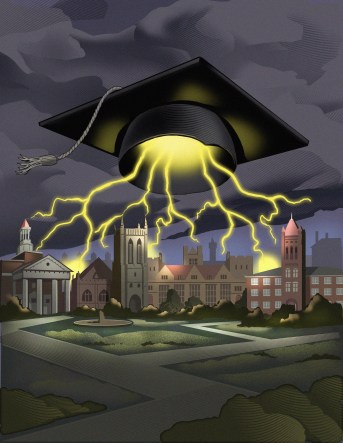 More unimaginable news reported by Tabia Lee at Compact: A Black DEI Director Canceled by DEI. Excerpts in italics with my bolds and added images. Thanks to Tabia Lee for revealing how toxic this ideology and its adherents have become.
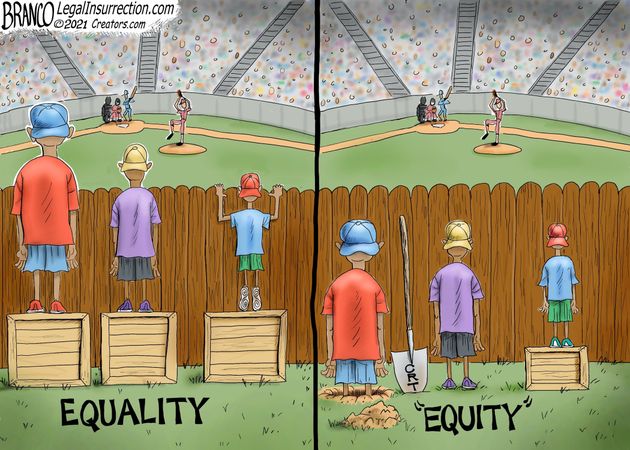

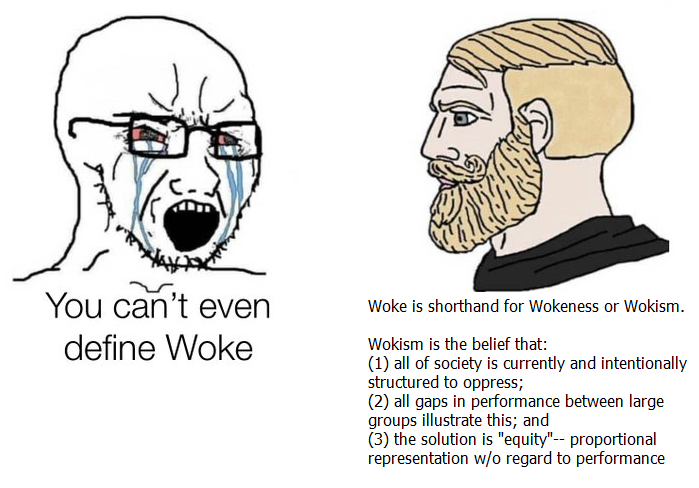

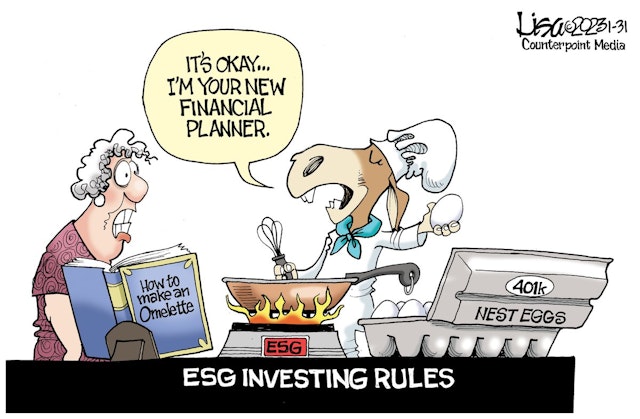
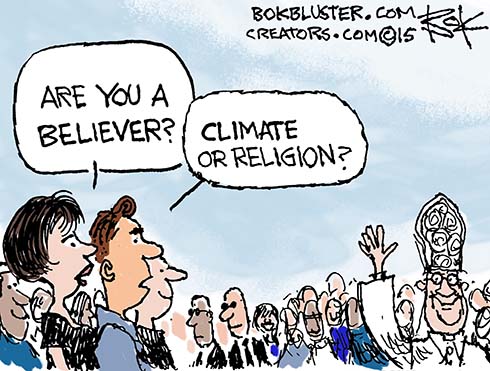
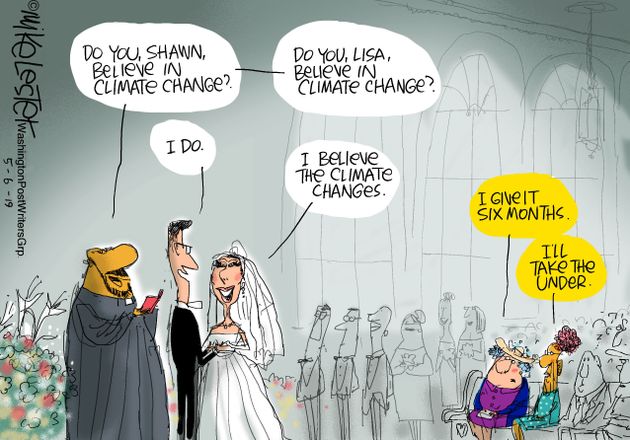

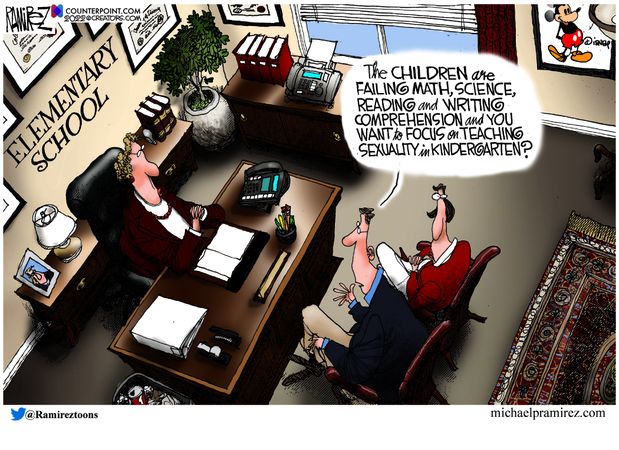

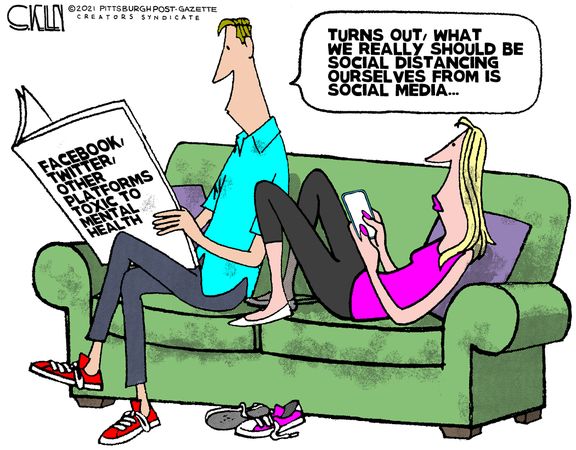

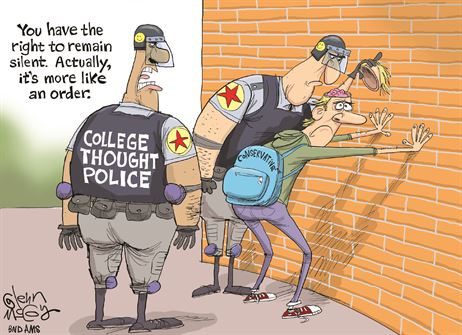



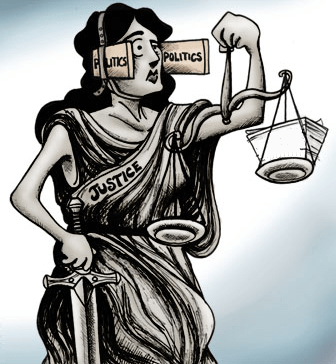
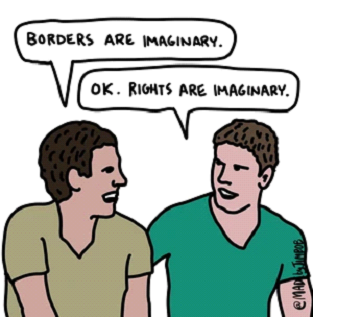




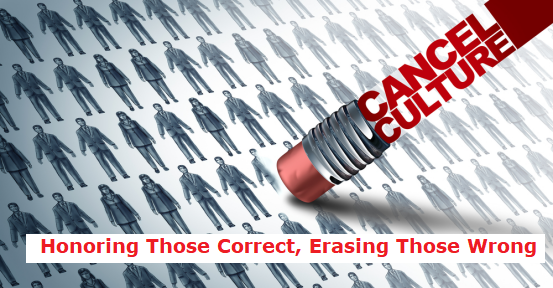
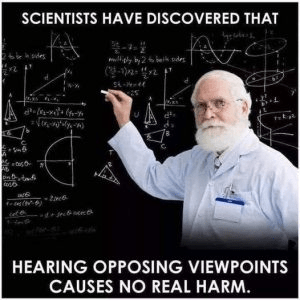


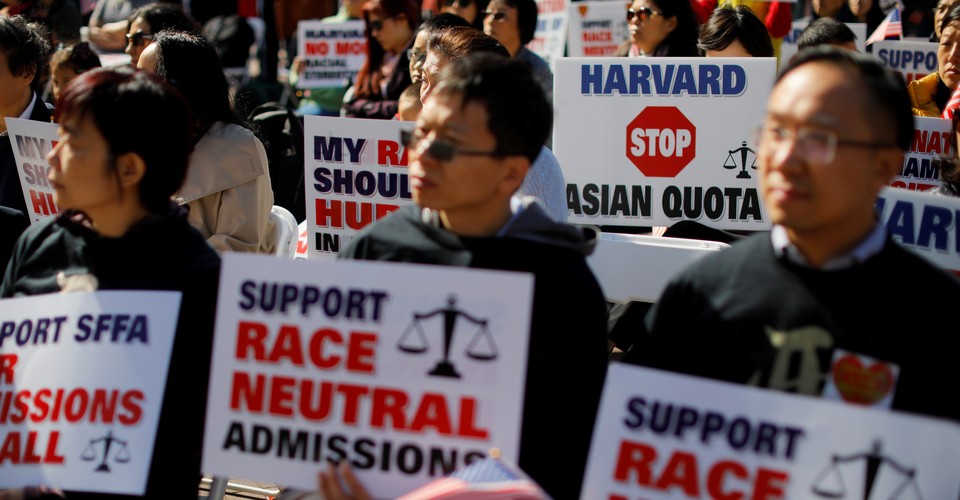 There is much consternation and anticipation regarding cases before SCOTUS (Supreme Court of the US) regarding racially biased admissions policies at universities, specifically Harvard and North Carolina. Hearings were held last fall, and a ruling is expected in July, unless there is a leak beforehand as happened regarding the decision returning abortion policies to state voters.


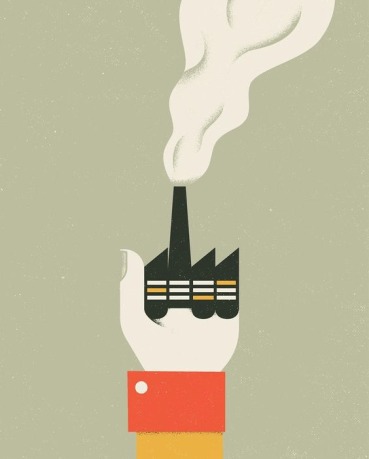
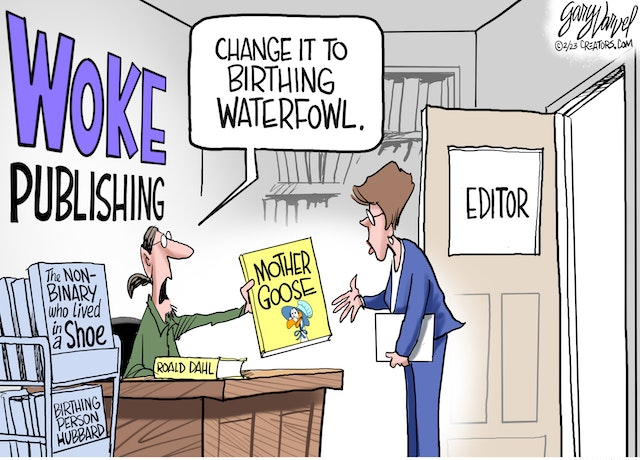



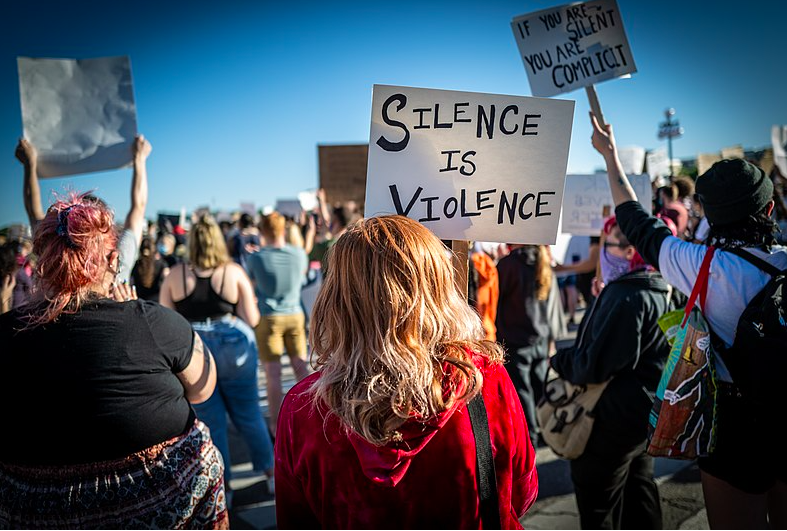
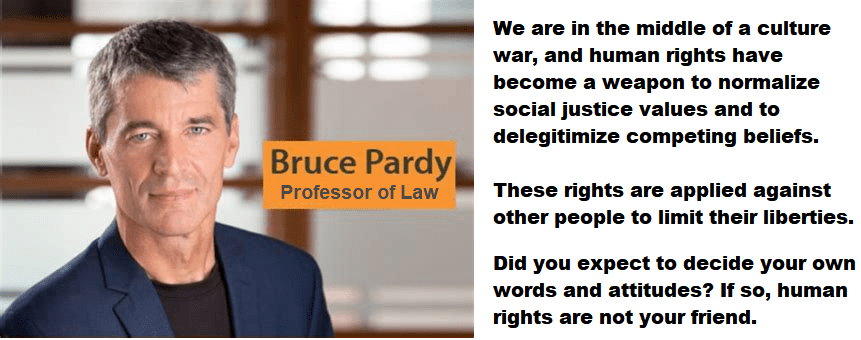
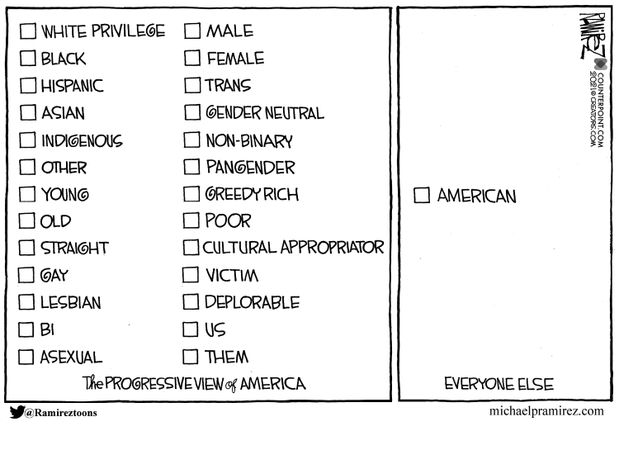
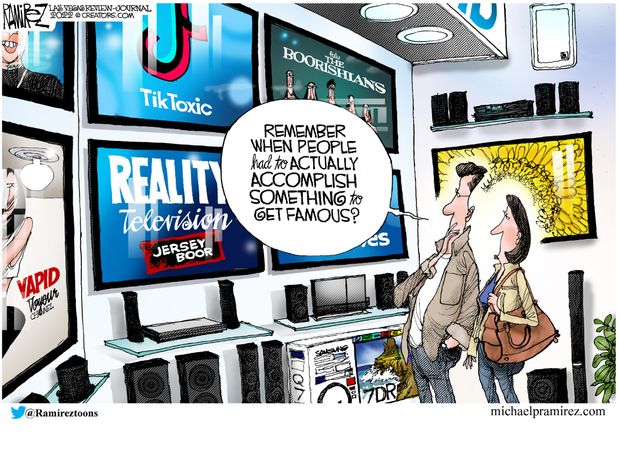
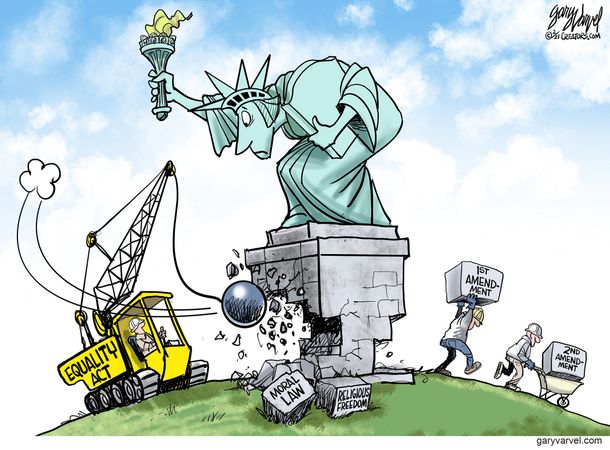
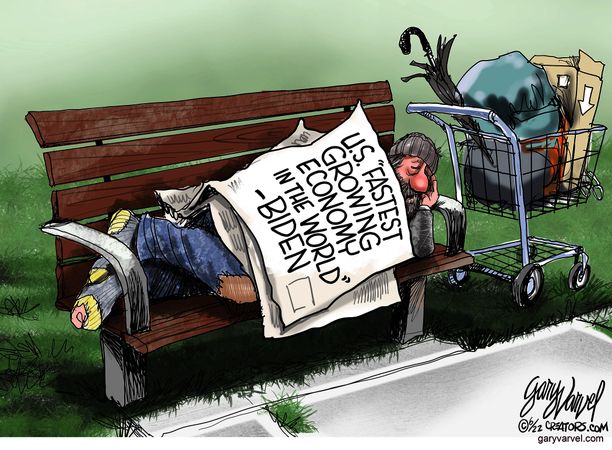
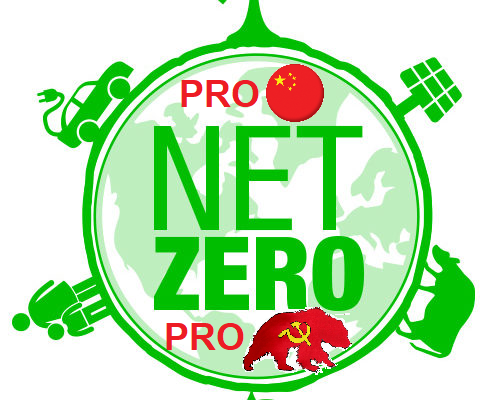


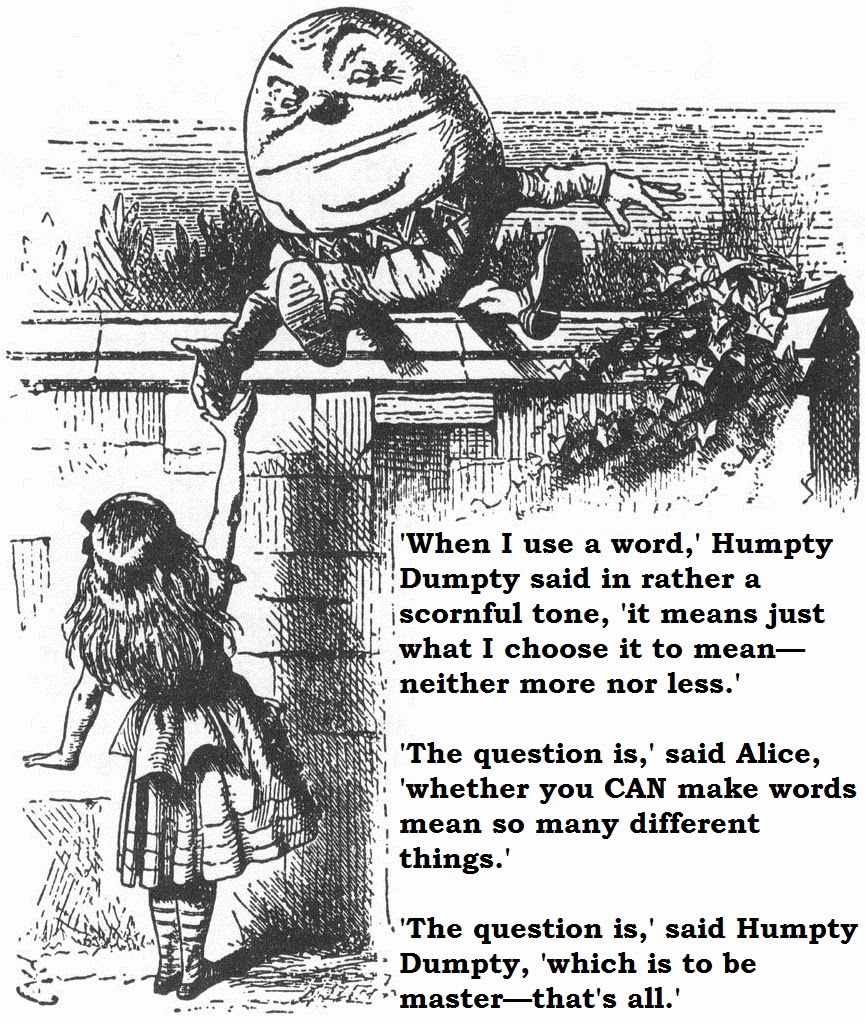
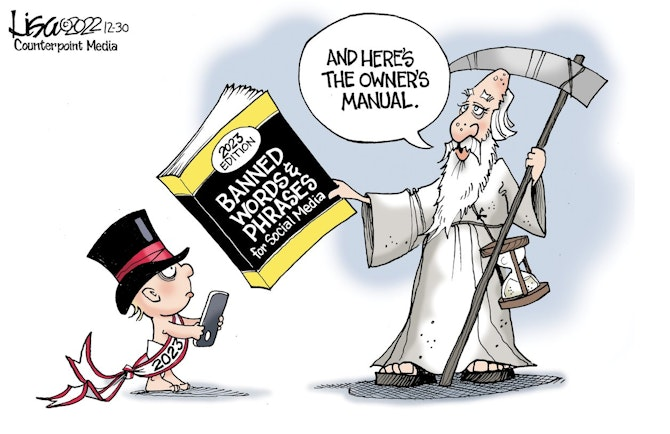
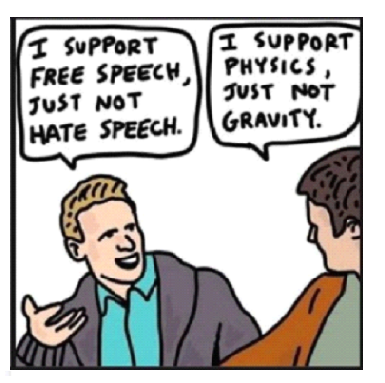
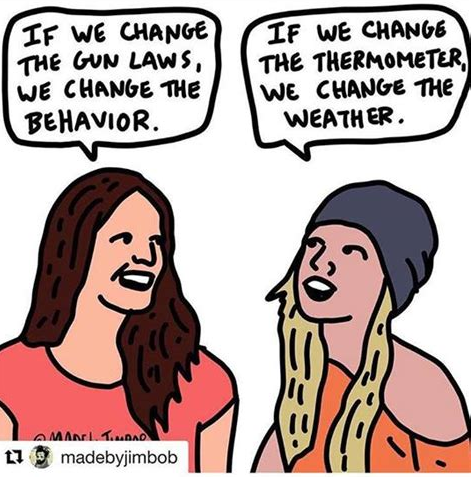


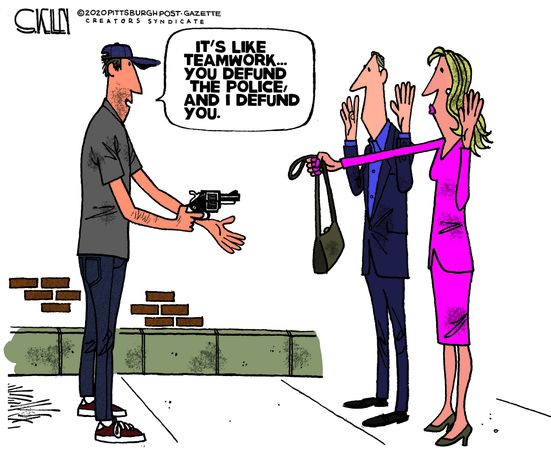
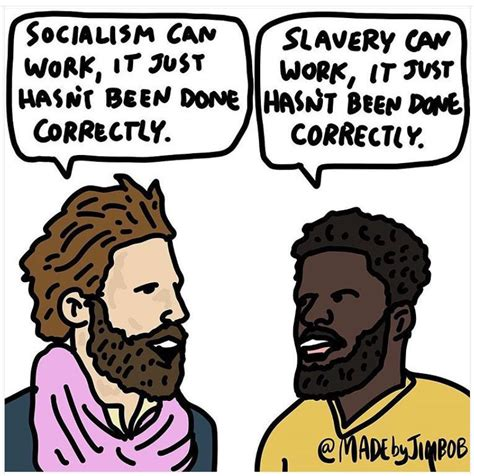

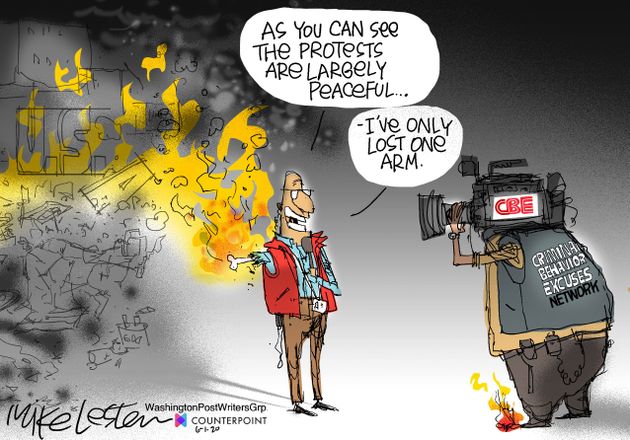
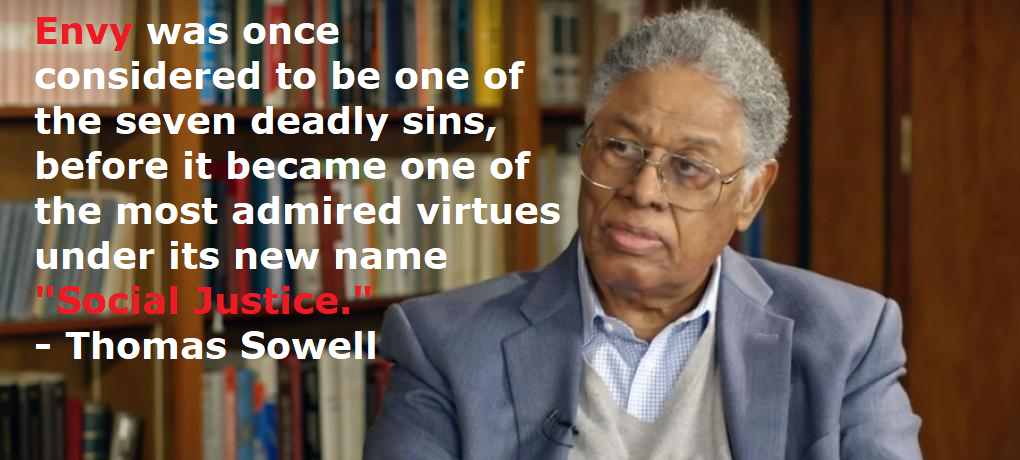

 Science Matters