Javier Vinos Finds Missing Climate Puzzle Pieces

Tom Nelson interviews independent researcher Javier Vinos reporting his discoveries of facts and evidence ignored or forgotten in the rush to judgement against humanity for burning hydrocarbon fuels. When these factors are acknowledged they can be integrated into a more wholistic view of Earth’s climate activity.  For those who prefer reading, below is an excerpted transcript with my bolds along with some images and key exhibits included. TN refers to Tom Nelson and JV to Javer Vinos.

JV: For the past ten years I’ve been studying climate quite in depth with a basic focus on natural climate change, on how the climate changes naturally. I did this because I had a science blog and one day I decided I was going to talk about the science of climate and when I started to read the articles and looking for the information I became very surprised because I do molecular biology and Neuroscience that is experimental science. And climate science is not an experimental science and I was very surprised because they were claiming the evidence was there and it was not.

So I began researching it more and more until I became so involved I started writing books and telling other people what I was finding about climate.

The Scientific Method and Climate Science

One of the elementary principles of the scientific method is that establishing a theory before examining all the evidence leads to error and confirmation bias makes us stick to it.  Has the scientific method been forgotten in the postmodern age?  It seems so, at least in climate science.  Climatology is not an experimental science which is a major handicap.  It is also a very young science compared to the mainstream Sciences of physics, chemistry, geology and biology.  The consensus was reached in 1988 almost without data and wholly based on the Greenhouse Effect and The Coincidence of temperature and CO2 during the Pleistocene in Antarctic Ice cores.

Understanding Albedo and Heat Transport

There are two absolutely essential processes in determining climate that are largely unknown.  The first is albedo or the amount of sunlight reflected back into space.  It’s crucial because it determines the amount of energy the Earth receives.  We ignore why it has the value it has, why it varies so little from year to year, why it varies so much from month to month, why both hemispheres have the same albedo and how the albedo has changed in the past.

As a result of our ignorance, models are unable to adequately reproduce the Earth albedo failing to show its small inter-annual variability, its large seasonal variability and its symmetry between the two hemispheres.   Nevertheless many scientists believe that the models are capable of predicting changes in albedo otherwise they will have to admit that the models cannot predict future climates. Small changes in albedo can produce large climate changes of natural origin and this is the basis of several alternative hypotheses to CO2.

ERBE measurements of radiative imbalance.

I have focused my research on a second essential process and this is what my book is about.  The transport of heat from the equator to the poles also known as meridional heat transport because it runs in the direction of the meridians.  There is much evidence that this is the primary cause of natural climate change.  Heat transport is also an enormously neglected process, we do not know how it works and there is no established Theory to explain it.  We also do not know how it is distributed between the atmosphere and the ocean, how it is divided among the different types of ocean currents, how it changes with the seasons, how it changes from year to year, why Antarctica receives less heat than the Arctic although it should receive more or why heat is transported from the colder hemisphere to the warmer hemisphere.

The models do not understand heat transport because no one understands it,
and that is where the evidence for most natural climate change lies.

In fact we can’t even measure it properly and if we don’t know how heat transport works, it’s obvious that the models don’t either.  They fail miserably at reproducing the amount of heat being transported and reflecting transport changes in the atmosphere and ocean, they do not even correctly reproduce the distribution line, the climatic equator where the trade winds from both hemispheres converge.  Nor do they reproduce seasonal changes since the amount of heat entering and leaving the ocean throughout the year is not known.

If no one understands heat transport, then models cannot understand it either. because they are just a product of our minds with no physical connection to reality.  Even if there are other secondary causes of climate change, including increased CO2, the evidence points to changes in heat transport as the primary way in which the climate changes.  In the end it’s like the joke about the drunk who looks under a street lamp for his lost keys because the light is better there than where he thinks he lost them.

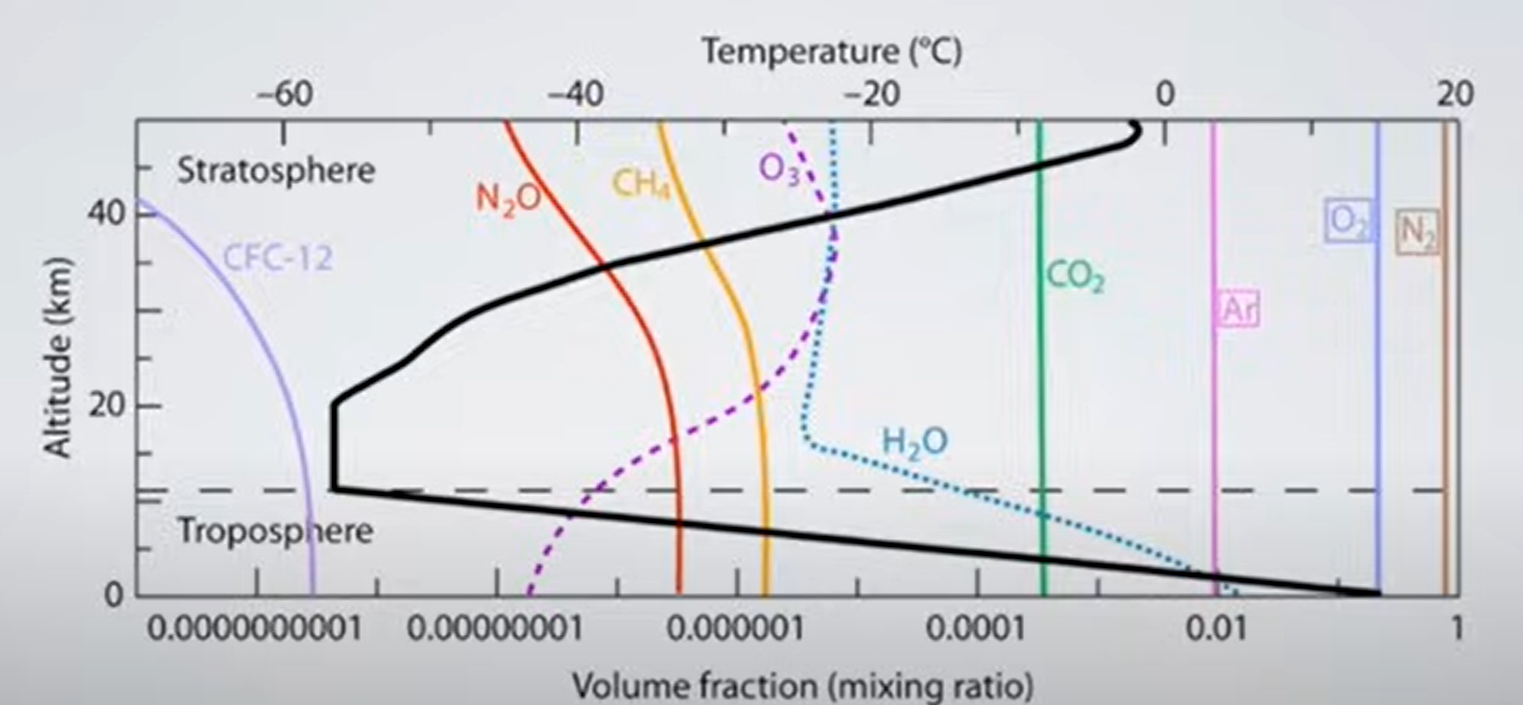
Climatologists look for the answer where the knowledge is better in the greenhouse effect. the culprits are certain gases that together make up 1% of the atmosphere.  In this graph we can see the profile of the gases that make up the atmosphere in different colors showing their abundance on the lower axis with respect to altitude on the vertical axis the gases in the squares do not absorb in the infrared.  Note that water vapor with a blue dotted line is very abundant near the surface but a thousand times less abundant in the stratosphere.  The opposite is true for ozone with a purple dust line which is almost entirely in the stratospheric ozone layer.  The thick black line is the temperature profile which in the troposphere has a positive lapse rate, that is the higher we go the colder it gets. This is fundamental to the greenhouse effect.

The Greenhouse Effect and CO2

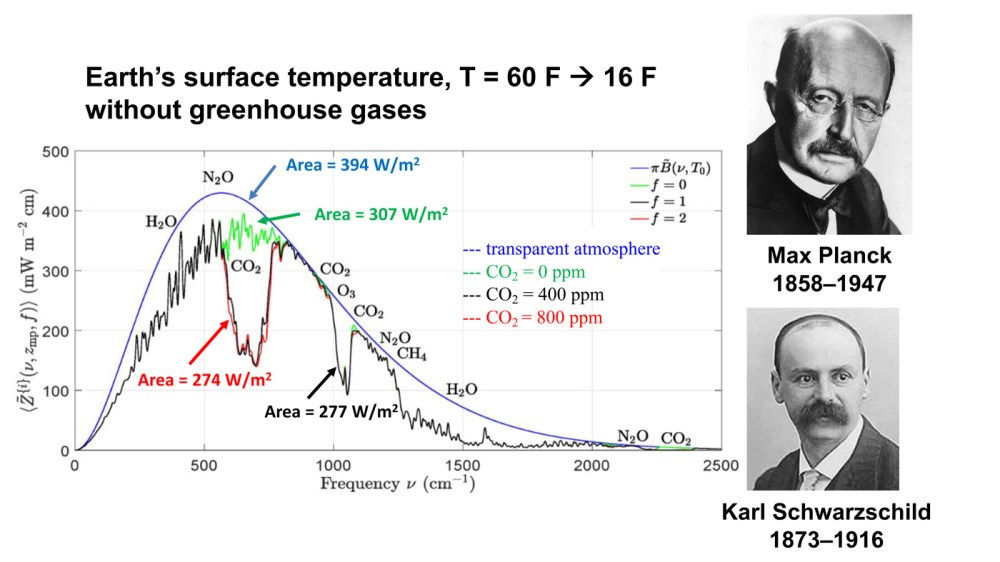
What is the greenhouse effect?  In order to return all the energy is received from the Sun and maintain stability, the Earth must keep at a temperature of 23 degrees C below zero.

The Greenhouse Effect

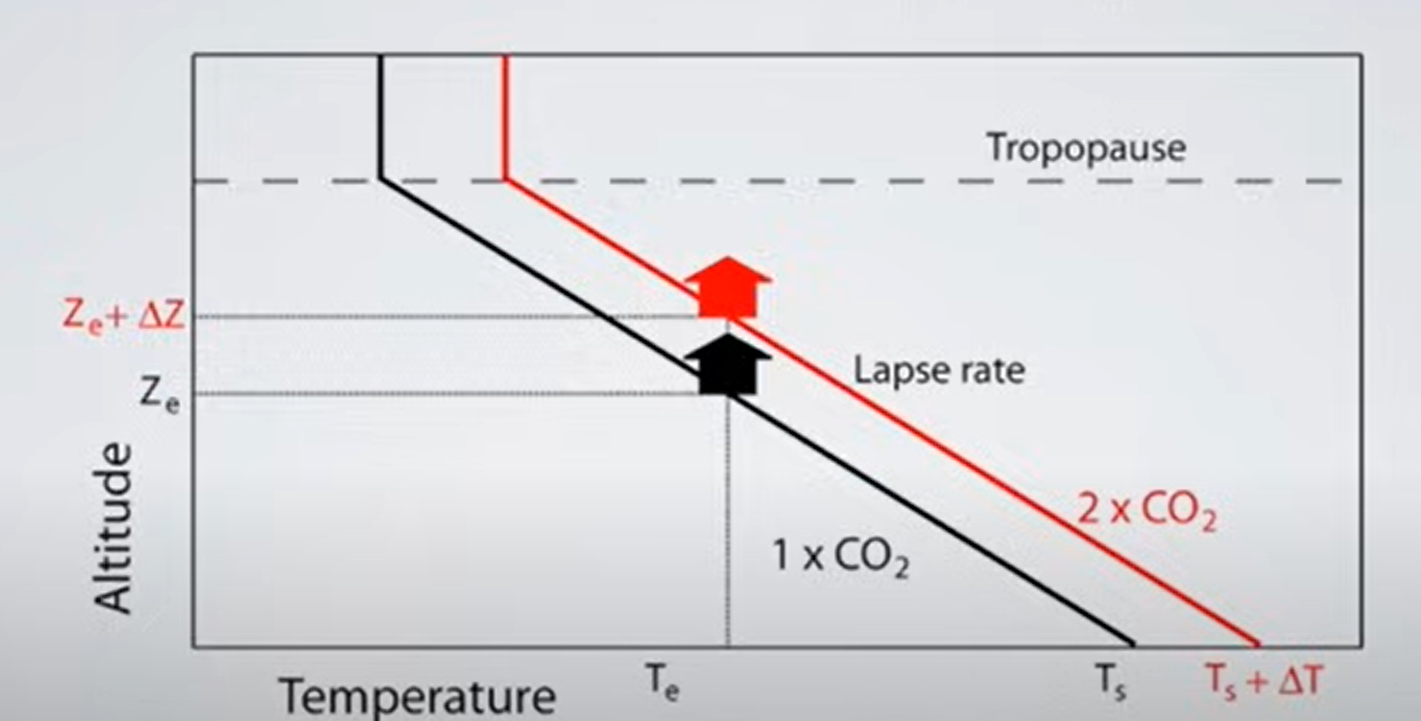
Without greenhouse gases this would be the average surface temperature instead of the current 14.5 degrees. The black line in this graph represents the temperature profile of the troposphere and the lapse rate is the slope of that line in the absence of greenhouse gases.  Infrared radiation will be emitted from the surface but greenhouse gases make the atmosphere opaque to infrared radiation, so this radiation is emitted from higher altitudes as shown by The Black Arrow.  Although in reality there is emission from all Heights including the surface the average height of emission is about 6 kilometers. The emission temperature at this height is 23° below zero but the lapse rate of about 6° per kilometer makes the surface about 37° warmer.  If we were to double the CO2 as shown in red, and everything else remains the same, the average emission height would increase by about 150 meters.   As the atmosphere becomes more opaque so the temperature at that height would be 1° cooler it would be necessary for the surface and atmosphere to warm by that degree in order for the earth to return the energy it receives from the sun which is absolutely necessary.

But in the climate system everything is interconnected and when something changes everything changes and nobody knows how much the temperature would change.  So when they tell us that we have to reduce our emissions by a certain amount to avoid some amount of warming they are lying to us because nobody knows that these gases cause the greenhouse effect.  Only the first three are really important. They are trace gases but that does not diminish their importance.  Ozone is a thousand times less abundant than CO2, but its contribution to the greenhouse effect is only five times less.

Greenhouse effect is not uniform across the planet.

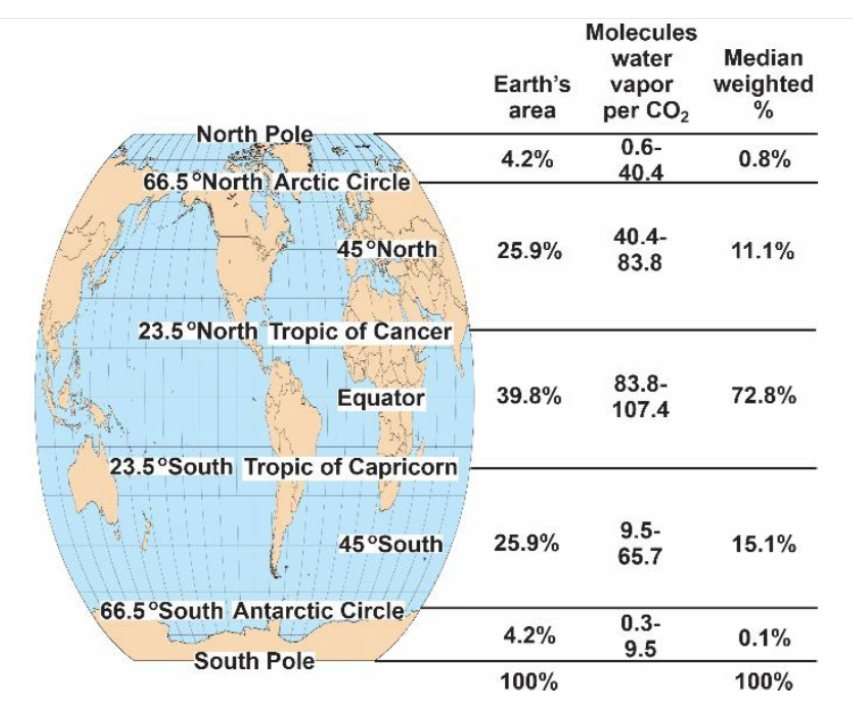
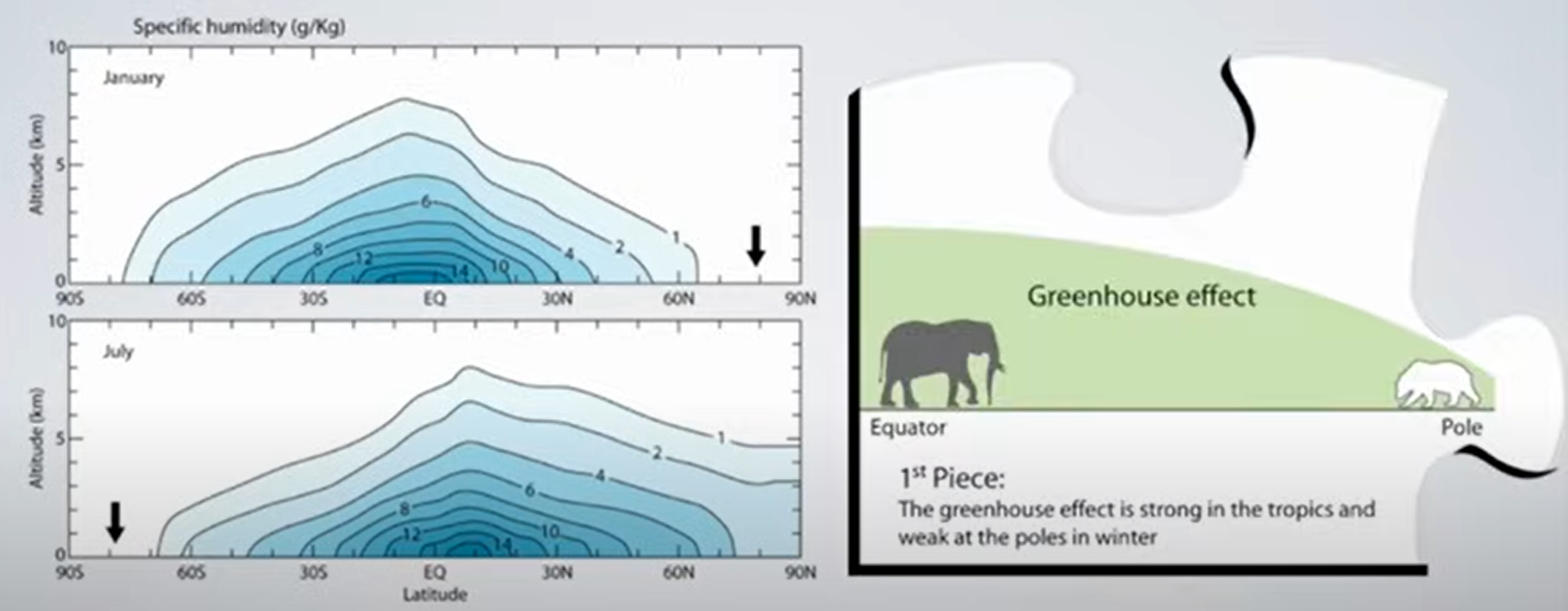
Look at water vapor in yellow.  Together with the clouds it forms, it is responsible for 3/4 of the greenhouse effect but it’s abundance varies greatly because it depends on temperature.  When the temperature drops it condenses and falls as water or snow.  Because of this the greenhouse effect is highly variable on the planet.  At the poles there is practically no water vapor or clouds in Winter. These are the places on Earth with the driest atmosphere and a much weaker greenhouse effect.  Not much attention is given to this, but it is very important, and I point out in the book it’s one of the pieces that must be used to solve the puzzle.

Every year has two winters, and heat transport
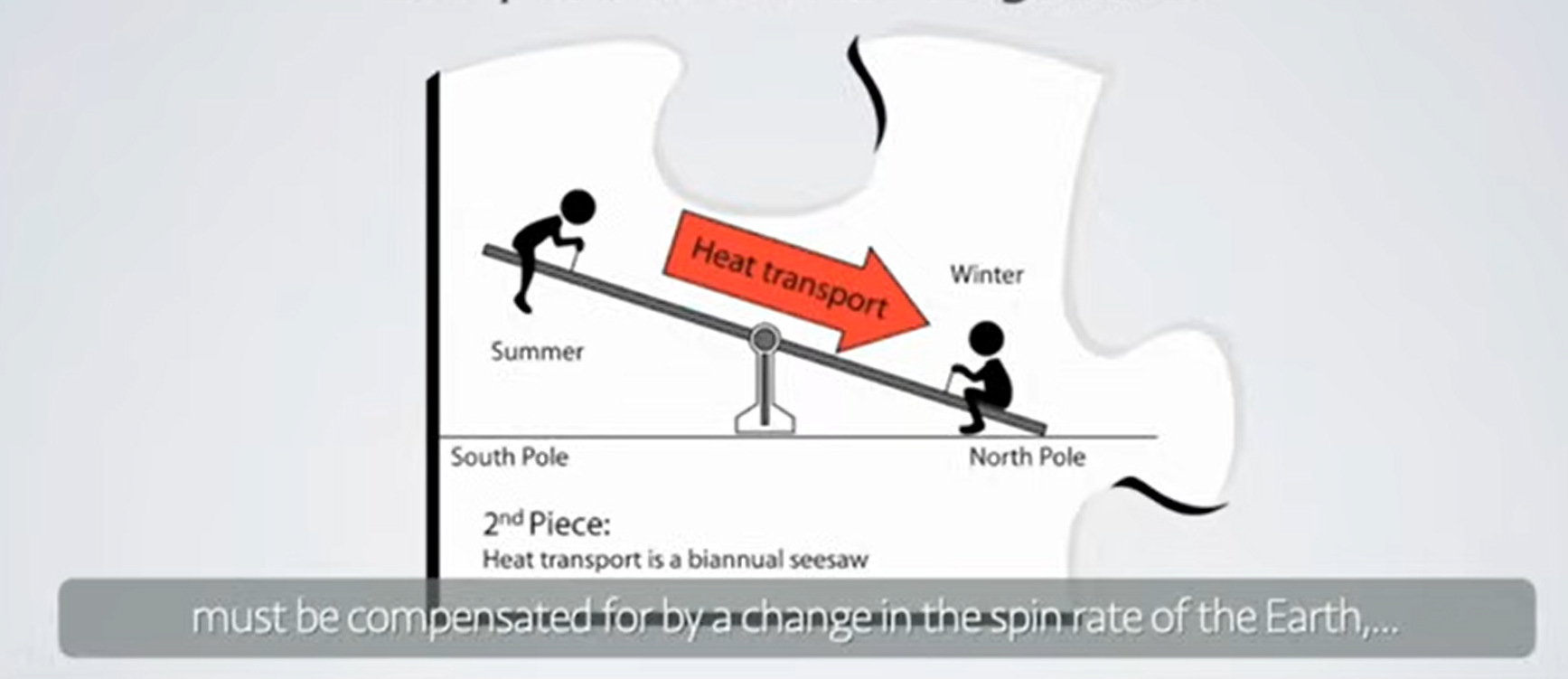
to the pole in winter is greater

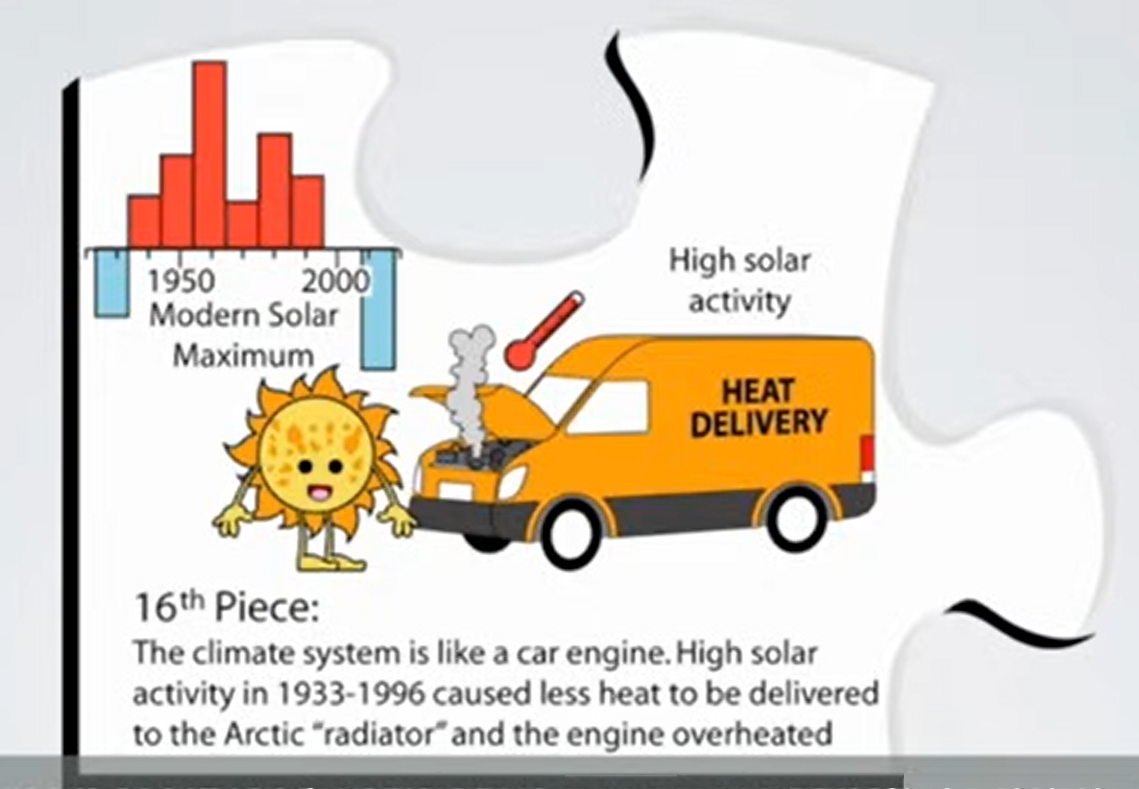
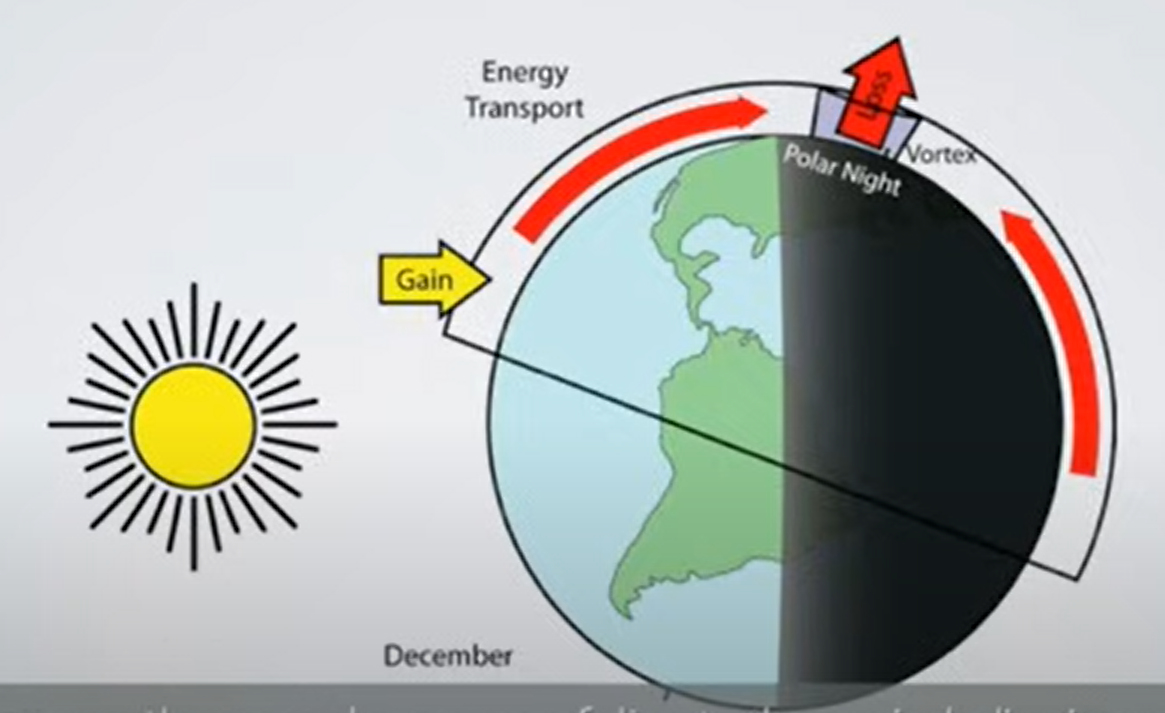
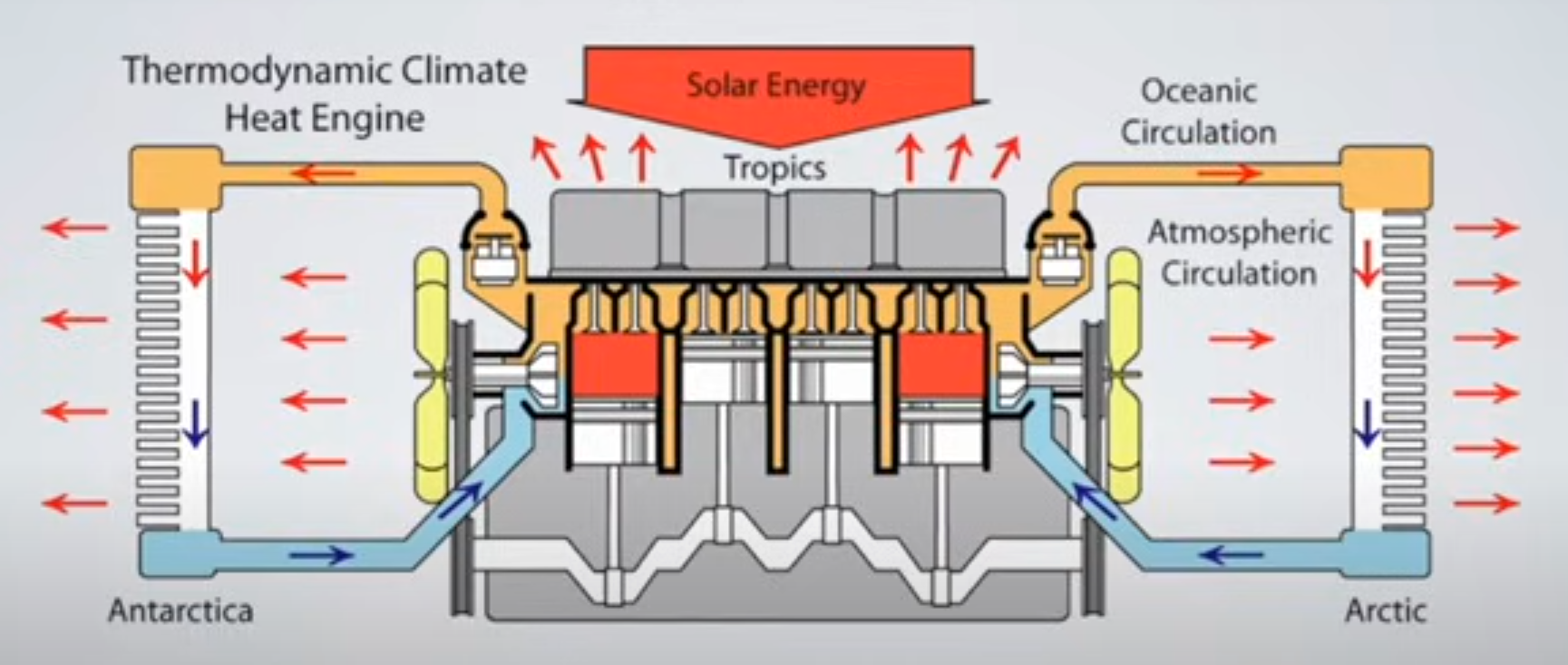
Having such a weak greenhouse effect makes it very easy for heat to escape from the earth through the poles.  The climate works like the internal combustion engine of a car; only instead of one cooling system it has two, one at each pole.  The engine block is the tropics, the hottest part because that is where most of the sun’s energy arrives.  The tropics lose heat by radiation but not enough.  The excess must be transported to the radiators to be radiated to the outside.  And this is done by a fan which is equivalent to the atmosphere and a circuit with a cooling liquid, which is equivalent to the ocean.

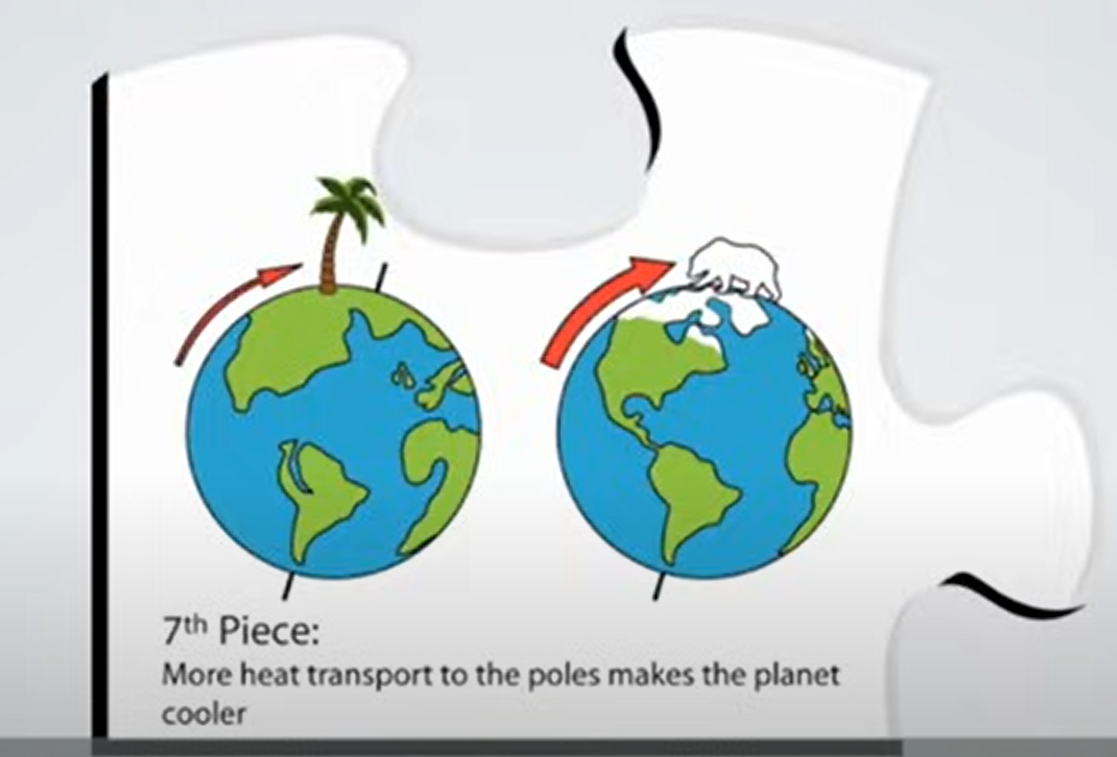
Climatologists do not see it this way, but the other way around.  For them heat transport does not change the temperature of the planet but only warms the poles.  But because of this erroneous view they encounter paradoxes that they cannot resolve. in the early Eocene, at the beginning of the age of mammals, the poles were so temperate that palm trees grew in the Arctic and frogs lived in Antarctica, indicating that the average temperature of the coldest mouth was above freezing. Climatologists do not understand how this was possible because the smaller temperature difference made the heat transport much smaller which prevented the poles from warming.

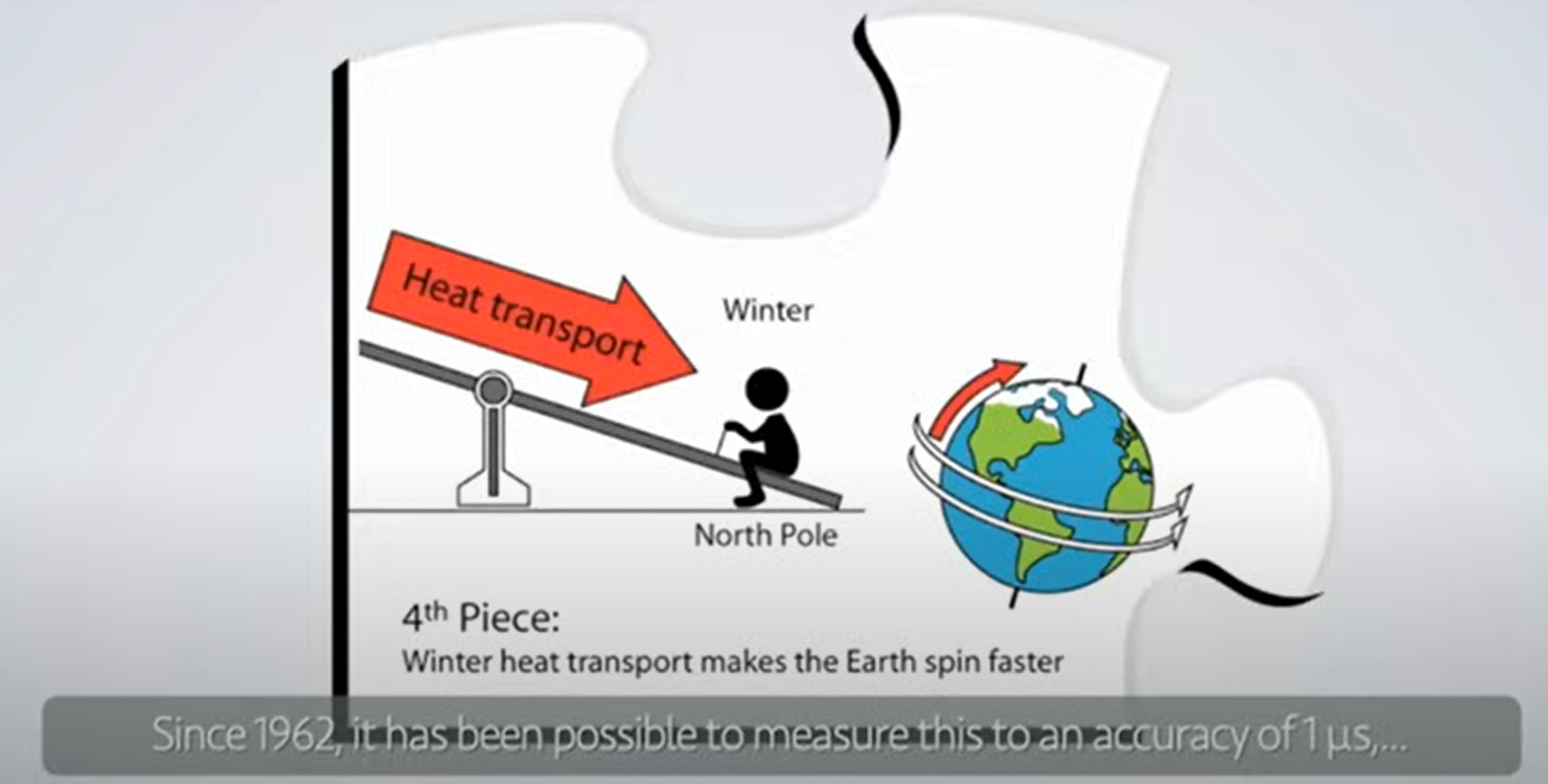
Like all paradoxes it is solved by changing the frame of reference.  It was possible because the smaller heat transport made the planet lose less heat and get warmer, which warmed the poles along with the rest. When it is winter in one hemisphere, the atmosphere transports more heat to that hemisphere.  But the atmosphere also carries angular momentum or rotational inertia since it is a conserved property.  Any change in the angular momentum of the atmosphere must be compensated for by a change in the spin rate of the earth.  Just as ice skaters increases their spin rate rate by bringing their arms closer to the body,  similar to the skater the Earth’s spin rate increases by about 1 millisecond per day as atmospheric circulation and heat transport increase in Winter.  Since 1962 it has been possible to measure this to an accuracy of one microsecond.  Thanks to the invention of the atomic clock and radio astronomy, it is possible to know the exact orientation of the Earth in space, it has been well known since the 1970s.

The Earth spins faster in winter.

The Influence of Solar Activity on Climate

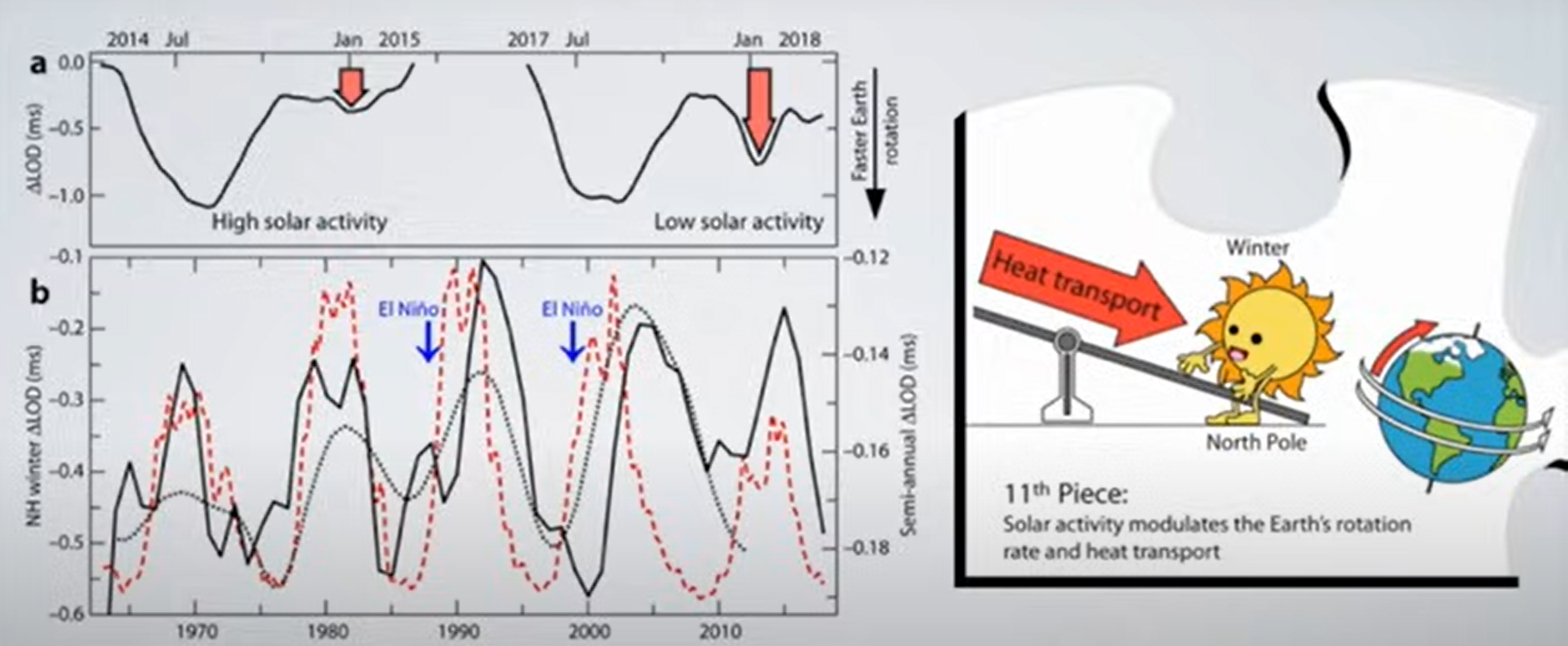
That solar activity affects the Earth’s rotation has been published many times.  The phenomenon is particularly pronounced during the Boreal winter as we can see in the graph above for 2015 a year of high solar activity and 2018 with low activity.  And it is measured by the variation in milliseconds of day length.  In the lower graph we can see the solar activity represented by the sunspot cycle with a red dash line.  The black solid line shows the changes in the Earth’s rotation caused by the Boreal winter.  It shows the same cycle as the sun although the Earth’s rotation is also affected by equatorial stratospheric winds and the El Nino phenomenon.  The dotted line is from a paper published in 2014.

Everyone ignores this phenomenon especially the IPCC which says that the sun does not affect climate.  But if the sun can change the Earth’s rotation speed then it can change the climate.  My research has been like that of Sherlock Holmes looking for clues that have been missed, ignored and forgotten. Studies show the effect of the sun on the rotation of the Earth has been known for 50 years but very few people in the world know about it.

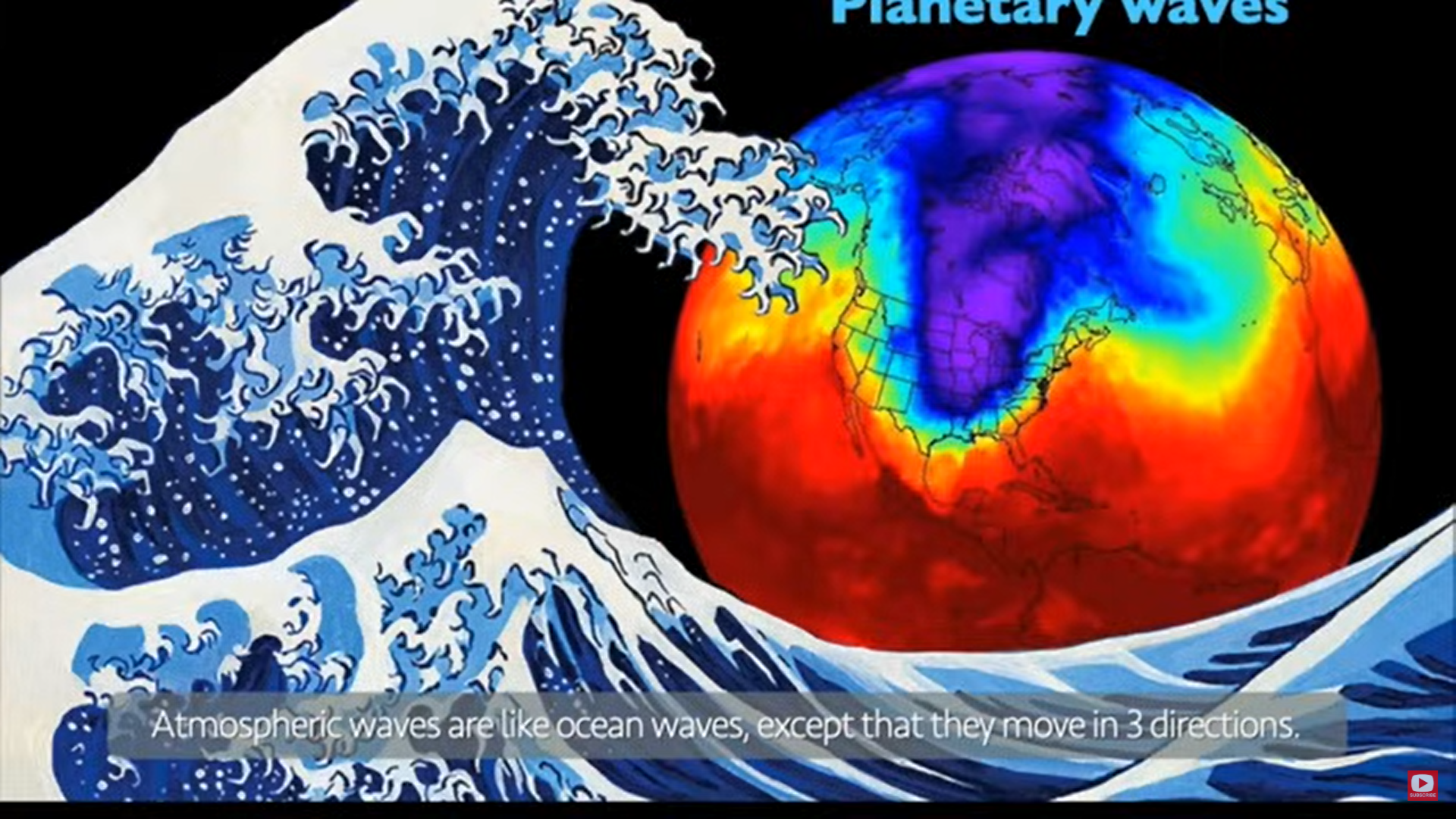
What I have learned about climate science is because I have stood on the shoulder of giants giants like the Canadian atmospheric physicist Colin Hines who explained in a 1974 paper that the sun’s effect on climate could be due to planetary waves.  It was ignored and his theory was forgotten.  Art lovers will recognize the Great Wave print by Hokusai.  Atmospheric waves are like ocean waves except that they move in three directions,  planetary waves are the largest.  Many of you will remember the tsunami that occurred in Indonesia at Christmas 2014.  It reached the coast of Africa 6,000 km away in 8 hours traveling at the speed of an airplane.  Obviously water does not travel, energy travels, and when it is released upon reaching the coast it still causes damage.

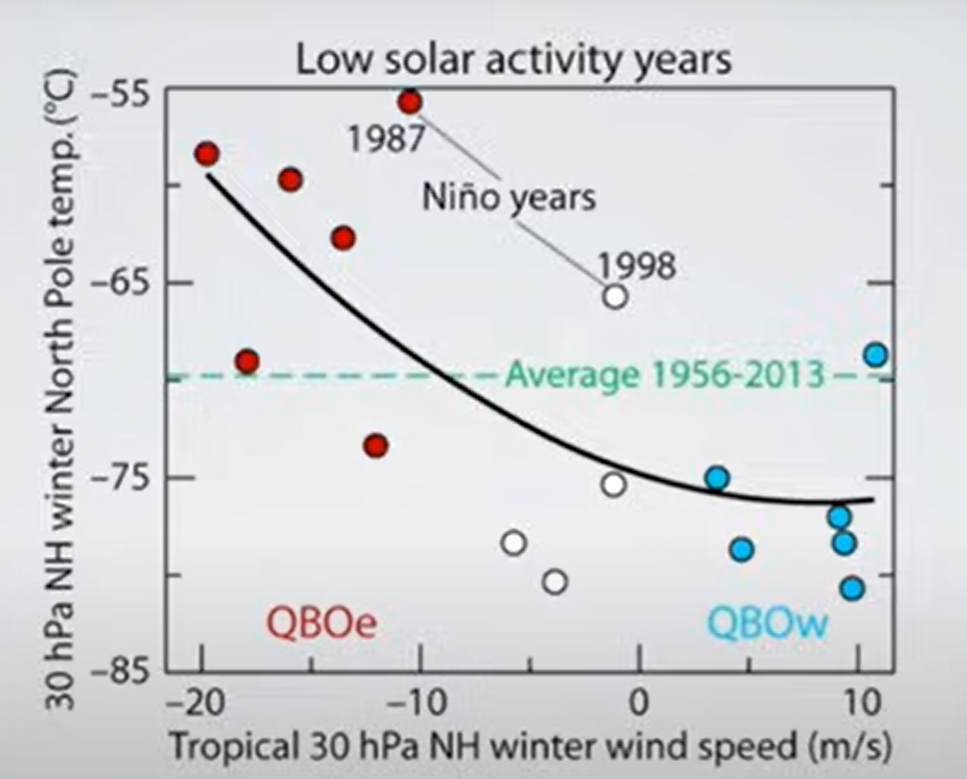
Planetary waves are atmospheric tsunamis that hit the wind walls of the polar vortex and weaken them. It worries us when cold air escapes from the interior because it produces very cold waves and storms.  But the climate is more affected by the heat that is exchanged with that cold, because the planet loses it and cannot compensate for it.  Another Giant on Whose shoulders I stood is Karin Labitzke who in 1987 found a correlation between the temperature of the Polar Stratosphere in Winter and the solar cycle. it is an extraordinary finding because in Winter the sun does not shine on the pole, it is a relationship in the dark not based on solar energy.  It is also extraordinary because it is the first proof of a solar effect on the climate after 190 years of a search began in 1800 by William Herschel the discoverer of Uranus and infrared radiation. Instead of giving her the Nobel Prize she deserved for such a fantastic discovery, her finding was ignored and she’s not even mentioned in climate books.

First evidence of the Sun’s effect on climate

Here I show only the data for years of low solar activity 30 Hectopascals is about 20 km in the stratosphere when the tropical Wind Blows from the West as shown by the blue circles.  The polar stratosphere is very cold, but when it blows from the East as shown by the red circles, the polar Stratosphere warms by about 15°.  In years of high solar activity the effect is reversed as I show in the book The El Nino phenomenon also strongly influences this effect.

For many scientists a solar effect that occurs in the dark, reverses depending on equatorial winds and depend on other phenomena is too complicated to understand and they prefer to ignore it.  But not to me because I have studied Hines.  The propagation of planetary waves into the stratosphere depends on several factors that affect the Dynamics of stratospheric circulation.

How does the Sun influence these Dynamics?

We know that solar activity affects the Earth’s rotation, heat transport and Atmospheric circulation. We also know from Labitzke for the last 35 years that it affects the temperature of the Polar Stratosphere.  And it does so as Hines said 50 years ago by affecting the propagation of planetary waves into the stratosphere.  These waves strike the polar vortex.  This is a gigantic tornado that circles the polar regions in winter with sustained wind speeds of 180 km/ hour.

Planetary waves affect climate through the Polar Vortex

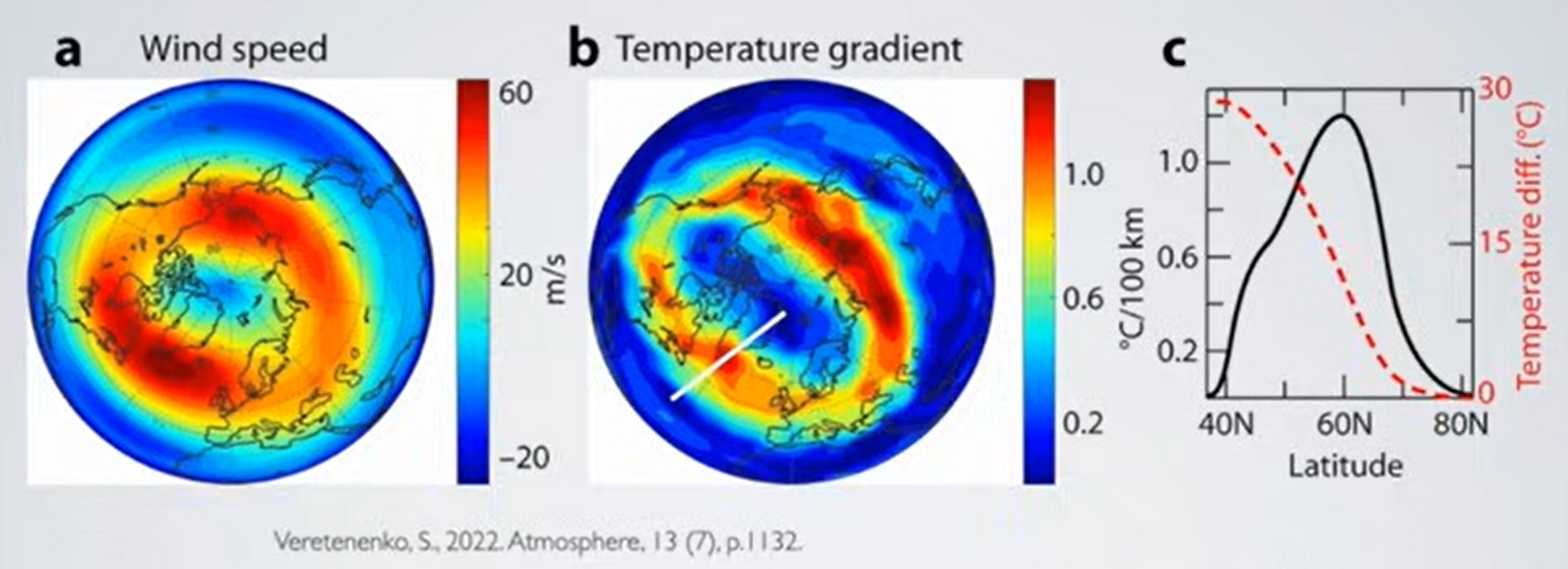
Since heat is carried by the wind, the Warm Winds from the South have a hard time getting through this wall of wind creating a strong temperature gradient as shown in the second image. The black line in the graph shows the profile of this gradient which is a real wall that creates a 30° difference between its two sides as shown by the red dash line.  By weakening the vortex planetary waves allow heat to enter and cold to leave, changing the temperature of the polar region.  As we saw at the beginning, the greenhouse effect inside the vortex is very weak causing the planet to lose unrecoverable energy.

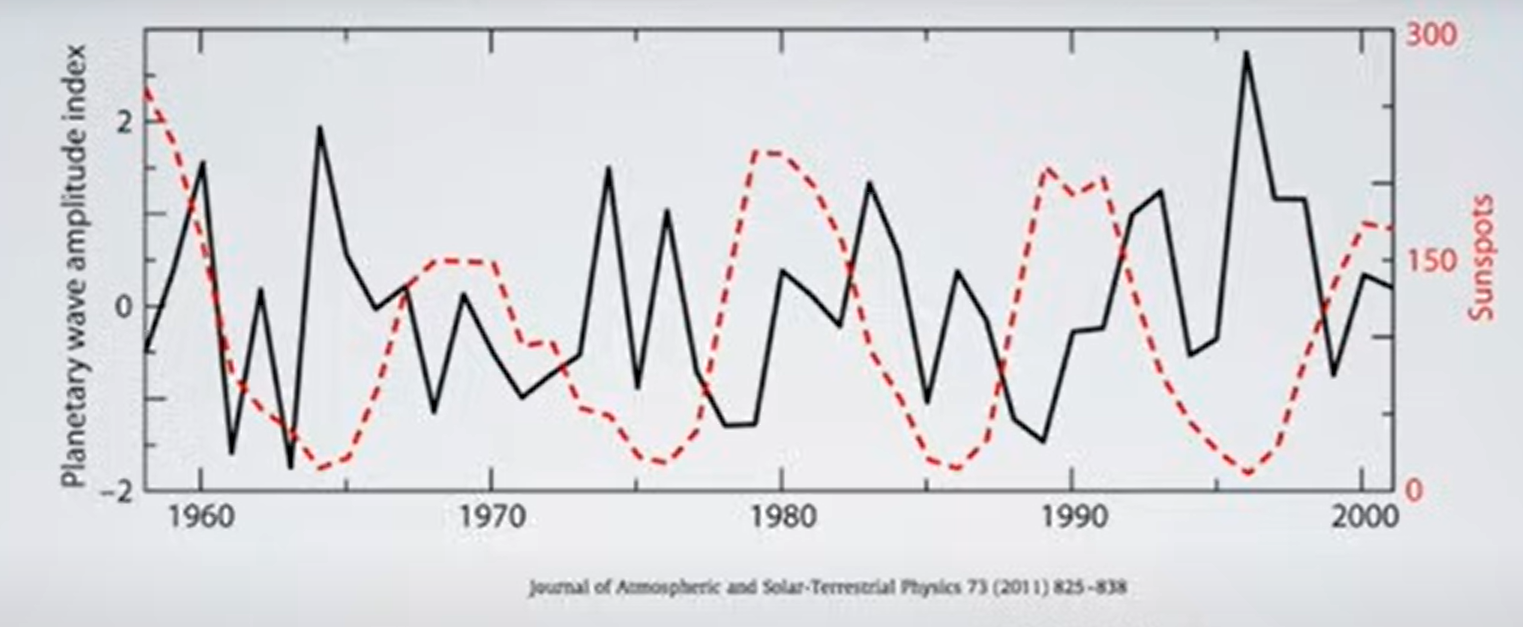
This is how the Sun affects the climate as explained by Hines and Labitzke and I am not just alone saying this, It has been shown.  The study of planetary waves in the stratosphere is extremely difficult because they are invisible and the stratosphere is little known but there is already a study based on measurements that proves it. And the intensity of the planetary waves depends on the solar cycle as its authors defend. The sawtooth appearance of the amplitude of the planetary waves is due to the effect of the tropical winds which change direction every one or two years and to the El Nino effect.

Intensity of planetary waves depends on the solar cycle

My contribution to these studies is to put all the pieces together:  the low polar greenhouse effect, and the effect of the sun on the Earth’s rotation heat transport atmospheric circulation, polar temperatures and planetary waves, and to show the effect that all this has not only on climate but also on climate change.

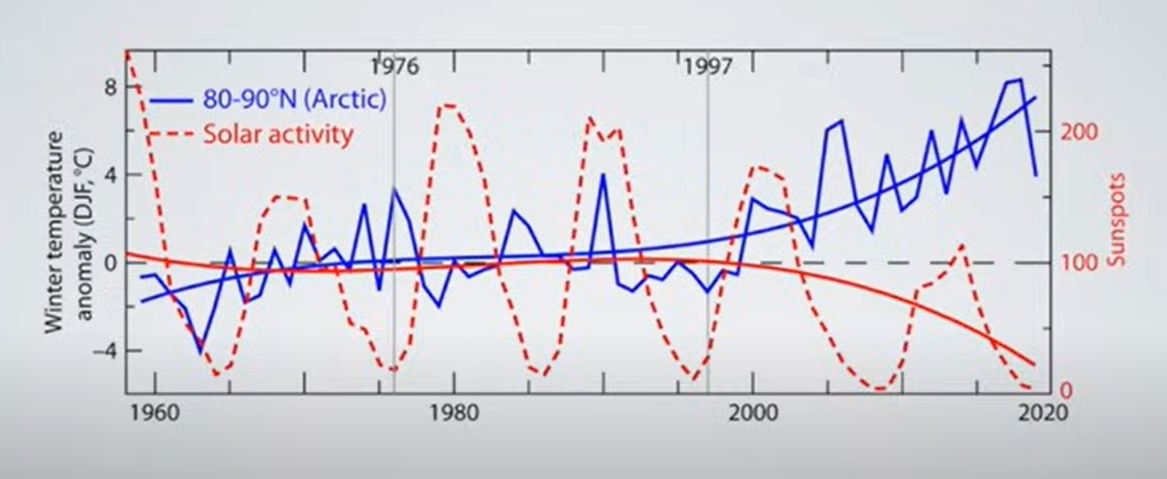
When solar activity is low, the Arctic warms

When there is low solar activity the Arctic warms as is shown in Blue by the temperature of the central Arctic according to data from the Danish meteorological Institute.  Today global warming and Arctic warming are linked in our minds.  We have forgotten that between 1976 and 1997, despite intense global warming, the Arctic not only did not warm but actually experienced a slight Cooling in its central zone.  Just as we have forgotten that the Arctic warmed in a similar way 100 years ago. It was reported at the time and there are scientific studies that support Antarctic warming a century ago similar to today’s in its effect on Greenland’s melting.

When solar activity is high, the rest of the planet warms

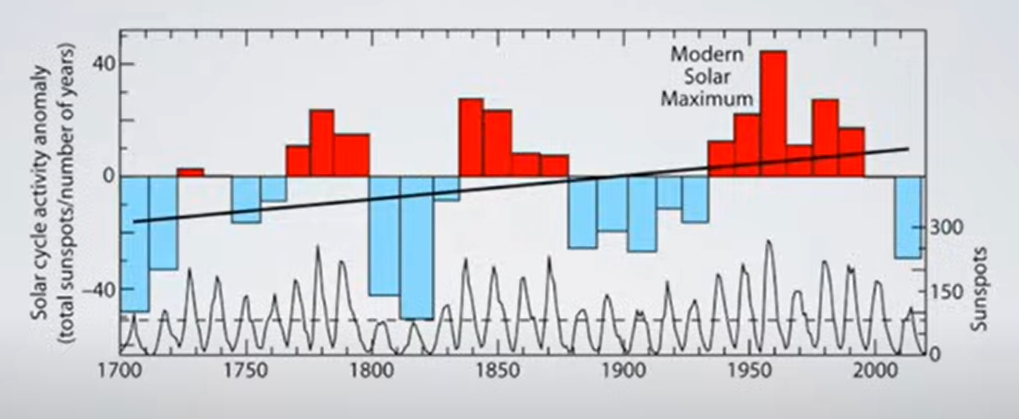
Why did this happen.  It is because solar activity has a cycle of about 100 years this graph shows the level of activity of each solar cycle relative to the average and we can appreciate the Centennial solar cycle shortly after 1700 1800 1900 and 2000 solar activity was below average and the Arctic warmed.  When solar activity is high the opposite happens and the Arctic cools but the rest of the planet warms because it becomes more efficient at conserving energy.

Glaciers and proxies show modern warming before CO2 emissions

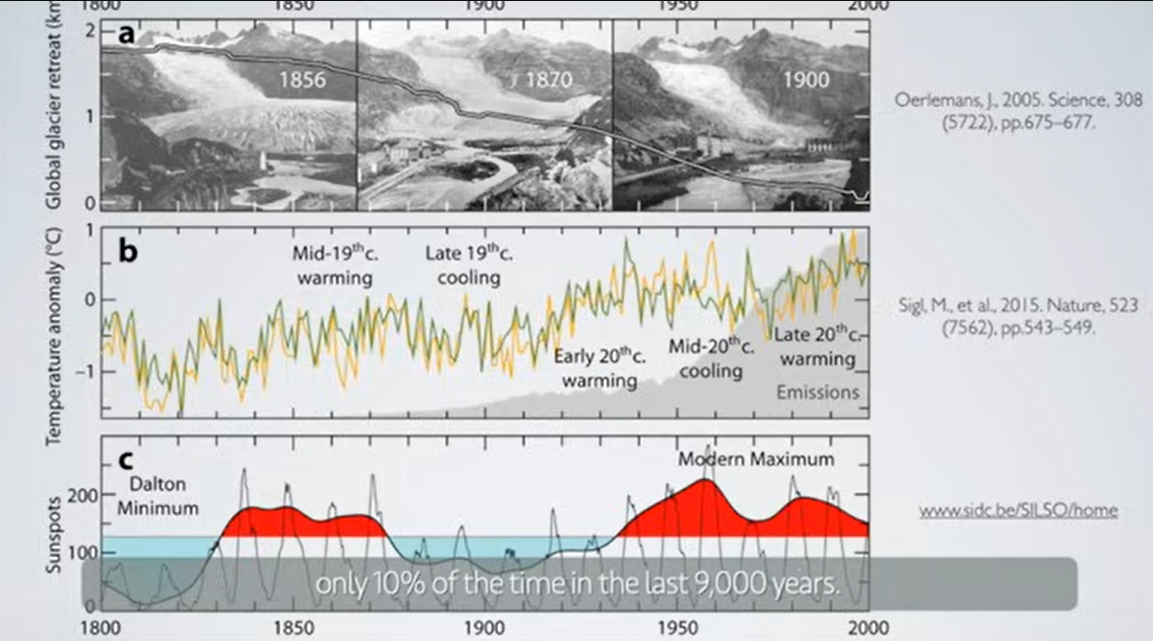
The IPCC acknowledges that solar activity in the 20th century was in the top 10% of the last 9,000 years.  In the graph we can see the trend line indicating that solar activity has been increasing for the past 300 years and global warming is 200 years old.  we can see it in the behavior of glaciers which began to shrink worldwide in 1820 as shown by the line in the graph. The photos are from the Rome Glacier in Switzerland which melted enormously between 1850 and 1900.  People didn’t care, on the contrary they built hotels for tourists where the glacier used to be.

Climate proxies show the same thing.  The green line is from tree rings and the orange line is from other proxies, both showing a 30-year oscillation on a long-term warming trend.  In stark contrast, our emissions in Gray were nonexistent until 1900 and low until 1950,  the curves clearly do not match.  A much better match is obtained for solar activity shown in annual data with a thin line and a decade long smoothing that shows in red when it was above average and in blue when it was below average.

Global Warming is largely due to the Modern Solar Maximum

The modern solar maximum is the long 70-year period in the 20th century when it was above average, something that has happened only 10% of the time in the last 9,000 years.  We can therefore conclude that a reduction in the transport of heat to the polls during most of the 20th century is responsible for the planet conserving more energy and warming up contributing greatly to global warming.

And as Sherlock Holmes would say the IPCC has made a capital mistake by establishing a consensus Theory without properly examining all the evidence.  A this and much more is explained in my latest book solving the climate puzzle I want to thank three other scientists for reading my book before its publication and providing positive feedback.  They are William Happer professor emeritus of physics at Princeton University who also wrote the forward to the book,  Judith Curry professor emerita of atmospheric physics at Georgia Institute of Technology and Willie Soon research scientist at the Harvard-Smithsonian center for astrophysics.  I also want to thank Andy May, a writer I have collaborated with on many climate science web articles over the years.  The book has been written at several reading levels and divided into a large number of short chapters to make it more accessible to a general audience despite the inherent complexity of the subject.  It has been translated into five languages of which two have been published and three are in the process of being published.  There are plans to publish it in three more languages including Greta Thunberg’s.

My main interest for the past nine years has been to find out why and how the climate changes on our planet.  It is clear from the evidence that we are missing some essential processes because we don’t understand the majority of past climate changes. There are more scientists who agree on this than is usually acknowledge.  Several new theories have been developed including mine and they should be seriously considered by the IPCC because the CO2 Theory lacks sufficient evidence.  I defend my theory as having more support from evidence than the consensus one, but what is important to everybody is that on top of the IPCC’s Capital mistake of reaching a premature consensus, we don’t make the capital mistake of embarking the global economy on a planned experiment of unforeseeable consequences.

TN: You argue that climate change is largely due to natural causes and in particular you attribute a key role to high solar activity in the 20th century.  How does your theory differ from others who also argue for such a role?

JV: Well the mechanism is different. There is a lot of debate about the role of the sun in climate and over the last 30 years there has been a lot of advances in understanding how solar variability affects the stratosphere and how this effect is transmitted to the surface.  What I add is how these effects change the energy content of the climate system and thus produce climate change.  In my book I present evidence that climate is changing due to changes in the amount of heat that is being transported to the poles and the amount of solar energy that changes is not that important.  So in essence I refute the IPCC’s arguments that dismisses a solar effect on climate based on small changes in solar energy and in the trends in solar activity not being the same as temperature Trends

TN: Okay so how does your work fit with other theories like there’s the role of geothermal heat by Viterito and Kamis and the role of cosmic rays by Svensmark and Shaviv.

JV: It is good that there are all these theories because in science we should always discuss several explanations.  The important point is that the climate is always changing and it is a very complex process, so there is not a single cause for for climate change.  Many of these processes may be contributing to climate change including the the increase in CO2 and it is important to determine which ones are the most important in driving climate change.

We should continue researching and debating these processes.  Any viable Theory should provide a mechanism for changing the energy balance at the top of the atmosphere because this is what changes the energy content of the climate system.  And it should be supported by the more evidence the better.  The theory that I propose meets both requirements, while the theory that it is all due to CO2 lacks evidence.

The Role of Water Vapor and Volcanic Eruptions

TN: What do you think of Joe Bastardi’s views about the importance of water vapor in the climate?

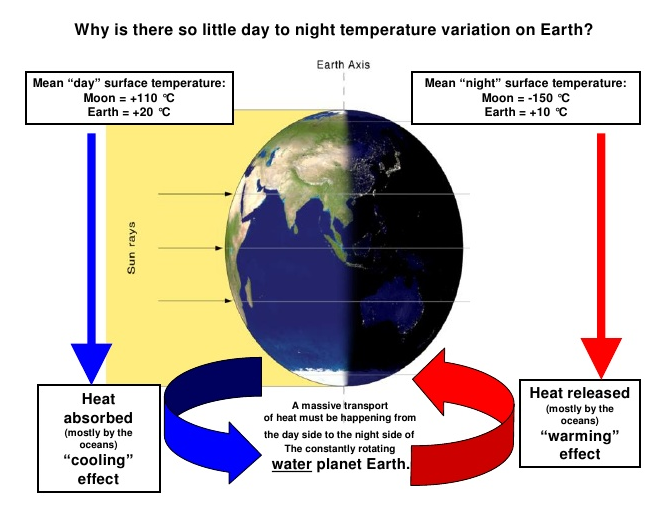
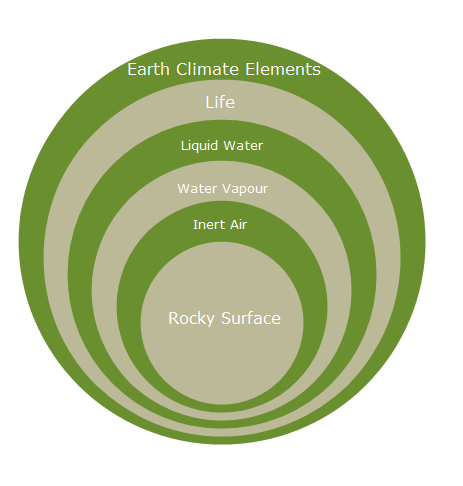
JV: I think it is fundamental because water vapor is the main greenhouse gas and what really defines the Earth is that it is a planet that has a lot of water in its three states,  And I believe that the role of water is to provide stability to The Climate system through its thermal inertia.  This is what explains that for the last 540 million years when everything has happened the temperature of planet has remain compatible with Life.  So I think none of the IPCC’s predictions is going to come true because I think the role of the water is misunderstood and it doesn’t behave the way it is expected to.  I don’t think water increases climate change,  I think it actually decreases it

TN: What do you think about the eruption of the hunga Tonga volcano in 2022.  Is that a major reason for the recent temperature Spike?

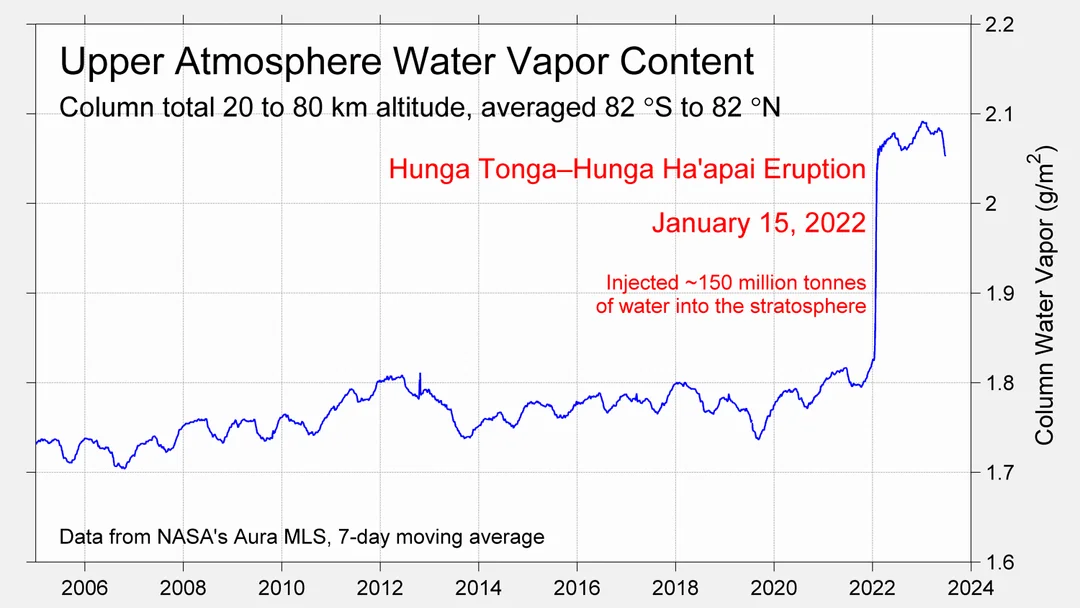
JV: I think it is very likely.  The volcanic eruption of 2022 was very unusual in that it was underwater so it placed 146,000 tons of water vapor into the stratosphere and the stratosphere is very dry so in a single day the water vapor in the stratosphere increased by 10% and the greenhouse effect is very sensitive to changes in the stratosphere  because it is a lot less opaque to infrared radiation than the troposphere.  So the expected effect from this change as was published in January in natural climate change is a substantial increase in the warming rate so and this is what has been observed. The fact that the onset of this warming has such a delay is normal for volcanic eruptions for example the eruption of the Mount Tambora in April of 1815 produced the year without the summer more than a year later in 1816.   If this explanation is correct we should expect over the next months the warming rate should decrease substantially,  and this increased warming should disappear over the course of four to five years as the extra water vapor leaves the stratosphere.

Concluding Remarks and Future Implications

TN: So if your theory is correct what are the economic implications?

JV: Well if humans are are not primarily responsible for climate change this will have huge implications for the global economy.  We should question the energy transition in the form of urgency that is being made because it is not exempt of risk.  Even if the theory is correct, we should be aware that a lot of people will not be willing to accept it regardless of the evidence.

TN: Other than the economic implications, what are the other consequences if your theory is right?

JV: Well I think people should be very calm.  We are very lucky to be living through a warming period because cooling periods are much worse, usually accompanied by famine and epidemics. Being in a warming period is a lot better. So we should not fear climate and only be concerned when the warming period turns into a cooling period.   That will happen eventually, but we don’t expect it during the 21st century.   So essentially I think we are uh very lucky with respect to climate and as long as the cooling period doesn’t doesn’t start I think the climate is our Ally not our Enemy.


Why Current GHG Effect is Simply Not Scary

Donald Rapp makes things clear and concise in his 2024 paper How Increased CO2 Warms the Earth-Two Contexts for the Greenhouse Gas Effect.  Excerpts in italics with my bolds, exhibits and some added images.

Physicist Donald Rapp retired from the Jet Propulsion Laboratory and has authored many books including Ice Ages and Interglacials: Measurements, Interpretation and Models; Assessing Climate Change: Temperatures, Solar Radiation and Heat Balance; and Use of Extraterrestrial Resources for Human Space Missions to Moon or Mars (Astronautical Engineering). Most recently he published Revisiting 2,000 Years of Climate Change (Bad Science and the “Hockey Stick”)

Abstract

The widespread explanations of the greenhouse effect taught to millions of schoolchildren are misleading. The objective of this work is to clarify how increasing CO2 produces warming in current times. It is found that there are two contexts for the greenhouse gas effect. In one context, the fundamental greenhouse gas effect, one imagines a dry Earth starting with no water or CO2 and adding water and CO2 . This leads to the familiar “thermal blanket” that strongly inhibits IR transmission from the Earth to the atmosphere. The Earth is much warmer with H2 O and CO2 . In the other context, the current greenhouse gas effect, CO2 is added to the current atmosphere. The thermal blanket on IR radiation hardly changes. But the surface loses energy primarily by evaporation and thermals. Increased CO2 in the upper atmosphere carries IR radiation to higher altitudes. The Earth radiates to space at higher altitudes where it is cooler, and the Earth is less able to shed energy. The Earth warms to restore the energy balance. The “thermal blanket” is mainly irrelevant to the current greenhouse gas effect. It is concluded that almost all discussions of the greenhouse effect are based on the fundamental greenhouse gas effect, which is a hypothetical construct, while the current greenhouse gas effect is what is happening now in the real world.

Adding CO2 does not add much to a “thermal blanket” but instead,
drives emission from the Earth to higher, cooler altitudes.

Background

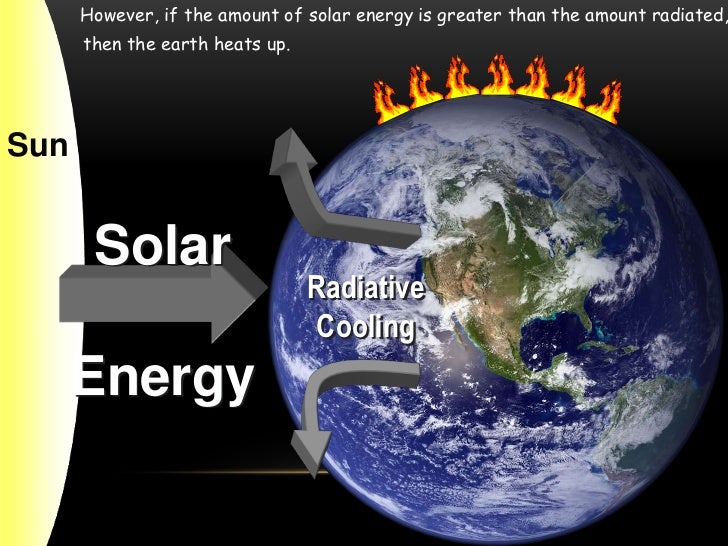
Were it not for the Sun, the Earth would be a frozen hulk in space. The Sun sends a spectrum of irradiance to the Earth, the Earth warms, and the Earth radiates energy out to space. This process continues until the Earth warms enough to radiate about as much energy to space as it receives from the Sun, reaching an approximate steady state. If for some reason, the Earth is unable to radiate all the energy received from the Sun, the Earth will warm until it can radiate all the energy received. It is widely accepted that rising CO2 concentration reduces the ability of the Earth to radiate energy to space. In a dynamic situation where the CO2 concentration is continually increasing with time, the Earth will continuously warm as it tries to “catch up” to the effect of increasing CO2 and reestablish a steady state. It is a conundrum that while it is widely accepted that rising CO2 concentration produces global warming, the exact mechanism by which warming is induced in the current atmosphere by rising CO2 is not widely understood. The concept of a “thermal blanket” imposed by greenhouse gases to warm the Earth has merit in some contexts but is mainly irrelevant to the question of how adding CO2 to the current atmosphere produces warming.

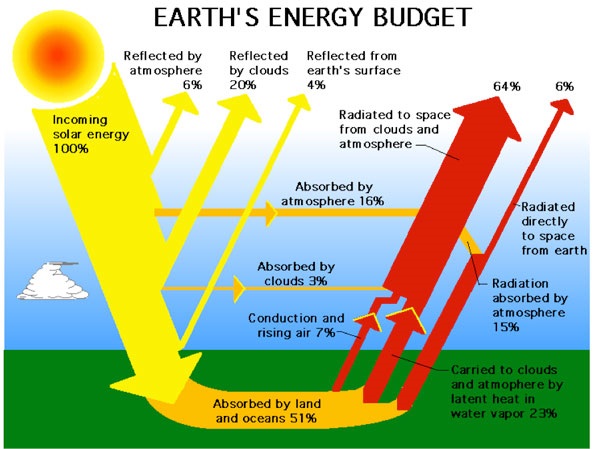
Before attempting to deal with the question of how rising CO2 concentration affects the current Earth’s climate, it is appropriate to first discuss the Earth’s energy budget. The exact values for each energy flow are not important, but the relative values are important to show which processes dominate.

Finally, we provide an explanation of how adding CO2 to the current atmosphere produces global warming in the current atmosphere. The mechanism is not widely known and is likely to be surprising to some. Warming does not occur by increasing the thickness of the thermal blanket but instead occurs by raising the altitude at which the Earth radiates to space.

IR radiation

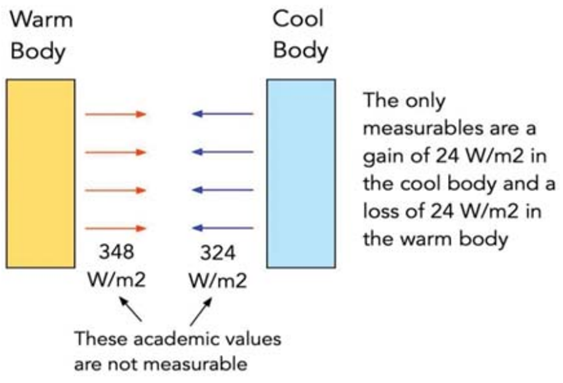
A fundamental law of physics states that all bodies emit a spectrum of radiant power proportional to the fourth power of their absolute temperature. A body at absolute temperature T (K) emits power per unit area: P = σ T 4 = 5.67 x 10 -8 T 4 (W/m 2 ) For example, a body at T = 280 K is said to emit 348 W/m 2 . However, this law of physics is academic and not directly applicable to real-world experience. In the real world, we never have a single isolated body emitting radiation, instead, we deal with pairs of bodies where the warmer one radiates a net flux to the cooler one. (If you stand next to a body at 280 K, you don’t feel an incoming heat flux of 348 W/m 2 ). For example, if there is one body at 280 K and a second body at 275 K, the warmer body will radiate through a vacuum to the cooler body at a net of 24 W/m 2 . That is a real-world parameter that can be measured. But the academic model involves calculating the emission of the warm body as 348 W/m 2 and the emission of the cooler body as 324 W/m 2 , and subtracting, the net transfer from the warm body to the cool body is 24 W/m 2 . But the calculated values are academic and cannot be measured in the real world with 348 W/m 2 in one direction and 324 W/m 2 in the opposite direction. Those values are only of academic use to infer the measurable net of about 24 W/m 2 . See the simple model in Figure 1 presented here for illustration.

Figure 1: Radiant heat transfer between warm and cool bodies

The two contexts of the greenhouse effect

We are all aware of the widely discussed greenhouse effect that warms the Earth as the concentration of greenhouse gases increases. But just how does it work? Here, we define two contexts for greenhouse gas effects:

1) The fundamental greenhouse gas effect can be described by a “gedanken experiment” in which one imagines a dry Earth starting with no water or CO 2 and begins adding water and CO 2 . The original atmosphere, lacking water and CO 2 , will transmit IR radiation completely. As a result, the Earth will be quite cool. As H 2 O and CO 2 are added to the atmosphere, the transmission of IR radiation from the Earth’s surface is increasingly inhibited, and the Earth warms. As the Earth warms, evaporation and thermals transmit more energy from the Earth to the atmosphere. By the time H 2 O and CO 2 levels reach current levels, the atmosphere is almost opaque to IR radiation, and a “thermal blanket” greatly reduces IR transmission from the Earth to the atmosphere. The Earth cools primarily by evaporation and thermals, and it is much warmer than if CO 2 and water were absent. The notion of a “thermal blanket” of IR absorbing gases warming the Earth has validity in this context starting with a transmitting atmosphere and adding greenhouse gases. However, once the thermal blanket is established with ~ 400 ppm CO 2 , adding more CO 2 has only a small effect on reducing IR radiation from the surface.

2) The current greenhouse gas effect deals with the question: How does the addition of CO 2 to the atmosphere affect the global average temperature in 2024 and beyond, with CO 2 around 400+ ppm? It was shown previously that starting with no water or CO 2 , adding H 2 O and CO 2 to the atmosphere generates a “thermal blanket” for radiation. But once that “thermal blanket” is well established and the lower atmosphere is very opaque to IR radiation, what is the effect of adding even more CO 2 ? Dufresne, et al. provide a detailed technical analysis to show how the current greenhouse effect works [7]. However, this reference is complex and written for expert specialists in IR transmission through the atmosphere. In the sections that follow, a simpler, qualitative interpretation will be presented.

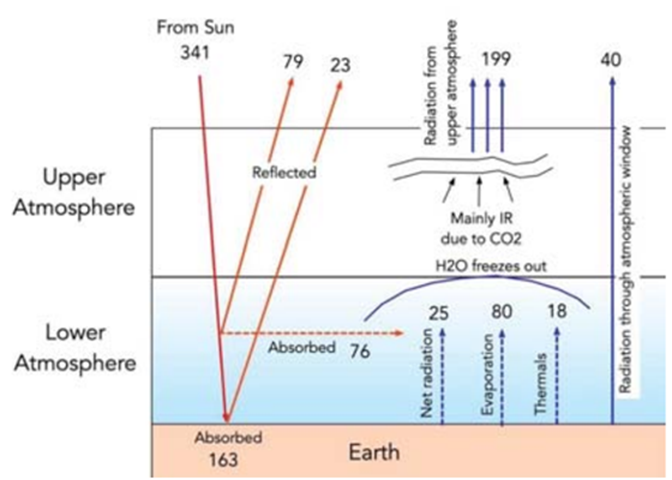
Figure 3: Energy flows in the Earth’s system. (Based on LTWS references).

Energy budget of the earth

Energy transfer in the Earth system can take place by thermal transfers (“thermals”) where winds carry warm air up to colder regions, evaporation from the surface (removes heat), and condensation in the atmosphere (deposits heat) and radiation (further discussion follows).

After analyzing the data in the LTWS references (see Section 1.2), a rough estimate of key energy flows per unit time in the Earth system is given as follows. The exact numbers are not critical; only their relative values are important for this discussion.

These results can be visualized in Figure 3 which is based on the references LTWS. As shown in Figure 3, incoming solar irradiance (341 W/ m 2 ) is partly reflected by the lower atmosphere back out to space (79 W/m 2 ), partly reflected by the Earth’s surface back out to space (23 W/m 2 ), partly absorbed by the lower atmosphere (76 W/m 2 ), and finally about 163 W/m 2 is absorbed by the surface.

Radiation from the Earth’s surface to the lower atmosphere requires further discussion. The LTWS references show high up and down radiation flows. For example, Trenberth, et al. did not show radiation transfer between the Earth’s surface as a simple 25 W/m 2 net radiative transfer from the surface to the lower atmosphere. Instead, they showed 356 W/m 2 radiated upward from the surface and 333 W/m 2 of “back radiation” from the atmosphere to the surface [2]. The figure 356 W/m 2 radiated upward from the surface corresponds to the theoretical radiation from a blackbody at 281.5 K. The claimed downward figure is difficult to explain. But both of these figures are academic. What is happening is that the warm Earth is radiating upward through an optically thick gas of H 2 O and CO 2 absorbers, and the radiant transfer through that thick gas is estimated to be only a mere ~25 W/m 2 . This is the “thermal blanket” so often referred to in discussions of global warming. The thermal blanket is real. But the problem with so many discussions of the greenhouse effect is that there is a preoccupation with radiant energy transfer between the Earth and the atmosphere (which is “blanketed”) while neglecting the more important transfers of energy to the atmosphere by processes other than radiation.

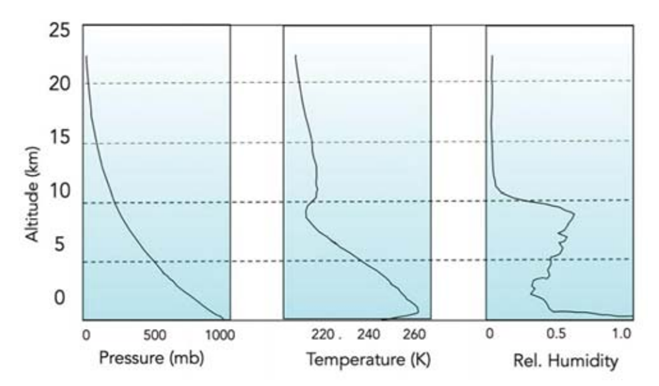
Figure 4: Pressure, temperature, and relative humidity vs. altitude [8].

The terms “lower atmosphere” and “upper atmosphere” are defined next. Following Miscolczi, Figure 4 shows that the demarcation between upper and lower atmospheres occurs at an altitude of roughly 12 km above which H 2 O is frozen out and the temperature roughly stabilizes [8].

Energy transfer in the lower atmosphere takes place by conduction,
convection,
and radiation. Energy transfer in the upper atmosphere
takes
place primarily by radiation.

The greenhouse effect

The greenhouse effect can only be fully understood by comprehensive modeling of upward energy flows in the Earth system. Excellent studies by Dufresne, et al. and Pierrehumbert provide detailed physics [7,9]. Here, we interpret these results qualitatively.

Within the Earth system of land, ocean, atmosphere, and clouds, energy transfer is taking place continuously. There is a net energy flow upward toward higher altitudes. From the surface of the Earth, much of the upward flow of energy in the lower atmosphere is through evaporation and convection. The lower atmosphere is almost opaque to IR radiation due to water vapor and CO 2.

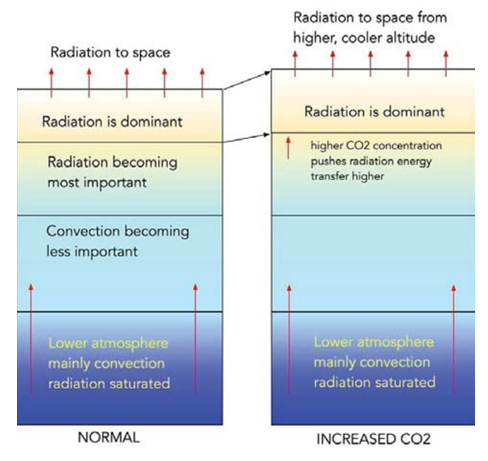
Figure 5: Qualitative sketch to show radiation is dominant at the highest altitude. By adding CO2 to the atmosphere, radiative energy transport is carried to a higher altitude where it is colder, reducing the radiant power emitted by the upper atmosphere.

Radiation energy transfer will persist out toward a high altitude until the CO 2 concentration diminishes. Each CO 2 molecule that absorbs an IR photon can reradiate in all directions, but in a thin atmosphere, some upward IR radiation will be lost, and on a net basis, this allows the Earth to radiate out to space. The presence of an IR transmitting/absorbing gas (CO 2 ) will allow energy transport to higher altitudes. The highest altitude where there is enough thin gas to maintain radiation is the region of the atmosphere that mainly radiates energy outward to space. This is illustrated on the left side of Figure 5. Figure 5 was created here to illustrate how the predominant energy transfer mechanisms gradually change to IR radiation at higher altitudes, and the presence of CO 2 carries the IR radiation to higher altitudes.

Conclusion

There are two different contexts for discussion of the effect of greenhouse gases on the Earth’s climate.

In one context, one can imagine an Earth with no water vapor or CO 2 in the atmosphere. This Earth can radiate effectively to space and is relatively cold. As water vapor and CO 2 are added to the atmosphere, the IR-opacity of the atmosphere increases and the Earth system warms. The greenhouse gases act as a “thermal blanket” to warm the Earth by impeding upward IR radiation. This is labeled the fundamental greenhouse gas effect. However, once the thermal blanket is established, adding more CO 2 has only a minimal effect on the thermal blanket, and reduced upward IR radiation from the surface does not produce significant warming. This is referred to by Dufresne, et al. [7] as the “saturation paradox”.

In the other context, we are concerned with the effect of adding more CO 2 to the current atmosphere where the CO 2 concentration is already 400+ ppm, and the thermal blanket is already in place, restricting upward IR-radiation. This is labeled the current greenhouse gas effect, and it is quite different from the fundamental greenhouse gas effect. In the current atmosphere, energy transfer from the Earth to the atmosphere is primarily by evaporation and thermals, and IR-radiant energy transfer is significantly impeded by an almost opaque lower atmosphere. The “thermal blanket” is in place, but it doesn’t change much as CO 2 is added to the atmosphere. Adding CO 2 to the current atmosphere slightly increases the opacity of the lower atmosphere but this is of little consequence.

In the upper atmosphere, CO 2 is the major means of energy transport by IR radiation. The greatest effect of adding CO 2 to the current atmosphere is to extend the upward range of IR-radiant transmission to higher altitudes. The main region where the Earth radiates to space is thereby extended to higher altitudes where it is colder, and the Earth cannot radiate as effectively as it could with less CO 2 in the atmosphere. The Earth warms until the region in the upper atmosphere where the Earth radiates to space is warm enough to balance incoming solar energy.

My Comment:

The explanation above is clear and understandable in qualititative terms.  It does not reference empirical evidence regarding a GHG effect from a raised effective radiating level (ERL).  Studies investigating this theory find that the effect is too small to appear in the data.

Refresher: GHG Theory and the Tests It Fails

Postscript on Raised Effective Radiating Level

The following diagram by Andy May shows the pattern of emissions by GHGs, mainly H2O and CO2.

Helpfully, it shows the altitudes where the emissions occur.  As stated in the text above, the upper and lower tropopsphere shift occurs about 12km high, with variations lower at poles and higher in tropics.  Note the large CO2 notch appears at 85km, which puts it into the thermosphere, where temperatures increase with altitude.  Raising the ERL there means greater cooling, not less. The Ozone notch at 33km is in the stratosphere, where temperatures also rise with altitude. Otherwise almost all of the IR effect is from H2O.


Methane Madness Strikes Again

The latest comes from Australia by way of John Ray at his blog Methane cuts on track for 2030 emissions goal.  Excerpts in italics with my bolds and added images.

Australia’s methane emissions have decreased over the past two decades, according to a new report by a leading global carbon research group.

While the world’s methane emissions grew by 20 per cent, meaning two thirds of methane in the atmosphere is from human activity, Australasia and Europe emitted lower levels of the gas.

It puts Australia in relatively good stead, compared to 150 other signatories, to meet its non-binding commitments to the Global Methane Pledge, which aims to cut methane emissions by 30 per cent by the end of the decade.

The findings were revealed in the fourth global methane budget, published by the Global Carbon Project, with contributions from 66 research institutions around the world, including the CSIRO.

According to the report, agriculture contributed 40 per cent of global methane emissions from human activities, followed by the fossil fuel sector (34 per cent), solid waste and waste­water (19 per cent), and biomass and biofuel burning (7 per cent).

Pep Canadell, CSIRO executive director for the Global Carbon Project, said government policies and a smaller national sheep flock were the primary reasons for the lower methane emissions in Australasia.

“We have seen higher growth rates for methane over the past three years, from 2020 to 2022, with a record high in 2021. This increase means methane concentrations in the atmosphere are 2.6 times higher than pre-­industrial (1750) levels,” Dr Canadell said.

The primary source of methane emissions in the agriculture sector is from the breakdown of plant matter in the stomachs of sheep and cattle.

It has led to controversial calls from some circles for less red meat consumption, outraging the livestock industry, which has lowered its net greenhouse gas emissions by 78 per cent since 2005 and is funding research into methane reduction.

Last week, the government agency advising Anthony Albanese on climate change suggested Australians could eat less red meat to help reduce emissions. And the government’s official dietary guidelines will be amended to incorporate the impact of certain foods on climate change.

There is ongoing disagreement among scientists and policymakers about whether there should be a distinction between biogenic methane emitted by livestock, which already exists in a balanced cycle in plants and soil and the atmosphere, and methane emitted from sources stored deep underground for millennia.

“The frustration is that methane, despite its source, gets lumped into one bag,” Cattle Australia vice-president Adam Coffey said. “Enteric methane from livestock is categorically different to methane from coal-seam gas or mining-related fossil fuels that has been dug up from where it’s been stored for millennia and is new to the atmosphere.

“Why are we ignoring what modern climate science is telling us, which is these emissions are inherently different?”  Mr Coffey said the methane budget report showed the intense focus on the domestic industry’s environmental credent­ials was overhyped.

“I think it’s based mainly on ideology and activism,” Mr Coffey said.

This concern about methane is nonsense.
Water vapour blocks all the frequencies that methane does
so the presence of methane adds nothing

Technical Background

Methane alarm is one of the moles continually popping up in the media Climate Whack-A-Mole game. An antidote to methane madness is now available to those inquiring minds who want to know reality without the hype.

Methane and Climate is a paper by W. A. van Wijngaarden (Department of Physics and Astronomy, York University, Canada) and W. Happer (Department of Physics, Princeton University, USA) published at CO2 Coalition November 22, 2019. Below is a summary of the more detailed publication. Excerpts in italics with my bolds.

Overview

Atmospheric methane (CH4) contributes to the radiative forcing of Earth’s atmosphere. Radiative forcing is the difference in the net upward thermal radiation from the Earth through a transparent atmosphere and radiation through an otherwise identical atmosphere with greenhouse gases. Radiative forcing, normally specified in units of W m−2 , depends on latitude, longitude and altitude, but it is often quoted for a representative temperate latitude, and for the altitude of the tropopause, or for the top of the atmosphere.

For current concentrations of greenhouse gases, the radiative forcing at the tropopause, per added CH4 molecule, is about 30 times larger than the forcing per added carbon-dioxide (CO2) molecule. This is due to the heavy saturation of the absorption band of the abundant greenhouse gas, CO2. But the rate of increase of CO2 molecules, about 2.3 ppm/year (ppm = part per million by mole), is about 300 times larger than the rate of increase of CH4 molecules, which has been around 0.0076 ppm/year since the year 2008.

So the contribution of methane to the annual increase in forcing is one tenth (30/300) that of carbon dioxide. The net forcing increase from CH4 and CO2 increases is about 0.05 W m−2 year−1 . Other things being equal, this will cause a temperature increase of about 0.012 C year−1 . Proposals to place harsh restrictions on methane emissions because of warming fears are not justified by facts.

The paper is focused on the greenhouse effects of atmospheric methane, since there have recently been proposals to put harsh restrictions on any human activities that release methane. The basic radiation-transfer physics outlined in this paper gives no support to the idea that greenhouse gases like methane, CH4, carbon dioxide, CO2 or nitrous oxide, N2O are contributing to a climate crisis. Given the huge benefits of more CO2 to agriculture, to forestry, and to primary photosynthetic productivity in general, more CO2 is almost certainly benefitting the world. And radiative effects of CH4 and N2O, another greenhouse gas produced by human activities, are so small that they are irrelevant to climate.

Transmission of shortwave solar irradiation and long wavelength radiation from the Earth’s surface through atmosphere, as permitted by Rohde [2]. Note absorption wavelengths of CH4 and N2O are already covered by H2O and CO2.

Radiative Properties of Earth Atmosphere

On the left of Fig. 2 we have indicated the three most important atmospheric layers for radiative heat transfer. The lowest atmospheric layer is the troposphere, where parcels of air, warmed by contact with the solar-heated surface, float upward, much like hot-air balloons. As they expand into the surrounding air, the parcels do work at the expense of internal thermal energy. This causes the parcels to cool with increasing altitude, since heat flow in or out of parcels is usually slow compared to the velocities of ascent of descent.

Figure 2: Left. A standard atmospheric temperature profile[9], T = T (z). The surface temperature is T (0) = 288.7 K . Right. Standard concentrations[10], C {i} = N {i}/N for greenhouse molecules versus altitude z. The total number density of atmospheric molecules is N . At sea level the concentrations are 7750 ppm of H2O, 1.8 ppm of CH4 and 0.32 ppm of N2O. The O3 concentration peaks at 7.8 ppm at an altitude of 35 km, and the CO2 concentration was approximated by 400 ppm at all altitudes. The data is based on experimental observations.

If the parcels consisted of dry air, the cooling rate would be 9.8 C km−1 the dry adiabatic lapse rate[12]. But rising air has usually picked up water vapor from the land or ocean. The condensation of water vapor to droplets of liquid or to ice crystallites in clouds, releases so much latent heat that the lapse rates are less than 9.8 C km−1 in the lower troposphere. A representative lapse rate for mid latitudes is dT/dz = 6.5 K km−1 as shown in Fig. 2.

The tropospheric lapse rate is familiar to vacationers who leave hot areas near sea level for cool vacation homes at higher altitudesin the mountains. On average, the temperature lapse rates are small enough to keep the troposphere buoyantly stable[13]. Tropospheric air parcels that are displaced in altitude will oscillate up and down around their original position with periods of a few minutes. However, at any given time, large regions of the troposphere (particularly in the tropics) are unstable to moist convection because of exceptionally large temperature lapse rates.

The vertical radiation flux Z, which is discussed below, can change rapidly in the troposphere and stratosphere. There can be a further small change of Z in the mesosphere. Changes in Z above the mesopause are small enough to be neglected, so we will often refer to the mesopause as “the top of the atmosphere” (TOA), with respect to radiation transfer. As shown in Fig. 2, the most abundant greenhouse gas at the surface is water vapor, H2O. However, the concentration of water vapor drops by a factor of a thousand or more between the surface and the tropopause. This is because of condensation of water vapor into clouds and eventual removal by precipitation. Carbon dioxide, CO2, the most abundant greenhouse gas after water vapor, is also the most uniformly mixed because of its chemical stability. Methane, the main topic of this discussion is much less abundant than CO2 and it has somewhat higher concentrations in the troposphere than in the stratosphere where it is oxidized by OH radicals and ozone, O3. The oxidation of methane[8] is the main source of the stratospheric water vapor shown in Fig. 2.

Future Forcings of CH4 and CO2

Methane levels in Earth’s atmosphere are slowly increasing.  If the current rate of increase, about 0.007 ppm/year for the past decade or so, were to continue unchanged it would take about 270 years to double the current concentration of C {i} = 1.8 ppm. But, as one can see from Fig.7, methane levels have stopped increasing for years at a time, so it is hard to be confident about future concentrations. Methane concentrations may never double, but if they do, WH[1] show that this would only increase the forcing by 0.8 W m−2. This is a tiny fraction of representative total forcings at midlatitudes of about 140 W m−2 at the tropopause and 120 W m−2 at the top of the atmosphere.

Figure 9: Projected mid-latitude forcing increments at the tropopause from continued increases of CO2 and CH4 at the rates of Fig. 7 and Fig. 8 for the next 50 years. The projected forcings are very small, especially for methane, compared to the current tropospheric forcing of 137 W m−2.

The per-molecule forcings P {i} of (13) and (14) have been used with the column density Nˆ of (12) and the concentration increase rates dC¯{i}/dt, noted in Fig. 7 and Fig. 8, to evaluate the future forcing (15), which is plotted in Fig. 9. Even after 50 years, the forcing increments from increased concentrations of methane (∆F = 0.23 W m−2), or the roughly ten times larger forcing from increased carbon dioxide (∆F = 2.2 W m−2) are very small compared to the total forcing, ∆F = 137 W m−2, shown in Fig. 3. The reason that the per-molecule forcing of methane is some 30 times larger than that of carbon dioxide for current concentrations is “saturation” of the absorption bands. The current density of CO2 molecules is some 200 times greater than that of CH4 molecules, so the absorption bands of CO2 are much more saturated than those of CH4. In the dilute“optically thin” limit, WH[1] show that the tropospheric forcing power per molecule is P {i} = 0.15 × 10⁻²² W for CH4, and P {i} = 2.73 × 10⁻²² W for CO2. Each CO2 molecule in the dilute limit causes about 5 times more forcing increase than an additional molecule of CH4, which is only a ”super greenhouse gas” because there is so little in the atmosphere, compared to CO2.

Methane Summary

Natural gas is 75% Methane (CH4) which burns cleanly to carbon dioxide and water. Methane is eagerly sought after as fuel for electric power plants because of its ease of transport and because it produces the least carbon dioxide for the most power. Also cars can be powered with compressed natural gas (CNG) for short distances.

In many countries CNG has been widely distributed as the main home heating fuel. As a consequence, in the past methane has leaked to the atmosphere in large quantities, now firmly controlled. Grazing animals also produce methane in their complicated stomachs and methane escapes from rice paddies and peat bogs like the Siberian permafrost.

It is thought that methane is a very potent greenhouse gas because it absorbs some infrared wavelengths 7 times more effectively than CO2, molecule for molecule, and by weight even 20 times. As we have seen previously, this also means that within a distance of metres, its effect has saturated, and further transmission of heat occurs by convection and conduction rather than by radiation.

Note that when H20 is present in the lower troposphere, there are few photons left for CH4 to absorb:

Even if the IPCC radiative greenhouse theory were true, methane occurs only in minute quantities in air, 1.8ppm versus CO2 of 390ppm. By weight, CH4 is only 5.24Gt versus CO2 3140Gt (on this assumption). If it truly were twenty times more potent, it would amount to an equivalent of 105Gt CO2 or one thirtieth that of CO2. A doubling in methane would thus have no noticeable effect on world temperature.

However, the factor of 20 is entirely misleading because absorption is proportional to the number of molecules (=volume), so the factor of 7 (7.3) is correct and 20 is wrong. With this in mind, the perceived threat from methane becomes even less.

Further still, methane has been rising from 1.6ppm to 1.8ppm in 30 years (1980-2010), assuming that it has not stopped rising, this amounts to a doubling in 2-3 centuries. In other words, methane can never have any measurable effect on temperature, even if the IPCC radiative cooling theory were right.

Because only a small fraction in the rise of methane in air can be attributed to farm animals, it is ludicrous to worry about this aspect or to try to farm with smaller emissions of methane, or to tax it or to trade credits.

The fact that methane in air has been leveling off in the past two decades, even though we do not know why, implies that it plays absolutely no role as a greenhouse gas.  (From Sea Friends (here):

More information at The Methane Misconceptions by Dr. Wilson Flood (UK) here.

Climatists Aim Forks at Our Food Supply

Hot Climate Models Not Fit For Policymaking

Roy Spencer has published a study at Heritage Global Warming: Observations vs. Climate Models.  Excerpts in italics with my bolds.

Summary

Warming of the global climate system over the past half-century has averaged 43 percent less than that produced by computerized climate models used to promote changes in energy policy. In the United States during summer, the observed warming is much weaker than that produced by all 36 climate models surveyed here. While the cause of this relatively benign warming could theoretically be entirely due to humanity’s production of carbon dioxide from fossil-fuel burning, this claim cannot be demonstrated through science. At least some of the measured warming could be natural. Contrary to media reports and environmental organizations’ press releases, global warming offers no justification for carbon-based regulation.

KEY TAKEAWAYS
  1. The observed rate of global warming over the past 50 years has been weaker than that predicted by almost all computerized climate models.
  2. Climate models that guide energy policy do not even conserve energy, a necessary condition for any physically based model of the climate system.
  3. Public policy should be based on climate observations—which are rather unremarkable—rather than climate models that exaggerate climate impacts.

For the purposes of guiding public policy and for adaptation to any climate change that occurs, it is necessary to understand the claims of global warming science as promoted by the United Nations Intergovernmental Panel on Climate Change (IPCC).  When it comes to increases in global average temperature since the 1970s, three questions are pertinent:

  1. Is recent warming of the climate system materially attributable to anthropogenic greenhouse gas emissions, as is usually claimed?
  2. Is the rate of observed warming close to what computer climate models—used to guide public policy—show?
  3. Has the observed rate of warming been sufficient to justify alarm and extensive regulation of CO2 emissions?

While the climate system has warmed somewhat over the past five decades,
the popular perception of a “climate crisis” and resulting calls for economically
significant regulation of CO2 emissions is not supported by science.

Discussion Points

Temperature Change Is Caused by an Imbalance Between Energy Gain and Energy Loss.

Recent Warming of the Climate System Corresponds to a Tiny Energy Imbalance.

Climate Models Assume Energy Balance, but Have Difficulty Achieving It.

Global Warming Theory Says Direct Warming from a Doubling of CO2 Is Only 1.2°C.

Climate Models Produce Too Much Warming.

Climate models are not only used to predict future changes (forecasting), but also to explain past changes (hindcasting). Depending on where temperatures are measured (at the Earth’s surface, in the deep atmosphere, or in the deep ocean), it is generally true that climate models have a history of producing more warming than has been observed in recent decades.

This disparity is not true of all the models, as two models (both Russian) produce warming rates close to what has been observed, but those models are not the ones used to promote the climate crisis narrative. Instead, those producing the greatest amount of climate change usually make their way into, for example, the U.S. National Climate Assessment,  the congressionally mandated evaluation of what global climate models project for climate in the United States.

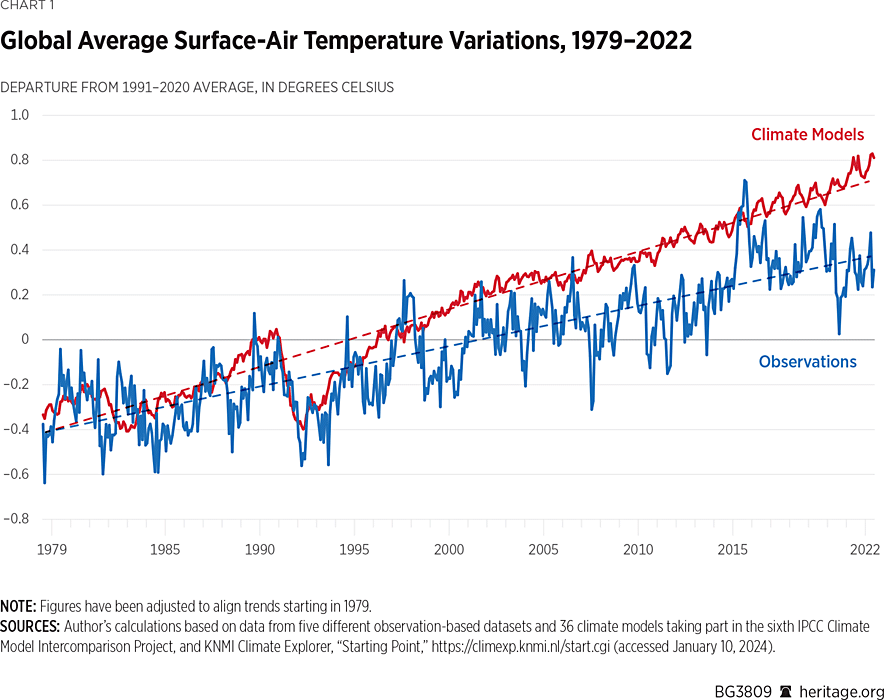
The best demonstration of the tendency of climate models to overpredict warming is a direct comparison between models and observations for global average surface air temperature, shown in Chart 1.

In this plot, the average of five different observation-based datasets (blue) are compared to the average of 36 climate models taking part in the sixth IPCC Climate Model Intercomparison Project (CMIP6). The models have produced, on average, 43 percent faster warming than has been observed from 1979 to 2022. This is the period of the most rapid increase in global temperatures and anthropogenic greenhouse gas emissions, and also corresponds to the period for which satellite observations exist (described below). This discrepancy between models and observations is seldom mentioned despite that fact that it is, roughly speaking, the average of the models (or even the most extreme models) that is used to promote policy changes in the U.S. and abroad.

Summertime Warming in the United States

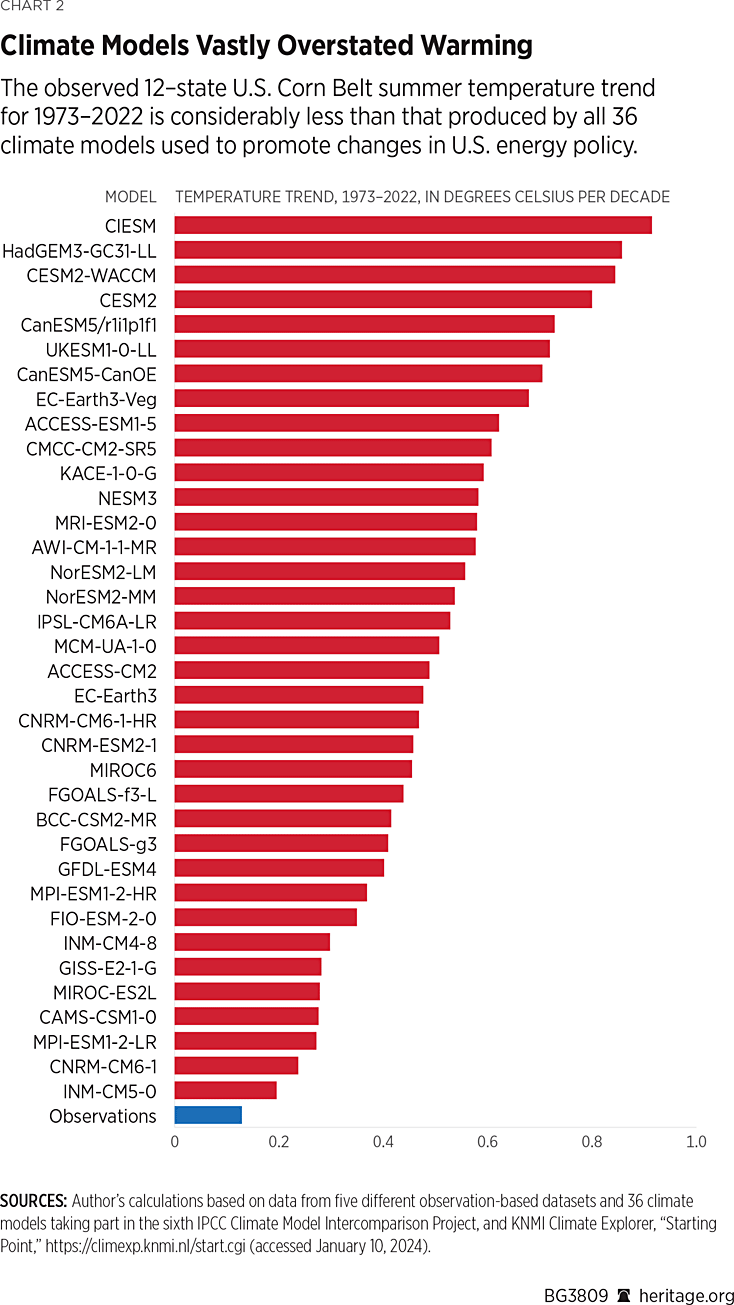
While global averages produce the most robust indicator of “global” warming, regional effects are often of more concern to national and regional governments and their citizens. For example, in the United States large increases in summertime heat could affect human health and agricultural crop productivity. But as Chart 2 shows, surface air temperatures during the growing season (June, July, and August) over the 12-state Corn Belt for the past 50 years reveal a large discrepancy between climate models and observations, with all 36 models producing warming rates well above what has been observed and the most extreme model producing seven times too much warming.  

The fact that global food production has increased faster than population growth in the past 60 years suggests that any negative impacts due to climate change have been small. In fact, “global greening” has been documented to be occurring in response to more atmospheric CO2, which enhances both natural plant growth and agricultural productivity, leading to significant agricultural benefits.

These discrepancies between models and observations are never mentioned when climate researchers promote climate models for energy policy decision-making. Instead, they exploit exaggerated model forecasts of climate change to concoct exaggerated claims of a climate crisis.

Global Warming of the Lower Atmosphere

While near-surface air temperatures are clearly important to human activity, the warming experienced over the low atmosphere (approximately the lowest 10 kilometers of the “troposphere,” where the Earth’s weather occurs) is also of interest, especially given the satellite observations of this layer extending back to 1979.

Satellites provide the only source of geographically complete coverage of the Earth, except very close to the North and South Poles.

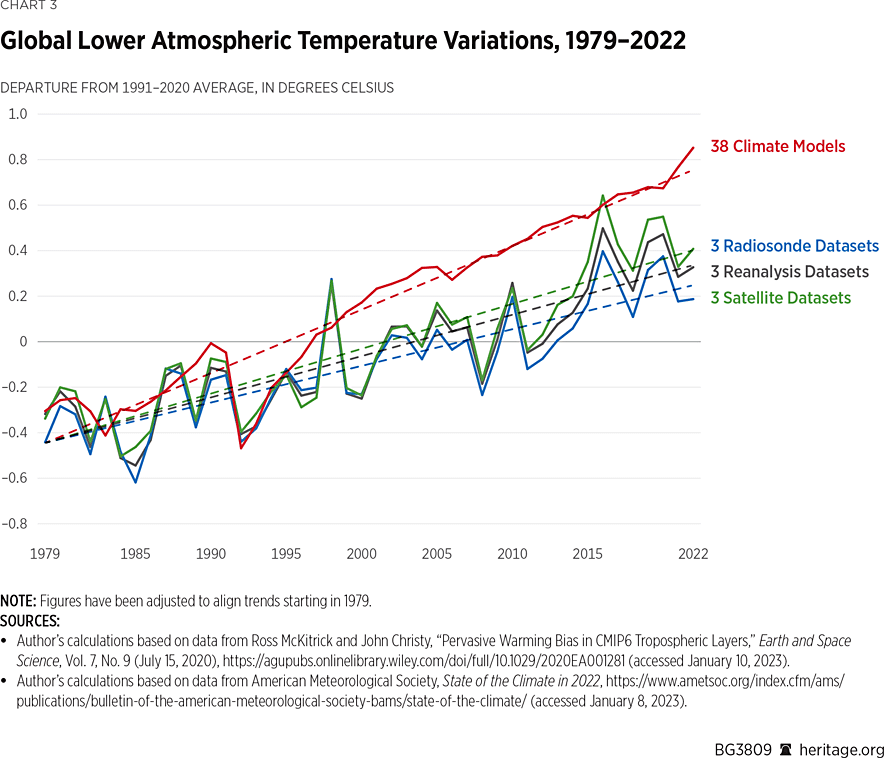
Chart 3 shows a comparison of the temperature of this layer as produced by 38 climate models (red) and how the same layer has been observed to warm in three radiosonde (weather balloon) datasets (green), three global reanalysis datasets (which use satellites, weather balloons, and aircraft data; black), and three satellite datasets (blue).

Conclusion

Climate models produce too much warming when compared to observations over the past fifty years or so, which is the period of most rapid warming and increases in carbon dioxide in the atmosphere. The discrepancy ranges from over 40 percent for global surface air temperature, about 50 percent for global lower atmospheric temperatures, and even a factor of two to three for the United States in the summertime. This discrepancy is never mentioned when those same models are used as the basis for policy decisions.

Also not mentioned when discussing climate models is their reliance on the assumption that there are no natural sources of long-term climate change. The models must be “tuned” to produce no climate change, and then a human influence is added in the form of a very small, roughly 1 percent change in the global energy balance. While the resulting model warming is claimed to prove that humans are responsible, clearly this is circular reasoning. It does not necessarily mean that the claim is wrong—only that it is based on faith in assumptions about the natural climate system that cannot be shown to be true from observations.

Finally, possible chaotic internal variations will always lead to uncertainty in both global warming projections and explanation of past changes. Given these uncertainties, policymakers should proceed cautiously and not allow themselves to be influenced by exaggerated claims based on demonstrably faulty climate models.

Roy W. Spencer, PhD, is Principal Research Scientist at the University of Alabama in Huntsville.


New Wholistic Paradigm of Climate Change

A recent paper in the journal Atmosphere draws together contemporary findings into a new and wholistic paradigm for the workings of earth’s climate system.  Stuart Harris published Comparison of Recently Proposed Causes of Climate Change. Excerpts in italics with my bolds and added images.

Abstract

This paper compares the ideas contained in the main papers published on climate change since World War II to arrive at a suggested consensus of our present knowledge regarding climatic changes and their causes.

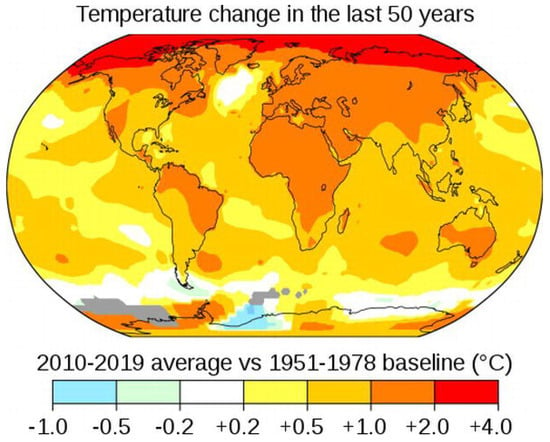
Atmospheric carbon dioxide is only suggested as a cause in one theory, which, despite its wide acceptance by Politicians, the media, and the Public, ignores the findings in other studies, including the ideas found in the Milankovitch Cycles. It also does not explain the well-known NASA map of the changes between the global 1951–1978 and the 2010–2019 mean annual temperatures.

The other theories by Oceanographers, Earth scientists, and Geographers fit together to indicate that the variations in climate are the result of differential solar heating of the Earth, resulting in a series of processes redistributing the heat to produce a more uniform range of climates around the surface of the Earth. Key factors are the shape of the Earth and the Milankovitch Cycles, the distribution of land and water bodies, the differences between heating land and water, ocean currents and gateways, air masses, and hurricanes.

Low atmospheric carbon dioxide levels during cold events could result in too little of this gas to support photosynthesis in plants, resulting in the extermination of most life on Earth as we know it. The 23 ka Milankovitch cycle has begun to reduce the winter insolation received at the surface of the atmosphere in the mid-latitudes of the Northern Hemisphere starting in 2020. This results in extreme weather as the winter insolation reaching the surface of the atmosphere in the higher latitudes of the Northern Hemisphere decreases while the summer air temperatures increase. It heralds the start of the next glaciation.

A brief outline is given of some of the climatic changes and consequences that may be expected in western Canada during the next 11.5 ka.

Discussion

To make progress in Climatology, it has been shown that a good, reliable database of the constituent properties of the climate is necessary to obtain a reasonable average for that time slice. The difficulty is coping with the tremendous variation in conditions over the entire Earth at all time scales. The data should also be complete and obtained by a consistent method of measurement for all stations. Ideally, there should be no breaks in the data, although this is not usually achieved. Changes in methodology, equipment, and storage of large volumes of data have been major problems. As a result, most scientists studying the subject work with models of meteorology and weather forecasting.

2. New Data on the Mechanism of Global Warming

It is now known that solar radiation supplies more than 99.95% of the total energy driving the world’s climate [7]. The fact that the bulk of the solar radiation arrives on the surface of the Earth along the zone between the Tropics of Capricorn and Cancer, decreasing towards the Poles, results in a tremendous imbalance of initial heat distribution around the globe. The amount of solar heating at the polar latitudes throughout the year varies greatly, with the polar latitudes receiving considerably more solar energy in the summer than in the winter, when they receive no solar heat at all. As a result, in the winter hemisphere, the difference in solar heating between the equator and that pole is very large. This causes the large-scale circulation patterns observed in the atmosphere in the northern hemisphere. The difference in solar heating between day and night also drives the strong diurnal cycle of surface temperature over land.

2.1. Thermal Properties of the Earth’s Surface

A total of 70% of the Earth’s surface consists of water, with the remainder being land (rock, soil, or ice). The albedo of ice ranges from 0.5 to 0.7, so ice- and snow-covered surfaces reflect much of the incoming solar radiation back into space. Water has a very high heat capacity (4.187 mJ/m3 K), so it can store or transport large quantities of heat in a given volume of water [8]. In addition, it absorbs over five times as much heat as soil or rock since it is translucent [9,10]. Currents, convection, and wave action mix the water, whereas transmission into a rock or sediment must be by conduction. Reradiation only occurs in the surface layer (water or land).

2.2. Transport of Heat towards the Poles

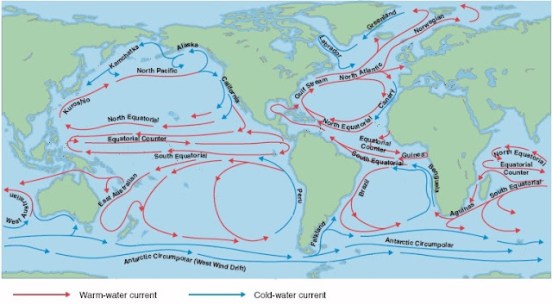
Dry air has a low heat capacity, but air can carry moisture in the form of water vapor, water droplets, or snow. Where water droplets are involved, the quantity of water carried can be enormous in Monsoons and Hurricanes. Accordingly, warm ocean currents and Hurricanes are the main carriers of heat from the Tropics towards the polar regions [8]. There can also be “rivers of water” carried to land areas by Monsoons in subtropical areas. The warm ocean currents carry large quantities of heat towards the Poles but are constrained by the distribution of land and water (Figure 1).

Figure 1. Distribution of cold and warm currents around the world [11]. Note that the warm currents are prevented from warming Antarctica by the cold Antarctic Circumpolar current, whereas the warm Gulf Stream penetrates northward into the North Atlantic Subarctic waters.

2.3. Sources of Cold Air Masses

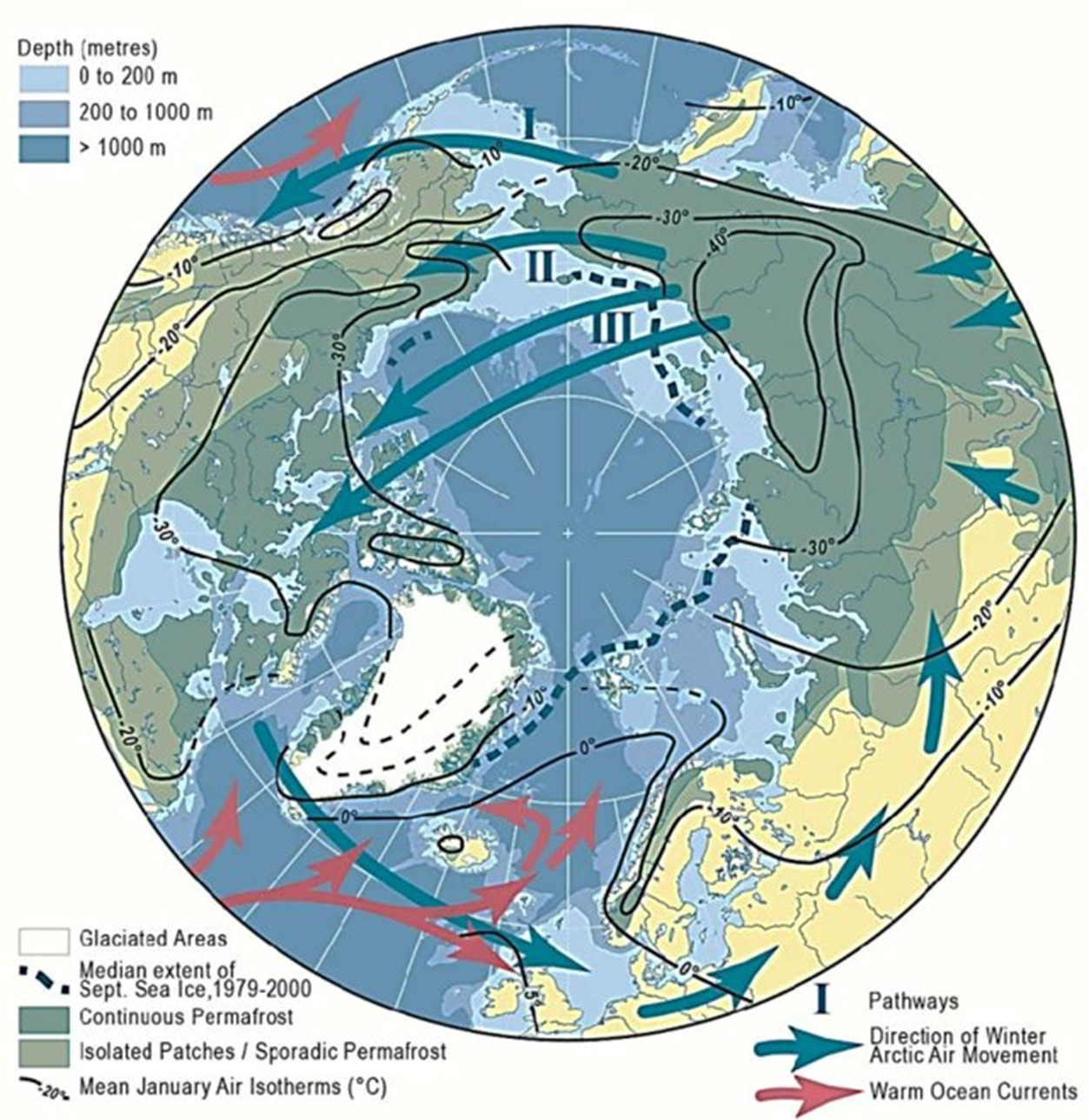
The primary source of old, dense Arctic Air is in the interior valleys of the mountains in Northern Siberia, where the coldest air temperatures commonly exceed −65 °C in winter [12]. They are partly fed by cold air drainage from Tibet flowing down its northern slope to the Hexi Corridor, and similar cold temperatures have been recorded from Fort Nelson, British Columbia [14], and from the high mountains in Utah. The cold Siberian air moves eastward along three main paths (Figure 2) and results in several different patterns of ice caps during the Wisconsin glaciation in North America. Path I is mainly used during the initial growth of the ice sheets and for changing Arctic air to Subtropical air, bringing about deglaciation of the western ice sheets during the retreat of the ice from its maximum glacial extent and the beginning of the subsequent Interglacial event.

Figure 2. Map showing the distribution of permafrost in the Arctic together with the mean surface air January isotherms (°C) and the adjacent warm and cold currents [13]. Note the three main paths (I to III) taken by the Arctic air as it moves from Siberia to northern Canada and the positions of the main warm ocean currents bringing heat from the Tropics.

2.4. Sources of Warm Air Masses

Over oceans, this is primarily centered in the zone of Intertropical Convergence between the Tropics of Cancer and Capricorn, where the sun is overhead for part of the year [10] (Figure 1). These are the main sources of the warm ocean currents that transfer heat northward in the northern hemisphere from the main hot centers of the oceans. Overheating of the tropical waters also results in onshore Monsoon events and “rivers of rain” coming northeastward from the Indian Ocean and the Central Pacific Ocean that bring large quantities of moisture to Subtropical areas such as India and southwestern North America.

For large areas of land, warm air masses originate where large dry deserts exist, such as the Sahara Desert in Africa, the Mohave Desert in Arizona, North America, or the Interior of Australia. The effects of these expand and contract as the sun changes position during the year and can bring drought conditions to southeast Africa and southern Europe.

2.5. Effects of Humans on Climate Change

The IPCC argues that carbon dioxide coming from industrial plants controls the air temperature [16,17] (see Section 3.5). Certainly, deforestation, logging, agriculture, and urbanization have altered the albedo on land, but these changes do not produce sufficiently large temperature changes to be significant when compared with the quantity of solar radiation reaching the surface of the Earth. They may, however, cause substantial changes in precipitation, as in the case of Costa Rica, where deforestation of 85% of the rain forest resulted in a reduction in precipitation of c.30%. There is a marked difference between the warming of cities by the heat island effect and the rural areas of the northern hemisphere, which have not shown marked warming during the last 10 years [18,19,20,21].

3.2. Identification of Cold Events in the Oceans

Some of the most important evidence for climatic changes has been found by Oceanographers. These include fluctuations in sea temperatures in the deep-sea cores and evidence for the transport of solar heat from the equatorial areas by warm currents in the seas and by hurricanes, as well as by deep thermohaline currents.

3.3. Fluctuations in Sea Temperatures Measured by δ O18 in Foraminifera

Shackleton was the first to report numerous alternating warm and cool assemblages of layers from deep sea cores in the Atlantic Ocean. Subsequent work showed that there were over 100 such fluctuations in the last 3.3 Ma B.P., and these became more marked in the upper layers of the cores, while the amplitude of temperature fluctuations increased towards the sediment surface (Figure 3) [28,29,30,31,32]. They showed a progressive cooling of the North Atlantic Ocean beginning about 3.5 Ma B.P. [27]. However, the frequency of the cold peaks is much greater than the 41 ka calculated by Milankovitch and appears to be controlled by his 23 ka precession cycle. The 41 ka cycle must be part of the cause of the variation in degree of cold from one cold period to the next.

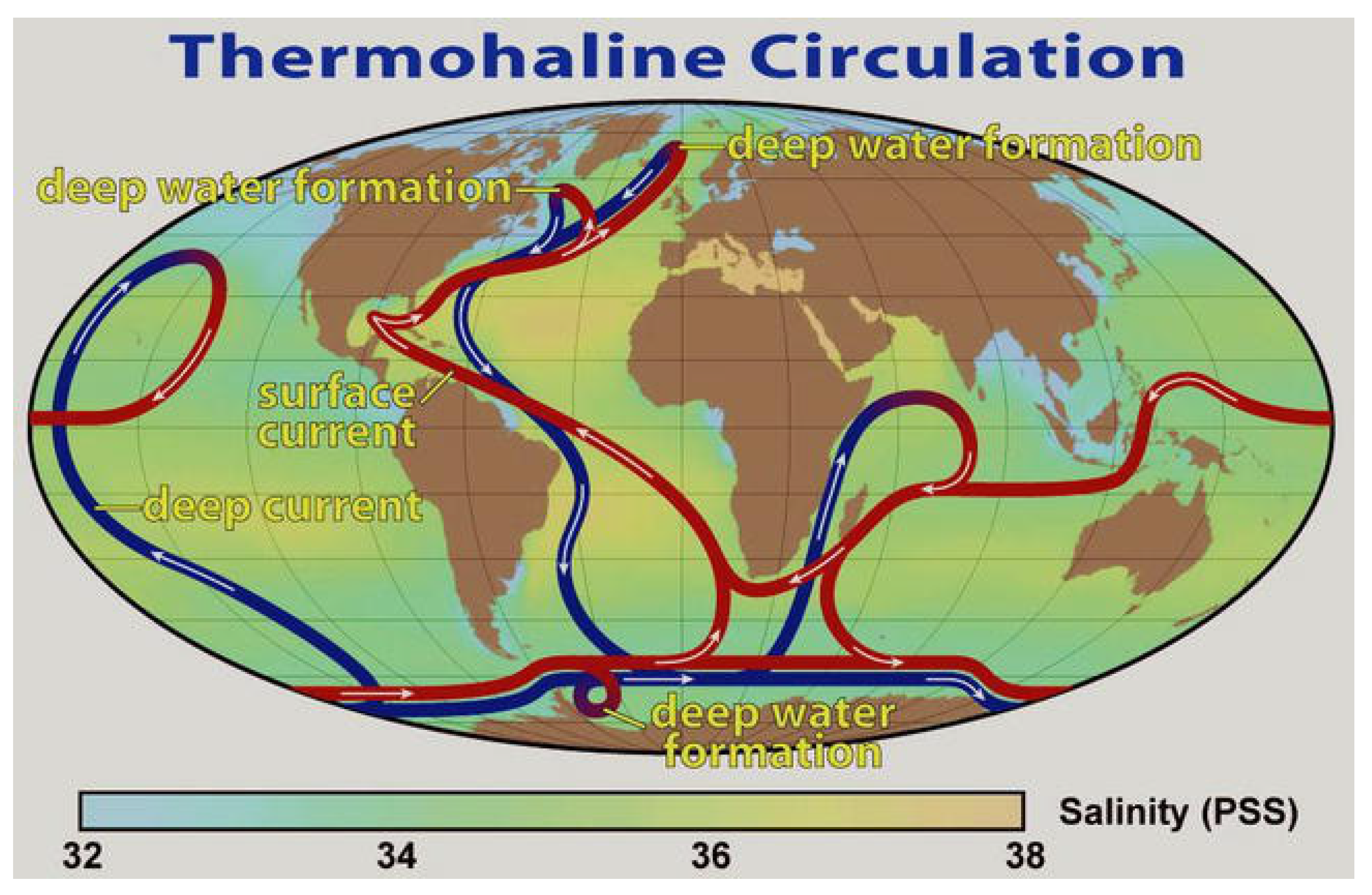
Figure 4. Paths of the thermohaline deep water circulation of warm North Atlantic bottom water (red) and the cold Subarctic return flow (blue) around the oceans [13].

3.4. The Deep-Water Thermohaline Currents

Inevitably, this buildup of heat in the North Atlantic creates a situation that results in periodic drastic events in the oceans. Oceanographers discovered a deep-water thermohaline circulation system over 50 years ago [30,36,37,38,39,40,41,42], although they did not speculate on the source of the heat. They have carried out enough research to demonstrate that there is a cycle of climate change that has been occurring every 100 ka during the last 800 ka B.P. It consists of fast-moving, deep thermohaline currents (THC) that move heat down to the southern hemisphere and form part of a global thermohaline system [40]. A return flow of cold Antarctic surface water moves north to the North Atlantic Ocean to replace it and restore the former sea level [40]. This has been suggested to cause a rapid cooling of the northern hemisphere, with glacial advances commencing within about 12 years in Greenland [40]. It was called the “bipolar see-saw” by Broecker [41,42,43]. After this, a period of increasing expansion of cold glacial conditions takes place for about 85 ka, with the sea level falling as more water is stored as ice on land. The cold periods are punctuated by minor warming episodes about every 23 ka. It finally ends when the Arctic air mass reaches an extent such that the warming caused by the change in tilt of the axis of the Earth (precession) causes the Arctic air mass to retreat with its main flow changing from Paths II and III to Path I (Figure 1), i.e., from the northern paths to that centered on southern British Columbia (Figure 1). This produced deglaciation and an Interglacial warm period lasting 10–15 ka. The Milankovitch cycles, specifically the eccentricity and the precession cycles, are believed to control the system [5,6].

3.5. The Intergovernmental Panel on Climate Change (IPCC) Proposal

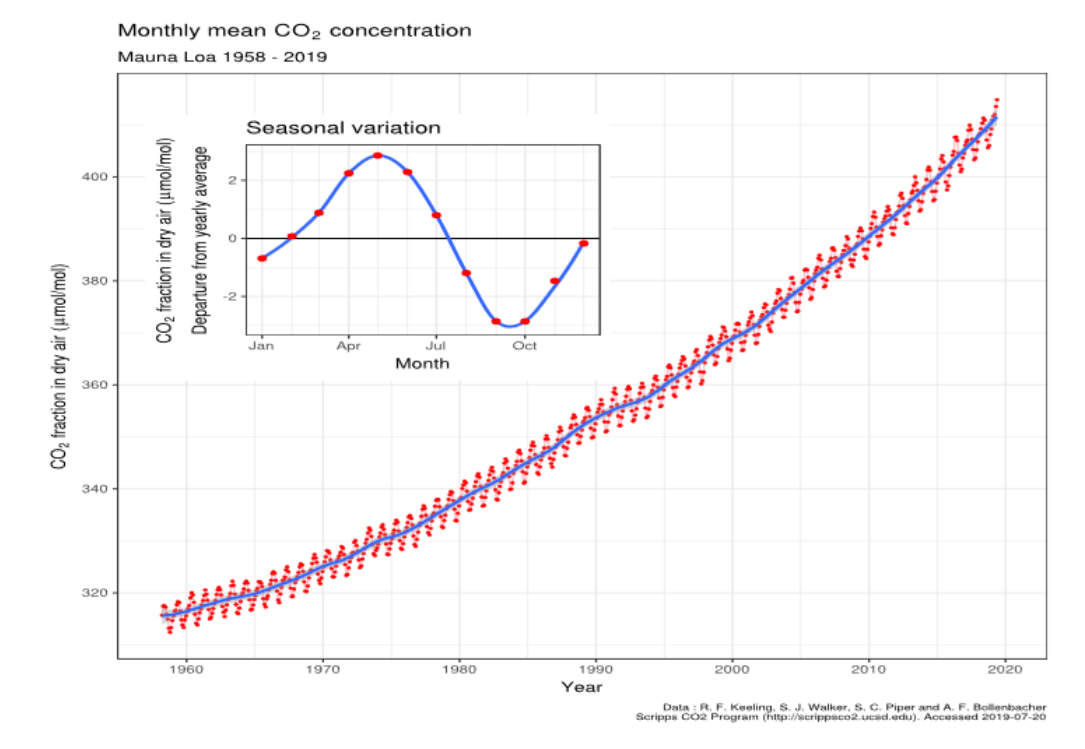
The IPCC is sponsored by the United Nations Organization and consists of selected climate scientists from several different countries. Their proposal in 1988 [17] is that human activities have resulted in increased atmospheric carbon dioxide, causing an increase in global temperature that overrides all other causes. It is assumed that the increase in atmospheric carbon dioxide since the beginning of the industrial revolution is the cause of the warming [17]. This is not consistent with studies involving changes in temperature in rural areas of the northern hemisphere [18,19] or in much of the southern hemisphere. It is true that it is a greenhouse gas, but it only affects a small range of long-wave reradiation from the surface of the Earth. The latter has a much wider range of wavelengths in its reradiation that depend on the temperature of the radiating surface. The increase in this gas is measured primarily at a single station at the summit of Mount Mauna Loa on the island of Hawaii, and the increase parallels the change in air temperature at that station since about 1900 A.D. It is generally assumed that it does not vary significantly around the globe except for minor seasonal changes.

No consideration is given to the fact that as the water in the oceans warms, the carbon dioxide dissolved in it decreases in solubility, and degassing takes place. This degassing from the oceans is slow and matches the increase in temperature of the upper 2000 m of the North Atlantic Ocean, at any rate for the data for that location since 1910. The warming appeared to precede increasing carbon dioxide concentrations during the last deglaciation at 24 sites around the world during the last deglaciation [43], but this was the result of comparing surface water temperature with the total carbon dioxide degassed from the entire water column at each site. The relationship of carbon dioxide to atmospheric air temperature has been widely discussed [44], and it has been shown that temperature changes precede changes in atmospheric carbon dioxide in the case of Antarctic cores [45,46].

Payet and Holmes provide summaries of some of the main arguments questioning the validity of the IPCC theory [47,48], while Christy has testified before the U.S. Congress that the mathematical models used by the IPCC do not match the real-world observations [49]. The theory has been embraced by governments, research workers who saw it as a means of obtaining research grants, commercial firms who saw the possibilities of new work, environmentalists, and the press since it was a simple explanation that could easily be understood by the public, but it has been severely criticized by a substantial number of experienced scientists. For example, there have been over 75,000 comments published on ResearchGate concerning the relationship between seawater temperature and increasing atmospheric carbon dioxide. Many are not very chivalrous!

An obvious problem is found when examining the map of the distribution of climate change (mean yearly air temperature) obtained by NASA from satellites (Figure 5). The main areas of warming are in Northern Canada and the Arctic, with lesser warming in the Sahara and the Australian Outback! Eastern China and Germany show no obvious warming. Obviously, this does not fit in with the main industrial centers in the world!

Since atmospheric carbon dioxide is present in extremely low quantities and has a narrow band of wavelengths that it absorbs, it cannot possibly compete in effect with the much larger total solar radiation reaching the Earth’s surface. It is a colorless, odorless gas with a molecular weight of 44 and is therefore mainly held down in the lower part of the atmosphere by gravity. Thus, models that assume that carbon dioxide rises to the outer portion of the atmosphere are unrealistic. Water, in all its phases, is a much more potent agent for moving heat around the globe.

Figure 5. Map showing the measured mean annual temperature change around the world between 1951–1978 and 2010–2019 (NASA). The warming trend is not global and varies from being negative along the coast of Antarctica to over 4 °C around the Arctic basin.

The evidence for greater solubility of carbon dioxide in water at colder temperatures implies carbon dioxide moving from the air into the oceans during cold events [33] and can result in large quantities of the gas reacting with calcium ions to produce large amounts of calcium carbonate in the form of a calcareous, fine-grained limestone, e.g., during the Devonian and Carboniferous Periods. This implies that its abundance in the atmosphere is not entirely dependent on temperature. Both methane and carbon dioxide are chemicals that can and do take part in chemical reactions, whereas temperature is a measure of heat energy and cannot be created or destroyed. However, it can be changed into other forms of energy.

3.5.1. Ongoing Measurements of the Solar Energy Reaching the Surface of the Atmosphere

The basic difference between the IPCC proposal and the other ideas is the source of the additional heat being received in certain areas of the world. The obvious test is to measure the solar heat reaching the upper surface of the Earth’s atmosphere. In 2015, the U.S. Government started collecting satellite measurements of the incoming radiation at the surface of the atmosphere over Salt Lake City, Utah (Figure 2), latitude 40° 26′ 20″ north, longitude 109° 57′ 30″ west from Greenwich.

Figure 6 shows the results obtained by the end of winter 2023, updated from Pangburn [50]. Shown in blue are the minimum winter temperatures compared with the preindustrial baseline, which are consistent with the precession cycle of Milankovitch commencing its decreasing mode of solar energy in the higher latitudes of the Northern Hemisphere in 2020. Thereafter, the winter temperatures at these sites decrease, indicating the commencement of a cooling trend that is likely to continue for the next 11.5 ka, based on the Milankovitch cycles. A corresponding warming trend should be occurring in the higher latitudes of the Southern Hemisphere. The current world record for cold is −98 °C, recorded in the Antarctic winter of 2018 [15], which is likely to stand for a long time since the change in the precession cycle should produce warmer winters there in the near future. In contrast, the winters in Western Canada and the southwest United States will be longer, colder, and have increasing precipitation.

Figure 6. Comparison of incoming solar radiation for specific summer and winter months measured by satellites in the atmosphere over Utah from 2015 to 2023, showing the difference between actual totals by season and predicted IPCC CO2 levels (modified from [52]).

This confirms the conclusion that the cold events involving glaciations are started by the 23 ka cycle of precession of the tilt of the earth’s axis, not the 41 ka cycle as concluded by Milankovitch [6] and by Broecker [38,39]. The 41 ka cycle modifies the effects of the precession cycle, as will other local geographic factors such as El Niño, ENSO, and Monsoons [51,52,53]. Carbon dioxide does not seem to be directly involved in the switch in winter climates in either hemisphere.

Conclusions

Enough theories have been tried and tested so that we now have a much better idea of how the climatic cycle works. The cycle commenced as soon as the Earth cooled down and is closely related to the main source of heating coming from the Sun and the Milankovitch cycles [5,6]. The Sun has been steadily warming since the beginning of the Earth’s history [31]. If the Astronomers are correct, this heating will continue until the Sun becomes a Red Star and swallows up the inner four planets one by one, possibly starting about 5 Ma in the future. This increase is superimposed on the 23 ka, 41 ka, and 100 ka cycles resulting from the relative positions and movements of the Sun and the Earth.

The climate of the Earth is driven by the uneven solar heating of the surface of the Earth and the movements of the excess heat in the tropics towards the cooler polar regions, primarily by the movements of ocean currents, modified by the movements of air masses. The rotation of the Earth results in the Coriolis force causing fluids to rotate in a clockwise direction in the northern Hemisphere and in an anticlockwise direction in the southern Hemisphere. It also results in an eastward movement of the air masses around the Poles of the Earth (Figure 1). Oceans make up 70% of the surface of the Earth, and the thermal properties of water result in ocean currents being the primary method of transporting heat towards the poles, aided by hurricanes. The circular shape of Antarctica prevents the direct transport of heat to Antarctica, in contrast to the heating of adjacent land areas of the Northern Hemisphere via the North Atlantic Ocean. The excess heat in the North Atlantic Ocean causes intense evaporation of sea water, producing dense, deep-water thermohaline masses that periodically move south to the colder water circulating around Antarctica, thus causing a periodic return flow of cold Antarctic surface water to the North Atlantic.

Carbon dioxide is a gas that is of fundamental importance to life as we know it. If its concentration in the atmosphere becomes too low, the bulk of the living things on the surface of the Earth will die, and the surface will become as barren as the other planets in the solar system [31,43]. There seems to be no connection between carbon dioxide and the temperature of the Earth [14,19,28,29,43,44,45,46].

Accordingly, the policies used by policymakers need to be changed to
eliminate the burial of carbon dioxide underground,
not provide large sums of public money to foreign firms to build battery factories,
and realize that we will still need the oil and gas industry in the future.
The gas tax should be eliminated.

Stuart Arthur Harris is Professor Emeritus, Department of Geography, University of Calgary

Footnote

This detailed consolidation of contemporary climate science is new and welcome.  Of course it brings in previous perspectives ignored or dismissed by IPCC, an important example being work of Oceanographers expressed in many posts here under the category Oceans Make Climate.  An early and succinct expression of this paradigm was provided by E M. Smith (Chiefio):

“The Earth, a rocky sphere at a distance from the Sun of ~149.6 million kilometers, where the Solar irradiance comes in at 1361.7 W/m2, with a mean global albedo, mostly from clouds, of 0.3 and with an atmosphere surrounding it containing a gaseous mass held in place by the planet’s gravity, producing a surface pressure of ~1013 mb, with an ocean of H2O covering 71% of its surface and with a rotation time around its own axis of ~24h, boasts an average global surface temperature of +15°C (288K).

Why this specific temperature? Because, with an atmosphere weighing down upon us with the particular pressure that ours exerts, this is the temperature level the surface has to reach and stay at for the global convectional engine to be able to pull enough heat away fast enough from it to be able to balance the particular averaged out energy input from the Sun that we experience.

It’s that simple.”  E. M. Smith

Refresher: GHG Theory and the Tests It Fails

There continues to be a lot of discussions (arguments?) and confusing statements regarding the Green House Gas theory of global warming, in legacy and social media.  So to clear the air I am reposting a concise explanation of the theory and a summary of various independant attempts to find empirical evidence supporting it.

Overview

Many people commenting both for and against reducing emissions from burning fossil fuels assume it has been proven that rising GHGs including CO2 cause higher atmospheric temperatures.  That premise has been tested and found wanting, as this post will describe.  First below is a summary of Global Warming Theory as presented in the scientific literature.  Then follows discussion of several unsuccessful attempts to find evidence of the hypothetical effects from GHGs in the relevant datasets.  Concluding is the alternative theory of climate change deriving from solar and oceanic fluctuations.

Scientific Theory of  Global Warming

The theory is well described in an article by Kristian (okulaer) prefacing his analysis of  “AGW warming” fingerprints in the CERES satellite data.  How the CERES EBAF Ed4 data disconfirms “AGW” in 3 different ways  by okulaer November 11, 2018. Excerpts below with my bolds.  Kristian provides more detailed discussion at his blog (title in red is link).

Background: The AGW Hypothesis

For those of you who aren’t entirely up to date with the hypothetical idea of an “(anthropogenically) enhanced GHE” (the “AGW”) and its supposed mechanism for (CO2-driven) global warming, the general principle is fairly neatly summed up here.

I’ve modified this diagram below somewhat, so as to clarify even further the concept of “the raised ERL (Effective Radiating Level)” – referred to as Ze in the schematic – and how it is meant to ‘drive’ warming within the Earth system; to simply bring the message of this fundamental premise of “AGW” thinking more clearly across.
Then we have the “doubled CO2” (t1) scenario, where the ERL has been pushed higher up into cooler air layers closer to the tropopause:

So when the atmosphere’s IR opacity increases with the excess input of CO2, the ERL is pushed up, and, with that, the temperature at ALL ALTITUDE-SPECIFIC LEVELS of the Earth system, from the surface (Ts) up through the troposphere (Ttropo) to the tropopause, directly connected via the so-called environmental lapse rate, i.e. the negative temperature profile rising up through the tropospheric column, is forced to do the same.

The Expected GHG Fingerprints

How, then, is this mechanism supposed to manifest itself?

Well, as the ERL, basically the “effective atmospheric layer of OUTWARD (upward) radiation”, the one conceptually/mathematically responsible for the All-Sky OLR flux at the ToA, and from now on, in this post, dubbed rather the EALOR, is lifted higher, into cooler layers of air, the diametrically opposite level, the “effective atmospheric layer of INWARD (downward) radiation” (EALIR), the one conceptually and mathematically responsible for the All-Sky DWLWIR ‘flux’ (or “the atmospheric back radiation”) to the surface, is simultaneously – and for the same physical reason, only inversely so – pulled down, into warmer layers of air closer to the surface. This latter concept was explained already in 1938 by G.S. Callendar. Feldman et al., 2015, (as an example) confirm that this is still how “Mainstream Climate Science (MCS)” views this ‘phenomenon’:

The gist being that, when we make the atmosphere more opaque to IR by putting more CO2 into it, “the atmospheric back radiation” (all-sky DWLWIR at sfc) will naturally increase as a result, reducing the radiative heat loss (net LW) from the surface up. And do note, it will increase regardless of (and thus, on top of) any atmospheric rise in temperature, which would itself cause an increase. Which is to say that it will always distinctly increase also RELATIVE TO tropospheric temps (which are, by definition, altitude-specific (fixed at one particular level, like ‘the lower troposphere’ (LT))). That is, even when tropospheric temps do go up, the DWLWIR should be observed to increase systematically and significantly MORE than what we would expect from the temperature rise alone. Because the EALIR moves further down.

Conversely, at the other end, at the ToA, the EALOR moves the opposite way, up into colder layers of air, which means the all-sky OLR (the outward emission flux) should rather be observed to systematically and significantly decrease over time relative to tropospheric temps. If tropospheric temps were to go up, while the DWLWIR at the surface should be observed to go significantly more up, the OLR at the ToA should instead be observed to go significantly less up, because the warming of the troposphere would simply serve to offset the ‘cooling’ of the effective emission to space due to the rise of the EALOR into colder strata of air.

What we’re looking for, then, if indeed there is an “enhancement” of some “radiative GHE” going on in the Earth system, causing global warming, is ideally the following:

OLR stays flat, while TLT increases significantly and systematically over time;
TLT increases systematically over time, but DWLWIR increases significantly even more.
Effectively summed up in this simplified diagram.

Figure 4. Note, this schematic disregards – for the sake of simplicity – any solar warming at work.

However, we also expect to observe one more “greenhouse” signature.

If we expect the OLR at the ToA to stay relatively flat, but the DWLWIR at the sfc to increase significantly over time, even relative to tropospheric temps, then, if we were to compare the two (OLR and DWLWIR) directly, we’d, after all, naturally expect to see a fairly remarkable systematic rise in the latter over the former (refer to Fig.4 above).

Which means we now have our three ways to test the reality of an hypothesized “enhanced GHE” as a ‘driver’ (cause) of global warming.

Three Tests for GHG Warming in the Sky

The null hypothesis in this case would claim or predict that, if there is NO strengthening “greenhouse mechanism” at work in the Earth system, we would observe:

1. The general evolution (beyond short-term, non-thermal noise (like ENSO-related humidity and cloud anomalies or volcanic aerosol anomalies))* of the All-Sky OLR flux at the ToA to track that of Ttropo (e.g. TLT) over time;
2. The general evolution of the All-Sky DWLWIR at the surface to track that of Ttropo (Ts + Ttropo, really) over time;
3. The general evolution of the All-Sky OLR at the ToA and the All-Sky DWLWIR at the surface to track each other over time, barring short-term, non-thermal noise.

* (We see how the curve of the all-sky OLR flux at the ToA differs quite noticeably from the TLT and DWLWIR curves, especially during some of the larger thermal fluctuations (up or down), normally associated with particularly strong ENSO events. This is because there are factors other than pure mean tropospheric temperatures that affect Earth’s final emission flux to space, like the concentration and distribution (equator→poles, surface→tropopause/stratosphere) of clouds, water vapour and aerosols. These may (and do) all vary strongly in the short term, significantly disrupting the normal temperature↔flux (Stefan-Boltzmann) connection, but in the longer term, they display a remarkable tendency to even out, leaving the tropospheric temperature signal as the only real factor to consider when comparing the OLR with Ttropo (TLT). Or not. The “AGW” idea specifically contends, resting on the premise, that these other factors (and crucially also including CO2, of course) do NOT even out over time, but rather accrue in a positive (‘warming’) direction.)

Missing Fingerprint #1

The first point above we have already covered extensively. The combined ERBS+CERES OLR record is seen to track the general progression of the UAHv6 TLT series tightly, both in the tropics and near-globally, all the way from 1985 till today (the last ~33 years), as discussed at length both here and here.

Since, however, in this post we’re specifically considering the CERES era alone, this is how the global OLR matches against the global TLT since 2000:
Figure 5.

This is simply the monthly CERES OLR flux data properly scaled (x0.266), enabling us to compare it more directly to temperatures (W/m2→K), and superimposed on the UAH TLT data. Watch how closely the two curves track each other, beyond the obvious noise. To highlight this striking state of relative congruity, we remove the main sources of visual bias in Fig.5 above. Notice, then, how the red OLR curve, after the 4-year period of fairly large ENSO-events (La Niña-El Niño-La Niña) between 2007/2008 and 2011/2012, when the cyan TLT curve goes both much lower (during the flanking La Niñas) and much higher (during the central El Niño), quickly reestablishes itself right back on top of the TLT curve, just where it used to be prior to that intermediate stretch of strong ENSO influence. And as a result, there is NO gradual divergence whatsoever to be spotted between the mean levels of these two curves, from the beginning of 2000 to the end of 2015.

Missing Fingerprint #2

The second point above is just as relevant as the first one, if we want to confirm (or disconfirm) the reality of an “enhanced GHE” at work in the Earth system. We compare the tropospheric temperatures with the DWLWIRsfc ‘flux’, that is, the apparent atmospheric thermal emission to the surface:

Figure 9. Note how the scaling of the flux (W/m2) values is different close to the surface than at the ToA. Here at the DWLWIR level, down low, we divide by 5 (x0.2), while at the OLR level, up high, we divide by 3.76 (x0.266).

We once again observe a rather close match overall. At the very least, we can safely say that there is no evidence whatsoever of any gradual, systematic rise in DWLWIR over the TLT, going from 2000 to 2018. If we plot the difference between the two curves in Fig.9 to obtain the “DWLWIR residual”, this fact becomes all the more evident:

Figure 10.

Remember now how the idea of an “enhanced GHE” requires the DWLWIR to rise significantly more than Ttropo (TLT) over time, and that its “null hypothesis” therefore postulates that such a rise should NOT be seen. Well, do we see such a rise in the plot above? Nope. Not at all. Which fits in perfectly with the impression we got at the ToA, where the TLT-curve was supposed to rise systematically up and away from the OLR-curve over time, but didn’t – no observed evidence there either of any “enhanced GHE” at work.

Missing Fingerprint #3

Finally, the third point above is also pretty interesting. It is simply to verify whether or not the CERES EBAF Ed4 ‘radiation flux’ data products are indeed suggesting a strengthening of some radiatively defined “greenhouse mechanism”. We sort of know the answer to this already, though, from going through points 1 and 2 above. Since neither the OLR at the ToA nor the DWLWIR at the surface deviated meaningfully from the UAHv6 TLT series (the same one used to compare with both, after all), we expect rather by necessity that the two CERES ‘flux products’ also shouldn’t themselves deviate meaningfully overall from one another. And, unsurprisingly, they don’t:

Figure 14.  Difference plot (“DWLWIR residual”)

Again, it is so easy here to allow oneself to be fooled by the visual impact of that late – obviously ENSO-related – peak, and, in this case, also a definite ENSO-based trough right at the start (you’ll plainly recognise it in Fig.14); another perfect example of how one’s perception and interpretation of a plot is directly affected by “the end-point bias”. Don’t be fooled:

If we expect the OLR at the ToA to stay relatively flat, but the DWLWIR at the sfc to increase significantly over time, even relative to tropospheric temps, then, if we were to compare the two (OLR and DWLWIR) directly, we’d […] naturally expect to see a fairly remarkable systematic rise in the latter over the former (refer to Fig.4 above).

Looking at Fig.14, and taking into account the various ENSO states along the way, does such a “remarkable systematic rise” in DWLWIR over OLR manifest itself during the CERES era?

I’m afraid not …

Five Lines of Evidence Against GHG Warming Hypothesis

The above analysis showing lack of GHG warming in the CERES data is added to four other atmospheric heat radiation studies.


1. In 2004 Ferenc MIskolczi studied the radiosonde datasets and found that the optical density at the top of the troposphere does not change with increasing CO2, since reducing H2O maintains optimal radiating efficiency.  His publication was suppressed by NASA, and he resigned from his job there. He has elaborated on his findings in publications as recently as 2014. See:  The Curious Case of Dr. Miskolczi

2.  Ronan and Michael Connolly  studied radiosonde data and concluded in 2014:

“It can be seen from the infra-red cooling model of Figure 19 that the greenhouse effect theory predicts a strong influence from the greenhouse gases on the barometric temperature profile. Moreover, the modeled net effect of the greenhouse gases on infra-red cooling varies substantially over the entire atmospheric profile.

However, when we analysed the barometric temperature profiles of the radiosondes in this paper, we were unable to detect any influence from greenhouse gases. Instead, the profiles were very well described by the thermodynamic properties of the main atmospheric gases, i.e., N 2 and O 2 , in a gravitational field.”

While water vapour is a greenhouse gas, the effects of water vapour on the temperature profile did not appear to be related to its radiative properties, but rather its different molecular structure and the latent heat released/gained by water in its gas/liquid/solid phase changes.

For this reason, our results suggest that the magnitude of the greenhouse effect is very small, perhaps negligible. At any rate, its magnitude appears to be too small to be detected from the archived radiosonde data.” Pg. 18 of referenced research paper

See:  The Physics Of The Earth’s Atmosphere I. Phase Change Associated With Tropopause

3.  An important proof against the CO2 global warming claim was included in John Christy’s testimony 29 March 2017 at the House Committee on Science, Space and Technology. The text and diagram below are from that document which can be accessed here.

IPCC Assessment Reports show that the IPCC climate models performed best versus observations when they did not include extra GHGs and this result can be demonstrated with a statistical model as well.

Figure 5. Simplification of IPCC AR5 shown above in Fig. 4. The colored lines represent the range of results for the models and observations. The trends here represent trends at different levels of the tropical atmosphere from the surface up to 50,000 ft. The gray lines are the bounds for the range of observations, the blue for the range of IPCC model results without extra GHGs and the red for IPCC model results with extra GHGs.The key point displayed is the lack of overlap between the GHG model results (red) and the observations (gray). The nonGHG model runs (blue) overlap the observations almost completely.

4. 2021 Finding from William Happer

The updating of this previous post is timely following on Dr. William Happer’s additional test of Global Warming Theory, the notion that rising CO2 causes dangerous warming of earth’s climate. A synopsis of that presentation is at Climate Change and CO2 Not a Problem.  For the purpose of this discussion I will add at the end Happer’s finding that additional CO2 (from any and all sources) shows negligible effect in the radiative profile of the atmosphere.

The full discussion of this slide is in the linked synopsis at the top.  In summary here, Happer points to the black line of CO2 infrared absorption at 400 ppm, compared to CO2 IR absorption at 800 ppm.

The important point here is the red line. This is what Earth would radiate to space if you were to double the CO2 concentration from today’s value. Right in the middle of these curves, you can see a gap in spectrum. The gap is caused by CO2 absorbing radiation that would otherwise cool the Earth. If you double the amount of CO2, you don’t double the size of that gap. You just go from the black curve to the red curve, and you can barely see the difference. The gap hardly changes.

The message I want you to understand, which practically no one really understands, is that doubling CO2 makes almost no difference.

An Alternative Theory of Natural Climate Change

Dan Pangburn is a professional engineer who has synthesized the solar and oceanic factors into a mathematical model that correlates with Average Global Temperature (AGT). On his blog is posted a monograph Cause of Global Climate Change explaining clearly his thinking and the maths.  I provided a post with some excerpts and graphs as a synopsis of his analysis, in hopes others will also access and appreciate his work on this issue.  See  Quantifying Natural Climate Change

Footnote on the status of an hypothetical effect too small to be measured:  Bertrand Russell’s teapot

Open image in new tab to enlarge.

Postscript:  For an explanation why CO2 has negligible effect on thermal properties of the atmosphere, and why all W/m2 are not created equal, see: Light Bulbs Disprove Global Warming

Zero Carbon False Pretenses

19170447-global_warming_1.530x298

Legal Definition of false pretenses: false representations concerning past or present facts that are made with the intent to defraud another.  Marriam-Webster.

As we will see below, the zero carbon campaign relies on a series of false representations, primarily from omitting realities contradictory to the CO2 scare narrative.

In the aftermath of Glasgow COP, many have noticed how incredible were the pronouncements and claims from UK hosts as well as other speakers intending to inflame public opinion in support of the UN agenda.  No one in the media applies any kind of critical intelligence examining the veracity of facts and conclusions trumpeted before, during and after the conference.  In the interest of presenting an alternate, unalarming paradigm of earth’s climate, I am reposting a previous discussion of how wrongheaded is the IPCC “consensus science.”

Background

With all the fuss about the “Green New Deal” and attempts to blame recent cold waves on rising CO2, it is wise to remember the logic of the alarmist argument.  It boils down to two suppositions:

Rising atmospheric CO2 makes the planet warmer.

Rising emissions from humans burning fossil fuels makes atmospheric CO2 higher.

The second assertion is challenged in a post: Who to Blame for Rising CO2?

This post addresses the first claim.  Remember also that all of the so-called “lines of evidence” for global warming do not distinguish between human and natural causes.  Typically the evidence cited falls into these categories:

Global temperature rise
Warming oceans
Shrinking ice sheets
Glacial retreat
Decreased snow cover
Sea level rise
Declining Arctic sea ice
Extreme events

However, all of these are equivocal, involving signal and noise issues. Note also that all of them are alleged impacts from the first one.  And in any case, the fact of any changes does not in itself prove human causation.  That attribution rests solely on unvalidated climate models.  Below is a discussion of the reductionist mental process by which climate complexity and natural forces are systematically excluded to reach the pre-determined conclusion.

Original Post:  Climate Reductionism


Reductionists are those who take one theory or phenomenon to be reducible to some other theory or phenomenon. For example, a reductionist regarding mathematics might take any given mathematical theory to be reducible to logic or set theory. Or, a reductionist about biological entities like cells might take such entities to be reducible to collections of physico-chemical entities like atoms and molecules.
Definition from The Internet Encyclopedia of Philosophy

Some of you may have seen this recent article: Divided Colorado: A Sister And Brother Disagree On Climate Change

The reporter describes a familiar story to many of us.  A single skeptic (the brother) is holding out against his sister and rest of the family who accept global warming/climate change. And of course, after putting some of their interchanges into the text, the reporter then sides against the brother by taking the word of a climate expert. From the article:

“CO2 absorbs infrared heat in certain wavelengths and those measurements were made first time — published — when Abraham Lincoln was president of the United States,” says Scott Denning, a professor of atmospheric science at Colorado State University. “Since that time, those measurements have been repeated by better and better instruments around the world.”

CO2, or carbon dioxide, has increased over time, scientists say, because of human activity. It’s a greenhouse gas that’s contributing to global warming.

“We know precisely how the molecule wiggles and waggles, and what the quantum interactions between the electrons are that cause everyone one of these little absorption lines,” he says. “And there’s just no wiggle room around it — CO2 absorbs heat, heat warms things up, so adding CO2 to the atmosphere will warm the climate.”

Denning says that most of the CO2 we see added to the atmosphere comes from humans — mostly through burning coal, oil and gas, which, as he puts it, is “indirectly caused by us.”

When looking at the scientific community, Denning says it’s united, as far as he knows.

earth-science-climatic-change-Climate-System-3-114-g001

A Case Study of Climate Reductionism

Denning’s comments, supported by several presentations at his website demonstrate how some scientists (all those known to Denning) engage in a classic form of reductionism.

The full complexity of earth’s climate includes many processes, some poorly understood, but known to have effects orders of magnitude greater than the potential of CO2 warming. The case for global warming alarm rests on simplifying away everything but the predetermined notion that humans are warming the planet. It goes like this:

Our Complex Climate

Earth’s climate is probably the most complicated natural phenomenon ever studied. Not only are there many processes, but they also interact and influence each other over various timescales, causing lagged effects and multiple cycling. This diagram illustrates some of the climate elements and interactions between them.

Flows and Feedbacks for Climate Models

The Many Climate Dimensions

Further, measuring changes in the climate goes far beyond temperature as a metric. Global climate indices, like the European dataset include 12 climate dimensions with 74 tracking measures. The set of climate dimensions include:

  • Sunshine
  • Pressure
  • Humidity
  • Cloudiness
  • Wind
  • Rain
  • Snow
  • Drought
  • Temperature
  • Heat
  • Cold

And in addition there are compound measures combining temperature and precipitation. While temperature is important, climate is much more than that.  With this reduction, all other dimensions are swept aside, and climate change is simplified down to global warming as seen in temperature measurements.

Climate Thermodynamics: Weather is the Climate System at work.

Another distortion is the notion that weather is bad or good, depending on humans finding it favorable. In fact, all that we call weather are the ocean and atmosphere acting to resolve differences in temperatures, humidities and pressures. It is the natural result of a rotating, irregular planetary surface mostly covered with water and illuminated mostly at its equator.

The sun warms the surface, but the heat escapes very quickly by convection so the build-up of heat near the surface is limited. In an incompressible atmosphere, it would *all* escape, and you’d get no surface warming. But because air is compressible, and because gases warm up when they’re compressed and cool down when allowed to expand, air circulating vertically by convection will warm and cool at a certain rate due to the changing atmospheric pressure.

Climate science has been obsessed with only a part of the system, namely the atmosphere and radiation, in order to focus attention on the non-condensing IR active gases. The climate is framed as a 3D atmosphere above a 2D surface. That narrow scope leaves out the powerful non-radiative heat transfer mechanisms that dominate the lower troposphere, and the vast reservoir of thermal energy deep in the oceans.

As Dr. Robert E Stevenson writes, it could have been different:

“As an oceanographer, I’d been around the world, once or twice, and I was rather convinced that I knew the factors that influenced the Earth’s climate. The oceans, by virtue of their enormous density and heat-storage capacity, are the dominant influence on our climate. It is the heat budget and the energy that flows into and out of the oceans that basically determines the mean temperature of the global atmosphere. These interactions, plus evaporation, are quite capable of canceling the slight effect of man-produced CO2.”

The troposphere is dominated by powerful heat transfer mechanisms: conduction, convection and evaporation, as well as physical kinetic movements.  All this is ignored in order to focus on radiative heat transfer, a bit player except at the top of the atmosphere.

There’s More than the Atmosphere

Once the world of climate is greatly reduced down to radiation of infrared frequencies, yet another set of blinders is applied. The most important source of radiation is of course the sun. Solar radiation in the short wave (SW) range is what we see and what heats up the earth’s surface, particularly the oceans. In addition solar radiation includes infrared, some absorbed in the atmosphere and some at the surface. The ocean is also a major source of heat into the atmosphere since its thermal capacity is 1000 times what the air can hold. The heat transfer from ocean to air is both by way of evaporation (latent heat) and also by direct contact at the sea surface (conduction).

Yet conventional climate science dismisses the sun as a climate factor saying that its climate input is unvarying. That ignores significant fluctuations in parts of the light range, for example ultraviolet, and also solar effects such as magnetic fields and cosmic rays. Also disregarded is solar energy varying due to cloud fluctuations. The ocean is also dismissed as a source of climate change despite obvious ocean warming and cooling cycles ranging from weeks to centuries. The problem is such oscillations are not well understood or predictable, so can not be easily modeled.

With the sun and the earth’s surface and ocean dismissed, the only consideration left is the atmosphere.

The Gorilla Greenhouse Gas

Thus climate has been reduced down to heat radiation passing through the atmosphere comprised of gases. One of the biggest reductions then comes from focusing on CO2 rather than H20. Of all the gases that are IR-active, water is the most prevalent and covers more of the spectrum.

The diagram below gives you the sense of proportion.

GHG blocks

The Role of CO2

We come now to the role of CO2 in “trapping heat” and making the world warmer. The theory is that CO2 acts like a blanket by absorbing and re-radiating heat that would otherwise escape into space. By delaying the cooling while solar energy comes in constantly, CO2 is presumed to cause a buildup of heat resulting in warmer temperatures.

How the Atmosphere Processes Heat

There are 3 ways that heat (Infrared or IR radiation) passes from the surface to space.

1) A small amount of the radiation leaves directly, because all gases in our air are transparent to IR of 10-14 microns (sometimes called the “atmospheric window.” This pathway moves at the speed of light, so no delay of cooling occurs.

2) Some radiation is absorbed and re-emitted by IR active gases up to the tropopause. Calculations of the free mean path for CO2 show that energy passes from surface to tropopause in less than 5 milliseconds. This is almost speed of light, so delay is negligible. H2O is so variable across the globe that its total effects are not measurable. In arid places, like deserts, we see that CO2 by itself does not prevent the loss of the day’s heat after sundown.

3) The bulk gases of the atmosphere, O2 and N2, are warmed by conduction and convection from the surface. They also gain energy by collisions with IR active gases, some of that IR coming from the surface, and some absorbed directly from the sun. Latent heat from water is also added to the bulk gases. O2 and N2 are slow to shed this heat, and indeed must pass it back to IR active gases at the top of the troposphere for radiation into space.

In a parcel of air each molecule of CO2 is surrounded by 2500 other molecules, mostly O2 and N2. In the lower atmosphere, the air is dense and CO2 molecules energized by IR lose it to surrounding gases, slightly warming the entire parcel. Higher in the atmosphere, the air is thinner, and CO2 molecules can emit IR into space. Surrounding gases resupply CO2 with the energy it lost, which leads to further heat loss into space.

This third pathway has a significant delay of cooling, and is the reason for our mild surface temperature, averaging about 15C. Yes, earth’s atmosphere produces a buildup of heat at the surface. The bulk gases, O2 and N2, trap heat near the surface, while IR active gases, mainly H20 and CO2, provide the radiative cooling at the top of the atmosphere. Near the top of the atmosphere you will find the -18C temperature.

Sources of CO2

Note the size of the human emissions next to the red arrow.

A final reduction comes down to how much of the CO2 in the atmosphere is there because of us. Alarmists/activists say any increase in CO2 is 100% man-made, and would be more were it not for natural CO2 sinks, namely the ocean and biosphere. The claim overlooks the fact that those sinks are also sources of CO2 and the flux from the land and sea is an order of magnitude higher than estimates of human emissions. In fact, our few Gigatons of carbon are lost within the error range of estimating natural emissions. Insects produce far more CO2 than humans do by all our activity, including domestic animals.

Why Climate Reductionism is Dangerous

Reducing the climate in this fashion reaches its logical conclusion in the Activist notion of the “450 Scenario.”  Since Cancun, IPCC is asserting that global warming is capped at 2C by keeping CO2 concentration below 450 ppm. From Summary for Policymakers (SPM) AR5

Emissions scenarios leading to CO2-equivalent concentrations in 2100 of about 450 ppm or lower are likely to maintain warming below 2°C over the 21st century relative to pre-industrial levels. These scenarios are characterized by 40 to 70% global anthropogenic GHG emissions reductions by 2050 compared to 2010, and emissions levels near zero or below in 2100.

Thus is born the “450 Scenario” by which governments can be focused upon reducing human emissions without any reference to temperature measurements, which are troublesome and inconvenient. Almost everything in the climate world has been erased, and “Fighting Climate Change” is now code to mean accounting for fossil fuel emissions.

Conclusion

All propagandists begin with a kernel of truth, in this case the fact everything acting in the world has an effect on everything else. Edward Lorenz brought this insight to bear on the climate system in a ground breaking paper he presented in 1972 entitled: “Predictability: Does the Flap of a Butterfly’s Wings in Brazil Set Off a Tornado in Texas?”  Everything does matter and has an effect. Obviously humans impact on the climate in places where we build cities and dams, clear forests and operate farms. And obviously we add some CO2 when we burn fossil fuels.

But it is wrong to ignore the major dominant climate realities in order to exaggerate a small peripheral factor for the sake of an agenda. It is wrong to claim that IR active gases somehow “trap” heat in the air when they immediately emit any energy absorbed, if not already lost colliding with another molecule. No, it is the bulk gases, N2 and O2, making up the mass of the atmosphere, together with the ocean delaying the cooling and giving us the mild and remarkably stable temperatures that we enjoy. And CO2 does its job by radiating the heat into space.

Since we do little to cause it, we can’t fix it by changing what we do. The climate will not stop changing because we put a price on carbon. And the sun will rise despite the cock going on strike to protest global warming.

Footnote: For a deeper understanding of the atmospheric physics relating to CO2 and climate, I have done a guide and synopsis of Murry Salby’s latest textbook on the subject:  Fearless Physics from Dr. Salby

Global Warming Theory and the Tests It Fails 2021

The updating of this previous post is timely following on Dr. William Happer’s additional test of Global Warming Theory, the notion that rising CO2 causes dangerous warming of earth’s climate. A synopsis of that presentation is at Climate Change and CO2 Not a Problem.  For the purpose of this discussion I will add at the end Happer’s finding that additional CO2 (from any and all sources) shows negligible effect in the radiative profile of the atmosphere.

Overview

Many people commenting both for and against reducing emissions from burning fossil fuels assume it has been proven that rising GHGs including CO2 cause higher atmospheric temperatures.  That premise has been tested and found wanting, as this post will describe.  First below is a summary of Global Warming Theory as presented in the scientific literature.  Then follows discussion of several unsuccessful attempts to find evidence of the hypothetical effects from GHGs in the relevant datasets.  Concluding is the alternative theory of climate change deriving from solar and oceanic fluctuations.

Scientific Theory of  Global Warming

The theory is well described in an article by Kristian (okulaer) prefacing his analysis of  “AGW warming” fingerprints in the CERES satellite data.  How the CERES EBAF Ed4 data disconfirms “AGW” in 3 different ways  by okulaer November 11, 2018. Excerpts below with my bolds.  Kristian provides more detailed discussion at his blog (title in red is link).

Background: The AGW Hypothesis

For those of you who aren’t entirely up to date with the hypothetical idea of an “(anthropogenically) enhanced GHE” (the “AGW”) and its supposed mechanism for (CO2-driven) global warming, the general principle is fairly neatly summed up here.

I’ve modified this diagram below somewhat, so as to clarify even further the concept of “the raised ERL (Effective Radiating Level)” – referred to as Ze in the schematic – and how it is meant to ‘drive’ warming within the Earth system; to simply bring the message of this fundamental premise of “AGW” thinking more clearly across.
Then we have the “doubled CO2” (t1) scenario, where the ERL has been pushed higher up into cooler air layers closer to the tropopause:

So when the atmosphere’s IR opacity increases with the excess input of CO2, the ERL is pushed up, and, with that, the temperature at ALL ALTITUDE-SPECIFIC LEVELS of the Earth system, from the surface (Ts) up through the troposphere (Ttropo) to the tropopause, directly connected via the so-called environmental lapse rate, i.e. the negative temperature profile rising up through the tropospheric column, is forced to do the same.

The Expected GHG Fingerprints

How, then, is this mechanism supposed to manifest itself?

Well, as the ERL, basically the “effective atmospheric layer of OUTWARD (upward) radiation”, the one conceptually/mathematically responsible for the All-Sky OLR flux at the ToA, and from now on, in this post, dubbed rather the EALOR, is lifted higher, into cooler layers of air, the diametrically opposite level, the “effective atmospheric layer of INWARD (downward) radiation” (EALIR), the one conceptually and mathematically responsible for the All-Sky DWLWIR ‘flux’ (or “the atmospheric back radiation”) to the surface, is simultaneously – and for the same physical reason, only inversely so – pulled down, into warmer layers of air closer to the surface. This latter concept was explained already in 1938 by G.S. Callendar. Feldman et al., 2015, (as an example) confirm that this is still how “Mainstream Climate Science (MCS)” views this ‘phenomenon’:

The gist being that, when we make the atmosphere more opaque to IR by putting more CO2 into it, “the atmospheric back radiation” (all-sky DWLWIR at sfc) will naturally increase as a result, reducing the radiative heat loss (net LW) from the surface up. And do note, it will increase regardless of (and thus, on top of) any atmospheric rise in temperature, which would itself cause an increase. Which is to say that it will always distinctly increase also RELATIVE TO tropospheric temps (which are, by definition, altitude-specific (fixed at one particular level, like ‘the lower troposphere’ (LT))). That is, even when tropospheric temps do go up, the DWLWIR should be observed to increase systematically and significantly MORE than what we would expect from the temperature rise alone. Because the EALIR moves further down.

Conversely, at the other end, at the ToA, the EALOR moves the opposite way, up into colder layers of air, which means the all-sky OLR (the outward emission flux) should rather be observed to systematically and significantly decrease over time relative to tropospheric temps. If tropospheric temps were to go up, while the DWLWIR at the surface should be observed to go significantly more up, the OLR at the ToA should instead be observed to go significantly less up, because the warming of the troposphere would simply serve to offset the ‘cooling’ of the effective emission to space due to the rise of the EALOR into colder strata of air.

What we’re looking for, then, if indeed there is an “enhancement” of some “radiative GHE” going on in the Earth system, causing global warming, is ideally the following:

OLR stays flat, while TLT increases significantly and systematically over time;
TLT increases systematically over time, but DWLWIR increases significantly even more.
Effectively summed up in this simplified diagram.

Figure 4. Note, this schematic disregards – for the sake of simplicity – any solar warming at work.

However, we also expect to observe one more “greenhouse” signature.

If we expect the OLR at the ToA to stay relatively flat, but the DWLWIR at the sfc to increase significantly over time, even relative to tropospheric temps, then, if we were to compare the two (OLR and DWLWIR) directly, we’d, after all, naturally expect to see a fairly remarkable systematic rise in the latter over the former (refer to Fig.4 above).

Which means we now have our three ways to test the reality of an hypothesized “enhanced GHE” as a ‘driver’ (cause) of global warming.


Three Tests for GHG Warming in the Sky

The null hypothesis in this case would claim or predict that, if there is NO strengthening “greenhouse mechanism” at work in the Earth system, we would observe:

1. The general evolution (beyond short-term, non-thermal noise (like ENSO-related humidity and cloud anomalies or volcanic aerosol anomalies))* of the All-Sky OLR flux at the ToA to track that of Ttropo (e.g. TLT) over time;
2. The general evolution of the All-Sky DWLWIR at the surface to track that of Ttropo (Ts + Ttropo, really) over time;
3. The general evolution of the All-Sky OLR at the ToA and the All-Sky DWLWIR at the surface to track each other over time, barring short-term, non-thermal noise.

* (We see how the curve of the all-sky OLR flux at the ToA differs quite noticeably from the TLT and DWLWIR curves, especially during some of the larger thermal fluctuations (up or down), normally associated with particularly strong ENSO events. This is because there are factors other than pure mean tropospheric temperatures that affect Earth’s final emission flux to space, like the concentration and distribution (equator→poles, surface→tropopause/stratosphere) of clouds, water vapour and aerosols. These may (and do) all vary strongly in the short term, significantly disrupting the normal temperature↔flux (Stefan-Boltzmann) connection, but in the longer term, they display a remarkable tendency to even out, leaving the tropospheric temperature signal as the only real factor to consider when comparing the OLR with Ttropo (TLT). Or not. The “AGW” idea specifically contends, resting on the premise, that these other factors (and crucially also including CO2, of course) do NOT even out over time, but rather accrue in a positive (‘warming’) direction.)

Missing Fingerprint #1

The first point above we have already covered extensively. The combined ERBS+CERES OLR record is seen to track the general progression of the UAHv6 TLT series tightly, both in the tropics and near-globally, all the way from 1985 till today (the last ~33 years), as discussed at length both here and here.

Since, however, in this post we’re specifically considering the CERES era alone, this is how the global OLR matches against the global TLT since 2000:
Figure 5.

This is simply the monthly CERES OLR flux data properly scaled (x0.266), enabling us to compare it more directly to temperatures (W/m2→K), and superimposed on the UAH TLT data. Watch how closely the two curves track each other, beyond the obvious noise. To highlight this striking state of relative congruity, we remove the main sources of visual bias in Fig.5 above. Notice, then, how the red OLR curve, after the 4-year period of fairly large ENSO-events (La Niña-El Niño-La Niña) between 2007/2008 and 2011/2012, when the cyan TLT curve goes both much lower (during the flanking La Niñas) and much higher (during the central El Niño), quickly reestablishes itself right back on top of the TLT curve, just where it used to be prior to that intermediate stretch of strong ENSO influence. And as a result, there is NO gradual divergence whatsoever to be spotted between the mean levels of these two curves, from the beginning of 2000 to the end of 2015.

Missing Fingerprint #2

The second point above is just as relevant as the first one, if we want to confirm (or disconfirm) the reality of an “enhanced GHE” at work in the Earth system. We compare the tropospheric temperatures with the DWLWIRsfc ‘flux’, that is, the apparent atmospheric thermal emission to the surface:

Figure 9. Note how the scaling of the flux (W/m2) values is different close to the surface than at the ToA. Here at the DWLWIR level, down low, we divide by 5 (x0.2), while at the OLR level, up high, we divide by 3.76 (x0.266).

We once again observe a rather close match overall. At the very least, we can safely say that there is no evidence whatsoever of any gradual, systematic rise in DWLWIR over the TLT, going from 2000 to 2018. If we plot the difference between the two curves in Fig.9 to obtain the “DWLWIR residual”, this fact becomes all the more evident:

Figure 10.

Remember now how the idea of an “enhanced GHE” requires the DWLWIR to rise significantly more than Ttropo (TLT) over time, and that its “null hypothesis” therefore postulates that such a rise should NOT be seen. Well, do we see such a rise in the plot above? Nope. Not at all. Which fits in perfectly with the impression we got at the ToA, where the TLT-curve was supposed to rise systematically up and away from the OLR-curve over time, but didn’t – no observed evidence there either of any “enhanced GHE” at work.

Missing Fingerprint #3

Finally, the third point above is also pretty interesting. It is simply to verify whether or not the CERES EBAF Ed4 ‘radiation flux’ data products are indeed suggesting a strengthening of some radiatively defined “greenhouse mechanism”. We sort of know the answer to this already, though, from going through points 1 and 2 above. Since neither the OLR at the ToA nor the DWLWIR at the surface deviated meaningfully from the UAHv6 TLT series (the same one used to compare with both, after all), we expect rather by necessity that the two CERES ‘flux products’ also shouldn’t themselves deviate meaningfully overall from one another. And, unsurprisingly, they don’t:

Figure 14.  Difference plot (“DWLWIR residual”)

Again, it is so easy here to allow oneself to be fooled by the visual impact of that late – obviously ENSO-related – peak, and, in this case, also a definite ENSO-based trough right at the start (you’ll plainly recognise it in Fig.14); another perfect example of how one’s perception and interpretation of a plot is directly affected by “the end-point bias”. Don’t be fooled:

If we expect the OLR at the ToA to stay relatively flat, but the DWLWIR at the sfc to increase significantly over time, even relative to tropospheric temps, then, if we were to compare the two (OLR and DWLWIR) directly, we’d […] naturally expect to see a fairly remarkable systematic rise in the latter over the former (refer to Fig.4 above).

Looking at Fig.14, and taking into account the various ENSO states along the way, does such a “remarkable systematic rise” in DWLWIR over OLR manifest itself during the CERES era?

I’m afraid not …

Five Lines of Evidence Against GHG Warming Hypothesis

The lack of GHG warming in the CERES data is added to four previous atmospheric heat radiation studies.


  1.  In 2004 Ferenc MIskolczi studied the radiosonde datasets and found that the optical density at the top of the troposphere does not change with increasing CO2, since reducing H2O maintains optimal radiating efficiency.  His publication was suppressed by NASA, and he resigned from his job there. He has elaborated on his findings in publications as recently as 2014. See:  The Curious Case of Dr. Miskolczi

2.  Ronan and Michael Connolly  studied radiosonde data and concluded in 2014:

“It can be seen from the infra-red cooling model of Figure 19 that the greenhouse effect theory predicts a strong influence from the greenhouse gases on the barometric temperature profile. Moreover, the modeled net effect of the greenhouse gases on infra-red cooling varies substantially over the entire atmospheric profile.

However, when we analysed the barometric temperature profiles of the radiosondes in this paper, we were unable to detect any influence from greenhouse gases. Instead, the profiles were very well described by the thermodynamic properties of the main atmospheric gases, i.e., N 2 and O 2 , in a gravitational field.”

While water vapour is a greenhouse gas, the effects of water vapour on the temperature profile did not appear to be related to its radiative properties, but rather its different molecular structure and the latent heat released/gained by water in its gas/liquid/solid phase changes.

For this reason, our results suggest that the magnitude of the greenhouse effect is very small, perhaps negligible. At any rate, its magnitude appears to be too small to be detected from the archived radiosonde data.” Pg. 18 of referenced research paper

See:  The Physics Of The Earth’s Atmosphere I. Phase Change Associated With Tropopause

3.  An important proof against the CO2 global warming claim was included in John Christy’s testimony 29 March 2017 at the House Committee on Science, Space and Technology. The text and diagram below are from that document which can be accessed here.

IPCC Assessment Reports show that the IPCC climate models performed best versus observations when they did not include extra GHGs and this result can be demonstrated with a statistical model as well.

Figure 5. Simplification of IPCC AR5 shown above in Fig. 4. The colored lines represent the range of results for the models and observations. The trends here represent trends at different levels of the tropical atmosphere from the surface up to 50,000 ft. The gray lines are the bounds for the range of observations, the blue for the range of IPCC model results without extra GHGs and the red for IPCC model results with extra GHGs.The key point displayed is the lack of overlap between the GHG model results (red) and the observations (gray). The nonGHG model runs (blue) overlap the observations almost completely.

4. Update 2021 Finding from William Happer

The full discussion of this slide is in the linked synopsis at the top.  In summary here, Happer points to the black line of CO2 infrared absorption at 400 ppm, compared to CO2 IR absorption at 800 ppm.

The important point here is the red line. This is what Earth would radiate to space if you were to double the CO2 concentration from today’s value. Right in the middle of these curves, you can see a gap in spectrum. The gap is caused by CO2 absorbing radiation that would otherwise cool the Earth. If you double the amount of CO2, you don’t double the size of that gap. You just go from the black curve to the red curve, and you can barely see the difference. The gap hardly changes.

The message I want you to understand, which practically no one really understands, is that doubling CO2 makes almost no difference.

An Alternative Theory of Natural Climate Change

Dan Pangburn is a professional engineer who has synthesized the solar and oceanic factors into a mathematical model that correlates with Average Global Temperature (AGT). On his blog is posted a monograph Cause of Global Climate Change explaining clearly his thinking and the maths.  I provided a post with some excerpts and graphs as a synopsis of his analysis, in hopes others will also access and appreciate his work on this issue.  See  Quantifying Natural Climate Change

Footnote on the status of an hypothetical effect too small to be measured:  Bertrand Russell’s teapot

Open image in new tab to enlarge.

Postscript:  For an explanation why CO2 has negligible effect on thermal properties of the atmosphere, and why all W/m2 are not created equal, see: Light Bulbs Disprove Global Warming
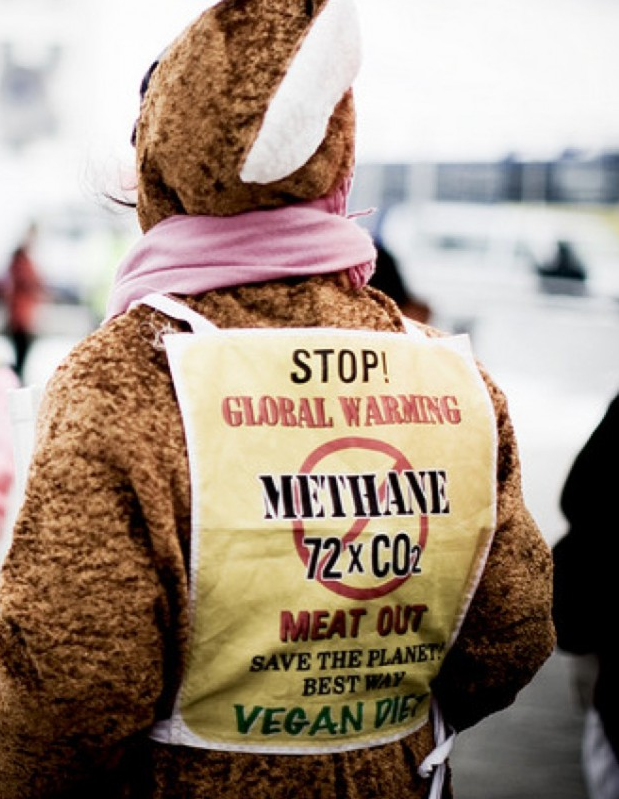
2021 Update: Climate Reductionism

19170447-global_warming_1.530x298In the aftermath of Glasgow COP, many have noticed how incredible were the pronouncements and claims from UK hosts as well as other speakers intending to inflame public opinion in support of the UN agenda.  No one in the media applies any kind of critical intelligence examining the veracity of facts and conclusions trumpeted before, during and after the conference.  In the interest of presenting an alternate, unalarming paradigm of earth’s climate, I am reposting a previous discussion of how wrongheaded is the IPCC “consensus science.”

Background

With all the fuss about the “Green New Deal” and attempts to blame recent cold waves on rising CO2, it is wise to remember the logic of the alarmist argument.  It boils down to two suppositions:

Rising atmospheric CO2 makes the planet warmer.

Rising emissions from humans burning fossil fuels makes atmospheric CO2 higher.

The second assertion is challenged in a post: Who to Blame for Rising CO2?

This post addresses the first claim.  Remember also that all of the so-called “lines of evidence” for global warming do not distinguish between human and natural causes.  Typically the evidence cited falls into these categories:

Global temperature rise
Warming oceans
Shrinking ice sheets
Glacial retreat
Decreased snow cover
Sea level rise
Declining Arctic sea ice
Extreme events

However, all of these are equivocal, involving signal and noise issues. Note also that all of them are alleged impacts from the first one.  And in any case, the fact of any changes does not in itself prove human causation.  That attribution rests solely on unvalidated climate models.  Below is a discussion of the reductionist mental process by which climate complexity and natural forces are systematically excluded to reach the pre-determined conclusion.

Original Post:  Climate Reductionism


Reductionists are those who take one theory or phenomenon to be reducible to some other theory or phenomenon. For example, a reductionist regarding mathematics might take any given mathematical theory to be reducible to logic or set theory. Or, a reductionist about biological entities like cells might take such entities to be reducible to collections of physico-chemical entities like atoms and molecules.
Definition from The Internet Encyclopedia of Philosophy

Some of you may have seen this recent article: Divided Colorado: A Sister And Brother Disagree On Climate Change

The reporter describes a familiar story to many of us.  A single skeptic (the brother) is holding out against his sister and rest of the family who accept global warming/climate change. And of course, after putting some of their interchanges into the text, the reporter then sides against the brother by taking the word of a climate expert. From the article:

“CO2 absorbs infrared heat in certain wavelengths and those measurements were made first time — published — when Abraham Lincoln was president of the United States,” says Scott Denning, a professor of atmospheric science at Colorado State University. “Since that time, those measurements have been repeated by better and better instruments around the world.”

CO2, or carbon dioxide, has increased over time, scientists say, because of human activity. It’s a greenhouse gas that’s contributing to global warming.

“We know precisely how the molecule wiggles and waggles, and what the quantum interactions between the electrons are that cause everyone one of these little absorption lines,” he says. “And there’s just no wiggle room around it — CO2 absorbs heat, heat warms things up, so adding CO2 to the atmosphere will warm the climate.”

Denning says that most of the CO2 we see added to the atmosphere comes from humans — mostly through burning coal, oil and gas, which, as he puts it, is “indirectly caused by us.”

When looking at the scientific community, Denning says it’s united, as far as he knows.

earth-science-climatic-change-Climate-System-3-114-g001

A Case Study of Climate Reductionism

Denning’s comments, supported by several presentations at his website demonstrate how some scientists (all those known to Denning) engage in a classic form of reductionism.

The full complexity of earth’s climate includes many processes, some poorly understood, but known to have effects orders of magnitude greater than the potential of CO2 warming. The case for global warming alarm rests on simplifying away everything but the predetermined notion that humans are warming the planet. It goes like this:

Our Complex Climate

Earth’s climate is probably the most complicated natural phenomenon ever studied. Not only are there many processes, but they also interact and influence each other over various timescales, causing lagged effects and multiple cycling. This diagram illustrates some of the climate elements and interactions between them.

Flows and Feedbacks for Climate Models

The Many Climate Dimensions

Further, measuring changes in the climate goes far beyond temperature as a metric. Global climate indices, like the European dataset include 12 climate dimensions with 74 tracking measures. The set of climate dimensions include:

  • Sunshine
  • Pressure
  • Humidity
  • Cloudiness
  • Wind
  • Rain
  • Snow
  • Drought
  • Temperature
  • Heat
  • Cold

And in addition there are compound measures combining temperature and precipitation. While temperature is important, climate is much more than that.  With this reduction, all other dimensions are swept aside, and climate change is simplified down to global warming as seen in temperature measurements.

Climate Thermodynamics: Weather is the Climate System at work.

Another distortion is the notion that weather is bad or good, depending on humans finding it favorable. In fact, all that we call weather are the ocean and atmosphere acting to resolve differences in temperatures, humidities and pressures. It is the natural result of a rotating, irregular planetary surface mostly covered with water and illuminated mostly at its equator.

The sun warms the surface, but the heat escapes very quickly by convection so the build-up of heat near the surface is limited. In an incompressible atmosphere, it would *all* escape, and you’d get no surface warming. But because air is compressible, and because gases warm up when they’re compressed and cool down when allowed to expand, air circulating vertically by convection will warm and cool at a certain rate due to the changing atmospheric pressure.

Climate science has been obsessed with only a part of the system, namely the atmosphere and radiation, in order to focus attention on the non-condensing IR active gases. The climate is framed as a 3D atmosphere above a 2D surface. That narrow scope leaves out the powerful non-radiative heat transfer mechanisms that dominate the lower troposphere, and the vast reservoir of thermal energy deep in the oceans.

As Dr. Robert E Stevenson writes, it could have been different:

“As an oceanographer, I’d been around the world, once or twice, and I was rather convinced that I knew the factors that influenced the Earth’s climate. The oceans, by virtue of their enormous density and heat-storage capacity, are the dominant influence on our climate. It is the heat budget and the energy that flows into and out of the oceans that basically determines the mean temperature of the global atmosphere. These interactions, plus evaporation, are quite capable of canceling the slight effect of man-produced CO2.”

The troposphere is dominated by powerful heat transfer mechanisms: conduction, convection and evaporation, as well as physical kinetic movements.  All this is ignored in order to focus on radiative heat transfer, a bit player except at the top of the atmosphere.

There’s More than the Atmosphere

Once the world of climate is greatly reduced down to radiation of infrared frequencies, yet another set of blinders is applied. The most important source of radiation is of course the sun. Solar radiation in the short wave (SW) range is what we see and what heats up the earth’s surface, particularly the oceans. In addition solar radiation includes infrared, some absorbed in the atmosphere and some at the surface. The ocean is also a major source of heat into the atmosphere since its thermal capacity is 1000 times what the air can hold. The heat transfer from ocean to air is both by way of evaporation (latent heat) and also by direct contact at the sea surface (conduction).

Yet conventional climate science dismisses the sun as a climate factor saying that its climate input is unvarying. That ignores significant fluctuations in parts of the light range, for example ultraviolet, and also solar effects such as magnetic fields and cosmic rays. Also disregarded is solar energy varying due to cloud fluctuations. The ocean is also dismissed as a source of climate change despite obvious ocean warming and cooling cycles ranging from weeks to centuries. The problem is such oscillations are not well understood or predictable, so can not be easily modeled.

With the sun and the earth’s surface and ocean dismissed, the only consideration left is the atmosphere.

The Gorilla Greenhouse Gas

Thus climate has been reduced down to heat radiation passing through the atmosphere comprised of gases. One of the biggest reductions then comes from focusing on CO2 rather than H20. Of all the gases that are IR-active, water is the most prevalent and covers more of the spectrum.

The diagram below gives you the sense of proportion.

GHG blocks

The Role of CO2

We come now to the role of CO2 in “trapping heat” and making the world warmer. The theory is that CO2 acts like a blanket by absorbing and re-radiating heat that would otherwise escape into space. By delaying the cooling while solar energy comes in constantly, CO2 is presumed to cause a buildup of heat resulting in warmer temperatures.

How the Atmosphere Processes Heat

There are 3 ways that heat (Infrared or IR radiation) passes from the surface to space.

1) A small amount of the radiation leaves directly, because all gases in our air are transparent to IR of 10-14 microns (sometimes called the “atmospheric window.” This pathway moves at the speed of light, so no delay of cooling occurs.

2) Some radiation is absorbed and re-emitted by IR active gases up to the tropopause. Calculations of the free mean path for CO2 show that energy passes from surface to tropopause in less than 5 milliseconds. This is almost speed of light, so delay is negligible. H2O is so variable across the globe that its total effects are not measurable. In arid places, like deserts, we see that CO2 by itself does not prevent the loss of the day’s heat after sundown.

3) The bulk gases of the atmosphere, O2 and N2, are warmed by conduction and convection from the surface. They also gain energy by collisions with IR active gases, some of that IR coming from the surface, and some absorbed directly from the sun. Latent heat from water is also added to the bulk gases. O2 and N2 are slow to shed this heat, and indeed must pass it back to IR active gases at the top of the troposphere for radiation into space.

In a parcel of air each molecule of CO2 is surrounded by 2500 other molecules, mostly O2 and N2. In the lower atmosphere, the air is dense and CO2 molecules energized by IR lose it to surrounding gases, slightly warming the entire parcel. Higher in the atmosphere, the air is thinner, and CO2 molecules can emit IR into space. Surrounding gases resupply CO2 with the energy it lost, which leads to further heat loss into space.

This third pathway has a significant delay of cooling, and is the reason for our mild surface temperature, averaging about 15C. Yes, earth’s atmosphere produces a buildup of heat at the surface. The bulk gases, O2 and N2, trap heat near the surface, while IR active gases, mainly H20 and CO2, provide the radiative cooling at the top of the atmosphere. Near the top of the atmosphere you will find the -18C temperature.

Sources of CO2

Note the size of the human emissions next to the red arrow.

A final reduction comes down to how much of the CO2 in the atmosphere is there because of us. Alarmists/activists say any increase in CO2 is 100% man-made, and would be more were it not for natural CO2 sinks, namely the ocean and biosphere. The claim overlooks the fact that those sinks are also sources of CO2 and the flux from the land and sea is an order of magnitude higher than estimates of human emissions. In fact, our few Gigatons of carbon are lost within the error range of estimating natural emissions. Insects produce far more CO2 than humans do by all our activity, including domestic animals.

Why Climate Reductionism is Dangerous

Reducing the climate in this fashion reaches its logical conclusion in the Activist notion of the “450 Scenario.”  Since Cancun, IPCC is asserting that global warming is capped at 2C by keeping CO2 concentration below 450 ppm. From Summary for Policymakers (SPM) AR5

Emissions scenarios leading to CO2-equivalent concentrations in 2100 of about 450 ppm or lower are likely to maintain warming below 2°C over the 21st century relative to pre-industrial levels. These scenarios are characterized by 40 to 70% global anthropogenic GHG emissions reductions by 2050 compared to 2010, and emissions levels near zero or below in 2100.

Thus is born the “450 Scenario” by which governments can be focused upon reducing human emissions without any reference to temperature measurements, which are troublesome and inconvenient. Almost everything in the climate world has been erased, and “Fighting Climate Change” is now code to mean accounting for fossil fuel emissions.

Conclusion

All propagandists begin with a kernel of truth, in this case the fact everything acting in the world has an effect on everything else. Edward Lorenz brought this insight to bear on the climate system in a ground breaking paper he presented in 1972 entitled: “Predictability: Does the Flap of a Butterfly’s Wings in Brazil Set Off a Tornado in Texas?”  Everything does matter and has an effect. Obviously humans impact on the climate in places where we build cities and dams, clear forests and operate farms. And obviously we add some CO2 when we burn fossil fuels.

But it is wrong to ignore the major dominant climate realities in order to exaggerate a small peripheral factor for the sake of an agenda. It is wrong to claim that IR active gases somehow “trap” heat in the air when they immediately emit any energy absorbed, if not already lost colliding with another molecule. No, it is the bulk gases, N2 and O2, making up the mass of the atmosphere, together with the ocean delaying the cooling and giving us the mild and remarkably stable temperatures that we enjoy. And CO2 does its job by radiating the heat into space.

Since we do little to cause it, we can’t fix it by changing what we do. The climate will not stop changing because we put a price on carbon. And the sun will rise despite the cock going on strike to protest global warming.

Footnote: For a deeper understanding of the atmospheric physics relating to CO2 and climate, I have done a guide and synopsis of Murry Salby’s latest textbook on the subject:  Fearless Physics from Dr. Salby

Pick Your A-Team: Arrhenius or Ångström

“Those who cannot remember the past are condemned to repeat it.”–George Santayana 1905

Interesting that Svante Arrhenius was elevated as the founder of AGW belief system. He was ignored for many decades after Knut Ångström and his assistant Herr Koch showed that reducing CO2 concentrations did not affect the amount of IR absorbed by the air. That’s almost as interesting as discovering that shutting down the global economy over fear of Covid19 has little effect on atmospheric CO2 concentrations.

As a fellow Scandinavian, Ångström agreed with Arrhenius that his projected warming would be a good thing, even in the lower estimates Svante made later on. Still, Ångström had two objections to Arrhenius’ conjecture about global warming from increasing CO2. In 1900, Herr J. Koch, laboratory assistant to Knut Ångström, did not observe any appreciable change in the absorption of infrared radiation by decreasing the concentration of CO2 up to a third of the initial amount. This result, in addition to the observation made a couple of years before that the superposition of the water vapour absorption bands, more abundant in the atmosphere, over those of CO2, convinced most geologists that calculations by Svante Arrhenius for CO2 warming were wrong.

Ångström’s 1900 paper (english translation) was About the importance of water vapor and carbon dioxide during the absorption of the Earth’s atmosphere Title is link to pdf. Conclusion:

Under no circumstances should carbon dioxide absorb more than 16 percent of terrestrial radiation, and the size of this absorption varies quantitatively very little, as long as there is not less than 20 percent of the existing value. The main alteration caused by a decrease in atmospheric carbon dioxide content, is that the absorption exerted by the carbon dioxide (about 16 percent of the radiation) is only completed by a thicker atmospheric layer, so that the heat is a little more dispersed in the atmosphere.

Many decades passed without reference to Arrhenius until the AGW movement took off in the 1980s and advocates wanted an ancient founder for their ideas. Obviously, Ångström’s position had to be destroyed by articles at RealClimate and Wikipedia (the same team after all.) So it is now declared that Arrhenius was right and Ångström wrong, based on some claims about “line-broadening” and the famous raised Effective Radiating Level (ERL). Ångström’s experimental results were not overturned but were deemed the” Saturation Fallacy”. Meanwhile,today’s climate realists acknowledge that the IR absorption by CO2 is logarithmic with diminishing returns. Attempts to find the raised ERL in modern satellite and balloon datasets have also failed, but alarmists are undaunted. (See reprinted post below)

Background from previous post Global Warming Theory and the Tests It Fails


Many people commenting both for and against reducing emissions from burning fossil fuels assume it has been proven that rising GHGs including CO2 cause higher atmospheric temperatures.  That premise has been tested and found wanting, as this post will describe.  First below is a summary of Global Warming Theory as presented in the scientific literature.  Then follows discussion of several unsuccessful attempts to find evidence of the hypothetical effects from GHGs in the relevant datasets.  Concluding is the alternative theory of climate change deriving from solar and oceanic fluctuations.

Scientific Theory of  Global Warming

The theory is well described in an article by Kristian (okulaer) prefacing his analysis of  “AGW warming” fingerprints in the CERES satellite data.  How the CERES EBAF Ed4 data disconfirms “AGW” in 3 different ways  by okulaer November 11, 2018. Excerpts below with my bolds.  Kristian provides more detailed discussion at his blog (title in red is link).

Background: The AGW Hypothesis

For those of you who aren’t entirely up to date with the hypothetical idea of an “(anthropogenically) enhanced GHE” (the “AGW”) and its supposed mechanism for (CO2-driven) global warming, the general principle is fairly neatly summed up here.

I’ve modified this diagram below somewhat, so as to clarify even further the concept of “the raised ERL (Effective Radiating Level)” – referred to as Ze in the schematic – and how it is meant to ‘drive’ warming within the Earth system; to simply bring the message of this fundamental premise of “AGW” thinking more clearly across.
Then we have the “doubled CO2” (t1) scenario, where the ERL has been pushed higher up into cooler air layers closer to the tropopause:

So when the atmosphere’s IR opacity increases with the excess input of CO2, the ERL is pushed up, and, with that, the temperature at ALL ALTITUDE-SPECIFIC LEVELS of the Earth system, from the surface (Ts) up through the troposphere (Ttropo) to the tropopause, directly connected via the so-called environmental lapse rate, i.e. the negative temperature profile rising up through the tropospheric column, is forced to do the same.

The Expected GHG Fingerprints

How, then, is this mechanism supposed to manifest itself?

Well, as the ERL, basically the “effective atmospheric layer of OUTWARD (upward) radiation”, the one conceptually/mathematically responsible for the All-Sky OLR flux at the ToA, and from now on, in this post, dubbed rather the EALOR, is lifted higher, into cooler layers of air, the diametrically opposite level, the “effective atmospheric layer of INWARD (downward) radiation” (EALIR), the one conceptually and mathematically responsible for the All-Sky DWLWIR ‘flux’ (or “the atmospheric back radiation”) to the surface, is simultaneously – and for the same physical reason, only inversely so – pulled down, into warmer layers of air closer to the surface. This latter concept was explained already in 1938 by G.S. Callendar. Feldman et al., 2015, (as an example) confirm that this is still how “Mainstream Climate Science (MCS)” views this ‘phenomenon’:

The gist being that, when we make the atmosphere more opaque to IR by putting more CO2 into it, “the atmospheric back radiation” (all-sky DWLWIR at sfc) will naturally increase as a result, reducing the radiative heat loss (net LW) from the surface up. And do note, it will increase regardless of (and thus, on top of) any atmospheric rise in temperature, which would itself cause an increase. Which is to say that it will always distinctly increase also RELATIVE TO tropospheric temps (which are, by definition, altitude-specific (fixed at one particular level, like ‘the lower troposphere’ (LT))). That is, even when tropospheric temps do go up, the DWLWIR should be observed to increase systematically and significantly MORE than what we would expect from the temperature rise alone. Because the EALIR moves further down.

Conversely, at the other end, at the ToA, the EALOR moves the opposite way, up into colder layers of air, which means the all-sky OLR (the outward emission flux) should rather be observed to systematically and significantly decrease over time relative to tropospheric temps. If tropospheric temps were to go up, while the DWLWIR at the surface should be observed to go significantly more up, the OLR at the ToA should instead be observed to go significantly less up, because the warming of the troposphere would simply serve to offset the ‘cooling’ of the effective emission to space due to the rise of the EALOR into colder strata of air.

What we’re looking for, then, if indeed there is an “enhancement” of some “radiative GHE” going on in the Earth system, causing global warming, is ideally the following:

OLR stays flat, while TLT increases significantly and systematically over time;
TLT increases systematically over time, but DWLWIR increases significantly even more.
Effectively summed up in this simplified diagram.

Figure 4. Note, this schematic disregards – for the sake of simplicity – any solar warming at work.

However, we also expect to observe one more “greenhouse” signature.

If we expect the OLR at the ToA to stay relatively flat, but the DWLWIR at the sfc to increase significantly over time, even relative to tropospheric temps, then, if we were to compare the two (OLR and DWLWIR) directly, we’d, after all, naturally expect to see a fairly remarkable systematic rise in the latter over the former (refer to Fig.4 above).

Which means we now have our three ways to test the reality of an hypothesized “enhanced GHE” as a ‘driver’ (cause) of global warming.


Three Tests for GHG Warming in the Sky

The null hypothesis in this case would claim or predict that, if there is NO strengthening “greenhouse mechanism” at work in the Earth system, we would observe:

1. The general evolution (beyond short-term, non-thermal noise (like ENSO-related humidity and cloud anomalies or volcanic aerosol anomalies))* of the All-Sky OLR flux at the ToA to track that of Ttropo (e.g. TLT) over time;
2. The general evolution of the All-Sky DWLWIR at the surface to track that of Ttropo (Ts + Ttropo, really) over time;
3. The general evolution of the All-Sky OLR at the ToA and the All-Sky DWLWIR at the surface to track each other over time, barring short-term, non-thermal noise.

* (We see how the curve of the all-sky OLR flux at the ToA differs quite noticeably from the TLT and DWLWIR curves, especially during some of the larger thermal fluctuations (up or down), normally associated with particularly strong ENSO events. This is because there are factors other than pure mean tropospheric temperatures that affect Earth’s final emission flux to space, like the concentration and distribution (equator→poles, surface→tropopause/stratosphere) of clouds, water vapour and aerosols. These may (and do) all vary strongly in the short term, significantly disrupting the normal temperature↔flux (Stefan-Boltzmann) connection, but in the longer term, they display a remarkable tendency to even out, leaving the tropospheric temperature signal as the only real factor to consider when comparing the OLR with Ttropo (TLT). Or not. The “AGW” idea specifically contends, resting on the premise, that these other factors (and crucially also including CO2, of course) do NOT even out over time, but rather accrue in a positive (‘warming’) direction.)

Missing Fingerprint #1

The first point above we have already covered extensively. The combined ERBS+CERES OLR record is seen to track the general progression of the UAHv6 TLT series tightly, both in the tropics and near-globally, all the way from 1985 till today (the last ~33 years), as discussed at length both here and here.

Since, however, in this post we’re specifically considering the CERES era alone, this is how the global OLR matches against the global TLT since 2000:
Figure 5.

This is simply the monthly CERES OLR flux data properly scaled (x0.266), enabling us to compare it more directly to temperatures (W/m2→K), and superimposed on the UAH TLT data. Watch how closely the two curves track each other, beyond the obvious noise. To highlight this striking state of relative congruity, we remove the main sources of visual bias in Fig.5 above. Notice, then, how the red OLR curve, after the 4-year period of fairly large ENSO-events (La Niña-El Niño-La Niña) between 2007/2008 and 2011/2012, when the cyan TLT curve goes both much lower (during the flanking La Niñas) and much higher (during the central El Niño), quickly reestablishes itself right back on top of the TLT curve, just where it used to be prior to that intermediate stretch of strong ENSO influence. And as a result, there is NO gradual divergence whatsoever to be spotted between the mean levels of these two curves, from the beginning of 2000 to the end of 2015.

Missing Fingerprint #2

The second point above is just as relevant as the first one, if we want to confirm (or disconfirm) the reality of an “enhanced GHE” at work in the Earth system. We compare the tropospheric temperatures with the DWLWIRsfc ‘flux’, that is, the apparent atmospheric thermal emission to the surface:

Figure 9. Note how the scaling of the flux (W/m2) values is different close to the surface than at the ToA. Here at the DWLWIR level, down low, we divide by 5 (x0.2), while at the OLR level, up high, we divide by 3.76 (x0.266).

We once again observe a rather close match overall. At the very least, we can safely say that there is no evidence whatsoever of any gradual, systematic rise in DWLWIR over the TLT, going from 2000 to 2018. If we plot the difference between the two curves in Fig.9 to obtain the “DWLWIR residual”, this fact becomes all the more evident:

Figure 10.

Remember now how the idea of an “enhanced GHE” requires the DWLWIR to rise significantly more than Ttropo (TLT) over time, and that its “null hypothesis” therefore postulates that such a rise should NOT be seen. Well, do we see such a rise in the plot above? Nope. Not at all. Which fits in perfectly with the impression we got at the ToA, where the TLT-curve was supposed to rise systematically up and away from the OLR-curve over time, but didn’t – no observed evidence there either of any “enhanced GHE” at work.

Missing Fingerprint #3

Finally, the third point above is also pretty interesting. It is simply to verify whether or not the CERES EBAF Ed4 ‘radiation flux’ data products are indeed suggesting a strengthening of some radiatively defined “greenhouse mechanism”. We sort of know the answer to this already, though, from going through points 1 and 2 above. Since neither the OLR at the ToA nor the DWLWIR at the surface deviated meaningfully from the UAHv6 TLT series (the same one used to compare with both, after all), we expect rather by necessity that the two CERES ‘flux products’ also shouldn’t themselves deviate meaningfully overall from one another. And, unsurprisingly, they don’t:

Figure 14.  Difference plot (“DWLWIR residual”)

Again, it is so easy here to allow oneself to be fooled by the visual impact of that late – obviously ENSO-related – peak, and, in this case, also a definite ENSO-based trough right at the start (you’ll plainly recognise it in Fig.14); another perfect example of how one’s perception and interpretation of a plot is directly affected by “the end-point bias”. Don’t be fooled:

If we expect the OLR at the ToA to stay relatively flat, but the DWLWIR at the sfc to increase significantly over time, even relative to tropospheric temps, then, if we were to compare the two (OLR and DWLWIR) directly, we’d […] naturally expect to see a fairly remarkable systematic rise in the latter over the former (refer to Fig.4 above).

Looking at Fig.14, and taking into account the various ENSO states along the way, does such a “remarkable systematic rise” in DWLWIR over OLR manifest itself during the CERES era?

I’m afraid not …

Four Lines of Evidence Against GHG Warming Hypothesis

The lack of GHG warming in the CERES data is added to three previous atmospheric heat radiation studies.


  1.  In 2004 Ferenc MIskolczi studied the radiosonde datasets and found that the optical density at the top of the troposphere does not change with increasing CO2, since reducing H2O maintains optimal radiating efficiency.  His publication was suppressed by NASA, and he resigned from his job there. He has elaborated on his findings in publications as recently as 2014. See:  The Curious Case of Dr. Miskolczi
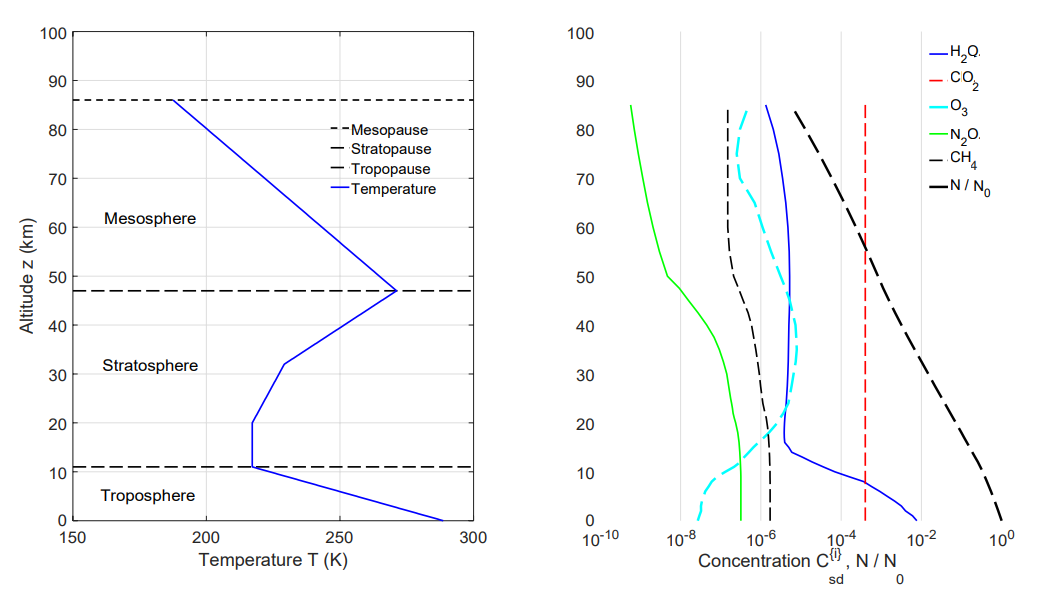
2.  Ronan and Michael Connolly  studied radiosonde data and concluded in 2014:

“It can be seen from the infra-red cooling model of Figure 19 that the greenhouse effect theory predicts a strong influence from the greenhouse gases on the barometric temperature profile. Moreover, the modeled net effect of the greenhouse gases on infra-red cooling varies substantially over the entire atmospheric profile.

However, when we analysed the barometric temperature profiles of the radiosondes in this paper, we were unable to detect any influence from greenhouse gases. Instead, the profiles were very well described by the thermodynamic properties of the main atmospheric gases, i.e., N 2 and O 2 , in a gravitational field.”

While water vapour is a greenhouse gas, the effects of water vapour on the temperature profile did not appear to be related to its radiative properties, but rather its different molecular structure and the latent heat released/gained by water in its gas/liquid/solid phase changes.

For this reason, our results suggest that the magnitude of the greenhouse effect is very small, perhaps negligible. At any rate, its magnitude appears to be too small to be detected from the archived radiosonde data.” Pg. 18 of referenced research paper

See:  The Physics Of The Earth’s Atmosphere I. Phase Change Associated With Tropopause
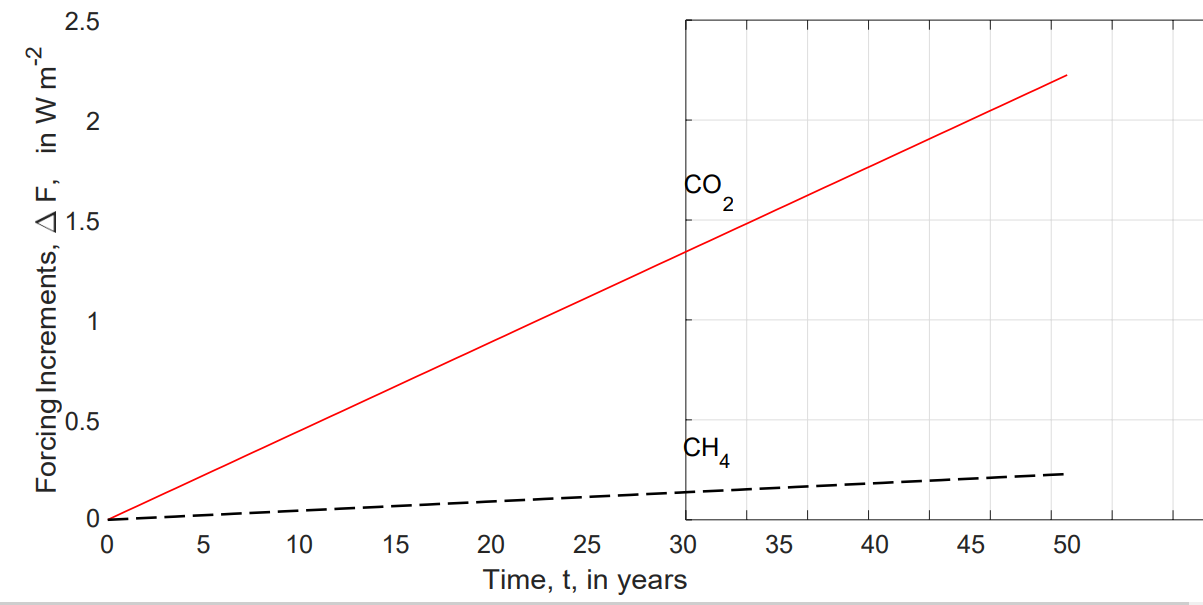
3.  An important proof against the CO2 global warming claim was included in John Christy’s testimony 29 March 2017 at the House Committee on Science, Space and Technology. The text and diagram below are from that document which can be accessed here.

IPCC Assessment Reports show that the IPCC climate models performed best versus observations when they did not include extra GHGs and this result can be demonstrated with a statistical model as well.

Figure 5. Simplification of IPCC AR5 shown above in Fig. 4. The colored lines represent the range of results for the models and observations. The trends here represent trends at different levels of the tropical atmosphere from the surface up to 50,000 ft. The gray lines are the bounds for the range of observations, the blue for the range of IPCC model results without extra GHGs and the red for IPCC model results with extra GHGs.The key point displayed is the lack of overlap between the GHG model results (red) and the observations (gray). The nonGHG model runs (blue) overlap the observations almost completely.

An Alternative Theory of Natural Climate Change

Dan Pangburn is a professional engineer who has synthesized the solar and oceanic factors into a mathematical model that correlates with Average Global Temperature (AGT). On his blog is posted a monograph Cause of Global Climate Change explaining clearly his thinking and the maths.  I provided a post with some excerpts and graphs as a synopsis of his analysis, in hopes others will also access and appreciate his work on this issue.  See  Quantifying Natural Climate Change

Footnote on the status of an hypothetical effect too small to be measured:  Bertrand Russell’s teapot

Open image in new tab to enlarge.

Postscript:

A further reference comes from the brief submiitted by Professors Happer, Koonin and Lindzen to the Climate Tutorial for Judge Alsup. The pertinent citation is as follows:

“On average, the absorption rate of solar radiation by the Earth’s surface and atmosphere is equal to emission rate of thermal infrared radiation to space. Much of the radiation to space does not come from the surface but from greenhouse gases and clouds in the lower atmosphere, where the temperature is usually colder than the surface temperature, as shown in the figure on the previous page. The thermal radiation originates from an “escape altitude” where there is so little absorption from the overlying atmosphere that most (say half) of the radiation can escape to space with no further absorption or scattering. Adding greenhouse gases can warm the Earth’s surface by increasing the escape altitude. To maintain the same cooling rate to space, the temperature of the entire troposphere, and the surface, would have to increase to make the effective temperature at the new escape altitude the same as at the original escape altitude. For greenhouse warming to occur, a temperature profile that cools with increasing altitude is required.

Over most of the CO2 absorption band (between about 580 cm-1 and 750 cm-1 ) the escape altitude is the nearly isothermal lower stratosphere shown in the first figure. The narrow spike of radiation at about 667 cm-1 in the center of the CO2 band escapes from an altitude of around 40 km (upper stratosphere), where it is considerably warmer than the lower stratosphere due heating by solar ultraviolet light which is absorbed by ozone, O3. Only at the edges of the CO2 band (near 580 cm-1 and 750 cm-1 ) is the escape altitude in the troposphere where it could have some effect on the surface temperature. Water vapor, H2O, has emission altitudes in the troposphere over most of its absorption bands. This is mainly because water vapor, unlike CO2, is not well mixed but mostly confined to the troposphere.”

A synopsis of that submission was posted as Cal Climate Tutorial: The Meat