Gillette Confused About Masculinity

From The Reference Frame by luboš motl.  His text in italics with my bolds.

25 deceptions, lies, malicious attacks, and errors in the Gillette commercial

Some clueless people ask what’s wrong with the Gillette ad. I wasn’t particularly insulted by this ad – which is approaching 20 million views and 1 million downvotes – because similar stuff has become a part of our everyday lives.

But let me calmly answer the question as if it were a serious one and explain why I consider creators and apologists of the 108-second-long video (TRF) to be bad human beings who need to be treated as such.

There are hundreds of deceptions, lies, manipulations, demagogic statements, mispresentations of facts, and malicious attacks against particular men, all white men, all men, and against innocent examples of masculine behavior, not to mention lots of manifestations of prejudices. Out of these hundreds, I chose twenty-five.

0:00-0:05 – Buzzwords without full sentences are deceptively mixed

We hear noise from the media that talks about “bullying”, “the MeToo movement”, and “masculinity”. In some cases, these words don’t form full sentences. They have nothing to do with shaving or with a sensible discussion. And a healthy man turns off the radio or TV or switches to another channel or radio station when the quality of the content drops this low.

What is worse is that these completely different buzzwords are being mixed in order for the viewer to think that they are associated with each other if not equivalent. They are not equivalent at all and a fair person shouldn’t automatically associate them.

0:00-0:05 – MeToo wasn’t created by masculinity at all

The MeToo mania is a decadent movement encouraging women to invent false accusations against men – and pushing everyone to take them seriously, thus suppressing the presumption of innocence. Everyone who hasn’t spent the recent years in a cave knows that most of the important faces of the movement have been proven to be shameless liars. Some of the notorious examples are reviewed in a parody of the Gillette ad, The Best WOMEN Can Be.

While the interest in women is driven by some male hormones, the MeToo movement isn’t a result of masculinity. It’s a product of women’s fantasies, radical feminism, and some people’s inclination to lie whenever it seems safe and beneficial for them. The mixing of the MeToo movement and masculinity is deceptive because they have almost nothing to do with each other.

0:00-0:05 – Bullying isn’t a masculine activity

The mixing of the words is also designed to make the viewers associate masculinity with bullying. While men have twice as strong upper body muscles as women in average, they don’t have stronger psychological inclinations to bullying and they don’t want to be more cruel.

In recent years, female bullying has been investigated closely. Experts agree that female bullies can sometimes be even worse than male bullies. The page and many papers explains that female bullies do all kinds of things including physical bullying, stealing, damaging personal property, and character assassinations – teenage girls are undoubtedly more malicious in spreading harmful untrue rumors than teenage boys. It is not quite a coincidence that Penny (from The Big Bang Theory) used to be a bully at the high school while Leonard, Sheldon, and Howard were the victims.

The association between masculinity and bullying is scientifically indefensible if we compare the amount of intentions. When the acts of bullying are weighted by the physical strength in some ways, boys win but it’s not their fault.

Note that the buzzword that appears at the beginning is “masculinity”, not “toxic masculinity”. The claim by some people that this ad “only” attacks toxic masculinity is a plain lie.

0:00-0:05 – Only white men are chosen as the target

The creators of this ad only attack masculinity – defenders say “toxic masculinity” – but in reality, almost all the “bad guys” are white men and almost all the “good guys” are the black men. In the politically correct jargon, the ad is therefore both sexist and racist. The producers haven’t created any video about the toxic femininity or (which would be very important) toxic feminism, toxic homosexuality (or especially toxic homosexualism), toxic n*ggerness, or – more obviously, something that is really needed – toxic Islam, among other things. If a TV ad attacked those, the Left would be hysterical.

It’s only the white men that can be attacked in this way, much like the Jews were the main “officially permitted” targets in Nazi Germany. This unequal treatment of groups of people is wrong.

0:10-0:20 – No evidence that the running boys are doing anything wrong

In this segment, like in the whole ad, it’s being implicitly claimed that a vast majority of the boys and men are doing something wrong. But this thesis contradicts the real world data – most men are neither bullies nor rapists etc. – as well as the “data” in the artificial situation depicted by the ad.

We see a group of boys running through a room while another boy is being hugged by his mother. Clouds suggest that some of the boys think that he is a sissy and a loser. It is not clear which boy or how many boys think so; and more importantly, it is not clear whether this view is unjustified. The visual data surely make it plausible that the hugged boy is a sissy – and other things – and at some level, it’s impossible for others not to notice, and beyond another threshold, it’s wrong to hide it.

It’s likely that most of the boys are being demonized just for running through the room. Thankfully, both boys and girls are still sometimes running through rooms and outside, too. And it seems likely that the boy should be encouraged to live in the real world and look for more manly and independent ways to deal with the difficulties. Instead, the ad says that the majority of boys should suppress their normal playful behavior or even to overlook things that are obvious to them.

0:15-0:28 – Cartoons, TV shows only depict innocent men attracted by women

We see a cartoon at 0:18 that depicts animated male heads attracted to a female. A white guy is shown as being playful with a black lady in the kitchen and her buttocks. It could be his wife. Even if she weren’t, she could find it pleasant or it could have been an agreed part of her job contract. It’s not justified to automatically denounce this merry guy.

Around 0:22, both young men and women are showing some gestures indicating their interest in sexual activities. The video is incompatible with the anti-male narration suggesting that the “wrongdoings of masculinity have been going for far too long”. No clear wrongdoings have been shown. Men are clearly being demonized for their being men – and for their being attracted to females. Both things were assigned to them when they were born, they can’t change it, the world has lived just fine with those things, and it’s therefore utterly wrong to criticize the men for that.

On top of that, women may be sexually excited, too, so even if it were legitimate to attack men for their being sexually attracted to women (or somebody), it’s unfair because women are often attracted, too – and they show this attraction by somewhat different symptoms. And we shouldn’t forget that the scenes shown in this segment are artificial scenes created to entertain the viewers. So even if they were wrong in the real life, they don’t quite depict the real life.

Demonization of such arts – or the proposed bans of such shows and cartoons – would push the Western policies very close to the censorship as known in the Islamic world or China.

0:23-0:24 – Manspreading at home is totally OK

Three boys are watching TV at this point. The median male viewer needs one hour of research to figure out what they could possibly claim to be imperfect about these three boys watching TV. I think that I have discovered the incredible answer. It’s called manspreading: sitting with legs wide apart.

Why would someone claim it is wrong? Because one occupies extra space in the public transportation. However, these boys clearly have enough space. The boy in the middle could be a victim – having less room than the left guy who is manspreading. But the boy in the middle controls the TV remote which is a compensating advantage which also suggests that if he were feeling uncomfortable, he could ask the other boy to stop manspreading.

0:23-0:24 – Men who are manspreading have a good health reason

Here I need to reveal some secrets to the TRF readers who are female feminists. My lesson could help them to score some points in biology if they become contestants in “Are You Smarter Than a Fifth-Grader”. The first secret is that men have testicles, two balls in between the legs. The second secret is that the balls are located in a special bag known as scrotum. The purpose of the bag is to reduce the temperature because the optimum temperature for the work done in the balls – the production of sperm (which needs to combine with an egg if Nature wants to produce an embryo) – is lower than the temperature inside the human body.

Without manspreading, the testicles are more likely to be squeezed; or more likely to be overheated. That’s why manspreading may be a matter of comfort if not health. It is not true, as the ad indicates, that men are manspreading purely because they are jerks.

0:23-0:24 – Woman actually like manspreading men

The ad suggests that men who are manspreading are making the life worse for others, especially for women. But science says something different. The men who are manspreading make the life better for women because women find manspreading men more attractive. You will have to read the article if you want to know whether it’s because women assume that such men have more powerful organs.

0:23-0:24 – Manspreading men are victims, not criminals

The commercial implicitly claims that men who are manspreading are almost committing some terrible offense if not a criminal act. In reality, they are the typical victims because Anna Dovgalyuk, 20, pours bleach and water on men’s crotches whenever they are in St Petersburg. (Although there are some rumors that the viral video is a propaganda created by the Kremlin.)

As you can see, I wrote four paragraphs of text to deal with the deception and nasty behavior that the social justice warrior compress into one seemingly inactive second of an advert. That’s quite typical: social justice warriors are behaving as insufferable mess in almost every millisecond of their lives.

0:25-0:26 – The man is just showing what an Alligator does

There is absolutely nothing wrong about the man’s behavior in that second. He hasn’t even touched her buttocks. As far as I can see, he just pretended to be the current Czech president Miloš Zeman. In 2013, before he was first elected, he used a gesture to explain to a female journalist what an alligator does to babes, so that she could understand at least something about his dumbphone with a big button, the Alligator.

Is Zeman’s reference to the Alligator also politically incorrect? Thankfully, it’s funny but OK in my country. Zeman was clearly in a better physical shape five or six years ago.

0:25-0:50 – Laughing people are better than sourballs

In the early scenes around 0:25, people are laughing, happy, and they have a good time. Around 0:45, they change to sourballs or gloomy victims who are terrified by the political correctness around them and we’re told that something has changed. I am sorry but people naturally want to be happy and they prefer the society with some entertainment from 0:25 over the society of sourballs around 0:45.

“Who’s the daddy…” and some other microscenes were too fast and uninteresting to me. They just randomly address some dialogues or gestures related to romantic or sexual relationships but I honestly don’t know what was the “sin” they wanted the viewers to see.

0:29-0:32 – The manager was excessively polite to the female co-worker

In these three seconds, we see some corporate managers at a meeting. The only female participant apparently said something that the men consider stupid. I can’t know for certain it was stupid because I wasn’t shown the context. But statistics is such that it’s much more likely than not that her monologue was stupid.

The boss says “What she actually wanted to say” to partly defend her. Without his intervention, her proposal would probably be treated harshly so he felt the need to defend her. But he actually pretended that she was saying something intelligent – which is too much politeness.

0:29-0:32 – The polite approach of the top manager wasn’t polite enough

Nevertheless, the creators of the ad clearly wanted to convey the message that even this amount of politeness wasn’t enough! Are you serious? What is the more polite way to deal with someone’s assertion that looks silly than to say “what I think she actually wanted to say…”?

Clearly, the commercial effectively says that it’s always wrong to “mansplain” – it’s wrong for a man to disagree with a woman in any context. And such a ban on “mansplaining” would be lethal for the society because indeed, in some occupations, women are often saying much less reasonable things than men, in business and elsewhere. “Mansplaining” is just a special weird word for “explaining” used when the “explainer” is male and the “explainee” is female – and there is clearly nothing universally wrong about “mansplaining” just like there is nothing universally wrong about “womansplaining”, “blacksplaining”, “whitesplaining”, or “feynmansplaining”.

People who want to demonize “mansplaining” in general are dangerous loons.

0:32-0:34 – Boys are wrestling and it helps to shape who they are

There is nothing wrong about the boys who are wrestling. In the animal kingdom, youngs are playing in similar ways. Little girls sometimes do the same thing. If they don’t harm each other and if the physical dominance of one kid isn’t being repeatedly abused, there is no reason to worry. This belongs to the childhood.

Each of us has continuously grown from the childhood years. But have you ever realized how much stronger you have become? Or how weak you were as a kid? And how weak other kids are? Just look at the little boys’ hands. Their strength is clearly much lower than yours. It is no coincidence that we don’t often hear about boys who killed or seriously injured each other while wrestling.

One boy has apparently won and kept the other boy, the redhead, in the grass. The redhead wanted to liberate himself but didn’t have enough muscles for that. That means one boy won and the redhead lost. Next time, the redhead may try to win. Or he may better run away if it is easier. Or ask the stronger boy – or his parents – to stop it. There are many solutions, checks, and balances that guarantee that this doesn’t evolve to anything pathological in most cases. To prevent boys from playing just because it could turn to something bad is the real pathology!

126e47b71ad0e2b135e057a2d898d65a5d1edd3c883401abb5538a9a80352af60:33-0:37 – “Boys will be boys” is a tautology

The commercial even seems to attack men who say that “boys will be boys”. But whether or not it is attacked as an “old excuse”, this sentence is tautologically true which means that everyone who has a problem with this sentence is demonstrably a liar. “Boys will be boys” isn’t a vacuous tautology, however. In this case, the sentence shows that at least some boys at least sometimes want to play, show their muscles, and try to achieve the dominance.

These traits are indeed correlated with masculinity but there’s nothing generally pathological about them. Instead, these are indeed traits that manifest themselves when boys or men become heroes, too. Piers Morgan has mentioned a heroic act by a British soldier in Kenya. Is that manifestation of masculinity also “pathological”? It’s not and everyone who fails to appreciate the soldier is immoral.

I didn’t understand whether the ad also tried to attack the men making their hamburgers at a barbecue – or what they do with their arms to look relaxed and self-confident – so I can’t discuss it. But I suppose that the commercial wanted to demonize them as well. I couldn’t understand why.

0:37-0:39 – No, nothing finally changed

Right after “boys will be boys” comes under attack, we are told that “something finally changed”. Although the narration isn’t organized or comprehensible, it’s rather clear that the second sentence is said to assert that “boys will not be boys”. I am sorry but “boys will not be boys” will always be false and the claim by the commercial is just another lie.

More importantly, because “MeToo” is mentioned in the first seconds, “something finally changed” is rather clearly referring to the MeToo mania as the revolutionary process responsible for that “change”. But that’s nonsense. MeToo has been just a short-lived hysteria by irrelevant hysterical lying women. When it comes to the real sexual offenses, their frequency or the fraction that is properly investigated hasn’t changed and their legal or criminal status (or status as offenses) hasn’t changed, either.

As Matt Walsh correctly said on Fox and Friends, he (and we!) didn’t learn anything from the MeToo movement. To say that MeToo has contributed something to the society as a whole is just plain laughable.

0:39-0:45 – Young Turks don’t belong to polite TV channels

The first talking head who babbles something about the sexual harassment is Ana Kasparian from the far left “Young Turks” YouTube propaganda channel. I think that it’s just wrong to show such obnoxious people on regular TV channels that may be watched by children. She has said too many terrible things that are way too hostile and the demonstrably overgeneralize – e.g. about the Trump voters.

OK, we’re told that there will be no “going back” as if MeToo has made an irreversible revolutionary change to the society but as I said, it is nonsense.

0:50-0:55 – Men already do hold other men accountable

President Camacho from Idiocracy is quoted as saying that men must hold other men accountable. In the proper context, the sentence was just saying that someone like Harvey Weinstein shouldn’t circumvent the law. But structures have existed for centuries or millenniums in the U.S. and other countries that are designed for appropriate men to hold other men accountable.

The quote means nothing outside the context in which Terry Crews said it and there has been no change of the legal system that is designed to make sure that men (including cops, judges, inspectors, journalists…) hold other men accountable, at least most of the time. In this system where men are held accountable, “men” refers to people of both sexes – because the system is designed to keep both men and women accountable!

The commercial demagogically distorted the meaning of such sentences to indicate that the law should selectively target male individuals as if they were evil but such an interpretation of accountability is unconstitutional.

0:58-1:01 – Swimming suits are hard to decipher

There was some tension between some men near the swimming pool. Someone probably used a camcorder to record a scene with a girl’s swimming suit. A man didn’t like it – it is not clear whether the focus of the attention liked it.

Both male and female cameramen sometimes record such scenes, especially because those could be used in commercial ways. In particular, porn is a $100 billion industry. If feminists don’t root for women to be employed as cameramen, they should because porn is arguably more profitable than STEM. So there should be nothing masculine about this scene.

1:01-1:04 – Black guy was more likely to be dangerous than the white guy

In this segment, a white guy likes a girl on the street. He could have asked her for her phone number or invite her to a restaurant or something. There is nothing unacceptable about it. This is how many people get to know each other. She might have liked him, too. Or she could have said “no, please go away”.

A black guy rather rudely stopped the white guy with his hands and says “not cool” if I understand that accent well. Well, I don’t think you should be touching strangers on the street. It seems like a more problematic act than to try to ask for someone’s telephone number.

On top of that, although the commercial wants everyone to assume otherwise, it’s more likely that the black guy has stopped the white guy because the black guy had his own plans with the young woman.

Both men were sort of involved with her, in one way or another. Statistics says that the number of rapes per male U.S. citizen is about twice as high for black U.S. men then for white U.S. men. The gap isn’t too high because the average U.S. black is just half-black. In less mixed societies, the ratios are much more extreme. Most of the rapes in Sweden are being made by men born outside Europe – although they’re still a small fraction of the population of Sweden.

Like in the rest of the video, the viewer is supposed to believe that the white men are the rapists while the black guys are the good guys. But the cold hard data say something completely different. The commercial spreads prejudices that misrepresent the cold hard facts.

1:06-1:08 – “Some” indicates that most men are criminals or jerks

In their demands for men to become “better” – which means “worse” in numerous cases, as discussed above – we are being told that “some already are [better]”. The word “some” almost certainly implies that only a minority is already OK. It follows from the text that the creators of the commercial think that most men are either bullies, rapists, sexual attackers, or jerks of some kind.

Is it true? It depends on the definition of a “sexual attack” or a “jerk”, among other things. But if someone thinks that the normal behavior of most men is almost criminal and has to be almost eradicated, then she wants to liquidate most of the human civilization because most of the aspects of the majority’s masculinity are totally fine and mostly needed for the survival of the civilization and the mankind itself.

I can make a similar point a bit differently: Because the creator of the video says that only a minority of men are fine, it undoubtedly proves that she suffers from misandry. If someone has a serious problem with a majority of men, how it could not be a textbook example of misandry?

1:05-1:20 – It’s wrong to stop all these normal interactions

In this segment, the “good men” – which are overwhelmingly black – are stopping the “wrongdoing”. Some of it looks like real wrongdoing, something – like the two boys’ wrestling – doesn’t. It seems rather clear to me that even in the mixed package we are being shown, the cure is worse than the disease. In combination, the “good men” seem to create a new unfree society where almost everything is forbidden.

1:14-1:16 – The black girl isn’t strong and shouldn’t be deceived

A black man, let us assume it is her father, is teaching a little girl to say “I am strong”. I don’t really think it’s helpful. The girl is not strong. If she angers a stronger boy by her “I am strong”, she can also be beaten. You may say that the beating would also be wrong but it is a natural result of certain circumstances – a law of Nature.

At any rate, if she were beaten after incorrectly believing that she was strong, or after she angered somebody by her “I am strong”, the dad would be partly responsible for that.

It is wrong to teach the kids to lie. It is wrong to teach them to deny the reality. It is wrong to needlessly lie to the children. Girls are weaker than the boys and they naturally master different tools than the brute force to happily live in the environment and to push other people in desired directions. The girl can be taught and encouraged to do such things but the simple “I am strong” is useless or counterproductive.

Clearly, this is not just about some black dad’s strategy. Telling girls that they are strong in ways in which they are clearly not too strong is a big part of the feminist and affirmative action movement. And it is counterproductive in most cases. You can’t build a better world on lies. Self-confidence isn’t some magic sauce that makes everyone do miracles. In average, the ideal amount of self-confidence is the amount that realistically reflects the reality! Too little self-confidence may harm the people but so can too much self-confidence.

1:21-1:22 – “Some” is sometimes more than enough

The narrator says that “some [men who have already changed] is not enough”. But given the fact that the video promotes hiding from the other boys, complete ban on the boys’ wrestling, ban on manspreading in your friend’s living room, ban on the top male manager’s disagreement with a female colleague, and lots of other things, I find it obvious that the number of men who have “already changed” is already way too high.

Masculinity or toxic masculinity isn’t an important problem in our world. The shortage of masculinity and the disappearing masculinity is an actual huge problem! Sadly, the undesirable social trends are combined with a biological interpretation of the downtrend, e.g. in the average amount and quality of semen (unless it’s a superstition).

Let’s hope that most of the boys watching today will be the men of tomorrow – and not e.g. trans-women of tomorrow. I am actually optimistic and I believe that the generation of boys who are 10 years old today will be men who understand many things, including the fact that contemporary feminism is incoherent hogwash. I have numerous reasons to think that the kids will be different than the generation born around 2000 i.e. a decade earlier.

See these two tweets for an optimistic example of the common sense of boys who are 10-13 today.

Boo3zero5: My 10yr old son calls me 5 mins ago & asks,
“Dad why does a company that makes razors for men make a commercial that wants men not to be men”? Then he says, “That makes no sense dad”.
So proud of my boy. Told him I was going to tweet it & he got all excited #Gillette

Claudia Roberts: My 13 year old son saw this news about Gillette and said the same thing!

Your Climate Beliefs Are About to be Nudged

Social psychologists are coming to the fore as the mad scientists of our age. Case in point is a recently published guide for intervening in public discourse regarding global warming/climate change. The title is a link to the paper Leveraging cognitive consistency to nudge conservative climate change beliefs by Gehlbach et al. December 12, 2018. Excerpts below with my bolds, followed by my modest suggestion for improvement.

The Rationale (Abstract)

People feel motivated to maintain consistency across many domains in life. When it comes to climate change, many find themselves motivated to maintain consistency with others, e.g., by doubting climate change to cohere with friends’ and neighbors’ beliefs. The resulting climate skepticism has derailed discussions to address the issue collectively in the United States. To counteract these social consistency pressures, we developed a cognitive consistency intervention for climate skeptics. We first demonstrated that most people share substantial faith in a variety of scientific findings, across disciplines ranging from medicine to astronomy. Next, we show that conservative participants who first acknowledge several general contributions of science subsequently report significantly stronger beliefs in climate science (as compared to conservatives who are asked only about their climate science beliefs). These findings provide an encouraging proof-of-concept for how an inclusive climate conversation might be initiated across the political divide.

The Methodology

Below are the two sets of questions put to participants, firstly on mainstream fields of science, and secondly on assertions from climate scientists.

Instructions: Please give us your opinions and thoughts about the contributions of different branches of science. (Responses on a scale of 1 to 7: 1 meaning Not at all, 7 meaning Extremely or Completely)

To what degree do you think the science of astronomy has helped us identify what other planets exist in our solar system?

How helpful do you think medical science is in advancing society’s understanding of what makes people sick?

How confident are you that the field of engineering is advanced enough to keep you safe when traveling on bridges?

How certain are you that physicists‘ theory of gravity accurately explains why objects fall when dropped?

How useful is neuroscience in helping understand the role of different areas of the brain?

To what degree do you agree with public health experts that smoking causes cancer?

How credible is the medical data that germs are a primary cause of disease?

Instructions: Please give us your opinions regarding different aspects of what scientists have concluded about climate change and global warming. (Responses on a scale of 1 to 7: 1 meaning Not at all, 7 meaning Extremely or Completely)

With how much precision has the science of climate change been able to identify the causes behind rising sea levels?

How helpful do you think climate science is in advancing society’s understanding of why the earth is getting hotter?

How confident are you that climate science is right in their theory of how greenhouse gases
trap heat?

How certain are you that global warming explains many of the new weather patterns we are seeing today?

To what extent do you agree with climate experts that humans burning fossil fuels is the major cause of our changing climate?

How useful are climate models in helping to predict how many species are likely to go extinct in the coming years?

How accurately do you think climate scientists will predict the exact number of degrees the average global temperature will change between now and the year 2050?*

How credible is the climate science data that ocean temperatures are rising?

(*Note. Questioners put the next to last question as a trap. They expected people answering honestly to be skeptical on that one.)

Results

For science in general, researchers found that regardless of social attitudes and self-identifying along a liberal/conservative axis, people of all stripes averaged about 6 on the 7 point scale. In other words, generally people expressed “very much” or “a great deal” of confidence or certainty in the assertions from various fields of science. When people were presented only the questions on global warming/climate change, the responses differed accordingly to social/political leanings:

A spotlight analysis (Spiller, Fitzsimons, Lynch, & McClelland, 2013)—with 95% confidence intervals—examining each possible political orientation shows that the treatment had a small effect on politically moderate participants’ climate science beliefs; the impact was larger formore conservative participants.

They found that liberals were accepting of global warming assertions at the same level as other scientific fields, 6 out of 7, meaning “very much” or “a great deal” of conviction. While conservatives averaged 4 out of 7, a so-so response meaning “somewhat” credible or helpful.

The big news was that conservatives could be nudged toward greater acceptance of climate assertions if they were first questioned about other science fields (where they accept at a 6 level), followed by the climate questions. In that treatment, they become more certain about climate, the theory being cognitive dissonance arises when accepting in many fields, but skeptical in one.

Nudging is a Two-Way Street

Armed with these insights, let’s see if we can nudge people toward using their critical intelligence on scientific matters. All we need are some slight improvements in the questions. Below are my proposed questionnaires to help the public with these issues.

Instructions: Please give us your opinions and thoughts about the contributions of different branches of science. (Responses on a scale of 1 to 7: 1 meaning Not at all, 7 meaning Extremely or Completely)

To what degree do you think that astrology has helped us identify how other planets affect our lives?

How helpful do you think nutritional science is in advancing society’s understanding of what are healthy and unhealthy foods?

How confident are you that the field of engineering is advanced enough to keep you safe riding in a driverless car?

How certain are you that physicists’ big bang theory accurately explains the origins of the universe?

How useful is neuroscience in helping understand human consciousness and autonomy?

To what degree do you agree with public health experts that smoking causes cancer in non-smokers?

How credible is the medical data that genes are a primary cause of disease?

(*Note. Questioners put the first question as a trap. They expect honest responders to know the difference between astrology and astronomy.)

Instructions: Please give us your opinions regarding different aspects of what scientists have concluded about climate change and global warming. (Responses on a scale of 1 to 7: 1 meaning Not at all, 7 meaning Extremely or Completely)

With how much precision has the science of climate change been able to identify the causes behind rising sea levels?

How helpful do you think climate science is in advancing society’s understanding of why the earth got hotter for awhile and then stopped?

How confident are you that climate science is right in their theory of how greenhouse gases
trap heat?

How certain are you that global warming explains many of the new weather patterns we are seeing today?

To what extent do you agree with climate experts that humans burning fossil fuels is the major cause of our changing climate?

How useful are climate models in helping to predict how many species are likely to go extinct in the coming years?

How accurately do you think climate scientists have measured the degrees of warming since 1850, the end of the Little Ice Age?*

How credible is the climate science data that ocean temperatures are rising?

(*Note. Questioners put the next to last question as a trap. They expect people to be fairly certain on that one.)

Summary

Note that none of this is about scientific reasoning. It is all about adding climate assertions into a broader set of beliefs engendered by scientists. In other words, this is not an attempt to factually prove global warming/climate change, but rather an exercise in social manipulation. As I have remarked before, Leonard Cohen explains poetically why social proof is an uncertain guide to the truth.

Lyrics:

Everybody knows that the dice are loaded
Everybody rolls with their fingers crossed
Everybody knows that the war is over
Everybody knows the good guys lost
Everybody knows the fight was fixed
The poor stay poor, the rich get rich
Thats how it goes
Everybody knows

Everybody knows that the boat is leaking
Everybody knows that the captain lied
Everybody got this broken feeling
Like their father or their dog just died
Everybody talking to their pockets
Everybody wants a box of chocolates
And a long stem rose
Everybody knows

Everybody knows that you love me baby
Everybody knows that you really do
Everybody knows that you’ve been faithful
Ah give or take a night or two
Everybody knows you’ve been discreet
But there were so many people you just had to meet
Without your clothes
And everybody knows

Everybody knows, everybody knows
Thats how it goes
Everybody knows

And everybody knows that its now or never
Everybody knows that its me or you
And everybody knows that you live forever
Ah when you’ve done a line or two
Everybody knows the deal is rotten
Old black joe’s still pickin’ cotton
For your ribbons and bows
And everybody knows

And everybody knows that the plague is coming
Everybody knows that its moving fast
Everybody knows that the naked man and woman
Are just a shining artifact of the past
Everybody knows the scene is dead
But there’s gonna be a meter on your bed
That will disclose
What everybody knows

And everybody knows that you’re in trouble
Everybody knows what you’ve been through
From the bloody cross on top of calvary
To the beach of Malibu
Everybody knows its coming apart
Take one last look at this sacred heart
Before it blows
And everybody knows

Everybody knows, everybody knows
Thats how it goes
Everybody knows

Footnote:

I doubt Leonard Cohen had climate change in mind when he wrote this masterpiece. But he did have a pertinent poetic insight; namely, that social proof is an unreliable guide to the truth.

Carbon Pricing Angst

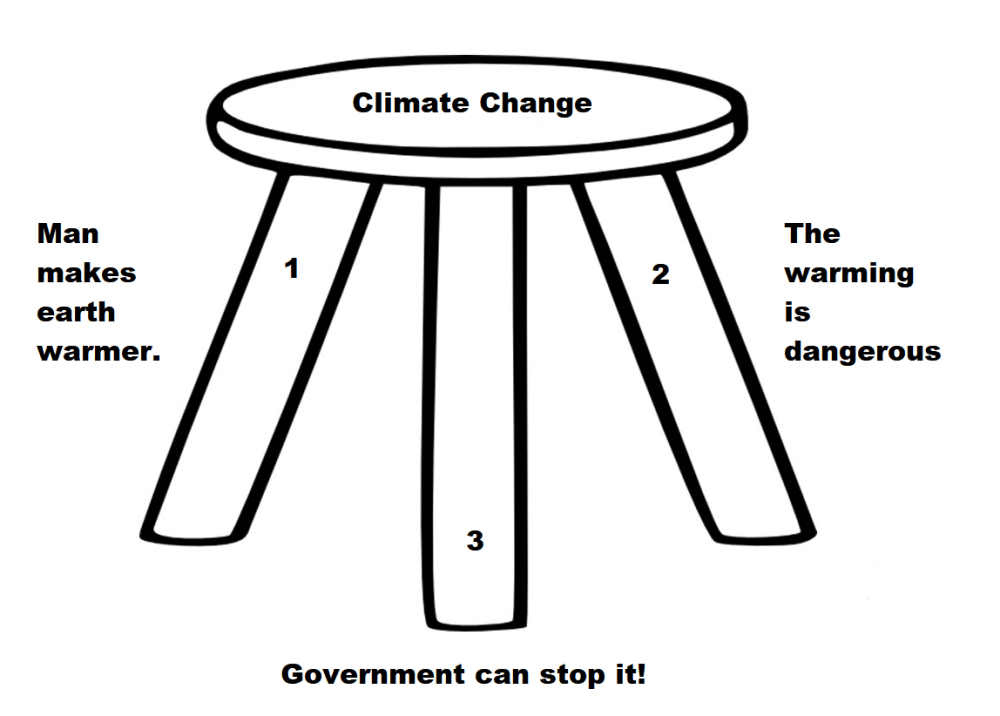
Climate stool

Context: As the image shows, alarmist/activists understand Climate Change (man made assumed) as a concept that depends on three assertions being true.  The first one is the science bit, being the unproven claim that humans make the planet warmer by burning fossil fuels.  The second one is the claim from billions of dollars invested into researching any and all negative effects from global warming, from Acne to Zika virus. The third and also necessary leg is the assertion that governments can act to prevent future warming

From time to time it is instructive to hear from those who buy into the first two, but have lost confidence in the policies proposed as remedies. Jeffrey Ball writes at Science Direct, not questioning climate science or feared impacts, but distraught about the failed efforts to do something to reduce emissions.  His article is Hot Air Won’t Fly: The New Climate Consensus That Carbon Pricing Isn’t Cutting It Excerpts in italics with my bolds.

Jeffrey Ball, a writer whose work focuses on energy and the environment, is the scholar-in-residence at Stanford University’s Steyer-Taylor Center for Energy Policy and Finance and a lecturer at Stanford Law School. He also is a nonresident senior fellow at the Brookings Institution. His writing has appeared in Foreign Affairs, Fortune, Mother Jones, The Atlantic, New Republic, The New York Times, and The Wall Street Journal, among other publications. Ball, previously The Wall Street Journal’s environment editor, focuses his Stanford research on improving the effectiveness of clean-energy investment, particularly in China.

Carbon Pricing Isn’t Cutting It

In the history of climate change, 2018 will go down as a year when certain facts finally hit home, truths inconvenient for partisans on all sides. Those on the right, at least those who have been arguing that greenhouse-gas emissions aren’t a significant problem, were forced to recognize that those emissions are causing real harm to real people right now. Those on the left, at least those who have put their faith in the promise of renewable energy to cool the planet, had to reckon with the reality that, even as those technologies boomed, carbon emissions continued to grow. And those across the political spectrum who had been calling for what seemed in theory a sensible climate policy—putting a price on carbon emissions—had to concede that their supposed solution isn’t helping much at all.

(My comment: Like so many true believers, Ball casts climate change as a political issue between left and right wings.  Note he does think we can all agree that policies are not working.)

No single event can be attributed to climate change, but scientists cite a lengthening list of unfolding events, from wildfires in California to drought in Europe to rising waters along Bangladesh, as evidence of the effects of a warming world. Even the administration of US President Donald Trump, which has rolled back myriad climate policies, noted in a November report, the latest legally mandated US National Climate Assessment, that the effects of climate change “are already being felt in communities across the country”—from intensifying flooding in the nation’s northeast region, to worsening drought in the southwestern part of the country, to rising temperatures and erosion that are damaging buildings in Alaska.

(My comment:  Ball does not acknowledge rebuttals and challenges to the recent NCA document that merely repeated claims from previous editions, and echoed the feverish exhortations from IPCC SR15.  But this  paragraph was aimed at the skeptical on the right, while soothing the believers on the left.  Let’s now get into the meat of it: Is the government stopping it?)

Renewable energy isn’t stopping that. It represented 70% of net new power-generating capacity installed globally in 2017, a stunning share that reflects falling costs and rising penetration.  Yet for all that growth, renewable energy still provided only an estimated 14% of total global energy in 2017, up about 1 percentage point from its share in 2000, because fossil-fuel energy capacity also has been increasing. Indeed, even as renewable-energy capacity hit an all-time high, energy-related carbon emissions did too. They rose 1.6% in 2017, following three years in which they were flat, and they are expected to have risen further in 2018.

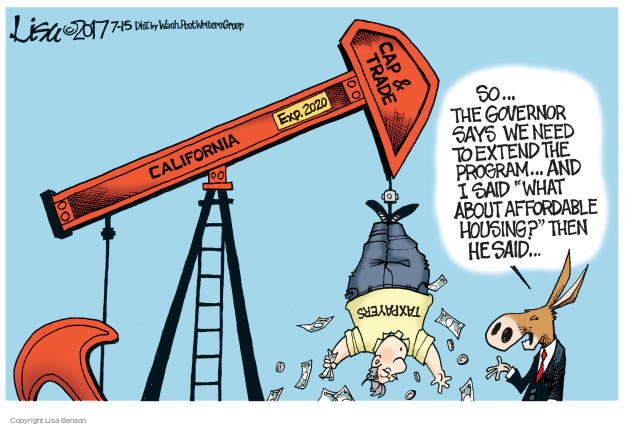
Emissions are increasing even though more governments than ever before have imposed prices on carbon emissions, either levying a carbon tax or instituting a cap-and-trade system of pollution permits so that those who emit greenhouse gases have a financial incentive to reduce them. That is little wonder, given that less than 1% of global carbon emissions are subject to a price that economists peg as high enough to meaningfully curb them.

This past June, in an essay in Foreign Affairs, “Why Carbon Pricing Isn’t Working,” I cataloged evidence that carbon pricing is failing to meaningfully reduce carbon emissions around the world—from Europe, where the policy took significant hold, to California, where leading policymakers have embraced it, to China, which is in the early stages of ramping up what will be by far the biggest carbon-pricing regime on the planet. I argued that, though in theory carbon pricing makes sense, in practice it is failing, for two reasons: structurally, carbon pricing tends to constrain emissions mostly in the electricity sector, leaving the transportation and building sectors largely unaffected; and politically, even those governments that have imposed carbon prices have lacked the fortitude to set them high enough to significantly curb even electricity emissions. As a result, I wrote, “a policy prescription widely billed as a panacea is acting as a narcotic. It’s giving politicians and the public the warm feeling that they’re fighting climate change even as the problem continues to grow.” Not just ineffective, carbon pricing is proving counterproductive, because “it is reducing the pressure to adopt other carbon-cutting measures, ones that would hit certain sectors harder and that would produce faster reductions.” Among those other needed measures: phasing out coal as a power source except where it is burned with carbon-capture- and -sequestration technology, which minimizes its emissions; maintaining, rather than closing, nuclear plants; making renewable energy cheaper; and mandating greater energy efficiency.

Would that the half year since that essay was published had proven its assessment too harsh. Unfortunately, recent events and analyses have only bolstered it. Since the summer, and in the lead-up to the latest global climate-policy conference, this month in Poland, studies exploring carbon pricing’s shortcomings have begun piling up. They now amount to a new and sobering climate-literature genre.

Belief in carbon pricing was strong in 2015, when policymakers from some 190 countries issued the Paris Agreement, calling for measures to keep the increase in the average global temperature “well below” 2°C above preindustrial levels and for “pursuing efforts” to keep the rise below 1.5°C.6 Unlike prior climate agreements, notably the Kyoto Protocol, which nearly two decades earlier had pressed for emission cuts only from developed countries, the Paris Agreement included specific emission-reduction pledges even by China, India, and other developing countries, which now produce the bulk of global emissions. But the pledges countries made in Paris were voluntary rather than mandatory, and most were relatively weak. Even if countries made good on them, it was clear, the world would not cut emissions anywhere near enough to avoid crashing through the 2°C threshold.

Coming out of Paris, carbon pricing was a presumption. In 2017, a group of leading economists backed by the World Bank and called the High-Level Commission on Carbon Prices announced that meeting the Paris temperature targets would require carbon prices of US$40 to $80 per metric ton of carbon dioxide by 2020 and of $50 to $100 per ton by 2030.  But in May the World Bank reported that, though the percentage of global greenhouse-gas emissions subject to carbon prices had risen to 20%, only 3% of those emissions were priced at or above the important $40 level.  In other words, fewer than 1% of all global greenhouse-gas emissions are priced at a level likely to constrain them.

Carbon-pricing regimes are spreading, and some are being toughened, but neither is happening quickly enough to make much environmental difference. The Organization for Economic Cooperation and Development (OECD), parsing the numbers somewhat differently than does the World Bank, calculates that 76.5% all energy-related carbon dioxide emissions in OECD and Group of 20 (G20) countries either aren’t priced at all or are priced below 30 euros per metric ton of carbon dioxide, a level the OECD calls “a low-end estimate of the damage that carbon emissions currently cause.” That “carbon gap,” in OECD parlance, has narrowed by just 1 percentage point in each of the past three years—hardly a relevant climate win.

It is against this backdrop that critiques of carbon pricing have begun to accumulate. One of the more notable was published in August by the International Monetary Fund (IMF), whose head, Christine Lagarde, has been an enthusiastic supporter of carbon pricing. She called in 2017 for this response to carbon dioxide: “Price it right, tax it smart, do it now.” As the IMF’s new working paper makes clear, most carbon prices thus far imposed haven’t been right, relying on carbon taxes hasn’t been terribly smart, and, if “it” means a serious response to climate change, the world isn’t doing it now.

The authors of the IMF study used a model to project how carbon prices at two levels by 2030—$35 per metric ton of carbon dioxide and $70 per ton—would affect emissions in the G20 economies. (Few countries have imposed a carbon price anywhere near even the lower of those numbers.) The IMF model clarifies why the world’s largest economies find it so economically and politically difficult to impose a robust price on carbon, just how inadequate were the pledges most countries made in Paris, and how wrenching it will likely be even for countries that made relatively significant Paris pledges to follow through on those promises.

Carbon pricing, as I noted in Foreign Affairs in June, “works well for industries that use a lot of fossil energy, that have technologies available to them to reduce that energy use, and that can’t easily relocate to places where energy is cheaper.” That is why it tends to bite first in the electricity sector. The IMF model underscores this, concluding that the major determinant of how significantly a given carbon price will curb emissions in a given country is the extent to which that country’s electricity sector relies on coal. A $70 carbon tax, the IMF model projects, would cut emissions by significantly more than 30% in coal-dependent China, India, and South Africa; by some 15%–25% in such countries as the United States, Canada, and the United Kingdom; and by less than 15% in coal-light France and Saudi Arabia.9 (That helps explain why, among all these countries, only France has imposed a carbon price above $40 per ton. And even France has difficulty raising the effective price on carbon, as the recent Yellow Vest protests, which led France to suspend a proposed fuel-tax increase, show.)

That carbon pricing hits hardest in coal-reliant places helps explain its political difficulties. The IMF’s modeled carbon tax is particularly regressive—meaning its cost falls particularly heavily on the poorest—in China and the United States, the world’s two top carbon emitters.  (Electricity access in these two coal-heavy nations is broad, meaning the poor there tend to spend a greater portion of their income on carbon-intense power than do the rich.) Although both countries are experimenting with carbon pricing, it is little surprise that the prices in both remain low. In California, carbon prices are higher than in other parts of the United States that have implemented them, but California gets only a small amount of its electricity from coal—and most of that is imported from other states—which bolsters the point. The IMF analysis also helps clarify why China, the world’s top coal burner, proffered a relatively weak Paris pledge. Some governments are trying to counteract the regressive nature of carbon pricing by layering on structures to return all or some of the resulting revenue to consumers—a worthwhile idea. But even those structures have faced opposition in coal-reliant jurisdictions.

Even some countries whose Paris pledges were more robust are likely to have difficulty following through on them. Those pledges “might imply increases in energy prices (and burdens on vulnerable groups) that push the bounds of political acceptability,” the IMF paper notes. A meaningful reduction in carbon emissions, the IMF concludes, would require backstopping countries’ Paris pledges in two ways: by imposing carbon-price floors—levels below which countries decree that their carbon prices will not fall—and by imposing policies other than carbon pricing that force deeper cuts. Inoffensive carbon pricing alone won’t cut it.

Even extraordinarily high carbon prices are failing in important ways to spur significant carbon cuts. A piece published in Energy Policy in late June by Endre Tvinnereim and Michael Mehling explores the uninspiring example of Sweden. The small Scandinavian country has, according to the World Bank, the highest carbon price in the world, at $126 per ton, based on current currency-exchange rates.4 Yet in the quarter century between 1990, when Sweden introduced its carbon tax, and 2015, carbon emissions from Swedish road transportation fell only 4%. Meanwhile, sales in Sweden of new internal-combustion vehicles continue to rise, imposing what the authors call “carbon lock-in” from vehicles likely to remain on the road a decade or more. What’s needed, they argue, are bans on the sale of new internal-combustion cars, bans of the sort that have been proposed in such countries as China, India, France, the United Kingdom, and Norway. Pricing carbon “is useful,” they write, “but far from sufficient to achieve deep decarbonization.”

The authors are right that policies beyond carbon pricing are needed. But clarity about the goal of such policies is key. Some recent critiques of carbon pricing, at least implicitly, construe success in fighting climate change as requiring the near-total replacement of fossil fuels with renewable energy. Plenty of evidence, however, suggests that structuring the climate fight primarily as a pursuit of renewables is neither realistic nor particularly smart.

The goal in fighting climate change is not to end the use of fossil fuels. The goal is to fuel the world while cutting carbon emissions essentially to zero. That will require dramatically lowering the cost and thus boosting the penetration of renewable and other non-fossil energy sources. It also will mean ensuring that the large quantities of fossil fuels that are all but certain to continue to be burned for decades to come are burned using technologies that slash the amount of carbon dioxide their combustion coughs into the atmosphere.

The policies necessary to achieve these twin ends will be complex. A meaningful carbon price would help them, but in most of the world there is little evidence policymakers have the stomach to impose one. Climate change is real. Fighting it demands—from everyone involved—more than rhetoric. That this message is getting across is a good sign.

My Concluding Comment

The graph illustrates the problem very clearly. Since 1994 there have been 24 Conferences of the Parties (COP), along with numerous other meetings. These UNFCCC discussions have utterly failed to reduce CO2 emissions. Yet from 2020, emissions have to drop dramatically, if we are to stand a chance of keeping global warming below 1.5°C.
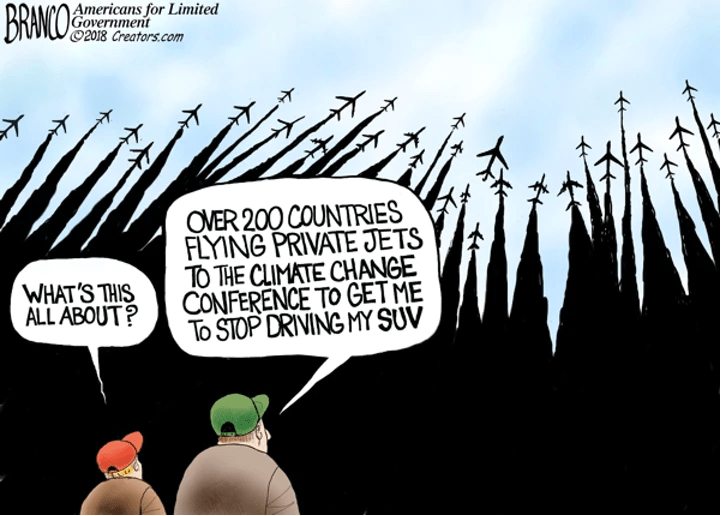
According to IPCC SR15 this will require an annual average investment of around US$2.4 trillion (at 2010 prices) between 2016 and 2035, representing approximately 2.5% of global gross domestic product (GDP). The cost of inaction and delay, however, will be many times greater. (sic).  Note:  This is referring to increasing investments in renewable energy from current US$335B per year to $2.4T.  Present global spending on Climate Crisis Inc. is estimated at nearly US$2T, not limited to renewables.  So this would double the money wasted spent on this hypothetical problem.

cop planes

After reading Ball’s assessment it is obvious that carbon pricing will only reduce emissions by crashing national economies.  The fear of CO2 leads directly to discussion of stopping modern societies in their tracks.  Talking about policies that “bite” this or that sector equates to intentionally dictating economic decline, industry by industry.  And Ball suggests that ever more intrusive bans and regulations must be added on top of higher carbon prices in order to save the planet from our way of life.

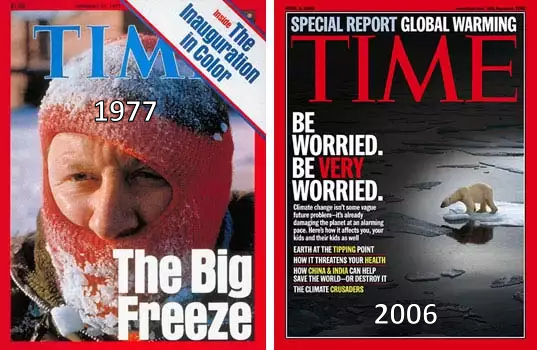
This analysis has been preceded by numerous doomsday deadlines over the decades which we have passed and not suffered in the least.  Can we finally dismiss the illusion that we humans control the temperature of the planet?  Can we stop the crazy schemes to cut our CO2 emissions, and appreciate instead the greening of the biosphere?

Rational public policymakers can not presume the climate will be unchanging in the future.  Our experience teaches that there will be future periods both warmer and cooler than the present.  History also shows that cold periods are the greater threat to human health and prosperity.  Instead of wasting time and resources trying to control the future weather, we should be preparing to adapt to whatever nature brings.  The priorities should be to ensure affordable and reliable energy and robust infrastructure.

See Also IPCC Freakonomics


Pacific Ice See Saw Returns

b&o2019001to013

As we have seen in past winters, ice in the Pacific Arctic tends to grow in fits and spurts, often alternating between Bering and Okhotsk Seas.  This see saw began late December with Bering adding ice to surpass 2018 maximum in that basin, while Okhotsk paused.  The above image of the first two weeks of 2019 shows Okhotsk on the left growing ice while Bering pulled back a bit.  Then in the last two days both basins added extents to set new highs for the season.  Combined the two seas ice extents are slightly above the 12 year average at this time. With the disappearance of the Blob of warm water in the North Pacific, both basins appear to be in ice recovery mode.

cg524a47d218458

seesawSee Also:Snowing and Freezing in the Arctic


Pssst. Trump is Winning the China Trade Dispute

Car sales in China, the world’s largest car market, plummeted by 19 per cent in December.AFP Getty file photo

Keep it under your hat, but Trump is getting the best of China in the trade confrontation.  Lawrence Solomon explains in a Financial Times article Remember Trump’s supposedly ‘lose-lose’ trade war? He’s winning. China’s losing. Excerpts in italics with my bolds.

The tariffs clearly hurt China’s economy more than America’s

Not that long ago, China’s economy was seen as a juggernaut that would soon overtake America’s to become the world’s largest. “Made in China 2025,” the Chinese government’s blueprint to take over manufacturing, was seen as an existential threat to U.S. technological leadership. Speculation had the Chinese yuan replacing the United States dollar as the world’s reserve currency.

What a difference a trade war makes. No one marvels at the Chinese economy today.

Car sales in China, the world’s largest car market, plummeted by 19 per cent in December, capping a six-per-cent decline in sales for the 2018 year, the industry’s first fall in 20 years. Goldman Sachs predicts the decline will steepen to seven per cent in 2019. More broadly, China’s private and public manufacturing sectors both contracted in December.  China’s mainland stock markets, which declined 25 per cent in 2018, aren’t doing well either. Neither is growth in consumer spending, which is at a 15-year low. The government is backpedalling on its targets for “Made in China 2025,” and its other high-profile initiatives — the much-ballyhooed Asian Infrastructure Investment Bank and the Belt and Road Initiative — are falling short.

In fact, the entire Chinese economy may not only be falling short, it may never have performed as well as claimed. Many believe that China’s official economic growth rate, a fabulous 6.5 per cent, is more a fable. A World Bank estimate for 2016 put China’s economic growth at 1.1 per cent, with other estimates showing low or even negative growth. Also worrying is the potentially catastrophic hidden debt that fuelled China’s growth — as much as US$6 trillion by China’s local governments alone, according to S&P Global Ratings, which called it “a debt iceberg with titanic credit risks.”


Many authorities point to the trade war to explain in part these poor metrics, typically adding that trade wars are always lose-lose. Yet while China clearly seems a loser, the same can’t be said for the U.S., whose economy is on fire.

In contrast to the 15- and 20-year lows logged by China’s economic indicators, the U.S. is racking up 20-, 30-, 40- and 50-year highs.

Wages are up, especially for those traditionally worse off, while unemployment rates for blacks, Hispanics and women are at lows not seen in decades. The U.S. economy has added 4.8 million jobs since Donald Trump was elected president, with U.S. manufacturers last year adding 284,000 jobs, the most in more than 20 years. Americans are ditching food stamps and disability payments for well-paying jobs. “Put it together, and this is the best time for the American labor market in at least 18 years and maybe closer to 50,” The New York Times noted in November.

So much for the claims of the U.S. Chamber of Commerce, which warned that Trump’s tariff policy on imported products “endangers the jobs of millions of workers”; of the Tax Foundation, which predicted that Trump’s tariffs would decrease Americans’ wages; of Bank of England Governor Mark Carney, who stated the trade war with China would reduce U.S. GDP; and of the Heritage Foundation, which called Trump’s tariffs “ineffective and dangerous”.

While China’s demise and America’s rise can’t all or even mostly be attributed to Trump’s tariffs, the tariffs clearly hurt China’s economy more than America’s. For one thing, the “tax” that tariffs represent has mostly been paid by China. According to a recent policy brief from EconPol Europe, a network of researchers in the European Union, U.S. companies and consumers will pay only 4.5 per cent of the 25-per-cent tariffs on US$250 billion of Chinese goods, with the other 20.5 per cent falling on Chinese producers. The EconPol report found that the Trump administration selected easily replaced products, forcing China’s exporters to cut selling prices to keep buyers. “Through its strategic choice of Chinese products, the U.S. government was not only able to minimize the negative effects on U.S. consumers and firms, but also to create substantial net welfare gains in the U.S.,” the authors determined, adding that the tariffs will accomplish Trump’s goals of lowering the trade deficit with China.

More importantly, the tariffs have spurred investment confidence in the U.S., not only in steel and aluminum, where dozens of plants are either being built or reopened, but in the broader economy, too. A UBS Wealth Management Americas survey found that 71 per cent of American business owners support additional tariffs on imports from China, with only one-third believing tariffs would hurt them. A Bloomberg Businessweek article in October bore out the view that tariffs hitting steel and aluminum imports would be beneficial: “Employment in metal-using industries has risen since the tariffs went into effect last spring, (more than) the increase for overall manufacturing.”

The American public likes tariffs, too: According to a Mellman Group and Public Opinion Strategies poll in October, nearly 60 per cent of likely voters deem it important for Trump and Congress to “place trade restrictions on countries that violate trade agreements.” When the tariffs apply to China, the public doubtless also likes them for non-economic factors — to rein in one of the world’s worst human rights offenders and America’s chief military threat.

Contrary to the conventional wisdom, this trade war is anything but lose-lose. This one is a big win for the U.S.

• Lawrence Solomon is a policy analyst with Toronto-based Probe International.

MMT: Magical Money Theory

Pardon me for mixing up acronyms.  Somehow the increasing mention of MMT (Modern Monetary Theory) made me think of the classic Beatles trip album.  Perhaps that association was triggered by today’s suddenly fashionable socialists relying on MMT to pay for their “everything free for everybody” political visions.  (Maybe one of the Ms could stand for ‘mushrooms”.)

A primer on what MMT is and is not, is an article by Karl Smith (descendant of Adam?) in National Review The Uses and Abuses of Modern Monetary Theory.  Excerpts in italics with my bolds.

MMT advocates overlook its flaws.

Newly elected representative Alexandria Ocasio-Cortez (D., N.Y.) argued on Monday that Modern Monetary Theory (MMT) ought to be a part of the conversation when it comes to funding major social-policy initiatives, such as her proposed Green New Deal. Stephanie Kelton, former economic advisor to Bernie Sanders, has likewise insisted that MMT should replace our current thinking about government finance. Yet what is MMT? And is it really as revolutionary as its proponents claim?

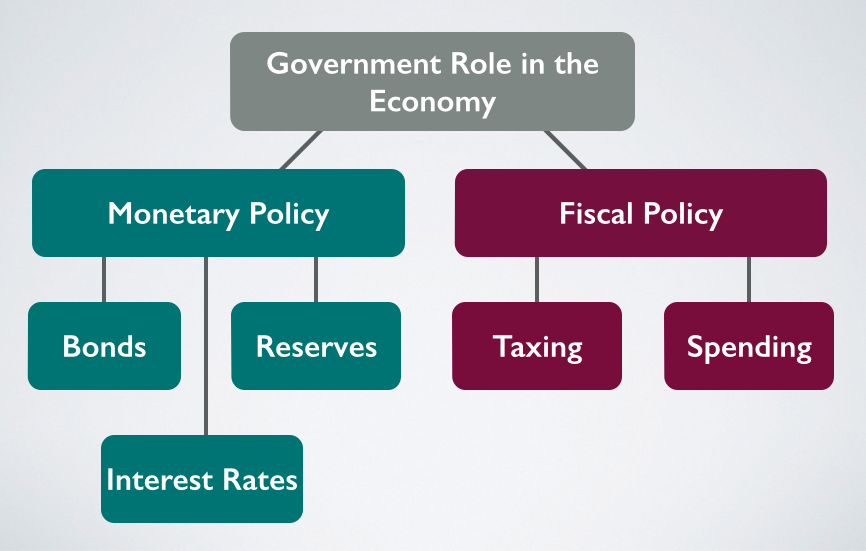
At its heart, MMT is a way of describing the federal budget and the Federal Reserve as if they were unified under a single executive authority. In describing the system so, the dangers of federal deficit spending are no longer that it crowds out private investment and slows economic growth, but that it leads potentially to excess inflation.

Yet Modern Monetary Theorists then invariably argue that inflation is not, and indeed could not be, a major problem for the United States. Many hard-core adherents go so far as to propose a job-guarantee program paid for by the federal government, which, they argue, will virtually eliminate both unemployment and the possibility of runaway inflation.

The tenets of MMT should be familiar to an older generation of fiscal conservatives. Before the 1980s, central banks such as the Federal Reserve were controlled far more directly by their governments. As a result, they could — and often did — bail out profligate governments by simply printing more money to cover the government’s debt.

This led to massive currency devaluation, runaway inflation, or both. In the early 1980s, however, central banks in the developed world were granted independence in the hopes that doing so would stop the spiraling inflation of the late 1960s and 1970s.

In the U.S., Fed chairman Paul Volcker was spectacularly successful at this. So were, to varying degrees, most central banks in the developed world. Some holdouts existed, notably in Southern Europe — a situation that would come back to haunt them decades later.

But MMT waves away the significance of these developments, instead focusing attention on several technical facts. First, when the federal government wants to spend money, it does so by having the Treasury issue checks. These checks are processed by the Federal Reserve Bank of New York (FRBNY). Second, the FRBNY does this literally by marking up the value of digital reserves in an account belonging to the check recipients’ bank and marking down the account of the Treasury by an equal amount.

These two operations are, in theory, separate. There is no technical reason why the FRBNY has to mark down the Treasury account. It only does so because laws require the federal government to meet all of its obligations. Such laws, argue Modern Monetary Theorists, cannot bind Congress, which after all has the power to alter them.

MMT advocates argue that Congress should ask the Treasury to sell Treasury bonds to cover any of its outstanding obligations. This is not, however, because they think it is necessary to fulfill the government’s obligations, but because doing so would help stabilize the macroeconomy.

All well and good. But at some point, won’t the debt become so large that merely paying interest on it will require issuing additional debt? Won’t this process feed on itself until all the borrowing capacity in the economy is soaked up?

No, MMT advocates reply, because the government can simply stop issuing debt — meeting its obligations instead by having the Federal Reserve simply create money on its behalf.

Indeed, this is what distressed governments have traditionally done when their liabilities add up — and the result has typically been hyperinflation. Modern Monetary Theorists argue that this need not be the case. Their exact reasoning differs.

At times, they argue that hyperinflation only occurs in countries that borrow from abroad in debt denominated in a foreign government’s currency. I don’t know enough about every single instance of hyperinflation to verify this claim, but it is true that the worst incidences of hyperinflation are typically associated with borrowing from abroad.

When a country prints money in an attempt to fund the government, the international exchange value of its currency collapses. If the country owes debt denominated in a foreign currency, that debt becomes more difficult to pay down as its own currency falls. Then the country has to print even more money to meet its debt payments, which of course causes the exchange value of its currency to fall further, creating a vicious circle that ends in hyperinflation.

Modern Monetary Theorists argue that this can’t happen to the United States because all of our debt is in the form of Treasury bonds that are denominated in dollars. If the international exchange value of the dollar falls, that does not change the value of our debt.

It does, however, mean that foreigners will be repaid in a currency that will be worth much less to them. Foreign bondholders are not stupid; they would regard this as a type of unofficial default. After experiencing this type of default through currency devaluation, they would be much less willing to buy Treasury bonds or indeed any type of American security again. This is precisely the situation that Italy, Spain, and Greece found themselves in during the 1980s.

Both countries had regularly devalued their currency as a way to get out from underneath foreign debts and were increasingly locked out of international markets. The euro was created, at least in part, in an effort to solve this. It could ultimately be printed only with the authority of the European Central Bank, meaning that neither Italy, Spain, Greece, nor any other member country could avert a debt crisis by devaluing its currency. Instead, they would have to raise taxes to meet their obligations.

That brings us to the second argument MMT advocates invoke when arguing that we should not worry about excessive debt leading to inflation: If inflation becomes a problem, the federal government can simply raise taxes, slowing down the economy which, in turn, will cool inflation.

But there are two problems with this approach. First, it is political suicide. At a time when consumers are facing ever-rising prices, it would seem cruel beyond measure to slap them with a tax increase. Very few governments would have the nerve to do this. If anything, history shows us that governments will instead resort to spending money on subsidies to ease the burden of rapidly rising prices.

Second, committing to this approach would risk an economic calamity. In 1973, OPEC placed an embargo on the United States that resulted in the price of oil quadrupling overnight. The sharply rising price of oil led both to a slowing economy and an increase in inflation — a dangerous mix.

A slowing economy lowers tax revenues, making it more difficult for the government to meet its debt payments. Suppose, at a time when the economy was slowing but inflation was rising, the U.S. government had firmly committed itself to MMT principles and refused to waver. In that case, it would not be able to resort to money printing because inflation was rising. Instead, it would be obligated to raise taxes both to meet its debt payments and to slow the rate of inflation.

Sharp increases in taxes during a recession, however, can be self-defeating. This is exactly the situation that Greece, and to a lesser extent Italy and Spain, found themselves in during the Great Recession. The crises lowered revenue, which worsened their budget deficits.

As a result, the government was forced to raise taxes and lower spending during the recession. This caused the economy to contract further, which caused tax revenue to fall so much that the budget deficit actually rose. In the case of Greece, this self-defeating cycle of higher taxes and lower revenues caused the government to ultimately default on its debts anyway. That, of course, worsened the economic crisis the country was already facing.

In the face of such a calamity, no sovereign government would or perhaps even should refrain from devaluing its currency and inflating away at least some of its debts. For that reason, governments have designed institutions to avoid falling into this trap.

In the United States, that means both making the Federal Reserve independent and not subject to the direct authority of the Treasury, and requiring the Treasury to meet all of its obligations with cash raised from tax revenues or Treasury-bond sales. In effect, we’ve outlawed the methods of Modern Monetary Theory — and with good reason.

KARL SMITH — Karl Smith is a senior fellow at the Niskanen Center. He was previously Assistant Professor of Economics and Government at the University of North Carolina (UNC) School of Government.

Footnote: (h/t Mark Krebs)

For more on Cortez see Why Cortez Can’t Be Wrong

For more on how MMT plays out when applied in a nation, see a short review of the Brazil experiment:

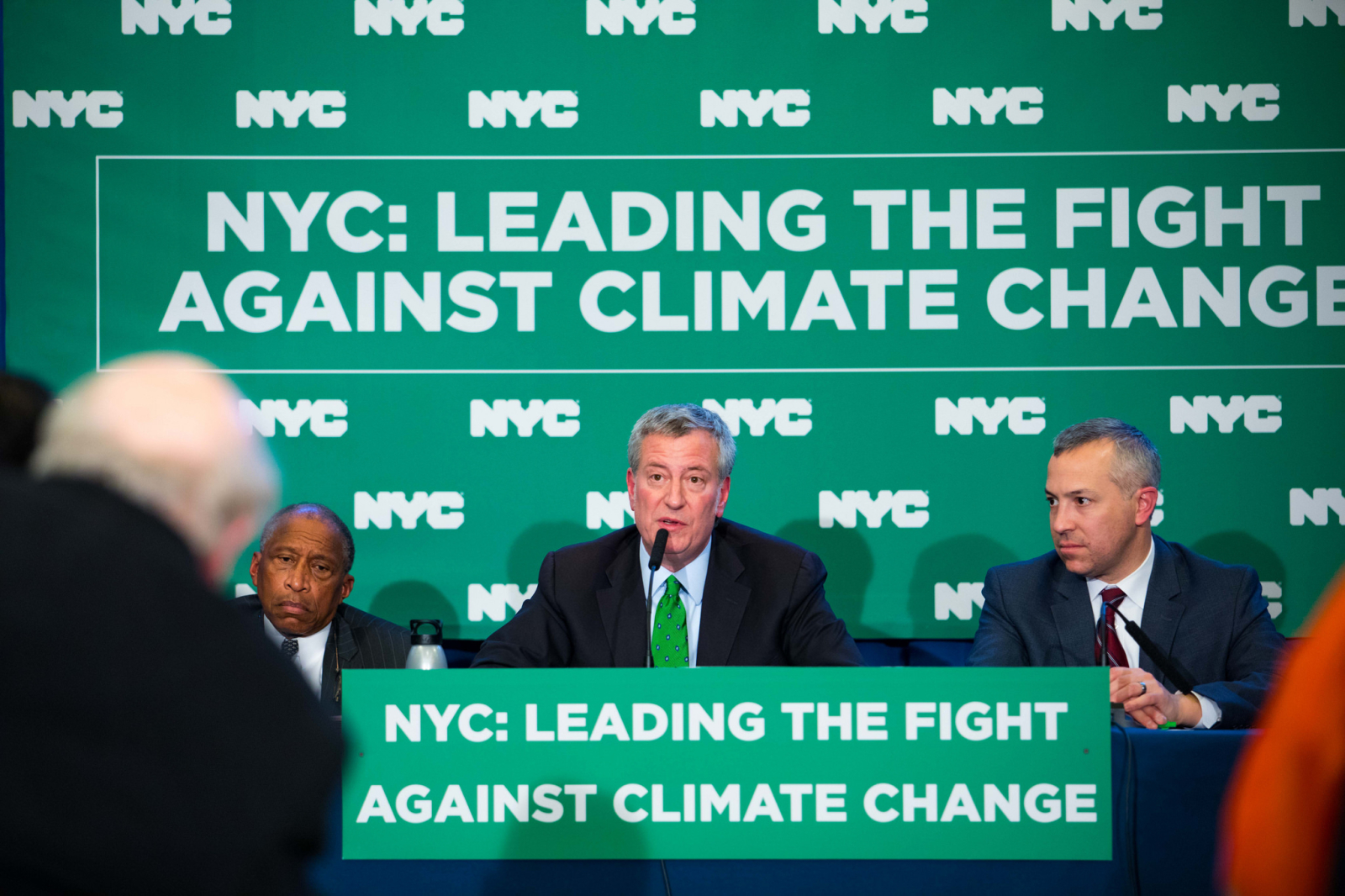
Climate Derangement in NYC

Jude Clemente writes at Real Clear Energy One Year Later, NYC’s Climate Lawsuit Wastes Taxpayer Money Excerpts below in italics with my bolds.
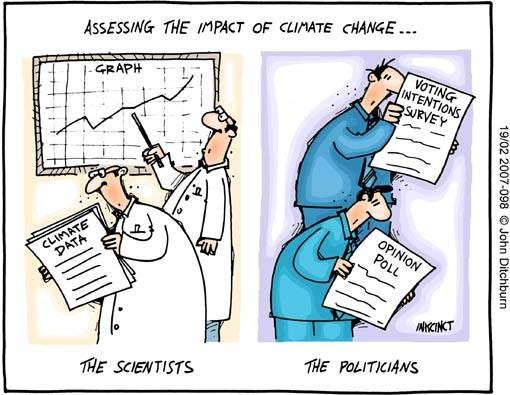
On January 10, 2018, New York City Mayor Bill de Blasio announced that he was suing five energy companies, seeking damages to pay for harm the city has faced as a result of climate change. In conjunction, the city also announced that it planned to divest its pension fund from fossil fuels. A year later, the city is seeking to revamp its legal strategy after the lawsuit’s swift dismissal in federal court and is no closer to divesting than it was before its big announcement.

While New York City has failed to achieve actionable results on these fronts, Mayor de Blasio has succeeded in one regard: boosting his liberal credentials as he contemplates a 2020 presidential run, a goal that may have been the motivation behind both announcements in the first place.

U.S. District Judge John Keenan dismissed New York City’s lawsuit shortly after it was filed, in part citing the hypocrisy of the city suing companies for producing a product it continues to rely on. “Does the city have clean hands?” Judge Keenan asked the city’s attorney, noting that Mayor de Blasio’s government, too, produces the emissions they say are responsible for the city’s climate change-related impacts.

Judge Keenan was not the first to rule in favor of the energy companies either. Less than one month before the New York City judge made his decision, U.S. District Court Judge William Alsup dismissed nearly identical lawsuits brought in California by the cities of San Francisco and Oakland. All three lawsuits are now being heard on appeal. Although, a recent change of counsel in California suggests that the New York case could stand less of chance now than it did the first time around.

In late November, the plaintiffs’ firm representing all three cities when they first filed their cases, Hagens Berman, was fired by San Francisco and Oakland and replaced with Sher Edling, Hagens Berman’s direct competitor in the climate litigation space. Mayor de Blasio, meanwhile, has continued to retain Hagens Berman, perhaps unconcerned with the final result of his case, so long as it attracts positive headlines praising his “climate leadership.”

That’s the take of at least one group who issued a statement critical of Mayor de Blasio on the anniversary of his announcement. “City officials, including Mayor de Blasio, have made clear that the true purpose of the lawsuit is to attack manufacturers and manufacturing workers,” said Linda Kelly, Senior Vice President and General Counsel of the National Association of Manufacturers.

Indeed, shortly after the city filed its climate lawsuit, Mayor de Blasio appeared as a guest on U.S. Senator Bernie Sanders’s (D-VT) podcast where he spoke about the case. “Let’s help bring the death knell to this industry that’s done so much harm,” Mayor de Blasio said of the recent announcements. His sentiments were echoed by New York City’s chief environmental lawyer, Susan Amron, who told a friendly crowd at last year’s Climate Week NYC, “[R]eally what we’re trying to do is affect the bottom line – the financial equation for the use of fossil fuels.”

This language – both from Mayor de Blasio and Amron – would seem to contradict the language of the city’s lawsuit. The case’s complaint reads, “The City does not seek to impose liability on Defendants for their direct emissions of greenhouse gases, and does not seek to restrain Defendants from engaging in their business operations.” New York City’s lawsuit explicitly denies that the city is seeking to restrict ongoing business operations, but Mayor de Blasio and Amron have both made comments publicly that imply otherwise.

Speculation that Mayor de Blasio has larger political aspirations – including a run for the White House – in his sights has been a through line throughout his tenure- a fact New Yorkers were quick to note at the time that his lawsuit was filed, calling it “more posturing than substance.” Before he seeks out Pennsylvania Avenue, however, Mayor de Blasio reportedly has room to focus on fulfilling the duties of his current office.

A recent article from The New York Times slammed “New York’s Vanishing Mayor” for being absent from work, finding that he averaged ten days in City Hall per month in 2018 and consequently “the practical mechanics of government are running less smoothly.” De Blasio responded by saying he has a “huge, ambitious agenda,” which he was working “at a great level of intensity…to get it done.”

There’s no doubt about the mayor’s ambitions, but attacking the energy companies that will keep his constituents warm through the winter and fuel his caravan of SUVs is a misguided approach to tackling climate change. There are many actions that can be taken to mitigate and address its effects. Spending taxpayer money to boost Mayor de Blasio’s national profile surely isn’t one of them.

Jude Clemente is the Editor at RealClearEnergy.

At this rate we are all going to freeze in the dark.

Scare of the Day: Ocean Heat Content

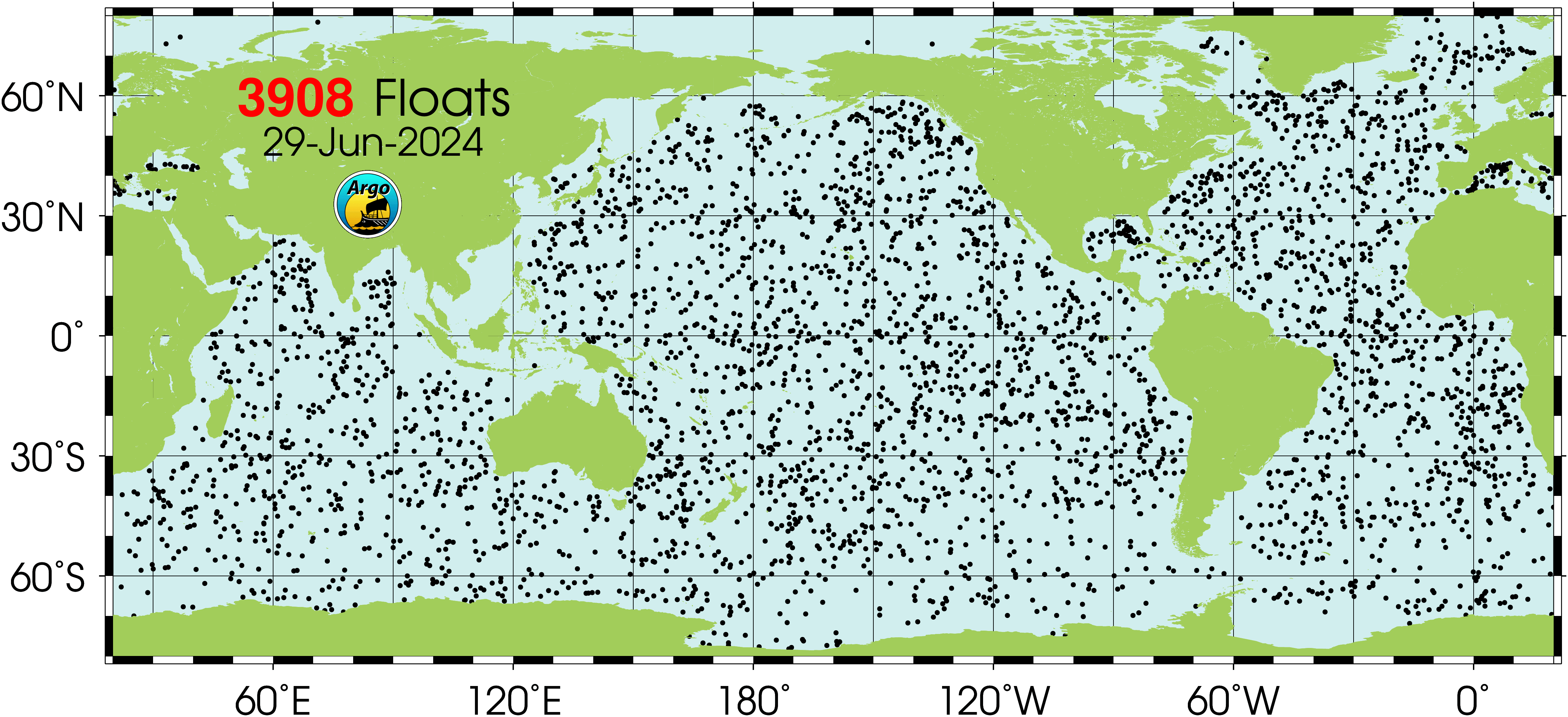
What is Argo? Argo is a global array of 3,800 free-drifting profiling floats that measures thetemperature and salinity of the upper 2000 m of the ocean. This allows, for the first time, continuous monitoring of the temperature, salinity, and velocity of the upper ocean, with all data being relayed and made publicly available within hours after collection. Positions of the floats that have delivered data within the last 30 days :

Scientists deploy an Argo float. For over a decade, more than 3000 floats have provided near-global data coverage for the upper 2000 m of the ocean.

Here is a sample of yesterday’s coordinated reports from CCN- Climate Crisis Network captured by my news aggregator, listed by the most recent first. Note the worldwide scope and editorial poetic license on the titles.

Ocean warming accelerating to record temperatures, scientists warn Engineering and Technology Magazine
Scalding seas? Oceans boil to hottest temp on record USA Today EU
World’s oceans heating up at quickening pace: study Egypt Independent
Ocean warming ‘accelerating’ The London Economic
Oceans warming faster than we thought: Study AniNews.in
Ocean temperatures rising faster than thought in ‘delayed response’ to global warming, scientists say The Japan Times
Oceans warming much faster than previously thought: Study The Hindu Business Line
The Oceans Are Warming Faster Than We Thought, a New Study Says TIME
Oceans Warming Even Faster Than Previously Thought Eurasia Review
The Ocean Is Warming Much Faster Than We Thought, According To A New Study BuzzFeed
Pacific: New research proves ocean warming is accelerating ABC Online – Radio Australia
We’re Boiling the Ocean Faster Than We Thought New York Magazine
Oceans warming faster than expected SBS
Ocean temperatures are rising far faster than previously thought, report says TVNZ
Ocean Temps Rising Faster Than Scientists Thought: Report HuffPost (US)
World’s oceans are heating up at a quickening pace Bangkok Post
The Warming of the World’s Oceans Is Set to Increase Dramatically Over the Next 60 Years Pacific Standard
New Climate Change Report Says Ocean Warming Is Far Worse Than Expected Fortune
Oceans Are Warming Faster Than Expected, Research Says Geek.com
World’s oceans are heating up at a quickening pace: study AFP
Oceans Warming Faster Than Predicted, Scientists Say gCaptain

So the message to the world is very clear: Ocean Heat Content is rising out of control, Be Very Afraid!
The trigger for all of this concern comes from this paper How fast are the oceans warming? by Lijing Cheng, John Abraham, Zeke Hausfather, Kevin E. Trenberth. Science 11 Jan 2019 Excerpts from paper in italics with my bolds.

Climate change from human activities mainly results from the energy imbalance in Earth’s climate system caused by rising concentrations of heat-trapping gases. About 93% of the energy imbalance accumulates in the ocean as increased ocean heat content (OHC). The ocean record of this imbalance is much less affected by internal variability and is thus better suited for detecting and attributing human influences (1) than more commonly used surface temperature records. Recent observation-based estimates show rapid warming of Earth’s oceans over the past few decades (see the figure) (1, 2). This warming has contributed to increases in rainfall intensity, rising sea levels, the destruction of coral reefs, declining ocean oxygen levels, and declines in ice sheets; glaciers; and ice caps in the polar regions (3, 4). Recent estimates of observed warming resemble those seen in models, indicating that models reliably project changes in OHC.

The Intergovernmental Panel on Climate Change’s Fifth Assessment Report (AR5), published in 2013 (4), featured five different time series of historical global OHC for the upper 700 m of the ocean. These time series are based on different choices for data processing (see the supplementary materials). Interpretation of the results is complicated by the fact that there are large differences among the series. Furthermore, the OHC changes that they showed were smaller than those projected by most climate models in the Coupled Model Intercomparison Project 5 (CMIP5) (5) over the period from 1971 to 2010 (see the figure).

Since then, the research community has made substantial progress in improving long-term OHC records and has identified several sources of uncertainty in prior measurements and analyses (2, 6–8). In AR5, all OHC time series were corrected for biases in expendable bathythermograph (XBT) data that had not been accounted for in the previous report (AR4). But these correction methods relied on very different assumptions of the error sources and led to substantial differences among correction schemes. Since AR5, the main factors influencing the errors have been identified (2), helping to better account for systematic errors in XBT data and their analysis.

Multiple lines of evidence from four independent groups thus now suggest a stronger observed OHC warming. Although climate model results (see the supplementary materials) have been criticized during debates about a “hiatus” or “slowdown” of global mean surface temperature, it is increasingly clear that the pause in surface warming was at least in part due to the redistribution of heat within the climate system from Earth surface into the ocean interiors (13). The recent OHC warming estimates (2, 6, 10, 11) are quite similar to the average of CMIP5 models, both for the late 1950s until present and during the 1971–2010 period highlighted in AR5 (see the figure). The ensemble average of the models has a linear ocean warming trend of 0.39 ± 0.07 W m−2 for the upper 2000 m from 1971–2010 compared with recent observations ranging from 0.36 to 0.39 W m−2 (see the figure).

MISSION ACCOMPLISHED: “The recent OHC warming estimates are quite similar to the average of CMIP5 models.”

What They are Not Telling You

The Sea Surface Temperature (SST) record is a mature dataset, not without issues from changing measurement technologies, but providing a lengthy set of observations making up 71% of the surface temperature history.  Sussing out temperatures at various depths in the ocean is a whole nother kettle of fish.

The Ocean Heat Content data is sparse, both in time and space.

The Ocean is vast, 360 million square kilometers with an average depth of 3700 meters, and we have 3900 Argo floats operating for 10 years. In addition we have some sensors arrayed at depths in the North Atlantic. As the text above admits, there are lots of holes in the data, and only a short history of the recently available reliable data. Other publications by some of the same authors admit: Large discrepancies are found in the percentage of basinal ocean heating related to the global ocean, with the largest differences in the Pacific and Southern Ocean. Meanwhile, we find a large discrepancy of ocean heat storage in different layers, especially within 300–700 m in the Pacific and Southern Oceans. Source: Consensuses and discrepancies of basin-scale ocean heat content changes in different ocean analyses, Gongjie Wang, Lijing Cheng, John Abraham.

Modelers Make OHC Reconstructions by Adding Guesstimates to Observations

Again climate science alarms are raised after “reanalysis” of the data. No one should be surprised that after computer manipulations and data processing, the “reanalyzed” data has changed and now favors warming and confirms the climate models. The Argo data record by itself is too short to make any such claim. In previous studies, scientists were more circumspect and refrained from “jumping the shark.” Apparently, with the Paris Accord on the ropes in 2019, caution and nuance has been thrown to the wind, as witnessed by the recent SR15 horror show, and now this.

Methodological Problems Bedevil These Reconstructions

One of the studies cited in support of revising OHC upward is the study Quantification of ocean heat uptake from changes in atmospheric O2 and CO2 composition, L. Resplandy et al. Published in Nature 31 October 2018.  From the Media Release:

The world’s oceans have absorbed far more heat than we realized, shortening our timeline to stop the causes of global warming, and foreboding some of the worst case scenarios put forth by climate experts, according to new findings.

A novel study by researchers from Scripps Institution of Oceanography at the University of California San Diego and Princeton University, published on Wednesday in Nature, implies that officials have underestimated the amount of heat retained by Earth’s oceans.

Between 1991 and 2016, oceans warmed an average 60 percent more than estimates by the Intergovernmental Panel on Climate Change (IPCC) originally calculated, the study claims. That amount equalled 13 zettajoules, or eight times the world’s annual energy consumption.

Something didn’t look right to climate statistician Nic Lewis so he deconstructed the study, finding several methodological mistakes along the way. He explained and communicated with the authors in a series of 4 posts at Climate Etc. Nov. 6 through 23, 2018.

Nic Lewis, Nov. 6 (here):

The findings of the Resplandy et al paper were peer reviewed and published in the world’s premier scientific journal and were given wide coverage in the English-speaking media. Despite this, a quick review of the first page of the paper was sufficient to raise doubts as to the accuracy of its results. Just a few hours of analysis and calculations, based only on published information, was sufficient to uncover apparently serious (but surely inadvertent) errors in the underlying calculations.

Moreover, even if the paper’s results had been correct, they would not have justified its findings regarding an increase to 2.0°C in the lower bound of the equilibrium climate sensitivity range and a 25% reduction in the carbon budget for 2°C global warming.

Because of the wide dissemination of the paper’s results, it is extremely important that these errors are acknowledged by the authors without delay and then corrected.

Authors Respond:

On November 14, 2018 this paper’s authors announced key errors to the two week-old study that made claims about the amount of heat that Earth’s oceans have absorbed. The errors stem from “incorrectly treating systematic errors in the O2 measurements and the use of a constant land O2:C exchange ratio of 1.1,” co-author Ralph Keeling said in an update from Scripps Institution of Oceanography, which is affiliated with the study. More simply, the team’s findings are too uncertain to conclusively support their statement that Earth’s oceans have absorbed 60 percent more heat than previously thought. Keeling claims the errors “do not invalidate the study’s methodology or the new insights into ocean biogeochemistry on which it is based.”

Subsequent posts by Lewis found other differences between the stated method and the analysis actually applied, adding to the uncertainty of the study and its finding. Lewis is not done yet, and the paper has not been reissued. Unfortunately, it has not been retracted and is still cited in reference to unsupported claims of runaway ocean heat content.

Meanwhile, other measurements, such as those in North Atlantic and Indian Ocean show slight cooling rather than warming, with researchers suspecting natural cyclical activity.

Summary

So anxious are alarmists/activists to cry wolf that they are running the computers flat out to manipulate and extrapolate from precious but incomplete limited data to confirm their suppositions.  All to keep alive a deflating narrative that the public increasingly finds offensive.

Footnote:

Oceanographers know that deep ocean temperatures can vary on centennial up to millennial time scales, so if some heat goes into the depths, it is not at all clear when it would come out.

Beware getting sucked into any model, climate or otherwise.

More at Putting Climate Models in Their Place

Climate activists versus affordable housing

Susan Shelley writes an article with the same title at Los Angeles Daily News Climate activists versus affordable housing.  Excerpts below in italics with my bolds.. I also added some pertinent cartoons by the irrepressible Californian Lisa Benson.

In what may signal the beginning of the end of alarmism over climate change, a group of civil rights activists is suing the California Air Resources Board. The issue is CARB’s plan to reduce greenhouse gas emissions by effectively limiting new housing construction. The lawsuit says this is driving up the cost of housing, worsening poverty and particularly victimizing minority communities.

The Global Warming Solutions Act of 2006 (Assembly Bill 32), signed by Gov. Arnold Schwarzenegger, committed California to a goal of reducing statewide greenhouse gas emissions. The California Air Resources Board was required by AB 32 to write “scoping” plans every five years detailing how the specified GHG reduction targets would be met.

The 2017 scoping plan includes “guidelines” for new housing that the lawsuit calls “staggering, unlawful and racist.”

The group that is suing is called The Two Hundred. It’s a Bay Area organization made up of longtime civil rights advocates who have spent decades fighting against discrimination. They say CARB’s new GHG housing provisions have a “disparate effect on minority communities,” which is illegal and unconstitutional.

CARB’s provisions “increase the cost and litigation risks of building housing,” intentionally worsen traffic congestion and raise fuel and electricity costs, the activists contend.

The lawsuit says CARB’s scoping plan calls for new housing in “California’s existing communities (which comprise 4 percent of California’s lands).” The idea is to reduce “vehicle miles traveled” by limiting sprawl. But the civil rights activists say this is leading to resegregation of California’s urban areas as older affordable housing is demolished to make way for high-density housing that is unaffordable.

A better solution, the group says, is to build homes on land that is outside the current urban boundaries, but CARB’s 2017 scoping plan is preventing that. Its “guidelines” are helping to block new housing developments.

CARB tried unsuccessfully to get the lawsuit thrown out. Fresno County Superior Court Judge Jane Cardoza issued an order in October allowing it to go forward.

Unless there’s a settlement, the courts will decide whether “California’s climate change policies, and specifically those policies that increase the cost and delay or reduce the availability of housing, that increase the cost of transportation fuels and intentionally worsen highway congestion to lengthen commute times, and further increase electricity costs, have caused and will cause unconstitutional and unlawful disparate impacts to California’s minority populations.”

Not to mention their impact on everybody else.

There are four “GHG Housing Measures” at issue. They attempt to limit “vehicle miles traveled,” set a “net zero” GHG standard for new housing developments and add a “CO2 per capita” measurement to local “climate action plans.” There’s also a set of policies to encourage “vibrant communities.”

CARB says these “GHG Housing Measures” are only “guidelines,” but the lawsuit calls them “unlawful underground regulations” that were imposed without a formal rulemaking process.

Something else that CARB skipped, the lawsuit charges, is the legally required economic analysis that “accounts for the cost of these measures on today’s Californians.”

Yes, civil rights activists are demanding that climate regulations meet the law’s required standard of cost-effectiveness.

But California’s climate regulations can’t meet any standard of cost-effectiveness.

As the lawsuit explains it, “California’s reputation as a global climate leader is built on the state’s dual claims of substantially reducing greenhouse gas emissions while simultaneously enjoying a thriving economy. Neither claim is true.”

The statewide economic growth numbers are misleading, the lawsuit says, because the averages are boosted by capital gains in the wealthy Bay Area tech sector, while most of the state struggles with low wages and high costs. And while Californians were paying too much for housing, fuel and electricity in order to achieve greenhouse gas reductions, other states actually had greater GHG reductions without doing anything.

“California’s climate policies guarantee that housing, transportation and electricity prices will continue to rise while ‘gateway’ jobs to the middle class for those without college degrees, such as manufacturing and logistics, will continue to locate in other states,” the lawsuit states.

This is something new in California. Civil rights activists are attempting to hold climate activists accountable for worsening the housing crisis and increasing poverty.

Maybe it’s the political climate that’s changing.

Susan Shelley is an editorial writer and columnist for the Southern California News Group. Susan@SusanShelley.com. Twitter: @Susan_Shelley.

Why More USA CO2 is a Good Thing

A new editorial at Investor’s Business Daily explains: Don’t Join The Media Freak Out Over Recent Jump In CO2 Emissions — It Won’t Last. Excerpt in italics with my bolds.

CO2 Emissions: For the first time in years, U.S. carbon dioxide output rose last year, a new report says. The jump has set off alarms in all the predictable media quarters. Relax. It’s a great sign for the economy, and will mean nothing long term for the environment.

CO2, the main greenhouse gas that global warming advocates most fear, happens to be rising around the world right now. It has been for decades.

But in recent years the U.S. has been the big exception to that trend, with declining amounts of CO2 spewed into the air from its industry. The reason for this is that, thanks to fracking, companies and utilities around the country are replacing coal with natural gas.

At least, that is, until 2016. But in 2018, U.S. carbon dioxide output jumped by 3.4%, according to Rhodium Group, a research firm.

It’s not hard to understand why. Thanks to a booming economy set off by President Trump’s new trade deals, tax cuts and deregulation, in the past two years the U.S. has seen manufacturing jobs surge.

CO2 Emissions Vs. Factory Jobs
Indeed, since Trump entered office, the number of manufacturing jobs has jumped by close to half a million. Once-moribund industrial areas around the country, many of which voted for Trump, are coming back to life. Minority unemployment rates are at or near record lows. Meanwhile, wages rose 3.2% last year, the fastest in a decade.

These are good things. This is prosperity.

Sources: US Federal Reserve Board and MAPI Foundation.

All those people going back to work in refurbished factories in America’s Heartland — you remember, the ones Hillary Clinton called “deplorables” — helped push emissions from manufacturing up 5.7% last year alone.

Transportation also contributed, of course, in the surging economy, with jet fuel (up 33.1%) and diesel fuel (up 3%) posting solid gains. A growing economy also means more electricity demand. Emissions in the electricity producing sector jumped 1.9%.

Then there’s the irony of ironies: some of the increase in greenhouse gas emissions, which activists fear are causing runaway global warming, was due to an unusually cold winter last year. That’s right: Businesses and homes used more fuel for heat than they have in years. Rhodium noted that CO2 from this winter effect rose 10% in 2018.

A Cold, Cold Winter
Are these bad things? No. Not at all.

First off, people need to heat their homes and businesses in winter. That’s a given. Anyone who doubts that deserves the scorn and ridicule that surely would come their way for suggesting otherwise.

Second, those who have regained their jobs in factories across America should be cheered after living through years of steady, unremitting industrial decline. That some media outlets are now treating the very recent rise in CO2 output as some epic tragedy, please.

A healthy economy always produces more CO2 when its growing fast than otherwise. Our current growth rate is roughly 50% higher than it was under President Obama. If it didn’t produce more CO2, that would be surprising.

“The boom in manufacturing is good news for American workers,” said The Daily Caller, “however, major media outlets sounded the alarm on global warming.” Both Washington Post and Bloomberg .

The Post was worst, claiming the “world has only about a decade to make the ‘unprecedented changes necessary” to stave off climate disaster.

Of course, such predictions of doom are based on statistical models that have proven wrong repeatedly in the past. That’s not science; it’s little better than a Ouija Board. And yet, these prophets of climate doom would have us slash CO2 output and destroy hundreds of thousands of jobs just to satisfy the demands of the green socialist movement.

Nothing’s Forever — Not Even CO2
By the way, those gains in CO2 won’t go on forever. The next slump or slowdown will take care of that, by causing many companies to close and many people to lose their jobs. And fracking will continue to chip away at our CO2 emissions.

Meanwhile, around the world, countries are abandoning their restrictions on CO2 emissions that have impoverished them and angered voters. They’re also throwing aside the idea of punitive carbon taxes. People want jobs. They want incomes. They want better lives. And taxing them and the businesses they work for so that they’ll be poorer and pollute less creates resentment, even rage.

Just ask France’s Gilets Jaunes, who have nearly paralyzed President Emmanuel Macron’s administration over his proposal for higher energy taxes. It should be a warning to U.S. Democrats, who hope to parlay fear of a changing climate into total control of the U.S. government.

As Nancy Pelosi said earlier this month, on becoming House speaker again, “We must… face the existential threat of our time: the climate crisis — a crisis manifested in natural disasters of epic proportions.” This is nonsense on steroids.

Capitalism Cleans Up
The truth is, the world is getting much cleaner, when measured by CO2 output per dollar of GDP. So is the U.S. It’s decarbonizing. And as the world population begins to decline later this century and new energy technologies come on line — everything from new battery technology to ultra-safe nuclear power designs — CO2 emissions won’t be a problem, real or imagined.

The real problem? Having enough people working and paying taxes to support all the retirees around the world and pay off hundreds of trillions of dollars of global debt.

What is a problem is the nonstop fear-mongering, demands for more taxes, and dangerous socialist experiments in expanding government control of the economy, all in the name of warding off the threat of global warming.

So don’t worry about this jump in CO2. It won’t last. But the damage from bad green policies foisted on the economy will.