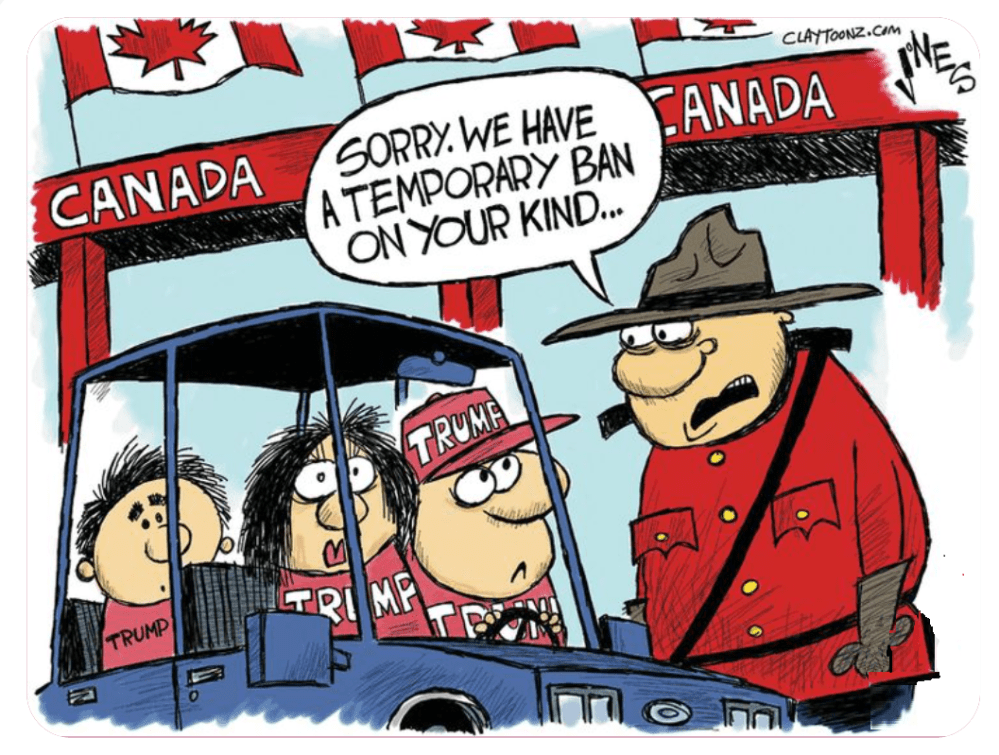
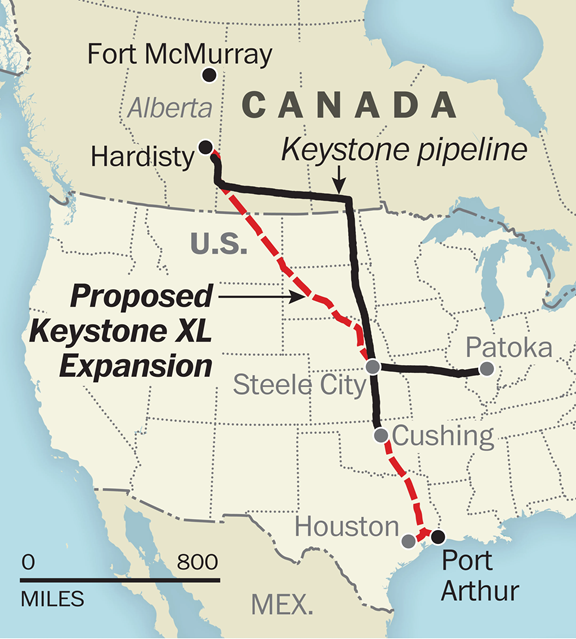
Keystone Pipeline Revival?

The News

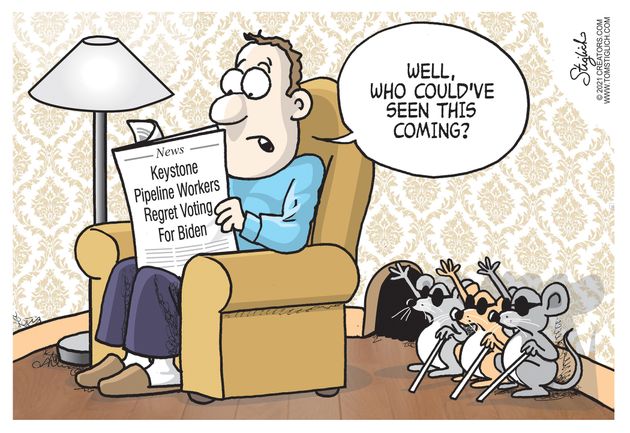
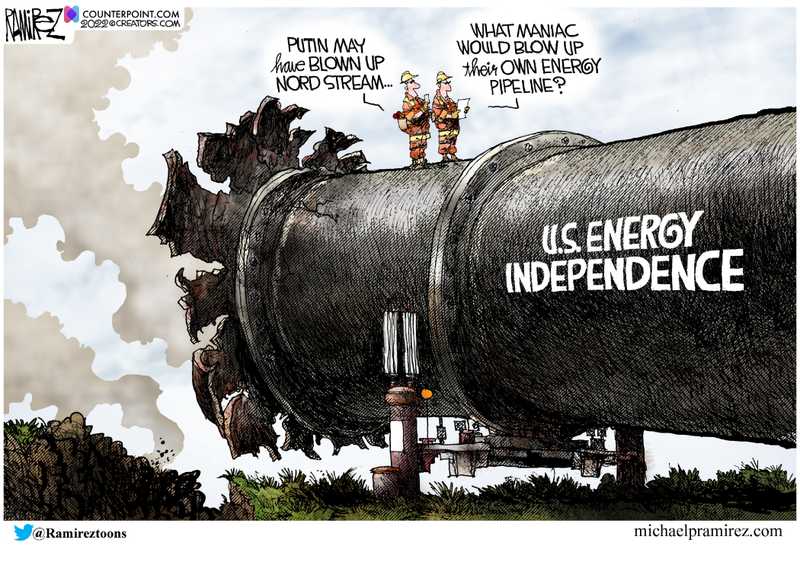
Smith backs Trump’s call to build Keystone XL pipeline

Trump revealed on his Truth Social platform that the shelved pipeline project is still on his mind

Background

In 2011, Congress forced then-President Barack Obama to make a decision on Keystone XL by including a provision in an unrelated tax bill that required him to decide the project’s fate within 60 days or determine it wasn’t in the national interest. After several years of turmoil, Obama finally rejected Keystone XL in 2015.

But when President Donald Trump took office in 2017, he invited parent company TC Energy to reapply for a new permit for Keystone XL. They did and were approved.

On the first day of Biden’s presidency, he issued an executive order canceling the Keystone XL pipeline — making good on his promise to the climate activists who helped get him elected, but inviting the lawsuit brought by 21 states who say they will be hurt economically by Biden’s decision.

The Bigger Picture: Br’er Canada and the Tar Baby

Disney animation of “Br’er Rabbit and the Tar Baby” from Songs of the South, a collection of Uncle Remus American folk tales.

On Nov. 6, 2015, President Obama canceled the Keystone XL pipeline. Canada PM Trudeau, just installed and wanting not to offend, politely said he was “disappointed.” Here is the back story that you won’t hear in the media.

background
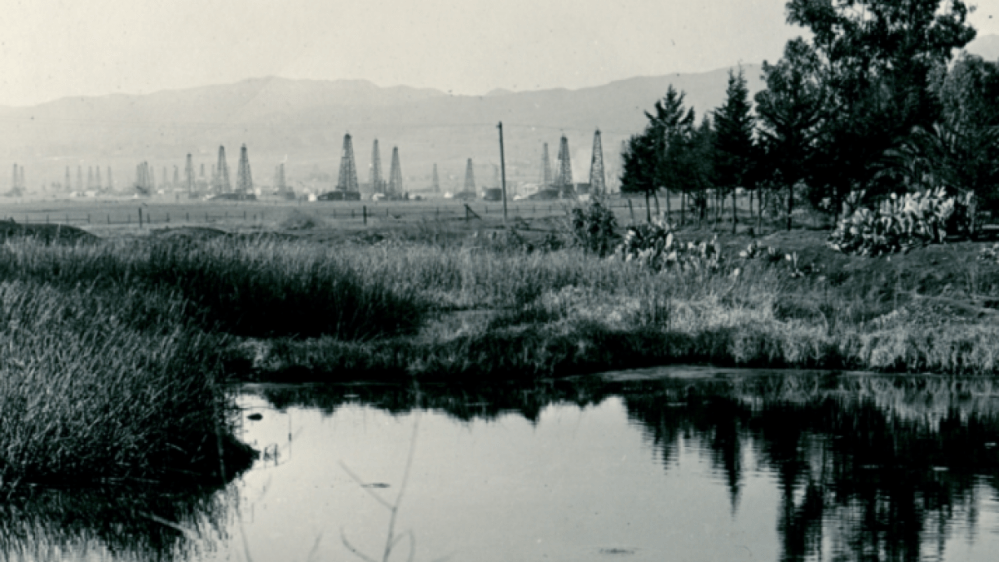
Americans should know all about tar pits. As the traditional folk tale suggests, there have been many tar pools across the US. A famous one is in Los Angeles: La Brea Tar Pit. Pictured above around 1910, it’s an oil spill produced by Nature.  Notice the many oil derricks nearby.

Tar pits are composed of heavy oil fractions called gilsonite, which seeped from the Earth as oil. In Hancock Park, crude oil seeps up along the 6th Street Fault from the Salt Lake Oil Field, which underlies much of the Fairfax District north of the park.[3] The oil reaches the surface and forms pools at several locations in the park, becoming asphalt as the lighter fractions of the petroleum biodegrade or evaporate.

This seepage has been happening for tens of thousands of years. From time to time, the asphalt would form a deposit thick enough to trap animals, and the surface would be covered with layers of water, dust, or leaves. Animals would wander in, become trapped, and eventually die. Predators would enter to eat the trapped animals and also become stuck.

https://en.wikipedia.org/wiki/La_Brea_Tar_Pits

La Brea Tar Pits and Museum today.

Canada’s Tar Baby

So, as you can see, tar pits are hazardous to animal and plant life. In Canada, we have a much greater problem bestowed on us: the Athabasca tar sands in Alberta. The oil deposits are much too large to put fences around it and open it as a museum, as was done in L.A. No, in Alberta the environmentally responsible thing is to clean up the mess Nature left behind.

The cleanup requires a massive effort, but costs can be offset by processing the tar into petroleum products and shipping them to markets who want to use them.  Using those products from syncrude oil liberates CO2 once trapped in bitumen, and in the air becomes available to plants who grow larger and faster from the increased concentration.  The Japanese would call this a “virtuous cycle.”

Br’er America is a neighbor with the facilities to help, but because of CO2 hysteria, the Obama and the Biden administrations were afraid of getting some tar on their hands. Actually a pipeline is the environmentally friendly way of transporting the crude oil, but now trains will be used instead of the pipeline.

The origin of the Alberta oil sands is a debated subject. Two primary theories are asserted:

1.) These sands are the remnants of a once vast reserve of crude oil that, over extremely long periods of time, has escaped or been destroyed microbiologically; thus leaving behind some bitumen and also converting the lighter crude oil into bitumen through bacterial processes.

2.) The bitumen evolved from highly organic cretaceous shales (similar to oil shale). Underground pressure forced the bitumen out of the kerogen rich shales where it soaked into existing silt grade sediments and sand bodies.

In the first theory, petroleum would be formed in the traditional manner, and then converted to bitumen by some additional process.  More description here.

Summary

So whether Nature created the tar mess by bacteria or by underground pressure, it’s up to us humans to clean it up. Canada is doing the heavy lifting, while the Dem administrations preferred posing as innocent bystanders.  Maybe a Keystone Pipeline Revival will be triggered by Trump to the benefit of energy dependent North Americans.

See Also:

Pipeline Facts vs. Fears

Dangerous EPA GHG Endangerment Finding

The news is EPA Director Zeldin has submitted recommendations to President Trump but the content has not yet been made public. How significant is this issue for climate activists? Just read the hysterical response by Sierra Club Trump, Zeldin Must Publicly Release EPA’s Endangerment Finding Recommendation on Climate Pollution.  In italics with my bolds.

People deserve to know if their government plans
to terminate their right to breathe clean air

Sierra Club Executive Director Ben Jealous released the following statement:

“The EPA’s mission is to protect human health and the environment, and any revocation or weakening of this life-saving action would endanger both. Denying both science and the Supreme Court to further unravel the Clean Air Act would be a slap in the face to the children and elderly suffering from asthma or COPD, the victims of extreme weather-fueled wildfires and floods, and to every person wanting clean air to breathe. The American people deserve answers from this administration on whether or not they plan to further ignore the law and science to put polluters over people. The Sierra Club is prepared to pursue all legal avenues and use every tool at its disposal to protect the American people and avert the very worst of the climate crisis.”

And then there’s the facts:

The origin of this insane mass delusion, it’s spurious codification into regulations and the necessity of dumping it once and for all is explained by Chris Talgo in his Town Hall article The EPA’s Endangerment Finding Belongs on the Ash Heap of History. Excerpts in italics with my bolds and added images.

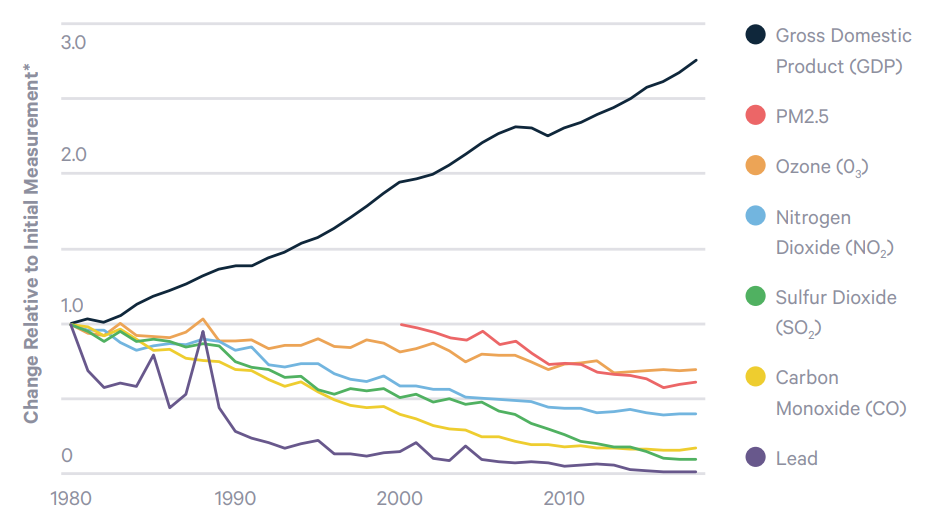
Most Americans have probably never heard of the Endangerment Finding, however, this obscure rule has effectively allowed the federal government to label carbon dioxide a harmful “pollutant” that can be regulated under the Clean Air Act.This is a prime example of government gone wild. The Clean Air Act was never intended to allow the EPA to declare carbon dioxide to be a dangerous pollutant. Rather, it was designed to “address the public health and welfare risks posed by certain widespread air pollutants.”It is important to note that in 1963, when the Clear Air Act was initially passed, carbon dioxide was not listed as an “air pollutant.”

Figure 1. Change in Gross Domestic Product
and Six Common Air Pollutants, 1980–2018

Source: Federal Reserve Economic Data | Federal Reserve Bank of St. Louis. *The index begins at 1 in 1980, with the exception of PM2.5, which was measured beginning in 2000. The index for each year is the actual value divided by the initial value.

Fast-forward to 1999. As the EPA notes, “On October 20, 1999, the International Center for Technology Assessment and 18 other environmental and renewable energy industry organizations filed a petition seeking the regulation of greenhouse gas emissions from on-road vehicles under the Clean Air Act.”

 As happens all too often in our over litigious modern society, this “petition” eventually became a lawsuit. In 2007, the U.S. Supreme Court ruled in Massachusetts v. EPA that “greenhouse gases are air pollutants covered by the Clean Air Act and that EPA must determine whether or not emissions of greenhouse gases from new motor vehicles cause or contribute to air pollution which may reasonably be anticipated to endanger public health or welfare.”

Although this is the standard interpretation of the Supreme Court’s ruling,
it is not necessarily the correct interpretation.

According to the majority opinion, authored by former Justice John Paul Stevens, “We need not and do not reach the question whether on remand EPA must make an endangerment finding, or whether policy concerns can inform EPA’s actions in the event that it makes such a finding. We hold only that EPA must ground its reasons for action or inaction in the statute.”

In other words, the Supreme Court decision did not determine that carbon dioxide is a harmful air pollutant. Instead, it simply stated that the EPA has the authority to decide whether carbon dioxide is a harmful greenhouse gas if and only if that is supported by unequivocal data.

A more recent Supreme Court decision in 2022, West Virginia v. EPA, provides even more grounds for the Endangerment Finding to be rescinded. In this landmark ruling, the Supreme Court decided that the Obama-era Clean Power Plan was unconstitutional because it violated the letter of the law under the aforementioned Clear Air Act. Specifically, the Court cited the “Major Questions Doctrine,” which clearly states “that if an agency seeks to decide an issue of major national significance, its action must be supported by clear congressional authorization.”

Incredibly, this is the first time the Supreme Court
had cited the Major Questions Doctrine in a ruling.

The fact that the U.S. Supreme Court ruled in favor of West Virginia, and essentially reprimanded the EPA to stay strictly within its constitutional guardrails, bodes well for those who believe the Endangerment Finding is unconstitutional and should be eliminated.

But if that is not convincing enough, consider that the Endangerment Finding is predicated on flawed science to begin with. Despite the insistence by the EPA that carbon dioxide is a harmful pollutant that is driving an existential climate crisis, the facts and data say otherwise.

Over the past few decades, climate alarmists and environmental zealots have been somewhat successful in fooling too many Americans into believing that carbon dioxide emissions must be eliminated no matter the cost.

However, the cost of demonizing carbon dioxide as a harmful pollutant is immense. By vilifying CO2 and attempting to regulate it to death, the EPA has absolutely harmed tens of millions of Americans withhigher energy bills. Moreover, the EPA’s absurd notion that carbon dioxide is a harmful air pollutant has put the entire U.S. energy grid at risk.

As we enter the AI age, there will be an enormous demand for dependable and affordable energy. The only energy sources that can deliver reliable and cost-effective energy (aside from nuclear) for the United States to remain the global leader in the AI arms race necessarily produce carbon dioxide emissions. Put simply, if we do not eliminate the Endangerment Finding and free ourselves from its shackles, the United States will not be able to keep pace with the Communist Chinese Party in the worldwide battle for AI supremacy.


US House Targets Biden Climate Rules to Cancel

Maydeen Merino reports at Washington Times House leadership lays out target list of Biden climate rules to cancel.  Excerpts in italics with my bolds and added images.

House Republican leadership outlined a number of Former President Joe Biden ’s climate regulations that it will seek to overturn through a special legislative process in the coming weeks.

House Majority Leader Steve Scalise on Thursday released a list of the previous administration ‘s climate and energy regulations that Republicans will aim to reverse through the Congressional Review Act (CRA).

The CRA allows Congress to bypass the filibuster and take a simple majority vote in the House and Senate to overturn recently implemented rules. The process allows the vote to come to the floor in an expedited fashion, forcing all members to go on the record with their votes.

If Congress votes to undo a rule,
the agency cannot propose a similar regulation.

Scalise listed 10 regulations Republicans will look to undo, with the majority being climate-related.

California Clean Air Act Waiver

At the top of the list is the California Clean Air Act Waiver granted by the Environmental Protection Agency, which allows the state to implement stricter vehicle emission standards than federal requirements. California has required all new car sales to be zero-emissions by 2035.  A number of states follow California’s auto emission standards. Republicans have vocally opposed California’s standards as a ban on gas vehicles, and Trump has promised to reverse the waiver.  The waiver has “resulted in higher vehicle prices for consumers, increased costs and manufacturing complexities for automakers, and a more complicated regulatory environment,” Scalise said in a press release .

Waste Emissions Charge

Another prominent target is the Waste Emissions Charge for Petroleum and Natural Gas Systems, which was implemented as part of the 2022 Inflation Reduction Act passed by Democrats and signed by Biden that included hundreds of billions of dollars in funding for clean energy projects. With the charge, the EPA imposed a fee on oil and gas facilities that exceed specific methane emissions thresholds. “The fee is a pass-through cost to consumers that will raise prices, reduce domestic energy production, and increase reliance on foreign energy sources,” Scalise said.

Standards for Gas-fired Water Heaters
Republicans will also look to overturn the Energy Conservation Standards for Consumer Gas-fired Instantaneous Water Heaters, which is a set of rules by the Energy Department requiring a minimum efficiency level for gas-powered tankless water heaters. The GOP said the rule places financial burden on consumers and limits consumer choice.


Energy Conservation-Appliance Standards

The GOP plans to cut the Energy Conservation-Appliance Standards for certification and labeling, by which appliances must meet specific standards to receive a label informing consumers that they are energy-efficient. Scalise noted that the rule slows the introduction of products to market, limits consumer options, and affects the supply chain.

Off Shore Drilling Regulations

Other climate-related rules include the Oil and Gas and Sulfur Operations in the Outer Continental Shelf, which is a list of strict regulations on offshore oil drilling in high-pressure and temperature environments. Scalise said the regulations increase the burdens on energy operations and raise costs for consumers.

Rubber Tire Manufacturing Emissions Standards

The national emission standards for hazardous air pollutants for Rubber Tire Manufacturing, which addresses hazardous emissions from the rubber tire manufacturing process, is also targeted to be slashed by the GOP . The rule increases compliance costs for the industry and results in higher prices for consumers, the House majority leader said.

Protection of Marine Archaeological Resources,

Lastly, the GOP will look to overturn the Protection of Marine Archaeological Resources, which requires oil and gas lessees and operators to submit archaeological reports for exploration or development on the Outer Continental Shelf. Scalise said the rule blocks domestic energy production and weakens energy independence.

Listing of Voluntary Carbon Credit Derivative Contracts

The Commodity Futures Trading Commission’s Guidance Regarding the Listing of Voluntary Carbon Credit Derivative Contracts will also be on the GOP chopping block. The rule establishes standards to buy and sell carbon credits to offset emissions. The rule prioritizes “political activism goals like environmental, social, and governance (ESG) and Net Zero…” Scalise said.

Digital Payment and Sales Rules

The House majority leader also included the Consumer Financial Protection Bureau’s General-Use Digital Consumer Payment Applications rule and The Internal Revenue Service’s Digital Asset Sales rule on the list.

“In addition to these rules, the Leader will be looking at more potential CRAs as we continue to fight to undo the damage done by the Biden Administration,” Scalise added.


Canada Facing Fork in the Road

Jordan Peterson writes at National Post Canada must offer Alberta more than Trump could. Excerpts in italics with my bolds and added images.

We have been terrible friends to the Americans

There is little doubt that one Donald J. Trump has truly and effectively rattled his northern neighbour’s chains. Aren’t the Americans our friends — and vice versa? Is the president serious in his desire to make Canada the 51st state? He certainly seemed serious enough when discussing his proposed takeover of Greenland with the Danish prime minister last week. Such intensity and unpredictability of purpose has sent the leaders of that country, reminiscent of the Canadian Liberals in their political orientation, into a tizzy — one that has extended to their socialist and globalist European compatriots. Who is this horrible orange-haired man, they wonder, and what does he want?

We’re all about to find out — and, not least, in Canada. Why is all this happening, we ask, wringing our hands; and to us, the self-proclaimed greatest best friend and staunch ally of the elephant who parades so theatrically on the far side of our southern border?

We might begin to answer that suddenly so relevant question by scrupulously questioning the nature of that friendship — and on our side. Perhaps we’re not the partners and collaborators we think we are, for starters. It could well be argued, for example, that our much-vaunted Canuck niceness (that second-rate virtue) in relation to the superpower who overshadows us in every manner is and has been a matter of blunt necessity, rather than a consequence of our genuine reliability as well-wisher and supporter. It is true that Canada has made sacrifices alongside the Americans, when freedom and democracy was truly threatened. That was real — but it was a long time ago. Since then, we have played and continue to play a crooked game with regard to our hypothetical U.S. allies in many other important and consequential regards.

My fellow countrymen continually said things that would have been regarded as clearly racist, sexist or ethnocentric had they been uttered to anyone other than an American citizen — assuming, rightly (given the civilized nature of the people in question) that they would take them politely, and without evident offence. Such comments were much more likely to emanate, as well, from precisely the sort of leftists prone to proclaim first that such behaviour is utterly unacceptable and second that such conduct would of course never show its face among people as good in their thoughts as them.

Such behaviour is, sadly, a Canadian norm, particularly wherever the country is left-leaning; particularly wherever everyone believes axiomatically that we have all the virtues of our democratic compatriots to the south, and then some; particularly wherever everyone is inclined to point self-righteously to the wonders of our now-dreadful and even oft-murderous “free” health-care system and its associated highly dysfunctional, expensive and increasingly unsustainable social safety net and compare it to the free-for-all in the U.S. they inevitably resort to if death threatens and they have the money.

We Canadians also pride ourselves on our peaceful — and peacekeeping — nature (take that, Yanks), contrasting that with the war-mongering attitude of the gunslingers we secretly admire but publicly disdain, forgetting ever-so-conveniently that it is nothing but our positioning under the fearsome nuclear umbrella of the U.S.A. and our knowledge of the certainty of their military protection if push comes to shove that allows us to be the sheep of peace who bleat their undeserved self-regard with so little shame.

This is hardly the way to signal to the U.S. either that we are capable of defending ourselves, thank you very much, or that we are grateful for their existence as big brother captain of the high school wrestling team — much-disdained protector of our junior hippy student radical selves. Such things matter, more than we think — and a lot more, now that middle America is in charge, given the well-deserved contempt that lot have for the niceties of hypocritical socialist smartest-kid-in-the-class peaceniks. Remember, Canucks: the U.S. is now run by exactly the kind of Americans that we tempt themselves so unforgivably to treat as our moral inferiors. This is not how friends behave. It is also no way to keep friends, once they have hypothetically been made. And we’ve been put on serious notice in that regard.

And we are only scratching the surface in our analysis of the problems with Canada-U.S. relations, and with Canada itself, with that nothing-but-preliminary analysis. For the last nine years, Canada has been run by exactly the type of contemptible elitists who are, if anything, even more anti-capitalist, anti-nationalist, and anti-industrial state than the typical Canadian. This has set us against our putative American allies, in a manner much deeper than we want to think — and don’t be thinking that any of this is lost on Trump. He clearly despises the recently departed Justin, and has as much respect for those who elected him as he does for the Democrats, so much like them, who tortured, tormented and despised him and the flyover country MAGA middlebrows who were so much wiser in their political instincts than their Ivy League wannabe masters.

Canadians are Democrats, in Trump’s view, except more so..
We think that’s a virtue. It’s not. It’s a liability.

More specifically, it is a liability in relation to the U.S., particularly now. It has also and more seriously (as if irritating our mighty neighbours is not enough) threatened both Canada’s economic viability and the likelihood it will survive as a nation. We might also note, in that regard, that the newly ordained and inevitable grand poobah of the currently wretched but still dangerously powerful Liberals, one Mark Carney, is one of the world’s prime advocates of the insane inanities of net zero.

He is a man who has planned in writing, not least in his bestselling book Values, the complete destruction of the fossil fuel industry (bye, bye, Alberta). If that’s not bad enough, and it is, he is also simultaneously an advocate of the same “post-national” view of Canada defined by Trudeau junior and his moralistic minions. What are we, according to such good thinkers? Nothing: but if anything, the oppressive patriarchal white supremacist identity-less colonial settler state defined by the progressive ideologues in the think-tanks, the elite dining rooms in eastern Canada, and the protest encampments on the campuses of Canadian universities.

None of this fills the MAGA crowd with admiration, in case it has to be said. None of it bodes well, either, for the economy of Canadadoomed to replacement, according to Carney, by hydrogen, solar and wind power that either does not exist (that would be the hydrogen) or that would doom Canadians to starve and freeze in the dark if it ever came to replace the reliable grid and transportation we all so desperately depend on when it’s 40 bloody below. We may when arguing so expensively and incompetently with the Americans continue to congratulate ourselves on our comparative righteousness. That diet will become even thinner gruel, however, in a future characterized by their explosive economic growth and our rapid descent toward comparative poverty and irrelevance (green though that pathway may be argued, however falsely, to be).
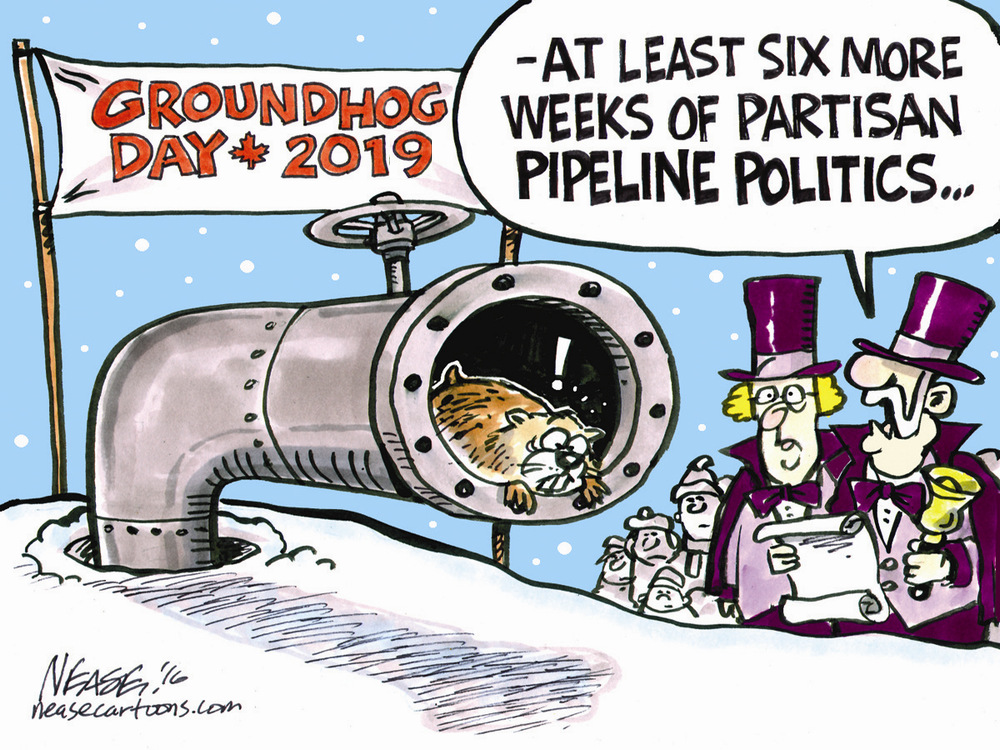
The consequence? No “business case” for the trade deals or infrastructure projects necessary to supply a self-admittedly desperate Europe and Japan with cheap and reliable Alberta energy. No new, plentiful and gratefully received pipelines running west to east in Canada. Abject economic dependence, in consequence, for Albertans (and Canada itself, as we are now finding out) on the purchasing decisions of the mad MAGA Yanks to the south. And now that same Alberta is being called upon to sacrifice its artificially and “morally” limited economy to fight off the looming tariffs of Donald J. Trump, the imposition of which should come as no surprise to anyone the least bit awake. We walked right into this, folks — and boy, we deserved it — but we felt good about ourselves all the way. And what is likely to result?

Trump has offered Canada status as the 51st state. If we had
a well-constituted country, this would have never happened,
or the suggestions would have been laughable
.

I see damn few people laughing, however, and more’s the pity. A strong case can be made that such subordinate status would not at all be a good deal for the Great White North as a whole. For Alberta, however — and perhaps for the West as such — the situation is not so clear. Here’s what I might do, given that, if I were in Premier Danielle Smith’s shoes — or at least what I might threaten to do, taking a page from Trump’s art-of-the-deal book, because it’s high time for the Albertans to play hardball. I might travel, say, to Mar-a-Lago (where I did in fact recently encounter that premier). I might have, while there, a forthright, even blunt, chat with Donald J., where I might say to him something like the following:

“Mr. President: My fellow Canadians have for decades compelled us to climb into bed with an eight-hundred pound gorilla. That would be you, Mr. Trump. Now you’ve decided to consummate the deal, so to speak — and we’ve given you the upper hand, on a silver platter (to mix metaphors terribly), while you’re doing so. Canada is unlikely to become the 51st state, however — not even Alberta — as you well know, sir. After all, you’d have to offer us something better than what has been put forward by our fellow Canadians.

“That would be:

  • the continued privilege and expense of subsidizing Quebec, half of whose citizens constantly clamour to secede from the country, while we impoverish ourselves for their benefit;
  • the constant imposition of serious practical impediments from the federal and other provincial governments (hint, hint, British Columbia) to the international business deals and pipelines that would help Alberta bring its resources to market;
  • continual insult on top of such injury in the form of unbearable and naïve moralizing about their superiority in conviction with regard to the “sustainability” of the planet — and, to top it all off,
  • the accusation that I am not patriotic enough to start a trade war with my strange bedfellow in the name of a country whose very leaders proclaim both identitylessness and a multiculturalism that none of my citizens want.”

And Trump might well say (or perhaps is even right now saying): “I think I could top that offer, Ms. Premier, fine as it is.

  • I could offer Albertans the American dollar;
  • full access to our markets for their resources, at full international price;
  • lower costs on almost all manufactured goods and on food;
  • lower taxes, both corporate and personal;
  • membership in a country that prides itself on being a country, and that does not plan to dissolve itself into an unstable multicultural mishmash;
  • genuine admiration for your economic and industrial endeavours, along with a can-do, visionary and deeply entrepreneurial culture;
  • immediate, reliable and guaranteed access to ports and pipelines, and full military defence.

And, if that’s not enough, dear lady — no transfer payments! And the additional psychological advantage for Albertans in foregoing the perpetual and bullying eastern Canadian attitude of grievance and moral superiority, emanating in particular from the Quebec (‘give us what we want forever or we’ll leave!’) who also shamelessly disdains your dirty fossil fuel — such that they made the fracking Alberta’s economy depends upon literally illegal in their jurisdiction, just to make a point, while simultaneously accepting, and not with good grace, the filthy money so generated.”
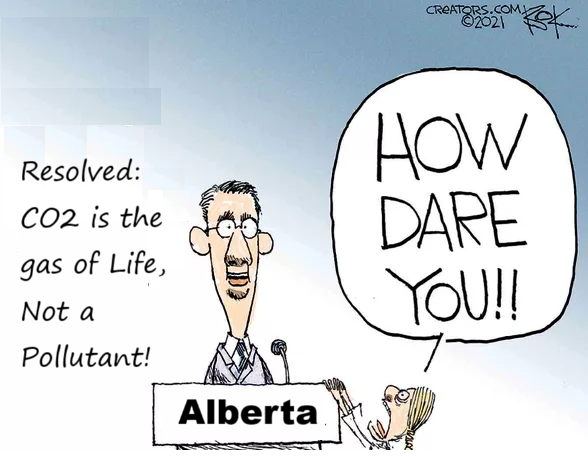
What do you think would happen, Oh Canada, if those were the two choices put forth on a ballot before the citizens of Alberta? And why should Smith not take full advantage of this opportunity, to tell her fellow Canadians, in no uncertain terms, a few things that would both make Canada an attractive place for Alberta (and the rest of the West, perhaps) to stay, and much saner and richer, to boot?

And what would that be:

  • Enough pathetic celebrity-wannabe pandering to the international elites of Davos — and, for good measure, the utterly degenerate UN.
  • Enough overt and covert attempt to destroy the basis of the economy of my fair and hard-working province.
  • Enough delaying critical infrastructure development and rejection of international trade offers for natural gas, oil and coal.
  • Enough treatment of the resource economy upon which Quebec in particular so unacceptably depends as a moral pariah.
  • Enough idiot green moralizing.
  • Enough carbon tax.
  • Enough bloody net zero. And how about this–
  • Enough multiculturalism and destruction of the Canadian identity.

“Why belong, so expensively, to a country that despises its own history, economy
and people? Make us a better offer, and quickly, my Canadian friends—
or Trump’s tariffs will be the least of your problems.”

And all of this would be not only be good for Alberta — and, by extension, for the working people of Canada — it is also absolutely necessary for Canada, even, perhaps to survive, both economically and politically. There’s a reason we, like the Europeans, now make a measly sixty cents for every dollar made by our American “friends.” That reason has much to do with the attitudes we have adopted ever since the benighted 1960s that have made us not such good friends at all.
Trump is threatening the integrity of Canada, and very effectively. The fact of that threat, and of its effectiveness, might make us think twice. In such thinking, there could be the opportunity to shed the idiocy that is making us poor, weak, irrelevant on the international stage, and contemptible to our neighbours. We could make his sabre-rattling into an opportunity, increase our cross-border trade, get out of our own way on the energy front, rekindle our national pride at least to the point where we regard our country as both viable and valuable, seek the international markets that would make us more truly independent as a nation, strengthen our commitment to the military that would be increasingly and truly necessary if such independence was pursued, and make of the next hundred years Canada’s triumph instead of the story of its contemptible, self-aggrandizing, moralistic, falsely green and socialist demise.

Now the Left’s Response to DOGE Makes Sense

All it takes is saying one word out loud when they’re hiding behind another word.

Ludwig von Mises made the perfect quote, describing the lefties of today:

The champions of socialism call themselves progressives, but they recommend a system which is characterized by rigid observance of routine and by a resistance to every kind of improvement. They call themselves liberals, but they are intent upon abolishing liberty. They call themselves democrats, but they yearn for dictatorship. They call themselves revolutionaries, but they want to make the government omnipotent. They promise the blessings of the Garden of Eden, but they plan to transform the world into a gigantic post office. Every man but one a subordinate clerk in a bureau. What an alluring utopia! What a noble cause to fight!

H/T to D. Parker and his American Thinker article Trump’s genius move against the Deep State

Footnote:

Definition of a Bureaucrab:

A creature that appears to making progress, but on closer inspection is only moving sideways.


Getting Climate Crisis Monkey Off Public Health Services

Advances in medical science and public health have  benefited billions of people with longer and higher quality lives.  Yet this crucial social asset has joined the list of those fields corrupted by the dash for climate cash. Increasingly, medical talent and resources are diverted into inventing bogeymen and studying imaginary public health crises.
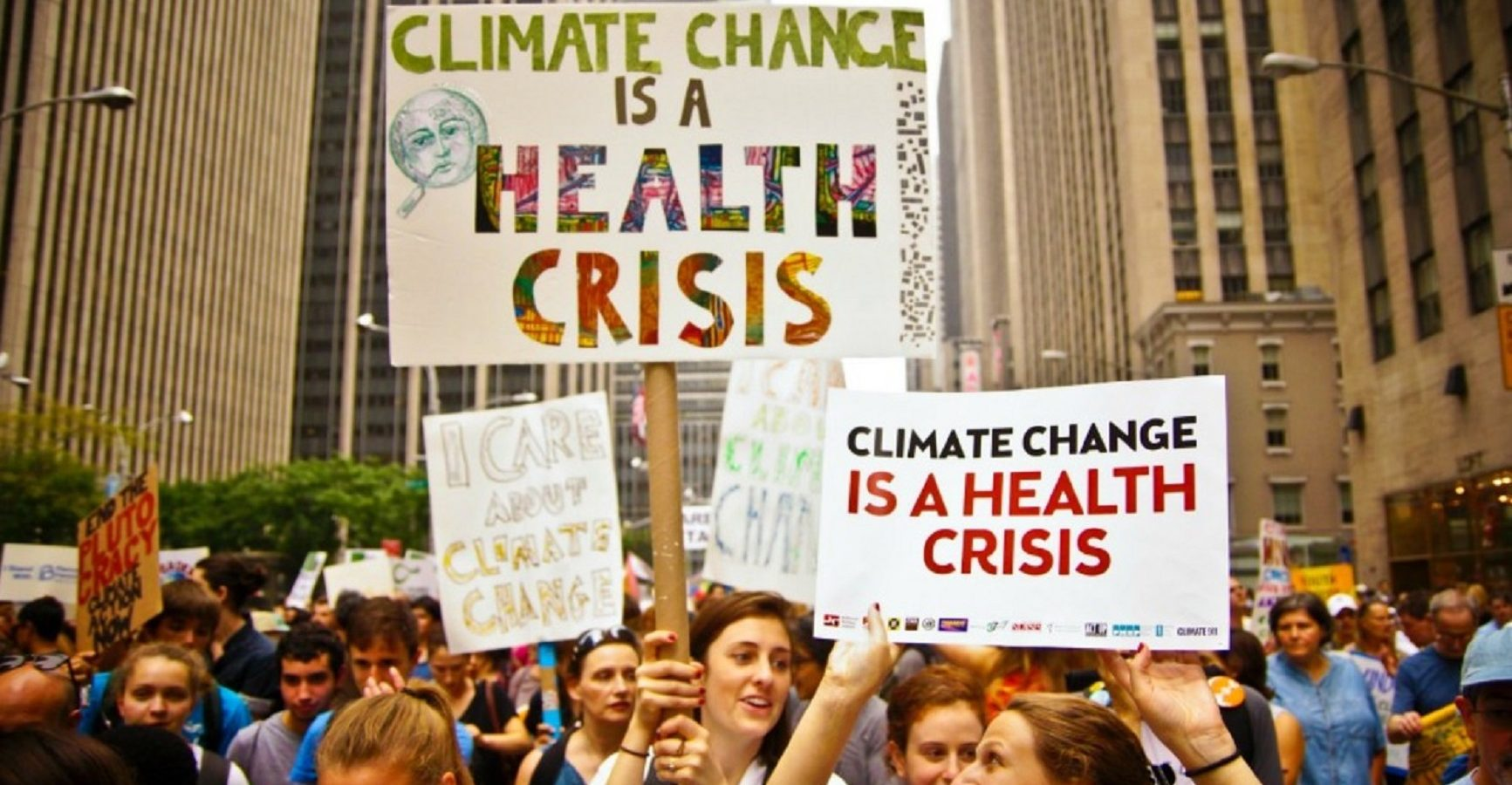
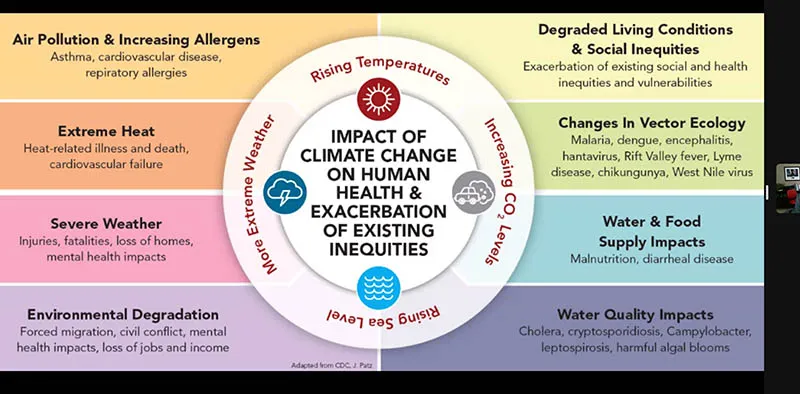
Thus it is welcome news that confirmed Secretary of Health and Human Services (HHS) RFK Jr. has stopped funding of climate medicine at National Institutes of Health (NIH). Mother Jones reported its disapproval RFK Jr., Onetime Environmentalist, Kills NIH Climate Change Programs.
Subtitled: He pulled HHS support from projects that aim to protect Americans’ health.  fight climate change. (my correction of MJ subtitle).

On February 14 of this year, his second day as secretary of the Department of Health and Human Services, he ended HHS funding for climate change and health programs at the National Institutes of Health, a move that will likely terminate this work.

That day, Ken Callahan, a senior adviser for policy and implementation in the Immediate Office of the Secretary for HHS, sent an email to Dr. Matthew Memoli, the acting director of NIH, noting that HHS would no longer support three programs run by the agency:  the Climate Change and Health Initiative, the Climate Change and Health Research Coordinating Center, and the Climate and Health Scholars Program.

In the email, a copy of which was obtained by Mother Jones, Callahan cited Executive Order 14154, titled “Unleashing American Energy,” which President Donald Trump signed on his first day in office last month to revoke executive orders President Joe Biden had previously issued to implement actions to address climate change.

As Richard Lindzen predicted, everyone wants on the climate bandwagon, because that is where the money is. Medical scientists have pushed for their share of the pie, as evidenced by the Met office gathering on Assessing the Global Impacts of Climate and Extreme Weather on Health and Well-Being (following Paris COP). Not coincidentally, the 2nd Global Conference on Health and Climate was held July 7-8, 2016 in Paris. Following that the American Public Health Association declared: 2017 is the Year of Climate Change and Health.

NIH: Why Climate Change Is a Health Threat

The NIH Climate Change and Health Initiative Strategic Framework claims:

For some time, international scientific consensus has been that climate change poses an existential threat to human beings. A report of the Intergovernmental Panel on Climate Change (IPCC), the United Nation’s body for assessing the science related to climate change, concluded in a recent report: “Any increase in global warming is projected to affect human health, with primarily negative consequences (high confidence).” The report further concludes that, “Compared to current conditions, 1.5°C of global warming would nonetheless pose heightened risks to eradicating poverty, reducing inequalities, and ensuring human and ecosystem well-being (medium evidence, high agreement)

and they conclude:

A mounting number of assessments and reports provide undeniable evidence that climate change is resulting in increasingly profound changes to the global environment with direct and indirect consequences for human health and well-being. Closely intertwined with this threat are the more tangible and proximal risks of natural disasters, a global pandemic, societal unrest, and the ever-familiar menaces of poverty and inequity. The need for NIH to lead this science-based initiative, in partnership with communities throughout the world, is now warranted and vitally necessary to address the imminent threat that climate change poses to our health, humanity, and our planet.

Comment: 

There are numerous posts here why the IPCC alarmist narrative is speculative and exaggerated, for example:

Climatists Make Their Case by Omitting Facts

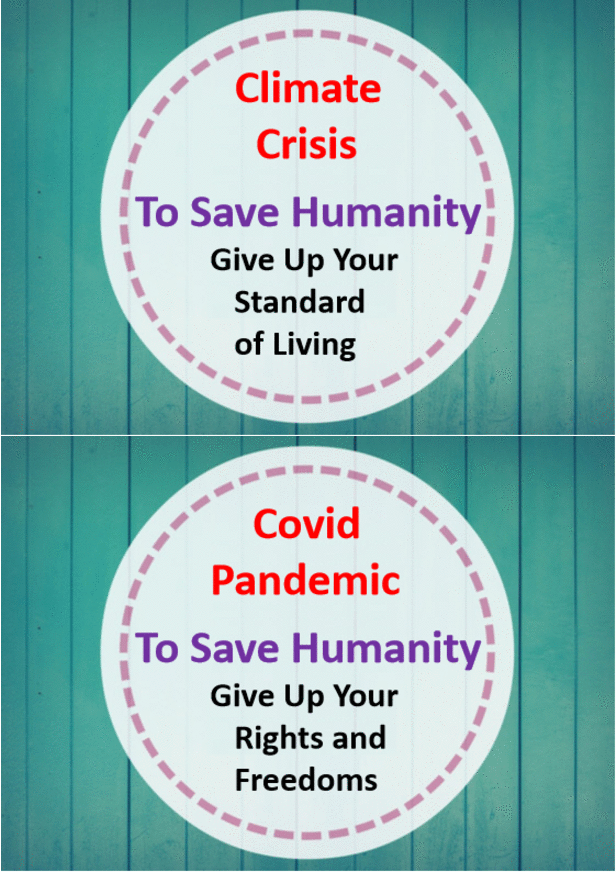
Thus it is high time to uncouple the globalist push to fuse health care with CO2 hysteria.

Two Sides of the Same Coin

Background:

Climate Health Crisis Meme Goes Viral


Solar Activity Linked to Ocean Cycles

Solar energy accumulates massively in the ocean and is variably released during circulation events.

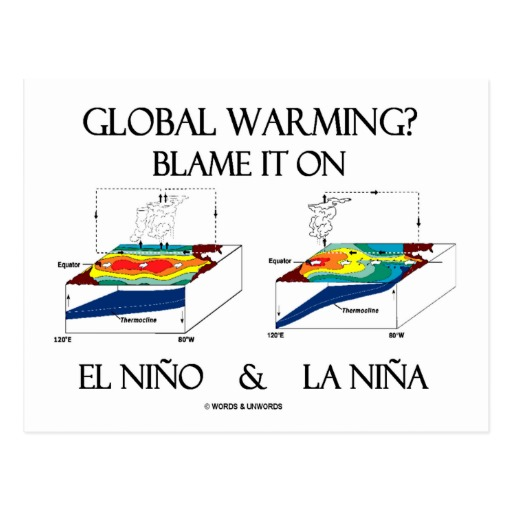
Thanks to Franklin Isaac Ormaza-González alerting me to this paper Did Schwabe cycles 19–24 influence the ENSO events, PDO, and AMO indexes in the Pacific and Atlantic Oceans? by Ormaza-González, Espinoza-Celi and Roa-López, all from ESPOL Polytechnic University, Ecuador.  Why is this important? Because warming in the modern era is closely tied to El Niño and La Niña events (ENSO).  For example,

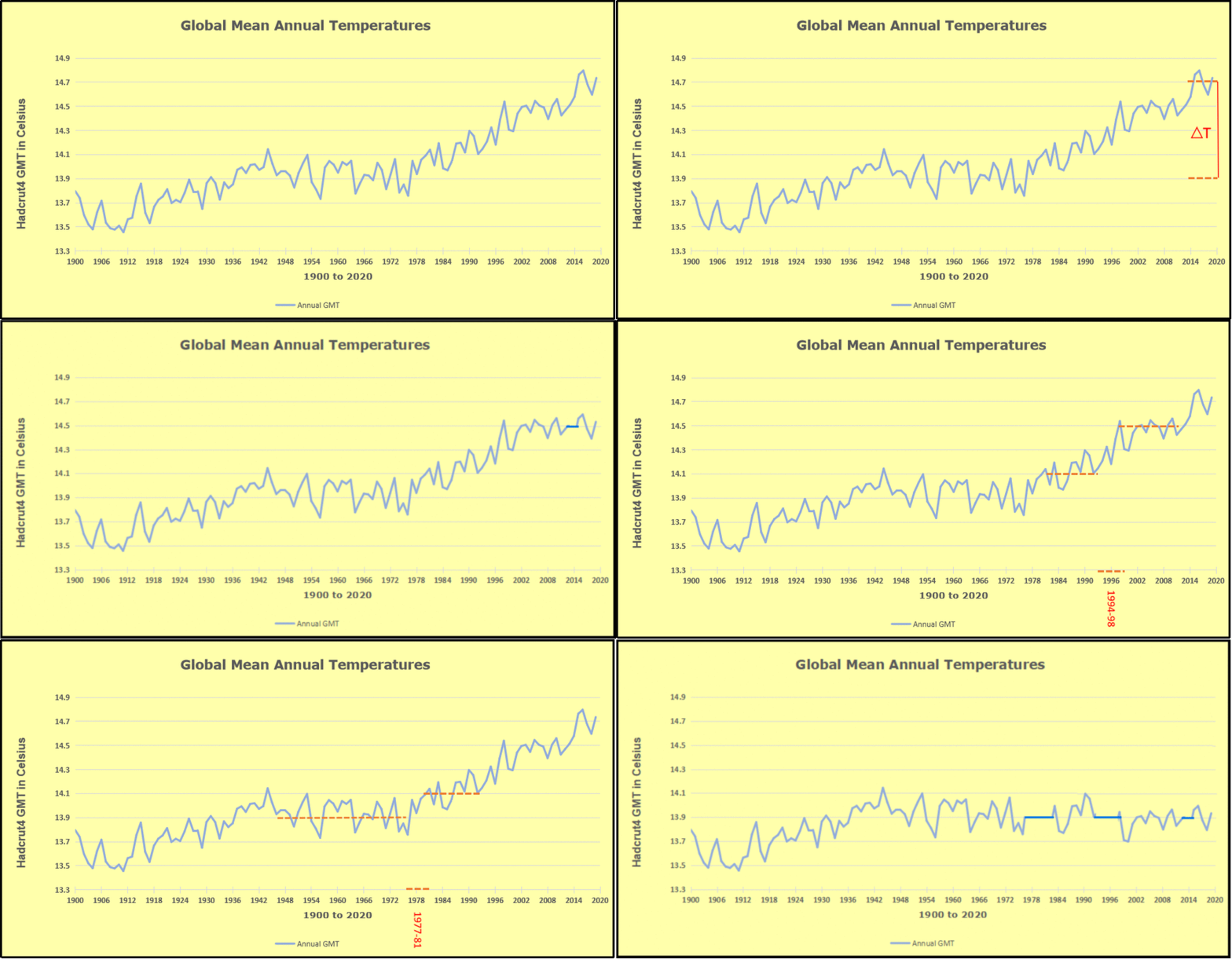
The exhibit shows since 1947 GMT warmed by 0.8 C, from 13.9 to 14.7, as estimated by Hadcrut4.  This resulted from three natural warming events involving ocean cycles. The most recent rise 2013-16 lifted temperatures by 0.2C.  Previously the 1997-98 El Nino produced a plateau increase of 0.4C.  Before that, a rise from 1977-81 added 0.2C to start the warming since 1947.

As shown in the synopsis below, the paper analyzes multiple oceanic oscillations during the years 1954 to 2019 in order to compare with solar cycles of sunspots 19 through 24 occurring during that time frame.  The title is stated as a question, and the conclusion provides this answer (in italics with my bolds).

Finally, did Schwabe cycles 19–24 influence the ENSO events, PDO, and AMO indexes in the Pacific and Atlantic Oceans? Yes, it has been found a wide range correlation coefficient from 0.100 to about 0.500 statistically significant (p < 0.05) with lag times from few months to over 2 years between the Schwabe cycles and the ocean indices chosen here. These results could be a potential source to improve predictive skills for the understanding of ENSO, PDO and AMO interannual and decadal fluctuations. Better predictive models are imperative given that El Niño or La Niña has vast impacts on lives, property, and economic activity around the globe, especially when dramatic peaks of El Niño occur. The new cycle 25 has started and could have a major oceanic swing follow suit, and the next El Niño would be in around 2023–2024 according to historical events and results presented here.

Given that the paper was drafted before submitting in February 2022, and publication in October that year, the forecast of a 2023-24 El Nino was confirmed in a remarkable way.

To enlarge, open image in new tab.

The cyan line represents SST anomalies in the Tropics and shows the major El Ninos, 2015-16, 2019-20 and 2023-24.  Note all three events included pairs of major NH summer warming peaks. The synopsis below consists of excerpts in italics with my bolds to present the broad strokes of the analyses and findings. (Note: The paper includes detailed analyses and many references to supporting studies, and interested readers can access them by linking there.)

Context

The surface-subsurface layers of the ocean that interact with the lower atmosphere alternately release and absorb heat energy. The work of Zhou and Tung (2010) reported the impact of the TSI on global SST over 150 years, finding signals of cooling and warming SSTs at the valley and peak of the SS cycles. Schlesinger and Ramankutty (1994) report a global cycle of 65–70 years for SST that is affected by greenhouse anthropogenic gases, sulphate aerosols and/or El Niño events, but they did not imply any external forcing such as the SS. There have been other studies on how solar radiation variability could affect temperature; recently, Cheke et al. (2021) have studied those solar cycles of SS that would affect the El Nino Southern Oscillation (ENSO) indexes.

There are well known oceanic events that show periodicity with low or high frequencies: 25–30 and 3–7 years, respectively. These include the Pacific Decadal Oscillation (PDO), Atlantic Multidecadal Oscillation (AMO),  and Interdecadal Pacific Oscillation (IPO), as well as El Niño or La Niña.  During El Niño events, the surface and subsurface lose energy to the atmosphere and the opposite occurs during La Niña; these events have a periodicity of 3–7 years. The Interdecadal oscillations have a series of impacts; e.g., the PDO gives rise to teleconnections between the tropic and mid-latitudes, and the effects include:

1) ocean heat content,
2) the lower and higher levels of the trophic chain including small pelagic fisheries (tuna and sardines);
3) biogeochemical air-sea CO2 fluxes;
4) the frequency of La Niña/El Niño.

The interactions between decadal oscillations PDO/IPO and AMO may also affect ocean heat content. All these low and high frequency oceanographic events have a direct impact on local, regional, and global climate patterns, and there is growing evidence from many studies that the driving source of energy is the sun.

Thus, whatever affects the solar irradiation falling on the surface of the oceans, including volcanic eruptions (Fang et al., 2020), and cloudiness for example, it would affect the gain or loss of heat content of the oceans. The cited works tried to find the physical reasons for these connections, but they remained unknown or difficult to explain.

The work reported here investigates how fluctuations of sunspots over time (1954–2019) may cross-correlate with low and high frequency oceanic events such as the sea surface temperature (SST), anomalies (SSTA), Oceanographic El Niño Index (ONI), Multivariate ENSO Index (MEI), Southern Oscillation Index (SOI) in the central and east equatorial Pacific Ocean; and PDO, as well as on the AMO in the North Pacific and Atlantic basins. The hypothesis is that even small variations of the TSI can be reflected in these tele-connected indexes.

Discussion

Fig. 1. Behaviour of monthly counts of SS, ONI, MEI, PDO and AMO. The Indexes start at t = 0, 12, 24 and 36 months (panels a, b, c, and d respectively). The SS series starts at t = 0 in the four panels. The left vertical axis gives the values for the Indexes, and SS counts at the right vertical scale. The end of each Schwabe cycle is marked by vertical dashed lines.

Maxima in the PDO, AMO, ONI, and MEI series were offset by 0, 12, 24 and 36 months (Fig. 1, panels a, b, c, and d respectively), with the SS series starts at t = 0 in the four panels. It has been reported that the lag times for responses of some Indexes to SS cycles (SS) are around 12–36 months (see fig. 1 of Hassan et al., 2016), and Fang et al. (2020) have reported that ENSO responds with a 2–3 years of lag time after a major volcanic eruption. From 1954 to the present time, each sunspot cycle from 19 to 24 has occurred with a period of around 11 years (Hathaway, 2015), which is slightly less than the 11.2 years reported by Dicke (1978). The highest SS activity is seen in cycle 19 with around 250 SS/month, followed by <150, and at cycle 21 around 200, before decreasing steadily over cycles 22 to 24 to just over 100 SS/month. Cycle 24 is the lowest contemporary value of SS activity that is comparable only to cycles 12–15 (around 1880–1930) and is the lowest in the last 200 years (Clette et al., 2014).

Fig. 12. Sunspots monthly counts curves per cycle. Red and blue lines represent El Niño and La Niña events. Note that Cycle 24 finished on December 2019 (National Weather Service, 2020).

The SSTA in El Niño 1 + 2 region cross-correlated with SS many times, especially during descending phases of all cycles except SS 22 with cc-ρ up 0.389 (SS 24) and main lag times from 5 to 13 months. The SS cycles (20 and 24) during cold phase PDO showed alternate cross-correlation reaching a maximum 0.389 and negative −0.314 (p < 0.05). During the ascending phase in El Niño 1 + 2 region (blue bars, Fig. 5a) the cc-ρ peaked at 0.393 (p < 0.05). In the cycles 19 and 24 the highest cc-ρ were found, −0.460 and 0.394 (p < 0.05) respectively. These coefficients coincided with the largest (over 2 years) and most intense (<−1.5C) La Niña during 1954–1955, and 2010–2012 (Fig. 12).

It must be noticed that during cycle 21 two big events El Niño (1983–1985) and La Niña (1984–1985) were registered as well as in cycles 23 and 24 with coefficients just around 0.2. The highest coefficients would mean an influence up to 21.2% and 15.5% of the SS on the SSTAs in El Niño 3.4 region. These results would suggest the cross-correlations are stronger in El Niño 3.4 region due to the less dispersing oceanographic-meteorological conditions than in El Niño 1 + 2 region. Also, these findings would suggest that during the cold phase of PDOs (see NOAA, 2016), the cc-ρ in El Niño 3.4 region tends to be higher, as the solar energy reaching the ocean surface increases as the cloudiness tends to decrease significantly during prolonged periods around or over in El Niño 3.4 region (Porch et al., 2006).

The sun cycle 19 is the most intense since the last 100 years, the contrary is the cycle 24 (NWS, 2021). In general, the ascending phase of the SS cycles takes a shorter time than descending phase, therefore the slope of the curve is steeper (Fig. 12); then the increasing change of the TSI influences in a clearer way the studied indexes. It seems that during the ascending phases, El Niño events are prone to develop as TSI increases (as well as UV radiation does, NWS, 2021), while during plunging SS phases, when the TSI tends to diminish (see Formula (1)), could lead to La Niña events, like the 2020–2022 occurrence (Ormaza-González, 2021).

Most of the La Niña events occur during the descending phase or just when approaching or leaving the valley or minimum SS counts (Fig. 12) when the TSI decreases and reaches the minimum (Scafetta et al., 2019). La Niña 2020–2022 is a good example, the lowest SS counts (<2 counts/months) occurred during extended periods when reaching the valley of the SS 24. The valley of SS 24 has had an extended period of close to 3 years, during which there have been weeks and months without sunspots, before the SS 25 started in December 2020.

The weakest sunspot cycle (SS 24) over the last 100 years (NWS, 2021) has had four La Niña events: 2007–2009, 2010–2012, 2016–2017, and 2020–2022 (Fig. 12), it is the only cycle with that number of La Niña events.

Conclusions

Over the studied period 1954–2019, sunspot numbers decreased from a monthly maximum between 225 (SS 21) to a minimum around 20–25 (SS 24). The SS 24 had 913 days without SS counts until December 2019 (Burud et al., 2021), being this cycle the weakest since 1755; and the SS 25 will probably be weaker than or like SS 24 (Ineson et al., 2014; Chowdhury et al., 2021; NASA, 2021a, NASA, 2021b). Thus, the Earth has been receiving slightly decreasing solar energy over this almost 7-decade period.

On the ocean surface the influence of sunspots could chiefly be due to UV energy fluctuation (Ineson et al., 2014) as this radiation penetrates down to 75–100 m depth in the water column (Smyth, 2011). van Loon et al. (2007) suggested that even though SS cycles produce weak changes on the Total Solar Irradiation (TSI) of about 0.07% (Gray et al., 2010), these can still produce decadal and millennial impacts on global thermohaline circulation (Bond et al., 2001; Gray et al., 2016).

The ONI Index showed to be poorly cross-correlated with cc-ρ values <0.100, only twice approached to −0.200. On the other hand, the MEI registered around ±0.200 through all cycles and predominant lag times within 12 months. The SOI showed cross-correlations with SS cycles (19–21, and) averaging a coefficient of 0.200 with lags times range of 9–34 months. The SOI temporal behaviour has also been associated with SS and it could enhance or affect the oceanographic Indexes of the equatorial Pacific (Higginson et al., 2004). [The Multivariate ENSO Index does not only consider the SST Anomaly but also sea-level pressure and other variables.]

The MEI index could have been influenced from 7.3% up to 23%. The MEI correlated in all ascending and descending phases of SS cycles. The SOI had similar cross-correlation coherence to those oceanographic indexes during ascending and descending phases. These results would provide evidence on how SS affects the studied Indexes during the ascending/descending phases of their cycles. In some cycles, the impact will be stronger and in other weaker depending on intensity and behaviour in time of the cycle.

Finally, did Schwabe cycles 19–24 influence the ENSO events, PDO, and AMO indexes in the Pacific and Atlantic Oceans? Yes, it has been found a wide range correlation coefficient from 0.100 to about 0.500 statistically significant (p < 0.05) with lag times from few months to over 2 years between the Schwabe cycles and the ocean indices chosen here. These results could be a potential source to improve predictive skills for the understanding of ENSO, PDO and AMO interannual and decadal fluctuations. Better predictive models are imperative given that El Niño or La Niña has vast impacts on lives, property, and economic activity around the globe, especially when dramatic peaks of El Niño occur. The new cycle 25 has started and could have a major oceanic swing follow suit, and the next El Niño would be in around 2023–2024 according to historical events and results presented here.

Oceans Rapidly Cooling UAH January 2025

The post below updates the UAH record of air temperatures over land and ocean. Each month and year exposes again the growing disconnect between the real world and the Zero Carbon zealots.  It is as though the anti-hydrocarbon band wagon hopes to drown out the data contradicting their justification for the Great Energy Transition.  Yes, there was warming from an El Nino buildup coincidental with North Atlantic warming, but no basis to blame it on CO2.  

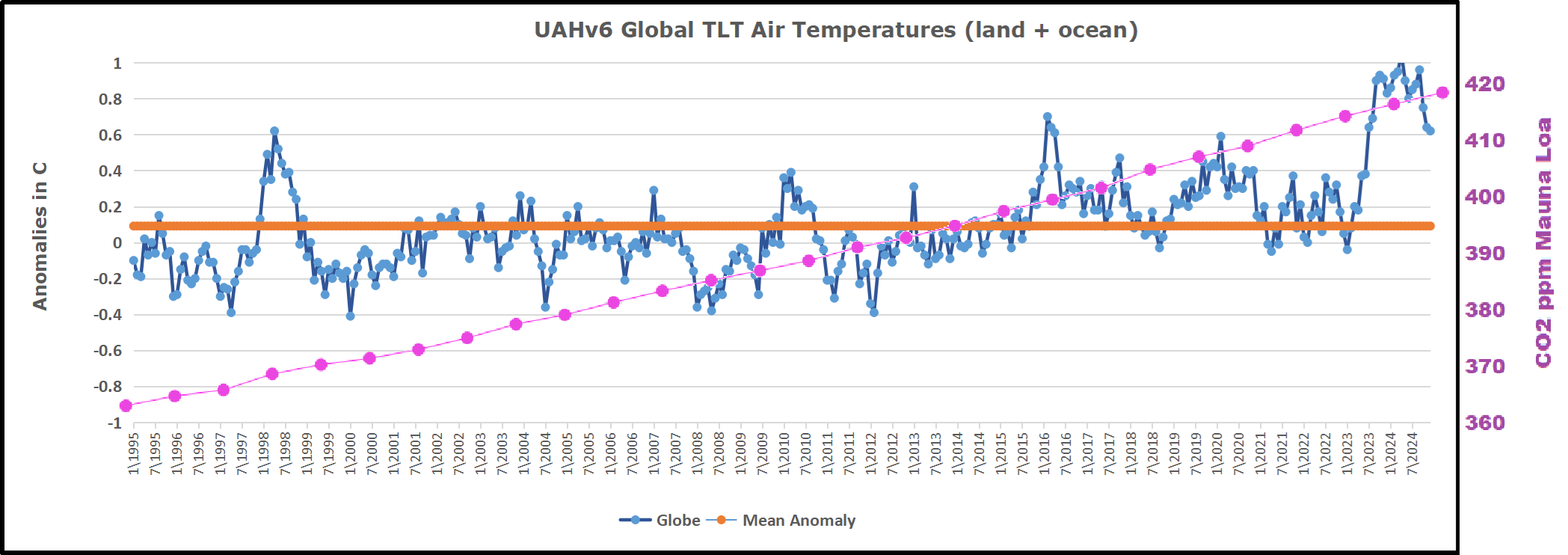
As an overview consider how recent rapid cooling  completely overcame the warming from the last 3 El Ninos (1998, 2010 and 2016).  The UAH record shows that the effects of the last one were gone as of April 2021, again in November 2021, and in February and June 2022  At year end 2022 and continuing into 2023 global temp anomaly matched or went lower than average since 1995, an ENSO neutral year. (UAH baseline is now 1991-2020). Now we have had an usual El Nino warming spike of uncertain cause, unrelated to steadily rising CO2 and now dropping steadily.

For reference I added an overlay of CO2 annual concentrations as measured at Mauna Loa.  While temperatures fluctuated up and down ending flat, CO2 went up steadily by ~60 ppm, a 15% increase.

Furthermore, going back to previous warmings prior to the satellite record shows that the entire rise of 0.8C since 1947 is due to oceanic, not human activity.

gmt-warming-events

The animation is an update of a previous analysis from Dr. Murry Salby.  These graphs use Hadcrut4 and include the 2016 El Nino warming event.  The exhibit shows since 1947 GMT warmed by 0.8 C, from 13.9 to 14.7, as estimated by Hadcrut4.  This resulted from three natural warming events involving ocean cycles. The most recent rise 2013-16 lifted temperatures by 0.2C.  Previously the 1997-98 El Nino produced a plateau increase of 0.4C.  Before that, a rise from 1977-81 added 0.2C to start the warming since 1947.

Importantly, the theory of human-caused global warming asserts that increasing CO2 in the atmosphere changes the baseline and causes systemic warming in our climate.  On the contrary, all of the warming since 1947 was episodic, coming from three brief events associated with oceanic cycles. And now in 2024 we have seen an amazing episode with a temperature spike driven by ocean air warming in all regions, along with rising NH land temperatures, now dropping below its peak.

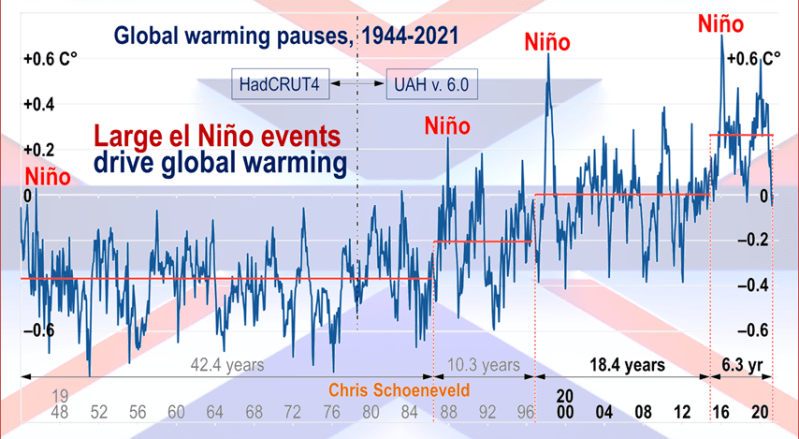
Chris Schoeneveld has produced a similar graph to the animation above, with a temperature series combining HadCRUT4 and UAH6. H/T WUWT

image-8


mc_wh_gas_web20210423124932

See Also Worst Threat: Greenhouse Gas or Quiet Sun?

January 2025 Ocean Leads Global Cooling banner-blog

With apologies to Paul Revere, this post is on the lookout for cooler weather with an eye on both the Land and the Sea.  While you heard a lot about 2020-21 temperatures matching 2016 as the highest ever, that spin ignores how fast the cooling set in.  The UAH data analyzed below shows that warming from the last El Nino had fully dissipated with chilly temperatures in all regions. After a warming blip in 2022, land and ocean temps dropped again with 2023 starting below the mean since 1995.  Spring and Summer 2023 saw a series of warmings, continuing into October, followed by cooling in November and December.

UAH has updated their TLT (temperatures in lower troposphere) dataset for January 2025. Due to one satellite drifting more than can be corrected, the dataset has been recalibrated and retitled as version 6.1 Graphs here contain this updated 6.1 data.  Posts on their reading of ocean air temps this month are ahead of the update from HadSST4.  I posted recently on SSTs Ocean Even Cooler December 2024. These posts have a separate graph of land air temps because the comparisons and contrasts are interesting as we contemplate possible cooling in coming months and years.

Sometimes air temps over land diverge from ocean air changes. In July 2024 all oceans were unchanged except for Tropical warming, while all land regions rose slightly. In August we saw a warming leap in SH land, slight Land cooling elsewhere, a dip in Tropical Ocean temp and slightly elsewhere.  September showed a dramatic drop in SH land, overcome by a greater NH land increase. In October, ocean and land temps in both NH and Tropics dropped, pulling the global anomaly down. As was the case in November and December, now in January there was cooling everywhere, strongest in all ocean anomalies.

Note:  UAH has shifted their baseline from 1981-2010 to 1991-2020 beginning with January 2021.   v6.1 data was recalibrated also starting with 2021. In the charts below, the trends and fluctuations remain the same but the anomaly values changed with the baseline reference shift.

Presently sea surface temperatures (SST) are the best available indicator of heat content gained or lost from earth’s climate system.  Enthalpy is the thermodynamic term for total heat content in a system, and humidity differences in air parcels affect enthalpy.  Measuring water temperature directly avoids distorted impressions from air measurements.  In addition, ocean covers 71% of the planet surface and thus dominates surface temperature estimates.  Eventually we will likely have reliable means of recording water temperatures at depth.

Recently, Dr. Ole Humlum reported from his research that air temperatures lag 2-3 months behind changes in SST.  Thus cooling oceans portend cooling land air temperatures to follow.  He also observed that changes in CO2 atmospheric concentrations lag behind SST by 11-12 months.  This latter point is addressed in a previous post Who to Blame for Rising CO2?

After a change in priorities, updates are now exclusive to HadSST4.  For comparison we can also look at lower troposphere temperatures (TLT) from UAHv6.1 which are now posted for January 2025.  The temperature record is derived from microwave sounding units (MSU) on board satellites like the one pictured above. Recently there was a change in UAH processing of satellite drift corrections, including dropping one platform which can no longer be corrected. The graphs below are taken from the revised and current dataset.

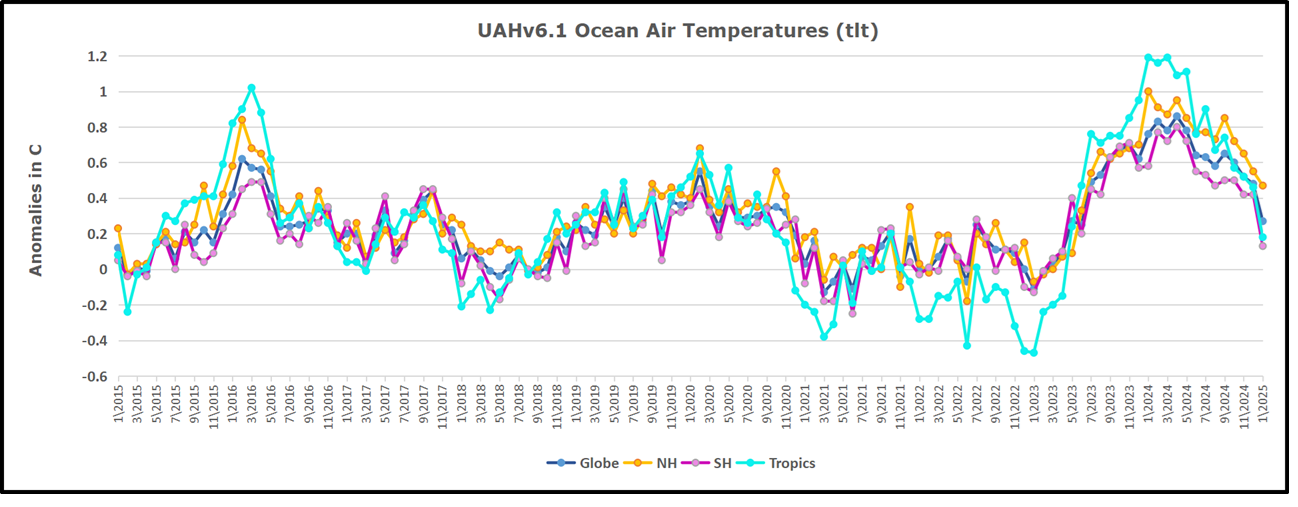
The UAH dataset includes temperature results for air above the oceans, and thus should be most comparable to the SSTs. There is the additional feature that ocean air temps avoid Urban Heat Islands (UHI).  The graph below shows monthly anomalies for ocean air temps since January 2015.

In 2021-22, SH and NH showed spikes up and down while the Tropics cooled dramatically, with some ups and downs, but hitting a new low in January 2023. At that point all regions were more or less in negative territory. 

After sharp cooling everywhere in January 2023, there was a remarkable spiking of Tropical ocean temps from -0.5C up to + 1.2C in January 2024.  The rise was matched by other regions in 2024, such that the Global anomaly peaked at 0.95C in May, Since then all regions have cooled down sharply, Global anomaly dropping in January to 0.3C, as well as SH dropping down to 0.1C in January.

Land Air Temperatures Tracking in Seesaw Pattern

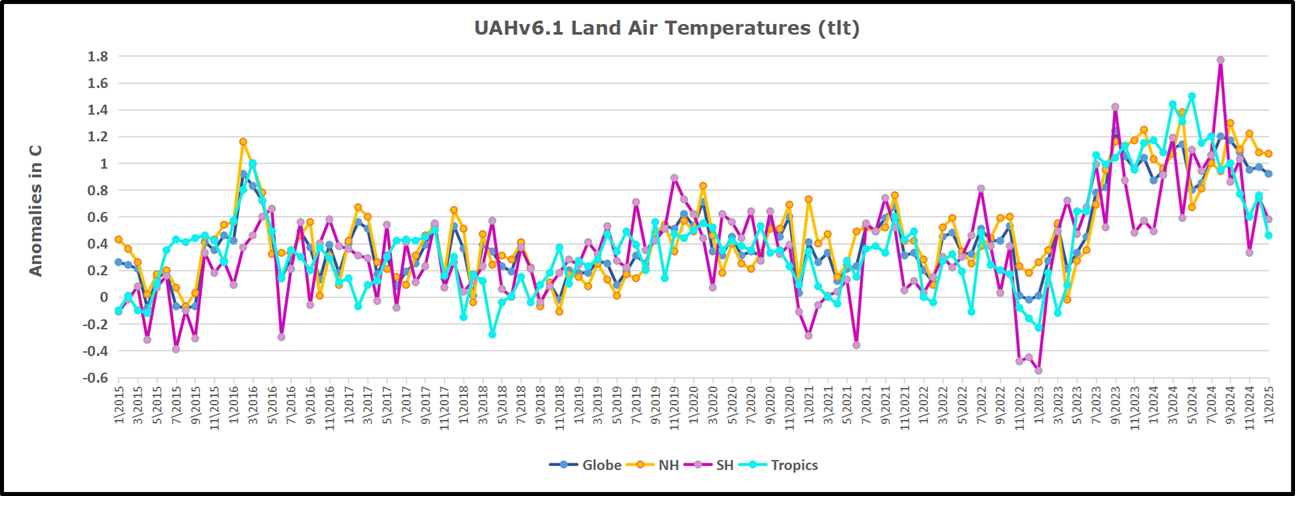
We sometimes overlook that in climate temperature records, while the oceans are measured directly with SSTs, land temps are measured only indirectly.  The land temperature records at surface stations sample air temps at 2 meters above ground.  UAH gives tlt anomalies for air over land separately from ocean air temps.  The graph updated for January is below.

Here we have fresh evidence of the greater volatility of the Land temperatures, along with extraordinary departures by SH land.  The seesaw pattern in Land temps is similar to ocean temps 2021-22, except that SH is the outlier, hitting bottom in January 2023. Then exceptionally SH goes from -0.6C up to 1.4C in September 2023 and 1.8C in  August 2024, with a large drop in between.  In November, SH and the Tropics pulled the Global Land anomaly further down despite a bump in NH land temps. December showed an upward rebound in SH and Tropics land temps, now offset by a dropping temps everywhere, pulling the Global land anomaly downward slightly.

The Bigger Picture UAH Global Since 1980

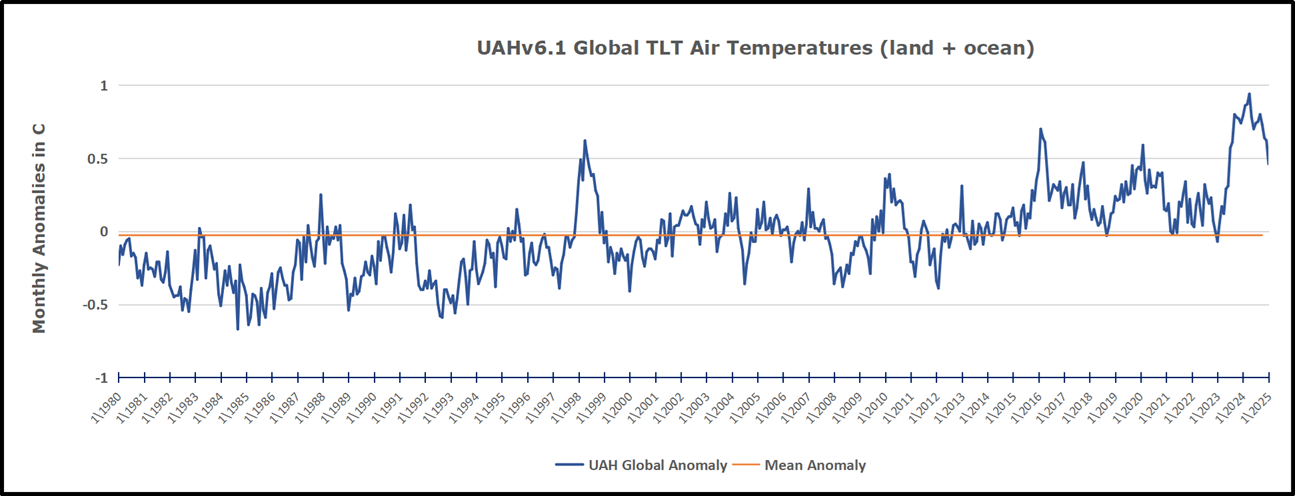
The chart shows monthly Global Land and Ocean anomalies starting 01/1980 to present.  The average monthly anomaly is -0.03, for this period of more than four decades.  The graph shows the 1998 El Nino after which the mean resumed, and again after the smaller 2010 event. The 2016 El Nino matched 1998 peak and in addition NH after effects lasted longer, followed by the NH warming 2019-20.   An upward bump in 2021 was reversed with temps having returned close to the mean as of 2/2022.  March and April brought warmer Global temps, later reversed

With the sharp drops in Nov., Dec. and January 2023 temps, there was no increase over 1980. Then in 2023 the buildup to the October/November peak exceeded the sharp April peak of the El Nino 1998 event. It also surpassed the February peak in 2016. In 2024 March and April took the Global anomaly to a new peak of 0.94C.  The cool down started with May dropping to 0.9C, and in June a further decline to 0.8C.  October went down to 0.7C,  November and December dropped to 0.6C. January down to 0.46C.

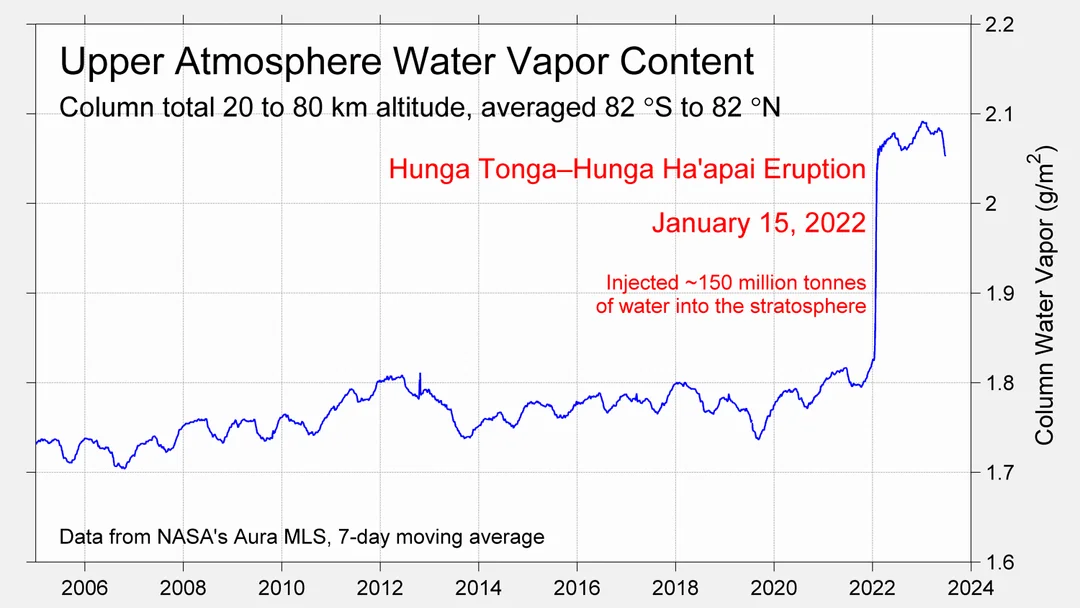
The graph reminds of another chart showing the abrupt ejection of humid air from Hunga Tonga eruption.

TLTs include mixing above the oceans and probably some influence from nearby more volatile land temps.  Clearly NH and Global land temps have been dropping in a seesaw pattern, nearly 1C lower than the 2016 peak.  Since the ocean has 1000 times the heat capacity as the atmosphere, that cooling is a significant driving force.  TLT measures started the recent cooling later than SSTs from HadSST4, but are now showing the same pattern. Despite the three El Ninos, their warming had not persisted prior to 2023, and without them it would probably have cooled since 1995.  Of course, the future has not yet been written.


Trump: Homeland Security Not in Climate Change Business

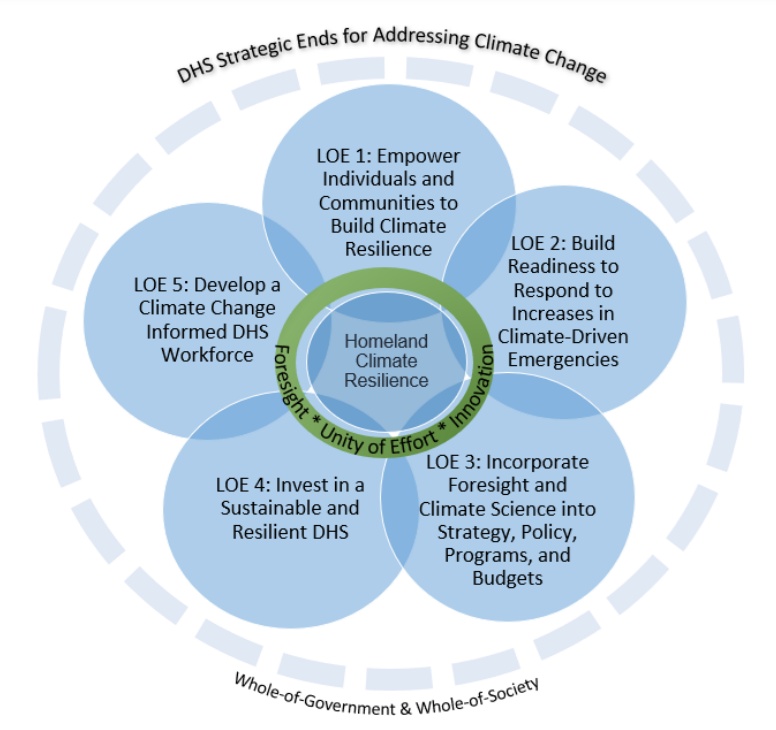
Steve Milloy reported on X:  President Trump deports “climate change” from the Department of Homeland Security: “Top officials at the US Department of Homeland Security received a memo on Friday ordering an immediate stop to work connected to climate change and the elimination of climate-related terms across the agency. The memo instructs senior office heads to “eliminate all climate change activities and the use of climate change terminology in DHS policies and programs, to the maximum extent permitted by the law,” according to the document seen by Bloomberg News. The changes are meant to bring “alignment” with Trump’s executive orders that reverse multiple climate-related orders by former President Joe Biden, it said.”

Comment:

A good place to start is the DHS webpage Climate Literacy at DHS which was updated January 27, 2025, probably only adding a disclaimer “In an effort to keep DHS.gov current, the archive contains outdated information that may not reflect current policy or programs.”

Table of Contents

Climate Science Overview

The DHS Mission and Climate Change

Climate Change Adaptation, Mitigation, and Resilience

Climate Security

Climate Change and Fragility

Further Resources

Further Resources Include:

DHS Resources

Component Resources

External Resources

Climate Tools

Conclusion

DHS still thinks it’s very much in the “Climate Change Business” and rooting it out will be an extensive process met with unwelcome resistance.