
A reminder that we are presently in the icy end of the Holocene epoch comes in a CBC story Canada’s High Arctic was once a lush forest where unexpected animals roamed. Excerpts in italics with my bolds and added images.
Camels and beavers that evolved in ancient forests in the Far North
were perfectly adapted for our world today

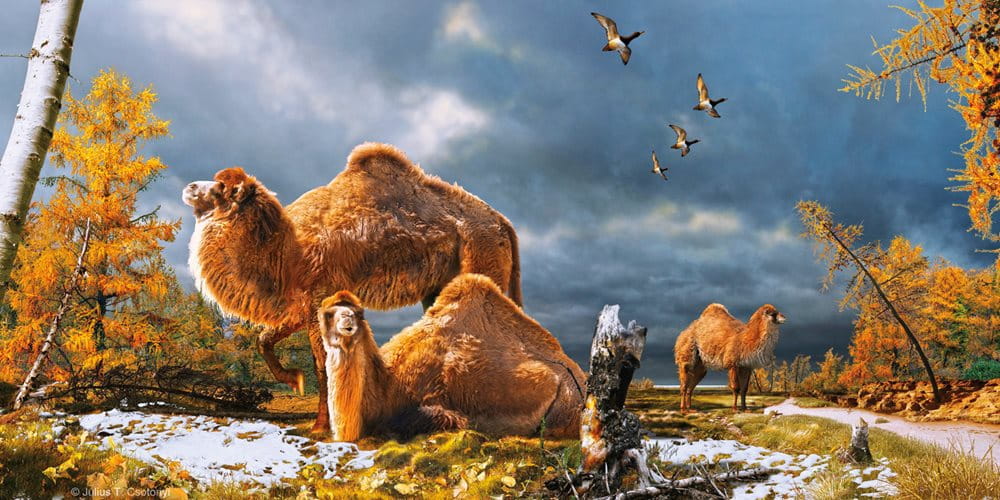
Modern camels descend from giant High Arctic camels that lived in Canada’s North before the Ice Age. (Global Mechanic/Courtesy of Handful of Films)
By Niobe Thompson, director of Frozen in Time
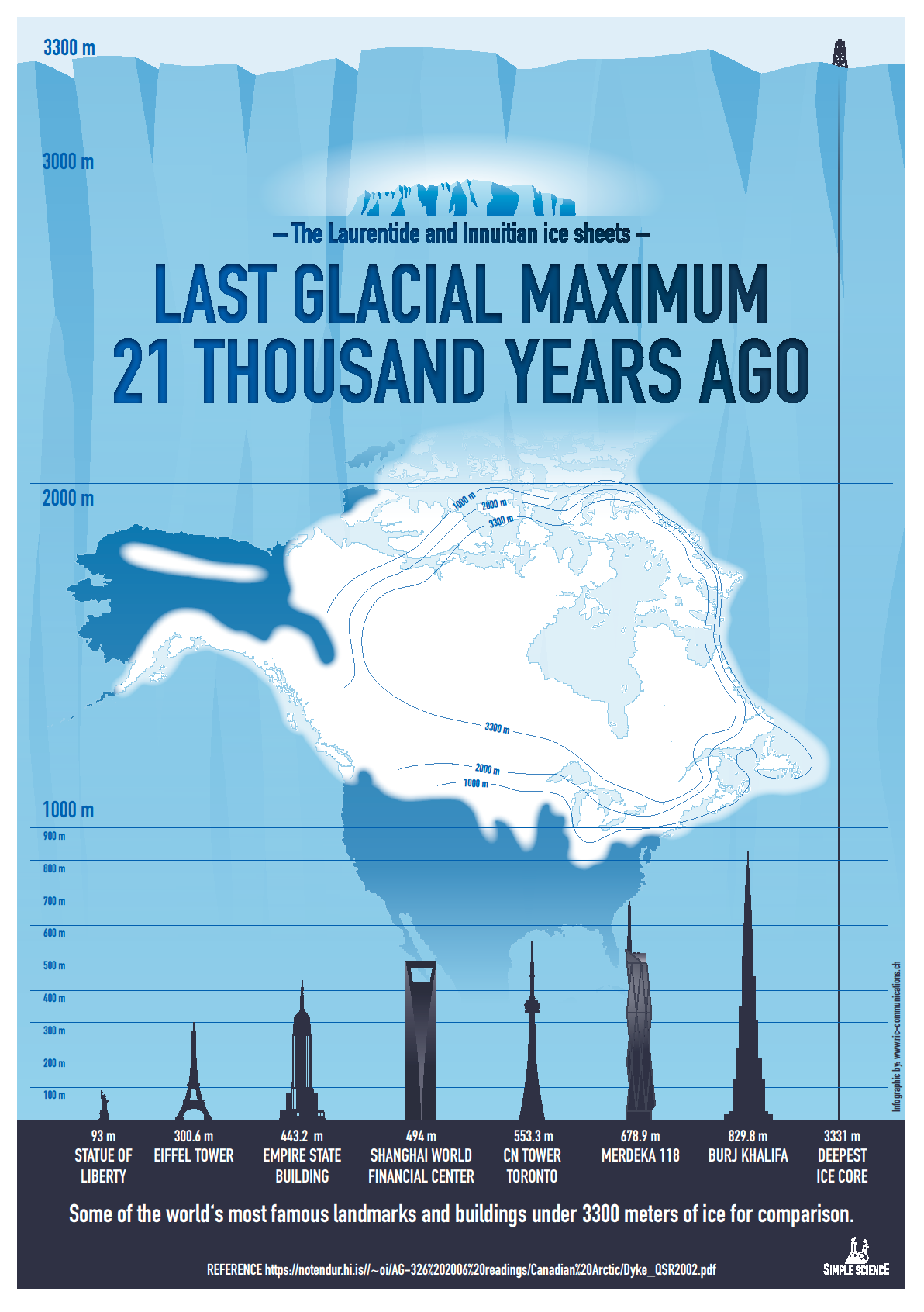
When you think of the Canadian High Arctic today, visions of frozen tundra, icefields and polar bears probably come to mind. But rewind the clock a little over two million years to before the last ice age, and that Northern tundra was a lush and vibrant forest paradise. It was also home to some surprising animal life, including one large mammal we now associate with scorching deserts: camels.
In Frozen in Time, a documentary from The Nature of Things, paleobiologist Natalia Rybczynski describes how a head injury in 2011 changed the way she had to live. It also gave her time to think about many fossils she and her team at the Canadian Museum of Nature have uncovered of the animals that once roamed the Far North.
A remarkable discovery
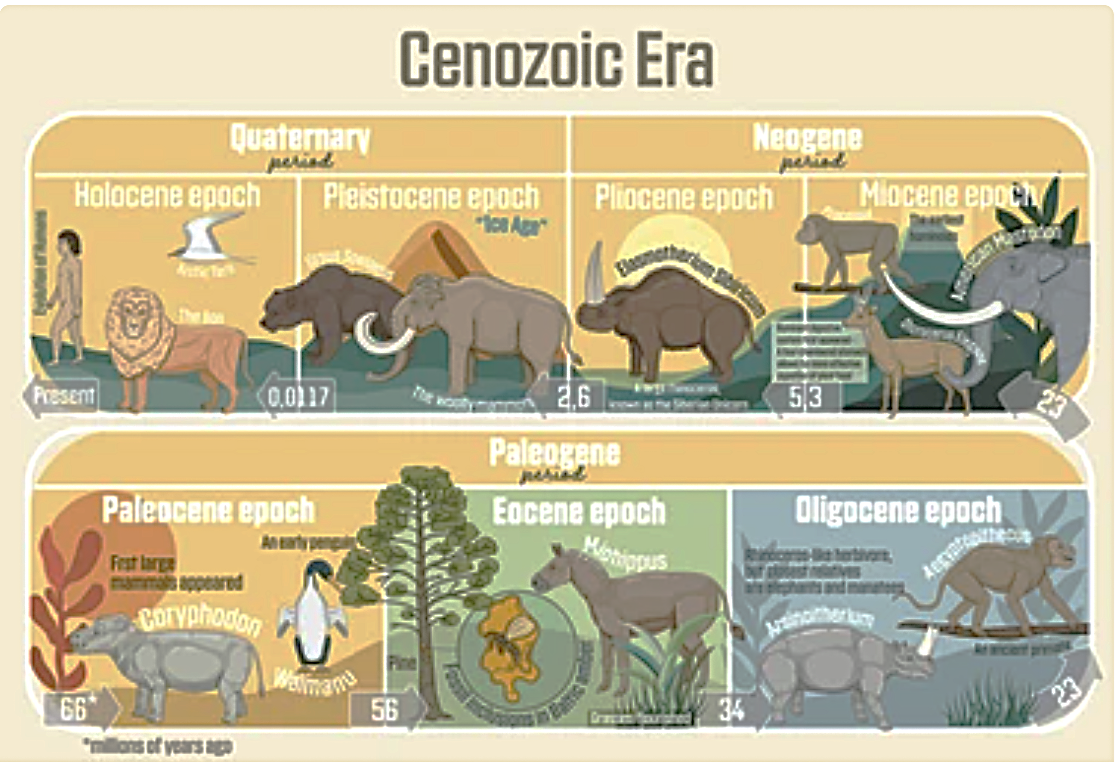
The Pliocene Epoch, spanning from 2.5 to 5 million years ago, was the warm period before the last ice age began. The Pliocene was the last time Earth’s atmosphere contained the same concentration of carbon dioxide that we see today: over 400 parts per million.

At the time, temperatures in the High Arctic were also about 22 C higher than today, Rybczynski says in the documentary — a climate much like we see in modern boreal forest in Canada. As a result, the Arctic was covered in birch, larch, pine and even cedar trees, blanketing the landscape all the way to the northern shores of Ellesmere Island and Greenland.
These dense forests were home to many of the animals we now associate with the Pliocene, such as mammoths and mastodons, but also those found in modern boreal habitats: beavers, bears, geese, horses and caribou.
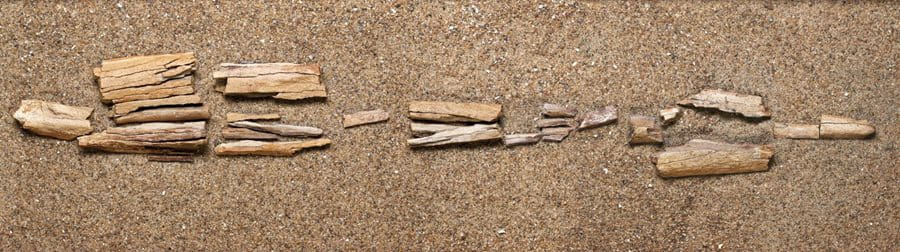
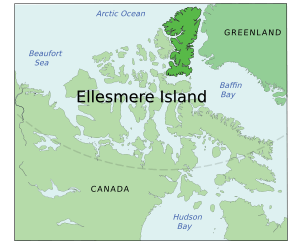
From 2006 to 2009, a research team led by the Canadian Museum of Nature discovered 30 camel fragments on Ellesmere Island in Nunavut. Scientists dated the remains to 3.5 million years, the mid-Pliocene Epoch, a global warm phase when the region was cloaked in boreal forest. Collagen fingerprinting, a cutting-edge science pioneered at the University of Manchester in England, confirmed that the bones belonged to a camelid.
And in 2013, a team of scientists led by Rybczynski announced a remarkable discovery. At the site of an ancient Pliocene river on Ellesmere Island called Fyles Leaf Beds, they uncovered fragments of a leg bone belonging to a 3.5-million-year-old camel. The find made headlines around the world and suggested that modern camels descended from a High Arctic ancestor.
Evolved in the Arctic, perfect for the desert
High Arctic camels were giant versions of modern camels, and they evolved in a forest world unlike any we know today. Because they lived close to the North Pole, the sun would disappear for nearly half the year, before shining down for nearly 24 hours a day during the polar summer.
Many of the features of the camel that help them survive in deserts today may have originated as adaptations to this punishing environment, Rybczynski says in Frozen in Time.
Their hump — a specialized fat deposit — would have helped them through long, cold winters. Camels have excellent night vision, handy when it is dark for almost half the year. And their wide feet that work so well in sand today would have been perfect in snow 3.5 million years ago.
The desert camel, the habits of beavers, bear hibernation, fall colours — all features of the natural world today that may have evolved in the weird Arctic forest world that came to an end with the encroaching glaciers of the last ice age.
“For me, it’s hard to stop imagining all those natural features of our environment, all passed down from a hotter past when forests could grow in the Arctic,” Rybczynski says in the documentary.
“In so many ways, the lost forests of the High Arctic were kind of like a Garden of Eden — the cradle of our boreal forest ecosystem today.”
See Also

 Science Matters
Do the serfs not understand that we are at the lower end of the Holocene?
… Have they even heard of the Holocene?
LikeLike
Beth, apparently not, even though the facts have repeatly been presented:
And climatists, who should know better, refuse to acknowledge that the warming since end of the LIA is a good thing. Mensa invented a word for someone who is both ignorant and arrogant: Ignoranus.
LikeLike