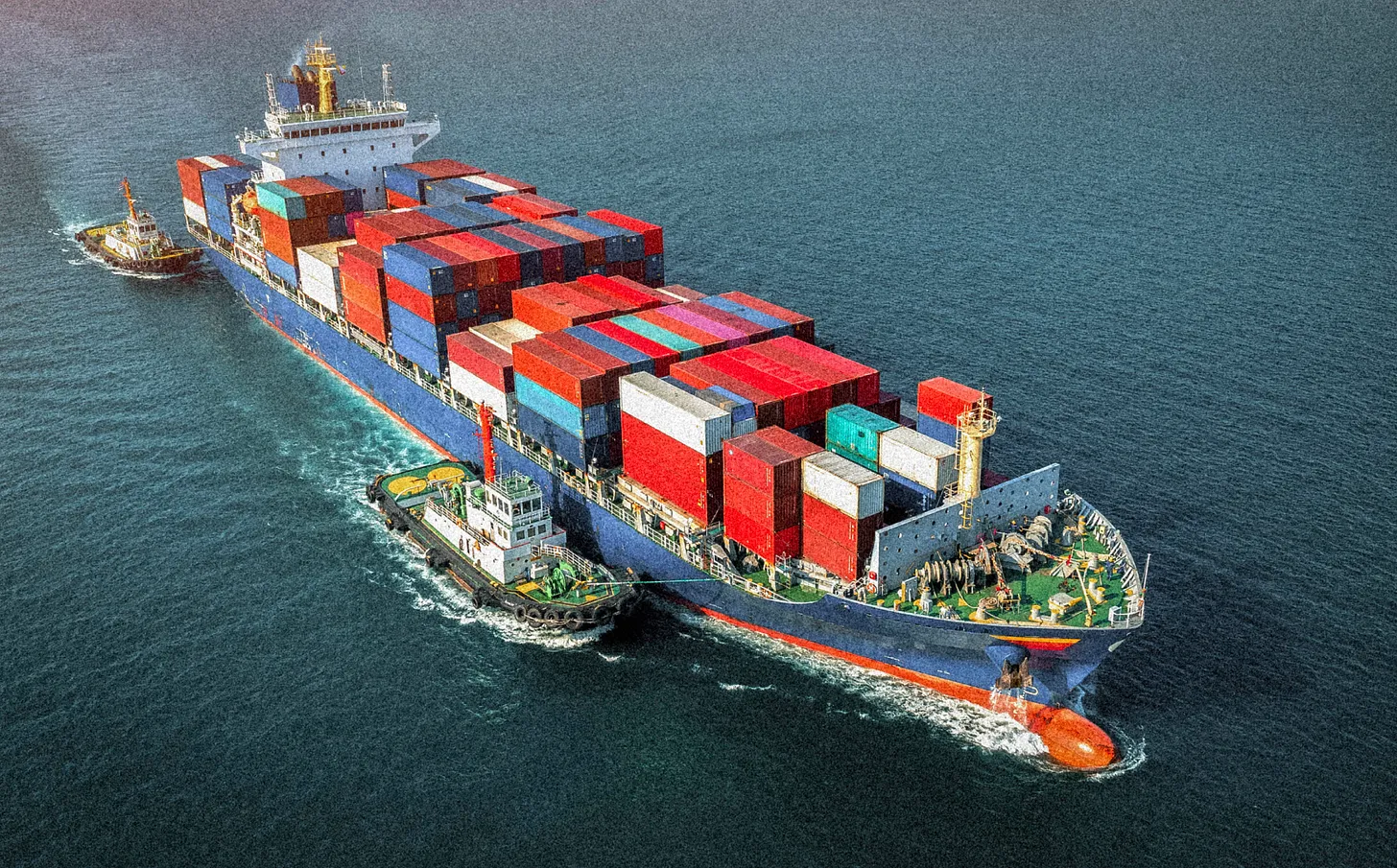
Matthew Lynn reports on the ongoing breakup and reform of global trade practices in his article Ignore the Outrage. Trump’s Trade Revolution Is Working. Excerpts in italics with my bolds and added images.
America’s allies complain while quietly backing new U.S. policy.
It’s turning into a familiar ritual. President Trump imposes fresh tariffs, often announced on social media late at night, and within seconds the decision is condemned by officials and politicians from Brussels to Paris, Beijing, Berlin, and London.
There are dramatic warnings about how trade wars benefit no one, accompanied by solemn declarations that Europe will not be bullied, and elegies for the “rules-based order.” The financial press dutifully chronicles the “chaos” and “unpredictability” of American trade policy, while CNN books another expert to explain why it cannot possibly work and the Financial Times runs yet another column about how the United States is only damaging itself.
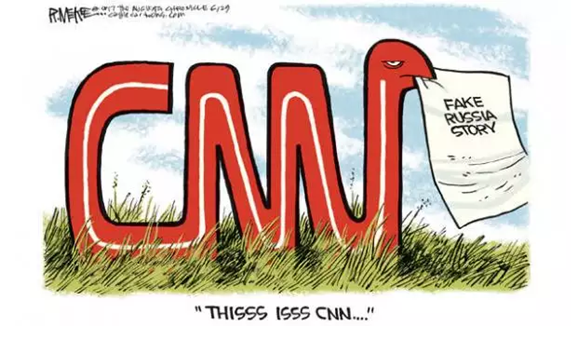
Then, a few weeks later, buried somewhere on page 17, a different story starts to emerge: Germany has agreed to new defense procurement commitments; France is reconsidering agricultural protections; the European Union is suddenly open to renegotiating its digital services tax. Another trade relationship is quietly restructured, and on terms remarkably favorable to Washington. The opposition, it turns out, is mainly just for show. Behind the scenes a new consensus is starting to emerge.
The Trump administration is quietly building a new global trading system
—it’s just that nobody wants to talk about it.

European leaders routinely denounce Trump’s tariffs and “America First” rhetoric with an over-the-top passion that would get them thrown out of drama school. Yet their finance ministers are simultaneously reworking trade agreements in ways that previous American administrations spent decades failing to achieve. The disconnect between the public theater and private reality has become so vast that one might reasonably conclude the confected outrage itself serves a purpose—providing political cover for concessions that would otherwise be impossible to explain to domestic audiences.
A few examples help illustrate what is actually happening. The U.S. has spent years trying to persuade Germany to increase its military spending, to little effect. But over the last 12 months, Germany has ramped up its spending by €80 billion a year. Sure, there is lots of rhetoric about how it will “Buy European” and about how the money will reboot its industrial base. But in reality about 8% of the money will be spent on American kit, including F-35 fighter jets, P-8A Poseidon maritime patrol aircraft, and Tomahawk cruise missiles. It doesn’t really matter who makes the boots. It is the high-tech equipment that really counts, and much of that will be American.
It represents a fundamental shift in German industrial policy, and one that the Obama administration campaigned for in vain, that the Bush administration couldn’t extract, and that decades of NATO summits failed to deliver. Trump got it with a few threatening tweets and warnings about auto tariffs.
Or take a look at France. It has long positioned itself as the defender of European agricultural interests against the marauding Americans with their genetically modified crops and chlorinated chicken. Yet the Common Agricultural Policy, that monument to protectionism and subsidy that has distorted global food markets for generations, is suddenly open for discussion. The reason? It isn’t because France’s politicians have realized that laissez-faire economics originated in their own country. It’s because the alternative—restricted access to the American market—is simply too painful to contemplate.
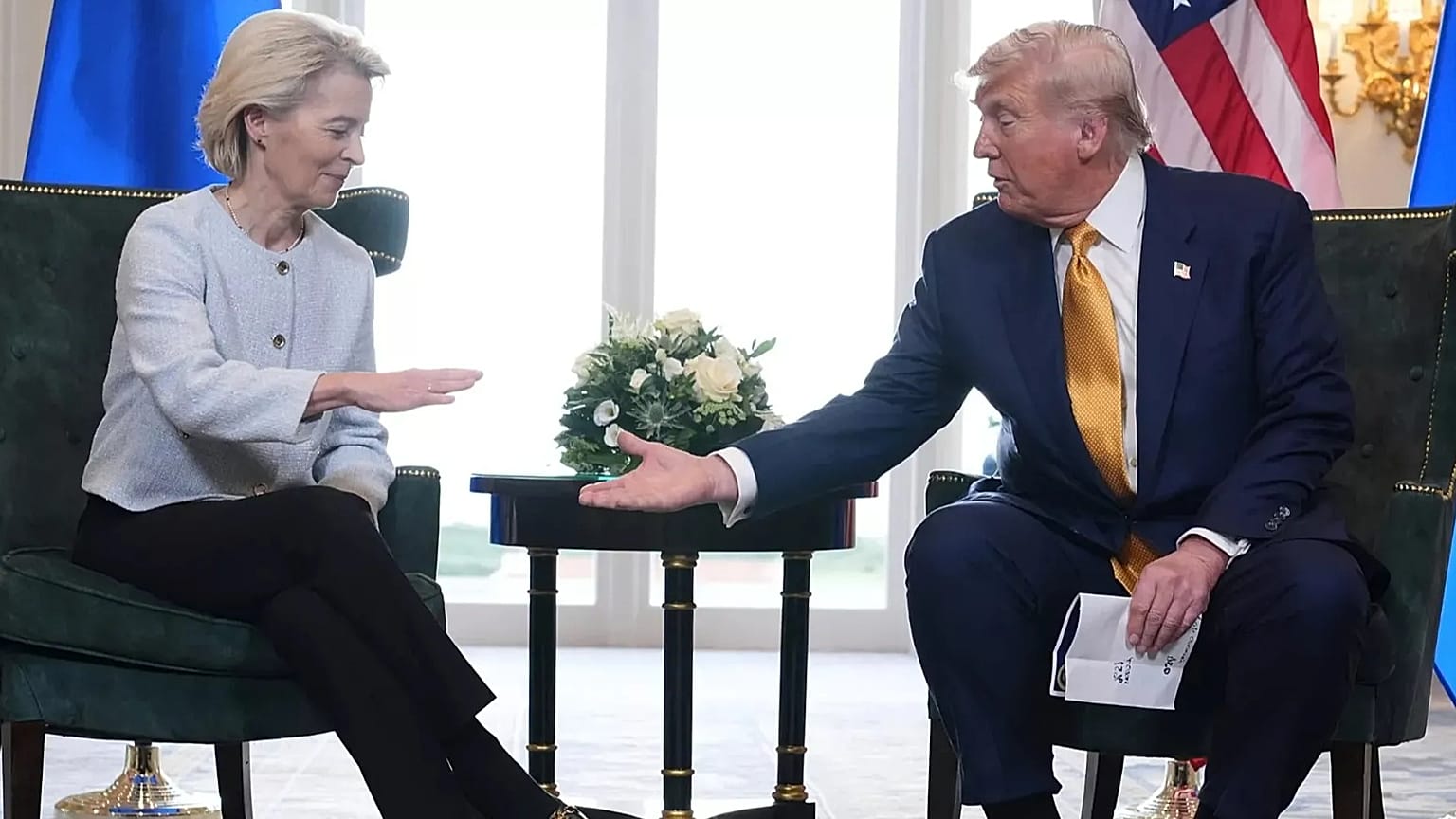
As another example, the European Union’s digital services tax, a key instrument for extracting revenue from American tech giants, is finally being reconsidered. For years, European politicians treated taxing Apple, Google, and Facebook as both economically sensible and morally righteous. Apparently the firms were “not paying their fair share.” National sovereignty required it and consumers had to be protected. It was simply a coincidence that all the companies that were fined happened to be American. But now, faced with credible retaliation from Washington, the whole scheme is back on the table. The rhetoric about tax justice has been dropped, and the policy has changed.
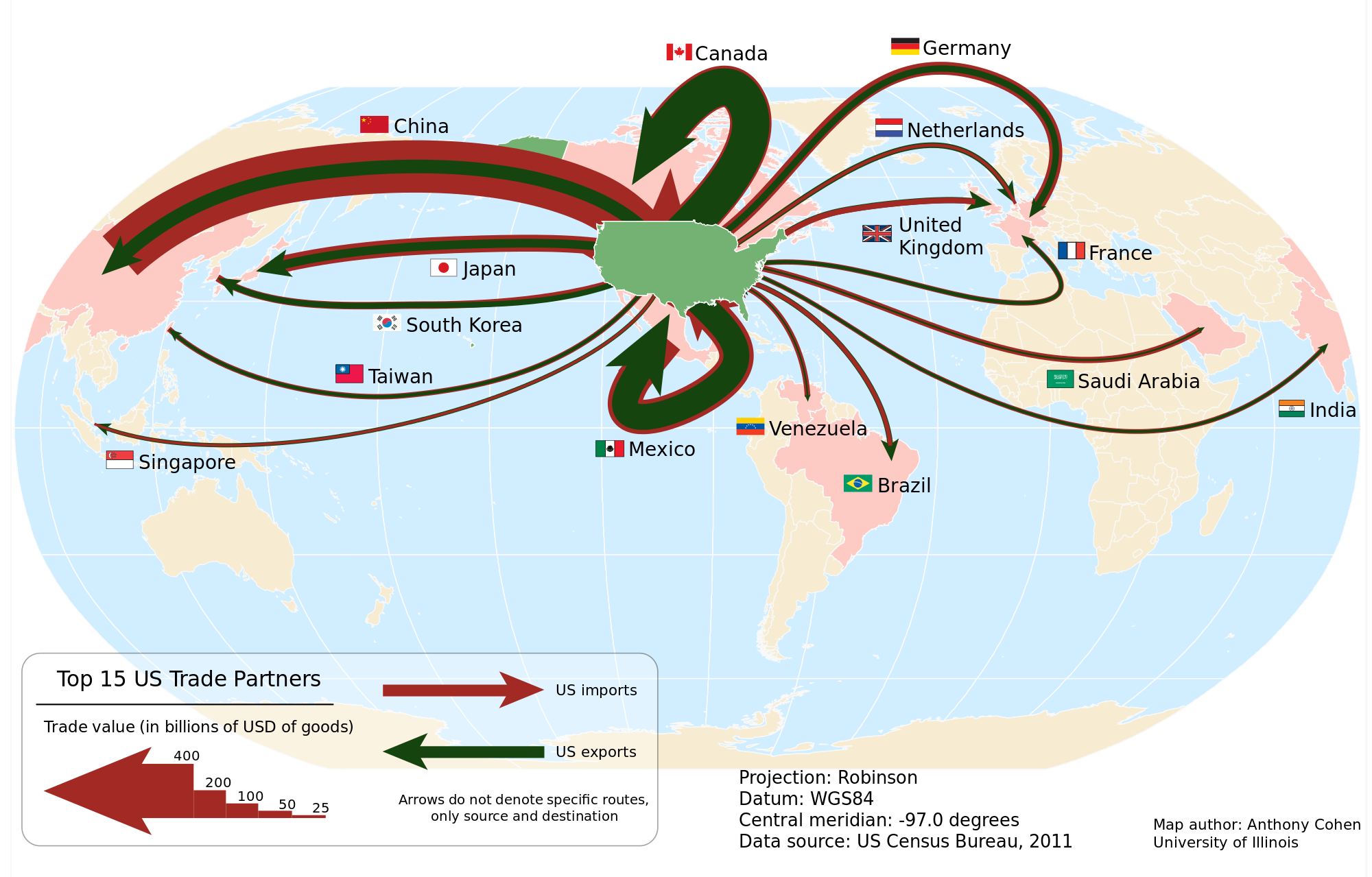
Across the Channel, the British are now open to paying fairer prices for American pharmaceuticals. It turns out the UK’s state-funded health care system, where prescriptions are either free or bear a fixed price, can afford it after all. Over in the Pacific, Japan has agreed to import more American rice, after insisting for years that it was not to their taste, while the government in Tokyo will underwrite $500 billion of investment in the U.S. Even China, the most protected major economy in the world, has loosened restrictions. Piece by piece, the tectonic plates of trade are shifting.
These aren’t minor tweaks to existing arrangements. They are fundamental shifts in trading relationships, the kind of structural changes that represent genuine victories for American economic interests. Previous administrations, with all their diplomatic finesse and multilateral commitment, couldn’t secure them, while global institutions, with their emphasis on alliance management and consensus building, got nowhere. Trump’s blunt approach has extracted concessions that diplomatic nuance never could.
That has created an uncomfortable situation for the mainstream commentariat. How can you explain that Trump’s crude, bombastic negotiating style might be getting results when you have insisted it can’t possibly work? And how can you explain how the new tariff regime is working when you have insisted that it will backfire spectacularly? The answer, mostly, has been to not explain it at all—to simply to ignore what is actually happening and continue focusing on the rhetoric.
Europe’s Perfect Storm
The basic logic of realigning global trade has always been sound, even if the tactics and Trump’s style make diplomats wince, because the American market remains indispensable to European and Asian economies. America’s economy isn’t just large; it’s uniquely large in ways that genuinely matter. American consumers spend. They buy imported goods in vast quantities. They don’t save like the Germans or the Chinese. The U.S. market is the ultimate destination for any manufacturer who wants to achieve real scale.
European economies, meanwhile, are facing a perfect storm of challenges. Growth has been anemic for over a decade. The long-term demographic outlook is disastrous, with aging populations creating fiscal pressures that make Greek debt levels look quaint. The regulatory environment has become so stifling that European tech entrepreneurship is essentially a global non-factor. And now the EU faces Chinese competition across virtually every industrial sector, from automobiles to renewable energy to advanced manufacturing.
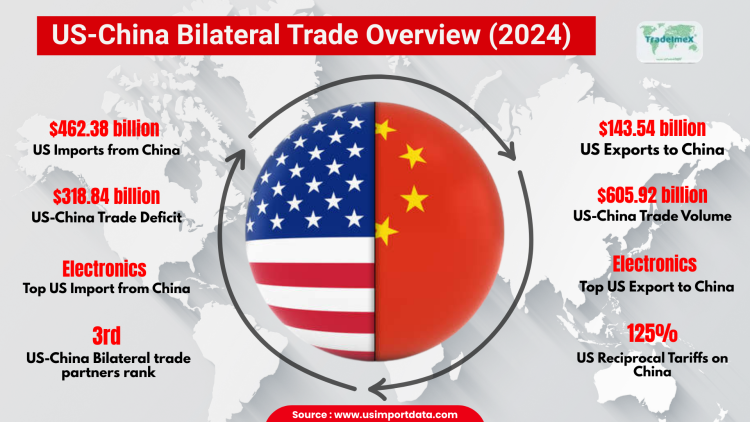
In this context, the idea of being excluded from American markets—
or even facing significant new barriers—is simply unacceptable.
German car manufacturers cannot survive on European sales alone. French agricultural exporters need American buyers. Italian luxury goods have to be in Miami and Los Angeles malls. Likewise, Vietnamese toys and Korean TVs need to be in Walmart. The leverage is all on one side, and it’s not the European or Asian one.
Trump instinctively understands what the Davos set
refused to acknowledge for the last 20 years:
trade imbalances on the scale of the 2010s are unsustainable.
You cannot run perpetual surpluses against a trading partner while simultaneously demanding that partner provide your security guarantee, subsidize your defense, and accept restricted access to your own markets. Eventually, the situation will be reset. And when it does, the party with leverage wins.
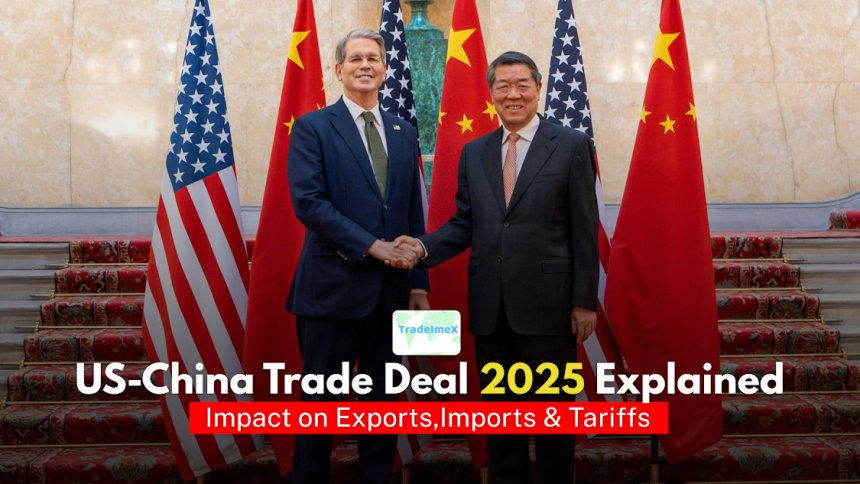
This is not a particularly sophisticated insight. It’s basic economics and elementary logic. But it’s an insight that decades of trade policy specialists somehow failed to grasp. They convinced themselves that the existing system was stable because it was familiar, that the American willingness to run massive trade deficits while defending global security could somehow last indefinitely. They mistook a temporary arrangement for a permanent equilibrium.
The old consensus rested on several assumptions, none of which could survive serious scrutiny.
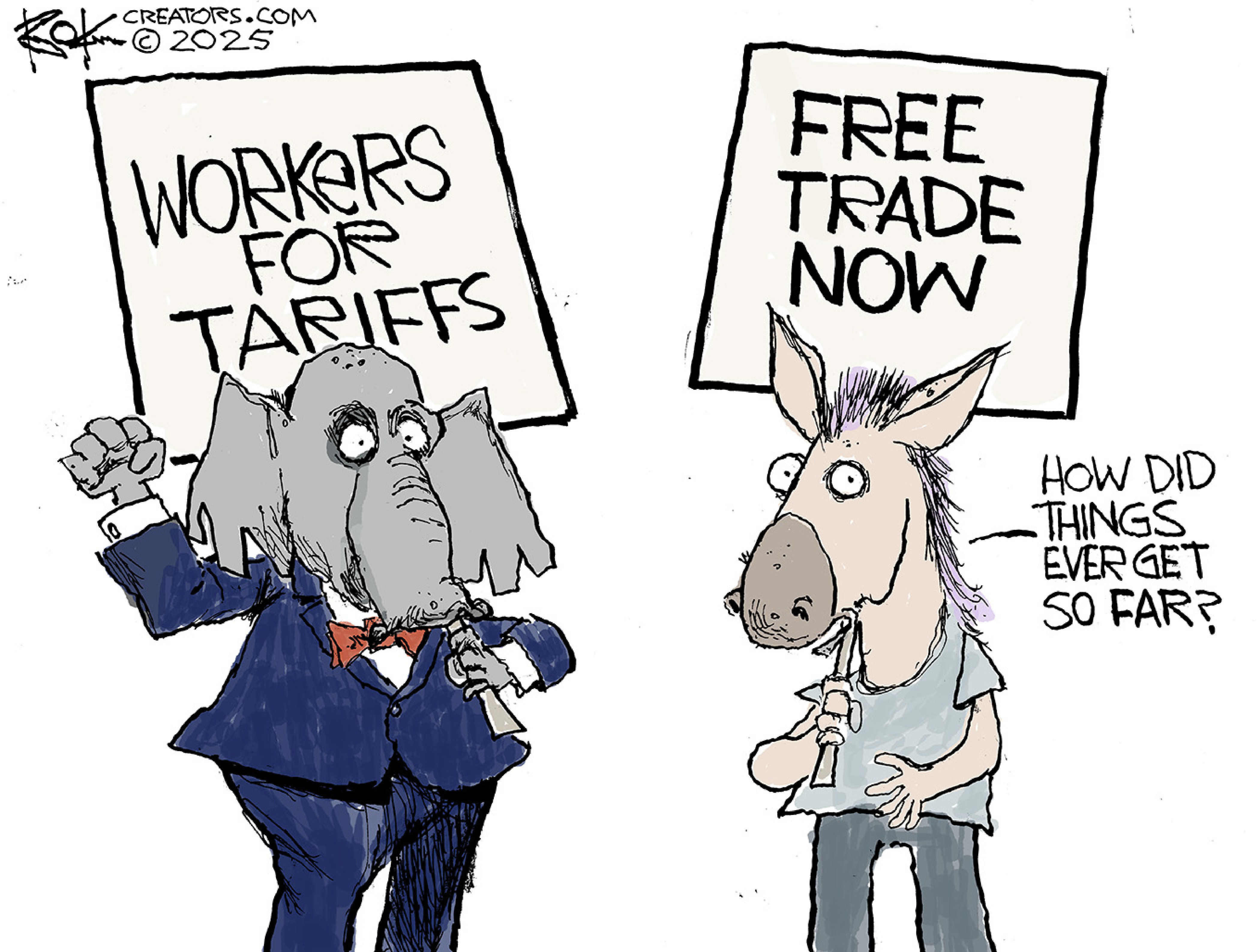
First, that trade imbalances don’t really matter because they’re offset by capital flows. Tell that to the workers in Ohio and Michigan who watched their factories close.
Second, that global peace requires accepting unfavorable economic terms. Tell that to the American taxpayers who fund European defense while European governments spend their money on welfare systems Americans can only dream about.
Third, that only multilateral negotiations can produce legitimate trade agreements. Tell that to the countries that have been perfectly happy to negotiate bilateral deals when it suits their interests.
The mock outrage will continue. European politicians will continue denouncing American unilateralism. The editorial pages will continue lamenting the death of the liberal international order. Think tanks will produce papers explaining why Trump’s approach damages American interests.
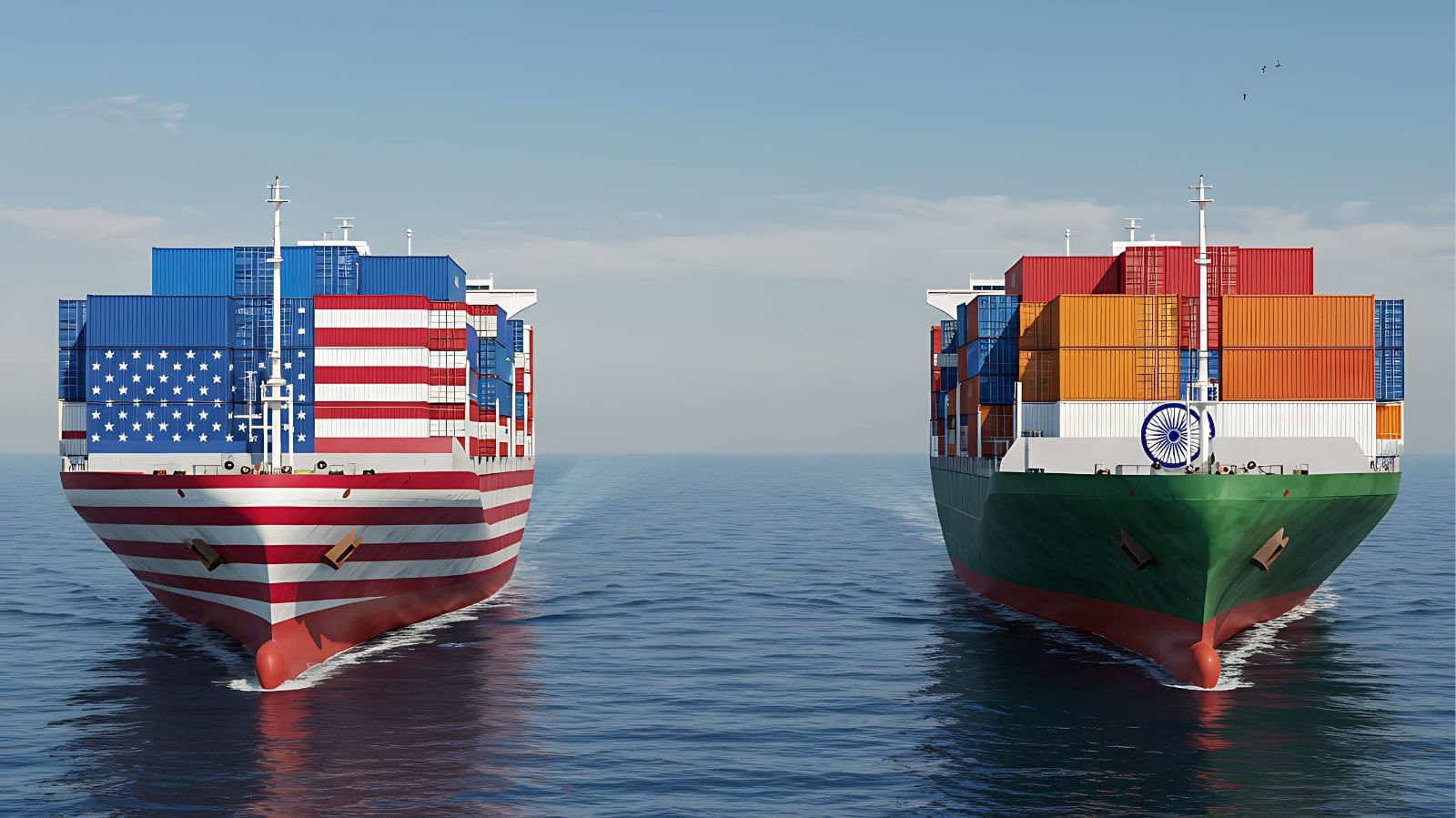
None of this changes the underlying truth: European and Asian
governments are restructuring trade relationships on American terms.
The irony is that Trump’s supposedly “chaotic” approach may be producing a more balanced and ultimately more durable global trading system than the old consensus ever delivered. Trade relationships that are obviously unbalanced won’t last. They create political pressures that eventually explode. It is better to address those imbalances directly, even if the process is uncomfortable, than to pretend they don’t exist.
Footnote: About SCOTUS Ruling on Trump Tariffs
Treasury Secretary Scott Bessent, speaking in Dallas, echoed Trump in saying that the administration is going to rework the administration’s sweeping import taxes under other legal authorities after the Supreme Court’s ruling earlier today.
“This administration will invoke alternative legal authorities to replace the IEEPA tariffs,” he said. “We will be leveraging Section 232 and Section 301 tariff authorities that have been validated through thousands of legal challenges.”
Bessent added that an estimate calculated by the Treasury Department found that using these other authorities will “result in virtually unchanged tariff revenue in 2026.”
 Science Matters
This article is a keeper. The Trump admin needs to explain their trade policies better. The MSM will not communicate what the T admin personnel say, or give it a fair hearing. Trump needs PSDs. Presidential sponsored debates. where proper marketing could reach billions. Charlie Kirk was correct, and rational debate has been shut down. Once every 3 month PSDs would get worldwide viewership.
For sending such a good article you will enjoy Coffee and COVID post today on how the SC tariff decision was a win win for the T admin.
https://substack.com/app-link/post?publication_id=463409&post_id=188725668&utm_source=post-email-title&utm_campaign=email-post-title&isFreemail=true&r=slvym&token=eyJ1c2VyX2lkIjo0ODA1MDQ0NiwicG9zdF9pZCI6MTg4NzI1NjY4LCJpYXQiOjE3NzE2OTM0NjMsImV4cCI6MTc3NDI4NTQ2MywiaXNzIjoicHViLTQ2MzQwOSIsInN1YiI6InBvc3QtcmVhY3Rpb24ifQ.QmkVeU4fLx_msk2DQxaGMxwOAE-UIQf4yegrT11TVks
LikeLike
Wow! Thanks for the reference, very insightful.
LikeLike