
A recent interview exposes how centrist politics and climate obsession corrupt energy investments, in this case to the detriment of Canada. PM Carney is running a charade which will not bode well for Canada, according to this interview of Energy industry expert David Knight Legg by National Post’s Rob Brackenridge. Excerpts from the transcript are below with my bolds and added images. First a reminder of where PM Carney is coming from:

Greetings, folks, I’m Rob Brackenridge for National Post and NP Comment. Alberta has now officially submitted a proposal to the federal government Major Projects Office for a new pipeline to the West Coast. Presumably, that will be fast-tracked by the federal government. We’re expecting that designation of this being in the national interest from the Prime Minister by October. But is all of this enough to really get Canada to where it needs to be, to really fully embrace the opportunity that presents itself and to be that destination for investment and be a global energy superpower?
Well, someone who’s been watching all of this very closely is David Knight Legg. He is a director and an advisor to a number of energy, financial and tech firms, a former principal advisor to Alberta’s premier, former CEO at Invest Alberta Corporation. David, so great to have you with us here. Great to be here, Rob. Great to see you again. Likewise.
It’s been an interesting couple of days. Clearly, the current premier of Alberta has put a lot of work into this, and is trying to pull, I think, the federal government in a much different direction from where it’s been over the past decade. How significant is this milestone, do you think, first of all?

Well, Rob, you know, it’s always hard when you sit outside something as complicated as a negotiation between Ottawa and Alberta, which has skeptics in both their bases, as I’m sure you know. And I had a good conversation with Jason Nixon (Alberta Minister of Finance) last night about it, met the premier briefly. I think it’s really important and I think that it’s not perfect. These deals often aren’t.
But I think one of the testaments to how important it is, is how close it came to being derailed in a variety of ways, just as a little bit of the backstory. And I think that, you know, you sometimes have to take the win that you’ve got. Actually there are a lot of things I’d be critical about. I don’t think it goes far enough.
And I think we have a fundamental problem in a regulatory regime,
which means that governments have to get this involved
in getting basic infrastructure built.
In other countries, you don’t need governments announcing these things. You don’t need a most favored nation status for a project. You have very simple, clean regulations, low taxes, and you allow people to build as long as they meet basic criteria. And I think it’s the absence of that that has become more apparent to more people because of the MOU.

So I think one of the benefits of the MOU has been that it has started a conversation that’s been needed for a long time in Canada over just how hard it’s become to build anything here without official government sanction. And I think that’s a conversation that’s going to continue to persist as this project works its way forward. Yeah, even just the existence of the the major projects office, the Building Canada Act, I mean, it’s a recognition that we have all of this red tape in the way and we create this separate track to try to bypass it. But it just kind of leaves everything else still in place. Right.
So in a way, it’s an acknowledgement that we have that problem, but it doesn’t really address it at the same time. That’s a great that’s a great point. In fact, I think that’s a great way to put it. And that’s actually a conversation that really needs a national conversation that needs to happen.

If you have to create an entirely separate bureaucracy to avoid your current bureaucracy, it might be time to reform your current bureaucracy rather than set up a new set of channels and processes that ultimately are privileging things that still require the government to lean in. And it creates a greenhouse for favoritism and, you know, trying to get the attention of the government to trying to do things rather than a level playing field where anybody can come in and innovate and create. And I think as a nation, we’ve got to do better than this.
You know, it just it looks like 1970s style industrial policy rather than a fair, free, open, entrepreneur led marketplace of ideas and and opportunities. And you have to believe that there are really creative ways of thinking about things that would be initiated across Canada right now if the regulations were simple, the taxes were lower and the process was clear. We’re seeing under this prime minister a little bit of slow dismantling of a lot of the Trudeau legacy, which is maybe long overdue and perhaps needs to be expedited to some degree.
But what does it tell us about then the missed opportunity of the last decade and and all of the cost, all that was wasted as we sort of lived and endured under those policies? You know, Rob, I think one of the things that’s really interesting is Mark Carney was the heart of a lot of those policies. And, you know, half of me believes, you know, that’s what makes him the perfect guy to dismantle them because nobody else is going to be as credible with that liberal base as he would be at turning back some of the environmental overreach that’s restricted the ability to build in Canada. On the other hand, I think that there’s this temptation within this Carney government to maintain control over economic development in a way that means that they constantly have their hand on the wheel.

They’re constantly fidgeting with what they can release. And this is problematic because you will never have government sanctioned projects move as fast as projects that are originating in the private sector and originating with people that are, you know, have to make a bottom line work. So I think, you know, the dismantling of the Trudeau era is so important for the country to move forward, but that’s not sufficient. It’s essential, but it’s not enough to actually start to get the economy rolling again. And you saw this in this really odd condo deal that that happened and a lot of these things where there’s a constant attempt to use government money. We don’t have it.
You know, they’re borrowing it to expand the bureaucracy and also to expand the government reach into things like housing, energy. You know, these are sectors that in most countries are managed without the government having to intervene. Yeah.

And it’s interesting because you mentioned the economy, and obviously that’s an impetus. I know there’s provincial federal dynamics. There’s the energy side of things, but there’s just, you know, when you look at the economic challenges Canada is facing right now and how lethargic our economy has been, the global headwinds we’re facing, the trade uncertainty with the United States. If we’ve got economic advantages, if we’ve got strength, I mean, now’s the time to exploit those advantages. Is there a dawning realization, just with everything that we’re facing now, that we have all of this in front of us? I think so.
I think it started with a paper by Stephen Miran who went on to be the chairman of the Council of Economic Advisers for the US president back in November 24, when he said the United States should embark on this. This is what the president ended up adopting as formal policy, should embark on a process of integrating its national interests in energy security, military security, and trade security. And immediately they went for Panama. They’re doing deals around the Straits of Malacca. They’re, of course, active in the Straits of Hormuz with Iran, Greenland. They immediately went to taking Venezuelan oil over. I don’t think there’s been enough coverage of that, and that’s one of the things that led to the article that I wrote, which is when the Americans took over the Venezuelan energy supply, the Chinese lost 550,000 barrels of heavy crude, which is chemically identical to what we produce. It opens up an opportunity for us to have a $15 billion a year trade with the Chinese government just on that one replacement supply chain alone. And the idea that we had Northern Gateway effectively blueprinted already, that that’s a 565,000 barrel pipeline that could easily get there.

When you look at why Northern Gateway was ultimately cancelled, it’s a series of just self-imposed rules that have nothing to do with ultimately helping the environment, even though they’re dressed up that way. When you double-click on those rules, they do nothing for the environment, and in some ways they just sort of imagine that Canada can’t do things. We look at a tanker ban and we think the whole world is moving this stuff by tank. Are we the only country incapable of operating shipping and ports in environmentally sensitive areas? We don’t back ourselves enough to figure out that we could still do it as Canadians if they can do it in 50 other countries.
So there’s a lot that I think happened during that Trudeau era that we’re going to have to answer for. And I think we’re starting at least to have the right conversations. And yesterday’s announcement was an important step towards, I think, government saying we need this pipeline. I still dislike the fact they’re putting themselves in the position of being the ones to back it and treating pipelines more like airports or something. That is maybe being realistic about what you do if you do have a kind of very statist government environment. But it would be better if we could go back to a being a nation where free market entrepreneurialism didn’t require a constant government sanction. Yeah, there’s that.
I mean, I think one of the positives here, I mean, with Trans Mountain, we faced a real backlog when it came to the capacity pipeline capacity. Right. So with this, I think there’s the investment, the spinoff that comes with increasing production to fill this pipe and to fill some of the other projects like South Bow or like the Enbridge Mainline expansion, that the expansion, the growth of production is where we could really see a lot of that investment in the economic spinoffs.
How much does that tie into this? Do you think? Look, I think it’s super important. These are supply demand cycles. And the demand side, when you look at Asia, is unprecedented. You know, and so I think that’s a really the point you’re making is critical. I think you could double or we could get to 10 million barrels. Ultimately, there would be no problem in terms of egress and demand.
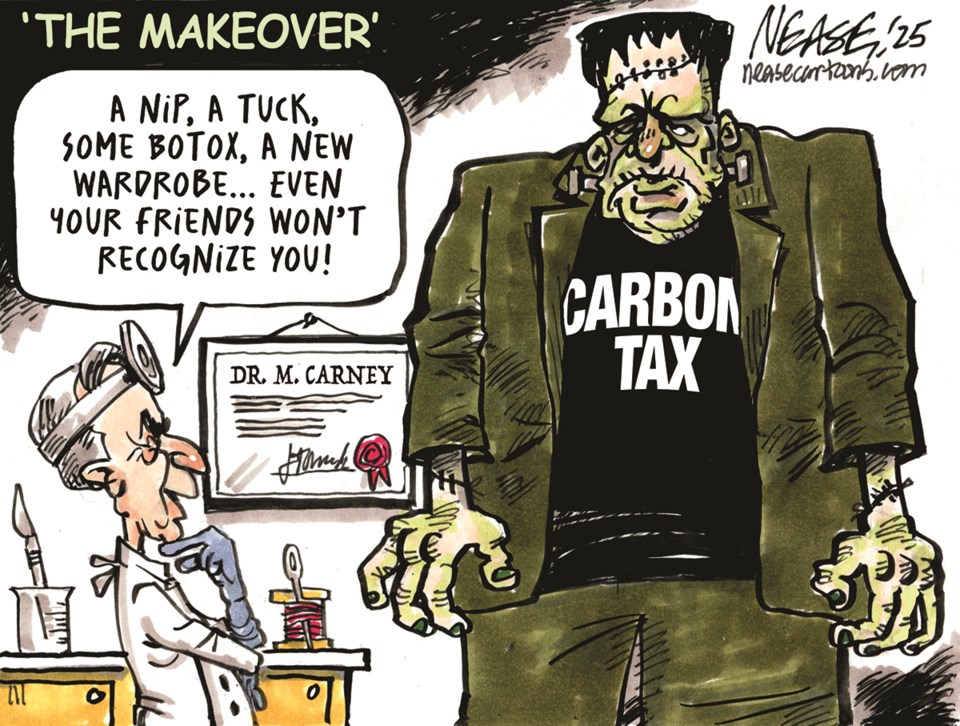
Almost all the issues related to the investability of that process are tied to issues like whether or not pathways and CCUS (Carbon Capture) is really the most important thing in the world. Or is it more important than some of these commitments to actually produce and supply and ship? And I think that it’s not. You know, our lesson from a lot of the environmental and to the Prime Minister’s credit, he came out and said $200 billion in 10 years of environmental activism from Ottawa produced absolutely nothing of note. It certainly didn’t change the emissions profile of the country in any significant way. In many ways, it harmed the ability for Canada to play a role in reducing global emissions by shipping a lot more of our gas to offset the coal-fired Chinese grid. And so in so many ways, I think there’s been a decade of strategic irrelevance, but also a decade of real economic decline.

And I think this Prime Minister is faced with needing to get over what’s happened in the trade arena. And I think they’re sort of turning a light past the fact that the Americans have said we’re going to do a deal with the Mexicans and not with the Canadians. You know, we’re going to put you guys on this annual review process. Now, a lot of people are saying that’s fine. I don’t think that’s fine. I think that’s an absolute failure to effectively negotiate the past 18 months. And that is starting to put in. I think the Prime Minister is smart enough to know deep down this is a real problem for the country and for him. And when you look at Canada, the Canadian balance sheet of exports, you know that energy is the only place where you’re going to get an immediate return economically on an investment.

So I think he’s still trying to juggle that kind of absolute realism about what works economically with his desire that there still be kind of a signaling effect, at least to his base, that they’re going to take care of the environment. But I’m just not sure when you look at, you know, sitting on the board of an energy company, you look at the costs related to all of these sort of exogenous environmental commitments that Canada is kind of inventing with the hope that it signals environmental commitments. But they’re not really making that big a difference to the planet. And they’re adding extraordinary costs. And they’re often being managed by government bureaucracies that don’t move at the speed of business or commercial interests. So I think it’s an important step.
It’s raising some important conversations. But I think the answers to some of those questions, those conversations are raising are going to take us further down the path of a much more liberalized economy when it comes to energy and hopefully a smaller government, a government that can live within its means federally and provincially. Yeah, I guess that’s the takeaway here, right? I mean, you know, it’s fine to say that this is a positive achievement. This is a project that is worthwhile, but to avoid maybe patting ourselves on the back too much and recognize some of these broader challenges we face, what do you think should be the next step here? Rather than just say, see this major projects office, this approach is working to have more meaningful conversation about taxes, about regulation, about just the whole picture. Is that really where the conversation ought to be going?

Yeah, look, I think you’re doing it right now, Rob. I think that this kind of conversation that you’re initiating is really important because I think that the baseline is that we want this nation to succeed. We want Alberta to succeed. We want Canada to succeed. We know that, and I think we’ve been sort of avoiding the fact that we’ve allowed the economy to decline and we’ve become very, very dependent on the United States as a result of that.
I mean, one of the great ironies of the past decade is that by refusing to build these things that would have taken our energy to Asia and to Europe, we’ve created a much deeper dependency on the U.S. markets in every way and across every category. And that dependency is now starting to really hurt us. And I think Ontario is an especially tough, tough place when it comes to this.
But I think the first step here is to start to lay out the way forward. And one of the obvious things to do is look at other nations and say, how are they creating these things in a way that’s actually getting things done? You look at a place, I’ve been spending some time in the United Arab Emirates, which is home to both Abu Dhabi and Dubai. And they just decided in the middle of this war that the Straits of Hormuz were not secure enough.
And so they’re going to build a pipeline. They’re going to have that pipeline done in under a year. And that’s going to move 1.8 million barrels of oil. And when you hear that, you sort of think, makes sense. But then you think, imagine if Canada said, we’re going to build a pipeline, 1.8 million, we’re going to have it done in a year. And we’re going to get this stuff to China as a result of what happened in Venezuela.
Here’s the burning question for me. Why not? Why can’t we be that nation? Half the people building these infrastructure projects in the UAE are coming from Canada, because we’re the best in the world at these things. But those experts can’t build those things in Canada at that speed, because they’re beholden to a series of rules that are often rooted in what used to feel like benign green commitments.

But now we just realize these are constraints that are doing nothing for the planet. And they’re significantly slowing down our ability to actually build the kind of economic stability and security and growth we need.
And I really like the framing that you gave about this event. Yes, this step is good. But before we start celebrating, let’s consider where does this actually go next? Are we still talking about a five to 10 year build process? Is that real? Why can they build something in a year in the UAE that carries almost twice the amount of oil as what we can build? And if there’s geographic or geological reasons why, that’s fine. But I don’t think that’s the case.
I think a lot of it is that we’ve just grown used to and accustomed to operating in a manner that is second rate. And it doesn’t keep up with the speed of business. And it certainly doesn’t keep up with what’s happening globally in the world of energy security and energy supply.
