To Save the Earth, Get Down in the Dirt

Family Farmed is proud of the blossoming Good Food movement in their hometown of Chicago

Activists are directing school children to the streets to protest for more action against CO2 and their fear of global warming/climate change. In their desire to feel good about saving the planet, they ignore what is being done, and they march rather than picking up shovels and hoes and literally caring for the earth under their feet.

Overlooked is our potential to enhance the performance of the biosphere in capturing CO2 and greening the land. The soil itself is second only to the oceans, and the plant biomass is an additional sink for CO2. Below is an overview of the win-win proposition for humans to sequester carbon in the soil and restore its health and productivity at the same time. H/T Mark Krebs for suggesting this topic and providing resources from his own research and teaching.

Global Sequestration Potential of Increased Organic Carbon in Cropland Soil by Robert J. Zomer, Deborah A. Bossio, Rolf Sommer & Louis V. Verchot 2017.  Excerpts in italics with my bolds and titles.

Overview

The role of soil organic carbon in global carbon cycles is receiving increasing attention both as a potentially large and uncertain source of CO2 emissions in response to predicted global temperature rises, and as a natural sink for carbon able to reduce atmospheric CO2. There is general agreement that the technical potential for sequestration of carbon in soil is significant, and some consensus on the magnitude of that potential. Croplands worldwide could sequester between 0.90 and 1.85 Pg C/yr, i.e. 26–53% of the target of the “4p1000 Initiative: Soils for Food Security and Climate”. The importance of intensively cultivated regions such as North America, Europe, India and intensively cultivated areas in Africa, such as Ethiopia, is highlighted. Soil carbon sequestration and the conservation of existing soil carbon stocks, given its multiple benefits including improved food production, is an important mitigation pathway to achieve the less than 2 °C global target of the Paris Climate Agreement.

Soil as Both Sink and Source

Soils, however, can act as both sources and sinks of carbon, depending upon management, biomass input levels, micro-climatic conditions, and bioclimatic change. Substantially more carbon is stored in the world’s soils than is present in the atmosphere. The global soil carbon (C) pool to one-meter depth, estimated at 2500 Pg C, of which about 1500 Pg C is soil organic carbon (SOC), is about 3.2 times the size of the atmospheric pool and 4 times that of the biotic pool. An extensive body of research has shown that land management practices can increase soil carbon stocks on agricultural lands with practices including addition of organic manures, cover cropping, mulching, conservation tillage, fertility management, agroforestry, and rotational grazing. There is general agreement that the technical potential for sequestration of carbon in soil is significant, and some consensus on the magnitude of that potential.

This diagram of the fast carbon cycle shows the movement of carbon between land, atmosphere, and oceans in billions of tons per year. Yellow numbers are natural fluxes, red are human contributions, white indicate stored carbon.

Croplands Are Key

On this basis, the 4p1000 initiative on Soil for Food Security and Climate, officially launched by the French Ministry of Agriculture at the United Nations Framework Convention for Climate Change: Conference of the Parties (UNFCCC COP 21) in Paris, aims to sequester approximately 3.5Gt C annually in soils. Croplands will be extremely important in this effort, as these lands are already being actively managed, and so amenable to implementation of improved practices. Furthermore, because almost all cropped soils have lost a large percentage of their pre-cultivation SOC, they potentially represent a large sink to re-absorb carbon through the introduction and adoption of improved or proper management aimed towards increased SOC.

Multiple Benefits of Soil Organic Carbon (SOC)

However, carbon is rarely stored in soils in its elemental form, but rather in the form of organic matter which contains significant amounts of other nutrients, above all nitrogen. Nutrients, biomass productivity, the type of vegetation and water availability, among other constraints therefore can be major limiting factors inhibiting increases in soil carbon sequestration. Further imperative to sequester carbon in soils arises from the multiple co-benefits that are obtained from sequestration of carbon in soils that have been depleted of their organic matter. Soil fertility, health, and functioning are immediate consequences of the amount of soil organic matter (and hence carbon) a soil contains; this is even more important for highly weathered soils, as is the case for the majority of soils in the humid lowland tropics. Increasing carbon in soils also means improving its physical properties and related ecosystems services, such as better water infiltration, water holding capacity, as well as potentially increasing agricultural productivity and ecological resilience.

Reversing Lost SOC

An implicit basic assumption is that in general, 50 to 70% of soil carbon stocks have been lost in cultivated soils, such that the SOC status of almost all cultivated soils can be increased. It is expected that these cropped soils will be able to sequester carbon for at least 20 years before reaching saturation points and new SOC equilibriums, while meta-analysis of field studies suggests that in some instances significant sequestration can continue for 30 or even up to 40 years before reaching new equilibriums.

Where Lies the Greatest Potential

The regions of North America, Eurasia (Russia) and Europe currently store the greatest amount of carbon on cropland, each with more than 21 Pg C, and all together accounting for over 50% of all SOC stocks on cropland globally. By contrast, Central America, North Africa, and the Australian/Pacific region have very low amounts of stored SOC, together comprising 6.48 Pg C or just over 4.6% of the global total. Western Asia, South Asia, Southeast East Asia and East Asia each have moderate amount ranging from 4.38 Pg C to 9.14 Pg C, but together accounting for just less than 2% of global total.

The Top 30 cm are Vital

On these croplands adoption of improved management practices offers the opportunity to sequester significant amounts of carbon in the near term, and potentially to make an important contribution to global mitigation efforts. The 4p1000 Initiative has identified an aspirational sequestration target of 3.5 Pg C/yr to provide substantive global mitigation. Our estimates suggest that from 26% up to 53% (0.90–1.85 Pg C) of this target could be reached in the top 30 cm of cropland soils alone, and continue over at least 20 years after adoption of SOC enhancing management, such as incorporation of organic manures, cover cropping, mulching, conservation tillage, some types for agroforestry practices, rotational grazing, or other practices known to increase soil carbon at the decadal scale.

Carbon Smart Agriculture

Given the large amount of cropland potentially available, sequestering carbon via increases in the soil component on agricultural land is an achievable and potentially effective route to quickly increasing CO2 sequestration in the near term. For comparison, above-ground losses due to tropical land use conversion are currently estimated at 0.6–1.2 Pg C yr-1. A strategy of enhancing agriculture with soil carbon enriching improved practices, e.g. via appropriate policy mechanisms, thus offers significant potential to mitigate land use related carbon emissions and provide an opportunity for agricultural production to positively contribute to global mitigation efforts. SOC may be either enhanced by, or enhance above- and below-ground biomass carbon on agricultural land, allowing for synergistic increases in on-farm carbon stocks. Agroforestry systems and planting trees, for example, may increase soil carbon sequestration.

Productivity and Resilience as well

The benefits of increasing soil organic matter in croplands goes far beyond climate change mitigation potential. Facilitation of increased SOC through improved farming and soil conservation practices, enhancing resilience through improved fertility status and water holding capacity, also provide important adaptation benefits. It is generally recognized that changes in the moisture regime (e.g. drought or heavy precipitation events) can significantly impact crop productivity. These climatic conditions are mitigated by SOC, which adds structure, improves water infiltration and holding capacity, increases cation exchange capacity, and impacts soil fertility, a major controlling factor of agricultural productivity and both regional and household food security. Soil conditions have dramatic effects on the abundance and efficiency of N-fixing bacteria, which are vitally important in cropping systems that lack fertilizer inputs. Thus increased SOC through improved management practices is likely to add substantial resilience to croplands and farming systems, particularly during drought years or increased seasonal variability, helping to avoid edaphic (soil related) droughts that result from land degradation.

Better than the Alternatives

For the most part, agricultural practices that increase soil organic matter are supportive of enhanced food production and other ecosystem services. This is in contrast to other proposed negative emission strategies, such as afforestation (plantations of fast growing trees) and BECCS (bioenergy and carbon capture and storage) that will entail destruction of huge amounts of natural ecosystems or productive agriculture land if implemented at scales large enough to impact CO2 in the atmosphere. Given that hundreds of millions of small farmers for their subsistence depend upon croplands around the world, mitigation benefits of enhanced SOC storage must be recognized as only one significant component of an array of multiple benefits to achieve.

It Won’t be Easy, But We Can Do This

Despite the large technical potential to sequester carbon in soils, there are often significant limitations to achieving that potential in any particular place and within specific farming systems, including lack of biomass and other inputs. In addition, there may be tradeoffs with productivity, food security or hydrologic balances, as well as concerns regarding other GHGs, such as N2O. As with any efforts to sustain notable changes in practice significant understanding of cultural, political and socioeconomic contexts are required.

Humans Should Maximize the Benefits of Global Warming and Rising CO2

Numerous studies are referenced at the NIPCC chapter on CO2, Plants and Soils. While our knowledge of the biosphere CO2 sink is incomplete, much is known to scientists and the information points not to alarm but to opportunity. The surplus CO2 from burning fossil fuels represents an occasion for us to assist nature to replenish soils depleted of the carbon content plants need to achieve their potential. Excerpts in italics with my bolds.

Assist Forests to benefit even more from rising CO2.

1.2.1 Forests pg. 45

Forests contain perennial trees that remove CO2 from the atmosphere during the process of photosynthesis and store its carbon within their woody tissues for decades to periods of sometimes more than a thousand years. It is important to understand how increases in the air’s CO2 content affect forest productivity and carbon sequestration, which has a great impact on the rate of rise of the air’s CO2 concentration. 

Where tropical forests have not been decimated by the targeted and direct destructive actions of human society, such as the felling and burning of trees, forest productivity has been growing ever greater with the passing of time, rising with the increasing CO2 content of the air. This has occurred despite all concomitant changes in atmospheric, soil, and water chemistry, including twentieth century global warming, which IPCC claims to have been unprecedented over the past one to two millennia.

The planet is greener with the rise in CO2.

Forest growth rates throughout the world have gradually accelerated over the years in concert with, and in response to, the historical increase in the air’s CO2 concentration. As the atmosphere’s CO2 concentration rises, forests likely will respond by exhibiting significant increases in biomass production, and thus likely will grow much more robustly and significantly expand their ranges, as is already being documented in many parts of the world.

As the air’s CO2 content rises, therefore, saplings growing beneath the canopies of larger trees will likely increase their rates of photosynthesis under both high and low light conditions characteristic of intermittent shading and illumination by sunflecks. Moreover, because elevated CO2 concentrations allow saplings to maintain higher rates of photosynthesis for longer periods of time when going from lighted to shaded conditions, such trees should be able to sequester greater quantities of carbon than they do now. So powerful is this phenomenon, in fact, the two researchers state current estimates of the enhancement of long-term carbon gains by forests under conditions of elevated atmospheric CO2 “could be underestimated by steady-state photosynthetic measures.”

In contrast to frequently stated assumptions, old growth forests can be significant carbon sinks, and their capacity to sequester carbon in the future will be enhanced as the air’s CO2 content rises.pg 75

What has put the planet’s trees on this healthier trajectory of being able to sequester significant amounts of carbon in their old age, when past theory (based on past observations) decreed they should be in a state of no-net-growth or even negative growth? The answer is rather simple. For any tree of age 250 years or more, the greater portion of its life (at least two-thirds of it) was spent in an atmosphere of much reduced CO2 content.

Zhou et al. (2006), “conducted a study to measure the long-term (1979 to 2003) dynamics of soil organic carbon stock in old-growth forests (age > 400 years) at the Dinghushan Biosphere Reserve in Guangdong Province, China.” and “measurements on a total of 230 composite soil samples collected between 1979 and 2003 suggested that soil organic carbon stock in the top 20-cm soil layer increased significantly during that time (P < 0.0001), with an average rate of 0.61 Mg C ha-1 year-1.” 

Manage the land to enhance soil health and productivity

As the CO2 content of the air increases, nearly all plants, including those of various forest ecosystems, respond by increasing their photosynthetic rates and producing more biomass. These phenomena allow long-lived perennial species characteristic of forest ecosystems to sequester large amounts of carbon within their trunks and branches aboveground and their roots below ground for extended periods of time. These processes, in turn, significantly counterbalance CO2 emissions produced by mankind’s use of fossil fuels.

Elevated CO2 enhances photosynthetic rates and biomass production in forest trees, and both of these phenomena lead to greater amounts of carbon sequestration. Elevated CO2 also enhances carbon sequestration by reducing carbon losses arising from plant respiration and in some cases from decomposition. Thus, as the air’s CO2 content rises, the ability of forests to sequester carbon rises along with it, appropriately tempering the rate of rise of the air’s CO2 content.

It would appear the ongoing rise in the air’s CO2 content will not materially alter the rate of decomposition of the world’s soil organic matter. This means the rate at which carbon is sequestered in forest soils should continue to increase as the productivity of Earth’s plants is increased by the aerial fertilization effect of the rising atmospheric CO2 concentration. 

“The accumulation of refractory organic carbon in soils that developed after the deglaciation of the American Pacific Northwest is ongoing and may still be far from equilibrium with mineralization and erosion rates.” This further suggests, in their words, “the turnover time of this carbon pool is 10,000 to 100,000 years or more and not 1,000 to 10,000 years as is often used in soil carbon models.” Smittenberg et al.

These independent experimental observations suggest claims to the contrary have no backing in empirical science. Both the aerial fertilization effect of atmospheric CO2 enrichment and the soil fertilization effect of the increase in nitrogen mineralization induced by global warming increase carbon sequestration in forest ecosystems, providing a strong, double-barreled, negative-feedback brake on the impetus for warming created by the enhanced greenhouse effect of the ongoing rise in the air’s CO2 content. Pg 98

Warming has produced bumper crops most everywhere.

Grasslands

Most of Earth’s terrestrial plant life evolved around 500 to 400 million years ago, when the katmospheric CO2 concentration was possibly 10 to 20 times higher than it is today. As a consequence, the biochemical pathways and enzymes involved in carbon fixation should be better adapted to significantly higher-than-present atmospheric CO2 levels, which has in fact been demonstrated to be the case. As the atmosphere’s CO2 content has dropped from that early point in time, it has caused most of Earth’s vegetation to become less efficient at extracting carbon dioxide from the air. However, the recent ongoing rise in atmospheric CO2 concentration is gradually increasing photosynthetic rates and stimulating vegetative productivity and the terrestrial sequestration of carbon around the globe. 

In a five-year study of a grassland growing on a moderately fertile soil at Stanford University’s Jasper Ridge Biological Preserve in central California— which utilized 20 open-top chambers (ten each at 360 and 720 ppm CO2)—Hu et al. (2001) found a doubling of the air’s CO2 content increased both soil microbial biomass and plant nitrogen uptake. With less nitrogen left in the soil to be used by a larger number of microbes, microbial respiration per unit of soil microbe biomass significantly declined in the elevated CO2 environments; with this decrease in microbial decomposition, there was an increase in carbon accumulation in the soil.pg.114

Jasper Ridge outdoor laboratory at Stanford.

Thus, as the atmosphere’s CO2 content rises, carbon sequestration in the soils of Mediterranean grasslands likely will increase for two reasons. First, it should rise as a consequence of the greater retention times conferred upon the carbon in older soil organic carbon pools, which represent the largest reservoir of terrestrial carbon on Earth. Second, even though soil microbes exhibit a preference for newer carbon under CO2-enriched conditions, it should rise because of the great increase in the amount of carbon going into newer soil carbon pools due to CO2-enhanced root exudation, root turnover, and other types of litter production. Pg.115

How much extra carbon can be sequestered in the planet’s grassland soils as a result of a doubling of the air’s CO2 content? A good first approximation at an answer is provided by Williams et al. (2000), who studied this phenomenon for eight years in a Kansas (USA) tallgrass prairie. . . Extrapolating this value to all of Earth’s temperate grasslands, which make up about 10% of the land area of the globe, Williams et al. calculate the CO2-induced increase in soil carbon sequestration could amount to an additional 1.3 Pg of carbon being sequestered in just the top 15 cm of the world’s grassland soils over the next century. Pg 114

Restore barren land to natural or managed productivity.

1.2.5 Soils 1.2.5.1 Bacteria • Rising atmospheric CO2 concentrations likely will allow greater numbers of beneficial bacteria (those that help sequester carbon and nitrogen) to exist in soils and anaerobic water environments. This two-pronged phenomenon would be a great boon to terrestrial and aquatic ecosystems. Pg.132

Nearly all of Earth’s plant life responds favorably to increases in the air’s CO2 content by exhibiting enhanced rates of photosynthesis and biomass production. Consequently, these phenomena tend to increase soil carbon contents by increasing root exudation of organic compounds and the amount of plant litter returned to the soil. Thus, it can be expected that CO2-mediated increases in soil carbon content will affect soil bacterial communities.

The great deserts of Africa and Asia have a huge potential for sequestering carbon, because they are currently so barren their soil carbon contents have essentially nowhere to go but up. The problem with this scenario, however, is that their soils blow away with every wisp of wind that disturbs their surfaces. The ongoing rise in the air’s CO2 content could do much to reverse this trend. At higher atmospheric CO2 concentrations, nearly all plants are more efficient at utilizing water

The end result of all these phenomena working together is greater carbon storage, both above- and below-ground, in what was previously little more than a source of dust for the rest of the world. And therein lies one of the great unanticipated benefits of the CO2-induced greening of the globe’s deserts: less airborne dust to spread havoc across Earth.

“It’s possible to rehabilitate large-scale damaged ecosystems.” Environmental film maker John D. Liu documents large-scale ecosystem restoration projects in China, Africa, South America and the Middle East, highlighting the enormous benefits for people and planet of undertaking these efforts globally.

Educate and enable gardeners and farmers to apply practices that sequester CO2 and enhance soil health and productivity.

Various programs and initiatives are underway promoting land management practices that improve soil health by enhancing its storage of carbon. One example comes from Mark Krebs, master gardener, who conducts seminars encouraging people to apply these principles to plots of land on their property or publicly available for such care.  They educate the public on how soil is degraded and how it can be regenerated.
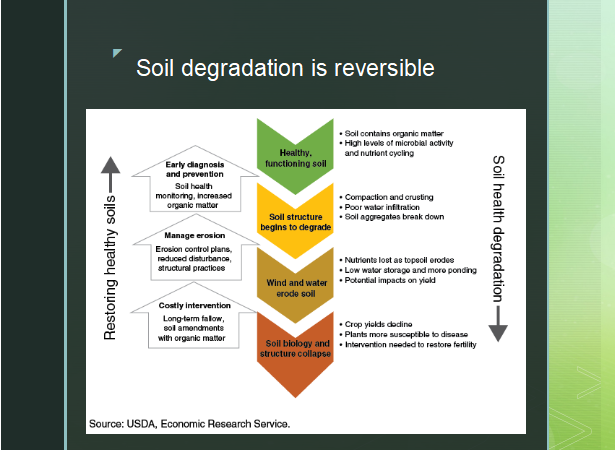
As well practical methods are recommended to restore the health and productiviy of the soil, as well as increase its carbon storage.  Various associations offer resources, for example:

The Living Soil


International CSA (Climate Smart Agriculture) initiative

Conclusion

Rather than protesting the use of fossil fuels essential to modern life and to social and economic development in our age, people who want to make a difference should get down in the dirt.  The soil is starved for carbon and it is more and more available in the air.  Nature is already accessing this renewed source of CO2,  We humans should claim this unique opportunity to help the land regenerate and recover its productivity.

See also CO2 Fluxes, Sources and Sinks

Carbon Sense and Nonsense


March Cools Seas More Than Land Warms

banner-blog

With apologies to Paul Revere, this post is on the lookout for cooler weather with an eye on both the Land and the Sea.  UAH has updated their tlt (temperatures in lower troposphere) dataset for March.   Previously I have done posts on their reading of ocean air temps as a prelude to updated records from HADSST3. This month also has a separate graph of land air temps because the comparisons and contrasts are interesting as we contemplate possible cooling in coming months and years.

Presently sea surface temperatures (SST) are the best available indicator of heat content gained or lost from earth’s climate system.  Enthalpy is the thermodynamic term for total heat content in a system, and humidity differences in air parcels affect enthalpy.  Measuring water temperature directly avoids distorted impressions from air measurements.  In addition, ocean covers 71% of the planet surface and thus dominates surface temperature estimates.  Eventually we will likely have reliable means of recording water temperatures at depth.

Recently, Dr. Ole Humlum reported from his research that air temperatures lag 2-3 months behind changes in SST.  He also observed that changes in CO2 atmospheric concentrations lag behind SST by 11-12 months.  This latter point is addressed in a previous post Who to Blame for Rising CO2?

The March update to HadSST3 will appear later this month, but in the meantime we can look at lower troposphere temperatures (TLT) from UAHv6 which are already posted for March. The temperature record is derived from microwave sounding units (MSU) on board satellites like the one pictured above. This month also involved a change in UAH processing of satellite drift corrections, including dropping one platform which can no longer be corrected. The graphs below are taken from the new and current dataset.

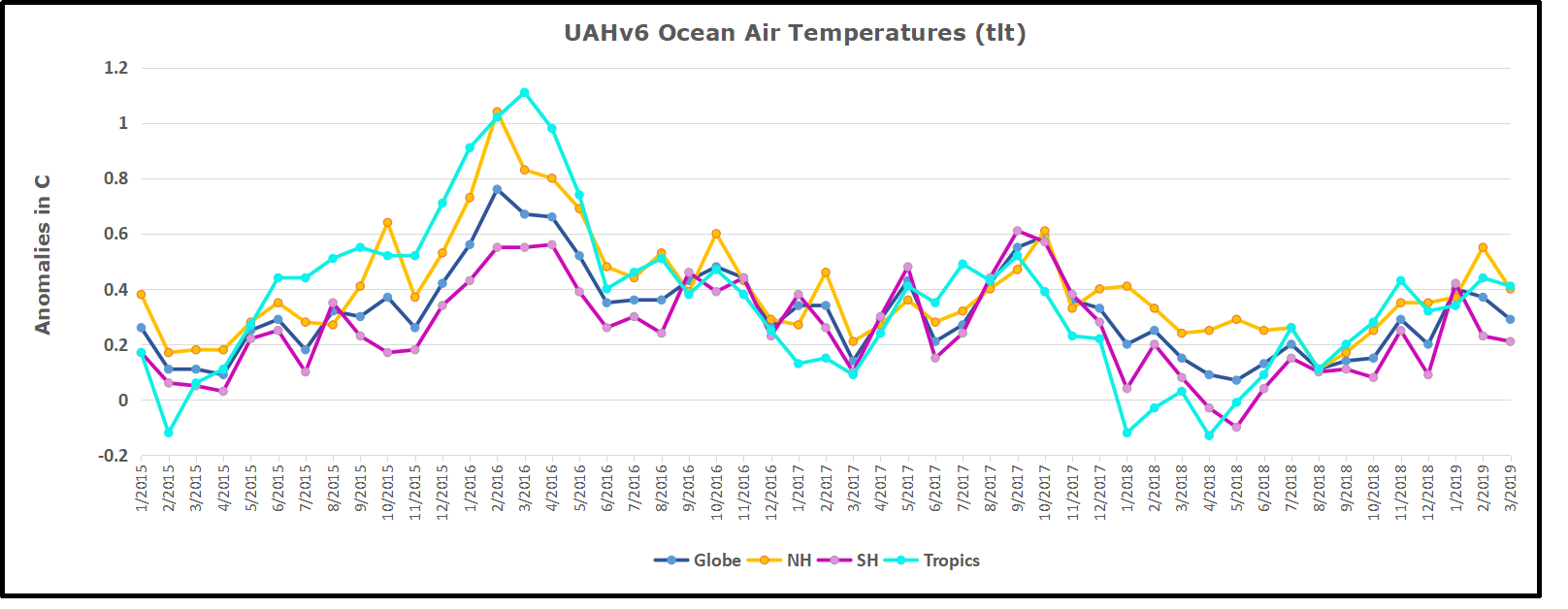
The UAH dataset includes temperature results for air above the oceans, and thus should be most comparable to the SSTs. There is the additional feature that ocean air temps avoid Urban Heat Islands (UHI).  The graph below shows monthly anomalies for ocean temps since January 2015.

Open image in new tab to enlarge.

The anomalies over the entire ocean dropped to the same value, 0.11C  in August.  Warming in previous months was erased, and September added very little warming back. In October and November NH and the Tropics rose, joined by SH.  In December 2018 all regions cooled resulting in a global drop of nearly 0.1C. The upward bump in January in SH was reversed in February.  Despite some February warming in both NH and the Tropics, the Global anomaly cooled. Now in March the cooling appears in all regions resulting in a global decline in SST anomaly of 01C since 01/2019. Except for the Tropics, the ocean SSTs match those of 2015.

Land Air Temperatures Tracking Downward in Seesaw Pattern

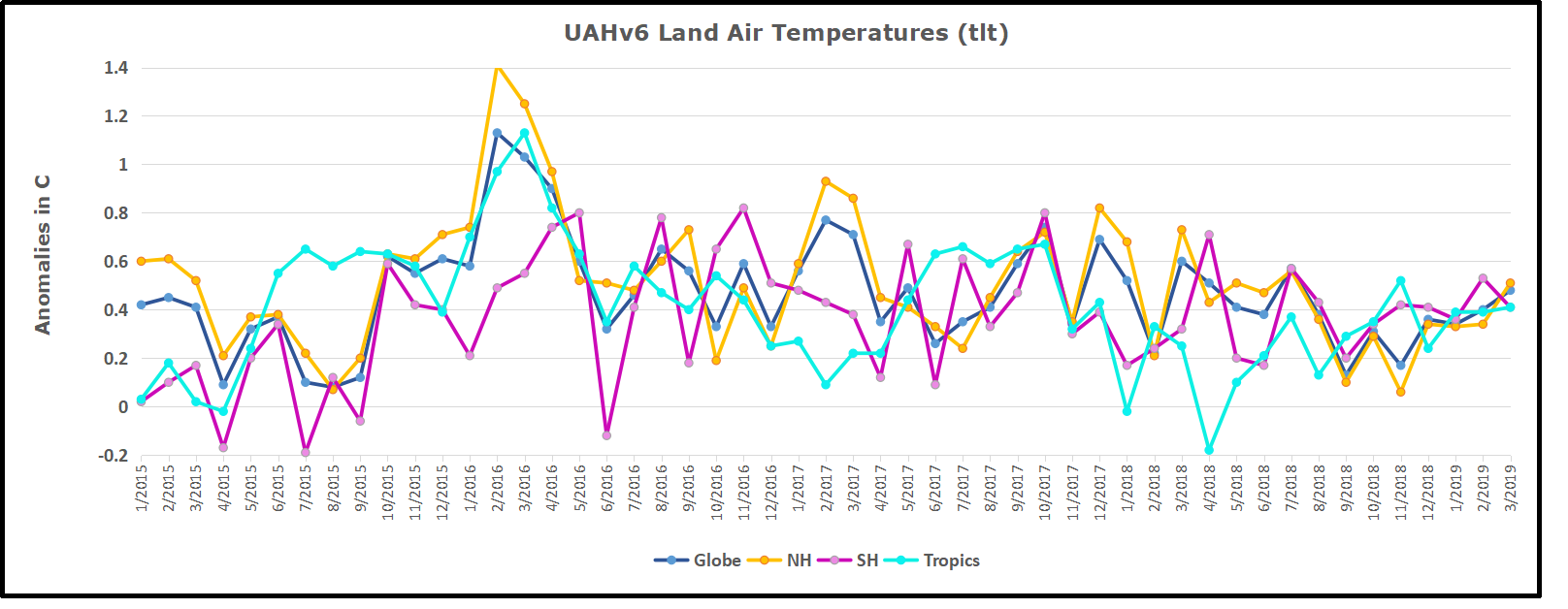
We sometimes overlook that in climate temperature records, while the oceans are measured directly with SSTs, land temps are measured only indirectly.  The land temperature records at surface stations record air temps at 2 meters above ground.  UAH gives tlt anomalies for air over land separately from ocean air temps.  The graph updated for March is below.

The greater volatility of the Land temperatures was evident earlier, but has calmed down recently. Also the  NH dominates, having twice as much land area as SH.  Note how global peaks mirror NH peaks.  In November air over NH land Global and surfaces bottomed.despite the Tropics.  By January  all regions had almost the same anomaly. Now in March an upward bump in NH has pulled the Global anomaly up, and both are comparable to early 2015.  SH and the Tropics air over land are currently matching other regions, in contrast to starting 2015 much cooler.

TLTs include mixing above the oceans and probably some influence from nearby more volatile land temps.  Clearly NH and Global land temps have been dropping in a seesaw pattern, now more than 1C lower than the peak in 2016.  TLT measures started the recent cooling later than SSTs from HadSST3, but are now showing the same pattern.  It seems obvious that despite the three El Ninos, their warming has not persisted, and without them it would probably have cooled since 1995.  Of course, the future has not yet been written.


Climatism vs. Eugenics: Which is Worse?

Ralph B. Alexander writes at his blog Science Under Attack Belief in Catastrophic Climate Change as Misguided as Eugenics was 100 Years Ago. H/T Yen Makabenta Manila Times. Excerpts in italics with my bolds.

Last October’s landmark report by the UN’s IPCC (Intergovernmental Panel on Climate Change), which claims that global temperatures will reach catastrophic levels unless we take drastic measures to curtail climate change by 2030, is as misguided as eugenics was 100 years ago. Eugenics was the shameful but little-known episode in the early 20th century characterized by the sterilization of hundreds of thousands of people considered genetically inferior, especially the mentally ill, the physically handicapped, minorities and the poor.

Although ill-conceived and even falsified as a scientific theory in 1917, eugenics became a mainstream belief with an enormous worldwide following that included not only scientists and academics, but also politicians of all parties, clergymen and luminaries such as U.S. President Teddy Roosevelt and famed playwright George Bernard Shaw. In the U.S., where the eugenics movement was generously funded by organizations such as the Rockefeller Foundation, a total of 27 states had passed compulsory sterilization laws by 1935 – as had many European countries.

Eugenics only fell into disrepute with the discovery after World War II of the horrors perpetrated by the Nazi regime in Germany, including the holocaust as well as more than 400,000 people sterilized against their will. The subsequent global recognition of human rights declared eugenics to be a crime against humanity.

The so-called science of catastrophic climate change is equally misguided. Whereas modern eugenics stemmed from misinterpretation of Mendel’s genetics and Darwin’s theory of evolution, the notion of impending climate disaster results from misrepresentation of the actual empirical evidence for a substantial human contribution to global warming, which is shaky at best.

Instead of the horrors of eugenics, the narrative of catastrophic anthropogenic (human-caused) global warming conjures up the imaginary horrors of a world too hot to live in. The new IPCC report paints a grim picture of searing yearly heatwaves, food shortages and coastal flooding that will displace 50 million people, unless draconian action is initiated soon to curb emissions of greenhouse gases from the burning of fossil fuels. Above all, insists the IPCC, an unprecedented transformation of the world’s economy is urgently needed to avoid the most serious damage from climate change.

But such talk is utter nonsense. First, the belief that we know enough about climate to control the earth’s thermostat is preposterously unscientific. Climate science is still in its infancy and, despite all our spectacular advances in science and technology, we still have only a rudimentary scientific understanding of climate. The very idea that we can regulate the global temperature to within 0.9 degrees Fahrenheit (0.5 degrees Celsius) through our own actions is absurd.

Second, the whole political narrative about greenhouse gases and dangerous anthropogenic warming depends on faulty computer climate models that were unable to predict the recent slowdown in global warming, among other failings. The models are based on theoretical assumptions; science, however, takes its cue from observational evidence. To pretend that current computer models represent the real world is sheer arrogance on our part.

And third, the empirical climate data that is available has been exaggerated and manipulated by activist climate scientists. The land warming rates from 1975 to 2015 calculated by NOAA (the U.S. National Oceanic and Atmospheric Administration) are distinctly higher than those calculated by the other two principal guardians of the world’s temperature data. Critics have accused the agency of exaggerating global warming by excessively cooling the past and warming the present, suggesting politically motivated efforts to generate data in support of catastrophic human-caused warming.

Source: Tony Heller, Real Climate Science

Exaggeration also shows up in the setting of new records for the “hottest year ever” –declarations deliberately designed to raise alarm. But when the global temperature is currently creeping upwards at the rate of only a few hundredths of a degree every 10 years, the establishment of new records is unsurprising. If the previous record has been set in the last 10 or 20 years, a high temperature that is only several hundredths of a degree above the old record will set a new one.

Eugenics too was rooted in unjustified human hubris, false science, and exaggeration in its methodology. Just like eugenics, belief in apocalyptic climate change and in the dire prognostications of the IPCC will one day be abandoned also.

Ralph B. Alexander is a retired physicist and a science writer who puts science above political correctness. He is the author of Science Under Attack: The Age of Unreason and Global Warming False Alarm. Ralph grew up in Perth, Western Australia and received his PhD in physics from the University of Oxford.  Dr. Alexander has held a variety of positions in research, academia and industry over the course of his scientific career, and now lives in California. 

See also:  On the Hubris of Climatism

Control Population, Control the Climate. Not.

“Hottest Year” Misdirection

Man Made Warming from Adjusting Data

About Canadian Warming: Just the Facts

Just in time for the Trudeau carbon tax taking effect, we have all the media trumpeting “Canada Warming Twice as Fast as Global Rate–Effectively Irreversible.”  That was written by some urban-dwelling climate illiterates who are woefully misinformed.  Let’s help them out with some facts surprising to people who don’t get out much.  Unfortunately ignored this week was an informative CBC publication that could have spared us “fake news” spewing across the land, from Bonavista to Vancouuver Island, as the song says.

Surprising Facts About Canada are presented in a CBC series 10 Strange Facts About Canada’s Climate  Excerpts below provide highlights in italics with my bolds.

Through blistering cold winters to hot muggy summers; torrential rain, blinding snowstorms, deadly tornados and scorching drought, Canadians experience some of the planet’s most diverse weather systems.  [ Uh oh, averaging all of that could be a problem]

Canada is as tall as it is wide, creating a wide range of climate conditions.

Canada has the largest latitude range of any country on the planet. Our southern border lies at the same latitude as northern California, while our northern edge reaches right to the top of the world. It’s rarely the same season in the same place at the same time. In early April, the Arctic may still be in the throes of a frigid winter, while the south can experience summer-like temperatures. No doubt, our weather forecasters are the busiest in the world!

Canada has an ‘iceberg alley’.

Pieces of glaciers from the coast of Greenland are picked up by the Labrador Current, a counter-clockwise vortex of waters in the North Atlantic Ocean. Those broken pieces become icebergs that float in the sea off northeast Newfoundland where Fogo Island lies. Navigating the area is risky for ships; in fact this is where the mighty Titanic sank in 1912. But it’s a boon to tourism. Iceberg seekers flock to the area to watch (safely) from the shore and boast about drinking 10,000-year-old fresh water taken from an iceberg floating in the ocean.

Cold Weather Niagara Falls

Niagra Falls (the Canadian side)

Canada is (really) cold.

It’s certainly not surprising to most Canadians that we are tied with Russia for the title of ‘coldest nation in the world.’ Over our vast country, we have an average daily temperature of -5.6C. This is deadly cold. More of us — about 108 — die from exposure to extreme cold than from any other natural event. And that’s not counting Canadian wildlife who are more susceptible to Canada’s icy climate than we are.

Calgary Golfer February 9, 2016.

Every winter, southern Alberta is the ‘Chinook’ capital.

For six months — from November to May — warm dry winds rush down the slope of the Rocky Mountains towards southern Alberta. Often moving at hurricane-force speeds of 120 km per hour, they can bring astonishing temperature changes and melt ice within a couple of hours. In 1962 Pincher Creek saw a record temperature rise of 41C, from -19 to 22 in just one hour. Chinook is also known as the ‘ice-eater’ among locals who appreciate the break from winter that the winds provide.

Newfoundland is the foggiest place in the world.

At the Grand Banks off Newfoundland, the cold water from the Labrador Current from the north meets the warmer Gulf Stream from the south. The result is a whopping 206 days of fog a year. In the summer, it’s foggy 84 per cent of the time! It’s also the richest fishery in the world, the fog is a serious hazard to ships in the region.

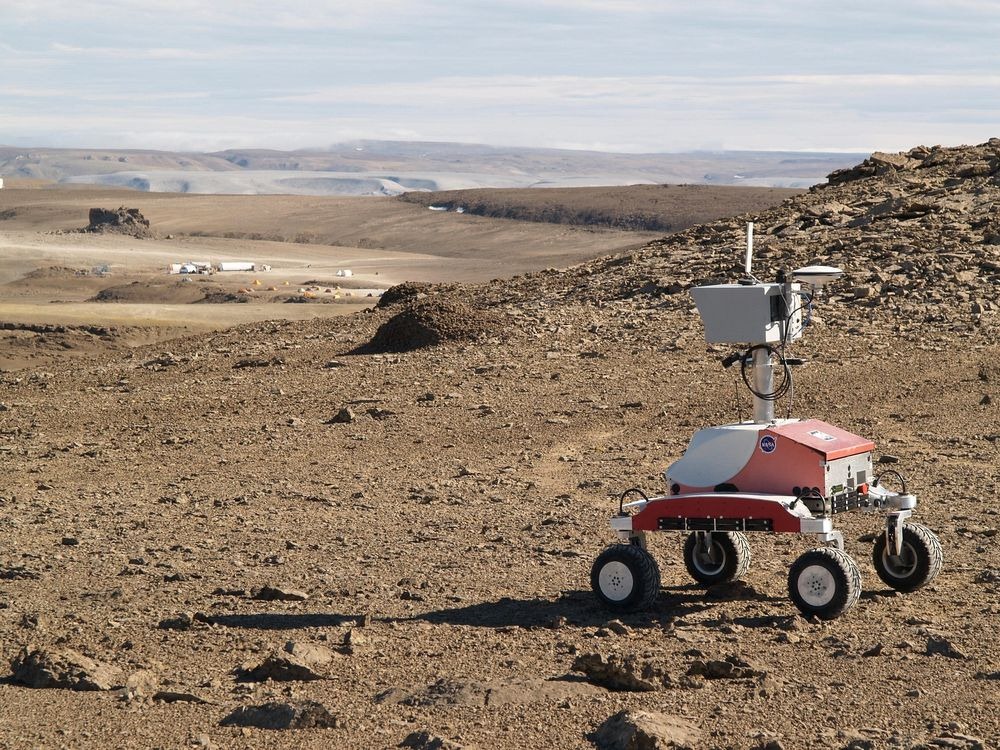
View of the Haughton-Mars Project Research Station (HMPRS) on Devon Island, Nunavut, Arctic Canada

Canada’s North is actually a desert

Canada’s North is very cold and dry with very little precipitation, ranging from 10-20 cm a year. Temperatures average below freezing most of the year. Together, they limit the diversity of plants and animals found in the North. And it’s huge: this polar desert covers one seventh of Canada’s total land mass.

In 1816, Canada didn’t have a summer.

If winter in Canada weren’t bad enough, in 1816 the country’s eastern population were sledding in June and thawing water cisterns in July. Trees shed their leaves and there were reports of migratory birds dropping dead in the streets.

Over in Europe, the weird weather stoked anti-American sentiment. People opposed to emigration said that North America was inhospitable and getting colder every year.

Representation of Mount Tambora 1815 eruption in Indonesia.

Ironically, as eastern Canada stayed cool, the Arctic warmed, creating flotillas of icebergs off the coasts of Nova Scotia and Newfoundland. At the time, it was thought that the icebergs were the cause of the cooling, like a giant glass of iced lemonade. What was the real reason? In 1815, the Tambora volcano erupted in Indonesia, spewing tonnes of ash and dust into the air. Less sunlight reached the earth and this caused the planet’s surface to cool. The volcanic eruption changed the climate in different ways around the world, but Eastern Canadians were treated to the summer that just didn’t come.

The Prairies face brutal temperature extremes.

It’s no surprise that Regina, Saskatchewan — which lies smack in the middle of Canada’s prairies — lays claim to both the country’s lowest recorded temperature, -50C on January 1, 1885 and the highest, 43.3C on July 5, 1937. Without the moderating effects of a large body of water, Canada’s Prairies are vulnerable to some of the worst weather Canada has to offer.

Hopewell Rocks at the Bay of fundy. Photo: gregstokinger

The Bay of Fundy has the largest tides in the world.

Twice each day, 160 billion tonnes of seawater flow in and out of this small area in Nova Scotia — more than the combined flow of the world’s freshwater rivers. The tides reach a peak of 16 metres (as high as a five-storey building) and take about six hours to come in. The most extreme tides in the Bay occur twice each month when the earth, moon and sun are in alignment and together they create a larger-than-usual gravitational pull on the ocean, creating a “spring tide” (not to be confused with the season spring).

Lightning over Lake St. Clair Photo: seebest

Windsor is the thunderstorm capital of Canada.

Hot, humid air from the Gulf of Mexico funnels up through Windsor and the Western Basin of Lake Erie creating the perfect conditions for thunderstorms. About 251 lightning flashes per 100 square kilometres happen every year when small pieces of frozen raindrops collide within thunderclouds. The clouds fill with electrical charges that are eventually funnelled to the ground as lightning.

Summary

With all that going on, all the variety of temperature, precipitation, weather events and seasonalities, no one noticed it had warmed much, and would be grateful if it had.  With all the alarms sounding about the Arctic meltdown in the last decades, let’s consider the best long-service stations in the far north.

According to the “leaked report”, Canada’s annual average temperature over land has warmed 1.7 C when looking at the data since 1948. But that claim is misleading when recent data is considered.

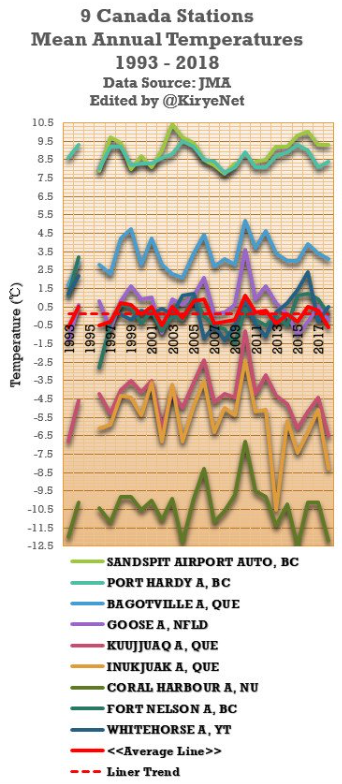
Over the past 25 years, since scientists began to warn that the planet was warming in earnest, there has not been any warming when one looks at the untampered data provided by the Japan meteorology Agency (JMA) that were measured by 9 different stations across Canada. These 9 stations have the data dating back to around 1983 or 1986, so I used their datasats.

Looking at the JMA database and plotting the stations with longer term recording, we have the following chart:

Though temperatures over Canada no doubt have risen over the past century, there has not been any real warming in over 25 years. Rather, there’s been slight cooling, though not statistically significant. Clearly there hasn’t been any Canadian warming recently.

So it is misleading — to say the least — to give the impression that Canada warming has been accelerating. Thanks to Kirye for posting this at No Tricks Zone

See also Cold Summer in Nunavut

Activists Demand Shell Commit Harikari

CNN proudly proclaims: Climate groups threaten lawsuit to force Shell to ditch oil  Excerpts in italics with my bolds.

The groups have accused Shell of “deliberately obstructing” efforts to keep global warming well below 2 degrees Celsius, the key goal of the Paris agreement. Pressure on companies has been building since the UN warned last year that the world has only 12 years to avert a climate disaster.

The company has no concrete plans to align its business strategy with the commitments contained in the agreement,” Joris Thijssen, the director of Greenpeace Netherlands, said in a statement.

Shell spends billions on oil and gas exploration each year, with current plans to invest just 5 percent of its budget in sustainable energy and 95 percent in exploiting fossil fuels,” the groups said.

Climate Liability News has the story Shell Sued in the Netherlands for Insufficient Action On Climate Change.  Excerpts in italics with my bolds.

Seven environmental and human rights organizations in the Netherlands have filed suit against Royal Dutch Shell for failing to align its business model with the goals of the Paris Climate Agreement.

The suit, which is the first to directly challenge an oil company’s business model, was filed Friday in The Hague by Friends of the Earth Netherlands/ Milieudefensie, Greenpeace Netherlands, five other organizations and more than 17,000 Dutch citizens.

The plaintiffs are not seeking financial compensation, but are asking Shell to adjust its business model in order to keep global temperature rise below 1.5 degrees Celsius, as recommended by the United Nations Intergovernmental Panel on Climate Change (IPCC). They allege that by following a business model that it knows will not reach these goals, Shell is violating a Dutch law prohibiting “unlawful endangerment” and is violating human rights by taking insufficient action against climate change.

“If successful, the uniqueness of the case would be that Shell – as one of the largest multinational corporations in the world – would be legally obligated to change its business operations,” said Milieudefensie attorney Roger Cox, who also represented plaintiffs in the landmark Urgenda suit.

Urgenda was the first case in which a court ordered a government to reduce its emissions and the first time a court ruled that not taking sufficient action on climate change is a human rights violation.

Plaintiffs allege Shell’s current business model threatens human rights because the oil giant is knowingly undermining the world’s chances to keep warming below 1.5 degrees Celsius. They maintain that rather than guarantee emission reductions, Shell’s current plan would contribute to a much larger global temperature increase.

Shell did not immediately respond to a request for comment, but in a Dec. 2018 press release said it “aims to reduce the net carbon footprint of its energy products by around half by 2050, and by around 20% by 2035, in step with society’s drive to meet the goals of the Paris Agreement.”

Plaintiffs maintain that a reduction of the company’s carbon footprint is not the same as a reduction in total greenhouse gas emissions because the carbon footprint involves a relative reduction in carbon emissions per unit of energy produced for the market, not an absolute reduction. Shell could reach its goals by producing as many units of renewable energy as it does oil and gas and could therefore reduce its carbon intensity by half without ever having to reduce its production or trade of fossil fuels.

By using this formula, plaintiffs contend that Shell – which has announced plans to link executive pay to the targets – could reach its stated goals without reducing its carbon emissions.

They say even if Shell’s goals were specific to emission reductions, the company’s target of a 50 percent reduction by 2050 still falls short of the IPCC recommendation that carbon emissions reach net zero by mid-century.

If successful, the lawsuit will be the first in which a company is ordered to reduce emissions.

The suit should come as no surprise to Shell. As required by the Dutch legal system, the defendant organizations sent the company a liability letter last year, demanding it cut back on its oil and gas production and align its business strategy with the goals of the Paris Climate Agreement. Shell rejected those demands, saying it “strongly supports” the goals of the Paris Agreement and pointing to the company’s Sky scenario, as “a technically possible but challenging pathway” toward achieving those goals. The groups, which encouraged Dutch citizens to sign on to the suit, announced in February they intended to sue the oil giant.

According to the Carbon Majors report, which was compiled and released in 2017 by the Climate Accountability Institute, Shell ranked sixth in the world in cumulative greenhouse gas emissions between 1854 and 2010.

Plaintiffs maintain it is still possible to limit global warming to less than 1.5 degrees Celsius, but doing so will require immediate large-scale changes, including a transition to renewable energy and drastic emission reductions by Shell and other carbon polluters.

“We also expect that this [case] would have an effect on other fossil fuel companies, raising the pressure on them to change,” Cox also said that unlike previous cases which sought financial compensation for the effects of climate change, this one involves asking the judge to order Shell to ensure its activities have zero percent carbon dioxide emissions by 2050.

Methinks these folks should beware their wishes coming true:
See Also  Going Dutch: How Not to Cut Emissions


Good News: Stanford Not a Social Justice Academy

Above I posted Modern Educayshun on the dangers of PC-enforced monotonic diversity (“It’s OK if you don’t look like us, as long as you think like us.”). I must now reference a much more encouraging report of the state of these affairs at my alma mater, Stanford, one of the earliest schools to stop teaching Western Civ, and the cradle of global warming/climate change alarmism.  Excerpts in italics with my bolds.

Journalist Richard Bernstein’s 1994 book, Dictatorship of Virtue, was among the first on the rise of political correctness. Twenty-five years later, he returns to Stanford University to take stock of the forces unleashed — and those kept in check. His recent article is Culture War and Peace at Stanford: The PC Uprising 25 Years On

In the decades since, there’s been plenty of righteous indignation expressed: the campus thought police demanding (and often getting) protection from anything they deem to be offensive; informal limits on free speech; reckless accusations of racism, sexism, and homophobia; violent demonstrations against conservative speakers. It goes on.

Such episodes and events often get wide attention. And I was expecting to find a deeply fraught atmosphere at Stanford. Instead, what I found there, 25 years after my book’s publication, was not the brute triumph of a narrow, politically correct orthodoxy but a far more subtle and peaceful outcome to those battles. To be sure, the liberal-left, identity-politics forces for change have scored great gains. They are now established in the departments whose creation they demanded, while things like the Western-civ requirement remain discarded.

But I also found that things have calmed down. The day-to-day mood is less explosively acrimonious than it was a quarter-century ago, in part because those who want to concentrate on identity politics now have their places. But they are contained there. They haven’t shut the rest of the place down, and the rest of the place – perhaps a not silent but discreet and quiet majority – goes about its business delivering a pretty good education to students.

The composition of its student body, moreover, is very different from decades past. About 36% of undergraduates are listed as “white.” Half of the 7,000 or so undergraduates are women; 11% are foreigners; nearly 18% are “first gens,” the first in their families to attend college. The arithmetic of this suggests that only a little more than 21% of the undergraduate student body is made up of the type of student that dominated in the era of mandatory core courses in the Western canon – white males whose parents were college educated.

But in addition to their single Thinking Matters class, which is just a fragment of an undergraduate’s time at Stanford, students have to take 11 quarter-length classes in what’s called Ways of Thinking/Ways of Doing, aka WAYS, and here is where the fashionable trends in identity politics, race, gender, sexuality, class, and their “intersectionality,” as the current term has it, become thick and heavy.

There are dozens and dozens of courses in WAYS, and the diversity theme is omnipresent — “Race and Gender in Silicon Valley,” “Ethnicity, Race, and Identity in Performance Cultures,” “Introduction to Comparative Queer Literary Studies,” “Race, Gender, and Sexuality in Contemporary American Film,” and “Introduction to Intersectionality” (readings drawn “chiefly from black feminist scholars”).

And it would seem from course enrollment figures and the choice of majors that while courses in “Engaging Diversity” may be required, they’re not where students are putting their main effort.

According to the Office of the Provost, in the graduating class of 2017 (the last for which these statistics are available) 274 students got computer science degrees, 382 in one or another engineering program, 40 in English, nine in Comparative Studies in Race and Ethnicity, and two in Feminist, Gender and Sexuality Studies.

Berman, the Thinking Matters director, noted the irony that while fierce ideological conflicts get most of the ink, the real problem now may be the lack of intellectual passion among students. Over lunch at the student union, sitting at an outdoor terrace looking over Stanford’s hacienda-like sandstone campus, he told me, “There’s a growing belief among students and their parents alike that a college education is direct preparation for a job, rather than an opportunity to deepen one’s personality or to create engaged, thinking citizens.” The challenge is to entice students largely interested in other things back into the humanities.

“The right question isn’t ‘Why aren’t our students reading the Federalist Papers?’ It’s ‘Why are our students primarily doing problem sets without reading much of anything at all?’ ” he said.

Footnote: No, my parents were not rich Hollywood stars who bought me a place at Stanford.  In fact I was a diversity admission, being a kid with good grades from an ordinary middle-class family, and needed to fill the quota for entrants from the state of Arizona.

N. Atlantic Starts Cold in 2019

RAPID Array measuring North Atlantic SSTs.

Update April 10, 2019  March AMO Results now available and included in Decadal graph below.

For the last few years, observers have been speculating about when the North Atlantic will start the next phase shift from warm to cold. Given the way 2018 went, this may be the onset.  First some background.

Source: Energy and Education Canada

An example is this report in May 2015 The Atlantic is entering a cool phase that will change the world’s weather by Gerald McCarthy and Evan Haigh of the RAPID Atlantic monitoring project. Excerpts in italics with my bolds.

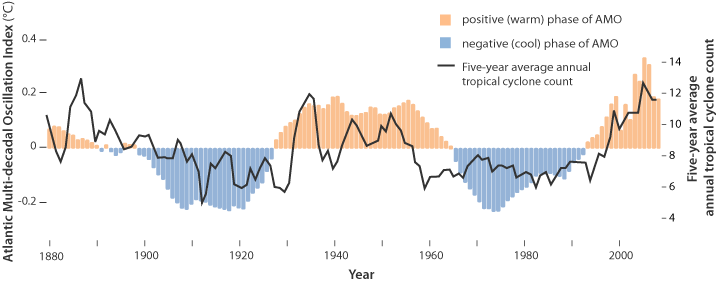
This is known as the Atlantic Multidecadal Oscillation (AMO), and the transition between its positive and negative phases can be very rapid. For example, Atlantic temperatures declined by 0.1ºC per decade from the 1940s to the 1970s. By comparison, global surface warming is estimated at 0.5ºC per century – a rate twice as slow.

In many parts of the world, the AMO has been linked with decade-long temperature and rainfall trends. Certainly – and perhaps obviously – the mean temperature of islands downwind of the Atlantic such as Britain and Ireland show almost exactly the same temperature fluctuations as the AMO.

Atlantic oscillations are associated with the frequency of hurricanes and droughts. When the AMO is in the warm phase, there are more hurricanes in the Atlantic and droughts in the US Midwest tend to be more frequent and prolonged. In the Pacific Northwest, a positive AMO leads to more rainfall.

A negative AMO (cooler ocean) is associated with reduced rainfall in the vulnerable Sahel region of Africa. The prolonged negative AMO was associated with the infamous Ethiopian famine in the mid-1980s. In the UK it tends to mean reduced summer rainfall – the mythical “barbeque summer”.Our results show that ocean circulation responds to the first mode of Atlantic atmospheric forcing, the North Atlantic Oscillation, through circulation changes between the subtropical and subpolar gyres – the intergyre region. This a major influence on the wind patterns and the heat transferred between the atmosphere and ocean.

The observations that we do have of the Atlantic overturning circulation over the past ten years show that it is declining. As a result, we expect the AMO is moving to a negative (colder surface waters) phase. This is consistent with observations of temperature in the North Atlantic.

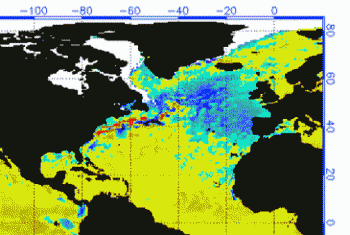
Cold “blobs” in North Atlantic have been reported, but they are usually winter phenomena. For example in April 2016, the sst anomalies looked like this

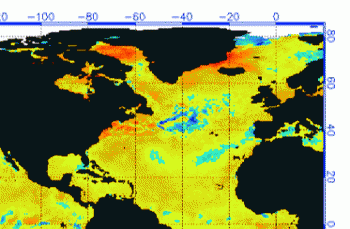
But by September, the picture changed to this

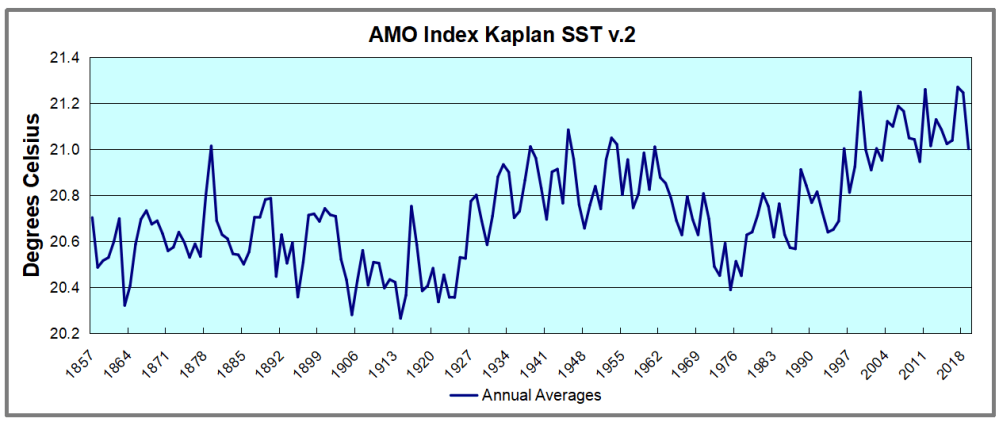
And we know from Kaplan AMO dataset, that 2016 summer SSTs were right up there with 1998 and 2010 as the highest recorded.

As the graph above suggests, this body of water is also important for tropical cyclones, since warmer water provides more energy.  But those are annual averages, and I am interested in the summer pulses of warm water into the Arctic. As I have noted in my monthly HadSST3 reports, most summers since 2003 there have been warm pulses in the north atlantic.
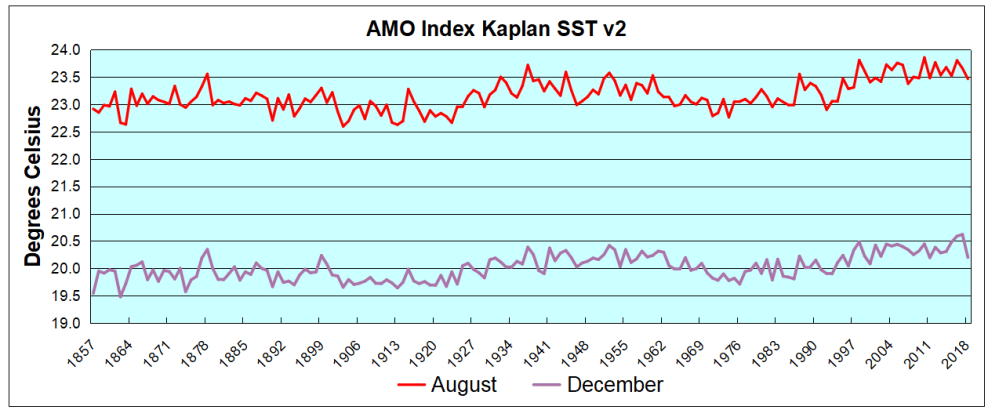
amo december 2018
The AMO Index is from from Kaplan SST v2, the unaltered and not detrended dataset. By definition, the data are monthly average SSTs interpolated to a 5×5 grid over the North Atlantic basically 0 to 70N.  The graph shows the warmest month August beginning to rise after 1993 up to 1998, with a series of matching years since.  December 2016 set a record at 20.6C, but note the plunge down to 20.2C for  December 2018, matching 2011 as the coldest years  since 2000.  Because McCarthy refers to hints of cooling to come in the N. Atlantic, let’s take a closer look at some AMO years in the last 2 decades.

This graph shows monthly AMO temps for some important years. The Peak years were 1998, 2010 and 2016, with the latter emphasized as the most recent. The other years show lesser warming, with 2007 emphasized as the coolest in the last 20 years. Note the red 2018 line is at the bottom of all these tracks.  The short black line shows that 2019 began slightly cooler than January 2018  The February average AMO matched the low SST of the previous year, 0.14C lower than the peak year February 2017. March 2019 is also slightly lower than 2018  and 0.06C lower than peak year March 2016.

With all the talk of AMOC slowing down and a phase shift in the North Atlantic, it seems the annual average for 2018 confirms that cooling has set in.  Through December the momentum is certainly heading downward, despite the band of warming ocean  that gave rise to European heat waves last summer.

amo annual122018

natlssta

cdas-sflux_sst_atl_1


Modern Educayshun

OK, this video is thoroughly depressing, but I post it because it was sent to me by my grandson who is a first year university student.  He says it is telling the truth in an exaggerated way.  I mean that the attitudes are accurately portrayed, but are less obvious and not as explicitly expressed in real classrooms.

The video is a punch in the gut.  Below is a more intellectual discussion of the same thing: The takeover of civil relations by so called “social justice.”  Peter meyers writes at The American Mind The Mask of Social Justice Slips.  Excerpts in italics with my bolds.

Beneath bogus egalitarianism courses the will to power.

In the old understanding, racism was a malady of opinion and sentiment and therefore, deeply rooted as it was, remediable. In the lately emergent view, racism (at least in majority-white societies) is universal, omnipresent, and insuperable. It is present institutionally no less than personally, in our subconscious no less than our conscious minds, in all we have and all we are. In the words of President Obama, it is “part of our DNA.”

Let us underscore the radicalism in this revision. Its claims of “the permanence of racism” notwithstanding, the racially “woke” Left seems to regard itself as the vanguard of a democratic revolution, rising in righteous wrath against a distinctively odious, white-supremacist oligarchy. The democracy so envisioned is not, however, one grounded in equal natural rights. Animated by an ethic of effectively permanent redistribution via permanent race classifications, it divides its population into the creditor and debtor races Justice Scalia decried in his Adarand opinion—a division fundamentally at odds with the principle of natural human equality.

The radicalism of the ascendant dispensation on racism runs deeper still. In Black Power, a seminal text for that new dispensation, authors Stokely Carmichael and Charles Hamilton reject altogether the appeal to principles of justice, instead invoking Lewis Carroll to indicate the new ground of blacks’ claims to moral recognition and respect. They quote a passage wherein Humpty Dumpty boasts that he can make words mean whatever he chooses. Alice then protests, “The question is whether you can make words mean so many different things,” but Humpty gets the last word: “The question is which is to be master—that’s all.”

The irony of the new dispensation on racism is that in the pursuit of “social justice” it annihilates any intelligible idea of justice. It signifies not a replacement of one partisan idea of justice by a superior, more inclusive idea, but instead the replacement, at the level of foundations, of any commitment to justice with a commitment to power, pure and simple. .  .  On the premises claimed by the vanguard of today’s anti-racism Left, moral truth reduces to “effectual truth,” politics is no more and no less than the art of war, and claims of justice are but expressions of will to power.

On its face, the recent metastasizing of this malignant social justice ideal through what many persist in calling liberalism is dispiriting. What Bill unmasks as a bait-and-switch operation on racism, however, yields a promising implication. On race as in any other issue area, the success of the social justice Left depends on the durability of an inherently fragile coalition, in which a core of extremists appears compelled to alienate the relative moderates whose support and cover they need. In the very nihilism ascendant on the Left, there is cause for hope.

Among the moderates the Left needs are many whites, sincerely anti-racist by the old definition of racism and sympathetic to reasonable efforts to assist the disadvantaged. Many of those white moderates, however, must naturally object to serving as targets in an asymmetrical war in which others are permitted to hurl insults at them and they are forbidden to respond—or even compelled to assent. They must likewise resent being told that their own struggles, however great, are insignificant in comparison with their color-privilege, let alone being told that their relative success traces to a prowess in extraction rather than production. They must resent being  told that they “didn’t build that”—with the implication that they don’t own it either but “society” does, whose representatives in the administrative state are free to redistribute its proceeds as they see fit. Also among the moderates the Left needs are increasing numbers of blacks and Latinos, desiring only to be treated justly and awakening to the alternative bigotry and cynicism whereby the Left conceives of them as crippled, effectively objectifies them, and seeks to succor them with the advice that an identity of powerlessness is their only available capital.

At what could have seemed the bleakest moment in the anti-slavery crusade, Frederick Douglass declared in response to the Dred Scottruling, “my hopes were never brighter than now.” His hopes were bright because he knew, as King and other 20th-century civil rights leaders also knew, that their cause of liberty was blessed by the character of its enemies, whose despotic will to power impelled them inevitably to overreach. Against such enemies, Douglass maintained, the triumph of liberty was “a natural and logical event.” Like yesterday’s segregationists and slaveholders, today’s identitarians may scorn the claims of nature. Yet one can hope, with the ancient poet Horace: “naturam expellas furca, tamen usque recurret”—You may drive nature out with a pitchfork, but she always returns.

Peter C. Myers is Professor of Political Science at the University of Wisconsin-Eau Claire. He is also a Visiting Scholar at the B. Kenneth Simon Center for Principles and Politics at the Heritage Foundation.

Investor/Activists Repelled

Climate Activists storm the bastion of Exxon Mobil, here seen without their shareholder disguises.

But their latest weapon of mass corporate destruction was defused by the SEC.  European energy companies were not so fortunate.  The story comes from CNN, who disapprove of the result. SEC sides with Exxon by blocking major climate vote.  Excerpts in italics with my bolds.

New York (CNN Business)ExxonMobil has dodged a climate change shareholder vote — with some help from the SEC.

The agency granted Exxon’s request to block a shareholder resolution that would have urged the oil behemoth to adopt and disclose greenhouse gas emissions targets on its business and products in line with the Paris climate accord.

The SEC ruled that the nonbinding proposal, which was backed by investors with $9.5 trillion in assets, would “micromanage” Exxon (XOM) by seeking to impose “specific methods for implementing complex policies” in place of managerial judgment.

The decision deals a blow to momentum in the investment community to coax force fossil fuel companies to come to terms with the realities conform to alarmists’ views of climate change. Exxon’s European rivals have already agreed caved in to adopt similar emissions targets.

But backers of the proposal, including the New York State pension, vowed to keep fighting for change at Exxon and other oil companies.

“We’re not going away,” New York State Comptroller Thomas DiNapoli, who runs the state’s pension fund, told CNN Business. “Don’t take a minor setback as defeat. It’s part of a longer process.”

The New York State Common Retirement Fund, which owned 10.5 million shares of Exxon as of the end of last year, led the Exxon shareholder proposal along with the Church of England’s endowment fund. DiNapoli suggested the SEC’s position was “influenced” by the Trump administration’s climate change skepticism.  “We’ve had a national administration spend a lot of time denying that climate change is a reality,” DiNapoli said.

Exxon declined to comment on the SEC ruling.

Exxon fought ‘vague’ resolution

The Exxon battle comes after DiNapoli’s office and the Church of England won a landmark victory against the world’s largest publicly traded oil company two years ago.

More than 60% of Exxon shareholders in May 2017 backed a separate proposal urging the company to do more to disclose the risk it faces from efforts to regulate carbon emissions. Six months after the rare rebuke, Exxon stopped resisting and agreed to reveal these climate risks.

Shareholder activism is on the rise, but companies are fighting back

But Exxon fought hard against this latest resolution. In letters to the agency, Exxon strongly urged SEC staff members to confirm they would not recommend punishing the company for leaving the proposal out of its annual proxy vote.

Exxon argued that the proposal is “vague and indefinite,” seeks to “micromanage the company” and has already been “substantially implemented.”

Exxon pointed to the company’s 2018 Energy and Carbon Summary as evidence that it is already doing its part to address the risks of climate change. Exxon pointed to other climate-related steps, including promises to cut emissions, research into fuel cells and biofuels and purchases of wind and solar energy.
And Exxon warned that “unilateral action” disconnected to government policy changes and consumer demand “could harm ExxonMobil’s business” and prevent the company from meeting the world’s energy needs,

European oil majors take different approach

The Exxon victory comes as major corporations are fighting to impose constraints on proxy advisory firms and what they view as “political” resolutions from activist shareholders.

In sharp contrast to US oil giants, European oil companies Royal Dutch Shell (RDSA), BP and Total (TOT) have either agreed to set emissions goals or are in the process of doing so. BP (BP) recently agreed to link the bonuses of 36,000 of its workers to climate change targets. Shell announced this week that it will quit a major US oil lobby because it disagrees with the group’s climate change policies.

The divergent approaches reflect the more urgent climate change concerns among European governments, shareholders and citizens.

Intro to Award Winning Book Population Bombed

Far from being a catastrophe, population growth and carbon fuel-based development are the best means to lift people out of poverty, the authors write. NASA

Update April 3, 2019

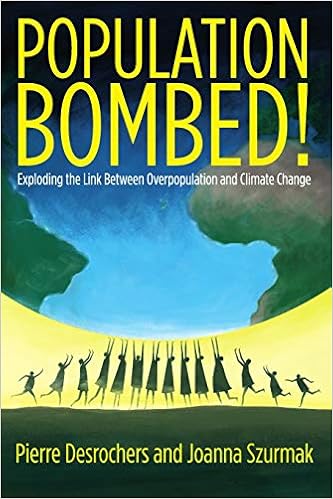
The Global Warming Policy Foundation (GWPF) is delighted to announce that our book Population Bombed! by Canadian authors Pierre Desrochers and Joanna Szurmak has been shortlisted for the prestigious Donner Book Prize.  For those who would like an overview of the case made by the authors, below are some excerpts from their articles and interviews at the time of the book launching. At the end is posted a recent statement by a US politician taking a similar position, Yes, Babies Are a Better Solution to Climate Change Than the Green New Deal by Senator Mike Lee.

Control the Population, Control the Climate?  Not.

A recent book explains what’s mistaken about climate alarmists/activists thinking human numbers must be reduced in order to save the planet from us (H/T Master Resource). The Title is Population Bombed! by Pierre Desrochers and Joanna Szurmak who provide an introduction to their assessment in an article at Financial Post For 200 years pessimists have predicted we’d ruin the planet. They’re still wrong.  Excerpts in italics with my bolds.

In Avengers: Infinity War, the villain Thanos said: “If life is left unchecked, life will cease to exist.” Johns Hopkins University philosopher Travis N. Rieder apparently agrees, as he views each new child as an environmental externality putting “irreparable stress on the planet” in a way that “exacerbates … the threat of catastrophic climate change.” Similar ideas have been expressed by the likes of Al Gore, Hillary Clinton and Bill Gates. Feminist icon Gloria Steinem put it best: “What causes climate deprivation is population. If we had not been systematically forcing women to have children … for over the 500 years of patriarchy, we wouldn’t have the climate problems that we have.”

Population-growth catastrophism has been around for centuries. In the English-speaking world it is generally associated with economist Thomas Robert Malthus’ 1798 edition of his Essay on the Problem of Population and U.S. biologist Paul Ehrlich’s 1968 bestseller The Population Bomb. Ehrlich and his co-author and wife Anne predicted imminent environmental collapse followed by mass starvation. What they didn’t see coming was that, to the contrary, hundreds of millions of people would soon be lifted out of grinding poverty while parts of the planet became greener and cleaner in the process.

In our new book Population Bombed! Exploding the Link between Overpopulation and Climate Change we mark the 50th anniversary of the Ehrlichs’ book by explaining that their predictions bombed because their basic assumptions are flawed.

First, the Ehrlichs assume that human numbers cannot exceed the limits set by a finite system. Bacteria in a test tube of food are used to model such a system: Since the levels of food and waste limit bacterial growth, human population growth, by analogy, ultimately cannot exceed the carrying capacity of test tube Earth.

Second, they assume that wealth and development unavoidably come with larger environmental damage. This assumption is still at the core of pessimistic frameworks, which maintain that physical resource throughputs, not outcomes, matter. So, countries such as Haiti where deforestation and wildlife extermination are rampant are inherently more “sustainable” than richer and cleaner countries like Sweden and Switzerland.

Third, Ehrlich does not acknowledge that, unique among this planet’s species, modern humans: transmit information and knowledge between individuals and through time; innovate by combining existing things in new ways; become efficient through specialization; and engage in long-distance trade, thus achieving, to a degree, a decoupling from local limits called the “release from proximity.” And the more brains there are, the more solutions. This is why, over time, people in market economies produce more things while using fewer resources per unit of output. Corn growers now produce five or six times more output on the same plot of land as a century ago while using less fertilizer and pesticide than a few decades ago.

Fourth, the Ehrlichs and other pessimists also fail to understand the uniquely beneficial roles played by prices, profits, and losses in the spontaneous and systematic generation of more sustainable — or less problematic — outcomes. When the supply of key resources fails to meet actual demand, their prices increase. This encourages people to use such resources more efficiently, look for more of them, and develop substitutes. Meanwhile, far from rewarding pollution of the environment, the profit motive encourages people to create useful by-products out of waste (our modern synthetic world is largely made out of former petroleum-refining waste products). True, in some cases dealing with pollution came at a cost — building sewage-treatment plants, for example — but these are the types of solutions only a developed society can afford.

Fifth, pessimists are also oblivious to the benefits of unlocking wealth from underground materials such as coal, petroleum, natural gas and mineral resources. Using these spares vast quantities of land. It should go without saying that even a small population will have a much greater impact on its environment if it must rely on agriculture for food, energy and fibres, raise animals for food and locomotion, and harvest wild animals for everything from meat to whale oil. By replacing resources previously extracted from the biosphere with resources extracted from below the ground, people have reduced their overall environmental impact while increasing their standard of living.

Why is it then that after two centuries of evidence to the contrary, the pessimistic narrative still dominates academic and popular debates? Why are so many authors and academics still focusing on the Malthusian collapse scenario — now bound to come from carbon dioxide emissions and the teeming populations that produce them?

The prevalence of apocalyptic rhetoric may be, arguably, due to factors ranging from financial incentives among academics and activists to behavioural heuristics that dictate why worrying is a motivator, and why even well-meaning people rarely change their mind given new evidence. Short-termism may also take some of the blame: Population control and climate activists take for granted the non-scalable benefits of a carbon-fuel economy in which large numbers of people collaborate and innovate. The cognitive biases at the root of our thinking may shape, and in the end distort, the impulse to question “consensus,” particularly in an intellectual climate lacking the motivation to achieve what social psychologist Jonathan Haidt called “institutional disconfirmation.”

Far from being the catastrophe that Thanos, the Ehrlichs and other pessimists would have us believe, population growth and carbon fuel-based development in the context of human creativity and free enterprise are the best means to lift people out of poverty, to build resilience against any climate damage that increased anthropogenic greenhouse gas emissions might have, and to make possible a sustained reduction of humanity’s impact on the biosphere.

Pierre Desrochers, a geography professor at the University of Toronto Mississauga, and Joanna Szurmak, a doctoral candidate at York University, are the authors of Population Bombed! Exploding the Link Between Overpopulation and Climate Change. The book was launched at an event on Oct. 15th in Toronto.

More at their website: Population Bombed!

Update October 17,2018

Master Resource just posted an interview with Desrochers (here)

What we need in order to fight environmental degradation is to make sure that people in less advanced parts of the world can also be the beneficiaries of these processes. There is no doubt in my mind that these beneficial substitutions will happen more quickly the cheaper carbon fuels are. Of course, the argument is even more powerful when you think of the social consequences of less affordable energy.

Now, as with everything else, bad political institutions in some parts of the world will result in greater pollution as more carbon fuels are burned. The solution, however, is not to ban or tax everything from coal to plastic bags, but rather to improve standards of living and public governance. In my opinion, our guiding principle as far as carbon fuels are concerned should be the creation of lesser problems than those that existed before.

Yes, Babies Are a Better Solution to Climate Change Than the Green New Deal by Senator Mike Lee. Excerpts in italics with my bolds.

But what was surprising about the reaction to my speech on the Green New Deal is which chart garnered the most vehement anger. It wasn’t Reagan riding a dinosaur or Utah Gov. Gary Herbert battling tornado-propelled sharks or House Speaker Nancy Pelosi asserting that the resolution’s own supporters don’t know what’s in it.

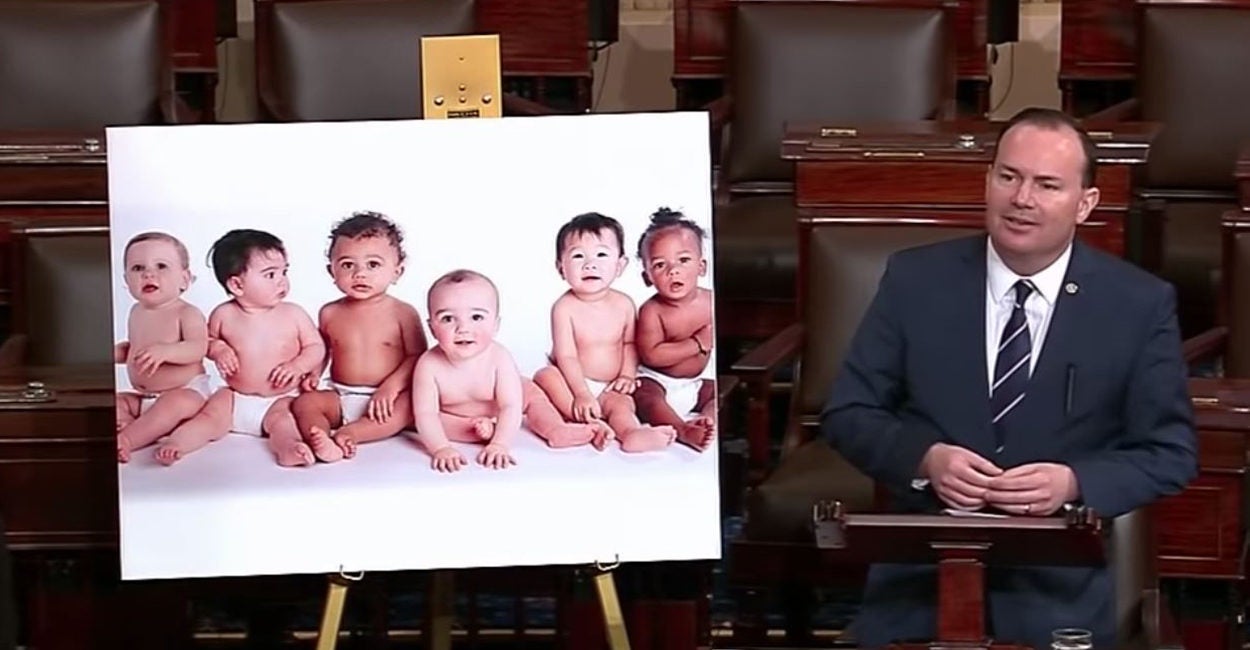
No, the most controversial poster of the 14-minute speech turned out to be a simple image of six smiling babies.

Why such an aggrieved reaction to such a heart-warming image?

I’ll let Emily, a 28-year-old woman who talked to FiveThirtyEight from Spokane, Washington, explain.

We have physical proof that we cause a lot of harm to the planet, and I think the statistics show an imperative to reduce the footprint of our population, which has grown so fast. I think that having children can be immoral for a lot of reasons.

Emily is not alone in suggesting that having children is immoral. An author of the Green New Deal [Rep. Alexandria Ocasio-Cortez, D-N.Y.] recently said on Instagram, “Our planet is going to hit disaster if we don’t turn this ship around, and so it’s basically like, there’s a scientific consensus that the lives of children are going to be very difficult. And it does lead, I think, young people to have a legitimate question, you know, ‘Is it OK to still have children?’”

Emily and the authors of the Green New Deal are not the first people to believe that bringing children into this world is a morally questionable act. Quite the opposite. The belief that the human population must be limited and controlled by government is a founding principle of the environmental movement.

As far back as 1798, when scholar Thomas Malthus published “An Essay on the Principle of Population,” utopian-seeking elites have made the case that human population growth must be controlled in order to ensure a sustainable society. These well-intentioned beliefs led to policy changes like the Corn Laws, which raised taxes on grain imports to the United Kingdom.

Opposed by classical economists like David Ricardo, who warned that such laws would make food more expensive, the Corn Laws were eventually repealed after they worsened the Great Famine in Ireland, when over 1 million people died of hunger.

Fast forward to 1968 when American biologist Paul Ehrlich published “The Population Bomb,” a book arguing that the government must take urgent action to limit population growth or humanity would face imminent ecological disaster. Ehrlich’s gloom-and-doom prophecies were quite popular with a segment of the American public as the book went on to be a best-seller.

But many economists pushed back—including University of Maryland professor Julian Simon who believed that humanity, if left free to innovate, could find new ways to make limited resources provide for an ever-expanding world population.

Simon and Ehrlich even made a bet testing their beliefs in 1980, picking five commodities to track over a 10-year period. In 1990, Ehrlich was forced to admit he lost, mailing a check to Simon in the amount that the commodities had fallen in price over that 10-year span.

Since that time, the earth has added billions more people, all while global poverty continues to fall.

What Malthus, Ehrlich, Emily, and the authors of the Green New Deal keep failing to understand is that human consumption and production patterns are not static.

Since the beginning of our species, humans have constantly been innovating and changing the world around them. In fact, it is our ability to function as a collective learning brain that sets us apart from every other animal on earth.

And, as Harvard University Department of Human Evolutionary Biology Chairman Joseph Henrich explains in his book “The Secret of Our Success,” the size of our population does matter:

The most obvious way the size of a group can matter is that more minds can generate more lucky errors, novel recombinations, chance insights, and intentional improvements. … So, bigger groups have the potential for more rapid cumulative cultural evolution.

Now the size of a population is not the only thing that matters. A society must also have in place institutions, cultural norms, and a legal framework that encourages experimentation, innovation, and creativity.

And here is where the failure of the Green New Deal as a serious response to climate change is the clearest. Instead of fostering an open-ended approach to addressing climate change, it demands top-down policy programs that forbid certain avenues of exploration, like nuclear energy, while also tacking on irrelevant policy goals, like universal health care, that have nothing to do with the issue the authors of the plan claim is so urgent.

Climates change. It’s what they do. There is even evidence that humans have been affecting the climate since at least the Neolithic era. And these changes to the climate have always presented a challenge to humanity. Today is no different.

We have always survived, and even thrived, in new environments. Just look at California. Left in its natural state, the Los Angeles river basin can support maybe 100,000 people. Today, thanks to a creative web of dams, aqueducts, canals, and pipelines, there is enough water for over 10 million people to live there.
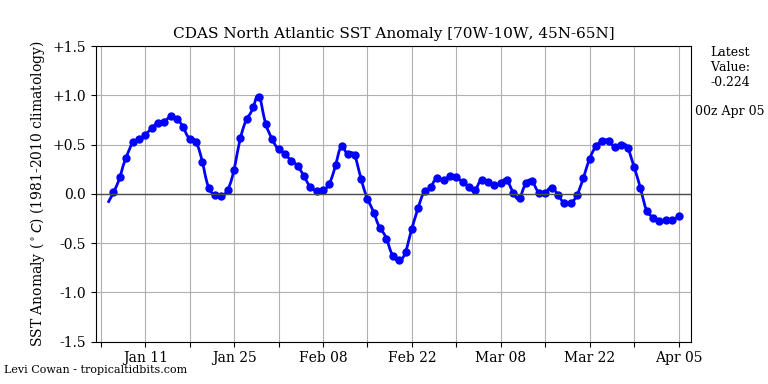
This is the creative, practical, life-affirming path that will help us solve the climate change challenge. Instead of looking to limit and even shrink humanity’s footprint on the world, we should be looking to improve and expand it.

And yes, this means more babies.