EU Sub Committee Aims to Open Closed Climate Minds

It wasn’t supposed to be this way.  The EU bureaucratic wheels were turning and needed a routine submission from the Committee on Agriculture and Rural Development as input for the Committee on the Environment, Public Health and Food Safety regarding a programme rule change.

The Rapporteur for opinion happened to be UKIP member John Stuart Agnew, who actually knows something about climate matters and agriculture, and drafted a submission accordingly.  The full document is here,( H/T WUWT)  and his case is put admirably.  Excerpts below in italics with my bolds.

The LIFE program is due for renewal in 2020. It has hitherto used its funding to act as a test bed for small projects which are expected to improve the environment. Examples have included management techniques to improve numbers of wild species or maintenance of wetlands. The success of such innovations can be quantified and demonstrated. The funding comes direct from Brussels.

If such projects are successful, they become popular with farmers who then make these investments using the Pillar 2 grants from their member states. The addition of the words ‘Climate Action’ in the present LIFE regime has added an entirely new concept to the way that taxpayer’s money should be used. The term has also occurred in the latest proposal from Commissioner Hogan on CAP reform. The addition of the term ‘Climate Action’ coincides with a 60% increase to the budget of the LIFE Programme. What is conspicuously missing are definitions of the actions required and the outcomes that are desired.

If the words ‘Climate Action’ had been substituted with the words ‘Pollution Action’, then it would be possible to measure air, soil and water pollution and measure the effectiveness of strategies to alleviate these problems, against a target figure for each of the three elements. A war to reduce pollution can be won, using the weapons of technology and legislation. A war against the world’s weather will never end, because ‘victory’ cannot be defined.

The Rapporteur has met the team of four from the Commission who between them have had varying levels of input into this proposal. The Rapporteur asked them what outcome would be considered desirable, as a consequence of financial investment. The answer was – ‘a reduction in CO2 emissions’.

By mentioning the concept that reducing CO2 levels will serve to take action against an unsatisfactory climate, the Commission is ignoring the factors that really do change our climate.
1. The galaxy: in the form of Cosmic Ray fluctuations. Can induce changes of 10 o C over millions of years.
2. The solar system: Gravitational pulls can induce changes of 2-3 o C.
3. The sun: Its variations of orbit and tilt along with its five separate documented cycles can the cause earth’s temperature to vary by up to 5o C.
4. Ocean Currents.
5. The ‘Greenhouse’ gas: Water Vapour, in the form of cloud cover.

The other Greenhouse gases, CO2, Methane and Nitrous Oxide have a negligible effect on our climate. CO2 is, however, an irreplaceable plant food. Methane degrades into CO2 and H2O; NOx gases eventually change into Nitrates.

If the effect of CO2 levels on our climate is negligible, the effect of human activity on changing those CO2 levels is also negligible.

The two world maps below perfectly demonstrate this.

Calculated areas of higher CO2 concentrations due to human emissions

– Actual areas of higher CO2 concentration
– SCIAMACHY observations on the ENVISAT satellite (agree with Japan’s IBUKU data)

The predictions of the experts and the measurements by satellite are contradictory. The total absence of CO2 hotspots over Europe indicates there is no problem for the Commission to solve. The only potential risk of a major CO2 event in Europe is an erupting volcano.

The naturally high concentrations of CO2 above our natural rainforests create an interesting dilemma for those who want one without the other. This is not made any easier when it is realised that rainforests are also major emitters of methane and water vapour.

Ever since the Rapporteur joined the Parliament in 2009, it has been fashionable for MEPs in AGRI and ENVI to work the phrase “tackling Climate Change” into their speeches. It sounds worthy and virtuous. It is based on predictions made in the 1980s of rapidly rising world temperatures and sea levels that never ultimately occurred. The Commission has listened to these speeches as opposed to observing the reality. At some stage somebody has to say “The king isn’t wearing an invisible suit, he’s just not wearing any clothes!” The Rapporteur is presenting this opportunity to his colleagues.

Some MEPs have been elected solely because of their antipathy to CO2. They will not change their views.

The Rapporteur urges other colleagues though to reflect on the fact that the precedent of ‘Climate Action’ in the LIFE Programme is setting the stage for ‘Climate Action’ in agriculture, where 40% of future budgets is destined to be spent fighting CO2, one of agriculture’s greatest friends.

The Rapporteur has amended the proposal to delete all references to “clean energy” as this implies “CO2 free” energy, as well as the references to ‘climate change mitigation’ but incorporated the term ‘climate change adaptation’ into the text of the legislative proposal. There is a big difference. We need to prepare for the next ‘Maunder Minimum’ or mini ice age – which might last 200-300 years. Some solar physicists believe this cycle has technically already started.

Footnote Regarding Future Cooling

Both the Pacific (PDO) and the Atlantic (AMO) are due for a cooling phase. If that happens coincidental with diminished solar input (indicated by the lower sunspot proxy), we are looking at planetary cooling as suggested by some solar physicists.

The situation reminds of governmental failure in North America to manage the educational system to match demographic shifts. The bureaucratic response comes too late to cope with the current reality. After WWII came the baby boom, and many schools became overcrowded and new ones built. Then the sexual revolution and female liberation produced a baby bust due to smaller families, so schools emptied with surplus capacity. Just as the government got serious about closing schools came the baby echo, unanticipated by the authorities. Despite smaller families, there were many more of them, these being the married adult boomers. Echo babies were a new pulse of children hitting a school system undergoing downsizing in response to the previous baby bust.

Similarly, the climatists would have us assume endless warming and require cessation of reliable affordable energy just as we enter a mini ice age.

Arctic NW Passage Not Passable

August 23, 2018 . At least 22 vessels are affected and several have turned back to Greenland.

Update September 3, 2018

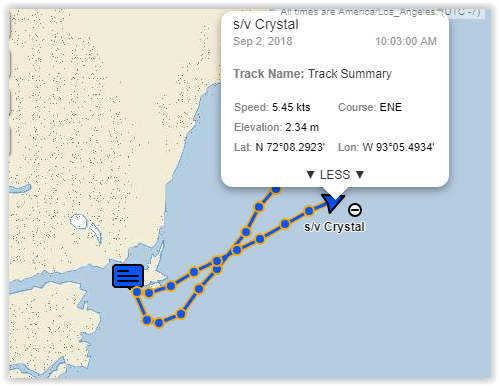
News today from the Northwest Passage blog that S/V CRYSTAL has given up after hanging around Fort Ross hoping for a storm or melting to break the ice barrier blocking their way west.
20180902-1025_crystal

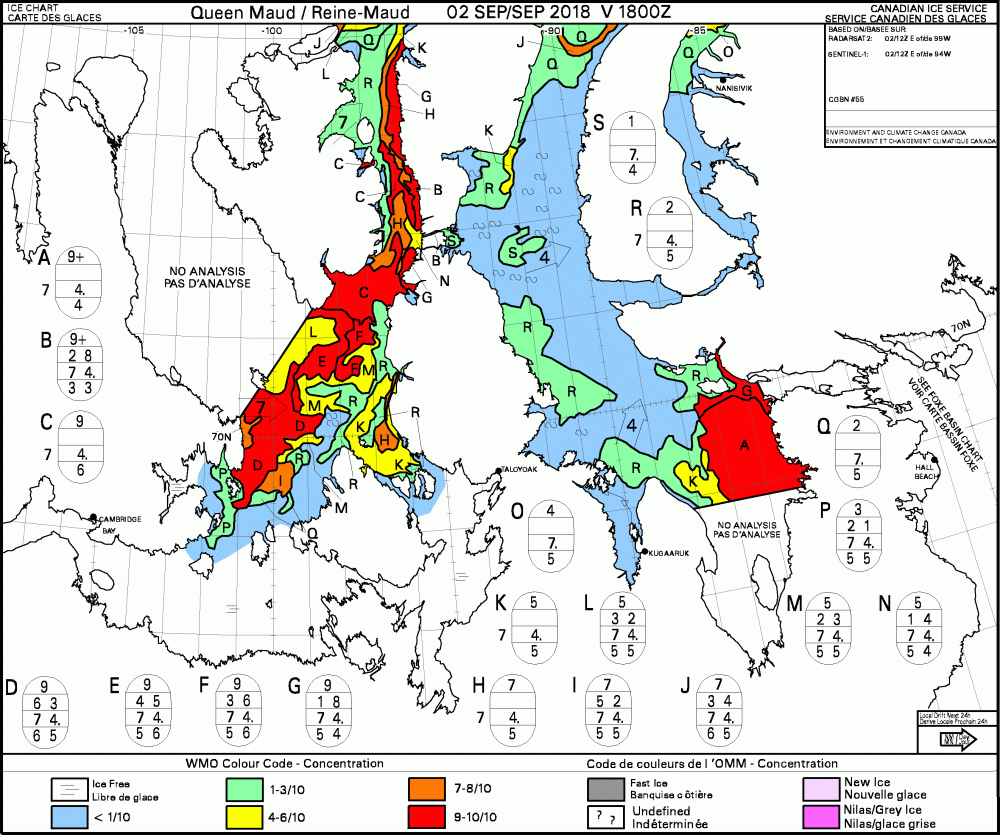
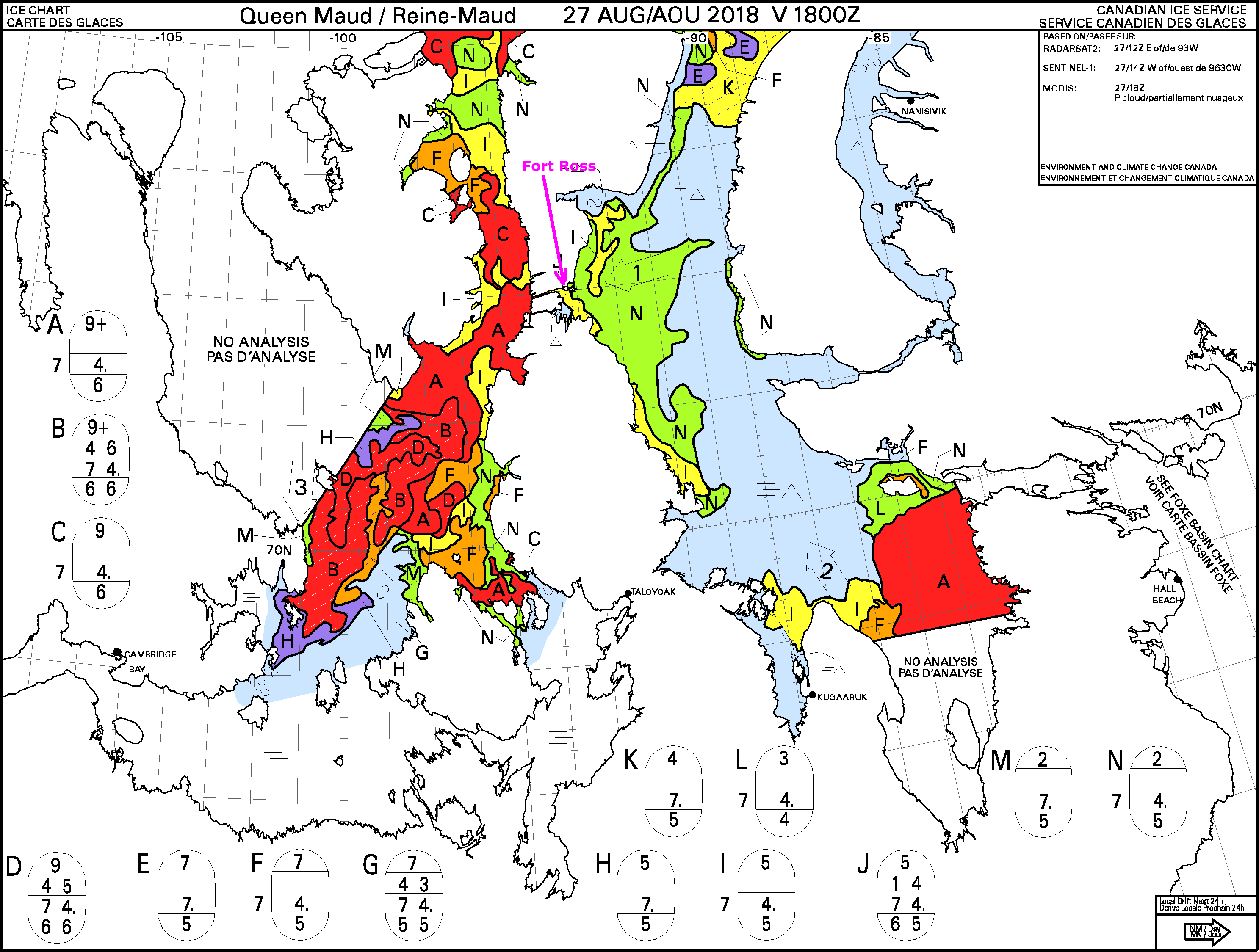
As the vessel tracker shows, they have been forced to Plan C, which is returning to Greenland and accept that the NW Passage is closed this year. The latest ice chart gave them no hope for getting through.
20180902180000_wis38ct_0010210949

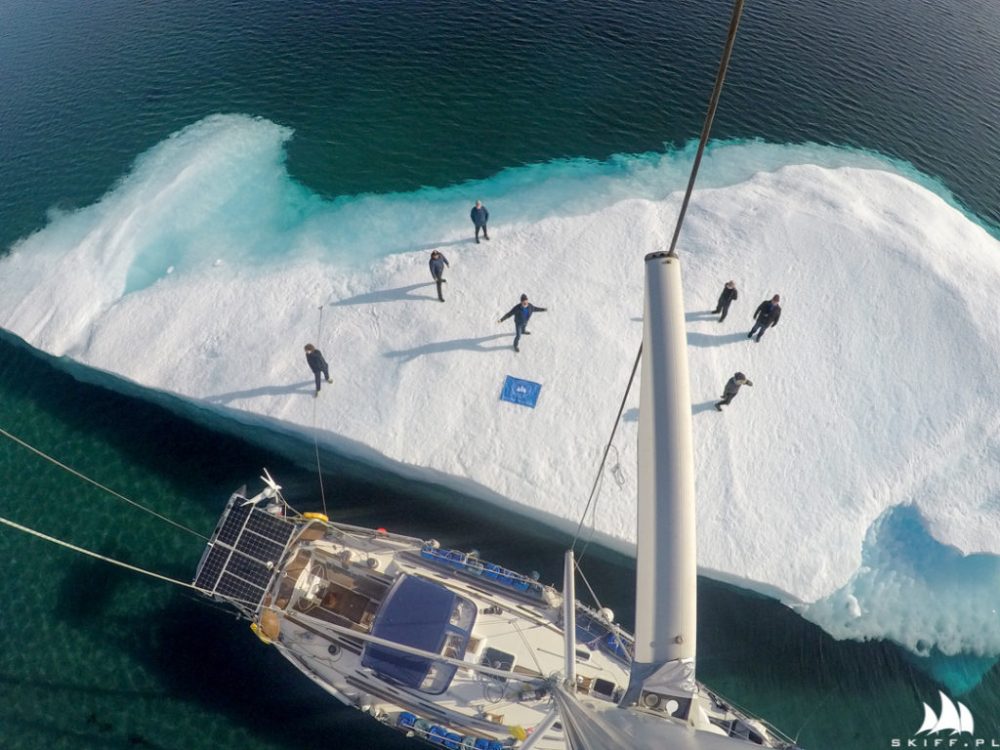
The image below shows the ice with which they were coping.
DCIM100GOPROGOPR5778.

More details at NW Passage blog 20180902 S/V CRYSTAL and S/V ATKA give up and retreat back to Greenland – Score ICE 3 vs YACHTS 0

Update August 28, 2018

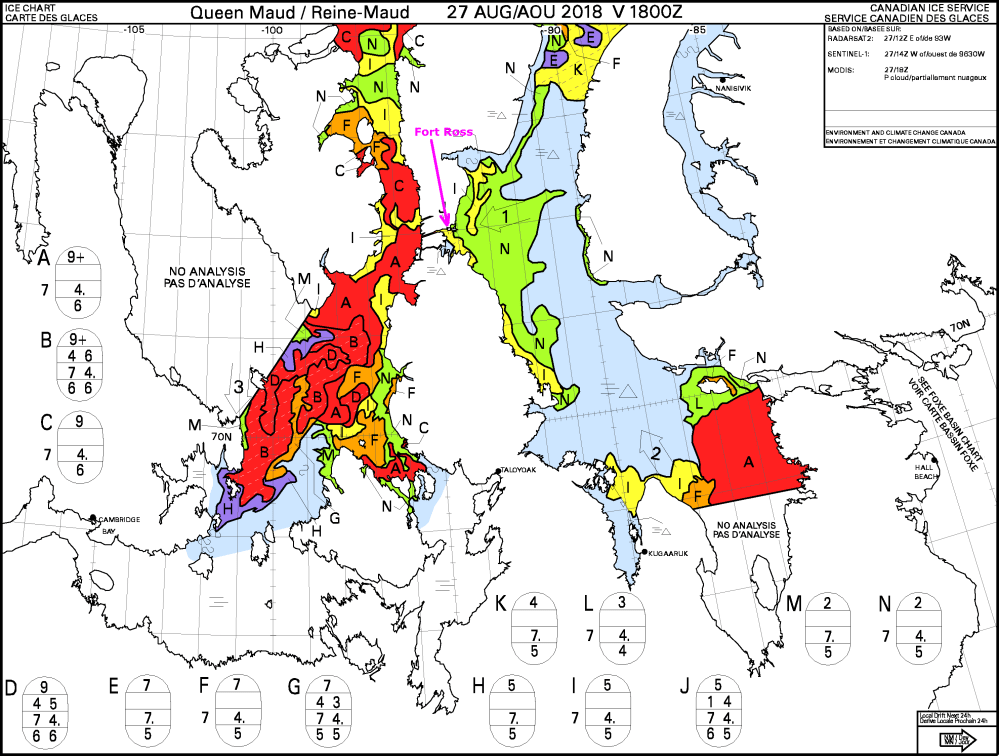
S/V CRYSTAL (Polish Crew) at Fort Ross Nunavut waiting Franklin ice and weather window to dash westward toward Nome Alaska.
QM20180827w Ft. Ross

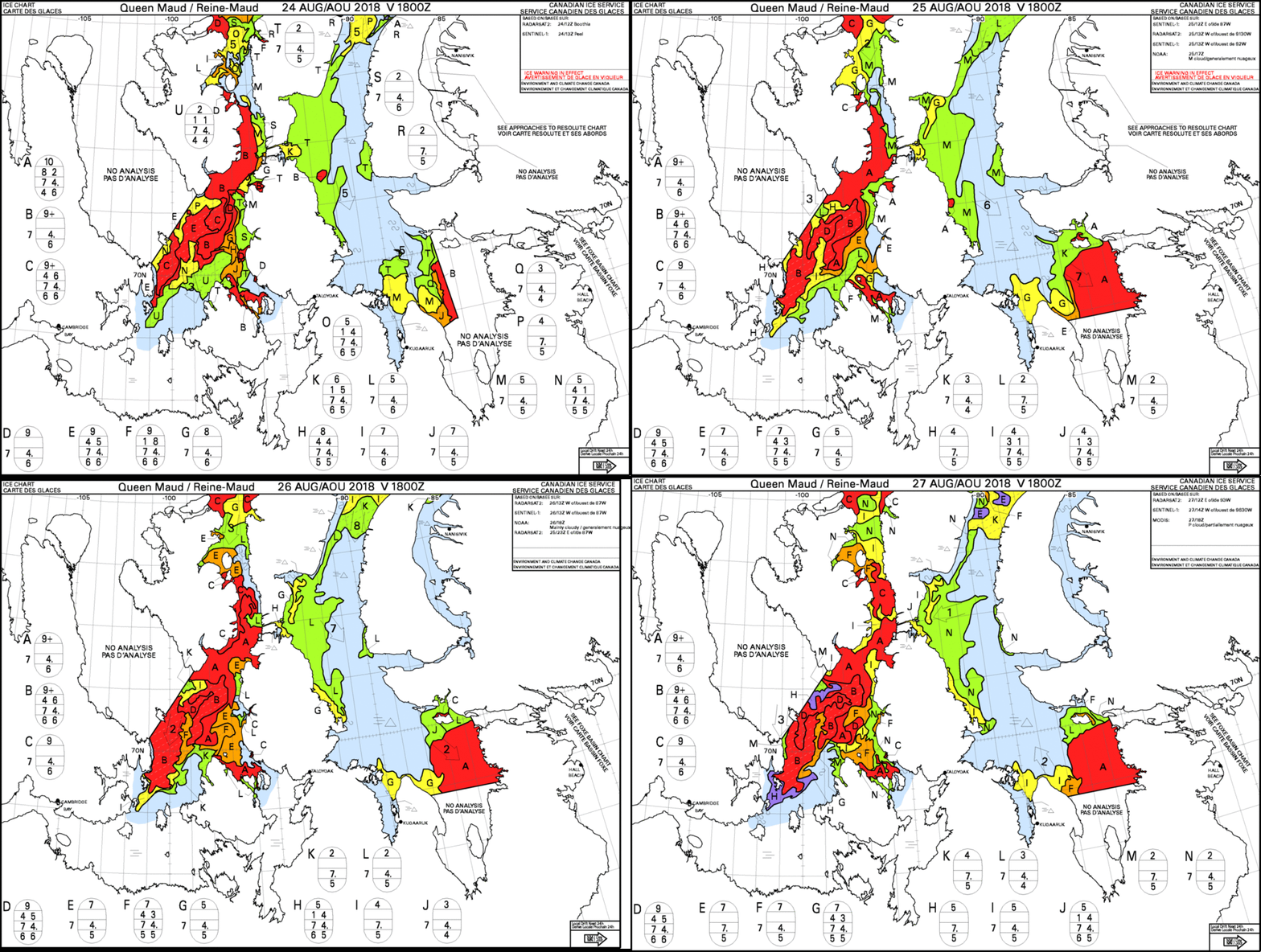
Note yachts can sail through green (3/10), so the hope is for red to yellow to green.  But here are the last four days:
They are hoping for a storm Sept. 1-2 to open Franklin Strait where is the thick red ice.  Plan B is to wait another week for a wider weather window and more ice disintegration.  Plan C is to escape to the east.

From the Northwest Passage Blog (Aug. 22, 2018):
Good morning,
Due to heavier than normal ice concentrations in the Canadian arctic waters north of 70 degrees, the Canadian Coast Guard, recommends that pleasure craft do not navigate in the Beaufort Sea, Barrow, Peel Sound, Franklin Strait and Prince Regent. CCG icebreakers cannot safely escort pleasure craft. Operators of pleasure craft considering a northwest passage should also consider the risk of having to winter in a safe haven in the Arctic, or in the case of an emergency, be evacuated from beset vessels. Safety of mariners is our primary concern.
REGARDS,
NORDREG CANADA

August 26:  FRANKLIN continues to improve with less ice and could be open by the first full week of September.


Earth’s “Big Freeze” Looms

Earth’s “Big Freeze” Looms As Sun Remains Devoid Of Sunspots For Most Of 2018 is an article from Zero Hedge. Excerpts in italics.


Scientists are reporting that the sun has been free of sunspots for a total of 133 days this year, according to The Express UK. With only 241 days of 2018 passing, that means the sun has been blank for the majority of the year. Experts continue to warn that this is a sign that the solar minimum is on its way.

“The sun is spotless again. For the 133rd day this year, the face of the sun is blank,” wrote the website Space Weather.

“Solar minimum has returned, bringing extra cosmic rays, long-lasting holes in the sun’s atmosphere, and strangely pink auroras,” the website continued.

The sun follows a cycle of roughly 11 years where it reaches a solar maximum and then a solar minimum.

During a solar maximum, the sun gives off more heat and solar particles and is littered with sunspots. Less heat in a solar minimum is due to a decrease in the sun’s magnetic waves. Our sun was not expected to head into a solar minimum until around 2020, but it appears to be heading in that direction a little early which could prove to be bad news for warm weather lovers.


But a prolonged solar minimum could mean a “mini ice age.” The last time there was a prolonged solar minimum, it did, in fact, lead to a mini ice-age which was scientifically known as the Maunder minimum. That little cold snap lasted for 70 years between the years 1645 and 1715. During this period, temperatures dropped globally by 1.3 degrees Celsius leading to shorter seasons and ultimately food shortages.

“Low solar activity is known to have consequences on Earth’s weather and climate and it also is well correlated with an increase in cosmic rays that reach the upper part of the atmosphere. The blank sun is a sign that the next solar minimum is approaching and there will be an increasing number of spotless days over the next few years,” wrote a meteorological website called Vencore Weather.

August Arctic Ice Results

Update September 1, 2018

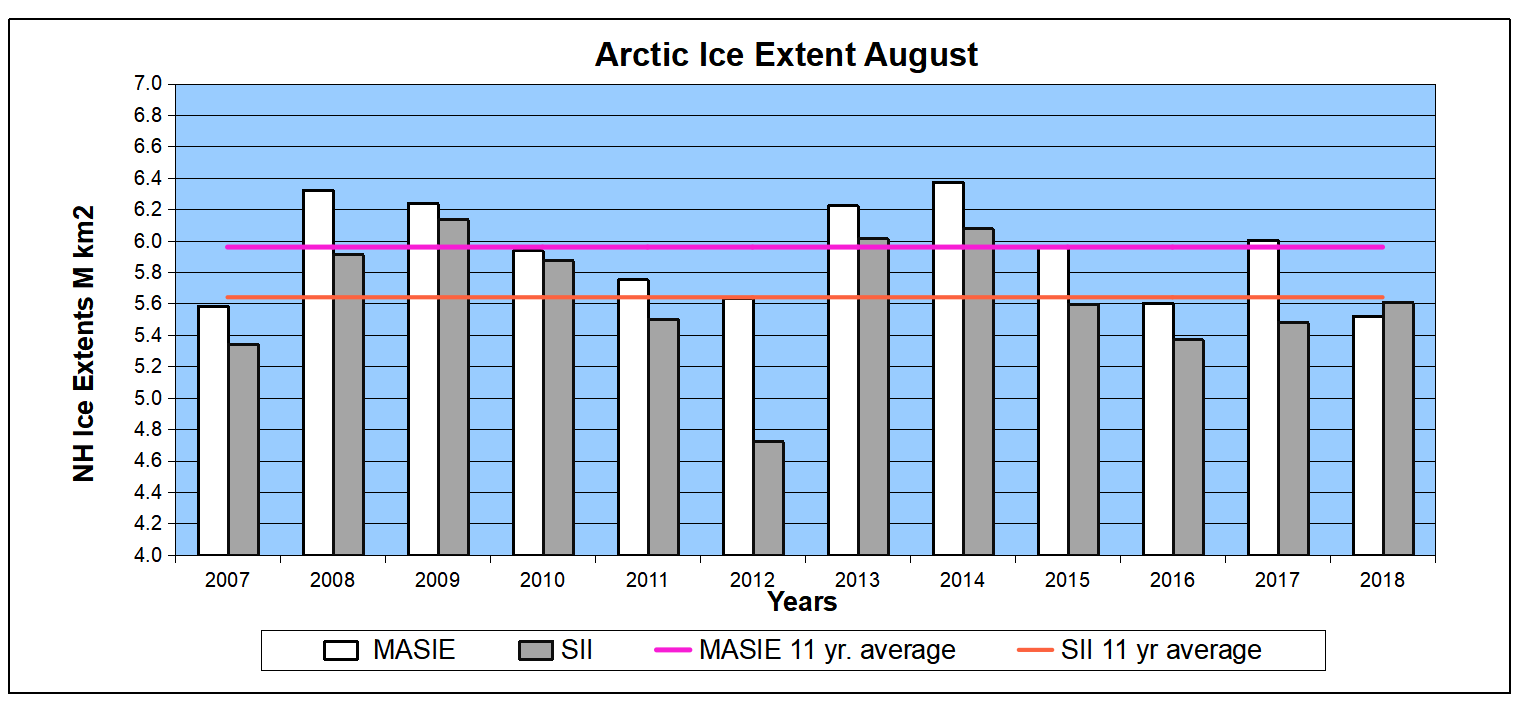
The graph above now contains the complete data for August, replacing a previous provisional one. These results confirm the depiction of what has happened.  July was a surprise with both MASIE and SII showing a monthly surplus to the 11-year average. August ice decline in MASIE was large with 2018 coming in 400k km2 below 11 year average. Meanwhile SII which most years was lower than MASIE (note 2012) this year shows a greater extent and matches SII 11 year average. Note also that both indices are close to 2007 monthly ice extent. (MASIE is described in more detail below; SII refers to NOAA’s Sea Ice Index)

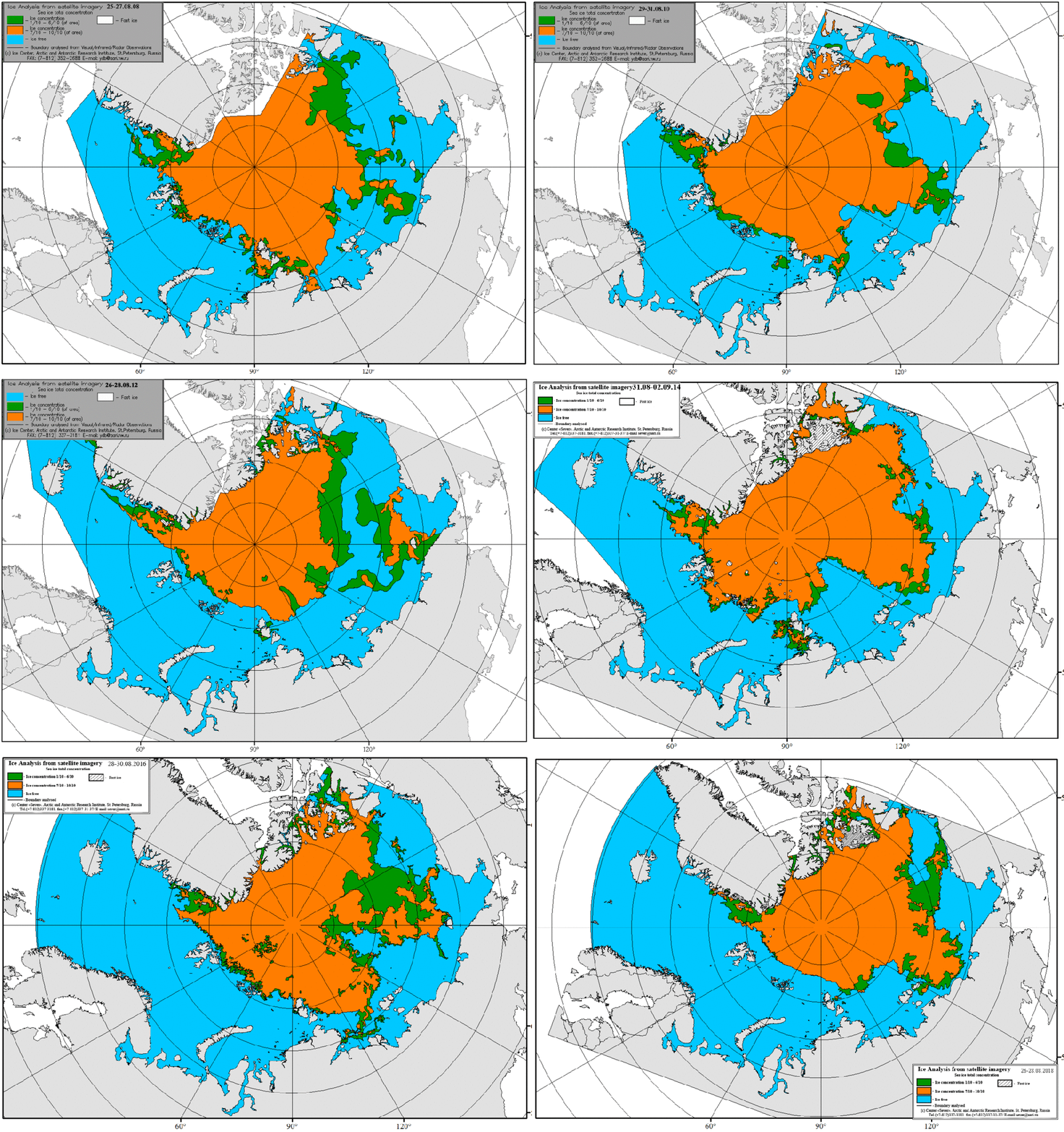
AARI2009to2018rThe image above shows end of August ice charts from AARI (St. Petersburg, Russia) from 2009 to 2018.  The legend identifies the thicker, multi-year ice in brown, and extents less than 7/10 in green.  2018 compares to other recent years as showing less ice on the European side, a surplus in East Siberian basin, and thick ice on the CanAm side. Some alarmists pointed to a bit of green showing at the northern tip of Greenland, but that also appeared in 2011.


Interesting September outlook from AER

Dr. Judah Cohen published his Arctic Oscillation and Polar Vortex Analysis and Forecast as of August 27, 2018. Excerpts in italics with my bolds.

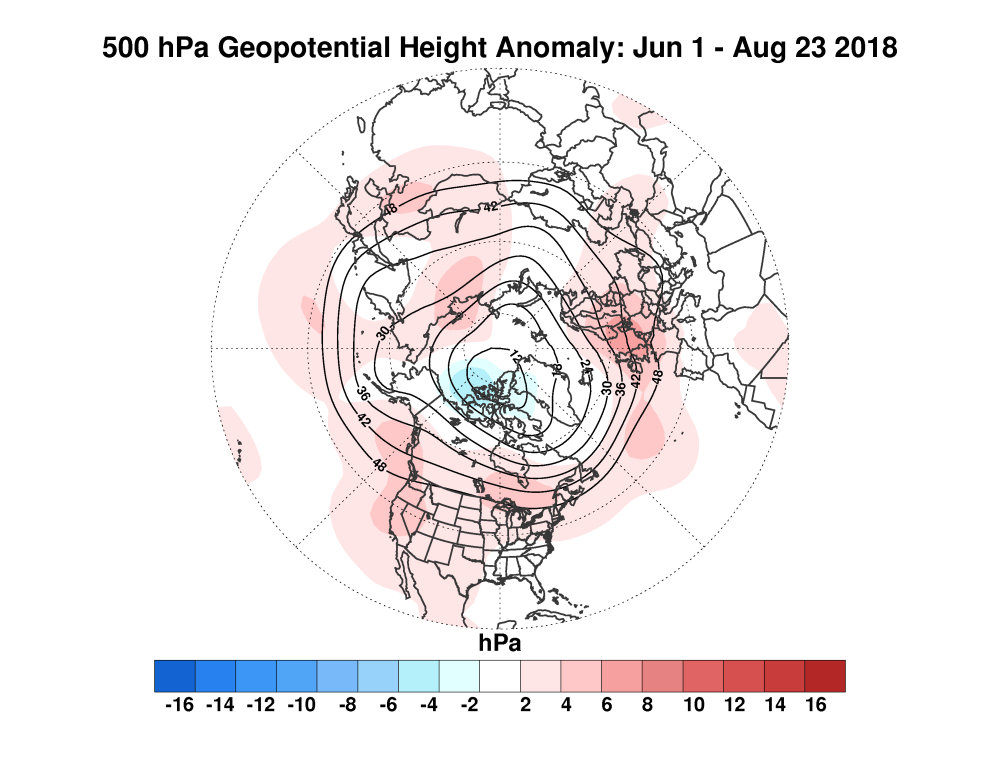
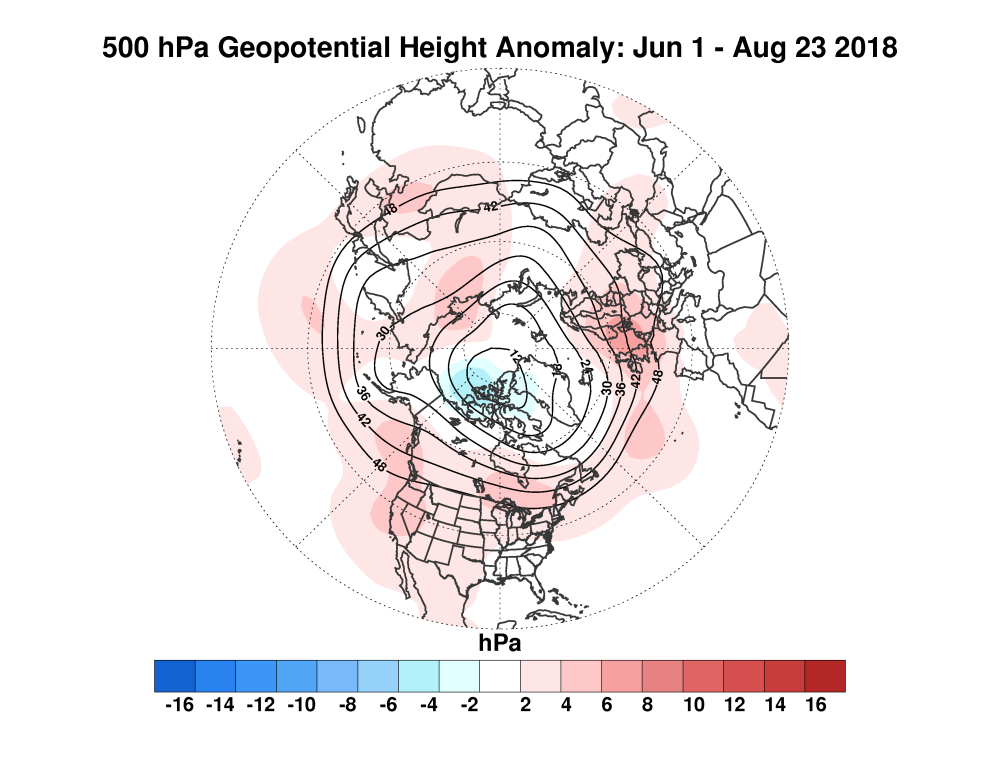
Looking at the 500 mb geopotential height pattern of this summer in Figure i, reveals a fairly striking pattern – an anulus of high anomalous geopotential heights encircling the midlatitudes and low anomalous heights centered on the Canadian side of the Arctic. The name of this blog is the Arctic Oscillation (and Polar Vortex) and the AO is also known as the northern annular mode (NAM). I don’t often use the term annular mode because at least in the troposphere you don’t usually observe an annular or donut like anomaly pattern, at least in my opinion. But this summer is an exception and that tropospheric height pattern looks remarkably annular, a phenomenon usually reserved for the stratosphere where topography and land-ocean contrasts are absent.

aer201808271
Figure i. Observed 500 mb geopotentail heights (contours) and anomalies (shading) for June 1 – August 23, 2018. Data is from NCEP/NCAR reanalysis NCEP-NCAR data.

Such an annular pattern favors above normal temperatures to be omnipresent across the mid-latitudes as the Jet Stream is forced to retreat poleward and allowing subtropical heat to overspread the mid-latitudes. This is not meant to be a discussion on climate change but I will just note that the poleward retreat of the Jet Stream, the northward expansion of the subtropical ridging into the mid-latitudes accompanied by heat and drought are projected to be consequences of climate change.

But the mid-latitudes gain was the Arctic’s loss in that though the pattern pumped heat across the mid-latitudes the annular structure in the geopotential heights protected the Arctic ocean from incursions of warm, moist air masses from the south and insulated the Arctic ocean and sea ice from excessive melt. This included Greenland, where melting was close to average. So even though sea ice extent was at record lows this past winter a new Arctic sea ice minimum will very likely not be achieved this September. The Arctic sea ice is on pace to be close to last year and above those minima observed in 2015 and 2016. The record Arctic sea ice minima was observed in 2012.

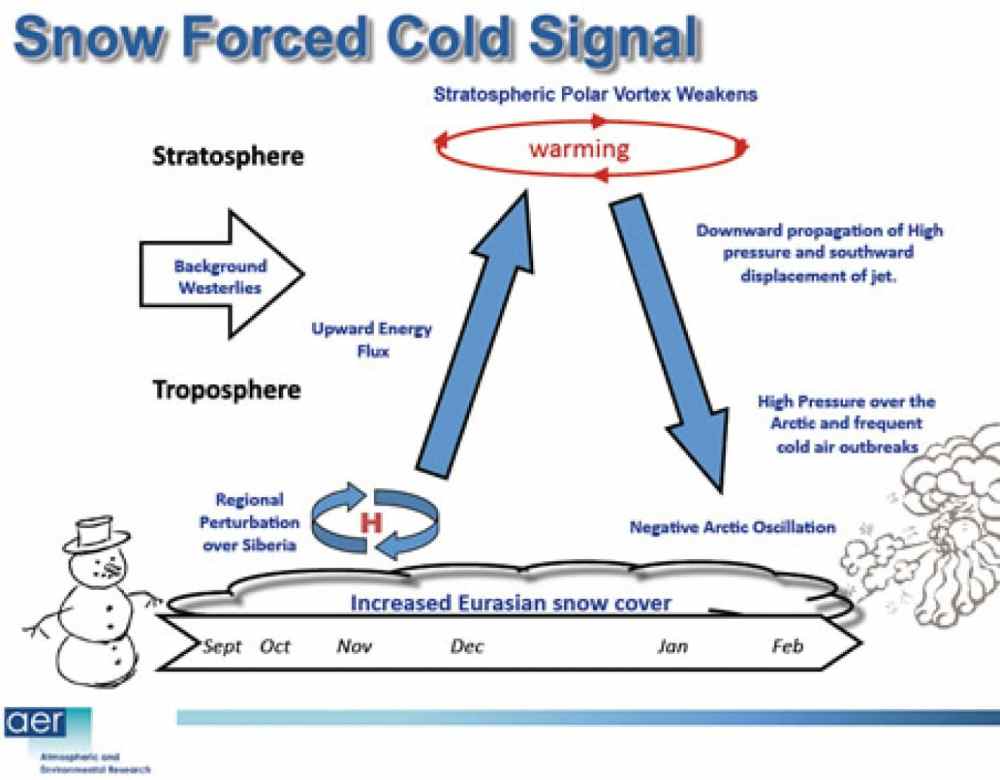
I don’t expect any notable deviation from the recent decadal fall temperature trends. One region that has experienced a cooling trend in contrast to the nearly universal warming is Siberia. I believe this in part due to the increasing trend in October snow cover extent across Eurasia. It will be interesting to see if this trend pattern repeats in 2018. And as I am sure many of you know this will be the focus of my attention in the coming weeks. Finally as the atmosphere cools more rapidly than the ocean I do expect to the heat transfer in the Arctic to reverse from into the ocean to out of the ocean. This could finally end the near perfect annular pattern of the Northern Hemisphere.

cohen-schematic

Footnote on MASIE Data Sources:

MASIE reports are based on data primarily from NIC’s Interactive Multisensor Snow and Ice Mapping System (IMS). From the documentation, the multiple sources feeding IMS are:

Platform(s) AQUA, DMSP, DMSP 5D-3/F17, GOES-10, GOES-11, GOES-13, GOES-9, METEOSAT, MSG, MTSAT-1R, MTSAT-2, NOAA-14, NOAA-15, NOAA-16, NOAA-17, NOAA-18, NOAA-N, RADARSAT-2, SUOMI-NPP, TERRA

Sensor(s): AMSU-A, ATMS, AVHRR, GOES I-M IMAGER, MODIS, MTSAT 1R Imager, MTSAT 2 Imager, MVIRI, SAR, SEVIRI, SSM/I, SSMIS, VIIRS

GOES-R (Geostationary Operational Environmental Satellite) | AER | Weather Risk Assessment

Summary: IMS Daily Northern Hemisphere Snow and Ice Analysis

The National Oceanic and Atmospheric Administration / National Environmental Satellite, Data, and Information Service (NOAA/NESDIS) has an extensive history of monitoring snow and ice coverage.Accurate monitoring of global snow/ice cover is a key component in the study of climate and global change as well as daily weather forecasting.

The Polar and Geostationary Operational Environmental Satellite programs (POES/GOES) operated by NESDIS provide invaluable visible and infrared spectral data in support of these efforts. Clear-sky imagery from both the POES and the GOES sensors show snow/ice boundaries very well; however, the visible and infrared techniques may suffer from persistent cloud cover near the snowline, making observations difficult (Ramsay, 1995). The microwave products (DMSP and AMSR-E) are unobstructed by clouds and thus can be used as another observational platform in most regions. Synthetic Aperture Radar (SAR) imagery also provides all-weather, near daily capacities to discriminate sea and lake ice. With several other derived snow/ice products of varying accuracy, such as those from NCEP and the NWS NOHRSC, it is highly desirable for analysts to be able to interactively compare and contrast the products so that a more accurate composite map can be produced.

The Satellite Analysis Branch (SAB) of NESDIS first began generating Northern Hemisphere Weekly Snow and Ice Cover analysis charts derived from the visible satellite imagery in November, 1966. The spatial and temporal resolutions of the analysis (190 km and 7 days, respectively) remained unchanged for the product’s 33-year lifespan.

As a result of increasing customer needs and expectations, it was decided that an efficient, interactive workstation application should be constructed which would enable SAB to produce snow/ice analyses at a higher resolution and on a daily basis (~25 km / 1024 x 1024 grid and once per day) using a consolidated array of new as well as existing satellite and surface imagery products. The Daily Northern Hemisphere Snow and Ice Cover chart has been produced since February, 1997 by SAB meteorologists on the IMS.

Another large resolution improvement began in early 2004, when improved technology allowed the SAB to begin creation of a daily ~4 km (6144×6144) grid. At this time, both the ~4 km and ~24 km products are available from NSIDC with a slight delay. Near real-time gridded data is available in ASCII format by request.

In March 2008, the product was migrated from SAB to the National Ice Center (NIC) of NESDIS. The production system and methodology was preserved during the migration. Improved access to DMSP, SAR, and modeled data sources is expected as a short-term from the migration, with longer term plans of twice daily production, GRIB2 output format, a Southern Hemisphere analysis, and an expanded suite of integrated snow and ice variable on horizon. Source:  Interactive Multisensor Snow and Ice Mapping System (IMS)


Global Warming Bugastrophe

This week yet another unimaginable calamity if Paris Accord is not fulfilled. That’s right the coordinated reports in the media raise the alarm: The Insects Are Coming For Us (unless we mend our ways!)

Global warming will help insects, hurt crops NBC News

Climate change may boost pests, stress food supplies Axios

Climate Change Will Lead To More Crop-Destroying Insects IFLScience

Global Warming Means More Insects Threatening Food Crops — A Lot More, Study Warns InsideClimate News

Global warming will likely help bugs devour more crops CBC.ca

Global warming could spur more and hungrier crop-eating bugs ABC News

Global warming could spur more crop-eating bugs CTV.ca

Global warming will make insects hungrier, eating up key crops: study AFP

Crop losses due to insects could nearly double in Europe’s bread basket due to climate EurekAlert!

Climate change projected to boost insect activity and crop loss, researchers say EurekAlert!

Rise in insect pests under climate change to hit crop yields, study says Carbon Brief

Swarms of insects will destroy crops across Europe and America by 2050 due to global warming Daily Mail

Global warming: More insects, eating more crops Phys.org

Climate change to accelerate crop losses from insects Cornell Alliance for Science

Climate Change Means Insects Are Coming for Our Food The Atlantic

Well, at least we know who is keen to reprint press releases from Alarmist Central. I am not an entomologist, not are the journalists who are piling on this story. So let’s hear from some insect experts.

First, a tutorial on Temperature, Effects on Development and Growth (Insects)

Adult insects generally are of smaller body size when larvae are reared at higher temperatures. For example, females of Bicyclus butterflies reared at 20°C were larger than those reared at 27°C. Moreover, females laid larger eggs when they were reared or acclimatized for 10 days at the lower temperature compared to the higher temperature.

LDT: actual lower developmental threshold; T0: predicted lower developmental threshold; UDT: upper developmental threshold; TO: thermal optimum (maximum) for developmental rate. Total optimum for population growth is usually at moderate temperatures, not at such high extremes.

Development time (dt) is the time required to complete specified stage or instar and can be described as dt = SET/(T-T0). SET is the sum of effective temperatures or “thermal constant,” expressed as the number of degree days. T0 is the lower developmental threshold (LDT, or base temperature Tb), the hypothetical temperature at which developmental time would be infinite or developmental rate would be zero. The product of developmental time and the amount to which ambient temperature is above the threshold was found to be constant (= SET), that is, development will take a fixed number of degree days essentially independent of the temperature at which the animal is reared. The thermal parameters are determined in defined conditions (set of constant temperatures, suitable nutrition).

The LDT and SET values are population-specific characteristics. The LDT values are similar for all developmental stages of a given population, even when they develop in diverse seasons and experience disparate temperature fluctuations. The stability of LDT is manifested as developmental rate isometry, that is, the percentage of time spent in a particular stage at any constant physiological temperature is a stable fraction of the entire developmental time.

Tropical species have higher values of LDT than temperate ones. SET decreases as LDT increases. Insects that have spread to temperature zones from the tropical regions often maintain a high LDT and can reproduce and develop only in the hot season, spending most of the year in a state of dormancy.

A general response of insects to temperatures just below their LDT or above their UDT is the cessation of development and reproduction while the insects remain active and feed. The larvae may slowly grow and the adults accumulate reserves. These processes are terminated at more extreme temperatures.

During cooling, motility gradually decreases. At certain temperature, the neural and muscular activities are impaired and the insect lapses into cold stupor (chill coma). The stupor point is as high as 12°C in tropical insects including stored product pests, and in honey bees, around 5°C in many temperate species, near 0°C in most overwintering insects, and even below the freezing point in species living in very cold areas.

Gradual warming above UDT, which is for many species around 35°C but is never sharply delimited, increases the metabolic rate, loss of water, and motility. Around 40°C, the water loss increases sharply: the spiracles are wide open and the melting of cuticular lipids permits evaporation through the body surface. Exhaustion of water and nutrients leads to rapid decrease of motility and a drop of transpiration. At a certain temperature, heat stupor occurs. Survival at temperatures above the threshold is a function of temperature and length of exposure. Warming to the absolute upper lethal temperature, which is usually around 50-55°C, causes fast, irreversible tissue damage and death.

And then from Australia Responses to Climate Change Upper thermal limits in terrestrial ectotherms: how constrained are they?

The data for terrestrial ectotherms discussed previously point to species from mid-latitudes in particular being closest to their thermal maxima. Moreover, although data are still quite scanty, species may have only a limited capacity to deal with changes in upper thermal limits. Under an expected 2–4 °C warming scenario (IPCC 2007), mid-latitude populations near limits are likely to face the threat of extinction because they cannot adapt to new environmental conditions.

There is almost no information on how thermal limits are influenced by combinations of stressors. Changes in the conditions that organisms experience during thermal stress could lead to quite unpredictable upper thermal limits (Terblanche et al. 2011; Overgaard, Kristensen & Sørensen 2012). Moreover, thermal stress can influence susceptibility to other selective agents; tropical Bicyclus anynana butterflies lose immune function as measured by phenoloxidase (PO) activity and haemocyte numbers when exposed to warm conditions, and the effects are particularly marked when adults have a limited food supply.

Summary

These scares always sound plausible, but on closer inspection are simplistic and unrealistic. The above shows that each type of insect has a range of temperatures they can tolerate and allow them to develop. They are stressed and populations decrease when colder than the lower limit and also when hotter than the upper limit. Every species will adapt to changing conditions as they always have. Those at their upper limit will decline, not increase, and their place will be taken by others. Of course, if it gets colder, the opposite occurs. Don’t let them scare you that insects are taking over.

the-silence-of-the-lambs-original


Northwest Passage Adds Ice Aug. 27

August 23, 2018 . At least 22 vessels are affected and several have turned back to Greenland.

Update August 28, 2018

S/V CRYSTAL (Polish Crew) at Fort Ross Nunavut waiting Franklin ice and weather window to dash westward toward Nome Alaska.
QM20180827w Ft. Ross

Note yachts can sail through green (3/10), so the hope is for red to yellow to green.  But here are the last four days:
They are hoping for a storm Sept. 1-2 to open Franklin Strait where is the thick red ice.  Plan B is to wait another week for a wider weather window and more ice disintegration.  Plan C is to escape to the east.

From the Northwest Passage Blog (Aug. 22, 2018):
Good morning,
Due to heavier than normal ice concentrations in the Canadian arctic waters north of 70 degrees, the Canadian Coast Guard, recommends that pleasure craft do not navigate in the Beaufort Sea, Barrow, Peel Sound, Franklin Strait and Prince Regent. CCG icebreakers cannot safely escort pleasure craft. Operators of pleasure craft considering a northwest passage should also consider the risk of having to winter in a safe haven in the Arctic, or in the case of an emergency, be evacuated from beset vessels. Safety of mariners is our primary concern.
REGARDS,
NORDREG CANADA

August 26:  FRANKLIN continues to improve with less ice and could be open by the first full week of September.


AER Arctic September Outlook

GOES-R (Geostationary Operational Environmental Satellite) | AER | Weather Risk Assessment

Dr. Judah Cohen published his Arctic Oscillation and Polar Vortex Analysis and Forecast as of August 27, 2018.  Excerpts in italics with my bolds.

Looking at the 500 mb geopotential height pattern of this summer in Figure i, reveals a fairly striking pattern – an anulus of high anomalous geopotential heights encircling the midlatitudes and low anomalous heights centered on the Canadian side of the Arctic. The name of this blog is the Arctic Oscillation (and Polar Vortex) and the AO is also known as the northern annular mode (NAM). I don’t often use the term annular mode because at least in the troposphere you don’t usually observe an annular or donut like anomaly pattern, at least in my opinion. But this summer is an exception and that tropospheric height pattern looks remarkably annular, a phenomenon usually reserved for the stratosphere where topography and land-ocean contrasts are absent.

Figure i. Observed 500 mb geopotentail heights (contours) and anomalies (shading) for June 1 – August 23, 2018. Data is from NCEP/NCAR reanalysis NCEP-NCAR data.

Such an annular pattern favors above normal temperatures to be omnipresent across the mid-latitudes as the Jet Stream is forced to retreat poleward and allowing subtropical heat to overspread the mid-latitudes. This is not meant to be a discussion on climate change but I will just note that the poleward retreat of the Jet Stream, the northward expansion of the subtropical ridging into the mid-latitudes accompanied by heat and drought are projected to be consequences of climate change.

But the mid-latitudes gain was the Arctic’s loss in that though the pattern pumped heat across the mid-latitudes the annular structure in the geopotential heights protected the Arctic ocean from incursions of warm, moist air masses from the south and insulated the Arctic ocean and sea ice from excessive melt. This included Greenland, where melting was close to average. So even though sea ice extent was at record lows this past winter a new Arctic sea ice minimum will very likely not be achieved this September. The Arctic sea ice is on pace to be close to last year and above those minima observed in 2015 and 2016. The record Arctic sea ice minima was observed in 2012.

I don’t expect any notable deviation from the recent decadal fall temperature trends. One region that has experienced a cooling trend in contrast to the nearly universal warming is Siberia. I believe this in part due to the increasing trend in October snow cover extent across Eurasia. It will be interesting to see if this trend pattern repeats in 2018. And as I am sure many of you know this will be the focus of my attention in the coming weeks. Finally as the atmosphere cools more rapidly than the ocean I do expect to the heat transfer in the Arctic to reverse from into the ocean to out of the ocean. This could finally end the near perfect annular pattern of the Northern Hemisphere.


Socialist Snow Job

The UN is more up front than ever with its world governance agenda. The latest proclamation was solicited from the BIOS Research Unit in Helsinki Finland Global Sustainable Development Report

The background paper commissioned by the UN Secretary-General’s IGS states that  biophysical realities are driving the transition to postcapitalism by the decline of what made ‘endless growth capitalism’ possible in the first place: abundant, cheap energy.

The UN’s Global Sustainable Development Report is being drafted by an independent group of scientists (IGS) appointed by the UN Secretary-General. The IGS is supported by a range of UN agencies including the UN Secretariat, the UN Educational, Scientific and Cultural Organization, the UN Environment Programme, the UN Development Programme, the UN Conference on Trade and Development and the World Bank.

The section titles express the themes favored by these “ecological economists.”

GOVERNANCE OF ECONOMIC TRANSITION

  • New economic thinking for the turbulent years ahead
  • What needs to be done – in social and material terms?
  • Rapid economic transition requires proactive governance – markets cannot accomplish the task
  • Economic theory to support transition governance
  • The new geopolitical order during and after transition governance

It is a blatant call for a supra-national new world order necessitated by climate change.

Pointing to the susceptibility of democratic governments to interest groups that have an economic stake in maintaining the status quo, these environmentalists doubt democracy is up to the challenge of climate change at all. Others note that human inertia is so great that, barring a catastrophic event, the best democratic governments can do is to adapt to climate change — i.e., building sea walls around vulnerable cities. More of them are saying that, to make the hard decisions needed to deal effectively with climate change, it may be eventually be necessary to put democracy on hold, opting instead for some kind of environmental authoritarianism.

But why should we believe such radical concentration of power would be good for the planet? What is the evidence for such claims?

As it happens we have empirical evidence to test this assertion that socialism is superior to capitalism for saving the natural environment. David Legates points out recent historical examples where two modern societies were split, one part to develop for 50 years under a socialist autocracy and the other part under a free market democracy. What can we learn from these two experiments: North/South Korea and East/West Germany? Excerpts in italics with my bolds.

The Experiment: Capitalism versus Socialism

With growing alarmism over carbon dioxide-induced climate change, many activists have turned toward socialism as a viable way to limit carbon-dioxide emissions. The collectivist model is perfect for top-down control over the general public as, supposedly, the government can then enact legislation to defend the environment and protect against climate change. Capitalism, it is argued, is a system based on greed, and its economic bottom line trumps the need for clean air and clean water. By contrast, the socialist model should provide a much cleaner environment as pollution (including carbon dioxide by its erroneous inclusion as a pollutant by alarmists) is anathema to the collective whole.

In a nutshell, the argument is that capitalism cannot provide the ingenuity and resilience necessary to provide a sustainable environment. The only hope, therefore, is the limitation to growth that socialism provides. Li laments that the core of the environmental movement lies in the upper middle classes of capitalist societies who erroneously believe that technology can provide a solution to climate alarmism.  In his view, the real problem, of course, is the capitalist lifestyle, which is unsustainable as it requires unlimited economic growth. By contrast, socialism provides the perfect solution in which growth can be limited by a benevolent government whose sole interest lies in protecting the collective whole. Indeed, the term eco-socialism (or Hospice Earth) has been coined to describe the concept that socialism can “replace capitalism’s need for endless material growth with more environmentally sustainable alternatives of production to meet genuine human needs.”  It is argued that eco-socialism can transform energy production such that the global society can avoid declines in human populations and all sociopolitical conflicts.

So how does this relate to The Experiment? If this line of reasoning is to be believed, then the socialist-oriented countries should be better suited to environmental preservation and sustainability than their capitalist counterparts. Or at the very least, the plans should have been in place for a cleaner environment, if the effect of other socio-economic maladies had not taken precedence. What are the facts?

Bitterfeld, East Germany

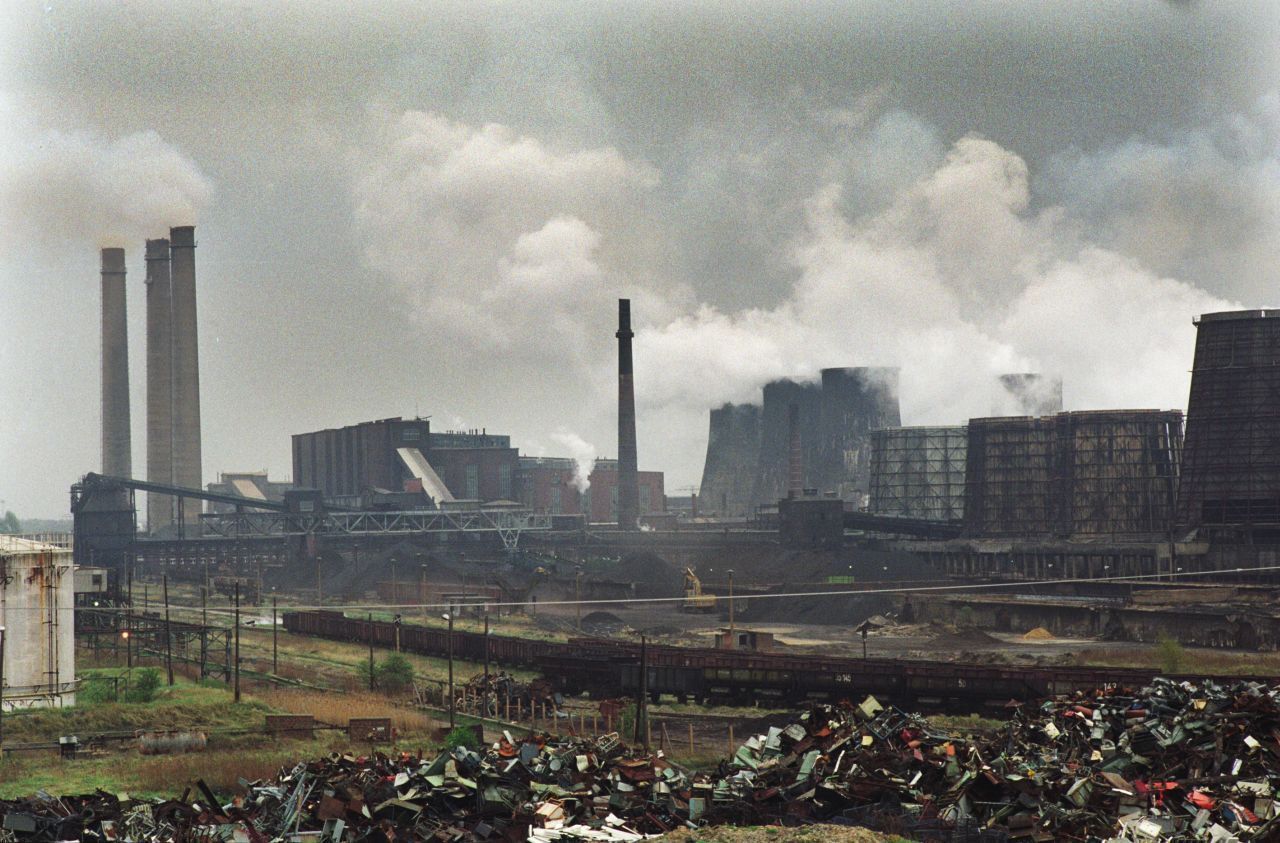
The merger of East and West Germany exposed the truth about environmentalism under socialism. Estimates suggest that 42 percent of East German rivers and streams were unable to be processed for drinking water, and almost half of East German lakes were unable to sustain fish or other higher forms of life. At most a third of industrial sewage and half of domestic sewage was treated before being dumped into rivers and lakes, while 40 percent of the population lived in conditions for which West Germany would have issued smog warnings. Only one East German power plant had sulfur-scrubbing capabilities for its stack. Even the East German Environment Minister admitted in 1990 that their environmental policy “did not exist.”

In 1990, Greenpeace labeled Bitterfeld, East Germany, as “the dirtiest place in the most polluted country in the world.”40 Sulfur dioxide permeated the air at levels five times that of West Germany, and 75 percent of the trees were dead. A Bitterfeld chemical plant put 10 times as much mercury into the Saale River each day as a comparable West German plant would dump into the Rhine River in a year. Unfortunately, the situation in East Germany was not unique; most Soviet satellite countries in Eastern Europe experienced the same environmental degradation.

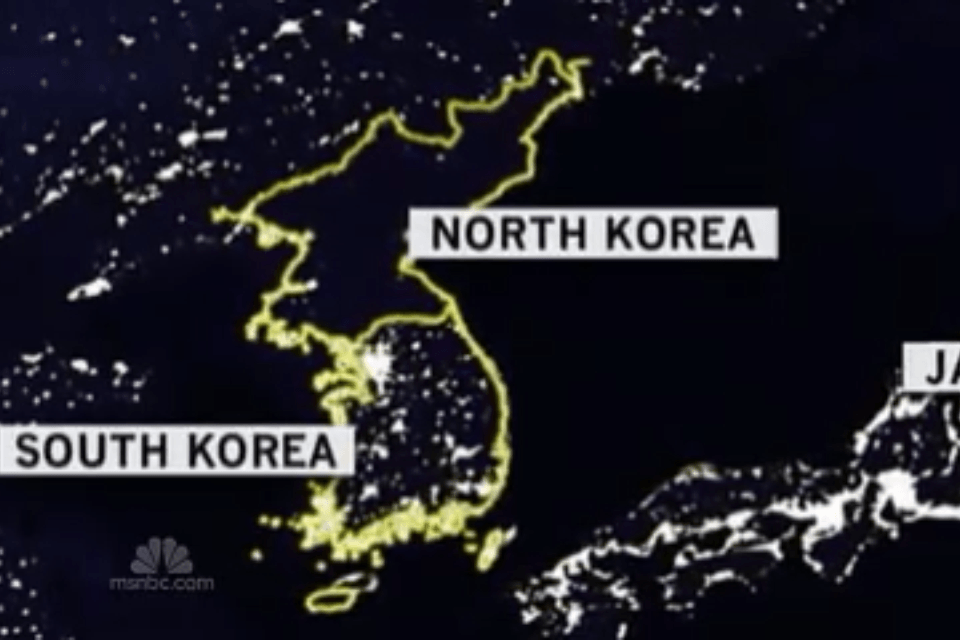
The two Koreas seen from space at night.

North Korea has not fared any better under its brand of socialism. Environmental disasters plague the North, whereas South Korea thrives in abundance. Air pollution is extreme due to both the extensive combustion of coal without sulfur scrubbers and winds that blow polluted air in from China. Cutting of firewood for home heating and cooking has led to serious deforestation and concomitant soil erosion. Large cities have sewage treatment, but wastewater in rural areas is still deposited untreated into rivers. Any effort at environmental protection becomes subservient to production and the desire for full employment. Despite 25 years of technological advancement since the end of East Germany, present-day conditions in North Korea are really no better.

So why doesn’t the environmental movement see that capitalist societies are cleaner than socialist countries and gravitate toward capitalist solutions? Some environmentalists do; however, the concern over carbon dioxide has subverted common sense. Capitalist nations emit fewer pollutants but more carbon dioxide. By contrast, socialist societies are less technologically developed and, consequently, they emit less carbon dioxide. For example, per capita emissions of carbon dioxide in South Korea are almost four times as great as in North Korea. In a world in which carbon dioxide is the only currency, environmentalists are enamored with the small carbon-dioxide footprint that socialism affords. When carbon-dioxide emissions are labeled as the greatest threat to humanity, North Korea becomes a world leader in environmental sustainability, and socialism is the tool by which global compliance can be afforded.

Socialism works for the environmentalist because of several qualities. First, socialism is a collective state, thereby making personal preferences subservient to the state’s determination of what is good for the collective.  Moreover, property rights are held only by the state, and individuals must surrender all they own to the state. This actually has an additional backhanded benefit in that if no one owns that polluting factory or that river into which toxic waste is being dumped, there is no one to blame. The state will not self accuse.

Moreover, the authoritarian underpinnings of socialism allow no tolerance for dissent to be raised about what the state is—or isn’t—doing to protect the environment. Coercion is a necessary ingredient for socialism, and concomitantly many environmental policies, to be advanced. Further, its authoritarian base allows it to dictate policy, the outcome that environmentalists desire.

But the real issue is that socialism lags behind capitalist societies in the production of both wealth and technology. Socialists inherently see the restriction of energy and its availability as necessary to further their collective ideals. Without affordable, abundant energy, democracy may never have developed in Europe and Southeast Asia and led to Western Europe, Japan, South Korea, and the United States becoming leaders in innovative thinking. Availability of inexpensive energy leads to remarkable increases in industry and worker efficiency, in wages and available free time, and in living standards and human health. Ultimately, this has allowed capitalists to develop the ability to be good environmental stewards. Indeed, the air and water in capitalist countries are much cleaner than in their socialist counterparts.

It stands to reason that the availability of free time afforded by capitalism has allowed civilization to become more environmentally conscious. Environmental issues are the least of one’s concerns if one is in dire need of food, clothing, shelter, and safety. The abject poverty of many nations is looked upon with admiration by some environmentalists, even though poor countries pay little attention to their environmental health. It is criminal that environmentalists are willing to pay poor countries to remain in their current condition rather than develop the technology to further expand their economies and lift themselves from poverty. Remember, carbon dioxide is environmentalists’ currency, and delimiting its emission is their overarching goal.

The irony is that the model touted by these so-called eco-socialists is the biggest obstruction to environmental stewardship. While socialism purports to enhance the wellbeing of its citizenry, it in reality does just the opposite. Even advocates of socialism admit to its environmental failures. As James Wanliss eloquently wrote:

The environment under socialism fares no better. It is incontestable that pollution is horrendous in many of the poorest countries with the lowest levels of political and economic freedom. By contrast, countries with the greatest levels of political and economic liberty tend to be the cleanest and the wealthiest.

With merger of the two Germanys and the failure of Soviet communism, the appeal of ecologically motivated authoritarianism waned, although the ideas remained. It has re-emerged today and is modeled after modern day China rather than the Soviet Union. Although they eschew full centralized control, environmentalists see an authoritarian state as the key to allow governments to subordinate individual rights and democratic methods. Unfortunately, this type of regime can only return a society to the environmental degradation of East Germany or North Korea. Since greenhouse gases such as carbon dioxide are now the only concern of most environmentalists, they ignore the filth and degradation that actually accompany socialist societies.

The Importance of Freedom

The key ingredient that separated West from East Germany and still separates South from North Korea is freedom. Freedom is the elixir that fuels innovation, supports a diversity of thought, and allows people to become who they want to be, not what the state demands they must be. When the government guarantees equality of outcomes, it also stifles the creativity, diversity, ingenuity, and reward systems that allow people and countries to grow, develop, and prosper.

Energy availability is a necessary ingredient for freedom. Oppression—and indeed socialism is an oppressive political economic system—flourishes when citizens remain poor and deprived of technology. Freedom thrives when citizens have both the time and the ability to travel, communicate, innovate, and organize to better their lives or to fight a common enemy.

Both versions of The Experiment have proven this. Unfortunately, forgetful, unobservant, and ideological politicians in the U.S. are again touting the supposed benefits of socialism. They believe that capitalism is greedy and evil—and socialism, if “properly implemented,” will take us forward to realizing a better future. “Trust me, this time it will be different,” they say.

The next experiment is underway—in Venezuela. It is showing, once again, that those who turn toward the sirencall of socialism always crash upon its rocks.

And let’s not forget Brazil

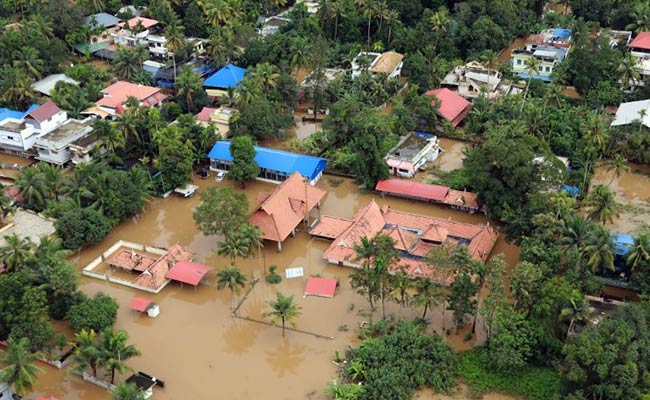
X-Weather is Back! Kerala edition

nt5kfrp8_kerala-floods-afp_625x300_20_august_18

2018 Kerala India Flooding and Rainfall Event

Because of obsession with CO2,  flooding in Kerala S. India is the latest example of the desire to pin the blame on “climate change”. Jonathan Eden wrote a balanced article in WION Why it’s so hard to detect the fingerprints of global warming on monsoon rains  Excerpts in italics with my bolds.

Unlike temperature, rainfall varies hugely in space and time. Even the most sophisticated climate models struggle to simulate physical processes such as convection and evaporation that drive rainfall activity. On top of that, global warming is not expected to change the frequency and intensity of rainfall extremes in the same way in all parts of the world.

The choice to focus solely on the rainfall itself is particularly relevant for flooding events. Though accusations of poor decision-making and mismanagement of water resources are beginning to appear in the Kerala aftermath, the floods simply would not have occurred without a significant amount of rain. Few of those suffering lost homes and livelihoods are likely to care much about where the rain came from or the intricacies of the weather conditions that led to it.

Disentangling these contributory factors takes time. In comparison to droughts and heatwaves, short-term hazards such as floods do not usually give us much chance to report concrete findings while the media and general public are still engaged in the event. In-depth studies may not publish their results for many months, sometimes even years after the event in question.

Many of these issues are not exclusive to extreme rainfall. The excellent US National Academies report on Attribution of Extreme Weather Events in the Context of Climate Change describes the shortcomings in our efforts to attribute a variety of extremes. But for rainfall in particular there is a discrepancy between what we understand about the general effect of global warming and our rather lesser ability to quantify the climate change fingerprint on specific events.

2017 Hurricane Harvey X-Weathermen Event

With Hurricane Harvey making landfall in Texas as a Cat 4, the storm drought is over and claims of linkage to climate change can be expected.  So far (mercifully) articles in Time and Washington Post have been more circumspect than in the past.  Has it become more respectable to look at the proof supporting wild claims?  This post provides background on X-Weathermen working hard to claim extreme weather as proof of climate change.

In the past the media has been awash with claims of “human footprints” in extreme weather events, with headlines like these:

“Global warming is making hot days hotter, rainfall and flooding heavier, hurricanes stronger and droughts more severe.”

“Global climate change is making weather worse over time”

“Climate change link to extreme weather easier to gauge”– U.S. Report

“Heat Waves, Droughts and Heavy Rain Have Clear Links to Climate Change, Says National Academies”

That last one refers to a paper released by the National Academy of Sciences Press: Attribution of Extreme Weather Events in the Context of Climate Change (2016)

And as usual, the headline claims are unsupported by the actual text. From the NAS report (here): (my bolds)

Attribution studies of individual events should not be used to draw general conclusions about the impact of climate change on extreme events as a whole. Events that have been selected for attribution studies to date are not a representative sample (e.g., events affecting areas with high population and extensive infrastructure will attract the greatest demand for information from stakeholders) P 107

Systematic criteria for selecting events to be analyzed would minimize selection bias and permit systematic evaluation of event attribution performance, which is important for enhancing confidence in attribution results. Studies of a representative sample of extreme events would allow stakeholders to use such studies as a tool for understanding how individual events fit into the broader picture of climate change. P 110

Correctly done, attribution of extreme weather events can provide an additional line of evidence that demonstrates the changing climate, and its impacts and consequences. An accurate scientific understanding of extreme weather event attribution can be an additional piece of evidence needed to inform decisions on climate change related actions. P. 112

The Indicative Without the Imperative

extreme-weather-events

The antidote to such feverish reporting is provided by Mike Hulme in a publication: Attributing Weather Extremes to ‘Climate Change’: a Review (here).

He has an insider’s perspective on this issue, and is certainly among the committed on global warming (color him concerned). Yet here he writes objectively to inform us on X-weather, without advocacy: real science journalism and a public service, really. Excerpts below with my bolds.

Overview

In this third and final review I survey the nascent science of extreme weather event attribution. The article proceeds by examining the field in four stages: motivations for extreme weather attribution, methods of attribution, some example case studies and the politics of weather event Attribution.

The X-Weather Issue

As many climate scientists can attest, following the latest meteorological extreme one of the most frequent questions asked by media journalists and other interested parties is: ‘Was this weather event caused by climate change?’

In recent decades the meaning of climate change in popular western discourse has changed from being a descriptive index of a change in climate (as in ‘evidence that a climatic change has occurred’) to becoming an independent causative agent (as in ‘climate change caused this event to happen’). Rather than being a descriptive outcome of a chain of causal events affecting how weather is generated, climate change has been granted power to change worlds: political and social worlds as much as physical and ecological ones.

To be more precise then, what people mean when they ask the ‘extreme weather blame’ question is: ‘Was this particular weather event caused by greenhouse gases emitted from human activities and/or by other human perturbations to the environment?’ In other words, can this meteorological event be attributed to human agency as opposed to some other form of agency?

The Motivations

Hulme shows what drives scientists to pursue the “extreme weather blame” question, noting four motivational factors.

Why have climate scientists over the last ten years embarked upon research to provide an answer beyond the stock phrase ‘no individual weather event can directly be attributed to greenhouse gas emissions’?  There seem to be four possible motives.

1.Curiosity
The first is because the question piques the scientific mind; it acts as a spur to develop new rational understanding of physical processes and new analytic methods for studying them.

2.Adaptation
A second argument, put forward by some, is that it is important to know whether or not specific instances of extreme weather are human-caused in order to improve the justification, planning and execution of climate adaptation.

3.Liability
A third argument for pursuing an answer to the ‘extreme weather blame’ question is inspired by the possibility of pursuing legal liability for damages caused. . . If specific loss and damage from extreme weather can be attributed to greenhouse gas emissions – even if expressed in terms of increased risk rather than deterministically – then lawyers might get interested.

The liability motivation for research into weather event attribution also bisects the new international political agenda of ‘loss and damage’ which has emerged in the last two years. . . The basic idea is to give recognition that loss and damage caused by climate change is legitimate ground for less developed countries to gain access to new international climate adaptation funds.

4. Persuasion
A final reason for scientists to be investing in this area of climate science – a reason stated explicitly less often than the ones above and yet one which underlies much of the public interest in the ‘extreme weather blame’ question – is frustration with and argument about the invisibility of climate change. . . If this is believed to be true – that only scientists can make climate change visible and real –then there is extra onus on scientists to answer the ‘extreme weather blame’ question as part of an effort to convince citizens of the reality of human-caused climate change.

Attribution Methods

Attributing extreme weather events to human influences requires different approaches, of which four broad categories can be identified.

1. Physical Reasoning
The first and most general approach to attributing extreme weather phenomena to rising greenhouse gas concentrations is to use simple physical reasoning.

General physical reasoning can only lead to broad qualitative statements such as ‘this extreme weather is consistent with’ what is known about the human-enhanced greenhouse effect. Such statements offer neither deterministic nor stochastic answers and clearly underdetermine the ‘weather blame question.’ It has given rise to a number of analogies to try to communicate the non-deterministic nature of extreme event attribution. The three most widely used ones concern a loaded die (the chance of rolling a ‘6’ has increased, but no single ‘6’ can be attributed to the biased die), the baseball player on steroids (the number of home runs hit increases, but no single home run can be attributed to the steroids) and the speeding car-driver (the chance of an accident increases in dangerous conditions, but no specific accident can be attributed to the fast-driving).

2. Classical Statistical Analysis
A second approach is to use classical statistical analysis of meteorological time series data to determine whether a particular weather (or climatic) extreme falls outside the range of what a ‘normal’ unperturbed climate might have delivered.

All such extreme event analyses of meteorological time series are at best able to detect outliers, but can never be decisive about possible cause(s). A different time series approach therefore combines observational data with model simulations and seeks to determine whether trends in extreme weather predicted by climate models have been observed in meteorological statistics (e.g. Zwiers et al., 2011, for temperature extremes and Min et al., 2011, for precipitation extremes). This approach is able to attribute statistically a trend in extreme weather to human influence, but not a specific weather event. Again, the ‘weather blame question’ remains underdetermined.
slide20

3. Fractional Attributable Risk (FAR)
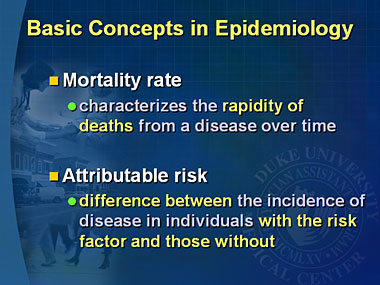
Taking inspiration from the field of epidemiology, this method seeks to establish the Fractional Attributable Risk (FAR) of an extreme weather (or short-term climate) event. It asks the counterfactual question, ‘How might the risk of a weather event be different in the presence of a specific causal agent in the climate system?’

The single observational record available to us, and which is analysed in the statistical methods described above, is inadequate for this task. The solution is to use multiple model simulations of the climate system, first of all without the forcing agent(s) accused of ‘causing’ the weather event and then again with that external forcing introduced into the model.

The credibility of this method of weather attribution can be no greater than the overall credibility of the climate model(s) used – and may be less, depending on the ability of the model in question to simulate accurately the precise weather event under consideration at a given scale (e.g. a heatwave in continental Europe, a rain event in northern Thailand) (see Christidis et al., 2013a).

4. Eco-systems Philosophy
A fourth, more philosophical, approach to weather event attribution should also be mentioned. This is the argument that since human influences on the climate system as a whole are now clearly established – through changing atmospheric composition, altered land surface characteristics, and so on – there can no longer be such a thing as a purely natural weather event. All weather — whether it be a raging tempest or a still summer afternoon — is now attributable to human influence, at least to some extent. Weather is the local and momentary expression of a complex system whose functioning as a system is now different to what it would otherwise have been had humans not been active.

Results from Weather Attribution Studies

Hulme provides a table of numerous such studies using various methods, along with his view of the findings.

It is likely that attribution of temperature-related extremes using FAR methods will always be more attainable than for other meteorological extremes such as rainfall and wind, which climate models generally find harder to simulate faithfully at the spatial scales involved. As discussed below, this limitation on which weather events and in which regions attribution studies can be conducted will place important constraints on any operational extreme weather attribution system.

Political Dimensions of Weather Attribution

Hulme concludes by discussing the political hunger for scientific proof in support of policy actions.

But Hulme et al. (2011) show why such ambitious claims are unlikely to be realised. Investment in climate adaptation, they claim, is most needed “… where vulnerability to meteorological hazard is high, not where meteorological hazards are most attributable to human influence” (p.765). Extreme weather attribution says nothing about how damages are attributable to meteorological hazard as opposed to exposure to risk; it says nothing about the complex political, social and economic structures which mediate physical hazards.

And separating weather into two categories — ‘human-caused’ weather and ‘tough-luck’ weather – raises practical and ethical concerns about any subsequent investment allocation guidelines which excluded the victims of ‘tough-luck weather’ from benefiting from adaptation funds.

Contrary to the claims of some weather attribution scientists, the loss and damage agenda of the UNFCCC, as it is currently emerging, makes no distinction between ‘human-caused’ and ‘tough-luck’ weather. “Loss and damage impacts fall along a continuum, ranging from ‘events’ associated with variability around current climatic norms (e.g., weather-related natural hazards) to [slow-onset] ‘processes’ associated with future anticipated changes in climatic norms” (Warner et al., 2012:21). Although definitions and protocols have not yet been formally ratified, it seems unlikely that there will be a role for the sort of forensic science being offered by extreme weather attribution science.

Conclusion

Thank you Mike Hulme for a sane, balanced and expert analysis. It strikes me as being another element in a “Quiet Storm of Lucidity”.

Is that light the end of the tunnel or an oncoming train?

Ice Bound Northwest Passage

August 23, 2018 . At least 22 vessels are affected and several have turned back to Greenland.

From the Northwest Passage Blog:
Good morning,
Due to heavier than normal ice concentrations in the Canadian arctic waters north of 70 degrees, the Canadian Coast Guard, recommends that pleasure craft do not navigate in the Beaufort Sea, Barrow, Peel Sound, Franklin Strait and Prince Regent. CCG icebreakers cannot safely escort pleasure craft. Operators of pleasure craft considering a northwest passage should also consider the risk of having to winter in a safe haven in the Arctic, or in the case of an emergency, be evacuated from beset vessels. Safety of mariners is our primary concern.
REGARDS,
NORDREG CANADA

August 26:  FRANKLIN continues to improve with less ice and could be open by the first full week of September.