Hot Air about Arctic Ice

We are currently treated to another expose of the Climate Scare Machine doing its job. Perhaps you’ve seen these eyeball-grabbing headlines in the last week.
Freak storm in North Atlantic to lash UK, may push temperatures over 50 degrees above normal at North Pole @Washington Post
Arctic ‘heatwave’ hits the North Pole: Storm Frank causes temperatures to soar by 60°F taking the icy region close to melting point @Daily Mail
Arctic ‘heat wave’ sets new record low for sea ice @The Weather Network
These rumor mills start with a factoid, in this case an unusual weather event. Then some know-nothing “journalists” look for quotes from scientists who should know better, but want to grab attention with a sound-bite. Then the editors are off to the races making up headlines to raise circulations and advertising rates.
So, there was a storm called Frank, and it did push warm, moist air toward the North Pole. From NSIDC (here)
The event was linked to the combination of a very strong low pressure system near Iceland and a somewhat less intense low pressure system located near the North Pole. . . This created a strong, deep inflow of warm, moist air into the Arctic Ocean’s high latitudes. The low near Iceland strengthened rapidly in the last days of December, reaching a minimum pressure of 935 millibars, equivalent to a hurricane. While the event was remarkable and may account for the slow ice growth during the first few days of January 2016, it was short lived and is unlikely to have any long-term effects on the sea ice cover.
And yes, there was a pause in the rate of ice growth in December.
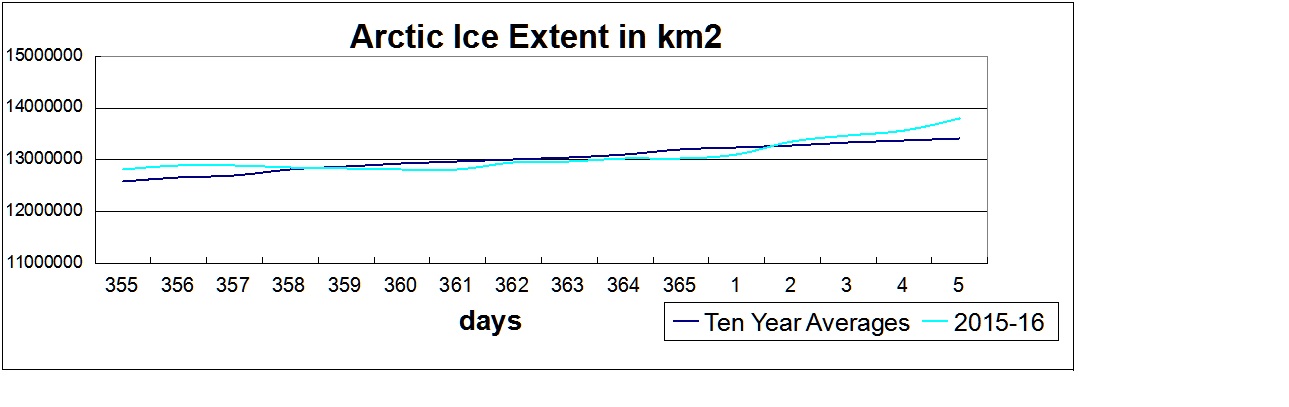
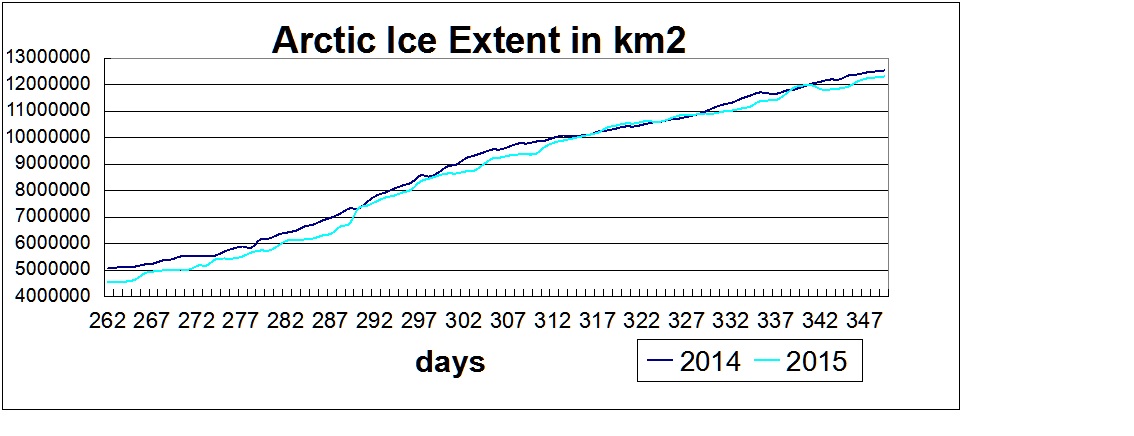
Here is MASIE data for the last 16 days (Dec. 21 through Jan. 5) compared to averages for the last decade. You can see the pause, and then the acceleration of ice growth in 2016, moving almost 400k km2 above average.
Conclusion:
Do not trust mass media for unbiased reporting of climate news.
And they are pulling the same trick, hoping to melt the Greenland ice sheet by blowing hot air over it. What you need to know: Greenland is Melting! Really?
About MASIE produced by NIC (from NSIDC)
The NSIDC Sea Ice Index ice extent is widely used, but the edge position can be off by 10s or in some cases 100s of kilometers. NIC produces a better ice edge product, but it does not reach the same audience as the Sea Ice Index.
In June 2014, we decided to make the MASIE product available back to 2006. This was done in response to user requests, and because the IMS product output, upon which MASIE is based, appeared to be reasonably consistent.
Footnote:
Maybe if all that hot air could be captured, it could be useful, like this:

But wait! That hot air appears to be rising, rather descending to melt the ice. Hmmm.

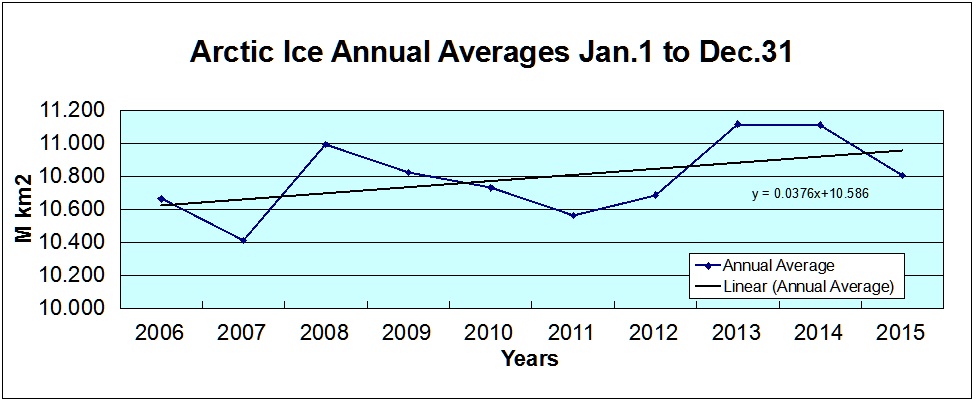



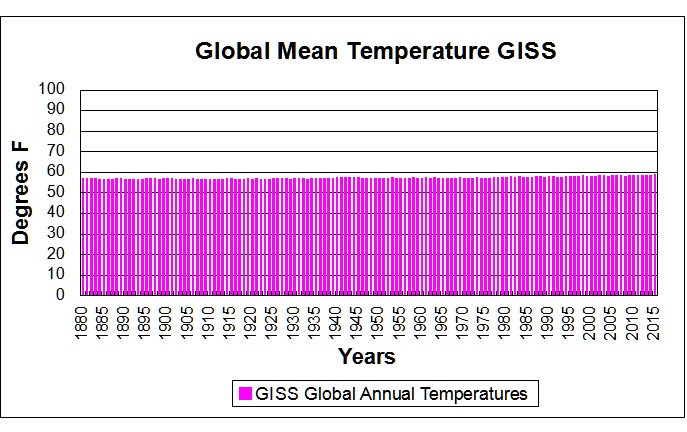
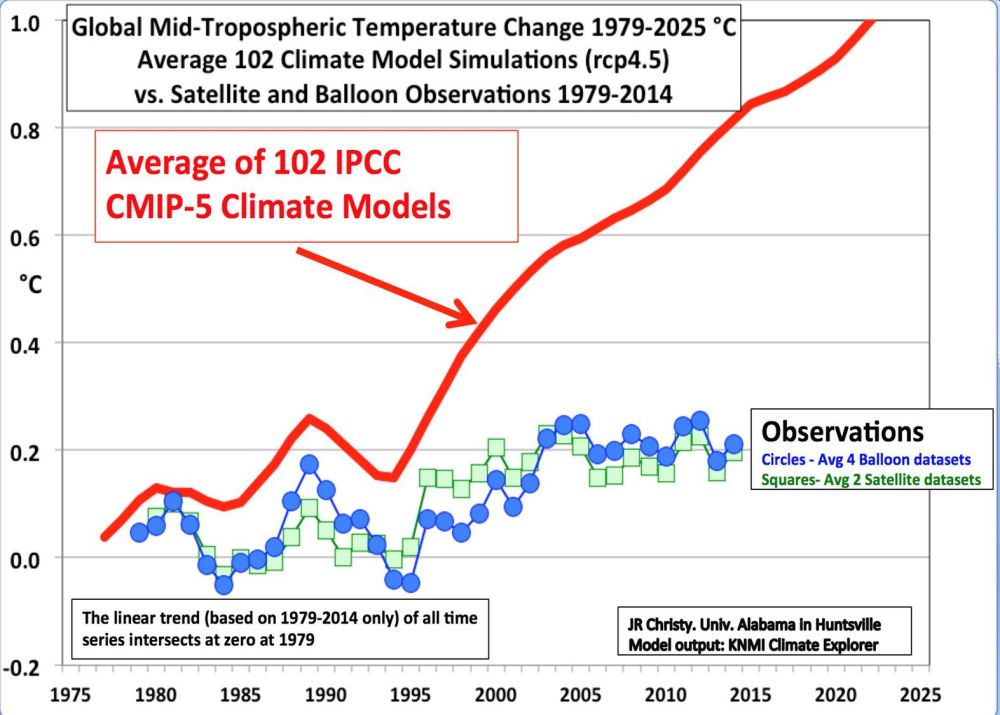
















 Science Matters