May Day: Appeals Court Rules Against Kids’ Climate Lawsuit

Update May 1, 2024

Ninth Circuit Court of Appeals grants Federal government’s petition for writ of mandamus in the case of Juliana v. United States, originally filed in 2015.  Ruling excerpts are below in italics with my bolds. 20240501_docket-24-684_order

In the underlying case, twenty-one plaintiffs (the Juliana plaintiffs) claim that—by failing to adequately respond to the threat of climate change—the government has violated a putative “right to a stable climate system that can sustain human life.” Juliana v. United States, No. 6:15-CV-01517-AA, 2023 WL 9023339, at *1 (D. Or. Dec. 29, 2023). In a prior appeal, we held that the Juliana plaintiffs lack Article III standing to bring such a claim. Juliana v. United States, 947 F.3d 1159, 1175 (9th Cir. 2020). We remanded with instructions to dismiss on that basis. Id. The district court nevertheless allowed amendment, and the government again moved to dismiss. The district court denied that motion, and the government petitioned for mandamus seeking to enforce our earlier mandate. We have jurisdiction to consider the petition. See 28 U.S.C. § 1651. We grant it.

In the prior appeal, we held that declaratory relief was “not substantially likely to mitigate the plaintiffs’ asserted concrete injuries.” Juliana, 947 F.3d at 1170. To the contrary, it would do nothing “absent further court action,” which we held was unavailable. Id. We then clearly explained that Article III courts could not “step into the[] shoes” of the political branches to provide the relief the Juliana plaintiffs sought. Id. at 1175. Because neither the request for declaratory relief nor the request for injunctive relief was justiciable, we “remand[ed] th[e] case to the district court with instructions to dismiss for lack of Article III standing.” Id. Our mandate was to dismiss.

The district court gave two reasons for allowing amendment. First, it concluded that amendment was not expressly precluded. Second, it held that intervening authority compelled a different result. We reject each.
The first reason fails because we “remand[ed] . . . with instructions to dismiss for lack of Article III standing.” Id. Neither the mandate’s letter nor its spirit left room for amendment. See Pit River Tribe, 615 F.3d at 1079.

The second reason the district court identified was that, in its view, there was an intervening change in the law. District courts are not bound by a mandate when a subsequently decided case changes the law. In re Molasky, 843 F.3d 1179, 1184 n.5 (9th Cir. 2016). The case the court identified was Uzuegbunam v. Preczewski, which “ask[ed] whether an award of nominal damages by itself can redress a past injury.” 141 S. Ct. 792, 796 (2021). Thus, Uzuegbunam was a damages case which says nothing about the redressability of declaratory judgments. Damages are a form of retrospective relief. Buckhannon Bd. & Care Home v. W. Va. Dep’t of Health & Human Res., 532 U.S. 598, 608–09 (2001). Declaratory relief is prospective. The Juliana plaintiffs do not seek damages but seek only prospective relief. Nothing in Uzuegbunam changed the law with respect to prospective relief.

We held that the Juliana plaintiffs lack standing to bring their claims and told the district court to dismiss. Uzuegbunam did not change that. The district court is instructed to dismiss the case forthwith for lack of Article III standing, without leave to amend.

Background July 2023: Finally, a Legal Rebuttal on the Merits of Kids’ Climate Lawsuit

As reported last month, the Oregon activist judge invited the plaintiffs in Juliana vs US to reopen that case even after the Ninth Circuit shot it down.  Now we have a complete and thorough Motion from the defendant (US government) to dismiss this newest amended complaint.  Most interesting is the section under the heading starting on page 30.  Excerpts in italics with my bolds and added images.

Plaintiffs’ Claims Fail on the Merits

Because Plaintiffs’ action fails at the jurisdictional threshold, the Ninth Circuit never reached—and this Court need not reach—the merits of the claims. . . Plaintiffs’ second amended complaint, which supersedes the first amended complaint, asserts the same claims that were brought in the first amended complaint, which this Court addressed in orders that the Ninth Circuit reversed. Defendants thus renew their objection that Plaintiffs’ claims fail on the merits and should be dismissed pursuant to Fed. R. Civ. P. 12(b)(6).
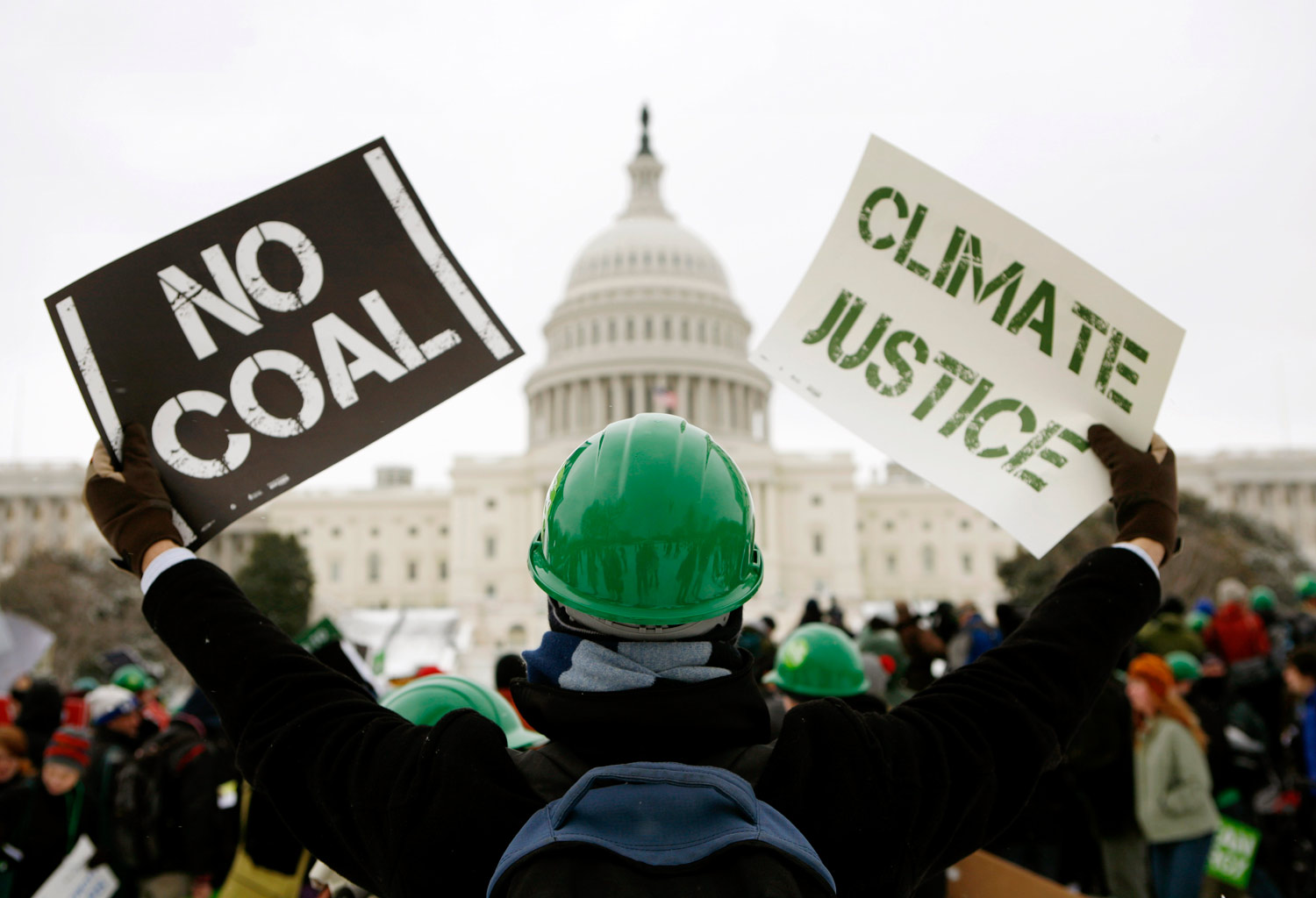
A. There is no constitutional right to a stable climate system.

The Supreme Court has repeatedly instructed courts considering novel due process claims
to “‘exercise the utmost care whenever . . . asked to break new ground in this field,’… lest the liberty protected by the Due Process Clause be subtly transformed” into judicial policy preferences. More specifically, the Supreme Court has “regularly observed that the Due Process Clause specially protects those fundamental rights and liberties which are, objectively, ‘deeply rooted in this Nation’s history and tradition.’”  Plaintiffs’ request that this Court recognize an implied fundamental right to a stable climate system contradicts that directive, because such a purported right is without basis in the Nation’s history or tradition.

The proposed right to a “stable climate system” is nothing like any fundamental right ever recognized by the Supreme Court. The state of the climate is a public and generalized issue, and so interests in the climate are unlike the particularized personal liberty or personal privacy interests of individuals the Supreme Court has previously recognized as being protected by fundamental rights.  “[W]henever federal courts have faced assertions of fundamental rights to a ‘healthful environment’ or to freedom from harmful contaminants, they have invariably rejected those claims.”. Plaintiffs’ First Claim for Relief must be dismissed.

B.  Plaintiffs fail to allege a cognizable state-created danger claim.

The First Claim for Relief must also be dismissed because the Constitution does not impose an affirmative duty to protect individuals, and Plaintiffs have failed to allege a cognizable claim under the “state-created danger” exception to that rule.
As a general matter:

[The Due Process Clause] is phrased as a limitation on the State’s power to act, not as a guarantee of certain minimal levels of safety and security. It forbids the State itself to deprive individuals of life, liberty, or property without “due process of law,” but its language cannot fairly be extended to impose an affirmative obligation on the State to ensure that those interests do not come to harm through other means.

Thus, the Due Process Clause imposes no duty on the government to protect persons from harm inflicted by third parties that would violate due process if inflicted by the government.

Plaintiffs contend that the government’s “deliberate actions” and “deliberate indifference” with regard to the dangers of climate change amount to a due process violation under the state-created danger exception.

First, Plaintiffs have identified no harms to their “personal security or bodily integrity” of the kind and immediacy that qualify for the state-created danger exception. . . But here, Plaintiffs allege that general degradation of the global climate has harmed their “dignity, including their capacity to provide for their basic human needs, safely raise families, practice their religious and spiritual beliefs, [and] maintain their bodily integrity” and has prevented them from “lead[ing] lives with access to clean air, water, shelter, and food.”  Those types of harm are unlike the immediate, direct, physical, and personal harms at issue in the above-cited cases.

Second, Plaintiffs identify no specific government actions—much less government actors—that put them in such danger. Instead, Plaintiffs contend that a number of (mostly unspecified) agency actions and inactions spanning the last several decades have exposed them to harm. This allegation of slowly-recognized, long-incubating, and generalized harm by itself conclusively distinguishes their claim from all other state-created danger cases recognized by the Ninth Circuit.

Third, Plaintiffs do not allege that government actions endangered Plaintiffs in particular. . . As explained above, Plaintiffs’ asserted injuries arise from a diffuse, global phenomenon that affects every other person in their communities, in the United States, and throughout the world.

For all these reasons, there is no basis for finding a violation of Plaintiffs’ due process right under the state-created danger doctrine, and Plaintiffs’ corresponding claim must be dismissed.
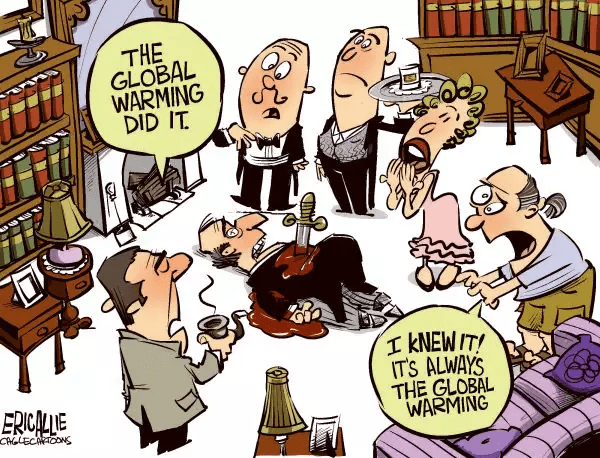
C. No federal public trust doctrine creates a right to a stable climate system.

Plaintiffs’ Fourth Claim for Relief, asserting public trust claims, should be dismissed for two independent reasons. First, any public trust doctrine is a creature of state law that applies narrowly and exclusively to particular types of state-owned property not at issue here. That doctrine has no application to federal property, the use and management of which is entrusted exclusively to Congress. . .Consequently, there is no basis for Plaintiffs’ public trust claim against the federal government under federal law.

Second, the “climate system” or atmosphere is not within any conceivable federal public trust.

1. No public trust doctrine binds the federal government.

Plaintiffs rely on an asserted public trust doctrine for the proposition that the federal government must “take affirmative steps to protect” “our country’s life-sustaining climate system,” which they assert the government holds in trust for their benefit.  But because any public trust doctrine is a matter of state law only, public trust claims may not be asserted against the federal government under federal law. . . The Supreme Court has without exception treated public trust doctrine as a matter of state law with no basis in the United States Constitution.

2. Any public trust doctrine would not apply to the “climate system” or the atmosphere.

Independently, any asserted public trust doctrine does not help Plaintiffs here. Public trust cases have historically involved state ownership of specific types of natural resources, usually limited to submerged and submersible lands, tidelands, and waterways. . . The climate system or atmosphere is unlike any resource previously deemed subject to a public trust. It cannot be owned and, due to its ephemeral nature, cannot remain within the jurisdiction of any single government. No court has held that the climate system or atmosphere is protected by a public trust doctrine. Indeed, the concept has been widely rejected.

For all these reasons, the Court should dismiss Plaintiffs’ Fourth Claim for Relief.

Background Post Update on Zombie Kids Climate Lawsuits: (Juliana vs. US) (Held vs Montana)


April 2024 Arctic Ice Seesaw

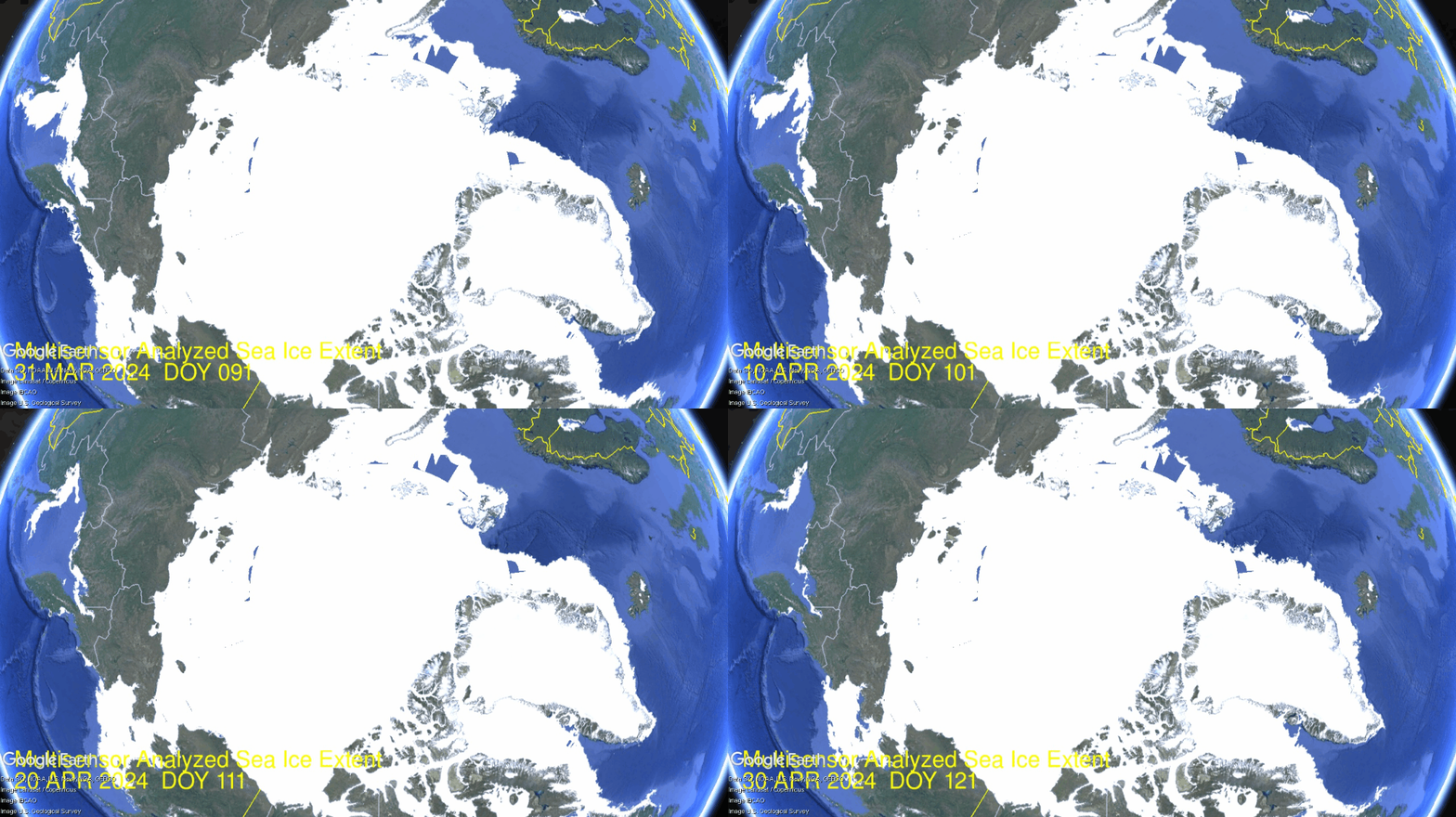
In April, most of the Arctic ocean basins are still frozen over, and so the melting of ice extent begins in the marginal regions.   According to MASIE, April on average loses 1.1M km2, and this month it was 1.4M. However, April 2024 started well above average, slipped into deficit and ended up above normal. The few basins where open water appears this time of year tend to fluctuate and alternate waxing and waning, which appears as a see saw pattern in these images.

On the left is the Pacific seesaw with Bering below and Okhotsk above.  This year Okhotsk melted out rapidly, and at the end held only 181k km2, 14% of its March maximum.  Meanwhile Bering waffled up and down and retained ~60% (444k km2) of its max ice at the end. The Atlantic seesaw is Barents top center and Baffin on the right below Greenland.  Barents also waffled but lost no ice extent until the last week, ending up with 666k km2 (76% of its max). Baffin fluctuated before ending down to 1.06M (72% of its. max.).

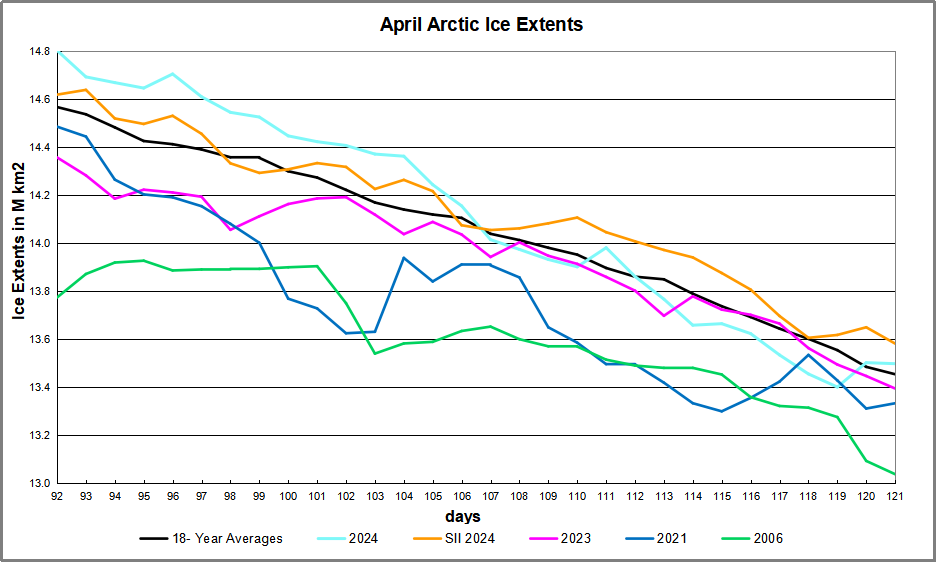
While the bulk of the Arctic is frozen solid, the melting has started with the seesaws tilting back and forth in the four regions noted above.  The graph below shows the April patterns for ice extents on average, this year and some other years of note.

The graph shows the 18-year average loss for April is 1.1M km2.  2024 started with 236k km2 surplus ice extent and ended 44k km2 above average.  SII showed lower extents the first half, and greater extents the latter half, ending with a small surplus to MASIE.  Other recent years have been nearly average, while 2006 ended with a large deficit.

Region 2024121 Day 121 Ave 2024-Ave. 2006121 2024-2006
 (0) Northern_Hemisphere 13498263 13454328 43935 13037927 460336
 (1) Beaufort_Sea 1070983 1068053 2931 1067609 3374
 (2) Chukchi_Sea 965784 956102 9682 965302 483
 (3) East_Siberian_Sea 1087137 1085711 1426 1083591 3546
 (4) Laptev_Sea 897845 890453 7392 896455 1390
 (5) Kara_Sea 930744 909660 21084 911941 18803
 (6) Barents_Sea 666436 539906 126530 366229 300207
 (7) Greenland_Sea 790758 648904 141854 533678 257079
 (8) Baffin_Bay_Gulf_of_St._Lawrence 1060935 1195567 -134633 1037524 23411
 (9) Canadian_Archipelago 854860 849541 5320 843395 11465
 (10) Hudson_Bay 1242383 1236594 5789 1178518 63865
 (11) Central_Arctic 3232686 3231036 1651 3098989 133698
 (12) Bering_Sea 495771 459644 36127 639162 -143391
 (13) Baltic_Sea 19703 44493 -24791 29017 -9314
 (14) Sea_of_Okhotsk 180662 610735 -430073 381798 -201136

The table shows regional ice extents in km2.  Note the huge deficit in Okhotsk and a smaller deficit in Baffin.  Everywhere else is in surplus, especially the seas of Barents, Greenland and Bering.  2006 had 460k km2 less ice extent (nearly half a Wadham) than 2024.

The polar bears had a Valentine Day’s wish for Arctic Ice.

welovearcticicefinal

And Arctic Ice loves them back, returning every year so the bears can roam and hunt for seals.

Footnote:

Seesaw accurately describes Arctic ice in another sense:  The ice we see now is not the same ice we saw previously.  It is better to think of the Arctic as an ice blender than as an ice cap, explained in the post The Great Arctic Ice Exchange.

2024 To Be the Hottest Ever? Hold On!

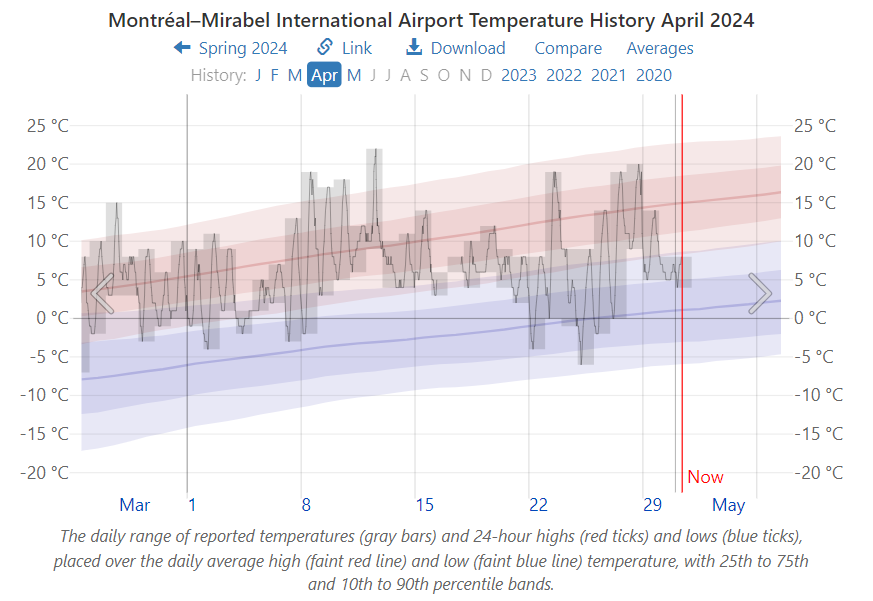
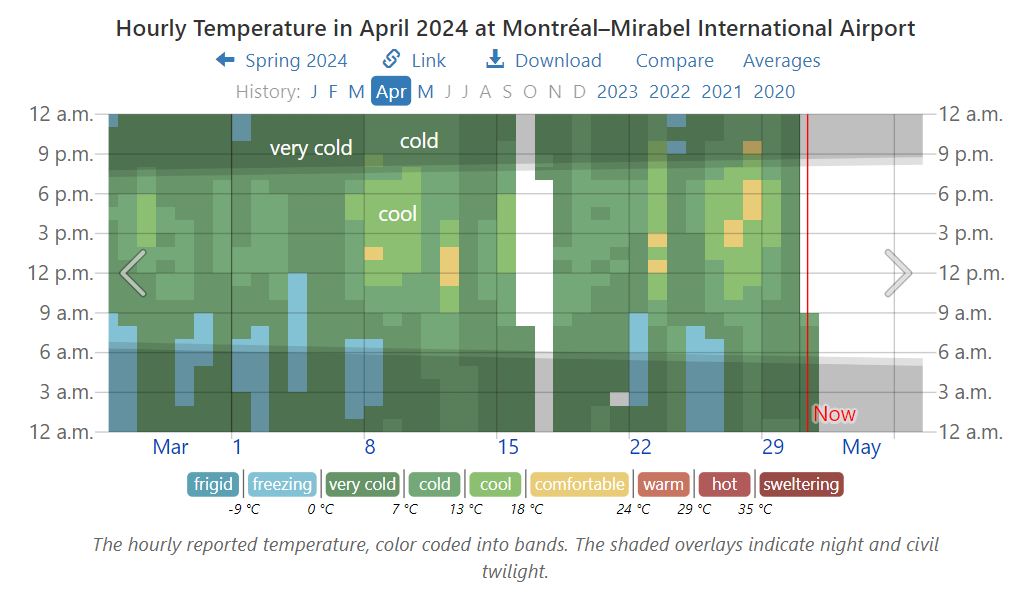
For sure you’ve seen the headlines declaring 2024 likely to be the Hottest year ever.  If you’re like me, your response is: That’s not the way it’s going down where I live.  Fortunately there is a website that allows anyone to check their personal experience with the weather station data nearby.  weatherspark.com provides data summaries for you to judge what’s going on in weather history where you live.  In my case a modern weather station is a few miles away  April 2024 Weather History at Montréal–Mirabel International Airport.  The story about April 2024 is evident below in charts and graphs from this site.  There’s a map that allows you to find your locale.

First, consider above the norms for April from the period 1980 to 2016.

Then, there’s April 2024 compared to the normal observations.

The graph shows April had some warm days, some cool days and overall was pretty normal.  But since climate is more than temperature, consider cloudiness.

Woah!  Most of the month was cloudy, which in spring means blocking the warming sun from hitting the surface.   And with all those clouds, let’s look at precipitation:

So, a major snowstorm April 3-4, 12 days when it rained, including heavy rain, and a couple of thunderstorms.  Given what we know about the hydrology cycles, that means a lot of heat removed upward from the surface.

So the implications for April temperatures in my locale.

There you have it before your eyes. Mostly Cool, Cold and
Very Cold, with freezing on numerous mornings.
Only five days with a few hours of comfortable temperatures.

Summary:

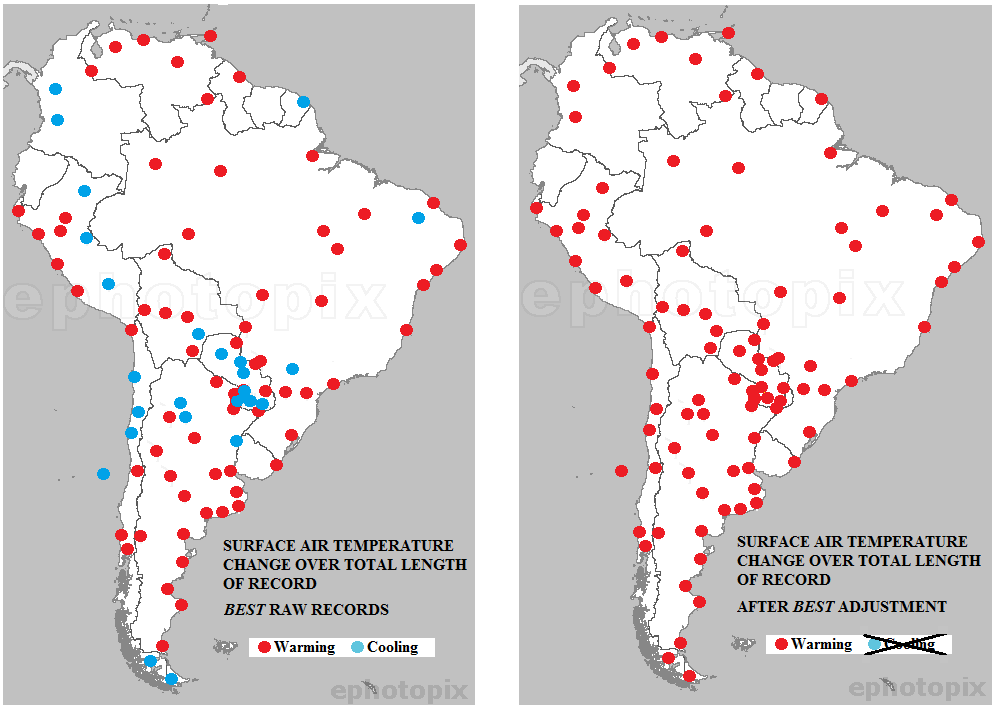
Claims of hottest this or that month or year are based on averages of averages of temperatures, which in principle is an intrinsic quality and distinctive to a locale.  The claim involves selecting some places and time periods where warming appears, while ignoring other places where it has been cooling.

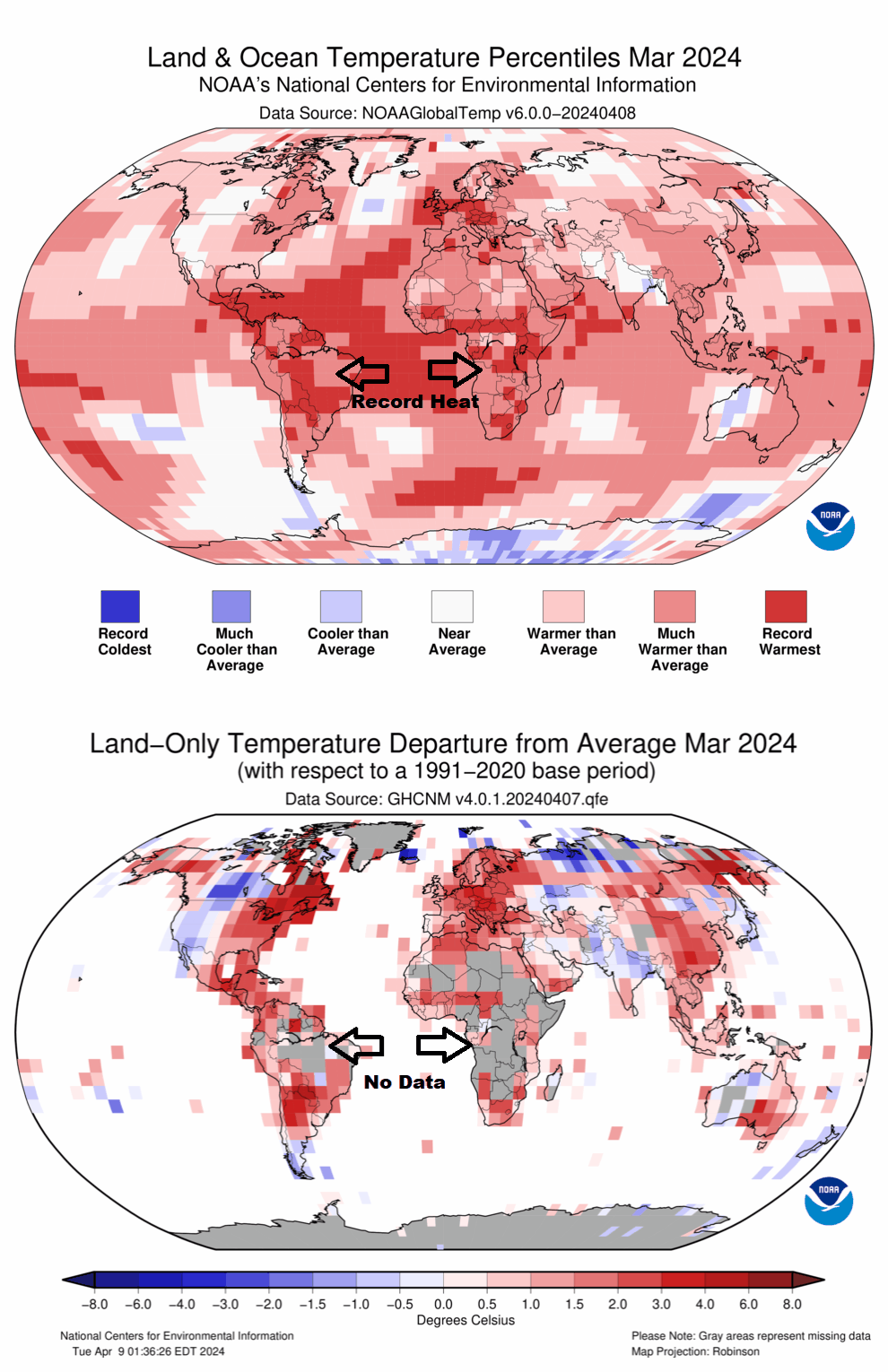
Remember:  They want you to panic.  Before doing so, check out what the data says in your neck of the woods.  For example, NOAA declared that March 2024 was “Earth’s Warmest March on Record.”


Wake Up: Energy Transition Not Happening

Wind and Solar The Grand Illusion

Mark Mills explains the many ways the deck is stacked against those gambling on Wind and Solar energy to replace hydrocarbon fuels.  The transcript is below in italics with my bolds and added images.

Have you ever heard of “unobtanium”?

It’s the magical energy mineral found on the planet Pandora in the movie, Avatar. It’s a fantasy in a science fiction script. But environmentalists think they’ve found it here on earth in the form of wind and solar power.

They think all the energy we need can be supplied by building enough wind and solar farms; and enough batteries.

The simple truth is that we can’t. Nor should we want to—not if our goal is to be good stewards of the planet.

To understand why, consider some simple physics
realities that aren’t being talked about.

All sources of energy have limits that can’t be exceeded. The maximum rate at which the sun’s photons can be converted to electrons is about 33%. Our best solar technology is at 26% efficiency. For wind, the maximum capture is 60%. Our best machines are at 45%.

So, we’re pretty close to wind and solar limits. Despite PR claims about big gains coming, there just aren’t any possible. And wind and solar only work when the wind blows and the sun shines. But we need energy all the time. The solution we’re told is to use batteries.

Again, physics and chemistry make this very hard to do.

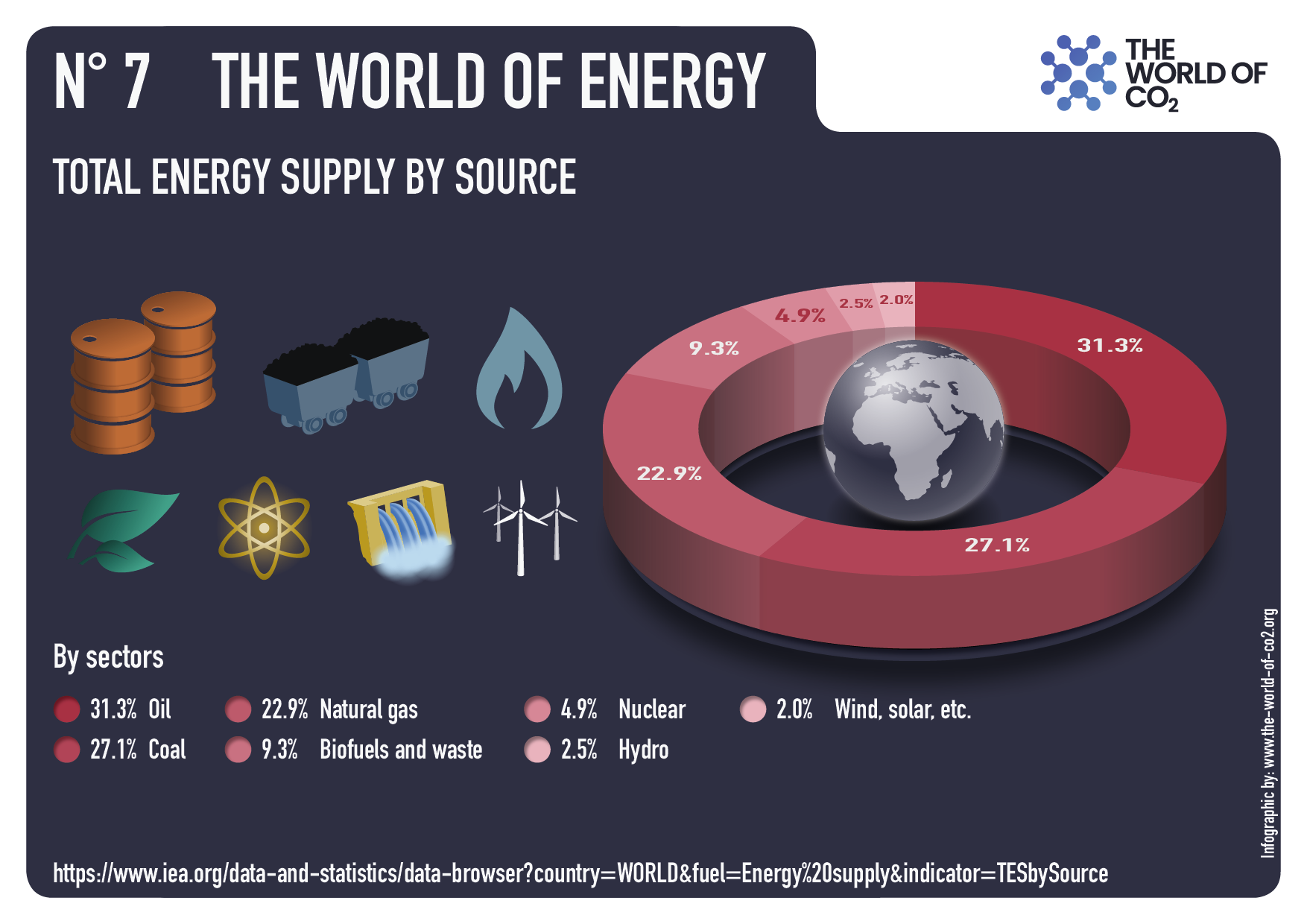
Consider the world’s biggest battery factory, the one Tesla built in Nevada. It would take 500 years for that factory to make enough batteries to store just one day’s worth of America’s electricity needs. This helps explain why wind and solar currently still supply less than 3% of the world’s energy, after 20 years and billions of dollars in subsidies.

Putting aside the economics, if your motive is to protect the environment, you might want to rethink wind, solar, and batteries because, like all machines, they’re built from nonrenewable materials.

Consider some sobering numbers:

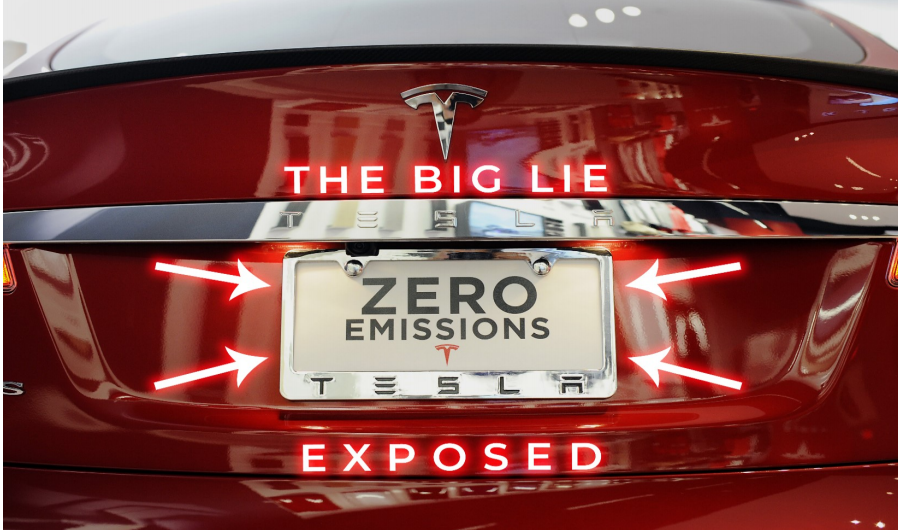
A single electric-car battery weighs about half a ton. Fabricating one requires digging up, moving, and processing more than 250 tons of earth somewhere on the planet.

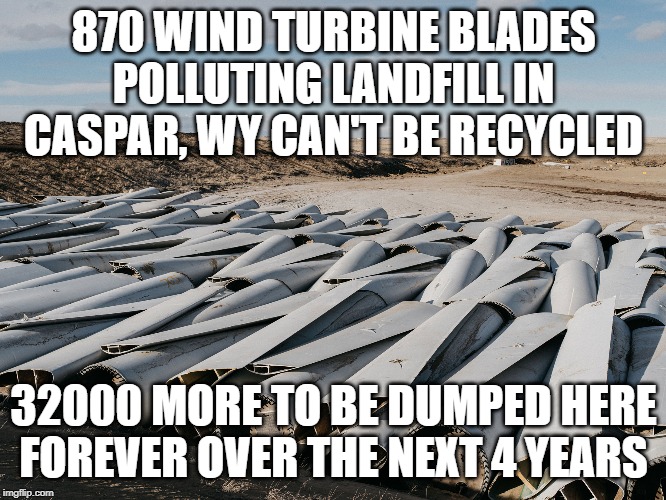
Building a single 100 Megawatt wind farm, which can power 75,000 homes requires some 30,000 tons of iron ore and 50,000 tons of concrete, as well as 900 tons of non-recyclable plastics for the huge blades. To get the same power from solar, the amount of cement, steel, and glass needed is 150% greater.

Then there are the other minerals needed, including elements known as rare earth metals. With current plans, the world will need an incredible 200 to 2,000 percent increase in mining for elements such as cobalt, lithium, and dysprosium, to name just a few.

Where’s all this stuff going to come from? Massive new mining operations. Almost none of it in America, some imported from places hostile to America, and some in places we all want to protect.

Australia’s Institute for a Sustainable Future cautions that a global “gold” rush for energy materials will take miners into “…remote wilderness areas [that] have maintained high biodiversity because they haven’t yet been disturbed.”

And who is doing the mining? Let’s just say that they’re not all going to be union workers with union protections.

Amnesty International paints a disturbing picture: “The… marketing of state-of-the-art technologies are a stark contrast to the children carrying bags of rocks.”

And then the mining itself requires massive amounts of conventional energy, as do the energy-intensive industrial processes needed to refine the materials and then build the wind, solar, and battery hardware.

Then there’s the waste. Wind turbines, solar panels, and batteries have a relatively short life; about twenty years. Conventional energy machines, like gas turbines, last twice as long.

With current plans, the International Renewable Energy Agency calculates that by 2050, the disposal of worn-out solar panels will constitute over double the tonnage of all of today’s global plastic waste. Worn-out wind turbines and batteries will add millions of tons more waste. It will be a whole new environmental challenge.

Before we launch history’s biggest increase in mining, dig up millions of acres in pristine areas, encourage childhood labor, and create epic waste problems, we might want to reconsider our almost inexhaustible supply of hydrocarbons—the fuels that make our marvelous modern world possible.

And technology is making it easier to acquire and cleaner to use them every day.

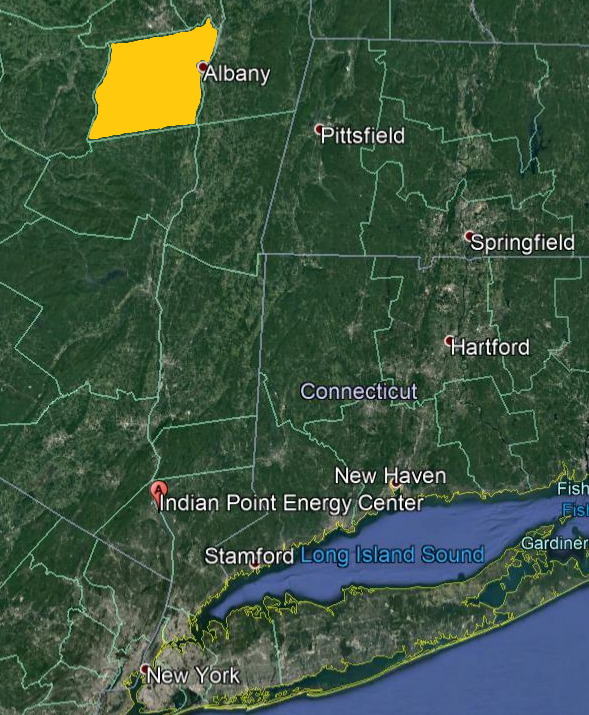
It would take a wind farm the size of Albany county NY to replace the now closed Indian Point nuclear power plant.

The following comparisons are typical—and instructive:

It costs about the same to drill one oil well as it does to build one giant wind turbine. And while that turbine generates the energy equivalent of about one barrel of oil per hour, the oil rig produces 10 barrels per hour. It costs less than 50 cents to store a barrel of oil or its equivalent in natural gas. But you need $200 worth of batteries to hold the energy contained in one oil barrel.

Next time someone tells you that wind, solar and batteries are
the magical solution for all our energy needs ask them
if they have an idea of the cost… to the environment.

“Unobtanium” works fine in the movies. But we don’t live in movies. We live in the real world.

I’m Mark Mills, Senior Fellow at the Manhattan Institute, for Prager University.

There is no charge for content on this site, nor for subscribers to receive email notifications of postings.

The Herd Shuns Climate Lunatics

Charles MacKay: “Men, it has been well said, think in herds; it will be seen that they go mad in herds, while they only recover their senses slowly, and one by one.”

Conrad Black writes at National Post Washing away the climate lunatics.  Excerpts in italics with my bolds and added images.

I have written here and elsewhere countless times before of the dangers of responding prematurely to alarmist concerns about climate change. Dr. Benny Peiser of the British Global Warming Policy Foundation spoke to the Friends of Science Society in Calgary earlier this month, warning that Europe’s extremist net zero carbon emission policies may get to Canada even though they are now running into extreme problems in Europe. The North American media has not much reported on the widespread and often violent farmer protests in Europe, which has caused every government that has been put to the test to scale back their aggressive climate change policies.

Tractors stand on a street during a protest by Belgian farmers over price pressures, taxes and green regulation, on the day of an EU agriculture ministers’ meeting in Brussels, Belgium March 26, 2024. REUTERS/Yves Herman/File Photo

For a long time, it was a political free lunch: everybody loves the environment, and the climate change issue was very skillfully transformed by the left into an assault on the capitalist system from a new angle in the name of saving the planet. As long as the heavy costs of displacing fossil fuels by so-called renewable energy were carefully disguised and diffused, everybody could wallow in collective self-praise for doing the healthy and environmentally responsible thing.

The burden of subsidized wind and solar farms didn’t appear on peoples’ energy bills, though eventually they were placed on the back of the taxpayer. Now, however, net zero policies are directly eating into the earnings and savings of the public and in most of Europe, the taxpayer rebellion is exploding, and the advantages of democracy are being reaffirmed as elected governments scamper to the rear, explaining that there has been a misunderstanding. When the German government tried to compel the people of that country to change their gas boilers for heat pumps at a cost of thousands of dollars per home, what critics called “boilergeddon,” it produced a so-called green-lash.

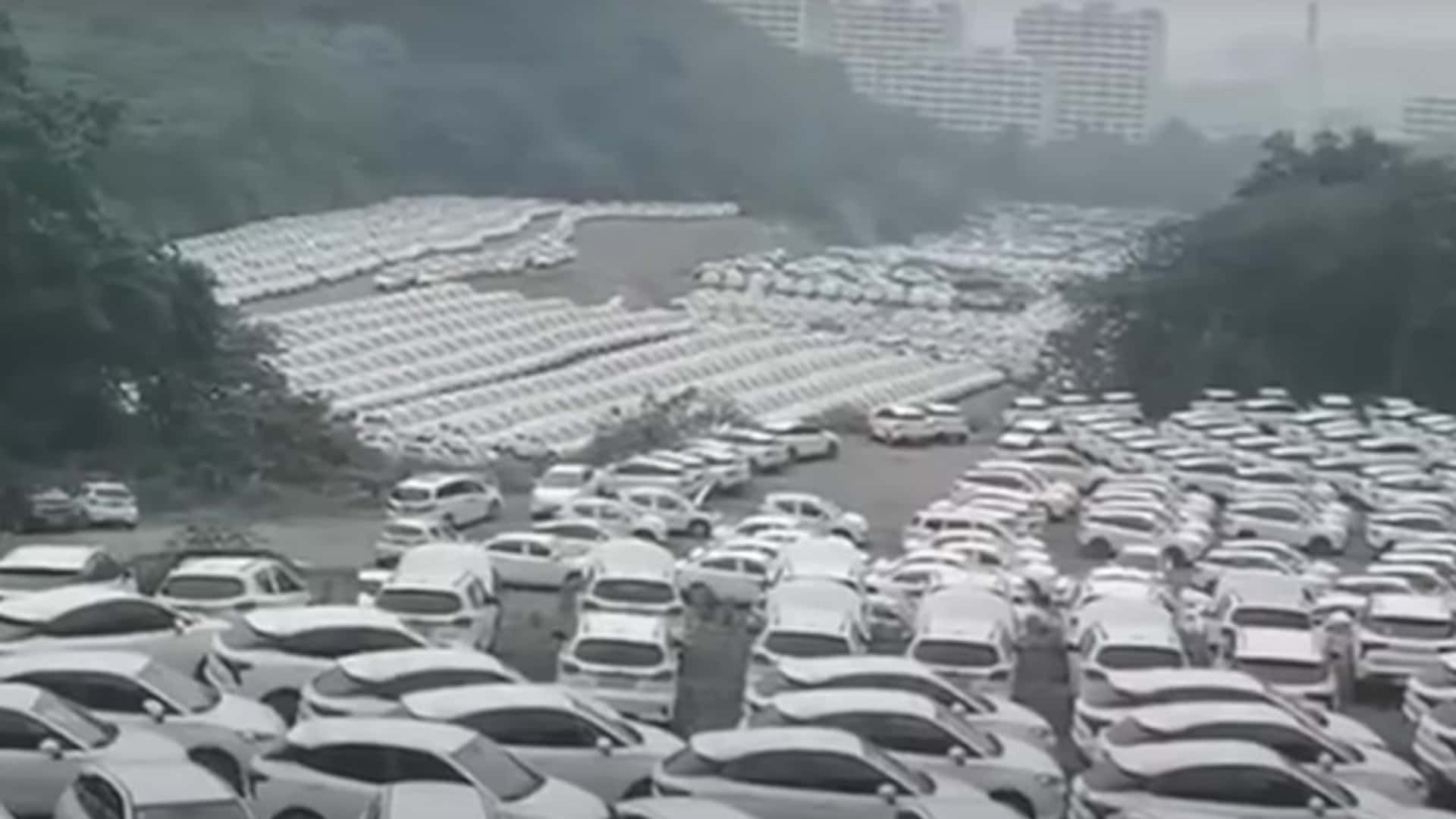
Another political disaster has befallen the western European governments that had rolled over like poodles in front of the climate change alarmists: once they had fully committed themselves to the boondoggle of electric vehicles (EV’s), and forced the powerful automobile industries of Germany, France, and Italy into conversion of gas powered vehicles to EV’s, sales of EV’s plummeted after the customary faddish start, just as much cheaper Chinese EV’s flooded into Europe. Germany and Italy forced the European Union into delaying its ill-considered ban on internal combustion engine vehicles past 2035. Those who jubilantly imagined that Europe would commit industrial suicide by destroying its own automobile industry, will have to revise their plans. There are now thousands of cheap Chinese EV’s parked at the main ports of Europe with no buyers in sight. As Dr. Peiser pointed out in Calgary, “If this was really about climate change, wouldn’t you want the cheapest EV’s, the cheapest wind, and solar, all from China?”

China’s Abandoned EV Graveyard: Thousands Of Cars Rot In Huge Fields

It is now clear in Europe, as it long has been in the private sector of the United States, that with whole industries and millions of jobs at stake, implementation of net zero policies in the West would make China the dominant economic and industrial power of the world. Even our most naïve and insipid global warming crusaders are unenthused by that bone-chilling prospect. Although Germany has finally acted to protect its auto industry, it is not yet doing the same for the public. It is still officially planning to ban weekend driving to meet climate targets. If the federal German government proceeds with such an insane plan, it will sink without a ripple at the next election.

There have even been some murmurings of emulation of this course in Canada; on Sept. 14, 2021, Journal Metro of Quebec proposed pre-emptively moving against a climate crisis by lockdown measures, an emulation of the Covid lockdown then ending, but including rations and limitations on personal travel. This proposal comes from the same sort of thinking that seeks to eliminate meat by a war on bovine flatulence.

Placid and docile toward virtue-posturing though Canadians are,
insane measures like these to mitigate climate change would surely
prove to be the funeral pyre of the coercive climate change terrorists.

For notorious historic reasons, Europe is always vulnerable to the madnesses and outrages of the left. The senior human rights court in Europe ruled three weeks ago in a lawsuit brought by 2000 elderly Swiss women against the Swiss government that it had violated the human rights of the plaintiffs by insufficiently mitigating climate change. Switzerland is a very small country but is responsible for between two and three per cent of global carbon dioxide emissions, while Canada, a huge country with a much larger population, emits only 1.5 per cent of global emissions, compared to 27 percent for China. The European Court of Human Rights crossed the jurisdictional Rubicon by overruling the voters of a democratic country.

The rationale for hurling millions of auto workers into unemployment and
shutting down Europe’s greatest industry in order to profit the Chinese
is a case that even the most ardent climate-zealots will find challenging.

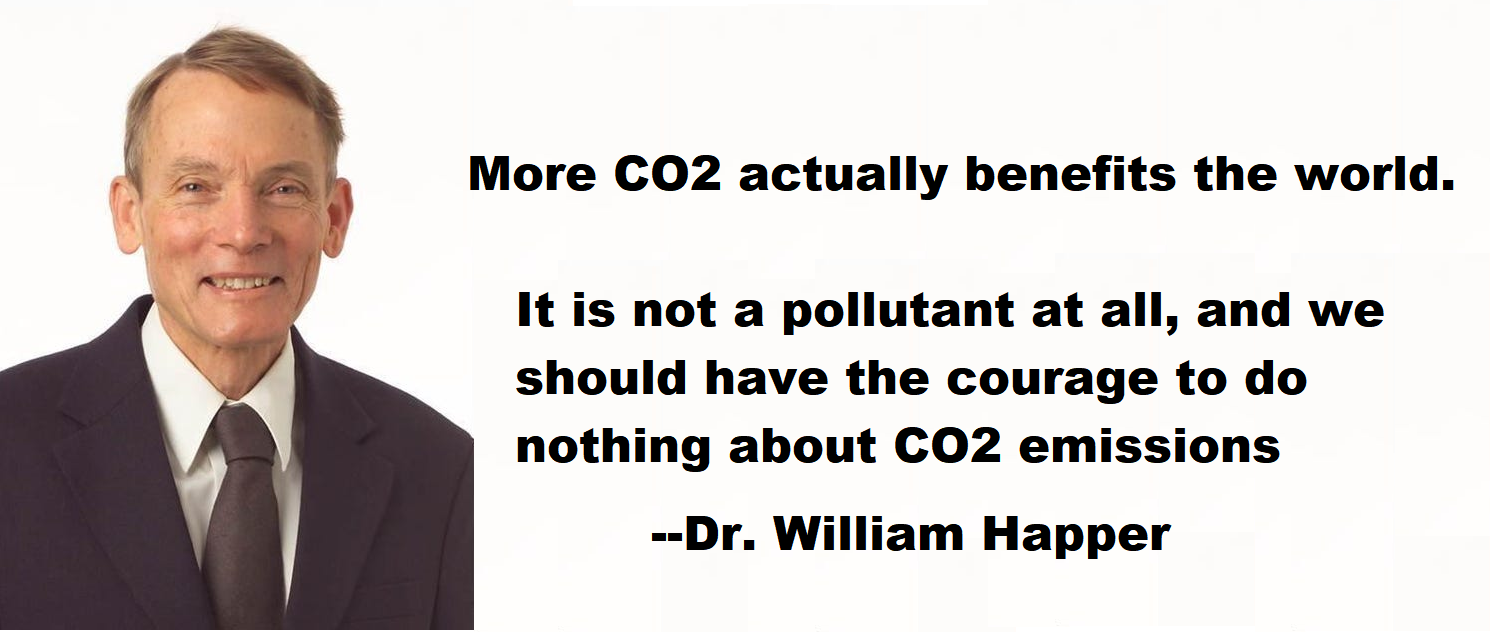
At the same time that the climate fanatics are encountering irresistible political headwinds, the intellectual arguments of the climate skeptics are becoming steadily more unanswerable. A brief filed with the court of appeals in The Hague in November by three eminent, American climate-related academics, Richard Lindzen of MIT, William Happer of Princeton, and Steven Koonin of New York University, the Hoover Institute, and former climate adviser to President Obama, challenged the finding of a lower court and held that scientific analysis, as opposed to an aggregation of “government opinion, consensus, peer review, and cherry-picked or falsified data,” shows that “Fossil fuels and CO2 will not cause dangerous climate change, there will be disastrous consequences for people worldwide if fossil fuels in CO2 emissions are reduced to net zero, including mass starvation.” They assert that the poor, future generations, and the entire West will suffer profoundly from any such policy. which “will undermine human rights and cripple the realization of the first three UN sustainable development goals-no poverty, zero hunger, and good health and well-being.”

The three experts warn against equating “the state of climate science with the reports of the Intergovernmental Panel on Climate Change,” which “have no value as science, because the IPCC is government-controlled and represents only government opinions, not science.” It also denounced the lower court verdict that “dangerous climate change and extreme weather are caused by CO2 emissions from fossil fuels… We demonstrate that these conclusions are contradicted by the scientific method, and only supported by the unscientific methods mentioned. Hundreds of research papers confirm the highly beneficial effects of the increased concentration of atmospheric CO2, especially in dry farming areas.”

They go on to represent the CO2 as essential to food, and thus to life on earth, and that the more there is of CO2, the more food there will be, especially in drought-stricken areas. They also make the case that greenhouse gases prevent us from freezing to death, that there are “enormous social benefits to fossil fuels and that net zero will expand human starvation by eliminating nitrogen fertilizer.”

This highly recondite and meticulously documented paper states that “600 million years of carbon dioxide in temperature data contradict the theory of catastrophic global warming being caused by high levels of CO2, and that the atmospheric CO2 is now heavily saturated, which means that more will have little warming effect.” Up until recently, the zealots pretended that such opinions are held only by the uninformed, or the paid lobbyists of the oil industry, but they are not going to be able to get away with this much longer The ranks of the critics are swelling every week with aggrieved members of the voting public distressed by completely unnecessary skyrocketing costs generated by the fear-mongering climate zealots.

With any luck, the tide of logical evidence will wash away the
climate lunatics of this country before the damage becomes irreparable.

Addendum:  Contents of Brief Filed at the Hague

Shell v. Milieudefensie et al. – Expert Opinion

I. THERE WILL BE DISASTROUS CONSEQUENCES FOR THE POOR, PEOPLE
WORLDWIDE, FUTURE GENERATIONS AND THE WEST IF FOSSIL FUELS AND
CO2 EMISSIONS ARE REDUCED TO “NET ZERO”

A. CO2 is Essential to Our Food, and Thus to Life on Earth
B. More CO2, Including CO2 from Fossil Fuels, Produces More Food.
C. More CO2 Increases Food in Drought-Stricken Areas.
D. Greenhouse Gases Prevent Us from Freezing to Death
E. Enormous Social Benefits of Fossil Fuels
F. “Net Zeroing” Fossil Fuels Will Cause Massive Human Starvation by
Eliminating Nitrogen Fertilizer

II. THE IPCC IS GOVERNMENT CONTROLLED AND THUS ONLY ISSUES
GOVERNMENT OPINIONS, NOT SCIENCE, THUS PROVIDES NO SCIENTIFIC
BASIS FOR THE COURT’S OPINION

III. SCIENCE DEMONSTRATES FOSSIL FUELS AND CO2 WILL NOT CAUSE
DANGEROUS CLIMATE CHANGE AND EXTREME WEATHER

A. Reliable Science is Based on Validating Theoretical Predictions With Observations,
Not Consensus, Peer Review, Government Opinion or Cherry-Picked or Falsified
Data
B. The Models Predicting Catastrophic Warming and Extreme Weather Fail the Key
Scientific Test: They Do Not Work, and Would Never Be Used in Science.
C. 600 Million Years of CO2 and Temperature Data Contradict the Theory That High
Levels of CO2 Will Cause Catastrophic Global Warming.
D. Atmospheric CO2 Is Now “Heavily Saturated,” Which in Physics Means More CO2
Will Have Little Warming Effect.
E. The Theory Extreme Weather is Caused by Fossil Fuels and CO2 is Contradicted by
the Scientific Method and Thus is Scientifically Invalid

Pope Francis Speaks as Climate Bigot

Thomas D. Williams, Ph.D. reports at Climate Change Dispatch Unchristian: Pope Francis Says Climate Deniers Are ‘Stupid’, Skepticism ‘Perverse’.  Excerpts in italics with my bolds and added images.

Pope Francis told CBS News this week that climate change deniers are “stupid” to refute compelling evidence of a climate emergency. [emphasis, links added]

“Some people are stupid (necios), and stupid even if you show them research, they don’t believe it,” the pontiff told CBS Evening News anchor Norah O’Donnell when asked what he would say to the deniers of climate change.  “Why? Because they don’t understand the situation, or because of their interests, but climate change exists,” the 87-year-old pope asserted.

Pope Francis had never before sat down for an extensive interview, one-on-one, with a U.S. television network during his 11-year pontificate.

Pope Francis has been a vocal enthusiast for the war on climate changecalling global warming “one of the most serious and worrying phenomena of our time” and urging “drastic measures” to combat climate change.

He has expressed his opinion that any skepticism regarding an alleged “climate emergency” is “perverse.”

The pope has also singled out the United States as particularly to blame for the “climate emergency,” even though it is one of the countries with the cleanest air in the world.

“If we consider that emissions per individual in the United States are about two times greater than those of individuals living in China and about seven times greater than the average of the poorest countries, we can state that a broad change in the irresponsible lifestyle connected with the Western model would have a significant long-term impact,” he stated last October.

Among the “fools” denounced by the pope for their “perverse” skepticism of the climate crisis are a group of over 1,600 prominent scientists, including two Nobel Prize winners, who issued the “World Climate Declaration” last August, refuting the existence of a so-called “climate emergency.”

Among other things, the Declaration asserted that climate models have proven inadequate for predicting global warming, that carbon dioxide (CO2) is not a pollutant, and that climate change has not increased natural disasters.

The world has warmed “significantly less than predicted by IPCC on the basis of modeled anthropogenic forcing,” the text states, and the gap between the real world and the modeled world “tells us that we are far from understanding climate change.”

There is no statistical evidence that global warming is intensifying hurricanesfloodsdroughts, and such like natural disasters, or making them more frequent,” the document declared. “However, there is ample evidence that CO2-mitigation measures are as damaging as they are costly.”

“There is no climate emergency,” it concluded. “Therefore, there is no cause for panic and alarm.

“We strongly oppose the harmful and unrealistic net-zero CO2 policy proposed for 2050. Go for adaptation instead of mitigation; adaptation works whatever the causes are,” it added.

IPCC Still Deceiving with the Hockey Stick

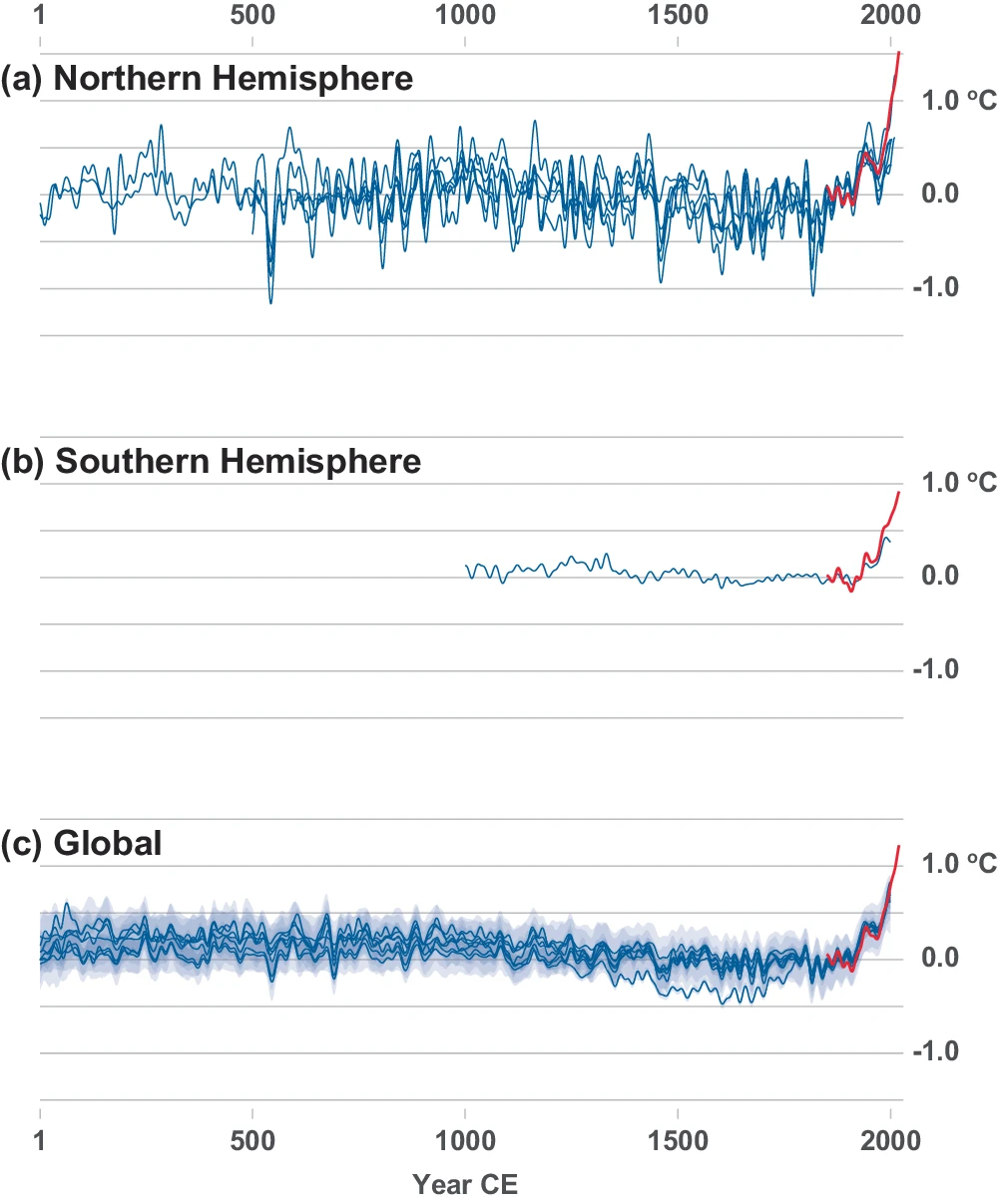
Fig. 1: Common Era temperature reconstructions
featured in IPCC reports since 2001.

Source Esper et al 2024  Note:  In each graph, instrumental global annual mean land and marine temperatures are shown in a red spike, while lower resolution proxy estimates are in blue.

Just published today at Nature Communications is this paper  The IPCC’s reductive Common Era temperature history  by Esper et al.  Excerpts in italics with my bolds and added images.

Abstract

Common Era temperature variability has been a prominent component in Intergovernmental Panel on Climate Change reports over the last several decades and was twice featured in their Summary for Policymakers. A single reconstruction of mean Northern Hemisphere temperature variability was first highlighted in the 2001 Summary for Policymakers, despite other estimates that existed at the time. Subsequent reports assessed many large-scale temperature reconstructions, but the entirety of Common Era temperature history in the most recent Sixth Assessment Report of the Intergovernmental Panel on Climate Change was restricted to a single estimate of mean annual global temperatures. We argue that this focus on a single reconstruction is an insufficient summary of our understanding of temperature variability over the Common Era. We provide a complementary perspective by offering an alternative assessment of the state of our understanding in high-resolution paleoclimatology for the Common Era and call for future reports to present a more accurate and comprehensive assessment of our knowledge about this important period of human and climate history.

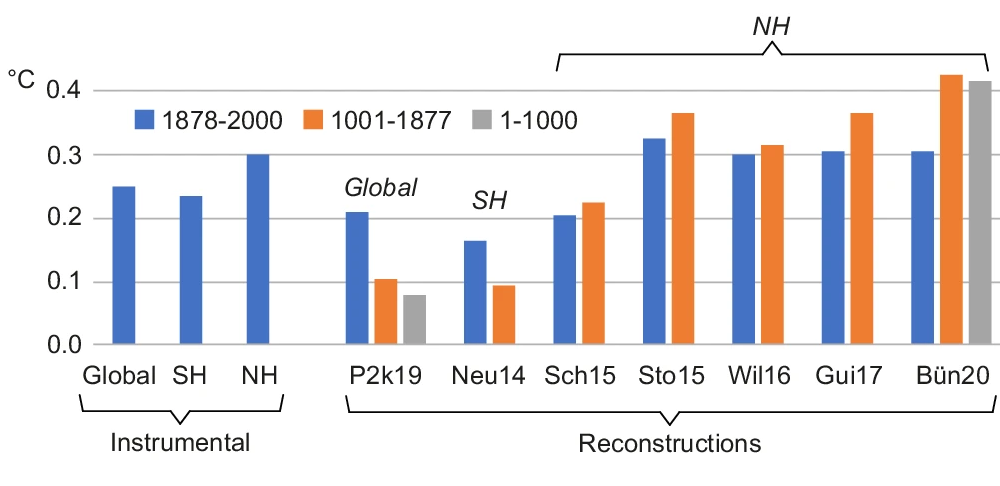
Fig. 5: Standard deviations in observed temperature data
and Common Era temperature reconstructions.

Estimates for the observed and reconstructed temperatures are determined over the 1878-2000 CE (blue), 1001-1877 CE (orange) and 1-1000 CE (gray) periods. Instrumental records shown on the left side include mean annual temperatures averaged over 90°S-90°N land and marine areas (global), mean annual temperatures averaged over 0°−90°S land and marine areas (SH), and mean summer (JJA) temperatures averaged over 30°−90°N land-only areas (NH).

While interpretations of the similarities and differences across the various domains and reconstructions, as shown in Fig. 5, remains the subject of important and interesting research, diagnosing the differences is not the focus of our commentary herein. Our primary concern is that substantial uncertainty exists. The consequence is that there are notable differences in the representation of large-scale estimates of CE temperature variability, as shown in Figs. 2 and 3, that were overlooked and poorly communicated by the 2021 IPCC WGI report. Both the different summary of the global P2k19 ensemble provided in Figs. 2b and 3c, and the inclusion of the additionally available NH and SH temperature reconstruction estimates in Fig. 3, imply substantial uncertainties in large-scale temperature reconstructions that better summarize the existing challenges associated with the science.

Fig. 3: Reconstructions of large-scale temperature variability
over the last 2000 years published since AR5 of the IPCC.

Reconstructions variably target seasonal to annual mean temperatures in the (a) Northern Hemisphere (Sch15, Sto15, Wil16, Xin16, Gui17, Bün20), and annual temperatures for the (b) Southern Hemisphere (Neu14) and (c) globally (P2k19; as shown in Fig. 2) over varying periods of the Common Era (see Table 1 for details). All reconstructions were smoothed using a 20-year low-pass filter and temperatures are shown as anomalies from their 1850–1900 means. Hemispheric and global means of land and ocean temperatures derived from HadCRUT5 instrumental analysis1 are also shown in each respective panel from 1850-2020 (red). Instrumental temperatures were also referenced to zero mean in the 1850–1900 interval and filtered with a 20-year lowpass filter. These instrumental representations are all consistent with the 2021 IPCC report.

Conclusions and future priorities

We propose that a visualization of the contemporary research, as in Fig. 3, offers a more accurate depiction of the uncertainty and temporal evolution of CE temperature variability compared to any single reconstruction. A general feature of Fig. 3 is that long-term trends during the second millennium CE are more coherent and robust, but major discrepancies still exist during the first millennium CE. These uncertainties in the first millennium are the product of severe reductions in the availability of high-resolution proxy records, which affects all large-scale temperature reconstructions. The SH also remains grossly under-sampled.

It is therefore premature, and possibly incorrect, to conclude that
the first millennium was free of centennial-scale temperature trends
and that the decadal variations were systematically smaller
than during subsequent centuries, as detailed in the 2021 SPM.

Regarding global temperature reconstructions specifically, we also highlight the following limitations that must continue to be contextualized in consensus reports on CE temperature reconstructions:

(i) warm season biases due to the dominance of tree-ring records during the CE,
(ii) spatial biases in proxy sampling, with a persistent lack of high-resolution proxy records from the tropics and SH, which are needed for accurately representing lower-latitude and SH temperatures over the past 2000 years,
(iii) the likely loss of variability when including time-uncertain and smoothed proxies in a large-scale reconstruction,
(iv) the potential limited ability of conventional tree-ring records to capture millennial-scale trends in climate, and
(v) the need to more accurately estimate reconstruction uncertainties that reflect changes in replication and statistical model fidelity of the underlying proxy network back in time (a constant uncertainty range back in time is unlikely to accurately represent the increasing uncertainties that exist).

With any set of methods, however, their outcome is ultimately dependent on the data that they incorporate and the assumptions that underpin the statistical model. A major initiative to produce new high-resolution proxy records that span the entire CE is therefore necessary if we are to fundamentally improve our understanding of pre-instrumental temperature variations at policy-relevant timescales. It otherwise remains uncertain how warm and cold first millennium CE temperatures actually were and what caused these earlier changes at hemispheric to global scales, with implications for our understanding of the true range of externally and internally forced variability.

My Comment:

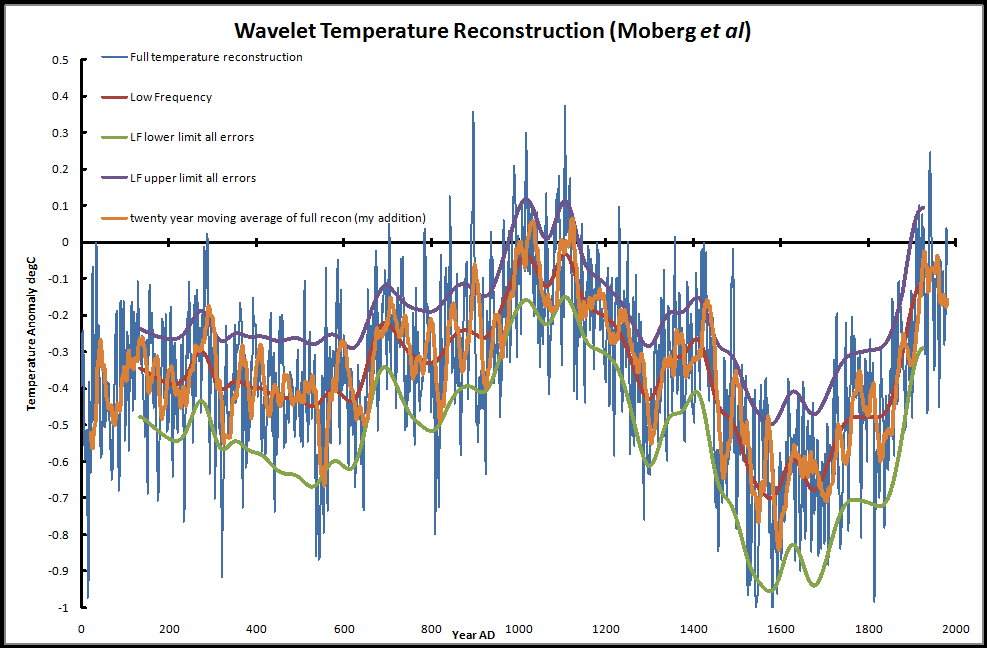
Among the references in the paper is that of Moberg et al (2005) Highly variable Northern Hemisphere temperatures reconstructed from low- and high-resolution proxy data.  The graph below shows one example of how more recent high quality reconstructions contradict the Mann depiction of a flat hockey stick handle during the centuries prior to the 20th.

Background of the Mann Hockey Stick Saga

Rise and Fall of the Modern Warming Spike

The first graph appeared in the IPCC 1990 First Assessment Report (FAR) credited to H.H.Lamb, first director of CRU-UEA. The second graph was featured in 2001 IPCC Third Assessment Report (TAR) the famous hockey stick credited to M. Mann.

Climate Class Warfare

Martin Durkin produced “Climate: The Movie” and writes at Daily Sceptic Climate Change is Class Warfare.  Excerpts in italics with my bolds and added images.  The movie can be viewed below.

The climate is up the spout and we’re to blame. The planet is boiling like a pan of porridge. We face the possible extinction of all life on earth. ‘Science’ says so. Anyone who questions it is a demonic scoundrel. The climate catastrophe is a 100% solid-gold, slam-dunk irrefutable fact.

Hmm. And yet, it is clear to anyone who has paid the slightest attention, that the tired, hysterical predictions of the climate alarmists (made repeatedly over four decades and based on their hypothetical computer-models) have proved to be spectacularly wrong, again and again and again. It does not take much digging (we have the internet these days) to discover that the outlandish claims of climate alarmists are flatly contradicted by lots and lots of perfectly good scientific evidence and data. We’re not talking here about fringe science put about by whackos. We’re talking about official data – mainstream science, published in respected journals. (Some of it is featured in my ‘climate-denier’ film, Climate: The Movie, available for free online).

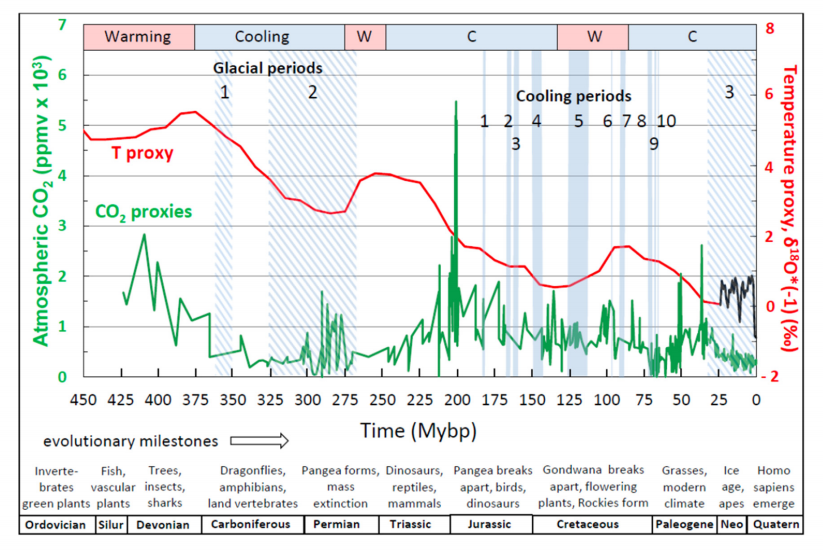
The world is not boiling. We are, as any geologist will tell you, in an ice age – one of the coldest periods in the last 500 million years. The level of CO2 in the atmosphere is not unnaturally or frighteningly high. Compared to the last half billion years of earth’s history it is extremely low. And there is no evidence that changing levels of atmospheric CO2 (it has changed radically many times in the past) has ever ‘driven climate change’. If there had been, Al Gore would have said so in his silly film, but he didn’t. Hurricane activity is not increasing, nor are the number of wildfires, nor are the number of droughts, and so on and so on. This is what the official data say. You can look it up.

Of course this is all a bit embarrassing for the science establishment. The climate alarm is worth billions to them in climate-related funding. A lot of jobs depend on it. A lot of reputations are at stake. And it’s deeply awkward for the renewables industry, which turns over around a trillion dollars a year.

The climate alarm is not supported by scientific evidence. It is supported by bullying, intimidation and the censorship of anyone who dares to question it. Climate catastrophism is politics, shamelessly dressed up as science.

The climate scare was the invention of the environmentalist movement, which stands opposed to vulgar, dirty, free-market capitalism. They say there are too many people, consuming too much. We must be restrained and contained, for the sake of Gaia. The solution to the global, existential climate problem is higher taxes and more regulation.

At any social gathering, you can pretty confidently predict who will think what about climate, by asking them about taxes and regulation. People who love the Big State can’t get enough of climate chaos. People who want lower taxes and less regulation will roll their eyes and say rude things about little Greta.

Across the Western world, the state has grown enormously over the last century, vastly increasing the number of people whose livelihoods depend on state-spending, and whose jobs are related, directly or indirectly, to government control. In the U.K. and U.S. both, more than twice as many people now work in government as work in manufacturing. And this does not include all those (in the third sector etc.) who rely indirectly on government largesse.

These people depend on government. They are paid for out of taxation. In such circles to proclaim the joys of a small state, lower taxes and less government is a breach of social etiquette. You have crossed a moral line. You will be suspected of liking Donald Trump, of voting Brexit, of hating lockdown and compulsory vaccination, of defending the Second Amendment, of being a climate denier.

And indeed all this may well be true. These views tend to hang together. As do the views of those on the other side. To repeat, the climate alarm is in fact politics dressed up as science. We are, as more people are beginning to realise, engaged in a class war. On one side, the tax-consuming regulating class that feeds from taxation and bosses us about. On the other, the rest of us in the private sector, who rather resent paying taxes and being told what to do and how to live our lives.

This is the real basis for the consensus on climate change. The consensus exists among our sprawling, tax-consuming establishment. This is not a small group of people. It is an entire class. It is, if you will, the ruling class. It controls our civil service, our schools and universities, large parts of our arts and science establishments and much of the media. It is an intolerant class, deeply aware of its own interests. The taboo that surrounds climate scepticism is a reflection of its power.

It would be nice to think that politely pointing to the actual scientific data might put an end to all the climate chaos nonsense. Sadly it won’t. Because this ain’t about science.


Climate Models Not Scientific

Paul Sutton explains in his Daily Sceptic article There’s Nothing “Scientific” About Climate Models.  Excerpts in italics with my bolds and added images.

On Sunday’s BBC Politics, Luke Johnson asked for evidence that the recent Dubai flooding was due to climate change. Chris Packham glibly responded: “It comes from something called science.”

This simply highlighted his poor scientific understanding. The issue is his and others’ confusion over what scientific modelling is and what it can do. This applies to any area of science dealing with systems above a single atom – everything, in practice.

My own doctoral research was on the infrared absorption and fragmentation of gaseous molecules using lasers. The aim was to quantify how the processes depended on the laser’s physical properties.

I then modelled my results. This was to see if theory correctly predicted how my measurements changed as one varied the laser pulse. Computed values were compared under different conditions with those observed.

The point is that the underlying theory is being tested
against the variations it predicts.

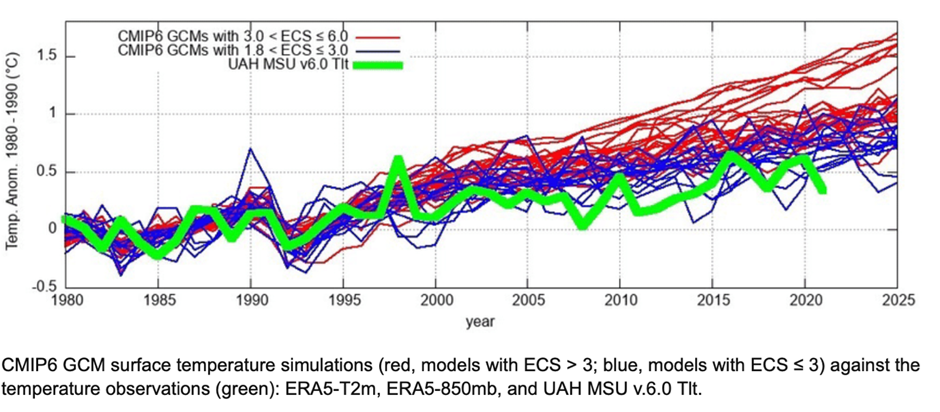
This applies – on steroids – to climate modelling, where the atmospheric systems are vastly more complex. All the climate models assume agreement at some initial point and then let the model show future projections. Most importantly, for the projected temperature variations, the track record of the models in predicting actual temperature observations is very dubious, as Professor Nicola Scafetta’s chart below shows.

For the climate sensitivity – the amount of global surface warming that will occur in response to a doubling of atmospheric CO2 concentrations over pre-industrial levels – there’s an enormous range of projected temperature increases, from 1.5° to 4.5°C. Put simply, that fits everything – and so tells us almost nothing about the underlying theories.

That’s a worrying problem. If the models can’t be shown to predict the variations, then what can we say about the underlying theory of manmade climate change? But the public are given the erroneous impression that the ‘settled science’ confirms that theory – and is forecasting disastrously higher temperatures.

Such a serious failing has forced the catastrophe modellers to (quietly) switch tack into ‘attribution modelling’. This involves picking some specific emotive disaster – say the recent flooding in Dubai – then finding some model scenario which reproduces it. You then say: “Climate change modelling predicted this event, which shows the underlying theory is correct.”

What’s not explained is how many other scenarios didn’t fit this specific event. It’s as if, in my research, I simply picked one observation and scanned through my modelling to find a fit. Then said: “Job done, the theory works.” It’s scientifically meaningless. What’s happening is the opposite of a prediction.

It’s working backwards from an event and showing
that it can happen under some scenario.

My points on the modelling of variations also apply to the work done by Neil Ferguson at Imperial College on catastrophic Covid fatalities. The public were hoodwinked into thinking ‘the Science’ was predicting it. Not coincidentally, Ferguson isn’t a medical doctor but a mathematician and theoretical physicist with a track record of presenting demented predictions to interested parties.

I’m no fan of credentialism. But when Packham tries it, maybe he needs questioning on his own qualifications – a basic degree in a non-physical ‘soft’ science then an abandoned doctorate.

Footnote: INMCM–One Low Sensitivity Model Does Replicate Past Temperatures

Climate Models: Good, Bad and Ugly

Background Post on Attributing Exteme Weather Events to Climate Change

Climate Loss and Damage Fails Again


Earth Day 2024: Plastics Miracle Saving People and the Planet

Benjamin Zycher celebrates how plastics benefit humans and the environment, in case this earth saver be overlooked by the Greens.  His Real Energy article is Earth Day 2024: How Plastic Can the Enviros Get?
Excerpts in italics with my bolds and added images.

It is Earth Day 2024, an annual exercise in self-applause that always is too much fun because of the inanities, hypocrisies, mendacities, and sheer stupidity of the Earth Day slogans, arguments, propaganda, and exhortations. And also because of the embarrassing spectacle of long queues of corporate officials and public relations gasbags desperate to advertise their environmental bona fides so that the green alligators might eat them last.

The Earth Day slogan for this year is “Planet vs Plastics,” and the list of horror stories is staggering. Plastics “flow through our blood stream, adhere to our internal organs, and carry with [them] heavy metals known to cause cancer and disease.” They “transmit hormone-disrupting chemicals.” They “can starve birds and suffocate sea life.” They “are a dangerous blight.”

One would think that this horror parade would have made life on earth ever more sickly, disease-ridden, and short. And one would be wrong: human life expectancy at birth now is 73.33 years, an increase of over 61% from the life expectancy of 45.51 years in 1950. Has the production of plastics  declined? Of course not: From 2 million metric tons in 1950, production in 2019 was 459.8 million metric tons. Why else would the environmental left find plastics worthy of its annual screaming?

Such as: “More plastic has been produced in the last ten years than in the entire 20th century, and the industry plans to grow explosively for the indefinite future.” “More than 500 billion plastic bags … were produced worldwide last year.” “100 billion plastic beverage containers were sold last year in the United States.”

One would think that such massive output just might lead the Earth Day sloganeers to hypothesize that plastics offer real benefits for ordinary people. Again one would be wrong. And if you think that the wreckage wrought by plastics is limited to such direct effects, think again. According to Earth Day 2024 propaganda — remember the slogan is Planet vs. Plastics — the fashion industry produces over 100 billion garments per year, 85% of which “end up in landfills or incinerators,” people buy 60% more clothing than was the case fifteen years ago, and over two-thirds of clothing is made “from” (that is, with the use of) crude oil, that evil of evils. The clothing industry is characterized by “exploitative working conditions, low wages, and widespread child labor.”

What does this have to do with plastics? The Earth Day 2024 rant about garments — inserted amid the larger rant about plastics — fails to mention plastics at all, a curiosity fully consistent with the disinterest on the part of the environmental left in rigorous thinking.

What is not so curious is the deafening Earth Day sermonizing about the evils of plastics, the importance of wind and solar power, and the worsening climate crisis, even as the scientific literature increasingly challenges the central Earth Day assumptions. Nonetheless, the Earth Day proponents applaud themselves for their devotion to science, that is, Science! So what does actual scientific research tell us about the relative greenhouse gas emissions engendered by plastics and the important alternatives? In brief:

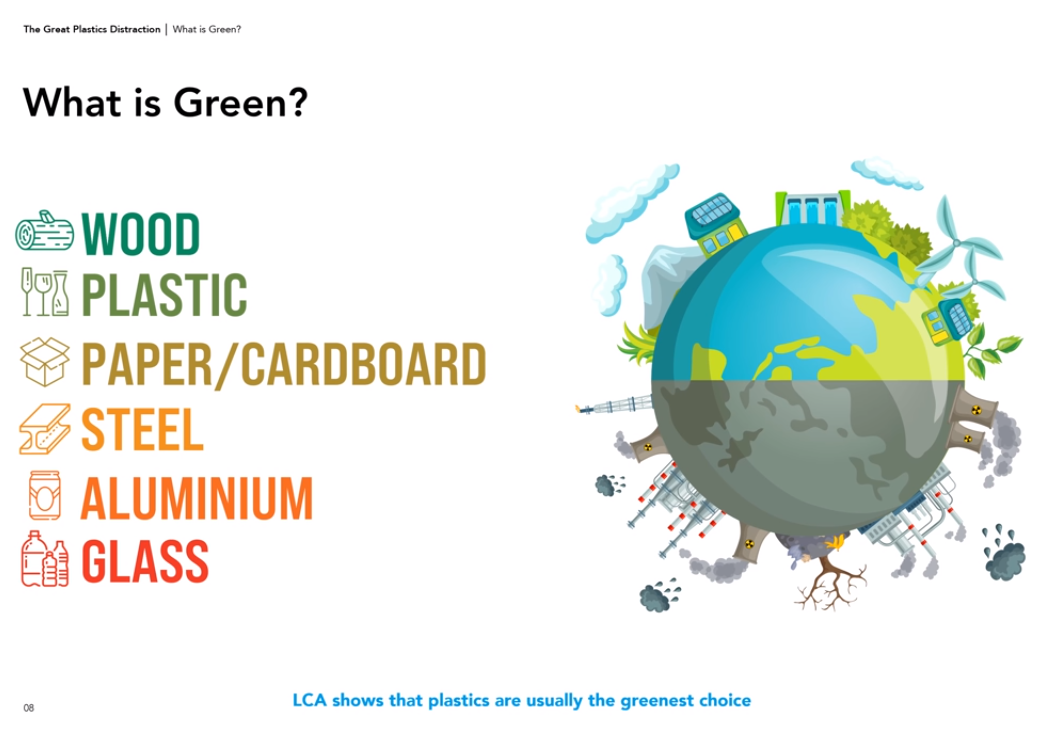
We assess 16 applications where plastics are used across five key sectors: packaging, building and construction, automotive, textiles, and consumer durables. These sectors account for about 90% of the global plastic volume. Our results show that in 15 of the 16 applications a plastic product incurs fewer GHG emissions than their alternatives. In these applications, plastic products release 10% to 90% fewer emissions across the product life cycle. Furthermore, in some applications, such as food packaging, no suitable alternatives to plastics exist.

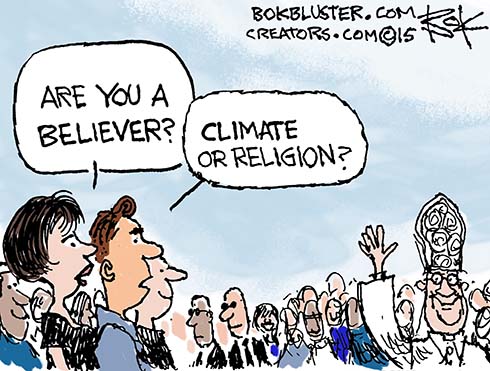
Maybe ensuing research will yield different conclusions — although the common argument that GHG emissions have created a crisis is supported by no evidence whatever — but the Earth Day cacophony ignores such subtleties, because Earth Day is the central religious holiday of modern left-wing environmentalism. But it reverses the traditional introspection, repentance, self-improvement, service to others, and faith in the moral requirements imposed by a higher authority. Instead, under the religious dogma of modern left-wing environmentalism generally and on Earth Day in particular, it is others who must examine their lifestyles, repent, purify themselves, suffer economically, and answer to the ideological demands of elite superiors. As I have noted many times, Dogbert perceived matters correctly: “You can’t save the Earth unless you’re willing to make other people sacrifice.”

Just as the pagans for millennia attempted to prevent destructive weather by worshiping golden idols, so do modern left-wing environmentalists now attempt to prevent destructive weather by bowing down before recycling bins. And so the Earth Day 2024 environmentalist Book of Genesis now begins as follows: “In the beginning, Earth was the Garden of Eden. But Mankind, having consumed the forbidden fruit of the Tree of Technological Knowledge, has despoiled it. After all, Plastics! And only through Repentance and economic suffering can Mankind return to the loving embrace of Mother Gaia.”

That loving embrace is fundamentally totalitarian. Reject it and Earth Day and all that it represents.

See Also 

Insane War on Plastics Resumes