EV Push Imploding

Levi Russell writes at Heartland The Rush to Force Everyone into Electric Vehicles is Imploding. Excerpts in italics with my bolds and added images.

recently published article in the peer-reviewed academic journal Transportation Research tells us that cars, even the supposedly anointed battery electric variety, are far too convenient and that the state must be empowered to “restrict car use.” The authors tell us that converting car lanes to bus lanes have reduced car use in Oslo. No surprise there. The fact that academia is floating this sort of policy should concern anyone who has any inkling of mistrust of the federal government.

Truly our freedom of movement is in peril.

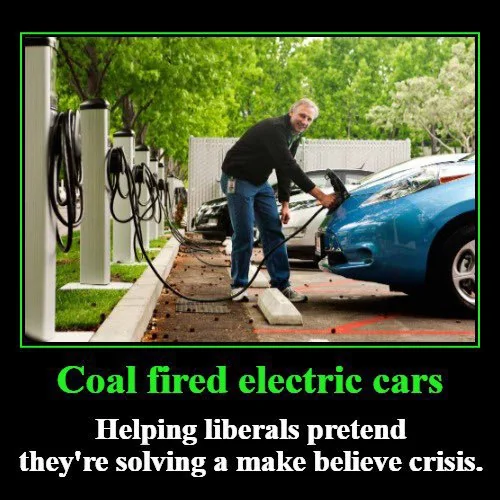
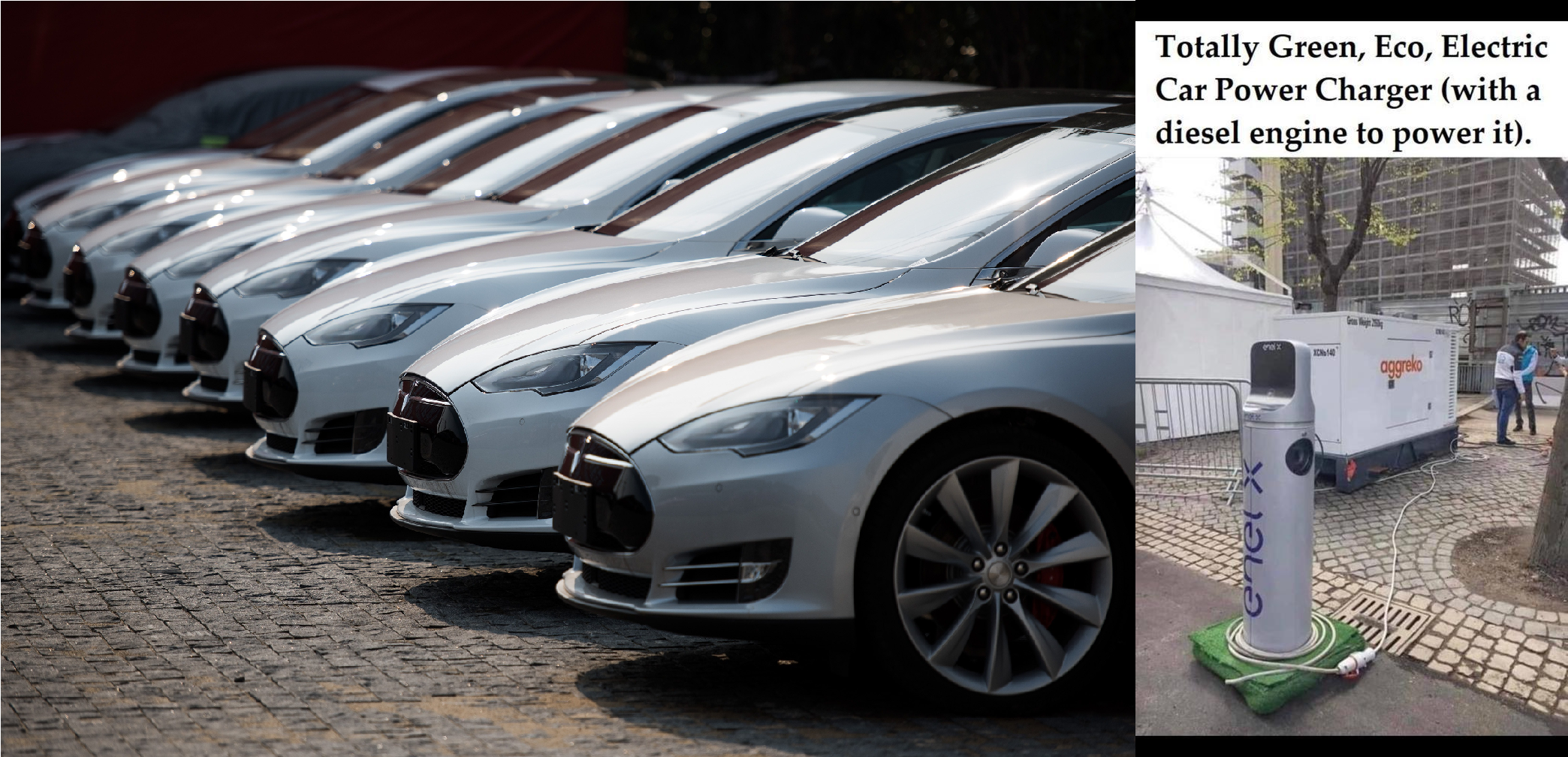
Electric vehicles are not nearly as popular as their advocates would have had us believe, as sales are now slumping in the face of rising interest rates and a lack of so-called fast chargers. As we begin to bump up against mined mineral constraints and international relations complications, there’s no doubt the cost of making these glorified toys will continue to rise. A recent Consumer Reports publication shows that, over the last 3 model years, electric vehicles are less reliable than normal gasoline and diesel vehicles. So, several states want to ban the sale of reliable, inexpensive gas and diesel cars and force us to buy less reliable electric cars. Note well that the superior reliability of hybrids is likely down to the fact that car makers who are better known for their reliability make more hybrids. There’s nothing inherent to a hybrid that would make it more reliable than a gasoline engine vehicle.

[And in addition: No one wants to buy used EVs and they’re piling up in weed-infested graveyards Fortune magazine. No One Wants Used EVs, Making New Ones a Tougher Sell Too Bloomberg ]

Even our ability to travel using air travel is under the gun.CNN op-ed recently floated the idea of limiting air travel through the use of carbon (read: sin) passports. We will be limited to traveling based on the amount of carbon dioxide emitted during the flight. The author wants this applied to cruise ships as well. It’s not hard to see this applied to your car as well.

Of course, such rules will not apply to the super-wealthy climate grifters.
They’ll be jetting all over the globe for their very important climate conferences.

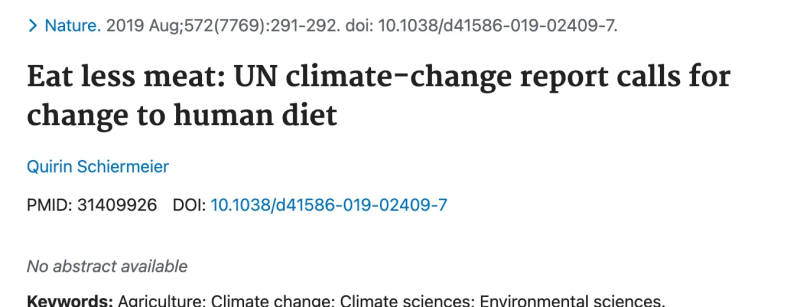
And it’s not just transportation. In September, Reuters “fact checked” a claim that US cities had agreed to limit meat consumption, finding the claim false. And yet, we are told on a nearly daily basis that eliminating beef consumption is necessary to save the planet. The sin of using coal (but not apparently to create steel) has become the sin of eating a steak. What’s next? Rice? Pork?

Beginning in 2024, the German government will empower local electricity providers to limit the flow of electricity to heat pumps and electric cars. Such limits were the stuff of alleged conspiracy theories mere months ago. Now they’re a reality. Germany’s suicidal attempt to power their grid with nothing but wind and solar, killing off their own nuclear power generation over the last 20 years, has led to energy rationing. It’s not as if this is unpredictable. The unreliability of so-called renewables is common knowledge among energy experts.

It’s sensible for those who are concerned about their ability to choose where and when they travel, what they eat, and when they turn on their heaters and air conditioners to be skeptical of every single attempt to accrue more power by state and federal governments. That skepticism should turn into activism against these power grabs. Anyone who tells you these power grabs aren’t coming is telling you not to believe your own eyes.

Postscript Absurdum

Canada poised to pass rules that all new vehicles must be zero-emissions by 2035 Source Financial Post

The act to be announced in coming days aims
to phase out the sale of new combustion vehicles

The new rules will require zero-emissions vehicles — which include battery electric, hydrogen and plug-in electric vehicles — to make up 20 per cent of all new car sales in 2026, 60 per cent in 2030 and 100 per cent in 2035, the reports said.


Keep Your Head, Others are Losing Theirs Over Climate

John Stossel’s interview with Bjorn Lomborg is featured in his article at Reason The Media’s Misleading Fearmongering Over Climate Change. Excerpts in italics with my bolds and added images.

“Over the last 20 years, because of temperature rises, we have seen about 116,000 more people die from heat. But 283,000 fewer people die from cold.”

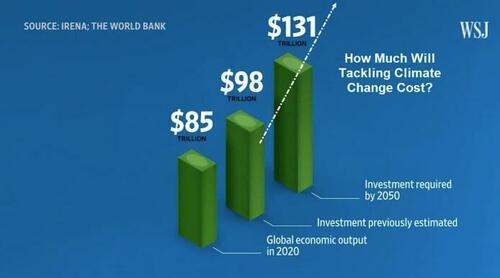
United States Special Presidential Envoy for Climate John Kerry says it will take trillions of dollars to “solve” climate change. Then he says, “There is not enough money in any country in the world to actually solve this problem.”

Yes, they are projecting more than 100 Trillion US$.

Kerry has little understanding of money or how it’s created. He’s a multimillionaire because he married a rich woman. Now he wants to take more of your money to pretend to affect climate change.

Bjorn Lomborg points out that there are better things society should spend money on.

Lomberg acknowledges that a warmer climate brings problems. “As temperatures get higher, sea water, like everything else, expands. So we’re going to maybe see three feet of sea level rise. Then they say, ‘So everybody who lives within three feet of sea level, they’ll have to move!’ Well, no. If you actually look at what people do, they built dikes and so they don’t have to move.”

Rotterdam Adaptation Policy–Ninety years thriving behind dikes and dams.

People in Holland did that years ago. A third of the Netherlands is below sea level. In some areas, it’s 22 feet below. Yet the country thrives. That’s the way to deal with climate change: adjust to it.

“Fewer people are going to get flooded every year, despite the fact that you have much higher sea level rise. The total cost for Holland over the last half-century is about $10 billion,” says Lomberg. “Not nothing, but very little for an advanced economy over 50 years.”

For saying things like that, Lomberg is labeled “the devil.”

“The problem here is unmitigated scaremongering,” he replies. “A new survey shows that 60 percent of all people in rich countries now believe it’s likely or very likely that unmitigated climate change will lead to the end of mankind. This is what you get when you have constant fearmongering in the media.”

Some people now say they will not have children because they’re convinced that climate change will destroy the world. Lomborg points out how counterproductive that would be: “We need your kids to make sure the future is better.”

He acknowledges that climate warming will kill people.

“As temperatures go up, we’re likely to see more people die from heat. That’s absolutely true. You hear this all the time. But what is underreported is the fact that nine times as many people die from cold…. As temperatures go up, you’re going to see fewer people die from cold. Over the last 20 years, because of temperature rises, we have seen about 116,000 more people die from heat. But 283,000 fewer people die from cold.”

A 2015 study by 22 scientists from around the world found that cold kills over 17 times more people than heat. Source: The Lancet

That’s rarely reported in the news.

When the media doesn’t fret over deaths from heat,
they grab at other possible threats.

CNN claims, “Climate Change is Fueling Extremism.”

The BBC says, “A Shifting Climate is Catalysing Infectious Disease.

U.S. News and World Report says, “Climate Change will Harm Children’s Mental Health.”

Lomborg replies, “It’s very, very easy to make this argument that everything is caused by climate change if you don’t have the full picture.”

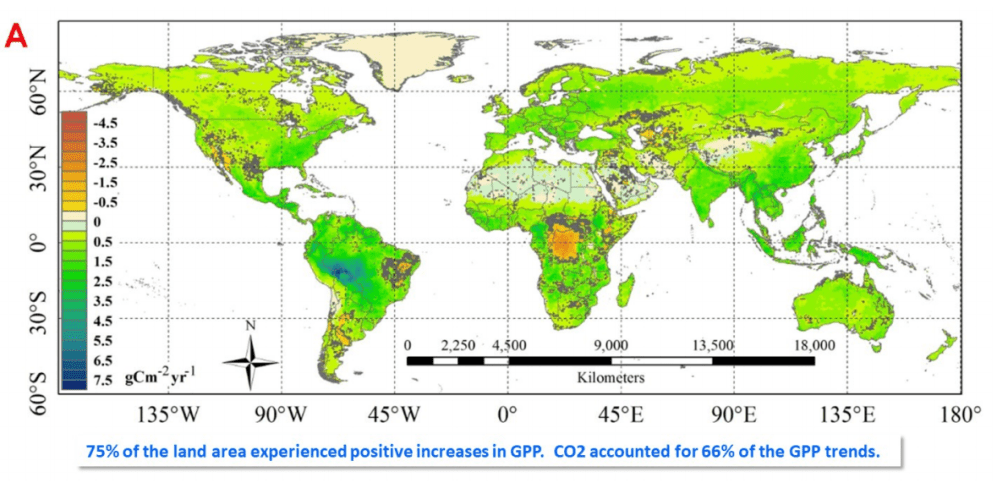
He points out that we rarely hear about positive effects of climate change, like global greening.

Spatial pattern of trends in Gross Primary Production (1982- 2015). Source: Sun et al. 2018.


“That’s good! We get more green stuff on the planet. My argument is not that climate change is great or overall positive. It’s simply that, just like every other thing, it has pluses and minuses…. Only reporting on the minuses, and only emphasizing worst-case outcomes, is not a good way to inform people.”

Synopsis of Lomborg’s Policy Recommendation (excerpted transcription)

If you’re a politician and you look at ten different problems, you’re natural inclination is to say, “Let’s give 1/10 to each one of them.” And economists would tend to say, “No, let’s give all of the money to the most efficient problem first and then to the second most efficient problem, and so on. I’m simply suggesting there’s a way that we could do much better with much less.

Of course if you feel very strongly about your particular area, when I come and say, “Actually, this is not a very efficient use of resources.” I get why people get upset. But for our collective good, for all the stuff that we do on the planet, we actually need to consider carefully where do we spend money well, compared to where do we just spend money and feel virtuous about ourselves.

If we spend way too much money ineffectively on climate, not only
are we not fixing climate, but we’re also wasting an enormous amount
of money that could have been spent on all these other things.

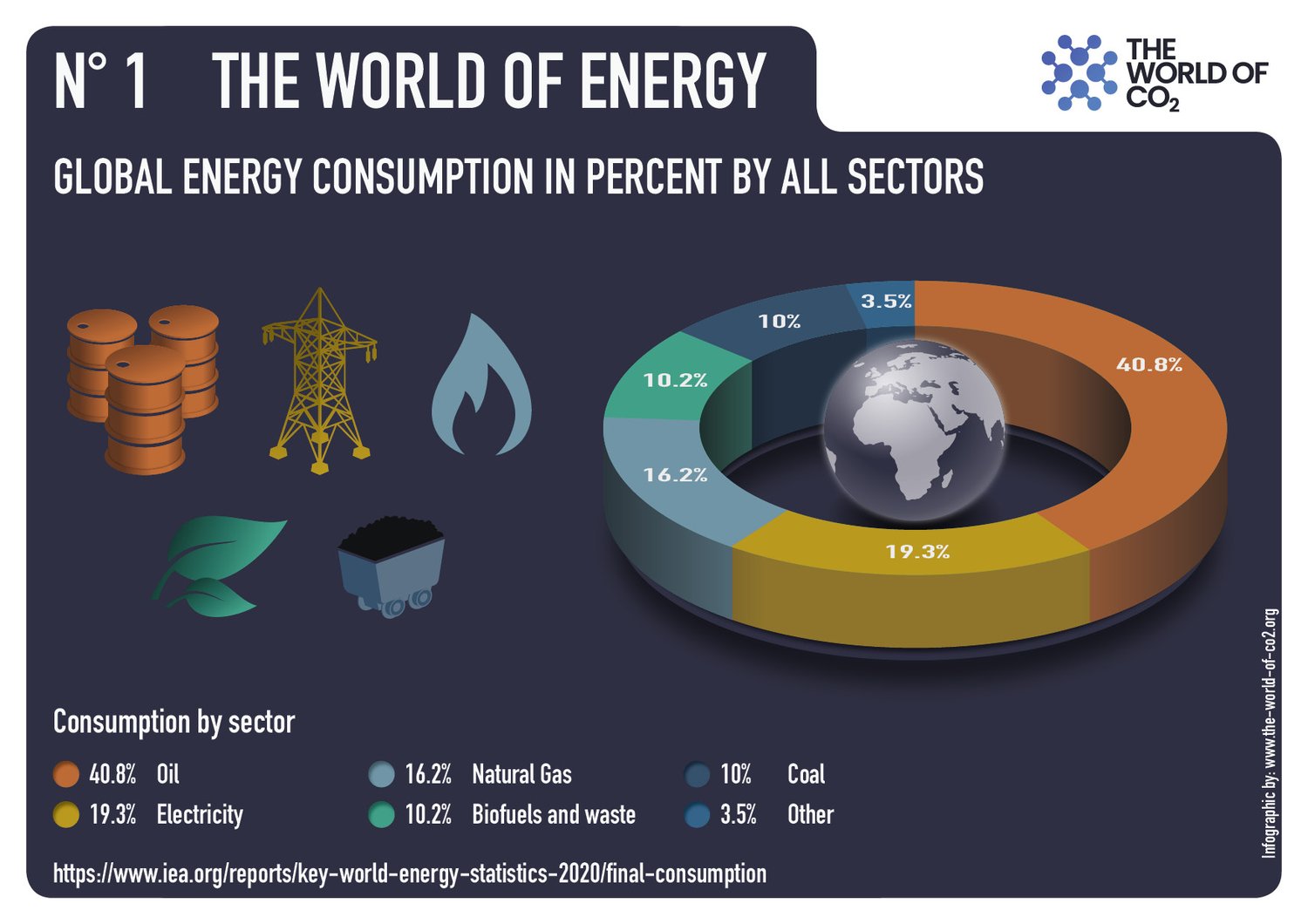
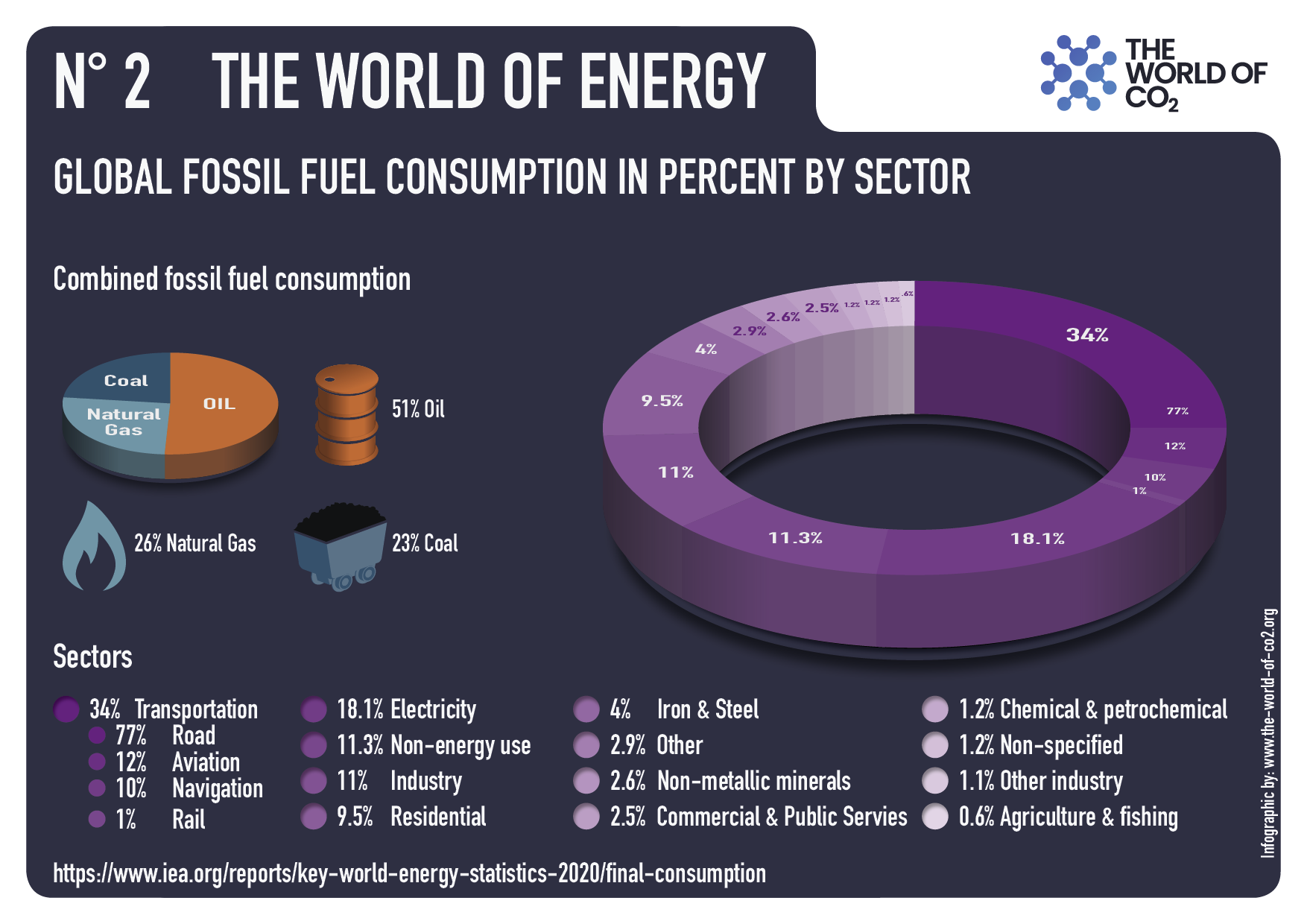
I’m simply trying to make that simple point, and I think most people kind of get that.  Remember, electricity is about a fifth of our total energy consumption. So, all everybody’s talking about is all the electricity, which is the easiest thing to switch over. But we don’t know anything about how we’re going to, know very, very little about how we’re going to deal with the other 4/5. This is energy that we use on things that are very, very hard to replace. So it’s a fertilizer that keeps 4 billion people alive. Making the fertilizer. It’s steel, cement, it’s industrial processes. Most of heating we use comes from fossil fuels, most transportation, that’s fossil fuels.

Know that if the U.S. went entirely net zero today and stayed that way for the rest of the century, consider how incredibly extreme this would be. First of all, you would not be able to feed everyone in the U.S. The whole economy would break down. You wouldn’t know how to get transportation. A lot of people would freeze. Some people would fry. There would be lots and lots of problems. But even if you did this and managed to do it, the net impact, if you run it through the U.N. climate model, is that you would reduce temperatures by the end of the century by 0.3 degrees Fahrenheit. We would almost not be able to measure it by the end of the century. It would have virtually no impact.

Look, again, we’re rich and so a lot of people feel like you can spend money on many different things. And that’s true. I’m making the argument that for fairly little money, we could do amazing good. If we spent $35 billion, not a trillion dollars, just $35 billion, which is not nothing. I don’t think, neither you or I have that amount of money. But, you know, in the big scheme of things, this is a rounding error. $35 billion could save 4.2 million lives in the poor part of the world, each and every year and make the poor world $1.1 trillion richer.

I think we have a moral responsibility to remember, that there are lots and lots of people, so mostly about 6 billion people out there, who don’t have this luxury of being able to think 100 years ahead and think about a little bit of a fraction of a degree, who wants to make sure that their kids are safe.
And so, the next money we spend should probably be on these very simple and cheap policies.


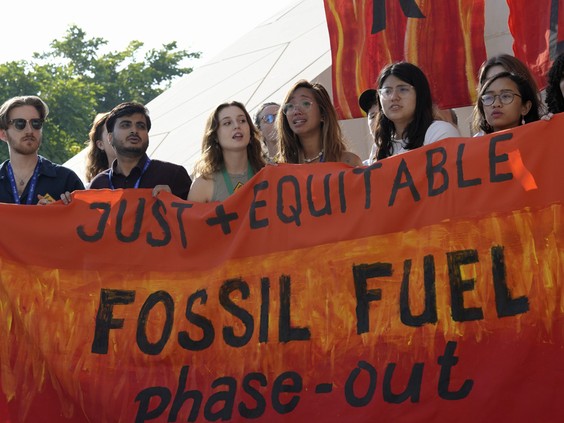
COP28 Optics: Deal to “Transition Away” not “Phase Out” Fossil Fuels

Once again equivocation rules climatists.  After the uproar over demands to “phase out” hydrocarbon fuel, the wording was changed to say “transition away.”  Thus the divide is papered over while alarmists claim agreement was reached to “leave it in the ground.”  Others will point to language such as “transition away in a just, orderly and equitable manner.”  Just like Paris COP, everyone pledges and celebrates as though something has changed

David Blackmon explains the wordplay in his Forbes article COP28 Offers ‘Transition Away’ From Fossil Fuels But No ‘Phaseout’.  Excerpts in italics with my bolds and added images.

COP28 just concluded feverish negotiations in its final hours—actually, beyond its scheduled final hours—with the announcement of a final agreement Wednesday that includes language committing its near-200 participating nations to “transition away from” fossil fuels. That is the language negotiators landed upon to replace the previous language pledging to “phase out” the use of coal, oil and natural gas across the coming decades preferred by energy transition boosters.

Many observers are no doubt left wondering what the real difference is between the two phrases, other than that the “transition away from” language was found to be less offensive to big producers and users of these energy resources than a phasing-out turned out to be. It isn’t a bad question, to be sure.

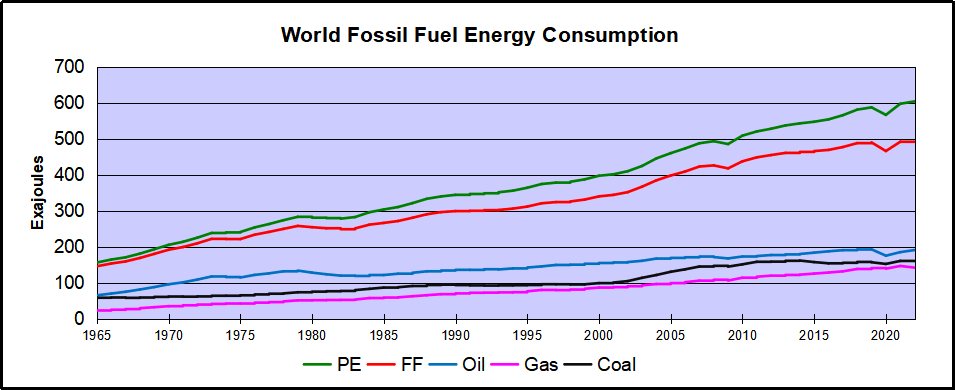
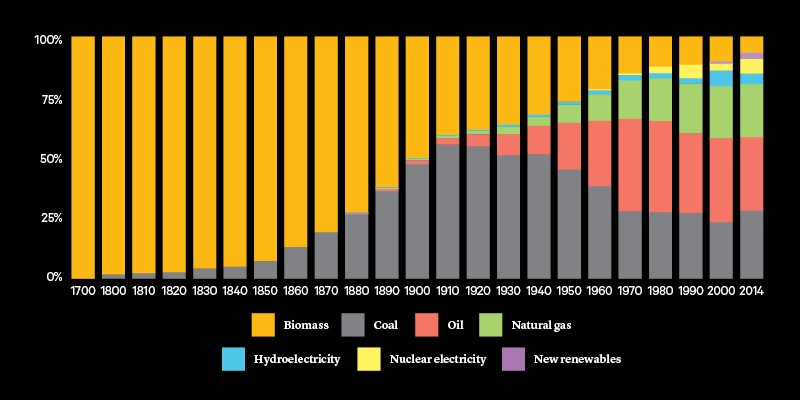
Advocates for this final language claim it is “historic” in that it is the first time any of the 28 UN Conference of the Parties climate summits have overtly mentioned moving away from the use of fossil fuels in a final agreement. But it is fair to note that countries across the globe have invested many trillions of dollars—much of it funded by costly debt—in efforts to “transition away from” fossil fuels over the last three decades now and little has changed. The world still gets roughly 80% of its primary energy from coal, oil and natural gas, only a sliver less than it did at the turn of the century. The world will use record volumes of all three fossil fuels in 2023, and most experts project it will do so again in 2024 and beyond.

So, while this language may well be “historic,” it is also merely a restatement of commitments many of the signatory governments have already embarked upon for years and failed to achieve. Honestly, it is difficult to envision how what amounts to yet another COP-generated word salad will do anything to change the undeniable global dynamic.

Reuters quotes Anne Rasmussen, lead negotiator for the Alliance of Small Island States, assessing the language as uninspiring. “We have made an incremental advancement over business as usual, when what we really need is an exponential step change in our actions,” she said.

But COP conferences involving more than 190 participating countries with widely disparate economic and energy security priorities and 70,000+ attendees are not really designed to produce exponential step changes, are they? COP rules requiring unanimous consent to all language included in each subsequent final agreement ensure that commitments will inevitably be watered down with qualifying language designed to enable each country to act upon its own unique interpretation of what phrases like “transition away from” actually mean.

Those are bold words, but everyone should recognize that “real-economy outcomes” in, say, Peru or Uganda are likely to look entirely different than those in Belgium or Canada. The same is likely true of the respective outcomes we will see in the coming years in India as compared to the United States.

The Bottom Line

As an example: If China wished to signify a zeal to “transition away from” its own massive use of fossil fuels, it might decide to cancel its new program going into effect January 1, 2024, which will subsidize the building of hundreds more coal-fired power plants. Does anyone involved in COP28 expect that or any similar action by the Xi Jinping government as a result of its signing off on this agreement? Of course not. Beijing will interpret the phrase “transition away from” as it sees fit and continue to prioritize its national energy security over any climate commitments.

At the end of the day, this final agreement from COP28 seems destined to be remembered in the same vein as all previous COPs other than COP3 (Kyoto) and COP21 (Paris) are remembered—as, to paraphrase William Shakespeare, a lot of sound and fury signifying not much at all.

Footnote:  Let the Blame Games Go Onto Steroids.


Inside the Hydrogen Fuel Project Bubbles

The map above from IEA shows almost 2000 hydrogen fuel projects around the world, intending to replace hydrocarbon fuels to save the planet.  They dream of being operational by 2030 claiming that real world obstacles will be overcome if enough taxpayer dollars are thrown at the problems.  The whole notion is fantastic (in the literal sense) for reasons detailed in a previous post.

Replace Carbon Fuels with Hydrogen? Absurd, Exorbitant and Pointless

But realities be damned, there’s virtue to be displayed, money to be made and no accountability for failure, so the charade will go on.  On the map are some bubbles off the coast of Canadian maritime provinces, so let’s take a peek into how these projects are conceived and realized. Rod Nickel reports at the Globe and Mail Canadian wind-hydrogen project delayed one year in race to first European exports.  Excerpts in italics with my bolds and added images.

Green Hydrogen Project in Atlantic Provinces Delayed

One of Canada’s first projects to produce emissions-free hydrogen with wind energy has delayed its start by one year because operator World Energy GH2’s European customers need more time to develop special infrastructure to handle the product, the company said.

The delays illustrate the difficulties companies face in introducing a nascent product to replace high-emitting forms of fuel for transport, industry and homes. [The background post above notes how hydrogen makes containers and conduits brittle, not to mention its explosive potential.]

Have we learned nothing from the Hindenburg Disaster?

Half a dozen companies are advancing projects in the gusty Atlantic provinces of Newfoundland and Labrador and Nova Scotia to harness winds to power production of Canada’s first exports of emissions-free hydrogen. Canada signed a non-binding agreement in 2022 to ship green hydrogen to Germany starting in 2025.

But World Energy GH2, an affiliate of Boston-based renewable fuels producer World Energy, won’t make that timeline, managing director Sean Leet told Reuters.

“The offtakers are not going to be ready to accept product within 2025, actually not until 2027,” Leet said, referring to buyers who would pre-purchase some of the project’s hydrogen.

The challenges for prospective buyers involve developing new technology to ship, further process and transport the hydrogen by pipeline at its last destination, Leet said.

World Energy GH2 now hopes to start production in late 2026, he said. It requires approval from Newfoundland’s environmental department and strong pre-purchase interest to attract financing before starting production.

Those buyer commitments hinge on the Canadian government
finalizing details of a tax credit for up to 40% of the
capital cost of building hydrogen plants, Leet said.

The company intends to build three onshore wind farms in Newfoundland to power production of 250,000 metric tons per year of hydrogen, at a total cost of $12 billion.

Advocacy group EnviroWatch NL, however, questions the efficiency of building wind turbines in Canada to produce hydrogen that will ultimately generate power for Europe thousands of kilometres away.

EverWind Fuels is on track to start production in Nova Scotia in 2025, said CEO Trent Vichie.  Its plant, a converted fuel storage facility, would eventually produce 1 million metric tons annually of ammonia, a compound that is a practical form of transporting hydrogen.

EverWind, which declined to disclose the project’s capital budget, expects to strike firm buyer agreements in the first half of 2024, a spokesperson said, and has memorandums of understanding to sell hydrogen to German power companies Uniper and E.ON.

The Canadian government agreed in November to loan EverWind $125 million to build its project, which still requires provincial approval of its wind farms. EverWind’s hydrogen plant has already received environmental approval.

Germany-based ABO Wind is applying for permits and land for a Newfoundland onshore wind farm that will provide electricity to produce hydrogen for Braya Renewable Fuels’ refinery as early as 2027, Robin Reese, director of development for ABO Wind Canada said.

Newfoundland selected EverWind, World Energy GH2, ABO and Exploits Valley Renewable Energy Corp in August to proceed with their wind-hydrogen projects on government land.

U.S.-based Pattern Energy plans to secure European buying agreements in mid-2024 and start construction in 2025 for its wind-hydrogen project on private land in Newfoundland, Canada country head Frank Davis said.

Some Skeptical Comments on the article

EnviroWatch is asking the right question. Why use all this great wind energy to electrolyze water to make hydrogen to convert it (presumably) to ammonia for shipping to Europe to produce energy. It makes absolutely no thermodynamic sense whatsoever. I highly doubt ANY of these projects get built. To quote Susan Powter from the 90s, “Stop the insanity!”.

It makes no economic, thermodynamic or business sense. But it’s great politics.

I’m not thinking Billions but rather Trillions to be wasted on wind power before the world comes to its senses! Twenty- thirty years of spending. Reminds me of the treasure supposedly buried at Oak Island!

Problem is, the alternatives are all expensive mega-projects. Darlington was 5 years late and $10 billion over budget, and we haven’t built a new nuclear plant since then (30 years ago). New hydro dams have similar problems. Wind is small and cheap enough to actually get built in large numbers. Have to expand the energy supply somehow.

The actual Darlington nuke plants were 20% over budget not bad for a first of a kind. The rest was caused by government foolish delays in a high interest rate environment. The next 8 Candu’s were built on time in under 4 years and on budget at under $2/watt average the latest just completed in India.

The $25B refurb project is also on time and under budget.

Actually wind is of little use in Canada as it disappears in summer doldrums and winter cold snaps but maximizes during springtime when hydro flows max out. Its intermittancy makes it 10 times the cost of Candu. 

Big Climate, Internally Conflicted, Descending into Farce


Please, let this be the final farce on the 33rd try

Raymond J. de Souza asks a good question at National Post: Is Big Climate over? That would be good for the environment.  Excerpts in italics with my bolds and added images.

Backing away from absurd, grandiose policies would
shift attention toward more practical measures

Is the era of Big Climate over? It may be that Prime Minister Justin Trudeau has implicitly declared as much.

He would not say such a thing, as when Bill Clinton emphatically declared the “era of big government over” in the 1990s. Clinton was trying to show that he was a different kind of progressive, leaving behind the activist government of the 1960s. In contrast, the Vogue-photographed Trudeau was Big Climate’s most glamorous spokesmodel.

His absence at the UN climate jamboree in Dubai is thus striking.

Instead, conservative premiers Danielle Smith and Scott Moe are both on hand to promote oil and gas deals in the petro-state, but not the prime minister. Was it only eight years ago that a newly elected Trudeau descended upon the climate summit in Paris with a bloated retinue of hundreds, all the better to declare that “Canada is back?” He has now backed away.

Canada really isn’t back — we have never been quite so marginal in international relations as we are now — but certainly we were celebrated in Big Climate circles. In the heady days of 2019 Trudeau was even granted an audience with Greta Thunberg.

That was a sign, in retrospect, that Big Climate was in decline.
Inviting a Swedish teenager to indignantly lecture global leaders
indicated that Big Climate was entering its absurd phase.

Big Government, Big Tobacco, Big Pharma, Big Football (FIFA now, NFL in future) are behemoths that seem unstoppable, commanding all they survey. Then they enter their absurd phase, when their excesses become increasingly implausible. They don’t disappear. The advantage of being big is a certain momentum that carries forward, albeit diminished.

There is a point though when there is a qualitative change, even if massive quantity endures for a while. For Big Government, perhaps it was Clinton’s declaration. For Big Tobacco, it was when the assembled chief executives swore under oath that they had no idea that smoking could be addictive.

Big Climate had a good run. Ecological consciousness has been growing since the late 1960s. It’s a relatively easy sell. Everyone desires clean air, clean water, parks and natural beauty. Conservatives like conservation, after all, and progressives like government regulation to get there.

Big Climate was born out of that wider ecological movement, specifically at the 1992 “Earth summit” in Rio. The current Dubai “COP28” conference is the 28th “conference of the parties” that grew out of Rio 1992. Big Climate grew ever bigger, so much so that 70,000 delegates landed in Dubai this year. Along the way were milestones, such as Kyoto 1997 and Paris 2015, in which Big Climate managed to get wide agreement on re-ordering the global economy in principle, if not practice.

This year, though, one gets the sense that Big Climate has become wrapped in too many contradictions, capped off with a farcical conference in the petro-state’s air-conditioned desert. The incongruity of it all was nicely highlighted by the brouhaha that erupted when the Emirati conference chairman blithely declared that there was no real scientific basis to phase out fossil fuels.

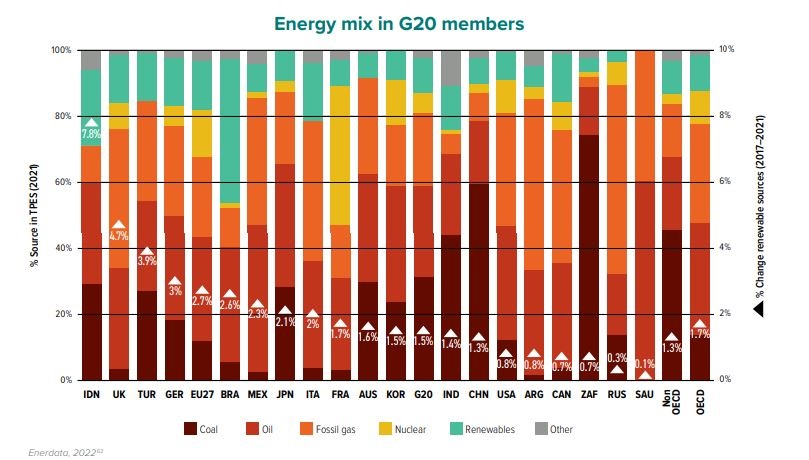
Consider the Germans, Big Climate’s biggest booster in the heart of Europe. This year marked the end of German nuclear power, with the last reactors closed. Germany has now moved to a higher carbon future, burning coal and natural gas.

That proved a bit tricky when at war with Russia in Ukraine, so Germany turned to Canada for natural gas supplies. Trudeau refused to sell Germans our natural gas, directing them instead to Qatar. That strikes most folks as absurd.

Canada and Germany Sign Agreement to Enhance German Energy Security with Clean Canadian Hydrogen August 2022.  And the hydrogen energy project is still pie in the sky.

Meanwhile, President Joe Biden, who began his administration with an ostentatious cancellation of the Keystone XL pipeline, lest Canadian resources pollute the American energy grid, has now decided to increase imports of Venezuelan oil and gas. That, too, is absurd.

Then there are billions upon billions of dollars — with Canada and the EU scrambling to match American subsidies — being lavished upon electric battery manufacturers, making “green jobs” a giant tax-funded boondoggle. That the great climate villain in the auto sector, Volkswagen, is a beneficiary of such largesse only makes the absurdity more galling.

Yes, those are trillions of dollars they are projecting.

Against all that, Trudeau’s decision to compromise his climate agenda to save a few Atlantic ridings is a rather low-voltage issue. Yet it shows that Big Climate is losing its power.

The end of Big Climate may be good for the climate. Backing away from grandiose and absurd policies shifts attention toward more practical and reasonable measures that will garner wider public support.

COP28 in the desert is a suitable end to Big Climate.
It ends with a bang, as it were. And Trudeau withdraws with a whimper.


Fighting Global Warming: All Cash, No Cooling

Through Dec. 12, the “Climate!” crowd is swarming COP28, Dubai’s carbophobia cavalcade. The fact that these global-warming alarmists are surrounded by Earth’s deepest pools of fossil fuels makes their Hajj infinitely ironic.

Also astonishing is the nearly immeasurable impact of these people’s gyrations. They blow trillions of dollars, bludgeon human freedom, and yet do shockingly little to fix their vaunted “climate crisis.”

One practically needs an electron microscope to find their promised
reductions in allegedly venomous CO2 or supposedly lethal temperatures.

According to #ActInTime’s Climate Clock, high above Manhattan’s Union Square, humans have — at this writing — five years and 227 days until we boil to death in a cauldron of steaming carbon. Since The End is scheduled for Saturday, July 21, 2029 (mark your calendars!)

Big Government Democrats offer jaw-droppingly paltry climate benefits,
despite their spine-chilling predictions and unbridled interventionism.

Clean Power Plan Cost/Benefit

Obama-Biden’s proposed Clean Power Plan was a diamond-encrusted specimen of do-nothingism. According to a May 2015 analysis by their own Energy Information Agency, between 2015 and 2025, the CPP would have slashed real GDP by $993 billion, or an average of $39.7 billion per year.

It would have sliced real disposable income by $382 billion, or $15.3 billion annually. It also would have chopped manufacturing shipments by $1.13 trillion, or $45.4 billion per year.

EIA forecast a decrease of 0.035° Fahrenheit. This would have cranked a thermometer from 72° F way down to 71.965°.  As Billy Joel once sang, “Is that all you get for your money?”

IRA Funded Green Energy Projects Cost/Benefit

Biden’s blessed Inflation Reduction Act budgeted $369 billion for green-energy projects. Goldman Sachs subsequently slapped a $1.2 trillion price tag on the IRA.

Danish environmental expert Bjorn Lomborg ran the IRA through the United Nations’ climate models. “Impact of new climate legislation,” Lomborg specified. Unnoticeable: 0.0009°F to 0.028°F in 2100.”  This would chill thermostats from 72° to 71.9991°. If we get lucky: 71.972°.

Biden said on Jan. 31 that “if we don’t stay under 1.5° Celsius” or 2.7° Fahrenheit, “we’re going to have a real problem.” If a 0.0009° F reduction costs $369 billion, then Biden’s 2.7° F goal would devour — brace yourself — $1.107 quadrillion — with a Q.

Biden EV Mandate Cost/Benefit

Emperor Biden’s electric-vehicle decree would require that at least 67% of new cars sold in 2032 be electric. This edict already is stalling the auto industry. On Nov. 29, 3,902 U.S. car dealers in all 50 states wrote Biden. Message: Stop tailgating!  “Already, electric vehicles are stacking up on our lots,” the dealers complained.  “The majority of customers are simply not ready to make the change.”

This chaos aside, Biden’s mandate would limit CO2 by 10 billion tons through 2055. Alas, China is expected to generate 320 billion tons of carbon in the next 32 years. So, Biden’s “savings” will asphyxiate in a giant Chinese carbon cloud.

Holman Jenkins of The Wall Street Journal calculates that Biden’s EV order will decrease planetary emissions by a whopping 0.18%. “The climate effect of the extravagantly expensive Biden plan will steadily approach zero,” Jenkins anticipates.

Bans on Gas Stoves and Heaters Cost/Benefit

Rather than jail criminals or deport illegal aliens, Governor Kathy Hochul, D-N.Y., bans gas stoves and demands that gas heaters yield to electric heat pumps — never mind that her constituents freeze to death during post-blizzard blackouts.

“The global effect of the costly program of compulsory electrification will be a reduction in greenhouse gas emissions of less than 0.05%,” the Empire Center for Public Policy calculates.

Summation

Obama, Biden, Hochul and their comrades might respond that no single bauble will fix everything, and every shiny object helps.  Maybe.  But these four schemes alone carry an enormously high price in shredded freedom and incinerated taxpayer dollars, yet still leave at least 99.82% of emissions untouched.

To quote another Briton, William Shakespeare, perhaps this “sound and fury, signifying nothing” is not about cutting emissions or curbing Earth’s temperatures.

Maybe it’s designed to help Democrats spend trillions of dollars to signal virtue, bark orders at the American people, and lavish taxpayers’ hard-earned cash on their politically connected pals — from the Potomac to the Persian Gulf.

Footnote:  

The estimates of lowering temperatures come from IPCC-approved models, which presume that Global Mean Temperature (GMT) rises in response to rising atmospheric CO2.  In fact that premise is itself dubious since basic physics requires that a cause precede an effect in time. The evidence points to changes in CO2 lagging rather than leading GMT changes.  This is true on all time scales, from last month’s observations to ice cores spanning millenia.

Confirmed: Temperature Drives CO2, not the Reverse

COP28 Showcases Globalist Agenda 2030

Two Sides of the Same Coin

Kit Knightly writes at off-guardian COP28: The Globalist Agenda Has Never Been More Obvious.  Excerpts in italics with my bolds and added images.  H/T Tyler Durden

As of this morning, we are four days into the two-week climate change summit in Dubai.

Yes, as we can all note for the thousandth time, literal fleets of private jets have descended on the desert so that bankers and billionaires can talk about making sure we don’t drive anymore or eat too much cheese.

What’s on the agenda? Globalism – and it’s never been more obvious.

President of Brazil Luiz Inácio Lula da Silva essentially said as much:

The planet is fed up with unfulfilled climate agreements. Governments cannot escape their responsibilities. No country will solve its problems alone. We are all obliged to act together beyond our borders,”

Thursday’s opening remarks were predictably doom-laden, with His Royal Highness Charles III and UN Secretary-General António Guterres falling into a traditional good cop/bad cop hustle.

Charlie warned that we are embarking on a “vast, frightening experiment”, asking “how dangerous are we actually prepared to make our world?”

While Tony offered just the barest, thinnest slice of hope to world leaders:

It is not too late […] You can prevent planetary crash and burn. We have the technologies to avoid the worst of climate chaos – if we act now.”

The rest of the two weeks will doubtless be committed to lobbyists, bankers, royals and politicians deciding exactly how they are going to “act”. Or, more accurately, how they are going to sell their pre-agreed actions to their cattle-like populations.

They are literally telling us their plans, all we have to do is listen.

For example, Friday and Saturday were given over to the “World Climate Action Summit”, at which over 170 world leaders pledged support for Agenda 2030.

Among the agreements and pledges signed at the summit so far is the “Emirates Declaration on Sustainable Agriculture, Resilient Food Systems and Climate Action”. Which, according to the BBC, pledges to:

take aim at planet-warming food”

We’ve all played this game long enough to know what that means, haven’t we?  It means no more meat and dairy, and a lot more bugs and GMO soy cubes.

They never say that, of course. Instead, they just use phrases like “orient policies [to] reduce greenhouse gas emissions”, or “shifting from higher greenhouse gas-emitting practices to more sustainable production and consumption approaches.”  Maintaining plausible deniability via vague language is part of the dance, but anyone paying attention knows exactly what they are talking about.

It doesn’t stop there. World leaders have also agreed to establish a “loss and damage fund”, a 430 million dollar resource for developing countries that need to “recover” after being “damaged” by climate change.

Ajay Banga, head of noted charitable organisation the World Bank, is all in favour of the idea and will be supporting the plan by agreeing to “pause” debt repayments from any government impacted by climate change.

Yes, those are trillions of US$ they are projecting.

We know how this works, we saw the same thing in the IHR amendments following Covid – it’s a bribe pool. One that serves to both further the narrative of climate change and instruct policy in the third world. Any developing nation’s government that wants a slice of that pie will have to publicly talk about all the negative impacts climate change has on their country.  At the same time, to get the money, they will almost certainly have to agree to “adopt climate-friendly policies” and/or submit their climate policies to an “independent panel of experts” appointed by the UN.

Alongside the food pledge and loss fund, we have the Global Renewables and Energy Efficiency Pledge, which aims to increase reliance on “green energy”. Over 120 countries signed that one.

And then there’s the Global Methane Pledge, which has been signed by 155 governments as well as 50 oil companies.  These companies represent around half the world’s oil production, and just want to help the planet, they have no financial stake in this situation at all.

There’s the smaller Declaration on Climate, Relief, Recovery and Peace, which was signed by only 70 countries (and 39 NGOs). That one emphasizes the link between war and carbon emissions and aims to “boost financial support for climate resilience in war-torn and fragile settings”, whatever that means in real terms I’m not sure.

And, of course, 124 countries (including the EU and China) have signed the inevitable ‘Declaration on Climate and Health’.

It is funded to the tune of 1 BILLION dollars from donors such as the Rockefeller Foundation, and supposedly aims to:

better leverage synergies at the intersection of climate change and health to improve the efficiency and effectiveness of finance flows.”

…which might be the worst sentence anyone has ever written.

All this is going to culminate in what they call the “Global Stocktake”. Essentially this is a mid-term report for the Paris Agreements, which can be “leveraged to accelerate ambition in their next round of climate action plans due in 2025”.

Whatever “leveraged to accelerate ambition” turns out to mean, you can be sure all of the attending governments will happily comply.  That includes every government in NATO, the European Union and BRICS by the way.  That includes the USA and China. That includes Russia and Ukraine.  That includes Israel…and Palestine.

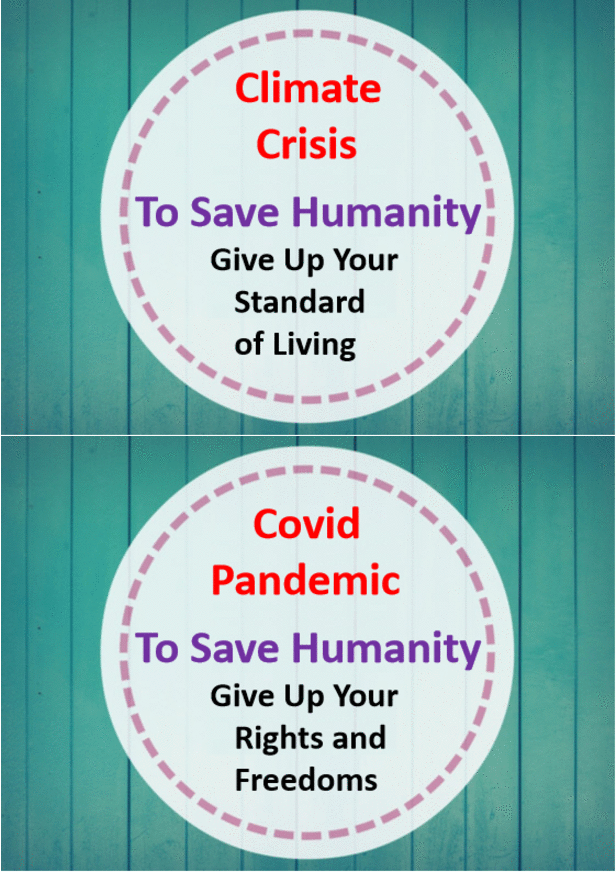
It’s basically covid all over again.

♦   We know, just like Covid, the official narrative of climate change is a lie.

♦   We know, just like Covid, climate change is being used as an excuse to usher in massive social control and global governance.

♦   And we know, just like Covid, almost every world government on both sides of every divide is backing it.

Even if they don’t always agree, even if they are happy to kill each other’s citizens in large numbers, they are all on board the same globalist gravy train, all going in the same direction to the same destination, and it has never been more obvious.

Biden’s Desperate Wartime Climate Policy


Mark Krebs writes at Master Resource “Wartime” Climate Policy vs. Natural Gas: Biden Gets Desperate.  Excerpts in italics with my bolds and added images.

“While gas appliances may presently be losing some market share to electricity due to Green New Deal discrimination, there are also increasing indications that the public is both weary and wary of such ‘watermelon’ policies. It’s not about saving the planet from the ravages of fossil fuels; it’s about enslaving the planet by banning fossil fuels.”

Yes, the President of the United States has pulled out a Korean War authority (Defense Production Act) to fight against American energy that Americans prefer. It is an overreach that is being noted widely, as outlined below as well as here and here.

The American Gas Association (AGA) started this latest flurry with a press release November 17, 2023. The same day, Reuters and Fox News published their articles. Epoch Times published its article (and video) on November 20, 2023. The Reuters article most noteworthy contribution is that it names recipients of the Biden Administration’s [mis]appropriations of DPA funding. Both the Reuters article and Fox News article cite the AGA’s press release.

The AHRI data clearly shows that gas appliances are losing at least some ground to electric equivalents as evidenced by the above graphs. Moreover, this trend appears to have accelerated under the Biden Administration. AHRI’s discussion of the IRA and DPA is non-committal advocacy (an oxymoron?).

Conclusions

“While gas appliances may presently be losing some market share to electricity due to Green New Deal discrimination, there are also increasing indications that the public is both weary and wary of such ‘watermelon’ policies. It’s not about saving the planet from the ravages of fossil fuels; it’s about enslaving the planet by banning fossil fuels.”

The eighteenth-century naval hero John Paul Jones was doing battle with a British ship when his own ship was badly damaged, and the British commander called over to ask whether Jones had surrendered. He answered, “I have not yet begun to fight.” He and his crew then captured the British ship. While regulatory capture of the “administrative state” appears to be the rule and not the exception at present, this bit of history should be remembered so we do repeat it and recapture a government “for the people” as our Founding Fathers intended.

Washington Examiner reports Biden’s war on energy: President invokes wartime powers to speed up end to gas-powered home appliance.  Excerpts in italics with my bolds and added images.

President Joe Biden allotted $169 million for electric heat pump projects with his emergency authority on the basis of climate change.

This is the first time a president classified climate change as an emergency by utilizing the Defense Production Act, which was established during the Cold War. Now, the money stemming from the Inflation Reduction Act will be divided among 15 sites dedicated to manufacturing the necessary parts and entire units of a variety of heat pumps.

“The President is using his wartime emergency powers under the Defense Production Act to turbocharge U.S. manufacturing of clean technologies and strengthen our energy security,” Biden’s National Climate Advisor Ali Zaidi said in a statement.

John Podesta, senior adviser to the president for clean energy innovation and implementation, similarly celebrated the move, applauding the president for “treating climate change as the crisis it is.”

However, American Gas Association President and CEO Karen Harbert disagreed with the recent move from the White House, writing in a statement, “We are deeply disappointed to see the Defense Production Act, which is intended as a vital tool for advancing national security against serious outside threats, being used as an instrument to advance a policy agenda contradictory to our nation’s strong energy position.”

“Increased use of natural gas has been responsible for 60% of the electrical grid’s CO2 emissions reductions. This vital tool for emissions reductions and energy system resilience should not be unfairly undermined through misuse of the Defense Production Act.”

Among the facilities, two new factories will be constructed: a Treau, Inc. DBA Gradient plant in Michigan and a Mitsubishi Electric plant in Kentucky. Neither company has announced exact locations yet. Treau will receive over $17 million, and Mitsubishi will receive $50 million toward construction.

The Energy Department predicts roughly 1,700 jobs will be created in the various projects to promote more heat pump products. All the sites are centered in “disadvantaged communities” for their benefit.

Last year, the Energy Information Administration reported that natural gas was the water and space heating source of about 42% of U.S. residential spaces. The residential sector makes up 15% of overall natural gas consumption. However, heating and cooling across residential and commercial buildings drive more than 35% of the country’s energy consumption.

Footnote on Declaring Climate Emergency for Spending Purposes

This report on the German High Court ruling on this matter Europe Plunges Into Chaos After Germany Freezes Public Spending Following Shock Top Court Decision.  Excerpts in italiics with my bolds.

Germany’s economy, Europe’s largest, is contracting as surging energy prices and trade tensions cast doubt on its export-oriented business model. Chancellor Olaf Scholz’s government had been counting on that old virtue signaling switcheroo – a flood of spending on “green-energy projects and technology”, from chips to batteries, to revive the old model. That way, if anyone asks why Germany is deficit-spending its way to mercantilist utopia, Berlin could always lie and say it was doing the right thing for the world and wasn’t interested in a debt-funded stimulus. Alas, now the “Cardinals of Karlsruhe” have made this impossible.

Berlin’s decision to freeze all federal spending for the rest of the year came after the court defunded the government’s €60 billion —the equivalent of more than $65 billion—green-transition project. The court said Berlin couldn’t repurpose unspent credits originally earmarked to tackle the Covid-19 pandemic to fund environmental and energy projects. It said Berlin was bound by the country’s constitutionally enshrined fiscal rules that limit budget deficits to 0.35% of gross domestic product in normal times.

Senior government officials said one option under consideration would be to retroactively declare a state of budgetary emergency for 2023, invoking a clause in the fiscal rules that allows for a suspension of the spending limits in exceptional circumstances. Previous governments invoked the exception during the pandemic.

Unfortunately, for Germany’s stimmy-starved politicians, the plan is fraught with legal difficulties, in part because the constitutional court prepared for just this eventuality when it raised the bar for declaring such emergencies, according to Lars Feld, an economist who advises the government.

Strengthening resilience and transforming the economy amid geopolitical crises and climate change was seen as a necessity that required taking on debt, but the court ruling has challenged those assumptions, Feld wrote in the Frankfurter Allgemeine newspaper.

Hilariously, the court said that unlike war and natural disasters, climate change was a foreseeable crisis that had been long in the making and could no longer justify emergency spending. Which, however, means that all Germany will have to do is politely request that the CIA start a new war… or that Fauci mail orders a new virus from Wuhan.

COP28 Mind-Boggling Numbers

The Green Mirage recedes as you approach it.

Robert Lyman exposes the freakish math swirling around Dubai COP this fortnight in his Financial Post article COP28 by the (very big) numbers.  Excerpts in italics with my bolds and added images.

This weekend’s climate meeting will discuss trillions of dollars.
No one will mention its chance of success is zero.

Neuroscience tells us the human brain is very bad at interpreting large numbers. Most people know that million, billion and trillion are all big numbers but can’t really understand what the difference between them is. Answer: it’s big. A million seconds is 12 days. A billion seconds is 31 years. A trillion seconds is 31,688 years, which is a lot more than 12 days.

Our cognitive difficulties with large numbers will be a problem when reading the news from the COP28 climate conference that convenes in Dubai on Thursday.

The conference has a wide-ranging agenda. It also will be attended by a large number of people — over 70,000 at last count. There’s the first large-number problem for COP28. How does a group of 70,000 people possibly discuss anything in a coherent way?

The organizers have identified five themes on which they would like to see agreement among the almost 190 governments that will be represented. When you’re talking governments, 190 is yet another brain-challenging number.

To oversimplify, there are four main themes:

♦  how to accelerate all countries’ efforts to reduce greenhouse gas emissions so as to meet a proposed 2050 “net-zero” target (zero not being a large number);
♦  how to induce wealthier countries to give much more money to poorer countries to help them both mitigate and adapt to climate change;
♦  how to persuade all countries to phase out production of fossil fuels by 2050; and, finally,
♦  how to increase the UN’s role as central coordinator and global regulator of climate efforts.

Most discussions behind closed doors will be about money. Rich countries are now paying about US$70 billion in climate aid, mostly to help finance GHG emissions reduction. The developing countries want this raised to at least US$1.4 trillion per year by 2026, 20 times higher. Twenty is not actually that large a number, except when talking about multiplying already very big dollar amounts by it. Developing countries have also demanded that funding for adaptation rise to at least US$600 billion per year. At last year’s COP27 in Egypt, they got agreement in principle for a new fund to pay for the “loss and damages” they will incur from adverse weather events they attribute to the historic GHG emissions of the industrialized countries, though no dollar amounts were agreed to. Finally, developing countries are pushing for a new Global Biodiversity Fund, to which developed countries would donate a mere US$20 billion per year.

Round numbers: rich countries would be on the hook for US$2 trillion per year. If allocations were based on GDP, Canada would owe three per cent of the total — or US$60 billion per year. In Canadian dollars, that’s roughly 78 billion CAN$. There are about 16 million households in Canada so (do the math) each household would owe $4,875. Per year. That’s a number the average person can easily understand. He or she can also understand there is absolutely no way the Canadian public or voters in any other OECD country would ever agree to such a thing. Not even if they didn’t know (but they do) that China, producer of 30 per cent of the world’s GHG emissions, not only would not be contributing but might well qualify as a recipient.

The previous 27 COPs (for Conference of the Parties) have all promoted ever-more ambitious emissions reductions. But since the first COP global emissions have risen 60 per cent, driven by developing countries’ relentless efforts to achieve more economic development for their burgeoning populations. There is no evidence that trend will change. China, India, Russia, Saudi Arabia, Iran, Iraq and others all see fossil fuel production as key to their economic development and energy security. They are unlikely to commit to production declines even if a few OECD countries do.

The United Nations secretariat will lobby hard at COP28 to expand the role of existing institutions, including even more climate summits to place even more political pressure on leaders, and they may succeed in this (though many of us feel just one a year is already more than enough). How difficult can it be to convince tens of thousands of climate stakeholders to travel to exotic conference locales each year? Especially if the general public cannot grasp the numbers they’re playing with.

Yes, those are trillions of dollars in the projection.

This weekend the media in general will report in glowing terms on the energy and enthusiasm of conference participants, especially those representing environmental NGOs. The communiqué will note every new commitment made yet entirely ignore that the probability the entire process will meet its objectives is a very, very small number not significantly different from zero.