Left Coast Closes the Dam Lights

The Klamath River flows by the remaining pieces of the Copco 2 Dam after deconstruction in June 2023. Juliet Grable / JPR

Triumphal headlines like this report the Klamath River news With one down, Klamath dam removal proceeds on schedule.  Excerpts in italics with my bolds and added images.

Removing the Copco 2 Dam takes deconstruction crews one step closer
to drawdowns of the remaining three reservoirs next January.

The first of four hydroelectric dams along the Oregon-California border has been removed from the main stem of the Klamath River. All that remains of the dam known as Copco 2 in Siskiyou County, California, is the headworks of a diversion tunnel adjacent to the now free-flowing river.

When complete, the overall project will be the biggest dam removal in U.S. history and will reopen 400 miles of fish habitat that was cut off for more than a century.  Deconstruction activities on Copco 2 will continue until September. Getting this first dam out of the way takes deconstruction crews one step closer to drawdowns of the remaining three reservoirs next January.

From CBS News:    The project, estimated at nearly $450 million, would reshape the Klamath River and empty giant reservoirs, and could revive plummeting salmon populations by reopening habitat that has been blocked for more than a century.  The proposal fits into a trend in the U.S. toward dam demolition as these infrastructure projects age and become less economically viable. More than 1,700 dams have been dismantled nationwide since 2012.
The structures at the center of the debate are the four southernmost dams in a string of six constructed in southern Oregon and far northern California beginning in 1918. They were built for power generation, and none has “fish ladders,” concrete chutes fish can pass through.

Two dams to the north are not targeted for demolition. They have fish passage and are part of a massive irrigation system that straddles the Oregon-California border and provides water to more than 300 square miles (777 square kilometers) of crops.

Those farmers won’t be directly affected but worry the demolition will set a precedent.

Good for the Salmon and Indigenous Fishermen, but what about the Lost Power?

Congressmen LaMalfa and Bentz draw the practical implications of this action in their press release Klamath Dams are Engines of Energy and Economic Reliability   September 29, 2022

A statement highlighting the importance of hydropower energy in the West
and opposing the removal of the four Klamath hydroelectric dams.

Hydropower is the oldest source of renewable energy in the United States and accounts for nearly a third of total U.S. renewable electricity generation. Hydroelectric dams play a critical role in the resiliency of the West’s electrical grid, the preservation of our landscape, flood control, the creation of space for outdoor recreational activities, and many of these dams assist in the delivery of water to farms for agriculture production. Hydropower is a win for the environment, domestic energy production, and economic development in rural areas.

So why is hydropower under attack? Because some outlier environmental groups have claimed that dam removal is necessary for fish health, even though these dams provide stored water for fish in low water years and the needed cold water for fish in hot summers.

Residents in the Klamath Basin in Southern Oregon and Northern California know about this struggle because of the proposed Klamath River dam removal – the largest dam removal project in U.S. history. For decades, PacifiCorp (the owner of the dams), local municipalities, tribes, agriculture producers, and conservationists have gone back and forth arguing the benefits and drawbacks of the four Klamath Dams – Copco #1, Copco #2, Iron Gate, and J.C. Boyle.

Dam removal advocates claim the dams block salmon and steelhead spawning and rearing habitat in the Upper Basin, even though their only science is a questionable Master’s thesis. These advocates have conveniently avoided discussions of other factors that have caused salmon and steelhead populations to decline, such as overfishing, pollution from forest fires, a marginal population in a warm river, and disease.

They irresponsibly ignore the immense amount of sediment behind each dam, and how releasing it will impact water quality and river health, including the years long decimation of the very salmon runs they claim to want to protect. Nor have they considered how dam removal will affect other wildlife species who reside near the river and in the reservoirs, such as Canada Geese, sandpipers, Western Pond Turtles, and crayfish. It is essential that the conversation regarding dam removal consider the big picture, how this action will affect the Basin’s entire ecosystem and the people who live there, rather than base solutions solely on hypothetical scenarios for salmon.

Those who support keeping the dams know the true benefits they bring to the area. The Klamath River Hydroelectric Project generates, annually, enough low-cost, reliable power for 70,000 households. The dams provide good-paying, technical jobs and are the largest single private taxpayer in the county of Siskiyou. The reservoirs created by each dam are critical to the area’s firefighting efforts, ground water recharge, pulse flows for clearing debris, and flood control.

Removing hydroelectric dams from our energy grid will drive up energy costs,
decimate local jobs, and increase dependency on oil and natural gas
– something both California and Oregon have opposed.

The proper and best position on these dams is crystal clear: hydropower provides renewable, cheap energy to our power grid around the clock. It’s unconscionable that so-called environmental advocates are forcing dam removals across the West without the scientific evidence to back up their ideas, and no acknowledgement of the catastrophic consequences that could occur from these actions.

As the Federal Energy Regulatory Commission advances the removal of four dams on the Klamath, and elsewhere across the West, we must continue the fight to protect these engines of energy and economic reliability.”

Summary

The zero carbon juggernaut rumbles on, chewing up pieces of modern society’s energy platform.  Even dams are removed despite their essential baseload power stabilizing the grid, with no carbon emissions. Meanwhile, gas and coal supply infrastructure is constrained and allowed to decay, with no chance wind and solar will make up the difference in reliable affordable power.

Big Wind Decimates Balsa Farmers

Amazon rain forest devastated to mount monstrous virtue signalling prayer wheels elsewhere. Stop the subsidies and the devastation from wind “farms.”

From The Defender Wind Energy’s Dirty Secret: Deforestation of the Amazon and Devastation of Indigenous Communities.  Excerpts in italics with my bolds.  H/T mohandeer

Booming demand for balsa wood, used to make turbine blades for wind energy,
is ravaging Amazon forests and indigenous communities —
in the name of “green power.”

Story at a glance:

  • The rapid expansion of wind energy has led to increasing demand for windmills and balsa wood to build them.
  • The tropical tree is facing exploitation and being cleared from Amazon forests, causing potentially more environmental problems than the windmills it creates can solve.
  • Wind turbine blades can be up to 328 feet (100 meters) long; each blade requires 150 cubic meters of balsa wood, which is several tons.
  • China is a major consumer of balsa wood, purchasing 85% of Ecuador’s exports in 2020.
  • The Open Democracy video, “A Green Paradox,” documents how the rush for balsa wood to create “green” wind energy has destroyed local indigenous communities and decimated ecosystems.

Balsa, a tree that’s native to South America, is a coveted resource. Growing up to 98 feet (30 meters) and ready for harvesting in just three to four years from planting, balsa holds the promise for high profits for those who grow them.

Adding to its value, balsa wood is flexible and light yet very strong, making it an ideal material for manufacturing bridges, skis, boats and wind turbine propellers.

In an ironic tragedy, however, the rapid expansion of wind energy has led to
increasing demand for windmills and balsa wood to build them
.

Now, the tropical tree is facing exploitation and being cleared from Amazon forests, causing potentially more environmental problems than the windmills it creates can solve.  

Logging Amazon rainforests to create massive wind turbine propellers is the opposite of sustainable. Meanwhile, birds and bats — many species of which are already endangered — are suffering. It’s estimated that 600,000 to 949,000 bats, and up to 679,000 birds, are killed annually by wind turbines in the U.S.

But the number of wind turbines has increased significantly since these estimates were calculated, which means many more are probably affected. Areas, where wind farms are built, are also in peril, as the giant structures have a significant socio-economic impact.

As it stands, wind energy is falling into the trap of many “green” initiatives before it,
claiming to offer a solution to save the planet
while instead helping to destroy it.

How Warmists Turn the Public Off

Wildfires raging outside Athens this summer are just one reason environmentalists are raising alarms louder than ever — even as many activists insist their messages lack the proper resonance with voters. AP

Kevin D. Williamson explains at NY Post Why climate change activists have failed to score public support.  Excerpts in italics with my bolds.

We are hearing even more than usual about climate change this summer and that is not surprising — not with dog-days news cycles driven by record-setting heat waves, torrential rains and widespread Canadian wildfires.

Some climate activists think we are not hearing enough about the issue: Writing in The Guardian, columnist Jonathan Freedland insists that the problem is one of marketing. “The climate movement has devoted relatively few resources to reaching or persuading the public,” he writes, preposterously.

He quotes progressive p.r. man David Fenton — “We’re in a propaganda war, but only one side is on the battlefield” — and cites former United Nations climate grandee Christiana Figueres, who claims “the climate community has recoiled from marketing.” Why? Because, Figueres says, it is “sort of tainted. It’s icky. You know, ‘We’re too good for marketing. We’re too righteous’. . . Hopefully we’re getting over it.”

Of all the dumb and dishonest things that have been written and said in the climate debate, the notion that climate-change activists just can’t get their message out — that they won’t stoop to marketing — may be the very dumbest and most dishonest.

Billions of dollars have been spent on climate-change advocacy,
to say nothing of money devoted to actual climate policies.

Raging wildfires in Eastern Canada have sent vast plumes of smoke across North America this summer. Environmentalists loudly suggest the smoke is proof of a changing planet, even as progressives insist their agenda is being silenced. via REUTERS

The government leaders of practically every democratic country speak about the issue constantly.

In the intergovernmental sector, you have everybody from the United Nations to the International Monetary Fund ringing the climate alarm bells, while in the private sector you can count on the likes of BlackRock, Goldman Sachs and other corporate titans to do the same.

ESG rules have pushed the climate issue onto the corporate agenda in a big way—companies are spending billions in total (as much as $1.4 million per company) on climate-reporting costs alone.

Even the supposed villains in the story — big energy companies such as ExxonMobil — spend billions of dollars a year advertising the green agenda. “In the past ten years we have reduced greenhouse gas emissions in our operations by more than 7 million metric tons,” ExxonMobil boasts, “which is the equivalent of taking about 1.4 million cars off the road.” You may not think they are sincere, but they are far from silent about the issue.

Companies such as private equity biggie BlackRock are spending billions on ESG programs, which link their investment strategies with left-wing social goals. REUTERS

Climate activists have the commanding heights. What do the so-called deniers have?
A few of my cranky libertarian friends.  .  . And voters.

The real issue with climate policy isn’t that voters don’t know about the issue — it is that they disagree. Climate policy touches everything from big tech to farming to economic growth, everything from the homes we live in to the cars we drive, and, as such, an ambitious climate program will necessarily impose big costs.

The Alexandria Ocasio-Cortezes of the world can pretend that green policies will pay for themselves, but no serious person believes that.

One of the clearest ways to reduce our reliance on fossil fuels is to expand access to nuclear energy, which requires major investment in new infrastructure. Getty Images

Sure, Guardian headline writers can straight-up declare “The beauty of a Green New Deal is that it would pay for itself” — this is nothing more than that “marketing” to which our green friends supposedly are so averse.

American voters do care about climate issues, but not as intensely as activists would like. Climate routinely polls in the single digits when it comes to voters’ top concerns, far behind (surprise!) the economy and health care.  Independents rate immigration a more pressing issue than climate change.

Maybe you think the US government is under the heel of the oil barons, but no democratic country has undertaken the kind of economic transformation climate activists advocate.

The signatories of the Paris Agreement are far from meeting their climate obligations; the $100 billion a year in climate-finance commitments promised at the UN climate summit in Glasgow have not been fully funded; even in the European Union, the leaders of which take a much stronger climate line than their US counterparts, there has been no radical change.

A coal excavator in Germany, which boosted coal mining in the wake of gas shortages caused by the Ukraine crisis. AP

Germany responded to Russia’s recent energy blackmail by reopening coal plants.

European voters rank climate a higher priority than Americans do, but it typically polls behind economic growth and immediate issues such as the invasion of Ukraine.

That is not oil-drenched propaganda at work— that is, for better and for worse,
democratic politics at work.

While there has been piecemeal progress, countries across the globe are moving at a glacial pace when it comes to the one policy that can reliably reduce greenhouse-gas emissions at a reasonable cost: rapidly expanding nuclear power, which has an operational carbon footprint of approximately zero.

The state government in Pennsylvania got that collapsed interstate overpass reopened in record time by waiving all sorts of planning and permitting rules, but no such urgency exists in the case of nuclear power or other needful energy infrastructure.

Christiana Figueres, who leads the UN’s climate change campaign, contends that environmental issues suffer from a lack of proper marketing. Many would certainly disagree. LightRocket via Getty Images

That, unfortunately, is democracy, too.  What is needed is not more marketing — more propaganda, more hysteria.   What is needed is a more attractive set of trade-offs.

But finding better trade-offs means admitting that there are trade-offs, which climate activists — hostage to their marketing departments — have too often refused to do.

Promises made at major multi-national climate conferences such as the Paris Accords remain unmet as liberal democracies appear unable to overhaul their energy strategies. Getty Images

It isn’t that climate activists aren’t selling their agenda — it is that
voters in democratic countries around the world are not buying it.

What’s Wrong with ESG Investing? Plenty

Investors Sour on ESG Activism

Andy Puzder explains how bogus and damaging is ESG investing.  Perhaps others are getting the memo.  WSJ reports with a sad tone what is actually good news that investors are pushing back against ESG political correctness. Their article is: ESG Blowback: Exxon, Chevron Investors Reject Climate Measures  Excerpts in italics with my bolds.

An investor-driven climate change push at some of the
world’s largest oil companies has stalled out.

On Wednesday, Exxon Mobil and Chevron’s shareholders struck down a raft of proposals urging the companies to cut greenhouse-gas emissions derived from fuel consumption, put out new reports on climate benchmarks and disclose certain oil-spill risks, among other initiatives.

The votes were abysmal for climate activists. All but two of the 20 shareholder proposals for the two companies garnered less than 25% of investors’ vote, according to preliminary results, with some performing much worse than similar proposals put forward last year.
Zero Carbon zealots attacking ExxonMobil, here seen without their shareholder disguises.

Among the most controversial proposals were those that would have had the companies adopt targets for reducing emissions including those from third-party consumption of their products, such as when drivers burn gasoline in their cars, also known as Scope 3 emissions. Those received only 11% and 10% of the vote among Exxon and Chevron investors, respectively, compared with 27% and 33% for similar proposals last year.

In recent weeks, similar climate proposals failed to win over most shareholders
at annual meetings of British oil and gas giants BP and Shell in London.

Investment strategies linked to ESG, short for environmental, social and corporate-governance issues, had gained momentum in recent years, particularly following the onset of the pandemic in 2020. Investors pressed oil companies to show how they were working to reduce their climate footprint, set long-term environmental goals and curtail the flaring of unwanted natural gas.

In 2021, investment firm Engine No. 1 prevailed in a historic proxy battle against Exxon, winning three board seats at the company’s annual meeting with the backing of investment firms, Vanguard, State Street and BlackRock. The firm argued that Exxon needed to form a better strategy to prepare for the world’s anticipated energy transition.

After the defeat, Exxon adopted a so-called net zero commitment — a goal to reduce
or offset greenhouse-gas emissions from its operations to zero by 2050.

But Wednesday’s votes demonstrated how some shareholders have backed off pushing major oil companies to embrace certain climate goals. Investors said many voices pushing ESG measures have been drowned out following Russia’s war in Ukraine, which caused oil and gas prices to skyrocket as global supplies were crimped.

Mark van Baal, founder of environmental activist group Follow This, said shareholders missed an opportunity at the annual votes. Investors know that avoiding climate disaster will require global emissions to fall by almost half by 2030, he said, but many are focused on short-term profits. [Note: van Baal is wrong about disaster–see Even 3°C Warming Can’t Stop World Prosperity. ]

The industry and its allies have said some countries, particularly in Europe, were too quick to move away from fossil fuels toward clean energy sources such as solar and wind. A movement against climate activism has gained political traction in the U.S., particularly among Republican voters. Entrepreneur Vivek Ramaswamy, a candidate for the Republican presidential nomination, has made anti-ESG policies a central plank of his campaign.

The pushback against ESG measures has also hit investment firms such as BlackRock,
which have faced potential boycotts in Texas and other red states.

Republican officials in Florida, Texas, Louisiana and South Carolina pulled more than $4 billion in pension and investment funds from BlackRock starting last year. BlackRock brought in $230 billion from U.S. clients in 2022.

It wasn’t immediately clear how BlackRock, State Street and Vanguard voted at the meetings this week.  State Street and BlackRock declined to comment. Vanguard didn’t immediately respond to a request for comment.

Investments in fossil fuels pushed many oil companies to record profits last year, which lured back some investors who had fled after years of meager returns from the industry. Exxon Chief Executive Darren Woods said Wednesday the company had benefited from investing in fossil fuels when others pulled back.

Even in Europe, energy executives have shown a willingness to alienate clean-energy investors to tailor strategies to the thirst for fossil fuels. BP and Shell’s record full-year 2022 profits and hefty returns to investors have attracted new investors, and won back some who were dubious of their energy-transition strategies, executives said.

Shell and BP executives have said their strategies are consistent with targets to lower global emissions, while also helping supply the oil and gas still demanded in coming years globally. Exxon and Chevron have said they support the emissions targets set by the Paris climate accords and reducing emissions from their operations.

But Woods and other industry executives have argued some climate-related proposals would backfire or leave the economy worse off. Woods said several proposals rejected Wednesday would have required the company to assume the world will cut carbon emissions at a much faster pace than observers have projected.

“Some [would] go so far as to force us to decrease oil and gas development,” he said. “This would do nothing to reduce global demand.”

What is actually beyond debate is not that we are in a climate crisis
but that if we don’t stop destroying our conventional energy economy,
we are going to be in a civilizational crisis.

Govt. Green Rules Make Appliances Cost More and Do Less

NYC going after pizza oven emissions. You’d have to burn a pizza stove 849 years to equal one year of John Kerry’s private jet

In his Master Resource article Energy Appliance Victory! (DC Circuit vs. DOE), Mark Krebs explains the DOE agency machinations targeting boilers as a case in point of government bureaucrats attacking everyone’s economic well-being in the name of saving the planet.  First, a contextual piece describes the game plan behind all this.  Later on, a synopsis of Kreb’s analysis of the tactics on the ground.

Background:  Why This Judgment Matters 
Biden’s Green Rules Make Appliances Cost More and Do Less

Authored by Kevin Stocklin at The Epoch Times, published at Planet Today.  Excerpts in italics with my bolds and added images.

The Biden administration announced in December 2022 its pledge to take “more than 100 actions” to impose significantly tighter environmental standards on consumer goods is now becoming reality.  And consumer groups are predicting a future in which Americans pay more for products that do less, while manufacturers warn of shortages and supply chain breakdowns.

“You’re seeing, just in the last few months, new rules from the Biden administration about clothes washers, dishwashers, and other kinds of kitchen appliances, and in every case, you’re talking about a tightening of already very, very tight standards,” O.H. Skinner, executive director of the Alliance for Consumers, told The Epoch Times. “That will make it so that nearly the majority of the current products on the market don’t meet the standards and have to be redesigned or removed from the market,” Skinner said.

“Everyday things that people actually want are going to get more expensive
or disappear, and the products that will be available will be more expensive
but not better. People are going to wonder why life is worse.”

The announcement touted 110 new regulations enacted by federal agencies on “everything from air conditioners and furnaces, to clothes washers and dryers, to kitchen appliances and water heaters—as well as commercial and industrial equipment.” According to the Biden administration: “Once finalized, these standards will reduce greenhouse gas emissions by an estimated 2.4 billion metric tons, equivalent to the carbon emissions from 10 million homes, 17 million gas cars, or 21 coal-fired power plants over 30 years. The projected consumer savings from these standards would be $570 billion cumulatively, and for an average household this will mean at least $100 in annual savings.”

The stoves are just the thin end of the wedge.

These actions follow a familiar pattern: rumors of new directives, followed by official denials, followed by draconian diktats.   For example, reports that the Consumer Product Safety Commission would ban gas stoves over alleged safety concerns sparked a public outcry in January, which was met with denials by the Commission, together with media ridicule, that any such thing was being contemplated. This was then followed by new environmental standards from the DOE that would ban the manufacturing of 50 percent of the gas stoves available on the market today.

Case in Point: DOE Rule on Boilers Vacated by DC Circuit Court

Mark Krebs explains the agency machinations in his Master Resource article Energy Appliance Victory! (DC Circuit vs. DOE).  Excerpts in italics with my bolds.

“The ‘wheels of justice turn slowly,’ but they indeed turned, even within the District of Columbia’s ‘uni-party.’ As for holding on to this victory, it is far from a slam-dunk for preserving consumer choice and free markets. I expect the struggle to escalate in Biden’s all-of-government war against natural gas and other fossil fuels.”

Beleaguered energy consumers were just handed a far-reaching victory by the United States Court of Appeals for the District of Columbia (DC Circuit). The ruling vacated a Final Rule from the U.S, Department of Energy (DOE) that would have banned the manufacture and sale of non-condensing boilers for use in commercial applications. DOE’s rule was challenged several years ago by natural gas interests–and later joined with a separate but similar case brought by the Air-Conditioning, Heating, and Refrigeration Institute (AHRI).

DOE’s failures were major and numerous. Previously, the Court had afforded DOE ample opportunities to rectify them, but they didn’t. Ultimately (reading in between the lines), it appears that the Court lost its patience with “the Agency” (DOE). One of the far-reaching results of this victory is that it undermines a veritable super-weapon of the administrative state: the Chevron Deference. This aspect will be discussed in more detail further down.

DC Circuit has set a precedent that illustrates how DOE routinely bends the rules to achieve its “administrative state” objectives. Consequently, DOE should exercise more care and transparency going forward with both present and future developments of appliance minimum efficiency standards.  However, it is probably more likely that DOE will find ways to get around it; perhaps drastically.

The end-result of this (amid many other analytical biases discussed in the Court ruling) is fatally skewed economic “determinations” that almost always favor stricter standards, regardless of the true economics.. As a result of this Court Order, such routine biases are now on public display to demonstrate the full intent of regulatory failures that occur within the intentionally opaque bureaucratic processes to ostensibly overcome so-called market failures.

Most important of all, fossil fuel industries should exploit this victory to illustrate just how fallible government agencies can be.  This decision goes far beyond the particulars of packaged commercial boilers. It goes to the heart of the question of government agency standing relative to actual stakeholders.

Ever since the “Chevron Deference” was put in place in 1984, federal courts have deferred to an agency’s ostensibly unique “subject matter expertise” for interpretating ambiguous statutes. Such is clearly the case when reviewing regulatory actions like promulgating rulemaking for mandating minimum energy efficiency standards for appliances. On May 1, 2023, the U.S. Supreme Court granted review in Loper Bright Enterprises v. Raimondo, No. 22-451, on whether to overturn or limit Chevron Deference.

Subsequently, perhaps the most important victory in this case is that it becomes a “poster child” for why the administrative state’s abuse of the Chevron Deference should end. At least in this instance, the Courts found DOE to be not worthy of deference. Perhaps SCOTUS will follow their lead.


Canada Road to Ruin Paved with Trudeau’s CO2 Intentions

Bill Bewick explains in his National Post article Federal climate policy makes us poorer.  Excerpts in italics wtih my bolds and added images.

The clean fuel standard on top of an escalating carbon tax and onerous emissions
targets will make everything more expensive

Canada is in an affordability crisis. Despite the pain felt by Canadians every day at the till or the gas pump, the federal government’s passion for world-leading carbon taxes and regulations is driving up the cost of everything while making us collectively poorer.

Tax advocates say it is a small % of GDP. But it is still $10 Billion extracted from Canadian households.

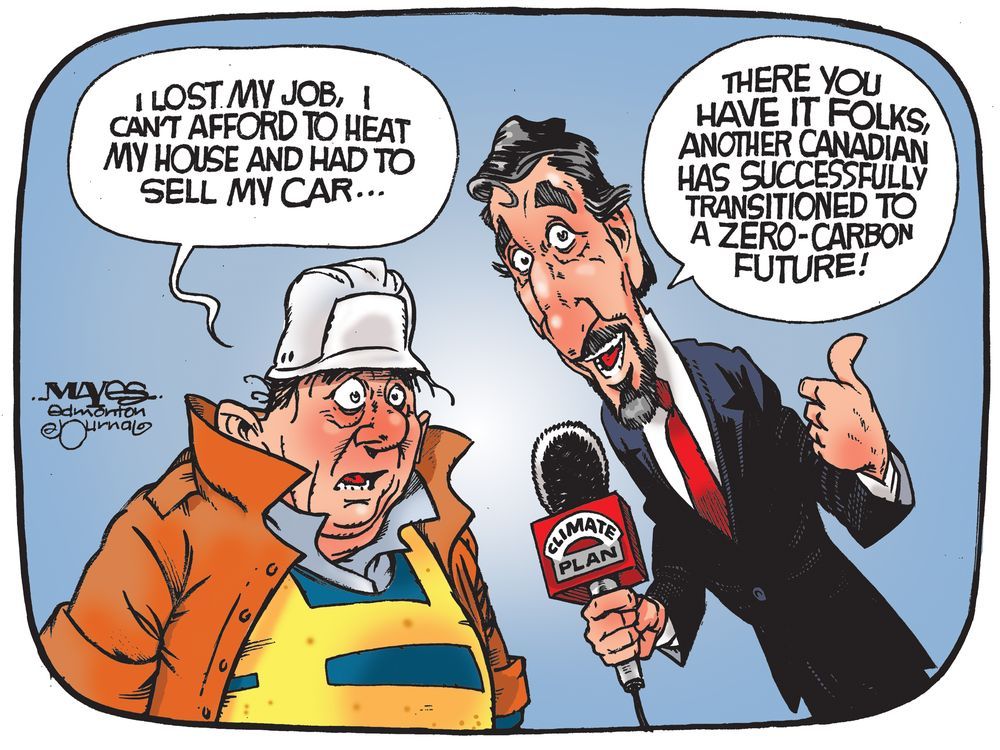
Canada Day saw the Clean Fuel Standards (CFS) regulation come into effect. A week earlier they passed a “Sustainable Jobs Act” that seeks to help transition workers away from highly productive jobs in oil, gas and related industries despite growing global demand for these energy sources.

The Parliamentary Budget Officer projects that by 2030 the net CFS cost will be over $1,100 per household in Alberta and Saskatchewan. While it will add roughly 17 cents on a litre of fuel (in addition to the carbon tax, of course) most of the costs will be on Canadian businesses, which means less jobs, less tax revenue and higher prices, making life more expensive with less ability to pay for it.

The fact is the world will need oil for the next 20-30 years at least. Canada is the responsible, reliable supplier many in the world would already prefer to get their energy from. With Canadian oilsands producers aggressively pursuing net zero operations by 2050, there is no better place to get oil from.

The demand for Liquefied Natural Gas (LNG) is booming globally. It should be vocally supported by anyone concerned with emissions since Canadian exports off our west coast would drive down the need for all the coal plants being built and planned in China and India. It also features an unprecedented level of Indigenous partnerships, offering an unparalleled opportunity for the economic self-sufficiency of countless communities.

Why would we “transition” these high-paying, unsubsidized jobs?
And transition them to what?

Well, the federal government seems to know that our oil and gas sector will have to shrink despite growing world demand. This is because in addition to steadily rising carbon taxes and the new CFS, they’ve arbitrarily demanded a 42 per cent reduction in emissions for the oil and gas sector in seven short years.

Requiring this drastic reduction by 2030 will force hasty and frantic changes as well as production cuts that will drive up energy prices for everyone while decreasing jobs and government revenues. That means more debt and more tax burden for Canadians, while hurting our economy and increasing our reliance on foreign oil.

An escalating carbon tax was supposed to let the economy decarbonize in an efficient way, but the federal government keeps piling on. This is crushing Canada’s competitiveness generally, especially after our American neighbours decided to go along with most of the rest of the world and not implement a carbon tax at all.

The fact that every manufacturer, farmer, trucker, and even commercial business owner on this side of the border has to pay these taxes on their fuel, heat, and power means everything is more expensive and will keep going up. Lower wages and job opportunities means we will be less and less able to afford it.

The government either says we must make these sacrifices for the planet, or that the green jobs they will transition to will be just as profitable and more sustainable. Their most recent example: the Volkswagen battery plant. There will be 3,000 jobs created, but the government will subsidize the plant with an estimated $13 billion. Does $4.3 million in taxpayer dollars per job sound sustainable to you?

As for our sacrifices saving the planet, carbon emissions are global. As Asia grows its economy, emissions are steadily rising. Canada can certainly “do its part” but other than massive LNG export to Asia, nothing we do with our declining 1.6 per cent share can meaningfully reduce overall global emissions.

There’s one more major federal policy being pursued that might be the most expensive of them all: the demand that every province’s electrical grid get to net zero by 2035. Canadian ratepayers spent billions to convert coal plants to gas and subsidize solar and wind projects. Now they are forcing us to get off natural gas entirely — a fuel source even the EU considers green.

Trying to do this in 12 years will cost an estimated $52 billion to achieve in Alberta alone, driving up power bills by 40 per cent. Nothing complements renewables like natural gas. If we want to keep the lights on when there’s no sun or wind, the only technology right now up to the task is natural gas plants — but the government seems to think higher power bills and less reliability is the way to go.

Canadians care about reducing emissions and it is happening. Canadians also care about affordability. We need to demand our governments find a balance between the two. If Canada recalibrates our carbon policies to be part of the global parade instead of driving off an economic cliff, we can have both.


See Also Canada Budget Officer Quashes Climate Alarm

Finally, a Legal Rebuttal on the Merits of Kids’ Climate Lawsuit

As reported last month, the Oregon activist judge invited the plaintiffs in Juliana vs US to reopen that case even after the Ninth Circuit shot it down.  Now we have a complete and thorough Motion from the defendant (US government) to dismiss this newest amended complaint.  Most interesting is the section under the heading starting on page 30.  Excerpts in italics with my bolds and added images.

Plaintiffs’ Claims Fail on the Merits

Because Plaintiffs’ action fails at the jurisdictional threshold, the Ninth Circuit never reached—and this Court need not reach—the merits of the claims. . . Plaintiffs’ second amended complaint, which supersedes the first amended complaint, asserts the same claims that were brought in the first amended complaint, which this Court addressed in orders that the Ninth Circuit reversed. Defendants thus renew their objection that Plaintiffs’ claims fail on the merits and should be dismissed pursuant to Fed. R. Civ. P. 12(b)(6).

A. There is no constitutional right to a stable climate system.

The Supreme Court has repeatedly instructed courts considering novel due process claims
to “‘exercise the utmost care whenever . . . asked to break new ground in this field,’… lest the liberty protected by the Due Process Clause be subtly transformed” into judicial policy preferences. More specifically, the Supreme Court has “regularly observed that the Due Process Clause specially protects those fundamental rights and liberties which are, objectively, ‘deeply rooted in this Nation’s history and tradition.’”  Plaintiffs’ request that this Court recognize an implied fundamental right to a stable climate system contradicts that directive, because such a purported right is without basis in the Nation’s history or tradition.

The proposed right to a “stable climate system” is nothing like any fundamental right ever recognized by the Supreme Court. The state of the climate is a public and generalized issue, and so interests in the climate are unlike the particularized personal liberty or personal privacy interests of individuals the Supreme Court has previously recognized as being protected by fundamental rights.  “[W]henever federal courts have faced assertions of fundamental rights to a ‘healthful environment’ or to freedom from harmful contaminants, they have invariably rejected those claims.”. Plaintiffs’ First Claim for Relief must be dismissed.

B.  Plaintiffs fail to allege a cognizable state-created danger claim.

The First Claim for Relief must also be dismissed because the Constitution does not impose an affirmative duty to protect individuals, and Plaintiffs have failed to allege a cognizable claim under the “state-created danger” exception to that rule.
As a general matter:

[The Due Process Clause] is phrased as a limitation on the State’s power to act, not as a guarantee of certain minimal levels of safety and security. It forbids the State itself to deprive individuals of life, liberty, or property without “due process of law,” but its language cannot fairly be extended to impose an affirmative obligation on the State to ensure that those interests do not come to harm through other means.

Thus, the Due Process Clause imposes no duty on the government to protect persons from harm inflicted by third parties that would violate due process if inflicted by the government.

Plaintiffs contend that the government’s “deliberate actions” and “deliberate indifference” with regard to the dangers of climate change amount to a due process violation under the state-created danger exception.

First, Plaintiffs have identified no harms to their “personal security or bodily integrity” of the kind and immediacy that qualify for the state-created danger exception. . . But here, Plaintiffs allege that general degradation of the global climate has harmed their “dignity, including their capacity to provide for their basic human needs, safely raise families, practice their religious and spiritual beliefs, [and] maintain their bodily integrity” and has prevented them from “lead[ing] lives with access to clean air, water, shelter, and food.”  Those types of harm are unlike the immediate, direct, physical, and personal harms at issue in the above-cited cases.

Second, Plaintiffs identify no specific government actions—much less government actors—that put them in such danger. Instead, Plaintiffs contend that a number of (mostly unspecified) agency actions and inactions spanning the last several decades have exposed them to harm. This allegation of slowly-recognized, long-incubating, and generalized harm by itself conclusively distinguishes their claim from all other state-created danger cases recognized by the Ninth Circuit.

Third, Plaintiffs do not allege that government actions endangered Plaintiffs in particular. . . As explained above, Plaintiffs’ asserted injuries arise from a diffuse, global phenomenon that affects every other person in their communities, in the United States, and throughout the world.

For all these reasons, there is no basis for finding a violation of Plaintiffs’ due process right under the state-created danger doctrine, and Plaintiffs’ corresponding claim must be dismissed.

C. No federal public trust doctrine creates a right to a stable climate system.

Plaintiffs’ Fourth Claim for Relief, asserting public trust claims, should be dismissed for two independent reasons. First, any public trust doctrine is a creature of state law that applies narrowly and exclusively to particular types of state-owned property not at issue here. That doctrine has no application to federal property, the use and management of which is entrusted exclusively to Congress. . .Consequently, there is no basis for Plaintiffs’ public trust claim against the federal government under federal law.

Second, the “climate system” or atmosphere is not within any conceivable federal public trust.

1. No public trust doctrine binds the federal government.

Plaintiffs rely on an asserted public trust doctrine for the proposition that the federal government must “take affirmative steps to protect” “our country’s life-sustaining climate system,” which they assert the government holds in trust for their benefit.  But because any public trust doctrine is a matter of state law only, public trust claims may not be asserted against the federal government under federal law. . . The Supreme Court has without exception treated public trust doctrine as a matter of state law with no basis in the United States Constitution.

2. Any public trust doctrine would not apply to the “climate system” or the atmosphere.

Independently, any asserted public trust doctrine does not help Plaintiffs here. Public trust cases have historically involved state ownership of specific types of natural resources, usually limited to submerged and submersible lands, tidelands, and waterways. . . The climate system or atmosphere is unlike any resource previously deemed subject to a public trust. It cannot be owned and, due to its ephemeral nature, cannot remain within the jurisdiction of any single government. No court has held that the climate system or atmosphere is protected by a public trust doctrine. Indeed, the concept has been widely rejected.

For all these reasons, the Court should dismiss Plaintiffs’ Fourth Claim for Relief.

Background Post Update on Zombie Kids Climate Lawsuits: (Juliana vs. US) (Held vs Montana)


EV Revolution Winding Down

An article from John Ray explains how the Electric Vehicle movement is losing steam The electric car ‘revolution’ is a disaster before it’s begun.  Excerpts in italics with my bolds and added images. (The UK references are due to the original article appearing in The Telegraph.)

The electric car revolution is stalling, of that there can no longer be any doubt. It has left the big global carmakers floundering, uncertain of how to proceed in a race they reluctantly entered in the first place.

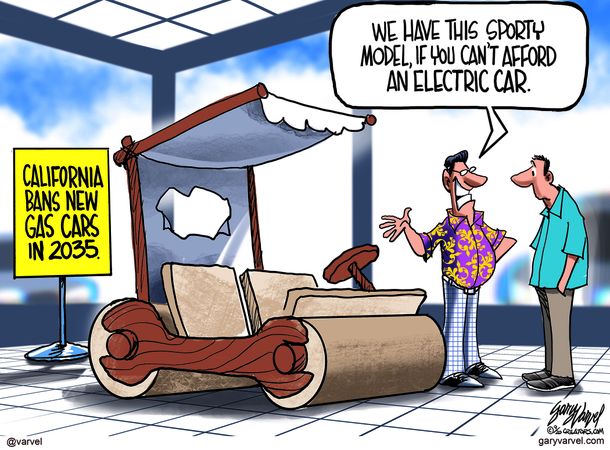
Electrification was initially met with fierce resistance. But once politicians held a gun to the heads of company bosses with a series of cliff-edge deadlines for phasing out the combustion engine, carmakers had little choice but to go all-in.

Century-old business models were declared dead and ambitious plans hurriedly drawn up to electrify entire portfolios from small city run-arounds to family saloons and SUVs, at astronomical cost. Even Ferrari has embraced the movement – much to the consternation of petrolheads everywhere.

But with electrification barely off the starting grid, one by one the big carmakers
are already pulling back as demand badly falters.

Volkswagen is so concerned about flagging sales that it has taken the extraordinary decision of halting electric vehicle production at one of its biggest plants. Assembly lines for electric models will be paused for six weeks at the Emden factory in northwest Germany and 300 of its 1,500 staff laid off after sales fell 30pc short of forecasts.

This means production of the new VW ID.7 electric model, which had been due to commence in July will be pushed back until the end of the year. The ID.4 electric SUV and the upcoming ID.7 electric sedan will also be delayed.

“We are experiencing strong customer reluctance in the electric vehicle sector,”
plant boss Manfred Wulff said.

That is remarkably plain language from the largest car manufacturer on the planet, and a company that recently announced plans to invest €120bn (£103bn) over the next five years in “electrification and digitalisation”.

It comes months after Ford poured cold water on the shift to electric
with thousands of job losses in Europe.

Electric vehicle production is unable to support anything like the same number of jobs that petrol and diesel models are able to sustain, it said. Boss Jim Farley estimates that 40pc fewer staff will be needed to develop battery versions.

A generation of pure electric vehicle makers has hardly fared any better. On Tuesday, Lordstown Motors, the US electric truck specialist that Donald Trump once heralded as the saviour of a depressed Ohio town, filed for bankruptcy protection.

Even Elon Musk has been forced to repeatedly cut the price of Teslas in a desperate effort to prop up demand and protect market share.

But it’s the setback at VW that stands out, raising serious questions about whether politicians are making the catastrophic mistake of forcing electric cars on a public that doesn’t want them. Indeed, the decision to impose strict deadlines for the phase out of petrol cars could turn out to be one of the most ruinous policy decisions of our lifetimes.

Think about it for a second: an entire industry not only forced to abandon a product that the vast majority of people still want and use, but also bullied into channelling all its resources into making something on a colossal level that there simply isn’t the market for – at least not within the horrendously short timeframe that is being imposed on car manufacturers.

It’s industrial self-sabotage and a commercial, economic and social catastrophe in the making. But what’s worse is that the damage risks being far greater in the UK than anywhere else in the Western world thanks to the Government’s myopic obsession with arbitrary net zero targets.

While the rest of the industrial world seems to have largely settled on a 2035 deadline for petrol and diesel phase out, ministers, for reasons destined to remain a mystery, have decided Britain needs to hit this milestone five years earlier than everyone else.

It makes no sense at all, and yet the ramifications threaten to be huge. By diverting capital into something that lots of people essentially don’t want, it risks inflicting massive losses on an already fragile UK car industry.

It is pure fantasy to imagine that Britain – with a dearth of battery factories (consultants Alix Partners estimates as much as a third of Britain’s battery requirements will need to be imported), a paucity of chargers and dramatically higher energy costs – will be in any position to go fully electric in the next seven years. And the Government simply isn’t capable of solving any of these challenges in time, if at all.

The UK risks becoming the unfortunate guinea pig in a costly and dangerous experiment that persuades the rest of the world to push their own deadlines out even further, turning this country into an example of how not to become a nation of electric car owners.


Carbon Capture Boondoggle

John M. Contino explains in his American Thinker article The Contradictions of Carbon Capture.  Excerpts in italics with my bolds and added images.

In May, 2022, the Biden Administration announced a $3.5 billion program to capture carbon pollution from the air, and the money has been flowing copiously. A quick search on LinkedIn for companies engaged in Carbon Capture, Utilization and Storage (CCUS) projects will reveal dozens of companies, most of which are U.S.-based. They are well-staffed and generously funded with millions of up-front taxpayer dollars. [Note the bogus reference to plant food CO2 as carbon pollution.]

Summit Carbon Solutions does have its share of proponents — among them ethanol producers, heads of Chambers of Commerce, and politicians of all stripes from state and local governments. It’s one thing to dangle large sums of other people’s money to induce cooperation, but landowners are apparently being bludgeoned into submission with eminent domain.

The CCUS projects in the Midwestern faming states are all predicated on the continued, if not expanded, production of ethanol, because ethanol facilities present localized concentrations of CO2 that can be harnessed and disposed of more efficiently than merely sucking carbon dioxide out of the ambient atmosphere.

A Reuters article from March, 2022 reports that

The government estimates that ethanol is between 20% and 40% less carbon intensive than gasoline. But a recent study published in the Proceedings of the National Academy of Sciences found that ethanol is likely at least 24% more carbon intensive than gasoline, largely due to the emissions generated from growing huge quantities of corn [emphasis added].

The production of ethanol results in a net loss of energy: “Adding up the energy costs of corn production and its conversion to ethanol, 131,000 BTUs are needed to make 1 gallon of ethanol…[which] has an energy value of only 77,000 BTU.”

And let us not give short shrift to Power Density. In his 2010 book Power Hungry. The Myths of “Green” Energy and the Real Fuels of the Future, energy expert Robert Bryce compares the amount of the energy produced by various sources in terms of horsepower per acre, or wattage per square meter. An average U.S. Natural Gas Well, for example, produces 287.5 hp/acre. An Oil Stripper Well (producing 10 bbls/day) produces 148.5 hp/acre. Corn Ethanol comes in at a pathetic 0.25 hp/acre (pg. 86).

An Occam’s Razor approach to solving this problem would be
to shut down all the country’s ethanol production and
to not generate all that carbon dioxide in the first place.

Granted, the ethanol industry enjoys wide bipartisan support. But that doesn’t make it rational, or good for the country. Farmers receive substantial revenues by diverting an average of 40% of total corn yields to the production of ethanol. Why not just give that money to the farmers in exchange for them allowing 40% of their corn acreage to lie fallow? We might ask, facetiously, if we really needed all that extra corn to eat or export, why would our government prefer we burn it in our gas tanks?

Think of the savings:

♦  CO2 that would not be generated by growing and harvesting all that corn;
♦  water that would not be drained from our aquifers for irrigation; 
♦  salination of our topsoil that would be abated by not applying unnecessary nitrogen fertilizers; and
♦  most obviously, the absence of the need to capture and bury carbon from ethanol plants.

An advantage of ethanol is that it reduces greenhouse gas emissions (GHG). The Office of Energy Efficiency and Renewable Energy reports that a 2021 Argonne Labs study “found that U.S. corn ethanol has 44%–52% lower GHG emissions than gasoline.” Let’s say ethanol reduces GHG by 50%. So, a tankful of gasoline with 10% ethanol yields a net GHG reduction of only 5% (50% of 10%).

Another advantage of ethanol is jobs in rural areas. The National Corn Growers Association reported that “[I]n 2019, the U.S. ethanol industry helped support nearly 349,000 direct and indirect jobs.”

Even if those advantages were sufficient to maintain or expand the ethanol industry, it sounds almost farcical to ask:

♦  “what is the cost-benefit analysis of spending billions of dollars to capture and sequester the CO2 from those corn fermentation processes, and

♦  to what extent would all that CCUS actually benefit the planet?”

When a John Kerry or a Greta Thunberg utters Climate Change Disaster words to the effect of “the sky is falling, we’re all going to die!” they would have us believe that it’s trivial to worry about boring quantitative cost-benefit ratios and returns on investment when the entire planet is facing an imminent, existential threat.

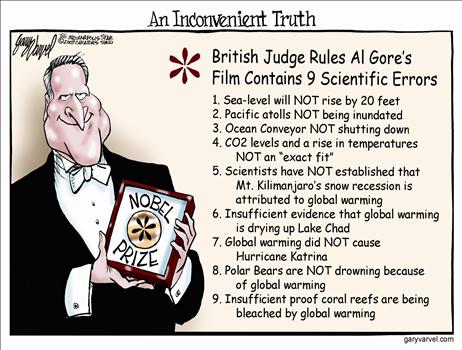
The hyperbolic language of the climate change crowd has been wearing thin ever since Al Gore’s dire predictions from 2006 have inconveniently not materialized. It’s up to us to make the left realize they’ve overplayed their hand: they cannot ride roughshod over property rights whenever it suits them, just as they cannot force us to drink Bud Light if we don’t wish to do so.