Climate Legal Lucidity At Last!

This looks more like the end of the climate litigation tunnel than an oncoming train.

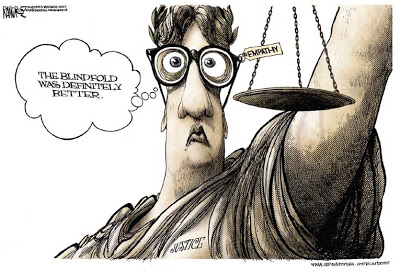
Finally a federal district court judge puts on his big boy pants and calls a halt to the children’s climate crusade against the legal system.  Climate Liability News has the story Judge Tosses Penn. Case, Says Kids Climate Cases Have No Legal Merit  Excerpts in italics with my bolds.

A federal judge in Pennsylvania dismissed a climate lawsuit brought by an environmental organization and two children against the federal government. The lawsuit, Clean Air Council v. United States, claimed that Trump administration rollbacks of environmental regulations and other “anti-science” decisions violate Constitutional rights and the public trust.

In dismissing the claims on Tuesday, U.S. District Judge Paul Diamond scoffed at what he interpreted as a request that he “supervise any actions the President and his appointees take that might touch on ‘the environment.’”

Beyond ruling on this case, however, Diamond went further to rebuke U.S. District Judge Ann Aiken for her ruling in Juliana v. United States that the young plaintiffs had a Constitutional right to a livable climate. When Aiken ordered that lawsuit to trial in 2016, she said “the right to a climate system capable of sustaining human life is fundamental to a free and ordered society,” becoming the first U.S. judge to recognize that right.

Diamond said that ruling is at odds with previous court decisions and “the Juliana Court certainly contravened or ignored longstanding authority.”

He also took issue with what guaranteeing a stable climate would entail, calling it “without apparent limit.”

In dismissing the case before him, Diamond said the Pennsylvania plaintiffs, who filed the suit in 2017, lacked standing. The two boys said their serious allergies and asthma were directly linked to the impacts of climate change, but Diamond said they failed to directly tie their injuries to government actions. Diamond said he interpreted this case as a political dispute. “Plaintiffs’ disagreement with Defendants is a policy debate best left to the political process,” he wrote.

Diamond was appointed to his post by President George W. Bush in 2004.

The Clean Air Council said in a statement it “respectfully disagrees with the decision” and is discussing the next steps with its counsel.

“The Trump administration continues to rely on junk science to implement reckless climate change policies in the face of indisputable U.S. and international scientific consensus. For decades, the U.S. government has acknowledged that climate change presents a clear and present danger to life, and represents an urgent and potentially irreversible threat to human societies and the planet. These acts of deliberate indifference are increasing U.S. contributions to climate change, thereby increasing the frequency and intensity of its life-threatening effects, and violating our constitutional rights,” said Joseph Otis Minott, executive director and chief counsel of the Clean Air Council.

“We are troubled that the opinion states the federal government ‘do[es] not produce greenhouse gases’ and that ‘climate change is the creation of those that pollute the air, not the Government,’” he added. “These statements are both irrelevant to our claims and factually incorrect.”

Diamond made clear he does not see a role for the judiciary in climate policy and argued that Aiken’s recognition of the public trust claims in Juliana was an incorrect expansion of that doctrine beyond its traditional concept governing only navigable waters.

“Plaintiffs seek to create an entirely new doctrine—investing the Federal Government with an affirmative duty to protect all land and resources within the United States,” Diamond wrote. “The Juliana Court alone has recognized this new doctrine. Again, that Court’s reasoning is less than persuasive.”


Climate Red Team Forming

Reuters has the story White House readies panel to question security risks of climate by Timothy Gardner.  Excerpts below with my bolds.

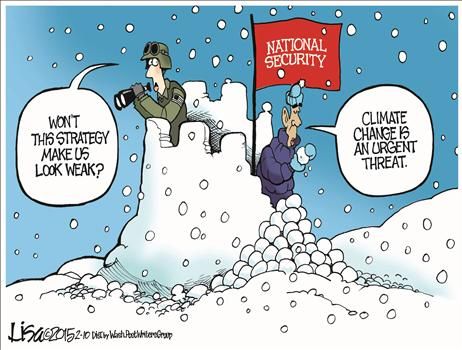
The White House is readying a presidential panel that would question U.S. military and intelligence reports showing human-driven climate change poses risks to national security, according to a document seen by Reuters on Wednesday.

The effort comes as President Donald Trump seeks to expand U.S. production of crude oil, natural gas, and coal, and unwind regulatory hurdles on doing so.

The panel, to be formed by an executive order by Trump, would be headed by William Happer, a retired Princeton University physics professor currently on the White House’s National Security Council.

Happer disagrees with mainstream climate science and believes that emissions of the main greenhouse gas that scientists blame for climate change – carbon dioxide – benefits the planet by helping plants grow.

The document calls into question U.S. government reports that say climate change poses risks to national security, including the 2019 Worldwide Threat Assessment from the office of the Director of National Intelligence (DNI), Dan Coats.

“These scientific and national security judgments have not undergone a rigorous independent and adversarial scientific peer review to examine the certainties and uncertainties of climate science, as well as implications for national security,” the document said.

The annual DNI report, issued in January, said droughts, floods, wildfires and rising seas made worse by climate change and environmental degradation pose global threats to infrastructure and security.

In January, the Department of Defense said climate change was a national security issue and listed 79 domestic bases at risk from floods, drought, encroaching deserts, wildfires and in Alaska, thawing permafrost.

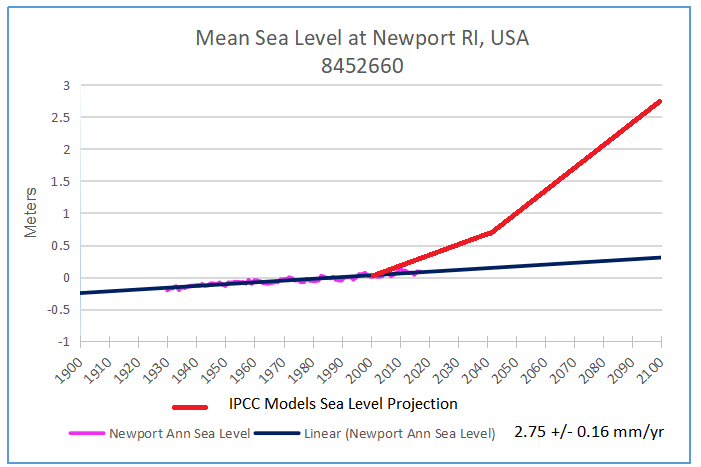
Rhode Island is home to three military bases, threatened by computer model sea level projections.

U.S. officials have also said that climate change can burden the military by increasing the number of global humanitarian missions in which it participates.

The White House is holding a meeting on Feb. 22 in the situation room to discuss an upcoming executive order by Trump to set up the committee, made up of 12 or fewer people, said the document, dated Feb. 14. The document was first reported by the Washington Post.

Trump has repeatedly cast doubt on the science of climate change, arguing that the causes and impacts are not yet settled. As a temporary blast of frigid cold hit the Midwest last month he said on Twitter “What the Hell is going on with Global Wa(r)ming. Please come back fast, we need you!”

Happer, who does not have a background in climate, has served on the NSC since 2018 as deputy assistant to the president for emerging technologies, and complained that carbon dioxide emissions have been maligned, a position strongly opposed by a vast majority of climate scientists. [Gardner misleads and betrays his own ignorance with this editorial comment.  In fact Happer is a radiative energy expert]

Happer said on CNBC in 2014 that the “demonization of carbon dioxide is just like the demonization of the poor Jews under Hitler.”

Francesco Femia, the co-founder of the Center for Climate & Security, a non-profit research and policy group, called the panel a “sham committee” that could put a chill on further analysis of climate risks from some members of military and intelligence agencies.

“I am worried there will be a reticence among some in the future to include those risks in their public reports for fear of having to deal with this political committee in the White House, because ultimately the heads of departments and agencies serve at the pleasure of the president,” Femia said.

Gardner quotes someone concerned that people might become accountable for their repeating climate nostrums unsupported by facts. Had Gardner done his homework he would have been informed by this William Happer Interview where his expertise is obvious, though contrary to Gardner’s beliefs.

Climatists have long operated their “rapid response” network to denigrate any and all who questioned the climate catechism.  No doubt they will not resist countering the panel’s pronouncements.  Let the games begin.

Congressional Climate Resolution

The current world political climate is shame-and-blame in order to gain approvals for drastic reduction of CO2. Thus pressure is applied to political officials at every level to show their colors on acting to “fight climate change.”  The so-called Green New Deal will apparently be put as a resolution for the House to vote its approval of the concept.  It seems timely to propose an alternative resolution.

There is no place to hide these days, and politicians who have a rational position on climate science had better legislate on the issue. A common sense legislative motion could read something like this (followed by supporting documentation and references).


Whereas, Extent of global sea ice is within the range of historical variability;

Whereas, Populations of polar bears are generally growing;

Whereas, Sea levels have been slowly rising at the same rate since the Little Ice Age ended 150 years ago;

Whereas, Oceans will not become acidic due to buffering from extensive mineral deposits and marine life is well adapted to pH fluctuations that do occur;

Whereas, Extreme weather events have not increased in recent decades and such events are more associated to periods of cooling rather than warming;

Whereas, Cold spells, not heat waves, are the greater threat to human life and prosperity;

Therefore, This chamber agrees that climate is variable and prudent public officials should plan for future periods both colder and warmer than the present. Two principle objectives will be robust infrastructure and reliable, affordable energy.

Comment:

The underlying issue is the assumption that the future can only be warmer than the present. Once you accept the notion that CO2 makes the earth’s surface warmer (an unproven conjecture), then temperatures can only go higher since CO2 keeps rising. The present plateau in temperatures is inconvenient, but actual cooling would directly contradict the CO2 doctrine. Some excuses can be fabricated for a time, but an extended period of cooling undermines the whole global warming mantra.

It’s not a matter of fearing a new ice age. That will come eventually, according to our planet’s history, but the warning will come from increasing ice extent in the Northern Hemisphere. Presently infrastructures in many places are not ready to meet a return of 1950s weather, let alone something unprecedented.

Public policy must include preparations for cooling since that is the greater hazard. Cold harms the biosphere: plants, animals and humans. And it is expensive and energy intensive to protect life from the ravages of cold. Society can not afford to be in denial about the prospect of the current temperature plateau ending with cooling.

Footnote:

The Trudeau initiative is an example of the alternative to legislating a rational position. It is virtue-signalling by adopting a token carbon price, which will not lower CO2 concentrations, nor reduce temperatures. The tax will enrich government coffers, which is a key motivation for politicians hiding behind this noble cause.

In 2015, gasoline taxes in Canada represented on average 38.5 cents per litre, which is approximately 35% of the pump price. That includes 10¢/litre federal tax, provincial fuel taxes ranging from 6 to 19 ¢/litre, plus sales taxes. Taxing at $10 a tonne starting in 2018 would add a carbon tax on top as shown below:

Fuel Type UNITS FOR TAX 2018 Added Tax
Gasoline ¢/litre 2.22
Diesel (light fuel oil) ¢/litre 2.56
Jet Fuel ¢/litre 2.61
Natural Gas ¢/litre 1.90
Propane ¢/litre 1.54
Coal – high heat value $/tonne 20.77
Coal – low heat value $/tonne 17.77

These pennies added on top will not change behavior, but millions of consumers’ dollars will be skimmed in a hidden way, including rising transportation costs of everything.

If this was anything other than a tax grab, they would do one or both of two things:

  • Make the tax revenue neutral by paying the monies collected back to consumers; and
  • Make the increases in the carbon tax rate conditional upon rising temperatures as measured by satellites. (as proposed by economist Ross McKitrick)

fuel-tax

US Refined Coal Surging

Despite predictions that US coal production and use are doomed, Trump policies are sparking an increase in “clean coal”, i.e. refined coal. Activists/alarmists say there is no such thing as clean coal, but as usual they conflate actual air pollution with CO2 emissions, which are plant food rather than toxic. A recent article from EIA explains the rise of refined coal U.S. production and use of refined coal continues to increase. Excerpts in italics with my bolds.

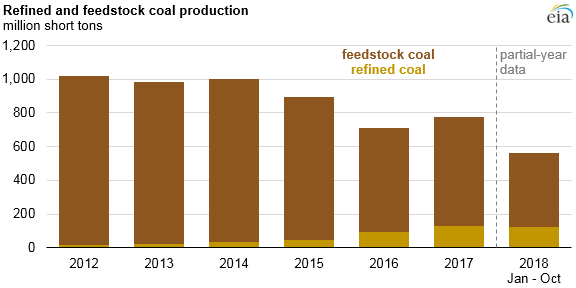
U.S. production of refined coal, which is coal that has been processed to reduce emissions when burned, reached record highs in 2017, and it is expected to increase even further in 2018. Use of refined coal has increased despite the general decline in total U.S. coal consumption since 2008. For the first three quarters of 2018, EIA estimates that refined coal production totaled 121 million short tons (MMst), which is 21% of the total U.S. coal production of 563 million short tons.

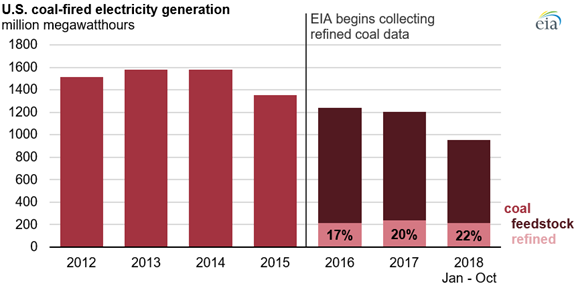
According to EIA estimates, refined coal’s share of total coal tonnage consumed for U.S. electricity generation will have increased from 15% in 2016 to more than 18% through October 2018. EIA began collecting data on generation from refined coal in 2016.

Refined coal generated more than 235 million megawatthours (MWh) of U.S. electricity in 2017, or 20% of net coal generation, an increase of 2% from 2016. EIA estimates of refined coal through October 2018 suggest an even larger increase in refined coal use to more than 22% of total coal generation.

Refined coal is most commonly made by mixing proprietary additives to feedstock coal. These additives increase the production of mercury oxides, which can then be captured by using mercury emission reduction technologies such as flue gas desulfurization scrubbers and particulate matter control systems.

Refined coal production qualifies for a tax credit under the American Jobs Creation Act of 2004. To qualify for the refined coal tax credit, producers must have a qualified professional engineer demonstrate that burning the refined coal results in a 20% emissions reduction of nitrogen oxide and a 40% emissions reduction of either sulfur dioxide or mercury compared with the emissions that would result from burning feedstock coal. The tax credit was designed to increase with inflation and was valued at $6.91 per short ton produced in 2017 and $7.10 per short ton in 2018. EIA surveys show respondents continued to add refined-coal burning plants even as older conventional coal plants retire, with 36 new refined coal plants coming online from 2016 through October 2018.

Summary

US technology is progressing to reduce air pollution. The principal issues are:
Nitrogen oxides (NOx), Sulfur dioxide (SO2), Mercury (HG), and Particulate matter (PM).

The combination of refining the coal feedstock along with scrubbers is removing the actual environmental hazards. What is left is the unproven claim of global warming/climate change as the reason to deprive people of the benefits of burning coal for gaining power. Power to the people indeed.

Footnote:

A previous post highlighted the mismanaged Ontario phase-out of coal power plants, driven by CO2 obsession but justified by appealing to air pollution.  See Ontario Coal Phase-out: All Pain, No Gain


Multiple Reasons to Dismiss Kid’s Lawsuit

A monkey wrench in the Works.

Previous posts have followed the twists and turns of the lawsuit Juliana vs. US, initiated and funded by Our Children’s Trust.  In November the Supreme Court signaled their desire that lower courts rein in the scope of the lawsuit.  The District Court backed off and now the Ninth Circuit Court will take up the appeal in advance of any trial activity.

The latest development is the US government (the Appellant) making its initial filing Feb. 1, 2019, now available for public scrutiny.

The document is Appellants’ Opening Brief Excerpt in italics with my bolds.

SUMMARY OF ARGUMENT

The district court first erred when it denied the government’s motion to dismiss this action. It erred again when it denied the government’s motions for judgment on the pleadings and for summary judgment. This Court should reverse for any of the following independent reasons:

1. Plaintiffs cannot establish any of the three requirements for Article III standing. Plaintiffs have only a generalized grievance and not the required particularized injury because global climate change affects everyone in the world. They cannot demonstrate causation because climate change stems from a complex, world-spanning web of actions across all fields of human endeavor, and Plaintiffs cannot plausibly connect their narrow asserted injuries — like flooding or drought in their neighborhoods — to any particular conduct by the government. In addition, Plaintiffs’ alleged injuries are not redressable because a single district judge may not (consistent with Article III and the equitable authority of federal courts) seize control of national energy production, energy consumption, and transportation in the ways that would be required to implement Plaintiffs’ demanded remedies.

Separate and apart from Plaintiffs’ failure to satisfy the three standing requirements, this action is fundamentally not a case or controversy under Article III. Plaintiffs did not ask the district court to resolve anything resembling the kind of dispute that gave rise to jurisdiction at common law or the adoption of Article III; Plaintiffs instead asked the district court to review all of the representative branches’ programs and regulatory decisions relating to climate change over the past several decades and then pass upon their constitutionality in the aggregate. No federal court has the power to perform such a sweeping policy review, and no federal court has ever done anything close to what Plaintiffs seek here.

2. Plaintiffs have failed to pursue any claim under the APA or any other remedial scheme established by Congress for review of federal agency action or inaction. At its core, Plaintiffs’ action challenges a vast number of federal agency actions and inactions, yet Plaintiffs have refused to comply with the requirements of the APA. Plaintiffs may not circumvent Congress’s considered judgment to channel such challenges through the APA by asserting a right to proceed directly under the Constitution or the courts’ equitable authority; the existence of the APA forecloses those potential causes of action.

3. Even if Plaintiffs could satisfy the foregoing threshold requirements, their constitutional claims are baseless and must be dismissed. Plaintiffs’ alleged fundamental right to a “livable climate” finds no basis in this Nation’s history or tradition and is not even close to any other fundamental right recognized by the Supreme Court. Plaintiffs’ reliance on the state-created danger exception is also misplaced; there is no reason to extend that narrow doctrine to these circumstances. Plaintiffs’ equal protection and Ninth Amendment claims are also meritless.

4. Finally, there is no federal public trust doctrine that binds the federal government. Even if such a doctrine did apply to the federal government, any common-law federal public trust doctrine is displaced by statute. In any event, the atmosphere is not within any public trust. The orders of the district court should be reversed, and this case should be remanded with instructions to dismiss the complaint.

Summary:

What a concept!  Let’s have judges decide national energy policy.  And when the economy fails because energy supply is too expensive and unreliable, will the black robes be accountable to the public?  Nope.  And let’s turn a courtroom over to members of a doomsday cult for 50 days so they can persuade the public of their beliefs and fears. Even worse idea. Let’s hope even the Ninth Circuit can see the folly in this proceeding.

For background on the lawsuit see:  Supremes Kick Kids Lawsuit Down the Road

For background on the false GHG Endangerment Finding see: GHGs Endangerment? Evidence?

i

John Christy Named EPA Science Advisor, Eco-Freak Out Ensues

The flavor of the activist/alarmist reaction is suggested by headlines from the usual suspects.

Scientist Who Rejects Warming Is Named to EPA Advisory Board Scientific American

Wheeler Appoints Climate Denier to EPA Science Board EcoWatch

Former coal lobbyist and acting U.S. Environmental Protection Agency (EPA) Administrator Andrew Wheeler has named a climate denier to serve on the …

John Christy Was Just Named An EPA Science Adviser. His Climate Studies Have Been Repeatedly Corrected. Buzzfeed

A climate science skeptic with a history of botched research is the latest controversial addition to the Environmental Protection Agency’s Scientific Advisory Board …

Controversial climatologist John Christy, who once said scientists believed Earth was flat, to join advisory board at environment agency The Guardian

A more restrained report comes from AL.com Alabama climate change skeptic named to Trump’s EPA advisory board  Excerpts in italics with my bolds.

The Trump administration continued its reshaping of how science is evaluated at the Environmental Protection Agency with the appointment Thursday of a slew of new members to a key advisory panel.

Among the eight additions to the agency’s Science Advisory Board are a number of members whose ideas run against mainstream scientific thinking on issues that include the health effects of radiation and the modeling of Earth’s climate.

Andrew Wheeler, the acting EPA chief, added the eight new members while reinstalling eight others selected during the Obama administration. He cast the appointments as a reaffirmation of the Trump administration’s commitment to hearing scientific opinions from a diverse set of voices.

“In a fair, open, and transparent fashion, EPA reviewed hundreds of qualified applicants nominated for this committee,” Wheeler said in a statement. “Members who will be appointed or reappointed include experts from a wide variety of scientific disciplines who reflect the geographic diversity needed to represent all ten EPA regions.”

But critics of the administration see this and other moves under Wheeler and former EPA chief Scott Pruitt as part of a larger push to make the agency’s decisions more friendly to industry.

“The general makeup of the Science Advisory Board has changed significantly in the past two years,” said Genna Reed, a science and policy analyst at the Union of Concerned Scientists. “What we’re seeing is a decrease in the number of academics and a surge in the number of industry and consulting-firm members.”

With the announcement Thursday, 26 of the board’s 45 members have been appointed by the Trump administration.

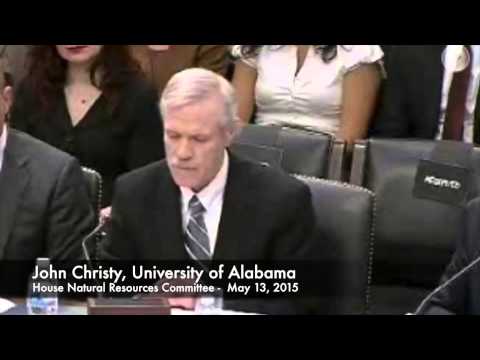
The best-known new member of the panel, though, actually does work at a university. John Christy, a professor of atmospheric science at the University of Alabama in Huntsville, is perhaps the most prominent climate skeptic in all of academia.

Christy acknowledges that humans have altered Earth’s climate. But he’s a polarizing figure within the climate science community for his criticism of mainstream climate models produced by NASA and the National Oceanic and Atmospheric Administration and of scientific conclusions about the severity of global warming reached by the United Nations Intergovernmental Panel on Climate Change.

Pointing to his own analyses of satellite temperature data, which suggest that observed warming is on the lower side of projections, Christy has argued that atmospheric temperatures are less sensitive to the buildup of greenhouse gases than the majority of other climate scientists say they are.

Among the many scientific institutions that say global warming is dangerous is the EPA itself. In President Barack Obama’s first year in office, the EPA determined greenhouse gases posed a risk to public health, giving the government the legal justification it needed to try to curb emissions from cars, coal plants and other sources.

Christy, Alabama’s state climatologist, takes issue with EPA’s “endangerment finding.”

“I, as well as many others, am very skeptical of the basis of many of these findings, like the endangerment finding,” Christy said in an interview Thursday.

He said he believes the EPA’s reliance on what he regards as faulty climate models have led it to issue misguided rules for polluters. “If you use bad models,” he said, “you’re likely to come up with bad regulations.”

Christy is often called on by Republicans leery of government climate regulations to testify before Congress. At a 2015 House Science Committee hearing, Christy described the study of climate change as a “murky” science. “We do not have laboratory methods of testing our hypotheses as many other sciences do,” he said in his written remarks. “As a result, what passes for science includes opinion, arguments-from-authority, dramatic news releases, and fuzzy notions of consensus generated by preselected groups.”

Michael Mann, a climatologist at Pennsylvania State University who has testified opposite Christy before lawmakers, has argued that Christy’s findings have become “a central pillar in the case for climate change denial” despite the fact they have “been shown to be an artifact of faulty computations.”

The advisory board will also now include Brant Ulsh, a health physicist at M.H. Chew & Associates whose work focuses on low-dose radiation.

In the past, the EPA has maintained there is some risk of cancer from any exposure to radiation. But Ulsh argues the way the government has modeled the health effects of small amounts of radiation exposure at places like nuclear power plants overplays that risk.

“Right now we spend an enormous effort trying to minimize low doses,” Ulsh told the Associated Press last year. “Instead, let’s spend the resources on minimizing the effect of a really big event.”

Another new panelist is Richard Williams, an independent consultant and former Food and Drug Administration official who has praised the Trump administration for cutting regulations.

In the fall of 2017, Pruitt upended the agency’s key advisory groups, announcing plans to jettison scientists who have received EPA grants.

The move set in motion a potentially fundamental shift, one that could change the scientific and technical advice that historically has guided the agency as it crafts environmental regulations.

“It is very, very important to ensure independence, to ensure that we’re getting advice and counsel independent of the EPA,” Pruitt told reporters at the time.

He estimated that the members of three different committees – the Scientific Advisory Board, the Clean Air Science Advisory Committee and the Board of Scientific Counselors – had collectively accepted $77 million in EPA grants over the past three years. He noted that researchers would have the option of ending their grant or continuing to advise EPA, “but they can’t do both.”

Suspicion Confirmed: Climate Change is Racist

The Hill has the story: European colonizers’s mass slaughter of Native Americans caused first major change in climate Excerpts in italics with my bolds.

A new study found that European colonizers who arrived in the Americas killed so many indigenous people that it caused the first major change in the Earth’s climate.

The new study, conducted by researchers at the University College London, found that by killing nearly 56 million indigenous people over the course of roughly 100 years, European settlers caused large areas of farmland to go abandoned and reforest.

The study said the new swath of vegetated land, which CNN reported was roughly the size of France at the time, caused a massive decrease of in carbon dioxide (CO2) in the atmosphere then.

Levels of carbon in the atmosphere had changed so much that it caused the planet to experience a global chill in 1610, that is now known as the Little Ice Age, researchers said.

“CO2 and climate had been relatively stable until this point,” UCL Geography Professor Mark Maslin, one of the co-authors behind the study, told CNN on Friday. “So, this is the first major change we see in the Earth’s greenhouse gases.”

Maslin told CNN that he and the team of researchers conducted the study by examining archaeological evidence, historical data and analyzing Antarctic ice, which can trap atmospheric gas and reportedly reveal the quantity of carbon dioxide that was in the atmosphere long ago.

He said a combination of all of the above showed researchers how the reforestation that was brought on by the mass slaughter of indigenous people in the Americas led to the global chill.

“The ice cores showed that there was a larger dip in CO2 (than usual) in 1610, which was caused by the land and not the oceans,” Alexander Koch, the lead author of the study, told CNN.

“For once, we’ve been able to balance all the boxes and realize that the only way the Little Ice Age was so intense is … because of the genocide of millions of people,” Maslin added.

Summary

There you have, all wrapped up with a bow on top. The Little Ice Age was caused by too little CO2, from too many trees because white men killed too many natives. Talk about connecting the dots.  Did those white guys think they could get away with it?  Thankfully, wildfires are solving the excessive forests problem.  Oh wait.

From the Encyclopedia Virginia:  The Little Ice Age and Colonial Virginia

The Little Ice Age refers to a period beginning about AD 1300 and lasting until the middle of the eighteenth century in which the average worldwide temperature may have cooled by as much as 0.1 degrees Celsius. Despite its name, this period “was far from a deep freeze,” the scholar Brian Fagan, writing in 2000, has argued. “Think instead of an irregular seesaw of rapid climatic shifts, driven by complex and still little understood interactions between the atmosphere and the ocean.” Some climate scientists contend that the term “Little Ice Age” is an exaggeration; others dispute the beginning and ending dates. (Historians have suggested that severe weather during the American Civil War may have been an effect of the Little Ice Age.) But nearly all agree that the seventeenth century—when the English founded the Virginia colony at Jamestown—was one of the coldest in the last thousand years.

The cause or causes of this cooling is subject to vigorous debate. Scientists have pointed to the Maunder Minimum, a period between 1645 and 1715 when the number of observed sunspots decreased, indicating a reduced level of solar activity; however, opponents of this theory argue that the resulting decline in solar irradiation was not sufficient to cause the Little Ice Age. During this cooling period, the tilt of the earth’s axis also changed. Such changes may profoundly affect ocean circulation, which, in turn, affects climate. Still other scientists have suggested that volcanic eruptions—such as one in the southern Philippines in 1642—may have had an impact on the cooling, causing chemical reactions in the atmosphere that blocked or redirected sunlight.

The extreme weather wreaked terrible consequences on both the Indians and Europeans in Virginia. As the Spanish Jesuit pointed out, Indian populations decreased during times of drought, likely because of the scarcity of food. Such scarcities also led to conflict—among Indian communities and between the Indians and Europeans. The English at Roanoke had neither the intention nor the ability to feed themselves off the land, and a cold winter and drought conditions led them to place pressure on the Algonquian-speaking Indians of Ossomocomuck to share their already depleted supplies. This, in turn, led to warfare. Indian towns were destroyed and a weroance, or chief, beheaded.

While the Little Ice Age affected the entire world, leaving significant numbers of people to subsist on little food, its impact on Virginia was particularly sharp. It raised the stakes for both Indians and Europeans, making survival more difficult and conflict more likely.

Conclusion: It seems once again, climatists have got cause and effect reversed.

US Leads Globe in Clean Energy Tech


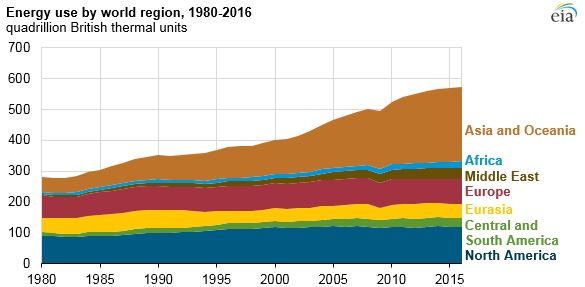
North America has grown in population, but not in energy use.

Hank Campbell writes in Science 2.0 America Leads The World In Controlling Energy Consumption And Emissions – We Should Be Exporting That, Not Solar Dogma.  Excerpts in italics with my bolds.

As the world’s most powerful economy, we read a lot about how America needs to do more to use cleaner energy, and less of it.

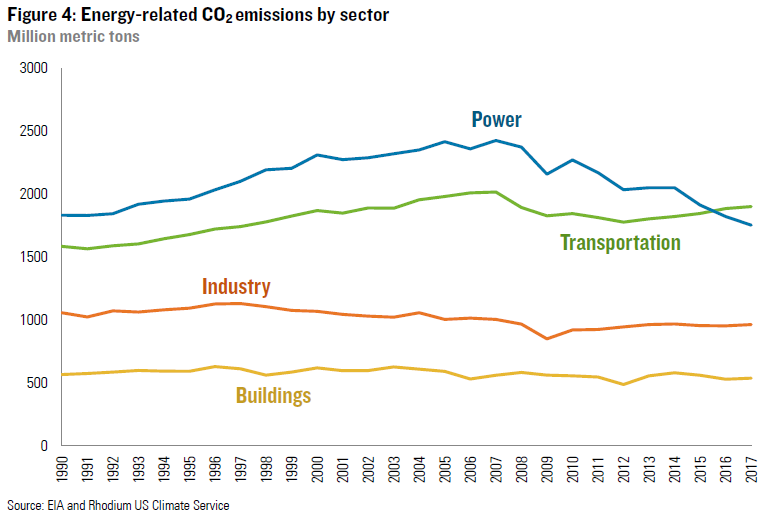
The data show we already do. Energy is a basic need, like food, and in energy and food America has been a trailblazer in reducing environmental strain. We had a blip upward in emissions from energy when we scuttled nuclear in the U.S. (resulting in a coal surge), but less than two decades later improvements in natural gas had caused coal to be such a non-factor more people are now employed by the solar panel industry than in mining. The energy sector has made such dramatic improvements in emission reductions that President Obama’s Clean Power Plan was outdated before it could ever be enacted; the private sector reached what would have been the government’s 2025 target for energy emissions in 2017.

Americans are also good about responsible energy usage. Though there is a political divide about how much climate has changed since the 1950s, and how much of that is due to mankind, there is no political difference when it comes to green efforts like energy conservation. All of us do it. That shows in recent data from the U.S. Energy Information Administration. Though our population continues to grow, our growth in energy consumption has not.

The growth in energy and emissions is instead in Asia and Africa. But even that is not a bad thing when we consider the health hazards of burning wood or dung, as 90 percent of Africa recently did. The developing world deserves a chance to have centralized affordable energy and the benefits to culture that occur when basic needs become cheaper and more money is available for art and libraries and sanitation. Even coal is a reasonable interim solution because of its cost.

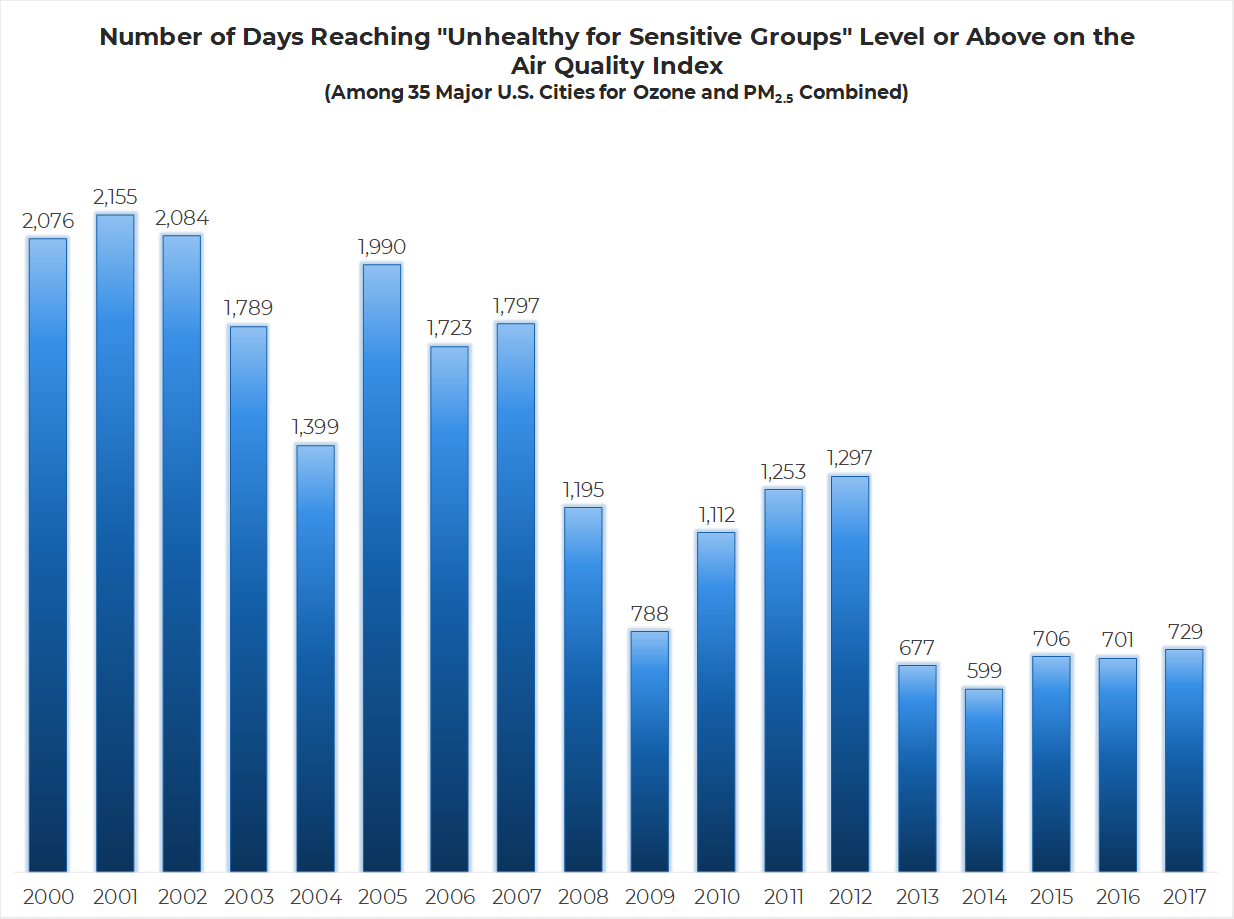
Source: EPA Our Nation’s Air 2018

The World Health Organisation estimates up to 6.5 million annual deaths are linked to air pollution each year but those are not happening here, we have the best air quality in the world; it is happening in homes where one billion people still burn their own fuel for cooking and heating.

We have done a disservice to poor countries telling the World Bank we would only help finance centralized energy in developing countries if it was solar or wind when we know they can’t afford those. We sacrificed sanitation and hygiene in places that need it most.

American science and technology has been a role model for how the world can keep energy affordable and clean. That is what we should be exporting to other countries, not guilt over our success.


Green Energy Blues: Falmouth City Cautionary Tale


A wind turbine loomed over the Craggy Ridge neighborhood in West Falmouth.
JONATHAN WIGGS/GLOBE STAFF

The story is by David Abel at Boston Globe January 24, 2019 ‘Green energy blues’ in a town that sought to do something about climate change.  Excerpts in italics with my bolds.   H/T Greenie Watch

FALMOUTH — For nearly a decade, the giant blades have loomed over this seaside town, stirring hope and fear in the salty air.

To proponents, the twin wind turbines proved that residents could act on their ideals, producing their own clean energy and relying less on fossil fuels. To critics, they were mechanical monstrosities, blinking eyesores whirring at such a frequency that some neighbors said they became ill.

Nine years after the first was built beside Falmouth’s waste treatment plant, both turbines now stand idle, no longer producing a kilowatt of electricity, totems of good intentions gone awry.

Facing fierce neighborhood opposition and multiple lawsuits, selectmen last week voted to remove the turbines, which had cost the town about $10 million to build, saddling residents with years of debt.

“All that’s left now is that we have an albatross to live with,” said Sam Peterson, the one dissenting vote on the five-person board.

Wind power offers communities a way to reduce their emissions, but the protracted resistance to the turbines offers lessons as communities throughout the region consider similarly controversial renewable energy projects.

It also reflects the challenges, often tacit, in the state’s promises to make substantial reductions in its emissions. Those plans rely on importing hydropower from Canada and major offshore wind farms, and both approaches are being contested by powerful, well-organized interest groups and could be subject to legal challenges.

For Dave Moriarty, who spent much of the past decade fighting the Falmouth turbines, news that the town was finally giving up its efforts to keep them running was a welcome relief. He considers the turbines “overbearing, antiquated dinosaurs” and said they left the town with the “green energy blues.”

The 56-year-old contractor, who lived close to the turbines after they were built, moved across town because they wrought too much stress, he said. He blames town officials for ignoring his and other neighbors’ concerns.

“The town was warned,” he said. “The damage can never be reversed for many of us wind turbine victims. Some of my friends have serious health issues now.”

Neighbors complained that the churning of the turbines and the resulting flickering light and vibrations produced dizziness, nausea, depression, or anxiety — a set of symptoms that critics call “wind turbine syndrome.”

In 2012, with both 1.65-megawatt turbines operating and the opposition becoming increasingly vocal, state environmental officials took the unprecedented action of recommending that one be shut down. They found that turbine, which was fewer than 1,500 feet from the nearest home, had repeatedly exceeded allowable noise levels.

But a panel of independent scientists and doctors convened by the state Department of Environmental Protection found little to no evidence the turbines posed a health risk to neighbors.

The town eventually stopped them from operating at night, and in 2015, a state appeals court judge ruled that the town lacked sufficient permits for one of the turbines and prohibited it from operating. Two years later, a Superior Court judge ruled that both turbines posed a nuisance to neighbors and ordered that they never operate again at their current location.

“The lessons others should learn from our experience is that residents should do their homework in advance of construction,” Moriarty said. “They should ask questions and know what they’re really getting into.”

For Peterson, the only selectman who declined to vote in favor of removing the turbines, the decision ultimately reflects the power of those concerned about any large industrial project close to their homes.

While he said he felt empathy for those whose homes are closest to the turbines, he thinks they exaggerated their complaints. He visited their homes and never heard more than a minor hissing of the moving blades.

“We had the best of intentions, and they bullied those of us who tried to reason with them,” said Peterson, a retired physics teacher who like many of his neighbors hoped to do his share in addressing climate change.

He also noted that the turbines were approved by repeated votes by more than 200 members of Falmouth’s Town Meeting. But he acknowledged that town officials made mistakes, particularly in failing to comply with zoning requirements.

A woman walked along Westmoreland Drive in Falmouth, in the shadow of one of the city’s wind turbines. JONATHAN WIGGS/GLOBE STAFF

In addition to the $10 million that the town’s 30,000 residents spent on building the turbines, they now have to pay as much as $2 million more to remove them.

“It’s a shame,” said Susan Moran, chair of the town’s board of selectmen, who initially supported the turbines but voted to take them down. “This is absolutely a financial blow to the town.

Moran and other town officials acknowledge those losses will take a toll. They’re already considering cutting back on some services, such as curbside trash collection.

While the town received $5 million in state loans for the project — $1.5 million of which has been forgiven — residents are likely to have repay the rest. If the turbines had operated as planned, functioning 24 hours a day, they were projected to earn the town between an estimated $1 million and $2 million a year.

In an effort to recoup some of those costs, selectmen have instructed town officials to consider a variety of options for what to do with the turbines.

Those include possibly converting them into cellphone towers or selling them to another community that might operate them. If they were able to negotiate such a deal with another town, Falmouth might have the rest of their state loans forgiven, as the turbines would be generating renewable energy.

“We’re looking at our options, but either way, there’s certainly going to be a financial impact to Falmouth,” said Julian Suso, to town manager.

Climate Is a State of Mind

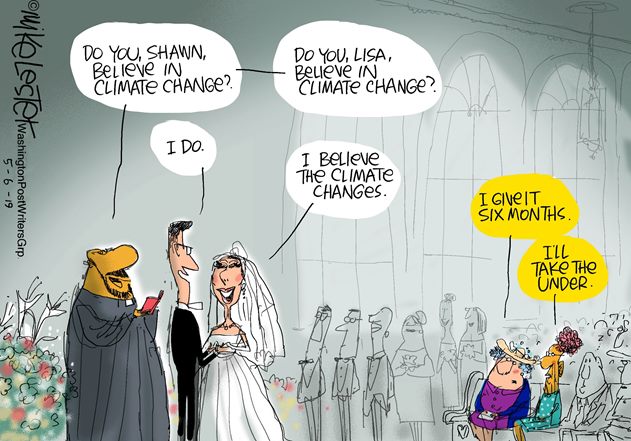
A recent survey by Yale and George Mason activists is another reminder that “climate change” is actually a branch of environmental psychology. Consider that “climate” is an human construct, defined as the pattern of weather we remember in our living space over seasons and years. And “climate change” is therefore an added belief that our expectations about future weather are uncertain and unreliable. And so, attitude surveys are a suitable way to explore an issue that is wholly a matter of public opinion, IOW a state of mind rather than a state of nature.

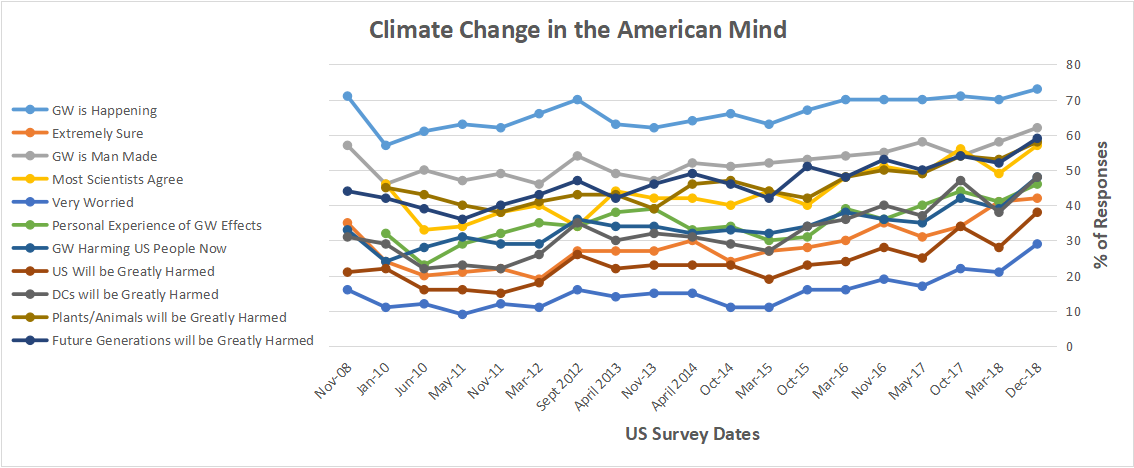
The survey is appropriately entitled: Climate Change in the American Mind. Title is link to the website for the 2018 edition, with earlier results back to 2008.

The resources there are informative, including articles expressing both satisfactions and disappointments with the levels of belief and concern expressed by survey participants. The compliant mass media cherry pick various findings, giving headlines like these.

“We’ve entered a new era” of climate concern, survey finds CBS

Americans Believe in Climate Change, But Not Climate Action NYmag

Yale Poll: Climate Change ‘Personally Important’ to Record Number of Americans EcoWatch

Most Americans Don’t Know Vast Majority Of Scientists Agree On Climate Change CleanTechnica

Most Americans now worry about climate change—and want to fix it National Geographic

Poll Shows Most People Believe ‘Global Warming is Happening’ necn

Survey reveals 70% of Americans favour the environment over economic growth ClimateAction

promotional-product-facts-brain

What is the American Mindset according to the Survey?

So beyond details of particular responses, what can we learn from this series of polls about the American state of mind regarding global warming/climate change?

The specific questions and response patterns are at Appendix I: Data Tables & Sample Demographics

There are a lot of questions asked and answered, including exploring a complete range of feelings people have on the issue. I will summarize the central questions and the pattern of responses over the last decade.

Click on image to enlarge.

The core set of global warming beliefs are listed on the left.  The marked lines show the % of responses each one achieved over the years.  For example, over 50% agreed to four of them in 2018: GW is happening, GW is man made, Future generations will be greatly harmed and Most scientists agree.  Other patterns are also of interest.  Personal experience of GW effects is reported by almost 50%, while only 30% are very worried.  Indeed, people are less concerned about harm to themselves or even the US, then they are fearful for Developing Countries (DCs) and for Future Generations.

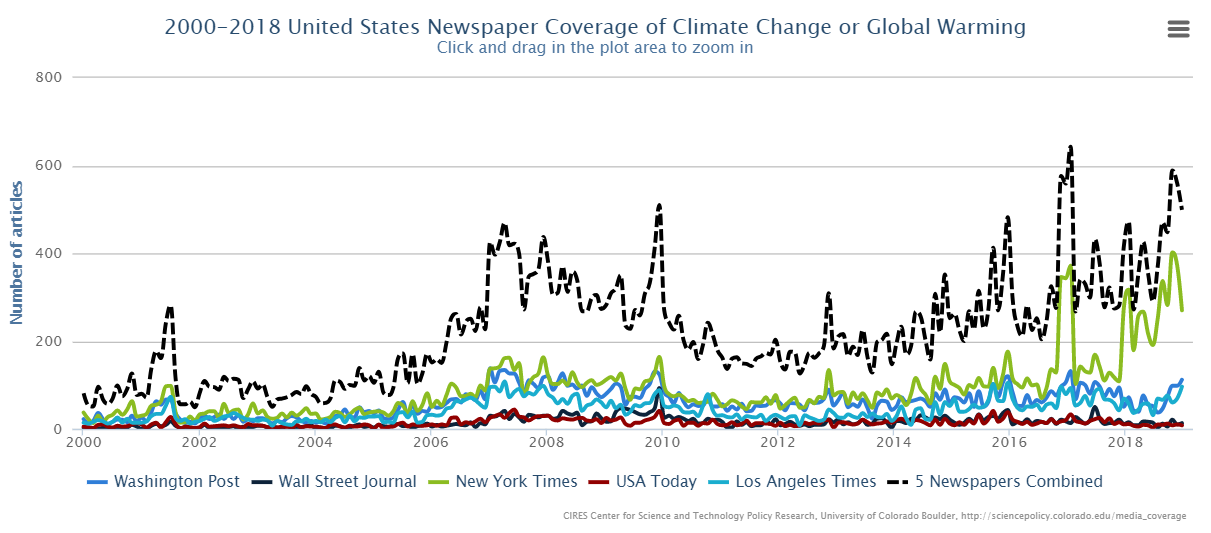
Notice there is a general curve to most of the answer time series.  Beliefs are only slightly higher in 2018 than they were in 2008.  In general, the %s were flat or declining in this decade until starting to rise again around 2014.  This points to the linkage between the opinions held by the public and the emphasis promoted in the mass media.  Compare the curvature in the above graph with this chart of climate change coverage in leading US newpapers.

The chart and research and research come from International Collective on Environment, Culture & Politics, AKA ICECaP.  Note the peaks in 2007-8 at the time of IPCC AR4 and Al Gore’s Inconvenient Truth flick, and in 2009-10 around the time of the Copenhagen COP.  The Climategate emails were also in the news in 2010, but for some reason newspapers were less interested in that aspect, the topic dropped in coverage.

The spike in 2013 coincides with Obama’s SOTU speech featuring climate change as the “defining issue of our time.”  The rise in climate change coverage in recent years is a more complex matter.

Climate journalists (like most all journalists) have been obsessed with trashing Donald Trump, and climate change is mentioned often as a subset of Trump complaints.  Consider this chart from Media Matters.

See that huge spike in the middle? That’s from June 1, 2017, when President Donald Trump announced that he intended to pull the U.S. out of the Paris climate agreement. No other day in the last three years saw anywhere near that much coverage. When Trump stages an event related to climate change, the media snap to attention. The rest of the time it’s like, “Climate what?”

That aligns with what Media Matters found when we looked at climate coverage on broadcast TV news programs in 2017: Trump dominated the news segments about climate change. Researchers at the University of Colorado Boulder, in the International Collective on Environment, Culture & Politics, reached a similar conclusion when they analyzed TV news coverage from November of this year: “In US television coverage of climate change or global warming in November 2018, ‘Trump’ was explicitly invoked over fourteen times more frequently than the words ‘science’ or ‘scientists’ together and nearly four times more frequently than the word ‘climate’ itself.”

A research group at the University of Colorado-Boulder, the International Collective on Environment, Culture and Politics (ICE CaPs), produced the findings that illustrate how much climate coverage has been driven by President Donald Trump. It examined coverage last year in five major American newspapers: The Washington Post, The Wall Street Journal, The New York Times, USA Today, and the Los Angeles Times. In the 4,117 stories in those papers that mentioned “climate change” or “global warming,” the word “Trump” appeared 19,184 times — an average of nearly 4.7 times per article.

mle190506c20190506011552

Summary

To summarize, Survey Says:

What He Said:   “Ninety-seven percent of scientists agree: climate change is real, man-made and dangerous.” (Obama tweet).  The survey could be reduced to one question:  Do you agree with this tweet?

There is not much upward movement in public belief in global warming/climate change.  There is increased attention from the left-leaning media as part of their general dislike of the Trump administration. One more time, who made global warming into a political rather than a scientific issue?