Defenders of the Federal status quo (AKA swamp denizens) are aroused over an apparent move to refocus the mission statement of National Oceanic and Atmospheric Administration (NOAA). UCS raised the alarm which was, as usual, taken up by the New York Times. At a recent Department of Commerce summit, the acting head of the National Oceanic and Atmospheric Administration (NOAA), Rear Admiral Timothy Gallaudet, proposed a new mission statement for the agency. The proposed change in wording is as follows.
The mission of NOAA has been:
To understand and predict changes in climate, weather, oceans and coasts;
To share that knowledge and information with others; and
To conserve and manage coastal and marine ecosystems and resources.
In his presentation, Rear Admiral Gallaudet suggested the mission statement would change to:
To observe, understand and predict atmospheric and ocean conditions;
To share that knowledge and information with others; and
To protect lives and property, empower the economy, and support homeland and national security.
Comment on NOAA Mission Statement
Note the word “observe” is added to give emphasis to NOAA’s responsibility to obtain and maintain data records relating to the ocean and atmosphere. Instead of the words “changes to climate, weather, oceans and coasts,” NOAA is tasked to predict “atmospheric and ocean conditions.” This suggest a move away from climatological considerations to more immediate support for adapting to natural events. It also suggests that coastal land management is outside NOAA’s scope.
Readers will note the proposed wording drops “conserve and manage” from the mission, replaced by the more explicit “To protect lives and property, empower the economy, and support homeland and national security.” The latter phase would be consistent with the larger thrust of the Commerce Department. (See Commerce priorities at end.)
The University Corporation for Atmospheric Research (UCAR) congratulates Rear Admiral Timothy Gallaudet, a former oceanographer of the Navy, on his nomination to assistant secretary of commerce for oceans and atmosphere. In that position, Gallaudet will serve as the second-in-command at the National Oceanic and Atmospheric Administration (NOAA).
Gallaudet, who also served as commander of the Navy’s Meteorology and Oceanography Command, is a 32-year Navy veteran. He holds master’s and doctoral degrees in oceanography from the Scripps Institution of Oceanography.
“Tim’s mixture of operational expertise and scientific knowledge make him an ideal choice for this position,” said UCAR President Antonio Busalacchi. “His understanding of the vital collaborations between NOAA, private forecasting companies, and the academic community can help foster the movement of research to operational forecasting and advance the nation’s weather prediction capabilities. Furthermore, his knowledge of Earth system science and his ability to align that science with budget and programs will be essential to moving NOAA forward in the next few years.”
NOAA runs the National Weather Services, engages in weather and climate research, and operates weather satellites and a climate data center. The agency also works to better understand and protect the nation’s coasts, oceans, and fisheries.
UCAR is a nonprofit consortium of more than 100 colleges and universities focused on research and training in the atmospheric and related sciences.
September 25, 2017
In his answers to the confirmation committee’s questionnaire, Gallaudet listed the top three challenges he sees facing NOAA. He identified the first challenge as implementing the Weather Research and Forecasting Innovation Act that Congress passed earlier this year.
“If confirmed, I would make it my top priority to meet the intent of this law, especially the aspects concerning improvement to severe weather, tornado and hurricane warnings, and satellite data collection program management. … Finally I will need to work with the NOAA Administrator as well as NESDIS and NWS leadership to focus on the NOAA satellite programs which are growing at an unsustainable rate and that have been delayed numerous times.”
October 2017
Gallaudet was confirmed and on October 11, President Trump nominated Barry Myers, chief executive of the private weather forecasting company AccuWeather, to run NOAA. The appointment breaks from the recent precedent of scientists leading the agency tasked with a large, complex, and technically demanding portfolio. Myers has a bachelor’s degree in business administration and economics, a master’s degree in business from Pennsylvania State University, and a law degree from Boston University School of Law. Myers has been an adviser to five directors of NOAA’s National Weather Service and a representative of the U.N. World Meteorological Organization, according to a biography from AccuWeather. He must be confirmed by the Senate before taking the post.
December 17, 2017
In his Senate Confirmation hearing, Myers sought to assure members of the Senate Commerce, Science, and Transportation Committee that he has a deep appreciation for NOAA’s scientific mission. In response to pointed questions from Democratic senators, Myers vowed to uphold NOAA’s scientific integrity policies and champion free and open data. And, for the first time in public since his nomination, he concurred with the mainstream scientific consensus on climate change and promised to support NOAA’s climate research portfolio. The full inquisition is described by the American Institute of Physics NOAA Nominee Barry Myers Embraces Science at Confirmation Hearing
In his opening statement at the April 11 hearing, Gallaudet explained that the $4.5 billion budget request for NOAA focuses on two priorities. The first is “reducing the impacts of extreme weather and water events, by implementing the Weather Research and Forecasting Innovation Act,” which was enacted last April. The second is increasing sustainable economic contributions of U.S. fisheries and other ocean resources.
Gallaudet also touted NOAA’s successes over the last year in responding effectively to the record-setting hurricane season, saying the agency’s efforts “saved thousands of lives despite Hurricanes Harvey, Irma, [and] Maria, being three of the five most costly hurricanes in history.” He also highlighted the “perfect” recent launches of two flagship weather satellites — Geostationary Operational Environmental Satellite-S (GOES-S) and Joint Polar Satellite System-1 (JPSS-1).
Later in the hearing, Gallaudet described further investments NOAA is making in high-performance computing and modeling to support operational weather prediction. In describing the Global Forecast System FV3 experimental model that is being transitioned to the National Weather Service, Gallaudet said,
This model out-performed the European models for the hurricane track forecasts for the three Category 4 hurricanes that made landfall [last year]. Our goal is to regain world leadership, take number one back for our weather modeling. We’re on track to do it. We expect to do that before 2020.
Gallaudet assured Cartwright that climate is “embedded” within NOAA’s weather and water forecasting priority, explaining that it includes consideration of “scales that are in weeks to seasonal and even sub-seasonal and climate types of scales.”
Although the administration has proposed deep cuts for climate research and grant programs, including termination of the $48 million Competitive Climate Research grant program and the $6 million Arctic Climate Research Program, Gallaudet assured members that climate research would continue, “because there’s much we still don’t know.”
When Cartwright pressed further on his concerns about the White House’s treatment of climate change, Gallaudet reassured him that the White House has “not zeroed out our climate work,” pointing to the Climate Prediction Center’s publication of seasonal and long-range outlooks as well as recent collaboration between NOAA and the U.S. Navy on Arctic sea ice forecasting. In addressing similar concerns brought up by Sen. Maggie Hassan (D-NH) at the April 12 hearing, he added that the White House is “supporting much of our Arctic-related research that is driven primarily by climate change,” and that he has not been directed to eliminate or remove the phrase “climate change” from reports.
NOAA – the National Oceanic and Atmospheric Administration – needs its leader! President Trump nominated Barry Lee Myers, the CEO of AccuWeather, to the post in mid-October. The Senate Commerce Committee has twice advanced Myers’ nomination to the full Senate. All that’s needed to fill this important job is a majority vote on the Senate floor, which both Democrats and Republicans expect to happen. Unfortunately, partisan politics keeps getting in the way, delaying the vote.
Senate offices have received more than 60 letters from individuals and organizations supporting his confirmation, including strong backing from the past four leaders of the U. S. National Weather Service who served under both Democratic and Republican administrations. In addition, the seafood industry has overwhelmingly advocated his confirmation with letters of support from seafood processors and others in the fisheries industry ranging from ship captains to sport fishermen.
Also, as a recognized leader in the sciences, Myers has demonstrated respect for quality-tested science when making decisions related to all areas of the agencies’ responsibilities, including the nation’s fisheries, weather, oceanographic and climate challenges.
Myers worked closely with lawmakers to help secure enactment of last year’s Weather Research and Forecasting Innovation Act. The American Meteorological Society conferred its highest award for Excellence in Meteorology on him. He also has demonstrated a deep knowledge about NOAA and is committed to making the agency the best it can be, second to none in the world.
Prompt confirmation of Myers will benefit the public and the U.S. economy in the days, weeks and months ahead by solidifying the NOAA leadership team. With the unprecedented threat of catastrophic storms, the agency’s mission – protecting life and property and expanding American economic competitiveness – is on the line. The Senate should quickly confirm Barry Myers as NOAA administrator.
Conrad C. Lautenbacher Jr. VADM USN (ret.), CEO of GeoOptics, is a former under secretary of commerce for oceans and atmosphere and administrator of NOAA.
Robert Vanasse is executive director of the National Coalition for Fishing
Overview of Strategic Plan of US Department of Commerce 2018 to 2022
Knowing that innovation is a key driver of economic advancement, we are placing an increased emphasis on the commercial opportunities of space exploration and aquaculture while our scientists are conducting foundational research in areas ranging from artificial intelligence to quantum computing. Our patent professionals are also working to improve the protection of intellectual property so that creators can profit from their inventions.
U.S. businesses must export more, and our workers deserve a level playing field. Enforcing our trade laws to ensure that trade is free, fair, and reciprocal is a top priority of the Department. We are also joining with all federal agencies in cutting red tape that drives up costs and puts American workers and businesses at a disadvantage.
To maintain America’s leadership in next-generation technologies, we are making important advances in data, cybersecurity, and encryption technology. Our economists and statisticians are improving Commerce data that American businesses and communities use to plan investments and identify growth opportunities. Every level of the Department will be engaged to ensure that we conduct the most accurate, secure, and technologically-advanced decennial census in history.
Finally, teams across the Department are working to keep Americans safe by predicting extreme weather events earlier and more accurately, preventing sensitive technology from getting in the hands of terrorists, rogue regimes, and strategic competitors, and deploying a nationwide public safety broadband network that allows better coordination among first responders.
Thank you to every employee at the Department and to our industry and government partners for your dedication to our mission.
Politicians and media pundits like to say that Climate Change is the biggest threat to modern society. I am coming around to agree, but not in the way they are thinking. I mean there is fresh evidence that we can defeat radical Islam, but we are already losing to radical climatism. I refer to climate alarm and activism, which has come to dominate the environmental movement and impose an agenda for social re-engineering. And now we have fresh evidence that even capitalists are working to undermine the infrastructure supporting modern civilization.
As we approach the year 2020, we confront the spectacle of financiers raiding shareholder wealth in order to cripple the Energy Industry, seen as threatening the climate. 2020 used to indicate perfect eyesight, so that perceptions could be trusted. This is the opposite: People who should know better have drunk climatist koolaid and are now running the asylum.
America’s growing energy dominance is helping transform our economy and revitalize the forgotten parts of our nation.
Through innovation and free-market principles, America’s oil and natural gas sector have moved us from an age of scarcity to a future of abundance. As a nation, we are once again the world’s biggest producer, with all of the economic, trade and national security benefits that portends.
But there is a move afoot by wealthy investment firms and environmental activists to undermine that success and turn back to a time of scarcity by making climate change an issue in the boardrooms of energy producers big and small. Under the guise of socially responsible investing or ESG – environmental, social and governance – they are attempting to “decarbonize” our economy one corporation at a time.
America’s success in the energy sector is directly attributable to the strength of our economic freedom and competitive markets – just look at Venezuela, Angola, Mexico, Iran, Libya or Russia for the grim alternative.
The numbers are astounding. Domestic oil production reached 10.9 million barrels a day this month and is expected to continue its ascent to record-setting levels well into next year, according to the U.S. Energy Information Administration (EIA). By 2019, surging domestic production is expected to drive down our use of imported oil to the lowest level since 1959.
The use of hydraulic fracturing to squeeze ever more oil and gas from tight shale rock is a key driver of the energy boom. Production from America’s seven major shale formations is forecast to hit 7.2 million barrels a day by the end of this month, according to EIA.
It’s the communities in and around these formations – located almost exclusively in what are often derided as “fly-over states”– that are seeing the everyday benefits of jobs, rising wages and increasing confidence in the economy. The resurrection of the energy sector is turning small towns once on the verge of becoming ghost towns into bustling centers of activity.
There’s no guarantee the good times will continue, though, especially if companies stop searching for new supplies of oil and gas. For those who subscribe to the ideas of socially responsible investing, the end of energy dominance can’t come soon enough.
Proxy advisory firms Glass Lewis, ISS and others are increasingly advising their large shareholder clients to turn America’s boardrooms into a battleground over climate change. In the process, they are undermining the financial stability of traditional energy companies by attempting to force directors to invest in renewable energy instead of fossil fuels.
Shareholders are, of course, within their rights to propose resolutions and pursue changes to the way corporations are governed. But, increasingly, the aim of these resolutions has shifted from securing better returns to achieving political change when our political leaders have disagreed with the direction these activists wish to go.
From the perspective of corporate leaders, this new frontier of so-called social responsibility looks more like the age of proxy pirates, who unfurl the Jolly Roger and swing aboard the boardroom deck intent on striking fear in the hearts of the captains of industry.
These attacks on corporate governance and fiduciary responsibility were once rare but are growing in frequency. In the early 2000s during the era of “peak oil” – when many believed our oil supplies were running out on their own – less than 200 shareholder proposals each year focused on environmental or social factors, according to Proxy Preview.
Over the past decade, the number of shareholder proposals motivated purely by political aims has increased in lockstep with our growing energy security. And the trend is growing. According to the Institutional Shareholder Services, more than two-thirds of the proposals filed this year were related to social or environmental pet causes.
The rising prevalence of climate-risk resolutions threatens to destabilize America’s energy sector, reversing the benefits of energy dominance and forcing change regardless of the economic and security costs to society.
Oil and gas projects take years, sometimes decades, to develop. If companies don’t invest today, consumers may find themselves paying more for imported energy.
The efforts of investment firms like BlackRock, Vanguard and State Street are distorting the market and scaring off investment that will, if allowed to continue unanswered, result in future supply shortages and higher prices for consumers.
Dan Eberhart Bio I am CEO of Canary, one of the largest privately-owned oilfield services companies in the United States. I’ve served as a consultant to the energy industry in North America, Asia and Africa. My commentaries have been published in The Hill, Real Clear Energy, and the Economist. I have appeared on Fox News, CNN and CNBC. I am the author of The Switch. I was honored to be named to Hart Energy’s “30 Under 40” list and to be included on several U.S. trade missions to sub-Saharan Africa. I have undergraduate degrees in economics and political science from Vanderbilt University and a law degree from Tulane Law School. A Georgia-native, I currently live in Phoenix, Arizona, with my wife and daughter.
Comment: I am all for Corporate Responsibility, which used to mean doing due diligence to get the facts and act accordingly as a reasonable good citizen. Instead, people are falling prey to ideologues and investors are being steered toward con artists. Behind all of this are the Climatists, true believers in the unproven notion that humans control the climate and not in a good way.
The Climatist Game Plan (From Previous post Climatist Manifesto)
Mission: Deindustrialize Civilization
Goal: Drive industrial corporations into Bankruptcy
Strategy: Cut off the Supply of Cheap, Reliable Energy
Tactics:
Raise the price of fossil fuels
Force the power grid to use expensive, unreliable renewables
Demonize Nuclear energy
Spread fear of extraction technologies such as fracking
Increase regulatory costs on energy production
Scare investors away from carbon energy companies
Stop pipelines because they are too safe and efficient
Force all companies to account for carbon usage and risk
Progress:
UK steel plants closing their doors.
UK coal production scheduled to cease this year.
US coal giant Peabody close to shutting down.
Smaller US oil companies going bankrupt in record numbers.
Etc.
Collateral Damage:
27,000 extra deaths in UK from energy poverty.
Resource companies in Canada cut 17,000 jobs in a single month.
Radical climatism is playing the endgame while others are sleeping, or discussing the holes in the science. Truly, the debate is over (not ever having happened) now that all nations have signed up to the Paris COP doctrine. Political leaders are willing, even enthusiastic dupes, while climatist tactics erode the foundations of industrial society. Deaths and unemployment are unavoidable, but then activists think the planet already has too many people anyway.
ISIS was an immediate threat, but there is a deeper and present danger already doing damage to the underpinnings of Life As We Know It. It is the belief in Climate Change and the activists executing their game plan. Make no mistake: they are well-funded, well-organized and mean business. And the recent behavior of valve-turners, acting illegally to shut off supplies of fossil fuel energy, shows they are willing to go very far to impose their will upon the rest of us.
In olden days kings ruled by fiat, but nowadays you need the people’s consent,
disappointing to Obama and now Trudeau.
The Liberal federal government led by Justin Trudeau is running up against a deeply ingrained and widespread skepticism in the population. In a previous post Uncensored: Canadians View Global Warming I noted that the principle finding in a recent survey was buried in the report and hidden by the media. Belief in man made global warming is a minority view in Canada, as shown below: The political implications of that lack of support for climate activism are starting to become manifest. Ed Whitcomb writes in the Ottawa Citizen Climate change politics are undermining federalism Excerpts in italics below with my bolds and images
Prime Minister Trudeau between BC Premier John Horgan and Alberta Premier Rachel Notley. The 2 provinces are at war over expanding the oil pipeline.
Canada’s largest province is about to reject the federal climate change policy. Saskatchewan never accepted it and Alberta could reject it in 2019. Maybe it’s time for reflection.
The current policy calls for the provinces to implement a federal government plan. That, however, is a contradiction of federalism, a system which reflects the fact that the feds and the provinces have different interests. Policies to deal with pollution in Ontario may be inappropriate for Newfoundland or Saskatchewan. The current federal government overlooked such differences when it decided that there was only one solution to global warming, a carbon tax, and only two acceptable ways to implement it, cap-and-trade or a carbon levy. Unfortunately, not all Canadians and provinces accept these assumptions, and the consensus is shrinking.
In 2015, Saskatchewan’s then-premier Brad Wall pointed out that his economy was far more dependent on fossil fuels than were other provinces. A carbon tax would be disproportionately costly, which was unacceptable. That dispute is going to court and no one knows what the outcome will be.
Alberta’s NDP government endorsed the federal scheme, providing the federal government got a pipeline built. That linked dealing with climate change to increasing energy production, linked reducing gas emissions to raising them. But the pipeline has not been built, and bitumen is unlikely to flow before a provincial election which could empower the United Conservative Party. The UCP is strongly opposed to the federal climate plan. It, and the incoming Ontario Conservative government, oppose carbon taxes because everyone will pay them whether or not that reduces their consumption of carbon. The two parties believe governments always spend any money that is available (and in fact Alberta, British Columbia and Ontario have not returned all their carbon tax revenue to taxpayers).
Federal Environment Minister Catherine McKenna preaching with Justin Trudeau in the choir.
In challenging Ontario’s upcoming withdrawal from cap-and-trade, the federal government is introducing a new and very dangerous interpretation of federalism. No one questioned that Ontario’s program was within its jurisdiction. Now the federal government is saying that if Ontario repeals its own law, it will be replaced by the imposition of a federal tax exclusively within Ontario’s borders. In effect it will be a “provincial” tax, not a “national” or “federal” one applied to all Canadians.
But the federal government has no mandate to force Ontario to retain one of its own programs if its government wants to repeal it. In effect, the federal level is trying to use its taxation power to make the environment an exclusive federal responsibility.
The courts might uphold the federal government’s right to collect such a tax but the political battle could be fatal. If it can prevent Doug Ford repealing an existing Ontario law, then it can prevent other provinces repealing other provincial laws.In that case, there is no federalism, no division of power, and no independent provincial jurisdiction. Quebec could not repeal its cap-and-trade law – just the threat the separatists need to rise from their death-bed.
The federal government can forge ahead with a series of political and court battles, or it can go back to the drawing board, in which case there seem to be two options. One is co-operative federalism – namely, call a heads-of-government meeting and confirm Canada’s Paris goals; each provinces’ share of those goals; the federal right to implement policies within its jurisdiction; each province’s right to implement their own policies as they wish; and confirm that they will all co-operate to avoid duplication or contradictory policies.
The second option is for the federal government to raise its existing national carbon tax on gasoline and other forms of fossil fuel. It has full constitutional power to do so, can do it any time, the revenue can be returned to taxpayers, and it could be completely transparent. Actually, if it had done this in 2016, Canada would already be on the way to meeting its Paris goals, rather than locked in an increasingly ugly and unnecessary federal-provincial, regional, political and ideological battle.
It’s not too late to get it right but that does mean going back to the drawing board.
Ed Whitcomb is the author of Rivals for Power: Ottawa and the Provinces, the contentious history of the Canadian federation, and of short histories of all 10 provinces.
Comment: Whitcomb does not question the climate change ideology or see the uselessness of the Paris Accord. In the event Trudeau imposes a widely unpopular federal tax on carbon emissions, the backlash could overturn his administration.
The NFU has warned farmers they face rises in climate change taxes unless they register for a discount scheme before the 31 July deadline.
The Climate Change Levy (CCL) is a tax charged on gas, electricity, LPG, coal and coke used by UK businesses.
In April 2019, CCL rates levied on energy bills will increase by about 3% for electricity and 7% for gas for any businesses that do not register for a discounted rate under an NFU scheme.
Under the CCL scheme, eligible businesses can receive a discount in return for meeting energy-efficiency or carbon-saving targets. Achieving these targets will enable the business to receive a discount until March 2023, the NFU says.
The NFU CCL scheme gives up to 93% levy reductions on electricity and 78% on gas to qualifying businesses in the pig, poultry and protected horticulture sectors. It is therefore imperative to sign up to the scheme before the deadline of 31 July, the union warns.
Example of annual CCL savings for poultry farm using 350,000 kWh of import electricity and 45,000 litres of LPG
The story comes from Bloomberg, where they regard the event as lamentable: Ontario Scraps Carbon-Reduction Plan as It Expands Elsewhere. Excerpts below with my bolds.
Ontario will scrap the province’s cap-and-trade program and pull out of the carbon-trading market with Quebec and California even as pollution pricing expands in other regions of the world.
Ontario’s Progressive Conservatives will follow through on a campaign promise to withdraw from the environmental program that required companies to buy credits to offset pollution blamed for global warming. Premier-designate Doug Ford also said he will challenge Prime Minister Justin Trudeau’s authority to make local governments put a price on greenhouse-gas emissions.
The move comes as carbon-pricing programs are expanding in the U.S. even as President Donald Trump seeks to ease restrictions on coal companies. Europe already has a large regional cap-and-trade system while China, the world’s biggest polluter, has committed to a national pollution program that could open by 2020.
Ontario’s election results were largely priced into California’s carbon market. Despite Friday’s announcement, emitters in Ontario remain obligated to manage their carbon pollution until the province formally withdraws from the system, said John Battaglia, head of carbon markets at BGC Environmental Brokerage Services LP.
“The market is stable here,” Battaglia said in an interview. “We expect a bit of short-term volatility, but long term, the show will go on.” (Comment: It is all about the show, isn’t it?)
Ontario’s PCs will be sworn in June 29 after defeating the Liberals in an election earlier this month. Ending what Ford called a job-killing carbon tax was one of his major commitments during the campaign. Ontario will also quit the Western Climate Initiative, Ford said Friday from Toronto.
Trudeau Plan
“Eliminating the carbon tax and cap-and-trade is the right thing to do and is a key component in our plan to bring your gas prices down by 10 cents per liter,” Ford said in a statement.
But the move may not spare Ontario from a carbon price. Trudeau’s government is bringing in carbon pricing rules to cover all provinces and a “backstop” for local governments that don’t come up with their own plans this year.
“Ontario is going to still have an obligation under the federal architecture and the cost of meeting that obligation could be higher,” said Dallas Burtraw, a senior fellow at Resources for the Future. “The costs of the cap-and-trade program are small on retail gasoline rates.”
Another wheel comes off the Ontario Green Energy bus.
Hydraulic fracturing (AKA “fracking”) is in the news every day, and often in a disparaging way, despite the great benefits bestowed on nations applying the process, especially the US.
On a recent river cruise I found myself at a table with a couple from California, and the woman began spouting about the dangers and horribleness of fracking. My civility censor was suppressed by the wine I’d consumed, and I interrupted to say she was talking Bullshit. She halted, then asked her husband, a retired geologist, to comment, and he stated that fracking is a risky business. The geologist husband did not present any evidence for his view, IMO he was only speaking to support his spouse. I said I respected his opinion but still disagreed. The next day I apologized for my rudeness but said I still think she has been misled. We shared a congenial dinner later on, but avoided the subject.
The experience revealed I had been unprepared to engage on the details of the fracking issue. So this post is to summarize some research to assemble persuasive facts and resources to counter the fear mongering on this subject.
Originated at treehugger.com.
1.Obama’s EPA Found Fracking Has Not Contaminated Drinking Water
First, let me provide a bit of background on hydraulic fracturing. I find that most people who are against fracking don’t actually know what it is. The EPA report goes out of its way to blur the lines as well by lumping it all into “activities in the hydraulic fracturing water cycle.” By doing this, if a guy driving a truck filled with fracking chemicals has a wreck, it’s a “fracking issue.” So let’s define some terms.
Hydraulic fracturing has been around since the late 1940s, and has now been used in the U.S. more than a million times to increase production from oil and gas wells. Fracking involves pumping water, chemicals and a proppant down an oil or gas well under high pressure to break open channels (fractures) in the reservoir rock trapping the deposit. Oil and gas do not travel easily through these some formations, which is why they need to be fractured. The proppant is a granular material (usually sand) designed to hold those channels open, allowing the oil (or natural gas) to flow to the well bore. While fracking has been around for decades, two developments in recent years are responsible for thrusting the technique into the public eye. The first is the fairly recent development in which fracking was combined with horizontal drilling, another common technique used in the oil and gas industry.
Like fracking, horizontal drilling was invented decades ago, and has been widely used in the oil and gas industry since the 1980s. As its name implies, horizontal drilling involves drilling down to an oil or gas deposit and then turning the drill horizontal to the formation to access a greater fraction of the deposit.
The marriage of these two techniques of hydraulic fracturing and horizontal drilling enabled the shale oil and gas boom in the U.S.
But the second development is what primarily thrust the technique(s) into the public spotlight. Some of the shale oil and gas formations are in areas that had never experienced significant fossil fuel development. Many locals resented this intrusion into their lives, and anti-fracking sentiments fed into a great deal of misinformation around the technique.
The movie Gasland is a perfect example. Director Josh Fox, whose family farm lies atop the Marcellus Shale in Pennsylvania, relied on misinformation and appeals to emotion instead of scientific data. Nevertheless, it was embraced by anti-fracking activists, and many who had never heard of fracking became convinced the technique was regularly polluting water supplies.
The concern among anti-fracking activists was that the fractures that allowed oil and gas to reach the well bore could also allow oil, gas, and chemicals to seep into the water supplies. But the reason this is a remote possibility is that a mile or more of rock will separate an oil and gas formation that is being fractured and an underground water resource. The fractures themselves extend for a few hundred feet, thus unsurprisingly there has never been a proven case where chemicals migrated from a fracked zone into water supplies.
That hasn’t stopped some from claiming that fracking has contaminated water supplies. However, those cases have always been a result of some activity peripheral to fracking. For example, if a well is improperly cemented it can leak. That in fact has happened, leading to the charge that “fracking contaminated the water.” There is an important distinction, however, and that is that this is not a result of the fracking process. A well may leak regardless of whether it was fracked. But activists (and now the EPA) seem bent on blurring the lines to the greatest extent possible by lumping lots of peripheral activities into the “fracking process.”
In 2010, Congress asked the EPA to investigate the safety of fracking. In 2015, the EPA issued a draft report. The bombshell statement from that report was that there was no evidence that fracking had “led to widespread, systemic impacts on drinking water resources in the United States.” This report was cheered by the fossil fuel industry, but caused a backlash with environmentalists, and spawned many counterclaims that the “fracking process” had led to contaminated water.
In December 2016 the EPA released its final report on the topic: Hydraulic Fracturing for Oil and Gas: Impacts from the Hydraulic Fracturing Water Cycle on Drinking Water Resources in the United States. Environmentalists were quick to note that the EPA had deleted its previous claim of no evidence of widespread water contamination, and were now reporting that “hydraulic fracturing activities can impact drinking water resources under some circumstances.” This story from The New York Times, for instance, was pretty typical of the reporting on the issue: Reversing Course, E.P.A. Says Fracking Can Contaminate Drinking Water.
But did the EPA actually reverse course? No. They gave examples where fracking could contaminate water. For instance they state that “Injection of hydraulic fracturing fluids directly into groundwater resources” can cause contamination. Yeah, no joke. Likewise, filling your car with gasoline can contaminate drinking water, because if you spill the gasoline all over the ground, it can get into the drinking water.
The EPA’s final report on hydraulic fracturing wasn’t that much different from the draft report. As in the previous report, the EPA noted that activities related to — but not exclusive to — fracking, have contaminated water supplies. Chemical spills happen all the time, but if the chemicals in question are for fracking, it becomes a “fracking issue.” Note that if the chemicals in question are to be used for fighting fires, we don’t say “firefighting contaminates water.” We should properly identify and address the actual problem, which in this instance would be the cause of the chemical spill.
Ultimately, the final report deleted a phrase from the draft report that there was no evidence of widespread impact on water supplies, and selectively used hypotheticals to show how fracking “could” contaminate water supplies. This is the Obama Administration laying down one more speed bump for the oil and gas industry while it still can.
A new Environment America “report” uses a couple old anti-fracking tactics — exploitation of children and blatant misinformation from activist studies — to try to stoke fears and rally support for its extremist call to ban fracking nationwide.
The ominously-titled “Dangerous and Close: Fracking Puts the Nation’s Most Vulnerable People at Risk” finds there are nearly 2,000 child care facilities, better than 1,300 schools, nearly 250 nursing care providers and more than 100 hospitals within a one-mile radius of fracked wells in the nine states examined, stating:
“Given the scale and severity of fracking’s impacts, fracking should be prohibited wherever possible and existing wells should be shut down beginning with those near institutions that serve our most vulnerable populations.”
Here are the report’s most egregious claims, followed by the facts.
Environment America Claim: “Fracking creates a range of threats to our health, including creating toxic air pollution that can reduce lung function even among healthy people, trigger asthma attacks, and has been linked to premature death. Children and the elderly are especially vulnerable to fracking’s health risks.”
A pumpjack works in the Bakken shale of North Dakota.
REALITY: There is actually ample evidence that fracking is improving overall air quality and health by reducing major pollutants such as fine particulate matter, sulfur dioxide and nitrogen dioxide. Furthermore, all three studies EA singles out as “evidence” close proximity to fracking sites can lead to the myriad of adverse health effects have been thoroughly debunked.
EA even cites an Earthworks study that claims “A series of 2012 measurements by officials of the Texas Commission on Environmental Quality (TCEQ) found VOCs levels so high at one fracking location that the officials themselves were forced to stop taking measurements and leave the site because it was too dangerous for them to remain.”
EA fails to mention TCEQ responded to Earthworks’ report by saying the agency has collected “several millions of data points for volatile organic compounds” in the Barnett Shale and Eagle Ford Shale and “Overall, the monitoring data provide evidence that shale play activity does not significantly impact air quality or pose a threat to human health.”
EA also conveniently ignores that the West Virginia Department of Environmental Protection (DEP) and the Colorado Department of Public Health (CDPH) have conducted air monitoring near well sites as well and found no credible risk to public health.
Environment America Claim: “Currently, oil and gas companies are exempt from key provisions in the Safe Drinking Water Act, the Clean Air Act, the Clean Water Act, and the Resource Conservation and Recovery Act.”
REALITY: The notion that the oil and natural gas industry is under-regulated is absolutely absurd narrative activists such as EA continue to push. Oil and gas production activities are subject to eight federal laws: including all relevant provisions of the Safe Drinking Water Act (SDWA); Clean Water Act (CWA); Clean Air Act (CAA); Resources Conservation and Recovery Act (RCRA); Comprehensive Environmental Response, Compensation, and Liability Act (CERCLA); the EPCRA; Toxic Substances Control Act (TSCA); and Federal Insecticide, Fungicide and Rodenticide Act (FIFRA). Additionally, the oil and gas production sector is also heavily regulated at the state level.
A drilling rig works in the Eagle Ford shale, South Texas region.
Environment America Claim: “Exposure to low levels of many of the chemicals used in or generated by oil and gas extraction activities can contribute to a variety of health effects, including asthma, cancer, birth defects, damage to the reproductive system and impaired brain development. For example, children’s long-term exposure to low levels of benzene, generally classified as a carcinogen, also harms respiratory health.”
REALITY: It is essential to understand that toxicity is completely dependent on dose level and exposure. The mere presence of benzene, for example, does not mean that it is present in toxic levels, as the numerous studies air monitoring studies referred to earlier illustrate. EA insinuates that even low-level benzene exposure is harmful. But benzene is actually present in countless everyday products such as shampoo, tooth paste, paint, PVC pipes and countless plastic products.
Environment America Claim: “Fracking targets the oil and gas trapped in shale formations… Sometimes that means wells are drilled in rural areas, such as portions of Colorado or North Dakota, and sometimes that wells are in densely populated areas, such as Los Angeles…”
REALITY: There are no fracking or unconventional oil production operations in the city of Los Angeles — none. EA attempts to justify this claim by employing the common activist tactic of expanding the definition of fracking to encompass all oil and gas related activity:
“Throughout this report, we refer to “fracking” as including all of the activities needed to bring a well into production using high-volume hydraulic fracturing. This includes drilling the well, operating that well, processing the gas or oil produced from that well, and delivering the gas or oil to market. The oil and gas industry often uses a more restrictive definition of “fracking” that includes only the actual moment in the extraction process when rock is fractured – a definition that obscures the broad changes to environmental, health and community conditions that result from the use of high-volume hydraulic fracturing in oil and gas extraction.”
Fracking is not used as a completion technique at any of the urban drill sites in the city. All of the facilities recover oil through traditional water flood operations. The report’s attempt to shoehorn fracking and unconventional production into its report proves that it is not engaged in an honest attempt to inform the public.
Environment America Claim: “Because of the health hazard created by radon, Pennsylvania has a long record of radon measurements in homes. An analysis of those radon measurements by researchers at Johns Hopkins School of Public Health found that radon levels have increased in counties with extensive fracking since 2004, and also found elevated radon levels on the first floor of houses located within 12.5 miles of a fracked well.”
REALITY: The Johns Hopkins study EA is referring to actually found the highest concentrations of radon were in areas with no shale development and direct sampling found radon not linked to fracking. As is the case with so many of the studies EA uses as evidence, the authors merely speculated fracking was the cause.
Environment America Claim: “Oil and gas production at fracked wells releases volatile organic compounds and nitrogen oxides that contribute to the formation of smog.”
REALITY: Oil and gas production is not a major contributor to ground-level ozone.
As EID has emphasized before, publicly available information demonstrates oil and gas production is not the significant contributor to ozone levels. Vehicle exhaust adds far more non-methane volatile organic compounds (NMVOCs) and nitrogen oxides (NOx) — both precursors to ground-level ozone — to the atmosphere than oil and gas production, as data from the EPA’s 2016 Greenhouse Gas Inventory clearly demonstrates.
Not only do oil and gas activities account for just six percent of total NOx emissions, which play more of a role in ground-level formation than VOCs, another recent NOAA report found that “The increased use of natural gas has…led to emissions reductions of NOx (40%) and SO2 (44%).”
Environment America Claim: “Contaminants can reach water supplies through faulty well construction, through surface spills, through improper wastewater disposal, or potentially through migration from the shale layer itself.”
REALITY: The EPA’s landmark five-year study confirmed, “hydraulic fracturing activities have not led to widespread, systemic impacts to drinking water resources,” and at least 15 other studies say the fracking process, specifically, have not contaminated groundwater.
Conclusion
EA’s claims in this report — aimed at generating headlines — are quite profound.
“Schools and day care centers should be safe places for kids to play and learn,” said Rachel Richardson, director of Environment America’s Stop Drilling program and co-author of the report. “Unfortunately our research shows far too many kids may be exposed to dirty air and toxic chemicals from fracking right next door.”
The problem is EA’s “research” merely found that there are some schools, nursing homes and hospitals near oil and natural gas development. It made no effort to collect its own data to support their claim that this is leading to adverse health effects.
Instead, it relied on long-debunked studies and tired fear tactics. Maybe that’s why the report’s hyperbolic claim that it “serves as a reminder of the unacceptable dangers of fracking, its potential to harm, and the need to bring this risky form of drilling to an end” was virtually ignored by the media.
3. Extensive research Study Found No link between groundwater pollution and fracking.
(Source: National Science Foundation and Duke University study summarized by Jeffrey Folks for American Thinker The science is settled, fracking is safe.)
Among the 130 wells studied, the researchers found only a subset of cases, including seven in Pennsylvania and one in Texas, in which faulty well construction or cementing was to blame for the seepage of gases into groundwater. According to Professor Avner Bengosh of Duke University, “[t]hese results appear to rule out the migration of methane up into drinking water aquifers from depth because of horizontal drilling or hydraulic fracturing.” That is to say, in the rare cases where it occurs, gases are entering the water supply from outside the borehead as a result of faulty well construction or poor cementing, both of which are manageable problems.
While the new report answers the most important question, proving beyond doubt that fracking itself does not cause gas to seep into the water supply, it does not address several other important questions. One of these is the frequency of contamination of water supplies by naturally occurring petroleum, methane, and other gases.
Natural pollution of this kind would seem to be extremely common, and in fact this natural process has been known for millennia. At sites where petroleum seeped to the surface, as in the vicinity of the 19th-century Drake oil field in Pennsylvania, Native Americans had made use of the oily substance as a lubricant for hundreds if not thousands of years. That oil, flowing naturally to the surface, was “contaminating” nearby streams and groundwater.
What humans add to natural emisions as a result of drilling is so minor as to be of little consequence. If some future study confirmed this fact, it would help to counter the myth that oil and gas drilling is polluting an otherwise pure land and sea environment. The reality is that wherever shale and other carbon-rich formations occur, natural leakage of petroleum and/or methane is inevitable. Oil and gas are naturally occurring features that are constantly interacting with the environment and entering the water supply through natural processes. As is so often the case, the idea that there once existed an environment free of all that modern intellectuals might consider unpleasant is simply a fantasy.
The NSF/Duke report is crucial to the debate over the safety of hydraulic fracturing. The oil and gas industry has already achieved a near perfect safety record, given the handful of failed wells in proportion to more than one million that have been fracked. The industry needs to continue working to achieve certainty that wells do not fail. It also needs to do a better job of communicating its intention to do so to a skeptical public.
Members of Congress, gas companies, news organization, drilling opponents: They’ve all made bold claims about hydraulic fracturing (fracking) and the U.S. supply of underground natural gas. We take on 10 controversial quotes about natural gas and set the record straight.
WE ARE THE SAUDI ARABIA OF NATURAL GAS.” SEN. JOHN KERRY, D-MASS., MAY 2010
Less than a decade ago, industry analysts and government officials fretted that the United States was in danger of running out of gas. No more. Over the past several years, vast caches of natural gas trapped in deeply buried rock have been made accessible by advances in two key technologies: horizontal drilling, which allows vertical wells to turn and snake more than a mile sideways through the earth, and hydraulic fracturing, or fracking. Developed more than 60 years ago, fracking involves pumping millions of gallons of chemically treated water into deep shale formations at pressures of 9000 pounds per square inch or more. This fluid cracks the shale or widens existing cracks, freeing hydrocarbons to flow toward the well.
These advances have led to an eightfold increase in shale gas production over the past decade. According to the Energy Information Administration, shale gas will account for nearly half of the natural gas produced in the U.S. by 2035. But the bonanza is not without controversy, and nowhere, perhaps, has the dispute over fracking grown more heated than in the vicinity of the Marcellus Shale. According to Terry Engelder, a professor of geosciences at Penn State, the vast formation sprawling primarily beneath West Virginia, Pennsylvania and New York could produce an estimated 493 trillion cubic feet of gas over its 50- to 100-year life span. That’s nowhere close to Saudi Arabia’s total energy reserves, but it is enough to power every natural gas—burning device in the country for more than 20 years. The debate over the Marcellus Shale will shape national energy policy—including how fully, and at what cost, we exploit this vast resource.
HYDRAULIC FRACTURING SQUANDERS OUR PRECIOUS WATER RESOURCES.” Green Party of Pennsylvania, April 2011
There is no question that hydraulic fracturing uses a lot of water: It can take up to 7 million gallons to frack a single well, and at least 30 percent of that water is lost forever, after being trapped deep in the shale. And while there is some evidence that fracking has contributed to the depletion of water supplies in drought-stricken Texas, a study by Carnegie Mellon University indicates the Marcellus region has plenty of water and, in most cases, an adequate system to regulate its usage. The amount of water required to drill all 2916 of the Marcellus wells permitted in Pennsylvania in the first 11 months of 2010 would equal the amount of drinking water used by just one city, Pittsburgh, during the same period, says environmental engineering professor Jeanne VanBriesen, the study’s lead author. Plus, she notes, water withdrawals of this new industry are taking the place of water once used by industries, like steel manufacturing, that the state has lost. Hydrogeologist David Yoxtheimer of Penn State’s Marcellus Center for Outreach and Research gives the withdrawals more context: Of the 9.5 billion gallons of water used daily in Pennsylvania, natural gas development consumes 1.9 million gallons a day (mgd); livestock use 62 mgd; mining, 96 mgd; and industry, 770 mgd.
“NATURAL GAS IS CLEANER, CHEAPER, DOMESTIC, AND IT’S VIABLE NOW.” OILMAN TURNED NATURAL-GAS CHEERLEADER T. BOONE PICKENS, SEPTEMBER 2009
Burning natural gas is cleaner than oil or gasoline, and it emits half as much carbon dioxide, less than one-third the nitrogen oxides, and 1 percent as much sulfur oxides as coal combustion. But not all shale gas makes it to the fuel tank or power plant. The methane that escapes during the drilling process, and later as the fuel is shipped via pipelines, is a significant greenhouse gas. At least one scientist, Robert Howarth at Cornell University, has calculated that methane losses could be as high as 8 percent. Industry officials concede that they could be losing anywhere between 1 and 3 percent. Some of those leaks can be prevented by aggressively sealing condensers, pipelines and wellheads. But there’s another upstream factor to consider: Drilling is an energy-intensive business. It relies on diesel engines and generators running around the clock to power rigs, and heavy trucks making hundreds of trips to drill sites before a well is completed. Those in the industry say there’s a solution at hand to lower emissions—using natural gas itself to power the process. So far, however, few companies have done that.
“[THERE’S] NEVER BEEN ONE CASE—DOCUMENTED CASE—OF GROUNDWATER CONTAMINATION IN THE HISTORY OF THE THOUSANDS AND THOUSANDS OF HYDRAULIC FRACTURING [WELLS]” SEN. JAMES INHOFE, R-OKLA., APRIL 2011
The senator is incorrect. In the past two years alone, a series of surface spills, including two blowouts at wells operated by Chesapeake Energy and EOG Resources and a spill of 8000 gallons of fracking fluid at a site in Dimock, Pa., have contaminated groundwater in the Marcellus Shale region. But the idea stressed by fracking critics that deep-injected fluids will migrate into groundwater is mostly false. Basic geology prevents such contamination from starting below ground. A fracture caused by the drilling process would have to extend through the several thousand feet of rock that separate deep shale gas deposits from freshwater aquifers. According to geologist Gary Lash of the State University of New York at Fredonia, the intervening layers of rock have distinct mechanical properties that would prevent the fissures from expanding a mile or more toward the surface. It would be like stacking a dozen bricks on top of each other, he says, and expecting a crack in the bottom brick to extend all the way to the top one. What’s more, the fracking fluid itself, thickened with additives, is too dense to ascend upward through such a channel. EPA officials are closely watching one place for evidence otherwise: tiny Pavillion, Wyo., a remote town of 160 where high levels of chemicals linked to fracking have been found in groundwater supplies. Pavillion’s aquifer sits several hundred feet above the gas cache, far closer than aquifers atop other gas fields. If the investigation documents the first case of fracking fluid seeping into groundwater directly from gas wells, drillers may be forced to abandon shallow deposits—which wouldn’t affect Marcellus wells.
“THE GAS ERA IS COMING, AND THE LANDSCAPE NORTH AND WEST OF [NEW YORK CITY] WILL INEVITABLY BE TRANSFORMED AS A RESULT. WHEN THE VALVES START OPENING NEXT YEAR, A LOT OF POOR FARM FOLK MAY BECOME TEXAS RICH. AND A LOT OF OTHER PEOPLE—ESPECIALLY THE ECOSENSITIVE NEW YORK CITY CROWD THAT HAS SETTLED AMONG THEM—WILL BE APOPLECTIC AS THEIR PRISTINE WEEKEND SANCTUARY IS CONVERTED INTO AN INDUSTRIAL ZONE, CRISSCROSSED WITH DRILL PADS, PIPELINES, AND ACCESS ROADS.” New York magazine, Sept. 21, 2008
Much of the political opposition to fracking has focused on the Catskill region, headwaters of the Delaware River and the source of most of New York City’s drinking water. But the expected boom never happened—there’s not enough gas in the watershed to make drilling worthwhile. “No one has to get excited about contaminated New York City drinking water,” Penn State’s Engelder told the Times Herald-Record of Middletown, N.Y., in April. The shale is so close to the surface that it’s not concentrated in large enough quantities to make recovering it economically feasible. But just to the west, natural gas development is dramatically changing the landscape. Drilling rigs are running around the clock in western Pennsylvania. Though buoyed by the economic windfall, residents fear that regulators can’t keep up with the pace of development. “It’s going to be hard to freeze-frame and say, ‘Let’s slow down,’?” Sen. Robert P. Casey Jr., D-Pa., said last fall. “That makes it more difficult for folks like us, who say we want to create the jobs and opportunity in the new industry, but we don’t want to do it at the expense of water quality and quality of life.”
“NATURAL GAS IS AFFORDABLE, ABUNDANT AND AMERICAN. IT COSTS ONE-THIRD LESS TO FILL UP WITH NATURAL GAS THAN TRADITIONAL GASOLINE.” REP. JOHN LARSON, D-CONN., CO-SPONSOR OF H.R. 1380, A MEASURE THAT WOULD PROVIDE TAX INCENTIVES FOR THE DEVELOPMENT AND PURCHASE OF NATURAL GAS VEHICLES, MARCH 2011
That may be true. Plus, there’s another incentive: Vehicles powered by liquefied natural gas, propane or compressed natural gas run cleaner than cars with either gasoline or diesel in the tank. According to the Department of Energy, if the transportation sector switched to natural gas, it would cut the nation’s carbon-monoxide emissions by at least 90 percent, carbon-dioxide emissions by 25 and nitrogen-oxide emissions by up to 60. But it’s not realistic: Nationwide, there are only about 3500 service stations (out of 120,000) that offer natural gas—based automotive fuel, and it would cost billions of dollars and take years to develop sufficient infrastructure to make that fuel competitive with gasoline or diesel. And only Honda makes a car that can run on natural gas. That doesn’t mean natural gas has no role in meeting the nation’s short-term transportation needs. In fact, buses in several cities now rely on it, getting around the lack of widespread refueling opportunities by returning to a central terminal for a fill-up. The same could be done for local truck fleets. But perhaps the biggest contribution natural gas could make to America’s transportation picture would be more indirect—as a fuel for electric-generation plants that will power the increasingly popular plug-in hybrid vehicles.
“DO NOT DRINK THIS WATER” HANDWRITTEN SIGN IN THE DOCUMENTARY GASLAND, 2010
It’s an iconic image, captured in the 2010 Academy Award—nominated documentary GasLand. A Colorado man holds a flame to his kitchen faucet and turns on the water. The pipes rattle and hiss, and suddenly a ball of fire erupts. It appears a damning indictment of the gas drilling nearby. But Colorado officials determined the gas wells weren’t to blame; instead, the homeowner’s own water well had been drilled into a naturally occurring pocket of methane. Nonetheless, up to 50 layers of natural gas can occur between the surface and deep shale formations, and methane from these shallow deposits has intruded on groundwater near fracking sites. In May, Pennsylvania officials fined Chesapeake Energy $1 million for contaminating the water supplies of 16 families in Bradford County. Because the company had not properly cemented its boreholes, gas migrated up along the outside of the well, between the rock and steel casing, into aquifers. The problem can be corrected by using stronger cement and processing casings to create a better bond, ensuring an impermeable seal.
“AS NEW YORK GEARS UP FOR A MASSIVE EXPANSION OF GAS DRILLING IN THE MARCELLUS SHALE, STATE OFFICIALS HAVE MADE A POTENTIALLY TROUBLING DISCOVERY ABOUT THE WASTEWATER CREATED BY THE PROCESS: IT’S RADIOACTIVE.” ProPublica, November 2009
Shale has a radioactive signature—from uranium isotopes such as radium-226 and radium-228—that geologists and drillers often measure to chart the vast underground formations. The higher the radiation levels, the greater the likelihood those deposits will yield significant amounts of gas. But that does not necessarily mean the radioactivity poses a public health hazard; after all, some homes in Pennsylvania and New York have been built directly on Marcellus shale. Tests conducted earlier this year in Pennsylvania waterways that had received treated water—both produced water (the fracking fluid that returns to the surface) and brine (naturally occurring water that contains radioactive elements, as well as other toxins and heavy metals from the shale)—found no evidence of elevated radiation levels. Conrad Dan Volz, former scientific director of the Center for Healthy Environments and Communities at the University of Pittsburgh, is a vocal critic of the speed with which the Marcellus is being developed—but even he says that radioactivity is probably one of the least pressing issues. “If I were to bet on this, I’d bet that it’s not going to be a problem,” he says.
“CLAIMING THAT THE INFORMATION IS PROPRIETARY, DRILLING COMPANIES HAVE STILL NOT COME OUT AND FULLY DISCLOSED WHAT FRACKING FLUID IS MADE OF.” Vanity Fair, June 2010
Under mounting pressure, companies such as Schlumberger and Range Resources have posted the chemical compounds used in some of their wells, and in June, Texas became the first state to pass a law requiring full public disclosure. This greater transparency has revealed some oddly benign ingredients, such as instant coffee and walnut shells—but also some known and suspected carcinogens, including benzene and methanol. Even if these chemicals can be found under kitchen sinks, as industry points out, they’re poured down wells in much greater volumes: about 5000 gallons of additives for every 1 million gallons of water and sand. A more pressing question is what to do with this fluid once it rises back to the surface. In Texas’s Barnett Shale, wastewater can be reinjected into impermeable rock 1.5 miles below ground. This isn’t feasible in the Marcellus Shale region; the underlying rocks are not porous enough. Currently, a handful of facilities in Pennsylvania are approved to treat the wastewater. More plants, purpose-built for the task, are planned. In the meantime, most companies now recycle this water to drill their next well.
“THE INCREASING ABUNDANCE OF CHEAP NATURAL GAS, COUPLED WITH RISING DEMAND FOR THE FUEL FROM CHINA AND THE FALL-OUT FROM THE FUKUSHIMA NUCLEAR DISASTER IN JAPAN, MAY HAVE SET THE STAGE FOR A ‘GOLDEN AGE OF GAS.” WALL STREET JOURNAL SUMMARIZING AN INTERNATIONAL ENERGY AGENCY REPORT, JUNE 6, 2011
There’s little question that the United States, with 110 years’ worth of natural gas (at the 2009 rate of consumption), is destined to play a major role in the fuel’s development. But even its most ardent supporters, men like T. Boone Pickens, concede that it should be a bridge fuel between more polluting fossil fuels and cleaner, renewable energy. In the meantime, the U.S. should continue to invest in solar and wind, conserve power and implement energy-efficient technology. Whether we can effectively manage our natural gas resource while developing next-gen sources remains to be seen. Margie Tatro, director of fuel and water systems at Sandia National Laboratories, says, “I think natural gas is a transitioning fuel for the electricity sector until we can get a greater percentage of nuclear and renewables on the grid.”
The United States has made massive improvements in air quality over the past decade and study after study has shown that the increased use of natural gas for electricity generation – made possible by the shale revolution – is the reason we’ve achieved this feat.
This progress is the centerpiece of Energy In Depth’s new report – Compendium of Studies Demonstrating the Safety and Health Benefits of Fracking – which includes data from 23 peer-reviewed studies, 17 government health and regulatory agencies and reports from 10 research institutions that clearly demonstrate: • Increased natural gas use — thanks to hydraulic fracturing —has led to dramatic declines in air pollution. The United States is the number one oil and gas producer in the world and it has some of the lowest death rates from air pollution in the world. Numerous studies have shown that pollution has plummeted as natural gas production has soared. • Emissions from well sites and associated infrastructure are below thresholds regulatory authorities consider to be a threat to public health – that’s the conclusion of multiple studies using air monitors that measure emissions directly. • There is no credible evidence that fracking causes or exacerbates asthma. In fact, asthma rates and asthma hospitalizations across the United States have declined as natural gas production has ramped up. • There is no credible evidence that fracking causes cancer. Studies that have directly measured emissions at fracking sites have found emissions are below the threshold that would be harmful to public health. • There is no credible evidence that fracking leads to adverse birth outcomes. In fact, adverse birth outcomes have decreased while life expectancy has increased in areas that are ramping up natural gas use. • Fracking is not a credible threat to groundwater. Study after study has shown that there are no widespread, systemic impacts to drinking water from hydraulic fracturing. It is well known that the shale revolution has been a boon to our nation’s economy, its geopolitical position, and the millions of consumers and manufacturers who continue to benefit from historically low energy costs. But the case in support of shale’s salubrious effect on air quality and health continues to be an underreported phenomenon – this new report puts the health benefits of our increased use of natural gas in the spotlight.
Conclusion To be clear, no form of energy development, whether we’re talking about fossil fuels or renewables, is risk free. But the data clearly show, time and time again, that emissions from fracking are not a credible risk to public health.
In fact, the data show that enormous reductions in pollution across the board are attributable to the significant increases in natural gas consumption that hydraulic fracturing has made possible.
They show power plant emissions of SO2 declining by 86 percent, emissions of NOx declining by 67 percent, and emissions of mercury by 55 percent. They also show hospitalizations for asthma declining as natural gas ramps up. At the same time life expectancy and birth outcomes have improved.
And, of course, all these positive health outcomes can be largely traced back to significantly cleaner air, thanks to fracking.
A number of posts here (linked at bottom) described how Ontario’s liberal government spent taxpayers’ and ratepayers’ money like drunken sailers looking to score in International circles. It seems chickens do come home to roost, and those politicians are out in a landslide. The story from CBC (warmists all) is Ontario vote will hamper prime minister’s efforts on climate change (Ya think?) Excerpts below with my bolds.
Voters in the province of Ontario have sent a stinging rebuke to the ruling Liberal Party reducing it to a rump, and they voted massively for populist Doug Ford and his Progressive Conservatives. Ford has promised to take Ontario out of its carbon cap-and-trade agreement with California and the province of Quebec, and he is against Prime Minister Justin Trudeau’s plan to oblige all provinces to levy a carbon tax.
“Now what you have is Doug Ford leading…the biggest province in the country…Now as premier of Ontario, he has one of the largest voices in the country when it comes to issues on the environment, the economy—all of these things that the premiers of the country and the prime minister have to sit down and talk about. Doug Ford now has the biggest voice at that table,” says Jordan Press, parliamentary reporter with The Canadian Press.
‘How do you meet..international agreements?’
“In much the same way that he (Trudeau) has an issue dealing with (U.S. President) Donald Trump on the environment, now Justin Trudeau faces a domestic issue as well, that how do you meet those international agreements that you have promoted. How do you continue to be that progressive leader on the world stage when at home, you are facing opposition to some of your plans,” asks Press.
Environment Minister Catherine McKenna with Justin Trudeau in the choir.
Less tax, cheaper beer promised
During the election campaign, Ford promised to cut taxes, reduce gasoline prices by 10 cents a litre, reduce the high price of electricity and offer beer for one dollar a bottle. He was criticized for not providing a clear plan for how he would pay for these promises. The province of Ontario already carries a massive debt load.
But people seem to have appreciated his promise to defend “the little guy” and ignored a lawsuit launched by his brother’s widow alleging Ford mismanaged the family’s business costing millions from the estate.
Some people compare Ford to Trump and debate about that will likely be vigorous long into the future.
In the final tally, Progressive Conservatives were elected in 76 ridings and the New Democratic Party took 40. After ruling for 15 years, the Liberal Party lost official party status and the funding that comes with it by winning only seven seats. The Green Party took one.
The House GOP on Friday took a step forward in reining in the Obama administration’s method of assessing the cost of carbon dioxide pollution when developing regulations.
The House voted 212-201, along party lines, to include a rider blocking the use of the climate change cost metric to an energy and water spending bill.
The amendment offered by Texas Republican Rep. Louie Gohmert bars any and all funds from being used under the bill to “prepare, propose, or promulgate any regulation that relies on the Social Carbon analysis” devised under the Obama administration on how to value the cost of carbon. (Source Washington Examiner, here)
To clarify: the amendment in question defunds any regulation or guidance from the federal government concerning the social costs of carbon.
Background:
The Obama administration created and increased its estimates of the “Social Cost of Carbon,” invented by Michael Greenstone, who commented on the EPA Proposed Repeal of CO2 emissions regulations. A Washington Post article, October 11, 2017, included this:
“My read is that the political decision to repeal the Clean Power Plan was made and then they did whatever was necessary to make the numbers work,” added Michael Greenstone, a professor of economics at the University of Chicago who worked on climate policy during the Obama years.
Activists are frightened about the Clean Power Plan under serious attack along three lines:
1. No federal law governs CO2 emissions.
2. EPA regulates sites, not the Energy Sector.
3. CPP costs are huge, while benefits are marginal.
Read below how Greenstone and a colleague did exactly what he now complains about.
Social Cost of Carbon: Origins and Prospects
The Obama administration has been fighting climate change with a rogue wave of regulations whose legality comes from a very small base: The Social Cost of Carbon.
The purpose of the “social cost of carbon” (SCC) estimates presented here is to allow agencies to incorporate the social benefits of reducing carbon dioxide (CO2) emissions into cost-benefit analyses of regulatory actions that impact cumulative global emissions. The SCC is an estimate of the monetized damages associated with an incremental increase in carbon emissions in a given year. It is intended to include (but is not limited to) changes in net agricultural productivity, human health, property damages from increased flood risk, and the value of ecosystem services due to climate change. From the Technical Support Document: -Technical Update of the Social Cost of Carbon for Regulatory Impact Analysis -Under Executive Order 12866
A recent Bloomberg article informs on how the SCC notion was invented, its importance and how it might change under the Trump administration. How Climate Rules Might Fade Away; Obama used an arcane number to craft his regulations. Trump could use it to undo them. (here). Excerpts below with my bolds.
In February 2009, a month after Barack Obama took office, two academics sat across from each other in the White House mess hall. Over a club sandwich, Michael Greenstone, a White House economist, and Cass Sunstein, Obama’s top regulatory officer, decided that the executive branch needed to figure out how to estimate the economic damage from climate change. With the recession in full swing, they were rightly skeptical about the chances that Congress would pass a nationwide cap-and-trade bill. Greenstone and Sunstein knew they needed a Plan B: a way to regulate carbon emissions without going through Congress.
Over the next year, a team of economists, scientists, and lawyers from across the federal government convened to come up with a dollar amount for the economic cost of carbon emissions. Whatever value they hit upon would be used to determine the scope of regulations aimed at reducing the damage from climate change. The bigger the estimate, the more costly the rules meant to address it could be. After a year of modeling different scenarios, the team came up with a central estimate of $21 per metric ton, which is to say that by their calculations, every ton of carbon emitted into the atmosphere imposed $21 of economic cost. It has since been raised to around $40 a ton.
Trump can’t undo the SCC by fiat. There is established case law requiring the government to account for the impact of carbon, and if he just repealed it, environmentalists would almost certainly sue.
There are other ways for Trump to undercut the SCC. By tweaking some of the assumptions and calculations that are baked into its model, the Trump administration could pretty much render it irrelevant, or even skew it to the point that carbon emissions come out as a benefit instead of a cost.
The SCC models rely on a “discount rate” to state the harm from global warming in today’s dollars. The higher the discount rate, the lower the estimate of harm. That’s because the costs incurred by burning carbon lie mostly in the distant future, while the benefits (heat, electricity, etc.) are enjoyed today. A high discount rate shrinks the estimates of future costs but doesn’t affect present-day benefits. The team put together by Greenstone and Sunstein used a discount rate of 3 percent to come up with its central estimate of $21 a ton for damage inflicted by carbon. But changing that discount just slightly produces big swings in the overall cost of carbon, turning a number that’s pushing broad changes in everything from appliances to coal leasing decisions into one that would have little or no impact on policy.
According to a 2013 government update on the SCC, by applying a discount rate of 5 percent, the cost of carbon in 2020 comes out to $12 a ton; using a 2.5 percent rate, it’s $65. A 7 percent discount rate, which has been used by the EPA for other regulatory analysis, could actually lead to a negative carbon cost, which would seem to imply that carbon emissions are beneficial. “Once you start to dig into how the numbers are constructed, I cannot fathom how anyone could think it has any basis in reality,” says Daniel Simmons, vice president for policy at the American Energy Alliance and a member of the Trump transition team focusing on the Energy Department.
David Kreutzer, a senior research fellow in energy economics and climate change at Heritage and a member of Trump’s EPA transition team, laid out one of the primary arguments against the SCC. “Believe it or not, these models look out to the year 2300. That’s like effectively asking, ‘If you turn your light switch on today, how much damage will that do in 2300?’ That’s way beyond when any macroeconomic model can be trusted.”
Another issue for those who question the Obama administration’s SCC: It estimates the global costs and benefits of carbon emissions, rather than just focusing on the impact to the U.S. Critics argue that this pushes the cost of carbon much higher and that the calculation should instead be limited to the U.S.; that would lower the cost by more than 70 percent, says the CEI’s Mario Lewis.
Still, by narrowing the calculation to the U.S., Trump could certainly produce a lower cost of carbon. Asked in an e-mail whether the new administration would raise the discount rate or narrow the scope of the SCC to the U.S., one person shaping Trump energy and environmental policy replied, “What prevents us from doing both?”
This week Pope Francis will host a gathering of executives from major oil companies and investment firms at the Vatican to have a dialogue on climate and more specifically on transitioning away from fossil fuels. Already confirmed to attend were leaders of BP, ExxonMobil, Royal Dutch Shell and mega-investment firm Black Rock. That these major companies would attend such a meeting shows just how successful the constant world-wide drum beat of climate alarmism has been. I doubt that these oil executives would agree to bring the rope to their own hanging, but they certainly appear to be ready to negotiate the terms of their own demise.
This pope has a long history of supporting the notion of catastrophic man-made global warming and using his interpretation of biblical teaching to support it. In 2015 he wrote his encyclical Laudato Si, on climate change and man’s responsibilities to the planet as a warning to his flock of the dangers of our “sins of emission” through our use of fossil fuels and in praise of renewable energy and living a more spartan existence. This more than 100-page manifesto reads like it could have been co-authored by Al Gore, Karl Marx and Chicken Little and depicts an Earth that is spiraling quickly into man-made climate hell which can only be saved by radically reducing our carbon footprint and curbing our wasteful habits.
The document contains bitter condemnations on human failures that are supposedly harming the planet including the usual litany of a lack of clean water, soils that are despoiled by pesticides, increasing air pollution, desertification and drought, to name a few. In it he states that we must, “… hear both the cry of the earth and the cry of the poor. These situations have caused sister earth, along with all the abandoned of our world, to cry out, pleading that we take another course. Never have we so hurt and mistreated our common home as we have in the last two hundred years.”
The encyclical professes to speak for the poor but in truth, it will be the poor that will bear the brunt of the very policies the Pope endorses. Pope Francis’ endorsement of climate agreements like the Paris Climate Accord will necessarily limit and reduce the availability of inexpensive, reliable energy that can help lift the billions of the poorest out of staggering poverty. Nearly a billion people do not have the benefit of electricity and another 2 billion have very limited access to the energy standards we expect in the western world. In addition, the living standards of all peoples benefit from inexpensive, dependable energy from fossil fuels.
The Pope recommends that we move away from low-cost, reliable energy provided through fossil fuels and embrace expensive, intermittent “green” energy. In developed countries, the poor pay a higher percentage of their income on energy than others, so in effect, the policies proposed are a regressive form of taxation with higher costs to the poor than the wealthy. It is estimated that pollution from dirty, inefficient cooking and heating fuels, often dung, lead to about 4 million premature deaths a year. Policies such as that proposed by Francis condemn these unfortunates to more generations of poverty, disease and despair.
The Pope has it exactly backwards. A prospering of the human condition requires full use of all of God’s Creation. Reliable, inexpensive energy is part of the solution which can lift billions of God’s creatures out of systemic poverty and disease. Instead of promoting fruitless and harmful policies to control global temperature, Christian leadership should embrace responsible environmental stewardship, make energy and all its benefits more affordable, and thereby free the poor to rise out of poverty.
OK my headline is not the report from activists who are crowing because the judge asked for more discovery during the next sixty days. A closer look reveals both sides will have that burden. A more balanced report comes from Kurtis Alexander in the SF Chronicle
Five of the world’s largest oil producers urged a federal judge Thursday to dismiss lawsuits by San Francisco and Oakland that seek to hold the companies liable for climate change, arguing that the issue is one for Congress, not the courts.
San Francisco and Oakland are among a handful of communities nationwide, including New York City and King County, Wash., squaring off over global warming with the fossil fuel industry, and now the Trump administration. An attorney for the Department of Justice stood with industry lawyers in the federal courthouse in San Francisco, echoing their request that the cases be dropped.
The communities accuse the oil industry of knowingly selling products that emit damaging heat-trapping gases, and they’re suing for billions of dollars to address such problems as sea-level rise. The companies counter that greenhouse gas emissions are regulated under the Clean Air Act and remain the purview of lawmakers.
“Global warming is a serious issue, but it’s not one that can be solved by a lawsuit,” said attorney Ted Boutrous, who represents Chevron of San Ramon and also represented ExxonMobil, BP, Shell and ConocoPhillips on Thursday. “The plaintiffs are asking the courts to wade into the clear territory of Congress. To say the least, that’s a big ask.”
Boutrous not only argued that the nation’s environmental laws are the proper way to deal with industrial emissions, but also said that if a judge takes up the matter of fossil fuels, the court would be reaching too far into issues of national energy policy and national security, topics best handled by Washington.
After nearly three hours of arguments, U.S. District Judge William Alsup did not rule on whether the lawsuits would move forward. He asked both sides for more information. In addition, he authorized the cities to collect information from the out-of-state oil companies, which also argued that liability for California issues shouldn’t extend beyond the state’s border.
The San Francisco and Oakland cases are the furthest along of roughly a dozen similar legal efforts and they’re being closely watched across the nation. The suits have put global warming on unprecedented legal ground and have huge stakes for how the localities will cover the rising costs of climate change.
San Francisco alone estimates that $10 billion of public property and as much as $39 billion of private land are threatened by rising seas. The city wants money to repair its seawalls, control drainage, and relocate streets and infrastructure.
“It’s hard to know what’s going to happen with the suits,” said Sean Hecht, co-executive director of the Emmett Institute on Climate Change and the Environment at the UCLA School of Law. “We have not had a case like this that has gotten beyond the motion-to-dismiss phase.”
The attorneys for the oil companies sought to justify their pleas for dismissal with prior court cases. Many of the rulings they cited, including the 2011 decision in American Electric Power Co. vs. Connecticut, found that corporations can’t be sued for greenhouse gas emissions because Congress has laws, as well as the Environmental Protection Agency, to regulate pollutants.
San Francisco and Oakland, however, are making a slightly different legal case than the earlier suits. They’re going after the oil companies not for greenhouse gas emissions but for producing and promoting fossil fuels.
Attorneys for the cities said that putting fossil fuels on the market and encouraging their use, when the companies knew they were damaging, constitutes a “public nuisance” that is within the court’s jurisdiction.
“We’re going to prove that they understood that they were causing global warming and they took actions to harm us,” said Steve Berman, one of the attorneys representing the cities.
The cities have likened the actions of the oil industry to tobacco companies, which sought to cover up research into lung cancer and have been held responsible for the health damage caused by smoking.
While Alsup hasn’t ruled on whether the cases will proceed, he acknowledged in a March decision, which put the matter in federal court instead of state court, that the suits are different than previous emissions cases. He also held an unprecedented “tutorial” on climate science to better prepare the court for handling the cases.
But on Thursday, Alsup questioned whether it makes sense to sue the oil industry for a product most people want and need.
“If we didn’t have fossil fuels, we would have lost that war (World War II) and every other war,” he told the courtroom. “Planes wouldn’t fly. Trains wouldn’t run. And we’d be back in the Stone Age.”
Alsup wrestled aloud with how to reconcile the benefits of fossil fuels with the damage they’re causing, and he wants both sides to provide additional information on the matter.
In a friend-of-the-court brief filed this month, the Justice Department argued that the importance of oil and gas is one of the reasons the issue is not one for the courts to address.
“Balancing the nation’s energy needs and economic interests against the risks posed by climate change should be left to the political branches of the federal government,” the federal attorneys wrote.
The attorneys also argued that if San Francisco and Oakland are successful in their suits, it would invite countless other legal challenges.
“If these cities may properly allege injuries from climate change, then so can every person on the planet,” they wrote. “Federal courts are poorly equipped to handle this multitude of cases and the associated complex scientific, economic, and technical issues.”
Most of the communities that have filed suits like San Francisco’s and Oakland’s are in California, including the cities of Richmond, Santa Cruz and Imperial Beach, and the counties of San Mateo, Marin and Santa Cruz. None have moved to trial. In most of the cases, judges are still deciding whether federal or state court is the appropriate venue.
The lawsuits come as the Trump administration has vowed to withdraw from the Paris climate agreement, an international pact aimed at reducing greenhouse gas emissions. President Trump has often downplayed the threat of climate change, even suggesting that the planet is not warming.


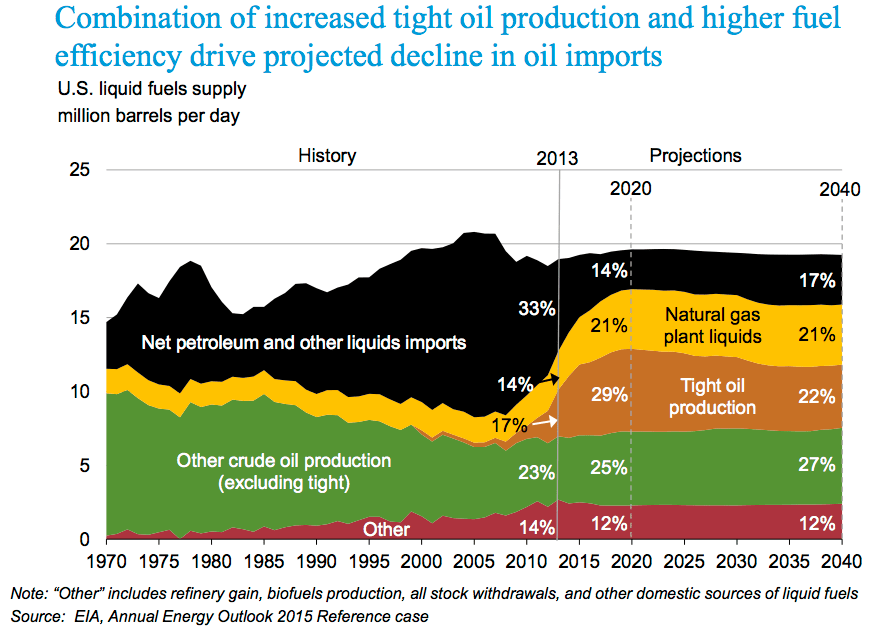



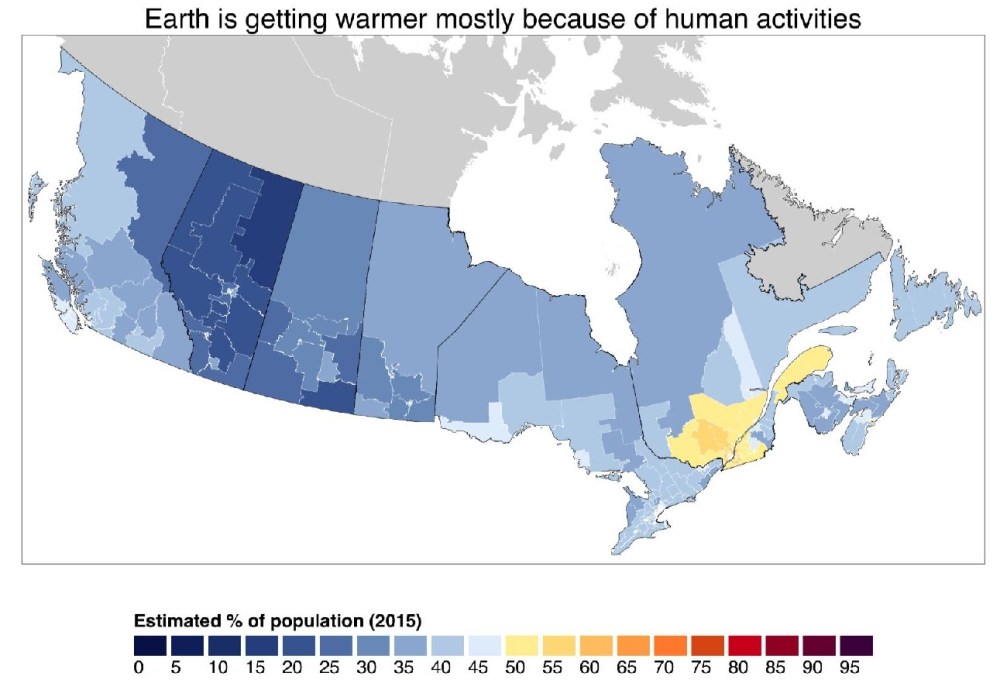 The political implications of that lack of support for climate activism are starting to become manifest. Ed Whitcomb writes in the Ottawa Citizen

 The Farmer’s Weekly advises UK farmers:
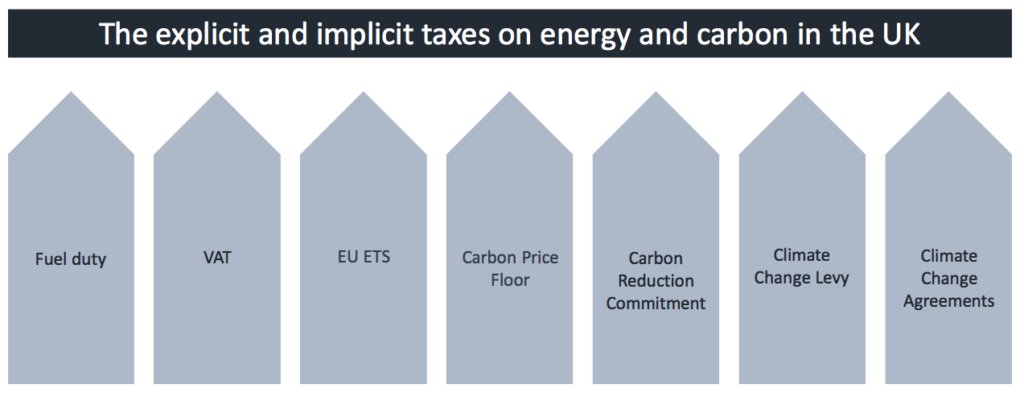
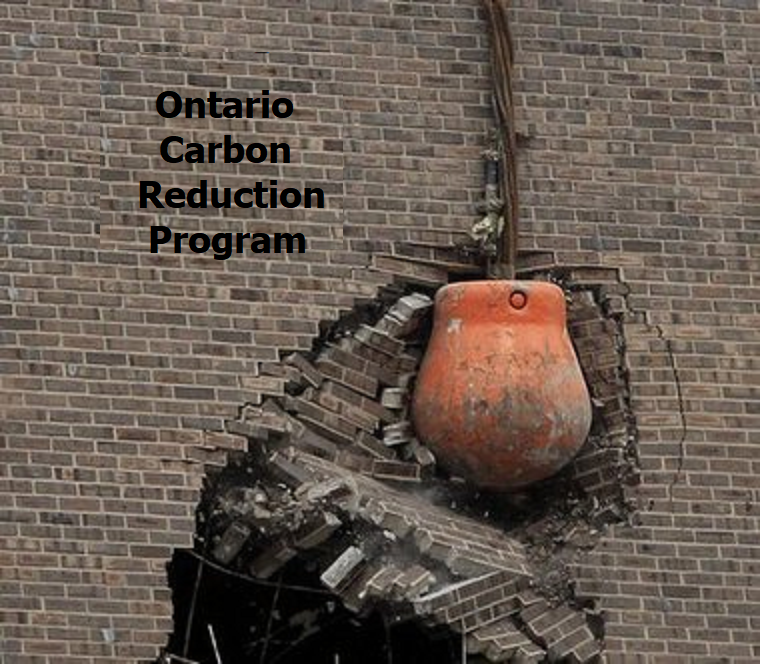



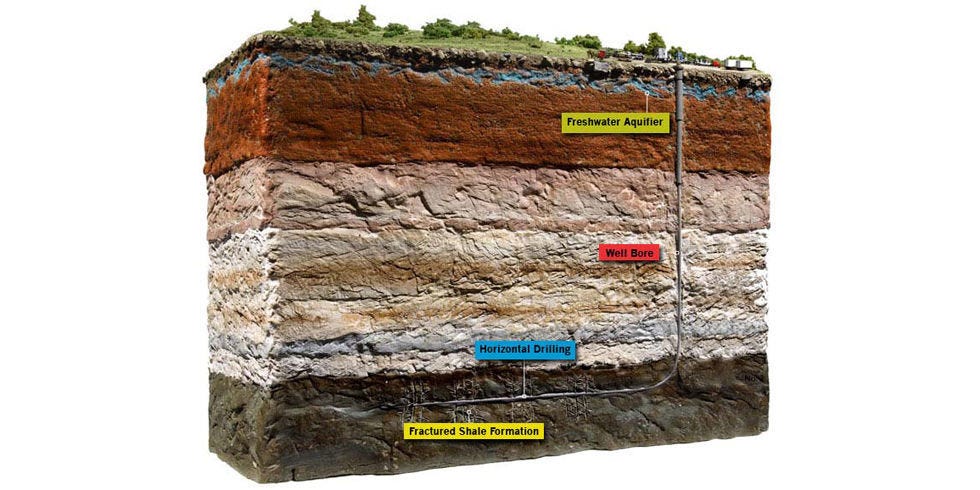 While fracking has been around for decades, two developments in recent years are responsible for thrusting the technique into the public eye. The first is the fairly recent development in which fracking was combined with horizontal drilling, another common technique used in the oil and gas industry.


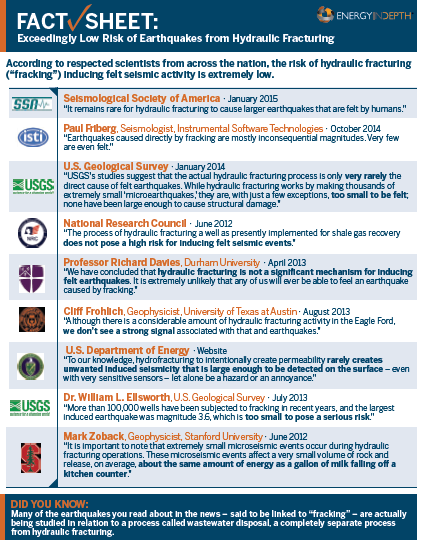


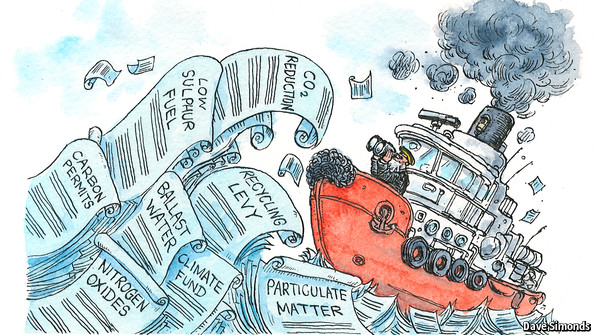



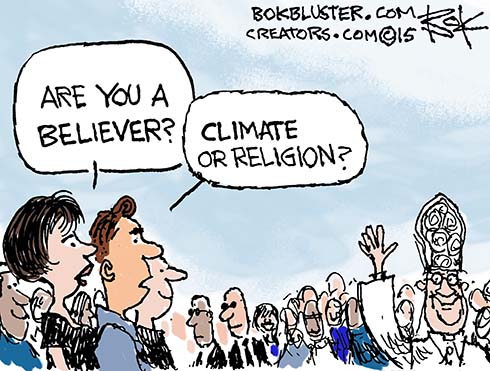


 Science Matters