Powerful Computer Model

COMPUTER DIAGNOSIS

One day Bill complained to his friend that his elbow really hurt. His friend suggested that he go to a computer at the drug store that can diagnose anything quicker and cheaper than a doctor.

”Simply put in a sample of your urine and the computer will diagnose your problem and tell you what you can do about it. It only costs $10.” Bill figured he had nothing to lose, so he filled a jar with a urine sample and went to the drug store. Finding the computer, he poured in the sample and deposited the $10. The computer started making some noise and various lights started flashing. After a brief pause out popped a small slip of paper on which was printed: “You have tennis elbow. Soak your arm in warm water. Avoid heavy lifting. It will be better in two weeks.”

Later that evening while thinking how amazing this new technology was and how it would change medical science forever, he began to wonder if this machine could be fooled. He mixed together some tap water, a stool sample from his dog and urine samples from his wife and daughter. To top it off, he masturbated into the concoction. He went back to the drug store, located the machine, poured in the sample and deposited the $10. The computer again made the usual noise and printed out the following message:

“Your tap water is too hard. Get a water softener. Your dog has worms. Get him vitamins. Your daughter is using cocaine. Put her in a rehabilitation clinic. Your wife is pregnant with twin girls. They aren’t yours. Get a lawyer. And if you don’t stop jerking off, your tennis elbow will never get better.”

Fracking Update: Texas Leads US in Pure Energy, Pure Water

John Tintera writes at Texas Alliance of Energy Producers Congress, Look at Texas for the Facts on Fracking.  Excerpts in italics with my bolds.

On Thursday, the House Subcommittee on Energy and Mineral Resources will hold a hearing to investigate whether oil and gas drilling causes water pollution. It’s a very important topic. If drilling pollutes our drinking water, new restrictions would obviously be needed to safeguard public health.

Fortunately, every available piece of scientific evidence shows that drilling — particularly the technique known as hydraulic fracturing, or fracking — is safe. As a geologist who has spent decades regulating the energy industry, I’ve seen firsthand the extensive precautions companies take to avoid any accidents and protect our water sources. Current safety regulations are already working. There’s no need to impede energy production by binding companies with additional red tape from the federal government.

Just look at my home state of Texas. It’s by far America’s biggest energy producer, and home to the 75,000-square-mile Permian Basin, the world’s most productive oil field. The Permian and other Texas oil fields use tons of water responsibly whether for hydraulic fracturing, processing, or refining.

How responsible are Texas drillers when it comes to water management? Well, there hasn’t been a single documented case of groundwater contamination associated with fracking.

This drilling technique has led to an unprecedented oil and gas revolution. In just the first quarter of 2019, Texas, for the first time ever, produced more than 5 million barrels of crude oil every day. The state accounts for an astounding 40 percent of all crude production in the United States.

The cooperation between industry and Texas state regulators is chiefly responsible for this spotless safety record.

Texas state law is as crystal clear as its water. Texas outlaws any pollution of any and all bodies of water — whether above or below ground — period. The law defines pollution as any change at all to water that would make it harm humans, animals, plants, property, or public health in general.

There are numerous key laws — 13 total — that serve as a regulatory framework to enforce the no-pollution rule. They outline rules for everything from how to drill to how to clean up a spill. They address almost every water protection concern that could arise from oil and gas production.

Take fracking, a process which requires immense amounts of water. There are rules to govern how practitioners drill, what cement and casings they use, and how they control their wells. Additionally, they are required to continually monitor pressure levels beneath the surface and report malfunctions to inspectors.

Or consider waste disposal. The Texas regulations protect surface and subsurface water from liquid and solid oil field waste. Injection wells, the shafts that carry fluids down to porous underground rock formations, are highly regulated by the EPA and encased in multiple layers of cement to protect drinking water. The EPA audits each injection well annually.

Regulators wouldn’t be able to enforce these rules without a small army of state inspectors. There are hundreds of them in Texas that rove the oil fields to make sure everything is up to snuff. These “outriders” have access to all the online data they need to ensure proper inspection.

Companies are not only complying with the regulations; they are constantly finding new ways to protect water. Operators in the Permian Basin are using new technologies like “clean brine” to make produced water clean enough to reuse. They are also building pipelines to wastewater treatment or recycling facilities and reusing produced water. The reused water is not only used for more drilling, but can be used for community improvement like de-icing roads during winter.

Some companies are finding novel ways to reuse and conserve water. In 2016, one Texas-based energy company opened a 20-mile pipeline to receive treated municipal wastewater from Odessa, Texas that can be used in all its operations. Reusing municipal wastewater reduced the company’s reliance on freshwater needed in Odessa for drinking, and compensates Odessa for once-useless waste.

Thanks to sensible regulations, regular inspections, and industry efforts, Texas energy companies have little impact on the state’s water supply. A study by the state found that fracking accounts for less than 1 percent of total water use in the state, far less than agriculture.

Texans know what they’re doing when it comes to safeguarding their drinking water. There’s no need for Washington to impose additional, needless regulations when the current ones are already working perfectly.

John Tintera is a regulatory expert and licensed geologist with a thorough knowledge of upstream oil and gas exploration. He spent over 20 years working for the main energy regulator in Texas, the Texas Railroad Commission, and ultimately served as its executive director. He is currently the president of the Texas Alliance of Energy Producers.

Plastic Trash Talking

Following a viral video of a turtle with a straw in his nose, plastics suddenly went from the “greatest thing since sliced bread” to environmental villain. This post first summarizes the waste plastic problem discussed in a recent GWPF paper. As in other cases of environmental issues, plastic trash talking conflates several problems, including littering, waste recycling and plastics disposal. Secondly, we shall see that the obvious advantages of incineration are resisted out of (can you guess?) fear of global warming from CO2.

As reported in GWPF, Dr. Mikko Paunio of the University of Helsinki has warned that the UN’s decision to regulate waste plastic as hazardous and restrict exports will unleash a “surge of waste” on many EU countries. Paunio urges a rapid expansion of waste incineration capacity to stop the plastic waste problem turning into a public disaster. His paper is Saving the Oceans and the Plastic Recycling Crisis. Excerpts in italics with my bolds.

Executive Summary

The United Nations has just decided to add mixed and contaminated plastic waste to the schedule of materials that are regulated under the Basel Convention. This decision will have major implications.

Firstly, it represents a major victory for the environment because it will effectively prevent a large proportion of exports of plastic waste to developing countries. Much of this material ends up in the oceans, so the UN decision does away with a major contribution to the problem of marine waste.

However, it will also mean that the problem of what to do with plastic waste will return to countries that produce it. What is worse, the EU is putting in place stringent new rules on plastic recycling, which will only increase the size of the problem, as will its new rules on landfill.

As a result, EU countries will find themselves faced with a growing mountain of plastic waste, and with few means at their disposal to deal with it. The EU has previously been deeply opposed to incineration of waste because of green dogma: they believe that recycling is virtuous in its own right, as well as seeing it as part of the fight against climate change.

And even if they were to change their views, there could still be major problems because the incineration capacity available falls far short of what is required.

A rapid expansion of waste incineration capacity is urgently required to stop the plastic waste problem turning into a disaster.

The global waste crisis

The Campania (Naples 1990s) trash crisis is a clear warning to governments about the problems that can be caused by blindly following green ideology. Now, it has become clear that a much larger crisis, global in scale, may almost be upon us. The global plastics ‘recycling’ industry is already on the verge of meltdown as a result of China’s import ban. Not only the biggest plastic waste exporter – the European Union – but also the rest of the English-speaking world, Japan and even Brazil, a developing country, are now witnessing rapidly growing mountains of plastic waste. In all these countries, the people who have in good faith been sorting their plastic waste for recycling can quite rightly feel betrayed.

Wealthy countries have tried to deal with China’s import ban by exporting waste to countries like Bangladesh, Indonesia, Malaysia, the Philippines and Vietnam. However, waste management in these places is often primitive, and the result has been severe problems with marine pollution. So even though these imports bring much-needed revenue, the situation is becoming so bad that legislative barriers are being raised to prevent them.

plastic_paper_straws

One of the most important developments, which has received little international attention,
is the silent decision of hundreds of municipalities in the US to stop recycling solid waste altogether. These are not ‘Trumpian’ decisions, but decisions made by both Democrats and Republican administrations at local level across the country.

The EU’s confused position on incineration

So the EU’s policy response to the marine plastic waste problem has been to adopt policies that will do little to reduce plastic waste, and which will probably cause the problem to become worse. The example of the Campania crisis, which was only resolved by extensive use of incineration, is therefore likely to become important. Incineration is superior to all other waste management options in terms of climate change mitigation, because it avoids the complex and resource-hungry schemes involved in, for example, turning it into diesel fuel or converting it to some other product. Meanwhile, incineration directly reduces demand imports of coal used in large quantities to produce heat and electricity. Recycling is certainly worse on other fronts too, not least the fact that recycling plants release microplastics in their wastewater streams, while only delivering low-quality recycled material that cannot
be used in important applications like food packaging.

The Commission has argued in favour of incineration, but only very rarely. In a paper entitled, ‘A Clean Planet for All’, released before UNFCCC COP 25 in Katowice, it argued for a carbon-neutral economy fuelled by biomass, although it was reticent about explaining where this biomass should come from. The answer is found in an accompanying document, which explains that it will actually be waste that is burned, and suggests that waste incineration capacity should increase to 100 million tons in 2050.

However, mostly it has been strongly against the idea. For example, in reference to the Circular Economy proposal, it said that of the possible approaches to waste management, recycling was to be preferred, apparently on climate change mitigation grounds, although it presented no evidence to support this claim. It also said that reprocessing waste into fuels is not recycling, but is, like waste incineration, ‘material recovery’. As a result, it has declared that its new cohesion fund will not fund waste incineration plants.

Advantages of  Burning Plastic

You will read in alarmist media about the dangers of incineration releasing chemicals such as hydrochloric acid, sulfur dioxide, dioxins, furans and heavy metals, as well as particulates. It is true that incomplete combustion of any hydrocarbon is to be avoided. But mainly detractors are using chemophobia against plastic incineration because of their obsession with CO2. Some common sense is provided by Flo-Bro The surprising benefits of burning plastics. Excerpt below with my bolds.

The plastic revolution

Whilst travelling, we’ve witnessed how several Asian countries such as Cambodia and Indonesia have turned into plastic junkyards. Inland and coastal areas are littered with a colourful mixture of bags, bottles, cups, trays and everything else, it is truly a sad and terrible sight. A lot of countries, not just in Asia, suffer from bad solid waste management. Moreover, littering seems to be a deep engrained cultural element. Whilst care for the environment seems to be on the last stage of people’s and the government’s interests, the nature is suffering and people too.

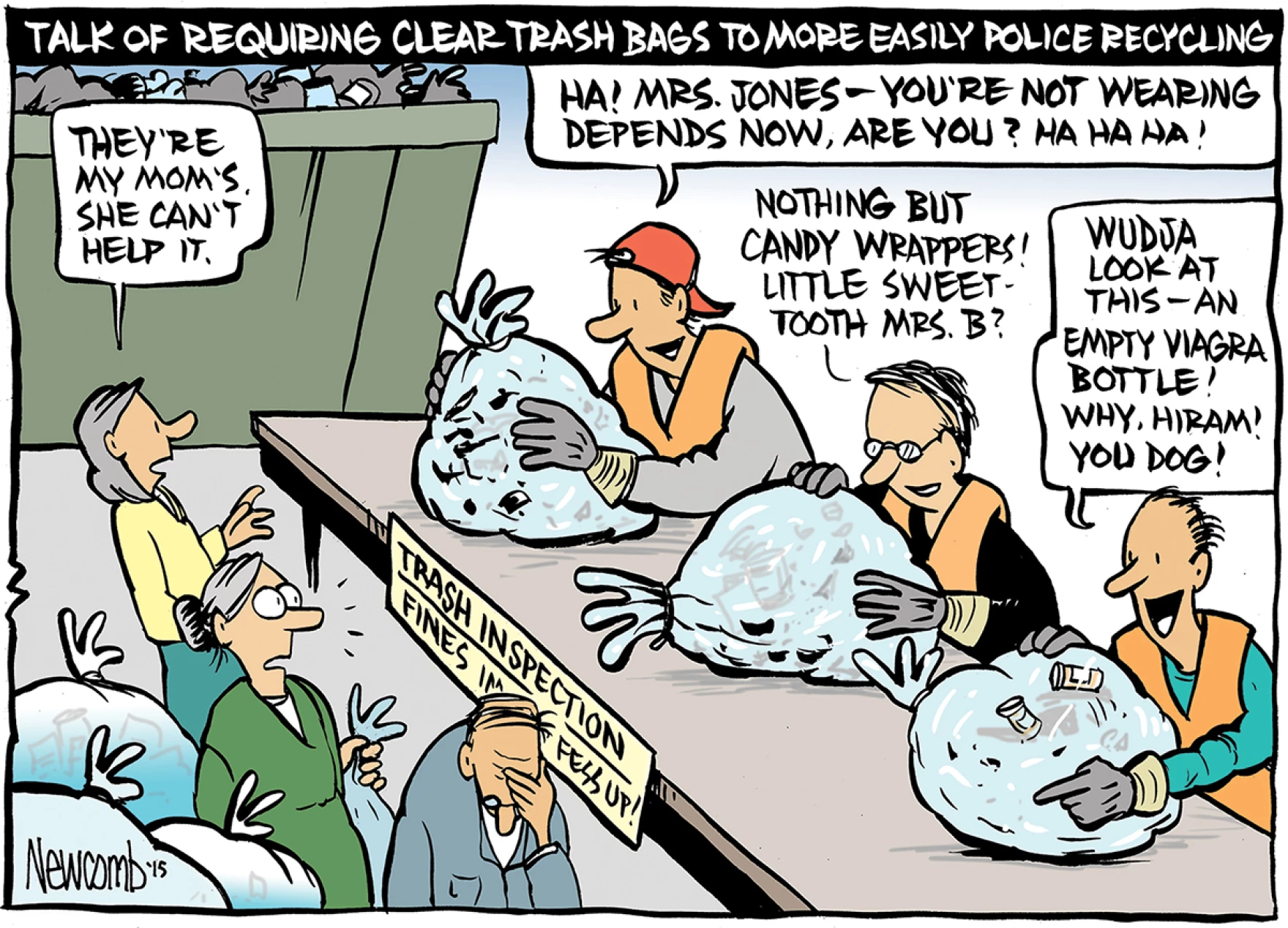
Reaction to Vermont proposal requiring clear plastic trash bags.

Owing to the favourable properties of plastic – strength, durability and light weight, we embraced them in all areas of life. Plastics have created a revolution and improved the quality of life immensely, however, nowadays they seem to be one of greatest plagues of our planet. I can’t enumerate the number of times I came across an article talking about the great plastic vortex the size of Europe in the Pacific, and that the ocean will soon contain more plastic than fish.

The chemical elements of plastic

Most of the packaging plastics which pollute the environment are based on two to four chemical elements. Polystyrene, polyethylene and polypropylene are made of carbon and hydrogen, whilst PET (polyethylene terephthalate), used for bottles, contains also oxygen. Nylon, a polyamide, which is used to make fibres, also contains oxygen and nitrogen in its structure. These elements are essentially the same ones that fossil fuels are made of. This should be of no surprise, since plastics (long chain hydrocarbons) are also made of the same crude oil, as their “short chain” relatives- gasoline and diesel.

In other words: if burned well, plastics create the same products as wood and fossil fuels -> water and carbon dioxide

Recycle or burn plastics?

In conventional terms, it is environmentally more sound to recycle plastics than dispose them. This approach, however, has so far proven quite challenging and more frequently results in “downcycling”.  But even downcycling requires large centralised facilities with advanced sorting lines and plastic recovery processes, which is very expensive and not applicable to solve the pollution problem.

So, you were always told that burning plastics is bad for the environment. Indeed, incomplete combustion of any hydrocarbon creates noxious smoke. As the above image depicts, burning plastics can create the same products as fossil fuel and wood. In waste incineration facilities, thousands of tons of plastic burn worldwide daily, generating heat and electricity.

Burning any material well and without smoke and noxious fumes needs a high temperature and plenty of oxygen. This is best achieved in a stove, where the heat is concentrated and can be put to good use.

As with most solutions, this one is not free of flaws. Plastics such as PVC (polyvinyl chloride), which is used for plumbing, can create more dangerous products of decomposition – such as corrosive HCl gas; and several plastics. Usually the hard plastic used in motorbikes and cars contain flame retarders, which are too not the friendliest chemicals and may create toxic fumes when burned. Based on what I’ve seen, these plastics are a minority and PVC and hard plastics are denser than water and will sink If they end up in the sea. What you see washed up on the shore are light packaging materials and foams.

Conclusion

Plastic pollution is unfriendly to animals and is undoubtedly aesthetically damaging the environment. Burning them might be the best way to quickly improve the situation. If people recognize the benefit of burning plastics in the right stove, it will save them money on fossil fuels, stop plastic pollution, limit deforestation, and improve the quality of life. Combustion of low value packaging plastics is not a totally new idea and a company has already received an award for it.


See also Fighting Plasticphobia

Duped into War on Plastic

False Beliefs about Human Genes

Carl Zimmer writes at Skeptical Inquirer Seven Big Misconceptions About Heredity. Excerpts in italics with my bolds

It’s been seven decades since scientists demonstrated that DNA is the molecule of heredity. Since then, a steady stream of books, news programs, and episodes of CSI have made us comfortable with the notion that each of our cells contains three billion base pairs of DNA, which we inherited from our parents. But we’ve gotten comfortable without actually knowing much at all about our own genomes.

If you want to get your entire genome sequenced—all three billion base pairs in your DNA—a company called Dante Labs will do it for $699. You don’t need whole genome sequencing to learn a lot about your genes, however. The 20,000 genes that encode our proteins make up less than 2 percent of the human genome. That fraction of the genome—the “exome”—can be yours for just a few hundred dollars. The cheapest insights come from “genotyping”—in which scientists survey around a million spots in the genome known to vary a lot among people. Genotyping—offered by companies such as 23andMe and Ancestry—is typically available for under a hundred dollars.

Thanks to these falling prices, the number of people who are getting a glimpse at their own genes is skyrocketing. By 2019, over twenty-five million worldwide had gotten genotyped or had their DNA sequenced. At its current pace, the total may reach 100 million by 2020.

There’s a lot we can learn about ourselves in these test results. But there’s also a huge opportunity to draw the wrong lessons.

Many people have misconceptions about heredity—how we are connected to our ancestors and how our inheritance from them shapes us. Rather than dispelling those misconceptions, our growing fascination with our DNA may only intensify them. A number of scientists have warned of a new threat they call “genetic astrology.” It’s vitally important to fight these misconceptions about heredity, just as we must fight misconceptions about other fields of science, such as global warming, vaccines, and evolution. Here are just a few examples.

Misconception #1: Finding a Special Ancestor Makes You Special

You can join the Order of the Crown of Charlemagne if you can prove that the Holy Roman Emperor is your ancestor. It’s a thrill to discover we have a genealogical link to someone famous—perhaps because that link seems to make us special, too.

But that’s an illusion. I could join the Mayflower Society, for example, because I’m descended from a servant aboard the ship named John Howland. Howland’s one claim to fame is that he fell out of the Mayflower. Fortunately for me, he got fished out of the water and reached Massachusetts. But I’m not the only fortunate one; by one estimate, there are two million people who descend from him alone.

Mathematicians have analyzed the structure of family trees, and they’ve found that the further back in time you go, the more descendants people had. (This is only true of people who have any living descendants at all, it should be noted.) This finding has an astonishing implication. Since we know Charlemagne has living descendants (thank you, Order of the Crown!), he is likely the ancestor of every living person of European descent.

Misconception #2: You Are Connected to All Your Ancestors by DNA

But genetics do not equal genealogy. It turns out that practically none of the Europeans who descend from Charlemagne inherited any of his DNA. All humans, in fact, have no genetic link to most of their direct ancestors.

The reason for this disconnect is the way that DNA gets passed down from one generation to the next. Every egg or sperm randomly ends up with one copy of each chromosome, coming either from a person’s mother or father. As a result, we inherit about a quarter of our DNA from each grandparent—but only on average.

If you go back a few generations more, that contribution can drop all the way to zero. . . While it is true that you inherit your DNA from your ancestors, that DNA is only a tiny sampling of the genes in your family tree.

Even without a genetic link, though, your ancestors remain your ancestors. They did indeed help shape who you are—not by giving you a gene for some particular trait, but by raising their own children, who then raised their own children in turn, passing down a cultural inheritance along with a genetic one.

Misconception #3: Ancestry Tests Are as Reliable as Medical Tests

Millions of people are getting ancestry reports based on their DNA. My own report informs me that I’m 43 percent Ashkenazi Jewish, 25 percent Northwestern European, 23 percent South/Central European, 6 percent Southwestern European, and 2.2 percent North Slavic. Those percentages sound impressive, even definitive. It’s easy to conclude that ancestry reports are as reliable as stepping on a scale at the doctor’s office to get your height and weight measured.

That is a mistake, and one that can cause a lot of heartbreak. To estimate ancestry, researchers compare each customer to a database of thousands of people from around the world. . . They can identify stretches of DNA that are likely to have originated in a particular part of the world. While some matches are clear-cut, others are less so. As a result, ancestry estimates always have margins of error—which often go missing in the reports customers get.

These estimates are going to get better with time, but there’s a fundamental limit to what they can tell us about our ancestry. . . Researchers are getting glimpses of those older peoples by retrieving DNA from ancient skeletons. And they’re finding that our genetic history is far more tumultuous than previously thought. Time and again, researchers find that the people who have lived in a given place in recent centuries have little genetic connection to the people who lived there thousands of years ago. All over the world, populations have expanded and migrated, coming into contact with other populations. . . If you want to find purity in your ancestry, you’re on a fool’s errand.

Misconception #4: There’s a Gene for Every Trait You Inherit

Mendel is a great place to start learning about heredity but a bad place to stop. There are some traits that are determined by a single gene. Whether Mendel’s peas were smooth or wrinkled was determined by a gene called SBEI. Whether people develop sickle cell anemia or not comes down to a single gene called HBB. But many traits do not follow this so-called Mendelian pattern—even ones that we may have been told in school are Mendelian.

Consider your ear lobes. For decades, teachers taught that they could either hang free or be attached to the side of our heads. The sort of ear lobes you had was a Mendelian trait, determined by a single gene. In fact, our ear lobes typically fall somewhere between the two extremes of strongly attached to fully free. In 2017, a team of researchers compared the ear lobes of over 74,000 people to their DNA. They looked for genetic variants that were common in people at either end of the ear-lobe spectrum. They pinpointed forty-nine genes that appear to play a role in determining how attached they are to our heads. There well may be more waiting to be discovered.

The genetics of ear lobes is actually very simple compared to other traits. Studying height, for example, scientists have identified thousands of genetic variants that appear to play a role. The same holds true for our risk of developing diabetes, heart disease, and other common disorders. We can’t expect to find a single gene in our DNA tests that determines whether we’ll die of a heart attack. Nor should we expect easy fixes for such complex diseases by repairing single genes.

Misconception #5: The Genes You Inherit Explain Exactly Who You Are

Take, for example, a recent study on how long people stay in school. Researchers examined DNA from 1.1 million people and found over 1,200 genetic variants that were unusually common either in people who left school early or in people who went on to college or graduate school. They then used the genetic differences in their subjects to come up with a predictive score, which they then tried out on another group of subjects. They found that in the highest-scoring 20 percent of these subjects, 57 percent finished college. In the lowest-scoring 20 percent, only 12 percent did.

But these results don’t mean that how long you stayed in school was determined before birth by your genes. Getting your children’s DNA tested won’t tell you if you should save up money for college tuition or not. Plenty of people in the educational attainment study who got high genetic scores dropped out of high school. Plenty of people who got low scores went on to get PhDs. And many more got an average amount of education in between those extremes. For any individual, these genetic scores make predictions that are barely better than guessing at random.

This confusing state of affairs is the result of how genes and the environment interact. Scientists call a trait such as how long people stay in school “moderately heritable.” In other words, a modest amount of the variation in education attainment is due to genetic variation. Lots of other factors also matter, too—the neighborhoods where people live, the quality of their schools, the stability of their family life, their income, and so on. What’s more, a gene that may have an influence on how long people stay in school in one environment may have no influence at all in another.

Misconception #6: You Have One Genome

According to this assumption, you will find an identical sequence of DNA in any cell you examine. But there are many ways in which we can end up with different genomes within our bodies.

Fairchild is known as a chimera. She developed inside her mother alongside a fraternal twin. That twin embryo died in the womb, but not before exchanging cells with Fairchild. Now her body was made up of two populations of cells, each of which multiplied and developed into different tissues. In Fairchild’s case, her blood arose from one population, while her eggs arose from another.

It’s unclear how many people are chimeras. Once they were considered bizarre rarities. Scientists became aware of them only in cases such as Lydia Fairchild’s, when their mixed identity made itself known. In recent years, researchers have been carrying out small-scale surveys that suggest that perhaps a few percent of twins are chimeras, but the true number could be higher. As for chimeric mothers, they may be the rule rather than the exception. In a 2017 study, researchers studied brain tumors taken from women who had sons. Eighty percent of them had Y-chromosome-bearing cells in their tumors.

Chimerism is not the only way we can end up with different genomes. Every time a cell in our body divides, there’s a tiny chance that one of the daughter cells may gain a mutation. At first, these new aberrations—called somatic mutations—seemed important only for cancer. But that view has changed as new genome-sequencing technologies have made it possible for scientists to study somatic mutations in many healthy tissues. It now turns out that every person’s body is a mosaic, made up of populations of cells with many different mutations.
Misconception #7: Genes Don’t Matter Because of Epigenetics

The notion that our genes are our destiny can trigger an equally false backlash: that genes don’t matter at all. And very often, those who push against the importance of genetics invoke a younger, more tantalizing field of research: epigenetics.

Our cells use many layers of control to make proper use of their genes. They can quickly turn some genes on and off in response to quick changes in their environment. But they can also silence genes for life. Women, for example, have two copies of the X chromosome, but in early development, each of their cells produces a swarm of RNA molecules and proteins that clamp down on one copy. The cell then only uses the other X chromosome. And if the cell divides, its daughter cells will silence the same copy again.

One of the most tantalizing possibilities scientists are now exploring is whether certain epigenetic “marks” can be inherited not just by daughter cells but by daughters—and sons. If people experience trauma in their lives and it leaves an epigenetic mark on their genes, for example, can they pass down those marks to future generations?

If you’re a plant, the answer is definitely yes. Plants that endure droughts or attacks by insects can reprogram their seeds, and these epigenetic changes can get carried down several generations. The evidence from animals is, for now, still a mixed bag. . . But skeptics have questioned how epigenetics can transmit these traits through the generations, suggesting that the results are just statistical flukes. That hasn’t stopped a cottage industry of epigenetic self-help from springing up. You can join epigenetic yoga classes to rewrite your epigenetic marks or go to epigenetic psychotherapy sessions to overcome the epigenetic legacy you inherited from your grandparents.

On Sexual Brains: Vive La Difference!

As Jordan Peterson has pointed out, an ideology takes a partial truth and asserts it as the whole truth, and nothing but the truth.  With global warming\climate change, we see how a complex, poorly understood natural system is reduced to a simplistic tweet:  “Ninety-seven percent of scientists agree: climate change is real, man-made and dangerous.”  That is the work of a small but dedicated group of ideologues who captured and overturned climate science so that it now only functions as a tool of political operatives.

The post shows how decades of painstaking work in neurological science are being attacked by gender ideologues, who cannot tolerate any biological differences between men and women.

Larry Cahill writes at Quillette Denying the Neuroscience of Sex Differences Excerpts in italics with my bolds.

For decades neuroscience, like most research areas, overwhelmingly studied only males, assuming that everything fundamental to know about females would be learned by studying males. I know — I did this myself early in my career. Most neuroscientists assumed that differences between males and females, if they exist at all, are not fundamental, that is, not essential for understanding brain structure or function. Instead, we assumed that sex differences result from undulating sex hormones (typically viewed as a sort of pesky feature of the female), and/or from different life experiences (“culture”). In either case, they were dismissable in our search for the fundamental. In truth, it was always a strange assumption, but so it was.

Gradually however, and inexorably, we neuroscientists are seeing just how profoundly wrong — and in fact disproportionately harmful to women — that assumption was, especially in the context of understanding and treating brain disorders. Any reader wishing to confirm what I am writing can easily start by perusing online the January/February 2017 issue of the Journal of Neuroscience Research, the first ever of any neuroscience journal devoted to the topic of sex differences in its entirety. All 70 papers, spanning the neuroscience spectrum, are open access to the public.

In statistical terms, something called effect size measures the size of the influence of one variable on another. Although some believe that sex differences in the brain are small, in fact, the average effect size found in sex differences research is no different from the average effect size found in any other large domain of neuroscience. So here is a fact: It is now abundantly clear to anyone honestly looking, that the variable of biological sex influences all levels of mammalian brain function, down to the cellular/genetic substrate, which of course includes the human mammalian brain.

The mammalian brain is clearly a highly sex-influenced organ. Both its function and dysfunction must therefore be sex influenced to an important degree. How exactly all of these myriad sex influences play out is often hard, or even impossible to pinpoint at present (as it is for almost every issue in neuroscience). But that they must play out in many ways, both large and small, having all manner of implications for women and men that we need to responsibly understand, is now beyond debate — at least among non-ideologues.

Recognizing our obligation to carefully study sex influences in essentially all domains (not just neuroscience), the National Institute of Health on January 25, 2016 adopted a policy (called “Sex as a Biological Variable,” or SABV for short) requiring all of its grantees to seriously incorporate the understanding of females into their research. This was a landmark moment, a conceptual corner turned that cannot be unturned.

But the remarkable and unprecedented growth in research demonstrating biologically-based sex influences on brain function triggered 5-alarm fire bells in those who believe that such biological influences cannot exist.

Since Simone de Beauvoir in the early 1950s famously asserted that “One is not born, but rather becomes, a woman,” and John Money at Johns Hopkins shortly thereafter introduced the term “gender” (borrowed from linguistics) to avoid the biological implications of the word “sex,” a belief that no meaningful differences exist in the brains of women and men has dominated U.S. culture. And God help you if you suggest otherwise! Gloria Steinem once called sex differences research “anti-American crazy thinking.” Senior colleagues warned me as an untenured professor around the year 2000 that studying sex differences would be career suicide. This new book by Rippon marks the latest salvo by a very small but vocal group of anti-sex difference individuals determined to perpetuate this cultural myth.

A book like this is very difficult for someone knowledgeable about the field to review seriously. It is so chock-full of bias that one keeps wondering why one is bothering with it. Suffice to say it is replete with tactics that are now standard operating procedure for the anti-sex difference writers. The most important tactic is a comically biased, utterly non-representative view of the enormous literature of studies ranging from humans to single neurons. Other tactics include magnifying or inventing problems with disfavored studies, ignoring even fatal problems with favored studies, dismissing what powerful animal research reveals about mammalian brains, hiding uncomfortable facts in footnotes, pretending not to be denying biologically based sex-influences on the brain while doing everything possible to deny them, pretending to be in favor of understanding sex differences in medical contexts yet never offering a single specific research example why the issue is important for medicine, treating “brain plasticity” as a magic talisman with no limitations that can explain away sex differences, presenting a distorted view of the “stereotype” literature and what it really suggests, and resurrecting 19th century arguments almost no modern neuroscientist knows of, or cares about. Finally, use a catchy name to slander those who dare to be good scientists and investigate potential sex influences in their research despite the profound biases against the topic (“neurosexists!”). These tactics work quite well with those who know little or nothing about the neuroscience.

The book is downright farcical when it comes to modern animal research, simply ignoring the vast majority of it. The enormous power of animal research, of course, is that it can establish sex influences in particular on mammalian brain function (such as sex differences in risk-taking, play behavior, and responses to social defeat as just three examples) that cannot be explained by human culture, (although they may well be influenced in humans by culture.) Rippon engages in what is effectively a denial of evolution, implying to her reader that we should ignore the profound implications of animal research (“Not those bloody monkeys again!”) when trying to understand sex influences on the human brain. She is right only if you believe evolution in humans stopped at the neck.

Rippon tries to convince you (and may even believe herself) that it is impossible to disentangle biology from culture when investigating sex differences in humans. This is false. I encourage the interested reader to see the discussion of the excellent work doing exactly this by a sociologist named J. Richard Udry in an article I wrote in 2014 for the Dana Foundation’s “Cerebrum,” free online.

Rippon does not mention Udry’s work, or its essential replication by Udry’s harshest critic, a leading sociologist who has described herself as a “feminist” who now “wrestles” with testosterone. (The Dana paper “Equal ≠ Same” also deconstructs the specious “brain plasticity” argument on which Rippon’s narrative heavily rests.)

Of course, Rippon is completely correct in arguing that neuroscientists (and the general public) should remember that “nature” interacts with “nurture,” and should not run wild with implications of sex difference findings for brain function and behavior. We must also reject the illogical conclusion that sex influences on the brain will mean that women are superior, or that men are superior. I genuinely do not know a single neuroscientist who disagrees with these arguments. But she studiously avoids an equally important truth: That neuroscientists should not deny that biologically-based sex differences exist and likely have important implications for understanding brain function and behavior, nor should they fear investigating them.

You may ask: What exactly are people like Rippon so afraid of? She cites potential misuse of the findings for sexist ends, which has surface plausibility. But by that logic we should also stop studying, for example, genetics. The potential to misuse new knowledge has been around since we discovered fire and invented the wheel. It is not a valid argument for remaining ignorant.

After almost 20 years of hearing the same invalid arguments (like Bill Murray in “Groundhog Day” waking up to the same song every day), I have come to see clearly that the real problem is a deeply ingrained, implicit, very powerful yet 100 percent false assumption that if women and men are to be considered “equal,” they have to be “the same.” Conversely, the argument goes, if neuroscience shows that women and men are not the same on average, then it somehow shows that they are not equal on average. Although this assumption is false, it still creates fear of sex differences in those operating on it. Ironically, forced sameness where two groups truly differ in some respect means forced inequality in that respect, exactly as we see in medicine today.

Women are not treated equally with men in biomedicine today because overwhelmingly they are still being treated the same as men (although this is finally changing). Yet astoundingly, and despite claiming she is not anti-sex difference, Rippon says “perhaps we should just stop looking for [sex] differences altogether?” Such dumbfounding statements from a nominal expert make me truly wonder whether the Rippons of the world even realize that, by constantly denying and trivializing and even vilifying research into biologically-based sex influences on the brain they are in fact advocating for biomedical research to retain its male subject-dominated status quo so disproportionately harmful to women.

So are female and male brains the same or different? We now know that the correct answer is “yes”: They are the same or similar on average in many respects, and they are different, a little to a lot, on average in many other respects. The neuroscience behind this conclusion is now remarkably robust, and not only won’t be going away, it will only grow. And yes, we, of course, must explore sex influences responsibly, as with all science. Sadly, the anti-sex difference folks will doubtless continue their ideological attacks on the field and the scientists in it.

Thus one can at present only implore thinking individuals to be wary of ideologues on both sides of the sex difference issue — those who want to convince you that men and women are always as different as Mars and Venus (and that perhaps God wants it that way), and those who want to convince you of the demonstrably false idea that the brains of women and men are for all practical purposes the same (“unisex”), that all differences between women and men are really due to an arbitrary culture (a “gendered world”), and that you are essentially a bad person if you disagree.

No one seems to have a problem accepting that, on average, male and female bodies differ in many, many ways. Why is it surprising or unacceptable that this is true for the part of our body that we call “brain”? Marie Curie said, “Nothing in life is to be feared, it is only to be understood. Now is the time to understand more, so that we may fear less.” Her sage advice applies perfectly to discussions about the neuroscience of sex differences in 2019.

Larry Cahill is a professor in the Department of Neurobiology and Behavior at the University of California, Irvine and an internationally recognized leader on the topic of sex influences on brain function.

Footnote:  This video uses humor to look at sexual brains based on observed human behavior “Why Men and Women Think Differently.)

See Also Gender Ideology and Science, including excerpts from Jordan Peterson

Climatism vs. Eugenics: Which is Worse?

Ralph B. Alexander writes at his blog Science Under Attack Belief in Catastrophic Climate Change as Misguided as Eugenics was 100 Years Ago. H/T Yen Makabenta Manila Times. Excerpts in italics with my bolds.

Last October’s landmark report by the UN’s IPCC (Intergovernmental Panel on Climate Change), which claims that global temperatures will reach catastrophic levels unless we take drastic measures to curtail climate change by 2030, is as misguided as eugenics was 100 years ago. Eugenics was the shameful but little-known episode in the early 20th century characterized by the sterilization of hundreds of thousands of people considered genetically inferior, especially the mentally ill, the physically handicapped, minorities and the poor.

Although ill-conceived and even falsified as a scientific theory in 1917, eugenics became a mainstream belief with an enormous worldwide following that included not only scientists and academics, but also politicians of all parties, clergymen and luminaries such as U.S. President Teddy Roosevelt and famed playwright George Bernard Shaw. In the U.S., where the eugenics movement was generously funded by organizations such as the Rockefeller Foundation, a total of 27 states had passed compulsory sterilization laws by 1935 – as had many European countries.

Eugenics only fell into disrepute with the discovery after World War II of the horrors perpetrated by the Nazi regime in Germany, including the holocaust as well as more than 400,000 people sterilized against their will. The subsequent global recognition of human rights declared eugenics to be a crime against humanity.

The so-called science of catastrophic climate change is equally misguided. Whereas modern eugenics stemmed from misinterpretation of Mendel’s genetics and Darwin’s theory of evolution, the notion of impending climate disaster results from misrepresentation of the actual empirical evidence for a substantial human contribution to global warming, which is shaky at best.

Instead of the horrors of eugenics, the narrative of catastrophic anthropogenic (human-caused) global warming conjures up the imaginary horrors of a world too hot to live in. The new IPCC report paints a grim picture of searing yearly heatwaves, food shortages and coastal flooding that will displace 50 million people, unless draconian action is initiated soon to curb emissions of greenhouse gases from the burning of fossil fuels. Above all, insists the IPCC, an unprecedented transformation of the world’s economy is urgently needed to avoid the most serious damage from climate change.

But such talk is utter nonsense. First, the belief that we know enough about climate to control the earth’s thermostat is preposterously unscientific. Climate science is still in its infancy and, despite all our spectacular advances in science and technology, we still have only a rudimentary scientific understanding of climate. The very idea that we can regulate the global temperature to within 0.9 degrees Fahrenheit (0.5 degrees Celsius) through our own actions is absurd.

Second, the whole political narrative about greenhouse gases and dangerous anthropogenic warming depends on faulty computer climate models that were unable to predict the recent slowdown in global warming, among other failings. The models are based on theoretical assumptions; science, however, takes its cue from observational evidence. To pretend that current computer models represent the real world is sheer arrogance on our part.

And third, the empirical climate data that is available has been exaggerated and manipulated by activist climate scientists. The land warming rates from 1975 to 2015 calculated by NOAA (the U.S. National Oceanic and Atmospheric Administration) are distinctly higher than those calculated by the other two principal guardians of the world’s temperature data. Critics have accused the agency of exaggerating global warming by excessively cooling the past and warming the present, suggesting politically motivated efforts to generate data in support of catastrophic human-caused warming.

Source: Tony Heller, Real Climate Science

Exaggeration also shows up in the setting of new records for the “hottest year ever” –declarations deliberately designed to raise alarm. But when the global temperature is currently creeping upwards at the rate of only a few hundredths of a degree every 10 years, the establishment of new records is unsurprising. If the previous record has been set in the last 10 or 20 years, a high temperature that is only several hundredths of a degree above the old record will set a new one.

Eugenics too was rooted in unjustified human hubris, false science, and exaggeration in its methodology. Just like eugenics, belief in apocalyptic climate change and in the dire prognostications of the IPCC will one day be abandoned also.

Ralph B. Alexander is a retired physicist and a science writer who puts science above political correctness. He is the author of Science Under Attack: The Age of Unreason and Global Warming False Alarm. Ralph grew up in Perth, Western Australia and received his PhD in physics from the University of Oxford.  Dr. Alexander has held a variety of positions in research, academia and industry over the course of his scientific career, and now lives in California. 

See also:  On the Hubris of Climatism

Control Population, Control the Climate. Not.

“Hottest Year” Misdirection

Man Made Warming from Adjusting Data

Intro to Award Winning Book Population Bombed

Far from being a catastrophe, population growth and carbon fuel-based development are the best means to lift people out of poverty, the authors write. NASA

Update April 3, 2019

The Global Warming Policy Foundation (GWPF) is delighted to announce that our book Population Bombed! by Canadian authors Pierre Desrochers and Joanna Szurmak has been shortlisted for the prestigious Donner Book Prize.  For those who would like an overview of the case made by the authors, below are some excerpts from their articles and interviews at the time of the book launching. At the end is posted a recent statement by a US politician taking a similar position, Yes, Babies Are a Better Solution to Climate Change Than the Green New Deal by Senator Mike Lee.

Control the Population, Control the Climate?  Not.

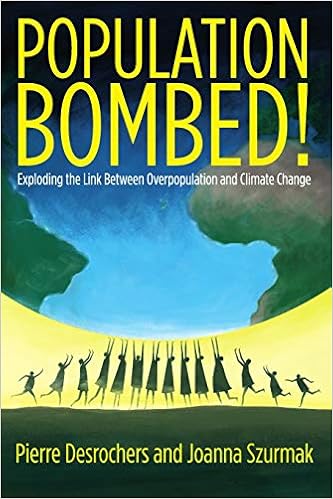
A recent book explains what’s mistaken about climate alarmists/activists thinking human numbers must be reduced in order to save the planet from us (H/T Master Resource). The Title is Population Bombed! by Pierre Desrochers and Joanna Szurmak who provide an introduction to their assessment in an article at Financial Post For 200 years pessimists have predicted we’d ruin the planet. They’re still wrong.  Excerpts in italics with my bolds.
In Avengers: Infinity War, the villain Thanos said: “If life is left unchecked, life will cease to exist.” Johns Hopkins University philosopher Travis N. Rieder apparently agrees, as he views each new child as an environmental externality putting “irreparable stress on the planet” in a way that “exacerbates … the threat of catastrophic climate change.” Similar ideas have been expressed by the likes of Al Gore, Hillary Clinton and Bill Gates. Feminist icon Gloria Steinem put it best: “What causes climate deprivation is population. If we had not been systematically forcing women to have children … for over the 500 years of patriarchy, we wouldn’t have the climate problems that we have.”

Population-growth catastrophism has been around for centuries. In the English-speaking world it is generally associated with economist Thomas Robert Malthus’ 1798 edition of his Essay on the Problem of Population and U.S. biologist Paul Ehrlich’s 1968 bestseller The Population Bomb. Ehrlich and his co-author and wife Anne predicted imminent environmental collapse followed by mass starvation. What they didn’t see coming was that, to the contrary, hundreds of millions of people would soon be lifted out of grinding poverty while parts of the planet became greener and cleaner in the process.

In our new book Population Bombed! Exploding the Link between Overpopulation and Climate Change we mark the 50th anniversary of the Ehrlichs’ book by explaining that their predictions bombed because their basic assumptions are flawed.

First, the Ehrlichs assume that human numbers cannot exceed the limits set by a finite system. Bacteria in a test tube of food are used to model such a system: Since the levels of food and waste limit bacterial growth, human population growth, by analogy, ultimately cannot exceed the carrying capacity of test tube Earth.

Second, they assume that wealth and development unavoidably come with larger environmental damage. This assumption is still at the core of pessimistic frameworks, which maintain that physical resource throughputs, not outcomes, matter. So, countries such as Haiti where deforestation and wildlife extermination are rampant are inherently more “sustainable” than richer and cleaner countries like Sweden and Switzerland.

Third, Ehrlich does not acknowledge that, unique among this planet’s species, modern humans: transmit information and knowledge between individuals and through time; innovate by combining existing things in new ways; become efficient through specialization; and engage in long-distance trade, thus achieving, to a degree, a decoupling from local limits called the “release from proximity.” And the more brains there are, the more solutions. This is why, over time, people in market economies produce more things while using fewer resources per unit of output. Corn growers now produce five or six times more output on the same plot of land as a century ago while using less fertilizer and pesticide than a few decades ago.

Fourth, the Ehrlichs and other pessimists also fail to understand the uniquely beneficial roles played by prices, profits, and losses in the spontaneous and systematic generation of more sustainable — or less problematic — outcomes. When the supply of key resources fails to meet actual demand, their prices increase. This encourages people to use such resources more efficiently, look for more of them, and develop substitutes. Meanwhile, far from rewarding pollution of the environment, the profit motive encourages people to create useful by-products out of waste (our modern synthetic world is largely made out of former petroleum-refining waste products). True, in some cases dealing with pollution came at a cost — building sewage-treatment plants, for example — but these are the types of solutions only a developed society can afford.

Fifth, pessimists are also oblivious to the benefits of unlocking wealth from underground materials such as coal, petroleum, natural gas and mineral resources. Using these spares vast quantities of land. It should go without saying that even a small population will have a much greater impact on its environment if it must rely on agriculture for food, energy and fibres, raise animals for food and locomotion, and harvest wild animals for everything from meat to whale oil. By replacing resources previously extracted from the biosphere with resources extracted from below the ground, people have reduced their overall environmental impact while increasing their standard of living.

Why is it then that after two centuries of evidence to the contrary, the pessimistic narrative still dominates academic and popular debates? Why are so many authors and academics still focusing on the Malthusian collapse scenario — now bound to come from carbon dioxide emissions and the teeming populations that produce them?

The prevalence of apocalyptic rhetoric may be, arguably, due to factors ranging from financial incentives among academics and activists to behavioural heuristics that dictate why worrying is a motivator, and why even well-meaning people rarely change their mind given new evidence. Short-termism may also take some of the blame: Population control and climate activists take for granted the non-scalable benefits of a carbon-fuel economy in which large numbers of people collaborate and innovate. The cognitive biases at the root of our thinking may shape, and in the end distort, the impulse to question “consensus,” particularly in an intellectual climate lacking the motivation to achieve what social psychologist Jonathan Haidt called “institutional disconfirmation.”

Far from being the catastrophe that Thanos, the Ehrlichs and other pessimists would have us believe, population growth and carbon fuel-based development in the context of human creativity and free enterprise are the best means to lift people out of poverty, to build resilience against any climate damage that increased anthropogenic greenhouse gas emissions might have, and to make possible a sustained reduction of humanity’s impact on the biosphere.

Pierre Desrochers, a geography professor at the University of Toronto Mississauga, and Joanna Szurmak, a doctoral candidate at York University, are the authors of Population Bombed! Exploding the Link Between Overpopulation and Climate Change. The book was launched at an event on Oct. 15th in Toronto.

More at their website: Population Bombed!

Update October 17,2018

Master Resource just posted an interview with Desrochers (here)

What we need in order to fight environmental degradation is to make sure that people in less advanced parts of the world can also be the beneficiaries of these processes. There is no doubt in my mind that these beneficial substitutions will happen more quickly the cheaper carbon fuels are. Of course, the argument is even more powerful when you think of the social consequences of less affordable energy.

Now, as with everything else, bad political institutions in some parts of the world will result in greater pollution as more carbon fuels are burned. The solution, however, is not to ban or tax everything from coal to plastic bags, but rather to improve standards of living and public governance. In my opinion, our guiding principle as far as carbon fuels are concerned should be the creation of lesser problems than those that existed before.

Yes, Babies Are a Better Solution to Climate Change Than the Green New Deal by Senator Mike Lee. Excerpts in italics with my bolds.
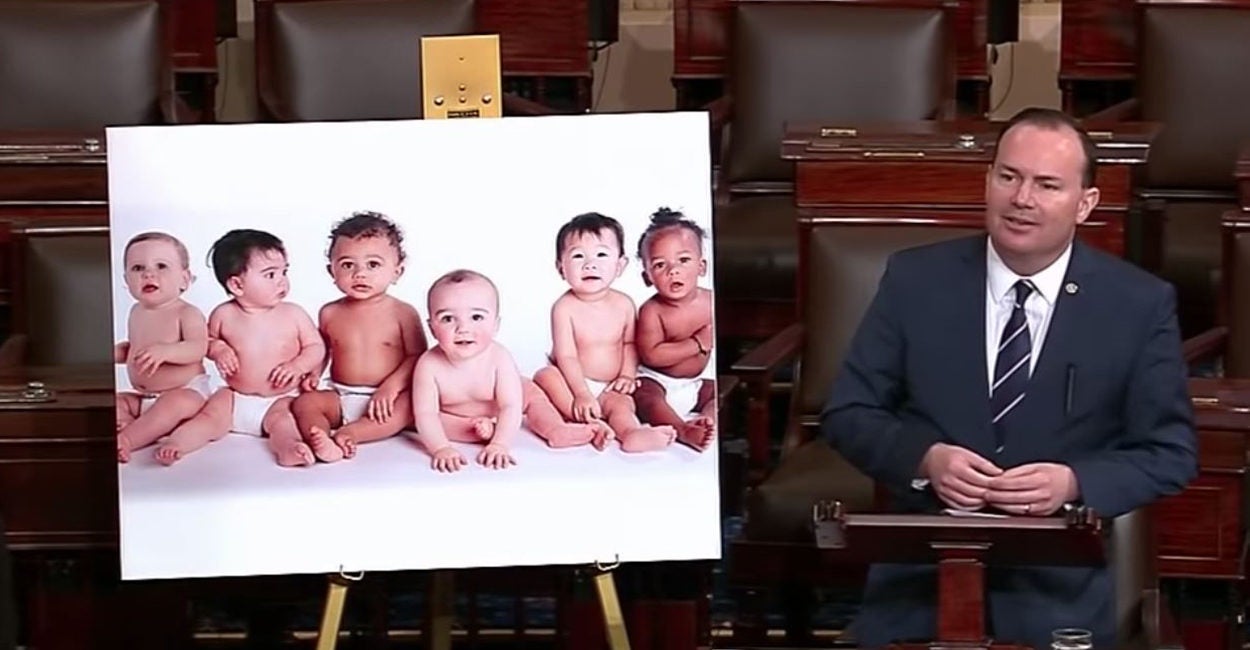
But what was surprising about the reaction to my speech on the Green New Deal is which chart garnered the most vehement anger. It wasn’t Reagan riding a dinosaur or Utah Gov. Gary Herbert battling tornado-propelled sharks or House Speaker Nancy Pelosi asserting that the resolution’s own supporters don’t know what’s in it.

No, the most controversial poster of the 14-minute speech turned out to be a simple image of six smiling babies.

Why such an aggrieved reaction to such a heart-warming image?

I’ll let Emily, a 28-year-old woman who talked to FiveThirtyEight from Spokane, Washington, explain.

We have physical proof that we cause a lot of harm to the planet, and I think the statistics show an imperative to reduce the footprint of our population, which has grown so fast. I think that having children can be immoral for a lot of reasons.

Emily is not alone in suggesting that having children is immoral. An author of the Green New Deal [Rep. Alexandria Ocasio-Cortez, D-N.Y.] recently said on Instagram, “Our planet is going to hit disaster if we don’t turn this ship around, and so it’s basically like, there’s a scientific consensus that the lives of children are going to be very difficult. And it does lead, I think, young people to have a legitimate question, you know, ‘Is it OK to still have children?’”

Emily and the authors of the Green New Deal are not the first people to believe that bringing children into this world is a morally questionable act. Quite the opposite. The belief that the human population must be limited and controlled by government is a founding principle of the environmental movement.

As far back as 1798, when scholar Thomas Malthus published “An Essay on the Principle of Population,” utopian-seeking elites have made the case that human population growth must be controlled in order to ensure a sustainable society. These well-intentioned beliefs led to policy changes like the Corn Laws, which raised taxes on grain imports to the United Kingdom.

Opposed by classical economists like David Ricardo, who warned that such laws would make food more expensive, the Corn Laws were eventually repealed after they worsened the Great Famine in Ireland, when over 1 million people died of hunger.

Fast forward to 1968 when American biologist Paul Ehrlich published “The Population Bomb,” a book arguing that the government must take urgent action to limit population growth or humanity would face imminent ecological disaster. Ehrlich’s gloom-and-doom prophecies were quite popular with a segment of the American public as the book went on to be a best-seller.

But many economists pushed back—including University of Maryland professor Julian Simon who believed that humanity, if left free to innovate, could find new ways to make limited resources provide for an ever-expanding world population.

Simon and Ehrlich even made a bet testing their beliefs in 1980, picking five commodities to track over a 10-year period. In 1990, Ehrlich was forced to admit he lost, mailing a check to Simon in the amount that the commodities had fallen in price over that 10-year span.

Since that time, the earth has added billions more people, all while global poverty continues to fall.

What Malthus, Ehrlich, Emily, and the authors of the Green New Deal keep failing to understand is that human consumption and production patterns are not static.

Since the beginning of our species, humans have constantly been innovating and changing the world around them. In fact, it is our ability to function as a collective learning brain that sets us apart from every other animal on earth.

And, as Harvard University Department of Human Evolutionary Biology Chairman Joseph Henrich explains in his book “The Secret of Our Success,” the size of our population does matter:

The most obvious way the size of a group can matter is that more minds can generate more lucky errors, novel recombinations, chance insights, and intentional improvements. … So, bigger groups have the potential for more rapid cumulative cultural evolution.

Now the size of a population is not the only thing that matters. A society must also have in place institutions, cultural norms, and a legal framework that encourages experimentation, innovation, and creativity.

And here is where the failure of the Green New Deal as a serious response to climate change is the clearest. Instead of fostering an open-ended approach to addressing climate change, it demands top-down policy programs that forbid certain avenues of exploration, like nuclear energy, while also tacking on irrelevant policy goals, like universal health care, that have nothing to do with the issue the authors of the plan claim is so urgent.

Climates change. It’s what they do. There is even evidence that humans have been affecting the climate since at least the Neolithic era. And these changes to the climate have always presented a challenge to humanity. Today is no different.

We have always survived, and even thrived, in new environments. Just look at California. Left in its natural state, the Los Angeles river basin can support maybe 100,000 people. Today, thanks to a creative web of dams, aqueducts, canals, and pipelines, there is enough water for over 10 million people to live there.

This is the creative, practical, life-affirming path that will help us solve the climate change challenge. Instead of looking to limit and even shrink humanity’s footprint on the world, we should be looking to improve and expand it.

And yes, this means more babies.

Listen Up Kids: Bad Drinking Water Bigger Danger Than Global Warming

Clean drinking water a bigger global threat than climate change, EPA’s Wheeler says From CBS News, excerpts in italics with my bolds and images.

Environmental Protection Agency Administrator Andrew Wheeler says that unsafe drinking water — not climate change — poses the greatest and most immediate global threat to the environment.

In his first network interview since his confirmation last month, Wheeler told CBS News chief Washington correspondent Major Garrett that while the administration is addressing climate change, thousands are dying everyday from unclean drinking water. Wheeler is announcing the EPA’s global clean water push in a speech at the Wilson Center in Washington, D.C., Wednesday morning.

“We have 1,000 children die everyday worldwide because they don’t have safe drinking water,” Wheeler told Garrett. “That’s a crisis that I think we can solve. We know what goes into solving a crisis like that. It takes resources, it takes infrastructure and and the United States is working on that. But I really would like to see maybe the United Nations, the World Bank focus more on those problems today to try to save those children. Those thousand children each day, they have names, we know who they are.”

Diseases with the largest absolute burden attributable to modifiable environmental factors included: diarrhoea; lower respiratory infections; ‘other’ unintentional injuries; and malaria.

The U.S., Wheeler said, has a number of clean water financing programs that provide grants and loans. He wants those to be models for international organizations like the United Nations to provide money to third-world countries.

The World Health Organization estimates that at least 2 billion people globally use a drinking water source contaminated with feces. It’s unclear what, if any, new funding the Trump administration might be providing for the clean water push.
Wheeler also insists his EPA is working to combat climate change, a phenomenon to which he says man “certainly contributes.” He said the Trump administration will roll out two major regulations later this year in an effort to reduce CO2 emissions in the U.S. Those measures would replace rules limiting carbon emissions from power plants and clean car standards.

Climate change, Wheeler said, “is an important change we have to be addressing and we are addressing.” But he added that “most of the threats from climate change are 50 to 75 years out,” while unsafe drinking water is killing people right now.

Wheeler noted that the U.S. has already cut CO2 emissions, which are thought to be the primary driver of climate change, by “14 percent since 2005.” He argued that the U.S. is “doing much better than most westernized countries on reducing their CO2 emissions, but what we need to do is make sure that the whole world is focused on the people who are dying today, the thousand children that die everyday from lack of drinking water. That is something where we have the technology, we know what it will take to save those children. And internationally, we need to step up and do something there.”

Asked if he views the EPA’s mission as protecting both the environment and business, Wheeler didn’t mention business.

“Well, the mission of our agency is to protect public health and the environment and that’s what we do and we do that every day. You know, it’s public health and the environment and that is our mission,” Wheeler told Garrett.

Wheeler says that’s why he thinks the Green New Deal, the proposal championed by progressive Democrats like Rep. Alexandria Ocasio-Cortez, is an “aspirational” but unrealistic idea. He claims the proposal could actually jeopardize clean drinking water.

“In fact, on the drinking water side, the Green New Deal does not value — at least nowhere in the documents does it value — having reliable electric grid,” Wheeler said. “A reliable electric grid is absolutely necessary to provide drinking water. You have to have the electricity. When we go, as a first responder, when we go into a community that’s been hit with a hurricane, or some other natural disaster, the first thing we do is try to make sure the electric grid is back up and running in order to provide the drinking water for those communities.”

As the recent crisis in Flint, Michigan, painfully brought to light, clean drinking water isn’t only a global issue. CBS News has reported that lead in America’s water system is a national problem, with warning signs surfacing in cities including Newark, Chicago, Detroit, Baltimore and Milwaukee.

Wheeler said the EPA is looking at what it can do to require regular testing for water in schools and daycares later this year.

“First of all, I want to make sure the American public understands 92 percent of the water everyday meets all the EPA requirements for safe drinking water,” Wheeler said.

“We have the safest drinking water in the world. We are working to update a number of regulations, one of which is our lead and copper rule, which takes a look at the pipes. The lead pipes that we have around the country. As part of that, we’re looking at what we can do to require regular testing for schools and daycares, so that would be part of that regulation when it comes out later this year.”

Wheeler also said that the water in Flint now meets EPA standards.

“Part of the problem with Flint was there was a breakdown in once they got the data, once the city of Flint, the state of Michigan, the Obama EPA – they sat on it,” Wheeler said. “We’re not doing that. As soon as we get information that there’s a problem, we’re stepping in, we’re helping the local community get that water system cleaned up.”

Summary

Septic drinking water is dangerous in every way global warming is not.  It is killing people right now, every day.  It is world wide.  It harms the most vulnerable and impoverished people.  It is a threat multiplier, potentially harming crops and risking violent conflicts over clean water access.  If you want to march for something that is needed, get some of the almost 2 Trillion US$ spent annually on global warming alarm diverted to save lives now.


Climate Kids Spurious Lawsuit Claims

Robert W. Endlich provides the back story on the flimsy complaints from kids suing the US government for the right to a stable climate. He writes at Master Resource Sixty Minutes on the Kiddie Climate Lawsuit: Hypocrisy Squared. Some excerpts in italics wth my bolds to encourage you to go read the whole article.

Plaintiff #1: Kelsey Cascadia Rose Juliana, Oregon

Her activist parents stopped government from managing the forests. Now she blames wildfires on “climate change.”

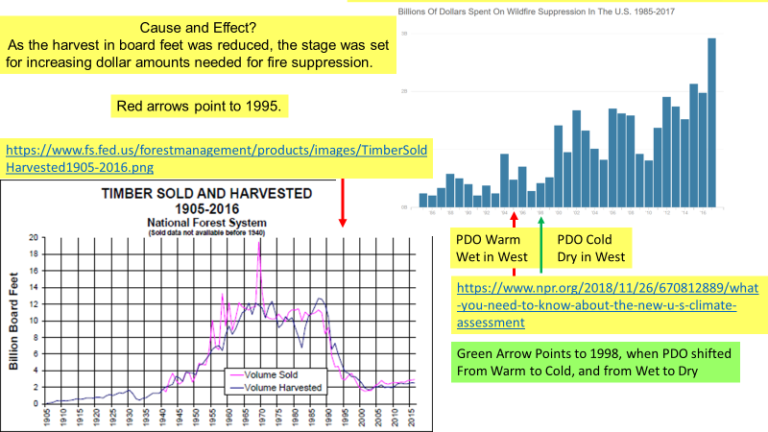
Figure 1. Left line graph: timber sold and harvested 1905-2016. Right bar graph: dollars spent on firefighting. The red arrows represent the year 1995. The green arrow shows when the Pacific Decadal Oscillation shifted from its warm and wet period in the US West, to its cold and dry period.

Now a college student, Kelsey Cascadia Rose Juliana tells us that the often-severe forest fires that plague the Pacific Northwest are a result of “Climate Change,” because, “that’s what the scientists tell us.” That this might have been a result of the fuel buildups when logging was stopped in the Spotted Owl case has not entered her head; nor the thought processes of Sixty Minutes’ producers; nor the thinking of scientists, teachers, professors and politicians who “taught” her and Sixty Minutes about fires and climate change.

Although many other scientists could have explained the clear link between fuel buildups and massive conflagrations in forests where timber thinning and cutting are prohibited, they were not consulted.

Juliana says, “We have everything to lose if we don’t act on climate change.”

Evidently, no one ever told Juliana it is just as impossible to “stop climate change” as it is to “stop continental drift,” stop the progression of tides, or stop sea level changes and land subsidence. All of these are a result of natural environmental processes that are (or once were) taught in basic Earth Science courses – processes that were carelessly or deliberately left out of the reporting by CBS reporter Steve Croft and CBS Producer Dragon Mihaljevic.

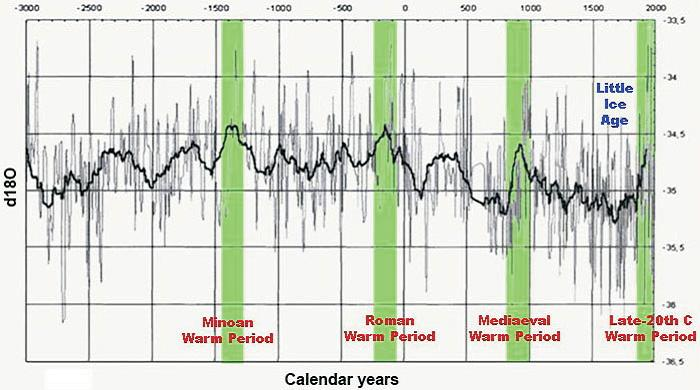
Figure 2. Temperature time series from the GISP2 ice core, showing the past 5,000 years of temperatures with Minoan, Roman, Medieval and Late 20th Century warm periods highlighted [Source]. The likelihood that humans can “stop climate change” that is a natural aspect of Earth’s environment should be obvious.

Plaintiff #2: Levi Draheim, Florida

He lives on a barrier island off the hurricane-prone Atlantic coast. The government is supposed to protect him from storms and rising sea level that have always eroded coastal islands.

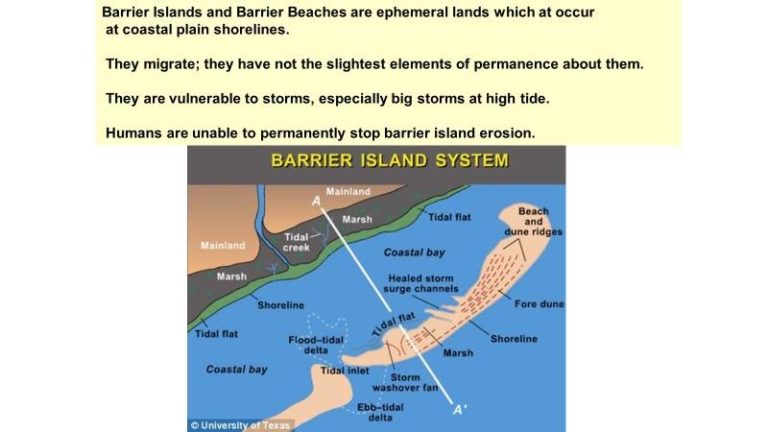
Figure 4. Graphic showing the features of Barrier Island Systems from the University of Texas showing they are characteristic of flat coastal plains. That Sixty Minutes should not recognize the peril of exposing permanent resident children to life on barrier islands seems studied ignorance of obvious environmental hazards.

Plaintiff #3: Jayden Foytlin, Louisiana

Her home was flooded in Rayne, LA, about 20 miles from the Gulf Coast and a mere 20 feet above sea level. She claims a right against rainstorms, even though her home is called the “Frog Capital of the World,” with numerous houses elevated on blocks.

Climate Kid 15-year-old Jayden Foytlin, from southern Louisiana, found her home flooded in August 2016. Mr. Mihaljevic speaks of flooding rains in southern Louisiana as somehow an unexpected new phenomenon that young Jayden suddenly experienced when she woke up and “put her foot into climate change.” Not into a frequent weather event on the Louisiana Coast, but into “climate change.” It’s not very subtle propaganda, but most viewers must be prepared, or they will miss it.

She lives in Rayne, LA, about 20 miles from the Gulf Coast and a mere 20 feet above sea level. This is very flat outer coastal plain with poor drainage. That she has no clue that flat-lying land adjacent to the Gulf Coast would be subject to flooding when a hurricane strikes and some 16 inches of rain can occur within two days – is an artifact of inadequate education, and lack of self-awareness that might be attributable to her tender years.

That a fifteen-year old student would have no knowledge of even the possibility of flooding during a hurricane (or spring melts after heavy snows in the Upper Mississippi Basin) strains credulity. But perhaps her expectations were shaped by the 12-year absence of any Category 3-5 hurricane making US landfall between Wilma (2005) and Harvey (2017) – virtually her entire perceptive lifetime.

That the Sixty Minutes report makes it seem as if sixteen inches of rain within two days is somehow related to climate change, rather than a result of the climate and weather we have today, and have had for decades and centuries, is yet another willful study in ignorance by the talking heads seen on MSM and CBS.

Just a few minutes of internet searching will uncover substantial data on extreme rainfall events in the USA. Some are displayed below in Figure 5.
Ironies of History, Concerns for America’s Future

The irony here is too rich not to discuss. Juliana’s parents and environmentalists, along with politicians and courts teamed up a few decades ago to file lawsuits that blocked timber sales and cutting, thereby causing a gradually enormous buildup of diseased, dying and dead trees, brush and other highly inflammable materials.

Huge, deadly conflagrations inevitably ensued – and now the same parties blame climate change for the infernos, enlist their (indoctrinated) children as sympathetic plaintiffs, focus on the kids’ deep fears, and sue fossil fuel producers for damages. Is there such a thing as criminal hypocrisy?

I have no great hopes that lawyers and courts will come up with the right answer.

We need only look at the results of the Massachusetts vs. EPA lawsuit, which was filed by Massachusetts based on the notion that sea level rise is caused by or accelerated by our use of fossil fuels. For “authority,” the U.S. Supreme Court accepted a political document, the IPCC Working Group I report, which considers only human factors in climate change and now asserts that only humans are causing climate change, with natural factors relegated to the sidelines as essentially irrelevant.

That such ignorance, stupidity and anti-science are now central elements of our legal system is simply breathtaking.

Indeed, had EPA attorneys been competent, and had they presented appropriate sea level data and other real-world evidence during trial and on appeal, the Supreme Court could have examined data like that from National Oceanic and Atmospheric Administration’s (NOAA’s) tide gage in Boston harbor. As Figure 8 illustrates, the rate of sea level rise is essentially unchanged over the past century and longer, even as CO2 levels climbed, then accelerated, in their rate of increase, especially since the 1960s.

Carbon dioxide from burning hydrocarbon fuels and human exhalations is the same colorless, odorless gas that plants use, in combination with energy from sunlight, to create carbohydrates. It is not a pollutant, but the elixir of life. Humans, animals and plant life are all carbon-based life forms.

The Supreme Court was just as wrong in its 2007 Massachusetts vs. EPA decision as it was in its infamous 1857 Dred Scott decision – which held that no “negro whose ancestors were imported into [the United States] and sold as slaves” could be an American citizen, and therefore had no standing to sue in federal court. Dred Scott, it can be argued, eventually led to the Civil War.

I have no great hope that today’s Supreme Court or lower courts can be depended on to arrive at the right answer when it comes to science in this case. I just hope cases like the “climate kids” Juliana vs the USA will not cause such energy, economic, societal and political disruption that our nation becomes embroiled in another civil war over our energy, livelihoods, living standards, and whether courts and bureaucrats will have the right to dictate Americans’ rights and choices in these matters.

Robert W. Endlich served as Weather Officer in the USAF for 21 Years. From 1984 to 1993, he provided toxic corridor and laser propagation support to the High Energy Laser Systems Test Facility at White Sands Missile Range. He has published in the technical literature and worked as software test engineer at New Mexico State University. Endlich was elected to Chi Epsilon Pi, the national Meteorology Honor Society, while an Air Force Basic Meteorology student at Texas A&M University. He has a bachelor’s degree in Geology from Rutgers University and a master’s in Meteorology from the Pennsylvania State University.

Footnote: For more on Pacific Northwest forest fires see Why the Left Coast is Burning

For background on the Kids Lawsuit see Supremes Look at Kids Lawsuit