Roots of Climate Change Distortions

Roger Pielke Jr. explains at his blog Why Climate Misinformation Persists.  Excerpts in italics with my bolds and added images. H/T John Ray

Noble Lies, Conventional Wisdom, and Luxury Beliefs

In 2001, I participated in a roundtable discussion hosted at the headquarters of the National Academy of Sciences (NAS) with a group of U.S. Senators, the Secretary of Treasury, and about a half-dozen other researchers. The event was organized by Idaho Senator Larry Craig (R-ID) following the release of a short NAS report on climate to help the then-new administration of George W. Bush get up to speed on climate change.

At the time I was a 32 year-old fresh-faced researcher about to leave the National Center for Atmospheric Research for a faculty position across town at the University of Colorado. I had never testified before Congress or really had any high-level policy engagement.

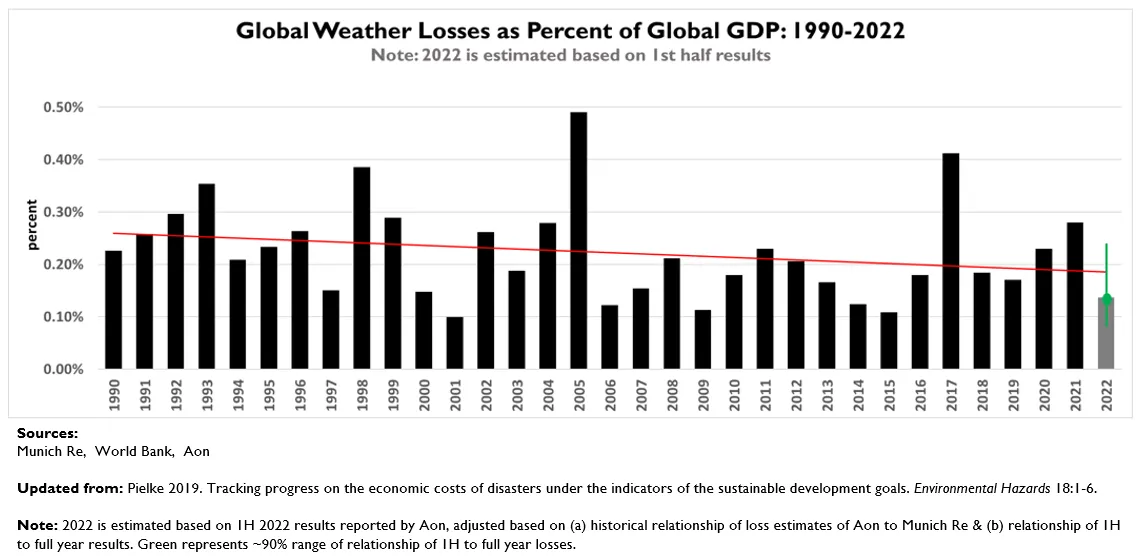
When the roundtable was announced, I experienced something completely new in my professional career — several of my much more senior colleagues contacted me to lobby me to downplay or even to misrepresent my research on the roles of climate and society in the economic impacts of extreme weather. I had become fairly well known in the atmospheric sciences research community back then for our work showing that increasing U.S. hurricane damage could be explained entirely by more people and more wealth.

One colleague explained to me that my research, even though scientifically accurate, might distract from efforts to advocate for emissions reductions:

“I think we have a professional (or moral?) obligation to be very careful what we say and how we say it when the stakes are so high.”

At the time, I wrote that the message I heard was that the “ ends justify means or, in other words, doing the “right thing” for the wrong reasons is OK” — even if that meant downplaying or even misrepresenting my own research.

I have thought about that experience over the past few weeks as I have received many comments on the first four installments of the THB series Climate Fueled Extreme Weather (Part 1Part 2Part 3Part 4). One of the most common questions I’ve received asks why it is that the scientific assessments of the Intergovernmental Panel on Climate Change (IPCC) are so different than what is reported in the media, proclaimed in policy, and promoted by the most public-facing climate experts. And, why can’t that gap be closed?

Over the past 23 years, I have wondered a lot myself about this question — not just how misinformation arises in policy discourse (we know a lot about that), but why it is that the expert climate community has been unable or unwilling to correct rampant misinformation about extreme weather, with some even promoting that misinformation.

Obviously, I don’t have good answers, but I will propose three inter-related explanations that help me to make sense of these dynamics — the noble lie, conventional wisdom, and luxury beliefs.

The Noble Lie

The most important explanation is that many in the climate community — like my senior colleague back in 2001 — appear to believe that achieving emissions reductions is so very important that its attainment trumps scientific integrity. The ends justify the means. They also believe that by hyping extreme weather, they will make emissions reductions more likely (I disagree, but that is a subject for another post).

I explained this as a “fear factor” in The Climate Fix:

Typically, the battle over climate-change science focused on convincing (or, rather, defeating) those skeptical has meant advocacy focused on increasing alarm. As one Australian academic put it at a conference at Oxford University in the fall of 2009: “The situation is so serious that, although people are afraid, they are not fearful enough given the science. Personally I cannot see any alternative to ramping up the fear factor.” Similarly, when asked how to motivate action on climate change, economist Thomas Schelling replied, “It’s a tough sell. And probably you have to find ways to exaggerate the threat. . . [P]art of me sympathizes with the case for disingenuousness. . . I sometimes wish that we could have, over the next five or ten years, a lot of horrid things happening—you know, like tornadoes in the Midwest and so forth—that would get people very concerned about climate change. But I don’t think that’s going to happen.” From the opening ceremony of the Copenhagen climate negotiations to Al Gore’s documentary, An Inconvenient Truth, to public comments from leading climate scientists, to the echo-chambers of the blogosphere, fear and alarm have been central to advocacy for action on climate change.

It’s just a short path from climate fueled extreme weather
to the noble lie at the heart of fear-based campaigns.

Conventional Wisdom

The phrase was popularized by John Kenneth Galbraith in his 1958 book, The Affluent Society, where he explained:

It will be convenient to have a name for the ideas which are esteemed at any time for their acceptability, and it should be a term that emphasizes this predictability. I shall refer to these ideas henceforth as the conventional wisdom.

The key point here is “acceptability” regardless of an idea’s conformance with truth. Conventional wisdom is that which everyone knows to be true whether actually true or not. Examples of beliefs that at one time or another were/are conventional wisdom include — Covid-19 did not come from a lab, Sudafed helps with hay fever, spinach is high in iron, and climate change is fueling extreme weather.

As the noble lie of climate fueled extreme weather has taken hold as conventional wisdom, few have been willing to offer correctives — Though there are important exceptions out in plain sight, like the IPCC Working Group 1 and the NOAA GFDL Hurricanes and Global Warming page.

Actively challenging conventional wisdom has professional and social costs. For instance, those who suggested that Covid-19 may have had a research-related origin were labeled conspiracy theorists and racists, those who suggested that President Biden was too old to serve another term were called Trump enablers, and those who accurately represent the science of climate and extreme weather are tarred as climate deniers and worse.

A few years ago I wrote an op-ed for a U.S. national newspaper and included a line about how hurricane landfalls had not increased in the U.S. in frequency or in their intensity since at least 1900. The editor removed the sentence and told me that while the statement was correct, most readers wouldn’t believe it and that would compromise the whole piece.

When noble lies become conventional wisdom,
they become harder to correct.

Luxury Beliefs

Yascha Mounk offers a useful definition:

Luxury beliefs are ideas professed by people who would be much less likely to hold them if they were not insulated from, and had therefore failed seriously to consider, their negative effects.

After all, what is the real harm if people believe in climate fueled extreme weather? If people believe that the extreme weather outside their window or on their feeds make aggressive climate policies more compelling, then that’s a good thing, right?

Surely there can only be positive outcomes that result from promoting misunderstandings of climate and extreme weather at odds with evidence and scientific assessments?

Well, no.

Last year I attended a forum at Lloyd’s of London — the event was held under the Chatham House rule, and in the event, later reported by the Financial Times, the company made a surprising admission contrary to the conventional wisdom (emphasis added):

Lloyd’s of London has warned insurers that the full impact of climate change has yet to translate into claims data despite annual natural catastrophe losses borne by the sector topping $100bn.

Insurance prices are surging as companies look to repair their margins after years of significant losses from severe weather to insured properties, exacerbated by inflation in rebuild costs. A warming planet has been identified by insurance experts and campaigners alike as a key factor.

But at a private event last month, one executive at the corporation that oversees the market told underwriters that it has not yet seen clear evidence that a warming climate is a major driver in claims costs.

It turns out that misunderstandings of the science of climate and extreme weather actually lead to unnecessary costs for people whose jobs involve making decisions about climate and extreme weather. Those unnecessary costs often trickle down to ordinary people. Kudos to Lloyd’s for calling things straight, even if only in a private forum — That is of course their professional responsibility.

Conclusion

In a classic paper in 2012, the late Steve Rayner explained that some forms of social ignorance are created and maintained on purpose:

To make sense of the complexity of the world so that they can act, individuals and institutions need to develop simplified, self-consistent versions of that world. The process of doing so means that much of what is known about the world needs to be excluded from those versions, and in particular that knowledge which is in tension or outright contradiction with those versions must be expunged. This is ‘uncomfortable knowledge’.

Climate fueled extreme weather is perhaps the canonical example
of dysfunctional socially constructed ignorance.  It may be
uncorrectable — a falsehood that persists permanently.

Here at THB, I am an optimist that science and policy are self-correcting, even if that takes a while. That means that the series on climate fueled extreme weather will keep going — Have a great weekend!


Fantasies of Clever Climate Policies

Chris Kenny writes at The Australian Facts at a premium in blustery climate debate. Excerpts in italics from text provided by John Ray at his blog, Greenie Watch.  My bolds and added images.

Collective Idiocy From Intellectual Vanity

We think we are so clever. The conceit of contemporary humankind is often unbearable.  Yet this modern self-regard has generated a collective idiocy, an inane confusion between feelings and facts, and an inability to distinguish between noble aims and hard reality.

This preference for virtue signalling over practical action can be explained only by intellectual vanity, a smugness that over-estimates humankind’s ability to shape the world it inhabits.

As a result we have a tendency to believe we are masters of the universe, that we can control the climate and regulate natural disasters. Too lazy or spoiled to weigh facts and think things through, we are more susceptible than ever to mass delusion.

We have seen this tendency play out in deeply worrying ways, such as the irrational belief in the communal benefits of Covid vaccination despite the distinct lack of scientific evidence. Too many people just wanted to believe the vaccine had this thing beaten.

Still, there is no area of public debate where rational thought is more readily cast aside than in the climate and energy debate. This is where alarmists demand that people “follow the science” while they deploy rhetoric, scare campaigns and policies that turn reality and science on their heads.

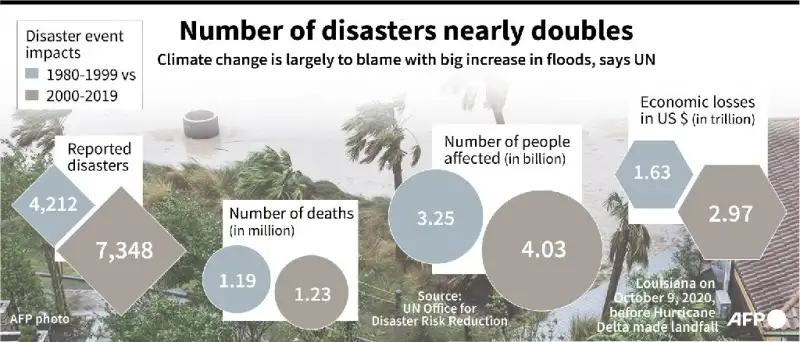
This nonsense is so widespread and amplified by so many authoritative figures that we have become inured to it. Teachers and children break from school to draw attention to what the UN calls a “climate emergency” as the world lives through its most populous and prosperous period in history, when people are shielded from the ill-effects of weather events better than they ever have been previously.
Politicians tell us in the same breath that producing clean energy is the most urgent and important task for the planet and reject nuclear energy, the only reliable form of emissions-free energy. The activists argue that reducing emissions is so imperative it is worth lowering living standards, alienating farmland, scarring forests and destroying industries, but it is not worth the challenge of boiling water to create energy-generating steam by using the tried and tested technology of nuclear fission.

Our acceptance of idiocy, unchecked and unchallenged, struck me in one interview this week given by teal MP Zali Steggall. In many ways it was an unexceptional interview; there are politicians and activists saying this sort of thing every day somewhere, usually unchallenged.

Steggall was preoccupied with Australia’s emissions reduction targets. “If we are going to be aligned to a science-based target and keep temperatures as close to 1.5 degrees as we can, we must have a minimum reduction of 75 per cent by 2035 as an interim target,” she said.

Steggall then patronised her audience by comparing meeting emissions targets to paying down a mortgage. The claim about controlling global temperatures is hard to take seriously, but to be fair it is merely aping the lines of the UN, which argues the increase in global average temperatures can be held to 1.5 degrees with emissions reductions of that size – globally.

We could talk all day about the imprecise nature of these calculations, the contested scientific debate about the role of other natural variabilities in climate, and the presumption that humankind, through policy imposed by a supranational authority, can control global climate as if with a thermostat. The simplistic relaying of this agenda as central to Australian policy decisions was not the worst aspect of Steggall’s presentation.
“The Coalition has no policy, so let’s be really clear, they are taking Australia out of the Paris Agreement if they fail to nominate an improvement with a 2035 target,” Steggall lectured, disingenuously.

This was Steggall promulgating the central lie of the national climate debatethat Australia’s emissions reduction policies can alter the climate. It is a fallacy embraced and advocated by Labor, the Greens and the teals, and which the Coalition is loath to challenge for fear of being tagged into a “climate denialism” argument.

It is arrant nonsense to suggest our policies can have any discernible effect on the climate or “climate risk”. Any politician suggesting so, directly or by implication, is part of a contemporary, fake-news-driven dumbing down of the public square, and injecting an urgency into our policy considerations that is hurting citizens already with high electricity prices, diminished reliability and a damaged economy.

Steggall went on to claim we were feeling the consequences of global warming already. “And for people wondering ‘How does that affect me?’, just look at your insurance premiums, our insurance premiums around Australia are going through the roof,” she extrapolated, claiming insurance costs were keeping people out of home ownership. “This is not a problem for the future,” Steggall stressed, “it is problem for now.”

It is a problem all right – it is unmitigated garbage masquerading as a policy debate. Taking it to its logical conclusion, Steggall claims if Australia reduced its emissions further we would lower the risk of natural disasters, leading to lower insurance premiums and improved housing affordability – it is surprising that world peace did not get a mention.

Mind you, these activists do like to talk about global warming as a security issue. They will say anything that heightens fears, escalates the problem and supports their push for more radical deindustrialisation.

Our national contribution to global emissions
is now just over 1 per cent and shrinking.

Australia’s annual emissions total less than 400 megatonnes while China’s are rising by more than that total each year and are now at 10,700Mt or about 30 times Australia’s. While our emissions reduce, global emissions are increasing. We could shut down our country, eliminating our emissions completely, and China’s increase would replace ours in less than a year.

So, whatever we are doing, it is not changing and cannot change the global climate. Our national chief scientist, Alan Finkel, clearly admitted this point in 2018, even though he was embarrassed by its implications in the political debate. Yet the pretence continues.

And before critics suggest I am arguing for inaction, I am not. But clearly, the logical and sensible baseline for our policy consideration should be a recognition that our national actions cannot change the weather. Therefore we should carefully consider adaptation to measured and verified climate change, while we involve ourselves as a responsible nation in global negotiations and action.

Obviously, we should not be leading that action but acting cautiously to protect our own interests and prosperity.

It is madness for us to undermine our cheap energy advantage to embark on a renewables-plus-storage experiment that no other country has dared to even try, when we know it cannot shift the global climate one iota. It is all pain for no gain.

Yet that is what this nation has done. So my question today is what has happened to our media, academia, political class and wider population so that it allows this debate and policy response to occur in a manner that is so divorced from reality?

Are we so complacent and overindulged that we accept post-rational debate to address our post-material concerns? Even when it is delivering material hardship to so many Australians and jeopardising our long-term economic security?

Should public debate accept absurd baseline propositions such as the idea that our energy transition sacrifice will improve the weather and reduce natural disasters, simply because they are being argued by major political groupings or the UN? Or should we not try to impose a dose of reality and stick to the facts?

This feebleness of our public debate has telling ramifications – there is no way this country could have embarked on the risky, expensive and doomed renewables-plus-storage experiment if policies and prognostications had been subject to proper scrutiny and debate.

Our media is now so polarised that the climate activists of Labor, the Greens and the teals are able to ensure their nonsensical advocacy is never challenged, and the green-left media, led by the publicly funded ABC, leads the charge in spreading misinformation.

Clearly, we are not as clever as we think. Our children need us to wise up.

Four Outlandish Narratives Compared to Realities

James Rickards posted Four Unblievable Narratives at his blog Daily Reckoning.  Excepts in italics with my bolds and added images.

Everyday Americans and investors in particular are confronted with “narratives” daily. Many include hidden agendas that are politically, ideologically or financially driven.  The key for investors is to see the narrative for what it is, avoid the mass psychosis, position yourself for reality and succeed in the end.

Following are four reigning narratives.

In each case, I sketch these narratives (and what the media wants you to believe),
then contrast that sketch with reality supported by hard data
.

COVID: The Narrative

The pandemic narrative was straightforward: It was caused by a virus of natural origin that passed from animals to humans through exotic game, such as bats and pangolins, that were sold in a wet market in Wuhan, China. It spread quickly and was highly fatal.

The solution was to isolate individuals through lockdowns, social distancing, school closures and masks. Eventually a vaccine became available that would “stop the spread.” Over time, the virus mutated into less dangerous forms, immunity from the vaccine increased and the restrictions were relaxed.

The heroes were Anthony Fauci, who led the lockdown response, and Joe Biden, who forced mass vaccination programs on everyday Americans. The economic costs were worth it. Today, all is well.

Covid: The Reality

The virus was created by Communist Chinese scientist Shi Zhengli, known as the “Bat Woman of Wuhan.” It leaked from the Wuhan Institute of Virology. China immediately banned academic papers pointing to their culpability and created the “wet market” myth.

The Wuhan gain-of-function research that created the virus was funded by Anthony Fauci using a cutout called EcoHealth Alliance. Once the virus leaked, Fauci spent more time covering up his involvement than helping Americans cope with the disease.

Fauci closed schools and workplaces and destroyed the economy all for no good reason. The pandemic policy response was the greatest, most dangerous and costliest hoax in human history.

Ukraine: The Narrative

Since the beginning of the Russian Special Military Operation in Ukraine in February 2022, the narrative has been that Russia began the war as part of a wider ambition to recapture all of Eastern Europe and the Baltic states.

It was essential that the U.S. and NATO allies support Ukraine with as much money and materiel as needed to defeat Russian ambitions. The West was considered to be fighting for democracy and freedom in Ukraine.

The unrelenting financial and weapons support combined with the impact of sanctions and Russian incompetence would lead to an ultimate Ukrainian victory.

Russian dissatisfaction with Putin would lead to a popular uprising that would overthrow him and make Russia a more democratic country friendly to the U.S.

Ukraine: The Reality

Russia didn’t provoke the war. It was provoked by the U.S. in 2008 with George W. Bush’s Bucharest Declaration that Ukraine should join NATO. The provocation continued through a U.S./U.K.-sponsored coup d’etat in 2014 that overthrew a duly elected president and replaced him with a U.S. puppet regime.

The U.S. and NATO then lied to the Russians in the course of negotiating the Minsk agreements in 2014 and 2015, which German Chancellor Angela Merkel admitted the West had no intention of honoring.

The idea that the U.S. is fighting for democracy in Ukraine is a farce. President Zelenskyy declared martial law, suspended elections and imprisoned his political opponents. Zelenskyy’s elected term expired in May 2024, so he now rules as an unelected dictator propped up by a corrupt military.

Meanwhile, U.S. and NATO financial sanctions on Russia due to the war in Ukraine have failed miserably. Russian growth now exceeds U.S. growth. Russia is growing at 5.4% (annualized) while U.S. growth in the most recent quarter was only 1.4%.  Unemployment in Russia is only 2.7% while the unemployment rate in the U.S. is 4.1%. The most recent growth forecasts for 2024 from the IMF show Russia growing at 3.2% and the U.S. growing only 2.7%.

The war isn’t over but Russia will clearly win. The remnants of Ukraine will be a landlocked rump state with no productive economy.

Climate Change: The Narrative

Climate change advocates have a straightforward narrative. Carbon dioxide (CO2) and methane (CH4) are both greenhouse gasses that trap heat within the atmosphere. CO2 and CH4 are created by emissions from the burning of “fossil fuels.”

This climate change caused by fossil fuels will have highly deleterious effects on human life and civilization. All types of natural disasters will result. The solution is to lower the global temperature or at least slow the increase.

This can be done by replacing fossil fuels with renewable energy generation including wind and solar. With enough time, effort and money global warming can be curtailed.

Climate Change: The Reality

The climate alarmists have been wrong for 40 years and they’re wrong now. Ice caps are expanding in many places, and no nations are underwater. Climate change is real, but it’s a natural phenomenon that arises slowly and lasts for centuries. These phenomena include solar cycles, volcanic eruptions and ocean currents.

It has nothing to do with CO2, automobiles or the use of natural gas and coal to generate electricity. In fact, the best evidence is not that CO2 causes warming, but that warming causes the release of CO2. The alarmists have the cause and effect exactly backward.

Climate alarmists are an ideological cult driven by a desire to destroy U.S. independence and the U.S. economy in pursuit of neo-Marxist dreams. The U.S. has more than enough energy, technology and ability to create an optimal carbon-based future while remaining open to other solutions.

U.S. Economy: The Narrative

Perhaps no narrative is more ubiquitous and persistently touted than the idea that the U.S. economy has dodged a global recession and high inflation at the same time. The economy has come in for a “soft landing” and is headed for a future of strong growth, low unemployment, low inflation and higher stock prices.

This is all due to the brilliant finesse of monetary policy by the Federal Reserve and the Biden administration’s generous fiscal policies.

This narrative is promoted by Wall Street and the White House operating almost in lockstep. Wall Street wants to sell you stocks and has to keep the soft landing narrative alive. The White House wants to win the election in November and has to sell Americans on the idea that the economy is strong and the future is bright.

The two are joined by the mainstream media that has a strong pro-Biden tilt. The result is a trifecta of banks, government and the media all telling you that all is well.

U.S. Economy: The Reality

The U.S. is likely in a recession today or, if not, soon will enter recession. Here’s the data to support the reality: The Federal Reserve Bank of Atlanta GDP Nowcast projects Q2 growth at 1.5% annualized, down from an estimate of 4.2% growth as recently as May 14.

The unemployment rate ticked up to 4.1% in the June employment report. Headline job creation was 206,000 jobs, but if the more reliable alternate household survey is used, the economy actually lost 408,000 jobs in May.

Most job creation is in part-time jobs and almost all new jobs are going to illegal aliens. Real wages are stagnant. Meanwhile, if workers not in the workforce were counted as unemployed, the actual unemployment rate today would be about 8.0%, consistent with recession levels.

Oil prices have also trended down over the last couple of months, a sign both of reduced consumer demand and a slowing economy. Consumer savings are also largely depleted and credit cards are maxed out.

Debunking Narratives

It can be difficult to refute narratives. Every propagandist and master of the Big Lie from Joseph Goebbels to Alex Soros has admitted that repetition is the key to making citizens believe the lie.

Narratives find willing amplification and repetition in the mainstream media. They’re also made effective by mixing lies with truth.

The best set of tools to identify a false narrative includes education, a skeptical attitude and close attention to hard data.

My role is to subject narratives to critical scrutiny, develop my own data sources and apply independent analysis without ideological filters or political bias.

I’m confident this will help you acquire “narrative resistance” and position you to profit when reality reasserts itself.

Discovering Anti-Woke Allies

As noted in the definition, Wokists are doomsters bound up in an ideology that delivers discontent and endless social conflict.  You can recognize wokists by their dominent traits: drama queens, know-it-alls and control freaks.

They possess no sense of gratitude for the benefits and potentials available in modern society, existing only because of the efforts and creativity of previous generations.  Instead wokists display righteous outage, antagonism and destructive acts against the heritage so meaningful to others.

We have also noticed major corporations, like Disney and Bud Light, as well as sport leagues like the NFL and NBA, wrapping themselves in rainfow pride flags and espousing woke platitudes.  So imagine my surprise upon discovering an ally for common sense and positive thinking right under my nose, so to speak.

For many years, I have used Splenda to sweeten my coffee in the morning. Upon opening the last box of Splenda packets, I noticed on one side of each little paper wrapping, a message like you used to get in a fortune cookie.  Each slogan is different, and they are all positive, uplifting and life-affirming.  None are political or divisive, in contrast to most of today’s public discourse.  It’s like finding a current copy of Reader’s Digest, featuring wholesome, common sense articles, including of course my favorite section, “Laughter is the Best Medicine.” (April 2024 was the last edition of Canada’s Reader’s Digest)

For example, this morning, I was treated to this:” Be Happy!  It drives other people crazy!”  My wife got a packet declaring: “The Perfect Moment is NOW

I found these waiting for future mornings to come:

Life is Short make it Sweet

Every Day is a New opportunity

Leave a little Sparkle wherever you go

Find the sweet side in all things

The best way to get there is to Start

There are people and organizations that embrace values and behaviors that build up rather than tear down relationships and institutions.  Hopefully more and more of them will espouse those positive attitudes and shift the public mood away from its current downward spiral.


Declare Freedom from Climate Alarms

Illustration on climate hysteria by Alexander Hunter/The Washington Times

The Washington Times Editorial Board published ‘Declaring independence from hoaxes’ – ‘Let’s put the climate change fantasy to rest’ – ‘What’s being sold as science isn’t science at all’. Excerpts in italics with my bolds and added images.

Two hundred forty-eight years ago, America declared independence from the idea we needed to be governed by a king. Our Founding Fathers realized a freethinking people are perfectly capable of governing themselves. It was a revolutionary concept in every sense of the word.

Today, tyranny no longer emanates from the decrees of a faraway monarch suffering from a dash of mental illness. It has become a mental tyranny emanating from academics and politicians who employ doomsday tales to replace freethinking with blind acceptance of yarns that advance their agenda.

Mankind’s use of modern conveniences has, they insist, warmed the planet to an uncomfortable degree. Unless we do something to reverse this deadly trend, we will be subjected to extreme storms, rising seas and plagues on an apocalyptic scale. Scary stuff indeed.

We are told this is the conclusion of science, and one cannot
disagree with “the science.” But perhaps we should.

Earlier this year, The Heritage Foundation released a report comparing the predictions of 36 climate models against the actual temperature patterns recorded in the U.S. Corn Belt between the 1970s and the present.

The plot shows the 50-year area-averaged temperature trend during 1973-2022 for the 12-state corn belt as observed with the official NOAA homogenized surface temperature product (blue bar) versus the same metric from 36 CMIP6 climate models (red bars, SSP245 emissions scenario, output here).

Accurate models would be able to match real-life measurements. As the great Nobel Prize-winning physicist Richard Feynman explained in 1964: “If [a theory] disagrees with experiment, it’s wrong. In that simple statement is the key to science.”

All 36 climate predictions disagreed with reality — that is, each forecast temperatures much higher than what Midwesterners actually experienced. The “warming” never lived up to expectations, which means the climate models are something other than science.

Yet President Biden on Tuesday said you’re “really dumb” if you deny the climate crisis the models predict. He demands you return him to the White House so he can heap more climate regulations on the businesses he disfavors.

It’s not likely that another layer of red tape will do anything to alter global weather patterns, because the sun, not mankind, is the primary driver of climate. Whenever humans try to overcome the sun’s influence, the results inevitably fail to live up to expectations.

For instance, a study published in Nature in May found changes in the formulation of fuel used in cargo vessels four years ago “abruptly reduced the emission of sulfur dioxide from international shipping by about 80% and created an inadvertent geoengineering termination shock with global impact.”

That’s a fancy way of saying cleaner skies allowed more sunshine to reach the ocean, warming the seas dramatically. It’s a puzzler for devotees of the climate change narrative to explain how pollution can combat global warming, so they just ignore it as they do all inconvenient truths.

If climate change were rooted in honest belief, liberals would rally around nuclear energy as the cleanest and most efficient means of supplying any nation’s electricity needs. According to the Energy Department, when counting manufacturing emissions, rooftop solar panels create 40 grams of carbon dioxide for every kilowatt-hour of electricity generated. Nuclear power plants generate one-third that much.

Freethinkers ought to question the animosity toward carbon dioxide, the substance that nourishes plants and makes for bountiful harvests. We ought to liberate our minds from the influence of mountebanks who enrich themselves through the telling of climate fairy tales.

What’s being sold as science isn’t science at all.


Green Baloney, Hype and Fairy Tales in Australia

Viv Forbes writes at Spectator Australia Battery baloney, hydrogen hype, and green fairy tales in Australia.  Excerpts in italics with my bolds and added images.  H/T John Ray at his blog Greenie Watch.

How low Australia has fallen… Our once-great BHP now has a ‘Vice President for Sustainability and Climate Change’, the number of Australian students choosing physics at high school is collapsing, and our government opposes nuclear energy while pretending we can build and operate nuclear submarines.

Our Green politicians want: ‘No Coal, No Gas, No Nuclear!’ while Our ABC, Our CSIRO, and Our Australian Energy Market Operator (AEMO) are telling us that wind and solar energy (plus a bit of standby gas, heaps of batteries, and new power lines) can power our homes, industries and the mass electrification of our vehicle fleet. This sounds like Australia’s very own great leap backwards.

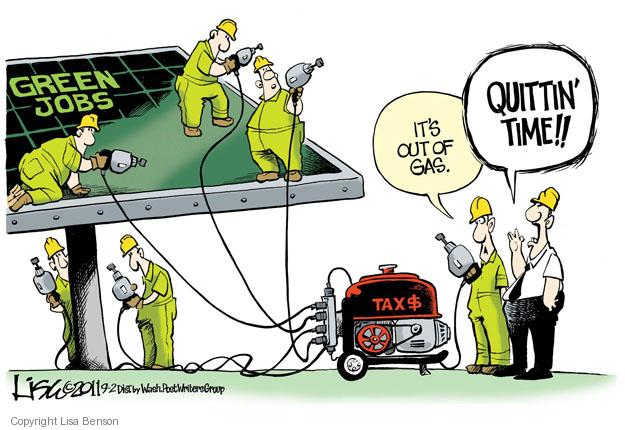
There are two troublesome Green Energy Unions: the Solar Workers down tools every night and cloudy day, and the Turbine Crews stop work if winds are too weak or too strong. And wind droughts can last for days. The reliable Coal and Gas Crews spend sunny days playing cards, but are expected to keep their turbines revving up and down to keep stable power in the lines.

From Duck to Canyon Curve

Magical things are also expected from more rooftop solar. But panel-power has four huge problems:

♦  Zero solar energy is generated to meet peak demand at breakfast and dinner times.

♦  Piddling solar power is produced from many poorly oriented roof panels or from the weak sunshine anywhere south of Sydney.

♦  If too much solar energy pours into the network (say at noon on a quiet sunny Sunday), the grid becomes unstable. Our green engineers have the solution – be ready to charge people for unwanted power they export to the grid, or just use ‘smart meters’ to turn them off.

♦  More rooftop solar means less income and more instability for power utilities so they have to raise electricity charges. This cost falls heaviest on those with no solar panels, or no homes.

Magical things are also expected from batteries.

When I was a kid on a dairy farm in Queensland, I saw our kerosene lamps and beeswax candles replaced by electric lights. We had 16 X 2 volt batteries on the verandah and a big thumping diesel generator in the dairy.

It was a huge relief, years later, when power poles bringing reliable electricity marched up the lane to our house. All those batteries disappeared with the introduction of 24/7 coal power.

Batteries are never a net generator of power – they store energy generated elsewhere, incurring losses on charging and discharging.

There has to be sufficient generating capacity to meet current demand while also recharging those batteries. What provides electricity to power homes, lifts, hospitals, and trains and to recharge all those vehicle batteries after sundown on a still winter night? (Hint: Call the reliable coal/gas/nuclear crews.)

The same remorseless equations apply to all the pumped hydro schemes being dreamed up – everyone is a net consumer of power once losses are covered and the water is pumped back up the hill.

Yet AEMO hopes we will install 16 times our current capacity of batteries and pumped hydro by 2050 – sounds like the backyard steel plans of Chairman Mao or the Soviet Gosplan that constipated initiative in USSR for 70 years. Who needs several Snowy 2 fiascos running simultaneously?

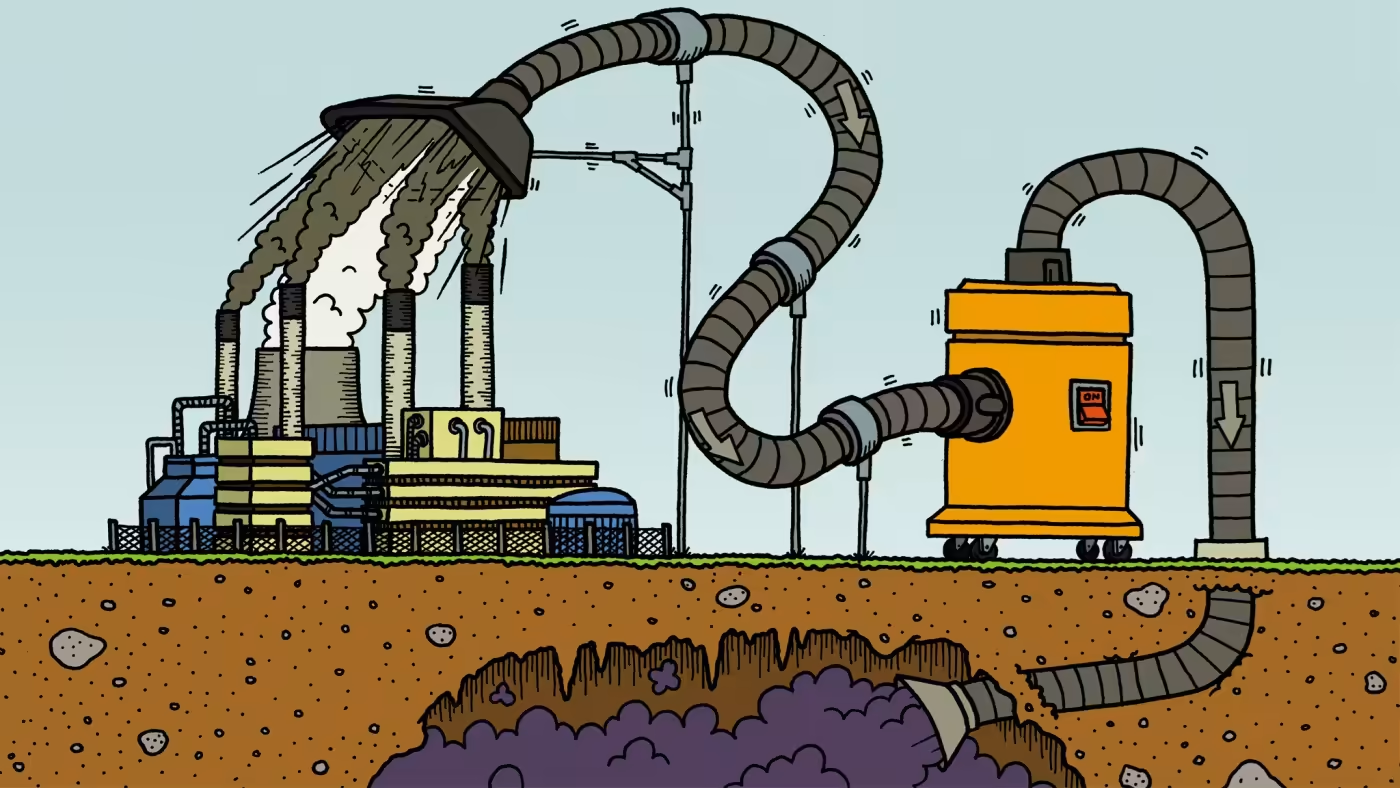
Mother Nature has created the perfect solar battery which holds the energy of sunlight for millions of years. When it releases that energy for enterprising humans, it returns CO2 for plants to the atmosphere from whence it came. It is called ‘Coal’.

‘Hydrogen’ gets a lot of hype, but it is an elusive and dangerous gas that is rarely found naturally. To use solar energy to generate hydrogen and to then use that hydrogen as a power source is just another silly scheme to waste water and solar energy. It always takes more energy to produce hydrogen than it gives back. Let green billionaires, not taxpayers, spend their money on this merry-go-round.

Who is counting the energy and capital consumed, and the emissions generated, to manufacture, transport, and install a continent being covered by ugly solar panels, bird slicers, high voltage power lines, access roads, and hydro schemes? Now they want to invade our shallow seas. Who is going to clean up this mess in a few years’ time?

As Jo Nova says:

‘No one wants industrial plants in their backyard, but when we have to build 10,000 km of high voltage towers, 40 million solar panels, and 2,500 bird-killing turbines – it’s in everyone’s backyard.’

With all of this planned and managed by the same people who gave us Pink Batts, Snowy 2 hydro, and the NBN/NDIS fiascoes, what could possibly go wrong?

Another big problem is emerging – country people don’t want power lines across their paddocks, whining wind turbines on their hills, and glittering solar panels smothering their flats. And seaside dwellers don’t want to hear or see wind turbines off their beaches. Even whales are confused.

The solution is obvious – build all wind and solar facilities in electorates that vote Green, Teal, and Labor. Those good citizens can then listen to the turbines turning in the night breezes and look out their windows to see shiny solar panels on every roof. This will make them feel good that they are preventing man-made global warming. Those electorates who oppose this silly green agenda should get their electricity from local coal, gas or nuclear plants.

What about the Net Zero targets?

At the same time as Australia struggles to generate enough reliable power for today, governments keep welcoming more migrants, more tourists, more foreign students and planning yet more stadiums, games, and circuses. None of this is compatible with their demand for Net Zero emissions.

Unlike Europe, the Americas, and Asia, Australia has no extension cords to neighbours with reliable power from nuclear, hydro, coal, or gas – we are on our own.

Australia has abundant resources of coal and uranium – we mine and export these energy minerals but Mr Bowen, our Minister for Blackouts, says we may not use our own coal and uranium to generate future electricity here. Someone needs to tell him that no country in the world relies solely on wind, solar, and pumped hydro. Germany tried but soon found they needed French nuclear, Scandinavian hydro, imported gas, and at least 20 coal-fired German power plants are being resurrected or extended past their closing dates to ensure Germans have enough energy to get through the winter.

Australia is the only G20 country in which nuclear power is illegal (maybe no one has told green regulators that we have had a nuclear reactor at Lucas Heights in Sydney since 1958). Australia is prepared to lock navy personnel beside nuclear power plants in our new nuclear-powered submarines but our politicians forbid nuclear power stations in our wide open countryside.

More CO2 in the atmosphere brings great benefits to life on Earth. If man adds to it, the oceans dissolve a swag of it, and what stays in the atmosphere is gratefully welcomed by all plant life.

In 2023, Australia added just 0.025 ppm to the 420 ppm in today’s atmosphere. Most of this probably dissolved in the oceans. If we in Australia turned everything off tomorrow, the climate wouldn’t notice, but our plant life would, especially those growing near power stations burning coal or gas and spreading plant food.

Climate has always changed and a warm climate has never been a problem
on Earth. 
It is cold that kills. Especially during blackouts.

Scientists Say: Net Zero Wins Nearly Zero Results

Chris Morrison explains at his Daily Sceptic article Net Zero Will Prevent Almost Zero Warming, Say Three Top Atmospheric Scientists.  Excerpts in italics with my bolds and added images.

Recent calculations by the distinguished atmospheric scientists Richard Lindzen, William Happer and William van Wijngaarden suggest that if the entire world eliminated net carbon dioxide emissions by 2050 it would avert warming of an almost unmeasurable 0.07°C. Even assuming the climate modelled feedbacks and temperature opinions of the politicised Intergovernmental Panel on Climate Change (IPCC), the rise would be only 0.28°C. Year Zero would have been achieved along with the destruction of economic and social life for eight billion people on Planet Earth. “It would be hard to find a better example of a policy of all pain and no gain,” note the scientists. [Paper is Net Zero Averted Temperature Increase  by Lindzen, Happer and van Wijngaarden.]

In the U.K., the current General Election is almost certain to be won by a party that is committed to outright warfare on hydrocarbons. The Labour party will attempt to ‘decarbonise’ the electricity grid by the end of the decade without any realistic instant backup for unreliable wind and solar except oil and gas. Britain is sitting on huge reserves of hydrocarbons but new exploration is to be banned. It is hard to think of a more ruinous energy policy, but the Conservative governing party is little better. Led by the hapless May, a woman over-promoted since her time running the education committee on Merton Council, through to Buffo Boris and Washed-Out Rishi, its leaders have drunk the eco Kool-Aid fed to them by the likes of Roger Hallam, Extinction Rebellion and the Swedish Doom Goblin. Adding to the mix in the new Parliament will be a likely 200 new ‘Labour’ recruits with university degrees in buggerallology and CVs full of parasitical non-jobs in the public sector.

Hardly any science knowledge between them, they even believe that they can spend billions of other people’s money to capture CO2 – perfectly good plant fertiliser – and bury it in the ground. As a privileged, largely middle class group, they have net zero understanding of how a modern industrial society works, feeds itself and creates the wealth that pays their unnecessary wages. All will be vying to save the planet and stop a temperature rise that is barely a rounding error on any long-term view.

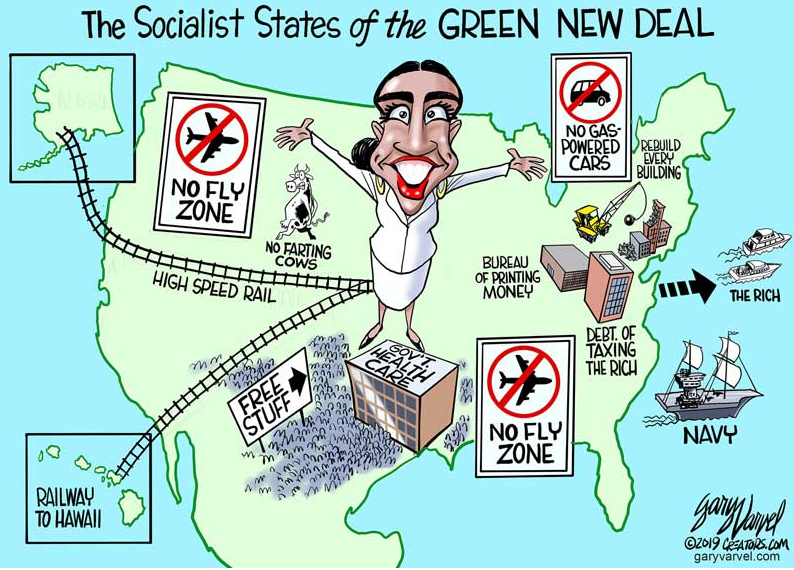
They plan to cull the farting cows, sow wild flowers where food
once grew, take away efficient gas boilers and internal combustion
cars and stop granny visiting her grandchildren in the United States.

On a wider front, banning hydrocarbons will remove almost everything from a modern society including many medicines, building materials, fertilisers, plastics and cleaning products. It might be shorter and easier to list essential items where hydrocarbons are absent than produce one where they are present. Anyone who dissents from their absurd views is said to be in league with fossil fuel interests, a risible suggestion given that they themselves are dependent on hydrocarbon producers to sustain their enviable lifestyles.

Unlike politicians the world over who rant about fire and brimstone, Messrs Lindzen, Happer and van Wijngaarden pay close attention to actual climate observations and analyses of the data. Since it is impossible to determine how much of the gentle warming of the last two centuries is natural or caused by higher levels of CO2, they assume a ‘climate sensitivity’ – rise in temperature when CO2 doubles in the atmosphere – of 0.8°C. This is about four times less than IPCC estimates, which lacks any proof. Understandably the IPCC does not make a big issue of this lack of crucial proof at the heart of the so-called 97% anthropogenic ‘consensus’.

The 0.8°C estimate is based on the idea that greenhouse gases like CO2 ‘saturate’ at certain levels and their warming effect falls off a logarithmic cliff. This idea has the advantage of explaining climate records that stretch back 600 million years since CO2 levels have been up to 10-15 times higher in the past compared with the extremely low levels observed today. There is little if any long term causal link between temperature and CO2 over time. In the immediate past record there is evidence that CO2 rises after natural increases in temperature as the gas is released from warmer oceans.

Any argument that the Earth has a ‘boiling’ problem caused by the small CO2 contribution that humans make by using hydrocarbons is ‘settled’ by an invented political crisis, but is backed by no reliable observational data. Most of the fear-mongering is little more than a circular exercise using computer models with improbable opinions fed in, and improbable opinions fed out.

The three scientists use a simple formula using base-two logarithms to assess the CO2 influence on the atmosphere based on decades of laboratory experiments and atmospheric data collection. They demonstrate how trivial the effect on global temperature will be if humanity stops using hydrocarbons. After years wasted listening to Greta Thunberg, the message is starting to penetrate the political arena. In the United States, the Net Zero project is dead in the water if Trump wins the Presidential election. In Europe, the ruling political elites, both national and supranational, are retreating on their Net Zero commitments. Reality is starting to dawn and alternative political groupings emerge to challenge the comfortable insanity of Net Zero virtue signalling. In New Zealand, the nightmare of the Ardern years is being expunged with a roll back of Net Zero policies ahead of possible electricity black outs.

Only in Britain it seems are citizens prepared to elect a Government obsessed with self-inflicted poverty and deindustrialisation. The only major political grouping committed to scrapping Net Zero is the Nigel Farage-led Reform party and although it could beat the ruling Conservatives into second place in the popular vote, it is unlikely to secure many Parliamentary seats under the U.K.’s first-past-the-post electoral system. Only a few years ago the Labour leader Sir Keir Starmer, who thinks some women have penises, and his imbecilic Deputy Leader Angela Rayner, were bending the knee to an organisation that wanted to cut funding for the police and fling open the borders. The new British Parliament will have plenty of people who still support Net Zero and assorted woke woo woo, and the great tragedy is that they will still be found across most of the represented political parties.

See Also 

Delusions of Davos and Dubai


The Global Biomedical Power Game

Bruce Pardy explains how the public health power grab is operating in his Brownstone article WHO’s on First, referring to the World Health Organization. Excerpts in italics with my bolds and added images.

A new game is coming to every town and city on Earth. It’s called Global Public Health baseball. The team to beat is the Biomedical State. Here’s their starting lineup exhibited above.

Pitcher: Public Health Bureaucracy

Prone to mistakes and wild pitches. Arrogant, can do no wrong. Was a role player in the bullpen for most of career but broke into the limelight in the last campaign. To everyone’s surprise, has become an attention whore. 

Catcher: Military and Scientific Research Institutes

Controls the game for the Biomedical State but doesn’t want to be in the spotlight. Lets Public Health have the attention. Self-interested. Team player as long as the team is doing as it’s told. Good buddies with Pharma. 

First Base: World Health Organization

The new team captain, at least on paper. Very ambitious. Disappointing skills. Full of bluster but weak performance, especially during the previous campaign. Dropped balls and wandered off base. Being promoted into a role for which it’s not equipped.

Second Base: Pharmaceutical Industry

Highest paid player on the team. Terrible on-field performance but Manager’s favourite. Good buddies with Military and Scientific Research Institutes. Dirty player but hardly ever gets caught. Somehow manages to have the rules changed to its advantage. Excellent self-promoter. Fan favorite; people can’t get enough. 

Shortstop: Legacy Media and Big Tech

Team spokesman. Speaks in vacuous cliches. Won’t let others talk. Double standards. Won’t admit to errors. Not a fan favorite.

Third Base: Medical Profession

Rigid skills, stuck in routine. Not creative, doesn’t take criticism well, hard to coach unless paid huge bonuses. One of the higher-paid players, beneficiary of a legacy contract. Claims to care but often observed living the high life. Doesn’t like to practice.

Out in Left Field: Legislatures

Easily distracted, often doesn’t know the score. Tendency to drop the ball. Has accepted minor role on the team even though has more power than realizes. Supports other players even when they don’t reciprocate.

Center Field: Academics and Activists

Most vocal but least skilled on the team. Won’t stop yelling. Usually incoherent but good at rallying the crowd.

Right Field: Common Good Conservatives

Most enthusiastic team booster. Steadfast belief in the value of teamwork and fair play. Most naïve member of the team. Least popular player on the team but doesn’t realize it.

Manager and Owner: Governments

Rules the team with an iron fist. Often wants to appear to be in the background. Pretends to defer to the players. Gives big payouts to favored players like Research Institutes and Pharma. Leans on Media and Big Tech when other players make mistakes.

Umpires: Courts

Think that they’re on the team. Every call is in favor of the Biomedical State. Wild pitches called strikes.

The League

There are no other teams, just an endless series of citizens at bat. The goal is get them out, out, out of the game.

The Real Game

Of course, the game of Global Public Health is not played on a baseball diamond. But the game is real, and so are the players. Yes, the biomedical state exists. Yes, its players are part of a global public health regime. Yes, it is controlled by national governments, research institutes, and domestic public health authorities, but it will be publicly led by the WHO. A new international pandemic agreement is still in the works. 

The WHO will appear to transition from an advisory body to the directing mind and will of global health, even though certain national governments will be pulling the strings. The WHO will have authority to declare public health emergencies on loose criteria. National and local governments will undertake to do as the WHO directs. They will make private citizens and domestic businesses comply too. Lockdowns, quarantine, vaccines, travel restrictions, surveillance, data collection, and more will be on the table.

Yes, governments are still ultimately in control in their own countries or states/provinces. But many want the WHO to be the face of pandemic response. They want to hide their responsibility and avoid scrutiny from their own people. Officials will be able to justify restrictions by citing international obligations. WHO recommendations leave them no choice, they will say. “The WHO has mandated vaccines, so we cannot let you enter public spaces without one. It’s out of our hands.”

For the pharmaceutical industry, the global public health regime is a business model. The Covid “emergency” allowed the use of new pharmaceutical technology without a normal approval process or rigorous testing. Pharma was already adept at inventing ailments to be treated with new drugs, and at making people dependent upon their supply. Pandemic emergencies take this strategy to the next level. Government mandates make participation in society dependent upon the use of pharmaceutical products.

During Covid, legacy media reflected the official, hysterical narrative. Governmental authorities and social media platforms attempted to restrict competing facts and skeptical opinions. Regulators of the health professions prohibited doctors and other healthcare workers from expressing views contrary to Covid policies. Most doctors went along. Despite these efforts, dissenters managed to voice alternative stories and to pierce the Covid bubble. The biomedical state plans to do better next time.

Our society runs on illusions. Things are not what they appear to be. The global public health plan is not just international cooperation to be better prepared for pandemics. It is not an innocent effort to produce more accurate science and better policy. The biomedical state and its partners aim to protect and extend a governance model that serves the interests of its various constituencies. They seek to manage the whole of society using health as the rationale. They’re running away with the game.

Bruce Pardy is executive director of Rights Probe and professor of law at Queen’s University.


Extreme Talk About Weather Events

Brian Sussman ovethrows the prevailing climatist narrative blaming human energy choices for extreme weather events.  His American Thinker article is Climate BS from the Wall Street Journal. Excerpts in italics with my bolds and added images.

My publisher contacted me this week, drawing attention to a Wall Street Journal article claiming climate change is producing shortages of “the finer things in life,” like wine, coffee, cocoa, and olive oil. The implication was clear: your carbon footprint is causing the price of these commodities to sharply rise.

“Total bull-bleep,” I replied.

Specifically, the story speaks of the recent drought in West Africa, which has resulted in a cocoa shortage; dry spells in Vietnam, which have reduced coffee harvests; and parched Italian olive groves and grape vineyards recently destroyed by wildfires.

None of these meteorological events has anything to do with
the use of fossil fuels and the subsequent release of carbon dioxide
into the atmosphere. The truth is that these regions of the world are historically
well known for witnessing wild swings in otherwise natural weather patterns
.

As I explain repeatedly in my new book Climate Cult: Exposing and Defeating Their War on Life, Liberty, and Property, such misinformation feeds into an elaborate propaganda campaign designed to frighten the developed world into demanding a carbon-neutral energy grid that would be about as reliable North Korea’s.

Let’s begin with West Africa, where the climate periodically exhibits large spatial and temporal variabilities that allow for recurrent droughts, some lasting hundreds of years. In fact, the past couple years of dry weather pales in comparison to the West African droughts in the 1970s and 80s. As for the cocoa production, a reality missing from the discussion is that global consumers are demanding more cocoa than ever, so a blip in production impacts retail price and availability like never before.

The recent drought in Vietnam is quite serious, but I’m
happy to report it’s not being caused by your SUV.

While the lack of rain in parts of Southeast Asia is the worst since the 1930s (a decade which remains the hottest on record throughout much of the world), the drought is associated with an El Nino weather pattern. El Nino, and its sister La Nina, are ancient occurrences that possess the dynamics to both enhance or diminish precipitation, depending on a variety of quite ordinary atmospheric circumstances.

Wildfires feeding on extremely dry vegetation have certainly taken a recent toll on olive groves in Italy and drought has impacted wine production there as well. The journal Nature recently published a study, claiming, “Climate change is affecting grape yield, composition and wine quality. As a result, the geography of wine production is changing.” However, the publication’s editorial bias seems to have caused them to ignore the historical record. The worst drought in modern Italy occurred in the 1920s. However, going back further, that region’s most catastrophic precipitation deficiency began in the 1530s and lasted the better part of a decade. It was so extreme that Protestant reformer Martin Luther wondered if it was a sign of the end times. Clergy in Germany, Italy, and England urged the people to beg God for forgiveness and pray for the deliverance of rain.

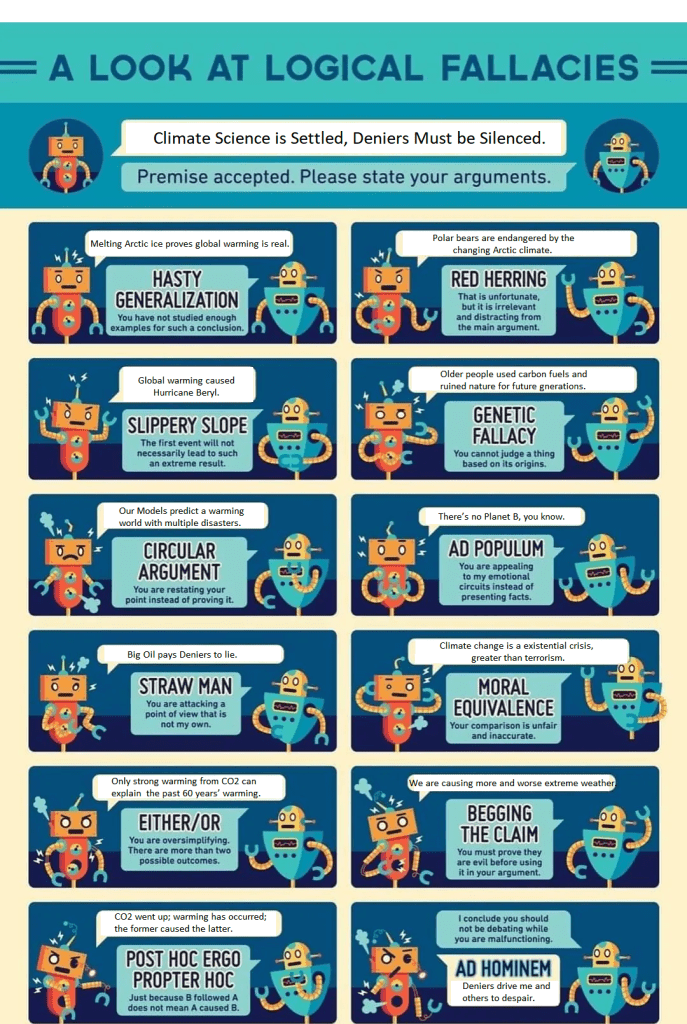
As I explain in my book, those pushing the climate agenda employ ad hominem arguments that appeal to raw emotions rather than intellect. And, as I also detail, those on the left aren’t fond of examining history. For them, Karl Marx stated it best in his 1844 book, The Holy Family: “History does nothing; it possesses no immense wealth; it wages no battles.” [Marx also said:

Brian Sussman is a meteorologist, author, and podcaster.

For more on history and weather extremes see:

Our Weather Extremes Are Customary in History


Climatists’ Ulterior Motives

Two articles caught my attention by looking behind the curtain seeing intentions obscured by appeals to Zero Carbon.  First  Chris Talgo writes at American Thinker Climate Alarmism is the existential threat to humanity.  Excerpts in italiics with my bolds and added images.

While in France observing the 80th anniversary of D-Day and honoring the thousands of brave soldiers who gave their lives fighting the existential threat that was Nazi Germany, President Joe Biden could not help himself from descending into crass political talking points by comparing the most destructive and deadly war in human history to climate change.

“The only existential threat to humanity, including nuclear weapons, is if we do nothing on climate change,” Biden declared. Due to the “existential threat of climate change, which is just growing greater, we’re working together to accelerate the global transition to net-zero. It is the existential threat to humanity,” Biden reiterated.

In reality, climate change is nowhere near an existential threat.

In fact, in many ways, the slight warming that has occurred over the past half century or so has made life better for humanity. For instance, NASA satellite data show a significant rise in global plant growth in recent decades — what some call global greening. A slightly warmer planet is also beneficial because it produces greater crop yields.

However, one can make a compelling argument that climate alarmism,
and the policies that climate alarmists support,
actually comprise an existential threat to humanity.

1. End Fossil Fuels On Which Modern Life Depends

First and foremost, climate alarmists are hellbent on ending the use of affordable and reliable energy in the form of fossil fuels. This alone is a horrendous stance that puts millions of lives at risk.

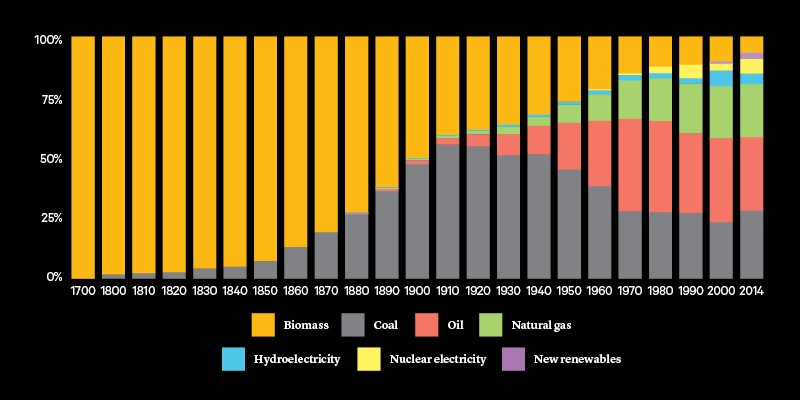
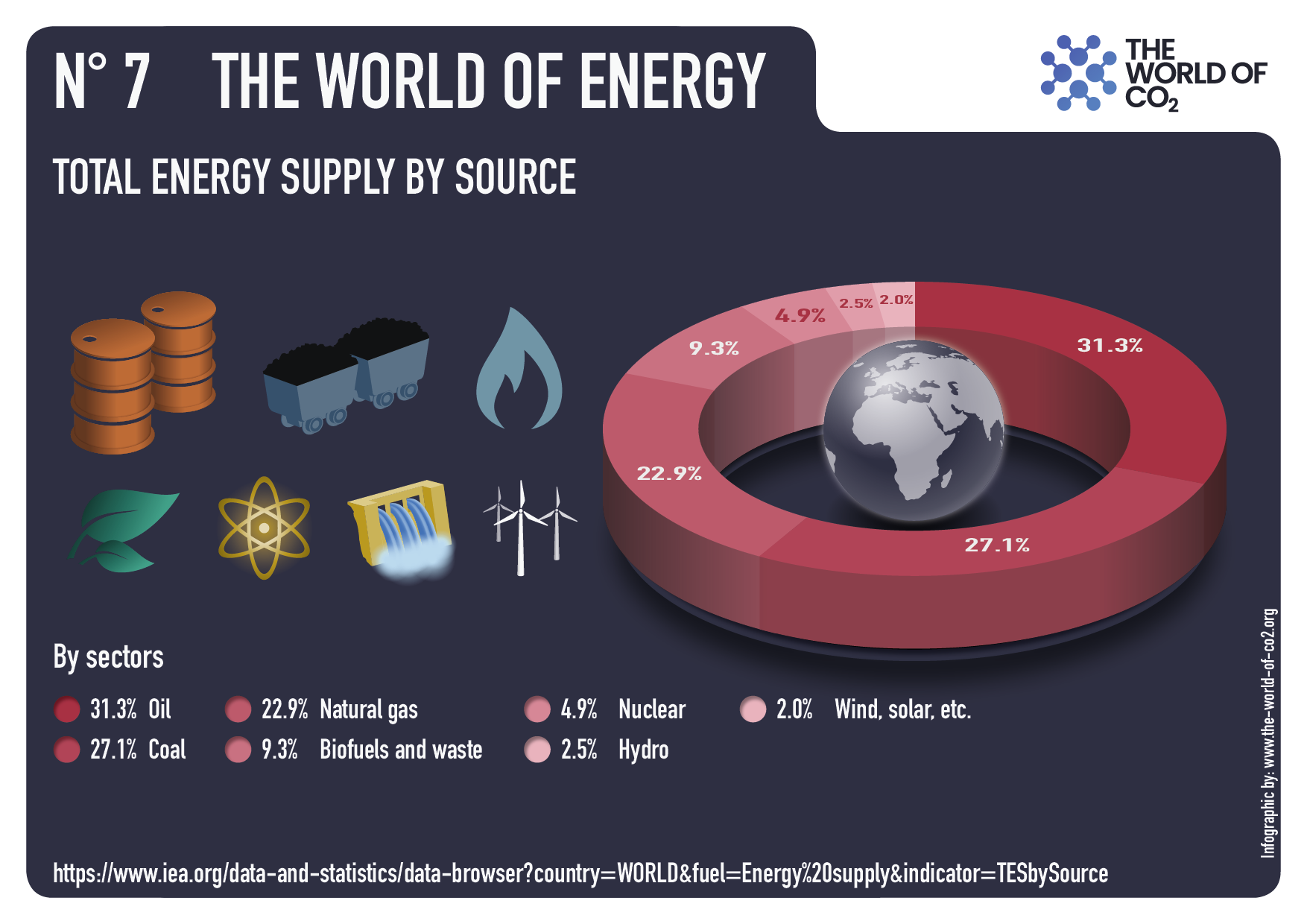
Like it or not, the advent of fossil fuels, namely oil, coal, and natural gas, has been the biggest boon for humanity in all of history. The harnessing of these resources to supply virtually unlimited energy in cost-effective terms has raised billions of people from abject poverty.

Without ample access to fossil fuels, our modern way of life would literally cease to exist. Not only do fossil fuels provide abundant and affordable energy. As the U.S. Department of Energy notes, “Petrochemicals derived from oil and natural gas make the manufacturing of over 6,000 everyday products and high-tech devices possible.”

2.  Rely on Renewable Energy, A Poor Substitute

Second, climate alarmists demand that the world immediately transitions to so-called renewable energy and achieve net-zero carbon dioxide emissions. The problem is that renewable energy from solar panels and wind farms is too expensive, unreliable, and not nearly scalable. If the world were to shun fossil fuels in favor of wind and solar, the amount of energy available to use would plummet. This would result in devastation across many fronts.

3. Diminish Human Populations and Livelihoods

Third, climate alarmists constantly call for degrowth, both in terms of the economy and in terms of population. Somehow, the climate alarmists have convinced themselves that the solution to the nonexistent problem of a slightly warming planet is for humanity to cull its population growth. This is extremely short-sighted and fails to consider that many developed countries are currently experiencing a stark population decline. If this is not reversed, and soon, many of these once-thriving nations will experience severe demographic problems.

Likewise, calls for economic degrowth, which has been a cause célèbre among climate alarmists for many years now, would wreak havoc and would instantly result in decreased living standards for billions of people. This is especially true for several developing countries, which are banking on economic growth and increased prosperity to lift billions from poverty.

4. No More “Better Things for Better Living”

Fourth and finally, climate alarmists, whether they realize it or not, are akin to modern-day Luddites because they excoriate innovations and technological breakthroughs. In many ways, climate alarmists are the opposite of progressives because they seek to regress humanity back to a time when creature comforts and access to the latest and greatest technologies were limited to a select few rather than accessible to the masses. Even worse, by hindering the development of new technologies that could solve some of the world’s most vexing problems simply because it does not align with their worldview, climate alarmists are essentially preventing the betterment of the human experience.

Fortunately, it seems like the climate alarmists are losing ground. Polls show that more and more people are skeptical of the constant fearmongering and are becoming aware of the failed doomsday predictions. This is great news, but it is just the start. Unless and until there is a general consensus that climate alarmism is the problem and that the misguided policies supported by climate alarmists are outright rejected by an overwhelming majority, climate alarmism will remain a grave threat to the future of humanity.

The second article is by David Wojick writing at CFACT A Socialist tract on fast decarbonization from the National Academies.  Excerpts in italics with my bolds and added images.

The title of this 800 page tome is “Accelerating Decarbonization in the United States: Technology, Policy, and Societal Dimensions” from the US National Academies of Science, Engineering and Medicine (NASEM).

I seldom use the term “socialist” but it is the perfect word here once the concept is updated. It originally referred to government ownership of the means of production. But in today’s Regulatory State, ownership is not required for control so it means government control of production, or more broadly government control of both production and use.

In this case it is government control of the production and use of what they call “the energy system.” Since everybody uses energy this includes control of everybody. Under the proposed system the government does not serve people it “manages” them, or at least their use of energy which is a lot of what we do.

They are however rather confused about this. The very first sentences state their basic assumption which is wildly false. They say this:

“The world is coalescing around the need to reduce greenhouse gas (GHG) emissions to limit the effects of anthropogenic climate change, with many nations setting goals of net-zero emissions by midcentury. As the largest cumulative emitter, the United States has the opportunity to lead the global fight against climate change. It has set an interim emissions target of 50–52 percent below 2005 levels by 2030 toward a net-zero goal.” (All quotes are from the Executive Summary.)

The United States has set no such targets. The US is a big country with hundreds of millions of people so it does not set targets. Perhaps they mean the US Government but Congress has set no such targets. In fact these so-called targets are merely the wishful thinking of the Biden Administration and their radical net zero colleagues which apparently include the National Academies. And if a Republican wins the next election it will not even be a Presidential wish.

So there is much less here than meets the eye. This tome is basically a radical socialist manifesto and that is how it should be read.

The funding is surprising. NASEM studies used to be done at the request of Congress or Federal Agencies and funded by them since objectively advising them is supposed to be the job of the Academies. Instead this work was funded by a collection of Foundations, presumably left wingers. So the National Academies are for hire by those with radical causes.

The socialist management thrust is exemplified by this topic
which is listed as a central theme:
“Managing the Future of the Fossil Fuel Sector.”
Only under socialism is this a government function.

That the called for management process is also non-democratic is made clear by this segment of their lead off discussion of risks: “In developing its findings and recommendations, the committee recognized the inherent risks and uncertainties associated with such an unprecedented, long-term, whole-of-society transition. These include … political, judicial, and societal polarization risk—that political and judicial actions or societal pressures will change the policy landscape….”

So elected officials, the Courts, or the people in general might get in the way. Their solution is not to get the support of the people, rather it is more management. They say “Mitigating these risks will require adaptive management and governance to coordinate and evaluate policy implementation and to communicate progress on outcomes.”

Sounds like the Plan is to manage the elections, the Courts and the people.
Sit down, shut up, and we will tell you what we have done as we go along.

For those interested in the details of the net zero wishlist this is a grand source. Otherwise it is just another radical manifesto to line the shelves with.

My concern is that the three National Academies have abandoned their mission and therefore lost their integrity. Tools of left wing foundations are not worthy of the name National Academy.

Sea Also:

Time for Billionaires to Fund Climate and Social Realism