Six Lessons for Keeping Your Country

Jonathan Newman provides a brief overview of economic fundamentals for a free society in his article What are Mises’s Six Lessons? Excerpts in italics with my bolds and added images.  H/T Tyler Durden

Ludwig von Mises’s Economic Policy: Thoughts for Today and Tomorrow has become quite popular recently. The Mises Book Store has sold out of its physical copies, and the PDF, which is available online for free, has seen over 50,000 downloads in the past few days.

This surge in interest in Mises’s ideas was started by UFC fighter Renato Moicano, who declared in a short post-fight victory speech, “I love America, I love the Constitution…I want to carry…guns. I love private property. Let me tell you something. If you care about your…country, read Ludwig von Mises and the six lessons of the Austrian economic school.”

The “six lessons” he is referring to is Mises’s book, Economic Policy: Thoughts for Today and Tomorrow, which was republished by our friends in Brazil under the title “As Seis Lições” (“The Six Lessons”).  If you are interested in what Mises has to say in this book, which is a transcription of lectures he gave in Argentina in 1959, here’s a brief preview, which I hope inspires you to read the short book in full.

Lecture One: Capitalism

Mises begins his first lecture with an overview of the development of capitalism out of feudalism. Businesses began “mass production to satisfy the needs of the masses” instead of focusing on producing luxury goods for the elite. These big businesses succeeded because they served the needs of a larger group of people, and their success wholly depended on their ability to give this mass of consumers what they wanted.

Despite the amazing and undeniable increases in standards of living, even for a growing population, capitalism had its detractors, including Karl Marx, who gave capitalism its name. Mises says that while Marx hated capitalism and that Marx dubbed it thusly as an attack on the system, the name is a good one:

because it describes clearly the source of the great social improvements brought about by capitalism. Those improvements are the result of capital accumulation; they are based on the fact that people as a rule, do not consume everything they have produced, that they save—and invest—a part of it.

Prosperity is the result of providing for the future—more precisely it is the result of setting aside consumption today by saving and investing resources in production. Mises says that this principle explains why some countries are more prosperous than others. When it comes to economic growth, “there are no miracles.” There is only “the application of the principles of the free market economy, of the methods of capitalism.”
Your Country’s Future: Market or Jungle?

Lecture Two: Socialism

In the second lecture, Mises takes a closer look at Marx’s proposed system: socialism. Economic freedom means that people can choose their own careers and use their resources to accomplish their own ends. Economic freedom is the basis for all other freedoms. For example, when the government seizes whole industries, like that of the printing press, it determines what will be published and what won’t and the “freedom of the press disappears.”

Mises acknowledges that there is no such thing as “perfect freedom” in a metaphysical sense. We must obey the laws of nature, especially if we intend to use and transform nature according to our ends. And even economic freedom means that there is a fundamental interdependence among individuals: “Freedom in society means that a man depends as much on other people as other people depend upon him.” This is also true for big businesses and the entrepreneurs who lead them. The true “bosses” in the market economy are not those who shout orders to the workers, but the consumers.

Socialists despise the idea of consumer sovereignty because
it means allowing mistakes. In their mind, the state should
play the paternalistic role of deciding what is good for everyone.

Thus Mises sees no difference between socialism and a system of slavery: “The slave must do what his superior orders him to do, but the free citizen—and this is what freedom means—is in a position to choose his own way of life.” In capitalism, this freedom makes it possible for people to be born into poverty but then achieve great success as they provide for their fellow man. This kind of social mobility is impossible under systems like feudalism and socialism.

Mises ends this lecture with a short explanation of the economic calculation critique of socialism. When the private ownership of the means of production is prohibited, then economic calculation is made impossible. Without market prices for factors, we cannot economize production and provide for the needs of the masses, no matter who oversees the socialist planning board. The result is mass deprivation and chaos.

If only arm-twisting were illegal outside the ring.

Lecture Three: Interventionism

Interventionism describes a situation in which the government “wants to interfere with market phenomena.” Each intervention involves an abrogation of the consumer sovereignty Mises had explained in the two previous lectures.

The government wants to interfere in order to force businessmen to conduct their affairs in a different way than they would have chosen if they had obeyed only the consumers. Thus, all the measures of interventionism by the government are directed toward restricting the supremacy of consumers.

Mises gives an example of a price ceiling on milk. While those who enact such an intervention may intend to make milk more affordable for poorer families, there are many unintended consequences: increased demand, decreased supply, non-price rationing in the form of long queues at shops that sell milk, and, importantly, grounds for the government to intervene in new ways now that their initial intervention has not achieved its intended purpose. So, in Mises’s example, he traces through the new interventions, like government rationing, price controls for cattle food, price controls for luxury goods, and so on until the government has intervened in virtually every part of the economy, i.e., socialism.

After providing some historical examples of this process, Mises gives the big picture. Interventionism, as a “middle-of-the-road policy,” is actually a road toward totalitarianism.

Lecture Four: Inflation

There can be no secret way to the solution of the financial problems of a government; if it needs money, it has to obtain the money by taxing its citizens (or, under special conditions, by borrowing it from people who have the money). But many governments, we can even say most governments, think there is another method for getting the needed money; simply to print it.

If the government taxes citizens to build a new hospital, then the citizens are forced to reduce their spending and the government “replaces” their spending with its own. If, however, the government uses newly printed money to finance the construction of the hospital, then there is no replacement of spending, but an addition, and “prices will tend to go up.”

Mises, per usual, explodes the idea of a “price level” that rises and falls, as if all prices change simultaneously and proportionally. Instead, prices rise “step by step.” The first receivers of new money increase their demands for goods, which provides new income to those who sell those goods. Those sellers may now increase their demands for goods. This explains the process by which some prices and some people’s incomes increase before others. The result is a “price revolution,” in which prices and incomes rise in a stepwise fashion, starting with the origin of the new money. In this way, new money alters the distribution of incomes and the arrangement of real resources throughout the economy, creating “winners” and “losers.”

The gold standard offers a strict check against the inflationist tendencies of governments. In such a system, the government cannot create new units of money to finance its spending, so it must resort to taxation, which is notably unpopular. Fiat inflation, however, is subtle and its effects are complex and delayed, which makes it especially attractive to governments that can wield it.

In this lecture Mises also executes a thorough smackdown of Keynes and Keynesianism, but I’ll leave that for readers to enjoy.

Lecture Five: Foreign Investment

Mises returns to a principle he introduced in the first lecture, that economic growth stems from capital accumulation. The differences in standards of living between countries is not attributable to technology, the qualities of the workers, or the skills of the entrepreneurs, but to the availability of capital.

One way that capital may be accumulated within a country is through foreign investment. The British, for example, provided much of the capital that was required to develop the rail system in the United States and in Europe. This provided mutual benefit for both the British and the countries on the receiving end of this investment. The British earned profits through their ownership of the rail systems and the receiving countries, even with a temporary “unfavorable” balance of trade, obtained the benefits of the rail system including expanded productivity which, over time, allowed them to purchase stock in the rail companies from the British.

Foreign investment allows the capital accumulation in one country to speed up the development of other countries, all without a one-sided sacrifice on the part of the country providing the investment. Wars (especially world wars), protectionism, and domestic taxation destroy this mutually beneficial process. When countries impose tariffs or expropriate the capital that belongs to foreign investors, they “prevent or to slow down the accumulation of domestic capital and to put obstacles in the way of foreign capital.”

Lecture Six: Politics and Ideas

The classical liberal ideas of the philosophers of the eighteenth and early-nineteenth centuries helped create the constrained governments and economic freedom that led to the explosion of economic growth Mises discussed in the first lecture. But the emergence of minority “pressure groups,” what we would call “special interest groups” today, directed politicians away from classical liberal ideals and toward interventionism. The groups that would benefit from various interventions lobby the government to grant them favors like monopoly privileges, taxes on competition (including tariffs), and subsidies. And, as we have seen, this interventionist spiral tends toward socialism and totalitarianism. The “resurgence of the warlike spirit” in the twentieth century brought about world wars and exacerbated the totalitarian trends even in the once exemplary nations.

The concomitant rise in government expenditures made fiat money and inflation too tempting. The wars and special projects advocated by the pressure groups were expensive, and so budget constraints were discarded in favor of debasement.

This, Mises says, explains the downfall of civilization. He points to the Roman Empire as an example:

What had taken place? What was the problem? What was it that caused the disintegration of an empire which, in every regard, had attained the highest civilization ever achieved before the eighteenth century? The truth is that what destroyed this ancient civilization was something similar, almost identical to the dangers that threaten our civilization today: on the one hand it was interventionism, and on the other hand, inflation.

Mises finds hope in the fact that the detractors of economic freedom, like Marx and Keynes, do not represent the masses or even a majority. Marx, for example, “was not a man from the proletariat. He was the son of a lawyer. … He was supported by his friend Friedrich Engels, who—being a manufacturer—was the worst type of ‘bourgeois,’ according to socialist ideas. In the language of Marxism, he was an exploiter.”

This implies that the fate of civilization depends on a battle of ideas, and Mises thought that good ideas would win:

I consider it as a very good sign that, while fifty years ago, practically nobody in the world had the courage to say anything in favor of a free economy, we have now, at least in some of the advanced countries of the world, institutions that are centers for the propagation of a free economy.

May we continue Mises’s project and fulfill his hope. What the world needs is “Menos Marx, Mais Mises, ”  I.e. Less Marx, More Mises.

Background:  America’s Future:  Market or Jungle

America’s Future: Market or Jungle?

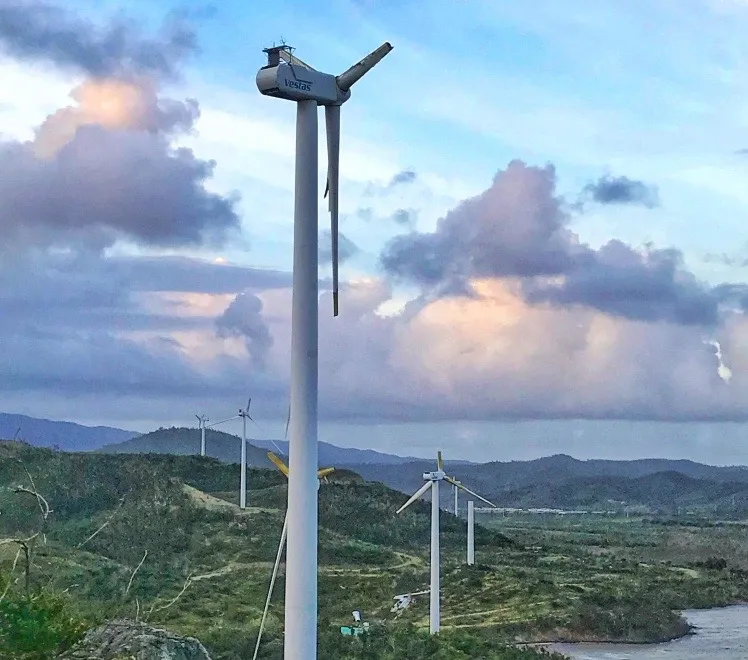
Green Ideologues Vs. Farmers (and All of Us)

Ben Pile explains the climatists’ war on farming at Daily Sceptic Farmers’ Biggest Problems are Green Ideologues, not Climate Change. Excerpts in italics with my bolds and added images.

The recent autumn and winter months have seen Britain beset by more than the usual number of storms, and more than average amount of rainfall. For most of us, this has been merely unpleasant weather, but it has seemingly caused rivers to breach their banks and put much farmland under water. This is a real problem in its own right. Predictably, now the waters are receding, adherents of green ideology are turning the farming drama into the climate crisis, with talk of “failed harvests” and predictions of our imminent hunger. But where is the evidence?

The Guardian, as we would expect, has been leading the alarmist chorus. “The U.K. faces food shortages and price rises as extreme weather linked to climate breakdown causes low yields on farms locally and abroad,” it proclaimed, adding that “scientists have said this is just the beginning of shocks to the food supply chain caused by climate breakdown”. “I wish people understood the urgent climate threat to our near-term food security,” mourned Associate Professor of Environmental Change at Leiden University in the Netherlands to the newspaper.

Citing his experiences as a carrot farmer, Extinction Rebellion (XR) co-founder Roger Hallam declared on X that, “I know what is going to happen – not because of these particularly bad years, but because of the speed at which things are getting worse now.” Only “urgent revolution” can save us. And this in a nutshell is what the entire green movement has long been warning us of – extreme weather that will force us into hunger, which will drive us into political extremism and social breakdown and the end of civilisation. So are these floods a warning from Gaia that she made no covenant with us, unlike that other God, and that clouds stand ready to unleash her revenge on us for our SUV sins?

Are these greens latter-day Noahs, or just a ship of fools?

The problem for Hallam is that carrot production in the U.K. shows very little sign of sensitivity to climate change. Since the 1950s, carrot and turnip production has quadrupled. More significantly, yield per hectare – the indicator which is more sensitive to climate and weather – has more than tripled. If Britain was experiencing a climate-related carrot crisis, we would see this indicator plunge, rather than rise. Consequently, and contrary to fears about price rises, supermarkets are selling a kilo of British-grown carrots for 65p. ‘Wonky’ or ‘imperfect’ carrots are being sold at 45p/Kg. The struggle for carrot farmers may therefore be less high water than low prices for their products.

And the same story is revealed in UN data for nearly all British-grown vegetables. Inspection of the data reveals nothing resembling a pattern of climate change for the yield of wheat, oats, and cereals in general, onions, apples and pears, dry peas and other pulses, plums, potatoes and other roots and tubers, rapeseed, raspberries and strawberries, sugar beet and tomatoes. The only reductions in yield relate to the production of cauliflower and broccoli, and green peas. However, given that these data are significant outliers, we can for the moment assume that other reasons, perhaps economic or regulatory, better account for apparent declines in yield. Meanwhile, there is plenty of evidence in the U.K. and beyond that the era of global warming – or climate crisis – has been an era of bumper harvests.

Caution is required here. The point that sceptics rightly make to alarmists is that weather is not climate. It would be foolish to say that just because there exists no climate signal in agricultural production statistics, there is no evidence of weather affecting farming. There is.

In the 60 years of data about the production of potatoes in the U.K. there have been two unquestionable impacts of weather. The first occurred in the drought and heat years of 1975 and ’76. The second occurred in the washout year of 2012, though not, curiously, in the non-summer of 2008 and the ‘barbecue summer’ of 2009, which left the U.K. Met Office with egg on its face. However, the consequences of these disappointing years for society more broadly is very far from famine. Whereas potato famers produced 100kg of their crop per person in the U.K. in 2011, in 2012 this fell to 72Kg, the difference being made up by imports, mostly the following year. Chips and crisps may have cost slightly more, but nobody went hungry. And imports are perhaps the explanation for the gradual decline of overall production of the crop, too. Despite the ‘crisis’, potatoes are retailing for as little as 75p/kg in supermarkets.

It remains to be seen whether or not, and to what extent, recent weather events have affected agricultural production statistics. Nonetheless, farmers across the U.K. are reporting real problems. A mostly sober article in January’s Farmer’s Guide features the experiences of farmers from Gloucestershire, Oxfordshire, Essex and Lincolnshire following the deluge delivered by Storm Henk, leaving in some places the “highest flood level in more than 70 years”. Again, these are reports of serious problems that can ruin a farm. But the climate change narrative distracts from this necessary discussion. The article concludes with the words of Dr. Jonathan Clarke from the Institute for Global Sustainable Development at the University of Warwick, who claims that “there is an urgent need to consider how our society can become more resilient to the worst effects of a changing climate”. But weather conditions the same as we experienced 70 years ago are not evidence of an “urgent need” as much as they are a reminder of weather being a constant problem, and therefore of academics’ and scientists’ recent departure from both reality and historical fact.

So what has been the signal from weather? The Met Office’s data show that, for the country as a whole, March, February, December, October and September of last year brought significantly more than average rainfall. In a series of monthly data spanning 188 years, those months respectively were the 19th, 4th, 11th, 8th, and 63rd wettest of those months for England, and the 31st, 11th, 9th, 7th, and 32nd for the U.K. as a whole. Nasty for all of us, and especially difficult for famers. But does it even stand as evidence of “extreme weather”, as the Guardian claims, let alone man-made climate change-induced “extreme weather”, requiring “urgent” interventions to prevent it getting worse? Isn’t it just… you know… weather?

The worst of those months for the U.K. – the ninth wettest December – can be seen in its historical context. The Met Office provides a running average, which would seem to stand as an approximation of ‘climate change’. But despite that moving trendline, there were plenty of comparable Decembers in the mid to late 19th Century, and in the early and late 20th Century.

Moreover, the inter-annual variation of December rainfall spans nearly an entire order of magnitude, from 25mm to just under 225mm. The averaging of such noisy data does not and cannot reveal any underlying changing reality because it does not and cannot tell us anything useful – the trend is a phantom. Even if we were to follow on the Guardian’s and scientists’ injunction to eliminate emissions from fossil fuels, farmers would be no better protected from either drought or deluge. Moreover, if those trends were to be interpreted as probabilistic forecasts on which decisions are based, farmers would go bust in short order, because gambling on either more or less rain is guaranteed to produce a busted flush.

Farmers are not automata whose cyclic programming requires the same conditions each year. Farming is not a process with narrow operating thresholds that have been exceeded. Farming is an art, which requires careful judgement based on experience acquired by generations of farmers developing expertise in coping with hostile circumstances, including both different weather and market conditions.

The evidence clearly shows that continuous and increasing supplies of food are produced despite radical interannual monthly, seasonal and yearly shifts in weather, regardless of any semblance of trends in those variations. It has no doubt been a wet winter and spring. And this wetness may well have an effect on this year’s harvests.

But the notion that this has anything to do with climate change,
as per the framing of the Guardian‘s radical activists and equally
ideologically-driven scientists, puts ideology before reality.

Many farmers have taken to social media to show videos of their submerged farms. And this speaks to the absurdity of framing first-order problems like flooding as extremely abstract climate-related phenomena, for which there exist little if any evidence. The extant raw data, which span 188 years, tell us all that we need to know: some months there is very little rain, and these months may coincide; some months there is a great deal more rain, and likewise this can add up to create a backlog that needs to be drained. That is the full extent of the data that policymakers require to develop drought and flood mitigation strategies, and those parameters are completely unchanged by climate change, if any climate metrics can be squeezed out of the data at all.

In other words, we already know how dry it can be, and we already know how wet it can be. Therefore, we know what we need to do to ensure that there is sufficient water in drought and sufficient drainage in times of excess rainfall. We know, therefore, how badly politicians are already failing at their job. Their preferences for saving us with policies that ban cars and domestic gas boilers, tax flights and cover agricultural land with turbines and solar panels will not change these parameters. And by pushing up the prices of energy and feedstocks, it will likely create an agricultural crisis where none needs to exist.

Climate change is a massive distraction from our real and present problems.


UK Crippled by Own Climate Policy (Darwall)

In the video Rupert Darwall is interviewed by Lee Hall discussing the plight of UK obsessing over global warming/climate change.  For those preferring to read, below is an excerpted transcript lightly edited from closed captions.  In italics with my bolds and added images. (RD is Rupert Darwall and LH is Lee Hall)

Keynotes

Britain is in a deep in a growth trap and we’ll remain in this growth trap. You know someone says if you’re in a hole stop digging. What we’re doing with Net Zero, we’re just digging harder and harder.


Today environmentalism is against economic growth and the green policies allow the ultra wealthy to feel virtuous. If you’re a multi-billionaire, like say Mike Bloomberg, you love it. Because what can you do to protect yourself from people complaining about your wealth? Well I’m saving the planet he says.


Europe’s green push is bringing economic benefit but not to Europe. German trade unions were promised during at the beginning of the energy transition there would be lots of green jobs and there were . . . in China. That’s where the green jobs went.

Green Policies and Economics

LH:  Let’s talk about green policies and economics and how to really understand it all.

RD: So setting the scene: 2008 was quite a tough year and we had the financial crisis but then we also had the Climate Change Act. And was there a connection between Britain’s economic woes and then the introduction of what was arguably the most extreme green policies in the world.

The British economy was deeply scarred by the financial crisis and its trend growth of productivity has basically flatlined since 2008, and as you point out 2008 is the same year that parliament passed the Climate Change Act. Which as a result saw huge amounts of capital deployed on very low yielding to negative yielding assets in the power generation sector; namely wind and solar.

It’s very difficult to disentangle the long-term effects of the financial crisis and the so-called energy transition. But it is unquestionably the case that mandating very aggressive decarbonization worsens the productive potential of the economy. To give you an idea of how bad is the energy transition for a Net Zero: The International Energy Agency produced a net zero plan, and by 2030 under its Net Zero assumptions, the global energy sector will be employing 25 million more people using 16 and a half trillion more dollars of capital. 16 and a half trillion dollars more Capital using vast land areas of the combined size of Mexico, France, California, New Mexico and Texas to produce 7% less energy.

So the the critical thing to understand about the energy transition
is it means you need more more resources to produce less.

That’s exactly what we’re seeing, what effect the push for Renewables has had on our Energy prices, and thus on our economy and our competitiveness. Well it’s made Britain one of the most expensive places in the world for businesses in terms of of the electricity bills. We’re seeing steel making basically being put out of business in this country. We’re seeing oil refining with the Grangemouth oil refinery being closed. The petrochemical industry is going to have a very hard time to survive.

So a lot of industry is basically going to be wiped out. But then you look at the automotive industry where we have effectively mandates for EV adoption requiring rising proportions of car sales must be EV. If car manufacturers don’t meet those targets, they get taxed and that will basically lead to almost obliterating the British automotive industry, apart from some really very upscale names like Bentley. Essentially you’re looking at the death of the British automotive sector.

LH: Could you give us a a Layman’s introduction to what’s happened with wind power in Britain and what this teaches us about environmentalism?

RD: In 2022 Boris Johnson said offshore wind is the the cheapest form of electricity in the country. It was a line fed to him by Carbon Brief, which is heavily funded by the European Climate Foundation, which in turn is funded by multi-billion philanthropic foundations in the US. It is pure propaganda; there is not any basis for saying that.

Remember that at the time of the energy crisis following Russia’s invasion of Ukraine, then about 40% of the increase of the natural gas price was actually artificial carbon taxes and the price of carbon. So take that that out; these are completely artificial. This cost isn’t about supply and demand of fossil fuels, it is simply government imposed taxes to basically tax natural gas production out of the system.

Then offshore wind is inherently expensive. If you think about it, putting very large wind turbines in the middle of a hostile marine environment like the North Sea you need to have a big question mark over it. This defies common sense. What happened was the wind industry telling the government and the government believing that the cost of offshore wind was about 50 pounds per megawatt hour. In fact analysis of the accounting data for the financial entities shows that the break even price of North Sea power above 100 pounds per megawatt hour.

Basically the wind industry had conned the government into saying wind is cheap. And of course then they’ve now turned around and said actually our costs are a lot higher than you thought. But you’ve got the climate change act which gives a legal Duty on the government to reach Net Zero. So if you don’t give us more subsidy you’ll be defying your legal duty to reach Net Zero, and we just might take you to court to to have the courts decide whether you are.

LH: We heard recently Constraint Payments that there may be a watchdog investigation into wind farms for overcharging on constraint payments, the constraint payments being getting paid to not produce electricity. Can you help us understand the logic behind this? So they get paid to not produce something then they’re overcharging on the nothing?

RD: Yes, the problem is kind of obvious when you see that the more wind capacity you have, when the wind’s blowing the more electricity is produced and that creates two problems. It may be in excess of demand so you have a sharp fall in the wholesale price of electricity. Which incidentally means that gas generators start to be loss making, and it’s very bad for the economics of the power stations that are needed to keep the lights on. It can actually go negative so you pay them to constrain.

The other thing is that the wind turbines are in remote windy locations and they have to be connected to the grid and there’s simply not enough grid connection. So the wind operators are saying well you need to you need more grid infrastructure. Well that’s not free, but they won’t pay for it, they’re expecting consumers to to pick up the tab. And indeed ofgem the energy regulator has a sort of policy, what they call socializing the cost of grid connection, so they’re picked up by customers rather than by the investors.

LH: People that push Green Growth, the green policies, are talking about green growth and green jobs a lot of the time. It seems they they don’t really materialize and we end up paying more to produce less in a less efficient way. I mean is the environmentalism actually an anti-growth strategy?

RD: In Germany for example the German trade unions were promised during at the beginning of the so-called energy transition there’ll be lots of green jobs. And there’s workers in China, that’s where the green jobs are, they’re not in Europe. I mean Europe is not competitive, doesn’t have the low energy cost that China has. To make this kit is very, very energy intensive.

Since the limits to growth debates of the early 1970s in fact limits to growth came out in 1972, greens have argued that economic growth will destroy the planet. And therefore growth is bad. Now they’re turning around and saying well we’re going to have green growth. Well don’t believe it, you should really believe that they are against growth and that their policies are designed have to knock growth on the head. That’s what we’re seeing now.

This kind of degrowth, anti-growth push is very bad news, for people’s living standards, for their aspirations, for their wanting to have a better life for their children; having greater opportunities, more enjoyable ways to to spend money, to spend your life. All that’s true but also growth is needed to fund the state and to fund fund public services. Having had very little growth since 2008, essentially green policies mean endless austerity, it means extremely high tax rates. The tax burden in Britain is the highest it’s been since since I think the late 1940s, since the post war period. So yes it’s very bad both for private consumption but also for public consumption, also public investment.

Britain has a very low level of public investment. Also we have a very low level of private investment So all together in Britain we find ourselves deep in a growth trap. And we’ll remain in this growth trap. You know someone says if you’re in a hole stop digging. What we’re doing with Net Zero is we’re just digging harder and harder.

LH: Marxism policy is to take the means of production away from private ownership whereas what we’re looking at now is to almost destroy the means of production. I often make the point, that in some respects environmentalism is a more radical ideology. Marxism is about changing the ownership of the means of production. This is about changing the means of production themselves.

RD: The early marxists like Karl Marx and Friedrich Engels, actually if you look at the Communist Manifesto, there’s this great Paean of praise to capitalism and the Bourgeois for creating these fantastic means of production that that have unlocked hitherto unknown levels of prosperity. Of course as we just discussed the greens are very much against that. But what where the greens score is although it’s a radical ideology in terms of changing the means of production and degrading the means of production, it is very socially conservative. It doesn’t challenge the existing social hierarchy.

So if you’re a member of the a feudal royal family like King Charles, you like green stuff. It doesn’t say Dethrone him or cut off their heads. If you’re a plutocrat, if you’re a multi-billionaire like say Mike Bloomberg in the US, you love it because again is what you do to protect yourself from people complaining about your wealth. You say well I’m I’m saving the planet. I’m using my money, my business and my philanthropy is about saving the planet.

So on the one hand, economically it’s very radical, but socially it’s all about
maintaining existing social stratifications and of course denying
people lower down the means
to rise up, to better themselves.

LH: So in the original Marxism the rich guy or the top was the bad guy, but now those Rich guys can actually be the good guys in the environmentalism.

RD: The way I put it is that green policies and decarbonization are ethics for the super wealthy. You see Bill Gates when he gets asked in interviews, what about your carbon foot footprint, he’s got so much money he pays an enormous amount to have carbon dioxide sucked out of the air, direct air capture. Well of course you can do that if you’re if you’re one of the richest people on the planet. But of course but for ordinary people when they take their holiday to the Mediterranean if you’re going to expect them to pay hundreds of pounds extra, I mean it’s not going to happen. So yes this is about the super wealthy.

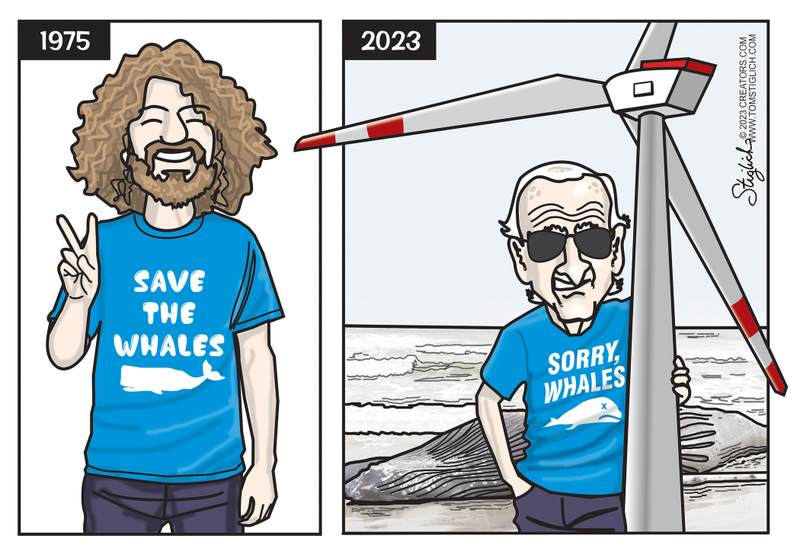
Another example of virtuous contradictions would be to look at say wind farms or solar panel farms. That’s supposed to be good for the environment but they’re destroying the landscape and they’re destroying the habitats and they’re chopping up birds, killing insects and threatening whales.

LH: This environmentalism expects us to suspend our beliefs to some degree yeah this is what you pointed out is a fundamental contradiction deep in the heart of modern environmentalism. It’s like saying, to save the village we had to destroy it.

RD: It is absolutely clear that the environmentalists don’t care about this. Fundamentally it’s about the precautionary principle so you’ve got to be extra specially careful. But not when it comes to wind power; they’re perfectly okay with with wind turbines destroying nature, since they see it as saving the planet.

So for the greater good we need to ruin some of the planet
to save the the greater Planet.

The error is that as soon as you go from the local to the global, you sacrifice the local. And of course the global is an aggregate of the locals but for them it isn’t. This maniacal obsession with carbon dioxide emissions which has led to this tragedy that so much nature is being destroyed in the name of saving nature which it won’t do.

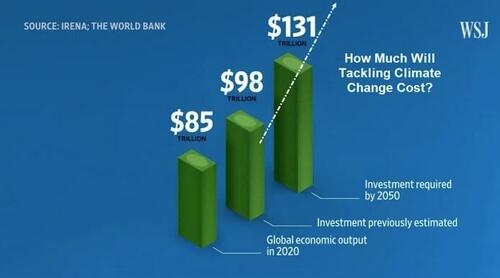
LH: When Rishi Sunak was Chancellor Exchequer he talked about rewiring the global financial system for Net Zero and then redeploying $130 trillion dollar of assets can you help us understand like how that would be possible and and tell us about the role that ESG is playing.

RD: He made that that speech at the Glasgow climate conference, in my opinion the single worst speech ever given by any Chancellor of Exchequer of either party. It was an absolutely appalling speech because essentially he’s saying private savings should be socialized to meet public policy objectives.  ESG is very much a part of the socialization of private savings. ESG is basically politics by other means Instead of government saying we’re going to pass laws and regulations and raise taxes and spend lots of money ourselves doing it. We are going to pass regulations and we’re going to browbeat business to do this for us.

There’s a twofold cost in that. One is to investors whose capital is being basically expropriated, is being used by politicians. And the other is to Consumers who pay higher prices as a result. ESG is a very malign trend in in finance. It’s very interesting to look what’s been happening in the United States where it’s in retreat for for basically two reasons. First of all because the anti-green stocks, if you like, that is the oil and gas sector suddenly in the covid recovery suddenly put on great growth spurt in the stock market. So if you weren’t in oil and gas stocks you lost out.

And secondly there’s been a big reaction in in Republican states against these ESG mandates. However in Britain and Europe ESG continues. The government is effectively telling businesses they have to come up with Net Zero transition plans, so ESG is alive well and doing a lot of damage in Britain and Europe. In the US we saw Texas divest about 8 billion dollars from Black Rock because of their ESG measures.

LH: I mean do you think we we’ll see anything like that here or is that very much an American approach

RD: If you like the strength and vibrancy of capitalism in America there is not a peep of that in the UK or Europe. Britain’s largest asset manager is LGIM, Legal & General Investment Management, and it is completely signed up to the Net Zero ESG agenda. There’s very little sign of a backlash. Local authorities turn to be green they want to they say they want they invest want to invest their pension funds in in some nice ESG ways. You have the university superannuation funds. Universities are all kind of green and woke and so forth. so there there is unfortunately.  You’ve seen that the London Stock Market until just recently, the last few weeks or so, has massively under performed the S&P 500 in the states.

LH: We seeing this contradiction again, but if I invest some money in a big investment firm, I’d expect them to use it to make money instead they’re using it for ideological means.

RD: There was this the ESG sales patter that it was doing well by doing good. They said we’ll use your money to do good and by the way you will make more money doing that than you otherwise would. That was always rubbish, it defied modern Financial portfolio Theory. But they got away with it until about 2022 when oil stocks did extremely well, had a very strong run on on the stock market.

The other thing to point out, ESG used to exclude any defense stocks because armor manufacturers are evil and so forth. Then Putin invades Ukraine and they suddenly wake up saying, well actually we should have defense contractors in there. So it’s completely muddled, an ill-defined concept that is made up as it goes along.

And there’s also why should it be fund managers taking these really important decisions about things like defense and National Security. These are preeminently decisions and policies for politicians not for market traders.

LH: You’ve very much got your finger on Green and economic issues. Are there any things coming up that you think we should keep an eye out for that are going surprises in the coming year?

RD: The big thing will be what happens in the American elections in November. On the one hand you have the Biden Administration which has set itself a net zero policy goal. The EPA is making a rule which will really take coal Off the Grid. It will cut massively the amount of natural gas power they’ve got on the grid. Biden has imposed a moratorium on new permits for export of natural gas.

On the other hand you have Trump who believes in what he calls American Energy dominance, he’s a hydrocarbon politician. He’s actually the only Western leader of the last couple of decades who is what I call an energy realist, who really understands energy. In his first term as president he pulled out of the Paris climate agreement. I think he would do the same again, and if that happens it will raise a huge question mark. What is the sense of persisting with Net Zero if the second largest emitter in the world pulls out of the the Paris agreement?

LH: I think it will it really kill Net Zero to anyone intelligent looking at it. We already had India and China not really buying in, but for America to join them?

RD: There is the conceit of the structure of the Paris agreement in these nationally determined contributions. So what China and India have been doing is they they’re not pledging any Cuts. They say well the carbon intensity of our economy will decline over time, which it will do anyway. One of the interesting facts of Britain is that when Rishi Sunak and British politicians boast about Britain cutting its carbon emissions. Britain’s CO2 emissions peaked in 1972 and you know as economies mature they tend to become less carbon intensive; that’s been the case in Britain.

What has happened since 2008 as we discussed at the beginning, that has been massively accelerated with quite a lot of damaging effect on manufacturing, on Energy prices um on the grid reliability and so forth.

LH: If Trump did get in and and pulled out of the agreement in that way, do you think the UK will follow along or oppose? What do you think will happen here?

RD: I don’t think a Keir Starmer government would follow particularly given Ed Miliband in the position of Energy Secretary, who was Energy Secretary when the 2008 climate Act was passed. He was at the Copenhagen conference in 2009 and played quite an important part there. There is no way they are going to have second thoughts on it.

What will change or what could change is the conservatives in opposition might actually begin to smell the coffee and say actually this is this is a really bad idea this Net Zero costs us votes, it costs people money, and therefore we need to question it. so I think the I think it will change the dynamic of politics in this country particularly if Trump were to repeat what he did between 2016 and 2020.

LH: Will there be an opposition Conservative party think in like five years time we could be seeing an opposition conservative party that’s against a lot of the green policies and quite different from what it is now?

RD: That’s a possibility. The problem is that when when a party goes into opposition quite often as happened in 1997 essentially the conservative party had a collective nervous breakdown and gave up on conservatism. That’s essentially what happened and it went through that long period and it was completely enamored with with Tony Blair and the promise of David Cameron and George Osborne.

Well are we are going to emulate Tony Blair and we’re going to get the conservative party to love the leftward drift of British politics?  Will that happen again? Well Keir Starmer is no Tony Blair is he? But on the other hand the ability of the conservative party to really screw things up should never be underestimated.

There is no charge for content on this site, nor for subscribers to receive email notifications of postings.

Eco-Loons War on Productive Working Class

Brendan O’Neill writes at Spiked Greta’s class war.  Excerpts in italics with my bolds and added images.

The green ideology is the enemy of working people.

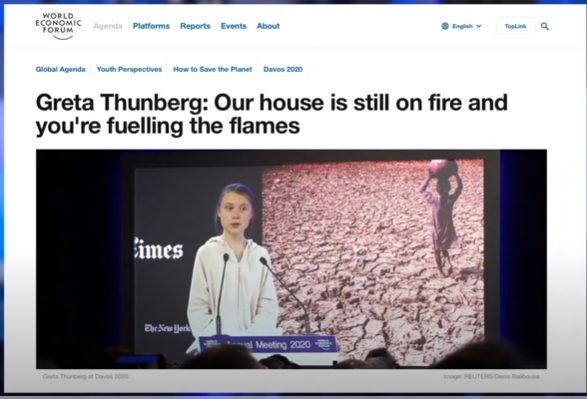
It was like a case study in indifference. There was privileged Gen Zer Greta Thunberg and other Euro eco-brats smiling and flicking peace signs as they called on the Dutch government to stop subsidising fossil-fuel companies. Meanwhile, the Dutch people, very few of whom are the offspring of opera singers with the ear of the world media, are suffering one of the largest spikes in energy prices in all of Europe. Their bills are through the roof. They’re reeling from the ‘pain of high energy costs’, as some in the media describe it.

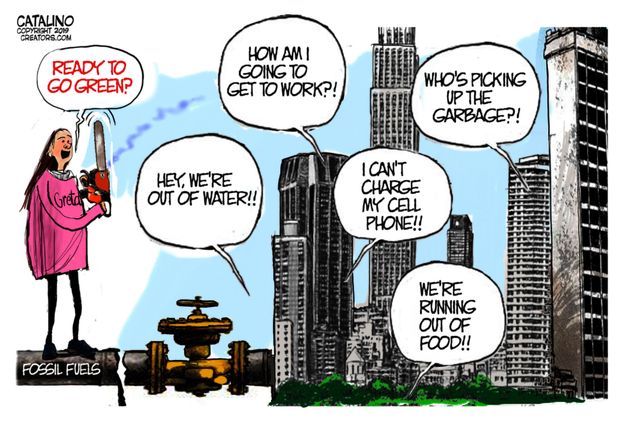
And yet in sweeps giggling Greta and her barmy eco-army
to agitate for less government backing for energy production,
which would likely hike the price even more.

Rarely has the blinkered vanity, the sheer social apathy, of the green movement been so starkly illustrated. It was on Saturday that Greta and chums made their haughty demands of the Dutch government. In a protest at The Hague, hundreds of supporters of the upper-class death cult Extinction Rebellion marched behind a banner saying ‘STOP FOSSIL SUBSIDIES’. Some of the more spirited of these marchers against modernity, including Greta, broke away from the protest and headed to the A12 highway with the intention of blocking it. Because apparently it’s not enough to hit the pockets of the good people of the Netherlands – no, you have to ruin their weekend travel plans, too. Cops intervened and Greta and others were arrested for the crime of impeding a highway.

The press is full of gushing reports of Greta’s arrest. The BBC features an image of its favourite prophetess of doom yelling something as ticked-off cops drag her away. Our heroine only wanted to ‘block… a main road’ in protest against the ‘Dutch government’s tax concessions for companies connected to the fossil-fuel industry’, the Beeb says. What a turnaround from its reporting on the revolting Dutch farmers who also blocked highways, though in their case in opposition to lunatic Net Zero policies rather than in favour of them. Back then, the BBC said farmers had ‘clogged up’ roads and ‘snarled up motorways’ and created an ‘unsafe situation’. So when workers hold up highways, it’s horrifying, yet when time-rich right-on youths do it, it’s heroic? We see you, BBC.

The truth is there was nothing admirable about
Greta’s latest temper tantrum over fossil fuels.

A phrase like ‘fossil-fuel subsidies’ seems designed to get polite society gagging on its muesli, but what exactly are they? Essentially, they’re tax breaks from the Dutch government that make it cheaper for big companies to produce and use energy from oil, gas and coal. The biggest winner is the Dutch shipping industry, which benefits by around €6.7 billion. Call me a raging leftist, but it seems a good idea to me for the government to assist an industry that employs tens of thousands of people and contributes just shy of five per cent to Dutch GDP. Electricity generation is another big winner, benefitting to the tune of €5.3 billion.

Yes, electricity generation. Just think about this. In an energy crisis, Greta and Co are screaming in the streets about government assistance for… energy production! As the Dutch people, like others in Europe, look with fear and bewilderment at their ever-spiralling energy bills, noisy greens want the government to desubsidise companies that make energy. You don’t need a PhD in economics to see what the outcome would be – more cost offsetting to consumers, higher bills, greater angst.

Haven’t the Dutch suffered enough in the energy crisis already? Although it is being forecast that Dutch people’s energy bills will improve a little this year, for a while they were paying the most out of all EU member states. In 2023, they were stumping up €47.5 per 100 kWh, compared with an EU average of €28.9 per 100 kWh. It was the Netherlands’ over-reliance on gas imports, including from Russia, that plunged it into this crisis following the outbreak of war in Ukraine. And it responded by lifting the cap on energy production at coal-fired power plants and reversing its plans to cut back on gas production. To most folk, this will sound eminently sensible.

To eco-cranks, however, it is intolerable and the Dutch government must
at once stop subsidising such planet-mauling activities.
Seriously, why does anyone listen to these fruitcakes?

To me, it is wild that people would protest against energy production during an energy crisis. That they would have a fit of the vapours over energy subsidies, coal use and gas exploration at a time when people are struggling to keep the lights on. It’s not just dumb – it’s cruel. Imagine how out of touch with ordinary people’s concerns you would need to be to swan into a country experiencing a severe energy crisis and essentially say: ‘Stop supporting energy production.’ What was Greta thinking? She’s become a globetrotting enemy of progress, popping up all over the place to demand that we turn off the lights and don a hairshirt in keeping with her dystopian dream of restoring a pre-capitalist idyll that never actually existed.

It’s not just Greta, of course. The entire green ideology
is a menace to working people.

Climate-change alarmism is an unspoken class war in which the well-off and borderline aristocratic while away their days bemoaning the evils of the Industrial Revolution that liberated the rest of us from grinding poverty. Whether these Gretas, Poppies and Edreds are demanding less energy production, fewer cars on the roads, no more cheap flights or just ruining the snooker, the end result is the same: working people’s living standards and leisure pursuits are put in the crosshairs. More than 80 per cent of the world’s energy comes from fossil fuels. The fossil-fuel phaseout that Greta and the rest dream about would plunge the world’s workers and poor into unimaginable penury. These people claim to be waging war on apocalypse but really they threaten to bring one about.

I far prefer the uprising of the Netherlands’ farmers. And other European farmers. They block roads in service of a cause that is the precise moral opposite of the luxuriant apocalypticism of the spoilt activist class. Namely, the protection of jobs and living standards from the religious fever of Net Zero. The insistence that food production not be undermined by the climate-change targets of out-of-touch Euro elites. The improvement of the lot of workers rather than the further immiseration of them in the phoney name of ‘saving the planet’.

There’s a class war being waged on the streets of Europe,
with postmodern eco-loons on one side and
actually productive people on the other. Choose your player.

There is no charge for content on this site, nor for subscribers to receive email notifications of postings.

Liberals Also Fear Radical Left Agenda

AP Photo/Ted S. Warren, File

David Strom explains the growing rift between liberals and the extreme left in his article Gulp: Jonathan Chait Is Right.  Excerpts in italics with my bolds and added images.

I often make the distinction between liberals and Leftists.  I understand why many people think I am too generous in doing so because liberals often fly cover for or implicitly coddle the antics of Leftists, but there is a genuine difference. Liberals tend to think the antics of Leftists are a stupid distraction but fear that criticizing them would give aid and comfort to the enemy. 

Conservatives do that, too. Look at Laura Loomer as exhibit one. We have our share of loons, the big difference being that they have less power over our Party and our movement than the Left does over Democrats. And, of course, conservatives don’t control any of the levers of administrative power in America, at least at the federal level. 

There are plenty of principled people on both sides of the aisle, although far too few. Jonathan Chait, with whom I have few views in common, is one of them. 

In a great piece in New York Magazine, he calls out not just the Left, but Democrats on the Leftist authoritarians who are shutting down speech in America.  He notes the obvious: if what is being done by the Left in America was being done by the Right, Democrats would be freaking out.  Of course, Democrats are freaking out anyway, given that not all conservatives are in jail yet, but you get the idea. 

Chait, of course, is particularly bothered by the fact that Leftists are now aiming their fire at Democrats, and thus helping the Republicans. But at least he acknowledges the problem and believes that shutting down speech and harassing anybody is authoritarian

“The goal of these maneuvers is not to make the case for pro-Palestinian policy, but to abuse and deny basic rights to those who fail to endorse the protesters’ beliefs. And yes, being prevented from holding a planned speech to supporters, stalked on the street, or subjected to sleep denial are all forms of abuse. Almost nobody believes these are all just natural parts of the give and take of public disagreement.

The most elemental premise of liberalism is that politics
should be governed by a uniform set of
rules or norms that apply to everybody,
regardless of the content of their beliefs.

Over the last decade, an increasingly visible fault line has opened up on the left between political liberals and more radical activists. The illiberal left defines politics as a conflict between oppressor and victim and does not believe the former deserves the same rights as the latter. (Crucially, the special prerogatives of victimhood apply not only to victims but also to those struggling on their behalf.)

Abusive protesters usually meet critiques of their illiberal methods with a facile comparison to the civil-rights movement. But that movement was designed for a political environment in which basic liberal rights did not exist: Black Americans lacked the right to vote, to petition for grievances, or otherwise exert basic freedoms that white Americans enjoyed. The movement’s theorists did not intend their carefully designed arguments to be a permanent license for any progressive cause to declare itself beyond the law for all time.”

The simple truth is that the Right doesn’t do any of these things, despite the fact that the media freaks out any time more than two conservatives get together to say anything. Suddenly we are all Nazis trying to instigate a Beer Hall Putsch.  The Left, though, relies on harassment as their primary tactic. Not speeches. Not protests. But harassment. 

I’m not referring to tactics like holding protest marches, speeches, social-media posts, organizing uncommitted votes in the Democratic primary, or other exercises of First Amendment rights. I’m specifically referring to a campaign to shut down speakers who oppose (or even, in many cases, simply decline to endorse) the movement’s agenda.

Usually, it means interrupting speeches with screaming insults until the protesters are dragged out of the room, which has become the norm at Biden campaign events. At events with sub-presidential levels of security, protesters often succeed in overwhelming the event and its security and shutting down the speech or event entirely, sometimes employing violence.

I’d place in the same category aggressive personal harassment campaigns, like gathering outside somebody’s home at three o’clock in the morning with bullhorns shouting “We will not let you sleep!,” or surrounding individuals on the street to scream insults.

It is refreshing to see liberals beginning to stand up to the bullies on the Left and scream, “Enough!” It is frustrating that it has taken an outbreak of attacks on Democrats to inspire them to speak up, because I am quite certain that they have known for a while–since at least 2020–that the Left unleashed is a very bad thing for the country.

But until recently, the Left’s tactics have worked well enough. Liberals cheered on as Trump appointees were driven out of the public space, unable to even go to a restaurant without harassment.  I don’t know what Chait thought of that, so I will charitably assume he objected. As many liberals quietly did, I suppose.

As a nearly 60-year-old man (who in his head is still in his 30s, despite an aging body) I still hanker for the more sedate and norm-constrained days of the Reagan era.  Politics was still quite rough-and-tumble, and the 60s and early 70s were pretty awful. However, in the 80s and early 90s, both parties were still somewhat constrained and occasionally worked together. (The Robert Bork and Clarence Thomas hearings were very low points, though).

As you know, I cringe at the worst rhetorical excesses of the Right. But they aren’t in even the same universe as what the Left has been doing over the past few years, escalating to what amounts to political violence and harassment.


There is no charge for content on this site, nor for subscribers to receive email notifications of postings.

Med School Mission: Skilled Healers or Social Activists?

Henry I. Miller, MS, MD explains the either/or choice in his article Should Med Schools Strive To Produce Competent Physicians Or Social Activists?  published at ACHS (American Council on Health and Science. Excerpts in italics with my bolds and added images.

Medical schools emphasizing DEI (Diversity, Equity, and Inclusion)
as criteria for admissions is a prescription for disaster.

The late politician and sociologist Daniel Patrick Moynihan coined the phrase “defining deviancy down” to describe the tendency of societies to respond to destructive behaviors by lowering standards for what is permissible. Texas physician Dr. Yakov Gizersky described a lamentable example of this in a letter to the Wall Street Journal, expressing his surprise at the influence of Diversity, Equity, and Inclusion (DEI) initiatives on medical school admissions. 

He related that he had recently become aware of how “politicized the selection and training of …future physicians has become” while his son was applying to medical schools. Dr. Gizersky described his epiphany thusly:

Nearly all the schools requested multiple essays providing a detailed explanation of the applicant’s dedication to DEI and participating in DEI-related activism. Some schools had essays querying the applicant’s activism for or opinion of progressive border policies. Most also requested that students discuss how they have been adversely affected by systematic racism (and if they haven’t been affected, then they should discuss what they plan to do to fight systemic racism, anyway).

Finally, he noted that some medical schools have stopped requiring applicants to take the Medical College Admission Test, a useful predictor of medical school performance, for “specific applicant groups.” (Emphasis added.)

Dr. Gizerky’s observations took me back…  When I entered medical school at the University of California, San Diego, in the 1970s, a requirement for graduation was passing both parts of the medical board exams, the “med boards.” Part One tested knowledge of basic science; Part Two, clinical medicine. For several years, the medical school had conducted an aggressive program of recruiting and admitting under-qualified minority students. It turned out that they could scrape by on Part One, but many were failing Part Two.

That was not a surprise to my classmates and me. Grades on exams were posted not by students’ names but as curves. Ordinarily, you would expect the grades to fall in what’s called a “standard normal distribution,” or “bell-shaped curve,” that looks something like this:

Instead, the distribution was often more like this:

That implied, correctly, that there were two distinct populations represented by the scores, and we quickly ascertained that the lower distribution consisted of the under-qualified minority students.

Instead of tightening the admissions criteria, the administration responded by lowering the graduation requirement to passing Part One and just taking, but not necessarily passing, Part Two. Nary, a peep was heard from the faculty about this lowering of standards.

This sort of social engineering at medical schools has not been uncommon. Stanley Goldfarb, M.D., a retired dean for curriculum and co-director of the renal division at the University of Pennsylvania’s medical school, has repeatedly criticized the trend toward allowing “social justice” considerations to play a dominant role in medical schools’ admissions and curricula. He founded a nonprofit called Do No Harm, which aims “to combat discriminatory practices in medicine.”

Dr. Gizersky ended his letter to the editor with this observation: “Medical students are already faced with learning more information than ever, and we can’t afford to have medical schools produce better activists than physicians.”  I agree, but I would put it somewhat differently: When you’re admitted to the hospital for complicated cardiac or neurosurgery, do you want it to be done by the most competent and accomplished surgeon or by one who was admitted to medical school and residency because he or she was a member of an underrepresented group?

My Comment

Institutional curators seem oblivious to the dangers when substituting DEI ideology for traditional western democratic values.  The DEI trinity invariably leads to standards of performance degraded, accountability unenforced, and individual merit unrewarded.  This results in mediocre medical practices and betrayal of patients’ trust. Worse it can induce professionals to focus on getting their equitable share of the pie, rather than on the magnificent obsession with best outcomes for patients.


There is no charge for content on this site, nor for subscribers to receive email notifications of postings.


When Ideologues Govern Instead of Achievers

Joe Oliver describes how ideologues in power are breaking our society in his Financial Post article Irrational ‘progressive’ policies are driving dystopian results.  Excerpts in italics with my bolds and added images.

From street names to gender, criminology and climate, our institutions
are in thrall to crazy wokeness. We need to get our culture back.

Society is in the grip of irrational ideas that defy common sense and drive dystopian policies. Some inane beliefs and trends are made up out of whole cloth; others derive from ideas that have resurfaced, Zombie-like, from the crypt of historic failures. They are advanced by “progressive” activists in thrall to a post-modern woke-ism steeped in Marxist-Leninism. What makes the phenomenon so threatening is its pervasive influence in politics, academia, media, not-for-profits and big business.

Two Finnish surveys published in March found that being woke was linked to anxiety, depression and a lack of happiness. We can only speculate why their ideas make them unhappier than the people they impose them on. Or are depressed people simply prone to socially damaging notions?
A decade or two ago people would have rejected these bizarre ideas for the nonsense they are, and their proponents as emperors with no clothes. But today they are conventional wisdom and skeptics are know-nothing deviants who must be de-platformed and punished for their heresy.A centrepiece of postmodern ideology is DEI which, by dividing us all into oppressor or oppressed, is neither diverse, nor equitable nor inclusive but conformist, unfair and exclusionary. It undermines excellence, productivity and competitiveness and is largely responsible for the assault on truth and inquiry at schools and universities, which have become left-wing breeding grounds for Gen Z.As for climate catastrophism, there are innumerable examples of the zany policies it has led to. Toronto’s fiscal situation is so dire it has just increased property taxes by 9.5 per cent. Yet its TransformTO 2022 Annual Report says that reaching net-zero goals by 2050 will require a $145-billion investment — though Toronto’s GHG emissions amount to 0.114 per cent of the global total. The U.S. government says that since 1850 the Earth’s temperature has risen 0.06C degrees per decade. That means Toronto contributes less than 0.00001 of a degree annually to global warming.

This is the same Toronto that is re-naming Dundas Street, which honoured
a British abolitionist, after an African tribe prominent in the slave trade.
Virtue-signalling trumping common sense is clearly rampant.

The cost for Canada to reach net zero by 2050 will be at least $2 trillion — about $180,000 for a family of four. The prime minister’s claim we must act now to avoid extreme weather is simply misinformation. Canada’s contribution to the annual increase in the globe’s temperature is less than a thousandth of a degree. And the United Nations International Panel on Climate Change tells us that in fact extreme weather events have not increased in severity or frequency. Despite incessant warnings from governments and media about a climate crisis, most people are unwilling to pay much to alleviate it. The climate consensus currently unravelling in Europe never caught on in the developing world.

An overarching concern for many Canadians is that their income has not kept up with inflation, yet the feds double down on profligate spending and ignore stalled productivity growth. They are also exacerbating a severe housing crisis by promoting the largest immigration levels since 1957 and one of the highest immigration rates in the world.

But the grand prize for cognitive dissonance goes to “Gays for Palestine,” who would be at high risk of arrest or defenestration in Gaza or the West Bank, though not in Tel Aviv, one of the world’s best places to celebrate pride. It is tragically ironic that students obsessed about micro-aggressions protest on behalf of a terrorist organization that advocates genocide. The double standard Israel faces has many rationalizations, but antisemitism has been a constant for millennia. Canada’s recent parliamentary vote calling for an immediate ceasefire in Gaza rewarded Hamas for its murderous rampage, which broke what was already a ceasefire.

On the criminal justice front, moving serial killer Paul Bernardo to a medium-security prison outraged most Canadians, but is hardly an anomaly: fewer than 14 per cent of “dangerous offenders” are confined in maximum security prisons.  More generally, catch-and-release and lenient parole defy logic, put the public at risk and fuel the growing problem of urban crime.

Males who identify as women and use women’s washrooms and compete against women in sports are hailed as avatars of progress while anyone who points out that this could put women at risk or female athletes at a disadvantage can have their career destroyed. Get ready for complaints brought under the deeply flawed “Online Harms Bill,” C-63, which could impose sentences of up to life imprisonment for speech crimes.

Irrational, illiberal ideas are now entrenched in our most important institutions and the public is becoming habituated to them. It will require a determined effort to take the culture back and root out dysfunctional policies that undermine the economy, personal agency and our core rights and freedoms. But do we have any choice?

There is no charge for content on this site, nor for subscribers to receive email notifications of postings.

Helter Skelter Climate Policies

Ross McKitrick explains the dangers of making climate policies willy-nilly in his Financial Post article Economists’ letter misses the point about the carbon tax revolt.  Excerpts in italics with my bolds and added images.

Yes, the carbon tax works great in a ‘first-best’ world where it’s the
only carbon policy. In the real world, carbon policies are piled high.

An open letter is circulating online among my economist colleagues aiming to promote sound thinking on carbon taxes. It makes some valid points and will probably get waved around in the House of Commons before long. But it’s conspicuously selective in its focus, to the point of ignoring the main problems with Canadian climate policy as a whole.


EV charging sign Electric-vehicle mandates and subsidies are among the mountain of climate policies that have been piled on top of Canada’s carbon tax. PHOTO BY JOSHUA A. BICKEL/THE ASSOCIATED PRESS

There’s a massive pile of boulders blocking the road to efficient policy, including:

    • clean fuel regulations,
    • the oil-and-gas-sector emissions cap,
    • the electricity sector coal phase-out,
    • strict energy efficiency rules for new and existing buildings,
    • new performance mandates for natural gas-fired generation plants,
    • the regulatory blockade against liquified natural gas export facilities,
    • new motor vehicle fuel economy standards,
    • caps on fertilizer use on farms,
    • provincial ethanol production subsidies,
    • electric vehicle mandates and subsidies,
    • provincial renewable electricity mandates,
    • grid-scale battery storage experiments,
    • the Green Infrastructure Fund,
    • carbon capture and underground storage mandates, 
    • subsidies for electric buses and emergency vehicles in Canadian cities,
    • new aviation and rail sector emission limits,
      and many more.

Not one of these occasioned a letter of protest from Canadian economists.

Beside that mountain of boulders there’s a twig labelled “overstated objections to carbon pricing.” At the sight of it, hundreds of economists have rushed forward to sweep it off the road. What a help!

To my well-meaning colleagues I say: the pile of regulatory boulders
long ago made the economic case for carbon pricing irrelevant.

Layering a carbon tax on top of current and planned command-and-control regulations does not yield an efficient outcome, it just raises the overall cost to consumers. Which is why I can’t get excited about and certainly won’t sign the carbon-pricing letter. That’s not where the heavy lifting is needed.

My colleagues object to exaggerated claims about the cost of carbon taxes. Fair enough. But far worse are exaggerated claims about both the benefits of reducing carbon dioxide emissions and the economic opportunities associated with the so-called “energy transition.” Exaggeration about the benefits of emission reduction is traceable to poor-quality academic research, such as continued use of climate models known to have large, persistent warming biases and of the RCP8.5 emissions scenario, long since shown in the academic literature to be grossly exaggerated.

But a lot of it is simply groundless rhetoric. Climate activists, politicians and journalists have spent years blaming Canadians’ fossil fuel use for every bad weather event that comes along and shutting down rational debate with polemical cudgels such as “climate emergency” declarations. Again, none of this occasioned a cautionary letter from economists.

There’s another big issue on which the letter was silent. Suppose we did clear all the regulatory boulders along with the carbon-pricing-costs-too-much twig. How high should the carbon tax be? A few of the letter’s signatories are former students of mine so I expect they remember the formula for an optimal emissions tax in the presence of an existing tax system. If not, they can take their copy of Economic Analysis of Environmental Policy by Prof. McKitrick off the shelf, blow off the thick layer of dust and look it up. Or they can consult any of the half-dozen or so journal articles published since the 1970s that derive it. But I suspect most of the other signatories have never seen the formula and don’t even know it exists.

To be technical for a moment, the optimal carbon tax rate varies inversely with the marginal cost of the overall tax system. The higher the tax burden — and with our heavy reliance on income taxes our burden is high — the costlier it is at the margin to provide any public good, including emissions reductions. Economists call this a “second-best problem”: inefficiencies in one place, like the tax system, cause inefficiencies in other policy areas, yielding in this case a higher optimal level of emissions and a lower optimal carbon tax rate.

Based on reasonable estimates of the social cost of carbon and the marginal costs of our tax system, our carbon price is already high enough. In fact, it may well be too high. I say this as one of the only Canadian economists who has published on all aspects of the question. Believing in mainstream climate science and economics, as I do, does not oblige you to dismiss public complaints that the carbon tax is too costly.

Which raises my final point: the age of mass academic letter-writing has long since passed. Academia has become too politically one-sided. Universities don’t get to spend years filling their ranks with staff drawn from one side of the political spectrum and then expect to be viewed as neutral arbiters of public policy issues. The more signatories there are on a letter like this, the less impact it will have. People nowadays will make up their own minds, thank you very much, and a well-argued essay by an individual willing to stand alone may even carry more weight.

Online conversations today are about rising living costs, stagnant real wages and deindustrialization. Even if carbon pricing isn’t the main cause of all this, climate policy is playing a growing role and people can be excused for lumping it all together. The public would welcome insight from economists about how to deal with these challenges. A mass letter enthusing about carbon taxes doesn’t provide it.

There is no charge for content on this site, nor for subscribers to receive email notifications of postings.

The Big Lie Behind DEI

Below is an article describing how the woke industry started and expanded by advancing a fundamental lie about human happiness and social fairness.  The image above calls attention to the notion that sorts individuals into classes and attributes inequalities in status or prosperity to oppression by others. The lie is that any disappointment or disadvantage is the fault of others, ie. privileged oppressors.  Thus is swept away standards of performance, accountability and considerations of individual merit.   As explained below the DEI bureaucracy emerged to reward so-called “protected classes” at the expense of “privileged classes.”

A Brief History of the Diversity Industry

Heather Mac Donald explains the origins and preoccupations of Diversity, Inclusion and Equity (DIE).  Whoops, I mean Diversity, Equity and Inclusion (DEI)  which is now an academic degree you can acquire.  Her Quillette article is Almost Four Decades After Its Birth, The Diversity Industry Thrives on Its Own Failures.

The diversity business originated in 1984, when R. Roosevelt Thomas, a Harvard business school graduate, founded the American Institute for Managing Diversity at Morehouse College. Corporations had been practicing affirmative action for years, but the women and minorities whom employers had hired to meet equal-opportunity obligations weren’t advancing up the career ladder in acceptable numbers. Thomas came up with a novel explanation. The problem wasn’t that preferentially admitted recruits were underqualified; the problem was that their supervisors didn’t know how to “manage diversity.” It was those supervisors who needed remedial training—lots of it—not the affirmative-action beneficiaries themselves.

screen-shot-2021-07-09-at-12.17.46-am

Managerial expectations about merit and performance often reflected cultural prejudices, Thomas and the consultants who followed him insisted. “‘Qualifications’ is a code word in the business world with very negative connotations,” a consultant with the professional-services firm of Towers Perrin (as it was then called) said in 1993. If minorities don’t meet existing employment criteria, then corporations need to expand their definition of what it means to be employable, said Alan Richter, creator of the 1991 board game, The Diversity Game. Promptness, precision, and a cogent communications style were among the attributes that diversity advisors deemed likely expendable.

A lucrative new consulting practice was born, its growth driven by a constant churn in terminology. “Valuing diversity” was different from “managing diversity.” Each newly spawned phrase came with a cadre of high-priced tutors. Lewis Griggs currently offers video trainings in such subjects as “Communicating Across Differences,” “Supervising and Managing Differences,” and “Creating, Managing, Valuing, and Leveraging Diversity,” with each video purporting to contain specialized content appropriate for different parts of an organization.

“Diversity” was eventually joined by “inclusion.” “Equity” was then added, thus yielding today’s DEI (Diversity, Equity, and Inclusion) triumvirate (sometimes also going as “EDI”). The most cutting-edge organizations have lately appended a “B” (for Belonging), as at the Juilliard School in New York City. Distinguishing these terms is a core function of diversity training—and now, at Bentley, of diversity scholarship. The university’s new DEI major, the Chronicle of Higher Education reports, will help graduates understand the “nuances of and differences between diversity, equity, inclusion, and justice.”

Even by 1993, half of Fortune 500 companies had a designated diversity officer, and 40 percent of American companies had instituted diversity training. Diversity conferences were occurring regularly, attracting government and business attendees. And yet many reporters, academics, corporate consultants, and activists still insist that managers not only fail to “value diversity,” but remain complicit in creating a dangerous environment for women and racial minorities.

Example: Levi Strauss & Co., which was recognized on Forbes’s list of “Best Employers for Diversity” in 2019. The company itself boasts: “In the 1960s, we integrated our factories a decade before it was required by law. In the early 1980s, we joined the fight against HIV/AIDS early on. Furthermore, our president and CEO, Chip Bergh, was one of the first company leaders to join the CEO Action for Diversity & Inclusion™ [in 2017], and has been on the front lines of efforts to protect Dreamers knowing that diversity and inclusivity makes our company better and our country stronger (after all, Levi Strauss himself was an immigrant).”

And yet the situation for minority employees at Levi Strauss is still so dire that the company has been hosting racially segregated healing sessions with professional mental health experts. As the Washington Free Beacon recently reported, its chief executive for DEI is trying to provide a “safe space for employees to express themselves” without feeling “triggered.”

Bentley University itself has yet to yield dividends from its longstanding diversity efforts. The school has been “working for decades on issues, challenges, and opportunities” pertaining to diversity, according to its Office of Diversity and Inclusion. Over 900 faculty and administrators have attended two-day diversity retreats; numerous committees, departments, and offices have focused on improving the school’s “diversity climate.” Bentley even has its own diversity consulting outfit, the Center for Women and Business, which advises employees and managers on such diversity pitfalls as being a mere “performative ally” of oppressed colleagues (as opposed to an active ally).

And yet, despite this effort, a Bentley Racial Justice Task Force recently found that the campus still did not understand how “race and racism” operate at the university. So difficult is it to be a diverse member of Bentley that the task force, formed in July 2020, began with a moment of “restoration,” providing to all “those who had been traumatized” at the school a “time to heal” and a time to “process the pain of racial injustice.”

One of Bentley’s biggest failings, according to the task force, has been its “false confidence” in “objectivity and meritocracy.” These are the norms of a “historically and predominantly white institution (HWI/PWI),” per the task force members. Typical of HWIs/PWIs, Bentley does not pay sufficient attention to the “systemic inequality” that such white norms engender. Equally dismaying, many students and professors apparently would rather study subjects other than racism, the task force lamented, thereby betraying their “lack of understanding about why the study of race is critical to the creation of a full academic experience.”

Diversity industry proponents would argue that white supremacy is simply too ingrained in America’s institutions to be rooted out within a mere three to four decades of diversity work.

But another possible reason why diversity training has not met its stated goals is that the field is intellectually bankrupt: Its practitioners peddle empty verbiage to fix a problem that is largely imaginary. I asked Bentley’s press office what the difference is between “diversity, equity, and inclusion.” The answer was a dodge: “Rather than give students one particular view of diversity, equity, inclusion and justice, Bentley’s DEI major encourages students to compare and contrast approaches to diversity, equity, inclusion and justice from across disciplines and perspectives and show how they intersect with one another.” Other questions—how the school defines a “real discipline,” what are the core texts of this new discipline, and why Bentley’s decades of diversity work have not lessened the school’s purported racism—were ignored entirely.

Bentley sociologist Gary David says that “more and more studies have shown” that diversity training and DEI perspectives make “good business sense.” But this oft-asserted claim rests on a few studies of dubious experimental design, lacking control groups. The one thing diversity trainees reliably learn is how to answer post-training survey questions “in the way the training said they ‘should,’” reports sociologist Musa al-Gharbi. As for actually changing behaviors in a diversity-approved direction, the training is not only ineffective, it is often counterproductive, according to al-Gharbi.

race-card

Far from being institutionally racist, Bentley University, like virtually every other American college today, is filled with well-meaning adults who want all their students to succeed. Corporations, law firms, Big Tech, and government agencies are bending over backwards to hire and promote as many underrepresented minorities (i.e., blacks and Hispanics) as possible. If the number of those minorities in a college or business organization is not proportional to their population share, that underrepresentation is due first and foremost to the academic skills gap. Mention of the skills gap is taboo in diversity circles, but it is real—repeatedly documented by the National Assessment of Educational Progress exams, the SAT, the LSAT, the GREs, the GMAT, and the MCAT—and it is consequential.

Hiring based on any extraneous selection criterion inevitably lowers the average qualifications of the resulting employee group. Hiring based on race entails a particularly significant deviation from a meritocratic ideal, since the only reason why color-conscious hiring is implemented in the first place is that merit hiring often fails to produce a critical mass of black and Hispanic employees. In essence, the diversity conceit is a perpetual motion machine: If underqualified diversity hires are promoted out of diversity pressure, resentment and obfuscation follow. If they hit a glass ceiling, accusations of bias are inevitable. In either situation, a diversity consultant is waiting in the wings to teach managers that their expectations and standards are racist.

university lightening

The increasing power of college diversity bureaucrats over academic affairs since the 1990s has been stunning. Diversity vice-chancellors oversee faculty hiring searches, mandate quotas regarding whom search committees may interview, and sometimes even mandate quotas regarding whom they must hire. Chief inclusion officers track departmental race and sex demographics, pressuring department chairs to correct diversity deficits. Associate provosts for diversity coordinate campaigns for required courses on identity and grievance within the curriculum. Deans of inclusion teach students to recognize their place on the great totem pole of victimization. Vice presidents for equity monitor campus speech, on the lookout for punishable microaggressions. Senior advisors on race and community lead crusades against faculty who have allegedly threatened the safety of campus victim groups through non-orthodox statements regarding race and sex.

Now that the fictions underpinning this enterprise are being enshrined as an academic discipline, the possibility that the university will return to its status as an institution dedicated to the unfettered search for knowledge—and even, dare one say it, objectivity and meritocracy—will grow yet more remote.

Postscript:  When Graduates from DEI Institutions Go to Workplaces

A recent Newsweek articles reports Gen Z Is Toxic for Companies, Employers Believe.  Excerpts in italics with my bolds.

Companies are struggling to operate as Gen Z enters the workforce at higher rates, and a growing majority of employers say the younger generation is toxic for their business.

That’s the latest from a new Freedom Economy Index report conducted by PublicSquare and RedBalloon this month. In the survey, 68 percent of small business owners said Gen Zers were the “least reliable” of all their employees. And 71 percent said these younger workers were the most likely to have a workplace mental health issue.

One of the surveyed employers spoke of Gen Z’s “absolute delusion, complete lack of common sense, and zero critical reasoning or basic analytical skills.”

The criticism for Gen Z workers was in full force, as less than 4 percent said Gen Z was the generation that most aligns with their workplace culture, and 62 percent said Gen Z was the most likely to create division and toxicity in the workplace.

Another employer noted the generation’s tendency for “expecting promotions for simply showing up every day.”

Footnote:  Boeing Learning the Hard Way About DEI Hiring

There is no charge for content on this site, nor for subscribers to receive email notifications of postings.

Decarbonizing Religion Delusional

“Climate Activism is a Religion” – Marian Tupy.  H/T Raymond.  Excerpted transcript below in italics with my bolds and added images.

“The planet is infected with us we’re all gonna die. Isn’t that all true and and correct?

It’s certainly not true and actually the history of the relationship between population growth and abundance of Natural Resources is much more complex than people realize. It’s very interesting to see how extreme environmentalism maps onto Christian theology. On the one hand you’ve got your Garden of Eden: that’s the world before industrialization. You have your Devils: fossil fuel CEOs and people like that. You have your Saints, Greta Thunberg. Your Priesthood is the IPCC scientists. And of course you even have indulgences like back in the days before Reformation. Where you are allowed to fly around the world on a private jet, so long as you give a few thousand pounds or dollars to a green cause. All those sins are simply washed away. And one of the fundamental features of any religion is apocalypse, the end of days.

What we are saying is that if the world is going to end. it will certainly not end because we will run out of Natural Resources. The British energy problems are not an outcome of physical limits on fossil fuels or energy that can be produced in the world. They are an outcome of stupid decisions made by your politicians for the last 20 years.

Context

Our guest today is the editor of humanprogress.org, a senior fellow at the center for Global liberty and prosperity, whose latest book is called super abundance the story of population growth Innovation and human flourishing on an infinitely Bountiful Planet. Marian Tupy, welcome to triggeronometry. Please tell everybody who you are and what brings you to be sitting here talking to us

It starts with my birth in Czechoslovakia socialist republic. When I was a child my parents moved to South Africa. Later I went to Great Britain and studied at Saint Andrews University. I’ve been in Washington DC at the Cato Institute which is a Libertarian think tank for the last 20 years. And as you mentioned I run a website called viewingprogress.org which is basically just a website trying to document and promote the notion that the world is improving along many different dimensions of human well-being. That led me to writing a book about population and Innovation and natural resources.

Well speaking of all of that Marian, the the self-evident truth that everyone’s been completely persuaded about for the last God knows how many years is the planets overpopulated,  humans are the virus infecting the planet. We’re all gonna die, and as we die we’re gonna make everything terrible. Marion why is it that so many people think that overpopulation is a real danger for our planet and the future of the human race?

I think it’s because the notion of finitude of atoms which is absolutely true. It is common sense and intuitive to say: If you have the finite quantity of atoms but you are increasing the people using those atoms then at some point you must run out. But this ignores a very fundamental difference between human beings and other animals. We are animals who are capable of planning forward and we are animals capable of innovating out of our problems through human knowledge. So American Economist Thomas Sowell has a famous quote:

An example is iPhone, a great way of dematerializing our the world. In other words we are saving a lot of atoms that we don’t have to put into television sets, into cameras, into Maps, into campuses, into calculators and all those other things. Instead we put it on this device. I hope it goes some way into explaining why the number of atoms in the world is actually not a limiting factor for how much of value we can create.

I think that if we are looking at the source of discomfort and a sense of dejection about the future, it may come from the fact that in Britain you cannot build that many houses. Or rather you refuse to build that many houses because of governmental policy. I’m not bashing Britain I’ve spent five years in your beautiful country and I love it and we have the same problem in the United States. it’s not that all of these people living in the cities are concerned about overpopulation, just that they’ve decided that you’re not going to build in my backyard.

It’s policy driven rather than driven by some sort of fundamental physical lack of space.

People still need a search for the transcendental; they still need to commit their lives to a meaning, to some sort of a heroic vision of themselves. What is it that they are trying to accomplish with their lives aside from going to work? And I think that many people especially in secular societies have embraced Extreme Environmentalism as a substitute for religion. um it’s very interesting to see how extreme environmentalism maps onto Christian theology. So I think that there are religious overtones to environmentalism. And the number of apocalyptic movies has been growing every decade since the 1950s, even though the world has improved along very many different dimensions: we live longer, we live healthier lives, we are much richer, poverty is collapsing around the world.

But with every decade the number of apocalyptic movies is actually increasing with one exception and it was 1990s because of the peaceful resolution of the Cold War.

Whatever your view on fossil fuels, whether or not you believe that emitting ever more CO2 in the atmosphere is a problem, clearly the timeline and the plan that our politicians have invented is completely unrealistic. We are not paying a price for there being too little oil or gas or uranium in the world. We are paying a penalty for politicians forcing us into energy consumption patterns which were completely unrealistic. The book tells you that there is plenty to be used for hundreds of thousands of years. We are never going to run out of these energy sources or natural resources, but yes as a society we could certainly decide not to use them and simply to shut off the lights and close the door on Western Civilization. That choice is not going to be forced on us by physical limits of the planet.

I think there is a reasonable chance that we have seen Peak apocalyptic environmentalism, for two reasons. One is that half of the world, the underdeveloped or developing world is never going to buy into our nonsense. We just have to stop thinking that and don’t even pretend that people in India and China and Bangladesh and Africa, which are still very poor are simply going to start using windmills. It’s just not going to happen for decades, if ever. They would have to be at a completely different level of Economic Development to start playing around with wind farms and whatever. So they’re going to be reliant on oil and natural gas for a long long way to come. And even that is better than using biofuels in order to power their own societies.

So that’s one half of the population; the second half are the advanced economies like yours and our economies, which are by and large democratic. And I do not believe that with any level of brainwashing coming from Whitehall or from Greta or people who glued themselves to roads or whatever. I don’t think any level of that kind of propaganda and brainwashing will make the good people in the United Kingdom to decide that this is the future they’re going have. In other words democracy is going to win. And if it’s not going to be the Tory party which changes the green policies and the green New Deal or Net Zero, or it’s going to be somebody else. And the sooner the British political establishment awakes to the fact that the British people are suffering and their living standards are collapsing, the less likely it is that you will have a really nasty party emerging that will do it for them.

I have a concern about the democracies we still have here in the West. If our center right and center left simply refuses to acknowledge that by government design lives of our people are getting worse, somebody else is going to fill that void, and that is something I want to avoid.

The reason why the public in this country and in yours holds the politicians in utter contempt is precisely because they see the level of hypocrisy that is going on in in both societies. You see them constantly raising taxes on air travel but they themselves fly around on private jets or first class which is much more carbon intensive. You see them telling you to drive you know little EVs while they enjoy being driven around in SUVs as big as a house. You see them telling you that the world is going to be swallowed up by by the oceans while at the same time they’re buying beachfront properties.

They basically think that we are so stupid and they think that can they can basically freak us out to an extent where where any kind of policy can be can be implemented. And to that extent I was actually impressed with some of the work done in the UK by the former head of your Supreme Court Jonathan Sumption, who was deeply concerned about the kind of public reaction to covid; you know, you end up with a Chinese virus but also with a Chinese Society. If people can be freaked out enough that the world is going to implode, they would be willing to part with their civil liberties and their basic freedoms.

On the other hand all of these apocalyptic predictions have been wrong in the past. And if you again put a date on it, you say that we only have five or ten years left on the planet left, when that time expires we will be wondering why we should be believing these people. What sort of credibility do they have? Do they also realize just how extraordinarily damaging it it to our institutions? How are we supposed to believe the leadership in our societies when they get these calls wrong time and time again.

They complain about populism when they are the causes of populism because
they keep on saying things which are obviously not true.

In this book we looked at 18 different data sets with some of them going back to 1850, and we looked at hundreds of Commodities: Goods, finished goods, Services, food, fuel etc. We found that for every one percent increase in population we had one percent decrease in the price of all of these Goods, services and commodities. That tells us that human beings on average are more producers than they are consumers; that we are really able to produce more wealth than we consume, otherwise you would see the opposite: With every one percent increase in population you would see an increase in prices with greater scarcity. But that is not the fact.

We are very divided in Western countries and so while remaining optimistic: How do we manage some of the trade-offs of these technological developments? Because it seems to me in social communication, cultural programs and entertainment and particularly social media are areas where everyone knows there’s a big problem but no one quite knows what to do about it.

Any technology developed by the human brain can be can be used for good and evil. A baseball bat can be used to hit a baseball and it can be used to to bash you to death, not to mention guns and um anything else, knives and on. So what you do with your Technologies also matters. I think that any new technology from gramophones to bicycles was first met with a wall of negativism. Once it was thought writing of novels was supposed to lead to mental collapse throughout the Western World. Television, radio, all of these things were considered to be potentially world-ending events, but that didn’t happen

When it comes to social media, I don’t like them and I don’t partake. I left Facebook in 2012 when I realized that it was making me unhappy. Because what I was putting up on Facebook was a curated picture of my life, and what I was consuming was a curated picture of my life. So basically I was posting lies in consuming lies, and once I realized that I left Facebook. That was a choice, a choice which can be made independently by any number of all 8 billion people

I think that what we are going through right now is a period of adjustment to a new technology but that period of adjustment will resolve itself. You know it took us 50 years to figure out that drinking and driving was not a good idea. Now it’s sort of been internalized into us that cars are much better operated when you are sober, but it took time to to to to to square the human brain with this new technology. That will probably happen with social media as well or at least I hope that people are going to realize that much of it is simply unreal, what is making them unhappy, and they could be spending their time doing better things than than being on social media. We’ll probably figure it out in the way that we have figured it out with novels and bicycles and radio and television.

I’m basically a follower of the Enlightenment. I aspire to the ideals of the Enlightenment and one of the main features of the Enlightenment was freedom of speech. We are not putting enough emphasis on the way that freedom of speech is being destroyed by our governments, by the media, by cancel culture. Freedom of speech is not only necessary in order to produce new inventions and Innovations but also to produce new ideas. In this country we need a lot of reforms because the country is not functioning very well. Things won’t improve if ideas that I propose are canceled just because they seem too outrageous. In the same way in the United Kingdom, you need to undertake a lot of reforms and what if somebody tells you that your proposal for, let’s say, NHS reform is somehow unspeakable.

We need to preserve freedom of speech, it’s absolutely fundamental and we should be talking more about people getting canceled for joking uh for expressing wrong ideas and also for having peculiar forms of behavior. and that’s important because as we discuss in our book a lot of people on whom we rely for some of the most important Innovations and inventions in the world are also very peculiar people.

I’m rationally optimistic about the future just just to just to clarify that. So long as we don’t have a massive war caused by politicians, so long as we’re able to innovate without a precautionary principle, so long as we are able to freely speak and publish and research. And so long as we have the free markets which can tell us which inventions and Innovations are valuable and which inventions and Innovations are not valuable.