Bureaucrats Against Democracy

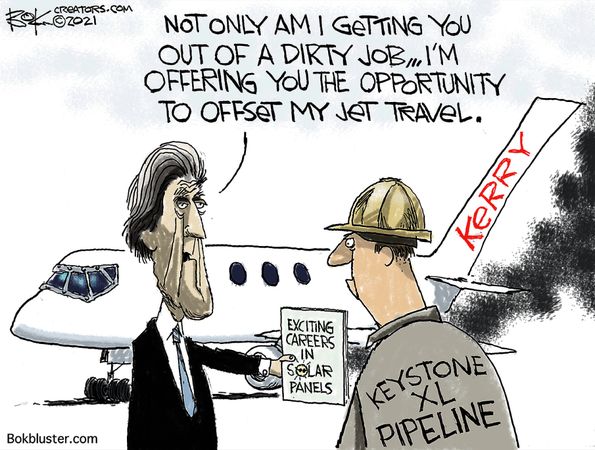
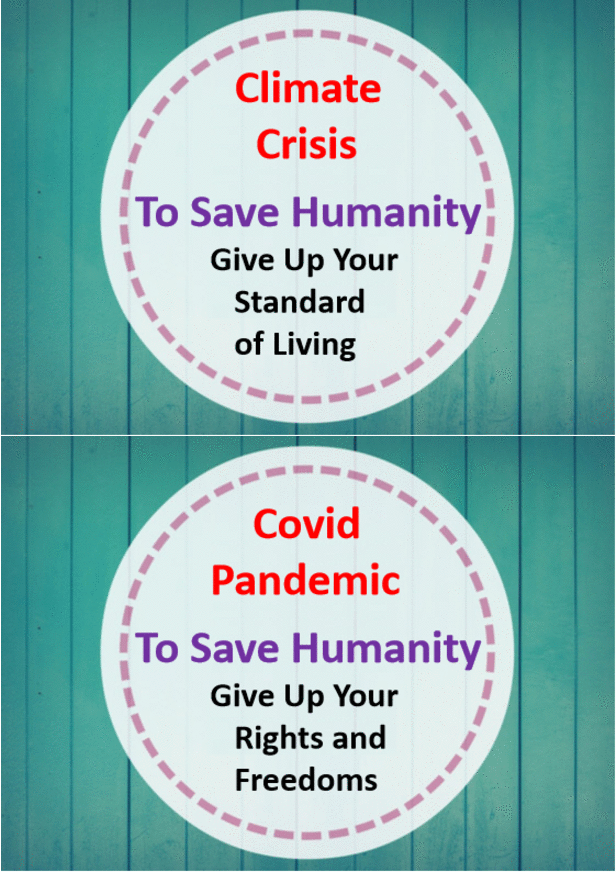
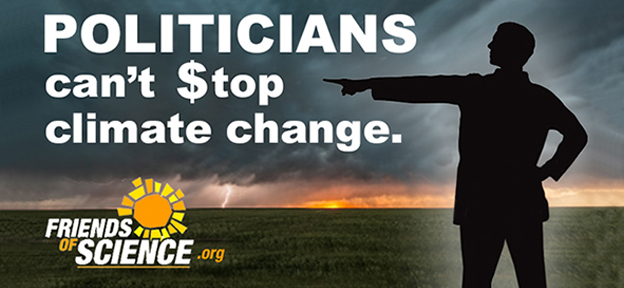
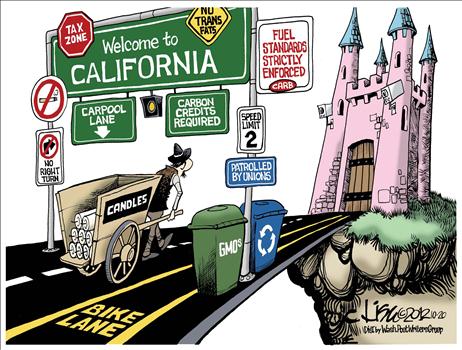
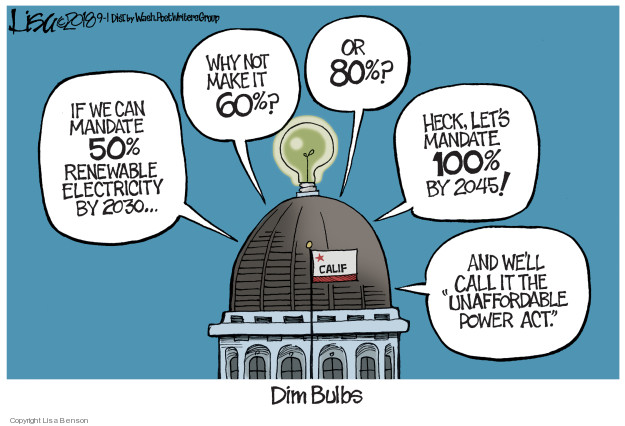
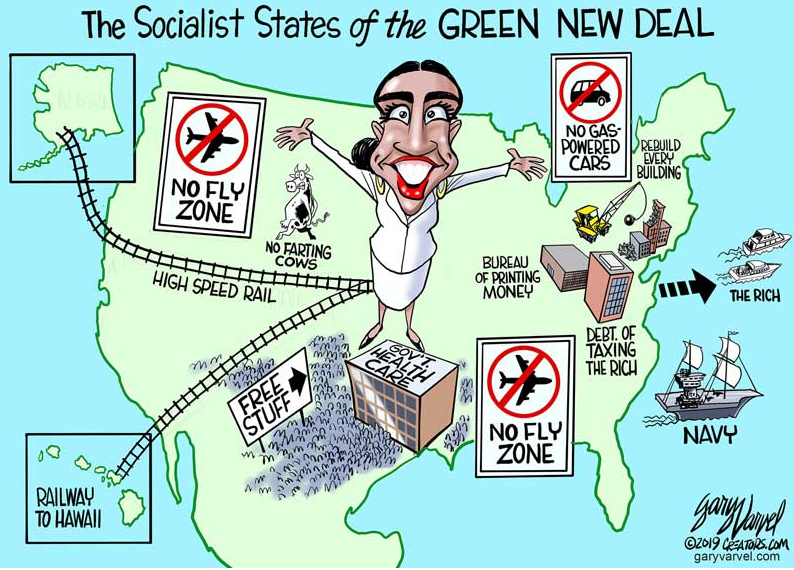
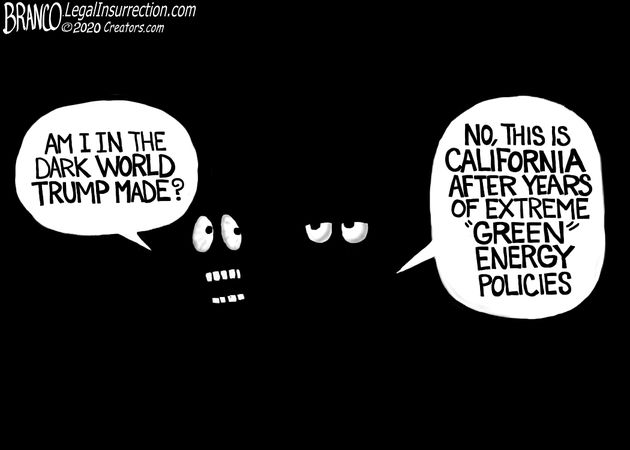
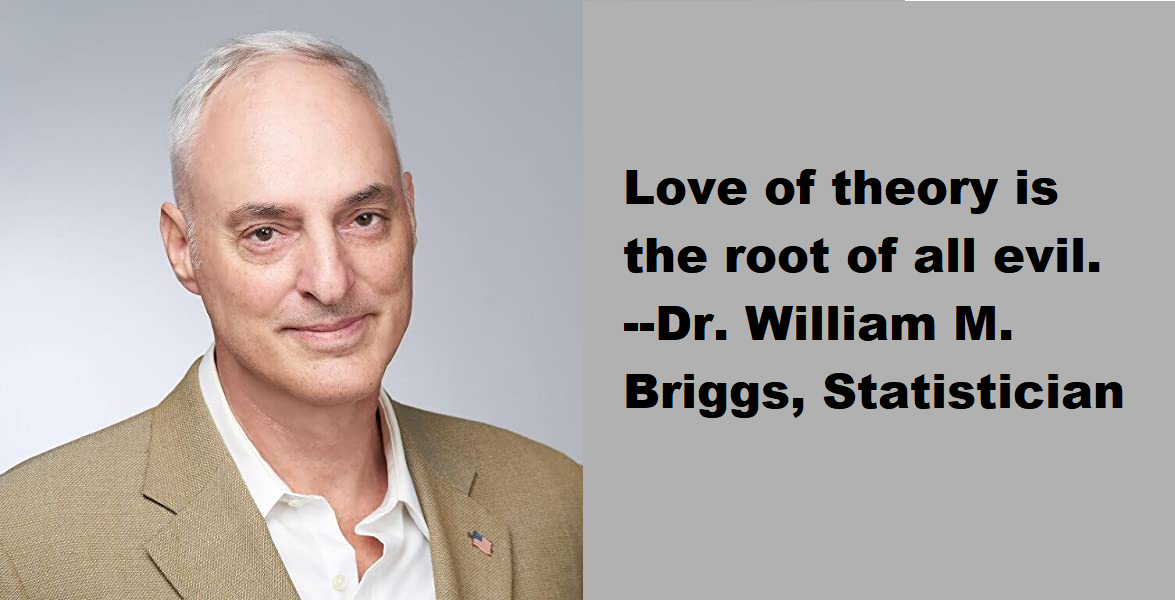
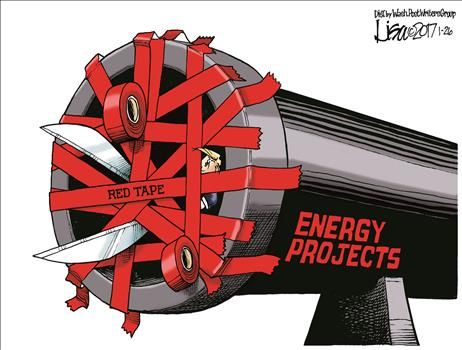
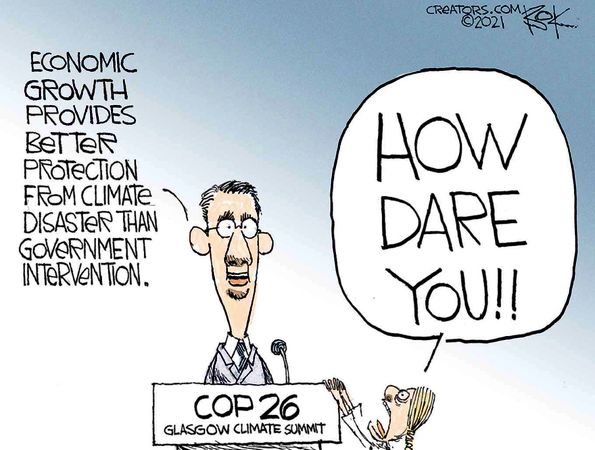
David Blackmon provides the background in his Daily Caller article Bureaucrats Worry Democracy Will Get In The Way Of Their Climate Agenda.  As the above image suggests some of those in power have not shied away from acting in defiance of democratic norms. By imposing climate policies and regulations they have diminished the livelihoods and freedoms of the public they supposedly serve. Excerpts in italics with my bolds and added images.

I have frequently written over the last several years that the agenda of the climate-alarm lobby in the western world is not consistent with the maintenance of democratic forms of government.

Governments maintained by free elections, the free flow of communications and other democratic institutions are not able to engage in the kinds of long-term central planning exercises required to force a transition from one form of energy and transportation systems to completely different ones.

Why? Because once the negative impacts of vastly higher prices for all forms of energy begin to impact the masses, the masses in such democratic societies are going to rebel, first at the ballot box and if that is not allowed by the elites to work, then by more aggressive means.

This is not a problem for authoritarian or totalitarian forms of government, like those in Saudi Arabia, China and Russia, where long-term central planning projects invoking government control of the means of production is a long-ingrained way of life. If the people revolt, then the crackdowns are bound to come.

This societal dynamic is a simple reality of life that the pushers of the climate alarm narrative and forced energy transition in western societies have been loath to admit. But, in recent days, two key figures who have pushed the climate alarm narrative in both the United States and Canada have agreed with my thesis in public remarks.

In so doing, they are uttering the quiet part about
the real agenda of climate alarmism out loud.

Last week, former Obama Secretary of State and Biden climate czar John Kerry made remarks about the “problem” posed by the First Amendment to the U.S. Constitution that should make every American’s skin crawl. Speaking about the inability of the federal government to stamp out what it believes to be misinformation on big social media platforms, Kerry said: “Our First Amendment stands as a major block to the ability to be able to just, you know, hammer it out of existence,” adding, “I think democracies are, are very challenged right now and have not proven they can move fast enough or big enough to deal with the challenges that we are facing.”

Never mind that the U.S. government has long been the most focused purveyor of disinformation and misinformation in our society, Kerry wants to stop the free flow of information on the Internet.

The most obvious targets are Elon Musk and X, which is essentially the only big social media platform that does not willingly submit to the government’s demands for censoring speech.

Kerry’s desired solution is for Democrats to “win the ground, win the right to govern by hopefully having, you know, winning enough votes that you’re free to be able to, to, implement change.” The change desired by Kerry and Vice President Kamala Harris and other prominent Democrats is to obtain enough power in Congress and the presidency to revoke the Senate filibuster, pack the Supreme Court, enact the economically ruinous Green New Deal, and do it all before the public has any opportunity to rebel.

Not to be outdone by Kerry, Deputy Prime Minister Chrystia Freeland of Canada, who is a longtime member of the board of trustees of the World Economic Forum, was quoted Monday as saying: “Our shrinking glaciers, and our warming oceans, are asking us wordlessly but emphatically, if democratic societies can rise to the existential challenge of climate change.

It should come as no surprise to anyone that the central governments of both Canada and the United States have moved in increasingly authoritarian directions under their current leadership, both of which have used the climate-alarm narrative as justification. This move was widely predicted once the utility of the COVID-19 pandemic to rationalize government censorship and restrictions of individual liberties began to fade in 2021.

Two sides of the same coin.

Frustrated by their perceived need to move even faster to restrict freedoms and destroy democratic levers of public response to their actions, these zealots are now discarding their soft talking points in favor of more aggressive messaging.

This new willingness to say the quiet part out loud
should truly alarm anyone who values their freedoms.

Alarmists Attack IPCC Not Linking Disasters to CO2


Chris Morrison reports on the flap over Climate Crisis™ media tactics in his Daily Sceptic article Climate Activists Frustrated by IPCC’s Refusal to Link Extreme Weather With Carbon Emissions.  Excerpts in italics with my bolds and added images.

Last June, the state-reliant BBC reported that human-caused climate change had made U.S. and Mexico heatwaves “35 times more likely”. Nothing out of the ordinary here in mainstream media with everyone from climate comedy turn ‘Jim’ Dale to UN chief Antonio ‘Boiling’ Guterres making these types of bizarre attributions. But for those who closely follow climate science and the assessments of the Intergovernmental Panel on Climate Change (IPCC), “such headlines can be difficult to make sense of”, observes the distinguished science writer Roger Pielke. In a hard-hitting attack on the pseudo-scientific industry of weather attribution, he states:

“neither the IPCC nor the underlying scientific literature comes anywhere close to making such strong and“ certain claims of attribution”.

Pielke argues that the extreme position of attributing individual bad weather events is “roughly aligned” with the far Left. “Climate science is not, or at least should not serve as a proxy for political tribes,” he cautions. But of course it is. The Net Zero fantasy is a collectivist national and supra-national agenda that increasingly relies on demonising bad weather. With global temperatures rising at most only 0.1°C a decade, laughter can only be general and side-splitting when IPCC boss Jim Skea claims that British summers will be 6°C hotter in less than 50 years. Two extended temperature pauses since 2000 have not helped the cause of global boiling. In addition there are increasing doubts about the reliability of temperature recordings by many meteorological organisations that seem unable to properly account for massive urban heat corruptions.

The big problem for ‘far Left’ climate extremists is that event attribution is a form, in Pielke’s words, of “tactical science”. Such science serves legal and political ends and is not always subject to peer review. As the BBC and other media outlets can attest, the work is “generally promoted via press release”. It has been developed in response to the failure of the IPCC to detect and attribute most types of extreme weather including drought, flooding, storms and wildfires to human involvement, notes Pielke. Worse, the IPCC can find little sign of human involvement going forward to 2100.

Scientists cannot answer directly whether particular events are
caused by climate change since extremes occur naturally.

Meanwhile the IPCC is somewhat dismissive about weather attribution, or as Pielke terms it, “weather attribution alchemy”. It notes: “The usefulness or applicability of available extreme event attribution methods for assessing climate-related risks remains subject to debate.” The IPCC is a biased body full of climate alarmists, but its inability to attribute single events to humans is obviously highly irritating and somewhat inconvenient for activists and their media counterparts.

Dr. Friederike Otto speaking with reporter at Oxford.

Dr. Friederike Otto runs World Weather Attribution (WWA) out of Imperial College London and is a frequent presence on the BBC. WWA is behind many of the immediate attributions of bad weather to human causes and its motives are clear. As Dr. Otto has noted: “Unlike every other branch of climate science or science in general, event attribution was actually originally suggested with the courts in mind.” Otto is clear that the main function of such studies, part-funded by Net Zero-supporting billionaires and heavily pushed by aligned mainstream media, is to support lawsuits against fossil fuel companies. She explains this strategy in detail in the interview, ‘From Extreme Event Attribution to Climate Litigation‘.

The inability of the IPCC to attribute bad weather to humans has been viewed by climate advocates as “politically problematic”, continues Pielke. He notes the work of climate activists Elizabeth Lloyd and Naomi Oreskes who are worried that the lack of attribution “conveys the impression that we just do not know, which feeds into uncertainty, doubt or incompleteness, and the general tendency of humans to discount threats that are not imminent”.

Perish the thought that there should be uncertainty, doubt
or incompleteness in the settled world of climate science.

It is of course different from all other branches of science in that all its opinions are right and consequently there is no need for the unhelpful process of constant inquiry and experiment. It need hardly be added that no doubt exists at the BBC, where former Radio 4 Today Editor Sarah Sands wrote the foreword to a WWA guide for journalists. Recalling when the late Nigel Lawson suggested there had been no increase in extreme weather, Sands noted: “I wish we had this guide for journalists to help us mount a more effective challenge to his claim.” These days, Sands enthused, attribution studies have given us “significant insight into the horsemen of the climate apocalypse”.

For her part, Otto is keen to crack down on the heretics. She was at the forefront of the recent notorious retraction of a paper in a Springer Nature journal that stated there was no evidence that the climate was breaking down. Written by four Italian scientists and led by Professor Gianluca Alimonti, they argued that a climate emergency was not supported by the data. Otto, who had previously worked in the Oxford School of Geography for 10 years, claimed the scientists were not writing in good faith. “If the journal cares about science they should withdraw it loudly and publicly saying it should never have been published,” she demanded.

A recent scientific study has confirmed that natural and climate-related disasters are declining during the 21st century. Getty Images/iStcokphoto

Declining Weather Disasters Prove Doomsters Wrong (Alimonti et al.)

Benny Peiser makes the case in his NY Post article Despite climate-change hysterics, weather disasters have decreased.  Excerpts in italics with my bolds and added images.

A recent scientific study has confirmed what climate realists have been highlighting for some time: Natural and climate-related disasters have been declining rather than increasing during the 21st century.

In a paper published this year in one of the world’s leading journals on environmental hazards, Italian scientists Gianluca Alimonti and Luigi Mariani analyzed the number and temporal trends of natural disasters reported since 1900.

A 2015 study by 22 scientists from around the world found that cold kills over 17 times more people than heat. Thus the planet’s recent modest warming has been saving millions of lives.

Based on the best available data, the two scientists concluded the 21st century has seen “a decreasing trend [of natural disasters] to 2022” which is “characterized by a significant decline in number of events.”

The researchers emphasized that their conclusion “sits in marked contradiction to earlier analyses by UN bodies which predict an increasing number of natural disasters and impacts in concert with global warming.”

“Our analyses strongly refute this assertion,” they wrote.

For years, international agencies such as the UN Office for Disaster Risk Reduction, the Food and Agriculture Organization of the United Nations, the World Meteorological Organization and the International Red Cross have claimed that climate-related disasters are escalating.

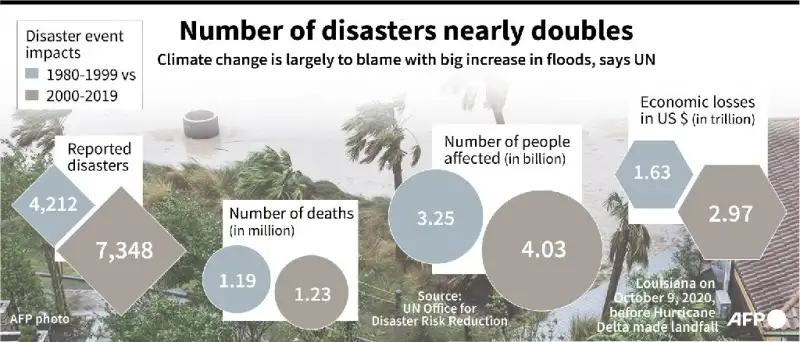
Floods lead a near doubling of disaster events from 1980 to 1999 compared to 2000 to 2019, according to a report by the UN Office for Disaster Risk Reduction.

“Weather disasters are striking the world four to five times more often and causing seven times more damage than in the 1970s,” the WMO reported in 2021.

Disaster and weather officials affiliated with the UN claim this dramatic rise is due to global warming: The changing climate, they say, is making weather disasters stronger and more frequent.

Fourth National Climate Assessment, Volume II: Impacts, Risks, and Adaptation in the United States.

The increased frequency of heat waves, droughts, flooding, winter storms, hurricanes, wildfires and other extreme weather events prove the negative impact of a warming world, according to various UN agencies and nongovernmental organizations.

Yet, as the actual data used by these organizations reveals, the last 20 years have in fact seen a significant decline in such events.

It turns out that climate alarmists have based their claims on a highly misleading comparison of disaster data of the late 20th and the early 21st centuries.

By their tally, the period from 1980 to 2000 saw about 4,200 natural disasters —with the number increasing sharply, to more than 8,000, during the first 20 years of this century.

This conclusion, however, is fatally flawed: It fails to take into account the huge increase in the global reporting of disasters engendered by the invention and rapid global dissemination of new communication technologies since the 1980s.

The arrival of the internet and other new communication tools has undoubtedly accelerated the reporting of disasters from all corners of the world — events that were significantly underreported in earlier decades.

As well, the number of people killed by natural and climate-related disasters has fallen steadily over the past 120 years — from 500,000 deaths per decade in the early 20th century down to less than 50,000 per decade in the last ten years.

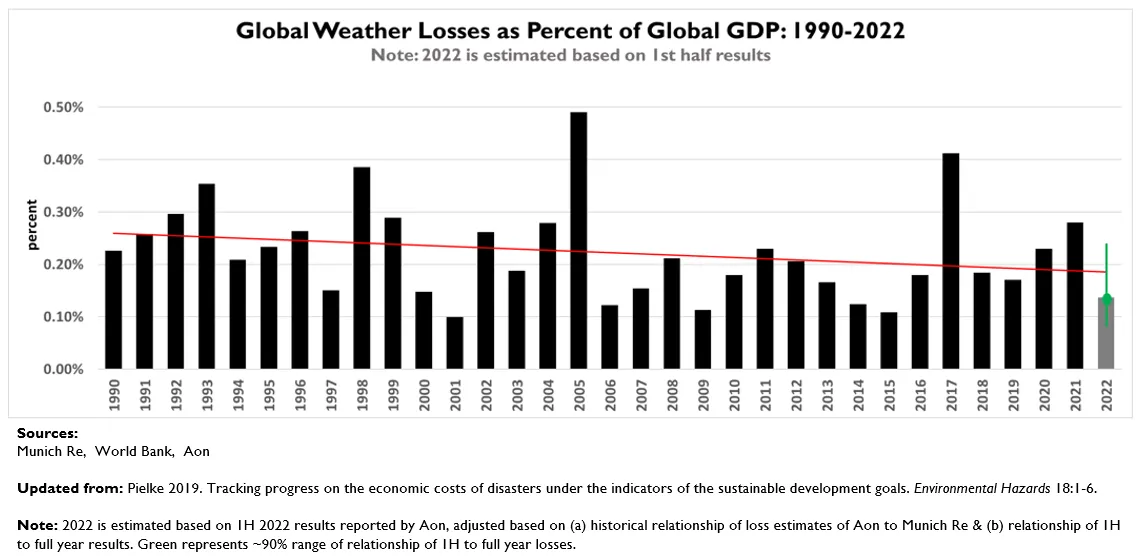
And, contrary to claims by NGOs and government officials, climate-related disaster losses have also declined as a percentage of global GDP during the last 30 years — from about 0.25% of GDP in 1990 to less than 0.20% in 2023.

The study by Alimonti and Mariani vindicates what we at the Global Warming Policy Foundation have been pointing out for a long time: Climate-related disasters are not on the rise, despite warming temperatures.

International agencies and the news media have hyped climate disasters for far too long, while ignoring the factual downward trend.

”First they ignore you, then they laugh at you, then they fight you, then you win,” as the saying goes.  UN agencies and NGOs have been misleading the public for years. It’s past time for the truth to win out.

Benny Peiser is the director of the London-based Global Warming Policy Foundation.

See also

Our Weather Extremes Are Customary in History

Figure27: Annual count of EF3 and above tornadoes in the US, 1950–2021. Source: Source: NOAA/NCEI.106, 107


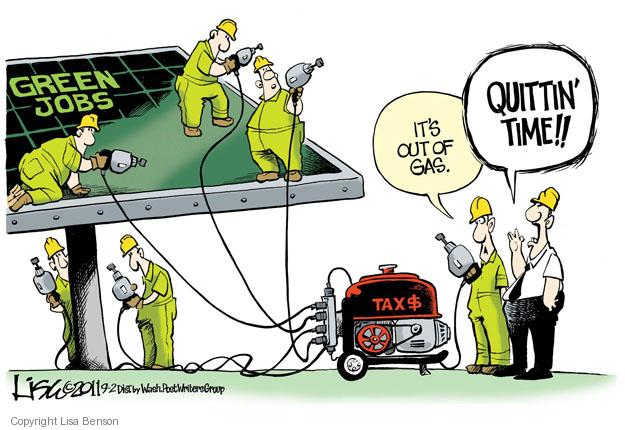
Dearth of Green Jobs in UK

Chris Morrison provides the analysis in his Daily Sceptic article ONS Reveals the Pitiful Number of New Green Jobs Being Created in the U.K. Economy.  Excerpts in italics with my bolds and added images.

The problem with the green U.K. economy, and its associated destruction of the hydrocarbon environment, is that there are very few jobs being created. The few remaining ‘workers’ in the ruling Labour party are starting to rumble all the luxury boondoggles that are set to further decimate well-paid jobs in their communities. The figures compiled by the Office for National Statistics (ONS), trying to estimate the actual number of green jobs, are always a highly creative hoot, and the latest batch are no exception. Many jobs identified are simply displacement activity, with one repair or maintenance occupation taking over from another. Around 6% of the total are to be found in ‘environmental charities’, an interesting way to describe elite billionaire political funding to push the Net Zero fantasy. Such is the seeming desperation to rustle up a green job, the ONS even includes repairing home appliances, controlling forest fires and separating hydrogen by carbon dioxide-producing electrolysis.

The latest ‘estimates’ from the ONS cover 2021 and 2022, and they are said to show an increase in both years. But as the graph below reveals, the rises are pitiful over a decade, and the 2022 estimate of 639,000 is less than 2% of jobs in the economy as a whole.

As can be seen, environmental charities employ 40,000 people, almost as many as the 47,000 that work in renewable energy. But the charities figure does not include all those make-work jobs in environmental consultancy and education or what is described as in-house environmental activities. If all the displacement, invented or re-badged jobs in repair, electric vehicles, waste disposal, water treatment, energy efficiency, Net Zero promotion, teaching and the ubiquitous bureaucracy are rightly ignored, it is unlikely that more than 150,000 new jobs have been created.

Fairly small pickings, it might be thought, from all the cash sprayed at subsidy-hunting chancers over at least two decades. Even worse, any new jobs are easily offset by the occupations being destroyed in steel making, refining hydrocarbons, coal mining and oil and gas exploration. Fracking for gas would transform a number of deprived areas in the U.K. at little environmental cost, as it has done in the U.S. Energy security would likely be achieved, and the tax take would be considerable. But fracking is anathema to the major political parties in the U.K., except the emerging Reform party.Last week saw some real push back on the madness of Net Zero and the so-called green economy. The boss of GMB, the third largest trade union in the country, told the annual Labour party conference that its plans to decarbonise the energy network by 2030 will cost up to one million jobs, decimate working communities and push up bills for the poorest. According to Smith, Government’s plans for Net Zero were “bonkers” and “fundamentally dishonest”. In a week when it was revealed that British consumers, both industrial and private, had some of the highest electricity prices in the developed world, he charged that current energy policy amounted to virtue signalling by politicians. He accused them of exporting jobs and importing virtue because the jobs were being created abroad rather than in the U.K.

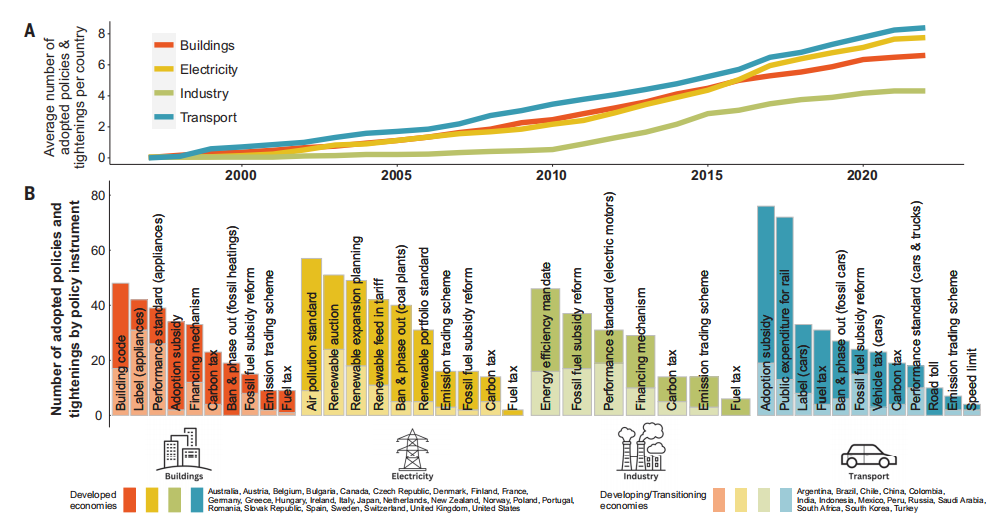
Meanwhile, a recent paper published in Science came to a damning conclusion that will not surprise sceptics, namely that 96% of climate policies over the last 25 years, ultimately designed to reduce carbon dioxide emissions, have been a waste of money. “That’s where green spin has got us,” writes George Monbiot, although these days the Guardian’s extremist-in-chief seems to have given up on all life enhancing processes that run the risk of disturbing anything on the planet. “Finally, 15 years and a trillion dollars too late, George Monbiot says what sceptics have been saying all along,” observes the sceptical journalist Jo Nova. “Nearly every single carbon reduction scheme is a useless make-work machination that creates the illusion that the government is doing something,” she says.

As we can see, the ONS survey is full of these make-work schemes providing jobs that can only exist by rigging free markets and providing eye-watering subsidies from consumers and taxpayers. As the more concerned trade unionists can see, much of the cost of these fantasy ventures falls on the poorest members of society forced to pay higher prices for many of the basic essentials of life. In addition, as we have observed, most green schemes make mugs of the wider investing public, with the RENIXX, a stock capitalisation global index of the 30 largest renewable industrial companies, showing near zero growth since it was started in 2006. None of this matters, of course, to the Mad Miliband and his weird wonks at the U.K. Department of Energy, who are ramping up ideological plans to hose cash at daft ideas like carbon capture, battery energy storage and hydrogen production.

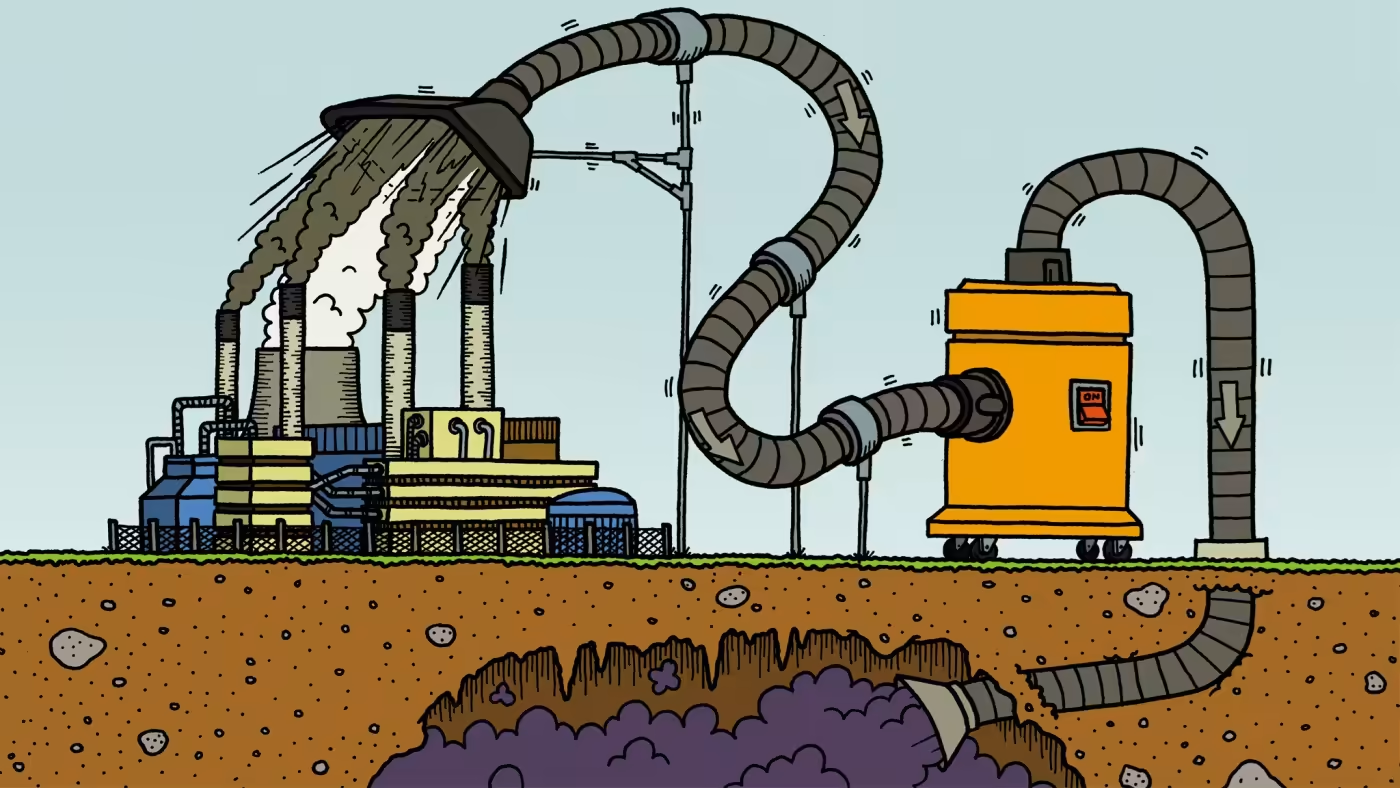
Not only is CO2 Capture and Storage wildly impractical, its aim is to deprive the biosphere of plant food.

But all is not lost on the jobs front – opportunities must be taken when they occur. Earlier this year, Gary Smith was able to point to some new employment clearing away the animal casualties of wind farm blades. “It’s usually a man in a rowing boat, sweeping up the dead birds,” he observed.

Footnote Q & A:

Q:  What is the difference between Golf and Government?

A:  In Government you can always improve your lie.

–Anonymous Source

Resources

Climate Policies Fail in Fact and in Theory

Investors Beware Green Equipment Companies

Green Deal Cuts EU Emissions, Doubles Them Elsewhere

Energy Revolution Not In The Cards

Kite & Key explains in above video Why the Odds Are Stacked Against Net Zero.  For those preferring to read I provide a text from the captions, though the video is entertaining along with great images, some of which are included with the text in italics with my bolds.

Overview

Are we at the beginning of the end of fossil fuels? That’s the theory advanced by an international coalition of politicians who aim to get us to net zero carbon emissions by the year 2050. Just one problem: Research from the experts in their own governments suggests it’s a nearly impossible task. Enthusiasts for net zero often say we’re on the cusp of an “energy revolution.”

And that theory has a big problem: Energy revolutions don’t happen — at least not in the way that politicians often describe. While it’s true that technological and economic factors sometimes change the energy mix — countries that get wealthier become less dependent on wood, for example — the broader trend in the history of the world’s energy consumption can be defined by three words: more, more, more.

In a power-hungry world, we keep adding new energy sources. But there’s rarely any subtraction. And, with global energy demand expected to increase by about 35% by 2050, it’s nearly impossible that we can get all the power we need from carbon-free sources. For instance, meeting the net zero goals would require the construction of over 9,000 nuclear plants by 2050. The number currently being built around the world? 59.

So, what will the future of energy really look like? Our video explores.

Transcription

It doesn’t happen that often. But every once in a while, a single generation witnesses a technological breakthrough that will change the world forever.
The printing press.
The beginning of human flight.
And, for our generation, an inevitable full scale revolution in clean energy…
…that’s running a little behind schedule…
…Ok, way behind schedule.

“The beginning of the end of the fossil fuel era.” That’s how the United Nations referred to the outcome of a 2023 climate change summit held in…the United Arab Emirates. Which is sort of like having the Prohibition Conference in Vegas. Nevertheless, delegates from throughout the world left the gathering having pledged that the world would transition away from fossil fuels and get the world to net zero carbon emissions by the year 2050.

Now, the rationale for this is clear enough. Leaders from around the globe are worried that without a shift over to carbon-free energy sources like wind, solar, hydro, and nuclear the world will face significant problems as a result of climate change.

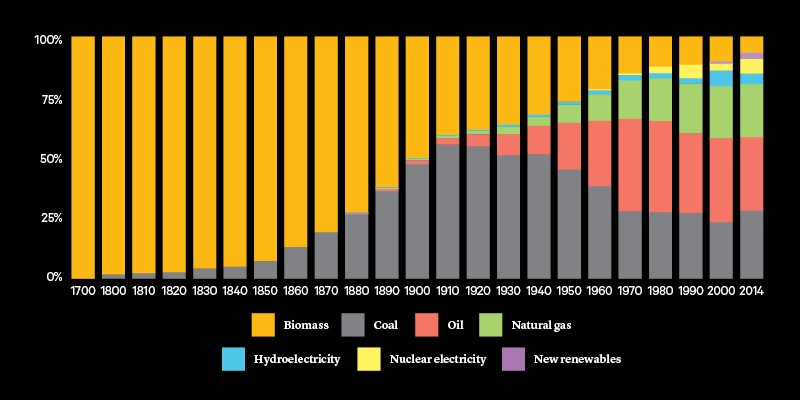
But, regardless of why they’re doing this, the more important question is whether they can do it. Because here’s the thing about energy revolutions: they don’t happen. At least not in the way that the UN is imagining. To understand why, it’s worth looking at the history of the world’s energy consumption – which looks like this.

Go back a couple of centuries and the world basically ran on “traditional biomass”– -which is a fancy way of saying … wood. We burned a lot of wood and also … dung. Then in the mid 19th century, coal came into the picture in a big way. By the 20th century, we’re using tons of oil. And natural gas is a big factor too, especially as we cross into the 21st century, and fracking makes it both abundant and more affordable. As the years went by, we added low-carbon sources of energy as well, like nuclear, hydro, wind, and solar–though overall, they’re still a pretty small part of the picture.

Now, there are two important things to note about this chart. First, the history of the world’s energy consumption can be defined in three words: more, more, more. Which kind of makes sense. After all, pretty much everything that defines modern life involves a lot of energy. Between 1950 and 2022, for example, the population of the U.S. a little more than doubled. But in that same time period, our electricity use got 14 times larger.

And second, because of that “more and more, more” trend, the only things we’ve ever had that look like energy “revolutions” have been about adding new sources into the mix, not getting rid of existing ones as net zero goals propose.

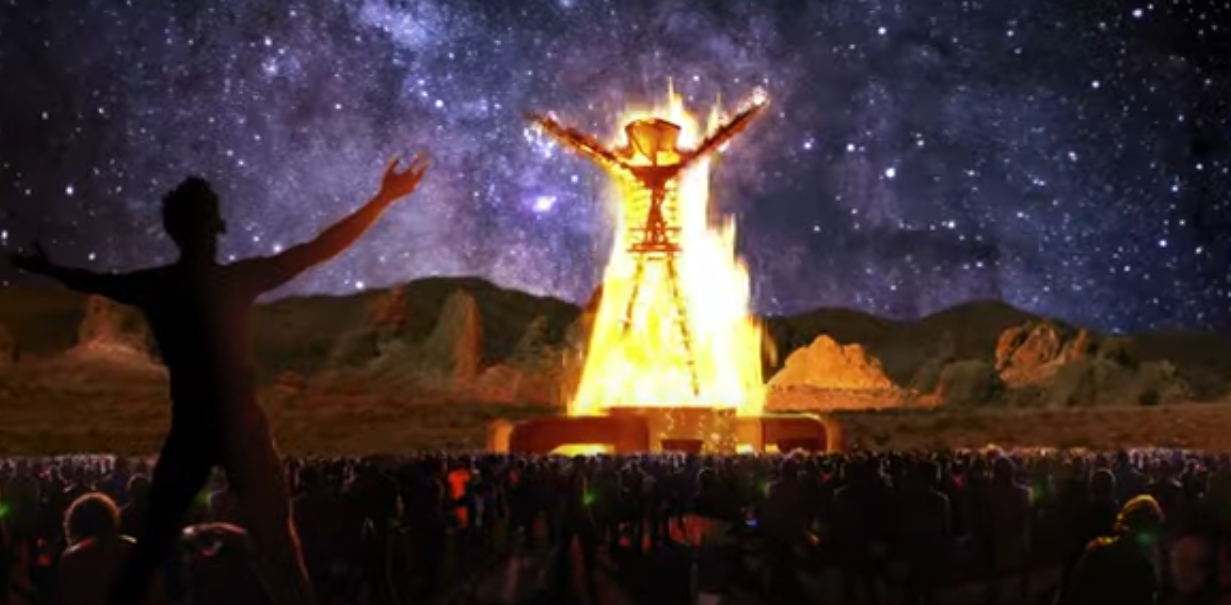
Now, to be clear, that doesn’t mean that nothing ever changes. In wealthier nations, the rise of cheaper natural gas has led to less coal usage, especially in the U.S. And poorer countries usually abandoned traditional biomass as they get wealthier, because no advanced nation powers itself by burning wood. We use it for much more sophisticated purposes…like doing psychedelics in the Nevada desert.

But using a little less coal or wood or relatively modest changes–and importantly are driven by cold, hard economic facts. By contrast, what the net zero goals entail is replacing all of this … with this … in just about 25 years. Based on little more than the fact that politicians just want it to happen.

To understand just how tall a task this is, it’s worth looking at what it would require to make it a reality. It’s estimated that meeting net zero goals would require deploying 2000 new wind turbines…
…every day … for the next 25 years. To give you some context for that, the U.S. builds about 3000 new wind turbines…
…a year.

Alternately, you could open one new nuclear plant every day for the next 25 years. For the record, that’s over 9,000 of them. And, also for the record, as of 2023, the number that were actually being built across the entire world was … 59.  And here in the U.S. anyway, it generally takes over a decade to build them.

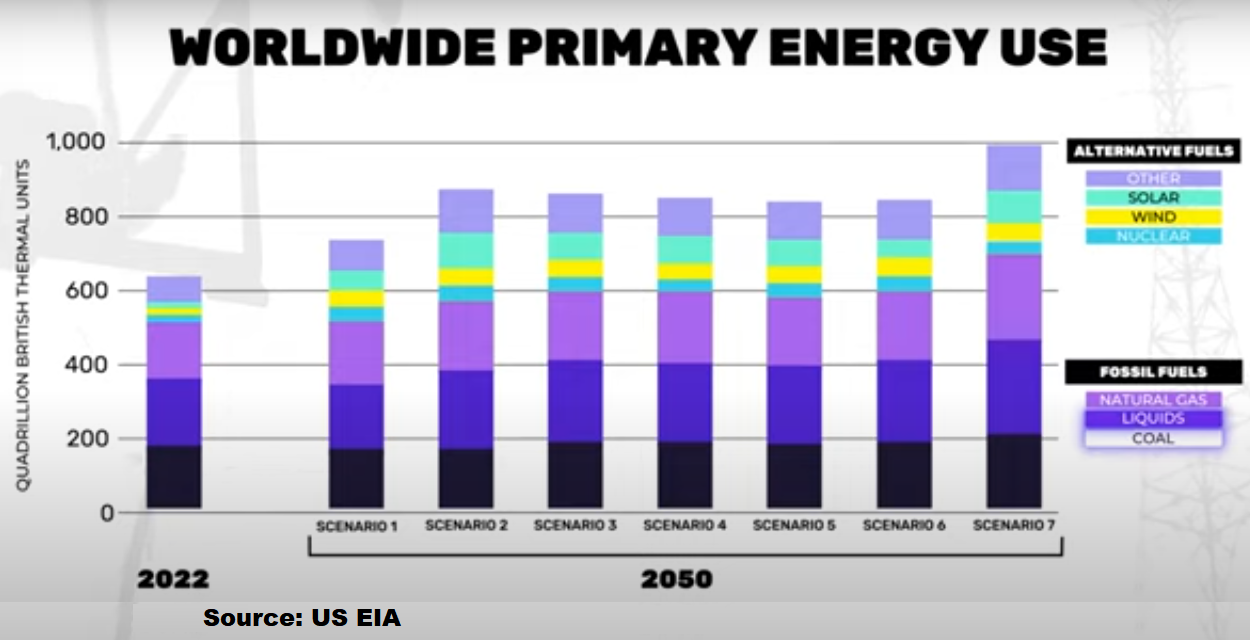
And those are some of the reasons why what politicians promise about net zero and what the experts in their own governments say…don’t exactly match up. The government’s U.S. Energy Information Administration, or EIA, projects that by the year 2050, far from seeing a revolution in energy, America will be a little less reliant on coal, a little more so on renewables…and the rest of the picture looks pretty much the same as today.

And in fact, this is true for the entire world. The EIA ran seven different scenarios for what the world’s energy consumption could look like in 2050, and while all of them showed a significant increase in renewables … they also all showed a world that continued to get most of its energy from things like coal, oil, and natural gas. Not exactly “the beginning of the end of the fossil fuel era.”

The reason for all of this: We simply can’t take enormous quantities of energy offline in a world where it’s predicted that we’re going to need almost 35% more of it by the year 2050. For one thing, there are a lot of poor countries around the world who are going to need dramatically more energy to bring themselves up to even a fraction of our standards of living.

And for another, the technologies of the future require vast amounts of power. By the year 2030, it’s estimated the computer usage around the world will take up as much as five times more of the world’s electricity production as it did even in 2020. The digital cloud we all use to store data already uses twice as much electricity as the entire nation of Japan. And with new energy-hungry technologies like AI on the way, things are only gonna move further in that direction.

Which means the real future of energy is probably: everything. Nuclear, natural gas, wind, and solar, oil, hydropower, coal. We’re going to need all of it. Probably not much wood though.
Except for these guys.

Again Wuhan Lab Coverup for Covid Virus Origin. Don’t Buy it!

Today we have a coordinated release globally of a study claiming to disprove the Covid 19 virus came from the Wuhan Institute of Viology (WIV).  An example is the article from the UK so-called Independent ‘Beyond reasonable doubt’ Covid pandemic originated at Wuhan market stall.  Excerpts in italics.

US and French researchers traced coronavirus to one stall in
Wuhan, China after analysing genetic samples

It is beyond “reasonable doubt” that the Covid-19 pandemic originated in a Chinese animal market, a new scientific study has found.

Researchers from the United States and France discovered one stall in Wuhan, China, was a hotspot for coronavirus after analysing hundreds of genetic samples collected by Chinese authorities in 2020.

The analysis, published in Cell, compiled a list of animals including raccoon dogs, masked palm civets, hoary bamboo rats and Malayan porcupines, that were likely to have passed the virus to humans.

“It’s far beyond reasonable doubt that this is how it happened,” Professor Michael Worobey at the University of Arizona told the BBC, noting that other theories involve some “really quite fanciful absurd scenarios”.

Professor Kristian Andersen from Scripps Research in the US, added: “We find a very consistent story in terms of this pointing to the market as being the very likely origin of this particular pandemic.”

Color me skeptical.  Both Worobey and Andersen were carrying Fauci’s water in 2020-21 when he was lying to congress about funding gain of function research at WIV.  Cui Bono from this paper?  China, who destroyed all the evidence in 2020, but now it supposedly appears in 2024.  And Fauci, who enlisted these and other researchers to publish fake studies in various journals to cancel the lab-leak explanation for the covid pandemic.

For a desciption of the malfeasance perpetrated by these charlatans, see this expose by Vanity Fair in 2022 “This Shouldn’t Happen”: Inside the Virus-Hunting Nonprofit at the Center of the Lab-Leak Controversy.

For a level-headed reaction to this latest coverup, here is a comment to the published Worobey et al paper by Alexander Chervonsky Professor of Pathology The University of Chicago.  In italics with my bolds.


Beware “Fact Checking” by Innuendo

Kip Hansen gives the game away in his Climate Realism article Illogically Facts —’Fact-Checking’ by Innuendo.  Excerpts in italics with my bolds and added images.

The latest fad in all kinds of activism to attack one’s ideological opponents via “fact checking”.    We see this in politics and all the modern controversies, including, of course, Climate Science.

Almost none of the “fact checking sites” and “fact checking organizations” actually check facts.  And, if they accidentally find themselves checking what we would all agree is a fact, and not just an opinion or point of view, invariably it is checked against an contrary opinion, a different point of view or an alternative fact.

The resulting fact check report depends on the purposes of the fact check.  Some are done to confirm that “our guy” or “our team” is proved to be correct, or that the opposition is proved to be wrong, lying or misinformation.  When a fact is found to be different in any way from the desired fact, even the tiniest way, the original being checked is labelled a falsehood, or worse, an intentional lie. (or conversely, other people are lying about our fact!).   Nobody likes a liar, so this sort of fake fact checking accomplishes two goals – it casts doubt on the not-favored fact supposedly being checked and smears an ideological opponent as a liar.  One stone – two birds.

While not entirely new on the fact-checking scene, an AI-enhanced effort has popped to the surface of the roiling seas of controversyLogically Facts.  “Logically Facts is part of Meta’s Third Party Fact-Checking Program (3PFC) and works with TikTok in Europe. We have been a verified signatory of the International Fact-Checking Network (IFCN) since 2020 and are a member of the Misinformation Combat Alliance (MCA) in India and the European Digital Media Observatory (EDMO) in Europe.”source ]   Meta? “Meta Platforms…is the undisputed leader in social media. The technology company owns three of the four biggest platforms by monthly active users (Facebook, WhatsApp, and Instagram).” “Meta’s social networks are known as its Family of Apps (FoA). As of the fourth quarter of 2023, they attracted almost four billion users per month.”   And TikTok?  It has over a billion users.

I’m doubting that one can add up the 4 billion and the 1 billion to make 5 billion users of META and TikTok combined, but in any case, that’s a huge percentage of humanity any way one looks at it.

And who is providing fact-checking to those billion of people?  Logically Facts [LF].

And what kind of fact-checking does LF do?  Let’s look at an example that will deal with something very familiar with readers here:  Climate Science Denial.

The definition put forward by the Wiki is:

Climate change denial (also global warming denial) is a form of science denial characterized by rejecting, refusing to acknowledge, disputing, or fighting the scientific consensus on climate change.”

Other popular definitions of climate change denial include: attacks on solutions, questioning official climate change science and/or the climate movement itself.

If I had all the time left to me in this world, I could do a deep, deep dive into the Fact-Checking Industry.  But, being limited, let’s look, together, at one single “analysis” article from Logically Facts:

‘Pseudoscience, no crisis’: How fake experts are fueling climate change denial

This article is a fascinating study in “fake-fact-checking by innuendo”. 

As we go through the article, sampling its claims, I’ll alert you to any check of an actual fact – don’t hold your breath.   If you wish to be pro-active, read the LF piece first, and you’ll have a better handle on what they are doing.

The lede in their piece is this:

“Would you seek dental advice from an ophthalmologist? The answer is obvious. Yet, on social media, self-proclaimed ‘experts’ with little to no relevant knowledge of climate science are influencing public opinion.” 

The two editors of this “analysis” are listed as Shreyashi Roy [MA in Mass Communications and a BA in English Literature] and Nitish Rampal [ … based out of New Delhi and has …. a keen interest in sports, politics, and tech.]  The author is said to be [more on “said to be” in a minute…] Anurag Baruah [MA in English Language and a certificate in Environmental Journalism: Storytelling earned online from the Thompson Founation.]

Why do you say “said to be”, Mr. Hansen?  If you had read the LF piece, as I suggested, you would see that it reads as if it was “written” by an AI Large Language Model, followed by editing for sense and sensibility by a human, probably, Mr. Baruah, followed by further editing by Roy and Rampal.

The lede is itself an illogic.  First it speaks of medical/dental advice, pointing out, quite rightly, that they are different specializations.  But then complains that unnamed so-called self-proclaimed experts who LF claims “have little to no relevant knowledge of climate science” are influencing public opinion.   Since these persons are so-far unnamed, LF’s AI, author and subsequent editors could not possibly know what their level of knowledge about climate science might be.

Who exactly are they smearing here?

The first is:

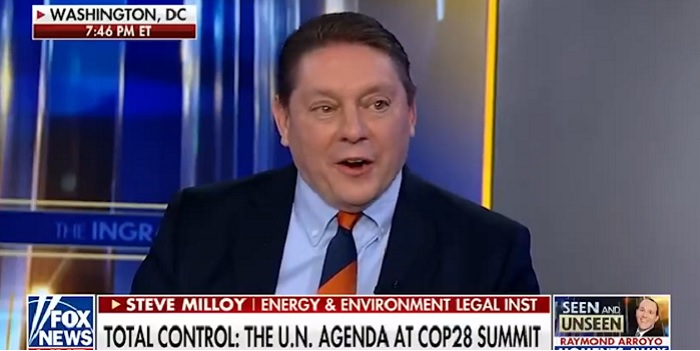
“One such ‘expert,’ Steve Milloy, a prominent voice on social media platform X (formerly Twitter), described a NASA Climate post (archive) about the impact of climate change on our seas as a “lie” on June 26, 2024.”

It is absolutely true that Milloy, who is well-known to be an “in-your-face” and “slightly over the-top” critic of all things science that he considers poorly done, being over-hyped, or otherwise falling into his category of “Junk Science”, posted on X the item claimed. 

LF , its AI, author and editors make no effort to check what fact/facts
Milloy was calling a lie, or to check NASA’s facts in any way whatever.

You see, Milloy calling any claim from NASA “a lie” would be an a priori case of Climate Denial: he is refuting or refusing to accept some point of official climate science.

Who is Steve Milloy? 

Steve Milloy is a Board Member & Senior Policy Fellow of the Energy and Environment Legal Instituteauthor of seven books and over 600 articles/columns published in major newspapers, magazines and internet outlets.  He has testified by request before the U.S. Congress many times, including on risk assessment and Superfund issues.  He is an Adjunct Fellow of the National Center for Public Policy Research.

“He holds a B.A. in Natural Sciences, Johns Hopkins University; Master of Health Sciences (Biostatistics), Johns Hopkins University School of Hygiene and Public Health; Juris Doctorate, University of Baltimore; and Master of Laws (Securities regulation) from the Georgetown University Law Center.”

It seems that many consider Mr. Milloy to be an expert in many things.

And the evidence for LF’s dismissal of Milloy as a “self-proclaimed expert”  having “little to no relevant knowledge of climate science”?  The Guardian, co-founder of the climate crisis propaganda outfit Covering Climate Nowsaid “JunkScience.com, has been called “the main entrepôt for almost every kind of climate-change denial”” and after a link listing Milloy’s degrees, pooh-poohed him for “lacking formal training in climate science.”  Well, a BA in Natural Sciences might count for something. And a law degree is not nothing. The last link which gives clear evidence that Milloy is a well-recognized expert and it is obvious that the LF AI, author, and editors either did not read the contents of the link or simply chose to ignore it.

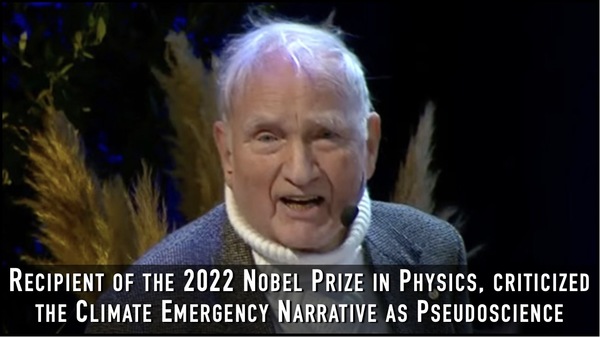
Incredibly, LF’s next target is “… John Clauser, a 2022 Nobel Prize winner in physics, claimed that no climate crisis exists and that climate science is “pseudoscience.” Clauser’s Nobel Prize lent weight to his statements, but he has never published a peer-reviewed paper on climate change.“

LF’s evidence against Clauser is The Washington Post in an article attacking not just Clauser, but a long list of major physicists who do not support the IPCC consensus on climate change:  Willie Soon (including the lie that Soon’s work was financed by fossil fuel companies) , Steve Koonin, Dick Lindzen and Will Happer.   The Post article fails to discuss any of the reasons these esteemed, world-class physicists are not consensus-supporting club members. 

Their non-conforming is their crime.  No facts are checked.

LF reinforces the attack on world-renown physicists with a quote from Professor Bill McGuire:  “Such fake experts are dangerous and, in my opinion, incredibly irresponsible—Nobel Prize or not. A physicist denying anthropogenic climate change is actually denying the well-established physical properties of carbon dioxide, which is simply absurd.”

McGuire, is not a physicist and is not a climate scientist, but has a PhD in Geology and is a volcanologist and an IPCC contributor.   He also could be seen as “lacking formal training in climate science.”

But, McGuire has a point, which LF, its AI and its human editors seem to miss, the very basis of the CO2 Global Warming hypothesis is based on physics, not based on what is today called “climate science”. Thus, the physicists are the true experts . (and not the volcanologists….)

LF then launches into the gratuitous comparison of “fake experts” in the anti-tobacco fight, alludes to oil industry ties, and then snaps right to John Cook.

John Cook, a world leader in attacking Climate Change Denial, is not a climate scientist.  He is not a geologist, not an atmospheric scientist, not an oceanic scientist, not a physicist, not even a volcanologist.   He  “earned his PhD in Cognitive Science at the University of Western Australia in 2016”.

The rest of the Logically Facts fake-analysis is basically a re-writing of some of Cook’s anti-Climate Denialists screeds.  Maybe/probably resulting from an AI large language model trained on pro-consensus climate materials.  Logically Facts is specifically and openly an AI-based effort.

LF proceeds to attack a series of persons, not their ideas, one after another:  Tony Heller, Dr. Judith Curry, Patrick Moore and Bjørn Lomborg.

The expertise of these individuals in their respective fields
are either ignored or brushed over.

Curry is a world renowned climate scientist, former chair of the School of Earth and Atmospheric Sciences at the Georgia Institute of Technology.  Curry is the author the book on Thermodynamics of Atmospheres and Oceans, another book on Thermodynamics, Kinetics, and Microphysics of Clouds, and the marvelous groundbreaking Climate Uncertainty and Risk: Rethinking Our Response.  Google scholar returns over 10,000 references to a search of “Dr. Judith Curry climate”.

Lomborg is a socio-economist with an impressive record, a best selling author and a leading expert on issues of energy dependence, value for money spent on international anti-poverty and public health efforts, etc.   Richard Tol, is mention negatively for daring to doubt the “97% consensus”, with no mention of his qualifications as a Professor of Economics and a Professor of the Economics of Climate Change.

Bottom Line:

Logically Facts is a Large Language Model-type AI, supplemented by writers and editors meant to clean-up the mess returned by this chat-bot type AI.    Thus, it is entirely incapable to making any value judgements between repeated slander, enforced consensus views, the prevailing biases of scientific fields and actual facts.  Further, any LLM-based AI is incapable of Critical Thinking and drawing logical conclusions.

In short, Logically Facts is Illogical.

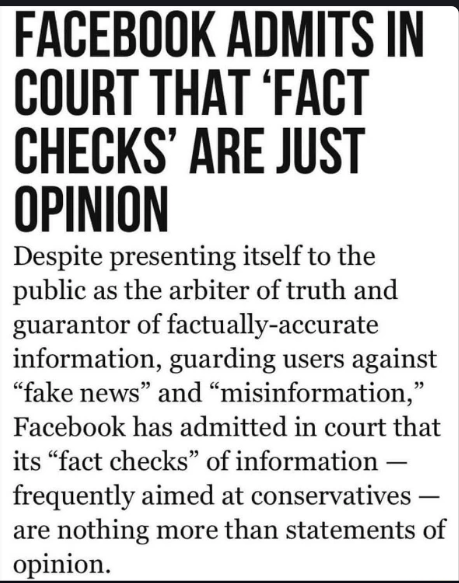
Defence offered by Facebook in Stossel defamation lawsuit.

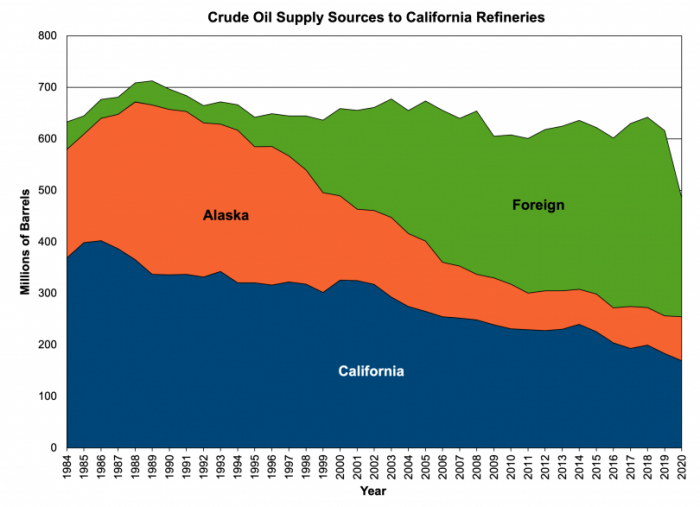
California Browning from Electricity Policies

Ronald Stein explains the devastation in his Heartland article The Golden State of California Is Turning Brown Without Continuous Electricity.  Excerpts in italics with my bolds and added images.

As a resident of California for more than six decades, I am aware that the availability of continuously generated electricity in California is deteriorating and will get worse!

The “Green New Deal” and “Net Zero” policies in California that are supported by Governor Newsom and the Democratic Presidential candidate Kamala Harris have led to the state’s most expensive electricity and fuel prices in America and increasingly high cost of living, housing, and transportation, coupled with an increase in crime, smash-and-grab robberies, homelessness, pollution, and congestion that has caused many tax-paying residents and companies to exodus California to more affordable cities and states.

California’s net move-out number of residents in 2022 alone was more than 343,000 people that left California — the highest exodus of any state in the U.S.

The California Policy Institute counted more than 237 businesses that have left the state since 2005. Among these businesses were eleven Fortune 1000 companies, including AT&T, Hewlett Packard Enterprise, Exxon Mobil, and Chevron.

The U.S. Department of Energy recently made a startling admission: U.S. electricity demand will double by 2050, and meeting that soaring demand will require the equivalent of building 300 Hoover Dams.

The last California Nuclear Power Plant at Diablo Canyon, a 2.2 GW plant generating continuous uninterruptable electricity, is projected to close soon. In nameplate only, it would take 1,000 2.2MW wind turbines to generate 2.2 GW, but then, it’s only intermittent electricity vs. the continuous uninterruptable electricity from Diablo demanded by the California economy!

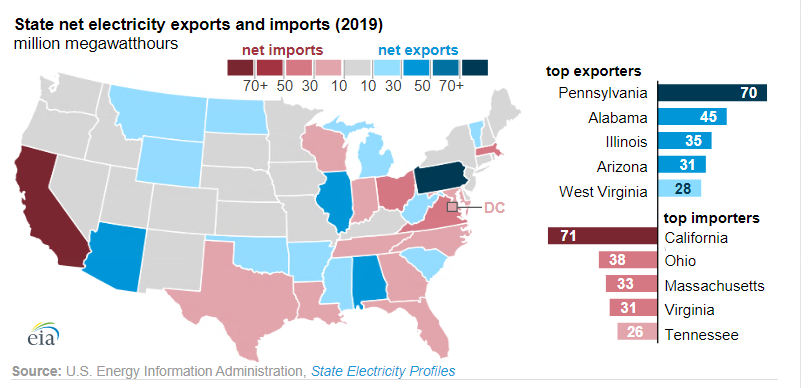
As a result of the “Green New Deal” and “Net Zero” policies and renewables of wind and solar stations built at the expense of taxpayer dollars, California now imports more electric power than any other US state, more than twice the amount in Virginia, the USA’s second-largest importer of electric power. California typically receives between one-fifth and one-third of its electricity supply from outside of the state.

Power prices are rocketing into the stratosphere and, even before winter drives up demand, are being deprived of continuous electricity in a way that was unthinkable barely a decade ago. But such is life when you attempt to run the economy on sunshine and breezes.

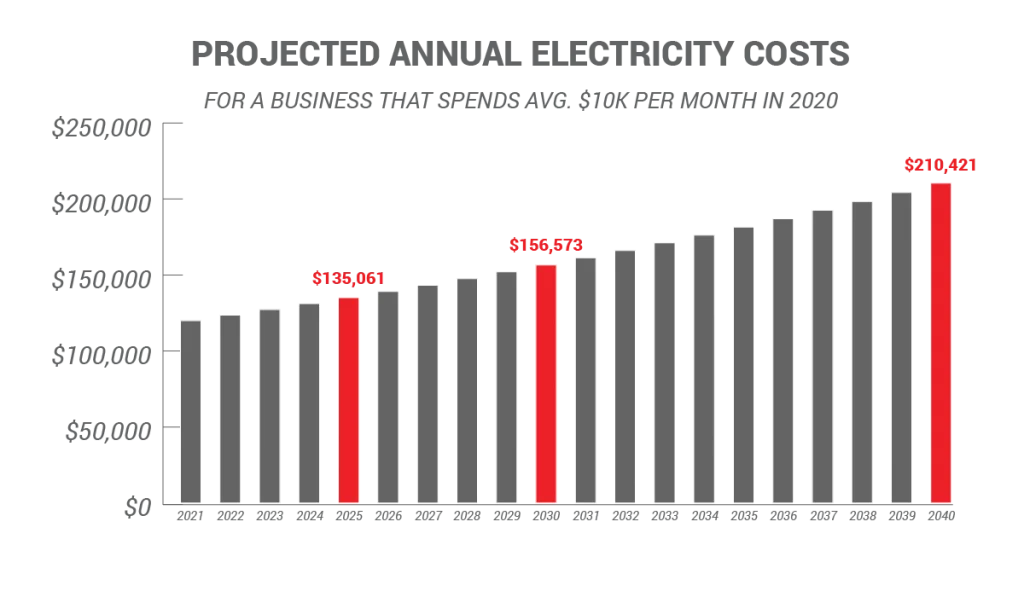
Projected electricity costs for California Businesses

Further, these so-called “green” electricity sources of wind and solar are not clean, green, renewable or sustainable. They also endanger wildlife.

California’s economy depends on affordable, reliable, and ever-cleaner electricity and fuels. Unfortunately, policymakers are driving up California’s electric and gas prices, and California now has the highest electricity and fuel prices in the nation. Those high energy prices are contributing to the pessimistic business sentiment. California’s emission mandates have done an excellent job of increasing the cost of electricity, products, and fuels to its citizens.

It’s becoming increasingly obvious that these supposed “green” alternative methods of generating electricity won’t work — especially as electricity demand is projected to double by 2050 due to AI, charging of EVs and data centers, government-mandated electric heating and cooking, and charging grid-backup batteries. Intermittent electricity from wind and solar cannot power modern nations.

These “green” wind and solar projects primarily exist because they are financed with taxpayer money, i.e., disguised by taxpayers as “Government Subsidies.”

“GREEN” policymakers are oblivious to humanity’s addiction to the products and fuels from fossil fuels, as they are to these two basic facts:

(1)  No one uses crude oil in its raw form. “Big Oil” only exists because of humanity’s addiction to the products and fuels made from oil!

(2)  “Renewables” like wind and solar only exist to generate intermittent electricity; they CANNOT make products or fuels!

To rid the world of crude oil usage, there is no need to over-regulate or over-tax the oil industry; just STOP using the products and fuels made from crude oil!

Simplistically:

STOP making cars, trucks, aircraft, boats, ships, farming equipment, medical equipment and supplies, communications equipment, military equipment, etc., that demand crude oil for their supply chain of products.

STOPPING the demands of society for the products and fuels made from oil will eliminate the need for crude oil.

The primary growth in electric power usage is coming from new data centers housing AI technologies. It is expected that over the next few decades, 50% of additional electric power will be needed just for AI, but data centers CANNOT run on occasional electricity from wind and solar.

Cal matters raises concerns about state policy to phase out ICE vehicles in favor of EVs.

How will the occasionally generated electricity from wind and solar support the following:

  • America’s military fleet of vehicles, ships, and aircraft?
  • America’s commercial and private aircraft?
  • America’s hospitals?
  • America’s space exploration?

Despite Governor Newsom’s and Democratic presidential candidate Kamala Harris’s support for the “Green New Deal” and “Net Zero” policies in California, it’s time to stimulate conversations about the generation of continuously generated electricity to meet the demands of America’s end users.


Good News: SEC’s ESG Plans Thwarted with Biden Term Ending

The news comes from Bloomberg Law article SEC’s Gensler Sees ESG Plans Thwarted as Biden’s Term Nears End. Excerpts in italics with my bolds and added images.

SEC Chair Gary Gensler started out with big plans on ESG.

  • Gensler seeks board diversity, workforce, ESG fund disclosures
  • Agency unlikely to finalize ESG regulations before January

The Democrat arrived at the Securities and Exchange Commission in 2021, after George Floyd’s murder in 2020 and President Joe Biden’s election that year fueled interest in environmental, social and governance investing. Gensler wanted public companies to report details about their climate change risks, workforce management and board members’ diversity.

He also sought new rules to fight greenwashing and other misleading ESG claims by investment funds.

Almost four years later, most of those major ESG regulations are unfinished, and they’ll likely remain so in the less than five months Gensler may have left as chair. A conservative-led backlash against ESG and federal agency authority has fueled challenges in and out of court to corporate greenhouse gas emissions reporting rules and other SEC actions, helping blunt the commission’s power.

The climate rules—Gensler’s marquee ESG initiative—were watered down following intense industry pushback, then paused altogether after business groups, Republican attorneys general and others sued.

“It’s clear the commission leadership is exhausted and feeling buffeted by the courts, Congress and industry complaints,” said Tyler Gellasch, who was a counsel to former Democratic SEC Commissioner Kara Stein and is president and CEO of investor advocacy group Healthy Markets Association.

The SEC has finalized more than 40 rules since 2021, “making our capital markets more efficient, transparent, and resilient,” an agency spokesperson said in a statement to Bloomberg Law.

The spokesperson declined to comment on the status of the agency’s pending ESG rules, beyond pointing to the commission’s most recent regulatory agenda.

Long-standing plans to require human capital and board diversity disclosures from companies have yet to yield formal proposals. Final rules concerning ESG-focused funds still are pending, and even if the SEC adopts them before January as the agenda suggests, a Republican-controlled Congress and White House may have the power to quickly scrap them under the Congressional Review Act.

Unlike the workforce and board diversity rules that have yet to be proposed, investment fund regulations concerning ESG have already been drafted and are targeted for completion in October, according to the SEC’s latest agenda. ESG funds would have to disclose their portfolio companies’ emissions and report on their ESG strategies.

The SEC proposed the regulations in May 2022, along with rules intended to ensure ESG funds’ names align with their investments. The commission issued final fund name rules in September 2023.

The SEC’s investment fund proposal has raised objections from both funds and environmental and investor advocates.

The proposal would require environmentally-focused funds to disclose their carbon footprints, if emissions are part of their investment strategies. But it wouldn’t require funds that look at emissions to disclose other metrics that play a significant role in how they invest and the methodology they use to calculate those measures. The Natural Resources Defense Council, Interfaith Center on Corporate Responsibility, and other environmental and investor groups pushed for those requirements in an April letter to the SEC.

The Investment Company Institute, which represents funds, has raised concerns its members would have to report on their carbon footprints before public companies must disclose their emissions under SEC rules. The group in April called on the SEC to keep fund emissions reporting requirements on ice until the litigation challenging the agency’s public company climate rules is resolved. That litigation is at the US Court of Appeals for the Eighth Circuit, which is unlikely to rule this year.

The fund rules have received no Republican support at the SEC, with only Gensler and his fellow Democratic commissioners voting in favor of proposing them.

“If it’s a Republican Congress and Trump administration, you could imagine they would be willing to disapprove those,” said Susan Dudley, a George Washington University professor who oversaw the White House regulatory policy office under President George W. Bush.


How Damaging Are Math Models? Three Strikes Against Them

Tomas Fürst explains the dangers in believing models are reality in his Brownstone article Mathematical Models Are Weapons of Mass Destruction.  Excerpts in italics with my bolds and added images.

Great Wealth Destroyed in Mortgage Crisis by Trusting a Financial Model

In 2007, the total value of an exotic form of financial insurance called Credit Default Swap (CDS) reached $67 trillion. This number exceeded the global GDP in that year by about fifteen percent. In other words – someone in the financial markets made a bet greater than the value of everything produced in the world that year.

What were the guys on Wall Street betting on? If certain boxes of financial pyrotechnics called Collateralized Debt Obligations (CDOs) are going to explode. Betting an amount larger than the world requires a significant degree of certainty on the part of the insurance provider.

What was this certainty supported by?

A magic formula called the Gaussian Copula Model. The CDO boxes contained the mortgages of millions of Americans, and the funny-named model estimated the joint probability that holders of any two randomly selected mortgages would both default on the mortgage.

The key ingredient in this magic formula was the gamma coefficient, which used historical data to estimate the correlation between mortgage default rates in different parts of the United States. This correlation was quite small for most of the 20th century because there was little reason why mortgages in Florida should be somehow connected to mortgages in California or Washington.

But in the summer of 2006, real estate prices across the United States began to fall, and millions of people found themselves owing more for their homes than they were currently worth. In this situation, many Americans rationally decided to default on their mortgage. So, the number of delinquent mortgages increased dramatically, all at once, across the country.

The gamma coefficient in the magic formula jumped from negligible values ​​towards one and the boxes of CDOs exploded all at once. The financiers – who bet the entire planet’s GDP on this not happening – all lost.

This entire bet, in which a few speculators lost the entire planet, was based on a mathematical model that its users mistook for reality. The financial losses they caused were unpayable, so the only option was for the state to pay for them. Of course, the states didn’t exactly have an extra global GDP either, so they did what they usually do – they added these unpayable debts to the long list of unpayable debts they had made before. A single formula, which has barely 40 characters in the ASCII code, dramatically increased the total debt of the “developed” world by tens of percent of GDP. It has probably been the most expensive formula in the history of mankind.
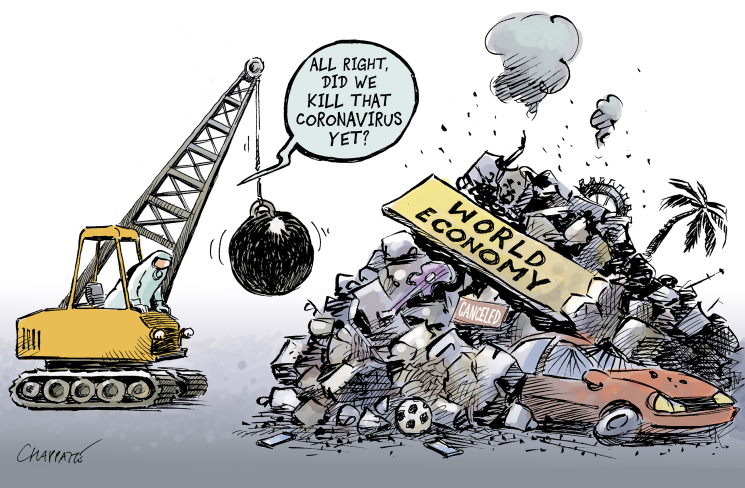
Covid Panic and Social Devastation from Following an Epidemic Model

After this fiasco, one would assume people would start paying more attention to the predictions of various mathematical models. In fact, the opposite happened. In the fall of 2019, a virus began to spread from Wuhan, China, which was named SARS-CoV-2 after its older siblings. His older siblings were pretty nasty, so at the beginning of 2020, the whole world went into a panic mode.

If the infection fatality rate of the new virus was comparable to its older siblings, civilization might really collapse. And exactly at this moment, many dubious academic characters emerged around the world with their pet mathematical models and began spewing wild predictions into the public space.

Journalists went through the predictions, unerringly picked out only the most apocalyptic ones, and began to recite them in a dramatic voice to bewildered politicians. In the subsequent “fight against the virus,” any critical discussion about the nature of mathematical models, their assumptions, validation, the risk of overfitting, and especially the quantification of uncertainty was completely lost.

Most of the mathematical models that emerged from academia were more or less complex versions of a naive game called SIR. These three letters stand for Susceptible–Infected–Recovered and come from the beginning of the 20th century, when, thanks to the absence of computers, only the simplest differential equations could be solved. SIR models treat people as colored balls that float in a well-mixed container and bump into each other.

When red (infected) and green (susceptible) balls collide, two reds are produced. Each red (infected) turns black (recovered) after some time and stops noticing the others. And that’s all. The model does not even capture space in any way – there are neither cities nor villages. This completely naive model always produces (at most) one wave of contagion, which subsides over time and disappears forever.

And exactly at this moment, the captains of the coronavirus response made the same mistake as the bankers fifteen years ago: They mistook the model for reality. The “experts” were looking at the model that showed a single wave of infections, but in reality, one wave followed another. Instead of drawing the correct conclusion from this discrepancy between model and reality—that these models are useless—they began to fantasize that reality deviates from the models because of the “effects of the interventions” by which they were “managing” the epidemic. There was talk of “premature relaxation” of the measures and other mostly theological concepts. Understandably, there were many opportunists in academia who rushed forward with fabricated articles about the effect of interventions.

Meanwhile, the virus did its thing, ignoring the mathematical models. Few people noticed, but during the entire epidemic, not a single mathematical model succeeded in predicting (at least approximately) the peak of the current wave or the onset of the next wave.

Unlike Gaussian Copula Models, which – besides having a funny name – worked at least when real estate prices were rising, SIR models had no connection to reality from the very beginning. Later, some of their authors started to retrofit the models to match historical data, thus completely confusing the non-mathematical public, which typically does not distinguish between an ex-post fitted model (where real historical data are nicely matched by adjusting the model parameters) and a true ex-ante prediction for the future. As Yogi Berra would have it: It’s tough to make predictions, especially about the future.

While during the financial crisis, misuse of mathematical models brought mostly economic damage, during the epidemic it was no longer just about money. Based on nonsensical models, all kinds of “measures” were taken that damaged many people’s mental or physical health.

Nevertheless, this global loss of judgment had one positive effect: The awareness of the potential harm of mathematical modelling spread from a few academic offices to wide public circles. While a few years ago the concept of a “mathematical model” was shrouded in religious reverence, after three years of the epidemic, public trust in the ability of “experts” to predict anything went to zero.

Moreover, it wasn’t just the models that failed – a large part of the academic and scientific community also failed. Instead of promoting a cautious and sceptical evidence-based approach, they became cheerleaders for many stupidities the policymakers came forward with. The loss of public trust in the contemporary Science, medicine, and its representatives will probably be the most significant consequence of the epidemic.

Demolishing Modern Civilization Because of Climate Model Predictions

Which brings us to other mathematical models, the consequences of which can be much more destructive than everything we have described so far. These are, of course, climate models. The discussion of “global climate change” can be divided into three parts.

1. The real evolution of temperature on our planet. For the last few decades, we have had reasonably accurate and stable direct measurements from many places on the planet. The further we go into the past, the more we have to rely on various temperature reconstruction methods, and the uncertainty grows. Doubts may also arise as to what temperature is actually the subject of the discussion: Temperature is constantly changing in space and time, and it is very important how the individual measurements are combined into some “global” value. Given that a “global temperature” – however defined – is a manifestation of a complex dynamic system that is far from thermodynamic equilibrium, it is quite impossible for it to be constant. So, there are only two possibilities: At every moment since the formation of planet Earth, “global temperature” was either rising or falling. It is generally agreed that there has been an overall warming during the 20th century, although the geographical differences are significantly greater than is normally acknowledged. A more detailed discussion of this point is not the subject of this essay, as it is not directly related to mathematical models.

2. The hypothesis that increase in CO2 concentration drives increase in global temperature. This is a legitimate scientific hypothesis; however, evidence for the hypothesis involves more mathematical modelling than you might think. Therefore, we will address this point in more detail below.

3. The rationality of the various “measures” that politicians and activists propose to prevent global climate change or at least mitigate its effects. Again, this point is not the focus of this essay, but it is important to note that many of the proposed (and sometimes already implemented) climate change “measures” will have orders of magnitude more dramatic consequences than anything we did during the Covid epidemic. So, with this in mind, let’s see how much mathematical modelling we need to support hypothesis 2.
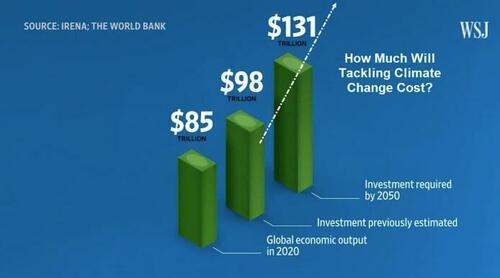
Yes, they are projecting spending more than 100 Trillion US$.

At first glance, there is no need for models because the mechanism by which CO2 heats the planet has been well understood since Joseph Fourier, who first described it. In elementary school textbooks, we draw a picture of a greenhouse with the sun smiling down on it. Short-wave radiation from the sun passes through the glass, heating the interior of the greenhouse, but long-wave radiation (emitted by the heated interior of the greenhouse) cannot escape through the glass, thus keeping the greenhouse warm. Carbon dioxide, dear children, plays a similar role in our atmosphere as the glass in the greenhouse.

This “explanation,” after which the entire greenhouse effect is named, and which we call the “greenhouse effect for kindergarten,” suffers from a small problem: It is completely wrong. The greenhouse keeps warm for a completely different reason. The glass shell prevents convection – warm air cannot rise and carry the heat away. This fact was experimentally verified already at the beginning of the 20th century by building an identical greenhouse but from a material that is transparent to infrared radiation. The difference in temperatures inside the two greenhouses was negligible.

OK, greenhouses are not warm due to greenhouse effect (to appease various fact-checkers, this fact can be found on Wikipedia). But that doesn’t mean that carbon dioxide doesn’t absorb infrared radiation and doesn’t behave in the atmosphere the way we imagined glass in a greenhouse behaved. Carbon dioxide actually does absorb radiation in several wavelength bands. Water vapor, methane, and other gases also have this property. The greenhouse effect (erroneously named after the greenhouse) is a safely proven experimental fact, and without greenhouse gases, the Earth would be considerably colder.

It follows logically that when the concentration of CO2 in the atmosphere increases, the CO2 molecules will capture even more infrared photons, which will therefore not be able to escape into space, and the temperature of the planet will rise further. Most people are satisfied with this explanation and continue to consider the hypothesis from point 2 above as proven. We call this version of the story the “greenhouse effect for philosophical faculties.”
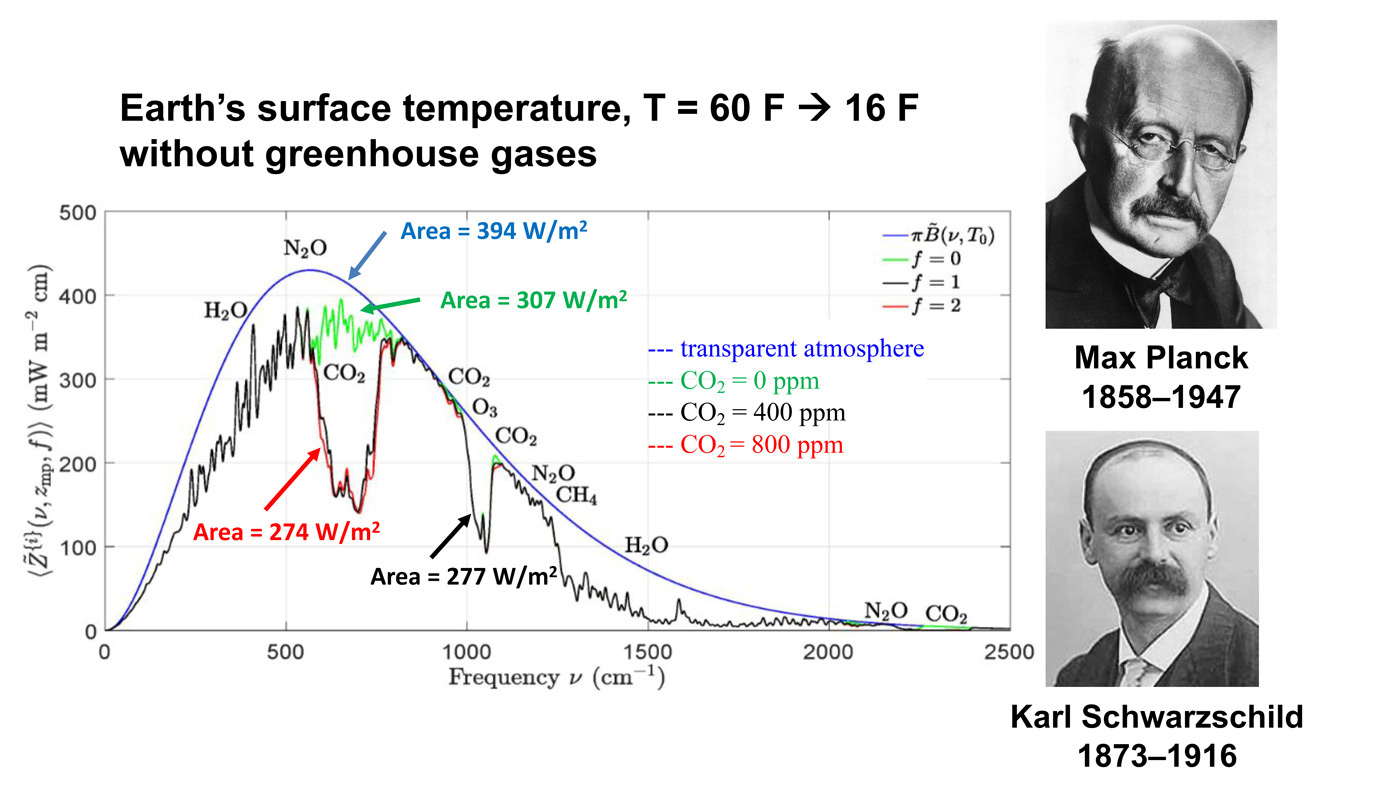
The important point here is the red line. This is what Earth would radiate to space if you were to double the CO2 concentration from today’s value. Right in the middle of these curves, you can see a gap in spectrum. The gap is caused by CO2 absorbing radiation that would otherwise cool the Earth. If you double the amount of CO2, you don’t double the size of that gap. You just go from the black curve to the red curve, and you can barely see the difference.

The problem is, of course, that there is so much carbon dioxide (and other greenhouse gases) in the atmosphere already that no photon with the appropriate frequency has a chance to escape from the atmosphere without being absorbed and re-emitted many times by some greenhouse gas molecule.

A certain increase in the absorption of infrared radiation induced by higher concentration of CO2 can thus only occur at the edges of the respective absorption bands. With this knowledge – which, of course, is not very widespread among politicians and journalists – it is no longer obvious why an increase in the concentration of CO2 should lead to a rise in temperature.

In reality, however, the situation is even more complicated, and it is therefore necessary to come up with another version of the explanation, which we call the “greenhouse effect for science faculties.” This version for adults reads as follows: The process of absorption and re-emission of photons takes place in all layers of the atmosphere, and the atoms of greenhouse gases “pass” photons from one to another until finally one of the photons emitted somewhere in the upper layer of the atmosphere flies off into space. The concentration of greenhouse gases naturally decreases with increasing altitude. So, when we add a little CO2, the altitude from which photons can already escape into space shifts a little higher. And since the higher we go, the colder it is, the photons there emitted carry away less energy, resulting in more energy remaining in the atmosphere, making the planet warmer.

Note that the original version with the smiling sun above the greenhouse got somewhat more complicated. Some people start scratching their heads at this point and wondering if the above explanation is really that clear. When the concentration of CO2 increases, perhaps “cooler” photons escape to space (because the place of their emission moves higher), but won’t more of them escape (because the radius increases)? Shouldn’t there be more warming in the upper atmosphere? Isn’t the temperature inversion important in this explanation? We know that temperature starts to rise again from about 12 kilometers up. Is it really possible to neglect all convection and precipitation in this explanation? We know that these processes transfer enormous amounts of heat. What about positive and negative feedbacks? And so on and so on.

The more you ask, the more you find that the answers are not directly observable but rely on mathematical models. The models contain a number of experimentally (that is, with some error) measured parameters; for example, the spectrum of light absorption in CO2 (and all other greenhouse gases), its dependence on concentration, or a detailed temperature profile of the atmosphere.

This leads us to a radical statement: The hypothesis that an increase in the concentration of carbon dioxide in the atmosphere drives an increase in global temperature is not supported by any easily and comprehensibly explainable physical reasoning that would be clear to a person with an ordinary university education in a technical or natural science field. This hypothesis is ultimately supported by mathematical modelling that more or less accurately captures some of the many complicated processes in the atmosphere.
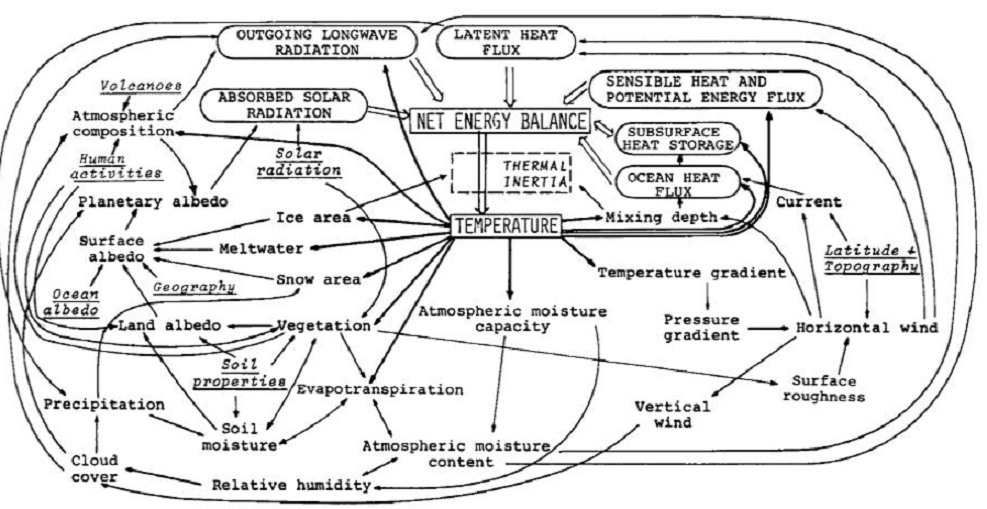
Flows and Feedbacks for Climate Models

However, this casts a completely different light on the whole problem. In the context of the dramatic failures of mathematical modelling in the recent past, the “greenhouse effect” deserves much more attention. We heard the claim that “science is settled” many times during the Covid crisis and many predictions that later turned out to be completely absurd were based on “scientific consensus.”

Almost every important scientific discovery began as a lone voice going against the scientific consensus of that time. Consensus in science does not mean much – science is built on careful falsification of hypotheses using properly conducted experiments and properly evaluated data. The number of past instances of scientific consensus is basically equal to the number of past scientific errors.

Mathematical modelling is a good servant but a bad master. The hypothesis of global climate change caused by the increasing concentration of CO2 in the atmosphere is certainly interesting and plausible. However, it is definitely not an experimental fact, and it is most inappropriate to censor an open and honest professional debate on this topic. If it turns out that mathematical models were – once again – wrong, it may be too late to undo the damage caused in the name of “combating” climate change.

Beware getting sucked into any model, climate or otherwise.

Addendum on Chameleon Models

Chameleon Climate Models

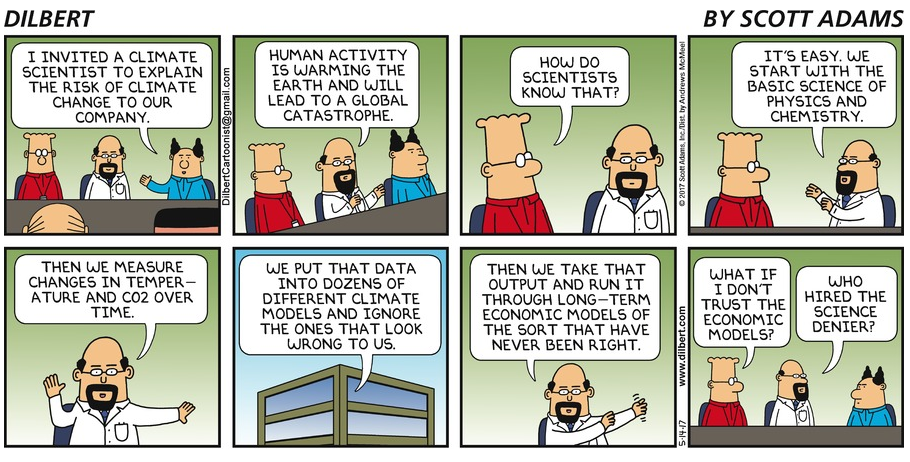
Footnote:  Classic Cartoon on Models
 

Climate Policies Fail in Fact and in Theory

A recent international analysis of 1500 climate policies around the world concluded that 63 or 4% of them were successful in reducing emissions.  The paper is Climate policies that achieved major emission reductions: Global evidence from two decades published at Science.org.  Excerpts in italics with my bolds.

Abstract

Meeting the Paris Agreement’s climate targets necessitates better knowledge about which climate policies work in reducing emissions at the necessary scale. We provide a global, systematic ex post evaluation to identify policy combinations that have led to large emission reductions out of 1500 climate policies implemented between 1998 and 2022 across 41 countries from six continents. Our approachintegrates a comprehensive climate policy database with a machine learning–based extension ofthe common difference-in-differences approach. We identified 63 successful policy interventions with total emission reductions between 0.6 billion and 1.8 billion metric tonnes CO2 . Our insights on effective but rarely studied policy combinations highlight the important role of price-based instruments in well-designed policy mixes and the policy efforts necessary for closing the emissions gap.

Context

(1). Although the [Paris] agreement seeks to limit global average temperature increase to “well below 2°C above pre-industrial levels and pursuing efforts to limit the temperature increase to 1.5°C,” its success critically hinges on the implementation of effective climate policies at the national level.  However, scenarios from global integrated assessment models suggest that the aggregated mitigation efforts communicated through nationally determined contributions (NDCs) fall short of the required emission reductions.

(2)The United Nations (UN) estimates quantify a median emission gap of 23 billion metric tonnes(Gt) carbon dioxide equivalent (CO2-eq) by 2030

(3). The persistence of this emissions gap is not only caused by an ambition gap but also a gap in the outcomes that adopted policies achieve in terms of emission reductions.

(4). This raises the fundamental question as to which types of policy measures are successfully causing meaningful emission reductions. Despite more than two decades of experience with thousands of diverse climate policy measures gained around the world, there is consensus in neither science nor policy on this question.

The exhibit above shows the scope and complexity of the analysis.  But the bottom line is that 96% of the effort and trillions of $$$ were spent to no avail. It is estimated that on the order of 1.2 Billion tonnes of CO2 were prevented over the last 20 years, with an additional 23 Billion tonnes to be erased by 2030. 

Any enterprise with that performance would be liquidated. 
That is an epic failure in fact. 

And recommending mixing of policies including subsidies and regulations along with pricing goes against economic theory and fails in practice. Ross McKitrick explains the dangers of making climate policies willy-nilly in his Financial Post article Economists’ letter misses the point about the carbon tax revolt.  Excerpts in italics with my bolds and added images.
Yes, the carbon tax works great in a ‘first-best’ world where it’s the
only carbon policy. In the real world, carbon policies are piled high.

An open letter is circulating online among my economist colleagues aiming to promote sound thinking on carbon taxes. It makes some valid points and will probably get waved around in the House of Commons before long. But it’s conspicuously selective in its focus, to the point of ignoring the main problems with Canadian climate policy as a whole.

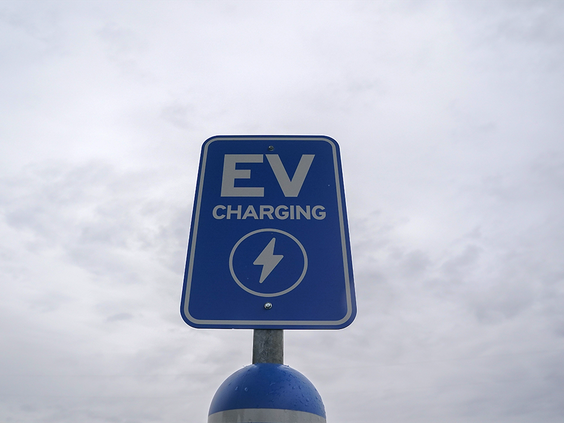
EV charging sign Electric-vehicle mandates and subsidies are among the mountain of climate policies that have been piled on top of Canada’s carbon tax. PHOTO BY JOSHUA A. BICKEL/THE ASSOCIATED PRESS
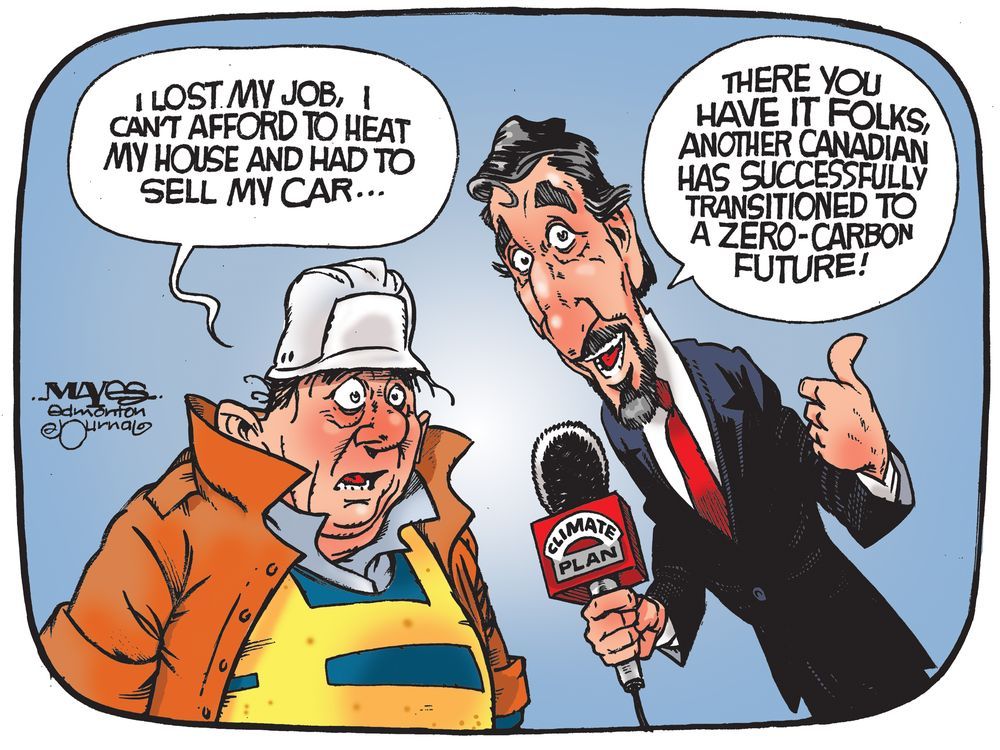
There’s a massive pile of boulders blocking the road to efficient policy, including:

    • clean fuel regulations,
    • the oil-and-gas-sector emissions cap,
    • the electricity sector coal phase-out,
    • strict energy efficiency rules for new and existing buildings,
    • new performance mandates for natural gas-fired generation plants,
    • the regulatory blockade against liquified natural gas export facilities,
    • new motor vehicle fuel economy standards,

    • caps on fertilizer use on farms,
    • provincial ethanol production subsidies,
    • electric vehicle mandates and subsidies,
    • provincial renewable electricity mandates,
    • grid-scale battery storage experiments,
    • the Green Infrastructure Fund,
    • carbon capture and underground storage mandates, 
    • subsidies for electric buses and emergency vehicles in Canadian cities,
    • new aviation and rail sector emission limits,
      and many more.

Not one of these occasioned a letter of protest from Canadian economists.

Beside that mountain of boulders there’s a twig labelled “overstated objections to carbon pricing.” At the sight of it, hundreds of economists have rushed forward to sweep it off the road. What a help!

To my well-meaning colleagues I say: the pile of regulatory boulders
long ago made the economic case for carbon pricing irrelevant.

Layering a carbon tax on top of current and planned command-and-control regulations does not yield an efficient outcome, it just raises the overall cost to consumers. Which is why I can’t get excited about and certainly won’t sign the carbon-pricing letter. That’s not where the heavy lifting is needed.

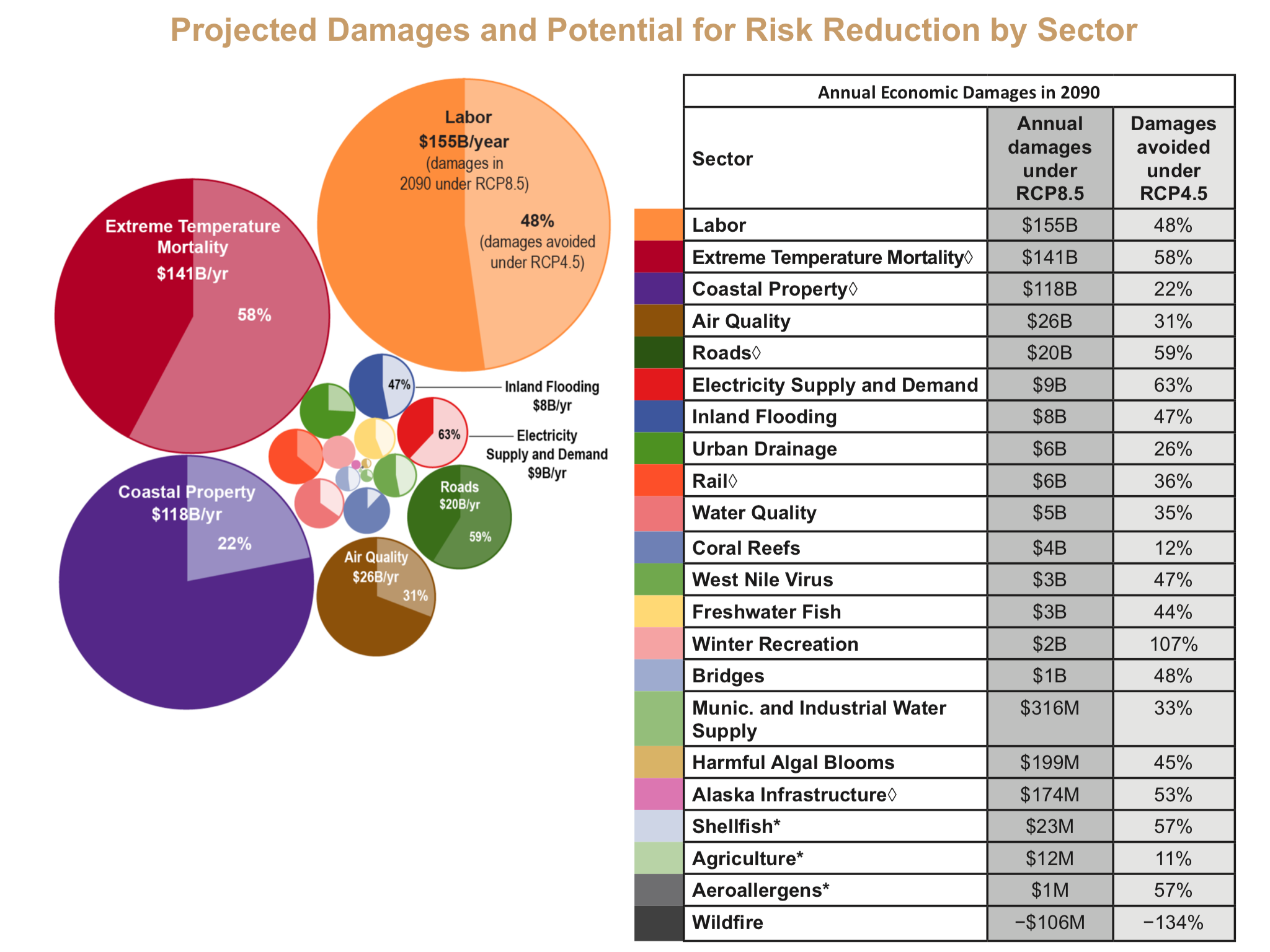
My colleagues object to exaggerated claims about the cost of carbon taxes. Fair enough. But far worse are exaggerated claims about both the benefits of reducing carbon dioxide emissions and the economic opportunities associated with the so-called “energy transition.” Exaggeration about the benefits of emission reduction is traceable to poor-quality academic research, such as continued use of climate models known to have large, persistent warming biases and of the RCP8.5 emissions scenario, long since shown in the academic literature to be grossly exaggerated.

But a lot of it is simply groundless rhetoric. Climate activists, politicians and journalists have spent years blaming Canadians’ fossil fuel use for every bad weather event that comes along and shutting down rational debate with polemical cudgels such as “climate emergency” declarations. Again, none of this occasioned a cautionary letter from economists.

There’s another big issue on which the letter was silent. Suppose we did clear all the regulatory boulders along with the carbon-pricing-costs-too-much twig. How high should the carbon tax be? A few of the letter’s signatories are former students of mine so I expect they remember the formula for an optimal emissions tax in the presence of an existing tax system. If not, they can take their copy of Economic Analysis of Environmental Policy by Prof. McKitrick off the shelf, blow off the thick layer of dust and look it up. Or they can consult any of the half-dozen or so journal articles published since the 1970s that derive it. But I suspect most of the other signatories have never seen the formula and don’t even know it exists.

To be technical for a moment, the optimal carbon tax rate varies inversely with the marginal cost of the overall tax system. The higher the tax burden — and with our heavy reliance on income taxes our burden is high — the costlier it is at the margin to provide any public good, including emissions reductions. Economists call this a “second-best problem”: inefficiencies in one place, like the tax system, cause inefficiencies in other policy areas, yielding in this case a higher optimal level of emissions and a lower optimal carbon tax rate.

Based on reasonable estimates of the social cost of carbon and the marginal costs of our tax system, our carbon price is already high enough. In fact, it may well be too high. I say this as one of the only Canadian economists who has published on all aspects of the question. Believing in mainstream climate science and economics, as I do, does not oblige you to dismiss public complaints that the carbon tax is too costly.

Which raises my final point: the age of mass academic letter-writing has long since passed. Academia has become too politically one-sided. Universities don’t get to spend years filling their ranks with staff drawn from one side of the political spectrum and then expect to be viewed as neutral arbiters of public policy issues. The more signatories there are on a letter like this, the less impact it will have. People nowadays will make up their own minds, thank you very much, and a well-argued essay by an individual willing to stand alone may even carry more weight.

Online conversations today are about rising living costs, stagnant real wages and deindustrialization. Even if carbon pricing isn’t the main cause of all this, climate policy is playing a growing role and people can be excused for lumping it all together. The public would welcome insight from economists about how to deal with these challenges. A mass letter enthusing about carbon taxes doesn’t provide it.

Postscript:  All the Pain for No Gain is Unnecessary


There is no charge for content on this site, nor for subscribers to receive email notifications of postings.