Gregory R. Wrightstone writes at Real Clear Energy LinkedIn Shuts Out Truth — Again. Excerpts in italics with my bolds and some added images
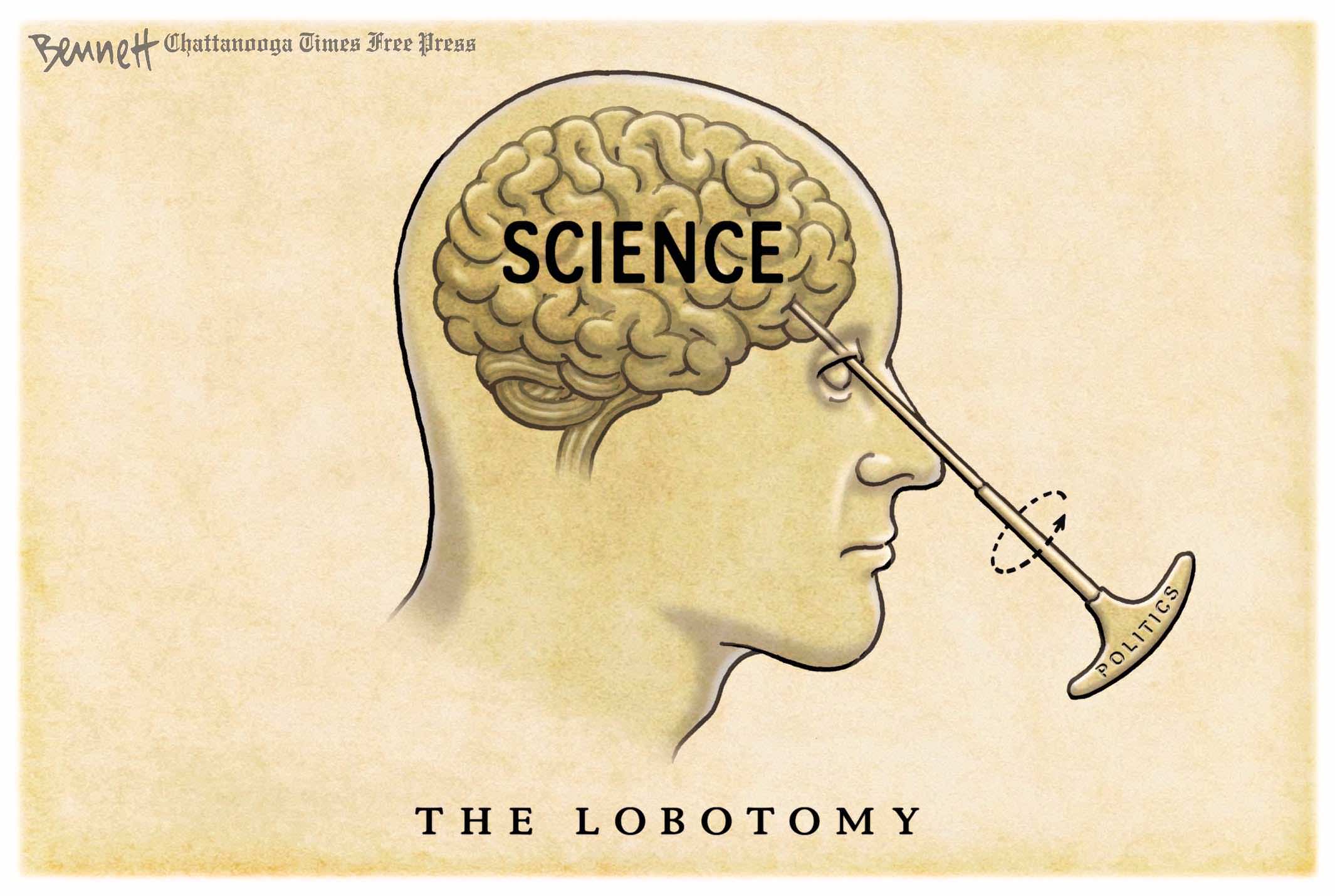
Censors at LinkedIn have permanently banned me from the social media site after I presented data drawn from peer-reviewed data used by the preeminent promoter of the narrative that man-made global warming threatens the planet— the U.N. Intergovernmental Panel on Climate Change (IPCC).
How can this be? Well, first, my offending posts placed today’s level of atmospheric carbon dioxide in the context of geological time, suggesting that life would be well served if there were more CO2 — exactly the opposite of what climate alarmists say. Secondly, I’ve had the audacity to publish facts — also know as the truth, multiple times on LinkedIn— that contradict the theory that humans face an “existential threat” from a harmless gas of which each of us daily exhales two pounds.
“Your account has violated the LinkedIn User Agreement and Professional Community Policies,” read the email from the site. “Due to the number and/or the severity of these violations, this account has been permanently restricted.”
The posts were of two charts. One showed that carbon dioxide levels were nearly 6,000 parts per million (ppm) 600 million years ago when many animal life forms first appeared in the Cambrian Era. Another illustrated a 140-million-year decline of CO2 levels — from 2,500 parts per million (ppm) to the current 420 ppm.
Implied in the data is that carbon dioxide levels eventually would drop to 150 ppm, at which point plants — and ultimately all life — begin to die from CO2 starvation. The concentration got as low as 180 ppm in the last ice age about 12,000 years ago. It was at 280 ppm at the beginning of the Industrial Revolution in the 19th century.
The addition of 140 ppm since then have likely come from man’s activities, primarily the burning of fossil fuels. If so, human activity has saved the planet from the existential threat of too little CO2. In any case, more of the powerful plant food is a good thing, as evidenced by the overall greening of Earth and record crop harvests of recent decades.
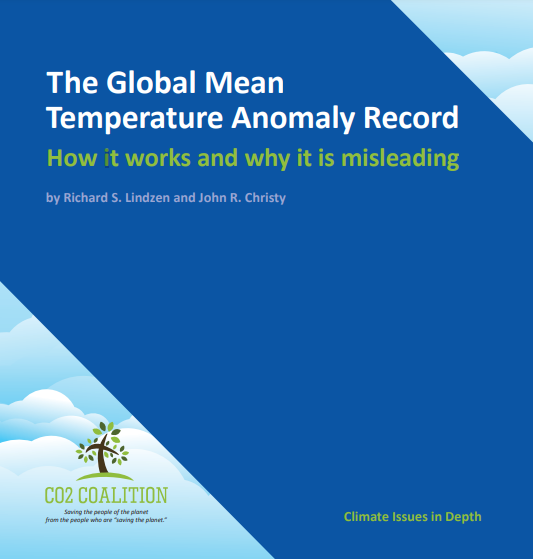
As executive director of the CO2 Coalition, I’ve had previous run-ins with LinkedIn censors. One involved a post about a CO2 Coalition paper on global temperatures. Although LinkedIn did not identify the broken rules, the only possible “violation” would have been an admonition to “not share false or misleading content.” The censored paper, The Global Mean Temperature Anomaly Record,was fully sourced and written by two of the top climate scientists in the world, Richard Lindzen and John Christy.
These are no lightweight scientists. Dr. Lindzen of the Massachusetts Institute of Technology is an award recipient of the American Meteorological Society and the American Geophysical Union. He is also a member of the National Academy of Sciences and was a lead author of the IPCC’s third assessment report’s scientific volume.
Professor Christy is the director of the Earth System Science Center at the University of Alabama, Huntsville, and has been Alabama’s State Climatologist since 2000. Along with Dr. Roy Spencer, he has maintained one of the key global temperature data sets relied on by scientists and government bodies. For this achievement, they were awarded NASA’s Medal for Exceptional Scientific Achievement.
Figure 4. As in Fig. 3 except for seasonal station and global anomalies. As noted in the text, the inhabitants of the Earth experience the anomalies as noted by the black circles, not the yellow squares.
The main thrust of the paper was to put the modest one-degree rise in temperature since 1900 in its proper perspective. When compared to wide swings in temperature experienced on a daily and yearly basis, that slight rise in global temperature over the last 120 years does not appear as alarming as portrayed by the purveyors of climate doom. Like so many others who challenge the notion of catastrophic man-made warming, the authors risked being censored by the intellectual elite — or those who identify as such. And they were.
The CO2 Coalition has been attacked by other climate cultists, including Facebook and members of a political class that insists on forcing its ideology on everybody. Obviously, we care more about the truth — and our freedom — than anybody’s approval.
As noted philosopher of science Karl Popper said, “Democracy (that is, a form of government devoted to the protection of the open society) cannot flourish if science becomes the exclusive possession of a closed set of specialists.”
Gregory Wrightstone is a geologist, executive director of the CO2 Coalition, Arlington, Va., and author of “Inconvenient Facts: The science that Al Gore doesn’t want you to know.” He has been an IPCC expert reviewer.
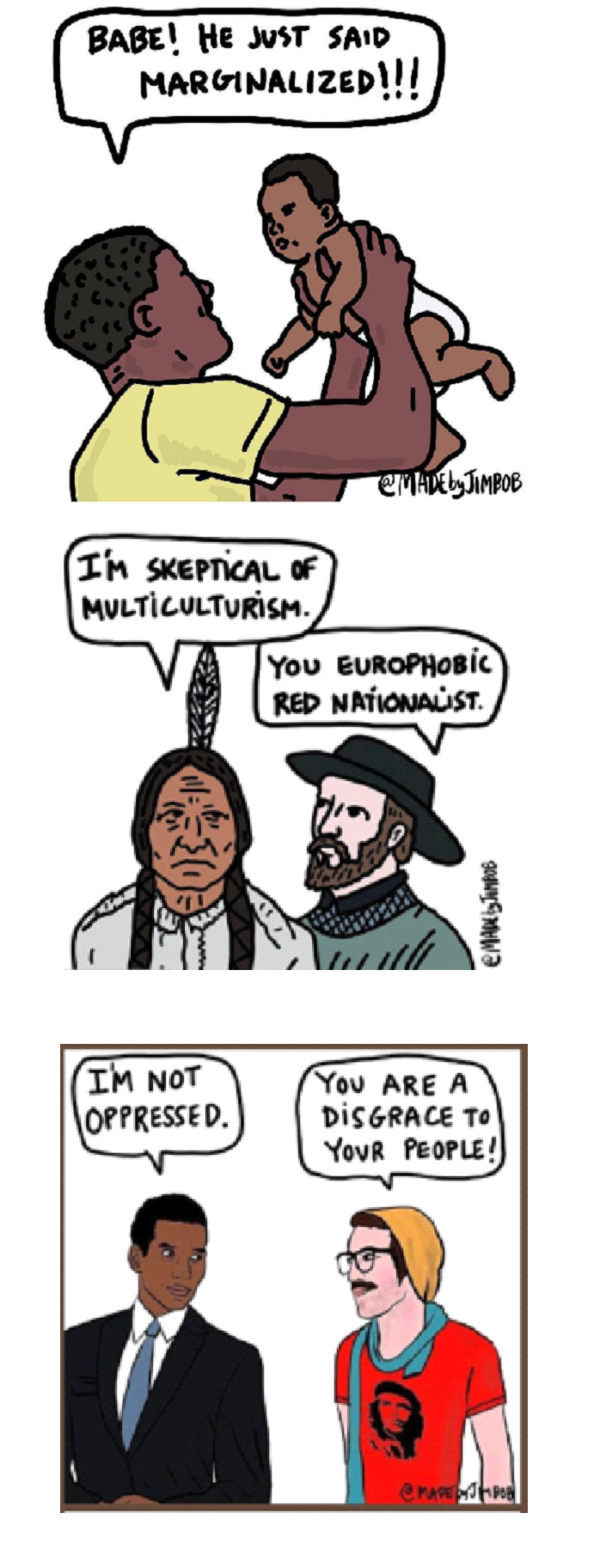
The litany of woke entitlements alleged by the left infringe on existing rights,
restricting the freedoms of some in order to benefit others.
When the political left finds a meme they really think sells, they go all-in. Such is the case with “forced birth” or “forced motherhood” in the wake of the Supreme Court’s Dobbs decision, which overturned Roe v. Wade and stated a Constitutional right to abortion does not exist. I wrote recently about how “forced birth” is a nonsensical description of pregnancies resulting (as is almost always the case) from consensual sex. Babies are a natural consequence of sex and procreation is the primary reason sex exists in the first place.
“Forced birth” or “forced motherhood” are projections of the left’s own brutality and reliance on force onto their political and cultural opposition. Abortion is force. Abortion kills; it is a brutal denial of this tiny, developing human’s right to life, the most fundamental of all rights. For the woman’s “right” to be exercised, another life must end. This wretched truth differs from the left’s construction of other “rights” only in degree, not in kind.
They predicate many of their “fundamental rights” on the coercion of others,
and if a so-called “right” is based on coercion, it is not fundamental,
merely an entitlement guaranteed by a bully state.
Of course, when we speak about coercion, abortion advocates point to exceptional cases such as pregnancy resulting from rape. As I wrote in my last piece, nonconsensual sex, especially resulting in pregnancy, is a grave loss of autonomy. Yet the innocent baby’s more essential right to life supersedes this loss of autonomy for nine months, as difficult a circumstance as it may be. One tragedy should not be compounded by another.
A baby’s right to life obviously doesn’t supersede a mother’s right to life.
That may be a reason to deliver a baby early, even too early to survive, but not a reason for deliberate destruction. What opponents of abortion are referring to, and what is being debated, is not situations in which carrying a preborn baby endangers the mother. The practice we condemn is the premeditated killing of a baby in the womb because that baby is not wanted, whether because of his paternity, apparent defect, or general inconvenience to the parents.
One of the definitions of “coerce” is “to deprive of by force.” So, it is fitting we call this kind of “right” a coercive entitlement. That classification extends far beyond abortion, though abortion is the most heinous of all.
Before further characterizing these coercive entitlements, let me address the other objection that will doubtlessly arise: that all our rights rely on at least the threat of the use of force, so what’s the difference? Force wielded by the state on those who would violate a right, which is the only way rights can be protected, is not the same as coercion or restrictions applied to people in order for a right to be exercised in the first place.
If I give a public speech and someone who hates my views comes and tries to drag me off the stage to shut me up, police should intervene to protect my right and take the perpetrator into custody. If, on the other hand, the police themselves drag me off the stage because my speech violates a law against “hate speech” meant to “protect” certain demographics, or if I don’t make that speech in the first place due to the threat of being dragged off to jail, that is force necessarily applied or threatened in order to guarantee this “right” to not be a victim of “hate speech.”
The Right Not to be Offended
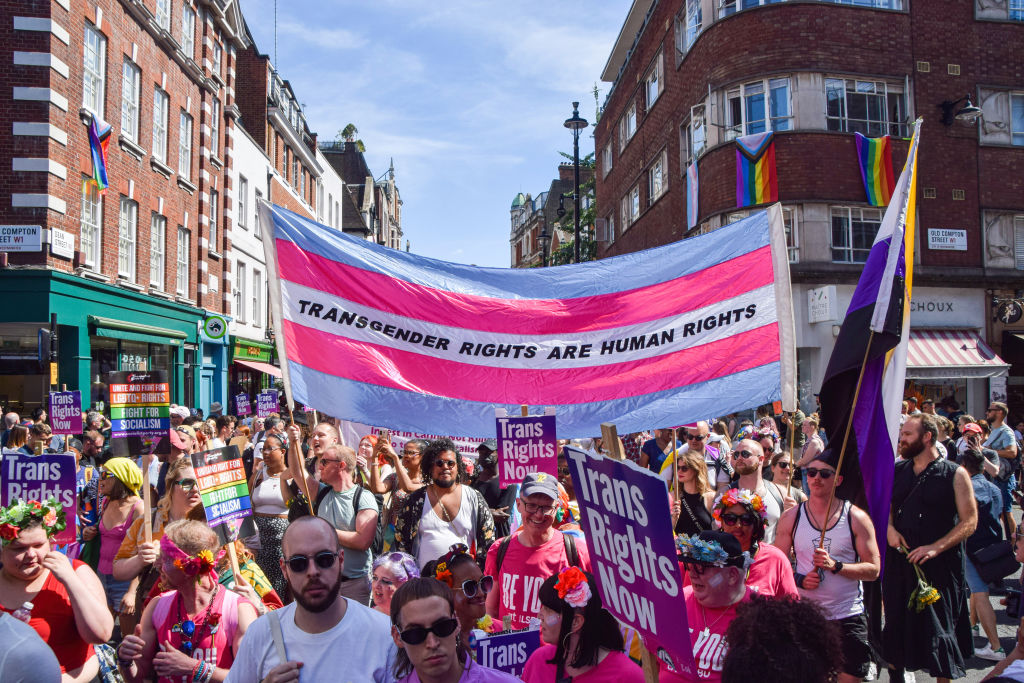
Woke rights are entitlements to coercion and the restriction of others’ rights previously recognized. To protect certain people’s “right to live their true selves,” for example, the far left alleges it has the constitutional right to limit others’ free speech so that some groups are not offended or emotionally wounded. With “misgendering” and “dead-naming,” we must in some cases be forced into certain speech for this right to “be one’s authentic self” to exist.
Again, with transgender athletes: it isn’t “equality” unless all institutions are forced to allow them to compete with the sex with which they identify. The right of parents to protect their children is also threatened by the left as children far below the age of consent are alleged to have the “right” to do permanent and severe damage to their bodies with so-called gender transition. They allege this “right” while children face social contagions they’re poorly equipped to handle and gender doctrines that confuse rather than elucidate. The right of parents to make medical decisions for minors are critical in these circumstances, and the far left would have them erased.
More Coercion Regarding Gays, Lockdowns
The alleged “right to equal treatment” for gay couples a la Masterpiece Cake Shop also relies on coercion. The left claims true “equality” isn’t achieved unless bakers, photographers, and floral designers can be forced to express views or support behaviors they disagree with.
Consider more recently the left’s fervent support for lockdowns in the name of a supposed “right” to not be infected, smearing those who disagree with them, who simply want to exercise their freedom to live a normal life, as “reckless” and “murderous.” The alleged entitlement to a reduced threat of Covid infection (or insert latest panic-inducing pathogen here) is dependent on restricting the more basic freedoms of others. Mask and vaccine mandates follow the same flawed logic.
Affirmative Action and Taxes
Universities likewise violate the right to equal treatment under the law through affirmative action. Applicants of certain minority statuses are given preferential treatment while non-minority applications may be “downgraded” simply due to applicants’ ethnicity, gender, or sexuality. The left would see affirmative action expanded and racial quotas in employment, now banned, used widely.
Even the most basic right to keep the money you earn has been infringed upon for decades by the government expressly for the purpose of distributing it to others who earn less. Those with fewer resources are entitled to the resources gained by others, according to the left.
Supplanting Natural Rights
The new, “woke” set of rights are just more aggressive iterations of this long-standing belief of the left: government must take some of the wealth, opportunity, freedoms, and rights of some in order to benefit others. Thus, the leftist coercive rights supplant natural rights identified by the Framers of our Constitution, rights that come from the Creator. Abortion as a “fundamental” right supplants the right to life. They cannot coexist. The rights to not be “victimized” by disfavored speech and to “be one’s true self” and be “equal” supplant the right to free speech. The “right” to not be infected with a certain pathogen supplants the rights to move about freely and to peaceably assemble. The latter rights must be abridged to uphold the new ones.
The “forced birth” talking point discussed above reminds us what is inside this trojan horse of entitlements alleged to be “civil rights” or “fundamental human rights:” bondage. The only real fundamental right leftists believe in is the right of the state to use force in enacting their agenda. From abortion to so-called gender transition, these new rights are definitionally authoritarian, abridging pre-existing rights to support themselves.
The quest of the woke left to free themselves from biological realities and natural order, as in the case of abortion, gender, and sexuality, and to achieve a more “equitable” society, relies on submission, subjugation, and if necessary, lethal force. The truth remains amid the temper tantrums and the angry memes:
There is no free, thriving society that can be achieved through the use of force
by one group of citizens in the name of another.
The usual suspects are stirring the panic pot over Monkeypox, and so far our trusted sources of health guidance, like CDC and FDA and NIH, have been silent. So in the public interest I put forward a two-step program by which every individual can self-protect against Monkeypox.
1. Do not handle monkeys, squirrels or other rodents,
2. Do not have sex with anyone who does, or who has open skin sores.
There you go. Refrain from these two activities and no vaccine required.
More from Dr. Malone, who actually is trustworthy:
The phrase “New World Order” (“NWO”) is a loaded term. For starters, the people who are pushing for a single world government prefer to call it “The Great Reset.” Additionally, NWO sounds like the ultimate conspiracy theory, complete with indivisible dots, imaginary lines, and tin foil hats. And yet there’s no doubt that the self-anointed elites across the world have coalesced around a single vision that involves ending fossil fuel and achieving total control over individuals to “protect” them from COVID. Still, people across the globe are pushing back and one group has a global vision of what this pushback can look like.
During COVID’s first two years, we learned that most First World governments happily embraced tyranny. Even in the face of mountains of evidence that the lockdowns and mask and vaccine mandates did nothing to improve the situation, governments not only didn’t stop, but they also dug in deeper, systematically taking away people’s rights.
No person embodied this more than Canada’s Justin Trudeau, who went from fuzzy tree hugger to steely-eyed tyrant overnight. Canada is still in deep lockdown mode, right there with China, with millions of gleeful fascist apparatchiks happily imposing the government’s diktats:
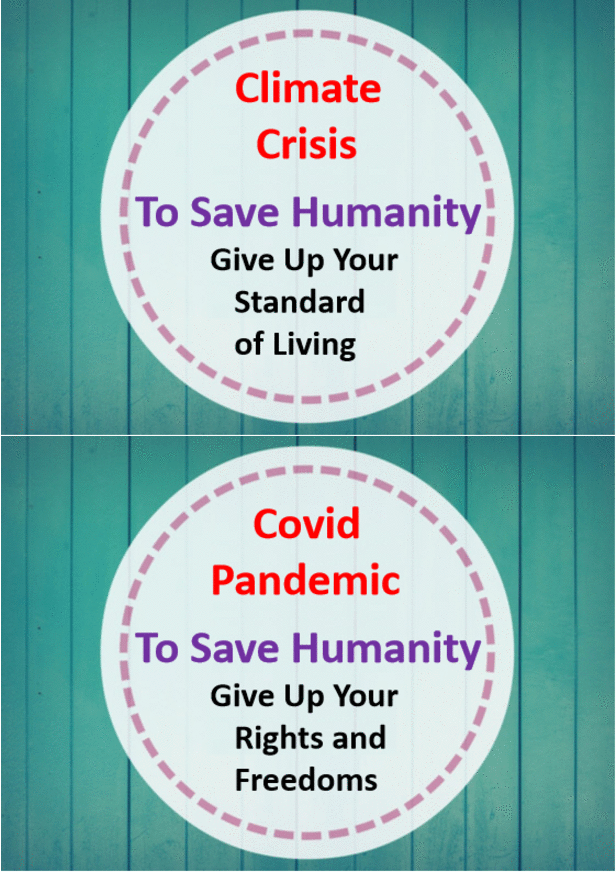
With COVID losing its power to frighten people, the world’s budding dictators are reverting to Climate Change to clamp down on power. The most recent outburst of this madness was in Holland, where the government announced that it was shutting down farmland (i.e., the place where food is grown) essentially to stop fertilizer and cow farts. (I simplify a bit but you know what I mean.) The farmers pushed back hard.
The Hague: Thousands of farmers drove their tractors along roads and highways across the Netherlands, snarling morning traffic as they headed for a mass protest against the Dutch government’s plans to rein in emissions of nitrogen oxide and ammonia.
And indeed, although it never makes it to the New York Times or Washington Post unless they can no longer avoid the topic, people all over the world are pushing back at COVID and Climate Change totalitarianism:
When vaccine passports were being implemented, protests took place around the world – but there was hardly any coverage from the media.
Due to the cost of living crisis, protests are happening around the world – but again, the media turns a blind eye.
According to the Carnegie Endowment for International Peace, which records protests worldwide, 11 countries are currently seeing protests of more than 1,000 people in response to the rising cost of living and other economic woes in 2022. As of July 5, Carnegie had recorded protests of more than 120,000 people in France, 100,000 in Spain, 10,000 in Greece, 10,000 in Kazakhstan, 10,000 in Sri Lanka, 10,000 in India, 5,000 in Iran, 5,000 in Peru, 1,000 people in Argentina, 1,000 in Morocco, and 1,000 in the U.K.
It’s Americans who are behind the curve on this one for two possible reasons. One, we believe ourConstitution will protect us. And while it certainly offers protections in theory, there’s every reason to believe that the Democrats currently controlling the federal government have no intention of letting it offer those protections in fact. Two, the Democrats’ January 6 “insurrection” hysteria has frightened Americans into abandoning their First Amendment rights.
But just as the tech world offers governments unprecedented power to control individuals by monitoring their every word, thought, and move, technology also can still be used to bring people across the world together in one giant, peaceful “NO!” against the gathering forces of tyranny. That’s the goal of an organization called Reignite World Freedom.
The organization’s mission is simple: End the globalism that is wrapping itself around the earth like a giant chain, magnifying the power of world governments stealing away their citizens’ liberty. The organization hopes to have what it calls a “global walk out.”
A unified, global event and convoy to your capital city.
Unelected bureaucracies like The World Health Organization (WHO) and The World Economic Forum (WEF) should not have the power to dictate policies in our countries.
Let’s send them a clear message they can’t ignore.
It’s time for governments around the world to consider replacing and leaving these ‘globalist’ organizations.
I.How will the Global Walkout work?
1.A global WALK OUT from the society they’re trying to enslave us into, including an optional convoy to occupy your capital city. The length of the walkout will depend on the momentum built in each country.
2.We will not announce the walk out dates until we have enough pledges worldwide.
3.If you can’t participate in the convoy, that’s fine. You can still commit to walk out for as long as you can.
4.You can choose one or more of these options when you pledge;
Walk out of work and have a holiday.
Walk your children out of school.
Walk away from spending money at corporations that support globalism.
Walk away from consuming any mainstream media or streaming channels.
Convoy to your capital city on the scheduled dates (yet to be announced). Read more here.
The organizers want people to sign a pledge before setting a date.
I don’t know how well this fascinating idea will work in the U.S., especially because of the January 6 crackdown. Still, if people don’t push back against the COVID and Climate Change cudgels, we will enter a new dark age (literally dark, as in no fossil fuels) in which most Westerners, after decades of prosperity, live in squalor and despair.
MN Gordon explains the financial debacle in his Economic Prism article Modern Monetary Theory Bites the DustExcerpts in italics with my bolds and added images.
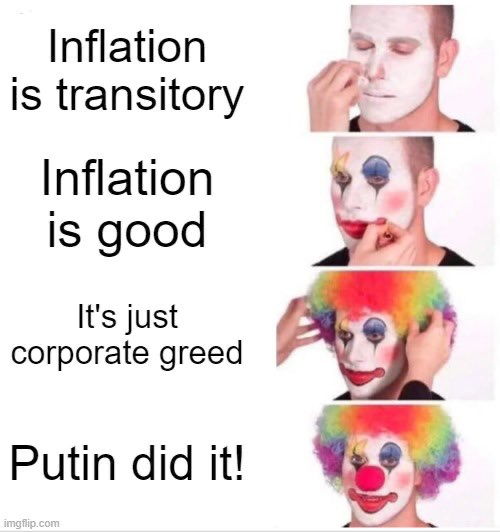
Just a couple of years ago Modern Monetary Theory (MMT) was all the rage. But that was before rampant money printing triggered an official consumer price inflation rate, as measured by the consumer price index (CPI), of 9.1 percent.
Hindsight is always 20/20. Yet, sometimes, foresight is 20/20 too. In the case of MMT, practically everyone could see there would be hell to pay…even through broken spectacles.
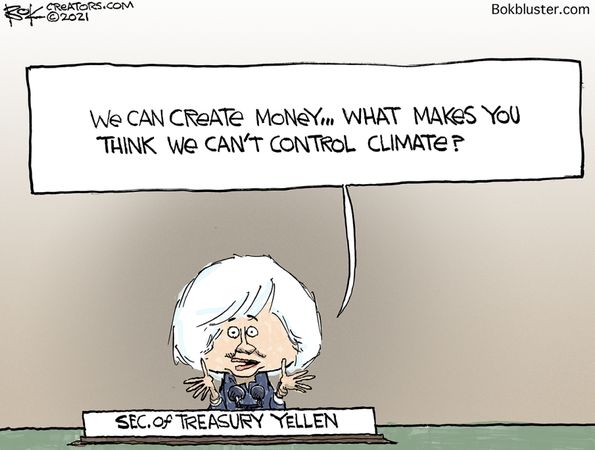
The future consequences were crystal clear. Printing up money and passing it out around town, thus entitling people to claims on goods and services without commensurate production, is fundamentally foolish, reckless, and outright suicidal.
Only academics and central bankers were blind to the arrival of today’s inflation.
If you recall, as inflation was heating up during the second part of 2021, Federal Reserve Chairman Jerome Powell and Treasury Secretary Janet Yellen told everyone it was transitory. Then, as inflation continued unabated, Powell finally admitted in December 2021 that inflation was no longer transitory and that the word needed to be retired.
Powell and Yellen have their finger prints all over this consumer price inflation mess. Yet they didn’t act alone. Advocates of MMT cheered on their mass money printing with righteous assurances. They said inflation wouldn’t be a problem.
But now that consumer price inflation is raging at a 40 year high, where did the promoters of MMT go? Why aren’t they tackling inflation with the same enthusiasm?
Fanciful schemes offering the more abundant life always yield the unsuspecting and outright gullible to the assurances of dreamers, schemers, theorists, reformers, and scoundrels of all stripes. Promises of something for nothing are too intoxicating to pass up.
For several years Alexandria Ocasio-Cortez, Bernie Sanders, and other American socialists, served up fresh pitchers of grape Flavor-Aid laced with MMT as a solution to all the downtrodden’s problems. To join the cult all you had to do was drink from their cup.
MMT, as you may have heard, offers booms without busts, and money without limits.
The nuts and bolts of the theory state that a government that creates its own money, like the USA, cannot default on its dollar based debts. Therefore, the USA can print all the money it needs to amplify the economy – debts and deficits be damned.
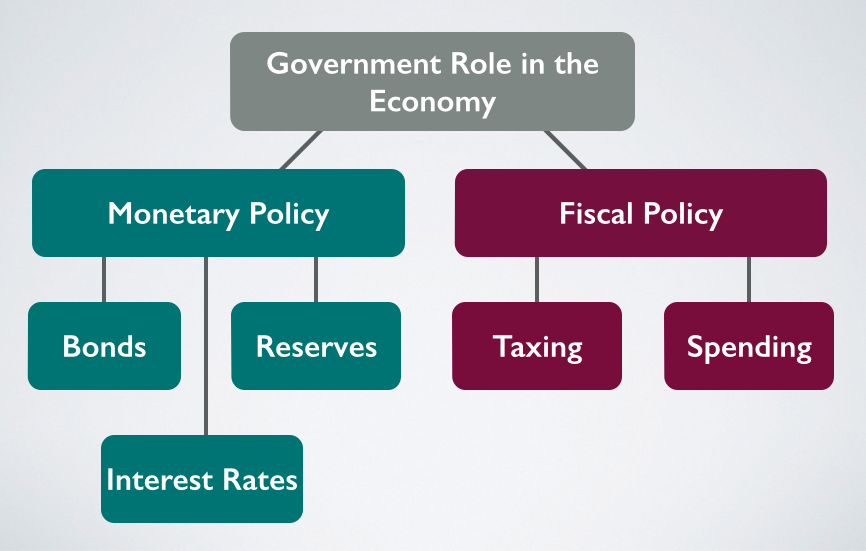
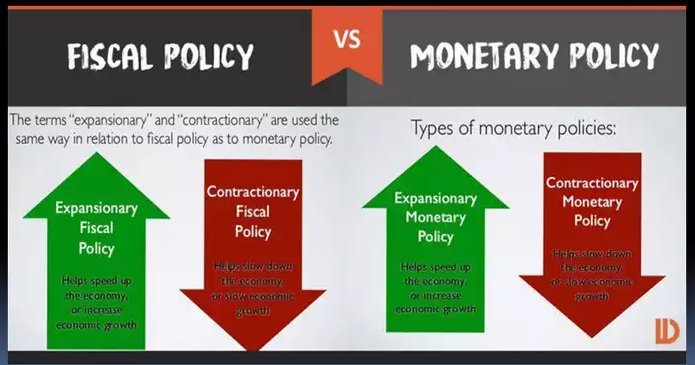
Should such overt dollar debasement lead to price inflation, MMT has just the solution. Raise taxes and issue bonds to remove the excess money from circulation.
Taxes, you see, are not for funding government spending. Rather, they’re for throttling back the money supply to attain the magical balance of growth and inflation. With MMT, big government statists can hatch boondoggles first, and leave taxation for later.
The whole theory, or lack thereof, is abundantly retarded. Yet in early 2020, something abundantly retarded was precisely what was needed.
When quantitative tightening (QT) was abruptly terminated and reversed in September 2019, the Fed’s balance sheet was $3.7 trillion. Soon after, in the face of the fabricated coronavirus hysteria, the Fed jacked up its balance sheet by $5.2 trillion to a high of $8.9 trillion. A good part of this took place between March and June 2020.
What happened next…
Cult of MMT
At first, the consequences were nonexistent. In February 2021, after nearly a year of monster money printing, the CPI showed an annual rate of inflation of just 1.7 percent. MMT supporters were riding high.
By that point, the U.S. government, and by extension the American people, were fully committed to a program of currency debasement to finance government mandated lockdowns. Washington was also attempting to inflate away its debt burden. The authorities prefer an implicit default via inflation as opposed to missing bond payments to creditors.
…all so governments, and individuals, can spend well above what they can afford, and then welsh on the debt without consequences.
During the rampant money printing of 2020 and 2021 Stephanie Kelton emerged as the MMT messiah. In June 2020, her book, “The Deficit Myth: Modern Monetary Theory and the Birth of the People’s Economy,” was published.
It quickly became a New York Times Bestseller. And it also received rave reviews from unlikely places. Upon reading the book, gangsta rap pioneer, Ice Cube, for example, tweeted on September 3, 2020, the following means of salvation:
“America loves to cry broke. But in America money does grow on trees.”
“America is a currency creator so there’s no reason for people to live like this. Government and the banks have made a deal to keep the people in debt. They always say if you print money it will cause inflation. They just printed 3 trillion. Little or no inflation.”
Does a 9.1 percent CPI reading, with an unofficial reading of nearly 18 percent,
constitute little or no inflation?
Modern Monetary Theory Bites the Dust
Currently, the Fed’s balance sheet is roughly $8.9 trillion. And consumer price inflation is raging at a 40 year high. What’s more, the Fed is hiking rates with the purpose of containing inflation. But the only way for the Fed to contain inflation is to trigger a massive, 1930s-style depression.
The cult of MMT, like most cults, has proven to be lacking for the general populace. Instead of bringing wealth and abundance to the American worker it has brought wealth and abundance to the elites and central planners who first receive and direct the flow of the newly minted fake money.
Moreover, like most cults, when MMT’s leaders are needed most, they conveniently disappear.
Is Kelton not a true believer in MMT, after all? Because if Kelton was a true believer, wouldn’t she be advocating for higher taxes right now?
That’s how MMT is supposed to work, right? When inflation heats up, taxes are supposed to be raised to remove excess money from circulation? Isn’t that the MMT solution to inflation?
Kelton, however, is not banging the drum for higher taxes. Perhaps, this is because higher taxes are perennially unpopular. Similarly, promoting money printing is much more hip and cool than promoting higher taxes.
Did MMT just bite the dust?
For now, it appears to have. We suspect it will be gone until a massive depression wipes away inflation.
Then it will be resurrected to great folly so the money printers can really get to work.
Background on Magical Money Theory
Pardon me for mixing up acronyms. Somehow the increasing mention of MMT (Modern Monetary Theory) made me think of the classic Beatles trip album. Perhaps that association was triggered by today’s suddenly fashionable socialists relying on MMT to pay for their “everything free for everybody” political visions. (Maybe one of the Ms could stand for ‘mushrooms”.)
A primer on what MMT is and is not, is an article by Karl Smith (descendant of Adam?) in National Review The Uses and Abuses of Modern Monetary Theory. Excerpts in italics with my bolds.
MMT advocates overlook its flaws.
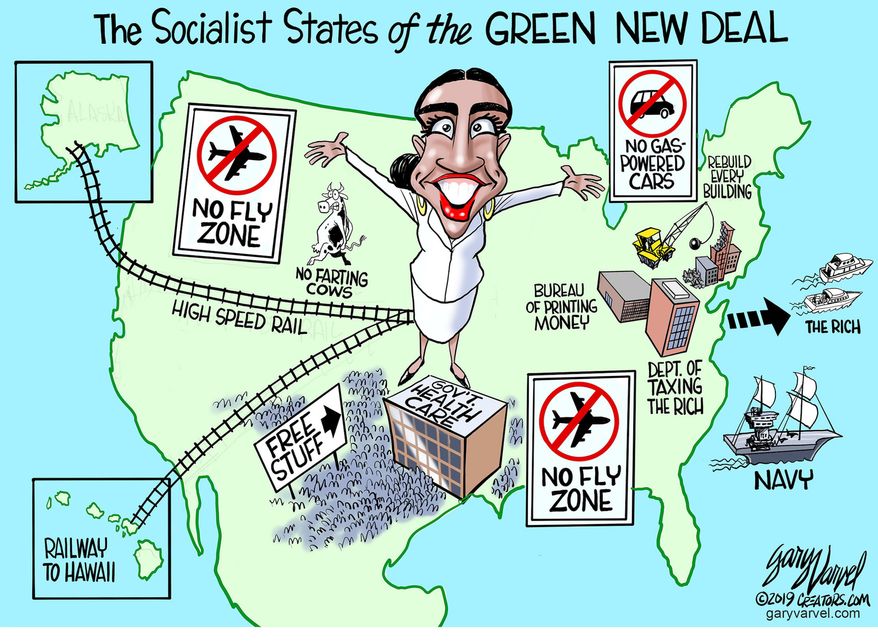
Newly elected representative Alexandria Ocasio-Cortez (D., N.Y.) argued on Monday that Modern Monetary Theory (MMT) ought to be a part of the conversation when it comes to funding major social-policy initiatives, such as her proposed Green New Deal. Stephanie Kelton, former economic advisor to Bernie Sanders, has likewise insisted that MMT should replace our current thinking about government finance. Yet what is MMT? And is it really as revolutionary as its proponents claim?
At its heart, MMT is a way of describing the federal budget and the Federal Reserve as if they were unified under a single executive authority. In describing the system so, the dangers of federal deficit spending are no longer that it crowds out private investment and slows economic growth, but that it leads potentially to excess inflation.
Yet Modern Monetary Theorists then invariably argue that inflation is not, and indeed could not be, a major problem for the United States. Many hard-core adherents go so far as to propose a job-guarantee program paid for by the federal government, which, they argue, will virtually eliminate both unemployment and the possibility of runaway inflation.
The tenets of MMT should be familiar to an older generation of fiscal conservatives. Before the 1980s, central banks such as the Federal Reserve were controlled far more directly by their governments. As a result, they could — and often did — bail out profligate governments by simply printing more money to cover the government’s debt.
This led to massive currency devaluation, runaway inflation, or both. In the early 1980s, however, central banks in the developed world were granted independence in the hopes that doing so would stop the spiraling inflation of the late 1960s and 1970s.
In the U.S., Fed chairman Paul Volcker was spectacularly successful at this. So were, to varying degrees, most central banks in the developed world. Some holdouts existed, notably in Southern Europe — a situation that would come back to haunt them decades later.
But MMT waves away the significance of these developments, instead focusing attention on several technical facts. First, when the federal government wants to spend money, it does so by having the Treasury issue checks. These checks are processed by the Federal Reserve Bank of New York (FRBNY). Second, the FRBNY does this literally by marking up the value of digital reserves in an account belonging to the check recipients’ bank and marking down the account of the Treasury by an equal amount.
These two operations are, in theory, separate. There is no technical reason why the FRBNY has to mark down the Treasury account. It only does so because laws require the federal government to meet all of its obligations. Such laws, argue Modern Monetary Theorists, cannot bind Congress, which after all has the power to alter them.
MMT advocates argue that Congress should ask the Treasury to sell Treasury bonds to cover any of its outstanding obligations. This is not, however, because they think it is necessary to fulfill the government’s obligations, but because doing so would help stabilize the macroeconomy.
All well and good. But at some point, won’t the debt become so large that merely paying interest on it will require issuing additional debt? Won’t this process feed on itself until all the borrowing capacity in the economy is soaked up?
No, MMT advocates reply, because the government can simply stop issuing debt — meeting its obligations instead by having the Federal Reserve simply create money on its behalf.
Indeed, this is what distressed governments have traditionally done when their liabilities add up — and the result has typically been hyperinflation. Modern Monetary Theorists argue that this need not be the case. Their exact reasoning differs.
At times, they argue that hyperinflation only occurs in countries that borrow from abroad in debt denominated in a foreign government’s currency. I don’t know enough about every single instance of hyperinflation to verify this claim, but it is true that the worst incidences of hyperinflation are typically associated with borrowing from abroad.
When a country prints money in an attempt to fund the government, the international exchange value of its currency collapses. If the country owes debt denominated in a foreign currency, that debt becomes more difficult to pay down as its own currency falls. Then the country has to print even more money to meet its debt payments, which of course causes the exchange value of its currency to fall further, creating a vicious circle that ends in hyperinflation.
Modern Monetary Theorists argue that this can’t happen to the United States because all of our debt is in the form of Treasury bonds that are denominated in dollars. If the international exchange value of the dollar falls, that does not change the value of our debt.
It does, however, mean that foreigners will be repaid in a currency that will be worth much less to them. Foreign bondholders are not stupid; they would regard this as a type of unofficial default. After experiencing this type of default through currency devaluation, they would be much less willing to buy Treasury bonds or indeed any type of American security again. This is precisely the situation that Italy, Spain, and Greece found themselves in during the 1980s.
Both countries had regularly devalued their currency as a way to get out from underneath foreign debts and were increasingly locked out of international markets. The euro was created, at least in part, in an effort to solve this. It could ultimately be printed only with the authority of the European Central Bank, meaning that neither Italy, Spain, Greece, nor any other member country could avert a debt crisis by devaluing its currency. Instead, they would have to raise taxes to meet their obligations.
That brings us to the second argument MMT advocates invoke when arguing that we should not worry about excessive debt leading to inflation: If inflation becomes a problem, the federal government can simply raise taxes, slowing down the economy which, in turn, will cool inflation.
But there are two problems with this approach. First, it is political suicide. At a time when consumers are facing ever-rising prices, it would seem cruel beyond measure to slap them with a tax increase. Very few governments would have the nerve to do this. If anything, history shows us that governments will instead resort to spending money on subsidies to ease the burden of rapidly rising prices.
Second, committing to this approach would risk an economic calamity. In 1973, OPEC placed an embargo on the United States that resulted in the price of oil quadrupling overnight. The sharply rising price of oil led both to a slowing economy and an increase in inflation — a dangerous mix.
A slowing economy lowers tax revenues, making it more difficult for the government to meet its debt payments. Suppose, at a time when the economy was slowing but inflation was rising, the U.S. government had firmly committed itself to MMT principles and refused to waver. In that case, it would not be able to resort to money printing because inflation was rising. Instead, it would be obligated to raise taxes both to meet its debt payments and to slow the rate of inflation.
Sharp increases in taxes during a recession, however, can be self-defeating. This is exactly the situation that Greece, and to a lesser extent Italy and Spain, found themselves in during the Great Recession. The crises lowered revenue, which worsened their budget deficits.
As a result, the government was forced to raise taxes and lower spending during the recession. This caused the economy to contract further, which caused tax revenue to fall so much that the budget deficit actually rose. In the case of Greece, this self-defeating cycle of higher taxes and lower revenues caused the government to ultimately default on its debts anyway. That, of course, worsened the economic crisis the country was already facing.
In the face of such a calamity, no sovereign government would or perhaps even should refrain from devaluing its currency and inflating away at least some of its debts. For that reason, governments have designed institutions to avoid falling into this trap.
In the United States, that means both making the Federal Reserve independent and not subject to the direct authority of the Treasury, and requiring the Treasury to meet all of its obligations with cash raised from tax revenues or Treasury-bond sales. In effect, we’ve outlawed the methods of Modern Monetary Theory — and with good reason.
KARL SMITH — Karl Smith is a senior fellow at the Niskanen Center. He was previously Assistant Professor of Economics and Government at the University of North Carolina (UNC) School of Government.
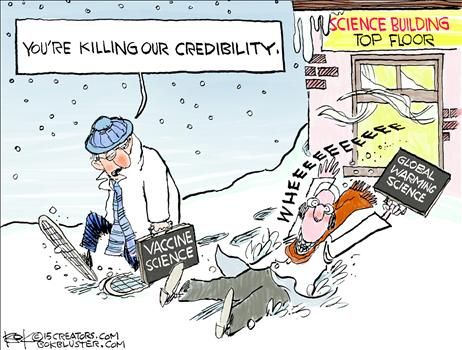
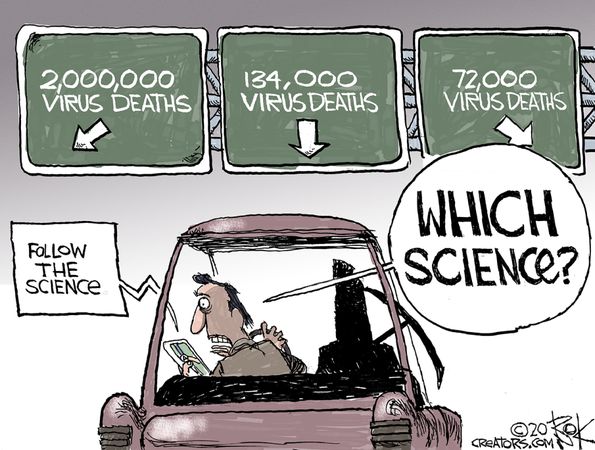
Oh the Irony! A 2015 cartoon where a vaccine scientist is miffed at incredibility displayed by climate scientists. Dennis Prager explains why these days citizens have lost trust in scientists of all stripes. His American Greatness article is You’re a Scientist? So What? Excerpts in italics with my bolds and added images.
Scientists helped ruin millions of children’s educations and helped spur a sharp increase in depression, drug use, and suicide among young people. So, by all means, question the science!
A caller to my radio show this week, a physician, took strong issue with me regarding COVID-19 therapeutics. He accused me of not believing in science. His last words before we had to go to a commercial break were, “I’m a scientist.”
Given that I am not a scientist, he assumed that comment would persuade me—or at least persuade many listeners—that I was not qualified to disagree with him. If that was his assumption, he was wrong.
“I don’t care,” I responded. “It’s irrelevant. Scientists have given science a bad name.”
I would not have said that as recently as three years ago. But in recent years, and especially in the past two years, some basic suppositions of mine have changed.
I no longer assume when I read a statement by a scientist that the statement is based on science. In fact, I believe I am more committed to scientific truth than many scientists are.
The American Medical Association advocates the removal of sex designation from birth certificates. If many doctors or other scientists have issued a dissent, I am not aware of it.
“Assigning sex using binary variables in the public portion of the birth certificate fails to recognize the medical spectrum of gender identity.” Those are the words of the author of the AMA report, Willie Underwood III, M.D.
Sarah Mae Smith, M.D., an AMA delegate from California, speaking on behalf of the Women Physicians Section, said, “We need to recognize gender is not a binary but a spectrum.”
When the American Medical Association and a plethora of physicians tell us that human beings, unlike every other animal above some reptilian species, are “not binary,” i.e., neither male nor female, the assertion “I am a scientist” becomes meaningless.
In mid-2020, at the height of the COVID-19 pandemic, when the medical community was demanding physical distancing, mask-wearing, and the lockdown of businesses and schools, more than a thousand health care professionals announced that the protests against racism then taking place—events with no social distancing, often no masks, plenty of yelling, and people “coughing uncontrollably” (New York Times description)—were medically necessary.
Jennifer Nuzzo, a Johns Hopkins epidemiologist, tweeted, “We should always evaluate the risks and benefits of efforts to control the virus. In this moment the public health risks of not protesting to demand an end to systemic racism greatly exceed the harms of the virus.”
Over 1,000 health care professionals signed an “open letter advocating for an anti-racist public health response to demonstrations against systemic injustice occurring during the COVID-19 pandemic.”
The letter said, among other things, “Do not disband protests under the guise of maintaining public health for COVID-19 restrictions” and labeled “pervasive racism . . . the paramount public health problem.” That’s a left-wing cant, not science.
Now you can better appreciate why “I am a scientist” no longer means what it once did.
How about the cruelty of not allowing the dying to be visited by loved ones—even if they wore a hospital mask, even if they agreed to wear a hazmat suit? Did that enhance your view of scientists’ medical judgment?
Then there was the American medical community’s opposition to therapeutics, dismissing hydroxychloroquine and ivermectin (both used with zinc) as frauds despite the testimony of numerous physicians that they saved COVID-19 patients’ lives when used appropriately. State medical boards around the country threatened to revoke the medical license of any physician who prescribed these drugs to treat COVID-19—despite these drugs being among the safest prescription drugs available.
As early as July 2020, Harvey Risch, M.D., Ph.D., professor of epidemiology at the Yale School of Public Health, wrote in Newsweek: “I myself know of two doctors who have saved the lives of hundreds of patients with these medications, but are now fighting state medical boards to save their licenses and reputations. The cases against them are completely without scientific merit.”
As a result of the American medical community’s opposition to therapeutics, Risch wrote, “tens of thousands of patients with COVID-19 are dying unnecessarily.”
Doctors throughout America were essentially telling COVID-19 patients, “Go home, get rest, and wait to see if your COVID-19 gets worse. If you can’t breathe, come to the hospital where we can put you on a ventilator.” Ventilators, it quickly became clear, were a virtual death sentence for COVID-19 patients. And then they died alone.
Another example of the decline of seriousness about science among scientists was National Institutes of Health Director Francis Collins urging his colleagues to boycott any “high-level” scientific conference that doesn’t have women and underrepresented minorities in marquee speaking slots.
And another: Heather Mac Donald reported that in 2020, “The NIH announced a new round of ‘Research Supplements to Promote Diversity in Health-Related Research.’ Academic science labs could get additional federal money if they hire ‘diverse’ researchers; no mention was made of relevant scientific qualifications” (emphasis added).
How many scientists protested the shutting down of schools for nearly two years? Some did, like those who signed the Great Barrington Declaration, but for the most part the scientific community was silent. In other words, scientists helped ruin millions of American children’s educations, not to mention abetted the unprecedented increase in depression, drug use, and suicide among young people.
These are only a few reasons not to take “I am a scientist” as seriously as we once did.
But there may be two consolations: One is that the same rule now applies to “I am a professor,” “I am a teacher,” “I am a rabbi,” “I am a priest,” “I am a pastor,” “I am a journalist,” and “I am a doctor.”
The other is that there are exceptions. Thank God.
Footnote: Some Additional Reasons to Doubt Scientists
Some good news about education materials to inoculate children against brainwashing by woke teachers and social media messaging. H/T Tom Woods for an alert to these timely resources for today’s families. From Tuttle Twins website.
Dear Parent,
If you’re like me, you’re worried about the “new normal” society is trying to cram down our throats.
In the wake of Covid-19, the government has asserted its power, printed a ton of new money, and restricted our rights.
Our kids have had to adjust, too — and many of us struggle to know how to help them understand what’s happening in the world.
To make matters worse, the public school system, the mainstream media, and the entertainment industry aren’t helping. They are openly pushing socialism and woke-ism
into the minds of our kids every day.
Just recently, an elementary school in my community plastered the wall with the ABCs of socialist activism — teaching kids terms such as “W is for woke,” “S is for social justice,” and “A is for activist.”
These radical messages work their way into school curriculum, movies, advertising, and social media platforms to persuade our impressionable children.
Parents like you struggle to find educational material that doesn’t lie about our nation’s history or teach that the government is the solution to our problems.
You want to help your children learn about true history, sound money, personal freedom and responsibility, entrepreneurship, individual rights, and more.
The Tuttle Twins are the only books that help children develop critical thinking skills about real-world concepts—sharing ideas with kids that most adults don’t even know!
Let’s be honest, most children’s books teach very basic ideas, if any at all—they’re full of fluff and silly stories. And while these can be good to develop reading skills and phonetics, they typically don’t teach children important ideas that they can apply in their life.
Our books recognize that the world is full of companies, people, and politicians who want to expose your children to ideas you do not support.
This includes school teachers who see their job as “activism” to spread leftist ideas and encourage children to think like they do.
The Tuttle Twins empower parents like you to make sure your children have a foundation of freedom—to understand the ideas of a free society that socialists are trying to hard to undermine.
With our books, your children will learn things like:
Why a free market economy is the greatest way to lift people out of poverty and allow people to trade with one another.
How property rights allows us to decide what’s best for us, and make decisions for our family.
Why the world is a better place because of entrepreneurs who create businesses to help serve us and improve our lives.
What socialism is and why it is so destructive to our freedoms and well being.
How the Golden Rule is so important to people getting along with one another, no matter where we live, what we look like, or what we believe.
Why education is so important, and why children should be allowed to learn things they are interested in.
What true laws are, and why the government should protect our rights.
…and so much more!
Footnote: Woke Pressure on Authors of Books for Children
Dr. Seuss books were the best sellers
Until In recent years they have been targeted for imagery deemed stereotypical or out-of-date. A 2014 scholarly work asserted that The Cat in the Hat is an elaborate mockery of black people. In 2017, when then-First Lady Melania Trump gifted a collection of Dr. Seuss to a Massachusetts school, the books were returned by librarian Liz Phipps Soeiro with a note that the literature was “steeped in racist propaganda, caricatures, and harmful stereotypes.”
In 2019 a full on witch hunt was triggered when researchers Katie Ishizuka and Ramón Stephens published a study in the journal “Research on Diversity in Youth Literature” entitled “The Cat Is Out of the Bag: Orientalism, AntiBlackness, and White Supremacy in Dr. Seuss’s Children’s Books,” deeming them vehicles of “white supremacy.” To appease outraged woke parents (activists?) Dr. Seuss school events were canceled and six popular books selected to go out of print.
After canceling six Dr. Seuss books on spurious charges of racism, the massive German publishing giant and the secretive company that owns the rights to the deceased author’s work announced that they would be unveiling new “inclusive” Seuss books by diverse writers.
Seuss, or Theodor Geisel, an old dead white man is insufficiently diverse for his publishers.
While the names of the new stable of “inclusive” writers haven’t been made public, Penguin Random House, a subsidiary of the German Berteslman giant, also publishes or distributes prominent racists like Ibram X. Kendi, Robin DiAngelo, and Ta-Nehisi Coates.
Remember the Magic School Bus?
The Magic School Bus is back in the new Netflix series The Magic School Bus Rides Again! Overall, it’s still a nice, fun 13-episode series like we remember from when we were kids, but with some left turns. There is a pretty predictable take on climate change propaganda for little kids, but that wasn’t the worst. That dubious honor goes to the episode that teaches kids that a monster will eat them if they don’t use alternative clean energy sources.
Episode 12, “Monster Power,” teaches kids that a monster will eat them if they don’t use alternative clean energy sources. Albert, one of the students, has seen a movie in which the evil monster loves pollution and is “coming for us next for what we’ve done to this planet!” With the class camping in the woods, Miss Frizzle and the other students help him come up with clean energy alternatives (wind, water, etc) so they won’t be eaten. Instead, Miss Frizzle could tell him that monsters aren’t real, but I guess that didn’t occur to her.
Babylon Bee Chimes in with their list of dangerous children’s books
Your child’s bookshelves are crawling with racism and toxic problematicness.
But don’t worry — it’s nothing we can’t fix with a little good, old-fashioned book burning.
There are hundreds of children’s books that could use a good canceling. But let’s just start with these for now:
1. Horton Hears a Who — This Seuss book hasn’t been canceled yet, but it sure needs to be. The book claims a person is a person no matter how small, showing that Seuss hates women’s rights and wants to control their bodies.
2. Chicka Chicka Boom Boom — Prominently features the letter “Q.”
3. Every Berenstain Bears book — These books perpetuate the idea of a nuclear family with traditional values. They also appropriated furry culture.
4. Clifford the Big Red Dog — He’s literally a dog whistle for far-right neo-Nazi extremists and their affinity to the color red.
5. Charlie and the Chocolate Factory — Teaches kids there should be consequences for bad behavior without even considering the child’s race, ethnicity, or history of being oppressed.
6. The Very Hungry Caterpillar — This book encourages kids to consume and consume, destroying the environment for their own personal gain.
7. Goodnight Moon — Honestly, it’s probably not racist, but if we have to read this book to our kids one more time we’re gonna die.
8. The Jungle Book — Insensitive and stereotypical of Indian culture. Mowgli is called “man-cub,” and don’t even get us started on that loaded term. How has this not been canceled already?
9. If You Give A Mouse A Cookie — Teaches kids about cause and effect– which, as we all know from corporate anti-racism training, is an aspect of white culture not shared by other people groups.
10. The Tuttle Twins — Free markets? Individual responsibility? American history? Are you kidding? Where do we even start? We literally can’t even with this one.
11. The Little Engine That Could — Implies that hard work and effort can help you overcome challenges, which is pretty tone-deaf considering oppressed groups aren’t able to benefit from hard work.
12. Genderqueer Marxist Baby — Actually this one seems fine.
Get out the kerosene if you love your children. (satire/off)
In April, CNN published an opinion piece arguing that the “right-wing children’s entertainment complex is upon us.” Prominently featured as a case in point were the Tuttle Twins children’s books, created by Connor Boyack to offset the progressive propaganda that many children now confront in classrooms across the country.
The books, which have sold more than 3.5 million copies, weave in libertarian themes related to individual freedom, limited government, free markets, and entrepreneurship, and frequently highlight the work of great thinkers such as Frederic Bastiat, F.A. Hayek, Ludwig von Mises, and FEE founder, Leonard Read.
“The goal is to seal conservatives’ children off from a broader culture, to protect them from supposed liberal indoctrination by getting a head start on conservative indoctrination,” wrote Nicole Hemmer, a researcher at Columbia University with the Obama Presidency Oral History Project, in her CNN article.
Boyack laughed when he read that. “I find it humorous that those in the left-dominated media are wringing their hands about a few of us doing what they have long been doing,” he told me this week. “The progressive mob has long been infiltrating and leveraging pop culture, the school system, and entertainment outlets—and suddenly they’re outraged when we’re providing a counter message to their myopic, woke worldview? They’re clearly crocodile tears—faux outrage over something the ‘left’ has long been up to.”
But Boyack welcomes more criticism from left-leaningmedia sites because it boosts his sales. Parents, it turns out, are clamoring for learning materials that offer different viewpoints and perspectives than what their children receive in their schools and throughout the broader culture.
Walter Russell Mead explains in his Hudson Institute article End of the German Idyll. Excerpts in italics with my bolds. H/T John Ray
G7 leaders during a working session at the G7 summit in Schloss Elmau on June 28, 2022 near Garmisch-Partenkirchen, Germany. (Photo by Stefan Rousseau via Pool/Getty Images)
Germany looked normal over the weekend as a genial Chancellor Olaf Scholz welcomed the Group of Seven leaders and their guests to the luxurious Schloss Elmau in the Bavarian Alps. But those appearances are deceiving. Germany is facing its gravest challenges since the foundation of the Federal Republic following World War II.
This is very sudden. As recently as 2020, almost the entire world agreed with the smug German self-assessment that Germany had the world’s most successful economic model, was embarking on the most ambitious—and largely successful—climate initiative in the world, and had perfected a values-based foreign policy that ensured German security and international popularity at extremely low cost.
None of this was true.
The German economic model was based on unrealistic assumptions about world politics and is unlikely to survive the current turmoil.
German energy policy is a chaotic mess, a shining example to the rest of the world of what not to do.
Germany’s reputation for a values-based foreign policy has been severely dented by Berlin’s waffling over aid to Ukraine. And German security experts are coming to terms with a deeply unwelcome truth:
Confronted with an aggressive Russia, Germany, like Europe generally, is utterly reliant on the U.S. for its security. At a time when American foreign policy increasingly prioritizes Asia and isolationist sentiment among both Republicans and Democrats appears to be rising, if Donald Trump returns to the White House in 2025, German security will depend on his goodwill.
Mr. Scholz and his coalition government have responded to Vladimir Putin ‘s invasion of Ukraine with a series of, by German standards, revolutionary changes. Germany is beginning to rearm. It is, with some false starts, sending weapons to Ukraine. It has taken the first steps toward energy independence from Russia, even at the cost of its ambitious climate agenda. Coal plants will lumber back to life, new gas-processing plants will be built, and Germany is asking Europe to delay decarbonization mandates that no longer seem realistic.
But the real work remains to be done.
Modern Germany was above all an economic project.
The collapse of the Third Reich left Germany morally devastated, physically wrecked and economically bankrupt. From the moment of its foundation in 1949, the country ‘s central goal was economic growth. That growth could:
repair the destruction of the war,
promote Germany ‘s peaceful integration into Western Europe,
blunt the appeal of communism, and
build a national identity independent of the malignant fantasies of the Hitler era and the bombast of Wilhelm II.
The hard work of the German people, the pragmatic policies of the political class, the skills and determination of German management, and the favorable international climate resulting from the development of the American-led world order took Germany to economic heights.
In recent years, the German economic miracle depended on a combination of industrial prowess, cheap energy from Russia, and access to global markets, particularly in China. Today every one of those pillars is under threat. German mastery of automobile technology through a century of engineering is challenged by the shift to electric vehicles. The chemicals industry, in which German technology has led the world since the 19th century, is coming under environmental challenges as global competition intensifies.
Those challenges are exacerbated by the loss of cheap and secure Russian natural gas.
Green energy, despite massive German investment, will be unable to supply German industry with reliable and cheap power for a long time. In the meantime, the alternatives to Russian pipeline gas are expensive and controversial. Nuclear power gives Greens the willies; coal is unbearable; liquefied natural gas requires long-term commitments and massive capital expenditures.
Beyond that, Germany ‘s economic relationship with China is changing for the worse. China was long the ideal customer for German products. Its newly affluent middle class fell in love with German luxury cars. Its rapidly growing manufacturing sector voraciously consumed German machine tools and other capital goods. But China ‘s growth is decelerating. Its maturing industrial economy seeks to compete with high-end German producers, often based on tools reverse-engineered from German imports.
Those in the Biden administration who dream that Germany will wholeheartedly join a new global American crusade for values should keep their enthusiasm in check.
Mr. Scholz may agree in the abstract with President Biden about the importance of liberal values and the danger of climate change, but his calculations must reflect the economic facts of German life. This naturally leads to thoughts about how to patch things up with Russia and China.
Mr. Biden ‘s job is not to sing hymns about Western values with Mr. Scholz; it is to make Berlin understand that U.S. security guarantees come at a price. Given the realities of American politics, Germany cannot count on continued American support unless it does more to back the U.S. at a time of grave and growing danger world-wide.
Footnote:
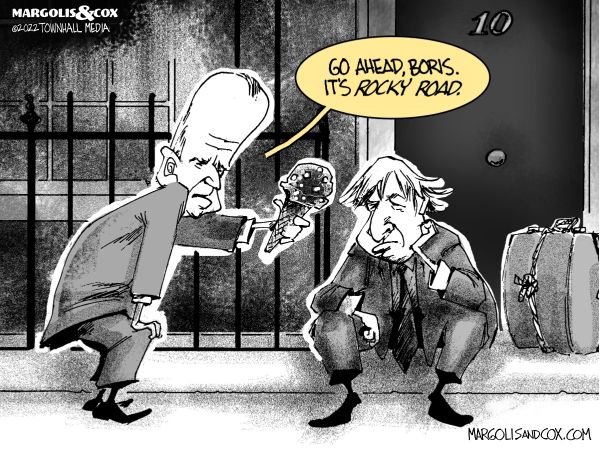
Mead’s essay focused on the challenges of German leader Scholz, but consider the various predicaments self-induced by other members of this G7 gang who can neither talk nor shoot straight. Mr. Biden increasingly struggles to even read or sign what they write for him, followed by observers noting that it is all lies and mean-spirited malarkey. UK PM Johnson is a lame duck in political limbo, only in office until his Tory replacement is chosen. President of Italy, 80 yr. old Sergio Mattarella wanted to retire, but agreed to a second term in January when ruling parties couldn’t agree on his successor. Justin “Fidel” Castreau of Canada has disgraced himself and his office, clinging to power by colluding with the equally unpopular NDP party leader. Japan’s nation building leader Abe was just assassinated, leaving the current novice Japan PM much lesser known or appreciated by Japanese people. Macron of France won his personal election, but his party lost bigtime in legislative seats.
Any bets on who has the right stuff to restore and advance Western Civilization?
SCOTUS ruled 6-3 that, in effect, without Congressional authorization, the EPA does not have the power to regulate carbon dioxide. Justice Elena Kagan dissented.
Kagan opened her dissent thus (whole opinion; with my paragraphification for screen readability):
Climate change’s causes and dangers are no longer subject to serious doubt. Modern science is “unequivocal that human influence”—in particular, the emission of greenhouse gases like carbon dioxide—“has warmed the atmosphere, ocean and land.” [Cites IPCC] … The rise in temperatures brings with it “increases in heat-related deaths,” “coastal inundation and erosion,” “more frequent and intense hurricanes, floods, and other extreme weather events,” “drought,” “destruction of ecosystems,” and “potentially significant disruptions of food production.” [Cites, of all things, a case in which this was quoted.]
If the current rate of emissions continues, children born this year could live to see parts of the Eastern seaboard swallowed by the ocean. See Brief for Climate Scientists as Amici Curiae 6. Rising waters, scorching heat, and other severe weather conditions could force “mass migration events[,] political crises, civil unrest,” and “even state failure.”
So Kagan has bought and believes, seemingly sincerely, the failed predictions of global warming, which she calls “climate change”. This is her adopted opinion, provided her by climate Experts, who claim there is no “serious doubt” about their theories.
We have seen many times that her (or her Experts’) quoted predictions of doom are false. There have not been an increase, but a decrease, in floods. Same for drought. There is no “destruction of ecosystems.” And just last week a paper appeared—a peer-reviewed paper in the regime-approved journal Nature, going by the name “Declining tropical cyclone frequency under global warming“—which shows the number of tropical cyclones have been decreasing, not increasing.
Here’s a picture from that paper (ignore the straight and red lines, which are models and not the data): So Kagan’s suppositions about the dooms of global warming are false, and known to be false with only a little investigation. Which she did not make. Nor did Wise Latina, and nor did the other guy who’s now retired and will be quickly forgotten. Both signed Kagan’s dissent.
Their non-curiosity and blind acceptance of the Expert Consensus is point one. And really is our only point, as we’ll see.
Under the Clean Air Act, as Kagan writes, Congress gave power to the “EPA to regulate stationary sources of any substance that ’causes, or contributes significantly to, air pollution’ and that “may reasonably be anticipated to endanger public health or welfare.’”
As we know, EPA called carbon dioxide, the basis of almost all life on earth, the very stuff of your breath, the food of plants, “pollution”. And started to regulate it. Scientifically, this is like the American Medical Association saying “not all women have cervixes”, and allowing the AMA to regulate the English language.
Do people forget, or maybe they never knew, that CO2 is plant food? And not only plant food, but the plant flood. Back in olden days, they used to teach photosynthesis. No longer? Remove CO2 and plants die. Then you die.
So what the EPA did in trying to regulate CO2 was ridiculous—unless you really do believe global warming, a.k.a. “climate change”, is an “existential crisis.” As Kagan, Wise Latina, and Gone Guy believe, or say they do. But which all observations show is not so.
Models, on the other hand, show the “existential crisis” is true. And all models only say what they are told to say. So models are told to say that “climate change” is an “existential crisis.” Experts told models to say this.
Experts, therefore, value models over observation. The Deadly Sin of Reification.
The real problem, then, is letting Experts make decisions based on models which are beautiful, to Experts, but which make lousy predictions. Experts are trusted too much.
Even if you think not, and still believe the models, nothing follows from them. That is, no policy is suggested, implied, or necessary because of the models. Not one. It is separately true that all policies, suggested from any source, have consequences, which may be known to greater or lesser extent—their uncertainty in them also are models.
It is scientism, a fallacy, to say Experts who wrote climate models also know what is best to do about the weather. Scientifically, it is like saying the CDC knows what is the best rate to pay for rent during a disease outbreak. Which they did say. And were rebuked for saying. A rebuke which they ignored. Which may happen here with the EPA, too.
Therefore, even if you believe the models, which stink, a fact that requires only minor effort to check, it does not follow the Experts who created those models, including agents in the EPA, know what is best to do about model predictions.
That power should fall to Congress, and to state and local governments, who have that mandate.
In other words, the Expertocracy, which was in part struck down and which Kagan dissented against, is based on two false assumptions. The first is that Expert models have skill. They do not. And the second, which is independent, is scientism, which is that scientists with expertise in one are are equipped with greater senses of good and evil on all subjects, which is absurd.
Kagan, though, embraces the Expertocracy. She said (her emphasis):
Members of Congress often don’t know enough—and know they don’t know enough—to regulate sensibly on an issue. Of course, Members can and do provide overall direction. But then they rely, as all of us rely in our daily lives, on people with greater expertise and experience. Those people are found in agencies. Congress looks to them to make specific judgments about how to achieve its more general objectives. And it does so especially, though by no means exclusively, when an issue has a scientific or technical dimension. Why wouldn’t Congress instruct EPA to select “the best system of emission reduction,” rather than try to choose that system itself?
Second and relatedly, Members of Congress often can’t know enough—and again, know they can’t—to keep regulatory schemes working across time. Congress usually can’t predict the future—can’t anticipate changing circumstances and the way they will affect varied regulatory techniques. Nor can Congress (realistically) keep track of and respond to fast-flowing developments as they occur.
Kagan is quite wrong. For all the reasons we discussed. Congress (as sick as that institution is) does know enough, and it knows vastly more than weather Experts about law. Because it knows, or is supposed to, what laws are, and what laws should do, and what the consequence of laws are. Climate or weather Experts do not. Congress can consult with Experts: “If we pass this law, what are the bounds of uncertainty on this particular weather-effected thing?” That is sensible. But it is rank foolishness to trust weather Experts to decide what laws are best, even if you by subterfuge call those laws “regulations”. And it even more dangerous to trust people who have something to gain, as Experts do, to decide what is “best” to do.
The impetus for the Expertocracy, and the faith in it, is there in Kagan’s words. She reasons, in effect, that Experts know more than anybody else on their subjects of expertise, therefore we have no right to interfere with their decisions on any subject.
It is a bad argument because Experts don’t always know best about their own subjects, as we see now everywhere. And even if Experts do know best about their subjects, they don’t know what is best to do about them.
Democrat Rep. Alexandria Ocasio-Cortez on Thursday called for the Supreme Court to be abolished after the High Court reined in the EPA’s power to regulated greenhouse gases.
Scotusblog reports on this latest return to sanity by the US Supreme Court. Supreme Court curtails EPA’s authority to fight climate change Once again the court refuses to legislate an issue that belongs to Congressional deliberation. Excerpts in italics with my bolds.
In a 6-3 decision that may limit agency power across the federal government, the court held that Congress did not clearly authorize the EPA to adopt broad rules to lower carbon emissions from power plants.
The Supreme Court on Thursday truncated the Environmental Protection Agency’s power to regulate greenhouse gases. The ruling may hamper President Joe Biden’s plan to fight climate change and could limit the authority of federal agencies across the executive branch.
By a vote of 6-3, the court agreed with Republican-led states and coal companies that the U.S. Court of Appeals for the District of Columbia Circuit was wrong when it interpreted the Clean Air Act to give the EPA expansive power over carbon emissions. The decision, written by Chief Justice John Roberts, was handed down on the final opinion day of the 2021-22 term.
Two different and conflicting sets of regulations – neither of which is currently in effect – were at issue in the case, known as West Virginia v. EPA. In 2015, the Obama administration adopted the Clean Power Plan, which sought to combat climate change by reducing carbon pollution from power plants – for example, by shifting electricity production to natural-gas plants or wind farms. The CPP set individual goals for each state to cut power-plant emissions by 2030. But in 2016, the Supreme Court put the CPP on hold in response to a challenge by several states and private parties.
In 2019, the Trump administration repealed the CPP and replaced it with the Affordable Clean Energy Rule, which gave states discretion to set standards and gave power plants flexibility in complying with those standards. The Trump administration argued that it was required to end the CPP because it exceeded the EPA’s authority under Section 7411 of the Clean Air Act, which gives the EPA the power to determine the “best system of emission reduction” for buildings that emit air pollutants. That provision, the Trump administration contended, only allows the EPA to implement measures that apply to the physical premises of a power plant, rather than the kind of industry-wide measures included in the CPP.
Last year the D.C. Circuit vacated both the Trump administration’s repeal of the CPP and the ACE Rule, and sent the case back to the EPA for additional proceedings. Section 7411, the court of appeals explained, does not require the more limited view of the EPA’s authority that the Trump administration adopted.
The Supreme Court on Thursday reversed the D.C. Circuit’s ruling. Roberts’ 31-page opinion began by considering whether the Republican-led states and coal companies challenging the D.C. Circuit’s decision had a right to seek review in the Supreme Court now. Because the Biden administration plans to issue a new rule on carbon emissions from power plants, rather than reinstating the CPP, the administration had argued that the case did not present a live controversy for the justices to decide. But a decision by the government to stop the conduct at the center of a case does not end the case, Roberts emphasized, “unless it is ‘absolutely clear that the allegedly wrongful behavior could not reasonably be expected to recur.’” And in this case, Roberts stressed, because the Biden administration “vigorously defends” the approach that the Obama EPA took with the CPP, the Supreme Court can weigh in.
Turning to the merits of the case, Roberts wrote that the EPA’s effort to regulate greenhouse gases by making industry-wide changes violated the “major-questions” doctrine – the idea that if Congress wants to give an administrative agency the power to make “decisions of vast economic and political significance,” it must say so clearly.
Section 7411 of the Clean Air Act, Roberts reasoned, had been “designed as a gap filler and had rarely been used in the preceding decades.” But with the CPP, Roberts observed, the EPA sought to rely on Section 7411 to exercise “unprecedented power over American industry.” “There is little reason to think Congress assigned such decisions to” the EPA, Roberts concluded, especially when Congress had previously rejected efforts to enact the kind of program that the EPA wanted to implement with the CPP.
“Capping carbon dioxide emissions at a level that will force a nationwide transition away from the use of coal to generate electricity may be a sensible ‘solution to the crisis of the day,’” Roberts wrote. But only Congress, or an agency with express authority from Congress, can adopt a “decision of such magnitude and consequence.”
Roberts’ full-throated embrace of the major-questions doctrine – a judicially created approach to statutory interpretation in challenges to agency authority – likely will have ripple effects far beyond the EPA. His reasoning applies to any major policymaking effort by federal agencies.
In a concurring opinion that was joined by Justice Samuel Alito, Justice Neil Gorsuch emphasized that the dispute before the court involved “basic questions about self-government, equality, fair notice, federalism, and the separation of powers.” The major-questions doctrine, Gorsuch wrote, “seeks to protect against ‘unintentional, oblique, or otherwise unlikely’ intrusions on these interests” by requiring federal agencies to have “clear congressional authorization” when they address important issues. Whether coal- and gas-fired power plants “should be allowed to operate is a question on which people today may disagree, but it is a question everyone can agree is vitally important.”
In what is likely the most damaging setback ever dealt to those advocating for overzealous enforcement actions against greenhouse gas emissions, the Supreme Court of the United States ruled in favor of constitutional limitations on unelected regulators.
This morning SCOTUS ruled in favor of the plaintiff states in WV v. EPA. This was an important “separation of powers” case. Over 20 states allege EPA improperly used very narrow statutory language as the basis for a national CO2 cap-and-trade program.
The constitutional principle of separation of powers requires that only Congress—through legislation—is authorized to decide major policy issues, not federal agencies. The related legal “Major Question Doctrine” holds that federal agencies must have a clear authorization from Congress before exercising new and significant regulatory power.
According to the ruling written by Chief Justice John Roberts: “But the only interpretive question before us, and the only one we answer, is more narrow: whether the “best system of emission reduction” identified by EPA in the Clean Power Plan was within the authority granted to the Agency in Section 111(d) of the Clean Air Act. For the reasons given, the answer is no.”
This is why we fight.
Statement on the ruling by CO2 Coalition Chair William Happer:
“The decision is a very welcome reaffirmation of the Constitutional rights of citizens of the United States. Untouched is the question of whether the Constitution allows Congress to make scientifically incorrect decisions by majority vote, for example: that carbon dioxide, a beneficial gas that is essential to life on Earth, is a pollutant.”

























 So Kagan’s suppositions about the dooms of global warming are false, and known to be false with only a little investigation. Which she did not make. Nor did Wise Latina, and nor did the other guy who’s now retired and will be quickly forgotten. Both signed Kagan’s dissent.


 Science Matters