Sea Level Rise Hype from Climatists Lying by Omission Again

From Inside Climate News comes this example, New Study Projects Climate-Driven Flooding for Thousands of New Jersey Homes.

Sea-level rise threatens coastal communities even if global emissions drop.

Of course the alarm is picked up everywhere:

As Summer Approaches, New Jersey’s Shore Towns Confront an Unrelenting Foe: Sea Level Rise Inside Climate News

US East Coast faces rising seas as crucial Atlantic current slows, New Scientist

Sea level rise creates a crisis at US coasts: What to know, USA Today

Map Shows US Cities Where Sea Level Rise Is Accelerating, Newsweek

Global sea levels are rising faster and faster. It spells catastrophe for coastal towns and cities, CNN

Etc., Etc., Etc.

Climatists Make Their Case by Omitting Facts

A previous post documented this pattern, of which we have this fresh example.  Let’s start with the tidal gauge at Atlantic City, New Jersey.

It presents a long record of steadily rising levels for more than a century.  The rate is 4.25 mm per year, or a rise of about 1 inch every six years.  The lie is in attributing all of that to sea level rising, and adding in burning of hydrocarbons as the cause.  What’s left out is the well known and documented subsidence of land along the US Eastern seaboard.

Vertical land motion (VLM) across the US Atlantic coast (a) Estimated VLM rate. The circles show the location of GNSS validation observations color-coded with their respective vertical velocities. (b) Histogram comparing GNSS vertical rates with estimated VLM rates. The standard deviation (SD) of the difference between the two datasets is 1.3 mm per year. (c) Land subsidence (representing negative VLM) across the US Atlantic Coast.

The black rectangles indicate the extent of study areas for Chesapeake Bay area and Georgia, South Carolina, and North Carolina (GA-SC-NC) area shown in Fig. 4. State Codes: ME Maine, NH New Hampshire, VT Vermont, MA Massachusetts, RI Rhode Island, NY New York, PA Pennsylvania, NJ New Jersey, WV West Virginia, OH Ohio, DE Delaware, VA Virginia, NC North Carolina, SC South Carolina, GA Georgia, and FL Florida. National, state, and great lakes boundaries in a, c are based on public domain vector data by World DataBank (https://data.worldbank.org/) generated in MATLAB.

Abstract from paper Hidden vulnerability of US Atlantic coast to sea-level rise due to vertical land motion

The vulnerability of coastal environments to sea-level rise varies spatially, particularly due to local land subsidence. However, high-resolution observations and models of coastal subsidence are scarce, hindering an accurate vulnerability assessment. We use satellite data from 2007 to 2020 to create high-resolution map of subsidence rate at mm-level accuracy for different land covers along the ~3,500 km long US Atlantic coast. Here, we show that subsidence rate exceeding 3 mm per year affects most coastal areas, including wetlands, forests, agricultural areas, and developed regions. Coastal marshes represent the dominant land cover type along the US Atlantic coast and are particularly vulnerable to subsidence. We estimate that 58 to 100% of coastal marshes are losing elevation relative to sea level and show that previous studies substantially underestimate marsh vulnerability by not fully accounting for subsidence.

A further reference to causes of land subsidence:

Land subsidence, in particular, deserves special attention because it can significantly magnify the relative sea-level rise (RSLR) to several times beyond the global average sea-level rise, which usually amounts to just a few mm/yr on its own (Shirzaei et al. 2021). Land subsidence results from various factors encompassing both natural processes and human activities that operate at local or regional scales (Ohenhen et al., 2023). Globally, groundwater extraction is the primary cause of land subsidence (Coplin and Galloway, 1999;Shastri et al., 2023).

Finally, we can observe that the Atlantic City sea level rise of 4.25 mm per year measured at the gauge is close to the subsidence rate shown in the right hand panel.  So yes, authorities in that area need to address the problem with hydro engineering and zoning laws.  But no, reducing CO2 emissions is not the solution.

See Also:

Observed vs. Imagined Sea Levels 2023 Update

US Supremes Rein In Politicized Environmental Reviews

On May 29, 2025 SCOTUS ruled unanimously that NEPA (National Environmental Protection Act) can no longer be a tool for political activists against development projects.  The report from MSN is US Supreme Court limits environmental reviews in Utah railway ruling.  Excerpts in italics with my bolds and added images.

The U.S. Supreme Court dealt a setback to environmentalists on Thursday by allowing federal agencies to limit the scope of their reviews of the environmental impact of projects they regulate, as the justices bolstered a Utah railway project intended to transport crude oil.

The 8-0 ruling overturned a lower court’s decision that had halted the project and had faulted an environmental impact statement issued by a federal agency called the Surface Transportation Board in approving the railway as too limited in scope. The project was challenged by environmentalists and a Colorado county.

A coalition of seven Utah counties and an infrastructure investment group are seeking to construct an 88-mile (142-km) railway line in northeastern Utah to connect the sparsely populated Uinta Basin region to an existing freight rail network that would be used primarily to transport waxy crude oil.

The case tested the scope of environmental impact studies that federal agencies must conduct under a U.S. law called the National Environmental Policy Act (NEPA), enacted in 1970 to prevent environmental harms that might result from major projects. The law mandates that agencies examine the “reasonably foreseeable” effects of a project.

The ruling, authored by conservative Justice Brett Kavanaugh, was joined by four other conservative justices. The court’s three liberal justices filed a separate opinion concurring in the outcome.

Kavanaugh wrote that agencies need only consider environmental effects of a project at hand and not the “effects from potential future projects or from geographically separate projects,” and that courts must offer agencies “substantial deference” regarding the scope of these assessments.

“NEPA is a procedural cross-check, not a substantive roadblock. The goal of the law is to inform agency decision-making, not to paralyze it,” Kavanaugh wrote.

Background Post: US Supremes Hear Climate Lawfare Case to Stop Oil Railway

IER reports the news from December in article The Supreme Court Takes on a Case Involving the National Environmental Policy Act.  Excerpts in italics with my bolds and added images.

Key Takeaways

The Supreme Court recently heard a major case, Seven County Infrastructure Coalition v. Eagle County, Colorado, that will affect the scope of the National Environmental Policy Act (NEPA). The case concerns the permitting of a proposed Utah railway that would ship oil from the Uinta Basin, potentially quadrupling its oil production. The 88-mile Uinta Basin Railway would connect the oil fields of northeastern Utah to the national rail network running alongside 100 or so miles of the Colorado River to reach oil refineries on the Gulf Coast.  According to The Hill,  at issue is whether and when upstream and downstream environmental impacts should be considered as part of federal environmental reviews. The company behind the railway and a group of Utah counties appealed a lower court decision to the Supreme Court, arguing that those indirect impacts are beyond the scope of the federal reviews.

Background

The case concerns a rail line to support oil development and mineral mining. In 2021, the federal Surface Transportation Board (STB) issued a 3,600-page environmental impact statement to comply with NEPA and approved the rail line. The NEPA mandates that federal agencies assess the environmental effects of projects within their authority. Any major initiative that is managed, regulated, or authorized by the federal government must undergo a NEPA evaluation, a process that can span years and frequently exposes projects to legal challenges.

The STB analyzed the railway’s potential effects on local water resources, air quality, protected species, recreation, local economies, the Ute Indian tribe, and other factors. Environmental groups, however, sued the agency, saying that it failed to examine sufficiently how the railway might affect the risk of accidents on connecting lines hundreds of miles away and to assess emissions in “environmental justice communities” on the Gulf Coast from increased oil shipments, among other supposed shortcomings.

According to the Wall Street Journal editorial board, “a D.C. Circuit Court of Appeals panel sided with the plaintiffs and told the STB it must consider the line’s upstream and downstream effects even if they were hard to predict and beyond the control of the agency and developers. This includes the effects of oil shipments on Gulf Coast refiners and their contributions to climate change.” The appeals court ruling found that the federal STB violated the Endangered Species Act and the Interstate Commerce Commission Termination Act when it permitted the project.

Furthermore, the editorial board also explained that lower court judges—those on the D.C. and Ninth Circuits—ignored the Supreme Court’s past rulings and imposed arbitrary permitting requirements with no limiting principle. The STB lacks authority over Gulf Coast refiners and cannot prevent climate change.

Court Rulings Regarding NEPA

The Supreme Court has heard other related cases and held that agencies need not consider indirect and unpredictable impact, most recently in a 2004 case, Department of Transportation v. Public Citizen. In that case, the Supreme Court held that agencies need only analyze environmental impact with “a reasonably close causal relationship” over which they have “statutory authority” and which they can prevent.

In 2020, the Supreme Court green-lit approval for permits for the Atlantic Coast Pipeline after nearly seven years of litigation, but the pipeline was scrapped due to legal delays that raised project costs significantly. It takes an average of 4.2 years to litigate a NEPA challenge, which adds to the four or more years to obtain a federal permit. These delays are what frustrate investment in new projects, slowing job creation and economic expansion in the United States.

judge struck down a Montana coal mine permit because a federal agency did not consider the climate effects of coal combustion in Asia. Additionally, a 225-mile electric transmission line in Nebraska has been stuck in permitting for 10 years because a lower court invalidated a U.S. Fish and Wildlife permit.

Conclusion

The Supreme Court is tackling a case involving the scope of a federal environmental law, NEPA, that involves a rail line to move oil. In this case, lower courts agreed with environmental groups, who are challenging the government’s permit approval of the rail line. The case is instrumental to the issue of what should be considered when determining potential environmental damages. Congress recognizes that NEPA needs reform as delays over lawsuits have killed projects and dramatically increased their costs and it continues to debate ways to make federal permitting easier and quicker. Until that reform happens, however, Supreme Court Justices need to reign in the environmental limits of NEPA so that needed projects can progress in America.

Who Knew? Trump Tariffs Good for Environment

Melanie Collette explains a surprising and irgnored result from the trade maneuvers in her Real Clear Energy article Trump’s Tariffs Might Be the Green Policy Nobody Saw Coming.  Excerpts italics with my bolds and added images.

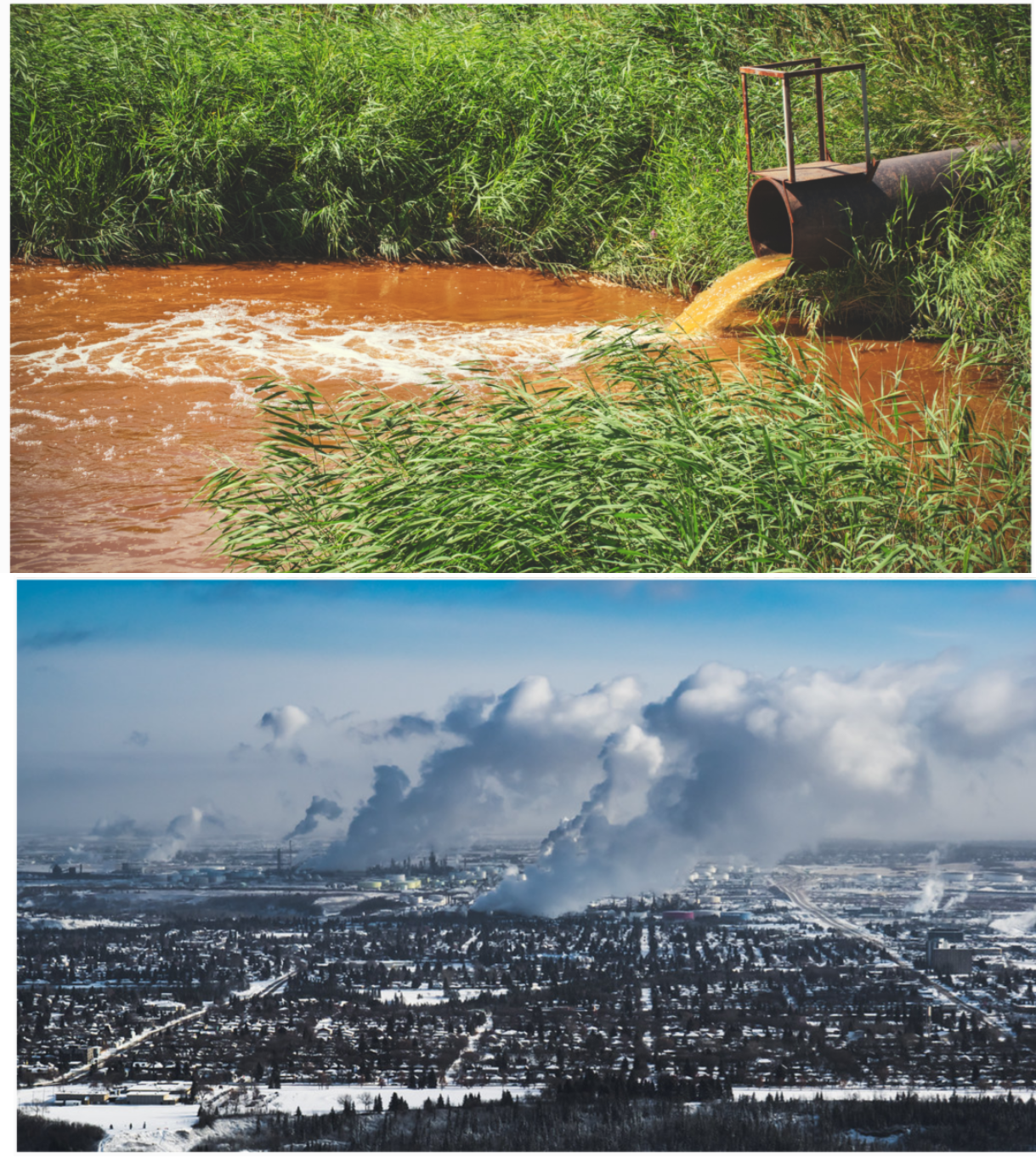
For all the buzz about “going green,” much of the technology touted by the Green Left to move our nation to “Net Zero” — specifically solar panels and EV batteries — comes from places where the sky is choked with smog and rivers run with industrial waste.  And while these same critics often dismiss Donald Trump’s tariffs as economic saber-rattling, in reality, the President’s policies carry significant and underappreciated environmental benefits.

Tariffs are an unlikely ally in the fight against pollution:

♦  They incentivize domestic production;
♦  tighten environmental standards, and
♦  hold foreign manufacturers accountable for environmental negligence.

In a world where environmental goals often live on paper but die in execution, tariffs provide real leverage. They shift incentives in the right direction without depending on lengthy negotiations, uncertain compliance, or idealistic assumptions about global unity.

Tariffs as Environmental Filters

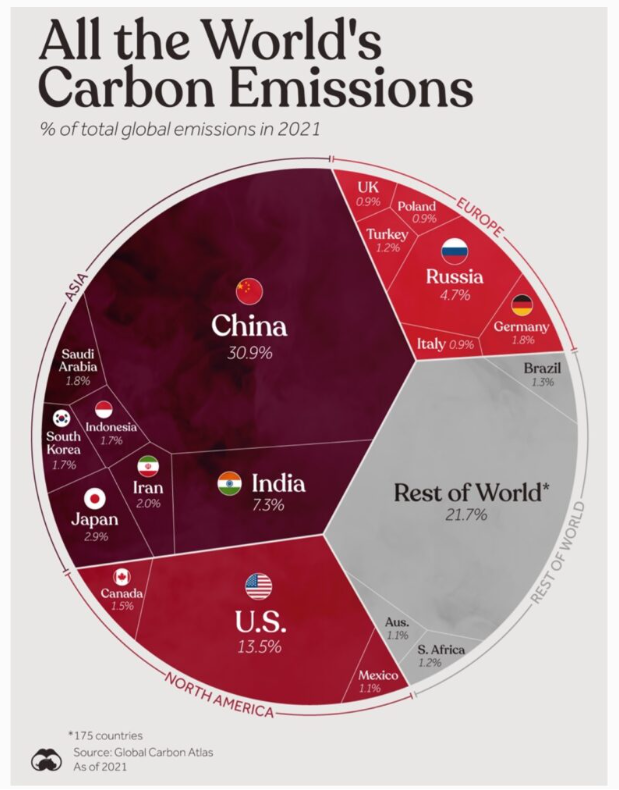
By imposing tariffs on imports from countries with looser environmental regulations, Trump’s trade policy incentivizes companies to manufacture domestically, where environmental protections are stronger and enforcement is more robust. Critics call it economic nationalism, but the reality is more nuanced: the policy functions as an ecological safeguard, reducing reliance on countries like China, which is ranked as the 13th most polluted nation in the world.

China’s dominant production of rare earth elements (REE)
has led to significant environmental degradation.

The Bayan Obo mine, one of the world’s most significant REE sources, has been associated with extensive soil and water pollution. Reports indicate that the mining process yields substantial amounts of waste gas, wastewater, and radioactive residue, contaminating local ecosystems and posing health risks to nearby communities.

And here’s something most people overlook — when manufacturing stays closer to home, it’s easier to track environmental violations and enforce rules. Transparency skyrockets when the EPA, OSHA, and other regulatory agencies are just a phone call away, not an ocean apart.

This diagram shows the origin of the metals required for meeting the 2030 goals. The left side of the diagram shows the origin, based on today’s global production of metals. The right side shows the cumulative metal demand for wind and solar technologies until 2030. From study showing tonnage of Dutch demand only.

Trump’s administration is also leveraging Section 232 of the Trade Expansion Act to impose tariffs on foreign processed minerals. The goal? Reduce foreign dependence and revive domestic production of critical materials like rare earth elements, essential for clean tech and defense.

The result is a renewed focus on U.S.-based mining and processing, offering a cleaner, more transparent alternative to China’s pollution-heavy rare earth industry. A stronger domestic rare earths sector is a win for national security and the environment. Environmental accountability increases when these materials are mined and processed under U.S. regulation.

The Dirty Truth Behind “Clean” Tech

Let’s be honest: outsourcing green tech to countries with weak environmental laws doesn’t eliminate emissions, but does outsource them. This phenomenon, known as “pollution leakage,” erodes the benefits we claim to pursue.

While the West celebrates progress in so-called green energy, producing those “eco-friendly” goods is often carried out in developing world factories. More than that, this behavior masks the real cost of green technologies. Products may seem “cheap” to consumers, but their environmental impact — from polluted rivers to toxic waste — remains largely unaccounted for.

Trump’s tariff strategy encourages manufacturers to source from countries with higher environmental standards or bring production back home. Case studies show that reshoring delivers economic and environmental benefits, especially in energy and heavy industry sectors. Cleaner supply chains begin with better accountability, which tariffs are uniquely positioned to provide.

When production happens domestically, enforcing environmental controls, adopting green manufacturing processes, and implementing technological innovations like low-emission machining are easier. However, these advancements are often out of reach for foreign suppliers focused solely on cost-cutting.

Global Environmental Agreements: Big Promises, Weak Results

The mainstream media heralded the Biden administration’s return to multilateral climate agreements like the Paris Accord as ” planet-saving,” but real-world results have been underwhelming. These international frameworks lack enforcement, largely exempt the biggest emitters, and allow countries to manipulate statistics to validate their progress in achieving their commitments.

Trump’s policies emphasize sovereignty, which doesn’t mean ignoring the environment. Using trade policy to reinforce domestic environmental protections proves the two priorities are compatible.  Environmental stewardship doesn’t require surrendering control to global institutions. Sometimes it just requires enforcing the rules at home — and setting an example others can’t ignore.

A Practical Path Forward

As the U.S. continues to navigate complex environmental and economic challenges, tariffs can be part of the solution. President Trump’s tariffs protect jobs and the environment, even if critics fail to notice.

Rather than relying solely on lofty international promises, we should consider practical tools, like tariffs, that create real accountability, cleaner production, and stronger domestic resilience.

In an era of performative climate politics, tariffs might just be the unexpected, effective piece of environmental policy we’ve been missing.

Adios Socialized Energy, Welcome Free Market Energy

tippinsights Editorial Board  explains this critical moment in the power struggle over whether the US will have an Energy Sector controlled by Federal diktats or by Market choices. Their article is Adios, Green New Deal. Welcome, Free-Market Energy Independence.  Excerpts in italics with my bolds and added images.

Trump Dismantles the Green Agenda, Embraces Capitalism,
and Launches America’s New Energy Future.

Buried within the 1,100-page bill recently passed by the House of Representatives—the “One Big, Beautiful Bill” that reflects President Trump’s priorities—are several provisions that, if enacted into law, could return the U.S. energy sector to a more capitalistic model.

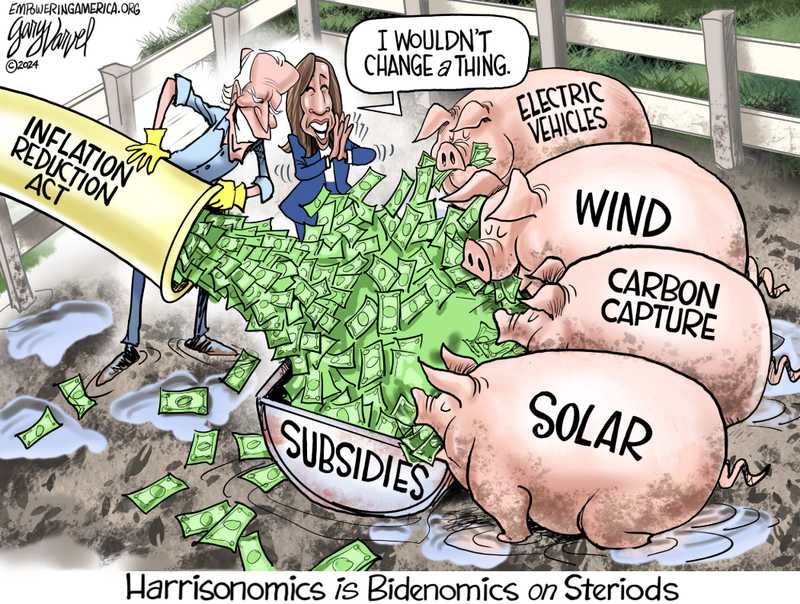
President Joe Biden, with strong backing from environmental lobbyists and a last-minute defection from West Virginia Senator Joe Manchin, pushed through the Inflation Reduction Act and the Infrastructure Bill. These measures allocated billions of dollars in federal credits and loan guarantees to favored industries, all under the banner of environmental protection.

What followed was a Soviet-style industrial strategy in which
a handful of Washington bureaucrats determined
the winners and losers of America’s energy future.

The Inflation Reduction Act (IRA) 2022 contained “Climate and energy investments” of approximately $369 billion over 10 years. These included $270 billion for clean energy tax credits to support wind, solar, geothermal, and other renewables; clean hydrogen production; and carbon capture and storage technologies. Buyers of electric vehicles would get up to a $7,500 tax credit for new EVs and up to a $4,000 tax credit for used EVs (with income and manufacturing origin restrictions). Tax credits and funding for domestic manufacturing of solar panels, wind turbines, batteries, and critical minerals exceeded $60 billion. Rebates for energy-efficient appliance upgrades, heat pumps, insulation, and home weatherization exceeded $60 billion under the Green Jobs and Environmental Justice banner.

With so much federal money up for grabs, greedy entrepreneurs flocked to risky green energy ventures, largely funded by grants and low-interest loans—funding they likely wouldn’t have secured through private markets. We all remember the Obama-era Solyndra disaster, but Biden’s approach was Solyndra-style investment on steroids.

What was worse, Biden used the vast levers of federal power to kneecap perfectly functioning industries. His administration was especially punitive toward the oil and gas sector: it suspended leases on federal land, blocked vast swaths of the Pacific, Atlantic, and Gulf coasts from new drilling, canceled major pipelines, and imposed regulatory hurdles that made it increasingly difficult for the fossil fuel industry to attract investment capital. As oil prices steadily rose, Biden’s energy strategy relied on tapping the Strategic Petroleum Reserve and urging Saudi Arabia to increase production—an ironic move given his simultaneous efforts to restrict Russian oil exports during the Ukraine war.

President Trump, who campaigned once again on the
“drill, baby, drill” message, has consistently opposed
such government interference in the energy markets.

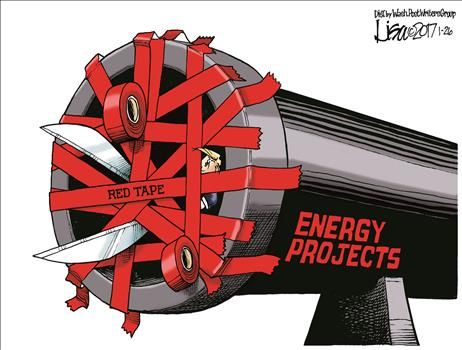
He has long supported removing regulatory red tape and streamlining the permitting process to allow for increased oil production—lowering domestic prices and boosting exports. In December 2019, under Trump’s administration, the U.S. Energy Information Administration announced that America had become a net exporter of oil for the first time in nearly 60 years.

Biden’s green agenda had another critical flaw: financing. Much of it depended on borrowing from Chinaironically benefiting Chinese companies dominating the very industries Biden sought to boost. Since the launch of China’s “Made in China 2025” initiative, Chinese firms—heavily subsidized by their government—have taken over more than 85% of the global rooftop solar panel market. Battery components for solar installations have even higher Chinese market dominance. In effect, Biden borrowed money from China to finance the growth of Chinese companies that sold solar products to U.S. installers.

The new House bill aims to dismantle this entire framework in one stroke.

♦  It eliminates the trading of green credits between corporations;
♦  revokes low-interest green loans, and
♦  entirely phases out subsidies for renewable energy initiatives.

To those who claim this approach is irresponsible, we pose a simple question: How many more decades should the green energy sector rely on government aid to stay afloat? Sustainable energy and transition projects are essential, but they must prove their viability in the open market—just like oil and gas companies do every day. This is classic Adam Smith-style capitalism: let competition and innovation—not government favoritism—determine success.

Trump also supports nuclear power, one of the cleanest
and most efficient methods of generating electricity.

Critics on the Left often call nuclear energy dangerous, but even the most liberal nations—France, Germany, and Japan—have long depended on it. The only significant U.S. nuclear accident, Three Mile Island in the 1980s, did not result in any deaths. Despite Japan’s vulnerability to natural disasters, it maintained a strong safety record until Fukushima. The U.S., by contrast, is less prone to earthquakes or tsunamis, yet Congress and successive administrations have consistently stymied progress on nuclear energy.

This week, Trump signed an executive order that could clear the way for small-scale nuclear plants to begin operations within the next 18 months. These modern reactors, based on cutting-edge American technology, are far safer than their predecessors and are designed to power small cities or neighborhoods rather than entire states. Every aspect of nuclear energy today—from fuel storage to waste disposal—is light-years ahead of where it was decades ago. It’s a national disgrace that despite having world-class nuclear capabilities—including naval reactors and the world’s second-largest nuclear arsenal—our federal policies have hampered the civilian nuclear industry.

By issuing appropriate permitting waivers, Trump aims to unlock this potential, even if a modest federal investment is necessary to overcome ideological resistance from the Left. Energy independence and security should have been the hallmarks of the Obama and Biden administrations. Instead, they catered to the demands of environmental activists and weakened America’s energy position.

We are glad to say that the Green New Deal is dead.


Shifting from Energy Scarcity to Energy Abundance

Prior to the Paris COP in 2015, French scientists debunked the green agenda in a White Paper drawn up by the Société de Calcul Mathématique SA  (Mathematical Modelling Company, Corp.)  The battle against global warming: an absurd, costly and pointless crusade.  The whole document is evidence-based, and on the second point concerning energy, they said this:

Chapter 2: The crusade is costly
Direct aid for industries that are completely unviable (such as photovoltaics and wind turbines) but presented as ‘virtuous’ runs into billions of euros, according to recent reports published by the Cour des Comptes (French Audit Office) in 2013. But the highest cost lies in the principle of ‘energy saving,’ which is presented as especially virtuous. Since no civilization can develop when it is saving energy, ours has stopped developing: France now has more than three million people unemployed — it is the price we have to pay for our virtue….

Finally, the world seems to be waking up to energy realities. The actual transition is away from the green imperative to make energy scarce, replaced by driving energy abundance. Kevin Killough writes, including commentary from Mark Mills of Energy Analystics, in his Just The News article:  World moves away from ‘green gospel of scarcity’ and now embraces ‘energy abundance,’ experts say

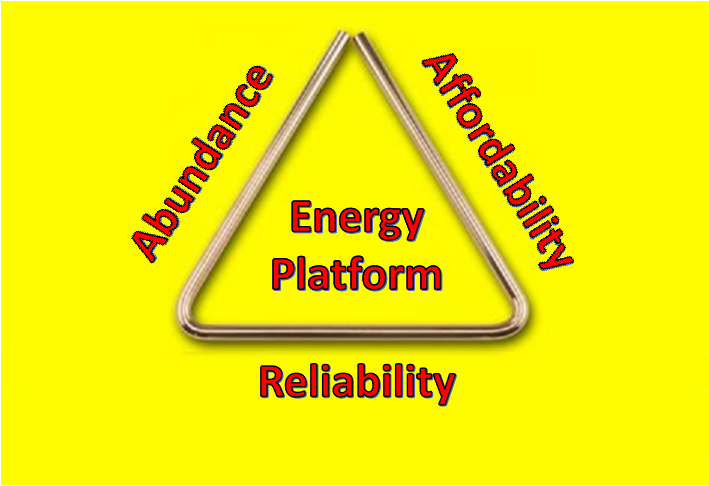
“I think we’ve gone from scarcity to abundance — from the green gospel of scarcity and its Trinitarian ESG god — to the promised land of abundance guided by the values of affordability and reliability,” David DesRosiers, conference co-chair of the RealClear Energy Future Forum, said.

In 2019, Swedish climate activist Greta Thunberg — then a high-school dropout — was invited to the U.N. Climate Action Summit in New York City. There, she would deliver her famous — or infamous, depending on who you ask — how dare you” speech, to which legacy media responded with overwhelming enthusiasm. Thunberg claimed that we were at the start of a “mass extinction,” and she admonished the world for ignoring the alleged crisis while talking “about money and fairy tales of eternal economic growth.”

What a difference six years can make. Voters elected a president in November who signed an executive order aimed at “unleashing American energy,” and Energy Secretary Chris Wright followed the president’s order with a directive to promote “energy abundance.”

This U-turn in views on energy isn’t limited to a change in administration in the U.S.

In May 2021, the International Energy Agency (IEA), which has been criticized for cheerleading emissions reductions, launched a roadmap to reach net zero by 2050, and IEA Executive Director Fatih Birol told The Guardian that “there will not be a need for new investments in oil and gas fields, or new investments in coal mines.”

At the March CERAWeek energy conference in Houston this year, Birol was calling for more investments in oil and gas.

This shift away from the de-growth fervor that was popular for over a decade was the overriding topic at the RealClear Energy Future Forum Monday. Panels of experts in engineering, data centers, mining, oil and gas, and the electricity grid discussed how this change of views has impacted various aspects of the world’s energy picture.

“I think we’ve gone from scarcity to abundance — from the green gospel of scarcity and its Trinitarian ESG god — to the promised land of abundance guided by the values of affordability and reliability,” David DesRosiers, conference co-chair and founder of the RealClear Foundation, said.

When reality hits

Mark Mills, conference co-chair and director of the National Center for Energy Analytics, discussed the role of increasing energy demand as a result of the growth of data centers and artificial intelligence. While many tech companies, such as Microsoft, embraced net-zero goals, Mills explained that the energy demands of data centers forced companies to contend with the reality that although fashionable in some circles, intermittent wind and solar power are not adequate.

“Eventually, reality rears its ugly head, and we recalibrate around what reality permits,” Mills said.

The IEA last month released an in-depth report on how the demand for electricity will be shaped by AI in the coming years. According to the report, a single data center uses as much electricity as 2 million households. Powering one of these data centers, Mills said, requires as much natural gas every day as a single Space X rocket launch.

“With myriads of data centers planned and announced, this means that lighting up the digital infrastructure will soon have the energy demands equivalent to reliably powering hundreds of millions of households,” Mills said.

Mills said, besides the energy to power these data centers, they will also require an abundance of materials. A skyscraper requires the same amount of materials to build a single giga-scale data center, which is a data center requiring 1 billion watt-hours of electricity every hour — the same amount of power consumed by approximately 1,100 homes in a month.

While some have argued that increased efficiencies will address the demand, Mills pointed out that a single smartphone operating at the energy efficiency of a 1984 computer would use more electricity than an entire city block. More efficiency won’t reduce demand for energy, he explained, it will only increase how much can be done with more energy.

The way the grid works

Energy abundance is not only producing more energy. The supply has to be reliable, the experts at the conference said. A few speakers pointed to the blackouts that gripped Spain and Portugal last month as an example of how dangerous an unreliable energy supply can be. Estimates place the death toll from the one-day event at seven people.

James Robb, CEO of the North American Electric Reliability Corporation, said that the exact cause of the event is still under investigation, but there are facts that point to the overreliance on intermittent wind and solar.

At the time of the blackout, Robb said, there was little traditional generation — coal, natural gas, hydroelectric and nuclear — operating. To make wind, solar and battery power work on the grid, it has to go through an inverter, which doesn’t have the spinning inertia of generators powered by traditional sources. Grid operators need to maintain a certain frequency of power, and when there’s a disruption, spinning inertia can absorb some of the frequency changes until things stabilize.

Federal Energy Regulatory Commission Chairman Mark Christie explained inertia as a 100-acre lake 6-inches deep. At one end is a river flowing into the lake, like power generated on the grid. At the other end is a river flowing out of the lake, which is the demand for power. To make the grid work, the water has to be kept 6-inches deep at all times.

“If that lake, at any point, becomes an inch deeper or loses an inch of depth, the lake ceases to operate. That’s the way the grid works. It has to be balanced at all times, and that’s the term frequency,” Christie said.

Robb said there are technologies that create synthetic inertia for wind and solar generators, but these are unproven at scale.

“They’re not without their issues there, and one of the big challenges we always have in the electric grid with any new technology is you can study something in the lab. You can deploy…a pilot [project] on a grid somewhere. But when you try to scale it to the level of the North American grid, which is a terawatt of generation, typically in that translation from pilot to terawatt, we discover things that we don’t understand,” Robb said.

Spain and Portugal Achieve Net Zero Accidently

Holding back

Despite many signs pointing to the overreliance on solar energy on the Iberian Peninsula grid as being the cause of the blackouts, other speakers noted that politics is often holding back more discussion on the problem of intermittency.

“It is very clear that the intermittency of wind and solar had a great deal to do with shutting down the grid, but you cannot admit that if you’re in power in Spain or Portugal. Because there are liabilities,” Terrence Keely, CEO of 1PointSix, LLC, a financial advisory firm, said.

Daniel Yergin, vice chairman of S&P Global, said that between 2022 and 2023, the world’s dependence on fossil fuels was down less than one half of one percent. Yet, he said there were still contradictions coming from leaders. As an example, he pointed to British Prime Minister Sir Keir Starmer who recently said that Britain would increase emission-reduction efforts to 2050.

“But he also said, ‘Oh, let me be clear with you, oil and gas are going to be in the mix for a long time.’ That really captures the struggle of people, of leaders, to kind of adjust to a reality that’s different from what has been the conventional wisdom,” Yergin said of Starmer.

As with any global shift in thinking on issues, some nations are slow to change — or reject it altogether. But the experts at the forum concluded generally that the so-called energy transition, and the de-growth attitudes that drove it for so long, are losing steam.

Who Knew? Western Societies Growing More Equal, Not Less

Daniel Waldenstrom makes the case at Foreign Affairs The Inequality Myth.  Excerpts in italics with my bolds and added images.

Western Societies Are Growing More Equal, Not Less

Spend a few minutes browsing political commentary or scrolling social media and you will discover a seemingly settled truth: inequality in the West is soaring, the middle class is being hollowed out, and democracies stand on the brink of oligarchy. The idea is seductive because it fits everyday anxieties in many Western countries—housing has grown increasingly unaffordable, billionaire wealth mushrooms unfathomably, and the pandemic exposed yawning gaps in social safety nets. Yet the most influential claims about inequality rest on selective readings of history and partial measurements of living standards. When the full balance sheet of modern economies is tallied—including taxes, transfers, pension entitlements, homeownership, and the fact that people move through income brackets across their lives—the story looks markedly different. Western societies are not nearly as unequal as many believe them to be.

Getting the facts right matters because bad diagnosis breeds bad prescriptions. If governments assume that capitalism is inexorably recreating the disparities of the Gilded Age, they will reach for wealth confiscations, price controls, or ever-larger public sectors funded by fragile tax bases. If, instead, the evidence shows that free-market economies have enriched middle classes by expanding asset ownership, that entrepreneurs’ fortunes are associated with advances shared with the broader public, and that much of the post-1980 rise in recorded inequality reflects methodological quirks, then a different agenda follows: states should encourage ambition, protect competition, widen access to wealth-building, and ensure that public services complement—not smother—private prosperity.

In short, before treating inequality as an existential crisis,
it is worth double-checking the thermometer.

Conventional Wisdom Overturned by Evidence

The canonical data tell only part of the story, and the least flattering part at that. A growing body of scholarship reassesses the long-run distribution of wealth by adding what earlier studies neglected. Three findings stand out.

First, private wealth has exploded—but so has broad ownership of it.

Reconstructed national balance sheets for France, Germany, Spain, Sweden, the United Kingdom, and the United States show real per-adult wealth roughly tripling since 1980 and rising more than sevenfold since 1950. Crucially, an increasing share of that capital sits in the homes and pension funds of ordinary households. In 1900, assets held by the elite—agricultural domains and shares in industrial or financial corporations—dominated; today, residential property and funded retirement accounts represent the majority of private assets. That shift parallels mass homeownership: in most Western countries, 60 to 70 percent of households now own the roof over their heads—an equity stake unavailable to their great-grandparents. Most workers hold pension claims in mutual funds or index funds, granting them the high returns of stock markets at low risk—what amounts to financial democratization.

Second, wealth concentration has fallen—not risen—over the past century.

In Europe, the top one percent now owns barely a third of the share it held in 1910, right before the beginning of the transformative era of world wars, democratization, and the growth of governmental capacity, and since the 1970s that share has been essentially flat, even as real wealth—that is, wealth adjusted for inflation—has tripled with rising asset prices. The United States shows a clearer uptick beginning in the 1970s, most visible among the spectacular fortunes of tech and finance titans, whose gains have outpaced even the impressive wealth growth of the middle class. Yet U.S. concentration remains closer to its 1960 level than to its pre-1914 peak.

The dominant quantitative fact of the century, therefore,
is not a new Gilded Age but a dramatic wealth equalization
propelled by mass asset ownership.

Third, the fact that people move through different income brackets over the course of their lives should temper typical measures of inequality.

So, too, should the effects of welfare payments. Annual snapshots lump graduate students with retirees living off savings, making income and wealth gaps appear wider than lifetime consumption gaps. When studies in different countries instead follow individuals over time, they typically find that within only a few years, half the households in the bottom income decile have climbed to higher levels. Many top-decile households can drop to lower rungs of the ladder after business or investment setbacks. Government welfare programs further compress differences. In Sweden, when public pension entitlements are capitalized and added to assessments of personal wealth, this alone cuts the measured wealth inequality—known as the Gini coefficient—by almost half. In the United States, the market’s redistributive role is smaller, but when Social Security, Medicare, and employer-provided health insurance are treated as in-kind income, median households fare far better than raw wage data suggest.

Social Alarmists Out of Touch with Today’s Realities

These facts undermine the image of an inexorably widening chasm between a plutocratic elite and the rest. Yes, superstar entrepreneurs have amassed fortunes measured in tens of billions. But that outcome signals success, not failure: they furnished goods and services that millions freely bought. Their booming companies also supply jobs, higher wage earnings, and substantial tax revenue—directly through profits and payrolls and indirectly by raising the broader tax base. Over the past four decades, life expectancy in advanced economies (including in the United States despite the much-noted increase in “deaths of despair”) rose roughly six years, high school completion became nearly universal, and personal computers once reserved for elites went mainstream.

Those who typically bemoan the rise of inequality
don’t correctly weigh the size and division of the pie.

Rising real incomes and higher asset values are preconditions for mass prosperity and for a well-funded public sector. Even advocates of government intervention should champion efficient growth: every percentage point of GDP adds billions to tax revenue. The West’s most durable path to fairness, then, is to scale up the channels through which ordinary households acquire assets—including affordable housing supply, portable retirement accounts, and low-fee index funds—and to keep markets open so new firms can challenge incumbents.

That perspective should also moderate calls for annual taxes on the stock of net wealth, which have recently been proposed by some politicians and researchers, and have even been discussed officially at G-20 and UN meetings. These so-called wealth taxes are problematic because they hit illiquid assets, forcing entrepreneurs or farmers to borrow or liquidate. Scandinavian experience of such taxes shows that they produce meager revenues, come with high administrative costs, and encourage capital flight. If capital is to be taxed, a more efficient and equitable way is to tax capital income—such as dividends, realized gains, and corporate profits.

Evidence-based Priorities for Policymakers

Misreading inequality courts several risks. It diverts energy from the real challenges to Western economies, which include lax productivity growth, aging populations, and the imperatives of climate adaptation. These problems will strain public budgets. But excessive state-centrism and confiscatory wealth taxes impede capital formation and make financing those tasks harder, not easier. Misunderstanding inequality also breeds regressivity: taxing housing wealth indiscriminately can hit asset-rich but cash-poor retirees; taxing private firms can force sales to multinational giants with cheaper credit. And it corrodes trust: when citizens hear that capitalism benefits only the elite—even as their own living standards rise—they may grow cynical about official statistics and susceptible to populist cures worse than the disease.

A more accurate reading of the data supports a balanced agenda. To be clear, excessive wealth concentration poses risks—most notably to political integrity. Transparent rules for campaign financing and party contributions are essential to minimize the undue influence of money. Core welfare services, such as education and health care, should not become overly dependent on private funding, otherwise they would tie the quality of care to personal wealth—and in the process deepen inequality. The solution is not to curb wealth itself but to safeguard the integrity of political institutions and ensure equitable access to public goods.

States should celebrate entrepreneurial success and foster competition by reducing regulatory burdens—especially those that disproportionately affect smaller and younger firms. Taxation on labor income should be modest enough to incentivize hard work and also allow for the accumulation of new wealth, while capital taxation should target income rather than wealth or inheritances. Public investment should focus on building the capabilities that let households become stakeholders—education, infrastructure, and a rules-based climate that rewards risk-taking. Such an agenda accepts that inequality can coexist with, and even flow from, broad prosperity. Frustration with privilege should be channeled into reforms that expand opportunity rather than cap success.

This agenda advances neither laissez-faire complacency nor egalitarian maximalism. It is an acknowledgment that the West’s most remarkable achievement is not the fortune of a Jeff Bezos or Bernard Arnault but the mundane riches enjoyed by millions whose grandparents lived without antibiotics, central heating, or college degrees. Policymakers would do well to remember that progress before they diagnose calamity—and nurture the conditions that make it possible: secure property rights, open markets, and an efficient public sector powered by the very economic growth its advocates sometimes disparage.

Footnote: The issue of adapting to climate change, raised in the article, perfectly illustrates the dichotomy of social perspectives regarding equality.


Merit-Based Energy: Best of the Above, Not All

Steve Milloy puts things in context in his Daily Caller article  ‘All Of The Above’ Is DEI For Energy.  Excerpts in italics with my bolds and added images.

The Restoring Energy Dominance (RED) Coalition recently produced an ad advocating for “all forms of energy.” “You voted for it, you got it,” the ad starts. It features a clip of President Trump saying “All forms of energy, yep…” What exactly does “all forms of energy,” or its 21st century shorthand, “all of the above” really mean? Is it good policy” And, is President Trump for it?

The concept of ‘all of the above’ dates back to a mid-2000s convergence of energy-related events including: (1) the then emerging but imaginary “climate crisis” and (2) an actual energy crisis caused by a combination of factors including the Iraq war, US dependence on OPEC, the rise of energy-hungry China and India, the notion of Peak Oil and more. Congress’s solution to this was the Energy Policy Act of 2005 signed into law by President Bush. It called for expanding domestic energy production, including: oil, natural gas, coal, nuclear, and renewables. “All of the above” wasn’t in common usage at the time, but the law essentially embodied it.

“All of the above” subsequently came into more common use, albeit with different variations, during President Obama’s “war on coal” and his embrace of Executive action to cut emissions because of “climate change.” For President Obama, “all of the above” meant all forms of energy except for coal, which he tried to regulate into extinction. To counter Obama, the coal industry and its Republican supporters used “all of the above” as a desperate means of including coal in the US energy equation.

But the tables have now turned. President Trump supports:
the booming oil and gas industry;
the now-crippled coal industry;
the flailing nuclear industry, and
solar power.

He campaigned and has repeatedly spoken against the onshore and offshore wind industry. He has also issued an executive order to review offshore wind projects and has, thus far, paused one specific project. It is now the wind industry’s turn to scream “all of the above” in hopes of remaining part of the US energy equation.

President Trump also campaigned and has taken executive action against what he often calls the “Green New Scam,” which means the climate spending and energy subsidies contained in President Biden’s 2022 Inflation Reduction Act. Opponents of the Green New Scam hope to repeal the subsidies in President Trump’s upcoming Big Beautiful Bill.

The RED Coalition ad would take us back to the days of the Energy Policy Act and its focus on producing domestic energy from all sources. While that may sound reasonable, it ignores the realities we’ve experienced and lessons we’ve learned over the past 20 years.

First, Energy Policy Act proponents did not foresee the late-2000s advent and impact of fracking for oil and gas. Whereas in 2005 we were dependent on imports of natural gas and were running out of cheap oil production options, fracking changed the global energy situation almost overnight. Fracking gave the US essentially a limitless supply of oil and gas. That has essentially crushed OPEC’s ability to control the global price of oil. Thanks to fracking, we probably have enough oil and gas to run the entire US economy without any other form of energy.

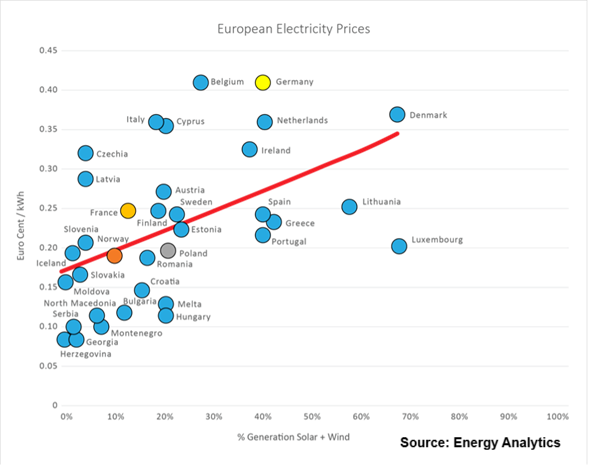
Second, we have been told for decades that wind and solar were cheaper than fossil fuels and were a solution to the alleged “climate crisis.” Both claims have been proven to be false. Wind and solar have not reduced the price of electricity for anyone. At best, they have only reallocated energy costs to taxpayers. Wind and solar have only increased the price of electricity for consumers, even when it is subsidized by taxpayers.

Worse, solar and wind have jeopardized the reliability of our grid. Grid operators now routinely warn of possible grid failure during peak demand. A February winter storm in Texas froze the wind turbines, resulting in hundreds of deaths and almost causing catastrophic grid failure. Too much solar and wind caused a similar grid crisis in Spain and Portugal just last month.

Wind and solar have never been economically viable without subsidies. That’s why wind and solar supporters oppose the end of the Green New Scam. Not only do wind and solar require taxpayer subsidies, they are also intrinsically subsidized by government mandates, and the sourcing of materials and labor from Communist China. This has also had the national security-imperiling effect of making our electricity grid dependent on our geopolitical rival.

Finally, wind and solar have also been an environmental disaster in terms of great birds, bats, whales and much other marine life killed. Their oversized footprints are made essentially a permanent part of the environment because of the vast amounts of concrete and iron rebar used in their foundations. There are also national security concerns with offshore wind.

We need energy that works. After 20 years of experience,
“all of the above” is just affirmative action for wind and solar energy.

If energy decisions were made on the basis of standard economic merit, like cost and functionality, then oil, gas, coal and nuclear power would win hands down. President Trump occasionally says kind things about solar, but not about wind. He saves his lavish praise and attention for those most deserving: oil, gas and coal.

W. J. Lee expands on this topic in his AMAC article Spain’s Green Energy Blackout Proves Trump is Right about Energy.  Excerpts in italics with my bolds and added images.

Last week’s sweeping blackouts across Spain and Portugal
delivered a stark reminder: energy policy rooted in ideology,
not engineering, has real-world consequences.

Days before the lights went out, Spanish leadership celebrated their power grid’s high reliance on renewables. But when solar and wind faltered—as all intermittent sources eventually do—the system buckled. Their mistake should give Americans added confidence that President Donald Trump’s all-of-the-above energy vision will lead to American energy dominance and dependability.

As large swaths of the Iberian Peninsula went dark, Europe came face-to-face with the instability that results from over-reliance on wind and solar power. The irony? This chaos unfolded on a sunny, wind-swept day—exactly the kind of day when renewables are supposed to dominate.

At the heart of the disruption was a grid built not on resilience, but on fashionable climate politics. Spain’s grid operator reported that just before the outage, solar power provided nearly 60 percent of the country’s electricity. Wind contributed another 9 percent. Together, these intermittent sources accounted for over two-thirds of supply—and when the system folded, it did so calamitously.

Spanish Prime Minister Pedro Sánchez stubbornly holds to the belief that the country’s high reliance on renewable energy had nothing to do with the extensive blackout, but several experts disagree. Leading former International Energy Agency board member Jorge Sanz told the press that the grid did not have enough support from nuclear and fossil fuel power plants to fill in when a sudden drop in power occurred from solar and wind power plants.

André Merlin, a former executive of France’s power grid, warned Europe against following Spain. “We need to be careful about the policy of maximum development and maximum use of intermittent renewable energy to the detriment of more conventional means,” he said.

It’s no coincidence that President Trump’s all-of-the-above energy policy—embracing fossil fuels, nuclear, renewables, and hydro—is giving the economy supreme confidence in our energy future. By diversifying America’s energy mix instead of putting all our eggs in the wind-and-solar basket, Trump ensures stability, affordability, and national security.

In contrast, the European Union is marching toward a self-defeating future where 69 percent of electricity must come from renewables by 2030, regardless of the consequences. Technocrats in Brussels may pat themselves on the back, but grid operators are still scrambling to solve basic technical challenges—like how to keep the lights on when clouds roll in or the wind dies.

One of the key technical problems is the loss of grid “inertia”—the momentum in spinning turbines at coal, gas, and nuclear plants that help stabilize voltage and frequency. When a solar farm goes offline, the output vanishes instantly. There’s no cushion, no time to react. This is precisely the kind of fragility President Trump warned about in 2018 when he pushed back on radical energy mandates and shutdowns of baseload power plants.

British energy expert Professor David Brayshaw of the University of Reading, summed it up: future blackouts will likely become “more significant and widespread” as renewables dominate the grid. Europe is learning that the hard way. Meanwhile, American energy independence—secured under Trump through expanded oil and gas production—offers the flexibility and robustness that Europe sorely lacks.

Back in Spain, grid operator Red Eléctrica wouldn’t say for sure what caused the outage, but all eyes turned to solar. The system collapsed in broad daylight, when solar production was at its peak. Two rapid losses of power—just 1.5 seconds apart—threw the grid into chaos and severed Spain’s connection with the wider European system.

And when it came time to reboot the grid, what energy sources did authorities rely on? Not wind. Not solar. It was hydroelectric and natural gas—energy sources vilified by climate activists but proven once again to be essential. President Trump understands this dynamic and refuses to bow to the environmental lobby’s demand for a total shift to intermittent renewables.

His administration is supporting investment in solar and wind
—when and where it makes sense—
but never at the expense of coal, oil, gas, or nuclear.

That balance, that pragmatism, ensures that America stays competitive, keeps utility bills low, and avoids the kind of disaster Europe just experienced. Spain’s blackout was not the result of a freak accident—it was the predictable outcome of an energy policy that treats physics as optional.

Spain is still moving forward with its plans to shut down its nuclear plants, the most reliable sources of zero-emissions power, and doubling down on wind and solar. That decision defies common sense. Nuclear energy is precisely the kind of carbon-free, high-output technology we should all support—technology that delivers stability and allows us to be good stewards of natural resources.

Europe’s push for a continent-wide “supergrid” is another
green utopian dream not grounded in reality.

The idea is that countries can share power more efficiently—but this past week’s outage rippled through Spain, Portugal, and even parts of France. Interdependence sounds great until a single failure spreads like wildfire.

This blackout should be Europe’s wake-up call. The “transition” they keep touting isn’t a triumph—it’s a gamble, and one that’s starting to cost real people their livelihoods, their travel plans, and their basic security.

Trump will continue to show the world what a sane energy policy looks like: use everything. Don’t demonize fossil fuels that keep the lights on. Don’t shut down nuclear reactors that provide dependable, carbon-free power. Don’t force the economy to depend on whether the sun shines or the wind blows.

As Spain gropes in the dark for answers, one thing is clear: President
Trump’s all-of-the-above approach isn’t just sensible—it is essential.

Beware Renewable Energy Trap

Terry L. Headley exposes the entanglements unheeded by carbon free activists in his Real Clear Energy article The Renewable Energy Trap: A Warning to Nations Pursuing Blind Sustainability  Excerpts in italics with my bolds and added images.

As the world increasingly shifts toward renewable energy, there is a growing risk that nations could fall into the “renewable energy trap.” This trap is the result of embracing an energy transition without fully understanding its economic, environmental, and geopolitical consequences. While renewable energy sources like wind, solar, and hydropower have been hailed as the future of global energy, nations rushing toward these technologies without a strategic plan may face grave economic and security challenges. The truth is that blind adherence to renewable energy, in its current form at least, is not the panacea many believe it to be. In fact, it could prove to be a short, green path to economic ruin for both developed and developing nations alike.

The up front gold is clear and considerable, while the end of the road is in the shadows and uncertain.

The False Promises of Renewables: Hidden Costs and Risks

The promise of renewable energy often comes with an aura of infallibility—clean, green, and limitless. However, this narrative overlooks the hidden costs of transitioning to renewable energy systems, many of which are disguised through misleading claims and incomplete accounting. For example, Germany’s “Energiewende” (Energy Transition) provides a cautionary tale of how well-intentioned policies can lead to unintended consequences.

Germany, once hailed as a leader in the renewable energy revolution, has spent over a decade investing heavily in wind and solar energy. Despite spending billions of euros, Germany has seen little reduction in its greenhouse gas emissions, and the financial burden on consumers has been significant. In 2020, Germany had the highest electricity prices in Europe, largely due to the subsidies and support provided to renewable energy companies. The country’s energy bills for consumers have surged, in part because of the costs associated with maintaining backup fossil fuel plants to ensure grid stability when wind and solar energy are insufficient.

Furthermore, Germany’s renewable energy push has led to a paradoxical reliance on coal. As has been said so many times before, when the wind isn’t blowing and the sun isn’t shining, Germany has been forced to turn back to coal-fired power plants to meet demand. Ironically, this has undermined the very environmental goals the country sought to achieve. Despite Germany’s heavy investment in renewables, it has seen a rise in coal usage due to the intermittent nature of its renewable energy sources, highlighting one of the most significant flaws of a renewable-dominant grid: reliance on fossil fuels to fill in the gaps.

Why? Because Germany must maintain at least as much baseload coal generation in reserve as it has in renewable energy generation to make sure it has electricity available at all times. The reality is that Germans are paying for the same electricity two or three times.

Rising Energy Costs and the Threat of Energy Poverty

The financial burden of renewable energy policies extends beyond Germany, affecting millions of households across the globe. One of the most significant, yet often overlooked, consequences of the renewable energy transition is the rising cost of electricity. The shift toward renewables has caused electricity prices to increase to the point where energy poverty is becoming a real issue in many countries.

Energy poverty refers to the inability of households to afford sufficient energy for heating, cooling, and powering their homes. The International Energy Agency (IEA) defines energy poverty as the lack of access to affordable and reliable energy. As the costs of renewable energy policies continue to rise, more and more households find themselves at risk of falling into energy poverty.

In the United Kingdom, for example, the government’s push for renewable energy has resulted in substantial increases in electricity prices. A report by the UK’s National Grid showed that between 2008 and 2020, the average annual energy bill for a UK household rose by 30%, with a significant portion of the increase attributed to the country’s renewable energy investments. The UK government has heavily subsidized wind and solar energy projects, but those subsidies are paid for by consumers through higher electricity bills. The result has been a situation where millions of British households struggle to keep up with the rising costs of energy.

In California, energy poverty is also on the rise as the state aggressively pursues renewable energy goals. While California has invested heavily in solar power, it has failed to address the intermittent nature of renewable energy. During periods of peak demand, when solar and wind energy are insufficient, the state is forced to turn to natural gas and imported electricity, which drives up costs. California has one of the highest electricity prices in the United States, and many low-income families are feeling the impact.

According to the California Public Utilities Commission, more than 1.3 million households in the state were at risk of energy poverty in 2020. Despite the state’s focus on clean energy, many residents are unable to afford their electricity bills, forcing them to choose between paying for energy or other necessities like food and medicine.

In South Australia, another example of the renewable energy trap is evident. South Australia has aggressively pursued renewable energy policies, becoming one of the leading adopters of wind and solar power in the world. However, this shift has led to significant spikes in electricity prices. The state has faced price volatility and blackouts due to the intermittent nature of renewable energy. In 2017, South Australia experienced a widespread blackout after a storm damaged the transmission network, and the state has since struggled to maintain grid stability. The increased reliance on renewables has led to soaring electricity prices, and many households are now unable to afford basic energy needs. According to the Australian Energy Regulator, electricity prices in South Australia have risen by 50% in the past decade, and many low-income families are feeling the squeeze.

The Geopolitical Trap: Energy Dependency, Raw Materials and National Security

The renewable energy transition also raises important geopolitical concerns, particularly in the area of raw materials. Renewable energy technologies are heavily reliant on rare earth metals, lithium, cobalt, and nickel for the production of batteries, solar panels, and wind turbines. These materials are predominantly sourced from countries with less stable political environments or are monopolized by a few nations, such as China.

This creates a new form of energy dependency. For instance, the global supply chain for lithium and cobalt is largely controlled by China, raising questions about national security and the potential for price manipulation or trade disruptions. Countries that rush toward renewables without developing diversified supply chains may find themselves dependent on a handful of foreign nations for critical materials—echoing the geopolitical vulnerability that oil-dependent countries have faced for decades. This new energy dependence could undermine the goal of energy independence that many nations seek.

Moreover, the mining process for these materials is far from clean or environmentally friendly. In countries like the Democratic Republic of Congo, where much of the world’s cobalt is sourced, mining operations are linked to severe environmental degradation and human rights abuses. The environmental damage associated with mining for lithium, cobalt, and rare earth metals often goes unreported in the “green” narrative surrounding renewable energy. In many cases, the extraction of these materials results in significant water contamination, deforestation, and harmful air emissions.

The Hidden Costs: Economic Burdens and Social Inequality

Another significant issue with the renewable energy push is the way its real costs are hidden from the public. Governments often advertise the economic benefits of renewables without accounting for the financial burden on consumers. The transition to renewable energy technologies often requires substantial government subsidies, which are typically funded by taxpayers or passed onto consumers through higher utility rates. In the case of the European Union, the cost of renewable energy subsidies is often obscured by misleading accounting practices that fail to capture the true cost of maintaining grid stability.

Take California, a state that has aggressively pursued renewable energy initiatives. While solar and wind have gained in popularity, California’s reliance on intermittent renewables has led to skyrocketing energy prices and blackouts. The state has been forced to rely on natural gas plants as backup power sources, creating a contradictory energy system that still depends on fossil fuels. Additionally, the high costs of implementing renewable energy infrastructure have disproportionately affected low-income families, who are unable to afford higher utility bills.

The Crucial Role of Coal-Fired Baseload Electricity

As nations scramble to meet ambitious renewable energy goals, the role of coal-fired baseload electricity cannot be overlooked. Contrary to the widespread narrative that coal is a relic of the past, coal remains the most dependable, affordable, and scalable option for providing stable electricity in an increasingly energy-demanding world.

Baseload electricity refers to the minimum level of demand on an electrical grid over a span of time. Coal-fired power plants are uniquely capable of providing this baseload power reliably. Unlike wind and solar, which are intermittent and weather-dependent, coal-fired plants can produce electricity 24/7, irrespective of external conditions. This ensures a stable and predictable energy supply, crucial for both industrial needs and residential consumption.

Coal is also among the most affordable sources of electricity. The levelized cost of energy (LCOE)—the cost to produce electricity per megawatt-hour—is lower for coal-fired plants than for many renewable alternatives, especially when factoring in the full infrastructure and grid integration costs associated with wind and solar energy. In the U.S., for example, coal remains more cost-effective than natural gas and many renewables, particularly in regions like the Midwest, where the energy grid is more reliant on coal-fired plants.

Moreover, coal is abundant and domestically available in many countries, reducing dependence on foreign energy sources. This enhances energy security, particularly for nations that are trying to avoid the geopolitical risks associated with imported energy, including oil, natural gas, and the rare earth metals required for renewable technologies.

Conclusion: A Balanced Approach, Grounded in Reality is Essential

While renewable energy holds promise for a sustainable future, the world must proceed with caution. Nations cannot afford to fall into the renewable energy trap by embracing these technologies without considering the full spectrum of their impacts. Germany’s experience with its Energiewende shows that pushing too hard for renewables can create new environmental problems, economic burdens, and political risks. A balanced energy strategy that incorporates energy security, economic sustainability, and environmental responsibility is crucial.

Coal-fired baseload electricity remains an essential and reliable component of a balanced energy portfolio. It provides affordable, stable, and secure electricity, ensuring that nations do not risk energy poverty or grid instability as they transition to greener sources. The renewable energy revolution must be a step forward, not a leap into the unknown. By acknowledging the true costs of renewable energy and the irreplaceable role of coal, we can forge a more reliable and sustainable energy future for all.


Update: Congress Enacting Climate Realism

Nico Portuondo reports on progress to enact realistic climate laws in his E&E News article Energy and Commerce unveils broad climate law rollbacks.  Excerpts in italics with my bolds and added images.

The House committee’s portion of the Republicans’ big party-line bill
also includes expedited permitting for gas exports and other projects.

The House Energy and Commerce Committee’s section of the Republicans’ party-line megabill includes billions of dollars in clawbacks from a host of Inflation Reduction Act programs.

The legislation — up for markup Tuesday — would affect the Department of Energy’s Loans Program Office, EPA’s Greenhouse Reduction Fund and many other climate law initiatives, according to text released Sunday night.

Chair Brett Guthrie (R-Ky.) said the climate law repeals would add up to $6.5 billion in savings. He said the unobligated balances represented “the most reckless parts of the engorged climate spending in the misnamed Inflation Reduction Act.”

“The 2024 election sent a clear signal that Americans are tired of an extreme left-wing agenda that favors wokeness over sensible policy and spurs price increases,” Guthrie said in a Sunday Wall Street Journal op-ed.

Guthrie said the administration “has already reversed President Biden and Democrats’ electric-vehicle mandates and natural-gas export ban; now it’s Congress’s turn.”

Guthrie told committee Republicans on a call Sunday that the overall legislation — including changes to Medicaid — would create more than $900 billion in savings, according to POLITICO.

A committee spokesperson said “the bill specifically rescinds funding leftover from nine of the Biden Administration’s IRA renewable energy and electrification subsidy programs at the Department of Energy — saving taxpayers money and allowing for deficit reduction.”

Department of Energy

The legislation would scrap “the unobligated balance” of IRA funding for the Loans Program Office and money dedicated to transmission projects.

The LPO received over $35 billion from the climate law, while DOE’s Grid Deployment Office got around $3 billion as part from the IRA’s “Transmission Facility Financing” section.

Republicans will also try to rescind IRA funds boosting a number of other DOE programs, including initiatives on advanced vehicle manufacturing, energy infrastructure reinvestment financing, tribal energy loan guarantees and state-based efficiency grants. Those programs, in total, received around $8.3 billion from the climate law.

The committee, however, did not make clear just how much leftover funding is available to repeal after the Biden administration pushed to get as much as possible out the door.

Outside of IRA programs, the legislation would accelerate permitting for infrastructure projects through new fees, something similar to the Natural Resources Committee text and what Democrats have called a pay-to-play scheme.

One Energy and Commerce provision, for example, would allow DOE to automatically deem a potential liquefied natural gas export facility to be in the “public interest” — normally a key regulatory hurdle — if the applicant pays a one-time fee of $1 million.

Another provision would allow other natural gas infrastructure developers to receive an “expedited permitting process” from the Federal Energy Regulatory Commission under the Natural Gas Act if the applicants pays $10 million or 1 percent of the project’s projected cost.

The proposal eyes permitting being completed within a year and would exempt projects from certain litigation. A similar timeline and fee would apply to carbon dioxide, oil and hydrogen pipeline permitting.

The legislation would also rescind congressionally appropriated funding outside of the IRA for key DOE programs, including around $401 million from the Office of Energy Efficiency and Renewable Energy and around $260 million from DOE’s State and Community Energy Programs.

It would grant $2 billion for the department to refill the Strategic Petroleum Reserve, a longtime objective of Republicans to shore up the nation’s energy security.

EPA

The bill text confirmed a longtime promise from Energy and Commerce leaders that they would target unobligated balances from the EPA’s Greenhouse Gas Reduction Fund, a $27 billion IRA program designed to support clean energy projects particularly in low-income and disadvantaged communities.

Outside of the Greenhouse Gas Reduction Fund, the plan would repeal a variety of IRA programs designed to reduce air pollution at schools and ports, reduce emissions from diesel engines and construction materials, and promote carbon monitoring initiatives.

And, as expected, the legislation takes aim at the Inflation Reduction Act’s methane fee. That program is designed to reduce methane leaks from natural gas infrastructure. Congress, through the Congressional Review Act, already repealed EPA regulations implementing the fee.

The legislation would also roll back two regulations on emissions from passenger vehicles. Gone would be the latest corporate average fuel economy, or CAFE, standards issued by the National Highway Traffic Safety Administration and EPA’s newest multipollutant emissions standards for model years 2027 and later, requiring significant reductions in greenhouse gas and pollutant emissions from light-duty and medium-duty vehicles.

Republicans went further in their targeting of Biden-era vehicle policies with a proposed repeal of $600 million in grants and rebates to states, municipalities tribes and nonprofits to expand the use of zero-emission vehicles.

See also: 

How To Fix US Energy After Biden Broke It

Spain and Portugal Achieve Net Zero Accidently

Analysis of the blackout in Spain and Portugal comes in EurAsia Daily article Solar generation fell, and then the Spanish power grid collapsed: details of the blackout. Excerpts in italics with my bolds and added images.

New details are emerging why a large-scale blackout occurred in Spain, which lasted more than 10 hours and hit millions of Spaniards. The statements of the operator of the country’s energy system differ from the original version of EADaily, but point to the same reason — green energy, which failed in a crisis situation.

“The first major power outage in the era of green electricity,” Bloomberg columnist Javier Blas wrote on Twitter. He published a brief transcript of the teleconference held by the operator of the Spanish power grid Red Electrica on the blackout, from which the country is still recovering.

So, Red Electrica ruled out a cyber attack or weather as a reason. The operator presented the following course of events. At 12.33 pm, the Spanish power grid experienced a loss of generation in the south-west of the country. Most likely, these were solar power plants, but the operator is not sure yet. Indeed, most of Spain’s solar generation is located in the south-west of the country.

Location and concentration of solar power plants in Spain (left).

After milliseconds, the power system self-stabilized and began to recover. However, after a second and a half, a second wave of generation power loss occurred. Representatives of the operator did not specify whether the first wave provoked the second.

Three and a half seconds later, the instability of the energy system of the Iberian Peninsula reached a level that led to a malfunction at the interconnector with France, the power supply capacity of which was then 1 GW.

Immediately after that, another power loss of green power plants hit the power grid. The operator did not specify why this happened.

Further, the cascading power drop further destabilized the Spanish power grid, forcing every remaining power plant to be disconnected from the grid — nuclear power plants, gas and hydroelectric power plants. As a result, the generation in Spain entering the network has dropped to zero. The data shows that out of 25 GW, 10 GW remained, but the operator reported that for a brief moment the power dropped to zero.

Red Electrica stated that the presented series of events is preliminary, and so far the operator cannot make a final conclusion due to a lack of data.

This information is confirmed by the data of the operator itself and the European ENTSO-E platform. The capacity of solar power plants at 12.25−12.30 amounted to 17.8 GW — 55% of the total generation in the country. And by 12.40 it had almost tripled to 6 GW. At the same time, from 11.00 the capacity of solar power plants changed dramatically and one-time fluctuations reached 700 MW.

TSO data shows the point just after 12:30 on Monday 28 April when Spain’s electricity grid collapsed. When the collapse occurred, the Spanish electrical grid had almost 80% renewable generation, 11% nuclear, and only 3% natural gas. There was practically no base generation or physical inertia to absorb the shock that was generated. Source: Red Eléctrica

The operator’s data differ from the original version of EADaily about the failure of the interconnector with France and temperature changes, but coincide with the key reason for the blackout — green energy.

The problem of solar and wind power plants is that, unlike coal and gas generation, they do not provide synchronous inertia that stabilizes the frequency in the network. And when the frequency in the network dropped, solar power plants could not compensate for the imbalance. Their operation depends on inverters, which automatically turn off when the frequency deviates from the norm, aggravating the collapse.

The electrical system obeys the laws of physics. This obvious fact was not always taken into account when politicians took measures affecting the country’s electricity generation and transport networks. In Spain, for example, over the past decade there has been a revolution in electricity generation, which has led to the fact that renewable technologies (primarily photovoltaic and wind) now occupy a large part of the energy balance,” wrote former president of Red Electrica Jordi Sevilla in El Pais.

He noted that there is a technical problem: solar and wind energy are not synchronous energy sources, while transmission and distribution networks are designed to operate only with minimal voltage in the energy they transmit. Therefore, a sudden jump in the production of renewable generation can lead to sharp voltage fluctuations in the network, which will lead to a loss of generation and, as a result, to power outages.

“Our energy system needs investments to adapt to the technical realities of the new generation, which, in turn, should also continue to improve its own technologies and storage systems. This is a requirement of the sector (and the system operator), to which the government does not listen. The PNIEC project was developed in the office with excessive messianism regarding renewable energy sources and without taking into account the technical problems associated with such a significant change in the Spanish energy balance and its compliance with the energy system,” concluded the ex—head of the Spanish energy system operator.

Meanwhile, the Spanish Prime Minister made a new statement about the blackout.

“In his third speech in 24 hours, Pedro Sanchez clearly pointed out the ‘responsibility of private operators’ for the largest power outage in the history of Spain. He did not name names because the investigation is still ongoing, but the chief executive has thus taken the first step in a huge legal and economic battle that will begin in the coming months,” El Pais writes.

As the building notes, Pedro Sanchez seeks to neutralize attempts by the People’s Party (PP) and other conservative circles to blame the blackout on renewable energy sources.

“Sanchez claims that there is nothing to indicate that this is an explanation for what happened, and even more so that nuclear energy is the solution. Other right-wing European countries are returning to nuclear power, but Sanchez and Ogesen insist on the opposite,” El Pais noted.

At the same time, Prime Minister Sanchez himself still does not completely rule out the cyberattack version, and the government turned to Incibe (Cybersecurity Institute).

“Doubts remain. The government is not sure, but Sanchez still claims that the system is one of the best in the world, and adds that the public has behaved exemplary. At the moment, the system, restored to 99%, will work according to a safe formula, and if everything goes well, the usual formula will start working tomorrow,” El Pais writes.

Javier Blas  @JavierBlas comments:
Let’s see if I understood Spanish PM:
– we should not eliminate any hypothesis, but he has unilaterally ruled out any link to renewables;
– nuclear power plants are bad;
– we should wait to expert reports, but he contradicts the preliminary findings from the experts at the grid.
As reported by EADaily, after noon on April 28, millions of Spaniards faced problems that they did not even know about. The blackout stopped trains, planes and even buses. The extinguished traffic lights provoked chaos on the roads, and the lack of electricity in stores led to the fact that bank cards were not accepted and supermarkets were closed. Mobile communications disappeared, and hospitals served only patients in critical condition. 30 thousand police officers were brought into the capital of the country to ensure order. Spain could not even imagine such a thing.