Temperature Misunderstandings

Clive Best provides this animation of recent monthly temperature anomalies which demonstrates how most variability in anomalies occur over northern continents.

Beyond the issues with the measurements and the questionable adjustments, there is a more fundamental misconception about air temperatures in relation to “climate change.” Clive Best does a fine job explaining why Global Mean Temperature anomalies do not mean what people think. Below is my synopsis of his recent essay entitled Do Global Temperatures make sense? (link)

Background: Earth’s Heat Imbalance

ERBE measurements of radiative imbalance.

The earth’s temperature at any location is never in equilibrium. It changes daily, seasonally and annually. Incoming solar radiation varies enormously especially near the poles which receive more energy per day in summer than the equator.

The earth cools primarily by moving heat from hot tropical regions towards high latitudes where net IR radiation loss cools the planet, thus maintaining a certain temperature profile.

Key Point: Heat Distribution Changes, not Global Temperatures

Rising CO2 levels modify that radiation imbalance profile slightly. Surface temperatures in the tropics are not really warming at all. Any excess heat induces more clouds and more convection while surface temperatures remain constant. What really happens is that the meridional radiation profile changes. Slightly more heat is transported polewards so that hot places are shifting more heat to cold places which are doing the warming. If CO2 levels stop rising then a new temperature and radiation profile would rather quickly be reached. This is then called ‘climate change’ but any such changes are concentrated in colder regions of the world. The global ‘temperature’ itself is not changing, but instead the global distribution of temperature is changing.

Key Point: More Atmospheric Heat means Warming in the Coldest Places

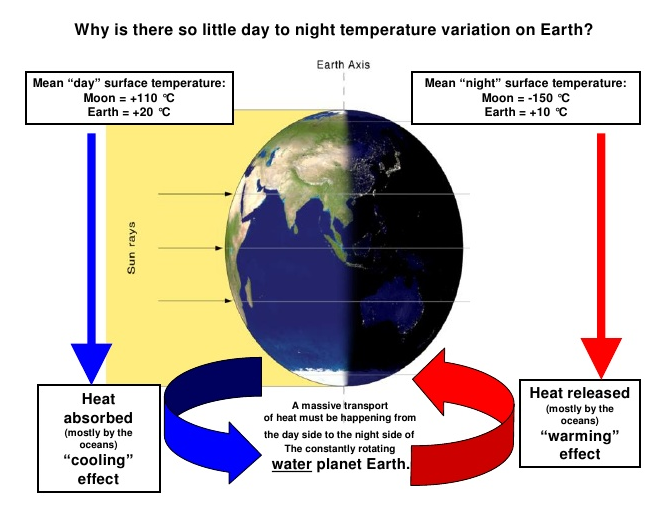
Temperatures at the poles during 6 months of darkness would fall well below -150C if there was no atmosphere, similar to the moon. Instead heat is constantly being transported from lower latitudes by the atmosphere and ocean and so that temperatures never fall much below -43C. If more heat is transported northwards than previously, then minimum temperatures must rise, and this is what we observe in individual measurements.

Key Point: GMT Anomalies Are Dominated by the Highest Latitudes

The main problem with all the existing observational datasets is that they don’t actually measure the global temperature at all. Instead they measure the global average temperature ‘anomaly’. . .The use of anomalies introduces a new bias because they are now dominated by the larger ‘anomalies’ occurring at cold places in high latitudes. The reason for this is obvious, because all extreme seasonal variations in temperature occur in northern continents, with the exception of Antarctica. Increases in anomalies are mainly due to an increase in the minimum winter temperatures, especially near the arctic circle. 

To take an extreme example here is the monthly temperature data and calculated anomalies for Verkoyhansk in Siberia. Annual temperatures vary from -50C in winter to +20C in summer. That is a seasonal range of 70C each year, and a year to year anomaly variation of ~8C is normal. The only global warming effect evident is a slight increase in the minimum winter temperatures since 1900. That is not due to any localised enhanced greenhouse effect but rather to an enhanced meridional heat transport. Temperatures in equatorial regions meanwhile have only ~4C seasonal variations, and show essentially no warming trend.

Long term changes in temperature anomalies occur mainly in northern continents in winter months. This is not because the earth as a whole is warming up but rather that meridional heat transport from the equator to the poles has increased and the largest effect on ‘anomalies occurs in winter. The average absolute temperature of the earth’s surface is unknown. Basing the evidence for climate change on the 150 year trend in global averaged temperature anomalies still biases the result towards higher latitudes where most of the stations are located.

Summary

When heat is released into the atmosphere from the oceans, it is transported toward the poles to dissipate into space. Places in higher latitudes are warmed, not by radiative effects of greenhouse gases in those locales, but by the incursion of warmer air from the equator.

What happens if more CO2 is added into the atmosphere? No one knows, but there are many opinions, a popular one being that more heat is retained in the atmosphere. But in that case, that additional heat will be shed by the planet in exactly the same manner: transport to the poles with slightly less extremely cold air at the higher latitudes.

Why in the world would we pay anything to prevent a little bit of warming in the world’s coldest places?

Clive Best takes the analysis further and relates to work by Christopher Scotese in a later post Fact: Future Climate Will Be Flatter, not Hotter

Footnote: Scott Pruitt provides a concise synopsis of the issues in measuring global surface temperatures.  From his responses to Senators’ questions during confirmation hearings:

Senator Merkley:

Are you aware that each of the past three decades has been warmer than the one before, and warmer than all the previous decades since record keeping began in the 1880s? This trend is based on actual temperature measurements. Do you believe that there is uncertainty in this warming trend that has been directly measured? If so, please explain.

Nominee Pruitt:

I am aware of a diverse range of conclusions regarding global temperatures, including that over the past two decades satellite data indicates there has been a leveling off of warming, which some scientists refer to as the “hiatus.”
I am also aware that the discrepancy between land-based temperature stations and satellite temperature stations can be attributed to expansive urbanization within in our country where artificial substances such as asphalt can interfere with the accuracy of land-based temperature stations and that the agencies charged with keeping the data do not accurately account for this type of interference.
I am also aware that ‘warmest year ever’ claims from NASA and NOAA are based on minimal temperature differences that fall within the margin of error.
Finally, I am aware that temperatures have been changing for millions of years that predate the relatively short modern record keeping efforts that began in 1880.

More Q&A is at Running the Climate Gauntlet

More explanation at The Climate Water Wheel

Oceans Make 2015 & 2016 Climate


Ocean temperature measurements come from a global array of 3,500 Argo floats and other ocean sensors. Credits: Argo Program, Germany/Ifremer

We are seeing lots of claims about the temperature records for 2016 and 2015 proving dangerous man made warming.  At least one senator stated that in a confirmation hearing.  Now that HadSST3 data is complete for last year, let’s see how obvious is the ocean’s governing of global average temperatures.

The best context for understanding these two years comes from the world’s sea surface temperatures (SST), for several reasons:

  • The ocean covers 71% of the globe and drives average temperatures;
  • SSTs have a constant water content, (unlike air temperatures), so give a better reading of heat content variations;
  • A major El Nino was the dominant climate feature these years.

HadSST is generally regarded as the best of the global SST data sets, and so the temperature story here comes from that source, the latest version being HadSST3.

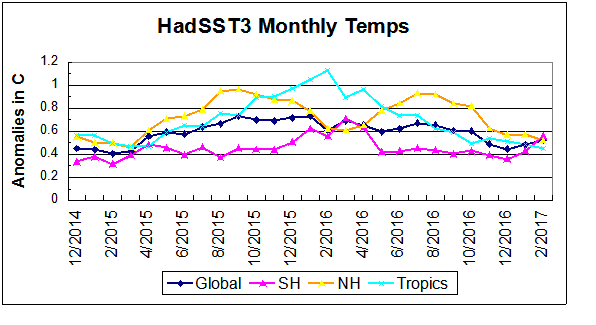
The chart below shows the last two years of SST monthly anomalies as reported in HadSST3.

hadsst3-2015-2016all

Note that higher temps in 2015 and 2016 are first of all due to a sharp rise in Tropical SST, beginning in March 2015, peaking in January 2016, and steadily declining back to its beginning level. Secondly, the Northern Hemisphere added two bumps on the shoulders of Tropical warming, with peaks in August of each year. Also, note that the global release of heat was not dramatic, due to the Southern Hemisphere offsetting the Northern one.

Finally, the oceans are entering 2017 at the same temperature level as 2015, only now with downward momentum.

Much ado will be made of this warming, including claims of human causation, despite the obvious oceanic origin. However, it is unreasonable to claim CO2 functions as a global warming agent, yet the two hemispheres respond so differently.  Moreover, CO2 warming theory expects greater warming in the higher latitudes, while this event was driven by heating in the Tropics, contradicting alarmist warming theory.

Solar energy accumulates massively in the ocean and is variably released during circulation events.


Anatomy of the Hottest Years Ever


Ocean temperature measurements come from a global array of 3,500 Argo floats and other ocean sensors. Credits: Argo Program, Germany/Ifremer

With the year end, media climate attack dogs are going after the Trump administration, throwing whatever they can (hoping for anything to stick). One thing they will surely trumpet is the temperature records for 2016 and 2015 as proof of dangerous man made warming.

Now the best context for understanding these two years comes from the world’s sea surface temperatures (SST), for several reasons:

  • The ocean covers 71% of the globe and drives average temperatures;
  • SSTs have a constant water content, (unlike air temperatures), so give a better reading of heat content variations;
  • A major El Nino was the dominant climate feature these years.

HadSST is generally regarded as the best of the global SST data sets, and so the temperature story here comes from that source, the latest version being HadSST3.

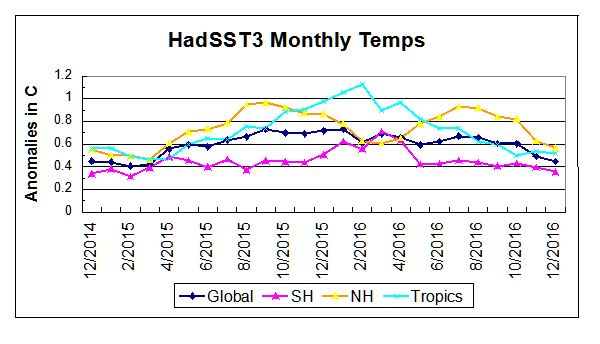
The chart below shows the last two years of SST monthly anomalies as reported in HadSST3.

hadsst3-2015-2016

Note that higher temps in 2015 and 2016 are first of all due to a sharp rise in Tropical SST, beginning in March 2015, peaking in January 2016, and steadily declining back to its beginning level. Secondly, the Northern Hemisphere added two bumps on the shoulders of Tropical warming, with peaks in August of each year. Finally, note that the global release of heat was not dramatic, due to the Southern Hemisphere offsetting the Northern one.

Much ado will be made of this warming, including claims of human causation, despite the obvious oceanic origin. Further, it is curious that CO2 functions as a warming agent so unevenly around the world, and that the Tropics drove this event, contradicting global warming theory.

Solar energy accumulates massively in the ocean and is variably released during circulation events.


Clamatology

clamSome reporters are showing an interest in a lesser known proxy for climate change: giant clams. Of course, some scientists claim clams prove unprecedented global warming this century. Unsurprising since their funding (clams) depends on sounding the alarms.

For some insight into the connection between clams and climate, here is a paper Giant clam recorders of ENSO variability (here).

Giant clam stable isotope profiles from Papua New Guinea faithfully record all the major El Niño events between 1986 and 2003, thus illustrating the usefulness of this archive to reconstruct past ENSO variability. Elliott et al.

In northern Papua New Guinea precipitation and temperatures are coupled on seasonal and interannual timescales. El Niño periods are associated with lower than average SST and drier conditions, whereas La Niña periods are associated with higher than average SST and wetter conditions. The associated changes in sea water δ18O and SST will thus have cumulative effects on shell δ18O, which will become more positive during El Niño and more negative during La Niña phases.

clam-fig2

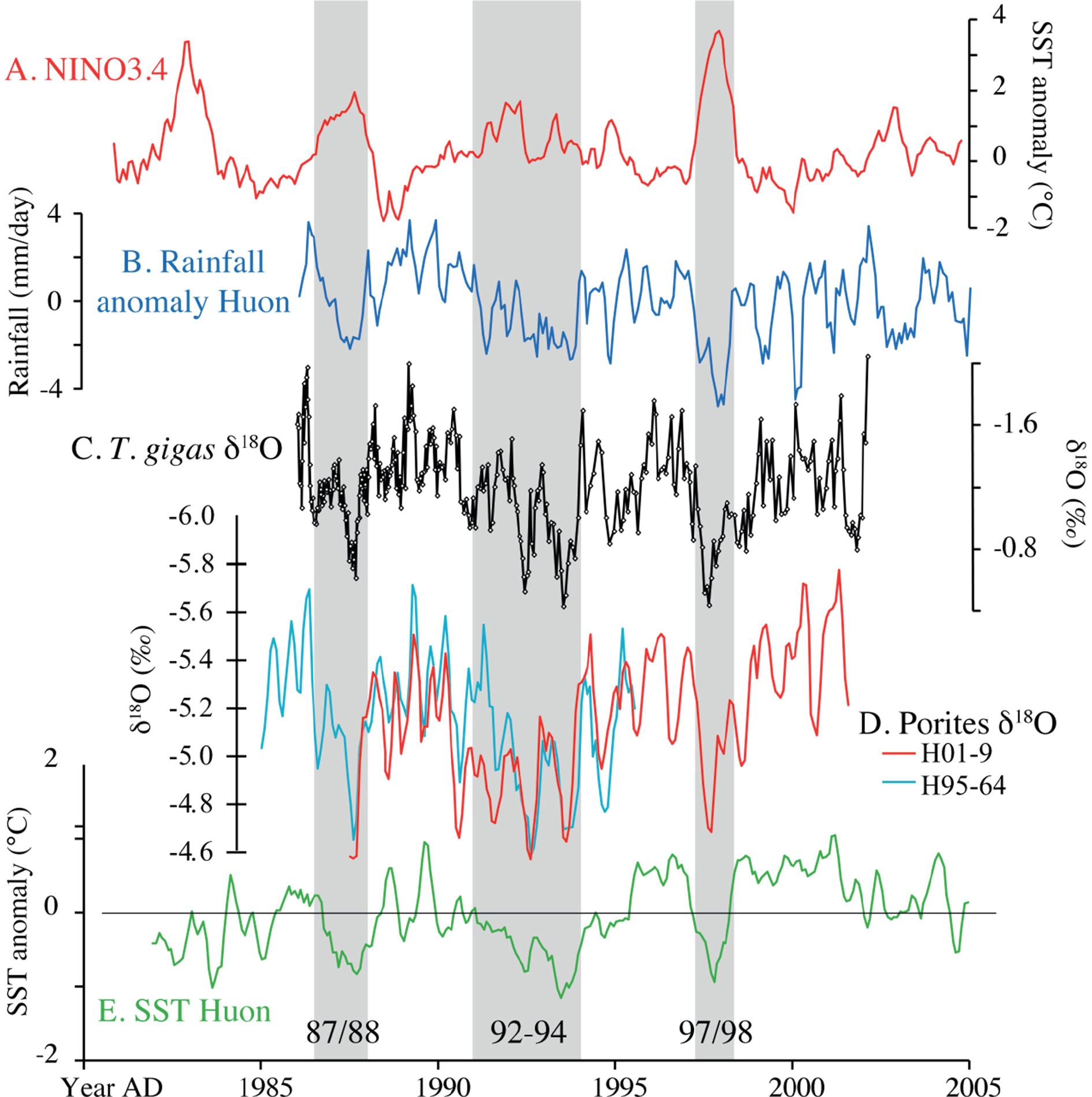
Figure 2: Comparison of T. gigas δ18O profile with ENSO index, local temperature and rainfall data. A) NINO3.4 index, (B) 3pt smoothed monthly rainfall anomaly (mm day-1, NASA/GPCPV2) for 146.25°E, 6.25°S, (C) T. gigas δ18O record, (D) Porites δ18O profiles and (E) 3pt smoothed monthly SST anomaly (from IGOSS) for the same grid box as the rainfall data. Y-axes of the δ18O are inverted. The shaded bands indicate El Niño events.

The comparison of the ENSO index with the T. gigas and Porites δ18O records shows that each El Niño event is recorded in the shell and coral profile by isotopic shifts of around 1.0 to 1.2‰ toward more positive values (Fig. 2) reflecting the combined influence of lower temperatures and decreased rainfall. During the El Niño phase of the Southern Oscillation, the region experiences relative drought and slightly reduced SSTs (~-0.2 to -0.5°C anomaly, see Fig. 2). These factors combine to drive skeletal δ18O to heavy values, with SST explaining about 30-50% of the skeletal δ18O range.

Take away message

We show that shells of T. gigas can be used to produce multi-decadal climatic records, hence providing a valuable resource for investigating changes to the frequency and strength of ENSO events in the past. The excellent reproducibility of clam and coral δ18O profiles illustrates the strength of using these archives to reconstruct large-scale hydrographic changes.

Some points worth noting: Clamshell variability is influenced by precipitation as well as water temperature. And water temperatures do not simply correlate to air temperatures. Finally, it is the water heating the air, not the other way around.

The data is good, but the interpretation can be biased by warmist beliefs.

On Warming Holes (Global Warming Gaps)


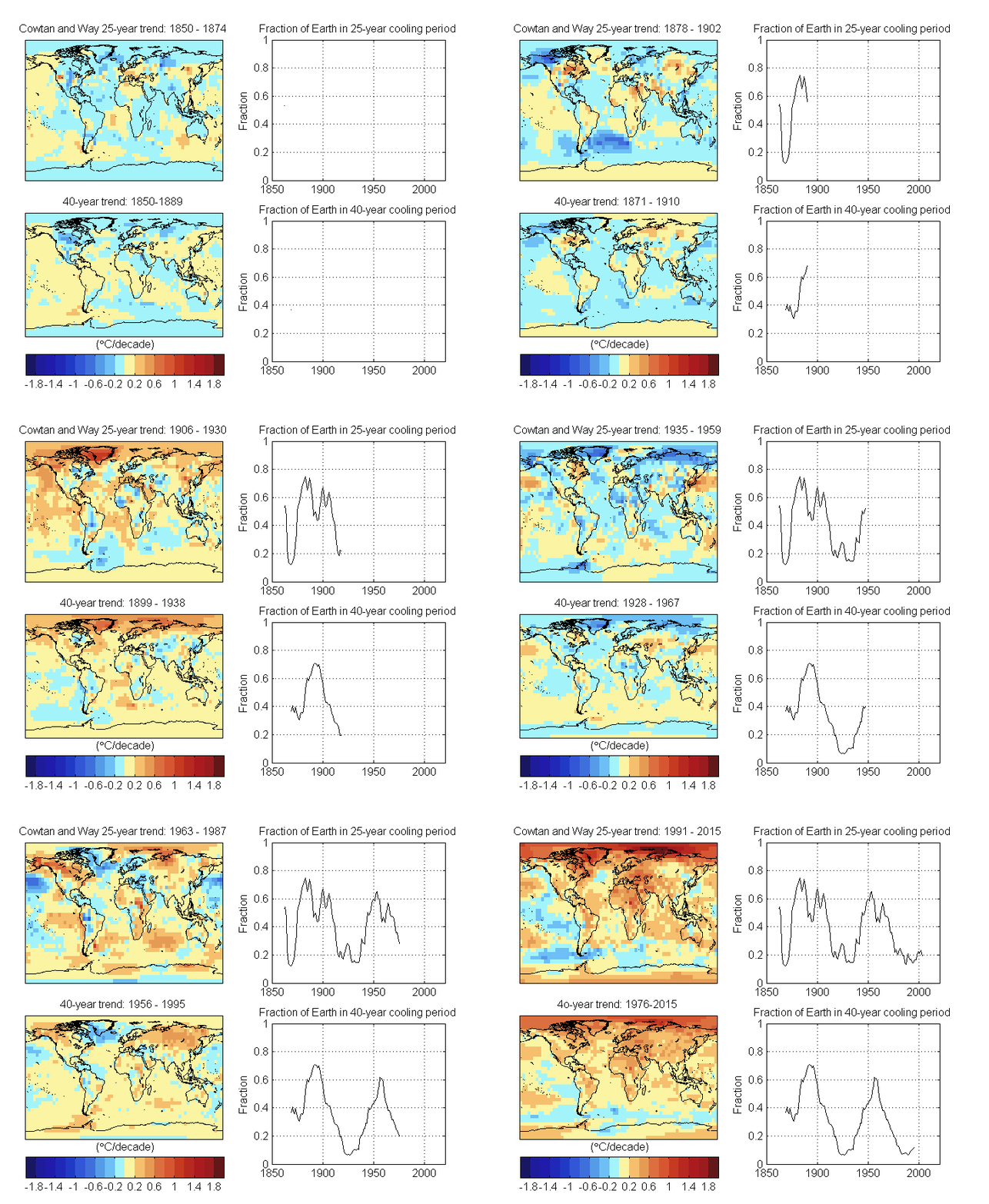
Animation showing the 25-year and 40-year trends in surface air temperature in the Cowtan and Way v2.0 dataset, with plots to the right showing the fraction of the earth surface in a cooling trend (the blue areas in maps).

Ed Hawkins at his blog provides above the display of variability of warming and cooling across the globe. The post is entitled Regional Temperatures This Century (here).

We found that some regions experience periods of cooling at this timeframe even when global temperature is increasing rapidly. Cooling periods of 25 years duration occurred in 13 to 74 % of the earth surface through the observed record, and cooling periods of 40 years occurred in 6 to 71% of the earth surface, including in the most recent decades. Cooling periods are more prevalent where the long-term trend is low such as in the Southern Ocean, and/or where decadal variability is high such as Pacific Ocean regions influenced by the Inter-Decadal Pacific Oscillation (IPO). However, there are cases where low trend or high variability due to the IPO (or Atlantic Multi-decadal Oscillation) are not the only factors, and there may be a role for forcings and other regional effects. These cases include the well-known ‘warming hole’ in the south east US through the last half of the 20th Century (noting this ‘hole’ has an important seasonal aspect to it) and the recent cooling in northern Australia linked to increasing cloud and rainfall.

He refers to the cooling regions as “warming holes”. Since there are periods where cooling dominates globally, we could also refer to exceptional regions as “warm spots.” This shows dynamically how regional climate trends differ over time. For example, over the last century in the continental US, about a third of land stations showed cooling trends contrary to the slightly warming average overall.

Cautionary note regarding the Cowtan and Way 2.0 Dataset

This dataset is controversial in its use of “krieging” to spread temperature readings from a handful of land stations across the full extent of the Arctic (and Antarctic) including surfaces of ocean, ice and mixtures of the two. As the charts show, this results in extra warming in the Arctic, double the trend shown by UAH (satellite) dataset.

Another example of the inconsistency of “global warming” is provided by NOAA’s presentation of continental temperatures. (here) The table below is for October 2016, and shows not only variability, but also how land temperatures are falling following El Nino’s disappearance.

CONTINENT ANOMALY (1910-2000) TREND (1910-2016) RANK
(OUT OF 107 YEARS)
RECORDS
°C °F °C °F YEAR(S) °C °F
North America +1.33 +2.39 +0.05 +0.09 Warmest 7ᵗʰ 1963 +2.16 +3.89
Coolest 101ˢᵗ 1919 -1.94 -3.49
South America +0.85 +1.53 +0.17 +0.30 Warmest 15ᵗʰ 2014 +1.60 +2.88
Coolest 92ⁿᵈ 1922 -1.04 -1.87
Ties: 1994
Europe +0.40 +0.72 +0.11 +0.20 Warmest 41ˢᵗ 2006, 2001 +1.96 +3.53
Coolest 67ᵗʰ 1912 -1.99 -3.58
Africa +1.35 +2.43 +0.09 +0.16 Warmest 2ⁿᵈ 2015 +1.59 +2.86
Coolest 106ᵗʰ 1910 -0.65 -1.17
Asia -0.15 -0.27 +0.10 +0.18 Warmest 69ᵗʰ 2011 +1.76 +3.17
Coolest 39ᵗʰ 1912 -2.22 -4.00
Oceania +0.21 +0.38 +0.13 +0.23 Warmest 44ᵗʰ 2015 +2.71 +4.88
Coolest 64ᵗʰ 1910 -1.15 -2.07


The Climate Story (Illustrated)

October 3, 2016

In this overheated political season, this post may be a useful reminder of the facts as protection against lots of unproven claims flying around.

801761

The captions and most comments below come from Mike van Biezen in his recent essay published at the Daily Wire (here). To illustrate his points, I added images collected from various internet addresses. Michael van Biezen teaches physics and earth sciences at Loyola Marymount University, Los Angeles, and his many lectures are available on Youtube at his website (here).

Temperature records from around the world do not support the assumption that today’s temperatures are unusual.

giss-gmt-to-2018-w-co2

Many people experience the range of temperatures on this scale on a daily and seasonal basis.

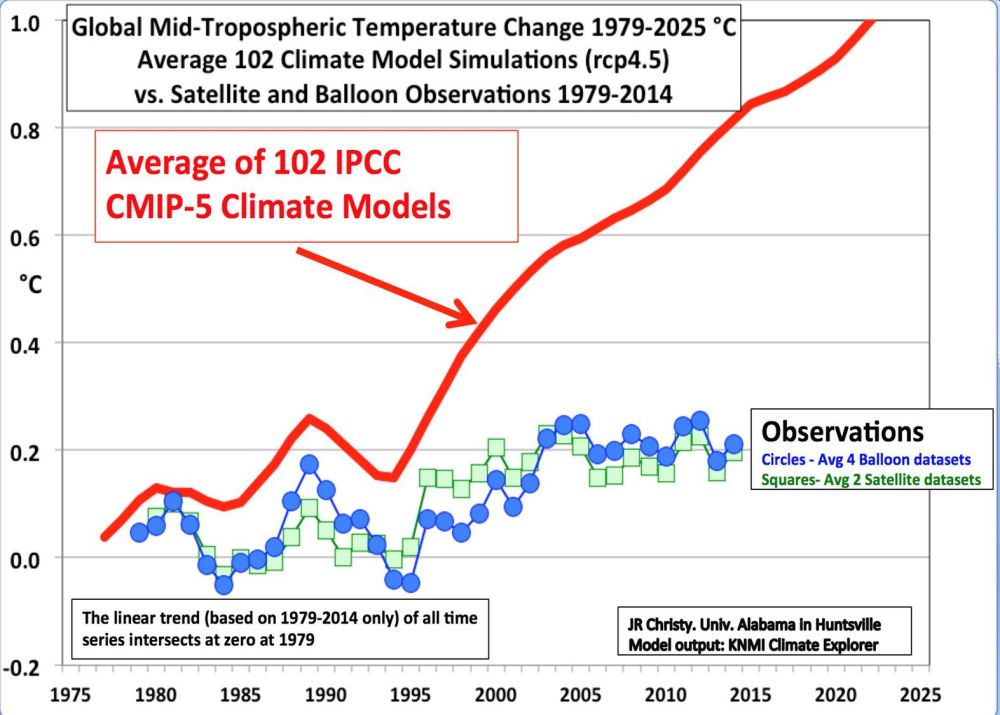
Satellite temperature data do not support the assumption that temperatures are rising rapidly.

john-christy-climate-change-chart-0a201a1637955761

The world experienced a significant cooling trend between 1940 and 1980. CO2 levels do not correlate consistently with temperatures.

Urban heat island effect skews the temperature data of a significant number of weather stations.

There is a natural inverse relationship between global temperatures and atmospheric CO2 levels.

On the graph above, the past is on the right side, time goes to the left. You can see that the Antarctic temperature starts to change first, and CO₂ responds with a 800-year lag. The explanation is obvious: oceans are large and it simply takes centuries for them to warm up or cool down before they release or absorb gases.

Higher temperatures increase atmospheric CO2 levels and lower temperatures decrease atmospheric CO2 levels, not the other way around.

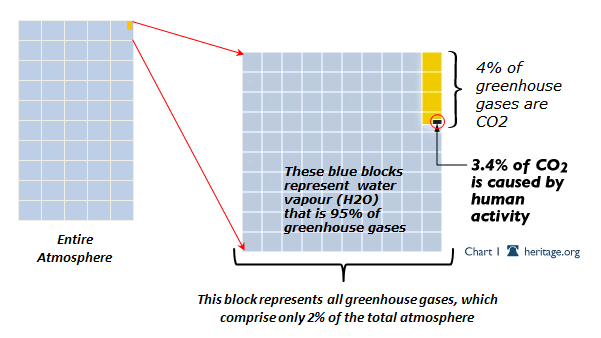
The CO2 cannot, from a scientific perspective, be the cause of significant global temperature changes

ghg-blocks-1

The H2O molecule which is much more prevalent in the Earth’s atmosphere, and which is a bend molecule, has many more vibrational modes, and absorbs many more frequencies emitted by the Earth, including to some extent the radiation absorbed by CO2. It turns out that between water vapor and CO2, nearly all of the radiation that can be absorbed by CO2 is already being absorbed.

Many periods during our recent history show that a warmer climate was prevalent long before the industrial revolution.

Glaciers have been melting for more than 150 years.

post-glacial_sea_level

“Data adjustment” is used to continue the perception of global warming.

The Moral of The Climate Story:

Global warming alarm is not supported by temperature data.

We all have a choice:  Listen to the facts, or listen to the fears:

e482d6b8-ed49-446a-9878-bb999f510ae01

Michael Crichton (2002)

Like a bearded nut in robes on the sidewalk proclaiming the end of the world is near, the media is just doing what makes it feel good, not reporting hard facts. We need to start seeing the media as a bearded nut on the sidewalk, shouting out false fears. It’s not sensible to listen to it.

It’s not Hotter, it’s Milder.

Again this week I got an email from a friend linking to an alarmist website claiming (among other things) 2015 the Hottest Year Ever, August 2016 the Hottest Month Ever, 16 Hottest Months in a row, The Earth is Burning!

My reply:
Calm down and breathe through your nose. Be not afraid.
You have been misinformed, and I will tell you how and why.

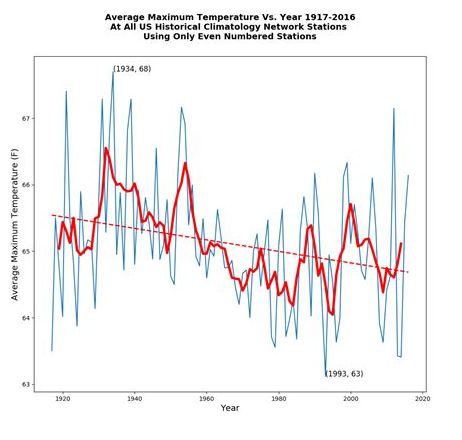
1. “Hotter” does not describe a long period when daily highs are falling, not rising. That’s right, generally the temperature records are showing a decline over time in the maximums recorded at the weather stations.

For example look at results from USHCN (US Historical Climate Network) for the trend of daily maximums since 1930.

Source: Tony Heller, Real Climate Science

It is clear that measurements of actual afternoon highs are trending down in most places, and lower much more strongly than the few increases.  Below the same results displayed geographically.


2. Temperature averages over decades show great climate stability, not change. The calculated trends are in fractions of a degree Celsius, well within the error range of the instruments.

Alarmists favor the dataset from GISS, a part of NASA. They fabricate estimates of an hypothetical Global Mean Temperature not from satellites, but by taking weather station records and performing various statistical manipulations, including adjusting, deleting, infilling, gridding, weighting, homogenizing, and averaging.

Out of all that processing they produce estimates of annual GMTs, which can not be attributed to any actual observation. More importantly, the dataset is unstable–past history, for example the 1930s, appears in GISS graphs with different values this year than last, and different again from 5 and 10 years ago. As Dr. Ole Humlum commented: A temperature record which keeps on changing the past hardly can qualify as being correct.

Below is shown GISS estimates in the context of human experience of daily and seasonal temperature variability.

3. The planet has a vast array of climates, each of which has it’s own experience of changing weather and longer term patterns. That is evident in the first chart above. It is also the case that generally as daily highs have been falling, daily lows (minimums) have been rising more strongly, resulting in slightly increasing daily averages. That is the basis for claiming hottest years and months.

This phenomenon is widespread around the world, as demonstrated by studies reported here at this blog under the category Temperature Trend Analysis. For example, Analyzing Temperature Change using World Class Stations.

In addition, 70% of the GISS surface temperatures are from SSTs (sea surface temperatures), meaning that ocean cycles like El Nino dominate the results. Short-term variations recently derive from changes in the Pacific basin, the largest of the world’s oceans.

Because climates are local and plural, any general statement about warming or cooling does not necessarily apply to the place where you live.

Summary

The next time you read or are told the world is getting hotter, you should respond along these lines.

“You have been misinformed. It is not getting hotter, it has become milder. The temperature records show fewer extremes of highs and lows, milder Winters, earlier Springs and later Autumns. The longer growing seasons are producing bumper crops almost every year.

Instead of complaining about hotter weather, we should enjoy the bounty of harvests Nature is providing to us.”


The 2016 harvest is shaping up to be a whopper, according to Western Canada’s largest elevator companies.

The 2016 harvest is shaping up to be a whopper, according to Western Canada’s largest elevator companies.

Footnote:

Another post Arctic Warming Unalarming reports on in depth analysis of 118 weather stations around the Arctic Circle, where so-called “Arctic amplification” should be evident.  The conclusions:

The Arctic has warmed at the same rate as Europe over the past two centuries. . . The warming has not occurred at a steady rate. . .During the 1900s, all four (Arctic) regions experienced increasing temperatures until about 1940. Temperatures then decreased by about 1 °C over the next 50 years until rising in the 1990s.

For the period 1820–2014, the trends for the January, July and annual temperatures are 1.0, 0.0 and 0.7 °C per century, respectively. . . Much of the warming trends found during 1820 to 2014 occurred in the late 1990s, and the data show temperatures leveled off after 2000. (my bold).

So, consistent with statements above: No increase in July temperatures, some warming overall due mostly to January.

“Gotcha” Graph from GISS

Lots of buzz over Brian Cox using the latest GISS land and ocean graph to put down Malcolm Roberts in a TV debate in Australia. Likely we will be seeing the image everywhere and alarmists crowing about “deniers” dismissed once and for all. For the record here is the graph showing no pause whatsoever:

This is accomplished by lowering the 1998 El Nino spike relative to 2015 El Nino. To see what is going on, here is a helpful chart from Dr. Ole Humlum at Climate4you

It shows that indeed, GISS is showing 1998 peak lower than several years since, especially 2002, 2010 and 2016. In contrast, the satellite record is dominated by 1998, and may still be in that position once La Nina takes hold later this year. The differences arise because satellites measure air temperature in the lower troposphere, while GISS combines records from land stations with sea surface temperatures (SSTs) to fabricate a global average anomaly, including adjusting, gridding and infilling to make the estimate of Global Mean Temperatures and compare to a 30-year average.

An insight into the adjustments is displayed below.

As we have seen before, the past is cooled, and the present warmed to ensure evidence of global warming. Presently it is claimed that July 2016 is the hottest month ever. But stay tuned for future adjustments necessary to keep the warming going.

Dr. Humlum demonstrates that GISS is an unstable temperature record.

Dr. Humlum:

Based on the above it is not possible to conclude which of the above five databases represents the best estimate on global temperature variations. The answer to this question remains elusive. All five databases are the result of much painstaking work, and they all represent admirable attempts towards establishing an estimate of recent global temperature changes. At the same time it should however be noted, that a temperature record which keeps on changing the past hardly can qualify as being correct. With this in mind, it is interesting that none of the global temperature records shown above are characterised by high temporal stability. Presumably this illustrates how difficult it is to calculate a meaningful global average temperature. A re-read of Essex et al. 2006 might be worthwhile. In addition to this, surface air temperature remains a poor indicator of global climate heat changes, as air has relatively little mass associated with it. Ocean heat changes are the dominant factor for global heat changes. (my bold)

Too much trickery going on. I prefer to see actual temperatures, and this graph presents clearly the GISS record without the distortions:

giss-annual-temps4

Or, if you prefer Celsius degrees (range represents human sensory experience of daily and seasonal temperature variability)

giss-annual-tempsincrev

Conclusion 

Brian Cox defended the GISS graph by saying it was from NASA who put men on the moon.  He forgot to mention that several of those men and many scientists who put them there find NASA increasingly unscientific and untrustworthy on climate matters.

It could also be said about the recent GISS graph:  You show us a graph where the past history is different today than GISS reported it a year ago, and different again from 5 and 10 years ago.  Why should we believe this one any more than the other ones?  And why does GISS contradict temperatures recorded directly by NASA satellites?

He who controls the past controls the future. He who controls the present controls the past.
George Orwell 1984

Footnote

Same point as Orwell, but with a dash of humour:

A soviet university professor addresses his students: “There’s good news and bad news about this year’s History final exam.  The good news is all the questions are exactly the same as last year’s exam.  The bad news: Many of the answers have changed.”

Nunavut is Melting, Or not


From Yale Climate Connections we heard last week about Nunavut melting and a theatrical production to spread news and concerns about this dangerous development.

“I come from a place of rugged mountains, imperial glaciers and tender-covered permafrost. But Nunavut, our land, is only as rich as it is cold, and today most of it is melting.”That’s Chantal Bilodeau, reading a passage from “Sila,” a play about the effects of climate change in the Arctic.

The characters in her play include polar bears, an Inuit goddess, scientists, and coast guard officers – all working together to save their land.

No doubt her personal experience and feelings for her Nunavut are sincere and profound. (Originally I thought it was her homeland, but in fact she is a New York playwright and translator, born in Montreal.) And there will be a large audience receptive to her concerns about global warming. (Bilodeau has writen six plays about the Arctic and founded the international network Artists And Climate Change.) But I wonder if scientific measurements support her belief that Nunavut is melting.

After all, we have learned from medical research that individual life experiences (anecdotes) may not be true more generally. That is why drugs are tested on population samples with double-blind studies: neither the patient nor the doctor knows who gets the medicine and who gets the placebo.

So I went looking for weather station records to see what is the warming trend in that region. As curiosity does so often, it led me on a journey of discovery, learning some new things, and relearning old ones with fresh implications.

Where are temperatures measured in Nunavut?

It is by far the Northernmost territory of Canada, just off the coast of Northern Greenland.

According to Environment Canada, weather is reported at 29 places in Nunavut. So I went to look at the record at Iqaluit, the capital of the territory. You get monthly normals for the period 1981 to 2010. Historical data (daily averages) can be accessed only 1 individual month/year at a time, the menu stops at 2004. Even then, some months are filled with “M” for missing. Historical data from which trends can be analyzed is hard to come by.

Disappearing Weather Records

It turns out that Nunavut also suffered from the great purging of weather station records that was noticed by skeptics years ago.

Ave. T vs. No. Stations

Graph showing the correlation between Global Mean Temperature (Average T) and the number of stations included in the global database. Source: Ross McKitrick, U of Guelph

I was aware of this because of a recent study looking at trends at stations around the Arctic circle. Arctic Warming Unalarming.  That study included graphs that showed the dramatic removal of station records in the North.  Though the depletion was not limited to the far North, many Canadian and Russian records disappeared from the global database.

arctic-europe-paper-2015_fig6annual

Fig. 6 Temperature change for annual Arctic averages relative to the temperature during 1961 to 1990 for stations in Europe having more than 150 years of observations. The red curve is the moving 5-year average while the blue curve shows the number of stations reporting in each year. 118 stations contributed to the study. W. A. van Wijngaarden, Theoretical & Applied Climatology (2015)

Eureka, Nunavut, Canada “Last Station above latitude 65N”

Eureka got considerable attention in 2010 due to its surviving the dying out of weather stations. The phrase in quotes above reflects an observation that GISS uses Eureka data to infill across the whole Arctic Circle. That single station record is hugely magnified in its global impact in that temperature reconstruction product. Somewhat like the influence of a single tree in Yamal upon the infamous hockey stick graph.

The first High Arctic Weather Station in history, Eureka was established in April 1947 at 80-degrees north latitude in the vicinity of two rivers, which provided fresh water to the six-man United States Army Air Force team that parachuted in. They erected Jamesway huts to shelter themselves and their equipment until August, when an icebreaker reached Eureka – as it has every year since – and brought permanent buildings and supplies. For decades after that, small, all-male crews would hunker down for entire winters, going a little stir-crazy from the isolation. WUWT 2010

GHCN Records for Nunavut

It turns out that in addition to Eureka, GCHN has data for Alert and Clyde (River), but the latter two histories end in 2004 and 2010, respectively. The adjusted files have a few differences in details, but little change from the unadjusted files. The chart below shows the temperatures measured at Eureka, Nunavut, Canada 79° 98’ N, 85° 93’ W.  The other two stations tell the same story as Eureka, though temperatures at Clyde are warmer in absolute terms due to its more Southerly location.

Eureka temps4

The chart shows Annual, July and January averages along with the lifetime averages of Eureka station from 1948 through 2015.  There is slight variability, and a few years higher than average, but nothing alarming or even enough for people to sense any change.  Note also that annual averages are well below freezing, because only 3 months are above 0° C.  I suppose that someone could play with anomalies and generate a chart that looked scary, but the numbers in the record do not support fears of global warming and melting in Nunavut.

Conclusion

Once again we see media announcements that confuse subjective beliefs with empirical observations of objective reality.  And unfortunately, those observations are less and less available to counter the herd instincts of fearing the future and blaming someone.

Footnote

The map at the top shows how crucial is Nunavut to the Polar Ocean Challenge.  If the Northabout  successfuly negotiates the Northern Sea Route (the Russian side), they then must pass from Beaufort Sea through the Parry Channel (or alternative passages) to get to Baffin Bay.  Laptev is the first hurdle, and Nunavut is the last one.