Elites’ Energy Fantasies Abound

Stephen Barrett reports on ruminations from technically challenged overlords in his Spectator Australia article by way of John Ray’s blog The chattering climate class and their war on coal. Excerpts in italics with my bolds and added images.

The Climate Chattering Class is now telling each other:
No Such Thing as Baseload Electrical Power.

Electricity is slippery stuff, in that it can be difficult to properly grasp what it is or how to quantify it.  We can blame the school system. Teachers who were taught social politics at University must somehow teach mathematics and physics.

There is a reason for everything in the world and that reason usually comes down to physics until politics gets mixed in. This is a problem. In politics, the same big lie can be repeated many times, as loudly as possible, until people accept it as truth or give up trying to argue the toss.


Readers will be familiar with the nameplate rating on wind farms and solar plants. It lists the rated output under ideal circumstances, measured in watts. If a heater has 1,000W we all understand it is telling us the output at one instant in time. Consumption is a different thing and is measured in watts/hour. Reversing this, we can understand we are seeing a generator’s nameplate watts as the size of the generator and watt hours as how much it provides.

An interesting idea making its way around the energy conversation
at present is that there is no such thing as baseload energy.

The lie is perpetrated by the political system which is, at present, intending to destroy the concept (and existence) of baseload energy. Baseload is created by heavy generators that operate all day, every day, and are typically cheap. The disadvantage of this structure is that baseload plants usually take time to reach full production. Then, they need to run for extended periods of time to be economically viable. Coal and nuclear are the only two types feasible for most of the Australian market.

Gas and diesel plants can provide electricity but they are expensive when operated in this way. Peaking power is where gas comes to the fore. It can be fired up quickly and make electricity rapidly. This is ideal for peaks when people come home from their day and want heating or cooling and to cook. Gas can cover this surge very happily. Diesel is lovely stuff and great in remote locations where there is no access to the grid or if the grid fails. It might not be pretty, but it delivers when needed.

In the whole clean grid argument, those words should be enshrined…
‘When it is needed.’

Coal, nuclear, gas, and diesel will deliver when needed. Reliability has been ignored by the chattering classes who have created the current disaster of high prices and brownouts that continue to destroy various industries.

Perhaps that is the whole point of ‘renewable’ energy.  I put that in quotes because the best figures I can find are that they only return seven-tenths of the power used to build them.

Every wind tower is a hallmark to coal-fired power being able to carry inefficient freeloaders. Freeloaders because renewable technologies can never produce energy when it is needed, only when it wishes.Solar and wind dump themselves on the energy market, making it impossible for reliable supplies to remain economic. If they had to obey the same bidding rules, they would never survive.

Let’s compare the costs of wind, solar, and nuclear. To do this we can look at the Shepherds Flat Wind Farm, Topaz Solar Farm, and Barakah Nuclear Power Plant.

We can skittle the first anti-nuclear claim about taking too long to build. Barakah was completed within eight years. The global average for modern nuclear plant construction (globally) is between seven and eight years. Sadly in Australia we have a less than helpful public service that thrives on inefficiency that might drag out this timeline.

The nameplate ratings on these plants were 845MW for Shepherds Flat, 550MW for Topaz and 5,600MW for Barakah. Nuclear can appear expensive if you compare build cost against the nameplate rating but not markedly. Shepherds Flat cost $2 billion, Topaz $2.5 billion, and Barakah $24.4 billion. Comparing build cost to nameplate rating, Shepherds Flat Wind cost 42 cents/MW, Topaz Solar 22 cents/MW, and Barakah Nuclear 23 cents/MW.

Looking at the size per dollar, nuclear is almost as good as solar and better than wind. The issue already demonstrated is not size as much as provision. That nameplate value is giving you one second of use. One second later, you are going to need that much again. This means the Watt/Hrs is crucial.

This is where wind and solar fail massively. The watts produced are not as important as the Watt Hours provided to the market. Assuming a generous 25-year life span for Shepherds Flat, 30 years for Topaz, and a mean-spirited 60 years for Barakah (when it is likely to still be running 100 years after it started), I calculated the GWh per annum compared to the Build Price over the life of the project. That is Build Price divided by annual GWh times lifespan.

Shepherds Flat was $40,000, Topaz $75,000 and Barakah $9,300.

On this measure, nuclear is significantly cheaper, but the price of firming wind and solar is not added to their totals. So that you can have power on those hot still days of summer when the wind doesn’t blow or the cold nights of winter when the sun is not shining you will need either nuclear or coal to provide you with the electricity you need.

We can discuss batteries some other time, but the new super battery has been coming about as long as perpetual motion and flying cars. Lithium ion batteries are old tech that has been developed to a point of maturity where there is little left to squeeze out of them and without mountains we are not going to get enough pumped hydro no matter how economically bad that model is.

If I magically had the power I would build more coal-fired stations, only because nuclear will need time to be made legal and that cannot be predicted. Nuclear however beats wind and solar to bits as far as costs and output and reliability are concerned.

Depravity of Net Zero Agenda

From Daily Sceptic The Real ‘Climate Change Deniers’ Are Those Who Deny the Climate Changed Before We Started Burning Fossil Fuels, Says Geologist.  Excerpts in italics with my bolds and added images.

“We need to be resilient”

As a geologist, Wielicki undoubtedly has a better-than-average understanding of how our planet has evolved in the first place, and how its climate has been in a constant state of flux. Today’s climate science, however, links climate change primarily to the increasing amount of CO2 in the atmosphere, especially its anthropogenic component. Scientists who doubt or dispute this are labelled climate deniers. Wielicki points out that we know very well from Earth’s relatively recent history that major climate changes, such as the Medieval Warm Period (ca. 950-1250) or the subsequent Little Ice Age (ca. 14th to mid-19th century, precise timing depending on the location), occurred without any significant change in the proportion of CO2 in the atmosphere.

“If there’s anything that I argue, it’s that we need to be resilient. We should stop pretending that if we changed or lowered our emissions the climate would stop changing. That’s the true denial of climate right there,” Wielicki says. “What we need to accept is that regardless of the CO2 in the atmosphere, we are going to have climate change and those shifts could occur over timescales of decades or centuries, and we should be prepared.
And being prepared means we need access to cheap, reliable energy.

But the world is moving in the opposite direction under the leadership of today’s political leaders. One of the main objectives is to fight CO2 emissions and to do so by phasing out fossil fuels, among other measures. However, according to Wielicki, the planners have not quite thought everything through. First of all, wind and solar power are unreliable substitutes because they can only be produced when the conditions are right, i.e., when the wind blows and the sun shines. In addition, they need constant support from the taxpayer, because when they can be produced, i.e., sold as energy to the grid, the price of electricity on the market will be low since there is a lot of it at that particular time. So in order for investors to build up these capacities, they need price guarantees from governments or taxpayer support. And on top of that, you still need to additionally build up controllable capacity to ensure that electricity is always available.

Wielicki also says that we need to understand that fossil fuels are not just liquids that we put in our cars at the petrol station but are essential to many aspects of our lives. “About four billion people on the planet are being fed off of agricultural crops that are being fertilised with synthetic fertilizers that are being created from fossil fuels. So you can’t just look at one side of a picture,” Wielicki explains, adding that the increases in atmospheric CO2 levels have actually also increased yields.

In addition, Wielicki says, it is worth thinking that we need to replace many of today’s fossil-fuel-based materials in everyday use, such as plastics, lubricants, oils, chemicals, etc., with new ones if we really want to phase out fossil fuels. “We have to ask what are the benefits that fossil fuels have given the society? And then let’s weigh that against the possible detrimental effects that these climate models argue will happen, but haven’t happened in the observable data yet,” he says.

The rise of the new green colonialism

Programmed into this whole Western orientation towards CO2 reduction, Wielicki says, is hypocrisy on several levels. For a start, it’s worth recognising that by reducing CO2 emissions in Europe or North America, we have effectively decided that we do not produce the goods we need here, but will produce them elsewhere in the world. “We pat ourselves on the back and say: look, we’ve lowered our CO2 emissions by this much! But all we’ve done is essentially offshored that industry to China and India, They do it dirtier. They have no regard for things like environmental policy. And so the global CO2 is going up faster than ever,” Wielicki notes.

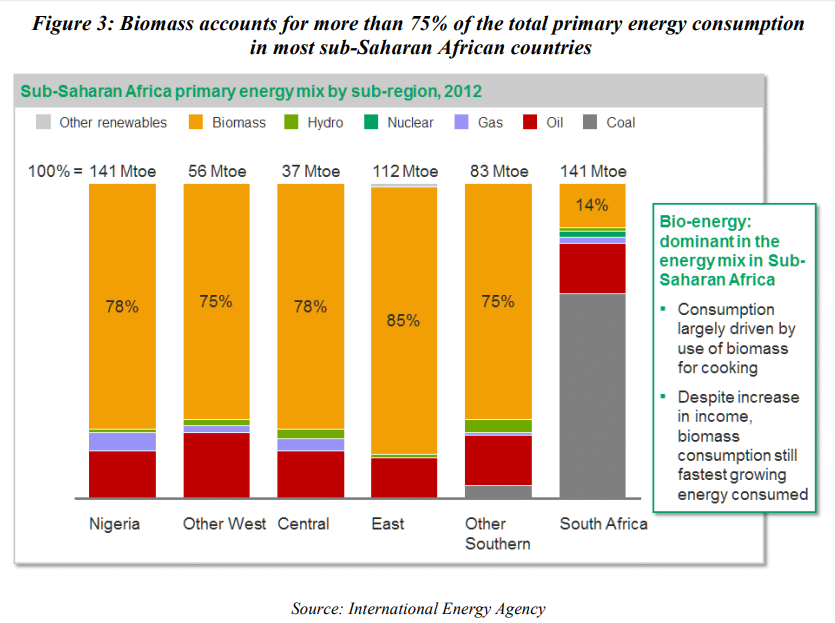
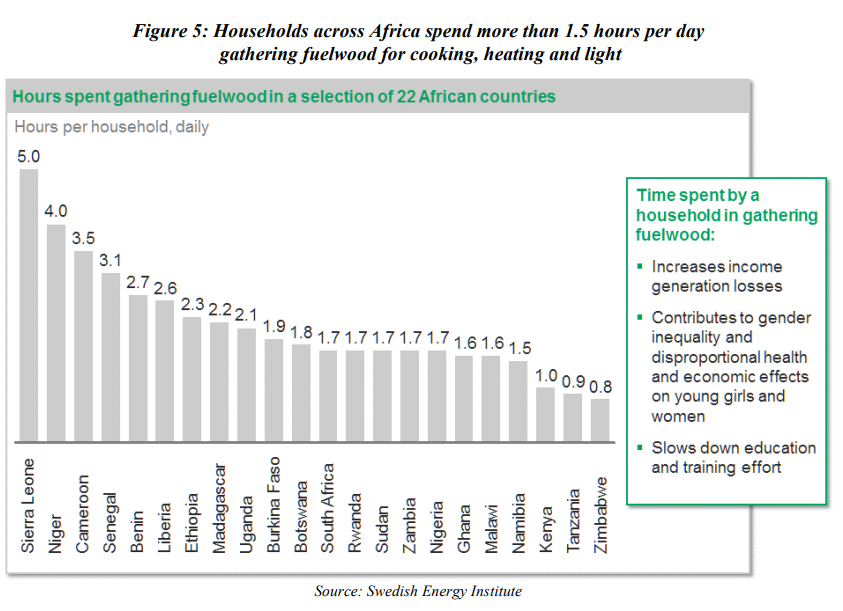
While the big Asian countries are ramping up the use of coal to satisfy their energy appetite, many African countries don’t have a similar option. According to Wielicki, this is directly linked to the UN’s policy of not wanting these countries to increase their use of fossil fuels. This means, for example, that farm work that is done elsewhere by tractor still has to be done by many Africans with their hands. A large proportion of Africans also have little or no access to electricity. Food is cooked indoors on open fires, burning dung and wood.

The resulting smoke leads to respiratory illnesses and many people die as a result. All this could be easily avoided, according to Wielicki, by giving them access to propane bottles and gas cookers. “It might make them breathe easier at night. It might make their health better. But it’s going to increase the atmospheric CO2, and that is something we can’t have. These poor people must suffer and live in poverty because we need to save the planet. It’s so hypocritical,” Wielicki says.

What’s more, according to Wielicki, our hypocrisy lies in the fact that at the same time, we want to mine the minerals we need for our own energy transition, such as cobalt, in that very same Africa. “We’re switching to very mineral and energy intensive technologies like solar panels and electric vehicles. And we’re taking all of these raw materials from Africa,” he says. “I think this is going to be, probably, the legacy of this green revolution. I call it the new green colonialism. It’s unfortunately going to keep hundreds of millions of poor people in developing nations in poverty for decades longer than they ever needed to be,” Wielicki adds.

SC-GHG: Weapon of Mass Social Destruction

A reminder that first there was Social Cost of Carbon (SCC) which purported to estimate future costs of damages from CO2 emissions. Now there is Social Costs of Green House Gases (SC-GHG) which ups the ante by adding purported damages from methane (CH4) and Nitrogen oxides (N2O). At the end of this post are references describing this sordid history.

Remember also the regulators game.  Regulations by far outnumber laws passed by congress, and they impose costs upon businesses and consumers of the targeted industries.  Instigating agencies justify their rules by claiming greater savings from preventing future damages.  So the higher the damages estimates the more intensive and expensive can be the regulations.

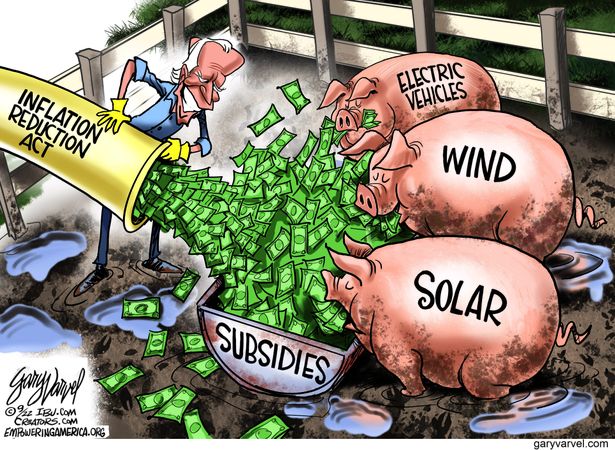
Mark Krebs provides a recent example of this in his Master Resource article Heat Pump Subsidies: Never Enough.  It reports on various machinations by the Biden/Harris regime to spend all the money they can on decarbonizing projects before their term ends.  As Biden himself said after terminating his re-election campaign:  We should have named the Inflation Reduction Act what it really was, the Green New Deal.

The article includes this quote from Competitive Enterprise Institute’s (CEI) regarding SCC (with my bolds):

Junk Science Behind Federal Appliance Regs About to Get Junkier

The Biden-Harris administration has embarked on a wave of anti-consumer home appliance regulations over the last several years. Each was justified in part by overblown claims of climate change benefits. And now, the Department of Energy (DOE) has proposed using a new methodology that would further inflate these hypothetical benefits to justify even worse regulations in the years ahead.

DOE is in the process of creating new energy use limits for stoves, dishwashers, furnaces, washing machines, water heaters, ceiling fans, refrigerators, and more. The agency always asserts that consumers experience net gains from these regulations, but CEI has filed comments highly critical of these rosy assumptions. In reality, such rules often raise the up-front costs of appliances more than is likely to be earned back in the form of energy savings. Some rules also compromise appliance choice, performance, and reliability.

But DOE’s fictitious consumer benefits are only part of the problem. CEI has also taken issue with the agency’s assertions that these regulations deliver quantifiable climate change benefits. For example, DOE’s costly 2023 final rule for residential furnaces was estimated by the agency to provide $16.2 billion worth of such benefits.

The agency arrives at this figure by calculating the reduced energy use attributable to the efficiency standards and then estimating the amount of greenhouse gas emissions avoided as a result – mostly carbon dioxide emitted to produce electricity at coal or natural gas-fired power plants. Then it multiplies the tons of emissions avoided by the calculated per unit dollar cost to society of such emissions.

Until now, DOE has relied upon the 2021 Interagency Working Group on the Social Cost of Greenhouse Gases (IWG 2021). IWG 2021 provides the agency with the per ton Social Cost of Greenhouse Gases (SC-GHG) values.

Relying on IWG 2021 was bad enough, but in its most recent proposed rule for commercial refrigeration equipment DOE is switching to an updated 2023 version of SC-GHG provided by the Environmental Protection Agency.

The new methodology takes several already-dubious assumptions in IWG 2021 and stretches them further. For one category of commercial refrigeration equipment covered in the proposed rule, DOE calculates the climate benefits of $48-$320 million dollars under IWG 2021 but a whopping $564-$1,713 million under the new way. That’s around 5-10 times higher.

How Did They Weaponize SC-GHG?

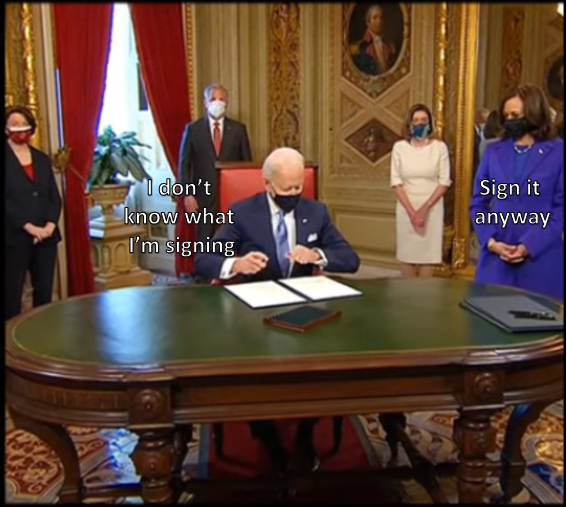
Briefly recapping, the Obama WH activist bean counters pushed numbers around and came up with $51 per ton of CO2 emitted. Then Trump WH said more realistic interest rates give an SCC of $1 per ton CO2.  Then Biden/Harris came into power with a deluge of Excutive Orders (EO), including one that reset SCC at 51$  Maybe you recall scenes like this from early 2021:

That prompted ten states to file for an injunction against Biden’s EO 13990 which was granted by the federal District Court of Louisiana February 2022.  Manhattan Contrarian commented at the time (my bolds):

On taking office, the Trump administration took steps to neutralize the SCC, so that not much has been heard from it for a while. But Biden’s EO 13990 caused the Obama-era version to get re-instated. The Biden people claim that they are working on further tweaks to the regulations, but meanwhile a large group of Republican-led states went ahead and commenced litigation.

With a regulatory initiative obviously intended to force a gigantic transformation of the economy without statutory basis, the Biden people defended against the Complaint using every shuck and jive and technicality known to man. The SCC rules were not “final” because the administration was still working on a few more tweaks (and then a few more, and then a few more); the state plaintiffs lacked “standing” because the harm was to citizens rather than the state itself; and so forth. The court was having none of it.

The heart of the court’s decision is its determination that the SCC falls under the Supreme Court’s “major questions doctrine,” under which the bureaucracy cannot on its own authority impose “new obligations of vast economic and political significance” unless Congress “speaks clearly.” The states had identified some 83 pending projects involving something in the range of $447 and $561 billion dollars as affected by the SCC rule. That impressed the court as easily within the concept of “major questions.”

However in March 2022 the Fifth Circuit Court of Appeals stopped the injunction, and in May 2022 the Supreme Court refused a request by plaintiff states to block EO 13990.

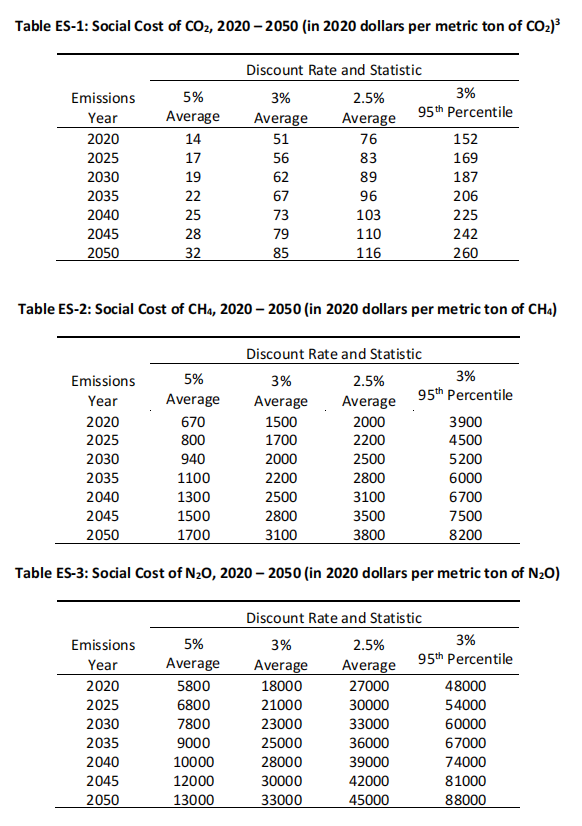
From Technical Support Document: Social Cost of Carbon, Methane, and Nitrous Oxide 2021

The first table was the same one produced by Obama WH.  Note that at 5% discount rate, CO2 goes from $14 to $32 in 2050.  Obama era regulations presumed the 3% rate which results in $51 up to $85. Note the astronomical numbers for CH4 $1500 per ton up to $3100.  And N2O starts at $18,000 to $33,000.  Hide your cows and fertilizers!.  But that was not expensive enough for Team Biden/Harris .

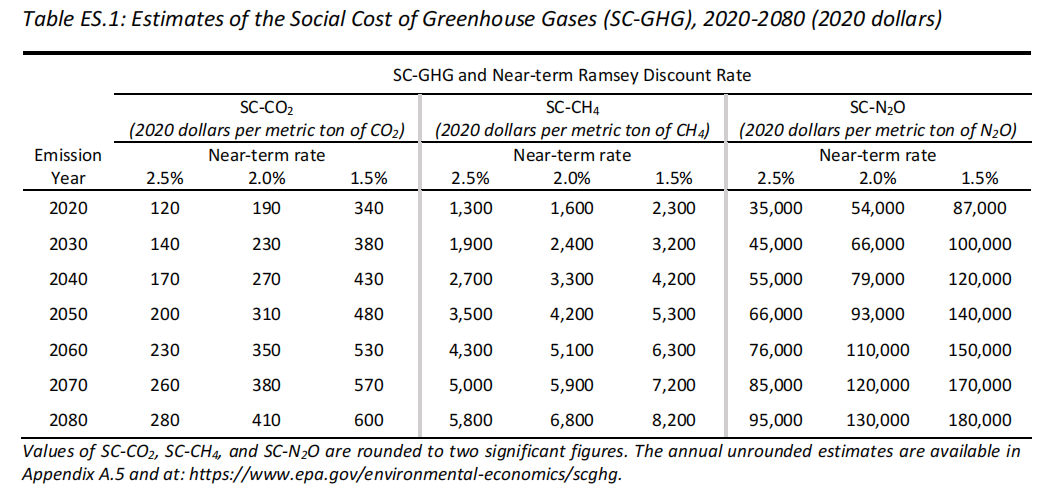
From the EPA Report on the Social Cost of Greenhouse Gases: Estimates Incorporating Recent Scientific Advances 2023

So no more 5% rate, and the middle scale is 2% rather than 2.5%.  That starts at $190 per ton of CO2 up to $310 by 2050 and $410 in 2080.  CH4 on the same basis is $1600 to $4200 in 2050 up to $6800 by 2080.  Of course a ton of N2O is unaffordable at $54,000 up to $130,000.

In other words, this regime can regulate the hell out of appliance manufacturers and agricultural operations, among others, justified by such numbers. It started with gas stoves, but won’t end there.

Will anyone put a stop to them?

Regarding Social Costs of GHGs

Blatant Hypocrisy re. Social Cost of Carbon

Six Reasons to Rescind Social Cost of Carbon

SBC: Social Benefits of Carbon


Warning! Trojan Horses Offshore (Wind Farms)

Gordon Hughes explains the analogy in his Real Clear Energy article Offshore Trojan Horses.  Excerpts in italics with my bolds and added images.

In July, the U.S. Department of Interior greenlighted large offshore wind farms in New Jersey and Maryland. Once the financial agreements are in place, New Jersey’s Atlantic Shores and Maryland’s MarWin and Momentum will join the two large wind farms in New York approved in June. These projects will receive huge, multibillion-dollar subsidies from the federal government and electricity ratepayers. What benefits will New Jersey and Maryland enjoy from this flood of money?   

To answer this question, it is best to recall the classic warning of the Trojan Horse legend,  “Beware of Greeks bearing gifts”—in other words, the hidden dangers of accepting something that seems too good to be true. New York State ignored that warning when it agreed to pay very high prices for the electricity to be supplied from its new offshore wind farms—Empire Wind 1 and Sunrise Wind—located off the coast of Long Island.

In announcing the final agreements, New York Governor Kathy Hochul triumphantly claimed that the new projects would create more than 800 jobs during the construction phase and deliver more than $6 billion in economic benefits for the state over 25 years. 

Rather less emphasis was given to the fact that New York will pay an average price of over $150 per MWh (megawatt hour) for the electricity generated by Empire Wind 1 and Sunrise Wind.That’s more than four times the average wholesale price of electricity in New York during 2023–24, $36 per MWh. The total annual premium over the wholesale market price for the power from these wind farms will be about $520 million per year at 2024 prices. Over 25 years, New York ratepayers will be paying about $13 billion for alleged benefits of $6 billion.

That is not all. Thanks to tax credits, U.S. taxpayers will cover at least 40% of the costs of constructing the wind farms. At a minimum cost of $5.5 million per MW (million watts) of capacity, the total federal subsidy for New York’s two wind farms will be at least $3.8 billion.

What about jobs and other economic benefits?  A study prepared for Equinor, the owner of Empire Wind 1, and submitted to the federal Bureau of Ocean Energy Management (BOEM) claimed that it would directly generate 180 annual jobs in New York during the six-year construction phase. The study estimated another 60 annual jobs due to the indirect employment effect, i.e., extra employment in the supply chain for the project. 

A more reasonable estimate for the two projects together would be 515 annual jobs, not 800. The total contribution to New York State’s gross value added (the equivalent of GDP at the state level) during the construction of both projects would be less than $450 million, based on the report submitted to BOEM. Similar calculations for annual operating and maintenance (O&M) costs suggest an annual contribution of about $24 million to gross value-added or about $600 million over 25 years.

Rather than the benefits of $6 billion over 25 years touted by Governor Hochul, a realistic assessment would be closer to $1.1 billion at 2024 prices. In any event, residents will be paying a cumulative premium of $13 billion for  the electricity these projects will generate. 

Moreover, the additional jobs claimed for the project are concentrated heavily in the final year of construction—and the largest share (47%) consists of professional services. Overwhelmingly, these are jobs for people who would otherwise be working on other assignments.

The economic benefits of the two offshore wind farms are much lower than claimed by the governor and the jobs are, in large part, temporary assignments for professional services staff. Promoting business for consulting firms may be considered a desirable outcome by Ms. Hochul. Still, the very high financial burden will be borne by almost the entire population of the state.

Stepping back from the New York projects, the Biden administration’s overall goal is to reach a target of 30 GW (billion watts) of offshore electricity generation capacity by 2030 or shortly thereafter. That is equivalent to 17 times the capacity of the combined Empire Wind 1 and Sunrise Wind projects. Detailed costs and financial arrangements vary, but the figures above suggest that the recurring premium paid by electricity ratepayers in states with offshore wind farms will be about $9 billion per year. The benefits of new job creation and incomes from capital and O&M expenditures are likely to be less than $800 million per year. 

In addition to the very large subsidies paid for from ultra-high electricity bills, federal taxpayers will contribute about $65 billion via tax credits if the Biden administration’s offshore wind target is met. While the subsidies for individual projects may not seem outrageous, the commitment of money to subsidize offshore generation is about $870 for every member of the country’s population. This may be spread over 25 years, but it is a huge liability for one very small element of U.S. programs to support renewable energy. 

PS  And it’s doubtul how many wind turbines will last 25 years

The Short Lives of Wind Turbines

US Climate Election Amid Collapsing Net Zero Support

Friends of Science published US Climate Election Squares Off as Net Zero Falters Despite NATO Climate Activism.  Excerpts in italics with my bolds and added images.

As media outlets frame the upcoming US election as a showdown on climate, Net Zero projects falter in Europe and US Inflation Reduction Act projects stall, says Friends of Science Society. Ironically, NATO has made climate front and centre in their spring 2024 report and seems more focused on battling climate disinformation instead of wartime defense of NATO partners.

CALGARY, AlbertaAug. 19, 2024 /PRNewswire-PRWeb/ — As the US “Climate Election” looms, the Financial Times reported on Aug. 11, 2024, that delays have hit 40% of Biden’s major Inflation Reduction Act (IRA) projects, many of them climate related, says Friends of Science. Reportedly, some $84 bn of the $400 bn IRA projects, are stalling out over lack of market demand or election uncertainty as climate hawks and energy security champions square off.

According to journos at Covering Climate Now, the US Democrat’s VP Kamala Harris/Governor Tim Walz ticket is positioned as climate-friendly. Reuters perspective of Feb. 2024 was that a win for Republican Donald Trump would undo much of the Biden admin’s climate policy.

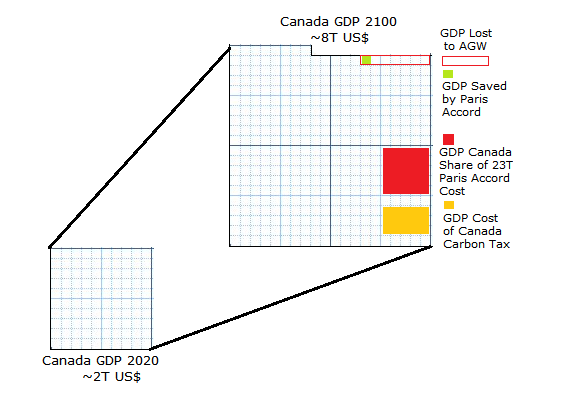
In a recent Fraser Institute report, author and economist Ross McKitrick references a Bjorn Lomborg analysis of US greenhouse gas reduction targets and their likely impact on reducing global warming: “According to Lomborg (2016) the US climate target under the Paris Treaty … [if met]…global average temperatures as of 2100 would be reduced by 0.031° C compared to if the US did nothing. Prorating this by the size of Canada’s proposed emission reduction we find the global average temperature would be reduced by 0.007° C (seven thousandths of a degree Celsius) as of 2100 compared to the case if Canada does nothing”. [From Fraser Report on Canada’s ERP (Emissions Reduction Plan)

• It is estimated that the ERP will reduce Canada’s GHG emissions by about
26.5% between 2019 and 2030, reaching approximately 57% of the government’s 2030 target, leaving a substantial gap.
• The implementation of the ERP is expected to significantly dampen economic
growth, with a projected 6.2% reduction in Canada’s economy (i.e., real GDP)
compared to the base case by 2030.
Income per worker, adjusted for inflation, is forecasted to stagnate during the
2020s and decrease by 1.5% by 2030 compared to 2022 levels.
• The ERP costs $6,700 per worker annually by 2030, which is more than five
times the cost per worker compared to the carbon tax alone.]

The UN “People’s Climate Vote 2024” survey from June of 73,000 people in 77 countries claims that “80 per cent – or four out of five – people globally want their governments to take stronger action to tackle the climate crisis.”

Friends of Science Society notes that the UN survey questions on pages 19 and 20, conflate extreme weather with climate and only ask for emotional responses, rather than evaluating empirical evidence. Climate change is measured over 30, 50, 100-year and millennial cycles; it is not evidenced by a spate of extreme weather events. [See also The Art of Rigging Climate Polls]

In Canada, the Globe and Mail published an op-ed by pollster Nik Nanos on Aug. 10, 2024, which showed a waning public interest in the Net Zero transition. “As more and more Canadians feel crushed by the rising cost of things such as housing, groceries and energy, interest in greening their lives is weakening…. the percentage of Canadians who are confident that we will reach our net-zero goal is a paltry 2 per cent.”

Robert Lyman, retired energy economist, wrote a report on the costs of Canada’s climate policies and cited a survey published in Nature, February 2024, found that people would be willing to spend less than 1% of their income to support climate initiatives. One per cent of average Canadian income for climate change would be $431. Canadian climate measures from 2020-2030 are ~$476 billion, or $11,900 per resident of Canada; roughly $2,800 per household per year.

Canada Budget Officer’s estimate of climate policies costs and benefits

Friends of Science Society points out that survey questions should include “How much are you willing to pay for or sacrifice for climate action?” Friends of Science review of “Getting to Net Zero” forecasts decades of degrowth and poverty.

While most citizens in the NATO countries assume that NATO is most concerned with wartime defense of their nations, the 2024 “NATO Climate Change and Security Impact Assessment” seems obsessed with climate change. On page 27, they dedicate a section to “Energy Transition and Climate-related Disinformation,” claiming that Kremlin-backed actors push climate change denialism. In fact, in Germany, it was Kremlin-backed green activists who encouraged Germany’s heavy reliance on Russian oil and gas and the closure of reliable nuclear facilities, as Drieu Godefridi, author of “The Green Reich” reported in 2022.

Russia’s position on climate change seems unchanged since its 2004 position on Kyoto, forerunner to the Paris Agreement.

Russian climate models, which use a small warming factor for carbon dioxide concentration, consistently closely parallel observed temperatures, compared to Western climate models which use a higher warming response rate for carbon dioxide, and which project a ‘hothouse’ future.

Wars cannot be won on wind and solar power; ample energy security is key to a strong economy, good healthcare, jobs and national defense, says Friends of Science Society.

Nine July Days Break Wind Power Bubble

Parker Gallant reports at his blog  Nine July Days Clearly Demonstrate Industrial Wind Turbines Intermittent Uselessness.  Excerpts in italics with my bolds and added image. H/T John Ray

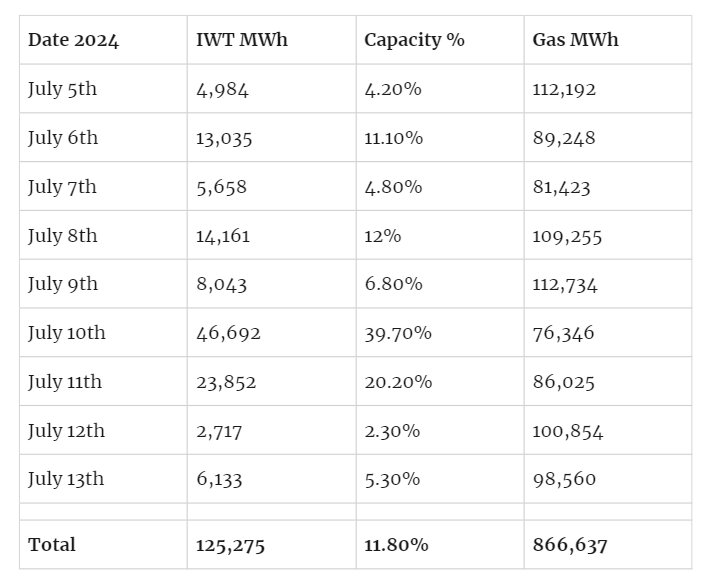
The chart below uses IESO data for nine (9) July days and clearly demonstrates the vagaries of those IWT (Industrial Wind Turbines) which on their highest generation day operated at 39.7% of their capacity and on their lowest at 2.3%!  As the chart also notes, our natural gas plants were available to ramp up or down to ensure we had a stable supply of energy but rest assured IESO would have been busy either selling or buying power from our neighbours to ensure the system didn’t crash. [Independent Electricity System Operator for Ontario, Canada]

The only good news coming out of the review was that IESO did not curtail any wind generation as demand was atypical of Ontario’s summer days with much higher demand then those winter ones.

Days Gone By:         

Back and shortly after the McGuinty led Ontario Liberal Party had directed IESO to contract IWT as a generation source; theirAnnual Planning Outlook would suggest/guess those IWT would generate an average of 15% of their capacity during our warmer months (summer) and 45% of their capacity during our colder months (winter). For the full year they would be projecting an average generation of 30% of their capacity and presumably that assumption was based on average annual Ontario winds!

The contracts for those IWT offered the owners $135/MWh so over the nine days contained in the chart below those 125,275 MWh generated revenue for the owners of $16,912,125 even though they only generated an average of 11.8% of their capacity.  They are paid despite missing the suggested target IESO used because they rank ahead of most of Ontario’s other generation capacity with the exception of nuclear power due to the “first-to-the-grid” rights contained in their contracts at the expense of us ratepayers/taxpayers!

Should one bother to do the math as to the annual costs based on the 15% summer and 45% winter IESO previously used it would mean annual generation from those IWT in the summer would be about 3.9 TWh and 11.7 TWh in the winter with an annual cost of just over $2.1 billion for serving up frequently unneeded generation which is either sold off at a loss or curtailed!

Replacing Natural Gas Plants with BESS:

Anyone who has followed the perceived solution of ridding the electricity grid of fossil fuels such as natural gas will recognize ENGO [Environmental Non-Governmental Organizations] have convinced politicians that battery energy storage systems are the solution!  Well is it, and how much would Ontario have needed over those nine charted July days? One good example is July 9th and 10th and combining the energy generated by natural gas from the chart over those two days is the place to start. To replace that generation of 221,989 MW with BESS units the math is simple as those BESS units are reputed to store four (4) times their rated capacity. Dividing the MWh generated by Ontario’s natural gas generators by four over those two days therefore would mean we would need approximately 55,500 MW of BESS to replace what those natural gas plants generated.  That 55,500 MW of BESS storage is over 27 times what IESO have already contracted for and add huge costs to electricity generation in the province driving up the costs for all ratepaying classes. The BESS 2034 MW IESO already contracted are estimated to cost ratepayers $341 million annually meaning 55,500 MW of BESS to the grid would add over $9 billion annually to our costs to hopefully avoid blackouts!

The other interesting question is how would those 55,500 MW be able to recharge to be ready for future high demand days perhaps driven by EV recharging or those heating and cooling pumps operating?  The wind would have to be blowing strong and the sun would need to be shining but, as we know, both are frequently missing so bring us blackouts seems to be the theme proposed by those ENGO and our out of touch politicians and bureaucrats!

Just one simple example as to where we seem to be headed
based on the insane push to reach that “net-zero” emissions target!

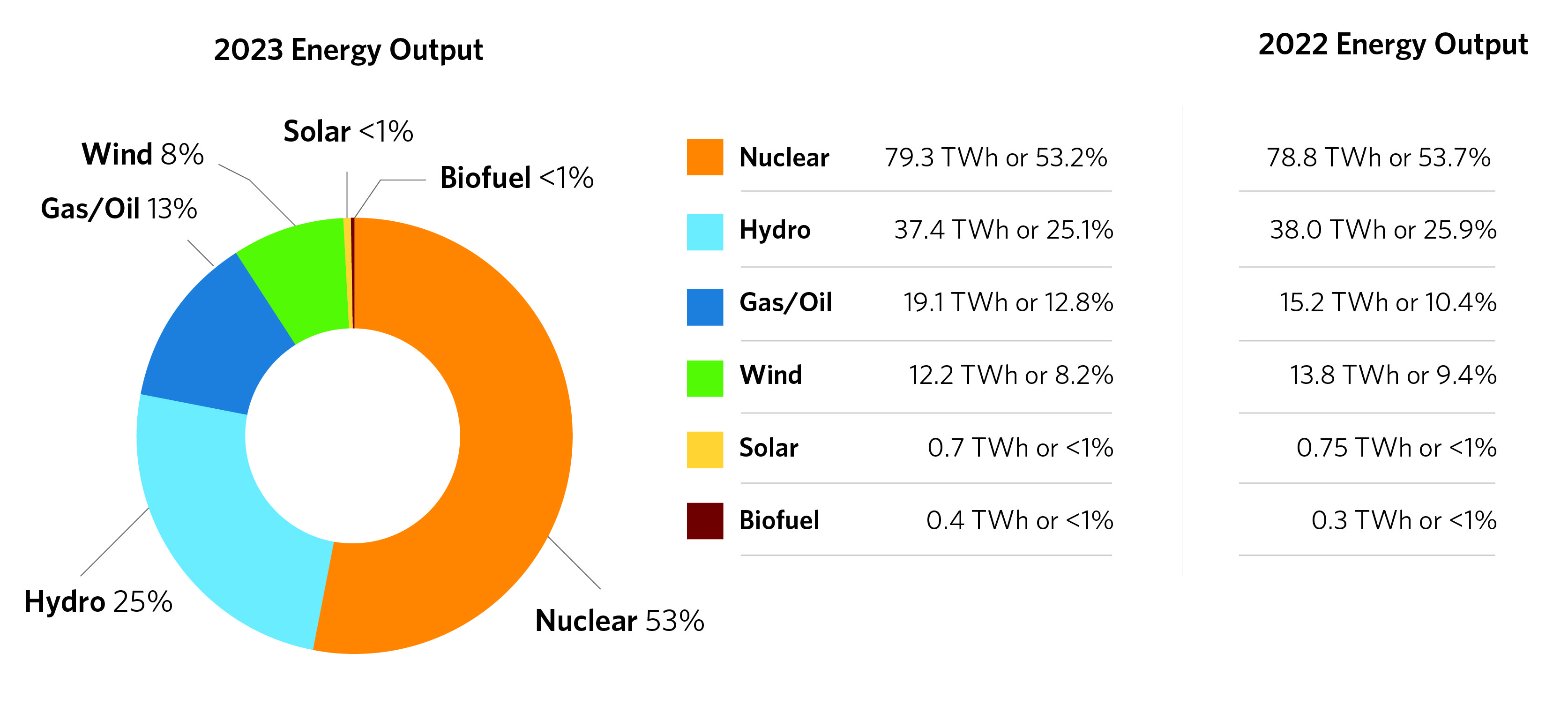
IESO Ontario Electrical Energy Output by Source in 2023

Extreme Examples of Missing IWT generation:

What the chart doesn’t contain, or highlight is how those 4,900 MW of IWT capacity are undoubtedly consuming more power than they are generating on many occasions and the IESO data for those nine days contained some clear examples but less than a dozen are highlighted here!

To wit:

  • July 5th at Hour 11 they managed to deliver only 47 MWh!
  • July 7th at Hours 8, 9, and 10 they respectively generated 17 MWh, 3 MWh and 18 MWh! 
  • July 9th at Hour 9 they delivered 52 MWh!
  • July 12th at Hours 8, 9, 10 and 11 they respectively generated 33 MWh, 13 MWh, 13 MWh and 35 MWh. 
  • July 13th at Hours 9 and 10 they managed to generate 19 MWh and 39 MWh respectively! 

Conclusion:

Why politicians and bureaucrats around the world have been gobsmacked by those peddling the reputed concept of IWT generating cheap, reliable electricity is mind-blowing as the Chart coupled with the facts, clearly shows for just nine days and only looking at Ontario!

Much like the first electric car invented in 1839, by a Scottish inventor named Robert Davidson, the first electricity generated by a wind turbine came from another Scottish inventor, Sir James Blyth who in 1887 did exactly that. Neither of those old “inventions” garnered much global acceptance until those ENGO like Michael Mann and Greta arrived on the scene pontificating about “global warming” being caused by mankind’s use of fossil fuels!

As recent events have demonstrated both EV and IWT are not the panacea to save the world from either “global warming” or “climate change” even though both have “risen from the dead” due to the “net-zero” push by ENGO.

The time has come for our politicians to wake up and recognize they are supporting more then century old technology focused to try and rid the world of CO 2 emissions.  They fail to see without CO 2 mankind will be setback to a time when we had trouble surviving!

Stop the push and stop using ratepayer and taxpayer dollars for the fiction created by those pushing the “net-zero” initiative. That initiative is actually generating more CO 2 such as the 250 tons of concrete used for just one 2 MW IWT installation!   Reality Bites!

Bet Against “Energy Transition”

Mark P. Mills provides great gambling advice in his City Journal article  A Bet Against the “Energy Transition”. Excerpts in italics with my bolds and added images.

Modern civilization depends on abundant, affordable, and reliable energy.
Policies that ignore this won’t turn out well.

Starting this month, everyday citizens, not just hedge fund managers and traders, will be able to make direct bets on “big” issues ranging from basic economic indicators to the weather. Based in Greenwich, Connecticut, the global trading firm Interactive Brokers has won U.S. federal approval to run a “prediction market” platform allowing users to make bets on everything from consumer sentiment to the national debt to “atmospheric carbon dioxide.” As the Wall Street Journal reported, “Interactive Brokers said it believes that it ‘can help establish a collective view’ on ‘controversial issues.’”

Let’s hope for an opportunity to bet on whether the energy transition,
the linchpin of the ruling energy orthodoxy, will in fact happen.

The orthodox view, of course, is that it’s already underway, and the world will radically reduce, if not eliminate, the use of oil, natural gas, and coal. This narrative is firmly embedded in plans, policies, and rhetoric on both sides of the partisan divide. Conferences, studies, and consultancies are framed around the transition. Even “Big Oil,” from Exxon to Chevron, genuflects to the narrative. The only substantive debate about the energy transition concerns how fast it’s happening and what should or shouldn’t be subsidized to hasten the inevitable.

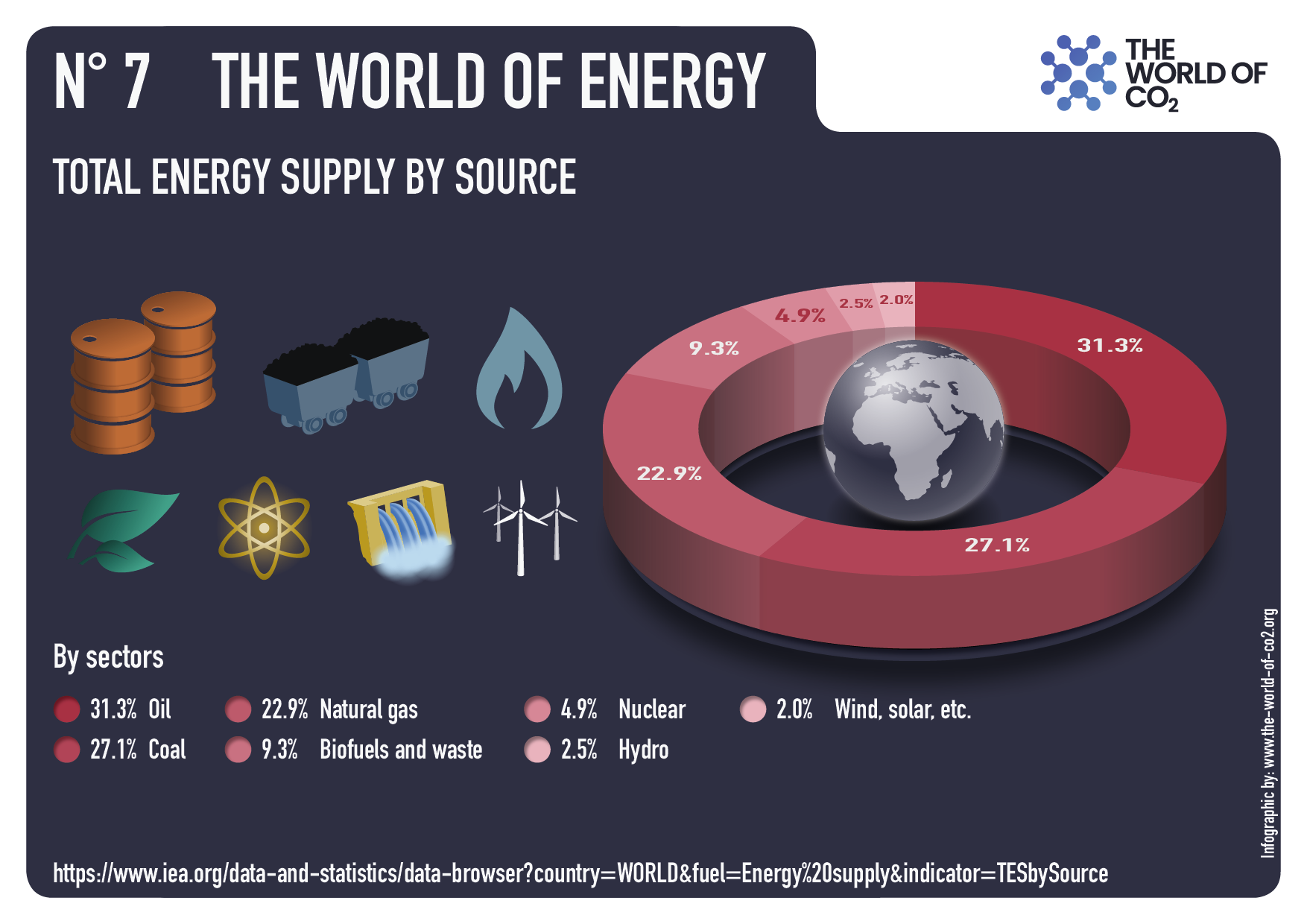
Meantime, hydrocarbons still supply over 80 percent of America’s and the world’s primary energy needs, roughly the same proportion as two decades ago. But that fact understates reality. Hydrocarbons are used, in one way or another, in everything we build and use to sustain civilization.

The goal of the energy transition is not only to eliminate the ubiquity of hydrocarbons but also to do it fast. That is the central objective of the misnamed Inflation Reduction Act (IRA). This is a government enterprise arguably unprecedented in American history, and certainly in the history of industrial programs.

A proper accounting of the IRA reveals that its real costs—$2 trillion to $3 trillion—will be far greater than the costs its advocates claim. For context, in inflation-adjusted terms, the U.S. spent about $4 trillion to prosecute World War II. This level of spending, complemented by similar pursuits in about two dozen states, makes the IRA one of the defining issues of our time. It is no exaggeration to say that the realities of energy systems—the physics, the engineering, and the economics—are now central to the future of the U.S. economy, and thus central to our policy and political debates.

Society as we know it would not exist if not for vast supplies of energy.

Energy is consumed by every invention, product, and service that makes life safe, interesting, convenient, enjoyable, and even beautiful. Energy policies are bets on whether there’s enough energy to meet people’s demands both now and in the future. But underlying that observation is a foundational truth relevant to forecasters and policymakers: throughout history, innovators have invented far more ways to consume energy than to produce it.

One of humanity’s remarkable capabilities is to invent future wants—that is, to invent new energy demands. There was no energy demand for air conditioning before its invention. We used no energy for flying until the airplane. The same is true for the car, pharmaceuticals, and computing. The global computing ecosystem now uses more energy than global aviation, and it is growing far faster. And now comes artificial intelligence: in energy terms, AI is to computers what jet engines are to aircraft.

Energy policies are thus also bets on what it is possible to build to supply those needs. Supply follows demand, but a lack of supply can also kill demand. The past and present offer ample evidence that the latent energy demands of billions of people across the globe remain underserved.

An ironclad hierarchy pertains when it comes to supplying energy. Call it a triumvirate of needs. First, you need enough energy. You can’t consume what you don’t produce. Energy abundance is key. Energy shortfalls stifle economic growth; severe shortfalls are lethal.

Second, abundant energy needs to be cheap. Affordability matters. The visible political touchstone for that reality is the price of a gallon of gasoline. More hidden is the industrial touchstone, which is the combined price of hydrocarbons and electricity. Ignoring this hidden reality has led the U.K. and Germany to sink into economically destructive deindustrialization.

Third, energy needs to be reliable at all scales and timeframes. Reliability is about meeting the energy demands of people, machines, and systems not only minute-by-minute but also over days, weeks, months, and years. The absence of energy when it is needed can crash both machines and economies.

Electical supply going from duck curve to canyon curve after adding solar and wind to the grids.

Reliability is the inverse of fragility in energy supply chains. It is the sine qua non that lets low-cost abundance be taken for granted. High reliability allows the energy issue seemingly to disappear from our daily concerns, but behind the scenes it is a Sisyphean struggle. A society must always be designing and building energy supply chains to combat the realities of relentless, often malevolent, interference from nature, accidents, or human choices.

It takes a complex and delicate dance to build systems that can simultaneously balance the triumvirate of needs: abundance, affordability, and reliability. The rules to that dance are dictated by the physics of energy and how it is manifested in the machinery we can build and afford. You could call it the physics of money.

You may have noticed that I’ve made no mention of the environment in the ironclad energy hierarchy. Abundant, affordable, and reliable energy creates the conditions for wealth that in turn make possible the time and capital required for everything beyond mere survival— from health care to entertainment to the modern luxury of environmental protection. Break the triumvirate of needs, and we know what happens. Throughout history and across the world, we see the correlation between environmental degradation and poverty.

When it comes to energy forecasts, the elephant in the room is the climate debate—the ultimate motivation for energy transition goals. But it doesn’t matter what one thinks about climate science when it comes to analyzing the physics and economics of the energy systems that we know how to build. They are entirely separate magisteria.

Thus, it was predictable that energy pundits would rediscover
the ironclad hierarchy with the rapid expansion of
the most recently invented energy-using infrastructure.

I’m referring of course to artificial intelligence. It’s a pure example of the invention of energy demands. Electric utilities around the country are now reporting epic jumps in forecasts for near-term power demand. The end of the interregnum of flat growth in electric usage comes not because of enthusiasm for electric vehicles (EVs), or because of the repatriation of semiconductor factories, though both are significant new demand vectors. It comes because the so-called virtual world of software can exist only within the physical world of energy-hungry hardware.

The cloud, whether measured in terms of the size of the network,
the capital deployed, or the energy used, is on track
to become the biggest infrastructure ever built by humanity.

Global capital spending on energy-using hardware to build the cloud and its networks now exceeds global capital spending by all electric utilities on energy-producing power plants and those networks. For context, today’s global cloud already consumes ten times more electricity than all the world’s EVs combined. Even if EV adoption expands at the rate that enthusiasts assume, the cloud will still significantly outpace that new demand for electricity, especially with the rush to buy AI hardware.

And we are still in the early days of AI adoption. To continue the AI and jet-engine analogy, the aviation industry had been booming for three decades before the 1958 introduction of the first viable commercial passenger jet, the Boeing 707. After that transformative event, flying, measured in passenger air-miles, grew more than tenfold in under a decade and kept soaring. Of course, energy use followed.

Marc Andreessen, Silicon Valley pioneer and venture capital potentate, said more than a decade ago that he expected “software would eat the world.” He meant that software would disrupt “large swathes of the economy.” He was right, but he may not have imagined that the hardware that makes the software possible would eat the grid.

And do you think AI is the last energy-using innovation that will ever emerge? The question answers itself—and that says nothing about the energy implications of billions of people who seek basic economic growth, to rise out of poverty and come to enjoy the benefits of yesterday’s inventions, from air conditioning to cars to airplanes. In timeframes that matter, new demands for energy are practically unlimited. And if we employ common sense, so, too, are new supplies.

To return to Andreessen: he has more recently issued a long, impassioned Techno-Optimist Manifesto which includes a specific exploration of energy. “We believe energy should be in an upward spiral,” he observes. “Energy is the foundational engine of our civilization. The more energy we have, the more people we can have, and the better everyone’s lives can be.” Amen.

Back to betting markets. I’d take the bets—and I hope Interactive Brokers will offer them—that in the near future we’ll see:

♦  global energy use rise, not shrink;
♦  global production and use of hydrocarbons expand, not contract;
♦  in parallel with rising alternative energy production;
♦  the abandonment of the idea of an “energy transition.”

These bets all derive from the iron law of the energy hierarchy.
Policymakers who bet against reality will face unpleasant consequences.

Footnote: The Problem Created By CO2 Hysteria

Our World in Data on The World’s Energy Problem


Fossil Fuels–For the Children’s Sake

Jason Isaac writes at Real Clear Energy Fossil Fuels: The Best-Kept Secret in Our World Today.  Excerpts in italics with my bolds and added images.

Apparently, you can litigate anything these days, and it’s gotten far more insidious than suing McDonald’s over hot coffee being, you know, hot. A new climate activist group called Our Children’s Trust is suing state and federal government agencies on behalf of individual children, claiming that fossil fuel regulators are negligently ruining their future.

That children should feel entitled to come of age under a specific set of favorable environmental and political circumstances — and to demand punishment for individuals they disagree with — isn’t just a testament to the egocentrism dominating the 21st Century. It also exposes our culture’s deeply warped understanding of climate science, which, surprisingly to many of us, actually shows global warming has no meaningful negative effects on our lives or our environment.

In fact, we have fossil fuels to thank for the twenty-first century being
the best time in human history to be alive.
Unfortunately, it’s the best-kept secret in our world today.

If we really want to earn “our children’s trust,” we should teach them the truth instead of foisting crippling and needless anxiety on an entire generation.

Contrary to the attention-grabbing clips of forests burning and shock-inducing statistics about record-high temperatures, modern climate science suggests that warming is likely to remain mild and manageable while our resilience continues to improve. In fact, despite average global temperatures increasing about 1° Fahrenheit and our population quadrupling in the last century, climate-related disasters claim 99% fewer lives. Our resistance to severe weather events (which actually have remained consistent or even declined in recent decades) is actually growing at a faster rate than non-weather-related natural disasters like volcanoes and earthquakes. The alarmists want you to believe a changing climate is jeopardizing human lives; however, the opposite is true.

Our environment is also better than ever. The U.S. has cut air pollution by nearly 80% in the last 50 years and ranks number one in the world for access to clean drinking water. In fact, those infamous greenhouse gases may actually help the planet. Mild increases in atmospheric carbon dioxide create a “global greening” effect that stimulates plant growth, which both helps natural ecosystems and makes agricultural production more efficient.

Meanwhile, this is the best time in human history to be alive,
thanks largely to widespread access to affordable, reliable energy.

Children today have a far greater chance of living a long, healthy, fruitful life than ever before. Around the world, in both developing and developed nations, poverty has plummeted and people are enjoying the tangible, life-improving benefits of lower infant and child mortality, better nutrition, improved education, lower infectious disease rates, more economic opportunity, gender equality, and longer lives. It’s no coincidence that global quality of life spiked and has continued to improve consistently since the Industrial Revolution — or that communities without access to electricity are still plagued by poverty, danger, and disease.

For a group claiming to seek “Our Children’s Trust,” this activist group seems to be deliberately abusing children’s trust.

With nearly any factoid we could wonder about immediately accessible on our smartphones, how could we have possibly gotten it so wrong about climate change? The jury is out on whether the cultural cancer of climate alarmism is the result of a deliberate plot for political power by global elites or simple negligence by a society that accepts the claims of those in authority (or simply those who pop up in our Tik Tok algorithm) at face value.

I suspect it’s a combination of both. “Indoctrination” has become a political buzzword, and while there’s no denying there are bad actors out there in schools and governments with agendas to push at all costs, the real problem with the public’s view of climate change is far subtler — which means it’s also harder to root out.

The problem is that no political issue, including this one, is black and white, but few feel they have the time to educate themselves on the nuances and confounding variables of hundred- or even thousand-page research reports. It’s easier to accept grossly oversimplified top-line takeaways as gospel and reduce them to even less accurate headlines and soundbites. I’ve seen the consequences firsthand working with state education leaders on science curriculum standards. Few are truly setting out to put misleading or incomplete information in our classrooms, but the misinformation is pervasive and there’s simply so much information to sift through to get to the real nuggets of truth.

But we need to do better — for our children’s sake.

The Goodness of Global Warming

Catherine Salgado provides unreported news from Climate Experts: ‘Global Warming’ Makes Ecosystems Thrive at PJ Media.  Excerpts in italics with my bolds and added images.

Three climate experts have called out the “global warming apocalypse” narrative and the totally failed record of climate alarmists’ predictions. A warming climate helps ecosystems thrive, and climate models predicting global crisis have consistently over-predicted.

CO2 Coalition Executive Director Greg Wrightstone, Heartland Institute President James Taylor, and Junk Science’s Steve Milloy all spoke during a media call last week about climate alarmist lies and the truths woke media and government don’t want you to hear. These include the fact that moderate warming has actually been found beneficial for ecosystems, including for plants (and food crops) and animals.

Both the last eight+ years of a cooling trend and
the last century and a half of moderate warming portend
no imminent catastrophe, but should be celebrated.

That’s just one hard truth the experts highlighted during the call, providing data that illustrates climate alarmists aren’t concerned with science or reality; rather, they are manipulating data or making unverifiable claims for political or financial reasons. Taylor stated emphatically, “There is no climate crisis.”

Wrightstone particularly highlighted the decrease in natural disasters, including fires, and especially the “significant decline” in global droughts. According to Wrightstone, ecosystems are showing the beneficial effects of a lengthy trend of warming. Taylor provided further context on why “global warming” should be no big concern. “We are currently experiencing the second and the third strongest El Niño ever recorded,” he said, noting that this can increase temperatures; but El Niño and La Niña always and normally create a cycle of warming or cooling effects.

“Earth is still recovering from the Little Ice Age, which was the coldest period of the past 10,000 years, that ended about 150 years ago,” Taylor said. “Temperatures should continue to set ‘records’ so long as climate activists define the ‘record’ as the past 150 years or so, recovering from the Little Ice Age.” In other words, the globe should be warming— and the current “records” only hold if one ignores the temperatures from the previous cooling period!

Taylor continued that, for much of human civilization, “temperatures have been significantly warmer than today, and humans and nature fared just fine.” And therefore, in fact, comparatively speaking, the globe is currently “unusually cool.” Milloy added his support to the arguments of the other two experts by noting that “global warming” isn’t man-made, either. Indeed, despite the oft-repeated assertion that every emission causes the planet to heat up, April 2024 was a third of a degree Farenheit cooler than April 1981 despite decades of emissions, Milloy added. In fact, in reality, carbon is not only beneficial but absolutely necessary for all life on earth, including humans.

No major climate prediction for 50+ years has come true; often, the predictions are wildly wrong. As Milloy noted, it’s a hallmark of science to be able to make reasonably accurate predictions, and yet climate alarmists never do — more typically, they make temporarily unverifiable predictions or claims about the past and far into the future. Greg Wrightstone agreed, “One of the things driving these failed predictions [is] they’re … basing a lot of these forward-looking projections on climate models, climate models that we know for a fact over-predict warming significantly.”

He continued, “And if you look at the 100+ models that are used, there’s only one that has accurately predicted the temperature into the future compared to actual temperatures, and that’s the Russian model. The others, we see, [on] average, over-predict warming by 2.5 to 3 times too much.” If climate alarmists really followed the scientific method, they’d have to admit that their hypothesis is not supported by evidence and needs to be reformulated. Unfortunately, climate alarmists find their narrative too convenient a political tool to surrender to reality.


Climate Class Warfare

Martin Durkin produced “Climate: The Movie” and writes at Daily Sceptic Climate Change is Class Warfare.  Excerpts in italics with my bolds and added images.  The movie can be viewed below.

The climate is up the spout and we’re to blame. The planet is boiling like a pan of porridge. We face the possible extinction of all life on earth. ‘Science’ says so. Anyone who questions it is a demonic scoundrel. The climate catastrophe is a 100% solid-gold, slam-dunk irrefutable fact.

Hmm. And yet, it is clear to anyone who has paid the slightest attention, that the tired, hysterical predictions of the climate alarmists (made repeatedly over four decades and based on their hypothetical computer-models) have proved to be spectacularly wrong, again and again and again. It does not take much digging (we have the internet these days) to discover that the outlandish claims of climate alarmists are flatly contradicted by lots and lots of perfectly good scientific evidence and data. We’re not talking here about fringe science put about by whackos. We’re talking about official data – mainstream science, published in respected journals. (Some of it is featured in my ‘climate-denier’ film, Climate: The Movie, available for free online).

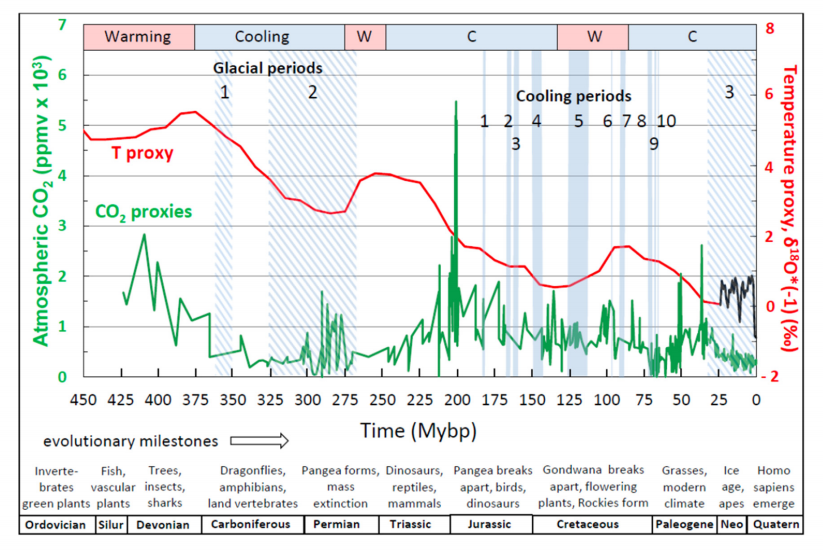
The world is not boiling. We are, as any geologist will tell you, in an ice age – one of the coldest periods in the last 500 million years. The level of CO2 in the atmosphere is not unnaturally or frighteningly high. Compared to the last half billion years of earth’s history it is extremely low. And there is no evidence that changing levels of atmospheric CO2 (it has changed radically many times in the past) has ever ‘driven climate change’. If there had been, Al Gore would have said so in his silly film, but he didn’t. Hurricane activity is not increasing, nor are the number of wildfires, nor are the number of droughts, and so on and so on. This is what the official data say. You can look it up.

Of course this is all a bit embarrassing for the science establishment. The climate alarm is worth billions to them in climate-related funding. A lot of jobs depend on it. A lot of reputations are at stake. And it’s deeply awkward for the renewables industry, which turns over around a trillion dollars a year.

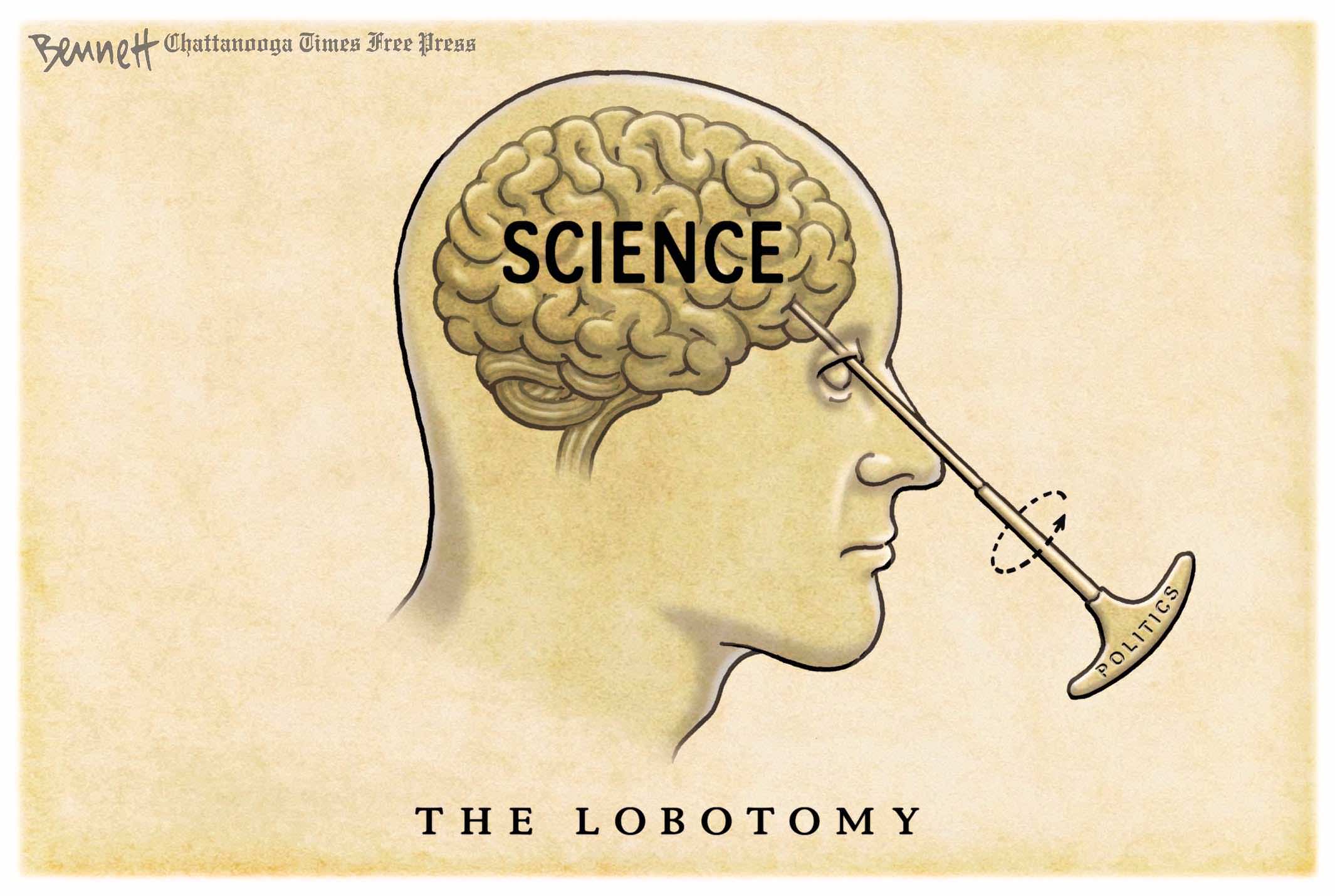
The climate alarm is not supported by scientific evidence. It is supported by bullying, intimidation and the censorship of anyone who dares to question it. Climate catastrophism is politics, shamelessly dressed up as science.

The climate scare was the invention of the environmentalist movement, which stands opposed to vulgar, dirty, free-market capitalism. They say there are too many people, consuming too much. We must be restrained and contained, for the sake of Gaia. The solution to the global, existential climate problem is higher taxes and more regulation.

At any social gathering, you can pretty confidently predict who will think what about climate, by asking them about taxes and regulation. People who love the Big State can’t get enough of climate chaos. People who want lower taxes and less regulation will roll their eyes and say rude things about little Greta.

Across the Western world, the state has grown enormously over the last century, vastly increasing the number of people whose livelihoods depend on state-spending, and whose jobs are related, directly or indirectly, to government control. In the U.K. and U.S. both, more than twice as many people now work in government as work in manufacturing. And this does not include all those (in the third sector etc.) who rely indirectly on government largesse.

These people depend on government. They are paid for out of taxation. In such circles to proclaim the joys of a small state, lower taxes and less government is a breach of social etiquette. You have crossed a moral line. You will be suspected of liking Donald Trump, of voting Brexit, of hating lockdown and compulsory vaccination, of defending the Second Amendment, of being a climate denier.

And indeed all this may well be true. These views tend to hang together. As do the views of those on the other side. To repeat, the climate alarm is in fact politics dressed up as science. We are, as more people are beginning to realise, engaged in a class war. On one side, the tax-consuming regulating class that feeds from taxation and bosses us about. On the other, the rest of us in the private sector, who rather resent paying taxes and being told what to do and how to live our lives.

This is the real basis for the consensus on climate change. The consensus exists among our sprawling, tax-consuming establishment. This is not a small group of people. It is an entire class. It is, if you will, the ruling class. It controls our civil service, our schools and universities, large parts of our arts and science establishments and much of the media. It is an intolerant class, deeply aware of its own interests. The taboo that surrounds climate scepticism is a reflection of its power.

It would be nice to think that politely pointing to the actual scientific data might put an end to all the climate chaos nonsense. Sadly it won’t. Because this ain’t about science.