Investors Sour on ESG Activism

Zero Carbon zealots attacking ExxonMobil, here seen without their shareholder disguises.

WSJ reports with a sad tone what is actually good news that investors are pushing back against ESG political correctness. Their article is: ESG Blowback: Exxon, Chevron Investors Reject Climate Measures  Excerpts in italics with my bolds.

An investor-driven climate change push at some of the
world’s largest oil companies has stalled out.

On Wednesday, Exxon Mobil and Chevron’s shareholders struck down a raft of proposals urging the companies to cut greenhouse-gas emissions derived from fuel consumption, put out new reports on climate benchmarks and disclose certain oil-spill risks, among other initiatives.

The votes were abysmal for climate activists. All but two of the 20 shareholder proposals for the two companies garnered less than 25% of investors’ vote, according to preliminary results, with some performing much worse than similar proposals put forward last year.

Among the most controversial proposals were those that would have had the companies adopt targets for reducing emissions including those from third-party consumption of their products, such as when drivers burn gasoline in their cars, also known as Scope 3 emissions. Those received only 11% and 10% of the vote among Exxon and Chevron investors, respectively, compared with 27% and 33% for similar proposals last year.

In recent weeks, similar climate proposals failed to win over most shareholders
at annual meetings of British oil and gas giants BP and Shell in London.

Investment strategies linked to ESG, short for environmental, social and corporate-governance issues, had gained momentum in recent years, particularly following the onset of the pandemic in 2020. Investors pressed oil companies to show how they were working to reduce their climate footprint, set long-term environmental goals and curtail the flaring of unwanted natural gas.
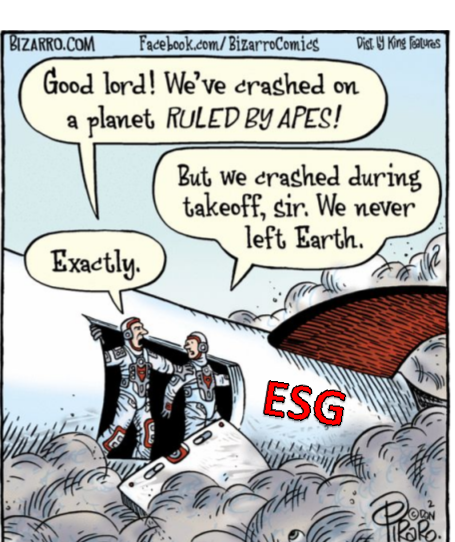
In 2021, investment firm Engine No. 1 prevailed in a historic proxy battle against Exxon, winning three board seats at the company’s annual meeting with the backing of investment firms, Vanguard, State Street and BlackRock. The firm argued that Exxon needed to form a better strategy to prepare for the world’s anticipated energy transition.

After the defeat, Exxon adopted a so-called net zero commitment — a goal to reduce
or offset greenhouse-gas emissions from its operations to zero by 2050.

But Wednesday’s votes demonstrated how some shareholders have backed off pushing major oil companies to embrace certain climate goals. Investors said many voices pushing ESG measures have been drowned out following Russia’s war in Ukraine, which caused oil and gas prices to skyrocket as global supplies were crimped.

Mark van Baal, founder of environmental activist group Follow This, said shareholders missed an opportunity at the annual votes. Investors know that avoiding climate disaster will require global emissions to fall by almost half by 2030, he said, but many are focused on short-term profits. [Note: van Baal is wrong about disaster–see Even 3°C Warming Can’t Stop World Prosperity. ]

The industry and its allies have said some countries, particularly in Europe, were too quick to move away from fossil fuels toward clean energy sources such as solar and wind. A movement against climate activism has gained political traction in the U.S., particularly among Republican voters. Entrepreneur Vivek Ramaswamy, a candidate for the Republican presidential nomination, has made anti-ESG policies a central plank of his campaign.

The pushback against ESG measures has also hit investment firms such as BlackRock,
which have faced potential boycotts in Texas and other red states.

Republican officials in Florida, Texas, Louisiana and South Carolina pulled more than $4 billion in pension and investment funds from BlackRock starting last year. BlackRock brought in $230 billion from U.S. clients in 2022.

It wasn’t immediately clear how BlackRock, State Street and Vanguard voted at the meetings this week.  State Street and BlackRock declined to comment. Vanguard didn’t immediately respond to a request for comment.

Investments in fossil fuels pushed many oil companies to record profits last year, which lured back some investors who had fled after years of meager returns from the industry. Exxon Chief Executive Darren Woods said Wednesday the company had benefited from investing in fossil fuels when others pulled back.

Even in Europe, energy executives have shown a willingness to alienate clean-energy investors to tailor strategies to the thirst for fossil fuels. BP and Shell’s record full-year 2022 profits and hefty returns to investors have attracted new investors, and won back some who were dubious of their energy-transition strategies, executives said.

Shell and BP executives have said their strategies are consistent with targets to lower global emissions, while also helping supply the oil and gas still demanded in coming years globally. Exxon and Chevron have said they support the emissions targets set by the Paris climate accords and reducing emissions from their operations.

But Woods and other industry executives have argued some climate-related proposals would backfire or leave the economy worse off. Woods said several proposals rejected Wednesday would have required the company to assume the world will cut carbon emissions at a much faster pace than observers have projected.

“Some [would] go so far as to force us to decrease oil and gas development,” he said. “This would do nothing to reduce global demand.”
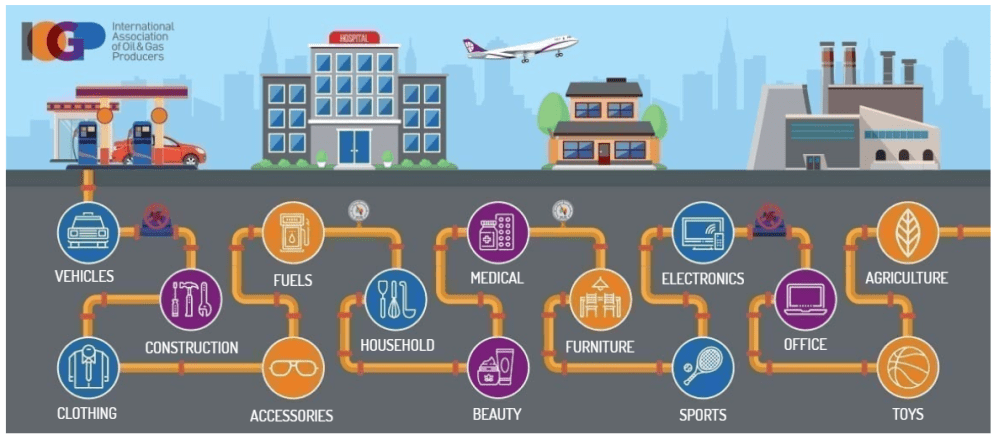
What is actually beyond debate is not that we are in a climate crisis
but that if we don’t stop destroying our conventional energy economy,
we are going to be in a civilizational crisis.
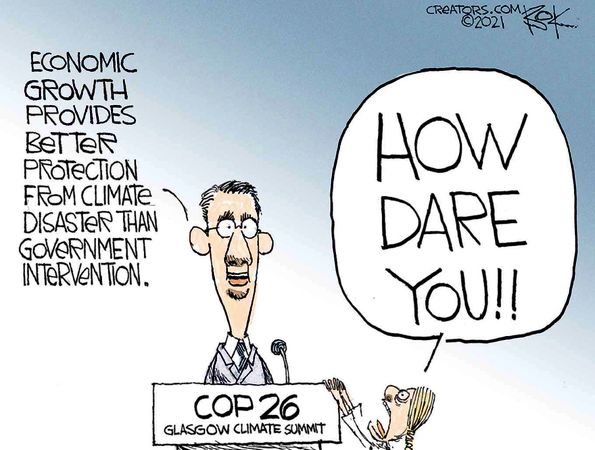
 

Even 3°C Warming Can’t Stop World Prosperity

The 3°C Scenario: What’s the economic impact of severe global warming?  James Pethokoukis writes at his substack.  Excerpts in italics with my bolds and added images.

Even with an extreme scenario, the world should be richer and more capable in 2050

You may have noticed some concerning climate headlines popping up today in your smartphone notifications:

  • “‘Sounding the alarm’: World on track to breach a critical warming threshold in the next five years” – CNN
  • “Global warming likely to exceed 1.5C within five years, says weather agency” – Financial Times
  • “Global warming set to break key 1.5C limit for first time” – BBC

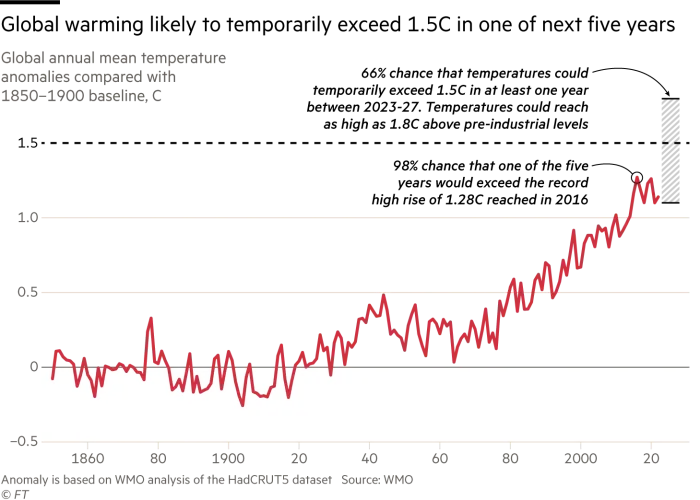
As the above FT chart neatly shows, the newsy forecast is about breaching the 1.5°C level in a single year, not a permanent increase. That said, the UN’s Intergovernmental Panel on Climate Change says humanity better get used to 1.5° and higher without a drastic shift away from fossil fuels. Current global policies, according to the IPCC, make it “likely that warming will exceed 1.5°C during the 21st century and make it harder to limit warming below 2°C.”

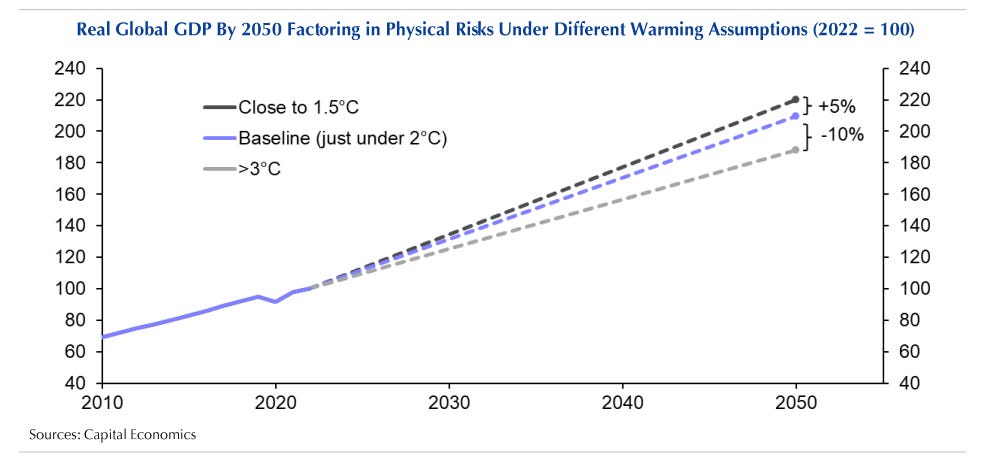
But what if the global heating is more severe than expected? A new analysis by consulting firm Capital Economics looks at a scenario in which the global average temperature rises by more than 3°C from its pre-industrial average and finds that global GDP would still nearly double by 2050.

How could that be possible given all the negative effects predicted by climatologists — which I’m not contesting — such as rising sea levels, more droughts and severe heatwaves, more extreme-weather events such as hurricanes, a loss of biodiversity and ecosystems? From the cautious and meticulous analysis by CE economists David Oxley and Gabriel Ng:

But the key takeaway is that we think global GDP would still nearly double in size between now and mid-century even if the world were to warm by more than we anticipate, largely because developed economies would be affected the least. And even in places where a warmer world would have much bigger impacts on GDP, such as in India and south-east Asia, the physical effects on economic activity would be a headwind to catch-up growth rather than putting economic development in reverse.

(One thing to keep in mind: The firm’s baseline forecast is that the increase in global temperature will be kept just below 2°C thanks to the increasing use of renewable energy sources and other technological improvements, resulting in a ecline in global greenhouse40 percent d gas emissions by 2050. This level of warming is already baked into its economic forecast.)

Caveat:  Decarbonizing Our Energy Platform is the Way to Stop Prosperity

In assembling this forecast, CE highlights some of its key decisions. First, it focused on “physical risks,” such as the impacts of more severe hurricanes and consistently higher temperatures, rather than “transition risks,” the impacts of taxes and regulations meant to mitigate climate change. What’s more, CE also tried to look for economic models that took into account the possibility of non-linear outcomes.

[Note: In ClimateSpeak, mitigation doesn’t have it’s usual meaning.  “Mitigate:  make something, such as a problem, symptom, or punishment, less harsh or severe.” (Mirriam-Webster).  IPCC supporters speak of spending Trillions of $ on schemes to reduce carbon emissions without any guarantee of lowering climate impacts.]

But again: The impacts mentioned here won’t result in either advanced or
emerging economies becoming poorer a generation from now than they are today.

Rather, the physical effects of climate change on economic activity would create headwinds that slow growth. A country suffering some of the biggest impacts from climate change would be Indonesia. Even so, CE still expects the country to become a top-ten economy by 2050. Yet under the 3°C scenario, it would rise to become the eighth largest economy rather than the fifth largest economy under the cooler CE baseline forecast.  Or India: Under both scenarios, it would still be the third largest economy by 2050, but under the 3°C scenario it only be three times as large as fourth place Germany rather than four times in the baseline.

The good news here is even with a rapid and severe climate outcome over the next 25 years, there’s good reason to think humanity will have even more economic resources and technological capabilities to do something about it — while also preparing for a future where more us can use more energy to turn our dreams into reality. Innovation-driven economic growth is what provides true resilience to America and the world.

Summary: 

We have always and will continue to adapt to the effects of changing weather and climate, so long as we have the economic means to prepare and respond to events.  The real threat to society, humanity and the biosphere is climate policies directed against our energy platform.

See Also Series of Posts:   World of Hurt from Climate Policies


More CO2 Good, Less CO2 Bad

Gregory Wrightstone explains at CO2 Coalition More Carbon Dioxide Is Good, Less Is Bad.  Excerpts in italics with my bolds and added images.

People should be celebrating, not demonizing, modern increases in atmospheric carbon dioxide (CO2). We cannot overstate the importance of the gas. Without it, life doesn’t exist.

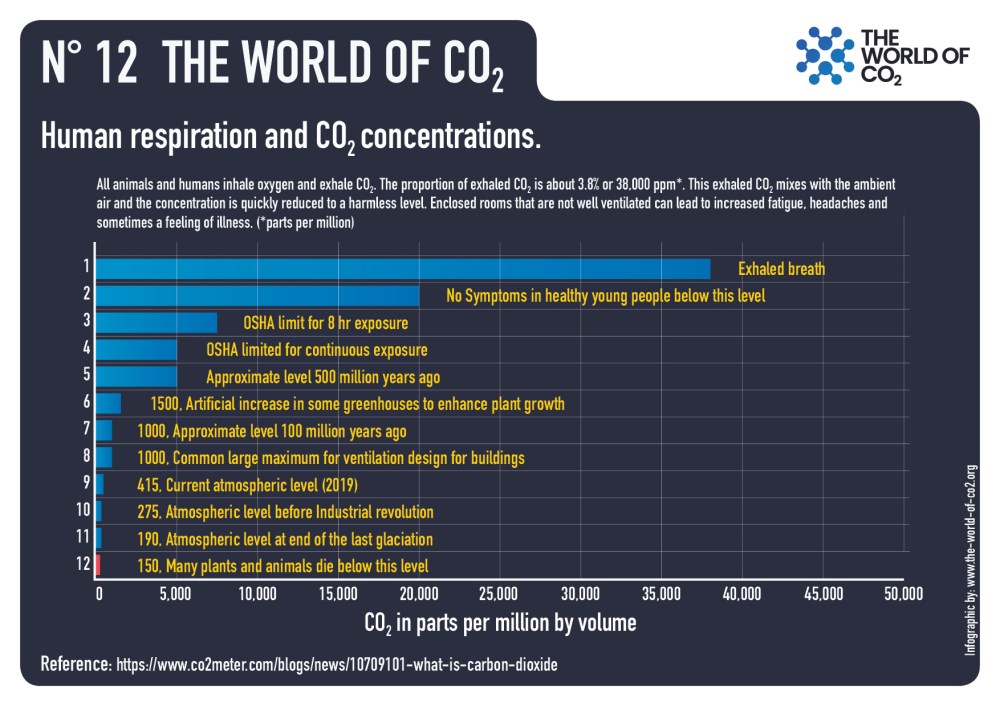
First, a bit of history: During each of the last four glacial advances, CO2’s concentration fell below 190 parts per million (ppm), less than 50 percent of our current concentration of 420 ppm. When glaciers began receding about 14,000 years ago – a blink in geological time – CO2 levels fell to 182 ppm, a concentration thought to be the lowest in Earth’s history.

Line of Death

Why is this alarming? Because below 150 ppm, most terrestrial plant life dies. Without plants, there are no animals.

In other words, the Earth came within 30 ppm in CO2’s atmospheric concentration of witnessing the extinction of most land-based plants and all higher terrestrial life-forms – nearly a true climate apocalypse. Before industrialization began adding CO2 to the atmosphere, there was no telling whether the critical 150-ppm threshold wouldn’t be reached during the next glacial period.

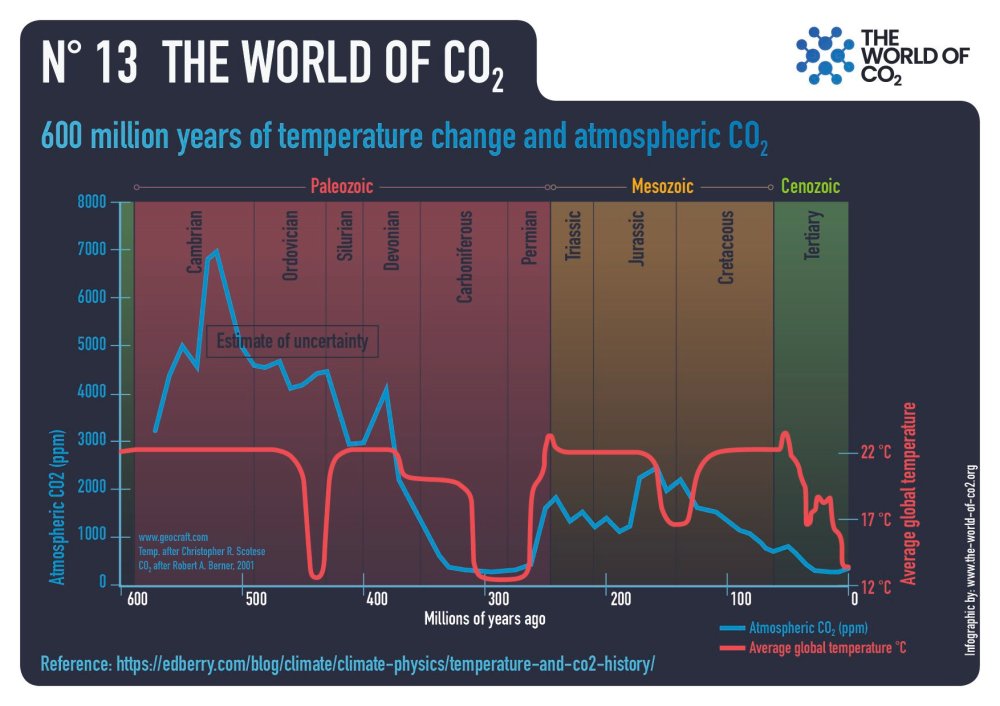
Contrary to the mantra that today’s CO2 concentration is unprecedentedly high, our current geologic period, the Quaternary, has seen the lowest average levels of carbon dioxide since the end of the Pre-Cambrian Period more than 600 million years ago. The average CO2 concentration throughout Earth’s history was more than 2,600 ppm, nearly seven times current levels.

Beneficial CO2 Increases

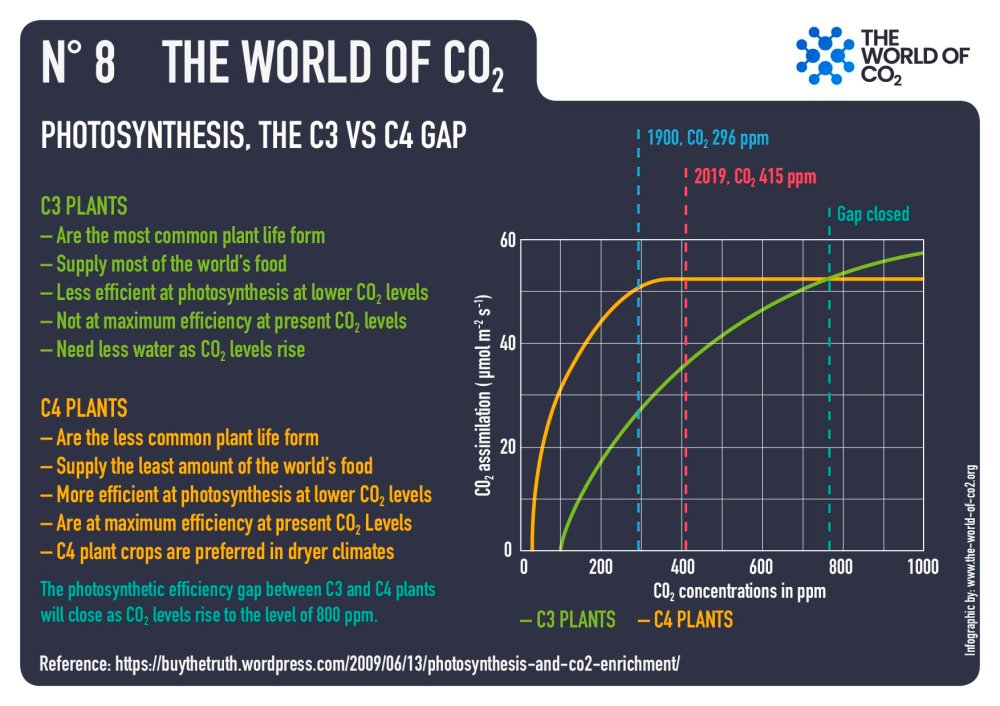
CO2 increased from 280 ppm in 1750 to 420 ppm today, most of it after World War II as industrial activity accelerated. The higher concentration has been beneficial because of the gas’s role as a plant food in increasing photosynthesis.

Its benefits include:

— Faster plant growth with less water and larger crop yields.

— Expansion of forests and grasslands.

— Less erosion of topsoil because of more plant growth.

— Increases in plants’ natural insect repellents.

A summary of 270 laboratory studies covering 83 food crops showed that increasing CO2 concentrations by 300 ppm boosts plant growth by an average of 46 percent. Conversely, many studies show adverse effects of low-CO2 environments.

For instance, one indicated that, compared to today, plant growth was eight percent less in the period before the Industrial Revolution, with a low concentration of 280 ppm CO2.

Therefore, attempts to reduce CO2 concentrations are bad for plants, animals and humankind.

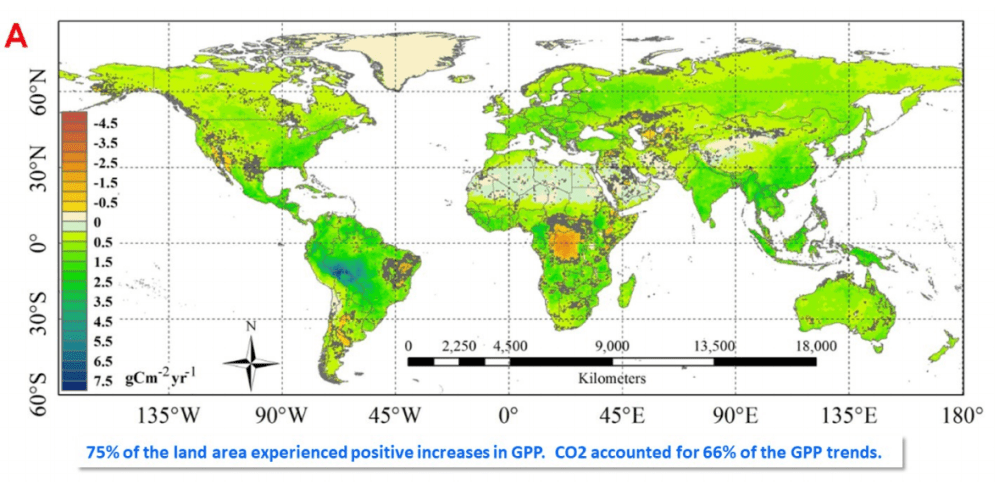
Data reported in a recent paper by Dr. Indur Goklany, and published by the CO2 Coalition, indicates that up to 50 percent of Earth’s vegetated areas became greener between 1982-2011.

Researchers attribute 70 percent of the greening to CO2 fertilization from of fossil fuel emissions. (Another nine percent is attributed to fertilizers derived from fossil fuels.)

Dr. Goklany also reported that the beneficial fertilization effect of CO2 – along with the use of hydrocarbon-dependent machinery, pesticides and fertilizers – have saved at least 20 percent of land area from being converted to agricultural purposes – an area 25 percent larger than North America.

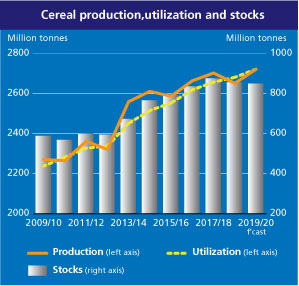
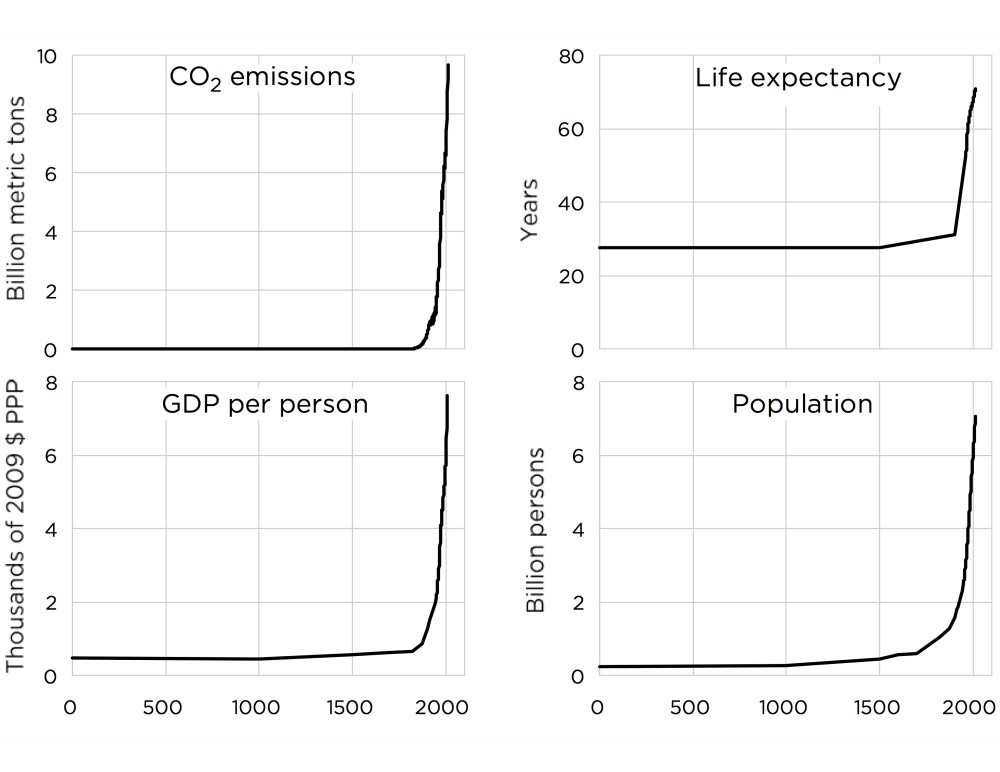
The amazing increase in agricultural productivity, partly the result of more CO2, has allowed the planet to feed eight billion people, compared to the fewer than 800,000 inhabitants living a short 300 years ago.

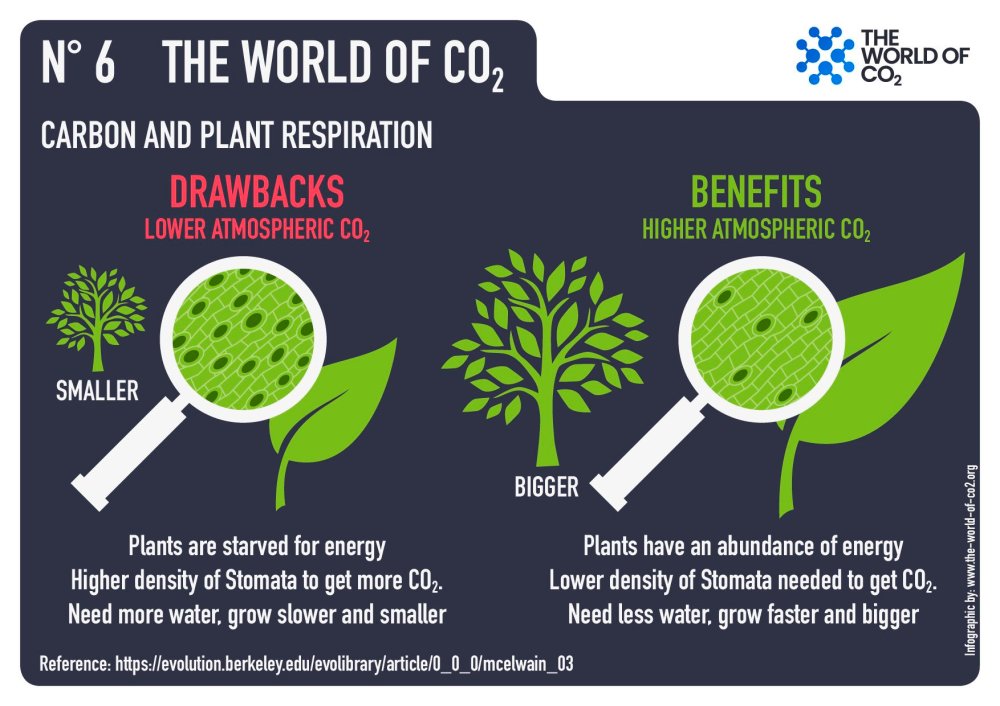
More CO2 in the air means more moisture in the soil. The major cause of water loss in plants is attributable to transpiration, in which the stomata, or pores, on the undersides of the leaves open to absorb CO2 and expel oxygen and water vapor.

With more CO2, the stomata are open for shorter periods, the leaves lose less water, and more moisture remains in the soil. The associated increase in soil moisture has been linked to global decreases in wildfires, droughts and heat waves.

Exaggeration of CO2’s Warming Effect

Alarm over global warming stems from exaggerations of CO2’s potential to retain heat that otherwise would radiate to outer space. As with water vapor, methane and nitrous oxide, CO2 retains heat in the atmosphere by how it reacts to infrared portions of the electromagnetic spectrum.

However, the gas has saturated to a large extent within the infrared range, leaving relatively little potential for increased warming.

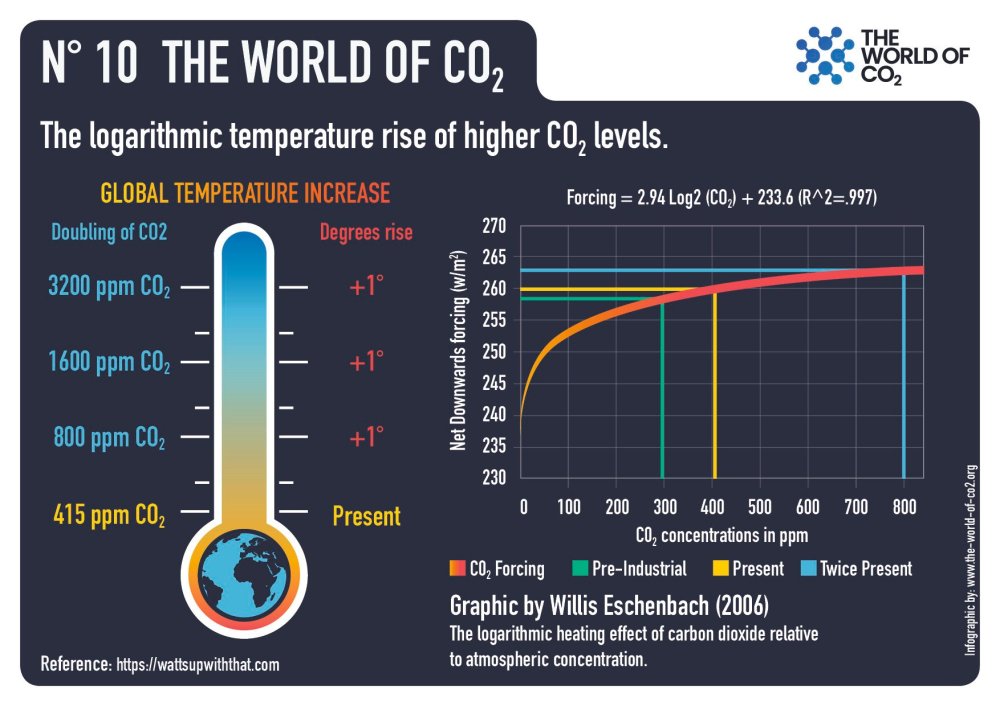
Both sides of the climate debate agree that the warming effect of each molecule of CO2 decreases significantly (logarithmically) as the concentration increases.

This is one reason why there was no runaway greenhouse warming when CO2 concentrations approached 20 times that of today. This inconvenient fact, despite its importance, is rarely mentioned because it undermines the theory of a future climate catastrophe.

A doubling of CO2 from today’s level of 420 ppm – an increase estimated to take 200 years to attain – would have an inconsequential effect on global temperature.

Pennsylvania’s solar-powered fossil fuels

CO2 being liberated today from Pennsylvania coal was removed from the atmosphere by the photosynthesis of trees that fed on sunlight and carbon dioxide and then died to have their remains accumulate in the vast coal swamps of the Carboniferous Period.

Pennsylvania Marcellus and Utica shale hydrocarbons being exploited today were also the likely hydrocarbon source of shallower reservoirs producing since the late 1800s.

The source of those hydrocarbons was algae remains that gathered on the bottom of the Ordovician and Devonian seas.

Like the coal deposits, the algae used solar-powered photosynthesis and CO2 (the algal blooms were likely fueled by regular dust storms) to remove vast amounts of CO2 from the air and lock it up as carbon-rich organic matter.

The provenance of these hydrocarbons spawns two novel ideas. First, there is a strong case that these are solar-powered fuels.

Second, the sequestering of carbon during the creation of the hydrocarbons lowered atmospheric concentrations of CO2 to sub-optimum levels for plants. Therefore, the combustion of today’s coal and gas is liberating valuable CO2 molecules that are turbocharging plant growth.

The plain fact of the matter is that the modest warming of less than one degree Celsius since 1900, combined with increasing CO2, is allowing ecosystems to thrive and humanity to prosper.

Additional information on CO2’s benefits and related topics are available at CO2Coalition.org, which includes a number of publications and resources of interest.


Warning: Earth Day Became Polluted

Henry I. Miller and Jeff Stier provide this brieing for 2023 at ACSH Earth Day Has Become Polluted By Ignorance And Political Correctness.  Excerpts in italics with my bolds.
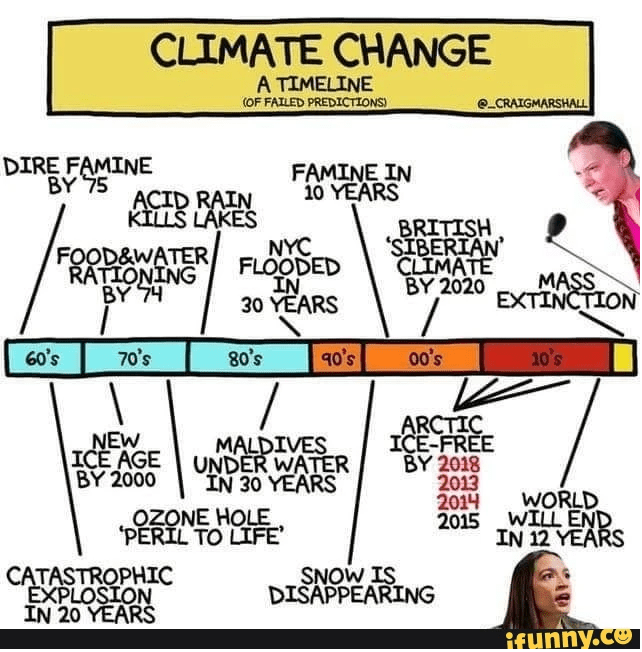

Once a touchy-feely, consciousness-raising New Age experience, it’s now
an occasion for environmental activists to prophesy apocalypse,
dish antitechnology dirt, and allow passion and zeal to trump reality.

Sadly, today’s Earth Day shares much with the current zeitgeist: It reeks of wokeness, political correctness, and virtue-signaling. 

Many of those stumping for Earth Day on April 22 this year will oppose environment-friendly advances in science and technology, such as agricultural biotechnology (“GMOs”), fracking, and nuclear power. A pervasive meta-message will be disdain for the capitalist system that provides the innovation needed for effective environmental protection and conservation. (It’s no coincidence that low-income countries tend to be the most polluted.)

Ironically, the theme of this year’s event, “Invest In Our Planet,” includes a progressive wish list, including reducing your “foodprint.” For those unfamiliar with this neologism, a foodprint “measures the environmental impacts associated with the growing, producing, transporting, and storing our food— from the natural resources consumed to the pollution produced to the greenhouse gases emitted.”

Another of this year’s event topics is “regenerative agriculture,” a favorite concept of the environmentally woke. But as Andrew Porterfield and Jon Entine of the Genetic Literacy Project have written, “it’s a lot like a rebranding of organic farming but with more grandiose claims…Its supporters in the organic community make a multitude of immodest representations about what organic/regenerative agriculture can do, including ‘reversing global warming’ and ‘ending world hunger,’ along with preserving the world’s topsoil.”

The reality is that regenerative agriculture and its sibling, “agroecology,”
promote reliance on primitive, low-yielding agricultural techniques,
the use of which raises food prices and disadvantages the poor.

One of this year’s “52 Ways to Invest in Our Planet” is “Go Pesticide Free.” The organizers don’t spell out how, exactly, we should accomplish this, which is hardly surprising, given that 99.99% of the pesticides in our diets are found naturally in our food. (They enable plants to fend off predators and diseases.)

Another of their “tips” is “eat less meat.” Getting into the spirit of this nonsense was New York City Mayor Eric Adams, who said on April 17th, “It is easy to talk about the emissions that’s [sic] coming from buildings and how it impacts our environment, but we now have to talk about beef,” as part of an effort to steer hospital patients toward vegan meals.

“Education” features prominently in Earth Day activities, as in, “Fifty years ago, the first Earth Day started an environmental revolution. Now, we are igniting an education revolution to save the planet. . . Through our Climate and Environmental Literacy Campaign, we will ensure that students across the world benefit from high-quality education to develop into informed and engaged environmental stewards.”

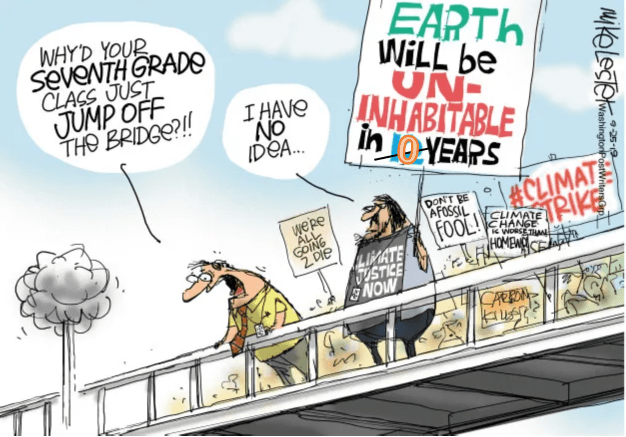
What might that mean? For a previous Earth Day, seventh graders at a tony private school near San Francisco were given an unusual Earth Day assignment: Make a list of environmental projects that could be accomplished with Bill Gates’s fortune. This approach to environmental awareness fits in well with the progressive worldview that the right to private property is subsidiary to undertakings that enlightened thinkers deem worthwhile.

And how interesting that the resources made “available” for the students’ thought experiment were not, say, the aggregate net worth of the members of Congress but the wealth of one of the nation’s most successful and most innovative entrepreneurs.

Another Earth Day assignment for those same students was to read Rachel Carson’s best-selling 1962 book “Silent Spring,” an emotionally charged but deeply flawed excoriation of the widespread spraying of chemical pesticides to control insects. As described by Roger Meiners and Andy Morriss in their scholarly yet eminently readable 2012 analysis, “Silent Spring at 50: Reflections on an Environmental Classic,” Carson exploited her reputation as a well-known nature writer to advocate and legitimatize “positions linked to a darker tradition in American environmental thinking: neo-Malthusian population control and anti-technology efforts.”

Carson’s proselytizing and advocacy led to the virtual banning of DDT and restrictions on other chemical pesticides even though “Silent Spring” was replete with gross misrepresentations and atrocious scholarship. Carson’s observations about DDT were meticulously rebutted point by point by J. Gordon Edwards, a professor of entomology at San Jose State University, a longtime member of the Sierra Club and the Audubon Society, and a fellow of the California Academy of Sciences. In his stunning 1992 essay, “The Lies of Rachel Carson,” Edwards demolished her arguments and assertions and called attention to critical omissions, faulty assumptions, and outright fabrications.

Meiners and Morriss concluded correctly that the influence of “Silent Spring” “encourages some of the most destructive strains within environmentalism: alarmism, technophobia, failure to consider the costs and benefits of alternatives, and the discounting of human well-being around the world.” Sounds a lot like the Earth Day agenda.

One of the United Kingdom’s great contemporary thinkers, Dick Taverne (Lord Taverne of Pimlico), discusses the shortcomings of New Age philosophy in his iconic book, “The March of Unreason.” Taverne deplores the “new kind of fundamentalism” that has infiltrated many environmentalist campaigns as an undiscriminating back-to-nature movement that views science and technology as the enemy and as a manifestation of an exploitative, rapacious and reductionist attitude toward nature. It is no coincidence, he believes, that eco-fundamentalists are strongly represented in anti-globalization and anti-capitalism movements worldwide.

In this, Taverne echoes the late physician and novelist Michael Crichton, who argued in his much-acclaimed novel “State of Fear” that eco-fundamentalists have reinterpreted traditional Judeo-Christian beliefs and myths and turned environmentalism into a kind of religion. This religion has its own Eden and paradise, where mankind lived in a state of grace and unity with nature until mankind’s fall, which came not after eating a forbidden fruit, but after partaking of the forbidden tree of knowledge – that is, technology. This religion also has a judgment day that will come for us in this polluted world – all of us, that is, except for true environmentalists, who will be saved by achieving “sustainability.”

One of Crichton’s characters argues that since the end of the Cold War, environmental alarmism in Western nations has filled the void left by the disappearance of the terror of communism and nuclear holocaust and that social control is now maintained by highly exaggerated fears about pollution, global warming, chemicals, genetic engineering, and the like. With the military-industrial complex no longer the primary driver of society, the politico-legal-media complex has replaced it.

This cabal peddles fear in the guise of promoting safety. French writer and philosopher Pascal Bruckner captured its tone nicely: “You’ll get what you’ve got coming! That is the death wish that our misanthropes address to us. These are not great souls who alert us to troubles but tiny minds who wish us suffering if we have the presumption to refuse to listen to them. Catastrophe is not their fear but their joy.”

The small-minded misanthropes have enjoyed some dubious “successes.” They have effectively banished agricultural biotechnology from Europe and much of Africa, put the chemical industry on the run and placed the pharmaceutical industry in their crosshairs.

Lord Taverne believes these are ominous trends that are contrary to the principles of the Enlightenment, returning us to an era in which inherited dogma and superstition took precedence over experimental data. Eco-fundamentalism strangles scientific creativity and technological innovation, blocking the availability of products that, used responsibly, could dramatically improve and extend many lives and protect the environment.

Lord Taverne posited that when you defend science and reason,
you defend democracy itself.
Well said, Milord, and happy Earth Day to you.

More Federal Climate Lawfare

Todd Rokita, AG Indiana, asks in his Newsweek article Why Did The U.S. Solicitor General Flip-Flop on Climate Change? Excerpts in italics with my bolds and added images.

In a case called Suncor Energy Inc. v. Board of County Commissioners of Boulder County, U.S. Solicitor General Elizabeth Prelogar recently told the Supreme Court that climate-change cases should be heard not in federal courts, but in deep-blue, progressive state courts.  Calling this proposal politically opportunistic would be an understatement.

Sixteen states disagree, as we have made known through a brief
filed by my office. Federal law should govern this and similar cases,
according to legal precedent.

My office always stands for the rule of law and fights for it in the courtroom. This case is no different, as it represents a sharp departure from the Justice Department’s longstanding view that global climate change is a federal issue that belongs in federal court.

The jurisdictional issue may seem mundane, but the stakes are high.  At a time when energy costs already burden hardworking families, environmental activists insist on banning cost-efficient, safe energy production practices. Unable to push their environmental agenda through Congress, they have turned to a series of multi-billion-dollar lawsuits against energy companies in state courts across the country alleging that state and local governments suffer harm from climate change.

The central claims of these cases are that fossil fuel extraction imposes net harm on the world, leading to climate change, and that energy production and promotion are a “public nuisance” for which energy companies must pay.

Federal courts would undoubtedly reject these claims, which is why activists
are fighting to keep their claims in front of their favorite state courts.

The Office of the Solicitor General had previously taken a stand against such gamesmanship, recognizing that climate change claims are inherently federal. But the current solicitor general’s abrupt departure from that position confirms that politics has replaced law in her office.

The solicitor general represents the United States before the Supreme Court and is the only federal officer required by statute to be “learned in the law”—a high calling. Past solicitors general described their obligation to speak “on behalf of the rule of law.”

The Supreme Court relies on the solicitor general to be a non-partisan, trustworthy representative and interpreter of the law. In the words of Seth P. Waxman, solicitor general during the Clinton administration, this “special relationship to the Court is not one of privilege, but of duty”—a duty that includes an obligation “to respect and honor the principle of stare decisis,” meaning consistency over time regardless of the political interests of the current administration.

Interstate environmental issues, especially those relating to air pollution and climate change, have long been governed by federal law and resolved by federal courts.   In 2011, the Supreme Court reaffirmed it “would be inappropriate” to apply state law to claims arising from transboundary greenhouse-gas emissions and climate change.

This makes good sense. Greenhouse gas emissions inherently transcend state borders—the term, after all, is “global climate change” not “Boulder County climate change.”

The Supreme Court has recognized that allowing state courts to interfere with federal regulation of energy production and emissions would “undermine the important goals of efficiency and predictability” and “lead to chaotic confrontation between sovereign states.”

The Office of the Solicitor General has embraced this position for decades, and solicitors general appointed by presidents from both parties have defended it—including left-wing Democrats who used climate change as part of their political platform.

So, in 2022, when the Supreme Court asked the Office of the Solicitor General if lawsuits seeking damages for climate change implicate state or federal issues, and whether they should proceed in state or federal court, the answer should have been simple. But the solicitor general instead said these cases should proceed in state court.

This flip-flop lacks credible explanation.

Here, the solicitor general seems to be acting for special interests and attempting to fix President Joe Biden‘s failure to achieve the climate change outcomes he promised.

Perhaps, instead of “learned in law,” the current solicitor general is
“learned in politics.” My office refuses to stand idly by without a fight.

Footnote:  SCOTUS is expected to hear arguments on this issue later this month.


Climate Policies Like LSD Fantasies

Andrew I. Fillat & Henry Miller explain at Washington Examiner  Climate policies range from inanity to insanity.  Excerpts in italics with my bolds and added images.

The “war” on fossil fuels by activists and bureaucrats is much like how people describe an LSD trip: exhilarating, completely unreal, and possibly dangerous. This is evident from a simple analysis of what it would take to satisfy today’s demand for electricity in the absence of further electrifying transportation, industry, residences, and everything else.

Current domestic demand is 4 billion megawatt hours (MWh, the consumption of 1,000 watts of power for one hour), or 6.6 million MWh per day. Our generating capacity consists of 38% gas-fired, 22% coal-fired, 19% nuclear, 9.2% wind, 6.3% hydropower, 2.8% solar, and 1.7% other. We would need, therefore, to replace 2.4 billion MWh (gas and coal) with wind or solar.

Source: U.S. Energy Information Administration

A typical wind turbine generates two megawatts and occupies nearly two acres, or about one megawatt per acre. Solar is similar at one and one-third megawatt per acre. A megawatt creates 8,750 MWh annually. However, wind and solar are only 40% productive on average (due to calm, clouds, and nights). And wind and solar are both land hogs: Generating 2.4 billion MWh would consume 750,000 acres for either technology. To put that in context, the state of Rhode Island occupies 1 million acres.

We would need about 375,000 new wind turbines (up from 3,000 per year now)
at $3 million each, or more than $1 trillion. At $400,000 per acre of solar panels,
that cost is about $3 trillion.

This doesn’t take into account land cost and maintenance or the price escalation for raw materials required for the fabrication of the turbines and solar panels due to increased demand. It also ignores the greenhouse gas emissions from the mining itself.

The killer is backup.

With the decommissioning of fossil fuels, the only practical solution for calm, clouds, and nighttime is batteries. But at $151,000 per MWh for utility-scale batteries, the cost to provide only one day (6.6 MwH) of backup is about $1 trillion. The 2021 West Texas wind farm freeze suggests that a reasonable backup capacity is probably four days. And building these batteries would exacerbate raw materials shortages.

Our calculations are for the U.S. alone, and since we account for about 16% of global greenhouse gas emissions and electricity generation is only a quarter of that, the very best case is a 4% reduction in global greenhouse emissions. Meanwhile, China and India have nearly 10 times the number of coal-fired power plants as the U.S. and continue to build while we decommission ours. They will dwarf any emissions reductions we make while growing their economies as we strangle ours with expensive and limited energy.

Moreover, all of this is before the increased demand in power to electrify cars, factories, homes, and businesses further, which in turn will require upgrading the entire electrical grid — trillions of dollars more to upgrade transmission and connection facilities as well as still more wind or solar.

Just a fraction of the money wasted on the current LSD trip would be far better invested in “geoengineering” mitigation of the effects of climate change, which have never proved to be remotely as dire as the prophets of Armageddon have predicted. They might include, for example, projects such as reforestation; the Amazon provides 20% of the world’s oxygen while consuming carbon dioxide.

The true insanity, however, is ignoring very real opportunities for small-scale nuclear power. That clean source of energy is on the cusp of a major revolution in availability, cost reduction, and safety, if only we put aside our irrational fears. Our Navy has operated more than 150 nuclear-powered vessels for decades without incident.

Energy policies that would devastate our economy in the pursuit of
marginally relevant benefits at monumental cost are truly dangerous
to our way of life, global standing, and national security.
They should be short-circuited or discharged.

Andrew I. Fillat spent his career in technology venture capital and information technology companies. He is also the co-inventor of relational databases. Henry I. Miller, a physician and molecular biologist, is the Glenn Swogger distinguished fellow at the American Council on Science and Health. They were undergraduates together at MIT.

More Bilge from Pseudo-Scientific American

David Catron reports at the American Spectator Scientific American Compares DeSantis to Mussolini.  Those who thought Desantis would not attract Trump-like media trash talking should pay more attention to bilge like the latest from Political Scientific American. Excerpts in italics with my bolds and added images.

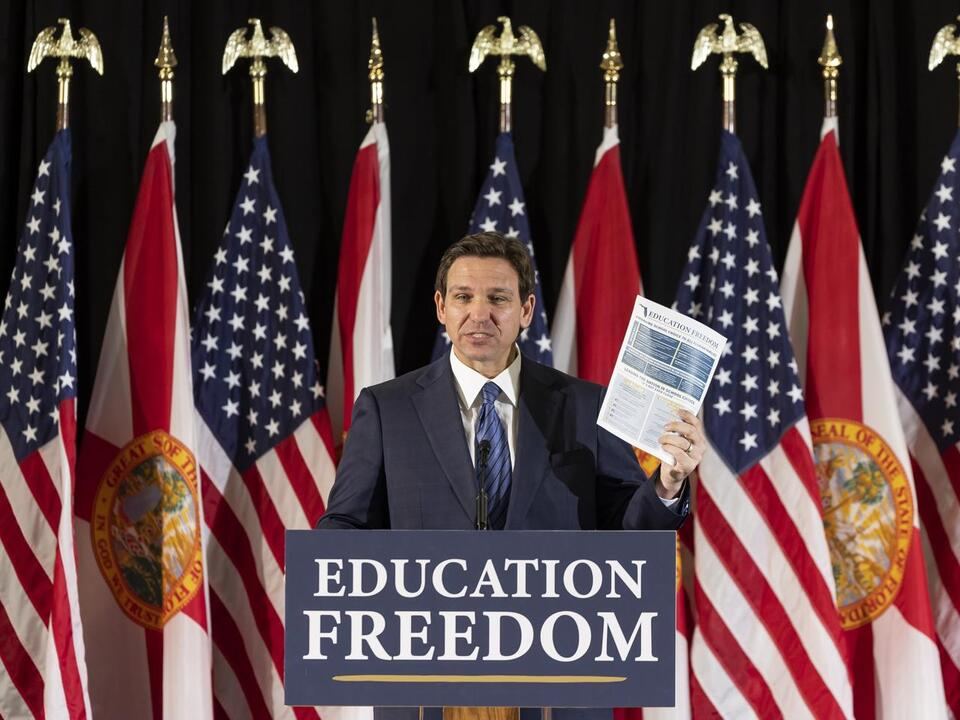
Florida’s governor is a “fascist” for listening to voter concerns
about leftist indoctrination in schools.

It is hardly breaking news that many once-trustworthy science and medical publications have been infected by leftist ideology. One of the worst cases involved the Lancet, which published an editorial in May of 2020 that openly urged American voters to replace then-President Trump. Sadly, this disease has continued to metastasize. The latest outbreak just appeared in Scientific American, which published an opinion piece on Friday claiming that the education policies of Florida Gov. Ron DeSantis “mirror past fascist strategies in ways that are disquieting for American democracy.”

The author is Eden McLean, an associate professor of modern European history at Auburn University. She admits that “fascism” is frequently misapplied but exonerates herself of that sin as follows: “Nonetheless, highlighting the parallels between the ambitions of DeSantis and those of the fascist dictator Benito Mussolini exposes the shared threat to democracy.” McLean’s academic work focuses on the period of the last century during which authoritarian regimes rose to power in Italy, Germany, and Spain. All three used public education to reinforce their rule, but McLean uses the Italian model to denounce DeSantis:

At the heart of fascist political strategy was the expansion of state control over public and private life under the facades of popular support and common good. Mussolini may have been legally appointed as Italy’s prime minister in 1922, but by 1927 all political parties had been banned or absorbed into his Fascist Party. At the Ministry of Education, Mussolini appointed nine ministers over 21 years. Only five had teaching experience but, more importantly, all but one (who quit after six months) were devoted party members who did little to question Mussolini’s directives.

What “parallels” does McLean see here? She graciously allows that DeSantis hasn’t banned any political parties, yet detects something sinister in the way he exercises his duty under the state constitution to appoint the members of the Board of Education: “In Florida, as in more than a dozen other states, the governor appoints all members to the Board of Education.” If so many other governors do the same thing, what’s the problem? At length she reveals the secret: “Florida’s current Board of Education includes three lawyers, one doctor, two business executives and just one teacher (who was appointed in March).”

McLean clearly doesn’t know that, until recently, the makeup of the Florida School Board was typical of what she once would have found throughout the country. The idea was that school boards should be representative of the communities they serve. The notion that they should be dominated by “educators” is an artifact of the systematic infiltration of school boards by the teachers unions. What DeSantis has been doing with his appointments is precisely the opposite of fascism.

He is returning control of Florida’s schools to parents and students
who want education rather than leftist indoctrination. 

McLean disapproves:  First, it means a small number of people rely on their personal priorities for a child’s education to determine school curricula for all students. The dependence on individual perspectives as much as knowledge grounded in research and expertise leads to an increasing conflation of faith with science, memory with history, and dogmatism with truth. Second, the unwillingness to provide students with subject-appropriate, expert-developed materials that introduce them to new ideas limits their ability to assess sources for reliability and accuracy.

What McLean fails to mention about our expert-heavy education system
is its abysmal results.

The most recent National Assessment of Educational Progress (NAEP), also known as the Nation’s Report Card, indicated that large percentages of American students are functionally illiterate in math and reading. Fully 38 percent of eighth-grade students are below basic achievement levels in math and 30 percent are below basic achievement levels in reading. The NAEP attributes this to COVID-19. As Forbes reports, however, the pandemic merely exacerbated a problem that first beset our education system in 2009.

As to McLean’s charge that DeSantis refuses to provide students with “subject-appropriate, expert-developed materials,” he is simply doing what worried parents have been begging the “experts” to doexpunging leftist dogma, pseudoscience, and revisionist history from the public schools. As he put it in his second inaugural address, “We must ensure school systems are responsive to parents and to students, not partisan interest groups.” This is obviously what the voters of Florida want, as his record-breaking reelection confirmed. For McLean, this overwhelming support for DeSantis constitutes an ominous message.

She solemnly advises her readers, “We must not stop at simply denouncing DeSantis’s efforts as ‘fascist’; to do so sidesteps their homegrown roots and minimizes their full danger.” For McLean, permitting parents to democratically elect a governor who actually listens to them presents enormous peril: “Being part of a democratic republic — embracing our pluralistic society — requires diverse views and their educated assessment.” She assumes that, if Florida’s voters disagree with her, it must be due to bigotry and ignorance.

This leaves one remaining question unanswered:
What the hell happened to Scientific American?

Greens Living on Some Other Planet

Despite climatists’ insistance on “No Planet B”, their ideas and plans assume some reality other than this world.  Judith Sloan explains the problem in her Spectator Australia article Greens off on another planet.  Excerpts in italics with my bolds and added images.

Today’s Greens make their predecessors look sensible

Let me get back to the chasm that the Greens deliberately create by advocating much higher government spending while calling for all sorts of perverse measures, up to and including the banning of coal and gas projects. Without these projects, there is no prospect there will be sufficient revenue to fund their over-the-top spending aspirations.

The Greens’ wish list is close to endless: free childcare, free TAFE and university, free dental care, higher dole, higher rental assistance, more public housing, more public transport, more spending on government schools, more foreign aid and on and on it goes.

Unless you believe that government spending is costless and never-ending – OK, for a while the crazy advocates of Modern Monetary Theory held sway until the ugly face of inflation reared its head and the interest payable on government debt began to rise – the Greens cannot escape that perennial political question: how are you going to pay for it?

But here’s the thing: the main reason Australia is not completely in the fiscal dog-house is the surging company tax revenues from mining companies and high commodity prices. Now I know some Speccie readers are a little bit allergic to numbers, but bear with me if I point out a few simple facts.

Take iron ore, which is a mainstay of our budget. For every $US10 increase in the price of iron ore per tonne, there is a lift of $600 million in company tax receipts. The high prices of coal, both thermal and coking, as well as liquefied natural gas, have similarly led to rapid growth in company tax receipts.

At the time of the election last year, the Treasury expected company tax revenue for 2022-23 to come in at a tad over $90 billion. It now expects it to be $127 billion – a jump of nearly one third. Company tax revenue is now at an historic high which, in turn, is mainly because of the surging tax being paid by the mining companies so reviled by the Greens.

Talk about contradictory: it’s not just having your cake
and eating it too; it’s about having the whole bakery.

This underscores my conclusion that the Greens are now living on a different planet rather than partying at the bottom of the garden. They want to shut down most of the resource sector but think that government spending can be jacked up big-time.

And let’s not forget here that federal Labor already has substantial spending plans. Next financial year, it expects to spend $666 billion and in 2025-26, the figure is $729 billion, an increase of over 9 per cent in real terms. The Greens’ ambitions are in addition to this increase.

Don’t get me onto some of the other proposals from the Greens. The geniuses in the party think that imposing national rental controls is the answer to our housing rental crisis. The fact that the attractiveness of residential real estate for investors has declined is regarded as neither here nor there by them. And this is before the full impact of the higher cost of investment loans.

They also want to achieve net zero by 2035, think that the ambition of B1(Climate Change and Energy Minister, Chris Bowen) to reduce emissions by 43 per cent by 2030 is woefully inadequate and want 100-per-cent renewable energy by the end of the decade.

In Bernie Sanders’ style, they think that ‘taxing the billionaires and big corporations’
will release oceans of revenue and a 6 per cent annual wealth tax is the way to go.

Walshy must be spinning in his grave; he would surely conclude that the dotty Greens of his era were sensible pragmatists compared to today’s loopy lot.


Trudeau Charges Transgender Surgeries to Taxpayers

American Spectator reports Canadian Taxpayers Forced to Fund Federal Employees’ Transgender Surgeries.  Excerpts in italics with my bolds and added images.

The government of Canada announced in February that it will now pay up to $75,000 “per lifetime” for each federal public service employee, and his or her dependents, who wishes to gender transition.

Justin Trudeau’s administration made that change, which will go into effect on July 1.

These changes are part of several changes the government is making to the Public Service Health Care Plan, a program meant to supplement the health care each employee receives from the province in which he or she lives.

As most Canadian provinces already cover “gender reassignment surgeries,” the $75,000 would be in addition to any funding the employee receives for transitioning.

The plan also is specifically meant to cover surgeries that are not included in most other provincial health care plans because they are considered cosmetic, like “facial feminization,” “breast augmentation,” or “voice surgery.”

The changes are supposed to “help people with their gender affirmation journey,” the statement read.

This is just one of many recent moves to support LGBTQ+ ideology made by the Canadian government, under the leadership of Prime Minister Justin Trudeau.

For “Public Service Pride Week” last August, Trudeau put out a statement celebrating “LGBTQ2 public servants.”  “As the largest single employer in Canada, the public service sets an example of what inclusivity means in the workplace,” he said. “We all have a role to play this week, and throughout the year, to support each other.”

Last summer, Trudeau also announced Canada’s first “2SLGBTQI+ Action Plan… Building our future, with pride.”  The plan was designed to be “a whole-of-government approach.”

One of its goals was to “[e]mbed 2SLGBTQI+ issues in the work of the Government of Canada,” which it successfully does with this latest health care expansion.

Footnote:  Backlash Mounts Against Sex Change Operations for Minors

As more evidence emerges about just how dangerous these procedures are, doctors who raise the alarm are increasingly being silenced by organizations like the American College of Pediatrics. In the aforementioned Vanderbilt case, doctors were warned that there would be “consequences” if they refused to perform the surgeries.

Already, we are starting to see the disastrous effects of the left’s gender-affirming care model. A woman in Sydney, Australia, for example, is suing her psychiatrist for medical malpractice after recommending she begin hormone treatment after one meeting and a recommending double mastectomy after only her second meeting. Within three years of the first meeting with her psychiatrist, she had hormone treatment, testosterone injections, a double mastectomy, and a complete hysterectomy. In the lawsuit, the woman claims the psychiatrist “failed to take precautions…in the nature of loss of her breasts, uterus, fallopian tubes and ovaries.”

More than five percent of Americans aged 18-29 say they identify as a sex other than the one they were “assigned” at birth – a nearly five-fold increase from the number of 30-49-year-old Americans who say the same. Given trends among Gen Z, it’s likely that number will grow exponentially in the years ahead. With evidence already mounting that many of the young people who undergo sex change treatment as minors come to regret it as adults, the country could soon have a crisis of tens of thousands of disaffected young people who are filled with remorse for the rest of their lives – all because they were allowed to make decisions that they were nowhere near mature or informed enough to make.

A society that fails to protect its children is one that is doomed to fail. In the coming years, Republicans and any Democrats willing to stand up to the trans lobby would do well to ensure that puberty and physical development is allowed to occur naturally for every child and that life-altering decisions are reserved for when individuals mature into adulthood, no sooner.

Sowell Explains How Newspeak Works

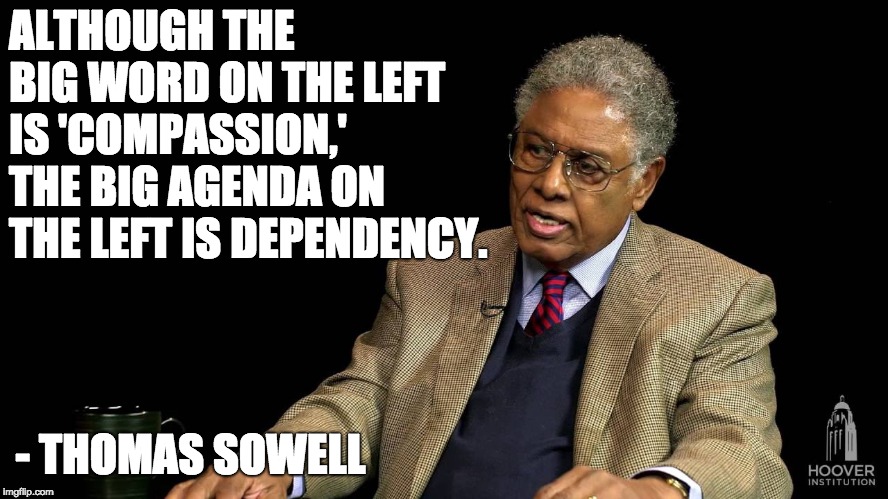
Thomas Sowell expounds on the contemporary pervasive use of newspeak to confuse public discourse by changing the meaning of words to advance a political agenda.  Below is an excerpt from his Thomas Sowell Reader.

The Left’s Vocabulary

A recent angry e-mail from a reader said that certain issues should not be determined by “the dictates of the market.” With a mere turn of a phrase, he had turned reality upside down. Decisions by people free to make their mutual accommodations with other free people were called “dictates” while having third parties tell all of them what they could and couldn’t do was not.

Verbal coups have long been a specialty of the left. Totalitarian countries on the left have called themselves “people’s democracies” and used the egalitarian greeting “comrade”—even though some comrades had the arbitrary power of life and death over other comrades.

In democratic countries, where public opinion matters, the left has used its verbal talents to change the whole meaning of words and to substitute new words, so that issues would be debated in terms of their redefined vocabulary, instead of the real substance of the issues. Words which have acquired connotations from the actual experiences of millions of human beings over generations, or even centuries, have been replaced by new words that wipe out those connotations and substitute more fashionable notions of the left.

The word “swamp,” for example, has been all but erased from the language. Swamps were messy, sometimes smelly, places where mosquitoes bred and sometimes snakes lurked. The left has replaced the word “swamp” with “wetlands,” a word spoken in pious tones usually reserved for sacred things.  The point of this verbal sleight-of-hand is to impose the left’s notions of how other people can use their own land. Restrictive laws about “wetlands” have imposed huge costs on farmers and other owners of land that happened to have a certain amount of water on it.

Another word that the left has virtually banished from the language is “bum.” Centuries of experience with idlers who refused to work and who hung around on the streets making a nuisance—and sometimes a menace—of themselves were erased from our memories as the left verbally transformed those same people into a sacred icon, “the homeless.”

As with swamps, what was once messy and smelly was now
turned into something we had a duty to protect.

It was now our duty to support people who refused to support themselves. Crimes committed by bums are covered up by the media, by verbally transforming “the homeless” into “transients” or “drifters” whenever they commit crimes. Thus “the homeless” are the only group you never hear of committing any crimes.

More to the point, third parties’ notions are imposed by the power of the government to raise our taxes to support people who are raising hell on our streets and in parks where it has often become too dangerous for our children to play. The left has a whole vocabulary devoted to depicting people who do not meet standards as people who have been denied “access.” Whether it is academic standards, job qualifications or credit requirements, those who do not measure up are said to have been deprived of “opportunity,” “rights” or “social justice.”

The word games of the left—from the mantra of “diversity”
to the pieties of “compassion”—are not just games.

They are ways of imposing power by evading issues of substance through the use of seductive rhetoric. “Rights,” for example, have become an all-purpose term used for evading both facts and logic by saying that people have a “right” to whatever the left wants to give them by taking from others.

For centuries, rights were exemptions from government power, as in the Bill of Rights. Now the left has redefined rights as things that can be demanded from the taxpayers, or from private employers or others, on behalf of people who accept no mutual obligations, even for common decency.

At one time, educators tried to teach students to carefully define words and systematically analyze arguments. They said, “We are here to teach you how to think, not what to think.” Today, they are teaching students what to think—political correctness. Instead of knowledge, students are given “self-esteem,” so that they can vent their ignorance with confidence.

Footnote on Equivocation

A related wordplay frequently appears concerning the Global Warming/Climate Change issue.  Equivocation is a logic violation when in the course of an argument (making a case), one or more words change their meanings, rendering a nonsensical conclusion.  For example, the switching back and forth between weather and climate:

Then the media refers to climate model outputs as dire predictions of the future.  But buried in the fine print are legal disclaimers talking about scenarios and projections of possibilities.  Of course there is the labelling of carbon dioxide as a “pollutant”, when in fact it is the stuff of life for the biosphere.

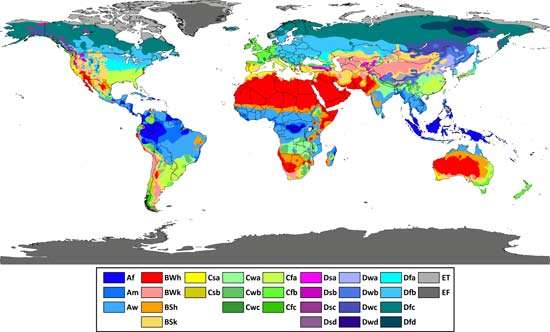
Even the term “climate” was always used to describe distinctive local and regional patterns (Climates), but now refers only to a singular global abstraction. And so on.

Köppen climate zones as they appear in the 21st Century.